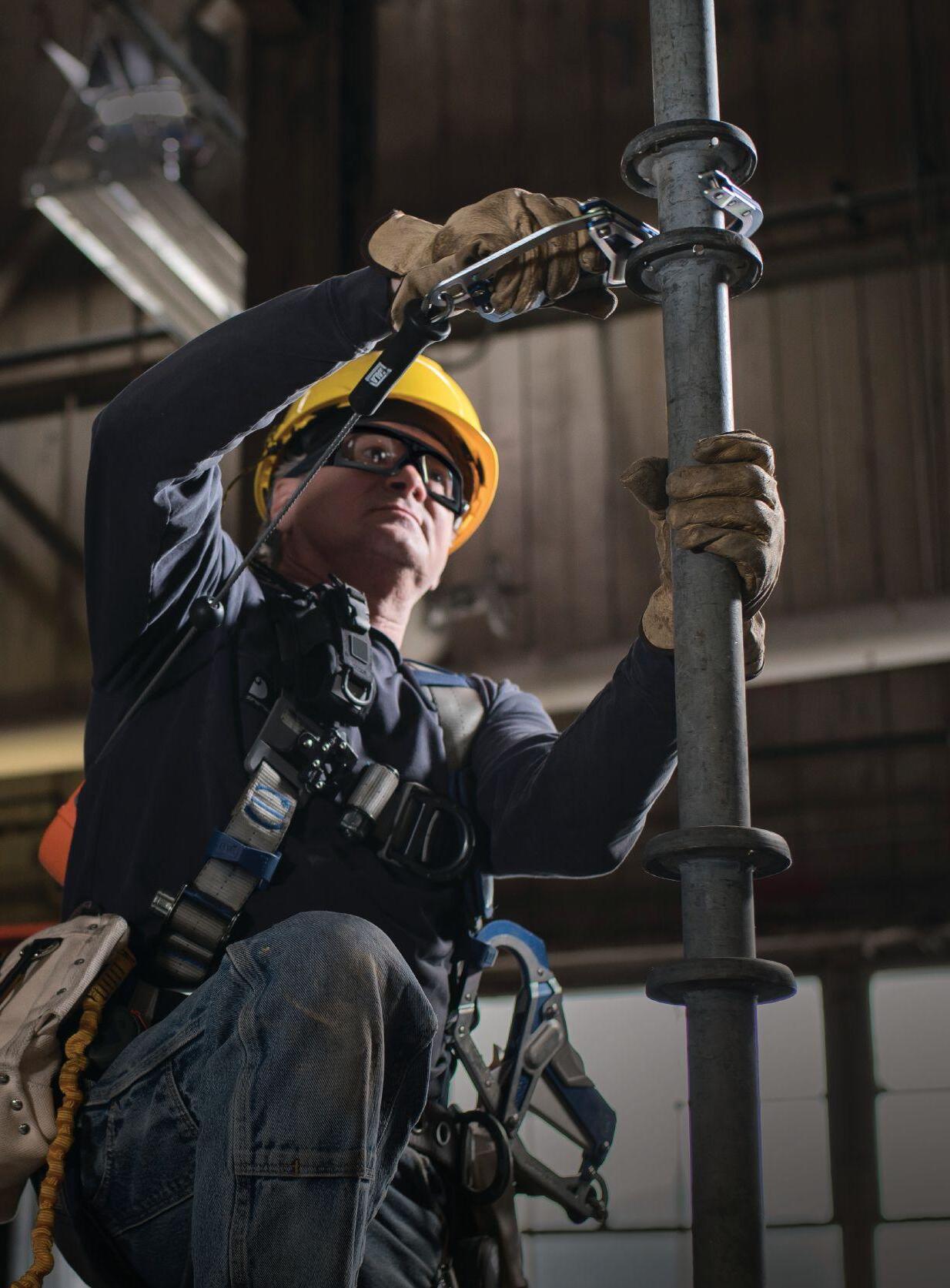
The race towards automation in the oil and gas sector
JOINING HANDS
Invigorating health and safety committees
ONE STEP AHEAD
Preparing for crisis through emergency-response plans
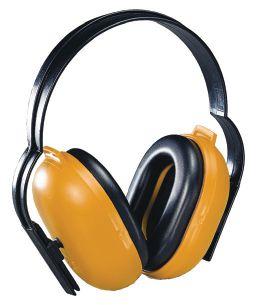
SOUND ADVICE
Protecting the ears at work
A digital gathering place for modern health and safety professionals.
Centuries ago, the Town Square formed a solid, central root within the community—a space to gather and share information to keep life and business moving. The Town Square still exists today, only now, the center of your professional community is available online with 3M Canada’s Personal Safety Division, Canada’s leader in personal protective equipment.
Experience science applied to life in 3M Canada’s Worker Health & Safety Town Square.
3M.ca/TownSquare
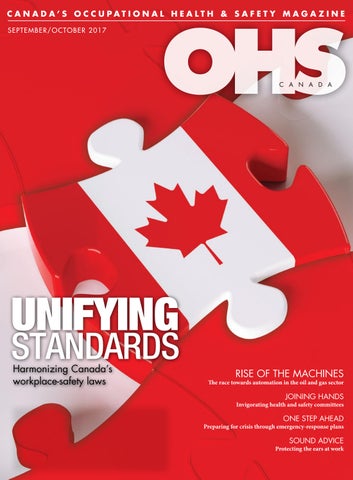
Canada’s labour ministers are working on a two-year plan to harmonize workplace-safety laws to make the legislative framework more seamless.
BY JEAN LIAN
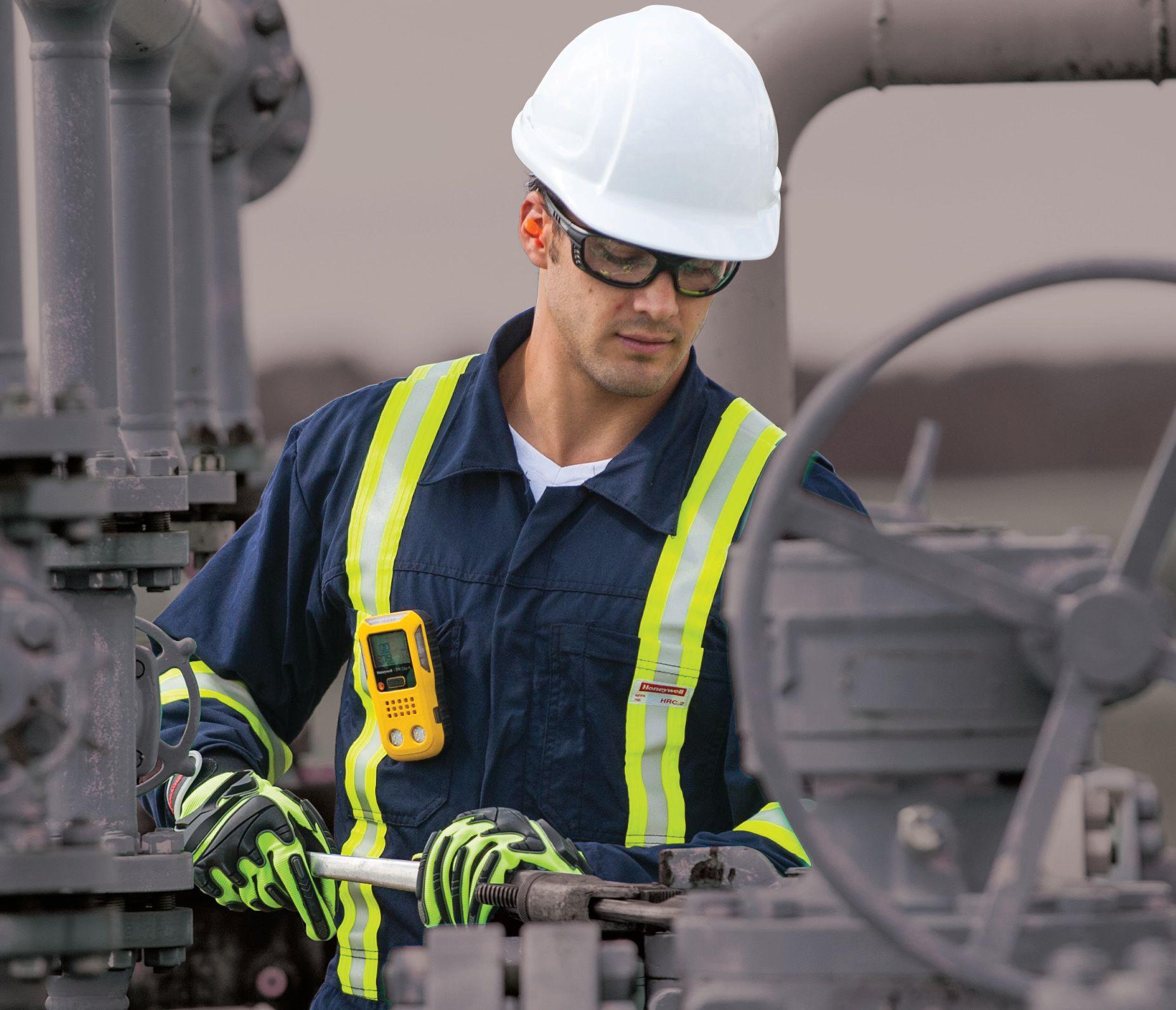
The race towards automation in Canada’s oil and gas sector will not only yield higher profitability and productivity, but also give safety a boost.
BY WILLIAM M. GLENN
Effective and invigorated joint health and safety committees are allies of workplace safety. How can a company go about creating one?
JEAN LIAN
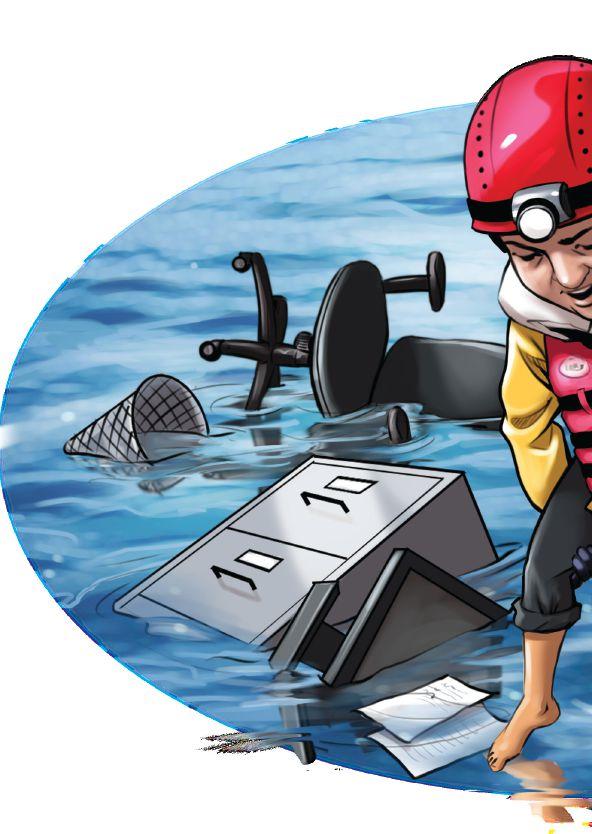
Businesses with comprehensive emergency-response plans in place are better able to protect their employees in the event of a natural calamity.
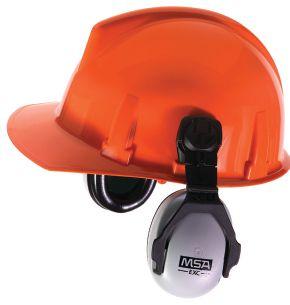
Communication relies on our ability not only to speak, but to hear. Using proper hearing protection is key for those who work in noisy environments.
BY JEAN LIAN
Virtual Accountability
The world was shocked by the tragic events that took place on August 12 in Charlottesville, Virginia. It was not just the violence, which led to the senseless deaths of three innocent people and many more injured; it was also the image of hateful groups we usually think of as out on the fringe — neo-Nazis, white supremacists — being allowed public space to spew racist rhetoric, while ostensibly protesting the impending removal of a statue.
While one participant in the far-right rally was charged with murder afterwards, justice of another kind has arguably been served for others: people have used social-media platforms to expose the names of some who demonstrated alongside the alt-right protesters. As a result, a few of the rally participants were dismissed from their jobs. One man was fired from his position as a cook at a hot-dog restaurant, and another who had travelled to the rally from Vermont was terminated from a local pizzeria. Most employers do not want to be identified with hateful ideology, even indirectly.
Social media has made us accountable for our public behaviour. Online shaming is all the rage these days, and the consequences of inappropriate conduct can be instant unemployment — regardless of whether your conduct bears any relevance to your job or your ability to do it.
Two years ago, Shawn Simoes lost his job at Hydro One, Ontario’s power utility, after his defence of a man who had shouted obscene comments at a Toronto news reporter resulted in social-media outrage. Yet Simoes was one of the luckier “victims,” as Hydro One rehired him a few months later. An arbitrator ruled that the firing had been unjust, and Simoes’ union advocated for his side.
The Simoes story raises a number of questions: How much say should an employer have over a worker’s behaviour in his or her personal life? What behaviour outside the workplace can be regarded as worthy of termination? And what is the line between forgivable and unforgivable off-the-job conduct?
Consider former New York publicist Justine Sacco or Nobel Prize-winning British scientist Tim Hunt, both of whose careers and reputations were destroyed after their off-colour jokes caused international public outrage. Were their punishments fair, or were these cases of the Twitter mob overreacting to common faux pas? Did these terminations really make the workplaces safer or more inclusive, or were Sacco and Hunt scapegoats for their employers’ public images?
As Andy Warhol predicted, everyone has 15 minutes of fame — and fame is a risky deal. An inconvenient reality of the Internet age is that you have to be prepared to be held responsible for anything you say or do online. An uncouth joke or opinion may seem harmless, but an employer may not see it that way. It considers the employee to be a representative of the company, and anything he or she says appears to reflect the company’s public image and viewpoint. And words and actions promoting violence or hate — like those of the protesters in Charlottesville — will spark understandable concerns about workplace safety.
Call it Big Brother syndrome if you want, but social media is here to stay, and we have to be cautious. We may have lost some of our anonymity, but at least we have a better idea of who the real bad guys are, and that can help create safer work environments.
Jeff Cottrill Acting Editor
Vol. 33, No. 5 SEPTEMBER/OCTOBER 2017
EDITOR JEAN LIAN 416-510-5115 jlian@ohscanada.com
EDITORIAL ASSISTANT JEFF COTTRILL 416-510-6897 jcottrill@ohscanada.com
ART DIRECTOR MARK RYAN
ACCOUNT COORDINATOR ALICE CHEN 905-713-4369 achen@annexweb.com
PUBLISHER PETER BOXER 416-510-5102 pboxer@ohscanada.com
GROUP PUBLISHER PAUL GROSSINGER pgrossinger@annexweb.com
COO TED MARKLE tmarkle@annexweb.com
PRESIDENT & CEO MIKE FREDERICKS
EDITORIAL ADVISORY BOARD MEMBERS
DAVID IRETON, Safety Professional, Brampton, Ont.
AL JOHNSON, Vice President, Prevention Services WorkSafeBC, Richmond, B.C.
JANE LEMKE, Program Manager, OHN Certification Program, Mohawk College, Hamilton, Ont.
DON MITCHELL, Safety Consultant, Mississauga, Ont.
MICHELE PARENT, National Manager, Risk Management and Health and Wellness, Standard Life, Montreal, Que.
TERRY RYAN, Workers’ Compensation and Safety Consultant, TRC Group Inc., Mississauga, Ont.
DON SAYERS, Principal Consultant, Don Sayers & Associates, Hanwell, N.B.
DAVID SHANE, National Director, Health and Safety, Canada Post Corporation, Ottawa, Ont.
HENRY SKJERVEN, President, The Skjerven Cattle Company Ltd., Wynyard, Sask. PETER STRAHLENDORF, Assistant Professor, School of Environmental Health,Ryerson Polytechnic University, Toronto, Ont.
JONATHAN TYSON, Association of Canadian Ergonomists/Association canadienne d’ergonomie, North Bay, Ont.
Printed in Canada
ISSN 0827-4576 (Print)
ISSN 1923-4279 (Digital)
PUBLICATION MAIL AGREEMENT #40065710
CIRCULATION
email: asingh@annexbizmedia.com
Tel: 416-510-5189
Fax: 416-510-5170
Mail: 80 Valleybrook Drive, Toronto, ON M3B 2S9
SUBSCRIPTION RATES
Published six times per year – Jan/Feb, Mar/Apr, May/Jun, Jul/Aug, Sep/Oct, Nov/Dec
Canada $110.50/yr plus tax
USA $132.50/yr
Foreign $137.50
Occasionally, OHS Canada will mail information on behalf of industry related groups whose products and services we believe may be of interest to you. If you prefer not to receive this information, please contact our circulation department in any of the four ways listed above.
All advertising is subject to the publisher’s approval. Such approval does not imply any endorsement of the products or services advertised. Publisher reserves the right to refuse advertising that does not meet the standards of the publication.
We acknowledge the financial support of the Government of Canada through the Canada Periodical Fund of the Department of Canadian Heritage.
LEARN HOW FORTUNE 500 COMPANIES
Ansell Guardian ® is our proprietary service to help companies select the right Personal Protection Equipment solution to improve their safety, productivity and cost performance.
Since July 2014, our recommendations have resulted in injury reductions on an average of 65%, customers have decreased products styles by an average 25% and we have saved companies a total of $149M*.
*Based upon Ansell Guardian® global assessments since 2014. Final results may vary.
$120,000
Fine issued to Maple Leaf Foods Inc. on September 13, after it pleaded guilty to an incident that had resulted in a hand injury to a worker.
Source: Ontario Ministry of Labour
$50,000
1 Ill Workers: Eleven employees working in a certain area of the Fairview Container Terminal in Prince Rupert, British Columbia were sent to the hospital for precautionary treatment on September 3 when they had symptoms of respiratory and eye irritation.
Source: DP World Prince Rupert
Penalty issued to an employer in Kelvington, Saskatchewan on August 22, over the 2014 fatality of a worker who was run over by a packer.
Source: Saskatchewan Ministry of Labour Relations and Workplace Safety
Source: Government of Alberta
2 Safety Review Launched: Alberta is reviewing its oh&s system. The review will examine the Alberta Occupational Health and Safety Act, which has not undergone any major changes since 1976. It will also look at issues such as compliance, enforcement, education and prevention.
3 Tackling Mental Health: The Canadian Institute for Public Safety Research and Treatment in Saskatchewan is developing a strategy to deal with mental and physical health issues among police officers, paramedics, firefighters, correctional staff and other public-safety personnel in Canada.
Source: The Canadian Institute for Public Safety Research and Treatment
68
The number of times that Ontario’s healthcare workers are more likely to be injured by violent attacks than miners and construction workers are.
Source: Ontario’s Workplace Safety and Insurance Board
Source: Public Service Alliance of Canada
4 New Guide Released: A new online guide from Public Services and Procurement Canada, released on August 25, details best practices on how employers can support trans workers and those who are in the process of transition to another gender. Support for Trans Employees: A Guide for Employees and Managers is the first of its kind published by the federal government.
5 Respectful Workplace Week: The New Brunswick government declared September 4 to 8 to be this year’s Respectful Workplace Week, to promote gender equality and recognize the issues of workplace bullying and discrimination. The event included a series of free, joint educational lectures by the Workplace Violence and Abuse Research Team of the Muriel McQueen Fergusson Centre for Family Violence Research and the Women’s Equality Branch.
Source: Ministry of Post-Secondary Education, Training and Labour
GAS EXPLOSION CLAIMS NINE
At least nine miners were killed in a gas explosion that occurred deep inside a shaft in the northeastern province of Heilongjiang, China on September 13. Eight others were rescued and taken to a hospital. The 17 miners were working underground at the time of the blast.
Source: The Associated Press
January 1
The date when a new regulation governing the installation, inspection, use and maintenance of steel storage racks takes effect in British Columbia.
Source: WorkSafeBC
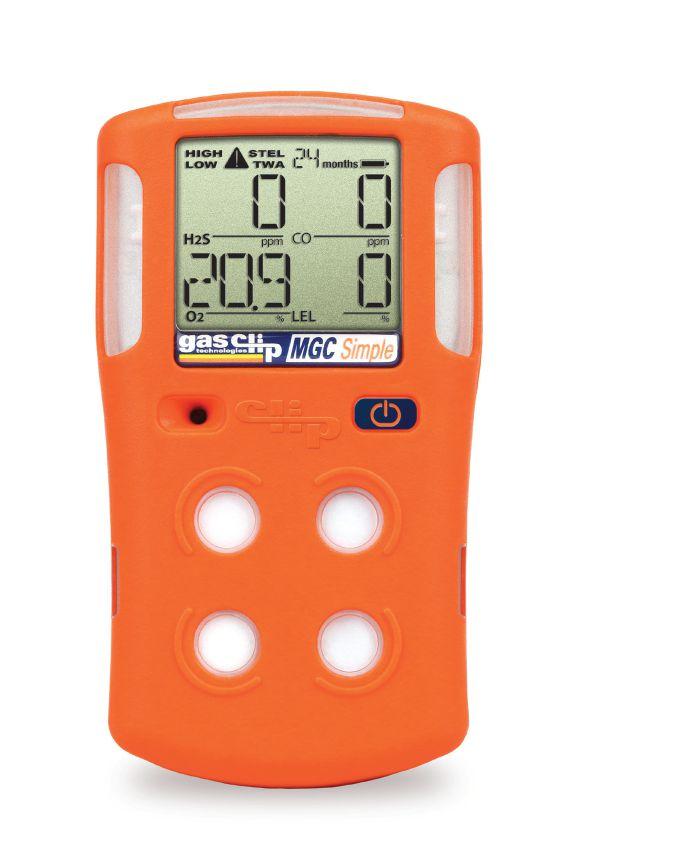
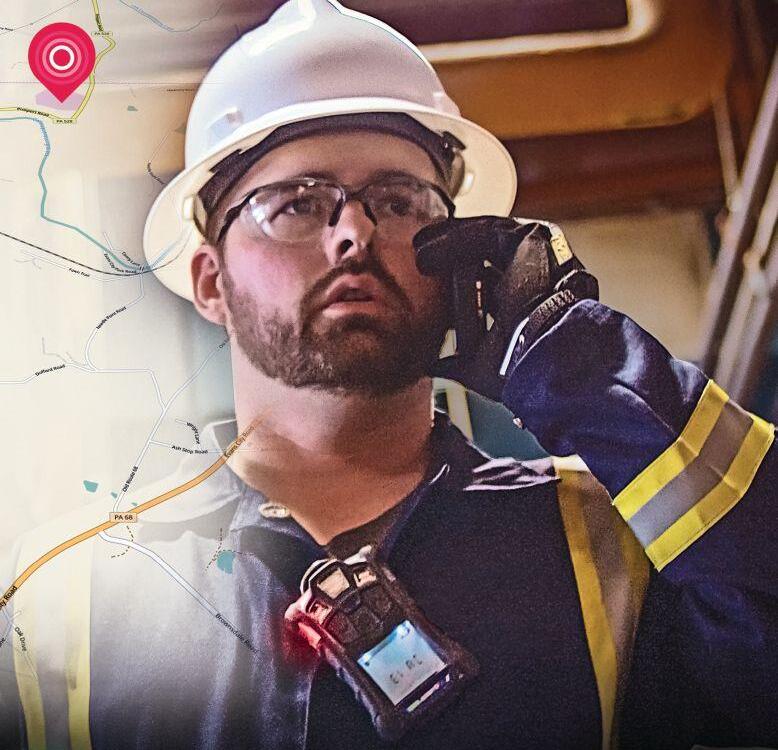
You’ve got your hands full in the field, so when it comes to gas detection, you need safety and simplicity you can count on. That’s why we’ve reinvented wearable gas detection.
They called it impossible. We call it the
OH&S UPDATE
MISSED STOP SIGNAL CITED
FEDERAL — The Transportation Safety Board of Canada (TSB) concludes that a missed signal led to a collision between two Canadian Pacific Railway (CP) trains, which injured a conductor.
The incident occurred at 5:16 a.m. on August 21, 2016, according to the report, published on August 1. An eastbound CP freight train consisting of two locomotives and 24 loaded cars was travelling through the North Toronto Subdivision and crossing over from the north track to the south track, when a westbound train with two locomotives that was moving along the north track hit the tail end of the eastbound train at the crossover. The collision injured the westbound train’s conductor and damaged four cars on the eastbound train, as well as caused several small fires and a spill of about 2,500 litres of diesel fuel from the fuel tank of the westbound train’s lead locomotive.
The TSB investigation found that the westbound train had passed a signal that required the crew to stop before the next signal, but had failed to slow
down. Because the westbound crew was distracted by train operation, reviewing a timetable and looking for a reported trespasser, the train could not stop in time before the crossover.
“Although both crew members carried a sleep debt and the [westbound] train was being operated during a period of low circadian rhythm, it could not be determined whether fatigue affected the crew members’ performance,” the report states.
TAIL-ROTOR FAILS IN CRASH
FEDERAL — A report from the Transportation Safety Board of Canada (TSB) blames loss of tail-rotor effectiveness for a helicopter crash northwest of Prince George, British Columbia last year.
According to the report, which was published on August 28, a camera operator and a lumber-company employee were conducting infrared scanning over a logged area from a Highland Helicopters Ltd. Bell 206B Jet Ranger-III on May 4, 2016, when the helicopter suddenly spun around several times, descended and struck the ground. All
three people onboard, including the pilot, were seriously injured.
The TSB investigation concluded that the aircraft’s high gross weight and high power setting had contributed to the tail rotor’s ineffectiveness while the copter had been moving downwind at a low speed at an altitude higher than half of the rotor’s diameter. As a result, the pilot did not have enough time to recover before ground impact. “The pilot’s helmet likely prevented more serious injuries,” the TSB notes.
MCDONALD’S ISSUES APOLOGY
YELLOWKNIFE — The owner and operator of a McDonald’s restaurant issued a letter of apology to workers after it posted a notice requiring its employees to speak only English.
The letter, which was posted online in a CBC News story on September 6, is owner Al Nielsen’s response to the restaurant’s crew and managers regarding the “Language in Workplace” notice posted on August 25.
“While the intent of the notice was to address customer feedback, it is
POOR CRANE DESIGN LED TO BOAT FATALITY
FEDERAL — Flaws in the design of a boat crane resulted in a collapse that killed the vessel’s operator near Milligan’s Wharf, Prince Edward Island more than a year ago, according to a Transportation Safety Board of Canada (TSB) report published on August 9.
The operator and deckhand of the vessel were engaged in spring maintenance of oyster-growing cages about one nautical mile east of Milligan’s Wharf on April 29, 2016. The operator was leaning over the side of the boat, under the crane’s elevated boom, to untangle a securing line when the piston rod of the crane suddenly fractured. The boom and attached rigging fell, killing the operator.
The TSB’s investigators found that the crane’s design did not allow the full extension of the piston rod when the boom was raised, causing the rod to make contact with hose guards and bend. The repeated bending of the piston rod eventually led to its fracture. The crew members failed to detect the problem with the crane because they were not conducting thorough inspections of it.
“If lifting appliances are not tested thoroughly before
being put into service, as well as inspected before each use, there is an increased risk that the appliances will not function as intended,” the report states.
The TSB also found that Transport Canada (TC) had not inspected the vessel, as the current regulations did not require such inspections. In addition, the boat was not equipped with the required navigation lights or firefighting equipment, and there were no personal flotation devices aboard at the time of the incident.
The report recommends that TC or an “authorized representative” perform inspections of lifting appliances on fishing vessels to detect hazardous defects. The TSB also advises that standards should be in place for lifting appliances on small fishing boats.
Following the incident, the oh&s division of the P.E.I. government issued a hazard alert to stakeholders, recommending an engineered design for vessel cranes, along with regular inspections and positioning them in a way that minimized risk.
— By Jeff Cottrill
clear the notice was inappropriate,” Nielsen writes in the letter. “McDonald’s is a place that welcomes and respects EVERYONE… my organization values diversity in all its forms — including language.”
He also calls the notice “insensitive” and apologizes to employees. The original notice reportedly ordered staff to speak English on the job “99 per cent of the time,” with a few exceptions.
THREE PARTIES FACE CHARGES
HAY RIVER — The occupational health and safety authority for the Northwest Territories laid charges against two companies and one individual on July 25, for their involvement in an unspecified workplace incident at Hay River’s Don Stewart Recreation Complex on July 26, 2016.
According to a statement that the Workers’ Safety and Compensation Commission (WSCC) issued on August 11, Arctic Environmental Services Ltd. and Robert Valleau were charged with several counts, including failing to provide sufficient information, training and supervision to protect workers’ safety, identify the hazards of scissor lifts and ensure that supervisors had sufficient knowledge and training to protect workers. In addition, Clark Builders is facing one charge, for failing to ensure competent supervision.
PIPING AMENDMENTS IN FORCE
VICTORIA — New amendments to Part 23 of the British Columbia Occupational Health and Safety Regulation (OHSR), regarding safety risks in oil and gas flow piping systems, took effect on August 1.
According to a statement from WorkSafeBC, its board of directors approved the amendments at a meeting in March. The changes to the Regulation involve requirements for integrity-assurance programs and pipe restraints.
“Due to advancing technologies, the operating pressures of flow piping systems are now far greater than the pressures when the current OHSR requirements were developed,” WorkSafeBC states. “Serious injuries can occur to workers when flow piping systems fail and the component parts are not restrained properly.”
The amendments also seek to align regulations with current best practices in the oil and gas sector.
FUNDS RAISED FOR PARAMEDIC
CALGARY — Following a near-fatal drug exposure that a paramedic in Calgary recently experienced on the job, the Alberta Paramedic Association (APA) activated its own provincial fund to raise money to support the worker.
The paramedic, identified only as Ryan B, recovered from the exposure at home under medical oversight with support from his partner and two daughters, according to an APA Facebook post dated September 3. Most information about the incident has not been made available to the public, including the drug involved and the date when it occurred. “Right now, the paramedic community is just pulling together to provide some relief and support for Ryan and his family,” the APA says.
The APA activated fundraising efforts from September 1 to 7 via the Alberta HELP Fund, a nonprofit society that the association founded, initially to raise money for the families of victims of lineof-duty deaths. The HELP Fund had previously raised more than $18,000 in donations for a victim’s surviving family in 2015 and supported the construction of a registry of psychologists specializing in paramedic treatment last year, according to the APA website.
An e-mailed response from Alberta Health Services (AHS), Ryan B’s employer, says it is reviewing the incident.
Health Sciences Association of Alberta vice president Trudy Thomson reports that her union is working with AHS and Ryan B regarding the incident. Thomson points out that the risk of toxic exposure has become “more of a reality” for first responders today. “Their likelihood of being exposed is much greater than the public.”
The APA acknowledges that its members face many other risks as well. “Whether that hazard is a sharp piece of glass, liquids at an accident scene, a street drug or a violent patient, facing these hazards is an accepted part of the job.”
WORKER KILLED BY EQUIPMENT
CREMONA — An employee of a hayprocessing facility near the village of Cremona, Alberta was killed in an industrial mishap on August 16.
The incident happened at about
7:30 a.m. at a plant belonging to Dalziel Enterprises Ltd., according to Trent Bancarz, a spokesperson for Alberta Labour. The 63-year-old male worker became caught in hydraulic equipment while on the job. “We don’t know exactly what type of equipment it was, but it involved hydraulics,” Bancarz says.
He adds that other workers at the facility found the victim in a semi-conscious state. “The ambulance came, and he actually died right on the scene.”
RCMP officers and investigators from the Ministry’s oh&s division attended the scene. Police are referring to the fatality as a “farming incident,” according to
Corporal Laurel Scott, a spokesperson for the Alberta RCMP.
DRIVER PERISHES IN COLLISION
STRATHMORE — A tow-truck driver was killed in a road collision that occurred on the Trans-Canada Highway near Strathmore, Alberta.
A statement from the Alberta RCMP reports that the tow truck and a tractortrailer unit were both moving westbound on the highway on August 29 when the former vehicle struck the rear of the latter. The collision set the tow truck on
fire. The 44-year-old tow-truck driver was killed on scene, while the semi-truck driver did not sustain any injury. There were no other occupants in the vehicles.
RCMP officers from the Strathmore detachment were dispatched to the scene at 3:51 a.m. Traffic on the highway was temporarily diverted to allow responders to secure goods from the tractor-trailer unit. A collision analyst with the RCMP also attended the scene. Both the police and the occupational health and safety division of Alberta Labour are investigating the incident.
“Both the driver of the tow truck and the driver of the tractor-trailer unit were actively at work at the time of the collision,” says Trent Bancarz, a spokesperson for Alberta Labour.
WOOD COMPANY PENALIZED
PRINCE ALBERT — A Regina-based wood supplier was fined $40,000 for its involvement in an incident that cost a worker several fingers two years ago.
According to a September 6 state-
ment from the Saskatchewan Ministry of Labour Relations and Workplace Safety, an employee of Aallcann Wood Suppliers Incorporated was removing debris from a wood peeler at a worksite near Prince Albert on October 29, 2015, when the machine’s rotating teeth contacted the worker’s hand, severing several of the fingers.
The employer pleaded guilty in Prince Albert Provincial Court to failing to ensure that a machine was locked out before a worker undertook maintenance of it. Three other charges were dropped.
SPINAL INJURY SPURS FINE
CARLYLE — A Saskatchewan employer was fined $25,000 on August 23 for its involvement in a workplace incident that seriously injured a worker on May 11, 2016.
An employee of Carlyle Contracting Services Ltd. was working with rigging at a worksite near Carlyle on that day when a chain holding an l-beam broke, striking the worker on the back
and damaged the spine, according to a statement from the Saskatchewan Ministry of Labour Relations and Workplace Safety.
The company pleaded guilty to failing to train a worker in safe rigging practices before the worker was permitted to assemble, use, maintain or dismantle rigging. Three other charges were dropped.
ROOFING FIRM PLEADS GUILTY
PRINCE ALBERT — A roofing firm was fined $2,800 on August 16 for failing to ensure that its workers used proper personal protective equipment.
A statement from the Saskatchewan Ministry of Labour Relations and Workplace Safety reports that an occupational health officer who inspected a worksite in Prince Albert on May 2, 2016 found employees of Roger Lajeunesse, operating as Windel’s Roofing, working without the required fall-protection gear or head protection. Nobody was injured, but the Ministry charged
PUBLIC-SAFETY STAFF SCREEN HIGHER FOR MENTAL-HEALTH ISSUES
REGINA — A recent online survey found that public-safety personnel (PSP) in Canada report symptoms of potential mental disorders at higher levels than those in other professions do, according to a new report from the Canadian Institute for Public Safety Research and Treatment in Regina.
“Mental Disorder Symptoms among Public Safety Personnel in Canada”, published on the website of the Canadian Journal of Psychiatry on August 28, examined the input of 5,813 PSP who responded to the survey between September 2016 and January 2017. About 44 per cent of the respondents screened positive for symptom clusters consistent with at least one mental-health disorder — a rate considerably higher than the 10 per cent for the general population previously reported by Statistics Canada.
“We expected that it would be high, but I think 44 per cent was higher than I expected,” says Dr. Nick Carleton, a psychology professor at the University of Regina and the study’s lead author.
Respondents consisted largely of correctional workers, dispatchers, firefighters, paramedics and police officers. Among the disorders of which respondents reported symptoms were anxiety, depression and post-traumatic stress disorder. Dr. Carleton stresses that the study was based not on diagnostic interviews, but on a self-reporting questionnaire. “So if you scored high enough relative to other
published cut-off scores on these validated measures, then we would say you had screened positive for that cluster,” he explains.
While the results of this research are troubling, the increased reporting among public-safety officers is a sign of progress in reducing the stigma associated with post-traumatic stress injuries, Public Safety Minister Ralph Goodale says. “This research will help inform our next steps in developing a coordinated action plan to address this issue.”
While about 32.5 per cent of the respondents were female, the study found that women were far more likely to screen positive for symptoms of mental-health disorders to an extent that was “statistically significant,” according to Dr. Carleton. It does not necessarily mean that men experience these symptoms at lower levels, but just that women report them differently, he says about the gender variance. “Part of the challenge might be that women experience those careers differently than men do.”
Dr. Carleton suggests providing evidence-based education and treatment options on mental-health disorders for PSP as a way to help mitigate the effects and reduce stigma. “The more we educate our organizational leaders and the more we educate our organizational members, I think the better off we are going to be,” he says.
— By Jeff Cottrill
Lajeunesse with four violations of the province’s oh&s regulations. Two of the charges were later dropped.
Lajeunesse pleaded guilty to failure to ensure that workers were wearing approved industrial headwear and using a fall-protection system.
MINE YIELDS SECOND FATALITY
TORONTO — Less than two years after mining worker Richard Pigeau was killed at the Nickel Rim South Mine in Sudbury, Toronto-based company Glencore Canada Corporation pleaded guilty to violating the province’s Occupational Health and Safety Act and was fined $200,000 on August 28.
According to a court bulletin from the provincial Ministry of Labour, 54-year-old Pigeau was operating a load haul dump at the mine on October 20, 2015, when the bucket of the vehicle struck a wall on the right, causing him to be ejected from his seat. One of the vehicle’s tires ran over him, resulting
in fatal injuries.
Investigations by both the Ministry and a joint team consisting of Glencore employees and union representatives determined that the door of the load haul dump had opened while the vehicle was moving down a ramp and that Pigeau had not been wearing his seatbelt. The Ministry and the joint team conclude that Pigeau would more likely have survived had he worn the seatbelt.
Last fall, the Ministry laid seven oh&s charges against Glencore, as well as two against Steven Holmik, a colleague of Pigeau. Among the charges against the company were failing to take every reasonable precaution to protect a worker, interfering with objects at the scene of a fatality, failing to keep equipment in good condition and failing to protect a worker’s safety through information, instruction and supervision.
The case made its way to court beginning in December. Glencore later pleaded guilty to failing to provide information, instruction and supervision to protect a worker’s safety, specifically
regarding the use of seatbelts in a load haul dump.
TOWN FINED OVER INJURY
BARRIE — A provincial court issued a $100,000 fine to the Corporation of the Town of Innisfil on August 30, for its role in an incident in which a worker was knocked unconscious and injured early last year.
A court bulletin from the Ontario Ministry of Labour states that three municipal workers were moving equipment onto a trailer on January 27, 2016, when a two-metre-high shelving unit struck the side of the trailer and fell onto one of the employees. The worker sustained critical injuries.
A Ministry investigation found that the employer had failed to use a competent signaller when the trailer operator did not have a full view of the intended travel path. The Town of Innisfil pleaded guilty to violating Section 56 of the Industrial Establishments Regulation.
Congratulations to the following OHS professionals who have recently been granted the Canadian Registered Safety Professional (CRSP)® Professionnel en sécurité agréé du Canada (PSAC)® designation.
Tony Abrantes CRSP
Mohammad Aamir Ahmad CRSP
Jay Allen CRSP
Marwan Al-Showaiter CRSP
Khyrsten Alwood CRSP
Arni Cory Arnason CRSP
Steven Bain CRSP
Ryan Bast CRSP
Jyoti Bedi CRSP
Matthew Best CRSP
Deepak Bhathal CRSP
Faisal Bhatti CRSP
Ashley Bonser CRSP
Nicholas Bruinsma CRSP
Sandra Burke CRSP
Charles Glen Carabin CRSP
Melissa Caruso CRSP
Parvaneh Chamaneh CRSP
Stanley Chan CRSP
James Collins CRSP
Britton Cowman CRSP
Charles Daoust CRSP
Drew Douglas CRSP
Ryan Draper CRSP
Chloe Eaton CRSP
Colin Fewer CRSP
Nancy Lee Fortin CRSP
James Gosman CRSP
Nela Graham CRSP
Timothy Gylander CRSP
Richard Hawes CRSP
Mark Hopper CRSP
Adam Hughes CRSP
Jamie Jackson CRSP
Anna Jiang CRSP
Mathieu Jolicoeur CRSP
Trevor Kavanagh CRSP
Timothy Keefe CRSP
Lisa Kennedy CRSP
Andrew Joseph Kent CRSP
Jeffrey Kisiloski CRSP
Jason Wing-Ho Lau CRSP
Richard Loughery CRSP
Michael McCaw CRSP
Matthew McInnes CRSP
Robbie (Rob) McPike CRSP
Jessica Meyer CRSP
Mandy Minailo CRSP
James Miuccio CRSP
Angela Mooney CRSP
Randy Nielsen CRSP
Adam Norris CRSP
Michael O’Dacre CRSP
Linda Okunzuwa CRSP
John Ondzik CRSP
George Papadakos CRSP
Crystal-Dawn Patten CRSP
Vinh Pham CRSP
Thomas Pickersgill CRSP
Marylene Provost CRSP
Michael (Ryan) Quinn CRSP
Lisa Rice CRSP
Scott Robinson CRSP
Hardeep Sarai CRSP
Brad Schmermund CRSP
Kevin Schmidt CRSP
Shiloh Schmidt CRSP
David Siemens CRSP
Donald Smith CRSP
Peter Smith CRSP
Kelsey Sperle CRSP
Trevor Sterling CRSP
Mark Steward CRSP
Gayle Sullivan CRSP
Terence Tang CRSP
Olutayo Bamidele Abimbola Tokode CRSP
Nghia Ngoc Tran CRSP
Stephanie Vandal CRSP
Shane Veenstra CRSP
Ronald Scott Veinot CRSP
Karen Warren CRSP
Craig Watt CRSP
Robert Watt CRSP
Nicole Wetsch CRSP
Ashleigh Whitton CRSP
Ashley Williams CRSP
The BCRSP is a self-regulating, self-governing organization accredited by the Standards Council of Canada to ISO 17024 and certified by BSI Management Systems to ISO 9001.
Board of Canadian Registered Safety Professionals/Conseil canadien des professionnels en sécurité agréés 6700 Century Avenue, Suite 100, Mississauga, ON L5N 6A4 905-567-7198, 1-888-279-2777, www.bcrsp.ca
CONTRACTING PRACTICE BLAMED FOR INJURY
TORONTO — The main union for Toronto Transit Commission (TTC) workers blames the employer’s practice of contracting out safety-sensitive jobs for a recent incident in which an employee was hit by a bus.
According to an August 24 statement from the Amalgamated Transit Union Local 113 (ATU 113), the worker was seriously injured at the Wilson Bus Garage in north Toronto on August 16 when the driver of the bus — a contract employee — exceeded the garage’s speed limit of seven kilometres per hour at the time.
“The TTC routinely hires unqualified contract workers in the maintenance department,” the union claims. “These workers receive less training and often operate transit buses without a valid bus driver’s licence. The lack of training... has jeopardized our safety.”
A TTC statement denies that its contract workers are insufficiently trained, adding that service line cleaners require valid Class A, B or C licences. “This was an unfortunate incident that resulted in injuries to the operator,” the TTC states. “Safety is the cornerstone of all TTC operations, and we take incidents like this seriously. We continue to review this particular incident with the Ministry of Labour and our contractor.”
ATU 113 claims that the TTC failed to notify the union about the incident and that union representatives found out about it only after receiving messages from the victim, several hours after the incident. The union called the employer’s lack of notification a breach of “agreed-upon health and safety procedures.” The TTC also neglected to test the contract worker for alcohol and drugs after the incident, according to the union statement.
RCMP STAFF SHORTAGE POSES SAFETY RISK
OTTAWA — A shortage of RCMP personnel across the country could create safety risks for members, according to the national federation for RCMP officers.
An August 14 story on the CTV News website cited the RCMP’s own statistics on its vacancy rates for this year and 2018. More than 12 per cent of officer positions are unfilled across Canada — a figure that jumps up to nearly 17 per cent for the Ottawa region and almost 14 per cent for the national division. About 5.5 per cent of members are on either sick leave or parental leave.
Brian Sauvé, the interim executive co-chair of the National Police Federation and an RCMP sergeant currently on leave, says the force has been short of personnel for years. The RCMP concluded as far back as 2012 that it was 5,000 members short. Unlike in big cities like Burnaby, British Columbia, the percentage of lost human resources in a rural area is greater.
“The workload is no different between Burnaby and smaller spots,” Sauvé says. “You end up with higher percentages of vacancies, which puts the added stress on those who are
showing up to work and still healthy to make up the shortfall.” As a result, these officers are more likely to experience exhaustion, operational stress injuries and reduced resilience to trauma.
In the prairies and New Brunswick, it is not unusual for one officer to cover a patrol diameter of several hundred kilometres. “There is the danger to the employee, the member, of going somewhere alone and not having backup for an hour or an hour and a half.”
Fatigue is another issue in these cases. “Is that police officer well-rested enough and in the right mind to make the proper decisions responding to and at that particular call?” Sauvé suggests that more aggressive recruiting strategies and reduction of individual officers’ duties as ways to deal with the staffing issues. In addition, the RCMP could try to persuade retiring members to go back on the job on an asneeded basis and even recruit internationally.
“There is no overnight fix,” says Sauvé.
STABBING OF NURSE PROMPTS FINE
BROCKVILLE — A patient’s violent attack on a nurse in Brockville, Ontario in 2014 has resulted in a $75,000 fine on August 16 for the organization that runs the facility where the incident occurred, but two unions that represent the province’s healthcare workers feel that the verdict is not harsh enough.
On October 10, 2014, Debbie Vallentgoed, a registered nurse with the Brockville Mental Health Centre (BMHC), escorted Marlene Carter, a female patient with a violent background, to the washroom, where Carter apparently concealed a pen on her person. After exiting the washroom, she stabbed Vallentgoed in the neck and head repeatedly with the pen. The nurse required emergency treatment.
According to the Ontario Ministry of Labour, Carter had already assaulted other nurses at the BMHC since being transferred to the unit in August 2014. A trial at the Ontario Court of Justice in Brockville later deemed that the Royal Ottawa Health Care Group, which runs the hospital, had failed to reassess the risk of violence following Carter’s previous attacks. Brockville judge Richard T. Knott found Royal Ottawa guilty of violating Section 32.0.3(4) of the Ontario Occupational Health and Safety Act.
In a statement dated August 17, the Ontario Nurses’ Association (ONA) charges that the province’s Ministry of Health and Long-Term Care needs to invest in higher staffing levels, train healthcare managers on their safety obligations and send a message that healthcare employers will be held responsible for their workers’ safety.
“While the $75,000 fine is substantial, it will not change this employer’s behaviour,” ONA Region 2 vice president Cathryn Hoy says. She adds that Justice Knott deserves credit for issuing a tougher sentence than usual for such incidents,
MANAGE YOUR fleet WORRY-FREE WITH AMA.
From renewing your company vehicle registrations, to giving your employees the driver education they need to enhance their skills, we can help you keep your fleet safe on the road.
but that his written court decision implies that nurses are responsible for their own safety.
The Ontario Public Service Employees Union (OPSEU) also criticizes the Ministry’s verdict in an August 18 statement, dismissing the fine as a mere “slap on the wrist.”
“The employer has been fined, but they are still putting people’s lives at risk,” OPSEU president Warren “Smokey” Thomas says in a statement. “Workers in mental-health facilities deal with complex, high-risk patients, and they need support to provide care and treatment in a safe environment,” he adds.
UNION CALLS OUT PROVINCE AFTER RIOT
NORTH BAY — Following an August 12 riot at the North Bay Jail, the Ontario Public Service Employees Union (OPSEU) is demanding that the province’s Ministry of Community Safety and Correctional Services take immediate action to protect both inmates and employees from violence.
According to a statement from the union, the riot began early that evening and lasted about nine hours, during which a correctional officer was attacked with human excrement and sent to the hospital.
OPSEU says the Ministry needs to spend more to treat inmates’ mental-health issues and replace older correctional facilities like the North Bay Jail, which dates from the 1930s, to prevent similar incidents.
“What took place at the jail is the result of the lack of attention to inmates with mental-health problems,” OPSEU Local 616 president Steven White says. “They should be receiving separate treatment, but we have only four segregation cells.”
The union cited another incident in Thunder Bay in December 2015, when a prison riot hospitalized several correctional officers and forced others to undergo treatment for post-traumatic stress disorder.
FIRM, SUPERVISOR FINED FOLLOWING COLLAPSE
SUDBURY — Nine months after a construction worker was partly buried and injured after a wall collapse in a trench, the injured worker’s employer and supervisor were fined $125,000 and $5,000 respectively on August 11.
According to the Ontario Ministry of Labour, the incident occurred on November 3, when an employee of R.M. Belanger Limited was about to do cleanup work in a trench that the company was excavating in Greater Sudbury. One of the trench walls collapsed on the worker, injuring his legs.
The Ministry’s subsequent investigation found that the walls had not been sloped properly and that the site supervisor had failed to ensure that the worker had been following appropriate measures and procedures or wearing proper protective devices.
R.M. Belanger pleaded guilty to violating section 25(1)(c) of the Occupational Health and Safety Act, while the supervisor pleaded guilty to contravening section 27(1)(a) of the Act.
WORKER INJURED AT FOOD PLANT
MISSISSAUGA — An employee of a steel-fabrication company was hospitalized after an industrial accident at a food-preparation facility in Mississauga, Ontario on August 6.
The Peel Regional Police (PRP) received a call at about 3:10 p.m. that day, according to PRP media-relations officer Constable Mark Fischer. “He had a serious injury [and] was transported to a trauma centre in Toronto,” says Constable Fischer about the victim. “The Ministry of Labour will be taking over the investigation, and at this point, it doesn’t appear to be criminal in nature.”
Janet Deline, a communications representative with the Ontario Ministry of Labour, confirms that the incident occurred at a baking facility belonging to Furlani’s Food Corporation. The victim is an employee of GForce Custom Fabrication & Installation Inc., based in St. Clements, near Kitchener-Waterloo.
“The worker sustained a critical injury to their leg,” Deline says. “Our inspector was on the scene and issued one order, and that is to secure the scene,” she adds.
MILITARY MEMBER CHARGED
SAINT-JEAN-SUR-RICHELIEU — The Canadian Forces (CF) National Investigation Service has charged a military member with three counts of sexual assault over incidents that allegedly occurred at the Leadership and Recruit School at the CF’s Saint-Jean Garrison in Quebec last November.
According to a statement from the federal Department of National Defence, Private Jeremy August is accused of assaulting three other CF members during basic training at the school. On August 23, Private August was charged with three counts under section 271 of the Criminal Code, punishable under the National Defence Act.
NEW COAL MINE GETS ORDERS
HALIFAX — Nova Scotia’s Department of Labour and Advanced Education is-
sued 10 safety orders and 29 warnings to the Donkin underground coal mine, which opened in February, even though none of the Cape Breton Island mine’s violations have put workers’ lives at risk. The orders and warnings stemmed from six Department inspections between February 27 and June 15, according to a CBC News report from August 4.
Scott Nauss, the Department’s senior director of inspection and compliance, clarifies that the violations were “no surprise,” given that the Donkin mine is relatively new and that safety regulations have changed substantially.
“This is the first mine in Nova Scotia under our new underground coal-mining regulations,” says Nauss, adding that coal mining is a high-risk industry. “The province of Nova Scotia takes coal-mining safety very seriously, and it is probably the most regulated work environment in the province.”
He adds that some of the mine’s infractions were connected to training and documentation, as well as accessibility to emergency equipment, lack of approval for a piece of electrical equipment and the presence of water in emergency-exit routes. “I wouldn’t call these issues minor, but I wouldn’t necessarily say that employees’ lives are at risk either.”
Nauss describes the mine as being “very cooperative” with the Department folllowing the orders. “Anytime we have issued an order,” he says, “the company has always complied with the order prior to its due date.”
UNION CITES NEGLIGENCE
COME BY CHANCE — Local and regional branches of the United Steelworkers (USW) continue to raise alarm about safety risks at the North Atlantic Refining Limited (NARL) oil refinery in Come By Chance, Newfoundland.
In a statement dated August 31, the union criticizes the provincial government for ignoring safety concerns at the plant for more than two years. Among the USW’s accusations is that NARL and Service N.L. have backtracked on their commitment to establishing a Process Safety Management system, which would allow workers to be involved in safety training and procedures. The union warns that the current situation is similar to that before the March 1998 explosion at the plant, which killed two employees and injured another.
“Our concerns over health and safety have fallen on deaf ears for too long,” USW Local 9316 president Glenn Nolan says. “We are calling on the government to engage with us and take meaningful action to help resolve the legitimate health and safety concerns.”
Follow us on Twitter @OHSCanada
Many of the preceding items are based on stories from our sister publication, canadian occupational health & safety news, a weekly e-newsletter that provides detailed coverage of Canadian oh&s and workers’ compensation issues. For more information, please call (416) 442-2122 or toll-free (800) 668-2374.
So, what’s on your mind?
Ever wonder what other oh&s types are thinking about? Find out by making our website poll at www.ohscanada.com a regular stop.
Report on service dogs yields mixed reactions
By Jeff Cottrill
Aresearch team working on behalf of Veterans Affairs Canada (VAC) released the early results of an ongoing pilot study on psychiatric service dogs for military veterans and first responders, but several service-dog advocates have expressed disappointment with the findings.
The study, published in the International Journal of Neurorehabilitation in June, was part of a project conducted by Laval University in Quebec City to inform VAC on the effectiveness of mental-health service dogs for veterans and first responders with operational stress injuries like post-traumatic stress disorder (PTSD).
The study identified nine positive effects of psychiatric service dogs, including detection, prevention and control of crises and nightmares, improved sleep and moods, better concentration and improved self-confidence. It also cited difficulty accessing public places and stigmatization as two “undesirable events” that result from using service dogs.
“This became an issue for us a few years ago, when it became clear — really, from veterans themselves — that mental-health service dogs became an emerging area of interest,” says Dr. David Pedlar, VAC’s director of research in Charlottetown. “The focus of that work was to help build a logic model, so that we could better understand the contexts of psychiatric service dogs,” he adds. “That was based on interviews with stakeholders, and that included veterans themselves who are dog owners, service-dog trainers, veteran advocates.” The team also consulted medical doctors and members of the Canadian General Standards Board.
One stakeholder who was dissatisfied with the preliminary results is Medric Cousineau, a co-founder of Paws Fur Thought, a Nova Scotia volunteer organization that pairs service dogs with veterans and first responders suffering from PTSD. Cousineau laments the inclusion of “undesirable events,” which he considers “societal issues” rather than indicators of the effectiveness of service dogs.
“If people didn’t ask inappropriate questions, then there would probably be less stigmatization,” Cousineau says. He adds that VAC already knows that psychiatric service dogs work well, but is avoiding the real issues, such as a supplydemand gap. “We already have two-year wait lists.”
But Dr. Pedlar stresses that the “undesirable events” were included only to suggest the obstacles and issues that may affect veterans in public spaces and that stigmatization is among the issues that organizations like the Canadian Men-
tal Health Commission focus on reducing. “From my perspective, this first piece of evidence is highly encouraging around the efficacy of service dogs,” Dr. Pedlar says.
Jeff Cottrill is editor of canadian occupational health & safety news
“Cognitive hygiene” good for health, bottom line
By Jean Lian
Coping skills and resilience are significant factors in predicting employees’ health outcomes and engagement levels, which in turn affects a company’s profitability, concludes a white paper released on August 22 by human-resources consulting firm Morneau Sheppell.
“Cognitive hygiene”, or the ability to manage negative thinking effectively, maintain cognitive abilities to solve problems and make good decisions without engaging in negative thoughts, is central to the paper by Dr. Bill Howatt, chief research and development officer for workforce productivity at Morneau Shepell. Using the firm’s Total Health Index — a research tool that helps employees establish their coping skills baseline, recommendations and actions — the paper found that close to 30 per cent of workers in a typical organization can benefit from developing coping skills.
Developmental coping skills and sustainable daily actions are two key elements of successful cognitive hygiene. The former provides people with insight on how they think, training them to solve problems more easily and make good decisions. Sustainability coping skills, on the other hand, refer to skills that facilitate and support positive mental health, such as practising mindfulness and knowing how to manage moods effectively.
“Practising effective cognitive hygiene follows the same key elements of a healthy oral-hygiene regime,” Dr. Howatt explains. Just as oral hygiene starts with learning how to brush and floss teeth correctly, this good practice needs to be sustained by brushing and flossing. Similarly, “cognitive hygiene requires developmental coping skills such as insight into emotions, followed by sustainability coping skills that involve the daily actions one takes to avoid negative, unwanted thoughts,” he explains.
The paper underscores the importance of practising cognitive hygiene in workplaces where stressors come in many forms. If left untreated, it can result in mental-health issues that affect an employee’s well-being and performance. But if managed effectively, companies that invest in cognitive hygiene will also improve its bottom line by reducing turnover, improving productivity and mitigating the potential for employee conflict, Dr. Howatt says.
Jean Lian is editor of ohs canada.
Prolonged standing can hike heart-disease risk
By Jean Lian
Workers who stand on the job most of the time have twice the risk of heart disease or congestive heart failure that those who predominantly sit have, according to a recent study by Toronto’s Institute for Work and Health (IWH).
“Workplaces have been hearing a lot lately about the health effects of prolonged sitting on the job,” says IWH senior scientist Dr. Peter Smith, who led the study. “Our results suggest that workplaces also need to pay attention to the health effects of prolonged standing and target their prevention programs accordingly.”
According to an IWH statement issued on August 17, the study followed 7,300 Ontario workers aged 35 to 74, who were initially free of heart disease, from 2003 to 2015. These workers were respondents to the 2003 Canadian Community Health Survey, which collected information on personal factors, health conditions, health behaviours and work conditions. It also documented job-title information, which was used to estimate if a job primarily involved sitting, standing or walking or a combination of sitting and standing, walking or other body postures such as bending or kneeling.
Among the group included in the study, an estimated nine per cent predominantly stood at work, while 37 per cent sat most of the time. The researchers linked the information elicited from the survey to administrative health records housed at the Institute for Clinical Evaluative Sciences to identify people who had developed new cases of heart disease.
During this period, 3.4 per cent of the study group — more men (4.6 per cent) than women (2.1 per cent) — developed heart disease. Without taking any other factors into account, the risk of heart disease was higher among workers whose jobs required mostly standing (6.6 per cent) than those who mostly sat (2.8 per cent).
Even after adjusting for a wide range of factors that included personal characteristics, work and health conditions and behaviour, the risk of heart disease was still twice as high among people who primarily stood on the job compared to those who sat. In fact, the unadjusted risk of heart disease among workers who stood was slightly higher than among daily smokers (5.8 per cent).
“A combination of sitting, standing and moving on the
job is likely to have the greatest benefits for heart health,” Dr. Smith says. “Workplaces need to apply this message not just to workers who predominantly sit, but also — in fact, especially — to workers who predominantly stand.”
Stronger regulations on fatigue needed
By Jeff Cottrill
Transport Canada (TC) has proposed updates to its fatigue-management regulations for flight crews, but stakeholder unions are saying that the changes do not comply with established science on pilot fatigue.
Safer Skies, a coalition that includes the Air Canada Pilots Association (ACPA), Unifor, Teamsters Canada and other groups, ran an online petition to Transport Minister Marc Garneau from April to August. The petition, sponsored by John Brassard, the Conservative MP for Barrie-Innisfil, Ontario, demanded the same protective fatigue limits for pilots of all sizes of aircraft, a limitation of ten hours (or 8.5 hours of flight time) on pilot duty periods that begin after 5 p.m. and fatigue-risk management systems to be built on sciencebased prescriptive limits. The petition had collected 9,104 signatures nationwide at the time of its close on August 26.
According to an ACPA statement issued on August 22, chief executive officer Milt Isaacs says Canada’s aviation regulations are “out of step” with what scientific research recommends. “Canada has an opportunity to ensure safer skies — but risks squandering it by disregarding sleep science and international standards,” Isaacs contends. “Canadian pilots are asking for help — on behalf of their passengers and crew — to ensure that Canada is a leader and not a laggard in aviation-fatigue science.”
Pierre Manoni, TC’s media-relations representative, says the regulation amendments, which were first proposed in July, include the following: prohibition of flight-crew members from working within 12 hours of drinking alcohol (an increase from eight hours); new science-based rules on fatigue management regarding flight-time and work-hour limitations; flight-duty period limitations based on time of day, rest duration and time off; and requirements for a fatigue risk-management system.
“The new rules aim to reduce flight-crew member fatigue and align with today’s scientific data, international standards and best practices,” Manoni says.
But the ACPA statement maintains that Canada needs to make further changes urgently before a tragedy occurs. “Fatigue is especially prevalent on long-haul overnight flights, but it can be mitigated with… adequate rest, sufficient recovery time after crossing time zones and ensuring additional pilots are on board to take over the controls.”
Follow us on Twitter @OHSCanada
ONE FORALL
BY JEAN LIAN
Labour Ministers across Canada are working on a two-year plan to harmonize Canada’s occupational health and safety regulations, which were drawn along jurisdictional lines. Will the move towards a more seamless legislative framework help or hinder workplace safety?
The seeds to unify Canada’s workplace-safety regulations were germinated last year when federal, provincial and territorial (FPT) Ministers of Labour gathered in Prince George, British Columbia on September 9, 2016. The annual meeting, which provides an opportunity to share information and ideas on Canada’s challenges and opportunities in labour policy, employment standards and occupational health and safety, was co-chaired by MaryAnn Mihychuk, Canada’s former Minister of Employment, Workforce Development and Labour, and Shirley Bond, then-Minister of Jobs, Tourism and Skills Training and Minister Responsible for Labour for British Columbia.
Attending Labour Ministers endorsed the idea of harmonizing oh&s regulations and directed the Canadian Association of Administrators of Labour Legislation — Occupational Safety and Health (CAALL-OSH) committee, which comprises senior representatives of safety regulators in each jurisdiction, to prepare a two-year harmonization work plan that takes a broader focus on barriers to trade and business operations across multiple jurisdictions and make recommendations on establishing a unified approach.
The ministers presented the federal government with an action plan on how to identify areas for harmonization and move forward on creating harmonized regulations. Opportunities for harmonization identified in the work plan include first aid, personal protective equipment, CSA Group standards, occupational exposure limits, compliance and
enforcement cooperation, equipment standards, information sharing and new and emerging regulations. This issue was also discussed at the February 2017 video conference involving FPT labour ministers.
Eric Advokaat, senior director of occupational health and safety with Employment and Social Development Canada (ESDC) in Ottawa and a member of CAALL-OSH’s sub-committee, reports that stakeholders have voiced the difficulties in having to comply with different requirements. “That is why harmonization in oh&s regulations has been one of the top priorities identified by federal, provincial and territorial Ministers of Labour,” Advokaat says.
For instance, jurisdictions may have different rules about first-aid kits, their contents, where they need to be and how many are required. “These can be irritants for the employers and from their perspective, introduce inefficiencies in their work,” Advokaat suggests. “Those different requirements can exist for very good reasons in different jurisdictions, but nevertheless present compliance challenges.”
A PATCHWORK BLANKET
Canada has 14 jurisdictions — one federal, ten provincial and three territorial. Responsibility for workplace safety is shared between 13 jurisdictions, with the Northwest Territories being responsible for the oh&s regime in Nunavut, as per the Memorandum of Understanding signed between the Northwest Territories and Nunavut. Jurisdiction over work-
place safety is primarily a provincial responsibility, except for employers operating in areas that the Canadian Constitution has set out as being under federal jurisdiction, such as the federal government and Crown corporations.
“Having oh&s jurisdiction as a matter of predominantly provincial authority does provide flexibility and responsiveness to local industry, conditions and stakeholders,” says Tom Brocklehurst, director of regulatory practices with WorkSafeBC in Richmond, British Columbia and the province’s representative in CAALL-OSH.
For provincially regulated businesses that operate across multiple jurisdictions, a report by CAALL-OSH notes that varying requirements impose additional responsibilities on businesses, including the need to develop tailored safety and health programs for each jurisdiction and the inability to order equipment in bulk due to varying equipment requirements. These challenges are compounded for project-based businesses operating in several provinces, as they must familiarize themselves with different sets of requirements and may be restricted from using the same equipment.
Consistency in the adoption of standards and occupational exposure limits also varies considerably, depending on the area of regulation at hand. According to CSA Group, the organization has published more than 200 standards within the workplace-safety field, addressing a wide range of issues that includes personal protective equipment, worker wellness and machine safety. While CSA Group standards
are voluntary documents, their compliance can become mandatory when referenced by a regulatory authority.
“Approximately 70 per cent of CSA Group’s oh&s standards are currently referenced in regulation,” says Nancy Bestic, director of health and safety standards at CSA Group in Toronto. “While some standards are referenced in all jurisdictions, others are referenced regionally or even on a more limited basis.”
For instance, CAN/CSA-Z94.4 — Selection, Use, and Care of Respirators and CSA Z180.1 — Compressed Breathing Air and Systems apply to all jurisdictions. CSA Group’s workplace-safety standards that are specific to the agricultural or mining sector have applications in regional jurisdictions, while safety-management-system standards are referenced on a limited basis. “Recognizing that there is variation, CSA Group actively collaborates with and is partially supported by CAALL-OSH to address standards needs and gaps and to assist in regulatory harmonization efforts,” Bestic adds.
As a result of varying jurisdictional requirements, employers must understand these requirements to stay compliant. This includes businesses that relocate from a province with lower requirements for a specific piece of equipment or hazard, to a jurisdiction that has a higher compliance level. The business may even be required to change its way of working once it enters the new jurisdiction. But by and large, “the way in which oh&s is regulated in each jurisdiction is not vastly different,” Brocklehurst says. “Each jurisdiction tends to address the same hazards in similar ways, and many of the same structures, mechanisms and institutions are present in each jurisdiction’s legislation.”
Hassan Yussuff, president of the Canadian Labour Congress in Ottawa, disagrees with the view that safety legislation across Canada is broadly similar. “There are a lot of disparities within this country. We are a federation, and the province and territories have always insisted they have a constitutional right to make their own laws.” Yussuff points out that jurisdictional differences exist not only in workplacesafety laws, but also in labour laws and pension regulations.
For Advokaat, there are pros and cons to a workplacesafety system built along provincial boundaries. “On the pro side, jurisdictions have developed standards that are important for the industry and the work that is done in that jurisdiction, so that they can focus on industries that are important for their economy and their employees,” Advokaat explains. “But on the con side, if you are a business that is operating in more than one jurisdiction, you now have a challenge in being compliant in both jurisdictions.”
Toronto-based Derek Johnstone, special assistant to the national president with United Food and Commercial Workers Canada, acknowledges that while many commonalities exist amongst jurisdictions, “there are clear examples where things are not aligned.” Differences also exist in how provinces handle compensation, prevention and enforcement. “Many multi-provincial employers have voiced concerns regarding subjecting employees to different provincial legislation,” Johnstone says, noting that part of employers’ concerns relate to ensuring that legislative changes are en-
forced appropriately and consistently across provinces and making sure that unions are aware of their policies.
BOON OR BANE
One of the key questions about harmonization is whether the current system embraces provincial pluralities or represents a fragmented approach to safety at work. The answer may be drawn from looking at the challenges that the current system presents to employers and the likely effects that homogenizing safety laws would have on worker safety.
“I think it will be near-impossible to have one set of legislation and regulation across the country, given that we have 14 jurisdictions right now that have written their own regulations and legislation over many decades of engagement with the labour movement and activists,” Yussuff suggests. While he acknowledges that it can be “quite cumbersome” and costly for businesses to navigate around a non-standardized oh&s system, “that is the price you pay for living in this great federation of ours in this country.”
For Yussuff, giving the safety framework a more coherent structure in a bid to reduce the frustration of employers operating across provincial lines is not a good starting point. “To me, the starting point would be: how can we ensure we have the best of legislation and protection for workers across this country?” he stresses. “We would always argue that higher standards are the ones that you should harmonize towards, not the lower standards.”
While there may be a benefit for multi-provincial companies to operate under a single piece of legislation, Johnstone cautions that the harmonization process could dilute strong laws protecting workers. “New laws might serve as a lowest common denominator of safety, rather than the highest.”
“For many requirements, there is little reason one jurisdiction should be all that different from another,” Brocklehurst says. But he also points out the difficulty of creating, implementing and updating a single standard in response to changing technology, hazards and industry practices.
“Having similar requirements across jurisdictions would create a seamless environment for compliance, and by and large, harmonization is a worthwhile objective. However, with a unified approach, you may lose the ability to take a nuanced approach that is responsive to local needs.”
A GUIDING HAND
One thing that stakeholders and regulators would agree on is that efforts toward harmonization must emphasize the protection of all workers’ health and safety, while removing barriers that exist between jurisdictions. Standardizing workplace-safety requirements, where appropriate, also necessitates the recognition of the unique nature of each jurisdiction.
One of the key questions about harmonization is whether the current system embraces provincial pluralities or represents a fragmented approach to safety at work.
Creating a single standard is just one of the ways of approaching harmonization. Bueckert says a range of models are used to harmonize regulations in other areas across Canada, with the national adoption of the Workplace Hazardous Materials Information System being one of them.
“Once complete, it is expected that harmonization will provide predictability for employers and employees, as well as regulators in understanding and complying with their obligations,” Bueckert says. “Harmonization can also improve health and safety for Canadian workers, while simplifying compliance efforts for those employers who operate in different locations across the country. Cumulatively, these efforts could enhance business productivity.”
Labour Ministers who met in Prince George last year requested an expedited timeline and a report within one year of the meeting to explore the possibility of moving towards the next phase of harmonization. According to Advokaat, the next meeting of FPT ministers is scheduled to take place in January 2018.
“We are on track to provide a set of recommendations about how harmonization can be achieved,” Advokaat says. “We are working toward the best outcome possible.”
Jean Lian is editor of ohs canada
SETTING STANDARDS
CSA Group’s standards are widely referenced by all jurisdictions. Advantages associated with harmonizing safety standards that could benefit regulators, employers, employees and Canadian taxpayers alike, include the following:
• Increase stakeholder acceptance of wokrplace-safety requirements defined in standards, as stakeholders have an opportunity to participate in their development;
• Get people to speak the same language and have a common understanding of terms and definitions across various jurisdictions to eliminate barriers;
• Reduce regulatory and financial burdens on employers that operate in multiple jurisdictions by streamlining safety requirements, making it easier to administer workplace-safety policies across jurisdictional boundaries. This also allows equipment to be moved easily between provinces/territories;
• Support labour mobility between jurisdictions by streamlining training requirements and qualifications;
• Support fiscal responsibility through the development of one national standard for Canada; and
• Enable regulation to be responsive to advancements in the workplace-safety sector by referencing standards that are updated regularly and incorporate leading international knowledge and best practices.
Gone are the days when manual labour drove the bulk of the work in oil and gas exploration. In a post-peak-oil era, in which resources are harder to extract and oil prices continue to plunge, the race towards automation means higher profitability — and less human error.
Out on the oil patch, opportunity comes to the firm that can do the job more safely, cheaply and quickly. “The motivation for technical innovation has always been threefold,” says Mark Salkeld, president and chief executive officer of the Petroleum Services Association of Canada (PSAC) in Calgary. “First and always foremost, companies are striving to improve safety. Second, to reduce costs and improve margins, and third, to gain the edge that will win them the next contract.”
Salkeld served in the oil and gas business for 36 years before joining PSAC, the national trade association of the upstream petroleum industry. He started as a mechanic on drilling rigs before working his way up the ranks through maintenance, human resources, safety, operations, procurement and back to school for business and management degrees. He has seen oil at $20 a barrel and at $150 a barrel; he has also witnessed the oil business at its height and nadir.
When Salkeld started in the sector, crews would set up around drilling rigs in their campers and school buses for the whole summer. “It was like a gypsy camp,” he recounts. “Many men brought their families along.” Today, with modern drill bit technology, high-tech rigs can eat through 2,500 metres in two-and-a-half days, and crews are always on the move. “I expect we will see totally robotic rigs in the field in the not-too-distant future.”
NOT LIKE THE OLD DAYS
“It is rare to see a worker even touch a piece of pipe on one of our automated drilling rigs,” says Bob Geddes, president and chief operating officer of Ensign Energy Services Inc. in Calgary. Ensign’s design team has worked to engineer out any manual intervention in the drilling process. For example, an automated skate-catwalk system brings the drill pipe up to rig floor, where the top drive grabs it and pulls it up, and an “iron-roughneck” makes the connection and lowers the pipe back to drilling.
Founded in Western Canada in the late 1980s, Ensign currently runs some 200 rigs across North America and around the world. Ten years ago, the company launched a $4 billion building program, adding state-of-the-art rigs, better controls and new features. “We design them to be faster and safer by testing technical innovations in the field and then make them part of the next generation of rigs,” Geddes says.
“An $8 million old-style rig costs $20-to-25 million today, but drills a well in a quarter of the time of conventional rigs.”
The modern Automated Drilling Rig (ADR®) is not only highly mechanized; it is also more versatile. Using a hydraulic system, the self-walking ADR can crawl along the well pad to drill a series of wells 25 feet apart. And if relocation to a different site is necessary, the rig can be broken down and set up two to three times faster than the old models, cutting well-construction costs and improving safety.
“We have entered the mechanized age of oil and gas drilling,” Geddes says. “Over the last year, half the Ensign rigs around the world didn’t report a single lost-time accident.”
Oil and gas companies still need the same-sized crew — trained, experienced and safety-savvy — but now, they come
equipped with a new skill set. “The average driller is likely more adept at wielding a joystick than using a sledgehammer,” Geddes says. “Working on one of the old rigs was like flying a Cessna. The new rigs are very instrument-driven; it is more like flying a jumbo jet.”
THINK OUTSIDE THE BOX
In order to succeed these days in oil and gas exploration, mining or some other form of resource extraction, “you have to achieve much higher levels of productivity than you did in the past,” says Professor Scott Dunbar, Ph.D., department head of the Norman B. Keevil Institute of Mining Engineering at the University of British Columbia in Vancouver. It is not simply a matter of slashing staff and payroll. “Any workers freed by technical innovation should be reassigned to other jobs,” he says.
That means training has to keep up with changing technology. “You have got to keep learning, mastering new skills, if you want to be successful,” Prof. Dunbar suggests. “Oil and gas production is no exception. You need trained people to understand how to run and take advantage of technical innovations.”
consider ways to conserve and recycle to shrink the sector’s environmental and carbon footprints.
There is also a need to work harder to win the support of local communities and indigenous populations that might oppose wasteful or environmentally intrusive resource-extraction methods. Thirdly, because it is harder to find rich deposits, new ways need to be developed to exploit lowgrade deposits, even abandoned tailing piles, profitably.
“All efforts to revamp the sector start with the twin objectives of improving productivity and upgrading training,” Prof. Dunbar says.
MACHINES, NOT MEN
Modern drilling practices “really lend themselves to the industrialization of the process,” says Kevin Neveu, president and chief executive officer of Precision Drilling Corp. in Calgary. “There are two things happening at the same time: we are replacing people with machines, and we are applying computer controls to the resulting mechanized system,” he says.
“We have entered the mechanized age of oil and gas drilling.”
As head of the Institute, Prof. Dunbar spends a lot of time visualizing the mines and oil fields of the future. “With oil at $50 a barrel, you have to look at boosting efficiencies,” he says. “You have to start thinking outside the box.”
That is why some companies are investing in the next generation of self-driving trucks, automated drilling rigs, advanced sensors, digital technology or big data analytics to help locate viable reserves. In addition to the need to boost profitability, Prof. Dunbar sees several factors driving innovation. One of them is resource extraction, which is a huge consumer of water and energy. As such, it is worthwhile to
Precision operates some 255 land-drilling rigs, primarily in Canada and the United States, as well as in Mexico, Kuwait and Saudi Arabia. Over the last six years, the company has added 150 rigs to its fleet at an estimated cost of $20 million each, while 100 older rigs have been upgraded to incorporate advanced drilling technologies. It has also retired 250 older, lowerspecification rigs.
“Once you have mechanized much of the [drilling] operation, you can start replacing manual controls with automated systems,” Neveu says. The company is planning to have a drilling operator in the control room to provide operational oversight, while the control software manages routine operations.
“It can be challenging for even the best drillers to remain fully focused over a 12-hour shift,” Neveu points out. All of the driller’s decisions and adjustments may be within acceptable parameters, but still exhibit individual variances that are less than optimum. “Computer control eliminates not only human error, but human variance as well,” he says. “This is a very important element when drilling the same well over and over again.”
While replacing men with machines on a rig does not reduce the “head count” on the drilling site, increased mechanization and automation means increased routine maintenance. This requires a revamped skill set and more in-house training. “Most of this maintenance work is conducted in a controlled environment while the rig is idle,” which Neveu thinks is much safer than the heavy labour work previously undertaken prior to mechanization.
Once an array of oil or gas wells has been drilled, Precision moves on to the next site, and other companies move in to conduct the hydraulic fracturing and other wellsite operations. “We sometimes find ourselves spending more time moving rigs than drilling,” Neveu says. The logistics of moving people and all that equipment around are enormous, and the risks of being on the road are much higher than the risks of working on the rig itself, he notes.
UNWANTED VISITORS
With increased automation comes heightened concerns about cyber-hacking and sabotage. “I probably spend as much time talking about cyber-intrusions with my Board as I do about any other outside risk,” Neveu says.
sands operation near Fort McMurray, Alberta. That number will increase to 19 as the company moves into a commercial scale evaluation over the next six to 12 months. “Eventually, we anticipate that Suncor is going to replace all of its heavy trucks, a total of 200 vehicles,” says Ken Smith, president of Unifor Local 707A, the union that represents some 3,400 workers at the site.
Since 2008, Komatsu America Corp. has offered an “autonomous haulage system” (AHS) on its Frontrunner series of electric-powered mining trucks. According to a statement from the company, these driverless vehicles are operated by a supervisory computer through vehicle controllers, a global positioning system (GPS) and a wireless network and supported by a sophisticated obstacle-detection and collision-avoidance system. Whenever the sensors detect a person, manned vehicle or other obstruction inside its hauling course, the vehicle automatically slows down and comes to a stop. “There are a lot of safety features built into the truck,” Smith says. “They seem to work quite well — at least, they have through the test phase.”
While the automated equipment is already being used elsewhere in the world, including several fleets at hard rock mines in Australia and Chile, there is nothing in place on the scale that Suncor plans.
“Computer control eliminates not only human error, but human variance as well.”
Fortunately, all the operationally critical functions — including those controlling the flow of pressure and energy in the system — are closed systems, not connected to the Internet and cannot be accessed through outside portals. Some data-monitoring information is transmitted from the drilling site back to corporate headquarters, but “there is no capability to control operations remotely,” Neveu explains. That should eliminate the risk of cyber-hacking.
“Absolutely everything we do is screened through our commitment to safety,” Neveu says. He also stresses that improved safety is a function of mechanization and automation, prescriptive written procedures, ongoing training and intensive process management “that are all part of our corporate culture.”
As a result, the company is closing in on its targeted zeroaccident rate. Over the last year, 98 per cent of its rigs were incident-free. “We have achieved unheard-of levels of safety on drilling rigs. Our safety performance is on par with the incident rates only experienced in a highly controlled factory environment,” he adds.
Automation is occurring not only in the increasing control of operations by computer systems; trucks that are widely used on the ground are also going driverless. For the last three years, Suncor Energy has been field-testing a small fleet of six Komatsu driverless trucks at its base-plant oil-
The company’s website lists several advantages that AHS technology offers over existing truck-haul operations. They include enhanced safety performance, decreased equipment stoppages, reduced maintenance requirements and reduced environmental impact through better fuel efficiency as well as lower greenhouse-gas emissions.
But Smith’s biggest safety worry is cyber-hacking. “These systems are not infallible, and a 430-tonne truck would be a great toy to play with for some hacker hiding in his basement,” he cautions. A few months ago, all the trucks onsite came to a complete halt when the Northern Lights interfered with their control signals. “Somebody more sophisticated than me might be able to do the same or worse.”
CALCULATING COSTS
Suncor’s primary motivation for going driverless is to improve its bottom line, according to Smith. Those big trucks run 24-7, and each requires four five-man crews working 12-hour shifts, three days a week. “By going driverless, eliminating work time, downtime and coffee-break time, Suncor estimates it will eliminate some 800 jobs and save $200 million a year in salaries,” he says. In addition to the drivers, the company will not need as many supervisors, managers and human-resources or other support personnel.
But the transition to self-driving transportation will require an increase in support services. The roads where the driverless vehicles travel will have to be more carefully graded and maintained. “In winter, huge clumps of frozen bitumen can spill from the back of a heavily loaded truck,” Smith says “A driverless truck will stop dead if it detects anything in the road ahead.” Spring breakup and heavy rains
during warmer months can also play havoc with the roads.
“While a few more people will be employed monitoring the vehicles during the phase-in period, that number will fade as the company gets better at it,” Smith predicts.
The potential labour savings are too enticing for the company to back off. Once Suncor goes entirely driverless at its Fort McMurray base plant, one can expect its big fly-in-flyout operation in Fort Hill to follow suit. “That means another 600 to 700 drivers, as well as all the people that feed, house and support them,” Smith says. If the other big producers, including Syncrude, CNRL and Shell, do the same, “we will lose tens of thousands of oilsands and spin-off jobs in Fort McMurray.”
According to Suncor’s Report on Sustainability 2016, the company recognizes that “any new technology means changes to the required skill sets for workers.” While Suncor admits finding skilled labour continues to be “a challenge” in the Fort McMurray area, the driverless technology could create different kinds of employment opportunities. “It is something we will work through with our employees if and when we decide to implement this technology,” the report says.
“When these companies came to northern Alberta, they were awarded leases on the understanding they would provide good, sustainable jobs,” Smith notes. “In turn, they have made a lot of money. That is only fair, but this move to automation is swinging that deal out of balance.”
PAVING THE COW PATH
While a self-driving truck is a particularly enticing idea from a cost-savings perspective, simply replacing manned
vehicles with a driverless version can be a little like “paving the cow path,” essentially making a cosmetic improvement to the old way of doing things, Prof. Dunbar suggests. “It might be better to invest in a fleet of smaller trucks. They are cheaper, easier to maintain, and when one breaks down, it does not disrupt the whole production line.”
One pertinent question is whether automating some systems should even be considered at all, when employers could explore alternative ways of getting resources out of the ground. Dunbar can envision a day when a mine or a well does not mean a hole in the ground. “It could have a zero footprint. No one would even know it was there.”
With the advent of in-situ or near-situ mining, processing using directional drilling and distributed processing systems perhaps using biotechnologies, “the actual resource extraction might all be undertaken by a large number of smaller, less expensive machines or systems, all automated and coordinated to work together by some central A.I.,” Dunbar speculates. “These systems could be owned by individuals or small companies leading to the ‘uberization’ of resource extraction one day.”
Taken to the extreme, one may not even need miners to work underground or in large pits. Small or independent operators could be sitting in a control room in front of computer screens, running systems to produce resources. “A company of the future would become a supply company providing resources from these operators to best satisfy demand for a particular product,” he suggests.
Salkeld points out that following the collapse in oil prices, “the first strategy of many producers was to tell all their contractors to slash their invoices by 30 to 40 per cent.” As investments in the research and development that spawns technical innovation comes out of healthy margins, “we are concerned that there will be a gap in R&D spending until the industry gets back on its feet.”
Nevertheless, Salkeld has faith in the dozens of small and medium-sized companies that make up a big part of the service sector. “While the broader industry is not doing as much as it could through this downturn, individual oilpatch workers are still working on innovative ideas, sometimes on their own time, in their garages and their backyards,” he says. “You are always trying to identify the most dangerous job on the oil patch and then find a better way of doing it.”
Just five years ago, he recalls, there would be 15 to 30 trucks parked around a fracking site. Each one would have a person wearing headphones handling the pump, working independently to adjust the pressure and fluid movement at the direction of staff in the control room. “If anything goes wrong, the last place you want to be is standing next to a pump under 10,000 to 15,000 pounds of pressure,” he says.
Today, there are just two guys in the control trailer, coordinating all those pumps with AC drive motors and programmable logic controllers. “It is all about separating the worker from the risk,” Salkeld notes.
William M. Glenn is a writer in Toronto.
Beyond Coffee & Donuts
By Jean Lian
Ajoint health and safety committee (JHSC) is a company’s safety ally. Creating an effective JHSC is an important part of occupational injury prevention and, if done correctly, will yield safety benefits, says David Powers, director of health, safety and environment for Oxford Frozen Foods Ltd. in Oxford, Nova Scotia. Powers offered practical tips on how companies can reinvigorate safety committees at the Canadian Society of Safety Engineering’s Professional Development Conference and Exhibition in Halifax on September 18.
“Enthusiasm is one of the things that can be lacking,” Powers says. “If you have an enthusiastic committee, you are halfway there to having an effective committee.”
Legislation puts the onus of creating an internal responsibility system to ensure job safety on employers. Safety committees are mandatory for workplaces with 20 or more employees in most provinces. Different jurisdictions have varying requirements relating to the size of the committee.
The purpose of a JHSC is to increase safety awareness, examine safety issues and recommend policies to reduce or prevent injuries. Its duties include conducting inspections, identifying hazards, investigating incidents, handling complaints and work refusals, resolving safety problems and communicating oh&s messages.
recognition, incident investigation, the organization’s rules and conflict resolution.
“Training committee members goes a long way to building that enthusiasm and eventually, certainly building that effectiveness,” Powers stresses. “The more effective your committee members become, the more helpful they are in an investigation — particularly if an incident occurs within their department — and they can become a huge resource.”
Establishing exchange programs with other companies is an engaging way to educate committee members. By looking at how JHSCs in other companies operate, members can compare notes, consider new approaches or even adopt practices that are relevant to their circumstances. Good ways to drill in the safety message include arranging plant tours or field trips and inviting guest speakers.
An ounce of prevention is worth a pound of cure. Getting JHSC members to conduct targeted workplace inspections throughout the year is a good preventive measure, although that can be a challenge. Members may be reluctant to inspect workplaces due to competing work priorities, disinterest or lack of confidence from not having been trained to undertake such inspections.
A joint health and safety committee is a company’s safety ally.
Before an organization starts to build a JHSC, it needs to find out whether other workers know who the committee members are. Do they understand the roles and functions of a JHSC, and how do workers at large perceive the members — are they regarded as advisors, encouragers or enforcers? “If they see them as bothersome and getting in the way,” Powers says, “we need to work at changing that perception.
“T” FOR TRAINING
Having clear terms of reference is the first step in creating an effective JHSC. Terms of reference, which serve as a standard operational procedure, delineate not only the members’ term of office, but also the committee’s composition, mandate, duties and the frequency of meetings.
Providing training to JHSC members is a key ingredient in creating an effective safety committee. Training does not have to be long to be effective, as long as it addresses the key points. Training topics pertinent to JHSCs include the provincial OHS Act, the internal responsibility system, hazard
To overcome these obstacles, Powers suggests creating inspection teams by pairing veterans with newer workers and breaking down a large workplace into sections. Identifying a specific target for inspection also reduces task uncertainty.
To ensure that JHSC meetings are more than just doughnut-and-coffee sessions, conducting an evaluation at the end of each gathering can help track whether a safety-committee meeting is productive. “They could provide an excellent tool where you can start the process to bring everybody up to speed and identify weak spots from the perspective of the members, but also build into that buy-in,” Powers says of these evaluations.
The importance of fostering buy-in among members cannot be underestimated. Bringing in an injured worker to share his or her story gives members sobering insight into the aftermath of workplace incidents and allows the safety message to hit home. So is giving due recognition to safetycommittee members, Powers says. “If you can get your top person come in for five minutes at any time in that meeting and say something inspirational to them, people remember that for an awful long time.”
Jean Lian is editor of ohs canada.
DENTEC
Mastering Disasters
ACTS OF GOD: While employers are required by law to prevent workplace incidents that could injure or kill workers, natural disasters — ranging from severe snowstorms to tornadoes, earthquakes, avalanches and floods — are hazards in a league of their own. Humanity has no control over the timing and severity of natural disasters, but having a solid emergency-response plan in place — especially for businesses located in vulnerable geographical areas such as earthquake belts and mountainous regions, or near bodies of water — increases the chances of employees’ survival and the recovery rate of the business.
In addition to reducing injuries and fatalities, the objectives of such a plan should include mitigating damage to buildings, inventory and equipment, protecting the environment and surrounding community and accelerating the resumption of regular business operations, according to the Canadian Centre for Occupational Health and Safety (CCOHS) in Hamilton, Ontario.
DISASTER STATS: Public Safety Canada’s Canadian Disaster Database indicates that from 2000 to 2014, the country experienced 281 significant disasters, including ice storms, floods, wildfires and spills of hazardous materials. The Database defines a “significant” disaster as an event that results in at least ten fatalities, a minimum of 100 injuries, an appeal for national or international assistance and/or major damage and power interruption. Nearly one-third of these disasters were floods, and about one-fifth were wildfires.
According to the results of a Statistics Canada survey released in October 2015, 86 per cent of respondents identified severe winter storms as a risk in their communities; heat waves and floods were also commonly cited. Respondents also fingered tornadoes, hurricanes and wildfires as natural calamities that had inflicted both short- and long-term impacts on their lives through evacuations, disrupted routines and serious financial and psychological consequences.
FIRST THINGS FIRST: Developing an emergency-response plan should start with a vulnerability assessment, and this process involves collaborating with the company’s joint health and safety committee, appropriate municipal officials and local firefighting, insurance and engineering professionals, the CCOHS states. The assessment should consider the likelihood of each disaster and the resources and supports required when it happens, both of which will determine the appropriate emergency procedures.
Aside from hazard assessment, the Infrastructure Health & Safety Association in Mississauga, Ontario notes that
the plan should also consider the following: emergency resources; a communication system; administration of the plan; communication of emergency-response procedures; and procedures for debriefing and post-traumatic stress. To ensure that the plan is carried out efficiently, the importance of training and drills cannot be underestimated.
THE GREAT ESCAPE: Another part of emergency preparedness is awareness of where the exits are located. St. John Ambulance, a national first-aid organization headquartered in Ottawa, recommends that employers not only provide an emergency means of escape in the event that the regular exit becomes unusable or inefficient, but also hold annual emergency drills to keep workers familiar with emergency exit routes and procedures.
In its pamphlet Act Now! How to Prepare an Emergency Response Plan for Your Small Business, WorkSafeBC advises employers to mark emergency exits clearly with signs and keep them well-lit. Routes must be clear of obstructions and wide enough to accommodate the evacuation of a big group of employees safely. It is also wise to designate “evacuation wardens” to help workers escape quickly.
THE DISASTER ARTIST: A company should appoint one employee to act as the Emergency Coordinator, as well as a backup, according to the CCOHS. While the coordinator is responsible for making critical initial decisions during an emergency, he or she must also assign duties and responsibilities to others. Among these responsibilities may be reporting the emergency, alerting staff and any relevant external agencies, ordering an evacuation, notifying evacuated workers of additional risks, providing medical assistance to injured employees and informing relatives of casualties.
The WorkSafeBC pamphlet includes a sample of a written emergency-response plan listing items that a coordinator needs to keep track of, including names of employees trained in emergency equipment, contact information for first responders, the location of emergency equipment and first aid and specific procedures for rescue and evacuation.
technological hazards, the CCOHS warns. An earthquake may cause fires, explosions, structural collapse, a release of toxic or flammable materials or loss of electricity or water supply, while flooding may lead to hazards when the water comes into contact with electrical equipment.
Another possible fallout of a natural disaster is that employees who cannot evacuate right away end up trapped inside the work building by blocked exits or because it is dangerous to go outside. Your Emergency Preparedness Guide, an online resource from the federal government, recommends that workplaces store extra supplies like water and non-perishable food items for workers who are not going anywhere for a while.
DUCK AND COVER: In British Columbia, where earthquakes are a real threat, thousands of people participate in The Great British Columbia ShakeOut every year. This multiple-location event, which takes place on October 19 this year, offers participants a chance to practise the skills of keeping safe while inside a building during a quake. The ShakeOut’s website identifies three basic steps: drop (crouching onto the floor as quickly as possible), cover (seeking shelter by ducking under a table or desk) and hold on (grabbing onto something until the shaking stops).
An outdoor worker should try to find a clear area away from buildings, trees or power lines that may collapse, while pedestrians should pull over to a clear spot and stay in the vehicle with the seatbelt fastened until the quaking ends.
WATER, WATER EVERYWHERE: The aftermath of a flood may present its own set of hazards. According to the Ontario Ministry of Labour, flooding could damage the structure of the work building and cause a collapse of some kind, or it may infect an environment with toxic sewage in the water. So it is vital to restore workplaces back to normal as soon as possible to protect workers’ health and safety.
Workers who are engaged in recovery activities after a flood face perils too. Cleanup workers are vulnerable to illnesses from exposure to contaminated water or food or leaked carbon monoxide. They could also be injured or killed by slips and falls, falling objects, electrocution from downed wires or getting caught in moving water.
SECONDARY DANGERS: The hazards of natural disasters are not limited to the disasters themselves, as natural events are likely to trigger additional dangers, particularly
Protective measures for recovery workers will differ, depending on the nature of the disaster. The Occupational Safety and Health Administration in Washington, D.C. recommends the following precautions: avoid overexertion; practise good lifting techniques; conduct a preliminary worksite inspection to verify stability before entering a flooded or formerly flooded building; beware of electrical hazards and avoid touching downed power lines or any object or water in contact with such lines; and use personal protective equipment accordingly, such as life vests, face masks, safety boots, protective glasses and cut-resistant gloves. Follow us on Twitter @OHSCanada
Safe and Sound
By Jean Lian
Communication relies on our ability not only to speak, but also to hear. Proper hearing protection is indispensable to protect the auditory faculties of those working in environments with high noise levels.
Manufacturing, construction, food processing and oil and gas are among the industries that typically need hearing protection, says Chris O’Donnell, product champion for hearing and lens-cleaning products with Radians Safety in Memphis. Other workplaces, like nightclubs and some restaurants, also have noise hazards.
One common myth is that hearing-protection devices interfere with the user’s ability to communicate. “If you have an earplug that is inserted well, you are going to hear that patron talk to you clearer than if you didn’t,” says Bev Borst, an advanced development specialist for 3M Canada in London, Ontario. She explains that earplugs reduce noise and allow one to hear conversations better.
A workplace with hazardous noise levels needs to do a noise assessment to determine whether hearing protection is needed. “Sound-level measurements have to be done if you suspect noise, any time the noise changes and on a regular basis after that,” says Borst, whose company offers a wide selection of hearing-protection devices.
ranging between 29 and 33 dB, O’Donnell says. The second type is reusable earplugs made of silicone or latex-type material, followed by custom-moulded earplugs, which are manufactured through a process that involves injecting a material to fill the ear cavity and using the solidified material to custom-make the device. The fourth type is earmuffs, which often come with an NRR from 22 to 25 dB.
Radians offers a wide range of hearing-protection products that include earplugs — both disposable and reusable — and passive and electronic earmuffs. Passive earmuffs block sound by using foam and other components of the ear cup, while electronic earmuffs provide the same protection, but offer additional battery-powered features like headsets, microphones or amplifiers.
According to O’Donnell, Radians is one of four manufacturers that make foam earplugs in the United States, Canada and Mexico. Disposable earplugs typically cost around 10 cents a pair, while the reusable ones hover around a dollar a pair. Earmuffs are costlier, at $10 and above, while custom-moulded devices can cost anywhere from $80 to $180.
“People overprotect their employees, which is also a problem.”
In most Canadian jurisdictions, the steady noise level permitted for an eight-hour work shift is 85 dB, except for Quebec, which has a noise exposure limit of 90 dB, while federally regulated organizations use a limit of 87 dB, according to information from the Canadian Centre for Occupational Health and Safety (CCOHS) in Hamilton, Ontario. Workplaces with extended work hours, such as 12-hour shifts, must consider problems related to the use of hearing protectors and the combined effect of stress factors related to noise exposure for a prolonged period of time.
O’Donnell stresses the importance of using hearing protection before hearing problems develop. “Once hearing loss is established or occurs, it is not something that will come back over time,” he cautions.
A MATTER OF TYPE
There are essentially four types of hearing protection. The most popular is disposable earplugs made of polyurethane foam, which typically have a noise-reduction rating (NRR)
Radians recently introduced two new products, one of which is a multi-coloured earplug that was launched in March. “Some companies like multi-coloured earplugs because it allows the safety director, plant manager or supervisor to see the earplug in the ear better,” O’Donnell says. Also in the works are two new electronic earmuffs, one of which has the ability to do Bluetooth.
EMERGING TRENDS
More consumers today are using hearing protection than in the past, observes Claudio Dente, president of Dentec Safety Specialists Inc. in Newmarket, Ontario. Industries are also adopting more aggressive hearing-protection programs. “We are seeing products, both in the earplugs and the earmuffs, that are significantly more comfortable that also have higher noise-reduction rating and attenuation,” he adds.
Dentec Safety offers a family of hearing-protection devices that includes earmuffs worn over the head as a headband, earmuffs attached to a hardhat and earplugs in different formats. Reusable earplugs are available in both sized and universal-sized versions, while disposable earplugs are available in both polyurethane as well as polyvinyl chloride foam with a material that stays soft in the ear canal for comfort.
Another trend, which has been around for eight years, is the fit testing of hearing-protection devices. This trend has
become more entrenched since the CSA standard recommended fit testing as a good practice, Borst notes.
According to Eric Moreno, a segment marketing manager with MSA North America in Cranberry Township, Pennsylvania, personal protective equipment used above the neck should be from the same brand or manufacturer for enhanced compatibility as well as optimal fit and comfort. In addition, the American National Standard for Industrial Head Protection, or ANSI/ISEA Z89.12014, states that an accessory or component manufacturer is responsible for proving that its products do not cause the helmet to fail.
MSA creates and manufactures products that comply with the most up-todate ANSI and CSA standards. Within MSA’s line of passive earmuffs are two product types: SoundControl® and left/ RIGHT® Hearing Protection. SoundControl SH is a compatible earmuff designed to fit snugly into the new accessory slots on the MSA V-Gard® Slotted Hard Hat.
The MSA left/RIGHT Ear Muffs, on the other hand, have dedicated right and left ear cups that are tailored to fit ears of all shapes and sizes for enhanced comfort and protection. “Left/RIGHT earmuffs are designed for a truly personal fit,” Moreno adds.
Hearing protection should be worn 100 per cent of the time at work. “If you are working an eight-hour shift in a noisehazardous environment, you should have hearing protection on,” Moreno stresses.
The Radians Deviator® 33 disposable foam earplugs (middle), Dentec Safety Specialists’ over-the-head earmuffs (bottom) and the MSA V-Gard® Slotted hardhat (top) reduce noise while providing comfort.
But some workers do not follow this practice. Among the reasons cited include discomfort, heat stress or simply because they are tired of wearing earmuffs for their entire work shifts, Moreno notes. Other common barriers to effectiveness include wearing earmuffs with hair over the ears, which can compromise protection, and not changing the foam cushion and inserts as recommended.
LISTEN UP
Given the wide array of products, fit, comfort and noise reduction are three key factors that need to be considered when choosing a hearing-protection device. “You need a selection in order to fit everyone’s ear. They have to be comfortable and have the right level of protection,” Borst advises.
And “right level” are the key words. “People overprotect their employees, which is also a problem,” Dente cautions. “You should select a hearing protector that reduces the sound to below the allowable limit. If you go too far below that amount, it will and can cause other issues,” he
says, citing isolation that occurs when a worker cannot communicate with his or her peers. Overprotection also poses a threat to personal safety. “The user will not be able to hear a machine make noise that could indicate it was going to malfunction and cause injury or harm to the operator,” he adds.
Most general industry operates at around 90 dB over an eight-hour day. If a worker is wearing a hearing protector with an NRR of 35 dB, that reduces the sound level to 55 dB. “At 50, you can hardly hear anything,” Dente says, illustrating that an office with people talking and the noise of the ventilation hovers at around 65 dB.
Canada currently uses two references for noise-reduction programs: the American National Standards Institute (ANSI) standard and the CSA Group standard. According to Dente, more people refer to the ANSI standards, which use a numbering system to rate hearing protectors, than the CSA hearing-protection guidance document, which uses a class designation system to rate the performance of noise reduction for each frequency.
“The community believes that the higher the NRR rating, which is an ANSI standard for rating a hearing protector, the better the product will protect,” and that is not necessarily true, he suggests. “People are overprotecting because they don’t understand the CSA method of class designation, being Class A, B or C hearing protection, is a better way to select a protector.”
Dente cites his company’s Nextera over-the-head band earmuff and the SoundStar earmuff as examples. “While the Nextera has an NRR of 30 and the SoundStar has an NRR of 25, one would think the Nextera is the better choice. But when you compare the specific frequencies, you will see that the SoundStar will provide more than enough protection in the majority of the workplaces,” Dente explains, stressing that it is important for end users to know not only the intensity of the sound measured in decibels, but also the frequency measured in hertz. “When they know this, they can select the best protector and most often a more economical and more comfortable protector for the application.”
Considering that noise-induced hearing loss is irreversible, reduces productivity and causes physical and psychological stress, protection and prevention are a worker’s best defence against excessive noise.
Jean Lian is editor of ohs canada.
BUYERS’ GUIDE 2018
PRODUCTS AND SERVICES DIRECTORY PRODUCTS
AIR PURIFYING RESPIRATORS
Draeger Cda www.draeger.com
AIR QUALITY MONITORING
Alpha Controls and Instrumentation www.alphacontrols.com
Crisis Prevention Institute www.crisisprevention.com
WATER/WASTEWATER QUALITY CONTROL Rockwell Automation www.rockwellautomation.com
WHMIS TRAINING Knowledgeware Comm www.kccsoft.com YOW Canada www.yowcanada.com
WHMIS, TRAINING, MSDS ETC. Canadian Red Cross www.redcross.ca/workplacefirstaid
Debolt Data Depository www.deboltdata.com
ICC The Compliance www.thecompliancecenter.com
Internet Based Learning www.whmis.net
St. John Ambulance National Office www.sja.ca
WORK ALONE SAFETY ARETE Safety and Protection
www.arete.ca
Blackline Safety www.blacklinesafety.com
WORK CLOTHING
International Sew-Right www.safetyclothingcanada.com
Mount Vernon FR www.mvmfr.com
Workrite Uniform Company – Canada www.workritefr.ca
WORKSTATIONS
ErgoCanada – Ergonomics Portal of Micwil Group of Companies Ltd. www.ergocanada.com
Global Furniture Group www.globalfurnituregroup.com
ALTAIR Grid lets you respond quickly to high-risk situations even when the workers and worksite are miles away. The ALTAIR Grid offers real-time aler t notification and incident management tools so you can reac t more quickly and confidently when the unexpec ted happens
Schedule a demo today at MSAsafety.com/ALTAIRGrid
BUYERS’ GUIDE 2018
ALPHABETICAL LISTINGS
PRODUCTS AND SERVICES 2018
For products and services directory, please see listings starting on page 34
360 Guarding Ltd. is an innovative safety guarding supplier that offers turnkey solutions to safeguard your business. We pride ourselves on our ability to listen to our customers, understand their objectives and deliver solutions that meet or exceed expectations. Our goal is to achieve your goal – meeting all safety compliance while maximizing productivity.
Toronto ON M4P 3E3 416 205-9604 info@dpac.com www.dpac.com
Pres Jane England
Draeger Safety Canada Ltd. 1-2425 Skymark Ave
Mississauga ON L4W 4Y6 905 212-6600 Fax: 905 212-6602
Toll-Free: 877 372-4371
Toll-Free Fax: 877 651-0902 www.draeger.com
Draeger was established in 1889 as a manufacturer of gas detection and respiratory protection and serves customers worldwide. The current portfolio includes stationary and personal gas detection systems, respiratory protection equipment, fire training systems, thermal imaging cameras and alcohol and drug detection units. “Technology for Life” is the guiding philosophy. Whether in clinical applications, industrial safety applications, oil & gas, mining or fire and emergency services, Dräger products protect, support and save lives. Visit our website.
DuPont Personal Protection PO Box 2200 Streetsville Mississauga ON L5M 2H3 Location: 1919 Minnesota Crt Mississauga ON L5N 0C9 Fax: 905 816-3062
Serv Mgr Rick Cameron For over 35 years electromedical instrument has been supplying/servicing and calibrating hearing testing instruments, test booths and Spirometers. Supplying basic manual Audiometers to the most advanced Benson Medical computerized testing, hearing conservation management/reporting systems with Automatic Baseline Revision, Individual Left/Right Baselines, STS management and WSIB average calculations at an affordable cost. Visit our website.
6190 Don Murie St Niagara Falls ON L2E 6X8 905 374-3600
Fax: 905 374-6121
www.safetyclothingcanada.com
2015 Winners of the OHS Safety apparel and Aluminized Clothing and the Entrepreneur of the Year Award. International Sew Right has been manufacturing and custom designing safety clothing since 1983. Safety Clothing, PPE, Arc Flash, High heat, Hi Vis, Welders Clothing, Tarps, Parkas, Sleeves, Aprons, Shop Coats,Head Protection, Gloves, Mitts for welders, maintenance, High temperature, puncture resistant, Neck Guard over 400 items. We custom design to suit your needs with a No Minimum Order. We ship Internationally / Drop ship as per your instructions.
Internet Based Learning Ltd.
687 Whitehaven Cres London ON N6G 4V6 519 850-9892 Fax: 519 850-2254 info@ibl.ca www.whmis.net Dir-Sls/Mktg Paul Williams
J. J. Keller & Associates, Inc. PO Box 368 Neenah WI 54957-0368
Location: 3003 Breezewood Lane Neenah WI 54956 920 722-2848
Toll-Free: 800 327-6868
Toll-Free Fax: 800 727-7516 sales@jjkeller.com www.jjkeller.com/jjk Mktg Dev Mgr Stephanie Hallman Jenalex Inc. – Ergonomic Products 1711-3230 Yonge St Toronto ON M4N 3P6 416 485-9487 Toll-Free: 800 536-2539 info@jenalex.ca www.jenalex.ca
Pres Hans Lofgreen Justrite Mfg. Co., L.L.C. 300-2454 Dempster St Des Plaines IL 60016
ZF TRW Active and Passive Safety Technology Div. 12025 Tech Center Dr Livonia MI 48150 734 855-2600 www.zf.com
800.565.2378
Alberta Motor Association
www.ama.ab.ca
For ad, see page 14
Ansell www.ansell.com
For ad, see page 5
BCL www.akka.ca
For ad, see page 9
Board of Canadian Registered Safety Professionals www.bcrsp.ca
For ad, see page 12
Dentec www.dentecsafety.com
For ad, see page 29
Dräger www.draeger.com
For ad, see page 37
Gas Clip Technologies
www.gascliptech.com
For ad, see page 21
Honeywell www.honeywell.com
For ad, see page 7
Internet Based Learning www.whmis.net
For ad, see page 13
Impacto www.impacto.ca
For ad, see page 10
MSA
www.msasafety.com
For ad, see page 39
Showa Gloves www.showagloves.com
For ad, see page 44
Workrite www.workritefr.com
For ad, see page 27
3M
www.3Mcanada.ca
For ads, see pages 2, 48
Latchways SRL offers a dependable means of fall protection and has been designed for use in a number of different environments enabling a hands-free fall protection solution. Utilizing modern engineering and innovative design, they are the most advanced, reliable selfretracting lanyards on the market today.
www.MSAsafety.com/latchways
JULY/AUGUST 2017
Should ridesharing companies be subject to
MAY/JUNE 2017
Should miners who were exposed to McIntyre Powder
TIME OUT
SCREWBALL SQUIRREL: After a hydro pole caught fire on August 8 and knocked out the power at a Burnaby, British Columbia cheese factory for 12 hours, resulting in 82,000 litres of spoiled milk, authorities soon found the culprit’s identity. Arsonist? Corporate saboteur? No — it was a local squirrel, which had chewed through a piece of equipment on the pole, according to a report in The Burnaby Now The resulting blaze brought 15 firefighters and left 170 hydro customers in the dark. The factory rented generators to keep its cheese coolers running, but still lost a week of production in cleanup. Funny what big messes little creatures can make.
WHO YA GONNA CALL?:
The Canadian embassy in Ireland is a frightening place to work, but not because of the usual occupational safety risks. Kevin Vickers, Canada’s ambassador to the country, believes that Dublin’s Glanmire House, where he works and resides, is haunted. According to a National Post story from August 25, Vickers claims to have heard mysterious noises like heavy breathing, footsteps on the stairs and a chain falling on the floor. Vickers speculates that the ghost may be an executed rebel who lived there a century ago. With Halloween coming up, Glanmire sounds like the perfect setting for an office party.
REVENGE OF THE CLERK: During a retail robbery, it is usually wisest for a clerk to do whatever the robber says. Yet one convenience-store employee in Calgary refused to accept his fate meekly on August 16, when two masked thieves threatened him with a pickaxe and tire iron, The Canadian Press reported. As one robber was stealing cigarettes, the clerk grabbed at their weapons and began fighting both. He eventually broke free, went outside and locked the thieves in the store. The robbers got out, but the clerk kept fighting them until police arrived. The store owner later praised his worker as a hero. Maybe a raise is in the cards?
BELL CROOKS: While it is not unusual to be burgled for computers, jewels or other valuables, officials with the town of Saint-Raymond, Quebec are baffled as to how — and why — thieves made off with a 900-kilogram bell. Municipal staff noticed that the bell was missing from its display in front of the town hall on August 7, according to a Canadian Press story. Owned by Saint-Raymond since 1904, the bell was once used as a fire alarm and later became a monument. Officials speculate that the thieves used special equipment to remove it without harming the flower beds around it.
STORM BREWING: Hurricane Harvey caused havoc for many in south Texas, but did not take away all their southern hospitality. FOX News reporter Casey Stegall was on the scene in Galveston on August 25, caught in the raging rain and wind while struggling to report on the storm on live TV, when he got an unexpected gift from sympathetic locals: a woman gave him a hug and handed him a six-pack
of Tiki Wheat beer on camera. The Wrap reported that the kind gesture had boosted social-media hits for Galveston Island Brewing, the company that manufactures Tiki Wheat.
INVISIBLE MAN: When two Los Angeles entrepreneurs launched their online art shop last year, they had trouble persuading developers and graphic designers to work with them — until they got help from a colleague named Keith Mann. This guy had a way of communicating with outsiders that sparked instant collaboration. The twist: Mann does not exist. The business owners, both women, invented their fictional e-mail correspondent after tiring of the sexism they kept facing, Fast Company reported on August 29. Before Mann was “hired”, their responses from men had ranged from condescension to harassment, but the gents treated Mann with perfect respect. Sadly, it is still a Mann’s world.
MODEL PRISONER: In a rags-to-riches story too unbelievable for a movie, a man arrested for possessing a stolen car in Raleigh, North Carolina stumbled into a new career as a fashion model. The appropriately named Mekhi Lucky turned heads, including that of a major modelling agent, when his unconventionally handsome mugshot went viral last year, according to a Huffington Post story from September 1. Lucky now appears on catwalks and in magazine advertisements worldwide. His story is not unique; model Jeremy Meeks spent two years in jail before leaping to stardom with a sexy mugshot. If this trend continues, though, agents may need to watch their wallets and purses.
NOT-SO-EVIL KNIEVEL:
Daredevil or faker? That is what followers of Instagram user “PilotGanso” have been wondering, after he recently posted a photo of himself leaning dangerously outside of an airplane high over Dubai. The user, who claims to be a Brazilian pilot, is known for posting heart-stopping selfies, including a 2015 one of him half outside a plane window over Rio de Janeiro, according to a September 5 report by British tabloid The Sun. Some commenters have rebuked PilotGanso for reckless workplace behaviour, but maybe they should relax: he has already admitted some of his previous images were faked.
DREAM JOB:
Ask and thou shalt receive, they say. When the United Kingdom theme park LEGOLAND Windsor Resort advertised for a new model maker, they received a handwritten letter from six-year-old Stanley, touting his experience building with LEGOs and assuring the park he was “the man for the job.” According to a September 3 story in The Argus, the letter so charmed company representatives that they invited little Stanley for a full “work” day, helping a staff member check and repair LEGO structures, plus a tour. The park says Stanley showed great promise, and he now has a valuable head start in work experience.
Follow us on Twitter @OHSCanada
OHS Canada’s E-Learning provides you with a solid foundation in Workplace Health and Safety standards.
OHS Canada’s E-Learning – log on from any computer, from any location, at anytime AND...
• Take only the courses you need
• Choose from Diploma or Certificate courses
• Receive Certification Maintenance Points from the Board of Canadian Registered Safety Professionals (BCRSP)
• Save on costly travel expenses
• Avoid costly down time and maintain productivity
• Invest in your staff with the right training and help improve morale