
Unlock a smarter way to manage contractor safety and compliance with our nextgeneration Health & Safety and ESG certification. More than just a software platform, we are your dedicated partner—working with businesses of all sizes to transform job sites into models of H&S excellence.
www.safecontractor.com
• Compliance, Simplified: Facilitate contractor management with a standardized, risk and trade-specific H&S accreditation
• Expert Verification: Tap into our team of highly trained EHS professionals who personally verify each contractor’s credentials, guaranteeing they are accurate and up to date
• Risk, Reduced: Our expert-backed verification process promotes full compliance, ensuring a safer work environment and improved operational efficiency


BRANDI COWEN
BRANDI COWEN

By Brandi Cowen, Editor
I’ve been in media and communications for over 15 years, and I can honestly say this is the most excited I’ve ever been to release a project into the world.
This issue of OHS Canada is special. Its pages are filled with stories about the very best occupational health and safety practices, programs, and professionals in the country. The winners span geographies, sectors, and career stages, but they have one thing in common: they bring the often intangible concept of safety to life. Danger, and its consequences, are relatively easy to explain. When I’m with my young nieces, I do it constantly. “Don’t touch that. It’s hot – you’ll burn yourself.” “Don’t climb that –you could fall and hurt yourself.” “Sit still to eat that – you could choke.” I repeat these warnings over and over ( and over) to try and keep the girls safe.
But safety is so much more than simply preventing a bad thing from happening. Safety is about creating an environment where the risk of bad things happening is mitigated as much as possible. Creating such an environment can be a daunting task, but the winners of this year’s OHS Honours and
Top 25 Under 40 awards do it every day with aplomb.
As Saajid Khan, CEO of Compass Group Canada and 2024 CEO of the Year, said during an interview, “We focus on our culture because we want our people to love working here. We obsess about safety because we want our friends at work to go home safe to their families and build a safety culture among their families.” (You can read more about his philosophy toward safety on page 22.)
One thing all of this year’s winners have in common is the ability to imagine a safer workplace. They share a belief that no matter how good things are now, they can always get better – and they work tirelessly to make it happen.
So, passion is certainly one ingredient in the recipe for a winning nomination. But after reviewing all of this year’s entries and communicating with the winning individuals, teams and organizations, I believe you also have to add equal parts commitment,
Paula Campkin: chief safety officer, Energy Safety Canada
Marty Dol: president and founder, HASCO Health & Safety Canada
Uyen Vu: director of communications, Institute of Work & Health
Natalie Oree: prevention consultant, SAFE Work Manitoba
David Powers: EHS director (Atlantic), Sysco Canada
determination, and patience. A pinch of optimism doesn’t hurt either. One thing all of this year’s winners have in common is the ability to imagine a safer workplace. They share a belief that no matter how good things are now, they can always get better – and they work tirelessly to make it happen.
But, in the words of Hall of Fame inductee Erin Oliver, “Prevention is a thing you can’t do alone.” (Read about her career on page 12.)
Safety is built by a community. As you flip through this issue of OHS Canada, you’re engaging and learning from a community of like-minded professionals. Wherever you are in your career, whatever size your organization, I hope you enjoy reading about this year’s winners as much as I’ve enjoyed writing about them.
P.S. The volunteer judging panel for this year’s OHS Honours and Top 25 Under 40 really had their work cut out for them. When you next see Bill Howatt, Tara Beaton, Graham Nelson, Shelagh Robinson, Ty Arslan and Tiana Field-Ridley, please thank them for sharing their time and expertise to winnow hundreds of nominations down to the best of the best that you’re about to discover within these pages.
Richard Quenneville: senior director of corporate services, T. Harris Environmental Management
Maureen Shaw: lecturer and presenter
Dylan Short: managing director, The Redlands Group
READER SERVICE
Print and digital subscription inquiries or changes, please contact Angelita Potal
Tel: 416-510-5113
Fax: 416-510-6875
email: apotal@annexbusinessmedia.com
Mail: 111 Gordon Baker Rd., Suite 400, Toronto, ON M2H 3R1
EDITOR Brandi Cowen 437-770-4370 bcowen@annexbusinessmedia.com
MEDIA DESIGNER Alison Keba
ACCOUNT CO-ORDINATOR Cheryl Fisher 416-510-5194 cfisher@annexbusinessmedia.com
AUDIENCE DEVELOPMENT MANAGER Barbara Adelt 416-510-5184 badelt@annexbusinessmedia.com
BRAND SALES MANAGER Silvana Maiolo smaiolo@annexbusinessmedia.com
GROUP PUBLISHER Anne Beswick abeswick@annexbusinessmedia.com
CEO Scott Jamieson sjamieson@annexbusinessmedia.com
Printed in Canada ISSN 0827-4576 (Print) ISSN 1923-4279 (Digital) PUBLICATION MAIL AGREEMENT #40065710
SUBSCRIPTION RATES
Published four times per year –Winter, Spring, Summer, Fall Canada $70/yr plus tax USA $98/yr CDN Foreign $162/yr CDN Single copy $19 CDN
Occasionally, OHS Canada will mail information on behalf of industry related groups whose products and services we believe may be of interest to you. If you prefer not to receive this information, please contact our circulation department in any of the four ways listed above.
Annex Business Media Privacy Office privacy@annexbusinessmedia.com Tel: 800-668-2374
No part of the editorial content of this publication may be reprinted without the publisher’s written permission © 2024 Annex Business Media All rights reserved. Opinions expressed in this magazine are not necessarily those of the editor or the publisher. No liability is assumed for errors or omissions.
All advertising is subject to the publisher’s approval. Such approval does not imply any endorsement of the products or services advertised. Publisher reserves the right to refuse advertising that does not meet the standards of the publication.


The Saskatchewan Construction Safety Association (SCSA) and EHS Analytics are sharing the success of a safety culture survey tool designed to predict injuries and enhance occupational health and safety performance.
The survey tool uses the Institute for Work & Health Organizational Performance Metric (IWH-OPM), an eight-item questionnaire developed to assess values and beliefs around safety within workplace culture.
Almost 800 construction companies in Saskatchewan provided data over three years through six rounds of the survey.
Key findings include:
• A strong correlation between high survey scores and lower future lost time injury rates.
• Identification of areas where safety improvements can significantly reduce injury risks.
• Enhanced ability for firms to benchmark their safety performance against industry standards and peers.
• Confirmation of the effectiveness of COR certification.
Every SCSA member company is invited to participate in the survey and view their results in a custom analytics dashboard. Companies can see how their score compares to peers, find follow-up questions to make proactive adjustments to their safety program and monitor their performance over time.
The survey is delivered twice a year to SCSA members, each fall and spring. The next round began on Sept 23.
rounds of surveys conducted by the Saskatchewan Construction Safety Association and EHS Analytics, with input from nearly 800 construction companies

New research grants from the Canadian Cancer Society (CCS) are bringing together the research community and the labour movement to drive risk reduction and cancer prevention efforts that could save and improve the lives of workers in Canada.
The $1.38 million grants program – called the CCS Workplace Cancer Research Grants: Preventing Occupational Cancers – is funding seven promising research projects that aim to lower the chances of people getting cancer due to various factors related to their jobs.
By working with organizations that represent people directly affected by workplace cancers, this program will bring a much-needed
focus to understanding workplace cancers, and ultimately help educate employees and employers on how to prevent them.
Each year, an estimated 10,000 workers in Canada are diagnosed with occupation-related cancers. The CCS notes all of these cancer cases could have been prevented.
The funding announcement was made in partnership with the Canadian Institutes of Health Research-Institute of Cancer Research (CIHR-ICR) and 14 workers’ compensation boards and labour unions from across the country.
To learn more about the CCS Workplace Cancer Research Grants and the funded projects, visit cancer.ca.

By Norm Keith
After four decades of advising and representing management and employers in occupational health and safety law matters across the country, I have significant experience with effective safety programs. That being said, it’s not usually the length of the safety policy or the program documents that determine the best program. Rather, employers who invest in a simple, practical, and effective safety program consistently get the best results. They generally have the least number of incidents, worker injuries and fatalities. Based on my experience, I have come up with a straightforward set of recommendations for employers to consider in this article.
Although the internal responsibility system (“IRS”) is the theory behind Canadian occupational health and safety (OHS) laws, and shared responsibility for workplace safety by all workplace stakeholders is great in theory, the fact is that employers have and will continue to shoulder the heaviest load for improving workplace safety under the current regulatory regime. Governments and OHS regulators have adopted and regularly increased the penalties for employers under their criminal sanctions model of OHS law enforcement across Canada. Although workers may have the most to lose, personally, from a workplace safety incident, employers have been the target of most safety incident legal enforcement across the country.
Since employers are largely left to take the lead in advancing workplace safety, a proactive approach is essential to improving workplace safety performance and reducing OHS legal risk. Therefore, these recommendations are intended to be a list of practical, constructive steps employers may take to enhance workplace safety for all workers. They start at the top of the house

and include the entire organization in putting worker safety first.
i. A clear commitment of the employer’s leadership to the priority of workplace safety for all workers.
ii. A clear acknowledgment of the IRS and the shared duties and responsibilities of the workplace stakeholders in the OHS policy and safety management system (SMS).
iii. An OHS policy and SMS specific to their industry and workplace that includes a job hazard analysis (JHA) for all jobs and/or tasks before work is started.
iv. A written safety work procedure (SWP) for all jobs and/or tasks that have a medium or high hazard ranking in their JHA before any work is started on that job or task.
v. The training, instruction, and supervision of all workers in the employer’s OHS policy, SMS, JHA, and SWS that must be followed in the workplace.
vi. The employer’s OHS policy and SMS is assigned for line management implementation and accountability on a departmental basis.
vii. Enforcement of OHS policy and SMS by line management through counselling, warnings, suspension and termination, with oversight by the CEO.
viii. Annual OHS review, audit and assurance report by an independent and impartial third-party auditor to the CEO and board.
ix. The recognition and reward of line management on achieving OHS goals and milestones by the CEO and board.
x. Participation of line management in industry and safety associations, promoting ongoing innovation and improvement of workplace safety.
Some industry- and employer-specific refinements may be necessary to meet the needs of specific workplace hazards and appropriate remediation responses. Some Canadian jurisdictions will vary in their OHS legal requirements to ensure compliance. Many workers’ incidents, injuries and fatalities are avoidable, as are the emotional and financial suffering of those workers’ families, if the right program is in place and properly enforced by employers. Economic cost, legal risk, and punishment of workplace stakeholders are also avoidable and this is where OHS law can play an important role in improving workplace safety. My sincere hope in writing this piece is to encourage safety professionals and their employers to practically and emphatically consider these recommendations.
In summary, the criminal sanctions model under current OHS laws and enforcement is a blunt and expensive policy instrument of governments and OHS regulators across Canada. Generally, better systems need to be put in place. It also takes significant taxpayer resources to have OHS regulators’ staff investigate and prosecute OHS charges, to say nothing of the staff and judicial infrastructure necessary in using the criminal sanctions model. However, with the criminal sanctions model being the current and continuing political policy of choice across the country, employers should be encouraged to take ownership of worker safety and incident prevention. The priority is the safety of workers and the resulting benefit for employers is the reduction of OHS legal risks and costs. These recommendations can help achieve that goal, with other residual benefits for workers and employers alike, including increased morality, productivity, and profitability.
ISN’s tools and services help companies streamline their contractor qualification processes, proactively reduce risks, improve workplace safety and promote sustainability throughout the supply chain. Partner with ISN and start the journey to a safer and more sustainable workplace.


The Canadian Centre for Occupational Health and Safety (CCOHS) promotes the total well-being — physical, psychosocial and mental health — of workers in Canada by providing information, advice, education, management systems and solutions that support the prevention of injury and illness.
When people think of ergonomic or repetitive strain injuries, carpal tunnel syndrome, neck and shoulder issues, and back pain tend to be the first to come to mind. But eye discomfort sustained at work is also an ergonomic injury, and it affects many workers who spend a prolonged amount of time looking at a screen.
Whether in industrial or office settings, proper lighting can make work tasks easier. People receive about 85 per cent of their information through their sense of sight. Appropriate lighting, without glare or shadows, can reduce eye fatigue and headaches and prevent workplace incidents by increasing the visibility of moving machinery and other safety hazards. Good quality lighting also reduces the chance of incidents and injuries from “momentary blindness” (momentary low vision due to eyes adjusting from brighter to darker surroundings, or vice-versa).
Fortunately, eye discomfort is usually temporary, and many symptoms are remedied when lighting and screen distance are corrected. Workers often alter their posture to relieve stress on their eyes, so addressing the visual ergonomics of their workstations may resolve their neck, shoulder, and back pain too.
Eye discomfort can include eyestrain, dry eyes, blurred vision, red or pink eyes, burning and light sensitivity, and headaches. These symptoms are often diagnosed as computer vision

syndrome. Some people with computer vision syndrome also feel discomfort in the shoulders, neck, and back.
If a person is experiencing intense or long-lasting eye pain, or if there are other related symptoms, these signs could indicate an underlying health issue. The individual should speak with a healthcare provider to rule out other causes for their eye pain. In addition, if corrective lenses are required, they should confirm with an eye specialist that their prescription is up to date.
There are several contributing factors to eye discomfort. Most have to do with lighting and workstation setup, such as improper distance from eyes to screen, poor resolution or picture quality in a monitor, and poor lighting. Lack of colour variety in the surroundings can also contribute to eye strain. Low ambient humidity or low-quality indoor air can also irritate the eyes.
Whether workers spend a lot of time looking at screens and monitors or reading on paper, eye discomfort often happens when maintaining a fixed and close visual distance for a long time. Discomfort can increase
with the glare on screens from unshaded or undiffused light fixtures or poor lighting with fixed levels of illumination.
Vision changes gradually as we age, limiting our ability to focus on objects at close range with the naked eye. Uncorrected or improperly corrected vision is a common source of eye discomfort, so workers should have their vision checked every one or two years, as recommended by an eye specialist. During these checks, individuals should provide their eye examiner with information about their job and us e task-specific computer glasses, if recommended.
Ergonomic hazards and injury prevention practices should be covered in your health and safety program. To help prevent ergonomic-related eye injuries, employers should identify and assess risk factors and ensure safe work practices are in place to reduce or eliminate the risks
Many eye discomfort symptoms can be resolved with appropriate lighting. A challenge with lighting is that the computer monitor itself is a source of light and does not need additional illumination from other sources. The right lighting provides enough illumination so workers can see printed, handwritten or displayed documents clearly but are not blinded by excessively high light levels. Light should come from the right direction and not cast obscuring shadows. Computer screens can cause glare if the brightness and contrast controls are not properly adjusted. Lighting should provide moderate contrast between the task and the background, and limit glare. Another challenge is providing the right light for using the monitor and paper documents at the same time. Paper documents require a higher light level than the monitor. Any type of
soft task light, such as a task lamp, can be used to illuminate documents while avoiding excessive light near the monitor
Setting up workers’ monitors properly will help reduce eye and neck strain. Workers should be able to look at their screen without tilting their head – the center should be 10-20 degrees below their straight-ahead gaze. The closer an object, the harder the eyes must work to focus, so place the screen as far back as it can go while still allowing it to be read easily. If your workplace does not have an in-house ergonomist, seek the needed training or hire a professional.
Focusing on objects at the same distance and angle for prolonged periods can also contribute to eye strain, so employers should encourage workers to take periodic breaks. Eye specialists recommend the “20-20-20 rule.” At least every 20 minutes, take a 20-second break and look at something 20 feet (6 meters) away. Focus your vision on distant objects, then blink several times. This “stretching” break can prevent the eyes from feeling fatigued.
When we feel stressed, worried or fearful, our fight or flight response causes our body to react so we can respond to the situation. However, it is not as commonly known that this fight or flight reaction als o affects the eyes and visual system and can lead to eye strain and headaches. Chronic stress can also add to the
pressure inside our eyes and increase the risk of optic nerve damage and glaucoma.


Do not forget about eye safety. In industrial settings, when there is a risk of injury or harmful exposure to a worker’s eyes or face, additional measures must be taken. These hazards are often associated with flying objects, particles, dust, splashes including droplets and sprays from chemicals and other liquids, radiation from welding and lasers, and abrasive and molten material.
To help protect workers, first identify any possible hazards and conduct a risk assessment. Then select appropriate personal protective equipment such as protective eyewear when engineering controls or other more permanent methods of control are not possible.
Protective eyewear used in Canada must have the CSA mark on it to show that it meets Canadian Standards Association (CSA) standards.
Prevention efforts should also include regular training and education on the risk factors for eye discomfort, and how to prevent and reduce the risks before signs and symptoms develop. Provide workers with education on how to set up ergonomic workstations and work practices to reduce the risk of eye injury. Encourage them to come forward to their manager or health and safety representative at the first signs because, like all repetitive strain injuries, symptoms often worsen over time.
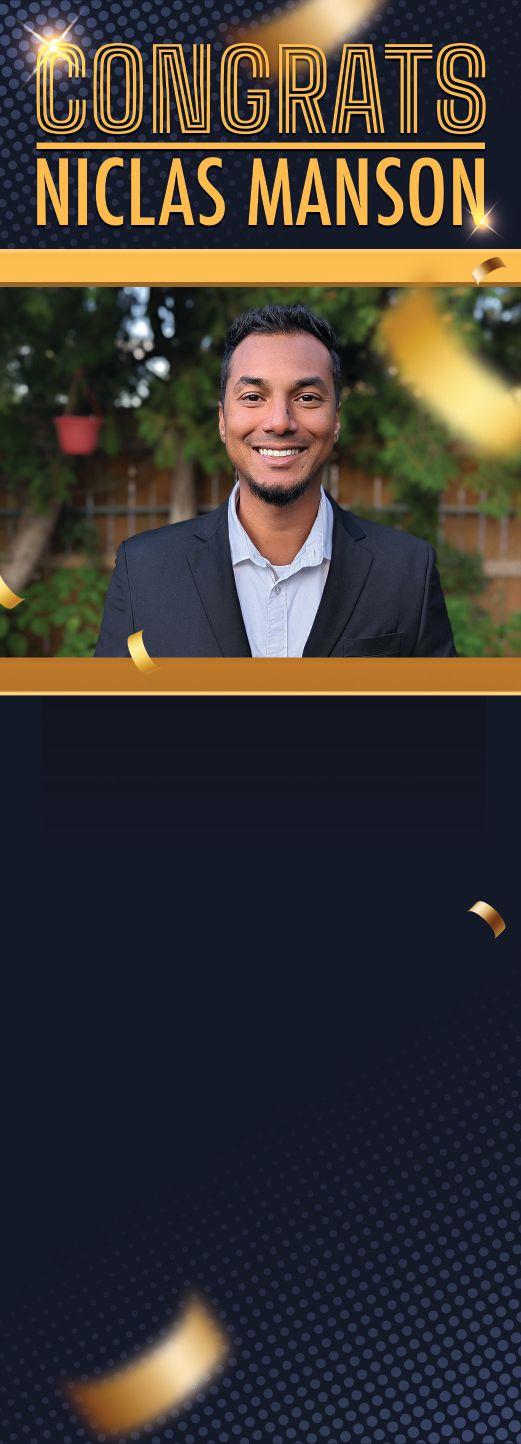





Niclas is a standout figure in the Canadian health and safety industry, widely recognized for his innovative approaches and unwavering commitment to ensuring workplace safety. His dedication to enhancing safety standards has earned him the distinction of being one of Canada’s top health and safety professionals, leading to his recognition as both a Rising Star and the Health and Safety Professional of the Year, for the second year in a row!
Niclas’s expertise spans various industries, where he has consistently demonstrated an ability to implement effective safety programs, reduce workplace incidents, and ensure compliance with regulations. Niclas’s approach is holistic, focusing not just on meeting legal requirements but also on proactively identifying potential hazards and mitigating risks before they result in harm. He also has been at the forefront of integrating digital tools and data analytics into safety management, allowing for effective control measure implementation. His forward-thinking mindset has led to the development of several industry-leading safety programs that have been adopted by companies across Canada. Additionally, Niclas has been instrumental in shaping national safety standards.
Niclas’s career is characterized by a relentless pursuit of improvement, making him a deserving recipient of these prestigious awards and cementing his reputation as one of the best health and safety professionals in Canada.
Niclas Eduardo Manson B.KIN, MPH, CRSP, CIH, ROH niclas@mansonmethods.com | +1 647 236 6252 mansonmethods.com

CSA Group is a global organization dedicated to safety, social good, and sustainability. It is a leader in standards development and testing, inspection, and certification around the world, including in Canada, the U.S., Europe and Asia. CSA Group’s mandate is to hold the future to a higher standard.
As we head into fall, the days are getting shorter and darker. This shift in daylight can throw off our circadian rhythm and make it challenging to balance sleep and alertness. This can subsequently increase worker fatigue – a form of potential impairment – impacting productivity and increasing the risk of occupational injuries and illnesses. R ecognizing and addressing fatigue is crucial for maintaining a safe work environment. CSA Group’s Candace Sellar, manager of health and safety strategic initiatives –standards, discusses the importance of managing workplace fatigue and offers valuable CSA Group resources to help organizations implement effective fatigue risk management (FRM) systems.
What are the different types of fatigue and what impact can they have on worker performance and safety?
CSA Group’s research report, “Workplace Fatigue: Current Landscape and Future Considerations,” recognizes that fatigue can be both physical and mental and can impact anyone, at any time, for any number of reasons. It can also worsen during the fall and winter, with some experiencing seasonal affective disorder (SAD), which can amplify feelings of depression and hinder focus. Mental fatigue can impair a person’s ability to evaluate hazards and make sound decisions, which can be particularly dangerous if you manage others. Tasks like operating machinery, inspecting workspaces for hazards, or selecting the correct personal protective equipment become much riskier. P hysical exhaustion also raises
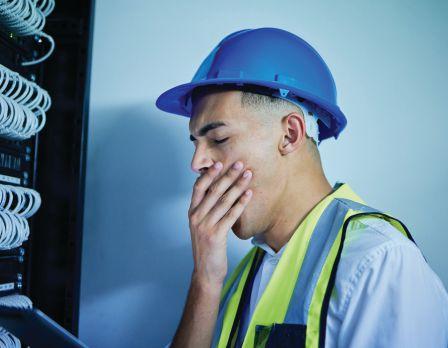
injury risks, as workers may, for example, modify how they lift and carry loads, or become more prone to slips, trips, and falls. For these reasons, we strongly encourage employers to develop and implement an FRM system for their workplace. CSA Group has several resources available to assist with this, including CSA Z1615:22, First responder fatigue risk management system – an evidence-informed standard built on the findings of a multi-year research and development project led by the Canadian Institute for Safety, Wellness & Performance (CISWP), with funding from Defense Research and Development Canada (DRDC).
CSA Group’s research found that fatigue is an often overlooked or misunderstood workplace hazard. It is not uncommon for organizations and workers to struggle to recognize fatigue as a significant impairment to safe work and to acknowledge it as a joint organizational and individual responsibility. Workplace factors such as the structure of work itself (e.g., shift work or repetitive job functions)
can exacerbate fatigue, while research from the Occupational Safety and Health Administration in the U.S. shows psychological health issues such as high-stress environments, harassment and bullying, long hours, and lack of performance recognition can further contribute to worker fatigue.
Quick fixes such as extra coffee or the occasional catch-up on sleep won’t address persistent fatigue (also called acquired sleep debt).
What does an effective FRM system look like?
CSA Z1615:22, First responder fatigue risk management system, indicates the objective of an FRM system is to reduce the risk of harm to workers, their workplaces, and the public. An effective FRM system takes a holistic approach, recognizing that fatigue is a multi-causal and multi-dimensional issue. It should encompass various activities, including strategies, operations, processes, projects, and services.
Key components of a robust FRM system as identified in CSA Z1615:22 include fatigue risk assessment, optimized work schedules, education and training, and continuous monitoring and reporting. By incorporating these elements, an FRM system addresses fatigue at both organizational and individual levels. When properly designed and implemented, it can enhance worker productivity by improving attendance, alertness, accuracy, efficiency, and safety, while also fostering a positive attitude toward work
What standards exist to address workplace fatigue?
CSA Z1615:22, First responder fatigue risk management system , was
published in July 2022 as a National Standard of Canada. Its development was informed by a multi-year research and development project led by the Canadian Institute for Safety, Wellness & Performance (CISWP), with funding from Defense Research and Development Canada (DRDC). CSA Z1615:22 was developed for first responders; however, OHS professionals in other sectors may find the content useful in understanding the building blocks for constructing a FRM system.
Additional CSA Group standards that can be beneficial when addressing fatigue risk include: CSA Z1008:21, Management of impairment in the workplace ; C AN/ CSA-Z1003-13/BNQ 9700-803/2013 (R2022), Psychological health and safety in the workplace – Prevention, promotion, and guidance to staged implementation ; C SA Z1011:20, Work disability management system
What CSA Group resources are available to help organizations and individuals implement these standards and develop an effective FRM system?
Within our occupational health and safety standards support tools, CSA Group has a free employee fatigue self-assessment tool, enabling workers to screen themselves for fatigue risk.
Employers can also identify fatigue risks by conducting employee fatigue and lifestyle surveys. These surveys can guide developing or refining work/rest policies and operational procedures. Additionally, they can inform fatigue hazard identification, risk analysis, and training for managers to ensure workplace safety and safe commutes home.
The observational fatigue behaviour checklist (supervisor/peer) is another free tool that helps supervisors assess employee fatigue. It uses a two-step approach: the
Compass Group Canada is proud to recognize Stephen Trickett as a Top 25 under 40 professional of the year. Stephen’s dedication and contributions to safety have significantly enhanced our safety culture and systems. His commitment to fostering a safe environment for all is highly valued and has made a profound impact on our organization. We commend his outstanding dedication and leadership in promoting safety at Compass Group Canada.
Compass Group Canada 1 Prologis Blvd, Suite 400, Mississauga, ON, L5W 0G2, Canada www.compass-canada.com • tel. 800.465.2203
first step involves checking for observed signs of fatigue categorized by risk level, and the second step offers strategies to mitigate fatigue, including both individual and supervisor controls to ensure safety.
Additionally, CSA Group’s research report, “Workplace Fatigue: Current Landscape and Future Considerations,” defines workplace fatigue and highlights relevant national and international legislation and best practices. The report examines fatigue risk management practices in Canada, including prescriptive rules (e.g., hours of service restrictions), tactical approaches (e.g., short-term initiatives as part of a larger strategy), and comprehensive fatigue risk management programs.
These free resources can help rais e awareness of how fatigue affects workers and workplaces, while also educating employees on their role in mitigating fatigue-related risks.
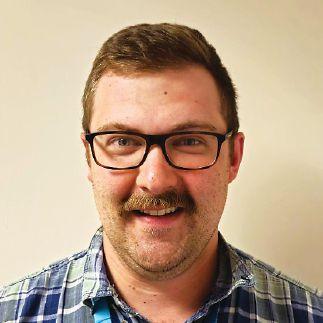
“Maintaining, promoting and building a safe work environment has been a passion of mine since joining Compass Group Canada six and a half years ago. To be recognized for this award has allowed me to realize that the work I am so passionate about doing, truly makes a difference to all compass associates and ensures they return home safe every day.”
Erin Oliver’s life-long journey to improving health and safety
Erin Oliver didn’t set out to be a health and safety professional, but she’s undeniably made an impact in the field over the course of her 30-year career.
“When I was a kid, I thought I’d be a doctor – and I went to school to be a doctor. But I found waiting for people to come to you sick or injured was too far down the chain of care,” Oliver says.
This thinking was influenced by her experiences doing sheet metal work with her father and seeing first-hand the types of injuries fellow workers sustained. “I wanted to prevent people from getting hurt or killed, and I recognized that the workplace was the place I could make the most change.”
Oliver entered the health and safety profession just as Ontario’s Occupational Health and Safety Act was finding its footing. She was able to pair her education with her passion and seize opportunities that put both to work – first as a consultant, then as an entrepreneur as president of Barantas Inc., focusing on the highest risk sectors, and most recently as an employee of a major Canadian steel manufacturer.
Then there are her volunteer roles, where Oliver has invested countless hours in industry organizations, including the Ontario Kinesiology Association, the Board of Canadian Registered Safety Professionals and Threads of Life.
These days, the stakes are more personal than ever. Two years ago, both she and her father were diagnosed with cancer. His was occupational and ultimately claimed his life.
“My entire career has been built on prevention, but the one person I couldn’t save was my dad,” Oliver reflects. “If I need to move a room quickly about occupational disease, or if I face resistance to change, I share my story about our shared journey through that tragic time.”
The COVID curveball
In what Oliver calls one of the wildest times

in her life, she was appointed to chair the Ontario Ministry of Labour, Training and Skills Development’s prevention council just three months before the COVID-19 pandemic hit.
“We were looking at doing some very cool safety things,” she reflects. “Then suddenly we had to re-tool that very structured technical thinking to include healthcare thinking, and we had to recognize that we weren’t going to be perfect, so, we just had to do our level best every day.”
“It was a war and you had to be ferociously creative,” Oliver adds. “It changed my willingness to tolerate old school ways of thinking as a defense strategy for why we cannot change and improve each day.”
She encourages other health and safety professionals to approach situations with curiosity, ask ‘what if’ questions and explore new ways to do things. She also stresses, “Prevention is something you can’t do alone.”
The next chapter
Earlier this year, Oliver left the construction sector and moved back to her hometown of Sault Ste. Marie, Ont., to step into the role of vice-president of health and safety at Algoma
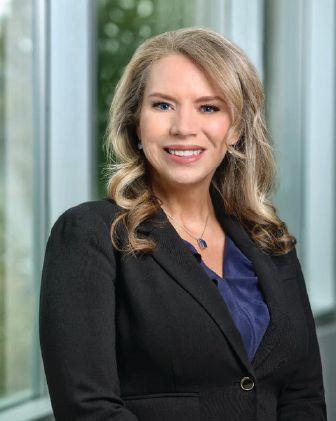
Steel Inc. She calls the company “near and dear” to her, noting many of her friends and family work there.
“I want to end my career by coming home, full circle, and trying to prevent family and friends from suffering. I want them to be able to go home to their loved ones healthy and safe each day.”
Throughout her career, Paula Campkin has helped drive occupational health and safety policy and tirelessly mentored the next generation of safety professionals.
The 2024 inductee into the OHS Hall of Fame has been with Energy Safety Canada for 17 years, and currently serves as vicepresident of its Operations and Safety Centre of Excellence. There, she leads the development of safety initiatives and training for the Canadian oil and gas industry.
Along with her role at Energy Safety Canada, Campkin is one of the founders and the inaugural chair of the Women in Occupational Health & Safety Society (WOHSS)– something she sees as one of her career’s proudest moments.
“WOHSS started out as a conversation in a pub and a common idea around supporting and advancing women in the health and safety field,” says Campkin. “Then, within six months, we had developed a business plan, stood up a board of directors, and kicked off our membership.”
Today, WOHSS has about 400 members across Canada and some international members to boot.
“I think it’s amazing to see a group of women all pulling in the same direction and working together to do something that has an impact,” says Campkin.
She credits her involvement with WOHSS and other volunteer committees, such as the Board of Canadian Registered Safety Professionals, for helping influence and evolve her leadership style.
In her day-to-day work, Campkin sees herself as a facilitator and communicator, working to gain industry alignment among different sectors, as well as regulators and
government bodies that may hold competing positions on an issue.
“Yes, it’s challenging, but our job is to try and facilitate those discussions and come out with a path forward in how we’re going to implement initiatives that improve health and safety,” says Campkin. “We’re only here because of industry. We’re by industry, for industry, and if we’re not responding to what industry wants, then we’re not doing our jobs.”
So, what does the future of health and safety look like? According to Campkin, there are plenty of avenues to explore for the next crop of professionals.
“Health and safety is still very much an emerging profession, so there’s still a lot of opportunities to be had because it crosses into so many different industries and sectors,” Campkin says. “I would say we have gained a lot of ground in reducing injury and illness by putting compliance and systems in
place. But I think we still need to look at how we move beyond safety as an outcome and view it as a capacity to manage risk and fail safely.”
When it comes to the next crop of health and safety professionals, Campkin is adamant that there is no substitute for bootson-the-ground, real-world experience.
“Definitely go out and get experience in the industry that you want to work in. If you want to work in construction as a safety professional, go out and do a labour job, or go out and shadow the trades and see what they are doing,” she says.
Another piece of advice from Campkin: Volunteer wherever you can and find a mentor.
“Join organizations like WOHSS so you can network with like-minded professionals and really grow your network,” she says. “Likewise, having a mentor gives you someone to bounce ideas off of while building your capacity to learn.”
Coming back to the office in a post-CO VID world was never going to be easy.
While some companies opted for the “rip-off-the-band aid” approach with mandatory return policies, the Investment Management Corporation of Ontario (IMCO) saw things differently. They recognized this wasn’t a case of business-as-usual, and their employees had grown accustomed to the flexibility and work-life balance of working from home.
So, IMCO’s leadership team decided to adopt a hybrid work model, where employees come into the office two to four days per week.
Hybrid work helped lessen the stress associated with coming back to the office and – most importantly – showed the company’s commitment to mental health and wellness was backed by action.
Founded in 2016, IMCO operates as a not-for-profit organization, providing public sector institutions such as the Ontario Pension Board and the Workplace Safety and Insurance Board with investment management services.
V ictoria Trohak, senior manager of operations and facilities at IMCO, leads a team of five and plays a key role in creating a psychologically safe space for the company’s nearly 400 employees.
According to Trohak, IMCO’s “peoplefirst” culture was evident right from her first day, when she was struck by how her managers took the time to properly orient and introduce her around the office.
“ For me, that was a huge shift coming from a [different] company where it was like, ‘right, here’s your badge, here’s your laptop – now go to work,’” she says. “At IMCO, it was, ‘we’re going to sit, talk, figure out how to build your team and what works for you.’”

A s much as IMCO’s people-focused culture comes from the top of the organization, Trohak says she and her colleagues work to ensure that culture is actually being felt by employees on a daily basis.
For Trohak, it’s about making employees feel that their feedback is genuinely heard – regardless of whether it’s provided faceto-face, via the company’s internal Viva Engage social feed or through regular pulse surveys.
“ We really try our best to listen to and hear what our employees’ feedback is and make those adjustments so that their work life is improved,” says Trohak. “It’s one thing to fill out a survey and nothing happens, right? But it’s another thing when we say, ‘Hey, we read your feedback and we can totally do that, or we’re going to start doing that now.’”
The feedback she and the leadership team receive has helped shape everything from the the addition of designated quiet rooms and onsite fitness facilities, through to finer details like having a healthy selection of late-afternoon snacks.
“A lot of the time, it’s the smallest touches
that make a huge impact,” says Trohak. “And by making those changes, we’ve done our job by impacting 400 people and making them happier.”
Another way IMCO is making psychological safety a reality is by providing training around creating healthy, supportive workplaces.
To date, 20 employees have completed the Workplace Mental Health Leadership Certificate Program, which teaches empathetic, solutions-focused leadership skills for promoting mental health.
Trohak says there is also a big emphasis on wellness events that range from virtual seminars with keynote speakers and experts to canine therapy days.
O ver the past year, IMCO employees also saw their annual benefits coverage for mental health increase and expand to include a far wider list of mental health providers.
“It’s about taking care of the people who contribute to our business’ growth and success, and making them feel as supported as possible in and out of the office,” says Trohak. “Because they’re only as successful as we are.”
Read
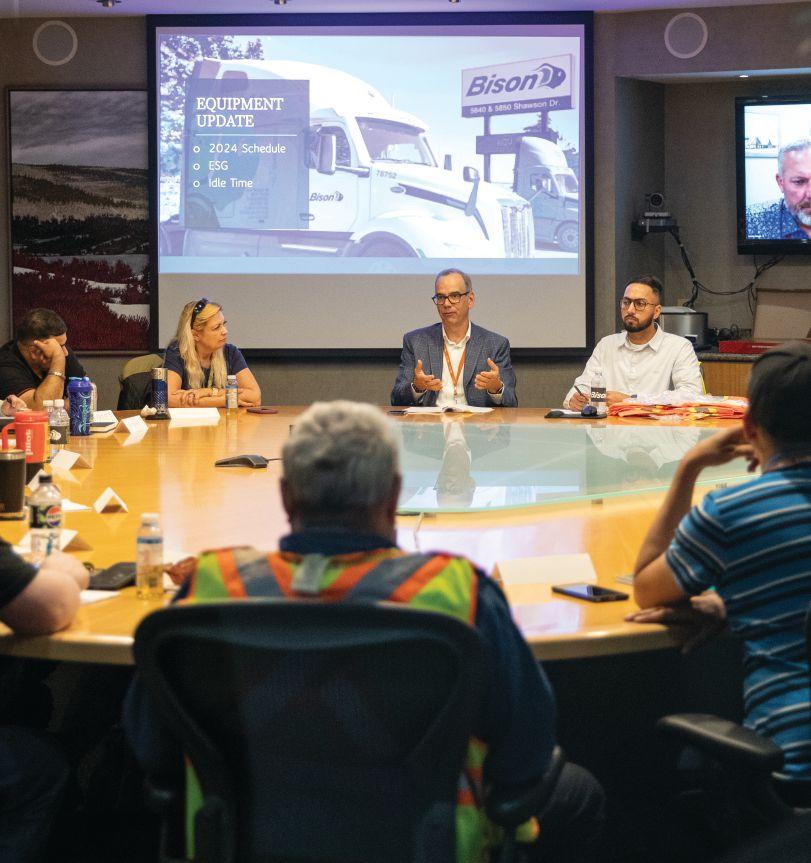
At Bison Transport, safety starts at the top. The freight solution provider’s leadership team is committed to building and sustaining a safety culture where everyone is comfortable speaking out about safety concerns regardless of their position or tenure.
To that end, the company has implemented a “right to decide” policy that empowers every employee and owner operator with the right to temporarily discontinue work if they deem a task unsafe. Fatigue, state of mind, health, weather, equipment or road conditions – if an employee feels a situation is unsafe to operate in, they can postpone the work until conditions change – no supervisor approval required.
“If you talk to somebody that’s been here for a long time, they love it,” says Stephanie Fensom, senior manager for safety and compliance with Bison Transport.
To help new drivers feel comfortable exercising their right to decide, the company’s associate vice-president of safety and driver development will typically attend new driver orientations. “He’ll be the first one to say, ‘here’s my cell phone number – if you ever feel that your right to decide isn’t being adhered to, you phone me.’”
Making senior leaders accessible and treating communication as a two-way street has been pivotal in building and maintaining the company’s safety culture.
Bison Transport stations safety counsellors at each of its terminals across Canada. These counsellors provide coaching on foreseeable hazards and ways to mitigate issues like injuries, speeding, and following distances to prevent problems before they occur. But they also act as a channel for drivers to provide open, honest feedback to management.
Drivers can also make their voices heard by participating in driver advisory boards,
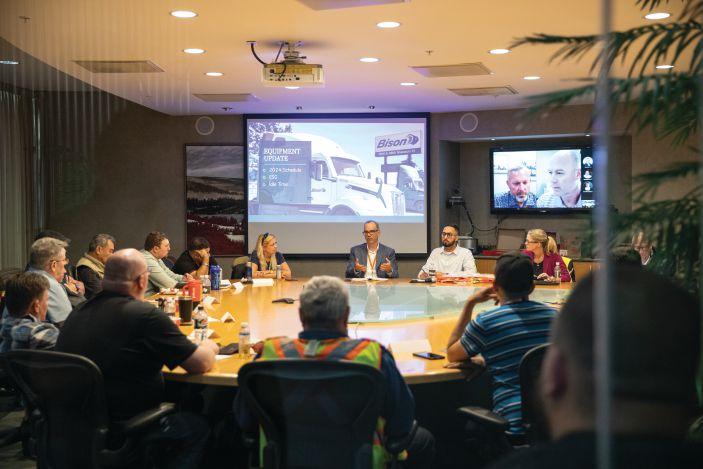
which meet in-person twice a year. Members act as advisors for health and safety and serve as a kind of focus group when driver engagement, feedback, or endorsement is needed.
“We wanted to put some distraction and fatigue cameras in some of our trucks a few years ago to test them out for some entry level drivers, but we’d never done inward-facing cameras before,” Fensom explains. “We really wanted the drivers’ perspective, so we took it to the driver advisory boards and said ‘here’s what we’re thinking, here’s how the product we’re thinking of works, and this is how we intend to use it. What’s your gut reaction?’”
At the beginning of that meeting, reactions were mixed. However, after discussing the issue further, most drivers walked away willing to participate in a pilot to test whether the cameras would work as described. After living with the cameras for a few months, those drivers were satisfied and became ambassadors for the in-cab camera program.
And though endorsements from the
driver advisory boards are nice to get, their challenges are equally important in building the company’s safety culture.
“ When we first started doing our annual internal inspection blitz, we were just doing it on our trailers,” Fensom says. “It was our driver advisory boards that said we needed to do tractors. We thought that might be too invasive, but they said, ‘let’s do tractors,’ so we did.”
“ We build trust by giving our drivers a voice,” she adds.
Bison Transport’s approach to safety is making a difference. Employee surveys confirm they experience a greater awareness of workplace safety now than in the past. Moreover, in the last adverse season, the company’s major loss of control accidents dropped by 37 per cent, and its overall number of injuries was down 34 per cent. With yearly audits of its health and safety programs to help identify gaps, and the ongoing work to maintain its Certificate of Recognition (COR) certification, Bison Transport is well-positioned to continue driving safety forward.
To say Kevin Watson is active in his community would be a massive understatement. Watson, Agnico Eagle Mines Limited’s superintendent for health and safety in the Ontario region and a Canadian Registered Safety Professional (CRSP), works tirelessly as an agent of change at the local, provincial and national levels.
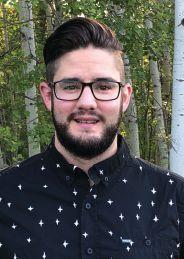
W hen OHS Canada spoke to Watson in mid-August, he was supporting his employer’s development of a medical service facility in Kirkland Lake, Ont., organizing a scholarship funding event to support local students pursuing
post-secondary education in a mining-related field, serving as director-at-large with the Canadian Institute of Mining’s Health and Safety Society, and as an executive member of its Porcupine Group – a not-forprofit organization that represents mining and engages with the broader community in Timmins, Ont.
“I work in health and safety; we can be called upon at any given time, whether that’s because there’s been an incident or there’s something more positive where you need to be somewhere on behalf of the organization after hours or on the weekend,” says
Watson. “When those things come outside of work hours, I understand their importance and I want to get involved.”
This attitude makes Watson a natural choice to work with Agnico Eagle Mines’ community relations team and represent the company at various events.
He’s also a familiar face at events hosted by local First Nations communities, with whom Agnico Eagle Mines is consciously trying to foster meaningful relationships.
“Last year I had an opportunity to participate in an event called ‘Gathering of Our People’ up in Moose Factory, Ont., and that was very fun,” Watson notes. “We were also at the Forward Summit last year, where there was a lot of information shared about truth and reconciliation.”
Wherever his work takes him, Watson is focused on uncovering what his community needs and exploring ways he can help.
There are a few things Norm Keith credits for helping him nab the OHS Lawyer of the Year award for a second time. First are early experiences that exposed him to high-risk industries, including summers underground in the mines in Sudbury, Ont., where he worked to put himself through university. Keith says his time on highhazard job sites inspired a lot of empathy for the employers, supervisors and workers doing dangerous jobs.

More recently he’s been inspired by his observations that safety regulators appear to be working against, not for, improvements
in workplace safety. He cites Ontario’s Ministry of Labour as an example, noting prosecutors are “generating good press releases for the government, and generating a great deal of revenue when they prosecute.”
“They’re trying to get a conviction and collect a lot of money after somebody’s been injured or killed. They’re literally waiting for the accidents to happen,” Keith says.
“Then when I talk to clients, whether they be an employer or a supervisor, they say, ‘I thought this law was supposed to help people comply and keep workers safe. Why are they treating me like a criminal?’”
He notes that these circumstances keep the trial lawyer in him challenged and engaged with his work after more than 40 years of practicing occupational health and safety law.
When asked what advice he has for up-andcoming safety professionals, Keith doesn’t hesitate to answer: “Understand the law and the regulations. Read them. Then read them again.”
He also stresses the value in experiencing hazardous work environments for yourself. “Go on to the plant floor. Go visit the construction project. Go down into the mine,” he says. “Sometimes I’m putting on my PPE and thinking, ‘Oh, this looks a little dangerous. I don’t want to be in this gap hole.’ But I go so I can see what it’s like. You’ve got to have a bit of courage to do that, but it’s an education for me, and it helps the client have confidence that you know what you’re talking about.”
Read the full stories at OHSCanada.com/2024-OHS-Honours.
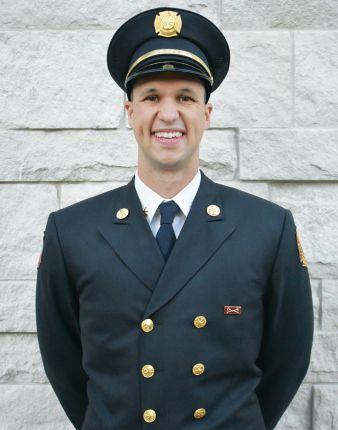
Being responsible for the health and safety of more than 900 firefighters may sound daunting, but Bryden Pelletier is up to the challenge.
The chief of occupational health, safety and wellness for Vancouver Fire Rescue Services (VFRS) is one of the youngest chiefs in the department’s 136year history. He’s also among the youngest metro fire chiefs in North American history. Despite having been in his role for just two and a half years, he’s had an outsized impact on health and safety in the department.
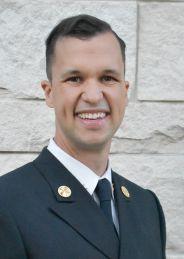
“I’ve always been drawn to safety. It’s one of those aspects that you need all levels of seniority looking into, and that drew me to it – I can make an impact here,” Pelletier says. “If you’re young, you have a role because you’re going to have a different set of eyes on jobs, and tasks within the fire department.”
Pelletier noted this also holds true in many other industries, where junior people may bring a different perspective to a role or process than a more experienced colleague.
During his time in a formal leadership role, Pelletier has been a force for change. He helped launch a cancer blood screening program, replace bunker gear containing known carcinogens, and introduce a yearlong psychological program for probationer firefighters (read more about all three initiatives on page 23). He’s also formed important partnerships to help fellow firefighters improve their well-being, reduce stress, and manage their mental health.

Three years ago, when Compass Group Canada realized its efforts to communicate its safety programs were coming up short, the food service and hospitality company committed to significant changes.
“ We hired a brand strategist to come in and help us do this properly because we’re safety professionals – we do safety well, but we don’t do marketing well. That’s not in our DNA,” says Brian Riley, vice-president at Compass Group Canada. “They helped us realize the communication and brand piece was a bit of a gap for us.”
After examining what the company had done in the past and what similar companies were doing to communicate with their staff and customers, the brand strategist helped the safety team craft a unique brand to communicate about safety internally and externally. And so, the EnCompass Safety brand was born.
EnCompass Safety differs from a conventional, compliance-based program that aims to prevent bad things from happening by actively celebrating safety through various initiatives, programs, and tools.
Safety campaigns are tailored based on trends, audit findings, incidents, and associate feedback. After each campaign, the company conducts a survey to solicit feedback, then reviews the suggestions and, where appropriate, implements them in future campaigns.
A monthly newsletter delivers program updates, enabling everyone to keep current on safety initiatives and events. The newsletters also call out excellent safety practices, spotlight the individuals and teams implementing them, and share lessons learned so that safety is continuously improving.
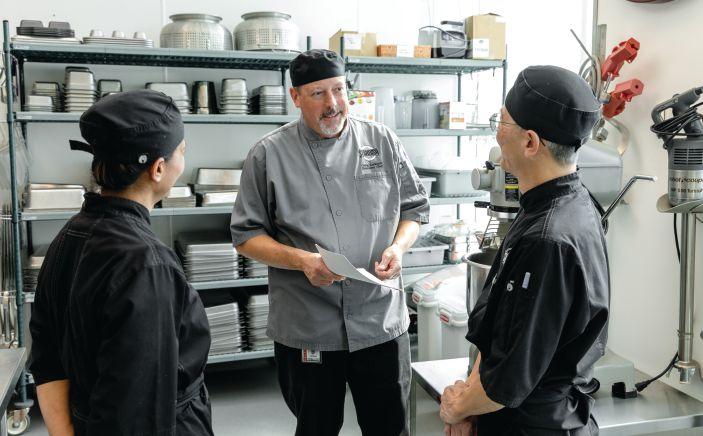
The EnCompass Safety Podcast, introduced in 2023, discusses global safety events with an eye to how Compass Group Canada’s programs, processes and teams can help prevent similar situations. Meanwhile, the EnCompass Safety Wrapped video series showcases the company’s safety initiatives throughout the year.
However, in Riley’s view, the most effective communications tool has been the Nudge app, which allows the safety team to distribute bite-sized, company-wide updates via a third-party app.
“It’s been great for us to easily push messaging out and make engaging messaging,” he says. “You can load videos in it, you can load really creative graphics in it, so it’s more fun and engaging.”
The app also allows for two-way conversations, which Riley considers a critical element of good communication. He’s been thrilled to see Compass Group Canada’s workforce of 25,000-plus employees
organically adopt this app feature.
“The most value that I see out of it isn’t what we share with [the workforce], but it’s what gets shared back. I love going on there when we have one of our posts where we say, ‘Tell us why safety’s important to you’ or ‘Tell us how you prevent head injuries in the workplace,’ and we get a great dialogue,” says Riley. “I love the content they provide. I love it more when they provide pictures because you get to see how safety is coming to life in the unit. How safety is coming to life in their home lives.”
“I think in safety, we can be very focused on what our message is and what we need to get out, so we create the message, and we push it out, and then we see it as being done,” says Riley. “I’ve really challenged the team to think about different ways to get the message out and recognize that everybody gets messaging differently. So, we have to try and push our messaging as many ways as we possibly can and then look to see if there are ways that we can validate that the message was heard.”
Read the full stories at OHSCanada.com/2024-OHS-Honours.
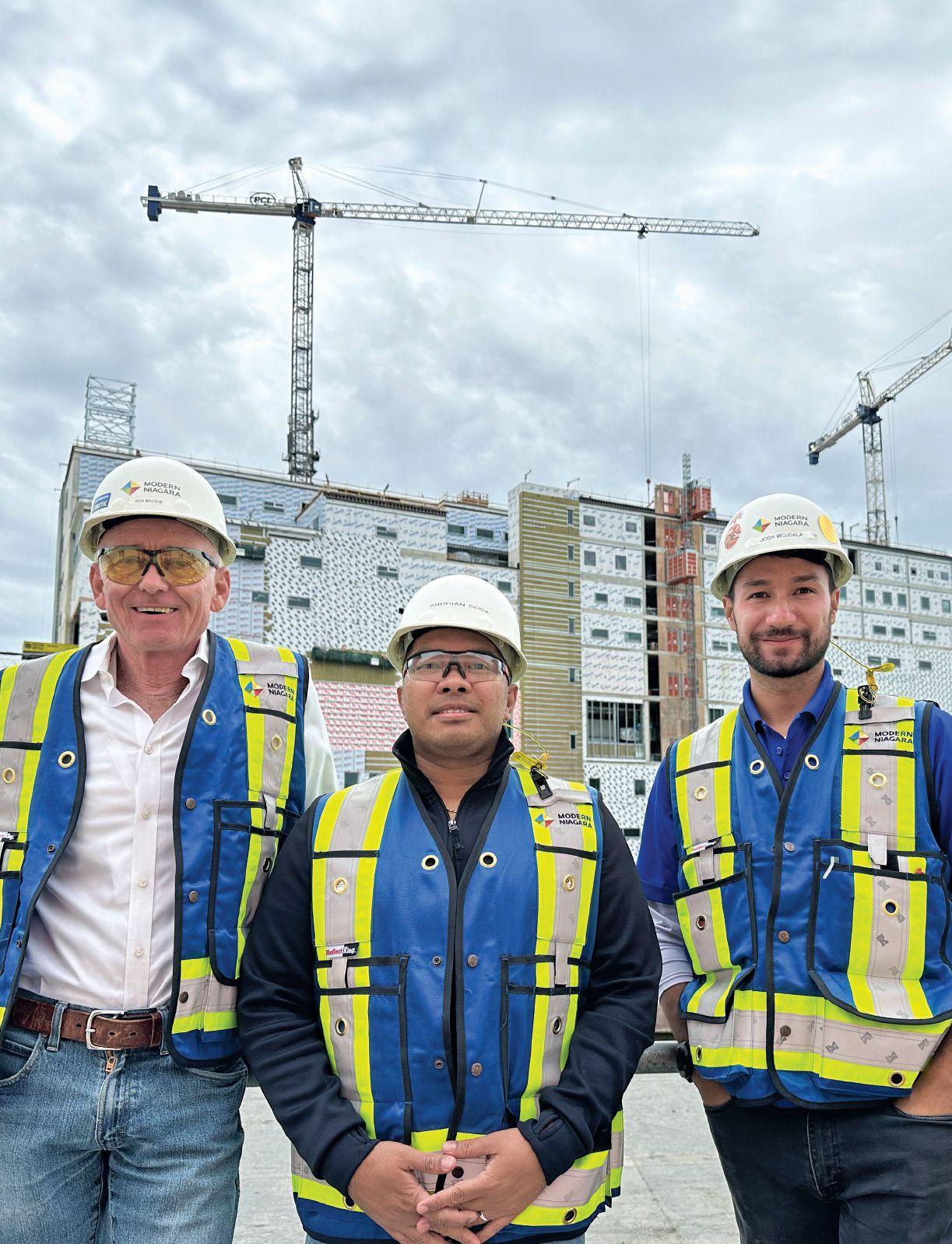
Since winning the Best Ergonomics Program award in 2023’s OHS Honours, Modern Niagara has continued to see very low numbers of ergonomics claims. In fact, the company has posted just five since February 2021, despite tripling its workforce in this time.
Ken Brodie, CRSP, senior health and safety specialist with Modern Niagara, credits much of the success of the mechanical, electrical, building services and integrated building technology contractor’s ergonomics program to good timing, securing employee buy-in early, and positive peer pressure.
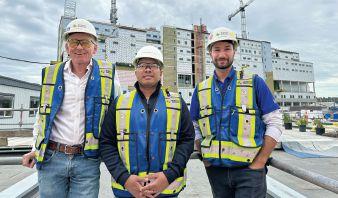
In 2021, Modern Niagara noticed its ergonomics-related injuries were trending up, resulting in higher claims costs, missed work time, and losses in productivity and
efficiency. Senior management took notice and committed to reversing the trend.
At the same time, the BC Construction Safety Alliance and Back in Motion Health were partnering to create ConstructionCare – a service offering early intervention for injured construction workers, including same-day physiotherapy assessments, fast access to physician assessments, and stayat-work and return-to-work coordination.
Modern Niagara seized the opportunity to participate in the pilot program and saw results immediately.
“Where you direct your focus is where your success will be,” Brodie says. “By monitoring where injuries are, where they’re happening, and what kind of injuries they are, you can tweak your program as needed.”


Jill is committed to the North and believes long lasting, healthy, and safe careers for Northerners is a key component to communities thriving for generations to come. She has spent her career working with that as her focus, originally starting out in the fields of Human Factors Engineering, Occupational Rehabilitation, and Return to Work Planning. She later transitioned to the WSCC (an ‘arms length’ agency of the Government of the Northwest Territories), where she worked to demystify Safety Legislation by developing Codes of Practice and partnering with the Canadian Centre for Occupational Health and Safety to create an OHS App. In 2019 she moved to another agency of the Government: the NWT Health and Social Services Authority, where she works as the Territorial Manager for OHS alongside her team of OHS Nurses and OHS Specialists & Trainers.
Year after year, hand injuries topped Modern Niagara’s list of injuries – it was the norm for the mechanical, electrical, building services and integrated building technology contractor. But when the company’s health and safety team noticed an uptick in the number of cut injuries its workers were experiencing, despite wearing the prescribed gloves, they knew it was time to take a critical look at their hand protection program.
“Once a notification of a hand injury would come in, we would have the safety specialists investigating those injuries take a picture or ask for a picture of the glove,” says Troy MacDonald, health, safety and environment regional manager with Modern Niagara. “My two reasons: one, to see if the guys were actually wearing a glove, and two, I wanted to see the condition of the glove: had it been cut through or had it held up? It was then that we started to notice there were too many instances where there was blood inside the glove.”
The solution? Increase the company’s general work glove cut level while maintaining the puncture resistance, dexterity, comfort and durability required for workers to perform their tasks. The company also took a renewed interest in gloves for specialized tasks, including non-vibrate, crush-resistant, flame-resistant and rubber gloves.
With feedback from procurement, supervisors and people in the field, the health and safety team sourced at least 15 different brands of gloves in various makes and styles. At the same time, MacDonald put each glove through its paces, enlisting his family to try them on and perform fine motor tasks, such as using chopsticks and picking up screws.
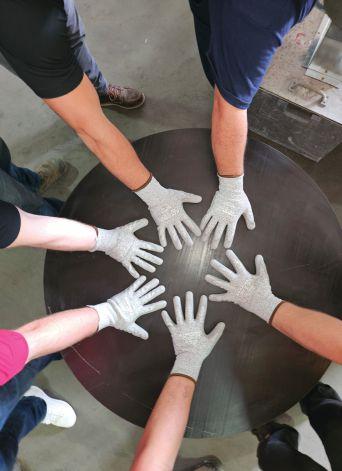
“One of the pushbacks we’ve always heard when the topic of a higher cut-resistant glove came up was ‘I can’t do small, fine work with those gloves,’” MacDonald said. “So, to help make the process more efficient, I would have my son and my wife simulate different fine finger movement tasks with the gloves on, and if [a glove] didn’t pass that test, then I wasn’t bringing it to the field.”
Another experiment he used to test each glove’s cut level involved placing a potato inside it and then trying to cut the potato with a knife. The goal was to get a better idea of what a certain cut level actually felt like, how the gloves held up, and how they would perform in the field. Again, if a glove didn’t pass the test at home, it didn’t go to the field.
Once the health and safety team narrowed down a list of contenders, they began distributing gloves to the workers to collect real-world feedback on each glove’s performance. Involving the workers in decisionmaking was key for Modern Niagara to overcome initial resistance to change.
“Once they understood why we were doing it and the benefits from it—the greater good, the macro-level stuff—they definitely appreciated being part of the solution,” MacDonald says.
U ltimately, Modern Niagara realized its workforce was too diverse for a onesize-fits-all glove. A pipe fitter requires a more rugged glove tha n a controls electrician, who may do delicate work with their fingertips for much of the day. So, the company’s current hand protection program requires a minimum cut level four for all work gloves; beyond that, each trade or group can choose the glove that works best for them.
T he re-vamped hand protection program was communicated in multiple ways: via toolbox talks, meetings in the field with workers and supervisors, communications from upper management, and emails, to name just a few. MacDonald says this allowed the company to get back to basics on hand protection.
“ There was a higher level of acceptance as we rolled out the enhanced glove program. It forced us to go back to a grassroots campaign of why you wear gloves.”
Including the field in the decisionmaking also empowers these workers to approach management with alternate options as glove technology evolves.
“ The field knows they can come to us with suggestions and that helps with always advancing, improving and maintaining our program,” MacDonald says. “We’re always striving to improve, and all members know this. We’re not stagnant when it comes to the safety of our people.”
S ince implementing the enhanced glove program, Modern Niagara has seen more of their field staff buy-in to wearing gloves on the job, creating a positive ripple effect throughout the company.
“And we are happy to say hand injuries aren’t our number one injury any more,” says MacDonald.
Read the full stories at OHSCanada.com/2024-OHS-Honours.
Compass Group Canada is on a mission to make every mile travelled a safe one and is committed to investing in the technology needed to see that mission through.
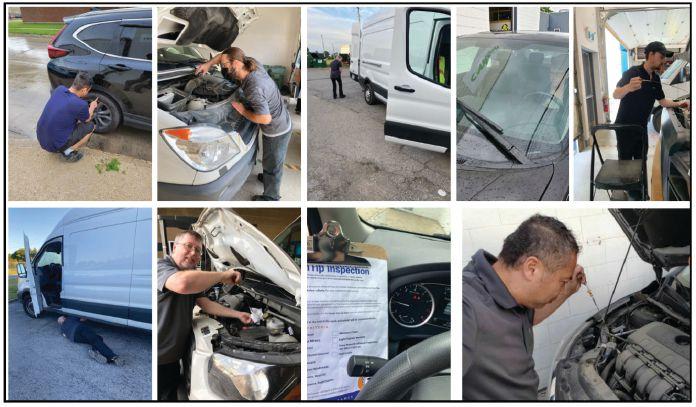
That’s why last year, the food service and hospitality company partnered with telematics provider Geotab to outfit its entire fleet with technology that allows it to monitor every vehicle’s GPS location, speed and driving behaviours.
Fernanda Caceres, director of process optimization and fleet safety, credits telematics technology with giving the company a better understanding of the dynamics in its operations across a variety of sectors, including business and industry, healthcare, education, senior living, sports and leisure, and remote sites.
If, for example, drivers serving a university are doing a lot of harsh braking because students are crossing in front of their vehicles, there’s an opportunity to coach those drivers on safer strategies to handle the situation. However, Caceres says identifying the trend can also invite other solutions. “Maybe we get another route and we don’t go through campus. Maybe we do some of the deliveries on off hours to eliminate having to put a driver in that situation where a student will run in front of him.”
The needs of a driver serving this route will be very different from those of a driver serving a remote camp three hours north of Thunder Bay, Ont. With telematics, Compass Group Canada can develop solutions to help drivers operate more safely in both scenarios.
The data collected through Geotab has allowed the company to implement new programs to make every driver’s time on the
road safer. The company’s speeding policy is one example of turning data into action.
“ When a speeding event occurs, it triggers an audible alert in the vehicle to notify the driver, and records it so the company can take action,” Caceres says. “We would have a coaching session where we sit down and talk to the driver. We then proceed to progressive discipline.”
But the data doesn’t just initiate punitive actions. Caceres recalls one instance where the telematics tracked a driver abruptly going from travelling about 100 km/h on an Ontario highway to being stopped dead. A manager was immediately alerted to the change and called the driver to check-in. When the manager noticed the driver’s voice sounded funny, they dispatched 911 to the vehicle’s exact location – the site of a crash that occurred as the driver was having a heart attack. The quick emergency response likely saved that driver’s life.
Caceres says there were “a good six months” of visiting sites to explain that drivers would
be monitored during business hours and reinforce the purpose of the new technology. But with time, the initial resistance to Geotab has waned.
“Getting boots on the ground and speaking to your employees is the best advice I can give,” she adds. “Employees are not going to be mindful of email notifications. What they want is to sit down, look at somebody at a higher level of leadership, and ask questions so they can get answers one-on-one. We found that being on-site talking directly to the drivers gave us that buy-in.”
Technology is constantly evolving, and so is Compass Group Canada’s safety program.
The company is outfitting select vehicles with Mobileye – a sensor-based technology that integrates seamlessly with Geotab. Mobileye helps identify risky behaviours, such as lane departures without signalling, tailgating, and collision warnings and sends notifications about their behaviour to drivers. At press time, the introduction of lane departure warnings had resulted in an 82 per cent decrease in occurrences of drivers changing lanes without signalling their intentions.
In his 27 years with food service multinational Compass Group, Saajid Khan has worked in India, Australia, the United Kingdom, China, and across southeast Asia.
These diverse markets taught Khan a crucial lesson that informs his philosophy toward safety in his current role as CEO of Compass Group Canada: “Process can only take you so far. Unless you can make safety cultural – a behaviour hard-wired into your DNA – it’s never going to stick,” he explains. “I’ve seen environments where the processes were rudimentary, but because the culture was strong, we had excellent safety outcomes. On the other end, I’ve seen environments where the processes were buttoned down, job safety announcements were clear, everything was exactly as it should be, but in the absence of an overarching safety culture, the outcomes were scary.”
Considering these experiences, it’s no surprise Khan is known for fostering a safety-oriented culture at Compass Group Canada. Safety is at the forefront of everything the company does, from CEO breakfasts that kick off with a safety moment to company-wide video messages, unit visits, and prioritizing safety on the agenda at senior leadership gatherings.
K han was also quick to support the creation of the company’s award-winning EnCompass Safety brand (see page 18 to learn more), which is used to communicate both internally and externally with clients.
H owever, the ripple effect of the company’s safety culture doesn’t stop there. Khan believes every associate who returns home at the end of the day takes that safety culture back to their family, creating a powerful multiplier effect.

“With 25,000 employees in Canada… we have the opportunity to make a difference and move the needle on safety outcomes in a fairly large swathe of Canadian society.”
K han helps maintain a strong safety culture by carefully monitoring leading indicators. At least 90 per cent of the company’s staff must be fully safety trained at any given time – a challenge in the food service sector, which is notorious for high employee turnover. Despite this, the company was tracking 94 per cent of employees fully safety trained at press time.
Then there’s the EYES program – an acronym for “ensure your environment is safe” – that sets targets for every associate to generate a minimum number of proactive safety comments weekly. (The target varies by sector, with more complex sites having higher targets.) Things
like dangling wires, blind corners, and the heights of work surfaces are commonly flagged.
The EYES program is supplemented by safety walks, during which a district manager, director, vice -president, sector president or Khan himself visits a unit and does a walk-through with the unit manager. Khan stresses these walks are different from an audit, offering an opportunity for a less structured conversation. Each leader has a target for how many safety walks they must complete every year. At press time, the company was tracking at 125 per cent of the target number of safety walks for this year.
“ We set targets, we hold people accountable for meeting them, then we act,” Khan says.
“I believe every incident is avoidable. I refuse to accept that we can’t ever be at zero, which means every incident should bother me. And it does.”
Read the full stories at OHSCanada.com/2024-OHS-Honours.
Bryden Pelletier’s route to chief of occupational health, safety and wellness with Vancouver Fire Rescue Services was an unusual one, but the path has allowed him to make a significant impact on health and safety among his fellow firefighters.
Union involvement early in his career inspired Pelletier to get involved in health and safety – it was an area where he could make an impact, even as one of the more junior members of the department. When the COVID-19 pandemic hit, he took on more of a leadership role within the union as well as the department, leveraging his background in mass casualties and pandemics to co-chair the department’s COVID task force. That work eventually led to a job offer for his current role, where he champions initiatives to help make work safer for firefighters in his department and beyond.
One such initiative is First Responder Cardiology Research Education and Early Detection, a blood screening program in cooperation with the University of British Columbia and Sports Cardiology BC.
“It began as a two-year pilot project where we ran cardiology tests,” Pelletier explains. “One individual phoned me out of the blue; he got screened and they found a Stage 4 blockage in their left anterior descending artery, also known as ‘the widow maker’. He had a 92 to 99 per cent blockage of that artery and roughly a 70 per cent chance of having a heart attack that year; if he had one, there was about a 90 per cent chance he was going to die from it. He told me this and then said, ‘Thanks. Because of you, I get more Christmases with my kids now.’ That really affected me.”
The program has since evolved to screen for other presumed occupational diseases, including annual screening for occupational
cancers recognized by WorkSafe BC. Participants will be screened for a different cancer marker every year for five or six years, then return to the beginning and repeat that same screening sequence. The hope is that routine screening will allow the targeted cancers to be detected – and treated – sooner, improving patient outcomes.
“It’s awesome to test and get early detection and provide interventions for individuals,” Pelletier notes, “But we weren’t yet doing anything on the front end to prevent these illnesses.”
There’s growing evidence that per- and poly-fluoroalkyl substances (PFAS), known carcinogens that provide the moisture barrier in a firefighters’ bunker gear, are being absorbed through their skin. So, Pelletier worked with the union’s local clothing committee to monitor emerging research and supplier responses in the market.
“As soon as non-fluorinated (PFAS-free)
gear was available and had passed all the testing, we jumped on it. We were able to quickly meet with the manufacturers, put a program together and be the first ones in North American to put a PFAS-free order in,” he says.
Another initiative Pelletier implemented aims to help probationer firefighters adjust to their new roles and equip them with coping skills.
“Throughout their first year, these individuals may be dealing with death for the first time in their lives. They’re dealing with certain individuals who may look like family members. They’re trying to wrap their heads around seeing death in individuals who are their own ages. And, they’re dealing with a stressful job, being counted on by other individuals and firefighters to make the right decisions. That’s a lot of pressure,” Pelletier explains.
“So we created a year-long cohort of probationer firefighters. The new incoming recruit class meets with a psychologist periodically so they can share their experiences. They’re probably having similar experiences as a probationer/recruit class, so we’re getting them to talk about that as well,” Pelletier explains. “We’re excited about what we think this can do not only for our job, but as a next step in mental health for all fire services moving forward.”
The first cohort launched in August to positive feedback from participants, but Pelletier admits it will take years before they know if the program is a success. However, he notes, “At least we’re moving forward on things. We’re taking an educated guess and if we fall, at least we’re going to fall forward... Then we’ll adjust as we move forward.”
Mo ving forward resonates through Pelletier’s advice to others trying to initiate change: “You need to carve out time in your schedule to think two or three years into the future: What’s your biggest problem going to be? What can you do about it now?”
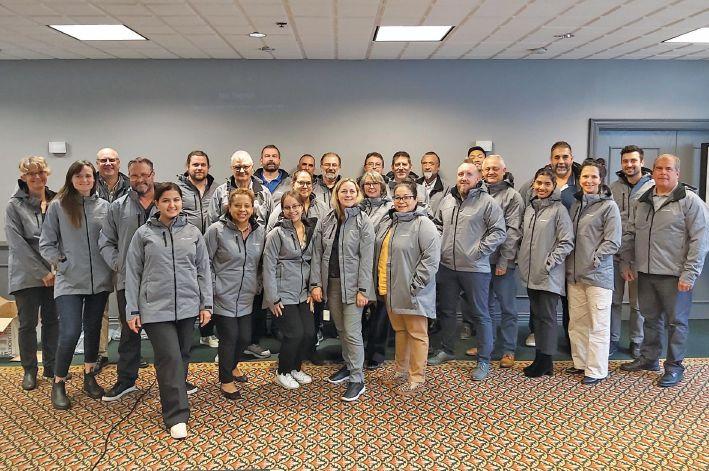
Purolator’s senior health and safety team members haven’t been working together for very long, but they’ve accomplished a lot in a short time, including helping the company achieve its two safest years on record.
“ We had to develop trust,” said Jimmy Vassilopoulos, Purolator’s director of health and safety. “That trust allowed me to start sharing my vision slowly and strategically, so it was digestible. It also allowed my team members to start strategizing on how to execute that vision through their own leadership capabilities.”
Vassilopoulos notes that sense of trust has permeated beyond the leadership team to encompass the entire health and safety team and also crossed over to other teams, allowing for powerful cross-functional partnerships that have helped the company’s safety culture evolve.
“ We’ve seen the whole culture shift,” agreed Vincent Tran, national health and safety manager. “It started off being very compliance-driven and has moved from that mindset to try to become more proactive.”
Tran credits this shift, in part, to a behaviour-based safety tool the team developed to track and upload behaviour observations. This allows the team to generate proactive data to improve their injury and collision prevention strategies. At Purolator’s largest facility – the national hub in Ontario – the initiative resulted in a 40 per cent decrease in injuries between 2022 and 2023. The team is now expanding the program to other regions.
Other notable accomplishments for the health and safety team include launching an in-house defensive driving program and a new linehaul finishing program,
implementing new incident management software, introducing driver scorecards that use telematics data to assess drivers on five safety metrics, and piloting a TRAQR board (an acronym that stands for “train, record, audit quality, reward”) that displays metrics such as load audits, behaviour-based observations, and work area and cleanliness audits.
Although it’s still early days for many of these initiatives, they’re already making an impact. In 2023, lost-time injury frequency and motor vehicle collision frequency were each down 10 per cent, while total injury frequency was down 7.7 per cent.
As of press time, Vassilopoulos said the company was on track for another all-time safest year in 2024.
Purolator’s senior health and safety leaders are quick to credit the organization’s various joint health and safety committees
with supporting a more proactive safety culture throughout the organization.
“ We have the ability to involve a variety of people and create initiatives where safety is the responsibility of every single person,” says Simon Huard, central region manager of health and safety. “There’s a great effort from the entire team and it shows in our results – not just in terms of accidents, but in terms of compliance and the quality of our relationship with the Ministry of Labour.”
Gail Townsley, west region manager of health and safety, says trust and a human approach are keys to building that engagement company-wide. “We recognize everybody has different skills to share and open the door so they have the ability to contribute.”
“ You have to empower people,” agrees Sean Brown, national health and safety manager of programs and projects. “[Health and safety] is a business partner. We’re there to succeed with different departments, and now we’re seen as such.”
Read the full stories at OHSCanada.com/2024-OHS-Honours.
When Linamar’s in-house
Drawbridge app was conceived in 2015, it was intended to replace paper visitor management logs. However, the company’s health and safety leaders saw an opportunity to push the concept further, replacing its paper-based contractor management system too.
Fast-forward to today, when Drawbridge will serve up one sign-in experience for a visitor accessing a site for a meeting and a very different experience for a contractor who’s on-site to perform work.
“A contractor has to have valid Workplace Safety and Insurance Board and liability insurance in the system, otherwise it doesn’t
let them sign in,” explains Melissa Gould, director of environment, health and safety for Linamar North America. “Drawbridge also requires them to indicate whether they’re doing high-risk work –examples would be work that requires lockout or work that requires a hot work permit – and it takes the contractor through the safety requirements for those processes.”
Depending on the type of work the contractor indicates they’re going to perform, Drawbridge can serve up tailored safety
briefings or training, which the contractor may be required to read and agree to before completing the sign-in process.
Drawbridge has been welcomed by Linamar staff and contractors alike.
The app gives Linamar full visibility of who’s on site at any given time, and ensures critical information is consistently communicated to every visitor. The latest iteration of the app even provides emergency evacuation information, so everyone on site knows where to go in an emergency.
McIntyre Crane & Rigging is proud to celebrate our Health & Safety Manager, David Monteith, who has been recognized as one of OHS Canada’s Top 25 Under 40.
Through his high level of dedication and commitment to improving and implementing McIntyre’s safety programs, we have enjoyed the joint successes of David’s work and professionalism as he has assisted in guiding both our management team as well as our operational staff to outstanding levels of health and safety understanding and compliance.
David’s leadership skills, work ethic, and direct yet feasible approach to matters of health and safety have helped McIntyre exceed safety targets while maintaining the highest levels of operational viability and customer service. His influence and guidance have been absolutely invaluable,
“McIntyre Crane & Rigging provides Crane and Rigging, Transport, and Industrial Moving services to various industries in Alberta. We pride ourselves on our unwavering commitment to safety and customer satisfaction. Supporting Canadian businesses is our priority, and we are proud to be Canadian-owned and operated.”

Working along a waterfront to clean up and store approximately 1.2 million cubic metres of historic low-level radioactive waste presents its fair share of health and safety challenges, but OHS Educator of the Year Bruce MacKinnon is certainly up to the task.
MacKinnon started in his current role as environmental health and safety coordinator for Soletanche Bachy Canada Inc. in Port Hope, Ont., just as winter was creeping in. He noticed everyone onsite wearing inflatable personal floatation devices (PFDs) – an odd choice for workers in a marine environment at that time of year.
MacKinnon soon realized the workers didn’t know that at lower temperatures, gas takes up less space, making their inflatable PFDs less efficient. “So I created a training program so that everyone could calculate buoyancy based on temperature and determine if they were using the right PFDs,” MacKinnon explains.
With this new information in hand, everyone started replacing their inflatable PFDs with seasonally appropriate foam options. MacKinnon also codified the need for this change with a formal policy for the site, reinforcing that inflatable PFDs must be swapped out when the temperature dips into the single digits.
T hat same year, MacKinnon introduced the workers to specialty PFDs designed for off-shore welders. Prior to this, the welders on-site had been working in inflatable PFDs that would inevitably end up with burn holes that rendered them useless if a worker ended up in the water.
M acKinnon understood that everyone on the team was trying to work
At Western University, where MacKinnon teaches students pursuing post-degree diplomas in occupational health and safety management, he has a reputation as an instructor who gets everyone excited about the subject matter and keeps them engaged.
“ Teaching and education need to be fun,” he says. “My style of teaching is very active. I laugh. I tell a lot of jokes. I get people involved – I pull people from the audi ence and I get their input based on their experience and knowledge, then use that going into guided discussions.”
safely – they just didn’t have all the information they needed to put best practices into action. Since day one, he’s been working to change that reality.
“Making sure everyone from the crew members to the client and the general contractor employees are educated and understand the processes and dynamics has been ongoing work since I came to the project,” MacKinnon says.
That work also includes training interns and more junior safety professionals. “I educate them and teach them our company processes, but I also make sure they understand the things that we talk about in reference to health and safety that are standard: understanding how we conduct risk assessments, accident investigations, and all the other things we normally do in the world of health and safety.”
“In occupational health and safety, you should give away everything in the game so that nothing is left to question or to chance, especially when the work that people are doing is very dangerous,” MacKinnon says, adding, “My job is to train my replacement.”
T his teaching style has the added benefit of transmitting knowledge both ways – a fact that MacKinnon considers crucial in health and safety. “It becomes a two-way learning dynamic. I’m learning from them, they’re learning from me and then collectively everybody is sharing knowledge.
“ The other critical part of being a good facilitator and a good teacher is understanding the concepts of auditory learners, visual learners and tactile learners,” MacKinnon adds. “We need to teach in a combination of all three styles because everybody in the group isn’t going to have the same style of learning.”
H e’s applied these same principles throughout his 30 years as a training instructor with the Canadian Armed Forces Cadet Instructor Cadre (CIC), working with everyone from cadets as young as 12 to mid- and late-career CIC officers and civilian adults. In 2018, he was awarded the Canada 150 Medal for his work with the Canadian cadet movement.
When asked what advice he has for other educators, MacKinnon’s takeaway is simple
“ Don’t let anybody go through your training program without a voice. Everybody needs to engage.”
Read the full stories at OHSCanada.com/2024-OHS-Honours.
Throughout the COVID-19 pandemic, many organizations wrestled with questions about how to care for their employees while keeping the lights on. BGIS was no exception. However, the integrated facilities management provider was trying to answer these questions against a backdrop of growth, acquisitions, and a changing company culture as those newly acquired employees joined its existing team.
“ The Golden Rules can set the stage when you bring in organizations with different cultures. You can’t just put safety rules on a piece of paper and expect everyone to understand them and internalize them,” says Mary Lou Sinclair, BGIS’ vice-president of health, safety and environment for North America and the United Kingdom. “Cultural change takes time when the culture of the company you’ve acquired is slightly different – not necessarily worse, but different.”
D uring its efforts to establish consistent company culture, BGIS realized it made sense to merge wellness initiatives with health and safety. After all, they surmised, people can’t be safe in the workplace unless they’re mentally and physically well.
“You can’t work safely if you’re not able to climb that ladder or push that piece of material, or if you are fatigued or distracted,” Sinclair says. “We are promoting a more holistic approach to employee well-being where we merge health and safety with wellness so that we are considering the whole person in our programming, so our team members can work safely, be productive, and deliver exceptional service to our clients.”
So, how is BGIS bringing its integrated approach to employee health to life? It

starts with a full benefits package that includes coverage for all mental health practitioners, including psychotherapists and psychologists. There’s also a robust employee and family assistance program (EFAP) in place to connect employees and their loved ones with various mental health and wellbeing services, including virtual services.
The company also offers a corporate gym membership, virtual yoga classes, fitness reimbursements, health and wellness education sessions, and other well-being initiatives.
In February, BGIS introduced a new program called Blue Zone Buildings, a movement to change the industry and demonstrate its culture of caring. The program covers the basics related to indoor building health – such as managing air, water and environmental quality – as well as more than 35 additional elements related to human health and wellbeing. The program supports optimizing indoor spaces for wellness, longevity, and productivity for
clients. To support this initiative, BGIS is launching advanced mental health training for leaders so they can identify individuals who may be struggling and support them in accessing help.
“ The idea is to ensure that when you come to the office, you’re coming to a place that understands the importance of wellness in the work environment,” Sinclair says. “Our clients want to do the right thing for their employees, and so many of them have committed to the Blue Zone Building program so they can demonstrate that they’re on the leading edge of caring about their workers.”
S inclair says the next step is to look at how these offerings are affecting key metrics, such as lost time injuries and short-term disability.
“ That’s one of the ways we’re aligning safety, which is a very structured program with leading and lagging indicators, with the wellness side,” she explains. “We want to be able to measure, pardon the pun, the health of our wellness program so we can show our leaders the ROI.”
For other organizations looking to marry wellness with their health and safety programs, Sinclair stresses the importance of having a senior leader who can spearhead the combined approach.
“ You can definitely do wellness and health and safety programs separately, but the program isn’t as strong that way,” she notes. “If you’re serious about it, consider an organizational change to strengthen the importance of the [holistic approach] and keep responsibility as senior as possible. I report to the global CEO, Gord Hicks, and the merging of the safety and wellness functions was the brainchild of Mike Greidanus, Canadian president of BGIS. Both are incredibly supportive and huge advocates of this approach and our holistic program.”
Read the full stories at OHSCanada.com/2024-OHS-Honours.
Alexis Gamble
Halton Healthcare

Alexis oversaw her organization’s first-ever workplace mental health risk assessment and developed a psychological health and safety program.
Andrew Brown
Ledcor Construction Limited

Andrew helped implement a new health, safety and environment management system, significantly reducing total reportable injury frequency.
Andrew Soto
Harvard Development Corporation

Andrew helped achieve a substantial reduction in Workers’ Compensation Board costs and a five-year record of zero lost time incidents, totalling over 1.5 million work hours.
Birva Dave
RDJ Bakeries Ltd.

Birva helped achieve two years of zero lost time at her organization’s facility in Stafford, Ont., and implemented the Workplace Safety and Insurance Board’s Health and Safety Excellence Program, resulting in $34,000 in rebates.
Bryden Pelletier
Vancouver Fire Rescue Services (VFRS)
Bryden introduced per- and poly-fluoroalkyl substance (PFAS)-free firefighting bunker gear, making his department the first in North America to adopt gear without these carcinogens.
Chelsea Laporte
Edmonton Police Services

Chelsea has a reputation for collaborating with stakeholders to assess emergency preparedness and identify ways to improve responses. In a previous role, she led
a labour program inspection while managing an internal COR audit.
David Monteith
McIntyre Crane & Rigging Ltd.
David has advanced health and safety programs, compliance and safety culture, helping bring recordable incidents to zero.
Gaby Victoria CAPREIT


Gaby has revolutionized CAPREIT’s virtual and in-person learning, developing custom content focused on the specific risks and hazards employees encounter.
Gurjot Manku
Cadillac Fairview

G urjot is an associate member of the Institute of Fire Engineers. He is also an executive director and national treasurer for the Institute of Fire Engineers’ Canada branch and a director at large and chapter secretary for the Canadian Fire Alarm Association’s central Ontario chapter.
Heather Perrie
RMC Group of Companies Ltd.
Heather ensured all 14 operating entities within the group obtained COR – up from just two when she came on board.
Hosam Albur CAPREIT


H osam obtained the National Examination Board in Occupational Safety and Health (NEBOSH) certification, reflecting his desire to stay at the forefront of evolving safety practices.
Jay Hennessy
HRS Group Inc.
Jay worked with local employers, the New Canadians Centre in Peterborough, Ont.,

and community interpreters to deliver health and safety training in Spanish and Russian.
Jaya Khemchandra Metrolinx

Jaya is a Canadian Registered Safety Professional (CRSP) and part-time professor with George Brown College’s postgraduate human resources management program.
Jill Rivera Northwest Territories Health and Social Services Authority

Jill developed the OHS program for the newly amalgamated health authority in the Northwest Territories and has been growing her team and program ever since.
Karen Bell
Utilities Kingston

Karen helps foster a culture of safety, from organizing events for staff, contractors and industry partners, to leading psychological health, safety and wellness initiatives.
Martine Bergeron
University of Ottawa

Martine developed various safety programs and procedures, including for lock out tag out (LOTO) and designated substances. She also developed a laboratory safety orientation for skilled trade workers.
Meky Hsu
Stellantis Brampton
Assembly Plant

Meky’s approach to investigating safety issues ensures root causes are identified and addressed, resulting in a 35 per cent reduction in the organization’s injury rate in 2023
Nash Mohammed
Walker
Read the full stories at OHSCanada.com/2024-OHS-Honours.

Nash has transformed the safety culture in the grease trap services division by raising the level of employee involvement, encouraging hazard recognition, and increasing incident reporting.
Prince Dufe
Asante Gold Corporation
Prince created heat maps and risk clusters to visualize high-risk areas in the workplace, highlighting incident locations, near misses and hazard concentrations.
Raj Bhatt
Bunge
Raj is a Certified Safety Professional (CSP) and lead auditor for ISO 9001, 14001 and 45001.

Ryan Quinn
Construction Safety
Nova Scotia

Ryan spearheaded the Construction Safety Nova Scotia transition to online Certificate of Recognition (COR) courses. He also created the OHS Guide to Legislation app, simplifying the province’s OHS Act for the sector.
Sara De Iuliis
MillerKnoll

Sara devised measures to eliminate LOTO violations. She also has her Canadian Registered Safety Technician (CRST) designation.
Shayna Dry
Bruce Power
W hile completing her apprenticeship and journey person as an iron worker,

Shayna developed a passion for workplace safety. Today she combines her trades experience and safety skill set to promote safety performance.
Stephen Trickett
Compass Group Canada

Stephen recently collaborated with a colleague to achieve a 197 per cent increase in hazard assessment completion over the previous year, earning numerous internal awards.
Vincent Tran
Purolator

Vincent recently developed a custom behaviour-based safety platform that allows management and joint health and safety committees to track employee behaviour observations and visualize data.

BGIS is immensely honoured to be the very first winner of OHS Canada’s Holistic Employee Health Award. By merging the safety and wellness functions and program activities, our goal is to ensure our team members are “Work Ready”, being mentally and physically able to work safely and productively.
Visit our website to learn more about BGIS Blue Zone Buildings™. Together we will lead an industry movement to raise the bar on healthy building standards, where indoor environments that fuel human prosperity are the new normal.
BNE Concrete Floors & Coatings Inc., has been fined $65,000 after a worker was injured by prolonged exposure to carbon monoxide, and an additional $5,000 for failing to notify an inspector.
The company, based in Cambridge, Ont., pleaded guilty to failing to ensure the measures and procedures prescribed under section 47(2) of Ontario Regulation 213/91 were carried out at the workplace, contrary to section 25(1) (c) of the province’s Occupational Health and Safety Act The company also pleaded guilty to failing to immediately notify an inspector of a critical injury at the workplace, contrary to section 51(1) of the Act.
On Jan. 4, 2023, the company was contracted to coat and polish concrete floors at the site of a new warehouse in London, Ont.
A worker was operating a polishing machine that used an internal combustion engine that burned propane. After running the machine for approximately 2.5 hours, the worker began to feel unwell and lost consciousness after leaving the room.
The worker suffered a serious injury from carbon monoxide exposure due to the lack of ventilation in the room.
The Ministry of Labour, Immigration, Training and Skills Development was not made aware of the incident until six days later, and the scene had not been preserved.
In addition to the $70,000 in fines, the court imposed a 25 per cent victim fine surcharge as required by the Provincial Offences Act The surcharge is credited to a special provincial government fund to assist victims of crime.

A construction company working on a Coquitlam, B.C, development site was slapped with a $167,890 fine from WorkSafeBC, after its tower crane hit adjacent high-voltage lines and caused a power outage to the surrounding area.
$5,000 amount BNE Concrete Floors & Coatings was fined for failing to notify Ontario’s Ministry of Labour, Immigration, Training and Skills Development of a workplace injury
WorkSafeBC conducted a workplace inspection following the incident on April 15, issuing a stop work order for the site.
Inspectors issued a fine to Femo Construction Ltd. on July 16, after determining the crane’s zone limiting device was not functioning, its remote control had been left unattended and there were no training records available for the crane’s operators.
“The firm failed to ensure that, before a worker starts work close to high-voltage electrical equipment, the worker was informed of the existence of the electrical equipment and the work procedures to be followed,” WorkSafeBC said. “This was a repeated and high-risk violation.”
The incident occurred during the concrete forming and excavation stage of the development project by Formwerks Boutique Properties, which is building 91 townhouse units on the 700 block of Robinson St.
drift into the high voltage power lines running parallel to the work site, according to the inspection report.
The opticrane limiter – which is an anti-collision safety system meant to provide operators with early warnings – failed to engage, and its alloy chains hit high-voltage lines, cutting off power to nearby properties.
No injuries were reported on scene, and the company immediately stopped work with the crane on site.
While Femo Construction was able to provide inspectors with lockdown procedures for the remote control, no crane collision response plan was submitted Inspectors also couldn’t find documentation on the installation of the tower crane’s anti-collision system and its remote control during their review.
Employees were gathering debris in a bin and had left the crane’s controller unattended when a gust of wind pushed it’s jib, causing it to
“The employer has a responsibility to provide workers with and instruct them in safe electrical work practices if the intended work may lead to an encroachment on the general limits of approach to energized high voltage equipment and conductors,” the inspectors wrote. “WorkSafeBC has determined that there are grounds for imposing an administrative penalty.”
- The Canadian Press Construction
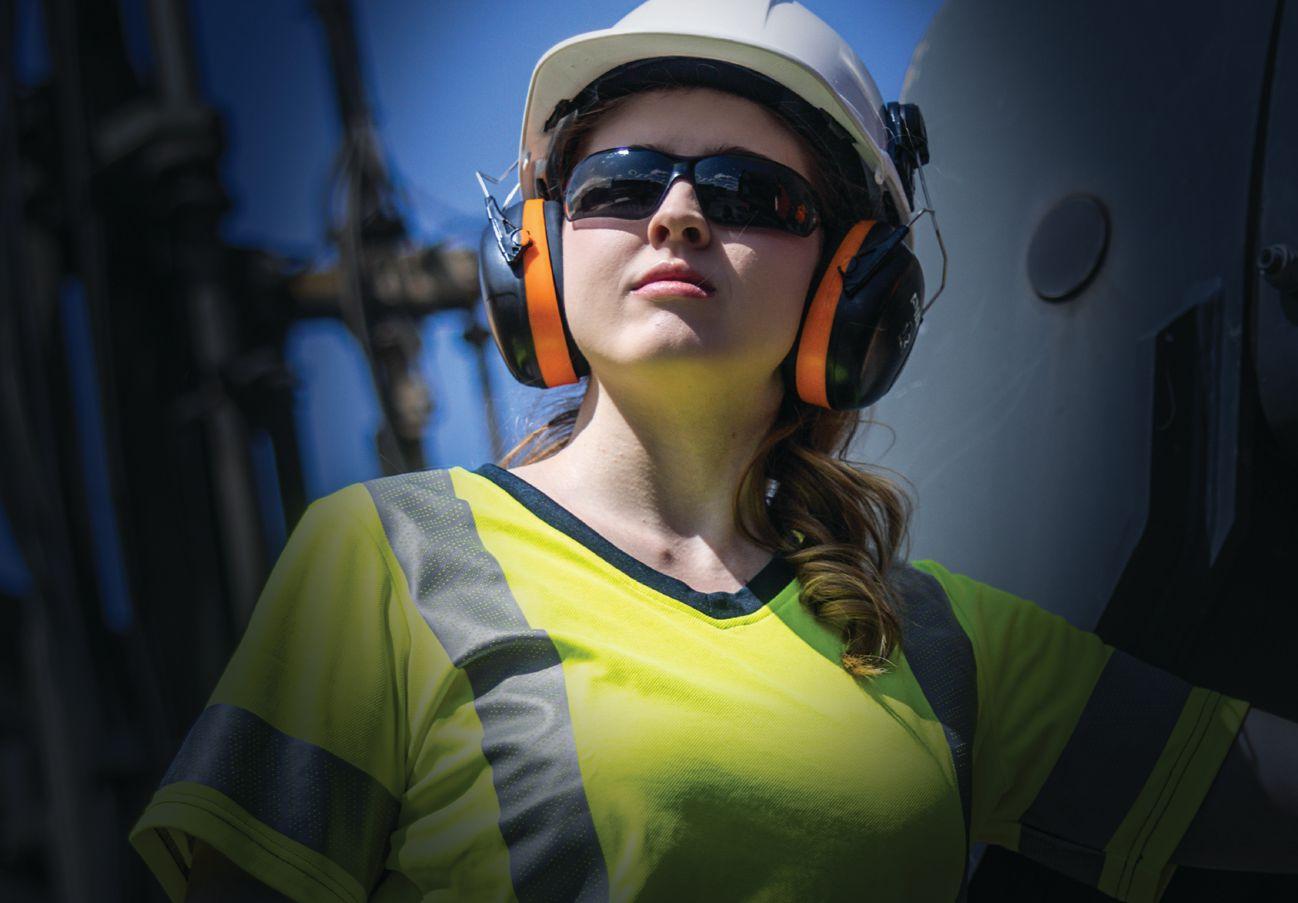
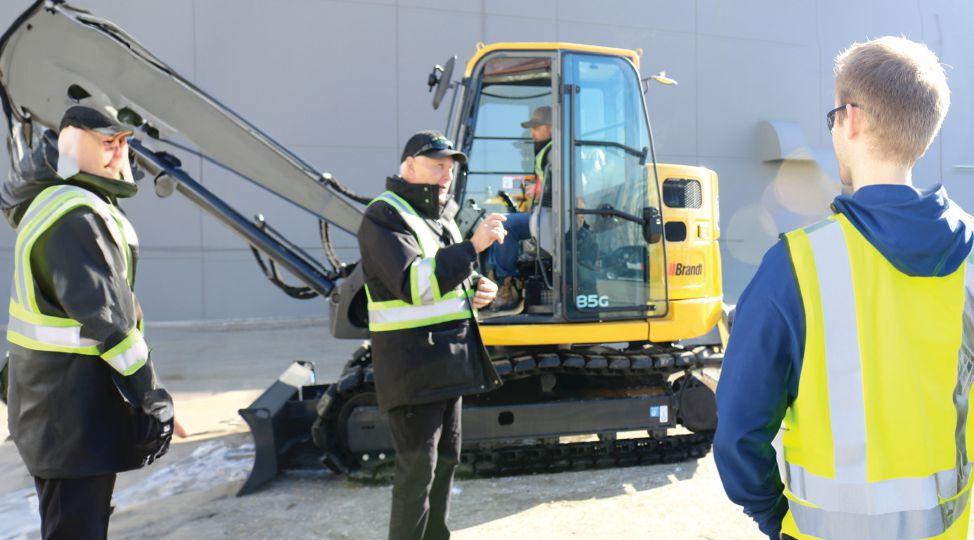
Enhance your safety, productivity, efficiency, and confidence on the job with Brandt Operator Safety Training.
Learn how to load handle, drive & maintain a range of forklift types.
Get certified in a day with our all-inclusive skid steer course.
Understand all aspects of telehandler operation, from startup to shutdown procedures.
Industry-leading training on motor grader handling, safety & operations.
Visit us online at: more.brandt.ca/forklifts
Gain skills in maneuvering and operating an Mobile Elevated Work Platform safely onsite.
Take our full-day excavator course & get certified.
Master fall protection systems and skills that meet regulation requirements

Industry-leading training on wheel loader handling, safety & operations.
Gain an understanding of how to inspect & safely operate overhead & truck-mounted cranes.
This course provides students a basic understanding of backhoe operation, maintenance, and load handling.