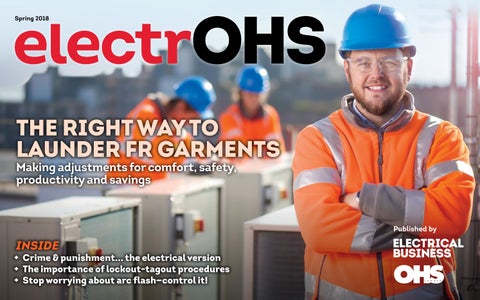
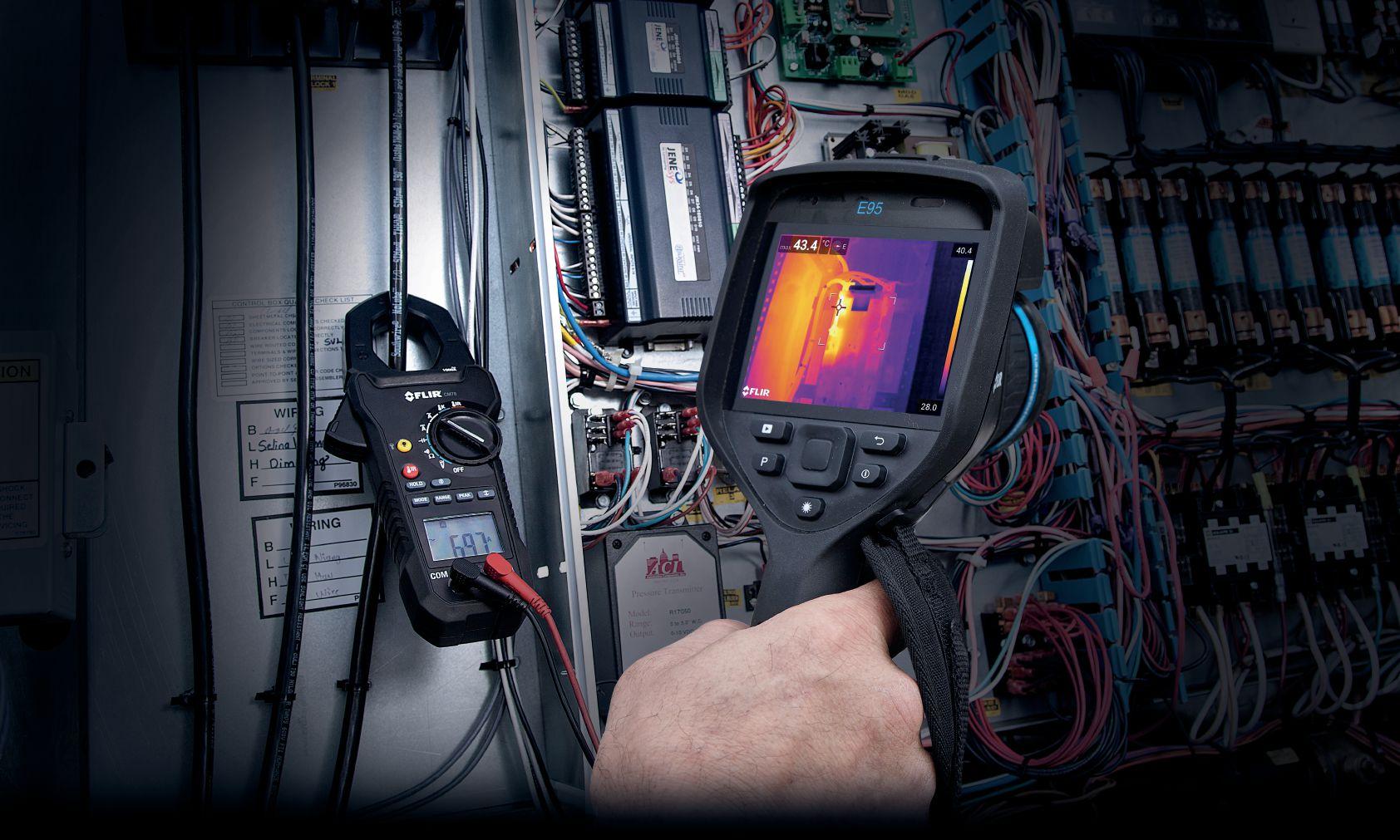
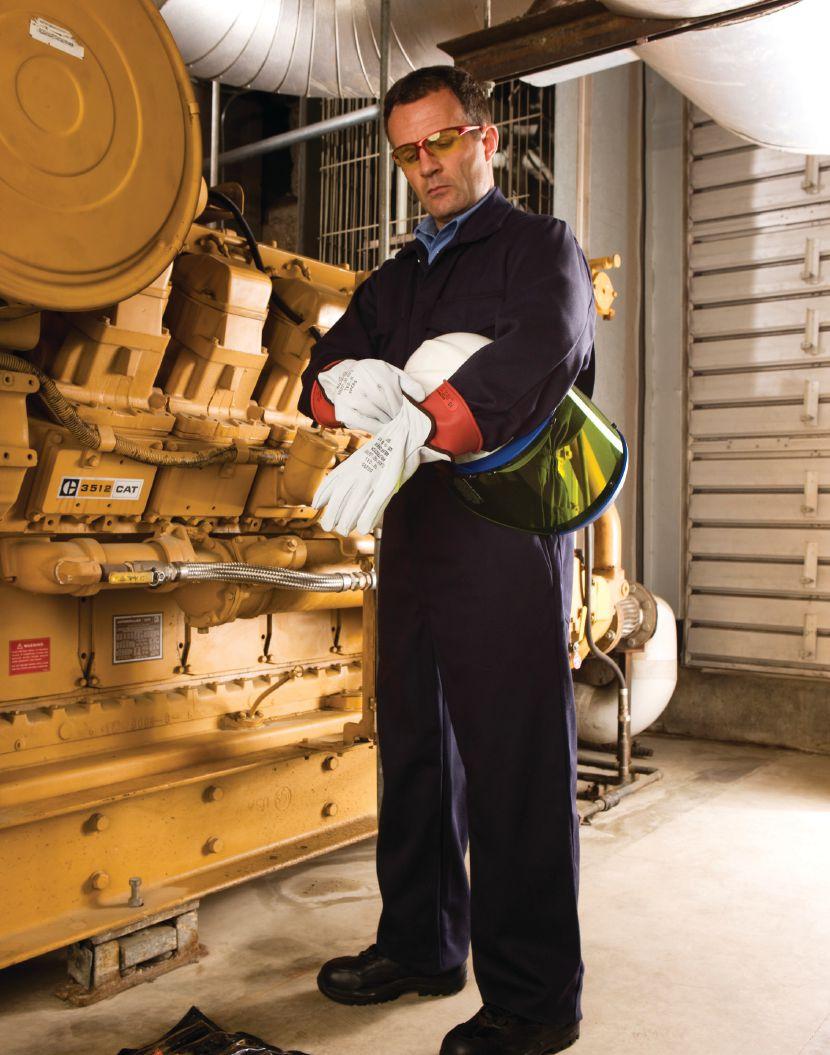
You have a duty to keep your employees safe and to ensure any PPE, including their flame-resistant garments, is maintained properly. Unfortunately, there is no onesize-fits-all approach to PPE program management.
3 Message from the editors
A word from the editors of OHS Canada and Electrical Business Magazine, Jean Lian and Anthony Capkun.
5 Crime & punishment... the electrical version
We present a compilation of stories involving electrical injury to workers—both salaried and contractor—and the punishments meted to their employers or those who hired them.
11 Locking danger out, letting safety in
A lockout procedure that physically locks equipment into a safe mode by de-energizing it via a switch, circuit breaker, line valve or block is imperative in any sector that uses machinery run by electricity or any other stored power source.
14
Don’t worry about arc flash... control it!
With respect to workplace electrical safety, there has been little change over the past 10 years with regard to non-fatal electrical injuries. The issue isn’t a lack of awareness, intent or budget, but rather a lack of effective action and control.
from the EDITORS
ANTHONY
CAPKUN & JEAN LIAN
Electricity is both ubiquitous and uniquely unforgiving
As you flip through this eBook, you may be wondering how electricity and the risk of electrical injury is any different from any other workplace hazard. Here’s the truth of the matter: it’s not.
In fact, the presence of lethal energy is like any other workplace hazard in that it should be included in your risk assessments; electrical work should involve qualified workers; procedures should be documented; and everything from work orders, training, etc., should become part of your overall managed and audited workplace health and safety system, and so on.
You understand this as a health and safety professional, so how is electricity any different?
A big difference between this and any other workplace hazard is that electricity, as a hazard, does not often get the respect it deserves. Almost everyone has a healthy respect for gas, confined spaces, working at heights, but not many people think twice about using a broken power bar or frayed extension cord, or opening a motor control centre panel without the correct personal protective equipment. Unfortunately, this sentiment is also shared by many of the electricians who work with the stuff daily.
We take electricity for granted because it is so ubiquitous and, to be fair, it is not remotely the No. 1 cause of workplace injury.
known as invisible electrical injury... which may not be as horrific a tragedy as that of electrical burn victims, but can be life-changing and traumatic nonetheless.
“I myself in the beginning didn’t believe this existed,” Dr. Fish admitted, yet sufferers of invisible electrical injury can experience any number of symptoms, the most common of which include memory impairment and general fatigue. Perhaps the biggest problem, though, is the fact that, because the injury is invisible, no one believes them!
Electricity, as a hazard, does not often get the respect it deserves.
However, when a truly cataclysmic electrical injury happens, everyone takes note, because it usually involves an explosion, sparks, smoke and burning—not to mention the workers who experience that blast head-on, or suffer burns from the massive heat created by an arc flash and bodily trauma from the explosion of the arc blast. But arc flashes and blasts as injurious events pale in comparison to electrical shock, which is regularly under-reported in the workplace. It’s not until someone experiences a truly life-altering shock that they and their employers really start to respect that lethal energy. Electricity is uniquely unforgiving when it enters the human body. Where it enters and exits the body can mean the difference between a bone burn and a skin graft, or between life and death.
Often, electricity’s effects on the human body are completely unknown or misunderstood. Back in 2010, I interviewed Dr. Joel Fish, chief medical officer at St. John’s Rehab hospital, to learn more about the phenomenon
(If you have about 10 minutes, check out Electrical Business Magazine’s video interview with Dr. Fish and some of the other professionals who work at St. John’s Rehab on YouTube at youtu.be/q7dN1CKpB-w entitled “The Road to Recovery”... you will definitely learn something new.)
This is why Canada’s leading publication for occupational health and safety professionals, OHS Canada, teamed up with Canada’s leading publication for the electrical industry, Electrical Business Magazine, to publish this special eBook focusing specifically on electrical safety in the workplace.
And electrOHS has been timed to publish in advance of next year’s publication of CSA Z462-18 “Workplace electrical safety”, with language that’s been harmonized with CSA Z1000 “Occupational health & safety management”. The electrical world has finally caught up with the health & safety world.
Jean Lian Editor, OH&S Canada
Anthony Capkun Editor, Electrical Business
CRIME & PUNISHMENT... THE ELECTRICAL VERSION
Learning from the mistakes of others / ANTHONY CAPKUN
Just in case you were under the mistaken assumption that you were immune from legal attack should a worker—who may not even be in your employ—injure themselves at your facility or on a jobsite you own or run, we present these stories of crime & punishment, with a focus on electrical injury that may or may not involve actual electrical professionals.
The duty of care is overwhelming for owners and employers but, as they say, forewarned is forearmed. We can all learn from the mistakes (or oversights) of others, so check out some of these expensive lessons that you, happily, get for free.
Lafarge fined $115K after contract worker suffers electrical shock
October 2017 - Lafarge Canada Inc. was fined $115,000 after pleading guilty to the offence of failing as an employer to ensure the power supply to an electrical installation, equipment or conductors was disconnected, locked out of service and tagged before any work was done and while being done on or near live exposed parts of the installations, equipment or conductors.*
This penalty follows an incident in March 2016 at the company’s cement plant in Bath, Ont., where a contract
worker received an electrical shock after coming into direct contact with 47,500 volts of electricity.
Lafarge Canada Inc. hires contract workers every year as part of a preventive maintenance activity to manually clean electrostatic precipitators (ESPs) at its Bath plant. The ESPs are divided into two sections—North and South—and their power supply is normally disconnected and locked out of service to protect the contract workers from shock.
In March 2016, the contract worker in question was assigned to clean insulators in the North ESP section,
but while the power supply to the North ESPs had been de-energized, locked out of service and tagged, the power supply to the South ESP section had not.
To clean an insulator, the worker opened an access panel to a section of the ESP that happened to energize both the North and South sides. The worker received an electrical shock and fell to the ground. Thankfully, he was able to speak to other workers. He was taken to hospital for treatment and, subsequently, released.
The court also imposed a 25% victim fine surcharge as required by the Provincial Offences Act, which is credited to a provincial government fund to assist victims of crime.
* Contrary to Ontario Regulation 851/90 (Industrial Establishments Regulation) and the Occupational Health & Safety Act (OHSA).
Venture Construction fined after worker severely shocked
September 2016 - A company from the Rural Municipality of Corman Park No. 344 in Saskatchewan has been fined $35,000, the province reports, for violating one count under Occupational Health and Safety (OHS) legislation.
Venture Construction Inc. pleaded guilty for failing to ensure that no worker nor equipment is operating within the minimum distance from any exposed energized electrical conductor.
The charges stem from an incident that occurred near Peerless, Sask. on July 14, 2014. A trailer was being raised and came into contact with a powerline, resulting in a worker being severely shocked.
M-B Oakville Autohaus fined $65,000 after electrical worker injured
May 2016 - M-B Oakville Autohaus, also known as 1747808 Ontario Ltd., pleaded guilty and has been fined $65,000 after an employee of an electrical company was seriously injured in a fall of almost 22 feet.
Ontario’s Ministry of Labour reported the injured worker, an employee of Andrea Electrical Service Ltd., was working as a general labourer alongside an electrical apprentice at the Mercedes Benz car dealership in Oakville, Ont., in February 2014. They were contracted to attend the dealership to determine the source of an electrical short problem in a rooftop heating unit. Both workers were using a Skyjack supplied by the defendant in an area known as the Sprinter Bay.
The electrical apprentice attempted to leave through the Sprinter Bay door to unravel new wires. When he hit the button to open the door, the breaker switch for the door was left in the On position and, therefore, had power. The door then opened and the Skyjack was knocked over, causing injuries to the worker still upon it.
Neither the defendant nor the workers themselves had locked and tagged out the electrical installation while work was being performed in the Sprinter Bay area, nor had the defendant alerted the workers to the hazard created when the door was opened.
Court was told that the electrical services company had previously done work on the site.
The defendant failed to acquaint the workers from Andrea Electrical Services Ltd. of the hazard of the overhead door opening when using a Skyjack in the Sprinter Bay, contrary to Section 25(2)(d) of the Occupational Health and Safety Act.
Andrea Electrical pleaded guilty and was fined $25,000 in June 2015 for failing to ensure equipment that could endanger a worker had been locked out.
M-B Oakville Autohaus was fined $65,000 for the safety violation in Milton provincial court in May 2016.
In addition to the fines, the court imposed a 25% victim fine surcharge.
Unlicensed contractor killed while performing electrical work
May 2017 - In 2013, the owner of a career college facility in Mississauga, Ont., hired Elias Mikhail, an unlicensed contractor, to do some electrical work. It was a cash transaction with no receipt or record of work, and no electrical permits secured.
Mikhail was electrocuted while working alone, and was not found until the next day by the facility’s owner. An Electrical Safety Authority (ESA) investigation determined Mikhail received a fatal shock while working on wiring carrying 347V of electricity, which had not been disconnected from power.
Last week, the owner was convicted in an Ontario court of hiring an unlicensed contractor to do electrical work at his business, and fined $18,750.
“This is an important reminder that business owners and operators must understand legal requirements when hiring people to do electrical work,” said ESA’s Scott Saint. “It’s the law in Ontario that only Licensed Electrical Contractors can be hired to do so.”
The fine includes a 25% victim fine surcharge, which is credited to a provincial government fund to assist victims of crime.
January 2016 - Ideal Drain Tile Ltd., a manufacturer of high-density polyethylene (HDPE) pipe, pleaded guilty and was fined $110,000 in the death of a worker who was working alone and received a fatal electrical shock.
Ontario’s Ministry of Labour reports that, in July 2013, a worker at the company’s premises in Thorndale was working alone on a machine from an elevated forklift platform. There was no operator at the controls of the forklift, and the machine being worked on had not been powered off.
A plug and thermocouple had been removed from the machine and the plug had been disassembled. With the plug’s parts removed, the prongs of the plug were exposed. The thermocouple would have been measuring the air temperature when removed, and the air temperature would have been below the set-point. This triggered the machine’s control panel to send power to the plug to heat the machine back to the set-point temperature.
The worker was found unresponsive on the elevated platform with the exposed and burnt prongs of the plug in hand. The cause of death was electrocution.
The technician had been provided generic lockout training but had not been trained on how to specifically lock out the machine he was working on.
Ideal Drain Tile Ltd. pleaded guilty to failing as an employer to comply with the provisions of Ontario Regulation 851/90 (Industrial Establishments Regulation); specifically, failing to ensure that the controls of the forklift were attended to and operated by another worker while a worker was on the elevated platform.
WILL THEY LAUNDER THEIR FR GARMENTS CORRECTLY?
Strategies for a safe and cost-effective protective apparel program
You’re responsible for the safety of 50 maintenance electricians and it’s time to update your company’s flame-resistant (FR) clothing program. Under federal and provincial health and safety regulations, you have a duty to keep your employees safe and to ensure any personal protective equipment (PPE) is maintained properly.
In fact, the many standards associated with the selection, use, care and maintenance of FR clothing collectively place several responsibilities on the company. In short, the garments must:
• properly fit the wearer
• be inspected prior to each use
• be laundered to manufacturer’s specifications or industry standards
• be repaired with flame-resistant materials
• be systematically retired and removed from service
So you know the rules, but now what? From the multiple types of garments available to the different brands and sourcing programs, the options can be overwhelming and exhausting, even to the most seasoned safety professional. Before jumping into a program, ask yourself the following questions:
• How dirty do my employees get? Can they effectively remove the soils at home?
• How rough are the employees on the garments?
• Including retirements, how much employee turnover did we experience last year?
• How many employees gained or lost weight requiring newly-sized garments?
It is critical to note there is no onesize-fits-all approach to PPE program management. What might work best for a company in the oil & gas industry might not be the best solution for a company in a manufacturing environment.
So how do you develop a program that works best for your business? First you need to understand the options available and how those options impact the total cost of ownership (TCO) of your program. In this article, we’ll walk you through a few basic questions to help you develop a safer and more cost-effective PPE program.
A little bit now means a lot later In developing your PPE program, you should not lose sight of the principle objectives: to design the safest program most cost-effectively. By considering the program’s TCO, you can improve safety and save money in the long term.
The TCO of your garment is largely determined by its cost and wear life. In a typical FR program, for example, workers are provided one set that includes a shirt and pants for each working day, with the addition of seasonal outerwear. Depending upon your specific work environment, you might estimate the average wear life of everyday clothing like shirts, pants and coveralls to be around one year. Because seasonal outerwear is worn less frequently,
you might estimate the wear life to be as much as three years. Items that will impact a garment’s wear life include soil conditions, wear and tear, employee turnover and size changes—all considerations specific to your work environment.
Imagine this scenario: you purchase all of your 50 employees FR clothing, which includes five shirts and five pants. The cost for each shirt or pants is about $55 or about $1 per week.
Throughout the year, you are required to purchase replacement garments due to staining from heavy soils, and damage due to rips and tears. Many companies have found this increases the overall cost of their program by as much as 30%. Following a weight-loss challenge, two of the workers drop about 20 lb, requiring them to go down in clothing size.This forces you to retire their inventory of garments halfway through the year. This doubles the TCO of the products, as you will need to replace the garments after only half of their estimated wear life.
Many standards associated with the selection, use, care and maintenance of FR clothing collectively place several responsibilities on the company.
The same holds true for the purchase of new inventory when you replace employees due to retirement or turnover. Conversely, had you used a managed rental program, you would have had better control over your expenditures, as the costs of laundering, repairs and replacements due to employee turnover and size changes are often included.
While this scenario demonstrates the benefit of renting your everyday work clothing, there may be other situations where purchasing garments (e.g. seasonal outerwear) is the better solution for you. Ultimately, you want to keep costs low, but not at the expense of worker safety. Many companies have found that a hybrid program—encompassing both purchase and rental options—is safer while providing the best economic solution.
Defining the total cost of ownership
To accurately compare the cost of FR garment purchase versus a managed FR program, you need to look at all the costs you will incur throughout the wearable life of the garments. Based on this number, you can calculate your daily or per use cost for the garment, giving you a baseline number to compare against the cost of a managed program.
To help identify the factors that will contribute to the TCO of your program, ask yourself the following three questions:
#1 WHAT’S THE SOIL LOAD?
Industries with particularly heavy soil loads are frequently exposed to high levels of flammable materials, such as fuel, grease and oil. These contaminants make employee uniforms difficult to clean, and using the incorrect cleaning compounds could damage the material. The standards for laundering FR clothing require, naturally, that flammable contaminants be removed from the garments.
Items that will impact a garment’s wear life include soil conditions, wear and tear, employee turnover and size changes— all considerations specific to your working environment.
Employees who launder their FR clothing at home are unlikely able to remove heavier soils. As a result, many of them might throw away those garments (believing them to be permanently soiled) or worse, continue to wear garments contaminated with flammable soils.
This is also a common situation for many companies that use a local cleaner or laundry facility to clean garments, ultimately driving up the costs of your program.
#2
HOW MUCH WEAR AND TEAR WILL THE GARMENTS EXPERIENCE?
Are workers regularly moving in and out of areas where tears or rips are likely? Do they work around heavy machinery or tight spaces that could lead to potential snags?
Ontario’s Occupational Health & Safety Act, for example, requires employers to ensure “the equipment, materials and protective devices provided by the employer are maintained in good condition”, and this includes repairing garments with flame-resistant thread or repairing holes with the proper FR materials.
Assuming employees don’t have access to FR thread, they increase their risk of injury because the use of untreated thread could cause the garment to fail. To eliminate this risk, you replace the garment. Depending on the nature of the industry, the replace-
ment costs can increase the overall cost of the program by as much as 20%.
#3 WHAT’S THE AVERAGE TURNOVER FOR EMPLOYEES WHO NEED TO WEAR FR GARMENTS?
Even if you’re in a high-demand industry, you can count on some degree of worker turnover. Whether employees are forced to relocate due to family responsibilities, or they retire or have found another opportunity elsewhere, you can expect an average turnover of 15% to 22%.
Because turnover is unavoidable, it is something you need to take into consideration when reviewing the TCO of your program. It’s not unlike the scenario of workers gaining or losing weight—where they need to go up or down a size—because turnover forces you to retire an entire set of garments.
As you can see, you will have to consider a number of factors impacting the TCO should you purchase your FR garments. The soil conditions, wear and tear, weight loss/gain, and turnover all increase the overall cost of your program by as much as 15% to 20% on average.
next thing to decide is how FR garments will be laundered. There are a few options:
1. Employees will launder and manage their own FR apparel
2. Send FR garments to a local cleaner for laundering
3. Engage a uniform service provider to maintain and manage your FR garments.
Some businesses require employees to launder their own garments. While this is an option, many organizations are moving away from this practice due to industry standards that establish best practices for FR garment laundering and repair so as to maintain their integrity. For example, ASTM F2757 outlines the proper home laundering methods, which include turning FR garments inside out, washing them separately and using no fabric softeners or chlorine bleach.
Weighing the responsibilities: self-managed versus managed
Once you’ve completed an assessment that identifies the TCO of your program, the
However, even if FR-garment users were to diligently follow the steps above and launder FR garments according to the instructions in ASTM F2757, some contaminants simply cannot be removed via home laundering. Most FR clothing users don’t have at-home water temperatures high enough, nor detergents strong enough, to remove petroleum-based substances that can sometimes stay on clothing. When FR garments are outsourced to a local cleaner that doesn’t specialize in PPE laundering, one has to question whether the integrity of the flame resistance is main-
Room for improvement in your FR program?garment
Take the following quiz to find out if you have room for improvement in managing your FR program.
1. Do all garments properly fit the wearer?
2. Are all FR garments inspected prior to each use?
3. At what temperature are FR garments laundered?
4. Are chlorine bleach, oxidizers, fabric softeners or dryer sheets used during the laundry process?
5. Are rips or tears mended using regular thread?
6. Do you have a plan in place for reviewing and systematically retiring and removing garments from service?
tained. (Few cleaners provide confirmation of how garments are laundered.)
With a managed FR-garment program, you are able to combine the best of both worlds—laundry service combined with garment repair and replacement. This assures you that the proper water temperatures, water softness and cleaning agents are employed. Under a managed FR-garment program, weekly route services are used to collect garments; the clothing is hand-inspected, laundered according to industry standards, repaired or replaced when deemed damaged or defective, and returned.
Developing a safer, more costeffective FR-garment program
Now that you understand the different factors that contribute to the TCO of your FR-garment program, let’s go back to our original scenario where you are responsible for outfitting a team of 50 employees in flame-resistant clothing. Based on an estimated cost of $550 per year to outfit an employee in five FR shirts and five FR pants, you will spend about $27,500 a year for garments.
These factors result in an increase of 20% to the initial garment cost or $5500 for the year. Now consider the costs to clean the garments:
• FR shirt
• FR pants
$0.50 (per shirt)
$0.50 (per pants)
The estimated cost to clean these items would be about $260 per year per employee, or $13,000 for 50 employees.
When you look at a managed program with the same scenario, each employee is provided five clean shirts and pants each week at an average cost of $11.00 per week per employee. The total cost of the program is about $28,600 a year as compared to $46,000 for a purchase and clean program. You no longer have the concern of soil loads, tears, maintenance or turnover. The result is a safer program at a cost savings of 38%.
In addition to the cost savings, a managed program gives you peace of mind.
Rent or buy? That is the question
As regulations continue to put the responsibility on employers to implement and maintain PPE programs that limit risk to workers, more businesses and safety professionals debate the best way to acquire and maintain their employees’ FR garments.
As mentioned, there’s no one-size-fits-all solution, but by looking at some of the different factors that contribute to the TCO of the FR clothing program—along with your options for laundering and maintaining FR garments—you will have a more accurate assessment of the best option for your business.
Whether you decide to use a purchase, rental or hybrid FR garment program, it’s your responsibility as an employer to make sure it’s not only cost-effective but limits the risk to the worker and improves the overall safety of your workplace.
References
Answers
1. Yes
2. Yes
3. Typically 50C to 70C.
4. No
5. No, FR garments should be repaired using flame-resistant materials.
6. Yes
As a next step, consider the variables listed above and include them in the TCO estimate. For example:
• Replacements due to size change 6.00%
• Replacements due to non-repairable garments 10.00%
• Turnover 4.00%
You don’t have the headache of ensuring a worker isn’t wearing soiled garments from last week because, with the managed program, a uniform service provider picks up soiled garments on a weekly basis to inspect them for tears or damage, and launders the uniforms according to industry standards. Clean garments are delivered directly to your business.
When you look at costs for infrequently used items, such as outerwear, the evaluation plays more favourably toward purchasing garments due to the longer wear life.
• ASTM F1449-08(2015) “Standard guide for industrial laundering of flame, thermal, and arc-resistant clothing”.• ASTM F2757-09(2016) “Standard guide for home laundering care and maintenance of flame, thermal and arc-resistant clothing”.
• CSA Z462 “Workplace electrical safety”.
• NFPA 70E “Electrical safety in the workplace”.
• NFPA 2112 “Standard on flame-resistant garments for protection of industrial personnel against flash fire”.
• NFPA 2113 “Standard on selection, care, use, and maintenance of flame-resistant garments for protection of industrial personnel against short-duration thermal exposures from fire”.
This article is based on the white paper “Should I rent or purchase flame-resistant clothing? Strategies for building a safer and more cost-effective protective apparel program” by Cintas Canada Ltd. (www.cintas. com). It originally appeared in Electrical Business Magazine, September 2015. Visit EBMag.com/digital.
LOCKING DANGER OUT, LETTING SAFETY IN The importance
of lockout/tagout procedures
In work environments that use powered equipment, machinery or any other source of stored energy, potential hazards are present when employees perform maintenance, repairs, installations, inspections or other non-routine tasks.
Regardless of whether it is in construction, manufacturing, engineering, oil & gas, maritime work, agriculture or printing, machines that start up unexpectedly could cause lacerations, amputations or crushing injuries through moving blades or chains, and pinching conveyor belts.
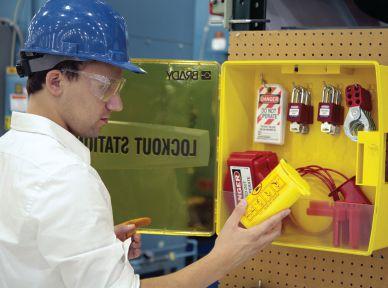
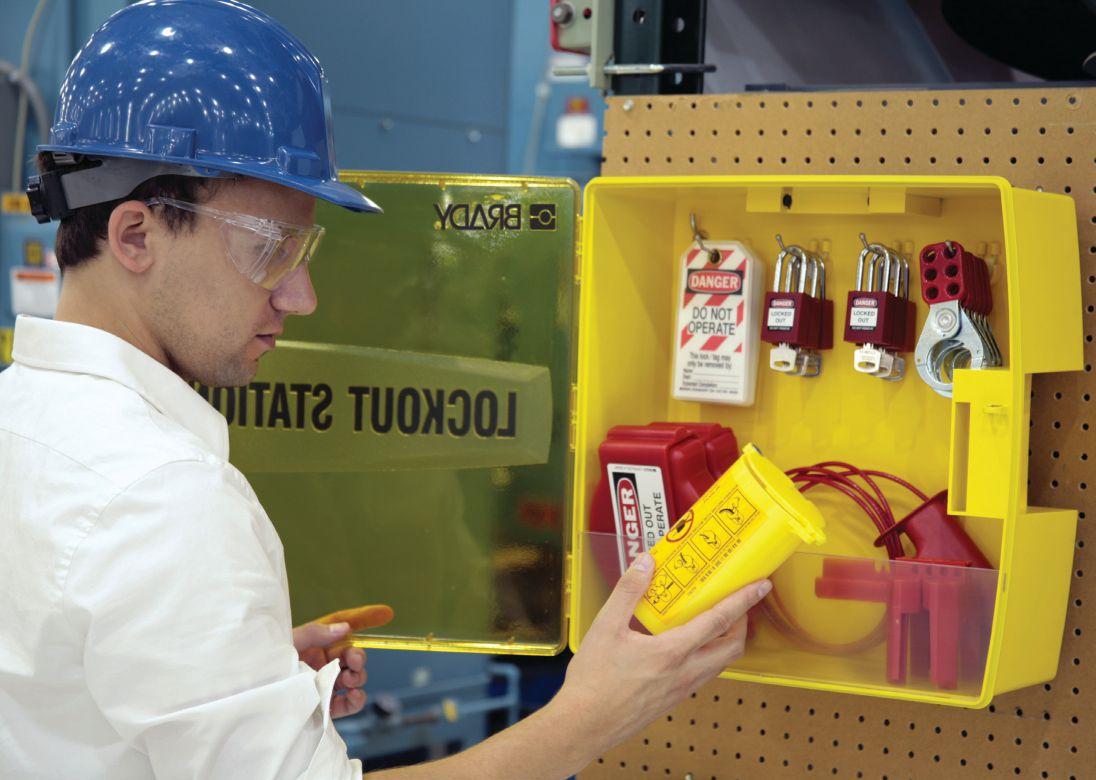
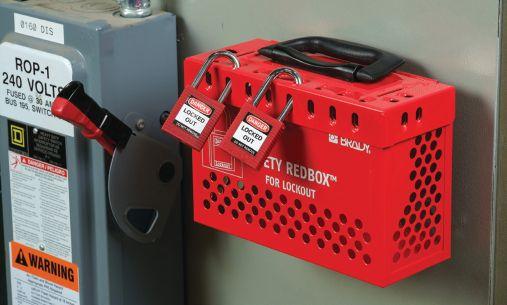
A lockout procedure that physically locks equipment into a safe mode by de-energizing it via a switch, circuit breaker, line valve or block is imperative in any sector that uses machinery run by electricity or any other stored power source.
Tag, you’re out
Canadian standard CSA Z460 “Control of Hazardous Energy” defines lockout as the placement of a lock on an energy-isolating device so that workers cannot operate it until the lock has been removed.
While a lockout procedure is mandatory for many jobs throughout Canada, provincial regulations vary. For example, Part 10 of British Columbia’s OH&S Regulation specifically covers lockout, as do Sections 139 and 140 of Saskatchewan’s OH&S Regulations.
Photos courtesy Brady Corp.
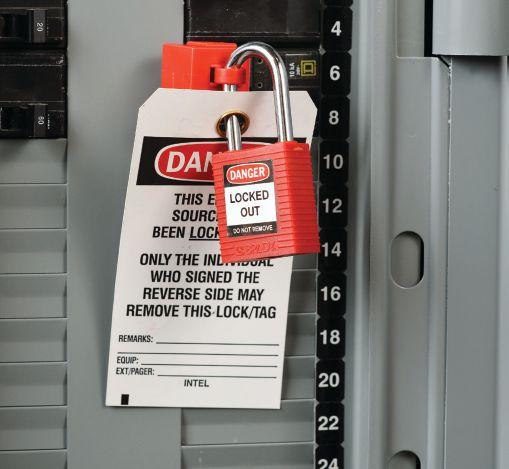
Tagout refers to the process of labelling a device or system during lockout to indicate why lockout is required, when it was initiated, the authorized individual who applied the lock to the system and who is permitted to remove it. Together, a lockout/tagout procedure—also known as LOTO—can prevent the accidental startup of machinery or equipment and protect employees from coming into contact with electricity or other machine hazards.
Statistically speaking
In 2010, Ontario’s Workplace Safety & Insurance Board (WSIB) reported that lost-time injuries (LTIs) resulting from improper lockout and/or ineffective machine guards ranked among the province’s top four causes of occupational injuries, and that the injuries from lockout failure tended to be more severe.
According to WSIB’s Annual Report 2009, nearly 2200 LTIs resulted from employees getting caught in, or compressed by, machinery, while 427 LTIs were caused by friction, pressure or vibration and 361 resulted in amputation. In 2013, WSIB reported that 6% of LTIs in the province stemmed from machine-related incidents, with about 2500 injuries occurring each year.
Proceeding with caution
The Canadian Centre for Occupational Health & Safety (CCOHS) in Hamilton, Ont., lists the following basic steps in a standard LOTO procedure:
Lost-time injuries resulting from improper lockout and/or ineffective machine guards ranked among the province’s top four causes of occupational injuries, and that the injuries from lockout failure tended to be more severe.
• Isolate hazardous energy from the system based on the equipment’s instructions.
• Dissipate any residual or stored energy.
• Lock the equipment and tag it.
• Identify the energy source(s) that must be locked.
• Notify all relevant employees of what is being locked, why and for how long, and identify the authorized individual conducting the lockout.
• Shut down the equipment in the usual manner.
• Verify the system is locked properly by checking it visually and testing it.
• Perform the required maintenance, repair or other intended service.
• Unlock the equipment and remove the tags.
It is also recommended that the authorized individual who locked the system be present when the system is restarted to ensure those who are working on the system are out of potential harm’s way.
Calamity of errors
ESC Services, a Milwaukee consulting firm specializing in lockout/tagout services, identifies three common myths about LOTO regulations: a company may be exempt from
While a lockout procedure is mandatory for many jobs throughout Canada, provincial regulations vary.
lock and tag due to its field or size; certain equipment may be exempt because of its age or when its power is supplied through a cord and plug; and a company’s exemplary safety record makes the regulations inapplicable.
That said, overlooking lockout/tagout can result in serious injury or death. WorkSafeNB in Saint John, N.B., cites the following mistakes associated with lockout:
• Not applying a tag, or applying a tag without locking.
• Leaving the lock or the energy cutoff unclosed, or closing the lock improperly.
• Leaving the key in.
• Misplacing multiple lock devices.
• Using the same lock by several workers.
Group effort
Simply shutting down equipment controls is not enough; only a full lockout procedure can ensure safety. In cases in which multiple employees are working on the machinery, care must be taken to ensure none of them inadvertently reconnects the energy source before the work is completed. WorkSafeBC in Richmond, B.C., recommends that group lockouts use “scissor adaptors” to apply multiple locks to a system. Here, each worker is responsible for placing their own personal lock on the energy-isolating device. When the work is finished, each worker is responsible for removing their lock. When necessary, a supervisor may remove a worker’s lock after making every reasonable effort to contact the worker and ensuring the equipment will
operate safely afterward. In such a case, the lock removal must be documented and the worker must be informed of it at the beginning of their next shift.
Locked in step
The aforementioned CCOHS procedure template may vary slightly when dealing with different types of work
environments and machinery. The Ontario Ministry of Labour advises agricultural workers to put a warning sign over the ignition of a machine and notify others that someone is working on it. Farm-machine operators should also avoid cleaning, lubricating, adjusting or unplugging equipment while it is running, unless the owner’s manual specifically allows or recommends it.
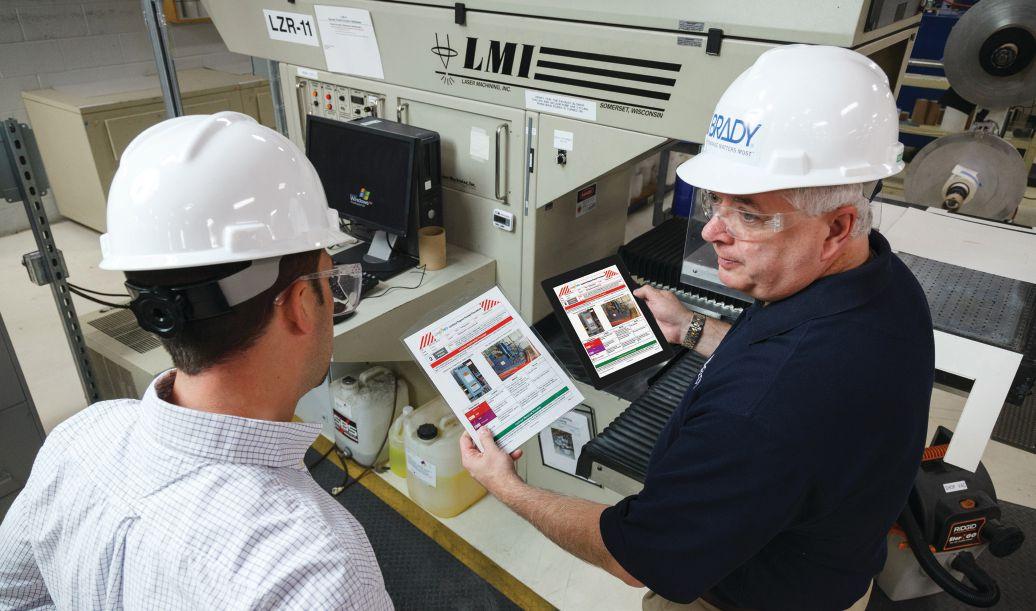
An employer should provide sets of written lockout instructions tailored to the specific type of workplace and the number of systems that require lockout and tagout. These instructions should indicate the specific machine, where and how lockout devices are installed, how to control and de-energize the machine’s stored energy, how to verify the energy isolation, which individual is authorized to perform the lockout, and who needs to be notified of it.
CCOHS says every workplace party has a responsibility in the lockout program. Managers must draft, review and update the program while identifying people and equipment involved, providing protective gear and monitoring compliance. Supervisors should ensure properly trained employees use the right equipment while following established procedures, and that workers help develop the procedures and report any problems with the process or equipment.
As lockout/tagout is a vital part of workplace safety, intensive, specified training for everybody is important. Employers can train workers and supervisors through courses offered by various safety organizations throughout Canada, whose programs typically cover legal requirements, hazardous energy control, lockout steps, tagout devices, other basic procedures and/or general definitions.
This article originally appeared in OHS Canada, January-February 2015.
DON’T WORRY ABOUT ARC FLASH... CONTROL IT!
Tackle
the arc
flash hazard right at the design phase / SERGIO PANETTA
At some point in our lives we have all heard—or perhaps even repeated—variations of the common phrase: Don’t worry about things you can’t control.
With respect to workplace electrical safety, there has been little change over the past 10 years with regard to non-fatal electrical injuries, and the issue isn’t a lack of awareness, intent or budget, but rather a lack of effective action. It is a lack of control.
When considering the arc flash hazard, we need to ask two questions (which are, in fact, the same for any hazard):
• What is the likelihood of an arc flash event?
• Were it to happen, how severe would it be?
Electrical hazards have been identified in the Ontario Ministry of Labour’s “Safe At Work Ontario” strategy as requiring attention to reduce injuries and create safer workplaces. Roughly half of electrical incidents causing injury—including deaths and serious burn injuries from arc flash—were caused by working directly on energized electrical equipment.
According to statistics compiled by CapSchell Inc., a Chicago-based research and
consulting firm specializing in preventing workplace injuries and deaths, five to 10 arc flash explosions resulting in hospitalization occur around electrical equipment every day in the North America.
The direct cost (WSIB premiums) of a new lost-time injury (LTI) in 2007 averaged around $21,300. The indirect cost of each LTI in 2007—including re-hiring, re-training, lost productivity, etc.—was $85,000.
Designing for electrical safety
Thankfully, both CSA Z462 “Workplace electrical safety” and, in the States, NFPA 70E “Electrical Safety in the Workplace” have been aligned with the Hierarchy of Risk Control in ANSI Z10 “Occupational Health & Safety Management Systems”, which neatly addresses the two questions above.
CSA Z462 Annex 0, “General Design Requirements 0.2.2”, provides you with a design option that enables you—right from the design stage—to eliminate hazards or reduce risk by:
1. Reducing the likelihood of exposure
2. Reducing the magnitude or severity of exposure
The conventional approach to workplace electrical safety has been to conduct an arc flash study after the installation is complete, calculate incident energy levels, post warning signs and labels, provide training on safe work practices, then purchase appropriately rated PPE (personal protective equipment). Done. But think about it: warnings, awareness training and PPE do nothing to reduce the likelihood of an arc flash event or its magnitude. For those insisting PPE does, in fact, reduce the severity of arc flash exposure, let’s pause and consider what it means to hang your hat on arc-rated clothing: there is still a 50% probability the wearer will receive second degree burns from an arc flash event. Surely we cannot accept this as safe. Electric arcing may produce temperatures as high as 35,000 C and, in addition to causing severe burns, there is the very real possibility of hearing loss and eye injury, as well as lung damage and blast injury from the pressure wave of an arc blast. The positive news is we can control both the likelihood of exposure as well as its magnitude with proven technology that is readily available and already being used by companies who strive to be leaders in workplace electrical safety.
Control the likelihood of exposure
Hierarchy of Hazard Control Measures
From ANSI Z10
Elimination
Eliminate the hazard during design
Substitution
Substitution of less hazardous equipment, system or energy
Engineering Controls
Design options that automatically reduces risk
Warnings
Automatic or manual, permanent or temporary, visible or audible warning systems, signs, barrier and labels
Administrative Controls
Planning processes, training, permits, safe work practices, maintenance systems, communications and work management
Personal Protective Equipment
Available, effective, easy to use
Distribution for Industrial Plants” 7.2.2 states “there is no arc flash hazard [on HRG systems] as there is with solidly grounded systems, since the current is limited to approximately 5 amps”.
Finally, FM Global 5-18 “Protection of Electrical Equipment” states:
Sustained arcing faults in low-voltage apparatus are often initiated by a singlephase fault to ground which results in extensive damage to switchgear and motor control centres.
20,000+ lux
According to CSA Z462, Annex 0, Clause 0.2.4,
The first and obvious step is to de-energize the circuit before conducting any work whenever practical.When this is impractical or unsafe, then consider options for reducing the likelihood of an arc flash event occurring.
3) A great majority of electrical faults are of the phase-to-ground type. High-resistance grounding [HRG] will insert an impedance in the ground return path and below (at 5 kV nominal or below), leaving insufficient fault energy and thereby helping reduce the arc flash hazard level.
This is consistent with the “Industrial Power System Grounding Design Handbook” (J.R. Dunki-Jacobs, F.J. Shields, Conrad St. Pierre), which states 95% of all electrical faults are phase-toground faults.
Meantime, IEEE 141 “Recommended Practice for Electric Power
Whether the specifics are actually 95%, 89%, or what have you, the simple fact is the vast majority of arcing faults start as single phase to-ground faults, so by employing high-resistance grounding—which has been around for some 50 years and used in various industries, from petrochemical and food processing to automotive and data centres—we can significantly reduce exposure to the arc flash hazard. (Granted, HRG does not protect against phase-to-phase faults, nor does it lower the incident energy calculation. Therefore, additional control steps must be taken to be sure of an electrically safe workplace.)
All this, of course, begs the question: why isn’t high-resistance grounding the standard practice for grounding industrial facilities? HRG as a technology is recommended by IEEE, recognized by CSA
Z462 and NFPA 70E, and promoted by FM Global, yet it is still not the default option when making grounding decisions for industrial facilities.
Reduce the magnitude of exposure Referring once again to CSA Z462, Annex 0, Clause 0.2.4,
2) Arc flash relay. An arc flash relay typically uses light sensors to detect the light produced by an arc flash event. Once a certain level of light is detected the relay will issue a trip signal to an upstream overcurrent device.
An arc develops in milliseconds, leading to the discharge of enormous amounts of energy. The energy discharged in the arc is directly proportional to the square of the short circuit current and the time the arc takes to develop (i.e. energy = I2t).
The damage resulting from the arc depends on the arcing current and time. Of these two factors, time is the most easily controlled and managed. Rules of thumb for different arc burning times are:
• 35 ms or less: no significant damage to persons or switchgear, which can often be returned to use after checking for insulation resistance.
• 100 ms: minor damage to switchgear that requires cleaning and, possibly, some minor repair. Personnel could be at risk of injury.
• 500 ms: catastrophic damage to
equipment, and personnel are likely to suffer serious injury.
The goal of arc-mitigation technology is to protect personnel and property.To effectively accomplish this, we must first detect the arc before cutting the flow of current to it as quickly as possible. The target is to achieve a total reaction time of 100 ms or less from the point of arc detection to circuit isolation.
Arcs produce light at intensity levels exceeding 20,000 lux.This light can be detected through special arc detection optical sensors, which are connected to a relay system with a typical operating time under 1 ms, making it the fastest arc flash detection technology currently available. The operating time is independent of the fault current magnitude, since any current detector elements are used only to supervise the optical system.
With optical arc-protection technology installed, the relay operating time is essentially negligible compared to the circuit breaker operating time, and the cost is fairly low since current transformers are only needed on the main breakers.
When we sum up the circuit breaker operating time and the optical arc-detection time, we are well below the target of 100 ms— regardless of the age and speed of the circuit breaker—and have mitigated damage to a lower, safer level.
By simply changing from standard coordination and instantaneous settings on the relay
(which some consultants think sufficient) to a protection system using optical arc detection, you substantially reduce incident energy levels.
CSA Z462, Annex 0, Clause 0.2.4 states:
1) Energy-reducing active arc flash mitigation system. This system can reduce the arcing duration by creating a low-impedance current path, located within a controlled compartment, to cause the arcing fault to transfer to the new current path, while the upstream breaker clears the circuit. The system works without compromising existing selective coordination in the electrical distribution system.
Arc quenching has been used in Europe for more than 30 years but, due to concerns over the mechanical stresses caused by initiating a 3-phase bolted fault, it is yet to be fully embraced in North America.
an impedance, could result in lowering the incident energy levels in the event of an arc flash to very low and even safer levels.
Achieving a safer workplace
A safer workplace can be easily achieved when we change our approach by conducting a risk assessment during the design phase of the project. Then we move forward and conduct the arc flash study, define the risk and quantify the hazard.
Next we employ elimination technology (like high-resistance grounding) and technology to lower the hazard level (arc flash detection relay or active arc mitigation system), redo the study, and re-quantify the hazard and the risk (which will be much lower). Only then do we post the warning labels, purchase the PPE and conduct the necessary training.
A workplace where the likelihood of an arc flash is 95% lower, and where the impact of an arc flash can be minimized to very low levels, is possible right now. We just need to take control and use technology already available. Energy = I2t
Energy discharged in an arc is directly proportional to the square of the short circuit current and the time the arc takes to develop
$85,000
Indirect cost of each Lost-Time Injury in 2007
The solution may be as simple as modifying the approach to add an impedance into the circuit; the arc is detected by an optical detection relay, then a signal is sent to initiate the arc quenching device which, in turn, closes onto a resistor placed between the quencher and each phase of the busbar. The high levels of fault current are dampened and controlled by a resistor on each phase, thereby eliminating concerns over mechanical stresses.
The addition of arc quenching technology, controlled through
Sergio Panetta is the vice-president of engineering at I-Gard Corporation. With over 26 years of electrical engineering experience (including switchgear design, commissioning and troubleshooting), Sergio actively promotes awareness of electrical safety on a global front. A senior member of the Association of Professional Engineers of Ontario, he was recently awarded Consulting Engineering status with the APEO professional body. In addition to working on a number of industry working groups dealing with electrical safety and best practices (e.g. UL, IEC, CSA and IEEE), Sergio is the author and owner of several U.S. Patents related to power resistors. He received his Masters of Electrical Engineering from McMaster University.