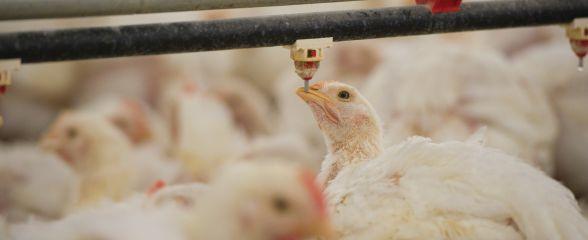
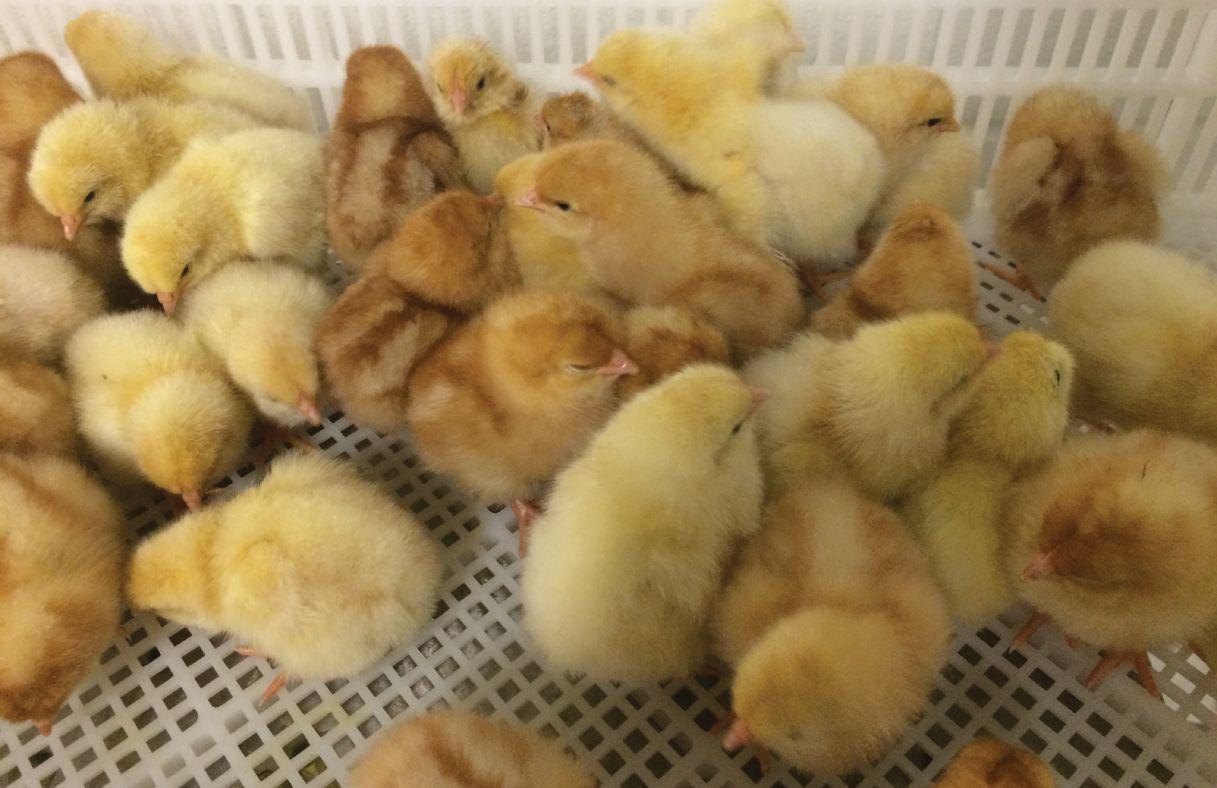
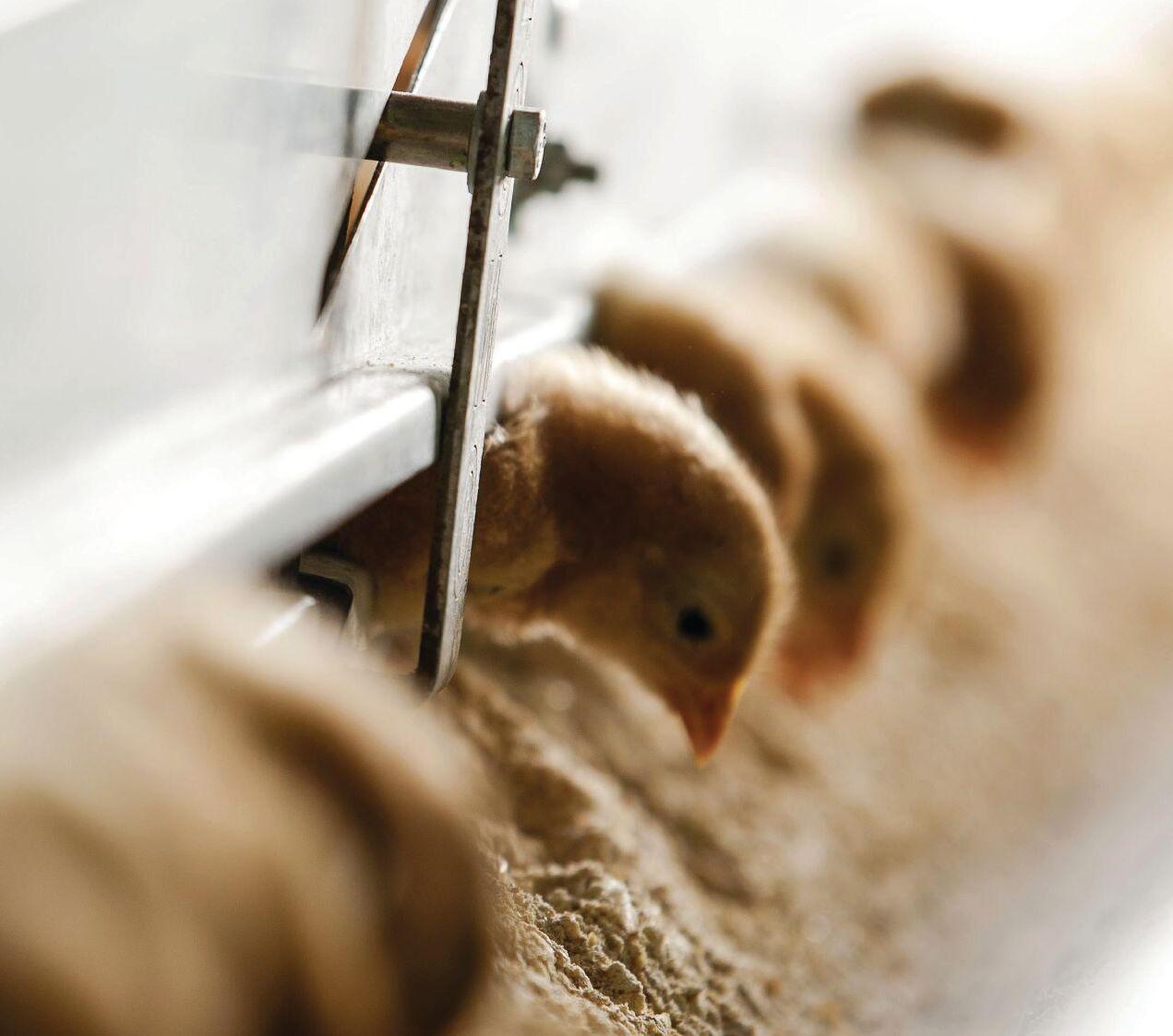
It’s simple arithmechick, whether you raise 4,000 chicks or 4 million. Victrio® is a preservative-free, antibiotic-free way to jump-start your chicks’ immune systems, preparing them to fight E. coli the natural way. Administered in-ovo at the hatchery, Victrio significantly reduces post-hatch mortality due to E. coli infection and supports your RWA production goals.
Ask your hatchery for Victrio chicks today. Learn more at Victrio.ca.
experts
by Brett Ruffell
Poultry groups step up for vulnerable
I’ve always found that challenging times bring out the best in people. I’m seeing that on display again in the face of the COVID-19 pandemic.
For instance, two national poultry groups stepped up to help the vulnerable with a combined $45,000 commitment to support food banks.
Egg Farmers of Canada (EFC) announced a $25,000 donation to Food Banks Canada while Chicken Farmers of Canada (CFC) made a $20,000 donation to the Ottawa Food Bank.
Both charities issued calls for help to ensure vulnerable Canadians continue to receive vital support and nutritious food during these unprecedented times. Chicken and egg farmers responded to the call.
“Food Banks Canada and their dedicated team of staff and volunteers play a critical role in our communities,” EFC chair Roger Pelissero says.
“We know these are challenging times for all Canadians, with the most vulnerable communities impacted the most. We believe it is crucial now more than ever to rally around our friends, neighbours and fellow Canadians with our support.”
“These are incredibly challenging times for all Canadians,” CFC chair Benoît Fontaine adds. “We wanted to answer the call for help and pledge our support, in a meaningful way, to the city and region that our staff call home.”
In light of COVID-19, food
banks across the country have reported an increase in demand. At the same time, they’re facing drastic declines in the number of volunteers and have to adapt their operations to the pandemic.
The poultry groups’ donations will support food banks’ wide-reaching efforts as they continue to respond to the impact of the COVID-19 pandemic.
CFC has partnered with and supported the Ottawa Food Bank since 2007. Through the Chicken Challenge Program – which secures product donations from a Canadian processor – as well as through staff donations and other programming, CFC says its contributions to the food bank
“We believe it is crucial now more than ever to rally around our friends, neighbours and fellow Canadians
with our support.”
have totaled $600,000.
Egg farmers are also longtime supporters of food banks. In fact, EFC and Food Banks Canada have been partners for more than two decades. Each year, Canadian farmers donate over one million eggs to community food banks.
In 2018, for example, egg farmers donated 1.4 million eggs to food banks across Canada. In 2019, they donated 1.8 million eggs. Many provincial and territorial egg boards also have partnerships with local
food banks and make additional egg donations.
Clearly, the charities appreciate the assistance.
“We are beyond grateful to have the continued support of CFC,” says Michael Maidment, CEO, Ottawa Food Bank. “This gift is incredibly generous, and we are touched that they are thinking of our community during a time of such uncertainty. This gesture is on top of the already substantial donation of chicken we regularly receive from the chicken farmers.”
Food Banks Canada expressed similar sentiment.
“Providing food to those in need can be difficult at the best of times. With the COVID-19 pandemic upon us, we are anticipating record numbers of people who will require our help,” says Chris Hatch, the charity’s chief executive officer. “Contributions such as the one made by Egg Farmers of Canada will help ensure that food banks can continue their critical work.”
It was also inspiring to see stories on social media of individual producers and poultry and egg companies supporting their communities in various ways in response to COVID-19.
How has your business responded? I’m interested in hearing about how the pandemic has affected your operations and anything you’ve done to support your community. Email me at bruffell@ annexbusinessmedia.com.
Canadians living with food insecurity need support now more than ever. To give back to the community during this time, visit foodbankscanada.ca to donate and lend your support to Canada’s food banks.
Mail: 111 Gordon Baker Rd., Suite 400, Toronto, ON M2H 3R1
Subscription Rates
Canada – 1 Year $32.50 (plus applicable taxes)
USA – 1 Year $91.50 CDN
Foreign – 1 Year $103.50 CDN
GST - #867172652RT0001
Occasionally, Canadian Poultry Magazine will mail information on behalf of industry-related groups whose products and services we believe may be of interest to you. If you prefer not to receive this information, please contact our circulation department in any of the four ways listed above.
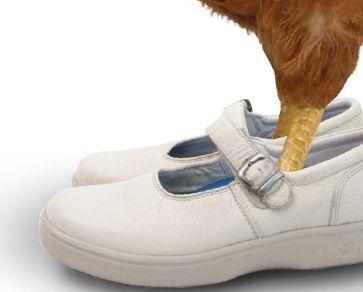
Comfort Perch Like orthopedic shoes for your birds.
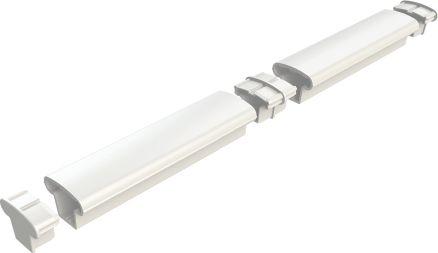
Perch system on plastic slats
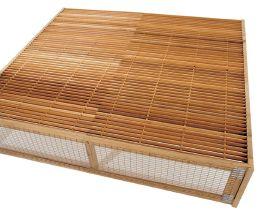
LUBING’sComfort Perch System is a unique product that offers noticeable results. Our Perch System is ergonomically designed to offer the most pad contact and comfort to the birds while perching. The mushroom perch design fits the contour of the birds’ paws and allows the birds to grip the perch without working to keep their balance as they do on round perches. This design has been proven to significantly reduce bird stress and result in higher production with lower mortality.
Perch system on wire mesh
Easy to install on new systems or retrofit in cages
Our Comfort Perch Systems can be installed on plastic slats or wire mesh and can also be easily retrofitted onto any existing system. Installation is simple and does not require the use of nuts, bolts, rings or clips.
Contact us to find out more about this product. Free samples are available upon request.
Glass-Pac Canada
St. Jacobs, Ontario
Tel: (519) 664.3811
Fax: (519) 664.3003
Carstairs, Alberta
Tel: (403) 337-3767
Fax: (403) 337-3590
www.lubingusa.com
Les Equipments Avipor
Cowansville, Quebec
Tel: (450) 263.6222
Fax: (450) 263.9021
Specht-Canada Inc.
Stony Plain, Alberta
Tel: (780) 963.4795
Fax: (780) 963.5034
What’s Hatching
National Poultry Show cancelled
Canadian Poultry previously reported the National Poultry Show scheduled for early April was postponed. The Poultry Industry Council board of directors was working with Western Fair District to explore the possibility of hosting the show later this year. However, due to ongoing uncertainty caused by the pandemic it decided not to proceed with an alternate date.
Seasonal foreign workers must self-isolate
Seasonal foreign farm workers will be allowed to return to Canada, but they must self-isolate for 14 days in order to avoid spreading COVID-19, Immigration and Citizenship Minister Marco Mendocino revealed in early April. His words came days after a group of temporary foreign farm workers in B.C. tested positive for the virus. According to B.C. Interior Health, 75 workers were impacted by an outbreak at Bylands Nurseries. They included 63 migrant workers and 12 local workers.
Maple Leaf halts work at Ontario poultry plant after COVID-19 cases
Maple Leaf Foods suspended operations in its poultry plant in Brampton, Ont., after three employees at the facility tested positive for COVID-19. The company says it deep cleaned the plant including common areas and offices as it completes an investigation into the cases. Maple Leaf says an additional COVID-19 case has occurred in an employee at a plant in Hamilton, but the worker had not been present at the plant for two weeks before the diagnosis.
Chicken Farmers of Canada unveils new logo, Executive Committee
Chicken Farmers of Canada (CFC) launched a new logo that revitalizes its corporate look and demonstrates, visibly, its ability to adapt and change.
The new logo incorporates the distinctive chicken from the Raised by a Canadian Farmer brand logo, as well as other key brand markers. CFC says its main goal for the new logo is to ensure that there is a visible and identifiable connection between the corporate identity and the brand.
“Chicken Farmers of Canada has a history of being able to adapt and change with the times,” says CFC chair Benoît Fontaine. “And change we have over the past 40-plus years. When we started, our logo looked very different. And since then, we’ve been through five iterations of that logo.”
CFC feels the new logo will help support the brand and make it easier to promote.
“Now, with our upcoming move to a new, modern office, we believe it’s time to change that logo to better reflect who we are,” Fontaine says. “In the spirit of
evolution, I am pleased to launch the brand-new corporate logo for Chicken Farmers of Canada. It reinforces that our brand is a part of everything we do.”
The Raised by a Canadian Farmer brand for Canadian chicken was launched four years ago. Thirty-six national and regional industry partners are actively using the logo.
And, recent studies show that 87 per cent of Canadians believe that it is important that Canadian chicken be labelled as Canadian and that Canadian chicken is raised by farmers they can trust.
In other news, CFC unveiled its 2020 Executive Committee in March. The 15-member board of directors, made up of farmers and other stakeholders from the chicken industry, re-elected Quebec’s Benoit Fontaine chair. Fontaine first joined the board of directors in 2013 and became chair in 2016. In addition, B.C.’s Derek Janzen was elected first vice-chair and Ontario’s Tim Klompmaker was selected as an executive member.
The new logo incorporates the distinctive chicken from the Raised by a Canadian Farmer brand logo, as well as other key brand markers.
Quebec’s Benoît Fontaine was re-elected chair of Chicken Farmers of Canada’s board of directors.
5 questions with biosecurity expert Mark Beaven
Mark Beaven has 25 years of experience as a biosecurity expert in the poultry industry. Over that time, he’s worked in regulatory enforcement, led a national animal health organization and brought innovative solutions to market. Faced with a pandemic, we tapped his expertise for tips.
Tell us about your background. About 25 years ago, I started with Egg Farmers of Ontario (EFO) as a regulatory enforcement officer. I ended up being director of operations, responsible for all the biosecurity and regulatory enforcement. Then around 2008 I left EFO to become the executive director of the Canadian Animal Health Coalition. It’s comprised of national livestock groups. And then I learned about accelerated hydrogen peroxide and how it was taking over the human health world. So, myself and a former colleague formed a company (now called Ogena Solutions) and started selling it to farms.
What are you most proud of?
In the early 2000s while I was with EFO, I was part of the team that created the Feather Board Command Centre. We were world leaders when it came to separate commodities coming together in case of an emergency. It’s also been exciting to see how the use of accelerated hydrogen peroxide has grown in animal agriculture.
What does the pandemic mean for poultry producers?
First of all, we’re in a unique position in that it’s a normal routine for producers to follow
biosecurity protocols. They have a working knowledge of disease, infection control and prevention. There’s no evidence right now that it can infect poultry. The issue is we need to keep our employees safe. Agriculture is a labour-intensive industry. It’s no secret that we have a shortage of farm workers. That’s why we need every employee to be healthy and safe and to ensure the supply chain keeps rolling.
How can producers protect themselves and their staff? Right now, producers focus on cleaning and disinfecting production areas. We need to extend that to more employee work areas, especially those common touch surfaces like door knobs and pieces of equipment. Producers need to ensure there is either a handwashing station or hand sanitizer readily available. The other thing is just education and encouragement. The biggest risk for transmitting COVID-19 is touching your face with your hands. So, we want to make sure employees are doing their best to limit that. Also, if you have multiple employees start staggering their shifts to prevent them from congregating.
How do you spend downtime?
I was one of those crazy people who went to Mexico for March Break. I’ve been in self-isolation since I got back. I’ve been working a lot. Also, my fiancé is a teacher. They’re in a new world trying to figure out how to teach virtually. So, we’ve had some fun producing video lessons together.
Feds help Farm Credit Canada deal with pandemic
Farm Credit Canada got support from the federal government that boosted its lending capacity by $5 billion to help farmers and food processors cope with the COVID-19 pandemic. The federal government says the change gives flexibility to farmers who face cash flow problems and helps processors that have lost sales. The government says eligible farmers who have a loan due under the Advance Payments Program on or before April 30 will also get an additional six months to repay the loan..
Farmland values continue to outpace farm income
According to Farm Credit Canada’s latest FCC Farmland Values Report, the average value of Canadian farmland increased by 5.2 per cent in 2019. While its appreciation has not reached the double-digit growth rates of 2011 to 2015, farmland affordability continues to decline relative to farm income. Average farmland values have increased every year since 1993.
Food companies temporarily boost employee pay during pandemic
Some of Canada’s food processors joined other companies in increasing pay for hourly staff working hard to ensure the country’s food supply remains strong during the COVID-19 pandemic. For instance, Maple Leaf Foods announced in late March it would start paying its hourly employees at production and distribution facilities an extra $80 per week. That bonus is in addition to regular and overtime pay. What’s more, Cargill will pay an extra $2 per hour, with a bonus of $500 to employees who complete weekly shifts over eight consecutive weeks.
Mark Beaven is vice president at Ogena Solutions.
What’s Hatching
Poultry researchers present findings at 2020 IPPE
During the 2020 International Production & Processing Expo (IPPE), six researchers presented their findings from recently completed research projects funded by the U.S. Poultry & Egg Association and its foundation as part of the TECHTalk sessions offered during the expo. Here are highlights from three of the presentations.
Jenny Houlroyd, with the Safety, Health and Environmental Services at Georgia Tech Enterprise Innovation Institute, presented research findings on “A Pilot Study of Exposures to Peracetic Acid-Based Disinfectants Among Poultry Processing Workers.” She described the research conducted using three different sensors and discussed the considerable variation and lack of precision between tested methods related to exposure of peracetic acid. Houlroyd stated, “Interpret the results with caution. Keep numbers regarding the time, location and distance from the sources, and listen to the symptoms of employees and inspectors.”
As part of his research findings on “Improved Methods for the Control of Variant Strains of Infectious Bronchitis Virus (IBV),” Mark Jackwood, with the Poultry Diagnostic and Research Center, Department of Population Health at the University of Georgia’s College of Veterinary Medicine, gave an overview of the virus with its characteristics and challenges. He mentioned
Houlroyd, with the Safety, Health and Environmental Services at Georgia Tech Enterprise Innovation Institute, presenting research findings during their TECHTalk sessions at the 2020 IPPE.
that the virus is caused by a coronavirus that is highly contagious and attacks mainly upper respiratory organs and the reproductive systems with losses in production and misshapen or poor-quality eggs. “It takes around one year to attenuate one of these viruses, and five years for a vaccine to come to market,” Jackwood said.
During his update on Blackhead research, Robert Beckstead, with the Prestage Department of Poultry Science at North Carolina State University, remarked that Blackhead disease is caused by Histomonas meleagridis and causes 100 per cent mortality in turkeys and 30 per cent in chickens. He mentioned that the signs of Blackhead disease include a hunched posture and sulfur colored droppings. Histomonas also causes ulcerations and inflammation of the ceca and necrosis of the liver.
Beckstead remarked, “When turkeys get infected with the disease, they tend to flock together, and the disease is transmitted.”
Jenny
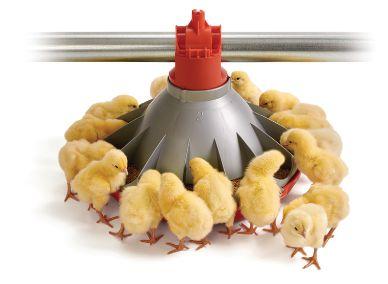
The Konavi® Feeding System is a breakthrough in global broiler feeding. It features an angled cone with anti-rake fins that helps keep birds out of the feeder to maintain fresh, clean feed. With its low pan height and patented scalloped edge, the Konavi Feeder invites chicks to eat from the pan from day one and gives birds
comfortable, easy access to feed throughout their growth cycle. Plus, the streamlined design permits more complete cleaning between flocks for better bird health. The Konavi Feeder lets beaks in, and helps keep feet out. Learn more about clean, open-style feeding at choretime.com/KONAVI-Broiler-Feeder
LRIC Update
By Lilian Schaer, Livestock Research Innovation Corporation
Livestock Research Innovation Corporation (LRIC) fosters research collaboration and drives innovation in the livestock and poultry industry. Visit www.livestockresearch.ca or follow @LivestockInnov on Twitter.
Top biosecurity tips from experts
The world was a vastly different place when the Livestock Research Innovation Corporation (LRIC) first chose the topic for this update – and it will be different yet again by the time it’s printed and seen by Canadian Poultry readers. In some ways, though, the topic of biosecurity is timelier than ever, as we’re forced to apply more and more of its principles to our own daily lives.
Agriculture, more than most sectors, has been living biosecurity for decades in an effort to keep poultry and livestock healthy and disease-free. For poultry, that includes trade-limiting, reportable infections like avian influenza, but also economically important diseases like infectious laryngotracheitis and others.
To prepare for this article, LRIC asked poultry industry experts for their thoughts on the top things poultry producers should do or know when it
comes to biosecurity.
Tom Baker is project manager and incident commander with Ontario’s Feather Board Command Centre (FBCC), which has responsibility for the centralized emergency response capabilities of the chicken, egg, turkey and hatchery sectors in Ontario.
Although informal collaboration on disease response began after the 2003 avian influenza outbreak in British Columbia, FBCC was founded in 2011 with funding support from the federal and provincial governments, Egg Farmers of Ontario, Chicken Farmers of Ontario, Turkey Farmers of Ontario and Ontario Broiler Hatching Egg and Chick Commission.
Baker and the FBCC member organizations encourage all poultry farmers to establish a biosecurity plan – both a basic one and one to follow during heightened alert or outbreak situations – that includes identification and mitigation of all hazards.
“It’s important to train all staff so they understand what they need to do and why it’s important.”
Elements of good biosecurity protocols include:
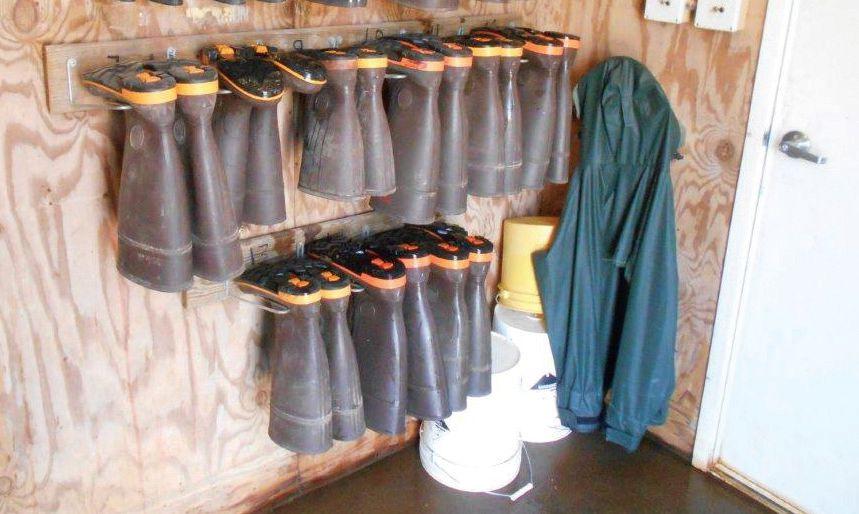
• Using separate boots, gloves and coveralls for each production area, including each floor in multi-story barns.
• Ensuring restricted and controlled access areas are clearly identified and respected by all staff, suppliers and service providers, and that restricted areas include a step over bench separating “clean” and “dirty” areas.
• Washing hands with soap and water, or when hand washing is not practical, using alcohol gel before and after putting on gloves prior to entering each restricted access area.
• Keeping barn doors locked at all times and implementing a secure barrier to controlled access areas during height-
ened biosecurity situations.
• Following deadstock, litter and manure management plans that don’t contaminate feed and water or attract pests.
“It’s important to train all staff so they understand what they need to do and why it’s important, including the principles and necessity of bio-exclusion, bio-management and bio-containment,” Baker says.
Poultry veterinarians Lloyd Weber and Anastasia Novy of Guelph Poultry Veterinary Services urge all poultry producers to pay particular attention to water quality in their barns. A water test is a good place to start.
“All too often we see bacterial infections, wet barns and reduced performance, which are directly linked to contaminated water and high mineral content. Conducting a water analysis and adding the appropriate water treatment can prove to be a significant improvement in the health of flocks,” Weber says.
Controlling insects and rodents is also an important part of biosecurity, as these populations can spread disease. As well, Weber and Novy encourage regular testing for diseases like infectious bursal disease virus (IBDV), infectious bronchitis virus (IBV) and reovirus that suppress bird immune systems.
“These viruses can be devastating to flocks, resulting in secondary infections, mortality, low weights and higher condemnations,” Weber adds. “You don’t know what virus is lingering in the barns if you don’t look.”
Ask the Vet
By Tom Inglis
Tom Inglis is managing partner and founder of Poultry Health Services, which provides diagnostic and flock health consulting for producers and allied industry. Please send questions for the Ask the Vet column to poultry@annexweb.com.
COVID-19 and poultry
What do producers need to know about the virus?
There is a great deal of information about coronavirus in the news and on social media. It can be hard to know what is factual and what you need to understand to make sense of the risks. The vets at Poultry Health Services have kindly shared some key concepts and definitions to help you navigate the information already circulating.
Are avian coronaviruses infecting humans?
No, avian coronaviruses are not infecting humans as they are a different class of coronavirus (gammacoronavirus).
Can humans be infected with the coronaviruses commonly found in birds (like infectious bronchitis virus [IBV])?
There is no evidence of humans becoming infected with coronaviruses commonly found in birds and we have been studying avian coronaviruses since 1930! We think this is because of major differences between the viruses and the avian receptor proteins.
Can humans give COVID-19 to chickens and turkeys?
This is highly unlikely, as COVID-19 is a betacoronavirus, which usually only affect mammals. Even if a flock of chickens or turkeys were exposed to humans infected with COVID-19, they wouldn’t become infected.
Are poultry products safe to eat? Yes, poultry products are safe to eat.
Still have questions?
If you want to learn more, please read on. While you may not have heard of coronavirus until lately, these are very common viruses – in fact, so common that coronavirus infections are usually called “the
It’s
highly unlikely that humans could give COVID-19 to chickens and turkeys.
common cold”.
Coronaviruses are members of a large family of viruses named Coronavirida . Within this family exists the subfamily Coronavirinae subdivided by four genera (i.e., alphacoronavirus, betacoronavirus, gammacoronavirus and deltacoronavirus).
Coronaviruses get their name from the Spanish word “corona”, which means “crown” based on how the virus surface proteins look like the ridged edges of a crown. The surface proteins are also important because they determine which receptor proteins they can attach to on the host they infect. Alphacoronaviruses, many of which cause the common cold in humans, change over time and most populations are exposed every year and develop immunity to similar viruses.
The virus in the news right now (COVID-19) is a betacoronavirus, which can infect humans and other mammals like pigs and dogs, and likely originated in
bats. Betacoronaviruses occasionally adapt from other mammalian species (SARS from bats and civets and MERS from camelids) to be able to infect humans because our populations are not regularly exposed. Betacoronaviruses can cause more severe illness than the alphacoronaviruses we usually see.
So, what is the story with COVID-19?
The story on COVID-19 is still being written and we have referenced some of the authors on recent papers if you are interested in reading more. On December 12, 2019, a group of 27 individuals with a severe and potentially lethal respiratory infection were reported to be infected by a novel coronavirus in Wuhan, the seventh most populous Chinese city with a population of around 12 million people.
The epidemic, which was linked to a seafood wholesale market where wild and domesticated animals were sold illegally, has grown to about 1.9 million confirmed cases and 118,000 deaths at the time of going to print.
The disease in humans has been named Coronavirus disease 2019 (COVID-2019)
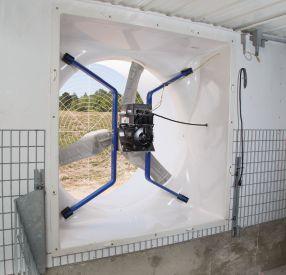
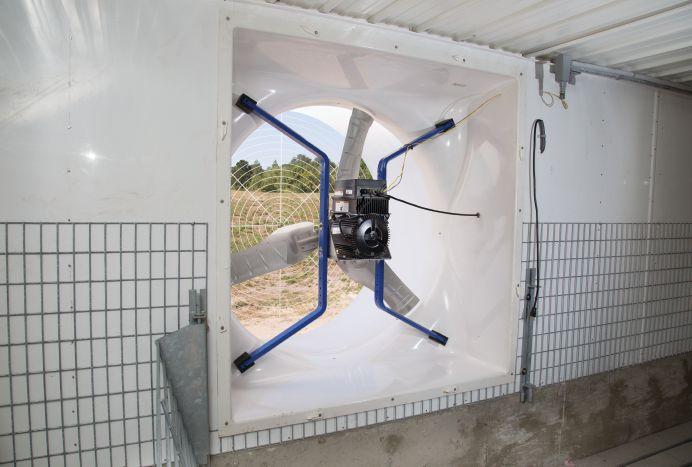
No Belts. No Pulleys. Precise Variable Speed.
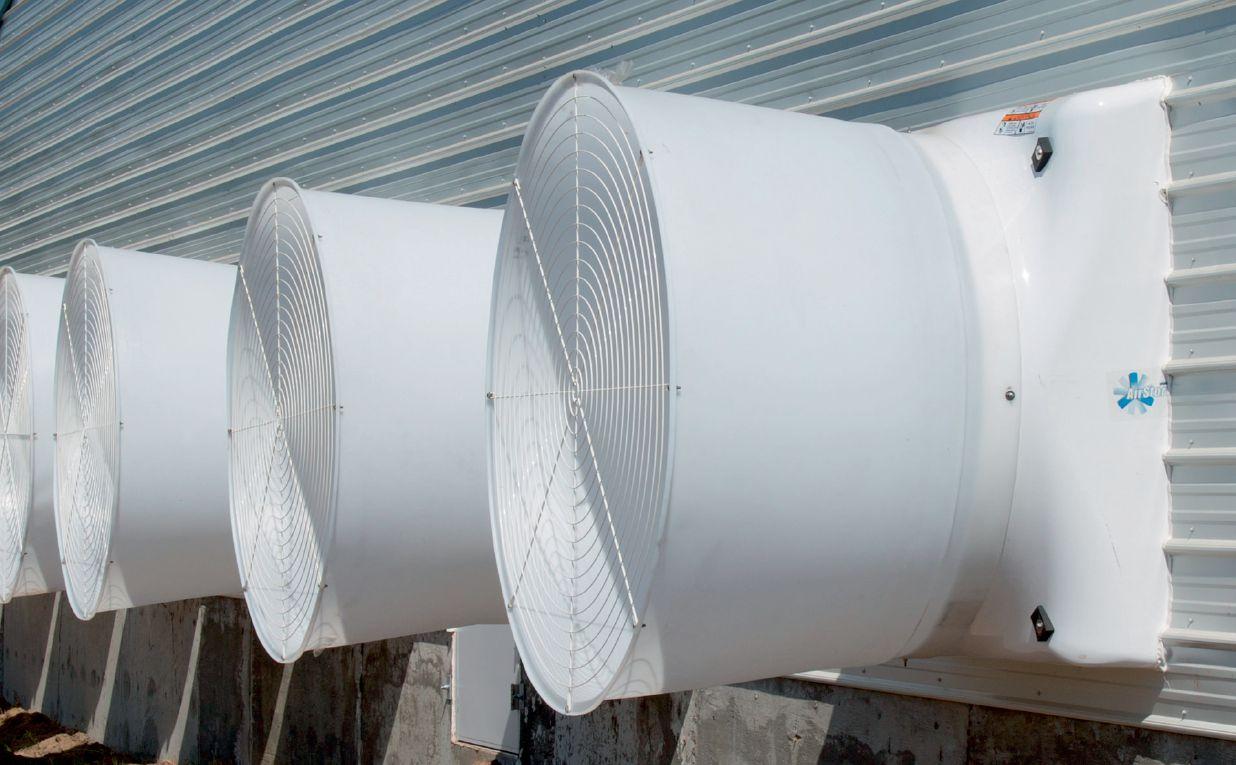
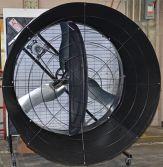
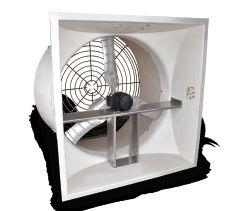
The 54” Infinity fan from Hog Slat features a direct drive DC motor eliminating pulleys, belts, and bearings to reduce maintenance. The motor’s internal processor converts the house controller’s AC signal to provide precise speed regulation even in rapidly changing conditions. Call today to learn more about the 54” Infinity fan from Hog Slat.
and the novel coronavirus causing it is SARS-CoV-2. The virus genome has been published and is highly similar (96.2 per cent) to one found in bats (RaTG13), suggesting bats as the most likely source of the virus, as it was the case for the first SARS virus.
What is a coronavirus?
A coronavirus refers to a member of a large family of viruses named Coronaviridae. Within this family exists the subfamily Coronavirinae, subdivided by four genera (i.e., alphacoronavirus, betacoronavirus, gammacoronavirus and deltacoronavirus). These viruses can cause disease in a variety of animal species.
Some examples of important coronaviruses are: The human coronavirus, which causes the common cold; porcine epidemic diarrhea virus, which causes diarrhea and mortality in young piglets; canine coronavirus, causing mild to severe gastroenteritis in dogs; avian infectious bronchitis virus (IBV), causing respiratory infection in chickens; and turkey coronavirus (TCoV), causing enteritis in young turkeys.
What coronaviruses are important for human health?
Coronaviruses important for humans are alphacoronaviruses (the common cold) and betacoronaviruses (COVID-19), which infect mammals (e.g., humans, pigs, dogs and bats). Evidence suggests that SARS-CoV-2 was originally a virus from bats that now infects humans. No evidence exists of any avian coronavirus causing disease or infection in humans.
Are there other coronaviruses that were transmitted to humans from animals (zoonosis)? Where is this virus (SARS-CoV-2) coming from?
Two other instances are known in which other animal coronaviruses affected humans. The first appeared in China in 2002 and caused a disease called severe acute respiratory syndrome (SARS), which was caused by SARS-CoV – a virus that originated from bats and passaged in masked palm civets before infecting humans.
The second virus appeared in 2012 and caused the lethal Middle East Respiratory Syndrome (MERS), and it was caused by MERS-CoV a virus from camelids that evolved from a bat virus ancestor approximately 30 years ago.
This SARS-CoV-2 virus is clustered in the same genus as the original SARS
virus. It came from bats and it presumably had an intermediate host, although it has not yet been identified.
Can IBV infect humans? How different is the virus from other zoonotic viruses?
All these zoonotic viruses (SARS-CoV, SARS-CoV-2 and MERS) naturally infect bats, have been passaged in a mammalian intermediate host for some time ranging from weeks to years and are classified within the Betacoronavirus genus. Furthermore, humans and bats share some similarities in the receptor proteins (ACE2 for SARS-CoV and SARS-CoV-2; and DPP4 for MERS).
On the other hand, IBV and TCoV are classified in a different genus gammacoronavirus, which is known for including viruses infecting mostly birds.
To date, there is no evidence of any of these gammacoronaviruses affecting humans. This lack of evidence, considering human closeness to chickens, and IBV, discovered in 1930 without any reported zoonotic event, are suggestive of deep virus-host differences between birds and humans. This renders it difficult for an avian virus to break the species barrier and become zoonotic.
For references, view the online version of this article at canadianpoultrymag.com.
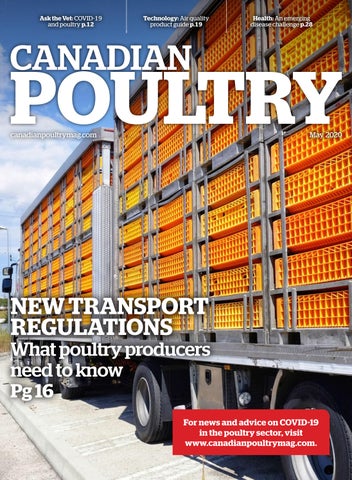
New transport regulations
What’s changed for poultry under Canada’s revised rules and why. By Lilian
Schaer
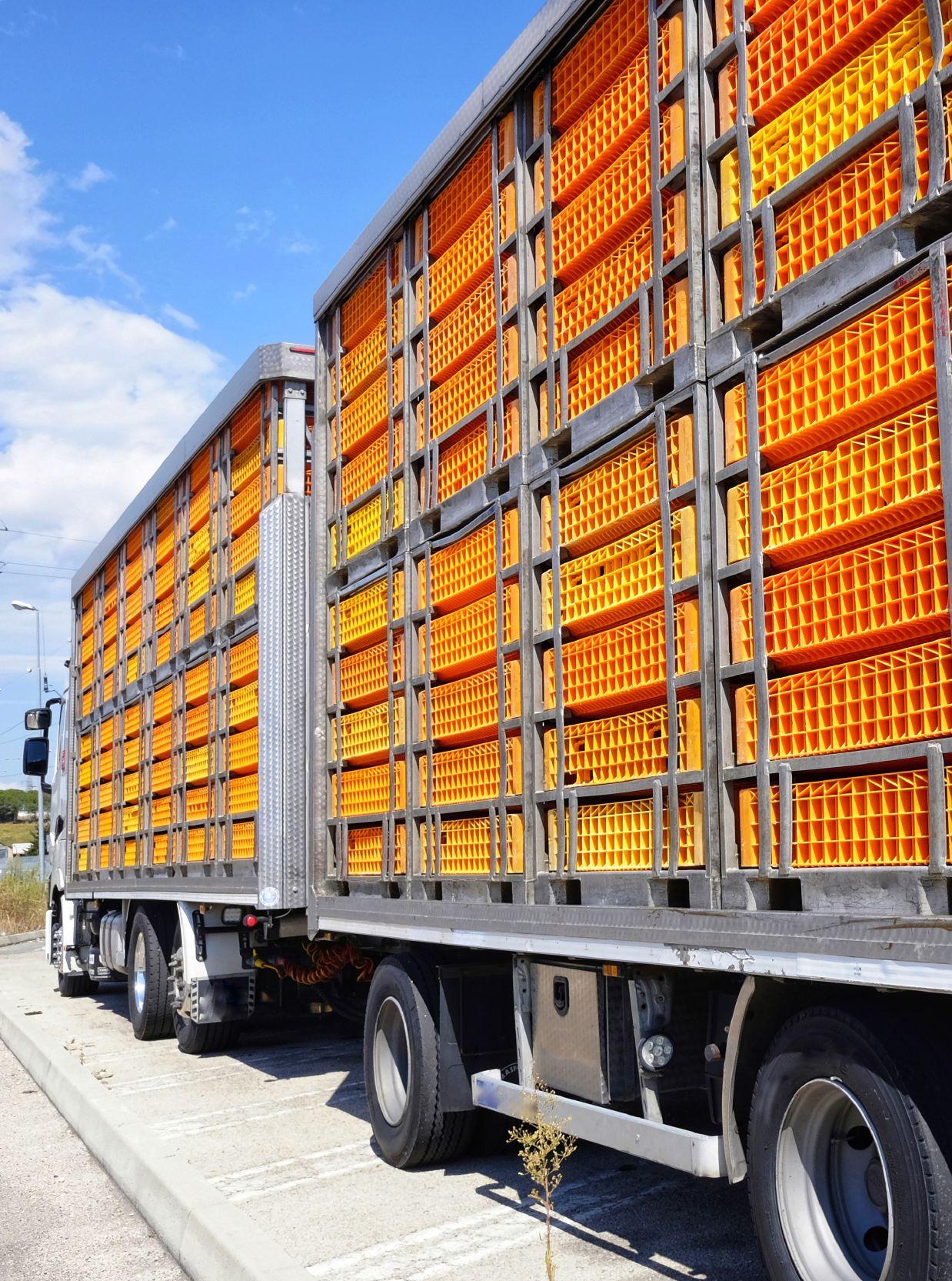
New Canadian regulations for transporting livestock and poultry came into effect in February of this year.
According to the Canadian Food Inspection Agency (CFIA), the overhaul was needed to better align Canada with international standards, consumer expectations and changing technology.
“We hadn’t touched this [legislation] in a significant amount of time and we need our regulations keeping pace with the rest of the world,” says Aline Dimitri, executive director of animal health with CFIA. “Technologically, things have changed, we transport differently and consumer expectations are evolving.”
According to Dimitri, the agency’s experts were directed by about 400 scientific articles on the latest science and research into animal welfare when updating the regulations. CFIA last revised them in 1977.
Dimitri says they are now less prescriptive and more outcomes-based. In
essence, that means what matters is a positive outcome for the welfare of animals during transport, with more flexibility to farmers, transporters and handlers in how to ensure that happens.
“We’re promoting predict, plant and prevent – when animals are being transported, we need to predict what might go wrong and have contingency plans ready to go, including where we might prevent problems from happening,” Dimitri says.
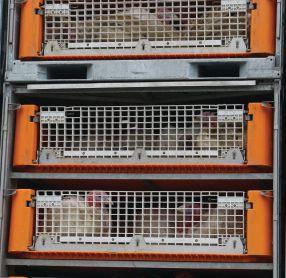
That includes knowledge for farmers and proper training for transporters around risk factors and animal condition, adequate space and headroom, weather protection, ventilation and when animals are unfit for transport.
Enforcement approach
What is still prescriptive, though, are the rules around maximum time without feed, water and rest for animals in transit. They’ve been tightened up, albeit it with a two-year period during which CFIA will focus on education rather than enforcement.
In cases of non-compliance, inspectors will first give a warning and provide information about the new standards. However, Dimitri stresses that the agency reserves the right to move straight to enforcement in cases where animal welfare is severely compromised, particularly if there is evidence of intent to harm.
“An inspector can choose to penalize and not just educate in extreme cases, but we have an enforcement approach that is graduated and starts with education,” she says. “If a situation is unexpected because something has happened on the road, that’s different than someone who intentionally harms animals.”
Poultry changes
For poultry producers, the maximum intervals without feed, water and rest have been set at 28 hours for feed and 24 hours for water. Previously, it was 36 hours from the time the first bird was loaded to when the last bird was unloaded.
The other big change is around the def-
Under the revised regulations, farmers and transporters have a shared responsibility for the welfare of the animals during transport.
Darren Ference
Chair
Calvin McBain
Vice-Chair
BOARD OF DIRECTORS
Darren Ference - Alberta
Calvin McBain – Quebec
Brian Ricker - Ontario
Shawn Heppell – British Columbia
Jelmer Wiersma – Saskatchewan
Rachelle Brown – Manitoba
Bertin Cyr – New Brunswick
Steven Eadie – Nova Scotia
Doug Hart – CPEPC
Michel Pépin – CPEPC
Adam Power – FPPAC
Scott Olson - Alberta Alternate
Brian Ricker Executive Member
Bird Management
inition of transport time. Previously, it included only time spent in-transit. Now, the clock starts ticking on the 28-hour limit when either feed, water or rest is removed. Typically, feed removal will happen first, which is what starts the clock. It will keep going right until processing.
With birds taken off feed several hours before transport to ensure they meet food safety standards and are processed with empty stomachs, there is concern that the new regulations don’t leave a lot of time to deal with the unexpected enroute.
“It sounds like a lot of time, but when you consider the time from feed removal to when the last bird on the truck is processed, it really isn’t,” says Susan Fitzgerald, executive director of the Ontario Livestock Transporters’ Alliance.
However, she adds, CFIA has been working with the poultry sector around clarification for unforeseen events due to weather problems or traffic delays, for example. The agency has also assured the industry that these are not the types of situations that are targeted for enforcement. This, combined with the need for transporters and processors to have contingency plans in place for unforeseeable events, has helped address poultry industry concern.
Transport regulation changes at a glance
What’s changed:
• Producers now share accountability for welfare.
• Feed, water and rest times start when feed and water are first removed.
• The maximum time without feed is 28 hours.
• The maximum time without water is 24 hours.
• There’s a two-year adjustment period before enforcement.
Shared responsibility
Reasons for change:
• The previous regulations date back to 1977 and, thus, were overdue to be modernized.
• There was strong public pressure to implement regulatory changes.
• International standards around humane livestock transport have changed.
• There’s a lot of innovation and new technology in the area.
Another big change is the idea of shared responsibility between farmers and transporters for the welfare of the animals during transport, which is a new provision.
Fitzgerald, who is also executive director of the Ontario Livestock and Poultry Council and the Poultry Service Association (PSA), says this means farmers are responsible for ensuring their birds are in fit condition to be loaded. What’s more, according to the CFIA guidance document, they’re also responsible for the actions of catching crews on their farms with respect to welfare.
“A limitation of CFIA before was they couldn’t go back onto the farm – it was limited to the actual transport event,” she explains. “Now, if an issue can be traced back to the farm level of putting a compromised or unfit bird on the truck, the producer can be charged if they are responsible. They aren’t exempt any more.”
Training requirement
The new regulations also state that commercial transport companies must train staff in animal welfare and have it documented. PSA began offering poultry handling and transportation training in 2015 in Ontario, and subsequently rolled it into a national initiative in partnership with the Canadian Poultry and Egg Processors Council.
Training is available in English, French, Spanish and Thai and covers the entire life cycle of the bird – from hatchery through to live receiving at a processing facility.
Fitzgerald worked with Al Dam, poultry specialist with the Ontario Ministry of Agriculture, Food and Rural Affairs (OMAFRA), and Penny Lawlis, who was OMAFRA’s animal welfare specialist at the time, to develop the training. Dam and Lawlis already had training materials for different catching courses, and there was an existing poultry handling and transportation course in Pennsylvania that served as the basis for Ontario’s program.
“This program isn’t focused on transport regulations – it’s about good handling practices and welfare generally,” Fitzgerald says.
Across the country to date, 1,231 people have taken the voluntary training, including 856 in Ontario, 251 in Quebec, 89 in New Brunswick and 33 in Nova Scotia.
“We have resources on the CFIA website, and we also invite farmers to talk to their veterinarians; they’re an important resource around animal welfare,” notes Dimitri, adding most questions to CFIA are about changes to feed, water and rest intervals.
Ventilation systems update
The latest inlets, exhaust fans and more.
By Treena Hein
If anyone has a finger on the pulse of ventilation in poultry barns, it’s Steve Ford. He’s the senior research engineer and manager at the Bioenvironmental and Structural System (BESS) Laboratory at the University of Illinois. It’s where experts conduct research and product testing of agricultural equipment to aid producers in purchase decisions and equipment manufacturers in developing better products.
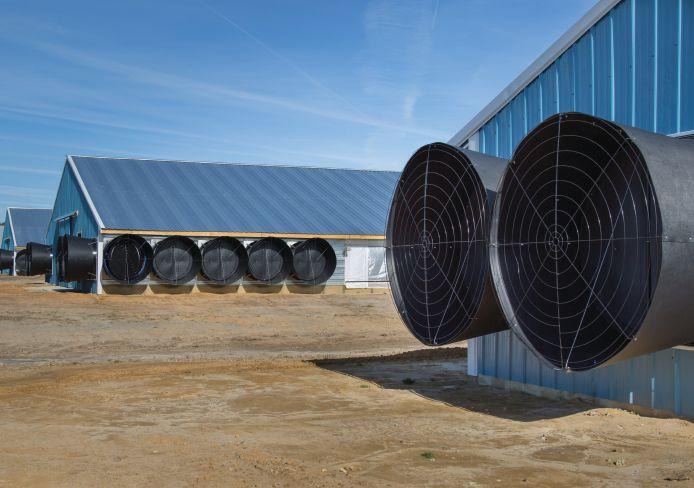
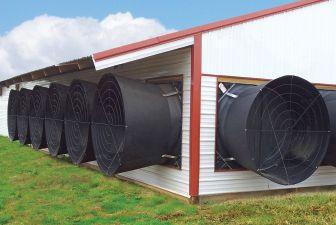
While poultry barn ventilation systems encompass more than fans, fans are obviously integral. Ford notes that, in the past, virtually all large summer ventilation fans were single-speed, belt-driven fans. “However, several manufacturers have begun to sell direct-driven, variable-speed fans in this market segment,” he says.
This is due to many factors, such as costs coming down and the fact that, because these fans can operate at the required shaft speed without belts, pulleys and pillow block bearings, they have fewer mechanical parts to maintain. “These fans typically provide higher cubic feet per minute per watt at full speed than similar single-speed, belt-driven fans,” Ford adds. “Since they are variable-speed, they can smoothly transition from the mild weather ventilation rates up to maximum summer ventilation rates.”
Ford believes that, due to the higher cubic feet per minute per watt they provide, multiple variable-speed ventilation
fans will become more common. During times of reduced ventilation, producers can operate sets of these fans at partial speed, he says, using less power to move the same amount of air than a lesser number of similar single-speed fans would.
Nicholas Wilson, poultry products manager at Canarm AgSystems, agrees that as more high-tech automated-environment poultry barns are constructed, producers are prioritizing energy efficient ventilation systems.
For its part, Chore-Time believes that, in addition to variable speed control and energy efficiency, the biggest advancement in ventilation fans over the last few years has been the move to corrosion-resistant materials, similar to those seen in
circulation fans.
It can be difficult for producers to sort through what’s available on the ventilation system market. For that reason, Canadian Poultry spoke to leading manufacturers about the latest features and what sets their systems apart.
WHAT’S NEW
Many of the ventilation systems Hog Slat offers improve control during cold weather by using minimum-speed fans, sales manager Scott Bauck explains. “Instead of using typical voltage regulation with an
TOP: Many of the ventilation systems Hog Slat offers improve control during cold weather by using minimum-speed fans.
RIGHT: The Omniflux air inlet from Chore-Time features four louvers that can be positioned to direct airflow independently of each other
Air Quality Guide
AC motor, our brushless DC motor uses internal electronics to read a signal from the house controller and constantly adjust motor RPM,” he says. “The result is precise minimum fan speed to reduce energy usage, even with changing environmental conditions such as headwinds and static pressure.”
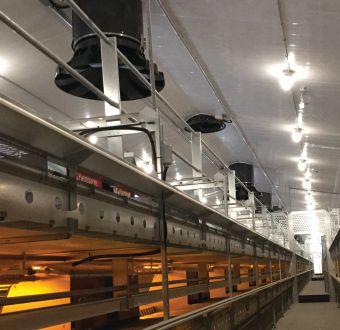
The DACS ventilation system features the Corona inlet, which provides precise mixing of all incoming air, explains the company’s owner and head of sales Niels Dybdahl. Therefore, only preheated air enters the barn. “The Corona is an active fan-assisted air distribution unit and it is the fan that actively sucks the air trapped under the roof and distributes it in the barn,” he notes.
“When the baffle in the Corona chimney starts to open, small portions of outside air pass to the fan where it is mixed with larger portions of warm room air.
The more the baffle opens, the more outside air passes to the fan, but the mixing percentage ensures that the air leaving the Corona inlet will always be preheated.”
Dybdahl points to tests that show that by incorporating warm air in the roof space into the DACS ventilation system, 10 kW of heat is typically obtained for
each 1 kW of electricity used. This cuts overall heat consumption by as much as 70 per cent.
The Omniflux air inlet from ChoreTime features four louvers that can be positioned to direct airflow independently of each other. The sliding polyurethane plate adjusts the size of opening to
DARKLING BEETLES ARE STEALING YOUR PROFITS!
Left unchecked, darkling beetles can compromise structural integrity of barns, causing an increase in energy cost, spread disease, and reduce overall ock health. As a part of a darkling beetle long-term control program, Credo®, used in rotation with Debantic® and Tempo® can save producers $4,252 per 100,000 birds.1
T:7"
The DACS ventilation system, with its Corona inlet and HE740 exhaust system.
A ceiling inlet from Munters’ ventilation system.
control air speed regardless of louver direction, and the guide system prevents the sliding plate from jamming and makes cleaning easier. Seals are resistant to wear, stretching and shrinkage, even at low temperatures.
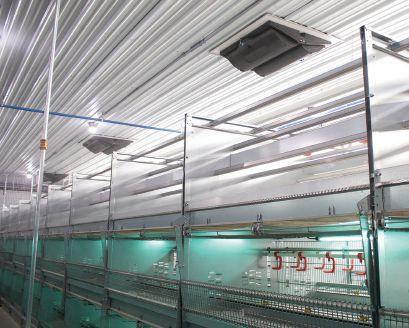
The BI Series bi-flow ceiling inlet from Munters has an all-new aerodynamic design created using software modeling. “Airflow is maximized over the entire static pressure range and flow direction is precisely controlled,” explains product manager Scott Mulka. “Performance of your ventilation system is improved with a fresh supply of preheated air.”
Inlets in the BI Series include those with mechanical control and air actuated-control using adjustable constant-force springs, allowing full control of static pressure and making it easy to compensate for ceiling pitch. The doors seal tightly, preventing humid air from entering the attic space.
“An added feature of the air-actuated model is an optional mechanical override,” Mulka says. “All inlets close together using a simple hand winch or an actuator when transitioning to full tunnel ventilation.”
Cumberland Poultry’s ventilation system includes modular insulated ceiling air inlets. They pull more temperate air from the barn attic, as opposed to sidewall inlets, “which pull cold winter or hot, humid summer air,” Canadian national sales manager Doug Martin explains.
The Munters ZEW2900 sidewall inlet is designed for very cold external temperatures below -10°C. Thus, it significantly reduces the formation of ice and reduces energy costs by forgoing forced ventilation and creating a uniform temperature through gearing the minimum air rate to the birds’ requirements.
Exacon offers the direct-drive vari -
able-speed Magnum 58 and 54 V-Plus Cone exhaust fans in its ventilation system, with magnet motors that eliminate the need for greasing bearings and changing belts. They operate from minimum ventilation to maximum power, eliminating the need for smaller additional fans.
In addition, Exacon president Mark Relouw says the TPI wall and ceiling inlets they offer have been improved to make incoming air flow more even and easy to manage at all times of year. What’s more, their unique polyurethane formula offers “very high insulation value.”
Cumberland Poultry’s Komfort Kooler with Unitized RollSeal Sidewall System.
Circulation fans update
Experts weigh in on current trends and new features.
By Treena Hein
Technology in poultry barns has evolved to address a variety of new factors over the last 10 years, from new barn design to efforts to increase bird welfare to advanced bird genetics. Circulation fans are no exception.
Perhaps the biggest driving force in circulating fan evolution over the last few years is the increase in size of poultry barns. Fans have, therefore, had to become larger and more powerful to ensure air movement is both sufficient and efficient, explains Doug Martin, national sales manager for Canada at Cumberland Poultry.
Bird density has also increased in these larger barns, he adds. This has heightened the need for proper air circulation.
However, according to Niels Dybdahl, owner and head of sales at DACS, as fans for the poultry market have increased in size, they have not really gotten much more efficient. “This is due to the fact that these fans have never been aerodynamically optimized,” he asserts, “and they have all been traditional on/off fans.”
Besides efficiency, producers are also considering life span when purchasing any on-farm equipment. Scott Bauck, sales manager at Hog Slat, says he and his team are seeing producers buying fans with more corrosion-resistant components.
In the same vein, Scott Mulka, product manager at Munters, has seen fan materials evolve from mostly galvanized compon-
ents to non-corrosive materials like fiberglass and high-strength polymers. These materials are able to handle the tough conditions of the poultry barn environment for as long as 25 years or even longer.
It can be difficult to sort through how the various fans on the market differ from one another. It’s also challenging determining what features matter most. For tips, Canadian Poultry talked to experts.
WHAT’S NEW
Hog Slat’s Infinity features brushless DC motor technology. This improves motor life and lowers energy costs. “In addition, the direct-drive Infinity reduces maintenance by eliminating bearings, pulleys and belts,” Bauck says.
The DACS MagFan has been on the European market for about five years but has recently arrived in Canada. Its efficiency stems from the aerodynamic shape of the housing, the cone and the motor, as well as the fact that the motor is direct-drive.
“Where other fans use belt-driven fans (there is a belt from motor to impeller), the MagFan is a direct-drive fan (impeller directly mounted on the motor), and just this alone provides approximately 15 per cent higher efficiency,” DACS’s Dybdahl explains. With the aerodynamics added in, the MagFan is 40 per cent more efficient
TOP: Hog Slat’s Infinity circulation fan line features brushless DC motor technology, which improves motor life and lowers energy costs.
RIGHT: The DACS MagFan has been on the European market for about five years but has recently arrived in Canada.
than a belt-driven fan at full speed, he notes. The capacity for producers to control fan speed through the variable-frequency drives makes the technology even more efficient.
Dybdahl explains that when the MagFan runs at half speed (traditional belt-driven fans are either ‘on’ at full speed or off), its energy consumption is only 12.5
per cent of what’s required for full speed operation. “[This is what] makes the MagFan capable overall of saving 75 per cent of electricity cost compared to traditional on/off fans,” Dybdahl says.
“Additional advantages of the MagFan is a more uniform airflow in the barn and, due to the speed controlling, the air flow pattern in the barn stays the same and, hence, much better climate can be achieved.”
Exacon’s Multifan V-FloFan offers both vertical and horizontal airflows, resulting in constant low air speed at animal level and also reduced energy costs. Developed by Vostermans Ventilation, the V-FloFan’s vertical airflow is guided through an aerodynamic conical outlet. Exacon president Mark Relouw says these features mean that a reduced number of fans per surface-unit is needed compared to similar fan systems.
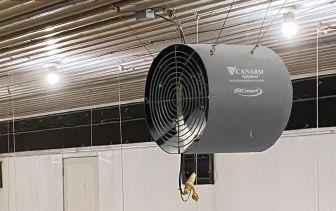
Canarm AgSystems’ 24” PCF-EC series fan employs ECsmart motors in both its exhaust and circulation fans, enabling power savings up to 75 per cent, poultry products manager Nicholas Wilson says. “The Canarm 24” PCF-EC series fan with ECsmart motor is the most
energy-efficient fan on the market for 0 to 10volt variable speed air movement and destratification,” he reports.
The Cumberland Poultry Commander direct drive fans (in 36” and 54” sizes) offer both high efficiency and high output. “They are constructed with dur-
Exacon offers the Multifan V-FloFan with both vertical and horizontal airflows.
Air Quality Guide
able fiberglass and poly cone options,” Martin says, “with a permanent magnet motor that runs cool to the touch and supplies constant torque to the propeller.
“Commander fans feature an industry-leading drive that allows for the use of failsafe relays or back-up thermostats as
required. Other benefits include reduced total fan energy costs as well as low maintenance, with no belts, pulleys or grease.”
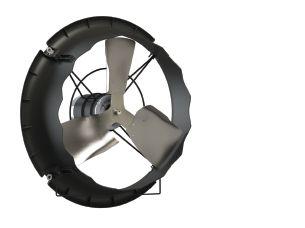
Munters’ CX24, its newest fan model, uses EC motors and variable speed drives.
The company says it’s a high-powered fan in a small, flexible package. It features
four-point mounting hardware for added flexibility and easy movement for cleaning and maintenance.
The patent-pending chevron design on the outlet is engineered to reduce sound levels, Mulka says, and the fan is also made of corrosion-resistant materials. “The advanced design of the CX24 produces a higher centerline velocity while decreasing the spread of the air flow,” he adds, “providing you with more control.”
Looking forward, Steve Ford of the University of Illinois believes that future fan-related efficiencies may be gained not only by improving the fan itself, but by improving the barn air movement system.
He asks, “Can we provide air movement where it is needed, and also save energy by lessening air velocities where it is not needed?” More research of where air is needed or not needed for different types of poultry would likely be required for that to come to fruition.
The Canarm 24” PCF-EC series fan with ECsmart motor, is the most energy efficient fan on the market for 0-10 volt variable speed air movement and destratification.
Munters describes its CX24 as a high-powered fan in a small, flexible package.
The Commander direct drive fans from Cumberland Poultry offer both high efficiency and high output.
Fly Problem? Treat
Break
E ective:
Natural:
Economical:
Hatching a better bird
Researchers find adding light to incubation has positive effects. By
Lilian Schaer
Adding light might be the key to more robust chicks that are ideal for antibiotic-free production.
Researchers at Dalhousie University and the University of Saskatchewan (U of S) found that providing lighting during incubation positively affects the hatch, post-hatch and egg production performance of laying hens. More specifically, chicks incubated with red LED light had improved navel health, early body weight gain and egg production without any negative impacts on the eggs they ended up laying as adult birds.
“Historically, we would give weak chicks an antibiotic to get them through the first few days,” explains Bruce Rathgeber of the Department of Animal Science and Aquaculture at Dalhousie. “But, if we can improve their early feeding behaviour, we could get them through those first few days without antibiotics.”
The study, which Rathgeber conducted in collaboration with Karen
Schwean-Lardner of the Department of Animal and Poultry Science at U of S, included two incubation trials where eggs were incubated for three weeks using different colours of LED lights and varying amounts of darkness and light.
Incubation trials
In the first trial, 2,400 eggs were incubated under four conditions: 24 hours of darkness; 12 hours of darkness and 12 hours of white LED; 12 hours of darkness and 12 hours of red LED; and 12 hours of darkness and 12 hours of red LED for the first 18 days followed by 24 hours of darkness during the last three days before birds are hatched.
The second trial included 1,280 eggs that were also incubated in four different ways: 24 hours of darkness; 12 hours of darkness and 12 hours of red LED; 12 hours of darkness and 12 hours of blue LED; and 12 hours of darkness and 12 hours of white LED.
In both trials, chicks went into a con-
ventional housing system after hatch. Chicks from the first trial were housed in groups of eight and chicks from the second were housed in groups of six.
Overall, chicks incubated with red light in trial two hatched four hours sooner than those under white light, and six hours sooner than those incubated in blue light and those that received no light at all. They also had the healthiest navels, making them better able to withstand the threat of infection.
In trial one, chicks incubated with red light gained the most weight as a percentage of their original weight. What’s more, they produced an average of 27.6 eggs during their first 47 days of egg laying, compared to only 25.1 eggs from those hens that had been incubated with white light.
None of the lighting conditions resulted in any noticeable impact on egg quality.
The current industry standard for incubation in commercial hatcheries is one without any light, so moving towards including light into the incubation process would not
Researchers studied the impact providing lighting during incubation had on the hatch, post-hatch and egg production performance of laying hens.
be without cost to the hatcheries.
“There is a cost for putting light fixtures in, but we work with LEDs where the cost of operating is very small – and the cost of fixtures is coming down in price,” Rathgeber says.
Behaviour after hatch
Schwean-Lardner’s work involved evaluating chick behaviour after hatch under different lighting wavelengths. She observed no behavioural differences after hatch as a response to the incubation light colours, but chicks that were subsequently housed under a darkness-light cycle were more active than those in constant or near constant light.
“Traditionally, producers use constant or near-constant lighting because the thought was that this lets birds see the barn and find water and feed,” she says. “But, a light-dark cycle actually made the chicks more active.”
Schwean-Lardner and her graduate student, Celma Eliete Ferreira dos Santos, completed a small subsequent study at U of S where they conducted chick quality assessments and watched bird behaviour. They did so to evaluate the influence of various light-dark cycle lengths in the incubator and hatcher.
“We found chicks incubated on an 18hour light, six-hour darkness cycle started to hatch considerably sooner than birds with no light – so potentially, a shorter hatch period could reduce the incubation cycle at the hatchery,” she says, adding they noted no differences in post-hatch chick quality or behaviour.
Many other factors besides light can influence how chicks respond though. The trials were also relatively small. Thus, both Rathgeber and Schwean-Lardner caution that more research is warranted to confirm the outcomes and explore further impacts on bird behaviour.
This collaborative project was funded by Egg Farmers of Canada, Egg Farmers of New Brunswick, Egg Farmers of Nova Scotia, Egg Farmers of Prince Edward Island, Agriculture and Agri-Food Canada through Growing Forward II, and Nova Scotia Department of Agriculture through Research Acceleration.
Searching for answers
Broiler industry experts puzzled by mysterious syndrome emerging countrywide.
By Lilian Schaer
There’s an emerging disease in Canada’s poultry sector. It’s one that has been puzzling experts since it first started appearing in Canadian chicken processing plants over the last 18 months or so.
Broiler chickens have been showing up at processing plants with dilated proventriculi or full stomachs but without a known cause, leading to the condition being called proventricular dilation syndrome in Ontario.
“We started getting calls from processors in fall 2018 facing challenges with contamination at processing,” explains Al Dam, poultry specialist with the Ontario Ministry of Agriculture, Food and Rural Affairs (OMAFRA). “It looked like the birds didn’t have enough feed withdrawal time before loading, but even when feed was withdrawn properly, we were still seeing it.”
And there would be no improvement in the condition even after the birds were returned to lairage for a couple of hours before processing, he adds.
Proventricular dilation
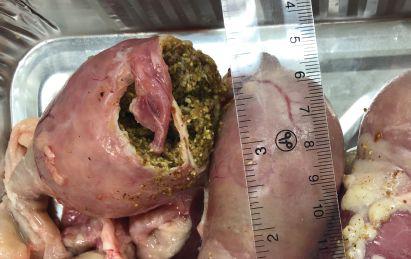
The proventriculus is a digestive organ located after the esophagus and before the gizzard. It secretes acid and enzymes to help break down feed as it moves through the gastrointestinal tract. In healthy birds, the proventriculus is smaller than the gizzard and the connection between the
two organs, called gastric isthmus, is constricted.
With dilation, the proventriculus and the gizzard become a single tube and feed stops passing through the gastrointestinal tract.
Outwardly, birds can look as though they have pendulous crop. Catchers have been noticing that afflicted birds were heavy, as if full of feed. Farmers have reported birds reaching processing weights two to four days ahead of schedule.
When the condition presents at slaughter, processors must slow down the line to remove the affected birds. That’s because they present food safety and carcass contamination risks.
“When processors pay on live weight, they’re actually also paying for feed in the gut while expecting that weight to be there in breast meat,” Dam says.
By fall 2019, calls started coming in about higher numbers of sudden death on-farm of birds close to market weight.
When autopsies were performed, many of those birds were found to have dilated, feed-filled proventriculi, crop that looks like pendulous crop and empty intestines.
Experts puzzled
According to OMAFRA veterinarian Alison Moore, who has been working on the issue on an interim basis in the absence of a provincial poultry veterinarian, veterinarians at first speculated the culprit could be transmissible viral proventriculitis (TVP) or chicken proventriculitis necrosis virus (CPNV).
“When pathologists looked at the issue at a cellular level, it didn’t look like textbook TVP from the lesions or the type of inflammation – and they saw inflammation in some birds but not all,” Moore says. “Tissue had to be sent to California for testing for CPNV because we don’t have the capacity, and of 18 samples, three came back positive – so how does that
Experts were puzzled as to why broiler chickens began showing up at processing plants with dilated proventriculi or full stomachs.
Jacques Plante Saint-Hyacinthe, Quebec 514-232-2539 jacques@ruby360.ca Tavistock,
• Exacon’s brand name since 1987
• Available in sizes 12” to 60”
• White or Black polyethylene flush mount housings
• Designed to meet the rigorous demands of farm/agricultural ventilation
• Energy efficient Multifan, MFlex or North American motors
• Fiberglass housings available in 50” and 60” diameter
TPI WALL AND CEILING INLETS
• TPI is a well known manufacturer of high quality polyurethane inlets
• High quality and high insulation value results in precise manufacturing delivering high tolerance for better ventilation control
• Wall inlets, ceiling inlets and tunnel inlets
• TPI wind hoods and wind hoods with built-in light trap also available
PUR AG AIR FILTRATION SYSTEM
• High quality L7 Pathogen barrier filter with prefilter significantly reduces the chance of air transmitted diseases. (ie bird flu and other influenza viruses)
• Clarcor provides a complete system such as filter housing frame designed for eaves and side air inlets
• This system makes installation of filters easy and practical plus reduces the risk of non-filtered air from entering the building
GREENBREEZE BASKET FAN
• Designed for more air flow and consistent pattern
• Precise guard spacing reduces air restriction
• Easy to open front guard allows easy cleaning
• Includes hanging bracket to allow direction adjustment
• Variable speed, efficient motor 115/230v
GENIUS I-TOUCH VENTILATION CONTROL
The well known and proven Genius control line is now available as a Touchscreen interface
• Navigates like an I-Pad by simply touching, swiping or dragging on a 7” or 10” touch screen
• Available with up to 8 variable stages and between 15 to 30 on/off relays
A slave is available to expand to 50 on/off relays
• Many options including light control, bird scales, perch scales and bin scales Built-in wifi allows easy access to the internet for managing, viewing and recording history on FarmQuest website
LIGHT TRAP/DARK OUT
• High light reduction
• Low resistance to air flow
• Simple Installation
• Easy to clean
• Uses P.v.c. snap release spacers
account for the other 15?”
No other possible causes have been identified either. The syndrome affects both roasters and standard broilers, is not breed or sex specific, does not distinguish between conventional and raised without antibiotics production systems and has been seen at multiple processing plants. There is also no known feed ingredient association between diets that feature a corn-soy versus wheat ration – and although mycotoxin levels were high in 2018, they weren’t in 2019.
Trying to figure out the cause has been frustrating for Dam and others working on the issue. Anecdotal evidence suggests farmers are now starting to notice the syndrome in younger birds when doing health checks with their veterinarians.
According to Dam, a complicating factor is that about 20 per cent of Canadian broilers come from all over the U.S. as fertile eggs or day-old chicks and not much is known about the health conditions of breeder flocks stateside.
Research efforts
In Saskatchewan, funding has been allocated from the Western College of Veterinary Medicine Disease Investigation Unit to investigate the issue. Researchers have collected carcass data from nine affected flocks, with collection from a tenth flock still pending. The University of Saskatchewan has temporarily put non-essential research on hold as a result of the coronavirus pandemic.
According to Tennille Knezacek of the Poultry Extension Service at U of S’s Department of Animal and Poultry Science,
With dilation, the proventriculus and the gizzard become a single tube and feed stops passing through the gastrointestinal tract.
55 to 81 per cent of 100 birds examined from each affected flock to date have some degree of enlarged proventriculi.
“In extreme, individual bird cases, the digesta weight in both the proventriculus and gizzard has reached 140 grams, representing a huge economic loss to the processor,” she says.
The researchers have not completed correlation statistics, but evidence to date suggests the incidences do not appear to be seasonal or farm, barn or breeder flock-specific.
A separate research project, also temporarily on hold, involves tissue sample collections from broilers on-farm between 15 to 20 days of age. Knezacek and her team will also be on the lookout for enlarged proventriculi in those young birds once the project is back up and running.
Dam says Ontario’s Industry Broiler Health working group, which includes hatcheries, processors, farmers, veterinarians, academia, OMAFRA and the Animal Health Lab at the University of Guelph, is working on the issue. They’re ready and willing to work with anyone in other provinces, he insists.
Advice for producers
Since the cause of enlarged proventriculi is unknown and likely a multi-factorial condition, it is difficult to make specific recommendations to prevent the condition, according to Knezacek. However, there are some general recommendations she says producers can follow:
• Keep good production, feeding and vaccination records by following OnFarm Food Safety and the Chicken Farmers of Canada Animal Care Program.
• Review vaccination schedules with a poultry veterinarian.
• Communicate with processors to determine if birds are affected.
• Thoroughly clean and disinfect the barn between flocks.
• Sanitize water lines and ventilate barns properly.
“If you suspect your flock is affected, talk to your veterinarian and to your processor – the processor can prepare if it is a problem flock,” Dam adds.
Turkey Tips
By William Alexander
William Alexander is a technical service representative with Hybrid Turkeys. To contact him, email william.alexander@hendrix-genetics.com.
A guide to evaporative cooling systems
Hot summer days are just around the corner. And when we are complaining of high heat and humidity, you can bet that our turkeys need cooling systems.
Being unable to sweat means that the bird’s only method of cooling down is to pant or flap its wings.
Luckily, there are some evaporative cooling systems that can provide relief for turkeys in the barn.
TEMPERATURE AND HUMIDITY LINKED
Systems such as cool cells and foggers can be very effective, but you should be aware that they will add humidity into the air. If the humidity is too high, birds will pant and experience stress as they try to cool down.
The drier the air at the time of using the evaporative cooling, the more evaporation can occur, and the greater the cooling effect.
Temperature and humidity are closely connected. When the temperature is above 27°C, the Rh is almost always below 80 per cent.
A simple rule of thumb is that you should not use evaporative cooling when the Rh (relative humidity) is greater than 80 per cent.
Evaporative cooling can be used when outside air is more than 31°C and humidity is less than 75 per cent.
Evaporative systems alone
Temperature
13°C - 24°C
24°C - 29°C
29°C - 32°C
32°C - 35°C
Effects
Thermal neutral zone; bird does not need to alter its basic metabolic rate to maintain its temperature
Slight reduction in feed consumption; feed conversion compromised; panting
Feed consumption continues to drop; birds in survival mode
As temperatures rise, birds become more stressed, leading to serious effects on their health and performance.
cannot reduce bird stress. They must be combined with a high level of air speed provided by tunnel ventilation. An air speed of 600 feet per minute can provide up to 8°C of wind chill.
Cool cells and foggers are two evaporative systems that provide cooling relief. What is the difference between the
two, and which system is most effective for your region?
COOL CELLS
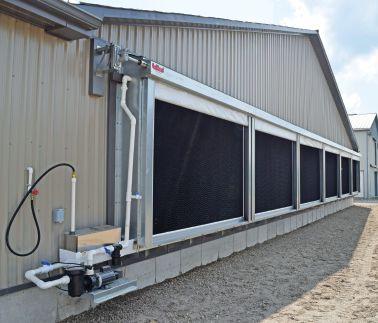
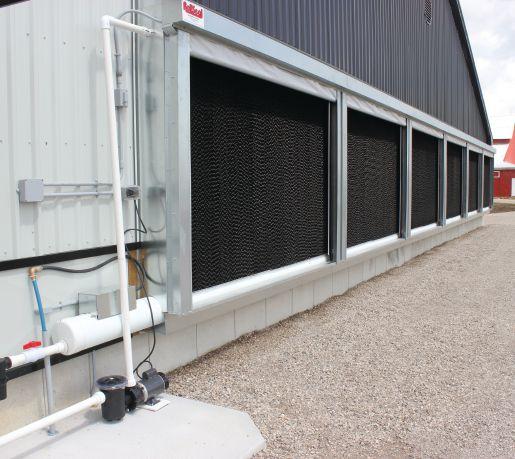
Cool cells run in combination with tunnel fans. Water evaporates from the wet cool cell pads, placed along the side of the barn. They can produce up to 11°C of cooling. If you
are in a region that regularly reaches high temperatures in the summer, cool cells will be worth the investment to keep your birds comfortable. Take, for example, a situation where the temperature in the barn is 41°C. The air speed of the fans provide 8°C of wind chill cooling. In combination with the cool cells, which provide 11°C of cooling, 41°C has been cooled to 22°C ([41°C -11°C]-8°C =22°C). That puts the barn in the correct comfort zone.
FOGGERS
Fogger systems produces water droplets smaller than a misting or sprinkler system. They are typically less expensive than a cool cell system and can be retrofitted into an older barn. Foggers can produce up to 7°C of cooling. If you are in a region that reaches high temperatures less frequently, foggers can be effective at keeping your birds comfortable.
In a similar example as the one I previously noted, with the air speed providing 8°C of cooling and foggers providing 7°C of cooling, 35°C is modified to 20°C ([35°C-7°C]8=20°C).
KEY TAKEAWAY
No matter what system you use to cool down your birds, the biggest takeaway is to keep track of temperature, wind chill and humidity before turning on your system. You want to make sure that you are providing comfort for the turkeys rather than added humidity.
The drier the air at the time of using the evaporative cooling, the more evaporation can occur, and the greater the cooling effect.
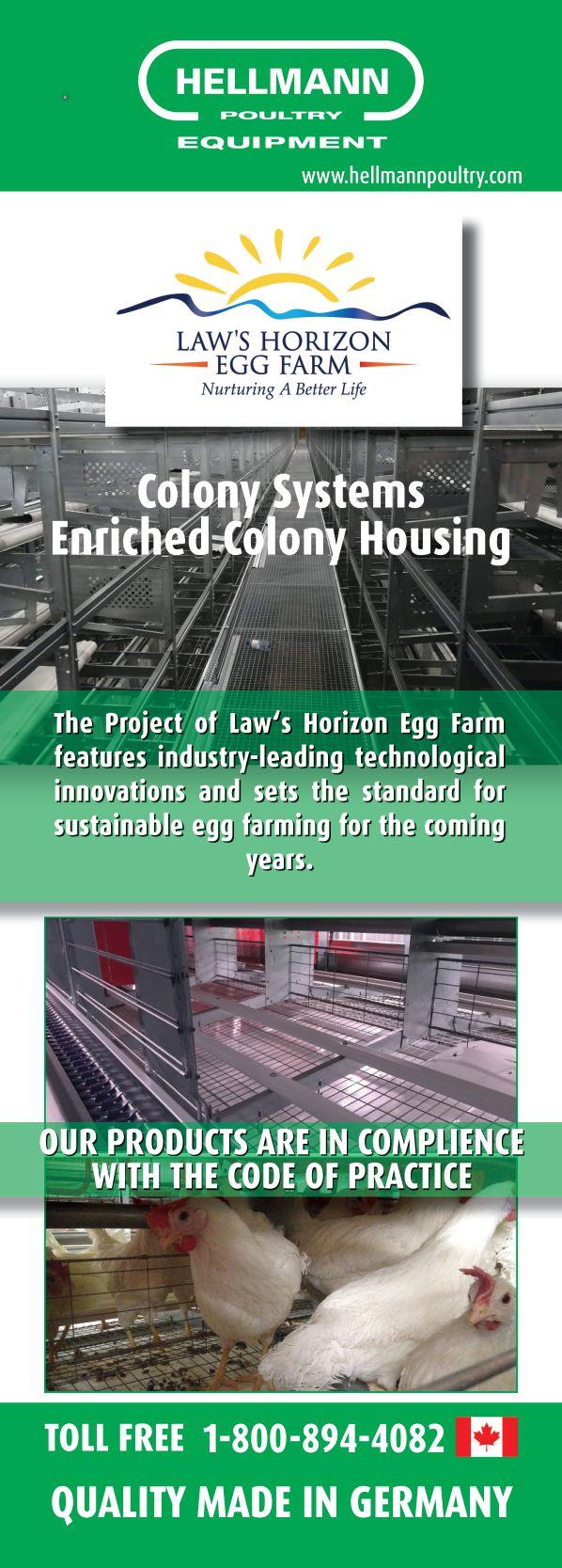
Law’s Horizon Egg Farm
Location
Belleisle Bay, N.B.
Sector
Layers, pullets
The business
The Laws are third-generation egg farmers. Their business is run by Gailand Law, his wife Carol and son Aaron. It dates back to the 1930s when Gailand’s father started a mixed farm.
The need
Prior to 2015, the Laws housed hens in different conventional barns. Those systems were close to 30 years old. Thus, they decided to modernize their layer operation. They still had the option of building a new conventional barn at the time. However, they went with enriched. “We saw consumer trends on the horizon – it didn’t make sense to me to build a conventional housing system,” says Aaron, adding that they felt it was a better option for their hens as well.
The barn
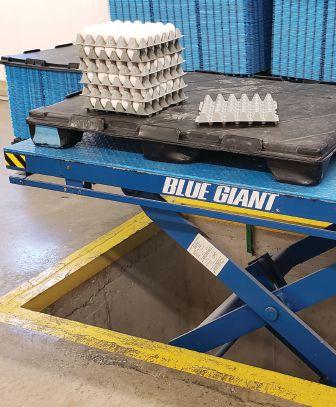
The Laws installed an enriched system from Hellmann. They surrounded it with modern technologies, including a heat exchanger and manure dryer. “The heat exchanger has huge advantages in air quality, a gain not only for the birds but for the staff,” Aaron observes. To ease the physical workload for staff, they also installed a Diamond FPX100 Farmpacker and stacker and an in-floor pallet lift. Aaron says the transition went smoothly. “There are no challenges with feed or water consumption. We rarely have behavioural challenges. And our downgrades are slightly lower.”
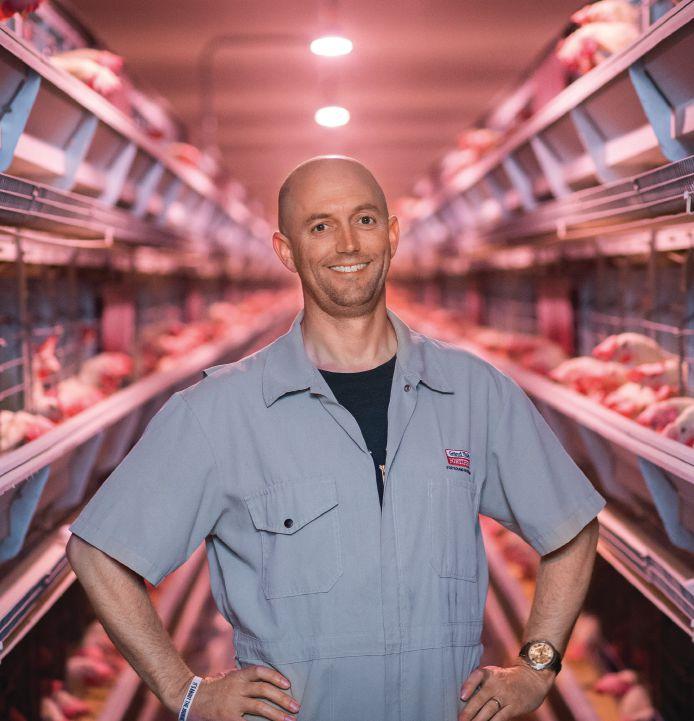
Aaron Law, pictured here, and his parents transitioned from conventional housing to enriched.
For barn automation, they went with an Orion system from Hotraco.
To ease the physical workload for staff, they installed an in-floor pallet lift.
Thank you for everything you do to ensure that Canadians have access to nutritious food in this unprecedented time.