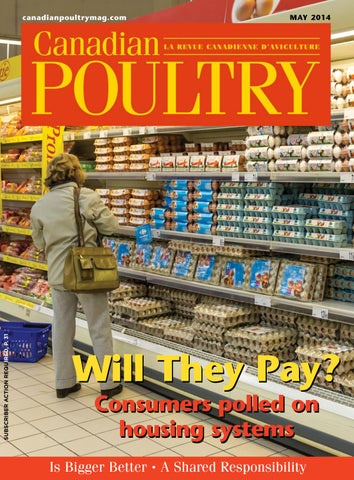
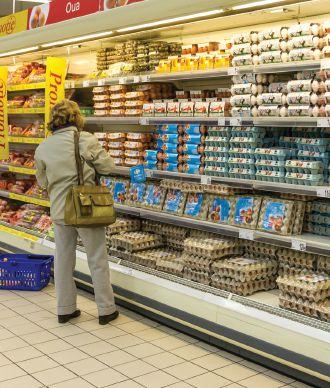
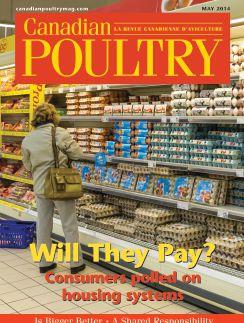
PIC UPDATE: Will They Pay? Consumers polled on alternative hen housing systems
Kimberly Sheppard, Research Co-ordinator
PRODUCTION: Nurturing the Next Generation Fostering the future leaders of the egg industry By the Egg Farmers of Canada
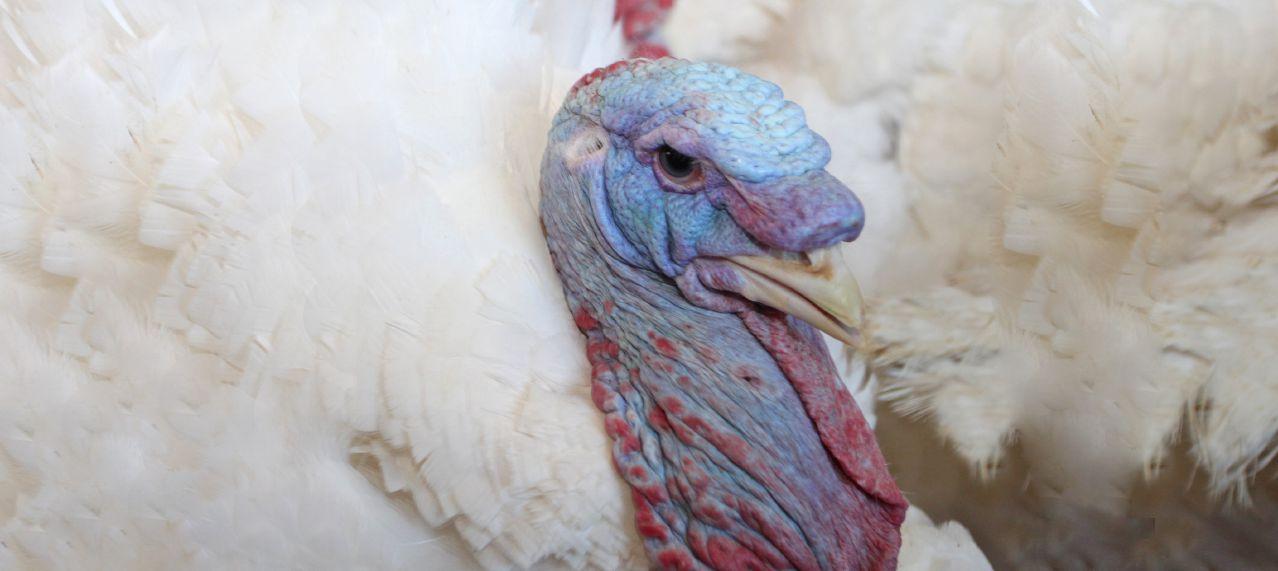
THE BEAKER: Injurious Feather Pecking in Domestic Turkeys Its development, causes and potential solutions By
Karen Dallimore
BIOSECURITY: Safe and Secure Bird Transport Innovators in Alberta have developed an enhanced live poultry transport carrier that addresses biosecurity and animal welfare concerns By
Treena Hein
The Bigger, the Better?
to consider when deciding on barn size
Shawn Conley
Melanie Epp
FROM THE EDITOR
BY KRISTY NUDDS
Talking Sustainability
The USDA definition of sustainability applies the following five principles to an integrated system of plant and animal production practices: human and fibre needs are satisfied, the environmental quality and the natural resource base upon which the agriculture economy depends is enhanced, nonrenewable resources and on-farm resources are used most efficiently, the economic viability of farm operations is sustained, and the quality of life for society as a whole is enhanced.
Crystal McKay, executive director of Food and Farm Care, recently wrote an excellent opinion piece entitled “The Sustainable Food, Animal Welfare Balance” that appeared in the Grimsby Lincoln News where she says, “when having a discussion or considering making changes to any food production or farm practices, all five principles need to be given fair and practical consideration.”
However, the average Canadian (who has limited, if any knowledge of farming practices) often tends to focus on the information provided by those not involved in the business of farming. As McKay points out, “one of the biggest challenges with having a conversation with the average Canadian about farming is their perceptions or questions are often based on issues, what’s been in the media or what they’ve ‘heard’ somewhere.”
Although animal welfare is not mentioned directly in the USDA’s definition of sustainability, it is an integral part as it is related to the economic viability of a farm. Special interest anti-agriculture groups use strong, emotionally charged visuals to get their anti-confinement message instant news coverage. Unfortunately, this is a great influence on consumers’ perception of farming and is in large part driving retailers to demand that rearing practices change.
But the big question that looms in the
welfare-retail situation is are consumers willing to pay for the changes that they are driving indirectly? Our cover story (page 12) details a University of Guelph study that tries to tackle this question and gain more understanding of consumer behavior.
The results are very interesting. Although respondents’ knowledge of animal production was limited, consumers “are sensitive to information about housing systems” and believe that scientific evidence should be used when determining how farm animals are raised. While the respondents valued the presence of dust baths, nest boxes and perches, they are also sensitive to the word “cage”, indicating that this word should be avoided when explaining enriched colony housing, often referred to in the industry as “enriched cages”.
As concluded in the study, it’s therefore important for egg producers (and industry) to communicate well with consumers. Retailers need this information as well. As McKay says, “it’s not normal practice for the animal welfare specialist to consult with the food affordability or food safety experts when making recommendations on what’s best for hen welfare. Individual companies make announcements or use one of the principles in the spectrum as a short-term marketing advantage.”
She concludes by emphasizing that such practice needs to change in order “to truly embrace sustainable food and farming in Canada.”
Canada – 1 Year $30.00 per year (with GST $31.50, with HST/QST $33.90)
GST – #867172652RT0001
USA – 1 Year $ 66.00 USD Foreign – $75.00 per year
Occasionally, Canadian Poultry Magazine will mail information on behalf of industry-related groups whose products and services we believe may be of interest to you. If you prefer not to receive this information, please contact our circulation department in any of the four ways listed above.
Sustainability is more than just a buzzword, and it’s important that one of its principles doesn’t take precedence over another. As McKay correctly points out, “it is important to emphasize that the five principles are all linked together and changing one can have either a positive or negative influence on the other four.” n
More Weight with Less Wait OptiGROW
as 1, 2, 3.
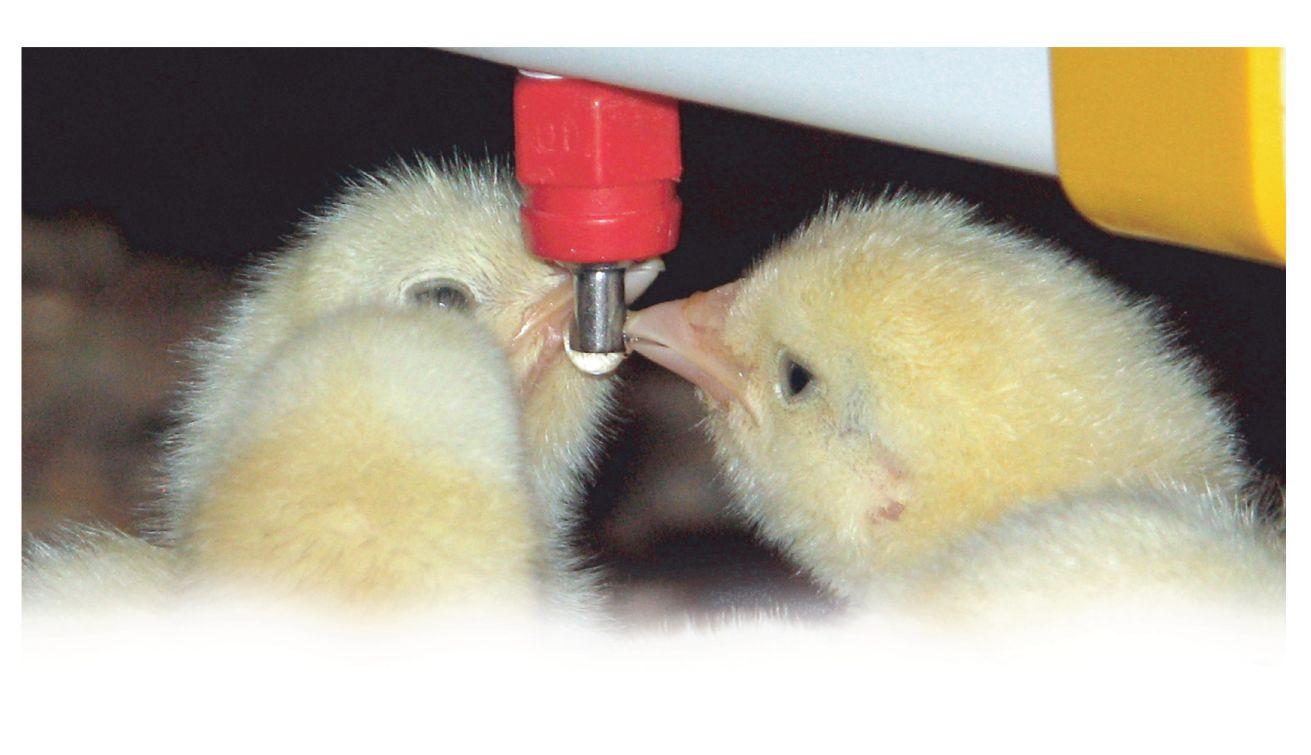
1) Large bottom pin that holds a drop of water to attract day old birds to nipple / great starts / average first week mortality below 1%.
2) Greater side flow with minimal triggering force allows all birds to easily trigger the nipple and get off to a great start. Great Starts = Fantastic Finishes!
3) Both, vertical and side action, deliver the Opti-mum flow rates and ability to grow a 4 lb small bird up to a 10 lb Jumbo bird with the same nipple. After hundreds of house updates, customers are consistently seeing improved weight gains of up to 1/2 lbs/bird with dry litter conditions!
M Transport Sentencing WHAT’S HATCHING HATCHING
aple Lodge Farms will have to spend at least $1 million over three years to ensure compliance with federal rules after an Ontario judge convicted it of causing undue suffering. In a case closely watched by animal-rights groups, Ontario Superior Court Justice Nancy Kastner also fined Maple Lodge Farms $80,000 on two of 20 counts of failing to transport chickens humanely. Kastner placed the company based in Brampton, Ont., on three years probation, suspending the other 18 counts for the duration. Among conditions of probation, the company will have to make public the convictions, sentence and measures it is taking to avoid further offences by “prominent’’ website posting. The Canadian Food Inspection Agency (CFIA) charged Maple Lodge Farms under the Health of Animals Act
with cruelty to chickens after 2,000 of the birds died on two trips to slaughter in the winter of 2008-2009. One of the trucks was carrying spent hens, the other broiler chickens.
Kastner convicted the company in September 2013 on two of the counts, and Maple Lodge Farms pleaded guilty to 18 of the remaining charges this week in court in Brampton. In her decision, Kastner said “lack of adequate training, personnel, or equipment’’ contributed to the high mortality rate of the transported birds. Maple Lodge Farms posted the following statement on its website: “While the onus continues to be on Maple Lodge Farms to transport birds in a humane manner in compliance with industry regulations and best practices, the
company applauds the court for also drawing attention to bigger picture challenges in the supply managed chicken industry,’’ the company said. Maple Lodge Farms noted the court called upon legislators to review the regulatory framework that governs chicken production in Canada, from egg to table. “Until a regulatory framework review results in changes that allow growers, transporters and processors to make adjustments to schedules without adverse consequences, continued transportation challenges within the industry can be anticipated.’’ However, Maple Lodge Farms did say it is focused on finding solutions that provide better conditions for live birds during all phases of production.
The Canadian Press
COMING EVENTS
Groupe Westco expands
MANITOBA
New Brunswick-based poultry company
Groupe Westco has embarked on a project to build three new broiler houses in the De Salaberry, Manitoba area. These three 100 X 528
UofG To Close Two Campuses
ONTARIO
The University of Guelph will consolidate the academic and research programs delivered at its Kemptville and Alfred campuses in order to improve efficiency, ensure quality and best serve the agri-food sector, said U of G president Alastair Summerlee in a release.
Food Bank Donation Program
ONTARIO
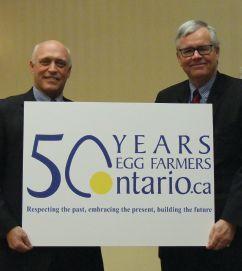
Egg Farmers of Ontario (EFO) announced at its annual general meeting that in celebration of its upcoming 50th anniversary, it is introducing a new egg donation program in collaboration with the Ontario Association of Food Banks (OAFB) and a number of Ontario egg grading companies.
EFO Chair Scott Graham said that the province’s egg farmers have a strong record
feet broiler houses will hold 212,000 broiler chickens representing close to 3 million kg a year and will feature the latest in heating, lighting, litter management and ventilation technologies. The $3 million-to-$4 million investment will replace the company’s Neepawa Food
As part of the consolidation plan, intake to academic programs at the Alfred and Kemptville campuses will be suspended for the fall 2014 semester. The University’s Ridgetown Campus will remain open.
Delivery of academic programs at the two campuses will cease by the end of 2015. Currently registered students at both campuses will be able to complete their programs.
The University is working with other Francophone institutions in the area as well as various Ontario government
EFO Chair Scott Graham (L) and OAFB Executive Director Bill Laidlaw (R)
of donating to food banks and that the organization wants to give more through a program that makes it easy for egg farmers and all supporters to donate Ontario eggs to food banks across the province.
Processors Ltd. operation that it acquired in 2006.
The new barns should be operational in the fall and put Groupe Westco’s operation closer to Carleton Hatcheries, its supplier, and to its processor, Dun-Rite.
Group Wescto is the second largest poultry producer in Manitoba.
ministries to explore opportunities to offer similar programs for Ontario students who have applied for fall admission in Eastern Ontario.
Research projects at Alfred and Kemptville will be completed or relocated to Guelph or Ridgetown by the end of 2015. The University is expected to continue to manage field crops research facilities at Alfred and Kemptville. Programs delivered through the New Liskeard Agricultural Research Station will remain unaffected for the immediate future.
The EFO has committed to ensure that at least $250,000 worth of eggs will be donated to the OAFB during the first year of the new program, which is voluntary. The commitment will provide about 12,000 dozen eggs per month throughout the year. EFO’s net financial contribution will be reduced gradually as voluntary egg donations are pledged, keeping donations constant at about 12,000 dozen eggs per month. The program is open to all Ontario graders and Burnbrae Farms and Gray Ridge Farms have already committed. Participating egg graders are supporting the program by donating all egg grading and packaging costs.
MAY 2014
May 6, 2014
Research Day hosted by the Poultry Industry Council. 1 Stone Rd., Guelph, Ont. For more information, visit: poultryindustrycouncil.ca
JUNE
2014
June 15-17, 2014
CPEPC/CMC Convention Westin Harbour Castle Hotel, Toronto, Ont. For more informaiton, visit: www.cpepc.ca
June 18-20, 2014
Canada’s Farm Progress Show Evraz Place, Regina, Sask. For more information, visit: www.myfarmshow.com
JULY
2014
July 8-9, 2014
North American Manure Expo Springfield, Mo. For more information, visit: www. agannex.com/manure-manager/manure-expo
July 14-17, 2014
Poultry Science Association annual meeting Texas A&M University, Corpus Christi, Texas. For more information, visit: www.poultryscience.org/psa14 or e-mail: psa@assochq.org
WHAT’S
HATCHING HATCHING
Quota suggested for EU
Import levies and quotas to protect the EU poultry meat sector is a “necessary tool” to compensate unfair competition from third countries, according to an independent study commissioned by the Association of Poultry Processors and Poultry Trade in the EU countries (a.v.e.c).
The study analyzed the competitiveness of EU poultry with respect to differences in production costs and how
lower import levies between the European Union and third countries will impact the competitiveness of the European poultry meat sector. a.v.e.c. says the conclusion is clear: “quotas and import levies protect the EU from third country imports whose legislation or production standards do not meet the requirements or expectations of our consumers.” The study is available on a.v.e.c.’s website.
Bridging the Gap
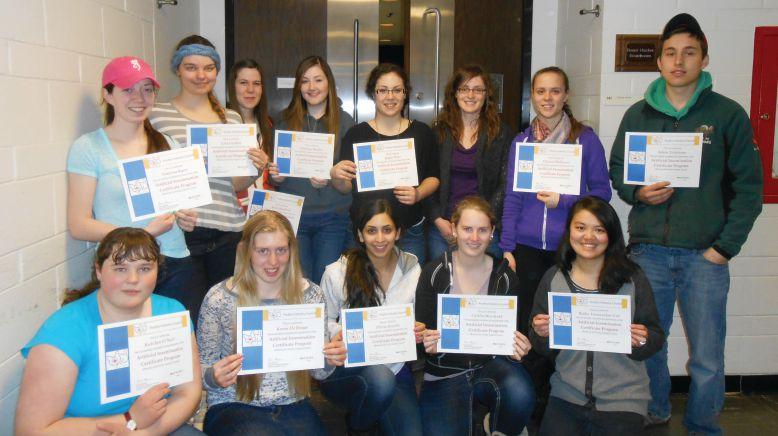
TA total of 15 students were awarded certificates through the PIC’s Artificial Insemination Certificate Program.
he Poultry Industry Council (PIC) is helping post-secondary students with an interest in poultry connect with industry members. The PIC implemented several programs during the 2013-2014 school year and targeted efforts to integrate students into industry events such as Science in the Pub and the Poultry Innovations Conference. New this past year was the PIC’s Student Work Experience Program where interested students participated in an Industry Networking Night, complete job shadowing activities and attend Company Showcase & Tour Days.
In an effort to add value to current Poultry Club activities at the University of Guelph, PIC implemented an Artificial Insemination Certificate Program. Poultry Club students received official recognition for their participation in selection and AI activities at the Arkell Research Station, and were presented with expanded learning opportunities over previous years. In order to earn a certificate, students attended a lecture presented by an industry geneticist, completed online training modules, and participated in a set number of artificial insemination sessions.
COMING EVENTS
SEPTEMBER 2014
September 9-11, 2014
Canada’s Outdoor Farm Show
Canada’s Outdoor Park, Woodstock, Ont. For more information, visit: www. outdoorfarmshow.com
OCTOBER 2014
October 7-9, 2014 Poultry Service Industry Workshop
The Banff Centre, Banff, Alta. For more information, visit: www.poultryworkshop.com
October 29, 2014
Canadian Poultry Sustainability Symposium
Hanlon Convention Centre, Guelph, Ont. For more information, visit: CPsustainability.com
We welcome additions to our Coming Events section. To ensure publication at least one month prior to the event, please send your event information at least eight to 12 weeks in advance to: Canadian Poultry, Annex Business Media, P.O. Box 530, 105 Donly Dr. S., Simcoe, ON N3Y 4N5; e-mail knudds@annexweb.com; or fax 519-429-3094. Please write ‘Event Submission’ in the subject line.
Mark Davies, Chair
Bill Mailloux, Vice Chair
2014 BOARD OF DIRECTORS CONSEIL D’ADMINISTRATION 2014
Shawn Heppell, BC
Darren Ference, AB
Jelmer Wiersma, SK
Rachelle Brown, MB
Bill Mailloux, ON Calvin McBain, QC
Bertin Cyr, NB
Mark Davies, NS
Doug Hart, CPEPC/CCTOV
Michel Pépin, CPEPC/CCTOV
Keith Hehn, FPPAC/ACSV
Shawn Heppell, Executive Member www.turkeyfarmersofcanada.ca www.tastyturkey.ca
CPRC Update Vaccine Technology Commercialization
The road from research discovery to commercial application is sometimes long. In the October 2010 issue of the CPRC update, we introduced you to new vaccine technology being developed by Dr. Eva Nagy and her team at the University of Guelph. Since that time, these researchers and the University have been busy refining the technology and working with Avimex Animal Health to bring it to commercial application. While vaccines are used with great success to protect poultry from a range of diseases, many are not without their drawbacks. Vaccines based on live virus, for example, can sometimes cause symptoms of the disease they are designed to prevent. Killed vaccines are generally safer, but are often less effective. As more is learned about pathogens and the host’s immune responses to them, new vaccine types are emerging that overcome the shortcomings of their predecessors and incorporate features that improve their effectiveness and utility. For example, scientists have identified specific viral proteins that elicit a protective immune response. Inoculating birds with these immunogenic proteins, or “antigens”, eliminates the need for, and associated risks of, using intact virus. The challenge is to find an effective way to deliver these antigens to the body.
THE TECHNOLOGY, IN BRIEF
Dr. Nagy’s team is meeting that challenge by exploiting a virus’ natural ability to deliver genetic information into biological cells. Specifically, the researchers are working with a strain of fowl adenovirus (FAdV9; a strain that does not cause disease in poultry). Adenovirus particles are extremely small and, compared to a cell, are quite simple. They consist only of a set of genetic instructions (DNA) and a coat of protein
that protects the DNA. Adenoviruses do not have the chemical machinery necessary to reproduce themselves. As part of their lifecycle, these viruses attach to a host cell and introduce genetic instructions that trick the cell into producing new virus particles. Nagy’s team engineered FAdV-9 to instead instruct the cell to make specific antigens. These antigens are, in turn, presented to the immune system to elicit the appropriate immune response.
The FAdV-9 system is very powerful and flexible. Using the same biological platform, a wide array of antigens can be produced. Antigens can be co-introduced with proteins that enhance the bird’s immune response. Multivalent vaccines can be produced that simultaneously protect poultry from more than one disease. Additionally, these vaccines can be engineered to allow distinction between birds that were vaccinated and those that were naturally infected by intact virus. Formally known as “Differentiation of naturally Infected from Vaccinated Animals” (DIVA), this feature will be an important component of many commercially viable vaccination strategies in the future.
COMMERCIAL APPLICATION
The key to bringing scientific discoveries to commercial application is to connect research expertise with companies that can take the technology to the marketplace. In Dr. Nagy’s case, this connection was made with the help of the Catalyst Centre (CC), the University of Guelph’s technology transfer and industrial liaison office. The CC works with faculty, staff and students “to protect intellectual property and maximize potential economic, social and environmental benefits.” CC staff connected Dr. Nagy with Avimex and helped
navigate issues around intellectual property and technology licensing. Avimex, based in Mexico (there are no Canadian vaccine manufacturers), produces poultry vaccines and pharmaceuticals for poultry and other agricultural species for markets in more than 25 countries. Having done its own due diligence, Avimex is confident that Dr. Nagy’s technology platform will be a success and is working on registration and scaling up production.
Congratulations to Dr. Nagy’s team on their ingenuity and perseverance, and to the Catalyst Centre and Avimex for helping these researchers navigate the long road from idea to marketplace.
Funding for Dr. Nagy’s preliminary work was provided by CPRC in partnership with Agriculture and Agri-Food Canada (AAFC) and the Natural Sciences and Engineering Research Council. Ongoing research was part of the 2010-2013 Poultry Science Cluster, which was funded in large part by AAFC Canada as part of Growing Forward, a federal-provincial-territorial initiative. CPRC and a number of industry and government organizations also provided funding for the Cluster.
For more details on any CPRC activities, please contact The Canadian Poultry Research Council, 350 Sparks Street, Suite 1007, Ottawa, Ontario K1R 7S8, phone: (613) 566-5916, fax: (613) 241-5999, email: info@cp-rc.ca, or visit us at www.cp-rc.ca. n
The membership of the CPRC consists of Chicken Farmers of Canada, Canadian Hatching Egg Producers, Turkey Farmers of Canada, Egg Farmers of Canada and the Canadian Poultry and Egg Processors’ Council. CPRC’s mission is to address its members’ needs through dynamic leadership in the creation and implementation of programs for poultry research in Canada, which may also include societal concerns.
Love They Y!
86%
According to a recent Leger survey, of Canadians feel that it is important that the poultry and eggs they buy come from Canada. We’ve earned that trust; let’s keep earning it.
PIC Update
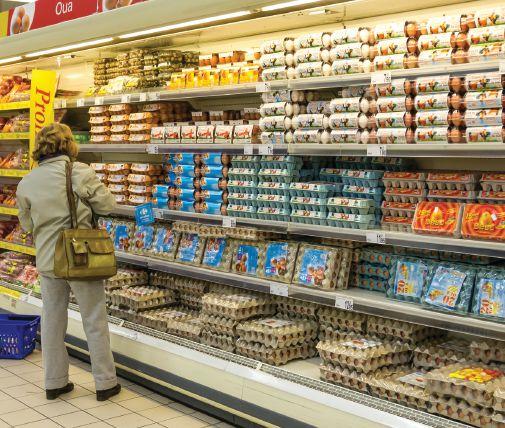
Will they pay? Consumers polled on alternative housing systems
by Kimberly Sheppard, Research Co-ordinator
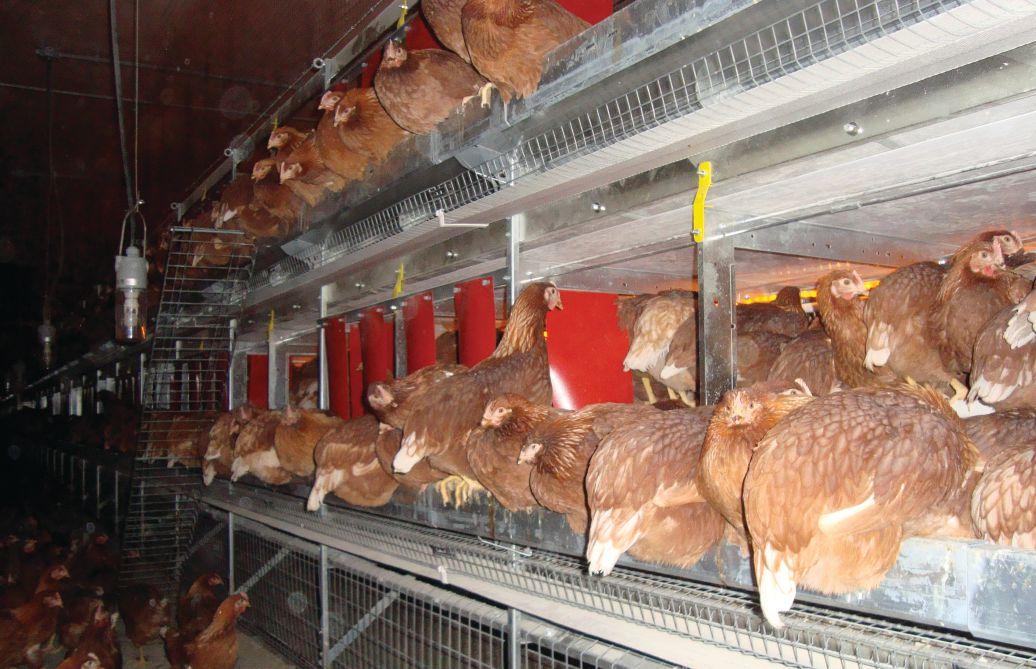
Increasing consumer awareness of animal welfare issues is impacting how eggs are produced and marketed. Some jurisdictions have passed legislation prohibiting the use of conventional cages and requiring that hens be housed in alternative systems, while a growing number of food retailers and manufacturers require eggs they sell/use to come from alternative housing systems.
While the vast majority of eggs sold in Canada are still produced in conventional cages it is expected that demand for eggs from enhanced animal welfare production systems will grow in Canada. The relative immaturity of this “specialty egg” market means that consumer acceptance and willingness to pay for eggs from enhanced animal welfare production systems is still poorly understood in Canada.
Will they or won’t they?
Consumer acceptance and willingness to pay for eggs from enhanced animal welfare production systems is still poorly understood in Canada, so UofG researchers developed a project to gain more understanding
For this reason, Yiqing Lu, former MSc. student in the Department of Food, Agricultural & Resource Economics and advisors Dr. John Cranfield and Tina Widowski developed a project seeking to generate new economic knowledge that helps to inform industry stakeholders regarding consumer acceptance and valuation of eggs from enhanced animal welfare production systems, and the potential size of the market for such eggs.
The specific objectives were to understand the socio-demographic and psychographic factors associated with consumer acceptance of eggs from animal welfare enhanced production systems, including enriched and cage-free systems; To identify and measure the size of consumer segments with a high degree of acceptance of eggs from these different systems; To measure consumer’s stated willingness-to-pay (WTP) for eggs from these different systems; And to explore how stated willingness to pay varies across segments of consumers, as well as segments
of consumers with differing actual purchase behaviours of eggs from these systems.
Two choice experiments (CE) were designed. In each choice experiment, respondents were presented with a set of choice tasks. In each choice task, the respondent was presented with eggs embodying different attributes, and they had to indicate which, if any, they would purchase. The attributes of eggs in the first choice experiment were: price; housing systems; organization that verifies the housing systems; Omega-3; and shell colour. The attributes of eggs in the second choice experiment were: price; whether hens had access to the outdoors; whether cages were used in the housing system; and the availability of nest boxes, perches for roosting and scratch pads for dust bathing.
The effect of information on consumers’ purchase behaviour towards eggs from enhanced animal welfare production systems was also investigated by including two information treatments in each choice experiment. In treatment 1, a description of the housing systems from whence the eggs came was provided. In treatment 2, the same information was provided, plus additional, scientifically based information regarding the consequences of each housing system on: hens’ health, hens’ ability to exhibit natural behaviours, affective states; and the impact of housing systems on environment. Structured this way, the two information treatments will reveal whether scientifically valid information affects consumer WTP, and if so, how. Note that WTP is not the price for the product, but rather the premium associated with that attribute.
An on-line survey was undertaken, using Ipsos’ i-Say on-line panel. The sample was representative of the Canadian population in terms of demographic characteristics. Respondents
were generally concerned about animal welfare, but did not consider animal welfare among the top issues when purchasing food. Of the three aspects of animal welfare, namely basic health and functioning, natural behaviour, and affective states, “basic health and functioning” was viewed as most important. Respondents’ knowledge of animal production was limited, and they believed that scientific evidence, rather than ethical or moral considerations, should be used to determine how farm animals are treated.
The results from the choice experiment were informative. In choice experiment 1 treatment 1, respondents were willing to pay a premium of $1.15 ($0.86 in treatment 2) per dozen for free-range and $0.55 ($0.28 in treatment two) per dozen for free-run systems. The premiums for these two housing systems were higher than the premiums for Omega-3 fatty acid enhanced eggs, or white/brown colour attribute. However, eggs from an enriched cage system did not induce a positive premium; in fact eggs from a system labeled as “enriched cage system” had a discount of $0.31 per dozen in treatment 1 and $0.33 per dozen in treatment 2. For verification attributes, respondents were willing to pay a premium of $0.69 in treatment 1 (or $0.60 in treatment 2) if government verifies the housing systems, $0.16 (or $0.18 in treatment 2) for a third party certifier verification and $0.22 (or $0.11 in treatment 2) for industry certifier.
In choice experiment 2, eggs from systems where hens had access to the outdoors yielded the highest WTP ($0.63 in treatment 1 and $0.57 in treatment 2) followed by “the presence of nest boxes, perches for roosting and scratch pads for dust bathing” ($0.45 in treatment 1 and $0.44 in treatment 2), and the cage-free attribute ($0.19 in treatment 1 and $0.08 in treatment 2). The latter result suggests a premium for the absence of cages in the housing systems; viewed another way, the presence of cages in the housing system would result in a discount. This is an important result and it aligns with the results from
experiment 1; it suggests that consumers value the absence of cages in hen housing. Respondents were willing to pay $0.01 in treatment 1 ($0.004 in treatment 2) for every square inch increase in a housing system.
Comparing the WTP results from two information treatments in each choice experiment allows one to assess the effect of information. In choice experiment 1, the provision of additional information in treatment 2 resulted in lower premiums for eggs from free-run and free-range housing systems (compared to treatment one). Across the two treatments, there were no other significant differences in WTP for the other attributes in choice experiment 1. In choice experiment 2, the WTP for the cage-free attribute decreased in treatment two, but not for the other attributes. As there were no differences in sample characteristics across treatments, we may attribute the disparity in WTPs across the treatments to differences in the information that was provided.
Consequently, it is concluded that information on the consequences of each housing systems on hen health and welfare reduces consumer valuation of eggs from free-run and free-range systems (and their valuation of the absence of cages generally).
Although consumers have limited knowledge about animal production system and animal welfare, they are sensitive to information about housing systems. It is important for egg producers to communicate well with consumers. Providing detailed information about the consequences of the housing systems on hen health and welfare reduces consumer valuation of eggs from free-run and free-range. And while respondents value the absence of cages (or discount eggs from systems that use cages), this value is also reduced when information on the consequences of the system on hen health and welfare is presented to subjects. An important lesson from this is that use of the word cage (e.g. enriched cages) should be avoided lest the price consumers would pay will be reduced. n
Production Nurturing the Next Generation
Fostering the future leaders of the egg industry
BY THE EGG FARMERS OF CANADA
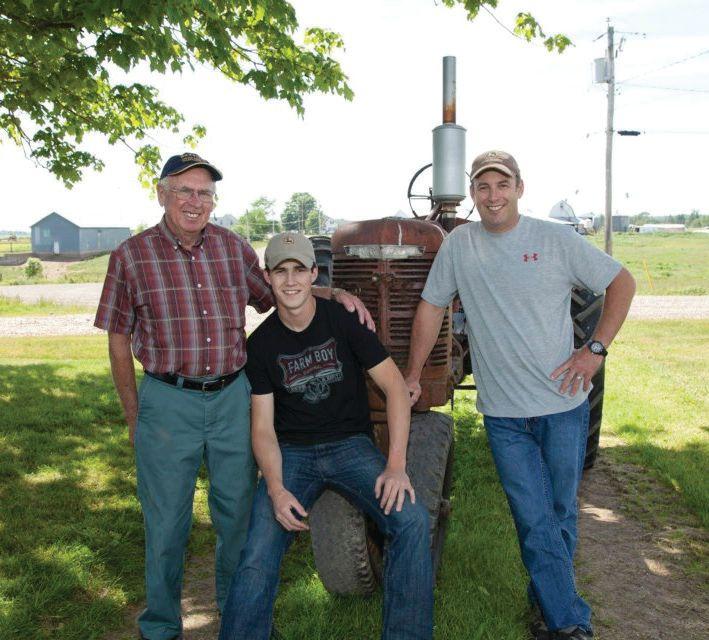
Waking up with the sun is common for Blake Jennings, a fifth generation Canadian egg farmer. Every morning, he walks up to the barn on his family’s farm in Nova Scotia to check on his flock and to make sure everything is running as it should be. No matter the weather or the day of the week, Blake enjoys gathering the eggs that were laid during the night and taking part in the farm’s operations.
Even as a young farmer, he appreciates the unique nature of his lifestyle. He also understands that his family has worked hard along with many other Canadian farmers to maintain and support the system that made things easier: a system we know as supply management.
“Supply management makes it possible for us to expand our family farm and keep the business growing, one generation after the other. We’re able to keep up with technology, farm in ways that are better for our animals and the environment, and to deliver eggs that are among the best in the world to Canadians,” says Blake.
SUPPLY
MANAGEMENT AND THE EGG
INDUSTRY
The egg industry, like many other agricultural commodities, suffered from the market instability that resulted from
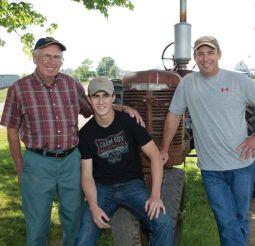
Blake Jennings works on the family farm with his father, Glenn Jennings, and his grandfather, Cecil Jennings, called Bayview Poultry Farms Ltd., in Masstown, Nova Scotia.
two consecutive World Wars. In the late 1960s, the fluctuation in the price of eggs led Canada into a cycle of overproduction the industry had never experienced before, bringing the prices for eggs below the cost of production. There was a clear need for stability so that farmers could continue to meet consumer demand.
This led to the system of supply management, which still makes it possible to this day for new generations
of farmers to build rewarding careers in agriculture and eventually assume responsibility for and ownership of their family farms.
Recognizing the need to foster future leaders of the industry, Egg Farmers of Canada recently became a sponsor of the Canadian Young Farmers Forum (CYFF). A national call was put out to their egg boards across Canada to nominate young egg farmers, aged 18 to 40, to join them at CYFF’s Annual
GENERATION
Meeting that took place in February in Calgary, Alberta. With a delegation of about 10 egg farmers, the representatives of Canada’s egg industry joined attendees from all agricultural sectors and also met amongst themselves to discuss challenges and opportunities in the industry.
GENERATION NEXT...
As one of the egg industry delegates explained, when you are born and raised on a family farm, following in your parent’s footsteps is not so much a career choice, as it is about how you want to live your life. At 18 years old, Bret Sloboshan from Saskatchewan already understands the value of her family farm. “It’s what I grew up with,” she explains. “It’s not just my immediate family, it’s all my cousins. It’s being a part of a bigger thing. It’s a family business.”
This is a feeling that 22-year old Glenn Coburn shares, knowing he is lucky to be able to take on the family farm. “Farming is not a job, it’s a lifestyle, and I wouldn’t have it any other way. There’s nothing like waking up and walking out the door and you are already at work”, says the young farmer from Keswick Ridge, New Brunswick.
To build momentum coming out of the CYFF conference, Egg Farmers of Canada is bringing some of its young farmers to Ottawa to share their personal and inspiring stories directly with decision makers and politicians. First up is an opportunity for a young farmer from Nova Scotia, David Newcombe, to address participants of the Forum for Young Canadians, an organization that brings hundreds of aspiring young leaders to Ottawa each spring, of which Egg Farmers of Canada is also a sponsor. EFC also featured the next generation at its annual breakfast on Parliament Hill on April 29, 2014 where MPs can mingle with farmers from across Canada over a made-to-order omelette in the Parliamentary restaurant.
The egg industry is filled with newcomers, as one in five egg farmers is first generation farmer. Others are already working on the family farm, taking on increasing responsibility and preparing to take over the operations when the time is right. EFC is shining a deserving bright light on these talented, motivated and aspiring entrepreneurs and leaders who admit that supply management is the key to a stable market and helps them achieve their central goal: providing fresh, local, high-quality eggs from farm to plate. n
THE BEAKER
BY KAREN DALLIMORE
Injurious Pecking in Domestic Turkeys
Head and feather pecking behaviour in turkeys can escalate to severe pecking and cannibalism under commercial conditions, creating a significant welfare concern and economic loss. What causes this type of pecking, and what can be done to reduce its incidence?
In a review published in the World’s Poultry Science Journal* in December 2013, authors Hillary A. Dalton, Benjamin J. Wood and Stephanie Torrey examined the different types of injurious pecking in turkeys and the factors that may contribute to the behaviour, including environment, genetics and nutrition.
Injurious pecking can be differentiated as three distinct behaviours in turkeys. Head, neck or snood pecking is described as a form of aggression is often used to retain dominance and typically follows a social disturbance. Feather pecking occurs on many different levels, from gentle to more forceful repeated pecking or plucking of feathers on the back, wings and tail of another bird. In its gentlest form, feather pecking is considered as a form of social preening or investigatory behaviour; escalating to more severe feather pecking that involves loss and consumption of plumage and escape behaviour by the victim. If bleeding occurs as a result of feather pecking, the most severe behaviour of cannibalism often follows.
All three levels of injurious pecking behaviour result in animal welfare and production efficiency issues. While there is no consensus on the cause, injurious pecking behaviour may possibly be traced to a mismatch of the needs of young turkeys to the conditions supplied in a commercial environment. For example, it is possible that the fluorescent or incandescent lighting typically used in commercial settings may distort the appearance of emerging feathers and initiate investigatory pecking.
Toms are more likely than hens to exhibit head pecking behaviour, becoming more aggressive following sexual maturity. In the wild, young birds will head peck as a precursor to developing the skills required by mature birds to establish the “pecking order” in the flock. If this behaviour is learned, is it possible that isolating those individuals with a pecking propensity could help prevent the spread of this behaviour through the flock?
The need to peck is shaped by genetics, environment and nutrition. Current research in turkeys considers head pecking as an act of aggression but it can also represent re-directed foraging behaviour. A lack of environmental stimuli may be a motivator although some research has shown that birds still peck other birds even if foraging material is made available.
Farm management practices that may heighten stress on the birds, such as poor ventilation, inappropriate humidity,
temperature extremes, flies or parasites, high stocking densities, inappropriate lighting, management changes or foot problems may contribute to injurious pecking.
Interestingly, unlike other forms of injurious pecking, the rate of aggressive head pecking in turkeys is affected by familiarity of the birds. Male turkeys will peck unfamiliar individuals in a group as small as four birds.
The presence of numerous confounding variables has prevented meaningful insight into the relationship between genetics and injurious pecking. Has selection for larger, faster-growing birds unintentionally selected for higher rates of aggression? When exposed to similar environments, traditional lines displayed fewer injuries than modern lines, but it is difficult to specifically pinpoint the traits involved.
Pecking behaviour may also arise as a result of a nutritionally unsuitable diet or inappropriate feed form. Studies have shown that turkeys fed a crumble or mash diet versus pelleted, with higher fibre, and provided free choice instead of restricted, spend more time foraging and less time feather pecking.
Beak trimming with infrared lasers immediately following hatching is the current practice used to reduce injurious pecking. While preferable to hot-blade beak trimming, there are still concerns about the procedure being performed without analgesia. It is also possible that beak trimming increases the incidence of feather pecking by increasing frustration in the bird’s physical inability to grasp the feathers.
Lower light intensity is often employed to reduce injurious pecking but it may also lead to eye abnormalities and musculoskeletal disorders; reduced lighting also hinders the detection of injured or lame birds. Removing the snood from toms, another common procedure, can also lead to chronic pain if not done correctly.
As stated in the World’s Poultry Science journal article, “Concern over trading one welfare concern for another has fostered interest in developing less drastic alternatives, such as genetic selection for gentler birds, environmental enrichment, and changes to diet, to reduce injurious pecking in turkeys…With this information it should be possible to design strategies to reduce injurious pecking, to lead to improvements in both welfare and production.”
The researchers are supported through the Canadian Poultry Research Council, Poultry Industry Council, Hybrid Turkeys and Agriculture and Agri-Food Canada. n
*Dalton, H.A., B.J. Wood and S. Torrey. 2013. Injurious pecking in domestic turkeys: development, causes, and potential solutions. World’s Poult. Sci. J. 69:865-876
TD is committed to helping farmers build for the future.
The Franke twins first came to us in 2001 with an ambitious plan to grow their grandparents’ farm. Though they were barely over 20, their TD Agriculture Specialist quickly recognized their potential and backed their plan. Over the years, Jolene has been there for every major financial decision affecting the farm, helping it grow to thousands of acres and over 250 head of cattle. A personalized approach to agriculture finance, like Jolene’s, is something all TD Agriculture Specialists bring. Maybe it’s time you brought one to your farm.
Biosecurity
Safe and Secure Bird Transport
Innovators
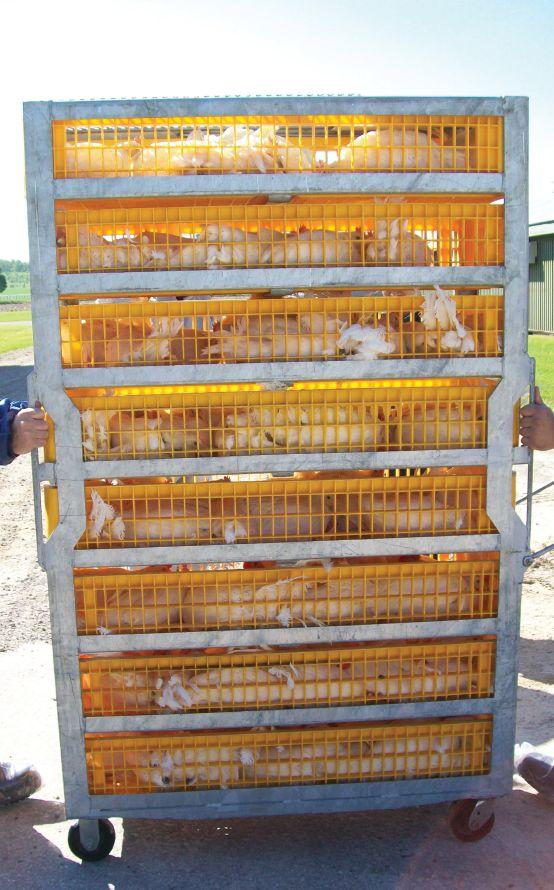
in Alberta have developed an enhanced live poultry transport carrier that addresses biosecurity and animal welfare concerns
BY TREENA HEIN
It’s currently a conundrum for those in the poultry industry when one or several birds must be transported, from a farm where there is a bird health issue to the lab, where various samples can be taken or a post mortem exam is conducted.
Often, the same boxes that have already been used to transport a potentially diseased bird are also used to move other birds – greatly increasing the dangerous possibility of cross-contamination. Live birds are also often transported in boxes that are too small. Overcrowding and a lack of adequate air flow from makeshift holes can lead to birds overheating and even suffocating.
“There was no standard live transportation box available nor clear guidelines or standards on space and airflow for these types of enclosures, which is a significant animal welfare concern,” says Nick Allan, general manager at the Institute for Applied Poultry Technologies (IAPT) in Airdrie, Alta., a non-profit organization created in 2012 by poultry industry stakeholders to evaluate innovative and cost-effective technologies.
It is for these reasons that Poultry Health Services Ltd. (an agency contracted to deliver veterinary services in
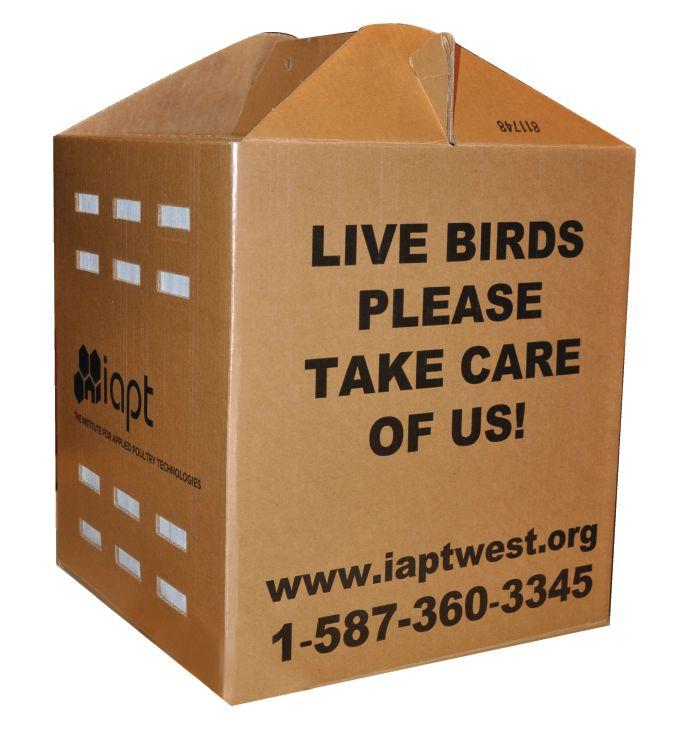
The IAPT has developed an enhanced live poultry transport carrier, known as the Humane Biosecure Transport Carrier.
Alberta in co-operation with the Ministry of Agriculture and Rural Development, AARD) supported the IAPT’s proposal for the development and manufacture of an enhanced live poultry transport carrier, now known as the Humane Biosecure Transport Carrier (HBTC). “A key challenge for me has been figuring out how to transport live birds within a service vehicle without risking the welfare and safety of the birds or the biosecurity of the vehicle,” notes Dr. Tom Inglis, a veterinarian at Poultry Health Services. “At the lab, our technical staff were concerned that birds didn’t always arrive in
the right kind of containers, and that was not acceptable. There wasn’t a good solution for this problem, so we were behind the project one hundred per cent.”
To develop a prototype productionrun box for basic proof-of-concept validation experiments and vetting with industry stakeholders, IAPT supplied personnel, obtained industry input and managed project funds. Poultry Health Services provided part of the labour costs and expertise in the design phase, as well as personnel and materials to perform pilot testing. Alberta Veterinary Laboratories Ltd. supplied logistics for
SOLUTION
shipping and material handling for the design and prototyping phases. AARD supplied lab facilities and equipment for the pilot phase, and is also aiding in the communications and extension component of the project. Funding for this project was provided in part by Agriculture and Agri-Food Canada’s Canadian Agricultural Adaptation Program, which is managed by the Agriculture and Food Council of Alberta.
TESTING AND FEEDBACK
Some of the prototype production-run boxes were distributed to poultry field representatives who routinely submit live birds to diagnostic labs, and then the boxes were evaluated in terms of detailed physical, biohazard and animal welfare criteria. “Following this evaluation period, we presented the findings at an industry stakeholder workshop in early October,” says Allan. Input was obtained
in open consultation, and included a questionnaire. Among the results, most of the 45 respondents strongly agreed there is a need for this box. The majority
also agreed that they would be willing to pay extra for a box with suitable animal welfare features, and that having the container waterproof is important. The
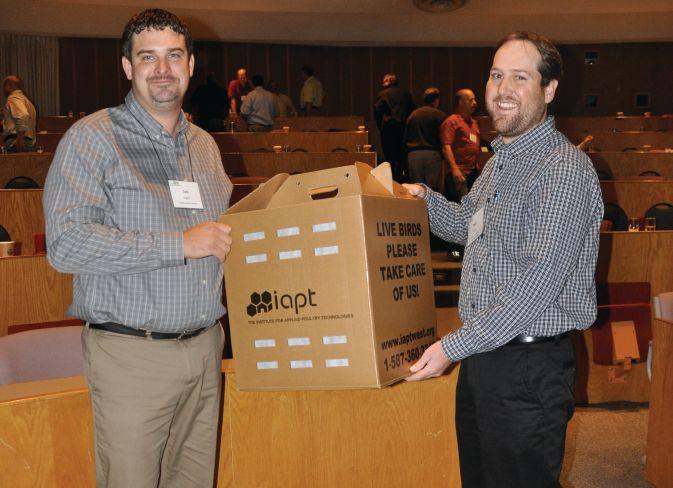
DR. TOM INGLIS (L) AND IABT GENERAL MANAGER NICK ALLAN DISPLAY THE NEW SHIPPING BOX AT THE POULTRY SERVICE INDUSTRY WORKSHOP.
Biosecurity
feedback from this workshop led to the final modifications of the HBTC, and the project then moved into production phase.
Since completion of the project, two major field service companies have adopted the HBTC and have requested that the remaining prototypes be allocated for ongoing live transport in their Canada-wide operations. “Data collected from this distribution will be analyzed as part of the larger program application [to further study the HBTC],” Allan notes. There is no turkeysized box at the present time, but Allan says they are prepared to look at this should industry stakeholders request it.
OTHER PROJECTS
The IAPT has an active internal research and development program currently developing novel vaccines and other healthrelated and poultry welfare products. Staff are also working to provide western Canadian poultry producers with easier access to advanced diagnostic services and production capabilities. “The institute’s mandate is to provide infrastructure for commercializing products, technologies and services that will give Canadian poultry producers a competitive advantage in serving local and international markets,” explains Allan. “This is done through pilot research studies, small-scale manufacturing and diagnostics.”
A current IAPT program involves a look at the applicability of commercial euthanasia technologies to improve animal welfare in Alberta’s poultry industry and beyond. This two-year initiative has an end goal of the potential adoption of a national welfare standard and assessment program for euthanasia. Commercial systems being studied include “single stage head to heart electrocution,” physical methods (non-penetrating captive bolt) and controlled atmospheric killing (gas, enhanced foaming system, low atmospheric pressure).
More practical end results such as that provided by the HBTC project would certainly seem to be welcome in the poultry industry, at least by Inglis. “There are times when we need to collect live, healthy birds which are representative of the flock they are coming from, or live, sick birds which are showing symptoms of concern, and in these cases we need an appropriate container to transport them in,” he says. “This is a simple problem but we haven’t had a smart solution until now.” n
Housing
The Bigger, the Better?
Factors to consider when deciding on barn size
BY SHAWN CONLEY
For many farmers, building a new barn is a once in a lifetime experience. Few farmers will have the opportunity to build more than one new barn, let alone an entirely new farm. There is only get one chance to get it right — and it’s crucial that the latest technology and research is used to build the ideal barn. In this industry, getting the barn and equipment right can make a bigger difference, possibly, than in any other industry (especially in terms of performance of the product and the profitability of the farm). For this reason, it is extremely important to do the necessary homework into the latest innovations. Poultry barn dimensions are a great place to start.
IS BIGGER REALLY BETTER?
In general, the bigger a barn is, the lower the production the cost is per square foot, and therefore, the cost per bird. In Canada, tunnel ventilation has not historically been the ventilation of choice, but as summers here have become increasingly hot, and bird sizes have ramped up, the U.S. style tunnel building has begun to enter the Canadian system. We need to look at the lowest cost, highest return way to construct these barns. Building fewer barns with more square feet has helped producers come out ahead. In the U.S. and other countries, typical sizes have been around 40’ x 500’.
More recently, the pressure of produc-
More recently, the pressure of producing more or bigger birds has led to the trend of adding width to barns because a small increase in width adds a lot of space without a lot more cost
ing more or bigger birds has led to the trend of adding width to barns because a small increase in width adds a lot of space without a lot more cost. Widths over 60’ have become common in these new barns. Some of the considerations we need to factor in when doing this are the structural demands, management style, housing the equipment needed — and perhaps most importantly — how the building will be heated and ventilated.
STRUCTURAL DEMANDS
Everything about the structure should be designed by an engineer with experience in the region in which you are building. Most people know that the trusses need to be engineered due to snow load requirements or wind, but there are many other “pillars” in the design of a building, from the soil under the building, to the concrete, to the bracing and
NEW TREND
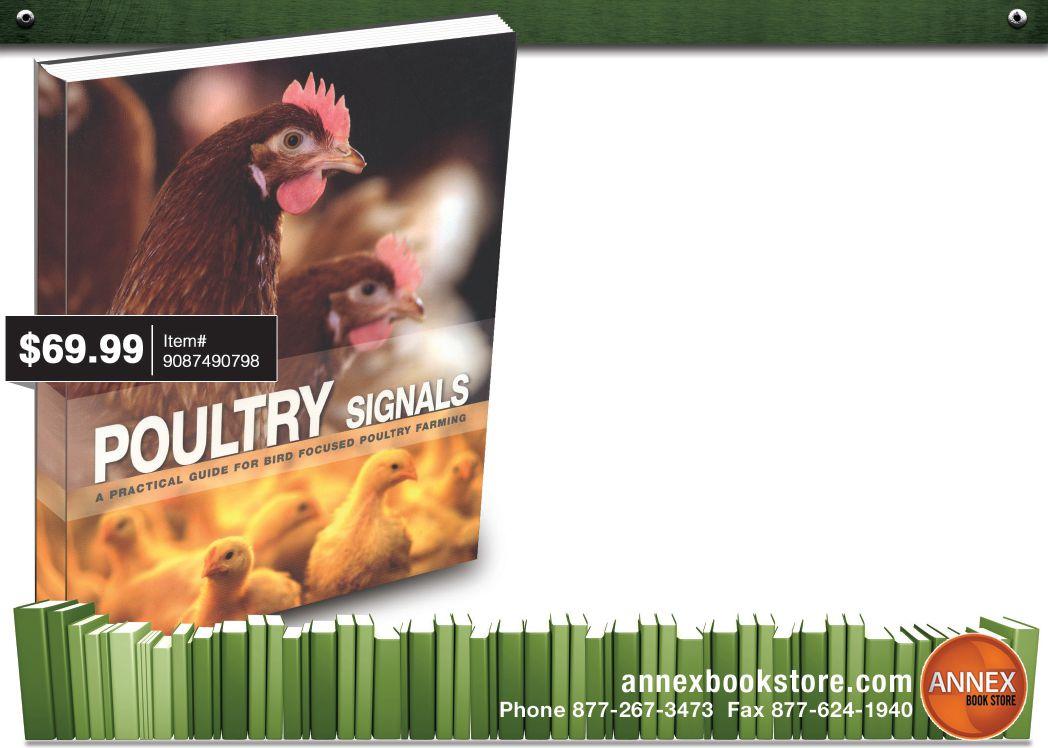
POULTRY SIGNALS
Proper management starts with recognising signals in practice.
For poultry-keepers, this means being alert when in the hen house, watching and listening to the animals, and paying attention to their behaviour as a group as well as their individual behaviour. This usually provides much information about animals’ health, well-being and production for poultry-keepers to use for improving economic results and the well-being of the animals, as well as their own.
Poultry Signals is a practical guide that shows you how to pick up the signals by your animals at an early stage, how to interpret them, and which action to take.
Housing
anchoring of the trusses. All of them could be a source for structural failure. With a building of widths over 60’, everything matters, even the quality of the materials.
MANAGEMENT AND EQUIPMENT
It may be that it is more efficient to manage less buildings, so from this standpoint, it makes sense to go bigger. Maintenance inside and outside buildings is reduced, and daily tasks like picking up mortalities, adjusting equipment, tweaking controllers need to be done less frequently.
When it comes to setting up equipment configurations, feed and water affect the ideal dimensions of the barn. If most feeding equipment companies recommend approximately 55-75 birds per pan to maximize efficiency and provide enough feeding space, based on this, in a 500’ barn with a standard density of birds, we would need 18-22 feet of width per line. That means we need to go 36-44’, or 54-66’ wide, otherwise we are wasting feed space and money by installing too many lines, or we are cutting feed space and sacrificing performance, which will cost more over the long run.
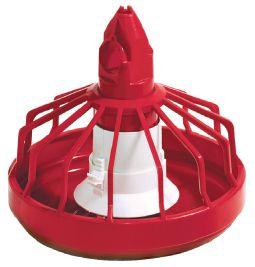
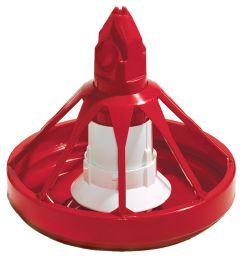
Broiler Pans
HEATING
The way the heaters fit into the system can get complicated. Making sure you can get the right number of BTUs into the barn while at the same time covering the floor space adequately is a tricky balance. When working with a 40’ wide barn with high ceilings, a standard tube heater can cover well, but with a low ceiling, the same building may require a newer style short U-tube style heater with a wide heat footprint. In a 60’ wide building, the short U-tubes can still work if spaced closely, but two rows of regular tubes will definitely be needed for 66+ foot wide barns.
VENTILATION
Hi-Lo™ Classic
• Multiple levels of feed depth control
• 2” to 3.5” expandable pan accommodates bird size
• 14 spoke design for bird separation
• 360° pan play reduces bruising and injury
• Optional 2-piece drop tube
Hi-Lo™ VIII
• Multiple levels of feed depth control
• 2” to 3.5” collapsible/expandable pan accommodates bird size
• 8 spoke design for easy bird access
• 360° pan play reduces bruising and injury
• Exclusive feed saving design features
• Optional 2-piece drop tube
A 60’ wide barn is not as simple to ventilate as a standard 40’ wide, although it can work better. It is mandatory to minimum ventilate with inlets on both sides, and utilize ceiling inlets if possible. Instead of air needing to travel nearly all the way across the 40’ barn, the air only needs make it about 25’ to get close to the center. This is assuming that most barns are still being cross ventilated — it is still easier to get the air travel if ventilating a two sided system in a 40’ wide building. It is important to make sure static pressure is 0.10.12 to get the proper air velocity and travel.
When setting up tunnel ventilation systems in wider buildings, note that the best ratio of length to width for proper airflow is 11-12:1. If you want to build a wide building to minimize cost per square foot, a 60’ x 500’ will not run as efficiently as a 50’ x 600’. So, even though a 40’ wide may cost as much as 15 per cent less per square foot to construct, it may cost more over time due to inefficiency.
TAKE HOME
The message here is that there is no absolute solution to building dimensions, although a 54’ x 600’ is the closest we can come to a standard for a tunnel barn. It gives the right ratio of width to length for airflow in tunnel and minimum ventilation, and also allows enough space for feeders and drinkers. In addition, a single row of newer style short U-tube heaters down the center would work well.
With all that said, every situation requires a thorough analysis to figure out the best configuration for your farm, birds, and future business plan. Do your research, and utilize your industry experts. n
For more on production, visit www.canadianpoultrymag.com.
Photo courtesy Mary-Lou VandenOuweland
Food Safety A Shared Responsibility
Producers, processors and consumers all play a role in food safety
BY MELANIE EPP
Food safety is an important issue to the agricultural industry, but it’s one that is not often discussed. That’s why food safety and whose responsibility it is was the topic of the Poultry Industry Council’s (PIC) science in the pub event hosted in January. Members of the industry –retail, processor, and producer representatives – gathered to discuss the roles of each player.
Laura Bowers, Education Programs Manager for the PIC, says “we thought it would be interesting to sit down and discuss how it really is a shared responsibility and how everybody has a part to play.”
Poultry producers know that the industry has regulations and policies that they must follow in order to raise poultry. Farmers are audited every year, says Cathy Aker, manager of food safety and risk management at Chicken Farmers of Ontario. She says that farmers must participate in the On-Farm Food Safety Assurance Program, a mandatory national program that was implemented in 2001. Developed by the Chicken Farmers of Canada, the program is administered by each of the provinces independently, revised every three years and recognized by both CFIA and the federal government as a working on-farm food safety program for farmers.
“Basically, it’s a system where farm-
Everyone involved in food safety — producers, processors and consumers — has a different role to play
ers get audited every year,” says Aker. “It could consist of an on-farm audit in one year, a records assessment in the second year and a self-declaration in the third year.”
The program evaluates the farm in 10 specific areas. It looks closely at how personnel are trained and how access to the farm is controlled. It evaluates food and water systems and inspects cleaning and disinfecting practices. With regards to the grow-out period, the program
looks at lighting, heating and ventilation, among other things. Auditors will carefully look at how disease is managed on the farm and analyze critical control points – biological, chemical and physical. Finally, record-keeping systems are evaluated for thoroughness and accuracy.
“What happens if a farmer doesn’t meet the requirements of the audit is they’re issued a card or corrective action request,” says Aker. “The objective there
SAFE FOOD PRODUCTION
2014
C H i C ken Far M er S o F Cana D a e X e CU tive C o MM ittee
Dave Janzen, re-elected as Chair, has represented British Columbia as an alternate since 2006 and has been their director since 2008. He joined the executive committee in 2010 and first became the Chair in 2012. Dave and his family produce nearly 1 million kg of chicken each year.
Yvon CYr has been a producer since 1987 and has been elected 1st vice-Chair. He produces approximately 3.3 million kg of chicken each year on his farm near Saint-François-de-Madawaska in northwestern new Brunswick.
Benoît Fontaine, from Stanbridge Station, Quebec, was elected as the 2nd vice-Chair of the executive Committee. He joined the Board last year as an alternate, served on the Production Committee and became the Quebec Director this year. He farms in the Lac Champlain area and raises 3 million kg of chicken, 100,000 ducks and 85,000 turkeys each year.
vernon FroeSe of Grunthal, Manitoba has been elected as the new executive Member. vernon and his family grow over 800,000 kg of chicken each year, cash crop about 750 acres of corn and canola, and raise 12,000 feeder pigs.
is to let the farmer complete or come into compliance with that particular item within a certain period of time.” Usually, the auditor will conduct a follow-up visit, especially in cases where the issue in question needs to be viewed on-farm.
“The farmer does not become certified and they don’t get their OFFSAP certification unless they are in compliance with all of the required checkpoints,” says Aker. “If you’re not in compliance, then you are not certified and you don’t produce chickens is what it comes down to really.”
Safe food production isn’t just the goal of the farmer. It’s also the goal of every major retailer. No company can promise that a food safety issue won’t ever happen, says Christian Fuchs, food safety and quality director at Maple Leaf Foods. What they can promise is to commit to a plan that does its best to avoid food safety issues.
Food Safety
THE CANADIAN PARTNERSHIP FOR CONSUMER FOOD SAFETY EDUCATION (CPCFSE) FIRMLY BELIEVES THAT CONSUMERS PLAY AN IMPORTANT ROLE IN FOOD SAFETY AS WELL
“At Maple Leaf, food safety is essentially our top priority,” says Fuchs. “We want to provide our customers with not only great tasting food, but also safe food.”
After its Listeria recall in 2008, Maple Leaf hired Dr. Randall Huffman to fill the role of chief food safety officer and lead its Food Safety Advisory Council.
Huffman’s job is to look for improvements in Maple Leaf’s programs. As a result, Maple Leaf Foods has implemented new and more thorough practices in sanitation, testing, product formulations and manufacturing.
Through ongoing training, education and communication, Maple Leaf believes it promotes a culture of food
safety, says Fuchs. “Compared to when I first joined Maple Leaf 10 years ago, I would say that there has been a significant cultural shift. People, if they see something that isn’t right, they do something about it.”
When it comes to testing and analysis, Fuchs says Maple Leaf Foods goes above and beyond what is expected of them. “Maple Leaf doesn’t consider food safety a competitive advantage at all,” says Fuchs. “We openly share our learnings with other competitors, government and consumers.”
From a poultry perspective, Maple Leaf is working on enhanced labeling that includes cooking instructions on the front of the package so consumers know how to cook their products safely.
But it’s not just cooking practices that consumers can get wrong. “From the time they buy food until the time they take it home, there’s a gazillion
Food Safety
things consumers can do to wipe out all of the good that the entire food chain has done to deliver to them a safe food product,” says Brenda Watson, executive director of the Canadian Partnership for Consumer Food Safety Education (CPCFSE). CPCFSE is a not-for-profit association that addresses food safety at the provincial and national levels. The organization firmly believes that consumers play an important role in food safety as well.
“Sterility doesn’t exist in our food system,” Watson says. “As much as we try to have food that’s perfect, we’re always going to have bacteria of some sort that evolve or exist in our environment.”
The Partnership’s goal is to help Canadians to enjoy their food safely through a risk management program that develops useful information for consumers. “All the members of the
partnership have come together to develop pieces of information that are useful to the consumer,” she says.
Those pieces of information include four core messages: Clean, separate, cook and chill. That is, before handling food, consumers need to know the importance of washing their hands for 30 seconds. It’s equally important to keep food surfaces separate to avoid cross-contamination, to check fridge temperatures regularly (food should be stored at 4 C or lower) and to use a food thermometer to ensure that food is cooked to a safe internal temperature.
“It is a shared responsibility, so it’s not just up to the producer or just up to the processor or just up to the consumer,” concludes the PIC’s Bowers. “Everyone has a different role to play, but if one party doesn’t play their role that can have a negative effect on everybody.” n
Remarkably Clean
Virkon BioSentry 904
Dupont Acid-A-Foam XL
XL
Pest Control Getting pests to fly the coop
Some helpful tips to reduce risks associated with pests
BY ALICE SINIA, PH.D. RESIDENT ENTOMOLOGIST — REGULATORY/ LAB SERVICES, ORKIN CANADA
According to the Public Health Agency of Canada, roughly one in eight Canadians suffer from food poisoning each year. That’s an estimated four million people who are subject to a preventable illness that, in severe cases, can be fatal. From farm to table, there are a number of opportunities where pathogens, allergens and irritants can be introduced to food, but prevention starts at the first step of the supply chain — the farm.
Pests, such as flies, rodents and cockroaches, are the primary sources of contamination. Recognizing and preventing pests that contribute to foodborne illness will help shield you from its costly and damaging effects, including: loss of revenue: reduction in product recalls; a damaged reputation; and potential disciplinary action from regulatory agencies. So, what can you do to protect your product and reputation?
It starts with an Integrated Pest Management (IPM) program for all steps along the process, and this includes your feed mill, layer facility, egg processing facility and storage. IPM is the most effective and environmentally friendly approach to preventing pest issues and employs sanitation and facility maintenance processes to eliminate the potential for pest issues. The goal of this approach is to restrict pests’ access to the three elements they need to survive —
Rodents do not like to be out in the open. An important step to deter them is to eliminate places or objects where they like to congregate
food, water and shelter. An IPM program is recommended for all industries, but has its roots in the agricultural industry where it originated to limit the use of chemical treatments around food.
While there are a number of pests that can affect poultry, the real threat to food safety comes from flies, beetles, birds and rodents. Here are some helpful tips to reduce the risk of disease spreading to poultry.
FLIES
Known to transmit more than 100 known pathogens, including E. coli, Salmonella, Staphylococcus and Shinglla. Making matters worse is the fact they leave behind pathogens every time they touch a surface. One of the best ways to manage these pests is by hanging insect light traps in strategic locations. These newly designed traps attract flies using ultraviolet light and capture them on a
CLOSED SPACES
non-toxic adhesive trapping board inside the unit. The silent devices are discrete, so you can place them in virtually any location. The non-toxic glue-board means you don’t have to worry about airborne contamination from insect parts like you would with the traditional “bug zapper.” They also operate around the clock so you have a continuous barrier against flies.
BEETLES
Beetles can spread dangerous pathogens, but they can also cause extensive structural damage as mature larvae bore into structures seeking safe pupating sites. The two most common beetles associated with the poultry industry are the lesser mealworm and hide beetle. They are often difficult to control as they migrate throughout structures and pupation occurs out of sight. Glue boards and pipe traps are the best tools to monitor for the presence of these beetles. By recognizing the presence of beetles in a timely manner, as well as identifying the species, your pest management provider can take the appropriate actions.
RODENTS
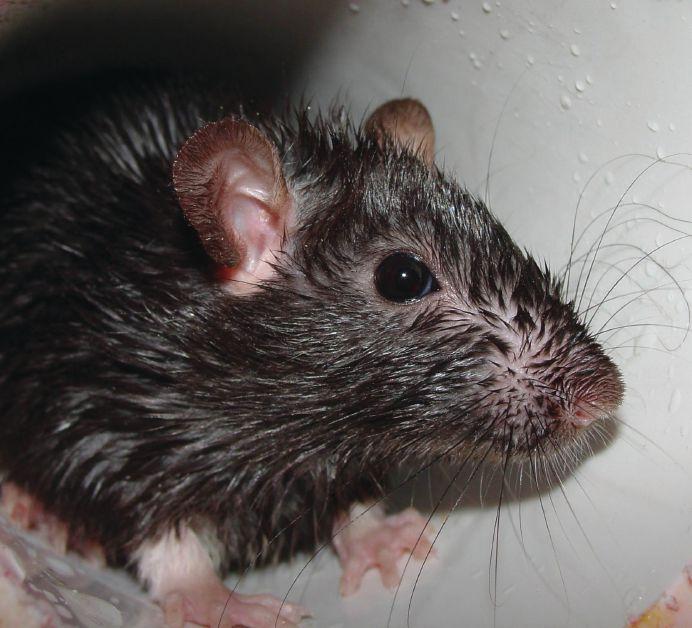
Rodents are known to carry more than 40 viruses and bacteria, including Salmonella, Hantavirus and Trichinosis. Rodents spread disease through their droppings and urine. They can also cause significant structural damage to your facility. These pests are found in fields, but are also a major concern in and around storage facilities. Ultrasonic devices can help deter these pests though additional measures are often required.
For starters, eliminate congregation points for rodents. Rodents do not like to be out in the open, so regularly cut the grass surrounding your facility and limit debris, like piles of wood, trimmings and decayed product, from the property. Facility maintenance steps, like sealing cracks and crevices around coops to limit access. Although mechanical traps and non-toxic baits can be used to control rodents that find their way through these initial lines of defense, recent techno-
•
•
SELECT DOSER
• Select Doser dispenses products accurately into low and high pressure watering systems through it’s tubing via compression and peristalic action.
• Aggressive products and powders never pass through the pumps mechanism that can cause premature wear and maintenance.
• New improved Model 640 is now simple to use with one tube size
• New Select Doser Max can now operate in high pressure and volumes
GreenBreeze Basket fan
• designed for more air flow and consistent pattern
• precise guard spacing reduces air restriction
• easy to open front guard allows easy cleaning
• includes hanging bracket to allow direction adjustment
• variable speed , efficient motor 115/230v
Cooling System
• A cooling system without using nozzles
• Adjustable water volume
• Mobile or stationary unit available
• Use for cooling air, humidity, recirculation, dust and odor control
RECIRCULATION FANS
circular Recirculation Unit
• 16” and 20” diameters
• 3600 coverage using directional wind vanes
• Superb alternative to race tracking
• With Multifan or Performa+ Leeson motors circulating fan
• 12” – 24” diameters • Polyethelyne housing
• with Multifan or Performa+ Leeson motors
Genius picture Ge-430
• Genius 430LS Livestock climate control
• User friendly Interface (hot Keys)
• Large Display Screen for easy viewing
• Up to four variable stages and 30 off/on relays
• Expandable to 50 relays with relay module
• Up to 12 temperature sensors , one Humidity sensor
• Up to 12 heat zones, 12 cool stages, 2 light programs
• Up to 5 water metering, 2- 0-10volt outputs for dampers
• can operate Dual, natural and tunnel ventilation
• Multiple applications Genius controls from 3 – 10 stages
• Genius 420 Series control , up to 4 variable, 20 off/on
• New Genius Dimmable Light control
• New feed Bin monitoring control
• New Genius 420LS control system – larger screen and capacity
72” fan
• Heavy Duty fiberglass housing
• Heavy Duty 6 blade alum. Propeller
• Twin gates Size A belts with Auto tensioner
• 3 hp , single or 3 phase motor
• Optional cone for max air flow
LIGHt traP/ Dark
OUt
• High light reduction
• Low resistance to air flow
• Simple Installation
• Easy to clean
• Uses P.V.c. snap release spacers
Pest Control
logical advances can help identify a rodent issue before it turns into an infestation. Electronic scanning uses barcodes on pest management equipment so you can scan traps, for instance, to determine the number of rodents caught in a given period of time. This technology is even more effective when paired with electronic reporting, another new technology which produces customized web-based reports that measure trend data over time. By identifying hot spots, appropriate corrective action can be taken.
BIRDS
More than just a nuisance, birds are known to carry more than 60 diseases, such as Histoplasmosis (a sometimes deadly acute respiratory disease), and they can transmit dangerous bacteria like Salmonella. Diseases can spread through their droppings, so it is important to keep them at
bay. One of the most effective ways of managing these pests in fields is the use of sound devices or noise canons. By identifying the species of birds in your area, your pest management professional can manipulate sound frequencies to simulate a distress call which drives them away. Physical deterrents, like specially trained dogs, scare-eye balloons and cellophane streamers, can also scare birds away. Often, it is a combination of technologies that work in tandem to reduce bird presence.
The beauty of an IPM approach is that it focuses on “common sense” sanitation and facility maintenance steps to proactively reduce pest pressures. By partnering with your pest management professional you can strengthen the protocols and processes you already have in place to further reduce the potential for foodborne illnesses and limit the risks that come with contaminated product.
An effective IPM program implement-
ed throughout the supply chain will help ensure food is safely delivered to the endconsumer, but it requires a commitment from everyone involved in the process to make sure shipments are pest-free. By working to combat pests during the first step of the supply chain, you can help protect the end-consumer, as well as your business, from the headaches (and stomach aches) that pests can bring. n
Alice Sinia, Ph.D. is Resident Entomologist – Regulatory/Lab Services for Orkin Canada focusing on government regulations pertaining to the pest control industry. With more than 10 years of experience, she manages the Quality Assurance Laboratory for Orkin Canada and performs analytical entomology as well as provides technical support in pest/ insect identification to branch offices and clients. For more information, email Alice Sinia at asinia@orkincanada.com or visit www. orkincanada.com
ALL THINGS CONSIDERED
BY JIM KNISLEY
Answering the Fundamental Question
Back in February the Agricultural Institute of Canada (AIC), commenting on the federal science and technology policy, applauded “the Harper government’s significant investments in science, technology and innovation.”
But, in a very gentle way, AIC Director of Communications, Daniel Kosick, pointed to a shortcoming. “It is important to remember that public support for basic research focusing on longterm advances is also needed,” he said in a release.
Basic research tends to be a tough sell, especially to self-identified “practical people”, which includes many, if not most, businessmen and politicians. They look for concrete developments or advances. The theoretical stuff leaves them cold.
It doesn’t help that those doing basic research can’t point to something concrete that might come from their work. But that isn’t their purpose. They are working to expand knowledge and it’s up to the rest of us to build on that.
An example of this is James Clerk Maxwell’s equations. These are the foundation of modern electrical and communications technologies. The computer this is being written on, the internet that provided some of the research material, the fancy new light bulb above my head, and even the poultry industry’s new high tech barns rest on the basic research carried out by Maxwell 150 years ago.
If you are getting lost less often than you used to it’s thanks to Albert Einstein. His theory of relativity allows GPS to work. Einstein also provided one of the most profound arguments for basic science. Without basic science, he said, there would be little or no applied science. Without applied science there would be little or no economic or social progress. My take on all of this is that if we don’t provide for the extremely smart people who think for a living the best we can hope for is stagnation. The worst is a repeat of the Dark Ages when centuries of progress was flushed away by superstition and individual aggrandizement in the form of castle building.
there, there would be no science. It would be like trying to grow a forest with nothing but creepers.
Speaking of his own field of physics and the attempts to discern the general laws that govern everything, “There is no logical path to these laws.” It takes intuition, intense study and reflection, analysis of what is known (or thought to be known) and time.
Einstein knew the value of time. In his 1914 inaugural speech to the Prussian Academy of Sciences he thanked them “for conferring the greatest benefit on me that anybody can confer on a man like myself. By electing me to your academy you have freed me from the distractions and cares of a professional life and so made it possible for me to devote myself entirely to scientific studies. I beg that you will continue to believe in my gratitude and my industry even when my efforts seem to you to yield but a poor result.”
Many today say they believe in science and recognize the need to support it. But the reality differs from the words, especially in this country. The question is “How is Canada doing?” The most recent OECD figures (which date from 2010) are not encouraging.
Many today say they believe in science and recognize the need to support it
The size of the research system as a percentage of GDP ranks behind Australia, Austria, Belgium, China, Denmark, France, Germany, the U.S. and numerous others. Canada is one of three OECD countries where the annual growth rate of GERD (Gross Domestic Expenditure on Research and Development) was declining. Canada was in the middle of the pack in the amount of GERD that is publically financed as a percentage of GDP. And it lags most other countries in terms of the growth rate of publically financed GERD.
These figures from the OECD’s stat extracts are, to put it mildly, embarrassing. They reflect a “penny wise pound foolish” mindset, or perhaps a nation that knows the cost of everything, but the value of nothing.
But Einstein can speak for himself. In a speech delivered in 1918 to the Physical Society in Berlin, he said many take to science “for purely utilitarian purposes” while others do it to show off their intellect. He continued that if these two groups were all
It is past time that we started focussing on the value of science rather than just looking at the cost and sacrificing the future for a few pennies of tax breaks today.
We need people who ask the fundamental questions and seek the answers. We need people who think for a living.
If you don’t believe it, argue with Albert Einstein. n
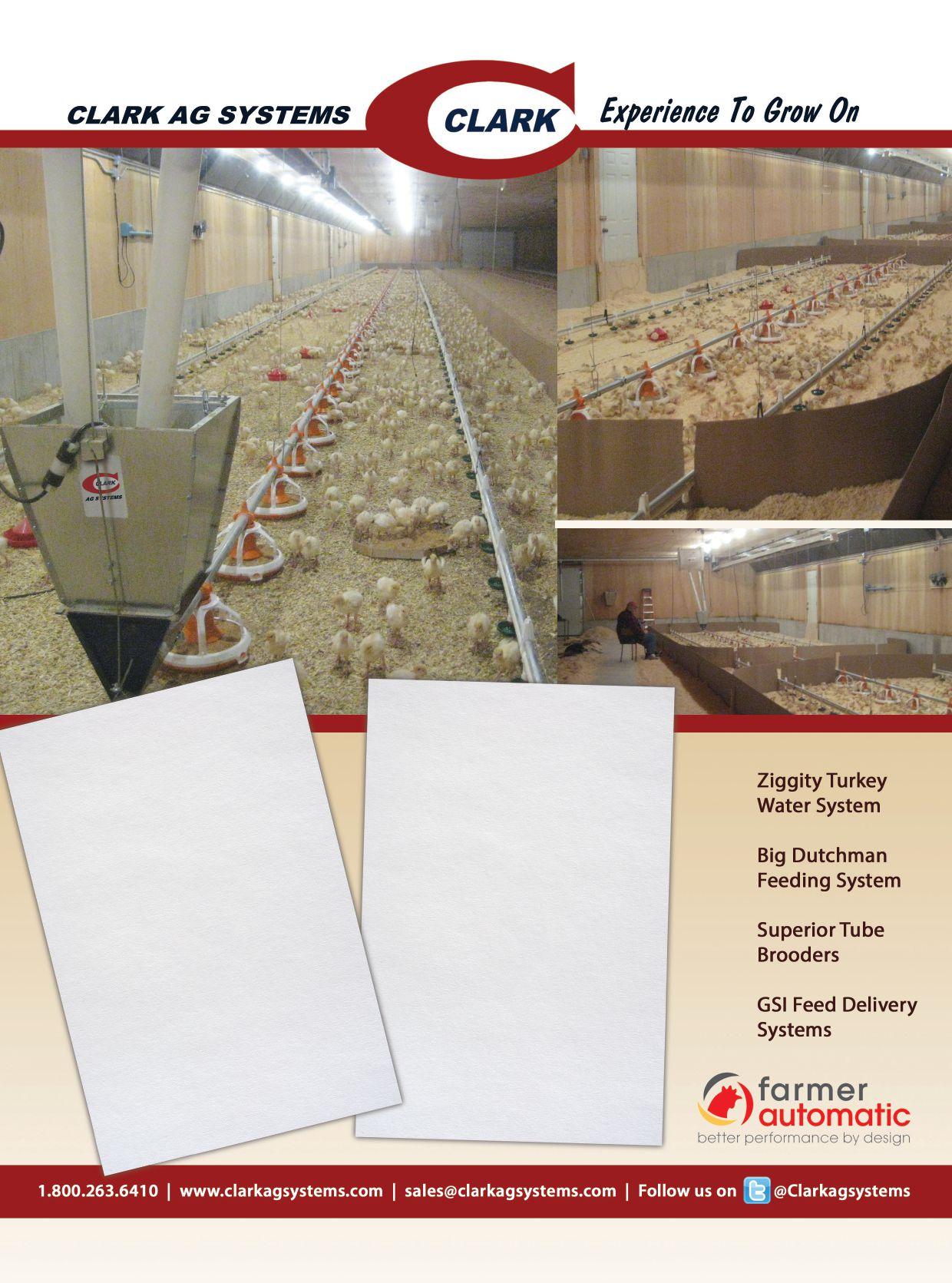
We are impressed how the separate components work together to provide an excellent environment for our birds. The system has functioned perfectly during the recent winter cold and storms. Going forward, we have complete confidence in our in-barn equipment and computer systems.
A real measure of a company is their customer support and Clark AG Systems is to be commended on this. You immediately addressed the few issues that occurred and were flexible when we revised our plans in progress. Never farther away than a phone call or email, we believe the sales and services offered by Clark AG Systems are second to none.
The turkey industry has great growth potential and we look forward to our continued relationship with you in the future.
Alison and Dan Both 451 Woolverton Road, Grassie ON