By Roselina Angel, Department of Animal and Avian Sciences, University of Maryland, College Park, Md.
16
PIC UPDATE: Evaluating Hemp Seed in Layer Diets
Studies show its potential for enhancing omega-3 content of eggs without adversely affecting hen performance
By Kimberly Sheppard, Research Co-ordinator, and Tim Nelson, Executive Director
22
PRODUCTION: After the Storm
Piloting its way through the recessionary storm wasn’t easy for TFC, but the supply-management system, with the co-operation of its producers, made it possible
By Jim
Knisley
PRODUCTION: Impact of Water Quality
For better bird health –and a healthier bottom line – it’s worth thinking about how best to manage your water system
By Treena Hein
HOUSING: Potential Impact
The agreement between the HSUS and UEP may have an impact on Canadian egg producers
By Dan Woolley
GUEST EDITORIAL
BY LESLIE BALLENTINE
What’s in a Name?
” I recently came upon this article written by Leslie Ballentine, a food and farming commentator with more than 25 years’ experience in communication and policy development, issues analysis and management. I thought she did such a wonderful job of explaining this issue that I would use it as a guest editorial. If you want to read more by Leslie, see her blogs at www.letstalkfarmanimals.ca
Pink slime,” a pejorative term for boneless lean beef trimmings, has been getting a lot of attention from food advocates and U.S. policy makers in recent weeks. Called “lean finely textured beef” within the industry, the ground beef filler is reportedly not used in fabricating meat in Canada. Nevertheless, the hoopla is spilling over our border and is another example of how a name can affect the industry.
Critics liken it to unsafe pet food, and their battle has suddenly gone viral amid new media attention and a snowballing online petition, which at last check had one-quarter of a million signatures. Four state governors and Secretary of Agriculture Tom Vilsack held a press conference in late March in an effort to calm public fears over a product that has been around for 20 years.
“Pink slime” is appearing in headlines and talk shows on both sides of the border. “It sounds disgusting,” food policy advocate Marion Nestle told the New York Times. She notes that the unappetizing nickname made it easier for the food movement to flex its muscles over this cause.
So much so that products such as hamburger and sausage containing this legal and safe meat extender are being dropped from American school lunch programs, supermarkets and fast food outlets.
So much so that production of what is perfectly edible food waste has led to suspended operations at three of the four U.S. plants that process it.
So much so that suspension of the use of these trimmings could, by one estimate, result in 150 million more cattle raised to replace it. Consumers seem unconcerned that edible food may end up buried in landfill. And meat companies
that use this meat extender are already warning the move will result in higher prices for consumers.
The nickname, just as with the product, is not new and has been used by food critics disparagingly in various films and books over the years. The “pink slime” hype is also creating undue public alarm over the use of ammonia, by wrongly accusing the product of being a health hazard. Yet, the food grade ammonia gas used as an added food safety precaution is an approved and commonly used food treatment. Other consumer products with ammonia include chocolate, coffee creamers and tofu. I read one opinion column saying banning inspected and safely treated meat filler made about as much sense as banning gelatin – which is made from animal bones.
Of course, all critics and marketers know the power of names. “Factory Farm” is a term that industry has not been able to combat. It has grown to become a common-day term. And I predict that in the not-too-distant future, this pejorative will gain “official status” once it appears in reputable dictionaries.
“FrankenFoods,” “Bovine Growth Hormone,” “Swine flu” and like terms also have the sticking factor. They are impressionable terms to the “common man.” Pink slime or lean finely textured beef — which term would get a reaction from you?
Leslie’s company, Ballentine Communication Group, was established in 2004 to provide strategic communications and information services for animal-based sectors. Her company draws on a network of credible and knowledgeable expertise from across North America to monitor, analyze and address animal issues.
MAY 2012 Vol. 99, No. 5
Editor
Kristy Nudds – knudds@annexweb.com
888-599-2228 ext. 266
Associate Editor Jim Knisley – jknisley@kwic.com
Publisher/Sales Manager
Marilyn White – mwhite@annexweb.com 519-429-5193
Sales Assistant
Mary Burnie – mburnie@annexweb.com
Production Artist Gerry Wiebe
Group Publisher
Diane Kleer – dkleer@annexweb.com
President
Mailing Address
P.O. Box 530, 105 Donly Dr. S., Simcoe, ON N3Y 4N5
Publication Mail Agreement #40065710
RETURN UNDELIVERABLE CANADIAN ADDRESSES TO CIRCULATION DEPT., P.O. BOX 530, SIMCOE, ON N3Y 4N5.
Printed in Canada ISSN 1703-2911
Circulation
Subscription Rates
Canada – 1 Year $ 24.00 (with GST $25.20, with HST/QST $27.12)
Nothing says like Lubing's is designed to work in today's challenging broiler environment. Because the nipple has been optimized for growth, you will be amazed by the first-week performance and explosive bird growth. offers:
Large body and pin
Acid resistant design
Easy triggering for day-old birds
Low mortality
Increased side-action flow
Larger flow range for jumbo birds
Increased weight gains
Improved feed conversions
To find out more about and it’s outstanding performance, please contact your local Lubing Representative.
Glass-Pac Canada
St. Jacobs, Ontario
Tel: (519) 664.3811
Fax: (519) 664.3003
Carstairs, Alberta
Tel: (403) 337-3767
Fax: (403) 337-3590
J. Dean Williamson Ltd.
London, Ontario
Tel: (519) 657.5231
Fax: (519) 657.4092
Les Equipments Avipor
Cowansville, Quebec
Tel: (450) 263.6222
Fax: (450) 263.9021
Specht-Canada Inc.
Stony Plain, Alberta
Tel: (780) 963.4795
Fax: (780) 963.5034
HATCHING HATCHING
Cuts to Ag in Federal Budget
Canada’s Economic Action Plan 2012, introduced in late March by Finance Minister Jim Flaherty, indicated that the government is cutting over $300 million from Agriculture and Agri-Food Canada (AAFC), which equals a nearly 10 per cent reduction.
According to the 2012 budget, “[the] Agriculture and Agri-Food portfolio organizations will streamline their operations and reduce operating costs, while making sure services are provided to farmers and the agriculture industry in the most cost-effective and efficient way.”
The description goes on to mention that the AAFC and the Canadian Food Inspection Agency (CFIA) will merge and integrate a variety of functions, including research goals, to make it “easier for
farmers and industry to get the information on technological advances they need to succeed.”
The CFIA saw its budget cut from current levels to decreases of $2.1 million in 2012-13, $10 million in 201314 and a staggering $56.1 million by 2015. These cuts will be accomplished by transforming how it interacts and delivers services to clients with regards to permits, licences and registration, as well as for the provision of technological, interpretive and specialized advice.
The document also states that the CFIA will have to change how they monitor and enforce non-health and safety food labelling regulations through the introduction of a web-based label verification tool that will allow customers to bring concerns directly to the appropriate companies and associations. Lastly, the budget states that, “the Government will also
repeal regulations related to container standards to enable industry to take advantage of new packaging formats and technologies, while removing an unnecessary barrier for the importation of new products from international markets.”
While there are a large number of cuts, some areas of the AAFC do receive a financial boost. For example, the budget proposes funding for the Canadian Grain Commission of $27 million in 2012-13 and $17 million in 2013-14. This will allow the commission to move to “a sustainable funding model” and realign its fee structure for services.
Food safety also received some attention in the budget, with $51.2 million being split between the Public Health Agency of Canada, Health Canada and the CFIA, to continue enhanced surveillance, early detection and improved response capabilities to foodborne illness emergencies.
FIT Prices Reduced
Ontario’s Feed-in Tariff (FIT) program’s Two-Year Review Report was released in late March. It included recommendations on streamlining processes, encouraging greater community and aboriginal involvement, and increasing municipal engagement. New pricing structures were also recommended.
Overall, the report recom-
mends FIT-based prices for solar be dropped by more than 20 per cent on average, while pricing for wind-generated power should be reduced by
Bourgeois Named Rosemary Davis Award Winner
Martine Bourgeois, an agrologist, egg producer and poultry industry leader from Saint-Ours, Que., is one of five recipients of Farm Credit Canada’s (FCC) Rosemary Davis Award for 2012. The award honours women who are active leaders in agriculture.
She is a shareholder (with her husband Serge Lefebvre and sister) and vice-president of Ferme St-Ours Inc., a farming operation involved in producing table eggs, hatching eggs, field crops and organic maple syrup and sunflower seed oil. Bourgeois is the Director of Poultry Nutrition and Development for ShurGain and is a member of the steering committee for the “poultry rendezvous” hosted by AQINAC (Quebec association of animal nutrition and grain industries) since 2006 and president since 2010. Ms. Bourgeois is also an examiner for admission of new members to the Quebec order of agrolo-
15 per cent. This reduction would range from 9.6 per cent for solar rooftop projects above 500 kW to reductions in the 31 per cent range for solar projects of all kind (rooftop or ground mount) 10 kW and less. Prices will now range from 34.7 c/kWh to 54.9 c/ kWh.
For wind power, the board recommends reductions of 14.8 per cent across the board, to 11.5 c/kWh. Prices for bioenergy (biomass and biogas) were not reduced.
gists (OAQ) and sits on various committees of the OAQ and the Animal Nutrition Association of Canada (ANAC). Over her career, she has successfully applied a number of innovative ideas in
poultry nutrition. She was one of the first to get involved in developing niche market and specialty products (plant-based chicken feed, omega-3 fatty acid-enriched eggs, organic eggs, chickens raised without antimicrobial agents and most recently, omega-3 enriched organic eggs).
Following in the footsteps of her paternal grandparents, she won an award in 2010 that they earned in 1951: the high honour of Commander of the National Order of Agricultural Merit of Quebec and its Gold Medal.
CFO New Entrant Program
The Chicken Farmers of Ontario (CFO) announced a new entrant program at its 2012 annual general meeting designed to help lower the cost of entry for new farmers by spreading the capital costs of acquiring basic quota over
fifteen years.
Farmers who are accepted into this special program will be required to acquire at least 4,000 units of quota while being allotted up to 10,000 “New Entrant Quota” by CFO to meet its minimum holding requirement.
COMING EVENTS
MAY
May 8, 2012
PIC Research Day
Victoria East Golf Club, Guelph, Ont. For more information, visit: www. poultryindustrycouncil.ca
JUNE
June 10-12, 2012
CPEPC Convention
Fairmont le Manoir Richelieu, La Malbaie, Charlevoix, Que. For more information, visit: www. cpepc.ca
June 20-22, 2012
Canada’s Farm Progress Show
The Co-operator’s Centre, Regina, Sask. For more information, visit: www. myfarmshow.com
JULY
July 9-12, 2012
Poultry Science Association (PSA) Annual Meeting, The Georgia Center, Athens, Ga. For more information, visit: www.poultryscience. org
AUGUST
August 5-9, 2012 XXIV World’s Poultry Congress
Salvador, Bahia, Brazil. For more information, visit: www.wpc2012.com
SEPTEMBER
September 11-13, 2012
Canada’s Outdoor Farm Show
Canada’s Outdoor Park, Woodstock, Ont. For more information, visit: www. outdoorfarmshow.com
HATCHING
FDA Reconsidering Antibiotic Use
In March, a court ruling in New York stated that the Federal Drug Administration (FDA) must re-open its investigation into whether penicillin and tetracycline, two widely used antibiotics, are losing their effectiveness in humans because of their use to promote growth in chickens, pigs and cattle.
According to an article in the New York Times , the
summation orders the FDA to alert manufacturers of the drugs, when used to promote growth in farm animals, that it will soon be prohibited. However, there may be a hearing in which evidence can be presented by the manufacturers that the drugs are safe for consumption. In that case, the drugs could continue to be used.
Hudson and Janzen Honoured
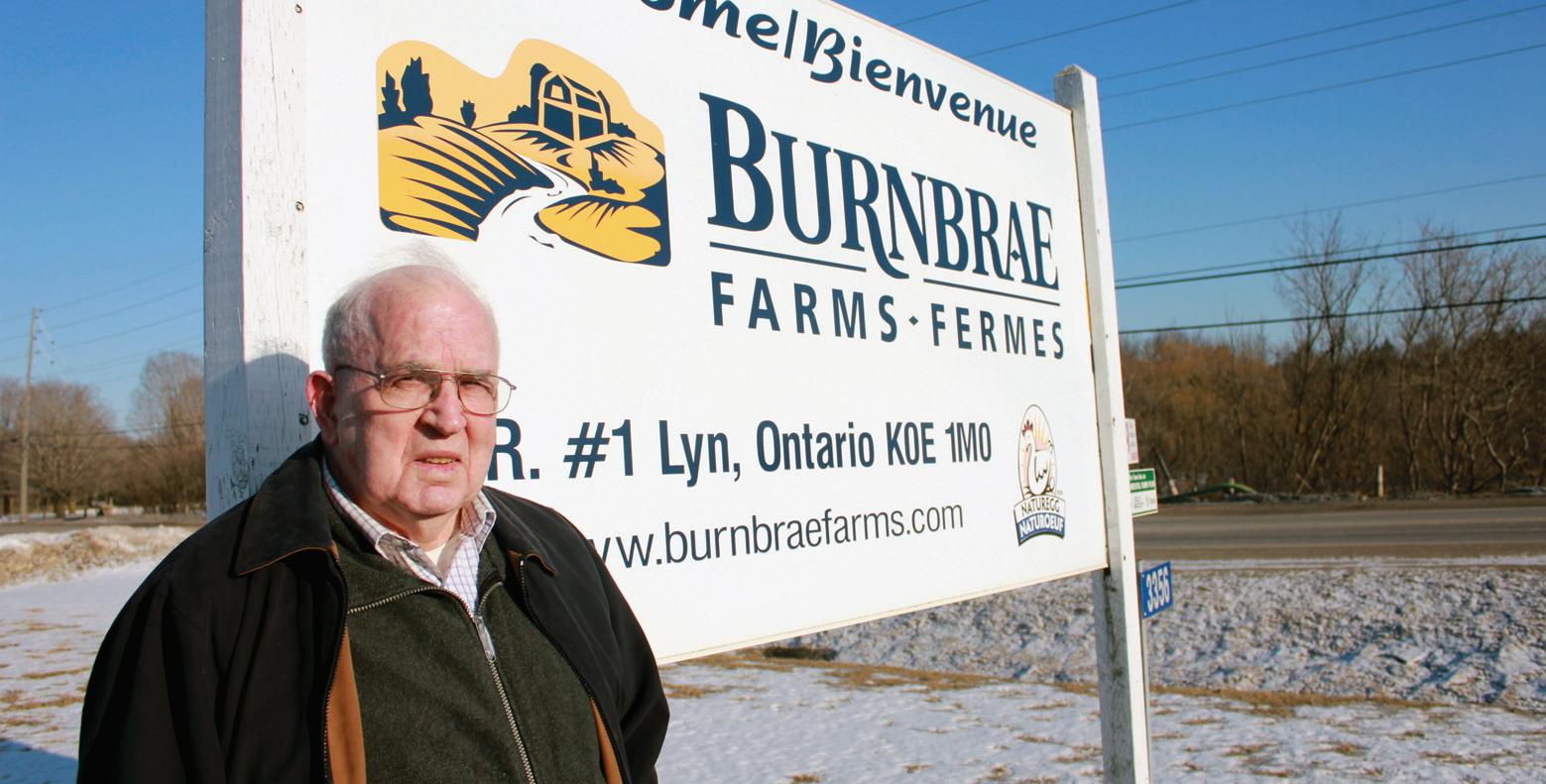
PJoe Hudson, CEO of Burnbrae Farms Ltd., is being inducted into the Ontario Agriculture Hall of Fame. Photo by Burnbrae Farms, Ltd.
oultry pioneers Joe Hudson, CEO of Burnbrae Farms Ltd. and John E. Janzen, a champion for the creation of a marketing board for Ontario chicken, will be recognized for their contributions, along with three other inductees, at the Hall of Fame Gallery, Country Heritage Park in Milton, Ont. June 10, 2012.
Hudson has been at the helm of Canada’s largest integrated producer and marketer of egg and egg products for more than 60 years. From the first laying barn built in Lyn, Ontario in 1952, to the establishment of layer hen, grading and breaking operations across Canada, he has helped guide
the family-owned and operated business to be recognized as the only company with vertically integrated egg operations throughout Canada.
John E. Janzen worked relentlessly throughout his career to transform the Ontario and Canadian chicken production and marketing system. Janzen’s efforts improved the quality, marketability and profitability of chicken and identified new growth opportunities for the chicken industry. He was a founding member of the Ontario Broiler Chicken Producers Marketing Board, serving as its first Secretary Manager, a position he held for 23 years.
COMING EVENTS
September 25-27, 2012 Poultry Service Industry Workshop (PSIW), The Banff Centre, Banff, Alta. For more information, visit: www. poultryworkshop.com
JANUARY 2013
January 28-31, 2013 International Poultry Exposition (IPE) International Feed Exposition (IFE) and American Meat Institute (AMI) Tradeshow Georgia World Congress Center, Atlanta, Ga. For more information, visit: www.ipe11.org
FEBRUARY
February 5-7, 2013 Canadian International Farm Show, International Centre Mississauga, Ont. For more information, visit: www.masterpromotions.ca
MARCH
March 6-8, 2013 London Farm Show, Western Fair District London, Ont. For more information, visit: http:// www.westernfairdistrict.com
We welcome additions to our Coming Events section. To ensure publication at least one month prior to the event, please send your event information at least eight to 12 weeks in advance to: Canadian Poultry, Annex Business Media, P.O. Box 530, 105 Donly Dr. S., Simcoe, ON N3Y 4N5; e-mail knudds@ annexweb.com; or fax 519-429-3094.
BinMaster Strapping Table Software for Non-Linear Vessels
BinMaster Level Controls has released a new eBob software feature for SmartBob2 and SmartBob-TS1 sensors that supports level measurement for non-linear vessels such as bins with cone bottoms, horizontal tanks and mushroom-shaped tanks. The software now offers the ability to input height-to-volume or weight data into a strapping table to allow the eBob software to account for bin shapes or material properties such as non-linear vessels or compaction of material in the bin when generating measurement data. An unlimited number of entries can be made into the strapping table based upon the type of data the user has available.
When setting up eBob software the user has an option for selecting custom vessel configuration. A screen appears that asks for the height to be entered along with the volume or weight parameter for that particular material height. The data can be entered in volume, such as bushels – or in weight, such as tons. As few as two entries – full and empty – or a limitless number of entries can be accommodated. Users who have good data available regarding their tanks can getter better data from the eBob software when setting up the tank parameters to allow for compaction of material at different levels of the tanks or for irregular shaped tanks including horizontal cylinders on their sides.
“The use of the strapping tables can help users adjust parameters in the software to get output data that is very specific to their tank,” said Todd Peterson, vice-president of sales for BinMaster. “Industries like plastics, cement and grain deal with materials that tend to compact at the bottom of the tank or might have cone-bottomed vessels and need to account for the size and shape of the cone. The key is for the user to have reliable and plentiful data to put into the strapping table to get the results they want from the eBob software.”
For more information, visit www.binmaster.com or your local dealer.
NEF54 Fan
AMechanical Litter Removal System
Many poultry farmers, most of them with free-range or aviary houses, would like to reduce the litter level and improve its quality in their houses. Jansen Poultry has found a solution with the development of its mechanical Litter Removal System. This system allows producers to mechanically remove litter, keeping the litter level in the house in check and reducing dust and ammonia levels.
How Does It Work?
merican Coolair has developed a 54-inch version of its NEF fan to meet large-volume ventilation needs in poultry farm buildings. The American Coolair NEF54 produces up to 10 per cent more airflow than the smaller versions of the NEF fan but remains extremely efficient pushing air more than 30 cubic feet per watt.
Constructed with galvanized steel, the NEF54 is durable and resistant to corrosion. The blade serves as the driven sheave, placing the belt load directly on the bearings and extending the life of those bearings, and therefore reducing maintenance costs. The NEF54 can be shipped knocked-down to save freight costs, making it ideal for export to foreign customers.
For more information, visit your local American Coolair distributor.
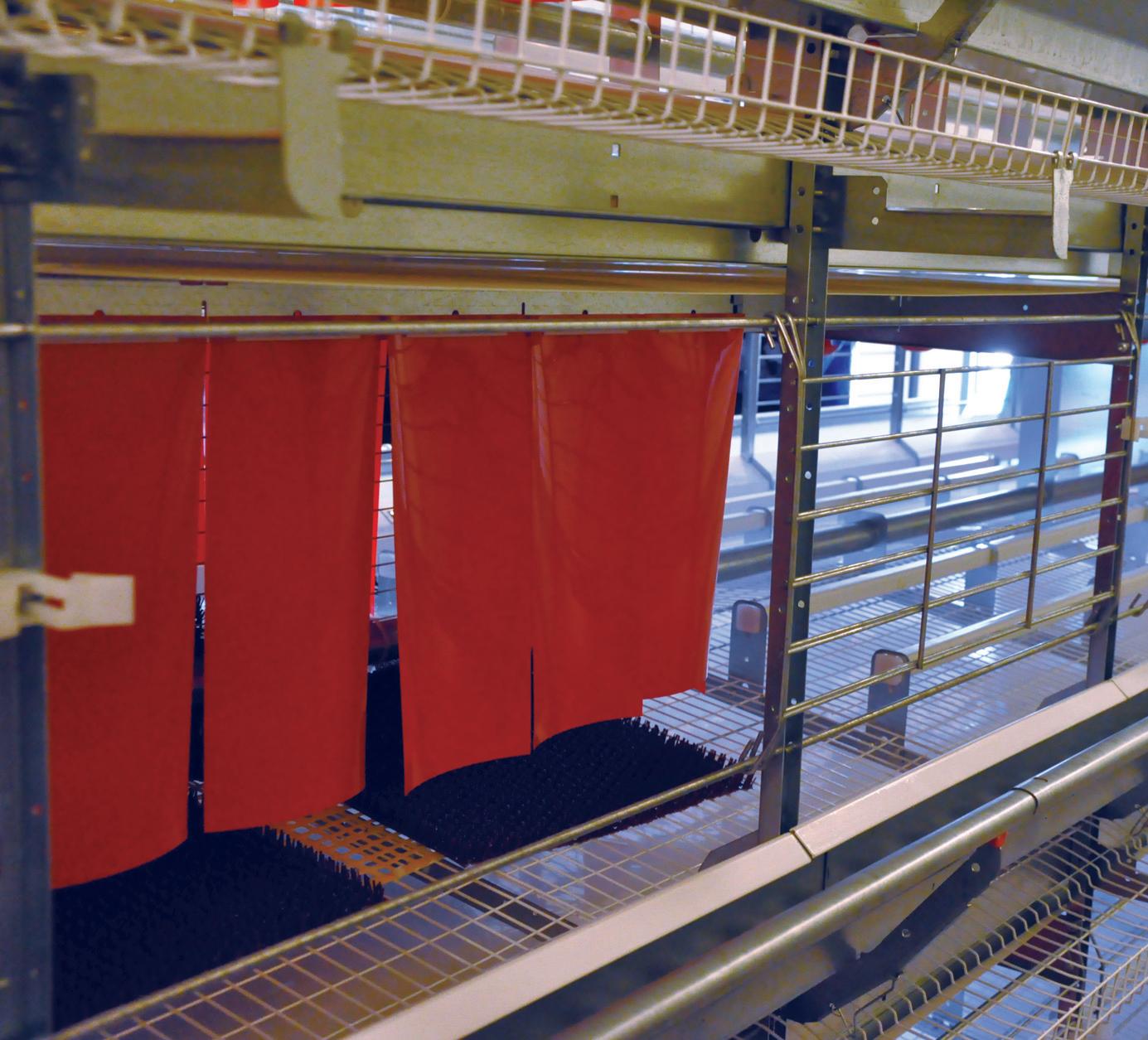
In the walkways of the house, a revolving steel cable with a scraper attached every ± 4m is installed. The back-andforth movements of the scrapers move the litter to the back of the house.
During the cleaning of the house, the cable with scrapers can be removed so the system does not interfere with the cleaning process.
For more information, please contact your local Jansen Poultry Equipment dealer or visit http://www.jpe.org/.
Embrex Inovoject Now in a Smaller Size
Pfizer Animal Health Global Poultry’s new in ovo vaccination device could help improve operations at smaller hatcheries, according to one of the device’s trial participants. The new Embrex® Inovoject® m was unveiled at the IPE. It is designed specifically for hatcheries that do not have the floor space or throughput to accommodate one of the larger, fully automated Embrex Inovoject devices.
Marciano Régis Tonus, agribusiness director of Frango Seva, in Pato Branco, Brazil, spent a month trialling the new, semi-automated device. Tonus is pleased with the results of the trial, which saw
more than 800,000 eggs processed throughout the trial.
He explained that the company had been using subcutaneous vaccination before trialling the in ovo technology and said that the Inovoject m is able to reduce the distance
between the small companies and the big companies in Brazil by giving them an opportunity to use new technology.
According to Pfizer, in ovo vaccination provides the earliest possible immunity against disease challenge, is accurate and reliable, is less stressful for chicks, less labour intensive and allows quicker delivery of chicks to the grow-out environment.
Inovoject m can handle between 12,000 and 20,000 eggs per hour and includes the same injection technology as the Embrex Inovoject.
For more information, visit https://animalhealth.pfizer. com.
VAL-CO’s Community Nest with New Winchable Slats Enhances Production and Quality
VAL-CO has introduced a Community Nest with new Winchable Slats providing easy-to-clean, comfortable and easilyaccessed nesting for hens.
Designed around the natural behaviour of hens, VAL-CO’s Community Nest is inviting and practical, providing an ideal location in a barn for hens to lay their eggs.
The new winchable slat design, unique to VAL-CO, is a key feature in improving hygiene while saving considerable time and labour in cleaning the nest and recovering drier, higher-quality manure. Waterproof PVC foam board is also used in the nesting area, which creates a more birdfriendly environment, helps ease the cleaning process and improves productivity. Because the Community Nest is easier to clean, it is less likely than
conventional designs to harbour disease or parasites.
“The nesting area is comfortable, protected and well ventilated, so it’s very attractive for egg laying,” said Sean Francey, VAL-CO product manager. “Combined with the welfare-friendly expeller, these features increase egg production and reduce brooding.”
The Community Nest is made with durable components and designed for easy assembly. The nest is suitable for either a high-rise or floor-
BinMaster MultiBob Bin Level Sensor System
Bmounted installation, and is available in centre-belt configurations with new winchable or standard slat packages to suit each customer’s poultry environment.
“The design of the VAL-CO Community Nest makes a big difference in terms of overall cleanliness, less maintenance and keeping hens producing good-quality eggs,” remarked Quarryville, Penn., poultry grower John Harnish.
The VAL-CO Community Nest meets American Humane Society standards for cage-free egg production, with hens having open access to nesting and space for roaming.
For more information about VAL-CO, the Community Nest, or VAL-CO products, please visit val-co.com or e-mail sales@val-co.com.
inMaster’s MultiBob inventory management system provides an average bin level from measurements taken by two up to 32 SmartBob2 or SmartBob TS-1 sensors installed on the top of a single bin, tank, silo or flat storage warehouse containing powders, granulars or bulk solid materials. The SmartBob sensors are strategically located in the vessel to monitor critical measuring points and, using eBob software, are programmed to measure materials at scheduled time intervals or on demand. The advanced eBob software compiles the measurement data to calculate an average level or headroom and estimated percentage full.
MultiBob can be used to monitor levels in any storage bin or flat storage warehouse where a single measurement is not adequate to estimate inventory. Each SmartBob sensor precisely and reliably measures in the same location every time, detecting level changes as bins and warehouses are emptied or filled using trucks, loaders or conveyors. Large diameter bins, bins containing materials that tend to pile up, as well as bins with multiple filling and emptying points are common applications for MultiBob.
For more information, visit www.binmaster.com.
Nutrition Protein Potential
Enzymes could help improve digestibility
BY ROSELINA ANGEL, DEPARTMENT OF ANIMAL AND AVIAN SCIENCES, UNIVERSITY OF MARYLAND, COLLEGE PARK, MD.
FROM A PAPER PRESENTED AT THE MIDWEST POULTRY CONFERENCE
In poultry fed commercial type diets amino acids (AA) are obtained primarily through the consumption of protein in the feed as well as, in a lower proportion, synthetic AA (methionine (Met), lysine (Lys), threonine (Thr)). Ingested proteins are broken down through digestion, which typically involves denaturation of the protein through exposure to acid and hydrolysis by enzymes called proteases. In poultry, ingested protein undergoes a series of degradation processes, carried out by acid (hydrochloric acid secreted in the proventriculus but active both in the proventriculus and gizzard), and hydrolytic proteases in the proventriculus, gizzard and small intestine. The grinding that occurs in the proventriculus, reducing particle size, aids in the speed with which digestion proceeds and influences the extent to which proteins are digested.
In today’s environment of scarce availability of ingredients and high costs, tools that allow for increasing the digestibility of amino acids would be welcomed.
Other enzymes, endogenous enzymes, primarily from the pancreas also can influence the extent of protein digestion but influencing the accessibility of proteases to proteins in feeds. The result of this degradation, and specifically of proteolysis, is a mixture of AA and small peptides that are rapidly absorbed by the enterocytes in the small intestine. Thus, availability of AA for utilization by the animal is dependent on the digestibility of protein and the absorption of AA and peptides.
Enzymes are proteins that catalyze, or accelerate, chemical reactions. Enzymes vary in their specificity working on only one specific reaction or several less specific chemical reactions.
Some enzymes act on other proteins to add or remove chemical groups in a process known as posttranslational modification. This is the case for several of the intestinal proteases. For example, enterokynase, a serine protease found in the small intestinal mucosa, must cleave the pro region from trypsinogen produced in the wpancreas to form trypsin, the active proteolytic enzyme.
PROTEIN NUTRITION IN BROILERS
The progress that the broiler industry has made in the last decades is marked by impressive improvements in all areas of genetics, management, health and nutrition, yet it is genetics that is responsible for most of the improvements in live performance and meat yields that have been achieved. At least 85% of the improvements obtained in live performance between 1957 and 2001 can be attributed to genetic selection.1
Comparisons made between a strain of chicken that had not been selected since 1940 and a present 2009 commercial
by
A FUTURE TOOL
Photo
David Barr
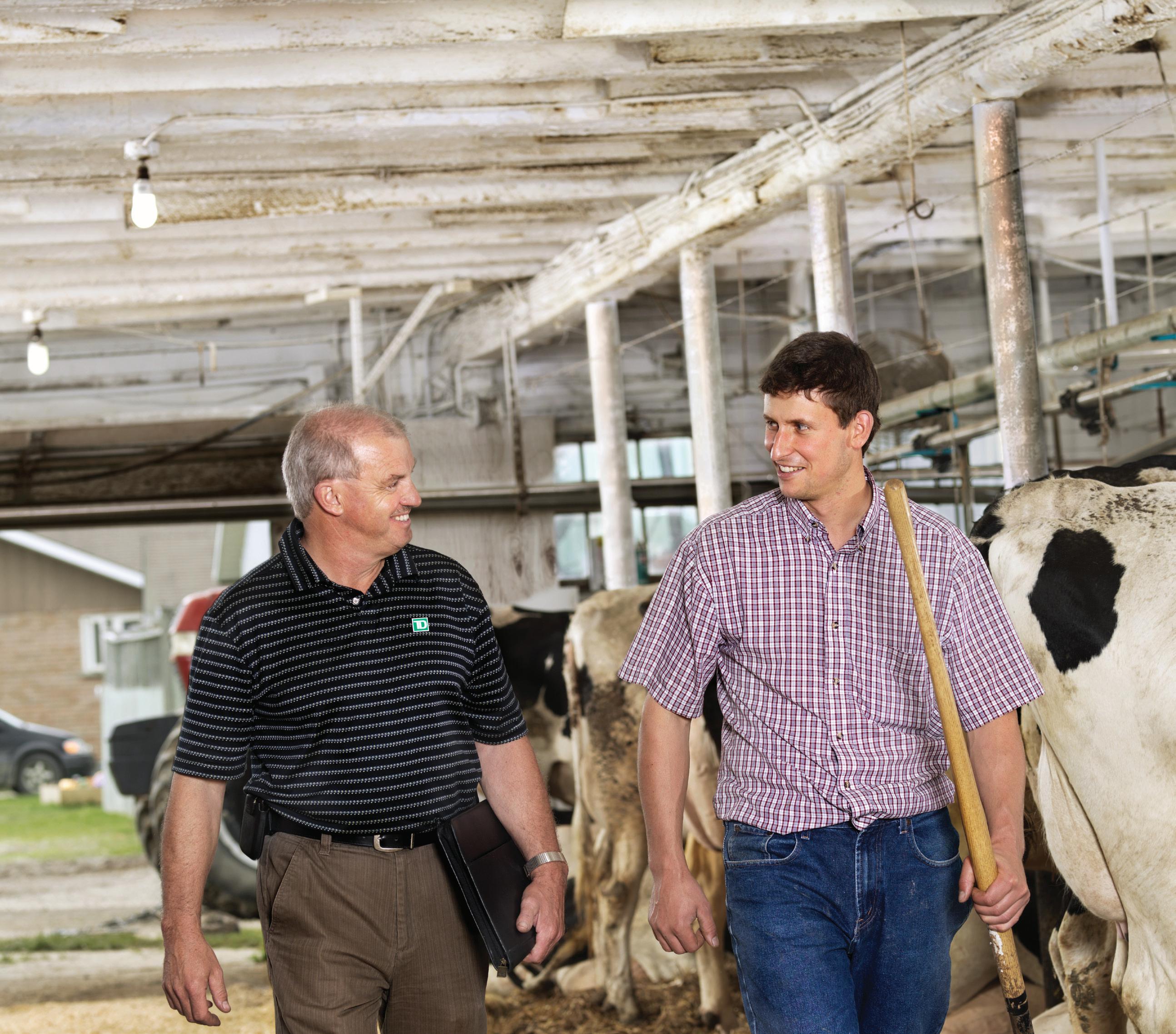
TDiscommittedtohelpingfarmersbuildforthefuture.
Whenthe Martinfamilywantedtoraise theproductivity of their dairy business, they turnedtoDaltonPotter for guidance.DaltonisaseasonedTD Canada Trust Agriculture Specialist andafarmerhimself, andwithhis help,the Martinswere able to buy anewfarm in a primelocation.Our understanding of agricultureand financing,combinedwithapersonalizedapproach,ishowwe’rehelpingfamiliesliketheMartinsgetexactly what they’re lookingfor.
For more information, visit a branch or go to www.tdcanadatrust.com/agriculture
MatthewMartin
broiler (Ross 708) showed increases of 72% in body weight and 3.4 times more breast meat at 34 days of age.2 Two major physiological changes associated with how body tissues grow in proportion to one another are noticeably changed in the 2009 bird as compared to the non-selected 1940 bird. Breast muscles maintained their allometric growth (tissue as compared to body weight) after 14 days of age, not the case in the 1940s bird where rate of muscle growth was slower at later ages. After 14 days of age the allometric growth of breast muscles in the 2009 broiler was 1.25 while the 1940s birds grew breast muscle at a slower rate (allometric growth of 1.09). This continual faster growth of breast muscles into later ages in the modern broiler translates into a higher requirement for AA, especially Lys.
The rapid growth rate of the current broilers results in increased demands for AA and energy, but these demands are not increased in the same proportion. Requirements for AA increase proportionately faster than those for energy, thus a higher AA to energy ratio is required in faster growing strains of broiler.3 Morris and Njuru (1990) fed diets of increasing protein content to broilers and to laying-type cockerels.4 These authors reported that the concentration of protein needed, in layingtype cockerels, for maximal body weight gain and carcass protein content was less than that needed to maximize growth and carcass protein in broilers. Broilers continued to benefit from the additional dietary protein to later ages, and this was likely due to the continued tissue growth, especially of the breast muscles.
Providing dietary protein above levels considered adequate by the industry leads to improved feed conversion ratios and breast meat yields.5,6 In comparison to usual industry levels, benefits of increased AA density diets have been shown early in life as well as in finisher diets. Feeding diets containing high AA levels may result in greater economic return if implemented during periods when the birds’ feed intake is relatively low and growth rate is high, and also because at least some of the benefits obtained earlier can be carried through to market ages.7,8
Embryos hatch with myofibre
Nutrition
numbers that are not expected to change after hatch. Growth of muscle after hatch occurs through increases in fibre size, which are accompanied by equal increases in the number of nuclei per myofibre.9,10
A group of myogenic precursor cells are found in between the muscle cell and its plasmalemma: the satellite cells. These myogenic precursor cells can multiply and later fuse with adjacent fibres aggregating more nuclei and therefore having a greater capacity for protein synthesis.11 It is estimated that 98% of the final DNA content of muscle results from this process.12 However, an actual increase in myofibre size can only be achieved by a concurrent and balanced supply of dietary AA.
Halevi et al., (2000) showed that early starvation (hatch to two days of age) resulted in birds that were 7% and 9% lighter in body weight and breast muscle, respectively, at 41 days of age.9
Increasing Lys and other essential AA fed only in the finisher phase has also been shown to improve feed conversion ratio and breast meat yields.13 This last impact of high Lys and other essential AA in finisher diets can be partially explained by the higher proportional growth rate of the breast muscles compared to other body tissues at later ages in the modern broiler.2
PROTEASES
Proteases perform a variety of roles in biology. These enzymes function in important physiological processes, including homeostasis, apoptosis, signal transduction, reproduction and immunity.14 In addition, proteases are involved in blood coagulation and wound healing. From a nutritionist’s perspective, the hydrolysis of proteins to individual AA and peptides in the intestinal tract is a key function for proteases. Several intestinal proteases exist, and comprise a protease system in the intestinal tract for the utilization of various dietary protein sources.
Pepsin is an acidic protease secreted in the stomach of most animals. Released as the non-active pepsinogen, it is activated in the presence of hydrochloric acid. It is active at low pH and inactive at pHs above six with variance across species.15 This protease hydrolyzes peptide bonds mainly between two hydrophobic AA. It falls within the group of carboxyl proteases.
The presence of hydrochloric acid, produced in the proventriculus, and of peptides, the products of initial protein digestion (hydrochloric acid denaturation as well as partial breakdown of protein
Continued on page 28
Primarily
PIC Update
Evaluating Hemp Seed in Layer Diets
Studies show its potential for enhancing omega-3 content of eggs
BY KIMBERLY SHEPPARD, RESEARCH CO-ORDINATOR
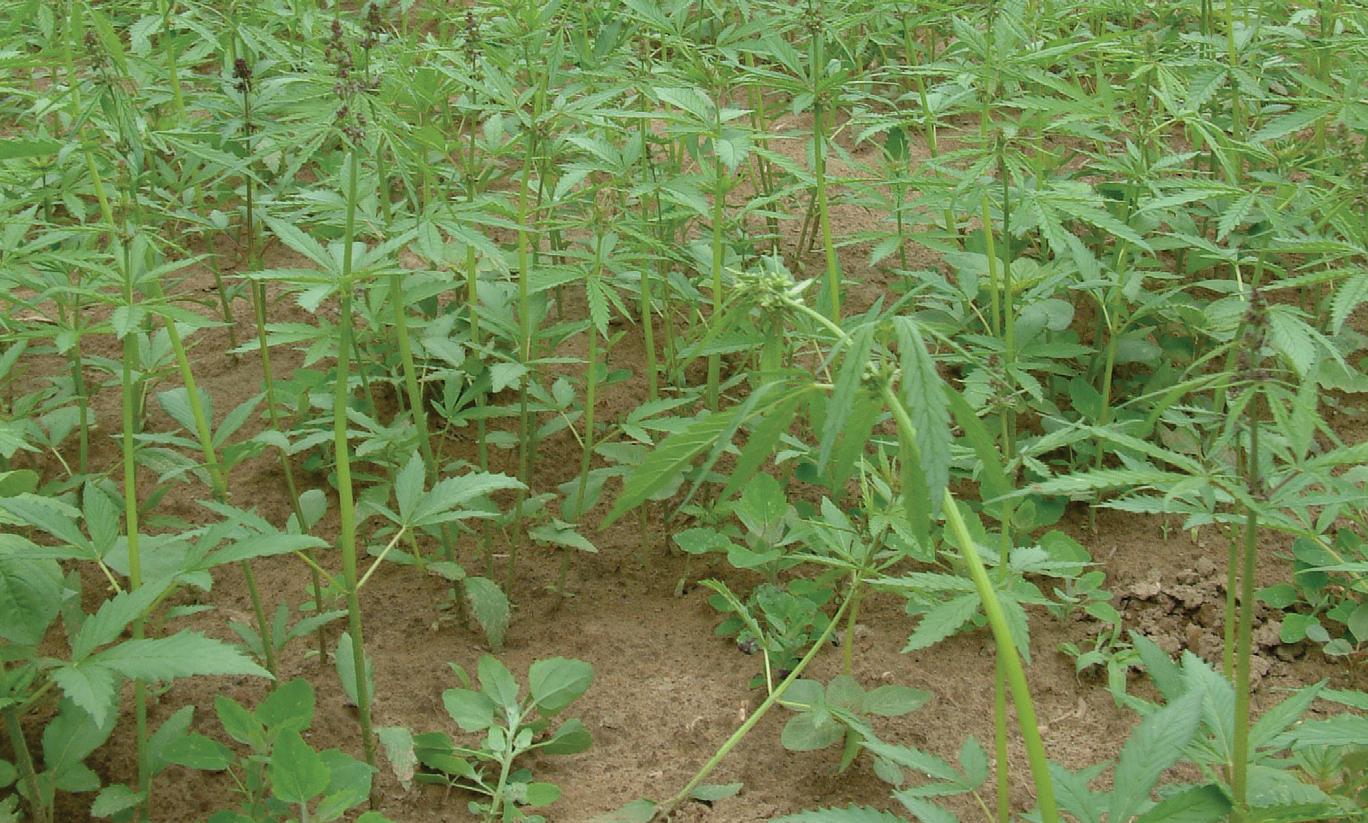
The commercial production of hemp (Cannabis sativa L.) in Canada was permitted in 1998 following a long period of discontinuation. The development of industrial hemp varieties with low levels of tetrahydrocannabinal (THC), a psychoactive found in other cannabis plants, has led to the reintroduction of this plant into Canadian production systems. The oil content of hemp seeds is approximately 33-35 per cent, and the oil is approximately 19 per cent alphalinolenic acid (ALA), an omega-3 fatty acid. Since the bulk of the oil is extracted through cold-pressing/extrusion-based processing, the remaining seed cake or meal has significant oil content (approximately 10 per cent) and a high (greater than 30 per cent) protein content, making it an attractive supplement for use in poultry diets.
However, hemp seed and hemp seed products are not registered as approved feed ingredients by the Canadian Food Inspection Agency (CFIA). Therefore, with a goal to establish data to support safety and efficacy claims for hemp products for use in poultry diets, Dr. James House and his research team at the University of Manitoba conducted a study to determine the impact of adding hemp seed or hemp oil to diets of laying hens.
Forty eight 19-wk old Bovan White laying hens were fed one of five diets containing either hemp seed (HS) or hemp seed oil (HO). The level of HO was four, eight, or 12 per cent whereas it was 10 and 20
ASSESSING HEMP
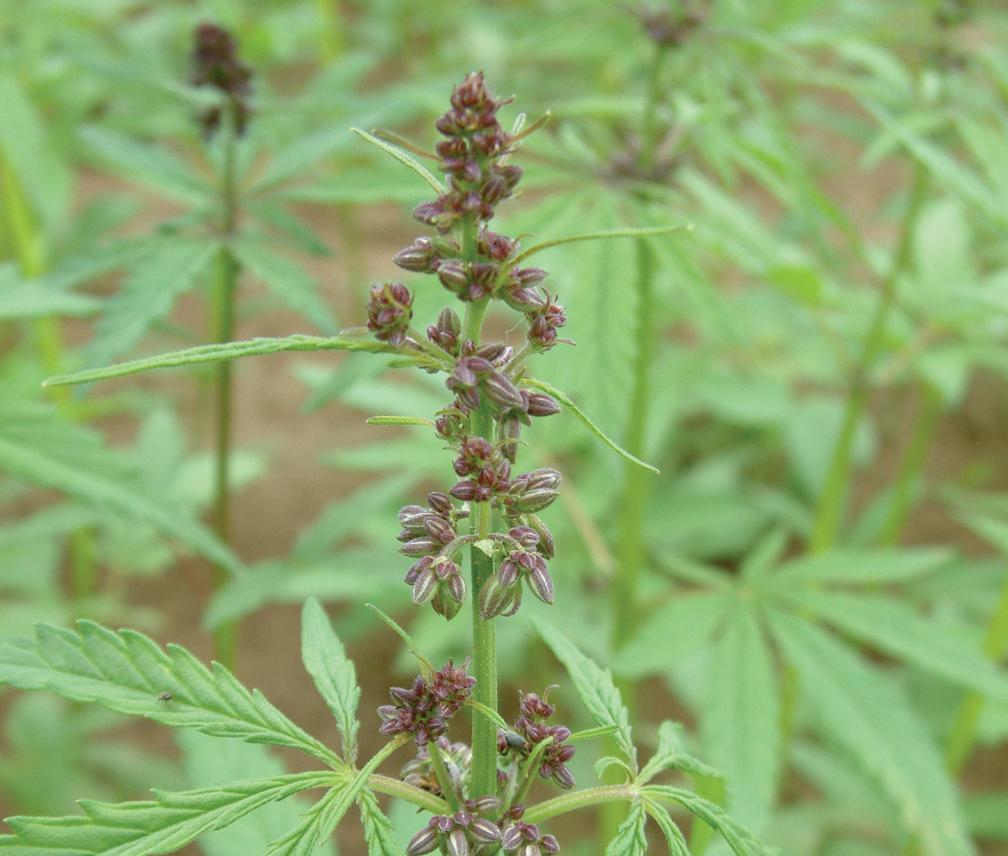
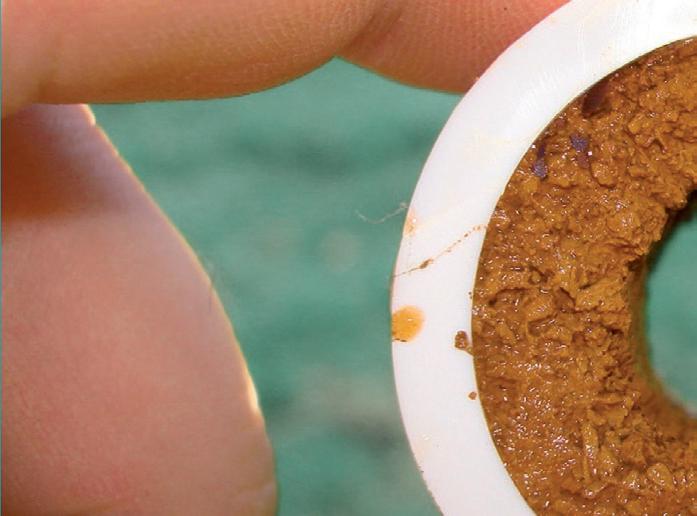
Hemp seed is high in omega-3 fatty acids and protein, making it an attractive ingredient in poultry diets.
per cent for the HS. A set of eight birds fed wheat-, barley- and corn oil-based diets served as the control. Performance was monitored over 12 weeks, and researchers measured feed intake, egg production, feed efficiency, egg quality, egg yolk fatty acid composition, aroma, and flavour.
Their findings? Average egg production was not affected upon feeding of either HS or HO diets. Egg weight was higher than controls for hens consuming the 20 per cent HS diet. Feed intake was lower than controls for birds consuming the four per cent HO diet, but similar across other treatments. Final body weights were not affected by diet, with the exception of being lower than controls in hens consuming the 12 per cent HO diet. The total egg yolk omega-3 fatty acid content increased with increasing dietary ALA provision with the HS- or HO-based diets. While total omega3 fatty acids increased in a linear fashion, the content of the long chain omega-3
fatty acid, docosahexaenoic acid (DHA), increased but then reached a plateau at higher levels of hemp inclusion. When assessing smell and flavour, panelists could find no significant differences between the cooked eggs. The one observation that was made related to yolk colour: the inclusion of higher rates of hemp seed or hemp oil led to the production of more intensely coloured yolks. It is suggested that inclusion of the hemp products HS or HO in the diets of laying hens up to a maximum level of 20 per cent and 12 per cent, respectively, does not adversely impact the performance of laying hen and leads to the enrichment of the omega-3 fatty acid content of eggs. In total, the data from the current study support the use of hemp seed and hemp oil as safe and efficacious ingredients for use in the diets of laying hens. To read more, please visit www.poultryindustrycouncil.ca.
Photo by Margaret Land
One Solution Clean Water Peace Of Mind
PIC Update
Temperature and Protein
Energy ratio linkages between breeder and broiler energetics, carcass quality and performance
FEATURED RESEARCHER: MARTIN
ZUIDHOF, UNIVERSITY OF ALBERTA
One of the most challenging decisions in meat poultry management is allocation of feed to broiler breeders. In these birds, metabolizable energy is used for growth, production of eggs and maintenance.
“Maintenance” accounts for threequarters of the energy required for a broiler to produce chicks, but, ironically,
a good understanding of “maintenance” remains elusive.
Maintenance in a growing animal includes more than just the energy required to keep them in a steady state – a big example is activity level. The more productive an animal is, the higher its metabolic rate, meaning additional energy is lost to the environment as heat. Depending on the stage of life of a broiler breeder, up to 96 per cent of metabolizable energy intake can be required for maintenance, leaving little left over energy for growth, and little room for error in feed allocation to achieve desired growth rate. Because environmental temperature affects the rate that heat is lost by the bird to its environment, it affects maintenance energy requirements. Perhaps surprisingly, one of the biggest challenges in allocating feed to breeders is accounting for the impact of temperature on maintenance requirements.
To gain a better understanding of this, Dr. Martin Zuidhof and his research team at the University if Alberta conducted three experiments. They investigated the effect of environmental temperature on the maintenance requirements of freerun broiler pullets housed in four different temperatures; they investigated the effects of environmental temperature and dietary protein:energy ratios on broiler breeder hen efficiency in cages using the same four temperature treatments but feeding half the birds a low energy ration, and half a high energy ration; and they
PIC’s Picks
HWith the most gentle of winters behind us, and an unprecedented warm start to the year, who can predict what’s ahead in 2012. Given the warm spring, it’s likely going to be a hot summer so it’s time to review
evaluated the performance and efficiency of broilers fed recommended and 10 per cent above recommended balanced protein levels in four different thermal environments.
Their findings? In the first experiment, each 1 C increase in temperature reduced metabolizable energy required for maintenance by 0.6107 kcal/kg of metabolic body weight. This means that for every decrease of 1 C, and additional 0.61 kcal is required to keep up body temperature (approximately 1 g of feed per 4 C). In experiment two, the high protein:energy treatment resulted in energy required for maintenance being 2.16 kcal/d higher than in the low protein:energy treatment. It is speculated that this could be due to higher diet-induced heat production, or to birds using protein as an energy source in the high protein treatment. In other words, high protein levels could contribute to heat stress. In the last experiment, birds fed the 10 per cent higher protein levels also had higher maintenance requirements. Birds in the warmest rooms (10 C above thermoneutral) had higher core body temperatures, and this correlated with reduced growth rate and breast muscle yield. There was also a slight tendency toward PSE-like conditions in females at increased environmental temperatures and at higher protein levels, although no differences were seen in drip or cooking losses. To read more about this study, please visit www.poultryindustrycouncil.ca.
BY TIM NELSON, EXECUTIVE DIRECTOR
barn cooling/ventilation systems. We’ve already had news of producers who have been caught by the early heat and while we haven’t heard of any bird losses yet, we know we need to be on top of temperature/ventilation management if we’re to ensure we don’t suffer
CFC ANNOUNCES executive committee for 2012
DAVE JANZEN,
the new Chair of CFC, has represented British Columbia at CFC meetings as an alternate since 2006 and has been the B.C. director since 2008. He joined the Executive Committee two years ago as the Member at Large and was 1st Vice Chair in 2011. His family farm in Abbotsford, that he and wife Jeannie started from scratch in 1981, has been home to four Janzen kids, now aged 21-27, and is right next door to the Fraser Valley dairy farm where he grew up. Dave and his family produce nearly 1 million kg each year.
ADRIAN REHORST,
from Teeswater, Ontario, becomes the 1st Vice Chair for 2012. His family farm is about 20 km from Lake Huron and he represents the farmers of that area, Region 1, on the Board of Chicken Farmers of Ontario.
MARTIN DUFRESNE,
representing the province of Quebec, was reelected to the position of 2nd Vice Chair. Martin and his family farm near St. Félix-de-Valois and they produce approximately 1.7 million kg of chicken per year on the farm started by his father in 1954.
YVON CYR, the new Member at Large, has been a chicken farmer since 1987. He produces approximately 3.3 million kg of chicken each year on his farm near Saint-François-deMadawaska in New Brunswick.
PIC Update
productivity drops as a result of unusual weather conditions. It’s all about air movement, fans, ventilation systems, sprinkler systems, foggers, fresh drinking water (plenty of it) and control.
We know that you all know all of this already, and that you check this stuff regularly, but with this year’s early season, some of the basics may get passed over in favour of farming and a degree or two of unchecked barn temperature rise may well lead to serious productivity drops.
Who do you call for information/advice? You will undoubtedly have seen the wide variety of technologies that you can implement in your barn at the London Poultry Show. The Feather Forum magazine (the showguide) provides a great index of companies that have the equipment and expertise to help you manage the heat, and the Ontario Ministry of Agriculture, Food and Rural Affairs also has some great impartial resources to help guide your decisions.
Productivity and Poultry Health are inextricably linked and are central to PIC’s research and education agenda. This year’s Research Day (May 8) will consider why we do poultry health research, and the cost of disease. It will include talks on cutting-edge poultry health research, and to give context and
relevance to the day we have some producer testimonials about the impact of disease – linking health back to productivity.
What’s Changing Besides the Climate?
A big change in 2012 is that we are giving the Innovations Conference a rest. Why? Numbers have been declining over the last couple of years, a result, we believe, of the growing popularity and attendance at producer updates – some of which run in November. To balance this, the Innovations Conference will now run every other year, commencing in 2013. In the conference year we will only run three Producer Updates (all in February), and in the “in-between” year, we will run the usual five.
Production After the Storm
Piloting its way through the recessionary storm wasn’t easy for TFC, but the supply-management system, with the co-operation of its producers, made it possible
BY JIM KNISLEY
Canadian turkey farmers navigated their way through the “perfect storm” of 2010 and are prepared to move ahead on much calmer waters, Mark Davies, chair of the Turkey Farmers of Canada, said at the Turkey Farmers of Ontario (TFO) annual meeting.
The overall Canadian economy is recovering and so is demand for turkey meat. Stock levels are coming down, opening the door for growth in the industry, and production is expected to be up this year.
In 2011 opening stocks were down 6.4 million kilograms from 2010 and production was up 800,000 kilograms. Total supply and total disappearance are in much closer balance and closing stocks in 2011 were down an additional 1.9 million kilograms.
Piloting its way through the recessionary storm wasn’t easy but the supplymanagement system, with the co-operation of its producers, made it possible.
“I think we probably saw the best supply-management can offer,” Davies said.
But, as always, there are other issues. Last summer and fall a media storm resurfaced. Much of the furor came from the “usual suspects” and was “ideologi-
SUCCESSFUL NAVIGATION
Mark Davies (L), chair of the Turkey Farmers of Canada (TFC) says Canadian turkey farmers navigated their way through the perfect storm of 2010. He is pictured here with TFC general manager Phil Boyd (centre) and James Fallad (R).
cally based.” Some in the mainstream media and academia dislike supply management on principle and look for opportunities to attack.
Canada’s proposed joining of the Trans-Pacific Strategic Economic Partnership offered up such an opportunity. Commentators speculated, backed by statements from New Zealand and Australia, that Canada would have to wind down supply-management if it wanted to join the trade group.
But the Government of Canada and the opposition parties remained firm in their support of supply-management.
He cited statements from the Prime
Minister, the agriculture minister and the trade minister expressing their support.
Prime Minister Harper said: “We can advance our interests while at the same time protecting our interests in those various sectors.”
Agriculture Minister Ritz said: “Show me an economic study where if the Dairy Farmers of Canada were disbanded or the poultry farmers were disbanded, that somehow that would benefit consumers. Show me where that would flow through to consumers. I don’t see that.” And Trade Minister Ed Fast said: “As we have done in every trade negotiation,
LES PPC ANNONCENT la nomination de son Comité exécutif de 2012
DAVE JANZEN,
le nouveau président des PPC, représente la Colombie-Britannique aux réunions des PPC comme remplaçant depuis 2006 et est devenu administrateur en 2008. Il s’est joint au Comité exécutif il y a deux ans en tant que membre à titre personnel et est devenu premier vice-président en 2011. Sa famille exploite une ferme à Abbotsford, une entreprise lancée par lui et son épouse Jeannie à partir de rien en 1981, où ils demeurent avec leurs quatre enfants âgés de 21 à 27 ans, tout près d’une ferme laitière située dans la vallée du Fraser où il a grandi. Dave et sa famille produisent près d’un million de kilogrammes de poulet chaque année
ADRIAN REHORST,
de Teeswater, en Ontario, devient le premier vice-président pour 2012. Il exploite une ferme familiale située à environ 20 km du lac Huron et représente les agriculteurs de ce secteur, soit la Région 1, à l’Office provincial de commercialisation du poulet.
MARTIN DUFRESNE,
représentant de la province de Québec, a été réélu au poste de deuxième vice-président. Martin et sa famille exploitent une ferme près de Saint-Félix-de-Valois et produisent environ 1,7 million de kilogrammes de poulet par année sur la ferme fondée par son père en 1954.
YVON CYR, le nouveau membre à titre personnel, élève des poulets depuis 1987. Sa ferme près de Saint-François-de-Madawaska, au Nouveau-Brunswick, produit environ 3,3 millions de kilogrammes de poulet chaque année.
our government will seek to defend and promote Canada’s interest in every sector of the economy. This includes continuing to defend Canada’s system of supply-management.”
Turkey farmers and other supplymanagement groups are grateful for the support, but must continue to work with the government and not take their support for granted. “Any chance we get we have to nurture that support,” Davies said.
He also cautioned that the WTO talks towards a new trade deal may not be finished. Although the member countries can’t even agree on a process to go forward, the WTO may only be in “hibernation” and could awaken after the U.S. election. He reminded the farmers at the meeting that if the talks resume the starting point would likely be the last proposal put on the table and
Production
that proposal, if carried forward, would be destructive to supply-management. The WTO may no longer be a top-ofmind issue, but it hasn’t completely gone away.
TFO UPDATE
Ingrid DeVisser, chair of Turkey Farmers of Ontario, also noted the turnaround for the industry. “We’re in much better shape as an industry than we were last year or the year before. We’re seeing some growth and I think we’ll see more growth,” she said.
To ensure the growth the TFO is continuing a generic marketing campaign unveiled in 2011. The “Ontario Turkey – Makes it Super” campaign is funded by Ontario’s turkey farmers and includes television, in-store marketing, a new recipe booklet and a new logo.
In addition to attending consumer trade shows and conducting a campaign in retail outlets the TFO reached out to consumers through both traditional median and new social media.
An electronic media kit was distributed to 200 in the lifestyle, food and trade media. The kit included recipes, meal ideas and images, turkey and health tips, and nutritional information, and promoted access to industry spokespeople.
The TFO also enhanced its presence in the social media with a Facebook page and a Twitter account. The TFO tweets with recipe ideas, nutritional information health tips and links to relevant articles.
Strategic Planning was another priority for 2011 that will continue into 2012 and it is anticipated the threeyear plan will be in place this spring, DeVisser said.
Used year-round in your flocks, Coccivac® vaccine can help achieve simple, sustainable and profitable prevention against coccidiosis. Resistance is not an issue, so Coccivac frees birds from the stress associated with in-feed anticoccidial rotation and shuttle programs. You and your feed company can focus on improving nutrition and better gut health.
To make the transition to Coccivac, go to www.becauseitworks.ca, talk to your veterinarian or speak to your Merck Animal Health representative.
CPRC Update Designer Proteins
The issue of bacterial resistance to antibiotics is taken very seriously by the poultry industry. Further to encouraging prudent use, industry is supporting research into alternative measures that may offset the need for commonly used antibiotics. For example, a large research team including scientists from the University of Alberta, the National Research Council and Dow AgroSciences is looking at the prospect of engineering “designer proteins” that can combat specific diseases. The so-called field of Protein Therapeutics has changed the face of human medicine and has vast potential for novel disease treatments in agriculture as well.
PROTEIN DESIGNED TO FIGHT SALMONELLA
One part of this research program, led by Dr. Christine Szymanski at the Alberta Glycomics Centre, University of Alberta, and Dr. Jamshid Tanha at the National Research Council – Institute for Biological Sciences, are using bacteriophages to reduce Salmonella in chickens. Bacteriophages (phages for short) are a special class of virus that only infect specific bacteria. This specificity is conferred by phage proteins that bind surface structures on the bacterium; when the phage bumps up against a bacterium with the appropriate affinity, it attaches and infects the bacterium. Cellular machinery in the bacterium is then hijacked into making new copies of the phage, which then burst out of the cell, killing the bacterium. Exploiting this specificity is an attractive prospect for scientists looking for alternative ways to target bacteria. Yet previous attempts have met with varying success; using intact phage in this manner is fraught with a number of technical problems. There
is also an underlying risk that the bacteria will develop resistance to the phage over time. To circumvent these problems, the researchers decided to use only a portion of the phage known as the tailspike protein (TSP); this is the piece of the phage that confers its specificity. They chose the TSP from a phage that is specific to Salmonella enterica serovar Typhimurium. Upon characterizing the TSP, the researchers recognized that, using modern protein engineering techniques, they could shorten the molecule without losing its specificity. The resulting protein resists digestion in the gastrointestinal tract of the bird (making it ideal for oral administration), can be produced in large quantities, avoids many of the technical issues and risks associated with intact phage, and is amenable to protein engineering for improved function. Properties such as stability, binding strength and degree of specificity can all be tailored to suit the application.
DOES IT WORK?
Lab tests showed the modified TSP does bind S. Typhimurium . The bacterium Staphylococcus aureus was unaffected during the same experiments, demonstrating the specificity of the protein. Bound TSP appears to impair the motility of S. Typhimurium , making it less able to colonize the chicken’s gut. To see if this theory held true, Leghorn chicks were orally infected with varying amounts of Salmonella and fed varying doses of the modified TSP. Treatment with modified TSP resulted in significant reduction of Salmonella in the birds’ ceca (part of the intestinal tract), liver and spleen (when birds are infected with Salmonella, the bacterium may also get into the bloodstream
and infect organs such as the liver and spleen). These results demonstrate the potential of designer proteins to reduce bacterial infection in the bird. This “at source” approach to combating specific bacteria without affecting beneficial ones has tremendous potential for the industry.
WHAT’S NEXT?
Next steps for this work are to further characterize exactly how the modified TSP reduces Salmonella colonization in the chicken gut. For example, is the protein affecting more than the bacterium’s mobility? The research group is also investigating ways to produce the proteins on a commercially viable scale. We’ll tell you more about that in future updates.
Results of this work were published in the online journal PLoS ONE. Funding was provided by CPRC, the Alberta Ingenuity Fund and the National Research Council.
For more details on any CPRC activities, please contact The Canadian Poultry Research Council, 350 Sparks Street, Suite 1007, Ottawa, Ontario K1R 7S8, phone: 613-566-5916, fax: 613-241-5999, e-mail: info@cp-rc.ca, or visit us at www.cp-rc.ca.
The membership of the CPRC consists of the Chicken Farmers of Canada, the Canadian Hatching Egg Producers, the Turkey Farmers of Canada, the Egg Farmers of Canada and the Canadian Poultry and Egg Processors’ Council. CPRC’s mission is to address its members’ needs through dynamic leadership in the creation and implementation of programs for poultry research in Canada, which may also include societal concerns.
Continued from page 14
by pepsin) from the gizzard into the duodenum stimulates the release of the hormones secretin and pancreozymin from S cells of the duodenum in the crypts of Lieberkühn.16 These hormones promote the secretion of pancreatic juice containing a number of enzymes and bicarbonate ions. The production of an alkaline solution quickly neutralizes the acid entering the duodenum.17 Small intestinal enzymes function best at pHs close to neutral or slightly below neutral, and thus, insufficient alkaline bile, lowers enzyme activity in the intestine.18
Pancreatic proteases as well as all known cellular proteases are synthesized as zymogens, or the inactive precursor, to prevent unwanted protein degradation at the point of origin.19 The conversion of the zymogens to the active protease requires low pH (autocatalysis) or limited proteolysis. Primary pancreatic zymogens are trypsinogen, chymotrypsinogens A and B, proelastase, and procarboxypeptidases A and B. Trypsin is activated after being cleaved by enterokinase, found in the brush border membrane. The active trypsin then hydrolyzes bonds in the other zymogens, releasing the active enzymes. Trypsin is the primary protease in the intestinal tract. Its active form hydrolyzes at the carboxyl side of Lys and arginine (Arg), except when followed by proline (Pro). It has an optimal operating pH of 8 or less.20 Chymotrypsin hydrolyzes peptide bonds in which the carboxyl groups come from one of the three aromatic AA (phenylalanine (Phe), tyrosine (Tyr), and tryptophan (Trp)). Elastase cleaves at the carboxyl end of the hydrophobic AA glycine (Gly),valine (Val) and alanine (Ala). These AA are common in connective tissue in muscle. Elastase, like trypsin and chymotrypsin, falls within the category of serine protease.
Carboxypeptidases A and B are exopeptidases also secreted by the pancreas. Carboxypeptidase A follows on the work of chymotrypsin and elastase that expose the carboxy-terminal aromatic or non-
Continued on page 32
Production
The Impact of Water Quality
For better bird health –and a healthier bottom line – it’s worth thinking about how best to manage your water system
BY TREENA HEIN
As with many things in life, including farming, quality matters. Poultry producers carefully manage feed quality, conditions in the barn, and many other factors, but water quality needs more attention, says Charlie Hayes, president at Advanced Treatment Technologies (ATT) in North Carolina. “After spending ten years in the poultry industry researching and developing methods to improve performance and reduce cost, I came to the realization that the industry had analyzed just about every detail of production down to the finest point, except one,” he says. “I came to see that supplying high quality water to birds makes a large difference in bird health and maximizing profits.”
Hayes says the poultry industry has defined “effective water treatment” as having the necessary equipment to prevent the mechanical issues that dirty water creates — clogged lines, algae growth and so on — but that goal is not nearly enough. “Some growers take it a step further and have determined that by disinfecting the water, they can reduce the incidence of disease, so they added this goal to their water treatment plan,” he notes. “But
In evaluating water treatment systems, Hayes advises poultry producers to ask lots of questions, verify the answers, and remember it is just as important to know what a technology will not do as it is to know what it will do.
the goal which will yield the greatest returns in bird health and farm profitability is to consider water the most important nutrient provided. And the pathway to reach this goal is to put the right water treatment systems in place.”
In evaluating water treatment systems, Hayes advises poultry producers to ask lots of questions, verify the answers, and remember that it is just
as important to know what a technology will not do as it is to know what it will do. “In the past, and in most cases today, water treatment system purchases are viewed as “component buying” decisions — filters, chemical dosing pumps, and so on,” he notes. “Each decision is isolated and made mostly on its own merit, not on how it does or does not fit into the overall water quality plan for the facility.”
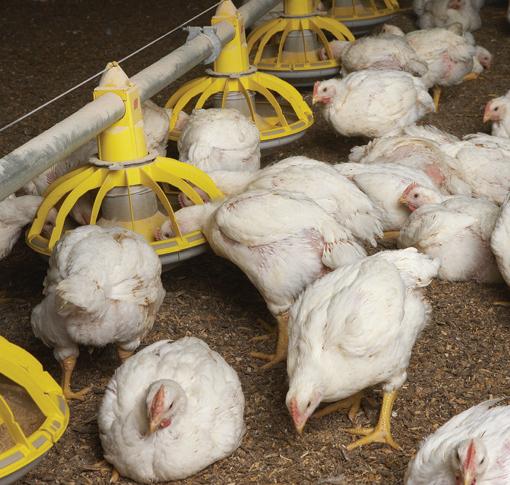
WATER MATTERS
He adds, “This thought process must change if we are to step into the next level of water quality management, developing a “Comprehensive Water Management Plan.””
This plan, says Hays, should focus on delivering water which will produce the healthiest birds possible, while reducing labour and the costs of water treatment as well as reducing a producer’s exposure to environmental and regulatory hurdles. “The first step is to determine your water quality by doing a detailed water analysis,” he asserts. “Find out your mineral and metal content at the source, and get a detailed analysis from samples at your drinker lines for bacteria and other organisms such as mould.” The next step, he says, is to set a goal for your water quality, and then look into the technologies that are available to bring you to your goal. “If you involve an industry person,” he notes, “the right person will help you look at all parts of your system — your water source, collection ponds or tanks, pumping systems, piping, spray bird-cooling systems, filtration, disinfection and so on.” Hayes says that as you move towards your goal of high-quality water delivery, any mechanical issues of your water system will also be addressed.
TECHNOLOGY OPTIONS
The water treatment technology you choose, Hayes says, should be capable of removing some constituents and leaving others in. “A worthy system should remove precipitated solids, iron, manganese and organisms of all types, but leave in ‘water hardness components’ such as calcium and phosphorus for the benefit of bird health,” he says. “An oxidizer in the water will accomplish all these things. It will also remove the biofilm growing in the water distribution system, but not affect the beneficial micro-flora in the birds’ intestinal tracts.” Hayes says chemical oxidizers of other types expose birds to potential negative aspects such as reducing water intake. Chemical oxidizers can also kill
Production
the beneficial micro-flora in the birds intestines
He says the best oxidizing technology is ozone-based, with filtration after ozonation — and if surface water is being used, pre-filtration as well. “In addition, ozonation results in an elevated dissolved oxygen level in the
water, which provides additional benefit to bird health and performance.”
Hayes says the payback potential that can be expected by delivering higher water quality to your birds is mainly determined by the current water quality being provided to your birds now.
WHO CARES...
Alltech’s Poultry Advantage program brings you an all-encompassing portfolio of solutions to combat aggravating issues you experience year-round. You have a problem? We have a solution. Ask our poultry experts how the Alltech Poultry Advantage Series can help make your the advantage, the Poultry Advantage in these tight times? Remember…
Continued from page 28
polar AA while carboxypeptidase B cleaves carboxy-terminal basic AA exposed by the activity of trypsin.21
Pancreatic proteases experience a progressive fall in activity as digesta passes through the small intestine.20 The decline in importance of these primary proteases is paralleled by a gain in brush border and cytosolic peptidase activity. It is estimated that 70-85% of all luminal AA are taken up from the small intestinal digesta as peptides.21 Yet, it is important to realize that approximately 85% of this quantity appears in hepatic portal blood as free AA because of intracellular hydrolysis.22
INGREDIENT PROTEIN DIGESTIBILITY
With the broad fluctuations in ingredient prices as well as historically high prices seen in the last four years, choice and quality of ingredients becomes more important. From a practical nutritionist’s standpoint, the value of ingredients as a protein source generally comes down to the content of digestible AA and the ratio of AA in the ingredient (aside from cost and ingredient accessibility). Numerous studies and tables on protein and AA availability (the digestibility, absorption and utilization by the animal) have been published. As can be seen in Table 1 there is high variability in AA content within an ingredient with content and variability being related, in part, to where the ingredient was harvested.
The common thread that runs through such summaries is that ingredient improvements can yet be made in digestibility of protein (Table 1 and Table 2). Digestibility of AA is lowest at younger ages.23 The AA digestibility was markedly better at 21 days of age as compared to five days of age in corn, DDGS and canola meal (Table 2) but this age effect was less marked with SBM.
In one large-scale study, apparent ileal digestibility was determined for various ingredients in broilers.24 For cereals, the overall AA digestibility coefficient for eight samples of corn was 0.81 (range 0.77 to 0.85). For SBM, the digestibility coefficient was 0.82 (range 0.81 to 0.83). In particular, the groups of meat and bone meal (average
Nutrition
Figure 1. Apparent essential AA digestibility improvement in corn, SBM, bone meal (MBM) when 200 ppm of a protease (ProAct, DSM Nutritional Products) was added as compared to no protease added.24,26
digestibility coefficient of 0.62) and meat meal samples (average digestibility coefficient 0.65) showed low AA digestibilities and marked variation. Similarly in work done at the University of Illinois on AA digestibility of ingredients, low values and high variation for meat and bone meals is often seen.25 More recent collaborative work with The Ohio State University, Purdue University and University of Illinois further emphasizes that the variability continues to be present in meat-based ingredients.23 Generally, however, digestibility data indicate that there is room for improving ingredient AA digestibility. This holds true for ingredients that generally are considered to have good digestibility, and certainly for ingredients such as animal byproduct meals and DDGS in which digestibility is generally lower.
PROTEASES
The interest in proteases has increased in the last few years and new commercial proteases have entered the market recently. One of the new proteases to enter the market is an alkaline serine protease derived from Nocardiopsis prasina and the production strain Bacillus licheniformis (ProAct®, DSM).
Several research groups have presented ileal digestibility results with this protease, which is summarized in Figure 1.26-29 This work confirms the ability of this protease to improve ingredient protein digestibility. These researchers used the NFE diet or basal diet substitution methods to deter-
mine amino acid digestibility in different ingredients. Across all ingredients tested – corn, soybean meal, full fat soybean meal and meat and bone meal – the protease improved AA digestibility. The improvement over the non-protease control ranged from about 2% to 14%.
A study with broilers and using the same commercial protease showed that apparent AA digestibilities were improved in a corn SBM diet in patterns similar to those previously reported for the single ingredients.27,29-31
Three studies were done to evaluate the true standardized amino acid (TAA) digestibility of individual ingredients for broilers, laying hens and turkeys. Straight run Ross 708 broilers and female Nicholas turkey poults (separate experiments done at the University of Maryland) were raised to 17 days in floor pens and assigned to battery pens in a completely randomized design of 12 treatments with eight replicates of seven birds per pen. In a third experiment Hyline W36 white Leghorn hens 56 wks of age (done at the University of Nebraska) were assigned to cages in a completely randomized design of 10 treatments (Trt) with six replicates of four birds per cage.
Diets were formulated and mixed and the same batch used in all three experiments. A nitrogen-free diet (NFD) was formulated with 0.3% titanium dioxide as a marker. The corn-starch, sucrose and solka flock in the NFD diet were replaced in part by the ingredients being tested such that
Continued on page 36
Corn Soy Bean Meal Meat Bone Meal
Housing Potential Impact
The agreement between the HSUS and the UEP may have an impact on Canadian egg producers
BY DAN WOOLLEY
Egg Farmers of Canada’s chief operating officer, Neil Newlands, gave a briefing on the potential impact on Canadian egg producers that could result from last year’s agreement between the United Egg Producers (UEP) and the Humane Society of the United States (HSUS) at the Nova Scotia Egg Producers annual meeting.
Newlands observed that the HSUS has already achieved amendments to poultry housing regulations in six U.S. states, and it has targeted more states for ballot initiatives on poultry cages.
The UEP, recognizing the inevitable, met several times in 2011 with the HSUS, finally agreeing to jointly petition the U.S. government to pass poultry housing regulations as part of this year’s U.S. Farm Bill.
U.S. egg producers will have up to 15 years to convert to enriched colony cages under the new Egg Products Inspections Act, which will require minimum cage sizes, 124 square inches for white birds, and 144 square inches for brown birds, said Newlands.
He also stated there will be a labelling requirement for eggs, specifying the production environment: enriched cages, cage-free and free range, as well as new regulations on euthanasia, molting and beak-trimming.
The HSUS has agreed, in exchange, that it will not fund raise or support any further state legislation or ballot measures against the egg industry, Newlands said.
He remarked that the UEP members
EFC is working to improve its understanding of enriched systems through supporting research and reviewing the code of practice. A national dialogue is needed so producers will be aware of what is happening in the U.S.
support the new egg inspection law “as something they can survive,” observing that 80 per cent of new U.S. poultry housing is now colony cages.
The UEP/HSUS agreement offers a sustainable future for all American egg producers, remarked Newlands; but there is no assumption it will become the standard in Canada, “but sooner or later, what happens in the U.S. affects Canada.”
He wondered if multinational food companies would support different national standards across North America, envisioning a new campaign
focusing on Canadian egg farmers. Therefore, the EFC is, “working to improve our understanding of enriched (cage) systems through supporting research and reviewing the code of practice. We need a national dialogue so producers will be aware of what is happening in the U.S.”
Newlands encourages egg producers to discuss the benefits and drawbacks of enriched housing, as well as understanding the risks and options of installing conventional as opposed to enriched, or alternative, housing.
Last year, the EFC set an interim
PRODUCTION IMPACT
cage density standard, a minimum of 116.25 inches per bird including nest boxes. In the future, Newlands said, minimum sized cages will have to contain perches and nest boxes.
New housing must also have the EFC’s enriched housing certification, as well as meet the animal care program requirement, he said.
Existing poultry housing will receive “grandfathering,” observed Newlands, if it meets minimum requirements.
Some of the UEP/HSUS agreement requirements “were pretty severe”, he said. Not all U.S. egg producers were happy with this; but they saw no alternative.”
EFC chairman Peter Clarke, when asked about two-tier pricing for early adapters of enriched housing, responded that, although some provinces were already doing it, it is not yet national.
Glen Jennings, Nova Scotia’s EFC director, added the EFC is supporting the Research Chair on Poultry Welfare at the University of Guelph, Dr. Tina Widowski, who will do research on alternative housing and other hen welfare issues.
Jennings also observed the EFC has established an Animal Care and Welfare Advisory Panel of scientists and producers to present recommendations on welfare issues.
Continued from page 32
all the protein in the diet came from the tested ingredient. Ingredients were added to achieve 20% protein for the high protein ingredients or to a maximum of 96% of the diet for the low protein ingredients. Ingredient percentages tested in the final diets were: 42% soybean meal (SBM), 40% meat and bone meal (MBM), 75% corn distiller dried grains and solubles (DDGS), 96% corn and 96% bakery by-product meal (BPM). In the laying hen trial corn was not tested. Each Trt was supplemented with 0 or 200 ppm of a mono component serine protease (Ronozyme ProAct™, CT, DSM Nutritional Products, containing 75,000 protease units/g of enzyme product). Birds were fed the diets for four days. At 22 days broilers and turkeys were euthanized and the distal half of the ileal content collected, pooled by pen and freeze dried.
In the broilers trial, a main effect of protease on digestibility of Thr, Met, Cys, Lys, Arg, Ser, Val, Asp. Ile, and His was seen. There were no protease by ingredient interactions except for Cys. Addition of the protease improved (P<0.05) the
Nutrition
digestibility of Thr, Cys, Met, Lys and Ser in SBM; Thr, Cys, Met, Ser and His in corn; Cys, Met, Arg, Ser, Val and His in DDGS; Cys, Met, Lys, Ser and His in MBM; and Met, Arg, and Ser in BPM. For SBM the TSAA digestibility was improved from 75.2 to 83.2% for Thr, 74.9 to 81.2% for Cys, 83.1 to 86.3% for Met, 83.8 to 87.1% for Lys, and 80.6 to 85.4% for Ser with the protease. Addition of the protease had similar impacts in laying hens and turkeys. Overall digestibilities of AA, in the presence or absence of the protease, from the same ingredients, were higher for laying hens and turkeys as compared to broilers.
CONCLUSION
There is no question that in today’s ingredient availability and cost environment, tools that allow for increasing the digestibility of AA would be welcomed. Given the digestibilities reported for the most commonly used ingredients and the higher variability in AA content and digestibility from locally grown ingredients, room exists for improvement. There is little
information in the literature as to how proteases work in the intestinal tract, where in the tract they have the most impact and how they interact chemically with other exogenous enzymes as well as endogenous enzymes. It will be important as the role of proteases gains commercial application and importance that we better understand how these enzymes work and how they interact with endogenous and exogenous enzymes. We will also need to understand how to formulate proteases into diets.
The first step will be defining clearly and accurately what their impact is on AA digestibilities of ingredients, what the variability of this impact is on the same ingredient, possibly defining why this variability is occurring such that appropriate matix values can be used. Each exogenous protease, based on their specificity, will impact different AA differently and this impact will be ingredient related.
References for this article are available on our website, and by request (e-mail knudds@ annexweb.com).
BY JIM KNISLEY
ALL THINGS CONSIDERED Energy Changes Direction
Remember all that stuff about peak oil? Remember when we were running out of the black slippery stuff? Remember when we had just three options – risking nuclear meltdowns, putting windmills on top of solar panels, or freezing in the dark?
Forget about it.
Natural gas is so plentiful the CEO of Shell was on television recently talking about building a Liquefied Natural Gas (LNG) export terminal on Canada’s coast and preparing to propose a similar terminal for the U.S. It was only a few years ago companies were talking about building import terminals.
Meanwhile, thanks to new technology, “drill baby drill” became a reality rather than just a bumper sticker. The U.S. is now the second largest non-OPEC oil producer on the planet after Russia and Canada is number 3. Most startling is that this current oil boom has just begun. As Canadians we all know about the huge volumes of oil in the oilsands. What we seem less aware of are the immense amounts in shale that are just beginning to be tapped.
There are even some old, supposedly tapped out, oilfields that are being re-awakened by new technologies and are pumping again. This has created some problems, though not the problems we might have expected four years ago.
For example, some of the pipelines aren’t in the right places and if there is one it may not be big enough to handle all this new oil.
But even if the pipeline capacity were in place there is more oil than America’s refineries can handle. It can also be argued that many of the refineries are in the wrong places given the new sources of supply. Many of the refineries were built to handle imported crude that came in by ship. Now you might want them in Colorado, North Dakota and maybe even another one in Saskatchewan.
American crude price (West Texas Intermediate WTI) running about $20 a barrel under the world price (Brent crude). But at $106 a barrel and rising WTI still isn’t cheap and gasoline is expensive.
The U.S. oil boom may have an impact on Canadian oil policy. For years, Canadian plans for the oilsands included shipping the oil south to a seemingly insatiable U.S. market. With all its new production coming on line, the U.S. isn’t likely to be that insatiable in the future. As a consequence, Canada has started to look to China and building a pipeline to the Pacific. While there are a lot of geological, geographical and political hurdles, it seems inevitable.
Does all this oil and cheap natural gas spell the end for green energy? Not really. It likely does mean that development will slow and that the really high feed-in tariffs paid when it seemed we were running out of oil and natural gas will come down a lot. But some solar projects still seem to make sense.
Does all this oil and cheap natural gas spell the end for green energy? Not really.
For example, the British NFU recently did a study that showed that British poultry producers could earn a real return of about seven per cent a year by installing solar panels. That seven per cent is without any subsidies on either the capital cost or through a high feed-in tariff. Whether that seven per cent applies in Canada depends upon where you live. In Quebec and Manitoba electricity is cheap and going solar might be a losing proposition unless there are subsidies involved. But elsewhere it could make sense. For example, the price paid for electricity in Ontario seems roughly equivalent to what is paid at the barn door by users in Britain. (Comparing the prices can be a challenge if you get lost in the details because the bills and charges are formatted differently. But if you go – literally – to the bottom line, the amount the electricity user pays is about the same.)
The logistical and refining problems are one reason gasoline prices are high. The other reason is fear. Despite North America’s newfound oil wealth, oil is an international commodity and prices are set on a world market. That market is fearful. The Middle East is, to say the least, unsettled. Ongoing concerns with Iran, continuing troubles in Iraq, and worries that the instability in Syria might spread are just a few of the underlying fears.
So, you put political worries into a pot containing plentiful North American supplies, stir distractedly, and you get a North
Meanwhile in the newly oil and gas rich U.S., Renewvia Energy Corp. has announced it is building a 200-kilowatt solar energy system on a poultry farm in Georgia. The system is expected (on a net basis) to supply all of the farm’s electricity needs. When the farm produces a surplus the power will be sold to the regional utility for $.12 per kilowatt-hour.
The bottom line is that the energy situation in North American has gone in a direction opposite of that which was expected just four or five years ago. We’ve got lots of oil, lots of natural gas and green energy has become so efficient that it still makes sense in some circumstances.