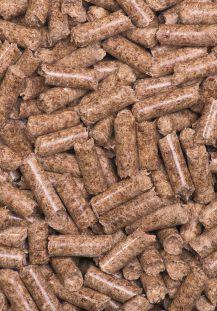
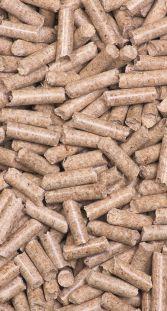
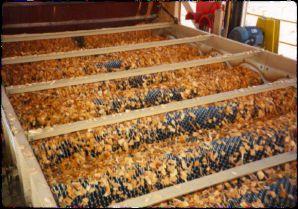
Chip sizes from 1/4-inch to 2-inches or uniform ground material
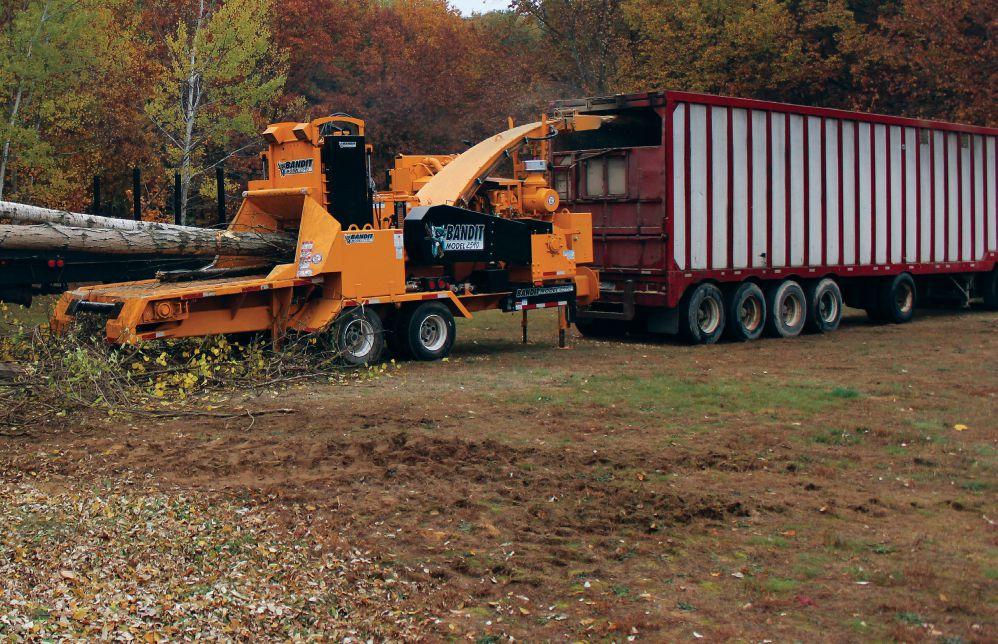
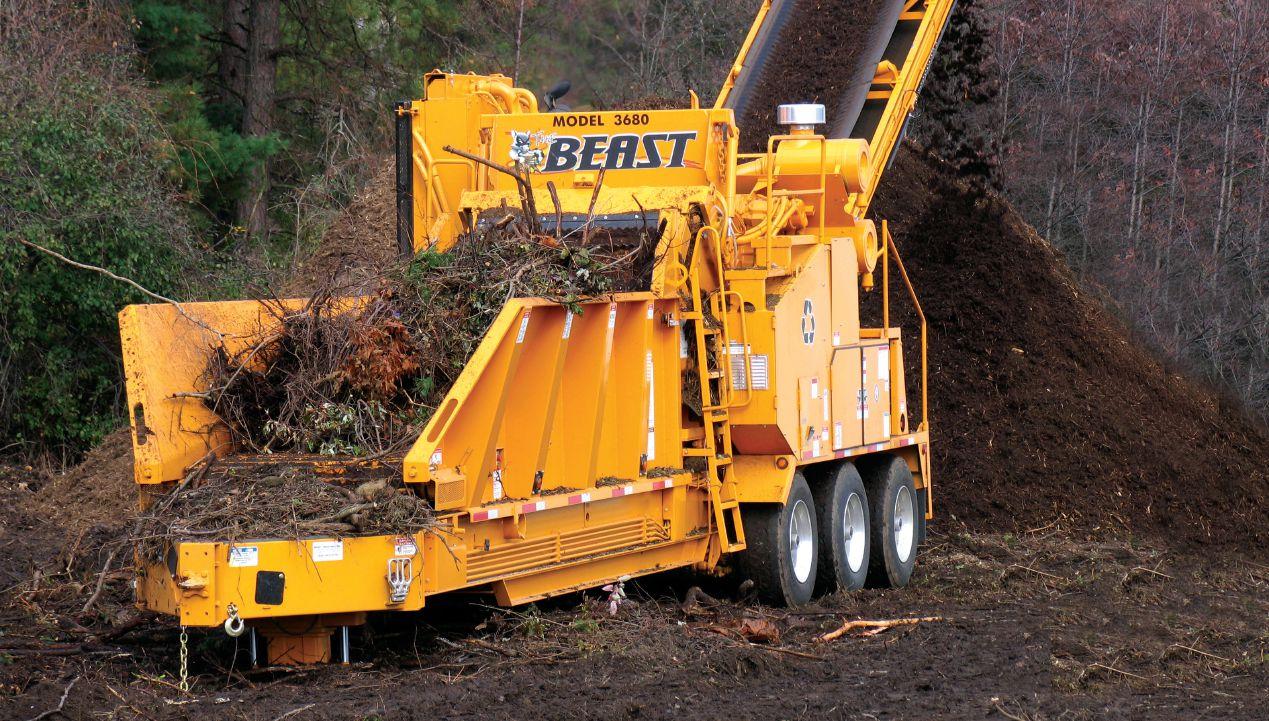
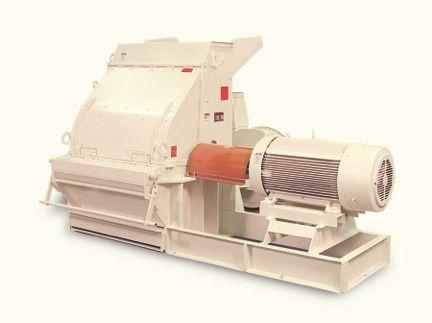
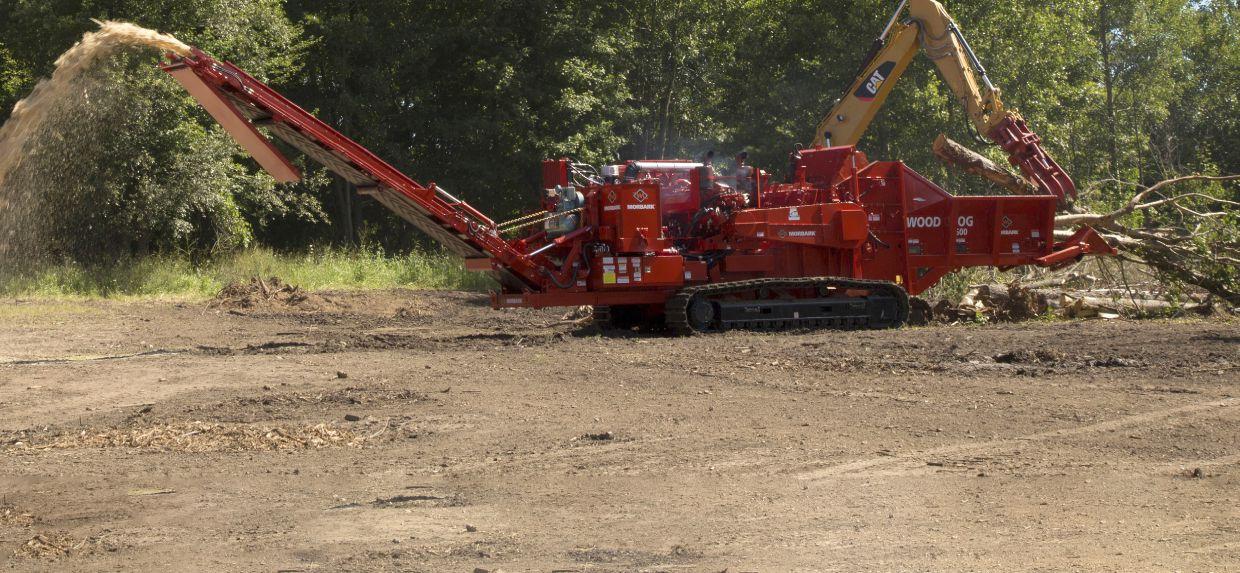
The Beast® produces unmatched uniformity when it comes to ground material. The patented cutter mill or optional whole tree chipper drum delivers a downward cutting or chipping action, sizing material on the first pass, saving money on costly regrind. Choose from four models of The Beast with self-propelled, towable or electric options.
Bandit whole tree chippers can produce chips from ¼” to 2” with unmatched uniformity. Bandit whole tree chippers throw better using less energy, so fuel consumption per ton of chips will be a 1/3 less than the competition.
And Bandit’s patent-pending Clean Feed System does not discharge chips on the ground, increasing yields by as much as 5 percent. New electric options for whole tree chippers are perfect for sawmills and chip mills. Choose from six models, towable, self-propelled and stationary.
Contact us and lets us show you why your next whole tree chipper or The Beast recycler should be a Bandit®. 1-800-952-0178 or visit us online at www.banditchippers.com
CANADIAN BIOMASS
Grinder Funding
A Manitoba contractor purchases new biomass grinding equipment thanks to funding from the provincial and federal governments.
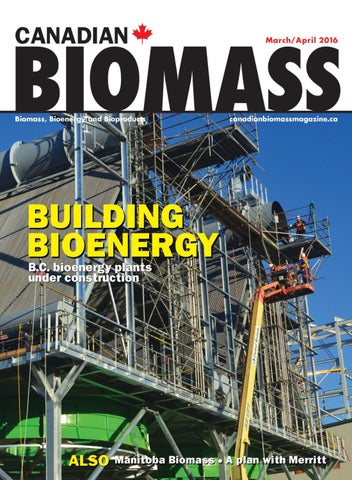
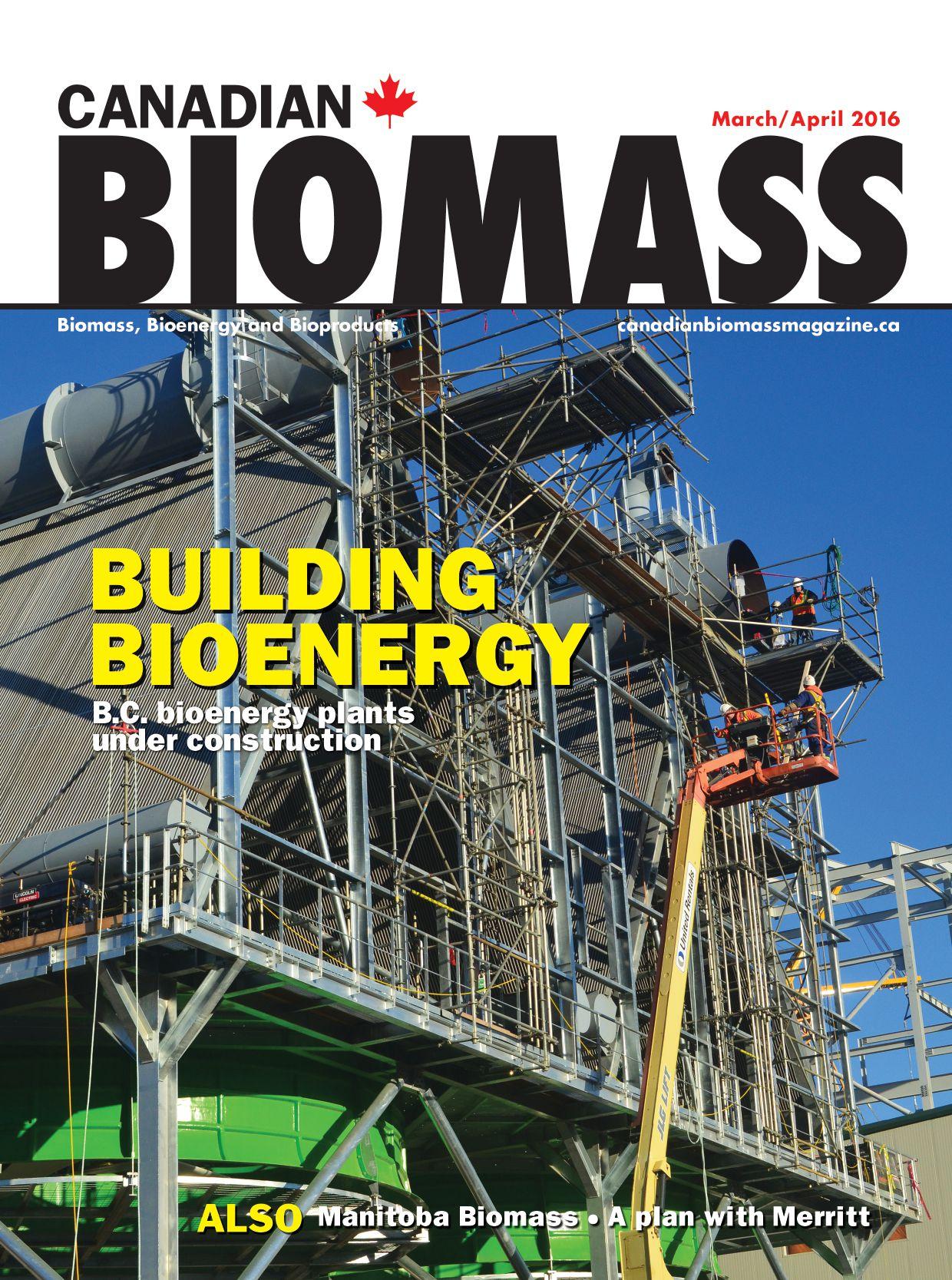
Building Bioenergy
Iberdrola begins construction of a pair of bioenergy plants in British Columbia. 19
Reaping Residuals Rewards
A Nova Scotia sawmill company looks at bioenergy as the best way to make use of its residuals.
Spotlight on Hammermills
Our equipment spotlight looks at hammermills available for pellet production in Canada.
Post-Harvest Wood Debris
A study from the University of British Columbia looks at the best uses for forest residuals remaining from harvesting operations.
Diacarbon
Discovering the benefits of growing willow trees on an angle.
TA Price for Carbon
Working on a national strategy for pricing carbon emissions
he Canadian government is targeting September of 2016 to have a plan in place for a national carbon tax strategy. To get there, the government wants to create small working groups of stakeholders to discuss how much the tax should be, and its implementation across Canada.
This would establish a baseline price that all provinces must adhere to, with the flexibility to establish an even higher price if a provincial government wanted to do so.
Without surprise, the starting place for the discussion sits at $15/tonne, the lowest cost of all of the existing carbon taxes currently in place in Canada. B.C., Alberta, Ontario and Quebec already have carbon tax plans either implemeneted or in place, so the introduction of a carbon tax at the federal level won’t directly impact them.
to be put on hold until after the federal standard is established.
So where does that put the role of biomass and biofuels?
One of the sectors that will have to be targeted for a serious push to control emissions is transportation. Renewable biofuels offer far lower carbon emissions than their gasoline and diesel counterparts, so there should be an opportunity to push for an increase to the provincial and national mandates for renewable fuel. The Canadian Renewable Fuels Association has been pushing hard on this issue, and hopefully it can become part of the small group discussion being had to help set up the national carbon tax.
CANADIAN
So where does that leave the rest of the country?
A few others have flirted with the idea before, but none had taken the initiative to implement a strategy. Saskatchewan, which goes to the polls just as this magazine is arriving in your mailbox, decided that it would wait for guidance from the federal government. Manitoba, which heads to the polls on April 19th, has a current NDP government suggesting a cap-and-trade system. But the Green Party has attempted to bring the carbon tax issue to the forefront of its issues campaign, suggesting a $50/tonne tax.
You would have to think that, on the heels of a collective meeting of the provincial energy ministers in January, individual provincial plans are likely going
On the biomass side, the push for domestic growth should be part of this national carbon tax push. There are three natural places where biomass can be immediately implemented to help reduce carbon emissions: replacing remote heat generation with biomass (versus trucked/ flown in diesel), grants to allow residents to replace heating units with pellet stoves, and pellets as a replacement for coal.
With the pending implementation of a nationwide carbon tax, the federal government is ready to listen to strategies to permanently reduce carbon emissions in Canada. There is no better time than now for the industry to do its best to reach out to government officials to talk about the solutions that biomass and biofuels can offer. •
Volume 16 No. 2
Editor - Andrew Macklin (905) 713-4358 amacklin@annexweb.com
Editor - Andrew Snook (905) 713-4301 asnook@annexweb.com
Contributors - Gordon Murray, Murray McLaughlin, Gabrielle Bauer, Thomas Sullivan, Taylor Fredericks
Occasionally, Canadian Biomass magazine will mail information on behalf of industry-related groups whose products and services we believe may be of interest to you. If you prefer not to receive this information, please contact our circulation department in any of the four ways listed above.
All advertising is subject to the publisher’s approval. Such approval does not imply any endorsement of the products or services advertised. Publisher reserves the right to refuse advertising that does not meet the standards of the publication.
BIOMASS update
IBCE UPDATE
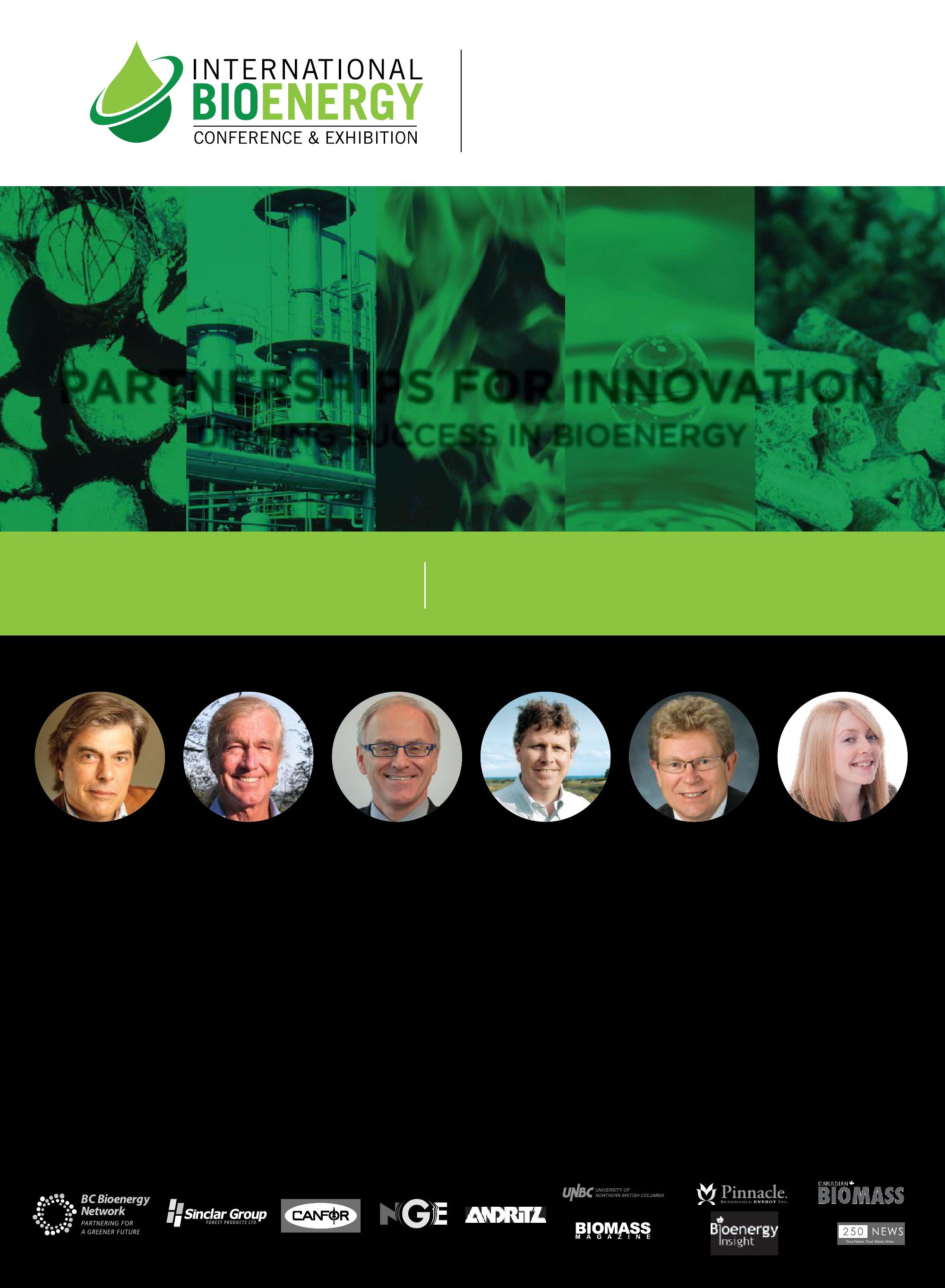
Finishing touches are being put on the upcoming International Bioenergy Conference and Exhibition in Prince George, B.C. this June.
The event unofficially begins with an exclusive small group pre-conference tour (maximum 16 participants) that will take delegates on a tour of the southern half of British Columbia, onto harvesting sites, and into pellet mills, power plants, sawmills and cultural activities.
Day one of the conference offers a variety of options, including facilitated businessto-business meetings, a pellet
safety workshop and a codes and standards workshop. The day is capped off with the conference’s opening reception at Canada’s Green University, University of Northern B.C.
The conference program is starting to take shape. In addition to keynote speaker Jeff Rubin, author and renowned speaker on energy and climate change, the conference features Don Roberts, former head of CIBC World Markets’ Renewable Energy and Clean Technology Team, and current CEO of Nawitka Capital Advisors. O’Connor is joined on the opening panel by Dr.
NOGAJ NEW COO AT
MARTIN ENGINEERING
Robert Nogaj has been named chief operating officer (COO) of Martin Engineering – a global leader in bulk material handling solutions. Nogaj will be responsible for all facets of the company’s business, including research and development, manufacturing, sales, marketing and finance. He has 22 years of experience in bulk materials handling, including previously serving as Martin Engineering’s vice-president of operations from 2001 to 2015.
“Our mission for the coming years will be to keep streamlining our business for continued growth, building on the international expansion that has led us to become a truly global company able to supply and service customers virtually anywhere in the world,” Nogaj said. “We are developing a wide range of new products and strategies to address the industry’s most difficult issues and compete in the challenging markets that are forecast for 2016 and beyond.”
Nogaj added that Martin Engineering continues to expand its focus into new regions and target industries to assure the company’s profitable growth and long-term stability.
Nogaj is a hands-on executive with broad expertise in all aspects of business. Fluent in Polish with linguistic skills in German, Russian and other Slavic languages, he has extensive overseas experience. Nogaj holds a B.Sc. in construction and an M.B.A. from Bradley University in Peoria, Ill.
William Strauss, president of FutureMetrics, and a leading expert in pellet and biomass markets in North America.
Another feature panel will look frankly at the fibre picture in B.C. A fibre working group, involving primary and secondary users as well as the provincial government, has been working on strategies to increase access to fibre across the industry. Members of the working group, including Pinnacle Renewable Energy CEO Rob McCurdy, Council of Forest Industries’ VP Doug Routledge, and Forests Ministry ADM Dave Peterson,
will discuss the successes and challenges they’ve faced.
For more information and a developing list of featured speakers, go to www.bioenergyconference.org.
Schutte-Buffalo opens new test lab
Buffalo, N.Y.-based manufacturer of size reduction equipment Schutte-Buffalo recently opened a new testing facility.
The lab, featuring a Dual Shaft Industrial Shredder, Pneumatic Discharge Hammer Mill, and Laboratory Scale Gravity Discharge Hammer Mill is able to determine the size reduction capabilities of a wide array of materials incorporated in the industries of agricultural products, bulk solids, recycling, and wood processing. This testing is offered as a complimentary service to existing and potential Schutte-Buffalo customers. Upon completion, the customer will receive photos of the processed material, a sieve analysis, explanation of the feasibility of meeting their production goals, and a detailed proposal for the size reduction equipment recommended for achieving those goals. In addition, customers are welcome to witness the testing at the facility first-hand. Complete instructions for this service can be found online at the Size Reduction Testing Service section of the company’s website.
Have news to share that has an impact on the Canadian biomass, bioenergy, biofuel or bioproducts industry? Email your industry news to editor Andrew Macklin at amacklin@annexweb.com.
Be sure to visit our website for the latest industry news at: www.canadianbiomassmagazine.ca
Don Roberts
KWADACHA TO BUILD BIOENERGY PLANT
A B.C. First Nation has announced its intention to build a biomass plant, using sawmill residues from a mill on its reserve to provide the fuel for electricity generation.
A report from Alaska Highway News suggested that the Kwadacha First Nation near Fort Ware will use the 145kW facility to provide electricity and heat some buildings including a soon-tobe-constructed greenhouse.
The small, off-the-grid community of around 300 will use the bioenergy facility to remove the nation’s reliance on diesel. Kwadacha has a 20-year purchase agreement in place for the bioenergy facility with BC Hydro, which owns the community’s diesel generators.
COMET BIOREFINING COMING TO SARNIA
Comet Biorefining, Inc. is coming to Sarnia, Ont.
The provider of cellulosic dextrose technology for applications in renewable biochemicals and biofuels recently announced that it will construct a commercial-scale, biomass-derived sugar facility in the TransAlta Energy Park in Sarnia. The plant is expected to come online in 2018 and will produce 60 million pounds annually of dextrose sugar from locally-sourced corn stover and wheat straw. Corn stover consists of residues left in the field after harvest including stalks, leaves, husks and cobs.
“Construction of this first-of-a-kind plant represents a key step towards the large-scale commercialization of our cellulosic sugar business,” said Andrew Richard, CEO of Comet. “It highlights the important role our technology plays in the value chain, helping to drive the bioeconomy and reduce greenhouse gas emissions.”
Comet converts non-food agricultural and forest residues into high-purity dextrose sugars that will be transformed into bio-based products including organic acids, amino acids and bioplastics. These products replace traditional petroleum-based materials and are designed to reduce greenhouse gas emissions and help contribute to Canada’s efforts on climate change.
The company stated that Comet dextrose is cost and performance competitive with commercial dextrose sugars, which is the benchmark raw material for today’s biochemical production.
Comet’s descision to set up shop in Sarnia stemmed from working together with Bioindustrial Innovation Canada (BIC), the Ontario Federation of Agriculture (OFA) and an Ontario farmers’ cooperative on a project to attract sustainable technology providers to the region and to meet increasing demand from chemical suppliers and consumers for low-carbon products.
“Comet’s cellulosic sugar technology was one of the clean sustainable technologies recommended, with the best fit for the region and an excellent opportunity to accelerate the growth of the bioeconomy in rural Ontario,” said Dr. Murray McLaughlin, executive director of BIC.
“Establishing new uses for agricultural residues in the bio-based chemical supply chain leads to sustainable farms and new markets,” added Don McCabe, president of OFA. “Both outcomes are primary goals of the OFA, and this project does just that.”
YUKON ADOPTS BIOMASS STRATEGY
The Government of Yukon has announced the adoption of the Yukon Biomass Energy Strategy which will guide the development of a biomass energy sector in the territory.
“Using biomass is a costeffective and environmentally sustainable solution for heating in the territory,” said Minister of Energy, Mines and Resources Scott Kent. “The Yukon Biomass Energy Strategy will also create good opportunities for investment in the Yukon.”
The strategy provides opportunities for generating new energy for heating from local renewable energy sources. In the Yukon, the most commonly available biomass resource is wood, which is the main focus of the strategy.
There are six key action areas
found within the strategy:
• using biomass energy for government infrastructure;
• developing regulations, policies and programs for a biomass energy industry;
• managing air quality to protect public and environmental health and safety;
• facilitating the development of a biomass energy industry in Yukon;
• ensuring a sustainable timber supply; and
• ensuring biomass fuel quality and security.
The City of Dawson’s wastewater treatment plant uses a biomass-fuelled boiler for generating heat in a costeffective way using locally produced wood chips. The Whitehorse Correctional
Centre is into its fourth full heating season operating the facility’s renewable energy biomass system.
“Over time, the Yukon government aims to encourage the adoption of modern, clean-burning wood-heating technologies and optimize the use of local wood resources in the production of heat to deliver adequate energy during our long, cold winter months,” Kent added.
The Yukon Biomass Energy Strategy joins the recently adopted Independent Power Production policy and the Micro-generation policy as part of Yukon government’s broader efforts to increase renewable energy and to achieve energy self-reliance as per the Energy Strategy for Yukon and Climate Change Action Plan.
NEW ALBERTA INNOVATES GRANTS
Two AIberta Innovates corporations have teamed up to provide funding for research and development projects that advance the knowledge and use of cellulose nanocrystals (CNC), an advanced biomaterial.
The new program, called CNC Challenge 2.0, is intended to support early-stage work to demonstrate technical feasibility of CNC in high-value applications with potential for commercialization.
Researchers and developers at Canadian institutions, companies or other organizations are invited to submit proposals via the AI Bio website at: bio.albertainnovates.ca/ funding.
Flawed Analysis
TCommission review of Drax excludes vital considerations
By Gord Murray
he U.K.’s Drax Power Station was the destination for 74 per cent of Canada’s wood pellet exports in 2015.
It is difficult to overstate Drax’s importance to Canada’s pellet industry. Drax has converted three of its six coal power units to operate on wood pellets over the past three years. The third unit (known as Unit #1) is presently operating on 85 per cent wood pellets under support from the U.K.’s Renewables Obligation Scheme and will increase to 100 per cent pellets with support under the CfD (Control for Difference) Scheme if it can pass a state aid review which is presently being conducted by the European Commission.
European Union state aid rules ensure that the cost of any support scheme is limited and does not lead to unfair competition. Thus, as required, the commission is investigating Drax’s CfD contract.
The commission’s preliminary analysis concluded that Drax may have underestimated the economic performance of Unit #1; hence its CfD contract may be too generous. The commission also concluded that new demand by Drax for 2.4 million tonnes of wood pellets could significantly distort competition.
WPAC responded to the commission’s invitation to comment on its preliminary analysis and asked for the following points to be considered:
• The commission assumed that the pellet market will be distorted by 2.4 million tonnes of new demand.
The fact is that Drax is already operating Unit #1 on 85 per cent wood pellets, equivalent to two million tonnes. Thus the market has already absorbed the majority of any market effects.
• The commission cites trade data from 2012 in supporting its conclusions.
Yet the pellet market has continued to grow rapidly since 2012 and data from that year is simply not relevant. In 2012, the global pellet trade was 20 million tonnes. By 2015, the market had grown by 40 per cent to 28 million tonnes (sources: REN 21, FAO, and Hawkins Wright). According to the Global Trade Atlas, in the same three years, U.K. imports grew from 1.8 million tonnes to 6.5 million tonnes. Similarly, U.S. exports to the U.K. grew from 1.9 million tonnes in 2012 to 4.6 million tonnes in 2015 while Canadian exports to the U.K. grew from 0.8 million tonnes to 1.6 million tonnes. This massive increase in the pellet trade was accomplished without any market distortion.
• The commission does not take into account the many recently built pellet plants, nor those under construction. Canada added five new pellet plants in 2015 totalling about one million tonnes per year. These include Rentech’s Wawa and Atikokan, Ont. plants, Pinnacle’s Lavington, B.C. plant, and Canfor’s Chetwynd and Fort St. John, B.C., plants. In the U.S. and South America, there are five plants under construction: in Sampson, N.C., Urania, La., Colombo, S.C., Hazelhurst, Ga., and Rio Grande, Brazil – totalling 2.1 million tonnes of new annual capacity (source: Hawkins Wright Forest Energy Monitor, January 2016).
• The commission believes that increased demand for wood pellets may lead to distortions in the raw material market, adversely affecting pulp and paper or board manufacturers. This is not true in Canada. First, there are no board plants near
pellet export plants. Second, the pellet industry’s wood paying capacity is substantially lower than that of the pulp and paper industry. Pellet plant and pulp mills do not compete for fibre. Pulp mills use wood chips as raw material for pulp and bark for their power boilers, while pellet plants use sawdust and harvesting residuals as feedstock.
• The commission points out that the current spot market for wood pellets is lower than pricing under long-term contracts, concluding that this indicates that Drax may have overpaid; hence the state aid under the Drax’s CfD contract may be too generous. The fact is that about 95 per cent of the industrial pellet trade is conducted under vigorously negotiated long-term contracts that enable pellet producers to earn only a small margin in exchange for long-term risk reduction. Spot prices are only indicative of about five per cent of the market. In a situation where spot prices are lower than long-term contract prices, it indicates a market over-supply situation where traders are selling distressed cargoes at below cost in order to create short-term cash flow. This situation is by no means sustainable. Long-term contract prices are a more accurate indication of the market price for pellets.
WPAC was one of many interested parties who responded to the commission’s invitation to comment. It is now a waiting game to learn what the commission decides. One thing is for sure, for the sake of the Canadian wood pellet industry, we need Drax to succeed. •
A Plan with Merritt
Diacarbon Energy takes over idled Merritt pellet plant
By Andrew Macklin
JerryEricsson never had any intention of producing white wood pellets.
The president of Diacarbon Energy was working on his PhD from Simon Fraser University when he and his father started looking at opportunities in bioenergy.
“We were looking at materials that could be developed out of thermochemical processes,” Ericsson says. “We actually won some money from the B.C. Innovation Council to develop a business plan and, in doing so, we determined that bioenergy had greater opportunities than advanced materials at that time.”
It was the idea of creating second-generation biomass, torrefied pellets, that caught Ericsson’s attention and it became the focus of the business that he began to create. So he moved forward by raising some capital and teaming with a handful of
other inventors and engineers to work on a pilot-scale system for production.
Over the course of three to four years, Ericsson continued to refine the process by developing more materials with different feedstocks, investigate ways to scale up the technology, as well as attempt to interest larger capital and corporate partners in an effort to attract off-take agreements for the advanced biomass.
“We did a 50-ton trial with a major cement company and that led to purchase commitments from two cement companies for about 80,000 tonnes per year,” explains Ericsson. “From there we were able to raise more capital and conduct about two more years of research and development work at our lab in Burnaby.”
With the successful trial completed and a demonstrated market for the Diacarbon product established, the company was
A primary issue with the pellet plant was that there was no drying capacity on site at the time of the purchase. Ericsson had purchased a dryer for the Vancouver operation, which was then moved to Merritt.
prepared to begin construction of a commercial-scale demonstration production plant in the Vancouver area.
ALONG CAME MERRITT
Just 270 km northeast of Vancouver along the Trans-Canada Highway sits the community of Merritt, a small resource town at the bottom of a mountain valley that approximately 7,500 people call home. Within the friendly confines of the community sits a pellet plant, originally owned and operated by the Highland Pellet Company.
The mill opened in the spring of 2011, but after a very short time in operation, the mill was shut down with no plan for re-opening. The plant fell into receivership and was put on the auction block.
It just so happened that the Merritt plant went up for sale around the same time that Diacarbon was preparing to execute its plan for its commercial-scale facility, and two of the company’s investors were in a position to purchase the plant.
“We were setting up our facility in Vancouver,” Ericsson explains. “Everything was engineered for higher moistures and the climate there. We had purchased equipment from Germany, Denmark and the United States, the most state-of-the-art, high-efficiency and low emissions products we could get.”
Instead, Ericsson and his team packed up the equipment and moved northeast to Merritt to set up the operation, one that would include a white wood pellet operation.
With a strong team of technical and engineering professionals already in place, and an excellent skilled labour force both in Merritt and in nearby communities, Diacarbon got to work on both restarting the white wood pellet production and installing the equipment for the original commercial-scale advanced biomass production facility.
In May of 2014, the team got to work. Diacarbon used approximately 40 staff during the construction and ramp-up of the pellet mill. They took advantage of a recent contraction in local labour markets to hire a highly effective team of tradespeople, skilled labourers and general construction workers.
Right from the beginning, the project posed some significant
challenges that had to be overcome quickly to get the operation up and running.
“We didn’t make all of the decisions; we had to live with a lot of what had been done before,” Ericsson says. “They didn’t have a dryer, that was one of the main challenges we faced. We happened to have a dryer that was originally for higher moisture fibre, so we had capacity we could loan to the white pellet line. So there were challenges around integrating equipment that was not necessarily purpose-designed for the mill.”
In addition, there were the typical bumps and bruises along the way. Similar to what was experienced at Scotia Atlantic Biomass in Nova Scotia, Diacarbon had to work through each process to find where repairs had to be made, inefficiencies had to be corrected, and further improvements could be targeted for future development.
With no rail access in Merritt, Diacarbon has to truck pellets north to Kamloops or west to Vancouver for shipping.
A COAL ALTERNATIVE
Ontario has already laid the groundwork for the replacement of coal using advanced biomass thanks to its Thunder Bay Generating Station project. That plant needed just $5 million to convert it from coal to advanced biomass fuel, versus the $190 million needed to convert the Atikokan station to white wood pellets.
On Nov. 30, 2015, the Government of Alberta announced that it would switch 30 per cent of its power generation to renewable energy by the year 2030. And while the expectation is that much of the capacity will be filled by solar, wind and natural gas resources, the domestic development of the advanced biomass industry could provide a real alternative to massive tracts of land filled with solar panels and wind turbines.
With Diacarbon close to commercial-scale production, replicating their technology for use as a coal alternative in Alberta could be a real option for the company. Ericsson provided his thoughts: “We offer a renewable alternative to coal. It burns at the same temperature as coal, and it requires very little changes to the system – far less changes than wood pellets or wood chips. They have a lot of assets that burn coal. They are going to need to convert them and use our product or lose the asset. I would think that we offer a bridge for Alberta.”
WORKING OUT FIBRE, LOGISTICS
One of the greatest needs facing the company upon purchasing the Merritt pellet mill was to establish fibre in-take agreements and cement both the logistics chain for moving pellets and a customer base for the product.
For fibre, Ericsson just needed to look across his property to find all of the residuals needed for pellet production. He was able to strike a deal with Aspen Planers, a sawmill that sits less than one kilometre from the pellet plant. The fibre is trucked over daily from the sawmill to the pellet plant, providing freshlysawn chips and sawdust for use in pellet production.
In case of a shutdown, Ericsson was able to secure a piece of property a few minutes outside of town where the company could establish a surge pile. That surge pile contains upwards of 400 truckloads of chips and sawdust at any given time, enough to cover two to three weeks of production should the mill need to halt production for repairs or maintenance.
The primary logistics challenge for Merritt is that there is no rail access to the community. Thankfully, there is a solution within a short distance that could fill the need.
“There is no rail access in Merritt, but we do have customers that accept our product by rail,” Ericsson says. “So we ship our pellets in grain trucks to a rail yard in Kamloops (85 km NNE) and then it goes both east and west to the ports.”
Pellets travelling east by rail are shipped to American customers through a reload facility in New Jersey state. For pellets travelling to Europe, rail loads are taken to Fibreco in Vancouver where they are co-mingled and loaded into large marine vessels. Diacarbon also
Proven Solutions for your Biomass Applications
ships smaller quantities of pellets to customers in Korea and Singapore, which are loaded at the plant into one-ton bags and shipped through a different location at the Port of Vancouver.
Year one saw the company produce approximately 30,000 tonnes, with closer to 50,000 tonnes targeted as the production volume for year two. The company has agreements already in place for that volume, allowing them to maximize production volumes based on customer demand.
SHIFTING FOCUS
With the white wood pellet production nearing capacity, and the bugs and kinks of the system worked out, Ericsson is now able to shift the corporate focus back to the original plan – the production of second-generation black pellets.
As the company continues to scale up its technology, moving from lab-scale to commercial-scale production volumes, they have encountered a series of challenges not unique to a project of this scale and significance.
“Engineering a new, first-of-its-kind process is very challenging,” Ericsson says. “I am constantly asking myself, ‘Can I make a lot of it, can I make it an attractive product, can I afford my equipment?’ These are the challenges we constantly balance.”
But the challenge is nearing its payoff.
As we went to press, Ericsson suggested that the project is just a few months away from completion. By the third quarter of 2016, the plant should be producing commercial-scale volumes that can be supplied as part of the off-take agreement with its cement company partner, Lafarge Cement Canada Ltd.
OPPORTUNITIES AWAIT
The opportunities that come with the success of the advanced biomass system in Merritt are already starting to pile up.
In 2015, Diacarbon was selected as the preferred proponent for a Request for Proposals (RFP) submitted to BC Hydro for the Site C Clean energy project in regards to alternative energy and utilization of non-merchantable wood fibre generated by the land clearing activities. Ericsson stated that there are also multiple projects in the early stages of development in the U.S., and there is legwork already being done in response to the announcement that Alberta will look to halt energy-generation from coal.
Closer to home, Diacarbon is already in the process of expanding its white wood pellet line, adding a third pelletizer to increase production by approximately 25,000 tonnes per year at capacity.
Ericsson credits the regulatory environment in place in British Columbia as part of the reason why his company is able to move forward with these initiatives.
“B.C. is one of the best places in the world to start this project because we have a carbon tax here that has been around long enough for people to get used to it,” Ericsson says. “It creates a local domestic market, which reduces a lot of the logistics challenges. For us to run a truck 45 minutes east or two-and-a-half hours west, we have a lot of control over the logistics.”
Should Ericsson be successful in his commercial-scale production of second-generation pellets, Diacarbon Energy would become the first company in Canada to successfully do so. And they will have done so while re-establishing an important source for white wood pellets in the B.C. Interior. •
REGISTER NOW
NETWORK WITH PRODUCERS
Grinder Funding
A Manitoba company gets funding to improve its biomass operations
By Taylor Fredericks
Following
the announcement of funding for 12 new biomass projects across the province, one Manitoba business is excited by the prospect of future growth.
South-East Pallet and Wood Products, a sawmill and pallet company based out of Blumenort (a small town 45 minutes southeast of Winnipeg), was one of the 12 applicants chosen to receive funding from the initiative – a collaborative effort between the federal government and the province’s Manitoba Biomass Energy Support Program (MBESP).
Jac Siemens, the general manager at South-East, believes the grant will be a valuable step forward for his company, which only recently entered the biomass market after reimagining its production process.
“Five years ago we split a logging sawmill operation into a logging company and a pallet company,” Siemens explained, tracing the decisions that led to their entry into biomass supply
in March 2015. “Eventually, though, we had to change how we did business. With our sawmill operation, we ran small singleblade mills out in the bush, and I couldn’t find people to operate them anymore. So what we did was build a sawmill on site in Blumenort.”
South-East’s move toward a more consolidated process led the company down a new path when, faced with an accumulation of byproduct at their new site, it decided to invest in the machinery necessary to make its residuals more valuable.
“Instead of the sawdust and the wood slabs and the off-cuts remaining in the bush where we would either sell them off — or burn them off in the winter — we now have all that waste in the yard,” Siemens said. “In order to deal with it, we bought a Rotochopper grinder to make biomass for the winter season and landscape mulch for the summer season.”
Already one of the largest pallet manufacturers in the province, this transition into a new and growing business market proved more challenging than the company had originally
conceived. It soon became clear that no matter how much planning went into their efforts, there would be unexpected bumps in the road.
“We did our approximations of how much waste there would be, and built a bunker that was 110 feet wide by 200 feet long. We placed our Rotochopper on top of that, and we built bunkers to house the materials,” Siemens explained.
Despite these efforts, Siemens conceded that South-East built the bunker too small.
Enter the federal and provincial governments, which will provide up to $500,000 to the 12 chosen projects to help promote environmentally friendly alternatives to coal.
The funding for the South-East project will go towards expanding the size of their biomass bunker, as well as the construction of an overhead roof, which will help protect the materials from weather conditions. Taken together, these improvements should help the company double its annual biomass producing capacity.
“There are renewable energy resources readily available for use as biomass energy sources,” said Ron Kostyshyn, Manitoba’s Minister of Agriculture, Food and Rural Development. “By increasing our capacity to make and use green energy we are reducing carbon emissions in Manitoba while promoting the growth of new industry.”
The generosity and support of the federal and provincial governments is not lost on Siemens, who has a new appreciation for the difficulty of entering the biomass industry.
“As we’re new to the market, we’re finding that there’s a lot of opportunity, but also a lot of cost to get into the market,” he said. “You have to buy the equipment, and you have to set the process right.”
Despite the challenges, Siemens sees a lot of value and a great deal of potential in the ongoing growth of biomass.
“There’s certainly a market, especially with the number of businesses in Manitoba that have to get away from coal,” he said. “A lot of them are moving into biomass. If natural gas isn’t an option for them, they’re moving to biomass over electricity. So we do know that there will be an increase in need for more biomass
coming up.”
For their part, the federal government is quick to recognize both the environmental and economic benefits this type of sponsorship has the potential to affect.
“Making investments that promote the use and development of clean and sustainable technology and processes is a priority for the Government of Canada,” said Lawrence MacAulay, Minister of Agriculture
and Agri-Food. “Promoting the use of renewable biomass fuels also generates new economic opportunities for processors and producers.”
Other projects that will receive funding include the conversion of two coal-burning energy systems into biomass, and the improvement of an on-site storage facility for finished biomass fuels at Spruce Products Ltd. in Swan River. •
THE BOSS
3010F TUB GRINDER
The
Building Bioenergy
Two new projects are building up B.C. grids with biomass
By Andrew Snook
Woody
biomass will be generating a lot of juice in the interior of British Columbia by the end of 2016.
Two biomass-fuelled power plants in the B.C. Interior will be generating a combined 80 megawatts of electricity that will be fed into BC Hydro’s grid. The 40MW biomass power plants are located in the southern interior in Merritt and in the northern interior in Fort St. James.
Both power plants will be fuelled by a combination of sawdust and other residuals collected from local sawmills, harvested dead wood and cleanup operations. Once commissioned, the power
plants will have the capacity to supply electricity to upwards of 160,000 homes in the province, as well as reduce CO2 emissions for the province by 570,000 tonnes annually.
The two power plants are owned by Fengate Capital and Veolia with the turnkey construction contracted out to Spanish energy firm Iberdrola for $330 million for both power plants.
Enrique Reyes Molano, site manager for Iberdrola, says the decision to create the massive power plants was mainly to help plan and promote future growth in the Fort St. James and Merritt areas. He says the B.C. government is interested in using the electricity mainly to have the
ability to grow its local economies, which are mainly fuelled by the forest sector in Merritt and the forestry and mining industries in Fort St. James.
The construction of the facilities has been a major boost to the local economies in Merritt and Fort St. James, supplying approximately 250 construction jobs to the towns, as well as 22 new direct jobs for the operation and maintenance of the plants.
Another major benefit of having the power plant up and running in Fort St. James is that it will create a home for much of the dead pine that is still sitting in local forests due to the mountain pine beetle epidemic that ravaged many of the forests in northern B.C.
“We’ve had increased harvesting of the forests but we’re going to see that drop off real soon,” says Emily Colombo, economic development officer for the Fort St. James District. “Because the dead wood standing in the forest loses merchantability year after year, it’s only good for harvesting and processing for a number of years. Even though there’s lots of dead wood in the forests, it’s no longer going to be desirable by the sawmill companies. So it’s great to have the Fort St. James green energy project starting up because it gives us a purpose for our waste wood. Until now it’s been burned in the bush… it’s just releasing carbon dioxide into the atmosphere.”
The construction of the Fort St. James plant is expected to be complete by November 2016 with the Merritt power plant coming online this December.
The main equipment installed for each project is a Siemens SST-400, 40MW condensing steam turbine; an FSE biomass boiler (307,260 PPH); a GC Power transformer (30/40/50 MVA, 65C Wye Delta); and an Emerson distributed control system (DCS).
FEEDING SYSTEMS
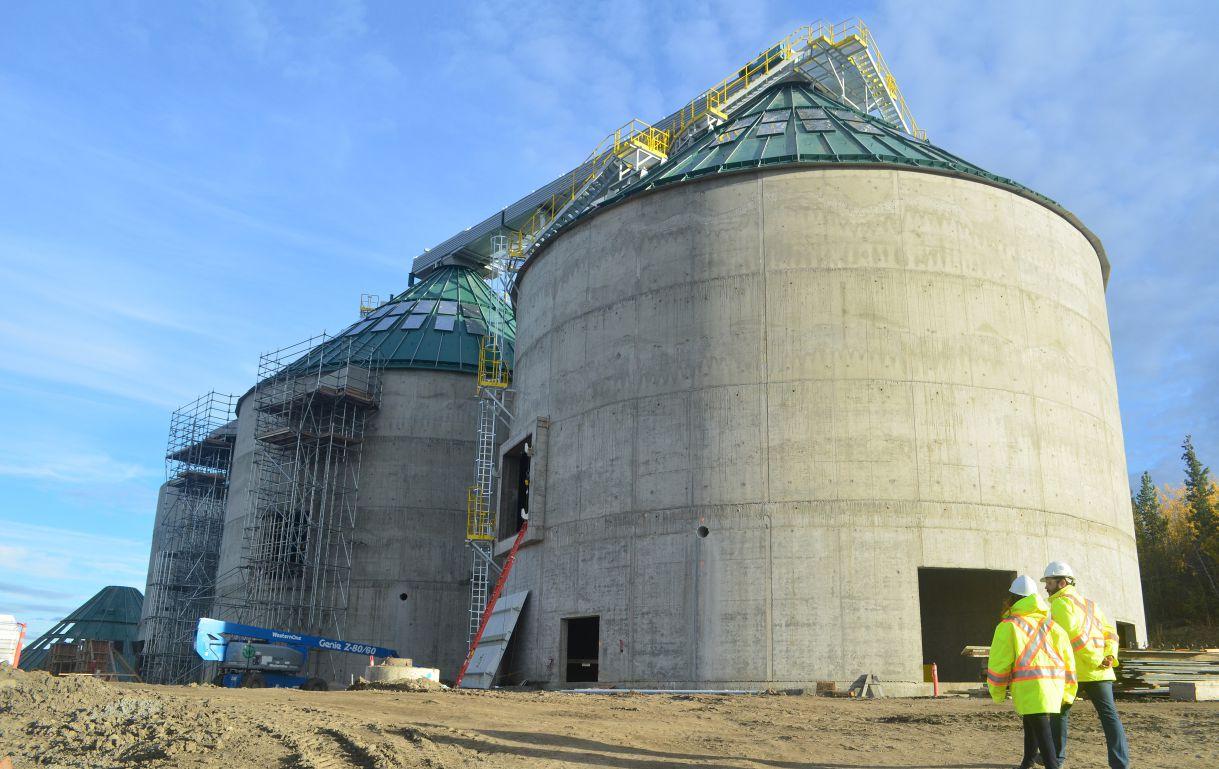
In Fort St. James, the boilers are fed woody biomass via three 6,560 m3 silos that can hold upwards of a 6.75-day supply for the plant. The fuel is supplied through the residuals from the local Confiex and Apollo Forest Products sawmills, as well as through local contractors harvesting local dead wood.
The fuel is received, weighed and off-loaded in a dedicated area. It is then screened and stored in the three concrete silos, which required 4,440 m3 of concrete and 570,000 kg of reinforced steel in their construction. All of the silos are equipped with a steel roof, are 11.6 metres in height and have a silo diameter of 25 metres.
In Merritt, the boilers are fed woody biomass via a large conveyor connected directly to Tolko’s sawmill located next to the power plant.
Each power plant will consume approximately 24 dry tonnes per hour of biomass with a total annual consumption of about 200,000 dry tonnes.
BOILERS AND TURBINES
Both locations feature a state-of-the-art grate, natural circulation biomass boiler supplied by FSE Energy. The flue gases heat the wall tubes of the combustion chambers and the water is partly evaporated. Water and steam rise through tubes back to the steam drum where the steam is separated from the water.
After leaving the steam drum, the saturated steam is transferred to the superheaters then is transferred into a Siemens SST-400, 40MW-condensing steam turbine.
Each Siemens generator is rated at 1,800 rpm and produces electricity at 13.8 kV with each turbine rated at 5,143 rpm, producing upwards of 41.39MW of electricity that will be fed in BC Hydro’s grid.
ENVIRONMENTAL IMPACT
Both power plants have set gaseous emissions guarantees.
The particulate matter is to be less than 20 mg/m3, NOx emissions less than 512 mg/m3 and carbon dioxide emissions less than 160 mg/m3
Particulate matter at the boiler stacks is reduced through the installation of a high-efficiency electrostatic precipitator.
The bottom and fly ashes that will be left over from the process are stored and sold for use in other applications, such as the making of concrete (fly ash) or for spreading on local farmlands (bottom ash).
The near field noise for the main operating levels of the plant (areas of the plant with permanent or usual presence of workers during operation) are to be no more than 85 dB(A); with the far field noise produced exclusively by the plant at site boundary to be no greater than 65 dB(A).
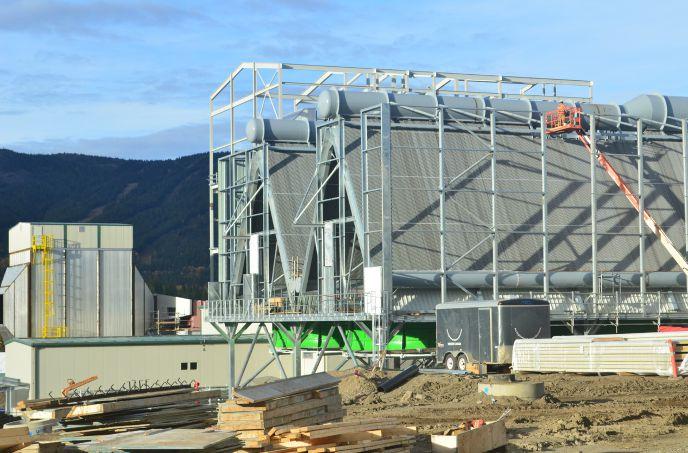
The installation of air-cooling condensers (ACCs)at both facilities allow for the facilities to keep their water requirements to a minimum. Each facility is expected to have a water consumption level less than 90 litres per minute.
OVERCOMING CHALLENGES
British Columbia, in this industry, most of the construction companies know Iberdrola, how we work, and they are learning a lot about us.”
Working with the safety associations and government organizations created similar challenges for Iberdrola.
“At the very beginning it was hard to work with them – we spent a lot of time explaining to them who Iberdrola is, how we work, the kinds of contractors we use to develop these kinds of plants – but now we feel very comfortable with them,” Molano says. “The relationship is really good. They are working with us as a team very closely and this is giving us an opportunity to solve all the problems and issues in a very efficient manner.”
Montserrat Varas Roncero, project manager for Iberdrola’s Fort St. James and Merritt Biomasses Generation Division, says one of the toughest issues when starting work in a new country is learning all the ins and outs, including the logistical challenges of the project sites, as
well as the various provincial, municipal and federal regulations and governmental processes.
Educating the local workforces on Iberdrola’s processes was another barrier to overcome.
CanBiom0315-Kahl-1 20.01.16 11:03 Seite 1
“At the beginning, no one in Canada knew Iberdrola,” says Molano. “Now in
Despite all the hurdles and barriers Iberdrola has had to overcome, the two biomass-fuelled power plants should be commissioned on schedule in Fort St. James and Merritt, providing a foundation for the province to continue to grow the towns’ local economies and provide much-needed employment for both areas of the B.C. Interior. •
KAHL Wood Pelleting Plants
Reaping Residuals Rewards
By Andrew Snook
Whenlocal investors decided to purchase
Hefler Quality Lumber, a sawmill in Middle Sackville, N.S., from the Prest family, producing lumber was only one of the opportunities they envisioned at the mill.
The new owners knew that the mill had the potential to become a cogeneration facility, in addition to producing upwards of 15 to 18 million board feet annually.
While planning upgrades to increase board-feet production last March, a harsh winter storm collapsed a section of the roof and walls, forcing the company to increase the scope of its upgrades. By late May 2015, the mill was back up and running. By last November, the mill had reached its target of 60,000 to 65,000 bdft a day, thanks to a $2.8 million investment in equipment and building upgrades. This meant the mill could now produce its target of between 15 to 18 million fbm annually.
The increased production was important for two reasons: to keep the sawmill competitive and to fuel the company’s latest investment, a 3.1 megawatt, biomass-fuelled power generating station, which was commissioned this past summer. Hefler Quality Lumber signed a 20-year contract to supply power from its biomass generator to the grid as part of the Province of Nova Scotia’s community feed-in tariff program.
To help the new owners achieve their goals they hired Blair Saulnier, the mill’s general manager, who had previously worked for the mill from 1993 to 2002. He knew the capabilities of the sawmill, which was underperforming at the time of its purchase by the new owners. Saulnier was also hired for his 10-plus years working for an engineering company that specialized in troubleshooting, commissioning and designing various boiler
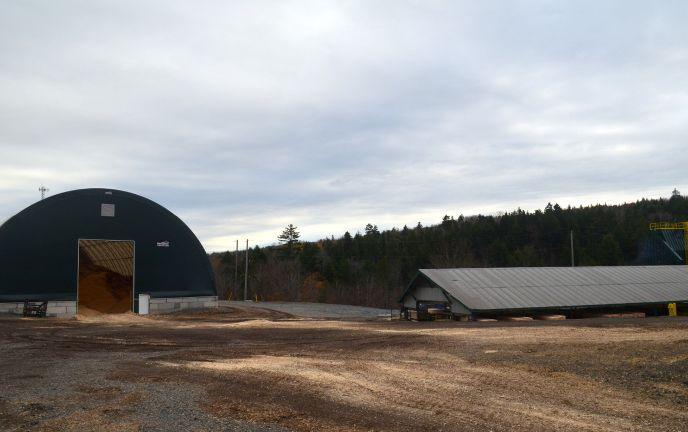
ABOVE: Blair Saulnier, general manager for Hefler Quality Lumber, shows off the company’s Britespan fabric dome, which houses three weeks of residuals from the sawmill.
LEFT: The plant’s combustion chamber burns at 2,000 F.
BELOW: The majority of the sawmill residuals are housed in a fabric dome away from both the sawmill and the cogeneration plant.
to process any biomass that is either not ground up already, or too big for use in the plant’s operation, before transporting it over to
plants and biomass facilities similar to the one built for Hefler Quality Lumber.
“One of the reasons this mill was a great fit was its accessibility to the grid,” Saulnier says. “The substation is less than a half-a-kilometre away, which is not often heard of, and the existing sawmill was already producing waste that could be used as its fuel source.”
The sawmill’s original intent was to supply 50 per cent of its biomass to the generator and then buy the rest, but due
to rising costs for harvested biomass, the mill’s owners decided they needed to be self-sufficient. This was another driver behind the most recent upgrades to the sawmill.
“We don’t know what fuels are going to do over the next 20 years and that’s what we have a contract for, so we decided to do a sawmill upgrade that would let us produce 15 to 18 million fbm. This allows us to be self-sufficient,” Saulnier explains.
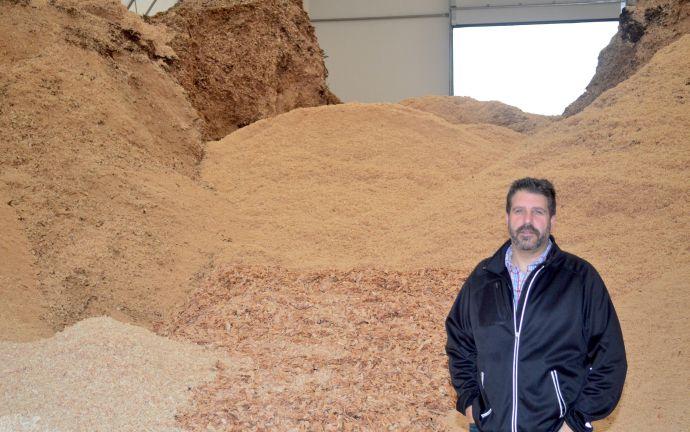
Three weeks of residuals from the sawmill are stored in a Britespan fabric dome away from the 17,000 sq. ft. power plant and the sawmill. Only a few days worth of biomass is kept in a storage bay connected to the generating plant.
THE PROCESS
The biomass in the storage bay is fed on to a conveyor by a Volvo L70G wheel loader, which transports the biomass to the plant’s combustion chamber that runs at 2,000 F. Any biomass that is either not ground up, or too big for use in the plant’s operation, is ground up by the mill’s 3600 Morbark Wood Hog before being sent to the store bay.
“At 3.1 megawatts, we require about 40,000 to 45,000 pounds an hour of steam,” Saulnier says. “The neat thing is that once we’ve utilized the steam for the power we need, the waste steam coming off of the turbine runs our dry kilns and helps heat our buildings. That takes away a cost of about $300,000 a year in furnace oil we would be using otherwise.”
After biomass enters the combustion chamber it goes through three stages.
“In the first stage it goes through a drying effect, the middle stage is where the combustion and the flue gases come off, and the final stage is where we get the final burn and the ash,” Saulnier explains.
The ash created by the process is given to local farmers for use as fertilizer.
LEFT: A 3rd Class power engineer panel operator and a 4th Class power engineer outside operator oversee the plant’s day-to-day operations.
RIGHT: The mill uses a 3600 Morbark Wood Hog
the plant’s storage bay.
The flue gases generated in the combustion chamber go through a set of ductwork to a Rentech-designed boiler that heats the water up and runs the steam through superheated coils. The combustion chamber is designed to use upwards of 8,000 tons of biomass an hour.
“It’s a 50,000 lb/hr boiler running between 750 and 800 psi of super-heated steam,” Saulnier says.
Some of the excess heat from the flue gases passes through an economizer that pre-heats the water going into the boiler.
two-stage turbine, which turns at 1,800 rpm for a Hyundai-designed generator producing 3.1 megawatts of electricity.
“The turbine can ramp up in about 30 seconds,” Saulnier says. “Because we’re burning a wood-fired boiler we’ve actually stretched it to about 200 seconds before it goes up to full speed.”
The boiler plant and the combustion system was a packaged system created by KMW Energy based out of London, Ont. KMW Energy was the primary equipment supplier for the project, supplying
“The increased lumber production was important for two reasons: to keep the sawmill competitive and to fuel the company’s latest investment...”
“The purpose of the economizer is so you don’t need as much energy to heat the water back up,” Saulnier says. “It’s common in boiler plants. It’s a way for us to utilize as much of the heat as possible before losing it out the stack.”
When the flue gases leave the economizer they then go through a cyclone separator that removes any final particulates that may be in the air before going out the stack. By the time the steam hits the stack it’s around 300 F and clean.
After moving through the superheated coils, the steam travels to the plant’s Siemens
the boiler, turbine, generator and much of the auxiliary equipment.
Acadian Construction out of Moncton, N.B. were the general contractors on the project and assisted in the building of the 17,000 sq. ft. building housing the plant and oversaw the project’s construction. The company also co-ordinated the electrical, mechanical and other sub-trades on the project. The mechanical engineering company hired for the project was Crandall Engineering, while Black & McDonald and Maritime Pressure Works shared the mechanical installation duties.
OPERATIONS
The plant’s day-to-day activities are overseen by a 3rd Class power engineer panel operator and a 4th Class power engineer outside operator.
“The panel operator runs everything from the control room and makes any necessary adjustments required to safely operate the plant, while the outside operator walks the floor, taking readings, performing preventative maintenance, and making field adjustments when necessary while corresponding with the panel operator,” Saulnier says. “It’s a second-class power plant and we’re fortunate enough to have a first-class chief engineer retired from Nova Scotia Power. Even though it’s a small power plant we tried to set the control room up the same as you would see in a larger power plant.”
A LONG-TERM SOLUTION
With a 20-year contract to produce electricity for Nova Scotia Power, Hefler Quality Lumber has created a productive use for its sawmill residuals and a secondary income stream to help the company stay competitive well into the future.
“With all the challenges of having a sawmill in a very competitive marketplace, sawmills need to start thinking outside the box to find other ways to generate revenue in order to survive, which in turn creates long-term employment,” Saulnier says. “In our case, our solution was to produce 3.1 megawatts of power for Nova Scotians.” •
Spotlight on Hammermills
The newest hammermill technology available for Canada’s wood pellet industry
By Staff Report
Theexpansion of the wood pellet industry in Canada has caused hammermill manufacturers to expand their product offerings to the North American market. As a result, there are more options for pellet mill equipment than ever before here in Canada.
Here is a look at the newest in hammermill innovation and technology available for the Canadian wood pellet industry.
CPM
www.cpm.net
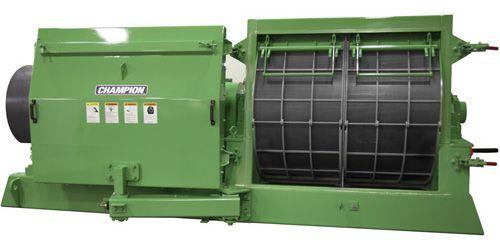
The HM Series 44” Hammermill features a screen area of 1,920 by 5,760 square inches and an HP range of 100-500. This rugged, high-efficiency hammermill features a high-density frame that’s designed to minimize noise and vibration. This hammermill also features the air-swept teardrop design and Champion’s patented regrind chamber. The HM Series Hammermill’s one-piece, full-access doors mounted on unique pivoting arms allow the doors to move completely out of the way during service.
BLISS INDUSTRIES
www.bliss-industries.com
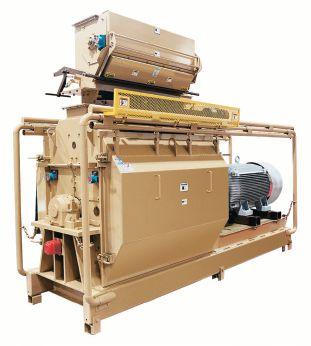
Bliss Industries, LLC is a leading manufacturer of size reduction equipment. Bliss maintains a reputation of manufacturing the most efficient, reliable and well-built equipment in the industry. Bliss offers one of the largest hammermills on
the market, the ED-4460-TF hammermill with 7,200 sq. in. of screen area. Bliss Industries has the ability to provide a wide range of mill sizes, tip speeds and drive power to meet the customer needs in any size of pellet operation.
AMANDUS KAHL
www.akahk.de
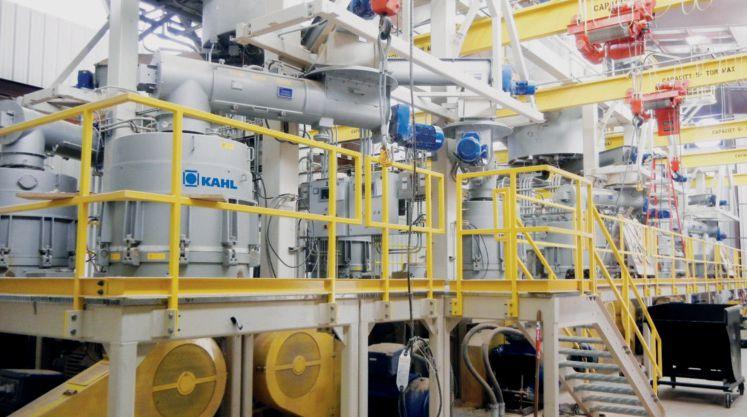
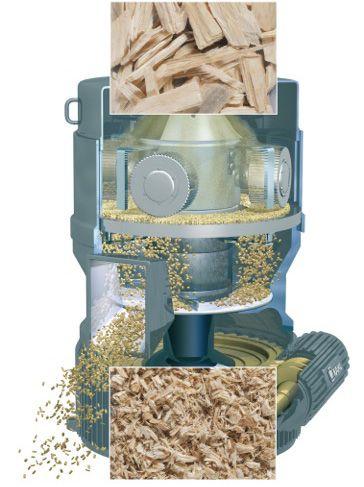
The KAHL Pan Fiberizer provides optimum crushing and grinding of wet wood chips and torrified biomass. This grinding process is appropriate for wet raw and dry torrified material, and is an alternative to a
WEST SALEM MACHINERY
www.westsalem.com
traditional hammer mill. The system does not require an aspiration system, explosion suppression, bagging houses or cyclones. There are no noise protection measures needed, the mill is smooth running in a very silent operation.
The Fiberizer is extremely cost effective due to the fact that it uses shear force to grind and cut the fibre instead of the high speed-high impact principle applied in traditional hammermills. Thus, the energy required and the wear costs are less in comparison with old style hammermills.
WSM’s Super Shredder features a large 48” diameter rotor in lengths up to 88”.
The large size allows use of a single shredding/milling machine in the largest capacity applications, eliminating the need for multiple size reduction machines.
The unique hybrid Super Shredder combines the efficiency of a high speed hammermill with the durability of a mill duty grinder/mill for continuous production.
SCHUTTE-BUFFALO
www.hammermills.com
The Schutte-Buffalo Hammermill Series 15 Hammer
Mill is an efficient, high production fine grinder. Built specifically for the wood waste market it can process chips, shavings, bark, hogged scrap and other materials to the exact finished particle size required for downstream processing. Schutte-Buffalo has over 80 years of experience building fine grinding hammer mills.
JIANGSU ZHENGCHANG
www.zhengchang.com
The SFSP60 series hammermill features two types of hammers for equal wear and tear. The SFSP60 has improved design of base frame with good rigidity and little vibration. The inner grinder is studded with wearing plate for long useful life.
With the welded structure, the motor and the mill rotor are installed on the same base with direct-drive, compact structure, allowing you to change the sieve plate conveniently and quickly. The operation door is fitted with a safety interlock device, and the rotor checkout uses dynamic balance for minimum vibration.
JEFFREY RADER
www.terrasource.com
TerraSource Global’s Jeffrey Rader brand offers a wide range of hammermills including FT and FTE Flextooth Crushers for larger products and MiniMill E, 30ABE, and 34ABE models for smaller products and sampling. “E” designations in each model signify the brand’s exclusive E-Z Access technology, which allows safe, fast, and easy access to hammers, rotors, and liners. All models are equipped with heavy-duty rotors that can be set up with three, four or six rows of hammers.
JIANGSU YONGLI
www.yongli-machine.com
The YHM68 Series Hammermill features a Siemens motor and SKF bearing. A U-shape grinding groove at the bottom of the grinding chamber can improve grinding efficiency 50 to 80 per cent. The feeding inlet is made at the side of the device to make feeding easy. The shell is welded together with steel plates for durability throughout the hammermill. The motor and rotor are installed in the same heavy-duty base using a coupling direct drive system. The rotor uses dynamic balance and has the ability to work in both forward and reverse.
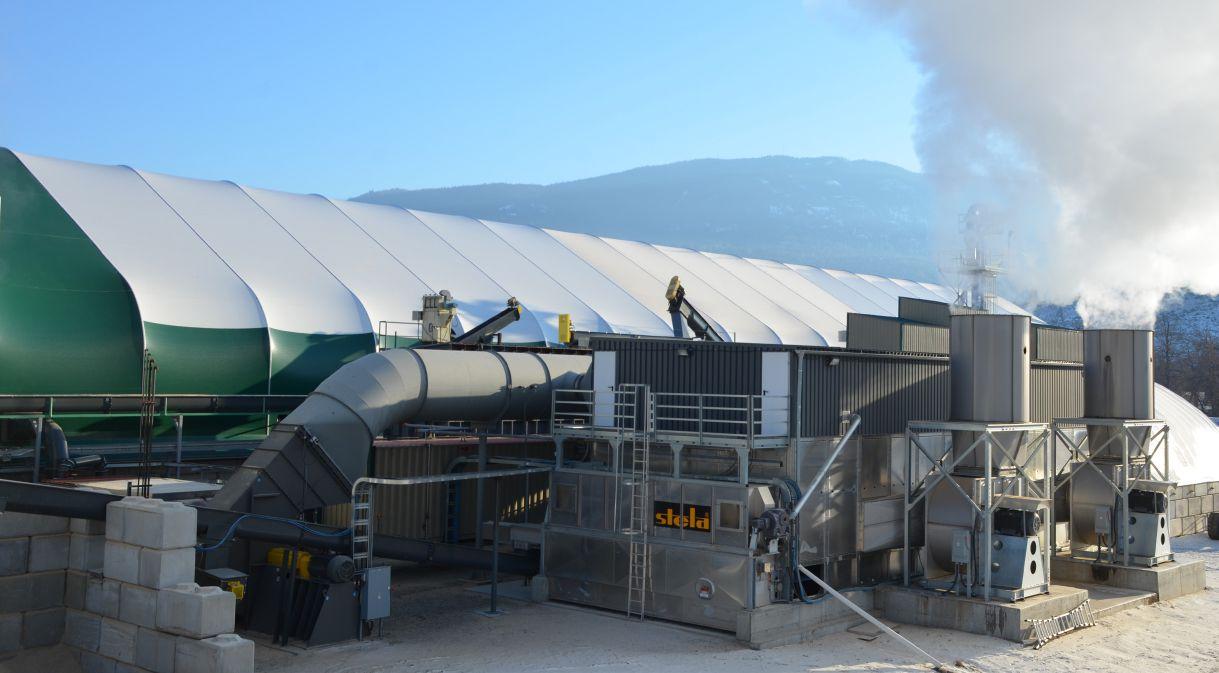
Efficient drying of biomass
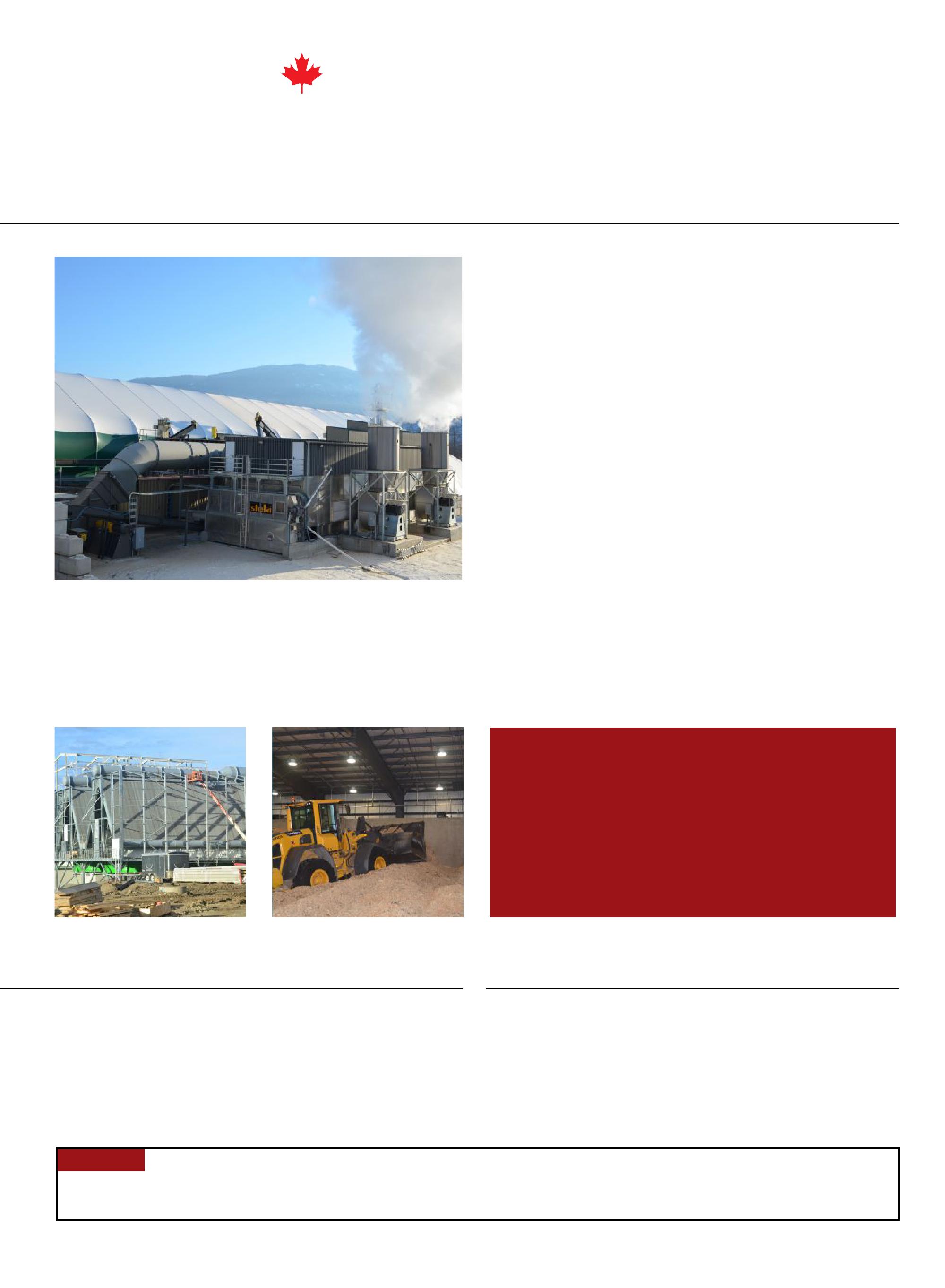
Stela low temperature belt dryer
• 94 years of history, 46 years of experience in manufactoring drying plants
• more than 450 belt dryers in more than 60 countries all over the world in the most various sizes
• lowest emissions rates, energy-saving air technology
• dryers for production capactiy of 5.500.000 t/a pellets supplied
• no need of wet electrostaticfilters (WESP) to achieve low emisson values
DIEFFENBACHER
www.dieffenbacher.com
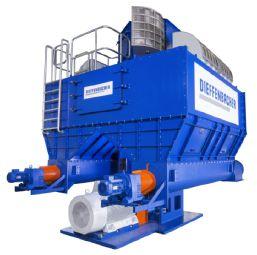
The machine is used for preparation of organic substrates for biogas production, wood-dust for energy and heat generation, wood-flakes for pellet production and many other applications. The working principle is based on the impact effect. Inside the impact chamber the material is resized with high kinetic energy by the fast rotating rotor and interaction of the particles themselves. A final calibration is realized by screens. The ClassiSizer is able to process different and inhomogeneous input materials to variable sized final particles.
ANDRITZ
www.andritz.com
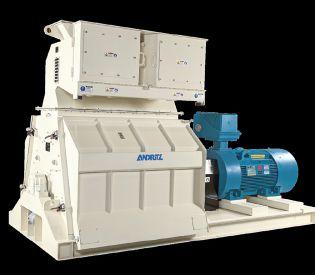
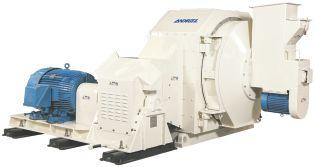
Andritz Series 6 Hammer Mill is now offered in both 38-inch (965 mm) and 43-inch (1,092 mm) diameters with grinding chamber widths ranging from 12inches (305 mm) to 60 inches (1,524 mm). These mills can accommodate motor sizes ranging from 125 HP (90 kW) to 600 HP (450 kW). This unique Series 6 design was created to satisfy today’s demanding applications and safety guidelines.
BRUKS
www.bruks.com
BRUKS has developed a high efficiency hammermill for biomass and biofuel applications. The hammermill features different types of rotors that can be used for wet and dry milling, as well as different types of screens to guarantee a top fibre quality. The unique design allows for fast and easy access for maintenance and service.
The machine can be equipped with various cleaning devices to avoid impurities like metal and stones in the milling chamber.
For more information about the newest hammermills available for the Canadian wood pellet industry, as well as other new innovations for wood pellet production, visit canadianbiomassmagazine.ca.
Post-Harvest Wood Debris
What should be made of leftover forest residues?
By Thomas Sullivan
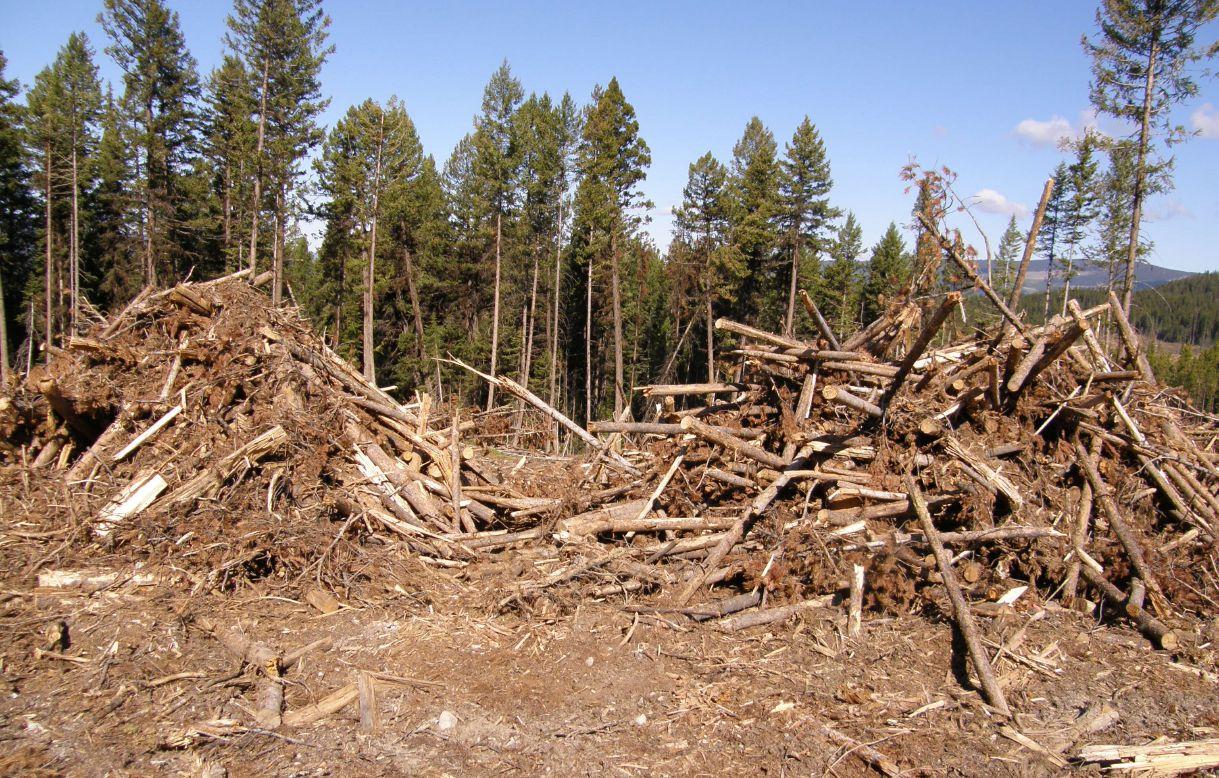
Woodydebris in forests of temperate and boreal ecological zones is created by natural (wildfire and insect outbreaks) and harvesting (logging) disturbances. Salvage logging and clearcutting often leave much woody debris after the processing of trees. A major “perception” of our utilitarian outlook is to define excess woody debris as “wood waste,” particularly the residue (slash) occurring after conventional and salvage harvesting of forests.
Down wood provides many ecological functions essential to the maintenance of forest biodiversity and long-term productivity. Sufficient down wood is usually dispersed over harvested sites during the logging operation, thereby leaving piles of post-harvest debris as “excess” material at landings. These wood residues are typically burned in B.C. and most other
provinces to reduce a perceived fire hazard. However, use of woody debris for bioenergy is an alternative management scenario and a potential major contributor to a reduction in use of fossil fuels – a desirable environmental goal. In terms of perceived fire hazard, there is no scientific evidence showing that piles and/or windrows of woody debris are ignition points for forest fires, other than those caused by humans.
The intentional burning of excess woody debris creates much smoke that releases greenhouse gas (GHG) emissions and may also create a potential human health concern in nearby communities. The relationship of wildfire smoke to human health problems is well-documented. There seems to be no reason to consider the smoke arising from the burning of debris piles as a different issue.
Woody debris structures may provide
foraging, perching, nesting, and denning sites for a variety of mammals, birds, amphibians, and lizards, as well as space for plants and fungi as these structures become part of the new forest growing on the harvested site. A windrow or series of piles may connect patches of mature forest and riparian areas to allow small mammals and some of their predators to access and traverse clear-cut openings. This practice is particularly relevant on large openings (>10 ha) in conventional, but also larger (>100 ha) salvage harvesting operations.
Some important questions are: Do woody debris structures help conserve biodiversity in managed forests? Are we able to measure this biodiversity and estimate its monetary value compared with that generated by using woody debris for bioenergy? 3.) Is there a monetary value lost by burning debris? To address
economic-based objections to the wise use of excess woody debris, we compared the monetary value of mammalian biodiversity associated with constructed windrows with those estimated for woody debris used for bioenergy purposes or simply burned.
Chip Thickness Screening
Long life and superior performance
DiamondRollTM Thickness & Fines Screens
Highest removal efficiencies
Variable Inter -Roll Opening
Non-plugging
Disc Thickness Screen
Welded design for strength & long service life
High Inter-Facial Opening accuracy
Minimal maintenance
Air Density Separator
Exact air flow control
Outstanding knot & contaminant removal
Low fiber losses
Chip Cracker
Low pins and fines production
Keyed, solid stainless steel segments
Efficient overthick processing
Two study areas (Elkhart and Golden) were located in south-central British Columbia. Three windrows of woody debris were installed in clear-cuts (harvested in 2011), connecting uncut forest reserves or patches at each study area. Populations of forest-floor small mammals and incidence of mustelid (weasel family) predators were measured in conventionally dispersed CWD, windrow, and adjacent uncut forest sites from 2012 to 2015. A total of nine species of forest-floor small mammals were captured. At Elkhart, mean total abundance of voles and small mammals were higher in the windrow sites than the dispersed or forest sites. At Golden, mean total abundance of voles was similar, but mean total abundance of small mammals was higher in the dispersed and windrow sites than the forest sites.
The windrow sites had 5.8 times more activity by marten and small weasels than the forest sites, and 3.9 times higher levels of activity than the dispersed sites at Elkhart. This difference was 3.3 times higher in windrow than dispersed sites at Golden.
In terms of mammalian biodiversity, diversity of small mammals was highest in the windrow sites at both study areas. A valuation of mammalian biodiversity has indicated at least five components that may potentially generate some monetary revenue by constructing windrow habitats on clear-cuts. These components include: commercial fur harvest of marten, small weasels, and other fur-bearers; enhancement of predators to help lower vole numbers and protect plantation trees from vole feeding damage; small mammals disseminate mycorrhizal fungi that are essential components for tree and plant growth; consumption of invertebrates by small mammals (including rodents and shrews) may help control some insect populations such as spruce beetle; and dissemination and caching of seeds in safe sites by small mammals may be important for forest regeneration. Windrow construction will be site- and cutblock-specific with windrows connecting patches of uncut forest to forest reserves
and riparian areas. They are not required on every cutblock, and generally use only 10 to 15 per cent of excess post-harvest woody debris.
Production of wood pellets is, indeed, a worthwhile endeavour and likely dependent on size of pellet production plant and distance to haul wood chips from the various harvested sites to the plant. Bioenergy is a renewable enterprise that results in reduced use of fossil fuels. This can result in a reduction in carbon emissions – a widely supported environmental goal. In addition, biomass sources in this study were from harvest residues rather than removal of whole trees. Perhaps the most cost-revealing part of our analysis was the negative human and environmental costs of burning piles of wood waste.
Policies regulating “utilization and disposal of waste wood piles” need to be revised as soon as possible to:
1. Allocate waste wood resources to the biofuels sector in a costeffective manner;
2. Implement windrow habitats where necessary to maintain mammalian biodiversity on clearcuts;
3. Limit burning of waste wood to those sites near human activity (potential fire hazard) that do not have an opportunity for bioenergy purposes.
We thank the Wood Pellet Association of Canada, Natural Sciences and Engineering Research Council of Canada, Aspen Planers Ltd., Louisiana-Pacific Corporation, the British Columbia Habitat Conservation Trust Foundation, the Westbank First Nation, Jaeden Resources Ltd., Gold Mountain Mining Corp., and the Applied Mammal Research Institute for financial and logistical support. •
Thomas Sullivan is a professor of wildlife ecology and conservation, food and environment – Faculty of Land and Food Systems, Dept. of Forest and Conservation Sciences – Faculty of Forestry at the University of British Columbia. He can be reached at tomsu@mail.ubc.ca.
Your global equipment supplier for the biomass industry
ANDRITZ is one of the world’s leading suppliers of technologies, systems, and services relating to equipment for the biomass pelleting industry. We offer single machines for the production of solid and liquid biofuel and waste pellets. We have the ability to manufacture and supply each and every key processing machine in the pellet production line.
ANDRITZ Feed & Biofuel A/S Europe, Asia, and South America: andritz-fb@andritz.com USA and Canada: andritz-fb.us@andritz.com
www.andritz.com
The Big Tilt
Growing willow trees at a sharp angle boosts biofuel yield
By Gabrielle Bauer
Atrue scientist keeps an open mind and avoids making assumptions. Ideas that seem plausible must be tested, retested, and tested once more. Most ideas die on the vine, but once in a while an idea has legs and wings and catches everyone by surprise, including the person who came up with it.
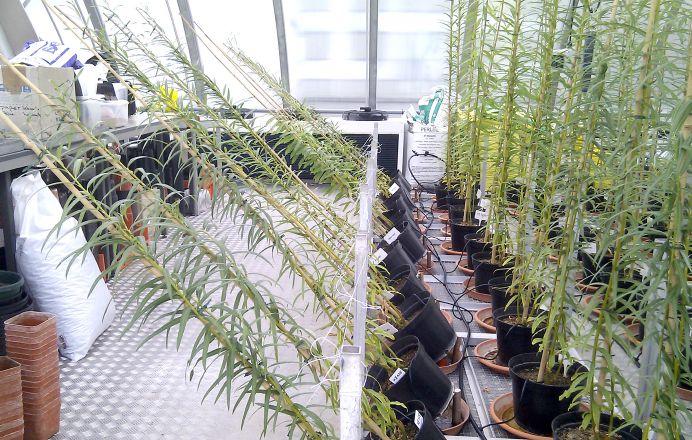
So it was with the idea of growing willow trees at an angle in hopes of increasing their biofuel yield that Nicholas Brereton, a research fellow at the University of Montreal’s Plant Biology Research Institute (IRBV) and graduate of Imperial College London in the U.K., had tested several other growth conditions in hopes of squeezing more “juice” from the willow trees, but none had panned out. “Tipping trees seemed a little ridiculous, but testing fanciful ideas is part of the scientific process,” he says.
BioFuelNet agreed. Brereton’s project has earned a place among the Pan-Canadian Feedstock Trials, a research block recently integrated into BioFuelNet’s funding structure. These trials have an overarching
vision in common: establishing a costeffective and sustainable feedstock production system across the country.
Why use willow trees in the first place? According to Brereton, “some varieties have the highest-recorded biofuel yield of any trees on the planet.” They’re also hardy, thriving in windy slopes and poor soil where more delicate species might not survive. “They have strong roots, efficient nutrient absorption, and grow very fast,” he adds.
On trips to Scotland, Brereton had observed that strong winds exerted considerable pressure on willow trees, bending their trunks down to angles as high as 45 degrees. When he analyzed the wood from those trees, he found that it produced five times more sugar than expected. “The increase in yield was bigger than anything we’d ever tested before,” he says.
On a whim, Brereton decided to replicate the tilted growth pattern under controlled conditions. He took baby willows to the Imperial College greenhouse and grew
them at a 45-degree angle. To his happy surprise, the wood in these “cultured” willows showed the same qualities as the wood in the windswept Scotland trees.
Ever the scientist, Brereton wanted to know why. Having recently seen a London Natural History Museum exhibit in which researchers used computed tomography (CT) to scan fossils, he contacted museum personnel and asked if he could borrow their equipment. “Our building adjoins the museum, so I just hauled my samples over to the museum equipment,” he says with a chuckle. The high-resolution technology enabled him to view the composition of the wood at a cellular level. “We found that tilting the tree prolongs the life of certain cells that would normally die,” he says. This leads the tree to produce a gelatinous, sugar-rich fibre – the tree’s strategy for staying upright – that accounts for its increased biofuel yield.
It was through BioFuelNet that Brereton’s work came to the attention of Michel Labrecque, an adjunct botany professor at the University of Montreal and head of the research division at the Montreal Botanical Garden. “One of my BioFuelNet colleagues had collaborated with Nick and told me what he was doing,” he says. “It seemed like a good idea to import his expertise.”
Labrecque’s own expertise lies in phytoremediation, the ability of plants to tolerate and even thrive in harsh conditions. “We know that willow trees grow well in soil that contains long hydrocarbons produced by the oil industry,” says Labrecque. “They can actually help decontaminate polluted soil.”
In order to figure out what conditions prompted the trees to get into this “cleanup mode,” Labrecque’s research group was working on analyzing trees’ responses to different stressors – a hand-in-glove fit with Brereton’s work, as it turned out.
Brereton readily accepted Labrecque’s offer to join his lab as a post-doctoral fellow, with partial funding from BioFuelNet. “Canada has many species of willow trees – in fact, a third of our woody flora is composed of willows – and many different environments, so it’s the perfect laboratory for the type of work I’m doing,” he says. What’s more, a network of willow-based
phytoremediation trials already exists across the province of Quebec.
Over the past year, Brereton and Labrecque have been following two parallel tracks: identifying stressors that trigger phytoremediation and those that produce better wood. In addition to wind, they plan to investigate the impact of dry soil, marshy soil, and soil with different types of pollutants. “It stands to reason there might be an overlap between the variables that lead to phytoremediation and those that improve the quality of the wood,” says Brereton. If his hunch proves correct, the commercial applications could be huge. “Having trees that can clean up the land and give a high yield of biofuel makes it economically viable to compete with the oil industry.”
BioFuelNet has recently agreed to fund the second phase of the project. This phase has the researchers teaming up with colleagues in Alberta and Northern Ireland, who are shipping them a variety of local tree samples treated with different contaminants. “Our hope is that some of the samples will have that win-win quality we’re after,” says Brereton. Looking further ahead, the group plans to induce the beneficial stressors artificially, much as Brereton did when he angled greenhouse-grown willow trees.
BioFuelNet has also integrated the project into its Low Cost Sustainable Feedstock Task Force, a multidisciplinary group involving members from academia, industry and government. The task force seeks to take the uncertainty out of sourcing low-cost, reliable and sustainable feedstock supplies for biorefinery operators. Dr. Brereton’s work has the added advantage of using land unsuitable for conventional agriculture.
Although Brereton says he “wouldn’t mind seeing the end of the winter snow,” he hopes to stay in Canada for the foreseeable future. “Everyone is so nice here,” he says, adding that “in London, people can be a bit brusque.”
Wherever he ends up, Brereton plans to continue tapping the willow tree’s rich potential. “It’s rare that you find a line of investigation that has such low risk and high potential,” he says. “It’s a path worth exploring further.” •
There’s a saying that gets tossed around a lot here: “It just runs.”
Our pellet mills and hammermills aren’t the prettiest. But they’re rock-solid. And they run— year after year after year. But “It just runs” isn’t just about our products. It’s about our company that literally spans centuries.
And it’s about our ongoing relationships with our customers—how we’ll always be there for you.
Give us a call, and find out just how CPM can run for you.
Long-term solution
BBiomass development in Canada provides long-term future for key industries
By Murray McLaughlin, Executive Director – Bioindustrial Innovation Canada
iomass is the real long-term opportunity for Canada to build a global leadership position in the bioeconomy and the development of clean and sustainable technologies such as biomaterials, bio-based chemicals and biofuels. To see this as a reality we need to have good support for research and development and commercialization. Overall today, Canada has a good R&D system that may need some focus, but we are weak in supporting the commercialization of new technologies, particularly in areas such as biomass conversion. This has created completely new market opportunities for clean and sustainable technologies such as bio-based chemicals and biomaterials, which have benefits to climate change management and mitigate CO2 reduction, benefiting the cap-and-trade policies of the future.
The two primary existing industries that can benefit from biomass are agriculture and forestry with connectivity into plastics, chemicals, feed, materials and from those further downstream to automobiles, carpets, furniture, toys etc.
Managing the development of healthy biomass to maximize the benefits will be a significant challenge as crops are susceptible to threats from diseases, insects and weeds. Challenges can also be looked at as opportunities, and in this case, it is leading to a new industry in unmanned aerial vehicles (UAV) and data collection and management. Between 2015 and 2025, the agricultural UAV market will generate $82 billion in economic activity (Bank of America Merrill Lynch Global Research Report). This development will provide producers with an unprecedented level of timely information leading to a more sustainable, reliable supply of quality biomass. The development also leads to new business opportunities in UAVs and
data management and fits well with the biomass opportunities.
Biomass development, new technologies, and data are leading Canada into a leadership position in the bioeconomy. Combine that with a new focus on how clean and sustainable technologies are critical to helping Canada meet its climate change targets, and it puts agriculture and forestry front and centre as a key part of the solution.
Let’s put this in perspective with an example of a near-term market opportunity: the conversion of biomass (corn stover) in southern Ontario to sugars and lignin, where the sugars become the feedstock for bio-based chemicals. The technologies for such a sugar mill are available today; the only need is to develop the value chain from the farm to the mill to the sugar and create the off takes for that sugar. To deal with the value chain – from the farm to the mill – a group of farmers have formed the
Cellulosic Sugar Producers Cooperative (CSPC). It may sound easy, but financing and a good, sound science-based regulatory process are also critical factors in getting to market as a leader.
Even though we can point to examples, we need to recognize that we are just beginning and that the bioeconomy will be a global phenomena, hence we need to be thinking about global partners (like-minded countries and industries) to create growth and to access the best technologies. At Bioindustrial Innovation Canada (BIC) we are already linking with groups in The Netherlands, Australia, South Africa, Malaysia, Germany, Argentina and the U.S. to exchange information, research and business ideas, and market opportunities.
This is a true Canadian opportunity for rural Canada, for job creation and for Canada to step up and show global leadership in the bioeconomy and climate change management.•
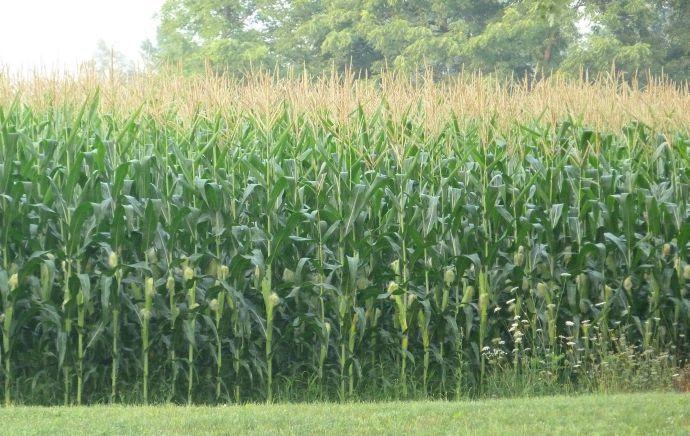
Agricultural waste can be converted to sugars for use in making biofuels and bioproducts.
Morbark Strong. It’s more than a slogan; it’s a way of life for us. It’s our commitment to you that our heavy‑duty equipment is built to withstand the rigors of even your toughest jobs.
All Morbark equipment is aggressive, productive and engineered to give you the power and features you need to maximize output, minimize downtime and enhance your profitability.
We custom build your Wood Hog horizontal grinder to meet your exact specifications. Our dealers will partner with you to determine your needs — for now and in the future.
Our commitment to you extends beyond the sale with our ever expanding dealer network, unmatched service and support teams, as well as expertise in helping you recognize and capitalize on potential business opportunities.
In short, our commitment to you is Morbark Strong!