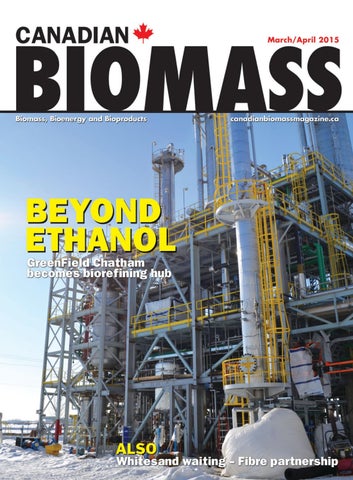
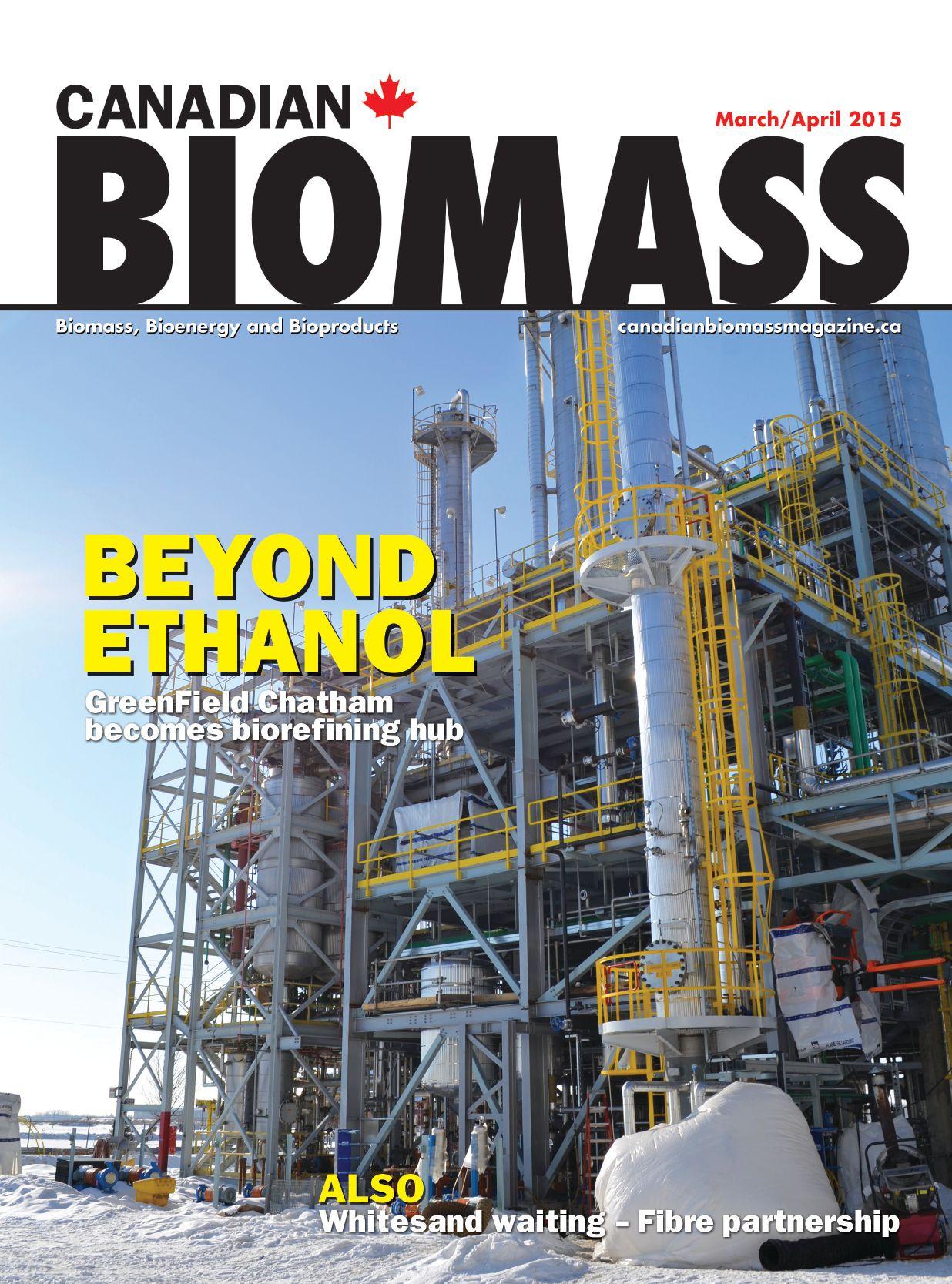
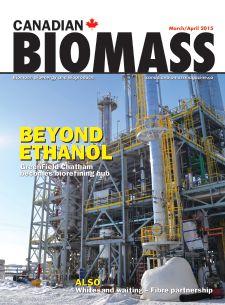
GreenField Specialty Alcohols making strides to become one of Canada’s premier biorefineries.
14 Fibre security
Pacific BioEnergy forms a partnership with Tolko Industries to provide a secure source of fibre for its pellet production plant.
19 Whitesand waiting
The Whitesand First Nation continues to invest time, money and resources for the creation of pellet production capacity in the community.
22 Feeding the flame
A pan-Canadian research project looks to identify the best sources and strategies for developing biomass for the creation of biofuel.
24
Conveyor fixes
Identifying and fixing the challenges facing the day-to-day operation and maintenance of conveyors.
26
A modest success
Reviewing the success of biorefining operations in Canada at the International Forest Biorefinery Summit in Montreal.
IPellet Progress
Annual pellet map shows growth in Canadian pellet production
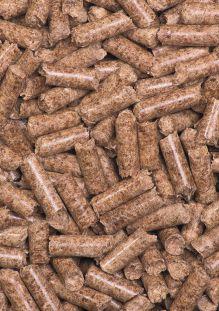
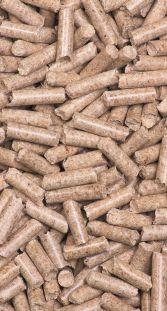
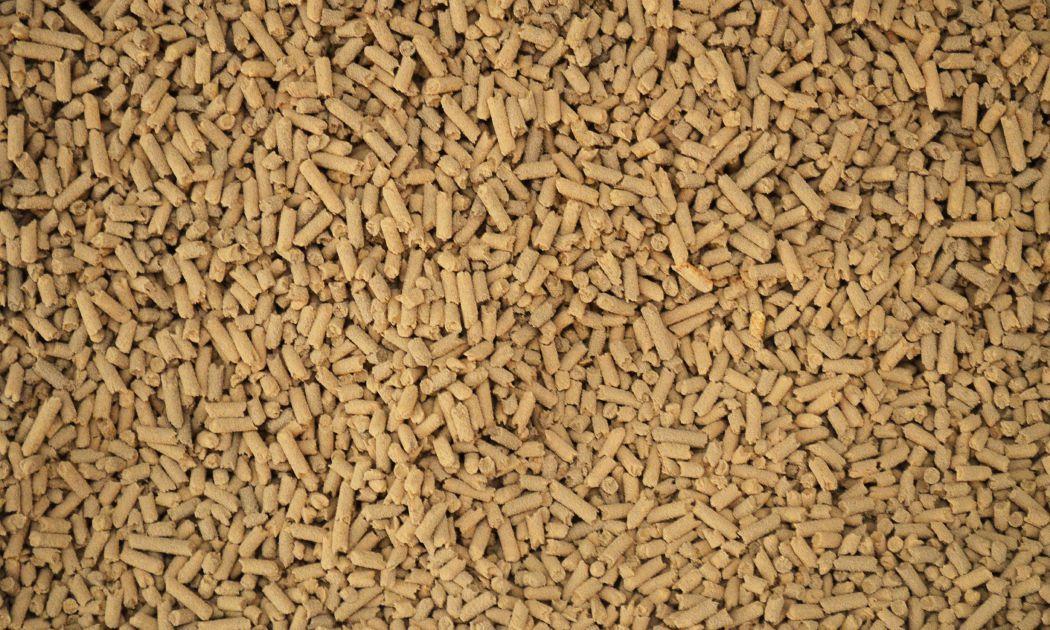
f the 2015 edition of the Canadian Biomass pellet map is any indication, the pellet industry in British Columbia is going to be adding significant capacity over the next few years.
This year’s map features the addition of five new projects, all proposed in communities across B.C. Two of them belong to Canfor. The Canadian forestry giant plans to add 175,000 tonnes of capacity through projects in Fort St. James and Chetwynd – the latter is in partnership with Pacific Bioenergy known as Canfor Energy North.
The Gitxsan Bioenergy project was announced during the International Bioenergy Conference and Expo in Prince George last June in conjunction with the BC Bioenergy Network. While we don’t have confirmed pellet capacities for all of the newly-announced plants, this project looks like it could be the biggest with an expected annual production of 200,000 tonnes. The Gitxsan project will be built in Carnaby – a small community located northeast of Terrace.
Last year we reported on several occasions that the community of Revelstoke was taking the necessary steps to find a company that would be willing to construct a pellet plant in the small community in the mountains in the southeast portion of the province. We expect further details on that plant to be announced sometime before the end of 2015.
SMG Asset Canada has been active in the promotion of its plan for a pellet plant in Misson, located ESE of Vancouver near the Washington border. The company went public with plans for the
plant in June of 2014, expecting to be able to use the mass amount of wood waste available from sawmills throughout the Fraser Valley. SMG is looking to the South Korean market for sale of its pellets, which is expects to produce at a 160,000 tonnes per annum rate.
This past year was not a year for adding capacity at existing plants or for new plants coming online. The production capacity figures changed very little year over year, and no new plants were added to the list of current producers. We had expected to add one or both of Rentech’s northern Ontario plants to that list, but at the time of publication, neither was at full operation.
There were a few casualties this year as well. We said good-bye to the Granules LG pellet plant in Mashteuiatsh, Que. That plant closed down in 2014 despite receiving government startup funding just five years ago. We also removed Canadian Biofuels of Springford, Ont. from our list. The last information we obtained was that the plant was in receivership and looking for buyers, but KPMG has not confirmed whether any potential buyer has been located.
So while it hasn’t been all good news for this year’s pellet map, the strength of the B.C. market provides promise for an increase in Canadian wood pellet production capacity, and current producers in the eastern half of the country continue to stay strong despite challenging conditions. •
Volume 15 No. 2
Editor - Andrew Macklin (905) 713-4358 amacklin@annexweb.com
Editor - Andrew Snook (905) 713-4301 asnook@annexweb.com
Contributors - Treena Hein, Gordon Murray, Gabrielle Bauer, Amie Silverwood, Ryan Grevenstuk, Shawn L. Turiff, Bill Mauro
Subscription Rates: Canada - 1 Yr $49.50; 2 Yr $87.50; 3 Yr $118.50 Single Copy - $9.00
(Canadian prices do not include applicable taxes) USA – 1 Yr $60 US; Foreign – 1 Yr $77 US
Occasionally, Canadian Biomass magazine will mail information on behalf of industry-related groups whose products and services we believe may be of interest to you. If you prefer not to receive this information, please contact our circulation department in any of the four ways listed above.
All advertising is subject to the publisher’s approval. Such approval does not imply any endorsement of the products or services advertised. Publisher reserves the right to refuse advertising that does not meet the standards of the publication.
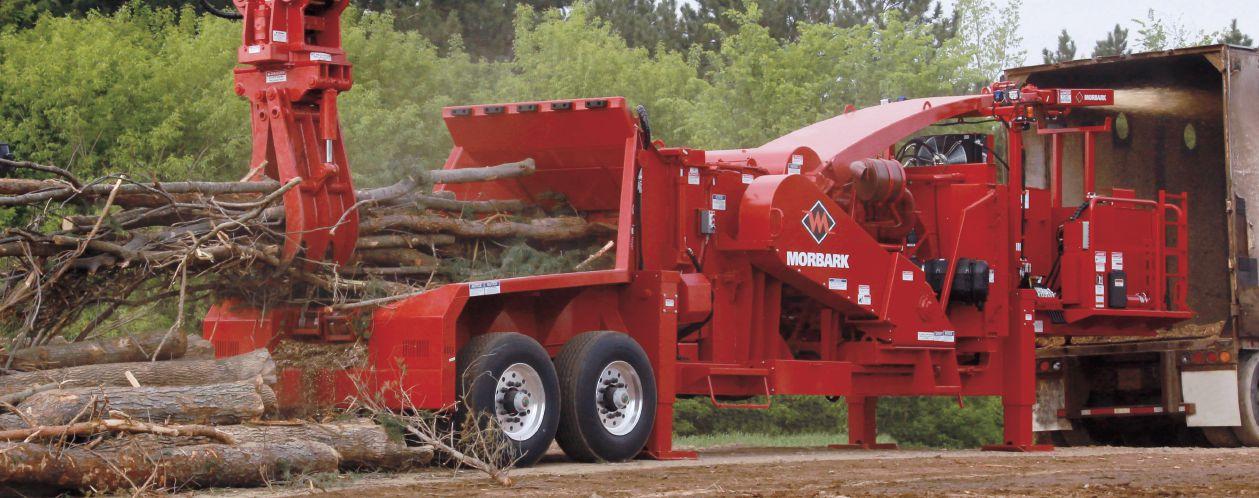
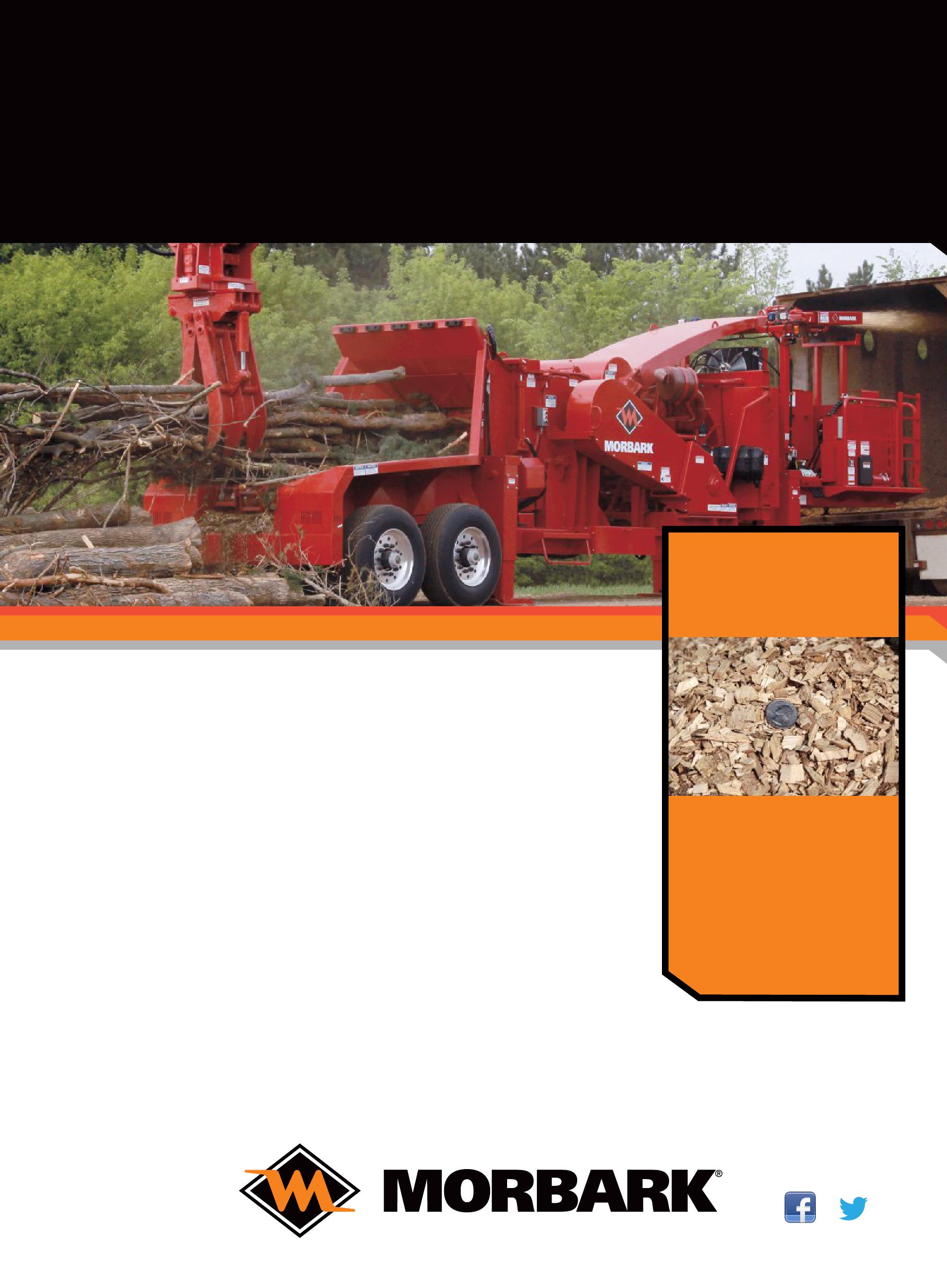
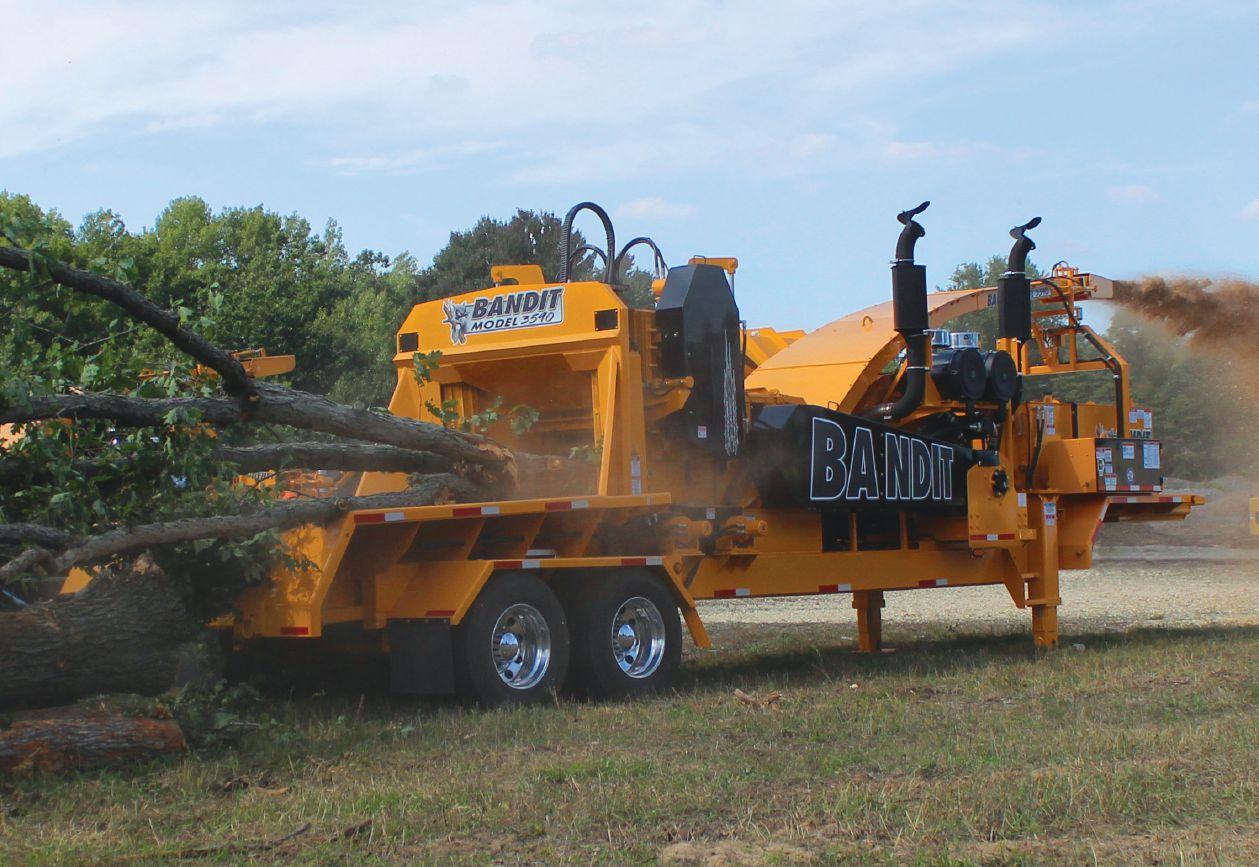
Maximize Profits with the Morbark® MicroChipper
Create micro-chips vital to the pellet mill market with the Morbark® Whole Tree MicroChipper.
• Productive – Morbark’s exclusive enhanced Advantage 3™ drum creates uniform micro-chips, while the mechanically driven chip accelerator fully loads your truck.
• Practical – The operator-friendly, slide-in forestry grate system reduces oversized chips for a consistent, high-quality end product.
• Profitable – With high production of micro-chips per gallon of fuel used, the Morbark 40/36 MicroChipper allows you to reduce costs and maximize profits.
In customer tests, up to 95% of the micro-chips produced passed through a ½" grate, and an average of 65% passed through a ¼" grate.
The Morbark® MicroChipper is a new addition to our full line of heavyduty Whole Tree Chippers from the leader in the industry. Learn more about our machines and our extensive product support network at www.morbark.com.
BIOMASS update
RENTECH PURCHASES ALLEGHENY PELLET
Rentech announced that its subsidiary, New England Wood Pellet (NEWP), has acquired the assets of Allegheny Pellet Corporation (Allegheny) for approximately $7 million. The acquisition expands NEWP’s market position as the largest producer of wood pellets for the U.S. heating market.
“Consistent with the growth strategy we outlined when we acquired NEWP, we are pleased to expand NEWP’s platform with the acquisition
of Allegheny,” said Sean Ebnet, senior vice-president of Rentech’s wood fibre business.
Allegheny’s wood pellet plant in Youngsville, Pa. has been operating since 1993. The facility processes residuals from local sawmills into wood pellets for sale through big box stores, specialty retailers and bulk sales channels. The plant has historically experienced relatively stable feedstock costs due to a consistent supply of residuals within an economic haul radius of the facility.
CANADA CERTIFICATION LEADER...STILL
The latest forestry certification stats show Canada continues to be far and away the leader in forest sustainability.
Totals from the end of 2014 collected by certificationcanada.org indicate growth in certified land mass in Canada of 8 million ha, an increase of five per cent over the 2013 total of 151 ha. As of 2014, only 10 per cent of the world’s forests were certified, yet Canada had over 40 per cent of the world’s certified forests.
In total, Canada has 161 million ha certified to at least one of the three internationally-recognized forest certification programs. In fact, Canada has over 50 per cent of all PEFC endorsed certifications worldwide (CSA and SFI), and almost a third of the FSC certifications.
British Columbia, the supplier of the majority of wood pellets in Canada, remains a leader within Canada as well. Its 52 million ha of forest land certified to one of three internationally recognized certification standards is, on its own, more than any other country in the world. B.C. alone has 27 per cent more certified area than the entire U.S. and 37 per cent more than Russia.
Rebiere new president of WPAC
Brad Bennett has resigned as president and director of the Wood Pellet Association of Canada (WPAC). WPAC’s board of directors unanimously approved the appointments of Michele Rebiere as president and director, Rene Landry as vice-president and director, and Wayne Young as director.
Allegheny’s customers are responsible for the costs and logistics arrangements of pellet deliveries. Allegheny will be fully integrated into NEWP and will operate as its fourth pellet plant.
NEWP intends to expand the plant’s annual production from approximately 36,000 tons under a four-day workweek to approximately 50,000 tons under a sevenday workweek. The additional production will help meet strong demand for pellets in
WEBINAR
Pennsylvania and New York. Allegheny is expected to generate approximately $10 million in revenues and $1.5 million in EBITDA annually once operating fulltime.
Rentech is currently in the final stages of completing its pellet plants in Atikokan, Ont. and Wawa, Ont., both of which are expected to come online in 2015. The plants will have acombined capacity of approximately 500,000 tonnes per year.
SERIES TARGETS COMBUSTIBLE DUST
A new three-part webinar series will tackle the issue of combustible dust, providing important information on how to mitigate dust in all biomass environments.
Canadian Biomass, along with sister publication Canadian Forest Industries, has partnered with industry veteran John Bachynski to present the series. Bachynski has 30 years of expertise dealing with dust explosion issues, and is currently a member of the team at EPM Consulting.
The hour-long seminars will be presented from May to July 2015:
• Wednesday, May 27 - Dust Explosion Mitigation IManaging the risk
• Tuesday, June 23 - Dust Explosion Mitigation II - Managing the dust
• Wednesday, July 22 - Dust Explosion Mitigation IIIManaging the liability
The cost of each webinar is $25. The webinar can be viewed and listened to from any location where web access is available.
For more information, visit canadianbiomassmagazine.ca.
Bennett stepped down for personal reasons WPAC noted in a press release. “The board of directors thanks Mr. Bennett for his service to WPAC and wishes him success in his future endeavors.”
Rebiere is curently the chief financial officer of Viridis Energy Inc.
OPG FIRES STEAM-TREATED PELLETS
The advanced biofuel that is being fired in OPG’s Thunder Bay Generating Station is steamtreated pellets made from sustainably-sourced sawmill residuals. This advanced biofuel is produced in Norway where it has been in use for a number of years.
“It’s steam-treated,” OPG director of media, issues and information management Neal Kelly told Canadian Biomass over the phone. “It improves the fuel’s properties in three areas. It repels water unlike the pellets we’re using at Atikokan – the advanced biomass can be stored outside in a pile where it can withstand the elements. It’s also very durable so it creates less dust. It has a higher energy density than white wood pellets, so that enables the unit to achieve full load with minimal boiler modifications.”
Because the steam-treated pellets are more durable, OPG is able to use the same fuelhandling system it used when the Thunder Bay plant burned coal. The fact that the pellets are stored outside and are durable enough to be handled with the same fuel-handling system has meant that fewer modifications were required at the Thunder Bay plant. The advanced biofuel has been thermally processed, driving off the volatile matters that bring the risk of self-heating.
“We’re working with Confederation College in Thunder Bay to do research on biomass and advanced biomass and hopefully we’ll be able to open up new and innovative ways of using the material in the future,” Kelly says. “We feel like we’re on the cutting edge of a new technology.”
OPG has a five-year contract for the supply of the advanced biofuels from Norway, but “is open to local suppliers of advanced biomass fuels,” Kelly says.
BIOAMBER COMMISSIONS SARNIA PLANT
BioAmber Inc., an industrial biotechnology company producing sustainable chemicals, announced it has initiated commissioning activities for its 30,000 MT capacity bio-succinic acid plant located in Sarnia, Ont.
Commissioning and start-up is expected to take approximately five months, with the facility being in commercial operation in Q3 2015. The company expects construction to be completed in two months and it is carrying out commissioning and start-up activities. Project costs are within the original budget estimate of US$125 million, plus or minus 10 per cent.
“This is a significant milestone for BioAmber, which is poised to begin a period of rapid growth,” said Jean-Francois Huc, CEO. “During the commissioning phase we will test the plant and get it running section
by section, produce bio-succinic acid and qualify it with our customers and begin to sell product that meets specifications. We plan to be in full commercial operation in Q3 2015, by which time we can reliably supply customers including our take-orpay contracts”.
The Sarnia plant will be the world’s largest succinic acid manufacturing facility, with an annual nameplate capacity of 30,000 metric
PELLETIER NEW COO AT CANADA RENEWABLE
Canada Renewable Bioenergy Corp. has appointed Denis Pelletier as its chief operating officer, replacing Robert Mukasa, who has decided to leave the company to pursue other interests.
Pelletier has been engaged by the company since March 2014 as a consultant through Fortec Consulting Inc., where he was involved in various aspects of forest operation management and permitting for companies as well as developing a pellet and biomass manufacturing facility for the company in northwestern B.C.
Pelletier has a diverse background in forest management in B.C. beginning his career with International Forest Products on coastal B.C. operations undertaking all phases of operational development. He was a resource analyst with the Ministry of Forests in Prince George, B.C. for four years before joining Timberline Forest Inventory Consultants as a resource analyst, planner and department manager.
tons. BioAmber has signed take-or-pay agreements with Vinmar and PTTMCC (a joint venture between PTT PLC and Mitsubishi Chemical) that represent sales volumes of over 5,000 metric tons in 2015 and 15,000 tons in each of 2016 and 2017.
BioAmber has also signed a number of supply agreements with non-binding volume commitments that collectively exceed the available capacity in the plant.
Pelletier subsequently became the branch and regional manager, overseeing all services and operations, and then an executive at Timberline where he managed the Prince George Branch and northern B.C. region for seven years, expanding Timberline’s client base, lines of business and service delivery model. During this time, he also established Timberline as a co-founder of Borealis Offsets, an afforestation carbon credit company.
UEurope’s 2030 Targets
BioTrade2020plus will offer new biomass trade policies
By Gordon Murray
sing a track and field metaphor, Europe has lapped North America in the race to reduce global warming and develop clean renewable energy. The EU’s Renewable Energy Directive (RED) provides the so-called 20-20-20 targets that mandate 20 per cent reduction in greenhouse gas (GHG) emissions from a 1995 base level; 20 per cent reduction in energy consumption; and for 20 per cent of energy to be renewable. This has resulted in Europe becoming the largest global wood pellet market, accounting for 80 per cent of consumption, far ahead of second place, U.S., and third place, South Korea.
Now that we are approaching 2020, the European Commission (EC) has turned its attention to developing new climate and energy policies from 2020 to 2030. The EC has proposed new 2030 targets including 40 per cent GHG reduction, 30 per cent reduction in energy consumption and a 27 per cent share of renewable energy.
The EC is now researching ways to achieve these 2030 targets. One initiative being funded by the EC’s Intelligent Energy Europe program is the BioTrade2020plus project being conducted by a consortium of universities and research institutions:
• National Renewable Energy Centre, Biomass Department, Spain
• Imperial College London, Centre for Environmental Policy, United Kingdom
• Alterra, Wageningen University and Research, The Netherlands
• International Institute for Sustainability Analysis and Strategy GmbH, Germany
• Flemish Institute for Technological Research, Belgium
• Utrecht University, Faculty of Geosciences, Energy & Resources, Copernicus Institute of Sustainable Development, The Netherlands
• WIP Renewable Energies, Germany
BioTrade2020plus aims to provide guidelines for the development of a European Bioenergy Trade Strategy for 2020 and beyond. The project is meant to ensure that imported biomass feedstock is sustainably sourced and used in an efficient way, while avoiding distortion of non-energy markets. This is to be accomplished by analyzing the potential key sustainability risks of current and future lignocellulosic biomass and bioenergy carriers. The focus is on wood chips, pellets, torrefied biomass and pyrolysis oil from current and potential future major sourcing regions of the world: Canada, U.S., Russia, Ukraine, Latin America, Asia and sub-Saharan Africa.
BioTrade2020plus is meant to provide support to the use of stable, sustainable, competitively priced, and resource-efficient flows of imported biomass feedstock to the EU – a necessary pre-requisite for the development of the bio-based economy in Europe. In order to achieve this objective the consortium is cooperating closely with other international initiatives such as IEA Bioenergy Task 40: Sustainable International Bioenergy Trade - Securing Supply and Demand and European projects such as Biomass Policies, S2BIOM, Biomass Trade Centers, DIA-CORE, and PELLCERT.
A multi-stakeholder, multi-country advisory board supports the BioTrade2020plus consortium. Board members were chosen from the pellet sector, the European power sector, the South American sugar cane industry, African renewable energy interests, environmental
NGOs, academia, and the EU’s Joint Research Centre. I am the sole board member representing the interests of the pellet sector. This is of vital interest because BioTrade2020plus’ policy recommendations have the potential to directly impact wood pellet trade from Canada. Some of the advisory board members representing environmental NGO’s are opposed to bioenergy, so my counter voice is needed. Also, a practical voice is needed to temper the input from academic board members.
In addition to the advisory board, consortium members have invited interested parties to join three working groups to solicit input and share information. These include:
• WG1: Biomass importers and end users
• WG2: Biomass producers and exporters
• WG3: Long-term strategies and support frameworks
History shows that biomass policy has been a vital driver of the development of the European pellet market. While we have had a few hiccups along the way, most of us are optimistic that the RED will continue to enable impressive growth through to the end of this decade. Now, for our business to succeed for the long term – from 2020 and beyond – our participation in the BioTrade2020plus project is essential to ensure that the European Commission is properly informed as it develops the next generation of biomass policy. •
Gordon Murray is executive director of the Wood Pellet Association of Canada. He encourages all those who want to support and benefit from the growth of the Canadian wood pellet industry to join. Gordon welcomes all comments and can be contacted by telephone at 250-837-8821 or by email at gord@pellet.org.
Beyond Ethanol
GreenField expands its specialty alcohol business
By Andrew Macklin
henWGreenField Ethanol became GreenField Specialty Alcohols in 2013, it marked a shift in business philosophy for one of Canada’s longestrunning and most successful ethanol producers.
Much like the shift that occurred following the first name change – a transition from Commercial Alcohols to GreenField Ethanol in 2006 – the change in name marks a major shift in focus from the ethanol model biofuel plant to a modern biorefinery.
With its primary production plant located in Chatham, in the heart of southern Ontario’s corn belt, the company is in an ideal location to take full advantage of a hearty supply of corn for the production of biofuels. Since the plant opened in 1997, GreenField has purchased over $1 billion of corn, producing one billion litres of ethanol and two million tonnes of dried distiller grains (DDGs) in the process. The company has exceeded nameplate capacity production every year since 2002.
Beyond ethanol, GreenField is already producing alcohols and CO2 for the commercial and industrial markets. Industrial alcohols are being sold for beverages like vodka, hand sanitizers,
antifreeze, cold medicines and perfumes while CO2, a by-product of alcohol production, is being supplied to the beverage industry and dry ice manufacturers. Chatham is also an excellent location for the expanding industrial alcohol producer. The plant is less than five minutes from one of Ontario’s 400 series highways, and is an hour drive from two border crossings with Michigan. They have an onsite rail hub and close access to Lakes Huron and Erie. The company uses the Port of Montréal as its hub for exporting to several international markets, including: Chile, Brazil, Puerto Rico, West Africa, Mexico, and a handful of European and Asian countries.
MAJOR INVESTMENT
While the name change to GreenField Specialty Alcohols in 2013 may not have been a clear enough indication of the significance of the business shift underway at GreenField, the announcement of a $40 million investment in its Chatham plant in October of 2014, and the projects on which that money is being spent, make the transition abundantly clear.
The extra (industrial alcohol) volume will allow GreenField to continue its penetration of international markets...
As a result of the expanding global markets within the reach of GreenField’s products, the company now expects only approximately one-third of its products staying in the domestic market, with one-third going to the Americas and the other third reaching European, African and Asian customers.
A significant portion of that investment will go toward a second cogeneration facility, which will enable the plant to be self-sufficient for its power requirements.
In this regard, GreenField is working with Entegrus, the local electrical distribution company in the ChathamKent region. Entegrus is helping GreenField withdraw from the electricity grid, in turn, allowing the power producer to make the surplus power available to
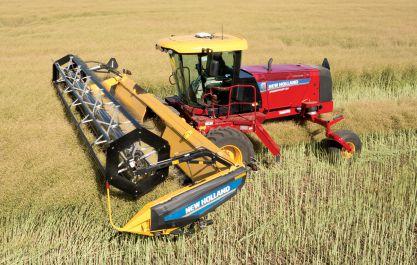
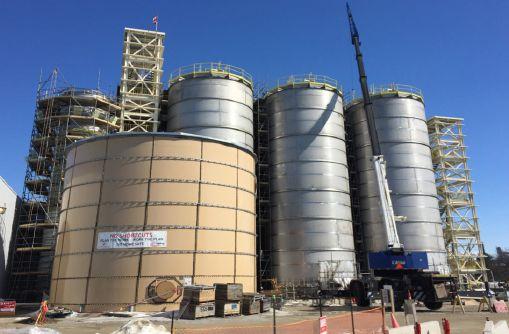
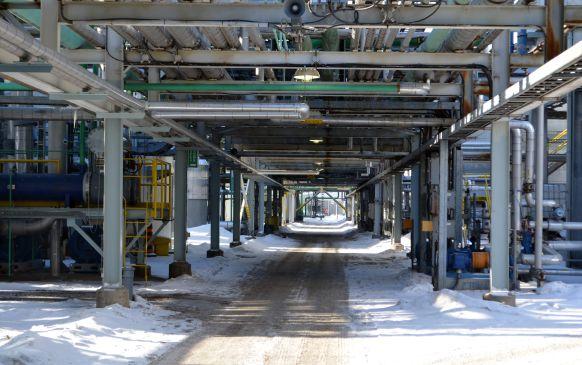
MAIN: The GreenField facility in Chatham, Ont. has shifted its focus from strictly ethanol production to a biorefinery.
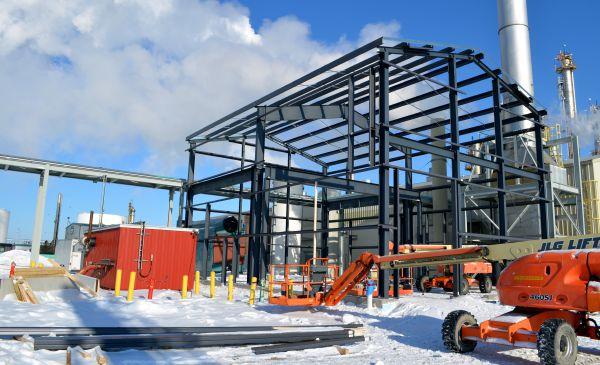
BOTTOM LEFT: The construction of a second cogen unit will allow GreenField to generate its own power by the end of 2015.
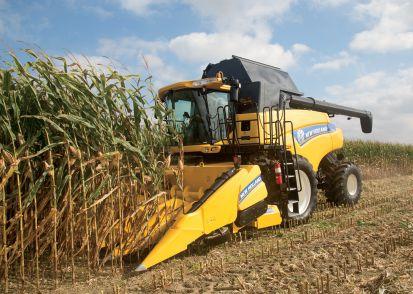
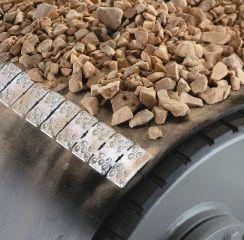
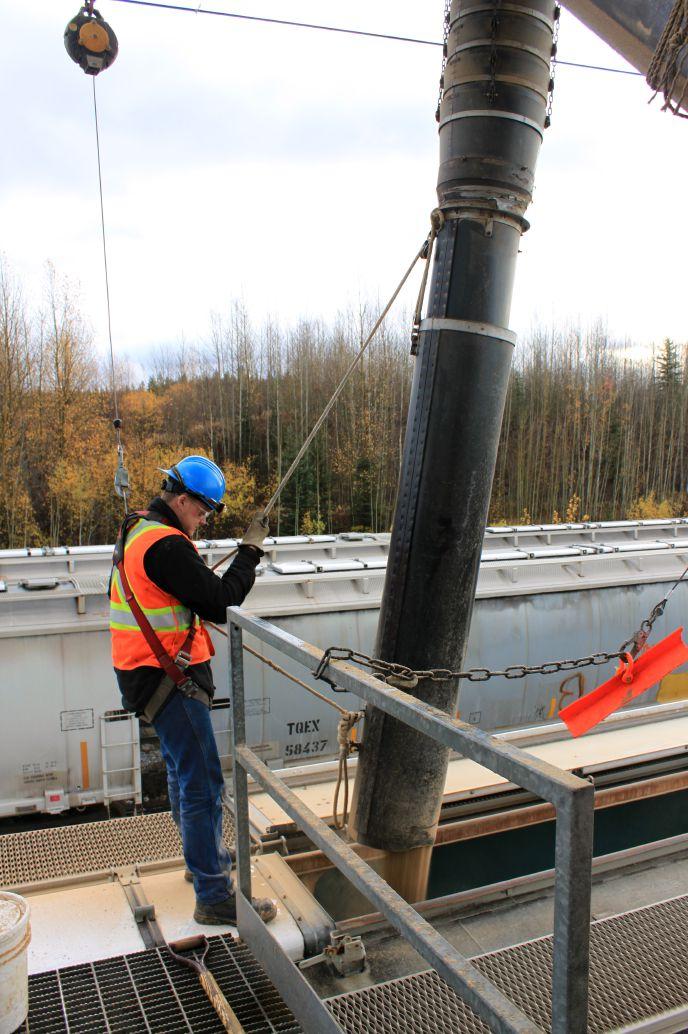
BOTTOM RIGHT: Since the plant opened, GreenField has purchased over $1 billion worth of corn from farmers throughout the Ontario corn belt.
current and future consumers. Turbine Efficiency Limited, which specializes in the maintenance, overhaul and service of gas turbines, is supplying the cogen system.
“Approximately one quarter of the $40 million investment is slated for the cogen unit so that we can be totally independent of the power grid,” said Angelo Ligori, plant manager of GreenField’s Chatham facility. “We will generate all the power we need - all by ourselves by the end of 2015.”
That homegrown power source is integral for the plant, which currently runs 24 hours a day, seven days a week to keep up with customer demand. Whether it’s ethanol or industrial alcohol that needs to be produced, the company is in a strong position to meet demands on short notice.
“We are a swing plant, so we can go back and forth between producing industrial alcohol and ethanol,” Ligori said. “But we’ve been focused on expanding the industrial product line.”
That focus is at the heart of half of the 2014-15 investment, with approximately $20 million earmarked to increase
industrial alcohol production.
The IA42 investment is pretty selfexplanatory: expand the capacity of industrial alcohol output to 42 million litres. With the expansion, GreenField will be able to increase its industrial alcohol production from 50 per cent to 75 per cent by the end of the year. The
extra volume will allow GreenField to continue its penetration of international markets, including expanding its recent breakthrough into Asia.
The final quarter of the investment, or approximately $10 million, is slated for the introduction of a new, patented technology developed by GreenField known
Proven Solutions for your Biomass Applications
GreenField’s Chatham plant has exceeded nameplate capacity production every year since 2002.
as the Twin Screw Extruder (TSE). The TSE demonstration plant, with a capacity of five tons per day, is a lignocellulosic biomass pretreatment/fractionation system that extracts sugars from more complex materials in a versatile, largely mechanical, acid and solvent free fashion. Those sugars can then be fermented into cellulosic ethanol or be further processed into biochemicals and even bioplastics.
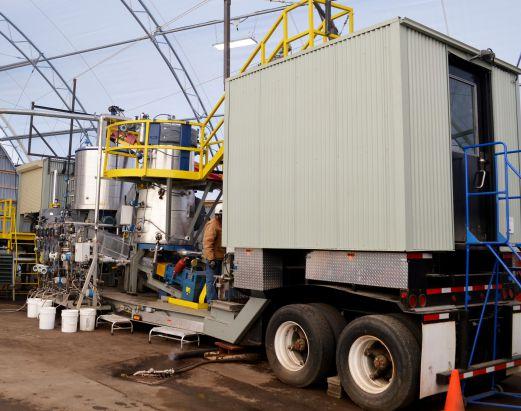
The TSE has been specially designed and constructed so that it is small enough to fit into a typical trailer used to transport a wrecked car or a piece of heavy equipment. This makes it easy for the company to take the system to secondary locations to run tests with different feedstocks.
GreenField established the baseline for the TSE using corncobs. The challenge with cobs – or any lignocellulosic biomass – is that it contains two sugars; the hemicellulose sugars referred to as C5 sugars and the C6, sugars or cellulose sugars; both of which need to be recovered in their cleanest, inhibitor-free form.
The cobs – or small pieces of any of the most common low-to-high lignin cellulosic feedstock – are placed in a steaming bin to start heating up and impregnating the material with water. From there they are conveyed to the first of two extruders specially modified to incorporate the company’s proprietary solid-liquid separation capability. The first extruder further particle sizes the biomass. (If using wood instead of cobs, this would be the stage where hot-water soluble extractives would be removed). From the first extruder, the cobs are conveyed into the first of two reactors where the C5 sugars are liquefied, and the C6 sugars undertake their first stage of cooking to make them digestible for the enzymes. As the material moves through the second extruder, the C5 sugars are extracted in a discrete stream of liquid virtually free of insoluble solids. The C6 sugars, the solid fraction, pass through the second extruder to the second reactor. The second reactor completes the cook of the C6 sugars. As the reaction phase is completed, the C6 sugars, along with the C5s are ready for further processing into their monomeric/fermentable form suitable for the production of liquid biofuels like ethanol or other bio products.
GreenField is currently running tests
on the TSE with various feedstocks to validate that it is feedstock agnostic. Once the testing phase is completed and all issues have been addressed, GreenField will begin making plans to build a commercial-scale TSE System.
FUTURE OUTLOOK
The eventual commercial-scale development is just one of a series of long-term plans for GreenField at its Chatham facility. Every piece of the long-term plan is a step towards building a strong biorefinery producing alcohols that can be used for multiple industries across the global marketplace.
The company started the process by developing a system for corn oil extraction. Originally, there was a possibility that the corn oil extraction process would lead to the development of a biodiesel facility. But the company decided against it because, as Ligori put it, the company is “still waiting for that industry to mature.” Instead of building a biodiesel production plant, the company has begun selling the product to current
producers of the renewable fuel, with Hamilton-based BioX being just one of a handful of their corn oil customers.
The next step is to provide CO2 and waste heat for hydroponics. Truly Green Farms runs a greenhouse that is adjacent to the GreenField property, and the company will use the CO2 and waste heat to grow tomatoes. GreenField already sells some of its CO2, from the fermenters, to Praxair, which leases land on the GreenField property. Praxair cleans up the carbon dioxide and sells it to other greenhouses, the beverage industry and dry ice manufacturers.
Another project GreenField is involved in is the secondary development of DDGs-extracting protein from the grain for the development of products like gluten, and extracting the fiber for its use in the formulation of specialized animal feed and cellulosic ethanol production.
With solid long-term plans backed by significant investments in its Chatham plant, GreenField is well positioned to become one of Canada’s premier biorefiners. •
Fibre security
A new contract gives Pacific BioEnergy secure access to fibre
By Amie Silverwood
Demandfor wood pellets may be steady and growing but access to raw materials is always a challenge for independent pellet producers. Pacific BioEnergy’s pellet plant in Prince George, B.C. is the second largest in Canada. It requires a massive amount of raw material to feed its 10 pellet mills and though the region has plenty of fibre, like any independent pellet producer in the region, it relies on short-term contracts to supply its needs.
A new multi-party arrangement, however, has bought Pacific BioEnergy a seat at the bargaining table next to the major forest licence holders and the producers of the coveted shavings that make the best feedstock for wood pellets. The contract is nuanced and took two years to finalize but the end result is a good example of how all the manufacturers that rely on wood fibre can work together to reduce waste and improve profitability.
NEW KIND OF LICENCE
In 2005, the forest industry was grappling with the question of how to function in the aftermath of the mountain pine beetle epidemic. The government introduced forest licences that would require the licence-holder to build non-lumber capacity to make good use of the lower-quality fibre while the sawlogs would continue to be traded to the sawmills.
Pacific BioEnergy acquired one of these forest licences in Quesnel, which is about 120 km from Prince George. The licence required them to build close to one million cubic metres of non-lumber capacity, which would provide them access to 700,000 m3 per year of crown timber for 15 years.
An expansion at the pellet plant in
Pellets are loaded into a rail car at Pacific Bioenergy’s plant. The agreement helps fuel their 10 pellet mills with a reliable fibre supply.
Prince George met half of the government’s requirements so the licence was split in two. This second part of the licence remained inactive while the company sought a suitable partner.
THE QUESNEL CRUNCH
Meanwhile, the government had been using the vast amounts of dead pine that was nearing its best-before-date to provide short-term forest licences to first nations. But all the economic activity that First Nations built around these temporary licences is up in the air as usable sawlogs become scarce. In 2014, Canfor closed its Quesnel sawmill in a surprising swap with West Fraser that left West Fraser with its forest licences (to read the details of this exchange, go to www.woodbusiness.ca/remanufacturing/canfor-closing-quesnel-mill).
This was a devastating blow to the logging community.
“With Canfor leaving, it took roughly about a million metres of processing capacity out of this area,” explains Gerry Powell, executive director of Nazko Logging. “Contractors we used to rely on to help us out were suddenly out of work.”
Since the value of the wood is diminishing while the costs are escalating, the feasibility of the industry rests on the strength of the lumber market. A strong market means there’s value even in the dead pine, but if the market falters, the cost of processing the
wood would outweigh its value.
Tolko is one of the companies that has been a leader in finding value in the brittle pine. Like Nazko Logging, Tolko was looking at a diminishing fibre availablity as the company’s forest licences in the region were nearing their completion. With one major forest fibre consumer dismantling a mill, a second closure would be devastating to the small forestry town.
When Pacific Bioenergy went to the government to negotiate an extension on the agreement, the company was encouraged to find a solution that would support the forest industry in Quesnel. The solution is a biomass preprocessing facility at Tolko’s Quest Wood sawmill and a joint venture between Pacific Bioenergy and Nazko First Nations (Nazbec).
“We worked out a fairly complex commercial agreement between Nazko First Nations, Tolko Industries and ourselves,” explains Brad Bennett, vice-president of operations for BioEnergy. [We] presented that plan to [the] government. Government has said, ‘Good, if you do this, we will activate the licence.”’
Nazko now has a logging commitment and partnership in a licence that allows them to keep their operations rolling as long as the economics and the mountain pine beetle lasts in Quesnel. Tolko has a supply of logs for the near future with provisions for renewal. Pacific Bioenergy has secured a stable supply of fibre.
Aside from all parties receiving the incentive to keep the machines running,
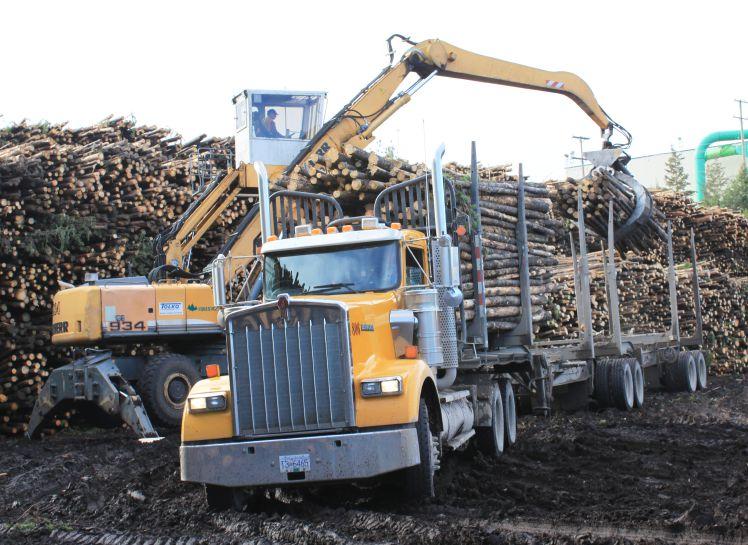
A Liebherr 934 with riser cab stacks small material. The agreement makes full use of all material and keeps the local economy humming.
the bonus is that much of the fibre that Tolko is bringing in from the woods would otherwise be left in the forest and burned. This biomass processing facility gives waste wood a chance to be processed into a usable product.
TANGLED WEB OF TRADE
As a wood pellet producer in British Colombia, Pacific
www.viessmann.ca
1-800-387-7373
biomass@viessmann.ca
BioEnergy is constantly renegotiating short-term contracts for its raw material. The plant’s location in Prince George provides a variety of players with whom to negotiate, but as long as the company is dependent on others to provide its feedstocks, it lacks a strong position in negotiations.
“We tend to negotiate both sawmill residuals and forest residuals with sawmills that have allocations of Crown tenures which give them both term and volume certainty on a percentage of their supply. We have neither of those things, so we find that the market is imbalanced when we go to negotiate contracts,” Bennett says.
Pacific BioEnergy had a forest licence, but the company wasn’t looking to simply harvest its own fibre to be processed in Prince George. Rather, the harvest goes to Tolko’s sawmill in Quesnel where the sawlogs are processed and the biomass-quality logs are chipped and traded on the pulp market. The only fibre that will make its way to Prince George is the sawdust out of Tolko’s sawmill and any chip fines from the chip processing.
“It’s an integrated web of contracts and trades that go on and it’s good for our business,” Bennett says. “It helps us minimize transportation, reduce costs and keep the fibre flowing to the best end-use facility.”
In the end, the facility will give the forest town a shot in the arm. Trade agreements support logging in the region, the sawlogs go to Tolko’s sawmill, chips go to local pulp mills and the sawmill and chip fines go to Pacific BioEnergy or are traded
Rising energy costs, concerned about your heating bills in 2015? Be proactive with a Biomass boiler.
Computer controlled and fully-automated, biomass systems from Viessmann feature industry-leading wood heating technology for safe, reliable and trouble-free operation.
n More than 60 Commercial Biomass boiler installations across Canada
n Outstanding Efficiency of up to 85%
n Eco-friendly and CO2-neutral
n Sustainable and Economical, wood is renewable and free of wide price fluctuations
n Stringent safety - built to ASME, Section IV and tested to CSA/UL Safety Standards
n Two Types Available - Pyrot (5 models) 512 to 1843 MBH, and Pyrotec (5 models) 1330 to 4268 MBH
n Biomass industry creates jobs in Canada.
Pellets Sawdust Woodchips Hog fuel
Pellet mills have had to work closely with logging contractors to get the cleanest possible material from their operations.
with Pinnacle Pellets to reduce shipping costs.
“There’s quite a morass of movement of fibre that goes along with that facility,” Bennett explains. “A lot of it is being traded locally. Some of it’s going to go to support Pinnacle’s facilities, some of it’s going to support the pulp mill, some of it’s supporting chip exchanges between Canfor and the pulp mill, but the bottom line is that it’s generating another 200,000 oven-dried tonnes of biomass into a marketplace that needs more wood.”
It’s a win-win partnership between First Nations, Tolko and Pacific BioEnergy that provides benefits and security to all three participants. As part of the arrangement, Tolko is building the facility alongside its sawmill.
“It was pretty complex – it took us at least two years to do the deal,” Bennett admits. “But we did it and everybody’s happy about it and it’s been a good partnership to date. Everyone’s committed to doing what they have to do under the agreement and everyone’s doing it.”
PROCESSING BIOMASS
Canadian Biomass made two visits to the site while it was in construction. During the first visit in October, much of the machinery was in pieces and it was difficult to get a good idea of how they would fit together. On the second visit in November, however, the facility was just waiting on a few extra touches. The first logs were fed into the debarker in early December.
BIOMASS PROCESSING
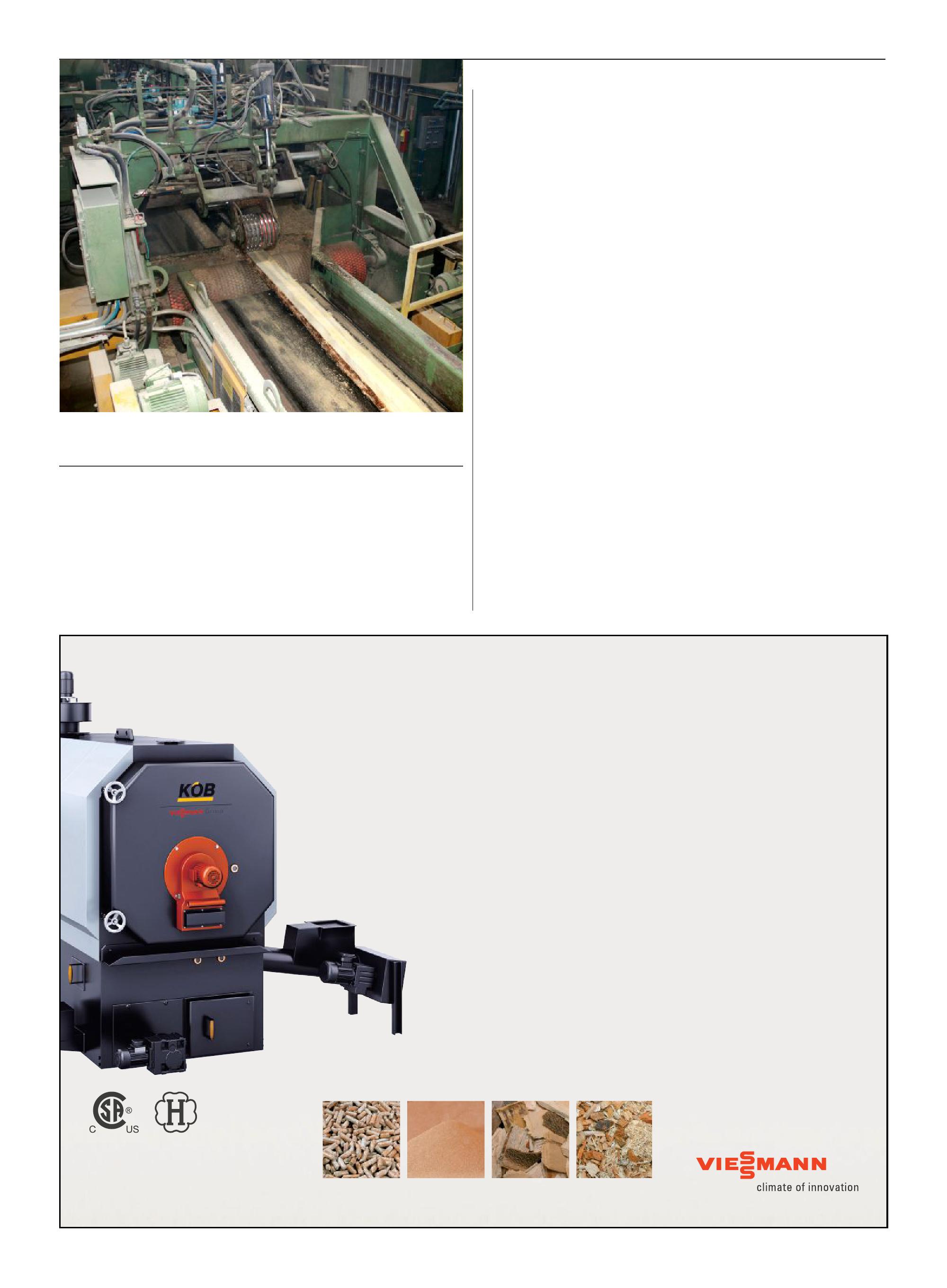
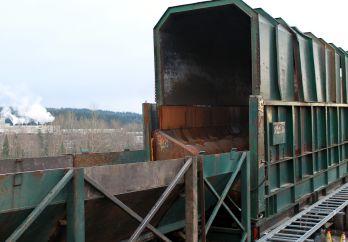
When the biomass logs arrive in the log yard, they are fed onto a hot log deck or onto a pile of inventory with a log loader and stacker. The deck is on an incline to meter the wood into the 60-foot Fuji King debarker. The logs are debarked with the debarking conveyor running underneath to take the hog into the existing sawmill system to incorporate the biomass hog with the sawmill hog.
Once the log exits the debarker, it moves over a set of infeed chains to run directly to an 84-inch CAE chipper. A conveyor brings the chips over a BM&M screen. Overs are sent back through the system while the chips travel a covered chip belt conveyor and are dropped into a storage bin.
Indicators tell the truck drivers which bin to haul while a level system notifies mill staff of the bin level. If there’s a hold up with the trucks, there’s a spot to store chips in the mill yard. It takes about an hour to produce enough chips to fill a truck; the system will fill between 14 to 18 trucks a day.
CanBiom0315-Kahl-2 21.11.14 10:15 Seite 1
In order to get the system operational, around 40,000 metres of biomass-quality logs had been stacked in the log yard since
KAHL Wood Pelleting Plants
August from logging sites that were within an economical trucking distance.
“We took advantage of the closer wood while we were operating there and now we’re moving further away,” Tolko’s fibre flow manager Eric Pascas explains. “So we’re pretty much going to be working off this inventory during the
commissioning phase and right through until break up.”
The arrangement is unique in the region, but it’s the kind of arrangement that may become more common as fibre in the Interior deteriorates. Pellet plants and paper mills are continuing to require feedstocks even as sawmills are
The partnership with Pacific BioEnergy will allow Tolko access to higher volumes of quality sawlogs.
cutting production. As it is, there is no easy model to follow – the distinction between sawlog and biomass log isn’t even black and white.
“We’re still trying to figure this thing out,” Pascas explains. “Part of it is getting it up and running. But then the other part of it is to take this log mix in terms of how we’re going to buck it and sort it, and slice and dice it to put roughly 20 per cent into the processing plant and the other 80 per cent into the sawmill.”
The facility is still gearing up. It is now running on one shift with plans to add a second shift in May when the logs thaw and debarking is more efficient. In the meantime, the sawmill is running at full capacity and the new partnership between Pacific BioEnergy and Nazko Logging (Nazbec) is working steadily through the winter with the security of a 14-year licence for 100,000 m3. •
Whitesand Waiting
Construction to begin in 2016 on ambitious biomass project
By Treena Hein
Tlike “revolutionary” and “game-changing” are thrown around a lot these days in the media and at dinner tables across the nation, but they really aren’t words that should be used lightly. So when they’re used here to describe a certain biomass energy project in northern Ontario, be assured it’s because they truly apply.
Picture a First Nation community in that region – in this case Whitesand, which is located about 250 kilometers north of Thunder Bay. Like many other northern communities in Ontario and
beyond, it’s completely reliant on a diesel generator for all its electricity – some of which is used to heat or partially heat buildings. The generator (supplied by the province’s electricity utility Hydro
One Remotes, and in this case, 1.1 MW in size) often runs near peak capacity in mid-winter, and can experience mechanical problems at any time.
But having this sort of power generation is not just a problem because it’s precarious. The small and limited amount of power supplied by the generator affects the lives of those in the community in many negative ways.
“It limits our economic development potential,” says Whitesand First Nation (WFN) community development officer David Mackett. “Our unemployment rate is very high and many people who live on reserve receive social benefits.
“As it stands, there is no real hope for economic development or meaningful employment.”
Having a great deal more power would therefore mean a great deal indeed. And if that power could be combined with the manufacturing of a renewable energy product that’s in very high demand – and amazing things like
Whitesand First Nation has already invested hundreds of thousands of dollars towards the development of a pellet plant.
Your global equipment supplier for the biomass industry
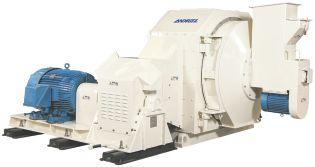
ANDRITZ is one of the world’s leading suppliers of technologies, systems, and services relating to equipment for the biomass pelleting industry. We offer single machines for the production of solid and liquid biofuel and waste pellets. We have the ability to manufacture and supply each and every key processing machine in the pellet production line.
“There will be jobs in forestry, plant operation and silviculture, which will raise the standard of living.”
the eventual production of fresh food – it is sure to go a long way towards changing everything.
Here is what’s in the works at WFN, with construction expected to begin in 2016. A biomass 3.64 MW combined heat and power plant will provide electricity to three communities (Whitesand, Collins and Armstrong), with the remaining power (electricity and steam) allocated to a wood pellet manufacturing plant of 60,000 tonnes annual capacity. Heat from the cogen plant (which will burn hog fuel and pellet production residuals) will be used to heat the pellet plant and dry the pellet feedstock. The entire facility is anticipated to provide 60 full-time and 60 seasonal (forestry) jobs.
“This project will provide us with a steady stream of revenue through pellet production and ample reliable electricity,” says WFN business development officer Craig Toset. “There will be jobs in forestry, plant operation and silviculture, which will raise the standard of living. It’s money in pockets, and it’s local use of local wood. There is an optimism now and a sense of opportunity, and people can’t wait until it’s all up and running.”
Toset says they have already received many calls expressing interest in purchasing pellets (the plant will be built next to the existing railway line to make transportation easy).
ANDRITZ Feed & Biofuel A/S Europe, Asia, and South America: andritz-fb@andritz.com USA and Canada: andritz-fb.us@andritz.com
www.andritz.com
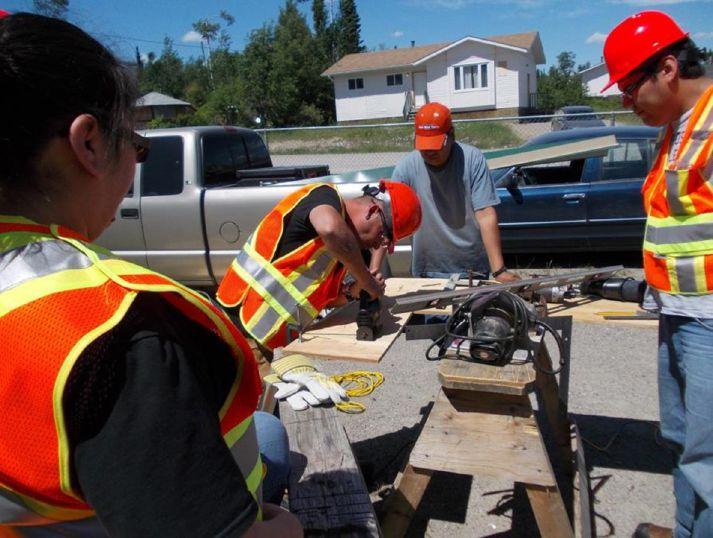
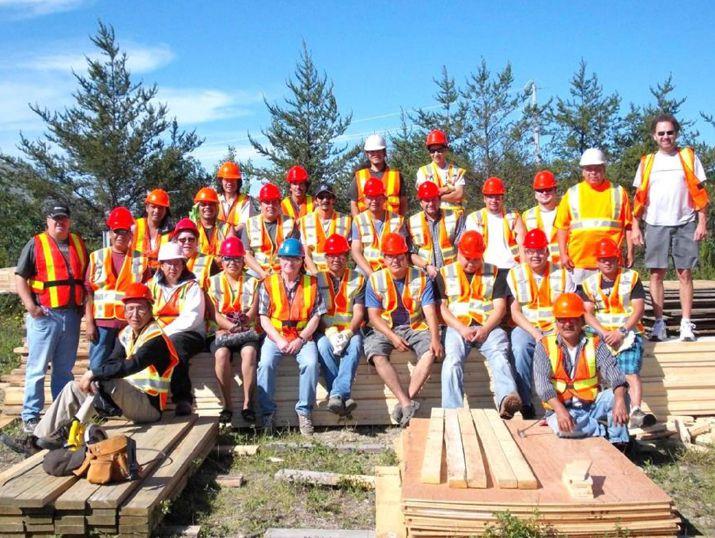
But there’s more. To prepare for people in the community to get these jobs, an exciting training program has been undertaken in collaboration with Confederation College in Thunder Bay. A greenhouse is planned, where waste heat will be put to good use growing healthy fresh food. A very small sawmill may be added so that pallets can be manufactured for the shipments of wood pellets. There is also hope that in the future, those Whitesand homes that aren’t already heated with wood can be converted to pellet heat.
Revolutionary and game-changing? Yes, indeed.
“It’s been really incredible, considering the fact that we are still some time away from starting production,” he says. “Each call is a boost and a sign that all the hard work that’s gone into the process to make this happen is worthwhile.”
Every northern community, no matter where it is across the country (or the world for that matter) needs jobs, energy and heat, notes Brian Kurikka, manager of applied research at Confederation College. “And there is a need to manage forests as well,” he says. “A project like Whitesand makes so much sense.” He adds, “Many of us in the north support Whitesand First Nation. Projects like these mean better energy security and reliability and
local long-term employment – multigenerational employment.”
A LONG ROAD
Those familiar with these types of projects will know that the road to breaking ground is a long and challenging one. In addition to the detailed engineering and feasibility studies, WFN also needed to acquire a Renewal Energy Approval (REA) from the government of Ontario. The requirements for an REA depend on the type of technology and facility, and Whitesand is categorized as “Thermal treatment - Class 3, commercial biomass burning.” In this case, the application has had to include site assessments on the topics of archaeology, water, surface water and “Natural Heritage.” Reports have been completed on effluent management, noise, design and operations, and plans have been finished for both construction and decommissioning. Consultation with municipalities, Aboriginal communities and the public was also a part of the long and costly process. “There hasn’t been anything that’s stood out as being more difficult than any other aspect so far,” Mackett says. “It’s just one step at a time.”
At this point (early February), the Whitesand team is negotiating a power agreement with Ontario Power Authority, Hydro One Remotes and the Ontario Ministry of Energy. Team members have
also begun working on capital financing, with examination into a wide range of funding options, including investors and government grants and loans. “Being the first in Ontario isn’t easy, but we’ve never given up,” Mackett says. “We’ve kept pressing, and it’s been quite an endeavor to get this far. There aren’t too many projects that can change a whole community like this one will. The energy production is green, the economic impact will be large, it’s First Nations ownership, so much that’s positive. It is game-changing.”
Perhaps this revolutionary biomass project will help start a revolution in biomass use across the country. Kurikka hopes so. While he obviously sees strong value in projects such as the one Whitesand is working on, he also sees value in simple biomass district heating projects as a good biomass option for many communities in the north. This is because the technology is readily available, and provides a high level of efficiency (Confederation College’s 1 MW wood chip district heating system, for example, is about 90 per cent efficient).
Kurikka believes however, that in order for biomass use to significantly increase in Canada, a great deal of infrastructure will need to be put in place. “We’re surrounded by wood in Canada,” he says, “and it’s the resource we used the least for domestic energy requirements.” •
Officials expect the facility to create around 60 full-time jobs as well as 60 seasonal positions.
Feeding the Flame
Identifying the best sources for harvesting biomass for biofuel
By Gabrielle Bauer
Theproduction of biofuel calls for large doses of patience. It can take several years to grow the trees and grasses, known as feedstock, that serve as the raw material for biofuel, and large swaths of land are required to grow these plants at commercially viable levels.
Here’s the problem: a large proportion of Canada’s most arable land is set aside for agriculture. Using this land for growing biomass would mean sacrificing food-producing crops, not to mention stirring up the thorny food-versus-fuel debate. In short, it’s a nonstarter. How then to procure the biomass to feed the emerging biofuel industry – efficiently and sustainably?
The recently launched Canada-wide trial of energy crops hopes to answer the question. Conceived and funded by BioFuelNet, the three-year trial seeks to identify the most propitious combination of feedstock and conversion technologies for the production of liquid biofuel. Partners also include Agriculture and Agrifood Canada and the Canadian Wood Fibre Centre, along with a few private partners.
The research will take place at four sites, strategically chosen to reflect Canada’s different climate and growing conditions: Nappan, N.S.; Guelph, Ont.; Kemptville, Ont.; and Edmonton, Alta. Growing the same species in these four separate regions will help the researchers determine the most – and least – hospitable growing conditions for the plants. The trial’s primary coordinator, Dr. Kevin Vessey of Saint Mary’s University in Halifax, plans to debrief with team members and support staff at least once a month through conference calls.
First challenge: what plants to use? Corn – a ready source of biofuels such as
ethanol – has acquired a bit of a bad rap, arguably for good reason: using corn for fuel diverts the crop from its important use as a food source.
“That’s why the new science is focusing on creating liquid fuel from biomass rather than corn,” says Dr. Naresh Thevathasan, research manager at the trial’s Guelph site. “The hard part is figuring out the best feedstock to provide that biomass.”
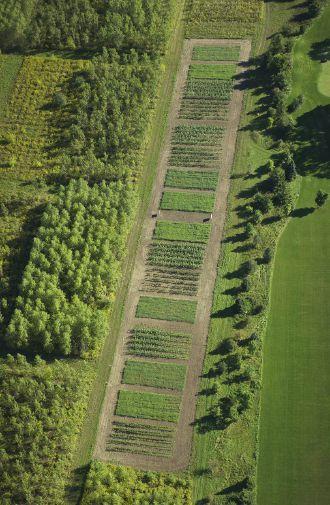
To this end, the pan-Canadian trial is focusing on two clones of hybrid poplar trees and two varieties of switchgrass – a combination the team hopes will provide the best balance of yield, convenience and flexibility. Poplars can grow fairly quickly, so trees planted today may reach two or three metres in height by the end of 2015, when the researchers plan to harvest the first crop. A bonus: “Once you remove the biomass, new shoots grow from the stump, so you don’t have to replant,”
says Dr. Thevathasan. The switchgrass, meanwhile, can be harvested annually. “We’re reducing the risk by having this mixture of biomass sources,” he explains. Not only can they harvest the two plants at different times, but “if a disease strikes the poplars, we can rely on the grass, and vice versa.”
Next challenge: where to grow the stuff. The land they’ve targeted to test their feedstock – categorized as Agricultural Capability Class 3 and 4 land – has lowergrade soil than agricultural land. “It’s ‘marginal land’ that has limitations such as stoniness, not much topsoil, excess water, or sloping,” says Dr. Thevathasan. Not surprisingly, this puts a ceiling on yield.
While fertilizers are an obvious way to boost productivity, they don’t do any favours to the environment. For the time being, the researchers will try to avoid using them, but Dr. Thevathasan
In order to determine if poplar is an option here in Canada, Dr. Thevathasan says that a complete life-cycle analysis of the production system is needed.
APPROACHING CRITICAL MASS
Several generations ago, biomass – especially wood – served as the primary source of energy for homes and industries in Canada. Low-cost fossil fuels have reduced the country’s dependence on biomass, such that they only supply about 4.7 per cent of our primary energy needs today.
That said, the industry is poised for a big leap. Canada’s forest industry is already making good use of biomass for the pulp and paper industry’s energy needs. Bioproducts such as bioplastics and glass fibre represent a still greater opportunity for biomass applications. By 2015, analysts expect the global market potential for emerging bioproducts will reach:
• Green chemicals: $62.3 billion (USD)
concedes they may need to go down that road. Throughout the project, they plan to keep track of how much fertilizer they may need, along with herbicides, insecticides fungicides, and fuel for farming equipment.
The team will also report on details of soil quality, rates of growth, rates of biomass removal, among other parameters. Arguably most important of all, they’ll assess the cost-effectiveness of growing these crops and selling them in the local market. “We’re monitoring a
range of inputs at all four test sites, such as labour, fuel, and pest controls,” says Dr. Vessey. “The goal is to conduct a ‘life cycle analysis’ of the production system.”
According to Dr. Thevathasan, many of today’s farmers hesitate to grow biomass to sell to the biofuel industry because they’re not confident they can turn a profit. By the end of the trial, he and his colleagues hope to have answers that can be put to practical use. •
Centre for Energy (http://www. centreforenergy.com/AboutEnergy/ Biomass/Overview.asp?page=6)
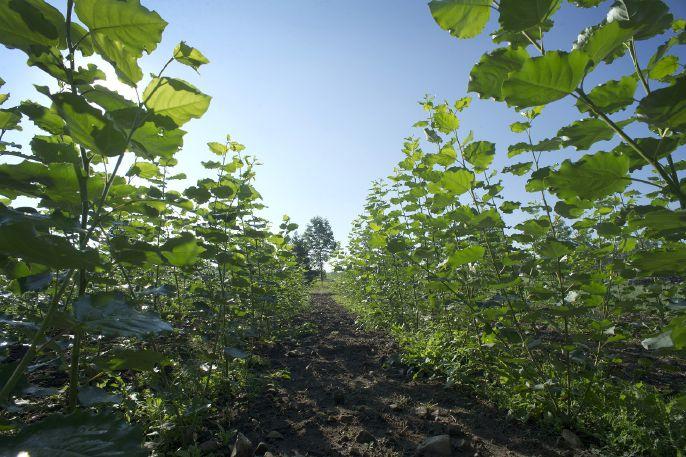
Switchgrass and poplar plantations on marginal land at the University of Guelph, central hub of the Pan-Canadian Feedstock Trials.
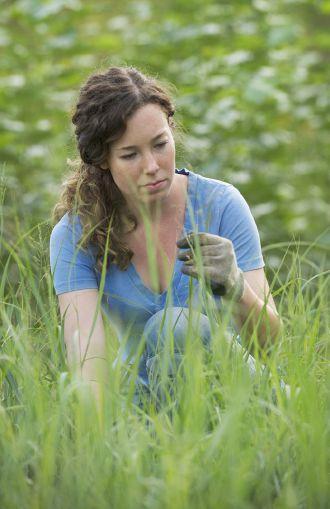
A BioFuelNet graduate student examines the switchgrass plantation.
Conveyor Fixes
10 tips for fixing conveyor belts
By Ryan Grevenstuk, senior product manager, Flexco
easy not to see a common problem when you’re looking at your belt conveyor system every single day. But a quick visual inspection can mean the difference between a productive day and a costly day for your aggregate operation. It’s also helpful to know what to look for when you’re walking the line because, sometimes, small irregularities can end up causing big problems.
Listed here are the top 10 conveyor challenges that you can identify with a simple visual inspection, what problems they can cause, and how to fix them in a
short period of time:
1. Look for: Damage to belt cleaners, premature wear of fasteners, carryback, mistracking of the belt.
Causes: Unskived splices, fasteners interfering with the cleaners.
Solution: Skive your belt before applying splices, when possible, and use low profile fasteners with a coined edge. Make sure all manufacturer’s instructions are followed when splicing, including proper squaring of the belt.
2. Look for: Premature belt splice failure, uneven lagging wear, early cover wear at trough line.
Causes: Poor transition distance.
Solution: Check your transition distances. Verify that your transition distances are in line with CEMA standards. Typically for fabric belts, CEMA recommends a transition distance of 4.0 times the belt width.
3. Look for: Belt ripping right behind the splice, premature belt failure.
Causes: Fasteners that are too large for the smallest pulley.
Solution: Check the minimum pulley (where the belt wraps 90 degrees or more) diameters against both the belt manufacturer’s recommendations as well
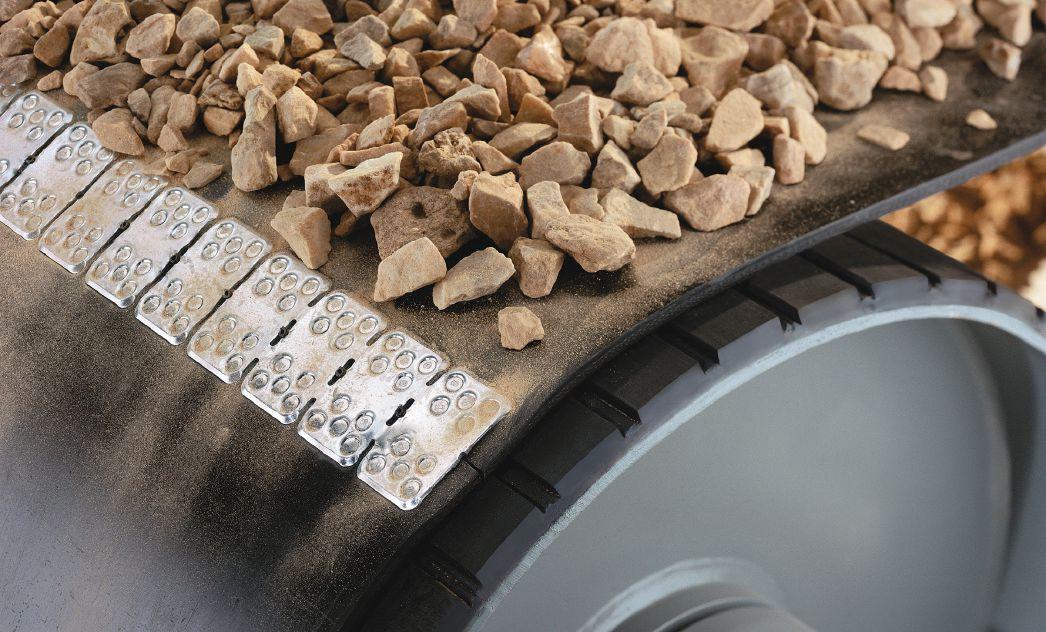
Pulleys that are too small in diameter can cause several problems, including slippage and splice failure.
If you notice your fasteners are wearing prematurely, skiving your belt may be the key to longer splice life.
as the fastener manufacturer’s recommendations. Using a pulley diameter that is smaller than the belt and/or fastener’s recommended size can produce excessive bending stresses with the possibility of belt splice failure.
4. Look for: Belt slippage.
Cause: Small pulleys.
Solution: The proper pulley diameter is crucial to belt performance. When it comes to slippage, the surface area where the belt goes from full tension (top) to partial tension (bottom) and “shrinks” puts an extensive amount of pressure on the lagging to move with it and prevent slip. While CEMA does not specifically recommend a pulley diameter by application, the engineers of conveyor systems make recommendations for pulley diameters based on the design of the conveyor. Often, the small pulley will be substituted to save costs without consideration for this belt shrink – if they minimize the pulley size, they also minimize the area in which the lagging can help the belt shrink as it wraps around the pulley. Reducing the size of the pulley too much may cause slippage.
Solution: Square belt using appropriate tools. Squaring the belt involves marking the centre of the belt at three-to five-foot
intervals approximately 20 feet from the splice area, drawing a centre line based on those markings, and using a square to draw a line that is perpendicular to the average centre line across the belt width.
Don’t forget to use a proper belt cutter (as opposed to a utility knife) for a safer, straighter cut.
6. Look for: Spillage at the load zone. Cause: Poor skirting, no impact protection.
Solution: Check and maintain skirting with easy to use system. Skirting is important in the load zone because it stops material spillage leaks, controls dust emissions and eliminates other resulting problems such as belt damage and mistracking. Seek out a skirting system that is easy to service and has corrosion-resistant components for less maintenance. You will also want to ensure that the proper impact protection is available and the belt is properly supported in the load area. Your impact protection should take into account lump weight and drop height, and should deliver maximum protection to your belt in the load zone.
7. Look for: Belt damage, conveyor structure damage.
Cause: Belt mistracking.
Solution: Identify the cause of the mistracking and install a belt trainer. Misalignment of rollers or pulleys, an incorrect splice, and material buildup are just a few of the things that can get your belt off track. Friction and tension have been proven to provide effective tracking when utilized together. Choose a tracker with a pivot and tilt design that provides friction and changes the tension profile of the belt.
8. Look for: Belt damage from seized rollers.
Cause: Seized rollers cut into belt.
Solution: Regularly inspect conveyor for seized (non-rotating) rollers. For steel
rollers, look for flat spots with sharp edges; these should be replaced immediately or risk cutting the belt. For composite rollers with a steel core, look for flat spots with sharp edges; these should be replaced immediately or risk cutting the belt. For composite rollers without a steel core, replace when feasible.
9. Look for: Belt cleaners not working properly.
Cause: Incorrectly mounted cleaners or belt cupped when passing by cleaners.
Solution: Ensure that the cleaners are mounted correctly by reviewing installation instructions. If the belt is cupped, introduce a hold down roller to flatten the belt and ensure proper cleaner to belt contact.
10. Look for: Poor cleaning edge and a dirty belt.
Causes: Poor attack angle, worn blade, or incorrect blade in reference to the material path.
Solution: Pole location is vital to the success of the cleaner because it permits the correct blade attack angle, encourages maximum cleaning performance, and ensures maximum blade life because the entire wear area of the blade can be used. Optimal cleaning can be attained by paying close attention to the material path of the belt, which is typically the centre 2/3 of the belt width. Choosing a blade that is only slightly wider than the material path can decrease blade wear and replacement.
Along with visual checks every day, operations should perform a yearly belt conveyor audit. The audit can be done by an internal team, but participation by a third party is helpful. Simple maintenance tasks that may have gone unnoticed can be identified and addressed by your team, or components can be replaced that will make your equipment run more efficiently. If nothing else, an audit can help keep your equipment running longer.
Over time, carryback, spillage, improper fastener selection, and mistracking can cause serious problems for your belt conveyor system. Although these may seem to be everyday issues, solutions are available and are integral to your operation’s success. All too often, plant operators don’t even realize there’s a problem until production is halted. In the end, it all affects the operation’s bottom line. Don’t let that happen to your operation. •
A Modest Success
After a decade, biorefining showing some progress
By Shaun L. Turriff
Canada’s
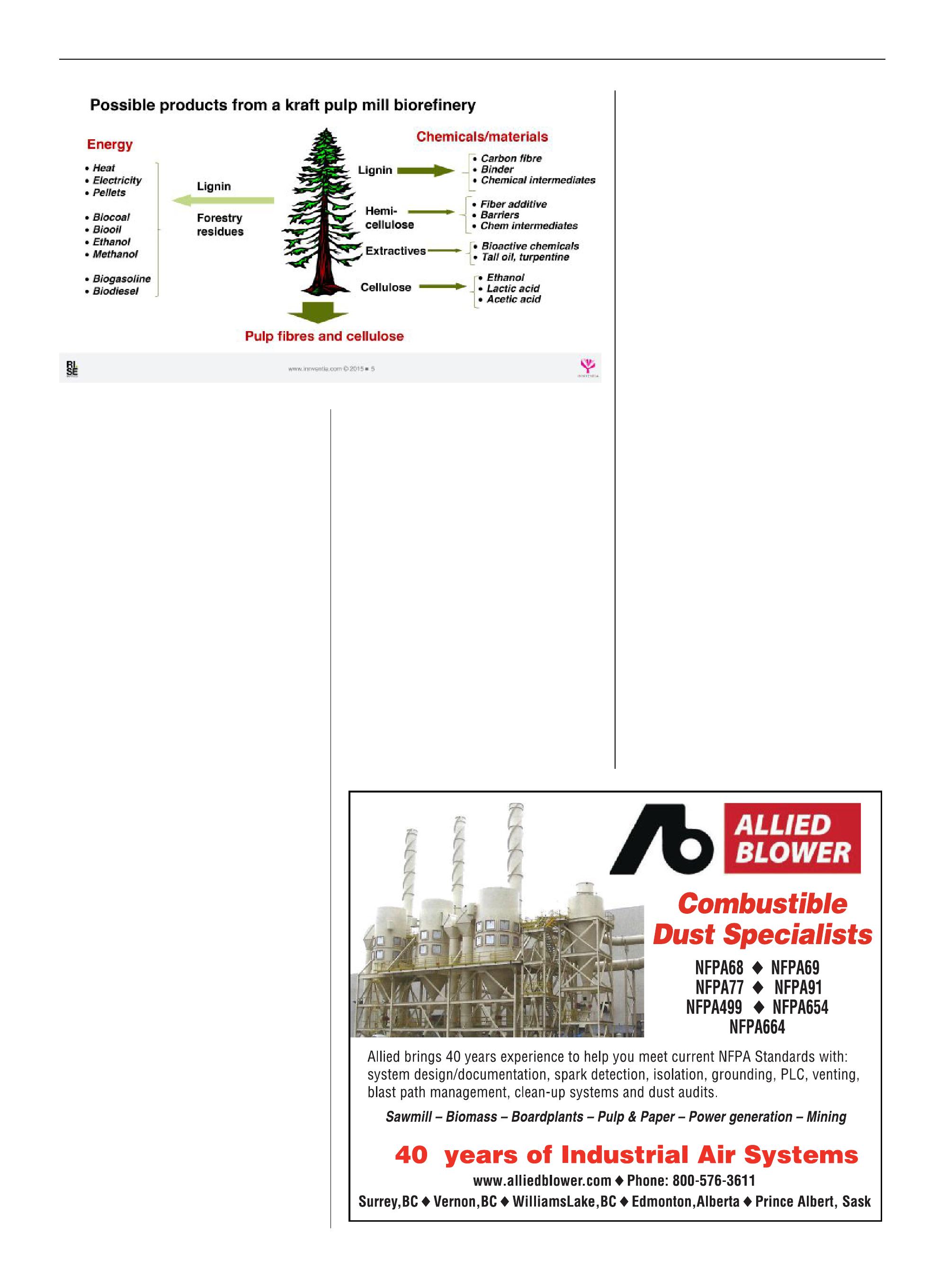
kraft pulp mills are uniquely suited to be the hub of what’s called the integrated forest biorefinery. Kraft pulp mills convert wood chips to cellulose pulp by chemical processes, and often produce green electricity for sale to the grid. With add-on processes, many of which are still at the demonstration phase, kraft mills could produce a wide range of bio-based chemicals and fuels.
Opening the International Forest Biorefinery Summit in Montreal in February, Sweden’s Peter Axegård highlighted the importance of the kraft mill as the heart of the integrated forest biorefinery (IFBR). Axegård is vice-president and director of the biorefining business area of Innventia, a research institute based in Sweden. He noted that kraft mills represent a large amount of infrastructure worldwide, and working with that existing infrastructure makes more sense than launching greenfield projects. Further, kraft mills have a major advantage in being able to handle all manner of plant-based feedstocks and in producing major polymers – lignin, cellulose and hemi-cellulose – as part of their regular production process. In particular, he stated that kraft pulping must remain the central focus of the biorefinery, with the production of pulp supporting the production of higher-value products.
Axegård’s keynote speech also presented new high-value products under development by Innventia, including lignin-based carbon fibres and other lignin products, microfibrillar cellulose (for production of clear film) and textile fibres made from cellulose, as well as second generation sugar intermediates (ethanol, lactic acid, acetic acid) and biodiesel or biogasoline from lignin.
One of the more sobering moments in Axegård’s presentation, despite his own declared optimism, came as a reminder of the timelines associated with this sort of new product and process development. The LignoBoost lignin extraction process, his example, was conceived in 1996, and commercialized in 2013, some 17 years later. This was a timely reminder – just five years ago, when this conference first began, many industry experts were claiming that much of the biorefining technology being discussed then was still 10 to 15 years from commercialization.
A presentation by Adriaan van Heiningen, introduced as the father of the biorefinery concept, catalogued his thoughts on the state of the biorefinery, 10 years after he first defined it. Like Axegård, van Heiningen sees the kraft mill as central to the biorefinery. In his talk, van Heiningen noted the few commercial successes in biorefining – Domtar‘s
Plymouth, N.C. mill, and Stora Enso’s Sunila mill in Finland, both using Valmet’s LignoBoost technology to produce lignin; West Fraser’s Hinton, Alta. mill, using FPInnovation’s Lignoforce technology to produce lignin, and UPM’s Lappeenranta biorefinery, producing BioVerno – a biodiesel from tall oil.
Among those processes that failed to launch – such as the idea of pre-extraction of hemi-cellulose or black liquor gasification – views of experts at the International Forest Biorefinery Summit were often that the failed process had a strong negative impact on the mill’s production of pulp, or very poor economics. For van Heiningen, the future of the kraft pulp IFBR lies in the improvement of the pulping process, with gains in either production and/or quality, to cover the cost of feedstock and energy increases for the new product streams. Sticking close to conventional wisdom, van Heiningen
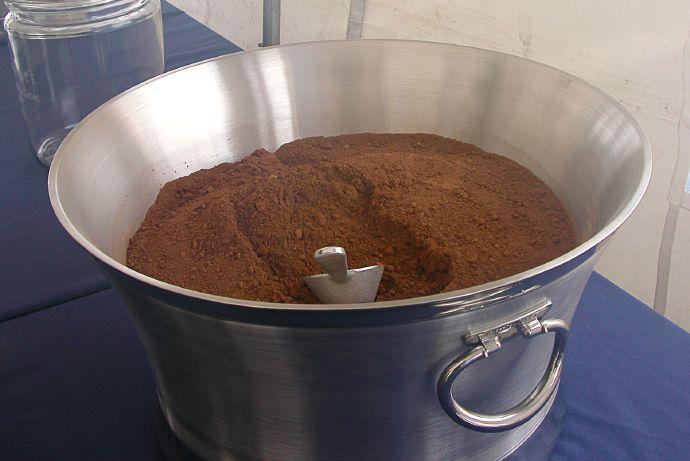
Lignin displayed for visitors at the grand opening of Domtar’s LignoBoost facility in Plymouth, N.C. Photo courtesy Pulp & Paper Canada.
focuses on hemi-cellulose, lignin and sugars – all with further downstream potential – as the value-added products of an IFBR. Overall, van Heiningen categorizes the IFBR as a modest success and sees growth of the concept in the future, especially as greenhouse gas emissions continue to be a worldwide concern and continue to function as a policy driver.
BIOMASS SUPPLY CHAIN NEEDS BETTER INTEGRATION
Evelyn Thiffault of Laval University discussed issues surrounding policy and greenhouse gas emissions in her talk on biomass supply chains and bioenergy. Thiffault highlighted Canada and Australia’s success in developing niche bioprojects even in the absence of strong policy support, a sentiment echoed by other presenters at the Summit.
Thiffault says that the mobilization of more biomass needs better integration, where even the harvester knows what is being harvested, for which purpose and where to send it. Further, conversion techniques need to be improved to better handle feedstock variation. Liquid fuels such as biodiesel and bioethanol, for Thiffault, offer the lowest substitution cost, and for now are a solid option.
Luckily, Thiffault says, employment and gross domestic product (GDP) – the major indicators of economic impact –benefit from bioenergy projects, although other socioeconomic indicators are mixed. Worker safety and land-use change are often cited as negative impacts of increased biomass mobilization. Procuring forest biomass is an integral part of silvicultural practices within a forest management strategy and does not have to have a
negative effect on the ecosystem, she counters. A lack of information among the general public in this area is a significant barrier, and Thiffault encouraged all attendees to ensure that the relevant information be clearly communicated.
These themes of integration in harvesting, public support and replacement cost all had echoes in other presentations during the summit.
Jean-Philippe Jacques, representing the InnoFibre research centre, suggested that significant cost could be saved in biomass treatment and transport by using regional biomass conditioning platforms, a combination of mobile grinder and screen. These have the benefit of mobility, control of particle size, removal of contaminants and fines, and a reduction
of conditioning and transportation cost. This sort of technology, integrated into current practice – or the mobile pyrolysis units suggested at last year’s event by Jean Paris – could result in the sort of novel harvesting techniques needed to improve both biomass mobilization and the use of dead trees in the industry.
Closing the summit, a panel of industry experts from pulp and paper companies, end users, governments and associations discussed means of producing – and then selling – high-value products from an IFBR. Highlights of the panel included Tom Browne, FPInnovations, suggesting that the primary focus of the biorefinery must be chemicals, marketed directly to the end user, with energy or fuel as a secondary product of those processes. While acknowledging the importance of drop-in biofuels based on the immensity of existing infrastructure, he suggested that biofuel would always suffer against fossil fuel in value. Martin Fairbanks, Resolute, highlighted the industry’s depth of knowledge in forestry and forest products while lamenting the public’s misunderstanding of the industry’s green credentials. Common issues raised included the need for consistency in the end product to compete with current products (largely from the petrochemical stream), the need for a clear, consistent, long-term policy environment to mitigate investor risk, and the overall lack of mature technologies.•
VECOPLAN NAMES NEW CSO
Bob Gilmore has been appointed managing director and chief sales officer at Vecoplan, LLC. As a managing director, he joins Len Beusse, managing director and COO, on the strategic planning team charged with positioning Vecoplan for sustainable longterm growth, as well as day-today management of the company. Gilmore’s responsibilities as CSO include the supervision of all internal and external sales staff, and overseeing the expansion of Vecoplan markets.
The move was made in conjunction with Marty Kennedy’s decision to retire. One of the founding members of the company, Kennedy announced his retirement on Jan. 1. He has agreed to continue working with Vecoplan, in a consulting capacity, during the transition.
Gilmore earned a BA in economics from the University of North Carolina at Charlotte in 1986 and an MBA in management from the Wake Forest University school of business in 1996. His career includes a stint as vice-president and general manager of GAI Recycling – a privately held plastics brokering company, where he led a growth initiative that successfully positioned the
Industrial IP Cameras
organization for acquisition. Gilmore joined Vecoplan in 1998 as a sales executive and rose to become director of business development with the company before accepting his new appointment. Gilmore brings over 28 years of practical experience in both sales and management to his new position.
MARTIN ENGINEERING LAUNCHES NEW BELT CLEANER
Manufactured with Martin Engineering’s CARP (Constant Angle Radial Pressure) technology to maintain the most efficient cleaning angle throughout its service life, the Martin QB1 Cleaner HD features a no-tool replacement process that can be performed safely by one person in less than five minutes.
“We’ve simplified the manufacturing process and also re-engineered the blade itself,” explained global engineering manager Paul Harrison. “The new profile will be less complex to produce, and because it can be roll formed or manufactured on a press brake, it will be easier to source throughout the world from any Martin Engineering manufacturing site.”
The reduced weight will facilitate easier blade replacement, and the one-pin mounting system helps reduce downtime for maintenance. To replace the QB1, maintenance personnel pull the locking pin, unclamp the bracket and slide the blade out of the mainframe. The new precut blade is slipped onto the square mainframe and clamped.
CARP technology is exclusive to Martin Engineering, and is designed to keep the blade at a consistent angle and pressure against the belt. Typically set at about 2 PSI (13.8 kPa) for the QB1 HD, the low blade-to-belt pressure helps protect the belt, splice and clean itself. As the blade wears, neither the surface area nor the angle is compromised, ensuring maximum performance throughout its life.
The QB1 HD is available in lengths of 18 to 96 inches (457 to 2438 mm) and can also be ordered in 10-foot (3.05 metre) slugs, allowing distributors or customers to cut to length for increased versatility.
WOOD FIBRE BOTTLE
Denmark and the Technical University of Denmark, to develop a biodegradable and bio-based bottle made from sustainably sourced wood fibre, to be known as the “Green Fiber Bottle.”
All materials used in the bottle, including the cap, will be developed using bio-based and biodegradable materials – primarily, sustainably sourced wood-fibres – allowing the bottle to be responsibly degraded.
Commenting on the announcement from Carlsberg HQ in Copenhagen, Andraea Dawson-Shepherd, senior vice-president for corporate affairs, said: “At Carlsberg we are firm believers in the importance of a circular economy in ensuring sustainable future growth and development on our planet, and today’s announcement is excellent news. If the project comes to fruition, as we think it will, it will mark a sea-of-change in our options for packaging liquids, and will be another important step on our journey towards a circular, zero-waste economy.”
This latest initiative forms part of the Carlsberg Circular Community (CCC) – a cooperation between Carlsberg and selected partners whose aim is to pursue a circular, zero-waste economy by using the Cradle to Cradle framework when developing and marketing new products.
For up-to-date information, supplier news and new products, visit canadianbiomassmagazine.ca
EVENTS BOARD
April 14-16, 2015 • Argus European Biomass Trading London, UK www.argusmedia.com/Events/Argus-Events/Europe/
April 20-22, 2015 • International Biomass Conference & Expo Minneapolis, Minn. www.biomassconference.com
Managing the Risk attendee.gotowebinar.com/ register/3359345937655600385
June 23, 2015 • Webinar – Dust Mitigation II
Managing the Dust attendee.gotowebinar.com/ register/8977496312846839809
WOpportunities in Ontario
Province open to expansion of pellet industry
By Bill Mauro, Ontario Minister of Natural Resources and Forestry
hen it comes to sustainable forestry practices, Ontario is a world leader with approximately 80 per cent of our forests being certified. Thanks to this, Ontario is well-positioned for biomass opportunities from our Crown forests.
There’s growing demand in the marketplace for green products and third-party certification of wood that can provide Ontario’s forestry sector with a competitive advantage.
For example, wood pellet production is attracting investment in Ontario and creating employment in several forest-dependent communities. Our province is well-positioned to compete.
In fact, it is Ontario’s sustainably managed forests that are a key competitive strength for investors active in the market for industrial wood pellets.
Jurisdictions adopting pellet use to meet renewable energy targets require sustainable forestry practices as a condition for market entry. Ontario offers that strength.
Already, our province is seeing significant investment in pellet production to feed the expanding European market for industrial pellets. As Europe’s major utilities implement co-firing to cut back on coal use, they are adopting renewable biomass as fuel.
Ontario works closely with its forest tenure holders to ensure wood is made available for a range of economic opportunities, including new pellet mills. An up-to-date summary of available wood supplies is maintained by Ontario in co-ordination with its forest industry, accessible at https://www.ontario. ca/document/available-wood-supply-re-
port-management-unit-summary.
Ontario strongly supports putting our Crown wood resources back to work, and we see pellet mills playing a role in a revitalized industry.
The Ministry of Natural Resources and Forestry is committed to supporting the sustainable use of forests for a healthy forest products sector and thriving forest-dependent communities. Growth in Ontario’s wood pellet industry is validating the soundness of our management practices.
Ontario also played a major role in converting northern Ontario coal-fired power plants to run on biomass. Our province lays claim to North America’s most significant climate change initiative, having completely phased out coal in electricity generation. By converting two of its coal-fired plants to biomass, Ontario achieved a continental first. The Atikokan Generating Station is completely converted to wood pellets, while the Thunder Bay Generating Station is powered by advanced biomass.
It is reasonable to anticipate other jurisdictions will follow Ontario’s lead by converting coal to biomass or, like Europe, to co-firing.
Sustainably harvested and manufactured wood bioenergy is a low-carbon solution since forest regeneration sequesters carbon through regrowth, offsetting emissions from production. This renewable option also emits significantly lower levels of ash, nitrogen, sulfur and other heavy metals harmful to the environment.
Ontario is already capitalizing on this valuable opportunity. New investments in pellet production capacity are a welcome development — both for the industry and
our forest-dependent communities. This market is expected to grow as national and sub-national governments adopt renewable energy requirements.
The industrial pellet market is a major opportunity Ontario’s forest products sector is poised to capitalize on. But the residential pellet market is an opportunity, too. In parts of North America and southern Europe, for example, residential pellet use is competing favourably with home heating oil. Here in Ontario, we see the potential for some remote communities to substitute wood pellets for diesel in power generation.
Ontario government ministry partners are working jointly to open doors for the residential, institutional and commercial pellet sector. Through activities such as case studies and pilot projects and permitting process reviews, our ministries are collaborating to ease the way.
My ministry works with forestry companies, environmental organizations, First Nations and communities to ensure our forest resources are put to economically, socially and environmentally sustainable use. We also support Ontario’s commitment to renewable energy and to make Crown land available for biomass projects. Our sustainability analyses indicate there is significant room within Ontario’s sustainably managed forest to accommodate expected demand for forest biofibre.
My ministry welcomes growth in the wood pellet industry and the opportunity it offers. Industry, employees and communities will benefit. So, too, will the environment. •
Grinder + Hammermill
Rotochopper multi-stage grinding systems offer singlepass simplicity for producing animal bedding and short fiber fuels. Wood waste goes into the primary grinder and comes out of the in-line hammermill at finished specifications—no additional handling or hassle.
• Most uptime
• Cleanest operation
• Easily integrated into picking lines
• Unmatched particle size control
• Lowest cost per ton
How can a Rotochopper grinding system maximize the value of your wood waste? Contact us today to learn more.
Bandit Builds your Bottom Line.
The savings in running a Bandit Microchipper should come close to making your monthly chipper payment.
Energy Efficiency.
Our chippers fully load trailers without the need for an auxiliary blower or accelerator, which makes them 30% more fuel efficient. Accelerators pull 80 to 100hp, plus they require regular maintenance. With a Bandit, you’ll average above 3 tons of chips per gallon of fuel.
A Higher Yield.
Bandit’s new Clean Feed System increases production because of the system’s superior pulling and crushing power, and it nearly eliminates the discharge of chips under the feed system, increasing yield by as much as 5%. It’s like giving yourself a 5% raise. Plus you eliminate the mess.
More Uptime.
Bandit whole tree chippers are known for their productivity and reliability. That is why we guarantee our chipper drum and feed systems for 5 years. We call it our “GUTS” warranty, which also includes a 5-year warranty from our engine supplier. Contact us and lets us show you why your next whole tree chipper should be a Bandit. 1-800-952-0178 or visit us online at www.banditchippers.com
Micro chips from a Bandit are the most preferred by the pellet mills –nearly all are 3/8”-minus and most are ¼”-minus. Bandit’s Card Breaker system reduces oversized material and is easy to install and remove. Bandit’s new proportional drive provides a continuous flow of material through the chipper and adds to the quality of the microchip. And if markets change, it is simple to convert a Bandit Microchipper to produce a ¾” fuelwood chip.