COOLING PRODUCT SHOWCASE CHILLED BEAMS: A SUSTAINABLE SOLUTION PLUMBING INSPECTIONS A CANDID VIEW

23 RD ANNUAL SERVICE
VEHICLE REPORT
HEAVY-DUTY CHANGES IN NEW LINEUP

COOLING PRODUCT SHOWCASE CHILLED BEAMS: A SUSTAINABLE SOLUTION PLUMBING INSPECTIONS A CANDID VIEW
23 RD ANNUAL SERVICE
VEHICLE REPORT
HEAVY-DUTY CHANGES IN NEW LINEUP
HIGH EFFICIENCY CIRCULATORS: THE NEW NORM TURN BUILDING DATA INTO REVENUE

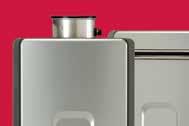



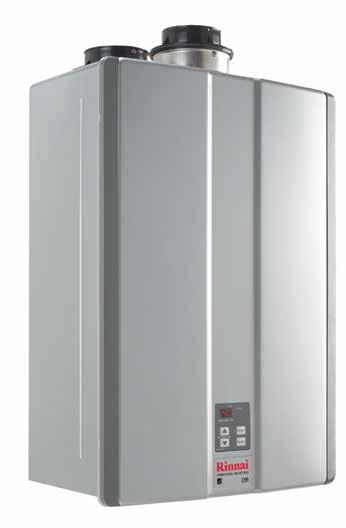
Rinnai’s Demand Duo™ Commercial Hybrid Water Heating System is the smart choice when it’s time to replace a standard tank. Featuring a part-tank, part-tankless design, the Demand Duo offers the best of both technologies in a quick and easy upgrade that delivers an endless supply of hot water.
The Rinnai Demand Duo pairs a durable, energyefficient 119-gallon storage tank with a Rinnai C199 tankless unit, creating a direct replacement solution with connections similar to most high-efficiency tanks that provides continuous hot water. This means the Demand Duo is simple to install and keeps pace with an establishment’s hot water needs – from brief, high-spike draws to a supply that is ready to go the distance, day in and day out.
Because the Demand Duo’s heat source is placed outside the tank, it actually offers more water heating capacity than traditional units. Furthermore, the removal of the heating element
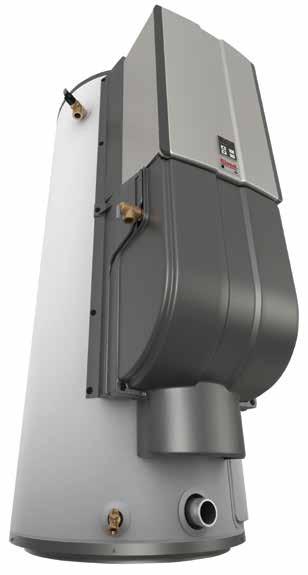
from inside the tank eliminates thermal stress on the tank itself, lengthening the life of the unit and its ability to consistently output hot water.
In fact, Rinnai’s warranty on the Demand Duo is twice that of traditional commercial tanks (6-year heat exchanger and tank, 5-year parts, 2-year labor), and it is backed with a No Risk Satisfaction Guarantee.*
Key features:
• Built standard with 199,000 BTU C199 commercial tankless water heater
• Ultra low NOx compliant
• Commercial ENERGY STAR® certified
• Multiple venting options (PVC/CPVC, Room Air, Concentric, Common Vent)
• System weight up to 250 lbs. lighter than competitive units
* Rinnai guarantees that its Demand Duo™ will perform to specification. If within the first 30 days after installation you find it does not perform as stated and you are not 100% satisfied with the Demand Duo™, Rinnai will refund you the cost of the product, and installation labor. Rinnai reserves the right to verify correct installation prior to refund. For complete information and details regarding our warranty, visit rinnai.us.






























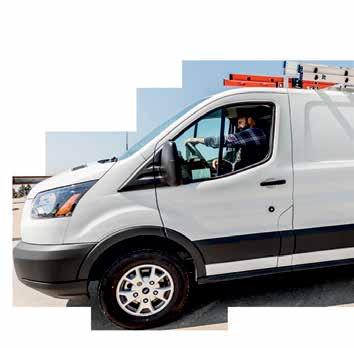
When you have the cargo capacity that ts your business, there’s no limit to where you can go. Ford Commercial Vehicles have the right one for yours. The full-size Transit offers two wheelbases, three heights and three lengths. The compact and versatile Transit Connect delivers a car-like drive with cargo space to spare. Ford has something more: specialists who can help make choosing and up tting the van you need for your business easy. We’re sure you’ll like the sound of that. FORD.CA/BUILTFORBUSINESS
















16 HEAVY-DUTY CHANGES IN 2017 OFFERING
While consumer vehicles are constantly being tweaked to capture buyers’ interest, commercial vehicles are more about practicality than pizzazz. By
Jil McIntosh
By Spencer Fuller

By Robert Waters
41 CIRCULATORS
THE NEW NORM By John Siegenthaler
62 PLUMBING A TALE OF TWO INSPECTIONS
It is time to return to the practice of hiring experienced tradespeople to handle the job. By Steve Goldie


64 TECHNOLOGY THE SECRET OF TURNING DATA INTO REVENUE
The time is right to explore IoT capabilities and the benefits they can deliver to customers. By Matt
Gates
66 COOLING A LESSON IN SUSTAINABILITY
HVAC system with chilled beams contributes to healthy learning. By Shawn Sinnie
70 WHAT AM
HPAC’s February What Am I? contest winner is featured in this issue. Check out the May mystery product for your chance to win a TLM99s Laser Distance Measurer from Stanley.
There is a great vibe in the industry these days as organizations and businesses put a renewed effort into human resources. The YES group, The Women’s Network and career fairs, all of which appear in news items in this issue, are just a few indicators of a will to revitalize the mechanical industry.
At the MCEE show, which was held recently in Montreal, students showed up in droves and their keen enthusiasm spoke volumes for the next gen workforce. Greeting them with the same interest as one would a current customer is an investment in the future. Those young people could very well be working for you, or buying from you, in the not too distant future.
It is not necessary to repeat stats regarding an aging population and a diminished skilled trades pool–we all know it. We hear it daily. What we do not hear much about are mechanical contractors and plumbers who are working at, and are recognized for, reversing that trend. This makes Patrick Waunch’s win at the Canadian Construction Association annual meeting (see p8) that much more significant.
It is refreshing to see many positive initiatives by industry stakeholders. Consider hosting a career day at your local school and start them young–before they set off on an educational path and career that will likely prove to have less portability, fewer opportunities for growth and less income potential.

Editor

As I work in my very chilly house while waiting for a utility HVAC partner to relight my gas appliances (boiler, fireplace, stove and dryer), I am compelled to remind contractors to make the call before digging. A gas line break, in this case the result of a landscape contractor’s overzealous digging in the neighbour’s yard, is avoidable as is the inconvenience and risk placed on other property owners. Ironically, April was “Dig Safe” month here in Ontario.
If you need to make that call, http://call811.com service allows you to access damage prevention information, local contacts and rules for safe digging across Canada. It presents as a U.S. resource but does include provincial contacts.
Remember that homeowners, your clients, are responsible to ensure their contractors have contacted the appropriate party to request a locate before starting any excavation; it is the law. As a professional it falls to you to ensure that has been done. You really do not want to be the guy who is left to face the music if a line is damaged.
Postscript: Utility technician arrived; appliances fired up; and the boiler was red tagged for a gas to water bonding issue (code change post-installation) –all in all a blockbuster 24 hours..
HPAC MAGAZINE 80 Valleybrook Drive, Toronto, ON M3B 2S9 TEL: 416.442.5600 FAX: 416.510.5140 www.hpacmag.com
EDITOR
EDITOR
CONTRIBUTING
SALES & MARKETING COORDINATOR
ASSOCIATE PUBLISHER
ACCOUNT MANAGER
MEDIA DESIGNER
ACCOUNT COORDINATOR
CIRCULATION MANAGER
PUBLISHER VICE PRESIDENT
COO PRESIDENT & CEO
Kerry Turner (416) 510-5218 KTurner@hpacmag.com
Michael Power mpower@hpacmag.com
Kim Rossiter (416) 510-6794 KRossiter@hpacmag.com
David Skene (416) 510-6884 DSkene@hpacmag.com
Stephen Kranabetter (416) 510-6791 skranabetter@hpacmag.com
Emily Sun esun@annexweb.com
Barb Vowles (416) 510-5103 bvowles@annexbizmedia.com
Urszula Grzyb (416) 442-5600 ext. 3537 ugrzyb@annexbizmedia.com
Peter Leonard (416) 510-6847 PLeonard@hpacmag.com
Tim Dimopoulos (416) 510-5100 tdimopoulos@annexbizmedia.com
Ted Markle tmarkle@annexweb.com
Mike Fredericks
PUBLICATIONS MAIL AGREEMENT NO. 40065710
Heating Plumbing Air Conditioning (established 1925) is published 7 times per year by Annex Publishing & Printing Inc. HPAC Magazine is the leading Canadian business publication for the owner/manager of mechanical contracting businesses and their supply partners.
ISSN: 0017-9418 (Print) ISSN 2371-8536 (Online)
Contents Copyright © 2017 by Annex Publishing & Printing Inc. may not be reprinted without permission.
SUBSCRIBER SERVICES: To subscribe, renew your subscription or to change your address or information please visit us at www.hpacmag.com.
Subscription Price per year: $41.95 (plus tax) CDN; Outside Canada per year: $81.95 US; Elsewhere: 1 year $89.95; Single copy Canada: $5.00 CDN. Heating Plumbing Air Conditioning is published 7 times per year except for occasional combined, expanded or premium issues, which count as two subscription issues.
MAIL PREFERENCES: From time to time we make our subscription list available to select companies and organizations whose product or service may interest you. If you do not wish your contact information to be made available, please contact us via one of the following methods: Tel: 800.387.0273, Fax: 416.442.2191; E-mail: vmoore@ annexnewcom.ca; or by mail: Privacy Office, 80 Valleybrook Dr., Toronto, ON M3B 2S9.
HPAC Magazine receives unsolicited materials (including letters to the editor, press releases, promotional items and images) from time to time. HPAC Magazine, its affiliates and assignees may use, reproduce, publish, re-publish, distribute, store and archive such unsolicited submissions in whole or in part in any form or medium whatsoever, without compensation of any sort.
NOTICE: HPAC Magazine, Annex Publishing & Printing Inc., their staff, officers, directors and shareholders (hence known as the “Publisher”) assume no liability, obligations, or responsibility for claims arising from advertised products. The Publisher also reserves the right to limit liability for editorial errors, omissions and oversights to a printed correction in a subsequent issue. HPAC Magazine’s editorial is written for management level mechanical industry personnel who have documented training in the mechanical fields in which they work. Manufacturers’ printed instructions, datasheets and notices always take precedence to published editorial statements.
We acknowledge the financial support of the Government of Canada through the Canada Periodical Fund of the Department of Canadian Heritage.
Proud member of:


So technologically advanced , we probably should have made it harder to install.
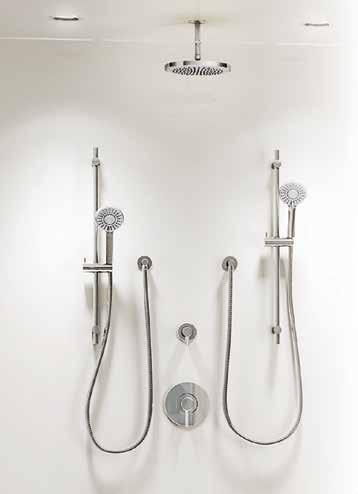
Introducing the new Beale® Selectronic® Touchless Faucet, with intuitive, hands-free operation that easily converts to manual. Discover more at americanstandard.ca
• Beale® Selectronic® technology utilizes same proven sensor used in commercial faucets
• Re-Trax™ and Dock-Tite™ features for excellent retraction and secure docking of spray head

• Durable metal construction
• Ceramic disc-valve for drip-free performance
Mechanical contractor Patrick Waunch, who is president and CEO of Rambow Mechanical in Kelowna, BC, is the recipient of the Canadian Construction Association’s 2016 CCA Trade Contractors Award. The association cited Waunch’s “infectious enthusiasm and dedication to the growth and improvement of the industry, the association and the trade contractors council.”
Known for his tireless work to encourage growth in apprenticeship programs, Waunch oversaw and contributed to the update of a resource that clarifies the prospective responsibility that trade contractors may be assigned vis-à-vis design in CCA 53 A Trade Contractor’s Guide and Checklist to Construction Contracts. He also led the development and adoption of the CCA policy statement on the naming of subtrades.
Waunch recently shared his insights and views with HPAC. HPAC What prompted your commitment to apprenticeship training?
PW When I originally started in the plumbing trade in Edmonton, Alberta as an apprentice I personally saw the value of the additional Provincial Government training. It was something not taught on the jobsite. The knowledge you received prepared for strong decision-making and leadership qualities for future projects.
HPAC What do you say to HVAC/R and plumbing business owners who resist supporting apprenticeships, some citing: They will just leave and start a competing business; I cannot afford to carry guys for three to four years.
PW I feel that businesses that do not support apprenticeships miss out not only in the financial gain but also personal satisfaction when the apprentice achieves their goals. If an apprentice moves on and starts his or her own business, be proud that you helped them achieve their goal.
The first two years of apprenticeship does cost a company additional journeyman time for training. The Provincial Government helps out with tax rebates. The real benefit is when the apprentice achieves their third and fourth year, they have enough knowledge to be an excellent asset to the company plus the Federal Government helps with assistance both for the individual and company.
HPAC Do you see a more expanded role for government in apprenticeship programs?
PW From both a provincial and national perspective the government should play a larger role in the programs. British Columbia, through BCCA (British Columbia Construction
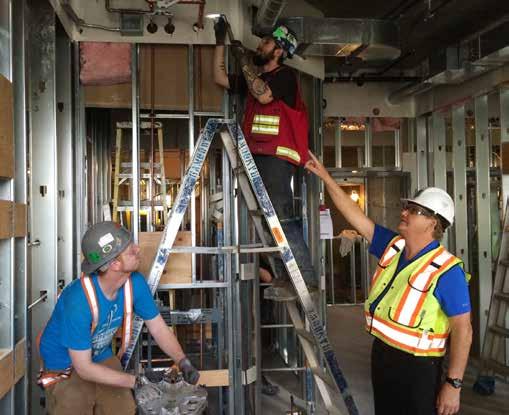
Patrick Waunch (right) instructs apprentices soldering copper. With a focus on industrial/commercial HVAC/R, plus plumbing in new and retrofit applications, Rambow offers apprentices a range of experiences.
Association), started Project Shop Class in which we raised and distributed about three million for shop class equipment and building on that effort, the BC Government announced a $15- million fund to also assist with shop class equipment for a total of $18 million across BC. If we want to encourage students into the trades, we need the most updated and proper equipment to encourage innovation in our industry.
HPAC The skilled trades are undersold to young people. What has to change if this age old issue is to be resolved?
PW The biggest barrier to overcome is the high school teachers and counsellors who push academics only. Approximately 30 to 40 per cent of students go on to university. The trades should also be pushed by teachers and counsellors as another choice for students.
HPAC You have been successful in this business–would you want to see your family enter or continue it?
PW The one thing about this business is the passion for the industry. There are definitely challenges to overcome but that satisfaction of accomplishment is what makes it worthwhile. It is not meant for everyone and unless you have family that thinks the same way, it may be very difficult for them. As an owner, you have got to work smarter and develop better, innovative ways to be competitive.
It is not often that the mechanical trades are spotlighted in the construction industry–HPAC salutes Patrick Waunch for his commitment to raising the industry’s profile.
The 2016 Canadian Construction Association’s (CCA) awards were presented on March 22, 2017 at the association’s annual meeting in Riviera Maya, Mexico. The submission deadline for 2016 CCA awards is November 17, 2017. The awards will be presented at CCA’s annual conference in March 2018. http://awards.cca-acc.com
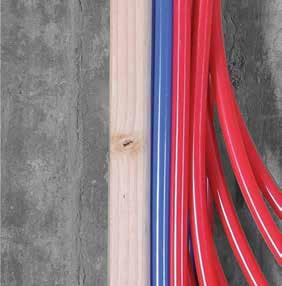

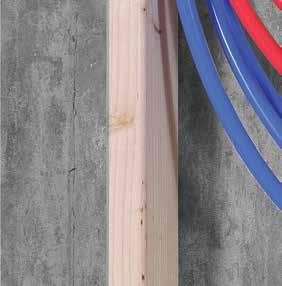

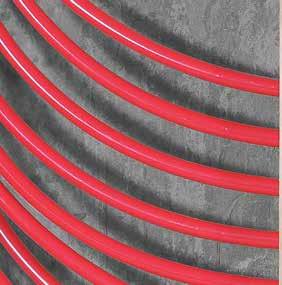
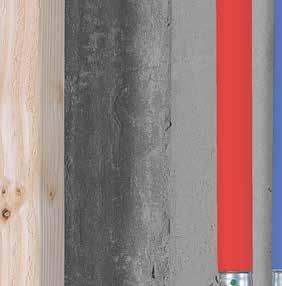
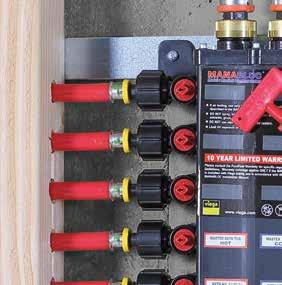

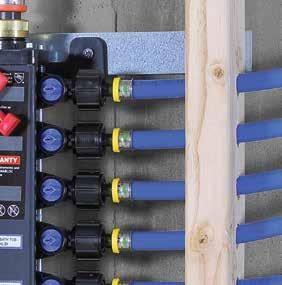
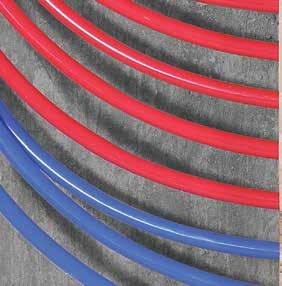
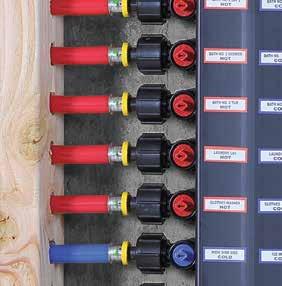
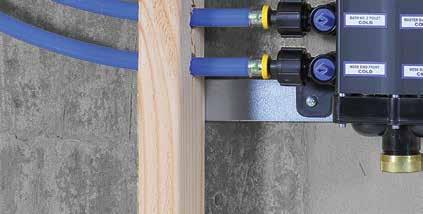
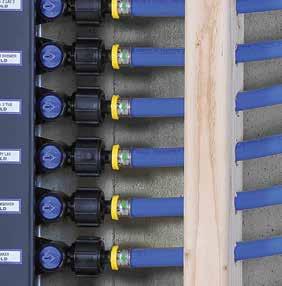
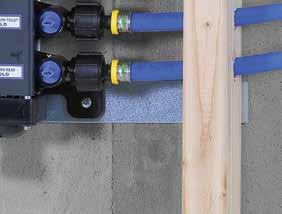
The Viega ManaBloc conserves water and energy
• Decreases water volume stored in a structure’s piping system by up to 26%, resulting in faster hot water delivery and less water waste
• Individual shut off lines for each xture eases repair without affecting the entire system
• Fewer fittings behind the wall
• ⅜" and ½" tubing lines to meet xture demands while conserving water
• Suitable for residential, multi-family, lodging, and commercial properties
Viega. Connected in quality.
BC Safety Authority (BCSA) has issued an information bulletin to explain how Ministerial Order M065, which was deposited in February 2017, amends the Power Engineers, Boiler, Pressure Vessel and Refrigeration Safety Regulation (PEBPVRSR); Elevating Devices Safety Regulation (EDSR); Gas Safety Regulation (GSR); and Safety Standards General Regulation (SSGR). While the order includes several repeals, substitutions, additions and strikeouts, there are significant amendments that will come into effect in stages.
BC Safety Authority is working on developing related processes, as well as fee schedules (subject to consultations), to make the amendments operational. BCSA will issue information bulletins and directives to guide clients throughout this process. For more information, e-mail contact@safetyauthority.ca. www.safetyauthority.ca

The Heating, Refrigeration and Air Conditioning Institute (HRAI) will hold its 49th Annual Conference at the Hilton Quebec City from August 16 to August 18, 2017. This conference features keynote speakers Tony Chapman and Ken Wong. Chapman will share his insights about building better relationships through the art of telling your compelling story. Wong will enlighten attendees with his Canadian content-dense research into new business realities.
The agenda also includes six busi -
Canadian Institute of Plumbing & Heating’s (CIPH) trade show manager, Elizabeth McCullough was honoured at the 2017 MCEE trade show held on April 26 and 27 in Montreal for 20 years of dedicated service to the Institute.
McCullough first joined CIPH in 1992. She currently holds the position of general manager – trade shows, handling sales, marketing and operations for the MCEE show in Montreal, CIPHEX West in Western Canada and the CIPHEX Roadshow.
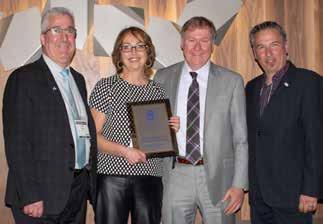
Elizabeth McCullough was honoured at CIPH’s MCEE VIP reception. (l to r) Ralph Suppa, CIPH president and general manager, Bill Palamar, CIPH chair and Franìois Nadeau, CMMTQ president.
She also works with the CIPH trade show advisory committee, the public relations committee, CIPH Women’s Network and is a member of the CMPX Show Committee. Throughout her career she has been involved with regional, national and international trade shows across Canada and in the U.S. in the plumbing and heating, automotive and trucking industries.
“On behalf of the CIPH Board, her teammates, and the general membership, we salute the 20 years of service Elizabeth has provided to CIPH. We look forward to working with her for years to come as she continues to further the interests of CIPH and its membership,” said CIPH president and general manager Ralph Suppa. www.ciph.com
ness/industry related sessions and three evenings to network with representatives from the Canadian HVAC/R supply chain. www.hrai.ca/agm
The Canadian Institute of Plumbing & Heating (CIPH) and the Mechanical Contractors Association of Canada (MCA Canada) report that they held another highly successful joint Parliamentary Day of Awareness on April 10-11, 2017 in Ottawa sponsored by Senator Donald Plett. Key executives of both associations met with numerous senior officials and Parliamentarians to enhance the profile of the industry in government circles and discuss two key items of mutual concern, specifically the need for Prompt Payment Legislation in Canada (Bill S-224) and Uniform and Harmonized Model Codes and Regulations for Canada & Canada/USA.
Engaging with influential officials and elected representatives, allowed CIPH and MCA Canada to drive home their positions on the need for Prompt Payment Legislation and for Uniform and Harmonized Model Codes and Regulations for Canada & Canada/USA. In addition, the meetings reinforced the status of both associations as the go-to voice for regulators, government officials and other key influencers who deal with issues affecting the industry.
This initiative is a powerful demonstration of the strength of CIPH in representing the industry in front of those making important regulatory decisions that impact all of us. 2017’s event resulted in new contacts, fresh, innovative ideas and tangible progress on several priority issues for CIPH and MCA Canada. An outstanding Day on the Hill! said CIPH chairman, Bill Palamar of Weil McLain Canada.
The CIPH/MCA Canada Parliamentary Day of Awareness is held annually.
www.mcac.ca www.ciph.com
Join HPAC on September 14, 2017, for a one-of-a-kind conference and trade show dedicated exclusively to the hydronics market.
You’ll see your favourites and some new faces with John Siegenthaler, Robert Bean, Lance MacNevin, Mike Miller, Steve Goldie and Mark Evans on the program.
Modern Hydronics-Summit 2017 is conveniently located at the International Centre by Toronto’s Pearson Airport. See the latest technologies and products from leading manufacturers, learn from HPAC’s hydronic experts, network with colleagues and hydronics enthusiasts, enjoy lunch, dinner and drinks.
Modern Hydronics Summit 2017 is Canada’s only hydronic-exclusive event don’t miss it! Register today and take advantage of the early bird rate. www.modernhydronicssummit.com

A Notice of Intent was published in the Canada Gazette, Part I on March 4, 2017 indicating Natural Resources Canada’s (NRCan) intent to proceed with the development of Amendment 15. This Amendment would introduce or update energy efficiency standards and, where applicable, test methods and associated reporting and compliance requirements for 17 product categories.
NRCan has posted new technical bulletins for a second round of five products: Air conditioners and heat pumps under 19 kW, Battery chargers (uninterruptible power supplies), Residential Electric Furnaces, Pumps and Walk-in coolers and freezers on its website to outline the regulatory changes being considered for these product categories in order to solicit stakeholder views. Notices will be sent to stakeholders over the next couple of months for the remaining products.
Comments on these technical bulletins were required by May 19, 2017, to inform analysts of any potential changes. Webinars were also held to present the details of each technical bulletin and to hear the views of stakeholders.
www.nrcan.gc.ca
As part of its partnership with the Canadian Association of Business Students (CABS), the Canadian Institute of Plumbing & Heating (CIPH) sponsored the JDC Central competition. The event brings business students together from across the country in a multi-faceted competition, including academic cases for a variety of business disciplines, parliamentary style debates, sports tournaments, social competitions and charity contributions.
CIPH had a significant presence in the career fair portion of both events, as well as an opportunity to address a large student audience directly as a speaker
series sponsor of JDC Central. What we’ve come to learn in partnering with CIPH is that the country’s plumbing and heating industry is meeting the environmental challenges of tomorrow with real-world solutions today, said Trevor Green, CABS President. Students participating at these events will learn that there are significant career paths for all types of graduates and employment seekers.
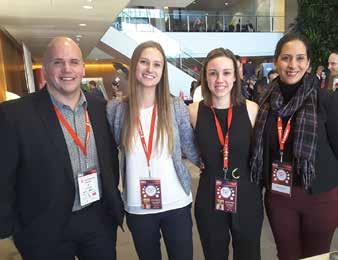
CABS is a not for profit organization that represents over 85,000 business students from 30 universities in Canada. Its purpose is to make every business graduate in Canada global ready. www.cabsonline.ca
Over 100 members and guests joined the Heating, Refrigeration and Air Conditioning Institute (HRAI) and CISCO at the Waterpark Place Innovation Centre in Toronto for the 2017 HRAI Spring Meeting.
Guest speakers included Barry Wright of Grosvenor Training, Mike Lio of BuildABILITY, Bruce Manwaring of Enbridge, Ruth Weiner of RBC and Katie Fotheringham of Independent Electricity System Operator (IESO).
Fotheringham noted that IESO, which includes 69 local distribution companies, has enhancements coming through the Save On Energy Program; namely a push on air source heat pumps and a $30 incentive for circulating pumps.
Percentage of savings and incentives will be simplified, noted Manwaring, who is manager, residential and new construction. Enbridge is delivering The Home Energy Conservation Program in partnership with the Ontario government. Manwaring provided a preview of the new version and noted that there are incentives of up to $2,100 available to homeowners. Homeowners must prequalify with a certified energy advisor before completing an energy audit and receiving an evaluation of the home’s current energy use. An energy rating, using NRCan’s EnerGuide Rating System, is provided to the homeowner. Editor’s note: The program has since rolled out (www.knowyourenergyscore.ca).
In addition to sessions on rebates and incentives, net zero energy (NZE) and green buildings–impact and commitment, there was a tour of the Cisco facilty, which is thought to be the world’s smartest building.
In other HRAI news, Sadia Zafar has been named program assistant for the Manufacturers and Wholesalers Division.
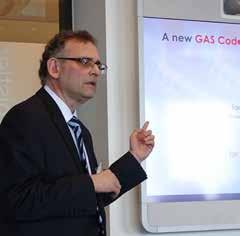
North America being in the
a trajectory

In his opening remarks Dave McPherson of Rheem noted that one-third of the spring meeting attendees were contractors, a considerable uptick from previous meetings.

She joined HRAI in the fall of 2014 serving in a part-time position of program assistant, support services for the director, programs and relations, as well as other program areas including due diligence, boiler and pressure vessel and the ASHRAE Toronto Chapter. Zafar can be reached at 905.602.4700 ext. 265 or e-mail szafar@hrai.ca. www.hrai.ca






ASHRAE’s Annual Conference will be held June 24 to 28 in Long Beach, CA. The five-day event boasts eight conference tracks, tours, social events and a keynote message from Derreck Kayongo, CEO of the Center for Civil and Human Rights. Registration is now open for the event, which will take place at the Long Beach Convention and Entertainment Center. Committee meetings will be held at the Hyatt Regency Long Beach and the Renaissance Long Beach.
The Technical Program features several new tracks, including Net Zero Energy Buildings: The International Race to 2030; Building Life Safety Systems; Controls; and Residential Buildings: Standards Guidelines and Codes. The conference’s fifth annual Research Summit will report the latest research
results on building science and renewable energy and its impact as we move toward NZE buildings.
ASHRAE Learning Institute will offer two full-day seminars, and eight half-day courses during the conference. Courses include Efficient Energy Management in New and Existing Buildings; Designing High-Performance Healthcare and HVAC Systems; and High-Performance Building Design: Applications and Future Trends. More information can be found at www.ashrae.org/longbeachcourses.
Those interested in sitting for one of six ASHRAE certification exams must apply by June 2. The exams include: Energy Assessment, Energy Modeling, Commissioning, Healthcare Facility Design, High-Performance Building Design and Building Operations. Learn more and apply at www.ashrae.org/longbeachexams.
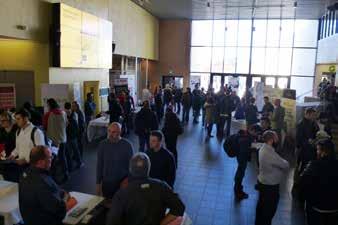
Over 250 students in Humber’s HVAC programs, along with HVAC alumni had access to a career fair in the spring. More than a dozen exhibitors took the opportunity to meet with students.
Alan Gaunt, professor of Heating, Air Conditioning & Refrigeration at Humber Institute of Technology and Advanced Learning in Toronto, ON reports that the school “regularly has employers and recruiters

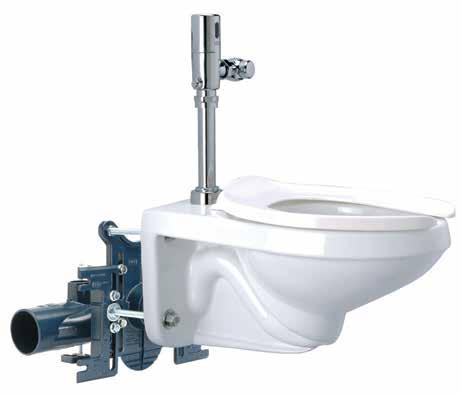
Zurn is the only manufacturer to offer a high efficiency carrier and a 4.2 Lpf wall bowl system, providing a complete solution with labor savings and added performance from rough-in through finish trim installation. This high efficiency restroom solution achieves industry leading line carry that no other manufacturer can provide.
asking for access to its HVAC students so the targeted HVAC Career Fair was a logical move.
“Several exhibitors commented that within the first 30 minutes they had more good prospects than their total draw from some of the other more general venues they had tried,” notes Gaunt. “Traditional full time permanent or summer positions were discussed, and an increasing number of employers are realizing that the college student’s class schedule is not a 40-hour per week proposition and are hiring our students for one or two half days per week year round while they are still in school. More often than not these arrangements turn into full time offers upon graduation.” https://humber.ca
Enercare Inc., parent company of Service Experts Heating & Air Conditioning, has announced the retirement of Scott Boxer, effective May 2017, and the appointment of Scott Boose as president and chief executive officer.
Boose has assumed responsibility for the strategic and operational leadership for Service Experts, including growth plans. He was most recently the president of Direct Energy Services, which operated in 48 U.S. states and two Canadian provinces. Boose joined Direct Energy in 2004 through the acquisition of the Residential Services Group, where he held several senior positions over a 10-year period. From 2007 to 2010, he served as the managing director of the Heating Services business in the UK for British Gas, where he oversaw a team of 11,000 employees, including more than 7,000 frontline technicians and installers. He also served on the board of British Gas Insurance during his time in the UK. From October 2014 to May 2016, Boose was a member of the board of Enercare. www.enercare.ca








A new 6.6-litre V8 turbodiesel offered with the Chevrolet Silverado Heavy Duty makes 445 horsepower and 910 lb.-ft. of torque.

While consumer vehicles are constantly being tweaked to capture buyers’ interest, commercial vehicles are more about practicality than pizzazz.
BY JIL MCINTOSH
The most remarkable changes in the commercial vehicle offering for 2017 are in the heavy-duty pickup segment, with an all-new Super Duty from Ford, and a new diesel engine from General Motors.
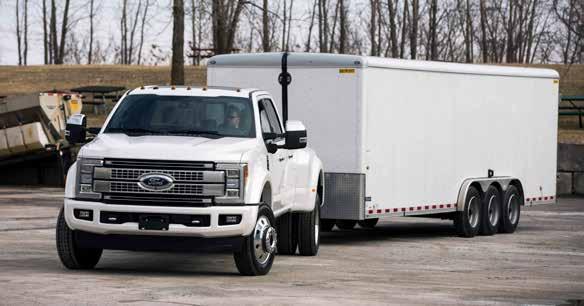
The Super Duty, in 250, 350 and 450, now uses the same construction as the F-150: an aluminum body and high-strength steel frame, with barriers to prevent cross-metal corrosion. That construction dropped the F-150′s curb weight, but for the Super Duty, engineers put it back into beefier axles and brakes.
Engine choices are a 6.2-litre V8 making 385 horsepower and 430 lb.-ft. of torque, or a 6.7-litre V8 turbodiesel making 440 horsepower and 925 lb.-ft. of torque, both with six-speed automatic.
The mechanical twins of the Chevrolet Silverado HD and GMC Sierra HD receive a new 6.6-litre V8 turbodiesel that makes 445 horsepower and 910 lb.-ft. of torque, alongside the carried-over 6.0-litre V8 that makes 360 horsepower and 380 lb.-ft. of torque, both with six-speed automatic transmissions.
The only other heavy-duty, the Ram 2500/3500, carries over with few changes. It offers a 5.7-litre V8 (393 hp/400 torque) and 6.4-litre V8 making 410 horsepower (370 in Mega Cab configuration) and 429 lb.-ft. of torque, both with sixspeed automatic transmissions. Three versions of the 6.7-litre inline-six turbodiesel are offered: 350 hp/660 torque with six-
speed manual transmission; 370 hp/800 torque with sixspeed automatic; and a high-output making 385 horsepower and 900 lb.-ft. of torque.
A fourth choice, the Nissan Titan XD, is meant to “bridge the gap″ between a half-ton and three-quarter-ton truck, in size and capability. It offers a 5.6-litre V8 making 390 horsepower and 394 lb.-ft. of torque with seven-speed automatic, or 5.0-litre V8 turbodiesel making 310 horsepower and 555 lb.-ft. of torque with six-speed automatic. An all-new half-ton that shares the XD’s V8 rounds out the Titan lineup for 2017.
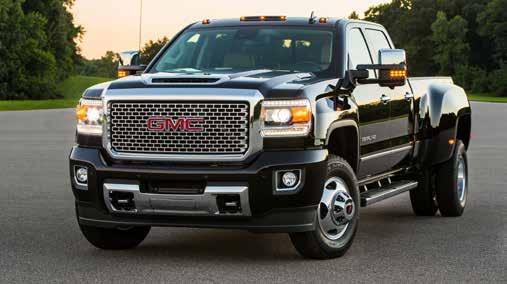
Crew models of the GMC Sierra Heavy-Duty and the Silverado get a 500-pound towing increase.
The Silverado and Sierra are mechanically identical. Configurations: Regular Cab with 6′6″ or 8′ box; Double Cab with 6′6″ box; Crew Cab with 5′8″ or 6′6″ box
Engines: 4.3-litre V6 (285 hp, 305 torque)
5.3-litre V8 (355 hp, 383 torque)
6.2-litre V8 (420 hp, 460 torque)
Transmission: 6-speed automatic (4.3-litre and 5.3-litre) 8-speed automatic (5.3-litre and 6.2-litre)
Maximum towing: 12,500 lbs

The F-150 receives an all-new 3.5-litre EcoBoost turbocharged V6, and a new 10-speed automatic transmission.
Configurations: Regular Cab with 6′6″ or 8′ box; SuperCab with 6′6″ or 8′ box; SuperCrew with 5′6″ or 6′6″ box
Engine: 3.5-litre V6 (282 hp, 253 torque)
2.7-litre V6 turbo (325 hp, 375 torque)
5.0-litre V8 (385 hp, 387 torque)
3.5-litre V6 turbo (375 hp, 470 torque)
Transmission: 6-speed automatic (3.5-litre, 2.7-litre, 5.0-litre)
10-speed automatic (3.5-litre EcoBoost)
Maximum towing: 12,200 lbs

After releasing the larger Titan XD for 2016, Nissan adds an all-new Titan half-ton that shares its larger sibling’s gasoline engine, but not its diesel.
Configuration: Crew Cab with 5′5″ box
Engine: 5.6-litre V8 (390 hp, 394 torque)
Transmission: 7-speed automatic
Maximum towing: 9,220 lbs
8-speed automatic.
RAM 1500
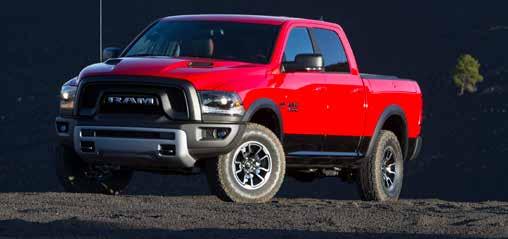
The Ram 1500 is currently the only half-ton available with a diesel engine.
Configuration: Regular Cab with 6′4″ or 8′ box; Quad Cab with 6′4″ box; Crew Cab with 5′7" or 6′4″ box
Engines: 3.6-litre V6 (305 hp, 269 torque)
5.7-litre V8 (395 hp, 410 torque)
3.0-litre V6 turbodiesel (240 hp, 420 torque)
Transmission: 6-speed automatic (5.7-litre)
8-speed automatic (3.6-litre, 3.0-litre, select 5.7-litre)
Maximum towing: 10,640 lbs

The Tundra is available in 4x2 in one Double Cab version, while all others are 4x4.
Configuration: Double Cab with 6′5″ or 8′ box; Crew Cab with 5′5″ box
Engines: 4.6-litre V8 (310 hp, 327 torque)
5.7-litre V8 (381 hp, 401 torque)
Transmission: 6-speed automatic
Maximum towing: 10,000 lbs
CHEVROLET COLORADO/GMC CANYON
A new top-line Denali trim is available on the GMC Canyon.

The two are mechanical twins.
Configurations: Extended Cab with 6′2″ box; Crew Cab with 5′2″ or 6′2″ box
Engine: 2.5-litre four-cylinder (200 hp, 191 torque)
3.6-litre V6 (308 hp, 275 lb-ft of torque)
2.8-litre four-cylinder turbodiesel (181 hp, 369 torque)
Transmission: 6-speed manual (2.5-litre)
6-speed automatic (2.5-litre and 2.8-litre)
8-speed automatic (3.6-litre)
Maximum towing: 7,700 lbs

While more of a consumer vehicle, the Ridgeline can handle lighter-duty work.
Configuration: Four-door with 5′3″ box
Engine: 3.5-litre V6 (280 hp, 262 torque)
Transmission: 6-speed automatic
Maximum towing: 5,000 lbs

The midsize Frontier is available in two- or four-wheel drive.
Configuration: King Cab with 6′1″ bed; Crew Cab with 5′ or 6′1″ bed
Engines: 2.5-litre four-cylinder (152 hp, 171 torque)
4.0-litre V6 (261 hp, 281 torque)
Transmission: 6-speed manual or 5-speed automatic
Maximum towing: 6,710 lbs
Greg Bertsch, vice-president of Canon Services Inc. in Calgary, AB runs a fleet of GMC vans and pickups, along with Equinox SUVs for foremen and sales/project management staff. “Our intent is to stick with that template until we are forced to change the fleet (when) models are no longer being produced,” he says. He likes the consistency, since racks and shelves can be moved from one vehicle to another. “Traditionally we purchased our vehicles, but we went to a fleet management company,” he says. “We can slowly replace them without the upfront cost of purchasing.”

The Tacoma offers 4x2 and 4x4 in its Access Cab, but all Double Cabs are 4x4 only.
Configuration: Access Cab with 6′1″ box; Double Cab with 5′ or 6′1″ box
Engines: 2.7-litre four-cylinder (159 hp, 180 torque)
3.5-litre V6 (278 hp, 265 torque)
Transmission: 5-speed manual (2.7-litre)
6-speed manual (V6)
6-speed automatic (2.7-litre, V6)
Maximum towing: 6,500 lbs
Chevrolet Express and GMC Savana (shown here) have maximum cargo volumes of 6,787 litres (regular), or 8,054 litres (extended).
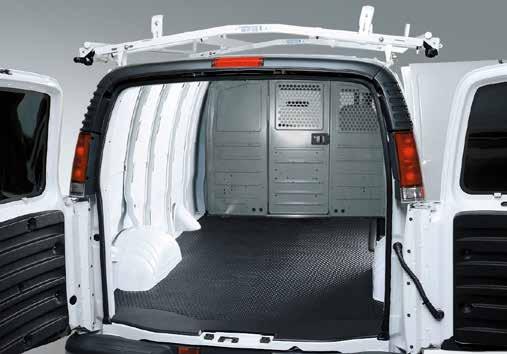
These two vans share their powertrains and are available as cutaways. Compressed natural gas (CNG) is a fuel option with the 6.0-litre Chevrolet Express and GMC Savana.
Configurations: 2500 and 3500 in two wheelbase lengths
Engine: 4.8-litre V8 (285 hp, 295 torque)
6.0-litre V8 (389 hp, 373 torque)
6.6-litre V8 turbodiesel (260 hp, 525 torque)
Transmission: 6-speed automatic
Maximum payload: 1,869 kg
Maximum towing: 10,000 lbs
Ryan Johnston, plumbing manager for Brent’s Plumbing in Bowmanville, ON had GM vans, but has since opted for taller Ford and Ram vans. “We’re buying vehicles you can stand up in, so the guys aren’t crunched over and hurting their backs,” he says. “The old vans were messy because the guys couldn’t get in there. And we’re able to put a lot of stuff in (the new vans), and they’re ideal for our business.”

The Transit comes in two wheelbases, three body lengths, and three roof heights. A cutaway is available.
Configurations: Regular length in 150 and 250; Long in 150, 250 and 350; Extended in 250 and 350
Engine: 3.7-litre V6 (275 hp, 260 torque)
3.5-litre V6 turbo (310 hp, 400 torque)
3.2-litre five-cylinder turbodiesel (185 hp, 350 torque)
Transmission: 6-speed automatic
Maximum cargo volume: 8,925 litres (regular), 10,110 litres (long), 13,797 litres (extended)
Maximum payload: 2,109 kg
Maximum towing: 7,500 lbs
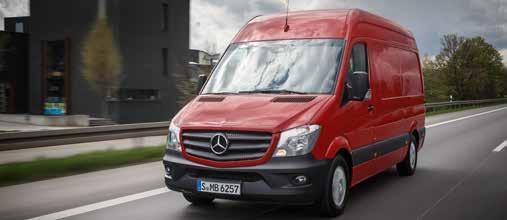
The Sprinter comes in two wheelbase lengths and three body lengths, plus a cutaway.
Configurations: Standard roof on 2500; high and super-high roof on 2500 and 3500
Engine: 2.1-litre four-cylinder turbodiesel (161 hp, 265 torque)
3.0-litre V6 turbodiesel (188 hp, 325 torque)
Transmission: 7-speed automatic (2.1-litre) 5-speed automatic (3.0-litre)
Maximum cargo volume: 9,036 litres (standard roof); 15,009 litres (high); 14,627 litres (super-high)
Maximum payload: 1,593 kg (2500); 2,498 kg (3500)
Maximum towing: 7,500 lbs

The NV has a pickup-style front end for extra foot room.
Configurations: 1500, 2500 and 3500 in standard or high roof
Engine: 4.0-litre V6 (261 hp, 281 torque)
5.6-litre V8 (317 hp, 385 torque)
Transmission: 5-speed automatic
Maximum cargo volume: 6,629 litres (standard), 9,149 litres (high)
Maximum payload: 1,245 kg (1500); 1,481 kg (2500); 1,808 kg (3500)
Maximum towing: 9,500 lbs
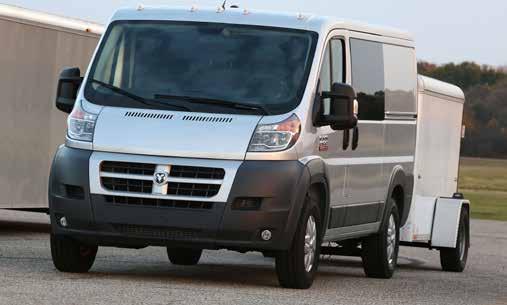
The ProMaster is the only full-size van with front-wheel drive for a lower step-in and cargo floor.
Configurations: 1500 in low or high roof; 2500 and 3500 in high roof
Engine: 3.6-litre V6 (280 hp, 260 torque) 3.0-litre four-cylinder turbodiesel (174 hp, 295 torque)
Transmission: 6-speed automatic (3.6-litre)/automated (3.0-litre)
Maximum cargo volume: 7,340 litres (low roof), 13,108 litres (high roof LWB)
Maximum payload: 2,005 kg
Maximum towing: 5,100 lbs
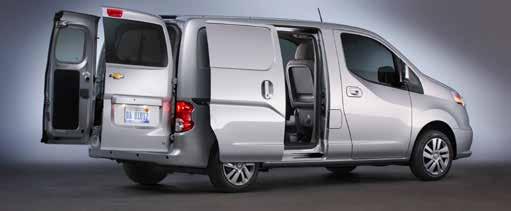
The City Express is a version of Nissan′s NV200.
Engine: 2.0-litre four-cylinder (131 hp, 139 torque)
Transmission: Continuously variable (CVT)
Maximum cargo volume: 3,475 litres
Maximum payload: 860 kg
Maximum towing: Not recommended

For 2017, the Transit Connect offers roof rails or racks on specific trim levels.
Engine: 2.5-litre four-cylinder (169 hp, 171 torque)
Transmission: 6-speed automatic
Maximum cargo volume: 3,642 litres
Maximum payload: 739 kg
Maximum towing: 2,000 lbs

The Metris is only available midsize, and fits where taller vans might not.
Engine: 2.0-litre four-cylinder turbo (208 hp, 258 torque)
Transmission: 7-speed automatic
Maximum cargo volume: 5,267 litres
Maximum payload: 1,135 kg
Maximum towing: 4,960 lbs
Tom Vincent , president of Atlantica Mechanical Contractors in Dartmouth, NS, runs more than 60 trucks and vans. “We have a mixture of purchase and lease, but we look at durability,” he says. “We typically have a lot of heavy gear and the vans are loaded down.” He originally purchased telematics, but now relies mostly on mobile devices. “The technology is improving, and if you can get one device to do it all, that’s ideal.”

Ram′s compact van is unchanged for 2017, except for new door reflectors for better visibility.
Engine: 2.4-litre four-cylinder (178 hp, 174 torque)
Transmission: 9-speed automatic
Maximum cargo volume: 3,729 litres
Maximum payload: 862 kg
Maximum towing: 2,000 lbs
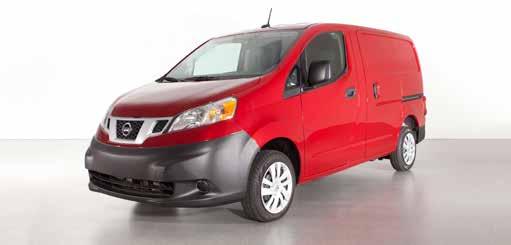
Like all vans in this category except for the Metris, the NV200 is front-wheel drive.
Engine: 2.0-litre four-cylinder (131 hp, 139 torque)
Transmission: Continuously variable (CVT)
Maximum cargo volume: 3,474 litres
Jil McIntosh is an automotive writer and reviewer, with a specialty in trucks and commercial vehicles. She writes for numerous outlets, including The National Post and Autofocus.ca, and is a member of the Automobile Journalists Association of Canada (AJAC). Her work can be found at WomanOnWheels.ca.

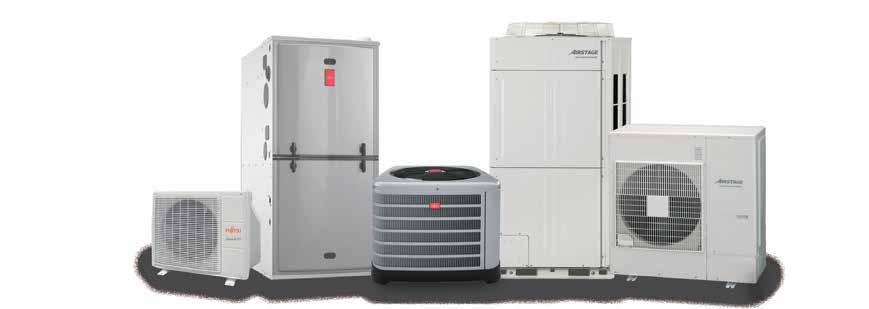
• Heating and cooling solutions for every application, old or new, from single rooms to entire homes or buildings
• Full offering of innovative solutions including ductless mini-splits, VRF systems, central air conditioners, heat pumps and gas furnaces
• Wide choice of system sizes ranging from 9,000 to 288,000 BTU/h
• Compact, energy-efficient systems equipped with today’s latest technology Fujitsu...outperforming for you
BY IAN MCTEER
Every industry has its heroes, including HVAC/R. People such as Michael Faraday, Willis Carrier, Fredrick McKinley Jones and Thomas Midgley Jr. provided a large measure of inspiration for me as I progressed through the science of refrigeration and air conditioning. However, Thomas Midgley Jr. is one of those unfortunate people who goes from hero to zero and not necessarily because his contributions to the refrigeration industry have faded away into legislative purgatory.
Midgley, a brilliant chemist and mechanical engineer, led a team of coworkers in an effort to improve the synthesis of CFCs into a safer refrigerant. As an employee of GM, he helped the Frigidaire brand to become a household name using safer CFC 12 refrigerant instead of the toxic ammonia and sulphur dioxide used previously.
GM and DuPont formed Kinetic Chemicals in 1930 with Midgley’s team developing an entire class of chlorinated refrigerants including HCFC22. Midgley won many awards for his efforts. Given to theatrical demonstrations, Midgley would inhale a lung full of CFC12 and then blow out a candle with it showing no ill effects. Try doing that with ammonia. Not only useful for refrigeration and air conditioning applications, CFC11, CFC12, HCFC22 and several other chlorinated compounds were used as blowing agents, propellants, solvents and degreasing agents.
In the 1930s, no one could have guessed that chlorine based refrigerants
would, one day, prove to be so harmful to Earth’s atmosphere.
Midgley’s reckless insistence on adding another one of his inventions, tetraethyl lead (TEL), to gasoline as an anti-knock compound ultimately ruined his legacy. Even though pure ethanol fuel with the advantage of naturally higher octane existed at the time, Midgley and GM pressed ahead with TEL. Midgley arranged a crazy demonstration purporting to prove the safety of his lead based fuel additive.
In front of reporters, he poured TEL over his hands then sniffed TEL from a beaker for 60 seconds, smiling all the while. What went unreported was Midgley’s yearlong leave of absence from GM to treat his lead poisoning. But TEL, somehow, prevailed. It took decades to finally get dangerous, polluting lead out of most motor fuels. Midgely developed polio late in life and died of strangulation at his own hand after he became entangled in a rope and pulley affair he developed to help others lift him in and out of bed.
J.R. McNeill, an environmental historian, said Midgley, “had more impact on the atmosphere than any other single organism in Earth’s history.”
I had a horrible dream not long ago that as I “shuffled off this mortal coil” and descended into the depths of the ODP underworld, Midgley himself meets me on the banks of the river Styx. He waves around an open 14kg jug of HCFC22 over his head. I am then enveloped in a
cloud of vapourizing Freon, coughing, choking and begging for mercy. “But Thomas, you told me to vent to the atmosphere, vent to the atmosphere.” I, along with just about every other mechanic in the industry, released refrigerants almost daily before scientists told us the bad news about the ozone layer. Decommissioning older systems meant “blowing the charge safely” to the atmosphere. As I became more proficient at service, there was one specific and very annoying reason for releasing refrigerants to the atmosphere that I encountered too many times and that was overcharging.
In the late 1970s, as residential air conditioning became more affordable for many homeowners, a new type of cooling split system arrived on the market. The system featured an HCFC22 factory-charged outdoor unit, an evaporator coil with a holding charge of HCFC22 and a precharged HCFC22 line set used to connect the outdoor unit to the evaporator coil. For professional installers, the precharged systems proved to be very installation friendly because no deep vacuum of the system was required and factory sealed components added to overall reliability. Professional installers understood the pre-charged copper tubing needed to be handled carefully to avoid sharp bends causing kinked tubing.
They also knew how to route the tubing in such a way as to be aesthetically pleasing outdoors while avoiding oil traps caused by improper coiling of excess
tubing. They knew to keep the protective caps tightly in-place on all the system components prior to installation thus preventing the entry of dirt or debris into the fittings that could cause a leaky connection.
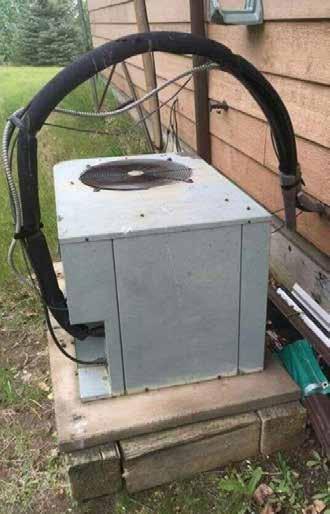
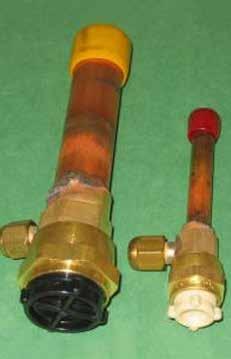
Figure 1 illustrates a DIY project featuring a pre-charged line set installed by someone who might charitably be called a non-professional. I encountered such installations dozens of times. To make matters worse, the system access Schrader valves incorporated into the bolt-on fittings, were often rotated in a direction that prevented a refrigeration gauge hose from being connected. I often had to use a set of piercing valves to gain system access, but they often leaked over time. Sometimes, I could save the system by “blowing the charge” and cutting out all the excess copper. Then, I would refashion the line set by brazing-in the appropriate number of copper elbows, installing new tube insulation and reconnect to the unit using a stub kit (see Figure 2), making sure the Schrader valves were accessible.
Although pre-charged systems made installations easier, using them did not necessarily mean any particular split system was perfectly charged. Professional installers knew to check the charge at every start-up. In those days, evaporator
coils used capillary tube metering, thus the only effective method of evaluating the charge was the superheat method.
Non-professional installers used the “beer-can cold” method. They would simply add HCFC22 to the system until the suction line felt beer-can cold. More often than not, pre-charged systems were already overcharged.
To make matters worse, many precharged systems were installed into air handling systems never designed for cooling. Very often, the existing furnace should have been changed and ductwork modified for cooling.
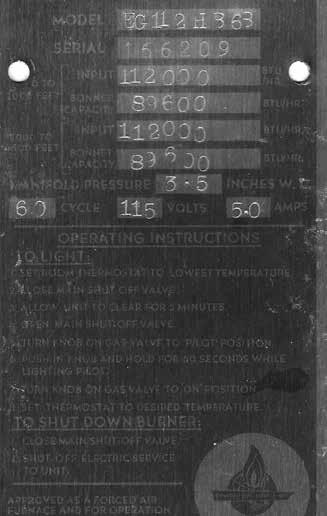
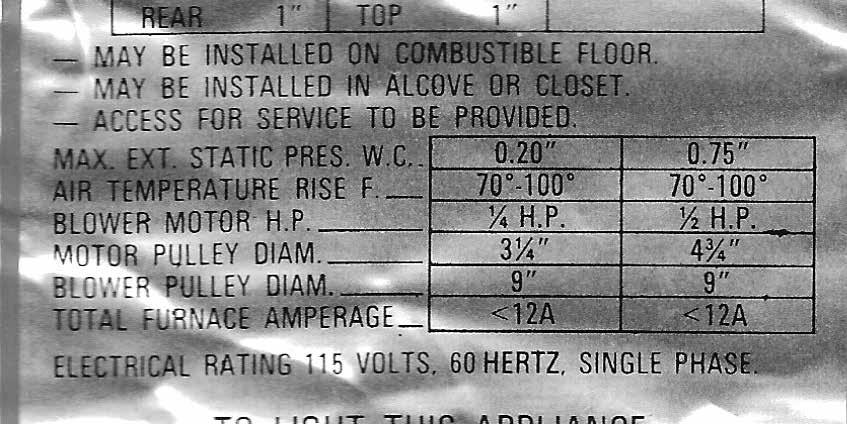
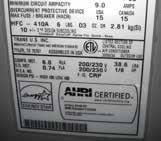
Overcharging, some quickly learned, prevented the evaporator coil from freezing long enough to get paid and leave the scene. I once heard someone say, “Add gas until you get 70 on the blue gauge.” The furnace rating plate in Figure 3 says it can deliver rated airflow at 0.25” w.c. where as the furnace in Figure 4 could be converted to high static operation (0.75” w.c.) by installing a 1/2HP motor and larger motor pulley. Non-professionals had no idea such changes were necessary, resulting in customer complaints about poor performance, failed compressors and, no doubt, tons of HCFC22 unnecessarily “vented to the atmosphere.” Refrigerant recovery became a requirement in
1987, but reports of intentional releases persisted for years.
Capillary tube refrigerant metering eventually gave way to a more efficient method utilizing a small piston with an appropriately drilled hole through it engineered for a specific application. Metering pistons have the benefit of reducing flash gas and can be used in cooling only or heat pump applications. Different sizes were developed for HCFC22 and HFC 410a refrigerants. There are still many AHRI rated outdoor unit and indoor coil combinations using HFC 410a refrigerant that can meet the 13 SEER minimum efficiency standards using a metering piston.
Today, as in the past, some technicians and others (the non-professionals) connect a gauge set to a poorly performing system and immediately want to add some gas because the suction pressure is low. Professionals will always check the air handling side first for airflow problems.
Remembering that refrigerant moves heat outside, cools the compressor windings and circulates oil to lubricate the compressor, proper charge is extremely important. An overcharge will reduce homeowner comfort because a flooded evaporator does not dehumidify.
Continued on p24
The system will be incapable of controlling sensible heat while needlessly consuming excess power as it runs for hours doing nothing good.
Prevent overcharging by following manufacturers’ charging recommendations. Systems utilizing metering pistons are generally charged using superheat. Some manufacturers may provide a chart or table in the unit’s installation instructions. Typically, with the unit running under “normal” cooling conditions (with a clean air filter, clean blower wheel, appropriate heat load on the evaporator coil, correct CFM for the application and outdoor temperature above 68F) the system should have somewhere between 10F and 30F of superheat. A superheat approaching 5F indicates overcharge, a superheat approaching 40F indicates undercharge.
Systems controlled by TXVs are charged by the subcooling method. The technician always needs to take accurate measurements that should be recorded for future reference regardless of metering device. This information is vital:
1. Dry bulb temperature of the air entering the outdoor coil
2. Suction Pressure
3. Head Pressure
4. Suction Line Temperature
5. Liquid Line Temperature
6. Dry Bulb and Wet Bulb temperature of the air entering the evaporator coil
7. Dry and Wet Bulb temperature of the air leaving the evaporator coil I had an interesting experience at a
4 Continued on p26






































The KeepRite® ProComfort™ Deluxe 19 Air Conditioner and ProComfort™ Deluxe 18 Heat Pump with SmartSense™ Technology quietly deliver steady comfort, higher efficiency, and savings in a more compact design, thanks to the variable-speed inverter. The air conditioner delivers a superior rating of up to 19 SEER and the heat pump features ratings up to 19 SEER and 11 HSPF for optimal home comfort levels. They are easier to sell, easier to service, and easier to install.
demonstration of an infrared camera. The operator had taken a thermal image of a condensing unit on a rooftop; he really had no idea of what the image might show. I recognized that half the volume of the outdoor coil was dark blue indicating a massive overcharge. See the sidebar below for some tips on preventing overcharging.
Removing excess refrigerant from a system is something that should never be necessary. Other than for repairs or decommissioning, the proper charge should remain intact for the life of the system, barring mishaps leading to unintended leakage. Back in the day, I treated HCFC22 as a dependable tool. It
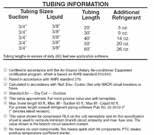
This manufacturer defines tubing size and additional refrigerant charge for line sets longer than 15 feet. The outdoor unit is charged for 15 feet of liquid line. In a recovery situation where the outdoor unit is empty, use the nameplate charge + additional charge for longer line sets.
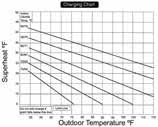
Notes: For AHRI rated combinations only. This chart is for a specific unit. Presented for information only
Maximum line set length is 60 feet. Maximum lift is 60 feet (no traps allowed). Be sure to consult the manufacturers representative for advice if longer lengths are required.
This unit uses HFC410A: total outdoor unit charge including 15 feet of rated liquid line tubing is 4 pounds 10 ounces. The indoor coil has a #49 metering piston and must be charged using the superheat method. Check manufacturer’s literature for additional charge information.
In this example, the outdoor air temperature is 88F. The indoor temperature is 86F with a wet bulb at 71F. Enter the chart at 88F and draw a vertical line until it reaches the 86F curve. Draw a horizontal line to the left side and read the superheat at 19F.
This unit uses HFC410A: total outdoor unit charge including 15 feet of rated liquid line tubing is 6 pounds 3 ounces. The AHRI rated indoor coil must have a TXV metering device and must be charged using the subcooling method. Check manufacturer’s literature for additional charge information. Tubing length and vertical lift may affect the amount of subcooling required.
was difficult to watch such a valuable component streaming off into the sky simply because someone failed to properly address the shortcomings of any particular system.
HCFC22 charged residential and commercial units will remain in service for many years. Chris Palmer, area manager at Trane Supply, tells me an ade -



Your manufacturer may provide a chart like this for TXV charging. Measure the liquid line temperature after 15 minutes of system operation. Connect a head pressure gauge. If your system calls for 10F of subcooling and your thermometer is reading a liquid line temperature of 85F, read the “85” column to the right until it intersects with the 10F subcooling vertical column. Read gauge pressure at 296 psig.
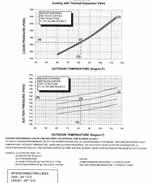
This manufacturer provides two charts for charge evaluation. Using four factors:
1. Temperature of air entering outdoor coil (DB)
2. Temperature of air entering indoor coil (WB)
3. Head Pressure
4. Suction Pressure
In this example, the ODT is 82F (DB). IDT is 67F (WB) Enter each chart at 82F and draw a vertical line until the measured wet bulb temperature curve is reached.
Then read off directly to the left:
Under the measured conditions shown above, the head pressure should be 320 psig +/- 10 psig of chart
Suction pressure should be 135 psig +/- 3 psig of chart.
For example ONLY. Use your manufacturer’s charts for specific applications
What to do when you cannot get your chart numbers. Suppose system subcooling is correct but you have got the dreaded low suction pressure and low to no superheat. Notice the #1 cause. Be sure to check the indoor section for Low Load. Do not be tempted to add more gas, you will only have to remove it later.
quate amount of virgin HCFC22 is available to all ODP card-carrying contractors across the country. I know the current wholesale price is 10 to 15 times more than I paid back in the 80s. Even so, every contractor should have a policy for dealing with HCFC22 units needing additional refrigerant due to leaks or component replacement. If a leak develops and can be found and repaired easily, it benefits the customer to have a proper repair rather than suffer the cost of a system replacement.
News reports talk about some salespeople telling homeowners their air conditioners contain “illegal” refrigerant. Some contractors refuse to repair HCFC22 systems, preferring to change them out; some end-users will not be well served by such an attitude.
Leakers can be notoriously difficult to repair leading to exorbitant diagnostic times, not to mention potential payment
disputes with customers. Leakers are a special case often justifying the installation of a new system including a properly-sized, leak-free line set.
Some contractors are eager to use “drop-in” refrigerants in place of virgin HCFC22. Drop-in refrigerant marketing claims I have read indicate all compressor manufacturers are on-board with drop-ins for HCFC22.
I would want to be certain that, in a warranty replacement situation, the compressor manufacturer and his agent approve of your plans to use alternative refrigerants. Replacing a burntout HCFC22 compressor and then adding a drop-in refrigerant along with a can of acid neutralizer is no guarantee the new compressor will be happy. Regardless of equipment manufacturer, service contractors must follow manufacturer’s instructions and industry guidelines.
Midgely’s refrigerants did serve us well, even though the ozone layer still has a significant headache. Ironically, many industry folks are very excited about the new generation of non-ozone depleting and zero GWP products coming onto the market. Each newbie has its own particular properties, but the words, “high pressure”, “toxic”, and “flammable” are floating around again, just like in Midgley’s time. One thing I am sure about: no one is going to take a lung full of R290 and then exhale it at a candle anytime soon.

Ian McTeer is an HVAC consultant with 35 years experience in the industry. He was most recently a field rep for Trane Canada DSO. McTeer is a refrigeration mechanic and Class 1 Gas technician.


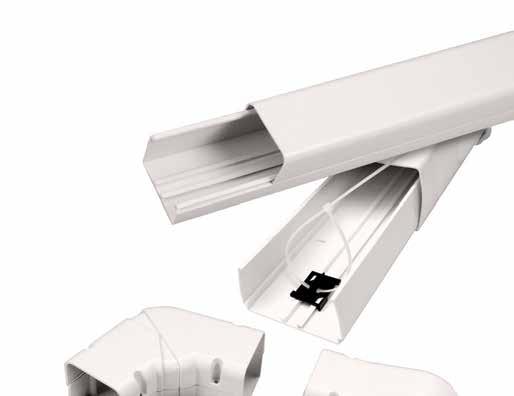
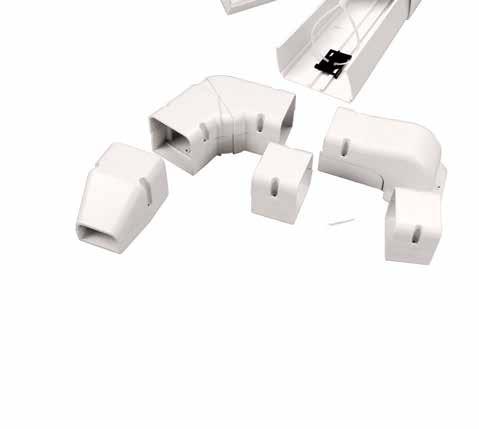
SpeediDuct ™ line set covers, featuring SpinFix,™ provide an aesthetically pleasing and simple installation solution that protects and hides line sets – indoors and out. Paint it to blend in or adjust it around problematic locations. Either way, enjoy the widest selection to cover any installation challeng
Experience Quality. Experience Franklin.
BY SPENCER FULLER
After the Montreal Protocol began the phase-out of chlorofluorocarbon (CFC) refrigerants in 1987, the HVAC industry began to test alternative refrigerants. Since then, the industry’s primary concern has been “safety first.” This does not mean just environmental safety, but also safety for people who handle refrigerants or who are near equipment containing refrigerant.
Currently, the HVAC/R industry is tackling the third paradigm shift in refrigerant chemistries – the first, went from CFCs to hydrochlorofluorocarbons (HCFCs), the second, from HCFCs to hydrofluorcarbons (HFCs), and now the
third, from HFCs to hydrofluoroolefins (HFOs), HFO blends, and other low-GWP formulations. Each change in chemistry has reduced the atmospheric lifetime of the refrigerant molecule in question by an order of magnitude. For example, the atmospheric lifetime for CFC-12 is 100 years, HFC-134a, 13 years, and HFO1234yf, 10 days.
Refrigerant molecules that rapidly degrade have less impact on the environment. But rapid decomposition in the atmosphere is another way of saying that the refrigerant oxidizes quickly and, therefore, is more likely to be flammable under certain conditions. Moreover,
more reactive chemicals tend to be more toxic. As a result, the industry is committed to thoroughly investigating the safety of today’s fourth-generation refrigerants.
HVAC/R equipment manufacturers contribute to industry research organizations such as the Air-Conditioning, Heating, and Refrigeration Institute (AHRI) and the American Society of Heating, Refrigerating, and Air-Conditioning Engineers (ASHRAE). But we also financially contributed to dedicated research into how to safely apply the new class of refrigerants.
Making this transition is not without its challenges. First, several of the fourth-generation refrigerants are mildly flammable, and a subset of those has a higher toxicity rating (see Figure 1).
ASHRAE Standard 34 classifies refrigerant flammability and toxicity. Letters A and B designate lower and higher toxicity. A number system denotes the level of flammability, with 1 for none, 2 for low and 3 for higher flammability. In practice, the flammability and toxicity and classifications are combined to indicate the general safety of the refrigerant. For example, HFC-134a is classified A1.
For third-generation transitional refrigerants, the optional classification of 2L was created to indicate slight flammability. Compared to Class 2, Class 2L substances burn slower and are more difficult to ignite and sustain a flame.
Underwriters Laboratory listing UL 1995 (issued jointly by Canadian Standards Association) pertains to HVACR applications. It is being revised in accord with international standard IEC 60335-240 to include A2L refrigerants.
Indeed, research, certifications, regulation and implementation take time. It is important to be right, not quick, to ensure this transition is made safely.
The use of A2L refrigerants affects equipment standards, building and fire
Continued on p30
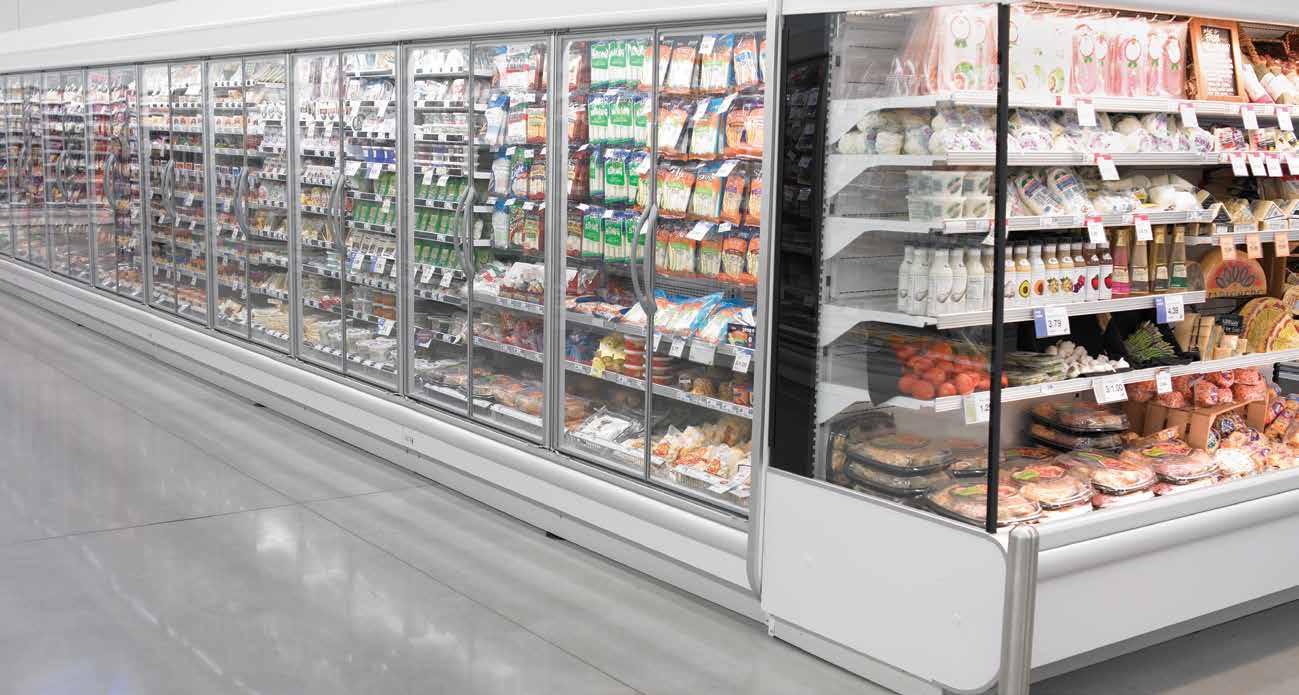
The ideal replacement for R404A in supermarkets is here — Honeywell Solstice ® N40 (R448A).
There’s no need to wait for a replacement solution. Honeywell has you covered. Solstice N40 is a versatile, blended, ASHRAE A1-rated refrigerant that satisfies all your low- and medium-temperature refrigerant replacement needs. Plus, it’s 5-10% more energy efficient than R404A! Its close match to existing equipment designs and compressors makes for rapid, cost-efficient adoption, and its GWP is 40% lower than R404A, making it a good choice to meet evolving regulatory standards. It’s also a superior replacement for R22 with a good capacity match and no TXV changes.
codes, construction practices, manufacturing processes, material handling and life safety procedures – all of which must be updated to ensure refrigerants can be used safely. Safety remains the primary objective and cannot be compromised.
Revising the building code takes time. For example, the next round of the International Building Code that could include A2L refrigerants begins in 2018 for codes implemented in 2021. Keep in mind that the mandate to adopt HFC-free refrigerants in chillers occurs by January 1, 2025.
Throughout this transition, it is important to note that equipment owners are not required to switch to a new refrigerant today. At this time, HFCs are not on an accelerated phase-out schedule, making them a safe, economical option while alternatives are being adopted.
Manufacturers, aware of this transition process, are evaluating new refrigerants and other technologies to advance performance, cost and safety of their products. Most manufacturers have been monitoring, testing and prototyping many of these refrigerant alternatives for years.
For a R-134a centrifugal and screw chiller platform, for example, medium pressure R-513A refrigerant, serves as a good alternative in terms of safety (A1, non-flammable, low toxicity), performance and cost. Other options were less attractive due to flammability, toxicity and/or a greater loss in performance (capacity, efficiency or both) (see Figure 1), and considerably higher installed cost.
For scroll chiller platforms, several potential alternatives have been identified. For outdoor chillers, A2L flammability risks can be addressed. However, flammability presents a greater challenge for indoor equipment, and for direct systems like rooftops, splits, VRF and unitary equipment.
In many cases, the new refrigerants under consideration are not currently available in large quantities. In fact, most refrigerant producers are forecasting the bulk of their production will not come online until 2018 at the earliest. In the meantime, these new refrigerants, limited in their availability, come with significant price premiums when compared to HFCs.
This reinforces the commitment from manufacturers -- and the commitment from the industry – to continue to press for development and regulatory timetables that ensure end users have safe refrigerant options well before regulations are implemented.
Regarding timetables, a letter submitted by the Natural Resources Defense Council (NRDC) and Air-Conditioning, Heating, and Refrigeration Institute (AHRI) to the U.S. EPA in February 2016 supported January 1, 2025 as the ef-
fective date to adopt HFC-free refrigerants. While this date will be challenging for chiller manufacturers with large existing product portfolios, the experience gained in previous transitions should make a smooth transition possible so long as building and fire codes are updated.
This is the third major paradigm shift for refrigerants. Now with HFO and other alternatives on deck, the HVAC/R industry, chemical manufacturers, and standard and code bodies have the experience to handle the transition. The goal is to ensure customer safety and improve system efficiency, but the end date of 2025 means everything will be moving faster this time.
Spencer Fuller is regional sales manager, chiller solutions, building technologies and solutions with Johnson Controls.

BY ROBERT WATERS
Most heating professions are very familiar with the principals of radiant floor heating systems and how they work. These systems have become an accepted part of the HVAC offering of many engineers and contractors, as they have proven to offer customers comfortable, efficient, healthy and quiet heating systems. Ask many of those same engineers and contractors about radiant cooling systems and you will probably get a mix of confusion, fear of the unknown and dismissal.
Cooling with radiant however, offers many of the same benefits as radiant heating; cooling systems that are comfortable, efficient and quiet. Radiant cooling systems have been widely used in Europe for some time and they are starting to become more popular in North America, especially in the dry climates of Southwest USA. According to Jerry Leyte, Central Canada sales manager for Uponor, there are now quite a few radiant cooling systems installed in Canada.
“There are radiant cooling systems installed in the Calgary and Winnipeg Airports, as well as the Toronto District School Board and Manitoba Hydro Place office that are performing exceptionally well,” notes Leyte. “Most applications for radiant cooling are in commercial applications such as airports, offices, schools, and large public areas such as museums. Residential applications are not very common, but can be installed if they are very carefully controlled,” adds Leyte.
Radiant cooling follows the same principles as radiant heating, but in reverse. Thermal energy is exchanged by radiant heat transfer between the heat loads present in the space and the cool floor or ceiling. Energy radiates from the objects, people, equipment and lights to the cool surface, which is opposite to what happens in heating mode, where the heated panel radiates to the objects and people. It is possible to have radiant panels that provide both heating and cooling, providing the best comfort and efficiency all year long.
There are two broad types of radiant cooling systems, which

are chilled slabs and radiant panels. Chilled slabs offer benefits of integration into the building, lower installed cost and increased thermal mass. Often referred to as thermally activated building systems (TABS), this large thermal mass can be advantageous for some applications, where the mass can be “charged up” during times of off-peak electrical rates. Radiant slabs can be arranged so that they are exposed on both sides, providing, at different times of the year, radiant heat to the space above and radiant cooling to the space below.
Radiant cooling slabs use similar design and sizing principles as a hydronic radiant floor system, using the same types of PEX pipes, manifolds and pumps as in heating. Chilled water between 55F to 58F is circulated through the pipes, which are embedded in either floor or ceiling. Radiant cooling slabs require a close tube spacing of six to nine inches on centre, which is a little tighter than the nine to 12-in. normally required for radiant heating.

Radiant cooling can also be delivered through specialized panels, which would typically be attached to ceilings, but can also be attached to walls. Panels offer installation flexibility in terms of where they can be placed and how they are integrated with dropped ceilings, lights and other electrical systems. The lower thermal mass of panels allows them to react very rapidly to changing loads. Radiant cooling panels are designed so that they can be retrofitted into the ceilings of older buildings as the plenum space requirement is minimal relative to fan coil units or VAV systems.
Radiant cooling from a slab can be delivered to a space from the floor or ceiling. Since radiant heating systems tend to be in the floor, the obvious choice would be to use the same piping for circulating cooled water. While this makes sense in some cases, delivering cooling from the ceiling has several advantages. It is easier to leave a ceiling exposed to the room below, which creates a better radiating surface to occupants and objects. As floors will often have coverings and furnishings, the effectiveness of the radiant cooling effect through the floor can be decreased. The ceiling will also come in contact with any rising warm air, creating greater convective heat exchange and a better cooling effect. Cooling delivered through the floor does make more sense when there is a high amount of solar gain directly onto the floor, because the cool floor can more easily remove those loads than the ceiling.
One of the most common questions asked about radiant cooling is “How do you deal with humidity in the air and the potential for condensation on the slab?” This probably leads to the most angst and uncertainty with engineers thinking about water damage, mould and safety issues. While this is an extremely critical design issue, it is one that is easily overcome with good design and controls.
A radiant cooling system will not deal with any latent heat removal (moisture in the air), so this must be handled by incorporating a separate air handling system to remove the latent moisture load in the space. The air handling system will usually also be required to provide ventilation and air quality control. Careful control of the humidity level must be maintained at all times in a radiant cooling system, to ensure that the dew point of the air does not get lower than the surface temperature of the slab or panel.
Controls will most often include multiple sensors embedded in the slab and air humidity sensors in the air space.
Condensation issues can be avoided completely by constantly monitoring and controlling both humidity levels and slab temperatures. Important design criteria to follow include keeping floor surface temperatures no less than 66F, and a having a room set point temperatures in the range of 76F to 78F.
The cooling capacity of the radiant cooling system is limited to about 12-15 btu/h/ft2. The air handling system must handle the balance of the cooling load. When radiant cooling is used in areas where solar gain will directly contact the floor, then the cooling capacity can increase substantially up to 25-32 Btu/h/ ft2. This makes radiant cooling in the floor very effective in buildings with large glass facades. Because the radiant cooling slab will handle the sensible load, the size of the air handling system is reduced substantially compared to a traditional cooling system. Smaller fans, ductwork and distribution systems results in significant installation savings, as well as reduced electrical operating costs. Smaller plenums can sometimes result in savings in building height, which makes architects happy.
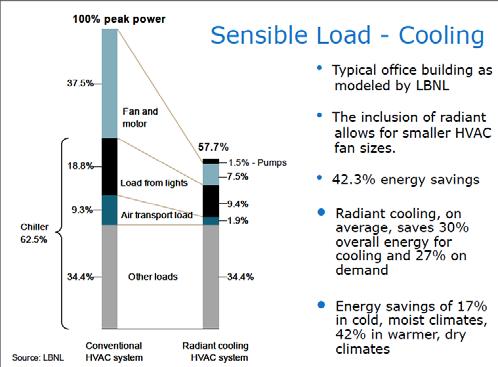
One of the best advantages that radiant cooling systems offer is the potential to lower energy consumption compared to conventional cooling systems. Research conducted by the Lawrence Berkeley National Laboratory in California, has shown significant energy savings potential for radiant cooling, with the amount depending on the climatic area. Their research has shown on average across the USA, savings are in the range of 30 per cent compared to conventional systems. Cool, humid regions might have savings of 17 per cent while hot, arid regions have savings of 42 per cent.
There are several reasons for reduced energy consumption, with much having to do with the benefits of hydronics in general, as well as the unique nature of radiant heat transfer. It is a much easier task to pump water
Continued on p34

than to blow air; to move the same amount of Btu’s the electrical consumption of a pump is much less than from a fan. Also the air handling component in a radiant cooling system is much smaller than conventional cooling systems, resulting in lower electrical energy consumption.
That large cool surface of a radiant cooling system provides a heat sink to draw heat away from our bodies. With the majority of heat being radiated away, there is a reduction in the amount that must be moved by convection. This allows people to feel comfortable at a higher air temperature set point. This, of course, converts into energy savings as well as better overall comfort. Another possibility for energy savings exists in high mass systems, where radiant cooling can shift some cooling to off-peak nighttime hours when electricity is cheaper.
Typically a radiant heating and cooling system will incorporate a condensing boiler for heating mode, and a chiller for cooling mode. A water-to-water geothermal heat pump with a reversing valve offers a natural synergy with radiant heating and cooling, as this device can provide both heating water in the winter and chilled water in the summer. Geothermal systems operate most efficiently when providing low heating water temperatures and moderate chilled water temperatures. This is precisely the range of operation that will be needed in a high mass radiant heating and cooling system, so the geothermal unit will operate at close to its maximum COP almost all year long.
Occupant comfort is another great benefit of radiant cooling systems. The large cool surface provides a heat sink to draw heat away from our bodies with a gentle cooling action creating a very comfortable, stable indoor climate. The volume of forced air flow is greatly reduced compared to convention air cooling systems. This reduces the potential for cold draughts, and also reduces dust and other allergens moving around. Radiant cooling systems operate very quietly, with a
greatly reduces amount of noise from fans or blowers.
Can radiant cooling be used for residential homes? According to Leyte, “it is possible to do, but there are certainly more challenges and a higher level of risk. With the possibility that doors and windows can be left open, the control of humidity can become very difficult.”
Another limitation for residential homes is that the use of carpet and pad would not be recommended for radiant cooling. For these reasons there is a very limited market in Canada for residential systems, coming primarily from “creative customers that are up for the challenge” according to Leyte. There are pockets, such as the southwest U.S., where the hot, dry climate offers the greatest advantage for radiant cooling with a large portion of cooling being the removing sensible heat, not latent. In these areas residential radiant cooling can work very effectively.
So while the market for residential radiant cooling may not develop in Canada, the commercial market does present some great promise. With building codes pushing to lower energy consumption in buildings, and a growing trend towards new green building technologies, radiant heating and cooling systems should continue to grow in popularity for many buildings. With benefits like high efficiency, high comfort levels, quiet and healthy operation, and building integration, there is a lot to like about radiant heating and cooling systems.

Robert Waters is president of Solar Water Services Inc., which provides training, education and support services to the hydronic industry. He is a mechanical engineering technologist graduate of Humber College and has over 30 years experience in hydronic and solar water heating. He can be reached at solwatservices@gmail.com.

















































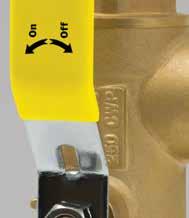



























































































































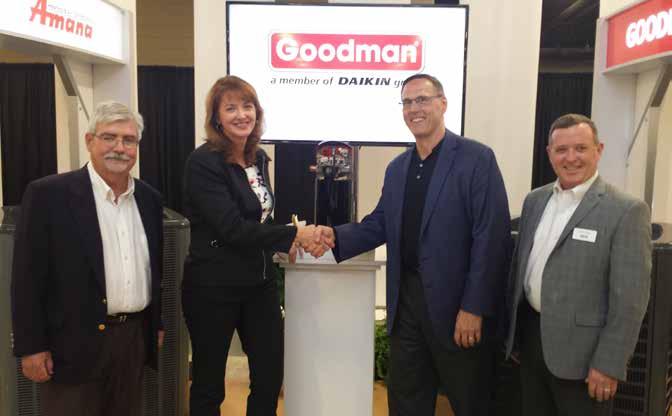
Goodman Manufacturing is launching Emerson’s new Copeland Scroll two-stage compressor in its new 16-18 SEER systems. The next-gen Copeland Scroll technology modulates between two stages of capacity—either 65 or 100 per cent. Two internal bypass ports enable the compressor to run at part-load capacity when outdoor temperatures require only part-load cooling. When temperatures, and thus demand increase, the bypass ports are sealed to shift capacity back to 100 per cent. The result is a system able to control temperature and humidity. Goodman products featuring the new compressor will be available in June. www.goodmanmfg.com
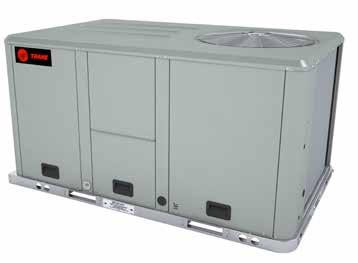
Trane has expanded its portfolio of light-commercial rooftop units with eFlex technology to include six- to 10-ton sizes, providing a lineup of high-efficiency, light-commercial packaged rooftop units ranging from three to 17.5 tons. The technology combines indoor and outdoor fans with variable speed compressors, which match output to cooling demands by operating at their fastest during high demand and slower levels during low demand. Trane rooftop units achieve a SEER up to 20.1, and an IEER exceeding 23 on some models, while maintaining EER as high as 13. www.trane.com

DuctSox offers a round, overhead and porous fabric HVAC duct system to distribute air down into data centre cold aisles with low 400-FPM velocities. The DataSox is a customizable air displacement ventilation ductwork system with onsite directional-adjustability for cooling commercial data centre equipment. It provides directional spot cooling with adjustable nozzles for high wattage servers. The system features a 1Ž4-in. to 1Ž2-in. w.g. of static pressure providing cold aisle temperatures. Standard diameters range from 14-in. to 48-in. and custom sizing is available. DataSox is UL-2518 and NFPA-90 compliant for fire and smoke regulations. www.ductsox.com
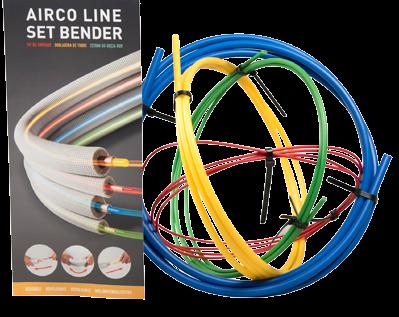
Marketair Inc. introduces easybend by Castel Engineering, a soft copper pipe bender that eliminates variable refrigerant flow (VRF) and mini-split lineset installation kinks. The easybend kit consists of four colour-coded, industrial-grade, solid polyethylene mandrel diameters. It is 13-ft. and fits into soft copper lineset tubing sizes of 1/4-in.3/8-in., 1/2-in. and 5/8in. The easybend prevents collapsing and kinking while making bends of up to 180-degrees. The easybend is 13-ft. and suitable for use between 14F and 113F. www.marketair.com
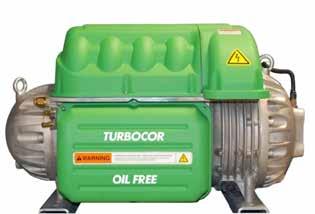
Danfoss’s Turbocor TG compressor series for low global warming potential refrigerants enables chiller manufacturers to build sustainable solutions that support refrigerant regulations for reducing CO2 emissions. The compressors are oil-free, variable-speed, magnetic bearing centrifugal compressors. They provide full- and part-load energy efficiency and a small footprint. They are lightweight, low vibration, low sound, have intelligent controls and soft starting characteristics. The cooling capacity is lowered by 25 per cent with an equivalent model using R-134a, but the energy efficiency is increased slightly. The new compressor models TG230, TG390 and TG520 are designed for standard temperature air-conditioning applications. www.turbocor.danfoss.com
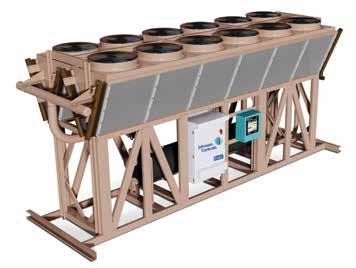
From Johnson Controls comes the BlueStream Hybrid Cooling System, featuring thermosyphon hybrid cooling technology to reduce water consumption in cooling tower systems. Used with a cooling tower, the system offers “dry” cooling through a thermosyphon process in which refrigerant circulates naturally, with no need for a pump or compressor. Intelligent, web-connected controls coordinate the operation of the wet and dry system components and adjust in all weather and thermal load conditions, utilizing “wet” cooling when it is hot and “dry” cooling when it is not. BlueStream suits process cooling, data centres, power generation and year-round, base-loaded HVAC applications with water-cooled chillers. www.johnsoncontrols.com/bluestream
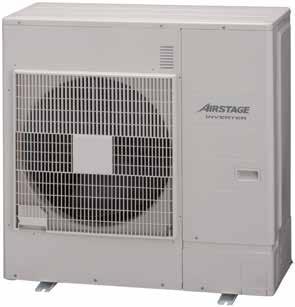
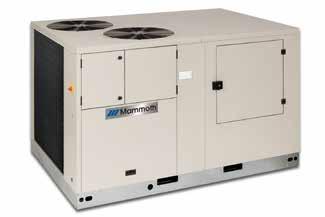
Nortek Global HVAC introduces a line of next-generation Mammoth light commercial packaged rooftops, available in six, 7.5 and 10 tons. The rooftop units fit on to pre-existing curbs without curb adapters. Quality components are factory-installed using Nortek’s Demand Flow Technology (DFT). Foam panel construction and hinged panel doors are standard. The one-inch form panel wall construction ensures indoor air quality is fibreglass-free. Panel walls are easy to clean and provide a high R-value. High-quality hinges eliminate screws on the roof and keep access doors in place. A quick-ship option is available, and the units feature 12.7 IEER. www.nortekhvac.com
Fujitsu General has added to its J-Series Airstage VRF line with introduction of the smaller J-IIS series for smaller residential, multihousing and light commercial uses with equipment available in three- and four-ton sizes. J-IIS’ shorter height allows installation in smaller spaces, or when condensing units are stacked vertically. Both J-II and J-IIS equipment are products. The J-Series VRF systems offer up to 19.8 SEER and 11.4 HSPF. Installers can connect up to eight indoor units to each condensing unit and choose from 11 indoor unit styles. Indoor units range in size from 7 kBTU to 46 kBTU. VRF controls offer additional features, including scheduling, sleep timer, economy operation and automatic season changeover. www.fujitsugeneral.com
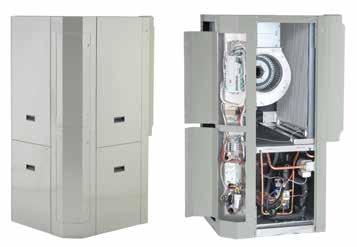
Modine Manufacturing Company has unveiled the GeoSync Water-to-Air Geothermal Heat Pump. Features include Modine CF microchannel air coil; Modine Control System; Decstar blower with integrated EC motor; Standard 4 in. MERV 11 filters and a vertical control panel with separate high and low voltage sections. The unit is available in two- to six-ton options. http://modinehvac.com
Daikin’s Magnitude WME Generation 2 magnetic-bearing chiller features compressor technology with a wider operating envelope for demanding applications. The WME Gen 2 features higher lift capability for harsher climates and two impeller options. The WME 501 and 701 models suit standard lift conditions, while the WME 502 and 702 are optimized for lower load, higher lift conditions. High lift models operate with up to 95F entering condenser water temperature. Where designs require unloading at constant entering condenser water temperature, Magnitude WME Gen 2 provides flexibility to maintain stable chiller operations at low load conditions. WME Gen 2 models can be rated at higher capacities. www.daikinapplied.com
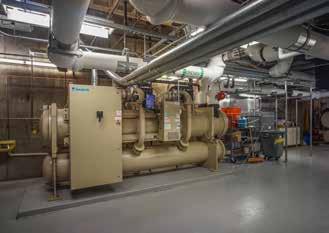
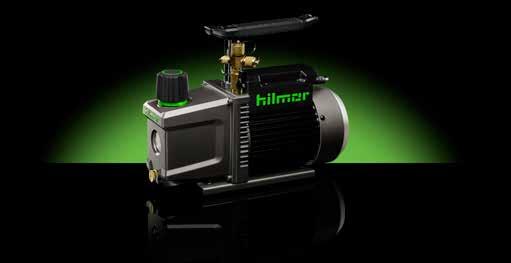
hilmor’s vacuum pump has a hands-free design, including built-in hoist points on the handle. It is compatible with the hilmor HVAC/R Carrying Strap. When it is time to pull a vacuum, technicians can connect a hose to either the ¼-in., 3/8-in. or ½-in. port (1/2-in. only on five and nine CFM pumps), open the leak-proof blank-off valve and crack the gas ballast to start evacuating. www.hilmor.com
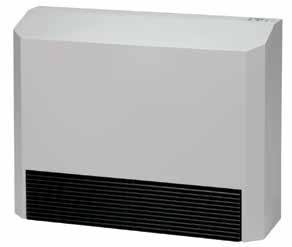
Williams Comfort Products high efficiency direct vent furnaces feature long-life ceramic-coated combustion chambers and utilize fresh air for operation. The furnace comes in two sizes: 17,500 Btuh and 35,000 Btuh (available June 17). The gas types are natural and propane and the furnaces have horizontal and vertical venting. Electronic controls feature a digital touch panel, and there is a sealed combustion chamber and two-stage heat exchanger. www.williamscomfortprod.com
Embraco has introduced a refrigeration solution called the EMC compressor, which uses natural refrigerant R290. It is designed for use in beverage coolers, vending machines, under-counter coolers and reach-ins. The EMC compressor features a smaller platform, with an extended cooling capacity that can replace larger compressors. The EMC Compressor works with zero ODP and nearly zero GWP. www.embraco.com
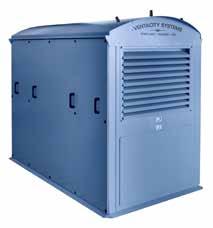
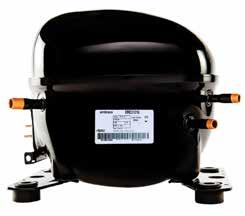
Ventacity Systems’ VS3000 RT heat recovery ventilation system provides a higher-capacity 3,000 cfm maximum flow rate for indoor air quality requirements in commercial buildings of up to 40,000 sq. ft. The system features pre- and post-heater elements. The VS3000 RT features a counterflow aluminum heat exchanger and programmable controller brain to adjust ventilation rates and core bypass volume. The system can be specified with the company’s Smart Building Gateway and Smart Ventilation cloud services. www.ventacity.com

Sensi thermostat from Emerson provides detailed instructions and videos for installation by either the consumer or an HVAC contractor. With the inapp contractor designation feature, HVAC professionals can leave behind a virtual business card. It offers precision temperature control with +/- onedegree accuracy. The Sensi thermostat can also be used with smart-home platforms, including Wink and Amazon Echo. www.sensicomfort.com

Extech Instruments has launched the HD780 digital manifold/pressure gauge, a heavy-duty digital manifold that measures suction line or liquid line pressure and line temperature to get superheat and sub-cooling values. The HD780 calculates differential pressure (P1-P2) and delta-T (T1-T2), has a rubber holster design and works with R22 and R410A refrigerant. Two ports are available for pressure readings and two inputs for temperature. www.extech.com
Nortek Global HVAC offers a 96-per cent AFUE gas furnace, which comes with a ECM motor and programmable control board. The fixed-torque ECM blower motor is programmable to 16 speeds making it suitable to high-static applications. The furnace features a SmartLite hot surface igniter made of silicon nitride and an onboard jumper shunt for twostage operation from a single-stage thermostat. www.nortekhvac.com
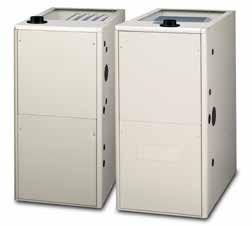

ecobee3 lite Pro is now available through HVAC distributors across North America. It requires no battery charging or power stealing. Each thermostat comes with a Power Extender Kit. Installation takes 30 minutes or less, and ecobee is compatible with most HVAC systems, including radiant heating systems, multi-stage and dual fuel heat pumps. It has a five-year professional warranty when purchased and installed by a contractor. ecobee3 lite Pro is also compatible with room sensors. www.ecobee.com
energy saving potential in today’s buildings and industrial processes

Canadian infrastructure investments are on the rise, and with ambitious climate and energy targets in place, Danfoss has been helping make Canadian cities more efficient and sustainable for 65 years. Heating and cooling consume as much as 40 percent of a building’s total energy use. Danfoss solutions like AC drives, variable speed compressors and hydronic control valves help cut energy consumption and improve comfort and control. City-wide, Danfoss’ innovative district heating solutions amplify efficiencies — cost-effectively boosting energy productivity, minimizing environmental impacts and helping cities plan for a sustainable future. With Danfoss, our cities can get more out of less without sacrificing performance or reliability.
Discover how we’re Engineering Tomorrow at danfoss.ca
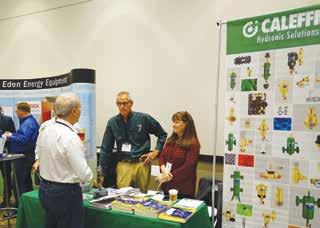
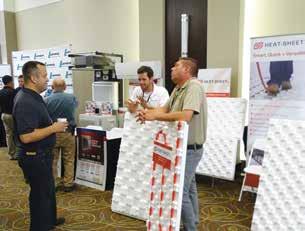
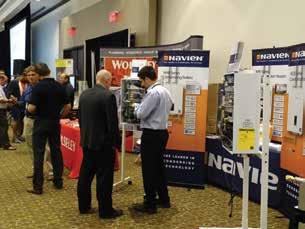










Higher efficiency circulators are here to stay.
BY JOHN SIEGENTHALER
Wet-rotor circulators have been used in millions of residential and light commercial hydronic systems over the last four decades. Many hydronic pros consider them “commodity” components. They are available from a long list of suppliers, most of which provide equivalency charts so installers can quickly switch from one make and model to another. The North American market for small wet-rotor circulators is very competitive and highly price sensitive.
Wet rotor circulator technology got to where it is today through continuous design and manufacturing improvements and good value engineering. Along the way there were successes and failures, lessons learned and patents filed.
Consider this: A small wet rotor circulator gets installed in an environment that is hot, wet, pressurized, potentially corrosive and likely littered with some amount of dirt, metal chips, or other debris. That circulator is expected to perform within that environment for at least 20 years with zero maintenance. I have several wet rotor circulators in my own house that were manufactured in the 1970s and have performed flawlessly, with zero maintenance to the present.
What other electrically-powered device with moving parts could match these expectations; dishwashers, refrigerators and washing machines? There is virtually no chance that most currently manufactured appliances will last as long as a wet rotor circulator. The pump manufacturers have done a good job.
Given this record it would seem the old adage: “If it ain’t broken, don’t fix it” should apply. Why would the industry have any interest in replacing or upgrading a product that performs so well? The predominant driver is energy efficiency. Manufacturers strive for efficiency gains from a competitive standpoint, while energy-related government agencies encourage or mandate improvements.
Although relatively inexpensive and reliable, a typical wetrotor circulator with a permanent split capacitor (PSC) motor is not very good at converting electrical energy into mechanical energy (what the hydronics industry calls “head”) and imparting that energy to the fluid in a system.
I often ask attendees at training events how efficient they think a typical small wet rotor circulator is at converting electricity into head energy. Guesses usually range from 50 to 80 per cent. After all, as an industry we are used to high boiler efficiencies. Why shouldn’t circulators be expected to deliver
pump curve
wire-to-water efficiency curve circuit head loss curve
rate (gpm)
comparable results? Some of those attendees are taken aback to learn that the efficiencies of small wet rotor circulators fall far short of their guesses. We will get to the actual numbers shortly.
There are several reasons for relatively low efficiency. A wet rotor circulator needs a larger gap between its rotor and stator coils compared to the gap in an air-cooled motor. This decreases motor efficiency. So does the need to induce a magnetic field in the rotor of a PSC motor relative to other more recently developed motor options. The price at which these products go to market, combined with performance expectations, does not allow for mechanical detailing such as polished volutes, internal turning vanes, tiny clearances between the impeller and volute, or precision ball bearings to support the rotor shaft.
Figure 1 shows several curves that determine and describe the performance of a small wet rotor circulator with (PSC) motor. They include the pump curve, circuit head loss curve and “wire-to-water” efficiency curve.
The red curve is the pump curve. It shows the head energy
added to the water by the circulator, as a function of the flow rate through it. The left side of the curve represents conditions where the circulator adds more head energy (foot•pounds of mechanical energy per pound of fluid passing through the circulator), while flow through the circulator is low. The right side shows conditions where the head energy added per pound of fluid is lower, but the volume of fluid passing through the circulator in a given time is higher.
The green curve is a circuit head loss curve. It quantifies the ability of a piping circuit to dissipate head energy from the fluid as it passes through the circuit. This curve is determined based on pipe material and size, as well as the fittings, valves, or other flow-through devices in the circuit, and the characteristics of the fluid.
The flow rate at which the circuit operates is found by drawing a line down from the point where the circulator’s pump curve crosses the head loss curve of the piping circuit. That point is appropriately called the “operating point” for that specific combination of circulator and piping circuit.
The purple curve shows the “wire-to-water” efficiency of the circulator. It quantifies the ability of the circulator to convert electrical energy into head energy and impart that energy to the fluid. The fact that wire-to-water efficiency is a curve rather than just a number indicates its dependence on the flow rate through the circulator. The wire-to-water efficiency ranges from zero, if the circulator is operating but no flow is passing through it due to a blockage in the circuit, up to some maximum value. For the circulator represented in Figure 1, the maximum wireto-water efficiency is about 22.4 per cent.
In an ideal application, the circulator’s operating point falls directly under the peak of the wire-to-water efficiency curve. However, designing systems that operate at this “sweet spot” is the exception rather than the rule. Still, it is an ideal to be aware of and strive for when refining system design.
A guideline I suggest is to select a circulator so that the operating point falls within the middle third of the pump curve. In Figure 1 the operating point falls just to the right of the peak of the efficiency curve. This system would operate with a wire-to-water efficiency of about 21.9 per cent, compared to the maximum possible wire-to-water efficiency of about 22.4 per cent. That is a very acceptable difference.
Over the last decade, many of the fans and blowers used in residential and light commercial HVAC equipment have transitioned from permanent split capacitor (PSC) motors to brushless DC motors. The latter are often called ECMs, which stands for electronically commutated motor. Brushless DC motors use powerful and permanent rare earth magnets within their rotors. The magnetic field produced by rare earth permanent magnets are also very strong, resulting in motors
few microseconds
that offer higher torque and more power, while being significantly smaller than PSC equivalents.
In modern high efficiency circulators, the permanent magnet is sealed inside a stainless steel “can” that is fastened to the shaft and impeller assembly. That assembly rotates to follow the moving magnetic fields created by the wire-wound stator poles that surround the rotor as shown in Figure 2.
The magnetic polarity of a stator pole can be rapidly switched by alternating the direction of electrical current through the pole’s winding. This switching is regulated by a microprocessor within the circulator. The frequency at which the polarity is switched, and the precise timing of these changes, allows the circulator’s impeller to spin over a wide range of speed. That speed can be controlled by anything that properly communicates with the microprocessor. This includes predefined control modes that are factory-programmed into the circulator’s non-volatile memory, as well as signals from external controllers. The latter includes analog inputs such as a variable 0-10 volt DC signal, or digital inputs supplied as a predefined pulse width modulation (PWM) signal. Larger high efficiency circulators can also be configured to accept signals from building automation protocols such as BACnet or LonWorks.
Two common operating modes that are factory-programmed into the non-volatile memory of high efficiency circulators are:
1. Constant differential pressure mode (abbreviated as ∆Pc)
2. Proportional differential pressure mode (abbreviated as ∆Pv)
These operating modes allow the circulator to be configured based on the piping system it will be used in. Both operating modes are intended for use in multi-branch systems where each branch contains a valve to regulate flow. These valves might be simple zone valves that are either fully open


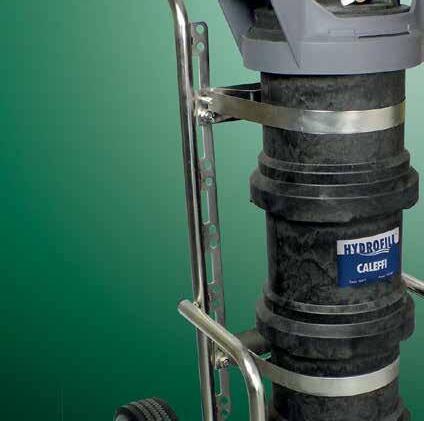


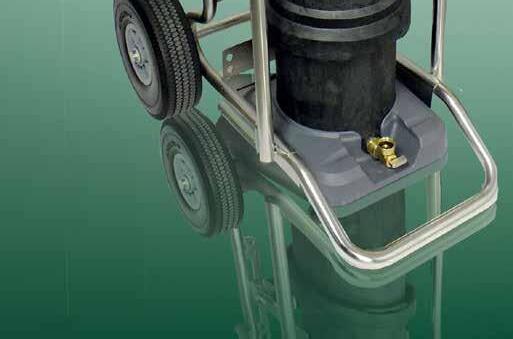








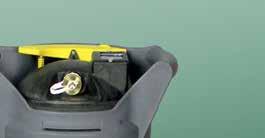









Water is the “life-blood” of hydronic systems. Just as we strive to maintain the health of our own circulatory systems, it’s important to maintain the “health” of water and water based solutions that circulate through the hydronic systems we construct and maintain.
HYDROFILL ™ portable water treatment lling units remove scale forming “hard water" minerals, such as calcium and magnesium from job-site water. Salts and other soluble minerals are eliminated to prevent reduced ef ciency and premature equipment failure due to scale build-up or galvanic attack.
HYDROFILL ™ is a convenient tool for installers to use job-site water to produce ideal grade demineralized water at an economical cost per gallon.

Heating & Cooling
Components for today's modern hydronic systems


or fully closed at any given time. They could also be modulating valves. Two examples of the latter are thermostatic radiator valves and motorized two-way globe valves.
Both ∆P operating modes adjust differential pressure so that the flow rate in a given branch remains as stable as possible while flow in other branches changes. For example, if the design flow rate through zone one of a four-zone distribution was two gpm when all other zones are open, it should remain close to two gpm regardless of what is happening with flow in the other zones.
The ∆Pc operating mode is best applied in systems where the head loss of the branch circuits is much greater than the head loss of the common piping. The latter is the piping through which all system flow passes. It includes the headers serving the branch circuits and usually some additional piping carrying flow through a heat source, hydraulic separator, or heat exchanger.
Designers should always keep the head loss of the common piping as low as practical. Keep headers short and generously sized. I suggest a maximum flow velocity of two feet per second through headers assuming all branches are on. If the heat source has high head loss characteristics such as a compact heat exchanger in a mod/con boiler, or a coiled coaxial heat exchangers in a heat pump, isolate that head loss from the common piping using a hydraulic separator, closely spaced tees, or a buffer tank.
One of the best examples of systems where ∆Pc is well applied is a homerun distribution system, as shown in Figure 3.
The common piping in Figure 3 is outlined by dashed lines. It consists of short headers, generously sized piping and a buffer tank that provides hydraulic separation between the heat source circulator and the variable speed distribution circulator.
Think of ∆Pc mode as “cruise control” for differential pressure. The installer sets the ∆P required at design load, when all branches are operating at full flow for example. The circulator then monitors the current ∆P and compares it to the set ∆P. This monitoring is “sensorless.” Flow rate and differential
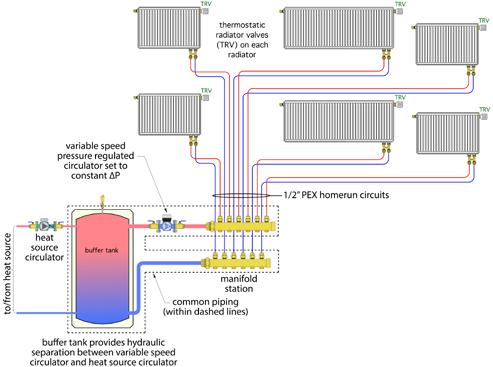
pump curves
decreasing circulator speed
system head loss curves
constant differential pressure control
(1) zone on (2) zones on (3) zones on (4) zone circuits
majority of total head loss occurs within branch circuits rather than common piping
variable speed pressure regulated circulator set to constant ∆P
low head loss headers
pressure are inferred based on the electrical operating conditions of the circulator in comparison to “mapped” electrical performance data stored in the circulator’s memory.
If the ∆P across the circulator decreases, the motor speed increases to reestablish the set ∆P and vice versa. Because the head loss of the common piping is very low in comparison to the head loss of the branch circuits, the ∆P across the circulator is almost the same as the ∆P across the manifold station. Maintaining a constant ∆P across the manifold station keeps the flow rate in each branch circuit stable, regardless of the flow in other branches.
When the speed of a circulator changes so does its pump curve. Reducing speed shifts the pump curve to the left and downward. Increasing speed shifts the pump curve to the right and upward.
The head loss curve of the distribution system also changes as the valves in branches open, close or modulate flow. When valves open the head loss curve becomes shallower and when valves close it becomes steeper.
Figure 4 shows how a variable speed circulator operating in ∆Pc mode changes its pump curve in combination with the shifting head loss curves, so that the operating point tracks along a horizontal path and thus maintains a constant differential pressure across the circulator.
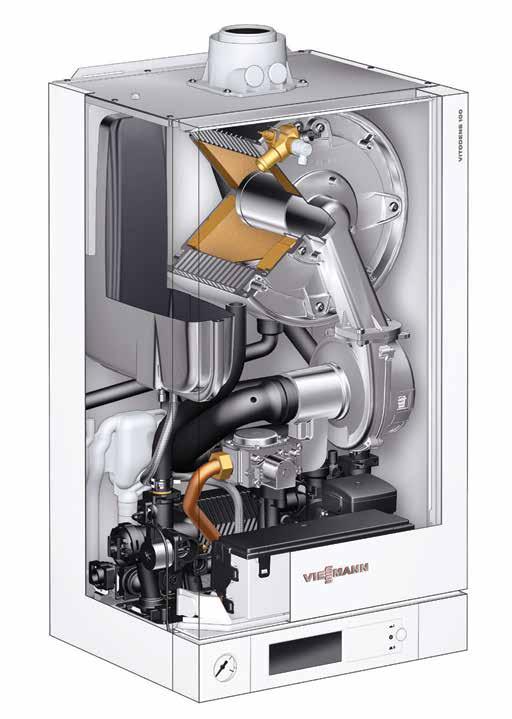
VITODENS 100-W, B1KA
gas condensing Combi boiler
Heating input: 21 to 125 MBH
DHW max. input: 149 MBH
Lasting performance
Quality workmanship you can trust with new Viessmann-made SA240 S43932 stainless steel Inox-Radial selfcleaning heat exchanger and new factory calibrated, fully-modulating stainless steel MatriX cylinder gas burner.
On-demand DHW
Built-in DHW unit includes stainless steel plate heat exchanger, 3-speed pump, diverting, pressure bypass and pressure relief valves, water hammer arrester and sensors - conforms to NSF/ANSI 372 for “lead free” plumbing products.
User-friendly control
New backlit LCD touchscreen control with enhanced programming interfaces with a variety of external control devices to provide comfortable and reliable energysaving space and DHW heating.
Outstanding versatility
NG or LP fuel compatible “out-of-the-box” with bottom pipe connections and front access to all serviceable components plus multiple venting options for easy installation service and maintenanceall in a compact wall-mount design.
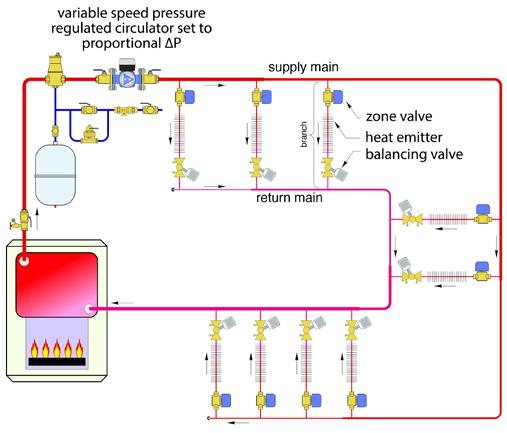
The ∆Pv mode is best applied in systems where the head loss of the “mains” piping is significant relative to the head loss through the branches. Two specific and common piping layouts fit this description: two-pipe direct return distribution systems and two-pipe reverse return distribution systems. Figure 5 shows an example of the latter.
When operating in ∆Pv mode, the head produced by a circulator decreases linearly with decreasing flow rate, as shown in Figure 6.
The head added by the circulator a zero flow rate is typically constrained at 50 per cent of the head setpoint for design load (e.g., the head required when all branches are at full flow). This relationship between head and flow, combined with the characteristics of a two-pipe distribution system, create conditions that maintain relatively stable flow through each branch regardless of flow in other branches.
Both ∆Pc and ∆Pv operating modes eliminate the need for a differential pressure bypass valve in the system. The latter was a common means of limiting variations in differential pressure when fixed speed circulators were used in systems with valve-based zoning. And, unlike a differential pressure bypass valve, which regulates pressure by dissipating excess head energy, both ∆Pc and ∆Pv operating modes reduce electrical power demand by the circulator whenever flow or head decreases. Estimated operating cost savings vary by manufacturer, model and operating mode, but claimed savings range from 60 per cent to as much as 90 per cent compared to fixed speed circulators with comparable hydraulic characteristics and AC induction motors.
Some high efficiency circulators have built in firmware routines that pulse the impeller at start up to dislodge any en -
trapped air. Some also have built in temperature and flow sensors. When combined with another temperature sensor on the opposite side of the circuit, some high efficiency circulators can be set to maintain a fixed temperature difference between the supply and return sides of the circuit. Some can even calculate and report the rate of heat transport in the circuit based on an internal flow sensor combined with two temperature sensors.
In Europe, the use of standard circulators with PSC motors in stand-alone applications (e.g., those not integrated into a product) ended in January 2013. Only circulators meeting energy use limits established through simulated usage profile testing can be legally installed in European Union countries. Standard wet rotor circulators with PSC motors, which are still extensively used in North America, fall far short of these limits. By 2020 European energy use standards will also apply to all new and replacement circulators that are integrated into products such as hydronic mixing modules, or pumping stations.
The United States Department of Energy (DOE) is currently working with industry stakeholders to develop energy efficiency standards for smaller hydronic circulators. Although still a work in progress, the eventual standards are likely to set target energy use thresholds not achievable by circulators with PSC motors.
Brushless DC motors with microprocessor-managed speed regulation are all but certain to become the standard for hydronic circulators worldwide. Future circulators using this technology will likely offer increased functionality through more intrinsic operating modes, expanded communication abilities including internet connectivity and artificial intelligence-based adaptation to changing load conditions.
As has been the case with other devices using digital electronics, the price of high efficiency circulators has dropped over the last few years due to market competition and product development trends by global circulator manufacturers. Small higher efficiency circulators that cost upwards of US$400 when first introduced to North America a decade ago, are now available at less than half that price. Some high efficiency circulators with basic functionality have recently dipped below the US$100 retail price point in North America.
I consider the transition from standard wet rotor circulators to high efficiency brushless DC powered circulators one of the biggest advances in hydronics technology over the last 20 years. The eventual replacement of lower efficiency circulators with current and future versions of high efficiency circulators will save multiple billions of kilowatt hours of electricity worldwide. When it comes to moving water through hydronic systems, high efficiency circulator with brushless DC motors are the new norm.

John Siegenthaler, P.E., is a mechanical engineering graduate of Rensselaer Polytechnic Institute and a licensed professional engineer. He has over 34 years experience in designing modern hydronic heating systems. Siegenthaler’s latest book, Heating with Renewable Energy, was released recently (see www.hydronicpros.com for more information).
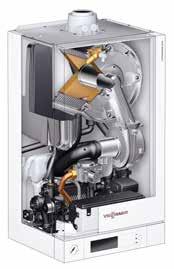
SEE JOHN AT MODERN HYDRONICS-SUMMIT 2017 WHERE HE WILL BE PRESENTING A KEYNOTE SESSION AND A SESSION WITH ROBERT BEAN. www.modernhydronicssummit.com
Viessmann Manufacturing Company Inc. has introduced the Vitodens 100-W, B1KA gas-fired condensing combi boiler for residential applications. The Viessmann-made SA240 S43932 stainless steel Inox-Radial self-cleaning heat exchanger and stainless steel, factory-calibrated fullymodulating MatriX cylinder gas burner ensure performance and operational reliability. The built-in DHW unit includes a stainless steel plate heat exchanger, three-speed pump, diverting, pressure bypass and pressure relief valves, water hammer arrester and sensors, and conforms to NSF/ANSI 372 for “lead free” plumbing products. www.viessmann.ca

Webstone’s latest installment of Pro-Connect Press products now includes two more step saving valves: Press Purge Tee and Press Purge & Fill. The valves have patented singlebody brass designs, are compatible with popular press tools and are guaranteed for life. www.webstonevalves.com
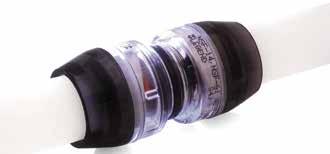
Ontor Limited introduces Legend’s SmartClick Connection System. The SmartClick connector for PE-RT and PEX tubing requires no other components or tools. SmartClick is for use in potable water plumbing and hydronic systems utilizing PE-RT (ASTM F 2769) or PEX (ASTM 876/877). The major body components of SmartClick are made of polyphenylsulfone (PPSU). www.ontor.com
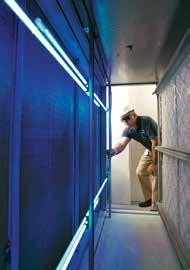
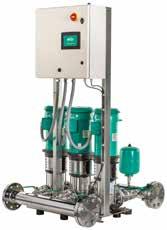
Wilo’s CO Helix booster system features 550 USGPM of flow and 520 feet of head; real-time diagnostics and remote monitoring; full system kWh energy reporting; onboard ModBUS and an optional BacNET and LonWorks interface; variable speed control per pump; and a 7-in. touchscreen interface. www.wilo-canada.com
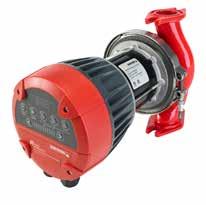
Armstrong Fluid Technology has introduced the COMPASS R, a high-efficiency iECM motor with quadratic pressure curves. The circulator has high-efficiency dry rotor design; optimized hydraulics; a replaceable mechanical seal; boltfor-bolt connection compatibility with a range of installed three-piece circulators; and an easy-to-access front-facing terminal block. http://armstrongfluidtechnology.com
ADEY Professional Heating Solutions introduces the MagnaClean commercial magnetic filter range. The magnetic filtration system removes suspended iron oxide in hydronic heating systems by water that flows through a central magnetic core populated by a series of magnetic rods inside the canister. This addresses complaints in commercial hydronic systems including poor system circulation, blocked system pipes and radiators and noise. The filters feature five inlet and outlet flange size options: two-, three-, four-, six- and eight-in. All units are designed for light-commercial to heavy-industrial applications. www.adey.com
MANUFACTURERS • DISTRIBUTORS • WHOLESALERS
INTERNATIONAL COMFORT PRODUCTS AWARDS DISTRIBUTORS OF THE YEAR
International Comfort Products (ICP) has named three Canadian heating and cooling product distributors as the Comfortmaker, KeepRite and Tempstar Distributors of the Year for achievements in customer support and sales growth. Mike DuFour, general sales manager, ICP Canada, presented the awards to:
• Wolseley Canada – KeepRite Distributor of the Year for outstanding sales growth;
• Sinclair Supply Ltd. – Tempstar Distributor of the Year for substantial growth; and
• TTI Climatisation Chauffage, Inc. – Comfortmaker Distributor of the Year for mastery of brand recognition.
Each year, ICP selects Canadian Distributors of the Year from its network of independent distributors throughout Canada for outstanding achievements in sales growth and customer support. www.icpusa.com
left, Yves Blanchette, TTI Climatisation Chauffage, Inc., Charlie Piranian, ICP general manager, North American Sales, GeorgesAndre Robert, ICP regional business manager, Robbie Turcotte, TTI Climatisation Chauffage, Inc., Mike Dufour, ICP Canada national sales manager, J.T. Holtschlag, vice president and general manager, ICP & HVAC Components.
ServiceTitan has partnered with Plumbing & HVAC SEO to help home service businesses track online campaigns. The company’s integration with Plumbing & HVAC SEO lets customers track, measure and analyze those efforts via the ServiceTitan Dashboard. Whether running a search engine optimization campaign, pay-per-click, social media, e-mail marketing or other campaign, owners can track what is working to calculate ROI.
ServiceTitan has also partnered with ClearPathGPS, a company providing GPS vehicle tracking across several industries. ClearPathGPS gives ServiceTitan users real-time location and visibility data on their field technicians. By connecting ClearPathGPS-tracked vehicles to the ServiceTitan dispatch board, home service businesses can make dispatching decisions and streamline job scheduling. https://servicetitan.com
Bruce
ICP regional business
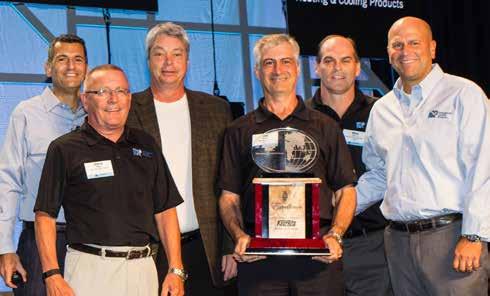
From left, Charlie Piranian, ICP general manager, North American sales, Steve Webb, ICP sales manager, John Bonus, Wolseley Canada, Joseph Caranci, Wolseley Canada, Mike DuFour, ICP Canada, national sales manager, J.T. Holtschlag, vice president and general manager, ICP & HVAC Components.
Daikin has launched daikincomfort.com, its recently updated website that consolidates several Daikin sites into a single, comprehensive online resource.

The site is a platform for selecting the Daikin products and features necessary for a particular application. HVAC jargon is simplified or eliminated. When a user selects a product, the site then directs them to dealers in their area.
Built on a responsive design platform, the new daikincomfort. com features a revised layout, intuitive navigation and improved product imagery. https://daikincomfort.com

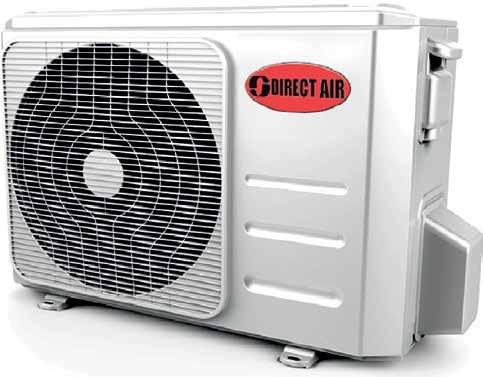

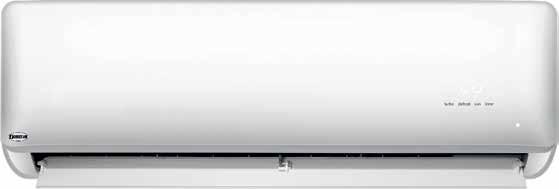
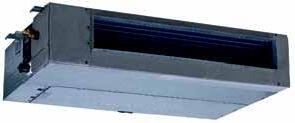
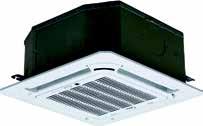


Harris Atlantic Sales Ltd. is repping Aquatherm Canada – Canadian partner of polypropylene-random pipe manufacturer Aquatherm Worldwide – in Atlantic Canada, including New Brunswick, Nova Scotia, Newfoundland and Labrador, and Prince Edward Island.
Harris Atlantic Sales was established in 1999 as a manufacturers’ agency to represent plumbing and heating manufacturers in Atlantic Canada. www.harrisatlantic.com www.aquatherm.com/canada
Venstar has won in the 2017 BIG Innovation Awards presented by the Business Intelligence Group. Venstar is being honoured for its Surveyor Energy Management System (EMS).
Organizations submitted recent innovations in the 2017 BIG Innovation Awards, which were judged by volunteer business people and executives who score submissions and provide feedback. www.venstar.com

Canadian contractors are invited to hop on board in 2018 as Weil-McLain cruises the Eastern Mediterranean for Wave Rider IV, stopping at four ports of call: Venice, Santorini, Mykonos and Dubrovnik. Setting sail in June 2018, qualifying contractors will get airfare, transfers and a weeklong cruise
for two. Contractors can join the cruise in one of two ways: achieve a minimum of 100 “points” by purchasing qualifying WeilMcLain products between February 1, 2017 and January 31, 2018; and buy any qualifying product and have their name entered into a draw. Every qualifying product equals an entry. Weil-McLain will pull one winner.
Contractors can start entering their qualifying products now at weil-mclain. ca/promotions. http://weil-mclain.ca
Superior Boiler Works, Inc. is celebrating 100 years as a continuously operating business. The business began as Superior Welding Shop in Hutchinson Kansas, in 1917. Superior Welding trained welding students during WWII and graduated more than 200 students. The company also began to engineer and do work with boilers and pressure vessels, eventually changing its name to Superior Boiler Works.

“We’re extremely excited to celebrate our centennial throughout 2017,” said CEO Doug Wright. “This is a monumental milestone. Very few companies find the right formula to make it this long, and we have. It’s a testament to our entire team of employees now and before us.”

To celebrate, the company plans several events throughout the year involving employees, customers and friends of the company. www.superiorboiler.com
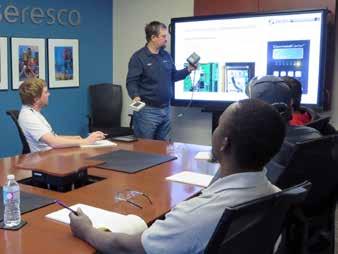
Seresco Technologies has opened the Seresco Dehumidifier Training and Certification School, a two-tiered training course on mechanical dehumidification and natatorium operation. The course targets facility maintenance personnel overseeing indoor pool dehumidifiers and HVAC/R contractors servicing them.
The program’s Level 1 is a free online course designed as a primer for facility maintenance personnel, facility managers and a prerequisite for HVAC/R service technicians planning Level 2 certification. Level 2 is a two-day, $500 course for EPA- or ODP-certified HVAC/R technicians. It is conducted at Seresco’s Ottawa headquarters and involves classroom instruction and hands-on dehumidifier training. Jerry Choate, Seresco factory service technician, and Sergiy Kovalov, Seresco’s quality assurance manager instruct the course.
Continued on p52
Winters Instruments has been awarded the Canada’s Best Managed Companies designation. The 2017 Best Managed program recognizes best-in-class, Canadian-owned and managed companies that demonstrate strategy, capability and commitment to achieve sustainable growth.
The 2017 winners were honoured at the annual Canada’s Best Managed Companies gala in Toronto in April. http://winters.com

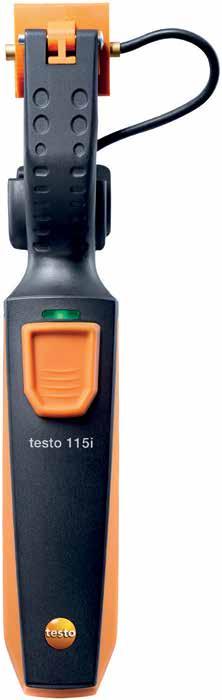
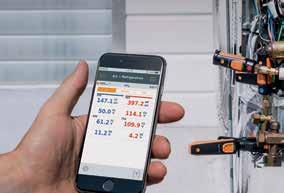
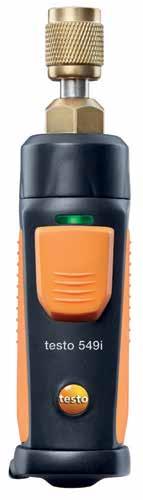
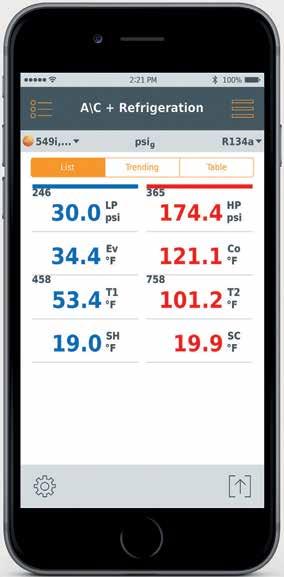
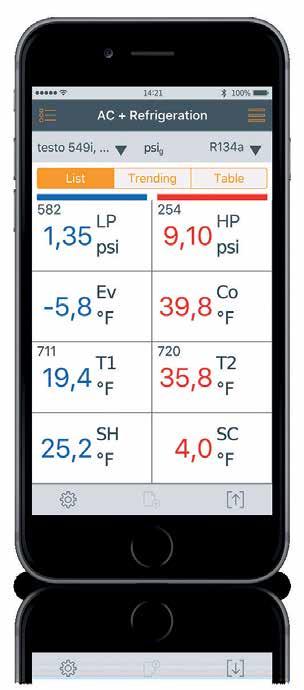
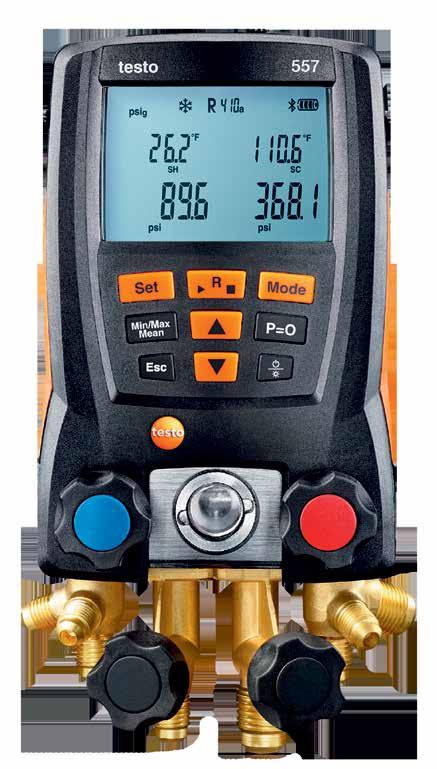


Perfect for testing. Perfect for service.
The testo Smart Probes Refrigeration Set

The Smart Probe Refrigeration Set is operated entirely by smart devices using the testo Smart Probe App offering complete diagnostics monitoring on refrigeration / air conditioning systems including superheat and subcooling calculations.
The testo 550 / 557 Digital Manifolds www.testo.com/refrigeration

The testo 550 and 557 Digital Manifolds are equipped to simplify your refrigeration system testing and servicing. Automatic superheat and subcool calculations work with or without the powerful refrigeration app to simplify your job.
Technicians completing Level 2 receive a certificate, a preferred technician listing on Seresco’s website and dehumidifier service customer referral requests in their area. www.serescodehumidifiers.com
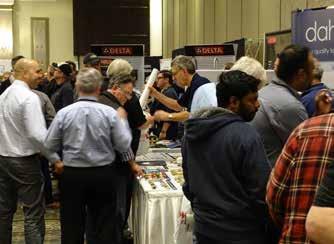
More than 944 Wolseley customers attended the wholesaler’s second Wolseley ONE Tradeshow, held March 29 at the Mississauga Convention Centre. A Western theme saw old-time barrels and bathtubs on display while attendees filed through a gate marked “saloon” to the bar.
The agenda featured three speakers including Martin Luymes, director of programs and relations at the Heating, Refrigeration and Air Conditioning Institute of Canada (HRAI), who discussed the HVAC/R business’s regulatory landscape. Door-to-door sales remains a problem, Luymes said. “It’s brought attention to the industry in ways that we would not have asked for,” he told the crowd.
To address the issue, Ontario’s Bill 59 focuses on sales contracts signed in the home, said Luymes. The bill’s penalties are “severe and escalating,” including homeowners potentially keeping equipment with no compensation for the company. Some of the bill remains unclear, such as whether the legislation will cover telephone calls to homeowners.
Regarding climate change, Luymes said both space and water heating have been tagged as important to a solution. The federal government is looking towards “strategic interventions” in the market to speed the adoption of high-efficiency
LEFT: Siân Smith addresses the sell-out crowd at the inaugural Canadian Institute of Plumbing & Heating (CIPH) Women’s Network luncheon event, held recently in Mississauga, ON. Smith is a senior director at Noble Corporation, immediate past-chairman of CIPH, and current chair of the newly-established CIPH Women’s Network. The Network’s purpose is to support the professional development of women within Canada’s plumbing and heating industry, and to help CIPH member companies to attract, develop and retain more highperforming female employees. The group held a second event in Montreal, QC during MCEE (look for more on this event at www.hpacmag.com).
RIGHT: Barbara O’Reilly of Rheem Canada Ltd., vice chair of the Network, thanks luncheon speaker Dr. Claire Carver-Dias and encourages attendees to help grow the Network by bringing in female co-workers and industry contacts.

space heating technologies. Plans include short-, medium- and long-term goals, such as cost-effective and accessible heat pump technologies for major end users by 2030.
In addressing regulatory harmonization, Luymes said a recent focus has been standards and building codes among provinces. Ontario and British Columbia are looking to move ahead with such harmonization, with Alberta also headed that way.
Renewable energy sources must deliver comfort to stay viable, noted mechanical engineer John Siegenthaler during another session. “You can never, ever lose sight of comfort as the driver,” he said. With floor heating, customers may be surprised that the floor isn’t warm, although people in the house are comfortable. Be prepared to discuss this with clients, Siegenthaler advised the audience.
https://wolseleyinc.ca

Ouellet Canada is celebrating its 50th anniversary this year. “This is a historic moment for the owners and directors of the company. We want to recognize it throughout the year and we will therefore be organizing celebratory events every month,” said Martin Beaulieu, president of Ouellet Canada, at the company’s
annual general meeting in January.
Based in L’Islet on the south shore of the Saint Lawrence River in Quebec, Ouellet Canada designs, manufactures and sells electrical heating products for the residential, commercial and industrial markets.
Ouellet Canada Inc. had humble beginnings. Charles-Émile Ouellet launched the business from a makeshift workshop in his home. Pushing the limits of innovation and

keeping research and production tightlyfocused on high-performance electrical heating products paid off as Ouellet expanded beyond Quebec to national, American and overseas markets. www.ouellet.com
Speaker Lisa Leitch discussed “Getting Ready for 2020”, 2020 – when more than half the workforce will be millennials – at the CIPH Ontario Region Annual General Meeting on March 30. Outgoing chair Paul Balik noted that the topic was very apropos given the Ontario Board’s focus in getting new faces out to its business meetings this year.

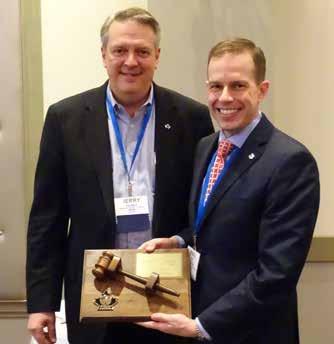
He pointed out that the Young Executive Society (YES) panel presentation on March 9 attracted almost 70 CIPH young executives. The “Explore the Road to Success” panel featured Heather Ferris of InSinkErator, Rich Palser of Palser), Sian Smith of Noble, Josh Young of Canplas and Balik. The panel, which was moderated by Tom Newell of Emco, answered pre-submitted questions, such as: How we all got into our industry; how we got past personnel barriers; how to best get mentorship from people with experience; and how to best deal with technologically adverse senior managers.
In other CIPH news, the CIPH’s Annual Business Conference, themed Making History Together, will be held June 25 to 27 in Ottawa, ON. www.ciph.com
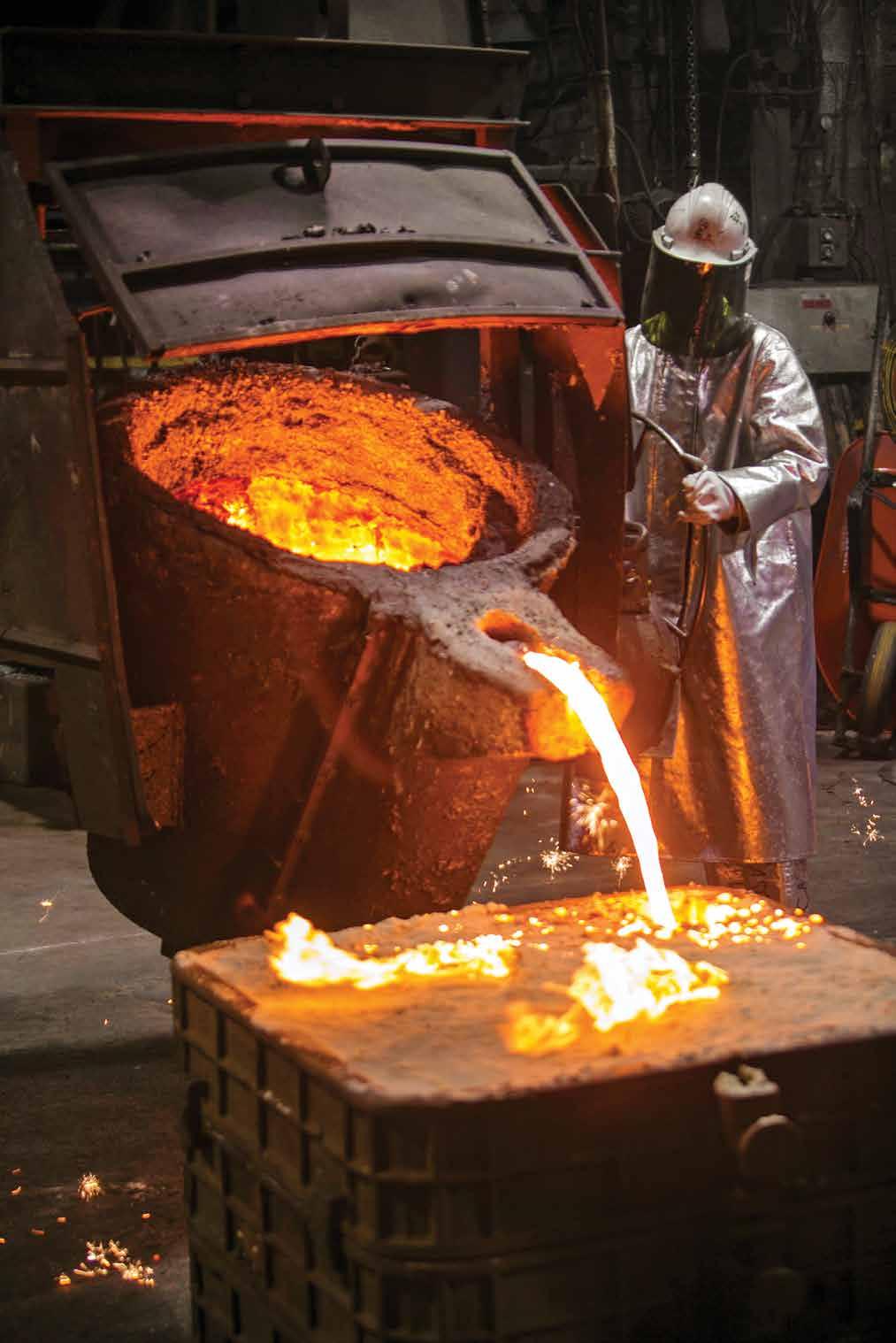

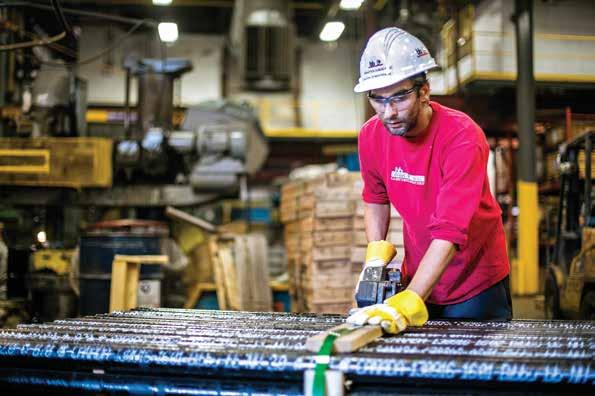
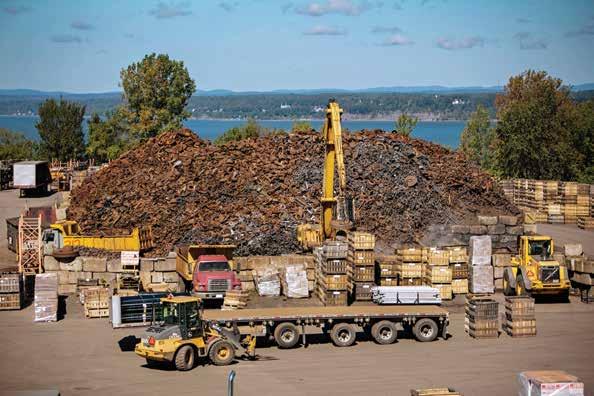




Personnel changes at Bradford White Canada include the promotion of Tom Gervais to the newly created role of director, specification and product development. Gervais is responsible for all specification development with engineers & spec writers as well as becoming a team member and leader for product development with all Bradford White companies. Dan Milroy has been promoted to director of sales and marketing, Canada. Milroy will be responsible for sales management of all Bradford White, Laars & Niles products throughout Canada. Rita Franco has been promoted to customer service manager for all product categories of Bradford White Canada. As well, Wendy Myrie has been hired as human resources manager for Bradford White Canada.

joined T&S Brass as eastern regional sales manager for plumbing, joining sales manager Jon Gustafson in the Canadian market. As the new director of specification for plumbing, David Kachurak will be calling on specifiers across North America, including all of Canada.




Indoor air quality products manufacturer FreshAire UV – div. of Triatomic Environmental Inc. has named James Beavers director –commercial sales. The 28-year HVAC veteran will begin filling in the company’s North American network of specifying engineers and channel partners that sell and specify ultraviolet germicidal irradiation (UVGI) and PCO/activated carbon indoor air quality (IAQ) commercial solutions. He will also help with international sales and new IAQ product solutions. Beavers has held director of sales and director of international business development positions for 13 years at ECR International and spent seven years with the White Rodgers division of Emerson Electric.
Kal Osman has been appointed director of product management at Fujitsu General America. Previously, Osman served as the manufacturer’s commercial product manager. He has over 20 years of experience in the HVAC industry.

Wholesale distributor Wolseley Canada Inc. has announced the appointment of Kevin Fancey to the position of president, effective June 5, 2017. He is assuming the role Simon Oakland has held on an interim basis since Darcy Curran left the company in August 2016. In other Wolseley Canada news, Kirk Larson has been named vice president of human resources (HR). Larson will provide strategic HR support to the Canadian leadership and HR teams. He will be responsible for the overall performance management of employees and will be involved in executing business strategy. Larson has nearly 30 years of HR management experience and comes from Rolls-Royce Limited.

Pedro Pimentel Collier has been appointed North America director at Embraco, where he was formerly project director. He joined Embraco in 2013 as corporate HR senior manager and was responsible for implementing processes and strategies at a global level. Carlos Alberto Xavier, the previous director, was responsible for the startup of Embraco’s operations in Mexico and for the general management of the region (U.S. and Mexico) for the past six years. He is taking a new role at Embraco.

Danfoss has appointed Scott Cohen as regional business development manager for its nonresidential heating business in North America. He will focus on growing the Danfoss AB-QM pressure independent control valve in hydronic applications. He is a certified energy manager (CEM), certified building commissioning professional (CBCP), and LEED accredited professional (LEED AP). He holds a bachelor’s degree in mechanical engineering.
T&S Brass and Bronze has undergone a reorganization and expansion within its plumbing division. Mike Donleavy has
Franklin Electric Co., Inc. has appointed Donald P. Kenney as president, North America Water Systems. In this role, Kenney will be responsible for all aspects of the North America Water Systems business that supports the sale of Franklin Electric products to customers in Canada, the U.S., Mexico, and Central America. Kenney was most recently president, Energy Systems, Franklin Electric Co., Inc.
Gregory Van Der Sluys has joined Aria Brands as a technical sales rep for Quebec and Atlantic Canada. He is a mechnical engineering graduate of Concordia University. He will be reporting to director of sales Quebec and Atlantic, Francois Vanasse.



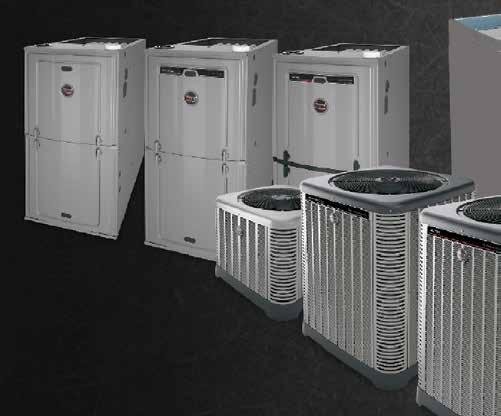
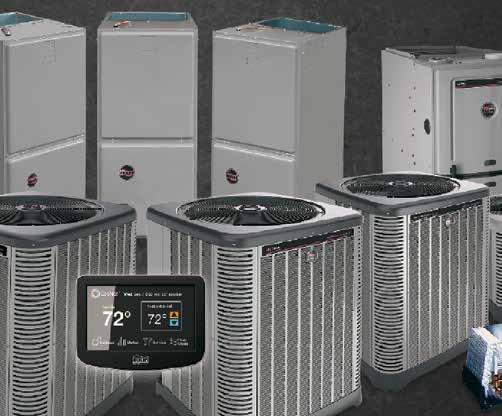

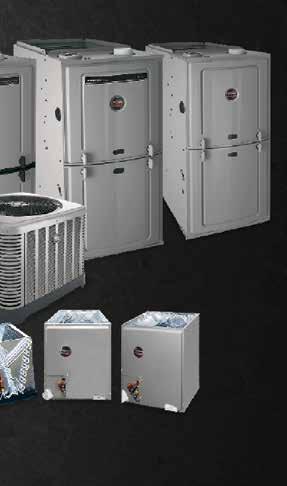


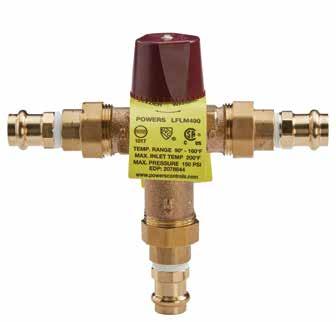
Powers has released a press connection option for select HydroGuard mixing valves. With the press option, valves can be used in new construction and renovation projects as an alternative to a sweat/solder joint. www.PowersControls.com
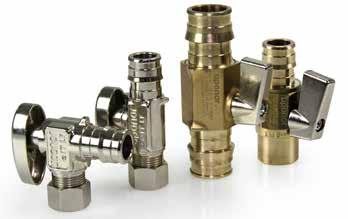
Uponor North America has launched its re-engineered ProPEX lead-free (LF) brass valves for residential plumbing applications. The offering is made from ECO BRASS lead-free brass and includes a 10-year warranty. The line features six products in three different configurations—angle and straight stop for 1/2-in. pipe, copper to PEX for 1/2-in. and 3/4-in. pipe and PEX to PEX for 1/2-in. and 3/4in. pipe. www.uponor.ca

The Foodie pre-rinse kitchen faucet from Danze features a spring-action wand and the faucet scale suits any sized home kitchen. It has a 209/16-in. high spout and an 8-7/8-in. spout reach. Users can toggle between single steady water flow to a spray. The faucet comes in chrome, stainless steel and satin black finishes. Danze uses a ceramic disc valve in the faucet for a tight seal and drip-free performance. The faucet meets low lead content requirements and operates at a water efficient rate of 1.75 gallons per minute. www.danze.com

The AHB Series pipe-heating system from Easyheat comes pre-assembled and ready to install. The cable keeps water flowing in temperatures down to -40F and operate on standard 120 Volts AC and are suitable for use on plastic or metal water pipes. The system’s construction includes a braided metal jacket for ground, a black outer jacket, thermostat, two-ft. orange 18/3 supply cord with grounded plug and an integral power indicator light. Other features include PVC inner insulation and weather-resistent PVC outer jacket. www.easyheat.com
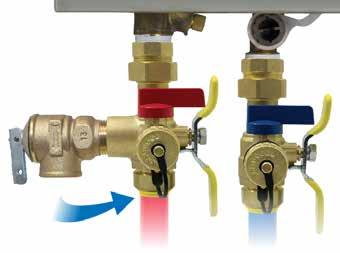
From Webstone comes the Isolator E-X-P Service Valve Kit for tankless water heater installation. The product is available with Pro-Connect Push ends for fully removable connections to copper, CPVC or PEX. Users can clean, flush or diagnose any tankless water heater. It is Lead Free CleanBrass certified to meet all low lead laws and guaranteed for life. www.webstonevalves.com
The Bute bathtub from Drummonds is made from cast iron and handfinished with a seamless steel skirt wrapped around it. The curved roll top contrasts with the straight, steel sides. The Bute comes primed in a white finish but can be painted in any colour. www.drummonds-uk.com
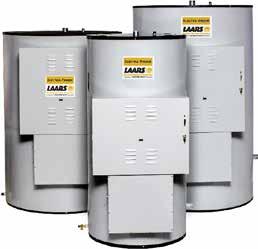
Laars Heating Systems offers a 150- to 2,500-gallon electric water heater – from 12 to 360 kW – featuring 150 psi ASME code glass lining, ASME temperature and pressure relief valve, internal fusing (above 120 amps) and magnesium anode rods. The water heaters have immersion thermostats, manual reset high limit, hinged and locking door and channel iron skid base. Options include BMS contacts, low water cut-off, electric step controller (for 36 kW and higher), low and high-pressure switches, time clocks, and lifting lug access. The systems suit hospitals, apartments, dormitories, commercial laundry facilities, and areas with limited gas availability. www.laars.com
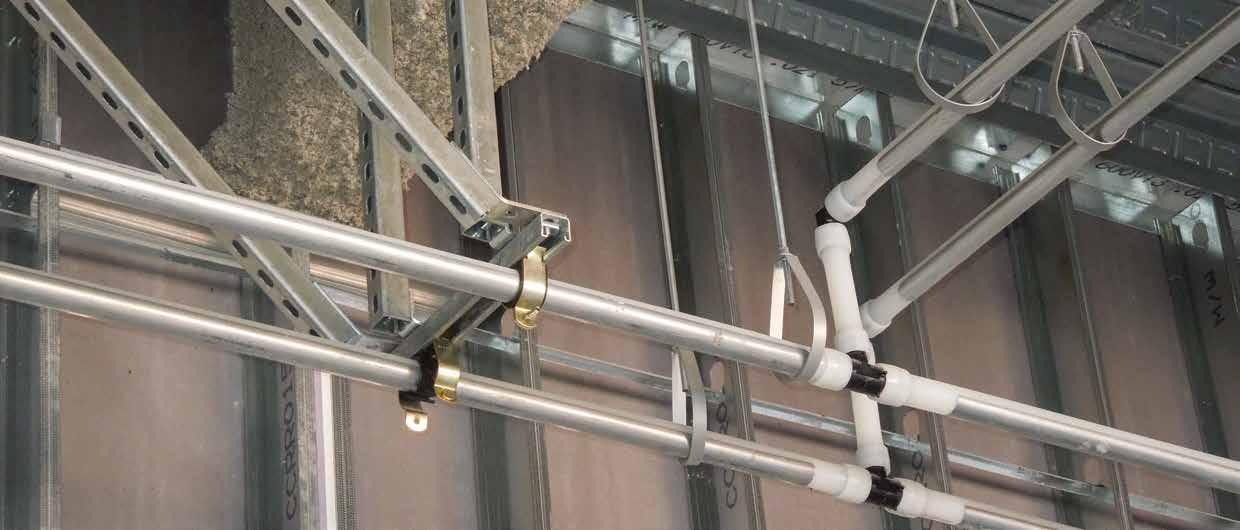
Engineers and contractors are recognizing PEX as a technology that retains all the advantages of traditional piping materials, while adding unmatched flexibility and strength.
If you’ve been on a commercial jobsite recently, you may have seen an opaque white pipe being used for the potable-plumbing system. This pipe, called PEX — an acronym for crosslinked polyethylene — is quickly gaining popularity in the engineering and trades sectors due to its flexibility, durability, stable material costs and performance. And now that the commercial plumbing industry has gotten on the PEX bandwagon, hydronic piping professionals are starting to look at it as well.
From an application standpoint using Uponor’s Wirsbo hePEX™ can work with any terminal unit in a hydronic heating system — fan-coil units, baseboards, radiators, chilled beams, VAV (variable air volume) reheat terminal units, radiant manifolds, etc. Also, because of its copper tube size (CTS)-controlled outside diameter, switching to PEX-a piping involves minimal process change. All the hangers, pipe supports, insulation, etc. can be the same, offthe-shelf components used in a copper piping system. Uponor complements the full offering of product with extensive design services to make this switch a reality.

piping applications. The use of Uponor PEX pipe supports permits hanger spacing that is similar to copper pipe, so it reduces the required amount of hangers by half. And since fewer hangers mean lower material and labor costs, Uponor PEX pipe
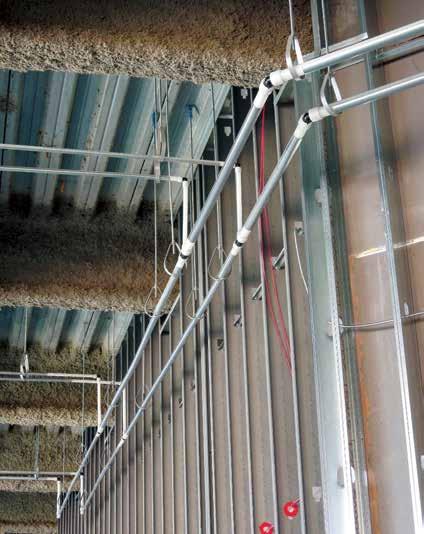
Bridging the differences between Wirsbo hePEX pipe and copper in most applications is the Uponor PEX pipe support, a galvanized steel channel providing continuous support in suspended
support results in a less-expensive installation.
A major criticism of — and misconception regarding — PEX-a in commercial piping applications is its perceived lack of visual appeal. Con-
For more information on using PEX-a piping for your next
or to get a copy of Uponor’s Guide for Hydronic Piping email Jason Smith at jason.smith@uponor.com
tractors and building owners typically expect long, evenly spaced, rigid pipelines running through a building. It’s a look of solidity and durability that many associate with copper and believe PEX-a lacks. Fortunately, Uponor PEX pipe supports reinforce and cover the pipe, negating any aesthetic criticisms. Uponor PEX pipe supports also allow Wirsbo hePEX pipe to be run inside a plenum without spacing limitations between the horizontal runs.
But perhaps the most critical feature of Uponor PEX pipe support is its ability to control the natural expansion and contraction that occurs as the piping heats and cools. Installing anchors and using Uponor PEX pipe supports allow the piping system to function much like a copper system.
This ability to control PEX’s expansion and contraction is critical to allowing for a minimum redesign on a piping system when switching from copper. Thus, Uponor’s PEX pipe supports allow designers to leverage similar design schemes using Uponor PEX as they would for copper.
Engineers can be assured that, although Uponor PEX-a may still be new to them, it has been reviewed and approved as a reliable means of hydronic piping for more than 40 years. With its flexibility, durability and — in conjunction with Uponor PEX pipe supports — its ability to mimic copper’s rigid properties while offering several revolutionary improvements. The common hassles and uncertainties of switching from copper are completely alleviated, allowing the benefits of an improved piping system to stand out.

The U by Moen shower is a Wi-Fi/cloud-based digital shower with mobile connectivity and personalization. It includes a digital valve with temperature control and the user can connect up to four shower devices. The Wi-Fi-connected shower controller features a five-in., non-touch LCD screen. The valve allows temperatures between 15C and 49C. As water temperature changes, the screen colour changes from light blue, dark blue, purple, orange and red. The screen then turns white when the shower is ready and provides on-screen notification and signal with a tone. The controller has seven to nine buttons—depending on whether it is a two- or four-outlet system. The U by Moen smartphone app lets users create up to 12 personalized presets. There is an optional battery backup for the valve. www.moen.ca

Newport Brass’ Pavani and Kirsi bath collections are designed for the modern bathroom. Kirsi features mitred-edge handles that complement the matching spout, while Pavani pairs sleek handles with a curved spout. The collections are solid brass and include lavatory faucets, tub and shower sets, Roman tub filters and matching bath accessories. There are 28 different finishes, including PVD options. www.newportbrass.com


Gerber has expanded its Avalanche product line to include two new sink and pedestal combinations, suitable for almost any bathroom decor. Now available are a petite sink (22-3/4-in. x 187/8-in.), standard sink (25-1/4in. x 21-1/4-in.) and matching pedestal. The sinks are drilled with single hole, four-in. or eightin. faucet configurations. The sinks are made of vitreous china, have a concealed front overflow and offer a limited lifetime warranty. Both sink sizes and the pedestal are availabe in white, with biscuit coming in summer 2017. www.gerberonline.com
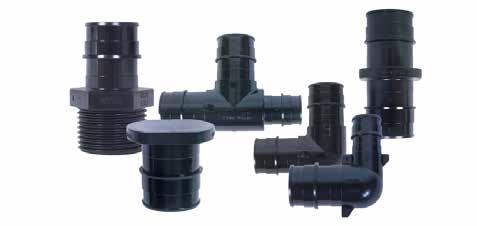
Matco-Norca has introduced Cold Expansion ASTM F1960 Pex Fittings, molded from Radel Resin, for use in hot and cold potable water distribution systems. Lead free compliant, the fittings are available in a range of configurations: couplings, elbows, male adapters, tees and rings with stops, all in various sizes. Radel Resin is a general-purpose extrusion grade of modified PPSU (polyphenylsulfone). The fittings comply with the ASTM F1960 specification for cold expansion fittings and pex reinforcing rings as well as other standards. They have a maximum temperature rating of 320F and a maximum working temperature/pressure of 210F at 150 PSI. www.matco-norca.com
CaGBC National Conference and Expo
May 30-June 1
The Canadian Green Building Council (CaGBC) is holding its annual event in Vancouver, BC. www.cagbc.org
AGM
August 16-18
The Heating, Refrigeration and Air Conditioning Institute of Canada will hold its 49th annual conference at the Hilton Quebec in Quebec City, QC. www.hrai.ca
National Conference
September 17-19
The 37th Annual Conference of the Canadian Healthcare Engineering Society will be held at the Scotiabank Convention Centre in Niagara Falls, ON. www.ches.org
CANADA 76TH NATIONAL CONFERENCE
November 6-9
The Mechanical Contractors Association of Canada heads to Maui, HI for its 2017 conference. www.mcac.ca
ASHRAE Annual Conference
June 24-28
ASHRAE is expanding its program tracks at its conference in Long Beach, CA at the Hyatt Regency Long Beach. www.ashrae.org
CIPH ABC and AGM
June 25-27
The Canadian Institute of Plumbing’s (CIPH) annual business conference will be held in Ottawa, ON. The annual general meeting will be held on June 27.
www.ciph.com
September 14
Canada’s leading hydronic event will be held at The International Centre. This is your opportunity to see John Siegenthaler, Mike Miller, Robert Bean, Lance MacNevin, Steve Goldie, and other hydronic experts, in action. Learn from the best at Modern Hydronics – Summit 2017! www.modernhydronicssummit.com
September 21 St. John’s, NL
October 17 Edmonton, AB featuring the Canadian Hydronics Conference October 19 Regina, SK www.ciphexroadshow.ca
November 8-November 9
BUILDEX Calgary tradeshow and conference at BMO Centre, Stampede Park, will feature more than 225 exhibits and over 35 educational seminars. www.buildingscanada.com
November 6-8
CCBST 2017 program content is composed of submitted and peer reviewed building science/building envelope related technical presentations and speakers. It will be held at the Hyatt Regency in Vancouver, BC. www.ccbst2017.ca
Construct Canada
November 29-December 1
An exposition and conference on building design, construction and renovation, Construct Canada will be held at the Metro Toronto Convention Centre, South Building. The event will be co-located with PM Expo, World of Concrete Pavilion and HomeBuilder & Renovator Expo. www.buildingscanada.com
ASHRAE Winter Conference
January 20-24
ASHRAE returns to the Palmer House Hilton in Chicago, IL where the focus will be on resources to design, build, control, commission and operate efficient and resilient facilities and infrastructure. www.ashrae.org/chicago
MEET
May 16-17
The Mechanical Electrical Electronic Technology Show will be held in Moncton, NB. www.meetshow.ca
AHR Expo
January 22-24
McCormick Place in Chicago, IL will be the venue for North America’s largest HVAC/R marketplace. www.ahrexpo.com
March 21-23
The Canadian Mechanical & Plumbing Expo will be held at the Toronto Convention Centre, north building, in Toronto, ON. www.cmpxshow.com
CIPH ABC
June 17-19
The Canadian Institute of Plumbing & Heating will hold its annual business conference in Whistler, BC. www.ciph.com
CIPHEX West
November 7-8
The Calgary tradeshow will feature a full conference program and product showcase. It will be co-located with BUILDEX Calgary. www.ciphexwest.ca
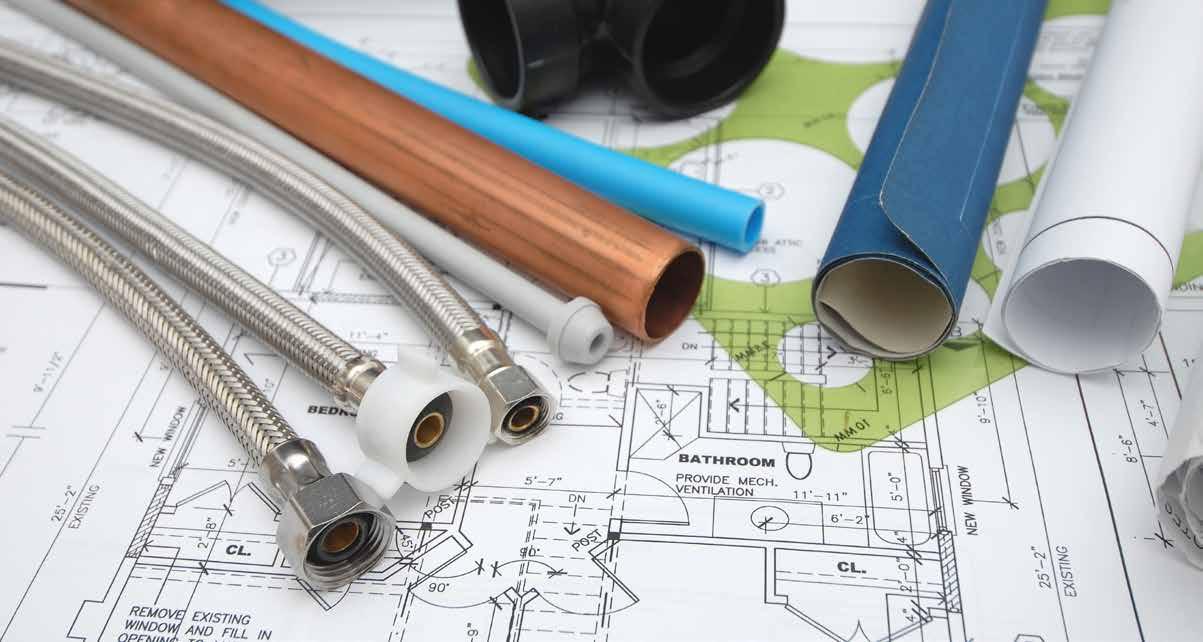
It is time to return to the practice of hiring experienced tradespeople to handle the important job of inspections. BY STEVE GOLDIE
Over the years I spent as a plumber I was probably involved in at least two hundred plumbing inspections. I actually used to enjoy the ritual of getting my work prepared for inspection, filling the stacks, pressurizing the water lines, and such. I learned the trade from my father, and apparently so had several of the plumbing inspectors, because rather than looking at the work I had meticulously prepared, on numerous occasions they spent the time reminiscing with my dad and then would walk away passing the job with nary a look. This is not to say they were shirking their responsibilities, back in my early years when I worked with my father, all of the inspectors were plumbers, typically very experienced plumbers. In those cases, they knew my dad and the kind of work he did and more importantly they knew plumbing. It wouldn’t take them more than a glance to know that things were done correctly and to code.
Later in my career things began to change as municipalities moved away from hiring fully qualified plumbers as
plumbing inspectors. Rather than have an ex plumber inspect plumbing, and an ex carpenter inspect framing, someone in their infinite wisdom decided it might be cheaper and more expedient to have one person inspect both. Let me tell the stories of two inspections to illustrate how I feel this has worked out. While the anecdotes are true, some of the names have been changed to protect the truly incompetent from embarrassment.
The first story took place in a lovely setting near Lake Ontario. A beautiful old country estate and acreage was donated to the city with the proviso that it be used as a creative arts centre. The stately old mansion was renovated and many of the rooms were used as teaching studios where classes in painting and drawing and knitting and photography were offered to city residents. The new creative centre was very popular. New grant monies became available and it was decided to convert the old stables into a pottery studio. Plans were drawn up, contracts tendered and ultimately the plumbing contract was awarded to a small shop, let’s call them
Jim and Steve’s Plumbing. It was a rather simple endeavour from a plumbing perspective, the plan called for the eight horse stalls to be converted to individual pottery studios, each with a large two compartment sink and a hose connection. To facilitate easy clean up, the walls and floor were finished with ceramic tile and each room had a threeinch floor drain in the centre.
The eight stalls were arranged in two rows of four with a large corridor down the middle separating them, four down one side and another four down the other. Jim and Steve decided to run the main four-inch building drain under the main corridor and pick up each floor drain with a three-inch branch, each one running about six to eight feet if memory serves. The plumbing code book explicitly states that each trap must have a vent, and it also states that there are exceptions; Section 7.5.1.1 sentence (2) A trap that serves a floor drain, directly connected to a building drain is not required to be vented where; a. The size of the trap is at least 3" b. The length of the fixture drain is at
least 900 mm (2 ft. 11 in.)
c. The total fall on the fixture drain does not exceed its inside diameter, and
d. The minimum slope on a 3" fixture drain is 1 in 50 and on sizes larger than 3" is 1 in 100.
These were exactly the criteria Jim and Steve were fulfilling meaning no vents were required which resulted in significant savings in piping and labour.
Once the rough in was completed Steve readied the system, filling the drains and pressure testing the water lines, and called for inspection. It was really a simple and relatively small project and an experienced plumbing inspector, one who had been an actual plumber, would have taken mere minutes to assess and pass the installation.
Not so this young fellow. When he arrived he spent the better part of an hour walking back and forth, alternately taking long looks at the drainage piping and the code book he had in hand. Finally he looked up and said: “No good! You have no vents, every trap must be vented.” Steve took the code book and directed him to the section referenced above and attempted to explain why this installation was exactly the type of situation exempted, but alas the inspector with a few days of training on the plumbing code would have none of it.
It was just about at this point when Jim came over to find out what was taking so long. Much loud shouting ensued, heavily Scottish-accented shouting, which probably completely dumbfounded the poor inspector. The inspector retreated to his car and it was decided it would probably be best to have his supervisor come have a look.
The following day Jim and Steve returned to meet the inspector and supervisor, Steve was full of confidence that cooler heads would prevail. Surely the supervisor would understand the finer points of the plumbing code and would pass the obviously compliant installation? Alas and alack it was not to be, the
supervisor did have a better grasp of the English language however her dismissive wave of the hand and declaration that every trap needed to have a vent provoked an even louder and more vehement string of Scottish profanity.
The supervisor threatened that the building would not be able to obtain an occupancy permit with a failed plumbing inspection. James said that was fine with him, her employer, the city, owned the building so when asked he would simply blame its hiring of incompetent inspectors. Despite the inspectors Jim and Steve never changed the plumbing as it met code requirements and they never heard anything about it again.
The second story is a tale of incompetence on both sides. I used to do some referral work for a radiator manufacturer. Through one such referral I found myself on a residential renovation project where I was simply doing the heating work, not the plumbing. The general contractor used his own guys, non-plumbers, to do the plumbing. One afternoon I was there finishing up some things when the site super asked me to look at a bathroom they had roughed in. They had an inspection scheduled and the inspector was due to arrive any minute.
I had a quick look and informed them they had at least three major infractions, the toilet was wet vented through a basin but with undersized piping, the shower was not vented at all, and the dry portion of the basin/shower vent went up into a joist space, across the room, then back down to go under a beam and then up again, creating a trap which would eventually fill with condensate, effectively choking off the vent. I told them there was no way this would pass.
They decided they should try to cancel the inspection, but it was too late. Just at this moment the inspector arrives. I slip out as he comes in. He exchanged some idle chitchat, had a quick look around and said, yup, this looks good, you can go ahead and drywall. I was gobsmacked.
Based on these stories you can guess I have something short of high regard for the plumbing inspection process. I am sure there are good inspectors out there trying their best to do a great job, and the sad truth is that too often their best is just not good enough. Qualifications are based more on understanding liability rather than understanding plumbing or mechanical or structural fundamentals. Negligent building inspections have become a major source of municipal liability, ironic since the municipalities’ preoccupation with avoiding liability over ensuring technical aptitude seems to have contributed to the current state of affairs.
I believe it is time to return to the practice of hiring experienced tradespeople to handle the important job of inspections. Early in my career inspections were opportunities to continue to learn – a good, experienced inspector was a part of that process. Infractions would most often be pointed out and avoided in the future. Not so today when most plumbers can tell their own stories of how they have had to educate inspectors on the fine points of wet vents and such. This is not serving any of the parties well, not the plumbers, not the inspectors, not the builder, and certainly not the public.

Steve Goldie learned his trade from his father while working as plumber in the family business.
After 21 years in the field, he joined the wholesale side of the business in 2002. He is frequently called on to troubleshoot systems and advise contractors. He can be reached at sgoldie@nextsupply.ca.
The
time is right to explore IoT capabilities and the benefits they can deliver to customers.
BY MATT GATES
IInformation technology advancements are bringing about a product revolution with smart, connected products that are more available and affordable than ever before. Near ubiquitous wireless connectivity, coupled with improvements in processing power and device miniaturization, have resulted in a wave of connected devices and systems in residential and commercial buildings.
This connectivity, referred to as the internet of things (IoT), is everywhere, which means your customers have more choices – and greater expectations.
Growing connectivity also means that more data can be gathered, so much data in fact, that it is easy to feel overwhelmed. Collecting data just for the sake of data can be costly and time-consuming, and likely not helpful.
You can assist your customers in navigating these waters by helping them use building data to be more productive and efficient.
The right strategy is the key to turning the mountains of data into useful information that improves efficiency and performance, and has a positive impact on the bottom line.
Doing more with less, whether it is a reduced budget or fewer staffing resources, is the new normal for many customers. As financial pressures grow,
capital investments often face more scrutiny, with a greater focus on reducing costs and improving efficiency and productivity. Building connectivity, and the data that results, can help address these operating realities.
“72 per cent of millennials expect to work in a “smart office” that uses the IoT within the next five years.”
Customers may ask, “Do we feel the building’s cost can be managed and improved by measuring its current performance?” The answer is yes, that better building performance reduces cost, and thus helps with some of the pressures they face as part of the new normal. The IoT can help with that challenge. While access to building information is growing, technology advancements are driving the expectations of building owners and occupants. According to the Future Workforce Study 2016 from Dell and Intel, 72 per cent of millennials expect to work in a “smart office” that uses the IoT within the next five years. Also, recent survey data of corporate workplaces from Leesman shows that temperature control is among the most
important physical features for workers in an effective workplace.
Customers are experiencing the IoT in other aspects of their lives, and they expect real-time access to their commercial building information as well. Customers also have more options as more service providers enter the market.
Given these challenges and realities, building connectivity is important, however, the key reason for connectivity should be providing value, not just gathering data.
STRATEGY CREATES CLARITY
To ensure that connectivity is providing value, strategy must come first. It is the key to figuring out what customers are trying to accomplish. Consider these questions:
• How does this help my customer?
• What are the customer’s unmet needs?
• Does this fit our business, and is it part of our core competencies?
Begin brainstorming ideas with an internal team. Start with the end in mind, and ask, “How does this benefit my customer?” Follow up with identifying three unmet customer needs – two logical needs, and one “crazy” need, a practice that helps spawn innovation. After this process is complete, assess the proposed solutions. For each solution, consider if it offers a clear customer benefit and a clear business

benefit. Does it identify a known customer need or customer problem? Will the solution create a new revenue stream or enhance an existing one?
Once there is a clearly defined strategy in place that identifies the goals of using data –including the benefits it will generate – the tactics will become clear. You will have a better understanding of what data is needed to achieve the identified benefits, how that data can be collected, how existing databases can be used and connected to drive benefits, and how the resulting data can be used to optimally benefit your customer. After analyzing the data, you can then engage the right technology to implement the solution.
Following this process results in a well-thought-out action plan that can be executed and measured. Including measurement as part of the implemen -
tation plan is key to achieving the expected results.
In one real-world example, the building owners wanted to manage and operate a more efficient and sustainable building. Their end goals were to deliver benefits to the bottom line through more productive employees and a better building environment.
Among their priorities were real-time dashboards for building equipment and actionable insights to help ensure building system efficiency. One solution, the implementation of a building energy management system (BEMS), helped put a focus on building performance and optimization.
The building chiller was connected to the building automation system (BAS),
and the BAS was then connected to the cloud. This allowed for real-time access to system data and enabled users to remotely make schedule and setpoint changes.
The solution also allowed for the remote resolution of system alarms 24/7, in addition to energy usage reporting and visualization, and system-level optimization through analytics. Heating, ventilation and air conditioning (HVAC) systems are among the largest energy consumers in a building, therefore, the ability to monitor energy usage can help building owners ensure that systems are operating as they should for greater efficiency and reduced costs.
From a service perspective, these remote capabilities provide significant advantages. Rather than spending time on triage or diagnostics on-site prior to maintenance or repair, system information provided remotely allows the service technician to be prepared in advance with the right parts or solution — or to sometimes even fix an issue remotely. This results in greater efficiency, lower costs to the customer and the ability to respond to more service calls in a day.
Technology advancements make the connectedness of devices and systems more accessible and affordable. The time is right to explore IoT capabilities and the benefits they can deliver to customers.
Keep in mind that it is important to avoid implementing technology just for the sake of technology. Instead, take a strategic approach that focuses on solving the unmet needs of customers to help connect the technology to their business goals and outcomes, resulting in a positive impact on the bottom line.
Matt Gates, LEED AP, is director of Intelligent Services Offers with Trane. He has more than 25 years of experience in the HVAC, building management, and construction industries.

Class is back in session and the teachers have a little more help this year. The renovated Steinbach Regional Secondary School in Steinbach, MB is assisting the faculty with a great lesson for the students on the environment and the positive impact buildings can have.
Stantec Architecture and the Hanover School Division envisioned a school built to serve as a learning tool for its existing student population, as well as the growing community. The new high school serves grades 9-12 and offers more chances for students to learn and develop skills that will prepare them for life after high school. As a result of the renovation and new addition, the students now have the opportunity to learn real-world skills to gain employment in fields such as cosmetology, construction, power mechanics, and welding.
The sustainable design elements and the abundance of natural light now
present in the school will not only teach the students about sustainability, but also help them study by providing a healthy learning environment. On top of housing the students in grades 9 to 12, the 300,000-sq. ft. facility also serves as a neighbourhood daycare.
To align with the sustainable design elements already in use, the high school incorporates chilled beam products as its primary source of air distribution. The beams feature aerodynamic properties of ceiling diffusers and benefit from the use of using hydronic coils and induced air, reducing energy consumption associated with removing sensible thermal loads.
After being discharged through nozzles located along the beams, the primary air is supplied to the beam’s mixing chamber. The nozzles inject this air into the mixing chamber at veloci -
Client
Hanover School Division
Mechanical
Westwood Mechanical Inc.
Rep Office
BPL
Sales Architect
Stantec Architecture Ltd.
Engineers
Stantec Consulting Ltd.
Contractor
Penn-Co Construction Canada
LEED Certification
LEED Gold Candidate
ties capable of inducing room air through one or two coils and where it mixes with the primary supply air. This air mixture is then discharged through the ceiling slot diffusers into the space, providing high cooling outputs with low amounts of primary air. The reduced volume of air leads to smaller and less

expensive air handlers and ducts, and less energy consumption.
The supplied air from the air handling unit is tempered and dehumidified to handle the latent load. The remaining loads in the space are addressed via the chilled beam’s heat exchanger. Applications with low latent cooling loads could potentially use 100 per cent outdoor air, allowing for a dedicated outdoor air system with energy recovery that would further reduce total system energy consumption.
The chilled beams used for this project can be used for both heating and cooling and are offered in multiple sizes – 12-in. and 24-in. widths and two to 10 foot lengths. They can be easily integrated into different grid styles within a suspended ceiling or in drywall ceilings. The chilled beams’ low overall height makes them ideal for reducing space required for false ceilings.
Additional air distribution products helped to complete the HVAC system.
Studies have shown that excessive noise levels can adversely affect student performance. Conventional HVAC systems typically used in schools today (fan-pow-
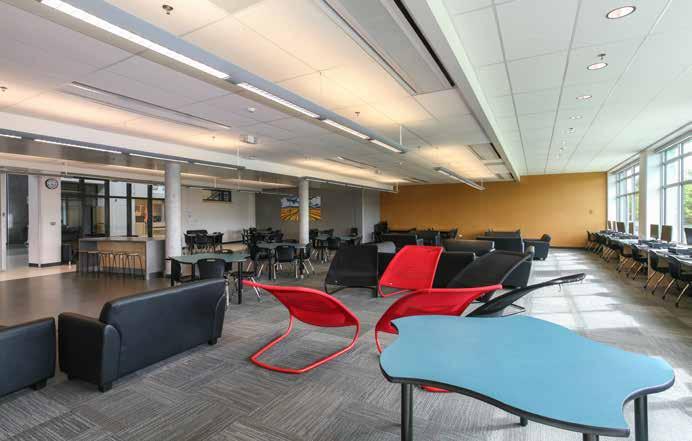
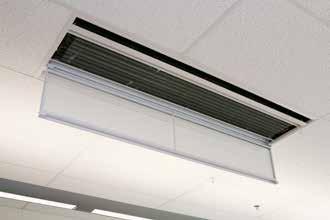
ered VAV, fan coils, unit ventilators), rarely meet prescribed background noise level requirements. ANSI standard S12.60 for classroom acoustics requires a maximum background noise level of 35 dBA (about NC-27) – this is difficult to attain with traditional equipment. Furthermore, student performance is affected by space humidity and ventilation levels. HVAC systems whose primary airflow rate is modulated while the classroom is occupied often do not comply with the requirements of ASHRAE 62.1. Ventilation airflow rates are difficult to maintain at part load conditions with modulating the primary airflow rates.
Chilled beams are systems where zoned based hydronic-heating and/or cooling devices complement the conditioning of the primary air ventilation system, allowing for optimization of heating, cooling and ventilation functions and providing opportunities for savings in energy, ceiling cavity space and maintenance as well as increased occupant performance.
Most conventional HVAC systems depend on the delivery of large volumes of air to condition the classroom.
Chilled beam systems typically reduce ducted air requirements by as much as 60 per cent by relying on their integral
ABOVE: Natural light is an important design element in the school.
LEFT: Chilled beams can be easily integrated into different grid styles within a suspended ceiling or in drywall ceilings.
heat transfer coils to offset most of the space sensible cooling and heating requirements. Since water is more efficient for space cooling and heating than air, chilled beams use less overall energy than other options, such as VAV, VRF and fan coil units.
Since chilled beams allow classroom ducted airflow rates to be reduced to that which is required for space ventilation and latent cooling, they are suited for use with 100 per cent (DOAS) outside air systems. This allows the beams to provide a constant volume of ventilation air to the classroom at all times. Chilled beans also contribute toward achieving LEED certification.
Having opened its doors in August 2014, Steinbach is designed to meet the requirements for LEED Gold Certification. Thanks to a sustainable design and an energy efficient HVAC system, the multipurpose building serves as a daily reminder to students, teachers, and the overall community about how properly designed buildings can have a positive impact.
Shawn Sinnie is marketing manager with Titus.


CIET has entered into a partnership with the Hydraulic Institute for the delivery of the Pump Systems Optimisation one-day course across Canada. This course is product-neutral and provides case studies and actual field data to show the energy savings and kilowatt reduction with a more efficient pumping system. It covers all the energy standards used in pump systems assessment. http://cietcanada.com
Since 1997, over 30,000 representatives of industrial, commercial and institutional (ICI) organizations have enrolled in the Dollars to $ense energy management workshops. In 2016, the material was completely remodeled and updated; it is now presented in 30 modules, which can easily be used as building blocks for organizations that have limited resources or that wish to focus on specific topics. http://cietcanada.com
CEC’s National Seminar Program offers over 150 seminars. Areas of interest run from supervisory training, estimation, project management, commissioning, safety, leadership and communication, productivity, business management, and service, to name a few. Where applicable the courses have been Gold Seal Accredited. The majority of listed programs are 1/2 day to two days in duration. To determine if a seminar has been scheduled in your area, tel. 613.232.5169. www.constructioneducation.ca
The Heating, Refrigeration and Air Conditioning Institute of Canada (HRAI) offers a variety of residential and commercial courses. The Small Commercial Heat Loss & Heat Gain Calculations course is developed for HVAC
technicians and designers. This three-day course instructs participants in proper calculation of small commercial heat gains and heat losses, and applies to buildings of up to three storeys and 600 sq. metres per storey. For scheduling opportunities, tel. 800.267.2231 ext. 237, or e-mail amantei@hrai.ca. www.hrai.ca
The Canadian Hydronics Council (CHC) has partnered with the Northern Alberta Institute of Technology and British Columbia Institute of Technology to provide course blocks toward CHC certification for hydronic system designers and installers. At NAIT students can register for online or paper-based learning and have nine months to complete each block of courses. www.ciph.com
TECA’s Quality First training programs are developed by the industry, for the industry, setting minimum standards for the residential and light commercial heating, ventilating and cooling trade in British Columbia. Courses provide contractors with the information they need to install equipment that operates safely and comfortably at rated efficiencies. www.teca.ca
Canada Green Building Council is offering this four-hour course as part of its Green Professional Skills Training (GPRO) program. It teaches the basics of sustainability and provides an overview of the essential strategies and work practices that make buildings more efficient. GPRO covers the “green gap” between standard trade skills and the new awareness required to successfully implement sustainable building practices. It is the prerequisite for all GPRO trade-specific courses. www.cagbc.org
This photo from Robert Szachury of Pemberton, BC proved to be a challenge for our readers. Szachury noted that a house in Whistler, BC, has this Empire direct fire floor furnace (circa 1965) and that neither he nor the gas inspector had ever seen one. They were installed a fair bit from the 1930s into the late 60s.
In the end there were two possible winners, so we called upon our HVAC columnist Ian McTeer once again.
The winner of the What Am I? contest is determined based on the accuracy and detail in the response, with bonus points for entrants who shared and interesting or amusing anecdote about the item. Our congratulations to Jim Bessey; a Stanley TLM99 Laser Distance Measurer is on its way to you.
The What am I? featured in the February 2017 edition is a general control IIT B67 millivolt gas control valve, aka “pound of butter” valve. It is so nicknamed because its size and shape was the same as a pound of butter. When I first started in the trade I changed a few of these valves because I thought the valve was bad. The valve was powered but not opening and after changing it the valve was still not opening. I discovered the valve was ok –
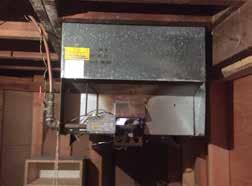
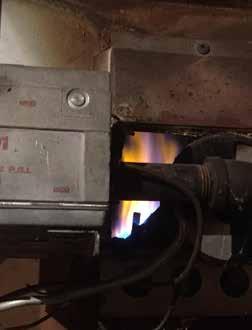
the problem was that there was a small steel bleed line that vented gas when the valve was powered that terminated near the pilot head. This bleed line was plugged at the pilot head not allowing the valve to open. I quickly started checking the bleed line before replacing valve after that mistake.
The valve could be possibility piped into an old forced air furnace maybe a Lennox or Rudd. This valve was also used on a lot of space heaters and wall furnaces, and the occasional floor furnace.
– Jim Bessey, Infinity Heating and Cooling.
Readers are invited to submit photos and descriptions of the items for the What am I? contest. Images must be jpeg or pdf format and a minimum of 300 dpi. If your image is selected you will receive a Stanley 25-ft. FATMAX tape rule.
Items will be featured in whole or in part and may be from any era–they may be appliances, fixtures, tools, pvfs, components, and so on.
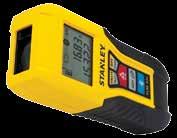
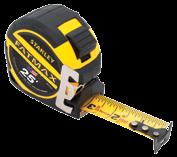
To enter, identify the product featured on the right and include what it is, where would you find it, how it works and who made it–bonus points to the entrant who has an interesting anecdote about the item. Send your response to kturner@ hpacmag.com for your chance to win a Stanley TLM99 Laser Distance Measurer. The winner will be determined based on the accuracy and detail in the response, remember there are bonus points for entrants who share an interesting/amusing anecdote about the item.

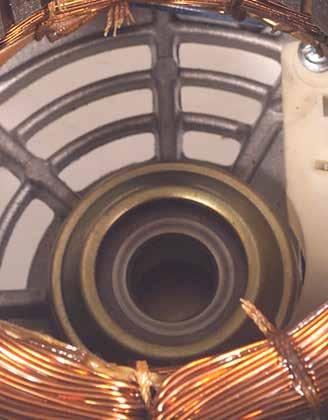
Readers are invited to send photos for possible inclusion in the contest. If your photo is selected you will receive a 25-foot FATMAX tape rule.