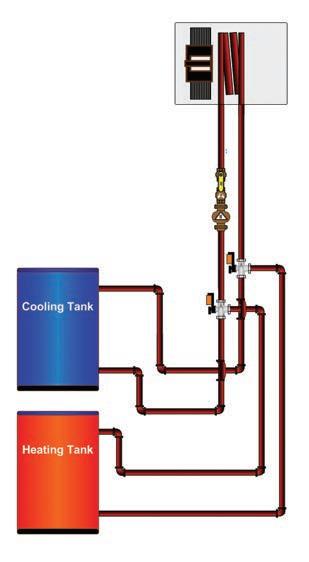
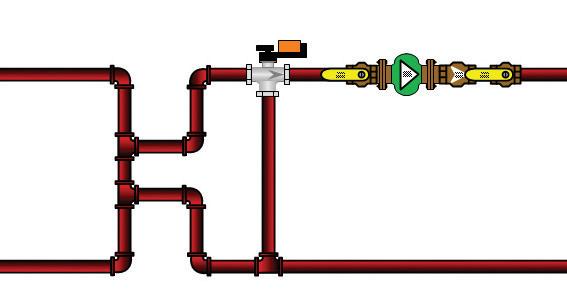
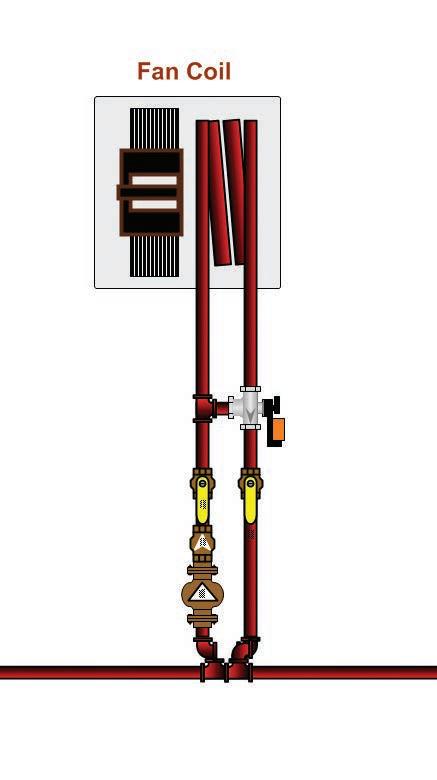
WHAT YOU NEED TO KNOW ABOUT MOTORIZED CONTROL VALVES
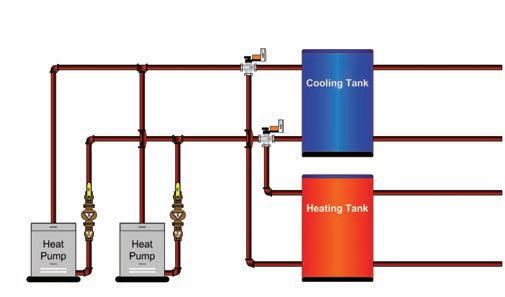
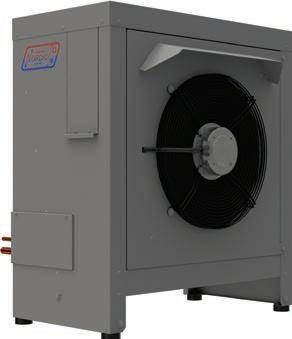
HOW TO INTEGRATE AIR-TO-WATER HEAT PUMPS INTO HYDRONIC SYSTEMS
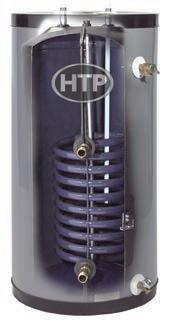
ADVANCE THE POTENTIAL OF RENEWABLES WITH WATER HEATER
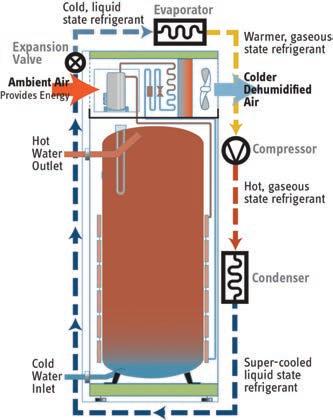
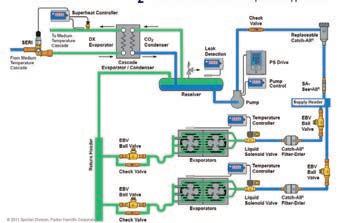
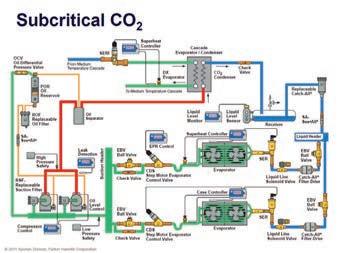
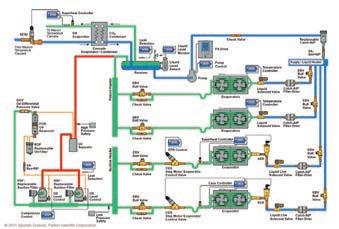
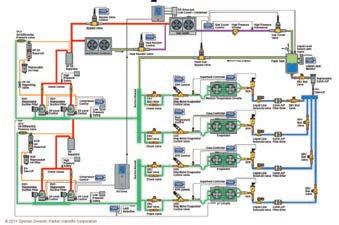
CO2 vs. HCFC/HFC systems: Need to Know Differences
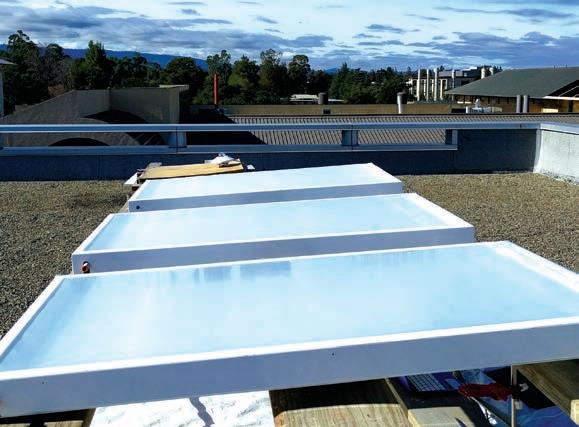
COOLING NIGHTTIME & AN EFFICIENT PAIRING
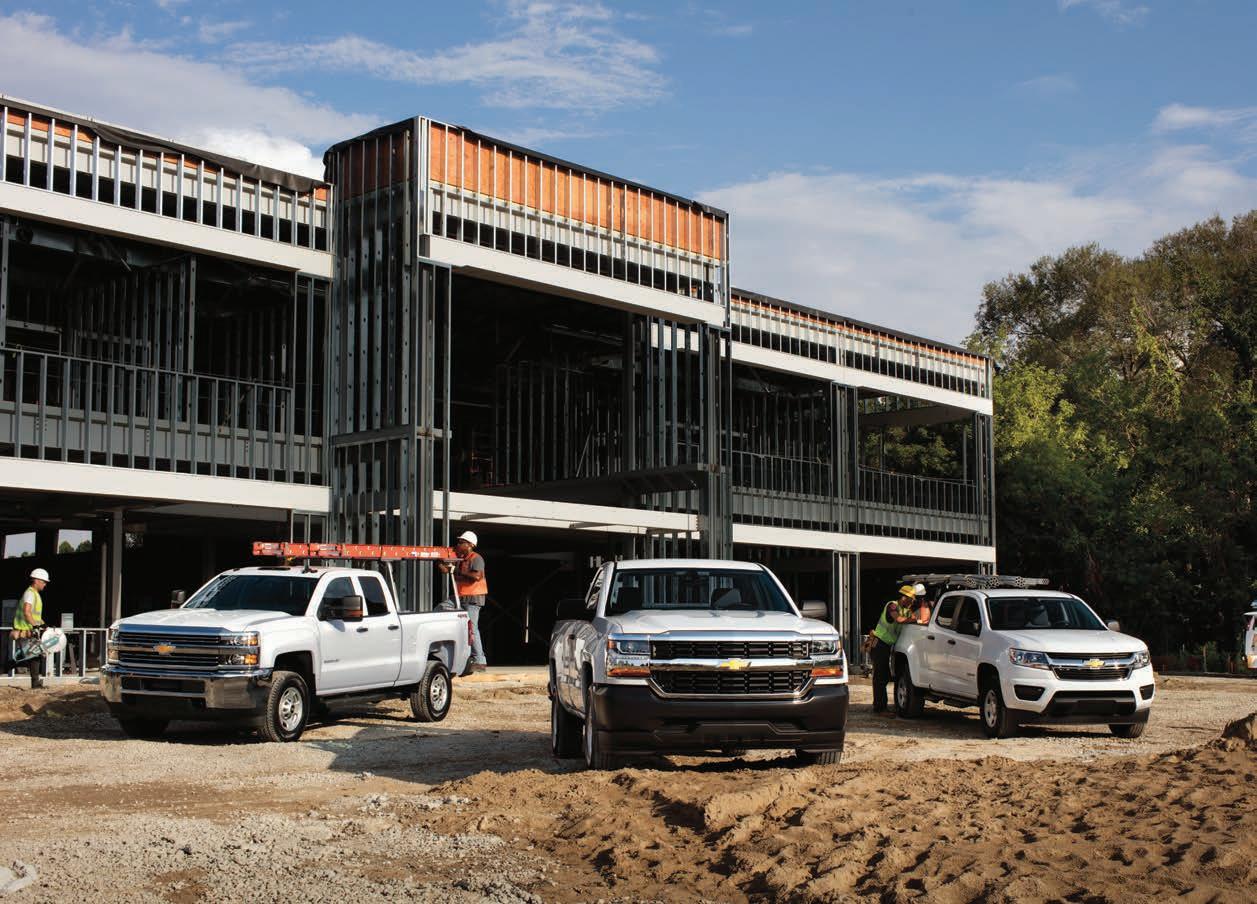
22nd Annual SERVICE VEHICLE REPORT
KEEP YOUR BUSINESS MOVING.
BUSINESS ELITE DEALERS OFFER MORE THAN JUST GREAT VEHICLES
Whether it’s 1 vehicle or 100 vehicles, your business deserves big benefits. With Chevrolet and GMC Business Elite Dealers you get:
No two businesses are alike. So that’s why Business Elite Dealer programs are tailor-made for your business. Our account specialists work with you to determine the right vehicles and services that help you get the job done. And when your business needs us, we’re there with priority service and work-ready loaners. Trucks? Cars? Vans? Chevrolet and GMC Business Elite Dealers also provide a wide variety of commercial vehicles to meet your needs. It’s not just good business … it’s your business.
THE REVOLVING DOOR OF
DOOR-TO-DOOR SALES
Too many consumers, mainly seniors, are being “scammed” by companies using “misleading, aggressive and coercive” methods, said Liberal MPP Yvan Baker (Etobicoke Centre) as he introduced a private member’s bill early this month.
It is inconceivable to me that people would agree to purchase a water heater, an air conditioner, and most certainly not a furnace, from a salesman at their door, but it happens. I am going to go out on a limb and suggest that it is not just seniors getting scammed. Some of these guys are good at misrepresenting themselves and even better at being assertive enough to get in the front door.
We have certainly had some unsavoury types at our door; while it is a nuisance, they have nothing we would consider, whatever our awareness of the risk. They are not in the business of knowing their potential customer, or doing their research. The salespeople push a rental water heater when we own a combi boiler, or offer to clean our ducts when we have none, or say our non-existent furnace needs an inspection.
These companies are still in business because most people have little or no idea what lies behind their mechanical room door. They are also still in business because of government inaction. Municipalities and provinces have taken some measures. Politicians get stirred up and make a fuss, as has been the case in the GTA recently.
This approach is not working. I actually found a website run by one of the more notorious door-to-door companies here, which was masquerading as a consumer protection site. It appeared to be pretty legitimate. Consumers could complain about the perpetrators to the perpetrators. The site also offered pointers on how to avoid being scammed and how to deal with the salespeople.
At the federal level, the Consumer Measures Committee offers the Canadian Consumer Handbook (www.consumerhandbook.ca), which is a great resource–it is too bad few people know about it. The Consumer Measures Committee is a “joint federal/provincial/territorial committee, which provides a forum for national cooperation to improve the marketplace for Canadian consumers, through the harmonization of laws, regulations and practices and through actions to raise public awareness.” The information is there and it is helpful if for no other reason than saving you the pain of navigating provincial and federal government websites.
As is the case with many things in the HVAC/R industry, there is a need for harmonization and consistency in the rules, regs and standards. Doorto-door sales of HVAC equipment is just another example of that.
VICE PRESIDENT Tim Dimopoulos (416) 510-5100 tdimopoulos@annexbizmedia.com
PRESIDENT & CEO Mike Fredericks mfredericks@annexweb.com
PUBLICATIONS MAIL AGREEMENT NO. 40065710, REGISTRATION NO. 10815
Heating Plumbing Air Conditioning (established 1925) is published 7 times per year by Annex Publishing & Printing Inc. HPAC Magazine is the leading Canadian business publication for the owner/manager of mechanical contracting businesses and their supply partners.
SUBSCRIBER SERVICES: To subscribe, renew your subscription or to change your address or information please visit us at www.hpacmag.com.
Subscription Price per year: $41.95 (plus tax) CDN; Outside Canada per year: $81.95 US; Elsewhere: 1 year $89.95; Single copy Canada: $5.00 CDN. Heating Plumbing Air Conditioning is published 7 times per year except for occasional combined, expanded or premium issues, which count as two subscription issues.
MAIL PREFERENCES: From time to time we make our subscription list available to select companies and organizations whose product or service may interest you. If you do not wish your contact information to be made available, please contact us via one of the following methods: Tel: 800.387.0273, Fax: 416.442.2191; E-mail: vmoore@ annexnewcom.ca; or by mail: Privacy Office, 80 Valleybrook Dr., Toronto, ON M3B 2S9.
HPAC Magazine receives unsolicited materials (including letters to the editor, press releases, promotional items and images) from time to time. HPAC Magazine, its affiliates and assignees may use, reproduce, publish, re-publish, distribute, store and archive such unsolicited submissions in whole or in part in any form or medium whatsoever, without compensation of any sort.
NOTICE: HPAC Magazine, Annex Publishing & Printing Inc., their staff, officers, directors and shareholders (hence known as the “Publisher”) assume no liability, obligations, or responsibility for claims arising from advertised products. The Publisher also reserves the right to limit liability for editorial errors, omissions and oversights to a printed correction in a subsequent issue. HPAC Magazine’s editorial is written for management level mechanical industry personnel who have documented training in the mechanical fields in which they work. Manufacturers’ printed instructions, datasheets and notices always take precedence to published editorial statements.
We acknowledge the financial support of the Government of Canada through the Canada Periodical Fund of the Department of Canadian Heritage.
Proud member of:
HAVE YOU HEARD?
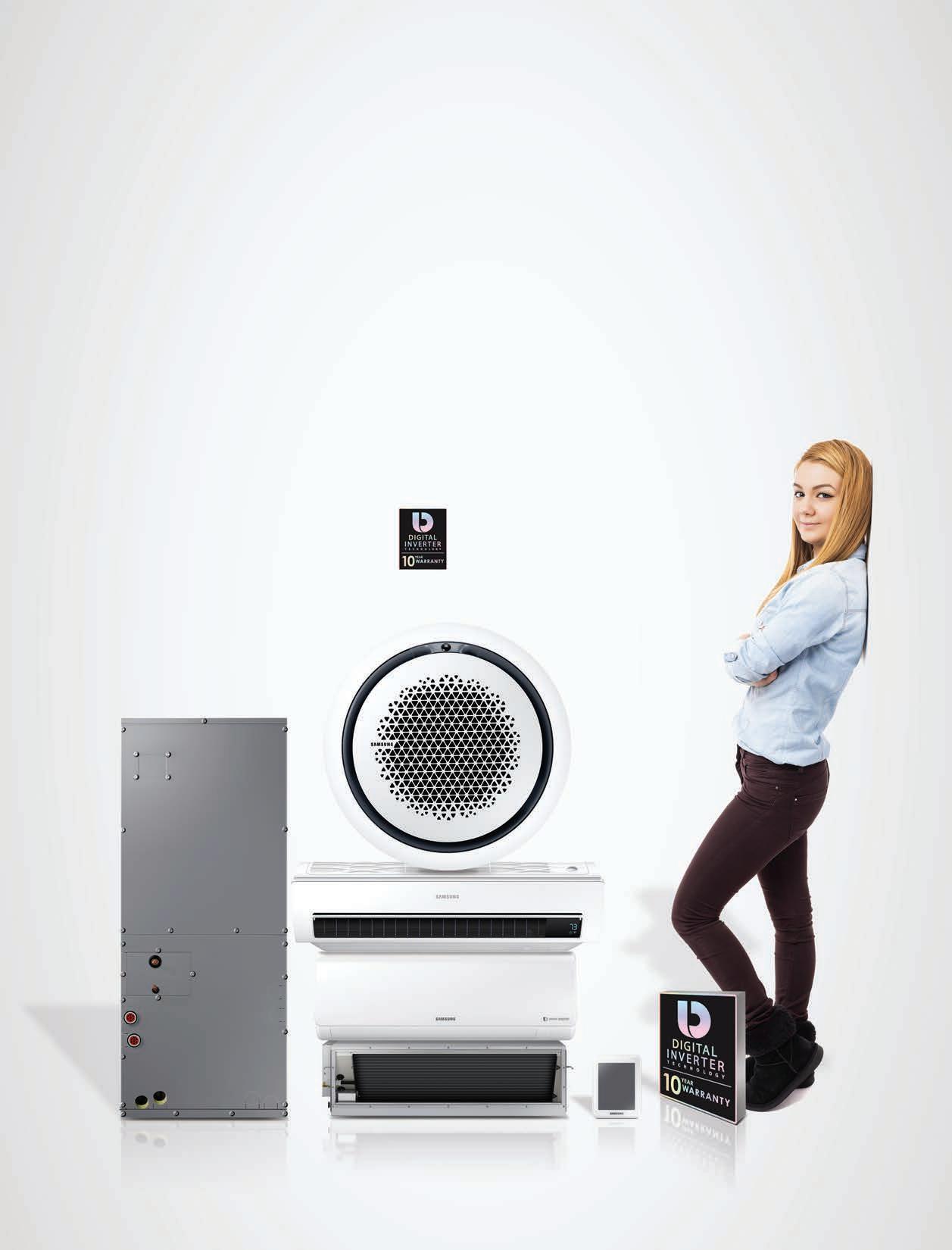
SAMSUNG HVAC’S PRODUCT LINE UP IS EXPANDING!
SAMSUNG HVAC CONTINUES ITS PROUD TRADITION OF COMBINING THE BEST TECHNOLOGIES IN THE WORLD WITH TRULY INNOVATIVE IDEAS. AS A RESULT, SEVERAL NEW AIR CONDITIONING SYSTEMS ARE JOINING THE FAMILY.
• THE “FORM FOLLOWS FUNCTION” 360 CASSETTE. THIS ONE-TO-ONE SYSTEM EMBODIES THE REAL MEANING OF FORM FOLLOWING FUNCTION, BUT FOR A VERY PARTICULAR REASON. THE 360° WIND OUTPUT ALLOWS FOR PERFECT AND EFFICIENT WIND DISTRIBUTION, WHICH EQUATES TO ULTIMATE COMFORT, THE CIRCLE IS ALSO THE PERFECT DESIGN SHAPE, SO THE 360 CASSETTE DOES ALL OF THIS IN STYLE.
• THE SMART WHISPER CAN COMMUNICATE WITH OTHER SAMSUNG APPLIANCES VIA THE “SAMSUNG SMART HOME” APP*. AN ALREADY-RELIABLE PERFORMER JUST GOT BETTER, GIVING THE USER TOTAL CONTROL FROM VIRTUALLY ANYWHERE VIA A SMARTPHONE1.
• THE MULTI-POSITION AIR HANDLING UNIT AND THE NEW DUCT TYPE ALLOWS FOR FLEXIBLE INSTALLATION, GIVING THE CONTRACTOR MORE OPTIONS.
* With the Samsung Smart Home App, you can control your air conditioner via your smart phone or tablet from virtually anywhere!1
For full product features/specs and a detailed look at Samsung HVAC’s robust line up, please visit our new website, www.samsunghvac.com
BUY SAMSUNG WITH CONFIDENCE**
ALL SAMSUNG MINI SPLITS CARRY A 10 YR WARRANTY (ON COMPRESSOR AND PARTS, REGISTRATION REQUIRED)
1Smart phone or tablet must be connected to the internet.
HSP DUCT
360 CASSETTE
MULTI POSITION AIR HANDLER
SMART WHISPER
16 SEER WALL MOUNT
NEWS FEATURE
Ontario energy rebate program causes some heat
BY BETH MCKAY
On February 4, 2016, the Ministry of Energy announced that the Ontario government will be investing $100 million from the Ontario Green Investment Fund into a program to help homeowners identify ways to reduce both their energy bills and greenhouse gas emissions through the installation of more efficient technologies.
The program is in partnership with Enbridge Gas Distribution and Union Gas, and is expected to benefit 37000 homeowners across the province, and save the equivalent of 1.6 million tonnes of greenhouse gas emissions. These actions are in compliance with the COP21 Sustainable Innovation Forum, which took place in Paris France in late 2015. Although the plans are still being finalized, the program has already received some pushback from various organizations.
Stephen Koch, president of the Canadian Oil Heat Association (COHA), explained that the government has spent billions of taxpayer dollars installing natural gas lines that do not benefit all Ontarians, particularly those living in rural areas that use alternative energy sources. “It [the program] is focussed on urban people, and we feel that is wrong,” he said.
Koch met with Ministry of Energy Conservation Program representatives in mid-March to discuss expanding this program to other energy groups, and said the government did not seem to discount this suggestion. He insists, however, that timing is crucial. “The government has realized there may be a better solution to this problem, but the question is, can it be rectified before the program is launched?”
The Canadian Propane Association (CPA) has also expressed concern about the program, noting in a press release that over 100000 homes across the province use propane as their primary heating fuel and will not have access to the program. Though the CPA applauds the government for offering energy efficient programs to Ontario, it urges the government to consider home efficiency opportunities for all Ontarians.
“Based on current information, the program could deny rural
Ontarians the opportunity to upgrade their homes and take advantage of energy efficient propane,” said Andrea Labelle, CPA executive director, in an association press release.
Regarding the inclusion of energy sources other than natural gas in the program, a representative from the Environment and Climate Change Minister’s Office explained to HPAC that the specific details of the program are still being finalized: “The government is working with Enbridge and Union to explore opportunities to offer the program in communities outside of Union and Enbridge service territories, and to homeowners that heat their homes with GHG emitting fossil fuels, such as natural gas, oil and propane.” At press time, a date for any potential program changes had not been released.
Aside from organizations requesting to be included in the home efficiency program, Martin Luymes, director, programs and relations, HRAI, said that he coincidently met with the Hon. Glen Murray, Ontario Minister of Environment and Climate Change the same day the announcement was released to the public in February.
“The message I delivered to him on the spot, was that this was going to get a negative reaction from the industry.
The problem is, if you don’t provide the details [to the rebate program], you’ve just told our industry to go on vacation for three months,” Luymes said. He explained that any planned renovations or purchases of equipment that a customer may have had, will now likely be postponed so that the consumer receives the rebate.
The Minister’s Office said that the program will be available by the fall of 2016, so Luymes expects a lot of contracting work to be put on hold.
He advises the government to “Not tell consumers [about rebate programs] until they are ready to go.” He explained that this would help avoid confusion, and contractors would be more informed when speaking with their customers.
“Mostly, people in the industry are comfortable with rebates, it’s more about how the government goes about it,” said Luymes.
INDUSTRY NEWS
NDY EXPANDS TO THE CANADIAN MARKET THROUGH STERLING COOPER ACQUISITION
Norman Disney & Young (NDY), a global engineering consultancy with offices located in Australia, the United Kingdom, New Zealand and Dubai, has announced its expansion into the Canadian market with the acquisition of Sterling Cooper Consultants, a mechanical engineering company based in Vancouver, BC.
Canadian expansion means that NDY operates across four continents. On a local level, the acquisition means that NDY in Vancouver is able to move towards offering its clients a one-stop-shop for building services.
The expansion will provide the firms’ employees with a different perspective on environmental initiatives, technology and operating systems.
Patrick Fogarty, director of clients and strategy at NDY, explained that, “In Australia, which is quite the opposite of Vancouver, there is limited supply of water. Energy costs are also three to four times higher than Vancouver costs. Because of this the Vancouver operation will be exposed to many different and new ways to design systems that allow for an increasingly efficient use of resources.”
ALBERTA DEDICATES DOLLARS TO PUSH SOLAR POWER
The Alberta government is investing over $5 million to help municipalities and farmers make the move to solar power. This investment is part of Alberta’s Climate Leadership Plan.
The Municipal Climate Change Action Centre is receiving the money for its solar energy incentive program entitled the Alberta Municipal Solar Program. This program provides rebates of up to $0.75 per watt to a maximum of $300,000 per project, to municipalities for installing solar on municipal buildings.
Additionally, a program entitled the On Farm Solar Management Program has been designed for agricultural producers, however the program, which offered $500,000 in both provincial and federal funding for solar energy on Alberta farms, is presently suspended. “It will re-open later this year, however the exact opening date and budget are still unknown,” explained Kelly Lund, research engineer, On-Farm Energy Systems.
The investment is expected to create jobs in the project design and construction sectors, while supporting jobs and growth in the renewable energy supply chain. www.alberta.ca
ATLASCARE RECOGNIZED FOR LOCAL FUNDRAISING EFFORTS
AtlasCare, a family-owned and operated heating and cooling service company headquartered in Oakville, ON, has received the HomeStars Giving Back Award for its contri -
Fogarty added that NDY’s exposure to the European market through the company’s work in the London office and on the European mainland also adds breadth to the company’s environmental experience, which will benefit the Vancouver office.
According to a press release detailing the acquisition, Canada will be in a stronger position to attract, train and retain future engineers and talent as well. “Sharing information and experiences across Australia, Asia, Europe and North America allows for the development of strong globally well rounded careers,” said William Steeves, vice president at Sterling Cooper. Steeves added that there is also a huge opportunity for travel throughout the NDY group offices for those interested in developing their careers from a global perspective.
NDY plans to create an economic impact plan as part of its investment in the Canadian market. The economic impact plan will focus on key areas including sustainability, technology innovations and job creation.
Sterling Cooper will eventually operate under the NDY name, but in the meantime the company will remain Sterling Cooper under the NDY Group. www.ndy.com www.sterlingcooper.com
butions to the community. The award recognizes companies that pay it forward in their community through significant donations of time, money, material and creativity to local charities.
AtlasCare is being recognized for its fundraising efforts to support the Peel Dufferin Chapter of the Multiple Sclerosis Society of Canada. In 2015, the company raised close to $70,000 for the organization through the annual MS Peel Dufferin Chapter Gold Classic. In 2012 the company became the tournament’s title sponsor and has since raised upwards of $184,000 for this cause.
“Our work in support of the Multiple Sclerosis Society is deeply important to us,” said Michael Grochmal, president of AtlasCare. “As a family business with a long attachment to the communities of Burlington, Oakville and Mississauga we feel a strong sense of responsibility to give back locally, which is reflected in our annual fundraising work and in the many individual efforts of our employees.”
In addition to receiving the HomeStars Giving Back Award, the company was also awarded a 2016 HomeStars Best of Award. www.atlascare.ca
PUBLIC RESTROOM ‘ICK’ FACTOR IS ON THE RISE
The results of Bradley Corporation’s 2016 Hand Washing Survey are in and show that nearly 70 per cent of Americans
Put your customers in control from anywhere in the world
Optional new Wi‑Fi remote control system for commercial and residential use
Now you can offer your customers this add‑on accessory that will enable those with smartphones and tablets to control temperatures remotely, access usage data and receive diagnostic notifications on all Navien products (NPE A, NPE S, NCB E, NHB). Additionally, recirculation activation can be scheduled for any hour of any day on the NPE A...an industry first. To learn more visit Navien.com.
Condensing tankless water heaters
Condensing combi boilers
Condensing boilers
NHB
have reported to have an unpleasant experience in a public washroom as a result of the facilities. This is a 20 per cent increase since 2012’s results.
The online survey, which was completed in December 2015, asked 1062 adult male and female Americans about their hand washing habits in public washrooms, as well as their concerns about germs, colds and the flu.
The survey results show that most consumers believe a bad restroom is an indication of poor management and it lowers their opinion of the company. According to consumers, an unpleasant washroom can also be a sign that the company is lazy and it may indicate that the business does not care about its customers.
“The vast majority – 91 per cent – told us that a business with high quality products or services should have high quality restrooms,” said Jon Dommisse, director of global marketing and strategic development at Bradley Corp. He added that in the workplace, 88 per cent of workers think the condition of restrooms is one indicator of how a company values its workforce.
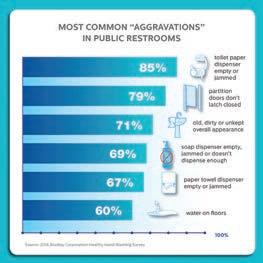
The survey found that the top restroom grievances included toilets that are clogged or not flushed, a bad smell, a dirty overall appearance and partition doors that do not latch.
Restroom improvements that Americans would like to
NRCAN AND DOE PARTNER ON REGULATORY COOPERATION
On April 12, representatives from Natural Resources Canada (NRCan) and the U.S. Department of Energy (DOE) presented a webinar to provide attendees with information on the planned stakeholder engagement process for the Regulatory Cooperation Council’s (RCC) initiatives related to energy efficiency standards. The presentation was in preparation for the RCC Secretariats’ senior-level, binational stakeholder meeting held in Washington, DC on May 4 to 5.
Jamie Hulan, team leader, standards development, equipment division, NRCan, offered some details regarding the 2016/2017 Work Plan. The key points he highlighted include estab -
see include: improved cleanliness; a completely touchless experience; better stocking of restroom supplies; and unlimited paper towels, even if the restroom offers dryers.
This is the eighth time Bradley Corporation has conducted the Hand Washing survey. www.bradleycorp.com
NEW ACCREDITATION CRITERIA AT CAFCE
The Canadian Association for Co-operative Education (CAFCE) has changed its accreditation requisites.
An explanation of the new accreditation criteria on the CAFCE website explains that the total amount of co-op work experience required by participants is normally at least 30 per cent of the time spent in academic study –but for programs of two years or less, the total amount may be a minimum of 25 per cent.
“Previously, programs of two years or less were unable to apply for accreditation as they did not meet the requirements,” said Nicole Cork, CAFCE director of operations. For programs to meet the 25 per cent requirement, a work term is defined as a minimum 12 weeks and/or 420 hours of full-time, paid experience.
The change to the criteria was made on October 29, 2015 at the annual general meeting where it was voted on and approved by the CAFCE membership. “[With] the change [CAFCE] is hoping to draw in more college members who will apply for accreditation,” Cork added. www.cafce.ca
CANADIAN SCHOOLS RECEIVE GRANTS THROUGH ASHRAE INITIATIVE
ASHRAE has awarded grants to 24 colleges and universi -
lishing a document for reporting and tracking Canada/U.S. alignment; reaffirming short-term regulatory plans and timelines; identifying joint CanadaU.S. information-sharing activities to facilitate short- and long-term regulatory cooperation; and focussing on efforts to address broader regulatory system issues.
“Publication milestones in the U.S. and Canada both have four steps,” he explained, noting that the process timeline, however, is three years in the U.S. and two years in Canada from rule initiation to publication.
John Cymbalsky, program manager, appliance and equipment standards program, DOE, explained that though emerging trends in the U.S. and Canada are aiming to align the
countries’ energy standards, some challenges exist. One is the lag time between the U.S. final rulings and Canada’s final publication. Another challenge is that the U.S. early compliance options are not easily adopted in Canada.
A common concern from American manufacturer webinar attendees is that it seems the Canadian provinces have quite a bit of jurisdiction regarding standards compared to the states, making it difficult for manufacturers to implement products across the country. Hulan acknowledged and replied, “We do have some catch up to do here in Canada. In the short term, we need to remove the misalignments in our systems.” www.nrcan.gc.ca www.energy.gov continued on p12
Common restroom aggravations compiled by Bradley Corporation.
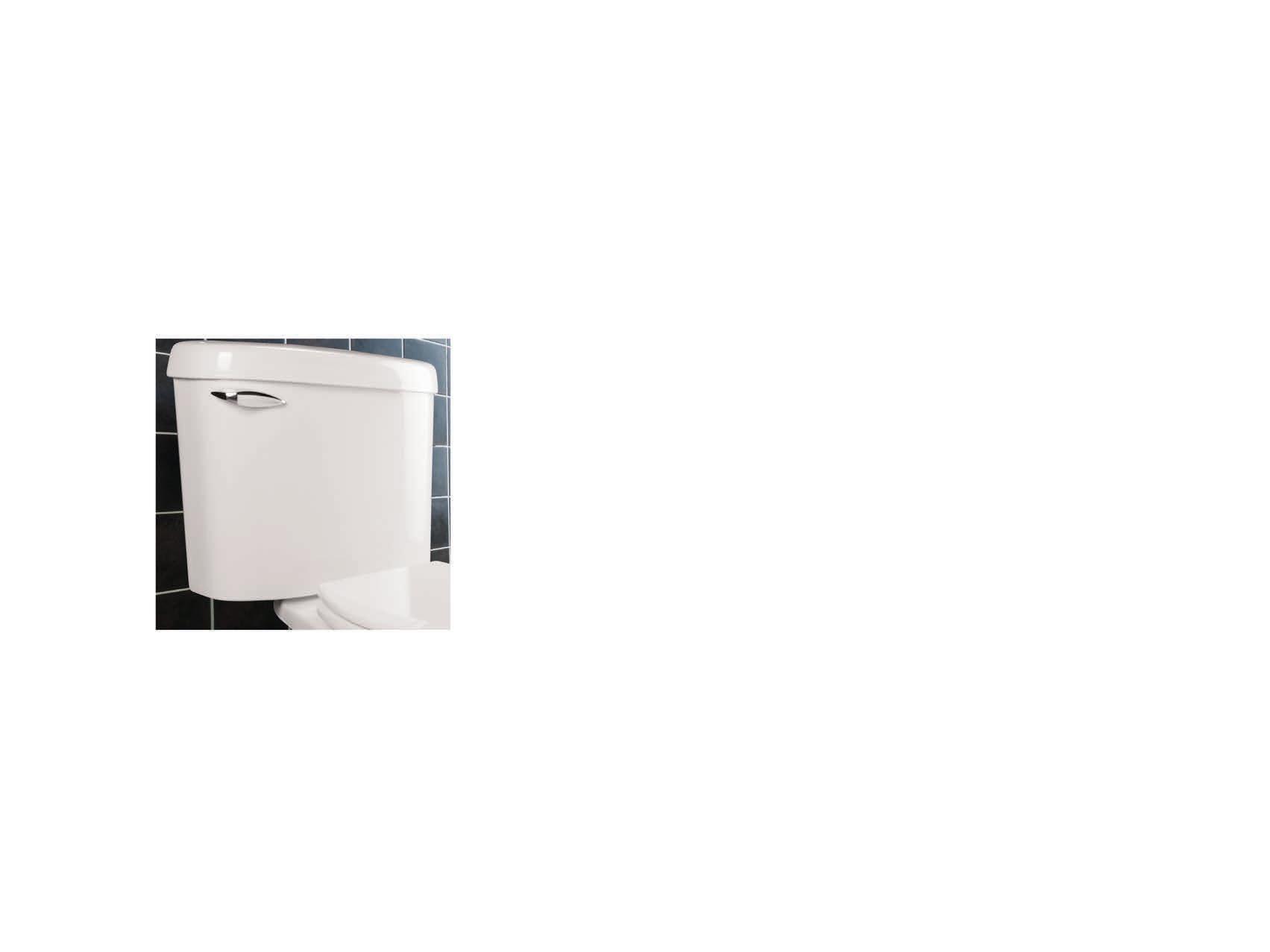
Adding a bathroom is made easy when no gravity lines are convenient! The quiet and powerful Ascent II gives you the freedom to pump up to 25' vertically and 150' horizontally in a high-quality attractive toilet.
Liberty’s exclusive RazorCutTM technology for superior shredding of waste, sanitary pads and other difficult solids.
Safe, removable access cover for easy service. (System is de-energized when cover removed.)
Standard built-in alarm and manual override/run switch.
High efficiency toilet is ADA compliant.
Available in elongated or round front, the system ships complete with toilet seat and all necessary components.
Macerator box can be hidden behind a wall with optional extension pipe and decorative trim ring.
Two extra inlets for addition of a sink, tub or shower.
U.S. Patent #8235316, #8714917, #8769730 and Patents Pending
ties to help promote the study and teaching of HVAC/R, with the goal of encouraging undergraduate senior students to pursue careers in a related field. Three Canadian schools are among the grant recipients. They are: Ryerson University, Toronto, ON, University of Windsor, Windsor, ON and Carleton University in Ottawa, ON.
Ryerson’s proposal includes the design and prototyping of a heat transfer enhanced hybrid, air-based building integrated solar photovoltaic/thermal collector for net-zero energy building applications. The University of Windsor’s grant will go toward its proposal for a membrane absorption heat pump. Carleton University earned a grant with its proposal for the evaluation of office-level energy consumption using a sparse sensor network.
The ASHRAE undergraduate senior project grant will begin accepting applications for the 2016-17 program in August 2016, with the final deadline in December 2016. www.ashrae.org/grants
THE CARLSON-HOLOHAN INDUSTRY AWARD HAS A NEW HOME
PARENTS SUPPORTIVE OF SKILLED TRADES OPPORTUNITIES
Ipsos Reid, a global independent market research company, has conducted a poll on behalf of the Ontario College of Trades (the College) to determine if Ontario parents are supportive of their children working in a trades-related profession. The findings suggest that 95 per cent of parents are supportive of this career path, however only 38 per cent of parents have had serious discussions with their children about skilled trades and apprenticeship opportunities.
“With Canada facing unprecedented skilled trades shortages, we need more parents to discuss the unlimited career possibilities in the skilled trades with their children,” said David Tsubouchi, the College’s registrar and CEO. “Apprenticeship is a great way to earn money while learning new skills and working towards a rewarding and exciting career,” he added.
To help parents and those interested in apprenticeship opportunities learn more, the College has created a youthfocused website (earnwhileyoulearn.ca), that features videos from working apprentices and tradespeople.
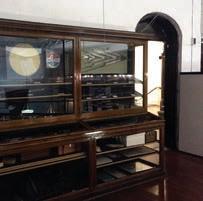
The Carlson-Holohan Industry Award of Excellence on display at The General Society of Mechanics and Tradesmen of the City of New York building.
The Carlson-Holohan Industry Award of Excellence has found a new, permanent home inside The General Society of Mechanics and Tradesmen of the City of New York building, located in New York City. The General Society was founded in November of 1785 and offered cultural, educational and social services to the families of skilled craftsmen. Currently, it is the oldest, privately endowed tuition-free technical school in New York City.
The award is presented every two years to individuals who are known for their dedication to training, mentoring and raising funds for philanthropic causes on behalf of the steam and hydronic industry.
John Goshulak, P. Eng of Weil-McLain Canada, is the 2016 inductee, following HPAC contributor John Siegenthaler, who held the award from 2014 to 2016. www.healthyheating.com/carlson_holohan.com
SPRINKLER AND FIRE PROTECTION INSTALLER TO BE COMPULSORY SOON
The Sprinkler and Fire Protection Installer trade is being reclassified and changing from voluntary to compulsory. The Ontario College of Trades (the College) is taking a two-year implementation approach to help ease this process, which began on February 2, 2015. Throughout the transition period, the trade has remained voluntary, but on February 2, 2017 there will be a number of requirements that will change.
The Ipsos poll, which was conducted between December 11 and 15 of 2015, surveyed an online sample of 800 parents with children living in their household. www.collegeoftrades.ca
VANCOUVER TO HOST NATIONAL APPRENTICESHIP FORUM
The national apprenticeship conference entitled Apprenticeship: Hands on the Future, is being held at the Westin Bayshore Hotel and Resort in Vancouver, BC from June 5 to 7, 2016. The event is held every two years and aims to highlight practices and innovative solutions in apprenticeship training and offers numerous networking and educational opportunities for attendees.
Sessions include a panel discussion on the future of apprenticeship, an update from the Canadian Apprenticeship Forum and keynote speaker Trevor Wilson who will discuss human and workplace equity.
Concurrent sessions will feature speakers from across the country, including Aminah Robinson Fayek from the University of Alberta, Dr. Barb Gustafson of Saskatchewan Polytechnic
continued on p14
When the classification becomes compulsory, individuals in the Sprinkler and Fire Protection Installer trade will need to be members who are in good standing in one of the College’s following membership classes in order to continue to work legally. The classes include: the Apprentices Class (statement of membership); the Journeyperson Candidates Class (statement of membership); and the Journeyperson Class (Certificate of Qualification/Provisional Certificate of Qualification) issued by the College. www.collegeoftrades.ca
ULTIMATE TRAINING
• Extensive training by highly-qualified instructors: online, onsite, regional, and at Fujitsu Training Academy
• In 2015, over 18,000 contractors were trained across 4 nationwide training centers
• Courses earn points toward reaching Elite Contractor status
• Elite Contractors receive consumer leads, loyalty rewards and priority ranking on the online Contractor Locator
< INDUSTRY NEWS
and Alain Lefebvre who is with the Construction Association of Nova Scotia.
The Darryl Cruickshank Memorial Award will be presented on Monday June 6 to an individual from industry Canada who has demonstrated inspirational leadership in the development and promotion of apprenticeship training for Red Seal trades for aspiring skilled tradespersons. The award is presented every second year. www.caf-fca.org/2016-conference
CENTRAL TECH STUDENTS TOUR DAHL FACILITIES
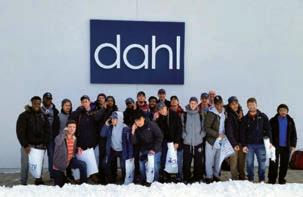
In February, Robert Schrader and Peter Mandros of Central Technical School in Toronto, ON, brought a group of their plumbing students to the Dahl Brothers manufacturing plant in Mississauga, ON for the school’s eighth annual plant tour.
Thomas Husebye, vice president of business and product development at Dahl, said, “This tour is very important to us because it’s a way that we can give back to our industry by helping to teach upcoming trades people about the manufacturing side of our industry, as well as offer some basic insights into the importance of integrity and a strong company culture.”
The annual tour begins with a discussion of the history and evolution of the company, followed by a presentation on products. Husebye explained that Dahl wants the students to walk away with an appreciation for how much it takes to manufacture a product, rather than a sales pitch.
“There is no substitute for being there and experiencing the sights, sounds and smells of a vertically integrated manufacturing facility,” Husebye said. www.dahlvalve.com
NEXT GEN NEXT 10 FORUM PUSHES FOR NET-ZERO ENERGY
The EnerQuality Housing Innovation Forum, which was held recently in Richmond Hill, ON, opened the door to the future of homebuilding in a low-carbon economy. The theme, “Next Gen. Next 10” referred to the next generation of codes and programs that are coming in 2017.
Presentations were led by industry professionals, and attendees were guided through the negative effects of climate change while demonstrating the need for environmental innovation in residential and commercial buildings.
Sessions ranged from Housing Innovation: The drivers of change and opportunity in homebuilding, to Cracking the Code: The 2017 Ontario Building Code and voluntary program. A keynote conversation featured speakers Dr. Dianne Saxe, environmental commissioner of Ontario, and Peter
Gilgan, founder and CEO of Mattamy Homes, who discussed the environmental dangers of carbon. They demonstrated through casual discussion and simple brainstorming, that many eco-friendly possibilities lay ahead if people climb aboard the eco-friendly train.
The EnerQuality conference celebrated new innovations. Multiple companies pitched new ideas to a panel of industry professionals, similar to the television show The Dragon’s Den model. This year the Innovation Gauntlet was presented to LiteBuilt Concrete Canada’s Liteblok building system for what they say is a mortarless, floatable, light and environmentally-friendly interlocking building block. Stephan Baker, general manager, Litebuilt Concrete Canada, accepts the award from Kirk Johnson (l), program director, EnerQuality, and Jim Dunstan (r), senior account manager, Union Gas.
“We may be at a point in time when we, our industry, are about to embark on a commitment to make real change,” Gilgan said. He emphasized that we are moving in the right direction with Net-Zero Energy (NZE) homes and amending/implementing codes, but people would benefit from a new system, that perhaps has yet to be thought of.
“Why can’t we have a system that every time a house changes owners, it has to meet a certain energy code?” asked Gilgan. He explained that a small idea like this, even with necessary exceptions for historical homes for example, would have the ability to create great benefits if taken on by the masses.
Like Gilgan, Dr. Saxe emphasized that there needs to be change on both the mitigation and adoption of energy efficient technologies. She attended the 2015 United Nations Climate Change Conference in Paris and said that she returned home horrified. “People do not understand how fast it’s [climate change] coming and how quickly it is going to get bad.”
A panel discussion entitled Zeroing In: Developing a Business Case for Net-Zero Energy (NZE) housing featured three speakers and was moderated by Sonja Winkelmann, director of NZE housing at the Canadian Home Builders’ Association (CHBA).
Winkelmann opened the discussion with some positive updates from a recent CHBA homebuyers study, which revealed that homebuyers now classify energy efficient appliances, high efficiency windows and an overall efficient home as ‘must-haves’ when house hunting. He explained that, “Oxford researchers forecast that solar power could supply 20 per cent of the world’s energy by 2027,” which demonstrates that NZE homes are on the horizon and advancements in this technology are being
Diagnostics Back
Better Boilers
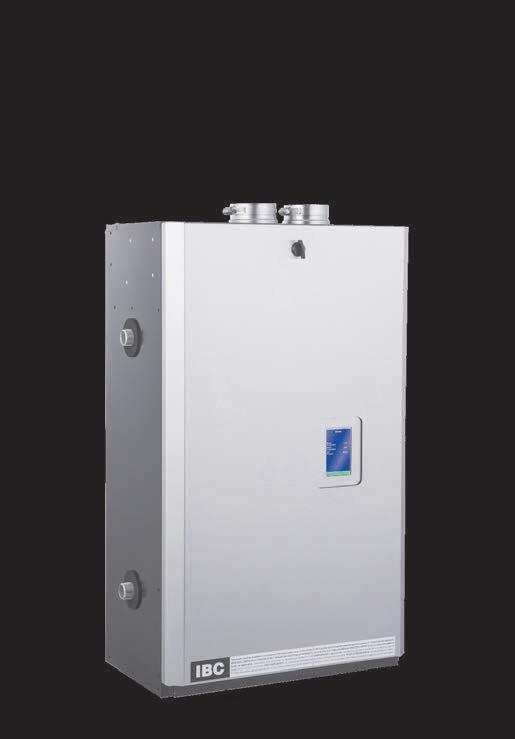
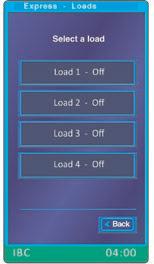
V-10 Touch Screen Boiler Controller
Available on all VFC & SL Series Boilers
EXPRESS SETUP
Program your boiler in seconds with an interview style quick start menu.
User friendly interface for contractor and home owner.
Built in internet connectivity. Monitor your boilers operation
EASY USB PROGRAMMABILITY
USB Port for emailing of software updates and multi boiler setup.
TRUE NATIVE BACnet
Seamlessly integrate IBC BACnet enabled boilers into your current building automation system.
MORE FLEXIBILITY
Intuitive alert system with plain English warnings & error messages.
Ability to manage up to 4 different loads and 5 pumps.
Automatic altitude adjustment.
Pre programmed values for all load types.
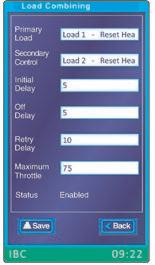
Load Combining to allow 2 loads to operate at the same time.
All boilers fully capable of directly connecting to any DDC building automation system.
seen “all over the world.” The panelists were in agreement that the price of NZE housing needs to come down, which would make it more accessible to homeowners.
Winkelmann quoted the cost to be $65,000 to get to net zero. Alison Minato, vice president of sustainability with the Minto Group explained that while these costs come down, “a short term goal for NZE is to make a commitment to green labeling, while also expanding NZE command offerings.”
Jennifer Weatherston, director of innovation for Reid’s Heritage Homes added that modifying the way people in this industry talk about NZE to homeowners is crucial. She believes that a great deal of effort needs to be put into changing the language so that it is “more informative and less of a sales pitch.”
To this point, Winkelmann asked attendees if the term net-zero is even the best term for this technology. There is concern that it does not evoke a positive response, and NZE may undergo some rebranding in the near future for this reason.
There are other challenges to overcome. Panelist Chris Buligan, manager of operations at Cricket Solar, believes that space – or lack there of, is something that the industry needs to overcome specifically in regard to solar power. “Being able to fit enough solar panels on a roof can be challenging – many need more panels but [roof] space restricts,” said Buligan.
Evening events that followed included a dinner, an EQ awards reception and gala for attendees, as well as an after party celebrating the award winners. www.chba.ca www.enerquality.ca
ENERCARE TO ACQUIRE THE SERVICE EXPERTS
In early March, Enercare Inc., which is headquartered in Toronto, ON and its wholly-owned subsidiary, Enercare Solutions Inc. has announced that is has entered into a definitive merger agreement to acquire Service Experts. Service Experts is a provider of HVAC service and repairs to residential and commercial customers in 29 states in the U.S., and Ontario, Alberta and Manitoba in Canada. It has over 90 locations and approximately 2800 employees.
The closing of the transaction is expected to occur in the second quarter of 2016. www.enercare.ca
BRINGING IOT TO HISTORIC MONTREAL
The Notman House, a communal space in Montreal, QC that is dedicated to supporting the city’s startup business community, together with the City of Montreal and Distech Controls, has announced the launch of a series project entitled #HACKtheHOUSE. This project aims to leverage the strength of the local innovation community to transform continued on p18
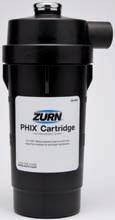
Under Sink Acid Neutralization Cartridge Safe and effective solution for neutralizing acidic wastewater in a compact under-sink design, requiring no special piping.
Innovative products and custom solutions to satisfy your customers.
Zurn products offer high quality construction, and reduced building maintenance. Our customized solutions combine superior design with innovative engineered plumbing products unmatched in both new and retrofit applications. Our expertise helps customers meet sanitary sewer regulations while protecting the watershed, public health, and communities.
Proceptor ®
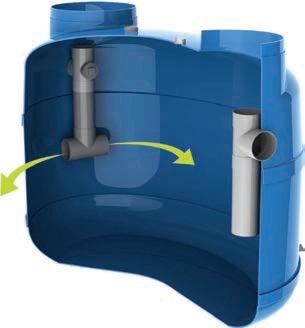
Superior gravity fuel, fat, oil, and grease separator designed with corrosion-resistant, reinforced fiberglass for ease of service and lowest cost of ownership.
PHIX®
< INDUSTRY
Notman’s heritage, downtown Montreal location into an Internet of Things (IOT) building.
The goal of this project is to make Notman House smarter, more connected and efficient. Participants in this sustainable building innovation include Google for Entrepreneurs, reelyActive, MySeat, EcoHack, mnubo, Lab Zed, Ubios, DASHBOX, TUBA, Periodic and more.
Lauren Scott, communications and public relations manager at Distech Controls explained that Distech Controls originally provided Eclypse, its IP-based building automation solution and Envysion responsive, web-based design and visualization interface, to Notman House.
The #HACKtheHOUSE series will consist of four weekend events that aim to transform Notman House into a showcase for technological solutions. The first event took place the weekend of March 11, 12 and 13, and the second event is scheduled for the weekend of June 11, 12 and 13. The third and fourth events will take place in September and November however the dates have not yet been announced. A final presentation in December will showcase all that the #HACKtheHOUSE series has accomplished throughout the year. www.notman.ca/hackthehouse/
FROM FRANCHISEE TO VICE PRESIDENT OF OPERATIONS
Mr. Rooter Plumbing has appointed Glenn Gallas to vice president of operations. In this role, Gallas will lead the franchise network support team and will head up training and growth initiatives.
Gallas began his career with Mr. Rooter Plumbing nearly two decades ago as a franchisee in Hot Springs, AK. He has won various awards including the Mr. Rooter Plumbing’s franchisee of the year and was offered the opportunity to mentor other Mr. Rooter Plumbing franchisees as a consultant. www.mrrooter.com
GOODMAN RECALL EXPANDED
Goodman Company has issued a recall of its air conditioning and heating units due to burn and fire hazard risk. The recall includes Amana, Century, Comfort-Aire, Goodman and York International-branded packaged terminal air conditioners and heat pumps (PTAC), and Amanabranded room air conditioners (RAC). The units are rated 230/208 volt, 3.5 kW and are beige with serial numbers ranging from 0701009633 through to 0804272329.
PTAC or RAC units that have a beige power cord labeled with a four-digit date code in the MMYY format and ending in 06 or 07, or ranging from 0108 through 1808 are included in the recall. The power cords on these units can overheat. Roughly 5300 units are affected, in addition to about 233500 PTAC units that were recalled in August 2014 with approximately 3800 sold in Canada. Visit www. amana-ptac.com to request a replacement power cord.
VIESSMANN ISSUES RECALL
Viessmann Manufacturing Company Inc. recently issued a recall of its Vitodens 200-W boiler models B2HB-45 and B2HB-57 gas fired boilers. The affected serial numbers are 7554703501001105 to 7554703501369106 and 7554704501001102 to 7554704501411109.
According to Health Canada, the flue gas baffle inside the heat exchanger assembly may dislodge due to a mechanical fastener slipping. This causes higher than normal flue gas temperatures to enter the flue gas collector and the venting system, resulting in the F1 fault. The venting system may melt and cause the flue gases to escape into the house.
Approximately 141 units have been sold in Canada. The recalled boilers were sold from September 1, 2015 to December 22, 2015. Consumers with recalled boilers are advised to contact either their installer, wholesaler or Viessmann Manufacturing Company in order to schedule a free boiler safety inspection. Contact Viessmann by telephone at 888.484.8643. www.viessmann.ca
BC INVESTS TO SUPPORT ADVANCEMENTS IN SEISMIC SCIENCE
Ocean Networks Canada (ONC) has received a $5-million investment from the province of British Columbia to increase the development and use of earthquake early warning systems, to ultimately help communities better protect themselves when large earthquakes occur. The one-time project funding allows the ONC to add more seismic sensors on land and along the seafloor as well as to help integrate the sensors for a more robust collection and analysis of seismic activity.
Currently, the ONC collects data from both offshore and coastal strong motion sensors that link into networks of land-based sensors from other agencies, including those owned by the Ministry of Transportation and Infrastructure, Natural Resources Canada and the University of British Columbia. The $5-million investment is intended to bolster the integrated network of earthquake sensors, increase the reliability and effectiveness of the data and analysis that comes from them, feed it to a centralized source that in turn can immediately deliver early detection notifications. www.oceannetworks.ca
Jean-Lou Paquet, chief financial officer at Distech Controls, speaks at the launch of the #HACKtheHOUSE series on March 11 at Notman House.
Industries in transition
HRAI manufacturer members gather to strategize for the future.
BY BETH MCKAY
The Heating, Refrigeration and Air Conditioning Institute (HRAI) held its product section meeting in early April in Mississauga, ON. A robust program offered attendees insight into changes within the industries that comprise the association.
A presentation entitled Transforming Business Models featured keynote speaker Paul St. Germain, wholesale distribution industry leader with IBM. St. Germain discussed the importance of company branding and working with your customer through digitization.
Similarly, William MacGowan at Cisco Systems Inc., cautioned the audience to, “not get caught on the wrong side of digitization.” He explained that if a company does not grow with technological advancements (such as the Internet of Things) then that company may find themselves on the wrong side.
As an example, MacGowan discussed the RBC WaterPark Place III office in downtown Toronto. “A lot of the design of the office was built upon retention of Generation Y,” said MacGowan. This, he contended, demonstrates the importance of looking to the future generations of businesses.
The future was also a prominent theme during the geothermal council meeting. On the national level, HRAI is now working with the Geothermal Exchange Organization (GEO), an American non-profit trade company.
Additionally, HRAI has had discussions with the International Ground Source Heat Pump Association (IGSHPA) regarding increased geothermal training and certification.
Luymes noted that the province’s commitment to investing in “gasification” has been challenging to the geothermal community. A “Geofication” proposal is, however, being developed. Luymes explained that it does not fully rely on government funding and leaves room for a role for gas utilities.
Frank Stanonik, chief technical advisor for the AirConditioning, Heating, and Refrigeration Institute (AHRI) later offered an update on AHRI and discussed American efficiency standards for HVAC/R equipment.
Following Stanonik’s presentation, Caroline Czajko, manager, divisional programs (manufacturers and wholesalers) with HRAI and Katherine Delves from the office of energy efficiency provided an update on heating and air conditioning efficiency requirements.
A review of the refrigeration sector was presented by refrigeration product section chair Dennis Kozina and Warren
Heeley, HRAI president. Kozina, who is director of sales at Emerson Climate Technologies, noted that he is hearing “more and more [discussion] about using natural refrigerants.”
Heeley concluded the day’s presentations with a discussion on the proposed HFC regulations, emphasizing that this is a phase “down”, not “out”, of HFCs.
The one-day meeting wrapped up with an opportunity for delegates, speakers and HRAI staff to network and discuss the issues presented. www.hrai.ca
We recycle all elements of the thermostat; plastic, metal, electronics and mercury (which is particularly hazardous).
Do your part and join the more than 1,500 contractors already participating in the program.
Paul St. Germain, wholesale distribution industry leader, IBM, discussed the importance of branding within a company.
Warren Heeley, president of HRAI, concluded the event with a discussion on HFCs.
< AIR CONDITIONING
Cooling without compressors
Takes a potential leap forward with earth to sky radiation.
BY ROBERT BEAN
Virtually everyone understands how the earth is heated during the day with radiant energy, but few give much thought to radiative night or daytime cooling. In part it is earth to sky radiation that causes outdoor water to freeze or frost to form, even when air temperatures are above freezing.
This is important stuff – imagine what would happen if the earth was unable to balance inbound daytime energy with the necessary outbound energy. You certainly would not live to see the Toronto Maple Leafs win the cup. So yes, our survival counts on this energy balance.
The concept of sending heat energy into space has been used to cool buildings for centuries. In fact, ancient civilizations mastered this technique long before someone thought we should use CFCs and electricity from combustion for cooling.i The people of ancient times figured this stuff out in such a manner that it was not necessary to fire up a coal or natural gas power plant.
Let’s take a step back and look at the basic fundamentals. Back in the 1800s a British-German astronomer named William Herschel told the world about infrared radiation. Then a few other guys like Josef Stefan and Ludwig Boltzmann figured out the energy exchange between two surfaces had a constant, which found its way into a now famous law called the Stefan-Boltzmann equation.ii A form of this formula can be used to calculate the net exchange of radiative heat (Qrad, Watts) between, for example, the roof of a building and the sky.
FORMULA 1
Qrad = esA(∆T4)
WHERE,
e = surface emissivity of the roof
A = roof area, m 2
s = the Stefan-Boltzmann constant (5.6704 × 10 -8 W/ m2 ∙K 4)
∆T = temperature differential between the sky and roof, K [Kelvin = (T º C + 273.15)]
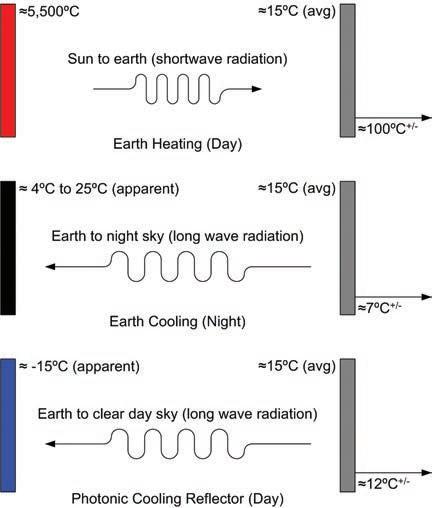
In Figure 1, some typical values for scope are provided but in practice you should know determining sky, earth and building temperatures requires a little more thought (see Figure 2) and for design you ought to make use of available software tools. In general, just by using roof mounted sky
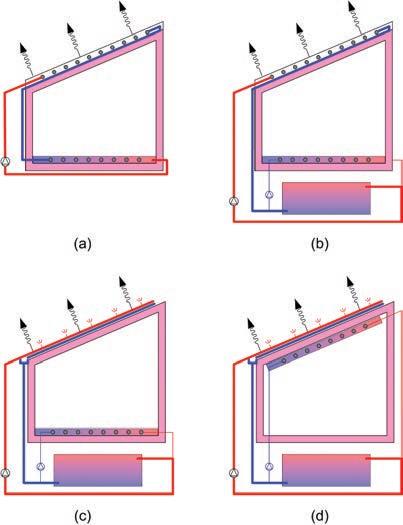
radiators it is possible to shed anywhere from 15 W/m2 to 150 W/m2 from a building for cloudy to clear nights respectively.iii This can be done using heat exchangers as shown in Figure 5, (a) and (b).
The problem with roof-based solar radiators is naturally a day light problem. As soon as they see day light they turn into absorbers but this challenge has been potentially solved recently by Stanford researchers Aaswath Raman (et al).iv His new start up is one of several groups working
Figure 1 Temperature differentials and fluid temperature outputs from sky radiant cooling and heating
Figure 2 Relationship between altitude and sky temperature (credit NASA)
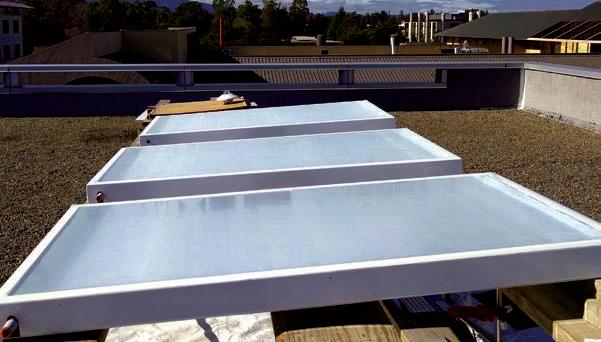
to commercialize energy efficient daytime cooling using an über renewable resource – the coldness of space. Manipulating light at a nanoscale, Raman is developing a new generation of roof radiators (see Figure 3) that can cool fluid to 5C below ambient daytime temperatures. For many parts of the world this is more than sufficient for cooling, especially with large surface area heat exchangers. It is an exergy efficient marriage literally made in heaven with high temperature radiant space cooling systems. It has the ability to reduce energy consumption in some buildings by 30 to 60 per cent.
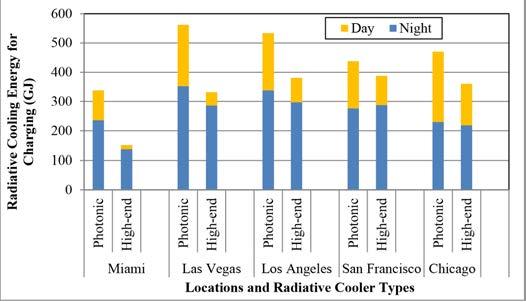
In November 2015 Pacific Northwest National Laboratory scientists (Fernandez, et al) released a study looking at these “photonic radiators” in comparison to other systems. Some of the findings are shown in Figure 2. vi
As shown in Figure 4, photonic radiative cooling system reduced HVAC energy by between 29 per cent and 62 per cent relative to the VAV system and only two per cent to 14 per cent relative to the high-end nighttime radiative cooler.iv
These technologies can be incorporated into other approaches for compressor-less cooling such as nighttime evaporation as shown in Figure 5 (c) and (d). The principle of evaporative cooling is old but still practical. Engineering researchers Yellott and Hay developed an evaporative solar system called a “roof pond” (1967), evaporative cooling with a twist. Systems based on these strategies have since been used in modern times by award winning engineers such as Peter Rumsey on the Global Ecology Center at Stanford University (Figure 6).vii Furthermore, they lend themselves to help cool PV systems for enhancing efficiencies.viii,ix
If you have been following my rants you know that we covered the early introduction of nanotechnology in the late 2000s. Then we started to introduce radiant cooling with dedicated outdoor air systems. Of late we have been preaching the second law principles of exergy efficiency. Well, it appears all these important subject matters are coming home to roost in an incubation stage with photonic radiative cooling system. It bears repeating that the temperatures created at power plants are of an industrial grade and we are using them for non-industrial grade applications on buildings. Regardless of an HVAC appliance’s efficiency score, even the highest rated cooling products when connected to a combustion-based power system, contradict the philosophies of sustainability.
There will come a time when we won’t use compressors for the cooling of people and buildings. It is simply not necessary. The heat sinks we need to reject heat to, or absorb heat from, are literally within our reach and there are some very smart people who will show us how to get very good at accessing them. As you study these products keep in mind there are no shortage of sceptics who have declared solar
thermal and radiant as dead when in fact there is no better way to fight a radiant problem than with a radiant solution. Solar thermal and radiant is not dead when it comes to discharging energy; this is just the beginning of a continuum. When it comes to radiative technologies it is wise to continued on p22
Figure 3 Prototype photonic radiative cooling panels v
Figure 4 HVAC energy used
Figure 5 Using sky radiation and evaporation to cool fluids for radiant-based HVAC systems
REFERENCES
i It’s Not Rocket Science #5: Night Sky Radiant Cooling, accessed March 19, 2016 <http://misfitsarchitecture.com/2013/03/01/its-not-rocket-science-5-night-skyradiant-cooling/>
ii http://ef.engr.utk.edu/hyperphysics/hbase/thermo/stefan.html
iii Luciuk, M. Night Radiative Cooling, The effect of clouds and relative humidity. Accessed March 19, 2016 <http://www.asterism.org/tutorials/tut37%20 Radiative%20Cooling.pdf>
iv Raman, A. P., Anoma, M. A., Zhu, L., Rephaeli, E., Fan, S. (2014). Passive radiative cooling below ambient air temperature under direct sunlight. Nature (London,) 415: 540–545. v https://www.technologyreview.com/s/600964/the-sky-may-hold-the-secret-toefficient-air-conditioning/
< MEETING REPORT
RSES approves consistent fee to boost membership
BY BETH MCKAY
The Refrigeration Service Engineers Society of Canada (RSES) held its 77th Annual General Meeting (AGM) on March 17, during the Canadian Mechanical and Plumbing Exposition at the Metro Toronto Convention Centre.
Denis Hebert, outgoing president, RSES Canada, presented the association’s membership report, which explained that there are currently eight active RSES chapters in Canada, and 464 members across the country. The report says that the chapters need to determine what RSES Canada can do to enhance its program offering to encourage both lapsed and new members to join the society.
remember the famous 1974 lyrics by Randy Bachman in BTO’s Not Fragile album, “B-b-b-baby, you just ain’t seen nn-nothin’ yet.”
Robert Bean, who is president of Indoor Climate Consultants Inc., is a Registered Engineering Technologist in building construction through the Association of Science and Engineering Technology Professionals of Alberta and a Professional Licensee in mechanical engineering through the Association of Professional Engineers, Geologists and Geophysicists of Alberta. He has served two terms as an ASHRAE distinguished lecturer, serves on ASHRAE committees TC 6.1 (Hydronics), TC 6.5 (Radiant), TC 7.4 (Exergy) and SSPC 55 (Thermal Comfort) and is a recipient of ASHRAE’s Lou Flagg Award.
vi Fernandez, N., Wang, W., Alvine, K., Katipamula. S. 2015. Energy Savings Potential of Radiative Cooling Technologies, U.S. Department of Energy, under Contract DE-AC0576RL01830, Pacific Northwest National Laboratory vii Bendewald, M., Harrison, J., Pradhan, A. 2011. Global Ecology Center at Stanford University, Factor Ten Engineering Case Study, Rocky Mountain Institute. viii Parker, D., Sherwin, J., Hermelink, A., “NightCool: A Nocturnal Radiation Cooling Concept”, Proceedings of ACEEE 2008 Summer Study on Energy Efficiency in Buildings, American Council for an Energy Efficient Economy, Washington, DC, August 2008.
ix Kazanci, O.B., Skrupskelis, M., Sevela, P., Pavlov, G.K., Olesen, B.W. 2014. Sustainable heating, cooling and ventilation of a plus-energy house via photovoltaic/ thermal panels. Energy and Buildings, Volume 83, November 2014, Pages 122–129
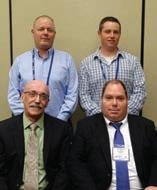
The newly elected 20162018 board members.
Back row (l-r) Wayne Watson, educational chairperson and Brendan Myers, director and newest executive. Front row (l-r) Miles Nelson, vice president and Barry Hawse, president. Ray Kenney, sergeant at arms and Nick Reggi, treasurer, secretary are absent.
This prompted a discussion about RSES membership fees, which varied from chapter to chapter. The motion to change the fees to $150 when applying
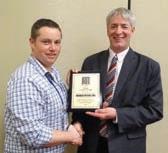
Brendan Myers (l) accepts the Spirit of RSES Award presented by Denis Hebert. Myers also received the HRAI CMS Award for Educational Achievement.
through RSES Canada was approved to provide financial consistency across the country. The chapters are also exploring ways to improve the RSES’s online presence.
A number of awards were also presented. Brendan Myers (see photo), Nick Reggi (H.T. McDermott Award), Doug Kennedy (Mary Syer Memorial Award) and Phil Boudreau (Speaker of the Year Award) and the Linwell Centennial chapter (WJA Marshall Award) were award recipients. In addition, The RSES Bulletin editor, Gary Struhar CMS received an Honorary Member Status certificate.
Elected board members for 20162018 were announced at the conclusion of the meeting. Barry Hawse was elected RSES Canada president, and Miles Nelson is RSES Canada vice president.
A date and location for the 2017 AGM and Educational Conference has not yet been selected. www.rsescanada.com
Figure 6 Evaporative/radiative fluid cooling at the Global Ecology Center at Stanford University
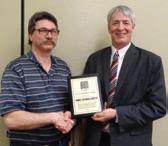
Denis Hebert (r) presents Curt Minor with the WJA Marshall Award on behalf of the Linwell Centennial RSES Chapter.
Photo Paul Sterbentz
SMART THERMOSTATS PROGRAM
Installing a smart thermostat is one of the easiest ways to save on energy costs. Smart thermostats “adapt” to homeowners’ schedules through sensors and Wi-Fi technology, automatically delivering comfort when people are home and savings when they’re not. With the Enbridge Smart Thermostats Program , your customers can receive a $100 bill credit applied to their Enbridge account. Once they have purchased and installed a qualifying thermostat, they simply need to apply for the bill credit before December 31, 2016.*
If you DO NOT sell Nest or ecobee products, find out if your smart thermostat qualifies for the program by emailing smartthermostats@enbridge.com.
Competitive environment ups the ante
Fresh faces, along with mechanical and design tweaks, are hallmarks of the 2016 offering.
BY JIL MCINTOSH
ierce competition in the auto industry is always great news for buyers. Segments that were previously modernized infrequently are now updated far more often in response to customer needs.
Most of the 2016 vehicles underwent minor changes, and there are some fresh faces. Nissan offers two new versions of its Titan pickup truck, while Ford has released details of its new Super Duty. Toyota has redesigned the Tacoma, and Mercedes-Benz offers the new Metris.
Full-size vans and trucks remain the choice for most contractors, but there is also a range of midsize and compact vehicles for lighter-duty work, such as service calls.
FULL-SIZE CARGO VANS
FORD TRANSIT
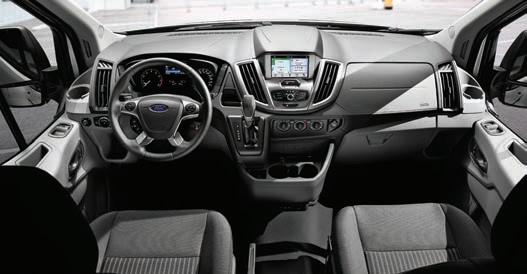
An all-new addition to Ford’s lineup in 2015, the Transit is updated for 2016 with dual sliding doors available on some models, available LED interior lighting, and an improved communications and infotainment system. This van takes the place of the now-discontinued E-Series (Econoline).
Engine choices are a 3.7-litre V6, making 275 hp and 260 lb.ft. of torque, which can be ordered with CNG or propane prep; a turbocharged EcoBoost 3.5-litre V6 making 310 hp and 400 lb.-ft.; and a 3.2-litre five-cylinder diesel making 185 hp and 350 lb.-ft., all with six-speed automatic transmissions.
The Transit comes in two wheelbase lengths, three body lengths, three roof heights, and single or dual rear wheels.
Interior volume ranges from 246.7 to 487.3 cubic feet, with a maximum payload of 4560 lbs. and top towing capacity of 7500 lbs. Maximum load height is from 56.9 to 81.5 inches.
WHAT CONTRACTORS ARE SAYING
There are some 20 vehicles in the fleet at West-Man Mechanical in Winnipeg, MB and the brands are “all over the map,” says project manager Roger Phaneuf. “We buy new, and price is everything. If we get a good deal, we go with it. We keep them for five or six years and then we scrap them. They’re pretty much done when we’re done with them.”
His vehicles mostly stay within the city limits, and he prefers full-size trucks and vans. “Our expectation is to be able to haul materials around,” he says. “Most are pretty heavy, so I don’t think the smaller trucks can get it done.”
GENERAL MOTORS
The “mechanical twins” of the Chevrolet Express and GMC Savana get some new features for 2016. These include side and front window airbags, six D-ring tie-downs, and OnStar with a WiFi hotspot for up to seven devices. A 220-amp generator and dual isolated battery system are offered.
Available in 2500 or 3500 configuration, the Express/ Savana offers a 4.8-litre V8 making 285 hp and 295 lb.-ft. of torque; a 6.0-litre V8 making 329 hp and 373 lb.-ft. that can be prepped for CNG; and a 6.6-litre Duramax V8 diesel making 260 hp and 525 lb.-ft. All use six-speed automatic transmissions.
For large fleets, an available telematics system on the Transit records location, speed, fuel efficiency, oil life and other information.
Chevrolet City Express owners enjoy free oil changes.
Nissan’s NV is available in the 1500 configuration with a standard roof, and as the 2500 or 3500 in standard or high roof.
There is one roof for both, with maximum 53.4-inch cargo height, but the 3500 also has an extended-length option.
The Express/Savana is the only non-European-style van left on the market, and while its basic design has not changed in more than a decade, its features have been regularly updated and its price remains competitive.
MERCEDES-BENZ SPRINTER
With the launch of competitor models, Mercedes-Benz has added more Sprinter sales and service outlets.
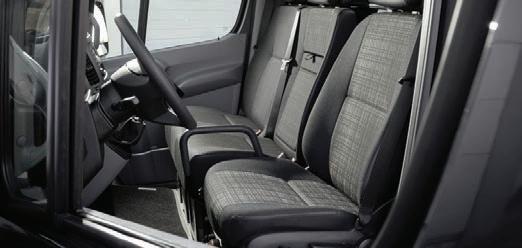
The first of the Euro-style vans to hit our market, the 2016 Sprinter upgrades include standard side and window airbags, and a locking glove compartment. All-wheel-drive models now include low-range gear, which was previously optional.
The Sprinter cargo van comes as the 2500 in standard, high and super-high roof, and as the 3500 in high and super-high roof, both in three lengths. Both are also available with a 4x4 drivetrain.
Powered strictly by diesel, the Sprinter uses a 2.1-litre four-cylinder making 161 hp and 265 lb.-ft. of torque, or optional 3.0-litre V6 that makes 188 hp and 325 lb.-ft.
Interior height varies from 66.5 to 87.3 inches, and cargo volume from 319.1 to 586.1 cubic feet.
With the Ford Transit’s introduction, Mercedes-Benz has added more sales and service outlets, and the scheduled maintenance interval is now 30000 km. The 4x4 model, intended for muddy job sites, is surprisingly capable.
NISSAN NV
Unchanged for 2016, Nissan’s NV is available in 1500 configuration with a standard roof, and as the 2500 or 3500 in standard or high roof. All models come in a single length.
Two gas engines are available: a 4.0-litre V6 making 261 hp and 281 lb.-ft. of torque, or a 5.6-litre V8 making 317 hp and 385 lb.-ft., both with a five-speed automatic.
Maximum payload is 3985 lbs., while towing is 9500 lbs. The top cargo height is 76.9 inches, and the highest cargo volume is 323.1 cubic feet. The NV’s pickup-truck-based design provides deeper footwells for long-legged occupants than most vans. Available features include a locking centre console sized for hanging files, rear parking sensors and navigation.
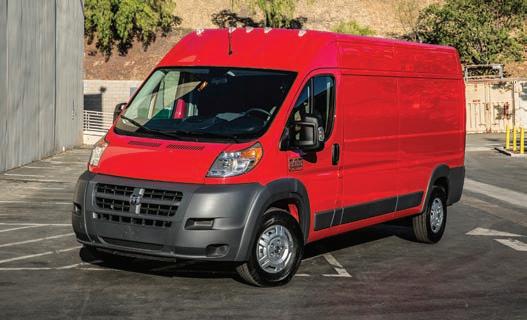
RAM PROMASTER
For 2016, the ProMaster adds available 20-amp auxiliary dash switches and a second battery prep. It comes in
The Ram ProMaster is the only full-size front-wheel-drive van, which reduces overall weight.
1500, 2500 and 3500 configuration, and with three wheelbase lengths, four body lengths, and two roof heights.
Maximum cargo volume is 462.9 cubic feet, while interior height stretches as high as 76 inches.
Its gasoline engine is a 3.6-litre V6 making 280 hp and 260 lb.-ft. of torque, mated to a six-speed automatic transmission.
WHAT CONTRACTORS ARE SAYING
Mike Ohlmann, president of Fred Welsh Ltd. in Coquitlam, BC has a mixture of vehicles in his 20-vehicle fleet, but it leans heavily toward Ford. “We lease and then typically take the option to purchase,” he says. “We mostly ended up with Ford because we do the lease through our agent, and that’s predominantly what they use.”
He likes the size and capacity of the Econoline van, and stocked up on them when he heard they were being discontinued. “That’s why we’re purchasing our vans,” he says. “We haven’t considered (the Transit) at this time.”
The diesel option is a 3.0-litre four-cylinder making 174 hp and 295 lb.-ft., with an automated manual six-speed.
The ProMaster’s numerous configurations offer lots of choice, and its squared-off sides maximize space right to the roof. An extremely tight turning circle improves manoeuvrability. The diesel’s transmission works like an automatic and has no clutch pedal, but it shifts harshly, and drivers must remember to set the brake as there is no “Park” position.
FULL-SIZE PICKUP TRUCKS GENERAL MOTORS
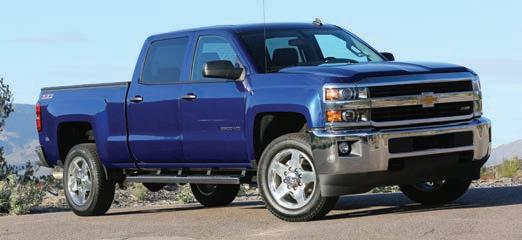
Mechanically similar, the Chevrolet Silverado and GMC Sierra 1500 models receive new front-end styling for 2016, and the available 5.3-litre V8 now uses an eight-speed automatic on some trim levels. Heavy Duty trucks get digital steering assist on some crew cab models to improve stability and steering feel.
All are available in regular, double or crew cab, and in 4x2 or 4x4 configuration. The 1500 models offer a 4.3-litre V6 (285 hp/305 lb.-ft. of torque), 5.3-litre V8 (355/383) or 6.2-litre V8 (420/460), with six- or eight-speed transmissions. Heavy-Duty models use a 6.0-litre V8 (360/380) or 6.6-litre V8 Duramax diesel (397/765).
continued on p26
<
Maximum numbers are dependent on a variety of factors, but the 1500 tops out with a 2260-lb. payload and 12000lb. towing capacity, while Heavy Duty models can pull up to 20000 lbs.
While the current crop of trucks tows and hauls well, GM’s HD models seem to do everything just a bit better, especially with the diesel/Allison transmission combination. The bumper-end step found on almost all GM trucks is also the simplest and easiest for access to the bed.
FORD F-SERIES
NISSAN TITAN
Nissan’s all-new Titan is being rolled out gradually, starting with the 2016 Titan XD, and then with the 2017 half-ton. The two look similar but sit on different frames, and the XD’s wheelbase is almost a foot longer. Nissan says it bridges the cost and capability gap between light- and heavy-duty competitors.
The XD uses a 5.0-litre V8 Cummins diesel, making 310 hp and 555 lb.-ft. of torque, with six-speed automatic. A 5.6-litre V8 gas engine, making 390 hp and 401 lb.-ft. and with seven-speed automatic, arrives later in the model year. The half-ton will offer V6 or V8 gas engines.
The diesel-powered Titan XD has a maximum payload of 2500 lbs., and a top towing capacity of 12000 lbs. Available features include a rear hitch alignment camera, and oneperson remote brake light check for the trailer’s lights and signals. Eagle-eyed readers will notice the XD’s maximum capacity equals that of most half-ton competitors, but its ease and confidence with the heaviest loads could make the difference for buyers.
RAM
The Ram 1500 sees only trim changes for 2016, with new Limited and Rebel lines. Heavy Duty models get available front and rear park assist.
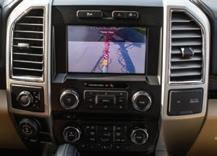
The F-Series remains the best-selling vehicle in Canada. The F-150 now has available Pro Trailer Backup Assist, a selfparking feature that enables any driver to back up a trailer regardless of skill level. The current Super Duty will be replaced later this year with an all-new 2017 model that, like the F-150, will have a highstrength-steel frame and aluminum body. Full details are not yet available, but expect updated versions of the current Super Duty engines, along with a blind spot monitor that includes the trailer’s length, and a trailer-mountable backup camera that beams images into the console screen.
The F-150 offers two naturally-aspirated engines, a 3.5-litre V6 making 282 hp and 253 lb.-ft. of torque, and a 5.0-litre V8 (385/387), plus two turbocharged EcoBoost engines: a 2.7-litre V6 (325/375) and 3.5-litre V6 (365/420). New for 2016, the V8 can be prepped for CNG or propane. All use six-speed automatic transmissions.
The current 2016 Super Duty uses a 6.2-litre gas V8 (385/405) or 6.7-litre diesel V8 (440/860). The F-150 has a maximum payload of 3270 lbs. and top towing capacity of 12200 lbs., while the Super Duty rates a maximum 7050 and 31200 respectively.
The idea behind EcoBoost is a fuel-efficient smaller engine with larger-displacement power, but be cautious. It uses more gas under load than the published figures promise, and frequent towers may be happier with a non-turbo version.
The 1500 offers a 3.6-litre V6 making 305 hp and 269 lb.-ft. of torque; a 5.7-litre V8 with 395 hp and 410 lb.-ft.; or 3.0-litre V6 EcoDiesel making 240 hp and 420 lb.-ft. The two V6 engines use an eight-speed automatic, while the V8 comes with a six- or eight-speed.
The Ram 2500 and 3500 offer a 5.7-litre V8 rated at 383 hp and 400 lb.-ft.; a 6.4-litre V8 at 410 hp and 429 lb.-ft.; or a 6.7-litre six-cylinder Cummins diesel with a manual or automatic transmission, and a maximum 900 lb.-ft. of torque.
Maximum payload is 1890 lbs. for the 1500 and 7390 for
WHAT CONTRACTORS ARE SAYING
Bevan Bros. Plumbing & Heating in Charlottetown, PE runs 15 vehicles, mostly full-size vans. “We typically buy one- to two-year-old vans, with twenty to twenty-five thousand kilometres on them,” Quentin Bevan says. “We go for whatever’s on the market, but in the last couple of years it’s been tough to get good-quality used vans. Right now we have mostly Fords, but before that it was GM. We’ve only ever used gas. We’d use diesel, but in our market, we don’t see a lot of diesel options for purchase.”
The company typically keeps its vehicles six years from the model year. “If a van is still low-maintenance and still runs good, we will keep it,” Bevan says. “We’re better cost-wise with used over new. We’ve had better luck as far as maintenance goes, with no real issues.”
Chevrolet’s Silverado, shown here, and GMC Heavy Duty trucks get digital steering assist on some crew cab models to improve stability and steering feel.
Ford F-150 Trailer Backup Assist console screen
< SERVICE VEHICLE REPORT
Heavy Duty, while towing caps at 10640 and 31210 respectively.
Ram’s 3.0-litre is currently the only light-duty diesel available, and its range estimated up to 1225 km on a tank. The 1500 also offers an available four-corner, self-levelling air suspension that can be raised or lowered as desired, but its weight can cut down considerably on payload.
full-size pickup is basically unchanged for 2016, having received a makeover two years ago.
TOYOTA TUNDRA
Toyota’s full-size pickup 4x2 models come in regular or double cab, while 4x4 models also add the CrewMax. A 4.6-litre V8 engine, making 310 hp and 327 lb.-ft. of torque, is only available in two double-cab trims. All others use a 5.7-litre V8 that makes 381 hp and 401 lb.-ft. Both engines use six-speed automatic transmissions.
Maximum payload for the 4x4 is 1710 lbs., with a 10196lb. top towing capacity.
The Tundra’s makeover improved its exterior and interior
SMALLER BUT MIGHTY CHEVROLET CITY EXPRESS/NISSAN
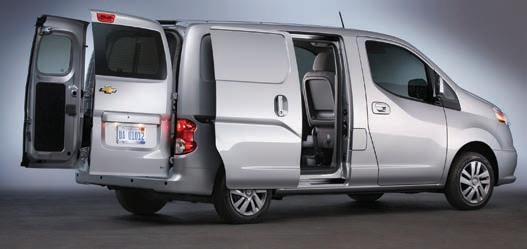
While each has unique styling, this van is built by Nissan for both Chevrolet and Nissan. It uses a 131-hp, 2.0-litre four-cylinder engine with continuously variable transmission (CVT), and offers 122.7 cubic feet of cargo volume with up to a 1500-lb. payload. Maximum cargo height is 53 inches. Chevrolet offers it through a wider dealer network and includes free oil changes, but Nissan’s version has a better warranty.
FORD TRANSIT CONNECT
Two engines are available, both four-cylinder: a 169-hp 2.5-litre, or turbocharged EcoBoost 1.6-litre making 178 hp, both with six-speed automatics. Offering 1630 lbs. of payload and 128.6 cubic feet of cargo volume (149 with passenger seat folded), it can tow 2000 lbs.
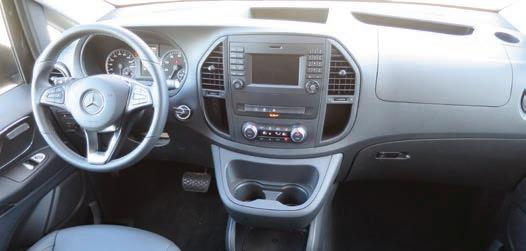
MERCEDES-BENZ METRIS
The new Metris is currently the only midsize van available.
styling, including a more user-friendly control layout. Mechanical updates were minimal, however, and its larger V8 is among the thirstiest of its competitors.
MIDSIZE TRUCKS
GENERAL MOTORS
For 2016, the mechanically-similar Chevrolet Colorado and GMC Canyon get a new available 2.8-litre Duramax diesel engine, producing 181 hp and 369 lb.-ft. of torque, in addition to a 2.5-litre four-cylinder or 3.6-litre V6. Dieselequipped models can tow up to 7700 lbs.
NISSAN FRONTIER
It is thirsty and overdue for a makeover, but the Frontier offers 281 lb.-ft. of torque from its 4.0-litre V6 (a four-cylinder is also available) and can tow up to 6500 lbs.
It uses a turbocharged 2.0-litre four-cylinder gas engine making 208 hp and 258 lb.-ft. of torque. There is up to 186 cubic feet of cargo volume, maximum 2502 lbs. payload, and an underground-parking-friendly overall height of 74.4 inches. A power-sliding door is available.
RAM PROMASTER CITY
This Fiat-based van uses a 178-hp 2.4-litre four-cylinder, mated to a nine-speed automatic transmission. Payload peaks at 1833 lbs., with 131.7 cubic feet of cargo volume and 51.8 inches of cargo height. Maximum towing is 2000 lbs.
Toyota’s
The Chevrolet Colorado offers three engine options.
The MercedesBenz new Metris is currently the only midsize van available.
Photo Jil McIntosh
HONDA RIDGELINE
While not generally considered a work truck, the SUV-based Ridgeline still sees some commercial use. An all-new 2017 version will have conventional truck styling, 3.5-litre V6, allwheel drive, and exclusive dual-opening tailgate.
WHAT CONTRACTORS ARE SAYING
Rapid Refrigeration & Air Conditioning in North Battleford, SK runs three trucks, and they are all 4x4 Fords. “My wife is the business manager at a Ford dealer, and it keeps the peace,” says Brad McEachern. “We use F-150s with long boxes and caps, and have access to parts bins on the sides.”
McEachern prefers to buy the trucks. “We used to lease, but we put on a lot of miles and so we always ended up having to buy out the leases anyway.”
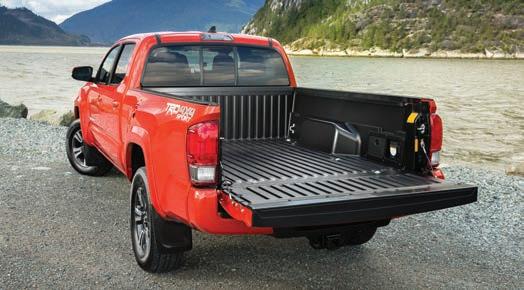
The all-new 2016 Toyota Tacoma has a lockable and reinforced tailgate for longer loads.
All-new for 2016, the Tacoma comes with a 2.7-litre fourcylinder or 278-hp, 3.5-litre V6 with fuel-saving Atkinsoncycle technology. Towing capacity is now up to 6500 lbs. and payload rises to 1500 lbs, with a reinforced tailgate for longer loads. Standard equipment includes knee airbags, locking tailgate and heated mirrors.
Jil McIntosh is an automotive writer and reviewer, with a specialty in trucks and commercial vehicles. She writes for numerous outlets including the Toronto Star and Autofocus.ca, and is a member of the Automobile Journalists Association of Canada (AJAC). Her work can be found at WomanOnWheels.ca.
The 2017 Honda Ridgeline may work well for some as a service vehicle.
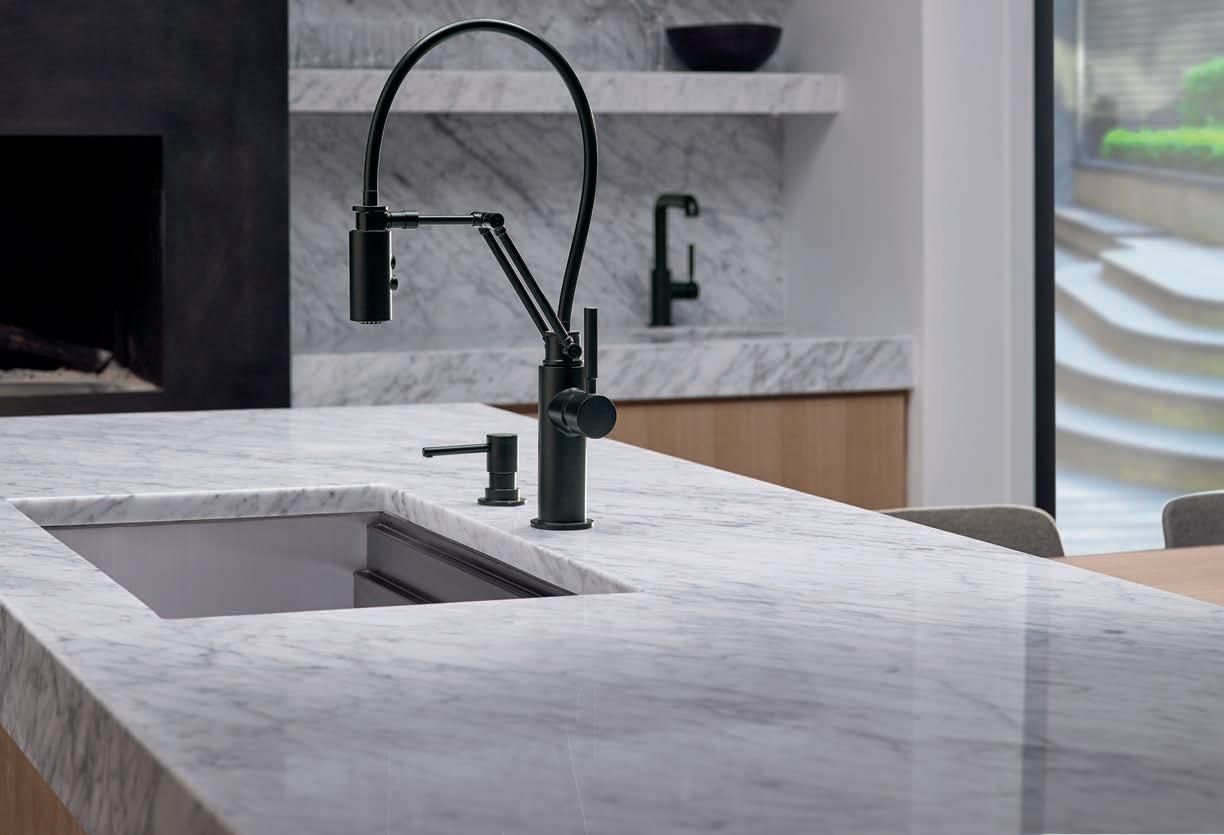
and a dual-jointed articulating arm with a semi-flexible hose. www.brizo.com
Everything & the kitchen sink
Why the shift to modern residential industrialism?
BY BETH MCKAY
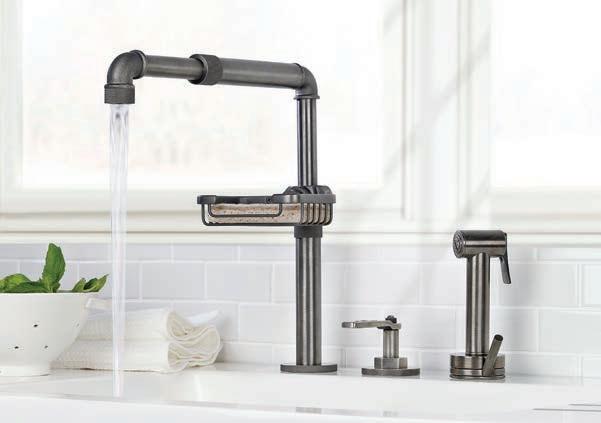
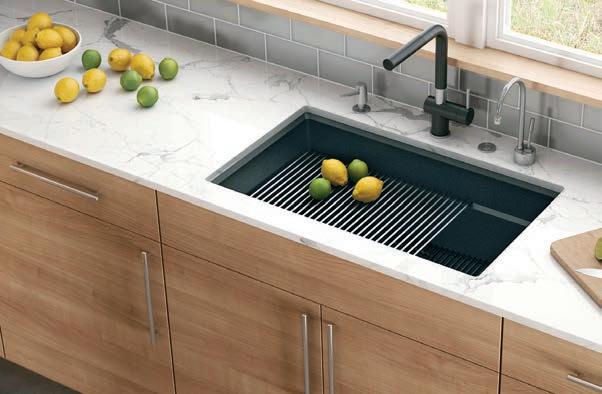
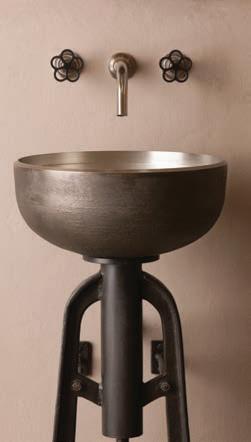
Out with the ornate and in with the industrial, or at least this holds true when it comes to modern trends in kitchen design. Exposed wooden beams, exposed brick and exposed pipes are in – a tribute to the 19th and early 20th century kitchen. Though this trend in kitchen appliances reflects a revolutionary period in history, their design also incorporates modern commercial qualities, which combine to form unique products that appeal to consumers for a number of reasons.
The industrial design trend has been working its way into the modern kitchen since the 1980s. Kelly Morisseau, a Certified Master Kitchen and Bath Designer and Certified Interior Designer based out of California, explains that industrial style appliances, such as faucets and sinks, actually belong to a broader design trend known as steampunk.
“It [steampunk] was meant to cover a range of alternate history stories that asked, ‘what would happen if steam had become the dominant energy source instead of electricity in the Edwardian/Victorian age?’” notes Morisseau.
Similarly, Jamie Gold, National Kitchen and Bath Association (NKBA) certified designer and author, explains that steampunk is modernism paired with eclectic, antiqueinspirations. Gold says steampunk was created from interpretations of fantasy and science fiction literature and, of course, elements from the industrial revolution.
“What we are seeing today is a trend we call mainstream industrial. You look up, you see exposed air ducts and older looking fan blades. It’s an attempt to make, say a restaurant or home, look like an old converted loft or factory,” says Adam Findlay, senior marketing manager for Pfister. “This is something that has caught on, and you can see it in lighting in particular. People are using Edison bulbs and old lamps. But the goal is to capture this [trend] in a faucet.”
Use of rustic brass fittings, simple ex-
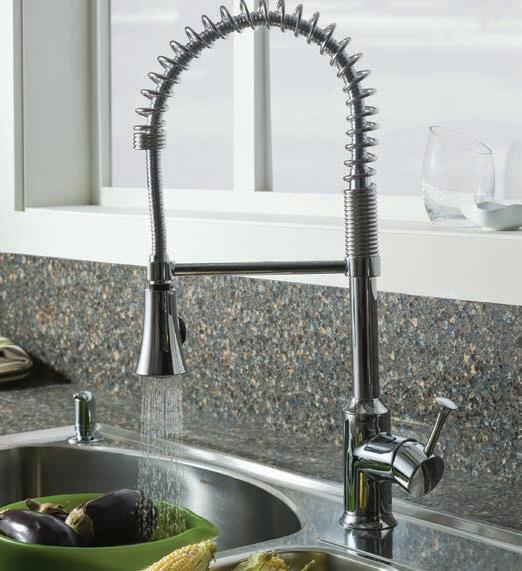
The Luna collection from Taymor is a chef style single lever faucet with an industrial inspired stainless steel hi-arc swing spout. A dual spray-head with magnetic catch locks the pulldown spout back into place. www.taymor.com
The Solna kitchen collection from Brizo features a single handle articulating faucet. It has a two-function wand
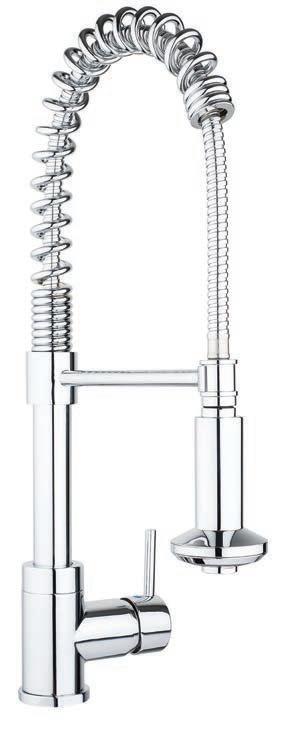
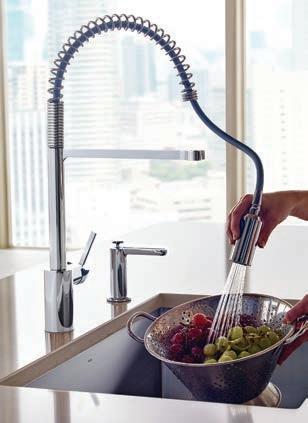
The Align pre-rinse spring kitchen faucet from Moen Canada features an industrial-inspired look. It has a multi-function spray wand that offers flexibility, and a hose that retracts automatically and docks securely. www.moen.ca
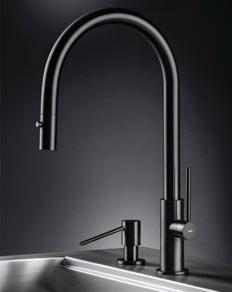
posed joints, distressed finishes and even black colouring are ways manufacturers are visually aging appliances.
Mainstream industrial style faucets and sinks can add antique character to any kitchen space, but Morisseau believes that industrial steampunk design may have a deeper significance than what meets the eye.
“There’s a return to the 1880 to 1900 design aesthetic now with subway tiles, which signified cleanliness and proper sanitation back when the dangers of unrefrigerated items and lack of sanitary practices could make eating dinner somewhat dangerous,” contends Morisseau. By implementing clean design characteristics that originated at the turn of the century, homeowners are also evoking a sense of hygienic safety in the kitchen space.
Charlotte Sprague, marketing supervisor at Franke Kindred Canada Limited notes that while the industrial trend is, “to some degree a nod to mid-century design with clean lines, unfettered spaces and streamlined efficiency,” there is another influence. She explains that we must also look to the evolving commercial industrial kitchen appliances to better understand what is prompting this change within the residential space.
Similar to Morisseau’s theory, Glen Peloso, partner and designer at Peloso Alexander Interiors, believes that the commercial industrial faucet design exudes safety, which offers further explanation as to why homeowners are drawn to this design. “The spring details of the faucet and the larger single bowl sink, that is slightly deeper, allow you to spray clean dishes before [putting them in] the dishwasher – providing extra sanitary safety.” Peloso adds that users can focus faucet spray on the food that is being cleaned because of the spring pull-down feature that many industrial style faucets offer. This reduces splashing and thus the spread of germs.
Residential kitchen sinks are also shifting to offer an industrial design. “Think about deep sink basins with integrated ledges to turn the sink into a food prep area,” says Sprague.
“Straight walled bowls with huge capacity, in-the-bowl sink accessories to turn your sink into an entertaining hub, materials with superior hygienic properties and dual spray faucets,” she adds, detailing the commercial features that are quickly cascading into the residential kitchen.
www.watermark-designs.com
The Spin D faucet from MGS is a solid stainless steel faucet with a pull out spray. It features child safety options and is available in matt or polished stainless steel and in a black steel finish. It is also available with an optional knurling decoration on the handle. www.mgstaps.com
www.americanstandard.ca continued on p32
The Elan Vital Monoblock kitchen faucet from WaterMark has a telescoping neck that expands or retracts as needed. The sink is available in 12 different finishes and offers a wire basket to hold soap or a sponge.
The Pekoe semi-professional kitchen faucet from American Standard has a swivel spout, swing arm and pull-down adjustable nozzle. Memory position valving allows users to turn the valve on and off at a preferred temperature setting without readjusting the handle.
Aside from antique decoration and safety, there may be another element that is encouraging consumers to purchase these appliances. Peloso thinks that the Food Network on television may be behind this trend, as it takes viewers inside many industrial kitchens and has increased the average person’s connection to gourmet foods and wines. He believes this has enhanced the homeowner’s desire to be a “serious chef” and has encouraged them to purchase the latest industrial appliances.
These elements all together may help to explain the surging demand for industrial style faucets that Brad Campeau, sales manager for Masco Canada, has been observing. “Commercial and industrial aesthetic is very strong right
The Ore vessel sink from Stone Forest is based on the simple form of an antique steel pipe cap. It features a raw texture from the sand casting process, and is finished in bronze. www.stoneforest.com
now,” he said. “Industrial style kitchen faucets are more of a recent consumer facing offering for us, but it stems from years of listening and understanding the direction of the market, and developing products that not only meet the form, but function as well,” says Campeau.
Whether the cause for industrial popularity is due to the urban lifestyle of young professionals who reside in “turnof-the-century industrial buildings,” as Morisseau suggests; an enthusiasm for high quality products driven by a desire for safety; the exposure to these elements through television cooking programs – or most likely, a combination of these influences – this trend is on the upswing for modern kitchen faucet and fixture design.
Enhancing everyday living
Améliorer la vie au quotidien
Franke’s granite farmhouse sink has a square wastehole covering in stainless steel. Integrated accessory ledges allow for the use of the Franke roller mat as a spot for resting hot pots, rinsing produce or air-drying dishes. www.franke.com
FLOCOR AND TYCO FIRE PROTECTION PRODUCTS SHARE A COMMITMENT TO HELPING YOU PROTECT YOUR WORLD
Each year the majority of fire related deaths in Canada take place where we feel the most secure, in the home. In light of such tragedies, Flocor is proud to be an authorized distributor of the life-saving family of fire protection products from RAPID RESPONSE ™ Residential Fire Sprinkler Systems, a brand of Tyco Fire Protection Products.
To learn more about the comprehensive industrial, commercial, fire protection, and municipal piping solutions offered by Flocor, call 905-664-1459 or visit www.flocor.ca .
BY IAN MCTEER
With the prime HVAC sales season starting in earnest now, it is important to remember that air conditioning contractors must be committed to providing the best possible comfort along with the most efficient cooling systems. But here is the thing: a great deal of Canada’s housing stock built in the last 50 years cannot be cooled efficiently using a conventional furnace and split system air conditioner. Why is that?
Equipment manufacturers have done an excellent job developing split system cooling units that achieve well over 20 SEER today. But these systems depend on proper airflow and
HOW I SEE IT
In these days of indigestion it is oftentimes a question
As to what to eat and what to leave alone.
Every microbe and bacillus has a different way to kill us
And in time they all will claim us for their own.
Drinking water’s just as risky as the so-called “deadly” whiskey
And it’s often a mistake to breathe the air.
many “stick built” wood frame brick veneer houses do not have proper air distribution systems capable of accommodating modern AC equipment.
The rating plate shown in Figure 1 came from a gas furnace typical of those used in residential new construction in the early 1970s. This unit is rated at 80 per cent AFUE, however, test methods developed years later proved these belt-driven draft hood equipped models delivered much lower AFUEs, maybe 65 per cent or less. Notice the maximum ESP is 0.30" w.c. The blower cannot be upgraded to 0.50” w.c. Since residential cooling was not common then, no provision for higher static operation was thought to
For there are germs of every kind in every food that you can find In the market or upon the bill of fare.
This is the first verse from a song thought to be written in the late 1800s (more recently quoted by Nucky Thompson in a Boardwalk Empire episode).
In the early 21st century, life in Canada is much safer and decidedly more comfortable. But worries about bacterial contamination; poor water quality; and air pollution have not been left completely behind. Climate change caused by humans polluting the atmosphere with too much CO2 makes the headlines almost every day. I am aware that our planet earth is a very dynamic place, but when it comes to anthropomorphic climate change, I have taken an attitude of uncertain indifference.
I am not denying the evidence, but I am very skeptical that some of the efforts aimed at reducing CO2 pollution are poorly focused, too politically motivated and often
LET ME GUESS…
HVAC IN THE 21ST CENTURY
be necessary by the manufacturer. At a maximum of 100F temperature rise, ductwork that could accommodate approximately 900 cfm of air would have likely been installed.
I suspect the building heated by the original 120K Btuh unit is on its third furnace by now. It was likely replaced by a 100K mid-efficiency in the early 2000s and then by a 90+ per cent AFUE model a few years ago. I guess it is an 80K Btuh unit now because the house has tighter doors, windows and upgraded attic insulation.
That is how the “box movers” sell a furnace – look at the output and sell
futile. Reduction in energy use requires patience because a nation’s infrastructure is slow to change.
Environmentalist Justin Gillis writing in the New York Times said, “Perhaps the biggest single thing individuals can do on their own is to take fewer airplane trips; just one or two fewer plane rides per year can save as much in emissions as all the other actions combined.”
On a recent edition of CBC’s The National, Peter Mansbridge told viewers that flying from St. John’s, NL to Victoria, BC (with a Toronto stopover) generates one ton of CO2 per passenger. I also learned that commercial aviation accounts for about two per cent of human generated CO2. Despite the fact that commercial aircraft emit close to 70 per cent less CO2 than jet airliners flying in the 1960s, emissions have steadily increased thanks to the popularity of air travel.
GROUND GAS GUZZLING MILITARY AIRCRAFT
Call me naïve, but will there ever be a time for demanding the immediate parking of all military aircraft unless acting in a lifesaving role? Now that we know trips to visit grandma are very harmful, military flights require serious scrutiny. Military jets use staggering amounts of fuel: the F/A-18 jet fighters bombing ISIS in Iraq from the aircraft carrier Vinson stationed in the northern Persian Gulf burn 5700 gallons on the 900 mile round trip to Baghdad. Each
the next size down is one popular method. The 80K, 95 per cent AFUE models I was associated with required a minimum of 1100 cfm of air in the heating mode to work properly, a 900 cfm distribution system just won’t do. The secret of high efficiency is airflow. Apart from a secondary condensing heat exchanger, modern gas furnaces need to move about 40 per cent more air to stay within the temperature rise range. A 1970s duct system is not a proper match for today’s HVAC equipment’s capabilities.
What about the cooling system?
Like so many wood frame houses built across Canada since the 1970s, complaints about decent HVAC on the second floor (especially the master bedroom) never seem to go away. Running small round pipe “lines” as the HVAC TV guys like to call them, that are sometimes hundreds of equiv-
alent feet long connected to convoluted trunk ducts is the reason why the second floor is 10F warmer than the basement where you can “hang meat.” Nonducted return air through wooden studs and joist spaces is often full of pipes, wires and joist bracing. The rough wood surface of stud/joist spaces is not conducive to air flow, especially from the second floor. In many cases, the unsealed return air duct and poorly installed joist space block ends are where the majority of return air can “leak” into the system.
plane requires mid-air refueling three or four times. An F-15 Eagle flying with the afterburner lit goes through fuel at the rate of four gallons per second or 14400 gallons per hour.
A group called Environmentalists Against War (EAW) claims the B-52 long-range bomber uses 86 barrels of fuel per hour. One barrel of oil is equivalent to 42 U.S. gallons or 158.9 liters or 5800 cubic feet of natural gas. One hour’s worth of fuel would keep my neighbour’s oil tank filled for the next five years.
The B-52 is 60 years old and at one time there were 740 such planes in service. Today, the B-52 fleet has been whittled to just 76 planes making up the bulk of the U.S. long-range bomber force. There is always at least one B-52 in the air 24/7, plus a fleet of refueling tankers. EAW further states that the U.S. currently has 300 jets stationed on four carrier groups in the Persian Gulf along with 700 more based in Saudi Arabia. Many other countries, including Russia, Britain, France and China, are flying military jets every hour of every day.
HOW DO YOU KEEP ‘EM DOWN ON THE FARM?
For increasingly greater numbers of people around the world, this is the best time to have ever been alive. Just look at air conditioning; according to a recent article in the Guardian, worldwide demand for electricity to power air con -
MODERN TECHNOLOGY TO THE RESCUE
In an effort to provide comfort and efficiency, today’s HVAC contractor needs to carefully examine older brick veneer homes. Contractors need to find out if the second floor heats and cools properly, if the system is noisy, is the basement freezing cold, and whether or not a previous system replacement improved the HVAC or made it worse. Figure 2 is a 13 SEER air conditioner performance table. For example, if the air entering the outdoor coil is 85F, and a gauge attached to the suction port reads 133 psig, then the head pressure should be 327 psig. Typically there is a +/- 10 psig variance on the head pressure, but be sure to check
continued on p36
ditioning equipment is expected to increase by 33 fold before 2100. The U.S. already consumes as much electricity for air conditioning equipment as the entire continent of Africa uses for all electrical devices. In his book, Losing Our Cool, Stan Cox says that over a period of 15 years, the number of air conditioned homes in the U.S. jumped from 64 million to 100 million; however, Chinese consumers purchased 50 million residential units in 2010 alone.
MORE POWER TO THE PEOPLE
Take a trip to the Independent Electric System Operator (ieso.ca) anytime to see where Ontario’s power is coming from and how much is being consumed. At this writing, Ontario’s current demand is 15851 MW; 62.6 per cent generated by the nuclear plants, 23.3 per cent from hydraulic, 5.2 per cent from natural gas, 8.7 per cent from wind, and a miniscule 35 MW from biofuel.
When the IESO site was first made available to the public, wind power on a good day was typically less than one per cent of the total hourly output. Now, after huge investments and the construction of several large windmill farms, wind accounts for a greater proportion of the hourly output when wind permits.
I am not optimistic that renewable sources like wind, solar and biofuel will ever be able to replace the nukes and natural gas.
Figure 1 Gas furnace rating plate
the manufacturer’s specifications for variances. Use the manufacturer’s tables, when available, as a guide to proofing the system. If your technician cannot get the proper numbers using accurate tools and with the knowledge that the refrigeration side is OK, then airflow has to be the issue. If the customer tells you the air handling system is second rate or worse (confirmed by your airflow testing), then do not rec-
ommend a conventional “A” coil, split system replacement. As I see it, there are two alternatives.
If your intention is to completely renovate the duct system to modern standards providing ducted return air and a supply side trunk to the second floor, then continue to use a gas furnace and split AC system.
Abandon the forced warm air system in favour of something else.
SOMETHING ELSE
Alternative one could be an answer if the homeowner intends to completely renovate the house (complete gut), otherwise such a duct renovation will be too expensive for the average consumer. Consider abandoning the “box in the basement” for multi zone ductless inverter units made by Panasonic, Mitsubishi, Daiken and others. This equipment provides very high SEER operation, better than 10 HSPF including full capacity heating down to 0F or lower. It eliminates the second floor issue and has a variety of air handlers from ceiling cassettes, wall mounted units, concealed duct, slim duct, floor mounted, and even conventional air handlers when necessary.
• S ell only AHRI matched equipment.
• Be sure your sales staff knows how to sell VRF multi splits and small duct high velocity products.
• Renovate elderly duct systems whenever necessary, otherwise abandon them in favour of superior modern technology that will deliver the promised efficiency.
• Train your sales staff, installers and technicians including manufacturers’ product knowledge and your own in-house training focusing on HVAC basics and company policy.
• Use accurate test tools, recalibrate as necessary.
• Carefully follow the manufacturer’s installation instructions.
• Commission every new system, take important start-up data and record it for posterity, “blueprint” the job. Take a thermal image of new equipment in operation.
• Sell the end user the best air filter the system can stand.
• S ell the end user a maintenance contract.
• Keep your vehicles in good shape:
at the
all help to minimize
• Be an HVAC industry champion, we can make the world
The second alternative is to utilize one (or more) small duct, high velocity air handler(s) with an inverter drive outdoor unit made by Unico, SpacePak, and several others. With a hot water coil option installed in the air handler, the unit could be matched with a condensing boiler thus providing space heat and domestic hot water too. A conventional furnace in the basement may produce 97 per cent AFUE in the lab, but delivering that efficiency to the homeowner requires a professional system assessment.
The key is to remember that our industry should be providing comfort and efficiency, not just boxes connected to a second rate air handling system. As you approach this selling season be sure your sales staff is ready to specify modern equipment and your service staff is ready to install and to service it.
Ian McTeer is an HVAC consultant with 35 years experience in the industry. He was most recently a field rep for Trane Canada DSO. McTeer is a refrigeration mechanic and Class 1 Gas technician.
Figure
PERFORMANCE TRUE TO TRADITION
Coleman has developed the new LX Series according to the highest quality standards which have contributed to its reputation. Much more than a new version of an existing model, the LX Series innovates and sets new quality and durability standards through its revolutionary engineering and innovative construction.
Tested to be tough : More than 215,000 hours of research, five years of accelerated field trials and extreme weather testing ensure reliable performance that lasts.
Advanced manufacturing : State-of-the-art quality control and assembly processes built upon the manufacturing expertise of Johnson Controls.
Optimized efficiency : Matched components do more with less, which is why Coleman products fit perfectly in any home while delivering advanced lev
Space and budget friendly : Quiet, small-footprint cabinets deliver big performance with features that meet your needs and fit your budget.
For more information about the new high efficiency Coleman LX Series, contact your Master Representative.
LOW AMBIENT AIR-TO-WATER HEAT PUMPS
An emerging renewable technology for North American hydronic systems.
BY JOHN SIEGENTHALER
lectrically powered heat pumps, in many varieties, are destined to play an increasingly important role in heating and cooling buildings around the world. They convert vast amounts of otherwise unusable low temperature heat into heat at sufficient temperatures to warm buildings or heat domestic water.
Electrically powered heat pumps dovetail nicely with large-scale renewable sources of electrical energy such as utility scale photovoltaic systems, large wind turbine farms, or CHP systems operating on bio-gases produced from agricultural waste.
NOT WHAT THEY USED TO BE
The “classic” heat pump for residential heating and cooling debuted in North America during the 1970s. Big name HVAC companies developed markets for these early generation “airto-air” heat pumps, which consisted of two major subassemblies: an outdoor condenser unit, and an indoor air handler. A refrigeration line set connected these subassemblies.
Although air-to-air heat pumps have been around for several decades, early generation products were not able to maintain reasonably efficient operation at low outdoor air temperatures. It was not uncommon to turn off those early generation heat pumps when outdoor temperatures dropped to or below 20F. However, advances in refrigeration technology, including inverter drive variable speed compressors, and a process known as enhanced vapour injection (EVI) now allow air-source heat pumps to operate at very low outdoor temperatures, typically down to -13F (-25C).
Some of the largest global providers of heating and cooling hardware, now offer “cold climate” versions of air-to-air heat pumps. The most common configuration is called a ductless mini-split heat pump system. A single outdoor unit connects to multiple indoor wall mounted cassettes, each supplied by its own refrigeration line set. Each indoor unit can operate independently, allowing for zoning.
Although cold climate ductless mini-split heat pumps have carved out a nice market share over the last decade, they rely on forced air delivery of heating and cooling. As such they do
not offer the potential to combine their high thermal efficiencies with the comfort provided by a well-designed hydronic distribution system. Furthermore, most ductless mini-split heat pump systems only provide space heating and cooling and lack the ability to supply ancillary loads such as domestic water heating, or pool/spa heating.
WATER RATHER THAN AIR
This is where a different heat pump configuration becomes attractive. An air-to-water heat pump uses the same concept as an air-to-air heat pump for extracting low temperature heat from outdoor air. The difference is that it delivers heat at very useful temperatures into a stream of water (rather than air) passing through its condenser.
Some air-to-water heat pumps are capable of producing leaving water temperatures of 130F+, even with relatively cold outdoor air. This sets the table for use of hydronic heat emitters such as radiant floors, radiant walls and radiant ceiling panels, panel radiators, fan-coil convectors, and even contemporary low temperature fin-tube baseboard. It also allows the heat pump system to be configured to provide most, if not all of the energy needed for domestic water heating. With a suitable heat exchanger, heated water from an air-to-water heat pump can also be used to heat a swimming pool or maintain the water temperature in a spa.
A WHAT?
Although most North American heating professionals are familiar with ductless mini-split heat pumps, as well as geothermal heat pumps, few of them are familiar with air-to-water heat pumps.
This is not the case in other markets such as Asia and Europe. According to the August 2015 issue of the Japanese publication JARN, the 2014 global market for air-to-water heat pumps totaled over 1.7 million units. The Chinese market alone represented almost one million units sold in 2014. The European market was 232000 units, with France as the number one market, followed by Germany and the U.K. The same Asian-based firms that sell ductless mini-split heat pumps in North America produced many of these air-to-water heat pumps. Others came from European-based companies. The U.S. market was a tiny fraction of global sales.
Why such a difference? One likely reason is the small
market for residential hydronics in the U.S. and Canada relative to Asian and European markets. Another is the very limited use of chilled water cooling in smaller North American buildings. Manufacturers also have to consider the cost of supporting a new product line in a market (such as North America) that requires a lot of “hand holding” before the installations become routine.
LOOKING AHEAD
This is not to suggest that a strong future market for air-towater heat pumps cannot develop in North America. Several trends suggest just the opposite. Here are some key indicators:
1 | Growing interest in net zero energy (NZE) houses: The typical NZE house has a very low loss thermal envelop and a sizable solar photovoltaic array on the roof. Net metering laws – where they exist – allow owners of photovoltaic systems to sell surplus electrical power back to the utility at full retail rate. Thus, surplus kilowatt hours produced on a sunny summer day could conceivably be “parked” on the electrical grid and reclaimed to run a heat pump on a cold winter night with no technical or economic penalty. That is a pretty sweet deal.
One common approach to heating and cooling NZE homes is to install two or three high wall cassettes, that is the indoor portion of a ductless mini-split heat pump system, in central areas and leave interior doors open for distribution of the heated or cooled air. Proponents of this approach stress that no interior comfort distribution system, such as ducting or piping, is needed. One online discussion of this topic states that if all interior doors are left open, interior air temperatures will stabilize at not less than 2F below the air temperature where the indoor cassette is located. This discussion also points out that if bedroom doors are closed at night, which is a reasonable expectation, the bedroom temperature may drop 5F below the temperature where the heat pump indoor unit is located.
Should these constraints be accepted without reservation?
I say not because there is a difference between just putting Btus back into a space to match the rate of heat loss and doing so in a way that provides excellent thermal comfort. There are also reasons builders put doors on interior rooms and it is not for achieving 5F automatic temperature setbacks when they are closed. In my opinion, these constraints represent significant “negatives” for the ductless mini-split approach in a NZE house.
The alternative is to retain the thermal efficiency of the low ambient air-source heat pump, but switch to hydronics for the balance of the system.
Use a low temperature hydronic delivery system, such as a heated ceiling or floor, to allow good thermal performance from the heat pump along with proper distribution of heat throughout the building, whether the doors are open or closed.
Cooling can be handled using chilled water flowing through a central air handler, or multiple small air handlers, some of which look and operate almost identically to the high wall cassettes used with ductless mini split heat pumps.
All chilled water air handlers must be equipped with condensate drip pans and suitable drains. Cooling can also be done using a radiant panel in combination with a single small air handler. The radiant panel can handle most, if not all of the sensible cooling load. It must operate at chilled water temperatures that remain above the room’s dewpoint at all times. This can be handled with mixing controls. A single small air handler would also be required to provide moisture removal.
2 | In the U.S., the 30 per cent federal tax credits on geothermal heat pump systems are scheduled to end as of December 31, 2016: This will remove a significant purchasing incentive, and force geothermal heat pump systems to compete against other types of heat pumps in an unsubsidized market.
3 | Air-to-water heat pumps are significantly less expensive to install compared to geothermal heat pumps: This is especially true if vertical boreholes are required for the earth loop. In my area, these holes cost about $3000 per ton for drilling, pipe insertion, and grouting. Additional cost is incurred for connecting multiple vertical piping loops and for routing piping back to the location of the heat pump. Replacement of any affected pavements or landscaping also needs to be factored into the cost of installing a geothermal heat pump system.
4 | Diminishing returns are a factor: As home heating loads become smaller due to better thermal envelopes, the difference in annual heating costs, between heat pumps operating at seasonal average coefficient of performance (COP) that vary by perhaps 1.0 or less, decreases. The incrementally lower operating cost of the higher performance heat pump may not be able to amortize the higher installation cost within the expected life of the system.
For example: A home with a design heat loss of 25000 Btuh based on an outdoor temperature of 0F and indoor temperature of 70F, and located in a 7000F•day climate, would have an estimated annual heating requirements of about 39 MMBtu/year. If this load were supplied using a geothermal heat pump with a seasonal average COP of 3.3 (which includes the power required to operate the earth loop circulators), in a location where electrical energy is priced at $0.12 per kWh, the annual heating cost would be about $416. If the same 39 MMBtu/year were supplied from a low ambient airto-water heat pump with a seasonal average COP of 2.7, the annual heating cost would be about $508. The difference, $92 per year, would not be able to amortize what could easily be a (after tax credit) $7000 to $9000 higher installation cost within the life of the equipment.
continued on p40
5 | As home space heating loads get smaller, the domestic water heating load becomes an increasingly higher percentage of the total annual heating energy requirement: Some estimates put the DHW load at 25-30 per cent of the total annual energy requirement in a well insulated modern home.
Most ductless mini-split heat pumps cannot provide domestic water heating, but a properly configured air-to-water heat pump can.
A standard electric water heater providing domestic water heating in a situation where the heat pump cannot, delivers heat at a COP of 1.0. If that energy was instead attained through an air-to-water heat pump, it could be delivered at a COP averaging perhaps 2.5 over the year. For a family of four needing 60 gallons per day of water heated from 50F to 120F and assuming electrical energy priced at $0.12 per kwHr, the difference in annual domestic water heating cost between these scenarios is $270. That is roughly three times more than the annual savings associated with using a geothermal heat pump versus the air-to-water heat pump in the previous example.
SUB-ZERO
A modified vapour-compression refrigeration system has been developed to further improve the heating capacity and coefficient of performance (COP) of air-to-water heat pumps operating in low outdoor air temperature conditions. This technique, known as enhanced vapour injection, (EVI), uses another heat exchanger placed between the outlet of the condenser, and the inlet of the thermal expansion valve, as shown in Figure 1.
This additional heat exchanger is called a “sub-cooler.” It reduces the temperature of liquid refrigerant leaving the condenser, allowing for even lower temperatures when that refrigerant passes through the main thermal expansion valve and on into the evaporator. It does this by directing a portion of the liquid refrigerant through an electronically controlled thermal expansion valve, which causes the refrigerant
to vaporize and extract more heat from the remainder of the liquid refrigerant flowing through the other side of the sub-cooler.
The vaporized refrigerant leaving the upper side of the sub-cooler flows back to a special port on the compressor and is injected at an intermediate port between the scrolls. The net effects of EVI are increased compression ratio in the compressor, and cooler refrigerant entering the evaporator. Both of these effects reduce the drop in heating capacity and COP at low ambient temperatures. Figures 2 and 3 show the heating capacity and COP ratings for one EVI-enabled airto-water heat pump currently available in North America.
Notice that both heating capacity and COP are highly dependent on outdoor air temperature. This is always the case with air source heat pumps. Still, the EVI-equipped air-to-water heat pump represented by these graphs maintains a COP of 2.55 when producing 120F leaving water temperature, and operating at an outdoor air temperature of 0F. At an outdoor temperate of 25F, and the same 120F leaving water temperature, the COP is about 2.8. This compares to a COP of about 2.3 for an air-to-water heat pump with an inverter drive compressor operating under the same conditions. That is a relative performance gain of about 22 per cent, which implies 22 per cent higher heat output for the same electrical input. Furthermore, based on manufacturer’s data, the inverter drive heat pump cannot maintain the 120F leaving water temperature at outdoor air temperatures below approximately 22F. At 5F outdoor temperature, the latter heat pump can only maintain a leaving water temperature of 104F.
THE LOWER THE BETTER
The graphs in Figures 2 and 3 imply the advantage of combining the air-to-water heat pump with a low temperature heating distribution system. This is especially true for COP. For example, at 20F outdoor temperature, a distribution system that can deliver the heating load of the building using 110F water would allow the heat
Figure 1 Modified vapour compression refrigeration system
Water is the “life-blood” of hydronic systems. Just as we strive to maintain the health of our own circulatory systems, it’s important to maintain the “health” of water and water based solutions that circulate through the hydronic systems we construct and maintain.
HYDROFILL™ portable water treatment lling units remove scale forming “hard water" minerals, such as calcium and magnesium from job-site water. Salts and other soluble minerals are eliminated to prevent reduced ef ciency and premature equipment failure due to scale build-up or galvanic attack.
HYDROFILL ™ is a convenient tool for installers to use job-site water to produce ideal grade demineralized water at an economical cost per gallon.
Components for today's modern hydronic systems
Heating & Cooling
pump to reach a COP of about 3.1, whereas a system requiring 130F water would only allow a COP of about 2.5.
The best way to operate the heat pump at the lowest possible water temperature is to incorporate outdoor reset control as the “logic” for maintaining the temperature within a buffer tank.
An outdoor reset controller continuously calculates the “target” water temperature that can just meet the heating load, based on the current outdoor temperature. It operates the heat pump to maintain the buffer tank within a narrow range of temperature centered on this target temperature.
For example, if the buffer tank supplied a radiant floor heating system with a target supply water temperature of 110F at 0F outdoor conditions, the heat pump would attempt to maintain the mid-height point on the buffer tank between a low of perhaps 107F, and a high of 113F. However, if the outdoor temperature was 35F, the target supply water temperature would drop to about 90F. Under these conditions the outdoor reset controller would operate the heat pump to maintain the buffer tank between 87 and 93F. These conditions, along with the overall operating range of the outdoor reset control are shown in Figure 4
PUTTING IT TOGETHER
Figure 5 shows a system designed to supply space heating and most of the domestic hot water load using a low ambient air-to-water heat pump.
The heat pump is connected to a relatively short piping circuit filled with an antifreeze solution. In heating mode, the heated antifreeze solution passes through the brazed plate heat exchanger, which has been sized so that the water temperature leaving the heat exchanger is not more than 5F lower than the temperature of the antifreeze solu -
tion coming from the heat pump. Because the heat pump circuit is an isolated closed loop, it must be equipped with a pressure relief valve, expansion tank, air separator, fill/purging valves and a suitably sized circulator.
The heated water flows to the short header at the upper left side of the buffer tank. If one or more of the heat emitters is active, some of this water passes to the homerun distribution system. The rest flows into the buffer tank.
The outdoor reset controller monitors the temperature of the sensor at the mid-height of the tank, and operates the heat pump, regardless of any space heating load. The latter is necessary, because the buffer tank is also being used to preheat domestic water using the assembly seen at the right of the tank.
The water temperature in the buffer is usually below the required delivery temperature for domestic hot water. Thus, a thermostatically-controlled electric tankless water heater receives the preheated water from the heat exchanger and provides the necessary temperature boost.
MORE TO COME
There are many more ways in which low ambient air-to-water heat pumps can be worked into complementary hydronic systems. For example, the system shown in Figure 5 could be expanded to include single or multiple zone chilled water cooling. It could also be adapted to provide pool heating at times when
is
required.
Siegenthaler, P.E., is a mechanical engineering graduate of Rensselaer Polytechnic Institute and a licensed professional engineer. www.hydronicpros.com
Figure 4 Heat pump operation with outdoor reset
Figure 5 Space heating and domestic hot water system
HYDRONIC PRODUCTS
FastFloor reinforcing sheets from Fastform Insulated Concrete Forms are manufactured from two sheets of profiled steel. They are designed for use on exist ing wood or concrete floors, and are available in two variations: the FS10 which is 10-mm thick, and the FS20, which is 20-mm thick. The sheets connect to one another with a half lipped joint, and the floor is completed by pouring a liquid screen finish to the required depth. The sheets feature a self levelling reinforced floor covering, a high permissible load, rapid heat up and heat distribution, and are non-flammable. www.fastform
The NA570 series Hydrofill portable water treatment filling units from Caleffi remove scale forming hard water materials from job-site water. Salts and other soluble minerals are eliminated to prevent premature equipment failure. www.caleffi.us
Stelpro has launched connected products for the smart home. KI, the line’s first product, is a 4000W line voltage thermostat that is manufactured entirely in Quebec. It controls baseboards and convectors using wireless Z-Wave technology. The thermostat requires a Z-Wave terminal that links various devices and allows them to communicate with each other. Using a smartphone, tablet or computer, the technology allows users to: adjust the temperature of each room in the house from a distance; adjust various modes of energy management; and activate scenes, setting in motion several actions such as adjusting temperature and lighting, and activating safety and entertainment systems. www.stelpro.com
Taco has expanded its iWorX control platform to provide an updated graphical user experience. A tablet, PC or smart phone now acts as the local control interface for monitoring, system diagnostics and graphics. It features touch screen control, WiFi connections and automatic updates. www.taco-hvac.com
Tamas snowmelt panels are an alternative to manual snow and ice removal. The pre-engineered systems increase efficiency through heat exchanger and system pump sizing. It can accommodate facilities requiring a maximum of three million Btus and the panels are made with flexible, multi-system components that are suited to driveways, ramps, sidewalks and steps. www.tamashydronic.com
Amtrol’s ASME buffer tanks add capacity to non-potable, closed systems to help reduce cycling, improve temperature control and aim to provide more consistent system operation. They are available for chilled and hot water applications, and come in two or four port options. The maximum operating temperature for the tank is 450F, with a maximum working pressure of 125 or 150 psig. www.amtrol.com
The Noritz residential combination boiler is a year-round, whole-home solution that uses high efficiency condensing technology to deliver hot water to both plumbing and hydronic heating applications. It features a flow control valve that creates a consistent temperature for domestic hot water demand, and it accommodates a host of multiple-room applications including radiators, baseboards, lowand high-mass radiant heating and air handlers. It also has a built-in external pump control. www.noritz.com
Heating with Renewable Energy is an 800 page, full colour textbook written by John Siegenthaler, P.E. The book shows readers how to design and construct practical systems that supply space heating and domestic hot water using renewable energy heat sources such as solar thermal collectors, heat pumps and wood-fired boilers. www.hydronicpros.com
Viega press systems
The right solutions for healthcare installations
“I do a lot of work in hospitals and it’s an excellent product for anywhere an open flame is a hazard.”
David Brons Apollo Mechanical Contractors
Identify unpressed fittings easily during pressure testing
The single source for press fittings in multiple pipe joining materials, configurations and sizes
Cylindrical pipe guides ensure proper alignment
The first and only manufacturer to incorporate the Smart Connect feature on multiple pipe joining systems
Finish your next installation faster with Viega ProPress® systems. Viega press fittings provide safe and fast installations, making them ideal for medical facilities and anywhere an open flame is a hazard. With consistent, clean and trustworthy press connections for copper, stainless and black iron, Viega is the original.
• Fast installation and repairs in occupied facilities with minimal shutdown time
• No fire risk
• Confident press connections with the patented Viega Smart Connect® feature
For more information, call 800-976-9819 or visit www.viega.us
Resurgence of renewables at Mostra
Where in the world is Carmen Sandiego? I am dating myself with a reference to an American mystery, spi-fi media franchise that is celebrating its 30th anniversary. That said, I do feel like an international adventurer when I have the privilege of traveling to destinations outside of North America. Recently, I was able to attend the 40th Mostra Convegno Expocomfort in Fiera Milano, Italy.
Mostra is a plumbing and HVAC/R tradeshow that is the equivalent of the ISH show in Germany and Europe’s version of the ASHRAE show in North America. “Wow” is always my first thought when attending these European shows. They are huge. At Mostra each hall was approximately half the size of the ASHRAE show and there are a total of 22 halls.
We took the Metro this year because traffic in Milan is intolerable. What struck me was that there was advertising for the show everywhere in the rapid transit system. It just goes to show how ingrained plumbing and heating are in Europe.
This is my third time attending Mostra, the first being in 2008, and I noticed a huge drop from then until 2014 in renewables, primarily solar. But this year renewable technology was a big focus. Global warming is a term that everyone knows and Green Technology was the buzzword. Everywhere you looked green and environmental were somewhere on the booths.
The big manufacturers were still showing technology like Co-Gen units and some cool heat pumps but it was the solar products that really caught my eye. I was walking down the seemingly endless walkway that separates the halls when I noticed what looked like a massive flower. I am sure I was not the only person intrigued by this. One of the owners explained the logic behind the “Sunflower.”
He told me that a big reason people do not install solar is because it is an eye sore. Not only that, unless you spend “huge money,” he said the panels are in a fixed po -
BY CURTIS BENNETT
sition and these systems are not made for homes. This means that the fixed position solar panels are less efficient because solar panels are most efficient when the sun is 90 degrees perpendicular to the panel. These were the two reasons the Sunflower was created.
Not only is it very cool looking, it properly tracks the sun all day long from anywhere in the world. Starting in the morning the Sunflower unfolds its petals from behind its stand (the stem) and starts to produce energy. During the day it tracks the sun using GPS and astrological software to precisely point the Sunflower at the sun, providing the day-long energy efficiency.
The ergonomic and mechanical design of the boilers exhibited at the show was good to see. Manufacturers are making them smaller and nicer to look at on the wall. In Europe, boilers are appliances and in a lot of cases sit on the wall upstairs in a visible location, so making them more appealing is a big step forward.
Finally, the trend that hit home the most for me was the prevalence of IoT, or the Internet Of Things. Wi-Fi and connectivity of devices was everywhere, from boilers to thermostats, even to valves and pumps. The IoT revolution is coming; it is just a matter of time. The question is not if, the question is when. Apps were at every booth and shown on huge screens to draw people in, and draw them in they did.
At the end of the day Mostra is a very cool trade show to attend and I have never been in one place with that many people in it at one time. It is a bit chaotic and crazy but you just take it all in stride. If you have the opportunity to attend, do so. The technology there is a harbinger of things to come in North America.
A graduate of Southern Alberta Institute of Technology (SAIT), Curtis Bennett, C.E.T., is operations manager and a product developer at HBX Controls in Calgary, AB. He can be reached at curtis@hbxcontrols.com.
The Sunflower overcomes two of the perceived drawbacks to solar as a renewable alternative.
Photo Curtis Bennett
More than 2100 exhibitors, of whom 40 per cent were from abroad, and over 155000 attendees made their way to the show.
Photo Reed Exibitions Italy
Focus on green technology and renewables was revived at Mostra 2016.
Photo Reed Exibitions Italy
At one time, selecting a water heater was a fairly simple process. There were not a lot of options to choose from; you got a tank type water heater, which was either gas or oil fired, or electric. The water heater efficiency and space requirements were not usually considerations.
Fast-forward 30 years and the story is much different. Now there are many water heater options available, and new efficiency standards are rapidly changing the dynamics of the industry. Customers are demanding much higher efficiencies, multiple venting options, smaller space requirements and remote controls. New suppliers have entered the market from Asia and Europe, challenging the traditional North American suppliers.
DIFFERENT DOMESTIC WATER HEATING OPTIONS
Tank type water heaters are still the dominant player in the marketplace. These water heaters are a simple technology everyone has been used to for many years and they are available in multiple fuels. They are typically the least expensive of any water heating option and are readily available. Tank type heaters are fast to install, easy to service and retrofit, and have lots of size options to meet any project’s requirements. Due to the stored volume of heated water in the tank, satisfying large DHW loads is rarely a problem and short cycling of the burner is not an issue.
On the flipside, tank type water heaters require a large amount of space, and have lower efficiencies and a shorter lifespan than other options. With space being at a premium in most new construction projects, size can often be an issue. Efficiency is quite low with noncondensing units having Energy Factors (EF) in the 0.65 range.
Storing a volume of hot water in the tank all the time, even when it is not being used, results in high stand-by heat losses, which results in low efficiency and higher fuel bills. There are currently some high efficiency condensing tank type water heaters on the market with EFs up to 0.96, however they are not as widely used due to their high cost.
The efficiency requirements of noncondensing water heaters is about to change. New water heater efficiency standards coming down the pipe in the U.S. and Canada will significantly change the way tank type water heaters will have to be constructed. When the new water heater standards come into play, the tank type water heater will gain in the efficiency, however it will not be as inexpensive an option as it has been in the past.
Time will tell how much of an impact the new efficiency standards will have on the dominant market share that tank type water heaters currently hold.
Tankless instantaneous water heaters from Asia and Europe started appearing on the market about 30 years ago. They have been slowly gaining popularity ever since. There are now numerous manufacturers offering tankless water heaters in an array of sizes and features. Their main appeal is the small amount of space they take
up in the mechanical room, and the lower fuel consumption compared to tank type water heaters.
Floor space is at a premium in many new homes and condos, making tankless heaters a great choice for many architects and builders. Tankless water heaters are efficient and virtually eliminate stand-by heat losses. They are available in both non-condensing with typical EFs around 0.80, and condensing versions with EFs around 0.95. The heaters produce water ondemand, so if the unit is properly sized, the customer should never run out of hot water. There are multiple venting options available with most offering direct sidewall vent with intake air connection for sealed combustion. Some tankless models are now offering Wi-Fi connected controls that provide a new level of customer interface.
In spite of their appeal, there are some drawbacks to tankless water heaters. They are typically much more
expensive than traditional tank type heaters. In addition, if a tank type heater is being replaced with a tankless, installation costs can skyrocket due to the bigger gas line that is needed and vent pipe requirements.
A tankless heater has a limited output capacity (gpm flow rate) which depends on its size, and if not sized properly, the customer may not be happy with the hot water output rate when there are multiple draws of water. This has given the heaters a poor reputation with some. Whereas a traditional tank type heater is a familiar and simple technology to most contractors, a tankless heater may be more challenging to service. It has many more working components packed in a very small box.
While scale buildup can be a problem for any water heater, it can be especially problematic for a tankless. Any buildup of scale in the small passageways in the heat exchanger can wreak havoc on the heater’s performance and
longevity. Being an instantaneous water heater, a tankless can be susceptible to short cycling of the burner when there are multiple short draws of DHW. This constant ON/OFF can lead to more wear and tear on all the components and the increased possibility of breakdowns. The constant flow created in a DHW recirculation loop will often cause frequent ON/OFF cycling in a tankless. Some tankless manufacturers have introduced hybrid models that use a tankless heater built on to a storage tank to try and avoid these cycling issues.
In Europe where hydronic heating is king, indirect water heaters are very popular. Here in North America however indirect water heaters are not nearly as widely used. The exception would be when hydronic heating is being used in the building. Indirect water heaters do not have a combustion chamber or element, but instead rely on an internal heat exchanger coil to continued on p50
< PLUMBING
transfer heat from the heating boiler to the DHW water in the tank.
Indirect water heaters typically have very long lifespans, have minimal service requirements, and do not require a separate vent pipe or fuel connection. It is not uncommon to have a high quality stainless steel indirect water heater last 20 years or longer. The efficiency of heating water with an indirect is very high, especially when combined with a gasfired modulating condensing boiler. Because there is no vent pipe through the centre of the tank, the stand-by heat loss from an indirect is extremely low. Any type of fuel fire boiler (gas, oil, electric) can be used.
The main drawback of indirect heaters is that they are only applicable to homes that use a hydronic boiler. This limits their use to only a small percentage of Canadian homes. They are more expensive to purchase than standard direct fired water heaters, and they do require specialized hydronic piping skills for installation.
Solar water heaters use roof mounted flat-plate or vacuum tube so -
lar collectors to collect energy from the sun and transfer it to the storage tank. The biggest appeal of this type of technology is that the source of energy is free from the sun. This reduces the usage of fossil fuel and results in lower greenhouse gas emissions. Solar water heaters can also be expanded to work with hydronic heating systems to supplement the spaceheating load.
These heaters have an expensive upfront cost. They also still require a separate auxiliary water heater to provide backup, as solar cannot provide 100 per cent of the year round load. Solar panels must be mounted on the roof in a suitable location and this may not be applicable to every site. Installation and service do require specialized hydronic skills.
Heat pump water heaters use a small top mounted air-to-water heat pump to heat the water in the storage tank. They also use electric elements to supplement the heating of the domestic hot water. The biggest advantage of a heat pump water heater is definitely its efficiency, with EFs up to 3.0. Standard electricity supply is used, with no vent pipe required. They can be utilized in homes with a renewable electricity supply such as a solar PV, making them a very green water heat-
ing option. Remote control with Wi-Fi is also an option for some units.
These water heaters are more expensive when compared to other electric water heating tanks. They are more complicated to service and will require refrigeration skills if a compressor were to fail. One of the biggest drawbacks when these tanks are used in Canada is that in the winter months they use heated air from the basement as the heat source. This can cause the area around the tank to become cool, and this air must be reheated by the heating system. In the summer months this is not a problem as this cooling effect becomes a benefit.
Hydronic heating boilers that have a separate domestic water heat exchanger built in are known as combination boilers. Both space heating and domestic water heating can be provided from the same device. These types of devices have been widely used in Europe and Asia for many years, but are now starting to become more common in Canada. The appeal of combi-boilers is their potential to save space in the mechanical room, with one small appliance providing both space and water heating. Combiboilers offer the ultimate flexibility with their hydronic heating capabilities, and small footprint. With a condensing boiler the water heating efficiency is high.
Active solar water heating is a feature of this Climate Responsive House in Vancouver, BC.
Photo Lillian Mah, Mnemosyne Architecture
“When the new water heater standards come into play, the tank type water heater will gain in the efficiency, however it will not be as inexpensive an option as it has been in the past.”
The drawbacks of these units are similar to those seen in tankless water heaters and indirect heaters. They can be susceptible to ON/OFF short cycling and scaling damage due to their small heat exchangers. Most service technicians will be unfamiliar with these units and service will be more involved than some other options. They may also be limited in their domestic water output capabilities and in their ability to provide a domestic water recirculation loop. Since
they will be primarily used in buildings using hydronic heating, this does somewhat limit their application. So there you have some of the many equipment options available for domestic hot water today. Choosing which option is best for your project will depend on what the customer’s priorities are: upfront cost, fuel costs, space requirements, fuel options, maintenance and lifespan. Availability of some of the new technologies can
also be an issue, as wholesalers are often reluctant to stock new technologies.
While selecting a water heating appliance is not as simple as it used to be, it is nice to have choices.
Robert Waters is president of Solar Water Services Inc., which provides training, education and support services to the hydronic industry. He is a mechanical engineering technologist graduate of Humber College and has over 30 years experience in the hydronic and solar water heating industry.
• Tank and heat exchanger are made from AquaPLEX® duplex stainless steel alloy. Fully pickle-passivated, AquaPLEX is immune to corrosion in potable water regardless of temperature and requires no lining or anodes of any type
• Up to 96% thermal efficiency at full-fire from 70°F to 140°F
• Seamless modulation improves efficiency to 99% during periods of low demand
• Electronic operator with digital temperature readouts and plain text for status, diagnostics and 15-event history. Includes Modbus for BAS connection
About valves and controls
BY MIKE MILLER
Today the use of motorized control valves in large and small hydronic heating and cooling systems is very common. As a primer on their function and use, this article will explore available valve options, types of actuators and application examples without going into too many details about the control algorithm or strategies.
COMMON TYPES OF ACTUATORS
On/Off : 24Vac, 110Vac motor actuators can come in one of two ways. They are either power open and power close, or power one way (open or close) and spring return the other. Unlike the floating action type motors, these actuators do not have anything in between. They truly are either open or closed and are typically used on flow control valves that allow or stop the flow of fluid in the system, such as zone control valves, shut off/ isolation valves or diverting valves.
Floating Action: 24Vac, 110Vac or 230Vac valve motor actuators receive a powered voltage control signal in order to move the valve. Without power applied to the motor, the valve will remain in the position it was in at the time the power was removed. Power is required at all times to actuate the valve one way or another. These valves and motors are typically used in applications where the control of a fluid temperature is desired, or the amount of flow (GPM) in the connected system piping must be controlled. Applications include outdoor reset or setpoint fluid temperature in the distribution piping or variable flow through a distribution loop or riser based on temperature differential (deltaT) or pressure differential (deltaP) for hydronic heating and cooling systems. Floating action type control valves are slow responding and provide a very cost effective way to gain control in those scenarios. Typically, Modulating: 0-10Vdc (2-10Vdc) Or 0-20mA (4-20mA) valve motor actuators are powered all of the time. A voltage in direct current (Vdc – polarity sensitive) or a small current in Milliamp (mA) signal is provided to the valve’s actuating motor to move the valve’s position. The max value (10Vdc or 20mA) usually represents full output and the minimum value (0 or 2Vdc and 0 or 4mA) represents
the minimum output. Most control systems would allow for additional output limits to be programmed into its algorithm to allow for fine-tuning of the valve’s output.
Without the control signal, the valve motor would typically return the valve to the starting position (off). These kind of valves and motors are generally used in applications where the control of a fluid water temperature or the amount of flow (GPM) in the connected system piping is desired. Modulating control valves typically respond faster than that of floating action type valves.
CONTROL VALVE APPLICATIONS
A two-way control valve is most often used for on/off zone/ flow control. However, two-way control valves with characterized design can be used for modulating purposes also. Many readers will be familiar with using two-way control valves for zone/flow control purposes, so let’s look at an example of a piping option using a two-way characterized valve for fluid temperature control purposes in Figure 1
Two-Way Characterized Control Valve
Balancing or Globe Valve
In the example shown in Figure 1, a two-way characterized control valve is matched with a modulating actuating motor (0-10Vdc or 0-20mA) and controlled by a control system based on the fluid temperature requirement on the system loop. A balancing or globe valve is installed on the system side in between the two injection Tee’s. This creates a pressure differential that can be made up through the modulating control valve and to ensure flow through the mixing device.
Alternatively, Figure 2
Specifically designed discs/ports for control valves provide a precise, equal percentage flow characteristic.
Figure 1
shows two-way modulating control valves used for a variable flow application. In this example a deltaT controller could provide the modulating signal to the valve based on the deltaT across each the distribution loop to accommodate load balancing where there are multiple distribution loops. This will help maximize the building’s operating efficiencies.
Three-way control valves can be used for on/off, floating action and modulating applications. Three-ways are often the most versatile of valves and, depending on the installation practice, can be used in any which way needed. Here are some application examples.
Figures 3a and b show a three-way control valve in the on/off diverting application. Figure 3a shows a source diverting to one of two loads and Figure 3b shows two sources diverting to one load alternatively. These applications generally would take advantage of on/off motorized valve actuators (with spring return to the default position). Modulating valves may also be used for this application and the control strategy adapted to only produce a fully open (max. output) or fully closed (min. output) signal to the motor.
Figure 4 shows the application of the threeway control valve for either floating action or modulating valve motor actuators used in a fluid temperature mixing requirement. Note the proper isolation of the mixing and system loop from the primary loop through some sort of hydraulic separation. Hydraulic separation can come in the form of closely spaced tees on the primary loop as shown, or through a manufactured hydraulic separator.
Figure 5 shows the use of the three-way control valve for variable flow control using either the modulating or floating action motorized actuator operated by a control that may control discharge air temperature downstream of the heating coil in this fan coil or make-up air unit.
In Figure 6, a fourway control valve with a floating action or modulating motor actuator is used to control the fluid supply temperature in a snowmelt system based
Figure 3a
Figure 2
Figure 3b
Figure 4 Three-Way Characterized Control Valve
Figure 5
Three-Way Characterized Control Valve
Three-Way Diverting Control Valves
Three-Way Diverting Control Valves
on slab and system requirements. This example shows the mixing valve on the system side, isolated by a heat exchanger from the primary heating distribution piping system.
Alternatively, if used for mixing, a four-way mixing valve could be piped just like the three-way valve was shown in Figure 4, where it is hydraulically separated from the primary heating or cooling loop by either a primary/secondary arrangement using a set of closely spaced tees, or the addition of a manufactured hydraulic separator.
The system in Figure 7 showcases a condensing boiler; an indirect domestic hot water tank; a make-up air unit; several fan coils over two floors and separate distribution piping loops for each; a single zone of snowmelt; and two mixed fluid temperature loops for radiant floor heating zones.
This is not to suggest that one should use all kinds of different type of valves and control strategies on a job, but it does highlight the versatility of hydronic heating and cooling systems and the number of options available. The next step to optimizing those options in your system designs is to understand control logic and algorithm – these topics will be explored in an upcoming issue.
Mike Miller is chair of the Canadian Hydronics Council (CHC) and director of sales, building services with Taco Canada Ltd. He can be reached at hydronicsmike@taco-hvac.com.
H2O Demineralizers Engineered Hydronic Fluid
Allows site water to be used for filling any hydronic system while meeting the strict water quality requirements of boiler and glycol manufacturers
Figure 6
Figure 7 Four-Way Control Valve
Expand your commercial business with large-dimension Uponor PEX piping and ProPEX® fittings.
The Milwaukee® M18™ FORCELOGIC™ ProPEX Expansion Tool generates the power you need to create strong, large-dimension connections fast.
EXPAND YOUR BUSINESS uponorpro.com/commercialpiping
3"
2½"
2"
CO2 gets a second life – Part II
BY DAVE DEMMA
The current market drivers that have given CO2, which was a relatively forgotten refrigerant for decades, a second life were discussed in HPAC March 2016. As a review, those drivers are: environmental properties (GWP and ODP); energy efficiency; safety (flammability and toxicity); cost; and availability.
In addition, the point was made that while there are some differences between refrigeration systems utilizing HCFC/HFC based refrigerants and those using CO2 as a refrigerant, there are still many similarities. Most importantly, regardless of the refrigerant in use, we are still transferring heat from the refrigerated space to the refrigerating medium. See the sidebar for some CO2 facts and relevant definitions.
Every substance (including all refrigerants) has a critical point. However, the commonly used refrigerants never come close to conditions where the system is operating near the critical point. For example, the critical temperature for R-22 is 205.1F.
To put this into practical terms, if a condition ever existed in an R-22 system where the saturated condensing temperature was at 205.1F, the system high side pressure would need to be 723.7
CO2 FACTS
• GWP = 1
• EPA SNAP (Significant New Alternatives Policy) approved
• High volumetric cooling capacity compared to other refrigerants
• Low Viscosity (low pressure loss and lower pump HP requirement)
• High heat transfer coefficient
• Compatible with most materials
DEFINITIONS
Critical Point: The point on a phase
PSIA for a change of state (vapour to liquid) to occur. This condition is never going to happen in an R-22 system.
On the other hand, the critical temperature for CO2 is 87.9F, with the critical pressure at ~1055 PSIG. So, a CO2 system operating with an air cooled condenser, selected with a 10F TD, will reach its critical temperature when the outdoor ambient temperature reaches 77.9F. That does not allow too many locations to use CO2 without planning for transcritical operation.
Now, for the technician who visits a CO2 system in a supermarket for the first time, there are a few things that might stand out as being different than the typical HCFC/HFC system.
DIFFERENCES TO BE AWARE OF
1) While CO2 pressures are higher than those experienced with HCFC/HFC refrigerants, this is not the first refrigerant to enter the marketplace with substantially higher pressures than the industry’s mainstay refrigerants. The most recent example of this would be the higher pressures seen in an R-410A system as compared to an R-22 system. While it is not of the same magnitude as the increase between CO2 and R-404A, it is still a
diagram at which the liquid phase and vapour phase of a substance have the same density (meaning they are indistinguishable). See Figures 1 and 2
Critical Temperature: The maximum temperature at which a vapour can be converted into a liquid by increasing the vapour’s temperature. If the vapour is above the critical temperature, it cannot exist in the liquid state.
Critical Pressure: The pressure required to liquefy a gas at its critical temperature.
Triple Point: The temperature and pressure at which the solid phase,
good example to illustrate that it is not unheard of to see a new refrigerant introduced with substantially higher pressures than the refrigerant it is meant to replace.
2) At a given saturation temperature, the CO2 pressure will be substantially higher than HCFC/HFC refrigerants. For example, at a -20F SST, the corresponding pressure will be 200 PSIG. Because of the higher pressures, you may see Type K copper, steel, stainless steel, or hybrid copper-steel piping, depending on the application. For example, the maximum allowable working pressure for the CO2 LT Secondary system is 400 PSIG. This would be the rating for the system relief valves. As such, the copper tubing will need to have a MAWP rating of at least 400 PSIG. The 1- 5/8’’ and 2- 1/8’’ Type L copper tubing does not meet that rating, requiring Type K to be used for those two sizes.
3) The CO2 might be used as a secondary heat transfer fluid.
4) Insulation wall thickness will be one inch in mild conditions (80F dry bulb, 50 per cent RH), 1- 1/2 inch in normal conditions (85F dry bulb, 70 per cent RH) and two inch in severe conditions (90F dry bulb and 80 per cent RH).
liquid phase and vapour phase of a pure substance can coexist in equilibrium. See Figure 3
Sublimation: The transition of a substance from the solid phase directly into the vapour phase. Sublimation occurs at temperatures and pressures below the triple point.
Subcritical: CO2 systems where the high side pressure is below the critical temperature (87.9F) and critical pressure (~1055 PSIG).
Transcritical: CO2 systems that are designed to operate at pressures above the critical pressure of ~1055 PSIG. See Figure 4.
5) Piping in display cases must be insulated.
6) Available in several different purity grades (as opposed to a single grade for HCFC/HFC refrigerants). The Coleman Grade, with a purity of 99.99 per cent, is the recommended minimum grade for refrigeration applications.
7) CO2 has a greater volumetric cooling capacity as compared to commonly used HFCs. For example, in a -20F application, R-404A has a latent heat of vaporization of 81 Btu/lb-min. As a comparison, in the same application CO2 has a latent heat of vaporization of 130 Btu/lb-min. The resulting mass flow requirement for CO2 will be approximately 38 per cent less, with the benefit of smaller compressor displacement and smaller pipe sizes.
8) Due to the high operating pressures you will see pressure relief valves everywhere. Anyplace in the system where liquid CO2 could be trapped with an isolation valve closure will require a relief valve piped in parallel with that valve. This allows a flow path for the potential high pressure CO2 in the isolated portion of the system to vent back to the main receiver vessel.
9) System charging: After evacuating, break system vacuum with vapour only. The triple point occurs at 75 PSIG. Charging liquid into a system which is at a pressure less than 75 PSIG will allow triple point conditions, meaning that some portion of the liquid will turn into a solid. You do not want dry ice inside the system piping. To be safe, the system should be pressurized to somewhere between 200 PSIG to 250 PSIG to avoid this scenario.
SYSTEMS IN THE FIELD
There are four types of CO2 systems that might be present in a new supermarket.
CO2 SECONDARY – LIQUID OVERFEED SYSTEM
This system will utilize a separate direct expansion system, whose purpose is to maintain a secondary heat transfer fluid
at a specific temperature. It is similar in concept to chiller system cooling down propylene glycol, which is then pumped to the various display cases and walk-in boxes, and used as the medium to transfer heat from those refrigerated spaces. The obvious difference being that CO2 has replaced the propylene glycol as the secondary fluid.
Why use CO2 for this application?
Glycol has been used with success as a secondary fluid in medium temperature applications. While a second state of heat transfer will add some inefficiency, because the chiller negates pumping refrigerant to each display case and walk-in box, it does allow a substantial reduction in refrigerant charge. Unfortunately, glycol is not suitable as a secondary fluid for low temperature applications. So, this method of reducing the refrigerant charge has not been an option for low temperature systems.
CO2 allows secondary systems to become a viable option for low temperature applications. In addition, as opposed to the sensible heat transfer process which propylene glycol offers, CO2 offers the added heat transfer benefit of a fluid experiencing a change
of state, which makes it a more efficient process. This benefit, plus the fact that CO2 has a greater volumetric cooling capacity, will allow for the use of significantly smaller pipe sizes.
Figure 5 shows a typical piping/component diagram for a CO2 secondary –liquid overfeed system. This being a cascade system, an HFC system will provide the heat transfer capacity necessary to condense the CO2 vapour into a liquid. One unique thing about this cascade system is that the lower cascade (the CO2 portion) does not utilize a compressor.
The liquid vapour separator receives the liquid/vapour mixture returning from the evaporators and separates the two
Figure 5 CO2 Secondary – Liquid Overfeed System
Figure 1 R-22 Pressure Enthalpy
Figure 2
Figure 3 CO2 Triple Point
Figure 4 CO2 Subcritical system and transcritical system
Figure 4 courtesy Emerson
< REFRIGERATION
phases in the vessel. Liquid from the bottom of the vessel enters the pump inlet, which provides the necessary pressure differential to supply liquid CO2 to the various evaporators connected to the system. As is the case with any other refrigeration system, a main liquid filter-drier will be utilized to remove harmful contaminants from the CO2 From there, the CO2 enters a liquid header, where individual liquid circuits will supply CO2 to each evaporator.
This is a liquid overfeed system where the CO2 flowing to the evaporators is already at the design SST. As such, no expansion device is required. In addition, the evaporators are circuited for the overfeed application. A solenoid valve at the inlet of the evaporator, controlled by either a standalone temperature controller, or the system’s central energy management controller, will regulate the flow of CO2 to each evaporator.
The solenoid valve coil will be energized when the temperature is above the set-point, which allows the valve to open. Liquid CO2 will flow through the evaporator, changing state as it absorbs heat from the refrigerated space. A mixture of liquid and vapour CO2 will flow back to the liquid vapour separator, with the liquid settling to the bottom and the vapour rising to the top. The cooler temperature occurring in the cascade evaporator/condenser will facilitate the flow
of vapour from the separator to the condenser, resulting in a change of state from vapour to liquid, replenishing the liquid supply in the separator.
Figure 6 CO2 low temperature direct expansion cascade – subcritical system
CO2 LT DIRECT EXPANSION
CASCADE – SUBCRITICAL
Think of this type of system as a typical vapour compression cycle with CO2 as the refrigerant utilized in the system. The only difference between a standard vapour compression cycle and the DX Cascade – Subcritical system is the fact that the heat transfer capacity necessary to condense the high temperature/high pressure vapour leaving the compressor into a high pressure/ high temperature liquid is provided by an HFC refrigeration system, with the heat transfer taking place in a cascade evaporator/condenser. See system diagram in Figure 6.
Starting at the compressor: low temperature/low pressure vapour flows from the evaporators to the suction manifold, where it is then dis -
MORE SYSTEM-RELATED DEFINITIONS
• Direct expansion: A refrigeration system, which includes a compressor, condenser, evaporator coil and some variety of expansion device.
• Primary refrigerant: A refrigerant that is used to lower the temperature of a secondary heat transfer fluid. For example, R-404A, R-507, R-22 could all be applied as a primary refrigerant.
• Secondary heat transfer fluid: A fluid used to transfer heat from the refrigerated space to the primary refrigerant.
• Single-phase secondary heat trans -
fer fluid: A secondary fluid that absorbs heat by experiencing a sensible heat gain (temperature increase, but no change of state)
• Two-phase secondary heat transfer fluid: A secondary fluid that absorbs heat by experiencing a latent heat gain, resulting in a change of state.
• Cascade system: A system having two (or more) refrigerant circuits, where the evaporator of one circuit provides the heat transfer capacity necessary to accomplish condensing in the second circuit. The cascade evaporator/condenser will
persed to whichever compressors happen to be operating at any given time. The compressors will compress the vapour, with a high temperature/ high pressure vapour exiting the compressor. As common in a typical HFC multi-compressor rack, the discharge vapour flows to an oil separator before entering the condenser.
Again, the main difference in this system is that rather than a traditional condenser (air cooled, water cooled or evaporative condenser), the discharge vapour enters the cascade evaporator/ condenser. Here the HFC system provides the heat transfer capacity necessary to condense the CO2 discharge vapour mass flow into a liquid. From here on, the system is nearly identical to a standard HFC system, with the liquid refrigerant flowing into a receiver, through a filter-drier and sight glass, then onto a liquid header. Here the individual system branches are supplied liquid as necessary. Electric expansion valves have become a standard feature in LT CO2 applications, taking the high temperature/high pressure liquid and allowing it to experience a pressure drop to bring the liquid to the design SST. The liquid vapour mixture enters the evaporator, absorbing heat from the refrigerated space, and fully changing state into a vapour before the evaporator out-
continued on p60
typically be of the brazed plate heat exchanger type.
• Upper Cascade: The refrigerant circuit in the cascade system that provides heat transfer capacity to the condenser in the second circuit. The heat transferred to the refrigerant in this system is rejected to some type of heat sink, typically an air cooled condenser, evaporative condenser, or water cooled condenser.
• Lower Cascade: The refrigerant circuit in a cascade system that transfers heat from the refrigerated spaces and transfers that heat to the upper cascade.
today’s cool choice
The ideal replacement for R404A in supermarkets is here — Honeywell Solstice ® N40 (R448A).
There’s no need to wait for a replacement solution. Honeywell has you covered. Solstice N40 is a versatile, blended, ASHRAE A1-rated refrigerant that satisfies all your low- and medium-temperature refrigerant replacement needs. Plus, it’s 5-10% more energy efficient than R404A! Its close match to existing equipment designs and compressors makes for rapid, cost-efficient adoption, and its GWP is 40% lower than R404A, making it a good choice to meet evolving regulatory standards. It’s also a superior replacement for R22 with a good capacity match and no TXV changes.
< REFRIGERATION
let. In the diagram in Figure 6, an electric suction line regulator is shown as the method for maintaining constant discharge air temperature.
CO2 MT LIQUID OVERFEED/LT DX CASCADE – SUBCRITICAL
The system diagram in Figure 7 shows this hybrid system, which is a combination of the two previously discussed systems: the CO2 secondary liquid overfeed system and the CO2 LT direct expansion cascade system.
The addition of the MT liquid overfeed portion requires the receiver to be of the liquid/vapour separator design. Liquid from the separator is pumped to both the LT and MT evaporator systems, with the MT operating as flooded evaporators and the LT operating as DX evaporators. The liquid/vapour mixture leaving the MT evaporators and the discharge vapour leaving the LT compressors are piped together via a tee, and then flow into the liquid/vapour separator. From here, vapour condensation is accomplished as the lower temperature in the cascade evaporator/condenser draws the vapour from the top of the separator.
CO2 BOOSTER – SUBCRITICAL/ TRANSCRITICAL
SYSTEM
The final system is the grand-daddy of sustainability, as it eliminates any need for any refrigerant other than CO2. As such, in ambient conditions where the resulting saturated condensing temperature will be greater than 87.9F the system must operate in the transcritical region. Since the CO2 will not exist as a liquid above the critical point, this presents a challenge
that must be dealt with by different system design/components, as shown in Figure 8
Figure 8 CO2 booster – subcritical/ transcritical
This system is a two stage (compound) compression system, which in principle is not unlike the many R-22 two-stages that saw use after R-502 was phased out. The idea is that compressing the vapour from the low temperature evaporator systems in two stages allows for greater compressor efficiency by reducing the operating compression ratio of all compressors.
Vapour from the LT evaporator systems enters the LT compressors, which raise the low pressure to an intermediate pressure corresponding with the MT vapour pressure. The discharge vapour from the LT compressors flows through an oil separator and then enters the suction manifold to the MT compressors. The vapour leaving the MT evaporator systems joins the LT discharge vapour here. The entire system mass flow then enters the MT compressors. The discharge vapour leaving the MT compressors will first flow through an oil separator before entering the condenser gas cooler. The word condenser, with the strike through it, is there to illustrate that we now have a component with a different name, as in a transcritical condition the high temperature/high pressure vapour does not condense into a liquid.
Now, if the ambient conditions are such that the SCT is less than 87.9F, the CO2 vapour will indeed condense into a liquid. In this condition, the system will operate similarly to a typical
vapour compression cycle, with the liquid leaving the gas cooler flowing into the receiver, and supplying the liquid header as needed. But for those times when the SCT is above 87.9F, the gas cooler transfers heat from the discharge vapour without a change of state taking place. This “neither liquid or vapour” mixture enters the flash tank, where the “flash tank bypass valve” will vent the high pressure to the suction manifold of the MT compressors. This allows sufficient reduction in pressure/temperature to move below the critical point, and allow the CO2 to revert to a saturated condition with both liquid and vapour phases present. From here, the liquid is supplied to the liquid header, supplying liquid to the various liquid feeds to each evaporator system as needed.
There are a few problems with the transcritical application: due to the higher condensing temperature and pressure, the higher compression ratio results in a less efficient compression process; the refrigerant quality (per cent vapour) after the expansion process is greater in the transcritical system, meaning that greater mass flow is required to provide the same mass flow of liquid at the evaporator inlet; and some amount of MT compressor capacity is dedicated to bringing the transcritical refrigerant mass in the flash tank back into a subcritical state. These have the combined effect of reducing the system efficiency, as this requiring extra compressor capacity to meet the design load condition, above and beyond what would be required for operation during the subcritical condition.
Dave Demma holds a degree in refrigeration engineering and worked as a journeyman refrigeration technician before moving into the manufacturing sector where he regularly trains contractor and engineering groups. He can be reached at ddemma@uri.com.
Figure 7 CO2 MT liquid overfeed/LT DX cascade – subcritical
Berner International Corp. has introduced an air curtain energy savings calculator, an online energy savings estimation tool that is accessible from any web browser. The calculator features mobile friendly responsive design. It is directed to facility managers, architects, consulting engineers, contractors and Berner’s manufacturers. www.berner.com
Simplicity Smart Equipment (SE) Controls systems, from Champion brand home comfort, allow users to monitor HVAC rooftop systems. The product features a wireless mobile access port (MAP), 24/7 real-time reporting, performance alerts and reduced service call time. It also offers fault detection and diagnostics (FDD) technology to monitor refrigeration circuit temperatures and pressures and outdoor humidity and temperatures. It then provides access to detailed alerts on the user’s smartphone or other remote devices if issues arise. www.championhomecomfort.com
Rosenberg USA has introduced a family of single-inlet Ecofit forward-curved centrifugal blowers with 115 or 230-Volt UL-recognized EC motors. They are available in standard airflow/pressure, and constant airflow and constant pressure models, and have 160mm by 62-mm impellers. Features include a black-painted steel scroll housing, a galvanized impeller, IP44 protection, and G2.5 balancing and thermal protection. Finger guards are also available. www.rosenbergusa.com
The 90 Degree Mounting System from Stafford Manufacturing Corporation is comprised of stackable shaft collars that are suited to applications where vibration and thermal shock are a potential problem. The collars are available in 3/8 -inch, 1-inch and 1 1/8 -inch sizes and are made with stainless steel fasteners. The system incorporates two-piece shaft collars with smooth bores that protect and evenly distribute the holding power on the tubes. Custom materials, sizes and mounting angles are available. www.staffordmfg.com
The Model KG7SD-E AFUE furnace from Nortek Global comes with a factory-installed fixed-torque ECM motor. It is programmable to 16 different speeds for both heating and cooling operation modes. It features iSEER motor technology, a SmartLite hot surface igniter, an insulated blower compartment for noise reduction and a 30 second blower delay on startup. www.nortekhvac.com
Berko now offers five electric infrared heaters that have been developed for light-commercial, light-industrial and residential units. The heaters are IPX5-rated, and feature instant effect, clean heat, weather resistance for outdoor locations and a six-foot power cord with an in-line on/off switch. www.marleymep.com
Marley Engineered Products (MEPS) has introduced the Honeywell RedLink compatible wireless thermostat kit. It is suited to small heating systems with less than 12 amps, which include baseboard, convectors and fanforced heaters. The thermostat can be controlled by a smartphone through the RedLink app, and one thermostat can control up to eight heating devices, and function as one heating zone. www.marleymep.com
SimplyVAV from KMC, offers an economical way to meet project requirements for either standalone operation or automated/integrated systems. No computer or software is needed to configure it. Built-in selectable applications are offered. It can be used for VVT applications in KMC’s zone equipment control (ZEC) system and it is BTL-listed. www.kmccontrols.com
SunTouch has introduced the SunStat floorheating thermostat for controlling underfloor electric heating systems. It allows for flexible control options, including access from remote locations. The SunStat Core model is a nonprogrammable control that maintains consistent yet adjustable heat settings. The Command thermostat features touchscreen management, and the SunStat Connect option contains a built-in Wi-Fi module that is accessible through a mobile app. www.SunTouch.com
Make-up air models DGX and MSX from Greenheck can be configured with a direct drive, backward-curved plenum supply fan. Both models offer an operating range that is capable of 800 to 25000 cfm, and external static pressure up to four-inches wg. Heating options in clude: direct gas-fired, electrical heat, hot water and steam coils. Cooling options include: split direct expansion, chilled water and evaporative cooling. www.greenheck.com
For more information call 416-614-3610 or 1-800-567-5726 x 230 or
COOLING PRODUCT SHOWCASE
The Sensi Wi-Fi programmable thermostat from Emerson now connects to Amazon Echo using the Alexa app. Once the device is linked, users can ask Alexa to change a single thermostat, or control multiple thermostats at one time by creating and naming connected-home device groups. The thermostat uses two standard replaceable AA batteries and is made to operate with existing thermostat wiring without the need for continuous www.sensicomfort.com
Modine’s geothermal and water-sourced heat pump system line includes water-to-water, water-to-air, water-to-air/water combination and split condensing/air handling systems. All systems use R410A refrigerant. The systems are ENERGY STAR-rated. www.modine.com
Trane Sintesis air-cooled chillers are part of the Ingersoll Rand EcoWise portfolio of products. The chiller can operate with either R-134A or Opteon XP10 (R-513A), a non-flammable, low GWP refrigerant. The chillers feature the Trane adaptive frequency drive (AFD) to optimize the chiller for fulland part-load performance. www.trane.com
The Alfa Laval Optigo CCB is a blowthrough cooler designed for the storage of fruits, vegetables, flowers, bulbs and fresh meat. It features over 60 modular designs that are suitable for use with CO2 refrigerants. The cooler also features a non-corrosive epoxy coated casing and a hinged drip tray and side panels. It is compatible with all Alfa Laval Optigo solutions. www.alfalaval.com
The York brand of Johnson Controls has launched the York YK-EP Efficiency Plus water-cooled centrifugal chiller. The chiller uses a York OptiSpeed variable speed drive, which can accept medium or high voltage power, for reduced energy consumption. The chillers are suited to large tonnage applications and gas-turbine inlet-air cooling. www.johnsoncontrols.com
The HZ Series geothermal unit from Comfort-Aire has a DMX2 digital controller that analyzes information from internal sensors and relays the information to the intelligent gateway that customizes the operation. It features an extended range refrigerant circuit, scroll compressor, a large filter and multiple panel service access and a swing-out control box for maintenance. www.comfort-aire.com
The Panasonic commercial grade low ambient PAC products offer precise temperature control and feature Panasonic’s inverter technology. The units offer long pipe runs, and the variable speed inverter compressors provide wide output capacities. Small Bacnet BMS interfaces are available to simplify integration. www.panasonic.com
ClimateMaster now offers the Tranquility Compact (TC) series watersource heat pump unit with a waterside economizer option. It is available in ½- to six-ton capacities and features multiple cabinet configurations and efficiencies that meet ASHRAE building standards. It is suited to commercial buildings. As the paired unit, ClimateMaster’s TC Series has an extended-range refrigerant circuit that is capable of ground loop applications, ground water applications and water loop applications. It features microprocessor controls, a galvanized steel cabinet and TXV refrigerant metering devices. www.climatemaster.com
The Slim Clima Canal hybrid climate control system from Jaga Climate Solutions features lowH2O technology and operates on low water volume in order to provide instant heating and cooling capabilities. The unit is 4.24 inches in size and features quiet operation and can be customized. www.jaga-canada.com
The Frigidaire 20 SEER IQ Drive air conditioner from Nortek Global includes an inverter-driven rotary compressor. It is available in two, three, four and five-ton capacities. It features quiet operation, durable coil technology and meets the requirements for the Frigidaire ecologic green seal. www.frigidaire.net
MovinCool’s Climate Pro 12 portable heat pump provides cooling (10200 Btuh) and heating (9900 Btuh) capacity. It is selfcontained and features a programmable digital controller for automatic operation after-hours and during weekends. It has an LCD display, which provides onscreen diagnostics with stepby-step instructions to start, set up or restore operation if needed. www.movincool.com
The Kistock Datalogger KT50/KH50 for HVAC is from Kimo Instruments. It features 16000 measure points, one line LCD display, magnetic mounting and can measure up to two parameters. It weighs 40 grams, and the configuration and data viewing software is freely downloadable. www.kimo.fr
for an in-floor heating system, or cools water for air conditioning. The series uses heat transfer from outdoor air, to both heat and cool homes. An outdoor unit is connected to an indoor unit through refrigerant lines and control wiring. The heat pump is available in sizes up to 6.5-tons, and it uses R410A refrigerant. www.nordicghp.com
The Chinook Compact gas furnace from Dettson is 10-inches wide and 23-inches in height and can be combined with the Alizé cooling unit. The product line offers inputs ranging from 15000 to 120000 Btuh for both new construction and the replacement market. It has a low air flow rate and is quiet in operation. www.dettson.com
RectorSeal Corp. has introduced the Slimduct lineset protection cover kit by Inabo Denko. The kit includes four 4-foot long lengths which total 13-feet, three couplers, a wall inlet, an end fitting, a 90-degree flat elbow, zip ties and rust proof SAE 304 stainless steel fastener screws. The kit’s contents are UV, weather and scratch resistant and are constructed of PVC extruded lengths and injection-moulded fittings. The kit is suitable for temperatures ranging from -80F to 140F. www.rectorseal.com
The Magnitude magnetic bearing centrifugal chiller from Daikin features a magnetic bearing centrifugal compressor, an integrated VFD, a touch screen operator panel and a small unit footprint. Its compact size is suited to retrofit and replacement installations. www.daikinapplied.com
The value of ice-based energy storage in today’s built environment
BY MARK MACCRACKEN
Energy storage is all around us, from the phone in your pocket to the vehicle on the street. Some forms of energy storage are suitable for the built environment but it is important to understand that energy should be stored in the form it will be used. Ergo, battery technology should be used for powering electronics and ice-based thermal energy storage for cooling.
Thermal energy storage is mainly used to reduce operating costs but it also has a role in reducing the environmental impact of buildings. Solar and wind are forms of pure energy, while fossil fuels are a form of energy with built-in storage. This storage element is what gives us as energy users control over when we collect energy and when we utilize it. Due to the intermittent nature of solar and wind power, one cannot assume that renewable energy will be available when we need it most, so storage picks up the slack.
Wind power, for example, has expanded rapidly in Canada in recent years and is forecasted to continue its rapid growth. As of December 31, 2014, Canada had more than 5000 wind turbines operating on 225 wind farms for a total installed capacity of almost 10000 megawatts, according to Natural Resources Canada. Wind speed and power production varies by season, as well as from night to day. Wind power was proven to be higher at night than during the day with average power production at 43 per cent of maximum generation capacity on summer days, and at 67 per cent on summer nights.
building owners and engineers have another means of achieving three main goals: sustainability solutions, flexible chiller plant operation and operation cost savings.
OPERATION COSTS SAVINGS: DAYTIME VERSUS NIGHTTIME ENERGY
If gas was half the price at night, when would you fill up your tank? Considering the price of daytime, on-peak electricity is double that of nighttime (or off-peak electricity), it is a wonder more people are not applying this concept to buildings. It is important to note that, when adjusted to today’s dollars, the price of off-peak electricity is the only fuel type that has not increased in price over the last couple of decades.
WHAT IS ICE-BASED THERMAL ENERGY STORAGE?
Think of ice-based thermal energy storage as a battery for a building’s air conditioning system. By using ice-based thermal energy storage, a building can shift all or a portion of its cooling needs to off-peak, nighttime hours. During nighttime, or off-peak hours, water containing ethylene or propylene glycol is cooled by a standard chiller. This solution is circulated inside a heat exchanger within the water filled energy storage tanks and turns 95 per cent of the water to ice. The water surrounding the heat exchanger never leaves the tank.
During the daytime, or on-peak hours, a warmer glycol solution circulates through the ice storage tank’s heat exchanger, melting the ice to deliver the stored cool energy to the building. The cold glycol is delivered at the proper temperature to the cooling coil in an air handler. A fan then blows air over the coils to deliver cooling to the occupant spaces. People feel cool and comfortable and never know ice storage is being used.
As a result of this nighttime abundance, utilities in some jurisdictions have gone so far as to give renewable energy to customers for free. Thermal energy storage is affording commercial buildings similar advantages by helping energy managers take advantage of cleaner nighttime energy, increasingly made up of renewable wind generation. Besides the benefits of advancing renewable energy,
For those paying for energy under an hourly pricing structure, this price difference may be expected. However, what many people do not realize is that this differential holds true even for those receiving electricity as part of a fixed price contract. One would think a fixed price means energy users pay the same price no matter when they choose to plug in, but this is not entirely true. In Ontario, for instance, any business that uses over 250000 kWh of electricity per year pays a wholesale market price. Wholesale market prices are dynamic, based on supply and demand of energy and consumption of energy by the local distribution company.
In addition to hourly pricing, businesses must also pay energy companies delivery charges, which cover the cost of transmission and distribution lines and generating capacity. Some of these charges change based on the amount of energy used, but others are based on peak energy usage. For example, very large customers in Ontario (over 5MW) must pay a Global Adjustment Charge. This is calculated based on energy consumption during the five highest hours of total grid demand (kW) during the previous year. These are known as the “5 CPs” or coincident
SYSTEM EXCEEDS EXPECTATIONS
The Region of Waterloo’s first building cooling system with thermal storage is located at Renison University College. It was engineered in partnership with WalterFedy in Kitchener, ON and Trane. The college, which operates year round, spans across six acres of land and provides offices, classrooms, libraries, cafeterias and residences to thousands of students.
In the summer of 2015, the college underwent a 35000 ft2 (3252 sq. meter) expansion, resulting in the construction of a new three-storey academic building. Considering that Ontario has some of the most expensive electricity in North America it was important to implement a HVAC design that could minimize electricity charges and peak demand charges within the building. Rather than add a 90-ton chiller to cool the additional space, the design team downsized to a 52-ton chiller paired with energy storage tanks. By installing energy
storage, electricity used for cooling is shifted to off-peak hours.
The chiller generates ice, which is stored overnight in the energy storage tanks when energy prices are at their lowest. The next day the ice is melted and used to cool a heat transfer fluid, which cools the air that is pumped throughout the building to keep occupants comfortable. By selecting the smaller chiller, WalterFedy was able to save more than enough to pay for storage tanks, making the incremental cost of using energy storage essentially zero.
Part of the funding for the expansion was granted from Ontario’s Save on Energy program and, therefore, meant that savings needed to be
peaks. Avoiding these peaks are crucial to keep energy costs low. Global Adjustment charges cost $400 per peak kW annually. Smaller businesses, 50kW to 5MW, pay wholesale prices and a variable Global Adjustment kWh energy charge based on the amount of energy consumed. There is also a demand charge, which varies from $6.00 to
tracked and verified. WalterFedy analyzed the performance of the technology during the month of August 2015 – a time when outdoor temperatures exceeded design conditions. Despite that, savings were greater than what had been predicted prior to installing the system with 97 per cent of the cooling system’s electricity use shifted to the off-peak hours of 7 p.m. to 7 a.m. Peak electrical demand for a conventional air-cooled chiller was predicted to be 95 kW and the system did not exceed 6.4 kW during the onpeak hours of 11 a.m. to 5 p.m. for the month. This is a peak demand reduction of 88.6 kW.
$10.00/kW. Demand charges are significant because left unchecked they can make up the largest portion of the utility bill. They are based on a building’s highest electricity peak, normally driven by air conditioning.
With all this in mind, the strategy becomes obvious – in -
Renison University College was founded in 1959.
Figure 1 Ice Availability – Outdoor Temp
Figure 2 On-Peak – Mid Peak – Off Peak
Figures 1 and 2 show the performance of the system for a oneweek period from August 28 to September 4, 2015. During this week, outdoor temperatures exceeded 90F and the system still shifted 97 per cent of electrical consumption to off-peak hours.
Photo WalterFedy
< COOLING
stall technology that allows one to buy at night when prices are low and use energy storage during the day when prices are high. If on a fixed contract, negotiate using the load profile as leverage (the flatter the better) and switch to hourly pricing to take advantage of off-peak rates. If the building does not have an interval meter, a weighted wholesale price may be an option.
Lastly, look out for incentives. While not necessary to save dramatically on cooling costs, utilities offer grid wide programs to push businesses to lower their peak demand in order to avoid building more infrastructure. Currently, thermal energy storage systems may qualify for $800/kW in Ontario.
FLEXIBLE CHILLER PLANT OPERATION
Taking advantage of different rates and pricing structures is easy to do with a thermal energy storage system because it gives an energy manager many operational choices. For example, on a hot summer day, a chiller and thermal storage tanks may work together in tandem to provide cooling. When rates skyrocket and a preset demand setpoint is reached or if chiller maintenance is required, the chillers may be turned off and the building may run off of thermal storage alone, reducing peak demand and thereby reducing cooling costs dramatically. During cooler weather when air-conditioning is still needed, one may only use a chiller at night to charge the storage tanks then simply discharge the thermal storage tanks during the day. Every building and/or campus is different. After considering occupancy rates, outside weather and utility rates, a building manager can decide what schedule works best. Today’s controls even allow for remote access from a phone or tablet for greater flexible operation of the thermal storage plant.
SUSTAINABLE SOLUTIONS
According to a report recently commissioned by the Canada Green Building Council (CaGBC), the country’s green building industry is growing. A key driver is the demand for builders and designers who can deliver green buildings and an overarching desire by companies to make sustainability part of core business practices. As evidence of this trend, we can look at LEED buildings, for which thermal energy storage can earn points in the Energy & Atmosphere section. There were 31 LEEDcertified buildings in Canada in 2005 and more than 2500 in 2015. Thermal energy storage is a key component to consider as building owners look to invest in more sustainable green buildings.
SYSTEM IMPLEMENTATION
There are two specific points in a building’s lifecycle when ice-based energy storage should be considered: during construction and when a chiller needs replacing. When under-
going a new construction project, the cost of installing a thermal energy storage system is comparable to a traditional system.
While new construction is a prime opportunity for energy storage, retrofit building projects can also realize benefits. For example, an ice-based energy storage system allows a building to downsize to smaller, more efficient, less expensive HVAC equipment. With energy storage in place, the chiller and its ancillary support equipment do not need to carry the full burden of cooling the building at expensive peak periods. This benefit is also felt by utilities. If the connected load is smaller because of storage, so is the grid’s load.
Energy storage can also be used during expansion projects. Adding more square footage means more cooling will be required. Instead of purchasing a bigger chiller, a thermal energy storage system may be able to meet the additional cooling load of the additional square footage. If a building already has a thermal storage system in place, in some cases, simply adding more tanks could compensate for the increased demand.
MAINTENANCE AND OPERATION
Due to modern day advancement in controls and new pump packages, thermal energy storage systems are simpler than ever. Operating the system is straightforward and operator usability has greatly improved.
For an ice-based system maintenance is minimal. The water level of the tanks needs to be checked once a year to ensure that it is filled to the proper level. At that time, the concentration and health of the heat transfer fluid should be checked and treated, if necessary. Since there are no moving parts in the storage tanks, there is virtually no more “wear and tear” than a non-storage system. In addition to requiring minimal upkeep, the tanks are known to last for decades – with many outliving the very buildings in which they were installed.
All-in-all, there are significant benefits to energy storage and Canadian engineers and businesses are in a prime position to take advantage. Not only does thermal energy storage advance the exciting potential of renewable energy but it also offers the ability to dramatically reduce cooling costs and provide more flexible operation of the chiller plant.
Mark MacCracken is CEO of Calmac Manufacturing Corporation. MacCracken has his BS in mechanical engineering, has three U.S. Patents and is a LEED fellow.
Cleaver-Brooks Inc., a provider of boiler room products and systems, has acquired Camus Hydronics, Ltd., a Mississauga-based company that designs and manufactures condensing hydronic boilers and heaters for commercial, institutional, large residential and light industrial markets. The acquisition was announced in early March.
Cleaver-Brooks plans to maintain the Camus product line and there are no current plans to change the Camus Hydronics manufacturing location.
“Cleaver-Brooks is a strong brand, well-known for engineering and manufacturing energy efficient boiler room solutions. Camus Hydronics has enjoyed strong growth in recent years, and we know the company will continue to thrive with the resources and expertise of Cleaver-Brooks behind it,” said Mario Ruscio, the president of Camus Hydronics. Ruscio is expected to remain in his current position and continue to drive sales for Camus products. www.cleaverbrooks.com www.camus-hydronics.com
VACON REBRANDING STILL UNDERWAY FOLLOWING DANFOSS PURCHASE
Following its acquisition of Vacon, a global AC drives manufacturer, in 2015 Danfoss Drives now has roughly 5000 employees who specialize in motor control, sales and service centres in nearly 50 countries. The company is still transitioning all marketing collateral, including the Vacon website, to the Danfoss brand, and office locations are expected to be rebranded over the next year.
“Variable speed drives continue to play an increasingly important role in the control of motor, fan, pump and gear applications across a variety of industry sectors,” said John Galyen, president, Danfoss North America.
DEXTER + CHANEY PARTNER WITH BIRDDOGHR
Dexter + Chaney, developer of Spectrum Construction Software, has announced a technology partnership with BirdDogHR, an Iowa-based company that provides integrated talent management software. The duo has teamed up to create the full-suite Spectrum Talent Management solution. Powered by BirdDogHR’s line of human resource management tools, the software allows users to oversee their full employee lifecycle.
Tom Doring,
head of Danfoss Drives Americas.
The company’s product and service portfolio includes a variety of energy-intensive and high performance industries that rely upon motor control, including: HVAC, refrigeration, food and beverage, water and wastewater, chemical, marine and mining applications.
“We have also aligned our sales organization to achieve local or regional representation, improving access for our customers across the Americas regardless of their industry or need,” said Tom Doring, head of Danfoss Drives Americas.
Danfoss currently has eight locations serving the AC drives market in North America, including one located in Stoney Creek, ON. www.danfossdrives.com
It is delivered through a cloud-based model and is configurable to individual users. Some of the solutions provided in the program are: recruiting; onboarding; performance; learning; collaboration; and succession.
“BirdDogHR has a solid history of providing companies with the best solutions for streamlining and improving HR processes and they truly understand the industries they work with. I think Spectrum users will find a lot of value in the combined Spectrum Talent Management,” said Scott Rosenbloom, Dexter + Chaney’s vice president of Strategy. www.dexterchaney.com www.birddoghr.com
UPONOR AND HEATLINK REACH PEX PIPE MANUFACTURING AGREEMENT
A recent agreement allows the Calgary-based HeatLink and its affiliate PexCor Manufacturing Inc. to use Uponor’s patented technology for PEX pipe manufacturing under license. The intellectual property licensing agreement resolves ongoing litigation in the U.S. and Canada regarding infringement of Uponor’s Canadian Patent 2,232,376.
On March 16, 2016, Uponor secured a favorable ruling from the Federal Court of Canada regarding its patent infringement case against the two companies and had an additional case pending in the U.S. The ruling had required HeatLink, PexCor and related companies to halt manufacture and sale of PEX piping. Through the new agreement, they can resume business under a license agreement with Uponor.
“We’re pleased that we were able to come to an agreement that protects our valuable intellectual property,” says Bill Gray president of Uponor North America. “It’s a fair outcome for all involved and allows us to focus on our respective markets and customers.”
“We’re pleased that we were able to resolve this issue in a way that allows us to continue to meet the needs of our
John Galyen, president, Danfoss North America.
customers and our employees,” says Manfred Schmidt, CEO of HeatLink.
Uponor North America, Inc. is a provider of plumbing, fire safety, radiant heating/cooling, hydronic piping and preinsulated piping systems for residential and commercial applications. The company employs about 500 people at its North American headquarters in Apple Valley, MN.
HeatLink Group Inc. is a supplier of PEX-a plumbing, potable water systems, and radiant heating and cooling systems for the residential and commercial building markets across North America. As a fully integrated plumbing and heating manufacturing company, it offers a complete system approach. www.uponor.ca www.heatlink.com
TURBONICS NOW AN EXTENSION OF MESTEK
Mestek, Inc., of Westfield, MA, has acquired Turbonics, Inc., located in Cleveland, OH, effective on February 4, 2016. Turbonics is a manufacturer of specialty hydronic fan coils and has been a part of the HVAC industry for over 50 years. Turbonics will continue to operate as a standalone brand/franchise and will become a division of the Mestek Residential Comfort Group.
Product manufacturing will still take place at the Turbonics facility, but Mestek’s long-term plan involves moving production to their facility in Westfield. All order processing and other customer service functions will now be handled by the Mestek team in Westfield, while the Cleveland location will assist with technical support. www.mestek.com
LG ELECTRONICS AND INTERTEK EXPAND AND STRENGTHEN PARTNERSHIP
LG Electronics Inc. and Intertek are expanding their partnership to encompass air conditioning products and energy solutions for the first time. As part of a new global strategic partnership agreement, the companies will collaborate on safety, electromagnetic compatibility, performance, energy efficiency and environmental requirements for LG products. This includes residential and commercial air conditioning systems, solar panels and LED lighting. www.lg.com www.intertek.com
MODINE COVERS SOME GROUND
Modine, which is celebrating its 100th anniversary, has spent the past year developing a 53-ft. long learning-lab-on-wheels that made
its debut at this year’s AHR Expo. The rig rolled out from Orlando, FL, after AHR, to begin a 10000-mile, cross-country tour of North America. The trailer will be in Toronto on August 8 to 10 and Montreal on August 22 to 24.
Branded The Innovation Tour, the traveling road show will take the manufacturer’s technology to the front doorsteps of allied trade professionals. “As the company celebrates its 100th anniversary, it’s a perfect time to promote our broader technology,” said Ray Schaffart, marketing and sales support manager. “We’re very well recognized when it comes to unit heaters, but it’s time for new outreach among prospective buyers and specifiers. We want to be top-ofmind for our engineered solutions as well.”
“From Savannah to Seattle, Denver to Detroit, Toronto to Charlotte, and many places in between, the Innovation Tour is designed to showcase Modine’s complete line of heating, ventilation and air conditioning systems, solutions we’ve been hard at work on for 100 years. It also emphasizes Modine’s commitment to the building HVAC markets, an area we are targeting for significant growth,” noted Schaffart. “But it’s not just about product. We’re awarding free CEU and accredited NATE courses to make the experience that much more rewarding.”
The trailer includes an Atherion packaged rooftop ventilation system, an operating school HVAC unit, an interactive Modine controls system module, the newly AHRI-certified geothermal systems, and finally, Effinty and Hot Dawg unit heaters. www.modineinnovationtour.com
RINNAI OPENS FACILITY
James Lee (left) president, LG Electronics Air Solutions, and Mark Keller, Intertek vice president of Global Key Account Management, sign a new global strategic partnership agreement. (Phelan M. Ebenhack/ AP Images for LG Electronics USA)
DESIGNED FOR CUSTOMERS
On March 14, Rinnai America opened its customer experience facility at its U.S./Canada headquarters in Peachtree City, GA, and the inaugural event was a two-day water heating installation class.
The facility is a multifunctional space designed to enhance customer knowledge and contractor expertise through meetings, demonstrations, sales and technical training sessions, and industry events.
The facility serves as one open space for large gatherings, or it can be split to serve multiple functions. Rinnai has nationwide rep agency coverage and an extensive dealer network throughout Canada and expects to be hosting training events throughout the year for Canadian audiences. www.rinnai.us
RAVEN SUPPLY HAS BIG 2016 HUMANITARIAN GOALS
Raven Hydronic Supply Ltd. has again partnered with Room to Read, a global organization aiming to transform children’s lives in the developing world through literacy and gender equality in education.
Inside the Rinnai customer experience facility.
In 2015, two projects were completed in India. One included refurbishing a library with donated books, puzzles and other learning materials, and Raven Supply matched all donations. Raven Supply also fundraised for 50 educational scholarships for girls.
l-r Bal Munday, Kimberley Waller, Bennett Lee, Brian De Jaegher, Nic Sun, Sharon Davis (Room To Read Canada), Ashley Bouchard.
This year Room to Read’s project with Raven Supply will take place in Cambodia. Again, it will be funding a year of education for 50 girls, and its goal is to raise $20,000 by the end of 2016. www.ravensupply.ca
SCOTCH VINYL ELECTRICAL TAPE STICKS SEVEN DECADES
3M Canada is celebrating 70 years of Scotch Vinyl Electrical Tape this year.
The story of 3M began in 1902, when the Minnesota Mining and Manufacturing Co. was established as a mining operation. In the following decades, World War II caused a shortage of
RED DOT AWARD RECOGNIZES AMERICAN STANDARD
American Standard’s Edgewater collection of pull-down kitchen and bar faucets has been formally recognized with the Red Dot Award – an international distinction award for excellence in design innovation.
Participants from 57 nations registered over 5200 products in the hopes of winning the award. An international Red Dot jury, which is comprised of 41 design experts, selected choice products based upon the categories of aesthetic quality, durability, functionality and emotional connection to the end user.
The Edgewater faucet assortment features a four-function sprayer, a pause option and SelectFlo patented spray technology.
“It is a true honour to receive this recognition from such a distinguished and respected program as Red Dot. Receipt of this award makes a powerful statement about the design aesthetics, innovation and craftsmanship that have long been a hallmark of American Standard throughout our 140-year-plus history,” said Steven Delarge, chief executive officer and president of Lixil Water Technology Americas, the global business unit under which American Standard operates.
The Red Dot Award was created to assess the diversity in the field of design. It is has been divided into three disciplines including product design, communication design and design concept in order to document the prominent trends and the best designs from around the world. www.americanstandard.com www.red-dot.org
rubber, so 3M scientists produced vinyl, a viable alternative.
The 3M vinyl electrical tapes of today are in their 17th incarnation and seventh decade of use. 3M Canada is celebrating this milestone with a full year of offering tips and tricks, videos, contests and more and the company encourages users to check their website for updates, product demos and contest announcements. www.3M.ca/electrical tape.com
WOLSELEY MERGES TWO KITCHENER BRANCHES
Wolseley Canada has merged two of its branches in Kitchener, ON, and relocated to a new facility at 780 Wilson Ave., Kitchener, ON.
The branch features the company’s updated branding service model and is open from 6:00 a.m. to 5:00 p.m., Monday to Friday. Brad Vanwynsberghe is the branch manager.
In other company news, Wolseley’s plumbing branch in Windsor, ON has recently added HVAC/R products to the location’s inventory. Steve Hoover, who has been with the company since 1987, will continue as the branch manager for the Windsor location. www.wolseleyinc.ca
< CLIPS
Weil-McLain Canada’s product sales in Northern Ontario has been split between two specialized operators depending on the boiler application. Integrity Sales in North Bay, ON, is responsible for residential boiler sales (up to and including 400000 Btuh). Sean Clifford is the contact. He can be reached at tel. 249.358.0870. Northern Mechanical Sales in Garson, ON, will oversee commercial boiler sales (exceeding 400000 Btuh). For more information, contact Terry Lee at tel. 705.693.2235. www.weil-mclain.com
Honeywell has completed its acquisition of Xtralis, a global provider of aspirating smoke detection and advanced perimeter security technologies, and video analytics software, for $480 million. This acquisition is expected to strengthen Honeywell’s security and fire portfolio. www.honeywell.com
Walter Surface Technologies is continuing to expand its global company and has recently announced the inauguration of a 59000 square foot production and office complex located in Küssnacht am Rigi, Switzerland. The company currently has established operations in Canada, the U.S., Germany, Mexico, Brazil, Austria and Switzerland. Additionally, the company has been selected as one of Mediacorp Canada Inc.’s Top Small and Medium Employers. This competition recognizes enterprises that aim to create exceptional workplaces with progressive human resources policies. www.walter.com
continued on p72
In March, Cambridge Engineering, a manufacturer of heating and ventilation technology, launched an in-house video production suite entitled Wow Studio. It was developed in response to customer requests for visual demonstrations of the technical components behind the company’s high temperature heating and ventilation products. Cambridge has also published an educational blog entitled Fresh Air Stream. www.cambridge-eng.com
Canada-based Norguard Industries, a provider of fall protection equipment, has partnered with the safety and industrial specialists at Pacesetter Sales & Associates. This partnership will expand Norguard’s cross Canada coverage, and Pacesetter’s technical knowledge will offer additional support. www.norguard.com www.pacesettersales.com
< PEOPLE
Boshart Industries has announced the addition of Michael Stewart in the position of vice president of operations. In this role, he will join the executive leadership team and will directly oversee the purchasing, warehouse and manufacturing departments.
Boshart has also hired Lindsay Kelly as the company’s human resource manager. Kelly joins the company from McIntyre Group where she held the position of manager of human resources.
Stone Forest, a manufacturer of plumbing fixtures for the kitchen, bath and landscape using natural materials, has redesigned its website. The website informs visitors about the materials used and the story behind product design, and features environment shots, zoom capability, discussion on how products are conceived and information on designers where applicable. Stone Forest is based out of Santa Fe, NM and is distributed across Canada through a variety of plumbing wholesalers and specialty showrooms. www.stoneforest.com
Earl Ducharme has been promoted to vice president, trade for Lixil Water Technology Canada. His promotion is considered the first step towards absolute integration of the American Standard, DXV and Grohe brands, as he will be assuming responsibility for all three brands within the commercial space. This includes wholesale distribution, showrooms and boutiques in Canada.
Bradley Corporation has promoted Nick Siler to director of engineering. Siler has been with the company since 2014 acting as the senior manager of engineering. In his new role, he will focus on process improvement while executing the company’s innovation strategies across the plumbing and specialties divisions.
Jon Villwock has also been promoted to director of product management, specialities group, for the Menomonee Falls, WI-based manufacturer of plumbing fixtures, restroom accessories and emergency equipment. Villwock joined Bradley over 15 years ago.
IPS Corporation, a manufacturer of adhesives, solvent cements and labour-saving rough-in components for the plumbing and roofing industries, has named Chris Capone the vice president of sales for its plumbing division. Capone will direct a team of regional managers and will be responsible for the sales performance of the plumbing wholesale business in the U.S. and Canada.
ECCO Manufacturing has restructured its management team with the appointment of Kevin Haine to director of manufacturing sales, and Glen Bolger to director of manufacturing operations. Haine joined the company in 2005. Bolger joined ECCO in 1999 and first served as a machinist and then a machine shop supervisor and designer. After leaving the company in 2007, he re-joined ECCO as the operations manager in 2015. Haine and Bolger have relocated to Langley, BC for their new positions.
Aqua-Tech Sales and Marketing Inc. has welcomed Joshua Read to the company. Read is a technical sales representative, and will be working under the direction of Grant Erickson, AquaTech sales manager. He is currently located at the Burlington, ON office.
Fresh-Aire UV division of Triatomic Environmental Inc. has named Stuart Engel its international development manager. Engel is the co-founder and former vice president of UV equipment manufacturer Sanuvox Technologies Inc., and is a former chair of the International Standards Association (ISO). In this new role, he will work from an office in Montreal, QC.
Michael Stewart
Glen Bolger
Nick Siler
Chris Capone
Earl Ducharme Joshua Read
Stuart Engel
Lindsay Kelly
Kevin Haine
Jon Villwock
Ned Towle, president, Towle Whitney LLC gave a thorough overview of modern water heaters, as well as the responsibilities involved in maintenance.
Matt Wiesenfeld, who is program manager with the Canadian Hydronics Council, offered some tips and tricks on how to sell hydronic systems at CMPX.
he 2016 CMPX Trade Show and Learning Forum, which was held March 16-18 at the Metro Toronto Convention Centre, saw the number of consulting engineers at the show jump an astounding 73 per cent. General attendance of 14738 represented an 8.4 per cent increase from 2014.
The increase was attributed in part to the record number of buses sponsored by industry wholesalers to bring contractor customers to the show. In fact, Bardon Supplies Limited brought Nico Marcantonio, the winner of the Chevrolet City Express LT van with custom racking interior by Farmbro, to the show–a sweet ride!
In addition to the opportunity to visit more than 1000 booths, the event offered free educational seminars, daily keynotes from industry experts including John Siegenthaler, more than 100 innovative new products in the New Product Showcase at the entrance to the show, and the HRAI Skills Centre where visitors tested their skills.
The CMPX Connections Show Floor Theatre was a new feature for 2016. This theatre was the home of the CMPX 2016 Learning Forum–a schedule of educational sessions on industry technologies and trends, as well as issues affecting the HVAC/R and plumbing markets.
CMPX is presented by the Heating, Refrigeration and Air Conditioning Institute of Canada, and the Canadian Institute of Plumbing & Heating.
CMPX 2018 is scheduled for March 21 to March 23. www.cmpxshow.ca
John Siegenthaler (l) with Gregory Trifonidis of Axon Electrical Mechanical Ltd. in Scarborough, ON, who was one of three winners of HPAC’s Heating With Renewable Energy draws. Ryan Moniz of Quality Mechanical Inc. in Mississauga, ON was the winner of HPAC’s Tremendous Tool Take-Away winnings (see p74).
CMPX 2016 CHALKS UP RECORD NUMBERS SHOW REPORT >
Shortly after the show wrapped up, it was announced that Nico Marcantonio of Pac Heating & Air Conditioning in Welland, ON, was the winner of the new Chevrolet City Express LT van with custom racking interior by Farmbro. The prize was awarded on April 15 at Applewood Chevrolet, Buick, GMC Cadillac in Mississauga, ON. Marcantonio (third from left) accepts the keys to the vehicle from Warren Heeley, president HRAI, while (l to r) Fred Dixon, manager, GM Canada Fleet & Commercial Sales, Barb Tate, Applewood Chevrolet, Eddie Stoncius, Farmbro Inc., Jeff Monforton, GM Canada Fleet & Commercial Sales, and Phil Lemay, Pac Heating & Air Conditioning look on.
With a “sold out” show floor of more than 1000 booths, CMPX attendees were able to see the latest technologies under one roof.
The winners of HRAI’s “Heating Systems Technician” Skills Competition, secondary school, were, from left to right, Mark Jentz, third place, College Avenue Secondary School, Woodstock; Taylor Benton, first place, College Avenue Secondary School, Woodstock; and William Inverarity, second Place, College Avenue Secondary School, Woodstock.
The winners of HRAI’s “Heating Systems Technician” Skills Competition post-secondary, were from left to right, Kody Allison, second place, Fanshawe College; Nigel Degroot, first place, George Brown College; and Matthew Francioni, third place, George Brown College. Winners of the Master’s Challenge were not available for photographs. Dan Rietveld, BR’s Plumbing & Heating took first place, Howard Smith, CFB Trenton was second and Tanner Chapman, BR’s Plumbing & Heating was third.
TOOLS!
Ryan Moniz of Quality Mechanical in Mississauga, ON, is now the owner of thousands of dollars of new tools, including the Flir thermal imaging clamp meter, testo’s VAC smart probe kit, UEi’s wireless HVAC clamp meter with delta T, hilmor’s four-valve aluminum manifold, Bacharach’s newest refrigerant recovery machine and Viega’s ProPress tool kit. He was the lucky winner of HPAC’s Tremendous Tool Take-Away contest at CMPX 2016.
Special thanks to our tool sponsors
CALENDAR
Canadian Apprenticeship Forum Conference
June 5-7
The biennial event in Vancouver, BC at the Bayshore Westin Resort, will highlight practices and innovative solutions in apprenticeship training. www.caf-fca.org
EASA Convention
June 12-14
The Electrical Apparatus Service Association (EASA) will hold its annual convention and Expo at the Metro Toronto Convention Centre in Toronto, ON. The theme for the event is E3: Educate – Experience – Engage. www.easa.com
ASHRAE
Annual Conference
June 25-29
ASHRAE will hold its annual conference in St. Louis, MO at the Marriott St. Louis Grand Hotel and America’s Center Convention Complex. www.ashrae.org
HRAI Annual Meeting & Conference
August 24-26
The Heating, Refrigeration and Air Conditioning Institute will hold its 48th annual meeting and conference at the Hyatt Regency in Calgary, AB. www.hrai.ca
Chillventa
October 11-13
Chillventa is an international exhibition for the refrigeration–AC and ventilation–heat pump sectors that takes place at the Exhibition Centre in Nuremberg, Germany. www.chillventa.de
CIPHEX West
November 2-3
Skills Canada National Competition
June 5-8
The competition highlights over 40 skill areas with 500 competitors. It will be held at the Moncton Coliseum in Moncton, NB. www.skillscompetencescanada.com
Ontario
Plumbing
Inspectors
Association Annual Meeting and Education Seminar
June 12-14
OPIA’s annual meeting and seminar is being held at the Holiday Inn-Burlington Hotel and Conference Centre in Burlington, ON. www.opia.info
CIPH ABC
June 26-28
The Canadian Institute of Plumbing & Heating will hold its annual business conference at the Banff Springs Hotel in Banff, AB. www.ciph.com
WPC 2016
September 15-16
Cleaner Heat Conference
June 7-9
The Canadian Oil Heat Association’s 33rd Annual Symposium is being held in Charlottetown, PE, at the Delta Prince Edward. www.cleanerheatconference.ca
NAPHN Conference & Expo
June 13-14
The third annual North American Passive House Network Conference & Expo in New York City, NY will feature building strategies, components and the professional development necessary to decarbonize by 2050. www.naphnetwork.org
ACDEC/CAFCE Conference
August 7-10
The Canadian Association for Co-operative Education will hold its national conference in Moncton, NB at the Delta Beausejour Hotel. The theme for the event is Attracting the Best Talent. www.cafce2016.com
The World Plumbing Council’s (WPC) conference will open the discussion on the critical role plumbing has in providing a healthy and safe environment. The international exhibition runs concurrently to the conference. It is being held is Cape Town in South Africa. www.wpc2016.co.za
SMACNA 73rd Annual Convention
October 16-19
The 73rd annual Sheet Metal and Air Conditioning Contractors’ National Association convention will be held in Phoenix, AZ. The association’s annual Product Show is scheduled for October 18, during the convention. www.smacna.org
The tradeshow will feature a full conference program and product showcase. It is co-locating with the BUILDEX Express show at the Vancouver Convention Centre in Vancouver, BC. www.ciphexwest.ca
Sustainable Built Environment
September 19-20
The International Sustainable Built Environment Conference of the Americas offers a seminar program, presentations of regional policy papers, and will feature commercial exhibits. It will be held at the Toronto Marriott Downtown Eaton Centre Hotel in Toronto, ON. www.sbcanada.org
American Society of Plumbing Engineers Convention & Expo
October 28 – November 2
The ASPE convention offers networking opportunities with more than 4000 industry professionals. The ASPE exposition is scheduled from October 31 to November 1. Both events will be held at the Phoenix Convention Centre in Phoenix, AZ. www.aspe.org
MCAC Annual National Conference
November 14-17
The 75th anniversary of MCA Canada’s National Conference will take place in Florida at the Disney Yacht Club Resort in Orlando, FL. www.mcac.ca
Construct Canada
November 30-Dec 2
The 28th annual Construct Canada Expo will have over 1600 exhibits. It is being held at the Metro Toronto Convention Centre in Toronto, ON. www.constructcanada.com
APPRENTICES
The Canadian Apprenticeship Forum’s (CAF), Ontario roundtable entitled Achieving Certification: Helping Apprentices Cross the Finish Line, attracted attendees from across the country to discuss statistics, stigmas and opportunities for trades apprentices on February 26 in Toronto, ON.
The chair of the Ontario College of Trades (OCOT), Pat Blackwood said, “Canada will continue to lose hundreds of thousands of workers in the skilled trades jobs in upcoming years.” He explained that there is a social status stigma that surrounds the skilled trades, however OCOT is working to diminish this out-dated perception and show kids the “coolness” behind the trades. For example, the Tune In Trade Up! campaign seeks to highlight the skilled trade careers within the music industry. It has partnered with the Boots and Hearts music festivals to show young people, through a video available online, the opportunities in trade work.
A presentation on the impact of certification on income for trades workers offered some relatively recent data and generated lots of discussion from roundtable attendees. The presentation was led by Harry Krashinsky, associate professor for labour economics and applied econometrics at the University of Toronto, and his partner and fellow University of Toronto professor, Morley Gunderson, who holds the CIBC chair in youth employment, also attended.
Helping cross the FINISH LINE
BY BETH MCKAY
research was to use the 2006 census to compare those who complete an apprenticeship program to other educational groups: such as high school graduates who enter into the trades; those who possess a trade certificate; and those who graduate from college.
“For men, if you complete the apprenticeship program, they do better than those who are right out of high school and those who possess a trade certificate,” Krashinsky said. “They fare better.”
He added that the results for men who complete the apprenticeship program more closely represent the economic status of those who graduate from college, demonstrating that completing an apprenticeship program has a financial benefit compared to trades workers who enter the workforce with only a high school diploma or trades certificate.
However, the results of Gunderson and Krashinsky’s economic findings for women who complete an apprenticeship program differ. “Women do not seem to be doing as well when they come out of the apprenticeship program,” Krashinsky said, noting that more research is needed to better explain the reason(s) behind this. One suggestion from the audience was to do a sectorto-sector breakdown because, for example, the higher paying trade of construction is predominantly comprised of men and could alter the economic results.
Krashinsky said that prior to 2006, there were no large data sets available for people who completed apprenticeships. This lack of data made researching the impacts of apprenticeships quite difficult, “But in 2006, apprentices became separately identified for the first time,” he said.
The benefit of this is that after 2006, a large representative data set became available to research. The goal of this
The next step in the research is a Social Sciences and Humanities Research Council (SSHRC) partnership grant application with the Canadian Apprenticeship Forum (CAF). This will allow Gunderson and Krashinsky to further examine these differences in economics. Data matching is expected to begin within a year.
continued on p78
Harry Krashinsky, associate professor, labour economics and applied econometrics at the University of Toronto, discusses recent apprenticeship program data.
Following Gunderson and Krashinsky’s presentation, Sarah Watts-Rynard, executive director, CAF, discussed the journeyperson perspectives on the benefits of certification. “Surveys with youth and their parents suggest concern that careers in the skilled trades are seen as dead end jobs, which is not the case,” said Watts-Rynard. She explained that some common concerns include a lack of clarity around the process to become an apprentice, and added that mentoring programs need more structure and consistency.
(l-r) Erik Hueglin, director of apprenticeship, Joint Apprenticeship Council, Greater Toronto Electrical Contractors Association (GTECA), Matt Foran, manager, academic upgrading programs at George Brown College and Royden Trainor, director, policy and programs, OCOT share methods to support apprentices.
Watts-Rynard recommends continuing to focus on high quality training and encourages taking pride and showing respect to the trades to combat negative societal views.
A stakeholder panel with speakers Royden Trainor, director, policy and programs, OCOT; Matt Foran, manager, academic upgrading programs at George Brown College; and Erik Hueglin, director of apprenticeship, joint apprenticeship coun -
TRAINING
EDUCATIONAL OPPORTUNITIES ACROSS CANADA
Energy Management
The Office of Energy Efficiency at Natural Resources Canada has workshops in cooperation with Langara College in BC, some of which lead to an energy management certificate. www.langara.bc.ca www.oee.nrcan.gc.ca
HRAI SkillTech Academy
SkillTech Academy, the education division of the Heating, Refrigeration and Air Conditioning Institute of Canada (HRAI) offers a variety of residential and commercial courses for the advancement of its members’ business and technical excellence. For more information, contact Dorothy Allen by e-mail: dallen@hrai.ca. www.hrai.ca/skilltechtraining.html
CIET Commercial Geoexchange Systems Designer
The four-day comprehensive workshop is designed for geoexchange engineers and engineering technologists and involves advanced design software. Upon successfully passing the examination, you will receive a Canadian Geothermal Coalition (CGC) Commercial Designers’ Training Certificate, which is the prerequisite to apply for CGC Accreditation for industry professionals. www.cietcanada.com
Construction Education Council
The Construction Education Council offers a number of management and supervisory courses across Canada through webinars and classroom settings. For more information, e-mail education@mcac.ca. www.constructioneducation.ca
cil, Greater Toronto Electrical Contractors Association (GTECA), shared some initiatives designed to support apprentices in their efforts to pass exams. Initiatives discussed included working with apprentices from the start to finish of their programs, and offering counselling throughout their training to help gauge how they are doing and address concerns.
“Keeping apprentices in the system is extremely important. Getting them there is big, but keeping them [there] is crucial,” said Trainor.
A roundtable discussion with attendees offered some suggestions to make the trades a more accessible career choice. Restructuring education in high schools to make students aware of trade options, as well as improving mentorship and creating opportunities for employment were among the topics discussed. www.collegeoftrades.ca www.caf-fca.org www.earnwhileyoulearn.ca/tunein
TECA Quality First Training
TECA’s Quality First training programs are developed by the industry, for the industry, setting minimum standards for the residential and light commercial heating, ventilating and cooling trade in British Columbia. Courses provide contractors with the information they need to install equipment that operates safely and comfortably at rated efficiencies. www.teca.ca
LEED Canada
Canada Green Building Council workshops include LEED Green Associate Exam Preparation, Net Positive Energy Buildings, and Introduction to the LEED-v4 Rating System, tel. 866.941.1184. www.cagbc.org
Canadian Hydronics Council
The Art of Hydronic Fundamentals course is a starting point for those interested in installing hydronic-heating systems. The Essentials of Hydronic System Design intermediate level program helps practitioners understand key design principles and the different options and solutions required to meet client needs. Course descriptions and training schedules are available online. www.ultimatecomfort.ca
SERVER ROOM OVERHEATING?
Protecting important data depends on maintaining a controlled environment. That’s why it is essential to install a commercial-grade server room cooling system that is consistent, efficient and reliable, 24 hours a day, 7 days a week.
With so much on the line, it’s surprising that there are modified residential units claiming to be sufficient for server room applications. Little wonder that these units can’t take the strain placed on them by modern server rooms.
Mitsubishi Electric’s P-Series precision cooling system is different. It’s a commercial grade ductless unit that is designed for commercial applications and is tooled specifically for durability and to maintain consistent, reliable server room temperature.
So whether you’re expanding your server room or designing a new one from the ground up, Mitsubishi Electric P-Series can help keep your critical systems up and running 24/7. Now that’s a cool idea!
BUILT FOR CANADA
As part of our commitment to the Canadian market, Mitsubishi Electric’s Ultra Low Ambient System is designed to withstand extreme weather conditions, whether the outdoor temperature is +46°C or -40°C.