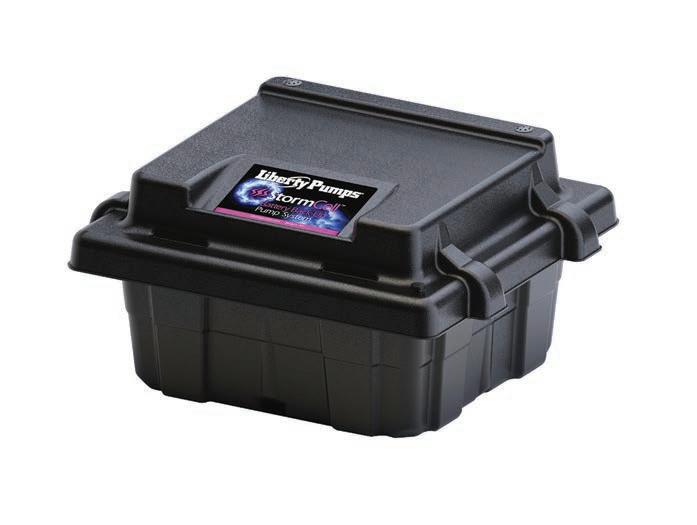
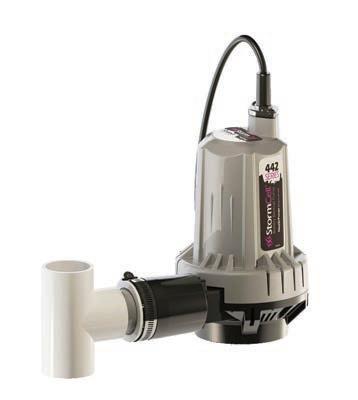
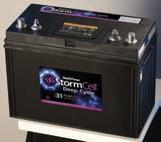
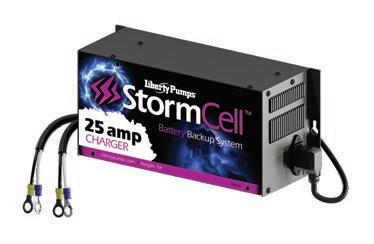
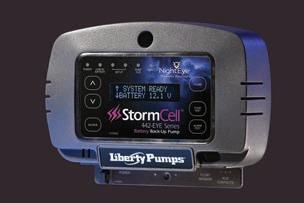
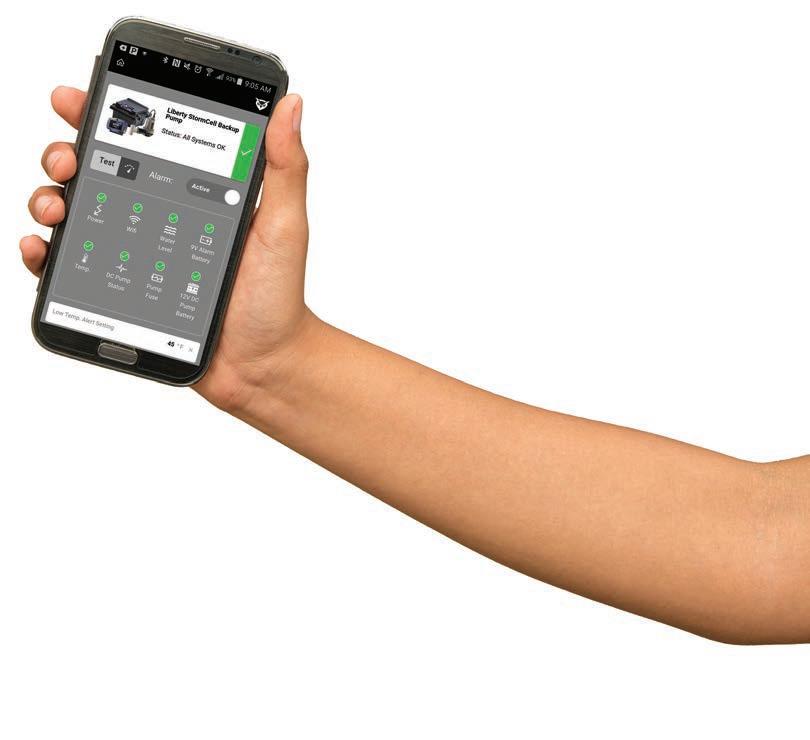
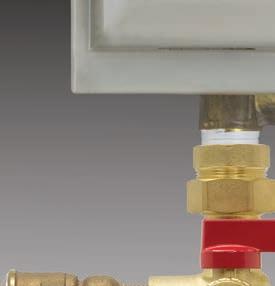
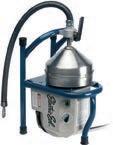
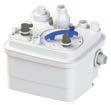
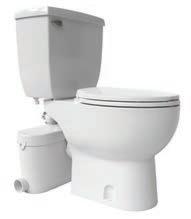
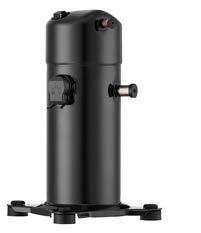
The new StormCell® series of battery backup pumps from Liberty feature advanced professional-grade chargers, energy e icient pumps for longer run times, and optional NightEye® wireless technology for remote monitoring through your smart device.
• Available in both standard and wireless connected models
• Professional-grade chargers (10 amp and high-output 25 amp)
• Single and dual battery systems
• Energy efficient DC pump (manufactured in the U.S. by Liberty)
* Model 442-25A, StormCell® Group
CON TENTS
FEATURES
18
PLUMBING
VIRTUAL REALITY…A NEW FRONTIER FOR TRAINING
MODERN HYDRONICS
MODIFYING HIGH TEMP SYSTEMS FOR
Plumbing and heating industry sees the benefits of new technology in the field and as a training tool.
By Rob Waters
22 FINANCE
TAX PLANNING TOOL IN CRA’S SIGHTS
Government sets out new rules for income splitting.
By Hank Bulmash
MH4
HEAT EMITTERS
LOWERING THE BAR–PART I
Modifying high temperature distribution systems for lower temperature operation.
By John Siegenthaler
MH10 CONTROLS
5 COMMON ISSUES AND INSTALLATION ERRORS–PART I
More often than not, if control systems do not perform as needed, something happened on the installation or programming side of things.
By Mike Miller
CON TENTS
MH12
HYDRONIC PRODUCT SHOWCASE
MH20
BOILERS
BOILER MODULATION – IS MORE BETTER?
Prudent boiler plant designs must factor in actual, not extrapolated, boiler efficiencies through the firing range of the equipment.
By David Connors
MH27
PIPING
LOWERING THE BAR – PART II
Piping supplemental heat emitters into an existing system.
By John Siegenthaler
69
HEAT PUMPS
HYBRID HEAT: ONE WAY TO REDUCE HEATING COSTS
The point of a hybrid system is to reduce operating costs while maintaining year-round comfort conditions. What are your options?
By Ian Mcteer
74
MARKETING
TRADITIONAL TO DIGITAL
Can the trades industry get hands-on with online marketing?
By Jillian Morgan
< UPFRONT
OLD MAN WINTER PACKS A WALLOP
THIS IS A WINTER OF EXTREMES; MIND YOU MOST OF THE EXTREME HAS BEEN ON THE NEGATIVE SIDE OF THE THERMOMETER. There have been several casualties in my neighbourhood. I personally saw no less than four heating appliances being kicked to the curb in our tiny block. The shiny new replacements were a welcome sight for homeowners coping with temperatures south of -20.
From what I could see, the units were approaching the end of their lives. The work required to maintain a home at -20 degrees in such brutal temperatures was the death of them.
In circumstances such as these there is little time for the customer to shop around for the best appliance for the application and even less time to check out HVAC contractors. It is whoever can get to the door the fastest with a furnace, boiler or heat pump in tow–that is who gets the job.
This is not a great scenario–for either party.
HPAC MAGAZINE
111 Gordon Baker Road, Suite 400, Toronto, ON M2H 3R1
Tim Dimopoulos (416) 510-5100 tdimopoulos@annexbusinessmedia.com
Ted Markle tmarkle@annexbusinessmedia.com
Mike Fredericks
PRESIDENT & CEO
“It is whoever can get to the door the fastest with a furnace, boiler or heat pump in tow-that is who gets the job.”
The consumer will appreciate that you arrived quickly but may feel they were trapped into paying a premium without the confidence they got their moneys worth. The job may be a one-off for the contractor if the customer returns to their previous service provider who may not have been able to drop everything and show up. Also, when the jobs are coming in as no heat calls, selling service plans, for example, won’t be top of mind for technicians in a hurry to get to the next job. So, there are a lot of lost opportunities.
What is the lesson to be learned here? Approach customers who have aging heating and cooling systems–suggest they schedule a replacement rather than face a “it has to be done today” moment. Develop an incentive plan to bring customers on board with the idea of ditching something that works. Talk about alternatives (many of which are discussed in this issue) rather than a straight replacement. After all, a lot has changed in the HVAC world in the last 15 to 20 years.
Editor
CLARIFICATION
The photo on page 17 of HPAC October 2017 (print edition), which illustrates correct vent pipe slope, shows fittings that are not approved for use in some jurisdictions. All hot water heater vent pipe installation must always follow manufacturers installation instructions as well as all appropriate local codes.
PUBLICATIONS MAIL AGREEMENT NO. 40065710
Heating Plumbing Air Conditioning (established 1925) is published 7 times per year by Annex Publishing & Printing Inc. HPAC Magazine is the leading Canadian business publication for the owner/manager of mechanical contracting businesses and their supply partners.
To subscribe, renew your subscription or to change your address or information please visit us at www.hpacmag.com.
Subscription Price per year: $43.00 (plus tax) CDN; Outside Canada per year: $84.50 US; Elsewhere: 1 year $92.50; Single copy Canada: $5.00 CDN. Heating Plumbing Air Conditioning is published 7 times per year except for occasional combined, expanded or premium issues, which count as two subscription issues.
MAIL PREFERENCES: From time to time we make our subscription list available to select companies and organizations whose product or service may interest you. If you do not wish your contact information to be made available, please contact us via one of the following methods: Tel: 416-442-5600 ext. 3552, Fax: 416-510-6875 or 416442-2191; E-mail: blao@annexbusinessmedia.com; or by mail: 111 Gordon Baker Rd., Suite 400, Toronto ON M2H 3R1
HPAC Magazine receives unsolicited materials (including letters to the editor, press releases, promotional items and images) from time to time. HPAC Magazine, its affiliates and assignees may use, reproduce, publish, re-publish, distribute, store and archive such unsolicited submissions in whole or in part in any form or medium whatsoever, without compensation of any sort.
NOTICE: HPAC Magazine, Annex Publishing & Printing Inc., their staff, officers, directors and shareholders (hence known as the “Publisher”) assume no liability, obligations, or responsibility for claims arising from advertised products. The Publisher also reserves the right to limit liability for editorial errors, omissions and oversights to a printed correction in a subsequent issue. HPAC Magazine’s editorial is written for management level mechanical industry personnel who have documented training in the mechanical fields in which they work. Manufacturers’ printed instructions, datasheets and notices always take precedence to published editorial statements.
Proud member of:
NEWS FEATURE
ATCO ENTERS CONTRACT TO SERVICE
ARMED FORCES SITES IN CANADIAN NORTH
Atco has been selected to provide facility maintenance and support services at Canadian Armed Forces sites in the Northwest, Yukon and Nunavut Territories.
Under the contract, Atco will provide facility inspection, maintenance and repair, new construction and upgrades, trade services and environmental services. Facility maintenance includes HVAC and plumbing services and support.
The initial five-year contract is valued at $79 million, with an option for a fiveyear extension.
“We are tremendously proud to provide these essential services in support of the brave men and women of the Canadian Armed Forces,” said Jim Landon, senior vice president and general manager of Atco’s Frontec division.
Atco was selected by Defense Construction Canada, a procurement partner of the Department of National Defense (DND).
Site locations include Yellowknife and Inuvik, NWT, Whitehorse, YT and Rankin Inlet and Iqaluit, NU.
“We are committed to supporting lo -
cal communities at each site location through procurement, employment and training opportunities,” said Landon.
Atco has delivered other operational support services to military camps, as well as airfield and logistics services. The company has also built modular facilities for the DND in Nanisivik, NU, and provided maintenance services at the NATO
flying training centre in Moose Jaw, SK.
“With investments and partnerships across the region, we recognize the importance of working collaboratively with our partners in business, government and Indigenous communities to realize the shared economic promise of Canada’s North,” said Landon. www.atco.com
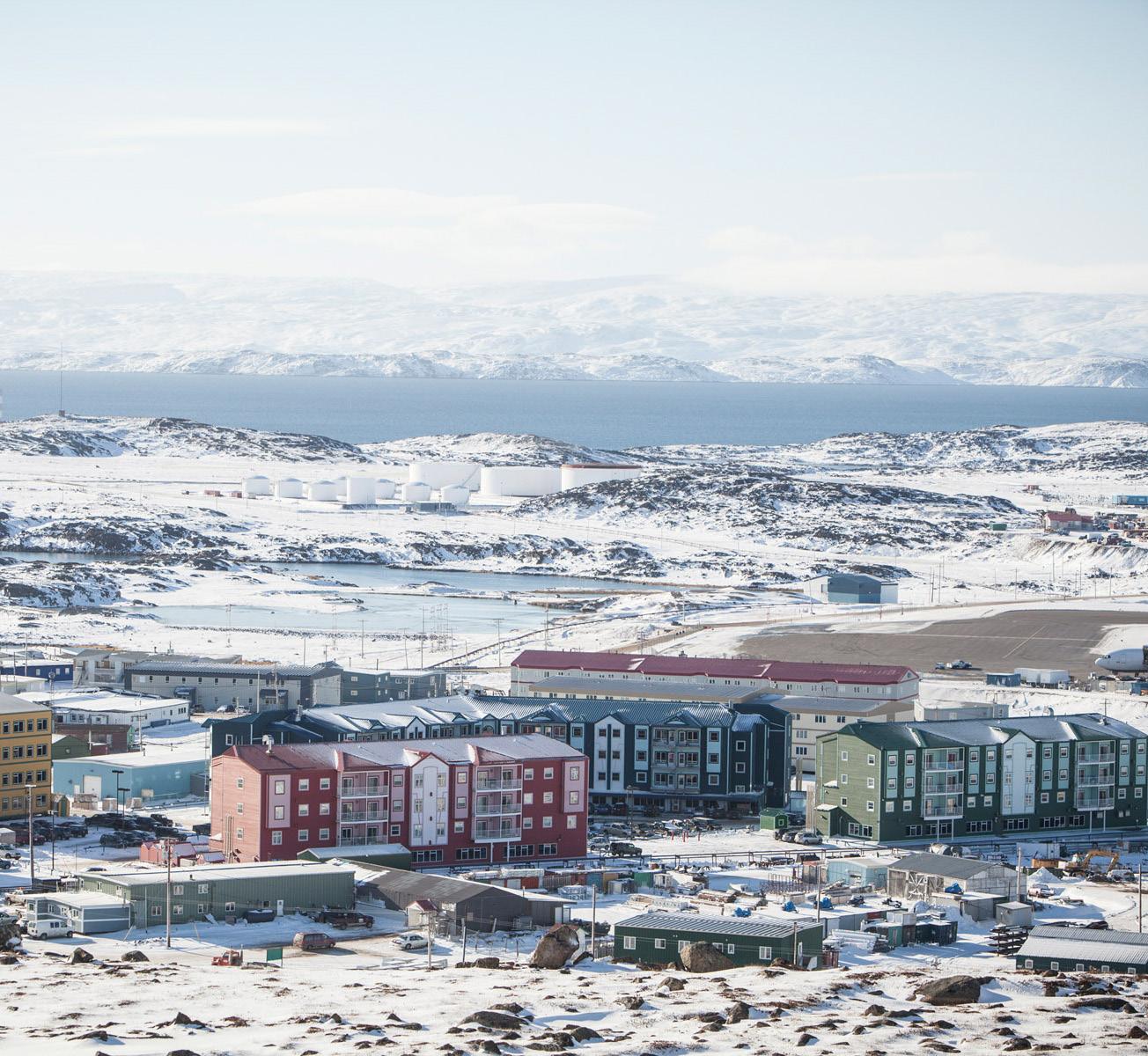
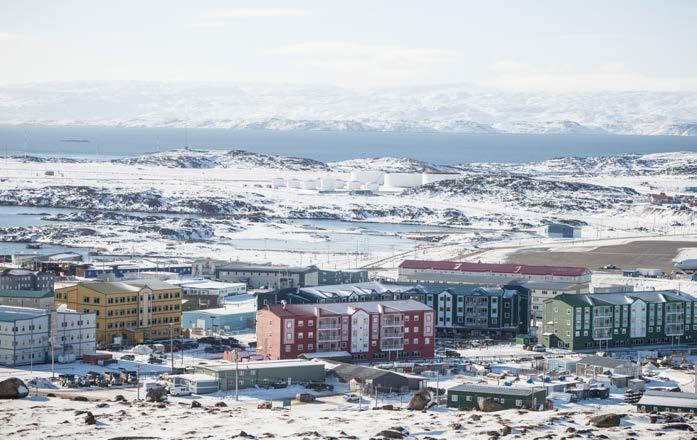
Iqaluit, NU, one of five Canadian Armed Forces site locations included in the facility maintenance and support services contract.
Why risk your reputation on an inferior product?
With Bradford White you get quality and performance you can count on. That’s why plumbing and mechanical professionals purchase our water heaters, boilers and storage tanks. So when it’s your reputation on the line, rely on the products that are always Built to be the Best. Choose quality. Choose Bradford White. Learn more at bradfordwhite.com/yourspec
INDUSTRY NEWS
PROMPT PAYMENT LEGISLATION PROPOSED FOR FEDERAL CONTRACTS
The federal government has called for industry input and recommendations on proposed prompt payment legislation. Recommendations will be used to inform legislation with regards to payment terms and an adjudication process for federal construction contracts.
Bruce Reynolds and Sharon Vogel, construction lawyers and partners at Singleton Urquhart Reynolds Vogel law firm in Vancouver, BC, have been contracted to seek input.Reynolds and Vogel led the consultation process for Ontario’s Bill 142 on prompt payment, which passed unanimously on December 5, 2017.
The National Trade Contractors Coalition of Canada (NTCCC) has announced its support of the proposed legislation.
The Construction Lien Amendment, or Bill 142, is the first of its kind in Canada. It introduced a new adjudication process intended to resolve payment disputes faster. Ontario contractors have 150 days to file liens – previously it was 90 days. Liens under $25,000 are referred to small claims court.
Condominium owners are allowed to remove liens from common elements of units, such as corridors and lobbies. Holdback funds must be paid as soon as the deadline to file a lien passes, and surety bonding on public sector projects above a certain amount are required.
Prompt Payment Ontario (PPO), an alliance of contractor associations, unions, suppliers and general contractors, applauded Bill 142. “This legislation could not have been introduced at a better time, as higher interest rates will make delayed payment unbearable,” said Ron Johnson, director of PPO.
Other provinces, including Alberta, New Brunswick, Quebec and Saskatchewan, are working on measures to address prompt payment in the construction industry. www.ntccc.ca www.ontariopromptpayment.com
ONTARIO RELEASES TALL WOOD BUILDING CONSTRUCTION REFERENCE
A technical resource for tall wood building construction aims to help applicants, reviewers and designers meet Ontario Building Code requirements for wood structures above six storeys.
It includes two sections: fire safety and structural design. Users can learn about the types of wood products, challenges of wood construction, fire prevention and an overview of Alternative Solutions provisions under the Ontario Building Code.
Each section offers information on methods of analysis, methods of design and expected performance requirements. Other topics include thermal performance, acoustic performance and constructability.
Mass timber includes wood panels, beams and columns used for constructing floors, walls and roofs in large buildings.
Programs to encourage mass timber, tall wood or wood bridge construction, in an effort to lower greenhouse gas emissions, are part of Ontario’s Five-Year Climate Change Action Plan. Other provinces, including British Columbia and Quebec, have also invested in tall wood building projects.
E-mail masstimber@ontario.ca to request the reference. www.ontario.ca
CIPH ENCOURAGES INDUSTRY PARTICIPATION IN WORLD PLUMBING DAY
The Canadian Institute for Plumbing and Heating (CIPH) has called for participation in World Plumbing Day on March 11. CIPH has encouraged business owners in the industry to “join the wave” in an effort to increase awareness about the role of plumbing in health and safety.
The institute recommends hosting an event for customers or a community, educating students at a local school or fundraising for a relevant charity. To participate online, CIPH suggests adding the World Plumbing Day logo to a website or e-mail signature, as well as following the event’s social media accounts. www.ciph.com
www.worldplumbing.org
HVAC CAREER FAIR CONNECTS STUDENTS AND EMPLOYERS
Humber College’s second annual HVAC career fair will allow businesses to promote their organization and career options while getting to know students on an informal basis. Businesses will also be able to collect resumes.
Students and soon-to-be graduates are from the college’s HVAC/R Technician and Technology programs, as well as the Sustainable Energy and Building Technology programs.
Humber’s School of Applied Technology and its Academic and Career Success Centre organize the fair. It will take place on March 14, 2018, from 1 p.m. to 3:30 p.m. at Humber North Campus in Toronto, ON.
Employers are invited to bring business cards, brochures and tabletop or portable displays. Contact Gabriela Jakova, career and student success advisor at 416.675.6622 (ext. 4984), or gabriela.jakova@humber.ca, to participate as an exhibitor. www.humber.ca
Designed for plumbers Loved by designers!
ALL OUR VALVES COME WITH THREE TYPES OF CONNECTION
NPT, PEX, and Expansion PEX
The latter two are quicker to install.
OUR (T/P) VALVES OFFER THE BEST OF BOTH WORLDS:
Our thermostatic/pressure balance valves (T/P) stabilize water pressure for steady temperature performance even in the event of a 50% drop in pressure!
Valve roughs are now MADE IN CANADA!
INDUSTRY NEWS
SOLAR CONFERENCE FOCUSES ON CONSUMER-DEMAND FOR RENEWABLE ENERGY
It is time to “go solar,” according to Alberta Premier Rachel Notley.
Solar Canada 2017 Conference and Exhibition, held in Toronto, ON, brought together industry experts and thought leaders to discuss solar power opportunities and challenges.
Speakers included Minister of Natural Resources James Carr; Ontario Minister of Energy Glenn Thibeault; Terry Young, vice-president of policy, engagement and innovation, Independent Electricity System Operator (IESO); and Notley.
“We can tackle climate change without leaving working people behind,” said Notley. “So let’s go solar. Let’s go renewable. Let’s make sure our energy industry is part of the climate solution – one that will help all of Canada to prosper.”
The event featured a number of sessions focused on a consumer-driven demand for energy from renewable resources, held at the Gowling WLG Theatre. The education sessions were offered in three streams: residential, commercial and industrial.
An expo hall and a number of networking events also took place at the event, which was organized by CanSIA and Deutsche Messe.
“Solar Canada 2017 cemented for me the fact that the market conditions for solar energy technology across Canada have never been stronger,” said John Gorman, president and CEO of the Canadian Solar Industries Association (CanSIA).
Next year’s conference will take place in Calgary, AB, from June 20-21, 2018. www.solarcanadaconference.ca
Reliability When the Heat
Solar Canada conference and exhibition is Canada’s largest solar power event.
FORMER PRESIDENT OF CCI TO TAKE ON NEW ROLE AT MCA
Pierre Boucher has been named the new president and CEO of the Mechanical Contractors Association (MCA) of Canada. The transition is the result of MCA Canada president and CEO Richard McKeagan’s retirement.
Prior to this appointment at MCA's national conference, Boucher was president of Canadian Construction Innovations (CCI). He joined CCI in August 2014. He had also previously held the position of CEO at the Canadian Construction Association (CCA). In his time with CCA, Boucher assumed responsibilities for portfolios such as the Road and Infrastructure Program, the Gold Seal Certification Program, the Canadian Design-Build Institute and Trade Contractors Council.
Boucher also took the lead in creating the Institute for BIM in Canada. Between 2001 and 2005, he was president of the Canadian Printing Industries Association (CPIA).
He served on several government committees, including the committee responsible for the development and promotion of the Canadian Industry Program for Energy Conservation and the Regulatory Advisory Committee for the development of the Canadian Environmental Assessment Act. www.mcac.ca
FORD ISSUES FOUR RECALLS ON TRANSIT AND F-150 MODELS
Ford Motor Company recalled Transit and F-150 vehicles throughout North America. In Canada, 13,564 vehicles were recalled.
A total of 8,365 2015-17 Ford Transit vehicles were recalled in Canada. The 2018 Ford F-150 with a 3.3-litre engine, six-speed transmission and column-mounted shift level was recalled, including 2,023 in Canada. Ford 2017 F-150 models with a 10-speed transmission were recalled, including 3,169 vehicles in Canada. A total of seven 2018 F-150 vehicles were recalled in Canada. www.ford.ca
Continued on p16
Boucher has a graduate degree in international development and cooperation from the University of Ottawa.
INDUSTRY NEWS
CIPHEX WEST ANNOUNCES DATES AND VENUE
Canadian Institute of Plumbing and Heating Exposition (CIPHEX) West returns to Calgary, AB, on November 8 and 9, 2018. The trade show, whichfeatures over 200 global exhibitors, will focus on plumbing, hydronics, HVAC/R and water treatment.
The 30,000 square foot showcase will be attended by contractors, wholesalers, engineers, building managers and other industry professionals who will have the opportunity to network and learn about new products and technologies. The virtual edition of the trade show features more than 120 e-booths. Those interested can visit the virtual CIPHEX West to browse exhibitors.
BUILDEX Calgary will co-locate with CIPHEX, and the two halls will be connected to allow visitors to access both expositions, which will be held at the BMO Centre in Calgary, AB. www.ciph.com www.buildexshows.com
HVAC, PLUMBING SYSTEMS AMONG ENERGY EFFICIENT UPGRADES PLANNED FOR ONTARIO SCHOOLS
Nearly 600 schools across Ontario will receive energy-efficient upgrades in 2018.
The $200 million investment is part of Ontario’s Climate Change Action Plan and is funded by proceeds from the province's cap on pollution and carbon market.
Funding will support the installation of new, energy-efficient components in older buildings, including ground and air source heat pumps, HVAC systems and hot water boilers.
Other upgrades and installations to reduce greenhouse gas emissions and create renewable energy production include solar panels, LED lighting systems, solar photovoltaic cells, realtime energy monitoring and new economizers and controls.
The Ministry of Education has provided a list of eligible expenses to the 72 school boards. The school boards then decide on which upgrades are to be completed.
Overall funding is part of the province’s $1.4 billion investment to improve school buildings by repairing and upgrading elements such as roofs, flooring and plumbing systems. www.ontario.ca
CIPHEX West e-booths will be open 24/7.
CONTRACTORS MUST SIGN UP TO MAKE GREENON LIST
Rebates to complete low-carbon, energy-efficient renovations are now available to Ontario homeowners through the Green Ontario Fund, a non-profit provincial agency funded by the province’s cap on pollution and carbon market program.
The incentive program covers insulation, ground and air source heat pumps, existing heat pump repair, and replacement windows. Homeowners and tenants can also receive a $100 smart thermostat rebate through a partnership with Save on Energy.
The rebates include:
• Up to $7,200 for new insulation, with a $100 rebate for air sealing.
Other action plan measures include electric vehicle incentives and a cycling commuter network.
• Up to $20,000 for ENERGY STAR certified, geothermal ground source heat pumps, or $4,500 to repair existing heat pumps.
• Up to $5,800 in rebates for air source, ENERGY STAR certified heat pumps, or those that meet program requirements.
• Up to $5,000 for qualifying replacement windows.
In addition to the incentives program, the province is launching a free over-the-phone service – GreenON Support – to help consumers learn how to save money and reduce their carbon footprint through home upgrades.
Green Ontario requires homeowners who take advantage of rebates to work with a qualified and screened contractor listed on the agency’s website. Contractors interested in participating must meet established criteria and complete training for specific, low-carbon renovations. Hopeful participants can sign up online at greenon. ca/contractor-signup. www.greenon.ca
THE ORIGINAL, RESPONSIBLE WAY TO PUMP WATER, NOT OIL.
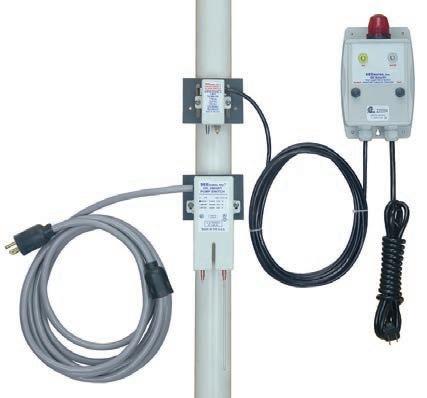
The OSS-100 is the trusted and proven plug & play system that pumps water, not oil from elevator sumps, transformer oil containment areas and underground electrical vaults.
Oil Smart® systems satisfy ASME A17.1, IEEE 980 and EPA SPCC requirements.
Your trusted source for quality control panels.™ Phone: 888-733-9283 www.seewaterinc.com
VIRTUAL REALITY… A NEW FRONTIER FOR TRAINING
BY ROBERT WATERS
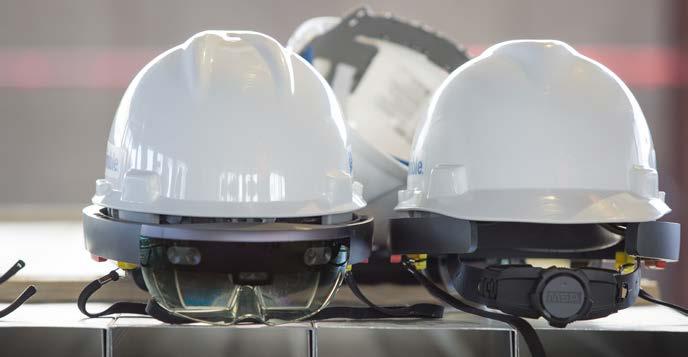
When most people think of Virtual Reality (VR), they often think of video games and big, geeky looking goggles covering most of the user’s face. That perception is about to change. The world of VR is exploding with new applications that are poised to impact and change many different industries.
VR is not just for playing games – it is a new medium thats real purpose is evolving. The plumbing, heating and mechanical industries will not be left out. You can expect them to be part of this VR revolution.
One of the first areas where we can expect to see this VR revolution is in the area of training a new generation of workers.
VR and augmented reality (AR) are proving incredibly effective for em -
ployee training. Different industries, from retail to policing, are starting to utilize VR training and the plumbing and heating industry is starting to get on board as well.
VR and AR are computer technologies
WHAT IS THE DIFFERENCE BETWEEN VIRTUAL REALITY AND AUGMENTED REALITY?
Virtual Reality (VR) is a computer technology that creates an immersive, completely virtual world. A VR headset fits around your head and over your eyes and visually separates you from whatever space you're physically occupying. Images are fed to your eyes from two small lenses. VR may also use earphones, gloves and body sensors to generate realistic images, sounds and other sensations that simulate a user's physical presence in a virtual or imaginary environment. VR can also be created through specially designed rooms with multiple large screens. Through VR you can virtually hike the Grand Canyon, tour the Louvre, experience a movie as if you are part of it, and immerse yourself in a video game without leaving your couch.
Augmented Reality (AR) is not about creating an imaginary world, but augmenting real life. AR improves, enhances or expands real life situations by inserting computer generated virtual objects or graphics into the user's real world environment. AR uses transparent glasses or headsets that do not separate you from the space you are occupying, but allow images to be projected into your field of vision. Many different business industries are getting interested in AR’s possibilities for knowledge sharing and training.
that use special glasses or headsets to let the user experience a different reality, or augment their real world view. Until recently, VR/AR have been seen as technologies reserved for the videogame industry.
Equipment was expensive and there were not a lot of applications for it. This is changing rapidly with interest in the technology exploding. Manufacturers have reduced the cost of headsets, and considerable business potential for VR/ AR is being developed across a variety of industries.
VR and AR have the potential to be especially useful for those in manufacturing, logistics and the skilled trades. AR’s ability to superimpose holographic images, objects and instructions on top of the user’s real-world perspective is proving very valuable for educating workers that do “hands on” work.
This certainly has implications for the mechanical/trades industry. An aging workforce means that many new apprentices will need training.
INDUSTRY GROWTH
The potential of this industry was evident at the 2017 Consumer Electronics Show in Las Vegas, where 271 of the 800 exhibitors were in the VR/AR business. Gaming is still a big part of this business, with companies such as Google, Facebook, Samsung and Sony offering headsets, apps and gaming consoles. In 2014, Oculus Rift, one of the early leaders in VR headsets, was purchased by Facebook for $2 billion. Samsung has sold over five million of its Gear VR mobile headsets to date and industry insiders expect the VR headset market to reach 52 million units by 2020.
But VR is not just for gaming. This new medium is being discovered by many industries. From medicine, to engineering, to automotive, VR can model the world in an incredibly visual and hands-on way. Many companies are starting to see that VR is an economical way to provide hands-on training that is almost impossible to replicate in the real world. VR training is proving to be much more impactful than traditional 2D classroom training for jobs that demand hands-on learning.
Many companies that see the benefits and potential of this immersive experience are adopting VR training. Walmart is using VR to train its employees how to prepare for situations like the crowds on Black Friday, learning customer service, or how to deal with emergencies in a store. At UPS they are using VR to teach students the fundamentals of driving delivery vehicles, delivering packages, and driver safety. The Houstonbased Training Center of Air Conditioning and Heating is delivering a VR experience to train students for the air conditioning and heating trade. With the aim of reaching a larger trainee population, the HVAC eLearning products include a full technician course that includes the simulation of the hands on experience of an HVAC lab and physical school.
At Pitt Meadows Plumbing in Maple Ridge, BC, AR technology is used to give its plumbing apprentices a step ahead in their training and in the workplace. The owner of Pitt Meadows Plumbing, Steve Robinson is a big believer in trades training and has numerous apprentices working within the company.
Robinson believes that “trades training is very important because it formalizes the relationship between the employee and their trade.
“We believe that innovation plays a key part in our organization. It allows us to train young people within the basic thinking processes that they come to us with. So much of what we do here is computer driven, and obviously the younger generation understands pictures far better than they understand old school technical drawings,” explains Robinson. “Not that the drawings aren’t important, but we realize that they can catch on far faster if they have a complete 3D visual picture of what they are trying to create.”
Pitt Meadows apprentices use a VR headset that projects 3D CAD images of the project they are working on. This life-sized 3D
INDUSTRIES POISED FOR A VR / AR TRANSFORMATION
Retailing and Selling: VR/AR enables any company that sells anything to promote its products in an entirely new way. Imagine walking into a virtual clothing store with infinite shelf space, where you can see and try any shirt, jacket or pair of shoes on sale. In some U.S. markets, Lowe's Home Improvement customers can design their perfect bathroom or kitchen and then, using VR, walk into the finished space and experience it. Some Audi dealerships in Europe now use VR headsets to allow their customers to configure their new Audi and experience their dream cars virtually, in real time. Shopping will never be the same.
Real Estate and Construction: VR enables real estate agents to show properties to prospective buyers in a realistic way, complete with virtual exposure to the location and neighborhood. AR will enable architects to do digital modeling, and place life-size models of furniture and fixture into the building and see how they fit.
Tourism promotion: With a VR headset you can transport yourself anywhere in the world or beyond and have an immersive experience. Destination BC has developed a VR experience called “Wild Within” that promotes tourism in BC. Viewers can travel through a rainforest or go up onto a mountain.
Gaming, Media and Entertainment: From video games to Hollywood movies to news outlets, VR / AR offers many new and exciting ways to entertain or inform. The New York Times has jumped into VR-powered storytelling, releasing new visual stories regularly through the NYTVR app. Film makers are experimenting with ways to enhance the audience experience, with experiential works that blur the lines between gaming and narrative entertainment. New cameras are being created to capture these VR stories, and tools to upload and livestream them are growing in number
Law Enforcement and Military: VR enables participants to be immersed in dangerous virtual situations that test their reactions, decision making, and scenario awareness. Police officers and military personnel are taught de-escalation techniques, how to read body language and threat cues.
HR and Recruiting: Many industries are using VR to enhance their hiring and recruiting efforts. It gives the company an opportunity to meet and assess skills in an immersive environment. For the employee it gives thvem a chance to assess whether they want to be part of the organization.
< PLUMBING
image is overlain on the actual piping and components that they are putting together, showing exactly where everything is supposed to be. This enables them to quickly lay everything out and mark out where hangers should go, etc. Also, while working on the project they can project a small 3D model in the middle of the workspace that can be turned and flipped to view it from different angles.
“the headsets have helped us eliminate going back and forth to the drawings, saving lots of time by having the model right there in front of them where they are working,” explains shop foreman Philip Robinson. “This helps to get the apprentices into technology earlier, so that they get a higher knowledge of the way plumbing and heating works.
“Pitt Meadows is always trying to do new and innovative things, and this training is something we’ve started because we know it will give us an advan -
tage going forward,” added Robinson.
So does VR/AR mean the end of traditional classroom training? Probably not, as I believe it will be impossible to replace good old person-to-person training. It is, however, a very powerful and effective training tool that will see more and more use in the future. The world continues to see an amazing array of new technical innovations that are changing the way we do traditional tasks. The mechanical industry is not immune to these changes. VR/AR is just another example of the cross over from
the computer technology world to the mechanical contractor’s world.
Robert Waters is president of Solar Water Services Inc., which provides training, education and support services to the hydronic industry. He is a mechanical engineering technologist graduate of Humber College and has over 30 years experience in hydronic and solar water heating. He can be reached at solwatservices@gmail.com.
Your success didn’t happen overnight. It’s taken hard-fought wins, raw determination, and steadfast business savvy to stay ahead of the game. Blue is the color that represents your work ethic. It symbolizes the lifeblood of what you do every day. That’s why the Little Giant® brand stays true to the tough demands of this industry. We share the same DNA, and remain committed to offering the highest quality products to help you succeed.
Conveniently located: 1 block North of Langstaff Rd, West off of Jane St. (East of Hwy 400)
Experienced staff
Large inventory featuring renowned brands
BURLINGTON 5040, Mainway, Unit 8
905 335-4002
TAX PLANNING TOOL IN CRA’S SIGHTS
Government sets out new rules for income splitting. BY
HANK BULMASH
In 1982, a businessman named Melville Neuman had a bright idea. He thought he had figured out a way to split income with his wife using a family holding company (holdco). Neuman had his wife incorporate a company. She took back 99 shares in the holdco for which she paid $99. He rolled his operating company shares in the holdco and took back special shares of another class. It is not known how much those operating company shares were worth, but my guess is at least $300,000.
Mrs. Neuman’s shares in the holdco were discretionary. The Neuman’s had no legal right to dividends unless the company’s directors declared them, and they cost very little. A fundamental principle of the Income Tax Act is that assets (like shares) purchased from a non-arm’s length party, such as a family holdco, have to be bought at fair market value. Because the shares cost only $99, the Neuman’s implicit contention was the shares were only worth $99.
That same year, the operating company paid a dividend of $20,000 to the holdco, which then paid dividends of $5,000 to Mr. Neuman and $14,800 to Mrs. Neuman. So the $99 shares had a one-year return of 150 times their cost.
Neuman clearly was not shy about reaping the benefits of his idea. But by giving his wife such a rich dividend, he opened himself to the argument that the shares were worth far more than the $99 that she paid for them. In fact, there was a good argument that they might be worth more than $200,000 based on the dividend rates available in the 1980s.
It was no surprise that the Canada Revenue Agency (CRA) disliked this arrangement. CRA claimed that the income received by Mrs. Neuman should be attributed back to Mr. Neuman and taxed at his rate–not hers. Basically, the argument was that the income in the holding company came from the operating company that had always been owned by Mr. Neuman. CRA argued that Neuman was shifting income to his wife in order to pay less tax.
Of course, that was true. However, Neuman argued that there was nothing wrong with the scheme. The documents were all genuine and there was nothing to forbid it in the Income Tax Act. The case went to trial and slowly wound its way through the court system. One court decided in CRA’s favour.
The appeals court decided in Neuman’s favour. And then the case reached the Supreme Court of Canada. In a historic decision, the Supreme Court accepted Neuman’s position.
After that, many people followed Neuman’s example. They created holding companies and issued discretionary shares to their spouses and children. Not surprisingly, this became an important tool in tax planning. It was often used to fund university educations. A child could receive dividends of nearly $40,000 per year while paying almost no tax and that money could be used for tuition and living expenses. Nonworking spouses could also earn about $40,000 while paying very little tax. The tax savings were significant.
CRA developed several strategies in reaction to the Neuman decision. First, it implemented a kiddie tax applied to children who had not reached age of majority (technically called TOSI – tax on split income), so there was no benefit in having discretionary shares owned by children under 18.
CRA then focused on situations where it could claim that the discretionary shares were either not properly issued due to poor documentation or were issued for considerably less than fair market value. The agency intimated that it might find a way to apply the General Anti-Avoidance Rules (GAAR) to discretionary shares, although that was never done.
All these things made the use of discretionary shares more difficult, but there were still ways to use the shares with a high degree of safety.
And then came the July 18, 2017, announcement. In that announcement, the Minister of Finance stated that the TOSI rules, which apply the maximum tax to designated income, will apply to any Canadian resident receiving income from a related business unless the income is “reasonable in the cir-
WHAT IS A PROFESSIONAL CORPORATION?
A professional corporation is certified by a professional institute (physicians, dentists, accountants, lawyers, veterinarians, engineers, architects, etc.). Shares of non-medical professional corporations cannot have non-professionals as shareholders, therefore income splitting does not offer this group much benefit. But doctors and dentists can have non-professionals (spouses, adult children, parents) as shareholders. Closing this advantage is a major focus of the proposed legislation.
cumstances.” Any Canadian resident meant that TOSI would apply to spouses, adult children and any other adult relative. Almost any income received from a private company could be deemed to be not reasonable by CRA and the maximum tax rate would apply to it.
Small business groups, professionals and tax specialists reacted to this proposal with alarm. The initial pronouncement was then amended in a December 2017 communication.
According to CRA, the TOSI rules will not apply to “reasonable” dividends received by a person who is between 18 and 25 and who works in the business at least 20 hours per week on a regular basis during the year. CRA will decide what is reasonable.
For people over 25, income earned by individuals who own more than 10 per cent of the shares of a company can be excluded from TOSI income where less than 90 per cent of the business’ income comes from the provision of services and the corporation is not a professional corporation, and the income is considered “reasonable.” I do not understand the logic behind the 90 per cent rule but it seems to apply the TOSI rules to anyone not work ing in a business that receives virtually all of its income from the provision of services
There is an important senior’s exclu sion. Dividend income and capital gains on the sale of property is not sub ject to the TOSI rules where the taxpay er’s partner is over 65.
Where does this leave us? For se niors who own a company, the new rules are actually more generous than the prior regime. I suspect this senior exemption may be reconsidered in the future as the government sees how much it will cost them.
TOSI RULES & SERVICE REVENUE
Assume a company has three shareholders: a husband, a wife and a daughter. Assume the wife and daughter each invested $100,000 in the business. Neither works in the business. How can they avoid the TOSI rules?
1. Their rate of return could be a reasonable one for a $100,000 investment. That might be five per cent (or $5,000) in year one. But the amount could increase over time as the retained earnings of the company increased.
2. But the company cannot only earn income from the sale of services. At least 10 per cent of its income should come from something else such as product sales.
3. If the company were an HVAC company that only provided services, TOSI could not be avoided. But if the company earned 10 per cent or more of its revenue from product sales, the wife and daughter could avoid the TOSI rules.
sity age children will not be able to receive dividends from a family business as they once could have – especially if the children live away from the city where the company operates.
The Neuman decision has been an irritant to the tax authority for nearly 30 years. Over that time, it has become an important element in the tax planning landscape. Income splitting's long history has made it seem like a fundamen -
tal right of taxpayers – not an aberration. Now, finally, the government it appears to be determined to find a way to overcome it.
Hank Bulmash, CPA, CA, MBA, TEP, is CEO of Bulmash Accounting Professional Corporation in Toronto, ON. He can be reached at hank@bulmash.ca.
THE EASY WAY TO BOOST PRODUCTIVITY.
For everyone else, the new rules are likely to present difficulties. A spouse will no longer be able to split income as easily as before. It is likely that univer-
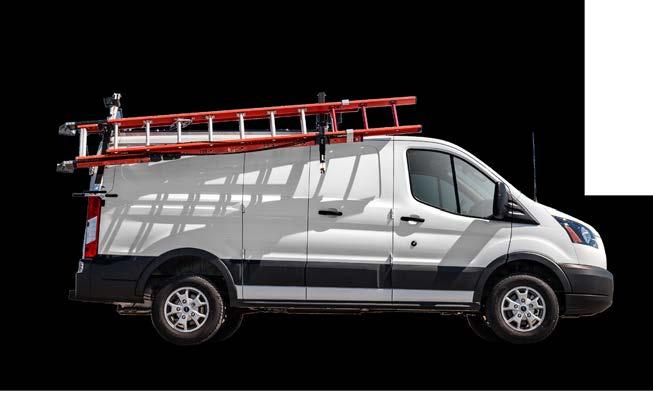
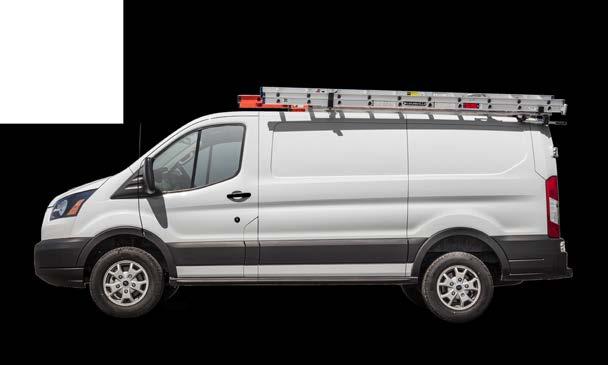
Adrian Steel’s Drop Down and Grip Lock Ladder Racks are designed with ergonomics and user safety in mind. Whether you’re upfitting a single van or an entire fleet, Adrian Steel has just what you need. Increased efficiency starts now.
MODERN HYDRONICS
BOILER PLANT DESIGN
HYDRONIC PRODUCT SHOWCASE
TEMP
EMITTERS
a publication of
DISTRIBUTION SYSTEMS IN CONVERSION SITUATIONS WHY CONTROL ISSUES ARISE AND HOW TO SOLVE THEM HEAT
The Perfect Comfort Combo
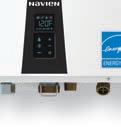
Navien H2Air
System
The simple, space-saving solution for an all-in-one hydronic forced air heating and domestic hot water system
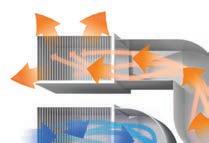
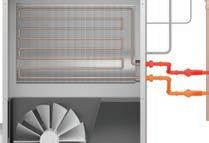
Navien’s NPE-A condensing tankless water heater supplies a reliable, continuous supply of hot water for the whole home — plus our built-in pump circulates hot water for the hydronic air handler, eliminating an external circulator. Homeowners will love the comfortable heat and endless hot water of our H2Air System. No wonder it’s Canada’s number one choice for P-9 certification.
Learn more about the comfort of H2Air at navieninc.com
Only Navien NPE-A and H2Air Kit offers all of these advantages:
•Outdoor reset for space heating water temperature
•Programmable water temperatures for both heat & DHW
•Simultaneous DHW and heating operation
•Adjustable pump exercise feature
H2Air Kit includes: controller, 13-pin connector cable, outdoor temperature sensor and flow switch for DHW.
Hydronic Air Handler Domestic Hot Water
CONTENTS
MH4 LOWERING THE BAR –PART I
Modifying high temperature distribution systems for lower temperature operation.
BY JOHN SIEGENTHALER
MH10
Common Control Issues & Installation Errors – Part I
More often than not, if control systems do not perform as needed, something happened on the installation or programming side of things. BY MIKE
MILLER
MH12 HYDRONIC PRODUCT SHOWCASE
MH20 BOILER MODULATION –IS MORE BETTER?
Prudent boiler plant designs must factor in actual, not extrapolated, boiler efficiencies through the firing range of the equipment.
BY DAVID CONNORS
MH27 LOWERING THE BAR –PART II
Piping supplemental heat emitters into an existing system.
BY JOHN SIEGENTHALER
MODERN HYDRONICS
a supplement of Heating PlumbingAir Conditioning Magazine
www.hpacmag.com
EDITOR
EDITOR
ASSISTANT
ASSOCIATE PUBLISHER
ACCOUNT MANAGER
ACCOUNT COORDINATOR
ART DIRECTOR
CIRCULATION MANAGER
PUBLISHER
VICE PRESIDENT
COO
PRESIDENT & CEO
Kerry Turner (416) 510-5218 KTurner@hpacmag.com
Jillian Morgan (416) 510-5201 JMorgan@annexbusinessmedia.com
Tim Dimopoulos (416) 510-5100 tdimopoulos@annexbizmedia.com
Ted Markle tmarkle@annexweb.com
Mike Fredericks
HPAC Magazine receives unsolicited materials (including letters to the editor, press releases, promotional items and images) from time to time. HPAC Magazine, its affiliates and assignees may use, reproduce, publish, re-publish, distribute, store and archive such unsolicited submissions in whole or in part in any form or medium whatsoever, without compensation of any sort.
NOTICE: HPAC Magazine, Annex Business Media, their staff, officers, directors and shareholders (hence known as the “Publisher”) assume no liability, obligations, or responsibility for claims arising from advertised products. The Publisher also reserves the right to limit liability for editorial errors, omissions and oversights to a printed correction in a subsequent issue. HPAC Magazine’s editorial is written for management level mechanical industry personnel who have documented training in the mechanical fields in which they work. Manufacturers’ printed instructions, datasheets and notices always take precedence to published editorial statements. Proud
LOWERING THE BAR – PART I
Modifying high temperature distribution systems for lower temperature operation.
BY JOHN SIEGENTHALER
What characteristic do solar thermal collectors, hydronic heat pumps and thermal storage tanks supplied by biomass boilers have in common? Answer: They all perform best when coupled to distribution systems that operate at low supply water temperatures.
But that is not what is waiting for them in many North American homes. It is common to encounter situations where a modern low temperature heat source is to be added to a system that was originally designed to operate at relatively high temperature, such as 180F. If the installer just removes the original “box” that supplied this high temperature water, and drops the new renewable energy heat source into its place, trouble is sure to follow.
For example, most current generation water-to-water and air-to-water heat pumps can only produce water temperatures in the range of 120F to 130F. If saddled to a distribution system that was sized to release design load output at 180F average water temperature some heat pumps will quickly trip off on a high temperature limit, requiring a manual reset after each trip. The existing distribution system simply cannot dissipate the rate of heat input from the heat pump with a water temperature that is 50F to 60F lower than it was designed for.
MOVING DOWNWARD
The are two fundamental ways to reduce the supply water temperature of any hydronic heating system:
1. Reduce the design load of the building envelope through improvements such as added insulation, better windows and lower air leakage.
2. Add heat emitters to the existing system.
A combination of these two approaches is also possible.
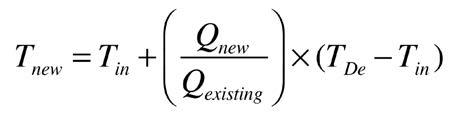
Building envelope improvements reduce the design heating load of the building. After these improvements are made, the existing hydronic distribution system can meet the reduced design load while operating at lower supply water temperatures. The change in supply water temperature is proportional to the change in design heating load. The new supply water temperature can be determined based on the same concepts used for outdoor reset control. It can be calculated using Formula 1.
Where:
Tnew = supply water temperature at design load after building envelope improvements (ºF)
Tin = desired indoor air temperature (ºF)
Qnew = design heating load after building envelope improvements (Btu/hr)
Qexisting = existing design heating load before improvements (Btu/hr)
TDe = existing supply water temperature at design load before improvements (Btu/hr)
For example, assume a building has a design heating load of 100,000 Btu/hr, based on maintaining an interior temperature of 70F. The existing hydronic distribution system uses standard finned-tube baseboard and requires a supply water temperature of 180F at design load conditions. Also assume that improvements to the building envelope have reduced the design load from 100,000 Btu/hr to 70,000 Btu/hr. The new supply water temperature to the existing distribution system under design load conditions is calculated using Formula 1. Formula 1
Figure 1 shows the supply water temperature versus outdoor temperature for the original load, as well as the reduced load after the building envelope improvements were made. In this case, reducing the design heating load from 100,000 Btu/hr to 70,000 Btu/hr reduced the required supply water temperature from 180F to 147F. Although this is certainly an improvement, it is still substantially above what some renewable energy heat sources can consistently provide.
MORE EMITTERS
If reducing the design heating load of the building does not lower the required water temperature to the desired value, it
Formula 1:
will be necessary to add heat emitters to the system.
If the original system used finned-tube baseboard heat emitters, it may be possible to add more of the same emitters. Another option might be to change out some existing baseboard for high output baseboard. It is also possible to add different types of heat emitters, such as panel radiators, fan-coils, or select areas of radiant panels.
The choice of which type of heat emitter to add will depend on several factors, including:
1. Availability of different makes/models of heat emitters.
2. Cost of the new heat emitters.
3. How difficult it is to integrate the new heat emitters into the building.
4. Aesthetic preferences.
5. Floor coverings (in the case of radiant floor panels).
6. Surface temperature limitations (in the case of radiant panels).
7. The specific supply water temperature that is to supply design load output in the renovated distribution system.
MORE BASEBOARD
Let’s proceed with the assumption that more finned-tube baseboard will be added. The following procedure can be used to calculate the amount of baseboard to be added to reduce the supply water temperature at design load to a pre-determined value. It assumes that the added baseboard is the same make and model as the existing baseboard. It also assumes that the existing baseboard is a standard residentialgrade product with nominal 2.25 in. square aluminum fins with an I=B=R rated output of approximately 600 Btu/hr/ft at 200F water temperature.
Note: This graph is based on standard residential fin-tube baseboard with 2.25" square fins and 3/4" tubing.
65 ºF air temperature entering baseboard
146 Btu/hr/ft q L=
ºF
Step 1: Accurately determine the building’s design heat load using Manual J or equivalent procedures.
Step 2: Determine the total length of finned-tube in the existing distribution system. Do not include the length of tubing that doesn’t have fins on it. The existing finned-tube length will be designated as Le.
Step 3: Determine the desired (lower) supply water temperature for which the system is to supply design load output. A suggested value is 120F.
Step 4: Estimate the lower average circuit water temperature by subtracting five to 10F from the supply water temperature determined in Step 3.
Step 5: Find the new average circuit water temperature on the horizontal axis of the graph in Figure 2. Draw a vertical line up from this point until it intersects the red curve. Draw a horizontal line from this intersection to the vertical axis of the graph, and read the heat output of the finned-tube at the lower average circuit water temperature. This number is designated as qL. The green lines and numbers in Figure 2 show how qL is determined for an average circuit water temperature of 115F.
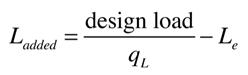
Step 6: Determine the length of baseboard to be added using Formula 2
Formula 2: Where:
L added = length of finned-tube of same make/model baseboard to be added (feet) design load = design heating load of building (Btu/hr)
Figure 1
Figure 2 Continued
qL = output of baseboard at the lower average circuit water temperature (Btu/hr/ft)
L e = total existing length of baseboard in system (feet)
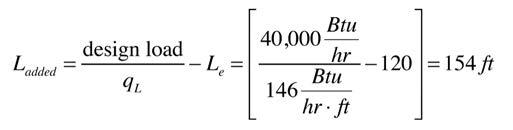
Here is an example. Assume a building has a calculated design load of 40,000 Btu/hr, and its distribution system contains 120 ft. of standard residential finned-tube baseboard. A conventional cast iron boiler currently heats it. The goal is to reduce the supply water temperature to 120F at design conditions, using more of the same baseboard. Assume the temperature drop of the distribution system is 10F. Determine the amount of baseboard that must be added:
Solution:
Step 1: The design load has been calculated as 40,000 Btu/hr.
Step 2: The total amount of finned-tube in the system is 120 ft.
Step 3: The lower supply water temperature at design load will be 120F.
Step 4: The lower average circuit water temperature will be 120 - (10/2) = 115F.
Step 5: The output of the finned-tube at an average circuit water temperature of 115F is determined from Figure 6-10 as 146 Btu/hr/ft.
Step 6: The required additional length of baseboard is now calculated using Formula 2.
Formula 2
Although it might be possible to add 154 ft. of baseboard to the system, it would require lots of wall space. In most buildings, adding this much baseboard is not a practical solution. Alternatives include using baseboard with higher heat output or using other types of heat emitters to achieve the necessary design load output.
Another option is to consider adding high output finnedtube baseboard rather than standard baseboard. Figure 3 shows the heat available from high output baseboard (shown as the blue curve) and, for comparison, standard residential baseboard (shown as the red curve).
The steps of the previous procedure can be modified to determine the amount of high output finned-tube baseboard that is required to reduce the supply water temperature to the system under design load.
Steps 1 to 4: Same.
Step 5: Determine the output of high output baseboard at the average circuit water temperature using Figures 3 (or manufacturer’s literature for a specific make and model).
high output fin-tube baseboard
65 ºF air temperature entering baseboard
standard fin-tube baseboard
(ºF)
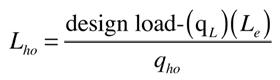
Step 6: The required length of high output baseboard to add to the system is found using Formula 3.
Formula 3
Where:
Lho = length of high output finned-tube baseboard to be added (feet)
design load = design heating load of building (Btu/hr)
qL = output of existing baseboard at the lower average water temperature (Btu/hr/ft)
L e = total existing length of baseboard in system (feet)
qho = output of high output baseboard at the lower average water temperature (Btu/hr/ft)
Here is another example: Assume a building has a calculated design load of 40,000 Btu/hr and its distribution system contains 120 feet of standard residential finned-tube baseboard. The goal is to reduce the supply water temperature under design load to 120F. Additional high output baseboard will be added to allow this lower water temperature operation. Assume that the temperature drop of the distribution system at design load is 10F and this existing baseboard has the same output as in the previous example (146 Btu/hr/ft at average circuit water temperature of 115F). Determine the amount of high output baseboard required based on the performance shown in Figure 3.
Solution:
Step 1: The design load has been calculated as 40,000 Btu/hr.
Continued on MH8
Figure 3. High output baseboard versus standard baseboard
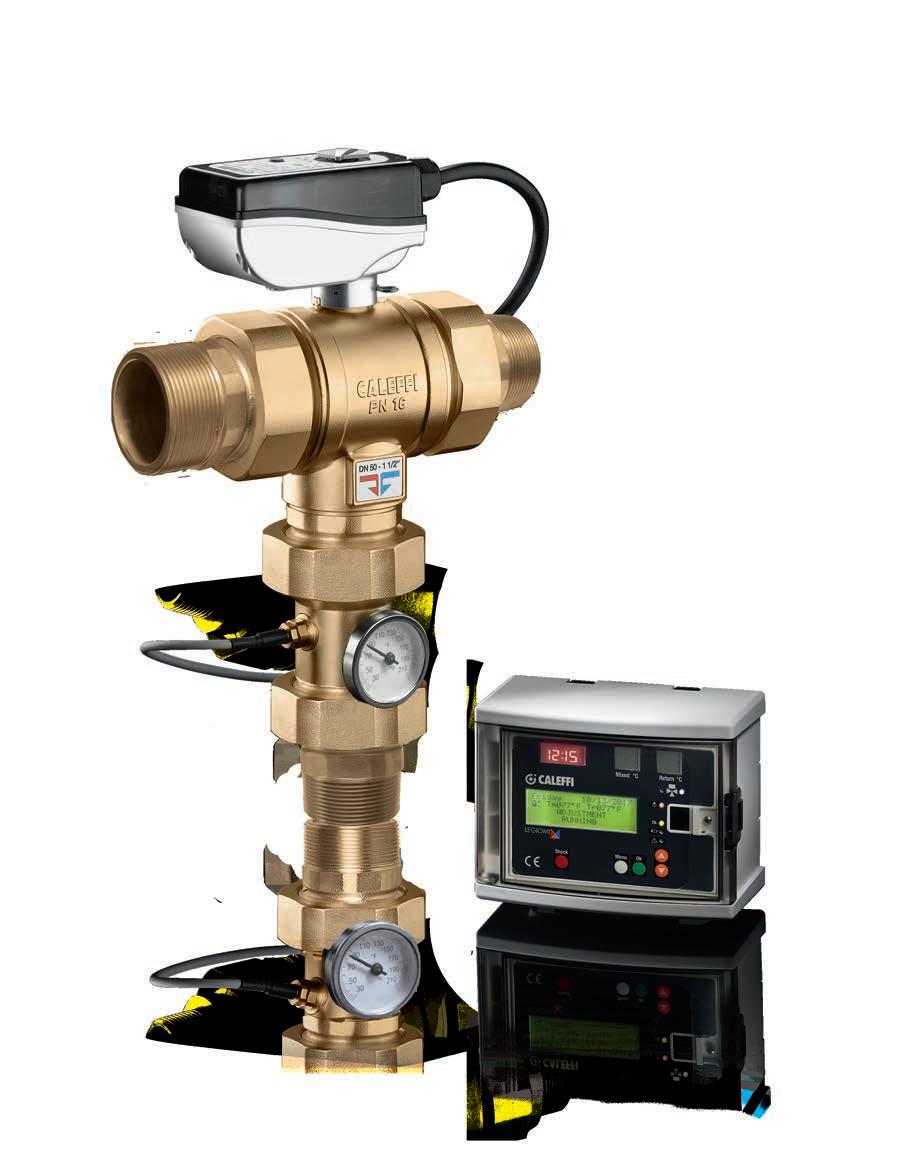
• Market’s highest rated flow capacity.
• Automatically self-cleans to prevent scale formation.
• Exclusive NPT or sweat union connections.
• Easy to use digital interface includes data logging, alarming, and status indication.
• Selectable automatic scheduling to thermally disinfect system.
• Optional Modbus-to-BACnet gateway for BAS integration.
Controlling
www.caleffi.com - Milwaukee, WI USA
Step 2: The total amount of finned-tube in the system is 120 feet.
Step 3: The new lower supply water temperature at design load will be 120F.
Step 4: The new lower average circuit water temperature will be 120 - 5 = 115F.
Step 5: The output of high output finned-tube baseboard at an average water temperature of 115F is determined from Figure 7 as 335 Btu/hr/ft.
Step 6: The required length of high output baseboard to add to the system is found using Formula 3.
Formula 3
Although this is a substantial reduction compared to the 154 ft. of additional standard baseboard required in the previous example, it is still a substantial length. The building must be carefully evaluated to see if this additional length of baseboard can be accommodated.
If the added length of high output baseboard cannot be accommodated, another option is to raise the supply water temperature constraint from 120 to 130F under design load conditions. This would reduce the amount of added high output baseboard to 40 ft.
ADDING OTHER HEAT EMITTERS
If the amount of finned-tube baseboard that needs to be added is beyond what can be accommodated, there are several other added heat emitter options. These include panel radiators, fancoils, or areas of radiant floor, radiant wall or radiant ceiling panels. In each case, the selection of these new heat emitters should be based on a selected supply water temperature at design load, along with a “credit” for the existing heat emitters in the system operating at the lower supply water temperature. The fundamental concept is shown in Formula 4.
Formula 4:
Where:
Qn = required heat output of the new heat emitters at lower supply water temperature (Btu/hr) design load = the design heating load of the building (Btu/hr) Qe = heat output of existing heat emitters at the lower supply water temperature (Btu/hr)
Once the value of Qn is determined, the designer can use tables or graphs from manufacturers to determine the heat output of specific heat emitters based on the average water temperature within them. Remember that the average water temperature will be five to 10F lower than the supply water temperature.
The goal is to select a grouping of new heat emitters with a total heat output that’s approximately equal to the value of Qn in Formula 4.
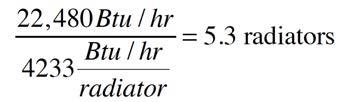
Let’s work through another example. Assume a building has a calculated design load of 40,000 Btu/hr, and its distribution system contains 120 ft. of standard residential finned-tube baseboard. The goal is to reduce the supply water temperature to 120F under design load conditions. Panel radiators are available in 24 in. x 72 in., which can release 4,233 Btu/ hr when operated at an average water temperature of 115F in rooms with 70F interior temperature. How many of these radiators are necessary to meet the design load?
Solution: First, use Formula 4 to determine the output required of the new radiators.
The number of radiators needed is then found as follows:
The designer could either add six of these panel radiators, or choose a slightly higher supply water temperature and use five radiators.
Another option is to use panel radiators of different sizes, provided that the total output at the lower supply water temperature could meet the value of Qn. In this example, the six new radiators would be combined with the 120 ft. of existing baseboard to provide the 40,000 Btu/hr design load.
A similar calculation could be made for fan-coils, air handlers or other heat emitters.
In the case or radiant panels, the designer needs to determine the output of each square foot of panel based on the lower average circuit temperature and the specific construction of the panel. The total required panel area is found by dividing this number into the value of Qn.
PIPING OPTIONS
Once the amount of additional baseboard is determined, designers can turn their attention to how it should be piped into the distribution system. That will be discussed in Part II (see pMH27).
John Siegenthaler, P.E., is a mechanical engineering graduate of Rensselaer Polytechnic Institute and a licensed professional engineer. He has over 34 years experience in designing modern hydronic heating systems. Siegenthaler’s latest book is Heating with Renewable Energy (see www.hydronicpros.com for more information).
COMMON ISSUES AND INSTALLATION ERRORS – PART I
BY MIKE MILLER
Controls are often blamed when hydronic systems are not operating properly. While that may sometimes be the case, always look at what else may be influencing performance. While control systems are not flawless, consider that they are developed in a controlled environment and are built for a specific purpose.
More often than not, if control systems do not perform as needed, the issue is with the installation or programming side of things. There is absolutely nothing that will minimize downtime and troubleshooting more than getting the system installed right the first time. Nothing will ever replace the need for solid training and acquiring an understanding of the product itself, along with the installation and troubleshooting side of things in advance of working with the product.
This series will look at five of the most common reasons why control issues
arise and provide solutions to those issues. You will read about the following in more detail:
1. Sensors used
2. Controlled device sizing/piping
3. Outputs on controllers
4. Wiring of sensors, control signals, communication
5. Setup of controls (using multiple stand alone controls, controls with schedules)
1. SENSORS USED
Depending the control system you are working on, any of the following sensors may be used:
a. Outdoor sensor
b. Indoor sensor
c. Pipe sensor
d. Air flow sensor
e. Humidity sensor
Some of these may be thermistor type sensors, which operate on a fluctuating resistance scale depending on the temperature those are exposed to. Always
consult the manufacturer’s resistance scale, typically found in the installation manual, when checking these sensors. An example of a temperature resistance chart using a very common type NTC thermistor is shown in Figure 1. Please note that not all thermistor type sensors are created equal–they may be operating on a different resistance scale, even the sensor is also labelled 10K. As such, I would not recommend using a third party sensor on anyone’s control, unless you have done your homework and compared the two in detail. Even then, I would always refer back to the control system manufacturer to get its blessing. Why would you need this information? You need it in order to troubleshoot sensors that are not accurate. The very first thing I would check is the sensor location and whether or not it is being influenced in any way. The following is a small summary for what could be impacting the sensor’s accuracy from a location perspective.
Figure 1. Temperature resistance chart–NTC thermistor, 10 kΩ
PIPE SENSORS
Is the pipe sensor strapped to a pipe that is thermally conductive, such as copper? If yes, that is fine and we will look at how to check a sensor later using Figure 1. If not, it may be strapped to black iron pipe, PVC or anything that is not thermally conductive. If this is the case, then the sensor should be immersed in a sensor’s well. Without that immersion type well, there will be a temperature difference between the fluid that the control system wants to control and what the sensor is reading.
Another important consideration is the strap used to strap sensors to the pipe. Do NOT over tighten this strap; it may expand at a different rate from the sensor as the temperature increases. That in turn could damage the thermistor beat found inside of the sensor itself.
INDOOR AIR AND/OR OUTDOOR AIR SENSORS
In the case of an outdoor sensor, make sure that is installed at a location where it can read nothing but the true outdoor air temperature. It is always recommended that it be located at the north side of a building and under an overhang so that it is protected from the sun and wind. These could falsely affect its temperature reading and therefore provide misleading information to the controller. Unfortunately, I have found outdoor sensors that are affected by sun or wind or even other sources, such as dryer vents and boiler vents.
In case of an indoor air sensor or digital communicating thermostat, make sure that the sensor is not near any other objects emitting heat, such as radiators or air vents. Again, you want to make sure that nothing else can influence its reading other than the true indoor air temperature.
Over the years I have found some indoor air sensors that were affected by draft coming in from behind the thermostat or sensor where the wiring hole in
the drywall was too big. The draft from within the framing affected its temperature reading. Make sure that any opening used for wiring in behind the sensor is plugged properly.
If all of the above checks out on the sensor, the first thing to do is to go to the sensor itself and disconnect any connecting wire. Then use an ohm resistance meter and check for the resistance across the two sensor leads and compare it to the resistance chart for this sensor.
If this were the chart in Figure 1 and if the temperature this sensor was exposed to was about 130F, then the resistance should be 3,050 ohms. If it is not, then the sensor may be faulty. Remember that the resistance on this sensor and the temperature it is exposed to should match. If it does match, then reconnect the wiring in between the sensor and the control. Take the same reading with the additional wiring in place to see if something else is off within the wiring itself. If the resistance is equal, then we know the sensor and the wiring are fine.
This could be a very rare case where a controller is actually faulty. If you find a change in resistance consider the reasons discussed below regarding wiring and installation.
Air flow and humidity sensors are very similar in nature and troubleshooting. Most often when I have seen humidity sensors fail or fail to be accurate, dirt or other materials are found to be touching the surface. Most humidity sensors I have worked with in the past use resistance based sensors similar to that of temperature. It is very important that the surfaces be inspected and cleaned periodically. If the readings are off, follow the same troubleshooting as with the temperature sensors explained previously. Check the sensor without additional wiring first and then with the wiring if the first checks out. If all checks out again, then a faulty control could be
the case here also. But more than likely, you will find something and then we need to look at the wiring itself, much in the same way we did with the indoor, outdoor and pipe sensors.
Once any or all of the sensors are checked and we know they are good and the controls are good we need to look at the wiring between the control and the sensor itself. If the resistance reading including the wiring comes back with 0 resistance, a nail, screw or perhaps just a staple may be compromising the cable anywhere in between.
If the resistance is not 0, but varies from the right reading it had earlier without the wiring in between, then we must investigate the wiring as a whole. Was the right wire type and gauge used? Did we use solid strand wiring when twisted pair was recommended in the installation manual? If so, you may have to rewire using the right wire.
If the right wire was used, check whether or not it was run alongside any other power carrying cabling in the building. Sensor wiring, shall not be run with power carrying wiring in the building. It may cross power carrying wiring, but sensor wiring should never be run over a longer distance right next to it. Induced power from that wiring will have an impact on the accuracy of the sensor used. To run longer distances the sensor wiring must be inside its own grounded metal conduit.
While these may not be the only way s to troubleshoot misbehaving sensors, in my experience these techniques have proved to be the most successful. Look for more on control issues in HPAC March 2018.
Mike Miller is director of sales, commercial building services, Canada with Taco Inc. and a past chair of the Canadian Hydronics Council (CHC). He can be reached at hydronicsmike@taco-hvac.com.
PRODUCT SHOWCASE
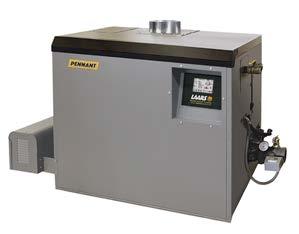
The Pennant line of fan-assisted, modular boilers and volume water heaters are suited to commercial applications. Available in seven sizes from 500 to 2000 MBH, Laars Pennant boilers/volume water heaters are fueled by natural or LP gas and deliver efficiency levels up to 85 per cent, with stage firing of up to 4:1, and cascade with auto redundancy. Pennant systems also qualify as low- NOx emission-rated, below 10 ppm. www.laars.com
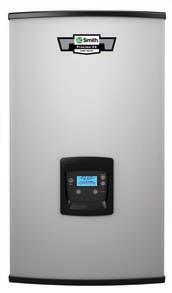
From A.O. Smith, the ProLine XE Combi Boiler for residential applications offers pre-heat and domestic hot water response modes that enable the unit to deliver hot water during frequent use cycles, such as washing dishes. An air handler interlock aims to prevent non-heated air from circulating when it alternates from space heating to domestic hot water mode. It is available in 111,000, 150,000 and 199,000 Btu/hr. models and has a 95 per cent AFUE. www.aosmith.com
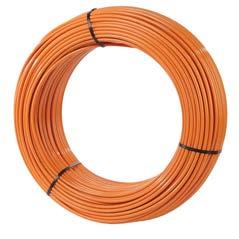
Suited for use in non-potable hot and cold water systems, Roth’s X-Pert S5 features a fivelayer design to protect the EVOH oxygen barrier. Flexible and smooth, the heat pipe is fully recyclable. It is manufactured and tested according to ASTM F2623, ASTM E84, ULC CAN-S102-2 and ICC-ES PMG-1129 and complies with NSF 14-2010a standards. PPI TR-3 Standard Grade Hydrostatic ratings are 180F at 100 psig; 73F at 200 psig; 82C at 6.89 bar; and 23C at 13.79 bar. www.roth-usa.com
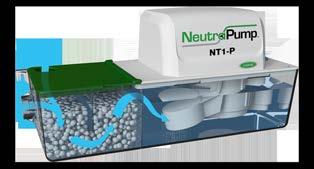
The NT1-P is a condensate neutralization tank with a high lift pump that provides up to 20 ft. or 6 m.of lift in one package. The 4-litre (1 U.S. gallon) tank with baffles is designed to channel flow of condensate through Axiom’s LipHter+ media for neutralization. It comes complete with built-in hooks and a low inlet height of 2 ⅜ in., which allows for wall-mounted installation. The tank is suited for installation with floor mounted condensing appliances. www.axiomind.com
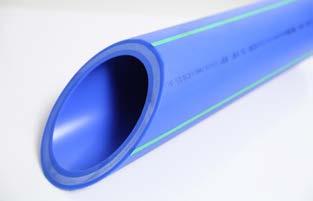
Aquatherm Blue Pipe is a polypropylene-random piping system suited to radiant applications as well as chilled-water, condensing-water and industrial applications. Sized from ½ to 24 in., the pipe is designed to handle operating temperatures up to 180F at 100 psi. It is rust-proof and scale resistant. Blue Pipe SDR 9, provides several advantages over the line’s other SDRs, including: lower wall thickness and weight per foot; 15 per cent higher flow capacity; and 20 to 100 per cent higher pressure capability depending on operational temperature. The SDR 9 utilizes Aquatherm’s optional multi-layer, faser-composite wall structure to reduce thermal expansion/contraction. www.aquatherm.com
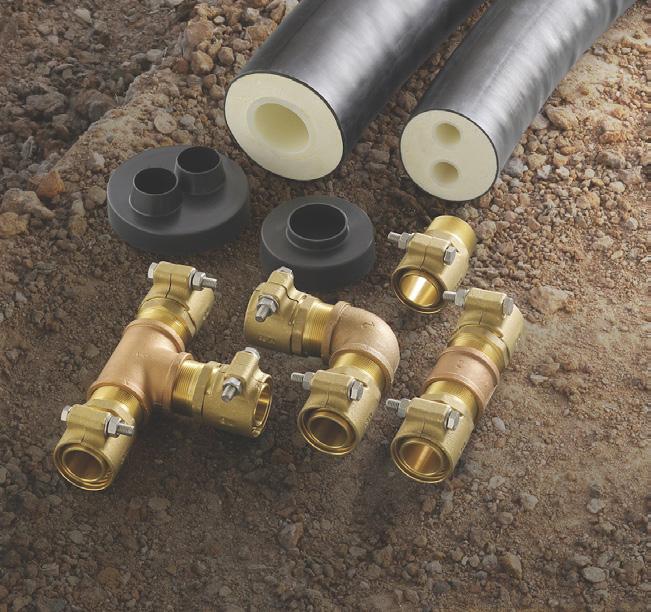
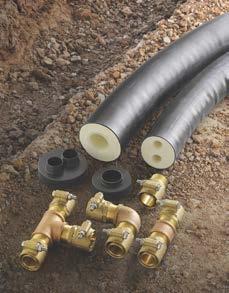
Viega ProRadiant insulated PEX barrier piping system for snow melting has high-compressive strength making it suitable for burial under areas with high traffic loads or foot traffic. A membrane between the outer casing and insulation enhances and maintains insulation value. The bonded system helps prevent water penetration and no special considerations for thermal expansion are required. The polyethylene (LDPE) jacket resists impact or blows incurred during the installation or transportation. The piping system is UV-treated, requires no special tools for assembly and is available in long coils or custom coil lengths. www.viega.com
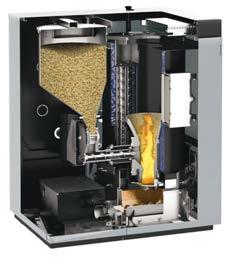
Compact and fully automatic, the Vitoligno 300-C wood pellet-fired boiler from Viessmann has rated inputs of 44 to 193 MBH and is designed for residential buildings, as well as light commercial applications. Equipped with advanced safety and fire protection devices, the boiler is closely monitored. Emission levels are comparable to leading fossil fuel heating systems. Wood biomass boilers such as this are CO2 neutral. The boiler comes equipped with a vacuum system for automatic pellet feed from a storage room. It can be converted to manual fuel feed using commercially available pellet bags. The automatic ash removal compresses the ash so that the ash box has to be emptied no more than a few times per year. www.viessmann.ca
Continued on MH14
Our NEW KNIGHT wall mount fire tube boiler includes these outstanding features:
10:1 Modulation Turndown*
Top AND Bottom Water Connections for Installation Flexibility*
Updated Smart System® Control
CON·X·US® Remote Connect Capable 95% AFUE*
15-Year Limited Heat Exchanger Warranty
Consistency runs in the family.
Greater installation flexibility, efficient operation, common features, components and controls...Sound familiar?
This consistency in features and benefits across the Knight fire tube boiler family makes it easier to install and service Knight boilers no matter what model you choose
KNIGHT Fire Tube Floor Mount Boilers (6 Models 55,000-285,000 Btu/hr)
NEW KNIGHT Fire Tube Wall Mount Boilers (7 Models 55,000-399,000 Btu/hr) *See product literature for specific model information.
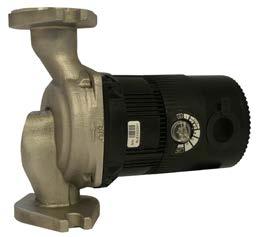
Bell & Gossett’s ecocirc 19-16 is a variable speed ECM circulator with onboard intelligence that automatically adjusts pump performance for higher efficiency over a wide operating range. The ecocirc 19-16 for heating, cooling and potable water applications is developed with spherical motor technology and optimized hydraulics to lower operational costs. www.bellgossett.com
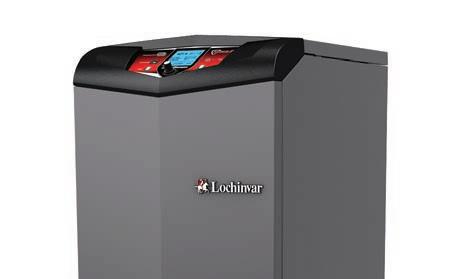
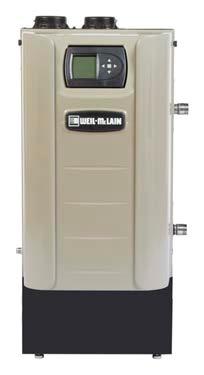
Weil-McLain Canada’s Evergreen high-efficiency condensing boiler is now available in three smaller sizes: 70, 110 and 155 MBH for residential and light commercial applications. These new models join the Evergreen’s 220, 299, 300 and 399 sizes, delivering up to 96.5 per cent AFUE like the larger models, but equipped with a circulator, 24V low-water cut-off, floor stand and wall-mount bracket. It has a stainless steel fire-tube heat exchanger and 10:1 turn-down firing rate. Features include setup wizard for single and multiple boiler installations and the capability to control and power 4 circulators. www.weil-mclain.ca/products/evergreen
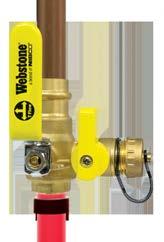
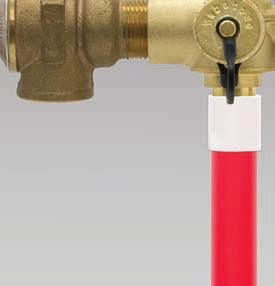
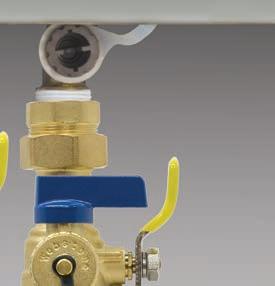
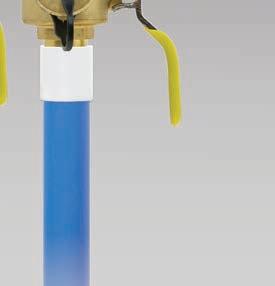
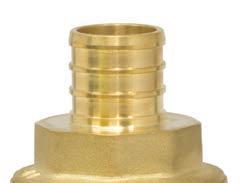
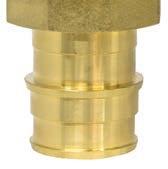
Webstone, a brand of NIBCO, has announced 40 new SKUs with F1960 or F1807 PEX connections. All new products include Thermostatic Mixing Valves, Press x PEX transitional ball valves, as well as the Webstone exclusive Isolator uni-flange ball valves, Isolator E-X-P tankless water heater valves, and Pro-Pal Ball Drain. www.webstonevalves.com/pex
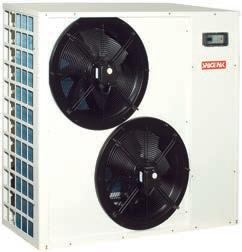
SpacePak’s Solstice Extreme air-towater heat pumps provide primary heating and cooling in severe weather climates in single-family residential and light commercial applications. Enhanced vapour injection technology and a high efficiency condenser are designed to deliver up to 48,000 Btu/h at 0F. The heat pumps use hydronics as the primary source for heating and cooling. Suitable for zoning, the units can be used in conjunction with a SpacePak hydronic air handler for distribution. Refrigerant is sealed in a powder coated galvanized steel cabinet located outside the occupied space. www.spacepak.com
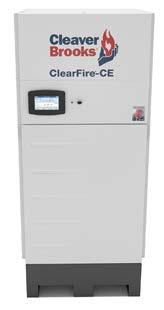
The ClearFire-CE (CFC-E) condensing boiler from Cleaver-Brooks features an enhanced AluFer fire tube heat exchanger and dual temperature returns. Dual temperature returns increase condensing in a hot water boiler and offer system engineering flexibility. Its large-water-volume pressure vessel with low pressure drop is designed to eliminate flow restrictions and reduces system pumping energy. A low emissions premix burner is built into the CFC-E. The selfregulating gas valve/venturi system, combined with ECM variable-speed blower technology delivers true linear modulation control with optimum turndown for hydronic systems. The burner automatically adjusts for combustion air density changes. The CFC-E fits through a standard doorway, and the side casings can be removed for passage through tight-access areas. www.cleaverbrooks.com
Bosch Thermotechnology has introduced the Buderus SSB industrial boiler series. The boilers are available in 798 MBH and 1024 MBH standalone units, or a 1024 cascading unit designed to meet demands up to 4096 MBH, making it suitable for commercial and institutional applications. The unit features flanged supply and return connections on both sides of the units, as well as a compact footprint. Dual heat exchangers provide increased capacity. Two 316L stainless steel watertube heat exchangers have accessible supply and return connections. The boiler is designed to achieve up to 96.8 per cent thermal efficiency with up to 10:1 modulation on a single unit and 40:1 modulation at maximum-cascaded capacity. www.boschheatingandcooling.com
From Taco Comfort Solutions, eLink is a wireless connectivity platform that provides users with product information through a mobile device or laptop. eLink uses NFC (Near Field Communications) to allow access to information on Taco products. No setup is required and each tag provides information on products, including: instruction sheets, replacement parts, CAD drawing, order information, product specs, technical support, catalogs and sales representative information. www.tacocomfort.com
Continued on MH16
Top quality and attractive price…
The newest version of our most popular boiler series ever!
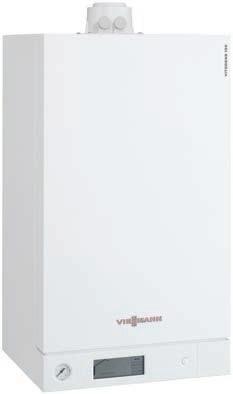
VITODENS 100-W, B1HA
gas condensing boiler
Heating input: 21 to 125 MBH
VITODENS 100-W, B1KA
gas condensing Combi boiler
Heating input: 21 to 125 MBH
DHW max. input: 149 MBH
Lasting performance
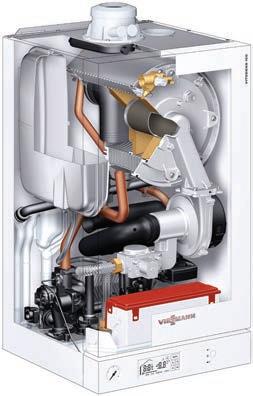
Quality workmanship you can trust with new Viessmann-made SA240 S43932 stainless steel Inox-Radial self-cleaning heat exchanger and new factory-calibrated, fully-modulating stainless steel MatriX cylinder gas burner.
User-friendly control
New backlit LCD touchscreen control with enhanced programming interfaces with a variety of external control devices to provide comfortable and reliable energy-saving space and DHW heating.
Outstanding versatility
NG or LP fuel compatible “out-of-the-box” with bottom pipe connections and front access to all serviceable components plus multiple venting options for easy installation service and maintenance - all in a compact wall-mount design.
On-demand DHW (combi model only)
Built-in DHW unit includes stainless steel plate heat exchanger, 3-speed pump, diverting, pressure bypass and pressure relief valves, water hammer arrester & sensors - conforms to NSF/ANSI 372 for “lead free” plumbing products.
GeoSmart Energy has introduced the NetZero series variable speed hydronic geothermal inverter heat pump system. This product is geared towards the NetZero/PassivHaus residential/commercial market and features COPs over 5.0. The heat pump has Carel communicating controls, Copeland scroll compressor and inverter drive, and built in variable speed circulators. Exclusive HTR (high temperature recovery system), DHW (with high temperature legionella prevention program) production, passive cooling, and a pool/spa heating mode are some of the systems key capabilities. It is available in 3-12KW, 5-22KW, 12-40KW, 15-70KW, and 25-100KW capacities. www.geosmartenergy.com
Utica Boilers has introduced the MAH-165 and MAC-205. Available in combi and space heating models, these modulating boilers feature AI Control Technology. The boiler automatically sets up during initial startup, has the ability to recognize natural or LP gas, continuously monitors combustion and adjusts gas and air flow to optimize combustion and fuel savings. The control also measures water temperature, flue gas temperature and pressure that can impact the boiler operation and CO levels. The control will shut down operation if these values exceed normal operating levels. It also increases or decreases the amount of gas in order to meet demand. When in DHW mode, the MAC combi will fire at 205 Mbtu/h and provide up to 5 gallons/minute of domestic hot water. The MAH-165 and MAC205 are both rated at 164 Mbtu/h for central heating mode. www.uticaboilers.com
HeatLink's new pre-fabricated commercial 3-way mixing panels include all components needed to control a building’s radiant heating system supply water temperature. Intended for use with a dedicated heat source, that is a boiler or other non-DHW appliance, or a nondedicated heat source with a heat exchanger. All panels include a 3-way mixing valve and motor, pump, circuit setter, thermometers and isolation valves. Outdoor reset, BMS compatible, or snow melt (shown) models are available with either a UPS 26-99 or UPS 26-150 pump. www.heatlink.com
NYB’s compact integrated free-cooling chiller is comprised of independent 28-ton modules, which can be connected together for up to 255 tons cooling capacity. Each module has an external chiller producing chilled water with high efficiency scroll compressors, axial fans, microchannel coils and a system side plate heat exchanger. Units with the desuperheater option can also produce hot water. It is possible to couple up to 9 chillers; the units are designed to keep overall unit dimensions to a minimum. Each single unit is able to act independently. Partial heat recovery when in mechanical cooling mode is optional. Modules with integrated free cooling can be used in conjunction with mechanical cooling only units. www.aermec.us
The HBX Wi-Fi Zoning System can be used in many applications from radiant heating to forced air delivery systems or a combination of both in one application. The system can operate pumps/valves, dampers, fan coils and provide automatic humidity control based on the outdoor temperature. No manual adjustment is required. The system can be remotely monitored or configured using a smartphone or tablet device. www.hbxcontrols.com
Navien’s fire tube boiler line is designed for residential and light commercial applications. Four models (175,000, 199,000, 299,000 and 399,000 Btu/h) offer a new patented heat exchanger design, ease of installation and service, intuitive interface, advanced controls, and simplified integration with IoT. Features include a 10:1 turndown ratio, 95 per cent AFUE, flexible venting, and remote access via mobile applications. www.us.navien.com
The Caleffi QuickSetter 132 balancing valve has a built-in visual flow meter, which allows the contractor to adjust flow while viewing flow rate directly on the valve itself. It has a brass valve body and flow meter, as well as a rotatable valve for flow rate adjustment. The valve has a maximum working pressure of 150 psi and a temperature range of 14F to 230F. www.caleffi.com
Continued on MH18
B&G SOLVES BUILDINGS
Ecowarm is a modular radiant board system comprised of grooved plywood boards laminated with aluminum designed. It is intended for new construction and remodeling over a sub-floor or when properly installed, over cement. The two board types in the Ecowarm system have 2 patterns; straight and combo that are laid out and installed in a pattern and attached by means of construction adhesive combined with screws or cross stapling. The pattern creates the pathway into which ½ in. ASTM F 876-877 PEX tubing is placed. Typically the board is applied over the portion of a project that is not under stairs or cabinets. www.ecowarmradiantheat.com
REHAU EVERLOC+ compressionsleeve fitting system is available in sizes up to 2 in. for commercial plumbing and hydronic piping applications. Designed for use with RAUPEX PEXa pipe, EVERLOC+ features polymer and lead-free brass fittings and power tools for secure and cost-competitive connections. The fitting expansion and compression process involves two steps. Power tools, which have quick-change heads for various pipe sizes, are designed to manoeuvre into tight spots. Overhead distribution runs can be installed using coils or straight lengths of PEXa inserted in galvanized steel support channels. www.everlocplus.com
The ALPHA1 circulator with three constant pressure settings and the ALPHA2 with AUTOADAPT from Grundfos feature standard or rotated flanges, plug and play start-up, and nut captures. The ALPHA1 is a variable-speed circulator built with electronically controlled Grundfos permanent magnet motor technology. It has three-constant pressure control modes, an LED display and easy-to-use push button controls. http://ca.grundfos.com/alpha.html
Slant/Fin’s Revital/Line pre-cut covers are designed to fit baseboards up to 8.5 in. high and 3 in. deep. Installation involves popping off the old covers and snapping on the extruded aluminum cover. Offered in nine colours, the durable covers are laboratory tested for maximum heat output. www.slantfin.com
The Thermo-Snap clamp from Thermo Manufacturing is suited to multi-use applications, including copper, PVC and ABS pipes. These adjustable, premounted brackets are UV protected and available in five sizes – micro (7/16 in. OD, 1000 pieces per box), mini (1 in. OD, 1000 pieces per box), residential (1-1/12 in. OD, 500 pieces per box), commercial (2 in. OD, 250 pieces per box) and industrial (3 in. OD, 250 pieces per box). Made for indoor or outdoor use, the clamp universal mounting brackets can be re-opened for an addition or custom adjustment. www.thermopan.com
RBI has introduced the Futera XLF MB6000, MB8000, and MB10000. The ver tical copper boilers are completely packaged, easy to rig, and are a smaller footprint alternative. Features include efficiencies up to 88 per cent; HeatNet integral boiler management system; multiple vent options (CAT I, II and IV); turbo pilot system; dual side-by-side finned copper tube heat exchanger; ASME 160 PSI; 4-pass design; symmetrical airfuel coupling; and small vent diameter. www.rbiwaterheaters.com
The CREST modulating-condensing boiler from Lochinvar is offered in sizes from 2.5 to 6.0 million Btuh. It is designed to provide thermal efficiencies up to 99 per cent in low water temperature applications. It features a unique burner design with up to 20:1 turndown. The burner fires into an array of 316L stainless steel firetubes. The boiler utilizes an on-board Modbus protocol and BACnet MSTP. The Smart Touch control with CON·X·US has a built-in cascading component that communicates with up to eight units. www.lochinvar.com
BOILER MODULATION –
The benefits of modulation are threefold; it reduces cycle losses, it reduces the wear on the components, and it can (but not necessarily as shown later in this article) result in higher thermal efficiencies. But aside from the benefits, what are the impacts of firing rate modulation on gas fired hot water boilers? When does modulation leads to a decrease in efficiency and risk of equipment damage?
To understand these issues it is necessary to review how a boiler functions and the losses associated with its operation.
BASIC BOILER OPERATIONS: COMBUSTION
The typical hot water, premix boiler is designed to generate hot gas by combusting a fuel in the presence of air and then transferring, the best it can, the thermal energy from that hot gas into the boiler water. Boilers are rated on their thermal efficiency, which is simply the ratio of the chemical energy added to the boiler over the energy added to the boiler water. As more heat is transferred from the hot gas into the boiler water, the thermal efficiencies increase and the exiting (flue) hot gas temperatures decrease.
The chemical representation of ideal combustion with natural gas is highlighted below:
2O2 + CH4 = CO2 + 2H2O
The actual combustion process leads to the formation of other byproducts or products in different concentrations than those highlighted above. These include:
• The impact of nitrogen in the combustion air, which can lead to the formation of nitrous oxides (NO x) in the hot gas
• Unburned fuel if the air and fuel are either not properly mixed or if inadequate combustion air is used
• Different concentrations of CO, CO2, and 0 2 depending on the amount of air added to the combustion process.
Almost all boilers are tuned to add excess air to ensure proper air-fuel mixing and complete combustion of the fuel. Excess air is also added to prevent the burner from overheating when the flame sits on the burner surface. Higher air-gas mixtures "push" the combustion flame off the burner thereby reducing the burner temperature.
BOILER LOSSES
Boiler energy losses generally result from:
• Dry flue losses (the heat of the dry combustion byproducts exiting the boiler)
• Energy in the water vapour exiting the boiler
• Radiation and other losses (usually minor when compared to the first two)
When enough thermal energy from the hot gases is transferred to the boiler water the overall hot gas temperature dips below the water dew point and some or all of the water becomes liquid. The energy released when water converts from a vapour to a liquid is picked up by the boiler water and results in a significant boost in efficiency. Every pound of water in the hot gas converted to a liquid adds 1,000 BTUs into the boiler water.
The dry flue losses and loss from the water vapour can be readily calculated if the amount of CO 2 or 0 2 in the flue gas is known (this is used to calculate the dew point for the water in the flue gas and to determine the concentrations of the hot gas products) and the stack temperature is known. Two examples are provided in Figures 1 and 2 where natural gas is assumed as the fuel source. Figure 1 is the calculation of losses assuming 27 per cent excess air (equates to a CO 2 of nine per
IS MORE BETTER?
cent) and a flue gas temperature of 150F. Note that the dew point for the gas at this level of excess air is 130.6 degrees –any flue gas temperature (and by extension return water boiler temperature) above this point will not result in condensation of the flue gas. The total steady state efficiency of the boiler (neglecting radiant and other minor losses) operating at this point is 88.1 per cent.
Figure 2 assumes the same conditions of Figure 1, however the flue gas temperature has been reduced to 120F. This results in an efficiency of 92 per cent or an efficiency improvement of 3.9 per cent. This increase is due to the added energy from the latent heat of vaporization in the flue gas water.
HEAT TRANSFER
Boiler heat exchangers are designed to optimize the transfer of the hot gas thermal energy into the boiler water. The amount of heat transferred in this process is represented by:
Q = U •A• ∆Tlm
Where:
Q= amount of heat transferred
BY DAVID CONNORS
U= overall coefficient of the heat exchanger
A= effective heat transfer area in the heat exchanger
∆Tlm = log mean temperature difference of the incoming/exiting hot gases and incoming/exiting boiler water.
This article will not explore the detailed elements of this heat transfer; rather it will review the major elements impacting the transfer of heat. In essence, any improvement to U, A, or greater temperature differences leads to more heat transfer and higher boiler efficiencies.
U, the overall coefficient, is inversely proportional to the resistance of heat flow in the heat exchanger (i.e. U = 1/ Resistance). The itemized resistances to heat flow include:
• Resistance in convective heat transfer from the hot gas to a fouling layer on the hot side of the heat exchanger
• Resistance in conductive heat transfer through the hot side fouling
• Resistance in conductive heat transfer through the heat exchanger material
• Resistance in conductive heat transfer through the water side fouling
• Resistance in convective heat transfer from the water side fouling into the boiler water
For the conductive heat transfer the resistance is governed by the thermal conductivity of the material (constant) and the
BOILER FLUE LOSS CALCULATOR
Enter BLUE numbers to calculate Condensing Flue Loss
CO2 = 9.00 %
Flue Temperature = 150F
Room Temperature = 71.5F
Barometric Pressure = 28.99 in.Hg
Relative Humidity = 50.0 %
Appliance is NONCONDENSING
Flue Loss = 11.9 %
Efficiency = 88.1 %
H2O as Vapour = 100.0 %
Dew Point = 130.6F
Figure 1 Loss Calculation for 27% Excess Air and 150F Stack Temp.
Most modern boilers have a level of modulation embedded in their design.
BOILER FLUE LOSS CALCULATOR
Enter BLUE numbers to calculate Condensing Flue Loss
CO2 = 9.00 %
Flue Temperature = 120F
Room Temperature = 71.5F
Barometric Pressure = 28.99 in.Hg
Relative Humidity = 50.0 %
Appliance is NONCONDENSING
Flue Loss = 8.0 %
Efficiency = 92.0 %
H2O as Vapour = 71.4 %
Dew Point = 130.6F
material thickness. The convective heat transfer losses are less straightforward as they are governed by a convective heat transfer coefficient, which is dependent on the gas/liquid properties and its flow characteristics. One main influence on these coefficients is whether the flow is turbulent with lots of mixing or laminar where the flow is very uniform. A change from turbulent flow to laminar flow may reduce this convective heat transfer coefficient by a factor of five times or greater. This is compounded by the fact that resistance in convective heat transfer is typically much greater than the conductive heat transfer resistance. Because of this impact there is a lot of attention given to designing heat exchangers to operate with turbulent water and gas flows.
BOILER CYCLING
The last point in describing basic boiler operations is describing a typical boiler cycle for a fan assisted or positively pressured boiler. Each time a boiler is activated it will undergo a pre purge cycle to remove any residual gases within the combustion chamber. This is done for safety reasons and is accomplished by flowing combustion air without fuel
Efficiency Comparison MACH C1050
for a set period of time. During this process heat is being transferred from the hot boiler water within the heat exchanger to the cooler combustion air stream. This heat transfer is an energy loss but is needed again for safety reasons. Following the purge cycle, fuel is added to the combustion air, the mixture is ignited and the boiler begins its normal course of operations. Once the boiler is deactivated, a post purge is performed to remove any residual gases. These purge processes are the main driver in cycle losses which reduce the overall efficiency of the boiler plant.
MODULATION
Why modulation? In the past boilers were designed with only one mode of operation – on/off. They were not designed to fire at any other rate than their full rated capacity. When the heating needs for a facility were less than the capacity of the boiler, the boilers would undergo cycling where they would activate, satisfy the load then deactivate. The greater the difference between the heating load and the boiler output, the greater the number of boiler cycles.
As mentioned previously, excessive
boiler cycles produce cycle losses but they also add to the general wear and tear of the equipment. The relays and contacts in the electrical components a limited number they can endure and these components will need to be replaced at a greater frequency when excessive cycling is experienced.
As innovation was added into boiler designs, manufacturers began offering units with multiple firing rates (multiple staged firing) followed by units that could modulate seamlessly between a fixed low fire rate and a high fire rate. On fanequipped boilers, modulation is accomplished by reducing the air and gas flow into the boiler. The ratio of the low fire to high fire rates is defined as the boiler's turndown capability. Most modern designs have a level of modulation embedded in their design; either with boiler units that have appropriate turn down or by using multiple on/off boilers.
Looking at the heat transfer equation provided previously, modulation equates to more effective surface heat transfer area (A) for the amount of heat added into the system. This effect is illustrated on the efficiency curves in Figure 3.
Continued on MH24
Figure 2 Loss Calculation for 27% Excess Air and 120F Stack Temp.
P-K MACH (LF) P-K MACH (HF)
Figure 3 Low Fire and High Fire Efficiency Curves
•
BRINGING IT ALL TOGETHER – IMPACT OF HIGH TURNDOWN RATES
From the preceding discussions it would appear that higher modulation is better. This begs the fundamental question –wouldn't a boiler with extreme turndowns be much more efficient than one with 5: 1 turndown? The answer to that is not necessarily, as shown below.
To achieve extreme turndowns high turndown boilers are tuned to deliver a greater amount of excess air at those low firing rates in order to keep their burner cool. That additional excess air significantly reduces the dew point of the water in the flue gas and also alters the losses in the dry gases as well. To illustrate this effect, the example used in Figure 2 is updated to reflect a 20:1 turn down where the 0 2 is set to 11 per cent (corresponding to a CO2 of 5.6 per cent and 97 per cent excess air). The results are highlighted in Figure 4 below.
Note that the dew point has been lowered from 130.6 degrees to 117 degrees and the boiler is no longer in the condensing range. This represents a 3.7 per cent decrease in overall efficiency and this is just the beginning of the bad news. In reducing the overall gas flow in extreme modulation there is the possibility that the gas flow over the heat exchanger goes laminar due to the significantly reduced airflows. If the boiler circulation water is similarly reduced to follow the firing rate, the water side flow could go laminar as well. If the primary resistance to heat flow is from the gas and water side heat convection and if one or more of those resistances are increased by a factor of five then the entire performance of the heat exchanger drops significantly.
The end result would be rising flue gas temperatures and higher boiler losses. There are other negative ramifications as well. If the water side flow does go laminar the temperature of the heat exchanger material will rise. If it rises enough it may cause localized boiling in areas along the heat exchanger wall. As those steam bubbles form the dissolved solids in the boiler water will come out of solution and bake onto the heat exchanger wall resulting in an increased fouling layer. That layer adds additional resistance to the heat flow thereby encouraging more steaming. If the temperatures creep high enough the heat exchanger will fail because the boiler water provides the necessary cooling to protect it from damage.
A last major area of impact is in flame management. When excess air well above 50 per cent is used in the boiler it impacts the stability of the combustion flame which can lead to excessive flame failures, nuisance trips and cycle losses.
Suggestions are being made in the market however that the steady state losses incurred from the high modulation rates overshadow the cycle losses that develop from 5:1 modulating boilers. Johnston Boiler Company released a
BOILER FLUE LOSS CALCULATOR
Enter BLUE numbers to calculate Condensing Flue Loss
CO2 = 5.60 %
Flue Temperature = 120F
Room Temperature = 71.5F
Barometric Pressure = 28.99 in.Hg
Relative Humidity = 50.0 %
Appliance is NONCONDENSING
Flue Loss = 11.7 %
Efficiency = 88.3 %
H2O as Vapour = 100.0 %
Dew Point = 117.0F
study on just such a scenario, which highlights that even with the resultant cycle losses, a 4:1 turndown boiler would be more efficient than an identical boiler fired at 10 per cent of full fire.1 Because of the dramatic drop in efficiency and potential damage to the boiler, some manufacturers intentionally limit their boilers’ turndown rate to 5:1 and have the lab tests to demonstrate the true efficiency of the boilers at the different firing rates. These are not extrapolated efficiency numbers using one data point at a higher firing rate and then extended out into the lower firing rates. The way to really know what the efficiencies are at any of the firing conditions is to ask for the direct lab results at those operating points and not accept projected or estimated numbers.
CONCLUSION
Realistic boiler modulation rates have helped improve the overall boiler system efficiency from reduced cycle losses and increased thermal efficiencies but extreme turndown (above 10:1 and higher) may produce the opposite effect. Prudent boiler plant designs must factor in actual (not extrapolated) boiler efficiencies through the firing range of the equipment and matching the expected plant loads with the right boiler size selections.
David Connors is regional sales manager with Harsco Industrial Patterson-Kelley. He can be reached at dconnors@harsco.com.
Figure 4 Loss Calculation for 97% Excess Air and 120F Stack Temp.
I SEE YOU’RE INTO HYDRONICS…
LOWERING THE BAR – PART II
Modifying high temperature distribution systems for lower temperature operation.
BY JOHN SIEGENTHALER
In Lowering the Bar–Part I (see MH4), we discussed how to size supplemental heat emitters that allow the supply water temperature to an existing distribution system to be reduced. The next step is to pipe those supplemental heat emitters into the existing system. As with most things hydronic, there are multiple approaches. The best approach for each installation considers cost, aesthetics, access the existing piping, available wall space and how the overall system will operate based on existing or newly created zones. We will look at concepts that can be tailored to individual systems.
Many residential hydronic systems have finned-tube baseboards connected in series or split-series circuits, as shown in Figure 1. When several heat emitters are to be added to a system using series or split-series connected baseboards, they should not be simply cut into the series circuit. Doing so could substantially increase the flow resistance of that circuit, which will reduce flow rate assuming the same circulator is used. Adding heat emitters in series also increases the temperature drop of the circuit. This reduces the heat output of heat emitters near the end of the circuit, especially when the supply temperature to that circuit is lowered.
One possibility is to make strategic cuts into the series circuit where it is easiest to access, and reconnect the cut segments back into a parallel distribution system. These cuts could make each room a separate parallel circuit or make a group of two rooms into a new zone.
One of the easiest ways to divide an existing series loop or split series distribution system into multiple parallel circuits is by creating a homerun distribution system. Each heat emitter, or grouping of an existing heat emitter and a supplemental heat emitter, is supplied by a separate circuit of PEX or PEXAL-PEX tubing. This tubing is easy to route through cavities or along framing. The homerun circuits begin and end at a manifold station. This concept for converting a series baseboard system into a homerun system is shown in Figure 2.
In this situation the existing series circuit was divided into four branch circuits. Supplemental heat emitters were added to each of these circuits. Two of the circuits received additional finned-tube baseboard and the other two received panel radiators. These heat emitter selections are only to il -
lustrate that multiple types of supplemental heat emitters can be used depending on available wall space, budget and aesthetic preferences.
In some branch circuits the supplemental heat emitters were added upstream of the existing baseboard. In others, the heat emitters were added downstream of the existing baseboard. The choice depends on the available wall space and placement of the existing baseboard within each room. Designers should estimate the water temperature in the circuit where the supplemental heat emitter will be placed, and size it accordingly.
The ¾ in. copper tubing in the existing circuit was cut at locations that preserved a reasonable amount of existing copper tubing, but also allow convenient transition to ½ in. PEX or PEX-AL-PEX tubing. Adapter fittings to transition from ¾ in. copper to ½ in. PEX or PEX-AL-PEX tubing are readily available from several suppliers. The ½ in. PEX or PEX-AL-PEX supplies and returns are routed back to a manifold station. That manifold station should be equipped with individual circuit balancing valves that allow the flow rate through each of the new branch circuits to be adjusted if necessary.
All four branch circuits in Figure 2 operate simultaneously; the circuits are not configured as individual zones. As such,
Auxiliary boiler series circuit
existing boiler
Auxiliary boiler split series circuit
existing boiler
Figure 1
this distribution system presents a constant flow resistance. Due to the parallel versus series configuration, that flow resistance may be lower than that of the original series circuit. This should be verified by calculating the head loss or pressure drop of the path with the greatest flow resistance using standard hydronic circuit analysis methods. If the head loss and total flow rate through the four circuits is comparable to the flow and head loss of the existing series circuit, the same circulator can be used. If the flow resistance is significantly less, consider replacing the existing circulator with an appropriately sized high efficiency (ECM) circulator, set for constant speed operation.
One big advantage of a parallel distribution system is that it supplies water at approximately the same temperature to each branch circuit. This is likely to boost the heat output of some existing baseboards that were previously located near the end of the series circuit.
CREATING NEW ZONES
Another advantage of parallel distribution systems is the ease of creating multiple zones. If the existing series circuit is converted to multiple branches, each of those branches can be equipped with a thermostatic radiator valve. These non-electric valves automatically modulate to vary the flow rate in each branch in response to the room temperature. As the room temperature begins to drop, the thermostatic valve opens to increase flow through that branch circuit and vice versa.
Thermostatic radiator valves are available in several configurations. One configuration, known as an angle pattern supply valve, allows the valve to be mounted on the inlet to a finned-tube baseboard. The thermostatic actuator of the valve projects out through a hole in the end cap of the baseboard. Its shaft is parallel to the wall. Heated water enters the port of the valve facing
Figure 3 Distribution system with four independently controlled zones
Figure
Figure 2 Converting a series baseboard to homerun
the floor, then makes a 90 degree turn as it passes through the valve and flows into the baseboard element. The other end of the finned-tube element can be equipped with another transition adapter (straight or 90 degree) to convert from ¾ in. copper to ½ in. PEX or PEX-AL-PEX.
Another type of thermostatic radiator valve allows the valve body and actuator to be mounted within the baseboard enclosure, while the adjustment knob is mounted at normal thermostat height on the wall. The adjustment knob connects to the actuator using a capillary tube.It is also possible to use panel radiators with built-in thermostatic radiator valves.
Figure 3 shows how the distribution system can be modified using thermostatic radiator valves to create a distribution system with four independently controlled zones. This adds flexibility for adjusting interior comfort conditions far beyond that of the original series loop system.
“One big advantage of a parallel distribution system is that it supplies water at approximately the same temperature to each branch circuit.”
Another possibility is to install a low voltage (24 VAC) manifold valve actuator on each circuit valve at the manifold station. These actuators are wired to four new thermostats, one for each zone. This option is shown in Figure 4
The systems shown in Figures 3 and 4 both use valves for zoning. In both cases the original circulator has been replaced with a variable speed pressure regulated circulator. These circulators automatically adjust their speed and power input as the valves open, close, or modulate flow. This helps stabilize the differential pressure across the manifold station and helps maintain stable flow rates within the zone circuit regardless of what other zones are operating.
DESIGN GUIDELINES
The modifications shown to convert a series baseboard circuit into parallel branch circuits are just a few of many possibilities. Each conversion situation must consider the exact layout of the existing heat emitters and the practicality of modifying the system into parallel branches. Designers should follow these guidelines.
1. Always determine what type of supplemental heat emitter will be used in each room, and where it will be located before modifying the piping.
2. From the standpoint of cost and installation time, it is best
closely spaced tees distribution system
thermostatic mixing valve with high Cv. Minimum setting = 130 ºF
existing boiler boiler circulator
5 Existing boiler as backup heat source
to use as much of the existing piping as possible.
3. Always consider the benefit versus cost of creating new zones when modifying the existing system. For example, if two bedrooms are typically maintained at the same temperature, and the existing system has accomplished this, it is likely best to keep these two bedrooms together on the same zone, after adding the necessary supplemental heat emitters. However, if the piping modifications to do so are comparable in cost/time to creating two independent zones, then the latter is arguably a better choice.
4. Once all the supplemental heat emitters have been selected, and the proposed modifications to the distribution system have been sketched, always run a flow and head loss analysis for the modified system. This is used to confirm sufficient flow to each branch, and to determine a suitable circulator for the modified system.
5. If the existing conventional boiler will be retained for use as a backup heat source for the low temperature system, be sure the boiler is protected against sustained flue gas condensation by installing a thermostatic mixing valve near the boiler as shown in Figure 5.
Low water temperatures are the future of hydronic heating. Use the guidelines discussed in Part I and II of this article to modify existing systems to operate at lower temperatures and let your customers experience the full potential of modern hydronic heat sources.
John Siegenthaler, P.E., is a mechanical engineering graduate of Rensselaer Polytechnic Institute and a licensed professional engineer. He has over 34 years experience in designing modern hydronic heating systems. He is the author of Modern Hydronic Heating and Heating with Renewable Energy (see www.hydronicpros.com for more information).
Figure
PLUMBING PRODUCTS
The A.O. Smith Tankless Rack System is fitted with CT-199 tank less units. It fea tures prefabricated gas and water lines that link as many as 20 high-efficiency condensing tankless heaters. The system is intended for commercial use, and each unit can be isolated while other heaters continue to operate as normal. www.aosmith.com
The Aqua-Flash from AquaMotion features a recirculation system that does not require power or batteries. Its stainless and bronze construction features unions, a hose and a tee. The pump has a 10 ft. line cord, and the Aqua-Flash offers a 3/4 in. union connection. www.aquamotionhvac.com
Konnect allows for automation of Kohler kitchen and bath products. It is powered by Microsoft Azure and can support multiple voice sensors. Users can interact with the system through voice-commands, motion control and pre-sets managed through an app for iOS and Android devices. PureWarmth toilet seat. www.kohler.ca
From Bradley, the Terreon deep well lavatory features a moulded single piece design with integral extra height splashes. It can be equipped with factory-supplied drillings or deck-mounted faucets. It features moulded carrier arm pockets on the underside of the lavatory for an optional surface mounted bracket. www.bradleycorp.com
From Reed Manufacturing, the PDEB250 Cone Chamfer Tool chamfers the inside or outside diameter of a plastic pipe. The cone shape fits pipe from 3/4 in. to 2 1/2 in. nominal diameter, including metric sizes. It can be used with drill power or manually. The cone chamfer tool is intended for PE, PVC, CPVC, PEX, ABS and PP pipe and weighs 0.1 kg. www.reedmfgco.com
The Sensaphone Pressure Sensor monitors for pump problems such as clogged intake or discharge lines, loss of suction or a burst pipe. The sensor has a pressure measuring range of 0 to 200 psi, a cable length of 2 m and operates in temperatures from -40C to 90C. The sensor sends real-time pressure data for data acquisition and alarming. www.sensaphone.com
Chicago Faucets has updated its 333 Series manual commercial faucet line with a reshaped body, integral cast shank and optional 4 in. and 8 in. deck cover plates. This series is designed for single service (hot, cold or tempered water) applications. The MVP cartridge includes a timing adjustment nut that allows for adjustment of the run-time from one to 20 seconds without turning off the water supply. Additional options are available, including low-flow outlets. www.chicagofaucets.com continued on p58
Motor Feature gives operator maximum cable control and exceptional cleaning power from 75 to 350 RPM with constant torque.
• Professionally designed to clean 3/4” to 2-1/2” diameter drain lines up to 50 Ft.
• Standard unit features a hand tighten Jacobs Chuck. The CT is also available with a 2-way auto cable feed that keeps hands off rotating cable as it advances and retrieves cable with the push of a lever, and helps keep work area clean.
• Balanced, heavy-duty steel tubular frame allows for 2 position operation.
• Rugged stainless steel cable drum will not rust and resists denting.
• Holds up to 50’ of 1/4” cable, 50’ of 5/16” cable, or 35’ of 3/8” cable.
Auto Cable Feed Unit Shown
Kohler
American Standard's NextGen Selectronic commercial faucet line incorporates an ASSE 1070-certified thermostatic hot water temperature limiter into the faucet. Electronics are incorporated into the spout, and the line features handsfree operation. All serviceable components are accessible after removing the faucet cover with one screw. www.americanstandard.ca
THG Paris offers the Bastide, Primo Cuisine and Santos faucet collections. Bastide is deck-mounted with a curved spout and cylindrical base and a white porcelain lever-style handle with several finish options. Primo Cuisine offers 3 design options and is also available with wallmounted extendable pot filler. Santos is a single-valve faucet with a single lever available in multiple finishes. www.thg-paris.com
The Ridgid EZ change faucet tool is used for installation and removal of faucets and sink strainers. It fastens and removes tab mounting nuts and supply line nuts. The faucet features a shut off valve wrench and cubed insert compatible with common nut sizes. EZ is intended for 2, 3, 4 and 6 tab mounting nuts. It has a retainer for 3 or 4 slot strainer baskets and a 5/8 in. deep welled socket. www.ridgid.com
Stone Forest copper farmhouse sinks are hand patinated and made from 100 per cent recycled materials, and are lead free. The sinks include a foam filled interior and offer several mounting options, including: undermount, flush mount, partially elevated and above counter. One side of the sink is hammered and the other has smooth front apron. Either surface can be displayed. www.stoneforest.com
A PROJECT AT THE END OF THE WORLD
And a piping system that supplies all of the essentials right from the get-go
With something as fundamental to the construction of an Arctic research station as the vital supply of warmth and clean drinking water, you don’t experiment, but trust uncompromising quality and absolute reliability. Viega met these high demands using ProPress for Stainless (according to US standard) for drinking water and Prestabo for heating installation, and also delivered the know-how to go with them. Viega. Connected in Quality.
Bharati Research Station, Antarctica
MECHANICAL SUPPLY NEWS
MANUFACTURERS • DISTRIBUTORS • WHOLESALERS
Eparts is intended to complement Bitzer’s Electronics Service Tool.
BITZER UPDATES ONLINE SPARE PARTS SOFTWARE
Bitzer has redesigned EPARTS, its online spare parts software with additional services and added functions.
New features include regularly updated integrated data, which aims to provide users with up-to-date information.
“With the clear identification of the spare parts via EPARTS we shorten the time span between emergence of the need and delivery,” said Stefan Rapp, head of the spare part department at Bitzer.
The free software is offered in German, English and French. www.bitzer.de
The Geberit Group is headquartered in Switzerland.
SANIFLO TO COMPLETE SENEGAL SANITATION PROJECT
Saniflo, in partnership with the Association Hydraulique Sans Frontières, an association that provides technical assistance in the field of hydraulics to developing countries, has led the second and final phase of its sanitation project in West Africa.
The project, which kicked off in March 2015, aims to improve access to toilets and safe drinking water in Diam Diam, Senegal, a town of approximately 4,000 residents.
Phase two promises newly-constructed family latrines and sanitation
GLOBAL SANITARY PRODUCTS MANUFACTURER, GEBERIT, UPGRADES WEBSITE
Geberit has launched a website redesign with info tiles now on the homepage for highly searched features, such as barrier-free bathrooms and bathroom design inspiration. The manufacturer’s website is now also compatible with mobile devices.
A download centre allows users to access information on products and installation. Users can now filter by product type, document type – web page, PDF, Word document – and installation application. "It's easier than ever to explore the site and find new ideas for bathroom design or get support for existing installations,” said Peter Christofferson, marketing services manager for Geberit North America.
Additional improvements to the site include: one-click access, fewer pages, more internal links and intuitive results. www.geberit.com
facilities, a reservoir and a water distribution network accessible to villagers’ homes through integrated connections. An educational component for locals focuses on hygiene, plumbing and public health.
The project is in recognition of World Toilet Day, a United Nations observance day that takes place annually on November 19 to raise awareness about the global sanitation crisis. www.saniflo.ca www.hydrauliquesansfrontieres.org
VIEGA LAUNCHES NEW WEBSITE AND GLOBAL IMAGE CAMPAIGN
Viega hopes new initiatives will highlight high-profile installations and company growth.
The website features brandcompliant, device-independent design, an online catalogue, intelligent search and an expanded product line. It features a watch list, which allows users to compile content and download pages.
Updates were made to the “spare parts” section of the website, where users can obtain technical, digital data on Viega spare parts. Added features include 1,000 exploded views with spare part information. Users can obtain information for historic models dating back to 1987.
The global image campaign highlights high-profile installations that used Viega solutions. www.viega.us
RUSKIN ADDS 5,000 SQUARE FEET TO KANSAS PLANT
Ruskin – air controls solutions manufacturer – has expanded its Parsons, KS manufacturing plant. The 5,000 square foot addition supports the production of the TDP05K thermal dispersion air measurement system.
“As we developed the TDP05K, we realized the product requires a steadystate production facility, where
Children surround a stone well in Diam Diam, which has been filled due to water contamination.
temperature and humidity set points can be maintained year-round to ensure products are calibrated under identical environmental conditions,” said Lowell Wells, Ruskin plant manager.
The size of the expansion—three times the space used to produce Ruskin’s legacy air measurement system—along with built-in redundancy for manufacturing processes allows for increased product availability.
AMERICAN STANDARD PRODUCTS WIN AWARD FOR DESIGN EXCELLENCE
American Standard has won a 2017 Good Design award for its Spectra showerheads and ActiClean toilet. The award was presented by the Chicago Athenaeum Museum of Architecture and Design in cooperation with the European Centre for Architecture, Art, Design and Urban Studies. Spectra+ Touch showerheads allow the user to alternate spray patterns by touching the outside ring of the showerhead. Spectra eTouch includes a remote control, which can mount on a shower surface. This is intended for users who have difficulty reaching the showerhead. ActiClean self-cleaning toilet includes VorMax flush technology, a flush hydraulics system from American Standard. It is WaterSense certified and uses 1.28 gallons of water per flush.
Winners of the annual Good Design Awards are chosen based on whether or not a product can enrich society and people’s lives through its design. Product and graphic designs are chosen from around the world. www.americanstandard.ca
“Our mission is to ship probes every day of the week, and one day soon, we expect to commit to a standard delivery of 10 days and express shipments of 72 hours and five days,” said Vogel.
Research and development for the TDP05K, introduced in 2017, will remain at Ruskin’s Grandview, MI facility, with assembly and calibration taking place in Parsons. www.ruskin.com
MEXICHEM LAUNCHES LOWER GWP REFRIGERANT KLEA 407H
Mexichem has launched Klea 407H in partnership with Daikin.
Klea 407H is intended to replace refrigerants R404A or R507 as a lower GWP alternative in medium and low temperature applications. It has a GWP of 1495.
Starting in the new year, the EU will implement a major reduction to the HFC supply quota under its F-gas regulation.
WILO USA AND WEIL PUMP JOIN ASPE AS AFFILIATE SPONSORS
Wilo USA and Weil Pump have signed on as American Society of Plumbing Engineers (ASPE) affiliate sponsors for 2018.
Headquartered in Cedarburg, WI, Weil Pump designs and manufactures centrifugal pumps for construction, industrial, commercial, and municipal applications. Wilo acquired Weil Pump to grow in the North American Market.
“It’s a no-brainer for us to align ourselves with ASPE,” says Tim Stapula, director of marketing for Wilo. “There are many synergies between ASPE, Wilo and Weil, and we look forward to connecting our people and portfolio with the organization’s members. It will be a win-win.”
As affiliate sponsors, Wilo and Weil Pump will receive exposure through ASPE’s official publication, Plumbing Engineer, and e-newsletter, as well as on social media platforms, the ASPE website, and at national ASPE events. www.wilo-usa.com
“The move away from higher GWP refrigerants is gathering pace, and the F-gas quota reductions due in January 2018 makes finding reliable, accessible alternatives to refrigerants such as R404A a priority for the industry,” says Sarah Hughes, EMEAI commercial director for Mexichem’s Fluor Business Group.
Mexichem reports that efficiency testing has shown Klea 407H to have comparable COP to R404A and other replacement products, including HFO blends. The company claims the product will deliver improved performance using a new blend of existing HFC technology. www.mexichem.com
Continued on p64
The company’s products won for design excellence in the bath category.
Lowell Wells, Ruskin plant manager (centre), celebrates the opening of Ruskin’s Parsons, KS plant expansion at the ribbon-cutting ceremony. Wilo is headquartered in Dortmund, Germany.
Klea 407H may also be used as a drop-in solution, according to Mexichem.
MECHANICAL SHOWCASE EARNS CEO FREE TRIP TO ITALY WITH CALEFFI
The contest aims to encourage designers, contractors and engineers to showcase work that features Caleffi products.
A grand prizewinner has been chosen for the Caleffi Excellence contest by attendees of the company’s webinar, Coffee with Caleffi.
Patrick Driscoll, CEO of Ironclad Mechanical Plumbing and Heating in Edmonton, AB, was selected out of six monthly finalists.
“We are beyond thrilled and humbled to have won the grand prize. This is extremely exciting,” said Driscoll.
The winning project was a mechanical room showcase created by Driscoll and his team.
A residential client of Ironclad had requested a showpiece heating system. Driscoll and team created a mechanical room showcase using in-house design work. Fabrication services were used to create custom diamond plate boxes to showcase Caleffi SEP4 and other system components.
Driscoll will receive a free trip for two to Italy to visit Caleffi’s world headquarters, along with a personalized tour of the factories and design facilities. www.caleffi.com
FUJITSU GENERAL AMERICA HAS PARTNERED WITH VENTACITY SYSTEMS TO DELIVER A VRF-BASED HVAC SOLUTION.
Fujitsu’s partnership with Ventacity – Portland, OR-based producer of ultra-efficient ventilation and controls products – aims to bring a “new approach” to ventilation and HVAC solutions for commercial projects, according to the company.
“Our customers are looking for smart building solutions to provide more efficient, healthier ventilation and better zone-by-zone controls. Fujitsu chose to work with Ventacity because their technology enhances energy efficiency, comfort, control and ventilation,” said Andy Armstrong, vice president of sales and marketing at Fujitsu.
Ventacity’s HVAC products offer a replacement for rooftop, unit-driven systems in buildings. The company’s HVAC2 Smarter Building Platform promises integrated HVAC equipment designed for improved efficiency and performance. www.fujitsugeneral.com
EVAPCO ACQUIRES ALCOIL TO FORM EVAPCO ALCOIL
Evapco has announced the name of its newly formed company: Evapco Alcoil – the result of its acquisition of Pennsylvania-based manufacturer, Alcoil, announced in October.
The company will continue to pursue the same business Alcoil has developed: designing and manufacturing micro-channel heat exchangers.
Alcoil is involved in the manufacturing, development, application and OEM support for brazed aluminum heat exchangers for the HVAC/R and industrial process industries globally.
John Kollasch has been appointed the vice president and general manager of Evapco Alcoil. Kollasch, an employee of Evapco for 26 years, brings extensive coil experience in the HVAC and industrial refrigeration industries. www.evapco-alcoil.com
UPONOR CONTENT LIBRARY NOW AVAILABLE THROUGH UNIFI LABS BIM CONTENT PORTAL
Uponor North America has partnered with Unifi Labs to make its Autodesk Revit content library available through Unifi Connect.
All content on the portal has undergone a quality control process.
The cloud-based portal for BIM content by Unifi, a digital content management and content provider for the building industry, is available globally to architectural firms, engineering firms, contractors, and operators.
Unifi Connect allows designers to access and insert building product manufacturer content directly into Autodesk Revit models, and browse content from internal, firm-based libraries alongside content from Uponor.
Manufacturers and designers can collaborate and exchange data through content accessed in real time. The portal allows designers to access content through specific, administratorapproved manufacturer channels – a feature intended to eliminate disconnect between the content provider and user. When a manufacturer makes updates to its content library, the administrator is alerted to the changes, including models that may exist in live projects, in order to make necessary updates within projects or firm-based libraries. www.uponor.ca www.unifilabs.com
Fujitsu is a provider of ductless heating and cooling systems, as well as VRF technology for commercial and residential use.
John Kollasch
Goodway Technologies has hired Greg Wyatt as senior vice president of engineering and operations. Wyatt will be responsible for overseeing the company’s engineered products and operations activities, including managing R&D, material sourcing and operation efficiency. Wyatt previously held the position of general manager and COO, Asia Region, at Stanley Black and Decker, in which he was responsible for supply to and from the continent.
Ontor Limited has appointed Nicholas Bourque as their new regional sales representative. Bourque will cover Alberta and the Northwest and Yukon Territories. Bourque has over 30 years of HVAC/R and industrial experience in the oil, gas and mining industries. He is a fourth class power engineer with a focus on temperature control.
Viega has hired Craig Cullen as its director of sales operations. In this position, Cullen is responsible for sales support as it relates to reporting, analysis and demand for forecasting and pricing analysis. He has more than 25 years of sales operations experience in a number of industries, including consumer products, pump manufacturing, connectors manufacturing, e-commerce and billing services. Cullen previously worked as a director of sales operations for Xylem.
Viega has also expanded the role of Joe Pikus, director of business development. Pikus is now responsible for business development in government, healthcare and hotel segments, as well as overseeing OEM accounts. Pikus joined Viega in 2003 and has more than 30 years of industry experience. He held a master plumber licence and worked as a plumber for 10 years. Prior to joining Viega, Pikus worked in product and sales manager positions at plumbing and plumbing manufacturing companies.
Vicki Andersen has been hired as associate brand manager for water treatment OEM, WaterRight. Andersen will assist in marketing efforts to uphold the company’s brand, and develop a longterm strategy for Water-Right wholesale product lines, including Sanitizer and Impression brands. Andersen has almost 20 years experience in maintaining brand identities for a variety of OEM companies, including Briggs & Stratton and Pentair. Operating at the company’s headquarters in Appleton, WI, Andersen will support all markets, including Canada.
Steve Griffeth has been appointed president of Jess-Don Dunford. Griffeth will be responsible for operational management and overall company leadership. Dave Harrison will take over as regional business manager for Eastern Ontario. Marty Lovelace previously held the position but has now retired after 22 years with the company. Prior to joining Jess-Don Dunford, Harrison worked as national sales manager, Canada, for Roth Industries.
HRAI has hired Mark Rippon as technical advisor. Rippon has worked for Sandpiper Energy and Reliance Comfort, both member companies of HRAI. He is a licensed sheet metal mechanic and gas technician.
Charles Abiad is the new director of HRAI’s wholesaler board for the region of Quebec. Abiad is the vice-president and general manager of Descair, based in Montreal, QC. Prior to joining Descair, Abiad worked as a consultant. He also served as vice president and general manager of Johnson Controls.
Wago has named John Bukowski the new distribution channel manager for North America. Bukowski worked in technical sales for over 30 years at companies such as Eaton, Pepperl + Fuchs and Schneider Electric. Shaun Nagi is the new regional sales manager for Wago in British Columbia. Prior to Wago, Nagi worked in industrial sales for Wesco Distribution. He also worked as an automation tech for Associated Labels and in electrical-hydraulic sales for PSI Fluid Power. Wago has also added Boris Babic to its Quebec City and Atlantic Canada sales force. Babic previously worked as an electrical-hydraulic project manager, as well as an automation specialist and a system inspector.
Weil-McLain Canada has hired Brian McCabe as regional sales manager for the Greater Toronto Area and Central Ontario. McCabe will focus on commercial projects.
Ralph Jenkins has joined Power Marketing as an account manager for Eastern Ontario. He brings 25 years experience in the plumbing and HVAC/R industry. He will be representing products from Fluidmaster, Javelin Drain Products, Little Giant, Lucas-Milhaupt, Milwaukee Tool and TurboTorch.
Wyatt
Bourque Andersen Harrison
Rippon
Abiad
Bukowski Nagi
Babic
McCabe Jenkins
Cullen
Pikus
Coleman Echelon CP96 gas furnaces have an AFUE of 97.5 per cent and above, and feature a modulating burner design. The units are equipped with EcoTrak technology intended to customize blower operation for a specific climate. CP96 has a height of 33 in. and features a rotatable inducer and system self-monitoring. www.colemanac.com
From Venstar, the Explorer Mini residential (Model T2000) and commercial (Model T2050) programmable Wi-Fi thermostats are 3.2 in x 3.2 in and less than 1 in deep. The thermostats offer 7-day programmability and multistage control, a display with bi-colour LED heat/cool indicator and are compatible with Amazon Alexa. The Explorer Mini is equipped with dry contact and local API for third party monitoring and control. It features a keypad lock and optional locking cover for commercial installations. www.venstar.com
Frameless gas fireplaces from Ortal feature Cool Wall Technology, which intends to lower the temperature surrounding the fireplace. The line includes front facing, corner, three-sided and indoor/outdoor fireplaces. Each design offers double-glass heat barriers. These gas fireplaces feature additional options, including choice of material and lighting for the interior. www.ortalheat.com
Bonomi North America’s 3-way automated butterfly valve tee assemblies are available in 6 flow configurations. Sizes range from 2 in to 12 in. Tees consist of 2 rubber-lined butterfly valves along with a Valbia pneumatic or electric actuator, a 125# cast iron tee and linkage assemblies. The assemblies are designated as MEN501S (electric actuation), DAN501S (double acting pneumatic actuation) or SRN501S (spring return pneumatic actuation). Spring return models feature nested springs. Valbia electric actuators feature dual voltages, 2 extra limit switches, a heater and thermostat and a torque limiter. Valbia pneumatic actuators feature integral side limit stops. www.bonominorthamerica.com
Greenheck’s ceiling radiation dampers are UL classified for installation in wood truss floor and ceiling assemblies. Model CRD-1WT features a plenum box for side inlet or outlet duct connections. Model CRD-2WT’s inlet or outlet duct connection is made on top of the damper. Manufactured of galvanized steel, both models feature a standard fusible link closure device intended to minimize pressure drop. A volume controller option is available, a well as hanger or base mounting options. Both models are intended for use in retirement facilities and nursing homes. www.greenheck.com
The LG scroll compressor for commercial refrigeration features a calibrated vacuum prevention device and a responsive reed discharge check valve engineered for operating conditions inside refrigeration applications. Compatible with multiple refrigerants – including R404A, R507, R407A, R407C, R448A and R449A – the refrigeration scroll can be specified for medium-temperature and extended medium-temperature systems. www.lg.com
AJ Manufacturing’s Criti-Clean Ultra fan filter unit features stainless steel construction with an all-welded plenum and a computer-controlled variable speed ECM motor. It offers room-side digital CFM display/control and access to HEPA or ULPA filters with optional access to the motor/electronics. Optional built-in LED lights are available. This unit features the ability to map and control up to 2,000 linked units. It runs 25 watts at 90 FPM, and 39 DBA at 450 CFM. Available sizes include 48 in x 24 in, 36 in x 24 in and 24in x 24in. Reverse flow, recirculating and heating/cooling models are also available. www.ajmfg.com
A CO 2 leak detection monitor for industrial and retail refrigeration applications is available from Bacharach. The MGS-550 sensor is rated for use at temperatures as low as -40 C. It features 2-sensor capability, local or remote, a single user-interface platform, 2 analog outputs and Modbus RTU interface, 3 relays, a magnetic wand and IP66 ABS or aluminum enclosure options. www.mybacharach.com
Continued on p68
HVAC/R PRODUCTS
Ruskin’s ABD-FD automatic balancing damper and curtain fire damper features a antimicrobial agent and sleeve assembly that fastens to the wall. Access is available through the damper grille and the unit’s tool-free CFM adjustment, with up to 20 set point positions. The damper is UL 2043-listed with an UL94V-0 flame and smoke spread rating, and includes a Ruskiprene “T” seal. It is intended for commercial and hospitality settings. www.ruskin.com
MZC from Aermec is a plenum with motorized dampers for zone and air control. It is intended for residential and commercial applications. MZC controls airflow by adjusting fan speed as the dampers open and close. The unit is designed to be combined with fan convectors that have asynchronous and brushless motors. www.aermec.com
Goodway Technologies has launched the CC-201T coil cleansing system. It is intended to clean coils in mini-split systems, packaged terminal air conditioners and interior air handlers. The system includes a portable design and features 200 PSI, 0.9 GPM coil cleaning pressure. A custom pump system with pressurized water removes dust, dirt and debris from coils. It can be connected to a water source for continuous cleaning or there is a built-in 8-gallon water storage tank. www.goodway.com
NE-Series–outdoor dehumidifiers from Seresco feature fully dipped coils with anti-corrosion coating, a standard integral condenser and doors with gaskets. NE outdoor series has 2 in. double wall-insulated cabinets, a service vestibule and a fully coated inner liner. The 64 in. x 60 in. dehumidifiers are available in 4, 5, 6 and 7-ton packages. Optional features include: electronically commutated fan motors, refrigerant pressure transducers, a fully modulating reheat control, hot water or electric gas heat, a unit mounted exhaust and roof curbs for down flow applications. The dehumidifiers are intended for hotel, physical therapy room and residential indoor pool applications. www.serescodehumidifiers.com
We recycle all elements of the thermostat; plastic, metal, electronics and mercury (which is particularly hazardous).
Do your part and join the more than 1,500 contractors already participating in the program. FOR MORE INFORMATION 1(800) 267-2231, x 224 Email pthompson@hrai.ca
From Extech Instruments, the 510 environmental meter series features 3 models: EN510, AN510 and RHT510. The meters can be used to measure air velocity, air flow, air temperature, bead probe temperature, heat index, humidity, wet bulb, dew point or windchill. EN510 and AN510 include a mini-vane anemometer. The AN510 and RHT510 feature dual display air and temperature readings. EN510 includes a built-in capacitive humidity sensor and a bead wire probe for temperatures up to 250 C. The meter is rated 1300 C. EN510 also offers a photo diode that measures light levels in Foot-Candles or Lux, with cosine correction and a spectral response filter. www.extech.com
The 575V VRV air-cooled system from Daikin is engineered with vapour-injection compressor technology, and offers 100 per cent nominal heating capacity of -18 C, up to 85 per cent of nominal capacity at -25 C and up to 60 per cent capacity at -30 C. 575V is available in 6, 8 and 10-ton modules, as well as 12, 16 and 20-ton multi-module systems. The system features a hot gas base pan circuit and auto changeover ability, as well as pipe lengths up to 295 ft. www.daikinac.com
The point of a hybrid system is to reduce operating costs while maintaining year-round comfort conditions, whatever the weather.
HYBRID HEAT: ONE WAY TO REDUCE COSTS
BY IAN MCTEER
Ifound this definition of a hybrid heat system, sometimes called a “dual-fuel system” in Wikipedia: “a hybrid heat system reacts to changing temperatures and automatically adjusts to the most efficient energy saving method available to heat or cool a home. It can be a fuel-saving alternative to traditional heating and cooling systems in that it combines a furnace with a heat pump, rather than an air conditioner.”
Other than Quebec, where electricity prices remain lower than elsewhere in Canada, that “most efficient energy saving method” is anything other than straight resistance electric heat. As long as I can remember, our industry demonized electric heat and for good reason: heating with electricity is only for the rich and famous.
Pressured by governments, environmentalists and consumers groups, the automotive industry is moving rapidly into electric powered cars, either hybrid or full battery electric. Still a tiny fraction of the car market, it is curious that a potential electric car buyer would likely recoil at the thought of buying an all-electric heating system.
As I have noted in previous articles, electric baseboard heaters make a homebuilder’s life much easier: it is inexpensive; there is no need for a chimney or vent and no condensate to drain; and no CO is produced. At point of use they are 100 per cent efficient; offer quiet operation; are reliable and require little maintenance; and are installed by licensed electricians. No need for the HVAC trade–yikes, that is us!
Obviously, the benefits of a forced warm air heating system far outweigh the simple convenience of baseboards; namely, humidification and dehumidification combined with air cleaning all in one package.
The point of a hybrid system is to reduce operating costs while maintaining year-round comfort conditions. In most cases, a hybrid system consists of an outdoor air source heat pump connected to an indoor coil or air handler. The indoor unit could be a gas furnace, oil furnace, electric furnace or an air handler. When mounted downstream of a fossil fueled or electric furnace the indoor coil is known as an add-on hybrid system.
An outdoor heat pump, connected to an air handler containing electric strip heaters downstream of the indoor coil, is known as an all-electric hybrid system. Typically, the indoor appliance is sized to carry 100 per cent of the heating load in case the outdoor unit suffers a catastrophic failure. The outdoor unit must be a rated AHRI match with the indoor coil, fossil fuel furnace or electric heat air handler.
Hybrids continue to evolve. For example, the Unico System small duct high velocity heat pumps feature inverter drive outdoor units connected to specialized air handlers with electric auxiliary heat or even a hot water coil. Geothermal heat pumps with electric heat or fossil fuel backup prove that air-to-air heat pumps are not the only hybrid option on the market.
< HEAT PUMPS
WHEN DOES A HEAT PUMP REQUIRE AUXILIARY HEAT?
Graphic view of a scroll compressor using an “economizer port” to inject dense vapour into the scroll set thus improving capacity and COP.
A portion of condensed liquid, routed from the condenser coil, is expanded through an additional expansion valve into a counterflow brazed-plate heat exchanger. The superheated dense vapour is then injected into a vapour injection port in the scroll compressor.
Dual fuel thermostat reporting load value. Compressor staging and/or auxiliary heat staging will not change immediately. Typically, these thermostats have built-in time-based inhibitors and stage delays preventing rapid and likely unnecessary equipment cycling.
Dual fuel compatible thermostat lockout settings determined by installer.
No auxiliary heat above 50F is the current setting
Compressor lockout at 40F means 100 per cent auxiliary heat until outdoor temperature increases to 44F
Sometimes it snows when the outdoor unit is in lockout. Snow and ice accumulation on the fan blade may not melt away by the time cut-in temperature is reached. At start-up, an out-ofbalance blade may well cause catastrophic damage. Homeowners need to be aware of this potential service issue. Geothermal anyone?
CONTROLS STRATEGY
When combined with a gas or oil furnace, a hybrid heat pump must utilize a dual-fuel compatible add-on control or thermostat. Today’s thermostats, working with an outdoor temperature sensor, “decide” when to shift from heat pump heating to fossil fuel operation. Conventional air source heat pumps suffer from declining heating capacity as the outdoor temperature plummets, thus two modes of operation for add-on hybrids have traditionally been available.
Non-Restricted Mode: The latest dual fuel thermostats, depending on the manufacturer, may use a load value to determine which unit should operate. Thermostats that monitor proportional error (the set point temperature compared to the actual room temperature) and integral error (the length of time the room temperature has been away from the set point) will thus develop a load value using the formula P + I = LV.
For a single stage unit, a load value of zero means the unit is off, a load value of 100 means the unit is on. A two-stage unit would have a load value range from zero to 200. Thus, a load value of 150 means a request for 100 per cent first stage heat and 50 per cent demand for stage 2 with a multistage unit. Thus, the dual fuel control will determine which mode operates based on calculated load value.
When the load value is within the compressor heating range (zero to 200 LV) the two stage heat pump operates. When the load value climbs into auxiliary heat range (beyond 200 LV), the heat pump cycles off and the auxiliary heat takes over. Once the load value drops below auxiliary heat range, the compressor restarts and the auxiliary heat stages off. This mode works well in milder winter climates as there is a built-in delay between modes that may allow room temperature to swing too much in colder climates.
Restricted Mode: This setting is probably the best mode for cold climates. Using an outdoor temperature sensor, the installer sets an outdoor temperature lockout point so that compressor operation is disabled below that point. Only auxiliary heat functions below lockout.
At temperatures above lockout, the system operates like non-restricted mode. Auxiliary heat can also be prevented from operating above an installer selected outdoor air temperature. For example, with an auxiliary heat lockout of 40F, only the compressor will run above that temperature. The restricted mode lockout typically has a 4F dead band meaning that a compressor locked out at 40F would not resume operation until the outdoor temperature rises above 44F. Dual fuel thermostats have an emergency heat function that converts the system to auxiliary heat only operation.
All Electric Systems Using Matched Air Handlers: The heat pump will run at all outdoor temperatures, although some manufacturers may have the outdoor unit shut down around 4F leaving the auxiliary heat to handle all the heating load at
exceptionally frigid outdoor temperatures. As the compressor continues to run, the hybrid thermostat signals electric heat strips to cycle on and off as required to satisfy second stage or even third stage.
BALANCE POINT
An air source hybrid heat pump can help to keep operating costs lower for some, but not all, potential customers. Fluctuating fossil fuel prices combined with government rebate programs, starting with the “off-oil” conversion incentive of the late 1980s, often resulted in hybrid installations that, to put it mildly, disappointed unsuspecting homeowners looking only to save a few heating dollars. Sizing the unit into an appropriate duct system, finding a proper location of the outdoor unit, and understanding how to determine when the heat pump should hand-off the heating job to the backup system continue to be obtuse concepts for many contractors, to say the least.
Balance point is an effective means of determining lockout temperatures in any given application. In order to determine a balance point temperature, the heating professional must perform a shell heat loss calculation and have the manufacturer supplied heating performance data for the AHRI rated hybrid system on-hand to be applied in any particular application.
The first balance point occurs at the outdoor temperature where the heat pump cannot provide 100 per cent of the heating requirement. A gas furnace in restricted mode may take over at balance point, or an all-electric system will turn on maybe 10 Kw of electric heat in combination with the outdoor unit’s heating contribution.
There may be more than one balance point in the control sequence. For example, in an all-electric hybrid system, a second balance point could occur if the heat pump plus 10Kw still is not enough to maintain comfort conditions as the outdoor temperature drops close to the heating system design temperature. Perhaps another 5 Kw will switch on then to further supplement the heating load.
“An air source hybrid heat pump can help to keep operating costs lower for some, but not all, potential customers.”
BALANCE POINT EXAMPLES
In Figure A, a building has a calculated heat loss of 55K Btuh at an outdoor design temperature of 5F and 70F indoors. A line drawn from 55K Btuh to 65F outdoor air temperature (point of no heat required) completes the “building slope.” Based on the cooling load, a three ton heat pump will be used. Its AHRI rated performance at 47F (37,500 Btuh) and 17F (27,800 Btuh) has been plotted and another line drawn through those two points complete the “equipment slope.” The balance point for this system occurs where the two line cross, at 25F.
The heat pump output on a design day is approximately 20K Btuh meaning 35K Btuh of supplemental heat will be required. Since 100 per cent backup may be desirable, a twostage gas furnace of 75K Btuh or greater could be specified. Thus, using restricted mode controls, the heat pump is going to shut down and hand-off 100 per cent of the heating requirement to the selected supplemental heating unit when the outdoor temperature drops below the charted 25F outdoor temperature value.
Figure B illustrates a hybrid system with somewhat less heating capacity used in the same application as Figure A. The equipment slope is steeper due to decreased performance creating a higher balance point of 33F. At balance point, second stage calls and turns on 9.76 Kw of electric heat with a declining slope that parallels the heat pump only slope. A second balance point is created at 10F, still not enough heat to cover a design day. At 10F, another 5.76 Kw is switched on and the new slope creates another balance point at -5F which should be enough to cover an unexpected cold snap.
Continued on p72
Figure A
Figure B
ULTIMATE HYBRIDS
Declining heat output in Canada's cold climate has always plagued hybrid heat pumps. Better compressors, improved outdoor and indoor coils, TXV or EEV refrigerant metering, system matching and more sophisticated controls (especially defrost control) have contributed greatly to improving the performance and reliability of hybrids, but the most significant advances have been made only lately.
Ductless hybrid with baseboard supplemental heat.
SOURCE: PANASONIC
The introduction of cold climate ductless heat pumps using dense vapour injected compressors has changed everything. The best units can maintain 100 per cent heating output down to -4F. Anton Wolmarans, general manager at Multi HVAC Inc., told me about a new cold climate unit: “Applying this product in heating applications where no natural gas is available will provide heating cost savings over straight electrical, or even propane and oil heat.
“The COP of the heat pump will outperform these fuels in most cases, especially in climates that have very few extreme cold degree days and the electric heater will operate infrequently providing high seasonal efficiencies,” said Wolmarans. “The majority of the seasonal heat requirements can be provided with the heat pump, as these models can provide up to 14 HSPF.”
The cold climate unit, in true hybrid fashion, can signal a baseboard heater to operate as needed. Panasonic, Haier, Mitsubishi, Samsung and a host of other manufacturers have cold climate hybrids on the market. Perhaps the baseboard electric heater will ride again.
Then there are geothermal hybrid systems with an advantage over air source heat pumps because there is nothing outside to worry about. Geothermal heat pumps produce a constant amount of heat at or near full capacity regardless of outdoor temperature. In Figure C, I included a red dotted line based on a three-ton ground loop geo unit with 40F entering water at 8.0 gpm produces about 42,300 Btuh (full load) under those conditions. The balance point drops to 12F, sub -
stantially better than a conventional air source heat pump. A three-ton cold climate ductless heat pump with a continuous heat output of 36,000 Btuh (to -4F) would have a balance point of 18F (see Figure D).
The market still needs hybrid heat pumps, especially geothermal and cold climate models. In Quebec and Atlantic Canada where ducted systems are rare, a geo or cold climate hybrid will keep the need for electric resistance heating to a minimum.
When better-insulated residential housing becomes the norm, fossil fueled furnaces will not be needed. A small hybrid with maybe a baseboard or two for backup will be the new normal in residential housing. It has been a long time coming.
Ian McTeer is an HVAC consultant with 35 years experience in the industry. He was most recently a field rep for Trane Canada DSO. McTeer is a refrigeration mechanic and Class 1 Gas technician.
Figure
Figure
CIPH
Gala
March 20
Join the industry for a celebration of another successful fundraising campaign by the Canadian Institute of Plumbing & Heating in support of Habitat for Humanity at the Metro Toronto Convention Centre in Toronto, ON. www.ciph.com/page/2018gala
RSES Canada AGM
March 22
RSES Canada 79th annual general meeting will be held at the Metro Toronto Convention Centre in Toronto, ON during CMPX. www.rsescanada.com
ACEEE
Hot Water Forum
March 20-22
ACEEE’s Hot Water Forum will focus on efficiently making, distributing, and using hot water, regardless of its source. The forum features two full days of sessions presented by experts in the field. It will take place at the Hilton Portland Downtown, Portland, OR. www.aceee.org/conferences/2018/hwf
MEET
May 2-3
The Mechanical Electrical Electronic Technology Show will be held in Moncton, NB. www.meetshow.ca
CMPX
March 21-23
The Canadian Mechanical & Plumbing Expo will be held at the Metro Toronto Convention Centre, north building, in Toronto, ON. www.cmpxshow.com
Sixth Biennial EXTS
May 15-16
The American Society of Plumbing Engineers (ASPE), the Alliance for Water Efficiency (AWE), the International Association of Plumbing and Mechanical Officials (IAPMO), and Plumbing Manufacturers International (PMI), in cooperation with the World Plumbing Council (WPC), will convene the Emerging Water Technology Symposium in Ontario, CA. https://aspe.org
Energy Summit
May 30-31
This year’s Energy Summit will be held at the Universal Eventspace in Vaughan, ON. www.emccanada.org
CAF-FCA Apprenticeship Confer-
ence
June 10-12
The national apprenticeship conference will be held at the Fairmont Queen Elisabeth in Montreal, QC. www.caf-fca.org/
CIPH ABC
June 17-19
The Canadian Institute of Plumbing & Heating will hold its annual business conference in Whistler, BC. www.ciph.com
Solar Canada Conference and Exposition
June 20-21
The 2018 Solar Canada Conference and Exposition will be held at the BMO Centre in Calgary, AB. www.solarcanadaconference.ca
RSES Annual Conference
October 9-12
RSES will hold its annual conference at the Crowne Plaza in Albuquerque, NM. www.rses.org
MCA CANADA 77TH NATIONAL CONFERENCE
September 19-22
The Mechanical Contractors Association of Canada heads to the Westin Resort & Spa in Whistler, BC for its 2018 conference. www.mcac.ca
HRAI AGM
October 14-16
The Heating, Refrigeration and Air Conditioning Institute of Canada will hold its 50th annual meeting and conference at the Paradisus Playa del Carmen in Playa del Carmen, Mexico. www.hrai.ca
ASPE Convention
September 28-October 3
The American Society of Plumbing Engineers will meet in Atlanta, GA. www.aspe.org/futureconferences
Chillventa
October 16-18
Chillventa, a trade show of components, systems and plant for the refrigeration, air conditioning, ventilation and heat pump segments will be held at the Exhibition Centre in Nuremburg, Germany. www.chillventa.de
CIPHEX West
November 7-8
The Calgary tradeshow will feature a full conference program and product showcase. It will be co-located with BUILDEX Calgary. www.ciphexwest.ca
TRADITIONAL TO DIGITAL
Can the trades industry get hands-on with online marketing?
BY JILLIAN MORGAN
James Memije and Aaron Bond often pose a simple question to new clients: “How did you find out about us?”
Typically, the answer is Google.
Memije and Bond are co-owners of Toronto-based AccuServ Heating and Air Conditioning. But other businesses are likely to get a similar reply.
Google processed over two trillion search queries in 2016, reported SearchEngineLand.
On a smaller scale, businesses implement an endless string of tactics –social media marketing, search engine optimization (SEO), pay-per-click (PPC) advertising – in an effort to crawl up ranking pages on search engines such as Google.
But limited resources and a growth of digital marketing strategies have left many plumbing and HVAC professionals unsure where to begin.
TARGETED MARKETING
“I think that the web 2.0 has changed marketing for the good,” says Dan Shaw, director of Dalhousie University’s Corporate Residency MBA program in Halifax, NS.
Digital tactics allow businesses to share content and engage deeply with audiences on a more structured basis, says Shaw. Comparably, traditional marketing avenues, such as television and
newspaper, led to wasted “reach,” that is the potential number of people exposed to a campaign or advertisement.
For Bond and Memije, the challenge was to engage customers without traditional methods.
“It’s not like Yellow Pages anymore where you made that ad and you reaped the benefits for the year,” says Bond. “There’s no silver bullet when it comes to marketing.”
GETTING STARTED
Memije, a self-taught digital marketer, works to grow AccuServ’s presence online while Bond is out in the field. However, some businesses choose to partner with an agency for added perks.
Matthew Hunt, vice-president and CMO of sales for Toronto digital marketing agency Powered by Search, says most of the agency’s HVAC and plumbing clients have little online expertise.
“There’s so much noise that is out
there,” says Hunt. “Everybody’s saying something different. And they’re very confused about what to do.”
It costs to have a team of digital gurus deploy your online strategy. Typically, agencies will not bite for less than $20,000 per year, says Shaw.
For Hunt, a monthly bill of less than $3,500 is the low end. He equates the cost to hiring an in-house marketing professional. The yearly salary for a director of marketing in Ontario ranges
TIPS AND TRICKS
• To pay for a top spot in Google’s search results, run PPC ads in Google AdWords. Focus on improving quality score to keep costs low and drive a high return-on-investment.
• Research and define the best keywords to target for paid ad campaigns and SEO.
• Avoid “black hat SEO.” Google and other search engines will penalize a website for these practices, which will negatively impact ranking.
• Retarget users who have visited your website to move them through the sales funnel.
• Continue to incorporate offline marketing tactics, such as brochures.
SEO, PPC, content, social media and other online tactics – in-house or through an agency – offer HVAC and plumbing professionals with a non-traditional avenue to market their business.
from $68,515 to $159,884, according to PayScale.
Hunt says more money does not equal better service. Read reviews, speak to other clients, request performance results and be wary of agencies attempting to sell every service.
“That information is not readily available to the contractor,” says Bond. “I see contractors over-spending on marketing that doesn’t really translate to the investment they were hoping it would.”
For those on a tight budget, Shaw says it is possible to tackle digital marketing in-house. He recommends novice business owners hone in on two or three tactics.
Student consultant projects offered through universities provide another budget-friendly alternative.
“I would definitely try and find someone who could guide them through the digital jungle,” Memije recommends. He says SEO blogs, such as Feedly, Neil Patel, Moz and Backlinko, offer helpful tips and how-tos.
Shaw recommends online certifications and courses offered through Google Digital Garage, Google AdWords and HubSpot.
THE BASICS
In any business, the goal is to move an audience from unaware to aware; aware to interested; interested to prefer-
ence; and preference to action, according to Shaw. Hunt says the first step in marketing is to align business goals with digital strategy. He recommends focusing on services that make the most margins.
BUILD AUTHORITY
AccuServ co-owners have found success on social platforms such as Instagram. Memije says social media has allowed the business to generate a following and grow “authority” online.
“That’s one of the most lucrative avenues because we’re developing relationships with people,” says Bond. “Traditional marketing hasn’t done that.”
Shaw recommends businesses strategically share rich content, original or curated, on a weekly basis.
Blogs, whitepapers or content on social media platforms such as LinkedIn and Twitter offer “a way to engage with stakeholders on a deeper level and a much more regular level,” says Shaw.
GET LOCAL
To target clientele on a smaller scale, opt for local SEO tactics, such as creating a Google My Business listing and generating reviews.
< MARKETING
DIGITAL LINGO EXPLAINED
Authority Marketing: Online authority marketing is the act of leveraging digital tactics, such as online content, to position a company or brand as a thought-leader within its industry.
Black Hat SEO: Tactics that disobey search engine guidelines. An example of this would be keyword stuffing: “stuffing” a piece of content with keywords in an attempt to manipulate ranking without providing any value to the user.
Brand Preference: A testament to customer loyalty, brand preference is choosing a particular company when there are other available options.
Conversion: When a “lead,” or potential customer, performs a desired action, whether it is filling out a form on a landing page or paying for a service.
Google AdWords: Google’s online advertising platform that allows advertisers to run PPC ads. These ads can be found at the top and bottom of the search engine’s ranking page, denoted with a green, boxed “Ad.”
Google AdWords Quality Score: The relevancy of your PPC ads, keywords and landing pages to the user. A better quality score results in a lower cost-per-click and higher return-on-investment.
Keyword: Used to describe content within a page or website. Keyword optimization is used to drive relevant traffic from search engines to a website, based on search queries.
Landing Page: The webpage a user “lands” on after they click-through a paid advertisement.
Local SEO: SEO tactics that focus on improving local reach in search engines. This can include citation building, claiming a local listing online, review management and social media.
Organic Search Results: Organic search engine results are presented based on relevancy to a search query. Basically, everything that isn’t labelled as an “ad.” Organic search ranking is the goal of SEO.
PPC: A type of online advertisement in which the advertiser pays only when a user clicks on the ad. These can be seen on many websites, including search engines. Retargeting: This strategy allows you to loop potential customers back into your sales funnel after they have hit your website. Users who have visited your website will be presented with your ad on other websites, encouraging them to visit again.
“You want to be perceived as having a really strong brand in your town or city or province,” says Shaw.
Hunt says few reviews, or poor reviews, on Facebook, Google My Business and Yelp, for example, could hurt online engagement and conversions. According to BrightLocal, 85 per cent of consumers trust online reviews as much as personal recommendations.
“Bad reviews aren’t necessarily a bad thing. It just creates legitimacy to the good reviews,” says Hunt. “Especially if you respond to them.”
There are some digital basics to follow, and some to avoid, in order to achieve results (see sidebar).
“If they do these core things right, get their positioning right, teach people how to buy, have a very easily understandable website that’s mobile friendly, they show up in Google AdWords, they show up in Google Maps, they show up organically and they have great reputation across the web, they are going to kick most other businesses butts,” says Hunt.
The power of digital marketing is hard to ignore. In 2017, digital advertising revenue in Canada hit USD $3.77 billion, according to Statista.
For HVAC and plumbing businesses, resources and knowhow pose challenges. Still, with some investment, there’s room to grow online.
FIGURE 1 Google searches per billion
FIGURE 2 2017 Canadian web search popularity comparison for location-based keywords. A value of 100 is peak popularity.
TRAINING
EDUCATIONAL OPPORTUNITIES ACROSS CANADA
HRAI Training
The Heating, Refrigeration and Air Conditioning Institute of Canada (HRAI) offers a variety of residential and commercial courses. The Small Commercial Heat Loss & Heat Gain Calculations course is developed for HVAC technicians and designers. This three-day course instructs participants in proper calculation of small commercial heat gains and heat losses, and applies to buildings of up to three storeys and 600 sq. metres per storey. For scheduling opportunities, tel. 800.267.2231 ext. 237, or email amantei@hrai.ca. www.hrai.ca
Construction Education Council
CEC’s National Seminar Program offers over 150 seminars. Areas of interest run from supervisory training, estimation, project management, commissioning, safety, leadership and communication, productivity, business management, and service, to name a few. Where applicable the courses have been Gold Seal Accredited. The majority of listed programs are ½ day to two days in duration. To determine if a seminar has been scheduled in your area, tel. 613.232.5169. www.constructioneducation.ca
Hydronics Training
The Canadian Hydronics Council (CHC) has partnered with NAIT and British Columbia Institute of Technology to provide course blocks toward CHC certification for hydronic system designers and installers. At NAIT students can register for online or paper-based learning and have nine months to complete each block. www.ciph.com
TECA Quality First Training
TECA’s Quality First training programs are developed by the industry, for the industry, setting minimum standards for the residential and light commercial heating, ventilating and cooling trade in BC. Courses provide contractors with the information they need to install equipment that operates safely and comfortably at rated efficiencies. www.teca.ca
THE SOURCE
ADVERTISERS
Adrian Steel AdrianSteel.com p.23
Amvic Building System..... amvicsystem.com .............................. MH19
Master Group ................... master.ca...............................................p.21
Dollars to $ense Energy Management Workshops
Since 1997, over 30,000 representatives of industrial, commercial and institutional (ICI) organizations have enrolled in the Dollars to $ense energy management workshops. In 2016, the material was completely remodeled and updated; it is now presented in 30 modules, which can easily be used as building blocks for organizations that have limited resources or that wish to focus on specific topics.
www.cietcanada.com
International Ground Source Heat Pump Association (IGSHPA)
Under agreement with AGSHP, HRAI will be providing IGSHPA training courses for geothermal heat pump system designers and installers in Ontario. The courses are in support of the recently established GreenON Low Carbon Technologies Incentive Program requirements, using IGSHPA certified trainers. For details contact Angie Mantei at 800.267.2231, ext. 237 or e-mail amantei@hrai.ca.
GPRO Fundamentals of Building Green
Canada Green Building Council is offering this four-hour course as part of its Green Professional Skills Training (GPRO) program. It teaches the basics of sustainability and provides an overview of the essential strategies and work practices that make buildings more efficient. GPRO covers the “green gap” between standard trade skills and the new awareness required to successfully implement sustainable building practices. It is the prerequisite for all GPRO trade-specific courses. www.cagbc.org
The cost-effective, time-saving alternative to metal systems.
AquaRise®, a nonmetallic potable water distribution system for commercial and high building construction. Based on over 15 years’ experience designing and manufacturing industry-leading CPVC systems, AquaRise offers numerous benefits over metal with a system that’s fully-approved for noncombustible applications.
A SOLID ALTERNATIVE TO METAL BETTER LONG-TERM PERFORMANCE FULLY-CERTIFIED COMPLIANCE
FULL FLAME & SMOKE LISTINGS
PERMANENT JOINING SYSTEM
PROJECT SAVINGS Add
Learn more about thermoplastic potable water piping systems, review system design, installation and solvent welding steps, watch the product videos or schedule your lunch and learn.
All you need to get started!
HYGIENE MATTERS
HygienicPro® REDUCES BACTERIAL RISK
Used in food processing and beverage production facilities, HygienicPro® helps mitigate the risk of bacteria formation with: