HEATING SYSTEM CHECKLIST STEAM HEATING: THE NEXT GENERATION
TROUBLESHOOTING
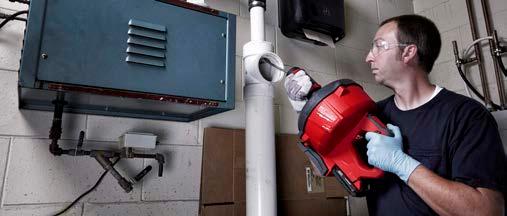
WATER, WATER, EVERYWHERE
Severe weather events create challenges for homeowners and HVAC service technicians.
By Ian Mcteer
HYDRONICS
GETTING THE AIR OUT
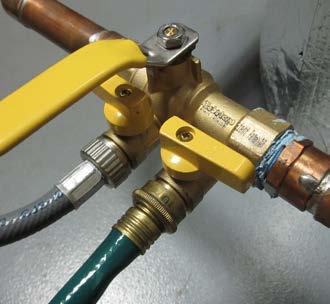
The basics of purging hydronic circuits.
By John Siegenthaler
REFRIGERANTS
SAFETY
By Dave Demma
HEATING
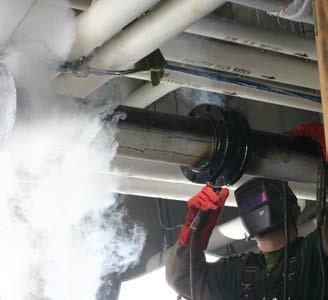
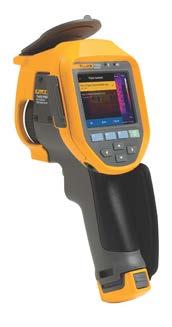
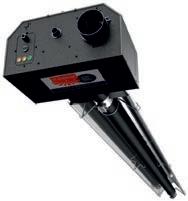
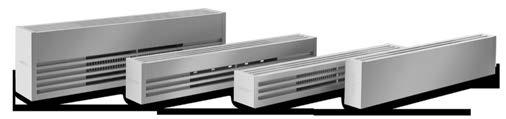
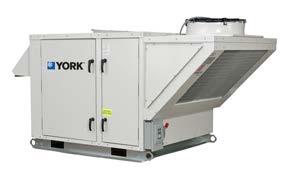
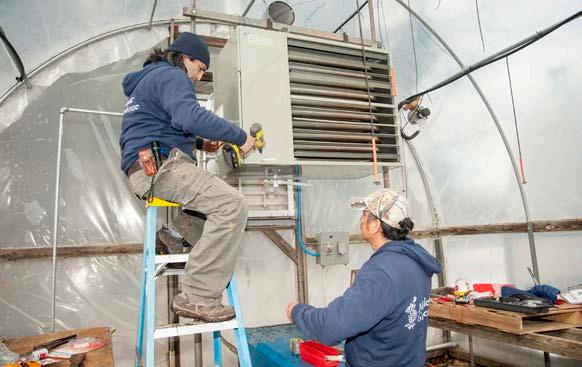
KEEPING THE HEAT ON
Ensure unit heaters, HVAC systems and other heating systems bring uninterrupted heat to your customers’ operations.
By Richard Boothman
PLUMBING
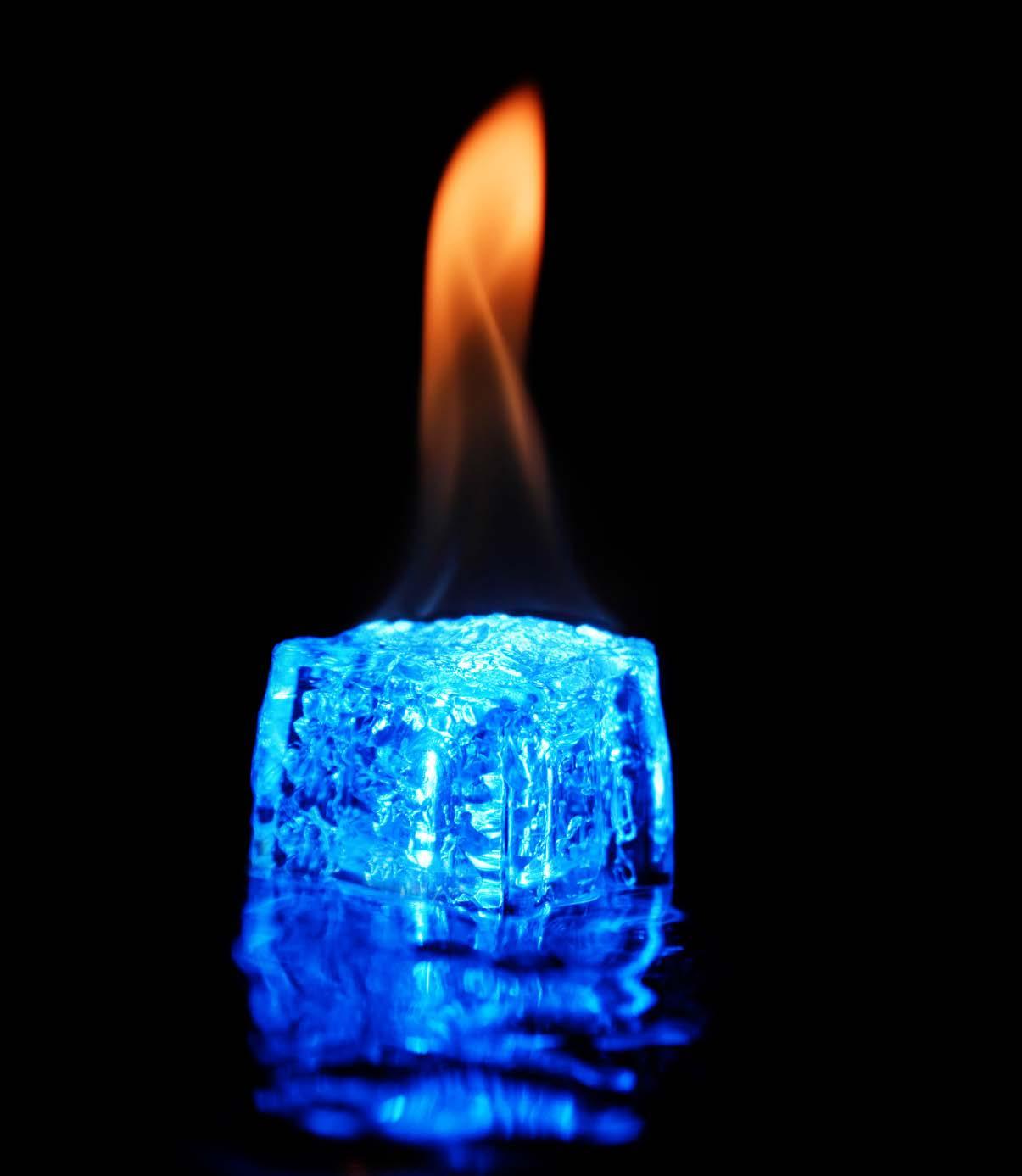
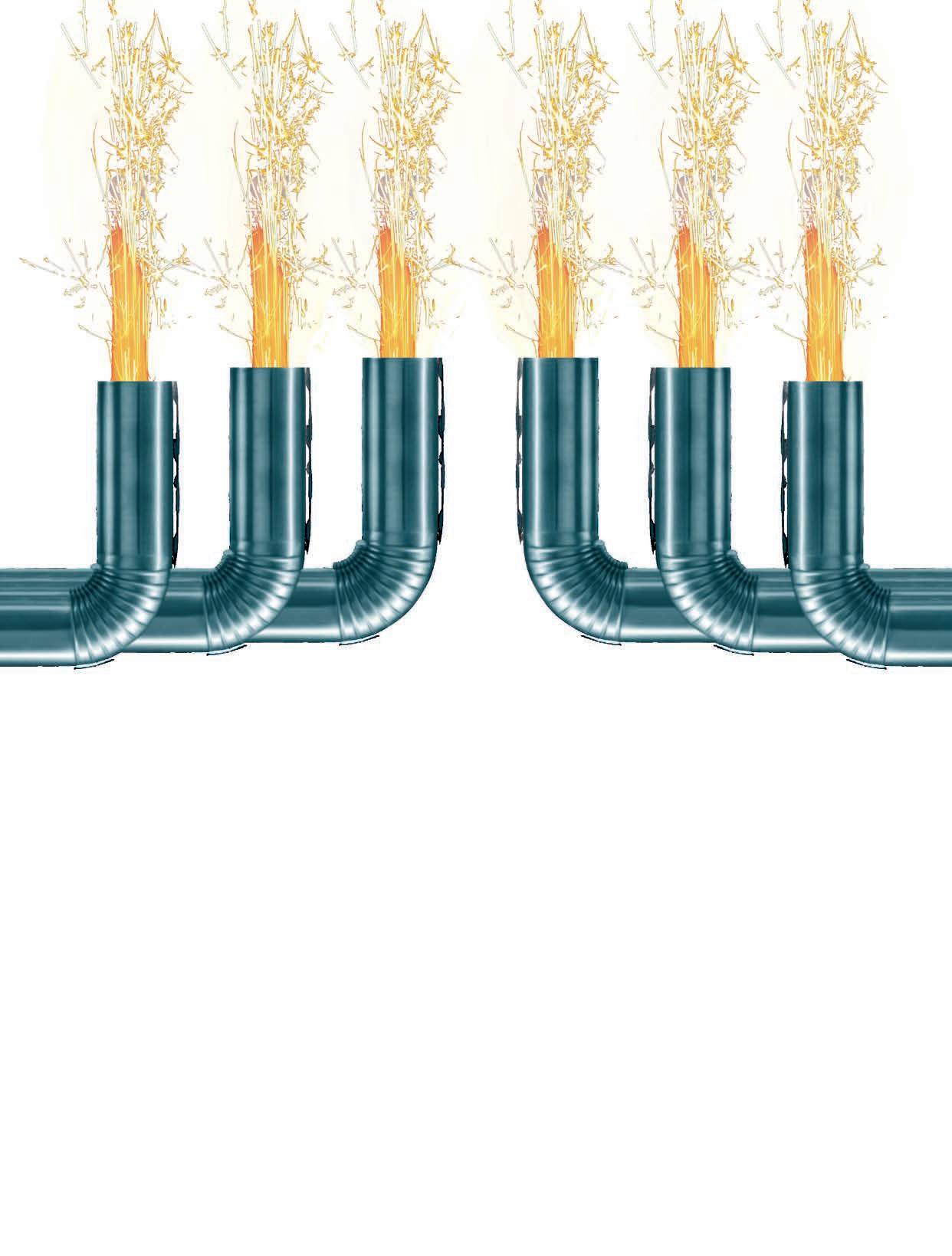
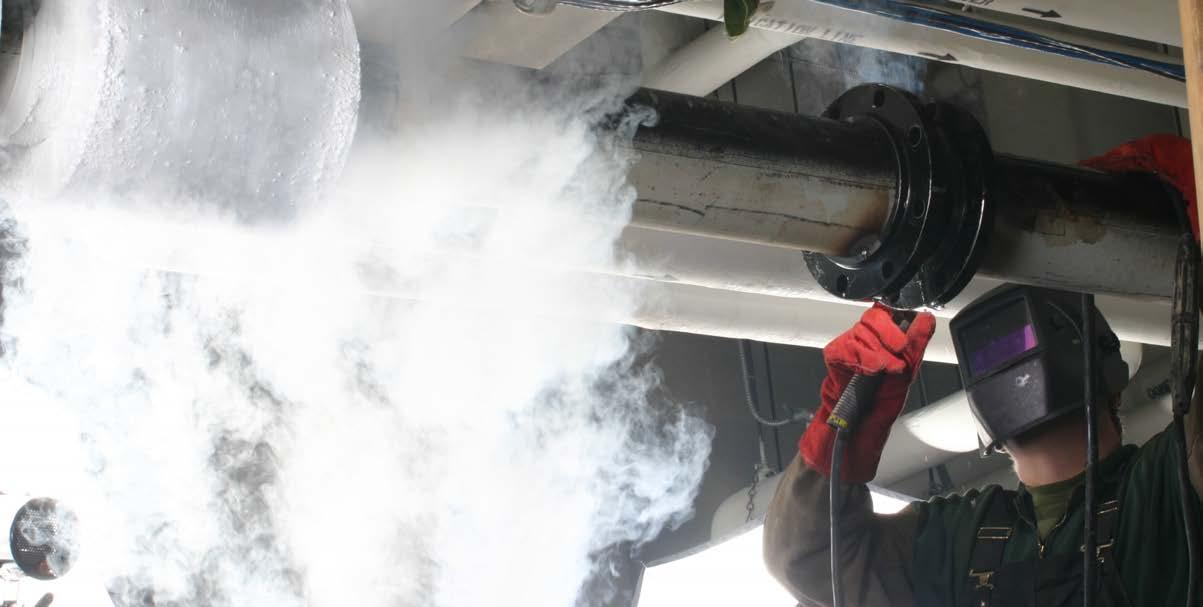
PUTTING THE FREEZE ON SERVICE INTERRUPTIONS
Diagnostic and repair alternative to consider when a blockage or leak occurs.
46
INDOOR AIR QUALITY
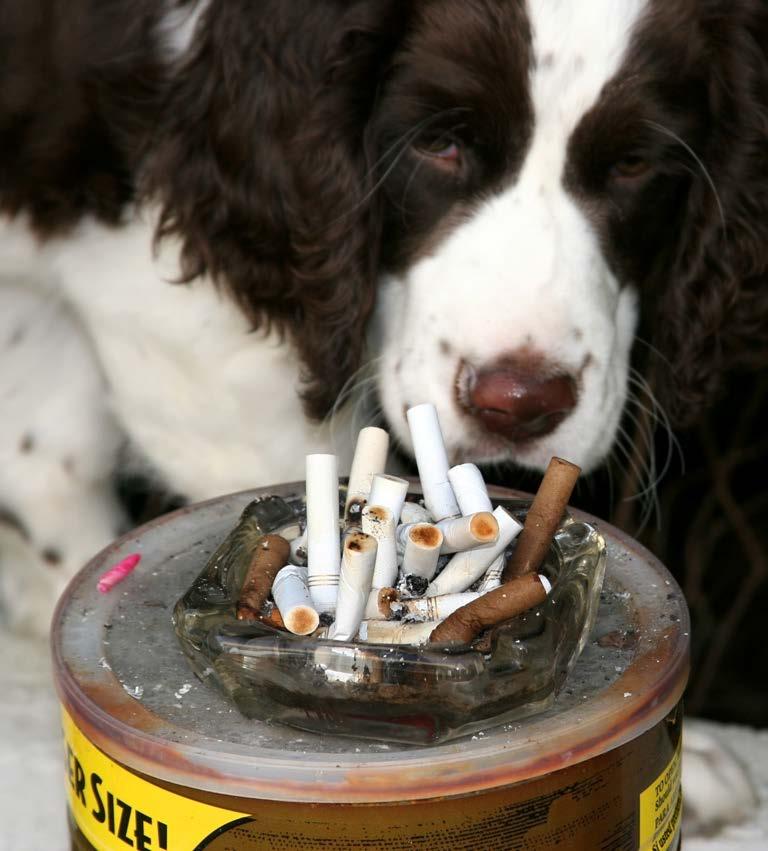
LET’S TALK STINK
Offensive odours are commonplace. How do we deal with them?
By Robert Bean
50 BOILERS
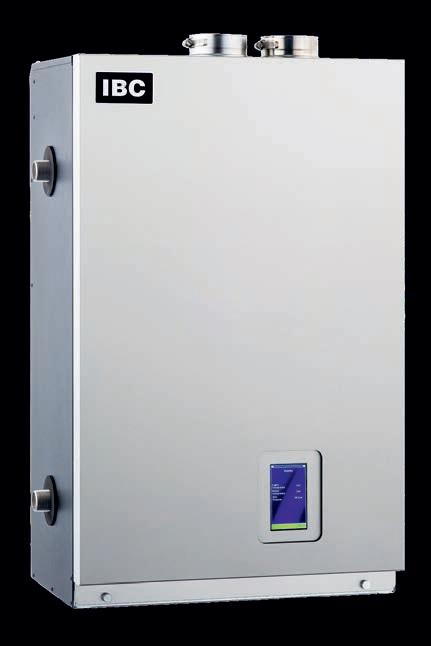
LOW PRESSURE LOW DOWN
Next generation of steam heating applications on the rise.
By Dave Burggren
57 SUSTAINABILITY
BEYOND CONSTRUCTION
Vancouver Convention Centre first to achieve LEED v4 Existing Buildlng Platinum.
58 SHOW PREVIEW EVENT TO HOST LARGEST-EVER EDUCATION PROGRAM
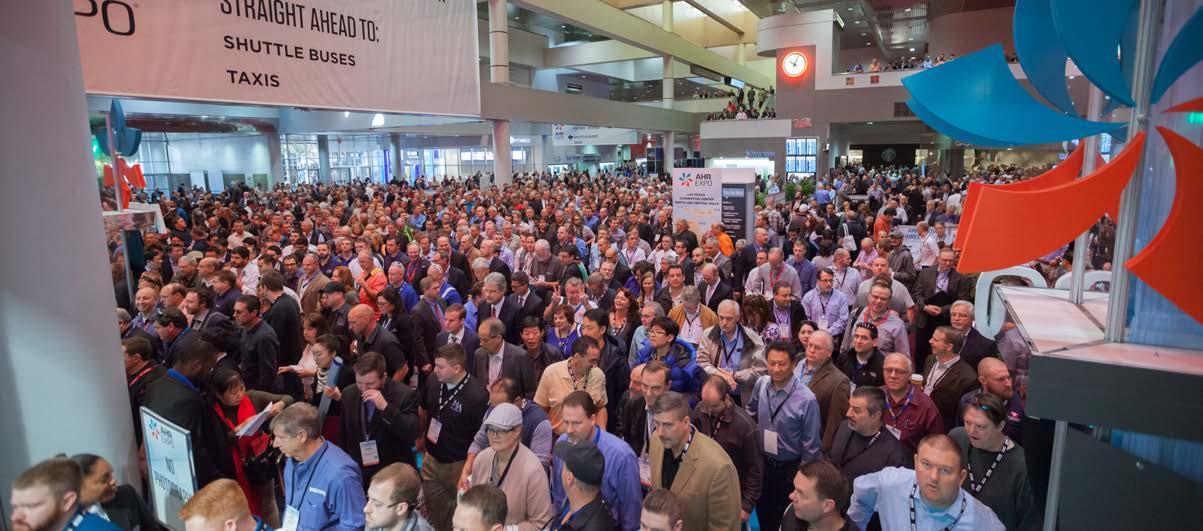
AHR Expo to offer residential and refrigerant tracks.
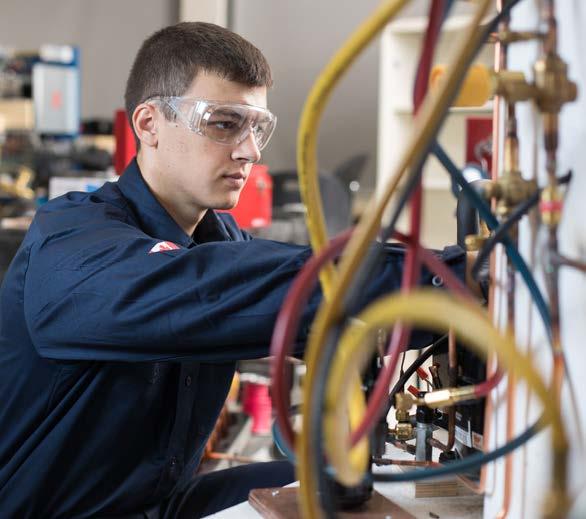
62 UP AND COMING ALBERTAN TAKES HOME MEDALLION OF EXCELLENCE FROM WORLDSKILLS COMPETITION.
By Michael Power
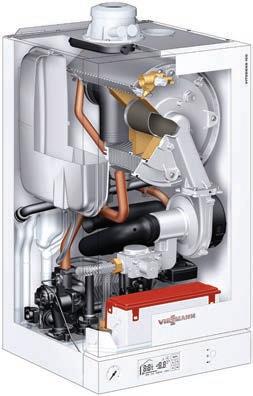
Top quality and attractive price…
The newest version of our most popular boiler series ever!
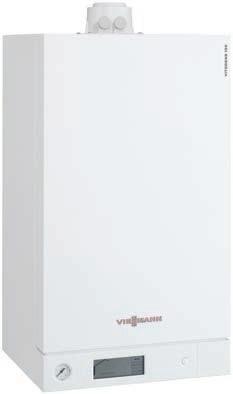
VITODENS 100-W, B1HA
gas condensing boiler
Heating input: 21 to 125 MBH
VITODENS 100-W, B1KA
gas condensing Combi boiler
Heating input: 21 to 125 MBH
DHW max. input: 149 MBH
Lasting performance
Quality workmanship you can trust with new Viessmann-made SA240 S43932 stainless steel Inox-Radial self-cleaning heat exchanger and new factory-calibrated, fully-modulating stainless steel MatriX cylinder gas burner.
User-friendly control
New backlit LCD touchscreen control with enhanced programming interfaces with a variety of external control devices to provide comfortable and reliable energy-saving space and DHW heating.
Outstanding versatility
NG or LP fuel compatible “out-of-the-box” with bottom pipe connections and front access to all serviceable components plus multiple venting options for easy installation service and maintenance - all in a compact wall-mount design.
On-demand DHW (combi model only)
Built-in DHW unit includes stainless steel plate heat exchanger, 3-speed pump, diverting, pressure bypass and pressure relief valves, water hammer arrester & sensors - conforms to NSF/ANSI 372 for “lead free” plumbing products.
< UPFRONT WHAT YOU LIKED IN 2017
IN KEEPING WITH A TRADITION ACROSS MANY MEDIA PLATFORMS I THOUGHT IT MIGHT BE FUN TO SHARE the results of our year in review. Far less formal than it sounds, the review is simply a check of our 11 to 12 month analytics to see what HPAC's online audience was engaged with. That review may prompt a shift in content, both online and in the print edition. There may also be some notable blips in comparison to our monthly reviews.
What is really interesting is that there are always at least three to five archived stories (prior to the current year) that make it into the top 25 feature/news item list. This is certainly confirmation that useful and relevant content has a very long shelf life. Here are the results:
• Top two news stories: Ontario’s Bill 70 Amends Powers of the Ontario College of Trades; and Alberta adopts National Plumbing Code without variation
• Top three features: The case for stainless steel (water heaters); What you need to know about the industry workhorses (electric motors); and Introduction to refrigeration defrost methods.
• Top two archived articles in the first 25: Low ambient air-to-water heat pumps; and How to match glycol levels to various systems.
Over the coming days, settle back, kick off your shoes and revisit these top picks. We wish everyone a safe, happy holiday season and look forward to sharing a prosperous 2018 with you!
THE HPAC TEAM IS PLEASED TO WELCOME JILLIAN MORGAN TO THE FOLD. She is a journalism graduate of the University of King's College in Halifax, NS. Originally from St. John's, NL, Jillian has made Toronto her home.
Prior to joining HPAC as assistant editor, Jillian worked as a content specialist for an internet marketing company.
Editor
Jillian will be out and about at industry events in the New Year. Be sure to introduce yourself. You can reach her at 416.510.5201 or jmorgan@ hpacmag.com.
HPAC MAGAZINE
111 Gordon Baker Road, Suite 400, North York, ON M2H 3R1 TEL: 416.442.5600 FAX: 416.510.5140 www.hpacmag.com
SUBSCRIBER SERVICES: To subscribe, renew your subscription or to change your address or information please visit us at www.hpacmag.com.
Subscription Price per year:
Air Conditioning is published 7 times per year except for occasional
expanded or premium issues, which count as two subscription issues.
MAIL PREFERENCES: From time to time we make our subscription list available to select companies and organizations whose product or service may interest you. If you do not wish your contact information to be made available, please contact us via one of the following methods: Tel: 800.387.0273, Fax: 416.442.2191; E-mail: vmoore@ annexnewcom.ca; or by mail: Privacy Office, 80 Valleybrook Dr., Toronto, ON M3B 2S9.
HPAC Magazine receives unsolicited materials (including letters to the editor, press releases, promotional items and images) from time to time. HPAC Magazine, its affiliates and assignees may use, reproduce, publish, re-publish, distribute, store and archive such unsolicited submissions in whole or in part in any form or medium whatsoever, without compensation of any sort.
NOTICE: HPAC Magazine, Annex Publishing & Printing Inc., their staff, officers, directors and shareholders (hence known as the “Publisher”) assume no liability, obligations, or responsibility for claims arising from advertised products. The Publisher also reserves the right to limit liability for editorial errors, omissions and oversights to a printed correction in a subsequent issue. HPAC Magazine’s editorial is written for management level mechanical industry personnel who have documented training in the mechanical fields in which they work. Manufacturers’ printed instructions, datasheets and notices always take precedence to published editorial statements.
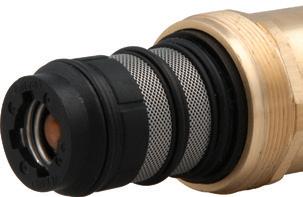
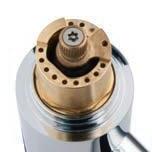
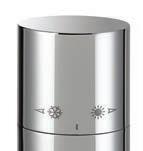
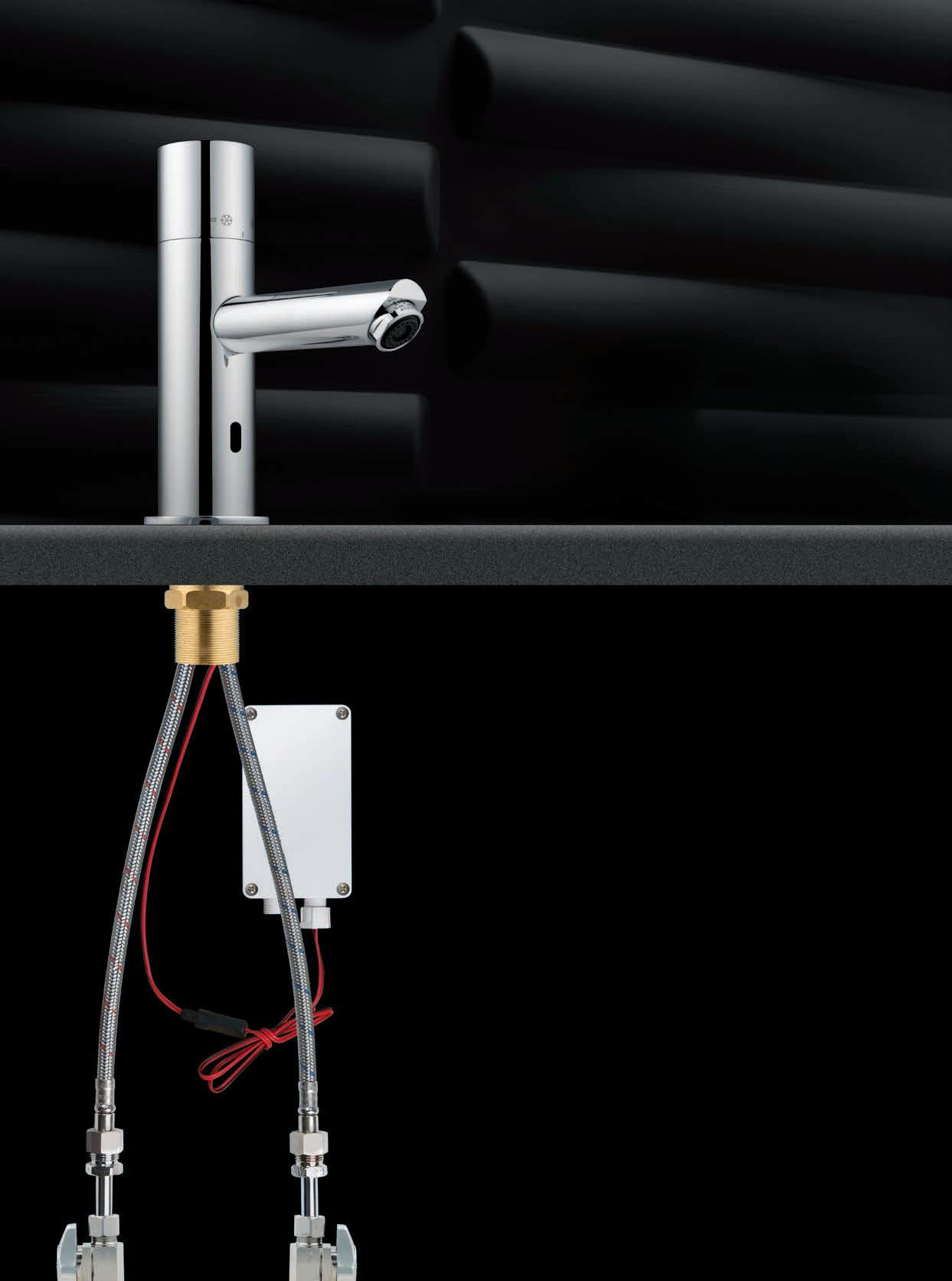
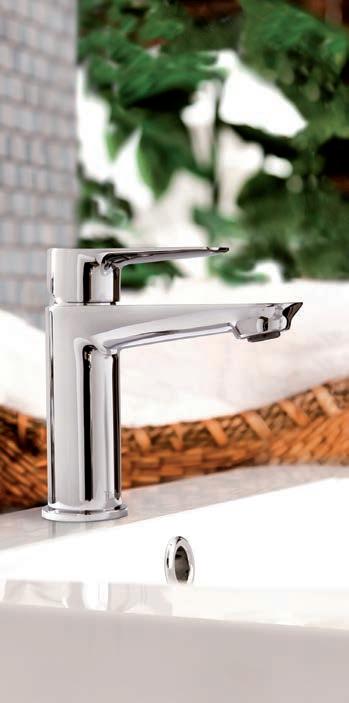
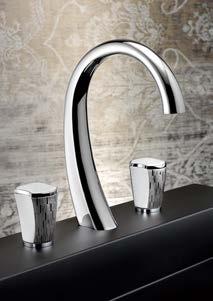
The new Delta hands-free thermostatic lavatory faucet is the smart choice for applications requiring thermostatic temperature regulation. The mixing valve and solenoid are contained within the body of the faucet and the supply lines are factory-installed, making installation quick and simple, thus saving you time and money. Outlet temperature limits can be set easily from above the deck by the installer and a top mixer allows the user to adjust the water temperature to comfort. Now that’s smart.
Backed by an exceptional 5-year limited warranty. deltacommercialfaucets.com
NEWS FEATURE
LEARNING FORUM DAILY THEMES
SAFETY BULLETIN ADDRESSES HEATING BUILDINGS UNDER CONSTRUCTION
The CMPX 2018 Show Committee has announced new daily themes for the show’s Learning Forum sessions to directly address the interests of specific attendee groups.
Day 1, Wednesday, March 21 will be for owners/managers of contracting firms with a selection of speakers and topics geared to the needs of those running or managing businesses in the HVAC/R and plumbing industries.
March 22 will feature engineering the future of mechanicals with sessions planned to address the interests of both engineers and also a range of senior professionals in the mechanical industry. Topics such as water quality, psychrometrics, refrigerants and high efficiency plumbing will be offered.
Closing day, March 23 is themed hands on smart solutions and the day is tailored to the interests of technicians and contractors on the tools, giving them valuable new information with a bottom line focus.
Learning Forum sessions are all included in the admission cost.
Jointly produced by HRAI and CIPH, CMPX 2018, The Canadian Mechanical & Plumbing Exposition returns to the Metro Toronto Convention Centre, North Building on Front Street, from March 21 through to March 23, 2018. www.cmpxshow.ca
CORRECTION
In the October issue of HPAC (p59) it was incorrectly stated that Dave Weishuhn received the Craig McCarty award from HRAI. He was actually presenting the award to Dave Derksen. Our apologies to both parties.
Alberta Municipal Affairs and industry representatives have developed an information bulletin (G-01-17) regarding the requirements to ensure the installation and operation of gas heating appliances comply with the manufacturers certified installation instructions and the CSA B149.1 Natural gas and propane installation code.
Gas fired appliances used to supply heat to buildings that are under construction or during renovations must be certified for that use. All gas fired appliances shall be installed and operated as per the requirements in the CSA B149.1 Natural gas and propane installation code and the appliance manufacturers certified installation instructions.
As of May 1, 2017 the manufacturers of gas heating appliances supplied in Canada, known as residential style furnaces, changed their certified installation instructions to restrict these furnaces from being used to heat buildings that are under construction or being renovated.
The ANSI Z21.47/CSA 2.3 Gas-fired central furnaces standard requires the manufacturer’s installation instructions of these units to contain a statement specifying whether the furnace is permitted to be used for heating of buildings or structures under construction. Also, if the manufacturer allows such use, the instructions shall specify the conditions that are required for use. Installation must comply with all manufacturers' installation instructions.
Manufacturers of gas heating appliances supplied in Canada changed certified installation instructions effective May 1, 2017, to restrict furnaces from being used to heat buildings that are under construction or being renovated. Continued on p10
Buildings would be considered under construction/renovation where dusty conditions exist such as those created from installing drywall or textured finishes. A furnace certified to ANSI Z21.47/CSA 2.3 that bears an indication
that it is not to be used for heating buildings or structures under construction could be used once drywall, texture and priming of interior surfaces is complete, including clean-up that would be required to minimize dust and debris.
Heating of an area during construction/renovation such as a basement development would require an alternate heat source for those areas. There will need to be separation of the construction and occupied areas to ensure the furnace serving the completed portions of the home is not exposed to the construction conditions.
The compliance monitoring by the authority having jurisdiction for the gas installations may be completed prior to energizing the furnace or after the completion of the building. It is the owners' or owners representatives’ responsibility to secure documentation from contractors that the permanently installed gas furnace in the building was not used to supply heat during the construction/renovation of the building and the installation is in accordance with the manufacturer’s installation instructions.
This documentation cannot be used to replace, bypass or exempt the requirements of the Safety Codes Act, permit regulation, related codes, or compliance monitoring by the authority having jurisdiction as applicable. www.municipalaffairs.alberta.ca
INDUSTRY NEWS
EMERSON PROVIDES APPRENTICES WITH HANDS-ON TRAINING OPPORTUNITY
BC INVESTS $1.2 MILLION IN HIGH SCHOOL TRADES PROGRAMS
The Industry Training Authority (ITA) in British Columbia is investing over $1.2 million across the province to fund the ITA Youth Work in Trades Programs. This year, 46 school districts across BC have been approved to receive $20,000 to $40,000 each to support youth apprentices in their communities.
Youth Work in Trades is a dual credit program that allows BC students in
grades 10, 11 and 12 to begin their apprenticeship journey. The funds support school districts in connecting students with local employers to get practical experience. Students will earn money while gaining credit toward their high school diploma and the work-based training portion of their apprenticeship. ITA partners with the Ministry of Education to deliver ITA youth trades programs.
www.itabc.ca
CHANGES TO MCAC EXECUTIVE NAME AND TERM, CEO ANNOUNCES RETIREMENT
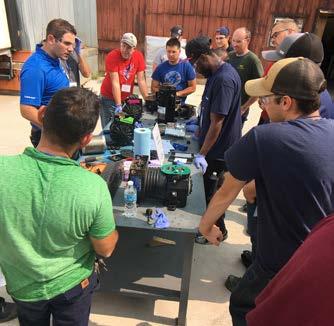
Emerson Commercial & Residential Solutions Canada hosted a complimentary training event exclusively offered to apprentices. Over 65 HVAC/R apprentices arrived at the Emerson Canada Integrated Learning Centre in Brantford, ON, to take part in the first ever Emerson Apprentice Day.
The day began with some in-class theory followed by a hands-on session, which involved the apprentices visiting various themed stations focused on reasons for compressor failures such as floodback, electrical failures, liquid and oil slugging, and high discharge temperature. Discussions included how to identify the cause of failure as well as potential solutions available. In addition, participants discussed current industry trends and were given the opportunity to network with peers and industry leaders in the HVAC/R technology space.
“Refrigeration mechanics will need continual education to keep up with this fast pace of change. Investment in our apprentices is critical to the success of our industry,” said John Rabbito, Emerson director of marketing and business development. www.emerson.com/en-us
More than 320 delegates attended MCA Canada’s 76th Annual National Conference in Maui, HI on November 6 to 9. MCA Canada hosted four actionpacked days of speakers, education sessions, receptions, social events and networking opportunities.
Dave Flamand, a partner in Peak Mechanical Partnership in Saskatoon, SK, is the 2017-2018 MCA Canada president (this position was formerly called the chairman).
“We have recently changed the term of president from two years to a one-year term. While I wholeheartedly support the change, it does reduce the time to get to know everyone and for everyone to get to know me as the new president,” said Flamand. He went to talk about plumbing being installed in his home as a child and how that inspired him to become a plumber himself.
Other executive committee members are president-elect and vice-president eastern, Jack Bavis, G.J. Cahill; vice-president central, Dave Holek, Lekter Mechanical Services Inc.; vice-president western, Wayne Davidson, Davidson Brothers Mechanical; secretary/treasurer, Del Pawliuk, R.F. Contracting Inc.; and chief executive officer, Richard McKeagan, MCA Canada.
McKeagan announced his retirement at the conference and was later presented with the Canadian Institute of Plumbing and Heating Order of the Bath and Bowl. The Order of the Bath and Bowl is a humourous award for retiring volunteers and allies. “On behalf of the CIPH Board of Directors and our members, we want to wish Richard a happy, healthy and joyous retirement,” stated CIPH chairman of the board Joe Senese.
MCAC will hold its 77th annual conference in Whistler, BC on September 19 to 22, 2018. https://mcac.ca
Continued on p12
MCA Canada president Dave Flamand of Peak Mechanical Partnership in Saskatoon, SK.
Apprentices from all over Ontario spent the day understanding and identifying different compressor failures.
INDUSTRY NEWS
2017 BEST RESTROOM GOES TO BAYVIEW VILLAGE SHOPPING CENTRE
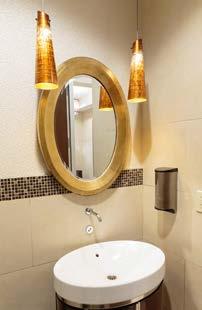
Cintas Canada, Ltd. has announced that the Bayview Village Shopping Centre in Toronto received the most votes to claim the top prize in the 2017 Canada’s Best Restroom contest. Bayview Village will receive $2,500 in Cintas products and services. Finalists were selected through online voting based on cleanliness, visual appeal, innovation, functionality and unique design elements. Bayview Village Shopping Centre washrooms feature fully enclosed stalls, each with its own touch free toilet, faucet and hand dryer. www.cintas.ca
OIL HEAT GROUP CHANGES NAME
At the annual general meeting of the Ontario Chapter of the Canadian Oil Heat Association in October, members voted to change the operating name of the group to the Ontario Petroleum Transporters and Technicians Association (OPTTA). The move was made to rejuvenate the organization, better serve its existing members and attract new members.
The Ontario Chapter welcomed a new board member and said farewell to two others. Ken Carmichael from Bray’s Fuels joins the board. Basil Etmanskie tendered his resignation to the board earlier this year and Kelly Jackson, past chair of the Ontario Chapter board, also stepped down. www.coha-ontario.ca
APPRENTICE TUITION FEES WAIVED IN NOVA SCOTIA
Nova Scotia’s Labour and Advanced Education Minister Labi Kousoulis recently announced the removal of tuition fees for apprentices attending technical training in the province. This includes online training. Nova Scotia’s apprenticeship system is administered by the Nova Scotia Apprenticeship Agency.
The removal of apprenticeship technical training tuition – applied beginning with September’s classes – is expected to save apprentices up to $900 per year. Tuition for technical training ranges from $540-$900 a year, depending on length of training needed. Training typically ranges from six to 10 weeks.
The cost to the province/taxpayers was budgeted at $1.3M a year to support the removal of tuition.
The Nova Scotia Apprenticeship Agency recently aligned training in the Atlantic region to make it easier for apprentices from New Brunswick, PEI and Newfoundland and Labrador to take their technical training there. The removal of tuition will
apply to any apprentice attending technical training in the province, although the Agency ensures that Nova Scotia apprentices are served first before enrolling any apprentice from out of province. www.nsapprenticeship.ca
INITIATIVE UNDERWAY TO ACCELERATE RETROFIT ECONOMY
The Canada Green Building Council (CaGBC), Green Business Certification Inc. (GBCI), and the Advanced Energy Centre at MaRS Discovery District (MaRS) announced recently that they are working together to bring the Investor Confidence (ICP) Project and its Investor Ready Energy Efficiency (IREE) certification to Canada.
ICP is a global underwriting standard for developing and measuring energy efficiency retrofits and is administered by GBCI. Its IREE certification signals to investors that a project has adopted best practices that can help reduce transaction costs and increase savings. The protocols offer investors a consistent roadmap for assessing risk and expected outcomes from deep retrofits.
Project owners, investors, engineers and insurance companies in North America and Europe, are currently using the IREE certification. Energy efficiency programs are also applying the IREE certification.
In the Pan-Canadian Framework, the Canadian federal government recognized the role that retrofitting buildings will play in reaching Canada’s targeted emissions reductions. The CaGBC and GBCI are bringing ICP to Canada to facilitate the mass retrofits required to achieve these goals. The IREE-certified projects will provide clarity on the long-term performance of energy efficiency technologies and provide the necessary assurance required to create greater access to competitive financing which will be necessary to achieve retrofits on a large scale.
Supported by the Ministry of Energy in Ontario, the Advanced Energy Centre at MaRS is partnering with CaGBC and GBCI to pilot the ICP methodology for the Canadian market. The pilot will bring together a multi-sectoral group that includes owners, government, engineering firms, utilities and financial institutions with the goal of determining how ICP can help facilitate more retrofits in Canada. The pilots will also help inform the accreditation and certification services for Investor Ready Energy Efficiency projects, which will be delivered by GBCI Canada. The next steps for the ICP program in Canada will be the recruitment of Canadian projects for IREE certification in February 2018, and then the initiation of a pilot in summer 2019.
To learn more about participation in the ICP Canada Pilot Program contact Shawn Peterson, speterson@marsdd.com. Continued on p14
The washrooms have stylish sconces on both sides of its hand washing basins.
Designed for plumbers Loved by designers!
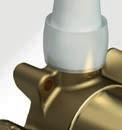
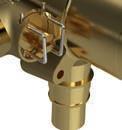
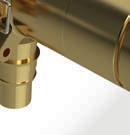
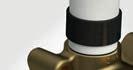
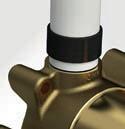
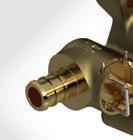
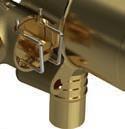
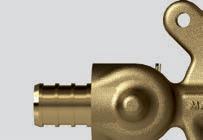
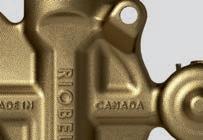
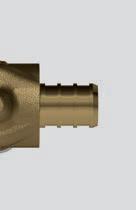
ALL OUR VALVES COME WITH THREE TYPES OF CONNECTION NPT, PEX , and Expansion PEX . The latter two are quicker to install.
OUR (T/P) VALVES OFFER THE BEST OF BOTH WORLDS: Our thermostatic/pressure balance valves (T/P) stabilize water pressure for steady temperature performance even in the event of a 50% drop in pressure!
Valve roughs are now MADE IN CANADA!
INDUSTRY NEWS
ASHRAE PUBLISHES 2017 VERSION OF THERMAL COMFORT STANDARD
The 2017 edition of ASHRAE’s major thermal comfort standard has been published to incorporate seven published addenda to the 2013 edition.
ANSI/ASHRAE Standard 55-2017, Thermal Environmental Conditions for Human Occupancy, simplifies the language of the 2013 standard and clarifies the three comfort calculation approaches in Section 5.3.3, “Elevated Air Speed.” The 2017 edition includes a new requirement to calculate the change in occupants’ thermal comfort from direct solar radiation.
“The updates to Standard 55-2017 are the result of a continuing series of modifications made based on new research, experience, and proposals from designers, manufacturers and users,” said Abhijeet Pande, chair of the Standard 55 committee. “Standard 55 has been rewritten with a renewed focus on application of the standard by practitioners and use of clear, enforceable language.”
The three comfort calculations methods provided in the 2017 edition are: a graphic method for simple situations, an analytical method for more general cases, and a method that uses elevated air speed to provide comfort. Other additions include simplification of Appendix A to a single procedure for calculating operative temperature; clearly stated requirements and calculation procedures appearing sequentially; and an update to ensure the standard is not used to override health, safety or critical process requirements. www.ashrae.org/bookstore
HFC PHASE DOWN SCHEDULE REVISED
Environment and Climate Change Canada (ECCC) published the final revisions to the federal ODS and Halocarbon Alternatives regulations concerning control of HFCs in Canada Gazette II on October 18, 2017. These revisions come into force 180 days after the date of publication in Gazette II (April 16, 2018).
The HFC phase down schedule in the regulations has been revised from the draft contained in the Canada Gazette I publication (November 2016), to bring the regulations in line with the terms of Kigali amendment to the Montreal Protocol. This amendment was adopted by the parties to the Protocol in 2016. The baseline HFC consumption quantity for Canada is 19,118,651 tonnes of CO2 equivalent. The second part of the regulation changes involves establishing limits on global warming potential (GWP) of refrigerants that can be used with industry systems and compliance dates for these limits.
For the complete text of the Canada Gazette II publication on these regulation changes, go to www.gazette.gc.ca/rppr/p2/2017/2017-10-18/html/sor-dors216-eng.php. From the Heating, Refrigeration and Air Conditioning Institute.
VALECO INAUGURATES ITS FIRST COGENERATION PLANT IN CANADA
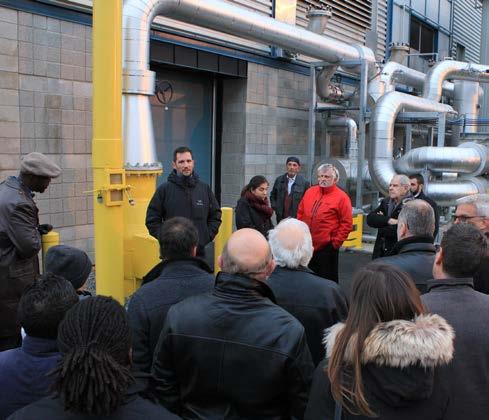
Fifty members of the Association québécoise du gaz naturel (AQGN) gathered on November 14, at the new Montreal Biomont Plant (launched last October 16th). The plant was recently bought and revamped ($20M investment) by Valeco, a French Renewable Energy Producer. The plant recovers the biomethane gas emanating from the former landfill site near by.
The Biomont Energie cogeneration plant is located near the limits of the Frederick-Back Park, inside the Saint-Michel Environmental Complex in Montreal, QC. This site is well suited for the recovery of biomethane gas emanating from a former landfill that was covered in 2014. The gas is transformed into electrical power (4.8 MWs), which is being sold to Hydro-Quebec, while at the same time providing heating (5.2 thermal MWs) to the nearby Tohu and Cirque du Soleil facilities.
The Biomont project plays an important role in the rehabilitation plan of the neighbourhood. Frederick-Back Park, whose first section has just been completed, covers the old Miron quarry. The quarry was transformed into a landfill site in 1968 and has been closed to putrescible waste since 2000.
Biomont Energie will also contribute to the energy transition initiated by the government of Quebec. Two of the target goals of Quebec’s policy are: increasing bio-energy production by 50 per cent and renewable energy production by 25 per cent by 2030.
Biomont is a consortium of Valeco, Eolectric and Fondaction, with the financial partnership of IAM Private Debt. http://groupevaleco.com
PHOTO LUC BOILY
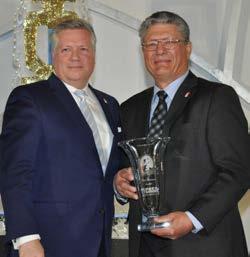
WILLIAM SKROMEDA WINS 2017 WILLIAM CLARK ACHIEVEMENT AWARD
William Skromeda has been awarded the 2017 William Clark Achievement Award from the Canadian Automatic Sprinkler Association (CASA).
The award goes each year to someone who has made significant, measurable impact on the fire sprinkler industry.
Skromeda started working for Grinnell of Canada Ltd. in Winnipeg, MB, in 1964 and was initiated in UA Local 379 the following year. He began apprentice studies in 1966 and received his journeyman’s certificate in 1971.
He also earned his Interprovincial Red Seal certificate. Skromeda left Grinnell in 1985 and started BDR Services Ltd. He has also been involved with CASA for several years. Skromeda has served on many boards and committees through the organization, including as Manitoba/ Saskatchewan CASA regional director (1999-2014); CASA collective bargaining committee; CASA long-range planning com -
CANADIAN NAMED PRESIDENT OF AIR MOVEMENT AND CONTROL ASSOCIATION
Doug Yamashita, executive vice president of sales and marketing, Acme Engineering & Manufacturing Corp., has been named president of the Air Movement and Control Association (AMCA) International Inc. for 2017-18. Yamashita is the third person from Acme to serve as president of AMCA. The focus of his term, he says, will be engaging with and fostering participation from new employees of member companies.
mittee; and the Mechanical Contractors Association of Manitoba. www.casa-firesprinkler.org
MANITOBA TEAMS UP WITH ATLANTIC PROVINCES TO LAUNCH APPRENTICESHIP MANAGEMENT SYSTEM
The Manitoba government recently signed an agreement with the Atlantic provinces to develop a shared apprenticeship management system that will improve and modernize online services.
The current system has limited online client-service functions and is reaching the end of its useful life. The new apprenticeship management system is expected to better meet the needs of apprentices, training providers and employers and will allow Apprenticeship Manitoba to ensure effective communication and enhanced reporting. The new system allows apprentices, training providers and employers to complete forms, process payments and log hours online with self-service functions. It is partially funded by the government of Canada. In addition to funding from the federal government and the governments of Newfoundland and Labrador, Nova Scotia, New Brunswick, and Prince Edward Island, the Manitoba government’s investment of $3.7 million over five years enables the acquisition of a state-ofthe-art new system for only 14 per cent of the total cost.
The new, shared technology system is expected to be in place in 2019. www.manitoba.ca
“AMCA has been well-served by the leadership of its member companies for 100 years, but like all industrial organizations today, AMCA needs to help the association and its members prepare for the next generation of leaders,” said Yamashita.
Yamashita, who joined Acme as applications engineering manager in 1994 and transitioned to sales management in 1998, was elected to AMCA’s Board of Directors in 2010. He is chair of the Advocacy and Nominating committees.
Previously, he served on AMCA’s Sales and Marketing Steering, Statistics, Marketing, Air Movement Code Action Review, DOE/Fan Regulation, and Audit committees and its FEG, Product Efficiency, System Efficiency, and FEI Marketing task forces.
A native of Montreal, QC, Yamashita holds a degree in mechanical engineering from the University of Waterloo.
Air Movement and Control Association (AMCA) International Inc. is a not-for-profit trade association with more than 370 member companies worldwide representing more than $3 billion in annual revenue. AMCA’s mission is to advance the health, growth, and integrity of the air-movement-andcontrol industry, with programs such as certified ratings, verification of compliance, and international standards development. AMCA also advocates for model codes, regulations, and utility incentive programs promoting efficiency and life safety. www.amca.org
Canadian Automatic Sprinkler Association (CASA) president John Galt (left) presents William Skromeda with the 2017 William Clark Achievement Award.
Doug Yamashita, executive vice president of sales and marketing, Acme Engineering & Manufacturing Corp.
WATER, WATER, EVERYWHERE
BY IAN MCTEER
Although I didn’t shoot an albatross with my crossbow, I certainly felt a bit like Samuel Coleridge’s The Rime of the Ancient Mariner as I sloshed through my back yard this summer. “Water, water, everywhere/nor any drop to drink.” I am fortunate in that my house is high and dry unlike many other buildings in Eastern Canada that experienced one of the rainiest summers in recent memory. Several low spots in my yard did not dry out until mid-July, and the mosquitoes, the little devils, had a banner year. On the other hand, British Columbia experienced a record forest fire season. My
brother-in-law had to flee his home in Vancouver because the city was blanketed with smoke from forest fires burning in the interior. His lung ailment combined with smoky air made his life so miserable that he joined us in Apple Hill, ON, happily sloshing around in our backyard for several weeks; it reminded him of a “normal” Vancouver summer.
I spoke to an HVAC contractor friend of mine recently and he told me that he had a dozen requests from existing customers to move condensing units away from their houses, more this summer than ever before. Often contrac -
tors get this request because homeowners want to renovate or build extensions onto the house or to add a deck or patio. But no, in every case the condensers had to be moved because basement waterproofing crews needed to excavate around foundation walls in order to fix a basement flooding problem. Excessive rain likely combined with poor drainage from roof runoff (many municipalities no longer allow runoff to be directed to the storm sewer) caused extra hydraulic pressure against creaky old foundation walls incapable of withstanding this force of nature.
OVERLAND FLOODING
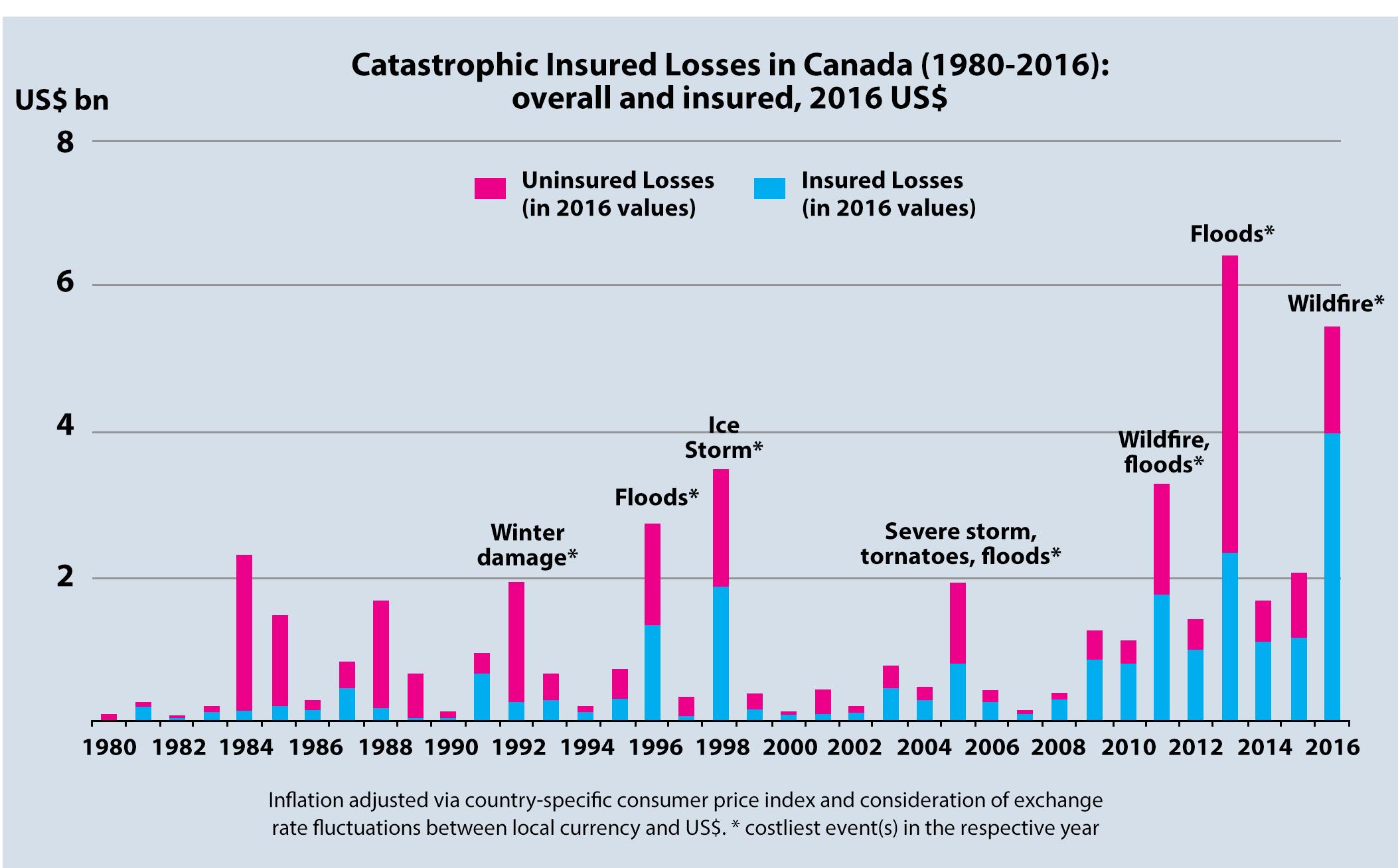
The Insurance Bureau of Canada (IBC) reported recently that, “water is the new fire” meaning that water damage is now the leading cause of insurer payouts for property damage. The IBC notes that since 2009, insurance companies have paid out an average of $400 million per year for claims related to severe weather events.
Blair Feltmate, a University of Waterloo professor, told Andrew Duffy of the Ottawa Citizen that “flooding, by a very large margin, is the greatest extreme weather event challenging Canada today – by far.” He also mentioned that the average homeowner in both Calgary, AB and Toronto, ON, both hit with serious flooding events in 2013, paid out an average of $42,000 each for repairs to flooded basements. In Ontario during August 2017, a severe thunderstorm dumped a record 290 mm. of rain onto Windsor, Tecumseh and other parts of Essex County flooding over 6,000 basements and causing an estimated $124 million in damage.
Overland flood insurance is available in Canada, but is typically not part of regular home insurance and not all insurers offer coverage. Premiums tend to be very expensive and may not cover 100 per cent of the damage, so most building owners tend to skip the coverage and take their chances. Homeowners can also face loss of coverage if they have failed to notify the insurer of “changes to the material risk” related to the insured property, such as a finishing the basement or installing a new furnace.
Insurers have increased deductibles too. For example, my sewer back-up endorsement deductible is now $5000. Plumbing contractors should offer the installation of an appropriate sewer backflow valve to every customer.
OVERLAND FLOOD MITIGATION
Once the roaring floodwater has subsided, the residual standing water is dangerous. It is a soup of sewage, toxic
chemicals, petroleum, dead animals and debris such as sharp metal, broken glass and nail embedded wood. HVAC technicians helping flood ravaged customers must be aware of these dangers; wear CSA approved boots (green triangle minimum) and be sure your tetanus shot is up to date.
Technicians should not enter buildings until they are deemed safe by the local authorities. When faced with such terrible losses, some homeowners might inquire about making repairs to flooded equipment thinking they will save money on uninsured equipment that should be replaced.
Remember, the CSA B149.1-10 in Section 4.5, Suitability of Use, and paragraph 4.5.5 requires that an appliance that has been exposed to fire, explosion, flood, or other damage shall not be offered for sale, installed, re-activated or connected to the supply, without; (a) approval of the authority having jurisdiction; or (b) inspection and confirmation by a Gas Technician I or II (as appropriate for the appliance input rating) that it is fit for continued use.
Be sure to also consult the equipment manufacturer. Your manufacturer should have a service bulletin or technical article explaining how an appliance might be restored after a flooding event. Flood damaged components must not be claimed against a manufacturer’s warranty or extended warranty. In many cases of overland flooding, the HVAC equipment, including boilers, geo indoor units, oil/gas furnaces, air handlers, water heaters, accessories and even the ductwork, is replaced as required. Sometimes, if the flooding is not too severe, some equipment could be restored. For example, an otherwise undamaged condensing unit or heat pump outdoor unit could be cleaned provided the flood waters did not reach the compressor terminals or control compartment.
Continued on p18
PREVENT MINOR FLOODING
A storage-type water heater can create catastrophic flooding. Tanks are normally reliable and end of life leaks are typically minor.However, excessive demand for hot water causes external rusting. Constantly running the tank out of hot water courts disaster. As cold water fills into the tank near the bottom, the hot gas flame will condense moist flue products onto the cooler exterior tank surface causing rust to form. Exterior bottom surface stays wet until water inside warms above flue gas condensing temperature.Flakes of rust eventually fall away from the tank onto the burner often creating a no hot water service call. Experienced technician will alert end-user that a larger HWT should be installed or, switch to a tankless unit. Unless the consumer demand for hot water is properly satisfied by installing more suitable equipment, the bottom of the tank will rust through, causing massive flooding. Surprisingly, many homeowners have no idea how to stop the water from escaping the tank. Be sure your customers know how to turn off the water supply to the tank.
Furnaces, boilers, geo units and air handlers should be installed on a firm concrete base about 2 in. above the floor. Keep the unit safe from minor floods.
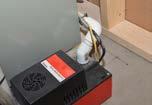
HVAC utilizing a condensate pump installed in a finished basement or in an attic or anywhere property damage is likely to occur requires extra protection. Condensate pumps must have a safety float (yellow wire) and overhead units must have overflow drain pans with a separate drain line.
< TROUBLESHOOTING
PREVENT MINOR FLOODING
CONTINUED FROM P.17
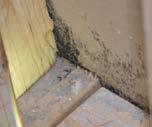
Water dripping from a frozen evaporator coil eventually thawed and overflowed the drain pan creating a minor flood. Water flowed into a nearby partition causing black mould to grow on the drywall. The coil drain runs into an opening in the concrete floor – I do not recommend this practice.
Do not reduce manufacturer provided drain fitting.
This float switch, installed in the secondary drain opening, would have prevented flooding when this drain pan overflowed.
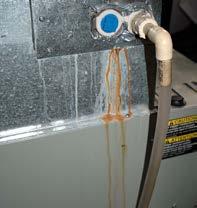
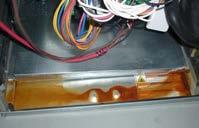
Leaking acidic furnace condensate soaks carpets and rusts metal – a property damage special!
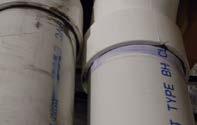
Improperly joined vent pipe – it is just a little drip.
FRESH WATER FLOODING
I spent a few years working for the service department of a large HVAC service contractor in Toronto. When it came to loading my service truck with stock replacement items on my first day, the stock-keeper plopped a pair of Wellington rubber boots into the back of the truck.
“What are they for?” I asked. He said, “You’ll see.”
It wasn’t even a week later before I came across my first basement freshwater flood caused by a 40 gallon gas water heater rusting out its storage tank. The homeowner had no idea how to turn off the water, eventually calling the city to shut it off outside. Often, basements with a lot of clutter fill-up to swimming pool depth because, invariably, a piece of paper or rag floats over to the floor drain and blocks it allowing water to fill the basement. Or, even worse, the floor drain is blocked by tree roots. Sometimes the sump pump does not work. It was sitting there for 20 years without being tested and failed when needed.
FRESH WATER FLOOD MITIGATION
Freshwater floods caused by water heater leaks, T&P valve blow-offs, burst plumbing pipes, and improperly installed accessories such as humidifier water connections may be somewhat less serious than overland flooding because most homeowner insurance policies will cover such damage. Without coverage, it may be possible to restore some equipment (once again, consult the equipment manufacturer before proceeding) provided the work is done by a properly licensed and experienced technician.
A freshwater flooded furnace could be re-activated but the amount of time and material involved might be a limiting factor. For example, an entry level condensing furnace should have the
following components replaced:
• All electrical safety components such as the primary and secondary limit controls, flame rollout switch(es) and pressure switches
• Gas valve
• Ignition control
• Combustion blower assembly
• Fan motor Then,
• Soaked cabinet insulation must be replaced
• Gas burners and orifices must be cleaned or replaced
• Gas manifold cleared of water, gas piping checked for water at appliance dirt pocket
• All electrical connections must be completely dry and any damaged wiring replaced.
• Once repairs are completed, the furnace must be run tested including a test of all safety controls.
Consider whether all this, plus labour, is less than a new unit?
On the other hand, in the case of a more sophisticated appliance it is actually less expensive to replace it than to repair it, in my view. The cost of a new ECM, multi-speed or variable speed draft inducer motor, main control board, inducer drive board, personality module, user interface, modulating gas valve and other electronic items makes replacement the only way to go for continued reliability. While a disaster for the homeowner, the HVAC contractor may be able to include an affordable upgrade to the existing insured system in some flood situations providing somewhat of a silver lining for the end-user.
HVAC AND WATER
What about minor flooding, just enough to cause property damage and really annoy the customer, even if it is their fault?
Did your company install a condensing gas furnace today? Then the installers worked with water. Installers must
Continued on p20
PREVENT MINOR FLOODING
CONTINUED FROM P18
This drain connection will never leak, will it?
What were you thinking? Drain line reduced from ¾ in. to ½ in. Incorrect use of soft polypropylene material that can be easily kinked, crushed, blocked. Installing a ¼ in. tube to fit through the floor drain cover.
Use an algaecide in drain pans and condensate pumps to prevent slime build-up. Blow out drain lines every year.
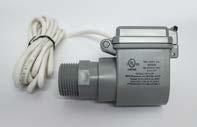
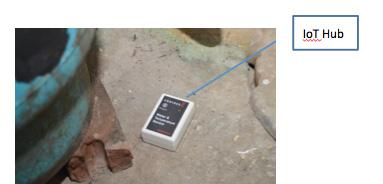
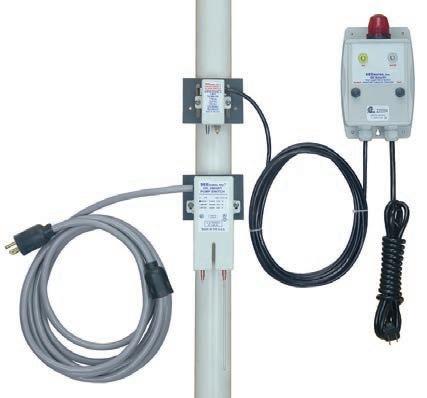
This IoT sensor detects water on the floor. It sends a signal to the (Z Wave in this case) hub that’s been set up to close the water valve when a leak is detected. An alarm may also sound and/or an email could be sent to the appropriate person.
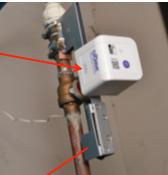
IoT device moves this valve on the water heater or the main water supply ball valve to the closed position. Inline IoT water valves are also available at greater cost.
be concerned about where the condensed water vapour in the flue gas ends-up. Venting must be sloped according to the manufacturer’s instructions to be sure water does not collect in low spots, creating a blockage. Then, installers must create a path to an open/ vented drain to handle the internally generated condensed water vapour.
If you did not do any or all of these things properly, then a breakdown generating a call-back is guaranteed or, even worse, property damage caused by flooding will see you in hot water.
MINOR FLOODING
A 100K Btuh gas-fired appliance will produce approximately two gallons (7.5 litres) of water during every hour of operation. While many high efficiency units have condensate directed to a nearby floor drain, some condensing furnaces or boilers must utilize a condensate pump sending the liquid to a remote drain elsewhere in the building.
Sometimes the condensate is pumped to a sink, laundry tub, or even outside. Pumping condensate to a receptacle that can be stopped-up is inviting a flood creating property damage. All condensate pumps should have a secondary float switch dry contact wired into the appliance control circuit shutting it down in the event of a condensate pump failure. Note: always interrupt the “R” circuit. When using a three- or fourwire communication system, the data links must not be wired through an external switch or relay contact.
Overflowing evaporator drain pans used with furnace coils, air handler coils, mini splits, even dehumidifiers create lots of insurance claims. More often than not, the mini-flood results from lack of annual preventive maintenance: dirty coils, plugged drain lines, loss of charge mean lots of water with nowhere beneficial to go. It is common to see humidifier, evaporator coil and furnace condensate drainage all piped into one undersized soft plastic drain
pipe that could easily be pinched off. It is better to have a licensed plumber install a trapped standpipe to collect pumped condensate than risk a minor flood caused by improper drainage materials and techniques.
Furnaces, water heaters, boilers and air handlers should be installed on a solid concrete base raising the appliance about two inches above the floor (50 mm.) providing some protection from minor flooding. Install a float switch in the evaporator coil secondary drain outlet. Use drain pan treatment tablets in the evaporator coil and condensate pump. Blow out the drain lines on every maintenance call. Do not reduce the manufacturer provided drain outlets and use PVC pipe to prevent crushing and pinching.
Several manufacturers have water control and flood warning devices available if your business includes installing IoT devices. Two pole moisture detectors placed near the water heater, furnace or boiler are shorted-out by water on the floor sending a signal to sound an alarm or even to operate a water valve shutting off the water supply. The homeowner receives a text message or e-mail advising that the system has been activated. Your company could receive the alarm message as well.
I have no answers for Mother Nature’s wrath; destructive overland flooding is a fact of life. However, on the HVAC side, it is important that we do all we can to prevent as much water damage as possible by using standard industry techniques and materials, by providing protective devices wherever available and by encouraging equipment owners to better maintain their HVAC systems.
Ian McTeer is an HVAC consultant with 35 years experience in the industry. He was most recently a field rep for Trane Canada DSO. McTeer is a refrigeration mechanic and Class 1 Gas technician.
When your reputation matters, you can’t be too capable, too powerful or too smart. That’s the all-new 2017 Super Duty® Dig deeper with best-in-class towing and payload**. Outthink every challenge with available class-exclusive innovations such as blind spots sensors that cover your truck and trailer and
They’re at your service to help you manoeuvre your trailer, avoid
Smartest and toughest Super Duty®. Undisputed.
and
Smart Pressure Holding
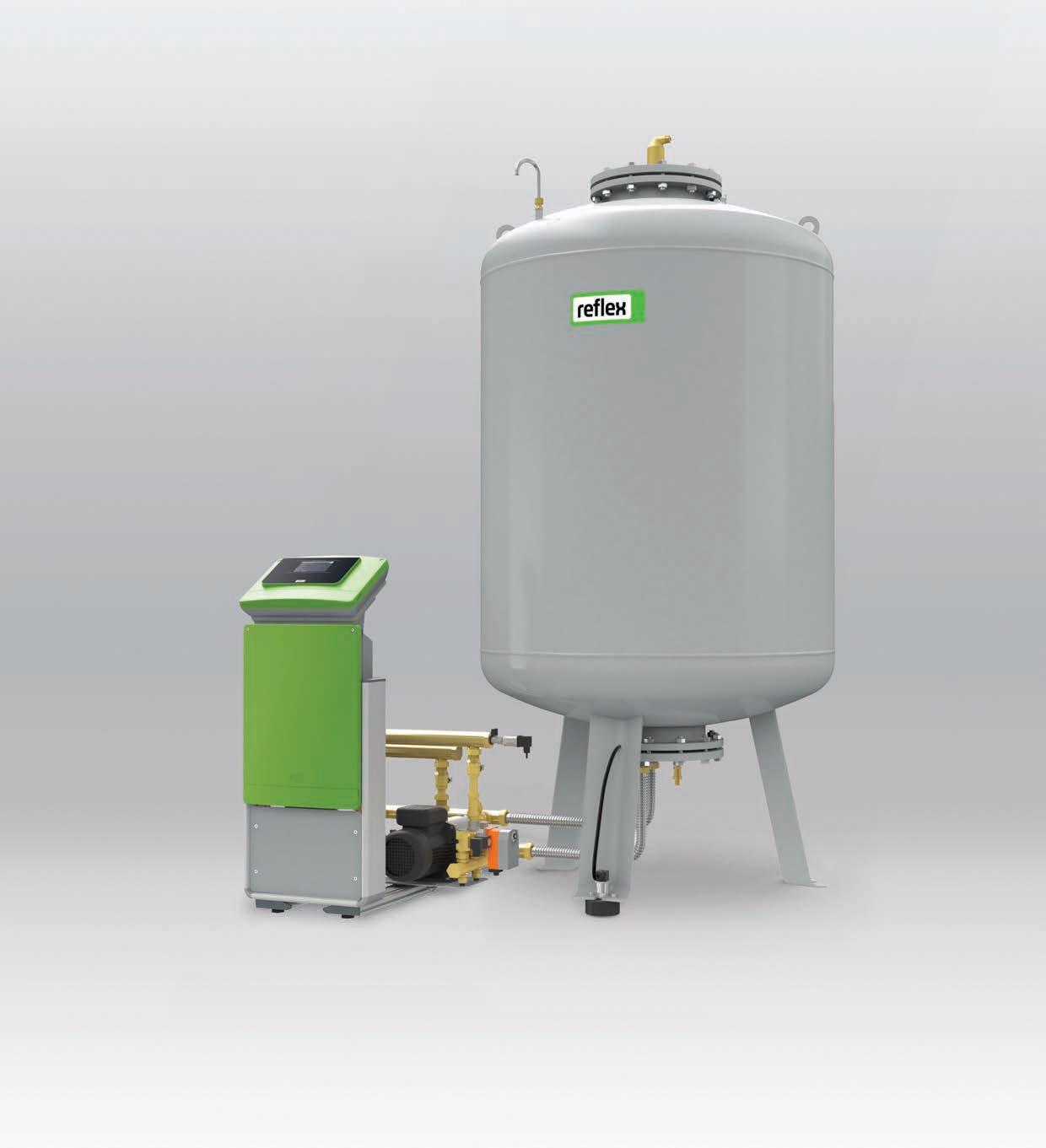
Pump Controlled Pressurization Systems
Z Pressure maintenance
Z Deaeration
Z Water make-up
→ Non-pressurized tank
→ A reduce of the footprint
→ Alternative to heavy & bulky ASME components
→ Only two connections on the return line
Visit Sinus North America at booth 6393 on AHR Expo in Chicago, Jan 22-24 2018
Smart Under Pressure
Pressure maintenance, separating of gases as well as water-make up are decisive factors for heating and cooling systems to function properly and reliably.
In a closed system, the medium water and its condition, forms the main component for efficient distribution of temperature inside a building. At the same time, water represents an incompressible medium that is subject to a temperature-induced volume expansion which results in a change of the internal pressure. A pressure-maintaining system, such as an expansion tank is used, to enable the system to accommodate the extra volume. The tank is sized according to the expected expansion volumes and the required operating pressure of the system. Depending on the parameters, the tank can sometimes only use 50% of its volume for absorbing the extra amount of water. It is also necessary to remove air and micro bubbles, since they increase the risk of corrosion and therefore damage or failure of system components. Air separators are a common solution, more and more used in the market but under several physical conditions with a very limited efficiency.
Modern and combined solutions
Why not use a pump to control the system operating pressure range, such as the Variomat. The unit is equipped with a non-pressurized tank that can use up to 90% of its volume to accommodate the expansion volume. This gives room for a water reserve, that can be used to deal with small system water losses. When water is heated to operating temperature the expanded water will be released over fully automated overflow valves into the non-pressurized tank where it remains.
In case of a pressure drop a pump starts pushing this water back to the system until the defined system pressure is reached again.
The unit separates gases automatically: The amount of gases that can be found in solution, depends on the water’s temperature and pressure. The tank is at ambient pressure and by forcing the system water in a set cycle over this tank, the air is removed automatically, before it is pumped back to the system again.
The Variomat is also equipped with an automatic water make-up. In order to avoid further oxygen to enter into the system, the water reserve is used instead of fresh and cold water. And even more: Once the water is under system pressure, it gets back its ability to absorb free gases and micro bubbles that are still present inside the system.
Your benefits
With the increase in size and complexity of hydronic systems, the Variomat gives you a cost-effective alternative for pressure maintenance, air separation and water make up. It enables you to realize a more space-saving solution and it increases the efficiency of a hydronic system and also ensures trouble-free heat supply. Only two connection points on the return line are necessary to connect the Variomat to your hydronic system. See you at AHR.
MICHAEL STRASEN Vice President North America Business Development
Sinus North America Mfg. Inc www.reflexnorthamerica.com
GETTING THE AIR OUT
The basics of purging hydronic circuits. BY
JOHN SIEGENTHALER
Nearly all closed loop hydronic heating and cooling systems are supposed to be filled with water, or a mixture of water and antifreeze. The only intentional air in the system is contained in the expansion tank.
The only exception to the above is a closed-loop, drainback solar thermal system where a volume of air is captured and managed within the system. That air is repeatedly used to replace water in the solar collectors when they drain at the end of each solar collection cycle.
Contrast the idea of a fluid-filled system with the fact that it begins its service life completely filled with air. Transitioning a newly-minted hydronic system, or an older system that has been drained, from air-filled to water-filled is called "purging." The effectiveness of purging plays a major role in reliable and efficient system operation.
Nearly all modern hydronic systems rely on two methods toget air out and move water into the system. The first is called "forced fluid purging," the second is "microbubble elimination." Together these methods can get the system up and running quickly and ensure that it remains essentially air-free over its full service life.
THE OLD DAYS
Getting air out of hydronic systems was not always straightforward. When I began working with these systems in the late
1970s, the common method of purging was to fill the system from the bottom up, counting on air to exit at multiple air vents, or at “bleeder” valves on heat emitters, or at other high points in the piping.
Imagine a scenario where several fin-tube baseboards each have a baseboard tee and a manually operated bleeder valve at the end of the fin-tube element. Figure 1 shows these fittings and how each is typically installed.
The installer opens all the bleeder valves before allowing water into the system. Pressurized water is introduced into the lower portion of the system by opening the “fast fill” lever on the system’s pressure reducing valve, or by opening a ball valve that bypasses the pressure reducing valve. Driven by the pressure of the building’s plumbing system, the water races through the piping, eventually gets to the open bleeder valves and sprays out tiny holes in the side of these valves.
The trick is to catch those streams of water before they make a mess. That is pretty hard to do when the water is squirting out of four or five bleeder valves simultaneously at several locations in the building. If the hole in the bleeder valve faced outward, you could, in some cases, put a coffee can in front of each valve and hold it in place with a piece of wire. Still, this is a tedious approach to purging.
Even after the majority of the bulk air in the system is removed, the dissolved molecules of oxygen, nitrogen and
“The trick is to catch those streams of water before they make a mess.”
other trace gases in the water take time to merge into bubbles that are large enough to be captured and ejected from the system by cast iron air scoops.
Older methods of purging that mostly relied on getting air out at the system’s high points were slow and inefficient.
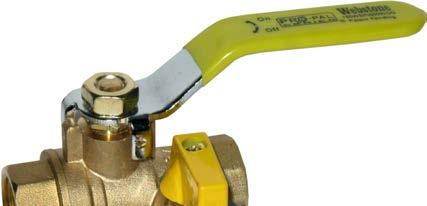
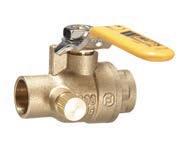
Today, the hydronics industry has new hardware and methods that allow fast and efficient removal of air as the system is filled with water. One of the modern hardware devices that is now used routinely is the purge valve, an example of which is shown in Figure 2.
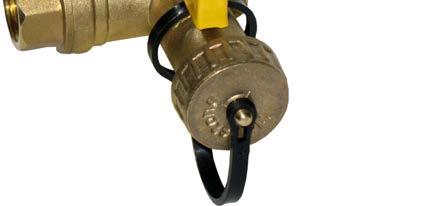
Purge valves combine two ball valves into a single body. One ball valve is inline with the piping being purged, the other is located in a side drain port that ends with a male hose thread and cap.
When used in a single circuit hydronic system, a purge valve should be installed as shown in Figure 3.
BULK AIR REMOVAL
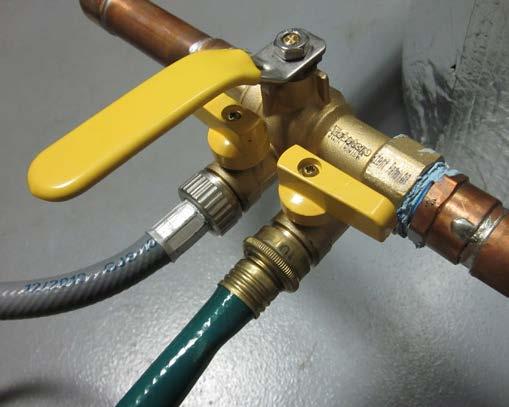
To fill and purge the circuit, close the inline ball on the purge valve, open the side port ball and connect a hose to the side port as shown in Figure 3. Open the fast fill lever on the system’s pressure reducing valve and if a bypass ball valve is installed as shown in Figure 3, open it. Pressurized water from the building’s cold-water plumbing enters the system just downstream of the purge valve and flows through the circuit in a clockwise direction based on the layout in Figure 3. The closed inline ball in the purge valve prevents the water from
Continued on p26
Figure
< HYDRONICS
“short circuiting” to the drain port.
The key to good purging is to create high water flow velocity through the circuit. I suggest a water velocity of at least four feet per second through the piping during purging. This allows the water to act like a liquid piston, pushing most of the air in the piping and components ahead of it and eventually back to the purge valve. The air then exits through the side port of the purge valve. Within a few seconds, the water stream follows the air out of the side port and through a hose leading to a capture bucket or drain. The system’s circulator can be turned on at this point to further increase flow velocity though the circuit.
Once the existing water stream is free of visible bubbles for several seconds, the side port of the purging valve is closed. The system pressure will immediately climb as building water pressure pushes more water into the system and compresses the diaphragm in the expansion tank. It is important to close the fast-fill bypass ball valve on the cold-water inlet piping within a second or two of closing the side port of the purging valve. If you do not, it is likely that the circuit pressure will exceed the rated pressure of the pressure relief valve, allowing water to be ejected from the latter. If this happens, crack open the side port of the purging valve until the system drops to the desired static pressure.
The process described will quickly remove most of the bulk air initially in the system. My experience has been that using this forced fluid purging approach eliminates the need to bleed air from high point vents. The fast moving water can force air through the system in any direction, including straight down, and eventually out of the purge valve.
FINAL SCRUB
The process of properly “deaerating” a hydronic system does not end with forced fluid purging. The cold water that now fills the system still contains between two and four per cent dissolved gas molecules, including oxygen, nitrogen and small amounts of other gases. You cannot see this molecular “air,” but it will come out to play once the water is heated. Welldesigned systems stand ready to quickly capture it and eject it.
The system shown in Figure 3 also includes a microbubble air separator. This device contains a coalescing media that coaxes the dissolved gas molecules to form tiny microbubbles. The coalescing media also provides pathways for these microbubbles to rise above the active flow zone in the separator and merge together at the top. After a small volume of air collects in the upper portion of the separator it is ejected through a float-operated valve. The pressure within the system is what pushes the captured air out.
Microbubble air separators are a tremendous improvement over legacy cast-iron air scoops and, in my opinion,
Figure 5
Figure 6 Figure
Amazing performance in the corners and perfect on the straightaways.
HeatLink PEX-a tubing is engineered to perform. Our PEX-a tubing is manufactured using the one step crosslinking extrusion process, creating a superior and more uniform molecular structure, which means increased strength, flexibility and thermal memory. Amazingly, a section of ½” tubing can be bent into a 3” radius without affecting tubing integrity. So you can count on great performance in the corners.
HeatLink PEX-a is highly crush and abrasion resistant and perfect for projects where it’s buried in earth or covered in concrete. It’s built to take the heat, the cold, and the pressure–above and beyond industry specifications–to last a lifetime. UV stabilized to withstand up to 12 months exposure to sunlight, it’s the reliable tubing choice for your next potable water or radiant heating or cooling project.
HeatLink PEX-a tubing is lightweight, durable and requires fewer fittings–so it’s really quick and easy to install on the straightaways too.
HeatLink PEX-a is certified to meet or exceed industry performance standards and approved for installation across North America. Install our PEX-a tubing with confidence–we cover every inch of it with a worry free 25 year warranty.
We’ve been proudly making HeatLink PEX-a tubing right here in North America since 1998.
Systems for life.
< HYDRONICS
“The effectiveness of purging plays a major role in reliable and efficient system operation.”
should be used in every modern hydronic system.
Coaxing dissolved gases out of the system fluid takes time, sometimes several days. The efficiency of dissolved gas removal is greatly improved if the system fluid is heated. Hot water (or hot antifreeze solutions) cannot retain as much dissolved gas as cool water and give up dissolved air more willingly as it passes through the air separator. Eventually the microbubble air separator, in cooperation with an automatic make-up water system, or an automatic fluid feeder, reduces the air content of the system to an insignificant level and keeps it there.
MULTIPLE ZONE SYSTEMS
Most modern hydronic systems are not as simple as the one shown in Figure 3. These systems contain multiple zone circuits, or other parallel piping paths. The most efficient way to purge the systems is to install a purging valve on the return end of each circuit, as shown in Figure 4.
The purging procedure is very similar to that previously described. What is different is that each zone circuit is purged one at a time. Doing so produces the highest possible flow velocity through each circuit and the most efficient bulk air removal. When the purging valve on one zone return has a bubble-free return flow, close the inline ball on the purging valve and stop the cold water at the make-up water system. Move the hose to the next purging valve and repeat the procedure. Keep doing this until each zone is purged. After water is forced into each zone, the zone circulator can also be turned on to further increase purging velocity. The microbubble air separator will do the final cleanup by capturing dissolved gases and ejecting them from the system.
P/S PURGING
In the case of primary secondary systems I recommend using a purging valve on the return side of each secondary circuit as shown in Figure 5
This approach eliminates the need for a ball valve between each set of closely spaced tees–the sole purpose of which is to force water through the secondary circuit during purging. The combination of the purging valve on the return side of the secondary circuit, along with isolation flanges on each secondary circulator, allows each secondary circuit to be completely isolated for service if necessary.
H2O Demineralizers
Engineered Hydronic Fluid
Features & benefits
• Demineralized water meets the strict quality requirements from boiler and glycol manufacturers
• Removes all salts such as chlorides, sulphates, and nitrates which specifically attack metals like stainless steel, copper, and aluminum
• Removes scale producing ions like calcium
• Lowers electrical conductivity, which reduces corrosion
WE’VE GOT EXPERIENCE
< HYDRONICS
Start the purging procedure by isolating all secondary circuits, then purge the primary loop using the previously described procedure. Once the primary loop is purged, set up another hose and purge each secondary circuit individually.
PUMPED PURGING
Some hydronics systems may not have access to pressurized cold water systems for purging. Other systems may need to be filled and purged with a premixed antifreeze solution. Both of these scenarios can be handled using a double port purging valve such as the one shown in Figure 6
Double port purging valves combine two side port ball valves with a single inline ball valve. One side port allows fluid (water or antifreeze solution) into the system. The other lets air out of the system. A typical circuit using a double port purging valve is shown in Figure 7.
A submersible pump is used to force fluid in and around the circuit. Air exits the upstream side port of the purge valve. Eventually, a stream of fluid flows from the exit port and is carried back to the fluid reservoir. It is important to keep the end of the return hose under the fluid level in the reservoir to avoid creating bubbles that get pulled back into the purging pump. The purging pump is operated until the return stream
is free of bubbles for several seconds. At that point, the outlet port of the purge valve is closed. This allows the purge pump to increase system pressure. Fluid is forced into the expansion tank until the system pressure reaches the maximum (no flow) pressure of the purge pump. The final step is to close the inlet port on the purge valve and turn off the purge pump. If additional pressure is needed in the circuit, more fluid can be added using a hand pump.
With modern hardware and methods it is possible to efficiently purge air from just about any hydronic system and keep that system essentially air free over its full service life.
John Siegenthaler, P.E., is a mechanical engineering graduate of Rensselaer Polytechnic Institute and a licensed professional engineer. He has over 34 years experience in designing modern hydronic heating systems. Siegenthaler’s latest book, Heating with Renewable Energy, was released recently (see www.hydronicpros.com for more information).
HYDRONIC PRODUCTS
The Mascot FT by Laars is a condensing combi boiler and water heater offering an Energy Star rating of 95 per cent AFUE. The system features a robust fire tube heat exchanger and is fully modulating to save fuel. The natural gas or LP-fired unit is offered in many sizes and configurations: 120, 140, and 199 MBH combi boiler and water heater, or as an 80, 100, 120, 140, and 199 MBH heating only boiler. Combi models include an integrated mini-indirect tank. The combi boiler can be ordered as a floor standing or wall hung unit, includes an advanced control system, a conformal encapsulated control board protected from moisture, gas leak detection system that will shut down the boiler if gas leak is detected for added safety, outdoor reset, domestic hot water priority, primeless condensate trap, zero clearance installation and venting up to 100 feet. www.laars.com/mascot-lx.aspx
The Free Flex ultra-high efficiency commercial condensing boiler from Bryan Steam offers a thermal efficiency of 95 per cent and features Bryan’s weld-free design. Free Flex permits field access to the heat exchanger for cleaning and tube replacement. It is also available in knockdown configurations to fit where other packaged boilers cannot and will operate in low flow, variable-primary or traditional primary/secondary designs. Other features include 1 to 3MBH, a competitive installed footprint and a state-of-the-art control system. www.bryanboilers.com
Taco's free, interactive Building Efficiency System Tool (BEST) is a commercial building HVAC system efficiency comparison tool that brings EER, IEER, SEER, and COP data together to compare the performance, life cycles, and costs for any type of HVAC system. Analyze real-world HVAC options to pinpoint the best system that meets budgetary and performance requirements. The tools uses the Building Energy Efficiency Ratio (BEER), which takes certified AHRI data, including certified unit efficiency ratios, certified manufacturers’ published performance data, component performance curves, and pipe or duct required in typical systems with “as applied” correction factors – combining them to bridge the gap between laboratory test data and real world HVAC system performance. www.TacoComfort.com/BEST
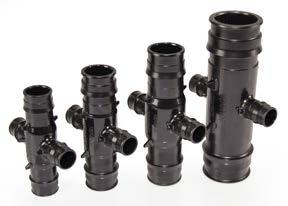
Uponor North America (Uponor) is now offering an innovative solution for PEX hydronic heating and cooling applications with back-to-back installation spacing constraints. The ProPEX engineered polymer (EP) opposingport tees eliminate the need for additional tees and elbows to facilitate piping in two directions, reducing the number of required fittings by 75 per cent. Available in 1 in., 1¼ in., 1½ in. and 2 in. flow-through sizes with ¾ in. outlets, the ProPEX EP opposing-port tees are listed to ASTM F1960 as well as NSF 14 and code-compliant with the International Mechanical Code (IMC) and Uniform Mechanical Code (UMC) for hydronic heating and cooling applications. www.uponor.ca
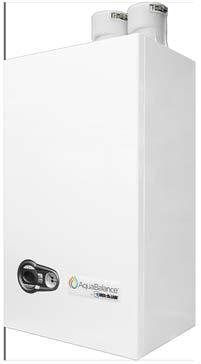
The AquaBalance from Weil-McLain is now available in two versions and more sizes. The heat only and combi versions are offered in 80, 120 and 155 MBH sizes. Suited to retrofits or new construction, the combi features simultaneous domestic heating and up to four gallons of domestic hot water per minute at a 70F rise. http://weil-mclain.ca
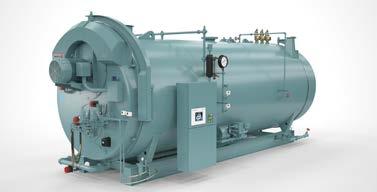
Cleaver-Brooks has launched CBEX Dryback Elite, which achieves three per cent O2 across its 10:1 turndown range. The standard package offers 30 ppm NOx with <10 ppm CO. Its dryback construction offers unencumbered access to all parts of the boiler for ease of maintenance. The boiler has extended surface tubes improved heat transfer. It includes the Hawk control system for precise boiler/burner management and safety with logic-based ancillary devices and functions. The linkageless Hawk offers options for oxygen trim and variable speed drive control and can be customized and optimized. It is compatible with building automation systems and is NFPA and UL compliant. The CBEX Dryback Elite is specifically designed to fit inside a shipping container for a complete operable boiler room shippable worldwide up to 1000 HP. www.cleaverbrooks.com
STEPS TO AMMONIA SYSTEM SAFETY
BY DAVE DEMMA
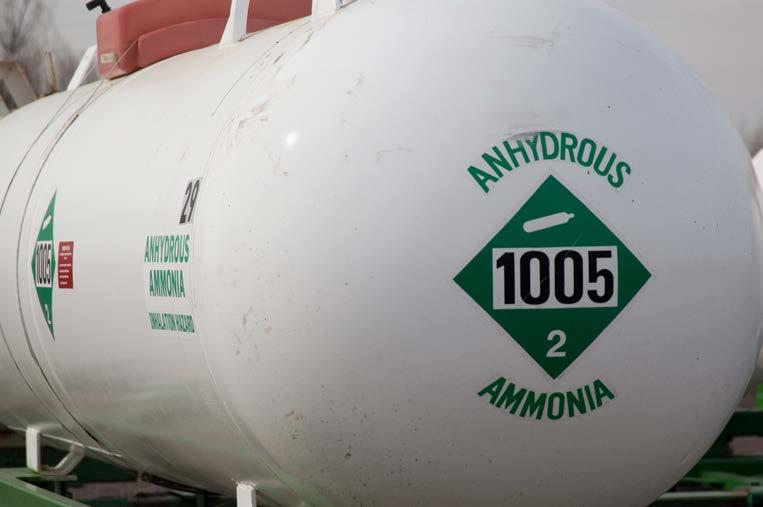
Ammonia is a colourless gas, composed of one nitrogen molecule and three hydrogen molecules. It is produced naturally in the human body, as well as in nature (water, soil, air and so on). It has a very distinct pungent odour, and might be accurately compared to the odour of cat urine. Pure ammonia (anhydrous ammonia) will exist as a gas at typical room temperatures. It will also readily dissolve in water, forming ammonium hydroxide.
For those who are not in some way associated with the refrigeration industry, a mention of the word ammonia will bring to mind a common household cleaner. That product is actually ammonium hydroxide, with the percentage of ammonia ranging somewhere between three to ten per cent. It may also include some form of detergent, along with a scent such as lemon. While it too has a pungent odour and can be irritating to the skin, it is nothing like pure NH3, the un-watered down (anhydrous ammonia) version that is commonly used as a refrigerant in industrial applications.
Each country will have its own respective regulatory agency governing owner responsibility for installation/operation/maintaining ammonia refrigeration systems. Several national and international organizations have gotten involved with providing guidance on minimizing the environmental impacts of refrigerant leaks. Other organizations have also focused on the risks associated with these leaks with regards to human safety. Through the involvement of these organizations codes and regu-
lations have been established.
In Canada, the latter comes from various levels of government – federal, provincial as well as municipal administrations depending on the application.
Accidents that might be of minor consequence with HCFC/HFC refrigerants can result in some very serious consequences with ammonia system mishaps. Some of the more common ammonia system safety hazards are listed below:
1. Poor housekeeping practices (oily or wet floors, storing items in the machine room)
Correct it: A clean area is a safe area. Ensure your floors are clean, free of oil and water and do not use your ammonia machine room as a storage room.
2. Poor pipe quality beneath insulation
Correct it: Check for corrosion under insulation (CUI) by conducting spot checks, often performed during your mechanical integrity audit. Prevent pipe corrosion by using a corrosion inhibitor or stainless steel pipe.
3. Absence of adequate pipe labels or no maintenance program of labeling
Correct it: Follow International Institute of Ammonia Refrigeration (IIAR) Bulletin No. 114.
4. Equipment is operated outside design parameters
Materials are generally only rated for a specific temperature range. In the refrigeration industry, users may change a setpoint from -20F to -25F to try and improve production or make up for lack of capacity; however, the pipe may only be rated for -20F. Running pumps or compressors at different design conditions than intended can overload the motors.
“Accidents that might be of minor consequence with HCFC/HFC refrigerants can result in some very serious consequences with ammonia system mishaps."
Correct it: Operate your pumps and compressors within the designated design parameters and temperature range.
5. Failure to implement maintenance cycling program on valves. If your valves sit in one position for too long, they won’t work when you go to use them.
Correct it: “Exercise” (open and close) your valves regularly.
6. Blocked escape routes from areas with ammonia present
It may seem obvious, but do not store a big box in front of an exit. We see this mistake often.
Correct it: Ensure escape routes are clear.
7. Operators with insufficient training of ammonia refrigeration operations and safety awareness
Correct it: Ensure personnel involved with the operation and maintenance of the ammonia system receive initial train -
MAIN CHARACTERISTICS OF A CLASS-T ROOM
As required by Code B52 of the CSA (Canadian Standards Association), a mechanical room with an ammonia refrigeration system must comply with Class-T requirements which include:
• A room sealed off from indoor air and constantly ventilated with outside air.
• Ventilation control outside of the room.
• Controlled access to the room.
• A door giving direct access to the exterior of the building.
• A vestibule with a fireproof door giving access to the room.
• Masks and/or personal respirators available in case of major leaks.
• Written emergency procedures.
• Staff exercises and training.
• An ammonia detector coupled with an alarm system that sets off the emergency ventilation system to exhaust accumulated ammonia vapours to the outside.
• An alarm to alert maintenance staff and firefighters.
8. Unsafe access to frequently used valves, equipment, etc. for maintenance
Correct it: Items that require maintenance should ideally be accessible from the ground (use a chain wheel). Items up high should have a catwalk or a clear path accessible via a scissor lift or ladder.
9. Leak detection systems that are either nonexistent, inoperable, not calibrated or not tied to ventilation systems
Correct it: Perform annual testing on your leak detection systems to ensure alarms work properly.
10. Uncapped open valves
Correct it: Ensure all valves open to the atmosphere have a pipe plug or cap.
11. Open oil draining valves
Because oil draining valves have a spring return, you personnel must stand in front of them and hold them open. Some personnel might take them off and just leave them open.
Correct it: Avoid this issue by utilizing self-closing, springloaded valves.
12. Gas mask systems are not readily accessible
Correct it: Keep your gas mask systems close to your ammonia source.
13. Heavy ice buildup on piping and components; not taking weight into consideration
Some pipes (those below 32F) will build frost either because they are not insulated, or are not insulated properly. The ice will get thicker and thicker, creating considerable added weight. Pipe supports and the building are not designed to hold this extra weight.
Correct it: Insulate your piping and components properly.
14. Not executing safety switch testing on a consistent schedule
Correct it: Conduct annual safety switch testing.
15. Open electrical cabinets
Correct it: Close your electrical cabinets to prevent risk of shock or fire.
While an article such as this can only scratch the surface of a complex topic such as safety in an ammonia system, please see the following reference for a more comprehensive guide for safety in ammonia systems: www.epa.gov/sites/ production/files/2015-05/documents/accident_prevention_ammonia_refrigeration_5-20-15.pdf.
Dave Demma holds a degree in refrigeration engineering and worked as a journeyman refrigeration technician before moving into the manufacturing sector where he regularly trains contractor and engineering groups. He can be reached at ddemma@uri.com.
HVAC/R PRODUCTS
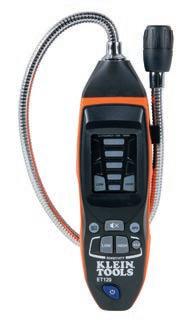
Klein’s ET-120 gas leak detector is an easy-to-use tester that provides audible and visual alarms in the presence of methane, propane and other combustible gases at concentrations as low as 50 ppm Features include a detection range of ~50 to 10,000 ppm (based on Methane); two levels of detection: High (~50 to 1000 ppm) and Low (~50 to 10,000 ppm); five red LED’s (visual) and 85db audible alerts that increase with gas concentration; and automatic zeropoint calibration at power-up. An 18” flexible gooseneck expands sensor’s reach and clips onto the device for storage. www.kleintools.com
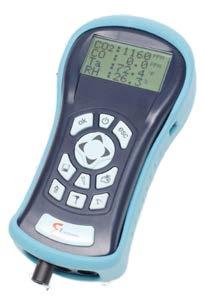
The AQ Comfort IAQ monitor by E Instruments is an all-in-one instrument providing Indoor Air Quality
Monitoring and Real-time Data Logging. The compact, handheld unit has an easy to use menu system. PC software and USB are in cluded. It measures CO2 and CO, and moni tors temperature, % RH, Dew Point, Wet Bulb and offers real-time datalogging. The Magnetic Rubber Boot is included. www.E-Inst.com
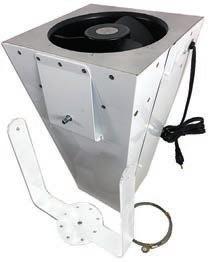
Tjernlund Products’ line of compact, high-velocity destratification fans, called D-STRAT ceiling fans are described in a new brochure. The fans re-circulate hot air trapped in high ceiling areas and direct it to occupied levels. They reduce the typical area temperature differential of 20 degrees or more between ceiling and floor levels by at least fifty per cent. The fans do not have visual moving blades. High discharge velocity moves air at 1.5 sones. At an overall size of 12 x 25 in., D-STRAT fans fit between roof trusses affording full access to upper level warehouse storage racking. www.tjernlund.com
Johnson Controls introduces Verasys, a plug-and-play controls system integrating HVAC/R equipment and controls. Suitable for single- or multi-zone applications, the controls system using wireless configurations. Configurable controllers provide simple settings for implementation but defaults can be changed. Verasys integrates with Metasys or any thirdparty BACnet system. Optional fault detection and diagnostics deliver alarm notifications via e-mail or text. The controls system connects users to data streams from smart controls in rooftop units, fan coils, zone dampers, heat pumps, refrigeration systems, lighting panels, and more. www.verasyscontrols.com
The BrushBeast from Rotobrush In ternational is its newest air duct cleaning system. The carrier has provides more space for accessories and the tools to complete the job. It has additional storage to hold drills and other on-the-job tools. Features in clude up to 90 per cent increase in vacuum power, a durable body construct polypropylene for superior strength and 12-in. nylon-enforced wheels. www.rotobrush.com
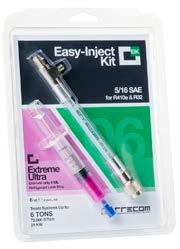
Extreme Ultra from Errecom is a refrigerant gas leak stop that addresses problems related to small refrigerant gas leakages in AC/R systems. The new formula locates refrigerant gas leaks and permanently sealing them without reacting to moisture and oxygen. Extreme Ultra is a polymer-free solution that repairs leaks up to 0.3 mm. It is compatible with all refrigerant gasses, non-flammable, non-irritating and safe for the operator. www.errecom.com
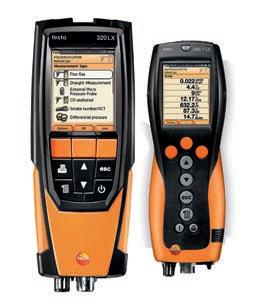
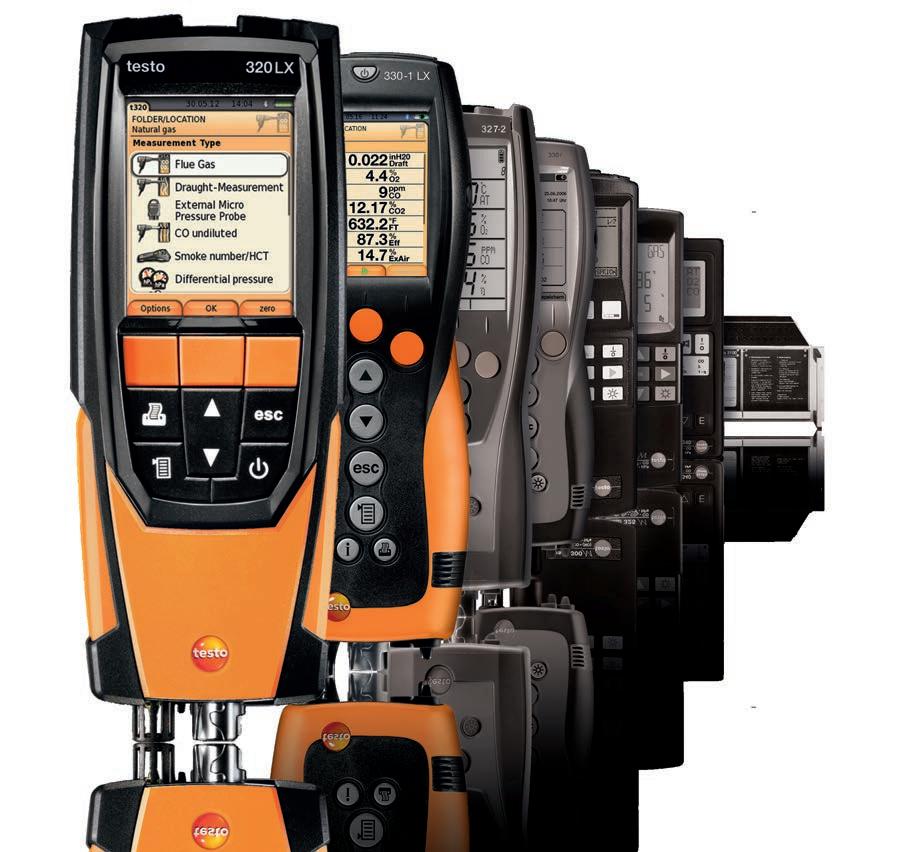
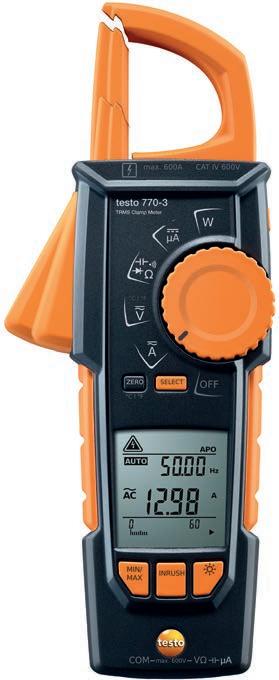
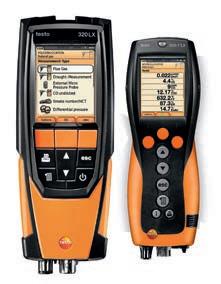
The testo 320 and 330 combustion analyzers include pre-calibrated user-replaceable sensors, and full color graphic displays. Complimentary to the testo line of combustion analyzers, is the testo 770-3 hook camp meter, which is suited for electrical work in all HVAC applications. Contractors can work safely in tight spaces as well as identify the testing inprocess with the hook-on clamp, Bluetooth functionality and a host of features designed specifically for HVAC techs, including TRMS, capacitance, microamps, starting current, and frequency measurement. www.testo.com
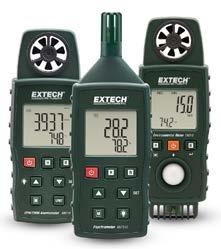
Extech Instruments has launched an airflow meter, a combination hygro-thermometer and psychrometer, and a versatile 10-in-1 multifunction meter. The compact instruments are designed to provide quick, accurate readings on a range of environmental conditions essential for HVAC/R troubleshooting and repairs, as well as IAQ assessments. The 510 meters share an informative, oversized display and a bright backlight for testing in dark job sites. Useful data functions include data hold, as well as minimum and maximum readings. The Auto-Power-Off function preserves battery life and can be disabled for extended monitoring. A wrist strap is useful for toting. www.extech.com
The MUAA from Stelpro distributes tempered fresh air to provide comfort in a well-ventilated home. The heating elements modulate continuously to heat fresh air at a lower cost. Compact and flexible, this unit has multiple installation positions (horizontal, vertical upflow or downflow). The MUAA meets ASHRAE 62.2 requirements; ventilation and acceptable indoor air quality in low-rise residential buildings. www.stelpro.com
The Fluke Ti450 and Ti480 PRO Series infrared cam eras have increased thermal sensitivity to capture minute differences and the latest technology for onscreen clarity to make it easy to visualize issues in the field. Enhanced measurement accuracy and wider dynamic temperature range of up to 1500C with NETD as low as 25 mK allow technicians to collect precise information. The 320 x 240 resolution Ti450 PRO and 640 x 480 resolution Ti480 PRO also feature improved, more intuitive touchscreen user interface to speed detection and diagnoses of issues. Users can upload infrared images from anywhere. www.fluke.com/ti450PRO
Stelpro’s ALUX baseboard series is available in four models. The series can be installed in offices, conference rooms, below large windows and patio doors as well as residential and commercial spaces. The series comes in the 4.5 x 2-in. ALUX1 to the 4 3/8 x 6 ¾-in. ALUX4. The ALUX series also ranges from 150 to 500 watts per linear foot. www.stelpro.com
A line of outside air systems (DOAS) from the York brand includes a range of 100-per cent outside air units and mixed air units. The line has heat pump and water source op eration, along with a hot water heat option. The systems feature an internal energy recovery wheel that preconditions outside air and reduces heating and cooling loads by transferring energy between the exhaust airstreams. Handling up to 20,000 cfm of air and providing as much as 70 tons of cooling capacity, the new York DOAS meets ASHRAE requirements for fresh air and energy efficiency. www.york.com
KEEPING THE HEAT ON
Ensure unit heaters, HVAC systems and other heating systems bring uninterrupted heat to your customers’ operations. BY RICHARD BOOTHMAN
Winter can be hard on heaters of every type, but a step-by-step approach to preventive measures and maintenance will help you to prepare for the harshest season of the year. From gas supply to air movers and condensate removal, the following list hits the preventive and maintenance high points on a range of heating products.
GENERAL MAINTENANCE
N Check equipment for any physical damage that may have occurred over the summer. This should include damage to sheet metal, fans and air movers, wiring, gas pipes, vent systems, and equipment supports.
N Look for cleanliness of heat exchanger and burners.
N Check to make certain the vent system has not been compromised and is in the proper working order.
N Check for obstructions that may be blocking the air inlet or discharge paths of the heat exchanger.
GAS SUPPLY
N Check to make sure that gas mains are turned on.
N Check inlet pressure and manifold gas pressure to heating equipment to make sure it is properly set.
N Check gas regulators to be certain regulator vents are not plugged.
N If propane is being used, check main regulator on tanks for proper pressure settings and check for damage to regulators.
N Check propane tanks for proper size and liquid propane levels.
GAS CONTROLS
N Inspect all gas connections for good tight fits.
N This includes pipe connections to the equipment as well as pilot tubing connections at the gas valve and at the pilot burner.
N Inspect the main burner gas orifices to make sure they are not blocked with spider webs. Check pilot orifice for obstructions if pilot cannot be lit or will not stay lit.
N After visual and physical inspection of the gas connection, turn on the gas and check for gas leaks using a water/soap solution.
for gas
open flame. Check electrical connections to gas valve.
N Check thermocouple, pilots, flame sensors, ignition cables, etc. for cleanliness and tightness of connections.
AIR MOVERS
N Lubricate motor bearings if they are not the permanently lubricated type.
N With the power turned off, check to see that the motor shaft turns freely and does not bind. This can be done by rotating the fan or blower wheel by hand.
N Inspect the fan or blower wheel to make sure they are not damaged or binding.
N Check to make certain fan is not loose on motor shaft. If blower units are used, make certain the blower and motor pulleys are secure.
N On blower units, check for proper belt tension and also look for signs of belt wear.
N Check power connections to motor to ensure they are secure and have not vibrated loose over the past heating seasons.
Note: Equipment using belt drives should have the belt tension checked on initial start-up. Periodic inspection should be made during the heating season to ensure continued proper operation.
CONDENSATE REMOVAL & DISPOSAL SYSTEMS
N If the units are gas-fired condensing units, check the following items:
N Make sure the condensate lines are clear of obstructions and free flowing.
N Assure the condensate drain line “P” trap has been
N Do not check
leaks with an
primed and filled with water.
N Check the condensate overflow switch to make sure it is working properly.
N If the unit(s) has been provided with a condensate removal pump, check to make sure the pump is working properly and has not been damaged.
THERMOSTATS
N Check for general cleanliness.
N Check wiring to and from thermostat.
N Check thermostat for proper temperature setting.
GAS BURNERS
N Inspect the burner for general cleanliness. If the burner requires cleaning, clean with a stiff brush (not a wire brush).
N Inspect inside of burner tubes as much as possible. During the summer months it is not uncommon to find that spiders or mice have taken up residence inside the burner.
N Inspect burner for proper location making sure that it is properly aligned and securely fastened.
VENT SYSTEMS
N Check to make certain vent system is clear and free of any obstructions.
N Be sure all connections are secure and tight.
N Inspect the entire vent system for signs of corrosion, damage, and all potential issues that could lead to vent products entering the heated space or vent products recirculating into combustion air.
N Clean vent pipe and clean out cap, if necessary.
START-UP
Make certain vent support system is secure and free of damage.
Check joints of vent for signs of condensate leakage. Water marks down the outside of the vent pipe may indicate inadequate venting and/or improper vent insulation in unheated spaces. If water marks are observed, double check to make certain the proper vent system has been installed. If units are the power vented (power exhaust) type, check all the wiring connections to the power venter motor, and the vent system safety pressure switch. Also check the pressure switch sensing tube for blockage or damage. With the main gas turned off, cycle the thermostat to check the operation of the power venter, and verify the safety pressure switch is functioning.
Check the exterior components of the vent system (exterior vent extensions, vent weather caps, combustion air intake weather caps, etc.) to assure they have not been compromised, they are in proper position, and that there are not any blockages at the air intakes or vent discharges of the venting system.
Standing Pilot Systems - Turn off the power to the unit. Turn on the gas to the unit. Turn the gas valve control knob to the “pilot” position. With the gas valve control knob in the “pilot” position, manually depress the knob and light the pilot. After 30 seconds, release the control knob and assure the pilot remains lit. Next turn the gas valve control knob to the “On” position. Restore power to the unit and cycle the unit via the unit thermostat to assure it operates correctly.
Intermittent Pilot System - Turn off the power to the unit. Remove the wire lead from the “main valve” terminal of the gas valve and protect the wire to prevent shorting. Then turn the gas valve control knob to the “On” position. Turn on the gas to the unit and restore power. Cycle the unit via the thermostat and observe if a pilot flame has been established and if so, that it remains on. Next turn the thermostat down and observe if the pilot flame has been extinguished. After checking the electronic ignition pilot system functionality turn off the power to the unit and reconnect the wire lead to the “main valve” terminal of the gas valve. Restore power and again cycle the unit via the thermostat and observe that both pilot and main burner ignition occurs. After checking, reset the thermostat to the desired room temperature.
Direct-Spark Systems - Turn off the power and main gas to the unit. Remove the wire lead from the “main valve” terminal of the gas valve and protect the wire to prevent shorting. Then turn the gas valve control knob to the “On” position. Restore power to the unit, but do not restore the main gas. Cycle the unit via the thermostat and observe if the direct-ignition device is energized. (If the unit has a hot surface igniter a yellowish glow will appear in a few seconds. If the unit has a spark ignition type igniter, a sparking sound will be heard and a blue spark may be observed at the igniter). After proving the igniter function, restore the main gas to the unit and again cycle the unit via the thermostat and observe that both the main burner ignition system is functioning and that main burner ignition occurs. After checking, reset the thermostat to the desired room temperature.
On all units, observe the burner flame to insure that it is burning clean and not wavering, rolling out, lifting or fluctuating. If an abnormal flame is observed, check the equipment installation and service manual.
RECORD KEEPING
It is recommended that a record be kept of the date the heating equipment was last checked and serviced.
Follow all instructions and cautions in the installation, operation, and service manuals originally provided with the equipment.
Richard Boothman is director of North American sales for Modine. A printable blank inspection list is available at www. modinehvac.com (click news).
PUTTING THE FREEZE ON SERVICE INTERRUPTIONS
Consider diagnostic and repair alternatives when a blockage or leak occurs.
Emergency pipe repair does not have to mean an entire system has to be shut down. This is music to the ears of residential and commercial customers – no more ripping out walls in search of the site of the blockage. Seeing really is believing. That is what Wayne Chuck, general manager of N-Two Cryogenic Enterprise Inc., finds when he demonstrates his services to contractors and property managers. "Unless a person actually sees it happening they can't believe it will work for them," he says of the service his company provides the freezing of pipes for selective repair.
"What we do in a nutshell is, in an emergency situation where there's a broken or leaking pipe and you can't afford to shut the building down, we isolate the leaking section and save the property manager shutting down the entire system," said Chuck.
The process works like this: a containment sleeve is placed around the pipe and liquid nitrogen at a temperature of -320F is pumped into it. A set scale indicates how long it should take for the pipe to freeze. Once frozen, repairs can be made and
blockages cleared without the need to shut down valves, drain the system or depressurize the line.
Valves can also be repaired without interruption, and pumps without draining systems. With the leaking pipe frozen, that 'branch' may be out of commission but the rest of the system can operate as normal, except when it is the main water system itself, which needs repair. Pipe freezing works on pipes ranging from ½ in. to 48 in. in diameter, on all metal pipes and, with extra time, plastic pipes.
There is, therefore, no need for a building manager to cut off a building's water main in order to make one minor repair. Chuck cites how a job in the downtown core displayed the effectiveness: a damaged eight-inch pipe meant "holding back 73 floors of water" for two hours while the repair was made. Draining the building would have meant a disturbance of sediment in the pipe that would have cost a month's worth of labour costs to clean out.
Chuck also points out that the system involves no added costs for removal or storage of fluid and, with no need for
drainage, it is environmentally friendly. Once customers see the process in action, Chuck says, the callbacks are frequent. "We do lots of malls. If a manager can find a way to avoid a shutdown, he will go for it."
Chuck says the technology his company utilizes has existed for more than 40 years, although it has only been in day-to-day use in this country in the last 20 years. He sees pipe-freezing as coming into its own with buildings that are more than 20 years old and have a history of poor valve maintenance. "A major change in recent years is that 50 per cent of our pipe freezing now involves glycol rather than water," said Chuck.
Similar products intended for use in residential and light ICI applications also sidestep the need to drain systems. They freeze liquids in steel, copper, cast iron, aluminum and plastic pipes from 1/8 in. to 2 in. using CO2. Freezing times average three minutes for ½ in. cast iron and steel pipe, and approximately five minutes for ½ in. copper tubing. Hot water (up to l40F) can be frozen using these systems, and threeway freeze systems are also available. Experience says that backup CO2 should be taken along on every job (the only means of checking how much CO2 remains in a given cylinder is by weighing it). Keep in mind that, should the cylinder need to be changed during work, the ice cannot be allowed to melt.
Other systems follow the same principle but use refriger-
ant as the fuel to isolate sections of copper or steel pipe with ice-plugs. Refrigerant systems are designed to operate continuously, maintaining the ice plug until the repair job is completed. They are effective in copper lines up to 2½ in. and in steel pipes up to two inches.
Frozen pipes, on the other hand, can be addressed with thawing machines. These units heat the pipe by running a very low voltage through it, thereby melting the blockage. Since the units use electricity this application is only useful with metal pipes.
The unit slightly electrifies the area between two of the systems clamps, making it safe to touch the pipe and faucets outside the electrified area. Reportedly, even touching the pipe between the clamps will not result in a shock or burn, although touching the clamps themselves could result in a burn. The electrified pipe is not a fire hazard.
The main advantage of these systems over more traditional methods, such as using torches to melt blockages in affected areas, is the potential savings of time and money. Thawing machines offer thawing ranges extending up to 175 ft., meaning that even if a blockage occurs along a length of pipe that is difficult to access, the thawing machine can be hooked up to exposed pipe on either side of the blockage and can still efficiently be used to clear the pipe.
PLUMBING PRODUCTS
The M18 FUEL Drain Snake has a fully enclosed drum. A Cable-Drive Locking Feed System maintains the selected feed speed, and its twist lock design auto-adjusts to all compatible cable sizes for the best cable grip when feeding and working the clog. Redlink Plus Intelligence ensures maximum performance under load and improves control throughout the entire process. Powerstate brushless motor technology delivers maximum power to clear 50 ft. down the line. www.milwaukeetool.com
The Ridgid C-Style close quarters copper tubing cutters cut three sizes with only two tools. The 1⁄2-in. and 3 4-in. combined tubing cutters has a quick change feature to simplify switching between the two sizers. The second cutter is designed for 1-in. tubing. Each comes with a spring loafed cutter wheel that provides constant pressure on the tubing and features the RIDGID X-CEL wheel pin for wheel replacement without tools. Slots were added around the outside of each cutter for a flat head screwdriver to advance and rotate the tool where access is limited. www.ridgid.com
Chicago Faucets has introduced emergency shower and eyewash fittings. The safety fittings feature a highly visible yellow exterior finish and photo-luminescent signage for easy identification. A maintenance card included with every fitting simplifies keeping a visual record of periodic testing. The 15 new fittings come in a variety of deck-, floorand wall-mounted eye and face wash and drench shower configurations. They are built with galvanized steel pipe, brass or ABS reinforced plastic. The shower and eyewash assemblies offer lowpressure aerated outlets and are designed and tested specifically to not seize up or become obstructed even after long periods of time. www.chicagofaucets.com
The Webstone Water Heater Tempering valve mixes cold water from the supply with the hot output from the heater for greater effective hot water storage. This allows water to be stored at 140F - mitigating the risk of Legionella bacteria in the tank. Adjustable temperature control limits output to 120F and prevents the risk of scalding. Installation kits include the lead free valve, temperature gauge and ProPush flexible connectors for easy integration with the rest of the system. www.webstonevalves.com
The Litze kitchen collection by Brizo features an arc, square or angled tube spout that can be paired with either the knurled lever or industrial lever handle. The full kitchen suite includes a Pull-Down and an articulating kitchen faucet with two-function spray wands featuring MagneDock technology. Both are available with optional SmartTouch technology. The Single-Handle bar faucet is also in the suite. www.brizo.com
French luxury bath company THG-Paris has released the Infini collection in collaboration with Limoges porcelain manufacturer Haviland. French artisans engrave each piece in a counter-relief engraving pattern. Haviland’s pattern has a matte and glossy finish combination. Infini is offered in various configurations for basins, matching bathtub and shower systems and a range of matching accessories. The collection is offered in white, gold and platinum finishes. www.thgusa.com
Bradley Corp.’s online Virtual Design Tool assists architects and designers in planning and visualizing restroom designs incorporating Bradley’s hand washing fixtures, partitions and accessory products. The Virtual Design Tool features the selection of four types of restroom environments – corporate interiors, high traffic (such as stadiums and airports), institutional (such as K-12 schools), and hospitality (such as restaurants, hotels and unique applications). For each environment, designers are able to invent – or reinvent – their restroom spaces from top to bottom with Bradley’s products, and multiple color options for walls (including tile and paint) and flooring selections. In addition to product, color and material selections, the Virtual Design Tool provides two angles for viewing each room, and allows the user to download, save, print and email their designs. www.bradleycorp.com
Blending form and function, the Pivotal collection from Delta features single-handle faucets with Diamond Seal Technology, a valve which requires no lubrication, eliminates wear on seals and provides like new operation for the life of the faucet. In addition, the showerheads and hand showers feature H2Okinetic Technology, an internal system that sculpts the water into a unique wave pattern, creating a consumer-proven feeling of more water without using more water. All faucets in the collection meet WaterSense requirements, flowing at a rate of 1.2 gallons per minute (gpm). The Pivotal bath suite offers a variety of bath options, including: single-handle faucets of three varying heights: standard, mid-height riser and vessel; two-handle widespread and wall mount faucets; showers with H2Okinetic technology; wall-mounted tub fillers and Roman tub fillers; integrated shower diverter; and tub and shower trims. The collection is available in chrome, brilliance stainless and matte black finishes. www.deltafaucet.ca
Franklin Electric Co. offers new Inline Controls that are compatible with both Franklin Electric and Little Giant brand pumps. They expand the current Inline product family that features the Little Giant Inline 400 Pressure Boosting System and Little Giant Inline CP Constant Pressure System. The controls family includes five pump starting and control devices that pair with a variety of submersible or surface pumps up to 20 amps (or approximately two hp) to provide or boost the system’s overall water pressure and in many cases, without the need of an additional bladder tank. The product family offers various forms of system protection, including dry run, dead head pumping, over amperage, locked system, and over pressurization. A daily motor rotation start is designed to energize the motor at least once every 24 hours to prevent system locking. An automatic restart feature eliminates the need to manually restart the pump in the case of an unexpected trip or fault. www.littlegiant.com continued on p44
Innovative solutions
to
save time and money
Engineered with the contractor in mind, the Z886 linear trench drain has longer, pre-sloped, light weight channels with easy to join connections for a quick and easy installation. Class A through Class F grating is available with optional debris cover for channel protection. Contact the experts at Zurn for customized, readily available linear drainage solutions with the lowest total installed cost.
6" [152 mm] wide pre-sloped trench drainage system
Z886 PERMA-TRENCH® LINEAR TRENCH DRAIN SYSTEM
Victaulic has launched a grooved piping system designed exclusively for chlorinated polyvinyl chloride/polyvinyl chloride (CPVC/PVC) pipe. Created for use on Schedules 40 and 80 CPVC and PVC pipe, the system includes a full line of Installation-Ready couplings, fittings and pipe preparation tools. The line is available in sizes two to 12 in./DN50 – DN300, the products are NSF compliant for potable water systems. www.victaulic.com
Emerson has introduced its EasyHeat In-Pipe Self-regulating Heating System that provides reliable in-pipe freeze protection for PE and metallic supply lines. With user-friendly plug-in installation and energy-saving thermostat control, the system is designed to prevent ice from forming inside 3/4-in. to six-in. diameter water lines in temperatures down to -40F (-40C). This product is suited to private, household wells for water, including vacation cottages, rural homes and remote barns. The system is CSA Certified for potable and process water. It also features a Ground-Fault Circuit Interrupter with test and reset buttons to ensure electrical safety. It automatically adjusts heat according to surrounding temperatures and minimizes hot spots, allowing the cable to be overlapped. www.emerson.com
Reed’s Cordless Power Pipe Beveler deburrs and bevels two in. and larger diameter plastic pipe. The lightweight tool may be used on most PVC glued joints and some sizes of bell and gasket joints. Adjustable for bevel length, RBIT1 router bit evenly cuts a 15 degree external bevel up to 5/8 in. long. Add the optional RBIT2 router bit to create 12 degree bevels up to one in. long. Bevels on cement joints allow for even distribution of solvent cement glue to maximize glue contact area. The kit (CPBKIT) consists of the beveler attachment powered by a 22,000 RPM, 18V cordless die grinder with a 4 Amp hour Lithium-Ion battery. www.reedmfgco.com
THE ORIGINAL, RESPONSIBLE WAY TO PUMP WATER, NOT OIL.
The OSS-100 is the trusted and proven plug & play system that pumps water, not oil from elevator sumps, transformer oil containment areas and underground electrical vaults.
Oil Smart® systems satisfy ASME A17.1, IEEE 980 and EPA SPCC requirements.
Your trusted source for quality control panels.™ Phone: 888-733-9283 www.seewaterinc.com
LET’S TALK STINK
BY ROBERT BEAN
Out of all the senses, the olfactory sense is one of the strongest for creating lasting impressions.i Odour memories also influence the way new smells are perceived. As a survival tool it serves as an early warning signal that something in the environment might be wrong. But smelling an odour does not define the exposure or risk for all occupants. When there is a bad smell, and the compounds are at concentrations that are not necessarily a health risk, the odour could be intense enough for some people to cause annoyance (a psychological experience) and/or irritation (a physical experience).
In higher concentrations; and for people who are sensitive to the odour; these experiences might manifest into feelings of general sickness. Symptoms ranging from nausea, vomiting, headaches, respiratory challenges, and disturbances of sleep to appetite loss, and irritation of the lungs, eyes, nose and throat may be experienced. Additionally, the perception of an odour, especially if it is sustained, may act as a prompt for some that either triggers stress-related illness or heightens awareness of underlying symptoms.ii
WHAT INFLUENCES ODOUR PERCEPTION?
Odour perception is influenced by numerous factors, including genetic differences and ones state of health, culture, age and gender (consider the hypersensitive olfactory sense sometimes experienced during pregnancy). The degree that an odour becomes a nuisance is also a function of its location, frequency, intensity, duration, and offensiveness. Due to the numerous interactions and reactions, what a per-
son judges as "smelly" must be treated as subjective and true for them, in the same way perceptions vary amongst people for other indoor environmental quality senses.
ARE THERE HEALTH RISKS?
With regards to health effects, these depend on the type or combination of types of chemicals, the concentration(s), the length of exposure and whether the person is sensitive to the offending odour(s). Odour should not be the only
factor used to determine health risks. Consider the life risk dangers of carbon monoxide and radon, which have no odour at any concentration. At the other end of the spectrum are sewer gas and mildew odours, which are perceptible but generally not life threatening.
The smelling sensation also carries with it a unique characteristic that happens when olfactory receptors become fatigued. Sustained exposure to offensive odours can result in olfactory ad -
aptation leading to a decline of the unpleasantness over time.
ARE THERE OLFACTORY DISORDERS?
North American demographics suggest building practitioners can expect an increasing number of people experiencing presbyosmia, which is a gradual decrease in the sense of smell that occurs with aging.iii Other disorders include anosmia, hyposmia, hyperosmia or dysosmia. Olfactory disorders are associated with head trauma, upper respiratory infections, nasal polyps, diseases such as Alzheimer’s, Parkinson’s and multiple sclerosis, certain medications, hormonal disturbances, drug abuse, dental problems, and toxic chemical exposure.iv
WHERE ARE ODOURS GENERATED?
The number one rule in building science also applies to odours. What is in the outside wants in, and what is in the inside wants out.
The movements of energy and mass are triggered by differentials in pressure, temperature and moisture–and so it goes with odours. Think disper-
Category
Ketones and Aldehydes
Volatile Sulphur Compounds
Volatile Nitrogen Compounds
Volatile Fatty Acids
Other Odorous Air Contaminants
sion and diffusion. Biological or chemical based it does not matter. You get something wet it supports microbial growth and produces an odour which is transported with airflow (flow of mass). You heat something up (flow of energy) and it turns into particles and gasses, which have an odour and, again, are transported with airflow. The following is a partial list of odour sources in buildings:
Generated inside
• drain waste and vent pipes
• water systems (associated with fridges, dishwashers, washing machines, humidifiers, dehumidifiers, drinking water, greyand black-water systems)
• stagnant and untreated water systems (condensate trays, evaporative type humidifiers)
• garbage and garbage disposal
• carpet, paint and surface coatings (interior and exterior)
• solvents, adhesives and cleaning chemicals
• furniture, fittings and finishes
• building materials
• pets and rodents
• poor personal and building hygiene
Odorous Air Contaminant
Acetone
Formaldehyde
Carbon disulfide
Hydrogen sulfide
Methyl mercaptan
Dimethyl sulfide, Dimethyl disulfide
Naphthalene
Sulphur dioxide
Ammonia
Amines (e.g. methylamine, dimethylamine…)
Smells Like
Nail polish remover, pungent, solvent
Disinfectant, pungent, acrid, medicinal
Disagreeably sweet, rotten pumpkin
Rotten eggs
Pungent, skunk, garlic, sewer, rotten cabbage, natural gas
• environmental disasters such as fires and floods
• emissions from transportation and other combustion sources including those from neighbours.
• garbage/waste disposal sites
• industrial processing plants
• agricultural processing plants
• stagnant water sources (ponds, sloughs etc)
• pets and rodents
Metro Vancouver has a useful table for odours, identification and sources (see Figure 1). Put it in your library for future reference.
PREVENT, CORRECT OR AVOID ODOURS
In general for indoor odour prevention keep everything tight, cool and dry; except traps keep them wet. Maintain space humidity between 35 per cent and 55 per cent (+/-5 per cent). Use natural materials and finishes. Do not mask odours with air fresheners, candles or incense. These are bad products and only contribute to the poor state of air quality.
Maintain good personal and building hygiene. If things related to venting (plumbing, bathrooms and kitchens) become loose they will leak odours. If things are heated they too will stink. Avoid heating stuff up especially synthetics. If things get wet they will stink. Do not let things get wet–if they do get wet, dry them. Do not store chemicals, cleaning supplies and waste in living spaces nor in spaces connected to living spaces. If you must have pets, keep them groomed. Assign a place (outdoors if possible) for them to do their business and keep it clean.
The perimeters of buildings are places for animals and pests to hide, to stay warm/cool and find food and water. They also die near the perimeter. Animals and pests lead to odours. Do not make this area habitable. The first Continued on p48
Figure 1 Odorous air contaminants
< INDOOR AIR QUALITY
three to four feet around a home should be sloped, drained and look like the landscaping on the moon. I know this goes against the grain but it works. Outdoor air, if odour free, is good to bring in provided it is filtered. To get good outdoor air in you have to remove indoor air out. Ventilate but only if the outdoor air is odour free.
In general, for outdoor or neighbour odour prevention, live as far away from humanity as you can. Even agricultural land is not safe so go north into the bush and tundra.
If you cannot isolate yourself then seal up your home, condominium or apartment. Next to noise, smoking and cooking odours from neighbours generate the most complaints. Airflow is the transport mechanism. If air can travel from the offending source into the clean space it will do so via pressure, moisture and temperature differentials.
“In general, for outdoor or neighbour odour prevention live as far away from humanity as you can.”
Cracks, holes, elevator shafts and doorways are the pathways. The only way to stop it is seal up the spaces. If you cannot seal it up then it gets complicated and expensive.
There are a variety of adsorbents designed to take care of odours but these must be fitted into mechanical systems either as a standalone device or as part of the building system. They require power and regular maintenance and someone who knows about gases and adsorbents.
When the outdoor air is of poorer quality than the indoor air, do not ventilate – recirculate and filter. I know that goes against Codes but Codes are not
logical when it comes to this matter. Your clients’ state of health and mind matter. Most poor outdoor conditions are temporary. Pick the time to ventilate either mechanically or naturally. If you don’t like these options, did I mention the bush and tundra. Just don’t eat the yellow snow.v
THE EASY WAY TO BOOST PRODUCTIVITY.
Adrian Steel’s Drop Down and Grip Lock Ladder Racks are designed with ergonomics and user safety in mind. Whether you’re upfitting a single van or an entire fleet, Adrian Steel has just what you need. Increased efficiency starts now.
Robert Bean is a Registered Engineering Technologist in building construction (ASET) and a Professional Licensee (Engineering) in HVAC (APEGA). He is president of Indoor Climate Consultants Inc. and director of www.healthyheating.com; a past ASHRAE Distinguished Lecturer; recipient of ASHRAE’s Lou Flagg Award and ASHRAE Distinguished Service Award; and a member of ASHRAE technical committees 2.1 (Physiology & Human Environment) 6.1 (hydronics), 6.5 (radiant), 7.04 (eXergy) and SSPC 55 (thermal comfort). Bean is also the author of numerous industry courses and seminars covering the building sciences, indoor environmental quality, energy, and radiant-based HVAC
REFERENCES:
i Bell Labs, Odor Testing < http://bell-labs. com.au/odour-testing> accessed Nov. 2017
ii Dalton, P., Dilks, D.. 1997. Odor, Annoyance and Health Symptoms in a Residential Community Exposed To Industrial Odors, Preliminary Technical Report Submitted to South Camden Citizens in Action., Technical Report - TFEJ 01. Moneu Chemical Senses Center
iii Boesveldt S, Lindau ST, McClintock MK, Hummel T, Lundstrom JN. Gustatory and Olfactory Dysfunction in Older Adults: A National Probability Study. Rhinology. 2011 Aug. 49(3):324-30. (Medline].
iv Jeffrey E. Goldberg, MD. <http://www. jgoldbergmd.com/smell-disorders.php> accessed Nov. 2017
v Courtesy of Frank Zappa < https://youtu. be/TLIppgE45wM>.
LOW PRESSURE LOW DOWN
Next generation of steam heating applications on the rise.
BY DAVE BURGGREN
Historically, steam has been a powerful resource for space heating in homes and commercial buildings. Steam has proven extremely effective at providing controlled, consistent heat to distribute throughout a building without the need for pumps by simply using a durable steam boiler. In fact, the heating effectiveness of steam still makes it a staple heat source after more than a century.
Over the past 50 years, however, the use of steam for providing regular comfort (space) heating has declined, as many businesses employ newer technologies. Yet, specific industries and applications such as breweries, distilleries, dairy production and scientific laboratories are all increasing the demand for steam heating and enjoying a myriad of benefits as a result.
WHY STEAM HEATING?
Many businesses require precise levels of heat to achieve a desired outcome. For example, in food production industries, it is tremendously important for all production to maintain consistent quality. This can be difficult to achieve with some other heating technologies, such as direct fired heating. Direct fired heating requires management of extremely high temperatures that can fluctuate and scorch products to yield varying results.
Steam heating, on the other hand, generates the same large heat loads but in a more controlled form, creating greater consistency and resulting in higher product quality. Steam heating is available from high- and low-pres -
sure steam boilers, allowing businesses to match equipment to their unique needs. Many industries that may have traditionally opted for highpressure steam are now realizing the benefits they can achieve with lowpressure steam applications.
RISING USE OF LOW PRESSURE STEAM
The operating pressure of steam boilers should match the temperatures required for each specific application, such as pasteurizing beer or yogurt. It is a common misconception, however, that low-pressure steam boilers are not suited for process heating. In fact, many businesses running high-pressure steam boilers could likely satisfy heating needs with low-pressure steam boilers and achieve the same results,
while saving on both equipment purchases and operating costs.
Low-pressure steam is limited to 15 PSI (pounds per square inch). Highpressure steam applications require more than 15 PSI. However, with high pressure steam, complex and costly regulations set in. Owning and operating high-pressure steam systems may require staff to undergo specific training and certification, and require that staff be present 24 hours per day. Businesses must purchase additional, specialized insurance coverage specific to highpressure steam. Therefore, opting for low-pressure steam when it satisfies the process requirements reduces regulatory burden, increases staffing flexibility and reduces overall insurance costs.
In addition, high-pressure steam systems can be more expensive to pur-
An increasing number of small craft brewers, micro-pubs, and micro-distilleries are enjoying the low costs associated with low-pressure steam heat.
chase, install and repair. High-pressure steam systems often call for expensive, specialized welding during assembly or repairs, adding to cost of ownership.
While many steam heat applications can easily be accomplished with either low or high-pressure systems, some processes are better suited for highpressure technology. For example, high-pressure steam is ideal for extremely large facilities with high heat demands, such as hospitals with sterilization and in autoclave requirements. These applications need much higher pressure – 60 PSI and above.
MODERN DAY LOW-PRESSURE STEAM APPLICATIONS
There are many growing industry applications in North America that embrace low-pressure steam heat for its cost-efficiency and versatility.
Food and beverage pasteurization, in particular, requires products to be heated to very specific temperatures to eliminate certain harmful pathogens, without overheating and impacting taste.
of exhaust air, the laboratories bring in an equal amount of outside air, which can be extremely cold in the winter, and require a significant amount of heat to warm up to neutral conditions. When the air is below freezing point, other forms of heating the building – such as hot water coils – may be more susceptible to freezing and damage. Lowpressure steam, however, is much less vulnerable to this risk and provides large heat capacities.
LUMBER KILNS
Low-pressure steam heat also is proving very useful in kiln drying of specialty lumber. Mills often house a variety of specialty hardwoods used for making furniture, or cedar planks used for cooking, that require drying in a kiln. Using a low-pressure steam boiler enables mills to perform this function safely and effectively for standardized results, increasing the quality of the wood. The manageability and consistency of lowpressure steam heat make it ideal for these and other growing industries.
“…opting for low-pressure steam when it satisfies the process requirements reduces regulatory burden, increases staffing flexibility and reduces overall insurance costs.”
An increasing number of small craft brewers, micro-pubs, and micro-distilleries are enjoying the low costs associated with low-pressure steam heat while achieving consistent batches and reducing waste. In addition, food and beverage industries such as dairy production can use their steam boilers to create hot water through a steam-towater heat exchanger for cleaning and other sanitizing needs.
Laboratories are another unique application of low-pressure steam heat as demonstrated in scientific laboratory buildings. Labs on college campuses utilize a tremendous amount of exhaust air when conducting experiments and tests. To make up for the large amount
As food and beverage industries such as brewery distilleries and dairy production adopt low-pressure steam heat systems at an increasing rate, other sectors are just starting to familiarize themselves with the application opportunities and benefits of the technology. Chemicals or cosmetics manufacturers, for example, are discovering they can swap a high-pressure system for a lowpressure steam application to obtain the same results at a reduced installed cost as well as lower operating costs.
FACTORS TO CONSIDER
When selecting a low-pressure steam boiler, buyers should take inventory of their business’ needs and facility ame -
nities before making a selection. Most low-pressure steam boiler systems are highly configurable to match the unique needs of different applications. Furthermore, many low-pressure boiler systems can be built into existing systems or designed for new installations – ensuring consistency and efficiency for each individual application.
Further underscoring their versatility, low-pressure commercial steam boilers come in a variety of sizes and run on several different fuel sources. High-quality options can operate on natural gas, propane, oil or a dual fuel option, while ranging in size from 48 lb/ hr to 8,800 lb/hr in a single boiler.
When evaluating boiler options, determine what is required for optimal production first and then build a system to match to avoid unnecessary costs. For businesses with limited demands, there are simple atmospheric burners available at low costs. For higher-demand operations, power burner models allow for greater capacity and flexibility.
Controls for the burners also are customizable to enable varying levels of precision in temperature regulation throughout the system. Burner control ranges from:
Good: Simple on/off functionality
Better: Low/high/low – offers lowstage to more closely match lighter loads and reduce energy consumption
Best: Full modulation – offers precision heating and variable controls
Businesses with complex heating requirements may opt for a multiple boiler control system to run larger operations more efficiently.
Finally, businesses should consult with a professional with expert knowledge on specifying the best boiler to meet steam system operational needs. An industry expert can explain the different steam piping designs available to ensure the product fits the application seamlessly and achieves optimal performance.
Dave Burggren is director of commercial sales for Weil-McLain.
MECHANICAL SUPPLY NEWS
MANUFACTURERS • DISTRIBUTORS • WHOLESALERS
A.O. SMITH’S FERGUS, ON, FACILITY FIRST CANADIAN FACILITY TO EARN TOP SAFETY AWARD
The employees of A. O. Smith Corporation’s offices and distribution centre in Fergus, ON, have been presented with the Lloyd B. Smith President’s Safety Award for excellence in workplace safety.
President and CEO Kevin J. Wheeler praised the Fergus team for its efforts, noting it is the first Canadian facility to earn the award in the company’s 63year history.
“Many people think of safety as a factory-only activity, but this team knows better,” Wheeler said in presenting the award during a special ceremony at the facility. “You have done a remarkable job of identifying possible hazards, preventing accidents, and continually improving the working conditions in the Fergus facility.”
The award is given annually to the A. O. Smith facility that achieves the best overall performance in workplace safety during a calendar year. A total of 23 locations worldwide were evaluated based on statistical measures as well as evidence of having a comprehensive, sustainable workplace safety program.
Each company facility is evaluated based on three statistical categories: lost workday case incidence rate; recordable case incidence rate; and lost workday incidence rate.
Fergus employees have spent a great deal of time focused on the special safety needs of a distribution facility, according to operations manager Robert Henderson. Among the projects were the implementation of a new emergency management plan, an enhanced forklift safe driving program, and a pedestrian awareness Kaizen event.
Spearheading the efforts is the Fergus Joint Health and Safety Committee co-chaired by Mary Shannon and Emerson Woods with members Paul Schwantz, Joanne Whitney, Garfield
An extensive training program for all employees was instrumental in helping A. O. Smith’s Fergus facility earn the 2016 Lloyd B. Smith President’s Safety Award. Samantha Biggio conducts forklift safe driving update training with Don Roszell in the Fergus distribution centre.
Smith, and Henderson. The team meets monthly to review safety data and any trends in the facility as well as to discuss safety training. The team also conducts monthly inspections throughout the facility to identify potential hazards or unsafe working conditions.
South of the border, work has started on A.O. Smith’s new 42,700 sq. ft. corporate technology centre on Milwaukee’s northwest side. The research centre will include water heater and boiler performance test labs, water treatment labs, an air test lab, as well as a number of specialized development labs. It will support advanced research and development in the areas of potable and hydronic water heating, water treatment, and air purification.
The company expects to complete construction during the fourth quarter of 2018. The facility will be called the Lloyd R. Smith Corporate Technology Center. www.hotwatercanada.ca
GLOBAL SUSTAINABILITY
EFFORTS GARNER KUDOS FOR GROHE
GROHE Blue kitchen faucet system.
Fortune magazine has included GROHE, part of LIXIL, in 2017’s Change the World ranking. The list includes 50 international companies with business strategies that have a positive impact on society. Fortune and its partners evaluated the social benefit, economic viability and degree of innovation of different companies.
Fortune commended GROHE’s commitment to saving water and energy, as well as avoiding waste. Fortune also praised the recycling of 99 per cent of the water used to manufacture GROHE kitchen and bathroom faucets. Named in Fortune’s decision statement is GROHE Blue, the kitchen faucet system that reduces CO2 emissions by 60 per cent as compared to bottled mineral water.
Earlier this year, the company won the CSR Award of the German Federal Government for particularly sustainable business. www.grohe.ca
DANFOSS JOINS UN INITIATIVE TO HELP SOLVE THE WORLD’S COOLING CHALLENGES
Danfoss has been appointed a member of a new global Cooling for All panel which will work to increase access to affordable and sustainable cooling solutions throughout the world. The announcement was made during the UN General Assembly and Climate Week NYC. To spur action and leadership in increasing access to affordable and sustainable cooling solutions, Sustainable Energy for All (SEforALL) has launched a Cooling for All initiative and Global Panel to drive it. Danfoss is the only industrial company on the panel. It will be represented by Jürgen Fischer, president of Danfoss Cooling.
“Cooling has a powerful influence on our life and health; it keeps our food fresh and safe to eat, helps make vaccines available throughout the world, and keeps our homes and offices comfortable,” commented Fischer. “All people should have access to these essentials. But we need to take it a step further by providing cooling in a sustainable way that tackles global warming at the same time. Danfoss looks forward to contributing our deep knowledge in this field and helping speed up implementation of energy-efficient and clean solutions.
In the Cooling for All Global Panel, Danfoss will work together with other high-level leaders from business, policy and academia. Together, the Cooling for All panel will develop a comprehensive report which outlines recommendations and evidence for how to accelerate the uptake of solutions that create sustainable cooling access around the world. The report is expected to be published in 2018.
The panel’s work will, for the first time, create a direct intersect between three international agreements: the Paris Climate Agreement, the Sustainable Development Goals, and the Montreal Protocol’s Kigali Amendment — with one of the key goals of the amendment being to limit consumption and production of hydrofluorocarbons (HFCs). www.danfoss.us
TACO WELCOMES TACONOVA BACK INTO THE FOLD
Taco Family of Companies has acquired the Taconova Group. Headquartered in Zurich, Switzerland, Taconova has created intelligent building technology solutions for over 55 years. Its expertise and offerings include hydronic balancing, underfloor heating, distribution technology, system technology and valves.
John Hazen White, Sr., second-generation owner of Taco, started Taconova in 1961 as a European trading company for Taco, Inc. of Cranston, RI before selling it to the Guinness Group in 1980. www.taconova.com
NECC, RONBOW LAUNCH REDESIGNED WEBSITES
National Energy Control Corporation (NECC) has launched a revamped, mobile-friendly website. The site provides an improved part number search feature and can also accommodate partial part number searches. Expanded accessory and cross-reference information is available to help identify the latest versions of part numbers, accessories, as well as exact and functional replacement items. By clicking on the part number in the selection chart, users can see additional product information, then order the part online. Customized pricing, online order history and a comparison-shopping tool are also new features. www.necc-controls.com
Ronbow, a bathroom furnishings manufacturer and distributor, has also introduced a new website. Visitors can explore Ronbow and Ronbow Essentials brands and search by brand, style or product category. Each brand has its own webpage. Users can sign in and add products to a sharable, savable “wish list” to track favorite products across devices. The site has a searchable map of the company’s showrooms that allows searching by location and by Ronbow and Ronbow Signature dealers. Visitors can download digital versions its latest catalogues of sinks, vanities and mirrors. https://ronbow.com
IPS SOLD, NAMES DIRECTOR OF SALES CANADA
IPS Corporation has announced that Sherman Capital Holdings LLC, a private investment firm, has purchased the company from Nautic Partners LLC, a private equity firm. IPS is a global manufacturer of specialized, engineered industrial products serving industrial, commercial and residential end markets. With a buy-and-hold investment strategy, Sherman Capital will focus on IPS’ longterm growth and operational efficiency.
IPS has also named Russell Pfeifer director of sales for Canada to manage the overall operation of the company’s Canadian wholesale plumbing business. Kevin Barrington, IPS brand manager for G.F. Thompson, will work with Pfeifer in a continuing effort to drive national sales strategy for IPS and G.F. Thompson brands. Pfeifer, who works out of Oakville, has more than 15 years of wholesale plumbing experience. His previous position was director of sales, North America, for Dahl Brothers in Mississauga, ON. www.ipscorp.com/plumbing
Jürgen Fischer, president of Danfoss Cooling.
Russell Pfeifer director of sales for Canada.
HANDS-ON TRAINING AT SPRUCED UP VIEGA EDUCATIONAL FACILITY
Hands-on training at spruced up Viega educational facility
Viega LLC recently unveiled its renovated Viega Educational Facility in Nashua, NH, including its Interactive Learning Center and improved hands-on training facilities. Along with the facility’s classrooms, the centre features 16 vignettes of Viega solutions. The vignettes offer touchscreen panels and functional displays of Viega products in commercial, residential, shipbuilding and industrial applications. The displays include operational fixtures and wall cutaways to show installed Viega solutions. The lower level of the facility was renovated for hands-on training, especially for commercial applications. www.viega.us
ONTOR EXPANDS PRODUCT OFFERINGS WITH NEW LINES
Ontor has been appointed distributor for two new product lines. The first is Intermatic Inc., a manufacturer of control and energy management solutions for electrical, HVAC/R, pool and spa and OEM markets. Its product portfolio includes: defrost timers, surge protection, defrost modules and LEDcompatible controls, among others.
The second line is Packard Corp., which offers a spectrum of HVAC/R parts and components including capacitors, relays, auxiliary switches, condenser fan motors, heat exchangers, and more. www.ontor.com
LOCHINVAR VIP CONTRACTOR PROGRAM IN ITS 12TH YEAR
Lochinvar’s 2017-2018 VIP Contractor program kicked off recently featuring enhancements and a new eligible heating boiler product. The program provides contractors the opportunity to register purchases for rewards and enter their installations for multiple chances to earn prizes, including Lochinvar’s “Nashville Experience.”
New this year, the Noble fire tube combi boiler joins the ranks as an eligible product as part of the new tiered reward system. From October 1, through April 30, 2018, participating contractors will have the opportunity to show off their best work in the Installation Showcase for a chance to win. https://lochinvarvip.com
CONNECTING TO INNOVATIVE WATER SOLUTIONS
The brands of Watts and ATS Spec hosted the Event for Engineers: Your Connection to Innovative Water Solutions at Toronto’s Hockey Hall of Fame. Experts were on hand to explain firsthand the benefits and features of various products under the Watts umbrella, including Brae and Powers. More than 160 engineers signed on to the event, which included five education sessions. www.wattscanada.ca
DESCHÊNES GROUP EXPANSION OPENS DOOR TO U.S.
Deschênes Group Inc. (DGI) has entered into an agreement to acquire Corix Water Products (CWP), a division of Corix Infrastructure Inc. The transaction, which is subject to regulatory approval and other closing conditions, is expected to be completed in January 2018.
CWP distributes products for waterworks, sewer and irrigation systems with 36 locations in Canada, from the province of Quebec to British Columbia and with 12 locations in the states of Washington, Oregon, California and Texas. Under the name of Corix Control Solutions the company also provides measurement and control equipment to the oil, gas, municipal and industrial market sectors in western Canada in seven locations. The acquisition will add 51 locations to the DGI network and 650 employees. www.groupedeschenes.com
WEBSTONE OFFERS NIBCO RADIANT HEATING PRODUCTS
Over sixty NIBCO radiant heating products are now available through Webstone, including radiant heat panels, PE-RT and PEX tubing/accessories, manifolds, and valves. The program features the Take the Next Step design service, whereby qualified engineers will customize your system layout at no additional cost. www.webstonevalves.com
OATEY PURCHASES LINEAR DRAIN MANUFACTURER
Oatey SCS has announced the completed acquisition of certain assets of QuickDrain USA. Based in Denver, CO, QuickDrain USA is a developer, manufacturer and marketer of low-profile linear drain and shower pan systems for showers and wet areas. www.oatey.com
Michael Dierkes has been appointed to the position of product manager, Watts Drains. In his role, Dierkes will oversee product management for all Watts specification drainage solutions including cast iron drains and trench drains for commercial construction. In other Watts news, Chris Brady has been appointed to the position of product manager, Orion and BLÜCHER.
for Rheem. He has also served as owner/CEO of an HVAC mechanical company and served as adjunct professor of HVAC at Algonquin College.
John Wrobel has joined Mestek as director of training and development. He comes to Mestek with over 33 years of experience in the HVAC industry, including 14 years working hand-on technical and applications trainer. Wrobel will conduct training programs at The Reed Institute in Westfield, MA and will also travel throughout North America bringing training directly to industry professionals.
John Kopf has joined Navien, Inc. as a boiler product manager responsible for leading efforts to identify future product needs, assisting in development of new offerings and building a wining product portfolio. He has over 20 years of experience managing HVAC products.
Michael Blyth has been appointed Ouellet’s sales representative for Montreal East and Lanaudière. Blyth has been a sales representative in the HVAC industry for several years.
In other Ouellet news,Ryan Hill has been appointed sales representative for British Columbia.
Schneider Electric, global specialist in energy management and automation, has announced that Susan Uthayakumar will become Country President, Canada on January 1, 2018, reporting to Annette Clayton, CEO and President, North America, and chief supply chain Officer. Uthayakumar, a 13year veteran of Schneider Electric, was most recently vice president, national sales, Canada. Juan Macias, whom she succeeds, will be leading Schneider Electric’s Prosumer in the New World of Energy initiative.
Bob Mangiapia has joined English Boiler, LLC as director of business development. Mangiapia will lead and oversee the company’s sales, marketing and business development activities for English Boiler’s line of industrial watertube boilers, biomass combustion systems, flextube boilers, highly engineered modular systems and heat recovery steam generators.
Mark Williamson has been named as national sales manager, boiler products for Bradford White Canada. Previously, Williamson was Canadian general manager of Navien Inc.
Uponor North America has hired three new senior directors. As the new senior director of sales operations, Chris Budion will develop and manage systems to support sales and drive growth. Doug Fulton has joined the marketing team as senior director of corporate strategy and segment marketing. He oversees the residential, light commercial and commercial segment marketing teams. Linda Novitt has joined Uponor as senior director of brand, corporate communication and marketing communications. In other Uponor news, Tom Rowbotham has been named vice-president of supply chain. He will develop and lead Uponor’s sourcing strategy in North America.
Mark Parliament has joined Lennox Learning Solutions as senior training consultant, based in Westport, ON. Mark has 30 years experience in the HVAC industry, most recently as an independent business consultant and a national trainer
The North American water heating business unit of A.O. Smith Corporation has named Gregory Reynolds as vice-president of engineering. Reynolds will lead the residential and commercial water heater product engineering function. Reynolds succeeds Darrell Schuh who was promoted to vicepresident and general manager of Water Systems and APCOM.
Commercial faucet manufacturer Chicago Faucets has appointed Phil Boggs as vice-president of commercial sales. He has over 20 years of sales experience and previously worked as director of wholesale sales, eastern region for Watts Water Technologies. was a business manager for Kohler Company.
Novanni has appointed Courteney MacNeil as the new Marketing Coordinator. MacNeil recently graduated from the University of Toronto, where she majored in professional writing and communication, culture and information technology. She also minored in French studies and completed a certificate in digital communication at Sheridan College.
Dierkes
Wrobel
Kopf
Mangiapia Parliament
Budion
Hill
Uthayakumar
Williamson
Reynolds
Boggs Blyth
Vancouver Convention Centre
first to achieve LEED v4 Existing Building Platinum
The Vancouver Convention Centre (VCC) has earned LEED v4 Existing Building Platinum, becoming the first double LEED Platinum convention centre in the world, and the first v4 Platinum Existing Building project to certify in Canada.
The VCC is British Columbia’s flagship convention centre, hosting more than 500 events and welcoming hundreds of thousands of attendees each year. Following its initial LEED for New Construction Platinum certification in 2010, the VCC sustainability team has been dedicated to continuing to improve operations.
To meet the certification requirements for the LEED v4, the VCC team introduced new sustainability initiatives and enhanced existing programs including:
• Increasing the capacity of the blackwater treatment plant by 30 per cent which, when combined with water efficient fixtures, has reduced potable water use by 38 per cent annually – the equivalent to approximately three quarters of an Olympic-size swimming pool or 1,815,962 liters.
• Aiming to continually maintain and improve energy performance through an ongoing program of building system and energy use analysis, and implementation of upgrades. Recent upgrades include switching to more efficient LED lighting in the facility to improve overall efficiency.
• Enhancing the organizationwide recycling program to increase the waste diversion rate
from 50 to 75 per cent.
• Developing a Post-Event Sustainability Report for interested clients, which carefully monitors and measures several sustainability-related indicators. The final Report highlights areas of achievement and opportunities for future growth.
• Creating a Reclaim Room at the Convention Centre where material and goods left behind from events are housed until the Sustainability Coordinator sources local charity or community group where the items could be donated or meaningfully re-purposed.
www.cagbc.org/LEEDv4
EVENT TO HOST LARGEST EVER EDUCATION PROGRAM
The 2018 ASHRAE Winter Conference takes place January 20-24 at the Palmer House Chicago with the cosponsored AHR Expo being held January 22-24 at McCormick Place. The AHR Expo’s seminar program features over 120 sessions, including over 70 free one- and two-hour best practices sessions and industry trends seminars. A total of 20 courses will be offered before and during the expo. Advance registration and fee payment is required.
Attendees earn six professional development hours (PDHs)/ learning units (LUs) or 0.6 CEUs for each full-day course, while half-day courses are worth three PDHs. Topics include the fundamentals of the commissioning process, complying with requirements of ASHRAE standards, laboratory design basics and beyond, optimizing indoor environments and more.
Delegates can also attend review sessions and exams, as well as see what is new from the industry in the New Product and Technology Showcase Presentations. Exhibitors will deliver over 100 20-minute product presentations on the exhibit floor.
ASHRAE will present a series of refrigerant and residential building “mini-track” seminars at the AHR Expo. The eight seminars are free, and no badge is required to attend. They take place from 11 a.m. until 5 p.m. on January 22. According to Michael Collarin, conference chair, high-efficiency home materials and the drive to incorporate low global warming potential (GWP) refrigerants are timely subjects for building industry professionals.
“The refrigerant and residential mini-tracks featured at this year’s AHR Expo highlight two industry segments that are experiencing rapid change,” he said. “The goal is to provide an integrated look at these two important topics, in order to equip manufacturers, designers, building owners and other users with the resources they need to improve residential energy efficiency and overall sustainability.”
SEMINAR TOPICS BY TRACK
Residential Track
• Senses and Cents: Reducing Sound, Improving Comfort and Enabling Energy Efficiency in Residential Buildings
• Real-World Experience Providing Residential Energy Excellence
• Keeping Occupants Happy and Healthy Through Affordable and Flexible Air and Water Control Strategies
• Lubricant Changes for Low GWP Next Generation Equipment .
• Some Low GWP Next Generation Refrigerants Will Be Flammable: What Does It Mean to Be Flammable?
• Next Generation of Lower or Low GWP Next Generation HVAC/R Equipment
• Contaminant Control: What Is the Same and What Is New When Using Low GWP Refrigerants?
Professional Development Hours will be available for each of the sessions.
In addition to exhibitor presentations, demonstrations and seminars, the AHR Expo Innovation Awards will honour the most inventive and original products, systems and technologies showcased at the expo.
AHR INNOVATION AWARD WINNERS RAISE THE BAR
The AHR Expo Innovation Awards recognize products, systems and technologies featured at the AHR Expo. The 2018 winners were selected by a panel of third-party ASHRAE member judges who evaluated all award entries based on innovative design, creativity, application, value and market impact. The winners will be recognized in a formal ceremony during the 2018 AHR Expo. At that time the winner of the Product of the Year Award will be announced.
The winners and finalists are:
Building Automation Winner : Setra Systems, Inc. (2018 AHR Expo Booth 4021)
Innovation: Setra FLEX room monitoring and control solution for operating rooms, isolation rooms, bio-safety laboratories, clean rooms and all pressurized critical spaces. Finalists in this category were: BELIMO Americas (six-way Electronic Pressure Independent Valve); Cielo WiGle Inc. (Breez: Smart Controller for Ductless Air-conditioning Systems); and Emerson (Site Supervisor facility control platform).
Innovation: Copeland Scroll, a two-stage compressor. The latest generation of Copeland Scroll two-stage compressors from one to 10 tons has been redesigned for improved performance and reliability in residential and commercial air conditioning systems. Finalists in this category were: Delta Cooling Towers, Inc. (Delta Anti-Microbial Cooling Tower); Johnson Controls, Inc. (YORK Affinity YXV 20 SEER Variable Capacity Air Conditioner); and ZIEHL-ABEGG, Inc. (ZAvblue centrifugal fan).
Green Building Winner : Danfoss (2018 AHR Expo Booth 2510)
Innovation: Danfoss Turbocor TTH/TGH High Lift Compressor, a compressor optimized for air-cooled chiller and heat recovery applications. Finalists in this category were: International Wastewater Systems Inc. (PIRANHA HC thermal energy recovery hot water production system); Nexus Valve, Inc. (Pressure Step Deaerator); Regal (NovaMAX Motor – 600 RPM); and Smardt Chiller Group Inc. (Smardt Solar Integrated Chiller (SSiC)).
Heating
Winner : Calefactio (2018 AHR Expo Booth 7577)
Innovation: The ONE, a three-in-one expansion tank, air separator and dirt separator. Finalists in this category were: CleaverBrooks, Inc. (Cleaver-Brooks ClearFire-CE hydronic boiler); Johnson Controls, Inc. (YORK Affinity YZV 20 SEER Variable Capacity Heat Pump); and WaterFurnace International, Inc. (Versatec Variable Speed water source/geothermal heat pump).
Innovation: Spartan Legionella Detection System, the world’s first on-site Legionella DNA test to prevent outbreaks.Finalists in this category were: AAF Flanders (Sensor360 filtration monitor); Addison (Linear Capacity, Dedicated Outdoor Air System); and Johnson Controls, Inc. (GLAS smart thermostat).
Plumbing
Winner : AquaMotion Inc. (2018 AHR Expo Booth 6816)
Innovation: AquaMotion Aqua-Flash, an under-sink hot water recirculation system. Finalists in this category were: Caleffi Hydronic Solutions (LEGIOMIX electronic mixing valve with disinfection); and John Guest USA, Inc. (JG ProLock twist-tolock fitting system).
Refrigeration
Winner : Chemours (2018 AHR Expo Booth 4544)
Innovation: Opteon XP44 Refrigerant (R-452A), a non-ozone depleting, low GWP, HFO-based refrigerant replacement for R-404A/507. Finalists in this category were: CAREL INDUSTRIES
S.p.A. (HEEZ control and management solution); and Emerson (Fractional horsepower low-temperature Copeland Scroll compressor).
Software
Winner : Regal (2018 AHR Expo Booth 4945)
Innovation: Browning Toolbox Technician Motor Efficiency Calculator, for Apple and Android platforms. Finalists in this category were: Coolfront Technologies (Coolfront Mobile flat rate pricing app); LG Electronics USA, Inc. (LG Air Conditioning Technical Solution (LATS) Revit drawing plug-in); and SuperCool Slide Rule (SuperCool HVAC app).
Innovation: Fluke T6 Electrical Tester, an electrical tester that takes simultaneous voltage and current measurements without test leads. Finalists in this category were: GrayWolf Sensing Solutions (GrayWolf’s DirectSense II Smart Probes/ Sensor); Milwaukee Tool (102 x 77 Spot Infrared Imager); and SuperCool Slide Rule (Line-set Saver cleaning device).
Ventilation
Winner : Triatek (2018 AHR Expo Booth 4344)
Innovation: Stable Vortex II Fume Hood, a dynamic, low flow, high performance fume hood that protects chemists from harmful dusts and vapours during experiments. Finalists in this category were: Regal (UlteMAX Axial PM Motor); Titus (TJD, OMNI diffuser) and ZIEHL-ABEGG, Inc. (ZAbluefin bionic, high-efficiency impeller). www.ahrexpo.com
CALENDAR
2018
KBIS
January 9-11
KBIS, in conjunction with the National Kitchen and Bath Association (NKBA), showcases the latest industry products, trends and technologies. KBIS will host more than 600 brands, including over 100 new companies, spanning across two halls at the Orange County Convention Center in Orlando, FL. www.kbis.com
AHR Expo
January 22-24
McCormick Place in Chicago, IL will be the venue for North America’s largest HVAC/R marketplace. www.ahrexpo.com
Sixth Biennial EXTS
May 15-16
The American Society of Plumbing Engineers (ASPE), the Alliance for Water Efficiency (AWE), the International Association of Plumbing and Mechanical Officials (IAPMO), and Plumbing Manufacturers International (PMI), in cooperation with the World Plumbing Council (WPC), will convene the Emerging Water Technology Symposium in Ontario, CA. https://aspe.org
MCA CANADA 77TH NATIONAL CONFERENCE
September 19-22
The Mechanical Contractors Association of Canada heads to the Westin Resort & Spa in Whistler, BC for its 2018 conference. www.mcac.ca
Chillventa
October 16-18
Chillventa, a trade show of components, systems and plant for the refrigeration, air conditioning, ventilation and heat pump segments will be held at the Exhibition Centre in Nuremburg, Germany. www.chillventa.de
International Builders’ Show
January 9-11
Featuring the co-location of the NAHB International Builders’ Show and KBIS, Design & Construction Week will bring more than 80,000 building industry professionals from around the globe to Orlando, FL. www.buildersshow.com
CIPH
Gala
March 20
Join the industry for a celebration of another successful fundraising campaign by the Canadian Institute of Plumbing & Heating in support of Habitat for Humanity at the Metro Toronto Convention Centre in Toronto, ON. www.ciph.com/page/2018gala
MEET
May 16-17
The Mechanical Electrical Electronic Technology Show will be held in Moncton, NB. www.meetshow.ca
ASHRAE Winter Conference
January 20-24
ASHRAE returns to the Palmer House Hilton in Chicago, IL where the focus will be on resources to design, build, control, commission and operate efficient and resilient facilities and infrastructure. www.ashrae.org/chicago
CMPX
March 21-23
The Canadian Mechanical & Plumbing Expo will be held at the Toronto Convention Centre, north building, in Toronto, ON. www.cmpxshow.com
CIPH ABC
June 17-19
The Canadian Institute of Plumbing & Heating will hold its annual business conference in Whistler, BC. www.ciph.com
ASPE Convention
September 28-October 3
The American Society of Plumbing Engineers will meet in Atlanta, GA. www.aspe.org/futureconferences
CIPHEX West
November 7-8
The Calgary tradeshow will feature a full conference program and product showcase. It will be co-located with BUILDEX Calgary. www.ciphexwest.ca
HRAI AGM
October 14-16
The Heating, Refrigeration and Air Conditioning Institute of Canada will hold its 50th annual meeting and conference at the Paradisus Playa del Carmen in Playa del Carmen, Mexico. www.hrai.ca
VISIT HPAC AT CMPX
March 21-23
LOOK FOR US AT THE TOP OF THE ESCALATOR. www.cmpxshow.com www.hpacmag.com
TRAINING
EDUCATIONAL OPPORTUNITIES ACROSS CANADA
Hydraulic Institute
CIET has entered into a partnership with the Hydraulic Institute for the delivery of the Pump Systems Optimisation one-day course across Canada. This course is product-neutral and provides case studies and actual field data to show the energy savings and kilowatt reduction with a more efficient pumping system. It covers all the energy standards used in pump systems assessment. http://cietcanada.com
HRAI Training
The Heating, Refrigeration and Air Conditioning Institute of Canada (HRAI) offers a variety of residential and commercial courses. The Small Commercial Heat Loss & Heat Gain Calculations course is developed for HVAC technicians and designers. This three-day course instructs participants in proper calculation of small commercial heat gains and heat losses, and applies to buildings of up to three storeys and 600 sq. metres per storey. For scheduling opportunities, tel. 800.267.2231 ext. 237, or e-mail amantei@hrai.ca. www.hrai.ca
Construction Education Council
CEC’s National Seminar Program offers over 150 seminars. Areas of interest run from supervisory training, estimation, project management, commissioning, safety, leadership and communication, productivity, business management, and service, to name a few. Where applicable the courses have been Gold Seal Accredited. The majority of listed programs are ½ day to two days in duration. To determine if a seminar has been scheduled in your area, tel. 613.232.5169. www.constructioneducation.ca
Hydronics Training
The Canadian Hydronics Council (CHC) has partnered with NAIT and British Columbia Institute of Technology to provide course blocks toward CHC certification for hydronic system designers and installers. At NAIT students can register for online or paper-based learning and have nine months to complete each block. www.ciph.com
THE SOURCE
TECA Quality First Training
TECA’s Quality First training programs are developed by the industry, for the industry, setting minimum standards for the residential and light commercial heating, ventilating and cooling trade in BC. Courses provide contractors with the information they need to install equipment that operates safely and comfortably at rated efficiencies. www.teca.ca
Dollars to $ense Energy Management Workshops
Since 1997, over 30,000 representatives of industrial, commercial and institutional (ICI) organizations have enrolled in the Dollars to $ense energy management workshops. In 2016, the material was completely remodeled and updated; it is now presented in 30 modules, which can easily be used as building blocks for organizations that have limited resources or that wish to focus on specific topics.
http://cietcanada.com
GPRO Fundamentals of Building Green
Canada Green Building Council is offering this four-hour course as part of its Green Professional Skills Training (GPRO) program. It teaches the basics of sustainability and provides an overview of the essential strategies and work practices that make buildings more efficient. GPRO covers the “green gap” between standard trade skills and the new awareness required to successfully implement sustainable building practices. It is the prerequisite for all GPRO trade-specific courses. www.cagbc.org
Albertan Takes Home Medallion Of Excellence From Worldskills Competition
By MICHAEL POWER
In the blink of an eye it’s all over.”
That’s how Ryan Matsuba describes the experience of competing with Team Canada in the WorldSkills International Competition. Matsuba won a Medallion of Excellence at the competition, which requires a score of 700 or more out of a possible 800 points.
This year, the competition, which Matsuba describes as like “the Olympics for the trades,” took place in Abu Dhabi, October 14-19. Held every two years, it is the largest vocational skills excellence event in the world. Thirty-one Canadian competitors are selected from the WorldSkills Canadian trials, and similar competitions take place in 75 member countries and regions. The international competition boasted 1,300 competitors this year across 50 disciplines.
Matsuba, 22, of Spruce Grove, AB, got involved in the competition when his instructor at the Northern Alberta Institute of Technology (NAIT) suggested in 2014 that he compete at the provincial level as a first-year apprentice. He competed again provincially the following year, then at the national level in 2016. He placed second at the national level and was asked to join the national team.
QUICK FACT
Canada first participated in the WorldSkills Competition in 1991. This is the 14th Competition for Canada.
For the world competition in Abu Dhabi, Matsuba, who got his journeyman in refrigeration and air conditioning in June, made a miniature ice rink that included a heat recovery hot water tank. The project also included fabricating the heat recovery coil. He also had to install the components, wire it, do a pressure test, evacuation tests, charge it with refrigerant and commission it.
The project took 17 hours for installation and four hours for troubleshooting. Other skills competition challenges included finding and fixing an electrical fault in an air conditioner and finding and fixing a mechanical fault.
Matsuba placed fifth in the refrigeration and air conditioning category and received a medallion of excellence. There were 23 countries competing in that area.
“It was awesome,” he said of the experience. “I couldn’t say enough good things about Abu Dhabi. I met lots of people and learned a lot.”
Matsuba advises future competitors to have fun since the experience goes by fast. “Enjoy it as much as you can and learn as much as you can,” he said. Matsuba, who is a mechanic at Display Fixtures Refrigeration, plans to help the next competitor prepare for the experience.
“It’s been a great trip and great experience for sure,” he said. “I can’t thank everybody enough.”
“I chose plumbing and heating as a career because I would be following in my family’s footsteps, as both my grandfather and father are plumbers. I also got exposure to the trades at a young age by working for my dad. In the future, I hope to pursue more mechanical tickets and hopefully one day run my own company. I got involved with Skills Competitions through my instructor [at Medicine Hat College] who encouraged me to participate,” said Fisher.
Justin Fisher of Lethbridge, AB competed at WorldSkills in the Plumbing and Heating category. He works for Simpson Plumbing. Nine females and 22 males ranging in age from 16 to 24 years old headed from Canada to Dubai, with the largest contingents coming from Quebec and Alberta.
The 2019 WorldSkills competition will be held August 29 to September 3 in Kazan, Russia. www.worldskills.org
Ryan Matsuba placed fifth in the refrigeration and air conditioning category and received a medallion of excellence.