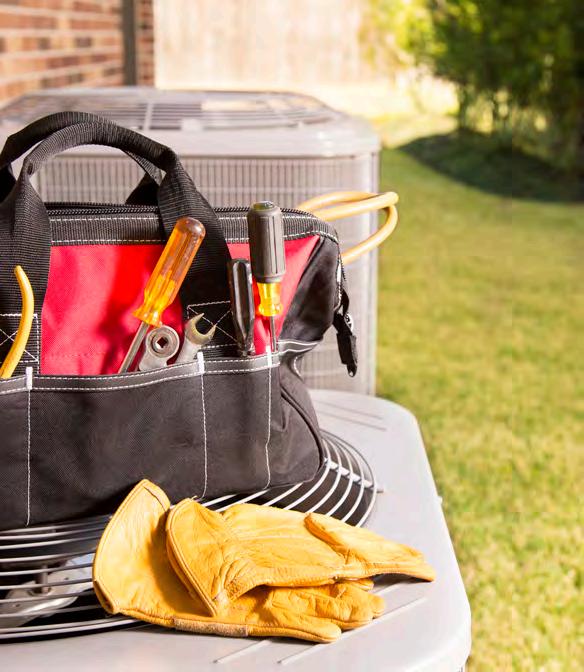
TOP TEN HEAT PUMP HEATING SEASON START-UP TIPS




We’re delighted by each and every design award that we receive. What delights us even more is the praise we get from specialised craftsmen for the quality of over 17,000 products, our client-oriented behaviour and our in-depth knowledge of the challenges within the industry. We’re not only “connected in quality” but connected to the whole industry sector. Viega. Connected in quality.


Selkirk ® Modular Stainless Steel Venting
New! Now approved for UL-1738 Special Gas Vent Application - projects requiring up to 48" diameter:
•Prefabricated
•5" to 48" diameter
•Array of accessories
•Quick & Easy installation
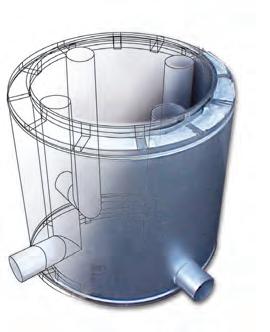
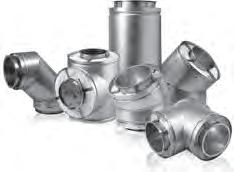
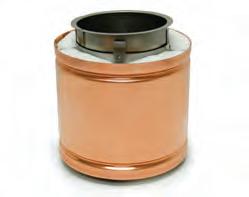
Eliminates the need for a separate fire-rated shaft wall and field-fabricated ductwork:
•Saves valuable time and money
•UL/ULC classified 2-hour fire rating
•Limited Lifetime Warranty
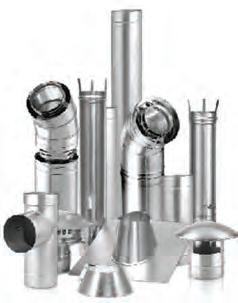
Heatfab Saf-T Vent ®
Highest Quality AL29-4C Stainless Steel Venting for gas fired appliances:
•Meets all code requirements for Special Gas Venting
•Single and double-wall offering
•Zero clearance models
•Ease of installation
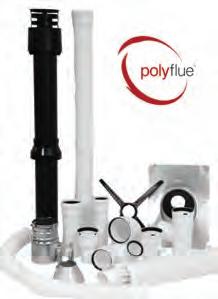

Direct replacement for PVC/CPVC venting components approved on CSA
Certified gas burning appliances:
•More Versatile
•Easier
•Quicker
•Safer

18 REFRIGERATION
VALVES AND REFRIGERANT CONVERSIONS
How to properly apply a TEV for a given application. By Dave Demma
22 ENERGY MODELING
HOW TO IMPROVE COMMERCIAL BUILDING DESIGN
Every building construction project deserves an energy model as part of the planning process. By Judy Peters
24 EVENT REPORT
CIPH
65 PLUMBING
SAFEGUARDING OUR WATER SUPPLY
By Steve Goldie
80 LEAPING AHEAD IN SUSTAINABILITY
The Coquitlam Centre’s new HRC system wins HOOPP’s LEAP award, helps cut GHG emissions by 35 per cent. By Michael Power
85 MANAGEMENT
A WIDE-ANGLE VIEW OF YOUR BUSINESS
Part-time CFOs may be the answer for small- to mid-sized businesses. By Patti Lowes
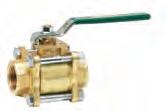
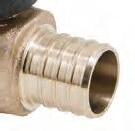
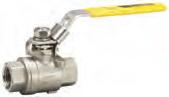
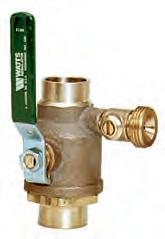
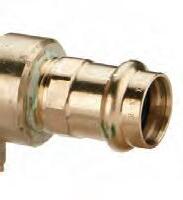
Welcome to the fourth HPAC What Am I? contest. Try your luck with this returning mystery product for a chance to win a TLM99s Laser Distance Measurer from Stanley.

MH6 DISTRIBUTION EFFICIENCY: AN OFTEN OVERLOOKED BENEFIT OF HYDRONICS
The hydronics industry needs to exploit the inherently superior energy efficiency of water-based heating and cooling distribution systems.
By John Siegenthaler
MH10
HOW WATER BEHAVES IN HYDRONIC SYSTEMS –PART II
By Mark Olson
MH14
PERFORMANCE ANXIETY: CAUSES, SYMPTOMS, AND TREATMENTS
By Robert Bean
MH20
HYDRONIC PRODUCT SHOWCASE

MH 30 BOILERS
MAKING SENSE OF BOILER RATINGS
What do they mean and how to use them.
By Leo Vaillancourt
MH34 SNOW AND ICE MELTING SYSTEMS
MELTING SNOW IS A BEAUTIFUL THING
By Lance MacNevin
AS ALWAYS, THINGS HAVE BEEN HOPPING HERE AT HPAC – trips being planned: who goes to what conference/show/event when, with whom, and for how long; French and English issues being produced at a breathtaking pace; and to top it off there are of course the administrative and corporate expectations that must be met.
Know the feeling? Sure you do, the mechanical industry drives the pace! Since we operate a few months ahead of the real world, rather than in tandem with it or, heaven forbid, behind it, we are feeling the rush you will feel shortly! It may be a transition period – cooling is cooling off and heating is heating up, but it is also time to hit the shows and conferences.
Aside from information gathering in the more formal show structure, these events are an opportunity to exchange ideas with friends and colleagues.
In this issue we feature Modern Hydronics, a 40-page supplement devoted to the wet heating/cooling sector of the industry. It includes editorial by recognized hydronic experts, most of whom will be speaking at Modern HydronicsSummit 2017 (register at www.modernhydronicssummit.com), and the latest hydronic products. Whether you belong to the group who have tagged themselves the ‘wet heads’ or not, the editorial is, as always, practical and enlightening. Who knows, after reading it you may find yourself exploring a new revenue stream for your business! Hope to see you at the Summit.

CONTRIBUTING
EDITOR
EDITOR
SALES & MARKETING COORDINATOR
ASSOCIATE PUBLISHER
ACCOUNT MANAGER
MEDIA DESIGNER
ACCOUNT COORDINATOR
CIRCULATION MANAGER
PUBLISHER
VICE PRESIDENT
COO
PRESIDENT & CEO
Kerry Turner (416) 510-5218 KTurner@hpacmag.com
Michael Power mpower@hpacmag.com
Kim Rossiter (416) 510-6794 KRossiter@hpacmag.com
David Skene (416) 510-6884 DSkene@hpacmag.com
Stephen Kranabetter (416) 510-6791 skranabetter@hpacmag.com
Emily Sun esun@annexweb.com
Barb Vowles (416) 510-5103 bvowles@annexbizmedia.com
Urszula Grzyb (416) 442-5600 ext. 3537 ugrzyb@annexbizmedia.com
Peter Leonard (416) 510-6847 PLeonard@hpacmag.com
Tim Dimopoulos (416) 510-5100 tdimopoulos@annexbizmedia.com
Ted Markle tmarkle@annexweb.com
Mike Fredericks






Subscription
Plumbing Air Conditioning is published 7 times per year except for occasional combined, expanded or premium issues, which count as two subscription issues.
MAIL PREFERENCES: From time to time we make our subscription list available to select companies and organizations whose product or service may interest you. If you do not wish your contact information to be made available, please contact us via one of the following methods: Tel: 800.387.0273, Fax: 416.442.2191; E-mail: vmoore@ annexnewcom.ca; or by mail: Privacy Office, 80 Valleybrook Dr., Toronto, ON M3B 2S9.
HPAC Magazine receives unsolicited materials (including letters to the editor, press releases, promotional items and images) from time to time. HPAC Magazine, its affiliates and assignees may use, reproduce, publish, re-publish, distribute, store and archive such unsolicited submissions in whole or in part in any form or medium whatsoever, without compensation of any sort.
NOTICE: HPAC Magazine, Annex Publishing & Printing Inc., their staff, officers, directors and shareholders (hence known as the “Publisher”) assume no liability, obligations, or responsibility for claims arising from advertised products. The Publisher also reserves the right to limit liability for editorial errors, omissions and oversights to a printed correction in a subsequent issue. HPAC Magazine’s editorial is written for management level mechanical industry personnel who have documented training in the mechanical fields in which they work. Manufacturers’ printed instructions, datasheets and notices always take precedence to published editorial statements.






Thousands of volunteers joined Habitat for Humanity’s 34th Jimmy & Rosalynn Carter Work Project in Canada to build 150 homes in celebration of Canada’s 150th anniversary. Former U.S. President Jimmy Carter and former first lady Rosalynn Carter built alongside future homeowners in Edmonton, AB and Winnipeg, MB, with additional projects taking place in communities across the country. The first day of building kicked off July 10 and continued through July 14. Projects during the week included: 75 homes in Edmonton and Fort Saskatchewan, 25 homes in Winnipeg and 50 homes in territories and provinces across Canada.
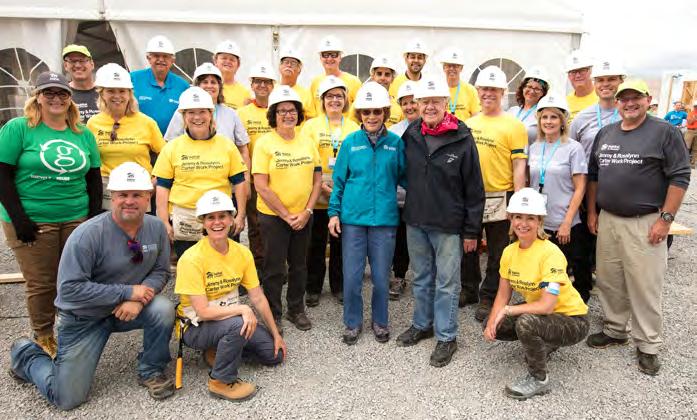
Since 1984, President and Mrs. Carter have traveled the world with Habitat, donating their time and voices to build and improve homes and raise awareness of the critical need for decent and affordable housing. Inspiring millions over the last three decades, the couple has worked alongside nearly 100,000 volunteers in 14 countries to build, renovate and repair more than 4,000 homes. www.habitat.org
The Plumbing Industry Advisory Council has had a name change to the Plumbing and Mechanical Advisory Council (P&MAC). In a media release The Canadian Institute of Plumbing & Heating (CIPH) noted that the Council has evolved to incorporate more mechanical, heating and energy aspects along with plumbing issues as it addresses policy alignment, harmonization, timely automatic adoption of model codes, and North American Regulatory cooperation. www.ciph.com
In consultation with the U.S. Consumer Product Safety Commission (“CPSC”), Milwaukee Tool has expanded the warnings and instructions of its M18 High Demand 9.0 battery pack (model no. 48-11-1890). The expanded product warnings address situations that could lead to a battery pack failure and/or other safety hazards. This safety notice does not require users to return the battery packs. If highly conductive or corrosive fluids get inside the battery pack in sufficient quantities, it can cause battery pack failure. www.milwaukeetool.com

A trade show was held June 14-15 and 12 vendors participated
United Association Local 46 hosted the 2017 United Association Canadian National Apprentice Competition. The event was held at its training centre in Scarborough, ON. Fourteen competitors participated in the event, which ran from June 12 to June 16 when it wrapped up with an awards luncheon.
The skilled trades competition was the 10th National Competition to be held and the fifth in Toronto. This competition brings together apprentices representing UA Locals across the country for a week of skills and theoretical competition in the trade disciplines of plumbing, steamfitting, welding, sprinkler fitting and HVAC/R.
Fifteen advancing regional finalists competed for five National titles. The winners were:
• Outstanding Plumber – Jameson Moore Local 324
• Outstanding Steamfitter – Kraig Fewchuk Local 800
• Outstanding Sprinklerfitter – Chris Pierog Local 853
• Outstanding Refrigeration Mechanic – Andrew Portelli Local 787
• Outstanding Welder – Tommy Stewart Local 527
• Winning Attitude Award – Jameson Moore Local 324
Special guests at the event included Deb Matthews (Deputy Premier), Kevin Flynn (Minister of Labour) and Glen Murray (Minister of the Environment). www.ualocal46.org

At its 68 th Annual General Meeting members of the Corporation of Master Pipe Mechanics of Quebec (CMMTQ) elected Marc Gendron as chairman of the board. President of Les Entreprises MLG et Fils Inc., based in Westmount, QC, Gendron has been a member of the provincial board of directors for several years and has been a member of the CMMTQ executive committee for more than 10 years.
He has developed numerous contacts in the building mechanics industry in Quebec and Canada, having served as president of the Heating, Refrigeration and Air Conditioning Institute of Canada in 2013-2014, and provides expertise on matters administered by CMMTQ. www.cmmtq.org
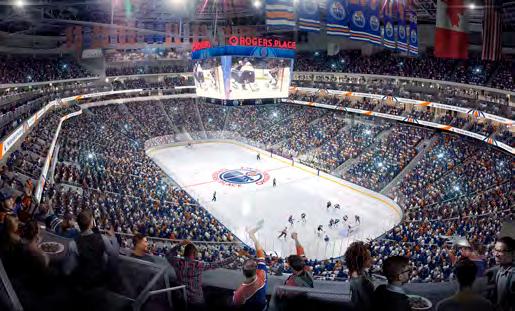
NRCan reports that Rogers Place will soon have the honour of being the first NHL venue in Canada to be LEED Silver certified. The 93,000-m2 arena is part of a new 25-acre mixed-use development site in Edmonton, AB and officially opened in September 2016.
Mike McFaul, assistant general manager of facility operations at Rogers Place and a founding member of the Green Sports Alliance, has been planning some of the waste management, green cleaning and energy use initiatives that would contribute to the building’s LEED certification since before it even opened. He also acknowledges the advantages of working with a building that was designed for efficiency from day one.
The arena has low-flow, efficient water fixtures, electric vehicle charging stations, LED lighting, and motion sensors. A LEED green cleaning program is already in place, and other programs, such as a sustainable procurement policy and lighting and HVAC scheduling to match occupancy, are in the works.
The facility also has a robust waste management strategy that started during construction. Almost 90 per cent of construction
debris was recycled, and nearly 20 per cent of all construction materials came from recycled and/or local materials or contained recycled content.
Its downtown location also helped in its bid for LEED certification, because it promotes the use of the city’s public transit system as well as active transport such as walking and cycling. A sustainability committee is being organized to develop and oversee future environmental initiatives to make sure that the building’s performance is maintained or improved over time.
The Autumn Ridge Estates subdivision north of Regina, SK, has launched the sale of 42 lots, with the provision that the homes be certified through Built Green Canada. When it is completed it will be the first Built Green community in Saskatchewan.Built Green’s programs are in line with the province’s proposed adoption of 9.36 of the building code. The National Energy Code for Buildings 2015 (NECB 2015) and section 9.36 of the National Building Code, Energy Efficiency were proposed for adoption on July 1, 2017 but that date has been shifted to January 1, 2019. This will be the first time the code addresses energy efficiency in Saskatchewan, which means all builders will have energy efficient requirements they must meet.
Built Green programs include energy efficiency, integrating Natural Resources Canada’s EnerGuide label, and then go beyond that to include the preservation of natural resources, reduction of pollution, ventilation and air quality, and the improvement of home durability.
Similar sports venues and municipally-owned or run ice/ curling rinks can implement some of the features found at Rogers Place by retrofitting facilities with LED lighting, motion sensors and efficient water fixtures. Arenas can go further by energy benchmarking with ENERGY STAR Portfolio Manager to identify additional and ongoing energy saving opportunities. To enable these facilities to become even more energy efficient, NRCan is launching a new score for ice and curling rinks this fall.
With this launch, ice and curling rinks will become the seventh building type to be eligible for a Canadian ENERGY STAR Portfolio Manager score. The score will help with energy management, which is critical for these facilities, given the high energy demands of creating and maintaining ice surfaces. With the new score, managers will have the opportunity to better understand their facility’s energy performance and find the tools to improve it.
Facility managers who are aiming for LEED certification and/or other environmental recognition or those planning new building construction should consider efficient building design and modelling and best practices for new buildings. Resources offered on the energy efficiency for new buildings page will also support new sustainable construction. http://greensportsalliance.org
Builders purchasing lots in Autumn Ridge Estates will receive a $1,000 rebate toward their certification through the developer, while Built Green Canada will waive training fees to the builder and work alongside those building homes in the community to ensure their successful certification.
Autumn Ridge homeowners are eligible for automatic rebates from Canada Mortgage and Housing Corporation and Genworth Canada. www.builtgreencanada.ca
Efficiency Alberta is launching an energy efficiency program that provides incentives to businesses that choose high-efficiency products. The Business, Non-Profit and Institutional Energy Savings Program is designed to encourage organizations to replace old, inefficient equipment. Organizations that are serviced by an Alberta electricity or gas utility, can apply for the rebate.
The program will offer rebates for the installation of approved high-efficiency heating or lighting products. Eligible products for year one of the program include: efficient HVAC equipment; efficient water heating equipment including condensing water heaters and tankless water heaters; LED lighting products; T5HO high-bay fixtures; occupancy controls and other efficient lighting products. efficiencyalberta.ca/business-non-profit-and-institutional/
In Quebec, starting in the fall, plumbing contractors who hold an on-demand contract (CED) will receive priority calls from the Société québécoise des infrastructures (SQI). These service calls include urgent or necessary repair and installation works required for building occupants’ comfort in the 350 buildings or so managed by the SQI. To obtain a CED in one or many areas fixed by the SQI, contractors must register in the public call for tenders.
Invitations to tender for refrigeration and air conditioning have not been posted as yet. www.sqi.gouv.qc.ca
Service Experts Heating & Air Conditioning centres in Ontario recently participated in the Enbridge Ride to Conquer Cancer, raising $21,269 for The Princess Margaret Cancer Centre. The Service Experts’ sponsored team represented the 12 Service Expert Heating & Air Conditioning centres around Ontario in the 212-km. bicycle ride to conquer cancer in our lifetime.
“Our team included both Service Experts employees and their friends and families, who were all touched to represent us in the 5,000-strong ride,” said Danny Cassidy, director of Canada field operations for Service Experts.
“They also relentlessly fund-raised to more strongly show our support for finding a cure in our lifetime. We were proud

to participate, and left a little tired after more than 200 kilometres as we rode proudly into Niagara Falls!”
The Ride to Conquer Cancer, which was the 11th annual, allows thousands to experience firsthand the dynamic energy of riding with other passionate participants towards the common goal of conquering cancer in our lifetime. www.serviceexperts.ca

Ideal for new or existing applications, your customer will have the water they need when they demand it.
BY IAN MCTEER
It’s hard to stop a…” Admit it; I know you just filled in the blank. That’s OK, years of persistent marketing works wonders, but it does not mean other top brands aren’t capable of providing reliable service year after year. Most often, residential systems fail prematurely or underperform because:
• They are not properly specified: guesswork, rules of thumb, “this is the way we’ve always done it”, such attitudes guarantee trouble.
• They are not properly installed: Oh, you mean I can’t have 35 ft. of suction lift with this unit?
• They are not properly commissioned: I thought the pressures were factory set!
• They are not properly maintained: end user often believes no inputs from him are required or simply fails to maintain his equipment.
So many residential systems, presumably sold on the money saving energy efficiency bandwagon, have some or all of the abovementioned issues plaguing the homeowner. Now that natural gas heating appears to have been given a very short shelf life thanks to climate change legislation, electric heating using existing and renewable sources of power generation will be the future. Heat pumps, utilizing electricity and the awesome power of the refrigeration effect, provide cooling and heating and can be operated with air handling systems or in hydronic applications.
Until recently, conventional heat pumps used residentially would be configured in two different ways: an add-on system or an all-electric system.
• An add-on system consists of a vapour compression outdoor unit with a reversing valve coupled to an indoor coil installed on top (downstream) of a fossil-fueled furnace or electric furnace.
• Add-on heat pumps can only operate until “balance point”, at which time the amount of heat lost by the building is greater than the amount of heat produced by the equipment. At that time, the heat pump must shut down and hand-off the heating job to the standby device.
• All electric systems use a similar outdoor unit mated with a matching air handler typically containing enough electric heat strips to provide extra heat below balance point. Allelectric systems typically allow the compressor to operate below balance point.
In my experience, most of the time, such heat pump systems were single zone, single stage machines.
Today’s heat pump choices are more easily tailored to specific applications and customer needs. The singe stage heat pump is truly a thing of the past with technologies like geothermal, mini-split, multi-split and small duct high velocity inverter driven heat pump systems expanding into the conventional heat pump market.
Even conventional split system air source heat pumps offer similar compressor technology; some models feature twostep or multiple compressors while other units, promising even higher efficiencies, will utilize inverter compressors in five speed and variable flow configurations.
As yet another heating season is upon us, the best time to check the health of a heat pump system never seems to coincide with manufacturer’s recommendations. Any air source heat pump with fossil fueled back-up is going to require preventive maintenance on all the system components, best done at the same time. The problem is, testing the heating function of an air source unit on the hottest day of July could easily damage the compressor. The best time to perform a complete system analysis is late summer and fall when outdoor coil air entering temperature is more likely to be within chart values provided by the manufacturer.
For example, the head pressure chart in Figure 1 shows the curve ending at an outdoor temperature of 63F (17C). Extrapolation of data beyond that point is not advisable as the unit may trip off on high pressure or compressor dome temperature or discharge line temperature thus negating test results.
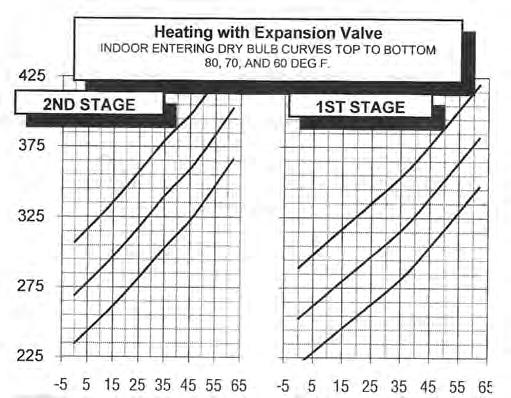
How much time should you devote to PM work on a complete heat pump system, be it a geothermal product or an air source variable flow unit with a modulating gas furnace as backup? The sophistication of modern heat pumps means doing everything possible at start-up to reduce potential system malfunctions otherwise breakdowns or limp mode operation will plague the system and annoy the customer.
At commissioning, collect as much system data as possible to prevent intrusive inspections like checking gas pressure with a manifold gauge set every visit. Having the ability to check the charge without attaching gauges eliminates the possibility of POE oil contamination, introduction of non-condensable gases like air or nitrogen into the system and prevents the release of refrigerants that will affect system performance over time.
1. Interview the customer. Ask about unusual noises or poor performance issues such as having to revert to emergency heat. Did the customer ever receive training on how to use the equipment properly? How often does the homeowner maintain the system air filter?
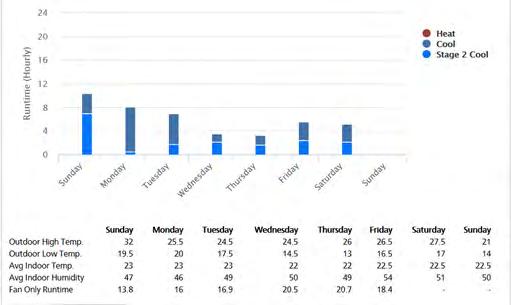
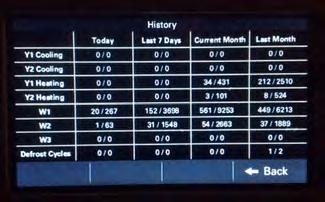
2. Before pulling out any tools, review any accumulated data from system devices: flash codes, thermostat runtime data, and thermostat fault codes. If it is an orphaned system, ask to see previous invoices or technician’s notes. Figure 2 is an example of cooling operation runtime data for one week. Figure 3 shows stored heating operation data provided by a communicating thermostat on a monthly basis. Note: data provided shows the number of cycles and the number of minutes of operation. Figure 4 is an example of stored fault codes. Such
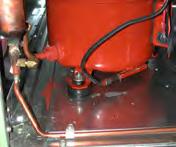


Examine wiring harness for pinches, cracks.
Example of a cartridge crankcase heater (CCH). Scroll compressors use a bellyband heater, it MUST be operational. CCH algorithm may keep it depowered unless various criteria are met, therefore, follow manufacturer test recommendations.
Whenever possible comb-out fin damage.
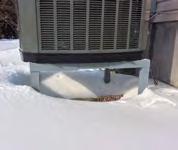
Air source units must remain above snow level. Sales associate should provide snow depth information to the installer so an appropriate stand can be specified. It is not inconceivable that the end-user might have to remove some snow in exceptional circumstances.
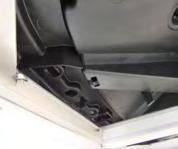
Looking up from underneath the unit: coil drain holes must be clear of debris and snow accumulation. It is essential that defrost melt water can drip clear of the unit. Otherwise, the outdoor coil tubing near the bottom may be crushed by ice accumulation.
Inspect tubing for potential rub through leaks. Separate (or firmly secure) as necessary.
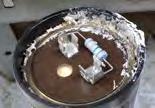

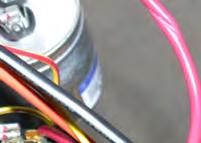
Start capacitor is close to failing and should be replaced. Check start relay operation (pick up and drop out voltage) should be checked. Rust on the run capacitor suggests water is leaking into the cabinet.

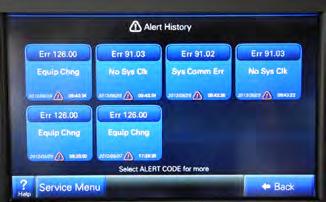
codes must be investigated even though the system seems to be operating normally.
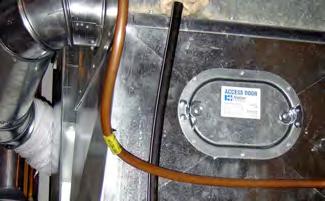
3. Clean indoor heat exchangers and filters. The indoor coil, air handler blower wheel, and gas furnace secondary heat exchanger must be inspected for damage/leaks and cleaned if necessary. Indoor coils should be cleaned with a nonacidic coil cleaner and thoroughly rinsed. Clean the drain pan, trap and condensate pump at the same time. Figure 5 shows the use of an inspection door between the furnace and evaporator coil, a must for add-on conventional heat pump. Mini split in
door sections must be checked for cleanliness: tangential blower wheel, indoor coil, condensate drain and drain pan must be clean. Deep cleaning of the head may be required to guarantee an efficient heating season.
4. Visually inspect indoor electrical and mechanical components. With a bright flashlight and the unit disconnected from power, check low and high voltage connections. Look for loose spade connections, check that factorymade wire harness connections are solid and then look for pinched wires, improperly sized wire nuts, signs of overheating or water damage.
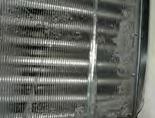
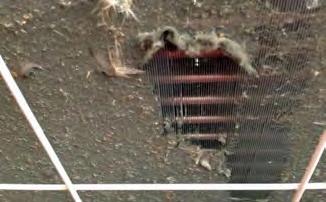
5. Clean the outdoor unit coil. After a summer in cooling mode, the outdoor coil may be covered in debris. Figure 6 is typical; this material must be removed before heating season. Remove all debris from inside the cabinet, especially leaves. Of course, geothermal installations do not require an outdoor unit making servicing indoors much easier.
6. Visually inspect outdoor electrical and mechanical components. With power off (remember, inverter drives need time to dissipate high energy, follow the manufacturer’s instructions for power down procedure), clean away bugs and debris inside the control com



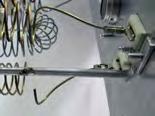
partment, Figure 7. Again, look for imminent signs of high and low voltage component failures, overheated connections caused by poorly made repairs (see Figure 8) and pinched wiring. Inspect control boards, run capacitor, starting relay and start capacitor for signs of failure (cracked plastic, swelling, water damage). Also look for copper tube rubs caused by improperly secured tubing, coil leaks, coil damage (straighten the damaged fins if possible) and be sure the base pan drain holes are free and clear so that melt water from the coil can drain away easily during defrost.
7. Start the system in heating TEST MODE. Once the vitals have been cleaned and checked, it is time to put the system into operation. Noncommunicating older systems will have to be manually started at the thermostat by calling for enough heat to start the outdoor unit but to prevent second stage from calling. Systems equipped with Test Mode should be set to run the system at 100 per cent of capacity. All zone dampers should be open and the variable speed fan should run at its fully programmed heating speed. Test Mode typically lasts for one hour. Allow the system to operate for 15 minutes
before collecting any data.
8. Check system vital signs. Ducted systems should be checked using original commissioning techniques. Depending on how the system was (or wasn’t) commissioned at startup, it might be necessary to invasively analyze the refrigeration system. Using smart tools technicians have access to accurate superheat and subcooling data without removing a hose full of liquid refrigerant or introducing system contaminants like moisture or non-condensable gases as often happens with
Continued on p16
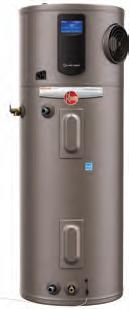
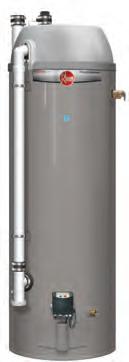
RHEEM PROVIDES CONTRACTORS WITH ENERGY STAR ® QUALIFIED PRODUCTS
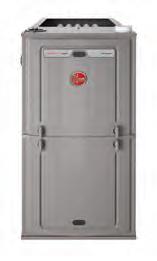
It’s more than just innovation. It’s applying nearly 100 years of experience to today’s homes and improving the things that matter the most to contractors — Performance, InstallabilityTM and Serviceability. That’s why we evaluate every detail of our products from top to bottom, inside and out, and everything in between to help you deliver the best homeowner experience ... And then we take it further. That’s 360°+1.

Rheem EcoNetTM makes diagnostics easy for contractors and provides homeowners with ultimate air and water control using the FREE Rheem EcoNetTM App.

traditional manifolds. Smart apps will also direct technicians to investigate problems related to air-side issues based on inappropriate refrigerationside data. Malfunctions and poor performance problems must be corrected. An air-side heat pump compressor failure in the winter dooms the homeowner to run on backup heat until better conditions prevail.
Geothermal units should have the flow rate tested using a water pressure gauge installed into the appropriate PT port. Once the flow rate in gallons per minute has been established, a temperature probe should be used to determine the DeltaT between water entering and water leaving the unit. Ultimately, a geo unit’s heat of extraction/rejection (HE/HR) and the sensible heat (or sensible cooling) can be calculated using the collected data and manufacturer’s charts.
9. Check outdoor unit voltage, am -
perage and test critical functions. Compare the latest information with startup data or to the manufacturer’s chart. If the outdoor unit can safely operate in heating mode, test the defrost board by forcing a defrost cycle. Listen for the valve to shift smoothly. Observe the defrost board for fault indications. Since the CCH may be difficult to get at, ohming out the circuit may be the best way to prove its working.
Many inverter drive units have an outdoor communicating display assembly or a path to real time and stored system data that provides a technician with all the operational parameters needed to prevent invasive testing. Units so equipped can be easily tested and faults readily detected. The technician can force a defrost cycle; test the electronic expansion valve; even evaluate the inverter drive and outdoor fan functions using a laptop or built-in interface. Communicating units will allow

the technician to adjust the indoor unit airflow and to amend blower delays from the outdoor unit as well.
10. Prepare a report for the customer showing the system functions within manufacturer’s specifications. Manufacturer’s charts typically have some leeway (head pressure, for example, may be within 10 psig +/- of chart values) and, as the system ages, the numbers will start to decline somewhat year over year. This is to be expected and helps the end user to understand when it is time for a new system perhaps avoiding the trauma of an emergency replacement generated by a nasty breakdown. Be sure the customer knows how to operate the system properly and religiously maintains the air filters in every air handler. It’s also a good time to replace the batteries in hand held remote controls.
Exclusive twist-to-adjust feature
Easy to operate: Anyone 5’4” or taller can operate
Corrosion resistant design
Easy reach for anyone 5’7” or taller
Secure clamping mechanism
Corrosion resistant design
Other than power outages, a properly installed, reliably maintained heat pump will soldier on regardless of winter’s worst extremes. George R.R. Martin, author of Game of Thrones, described the worst challenges of winter, “Everyone talks about snows forty foot deep, and how the ice wind comes howling out of the north, but the real enemy is the cold. It steals up on you quieter than Will, and at first you shiver and your teeth chatter and you stamp your feet and dream of mulled wine and nice hot fires. It burns, it does. Nothing burns like the cold…” May our heat pump installations keep our customers delightfully warm and comfortable.

Ian McTeer is an HVAC consultant with 35 years experience in the industry. He was most recently a field rep for Trane Canada DSO. McTeer is a refrigeration mechanic and Class 1 Gas technician.


In my travels I have many opportunities to visit and interact with HVAC/R contractors. In the course of these visits, a frequent topic of discussion is refrigerant conversions. After the typical “what’s the best replacement for R-22”, and “do we really need to replace all of the elastomer seals” (answer to that question is YES), a frequent question is “If I’m using this particular refrigerant, can I use the R-22 TEV? ”
That is a great question, with a relatively simple, albeit unsatisfactory answer: Maybe.
Obviously, arriving at a more complete answer is a little more complex and requires a thorough understanding of properly applying a TEV for a given application.
TEV capacity can be best described as the refrigeration effect (heat transfer capacity of the refrigerant at the condition the system is operating at, in Btu/ lb) multiplied by the liquid refrigerant mass flow (in lb/min) delivered by the TEV to the evaporator inlet. The heat load being transferred to the saturated liquid refrigerant in the evaporator constitutes the greatest portion of the refrigeration effect. This causes the refrigerant to undergo a change of state; a latent heat transfer process. Refrigerant vapour experiencing a sensible heat gain (temperature increase) provides a very insignificant contribution to the refrigeration effect.
The TEV, as a superheat control, which regulates refrigerant mass flow
at the evaporator inlet, also performs the function of converting the liquid refrigerant from a high pressure to a low pressure. In a typical system where the four major components (compressor, condenser, TEV, and evaporator) are properly sized, the resulting low pressure liquid entering the evaporator should be at a saturation temperature that will be close to the design evaporator condition.
When a liquid refrigerant experiences a reduction in pressure, it must also undergo a reduction in temperature and assume the new saturation temperature for that pressure. This is accomplished as a percentage of the liquid refrigerant flowing through the TEV port flashes into a vapour, removing heat from the remaining liquid refrigerant in the process, achieving the temperature reduction. The difference between the temperature of the liquid refrigerant entering the TEV and refrigerant saturation temperature in the evaporator will determine what percentage of flashing occurs.
It should be very clear that TEV capacity is not determined by the liquid refrigerant mass flow entering the TEV, but rather the usable refrigerant mass flow entering the evaporator. Given that refrigerant vapour contributes very little towards the refrigerant effect, the





usable refrigerant mass flow should be defined as the mass flow of saturated liquid refrigerant.
Three things determine the mass flow of saturated liquid refrigerant at the evaporator inlet:
1. The thermodynamic properties of the refrigerant in use.
2. The physical dimensions of the TEV: pin, port and stroke.
3. The application conditions of the refrigerant.
In a refrigerant conversion, with the assumption that the TEV won’t be replaced, the physical dimensions of the TEV will remain the same. Additionally, the application conditions of the refrigerant will remain the same. The only variable is the refrigerant mass flow requirement of the replacement refrigerant compared to R-22. So the real answer to the question “Can I use the R-22 TEV?” is it depends on the mass flow requirement of the replacement refrigerant.
When discussing whether the TEV will require replacement with an R-22 alternative, the same question should be asked in regard to the refrigerant distributor nozzle. Figure 1 shows a properly sized refrigerant distributor and TEV for a 10 ton Air Conditioning system, utilizing an eight-circuit evaporator and operating at the following conditions: 45F SST, 105F SCT, 5F subcooling. For this particular application operating at the specified design condition, an eight-circuit distributor with ¼ in.feeder tubes and a #10 nozzle is selected. This is paired with an OVE-10-GA TEV.
120,000 Btu Evaporator
45F SST / 105 SCT
100F Liquid Temp
the pressure-temperature characteristics of the refrigerant will allow the R-22 thermostatic element to be used. While most of the common R-22 replacements have a pressuretemperature relationship that is close enough to R-22 such that the existing thermostatic element can be used, there is one exception on the chart; R-434A requires an R-404A thermostatic element. When replacing the R-22 element on the OVE-10 with an R-404A element, this valve now becomes a nominal six-ton valve.
The distributor tubes and nozzle for the R-22 system are sized such that they are both operating below 100 per cent of their rated capacity, with the tube/nozzle combination operating with a combined 33 psi pressure drop. As stated above, one of the factors effecting TEV capacity is the amount of pressure drop experienced through the valve’s port. Since there is a finite amount of high to low side pressure drop available, if the amount of pressure drop through the distributor tubes/nozzle increases, it reduces the amount of pressure drop available to the TEV port.
Distributor Selection
In effect, this becomes a double whammy in determining whether the TEV will have adequate capacity with the replacement refrigerant. For example, the 33 psi pressure drop with the original R-22 selection allows for enough pressure drop through the TEV such that the OVE-10 has adequate capacity. If the original distributor tube/nozzle combination had a combined 55 psi pressure drop, this would “rob” 22 psi of pressure drop from the TEV port, making the OVE-10 too small.
FeederTube(8Circuit)ODF1/4"1/4"1/4"1/4"1/4"1/4"1/4"1/4"1/4"1/4"
FeederTube ∆P10psi14psi13psi19psi20psi20psi20psi14psi20psi17psi
FeederTube%Loaded99%122%116%155%160%159%158%125%158%141% NozzleSize#10#10#10#10#10#10#10#10#10#10
Nozzle ∆P23psi32psi29psi36psi39psi39psi37psi31psi42psi35psi Nozzle%Loaded95%117%110%133%139%139%136%116%145%128%
The chart then assumes a conversion with each of the refrigerants shown, and using the existing distributor tubes/ nozzle, and TEV. How those existing components fare with the new refrigerant is reflected in the chart. A distributor tube/nozzle combination that is operating at greater than 150 per cent of rated capacity (or with a combined pressure drop in excess of 50 psi) is considered undersized and should be replaced. The appropriate replacement, if necessary, is shown in red. Likewise, the chart also shows the respective percentage of rated capacity for the existing 10 TEV, when used with each of the refrigerants shown.
In addition to looking at the percentage of rated capacity with each R-22 replacement, it is important to know whether
So, while the increased mass flow requirement of some of these R-22 replacements (as compared to R-22) will alone require upsizing the TEV, the fact that there might be an additional 20+ psi of pressure drop through the distributor tube/ nozzle combination (meaning that there will be a corresponding reduction in pressure drop through the TEV port) further necessitates replacing the TEV.
TotalDistributor ∆P33psi45psi42psi55psi59psi59psi57psi45psi62psi52psi ReplaceNozzle?-----NoNoYes#15Yes#17Yes#17Yes#15NoYes#17Yes#15
energy saving potential in today’s buildings and industrial processes

Canadian infrastructure investments are on the rise, and with ambitious climate and energy targets in place, Danfoss has been helping make Canadian cities more efficient and sustainable for 65 years. Heating and cooling consume as much as 40 percent of a building’s total energy use. Danfoss solutions like AC drives, variable speed compressors and hydronic control valves help cut energy consumption and improve comfort and control. City-wide, Danfoss’ innovative district heating solutions amplify efficiencies — cost-effectively boosting energy productivity, minimizing environmental impacts and helping cities plan for a sustainable future. With Danfoss, our cities can get more out of less without sacrificing performance or reliability.
Discover how we’re Engineering Tomorrow at danfoss.ca
BY JUDY PETERS
Though not a new concept, the intentional practice of calculating in detail how a building will use energy is a critical, yet often overlooked, step in building development.
At its core, energy modeling is the practice of using software to determine how a building will use energy. This is done in a detailed and calculated manner, by identifying how both direct inputs (e.g., lighting power density and miscellaneous electrical loads) and indirect inputs (e.g. how the HVAC system responds to building demands for thermal comfort heating and cooling) affect total building energy consumption.
The optimal design from an energy and economic standpoint is based on a synergy of operating hours, internal loads, local weather patterns, utility costs and the cost of the system itself. A detailed algorithm is required to calculate the best building and HVAC component selections.
Buildings share some commonalities in energy consumption patterns. For example, most commercial buildings in heating-dominated climates such as Canada have 30-50 per cent of their energy consumption for heating; another 30 per cent for lighting and plug loads; and the remaining attributed to fan, pump and cooling energy. While most commercial buildings in Canada share this common framework, they also differ widely in respect to key parameters, such as how much ventilation air is used, operating schedules and size of
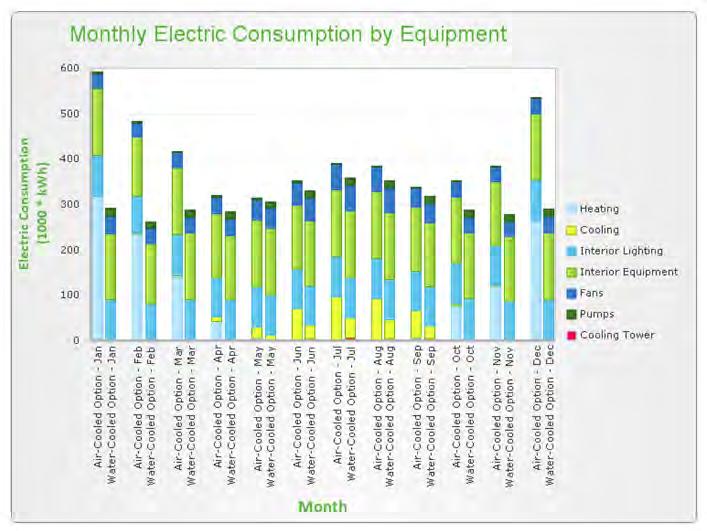
internal loads. a certain HVAC system might be advantageous for one building type and climate, another building might find a whole different system more advantageous.
And that is where the energy model comes in: helping the contractor or owner make critical, calculation-based determinations for which system will be best in a specific building application. An energy model can facilitate this process through the use of a parametric study, where a single input is changed and the model calculates the interdependencies and impact on the overall outcome.
In the past, owners made decisions based on simple payback – how many years before their investment in high efficiency equipment would be returned. Today owners are more sophisticated and want to understand the
total cost of ownership for a piece of equipment or even an entire system. Energy models contribute to this analysis by calculating annual energy costs. Other factors that are included in a lifecycle cost analysis include interest rates, depreciation rates, annual maintenance costs, energy escalation rates and replacement parts. Cost and sustainability are the primary driving factors for this decision-making process.
The term, “green building” has become a fully-fledged priority pillar in building construction. Energy modeling is one means of determining a building’s level of energy efficiency for certification in the Leadership in Energy and Environmental Design (LEED) environmental building certification program. Through the use of a highly detailed energy model, a building is measured against a base model as outlined in
ASHRAE 90.1 Appendix G to demonstrate that it achieves an energy cost savings of 10, 20, or even 50 per cent better than the base model – depending on the certification level a building is aiming to achieve. This certification is critical for many office and retail buildings, as corporate customers are demanding energy-responsible facilities to support corporate social responsibility goals. These certifications can drive higher lease rates and stronger lease agreements for building owners working with energy-savvy tenants.
Many governing bodies from both a regional and federal level now require some demonstration of energy efficiency. In many regions ASHRAE 90.1 serves as the energy code. In addition, many utility companies and municipalities offer rebates to encourage energy efficiency thereby minimizing the need to expand the size of the grid. Rebates may be issued prescriptively but may also entail an energy model to demonstrate compliance.
Just who does energy modeling? Typically, it is highly skilled professionals with a background in mechanical engineering. Energy modelers need a strong working knowledge of the building’s thermodynamics to understand heat transfer processes between a building and its environment. An energy modeler must be detail-oriented and knowledgeable about HVAC equipment. Once the model is created, they need to analyze the outcome to determine if the model is accurate in its depiction of building operations.
That is not to say that energy modeling is a one-size-fits-all situation. There is a range of software available, from the highly technical EnergyPlus (developed by the U.S. Department of Energy) to proprietary tools that are more of the industry standard, and even tools designed for the sales process.
The ideal entry point for energy modeling is early in the design process when
critical decisions about equipment and building design are being made. Preliminary energy modeling results deliver a high degree of accuracy and are invaluable for making informed decisions. Later as more details are available the mechanical engineer will construct a more detailed energy model.
Going into a project, there may be preconceptions regarding the ideal piece of equipment for a particular building. An example may be selecting a water-cooled versus air-cooled chiller. It is not obvious which one is going to be most cost-effective and appropriate prior to creating the model.
With varying degrees of model sophistication comes variation in how well the energy model represents and explains each project. Awareness of common pitfalls in the energy modeling process can help mitigate their occurrence. These include:
• Improper modeling of HVAC equipment: it can be difficult to secure product-specific equipment efficiency information. This data is often not readily available in the marketplace, partly because manufacturers have a desire to protect proprietary information from competitors. If an energy modeler is in a hurry, he or she may input an efficiency number for a piece of equipment that deviates from reality, significantly skewing the results in the end.
• Inputing the incorrect electricity rate: another pitfall can be to take a shortcut in the electricity rate input by choosing to use an industry or national average instead of the local rates. If the actual rate is more expensive than what is put into the model, the life cycle cost analysis and simple payback calculations will not be accurate.
• Using models to “predict” future energy consumption: Even the best energy model cannot predict future energy consumption because critical parameters are unknowable such as what the weather will be like in a future
year or exact building operations including tenant habits and equipment maintenance. Instead, a model provides a relative comparison between the owner’s building and a base building and demonstrates the difference in degree of energy efficiency involved.
• Bringing in an energy model too late: oftentimes energy models are brought into the process too late, after major decisions have been made –such as how the building is oriented, how many windows it has, even what type of HVAC system it is going to have. The result is lost opportunity to achieve exceptional energy efficiency.
The data-based insights that an energy model provides underscores why every project can benefit from energy modeling. It takes the guess work –and disagreement – out of the process, and drives recommendations rooted in hard numbers.
Technology will reduce the tedium of the energy modeling process. Automation in the form of Building Information Modeling (BIM) will continue to help design professionals with plan development and execution. Increased automation will drive the measurement and verification process for building energy performance. Currently, the expense of measurement and verification of energy modeling is a significant barrier to spotlighting when a building is underperforming. As technology continues to advance, measurement and verification of building energy efficiency will increase in prevalence.
As we move forward with smarter, more efficient methods for commercial construction, energy modeling should play a significant role in your next building project – no matter how large or small.
Judy Peters, PE LEED-AP BEMP, is an energy modeling engineer at Daikin Applied.
Though not a new concept, the intentional practice of calculating in detail how a building will use energy is a critical, yet often overlooked, step in building development.
The Canadian Institute of Plumbing & Heating held its annual business conference June 25-27, 2017 in Ottawa, ON. More than 280 delegates and companions from across North America were in attendance, representing a high mark for the past decade. Remarkably, 44 of those attendees were new delegates.
Themed Making History Together, the event featured a who’s who roster of speakers, including former Ambassador to the United States Derek Burney, former Minister of Foreign Affairs John Baird, and keynote speaker former Governor General Adrienne Clarkson.


As part of its long range plan the CIPH board of directors recently set a goal to put into place a program for member companies to be recognized for their years as members of the Institute. The following companies were formally recognized at the ABC as having been members of CIPH since the founding of the Institute in 1933: Standard Sanitary Manufacturing Co. Limited (American Standard Brands); General Steel Wares Limited (A.O. Smith Enterprises Ltd.); Bibby Foundry (Bibby-Ste-Croix); Pumps and Softeners Limited (Canature WaterGroup); Empire Brass Manufacturing Co. Limited (Emco Corporation): and Crane Canada Limited (Crane Supply).
Joe Senese, who is vice president operations with Groupe Deschênes was elected the 2017/2018 chairman of CIPH. Senese launched his career in 1982 working in the Engineering Group with Stelco Steel in Hamilton, ON. In 1984 he joined American Standard where he held various sales and sales management positions. In 1994 he joined Desco Plumbing & Heating Supply as vice president and general manager progressing to his current role with Groupe Deschênes in 2008.
ABC 2018 will be held at the Fairmont Chateau Whistler, BC, June 17 to 19, 2018. www.ciph.com
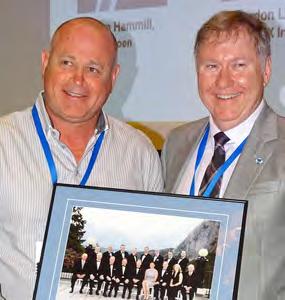
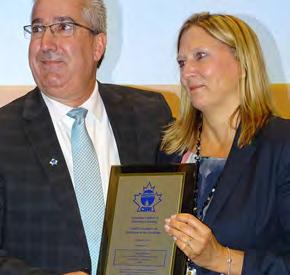
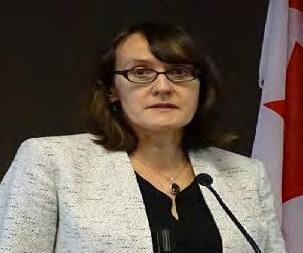
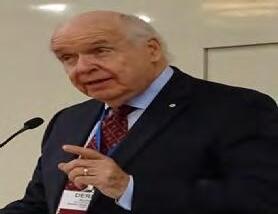
Left: Keynote speaker Adrienne Clarkson, who is a former Governor General of Canada, shared her views on how to build a stronger country.
Centre: NRCan’s Director General, Office of Energy Efficiency, Patricia Fuller provided an overview of government priorities for clean growth and climate change in Canada’s building sector at the annual Hydronics Luncheon.
Right: John Hammill (shown here, left),vice president, wholesale sales, Moen Inc. and Gordon Lefort, director of commercial excellence, IPEX Inc. have retired from the CIPH board.

An often overlooked benefit of hydronics
ACHIEVING INDOOR ENVIRONMENTAL QUALITY AND ENERGY EFFICIENCY
HOW WATER BEHAVES IN HYDRONIC SYSTEMS
SYSTEM DESIGN: AIM FOR PERFECTION
APPLYING RADIANT
HEATING TECHNOLOGY TO OUTDOOR SURFACES
PRODUCT SHOWCASE











MH6 SELLING HYDRONICS
Distribution efficiency: An often overlooked benefit of hydronics
BY JOHN SIEGENTHALER
MH10 WATER QUALITY How water behaves in hydronic systems –Part II
A basic knowledge can help the designer weigh options and determine appropriate water quality requirements.
BY MARK OLSON

MH14 SYSTEM DESIGN Performance anxiety: Causes, symptoms, and treatments
BY ROBERT BEAN

CONTRIBUTING EDITOR
ASSOCIATE PUBLISHER
ACCOUNT MANAGER
SALES & MARKETING COORDINATOR
ART DIRECTOR
ACCOUNT COORDINATOR
CIRCULATION MANAGER
Mike Fredericks EDITOR
Kerry Turner (416) 510-5218 KTurner@hpacmag.com
Michael Power mpower@hpacmag.com
David Skene (416) 510-6884 DSkene@hpacmag.com
Stephen Kranabetter (416) 510-6791 SKranabetter@hpacmag.com
Kim Rossiter (416) 510-6794 KRossiter@hpacmag.com
Emily Sun
Barb Vowles (416) 510-5103 bvowles@annexbizmedia.com
Urszula Grzyb (416) 442-5600, ext. 3537 ugrzyb@annexbizmedia.com
Peter Leonard (416) 510-6847 PLeonard@hpacmag.com
Tim Dimopoulos (416) 510-5100 tdimopoulos@annexbizmedia.com
Ted Markle tmarkle@annexweb.com

BY JOHN SIEGENTHALER
During the 35+ years that I have been involved in the North American hydronics industry there have been significant improvements in the thermal efficiency of hydronic heat sources. The 1960s vintage ranch house that I grew up in is a good example. When it was built, it was fitted with a baseboard heating system supplied by an oil-fired steel fire tube boiler. The boiler was equipped with a tankless coil for domestic water heating. A Honeywell “round” thermostat controlled the entire 1500 sq. ft. house as a single zone.
When I eventually replaced that boiler the baffles inside the fire tubes were completely burned away. This helped explain the net stack temperature of about 550F. Although this boiler kept the house comfortable for over 30 years, its “aged” seasonal efficiency was probably in the range of 50 to 60 per cent.
Today, the house has another oil-fired boiler with a rated heating capacity about half that of its predecessor and a rated AFUE of 86 per cent. But even that performance number looks mediocre compared to currently available modulating/condensing boilers that can operate with thermal efficiencies in the mid-90 per cent range when paired up with a low temperature load.
Upon hearing that some modern boilers can operate with thermal efficiencies upwards of 95 per cent, many potential clients likely conclude that the industry has just about reached the limit of what’s possible with regard to converting fuel into heat. That little remains to be accomplished in terms of improving the efficiency of systems using such boilers. But just as an oasis fades away when you are almost to it, so does this illusion of nearly perfect efficiency.
True, the thermal efficiency of modern boilers, when properly applied, can be very high, but a hydronic system is more than a high performance boiler. For the system to be consid -
ered high performance it should have a highly efficient heat source as well as be able to move heat through a building using minimal amounts of electrical energy. The latter criteria can be quantified using an index called distribution efficiency, which can be defined as follows:
distribution efficiency= rate of heat delivery rate of energy use by distribution equipment
Distribution efficiency has nothing to do with converting any type of fuel into heat. Instead, it describes how many Btu/hr of heat the distribution system can move from the heat source to the heat emitters for each watt of electrical power supplied to operate that distribution system. The more heat the distribution system can deliver, per watt of electrical power demand, the higher its distribution efficiency.
distribution efficiency= 120,000 Btu/hr 340 watts = 353 Btu/hr watt
distribution efficiency = 80,000 Btu hr 850 watt = 94 Btu / hr watt
Here is an example: Consider a hydronic system that delivers 120,000 Btu/hr at design load conditions using four circulators operating at 85 watts each. The distribution efficiency of that system is:
distribution efficiency= rate of heat delivery rate of energy use by distribution equipment
distribution efficiency= rate of heat delivery rate of energy use by distribution equipment
distribution efficiency = 48,000 Btu hr 1050 watt = 46 Btu / hr watt
But is 353 Btu/hr/watt an acceptably high value for distribution efficiency? It is hard to judge a number for any physical measurement without something to compare it to.
distribution efficiency= 120,000 Btu/hr 340 watts = 353 Btu/hr watt
distribution efficiency= 120,000 Btu/hr 340 watts = 353 Btu/hr watt
Here is a similar calculation for a furnace with a blower that operates at 850 watts while delivering 80,000 Btu/hr through a forced air ducting system:
distribution efficiency = 80,000 Btu hr 850 watt = 94 Btu / hr watt
distribution efficiency = 80,000 Btu hr 850 watt = 94 Btu / hr watt
For these two examples, the hydronic system provides a distribution efficiency that is about 3.8 times higher than that of the forced air system. That distinct advantage is the direct result of water being far superior to air as a material for absorbing heat.
Using modern hardware and careful
design it is possible to create hydronic distribution systems with distribution efficiencies well beyond the 353 Btu/hr/ watt value of the previous example. Imagine a building with a design heat loss of 62,500 Btu/hr, being supplied with a circulator input power requirement of 25 watts. That situation repre -

sents a distribution efficiency of 2,500 and it is very “doable” with today’s offthe-shelf hardware, combined with well thought out piping practices.
I am reasonably sure that some of the hydronic heating pros reading this article have never heard of distribution efficiency, or used it to promote the inherent advantages of hydronic systems. Perhaps those professionals go from one system proposal to the next telling potential clients about boilers that may have thermal efficiencies of 95 per cent, or showing photos of their “trophy” installation where 20 identical circulators are neatly lined up along the mechanical room wall. Based on that approach they win some proposals, lose others, and occasionally wonder why the hydronics


“The concept of high distribution efficiency should be a starting point when discussing the potential advantages of a modern hydronic systems.”
industry in North America is not growing nearly as fast as other HVAC market segments.
At a time when many potential clients respond to marketing based on assurances of “high efficiency,” the hydronics industry, as a whole, seems lethargic at exploiting the inherently superior energy efficiency of water-based heating and cooling distribution systems.
Consider, for example, mini-split ductless heat pumps, and their larger commercial cousins, VRF (variable refrigerant flow) systems. These methods of moving thermal energy though buildings using refrigerant piping are two of the fastest growing market segments in the HVAC industry–despite that fact that their distribution efficiencies are much lower than hydronic distribution systems.1 See Figure 1.
Another example is water-to-air geothermal heat pumps. Over the last several years, geothermal heat pumps have become another “darling” of the North American HVAC industry. This market segment rests its case on higher coefficients of performance (COP) ratings relative to those of much less expensive air source heat pumps. But what about the distribution efficiency of a water-to-air geothermal heat pump system?
Using published operating data from one manufacturer and including the effect of power factor I estimated the power input to the standard (non-ECM) blower motor of a nominal fourton water-to-air heat pump at 1050 watts. Assuming that heat pump operates at conditions where its output is 48,000 Btu/ hr, its corresponding distribution efficiency is:
their HVAC systems. The much higher distribution efficiency offered by hydronics could save them hundreds if not thousands of dollars in electrical costs over the design life of a heating system, regardless of the thermal efficiency of that system’s heat source.
The concept of high distribution efficiency should be a starting point when discussing the potential advantages of modern hydronic systems. Comparisons can be made across the spectrum from residential to commercial systems. Our industry needs to get this message to potential trade allies such as architects and engineers involved with low energy or net-zero buildings, energy auditors, professionals involved in thermally-based renewable energy heat sources, regulators who determine which HVAC technologies are deserving of government subsidies, and even politicians drafting climate change policy.
At a time when energy efficiency enjoys support from a wide spectrum of society, the hydronics industry should not be leaving its best cards on the table. There are a lot of eager minds out there who simply have never heard about distribution efficiency, but who would likely embrace it based on real attainable comparisons. Learn it, promote it and be sure to calculate it as you compare potential design options.
distribution efficiency= rate of heat delivery rate of energy use by distribution equipment
distribution efficiency= 120,000 Btu/hr 340 watts = 353 Btu/hr watt
That is a small fraction of the potential distribution efficiency of a well-designed hydronic system, and yet this stark difference goes largely ignored by heating professionals, utilities, energy auditors, government agencies and even politicians prodded by lobbyists, all of whom tend to focus on high thermal efficiency (e.g., high COP) Given this situation it is hardly surprising that consumers, even those focused on energy efficiency, are unlikely to hear about the distinct benefit of high distribution efficiency. Those consumers will never pay for COP, but they will pay for the total kilowatt•hours used by
distribution efficiency = 80,000 Btu hr 850 watt = 94 Btu / hr watt

John Siegenthaler, P.E., is a mechanical engineering graduate of Rensselaer Polytechnic Institute and a licensed professional engineer. He has over 34 years experience in designing modern hydronic heating systems. Siegenthaler’s latest book, Heating with Renewable Energy, was released recently (see www.hydronicpros.com for more information).
1 Cunniff, Greg, P.E., Hydronics offers a cool, comfortable advantage, PM Engineer, July 2013.
Want to hear more about distribution efficiency, how to improve it as well as how to inadvertently lose it? Be sure to catch John’s keynote address at the Modern Hydronics-Summit 2017 on September 14th. www.modernhydronicssummit.com
distribution efficiency = 48,000 Btu
= 46 Btu / hr
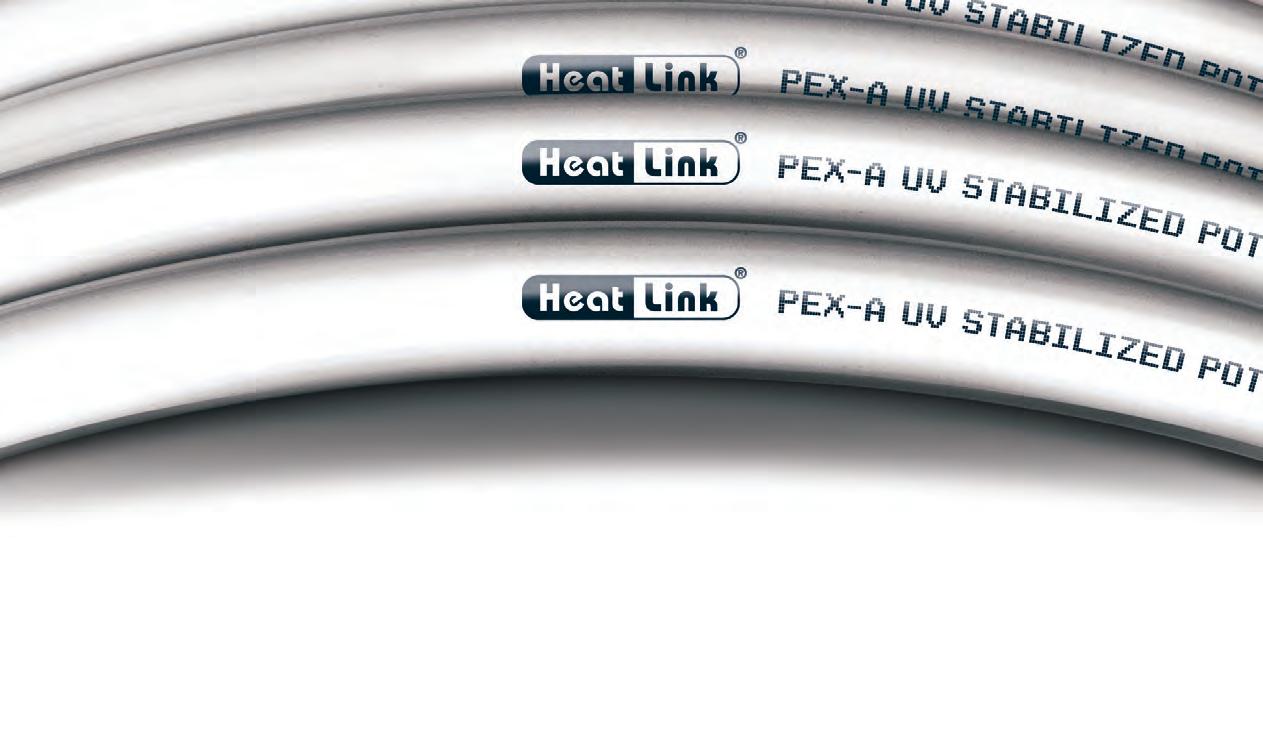
HeatLink PEX-a tubing is engineered to perform. Our PEX-a tubing is manufactured using the one step crosslinking extrusion process, creating a superior and more uniform molecular structure, which means increased strength, flexibility and thermal memory. Amazingly, a section of ½” tubing can be bent into a 3” radius without affecting tubing integrity. So you can count on great performance in the corners.
HeatLink PEX-a is highly crush and abrasion resistant and perfect for projects where it’s buried in earth or covered in concrete. It’s built to take the heat, the cold, and the pressure–above and beyond industry specifications–to last a lifetime. UV stabilized to withstand up to 12 months exposure to sunlight, it’s the reliable tubing choice for your next potable water or radiant heating or cooling project.
HeatLink PEX-a tubing is lightweight, durable and requires fewer fittings–so it’s really quick and easy to install on the straightaways too.
HeatLink PEX-a is certified to meet or exceed industry performance standards and approved for installation across North America. Install our PEX-a tubing with confidence–we cover every inch of it with a worry free 25 year warranty.
We’ve been proudly making HeatLink PEX-a tubing right here in North America since 1998.
Systems for life.
Two common problems resulting from poor water quality are excessive corrosion and limescale accumulation. In Part I (HPAC, February 2017) we examined corrosion. The following is a closer look at limescale accumulation.
BY MARK OLSON
In North America the dissolved mineral content from municipal water sources and private wells is often limited to hardness – the primary ingredient in limescale. Other potentially harmful minerals are held in check by safe drinking water regulation and oversight in the case of municipal water, and the absence of contaminant sources such as agricultural runoff or de-icing salts in the case of private wells.
Though people often associate problematic hard water with only well water sources, municipal water can be problematic too. For example, about half of all water sources in the U.S. have hardness levels of seven grains or more. Such values can be unhealthy for hydronic systems.
Let’s start with an explanation of scale formation.
As the earth’s water evaporates it is essentially pure. The vapour rises, cools, condenses back to liquid then falls back to earth. As it seeps through the earth’s crust on its way to aquifers, or passes through rivers and lakes, the water dissolves minerals forming electrically charged atoms called ions.
For example, calcite is a common type of rock containing the mineral calcium carbonate Ca(CO3). In the presence of water and carbon dioxide, calcium carbonate dissolves to form the positivelycharged ion (e.g., cation) calcium Ca2+,
and negatively-charged ions (e.g., anions) carbonate CO32- and bicarbonate HCO3-. Similar reactions take place with other minerals forming cations such as Mg 2+, Fe2+, Mn2+ and Zn2+. Water containing significant concentration of these “divalent“ cations is hard. If you try to lather up in the shower with such water, suds won’t form easily. You can think of the suds as being “hard“ to form.
However, the Ca2+ and Mg 2+ cations possess a unique and problematic characteristic. As temperature increases they become less soluble and can react with bicarbonate to form solids. In heating systems, this reaction occurs on any surface at sufficiently high temperature. The solid that forms from the Ca2+ reaction is calcium carbonate. The solid formed by the Mg 2+ reaction is magnesium carbonate. These solids are limescale.
As the system cools the reactions do not reverse themselves. The scale remains bonded to the surfaces unless conditions change, such as when the scale is exposed to an acid cleaning solution, or is broken loose from the surface by expansion and contraction movement.
The problems limescale formation can cause are:
1. Reduced efficiency of heat exchangers
2. Accelerated stress fatiguing of metal
3. Increased flow resistance of circuits
4. Accelerated corrosion
Each of these will be discussed along with prevention strategies.
1. REDUCED BOILER EFFICIENCY
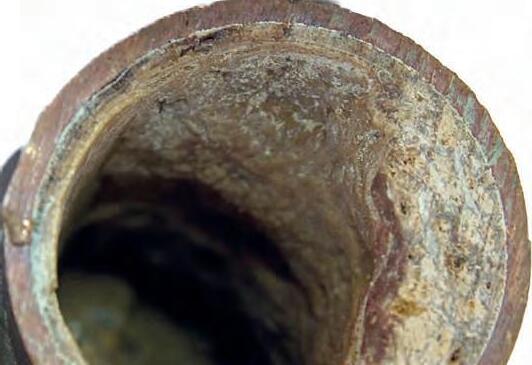
Figure 1 shows a heat exchanger cutaway from a cast iron boiler that failed from limescale. The thickness is extreme indicating the system had very high water volume relative to the size of the boiler’s heat exchanger, or the system required an excessive amount of untreated make-up water over the boiler‘s life.
By the time the boiler failed its efficiency was severely reduced. Even if the
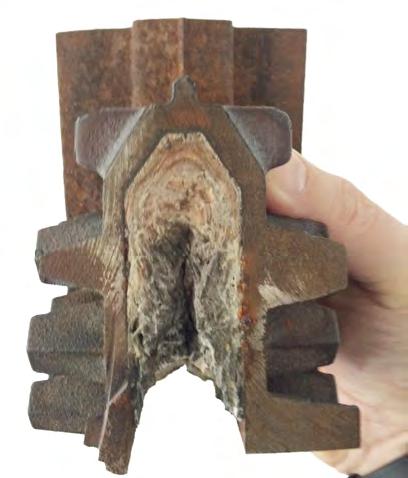
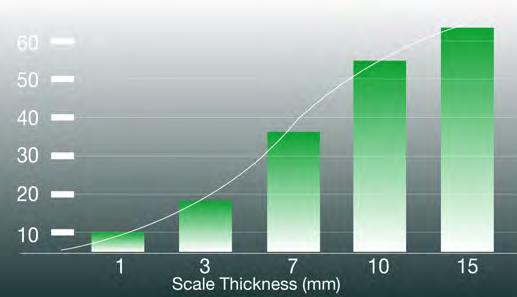
scale build-up was a fraction of that shown, the boiler’s efficiency would have been significantly impacted.
Figure 2 is a graph showing heat transfer penalty as a function of scale thickness. A thickness of just 1 mm can cause a 10 per cent loss in efficiency. A boiler rated to deliver 1 million Btu/hr would essentially be delivering 900,000 Btu/hr. That is a lot of wasted energy up the flue.
Figure 3 shows a heat exchanger cutaway from a condensing boiler that failed due to leaking. This is a popular stainless steel “fire tube” heat exchanger design used by several manufacturers. Combustion gases travel down the tubes as water travels upward outside the tubes absorbing heat. The scale formation is thickest where the surface temperature is highest – in this case where the flame bowl joins the tubes.
The higher the wall temperature the faster and thicker the scale forms. Because scale acts as an insulator, the varying scale thicknesses and thus wall temperatures create non-uniform mechanical stresses across the heat exchanger. The cyclical heating and cooling can lead to accelerated stress fatigue and ultimately cracking – as was the case here.
As scale forms and passages through the boiler’s heat exchanger become narrower, flow resistance increases. If the boiler has a fixed speed circulator the boiler’s flow rate will decrease. This can create problems such as steam flashing. Repeated steam formation and contraction cycling not only make for a very noisy boiler, but also exacerbate the stress fatiguing problem.
If the boiler circulator is variable speed and configured to maintain a fixed flow rate, the electrical power demand of the circulator will increase due to the increased flow resistance. This increases the system operating cost.
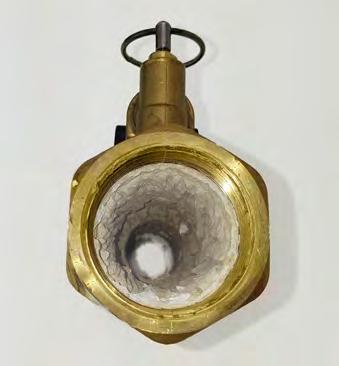
Scale may form in areas other than where wall temperature is highest. If water leaving the boiler is sufficiently hot, scale can form on other components. Figure 4 shows a balancing valve
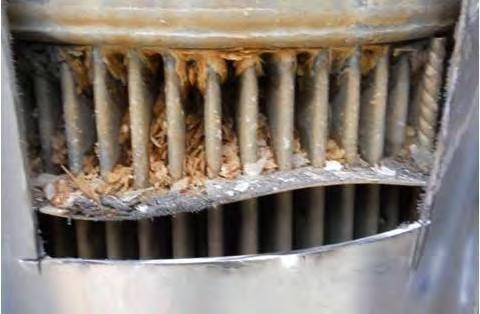
with scaling that closed the passage by over 50 per cent.
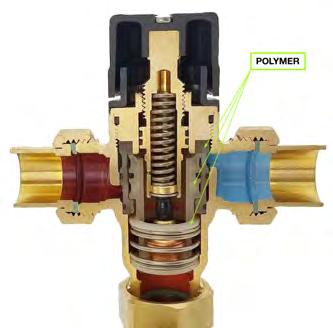
It is for this reason manufacturers of precision hydronic components that are installed close to a heat source, and that incorporate moving parts, use materials that resist scale formation. Although surface temperature is a major factor in determining the extent of scale formation, surface roughness and surface material also play roles. Copper for example can be less susceptible to scale formation than brass. Certain polymers are less susceptible to scale formation compared to metals. This is why some thermostatic mixing valves use polymers for internal sliding parts (see Figure 5 ). Reduced scale formation results in smoother valve modulation.
Scaling and corrosion are related. In the February issue (see www.hpacmag.com/digital-archives/) we discussed how dissolved minerals make water electrically conductive and when dissolved oxygen is present, galvanic cells form and corrosion occurs.
Scale itself can change the galvanic properties of metal. Metal where scale has tightly bonded becomes anodic and adjacent metal where scale is loosely bonded becomes cathodic. This accelerates corrosion.
There are various ways of measuring hardness concentration. Test strips provide an inexpensive method. Although they do not provide precise values, they offer good indication. For more accuracy, hardness titration kits are useful and can be attained for less than $100.
Most boiler manufacturers publish limits for various water contaminants in their installation and operation manuals. Water hardness limits are typically between three and seven grains. To get a sense of how much hardness this represents, consider a standard 325 mg aspirin tablet. 65 milligrams equates to one grain. So one aspirin tablet dissolved in a gallon of water is equivalent to five grains of hardness.
A complicating factor in determining the acceptable hardness level for a particular system is water volume. This is because over time, unless pH and alkalinity levels are kept suppressed, almost all the hardness will precipitate out. And the scale will mostly form on the hottest surfaces –those within the boiler’s heat exchanger. Consider an infloor radiant heating system with 25 gallons of water having five grains hardness. Most of the scale that eventually forms will likely bond to the boiler’s heat exchanger. That would be equivalent to 25 aspirin tablets.
Depending on the size of the boiler’s heat exchanger this could be a problem - especially if the scale formed non-uniformly. Next consider what happens if you add a 25 gallon buffer tank to the system to reduce cycling. The effect could be 50 aspirins worth of scale bonded to the heat exchanger, not only defeating the intent of the buffer tank but risking early stress fatigue failure.
The German water quality standard VDI 2035 Part 1 takes water volume into consideration. If the ratio of water volume (in litres) to the boiler capacity rating (in kW) exceeds 20, the water should be treated – even if its hardness
was otherwise deemed acceptable. Using an english units example, for every 10,000 btu/hr of rated boiler capacity, the volume of untreated water used shouldn‘t exceed 15 ½ gallons. For multiple boiler systems the boiler capacity rating referred to in this standard is that of the smallest boiler. Presumably this worse case scenario recognizes that one boiler often provides a high percentage of the seasonal heating requirement, and thus is more subject to scaling in comparison to boilers that only operate during peak loads.
The water volume cited in the above mentioned VDI standard is the total water the system experiences over its life – the initial fill plus the expected makeup water required. The fill water used in the system of the failed boiler of Figure 3 had a hardness of only seven grains, however, there was significant make-up volume.
Normally, closed systems that incorporate only wet rotor circulators should require very minute amounts of makeup water once commissioned; but systems that employ larger circulators with mechanical seals, develop leaks from worn components, or undergo repeated service, can require very large amounts of makeup over their life.
Effective common treatments for exces-
sively hard water fall into three categories.
The first category is chemical additives. There are many chemical additives available. Some target hardness by sequestering the calcium and magnesium – keeping it in suspension and thus not allowing it to precipitate onto surfaces.
Care should be taken to minimize sludge formation when using certain sequestering chemicals, such as those that are phosphate based. Other chemicals are designed to perform multiple functions such as hardness sequestering and corrosion inhibition.
Care is required because certain contaminants such as chlorides and sulfates, or large make-up volume, can reduce effectiveness. Chemical treatments should always be routinely monitored. It is best to consult the manufacturer or a treatment expert if not experienced in using additives.
The second category is water softening. As discussed in Part I, because calcium and magnesium is removed and sodium added, the water’s electrical conductivity often rises. This creates conditions favourable for corrosion – especially if air management is sub-optimal. Furthermore, sodium hydroxide can form as aqueous carbon dioxide comes out of solution and vents off. This raises the pH level.
For most metals this is not problematic, but for aluminum it can be if the pH
Continued on MH36
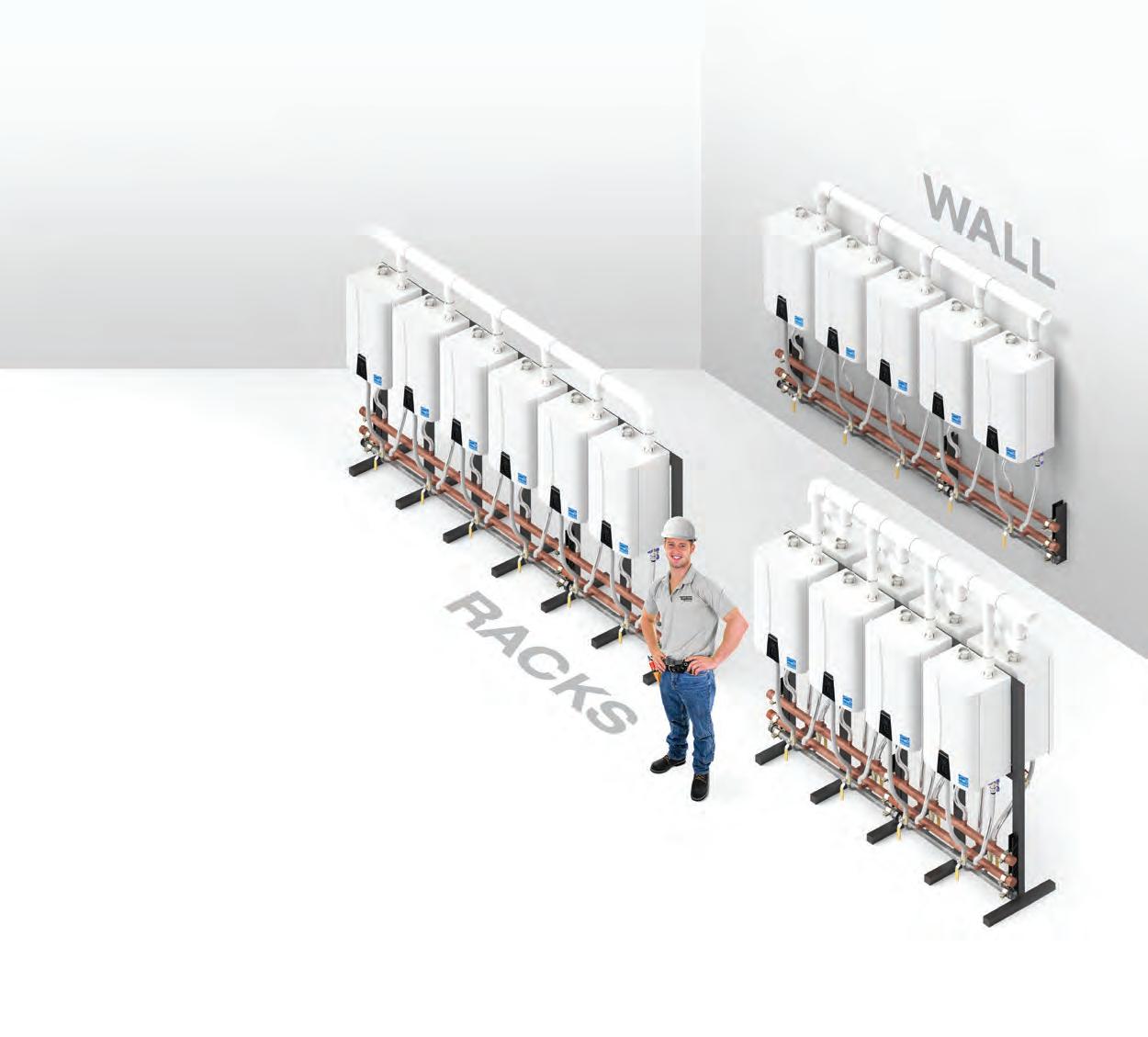



•Simply no waiting for factory racks
•Simply easy to install
•Simply more profitable
•Simply visit your local Navien wholesaler and pick up everything you need
1Pick your Navien Units, NPE-A or NPE-S






2 Pick your location, wall or rack
3 Pick your manifold kit
4 Pick your venting system







BY ROBERT BEAN
What would the performance outcomes be if we got them all right? For me solving the Rubik’s Cube of design and system execution is when clients are overjoyed with the quality of the indoor environment; and are delighted at how low their energy consumption is relative to the ASHRAE Standards and to their previous experience owning, living and working in other buildings.
Achieving this outcome is not that difficult with the right team but regrettably ‘failure to perform’ is far too common. Given the investment people make in buildings, such miscarriages lead to rampant cynicism amongst those who witness the carnage left behind on projects. It is getting to the point where I and my podcast co-host Adam Muggleton are thinking about starting performance anxiety therapy sessions specifically for engineers and marketing people employed by manufacturers. Why? Because they need help. Under increasing corporate
pressure, many are directed to perform in a new world evolving from a global desire to be more sustainable and resilient. That burden to execute is aggravated because they are detached from non-mandated accomplices and the critical construction processes required for successful projects.
Distributors and tradespeople are encouraged to observe what happens to those engineers and marketing people when manufactured components fail to perform to their engineered potential. Not because of a manufacturing defect but because of ‘on-site’ defects created by ‘off-site’ design processes, inadequately skilled practitioners and fabrication illiteracy.
First let’s state that achieving indoor environmental quality and energy efficiency does not happen by accident. There is no magic wand or fairy dust that can be sprinkled over structures and systems to turn them into the buildings they always wanted to be, even if they are fabricated with the highest efficient materi-
als and conditioned with the highest efficient equipment. I say this because with all that we have learned over decades of practicing integrated design, there are many in industry who still operate in Never-Neverland. These are the folks who believe good stuff thrown into a building will self-assemble into systems that make occupants want to send you love letters. It is this ignorance that torments the manufacturers and yours truly.
The number one cause for performance anxiety is segregated design. This is the traditional tactic that keeps professionals isolated from one another in case they start to communicate and come up with integrated solutions. This ‘root of all evil’ is where the owner hires an architect or builder who then subs out work. What is needed is for experts to work together to produce a solution that works for that client on that project. Ideally the MEP professionals should meet before or at the same time with
the client, interior designer and architect. With this approach the client becomes educated about the important energy and IEQ systems before visual stimulation destroys their sensibilities. Armed with an IEQ specification and energy budget they can enter with greater vigilance into the architectural contract.
The second cause is system(s) illiteracy. This is the failure to understand the relationships between the parts that make up the modules used to fabricate sub systems; and the sub-systems used to assemble the systems that make up the whole building.
Practitioners from various fields do not need to become competent in one another’s practice but they do need to have awareness. When practitioners operate in a silo they ignore the interdependency that occurs when the building is fabricated such as when designers of heating, cooling and ventilation systems ignore the effects of temperature and humidity on outgassing from finishes specified by the interior designer; or when architects and window vendors ignore the destructive effects of short wave radiation on artwork and synthetic materials.
The number one symptom of performance anxiety is poor Indoor
“HVAC is not exclusively air systems. I don’t know where this distortion comes from but the H in HVAC stands for heating – nowhere in literature is hydronics excluded from this definition.” – Robert Bean
Environmental Quality (IEQ). We have gone over this before but as a refresher it refers to the indoor quality of sound, thermal, air, lighting, odours and vibrations as shown in Figure 1
It is the IEQ occupants ultimately sense, perceive and then judge. It is wise to count on your client’s sensitivities. They will use it to evaluate how educated, trained and skilled everyone on the ‘team’ is and how well understood their needs and wants are. Understanding your client’s physiology means hitting the books and using the many free online tools as shown in Figures 2 and 3
The second symptom is inefficiency. The ‘naughty’ list below is not exhaustive but gives the reader a nice starting point.
1. Low system ‘coefficients of performance’ (COP):
a. heat pumps and chillers sold and purchased for their high COPs but then connected to inefficient systems that
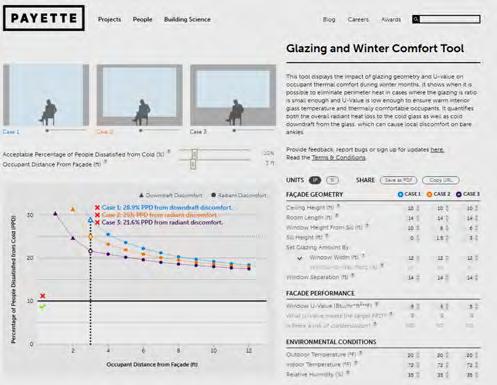
degrade the overall system COP. For example, running at too high a temperature in heating and too low in cooling; or poorly designed systems resulting from excessive circulators and circulation.
2. Condensing boilers operating at non condensing temperatures :
a. due to improper or poorly commissioned controls or mismatched to the type of heat terminal units. Often connected to heat terminal units not selected for low temperature; or adjusted up due to unaccounted thermal resistances such as a changes in flooring over a radiant floor system.
3. Chillers running at unnecessary low temperatures:
a. due to improper or poorly commissioned controls or mismatched to the type of heat terminal units. Often connected to heat terminal units not selected for high temperature; or adjusted down due to unaccounted for thermal
Continued on MH16
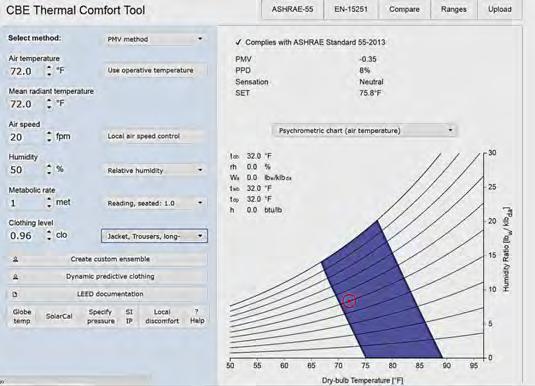
resistances such as a changes in flooring over a radiant floor system.
4. Excessive velocity in ducts and pipes:
a. due to poorly designed distribution networks and ignoring wider delta t options.
5. Oversized and incorrect characteristic control valves:
a. valves picked on line size rather than on Cv, ignoring valve authority principles and illiteracy in quick opening versus linear versus. logarithmic valve characteristic.
6. Oversized boilers, chillers, heat pumps and heat terminal units:
a. inaccurate or no load calculations performed; units picked without regard to load diversity and application of unnecessary safety factors.
7. Excessive equipment cycling:
a. see oversized equipment above.
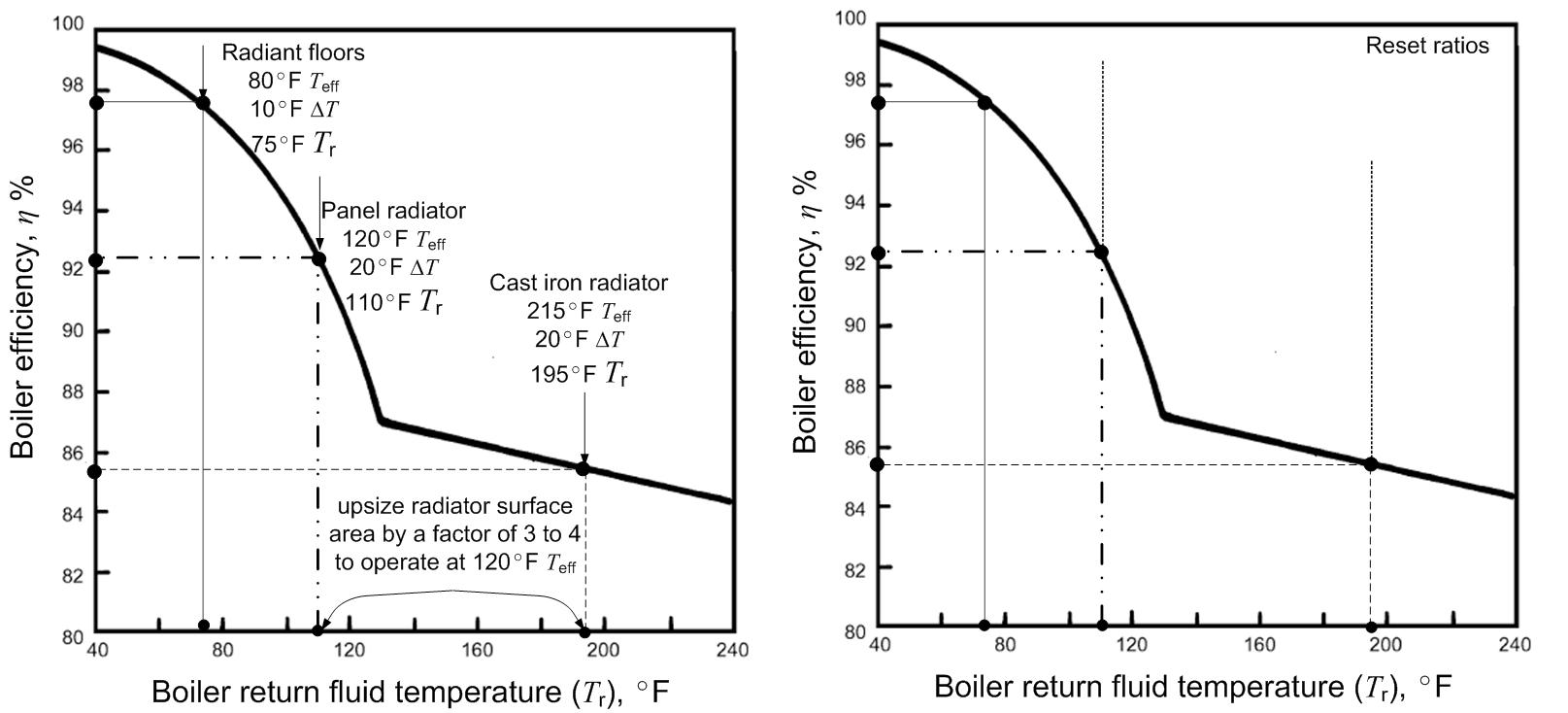
b. inadequate controls and turndown ratios.
c. absent or undersized buffer tanks.
8. Poorly selected circulators and fans:
a. disregarding relationships between differential temperatures, flow, pressure and affinity laws.
• Polyethylene for raised temperature (PE-RT)
• 5-layer construction - oxygen barrier completely protected

• May be joined using insert fittings and clamps certified to ASTM F-877, F-1807, or F-2159
• Manufactured in North America for US and Canadian market
• SDR-9 tubing, compatible with any fitting (including cold-expansion fitting systems)
• DOWLEX™ 2344 Polyethylene Copolymer Resin
• No cross-linking required, no waste, no chemicals
• Limited Lifetime Warranty
• CSA and NSF listed


9. High motor watts to Btu/hr ratios:
a. over zoning or solving zoning problems with oversized circulators and air handlers.
b. using high watt circulators instead of low watt zone valves.
10. Ventilation and lighting systems operating unnecessarily in unoccupied buildings.
11. Unbalanced HVAC systems:
a. resulting in occupant over-ride of building controls causing further disturbances.
12. Dampers and valves not operating properly:
a. resulting in occupant over-ride of building controls causing further disturbances.
13. Unaccounted for heat loss and gains through thermal bridging in walls and roofs:
a. using unnecessary ‘through the wall’ structural members in the enclosure.
b. no thermal break between interior and exterior slabs and walls.
14. Unaccounted for heat loss due to inadequate or no slab insulation:
a. disregard for soil conductivities and the dynamics of geology, hydrology and climatology.
15. High infiltration rates:
a. disregard for seals, gaskets and caulking at points of enclosure penetration.
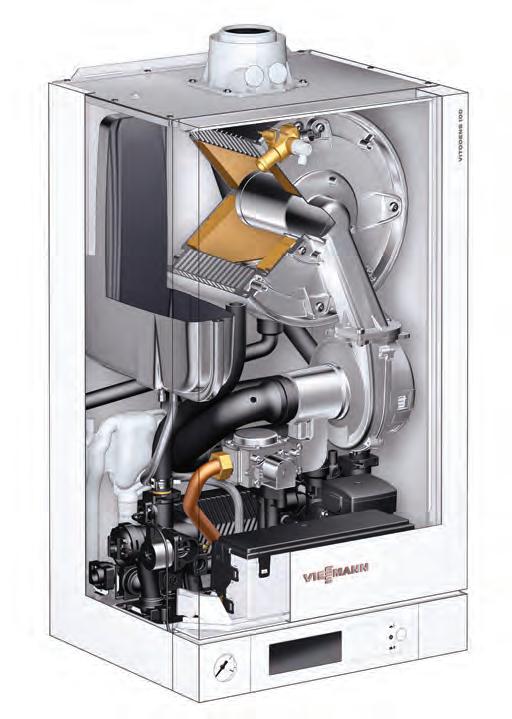
VITODENS 100-W, B1KA
gas condensing Combi boiler
Heating input: 21 to 125 MBH
DHW max. input: 149 MBH
Lasting performance
Quality workmanship you can trust with new Viessmann-made SA240 S43932 stainless steel Inox-Radial selfcleaning heat exchanger and new factory calibrated, fully-modulating stainless steel MatriX cylinder gas burner.
On-demand DHW
Built-in DHW unit includes stainless steel plate heat exchanger, 3-speed pump, diverting, pressure bypass and pressure relief valves, water hammer arrester and sensors - conforms to NSF/ANSI 372 for “lead free” plumbing products.
User-friendly control
New backlit LCD touchscreen control with enhanced programming interfaces with a variety of external control devices to provide comfortable and reliable energysaving space and DHW heating.
Outstanding versatility
NG or LP fuel compatible “out-of-the-box” with bottom pipe connections and front access to all serviceable components plus multiple venting options for easy installation service and maintenanceall in a compact wall-mount design.
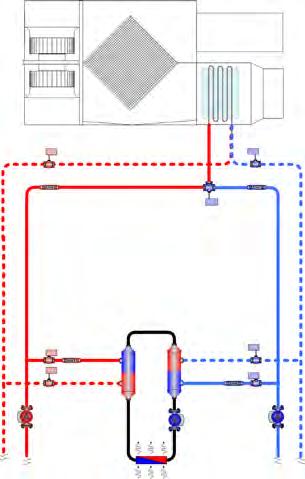
5 Dedicated outdoor air system (ex. HRV) enables the use of a separate comfort systems (ex. radiant) as reflected by human physiology and ASHRAE Standards 62 and 55
16. Parasitic heat transfer between systems :
a. ventilation air ducts not thermal separated from hydronic heating and cooling systems.
b. cold and hot plumbing lines adjacent to HVAC ducts and pipes
The top three treatments for performance anxiety are education, education and education. To get there, smart clients, architects, engineers and trades need to work with the following:
1. High performance enclosures –The first solution to IEQ problems should be the enclosure. It should be fabricated with components that do not need maintenance nor fuel and electricity to run. To put performance into perspective I have categorized cold climate homes into four segments from Terrible, Traditional, Transitional to Terrific. You could apply the same rating system to small commercial buildings.
2. Low VOC finishes – Too many practitioners ignore the power of the interior designer on IEQ and energy. If you
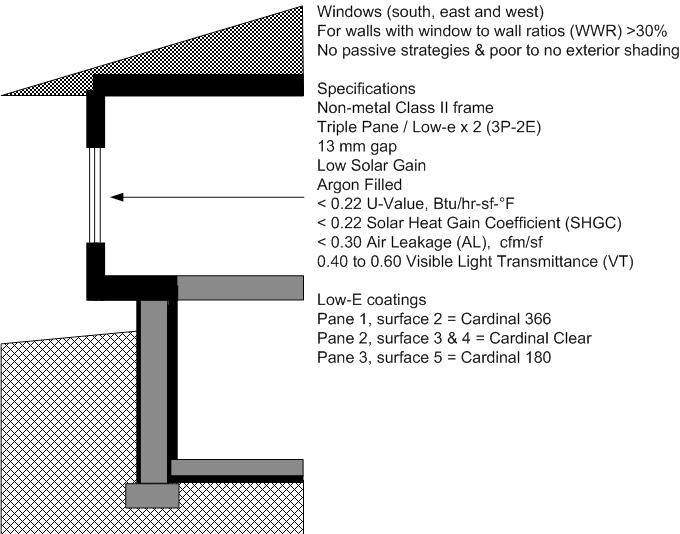
6 Higher window performance and external shading lowers cooling loads promoting thermal comfort; reduces short wave energy destruction of interior finishes promoting indoor air quality; reduces sound transmission promoting sound quality; and controls glare and brightness for improved lighting quality.
want good IAQ and boilers to run at low temperature and chillers to run at high temperature for radiant systems you need conductive low VOC flooring such as tile, slate, concrete, terrazzo and some woods. Learn to love the interior designer–he/she is your friend.
3. Dedicated ventilation – I can’t say this enough… we don’t inhale thermal comfort and we don’t respire through our skin. The body has a separate physiological system for air quality and another for thermal comfort. The former mainly through our respiratory systems. The latter through our skin receptors and hormones in the HPT axis (endocrine system). This separation is supported by distinct ASHRAE Standards; one for ventilation and one for thermal comfort. The former being Standard 62.1 and 62.2 (CSA F326). The latter is Standard 55. Just like the body and ASHRAE Standards, separating the ventilation systems from the comfort system solves a big part of performance anxiety in buildings.
4. Design ventilation systems for low velocity – If we are going to shoot for
low energy consumption and quieter systems we have to get the friction down in distribution ducts and pipes. There is no rule saying you can’t design for 1.0 to 2.0 fps in pipes and 500 to 700 fpm in ducts.
5. Filtration – If you have to eat up energy in the system use it at the air filter. Minimum MERV 11, better yet MERV 13.
6. Duct leakage – Let’s just ask who would tolerate pipe leakage? No one. Nor should we accept duct leakage. According to Lawrence Berkeley National Laboratory for the Department of Energy (Roth, 2005), duct leakage is a leading cause of wasted energy in HVAC systems. Seal the ducts and seal ducts to grills/registers.
7. Use low temperature heating and high temperature cooling systems – Radiant is not dead as espoused by a few vocal industry pundits. No airbased system will be able to establish the same conditions for thermal comfort at the same fluid temperatures offered by radiant systems. Consider 60 per cent of sensible human thermal regulation is done via radiant. Also radiant
Continued on MH38

Optimize Your Hydronic System for Maximum Efficiency and Savings
AERtrim
Peak Performance
AERCO’s patented O2 Trim technology self-adjusts the combustion process to deliver optimal O2 levels keeping your boiler operating smoothly at peak performance.
Dual Returns
Maximum Efficiency
Enables design and application flexibility — increases efficiency up to an additional 7%.
onAER
Predictive Maintenance
A pro-active tool detailing comprehensive unit performance so you can ensure your system operates optimally reducing costly unscheduled maintenance.
The Vitodens 100-W, B1KA gas-fired condensing combi wall mount boiler from Viessmann Manufacturing Company Inc. has built-in, on-demand domestic hot water capability. The Viessmann-made SA240 S43932 stainless steel InoxRadial self-cleaning heat exchanger and stainless steel, factory-calibrated, fully-modulating MatriX cylinder gas burner ensure optimum performance and operational reliability. The NG or LP fuel compatible boiler’s built-in DHW unit includes a stainless steel plate heat exchanger, three-speed pump, diverting, pressure bypass and pressure relief valves, water hammer arrester and sensors. www.viessmann.ca
Reflex North America’s water softening unit Fillsoft has extended its performance to a complete water treatment system by implementing the option of demineralizing the system water. Two different cartridges are available: Fillsoft green cartridge with a soft water capacity up to 3,000 gal @ [1gr/gal] and Fillsoft grey cartridge with a demineralizing capacity up to 1,550 gal @ [1gr/ gal]. Both cartridges fit into the same housing. Optionally, overall capacity of the water treatment system can be increaded by upgrading the unit with a second cartridge. www.reflex.de
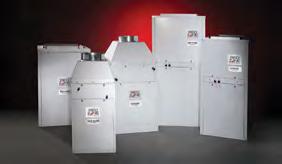
RedZone air handlers with ECM motors can be connected to most hot water heaters but are optimized to work with tankless water heaters. In retrofit situations existing ductwork can be used. In new home construction or major renovations, 3 in. diameter mid- or high-velocity mini ducts can be fitted inside standard wall cavities, eliminating the need for extra bulkheads. The RedZone DVS air handler can use either standard or 3 in. diameter ducts. www.redzone-products.com
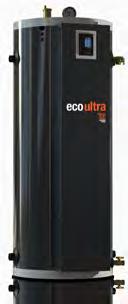
The Eco ULTRA electric boiler and storage tank from Thermo 2000 is designed for residential use and serves as a back-up energy source to the primary system. It is adjustable between 50F and 190F. Standard features include an Ultrasmart controller; boiler pressure relieve valve; drain valve; heating water supply and return; electrical panel; electric elements; temperature and pressure indicator; and an automatic air vent. A copper coil heat exchanger is optional. www.thermo2000.com
Roth X-Pert S5 five-layer pipe consists of a layer of ethylene vinyl alcohol polymer (EVOH) sandwiched between two layers of Polyethylene Copolymer Resin and two layers of adhesive. This structure provides the long-term hydrostatic design strength demanded by hydronic heating applications. The pipe may be joined using insert fittings and clamps certified to ASTM F-877, F-1807, or F-2159. It may also be joined using thermal fusion methods eliminating the need for midloop mechanical fittings. Maximum operating temperature and pressure are 200 PSI at 73F and 100 PSI at 180F. www.roth-usa.com
REHAU has introduced the EVERLOC+ compression-sleeve fitting system. Designed for use with RAUPEX UV shield PEXa pipe in potable water applications, the system features polymer and leadfree brass fittings in diameters up to 2 in., as well as the EVERLOC+ power tool. Connections are made using a two-step expansion and compression process, both performed by the power tool. First, the pipe is expanded, then the sleeve is actively compressed over the pipe and fitting for a secure connection that is immediately ready for pressure testing. www.everlocplus.com
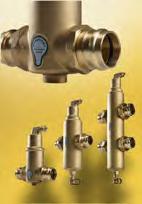
Spirotherm has added press connections to its entire brass product line, sizes ¾ in. through 2 in. The Spirovent Air Eliminator and Combination Air/ Dirt Eliminator, use the patented Spirotube coalescing medium to eliminate 100 per cent of the free air, 100 per cent of the entrained air, and up to 99.6 per cent of the dissolved air from the system. The Spirovent Quad combines the advantages of the Spirovent Air/Dirt Eliminator with the functionality of a hydraulic separator. www.spirotherm.com
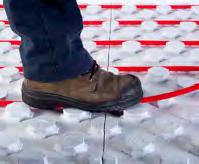
HydroFoam lightweight high density expanded polystyrene (EPS), which is part of the NUDURA Integrated Series, is designed to ensure heat is dispersed evenly throughout the entire floor area. The 4 ft. by 4 ft. (1.2 m by 1.2 m) boards are 2 ½ in. (64 mm) thick and are installed with an overlapping interlock on all four sides, ensuring the boards are locked in place during installation. The boards utilize a 360° multi-directional friction fit anchor system which radiant heat piping is stepped into place in, in any direction required. www.nudura.com
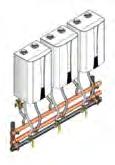
Navien’s Ready-Link Manifold System for NPE Tankless Water Heaters makes manifold mounting, onto the Ready-Link Rack or directly to a wall, simpler for new multi-unit installations or retrofits. The kits are available in configurations of two, three, and four units side-by-side, and two and four units back-toback. Multiple systems can be combined to support up to 16 cascading units in 30 different arrangements. Each component is portable and fits through a standard door opening. www.navien.com
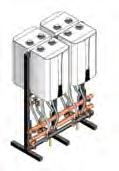

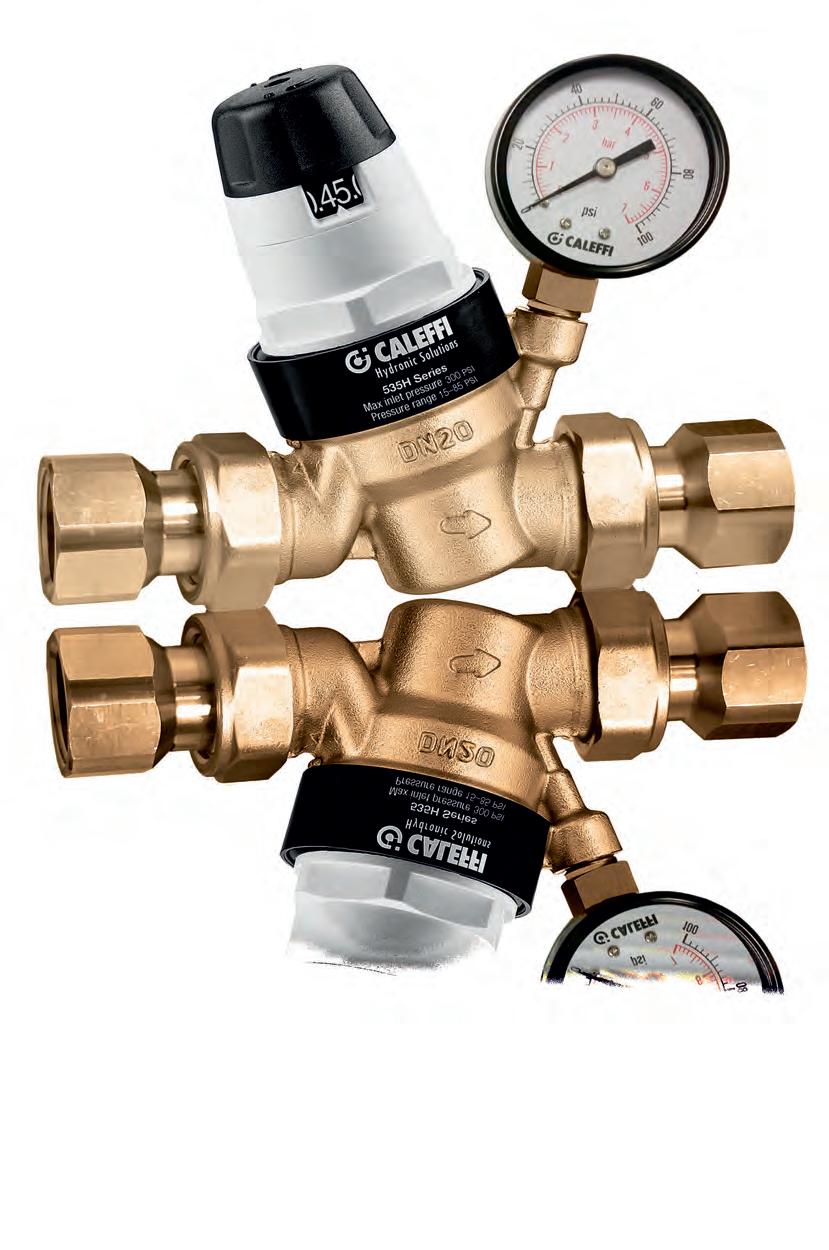
• Pressure pre-adjustment knob with convenient front & back psi indicator. 15 to 95 psi adjustment range.
• Removable cartridge with stainless steel mesh filter. Easy in-pipe servicing.
• Unique seat & shuttle seal design minimizes turbulence and noise.
• Contour-shaped EPDM diaphragm withstands sudden pressure fluctuations – a common cause of premature wear.
• Scale resistant internal parts minimize lime-scale formation – a common cause of flow inconsistencies.
• Hot water booster system compatible - 300 psi and 180 °F rated. Certified to ASSE 1003, NSF 61, NSF 372, CSA B356.
• Dual union connections (NPT, press, sweat, or pex barb), lockable adjustment knob, and optional pressure gauge.

Controlling and protecting your water


The GF 200 combi gas water heater/furnace from NTI has proprietary and exclusive software to minimize cycling with 10 stages of modulation for smooth heat output. An internal recirculation and buffer tank eliminates cold water sandwich and no minimum flow rate is required. It is field convertible to LP gas. Features include simultaneous DHW and heating up to 170 MBH (85 per cent burner capacity); automatic DHW priority above 170 MBH; stainless steel heat exchangers; and a negative pressure gas valve with pre-mix burner provides full modulation from 20-200 MBH. www.ntiboilers.com
Viega has introduced its ProRadiant insulated PEX barrier piping system for its snow melting system. The system’s high-compressive strength makes it suitable for burial under areas with high traffic loads or foot traffic. The “smart” membrane between the outer casing and insulation enhances and maintains the insulation value. The bonded system eliminates risk of water penetration and no special considerations for thermal expansion are required. The polyethylene (LDPE) jacket resists impact or blows incurred during the installation or transportation. www.viega.us
HeatLink TMP Multi Panels for residential or small commercial heating projects come with a Grundfos UPS15-58, UPS26-99 or UPS26-150 primary pump. Combinations of up to five circuits are available: one possible DHW circuit; up to two high temp circuits; and up to five low temp mixing circuits. Multiple supply water temperatures are possible for different radiant areas. Depending on the installed primary pump, flow rates of five to 15 USgpm per circuit are available. Pre-engineered panel design saves time and labour. www.heatlink.com
IBC’s SL series G3 condensing boiler line includes four-zone pump control; UL/CSA-approved LWCO and a manual reset high limit; a moisture management system; outdoor reset; the ability to connect an indirect water tank directly to the boiler without a primary loop; PVC/CPVC/PP venting; and a visible flame via a sight glass for troubleshooting. The V-10 touchscreen boiler controller offers Express Setup, remote monitoring and diagnosis, USB programming, and an intuitive alert system with more detailed error messages. http://ibcboiler.com
AMTS is stocking hydronic unit heaters. Cabinets are constructed from heavy duty, corrosion resistant steel and are finished in grey baked enamel. The units are equipped with horizontal louvres that are individually adjustable. Fans are statically and dynamically balanced for quieter operation. The unit heaters range from 23,000 Btu up to 205,000 Btu. Units are also rated for use with two PSI steam. www.amtscanada.com
The Noble fire tube combi from Lochinvar provides DHW from 2.6 (NKC110) to 4.8 gpm (NKC199) at a 77F temperature rise. Three models are available (110,000, 150,000 and 199,000 Btuh). A backlit, user-friendly LCD display provides diagnostic information and system status in words, not codes. The Set-Up Wizard display makes it simple to set system parameters in just minutes. www.aquatech-canada.com
Designed for maximum efficiency in tight spaces, Belimo’s ZoneTight valve offering is suited to pressure dependent and pressure independent zoning applications and is a retrofit replacement solution. The valves have field adjustable flow to meet design requirements. www.belimo.us/ americas/canada.html
Adey filters can be used in any size installation from small residential to heavy commercial. All MagnaClean filters are part of maintaining total system health through the use of a multi-step Best Practice approach designed to clean and protect hydronic heating systems for maximum efficiency. Best Practice heating system protection is a five-step process using products engineered to ensure maximum efficiency in hydronic heating systems. More than three million MagnaClean filters have been installed throughout Europe. www.adeyusa.com
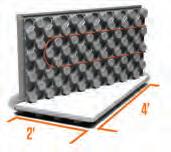
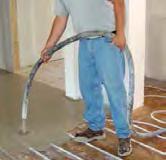
Therma-Floor from Maxxonis a gypsum underlayment, which acts as the thermal mass for radiant floor systems. It is poured at a minimum of one in. Its resists breakdown to 150F. www.maxxon.com
The Amvic Insulated Radiant PEX Panel is designed for residential and commercial radiant floor heating systems. The PEX piping is inserted into the panel by walking on the pipe; panel nubs lock the piping in place. The patented panel design ensures that the tube will be completely encased in concrete and not pushed to the bottom of the panel. The residential panel is made using Type II (1.5 lb.m3 density) with R values of R10, R14, and R18, and the commercial panel is manufactured using Type IX (2.0 lb. m3 density) with R values of R15, R17 and R20. The PEX nubs will accept PEX pipe sizes of 3⁄8 in., ½ in., 5⁄8 in., ¾ in. and 1 in. www.amvicsystem.com

The Greentherm 9000 Series from Bosch Thermotechnology Corp. has a space-saving, state-of-the-art tankless design. The gas water heaters feature WiFi (connectivity can be built-in or optional), a user-friendly, multilingual touchscreen interface and higher temperature stability at the lowest minimum output (0.3 BTU). They are ENERGY STAR-rated with precise temperature control to reduce water waste. The 9000 Series integrates with solar energy systems (max. inlet water temp. 85C/185F). Integrated freeze protection reduces the risk of unit damage. Smart hydraulics allow for fast heat-up and precision (high modulation range 22:1). www.bosch-climate.us
Model NT1-P condensate neutralization tank with pump from Axiom Industries comes with high level float for hook up to an alarm system and includes an initial charge of LipHter neutralizing media. The NeutraPump is designed to prevent acidic condensate from corroding drains and sewer systems. It features low profile design for appliances with near floor condensate drain, maximum delivery head of six metres and a flow rate of 7.2 l/hr (1.9 Gal/ hr). All materials are corrosion resistant. www.axiomind.com
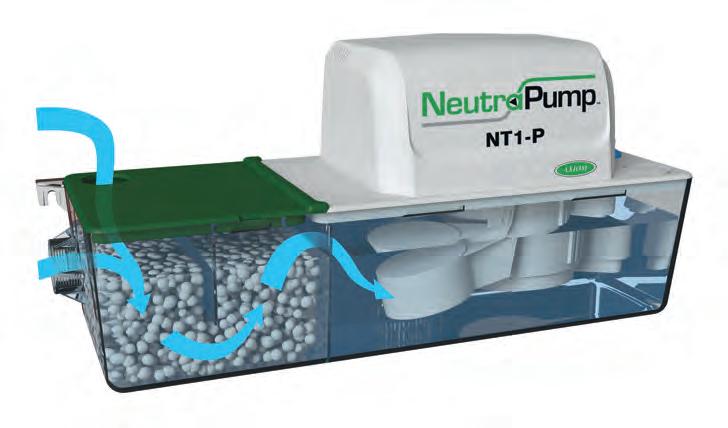
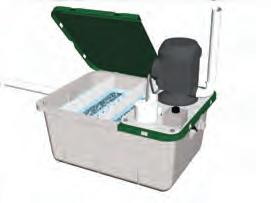
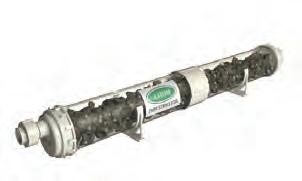
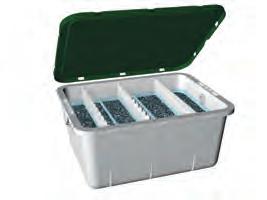
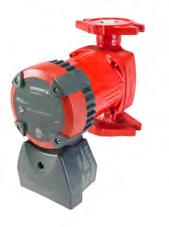
Armstrong Fluid Technology’s COMPASS H highefficiency wet-rotor circulators feature advanced Design Envelope variable speed technology. A Quadratic Sensorless flow control algorithm intelligently responds to system demand to consistently provide only the necessary flow. Other key features of the circulator include: broad operating range of up to 20 ft. of head and up to 20 USgpm flow; accepts 0-10V DC external control; nine different modes of operation including auto; and a large wiring chamber and front-mounted terminal block. http://armstrongfluidtechnology.com
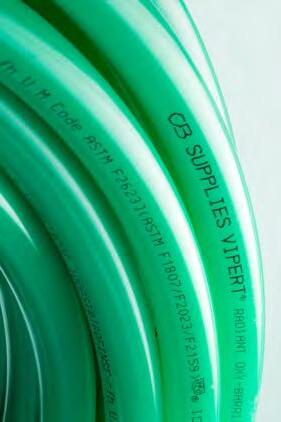
Vipert Potable and Radiant PERT tubing from CB Supplies has relaxed memory for less spring back. It is recyclable and is compatible with most popular PEX fitting systems, including crimp fittings, push fittings and F2080 cold expansion and is also fusible. It is designed to have excellent hydrostatic strength at high temperatures and high burst pressures. Coils of 100 ft. to 1200 ft. come in diameters of ½ in., 5⁄8 in., ¾ in. and 1 in. www.cbsupplies.ca
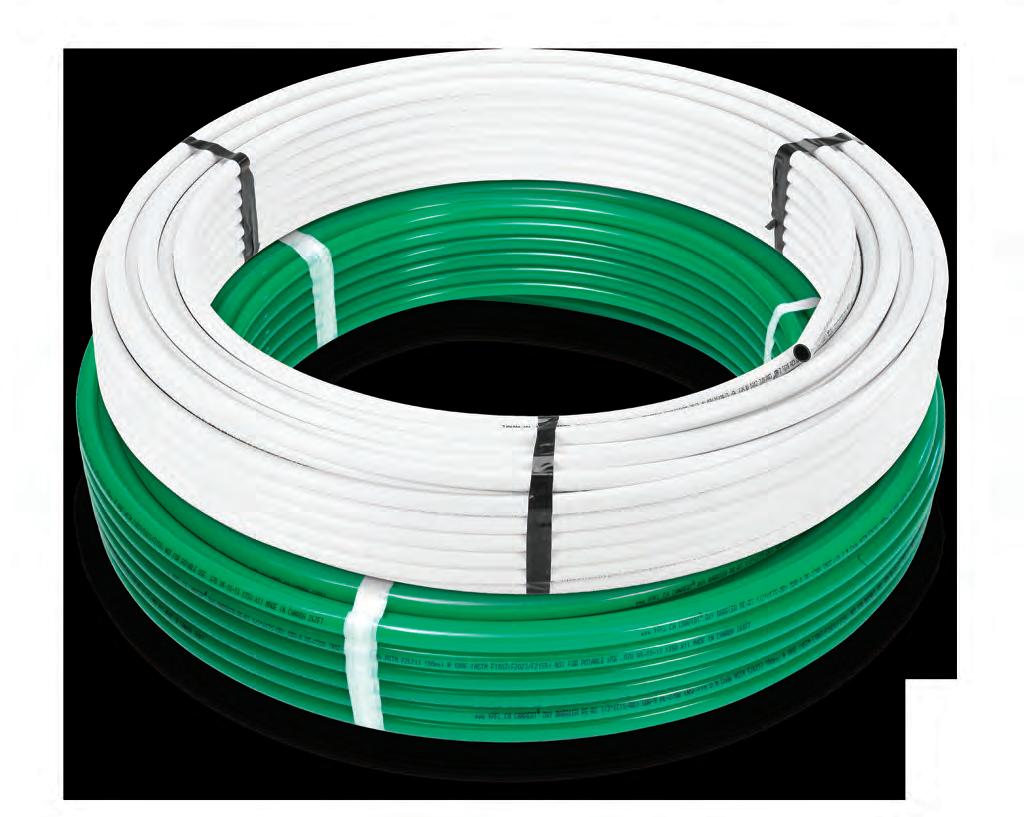
The AquaBalance combi-boiler from Weil-McLain is factory shipped as NG, with an optional LP conversion kit available. Features include compact design; heavy gauge insulated jacket; a 10-to-1 turn down ratio; a single tube, large diameter, ASME certified 316L stainless steel heat exchanger; and pre-wired, plug-in ready electrical design. The boiler has a wall mounting bracket and hardware, an internal three-speed Grundfos circulator, Honeywell boiler controls with digital display and a commercial grade three-in-one vent adapter is approved to accept PVC, CPVC, SS or PP vent materials. http://aquabalanceboiler.com
Caleffi Z-one Zone Controls for pumps, valves or both, have ample room for terminations, large screw terminals, automatic resettable fuse and snap-in transformers. These controls are compatible with two-, three- and four-wire zone valves and thermostats and have configurable pump logic. Application versatility is enhanced by three selectable 120 VAC auxiliary switches for enabling pumps and boilers, dedicated pump outputs and unlimited zone expansion. The single-zone pump control mounts to a 4 in. by 4 in. junction box. www.caleffi.com/usa/en-us
Apollo PowerPress carbon steel press and fitting system is designed for thick wall steel pipe as defined by ASTM A53, A106, A135, A795 (schedule 10 to 40) standards. It can be used with different brands of press tools. The products are manufactured using fully ad-
vanced automated modern machinery. Welded components undergo a leak test and all straight connectors with threaded ends are made from a single piece. Sizes range from ½ in. to 2 in. The full line of integrated valves eliminates the need for adapters. Compact fittings allow for recessed work.
www.powerpress.apollovalves.com
Globe radiator and balancing valves from dahl Brothers Canada Limited are available in sizes from ½ in. to 1-1/4 in. for heating applications. Working pressure for the regular pattern is 200 PSI/250F (hot water) and steam 250 PSI/250F (150 WSP with hi-temp disc). Features include a cast brass body, a smooth heat resistant plastic handle; spring-loaded self-adjusting EPDM packing system; and heat resistance; solder in open position. www.dahlvalve.com
The MAC from Utica Boilers is a high efficiency wall mounted modulating condensing boiler offered in combi and space heating models. AI control technology recognizes Natural or LP gas and self-monitors and adjusts for fuel savings. It also measures water temperature, flue gas temperature, flame signal and pressure that can impact the boiler operation and CO levels. The AI control will automatically shut down operation should these values exceed normal operating levels. Specifications include 7:1 turndown ratio in DHW Mode and 5.7:1 turndown ratio in heating mode. www.mordennational.com
Grundfos ALPHA2 high efficiency circulators with ECM motor design offer simple push button control to program in one of three constant speed, three-constant
pressure, or AUTOADAPT control modes. The current operating mode is always visible on the circulator’s LED display. The large LED display shows the current energy consumption in Watts and estimated flow in gallons per minute. The circulator is complete with an integrated check-valve, foam insulation jacket, and nut captures for flanges. It comes in both cast iron and stainless steel models. In blocked rotor conditions it will continuously attempt to restart. www.grundfos.us/
The 0015e3 circulator from Taco has three settings: Low (5 ft. head), Me dium (10 ft. head) and high(18 ft. head). Features include BIO Barrier to protect the pump from system contaminants; SureStart automatic unblocking and air purging mode and a high-efficiency ECM motor. Integral Flow Check is included. The circulator offers 16 gpm max flow, dual electrical knockouts and 6 in. stranded wire leads for no-fumble wiring. It is double insulated. www.TacoComfort.com/0015e3
Amtrol’s Hydromax indirectfired water heater has enclosed piping and two-piece snap-fit design for easy access. The hi-delta heat exchanger is removable for cleaning without draining the tank. A Turbulator inlet distributor agitates water to reduce sediment buildup and the high velocity spray action cleans the coil. www.amtrol.com
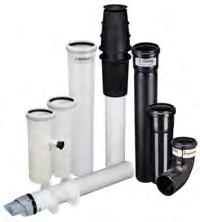
The Z-DENS polypropylene venting system is designed for use with high efficiency condensing gas and oil-fired appliances in virtually any application, including single wall, flexi ble, and concentric. Self-sealing factory installed gaskets reduce installation time. Components are interchangeable and Z-DENS is tested and Listed to ULC S636 for Category II and IV appliances. www.z-flex.com
Engineers and contractors are recognizing PEX as a technology that retains all the advantages of traditional piping materials, while adding unmatched flexibility and strength.
If you’ve been on a commercial jobsite recently, you may have seen an opaque white pipe being used for the potable-plumbing system. This pipe, called PEX — an acronym for crosslinked polyethylene — is quickly gaining popularity in the engineering and trades sectors due to its flexibility, durability, stable material costs and performance. And now that the commercial plumbing industry has gotten on the PEX bandwagon, hydronic piping professionals are starting to look at it as well.
From an application standpoint using Uponor’s Wirsbo hePEX™ can work with any terminal unit in a hydronic heating system — fan-coil units, baseboards, radiators, chilled beams, VAV (variable air volume) reheat terminal units, radiant manifolds, etc. Also, because of its copper tube size (CTS)-controlled outside diameter, switching to PEX-a piping involves minimal process change. All the hangers, pipe supports, insulation, etc. can be the same, offthe-shelf components used in a copper piping system. Uponor complements the full offering of product with extensive design services to make this switch a reality.

piping applications. The use of Uponor PEX pipe supports permits hanger spacing that is similar to copper pipe, so it reduces the required amount of hangers by half. And since fewer hangers mean lower material and labor costs, Uponor PEX pipe
Bridging the differences between Wirsbo hePEX pipe and copper in most applications is the Uponor PEX pipe support, a galvanized steel channel providing continuous support in suspended
support results in a less-expensive installation.
A major criticism of — and misconception regarding — PEX-a in commercial piping applications is its perceived lack of visual appeal. Con-
For more information on using PEX-a piping for your next Hydronic project or to get a copy of Uponor’s Guide for Hydronic Piping email Jason Smith at jason.smith@uponor.com
tractors and building owners typically expect long, evenly spaced, rigid pipelines running through a building. It’s a look of solidity and durability that many associate with copper and believe PEX-a lacks. Fortunately, Uponor PEX pipe supports reinforce and cover the pipe, negating any aesthetic criticisms. Uponor PEX pipe supports also allow Wirsbo hePEX pipe to be run inside a plenum without spacing limitations between the horizontal runs.
But perhaps the most critical feature of Uponor PEX pipe support is its ability to control the natural expansion and contraction that occurs as the piping heats and cools. Installing anchors and using Uponor PEX pipe supports allow the piping system to function much like a copper system.
This ability to control PEX’s expansion and contraction is critical to allowing for a minimum redesign on a piping system when switching from copper. Thus, Uponor’s PEX pipe supports allow designers to leverage similar design schemes using Uponor PEX as they would for copper.
Engineers can be assured that, although Uponor PEX-a may still be new to them, it has been reviewed and approved as a reliable means of hydronic piping for more than 40 years. With its flexibility, durability and — in conjunction with Uponor PEX pipe supports — its ability to mimic copper’s rigid properties while offering several revolutionary improvements. The common hassles and uncertainties of switching from copper are completely alleviated, allowing the benefits of an improved piping system to stand out.
Eco-King Supreme high efficiency wall hung boilers from Eco-King Heating are offered in three sizes:
100,000, 140,000 and 200,000 Btu. The Combi (C Model) provides instant ondemand hot water with hydronic heating. The H Model boiler provides heating and hot water when combined with an indirect tank. The boilers are fully modulating with a condensing 6:1 turndown ratio and a stainless steel heat exchanger. A built-in diverter valve separates domestic hot water from heating. www.ecokingheating.com
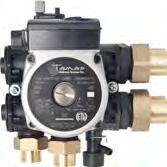
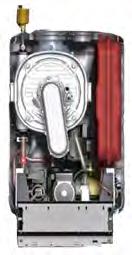
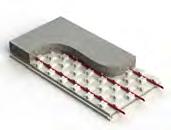
Heat-Sheet radiant floor panels are made with expanded polystyrene (EPS) insulation engineered to compression strengths from 20 to 100 psi to support the weight of cast-in-place concrete. Higher compression strengths are available upon request. The panels come in a range of thicknesses from 1 3/8 in. (R-4) to 3 7/8 in. (R-14). The tubing channel system provides proper, multi-directional placement of ½ in., 5/8 in. or ¾ in. I.D. tubing with on-centre points of 3 in. for Heat-Sheet Heavy and 4 in. for Heat-Sheet. The compact panels (2 ft. by 4 ft.) interlock. www.heat-sheet.com
Uponor’s Heat-only Thermostat with Touchscreen (A3100101) is designed for temperature control of residential hydronic radiant systems based on operative temperature sensing capabilities. It can operate a hydronic radiant heating system based on the air sensor measuring operative temperature, a floor sensor or a combination of both. www.uponorpro.com
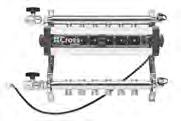
The Tamas Z-block is an expandable zone pumping system, designed to work with zone controls, thermostats, or as a standalone system. It is designed for multiple applications, such as zoning in a hydronic system for individual or multiple zones, as an injection pump in a Tamas multiple zone application to temper the water temperature, or as a boiler pump. The Z-Block is expandable and can be utilized with several accessories, including temperature sensors and Tamas three-way mixing valves. www.tamashydronic.com
The ecocirc wireless hot water recirculation kit from Xylem has an ECM based permanent magnet motor. It operates on as little as 20 watts. The pump and paired valve wirelessly communicate temperature data. The ecocirc pump is installed on the supply side of the hot water source and the valve under the sink farthest from the hot water source. No electrical outlet is required under the sink – the valve operates using two AA batteries. www.bellgossett.com
Cross Manifolds for closed loop hydronic heating, cooling and snow melting applications are available in five circuit configurations (4/6/8/10/12) and can be used with or without cross control and actuator assembly. They may be mounted in any orientation. The valve assembly comes with mounting brackets, isolation valves with temperature gauges and end cap purge assembly. www.crossmanifold.com
The Trent chiller is a compact packaged chiller with a selfcontained single circuit twostage capacity with head pressure control. The unit is complete with a centrifugal circulating pump with a built-in flow switch and check valve. It is available in two, three, four and five ton capacities. https://dma-systems.ca
Expert Instructor: Robert Bean • Online: September 25 - December 31, 2017

Run thermal comfort calculations, submit designs for a radiant-based HVAC system with DOAS, and make recommendations to improve IEQ and energy efficiency through architectural, building, and interior systems. During Integrated HVAC Engineering, you will study the complex interaction of room air temperature, humidity, mean radiant temperature, ventilation rate, lighting, sound, and even odours that determine the true quality of an interior environment. Numerous calculation and modeling exercises will allow you to immediately apply what you’ve learned. The course includes a variety of Excel tools for performing critical calculations, such as: the inside surface temperature of walls, ventilation rates for the current and previous version of ASHRAE Standard 62.2, exergy, and much more.
For more information and to register visit www.hpacmag.com/bean
Powered by

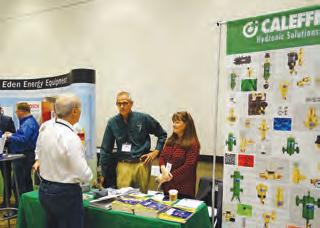
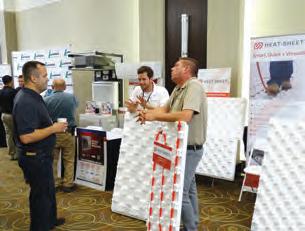
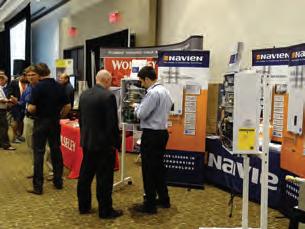
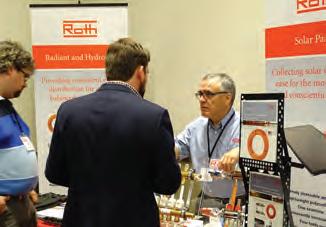



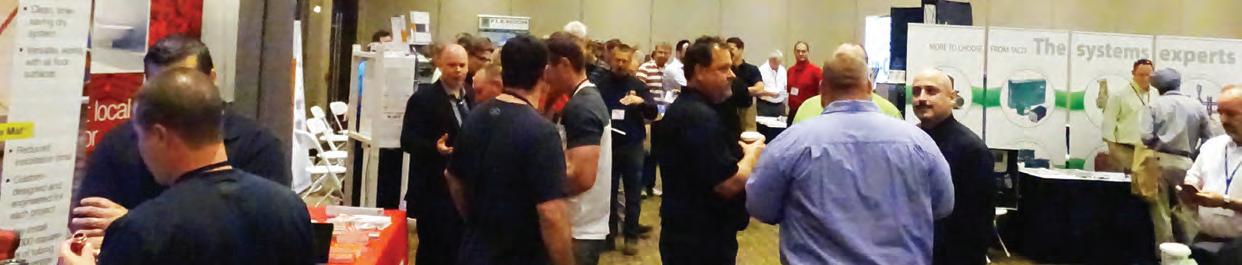









What do they mean and how to use them.
BY LEO VAILLANCOURT
When it comes to the selection and sizing of your boiler many people get a little confused as to what all the different ratings mean and which rating you should use. Take a look at a manufacturers’ specification sheet and you will see ratings for input, output, net output, efficiencies, and so on.
The first rating to discuss and the easiest is the INPUT rating. This is the measurement of the amount of fuel the boiler will burn and is stated in either Btu/hr (100,000) or Mbh (100) (or in case of oil in Gph, 1 gallon per hour of No2 fuel oil is equal to 140,000 Btu/hr). The input is the rating you should use to size your gas piping system and your venting, although with today’s ModCon boilers the venting is sized by the manufacturer and based on length of the vent. The input is also used to determine the efficiency of the boiler for example; a boiler with an input of 150,000 Btu/hr and a gross output of 135,000 would have an estimated combustion efficiency of 135,000÷150,000= .90x100=90% eff.
Next we have the boiler output, which can be listed in several ways. Which one to use is really dependant on the actual installation of not only the boiler but the distribution piping as well. First let’s take a look at the different rating for output, where they come from and then how to use them.
1) IBR Gross Output: This is the amount of heat energy actually transferred to the water during steady state operation. The assumption of this particular rating is that any heat lost through the boiler jacket is wasted and does not contribute to the building heating load. This rating assumes the boiler is in an unheated space.
2) Net IBR Output: This is a further arbitrary deduction of 15 per cent from the IBR Gross Output that takes into account the losses from the distribution piping and the necessary Btus it takes to bring the system up to operating temperature, or in other words pick up allowances. This again assumes these losses do not contribute to the building heat load and the boiler and the distribution piping is installed outside of the heated space. A note about the 15 per cent deduction, this percentage has not changes in 50 years, even before my time in the business, before that the deduction was 33 per cent. With today’s boilers and the use of outdoor reset and the use of smaller pipes, how many houses are installed with 2 in. steel pipe these days, I think this could be looked at again and lowered to lets pick a number say 10 per cent.
3) Heating Capacity: A further rating we have is the heating capacity either shown as DOE or CSA Heating Capacity also called Gross Output. This rating like the IBR Gross Output rating is stated as the amount of heat energy transferred to the system water. However the heat lost from the boiler jacket, piping losses and pick-up allowances are assumed to contribute to the building’s heating load. This assumption means the boiler and piping is thought to be located in the heated space. The Heating Capacity rating will always be higher than the IBR Gross output rating because of this factor.
Now that we see what the ratings are and where they come
Continued on MH32
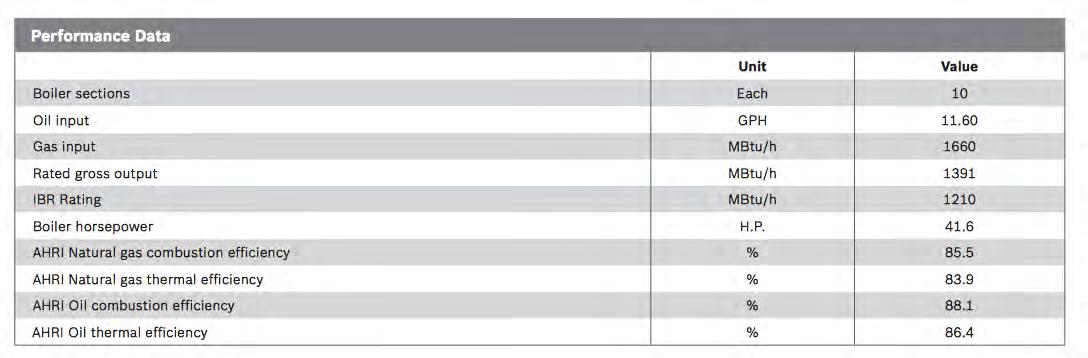

from, let’s look at how to best use them for a particular application.
First and the highest rating is the Heating Capacity or Gross Output. Since this rating allows for the jacket losses of the boiler and distribution piping to be used in the supply of the build heating load, this output should only be used if 1) The boiler is within the heated space, and 2) all or most of the distribution piping is also within the heated space. This loss would otherwise not contribute to the heat load of the building and the selected boiler size could be inadequate.
Next we have the IBR Gross Output, which is calculated excluding the boiler jacket losses, but not the piping and pick-up losses. Therefore we would use this output rating when the boiler is located in an unheated space, such as the garage or unheated crawlspace, and the piping or most of it is located within the heated space. The difference between the CSA/DOE Heating Capacity and the IBR Gross output is fairly insignificant and either one would be acceptable in this case.
The final output is the IBR Net Output. This output should be used for systems where neither the boiler nor the distribution piping is in the heated space, such as a garage, crawlspace or unheated basement. Keep in mind that the deduction of 15 per cent from the IBR Gross Output is used for normal piping systems. Such systems as older cast iron radiator or those with large piping runs may require more than the 15 per cent allocated to these losses. If in doubt you can always calculate the losses from the actual piping system if necessary. Also, if the boiler manufacturer does not provide this rating just reduce the CSA heating capacity by 15 per cent.
Also many of today’s high efficiency boilers have very little jacket losses or even standby losses as was a concern with older atmospheric draft boilers.
Other ratings you will find in manufacturers literature will be efficiency ratings
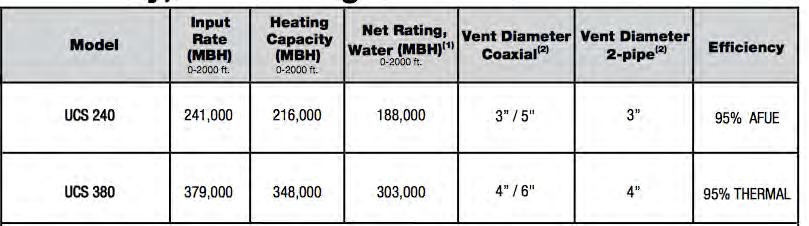
such as combustion efficiency, steady state efficiency and AFUE (Annual Fuel Utilization Efficiency).
First let’s look at Combustion Efficiency; it is a measure of the boilers efficiency at steady state operation. This is done by measuring the temperature of the exhaust gases, which are very low in today’s ModCon boilers, and the measure of the CO2 content of the exhaust gases when the boiler is firing at steady state conditions. The lower the exhaust gas temperature and the higher the CO2 content the more efficient the appliance is operating.
Next up will be the Steady State Efficiency. This is estimated by dividing the Heating Capacity by the Fuel Input Rating (Btu/h). For example, if we have a natural gas boiler with an input rating of 100,000 Btu/h and a heating capacity of 85,000, we would have a steady state efficiency of 85 per cent. This steady state can only be measured when the boiler is at full load and all the conditions, such as return water temperature, air temperature, air/fuel ration, and so on remain constant. This of course rarely happens in the field and may only be achieved in the laboratory under ideal conditions.
Annual Fuel Efficiency Utilization Efficiency or AFUE ratings, is the most important rating when comparing one appliance to another or trying to estimate the seasonal operating costs of the appliance. This rating is only applied to boilers with an input rating of 300Mbh or less. This rating is achieved by taking into account all aspects of operation, on-cycle and off-cycle performance and partial load performance, etc. The standard for AFUE values are based on the assumption that the boiler are installed
in a heated space of the home eliminating jacket losses, also the boiler capacity is considerably larger (50 to 70 per cent) than the actual heating load of the building. So two things that can change the actual AFUE rating is first When the boiler is installed in an unheated space where jacket losses are waste heat, and second the closer the boiler is sized to the actual heating load of the building the seasonal efficiencies may be higher than stated. This is one of the reasons why it is important to do an accurate room by room heat loss estimate and use the proper boiler output rating for a particular type of installation.
Something else that is not taken into consideration when choosing the correct boiler size is zoning. When zoning a home we reduce the required load on the boiler, for example if we have a home with four zones fairly even in size and the total load is 100 Mbh what are the chances that all four zones call at once. It is very reasonable to assume some diversity in the operation of this home and I would be very comfortable eliminating the smallest zone from the total building heat load and use the output rating that suits the type of installation for my boiler selection where the boiler is in the heated space. There are controls system on the market today that will monitor and control the zone diversity to make sure adequate heat is provided to all zones.

Leo Vaillancourt is a wellknown hydronic advocate and trainer. He was most recently with Navien as its trainer for Western Canada.




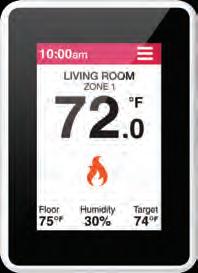
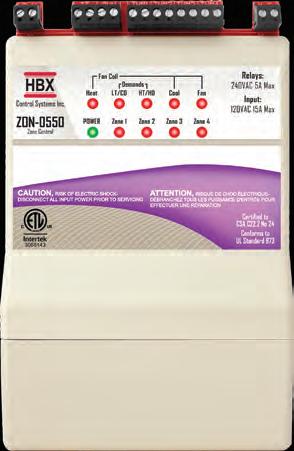
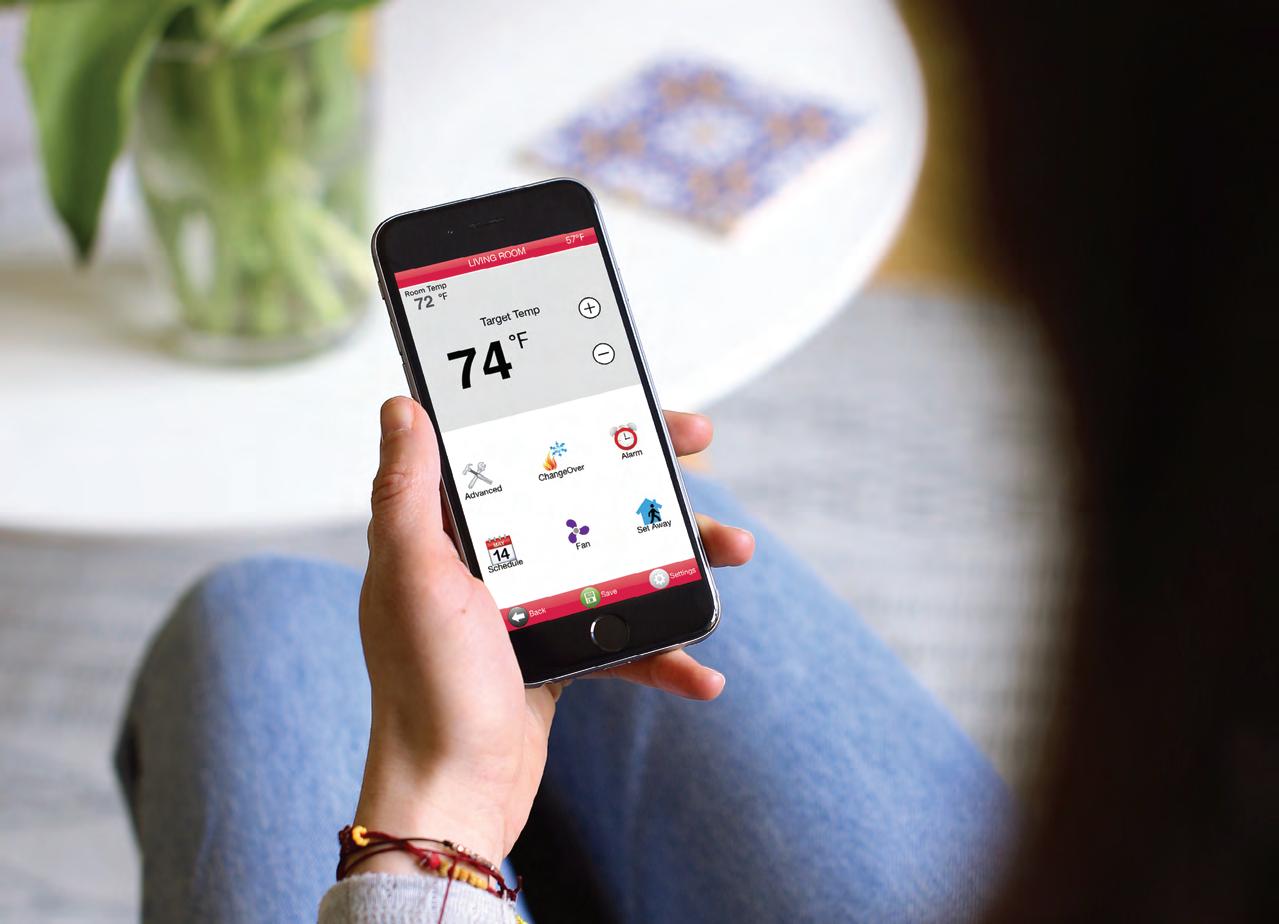
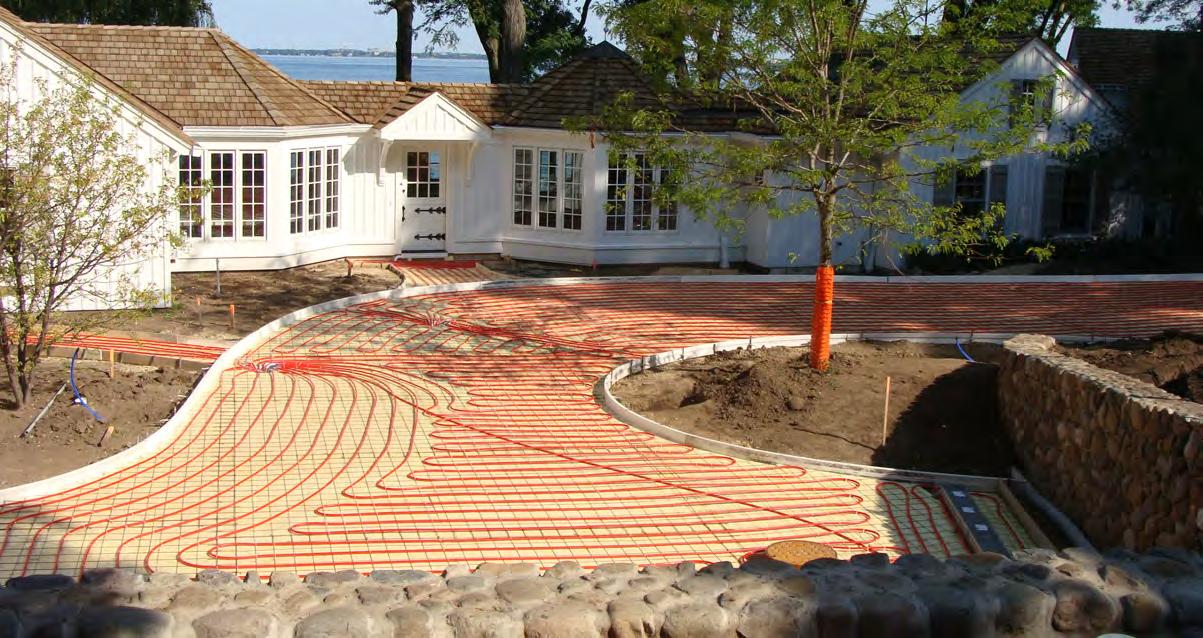
BY LANCE MACNEVIN
As I write this it is hard to think about winter, but I am pretty sure it will return this fall. Now is the time to help customers prepare by equipping them with hydronic snow and ice melting systems.
Traditional methods of snow and ice removal include “mechanical” removal by snow blowers and plows, manual shoveling, and chemicals such as salt and sand. Sometimes, overhead infrared heaters are used over concentrated locations. If you are lucky, maybe a teenager will do it for cash.
However, shoveling takes huge effort and can cause health issues. Snow blowers and plows are expensive pieces of equipment that consume much fuel
and leave snowbanks behind, sometimes damaging landscaping. Salt and sand can damage both outdoor and indoor surfaces while creating environmental issues during run-off.
Modern hydronic technology can provide responsive and efficient solutions to these problems through snow and ice melting (SIM) systems. These systems have been used across North America in all climates for over 75 years. By heating the outdoor surfaces, snow and ice are melted and evaporated. These closed-loop systems include a heat source, circulating pump/s, controls and
other mechanical devices such as expansion tanks.
Such systems were pioneered in the 1940s using wrought iron or steel pipes embedded in concrete, which started rusting shortly thereafter. Modern SIM systems use flexible PEX or PE-RT tubing, the same as used for radiant heating systems. In fact, some people think of SIM systems as outdoor radiant heating systems.
Benefits include safety, convenience, reduced liability, lowered maintenance costs, minimized environmental impact and improved long-term reliability.
SIM systems are used in outdoor areas such as sidewalks, steps, driveways,
ramps, parking lots, loading docks, carwashes, roadways, bridges and even helicopter landing pads. They are used at hospitals, train stations, airports, hotels and ski lodges, in addition to light commercial and residential applications.
Doing hydronic system calculations to meet a calculated load is a process that should be well-known to HPAC readers. Or at least, you know someone who can crunch all those numbers for you. Just make sure that antifreeze is included when calculating flow rates and head loss. Try www.plasticpipecalculator.com to help.
For SIM systems, the trickiest part is predicting the loads. It is like predicting the weather. I have seen how often those reporters get it correct, so let’s manage expectations by using the term “estimate,” not “predict.”
Factors that affect SIM loads are air temperature when snowing, rate of snow fall, snow density, wind velocity, humidity level of the atmosphere, slab temperature at start of snowfall, and even the “apparent sky temperature.”
Design methods have been established for years, and much of the information available to designers comes from the ASHRAE HVAC Applications handbook. It guides designers to use SIM heat loads from published tables for US cities or to calculate them directly using equations and weather data, such as from Environment Canada.
Melting snow is basically a three-step process:
1. Warm cold snow or ice to the melting temperature, knowing the heat capacity of snow or ice is 0.51 Btu/lb.
2. Melt the snow into cold water, knowing the latent heat of fusion to change its phase (melt) is 144 Btu/lb.
3. Evaporate the water, changing its phase again. In many installations, the majority of the water simply
drains off, saving energy. Otherwise, making the steam rise off the driveway takes quite a bit of energy, especially on a humid day.
Heating loads for these outdoor systems can be in the range of 50 to 300 Btu/ft2 per hour, including reverse loss and edge losses to the cold ground. This is a big range of loads, and it depends upon the jobsite location and customer requirements. Overall sizing has a big impact on initial installation costs, affecting the size of heat sources, gas pipes, boiler piping, circulators, etc. The amount of tubing used in the outdoor surface does not actually vary that much.
For instance, a hospital entrance in Winnipeg may be sized to keep up with 100 per cent of expected snowfalls in that frigid location, and designed to output 300 Btu/ft2 or more. This does not mean that the system will always require 300 Btu/ft2, but the designer might want to design for that capacity when needed.
On the other hand, a residential driveway in Halifax might be sized for lower output, even as low as 50 Btu/ft 2. A system of this capacity might not keep up in a worst-case blizzard, but it will catch up and leave a dry surface a few hours later. Designing for a lower capacity can reduce the mechanical system costs (boiler and circulator) significantly. And who needs a perfectly snow-free driveway in the middle of a blizzard, unless to show off to the neighbors?
Work with local hydronic experts that have supplied systems in your locale before and ask them what output they recommend for a given application.
Earlier, we mentioned the type of heat loads that SIM systems require. This output may be supplied through several types of equipment, such as:
• A dedicated boiler sized specifically for the SIM load;
• A shared boiler that is also heating the building;
• Approved water heater-style heat sources;
• A ground source geothermal system using large buffer tanks;
• Waste heat from industrial processes, such as in a factory; and
• Rejected heat from cooling systems such as in a hockey rink, server building, etc.
SIM systems usually use automatic controls with an outdoor moisture sensor to activate when needed, then turn off when surfaces are dry. This ensures fast response without wasting energy.
SIM systems usually require high flow rates for the worst storms, so 3⁄4 nominal PEX or PE-RT tubing is typical. Larger projects may even require 1 in. nominal tubing, while 1 2 and 5⁄8 nominal tubing are used when tighter spacing or low profile is a factor. To support rapid and even melting, most designs use eight to nine inch (20 to 23 cm) tube spacing. Some critical cases use tighter spacing. But going wider than 10 inches (25 cm) runs the risk of snow strips between tubes.
The maximum circuit length depends on the load being delivered and the size of circulators being selected. Fluid can cool off quickly with such high demands, so loop lengths are usually much shorter than with radiant heating systems. Table 3 of CSA B214 actually addresses this. For example, for 3⁄4 tubing the maximum active loop length is 300 ft. (90 m).
SIM systems work best with insulation as the bottom layer. Otherwise, whether the system is always-on or uses a moisture sensor to activate, a significant amount of heat can be conducted to the frozen earth below the SIM surface. CSA B214 “Installation Code for Hydronic Heating Systems” requires at least R-5 insulation below SIM areas, but many designers specify R-10, since insulation
Continued on MH36
also improves response time. The type of insulation may be extruded polystyrene (XPS), polyurethane (PU) or even expanding foam that is sprayed onto existing concrete or the earth to follow complex contours. Be sure the insulation is rated for outdoor use and meets the expected compressive loading from vehicles, or settling can occur.
Installation of the tubing used for SIM systems is sometimes similar to radiant heating installation, but with different “thermal mass” possibilities. “Thermal mass” simply means the material that will conduct the heat from the warm tubing to the exposed surface, usually concrete, pavers or asphalt. Each type of surface has its own installation techniques.
Your customers might be missing out on the benefits of snow and ice melting systems because they assume operating costs will be too high. However, many people are surprised to learn that the annual operating costs for a SIM system can be significantly less than for mechanical snow removal. While this article does not show all the math, annual operating costs can be estimated for a given location and application.
With today’s high-efficiency heat sources and low natural gas costs, a hydronic SIM system can offer savings of 50 to 75 per cent of the annual costs for mechanized snow removal. A residential driveway might cost less than $750/year to operate, in many cities. And if it does not snow, operating costs are zero, unlike with an annual snow removal contract.
By applying radiant heating technology to outdoor surfaces, hydronic snow and ice melting systems provide safe, efficient and reliable means to keep residential and commercial surfaces clear of snow and ice. Though certain installation details are covered here, working with an experienced designer can ensure that installations go smoothly.

Lance MacNevin, P. Eng. is director of engineering for the Plastics Pipe Institute’s Building and Construction division and a member of CSA’s B214 Technical Committee. He is a mechanical engineering graduate of the University of New Brunswick. He can be reached at lmacnevin@plasticpipe.org.
rises above 8.5 – the point above which aluminum can begin corroding, even with little dissolved oxygen.
The third category is demineralization. This is considered the ultimate solution because in addition to removing hardness, demineralizing removes all dissolved minerals, making the water non-conductive and the system resistant to corrosion.
The most cost effective method to demineralize water is by ion exchange using mixed bed resin. There are several North American manufacturers now offering products for this type of demineralizing. As is true with chemical treat-ment, demineralized water is subject to dilution if the system requires significant make-up.
For this reason a make-up water treatment assembly such as the one shown in
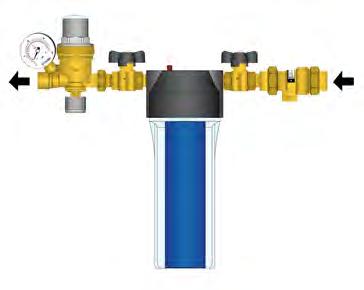
Figure 6 can be used. It includes a small replaceable canister containing demineralizing resin beads. Make-up water is automatically demineralized as it flows into the system.
Most of the water from North America sources contain hardness. And because hardness can rapidly lead to limescale
formation as well as promote corrosion, it is perhaps the most frequently encountered hydronic water quality problem – especially in areas with insignificant levels of other contaminants. Being aware of hardness‘ role in forming scale, understanding the effect of scale in different applications, and knowing the various treatment solutions available, are key tools for designer and contractor alike to ensure their systems operate efficiently and reliably.

Mark Olson, Caleffi North America’s GM and CEO since 2005, holds an MSE degree in applied mechanics from the University of Michigan. His 30 years’ experience includes engineering, sales and marketing management positions with Whirlpool Corporation.



loads are the number one problem in and on the enclosure. It is not that complicated–solve radiant problems with radiant solutions.
To enable the efficiencies of heating and cooling plants select tube spacings and radiator surface areas to achieve the lowest mean temperature in heating and the highest mean temperature in cooling.
8. Final treatment – To gain an awareness of system integration attend introductory courses on passive architectural design; building science; ventilation and source control; windows and shading; lighting design; interior design; and sound transmission.
huge opportunity for those who see the opening.
As a practitioner and keen industry observer I see it as easier to teach mechanical people awareness in other fields than it is to teach the other practitioners mechanical systems. Maybe it is my bias but mechanically inclined people tend to be able figure stuff out easier than most. So go forth and challenge your comfort zone–you may be pleasantly surprised what it does for your business.

One would think that the integrator of all integration should be the architect or the builder. Back in the day when architectural engineering and architectural engineers were relatively common amongst the commoners it would be fair to expect such a person take responsibility for putting it all together. The good ones understood the health sciences and building sciences and the relationships between them. But such a person or firm is rare today meaning there is a
Robert Bean is a Registered Engineering Technologist in building construction (ASET) and a Professional Licensee (Engineering) in HVAC (APEGA). He is president of Indoor Climate Consultants Inc. and director of www.healthyheating.com; a past ASHRAE Distinguished Lecturer; recipient of ASHRAE’s Lou Flagg Award and ASHRAE Distinguished Service Award; and a member of ASHRAE technical committees 2.1 (Physiology & Human Environment) 6.1 (hydronics), 6.5 (radiant), 7.04 (eXergy) and SSPC 55 (thermal comfort). Bean is also the author of numerous industry courses and seminars covering the building sciences, indoor en-
vironmental quality, energy, and radiantbased HVAC systems.
Edifice Complex Podcast, Muggleton, A., Bean, R.
Bean, R. Integrating elements to improve comfort: Design wholeness can be achieved by proficiency in energy, environmental standards and guidelines. HPAC August, 2014
Bean, R. The effect of heating coil performance on boiler efficiency and system complexity. HPAC December, 2016
Bean, R. Ghost-Busting Heat Transfer In Return Air Plenums
Common sense, a bit of heat transfer knowledge and strict adherence to specifications go a long way to improving the air/ hydronic dynamic. HPAC December, 2014. Bean, R. Building Characteristics <http:// www.healthyheating.com/ Comfortech-2011/Comfortech-2011Robert-Bean.htm>
Bean, R. Part II: How to use the ASHRAE Design Graph for Sensible Heating and Cooling with Floor and Ceiling Panels. HPAC March, 2012
Bean, R. Filter Fist-a Cuffs & Who is this MERV character? HPAC September 2010
Bean, R. The logic of moisture management: Condensation is not the dark side of chilled water and radiant cooling systems. HPAC February, 2016
SEE ROBERT BEAN AT MODERN HYDRONICS-SUMMIT 2017. www.modernhydronicssummit.com Continued from MH18
Bean, R. It is time HVAC system design grew up. HPAC October, 2016.
Mastering Hydronic System Design
Expert Instructor: John Siegenthaler

Learn how to design state-of-the-art systems for residential and light commercial buildings that deliver unsurpassed comfort, efficiency and reliability. During Mastering Hydronic System Design, John Siegenthaler provides a detailed discussion of the design elements underlying modern hydronic heating systems. It presents both design concepts and design tools for optimizing hydronic heating systems in a variety of contemporary applications.
For more information and to register visit www.hpacmag.com/siggy
Powered by
























• Ideal for primary/secondary piping in mod-con boiler systems
• Provides precise spacing required for hydraulic separation



• Enables power purging of secondary loops, improving efficiency at system startup
• The only way to place a valve between closely spaced tees
Fluid is rapidly forced through the secondary loop, purging excess air from system through the drain
THE OLD WAY REPLACES 5 COMPONENTS* ELIMINATES 4 LEAK PATHS SAVES 36 MINUTES OF LABOR
*Correct spacing for hydraulic separation cannot be achieved using off-the-shelf components. The Purge Tee is the ONLY way to place a valve between closely spaced tees.






































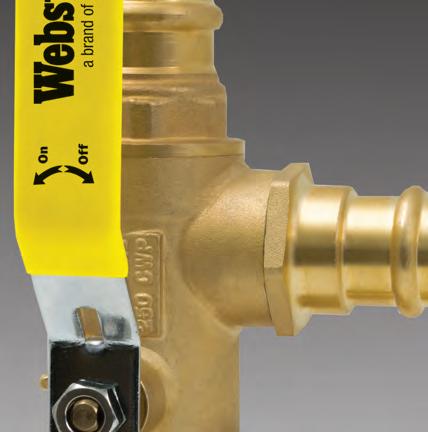
































• Compatible with popular press tools















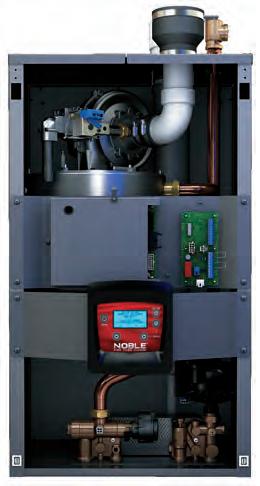
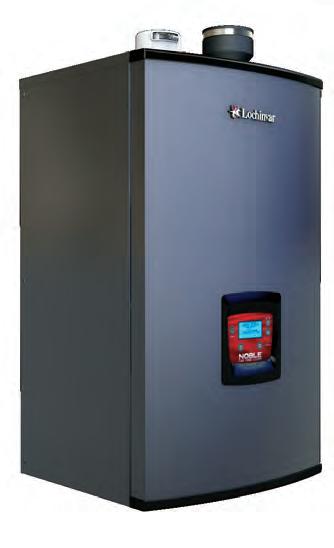
Lochinvar’s new Noble™ combi boiler is engineered to make your job easy. From easier installation to quick programming and ease of service, it was engineered with you in mind. When you open it up, it looks as if you designed it yourself. Bottom line, the Noble combi takes simplicity to a whole new level.
What Makes Noble The Best Combi?
Easy To Install, Set Up and Service
Delivers Hot Water Faster
Display Screen Uses Text, Not Codes
Quiet Operation
Better Technical Support and Training
In the event of a backflow situation, we need to ensure safe, clean potable water remains that way.
BY STEVE GOLDIE
We have the privilege of working in an industry that bears a significant responsibility for ensuring the quality and safety of our water supply, and in recent years we have seen many positive changes that suggest we are no longer taking these things for granted. One such area of change has been the implementation of and/or enforcement of backflow regulations meant to protect municipal water supplies from contamination. Many jurisdictions have enacted and toughened up safe water bylaws and initiating enforcement. This has led to increased attention to the issues of backflow, and has resulted in business opportunities for suppliers and tradesman.
The first and best method of preventing any type of backflow is by way of an air gap. The most obvious example of an air gap is the spout on your bathtub. The tub spout terminates above the flood level of the bathtub so that it would not be possible, even in a negative pressure situation, for the dirty, contaminated bath water to re-enter the potable system by way of the spout.
Where air gaps are not possible or practical, mechanical backflow devices are necessary. There are three major types; the aforementioned vacuum breaker (VB), the dual or double check valve assembly (DCVA) and the Reduced Pressure Principle (RP). There are several versions of each of these types suitable for the varying installations, fixtures and risk factors.
It is quite straightforward. We need to ensure that in the event of a backflow situation, the safe, clean potable water remains that way.
It may seem that putting vacuum breakers on every single hose connection is overkill. In order for a hose to contaminate the potable system, the scenario would need to go something like this: my neighbour is spraying herbicide on his lawn using a sprayer attached to the garden hose. He puts down the hose, but leaves the tap turned on and goes inside. While he is inside, the water main ruptures down the street. This causes a negative pressure in the line connected to his hose, which siphons the herbicide from the sprayer, down the hose and all the way back to the water main. I arrive home shortly after the water main has been repaired and go to the kitchen tap for a drink of water. Just my luck, I get the water that has been polluted by the herbicide. Not a good result.
There are hundreds of millions of hoses connected to potable systems all over North America. This kind of occurrence,
although rare, can and does happen. Fortunately for all of us, I am not the one who decides the whos, whats and wherefores of public safety. There are organizations along with several layers of legislation, agencies and guidelines to ensure that the appropriate devices are installed and proper procedures are followed.
Probably the most authoritative resource on water safety is the American Water Works Association (AWWA), Its more than 60,000 members include more than 4,600 utilities that supply water to roughly 180 million people in North America. It is organized regionally into sections. The Canadian Section was founded in 1916 and has since evolved into five sections covering the country: Atlantic Canada (ACWWA), Quebec (QWWA), Ontario (OWWA), Western Canada (WCWWA) and British Columbia (BCWWA). The western section includes the Territories as well as Alberta, Manitoba and Saskatchewan. The Canadian Standards Association (CSA) has developed the technical standard for the manufacture of backflow devices, as well as the testing and selection procedures for these devices. There are other guidelines, including the AWWA Cross Connection Control Manual, but CSA B64. 10 is the current standard for the industry.
Continued on p66
When we refer to backflow, we are talking about the reversal of the normal direction of flow in a potable water distribution system. There are two types of backflow: back-siphon, and backpressure. Back-siphon is caused by negative pressure in the supply piping, possibly as a result of a water main break or due to high water withdrawal rate such as fire fighting or water main flushing. This is exactly the type of backflow that those hose connection vacuum breakers are intended to prevent. Backpressure is caused whenever a potable system is connected to a non potable supply operating under a higher pressure such as a boiler, a high pressure car wash or perhaps a chemical feed system in an industrial plant. In these situations some type of backflow prevention device needs to be installed and maintained at the point of cross connection in order to protect the potable system from contamination.
The B64 outlines the where and when backflow devices are required, charts out the three risk levels: minor, moderate and severe. It prescribes which type of device is required to obtain the adequate protection. The B64 also outlines where it is necessary to install a testable backflow device.
Testable backflow devices have test ports, which enable a trained technician with the appropriate equipment to test a device to ensure it functions properly. In order to protect the potable system, these devices need to be verified to be in working order at least annually. Testing must be carried out by a certified Cross Connection Control Specialist (CCCS).
In trade school in the 1980s I was encouraged to get my backflow tester certificate because it would be a lucrative business. Back then this was not really the case as enforcement of backflow testing seemed to be lacking. Today however, most municipalities are serious about enforcing backflow bylaws. Specializing in backflow and water supply protection is a viable option.
Regulations and codes are continually tweaked and updated, for example, the plumbing code now allows for the use of rain water in washing machines and where this is implemented, a DCVA must be installed to prevent the possibility of this rainwater contaminating the potable system via a backflow situation.
If you got your certification back when I did, you will likely have to re-certify as AWWA certification is now the standard. Training and testing is still handled through the community colleges, but the certification must be AWWA (or the regional section such as OWWA in Ontario). Call your local community college for availability, classes fill quickly.
So there we have it, quite a convoluted trail to ensure a safe glass of water. The person with the most authority in these matters is the properly trained journeyman or Master plumber. A plumber with his CCCS certification is the only professional who can properly and legally survey a building for risk, install backflow devices, repair backflow devices and test backflow devices in every type of installation. No other professional, even a professional engineer with his CCCS, can perform all of these services.
If you have not already considered it, look into the opportunities and see if it makes good sense for your business.

Steve Goldie is with NEXT Plumbing Hydronics. With 21 years in the field, first as a plumber in the family business and then on the supply side, Steve is frequently called on to troubleshoot systems and advise contractors. He can be reached at sgoldie@nextsupply.ca.

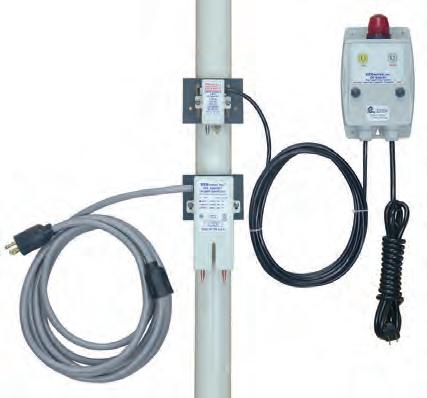
The OSS-100 is the trusted and proven plug & play system that pumps water, not oil from elevator sumps, transformer oil containment areas and underground electrical vaults.
Oil Smart® systems satisfy ASME A17.1, IEEE 980 and EPA SPCC requirements.
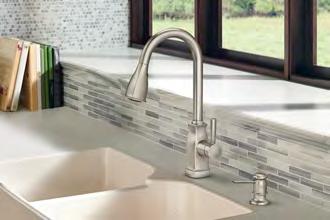
The Hensley pulldown kitchen faucet has Moen’s Spot Resist finish and offers everal spray functions, including an aerated stream for everyday cleaning; a pause function to stop water flow momentarily; and a powerful rinse for heavy-duty jobs. For added functionality, the faucet is equipped with Moen’s Reflex system. www.moen.ca
The SD35T (ABS) or SD5135T (white PVC) Series testable shower drain for preformed shower bases from OS&B has a snap-off test cap so air testing can be done from below and a water test from above. It has a 4 1 4 in. screw-in grate and a thread-in flange. A tab on the snap-off test cap sits higher than the grate flange to prevent accidental grate installation without the removal of the test cap. The factory test cap is tested to 30 PSI. It is available in stainless steel, brushed nickel and venetian bronze. www.osb.ca
A set of MultiBoxes called the Kitchen Box from IPS Corporation contains three valves–hot/ cold supplies and a dishwasher valve with optional hammer arrester. The need for stub outs is eliminated. When the supply and drain systems are roughed-in, pressure tests can be performed for line and valve leaks at the same time. The faceplate provides three optional break lines, as well as having a one-in. trim flange for extra coverage. www.ipscorp.com
Chicago Faucets’ 420-T Series restroom faucet has four models with water-saving outlet options ranging from 0.35 GPM to 1.5 GPM. The commercial restroom faucets also feature TempShield scald protection with the ASSE1070-compliant mixing cartridge eliminating the need for a separate thermostatic mixing valve. www.chicagofaucets.com
Saniflo Canada has introduced the Sanicom1 pre-assembled gray water drain pump system Designed for commercial application, it handles temperatures up to 90C. It pumps waste water away from a variety of fixtures. The unit is sealed in an oil-filled enclosure and is built to withstand liquids with acidic properties. The system is designed to pump effluent up to 25 ft. vertically and with gravity fall, 250 ft. horizontally. www.saniflo.ca
From Milwaukee Tool comes the 15 8 - in. and 23 8 - in. ratcheting pipe cutters, engineered with the blade durability needed to deliver straight and easy cuts in PVC, CPVC, PEX, rubber hose and ABS. The stainless steel blade is designed with a pierce point that penetrates the pipe instead of crushing or cracking it. Due to its ratcheting action and the need to utilize this tool repetitively, the ratcheting pipe cutter has a more comfortable handle design. www.milwaukeetool.com
Pfister three-way white shower panel system with a thermostatic mixing valve allows the use of hand shower, body jest or both at the same time. The single function hand shower has a 60in. hose and two self-cleaning adjustable body jets. It has a 2.5 GPM flow rate at each individual outlet. The system includes a template, mounting hardware and supply lines. The total bar/panel length is 43 in. and total bar/panel width is five in. www.pfisterfaucets.ca
Watts offers press end connection options for 12 of its lead-free backflow preventer models. These options are in addition to Watts’ current offering of press end connections for its ball valves, hydronic heating specialties, mixing valves, and water pressure reducing valves. This approach allows installers to create a watertight seal that is strong, consistent, and reliable and avoid soldering issues. www.watts.com
Mansfield Plumbing has introduced the Aramis rectangular lavatory. The sink comes in three styles: vessel, drop-in and undermount. The sinks have a modern, ergonomic design. Its hidden drain is easier to clean, plus no overflow, while the deeper basin prevents backsplash. Its design includes space for personal items on a built-in ledge, while the white sink has a single-hole faucet centre. www.mansfieldplumbing.com
continued on p68
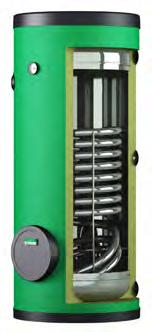
The ECO King from King Heating Products Inc. has a 316L stainless steel TIG and Plasma welded tank and a 304 stainless steel heat exchanger. All tappings are on one side of the tank for simplified installation. The front inspection hatch is removable. Large diameter and long length coil ensure high domestic hot water production. Features include an installed temperature sensor, spray foam R18 insulation and dedicated recirculation tapping. Sizes are available in single or double coil, and solely storage tanks ranging from 32 to 132 usg. Levelling legs are included. www.ecokingheating.com
From Bradley Corp. comes the touchless Verge with WashBar Technology, a hand-washing solution. The system integrates Bradley’s Verge basin in Evero quartz material along with clean plus rinse plus dry functionality housed in the WashBar feature. The smart WashBar houses soap, water and dryer, and features LED lighting and icons to orient users through the hand washing process. It has a one-gallon soap container and when the lowlevel LED indicator illuminates, the soap container is replaced with a full container. The dryer balances airflow and noise, and works with the bowl to minimize water splashes on the user and floor. There is a 0.5 GPM or ultra-high efficient 0.35 faucet option. Its adjustable speed hand dryer dries hands in 12-15 seconds with a heated air stream. www.bradleycorp.com
Geberit’s revised Bathe In Style brochure highlights Cable-Operated Bath Waste and Overflows in three styles. PushControl BWO operates with a push and adapts to bath thickness. The TurnControl opens and closes the drain with one-eighth turn. The metal Cascading Tub Filler and BWO with contoured handle is an integrated system that features a tub fill of 18 GPM with little splash. Geberit BWOs come in a variety of contemporary colours and finishes and the Forever Shine finish is available on some models. www.geberit.us
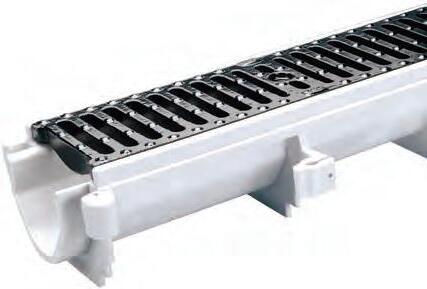
Engineered with the contractor in mind, the Z886 linear trench drain has longer, pre-sloped, light weight channels with easy to join connections for a quick and easy installation. Class A through Class F grating is available with optional debris cover for channel protection. Contact the experts at Zurn for customized, readily available linear drainage solutions with the lowest total installed cost.
6" [152 mm] wide pre-sloped trench drainage system
Marketair, which is headquartered in Edison, NJ, has become the exclusive North American importer/vendor for the RD-Series and PD-Series of commercial rooftop enclosure and support systems. Developed by Inaba Denko in Osaka, Japan, the series is designed exclusively for multiple linesets used with variable refrigerant flow/volume (VRF/VRV) multi-split systems.

Titus has released the Titus VR, which allows HVAC professionals to test how products and systems perform in simulated applications before installation. Titus VR lets users see how products and modules function in buildings without having to be onsite. Along with engineers, architects can also use the VR platform to see how equipment looks before installation, while contractors can visualize the installation process. The company is rolling out headsets for wider use at open houses along with customer appreciation events. www.titus-hvac.com
Rheem celebrated the grand opening of a new headquarters for its Water Heating Division on June 19, 2017. The 39,000 sq. ft. building is located in Roswell, GA, just 10 miles from the company’s corporate headquarters in Sandy Springs.
Well-established in the VRF/VRV markets of Asia, South America and Europe, the two series are designed to offer a practical, economical, durable, aesthetic and professional solution for protecting multiple linesets in the rapidly-emerging North American rooftop VRF/VRV system market.
Marketair is establishing separate channels of distribution to sell the series through conventional HVAC wholesalers, as well as a network of bid/spec manufacturer’s representatives.
“Bulk purchasing and maintaining a comprehensive inventory of stock, parts and accessories allows us to offer attractive pricing and three to four-day shipping throughout North America,” said Gerry Spanger, president, Marketair. www.marketair.com
Rheem’s Water Heating Division headquarters is a retrofitted building that includes workspace and flexible meeting rooms for up to 150 employees. The cornerstone of the headquarters building is a 10,000 sq. ft. digitally-forward Innovation Learning Center that will be used to educate plumbers and contractors from around the southeast. The high tech, hands-on centre is one of five the company is opening across the U.S. and in Canada this year and will include interactive classrooms, a live demonstration room where equipment can be broken down and reassembled, virtual reality labs for diagnostic training, as well as a state-ofthe-art product showroom that showcases the company’s latest energy efficient water heaters, pool heaters, boilers and HVAC equipment. www.rheem.com
Caleffi is running its Excellence contest through November 30, 2017. Designers, contractors and engineers can showcase hydronic projects that incorporate Caleffi products. Each month the company will select contenders who will be voted on during the monthly webinar series, Coffee with Caleffi. The entrant receiving the most votes will advance to the final competition.
On December 14, the Grand Prize winner will be chosen from six monthly finalists. The winner will be heading to Italy to see the company’s world headquarters and to tour its factories and design facilities. http://us.caleffiexcellence.com
Hydronic sales and service company Roberts Technical Services recently held a Customer Appreciation Day at its Hamilton, ON location. Over 70 customers took part in a mini trade show attended by key suppliers, including IBC Boiler, Taco Home Comfort/Jess Don, Bradford White, Grundfos and Watts/Palser. Attendees had a chance to hone their product knowl-
continued on p70
edge in classroom sessions on current topics such as ECM pump applications and hydronic air elimination.
The highlight of the day was a Grand Prize draw for a $5,000 travel voucher supplied by Roberts Technical Services that was awarded to Richard Oosterhoff of Principal Plumbing.
In other company news, Roberts Technical Services has added a second pump technician, Shawn Hoogendoorn, to its staff. Services provided by the company include sales and service of pumps and pumping equipment, in shop and on site; analysis and troubleshooting of existing systems; sales of boilers and boiler room supplies; heating system design; energy saving retrofits; and integration of solar solutions to supplement domestic hot water and space heating needs. www.robertstechnicalservices.ca
McKeough Supply’s 19th Annual Bill Porteous Memorial Golf Tournament was a great success with $35,000 raised in support of Camp Trillium/ Rainbow Lake. The donation enabled 35 families affected by childhood cancer to spend a week at camp. More than 100 McKeough customers, vendors, and teammates participated in the event. Next year will be the 20th annual tournament and the wholesaler has set a goal of raising $50,000-an all-time record. www.mckeoughsupply.com
A company backed by funds from the private equity firm Permira has acquired DiversiTech–an aftermarket manufacturer and supplier of components for residential and light commercial heating, ventilating, air conditioning and refrigeration–from an affiliate of The Jordan Company LP. The senior management team, led by president and CEO Jim Prescott, will remain significant owners of the company. Permira will help DiversiTech expand its product offerings and geographic footprint, the company said. The transaction closed June 1, 2017. www.diversitech.com
Magento, an eCommerce platform provider, has awarded Carrier Enterprise (CE) with the Best B2B Customer Experience. CE received the award at the Magento Imagine 2017 Conference in Las Vegas. CE was chosen from over 250 entries from other industrial online retailers. The award is given to the brand offering the best self-serve user interface focusing on the needs of commercial, industrial or wholesale customers. CE partnered with digital transformation consulting firm Perficient Digital to create the website, which features a Part Finder tool, real time pricing and inventory lookup, warranty research and processing as well as document library. www.carrierenterprise.com
HeatLink Group Inc. and its affiliated PEX-a tubing manufacturing facility PexCor Manufacturing Company Inc. have been acquired by Mueller Industries Inc. The companies will complement the range of products that comprise the Piping Systems Group of Mueller Industries. According to a company release, the acquisition of HeatLink supports “Mueller’s strategic plan to grow and strengthen its flow control product offerings in the area of pressure plastics.”
Co-owners Manfred and Garry Schmidt will continue to lead the company with the goal of growing the company’s product platform and geographical footprint. www.muellerindustries.com www.heatlink.com

Jeff Addison (left), managing director, Kiko Water Systems accepts the 2017 CaGBC Green Building Product of the Year Award for the company’s water systems cartridges from Shyam Ramrekha, product manager, UL Environment, the award’s sponsor.
Kiko Water Systems has won the 2017 CaGBC Green Building Product of the Year Award for its Water Systems Cartridges. The jury chose Kiko’s Water System Cartridges because they can reduce energy consumption and carbon emissions at minimal capital expense and disruption, along with a short payback period. The jury noted the product’s applicability and implementation in a broad range of buildings. www.cagbc.org www.kikowatersystems.com

The Master Group has opened a branch in Vaughan, ON. Accessible from Highways 400 and 407, and located North of Langstaff Road and on the west side of Jane Street, this is the ninth Master store serving Central and Southwest Ontario. Adam Taylor will manage the branch, and will be assisted by sales reps Bill Burzese and Frank Ierullo. www.master.ca





Viega LLC has begun construction on its new corporate headquarters and training facility in Broomfield, Colorado, located off Interlocken Boulevard. Located on 11.8 acres, the new campus will house a 55,000-sq.-ft. North American headquarters and 24,000-sq.ft. training facility. The headquarters will be a Class A office building featuring a sweeping curved roof—a design inspired by Viega’s fittings. The building will incorporate several Viega solutions including: press fittings; fire suppression systems; radiant heating and cooling; carrier systems and manifolds. A courtyard will feature Viega’s radiant snowmelt systems. The training facility will offer hands-on, interactive training on Viega systems and solutions, incorpo -

Charlie Harte, general manager Canada at Uponor, addresses open house attendees at the consolidated Mississauga location.
rating and highlighting Viega fittings, radiant heating and cooling systems, fire suppression systems and carrier systems. Both buildings are slated for completion in late 2018. www.viega.us

Pipe manufacturer WRW has withdrawn the North American distribution rights from Multi-Flex. WRW and E.S. Gallagher have reached an agreement for the North American distribution rights for the product with E.S. Gallagher Ltd. Canada responsible for the Canadian market. The new product has been branded YogaPipe. The company said it will work with its Canadian distribution partners through the transition and will continue to sell Multi-Flex pipe and fittings until inventories are depleted. It will also continue to warranty all Multi-Flex products it sells. All tools used with Multi-Flex are compatible with the new product. www.yogapipe.com
Uponor North America is expanding its manufacturing facility in Apple Valley, Minnesota with completion expected by January 2018. The $17.4-million investment will go towards the expansion of 58,000-sq.-ft. The company’s technology group occupies an 8,500-sq.-ft. office and lab space in a building next to Uponor’s manufacturing annex.
Uponor has consolidated its Canadian head office with its eastern distribution centre, which moved to Mississauga, ON, last June. The company is expanding its estimation and commercial piping design services, also in Mississauga and is closing its Regina, SK office. New features in Mississauga include a training facility holding up to 50 attendees and application lab. The facility offers engineering continuing education units. www.uponor.ca
Mechanical pipe-joining systems manufacturer Victaulic has released updates for Victaulic Tools for Revit 2018, including enhanced pipe routing and fabrication features. Additions to pipe tools allow users to automatically tag pipe according to multiple parameters and an added pipe type import tool reduces the file size, removes duplication of families and ensures customer project types do not get overwritten.
There are new scatter placements for tags on all buttons and upgraded features for fabrication and spool generation, such as the ability to create assemblies and schedules, specify up to three schedules and parts lists, and set schedule templates.
In other digital news from Victaulic, the company has retooled its website. Enhanced features of the site include: simplified search–users can find what they need with less clutter and intuitive search results; mobility–the site is easier to use on a range of devices; a new product guide, which includes over 10,000 products; improved infrastructure enables faster page loads and downloads; and a site designed for social media content sharing. www.victaulic.com
Kilmer Environmental has partnered with AAON Heating and Cooling Products of Tulsa, OK. AAON designs and manufactures semi-custom heating, ventilation and air conditioning equipment for residential, commercial and industrial use. The AAON product offering is wideranging, including packaged rooftop units, custom and catalogued air handling, heat pumps, chillers, heat recovery and outdoor mechanical rooms. Kilmer is celebrating its 30th year in business in 2017. www.kilmerenv.com www.aaon.com
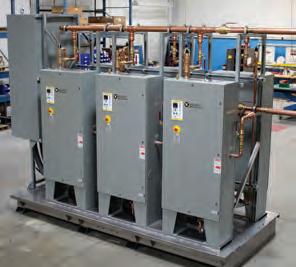
Bradley Corp. has announced its Design On Demand program, offering customized services and products for industrial applications. Bradley’s business development experts help design plumbing systems according to customers’ needs and project goals. Bradley offers a range of plumbing products for tempering water and liquid processing, and Design On Demand industrial plumbing products can be bundled or pre-assembled to meet requirements. Products feature Bradley’s emergency safety fixtures featuring Halo technology, enclosed safety showers, Keltech electric tankless water heaters and Navigator thermostatic mixing valves. www.bradleycorp.com
Bacharach Inc., a manufacturer of refrigerant gas leak detection and monitoring instruments, and combustion and emission analyzers, has launched the Gas Selector, a web tool. The tool lets users of refrigerant and gas leak detection and monitoring equipment find the target gas or refrigerant that’s of interest to their application. When users type the gas they’re searching for, they come to a page of all the products that detect
that gas. With over 320 gases and refrigerants, the gas selector is a new service under the ‘Products’ tab of the company’s website.
www.mybacharach.com
Bradford White Canada has relocated from Mississauga, ON to a larger facility in Halton Hills. The company began operations at their Halton Hills location on May 1. The 75,000-sq.-ft. Halton Hills
facility more than doubles its available warehousing space, provides higher ceilings and multiple shipping doors and increases inventory capacity, the company said. Access to transportation routes like highways 401 and 407, along with the construction of a CN Railway transfer facility nearby, played a role in the decision to locate there, said Paul McDonald, GM of Bradford White Canada.
The new location, owned and designed by the company, lets Bradford White Canada to stock expanded product inventories from its subsidiaries including Bradford White water heaters, Laars Heating Systems boilers, and Niles Steel Tank storage tanks. It will also provide same- or next-day pickup and delivery. Halton Hills houses a fullservice parts centre with same-day shipping and larger electric product conversion centre. The building houses a 1,000-sq.-ft. facility for training on gas and electric water heaters and gas boilers. The centre features multiple live fire stations and seating for contractors, engineers, distributors and others.
www.bradfordwhite.com

Daikin North America has launched the BIM portal, a web-portal selector of Revit and CAD files for Daikin brand products including VRV, Sky-Air, singleand multi-zone systems, rooftop units and light commercial split systems. The selector generates Revit files and CAD drawings on the fly.
The BIM portal introduces an update of existing Daikin Revit families with improved BIM functionality for coordination and collaboration within design teams. It lets users select products, choose file formats and download selected products in batch.
The portal is accessible at daikincity. com homepage board, as well as linked through Daikin City when searching for products in the library. The portal will include continuous Revit and CAD file updates as new products become available. www.daikincity.com
The 16 members of Team Noble Corporation raised over $45,000 for the Ride To Conquer Cancer this year. Noble has raised over $1,000,000 since it started participating seven years ago.
The Enbridge Ride to Conquer Cancer, which was held June 10-11, 2017, benefits Princess Margaret Cancer Centre in Toronto. The fundraiser is a two-day, 200-km. ride between Toronto and Niagara Falls. 2017 marks the 10th annual Ride in Ontario, with similar Rides held throughout the summer in Quebec, Alberta, and BC. www.noble.ca
Continued on p74
Wilo USA, a provider of pumps and pump solutions for building services, water management, and groundwater, has acquired pump manufacturers Weil Pump Co. Inc. and Scot Pump Company, along with component manufacturer Karak Machine Corporation. The companies employ roughly 150 people and have headquarters and production facilities in Cedarburg, WI, and Fort Lauderdale, FL.
Weil specializes in manufacturing wastewater pumps and systems while Scot concentrates on the OEM end suction pump market for the plastics, agricultural and chemical industries. Scot also has a branch in Fort Lauderdale that manufactures marine pumps for shipbuilding.
Karak Machine Corporation has served Weil and Scot as a manufacturer of pump components for several years.
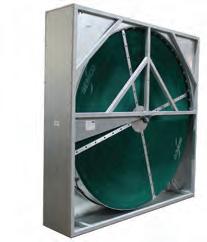
HVAC equipment manufacturer SEMCO LLC is celebrating the 30year anniversary of its True 3-angstrom (3Å) Total Energy Wheel used in commercial, institutional and industrial facility HVAC systems. Introduced and patented in 1987, the True 3Å Wheel features a combination of a proprietary 3A molecular sieve desiccant coating on a durable fluted aluminum wheel for sensible and latent heat transfer in the HVAC industry.
The True 3Å Wheel has saved SEMCO customers an estimated 565 trillion BTUs and reduced carbon emissions by over 32-million tons, the company said. www.semcohvac.com
AJ Manufacturing, a manufacturer of stainless steel air distribution products, has moved to a new 70,000-sq.-ft. manufacturing facility and headquarters with 50-per cent more capacity. The facility is in suburban Kansas City, MO. A new tower loader for its laser cutting machines gives the company multiple automated high-speed lasers that can run 24 hours a day. The facility also features a new powder coating system. www.ajmfg.com

KNIPEX Tools LP has moved its headquarters to Buffalo Grove, IL, from Arlington Heights, Ill. KNIPEX has begun operating in its newly renovated, 53,200-sq.-ft. combined office and warehouse at 1500 Busch Parkway. The 10,200-sq.-ft. office space will accommodate internal growth and provide improved customer service, the company said. KNIPEX has also moved its warehouse operations from New Jersey to a larger 43,000-sq.-ft. warehouse space at its Buffalo Grove headquarters. The new warehouse features an SAP warehouse management system that will increase efficiency, organization and improve lead times on shipments. knipex-tools.com

Mercedes-Benz vans have won several categories in the 2017 Vincentric Best Fleet Value in Canada awards. Vincentric does monthly analyses of the cost of ownership on over 2,000 vehicle configurations, based on typical use in Canadian fleets. These studies account for: depreciation; fees and taxes; financing; fuel; insurance; maintenance; repairs; and opportunity cost. Segment winners are identified as having the lowest fleet lifecycle cost in the most scenarios.
Mercedes-Benz Vans won in the following segments:
• Mid-Size Commercial Passenger Van: Mercedes-Benz Metris passenger van;
• Mid-Size Commercial Cargo Van: Mercedes-Benz Metris cargo van;
• Full-Size 3/4-Ton Passenger Van: Sprinter Passenger Van 2500 V6 Standard Roof 144” WB; and
• Full-Size 3/4-Ton Cargo Van: Sprinter cargo van 2500 V6 standard roof 144” WB.
The Mercedes-Benz Sprinter has now won in the Full-Size 3/4-Ton Cargo and Passenger categories for the past six years, while the Mercedes-Benz Metris Passenger and Cargo Vans have each earned awards for the second year in a row. www.mercedez-benz.ca
Ontor Limited has named April McNair as sales representative for Atlantic Canada (Maritimes). McNair brings over 25 years of industry related experience to the position.



ities in the U.S., Canada, India, Mexico, the Netherlands, Turkey and the UK.

Bradford White Corporation has promoted R. Bruce Carnevale to the position of president and chief operating officer. He will be responsible for managing all operational aspects of Bradford White Water Heaters, Laars Heating Systems, and Niles Steel Tank. Carnevale began his career with Bradford White in 1996, serving as the product managerinternational sales. Most recently he was executive vice president and COO. Jim French has been named director of sales–Specialty Products for Bradford White Water Heaters. Bradford White’s Laars Heating Systems has named John Brody as director of sales. Before joining Laars, Brody led the North American sales division for AERCO International In other Laars news, Rich Simons was recently appointed vicepresident and GM. Before joining Laars, Simons held several positions with Honeywell International, most recently director, combustion channel management, Americas.

Navien Inc. has appointed Cyril Koval to the newly created position of sales manager for Eastern Canada. Koval will be responsible for continuing and growing Navien’s business with its agency network, wholesalers, contractors, builders and utility companies in Ontario, Quebec and Atlantic Canada.
Paul Hebert has joined Giant Factories Inc. as Ontario regional sales manager. Hebert was most recently national sales manager in Canada with Boshart Industries Inc.



André Massé has joined the company as senior product manager. Previously Massé held management positions at the Master Group.


Fujitsu has appointed Christopher Correa as product manager. Correa has 12 years of HVAC experience and has specialized in e-commerce. Fujitsu has also appointed Terry Lawrence as sales engineer. Lawrence will generate, develop, service and support customers with designing and engineering of Airstage VRF systems.
Laurent Tessier has been appointed chief operating officer of BMI. Tessier is a lawyer and has over eight years’ experience in the business sector.


Uponor North America named Jon Sillerud as vice-president of operations for Uponor North America, effective June 1. Sillerud joined Uponor in September 2015, most recently as senior director, operations. He will now oversee manufacturing, maintenance, quality, process engineering and real estate, security and safety.


Gilles Rousseau has joined Masco Canada as eastern regional sales manager. Previously director of sales for J. Pierre Sylvain Agency Inc., he is responsible for management and implementation brand strategies for the eastern region, which includes Quebec and the Atlantic provinces. Jad Badine joins the company as director of commercial business development.

A. O. Smith Corporation has named Kevin Wheeler president and chief operating officer. He will be responsible for global water heater and boiler operations and global water treatment business. He will oversee the company’s research function, including its Corporate Technology Center in Milwaukee and the information technology function. In other A. O. Smith news, David Warren has been appointed president and general manager of its North America, India, Europe, and Export water heater operations. Warren will have P&L responsibility for the operation’s 10 brands and oversee employees at facil -


Stéphane Larocque has been appointed national sales manager at Ouellet Canada. Larocque has worked at Ouellet Canada for three years. For the past year he has supervised the Quebec sales team as well as managed the greater Montreal territory. Also at Ouellet, Chris Kennedy has been appointed sales representative for British Columbia. Kennedy has over 25 years’ experience in the electrical sector and 20 years at a major electrical manufacturer. The province will be covered between Kennedy and his colleague Doug Crone.


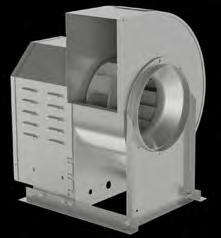
From PennBarry comes an expanded offering of its Direct Drive Dynamo centrifugal fans, including models up to 24-in. wheel diameter and Gplus (Green Plus) EC motor options up to 2HP. The fans are SWSI, Class I, Arrangement 4 general purpose air moving devices designed for supply or exhaust applications in commercial, institutional and industrial systems. The fans have standard options including a tool-free, quick-release motor cover. Other options include integration with building management systems and compatibility with PennBarry’s Intelligent Pressure Control Module (iQ-IPCM) and Multi-Speed Controller (iQ-MS). www.pennbarry.com
Bramec introduces its equipment pad, a 30 in. x 30 in. x 3 in. pad that weighs nine lbs. It is constructed of a high-density polyethylene. The top of the grey pad is textured to prevent slipping, while the corners have tabs that help to keep pads stacked. https://bramec.com

Johnson Controls has added a dashboard for chiller plant operators to its Smart Connected Chillers program. The dashboard provides access to chiller trend data and predictive analytics and is enabled by the Smart Connected Chillers Internet of Things (IoT) program, connecting chillers to a cloud-based Microsoft Azure computing platform. The program’s capabilities reduce the risk of unplanned downtime and emergency repairs. www.johnsoncontrols.com

SpeedClean’s CoilShot-HD coil cleaner tablets are pre-measured for use with the CoilShot condenser cleaning tool. The CoilShot attaches to a garden hose and the tablet dissolves to create a foaming coil cleaner. Once cleaning is complete, turn the dial to rinse and remove the remaining soap and residue. The tablets have a dissolve time of seven to nine minutes at the maximum foam setting on the CoilShot and offer degreasing and brightening performance for heavy-duty residential and commercial applications. www.speedclean.com
Do your part and join the more than 1,500 contractors already participating in the program. FOR
1(800) 267-2231, x 224 Email pthompson@hrai.ca
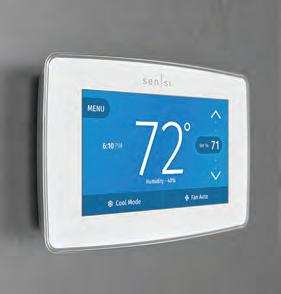
The Sensi Touch Wi-Fi Thermostat from Emerson combines smart home technology with a colour touchscreen display. It has illuminated terminals, while additional menu options let users customize information on the home screen display and choose a continuous back glow. The Sensi Touch Wi-Fi Thermostat, along with an updated Sensi Wi-Fi Thermostat, is compatible with Apple HomeKit. Users can set up and pair Sensi thermostats with their iPhone or iPad, add it to their home set-up, integrate with other HomeKit accessories and control temperature with the Apple Home app, Siri or Control Center. Both thermostats offer instructions and video tutorials in the Sensi smartphone app. The thermostats are compatible with Amazon Alexa and Wink. https://sensicomfort.com
continued on p78 We recycle all elements of the thermostat; plastic, metal, electronics and mercury (which is particularly hazardous).
WaterFurnace International, Inc. has introduced the 5 Series SAH air handler. Available in two- to six-ton capacities, the units come in three compact cabinet sizes. It utilizes R-410A refrigerant and is field adjustable to four configurations. An optional cased/uncased coil is available for dual fuel applications, and there is an electric back-up heat option. The 5 Series SAH Air Handlers feature all-aluminum A-Coils, which are not susceptible to formicary corrosion. www.waterfurnace.com

Trane has added the Performance Climate Changer portfolio to Mobile TOPSS (Trane Official Product Selection System), a web-based product selection tool. Mobile TOPSS provides an interactive experience that allows users to choose the dimensions, weight and performance data they need to select the right airhandling unit (AHU) for a project. Users can save configurations for future use. The 3D product configuration view offers graphics to see what is in the unit. www.trane.com
Daikin Applied has announced the Rebel rooftop air handler, which offers engineers and building owners a customizable chilled water solution featuring technologies that provide for a single-sourced system. Combined with either Pathfinder or Trailblazer air-cooled chillers, users capitalize on the 22+ IPLV performance of an air-cooled chiller. Users gain up to 15 per cent energy savings from Rebel’s standard direct drive airfoil supply and ECM fans. The factory-installed energy recovery wheel captures and recycles lost energy, increasing HVAC system efficiency and reducing the mechanical cooling capacity. www.DaikinApplied.com
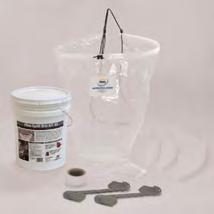
SpeedClean’s Mini Split Bib Kit XL cleans mini split coils, fans and more. The Mini Split Bib Kit XL features adjustable brackets, frames and a gathering “bib” that offers an all-in-one solution to cleaning mini split systems in place, while keeping walls, floors and other surfaces dry. It attaches to mini-split air handlers and creates a collection “bib” that funnels cleaning liquids into the five-gallon bucket. This new version fits larger, commercial ductless mini-split air handlers www.speedclean.com
Haier Ductless is launching a ductless series, FlexFit Pro. The series is available from 24,000 to 48,000 BTU and the outdoor condenser unit can be used with three types of indoor units. The outdoor unit has a piping length up to 230ft. and 100-ft. drop. It features a 100 per cent cooling capacity at 0F, low standby power at 4W. The Cassette Indoor has individual airflow control of the four louvres and optional intelligent eye for continuous monitoring and control. https://haierductless.com
RectorSeal has introduced the PRO-Fit precision flaring kit, a pipe-flaring tool for copper and aluminum tubing. The design helps prevent sidewall splits and leaks when forming 45-degree, field-applied refrigeration tubing flare connections. The kit includes five bellshaped, colour-coded, size-inscribed flaring bits for ¼ in., 3 8 in., ½ in., 5⁄8 in. and ¾ in. tubing. The flaring process is completed using a (minimum) 12v drill or impact driver. www.rectorseal.com
The EME3625DFL wind-driven, rain-resistant stationary louvre from Ruskin is a three-inch louvre with Air Movement and Control Association (AMCA) 540 impact resistance. Made of extruded aluminum, the louver is also AMCA 550-listed. The closely spaced vertical blades are designed to prevent penetration of wind-driven rain. It features 45 per cent free area, all-welded construction and visible mullion construction. Published performance ratings for it are based on testing in accordance with AMCA Publication 500L. www.ruskin.com
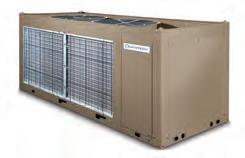
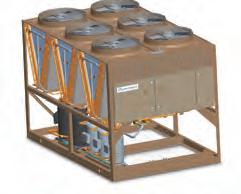
Quantech offers QCC2 and QCC3 air-cooled, scroll-compressor condensing units. The units pair with indoor air handlers using direct expansion (DX) evaporator coils. Quantech QDC condensers and QDCF fluid coolers are available for air conditioning and refrigeration applications as high as 2,890 MBH. QCC2 (15 to 80 tons) and QCC3 (80 to 160 tons) units are designed for outdoor installation. Mounted on a base of heavy-gauge, galvanized steel, each unit includes hermetic scroll compressors, an aircooled condenser and weather resistant microprocessor control center. Standard features include BAS communications and high-ambient kit to 52C. www.quantech-hvac.com
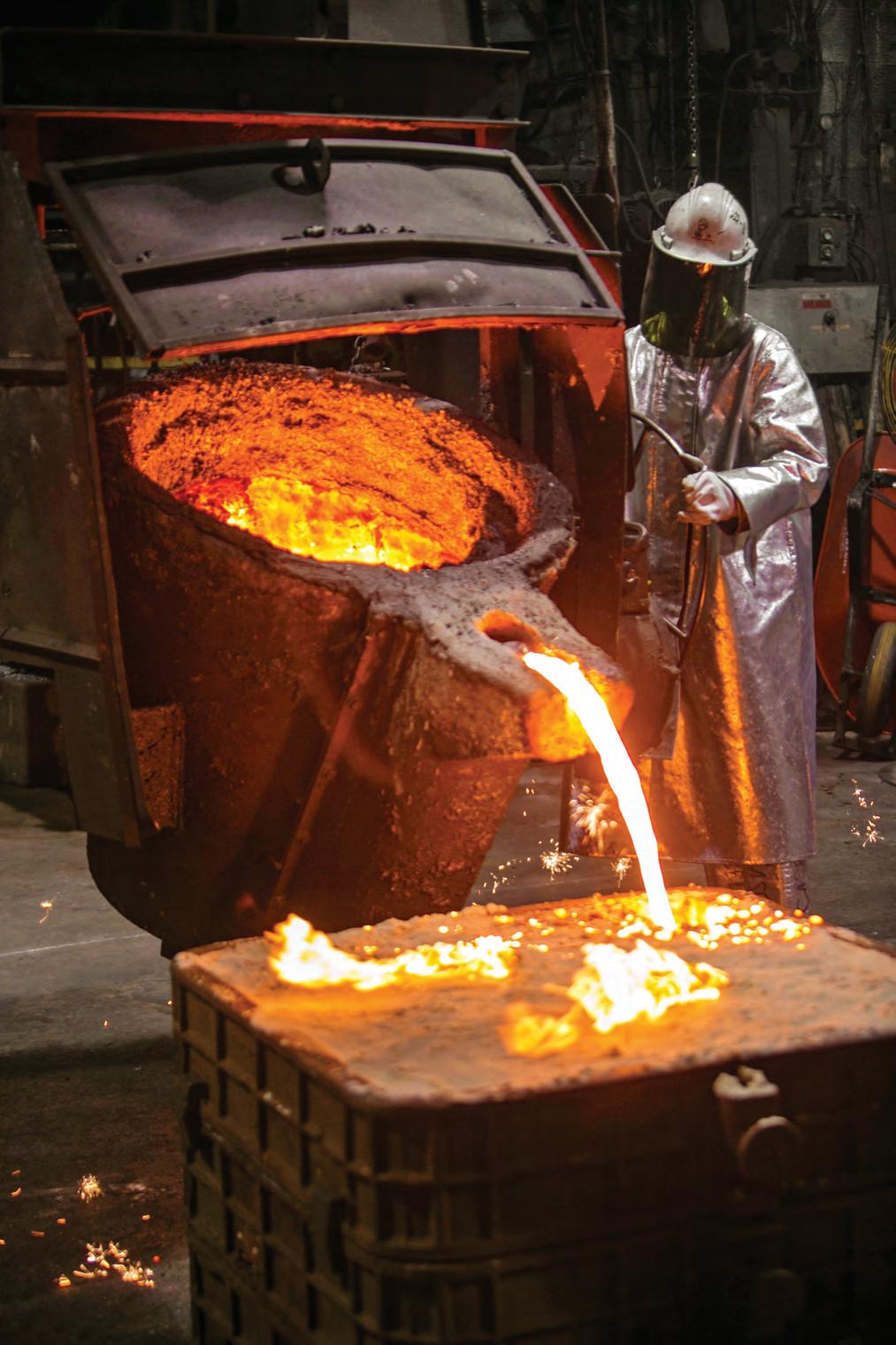

The Coquitlam Centre’s new HRC system wins HOOPP’s LEAP award, helps cut GHG emissions by 35 per cent.
BY MICHAEL POWER
Sustainability has transformed from a “nice-to-have” aspect for businesses to a core component of operations for many organizations, both large and small. The sustainable use of resources has become a corporate and individual responsibility for many businesses, including property management firm Morguard.
The company sought ways to improve operations at the Coquitlam Centre, a shopping mall housing about 200 shops, a food court and administrative offices. The 1-million sq.-ft., two-level shopping centre is built on 57 acres of land in Coquitlam BC, near Vancouver. Morguard was looking to improve operations at the Coquitlam Centre with the facility’s big cooling load. Because of lighting and occupant load in the shops, there’s a need for year-round cooling while at the same time a demand for heating for ventilation systems.
“I wanted to make the property more efficient and cost effective for the Coquitlam Centre owners,” explains Ken Petherick, operations manager with Morguard. “We previously implemented lighting upgrades and added direct digital controls, but we were looking for a bigger savings.”
During a routine visit, Petherick
spoke to Trane representatives about efficiency improvement methods. Since the company knew the centre’s mechanical room configuration–with chillers and boilers housed in the same room–Trane suggested heat recovery as an option to reclaim and reuse waste heat that was being vented into the atmosphere. The waste heat would then be used to heat the Coquitlam Centre, thereby saving energy. Morguard hired SES Consulting to evaluate its energy savings potential.
Trane engineers and SES Consulting worked together to verify design details and the feasibility of the heat recovery system. The team developed a sequence of operations to maximize recovered heat use while compiling energy savings projections.
To get funding, the energy study data was provided to Fortis BC, and
Morguard’s operations group included the heat recovery details and budget in its capital plan. The heat recovery system uses a heat reclaim chiller. Used in heat recovery mode, the chiller generates leaving condenser water temperatures as high as 60C.
SES Consulting proposed a cascade heat recovery chiller (HRC) that would reject waste energy into existing heat water systems instead of facility cooling towers. The HRC would provide 60C hot water to air handling unit coils, increasing the efficiency of the existing chillers and reducing water consumption.
The scope of the work also included replacing leaking AHU coil valves and adding speed drives on major heating pumps. The project was commissioned in February 2016.
The existing plant had a constant vol -

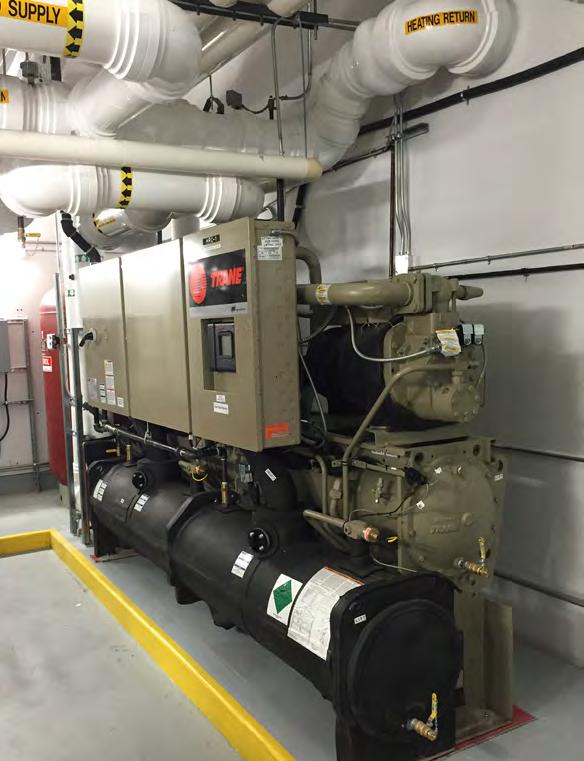

ume hot water plant fed by two 6.0 Mbtuh natural gas boilers. This hot water is supplied at 40C and 60 to 70C to two systems of the mall, the old and new malls, respectively (the mall was built in 1979 and expanded in 2001). Since the old mall runs at 40C, it previously ran on a heat exchanger to keep the temperatures lower. The new heat recovery chiller project re-piped the heating supply system to run in series. This way, the water at 60 to 70C goes to the loads of the new mall first and the cooler return water is then mixed as needed and supplied to the 40C old mall.
This piping design allowed the existing heat exchanger to be removed. All distribution pumps were switched from constant flow to variable flow in order to pump only the water that’s needed. The heat recovery chiller intercepts the return water from the mall and reheats it before it enters the boiler.
On average, the entire mall can be heated solely by the heat recovery chiller down to 2C, after which the boilers run simultaneously to top it off.
Despite its success, the project did not come without some challenges. The biggest obstacle was finding a space for the new heat recovery chiller as well as for the necessary re-piping. This was handled by relocating and downsizing the existing air compressor system, allowing room for the new chiller as well as reusing existing piping from the old heat exchanger system and taking advantage of new technology, as new components are smaller. Success came from thinking the project through and ensuring the right parties were involved from the beginning.
The project is also on track to meet Morguard’s project criteria with a payback timeframe of four-and-a-half years, which is shorter than the original seven-year estimated payback. Based on projected energy savings, the upgrade has also earned an incentive from Fortis BC to help fund the heat recovery improvements.
Results such as a 70-per cent reduction in annual gas consumption, a four-per cent reduction in electricity and 35 per cent lower GHG emissions from the new HRC system has earned Morguard its third consecutive award for leadership in environmental advancement.
The company was recognized by the Healthcare of Ontario Pension Plan (HOOPP) through its Leadership in Environmental Advancement Program (LEAP) Awards, winning the Sustainability Innovation–Technology Award for the Coquitlam Centre’s HRC due to how replicable the system is and its short payback period. Overall, the company has earned 12 LEAP Awards across eight categories since the program’s inception in 2012.
“The equipment is certainly doing its job,” says Petherick. “We do water harvesting on the roof and collect make-up water. With the more efficient cooling towers not running as much, most of the water we collect is rain water.”
The project has also provided a lot of satisfaction, notes Petherick, who adds that it was a team effort. “It has been one of the most energy efficient projects I have worked on and the results are going to be amazing.”

The real takeaway with this is that there is no standard answer as to whether the TEV will need to be replaced when converting from R-22 to one of the many available alternatives. It is safe to assume that converting from R-22 to R-407A/C, or R-427A will not require a TEV (or refrigerant distributor nozzle) replacement. For the other refrigerants shown in Figure 2, the existing TEV and distributor nozzle must be analyzed with the prospective new refrigerant to see if replacement is required. While the properties of the refrigerant will play the larger role in this determination, how the existing components were selected will also be a factor. For example, if a 12-ton TEV was se -
lected to be used with the original R-22 equipment, it would have sufficient capacity when used with R-438A. While it is not always easy to ascertain which TEV or distributor nozzle model is in the existing piece of equipment, this information is crucial in determining whether either of these components will require replacement.
There are many factors that should be considered when determining the R-22 alternative refrigerant.
• System Capacity compared to R-22
• Price and availability of the R-22 alternative (refrigerants under patent are typically more expensive and less widely distributed)
• Environmental impact (GWP)
• Compressor oil requirements
• Cost and complexity of the conversion It is the last bullet point that should be given its due consideration. Choosing a refrigerant such as R-407C for an R-22 AC conversion will eliminate the need for a TEV and/or distributor nozzle requires replacement, which will result in a less expensive and less complex conversion.

Dave Demma holds a degree in refrigeration engineering and worked as a journeyman refrigeration technician before moving into the manufacturing sector where he regularly trains contractor and engineering groups. He can be reached at ddemma@ uri.com.
CIET has entered into a partnership with the Hydraulic Institute for the delivery of the Pump Systems Optimisation one-day course across Canada. This course is product-neutral and provides case studies and actual field data to show the energy savings and kilowatt reduction with a more efficient pumping system. It covers all the energy standards used in pump systems assessment. http://cietcanada.com
The Heating, Refrigeration and Air Conditioning Institute of Canada (HRAI) offers a variety of residential and commercial courses. The Small Commercial Heat Loss & Heat Gain Calculations course is developed for HVAC technicians and designers. This three-day course instructs participants in proper calculation of small commercial heat gains and heat losses, and applies to buildings of up to three storeys and 600 sq. metres per storey. For scheduling opportunities, tel. 800.267.2231 ext. 237, or e-mail amantei@hrai.ca. www.hrai.ca
CEC’s National Seminar Program offers over 150 seminars. Areas of interest run from supervisory training, estimation, project management, commissioning, safety, leadership and communication, productivity, business management, and service, to name a few. Where applicable the courses have been Gold Seal Accredited. The majority of listed programs are 1/2 day to two days in duration. To determine if a seminar has been scheduled in your area, tel. 613.232.5169. www.constructioneducation.ca
The Canadian Hydronics Council (CHC) has partnered with NAIT and British Columbia Institute of Technology to provide course blocks toward
Welcome to the August edition of
CHC certification for hydronic system designers and installers. At NAIT students can register for online or paper-based learning and have nine months to complete each block. www.ciph.com
TECA’s Quality First training programs are developed by the industry, for the industry, setting minimum standards for the residential and light commercial heating, ventilating and cooling trade in BC. Courses provide contractors with the information they need to install equipment that operates safely and comfortably at rated efficiencies.
www.teca.ca
Since 1997, over 30,000 representatives of industrial, commercial and institutional (ICI) organizations have enrolled in the Dollars to $ense energy management workshops. In 2016, the material was completely remodeled and updated; it is now presented in 30 modules, which can easily be used as building blocks for organizations that have limited resources or that wish to focus on specific topics.
http://cietcanada.com
Canada Green Building Council is offering this four-hour course as part of its Green Professional Skills Training (GPRO) program. It teaches the basics of sustainability and provides an overview of the essential strategies and work practices that make buildings more efficient. GPRO covers the “green gap” between standard trade skills and the new awareness required to successfully implement sustainable building practices. It is the prerequisite for all GPRO trade-specific courses. www.cagbc.org
This photo stumped our readers in May so we are giving it another go! Items will be featured in whole or in part and may be from any era–they may be appliances, fixtures, tools, pvfs, components, and so on.
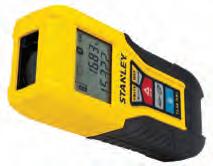
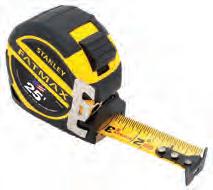
To enter, identify the product featured on the right and include what it is, where would you find it, how it works and who made it–bonus points to the entrant who has an interesting anecdote about the item. Send your response to kturner@ hpacmag.com for your chance to win a Stanley TLM99 Laser Distance Measurer. The winner will be determined based on the accuracy and detail in the response, remember there are bonus points for entrants who share an interesting/amusing anecdote about the item.

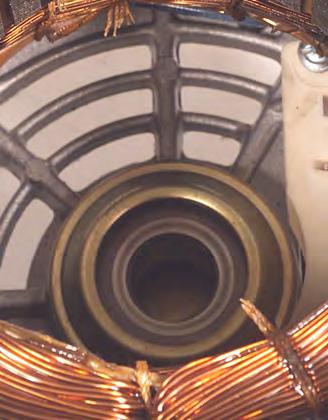
Readers are invited to send photos for possible inclusion in the contest. If your photo is selected you will receive a 25-foot FATMAX tape rule.

Ihad lunch with an old friend recently. Matt has a family owned HVAC business – it is now in its second generation.
“You must be feeling good,” I said. “Pulling back from the day to day.”
“You might think that. My son Luke is a good operations guy. But the time I have now has tended to make me worry more. Maybe that’s just something that comes with not having to respond to every phone call and e-mail.”
“It sounds like something is bothering you,” I replied.
“Well, it’s partly just a style thing. We always lived frugally, even when the business was going well. But the kids are really a different generation. They spend more on things and of course, everything is more expensive. But I also feel business itself is riskier. An old friend went under last year. He lost almost everything,” explained Matt.
“When things turned down, the bank put him into its troubled accounts division and that was just one step from receivership. Fifteen months later, they had to liquidate. And now, I’m thinking the same thing could easily happen to me and Luke.”
“There are some things you could do about that,” I said. “There are credit-proofing techniques.”
“Such as?”
“The first thing to do would be to shift your assets to a creditor-proof holding company. The second thing would be to have your holdco become a secured creditor of your operating company. You should also review your corporate structure. It might make sense for you to have one holdco and for Luke to have another of his own,” I explained.
“That sounds complicated,” said Matt.
“It’s a little complicated. But if your old friend had done things properly, he might still be in business today,” I countered.
“Well, that’s something to think about.”
“Also, there are tax issues relating to the shift of ownership to the next generation. You need to look at that.”
“I think we took care of that,” Matt said. “We have an agreement that lays out our plan.”
“Who did the agreement?” I asked.
“We have a pretty good bookkeeper who wrote down the details for us,” said Matt.
“Whoa. You have to do better than that Matt. You need a professional to set out the plan. You could be setting yourself up for a problem with CRA.”
Matt shook his head and smiled at me. “Patti, let’s have another cup of coffee. I think I need to revisit how I am doing things.”
“You might consider a part-time chief financial officer,” I suggested.
“What is a part-time CFO?”
“Optimally you would look for someone with some knowledge of what lawyers do, as well as someone with good relationships with skilled accountants. Both lawyers and accountants are important for business, but they both have a pretty narrow focus,” I explained. “The CFO would look at both the past and the future of a company, and use a wide lens. For example, they would look at your internal controls and ensure your cash flow management is sound. They would also work with your major vendors to get you the best payment terms. And they would want to make sure your credit policies for customers make sense and are being followed.”
“That sounds good,” said Matt.
“It’s a beginning. Also, the CFO would work on your budgeting along with making sure your major projects are not going to hit you with a cash flow surprise. And if something does come down the pike that looks like you need to extend your-
self, the CFO would want to make sure your lenders are on board to avoid bad surprises when things happen. And I don’t have to tell you, things always happen,” I noted.
“True. I know.”
“The real issue is that when a problem arises, it is never alone. When companies run into trouble over one thing, they often also are experiencing cost overruns, maybe labour issues, slow paying customers and bank demands all at the same time. All of those things can happen when management is trying to grow the company, and they have to be faced when you are developing your plan for the future,” I said.
“And is that the looking ahead piece you spoke about?” asked Matt.
“That’s right. Planning for growth is very important, especially when a new generation takes over. But the problems of growth have to be dealt with very carefully. Lawyers and accountants are very important when it comes to implementation – but to implement anything you need a plan. And for that you need a planner in house. But most small or medium size companies don’t need a CFO full time to provide those services. That’s why a part-time CFO works out so well for a family owned business.”
Matt grinned at me as he stood up. “Well, this has been a more interesting lunch than I expected. I’m going to give the CFO option some thought. It certainly seems to make sense for our business at this point in its life. Thank you Patti.”
“Thanks, Matt. It’s been nice catching up with you.”
Patti Lowes, CPA, CMA, is a chief financial officer with 20 years experience in mid-sized Canadian companies specializing in the service and construction industry. Lowes can be reached at pattilowes@gmail.com.
September 14
Canada’s leading hydronic event will be held at The International Centre in Mississauga, ON. This is your opportunity to see hydronics experts John Siegenthaler, Mike Miller, Robert Bean, Lance MacNevin and Steve Goldie in action. www. modernhydronicssummit.com
September 21 St. John’s, NL
October 17 Edmonton, AB featuring the Canadian Hydronics Conference
October 19 Regina, SK www.ciphexroadshow.ca
November 6-9
The Mechanical Contractors Association of Canada heads to Maui, HI for its 2017 conference.
www.mcac.ca
November 29- December 1
An exposition and conference on building design, construction and renovation, Construct Canada will be held at the Metro Toronto Convention Centre, South Building. The event will be co-located with PM Expo, World of Concrete Pavilion and HomeBuilder & Renovator Expo. www.buildingscanada.com
AHR Expo
January 22-24
McCormick Place in Chicago, IL will be the venue for North America’s largest HVAC/R marketplace.
www.ahrexpo.com
May 16-17
The Mechanical Electrical Electronic Technology Show will be held in Moncton, NB.
www.meetshow.ca
CHES National Conference
September 17-19
The 37th Annual Conference of the Canadian Healthcare Engineering Society will be held at the Scotiabank Convention Centre in Niagara Falls, ON. www.ches.org
Canadian Conference on Building Science and Technology
November 6-8
CCBST 2017 program content is composed of submitted and peer reviewed building science/building envelope related technical presentations and speakers. It will be held at the Hyatt Regency in Vancouver, BC. www.ccbst2017.ca
November 8-November 9
BUILDEX Calgary tradeshow and conference at BMO Centre, Stampede Park, will feature more than 225 exhibits and over 35 educational seminars. www.buildingscanada.com
ASHRAE Winter Conference
January 20-24
ASHRAE returns to the Palmer House Hilton in Chicago, IL where the focus will be on resources to design, build, control, commission and operate efficient and resilient facilities and infrastructure. www.ashrae.org/chicago
CMPX
March 21-23
The Canadian Mechanical & Plumbing Expo will be held at the Toronto Convention Centre, north building, in Toronto, ON. www.cmpxshow.com
CIPH ABC
June 17-19
The Canadian Institute of Plumbing & Heating will hold its annual business conference in Whistler, BC.
www.ciph.com