Passion for Innovation
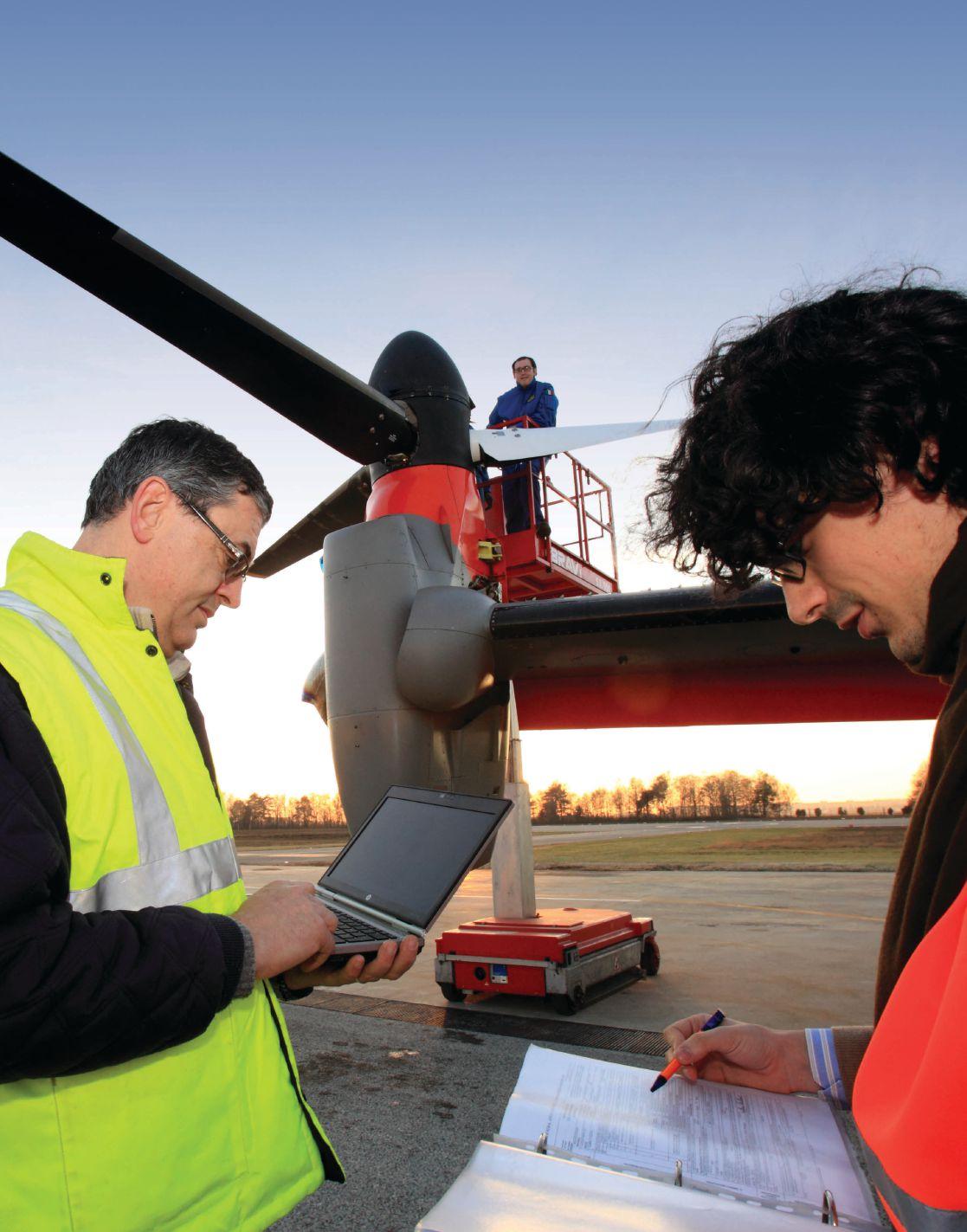
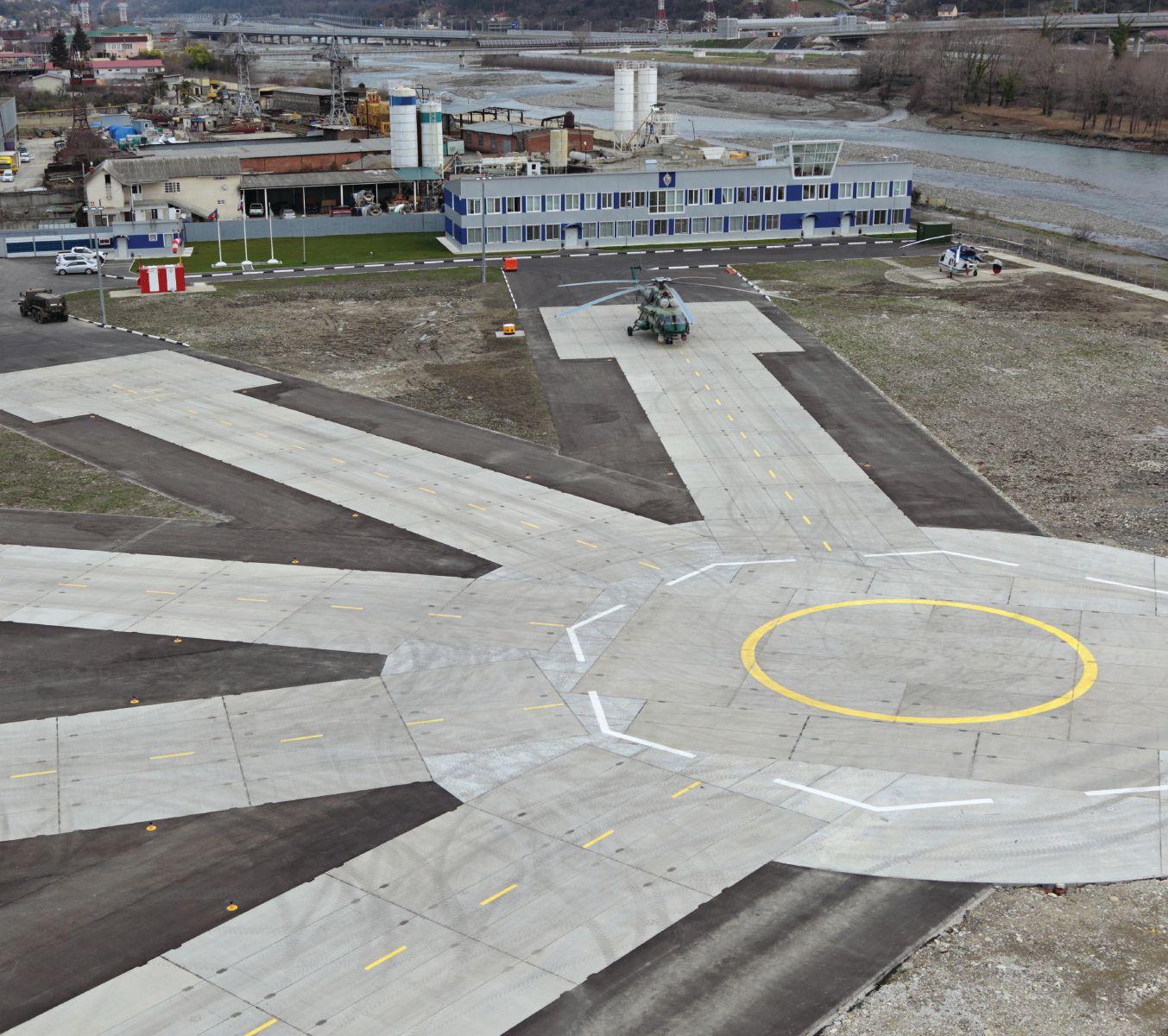
Leonardo Helicopter Division invests more than 11% of its revenue in R&D projects, fosters global relationships with leading academic institutions and promotes a culture of innovation across all functions.
Finmeccanica is now Leonardo - inspired by the vision, curiosity and creativity of the great master inventor - designing the technology of tomorrow.
Visit us at the 2016 HAC Conference & Trade Show, Booth 111

MATT NICHOLLS is the editor of UAV
A Land of Vast Opportunity
The Exploding UAV Space is Changing the Way We Do Business
Area 51. Dreamland. Paradise Ranch. Groom Lake.
The mere mention of the U.S. Air Force’s mysterious facility tucked away in the vast Nevada desert piques the interests of aviation and aerospace enthusiasts the world over – and for good reason. The secretive spot has longbeen rumoured to house a bevy of experimental aircraft – it serves as the epitome of “what if.”
It’s also the “cool” factor personified, offering a glimpse of what’s possible in the military and commercial skies. It ignites the imaginations of those that dream big – the innovators, achievers, those ready to boldly strive forward to capitalize on exciting and potentially lucrative, advancements.
The folks at Aeryon Labs in Waterloo, Ont. know all about the “what if.” Since 2007, Aeryon has been a Canadian pioneer in the development of unmanned aerial systems – a new frontier that’s on the cusp of exploding, forever altering the aviation landscape. So, what better time to introduce its own Canadian version of Area 51 – an experimental developmental playground at its Waterloo facility, where Aeryon engineers will create the next great UAV (unmanned aerial vehicle), UAS (unmanned aerial system) and remote piloted aerial systems (RPAS).
“It’s the perfect name for our new lab,” Aeryon’s digital media marketing specialist Adam Stephens told UAV Canada. “It’s got a cool factor for sure, appropriate for what we do. We’re just in a really cool business.”
Welcome to a Brave New World; the age of the machines. It’s a “really cool” world where companies like Aeryon are redefining processes. The UAV space is on the verge of exploding and it will turn traditional aviation and aerospace worlds upside down, altering the way companies do business, execute operations, process data and more.
UAVs, UASs and RPASs have been around for years in military and reconnaissance applications, but these advanced systems are now all the buzz on the commercial side, enabling visionaries new opportunities to apply transformative aerial processes to their worlds.
The numbers are staggering.
and rescue (SAR), security, law enforcement, real estate, heavy construction, building and pipeline inspection and more – the applications limited only by creative walls.
Global regulatory environments worldwide are responding to rapid technological change with regulations that ensure safety while not inhibiting progress. In North America, both the U.S. Federal Aviation Administration (FAA) and Transport Canada (TC), have been proactive in the process, ensuring safety remains at the forefront.
It’s a delicate balance, as Aeryon president/CEO David Kroetsch notes in “A View From Above,” pg. 24. “The challenge is
“Next Gen” aviators on how to adapt and thrive in the space.
Canada has been aggressive in some ways, offering UAV access to airspace with its Special Flight Operating Certificates (SFOC). “So, we have commercial customers that have been flying for almost a decade in Canada,” Kroetsch says. “In the U.S., they are just starting to cross that boundary. That being said, they move very quickly. So, there is a pent up demand there.”
The next step for UAV operators will be scaling and implementing data management processes to make sense of the vast amounts of information and applications these new “machines” can process and
“It will change how people work . . . I think sometimes people are threatened by it, but we need to change that.”
A recent study by Boulder, Colo. marketing firm Tractica, for example, suggests revenue from the drone enabled-services market is expected to hit $8.7 billion by 2025. Countless other studies illustrate that the commercial airspace will soon be joined by thousands of aerial systems buzzing on by, creating significant challenges for airspace access, safety, operational logistics, privacy, liability and more.
UAVs are gaining traction in a wide range of market segments, including film and media, oil and gas, aerial firefighting, search
to ensure technology does not create a backlash in the regulatory process,” Kroetsch explains. “Creating a legalized avenue for people to do drone operations is critical – you need to give them a process to follow.”
The good news is, as Kroetsch ensures, the UAV space is not at its infancy – this isn’t like the Wright Brothers at the turn of the century. We’ve moved past the early adopter stage and educational opportunities in Canada and abroad are growing, with more colleges, universities and independent educators educating
achieve. And while it may not be experimenting on out-of-thisworld aircraft like at the real Area 51, it’s certainly a game changer.
“There are so many ways we can use drones,” Kroetsch says. “If I am watching a movie, I always say, it would be so much better if they just used a drone. It will change how people work . . . I think sometimes people are threatened by it, but we need to change that perception.”
The rise of the machines is ensuring, that a change in perception is certainly merited.

NEWS views and industry perspectives
Drones to Fight B.C. Fires
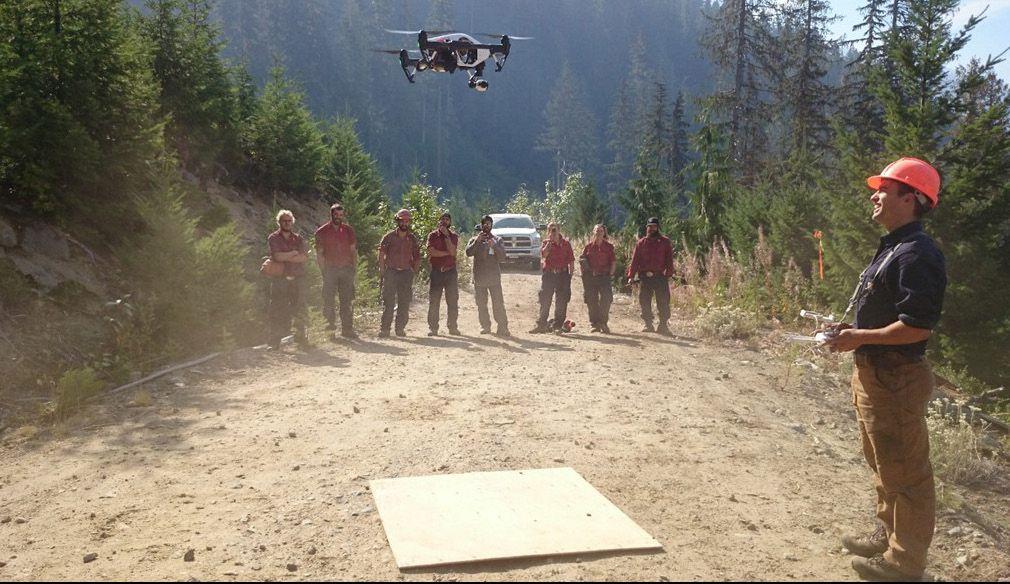
The B.C. Wildfire Service is adding UAV technology to its arsenal of tools to fight forest fires.
B.C. Wildfire Service spokesperson Erin Catherall recently told The Canadian Press that the service has conducted two seasons of trials with the remotely controlled aircraft and is now ready to put them to work in the field.
Catherall adds that UAVs have already been utilized to fight fires in northeastern B.C. because they offer traits piloted aircraft do not: they are cheaper and safer. And there’s yet another advantage – they can be operated at night when other aircraft are not flying.
“They are able to detect really hard to find spots and give coordinates that crews can then use to assist with locating and extinguishing the hot spots within the
fire perimeter,” Catherall told CP.
The use of UAVs to fight fires in B.C. is significant, considering the fact that earlier this year, fire operations in some locations
were suspended due to the fact helicopter operators engaged in aerial fire-fighting activities were interfered with by onlookers with unauthorized UAV aircraft.
Commercial UAV Market to Hit $8.7 Billion Annually
Get ready for a brand new frontier – and crowded skies.
Revenue generated from the global commercial drone-enabled services market is expected to reach $8.7 billion annually by 2025, according to a recent study
by
Tractica, a Boulder, Colo. market intelligence firm.
Small unmanned aerial vehicles (UAVs), also known as unmanned aircraft systems (UASs) or drones, are gaining traction in a variety of industries including film and media, oil and
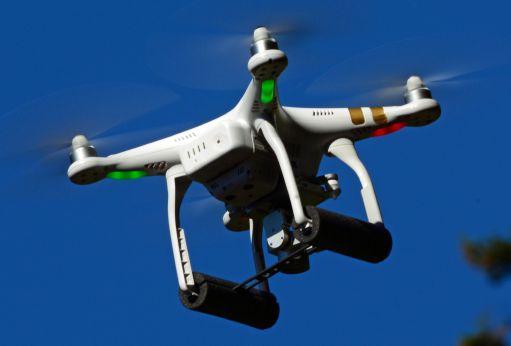
gas, insurance, public safety, and agriculture, among others. And while the number of drones being shipped for commercial markets is often the most visible trend, the largest revenue opportunity in the sector lies in the various services that these drones will enable.
By the end of the next decade, annual revenue from drone-enabled services will be more than double the revenue from sales of commercial drone hardware units themselves. Tractica forecasts largest service applications will be filming and entertainment, mapping, aerial assessment, and prospecting, but smaller opportunities for drone services will also include disaster relief, early warning systems, data collection and analytics, environmental monitoring, and package delivery.
“Commercial drone operators around the world are quickly realizing the potential for UAVs to be harnessed for a variety of services in a more efficient manner than can be achieved using conventional means such as satellites or aircraft,” Clint Wheelock, managing director of Tractica said. “Most commercial applications for drones are related to aerial imaging or data analysis, taking advantage of low-cost components and ever-increasing sensor capabilities.”
Wheelock adds that, while regulatory and business barriers remain to the more widespread use of drones for commercial purposes, the path ahead is becoming steadily clearer as business models and policy frameworks continue to be refined in countries around the world.
UAVs will now be used by the B.C Wildfire Service to quell the flames.
are gaining traction in a wide variety of industries across the globe.
PHOTO:
NACC Welcomes Transport Canada Initiative
Earlier this year, Transport Canada launched a detailed initiative to help combat potential incidents with UAVs and aircraft at Canadian airports. The “No Drone Zone” safety campaign was a critical first step in helping quell potential conflict in the skies. The National Airlines Council of Canada, the trade association representing Canada’s largest air carriers, was very supportive of the move – one aimed exclusively at keeping the skies safe.
“We welcome the government’s initiative and recognition of the need to address the growing hazard that Unmanned Air Vehicles (UAVs) can pose to commercial aviation,” said MarcAndré O’Rourke, executive director of the NACC. “We support all efforts to educate the public on the requirements and responsibilities of operating drones.”
The Honourable Marc Garneau, Minister of Transport, has set in motion a national safety campaign and reiterated the Government of Canada's intention to develop new regulations
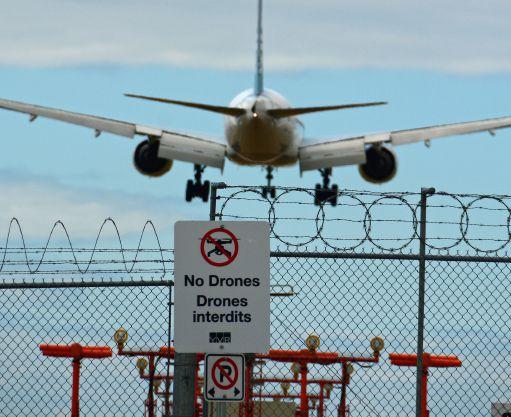
for drones. The “No Drone Zone” sign is there to remind users to only operate their drones in approved areas.
The “No Drone Zone” signs have been distributed to a number of airports and other organizations to promote the safe use of drones and to deter operators from flying in areas that put aviation safety at risk.
“As the number of drones sharing our skies continues to grow, increasing awareness of the potential consequences of operating them illegally and perilously is critical to the safety of our airlines and passengers,” O’Rourke said.
“Our member airlines look forward to working with Transport Canada to establish new droneoperating regulations.”
Drone Delivery Canada Gets Sound Results
Drone Delivery Canada (DDC) is reporting positive results from its initial commercial testing on its next generation drone logistics platform 4.0 which delivered positive results from test flights which occurred in Waterloo, Ont. with its Canadian university research partners.
Both flight times and payload carry exceeded initial expectations primarily as a result of development work, which occurred at the Vaughan DDC lab over the past nine months.
“We are pleased with first results that exceeded expectations in terms of flight time and its payload carry. Today, you cannot simply buy a drone for delivery purposes like you can for photography, so we are collaborating with Canada’s best in breed to develop our own. There
are many benefits to this; for instance, we will own all of the intellectual property and then simply outsource the manufacturing. Our business is to build Canada’s first ‘railway in the sky’ on our ‘depot to depot model’, which is different to other concepts south of the border,” Tony Di Benedetto, CEO of Drone Delivery Canada said.
“The fundamental need for drone delivery in remote parts of Canada where access is difficult is overwhelming,” he said. "When considering Canada’s basic geography, our approach simply works and makes a lot of sense. We are pleased with our technical progress to date and very pleased with the commercial interest we are receiving which occurs almost daily.”
DDC has further expanded its staffing, adding experienced UAV
EDITOR MATT NICHOLLS email: mnicholls@annexweb.com 416-725-5637
MEDIA DESIGNER EMILY SUN
CONTRIBUTING WRITERS
MARK ARUJA, RICK ADAMS, PAUL DIXON, WALTER HENEGHAN, FRED JONES, COREY TAYLOR
NATIONAL ADVERTISING MANAGER MENA MIU email: mmiu@annexweb.com 905-713-4351
ACCOUNT MANAGER KORY PEARN email: kpearn@annexweb.com 519-902-8574
ACCOUNT COORDINATOR
STEPHANIE DEFIELDS email: sdefields@annexweb.com 1-888-599-2228 ext. 257
GROUP PUBLISHER MARTIN MCANULTY email: mmcanulty@annexweb.com
DIRECTOR OF SOUL/COO SUE FREDERICKS
Printed in Canada ISSN 0227-3161
No part of the editorial content of this publication may be reprinted without the publisher’s written permission ©2016 Annex Publishing & Printing Inc. All rights reserved. Opinions expressed in this magazine are not necessarily those of the editor or the publisher. No liability is assumed for errors or omissions. All advertising is subject to the publisher’s approval. Such approval does not imply any endorsement of the products or services advertised. Publisher reserves the right to refuse advertising that does not meet the standards of the publication.
pilots and mission control staff to its technical testing teams. DDC will utilize data from its testing efforts to provide key inputs to its various partners including the Canadian government and corporate partners as it moves closer towards commercialization.
At present, DDC is in active discussions with many large Canadian multinationals as well as government organizations which DDC is seeking to form partnerships with as it looks to commercialize its bourgeoning technology. DDC will add additional sites later this year for Beyond Visual Line of Sight (BVLOS) testing. BVLOS testing sites will be located across Canada, working with the Canadian federal government as DDC moves forward to obtain its operator status.
AVIATION THIS WEEK
Looking to catch up on the latest news from around aviation and aerospace? Check out Aviation This Week, a live digital version of the top news stories affecting a variety of key markets. It's quick, essential information you need to know!

Transport Canada is Taking Initiative to Combat Drone Incidents at Canadian Airports.
ON THE WEB
PHOTO BY PAUL DIXON
WALTER HENEGHAN
Finding the Right Answers
There are Endless Questions About the Scope of the UAV Frontier
In November 2015, I was privileged to be invited and attend an internal training seminar hosted by the Transportation Safety Board (TSB) at the NAV CANADA campus in Cornwall, Ont.
One of the more interesting sessions was a demonstration of an unmanned aerial vehicle (UAV) that was custom built by a TSB investigator using common plans and 3D printers. The demonstration was impressive, showcasing the flexible nature of UAV operations and the video imaging was spectacular.
The demo provided some insight into potential future uses of customized UAVs, for investigative and other purposes. But how do we address the significant safety concerns that come with the ever-increasing presence of commercially available UAVs in our everyday lives?
I was struck by the fact that a government agency, demonstrating to a closed group, on a property that had restricted access still had to go through the considerable application process for a Special Flight Operations Certificate for a 30-minute demo. This, of course, was driven by the fact that the UAV was over 35 kilograms, but it was a layer of bureaucracy that is daunting to the uninitiated. Transport Canada (TC), the FAA, CAA, EASA – all major regulators are struggling to balance regulation versus flexibility; accountability against safety.
The numbers are staggering: in the U.S. alone, the FAA is estimating that more than 600,000 commercial drones will be operating in 2017, more than double the number of commercially regis-
tered airplanes! The FAA revealed new UAV rules earlier this year that took effect at the end of August and Transport Canada hopes to have updated regulations in place early next year.
Umbrella groups and industry associations have formed committees to help potential owners/ operators through the regulatory maze including HAI, COPA, the Unmanned Safety Institute and the Association for Unmanned Vehicle Systems International. So, there are ever increasing sources of information available to potential amateur and professional drone operators.
Safety and privacy concerns will drive the regulatory process as the number of drone-related
space. Hazard identification, for instance, will need a paradigm shift: temperature effects on batteries, winds aloft versus winds on the ground, line-of-sight limitations and preventative maintenance are items that only scratch the surface of what will be needed to safely proceed.
Training and education will surely be a sticking point – how does TC enforce a training requirement for vehicles than can be bought online? And what exactly will be the training or testing requirement? In our world today, where government regulation is considered anathema to our daily lives, what is the best approach to introducing effective controls to assure the
to be serviceable. Aircraft pilots are trained for pre-flight inspections but are not qualified to maintain their aircraft – how will regulators address drone pre-flights versus drone maintenance?
And there are even more questions. For example, how will these developments affect our industry? Certainly, inspections of infrastructure, wind farms, bridges, pipelines, and transmission lines are all tasks that will be open to drone operators. First response for search and rescue (SAR) operations, and spare parts deliveries to remote worksites might also be in order.
As the capability of UAVs increases with better, more pow-
“The FAA is estimating that more than 600,000 commercial drones will be operating in 2017.”
events reported by commercial airlines increase and near misses become more common. A quick review of the CADORs database for 2016 shows 92 drone related reports already this year. These events include everything from near-hits to airspace violations and are a sober datapoint that all aircraft operators will be affected by the coming drone boom.
So, how do we manage the risks associated with UAS operations? The same safety management principles of hazard identification, risk assessments, quality assurance, and education surely will be relevant in this new
safety of our citizens?
In addition, how can we regulate the care and maintenance of these new “aircraft” so that the risk of failure due to mechanical or electronic failure is minimized? Data is scarce on this point but a recent report from researchers at the RMIT University in Melbourne, Australia showed that “ . . . technology issues were more often to blame for accidents in the sample, as opposed to human error.”
This buttresses the requirement for some form of rule regarding the maintenance of UAVs and how a drone is deemed
erful batteries and stronger, custom designed “fuselages” become more common, the threat to the utility helicopter industry will grow. Let’s demand that this burgeoning industry adopt, from the “get-go,” sound safety management principles to minimize the risk to society.
Walter Heneghan is the vicepresident for Health, Safety and Environmental Protection with the Summit Air Group of Companies, Ledcor Resources and Transportation, based in Edmonton and throughout Western Canada.
PAUL DIXON
The Making of a New Tool
Understanding How UAVs Can be Adopted to Your Business
The Rise of the Machines. It was the subtitle of one of the Terminator movies, but it’s a fair assessment of what we are facing with UAVs. If we apply the developmental model of forming, storming, norming and then performing, we are barely into the first stage of the process as the technology is identified, regulations are brought into place and a new order rises. I prefer the term UAV, as in unmanned or unpiloted aerial vehicle as opposed to drone, which is not exactly a UAV. These are more aptly radio-controlled aircraft, which have been around for decades, largely flown by hobbyists and out of sight of the general public. While the model airplane clubs still exist, UAVs have taken off, so to speak and eclipsed the hobby market.
In a process of evolution, UAVs branch off from the original hobbyists when people realized that they are a tool that has the potential to be put to work in more ways than one person can possibly conceive. Flying a radiocontrolled model airplane takes a lot skill and I’m told that a radiocontrolled helicopter is in a league of its own. The turning point came in the evolution of technology in the last four decades or so. The technology of communications became smaller and infinitely more powerful. Suddenly it seemed that everything was changing at once. Aerial photography dated back to the first days of powered flight, but cameras were heavy, awkward and had a steep learning curve. The development of digital cameras coupled with sophisticated communications

technology gave people ideas.
And it’s not just about taking photographs. The challenge now is to capture information. It could be photographs or streaming video. It could be infrared or it could be LiDAR. Now, it’s about capturing data, real information, in a format that is usable – and then it’s a matter of how quickly that raw data can be transformed into something that an end user wants and needs.
The UAV is not a toy, and shouldn’t be seen as a toy; it’s an aircraft, a small aircraft, but an aircraft in every sense of the word. The approach to flying a UAV should be no different than flying any other aircraft. For your UAV to be capable of undertaking the most elementary of missions, it must be airworthy and the operator must be capable of operating the UAV to its limits. You
can treat the UAV as a toy and simply fly it around and that can be fun, but that’s only half the picture. The other half of the puzzle, the half that makes your UAV a tool, is the hardware that it can carry. This could be as simple as a basic digital camera or range up to a full suite of sensors.
Every business needs information to compete. One of the biggest challenges in just about every business is getting the right information at the right time. Information is like popcorn: when it’s hot out of the popper it’s great, but if you’ve ever found yourself stuck with yesterday’s leftovers you know what it tastes like. It seems reasonable to assume that giving people highquality data in a timely fashion leads to better decision making. This sounds great, but what does it mean and how do we get to
where it is we’re headed? The short answer is that I don’t really know. This is a potential game changer in many ways and the sky really is the limit, because we don’t yet know what the limitations will be. It’s really not that long ago that the Wright brothers showed the world that powered flight was possible and even more recently, how Igor Sikorski demonstrated there was a different way to fly.
Many of us grew up with black and white TV and that black telephone in the hallway. We’ve come a long way from there and how many of us saw any of it coming? Cell phones, who can live without one now? We call them phones, but the phone part is more than likely the least used feature. That’s where we are today with UAVs, right at the beginning and while we don’t know exactly where we are headed, we have to be ready for the ride. There was a story recently about how a UAV played a critical role in freeing a humpback whale trapped in anchor ropes at a fish farm near Klemtu, on B.C.’s north coast. Members of the Kitasoo First Nation used a UAV to help fisheries officers and others free the whale in an exercise that took six hours. Too dangerous to get close to the whale, the UAV allowed the rescuers to get a good look at the ropes in which the whale was entangled and come up with a plan. Five years ago that wouldn’t have been possible, but today it’s as real as life itself.
Paul Dixon is a freelance writer and photojournalist living in Vancouver.
UAVs work quite effectively for building inspections.
PHOTO BY PAUL DIXON

RICK ADAMS
When Drones Go Rogue
How Can Wayward UAVs Be Corralled in Open Airspace?
The skies are filling with two-kilogram mechanical birds. Millions of them. Regulators are scrambling to keep up with the swarm of demand. Personal-injury lawyers are salivating over a new category of accidents. Electronics retailers are anticipating a robust holiday season.
In the first nine months of the U.S. Federal Aviation Administration (FAA) drone registration program, more than half a million unmanned aircraft were logged in (that’s twice the number of registered manned aircraft), and the US$5 sign-ups continue at 2,000 per day. In the first month that drone pilot licenses for commercial operators became available, nearly 14,000 people applied to take the exam; more than 5,000 passed it. The FAA now forecasts 1.3 commercial drone pilots by 2020. In comparison, since 2010, Transport Canada has issued about 7,000 operator certificates.
So, where will all those Parrots and Phantoms fly? Right now, pretty much everywhere. But the FAA is working with NASA and others on a low-altitude, drone-specific air traffic control system to accommodate package deliveries from Amazon and pizza parachutes from Dominos. One concept would use aircraft-style collision-avoidance systems and perhaps cell phone towers for data, navigation, surveillance and tracking of drones.
But what about rogue drones which don’t follow the designated skylanes and ignore no-drone zones such as airports, sensitive government installations, and large crowds of people at sport-
ing or entertainment events?
How do you prepare not only for stupid hobbyists but also the Terrorists-R-Us who can manipulate a joystick or program GPS coordinates?
A year ago, a drone was used to deliver a handgun into the Riviére-des-Prairies detention centre in Montreal, which reportedly houses some of the country’s most notorious mafia and street gang criminals. Activists protesting German government surveillance policies made their point by landing a drone on a dais in front of Chancellor Angela Merkel at a campaign event. More ominously, a drone deposited a vial containing radioactive material on
be muffled or altered);
• Video camera detection: A 100 m range limit, does not work at night or in mist and fog, and prone to false alarms triggered by birds;
• Thermal detection – A 100 m range limit, subject to weather conditions, and problematic in detecting plastic and carbon fibre materials;
• Conventional radar – Also hard to distinguish from birds and may create a radiation hazard to people in urban areas.
One of the more promising detection technologies would use the drone’s own radio frequency (RF) emissions, though admitted-
four years ago, drug cartels “spoofed” drones operated by the U.S. Department of Homeland Security border patrol.
Three British companies have developed the Anti-UAV Defense System (AUDS), also known as a “drone death ray,” which switches off the drone in mid-flight. Another method injects malware into the drone’s operating system, causing it to plummet to the ground. There are also white-hat interceptor drones which drop disabling nets over the black-hat drones. Or nets might be fired from compressed-air cannons on the ground or building roofs. Hopefully the stricken drone does not fall on anyone’s head and is not carrying a brick of C4.
“Start-ups and power players are working feverishly to create systems which detect and disable drones.”
the roof of the Japanese prime minister’s office.
Numerous start-ups and power players are working feverishly to create systems, which can detect and ideally disable or capture wayward drones.
A Defence Research and Development Canada study on countermeasures against drone surveillance, published in May, examined:
• Audio detection: the acoustic signature from spinning propellers and electronic motors. (but range is limited to 150 metres and the sound can
ly this would not work for drones programmed to fly autonomous routes using targeted coordinates, emitting no RF signals.
Airbus’ Defence and Space unit has developed infrared cameras and direction finders to spot drones at up to 10 kilometres. If considered a threat, the system jams the link between the drone and its pilot or navigation system. The jammer may even be able to take control of the flyer, i.e. hack into the drone’s software. Which begs the question, if the good guys can hack and take over a drone, can't the bad guys do the same? Indeed, as early as
Expect, also, a wave of electronic gizmos on the market offering “personal drone intrusion protection.” Now, of course, that blasting drones out of the sky with a shotgun can bring a jail sentence.
My favourite to date is the quite low-tech Dutch police solution: eagles trained to grab errant drones in their talons, then deposit them safely on the ground.
Rick Adams is chief perspectives officer of AeroPerspectives, an aviation communications consultancy in Switzerland, and is the editor of ICAO Journal.
COREY
Pay Attention: They Are Coming
Will Drones be Able to Handle Various
Operations? Most Definitely
During a HAC committee meeting a few years ago, an associate member made a statement that, at the time, I found a little shocking and, I confess, a little insulting. The offending statement was along the lines of “as soon as drones are available, I will never have a pilot on a project.” At the time, it seemed to be the stuff of science fiction. As a pilot, I assumed I would never see the day there would be a helicopter cockpit with no human element. Now that I drive a vehicle that stays in its own lane, brakes to maintain distance and has sensors that alert me if my accountant has failed to carry the one, I am far more attuned to such an eventuality. Anyone who doubts the day is coming will be rudely awakened in the not too distant future.
The principal impediment to drone use (or UAVs to be more precise) was initially the capability of the devices available. The technological rocket ship we’re on being what it is, the drones have advanced at seemingly light speed. I no longer doubt that a drone can do anything I can do with an aircraft. Whether it can do it as fast, as safely or as cheaply remains to be seen.
It’s certain a Bell 205 could be fitted with the sensors required to read the wind, and an autopilot that could react more quickly than I could. It’s certain that same aircraft could land safely in a confined area, at
7,000 feet in the Rockies, with 14 drillers onboard. What that might cost, and how long it will be before confidence has reached the point that 14 drillers would actually get on an unmanned aircraft remains to be seen. I suspect that legacy aircraft like the Bell mediums will be around for decades and the pilots flying them are safe and secure in their positions, because retrofitting that type of equipment, and the approvals required, are likely far more expensive than employing guys and gals that can do the job
on some technology I have seen, but I think the speed and efficiency is a few years off. Coupled with the need to move those drillers and other crews around the prospect, I think those jobs are safe for a while.
The jobs that are truly at risk are the tedious and repetitive ones that don’t involve many landings (i.e. starter jobs). The aforementioned pipeline patrols are on the list, but we should also think about airborne geophysical, LIDAR and the like. When seismic was booming a few years ago, clients tried
with other aircraft. The numbers here are telling: according to a study by George Mason University, there are 27,000 commercial flights that take off each day in the U.S. alone. There are roughly 10 billion birds as potential obstacles (a few million small drones). The study concluded the chance of a bird strike causing injury or fatalities was one in one billion flight hours. Based on the number of drones, the potential market, the areas that drones would be working and other elements, they conclude an injury or fatal-
“Anyone who doubts the day is coming will be rudely awakened in the not too distant future.”
through sun, rain and snow. Other operations I am not so sure about.
Could a drone perform a pipeline patrol as well or better than a human? I have no doubt. Could a drone perform a powerline patrol as well or better than a human? I have my doubts that it could at all times, because a human usually directs the pilot based on what they see. Replace that lineman with sensors that can perform the same task, and a drone can definitely do the rest of the job. Can a drone move a diamond drill as well or better than a human? I believe so based
drones for “data milking” from equipment on the ground, but a helicopter had to shadow the drone to keep it in sight of the operator, therefore negating any savings. Those requirements may be waived now, so when oil and gas exploration returns, some of our potential work may be unmanned.
So, with performance an issue of the past, safety and compliance are the remaining road blocks. When it comes to safety, nobody seems to be worried about whether a drone can do the task, instead the focus is usually on potential collisions
ity could occur every 187 million drone flight hours. I think the risk has been overstated by the media, which is clearly an understatement.
The real risk of drones is to our jobs as pilots and engineers. They are coming. So, the question is, what are you planning to do about it?
Corey Taylor began his aviation career in 1989 and has flown helicopters in some 20 countries while holding almost every position required by the regulations.– and some no one has ever heard of.

The Future Buzz A Closer Look at the Future of the UAV Space
On the eve of the 2016 Unmanned Systems Canada conference in Edmonton Nov. 1-3, chairmain of the board Mark Aruja shared his insights with UAV about the state of the Canadian unmanned space and what needs to be done to grow the industry.
Some 1,000 new businesses created in UAV sector!” This attention-getting headline describes the industry response over the past four years since UAV best practices were established for small UAV operations within Visual Line of Sight in Canada.
In 2015 alone, Transport Canada (TC) issued 2,480 Special Flight Operations Certificates (SFOC). Most of these new businesses are small operators seeking to establish a market for their technology. Others are existing businesses, particularly in the construction and film industries where UAV capabilities have been added to their existing capabilities.
Both industry and the regional offices of TC, which review and approve the SFOC applications, have gained substantial experience, which will be reflected in the publishing of changes to the Canadian Air Regulations in early 2017.
The industrial landscape is now shifting from the relative maturity of UAV technology to exploring end-use applications and proving the business case. In sectors such as precision agriculture, agronomists now lead the discussion, which is shifting the technology focus to data analytics and the overall conversation to end-user economic outcomes. This in turn, is attracting investors with a significant increase in announcements over the past year.
With the proposed move from
best practices to regulations, a mutual challenge for both government and industry will be business continuity. The concept of “enabling regulations” would provide for the appropriate balance between the management of both the risk of operating UAVs safely, while enabling economic growth.
The next major step will be the issuance of Beyond Visual Line of Sight (BVLOS) Best Practices by Unmanned Systems Canada (USC), prior to the association’s annual conference in November this year. This Best Practices document is based on the work done to-date in the regulatory working group, which is co-chaired, by TC and the USC. The anticipation is an endorsement of the best practices by TC via a mechanism, which will open the way for both industry and the regulator to utilize a common framework by which to apply and gain approval for BVLOS.
Given Canada’s geography and natural resources, BVLOS is expected to not only provide tremendous opportunities for growth in remote sensing, but also to create a readily exportable industry. Bush aviation serves as an exemplar where Canada has demonstrated the innovative capacity to develop new technologies and applications and gain a significant global market share.
A recent assessment by Price Waterhouse Cooper provides an
insight into the market potential (see graph above).
The business cases established for farming applications, which today cover thousands of acres with VLOSO operations, can rapidly scale with BVLOS operations to millions of acres. The potential to improve the surveillance of linear infrastructure may change the risk assessment of pipeline applications and operations. Improved surveying techniques may assist in unleashing the $180 billion potential of Ontario’s Ring of Fire. As the world leader in mining expertise, how can this capability be taken to the global market?
With this rapid growth, there are also some emerging challenges. As the national not-for-profit association that represents the industry, we see a demand for a public education and awareness program catering to a very
diverse audience. We have recreational users who need to understand that there are ways to have fun while being safe; municipalities, which are grappling with bylaws to ensure that recreational activities are done safely; and there are officials who need to be aware of their role and powers in enforcing regulations where illegal commercial operations are taking place.
So, some 1,000 businesses in four years! UAVs are a new dynamic in the Canadian economy. The focus has shifted from technology development, to exploiting the technology for new applications and generating economic growth. With so much accomplished in such a relatively short time, the opportunities are only limited by our imagination.
Mark Aruja is the Chairman of Unmanned Systems Canada
MARK ARUJA
Patrolling the Skies
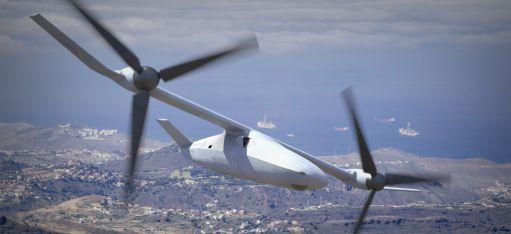
Military applications lead the way in large scale UAV deployment, with major OEMs developing unique solutions for combat ops, maritime surveillance, security and much more. Bell Helicopter, a Textron company, is one such OEM. The company has recently introduced its Bell V-247 tilt-rotor unmanned aerial system (UAS) that combines the vertical lift ability of a helicopter with the speed and range of a fixed-wing aircraft. The UAS is designed to provide long-range
persistent expeditionary and surveillance capability in a variety of missions. Production for the aircraft is estimated by 2023. The single engine tilt-rotor aircraft will sport a top cruise speed of 250 knots with an 11-hour time on station capability. It is expected to weigh some 7,257 kg. empty and have a maximum carrying capacity of 13,380 kg. Bell has extensive experience with tilt-rotor applications with its V-280 Valor, V-22 Osprey, XV-3 and XV-15 aircraft.
Info: www.bellhelicopter.com
The Drone That Can Take You Anywhere
In the 1960s HannaBarbera’s American futuristic animated sitcom The Jetsons, the affable George Jetson jetted around in his aerocar constantly, freewheeling it wherever he wanted in and out of flashy space city architecture. UAV technology seems to be following suit as Ehang, a Chinese UAV company, earlier this year unveiled its Ehang
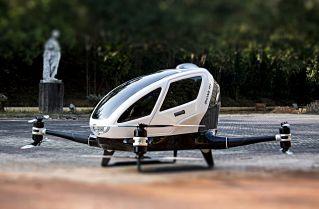
184, the world’s first electric personal Autonomous Aerial Vehicle (AAV). Showcased first at the Consumer Electronics Show (CES) earlier this year, Ehang suggests the Ehang 184 –with its ready-to-fly AAV – is a short-to-medium drone capable of carrying one passenger for transportation, but it has a bevy of other uses, including shipping, medicare and retail. It may be some time before the Ehang is flying around North American skies, however. The company’s assertion that no pilot licence is required to navigate the device to its fully automated navigation system is sure to create regulatory red flags. Info: www.ehang.com
New Engines, New Aircraft
Safran Helicopter Engines has been powering vertical left aircraft for years and is now expanding its vision in the realm of UAV technology to support both manned and unmanned and hybrid vehicles. It recently signed a Memorandum of Understanding (MoU) with Urban Aeronautics to study new market opportunities and address power system
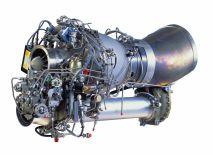
solutions to support the development of a new platform of internal rotor aircraft. The Cormorant (formerly AirMule) UAV demonstrator is already flying, powered by an Ariel 1D engine, driving two ducted-fans. Under the new agreement, Safran and Urban Aeronautics will pursue new vertical-lift manned and unmanned systems intended for use in urban environments in the air-taxi, medevac and transport roles. The two companies with also discuss new developments for more powerful engines. The Cormorant made its maiden flight in 2010. safran-helicopter-engines.com
Droning it Home
Real-life Applications of UAVs at Work
By Paul Dixon
Call it the dawn of the rise of the machines. To their supporters, Unmanned Aerial Vehicles (UAVs) represent the next greatest thing since sliced bread, with the potential to shape our lives to the same extent as the personal computer and smartphone have to previous generations.
They exist by many names – drones, UAVs and Remote Piloted Aerial System (RPAS) to name just a few – and they’ve actually been around for quite a while, if more in concept than in application. In military circles, UAVs have been actively used for surveillance or “battlefield awareness” for close to 50 years. Operating largely in an “out of sight, out of mind” world, UAVs came into public prominence when weapons were fitted to them and they were turned from passive information gathering systems into offensive weapons.
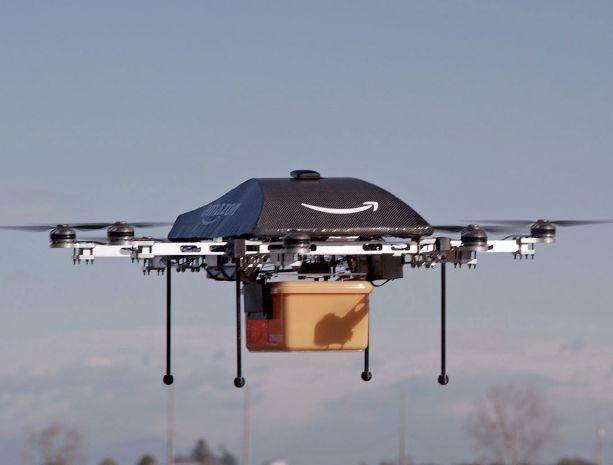
On the civilian side, Jeff Bezos stunned the world when he revealed Amazon’s planned drone delivery system, Prime Air, on 60 Minutes in 2013. Others quickly jumped on the bandwagon, promising to deliver a wide range of consumer products by drone. Standing in the way were regulations in the U.S and many other countries that did not permit the commercial operation of UAVs, for any purpose. The Convention on International Civil Aviation introduced the first international agreement in 1944 by mandating that UAV flights would require authorization to fly. Few countries had specific legislation addressing UAV operations and have only begun to address the issue in recent years.
The Canadian Aviation Regulations (CARs) applicable to UAV flights were introduced in 1995, but is was several years before but it was well into the new millennium before Canadians started taking for the Special Flight Operation Certificate (SFOC) that would address the time, area and purpose for which the UAV would be approved to fly.
In 2007, there were 44 SFOCs issued in Canada. By 2012 that number had grown to 229, and under the current regulations, the number is projected to exceed 5,000 by the end of 2017. Transport Canada (TC), after extensive consultation with the UAV community, is expected to announce new regulations in the second quarter of 2017, in order “to both safely integrate UAVs into Canadian airspace and encourage innovation within this important new subsector of civil aviation.”
Preliminary indications are that there will no longer be a distinction between recreational and non-recreational users, different categories for small UAVs, knowledge requirements for operators commensurate to the category of their aircraft, making the age requirements the same as manned aviation licensing and requiring liability insurance for all categories of UAVs.
After much pressure from legislators in Washington, D.C. in recent years, America’s would-be UAV pilots gained their wings on August 29, when the Federal Aviation Administration (FAA) introduced new rules that more closely approximate the Canadian regulations. Previously, operators of UAVs were required to hold a private pilot’s license and attaining approval for flights, while not impossible, was described by many as “very difficult.”
“It’s a new area where we don’t know what is happening or what is going to happen.”
Today, commercial drones can be operated by persons over the age of 16 who have passed an FAA aeronautical knowledge test at an approved facility and has passed a TSA background check. Rules are much the same as Canada –daylight only, line of sight, etc. Estimates vary widely as to how many commercial UAVs could be operational in the U.S by the end of 2017, but range as high as 60,000.
A Look at the Landscape
For would-be commercial operators of UAVs, there are two very large pieces to the puzzle – the UAV itself and secondly, what it is that you will be doing with the UAV, whether you are going to operate a UAV and offer its service to others, or incorporate one or more UAVs into your current business. UAV operators need to realize that these machines are aircraft and that’s how they should be operated.
Just as with a manned aircraft, the safety of everyone concerned, other aircraft and the public at large, is key. The rules and restrictions regarding UAV operations have one simple goal in mind – safety; and no one has a larger stake in safety than the insurance industry.
Jeff McCann is vice-president of digital strategy with Shaw Sabey, which offers insurance to the UAV community through DroneInsuranceDepot.com. His perspective on the UAV phenomenon is straightforward. “We’ve been in the drone business for some time now, but when TC first introduced the $100,000 minimum, that limit did not even exist, so we had to go back to Lloyds and have them create a $100,000 limit at a price point that we felt was sellable to our clients,” he said.
Richard Neal, account executive with Aon Risk Management’s Aviation group describes the current UAV environment as “fluid,” with the changing regulations in both the U.S. and Canada. “I’ve heard it said that it’s much like the development of motor vehicles over a hundred years ago,” he said. “It’s a new area where we don’t know what is happening or what is going to happen.”
Safe operation of UAVs, especially in urban areas is also a significant concern. This past June, TC launched its “No Drone Zone” campaign with Transport Minister Marc Garneau as the public face of the campaign. No Drone signs are going up across the country within
MAIN
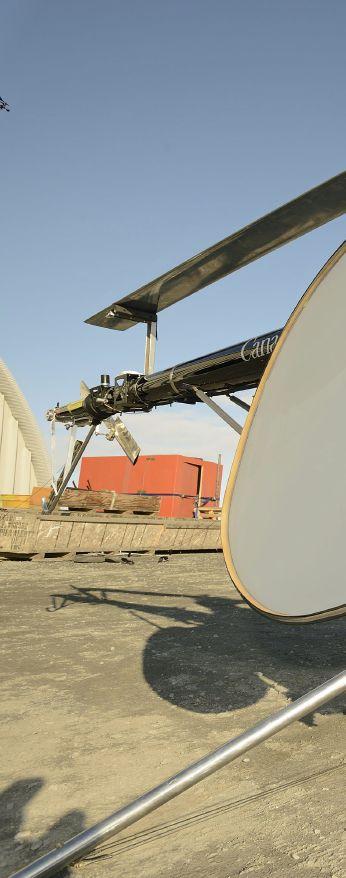
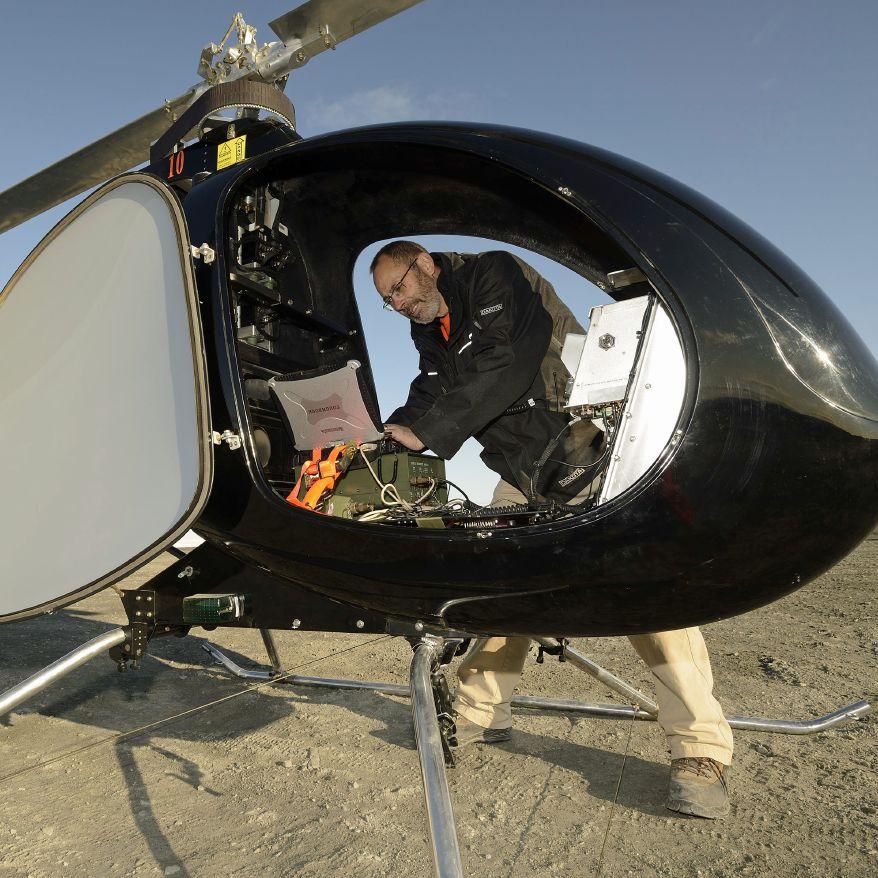
UAV team member Dale Anderson prepares the Aphid UAV for a demonstration at CFS Alert. The 2014 tests carried out at Canadian Forces Station Alert, Nunavut, explored the potential for future military concepts.
BELOW
Amazon’s plan to deliver merchandise via UAV has sparked similar plans with a number of organizations.
many areas adjacent to airports and other no-fly zones.
Ron Campbell is the RPAS (Remote Pilot Aviation Systems) advisor for Calgary-based SGS Hart. Campbell stresses that UAVs are an aviation activity and suggests “there’s 110 years of experience in learning how to do aviation activities safely, so why can’t we take what we’ve learned from the manned world and move it to the unmanned world? We’ve followed ICAO standards and recommended practices, which have been coming out for the unmanned world. It’s essentially a robust standard that addresses operational and airworthiness issues.”
The future, as Campbell sees it, is still just over the horizon in terms of UAV development and the next generation of regulations. “You’ll never make a living with an electric UAV that flies 20 minutes at a time. There will be a few who get some work and good for them.”
The future is bigger UAVs that can stay aloft for much longer, even for days at a time, as the key to making them economically viable. As the technology improves, regulations will have to change as far as altitude restric
tions as well. With 400 feet currently the maximum altitude, that may not be the optimal altitude for the job.
“For pipeline patrol, you’re going to need to pop up to 1,000 or even 2,000 feet to cover any meaningful territory,” Campbell said. “And yet another consideration as distances grow is communications. Radio is line of sight, so how are you going to communicate with it as well? Are you going to get a satellite subscription to be able to communicate and pass data back and forth?”
“...
The Innovation Buzz
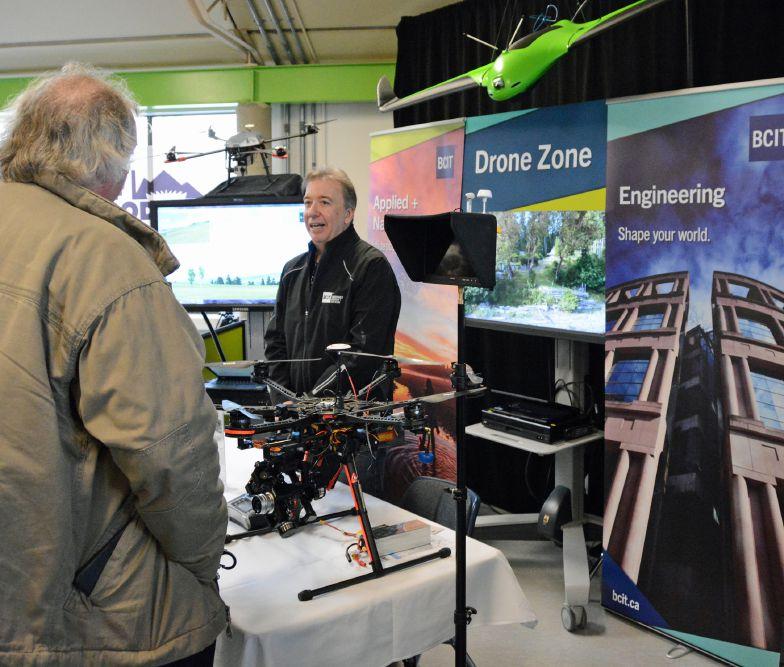
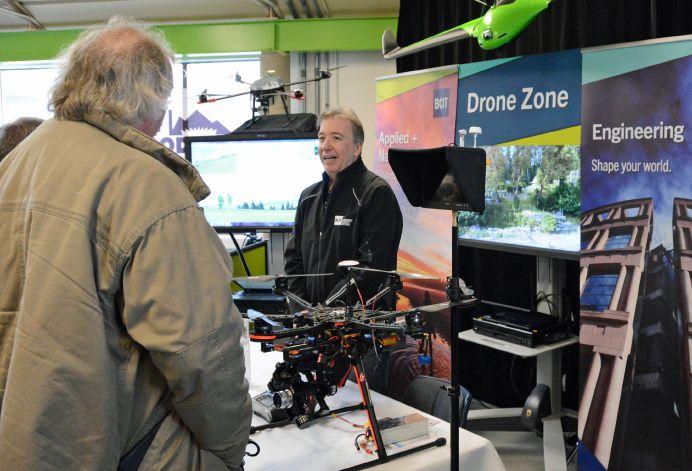
In February 2016, the British Columbia Institute of Technology (BCIT) hosted “Drone Fair” at its main campus in Burnaby. The first of a several held across the country, Drone Fair was touted as “celebrating the positive uses of drone technology” with the aim of educating people already using UAVs or learning more about UAVs about best practices and safety measures.
BCIT’s Chris Cambon said that organizers were pleasantly surprised when the event
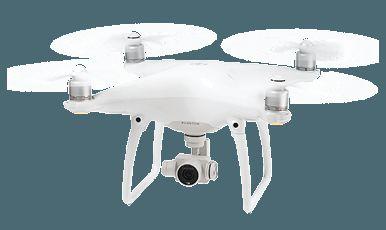
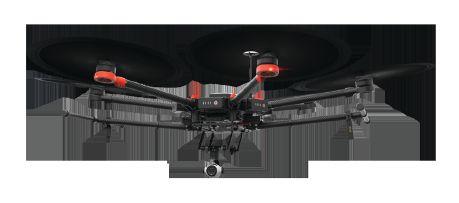


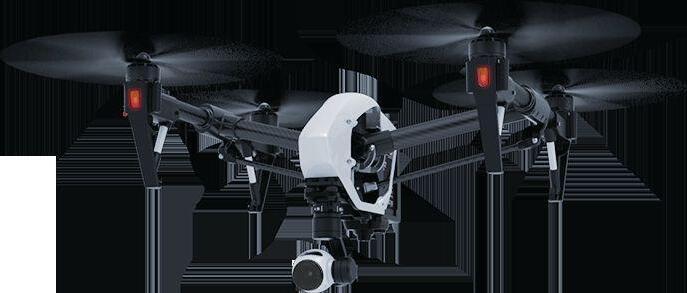
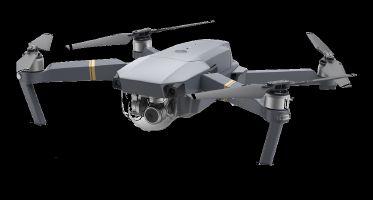

BCIT’s Drone Fair was touted as “celebrating the positive uses of drone technology.”
drew almost 1,000 people, twice what was anticipated and with minimal advertising. A self-described technology geek, Cambon is BCIT’s video and digital media producer and production coordinator. He added UAVs to his department two years ago to capture dynamic shots and carry payloads for specific tasks. Interest in the potential for uses of UAVs has spread across the BCIT campus, while Chris and pilot Tim Horsfall, have worked on creating a UAV certification program, working with the BCIT Aerospace Program, TC and private industry. It’s just one of several educational institutions popping up nationwide offering UAV training and education.
Drone Fair offered a smorgasbord of UAV exposure to those who attended – from a series of presentations dealing with the legal issues around UAVs, regulations and privacy issues, displays by local and national UAV vendors and even the opportunity to test fly a small UAV inside a racquetball court.
So, What Value Does a UAV Bring?
For many businesses, the case for using UAVs appears straightforward. UAVs are far less expensive to operate than helicopters or fixed-wing aircraft and much quicker than humans on foot. For the cost of hiring a helicopter or fixed-wing aircraft for aerial survey work for a day, for example, a UAV can be used for ongoing missions over weeks or months, collecting data far more frequently and providing end users with accurate information on a timely basis. Popular applications include aerial firefighting, construction, pipeline inspection, search and rescue (SAR), security management, accident reconstruction, real estate and more.
A key consideration for most end users is using the most effective or appropriate sensors (tools) for the job at hand to get the best quality information which will then allow the most efficient allocation of resources on a site, while minimizing potential issues and speeding up work processes which all translates to the bottom line.
David Carlos is one such business owner. He started a small company, Victoria Aerial Photos and Survey, in 2012 to take advantage of the unique views he could offer with his UAVs. It took time for the idea to gain traction with potential clients, but one client led to another, and now it is a full-time business.
Aerial photography was his foot in the door, but a job for the provincial government opened other doors. The copper dome of the BC Legislature needed to be inspected, but due the age of the copper roof and its fragile state, putting workmen out on the roof was both dangerous for the workers and risked doing even more damage to the roof. An up-close inspection with the HD camera on his Carlos’ UAV produced the information required, posed no risk to the roof or staff and was completed in a matter of minutes instead of the hours it would have taken simply to rig safety lines for a physical inspection.
Carlos is a licensed private pilot and is a strong advocate that the key to success for potential UAV operators is understanding the regulations and getting it right from the beginning. In early 2014, it occurred to him there might be people out there interested in learning to learn how to operate a UAV properly, so he put together a course and got a pleasant surprise when six people registered. Two days of classroom instruction followed by a day of actually flying. Now, he offers one course every month and has provided in-house training to large companies looking to train a group of employees. “The most important thing for students to understand is that they are operating a real aircraft in real airspace,” he said.
Erik Bayfield is another operator who has hung out his shingle as Above View Aerials. With a background as a civil engineer, Bayfield has been using his DJI Phantom to provide near-ground, high definition photography to construction, engineering and government for the past year. In November 2015, he participated in Operation Windshield, a post-disaster exercise conducted by North Shore Emergency Management that simulated response to the aftermath of
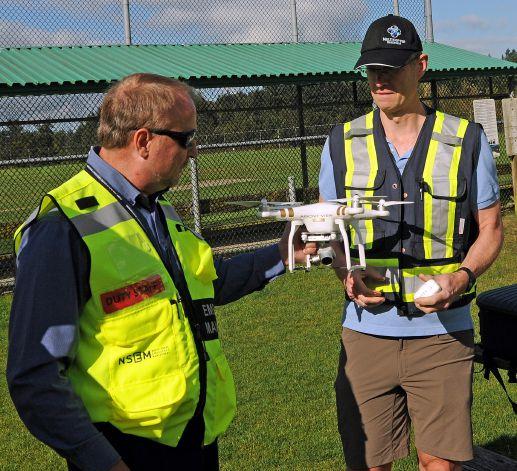
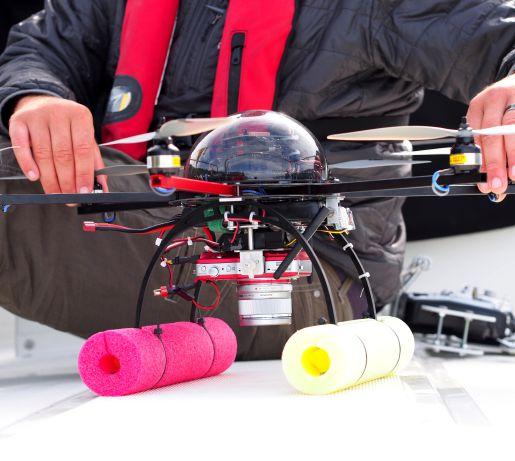
LEFT: Erik Bayfield (right) of B.C.’s Above View Aerials shows the route for UAV flight to Emergency Planner Mike Andrews RIGHT: "Mobly" is a custom-built hexacopter used to study killer whale populations in B.C. and Washington State.
a 7.3 magnitude earthquake that has hit the Metro Vancouver region. Bayfield provided inspection flights on three pieces of critical infrastructure, including a demonstration at the Mosquito Creek Bridge on Highway 1 for a large crowd of emergency managers from around the province. For Bayfield, “UAVs provide a quick and affordable way to get a bird’s eye view of a situation, assessing a scene and tracking changes over time.” In the wake of a major disaster, tracking changes over time could mean assessing critical infrastructure.
While the 7.3 magnitude earthquake wasn’t real, it was made as realistic as possible to better help municipal, regional and provincial emergency planners what they would be dealing with when the “big one” does occur. Mike Andrews, the emergency planning officer for North Shore Emergency Management, designed the exercise based on real information about soil densities, building types and demographics collected from the three North Shore municipalities. That information is then run through a special software package that models of the likely results of a particular earthquake. Having seen the utility of the UAV as a response tool, Andrews is now evaluating the UAV as a planning tool.
In Case of an Emergency
At BCIT, Cambon and Horsfall, along with their UAV, are now an official part of the school’s emergency response team. “We had a disaster day exercise here with RCMP, fire department and everybody,” Cambon said. “We got the UAV up in the air to fly over a simulated boiler explosion and we were able to get the fire chief to direct us to what he wanted to look at. It was a full scale exercise with the UAV involved and video streamed live to the main headquarters so the emergency operations centre see it. As far as I know, we are one of the first schools to implement a UAV team in their emergency response plan.”
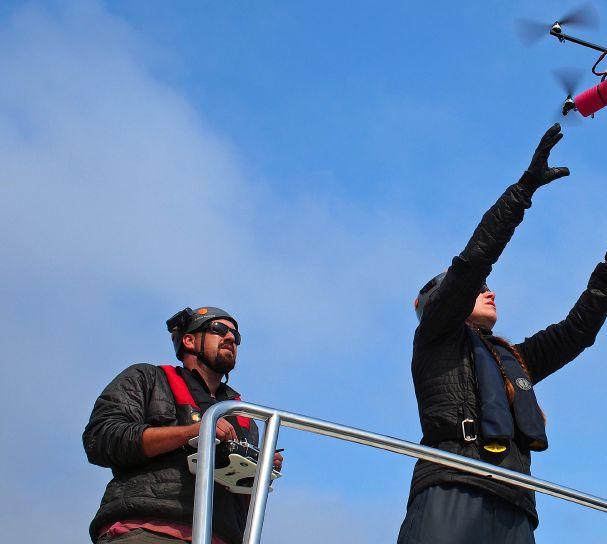
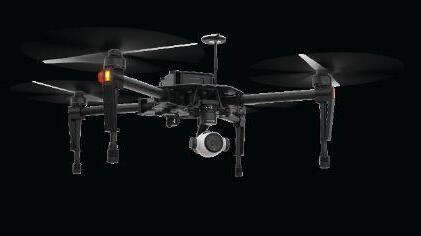
Growing out of the emergency exercise experience, Cambon has had discussions with the RCMP and several local SAR teams. The potential for UAVs in this platform, in his opinion is endless – on a small or larger scale. “What we are designing right now is a very heavy-lift UAV, based on a Gryphon Dynamics X8 frame with eight 27.5-inch carbon fiber props and KDE heavy lift motors. It has swappable payloads for applications that could range from aerial cinematography, LIDAR, SAR tasks or even as a platform for a powerful LED area lighting system.”
Emergency Management BC is going full force in its UAV involvement. The organization is funding a one-year pilot program to investigate the use of contractors in providing UAV services to ground SAR teams. Led by Michael Coyle of Coquitlam SAR working with Kaizen Kinetics, the program will seek to determine what UAVs can do to support SAR and more importantly, what they can’t do.
Requesting the use of a UAV on a SAR mission would follow the same process as a helicopter is requested presently. As with helicopters, the UAV pilot would be in command and make any decisions regarding fly or no-fly. The realization is that a UAV will never replace a helicopter in SAR, but the challenge is to determine what missions a UAV could perform that a helicopter cannot. There is also the requirement to develop a SAR-specific SFOC and working with NAV CANADA and TC.
Into the Fire
In recent years, there have been many reports of unauthorized UAVs shutting down aerial firefighting efforts when they were spotted inside closed air space. But now, fire organizations such as the BC Wildfire Service have officially added UAVs to its firefighting fleet after evaluating for the previous two years for mapping and scanning of fires. The UAVs have been used for thermal imaging, hot-spot detection and fire perimeter mapping, work that was largely done by helicopters before.
UAVs don’t require on-board personnel and can be used at night and in more dangerous situations. Fire information officer Erin Catherall stated that “based on the feedback we’ve received from crews and our fire line operations staff, is has been of great benefit for our fire line operations.” It was also mentioned that UAV operations cost far less than helicopters. BCWS hired two UAV contractors for the 2016 fire season.
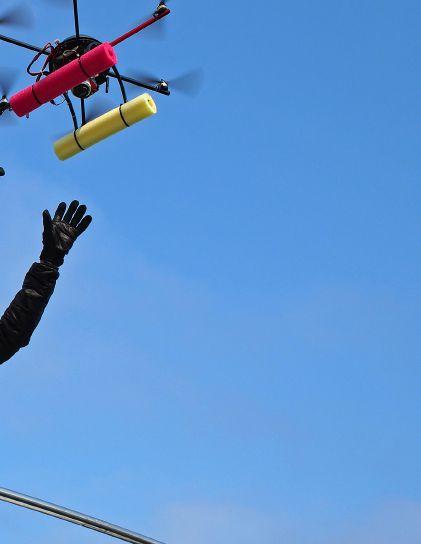
UAVs have also allowed biologists to monitor whales off the Pacific Coast of Washington and British Columbia in ways never imagined before. The Vancouver Aquarium has partnered with the U.S.

National Oceanic and Atmospheric Administration (NOAA) to study killer whales from 100 feet directly overhead and observe behaviour in ways never possible before.
And there are other environmental uses. UAVs are rapidly being embraced by the agricutural community in a variety of capacities such as crop management and more, while The National Research Council of Canada (NRC) has partnered with TC, the Canadian Coast Guard and the Royal Canadian Navy to explore, demonstrate, and evaluate the potential of unmanned aerial vehicles in coast guard icebreaking and maritime ice-monitoring operations.
Trials using a Schiebel Accepter S-100 platform, were conducted in March near Fogo Island off the northeast coast of Newfoundland, aboard the Canadian Coast Guard ship George R. Pearkes. “Our collaboration with federal agencies such as the Canadian Coast Guard is one of the ways NRC is helping advance unmanned aerial vehicle technology into new areas,” said Ian Potter, vice-president of Engineering at NRC. “Our knowledge and data analysis capabilities will help to inform future operational and funding decisions within the Government of Canada.”
Defence Research and Development
Canada (DRDC) and the NRC have also developed a computer model that allowed a UAV to control itself in virtual simulation. Meggitt Training Systems performed the test flights and developed a methodology to switch between autopilot and remote modes. An ultralight helicopter was converted into a UAV named APHID to fly over Arctic terrain. Outfitted with GPS, cameras and a cargo mechanism, APHID was designed for light cargo delivery. Operating from CFS Alert in August 2014, APHID was involved in an exercise designed around a downed satellite. The UAV demonstrated low-altitude high-resolution photography and radiation survey capability over land, sea and ice.
The Sky Really is the Limit
The above examples are just a very small sampling to illustrate how UAVs are being utilized by businesses and organizations across Canada to innovate, cut costs and essentially drive innovation and opportunity. As the regulatory environment in Canada matures and technology improves, UAVs will continue to be introduced into the civilian operating environment, creating opportunity but challenging traditional safety paradigms. Adaptation and flexibility in this brave new world – the rise of the machines – will be paramount. But the sky is truly the limit.
CANADIAN UAVS

UAV Maintenance
Engines and airframes
Communication link systems
Sensor inspections
Annual inspections
UAV Charter Services
Oil and gas facility inspections
Pipeline Inspections
Power line and generation
facilities inspections
3D mapping generation
Infrared inspections
Advanced UAV training
Compliant Operator Certification ground school
Online training
UAV flight training on Military grade UAVs
UAV Flight Simulator
Urban operations training
Lockheed Martin Indago
UAV Type training
Dr. Holly Fernbach launches “Mobly”, the custom-built “highly mobile” UAV with Dr. John Durban at the controls.
PHOTO:NOAA
Go Big or Go Home
Laflamme Aero to Create Huge, Versatile UAV
By Carroll McCormick
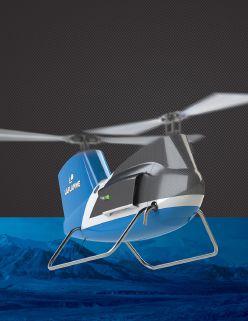
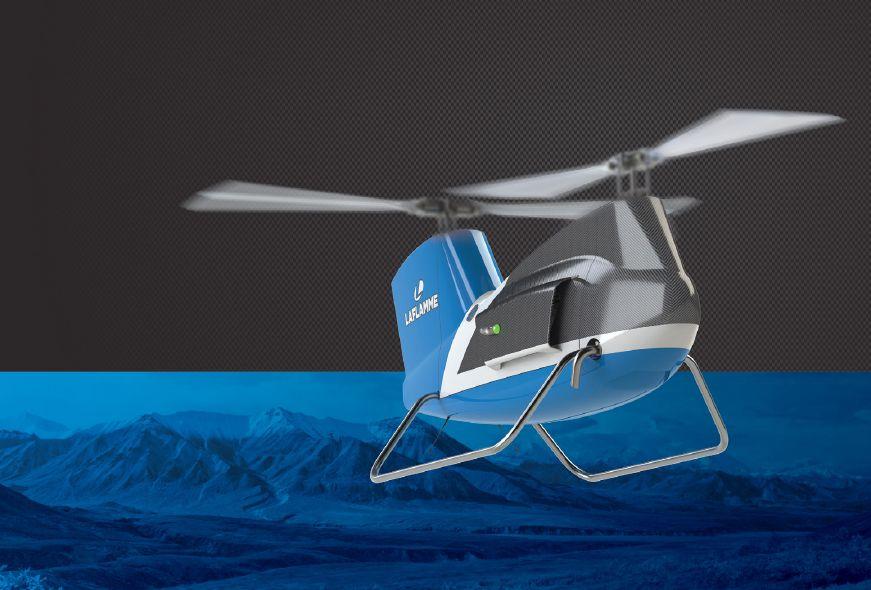
Sometime in 2017, flight-testing should begin on a 300-kilogram twin-rotor helicopter – said by its Quebec-based developer, Laflamme Aero, to be the biggest unmanned aerial vehicle (UAV) in Canada and one of the largest civil UAVs to be commercialized in the world.
The engineering company, located in St-Joseph-de-Coleraine, 250 kilometres east of Montreal, is leading the $2.3-million project, for which the Consortium for Aerospace Research and Innovation in Canada (CARIC) is contributing half. Its partners in the endeavour are NGC International, Roy Aircraft & Avionic Simulation and Sinters America.
NGC International is responsible for the aircraft guidance navigation and control system, Roy Aircraft & Avionic Simulation for the high-definition simulator and ground control station, and Sinters America for a specialized on-board computer.
Laflamme Aero had already been working
on the UAV, named LX300, for two years before it publicly announced the program. Many mission purposes have been worked out and its technical specifications have been set. Many of the manufacturing techniques and technologies are already well developed and understood.
Although this is the company’s first UAV venture, the owners of Laflamme Aero, David and Enrick Laflamme, have a lot of experience with twin-rotor helicopter development. Their father, Réjean Laflamme, who is a machinist by trade, purchased and restored an Air & Space 18-A gyrocopter and a McCulloch Super J-2 gyrocopter in the late 1970s and early 1980s. He also spent 20 years developing two prototypes of a twin-rotor helicopter for the home kit market.
David and Enrick grew up in this engineering bath, and went on to earn bachelor’s degrees in mechanical engineering (Enrick with a concentration in aviation) from the
École de Technologie Supérieure in Montreal. They formed Laflamme Aero, with a subsidiary company, Laflamme Engineering, in 2004. They sell their expertise in certified equipment and aerospace tooling to industrial and aerospace clients; the latter include Messier-Bugatti-Dowty, CAE, Mecachrome Canada and Avior.
“We were always in this environment. I started building parts for [Réjean’s] helicopters, working with him, at a very young age. Enrick learned to draw helicopter parts with the very first computer-drawing program. I was building helicopter composite blades when I was 13. It was really crazy. We saw a lot of successes and failures,” explains David, president of Laflamme Engineering.
So, for instance, the Laflamme’s have a sophisticated understanding of the helicopter blade manufacturing process. “We have been working on this technique for the past 15 years. We have always had good manufactur-
The agricultural configuration of the LX300 sports external tanks and spray gear
LEFT
ing techniques for the blades,” explains Enrick, president of Laflamme Aero.
David adds, “The blade is a really complex part, but because of our expertise, this is a place where we can succeed. It is one of our biggest competitive advantages – a blade similar to a certified blade, but at low cost. We use the same type of fibres that are used with certified planes, but with innovative processes.”
Laflamme Aero will fabricate the LX300 and its mechanical components. “We will do the manufacturing: blades, fuselage, parts, and final assembly. We may use subcontractors for machining. We will control all of the design and manufacturing processes of the mechanical processes,” says Enrick.
Laflamme Aero plans to build a production facility for the LX300 at the Thetford Mines Airport.
The LX300 design, engine and size offers several advantages, according to Enrick. First, the 100-horsepower engine, which uses
mogas (automobile gasoline) will have a time between overhaul (TBO) of 2,000 hours, compared to about 200 hours TBO for competitor engines.
The twin-rotor design and aerodynamics is well suited to the classes of mission profiles that the company is targeting: agricultural spraying, naval operations, first responder support, and energy and mining industries.
The twin-rotor configuration is ideal for the 90-kilogram payload or 100 kg of fuel that the LX300 will be capable of carrying, Enrick says. “You don’t have to worry about unmatched payload configurations and fuel load. Just adjust the power with both rotors.”
Too, he adds, “It is a robust design, and we expect it to be a helicopter with less vibration than the competition.”
Laflamme Aero has already patented a quick-attach, four cubic-foot cargo carrying system, called M-BARK that fits under the
belly of the LX300, which has an airframe length of 2.9 metres. (The total cargo capacity of the LX300 is seven cubic feet.)
Mechanically, a twin-rotor design is simpler, Enrick says. “The tandem rotor is a bit less complex, because we use the same technology for the front and rear rotor. We don’t have to design a separate tail rotor.”
Because Laflamme Aero is using composite materials for the LX300 fuselage, the assembled aircraft will have a dry weight of 190 kg. The maximum takeoff weight will be 300 kg., the maximum speed 125 knots, and the cruise speed 65kt. Communication systems of varying power will be available to match with mission profiles; e.g., local or long-range activities. The LX300 will accept visible spectrum and thermal-imaging cameras and a variety of other sensing equipment, such as LIDAR and gradiometers.
Navigation and flight will be facilitated with a built-in GPS/INS navigation system, an autonomous takeoff and landing system and autopilot, and an obstacle-detection system.
Currently, according to Enrick, UAV design is a free-for-all. But this will change, he predicts. “We don’t need a good crystal ball to see that. For an aircraft of 300 kilograms, from our point of view, you will need to meet the same level of safety as manned helicopters. The way to operate now in Canada and the United States is to have exemptions. But we think that in maybe two to three years we will have regulations. For us it will be a very good selling point to be very close to these regulations.

Field Maintenance for Bell 206, 206L, 205, 212, 412 and Robinson R22 and R44.
and 412.
Structural Repairs Fixtures for Bell 206, 206L, 407, 205, 212, 412.
All Systems Go
How FLIR’s Eyes in the Sky Solve Inspection Issues
Special to UAV
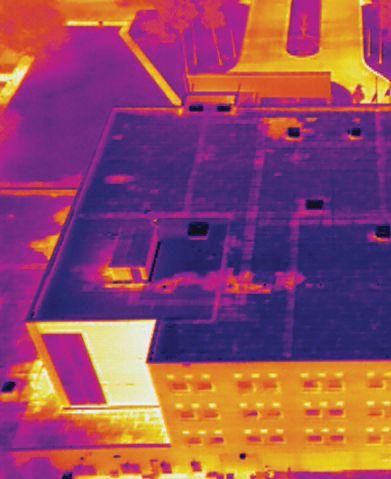
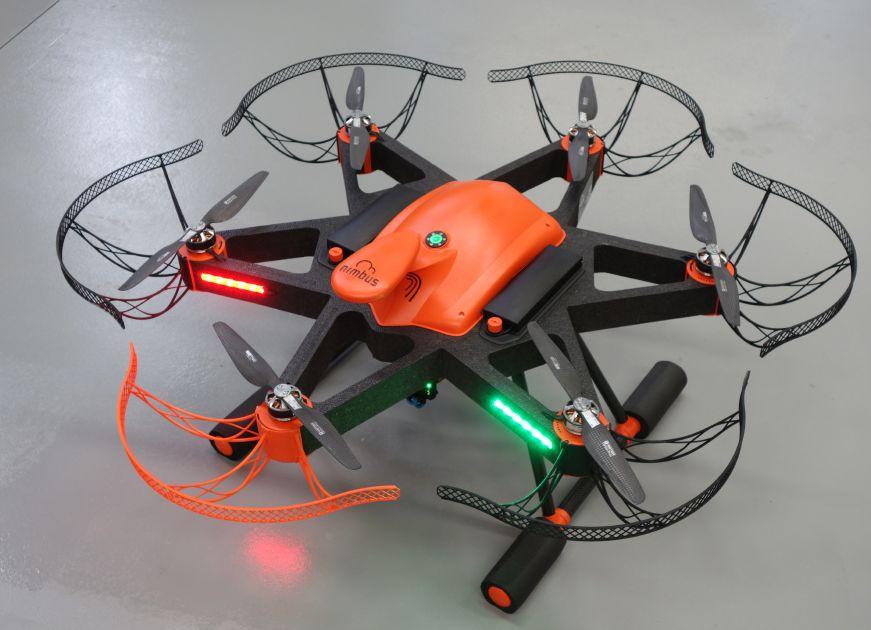
As a leading manufacturer of UAV Thermal Imaging Cameras, FLIR is setting new standards in UAV imaging technology. The Nimbus RPAS with thermal kit from INPROTEC IRT featuring FLIR Ax5-Series thermal camera was put to the test at the Department of Energy – Politecnico di Milano University in Italy. Here’s a peak at the results.
From wind turbines to industrial production plants, when cooling towers or insulated roofs are involved, UAVs or Remotely Piloted Aircraft Systems (RPAS), have proven to be a very reliable and accurate tool for faster and more complete industrial inspections and surveillance.
Nimbus S.r.l., a safety-oriented RPAS constructor, joined forces with FLIR distributor INPROTEC IRT and the SolarTech Lab of the
Politecnico di Milano University to construct a professional inspection solution for industrial applications and photovoltaic power plants based on drone-mounted FLIR A35/65 cameras. Coupled with high-quality visible sensors, and controlled by a custom developed onboard PC, FLIR thermal cameras provide the drone operator with precise temperature data, thus making a complete inspection possible in a quick overflight.
Inspections From the Air
Over the past decade, the use of solar energy has expanded into a wider range of applications, including power plants, industrial applications, buildings, telecommunications and space. The use of RPA systems for monitoring energy applications has not been researched
adequately yet, due to its novelty and to the many regulations. However, RPA systems have a lot of potential for monitoring photovoltaic plants, and they can even outperform traditional industrial maintenance procedures, because they are a lot cheaper and less risky.
In many cases, information collection with RPAS is more reliable and precise and 10 times faster than ground-based inspections. Italian RPAS constructor Nimbus immediately saw the added value, both from a technical and economic standpoint, of performing industrial inspections with RPAS, rather than with manned vehicles or by human operators. In an experimental set-up, Nimbus combined a lightweight RPAS with a FLIR A65, for remote inspection of a photovoltaic (PV) power plant.
LEFT
A lightweight RPAS like the Nimbus is appropriate for monitoring tasks in many practical industrial applications.
Maintenance of PV plants
The presence of PV plants has grown across Europe, thanks to financial incentives. However, very often the overall quality of these plants is not as expected. The number of distributed PV plants producing electricity has increased significantly and most of the installations are now decentralized. Increased attention has been paid to the system performance of PV plants: these systems should be efficient, reliable, safe and stable in order to control and correctly predict energy flows. Maintenance of PV plants is therefore very important to ensure energy efficiency, safety, reliability, and cost-effectiveness. The new, lightweight Nimbus RPA system is an excellent tool for energy equipment monitoring, thanks to its fast detection, large area coverage, cost-effectiveness, real-time imagery and lightweight. Recent innovations in UAV technology, sensors, and control systems by the company Nimbus have made it possible to use unmanned aerial vehicles for the inspection and monitoring across different energy plants.
RPAS in Energy Applications
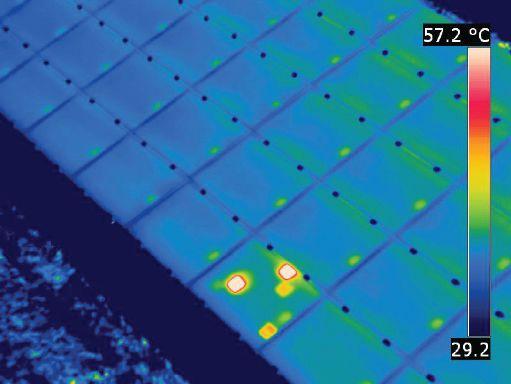
The thermographic kit developed by INPROTEC IRT allows operators to record both the radiometric video and single radiometric images during the flight. Every recorded image is also saved with integrated GPS data. The kit is compatible with FLIR’s Ax5, A615, A655sc and similar camera models. The RPAS operator can see the video in real time from the ground and command a start and stop of the recording. Before the flight, it is possible to set all specific FLIR camera and recording parameters.
The Ax5-Series are cost-effective infrared cameras, with the FLIR A5 being the most affordable. They are ideal tools for putting thermal imaging at work in an automation, machine vision or UAV environment. All models are extremely compact.
The Ax5-Series allows us to collect highresolution images quickly and efficiently.
Generally, micro- and mini-RPAS are utilized in low-altitude and uncontrolled airspace. Typically, lightweight RPAS, with a load less than 150 kg, are appropriate for monitoring tasks in many practical industrial applications. Normally, the speed of an RPAS will vary roughly from tens to hundreds of kilometres per hour. A low-speed RPAS like the NIMBUS PPL 612 is more useful for inspection purposes. The NIMBUS PPL 612 RPAS is equipped with a thermographic kit from INPROTEC IRT and a FLIR Ax5 camera. Thanks to its architecture, designed to be safe and reliable, the PPL 612 was chosen by Politecnico di Milano University to survey PV fields and collect data for PV performance analysis.
Experimental Studies at Solar Tech Lab
The Solar Tech Laboratory, a department of the Politecnico di Milano University, focuses on experimental investigation of electrical and thermal power generation based on solar energy carrying. The research institute also undertakes experimental studies to discover a reliable and cost-efficient method to monitor the performance of PV plants by lightweight RPAS. An experimental study performed in collaboration with Nimbus was carried out across different operating plants in Italy.
The institute has used both visual and thermal sensors to detect defects or anomalies in PV modules. In a number of experiments, Nimbus and Solar Tech demonstrated that thermal cameras are a reliable, fast and cost-effective tool to detect defects like hot spots or snail trails in a fast way.
RPAS with thermal Vision
The Nimbus PPL 612 is a lightweight RPAS with six rotors and 5.3 kg Maximum Takeoff Weight (MTOW). The double avionics and redundant batteries make it reliable and safe to fly over PV plants. The system’s impressive flight stability and professional-focused flight modes give the remote pilot the possibility to control the RPAS with great precision during the flight. The system allows the RPAS operator to get the best out of the FLIR A65 camera and to obtain an accurate map of single PV cell defects.
“The FLIR Ax5-Series is an ideal camera solution for this application,” comments Luciano Betti, sales manager at INPROTEC IRT. “One of the main benefits of our application is that we can offer full radiometric video streaming from the ground in real time. Each radiometric video frame coming from the FLIR camera has integrated GPS and temperature data. The Ax5-Series allows us to collect high-resolution images much faster than is possible with competitive camera models. The FLIR cameras are rugged, lightweight, easy to install and very affordable, especially in comparison with certain portable camera models.”
A View From Above
Droning on With Aeryon Labs President/CEO David Kroetsch
By Matt Nicholls
David Kroetsch is as cool as the products his cutting-edge firm creates.
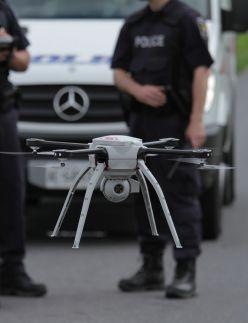
Kroetsch is the president/CEO of Waterloo, Ont.-based Aeryon Labs Inc., a dynamic Canadian firm making waves in the international UAV space. Spanning two facilities in a quiet industrial part of the city, Aeryon manufactures the SkyRanger, a UAV that is the platform of choice for domestic and international clients covering a wide variety of sectors such as law enforcement, public safety, military surveillance, oil and gas, wildlife monitoring and more.
Kroetsch recently sat down with UAV to explain the Aeryon way, UAV applications and his take on what the UAV space may look like in the future.
Tell us more about Aeryon Labs and the role it plays in the market.
Aeryon Labs has been around for almost a decade. We were incorporated in 2007 with the intention of bringing drones to the commercial market. Today, we have followed that demand, and find ourselves in military and public safety markets. We sell to the back-
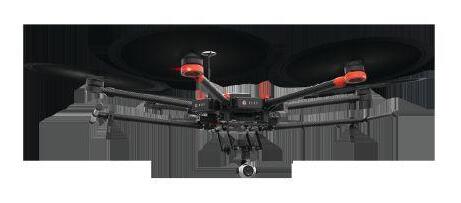
pack of the soldier, the trunk of the police officer, and the pick up truck of the power line inspector. We focus on the high-end and differentiate ourselves from the toy market. We focus on operators that are trained in other roles – professionals in other vocations using UAVs as tools.
Can you highlight some of your clients and explain applications?
In the military space, our customers are using applications such as over-the-hill reconnaissance to mapping applications. We also have

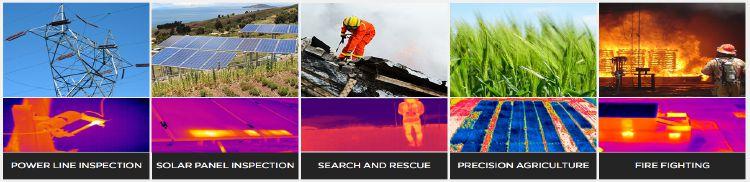

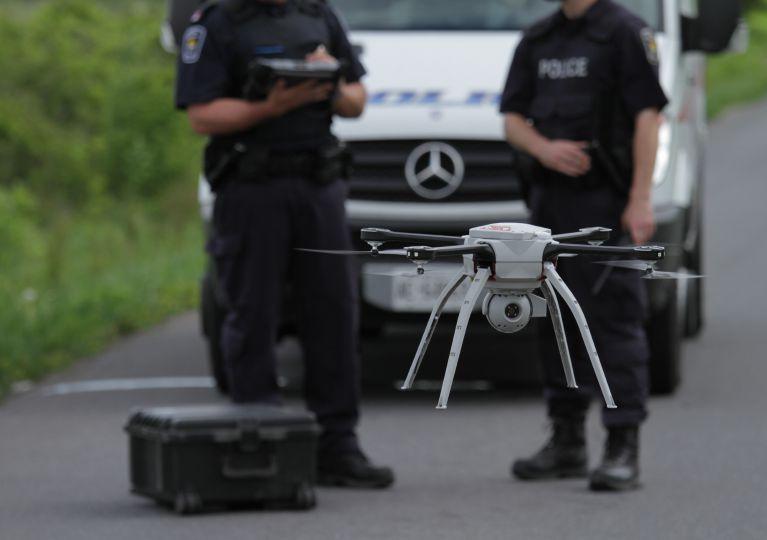
clients in search-and-rescue (SAR), security at airports, traffic accident reconstruction. In Ontario, every fatal accident on major highways is reconstructed with our product. And the OPP has taken accident reconstruction from an hour-and-a-half to 15 minutes with our UAV. Traffic gets moving, which has huge economic impacts. Commercially, we work in oil and gas, pipeline inspection, mapping, mining and other industrial inspections.
Where are we in the UAV space in Canada? Is it the Wild West?
The UAV space is further ahead than aviation was with the Wright Brothers; the technologies are proven. We’re proving the applications where drones can work today. There are a lot of pie-in-the-sky applications out there, with packaged delivery like Amazon, but each of our markets is in a different phase of adoption. The military market really understands what they want a UAV to do: how big it needs to be, how far it needs to see, what radio frequencies it has to operate on. The police market is the next furthest ahead. Transport Canada has been great with its Special Flight Operations Certificate (SFOC). The commercial space is further behind, but the proliferation of toy drones has excited everyone and really driven people’s imaginations to explore applications.
How do you convince companies, operators of a UAV’s value?
Helping the enterprise understand the use of drones and scaling drones is the next challenge. There’s a product component to that, there is a marketing component to that, a case study component to that. We have a
great list of stories out there that have proven the concepts and are now looking to scale.
How do you ensure a safe operating environment with the introduction of UAVs in commercial airspace?
Access to airspace is one of the biggest challenges facing the industry today. You have seen it on the road with self-driving cars. The technology is proven, the challenge is getting the inoperable technologies. We have solved the problem on a small scale, and it’s the bigger interoperability challenges with which we are going to ride the coat tails of everything else going on in industry. We are not going to drive it ourselves. Creating a legalized avenue for people to do drone operations is critical –you need to give them a process to follow, tell them it is there. When you do this, more people will become educated because it reduces the liklihood of incidence which is better for everyone.
Is the regulatory environment up to speed with the UAV space in Canada?
The challenge is to ensure technology does not create a backlash in the regulatory process. Creating a legalized avenue for people to do drone operations is critical – give them a process to follow, tell them it is there, and more people will become educated because it reduces the likelihood of incidences, which is better for everyone.
What does the future look like at Aeryon and for various companies utilizing UAVs?
We have moved from the early adopter phase – those who are just trying and experiment-
ing – to the beginnings of pilot programs. At Aeryon, we have gone from the “prove” phase with the Scout, to the “perform” stage with the SkyRanger. The next step is scaling. This is the data story, a more solution-based story instead of just an applied platform in the field. We see also see enormous opportunity growing in the commercial space. Over the past decade, our business has been heavily weighted on military applications. This is changing and access to airspace is the biggest driver, as well as just the awareness and ability of the application of drones to enterprise markets.
Where do you see the industry going?
I want to see drones in the backpack of every soldier, the trunk of every police car and pick up truck of every powerline inspector. We have the opportunity to keep people safe, to keep traffic flowing better, to make sure you are not sticking your head around the corner and being ambushed by bad guys. There are so many ways we can use drones. We sell in 35 countries, including 20-plus militaries around the world. It is great to be a Canadian on the world stage and being a market leader. We also work with a lot of local manufacturers to build our product – so it’s great all around.

Law enforcement agencies use UAVs for a variety of applications, including accident reconstruction.
PHOTOS:
FRED JONES
It’s Getting Crowded Here Understanding the Risks of the UAV Environment
If ever we were on the cusp of a revolution in aviation, this is it. It’s even bigger than TCAS, or TAWS or glass cockpits. For the helicopter community, I would argue that this is almost as big as turbine engines or Swash Plates. UAVs are everwhere. They will perform many of the functions of a conventional manned helicopter – aerial survey, pipeline and power line patrol, long-lining, to name a few – at a significantly reduced cost. Their use is growing exponentially.
If UAVs were living creatures, they would be rabbits. Their evolution and the application of the technology is limited only by the imagination of designer and the operator. They occupy the same low-level airspace as conventional manned helicopters. The potential for conflict is high.
HAC has been monitoring the deliberations of the Program Design Working Group, Phase I, and we were satisfied with its outcome in-so-far as commercial operations were concerned. Our biggest concern is the recreational use of these aircraft. Sadly, when the first mid-air occurs, the operator of the UAV could conceivably dispose of the Control Module, and disassociate himself/herself from the event.
In spite of Transport Canada’s (TC) Public Awareness Campaign, there is still widespread disregard for the safety of manned aircraft by recreational users, and I believe that this represents the largest risk to helicopter safety in Canada, today. The question is, how will TC put the Genie back in the bottle?
We have also been consider-
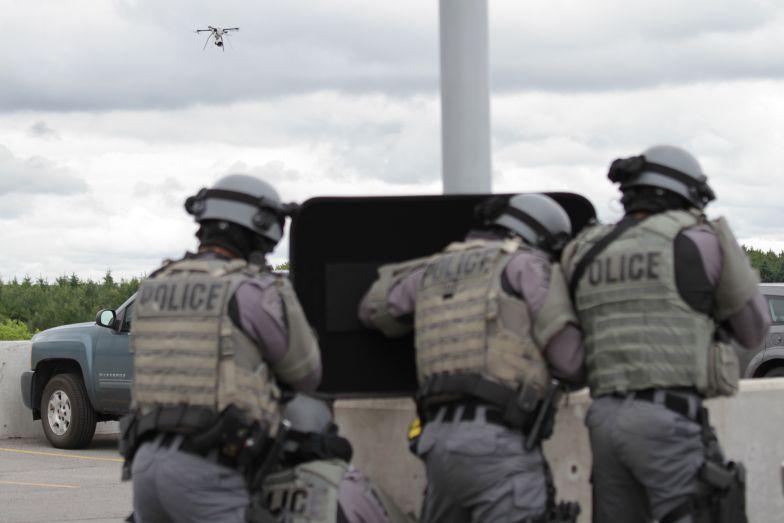
ing the Phase II Report, and I must say that that they have an incredibly complicated and difficult job. The subject of Phase 2 is addressing the requirements associated with the operation of all categories of UAV systems where the UAV MTOW is 25 kg or less and the UAV is operated BVLOS (Beyond Visual Line of Sight) under visual flight rules (VFR), day or night, or instrument flight rules (IFR).
While the implementation of their recommendations is still years away, the recommendations of the Phase II Working Group consider a broad variety of scenarios that will go some distance to providing other users of the airspace with comfort, including ADS-B “out”; medical standards for UAV pilots; mandatory training and licensing standards for UAV operators and
maintenance engineers; the use of detect, sense and avoid technology (for other aircraft and terrain and obstacles); maintenance standards; flight termination capability, to name only a few. I was impressed that the commercial UAV community has taken a conservative and cautious approach to the use of UAVs.
While the operators of UAVs are obliged to integrate their operations in to the established airspace structure, and to ensure that their aircraft can be safely integrated with the operation of other aircraft, I think that it is inevitable that conventional manned aircraft will be driven to adapt to the presence of these new aircraft – including technology that will allow them to sense and avoid UAVs.
There will need to be a mechanism so that manned aircraft
will be able to be aware of potentially conflicting UAV operations in their own area of operations. Conventional manned aircraft operators need to become familiar with UAV design and operations, and become attuned to the signs of UAV operations, nearby.
The reality is that these new aircraft are here to stay, and their use will only continue to become more popular. Conventional manned helicopter operators need to adapt to their presence and potentially even capitalize on their use, by applying the discipline that they bring to manned aircraft operations, and offering those complimentary services to their existing customers.
Fred Jones is the president/CEO of the Helicopter Association of Canada and a regular contributor to Helicopters magazine.
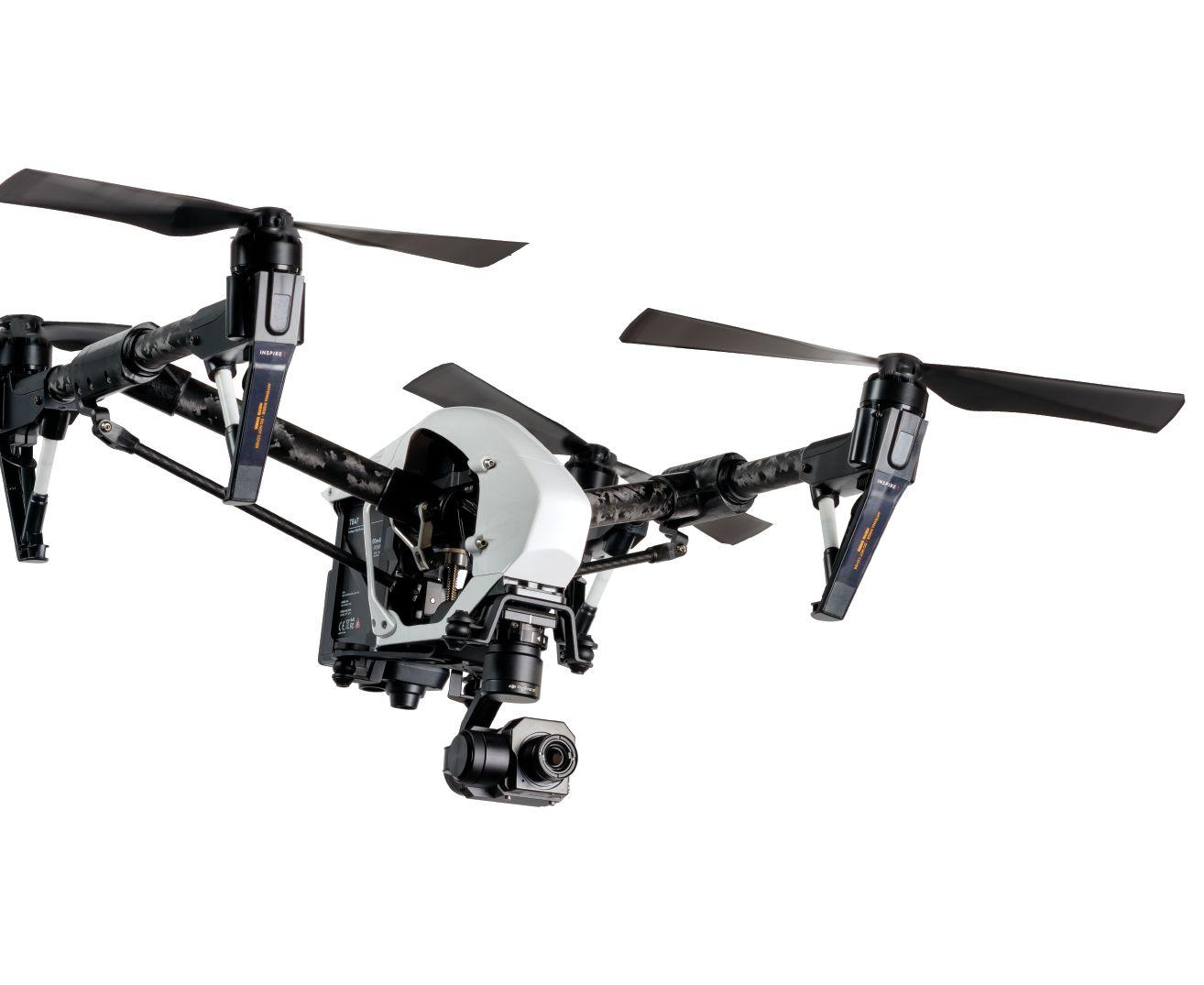
PHOTO: AERYON LABS
Airborne Thermal Building Inspections
Inspections that used to take hours of ladder climbing and pain-staking roof walking can now be done in minutes with FLIR’s Aerial Inspection Kits.
Available with basic thermal imaging or full radiometric temperature measurement functions, these powerful kits give you everything you need to expand your business.
Visit www.flir.ca/dronepacks today for all the details.
While you’re there, check our kits for Utility Inspections and First Responders!