ind turbines are largely seen as having a dangerous relationship with the fixed-wing community in Canada, because the country’s available landmass allows for placing these farms on the ground, as opposed to the many offshore energy projects in Europe. The placement of wind turbines became mainstream news in 2014 when protests erupted around a plan to place a farm along the flight path of Collingwood Regional Airport.
Local politicians, who had lost autonomy over the placement of wind farms through the Green Energy Act, argued, that because of the obvious safety concerns, the proposed 125-metre wind turbines put the airport’s own multimillion-dollar plans to develop business in jeopardy – if not the entire airport’s future. By late-2017, the controversial wind turbine project was cancelled.
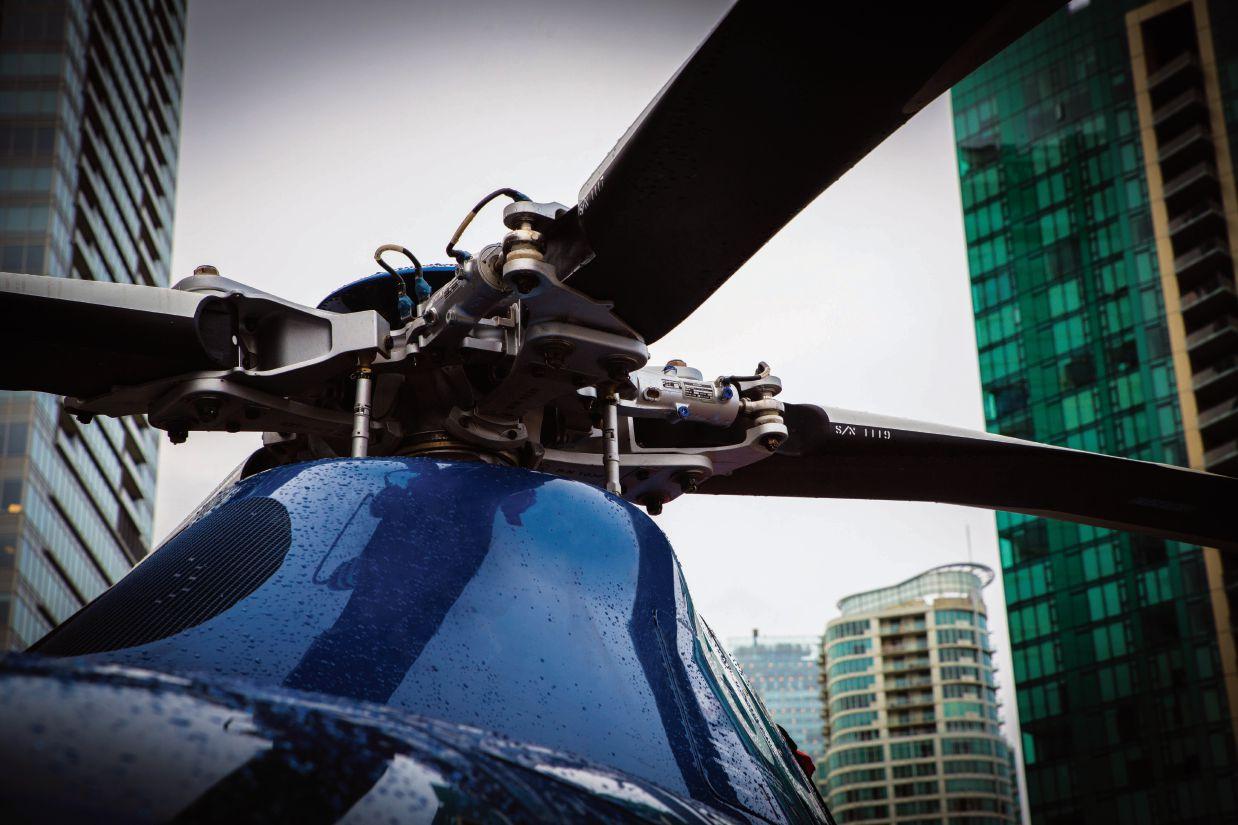
Rotary-wing aircraft, of course, face the same fixed-wing dangers of wind-turbine obstructions near regional airports and aerodromes, but there is also a positive, growing relationship between the helicopter world and offshore wind turbines, which rotorcraft are perfectly suited to service. Helicopter operations continue to gain such multimillion contracts in Europe and in January 2018 the Government of Canada initiated its own process to create offshore wind farms, primarily in the region of western Newfoundland.
Airbus Helicopters in September 2018, just days before it was to participate in WindEnergy Expo in Hamburg, Germany, released a
Offshore wind support
rate of electricity production, wind farm operators need an efficient, rapid-response logistics system, relying on high availability, to keep losses to a minimum should a malfunction occur. At the same time, wind farms are being built further and further from the shore. A helicopter can cover 40 nautical miles (approximately 74 km) in 20 minutes, explains Airbus, meaning it can reach the site and return to shore faster than a transport vessel.
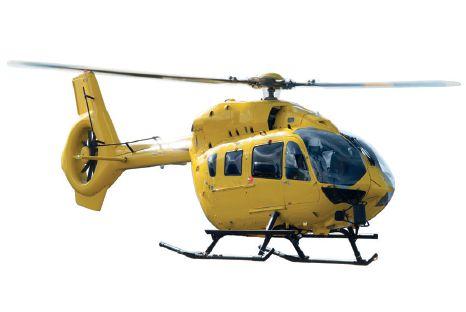
Airbus has developed a logistics calculator for wind farm operators, which takes into account all relevant factors – weather, location and the number of turbines in the wind farm – to determine the most economical logistics solution, which includes options on the mix of transport and special-purpose vessels. The wind farm companies do not usually purchase the means of transport themselves, of course, but lease the services from operators. Airbus Helicopters’ new H160 model is well suited for these offshore operations, based on the existing use of H135, H145 and H175 rotorcraft for crew transport, maintenance and rescue missions.
Canadian helicopter operations can now pay more attention to this growing business segment following the January 2018 launch by Canada’s Minister of Natural Resources, Jim Carr, of a $200 million expression of interest for the Emerging Renewable Power Program. This funding is part of the government’s planned investment of $21.9 billion over 11 years to support green infrastructure under the PanCanadian Framework on Clean Growth – targeting tidal, geothermal and offshore wind projects.
A helicopter can cover 40 nautical miles in 20 minutes... it can reach the site faster than a [sea] vessel.
statement estimating the needed support for wind farms will create a demand for up to a thousand helicopters over the coming two decades. The company states this demand corresponds to revenues of approximately €9 billion ($13.6 billion).
“Helicopters are an integral part of any logistics concept for offshore wind farms,” said Dennis Bernitz, head of Western Europe Sales. “Helicopters can be used to deploy technicians or medical personnel in emergencies, even in rough seas, and can also transport operating personnel between the shore and the wind farm.”
Airbus explains with turbine output rising, leading to a higher
In October 2016, Beothuk Energy agreed to a partnership with one of the world’s largest offshore wind investors, Copenhagen Infrastructure Partners, to develop offshore wind farms in Atlantic Canada. A report by Natural Resources Canada (NRC) quotes Kirby Mercer, chairman and CEO of Beothuk Energy: “The future for offshore wind energy is now. There will be a major shift in five to 10 years with a lot of oil and gas companies buying offshore wind and renewables. It’s a New Age business.”
Through Beothuk, NRC explains Kirby is developing a $1 billion offshore wind farm in western Newfoundland – because of its constant wind and shallow water – to help meet increasing demand for clean energy in Atlantic Canada and the Eastern United States. NRC explains the eastern United States expects approximately 86 Gigawatts in offshore wind by 2050 and Atlantic Canada is well positioned to deliver it.
Universal acquires Lakelse Air
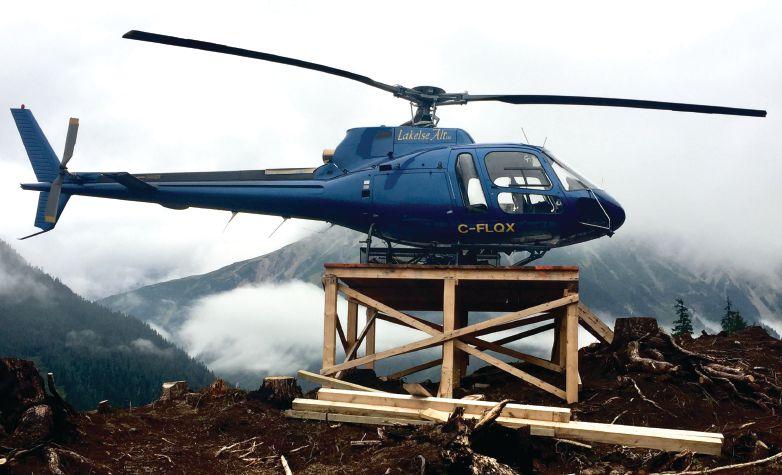
Universal Helicopters of Goose Bay, Newfoundland and Labrador, purchased Lakelse Air of Terrace, British Columbia, which includes a fleet of 12 aircraft among other assets. The purchase price was not disclosed.
Earlier in the month, Universal announced an investment to own 49 per cent of South Coast Helicopters, headquartered in Fullerton, California. South Coast provides services to the motion picture and commercial production industries. It also services clients such as the U.S. Forestry Service and NASA.
Lakelse holds operating expertise in north-western British Columbia, including
Lakelse Air provides services for aerial construction and powerline activity, mining and exploration, oil and gas, and in forestry and forest fire suppression.
services for aerial construction and powerline activity, mining and exploration, oil and gas, and in forestry and forest fire suppression.
“There is huge mining potential in the Golden
Triangle, a mineral-rich area of north-western BC,” said Shane Cyr, president and CEO of Universal. “We see opportunity in transporting people and supplies to these remote areas, as well as in supporting the
construction of power lines.” Cyr continues to explain the acquisition of Lakelse also makes Universal Helicopters Canada’s only coast-to-coast Indigenous owned helicopter services company.
STANDARDAERO CUTS RIBBON ON COMPONENTS FACILITY
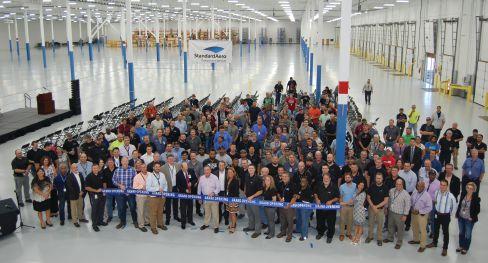
StandardAero Component Services on September 14 cut the ribbon on a new 206,000-square-foot repair facility in Cincinnati, directly adjacent to its current 236,000-square-foot facility, nearly doubling its component-repair capacity. StandardAero explains the new facility has been converted into a high-tech aerospace component repair shop with new flooring, lighting and HVAC systems. StandardAero is actively moving parts, equipment and people into the building. The facility will accommodate component repair growth on new and legacy platforms, aeroderivative, military and commercial aircraft engine component repair, as well as larger components.
Once fully operational, StandardAero expects to employ 200 to 300 technicians to meet the demands of customers over the next 12 to 18 months. Currently, the company has more than 70 open positions publicly posted for new jobs in Cincinnati. During 2018, StandardAero also increased shop capacity by an
Once fully operational, StandardAero expects to employ 200 to 300 technicians at its new component-repair facility in Cincinnati. (Photo: StandardAero)
additional 60,000 square feet with expansions of its facilities in Hillsboro, Ohio, and Miami, Florida. Overall investment to fund the expansions will exceed $20 million in construction and capital equipment costs, when complete.
(Photo: Paul Kendall)
Canada Post honours SAR
Canada Post unveiled a series of five stamps to pay tribute to the country's emergency responders and search and rescue experts, highlighting “their willingness to spring into action with skill, determination and courage whenever called upon.” The Crown corporation continues to explain search and rescue experts find, rescue and treat people in life threatening situations, and transport them to safety or advanced medical care as need be – “In performing their life-saving duties, search and rescue experts often find themselves in dangerous conditions such as avalanches, extreme weather or high seas.”
Canada Post’s third stamp in a new series, focusing on a mountain extraction, pays tribute to the country’s search and rescue experts. (Image: Canada Post)
The third stamp of the series focusing on search and rescue was unveiled in Banff, Alta., at the centre for Parks Canada's Mountain Safety Program. This stamp portrays a helicopter extraction in the mountains. The additional four emergency responders stamps in the series pay tribute to paramedics, the Canadian Armed Forces, firefighters and police officers. All five stamps reflect Canadians’ respect and gratitude for the skills, service and sacrifices of those who protect Canadians, explains Canada Post, sometimes by risking their own lives.
Rockwell domes for Coptersafety
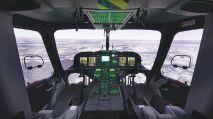
Rockwell Collins is providing Coptersafety’s training facility in Helsinki, Finland, with three Level D helicopter domebased complete visual systems. Coptersafety was founded four years ago by a helicopter pilot to focus on commercial rotary-wing training and safety. The systems include multiple EP-8100 image generators, 4K resolution, liquid crystal over silicon (LCoS) laser-illuminated projectors, a 240 degree by
T80 degree motion-compatible dome display, night vision goggle capability and additional channels for camera systems, vertical reference window, cargo mirrors and an Enhanced Vision System.
Two of the systems have already been certified by the Finnish Transport Safety Agency. Rockwell Collins explains this agreement is an example of its
ability to transfer technology developed for military applications into the civil helicopter training environment.
In addition to the EP-8100s, Coptersafety’s system also feature the WholeEarth synthetic environment, described as the highest resolution complete Earth database in the industry. It includes enhanced 3D seastate modeling.
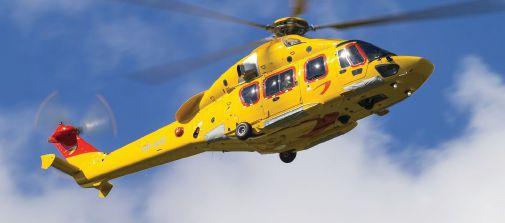
he NHV Group entered a new contract with Siemens Gamesa Renewable Energy to provide helicopter services in support of the Rentel Offshore Wind Farm. Operations are expected to start in October 2018. Flights will depart from NHV’s base in Ostend to the Rentel wind farm located approximately 40 km from Ostend, in front of the Belgian coast. NHV will support this project utilizing the H145T2 aircraft, the latest Airbus Helicopter 4-tonneclass twin-engine rotorcraft.
The Rentel farm will be the fifth offshore wind project in the Belgian North Sea. This new offshore power station will consist of 42 Siemens Gamesa D7 offshore wind turbines and will have a maximum installed capacity of 309 MW. With their tip height of 183 metres, the new wind turbines will be the largest thus far installed in the Belgian North Sea and will deliver renewable energy to approximately 300,000 households. Earlier this summer, the NHV Group also started supporting Siemens Gamesa in the construction of the Beatrice Offshore Wind farm. These H175 operations are departing out of Aberdeen (UK).
HELICOPTERS MAGAZINE PO. Box 530 105 Donly Drive South Simcoe ON N3Y 4N5 Tel.: 519-428-3471 Fax: 519-429-3094
Toll Free: 1-888-599-2228 Helicoptersmagazine.com
EDITOR JON ROBINSON jrobinson@annexbusinessmedia.com
MEDIA DESIGNER ALISON KEBA
CONTRIBUTING WRITERS
RICK ADAMS, DAVID CARR, BRIAN DUNN, PAUL DIXON, WALTER HENEGHAN, FRED JONES, JAMES MARASA, CARROLL MCCORMICK, COREY TAYLOR
NATIONAL ADVERTISING MANAGER MENA MIU mmiu@annexbusinessmedia.com 416-510-6749
CIRCULATION MANAGER JAY DOSHI jdoshi@annexbusinessmedia.com 416-442-5600 ext. 5124
GROUP PUBLISHER MARTIN MCANULTY mmcanulty@annexbusinessmedia.com
PRESIDENT & CEO MIKE FREDERICKS
RETURN UNDELIVERABLE CANADIAN ADDRESSES TO ANNEX PUBLISHING & PRINTING INC., 111 Gordon Baker Rd., Suite 400, Toronto ON M2H 3R1 subscribe@helicoptersmagazine.com
Published four times a year by Annex Publishing & Printing Inc
Helicopters Magazine is an associate member of the following Canadian aviation associations:
H175s support wind farms out of Aberdeen. (Photo: NHV.)
COLUMN
A promising year of safety
The need for a more complete and accurate picture in Canada
With the fall upon us and winter beckoning, it is a good time to pause and reflect on the industry accident stats for 2018 to date. It is premature to summarize the year with three full months still to play out, but so far the accident profiles, as gleaned from Transport Canada’s CADORS database, have been pretty good for the industry – even in a down year of activity.
There had been 15 accidents reported in Canada as of mid-September 2018, two of which were fatal with a total of four fatalities. Unfortunately, a pilot in late-September also lost his life in Whitchurch-Stouffville, Ont. The two fatal accidents I reviewed on CADORS were privately owned and operated aircraft. It is interesting to note how the accidents were nearly evenly distributed among different phases of flight: Cruise, approach/landing and hover/ground operations.
The distribution of aircraft types was pretty even as well with a third Bell, a third Airbus and the remainder involving Robinson and Hughes aircraft. The event categories also followed a predictable pattern with controlled flight into terrain (CFIT) or into a fixed object (wires, buildings, trees, etc.) comprising the majority of the accidents; and only one event being linked to mechanical failure. This CFIT profile is consistent with previous years and reflects an unfortunate reality of our industry: When we operate close to the ground or fixed objects, our risk increases. Wire strikes, blade strikes and CFIT events will ruin anybody’s day and can have long-lasting negative effects on a company and its employees.
and never make it into their company’s safety database, let alone Transport Canada’s. Without broad, widespread reporting of risk related events, a complete risk picture cannot be drawn.
The data available to us would lead to a sketch maybe, but certainly not any sort of comprehensive picture. I have written previously about the importance of reporting systems. The broader and deeper the commitment to encouraging hazard and incident reporting, the better equipped managers will be to fully understand operational challenges of their businesses. The need for the development of a comprehensive dataset for Canadian helicopter operations comes down to a simple Deming-ish fact: We cannot manage what we do not measure.
I know there have been attempts by industry leaders in Canada to develop an industry-wide event database for the benefit of all. This would be a repository of all operators’ safety events, incidents, close calls, near misses and accidents, categorized in a manner similar to the CADORS dataset and accessible by all. This data could be de-identified, scrubbed of information that would identify or implicate a particular operator but retain the salient facts: Phase of flight, aircraft type, operational profile, etc. I posit that such a collection of data would provide very valuable information, and with proper commitment, a data set that would show thousands not hundreds of events per year.
Indeed, our industry association, the Helicopter Association of Canada (HAC), could be the guardian of this data and could even provide the horsepower to analyze and trend the information. Without question, accidents tell a story about risk; but a broader, fully comprehensive collection of all the ancillary events throughout industry would enrich our understanding of the full risk spectrum and could potentially provide valuable insight into more effective risk management.
Such a collection of data… with proper commitment… would show thousands not hundreds of events.
So what, if anything, can we conclude from this cursory look at accident stats? For starters, we know from past experience that this dataset is incomplete and potentially misleading regarding the industry risk profile. From the same dataset, I noted there were 311 reports (incidents and accidents) ranging from minor airspace or communications violations to the above-mentioned fatalities.
One would need to review each report and assign a risk rating to effectively map the risks (I have not done this, sorry). Further, while there are some items that must be reported to Transport Canada, many incidents occur within daily operations that are just dealt with by the pilots involved
A strong reporting culture is key to developing effective safety management systems. The broader the dataset, the better the trend analysis and the more detailed our understanding of risk. A broad cooperative industry-wide database and safety management system can bring real benefits to all helicopter operators, to our customers and to our bottom line. The time is ripe for such collaboration. The question is: Who will pick up the torch?
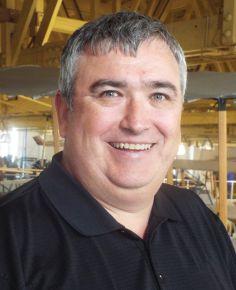
Walter Heneghan is an experienced and well-travelled pilot who has served as the top safety professional at Canadian Helicopters and Summit Aviation. He is currently working with CHC Helicopter in Kazakhstan as an SMS development specialist. He is a regular contributor to Helicopters and Wings magazines.
WALTER HENEGHAN
COLUMN
CHRISTOPHER LAWN
By automating the transfer of flight log data to an aviation management system (AMS), operations can reap the rewards of having the information they need at their fingertips. But it doesn’t end there. Below are six key takeaways found in integrating flight logs with aviation maintenance software.
1. MANUAL PROCESSES ARE MINIMIZED
Manual processes can be the bane of any aviation maintenance department’s existence. They can be time consuming, tedious and prone to human error. The most significant difficulties come to the fore when manual errors are not identified in a timely manner. Incorrect flight log data can be damaging and it can be a nightmare when a pilot’s analogue flight logbook goes missing.
If an aircraft has been grounded because a part is recalled, no director of maintenance ever wants to learn their department cannot determine the correct hours that have been logged on that aircraft due to inaccurate flight log information. By integrating flight logs with an AMS, a pilot can simply enter flight log data into their electronic flight log book and this information is instantly transferred to the software.
2. NO MORE WAITING FOR INFORMATION
The practice of having pilots manually provide their flight log hours to the maintenance department is still in place at numerous aviation
Adding digital flight logs
Six ways to reduce maintenance time and improve AOG situations
productivity – ultimately, technicians spend less time at workstations and more time on performing maintenance tasks. This goes hand in hand with the fact that when flight log information is automatically transferred to an AMS, the information is fully transparent.
Searching for information seems like a minor inconvenience and when that becomes routine, it clearly has a negative impact on a company’s finances. To improve business efficiencies, you need full operational transparency. By automating processes, you can achieve this goal.
4. AN IMPROVEMENT IN THE INTEGRITY OF DATA
Trusting the accuracy of data is key to improving the management of and efficiency of your business. If you can’t trust in the accuracy of flight log information, how can you feel comfortable performing maintenance on an aircraft?
Simply put, fewer manual inputs equate to fewer human errors and, in turn, this leads to an increased level of confidence in the integrity of your data. Over time, staff trust the accuracy of data within your system and the turnaround time on maintenance activities improves.
5. INCREASED EFFICIENCY ON MAINTENANCE TASKS
Hours entered on a pilot’s electronic flight log book or instantly relayed from an aircraft can indicate to the maintenance department that a particular part is coming due for replacement. The department can then prepare for the maintenance tasks in advance by requesting the required parts from the stores department prior to receiving the aircraft.
When a pilot’s flight logbook goes missing, it can be a nightmare for any aviation operation.
operations. By using an API, flight log information can be automatically transferred directly from an aircraft itself or from a pilot’s electronic flight logbook over to the software. This is a huge time-saver for the maintenance department and a maintenance planner, in particular, as they no longer have to wait for the information required to begin planning maintenance tasks and checks.
3. COMPLETE OPERATIONAL TRANSPARENCY
For an aircraft maintenance department, decreasing the amount of time spent accessing information is crucial for increasing overall department
’’
By automating the transfer of flight log information to an aviation maintenance solution, operations can reduce their ground time and improve their turnaround on maintenance activities. This ultimately improves a company’s capacity to take on new business.
6. INSTANT ACCESS TO INFORMATION
When maintenance departments are forced to wait for the information they require, forecasting maintenance duties becomes a challenge. This makes them less efficient. By integrating electronic flight log books with an AMS, aviation operations have the opportunity to improve maintenance planning, reduce inefficiencies, and expedite maintenance activities.
Christopher Lawn is a marketing specialist with WinAir, info@winair.ca.
Rugged and Reliable
Leonardo Helicopters are renowned for performance, versatility and safety.
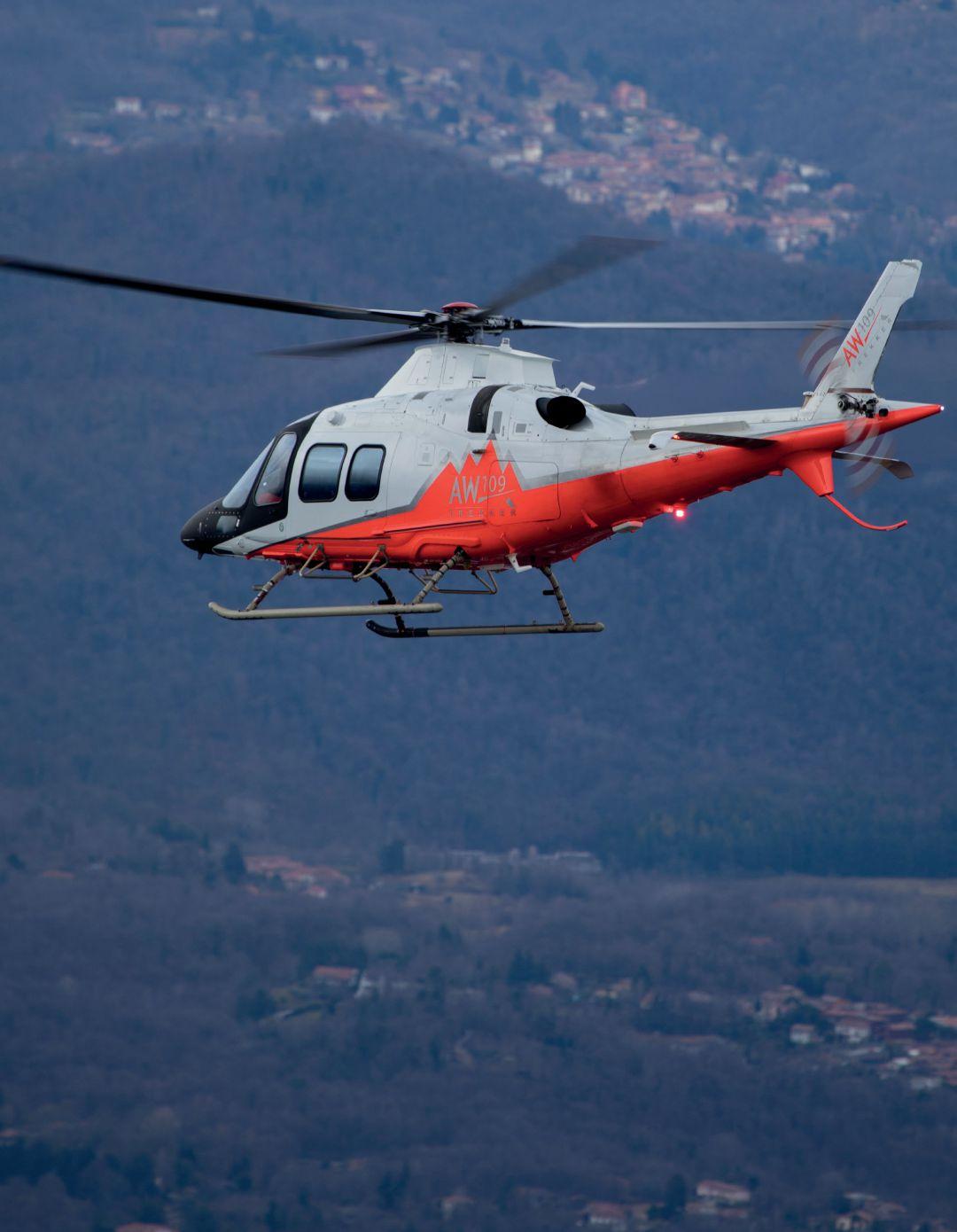
The AW109 Trekker - an evolution of the proven AW109 platform - is the newest light twin, designed for demanding utility and aerial work operations.
Equipped with robust skid landing gear, a latest-generation glass cockpit and advanced avionics, the Trekker provides the excellent handling qualities, high productivity and operational flexibility you demand.
Inspired by the vision, curiosity and creativity of the great master inventorLeonardo is designing the technology of tomorrow. Visit us at HAC, Booth 401-403
Fire support in Fort St. John
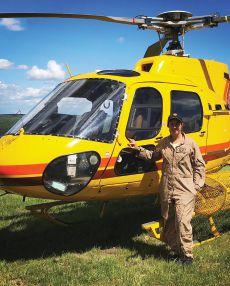
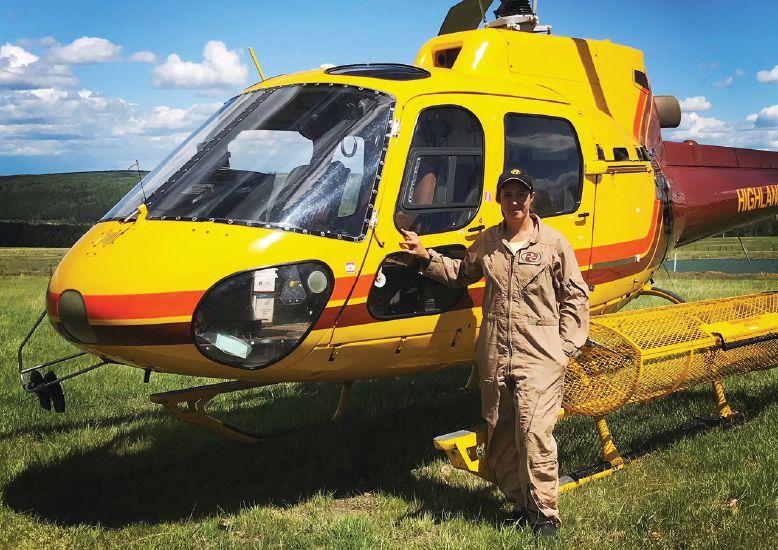
Working today for Highland Helicopters in Fort St. John, BC, Becky Grimsrud has been a helicopter pilot for 13 years.
Two helicopter pilots share their inspirations to fly and fight fires
BY KENDRA KINCADE
Two years in a row British Columbia has dealt with devastating wildfire seasons with the Provincial government twice declaring a state of emergency due to these fires. I thought it would be interesting to seek out a couple of women who have helicopter fire-fighting experience to share their stories.
Becky Grimsrud has been a helicopter pilot for 13 years and works for Highland Helicopters in Fort St. John, BC. She has been married for 10 years and has two daughters, ages five and seven. She is an outdoor enthusiast and is very involved in her home community, sitting on several boards and running for Fort St. John’s city council twice. Seeing new places, performing in different situations almost every day, and the wide variety of jobs are things Grimsrud loves about the dynamic nature of being a helicopter pilot.
“Fighting fires has its ups and downs. It depends a lot on the day and the fire,” Grimsrud says. “You have days when you are just sitting and waiting to be needed; and other days you are non-stop for your entire duty day.
“Some days the fires are very active, particularly later in the day, and other days they are quite calm and not doing much,” she explains. “There is also a big difference between being the only air-
craft on a small fire, and being one of many aircraft – including heavy-lift helicopters and tankers – on a campaign fire.”
Grimsrud adds, that while it can be challenging work, it is also very interesting. She says the only situations in fighting fires that have made her a bit nervous happened when several aircraft are working in a small area, not so much the type of work itself. “You really have to stay on top of the air-to-air radios, even if people want to chat with you on the forestry channels.”
Bucketing can be quite difficult as well, Grimsrud explains, especially when you are the slow aircraft in a circuit with several other aircraft dipping out of the same water source, targeting the same drop zone.
“On the other hand, it is quite incredible having the positive response from the public when you are considered a bit of a hero or celebrity being associated with the firefighters,” says Grimsrud. “It’s a little different from the normal day-to-day VFR helicopter in that way. There are pros and cons to every career choice, but I can’t imagine sitting at a desk all day for a job at this point.”
Tressa Clarke obtained her pilot’s licence at 23 years of age. After obtaining her commercial fixed-wing license and 50 hours in float plane training, she joined the military. This is where her interest
turned to helicopters. After 13 years of working with the army on Griffons, and two deployments to Afghanistan, she decided to release from the military and work in the civilian VFR helicopter industry.
Clarke works for Bailey Helicopters in Fort St. John, BC. It is her responsibility to fly customers around the sky and working at Bailey Helicopters reminds her of why she fell in love with flying.
Now in her second season of flying fire support, she was most recently assigned to a fire west of Mackenzie, BC, as the administration aircraft in an AStar 350B2. This means that she primarily flies people who need to get from Point A to Point B to recce the fire, providing critical reconnaissance to plan operations.
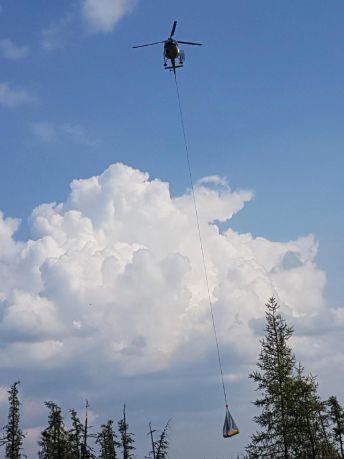
The fire west of Mackenzie was a high priority for BC Forestry because it was threatening residences. Some of the challenges that make this an exciting job, explains Clarke, are long-lining important gear and flying in low visibility conditions with several other aircraft in the same airspace.
Clarke explains everyone involved has a part to play in fire support and that every-
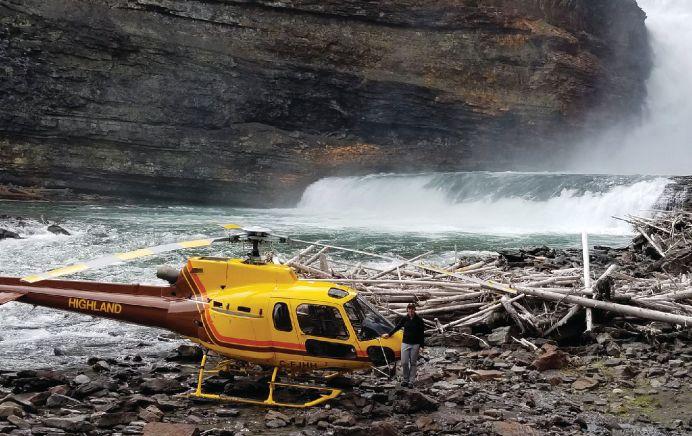
Founded in 1959, Highland Helicopters has a fleet of more than 35 light and intermediate turbine helicopters operating primarily throughout British Columbia and Alberta.
one comes together as a team when working on a fire. This includes the provincial forestry workers, contract workers and helicopter pilots and engineers. “It doesn’t matter what company you work for or who is flying more hours; everybody helps out and
works together to fight a common enemy –the fire,” Clarke says.
There are so many fulfilling jobs in the aviation industry to explore and these two women are prime examples for others to take a closer at the world of rotorcraft.
DTI Training Workshops Scheduled in Canada and
DTI, having spent the last 15 years helping develop and deliver training to Transport Canada, NASA and the U.S. DoD, on Quality Assurance, SMS and Surveillance Procedures, is now ready to help you achieve all you can.The workshops are designed to familiarize the participants with the basics of a QA/SMS system and what Transport Canada, the FAA and other governing bodies will be looking for, as they implement their system. It is being taught by the same group (DTI) that has helped Canadian Regulators develop the QA & Surveillance portions of the SMS, and has spent the last ten years facilitating the implementation of the new process to all its inspectors.
Three Ways to Attend the Workshops!
1) Sign up to the workshops at a location most convenient to you below!
2) Host our workshops and receive incentives and discounts.
3) Bring DTI to your Enterprise for Company Specific workshops! Receive Discounts, Incentives and more! (this applies to even a single workshop!)
EDMONTON AREA
- HOSTED BY DELTA HELICOPTERS (ST. ALBERT HELIPORT # 13 26004 TWP RD 544, STURGEON COUNTY, ALBERTA T8T 0B6)
Basic Quality Assurance - October 16, 2018
Developing an Acceptable Corrective Action Plan
- October 17, 2018 (am session)
Basic Auditing Principles - October 17, 2018 (pm Session)
Developing an Acceptable Corrective Action Plan - November 7, 2018 (am session)
Basic Auditing Principles - November 7, 2018 (pm Session)
Dennis & Sol Taboada of DTI Training. To Register for a Workshop goto: dtitrainingcanada.ca/ workshops
CALGARY AREA
- HOSTED BY CANADIAN NORTH
Basic Quality Assurance - December 4, 2018
Developing an Acceptable Corrective Action Plan
- December 5, 2018 (am session)
Basic Auditing Principles - December 5, 2018 (pm session)
PROFILE
VISIONARY SERIES Mike Stanberry, Metro Aviation
Building a Gold Standard in traditional air medical transport with safety and innovation
BY JON ROBINSON
hen the 1980s began, Mike Stanberry was running a construction company in Baton Rouge, Louisiana, with a business partner. Both had their private pilot’s licenses – Stanberry since 1973 – and, operating as subcontractors across Louisiana and into Arkansas and Texas, they decided to use airplanes to check on job sites and make sure the prime contractors were truly ready for them. This too proved cumbersome and the partners in 1981 decided to try a more direct air approach with helicopters.
WThe sudden appearance of the company’s gas-reciprocating Enstrom attracted attention from local businesses and people who simply wanted to fly. Stanberry, who himself was learning to fly rotorcraft, realized the potential of starting up a helicopter operation. Metro Aviation was incorporated in 1982, which Stanberry took full ownership of after splitting with his business partner who continued on alone with the construction company. Metro initially operated as a charter, flight training and maintenance operation, but that changed in November 1983 when Stanberry acquired three used Hughes 500-Ds. At the time, interest rates on loans were reaching above 18 per cent and the industry was struggling. Still, Stanberry picked up the 500-Ds and eventually fly one to California to install a Litter Kit – to transport one medical patient on a secured stretcher.
Metro then reached an agreement to provide helicopter ambulance services for Schumpert Medical Center in Shreveport, where the company would soon move. What began in a little hangar with a couple of employees and pilots has grown over the last 36 years into what many see as the Gold Standard in traditional air ambulance programs, with 140 aircraft, 900 employees – 500 of whom are pilots – and annual revenues of more than $250 million. WINGS spoke with Stanberry to learn more about the growth of Metro Aviation.
How did you get through those first tough years?
MS: Metro had a walloping $1 million note and each 90 days I would go down to the bank. They would tear up that note and roll the interest,
which was phenomenal, into a new note. It kept growing like a snowball, but banking was not as regulated back then and there were people who helped me along the way. One of the most interesting stories is that Schumpert Medical Center was a catholic hospital and, back in those days, it was run not by business people, but by the nuns themselves. They were originally sharing their helicopter with the news station across the street, but it wasn’t long until they wanted their own aircraft.
I got a bank here in town agreeing to give me a loan that amortized [a new BK 117] helicopter over a 10-year period. The hospital signed a contract. They could cancel the contract, but they would have to pay the balance of the note at the bank on the helicopter; and with that I was able to get a loan for my first BK 117. The amazing part, as if ordained by God himself – I had the contract written so the bank would loan me 100 per cent of the money, but only after I had the title of the aircraft. MBB said, ‘Fine, we will give you the title of the aircraft, but you have to make a deposit of 10 per cent down,’ which at that time was $160,000, which I didn’t have.
I was at the hospital a good bit of the time flying their current Bo 105 and the sisters saw me walking the halls. One day, the head nun asked how the new helicopter was coming along… She said, ‘Mike I know you too well, come to my office, let’s have a cup of coffee.’ I told her the story and she said, ‘Well, that is not a problem.’ She picked the phone up and called the CFO of the hospital and a few minutes later he came down with a cheque made out, not to Metro Aviation, but to Mike Stanberry for $160,000 – and didn’t even ask me to sign a promissory note to pay it back. That is the kind of luck and fortune that has rained on Metro Aviation.
Why is trust key to your success?
MS: The main thing that I have learned is that you can only take one thing with you when you die and that is your reputation – your integrity. You just always have to be straight and honest with people. I have been successful with that mindset. I have upset some people but that is okay. There is no magic here. I am not some brilliant guy. I have just
Mike Stanberry started Metro Aviation out of a small hangar in Baton Rouge. Now based in Shreveport, Metro holds more than 140 helicopters and some 500 pilots as one of the world's most powerful companies focused on traditional air medevac programs.
increases our match by up to seven per cent of an employee’s contribution. These are the things that family members do for each other… Metro is the only company of any size left in the industry that is not publicly traded or equity owned… We have set up a structure to carry the torch on. It is not all about money. It is about creating value for the next generation and that is what we are all about in the Metro family.
How is Metro positioned on the international stage?
MS: Metro has aircraft STCs or parts in six of seven continents in the world. We have people coming in here from China and New Zealand, Germany, Canada, Brazil and Argentina to the sims – doing their training. In 2016, the Helicopter Flight Training Center was recognized for 1,500 hotel-room nights here in Shreveport, which is pretty significant.
surrounded myself with extremely competent people who have made us successful.
How would you describe the culture at Metro Aviation?
MS: We call it the Metro family and I like to think people are family –even our customers, family through and through. I’ll give you a couple of examples: The guy who runs the engine shop, Ken Alford, has been with me for 28 years. He started off as a snotty-nose kid sweeping the floors and went into the engine shop, got his A&P and other licenses, and eventually became the engine shop manager. He is still over there today. Nick Bruton [chief inspector] is another guy that has been here from the get-go. He is retiring next June and his son has come along following what his dad does. It’s just that kind of relationship… they have determination to acquire the skills and work through it for themselves and the company.
How does Metro take care of its employee family?
MS: I do not know of anybody else in the industry that pays for the employee, the spouse and the dependants, all of their health care, 100 per cent. There is no payroll deduction for their insurance – pretty significant. And we have an education program here. Anybody can go out and get that college degree or their ATP if they want to increase their flying skills; and we will let them use the aircraft free of charge if they want to get an additional rating.
If they want to go back to school, we will pay 50 per cent of the tuition if they get a B or better in the course and a lot of people have taken us up on that. We have a good 401k plan that, beginning in 2019,
How have you grown Metro?
MS: We have doubled in size every five to seven years. The growth has been substantial, but it has been premeditated. We get RFPs all of the time and the first thing we do is look at the culture of the operation and see if it is going to fit well within our organization. For years, we only operated MBB Eurocopter Airbus products but in the last 10 years we started flying Bell products. We try to put a cap on the number of aircraft models we operate so it’s easier to manage things like training and spare parts.
We are not trying to bid on every job that comes in. We are more centred on making sure a client’s culture fits with Metro; and it has to be a traditional program. That is another significant difference between us and the other guys – we don’t get into the billing side of things, and our client’s don’t balance bill the customer. We are a quarter of a billion dollars a year in revenue and, for 36 years, I have never put a budget together or a projection of what we are going to do one year in advance, much less three or five years. I have never had my department heads struggle trying to meet a budget. I think that stifles growth – when you start building your own little empires within the company instead of everybody pulling together as a team.
Why does Metro focus on traditional air transport programs?
MS: I would imagine most of these community-based models make $200,000 or $300,000 a month, so it is very lucrative and that is why you have seen such a vast expansion in the last five or 10 years of more and more aircraft in the field. It has become quite competitive and it is why flight volumes have gone down. Metro is strictly traditional in that we are not at risk. We do not depend upon flights being flown to correct revenue. We make money if the helicopter sits on the pad and doesn’t fly. It is the hospital’s job [to oversee their respective program}, but we have in the last five or six years started helping our clients with their marketing, revenue cycle and business plans.
Why is safety one of your main focuses?
MS: With safety, we put our money where our mouth is. We were the first major operator to equip all of our aircraft and back-up aircraft with
NVGs. Then we basically brought sim training into the industry by working with Flight Safety International... [Together we] brought North America’s first full-motion, Level D sim for an EC145. You can come to Shreveport, go through our ground school, classes, and get in the sims… It would probably take you 60 to 80 hours, depending on your dexterity, and, at the end of it, the FAA can give you a check ride in the sim. If you pass everything, they would issue you an
instrument rotorcraft rating without ever having taken off the ground. I wouldn’t fly with you, but that is how real it is.
Why is IRIS an innovative product?
MS: IRIS is the final nail that needed to be driven. You can give people the best training and put them in the finest equipment. You can have the best safety system. But when that pilot gets in that aircraft, the doors close and it takes off how do you know if that air-
craft is being flown the way the OEM or manufacturer anticipated... IRIS is the first flight-data-recording system with audio, video and worldwide pushto-talk, so we can talk to our pilots from our operational control centre. More importantly, every 10 seconds we are getting a live health report down from the helicopter saying everything is working okay. If something goes wrong, a red light illuminates on the panel and the pilot sees it. We also see it here in our OCC and we can get on the horn and talk to them about that problem. It is a unique system that I have spent probably $20 million on. Our commitment to safety is tremendous.
Are other operators using IRIS?
MS: We own the system, but PHI has decided to put it in all of its aircraft, including offshore aircraft. We have one of PHI’s S76s here and we are putting a system in it to get an STC on the S76. Even though most people in the EMS business do not use S76s – probably no more than a dozen of them around the country. Air Medical Group decided to put it in their aircraft as well. We have had some other offshore operators interested in it and even manufacturers... At the end of the year, we plan to have all of Metro’s aircraft equipped with it. This is brand new technology. We are dragging this industry into the 21st century.
Why do pilots like IRIS?
MS: It is a get out of jail free card – if you do what you are trained to do. We have already seen that, which is why it is widely accepted. We had a particular instance where we had to do a pre-cautionary landing. I will not give you all of the details, but after an incident, the program director called us up and asked for one of the pilots to be fired, because she said he was very unprofessional and scared the hell out of her flight crew.
We said, ‘Just a minute – let us take a look at the data.’ We pulled the audio and the video and the parametric data; and basically what we found is that the pilot did an absolutely superb, perfect, very professional job telling the flight crew exactly what was going on and not to be worried or scared.
What is next for Metro?
MS: Keep on going with our success... We have actually had clients tell us, that if you are a traditional program in the United States, there is only one choice of operators and that is Metro Aviation. It says a lot when you have the industry thinking that Metro is the Gold Standard of traditional operations.
COVER STORY
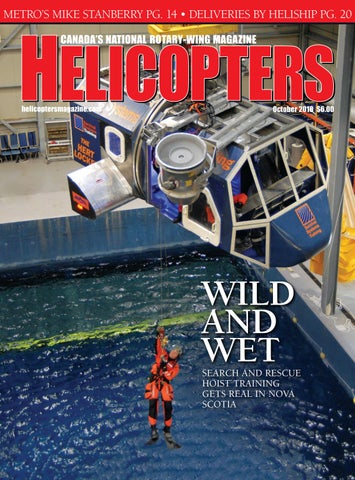
Wild and Wet
Search and rescue helicopter hoist training gets real in Dartmouth, Nova Scotia
BY CARROLL MCCORMICK
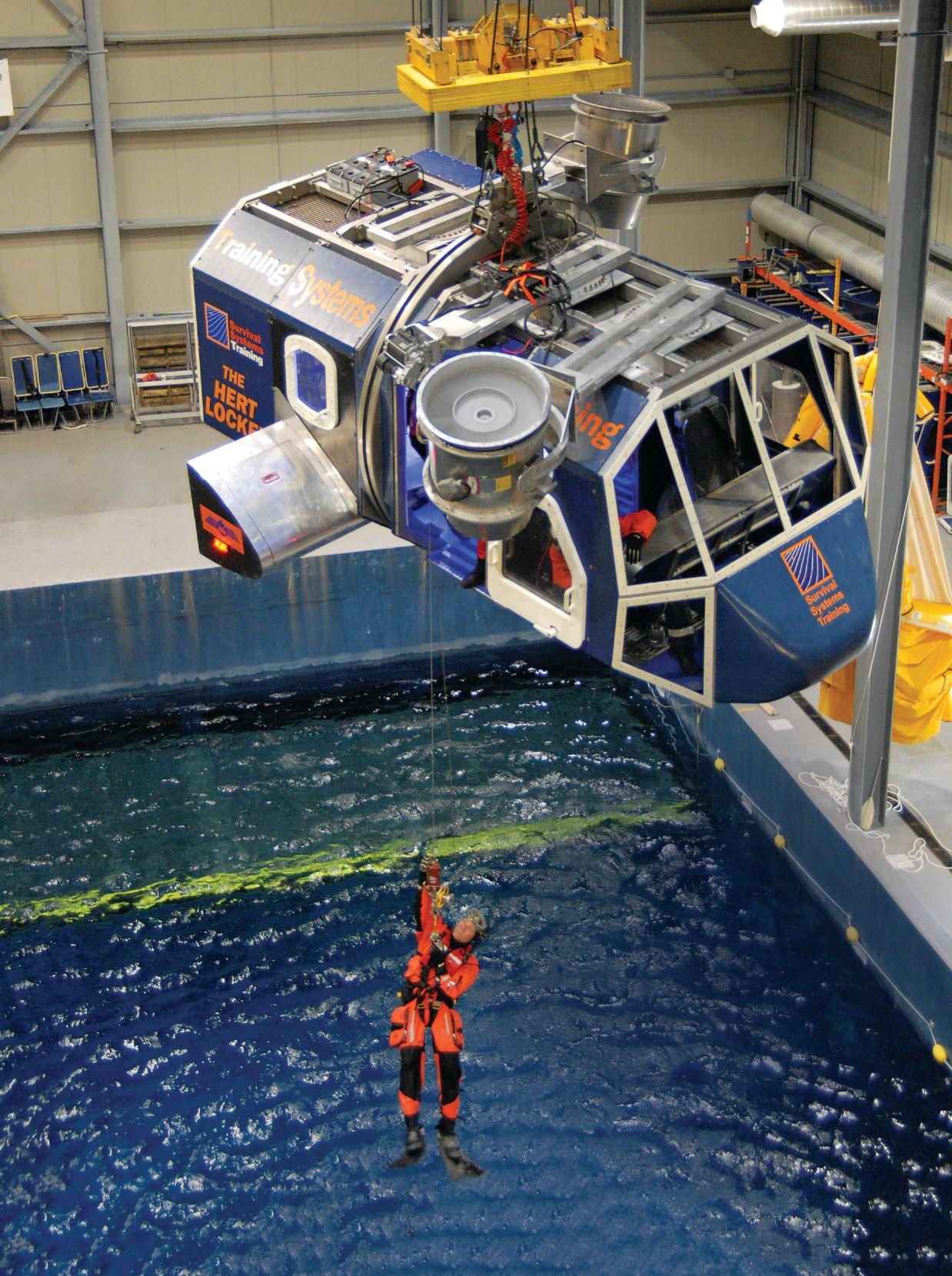
High winds spin the basket stretcher and rescue specialist as he struggles in driving rain to switch from the dead hoist to the backup. Above him, the hoist operator crouches in the doorway of a Sikorsky S-92, buffeted by prop wash. In the water a sodden victim gulps some air and disappears again under two-metre waves.
Finally, the poor soul is captured, pulled aboard and assures the paramedic that he will live to write another day. So went my foray into the new world of synthetic Search & Rescue (SAR) training, conducted at a level of realism (that was not an actual S-92, but a very effective training aid) that leaves certain traditional methods back in the Stone Age where they belong.
My thrash in the deep blue took place in a gigantic building completed in 2014 by Survival Systems Training Limited (SSTL) in Dartmouth, Nova Scotia. Called the Marine Aviation Survival Training facility (MAST), it is SSTL’s biggest push to make training involving helicopters and water, from bullying commandos to capsizing submerged choppers full of offshore oil workers, more realistic.
On that day, Total Response Solutions (TRS), a Dartmouth-based helicopter training and service company, was putting a SAR crew, one of several employed by Canadian Helicopters Limited in the service of providing passenger movements and SAR support for a BP Canada drilling project off the coast of Nova Scotia, through quarterly recurrent helicopter rescue hoist training.
TRS has been leasing MAST time for three years now. “Before MAST, it was static training on the shop floor. There was no way to do it in a realistic environment,” says Derek Rogers, a decorated, ex-military SAR specialist and currently the TRS Project Manager. “We literally did it two feet off the floor – a completely unrealistic training scenario.”
Of his company’s push for ever more realistic training since it began in 1998, SSTL owner John Swain notes, “It would be better to have no training rather than negative [incorrect] training, because it sets up a schema in the brain that would condemn you to failure. It [is] very, very important to have people repeat and repeat the correct actions.”
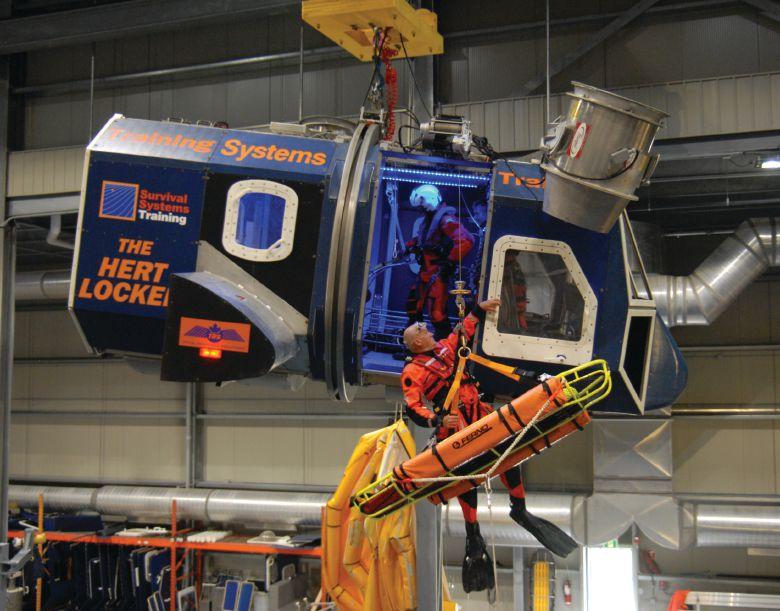
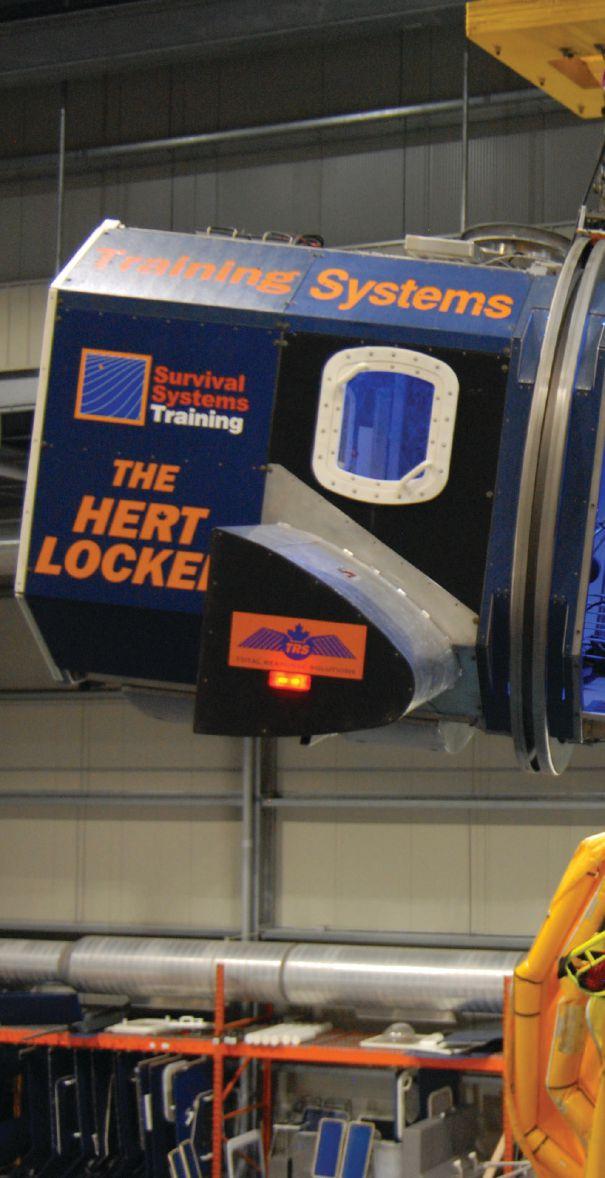
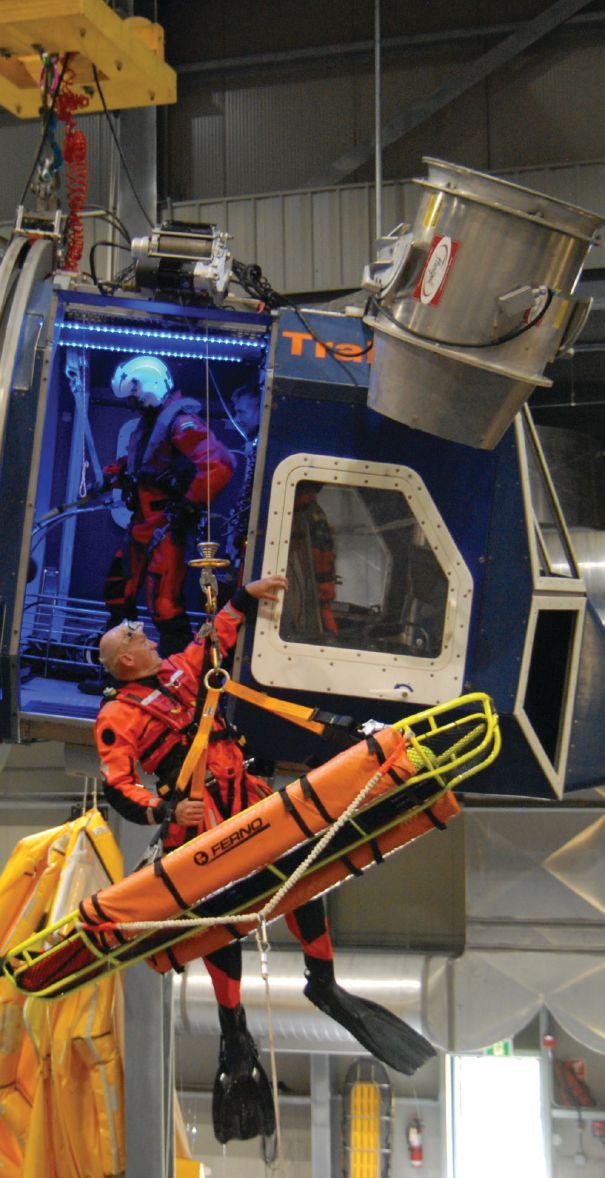
The hoist training takes place in a configured S-92 platform (think: full-size mock-up of a S-92 fuselage), which ordinarily functions as an
egress trainer for helicopter ditching courses. But with the rotate (capsize) function used for egress training disabled, and the aft fuselage fitted with extras like Breeze Eastern hoist, hoist control panel, manual and automatic cable cutters, standard crew hard points, plus two externally mounted fans to stir up some rotor wash, the egress trainer becomes the Hoist Emergency Response Training Program, or HERT Locker.
It is not hard to call the HERT a simulator, but Rogers avoids the term simulated environment in favour of synthetic environment. “We don’t want to say simulator, because most people associate simulator with [computer-generated] virtual reality,” he explains. The HERT shell is vaguely analogous to a cockpit simulator, but they part ways in the presentation of the training program and VR cannot replicate what HERT and the MAST can do. “You can’t do VR for the highangle rescue components of the SAR work, mainly the edge transition, along with the equipment dispatch and recovery in extreme conditions. You need a synthetic environment,” Rogers says.
[You] can go a decade or more before being exposed to these types of conditions.
Take a seemingly straightforward task like lighting a flare under duress. “We always trained guys on a dry dock or in flat water to use a flare. It is not that easy in two-metre seas. You have to get it up out of the water. You have to activate it without burning your hands,” Rogers explains. Or take cable cutting, for example. Rogers notes there was never any decent way to practice that before MAST opened. “No – not with a fall at a height to practice impact positions and full environmental effects.”
The HERT platform also allows for realistic training in various other hoist scenarios, including irregular events such as swings and spins, hoist stoppages such as cable fouling, overheating, power failures and cable snags. “None of this can be effectively trained in a static environment.”
Overall, Rogers says, “Safe training practices for winds and sea state limit us from exposing guys to the real rough stuff. For many guys, the first exposure they get to two-metre waves and 100-kilometre winds is in a hurricane... Some guys, depending on postings and scheduling, can go a decade or more before being exposed to these types of conditions operationally.”
As well as giving recurrent training, TRS also evaluates procedures in the MAST. Take, for example, the dual hoist changeover, where a rescue specialist switches from a failed primary hoist to a backup hoist. Rogers tells the story: “Dual hoist changeovers have been discussed and utilized since we went to dual hoist helicopters in the early 2000s. However, we’ve never been able to do them in realistic conditions. The advanced MAST/HERT program has highlighted several issues that were not fully anticipated.
“One [issue] for sure is that, for cable fouling, hoist personnel need to be trained to identify and clear the fouling before attempting the hoist transfer. We have also established that a dual changeover should be a last resort. Everyone thought of it as a primary go-to, but it’s not.”
And do these grizzled SAR specialists – ex-military veterans with decades of experience – find the MAST training worthwhile? Rogers says, “It’s a great way to hone skills. For guys who have had limited exposure, due to postings, etcetera, it’s a great stress inoculation for the real thing. You can do 30 to 40 hoists in an afternoon. You’d take 10 flights to do that many. The guys like the saturation training and being well prepared.”
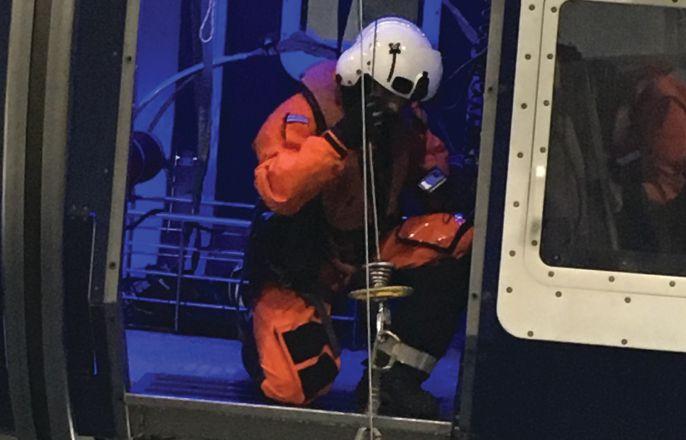
Top: A SAR crew practices a difficult edge transition manoeuver. Below: A hoist operator working with two cables. (Photos by Carroll McCormick)
Delivering helicopters around the world
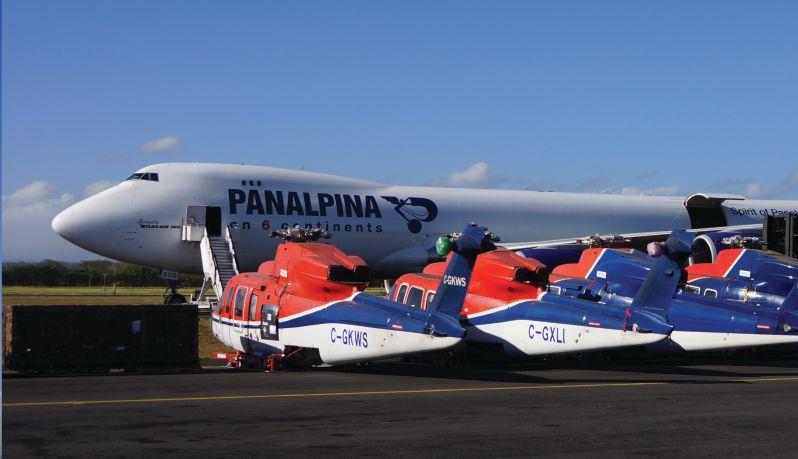
Panalpina Heliship, based in Vancouver, BC, has shipped thousands of aircraft around the world and expects more growth with some 60,000 registered helicopters globally.
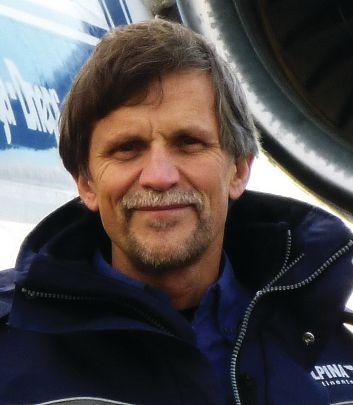
Juerg Boschung describes the 25-year growth of Panalpina Heliship and the movement of critical rotorcraft
Panalpina, the Swiss logistics and freight forwarding company, is celebrating 25 years of its Heliship operation based in Vancouver, BC. In September, Heliship introduced Ryan Hecht as its new head of service, with the retirement of Juerg Boschung, who had been with the operation from its inception. He was there in October 1993 when the company transported three Bell 205 helicopters from Abbotsford, BC, to Rancagua, Chile, creating Panalpina new Heliship service, which has since shipped thousands of helicopters across the world.
Heliship has developed additional competence centres in the UK and Australia to grow its position as a leader in the helicopter shipping business. Days before his retirement, Boschung shares insight into the world of delivering helicopters.
Why do clients prefer shipping helicopters?
JB: Well, in many cases, our customers could fly their helicopters to the destination, but it can actually be more expensive than shipping them. Also, once oceans have to be crossed, only a few of the bigger helicopters can safely attempt ferry flights and usually those routes are not very direct. They involve a lot of island hopping.
When did you first ship a helicopter?
JB: The first one, which was before I joined Panalpina, came quite unexpectedly. We had worked on and secured a contract from a major helicopter operator to deliver spare parts from Vancouver to many bases overseas and had only been shipping those parts for a few months when one afternoon I got a phone call: “Juerg, we need to ship a Sikorsky S61 from Thailand to Long Beach.”
How do you get a helicopter inside a plane?
JB: This depends on the type of helicopter and cargo aircraft. For smalland medium-sized helicopters, the customer’s or manufacturer’s engineers will usually dismantle the helicopters partially and prepare it for shipment by 747 Freighter – the Boeing 747 Freighter is the most suitable [aircraft] used by scheduled carriers. The loading of the helicopters is usually through the side door. The helicopter is loaded onto airline pallets which are then put on the main deck loader, from where the roller bed system in the 747F is used to move the helicopter into the proper position inside the freighter.
Loading larger – or heavy – helicopters into an Antonov An-124 is a completely different thing. Much less dismantling is required and the helicopter is being towed by the Antonov loading team into the An-124,
using a winch and a cable. The loading crews are very experienced, and it’s amazing how much can be made to fit into this freighter –they can take up to four heavy helicopters or six or seven medium helicopters.
How many helicopters have you shipped?
JB: I’ve been too busy to count, but it’s definitely in the thousands.
Does your team ship other goods?
JB: In fact, my team only ships helicopters, nothing else. We always have helicopters on the move, and are always working on a number of quotes and projects that we hope will materialize soon. In addition to that we try to look ahead and find ways to meet expected needs of the helicopter industry.
What was your most challenging delivery?
JB: Many of our moves are quite challenging and it’s not always the largest helicopters that are the most difficult to move. Often it’s the particular circumstances that make for tough moments, like unexpected flight cancellations or engine trouble causing vessel delays. If this happens during a shipment with a delivery deadline – this can be costly.
How do you move a helicopter?
JB: The main thing is detailed planning, considering carefully every step involved and making the required arrangements. It involves not only giving clear and detailed instructions to all subcontractors and offices involved, but then following up to ensure it’s all been understood and arranged. We always work with carefully selected carriers and partner offices overseas.
Of course, in many instances we also have one of our specialists attend loading and offloading at ports or airports and hangars. We strive to provide peace of mind to our customers and monitor the movement of their helicopters from hangar to hangar, every step of the way.
Who are your customers?
JB: Our main customers are helicopter companies that operate overseas... What has picked up is international fire fighting, where helicopters from North America are being shipped in October or November to the Southern hemisphere – like South America or Australia – to fight forest and bush fires during their summer, and then they return to North America in March and April to protect the forests during the summer there.
Other civilian helicopter companies focus on providing support for the allied mission in
Afghanistan. Search and Rescue contracts are also an important area where helicopters are required. Of course there are also many other situations where helicopters are being purchased and sold for various purposes, and they then need to be shipped to the new owner.
What’s the largest number of helicopters you moved in one go?
JB: I think that was seven helicopters that we moved in one Antonov An-124 from Canada to Africa a number of years back.
Any lessons you’ve learnt doing this that you take into your personal life?
JB: It’s probably more the other way round, actually. I like white-water kayaking and often you find yourself in the middle of a wild maelstrom with waves crashing in from all sides. You need to stay calm and focus on the essential next step to get down the river. Shipping helicopters can be similar. Sometimes all kinds of unexpected things are happening. You just need a calm mind and a clear focus. That really helps to save the day.
In Homewood, Manitoba, the Froebe brothers designed, developed, built and undertook Canada's first homegrown, controlled vertical flight.
Rotary-wing heritage of Canada
How a small town in Manitoba became home to the first controlled flight of a Canadian-built helicopter
BY BILL ZUK
On February 23, 1909, the pioneering efforts of Dr. Alexander Graham Bell’s Aerial Experiment Association culminated with the Silver Dart taking to the skies, launching Canada’s air age. What is not as well known is that the first powered flight by a fixed-wing aircraft was matched by the rudimentary experiments in rotary-wing and vertical take off and landing (VTOL) aircraft that took place in Winnipeg in the same year. While being in the forefront of aeronautical development for a century, vertical flight development in Canada has been inauspicious and fraught with only a handful of tentative projects destined never to achieve production status.
At the dawn of aviation, Manitoba was the scene of experiments and demonstrations with “birdmen” and “birdwomen” investigating flight in the form of balloon ascents and parachute flights. The next development occurred in 1909 when 25 enthusiasts gathered at the Winnipeg Industrial Bureau to form the Aero Club of Canada on March 31, 1909. Its initial, ambitious project resulted in the first aircraft designed and built entirely in Canada, the Aero Car Canada, the first aircraft designed and built in Canada.
Despite its innovative design, the Aero Car Canada (or Aerocar) displayed on July 14, 1909, at Winnipeg’s Happyland Ball Grounds, was
not successful. Its first flight was delayed partly by weather as well as a lack of parts that were being sent from the United States. It was not until the arrival of Eugene Burton Ely, demonstration pilot for Curtiss Aircraft who flew in Winnipeg on July 15, 1910, that the first powered flight in Manitoba was recorded.
A second aircraft design was initiated in 1909 under the auspices of the Aero Club of Canada, although it was not able to proceed beyond research and design. The Kelsey Helicopter, named after its Winnipeg inventor, Edwin E. Kelsey, was revealed to the public on April 6, 1909. Described as a “dirigible helicopter”, although the design proved to be successful in scale model form, lifting into the air and flying even in a confined space, it never progressed to final construction. A further five aeronautical projects commenced by the Aero Club of Canada suffered a similar fate.
In other rotary-wing developments at the turn of the century, engineers and designers in France struggled with the basic configuration of contra-rotating rotors. In 1907, Paul Cornu and Louis Brequet had both built rudimentary craft that could lift into the air, but these can hardly be considered successful designs as both suffered from control problems and were abandoned.
The following year, a young Igor Sikorsky in Russia experimented
with a similar design but the resulting unmanned machines tested from 1909 to 1910 were only able to rise a few feet into the air. Decades later, Brequet with the Gyroplane (1935), Professor Henrich Focke with the Focke-Achgelis Fa-61 (1936) and later Sikorsky with the VS-300 (1939) returned to tackle the challenge of rotary-wing flight and create the first truly successful helicopters. Also in the 1930s, the Hess Helioplane and Duben Helicopter were unsuccessful designs unable to sustain hover or flight.
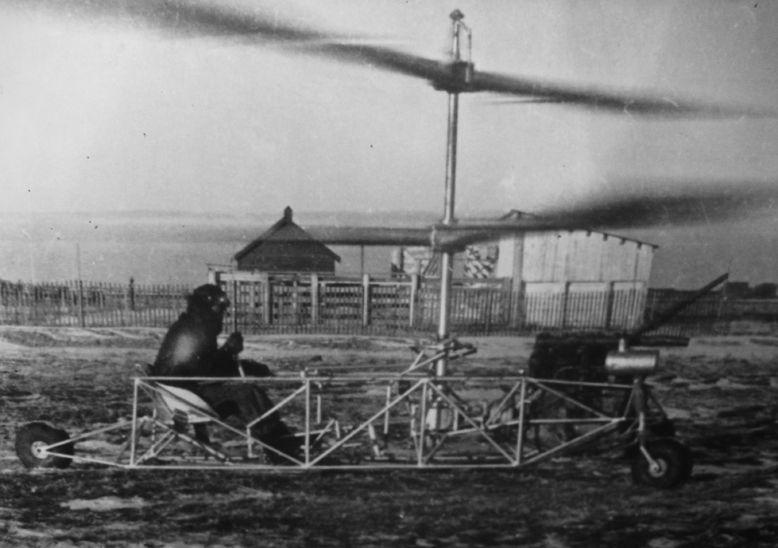
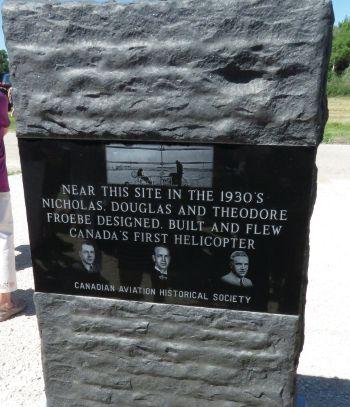
In Homewood, Manitoba, however, an almost unheralded project, designed and built by brothers Douglas, Nicholas and Theodore Froebe was undergoing testing. In 1936, using a backyard-mechanics approach, the brothers cobbled together a simple, but functional contra-rotating helicopter.
The open tube frame and rotors were built from aircraft chrome molybdenum steel. Other components were either handcrafted or derived from available automotive or farm machinery. The sturdy machine utilized two concentric, contra-rotating rotor blades powered through a right-angled drive by a used 4-cylinder air-cooled, front-mounted de Havilland Gipsy engine.
FEATURE
Doug Froebe was the primary test pilot during a series of test flights undertaken from 1937 to 1939, recording Canada’s first controlled, manned vertical flights. His notebooks, logbook and letters (now preserved at the Royal Aviation Museum of Western Canada) provide a vivid picture of the pioneering flights. “During the first attempt to fly, the tail came off the ground about three feet. I hauled the stick clear back and the front wheels came off one at a time… when I’d shut the throttle down, it would just take its time coming down – didn’t stall – just float down like a feather.”
Although the helicopter suffered from severe torsional vibration, it easily transitioned into vertical and hovering flight, and while only flights of short duration were attempted, a total of four hours and five minutes was logged before the test flights ended on March 2, 1939.
Throughout the 1940s, the Froebe brothers continued to modify their experimental design and during the Second World War, made efforts to sell their concept to Canadian and American interests, including the U.S. Navy. Gradually, they realized that more viable production helicopters rolling out of Bell,
Hiller, Piasecki and Sikorsky, doomed any hope of commercial or military contracts. Despite their record of successful test flights, the Froebe brothers did not apply for a patent, with their helicopter being largely forgotten, although the original machine resides today at the same Royal Aviation Museum.
In the immediate postwar years, Canada’s only certified helicopter was developed, the Grey Gull designed by Bernard Sznycer (assisted by mathematician Selma Gottlieb). Designed for Intercity Airlines with the same basic configuration of the successful landmark Sikorsky designs, the SG-IV-C single rotor prototype helicopter was designed and built in Montréal as a purpose-built machine able to withstand Canada’s harsh northern environment.
The test pilot, aptly named Henry Eagle Jr., carried out its maiden flight on July 9, 1947, noting a completely vibration-free flight. After successful completion of the test program, the first production machine, SG-IV-D Grey Gull, was flown on February 6, 1948, and granted a Certificate of Airworthiness on March 15, 1951.
During tests, the Grey Gull managed to fly in the most adverse conditions, with comments such as “Temperature – 10 degrees below zero. Altitude – instrument covered with snow. Wind – Terrible. Aircraft – normal in all respects.” Despite the errorfree test program and glowing reports revolving around its robust construction, stability and flight control, after no contracts were obtained, financial backing was withdrawn in 1954, leading to the program’s demise. Although no other helicopters have been designed and constructed in Canada since the 1950s, three notable rotary and VTOL concepts serve as historical footnotes.
The first two designs owed their existence to the Avro CF-105 Arrow project that dominated headlines of the late-1950s. In the aftermath of the cancellation of the Avro Arrow on Black Friday (February 20, 1959), engineer Peter Payne, together with a small group of fellow designers and engineers, created Avian Aircraft Ltd. with headquarters at Georgetown, Ont. Their start-up concentrated on the design and construction of helicopters and autogyros, resulting in the design of the Avian 2/180 Gyroplane.
Avian Aircraft’s second VTOL project was the improbable story of the Avro VZ-9 AV Avrocar, a so-called black project that had been underway in relative secrecy while the Avro Arrow had received star treatment. One Avrocar is in storage at Smithsonian’s National Air and Space Museum and another is undergoing restoration at the U.S. Army Transportation Museum in Ft. Eustis, Virginia.
ADVANCED COMPOSITE STRUCTURES INC
43 Muir Rd. Winnipeg, MB R2X 2X7
Tel: 204-982-6565
www.acs-composites.com acs@acs-composites.com
James Anning, President; Bruce Anning, VP of Technical Operations; Slobodan Oravec, GM
24/7 technical support and connected services as well as, innovative solutions for spare parts and MRO services.
Description
For 30 years Advanced Composite Structures (ACS) has been a world leader in Rotor Blade and Composite Structure repairs. ACS’s success can be attributed to a comprehensive and ongoing research and development program resulting in new and enhanced repair procedures. ACS strives to provide customers with “Sound-Solid-Solutions” and focuses on fixing problems not symptoms. ACS provides repairs on components such as: helicopter rotor blades, cowlings, fairings, door and floor panels, radomes, ailerons, elevators, rudders, flaps, flight controls, engine nacelles, landing gear doors and interior panels.
Airbus Helicopters offers a range of industry leading inspection and repair and overhaul capabilities, with guaranteed turn-around-times and cost efficiency. At Airbus Helicopters, we provide comprehensive MRO services including; Dynamic components, blades, air frame and equipment repair, to keep our aircraft operating at peak performance. With over 30 years’ of experience supporting rotary wing aircraft across Canada, Airbus’ dedicated team of licensed Technical Experts, Customer Service Representatives and MRO Specialists are committed to guaranteeing the highest level of service. At Airbus we work tirelessly to ensure that our customers enjoy a seamless transition from the acquisition of their helicopter, through to-years of hassle-free flying. We are dedicated to ensuring the best interests of our operators, including; Maximizing flight revenues, ensuring public safety and saving lives.
CANADIAN HELICOPTERS LIMITED
4500, 1000 Airport Rd. Edmonton, AB T9E 0V3
Tel: 780-429-6900
www.canadianhelicopters.com
beaton@canadianhelicopters.com
Bryan Eaton - General Manager, Third Party Maintenance Services
CANREP INC.
12900 Rue Brault Mirabel, QC J7J 0W4
Tel: 450-434-9898
1-866-588-0588 www.canrep.com sales@canrep.com
David Gregory - President
Marc A. Gregory - Executive VicePresident
CHARTRIGHT AIR GROUP 2450 Derry Road East, Hangar 3 Mississauga, ON L5S 1B2
Tel: 905-671-4674
1-800-595-9395 www.chartright.com mro@chartright.com n n n n n n n
Helicopter Import and Export; Night Vision Goggle inspection, repair and recertification; Component repair and overhaul; (Airbus, Bell & Lockheed Martin (Sikorsky) Maintenance Plans, Other Services/Misc.
Distribution: Eastman oil and Skydrol product, Castrol Aerospace Products, Vantage Chemical solution, Alglas Monitor Cleaners and Lord Interior vibration mount. Tailor made solutions for Logistic Operation (JIT, Kitting, Managment of consignment Inventory)
Canadian Helicopters provides comprehensive helicopter support solutions - repair and overhaul for components and structures, avionics, and night vision goggles. We service private, commercial and military helicopters and operators within Canada and internationally. With over 65 years of experience, Canadian Helicopters is an industry leader in refining maintenance practices. We offer cost effective, flexible maintenance solutions. Canadian Helicopters is a Bell CSF.
CanRep Inc. is a TCCA & EASA approved MRO Organization specializing in the repair and overhaul of Aircrafts and Helicopters components (Civil & Military) i.e.; (Aircraft Lavatories Systems, Fuel and Hydraulic pumps, Power generation equipment, actuators) Canrep is also a Canadian authorized Distributor for Castrol Aerospace products, Vantage chemical solution, Eastman Aerospace Oils and Lubricants, Alglas Monitor Cleaners and LORD Corporation interior vibration isolator mounts. We offer solutions for logistic operation (JIT, Kitting, Management of consignment inventory)
Chartright is a Transport Canada Approved Maintenance Organization (AMO #196-92) with an approved FAA Supplement. Chartright has maintenance facilities in Toronto and Kitchener and are capable of performing maintenance on a wide array of fixed and rotary wing aircraft offering a full array of services from line maintenance servicing to large inspections, avionics, and structures. Chartright is an authorized AgustaWestland Service Centre. Contact us to discuss your next maintenance event.
DBC MARINE SAFETY SYSTEMS LTD./ SURVITEC VANCOUVER
1689 Cliveden Ave. Delta, BC V3M 6V5 Tel: 604-805-2372 www.dbcmarine.com
Bobby.Kirkley@survitecgroup.com
Bobby Kirkley, Aviation Sales Manager U.S and Canada
ERICKSON INCORPORATED 5550 S.W. Macadam Avenue Suite 200 Portland, OR 97239
Tel: 503.550.5800 www.ericksoninc.com
SBladholm@ericksoninc.com
n n
Components and servicing of life rafts, life vests, fire bottles, fire extinguishers, Hydrostatic testing, Sales.
DBC Marine of the Survitec Group is a global organization and leader in safety services and sales in the Aviation industry. Our Vancouver location specializes in the sales and servicing of Aviation vests and rafts, as well as overhauls and sales of engine fire bottles, fire extinguiswhers, O2 bottles/assemblies and survival kits and spare parts. We are an approved ANAC & EASA service station with both TC and DOT H/T approvals as well.
n Engines, Misc. Erickson is a leading global provider of aviation services and operates, maintains and manufactures utility aircraft to safely transport and place people and cargo around the world. The Company is self-reliant, multifaceted and operates in remote locations under challenging conditions specializing in Defense and National Security, Manufacturing and MRO, and Commercial Aviation Services (comprised of firefighting, HVAC, transmission line, construction, timber harvesting, oil and gas and specialty lift).
The MRO Directory is also online –a searchable resource available on our website year round. wingsmagazine.com/mro-directory • helicoptersmagazine.com/mro
VIH AEROSPACE INC 1962 Canso Road North Saanich, BC V8L 5V5 Tel: 250-656-3987
www.vih.com
vih@vih.com
Arne Arneson-General Manager, Brian Thistle - Manager, Business Development, Sales & Marketing n n n n n n n n
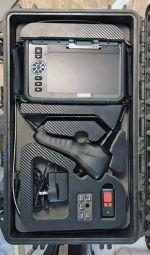
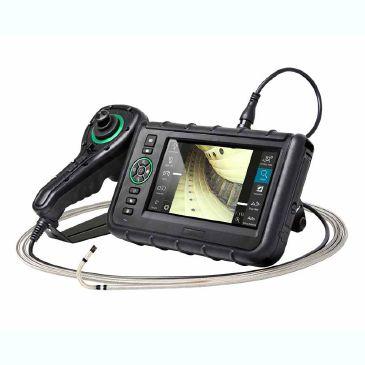
Borescope sales and borescope repair services.
Dynamic Balance Equipment sales, support & calibration as well a Non-Destructive Testing. We also overhaul Propellers, Wheels and Brakes, Hope Aero specializes in the sales, support and function testing of Honeywell Dynamic Track & Balance Systems. We are also involved in Non-Destructive Testing for all helicopter and fixed wing parts. Our other capabilities include sales and service of propellers, governors, wheels, brakes.
Select Helicopter Services specializes in the overhaul and maintenance of hydraulic components and cargo hooks. Support provided for components installed on Bell 204, 205, 206, 206L, 212, 214, 407, 412, and Airbus H125 (AS350); and cargo hooks manufactured by Onboard Systems, Dart Aerospace, Cargo Aids, and Mechanical Specialties. As a Transport Canada AMO and EASA Part-145 Repair Station, Select provides support to a global customer base, focusing on quality products and excellent customer service
The iService Center is a Robinson and Bell approved maintenance organization that provides maintenance and overhaul solutions to private owners, commercial operators, industry and government. The iService Center has an unparralled experience on Airbus Helicopters. Major repairs, 12 years inspection, aircraft painting, composite and hot bonding, canopy repairs, harness replacement and avionics package are an integral part of the iService Center.
StandardAero is one of the world's largest independent providers of services including engine and airframe maintenance, repair and overhaul, engine component repair, engineering services, interior completions and paint applications. StandardAero serves a diverse array of customers in business and general aviation, airline, military, helicopter, components, and energy.
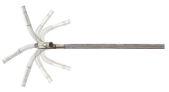
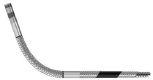
USA Borescopes is a global supplier of world class remote visual inspection equipment. We offer a wide selection of borescopes and videoscope systems that are designed for today’s aviation, rotorcraft and aerospace professionals. In addition, we can perform borescope repairs on any make or model borescope with free repair estimates. All work is guaranteed to meet OEM standards.
Component Repair, Overhaul, Rental, Exchange
Manufacturing Avionics Repairs, Installations, Upgrades Airframe Structures Repairs, Modifications, Upgrades Aircraft Scheduled and Unscheduled Inspections Engineering Services and DesignSTC Development
VIH Aerospace offers top quality, value-enhanced helicopter maintenance, manufacturing, repair and overhaul (MMRO) services; including STC development and integrations, delivered effectively and professionally to meet or exceed Original Equipment Manufacturer (OEM) specifications.
VIH Aerospace is a Bell approved Customer Service Facility (CSF).
Oxygen Cylinders, Regulators, Crew Masks and PBE’s
Inflation and Pneumatic Reservoirs
Securaplane
AVIONICS IN PLAIN ENGLISH
The rate of change in the field of avionics is so fast that even the legislators are struggling to keep up with it. With new digital cockpits, it is getting to the stage that, if your VCR still flashes 12:00, you will have no business flying a modern helicopter!
The majority of twin-engined (and many singleengined) aircraft now have complex autopilots, glass cockpits and navigation equipment, possibly including Flight Management Systems (FMS).
This book originated with a request from the RCAF for training materials for engineers, but curious pilots whose training syllabus did not include avionics, and who would like to know a little more will find it useful as well.
COLUMN
A Canadian evolution
Commitment to safety and engaging the international community
Sure, HAC’s convention has been growing, but it has also been changing in other ways.
This year’s convention in Vancouver is the largestever trade show hosted by the Helicopter Association of Canada, featuring a growing number of international exhibitors and international delegates who are discovering that Canada has the world’s second largest fleet of commercial helicopters; that Canada holds a vibrant helicopter industry where more and more of our domestic operators are looking to expand their businesses outside Canada. But we still have work to do here at home.
With a growing focus on helicopter safety, and a more international flavour, HAC is expanding its horizons. Our accident rate in Canada is declining – but not fast enough. What’s more, we need to stop repeating the same accident-types year over year. The 23rd annual HAC gathering, which accordingly runs under the full title of the HAC Convention & Safety Forum, features so many safety speakers (domestic and international) that we needed to expand our Safety Forum by an extra day to fit them all in. This includes Scott Shappell from Embry-Riddle University, Gretchen Haskins from Heli-Offshore, Daniel Mollicone of Pulsar Informatics, and Kathy Fox, chair of the Transportation Safety Board of Canada, to name a few of the highlights.
We have always looked back, but this year we are trying to focus more on the way forward. We need to manage our HR crisis and bet-
changes, slowly – sometimes, glacially. Our operator members are fiercely independent – and in many ways, that’s how they have come to survive, and even flourish in a very competitive Canadian market where there are many challenges. We can learn from our involvement with the International Helicopter Safety Team (IHST) and from our friends at the Helicopter Association International (HAI). Our members need to steal, shamelessly, from the IHST site (ihst.org), where there is a wealth of information to help them improve their safety experience. We need to engage more with our customers to see that they are in a position to work with us and to enhance our safety performance.
You will also notice that we are making a better effort to engage with our regulator, in Vancouver. In fact, we shifted the schedule of our conference to include more weekdays. We also added a government rate to facilitate their participation in our conference and in our committee deliberations. The regulations need to keep pace with our industry and we need to facilitate the dialogue with Transport Canada, the CTA, the Transportation Safety Board and others to ensure the regulations and our industry partners do not lose touch with the needs of our industry.
We have a vested interest in safety, but we also need to see a return on our investment in safety.
ter understand looming changes that are occurring in the Unmanned Aerial Vehicle community. We are focusing on ways to evolve the culture of our industry, from one that has been primarily focused on competition to one that is focused on moving forward cooperatively on issues relating to safety.
That’s a mouthful, when you consider that our operator members are located in some of the most far-flung areas of Canada and have been working in relative isolation for many years.
“Culture eats strategy for breakfast,” they say, and culture only
We have a vested interest in safety, but we need to see a return on our investment in safety – that is, the regulations should reflect requirements that see a proportional response to safety issues in our industry. We should not be killing a fly with a proverbial sledgehammer. Finally, we need the unanimous support of operators in our industry. The involvement of operators at HAC is the touchstone of our success. We need to see your operation actively involved in our committee work. Please ensure that people inside your operation receive your support for their involvement in our committees and, please, speak your mind directly to HAC’s president and CEO.
HAC understands you cannot look forward without also taking care of business today. We need to capitalize on developments driven by participating on HAC committees and by leveraging innovation from around the world to improve the state of the Canadian industry. Together we are stronger.
Fred Jones is the president and CEO of the Helicopter Association of Canada and a regular contributor to Helicopters magazine.
FRED JONES
TWO INDUSTRY LEADERS SETTING A NEW STANDARD IN HELICOPTER MRO
For over a century, customers have relied on StandardAero and Vector Aerospace as the industry experts for operational efficiency, innovation and custom MRO solutions. Today, we’re one company – Bigger…Better…and Bolder – committed to providing best-in-class rotary-wing support for our customers! Contact us to see how we can help you.
Engines
• GE T700/CT7
• Pratt & Whitney Canada PT6T
• Rolls-Royce M250 and RR300
• Safran Arriel 1 and 2
Airframes
• Airbus AS350/EC130 series and AS332/H225 Super Puma
• Sikorsky S-92, S-76 and S-61
Dynamic
A BREEZE.
It’s no surprise the H145 is the helicopter of choice for rescue missions. Whether at sea, on a mountain or in a blizzard, it can bring help to where it’s needed. Compact and versatile, it provides outstanding flight performance under the most extreme conditions.