ne of the things I love most about my role as editor of Helicopters magazine is getting out in the field and soaking up the atmosphere of a particular operator or manufacturing facility making a strong contribution to Canadian aviation and aerospace.
It provides me with a rare opportunity to see the inner workings of an organization and understand the mentality and scope of its processes, opportunities and impact. It also gives me a chance to meet individual employees and see how their philosophies might relate to other companies in Canada – lessons learned that provide real benefit to other operations.
Recently, I had the chance to tour the Fleet Canada facility in Fort Erie, Ont., and I was impressed with its accomplishments and its ability to adapt to changing market conditions in the aerospace world.
Tucked away on the shores of Lake Erie far away from traditional aerospace hubs that garner significantly more attention, Fleet boasts a rich history few aerospace companies can match. With more than 80 years producing aircraft and aerospace parts on some of the world’s most iconic aircraft, Fleet has undergone a unique transformation that has positioned itself as one of the finest highly skilled parts shops in the country.
As outlined in “Enhancing the Fleet,” on page 19, this is a Canadian success story – a homegrown corporation building parts for aircraft making a difference here and abroad. Fleet’s main fixed-wing
Pride in the Process
Remembering the Importance of Tried and True
Canadian Air Force (RCAF).
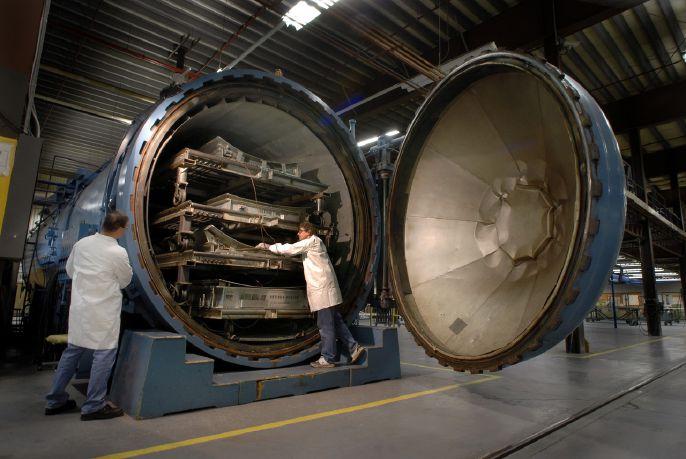
In an industry focused on the latest and greatest technological advancements to achieve optimum results, Fleet is a throwback – the company has implemented processes, developed handcrafted machines and carefully organized its spacious 500,000 sq. ft. manufacturing facility in such a way to produce optimum results. It's a commitment to craftsmanship versus focusing on mass production – the goal is optimum quality.
“No, this does not mean we are state-of-the-art,” notes Fleet’s Marika Kozachenko, the company’s business development manager. “But it does mean we are good at what we do at the rates that we do them.”
An excellent example is the production of the “dog house” composite piece for the Chinook. If you were going to do 20 of those a month, Kozachenko says, you would need specialty laser systems, processes and tools that they have at Airbus. “But our people know what to do and can do as good a job. And the nice thing is when you are not doing it all by machine, you don’t have to use as much product. It’s a little different when humans can do it by hand.”
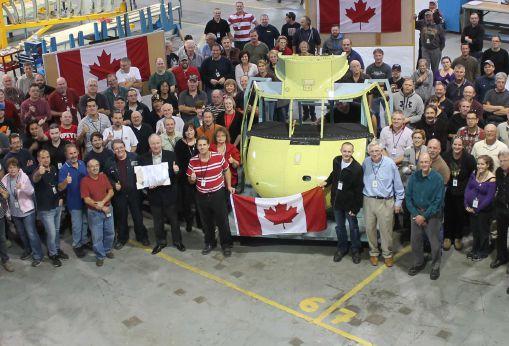
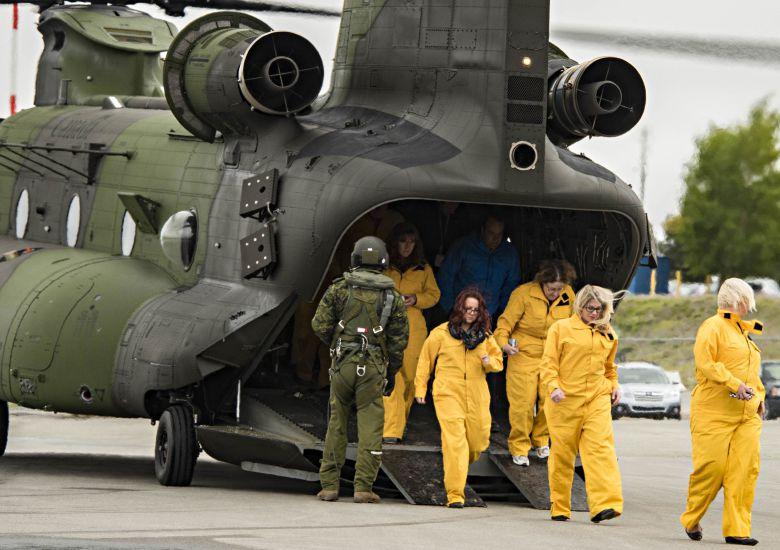
It’s also nice when you have a dedicated, loyal workforce that is passionate about the products it is producing. Fleet has but 160 staff, but they are dedicated to their core programs – so much so, in fact, that for years, they craved the opportunity to get a CH-47 on site for a close-up-look and celebration of the finished product. That chance came earlier this year, when 450 Squadron in Petawawa brought up a Chinook for the company’s 10th anniversary celebration – a decade celebrating the “new” incarnation of Fleet.
“ It's also nice to have a dedicated, loyal workforce that is passionate about products they are producing. ‘‘ ’’
program is to provide key parts to Viking Air’s Twin Otter, the versatile, in-demand turboprop desired by many international operators and governments for its dependability and adaptability to a wide variety of configurations and operations. Fleet has perfected several processes for the Twin Otter, including its unique bonded wingskin.
On the rotary side of the equation, Fleet’s main priority is its Boeing CH-47 program. Fleet manufactures the front cockpit nose enclosure, pylons and platforms for the aircraft. Boeing supplies Chinooks to militaries all over the world, including the Royal
The RCAF’s 1 Wing 450 Squadron is home to Canada’s Chinook squadron.
“It was such a wonderful celebration, so nice to have the Chinook here,” Kozachenko says. Fleet employees and their families celebrated the day and got up-close-and-personal with the aircraft they help create.
So, how do passionate employees show their gratitude? With a special photo and “Thank you to the RCAF 450 Squadron” of course, recognizing the efforts made by our troops.
It’s this kind of passion and commitment that drives the Fleet Canada team to provide the finest quality components for its customers – a recipe that certainly works down Fort Erie way.
Saving Lives. Anytime, Anywhere
Lives depend on you.
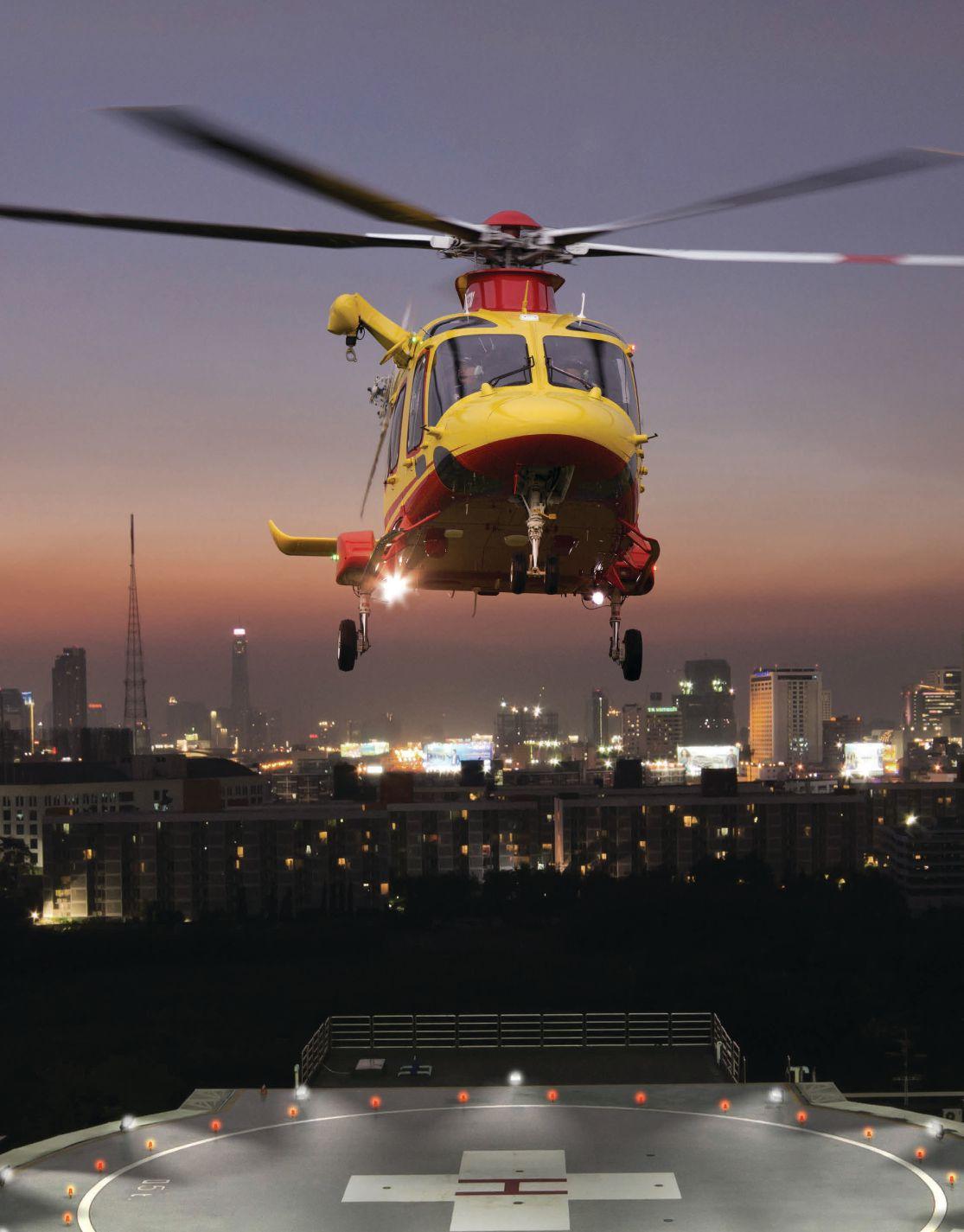
The AW169 is ideally suited to life-saving primary and secondary EMS missions anytime, anywhere.
Easily adaptable, rapidly configurable and uniquely designed around patients’ needs; the AW169 ensures that air medical professionals can provide the best care at the most critical moments.
Finmeccanica is now Leonardo - inspired by the vision, curiosity and creativity of the great master inventordesigning the technology of tomorrow.
Visit us at the 2016 HAC Conference & Trade Show, Booth 111
Cyclones facing further delays
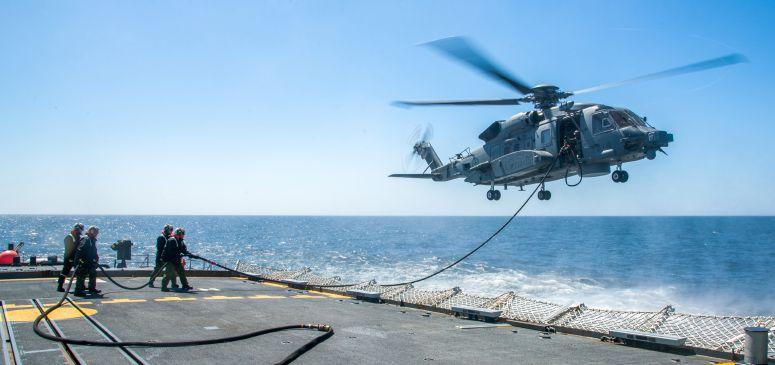
The long-suffering CH-148 Cyclone program is facing more obstacles.
The Royal Canadian Air Force (RCAF) is projecting it will be at least 2025 before its maritime Cyclone fleet is fully functional and up to speed with all of the aircraft, pilot and necessary crew according to a recent report by CBC News
The Fully Operational Capacity (FOC) for full deployment comes 21 years after Paul Martin’s Liberal government signed a contract with Sikorsky Aircraft (now part of Lockheed Martin) to deliver 28 maritime helicopters. This is some seven years after the last Sea Kings are projected to retire.
Many in the aerospace industry have called the Cyclone program the worst military procurement in history, one marked with inconsistencies in development, missed
The RCAF’s CH-148 Cyclone program will not be fully operational until 2025.
deadlines and poor management. The former Conservative government had a long-running feud with Sikorsky over the much-maligned program, including fining the company for missing its deadlines and threatening to pull the plug on the program.
Last year, the Conservatives vowed to stick with Sikorsky and the program is slowly moving forward.
The Department of National Defence reports it indeed will have 12 helicopters outfitted and running by the end of 2016, according to the report.
On the plus side, the personnel from the Helicopter Test and Evaluation Facility (HOTEF) hosted in the summer key members of the RCAF Association and the Royal United Services Institute of Nova Scotia at 12 Wing Shearwater, N.S. for a briefing of the project.
It marked the first time an outside group was given a tour and briefing. The visitors were given an overview of the maritime helicopter’s role in the modern era and the capabilities of the helicopter.
Four Cyclones are housed at
12 Wing, with two of those being upgraded to the 1.1 Block version of the helicopter. One of the key milestones for the Cyclone, which was achieved this year, was to have the first all-Canadian Armed Forces (CAF) air detachment crew land the Cyclone on the deck of a warship. This milestone took place in the spring.
Another achievement was the completion of the final aviation system technician Sea King course for 406 Squadron. Squadron members are now exclusively training for the new aircraft.
FIG AIR ADDS FIRST CANADIAN SIKORSKY S-76D
Canada has its first S-76D helicopter.
Fig Air Inc., a Toronto-based VIP and corporate helicopter operator, signed for a Sikorsky S-76D helicopter during the summer, marking the first delivery of the Sikorsky S-76D to a Canadian helicopter operator. Sikorsky is a Lockheed Martin company.
“We are thrilled to be able to provide Fig Air with such a capable solution to meet their VIP service requirements,” noted Charles Bouchard, chief executive for Lockheed Martin Canada and a former RCAF helicopter pilot. “We welcomed Sikorsky to the Lockheed Martin family a year ago, and it is clear they are uniquely suited to provide a diverse range of helicopter solutions
to meet Canada’s commercial and defense markets.”
The S-76D helicopter VIP options include a customized interior with seating for five to eight passengers. The aircraft can hold its rotor system still while running an engine to power the on-board air-conditioning system for safe, comfortable loading and unloading into the pre-cooled cabin during the summer season and hot climates.
Sikorsky has delivered more than 850 S-76 helicopters to customers globally since 1979, contributing daily to nearly seven million fleet flight hours.
Photo courtesy of DND
Search for the STARS
The Shock Trauma Air Rescue Service (STARS) fifth annual CEO Rescue in the Rockies fundraiser was once again a resounding success.
The event raised $387,675 and since the program began in 2011, the fundraiser has seen the Alberta community come together and raise more than $4.1 million for STARS.
In late September, STARS partnered with influential Calgary and Edmonton business leaders for a day they won’t soon forget. The five participants were picked up from the Calgary Peace Bridge helipad and dropped off at a remote mountain location in Kananaskis County. While stranded in the deserted location, the CEOs faced a series of challenges, including a readiness, survival and STARS medical challenge. Using only their cell phones to collect donations, the CEOs reached out to colleagues, friends and fellow philanthropists to raise $100,000 (per company) before they were “rescued” by a STARS air ambulance.
STARS fifth annual Rescue in the Rockies was a hit again this year.
“The CEO Rescue in the Rockies fundraiser was an amazing success and we are so appreciative of the generous donations raised,” said Andrea Robertson, president and CEO of STARS. “Year after year, we are blown away by how enthusiastic the CEOs are to swap their business attire for a flight suit and tackle the fundraising goal. Thank you for helping STARS be there for the next patient that needs us.”
This year’s Alberta business leaders whose fundraising and wilderness prowess were both put to the test included: Janet Riopel, president and CEO, Edmonton Chamber of Commerce; Grant Beck, president and CEO, Graham Construction; Marcos Lopez, president and CEO, Solium Capital; and Allison Grafton and Grainger Nimmo, co-owners, Rockwood Homes.
Funds raised through CEO Rescue in the Rockies help STARS provide time, hope and life-saving transport to critically ill and injured patients.
LORD enhances the CH-47 Chinook
The CH-47 Chinook is a key part of the RCAF’s fleet and the LORD Corporation is certainly doing what it can to ensure pilots have the best ride possible.
HELICOPTERS MAGAZINE
P.O. Box 530 105 Donly Drive South Simcoe ON N3Y 4N5
Tel.: 519-428-3471 Fax: 519-429-3094
Toll Free: 1-888-599-2228
Website: www.helicoptersmagazine.com
EDITOR MATT NICHOLLS email: mnicholls@annexweb.com 416-725-5637
MEDIA DESIGNER GERRY WIEBE
CONTRIBUTING WRITERS
RICK ADAMS, DAVID CARR, BRIAN DUNN, PAUL DIXON, WALTER HENEGHAN, FRED JONES, JAMES MARASA, CARROLL MCCORMICK, COREY TAYLOR NATIONAL ADVERTISING MANAGER MENA MIU email: mmiu@annexweb.com 905-713-4351
GROUP PUBLISHER MARTIN MCANULTY email: mmcanulty@annexweb.com
DIRECTOR OF SOUL/COO SUE FREDERICKS RETURN UNDELIVERABLE CANADIAN ADDRESSES TO ANNEX PUBLISHING & PRINTING INC., P.O. BOX 530, SIMCOE, ON N3Y 4N5 CANADA. email: subscribe@helicoptersmagazine.com
Published five times a year by Annex Publishing & Printing Inc.
Printed in Canada ISSN 0227-3161
CIRCULATION
LORD has announced it has received product qualification for its Improved Vibration Control System (IVCS) for the Boeing H-47 Chinook, designed to bring weight savings to the H-47 platform. Boeing has worked with LORD on IVCSprogram since Sept. 2013. The system controls the helicopters' steady state and transient vibration.
Stuart Hartwell, business development manager for LORD Global Aerospace & Defense, notes that this qualification is a milestone for the twin-engine tandem rotor heavy-lift helicopter, representing a key step in bringing weight savings to the H-47 platform.
The multi-year qualification effort culminated in late 2015 with installation and final flight evaluation of the production-ready IVCS.
IVCS is the H-47 program name for LORD Corporation’s Active Vibration Control System. The U.S. Army Aviation Engineering Directorate recently completed the final qualification approval, and product deliveries for incorporation into the Boeing H-47F production line began in mid-2016.
The IVCS technology uses accelerometers that measure aircraft vibration levels. A centralized computer processes these signals through a software algorithm that interprets the data and sends commands to force generators located under the pilot seats.
These force generators create “anti-vibration” that stops the progression of vibration due to the main rotor.
Email:apotal@annexbizmedia.com Tel: 416-510-5113
Mail: c/o Circulation, 80 Valleybrook Dr. Toronto, ON M3B 2S9
The Permit-to-Work System is Another Excellent Safety Tool
t has been my experience that most helicopter operators approach their safety programs primarily from the perspective of flying operations and maintenance activities. Yet, the pure, health and safety – labour code aspect of our safety programs can sometimes be lacking. One facet of managing risks as part of a safety management system involves contractor safety. What can we do to address this area of risk management and workplace safety?
As transportation companies, we are federally regulated workplaces, subject to federal law. The Canada Labour Code informs a company’s responsibilities for health and safety. Section 125(1)(y) states that employers must “ . . . ensure that the activities of every person granted access to the workplace do not endanger the health and safety of employees.” Quite simply this means that the activities of any contractor working at the hangar or on the premises need to be controlled by the operator. The fuel truck servicing the tank farm, or delivering fuel drums needs to be safety managed.
Contractors also need to be informed of risks or hazards at the workplace so that the employer can show that he has taken “ . . . all reasonable care to ensure that all of the persons granted access to the work place . . . are informed of every known or foreseeable health or safety hazard to which they are likely to be exposed in the work place.” This is an important section as it makes it clear that the operator or employer has specific legal responsibilities. How often is this being accom-
involved very hazardous work – high voltage electrical systems, pipes under pressure, etc. But in our industry, there are similar hazardous situations – confined spaces (tailbooms and fuel tanks), compressed gas use, aircraft painting and hydraulic servicing. All of these tasks potentially present a danger to life or a risk of injury and should be controlled
The permit-to-work system (PTW) will encourage the reporting of unsafe work practices and solidify an expectation of open and honest communication within the company and between the employer and the contractor. This enhanced communication can be enforced through documented toolbox talks, daily and task related risk assessments and feedback loops. The process can be easily documented and more than meets the requirements for meeting a company’s legal and moral responsibilities for risk and safety management.
Moreover, by using some form of PTW system, we can ensure that visitors and contractors are properly briefed and advised about the hazards at our facilities and we can assure ourselves that the contractor is properly competent for the work they are conducting. It is a great leap of faith when we hire a contractor but do not conduct any form of due diligence as to their competence.
By documenting procedures for working with contractor, one can set out to minimize the risk of either party endangering the staff of the other. Such a system will show a company’s commitment to safety.
One facet of managing risks as part of a safety management system involves contractor safety. ‘‘ ’’
plished in your workplace? How do I control or manage this Labour code expectation? I propose that work permits can be used as a very effective tool in order to properly and efficiently manage these fiduciary responsibilities.
So, what is a permit-to-work (PTW) system? In the strictest sense of the definition, it is a formal written system used to control certain types of work that are potentially hazardous. The system will outline the process to be followed and in some instances generate a specific PTW for the contractor. The permit is a document that specifies the task to be done and the precautions to be taken. Typically, PTW permits have
I recently witnessed such a system at work. A contractor had been hired to complete roofing repairs at a hangar. The workers were given a safety orientation and indoctrination to the company’s facilities and a checklist was completed that documented the use and availability of PPE and specific hazards associated with the job. As the work was “at heights,” a working from heights checklist was also completed. The permit-to-work system, with the risk assessment and toolbox talk was then signed by the safety rep and the contractor before the work was completed. It’s a simple system, accepted by both parties with documentation and another great tool in managing hazards and risks in the workplace.
Helicopters safety expert Walter Heneghan was employed by Canadian Helicopters Limited from 2001 until 2014 and worked in a number of positions including a line pilot based in Moosonee, Ont. safety manager for its EMS Division and as vice-president of safety for the company. The opinions expressed in this piece are his alone and are not representative of any company, former or current employer, or this publication.
WALTER HENEGHAN
WAY MORE PAYLOAD.
The Eagle Copters conversion improves the payload capability of your Bell 407 helicopter by an estimated 34% at 10,000 feet, significantly increasing the aircraft’s capability over a wider operating spectrum. The powerful new Honeywell HTS900 engine delivers an output of 1,021 shaft horsepower — a 22% improvement in output at high and hot conditions over the incumbent engine. Try our tool at www.hothighandverycool.com eaglecopters.com
COLUMN
PAUL DIXON
British Columbia’s volunteer Search & Rescue (SAR) teams are on their way to a record year for callouts at a pace that will see them exceed last year’s total by more than 30 per cent.
This is one record no one wants to see. Their mission is made incalculably more difficult by the twoheaded monster they must constantly battle. One head is the ignorance of so many people who fling themselves into harm’s way, while the other is the apathy of the provincial government under whose authority they operate.
Part of the basic human condition is the inability to recognize potential dangers and wholly underestimate the severity and impact of those we do perceive – it can’t happen here and it won’t happen to me. Governments, no matter what their political leaning, have long mastered the art of avoiding those issues that don’t interest them by simply ignoring them or sending them off to study groups or committees when they won’t go away – and this is a prime example.
Every day there are people heading off into that living tourism commercial that is so much of what B.C. is all about. Every day, people head out on some sort of adventure and then, without warning, something happens and they need help and they need it quickly. Far too often, what ever “it” is, it happens as a consequence to something our intrepid adventurer did, or possibly failed to do. All too often, by the time they realize they have a problem, it’s too late for
The Bailout Plan
Rescuing B.C.’s Adventure Seekers Not an Easy Proposition
basic essentials as a whistle, flashlight and emergency rations.
How does one get through to these people? Virtually every park or resort area I’ve been through in recent years has clearly visible signage along the lines of “read this.” I don’t have a magic cure or silver bullet for the human condition, but I do have a few comments about the government side of this two-headed thing. The government (that’s you and me) is getting a damned good deal off the backs of the ground SAR volunteers. B.C. gets professional-grade SAR in every community and region, provided by highly-trained and equally highly motivated SAR members.
And we get it for peanuts – and at that, we make SAR team sit up and beg for the peanuts. SAR teams do get money directly from the provincial government every year, but the lion’s share of their operational budgets boil down to local fundraising efforts and grant applications.
Local fundraising is not a bad thing in and of itself, as it can raise community awareness. But it can be time consuming and when you’re a volunteer, there is only so much time to go around, not to mention that in the smaller and more remote areas of the province, there is a limited population base to draw on. Grant-writing at best is a crap shoot, because there is never any guarantee that last year’s grant will also be next year’s grant. Grant writing is time-consuming and is often an art unto itself. Not everyone is cut out for it.
There has been rustle in local media recently about the idea of paying SAR volunteers. We don’t have time to open that can of worms in this column, but the short answer is SAR volunteers do not want to paid – they most emphatically do not want to be paid.
Their mission is made incalculably more difficult by the two-headed monster they must constantly battle.
them to get themselves out of it.
Hikers suddenly realize they don’t know where they are or how they got there. As nightfall approaches, they realize they don’t have appropriate clothing or emergency rations. The skiers and boarders who deliberately go out of bounds in search of that perfect powder, find themselves trapped in uncharted territory. I could go on, but the list of examples is endless.
In all too many cases, they include people who deliberately put themselves in jeopardy or at the very least put themselves at risk by not wearing appropriate clothing and footwear and carrying such
If you’ve never been a volunteer in an organization at this level, it’s difficult to explain to the uninitiated, but it’s not about the money. It’s like being a blood donor. You either get it or you don’t.
What SAR people want is a long-term solution to the funding question – create a funding model that allows long-term, multi-year planning. Let them concentrate on the service they provide their communities and the province instead of continuing to force them to continually be on the fund-raising bandwagon or tied to a desk thrashing out another grant application.
Paul Dixon is a freelance writer and photojournalist living in Vancouver.
DELIVERING SPEED IN CRITICAL SITUATIONS
When minutes count, depend on the power and performance of the Bell 429 for your search and rescue mission. The reconfigurable interior seats up to seven passengers plus a pilot, features large sliding doors for quick access, and a 70+ cubic foot baggage compartment. The Bell 429 is ready to serve your operation by delivering 150-knot speed, as well as the safety and superior handling needed in critical situations.
COLUMN
RICK ADAMS
The Super Puma crash off the Norwegian coast in late April that killed 13 people is a sobering reminder that statistics seem to fade into irrelevance when the victim of an accident is your spouse, your parent, your friend.
More than 18,000 people have petitioned the U.K. Civil Aviation Authority to remove the H225 aircraft from service (formerly known as the EC225), including Aberdeen, Scotland resident Audrey Wood, mother of oil worker Stuart Wood, who died seven years ago after a gearbox failure.
We see the other side, beyond the statistics, in crisis situations such as Fort McMurray where residents like Peter Fortna and Jamie London’s wife and children were rescued from the inferno by samaritans from Phoenix Heli-Flight and Lakeshore Helicopters. Members of those operators also lost property and belongs in the fire, and were emotionally altered by the harrowing events.
Even by mentioning the name of Wood, I have relegated the 15 others who died with him to the realm of impersonal statistics, same as the dozens of others heli-evacuated like Fortna and London’s family and the two CHC pilots in the Norway tragedy.
Statistics do have value, of course, in monitoring trends. This is the final year of the International Helicopter Safety Team’s (IHST) original goal of reducing civil rotary accidents by 80 per cent compared with a 2005 baseline. The goal was perhaps unrealistically
Personal Side of Statistics
Taking a Closer Look at the Role Helicopter Pilots Play
hand, “20 by 2020.”
Nick Mayhew, commercial programs manager and EASA Head of Training at the Bristow Academy in Florida, noted, “This doesn’t mean that we accept that as the final mean.”
Speaking at the Helicopter Aviation Training Symposium (HATS) earlier this year, part of the annual WATS training conference in Orlando, Mayhew suggested that the abstract statistical concept of “zero accidents” should really be personalized by pilots and other helicopter operations personnel. “Is ‘zero accidents’ an achievable goal?” he asked.
For 99.74 per cent of U.S. pilots, zero accidents is already reality Between March 2015 and February 2016, there were 115 accidents. That means 41,483 of 41,598 pilots in the States did not have an accident. Zero. Zip. Nada.
Mayhew urged pilots to “make it personal. Don’t rely on safety personnel to carry the safety banner.”
The former U.K. Royal Navy commander described the pillars of a “personal safety management system”:
• Safety Policy – My core value. It’s my responsibility. Don’t get hurt or hurt others.
• Safety Risk Management – I don’t cut corners or take unnecessary risks. I use a checklist.
• Safety Assurance – I always try to learn from my and others’ mistakes.
The goal was perhaps unrealistically ambitious, though significant gains were apparently made. ‘‘ ’’
ambitious, though significant gains were apparently made. The average number of worldwide accidents dropped from 570 for the period 1995-2005 (and trending upward) to 515 per year from 2006 through 2012 (and trending downward).
The IHST and affiliated groups such as the U.S. Helicopter Safety Team (USHST) are now re-focusing their “the path to zero” attention on fatal accidents as well as improved crash survivability measures. The new USHST objective is a 20 per cent reduction in the fatal accident rate from the previous five-year average (0.73 accidents per 100,000 flight hours), or an end of 2019 target rate of 0.62. In short-
• Safety Promotion – I always do the safe thing even when I know no one is watching. I always stay positive and tell everybody that we can achieve zero accidents.
He also urged pilots to establish “personal minimums.” For example, is a 20-minute VFR fuel reserve enough, as the FAA recommends? “What do you say?”
Countering the “cowboy” image which has hampered perception of the helicopter pilot community, Mayhew advised, “Never fly in the same cockpit with someone braver than you.”
If you’re flying today, make it personal. Zero in on safety.
Rick Adams is chief perspective officer of AeroPerspectives, an aviation communications consultancy in the south of France, and is the editor of ICAO Journal.
COLUMN
COREY TAYLOR
The helicopter industry used to be a fun place to work. There was always a new frontier to explore, some new helicopter being rolled out by the OEMs, some curmudgeonly operator claiming the old helicopters were good enough and some oil company saying we need to get aircraft with at least one engine per passenger in order to be safe. The growth in industry has been meteoric, with some operators mistaking a bull market for business acumen, while others think there’s no challenge they can’t handle. These days hangars are looking like Honest Al’s Used Chopper Lot but, unfortunately, there is precious little flying to be had. At least we’re contributing to the reduction in greenhouse gases and global warming by not burning all that jet fuel – cold comfort, of course..
The broadly disappointing season of 2016, while promising at the start, has many scratching their heads and asking questions. What happened and where do we go from here? Will it recover?
The future’s roots are, as always, in the past. Much of the current malaise was predictable and arguably we’re merely repeating the past, just an order of magnitude higher (or lower) than the last cycle. Any banker worth his salt should look askance at an operator growing at double-digit rates on the back of the commodity boom fuelled by Chinese miracle. A helicopter doesn’t depreciate to a level that it would simply be parked and used for parts, as we see with trucks, cars and even ships (some will say I am wrong but the tiny percent-
The New Reality
A
Stark Look at the Business Realities We All Face
I will go so far as to say that we will never see a period of such unfettered enthusiasm again, at least with regard to helicopters that require the services of that precipitously endangered species, namely pilots.
The reasons the industry is suffering are many, but the single biggest one is that there is simply not enough money being spent on helicopters by the vanishing breed of clients with funded projects. A quick look at the current state of revenue earning potential is sobering to say the least, or might inspire one to engage in scotch consumption if one has any stake in the game at all.
Tariff rates for most operators are calculated based on a targeted number of annual hours (generally somewhere around 300-400 per aircraft) with all the costs calculated, plus the desired margin, producing the hourly rate. Considering that tariff rates aren’t often seen these days, coinciding with the pervasive decline in annual hours, one doesn’t need an accountant to tell us that the producers of red ink are likely to be the only ones making money. Some operators apply ligatures to the bleeding in the winter, by taking on heli-skiing or other off-season work that pay little of the annual fixed costs, but at least cover the costs of operating, and can provide much needed cash flow. In the 2016 world we now occupy, the winter rates are similar to those seen in the middle of August, which might be a bellwether of fundamental change, since rates can plummet quickly but take years to crawl back up.
The lesson in all of this is to strive for sustainable growth, pay down debt, don’t see a boom as the new normal and don’t drop rates to “win” thinking you can get them back up as soon as the recovery happens. Like weight loss (in reverse), it’s easy to go down, very difficult to go up.
At least we’re contributing to the reduction in greenhouse gases and global warming. ‘‘ ’’
age of helicopters that are relegated to the scrap heap do not penetrate the clear coat, let alone dent the sheet metal of the Canadian fleet). Therefore fleet renewal almost always implies fleet expansion, since replacing a MK2 helicopter with a MK3 rarely sees the end of the MK2.
Older aircraft remain in the fleet or become the starter aircraft for a new player on the scene. In those heady days a few short years ago, it seemed like continuous growth was possible and the banks had no problem financing our dreams. Today, the world has changed and it appears it’s unlikely to return to those halcyon years any time soon.
Luckily we have many operators that know these truisms better than any and will continue to grow and pioneer new things to do with helicopters. Many new operators will also survive while some new, and old, will fall by the wayside. Such is the business cycle, especially in one of the most capital intensive and narrow margin businesses in the world.
Kudos to all that strive and thrive!
Corey Taylor began his aviation career in 1989 and has flown helicopters in some 20 countries while holding almost every position required by the regulations – and some no one has ever heard of.
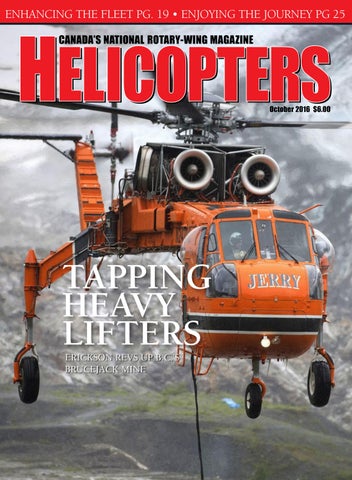
Tapping Heavy Lifters
Erickson Revs Up B.C’s Brucejack Gold Project
BY PAUL DIXON
old. It’s the stuff that dreams are made of.
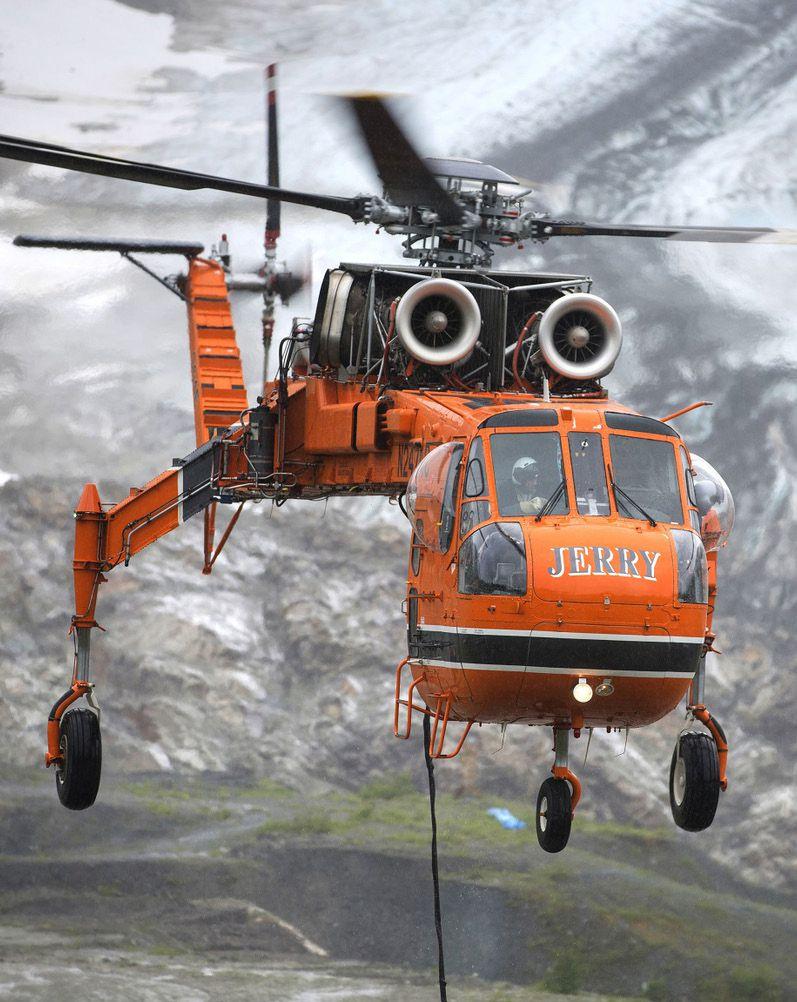
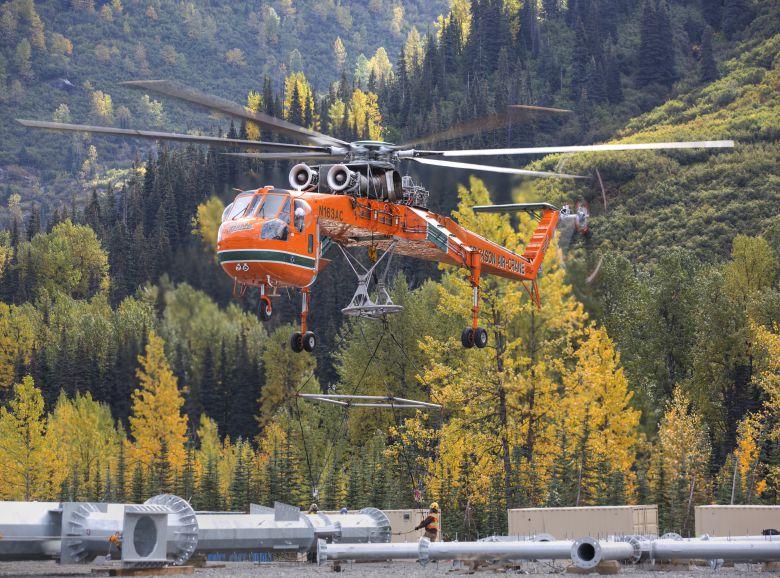
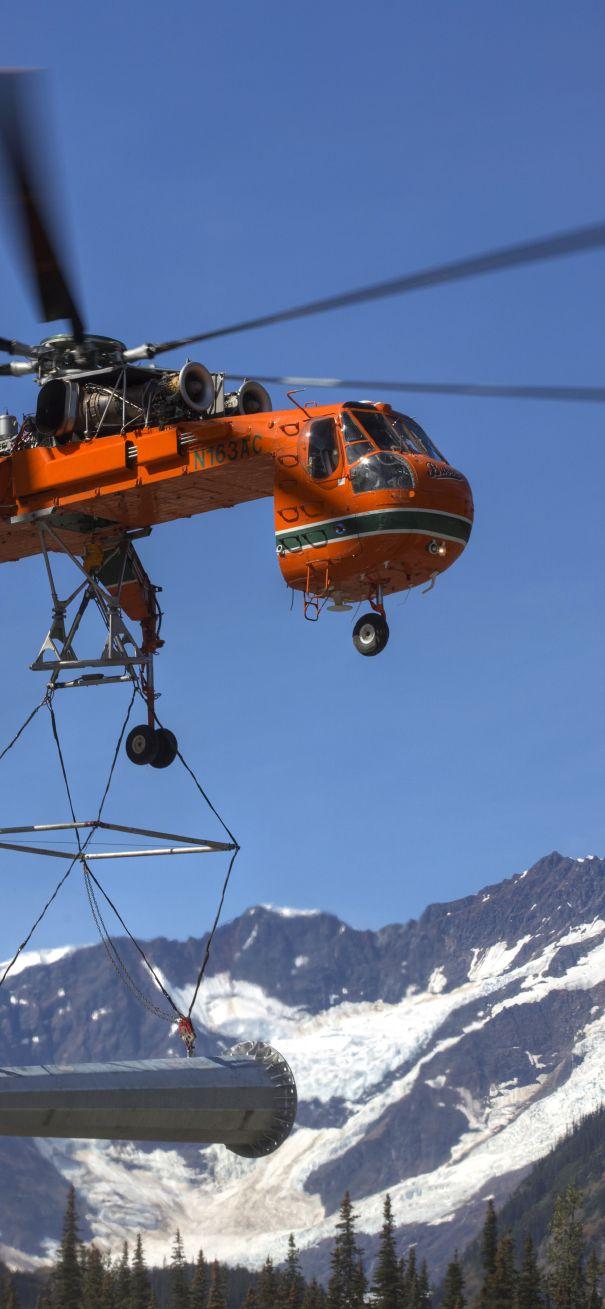
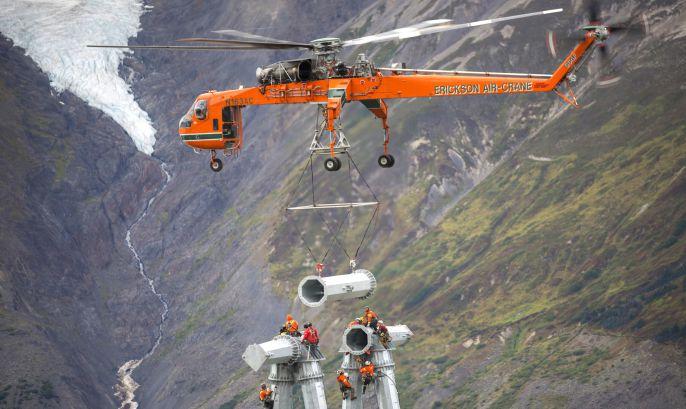
Pretivm Resources is set to cash in on that dream with its Brucejack Gold Project, northeast of Stewart B.C. The dream will become reality in mid-2017 when the mine is scheduled to become operational. As construction surges ahead on the project, the key component is the completion of a 58-kilometre 138Kv power line stretching from the BC Hydro Long Lake substation over some of the most extreme geography in North America. The lead contractor on the power line project is Rokstad Power, with the heavy lifting provided by Erickson’s S-64 Sky Crane. Based in Oregon, Erickson’s fleet of “Cranes” has become synonymous with heavy lifting around the world.
Mineral exploration and development is nothing new to this vast and lightly-populated region. The northwest corner of British Columbia holds some of the world’s most significant mineral deposits. Known as the Golden Triangle, massive deposits of gold, silver and copper lay across an area that is still largely unexplored. Prospectors had worked the region as long ago as the 1860s, spawning several small gold rushes.
In the 20th century, there were three significant developments: Premier, Snip and most recently in the late 1980s, Eskay Creek which eventually produced more than one million ounces of gold. The remoteness of the area, a lack of infrastructure along with long winters and extreme snowfalls meant that power, labour and logis-
tics costs could be prohibitively high. The government of B.C. committed to supporting the potential for mining and other industrial development in the northwest corner of the province by improving road access and paving portions of Highway 37 and improving the electrical grid by construction of the Northwest Transmission Line. The NTL was designed to bring an interconnection point for future industrial development as well as clean power projects in the region, with the goal of creating employment through development.
Brucejack has been touted as being the most important gold find in B.C. since Eskay Creek, but the known reserves for Brucejack
show a much larger deposit. The region has widespread deposits of low-grade gold, but it was one particular sample from a site in the fittingly named Valley Of The Kings that caught the attention of Robert Quartermain, CEO of Pretivm Resources. Quartermain has been quoted that he had only seen such a similar high-grade sample in a museum or from the Red Lake Mine in Ontario. As a young geologist, Quartermain was in charge of drilling the David Bell Gold Mine at Hemlo as an employee of Teck, a most auspicious beginning for a young miner. Now, at the zenith of his career, it appears that Brucejack has the potential to eclipse Hemlo and many others that came before it.
This year is a critical year in construction of the Brucejack, as production is scheduled to begin in the third quarter of 2017. Up to 800 construction workers and contractors are building the mill and permanent camp. The mill building has to be finished before the snow falls this year, so that the inside work can be completed through the winter. It is absolutely essential that the power line into the site be completed on schedule or the inside work on the mill will not be completed.
Rokstad Power is the contractor building the 56-kilometre 138Kv powerline from the Long Lake sub-station into the Brucejack site, with Erickson’s Sky Crane providing the heavy lift. Erickson is no stranger to working with Rokstad, having partnered with them on the construction of BC Hydro’s 500Kv ILM line last year. Additionally, Erickson had been exposed to the region working for another contractor on the Northwest Transmission Line.
THE BRUCE JACK STORY
Jeff Stein, Erickson’s power line sales manager, spoke with Helicopters about this project in particular as well as Erickson’s global operations. Ironically, as the northeastern sector of B.C. and northern Alberta were experiencing unseasonably high temperatures and
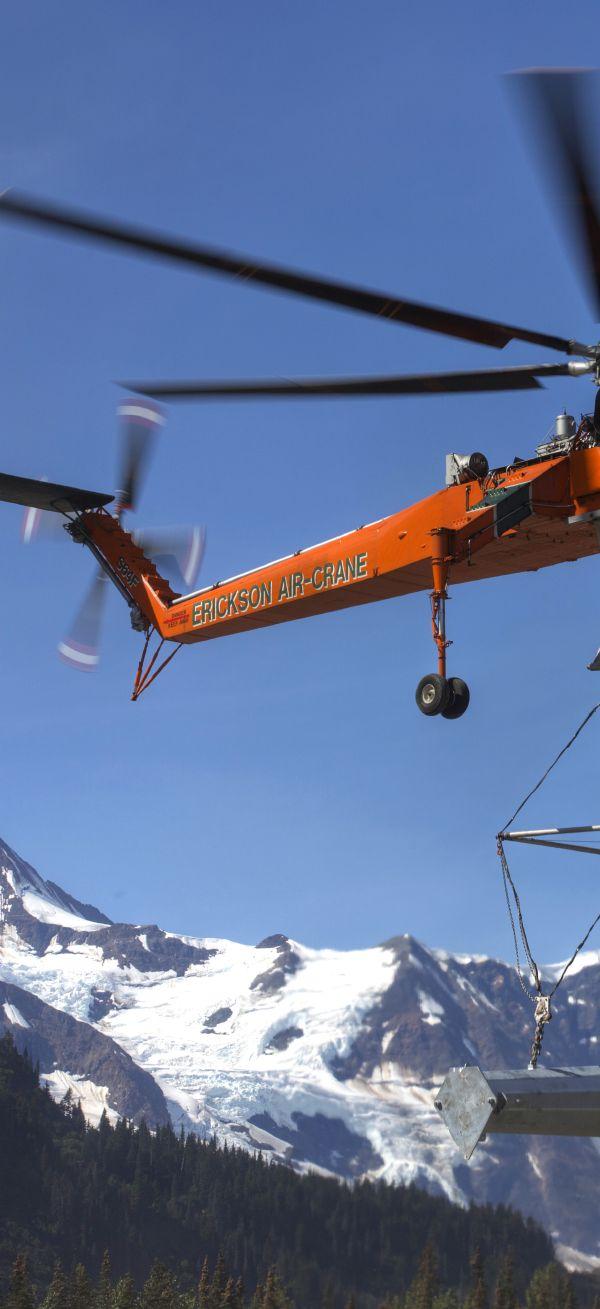
LEFT: Erickson’s Skycrane has the clout to get the Brucejack mine up and running.
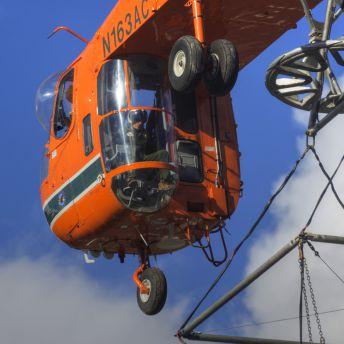
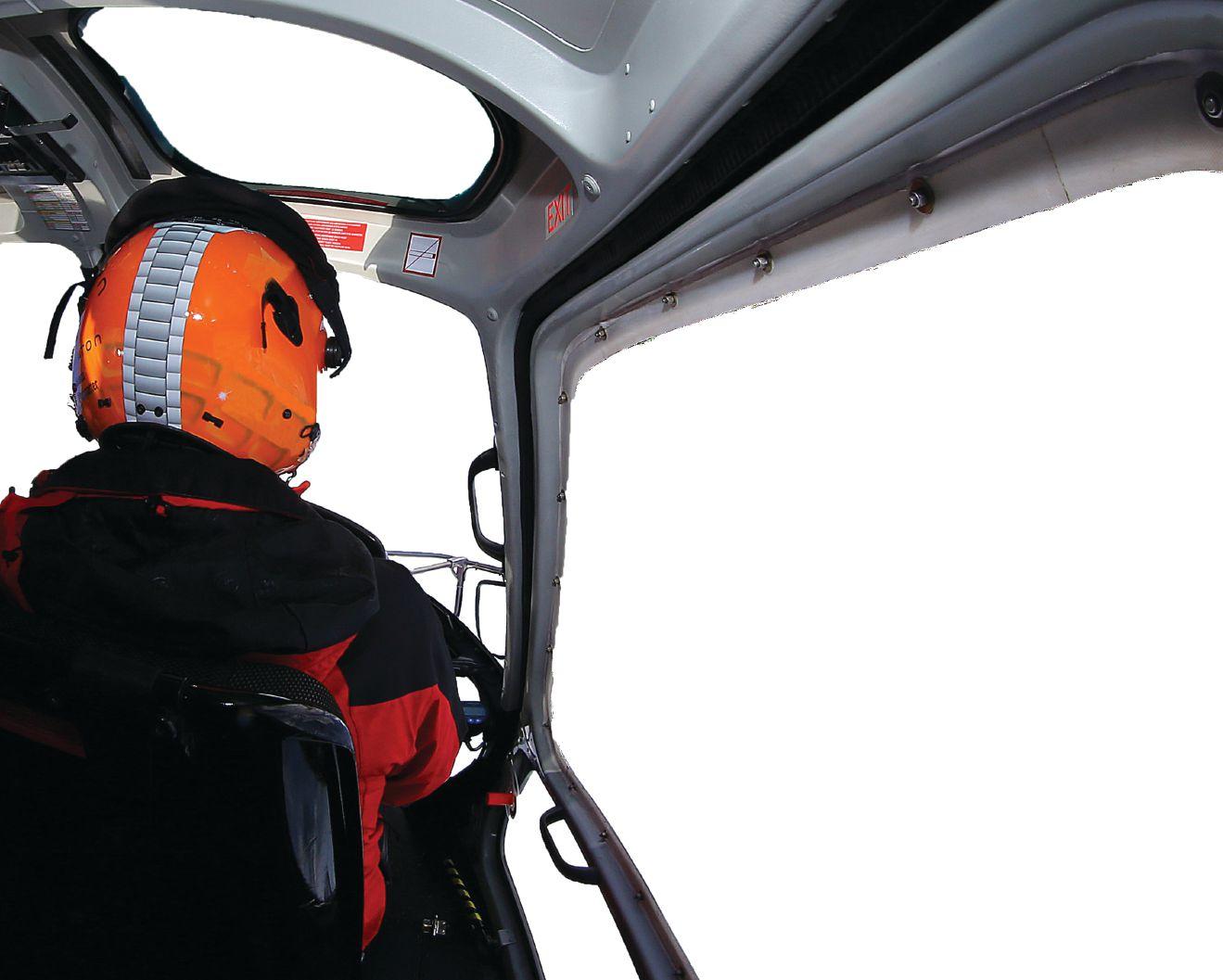
BELOW LEFT: A view from the cockpit of the Sky Crane.
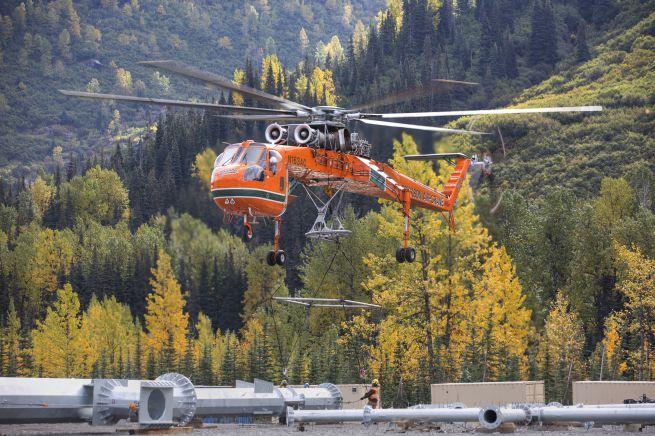
BELOW: Construction at Brucejack is scheduled to begin in the third quarter of 2017. (Photos courtesy of Bryan Dudas, Erickson)
extensive wildfires, the northwestern sector was living up to its reputation for long winters and deep snow.
“Rokstad had hoped to be able to get started in April,” Stein relates, “but because of the late snows, we weren’t able to start flying until the middle of May. To get back on schedule, we’ve sent a second aircraft up there.” The snow could begin again as early as late September or early October, so the pressure is on to get it done. There are almost 400 towers on the 56-kilometre line.
“We move excavators to prepare the foundation sites then fly in the bundles of steel for the rebar foundations,” Stein explained. “Then we pour the concrete. Most of the structures have a micro-pile foundation, with a big steel cap that forms the top of the foundation that the tower will sit on. Then, we start flying in the towers and erecting them as well.”
That translates into almost 20 million pounds of concrete and five million pounds of steel. It also means up to four yards of concrete at a time from Rokstad’s batch plant with flights ranging from a short hop to up to 10 miles.
There is a team of heavy- and mediumhelicopters on the project carrying out a wide range of jobs in all phases of the construction and they handle what they can, but of the jobs
that Erickson is doing with the S-64, Stein points out that the Air Crane is perfectly suited for the job. And it’s more than just the raw strength of the S-64 – Erickson brings a definite sense of purpose to the job site.
“We operate in very remote and austere environments and are very self-sufficient,” he said. “We bring with us all the parts and materials to operate the aircraft at a very high rate of utilization, up to eight to 10 hours of flying a day. We do all the line maintenance in the field and we can even do major component change-outs in the field – engines, rotor-heads and gearboxes and that’s somewhat unusual. Most major maintenance and component change-outs are done at a maintenance facility or depot-level maintenance facility, but Erickson has the capability to do all of that maintenance in the field. This allows us to maintain a very high operational readiness rate, in excess of 98 per cent of aircraft availability.
The Erickson team is based at the mine camp site, where all their required maintenance can be done. Crews, comprised of three pilots, two mechanics, a fuel truck operator and project manager operate on a two weeks on – two weeks off rotation. When the two helicopters were operating through July the crews were doubled.
The original six-month construction window having been shrunk by the late snows of spring, doesn’t make a challenging project any simpler, even with two Air Cranes on the job. The terrain the towers will march over is some of the most difficult and extreme in the country, climbing well over 6,000 feet in elevation, spanning glaciers and requiring some of the longest spans ever attempted in the country. Stein maintains they will have flown more than 500 hours on the project by the time they are finished. Erickson has a long tradition of working in Canada, particularly in British Columbia. “This has been a great partnership between Erickson and Rokstad once again,” he said. “We look forward to completing this project on schedule and are looking to future projects with Rokstad.” In addition to the ILM project with Rokstad, Erickson also worked on the Northwest Transmission Line with another contractor. There are hydro projects in Manitoba, with more in the future. The Cranes have been mainstays in heli-logging in B.C. and have been instrumental in battling some of the most extreme wildfires in recent years. Erickson has operated in Canada for more than 30 years.
CORPORATE CHANGES
In addition to working in some of the most challenging environments in the world, Erickson is also settling into a new corporate structure. “A couple of years ago, we acquired Evergreen Helicopters and we are still integrating the two organizations and trying to leverage the synergies between the two organizations,” Klein said. “We’ve added a number of aircraft, both light and medium helicopters as well as some fixedwing aircraft. Along with fixed-wing we’re now working in the government and defense markets, areas that we had not been in before. Even with the downturn in oil and gas, we have picked up more contracts in that market that Erickson has seen in the past.”
At that, to most people Erickson means one thing – the big orange S-64 Sky Cranes. Currently, Erickson has 20 Cranes working around the world. Apart from Canada and the U.S., Air Cranes are operating in Ecuador, Peru, Australia and the Philippines and will soon be back in Malaysia, India and Greece.
“It’s truly a global aircraft,” Stein said. “A lot of these aircraft will move continents twice a year. They move to Australia for our winter months in the northern hemisphere to fight fires in the southern summer and then they will move back to the northern hemisphere for the summer fire season.” In August 2016, Erickson and their Australian partner were awarded a two-year contract extension to provide
UNINTERRUPTED SUPPLY OF WORKWEAR AND PPE
Improve efficiencies and positively influence your bottom line with head-to-toe workwear and PPE supply programs for aviation.
With bulk wholesale ordering and managed supply solutions, you’ll have the right products delivered at the right time to the right place—always. We offer product sourcing, safety compliance awareness and streamlined purchasing to help you outfit your workers in flightready footwear, workwear and safety PPE.
Mark’s Commercial is your one-stop, bulk wholesale supplier of industrial workwear and PPE. No matter what supply challenges you have, we can respond to any demand.
Supply You Can Trust
Your workers’ safety comes first. Mark’s Commercial provides top safety workwear brands through apparel programs to thousands of Canadian businesses. Corporate wholesale supply programs, online ordering, direct delivery and a dedicated Client Services Team make Mark’s Commercial the only wholesale workwear supplier you’ll need when safety matters most.
wildland firefighting helicopter services in Australia. Erickson has been active in firefighting operations in Australia for more than 20 years. Under the current agreement, Erickson will provide six S-64 Helitankers to locations throughout Australia for the fire season from October through to March.
Erickson is also currently working on a transmission line in India, the first time transmission lines are constructed using a precision heavy lift helicopter. Sterlite Grid is building a 450-kilometre transmission line with nearly 1,150 towers that will connect the states of Punjab, Jammu and Kashmir. Erickson will install 160 towers at altitudes between 9,000 and 12,000 feet in a remote region of the Himalayas. Other than being half a world away, the work is pretty much the same as on the Brucejack project. “We are currently flying concrete and bundled steel for them to install their foundations,” Stein said. “Then, we will fly in some of the towers. The project runs through September, possibly into October. They’ve had weather issues some days, but overall the project is going very well.”
THE SHINE OF THINGS TO COME
The Klondike Gold Rush, according to the Canadian Encyclopedia , produced approxi-
mately 1.5 million ounces of gold during its peak years of 1897 to 1899. With the price of gold fixed at $18.74 at the time, that amounts to approximately $29 million in the dollars of the day. Far more money was spent in the effort to get to the Klondike and find the gold, than was ever paid out. Brucejack projects producing an average of 321,500 ounces of gold annu-
ally over a 22-year life span for the mine and will provide 500 full-time jobs as well as those employed in the construction phase. There is indeed gold in the hills and given the current provincial government’s position of strengthening infrastructure in the region, it seems reasonable that there will be more projects like Brucejack in the future.
The original six-month construction window was shrunk by the late snows of spring.
(Photo Courtesy of Bryan Dudas, Erickson)
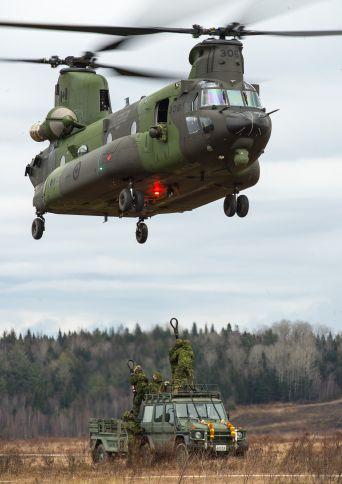
LEFT: Fleet Canada makes parts for the Boeing CH-147 Chinook.
BELOW: Fleet Canada keeps the world’s Chinook fleet airborne.
(Photos courtesy of the RCAF)
Fleet Canada Helps Chinooks Take to the Skies
BY MATT NICHOLLS
Enhancing the Fleet C
anada is blessed with myriad aerospace companies leading the charge in a variety of capacities, yet some seem to operate under the radar, despite the fact they work on influential aircraft making their mark across the globe.
In some ways, Fort Erie, Ont.-based Fleet Canada falls into this category, even though the company has been dutifully serving the aerospace industry for more than 85 years. Established in 1930 and sporting an impressive 500,000 sq. ft. manufacturing facility with a unique blend of old and new equipment, much of it handcrafted on site, Fleet specializes in detail fabrication, advanced composites, metal-to-metal bonding, and airframe assembly for a number of commercial, military and civil clients including Boeing, Airbus Helicopters, Bombardier, and Viking Air.
With a highly-skilled workforce of some 160 employees, Fleet deftly understands the needs of its customers, and boasts an impressive history, creating some of the most influential and dynamic aircraft of its generation. (see, “Through the Years,” pg. 20). But Fleet’s current influence is still lost on some, perhaps due to a combination of the company’s location in Ontario’s Niagara
Region, off the beaten track of bustling aerospace hubs in established Canadian cities such as Montreal, Vancouver, Winnipeg or the GTA.
This “under the radar” persona is also reflective in part by a reinvention of the company in 2005, when Magellan Aerospace closed the facility and sold the assets to a local group led by current president/CEO Glenn Stansfield. A rejuvenated Fleet Canada opened its doors in February 2006 with 14 employees, all of whom were shareholders in the enterprise. And the company got straight to work with legacy work on the Bombardier Q-300 aircraft, which had been a staple of the old company for more than a decade. Other clients would soon follow.
Today, Fleet focuses on four key programs and does each excessively well and is no longer tied to the Bombardier pipeline: supplying bonded wingskins, rear fuselage, tail plane and tail fin for Viking Canada’s Twin Otter; supporting the development of the new KC-46 tanker program for Boeing; manufacturing the front cockpit nose enclosure, pylons and platforms for the Boeing CH-47 Chinook; and working with a bevy of other clients on custom projects, components and more.
A recent tour of the plant by Helicopters revealed a dedicated,
talented – albeit lean – team that is clearly focused on its select projects, hardly giving off the sense that Fleet is obsolete in any way shape of form.
As Fleet Canada’s business development manager Marika Kozachenko, explains, one of the best qualities of the company is its ability to focus on its strengths and offer clients capabilities and skillsets its competitors cannot. Call it the corollary of “state-of-the-art,” monolith organizations that mass-produce key components and parts.
“We are a bit of a unicorn down here,” Kozachenko told Helicopters . “We had someone in here recently who hadn’t heard of us since 1999 when we did the flaps for the MD-80. So, he said, great to know you are still there. Being off the beaten path is a bit of an opportunity for us. The dialogue now is we don’t want to be everything to everybody. Our ability to show people what we do is our best asset and secondly, and more importantly, we think there are more opportunities out there for our company but it is not necessarily for buyers with huge packages.”
Being highly specialized and focused on a select group of programs enables Fleet to ensure quality is delivered at the highest levels. Each area of the 500,000 ft. manufacturing space, for example, is carefully organized and boasts highly-specialized techniques and processes. The production for the Chinook program is case in point.
Through the Years
A closer look at the Fleet story
A tour of the Fleet Canada plant in Fort Erie, Ont. reveals a mix of old and new machines. (Photo courtesy of Fleet Canada)
Handcrafted Chinook components are shipping at a rate of four to five per month, notes Kozachenko, which is a sound pace to ensure the highest integrity and precision. It also allows, with the pace of the other programs, time to scope out new business, which is always a key priority for the company. Boeing’s strong involvement, quality control and commitment also allows Fleet the opportunity to ensure high expectations are met, ensuring all interna-
• 1930s – Reuben Hollis Fleet establishes Fleet Aircraft of Canada Ltd. on Gilmore Road in Fort Erie, Ont. on March 23, 1930 as part of Consolidated Aircraft Ltd. Fleet designs and constructs entire planes made of welded steel structures, covered by cloth with wood stringers.
• The War Years – Fleet Fawns, Finches and Forts became mainstays in the British Commonwealth Air Training Program. Fleet Canada produces more than 160 aircraft per month.
• Post War – Fleet designs the Canuck (Model 80) in 1939. The old trainers and Canucks were the perfect rugged aircraft to link remote areas across the globe through the new medium of flight. de Havilland designs the DHC-2 Beaver and Fleet is contracted to make fuselage panels and wing assemblies.
• 1950s – Fleet is contracted to supply components for radar antennas for Canadian General Electric to be installed in the Pine Tree line for NORAD in Canada. Fleet supports Canadian OEMs, including Avro’s CF-100, Canadair’s F86- Sabre Jet and de Havilland on the Beaver. Fleet is managed by Canadair from 1953-59.
• 1960s – In January of 1965, Fleet is awarded the job of building the flap and ailerons for the DC-9 for Douglas Aircraft. The plane becomes the MD-80, the program continues until the 1990s.
tional clients Boeing ships to are more than satisfied with the results.
“It is a nice program to be on, it has longevity,” Kozachenko added. “The tanker program – it’s still a good program but it is in the development stage, we are not up to a production rate yet. They are doing about one a month. This one, too, has the opportunity to go on for many years in the future. And it’s a new program to help us diversify a little bit.”
• 1970s – In 1973, Fleet become a division of RONYX Corporation Ltd. In 1977, Fleet designs 165 flight stations for the P-3C Orion/CP-40’s Aurora.
• 1980s – Fleet employees celebrate the company’s 50th anniversary in 1980 by restoring a Cornell, christening it “Sprit of Fleet II” and donating it to the Canadian Warplane Museum.
• 1990s – A new paint facility is completed in December 1990 with separate areas for complete aircraft and major components. The company is working for many of the world’s largest aerospace OEMs, and producing entire cabins for the Bell Model M230/430. In 1996, Fleet Industries is renamed Magellan Aerospace.
• 2000s – In August of 2001, a MODIG CNC machine is purchased to produce extruded detail parts. Magellan closes the facility in December 2005 and sells the assets to a local group led by Glenn Stansfield. The new company, Fleet Canada Ltd., reopens its doors in February 2006 with 14 employees, all of whom were shareholders in the enterprise.
• 2016 – Fleet is the only company to supply bonded wing skins for Viking Air’s Twin Otter. Fleet now supplies the wingskins, rear fuselage, tail plane and tail fin for the Twin Otter Series 400. Fleet Canada also manufacturers the front cockpit nose enclosure, pylons and platforms for the Boeing CH-47 Chinook helicopter and supports he development of the new Boeing KC-46 Tanker program.
For the Twin Otter program, Fleet is making similar parts to what were designed in the 1960s. Much of that is still metal-tometal bonding, a process Fleet specializes in. That process, certainly from a structural point of view, hasn’t been drastically altered since the 1960s. Fleet also specializes in the bonding of the wing skins for the Twin Otter, a process it has perfected and has no rival in the industry. The ongoing success of the aircraft on the international stage only bodes well for the company’s future fortunes.
“Most of the Twin Otters that were built in the 1960s just keep going and going,” Kozachenko notes. “And they keep going up in value, which is also really wild. Because you would think that when you put something back in production, normal business math would say increased supply would lower the value . . . but it is not. They (Viking) are just doing a great job of getting people involved that are already supportive of the platform and know the platform. We are awfully proud to be on it and it talks about us, because this company has been given new life since the change and we too are having a rebirth.
“There is certainly opportunity for growth, but we want to be very discerning in the work that we do,” stated Jean-Sébastien Coulaud, general manager at Fleet. Coulaud came to Fleet in 2015 looking for a challenge. What he found was a company with incredible opportunity for growth. Since coming aboard he has been focused on team building, process control and methodology improvements. He added “We know what we are good at – we don’t want to compete with machine shops, we know there are some very good ones out there. The opportunity for us is when something has a complexity to it with metal to metal or composite details, we can do the assembly – many areas of expertise and keeping it in house.”
Which brings the discussion to the question of niche – what exactly is the one thing that differentiates Fleet from its competition?
Coulaud is matter-of-fact when discussing the premise. It’s not about one thing – it’s a collective whole. This premise is reflected in the Fleet tour, one, which Coulaud says, is imperative potential clients experience. The commitment to craftsmanship and detail is evident at each section of the 500,000 sq. foot facility, be it in airframe assembly, composites bonding, chemical processing, surface finishing and more.
“Everyone asks, what is your niche?” Sal Moledina, director of logistics quips. “Our niche is knowing that we have the ability to do everything in-house. It is important to be discerning when a work package comes in and understand whether this really fits us. We can bid on this. Or if this doesn’t fit us – it is too heavy on machining or too much on stainless, then we can say, ‘no bid.’ We must to be able to sell ourselves knowing what we do best, and have that elevator pitch ready and be able to use it at the drop of a hat – it’s invaluable.”
Equally invaluable for Fleet clients are Fleet’s four NADCAP approvals for chemical processing, composites, heat treat and nondestructive testing. The fact Fleet can offer these processes in-house is another way customers can shorten and simplify their supply chains, offering more value. The ability to process in-house also improves efficiency and decreases transportation cost and administration required when outsourcing.
“So, once again, it’s all quality control,” Moledina said. “NADCAP designations are not easy to get or to keep. But because of the wonderful site that we have and array of equipment and the strong quality assurance team, it makes them easier to keep up. After the 1980s, a lot of companies didn’t have a lot of processes under one roof. They went to the concept of specialization. We still have all of that under one roof. It’s all about being resourceful. And it’s also about understanding your customers and their product, where it needs to be supported and how.
Since Fleet is a small company with a small board of directors and a small management team, it also gives the company an advantage in making decisions on new business – it can carefully evaluate projects and business opportunities in a way other companies may not be able to. For example, Moledina notes a recent example of how “small and nimble” is a distinct advantage in evaluating potential deals.
“We received a quote last week, early in the morning. We sent the drawings to our engineering department to see if it was something we were interested in, if it is something we could do, does it make sense for us. We had made that decision before 9 a.m. Not very many companies can do that.”
So, what are the future opportunities and potential growth areas for the company? With established manufacturing processes and skillsets coupled with solid clients and a well-run shop chalk full of experienced craftsmen, Fleet is in a good spot to look for growth opportunities.
“We are looking for another good longterm customer – Boeing 767, Gulfstream or the Bombardier C-Series fits us well to become another business pillar,” Coulaud confides. Another golden nugget would be future work on the Boeing Super Hornet program, something that isn’t exactly out of the realm of possibility, especially if it is selected as a replacement to the aging CF-18s; Fleet already has a solid connection with Boeing and a lengthy list of Boeing approvals.
As for now, Fleet will continue to do what it does best – concentrate on providing key components for some of the most iconic aircraft that frequent Canadian and international skies.
“We have good customers and everyone seems to be heading in a good direction,” he says. “One of the metrics that amazes me is when we started in Feb. 2006, we were 99 per cent Bombardier. Today, we are less than two per cent Bombardier. We will continue to adapt to emerging opportunities. We want to grow to become a stronger company but to keep the strong culture that is required to do the highest quality work the industry demands.”
Coulaud’s goal it to extend the legacy of Fleet Canada. “I am committed to growing this company; to keep good jobs in Niagara. We have all the ingredients here to be successful and I am so proud to tell people “We’re here and we’re ready”.
Staying focused and doing what they do best continues to help a rejuvenated Fleet Canada make its mark in Canadian aerospace.
Enjoying the Journey
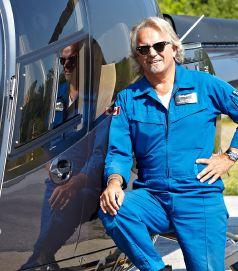
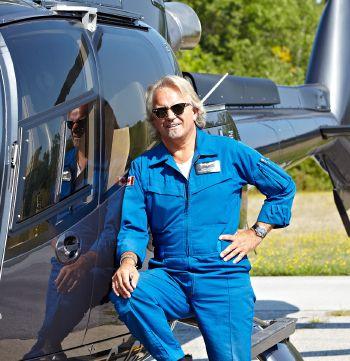
LEFT: Gary Krebs gets to fly a variety of aircraft in his line of work
BELOW: No two days are the same for Airbus Helicopters chief pilot Gary Krebs – (Photos courtesy of Airbus Helicopters)
Variety the Spice of Life for Airbus Helicopters’ Gary Krebs
BY MATT NICHOLLS
Variety. New opportunities. Mentorship. A sharing of important industry safety data and trends. All are just part of the typical work cycle for Gary Krebs and it’s made for a truly interesting and diverse career.
Krebs is the chief test pilot of Airbus Helicopter and he has held the role for the past 16 years. It’s a challenging and diverse roll, which gives Krebs a chance to utilize a variety of skills gleaned from an equally diverse career in the helicopter industry. Helicopters magazine caught up with Krebs earlier this year to get his take on industry trends, safety, personal aircraft preferences and much more.
Can you give us a snapshot of what your job entails and how you got your role?
My position includes a wide variety of duties, the main ones include: experimental flight testing for STC’s (Supplemental Type Certificates); post-completion flight test; managing maintenance and pilot training; as well as flying demo aircraft. For example, in 2015, I toured from New Brunswick to B.C. and piloted three demonstrators: the H130, H145 and EC145C2e.
How I ended up at Airbus Helicopters Canada is actually a
funny story. One morning I was reading the latest issue of Helicopters in Canada (now Helicopters magazine). Starting at the back in the Careers section, I saw there was an opening for the chief test pilot position at Eurocopter Canada (now Airbus Helicopters). I was intrigued because of the relationships I had with other OEM test pilots and how much they enjoyed being on this side of the industry. I had been offered production test pilot positions with other OEMs in the past, but the idea of working with Eurocopter (Airbus Helicopters) was really an exciting prospect.
At the time they were looking for someone who spoke English and French. At my first interview, I was asked if I was bilingual and had answered with a definitive “yes,” as I speak English and German. At my second interview at the 2000 HAI (Helicopters Association International) tradeshow in Las Vegas, I interviewed with the Eurocopter (Airbus Helicopters) chief test pilot from France. When he began interviewing me (speaking French), I had to stop him to acknowledge the fact that I had very little understanding of the language. They had assumed that being bilingual meant I spoke English and French. After explaining the situation we all had a good laugh about it and because of my past experience
and skillset, I was offered the position. In the end, the German does actually come in handy, as we are a French-German company. I am also currently taking French lessons from my wife, Stephanie, who is from Quebec.
How has your previous experience at Canadian Helicopters helped in your current role?
I worked at Canadian Helicopters (CHL) on and off for about 11 years total, but never long enough (cumulatively) to get a
five-year pin. During that period, I did my commercial helicopter training with Ranger Helicopters and flew for Lakeland, Maple Leaf, Sealand, Okanogan and CHC (Canadian Helicopters Corporation).
There was a lot of opportunity for growth during my time with CHL. My experiences with Day VFR bush piloting, flying coast-to-coast across Canada, Mountain Flying courses, mutli-crew engine IFR as well as, working as a flight instructor and base manager, gave me the skillset to enter into corporate aviation and
eventually become Chief Test Pilot at Eurocopter Canada (Airbus Helicopters). I was invited to be a guest speaker several years ago at an annual CHL base manager meeting. I spoke about my experiences with CHL and how I had gotten close to the five-year milestone but unfortunately the ceremonial pin had alluded me. At the end of my speech one of the CHL pilots took off his 10-year pin and presented it to me!
What do you like most about your position and why? What’s it like being the test pilot of a major OEM? What makes you come to work each day?
WELCOMES
November 15-16, 2016 Shaw Centre, Ottawa, Canada
The best part of my job is the variety; no two days are ever the same. From flighttesting to training, I get the opportunity to fly a variety of aircraft across our product range. Although I enjoy experiencing the technology and ease of flight found in the newer models, I also savour the occasions where I get to fly classic aircraft, like the B0105 and BK117. I also enjoy testing the latest and greatest in STC’s for light singleengine aircraft, as this is what a vast majority of utility operators are flying across Canada. With my past bush/utility experience, I am able to work closely with our engineering department to develop exactly what will fit our customers’ requirements. The work I do is interesting and what keeps me coming back day-after-day is the people. I receive incredible support from the team at Airbus Helicopters and have created many tight-knit relationships with a number of our operators over the years.
What changes have you seen in the development of the aircraft?
The definitive answer, without question, has to be the technology. The introduction of equipment such as Dual Channel FADEC, Four Axis Auto Pilot, TCAS and Helionix has been a game changer for the industry, decreasing pilot workload and increasing safety. Also, seeing the progression of the 350 series of aircraft has been very interesting. From where I started on the AS350 B, to the H125 and H130, these aircraft have really become the benchmark in which all other utility/multi-purpose aircraft are measured.
How do the aircraft being produced today stack up in terms of technology, safety enhancements and overall quality?
If you look at aircraft in the Canadian market, particularly the H125, with crashworthy seats, crash resistant fuel-tank and VEMD, you can immediately recognize the importance that we place on not only reducing workload for the pilot but increas-
ing safety. As technology advances, the high quality of our aircraft has remained consistent over the years.
Some 11 years into my career, I started flying AStar’s, which at the time, were considered an aircraft suitable for “experienced” pilots. Today, many low-time pilots fly AStar’s as one of their first experiences with turbine aircraft. As technology has progressed, so has ease of flight for this platform, which is significant, as the AStar is the most popular utility aircraft flown in Canada.
In general, operators are embracing new technology because of the decreased workload and increased safety features.
How important is the idea of recurrent training for pilots? What do you notice most about pilots that you train on new Airbus equipment? Anything stand out?
Annual recurrent training is essential for any pilot. The less someone is flying, the more important quality training becomes. That’s not to say training is not also important for pilots that are flying on a regular basis. As an example, most utility pilots are excellent at doing their job day-to-day, but do not regularly employ or think about emergency procedures and this is something that should be revisited frequently, even for the most experienced pilot.
I am also a big advocate of simulator training. We work very closely with our colleagues at Airbus Helicopters Inc. in Grand Prairie, Tex. to offer the best in highly realistic training aides for the H125, H135 and H145. This training method allows for pilots to practice emergency procedures without putting themselves in harm’s way.
Do you have a favourite helicopter and if so, why? Which machines do you feel suit the Canadian market best?
Honestly, my response would change depending on the mission. For utility missions, it’s the H125. It’s the most evolved single-engine aircraft out there today. Its triple redundancy for fuel control, dual hydraulics, VEMD, cargo space (especially with the addition of “Squirrel Cheeks”), multipurpose cabin, make this the aircraft of choice for utility pilots, especially flying in demanding environments.
The mission flexibility and excellent visibility of the H135 make it the perfect fit for Para-Public missions and the H145’s fully functional unobstructed cabin and state-of the-art IFR-equipped glass cockpit avionics as well as, the EC145’s VFR functionality, make it an excellent choice for EMS operations.
For operators who are looking for a true
multi-mission platform, the H130 is incredibly versatile.
I’ve flown a wide variety of helicopters over the span of my career and these aircraft are, in my opinion, premier aircraft for not only the Canadian market, but on a global scale.
A general comment on safety – do you feel the Canadian market is as safe as it can be? How do we make it safer? Safety practices are constantly evolving. For everyone, I know the ultimate goal is to reduce the number of accidents and eradicate all the avoidable ones.
This is essentially the reason that, in addition to providing recurrent training, we host a yearly Corporate Safety Symposium for our private operators as well as, a Hydro Symposium for our utility operators. Safety is our No. 1 concern and these gatherings permit us to communicate on the most relevant issues. I think it is also important to highlight those individuals and organizations that are already taking the extra step(s) in regards to safe flying practices, which we do through our annual Innovation in Safety Award.
In Canada, there are a large number of aging aircraft that will need to be replaced within the next five to 10 years. With this, will come the introduction of new aircraft technology, resulting in safer flying conditions overall.
I am also involved with the Canadian chapter of JSAT (Joint Helicopter Safety Analysis Team) through IHST (International Helicopter Safety Team). The stated goal of IHST is to decrease the amount of accidents by 80 per cent over the span of 10 years (period ending in 2016). Preliminary results have indicated that there has been a significant decline in safety-related incidents during this period, due to improved technology from the manufacturing level, heightened awareness in regards to the need for quality
training as well as, devices like aircraft tracking and the Vision 1000. This equipment can be incorporated into day-to-day operations, relaying deviances and gathering important data.
Can you walk us through a typical season for Gary Krebs? How does it break down? In addition to my regular duties, in the beginning of the year I travel to France and Germany for the Airbus Helicopters Annual Pilot/Instructor Standardization Symposium, where Airbus Helicopters pilots from across the globe come to discuss development and training to ensure a worldwide OEM standard. During the period(s) of January to May and October to December, we run annual Recurrent Training for day VFR utility pilots. Typically from March until the end of May we are conducting post-completion flight tests for day VFR aircraft that operators require before their summer operating season begins. There is typically another peak time for aircraft completions from midOctober to the end of December, for operators who require their aircraft be delivered by years end. Summers are typically not as busy due to the completion of operational training and the more relaxed production schedule, which gives me time to catch my breath, catch up on paperwork and prepare myself for the coming year.
In Canada, we have been working toward a more integrated North American approach with our operators. So, I have been working a lot more with the team at Airbus Helicopters in Texas. It is an exciting time for us. Our end game is always to offer greater resources for our customers. I think, from my own experience, the more tools we provide to our end user; the more opportunities become available to grow their business. In the end, we just want to support our customers and their aircraft by supplying the best products and services available.
"Safety practices are constantly evolving; you can never be too safe," Gary Krebs notes.
AVIONICS IN PLAIN ENGLISH
The rate of change in the field of avionics is so fast that even the legislators are struggling to keep up with it. With new digital cockpits, it is getting to the stage that, if your VCR still flashes 12:00, you will have no business flying a modern helicopter! The majority of twin-engined (and many single-engined) aircraft now have complex autopilots, glass cockpits and navigation equipment, possibly including Flight Management Systems (FMS).
This book originated with a request from the RCAF for training materials for engineers, but curious pilots whose training syllabus did not include avionics, and who would like to know a little more will find it useful as well.
COLUMN
FRED JONES
hate to disappoint those of you that thought this issue would go away with the Federal Election last year, but its back – and with a vengeance. No one wants a fatigued pilot. No one wants to be a fatigued pilot, but there are some serious problems with Transport Canada’s (TC) latest draft proposal.
You will recall that TC declared that they would be publishing a new regulation in Canada Gazette I in the Spring of 2017, with a formal 60-day comment period. Thereafter, TC would have to conduct a Disposition of Comments (a process where TC must consider all comments received), and incorporate any required changes, before publishing the final version in Canada Gazette II – notionally, in the spring or fall of 2018. The airline community (CAR 705) would have one year to bring themselves into compliance with the new regulations, and everyone else in Part VII (except CAR 702 Operators – who would be excluded) – would have another 36 months to embrace the new regulations, before they became law.
Add it all up, and it will be roughly five years before the new rules come into effect for the Canadian helicopter community however, we have 60 days in spring 2016 to provide our feedback on the regulations. After that, the window of opportunity to provide any formal feedback on the draft regulations closes. The fuse is really quite short.
For two years, TC staff has been claiming that their new draft regulations are “science-based.” This is not true. There are a few
Missing the Mark
Proposed Fatigue Management Regs Still Miss
the Mark
The reality is that the applied science is predominantly conducted in an airline environment – very little of it considers fatigue in the context of helicopter operations. In response, the regulator has pronounced “Pilots are pilots – they all get fatigued.” They all get fatigued – but not in the same way, or doing the same things. What’s more, the helicopter industry cannot use scheduled airline-centric tools to mitigate fatigue – they just don’t fit. We largely work in a seasonal environment, and in remote environments where we can’t “pick up another crew, when we stop in Calgary.” In the north, we have long summer days.
Many operators have contacted HAC to ask “How will TC exclude Aerial Work (CAR 702) operations from the application of the new regulations, in an industry where one pilot can mix-andmatch between CAR 702 and 703 operations many times in the same day?” The crew member can’t even keep “two sets of books” (one for CAR 702 limits and one for CAR 703 limits), because once they time-ex on a single CAR 703 limit (Duty Day for example) – there’s no going back, for some uncertain period of time.
Based on the incomplete matrix summary of the new Regulations circulated with Transport’s Regulatory Impact Analysis Statement (RIAS) Survey, the flight time limits could allow an average of four flying hours/day over a 28-day period (the current regulations at their limits allow an average of five) however, pilots will only be allowed to work an average of 7.5 hours/day during that period to reach that limit. For most operators, during the busy summer season, that spells double-crewing an aircraft in the bush.
The proposed new regulations have strayed well beyond science-based anchor points
anchor points in the fatigue-related science, but the proposed new regulations have strayed well beyond those anchor points, HAC would argue, into science fiction. They have even eliminated some elements of the current regulations that were completely consistent with the fatigue-related science – the zeroing provisions, for example. The reality is, that nothing reduces fatigue like consecutive days free from duty. The new regulations embrace “Cumulative Duty Hour Limitations” – a concept that was rejected by the Aviation Fatigue Scientist, Dr. Greg Belenky – hired by TC to guide us through this complex area.
’’
The FAA and EASA have only published regulations impacting airline operations. They are even charging off ahead of ICAO, who – to its credit – is in the process of developing helicopter-specific regulations, through a Fatigue Management Sub-Group, in consultation with their Member-states. TC apparently couldn’t wait for anyone else on this subject, and may very well find themselves with regulations that are inconsistent with the EASA, the FAA, and the ICAO helicopter-specific SARPs.
The only way that you can possibly hope to influence the course of these regulations is through your association. If you are a helicopter operator, and you are not a member of HAC, you should be.
Fred Jones is the president/CEO of the Helicopter Association of Canada and a regular contributor to Helicopters magazine.