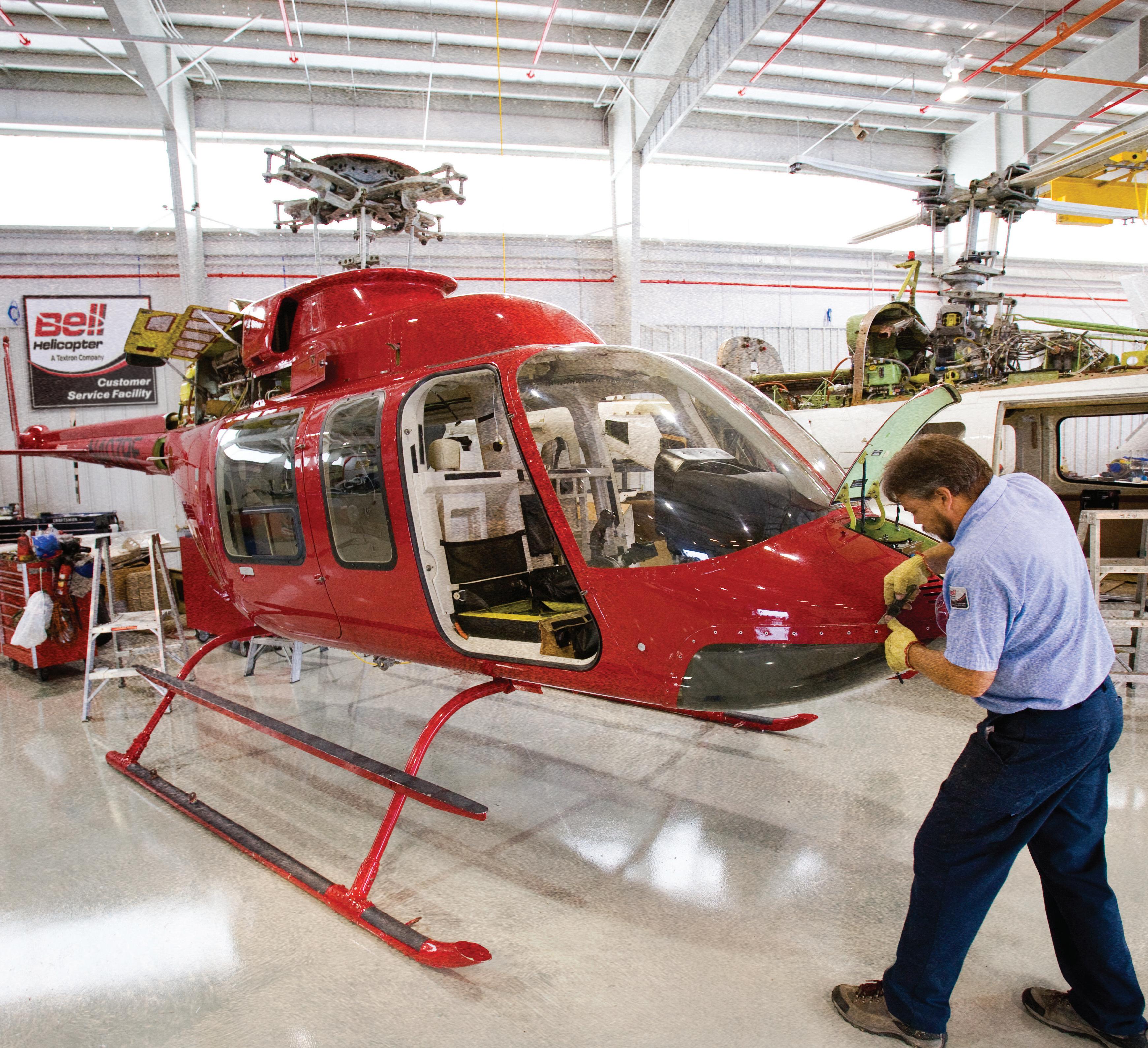
You didn’t get to where you are by compromising. Neither did Bell Helicopter, which is why there are no compromises in a 429. Luxurious, spacious and adaptable, it was designed precisely for your fast-paced, high-stakes world. With impressive range and speed, plus an astonishingly smooth and quiet ride, the 429 gets you where you need to go in comfort and style. On a Mission.
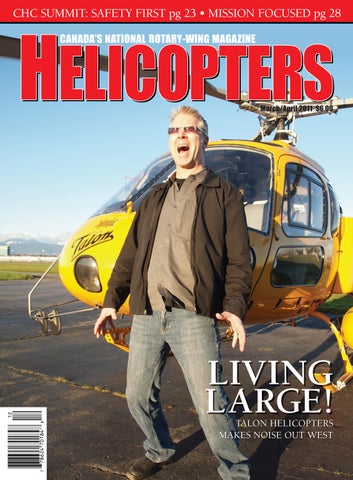
18 Living Large!
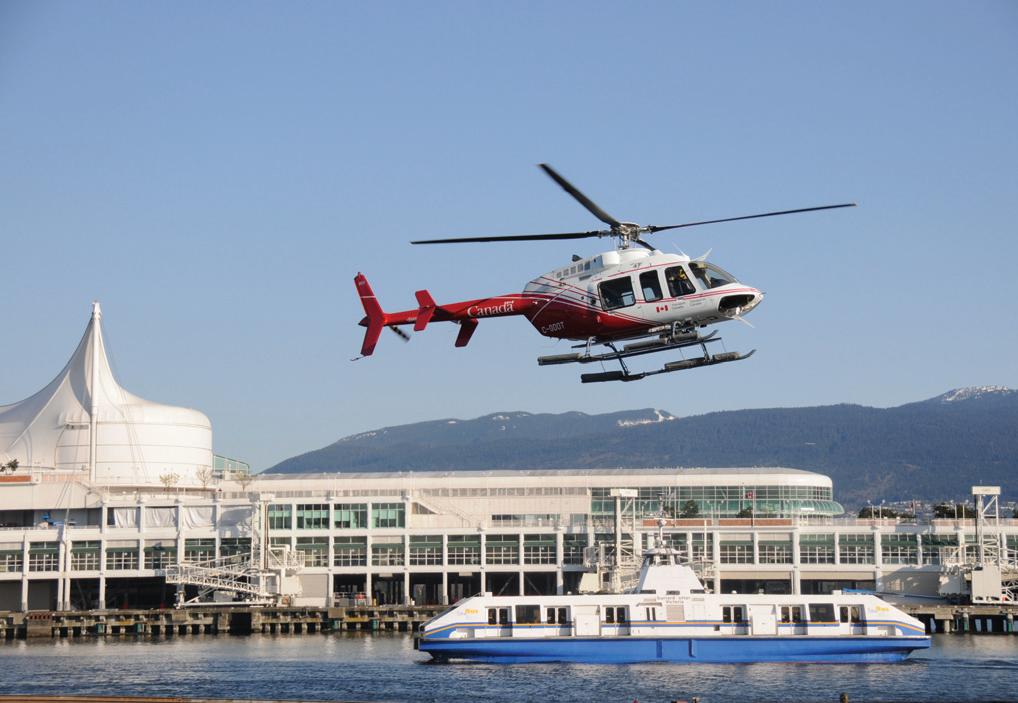
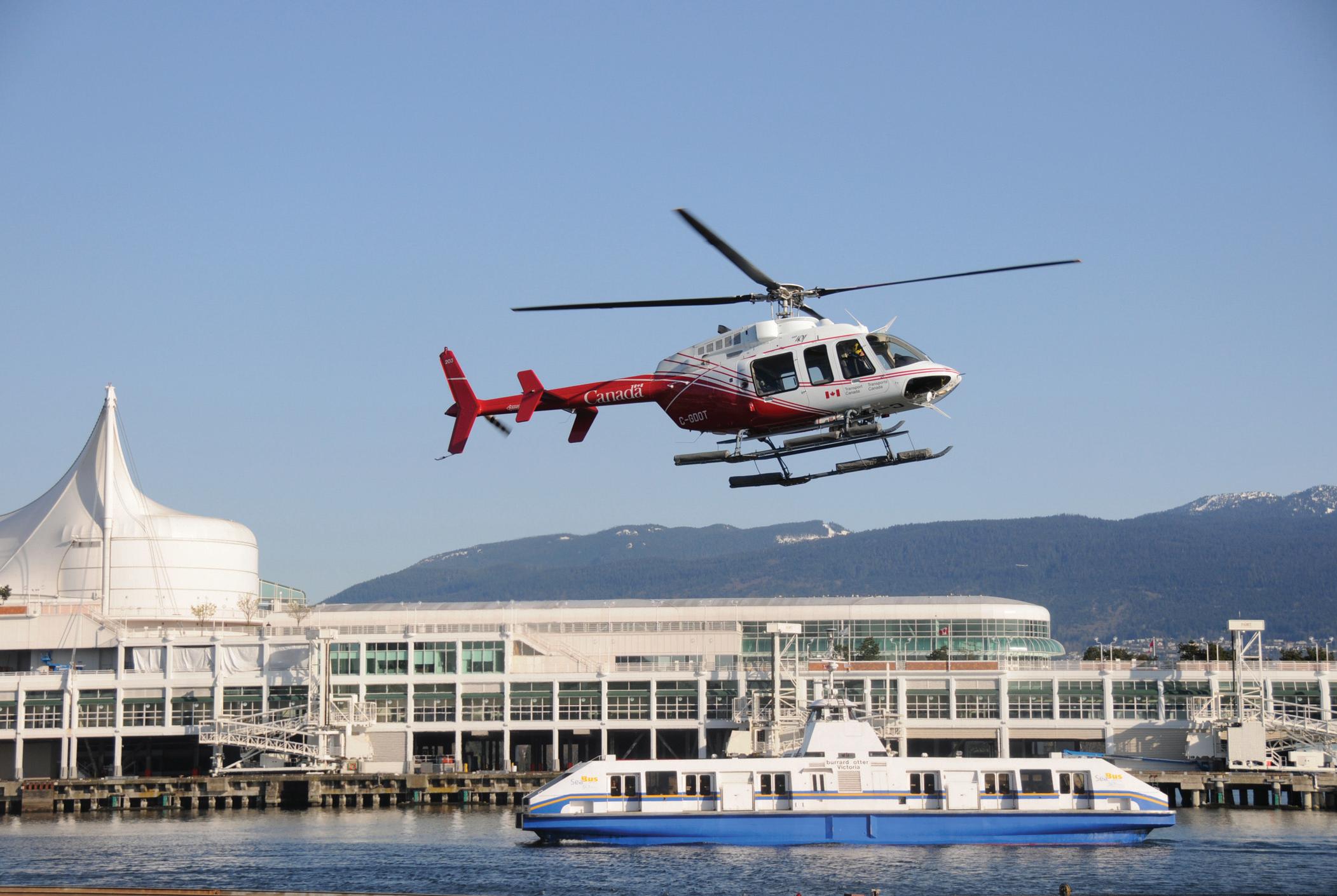
Talon Helicopters has carved an impressive niche in Vancouver’s competitive market, by Matt Nicholls. 23 Priming
CHC’s Safety & Quality Summit has grown into a mustattend event, by Paul Dixon.
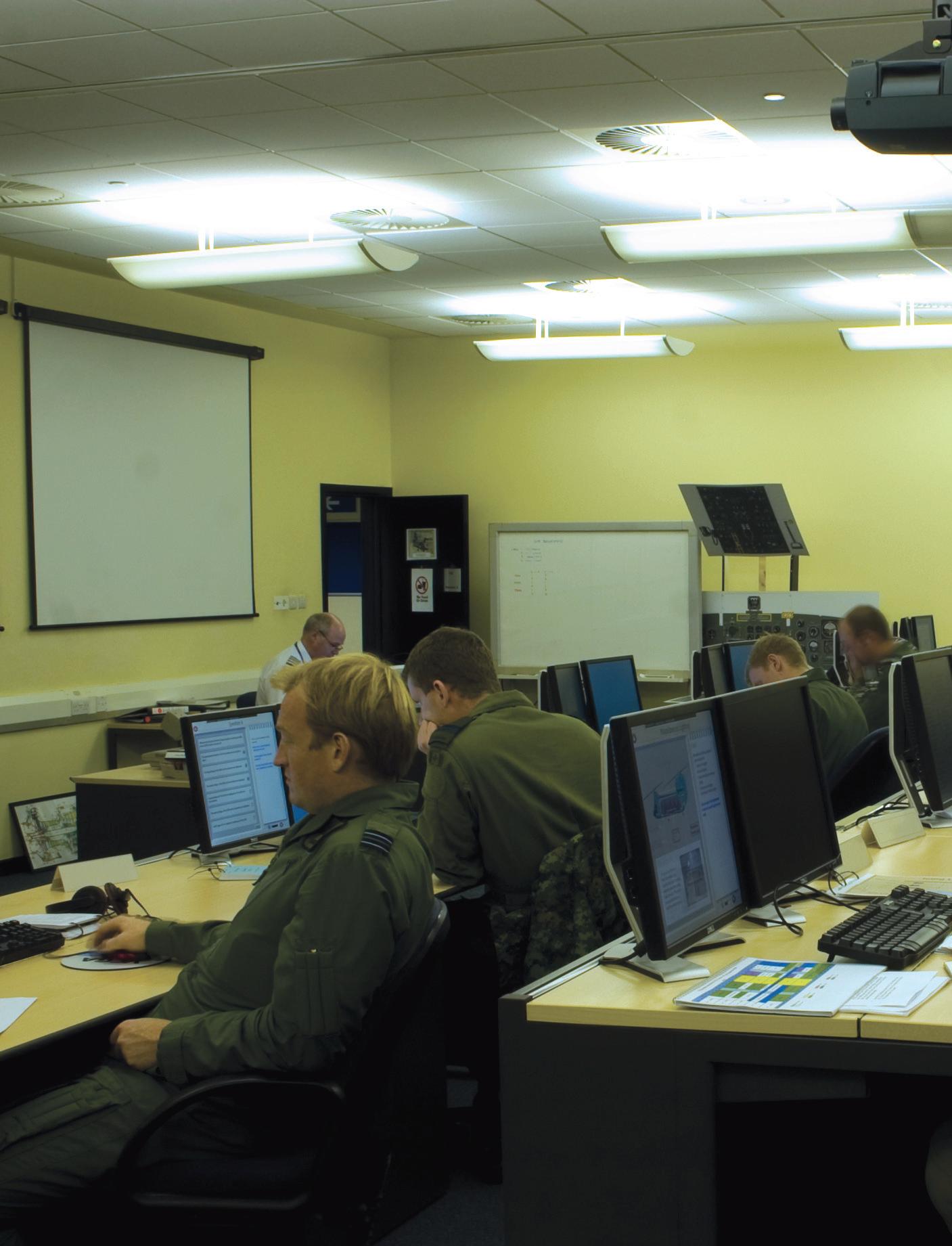
CAE’s $158-million plus facility in Oxford, U.K. is preparing Canadian pilots for duty. Peter Pigott takes a closer look.
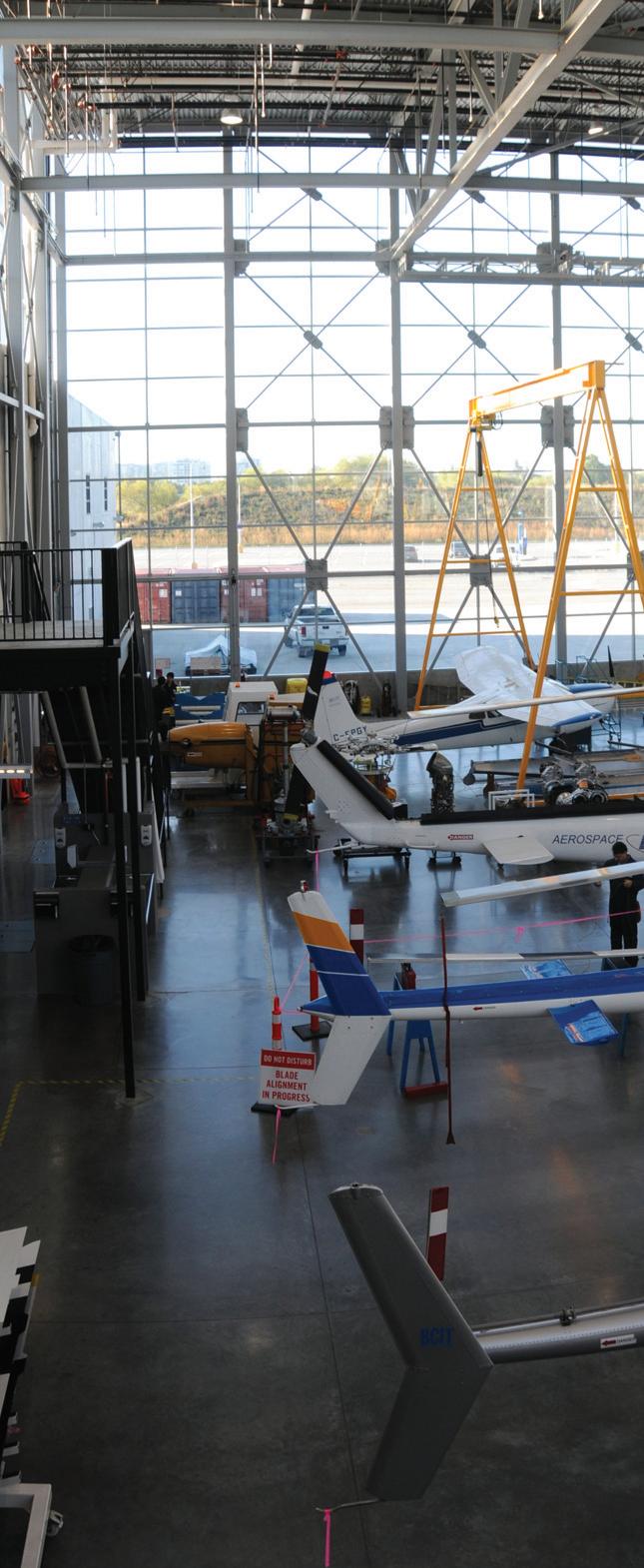
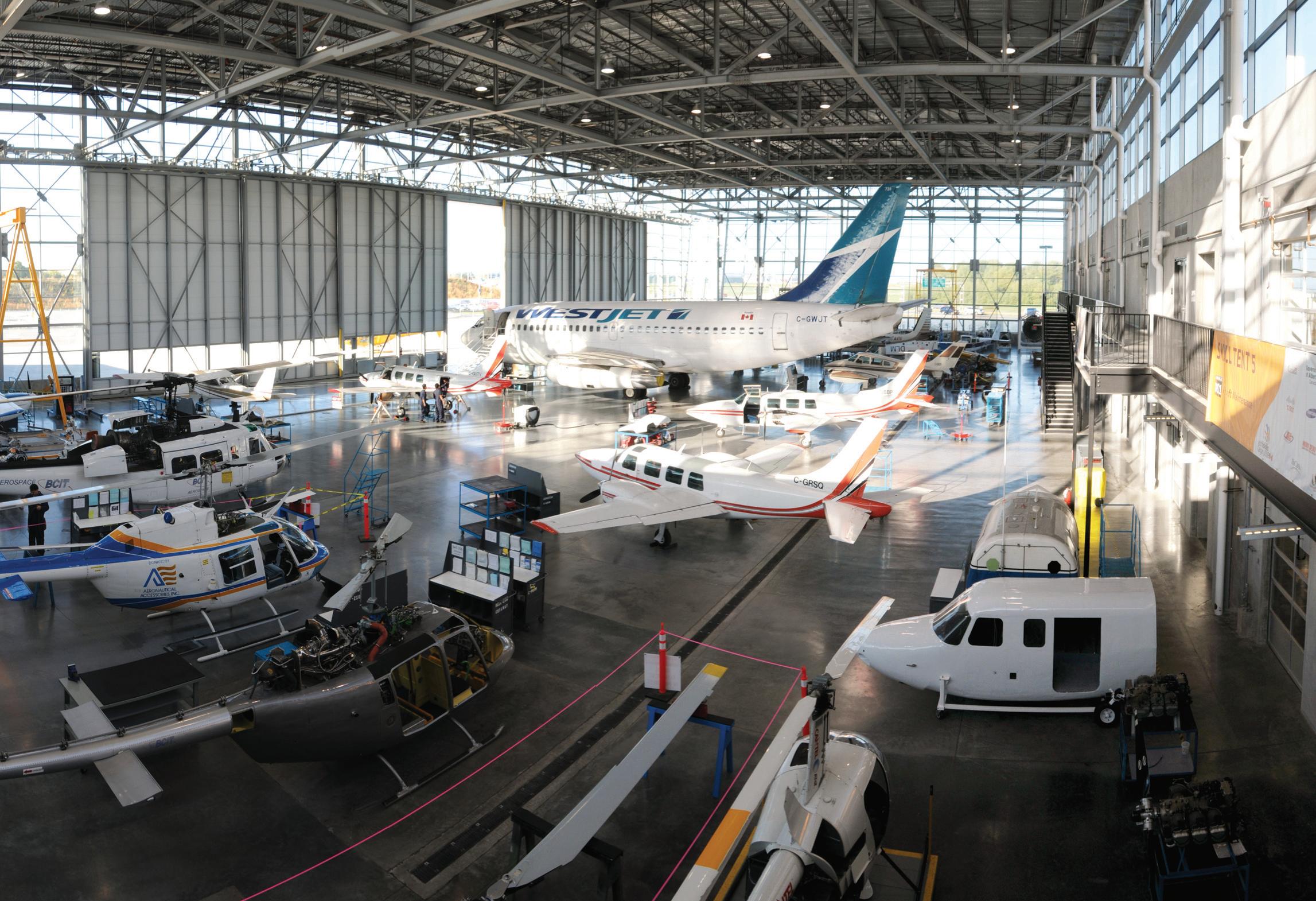
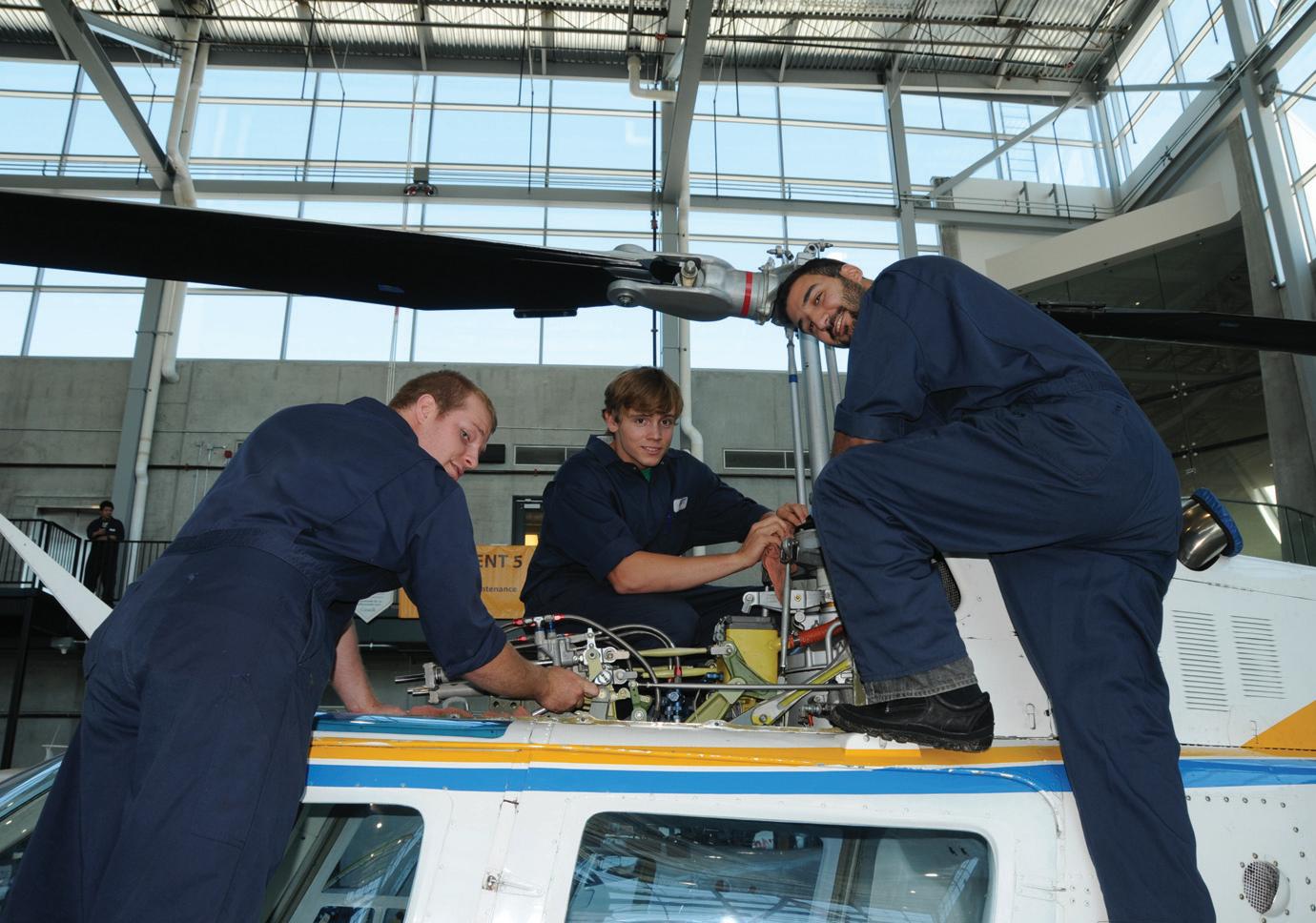
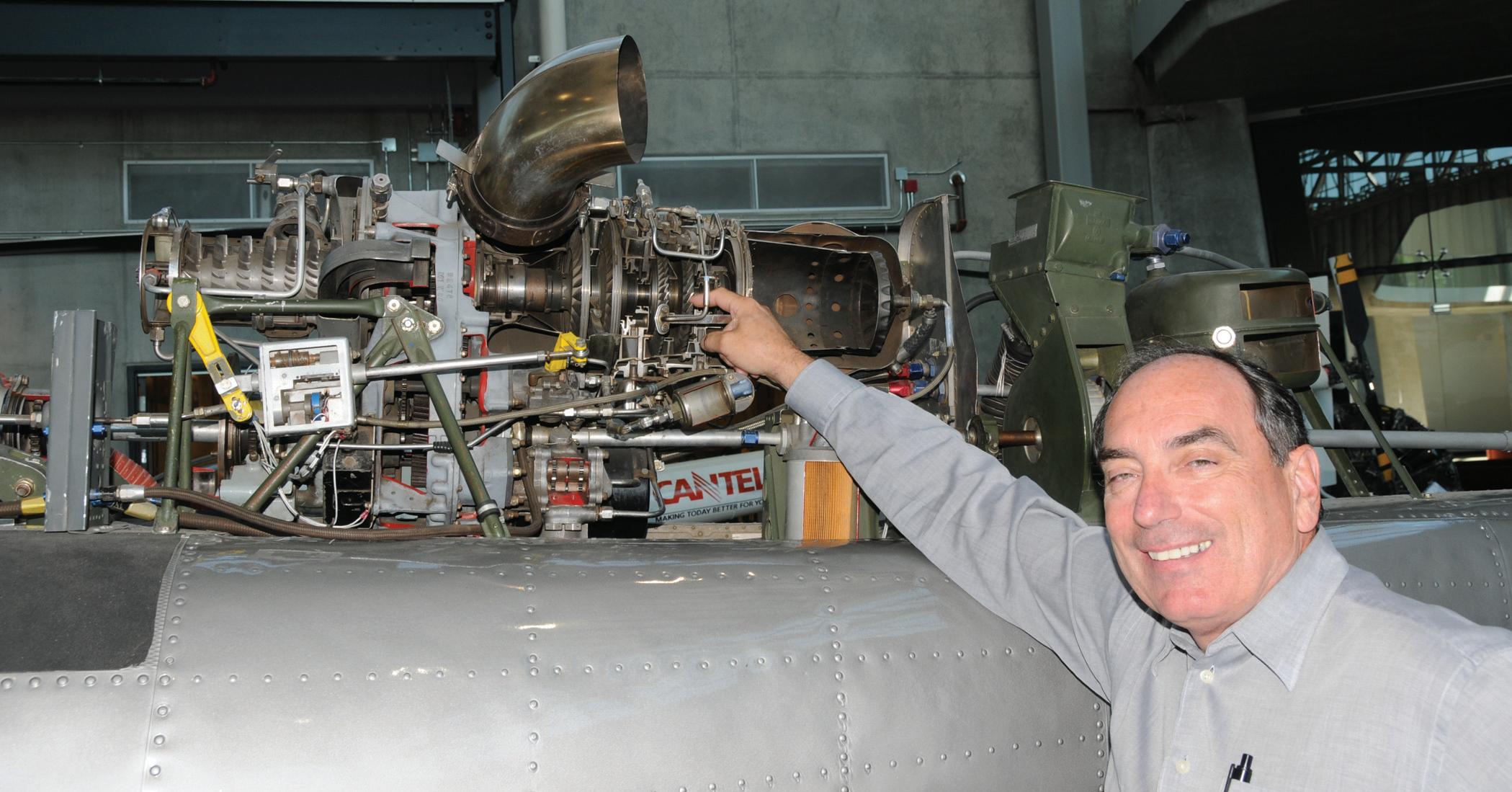
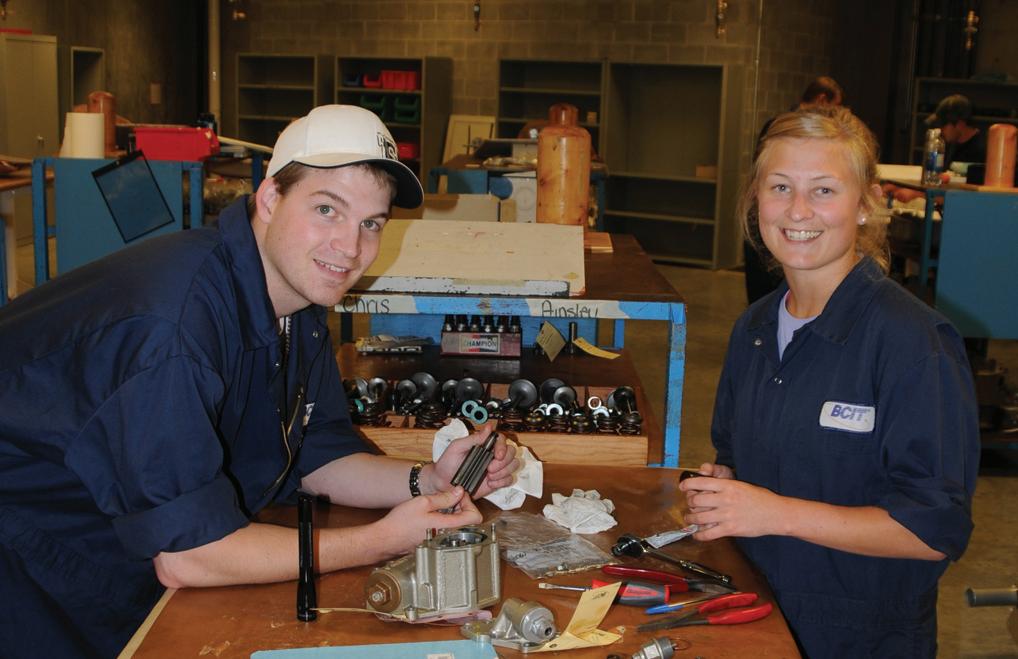
32 BCIT Leads The Way
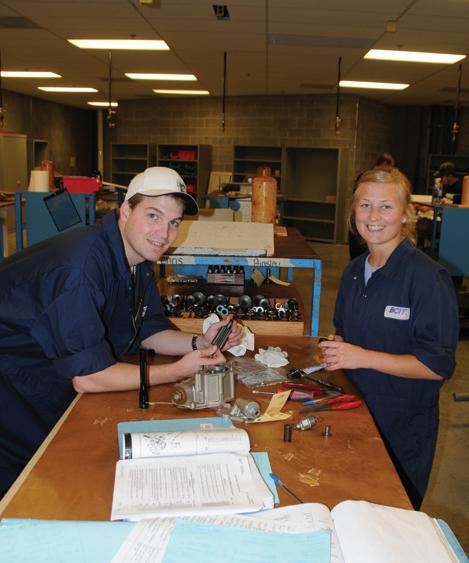
Shaping the minds of new pilots and engineers has been honed to a fine science at BCIT. Paul Dixon finds out how.
36 Fit to Fly
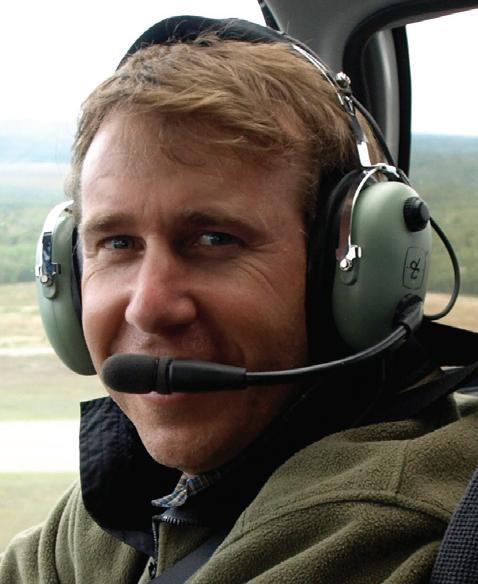
Ever heard of a pilot flying with a dangerous medical condition and not revealing it to the aero medical doctor? It happens. Ken Armstrong reveals how pilots can stay fit.
– John Wooden
The Passion Principle
Helicopters Salutes the Change Makers
n a previous role as editor of a prominent Canadian meeting and incentive travel magazine, I was blessed with the rare opportunity to listen to remarkable business leaders share their perspectives on how to develop successful, profitable enterprises.
In comparing their tales of good fortune, key pillars of success consistently stood out. Finding a niche in a competitive market? Check. Differentiating yourself from the competition? Check. Striving to be innovative? Absolutely. Constantly improving your product? Done. Securing the right people to drive your products? It’s all about the right team. Great points all, and tangible ways to keep businesses strong and ideas germinating to new levels.
What resonated with me most about these great leaders, however, was the undercurrent that tied everything together – what I call the “passion principle.” This intangible element is the fuel that thrusts creative engines into overdrive – it’s what enables us to achieve more than we ever thought possible, reach levels we couldn’t even fathom. It makes good things great, great things prodigious. It fulfils . . . it completes. It even heals and reforms.
Passion is also the fuel that enables leaders and change agents to transform operations in challenging times – helping them formulate and implement new ideas to ensure future prosperity and protect against loss.
The March/April issue of Helicopters highlights two such leaders
clients in such industries as film, fire fighting, telecommunications, SAR and television.
Murray is a hands-on leader involved in all aspects of the operation from marketing to training to flying. He built the company from the ground up and established everything about the Talon concept right down to the smallest detail. And while he can be demanding and forthright at times, jokes chief pilot Kelsey Wheeler, “there aren’t a lot of quiet moments when Peter is around. He leads by example . . . . He creates the kind of environment where employees want to go to work every day. It’s what good leaders do.”
Murray’s passion for ensuring a safe, secure operation for clients resonates with all members of his team – and is the ideology behind what the veteran pilot calls “the Talon way.”
“I do a lot of renovating away from work,” says Murray, “and I can tell you this. Whether it’s drywalling, painting, plumbing, electrical or digging a ditch – you do it the best you can do it. There is no other way.”
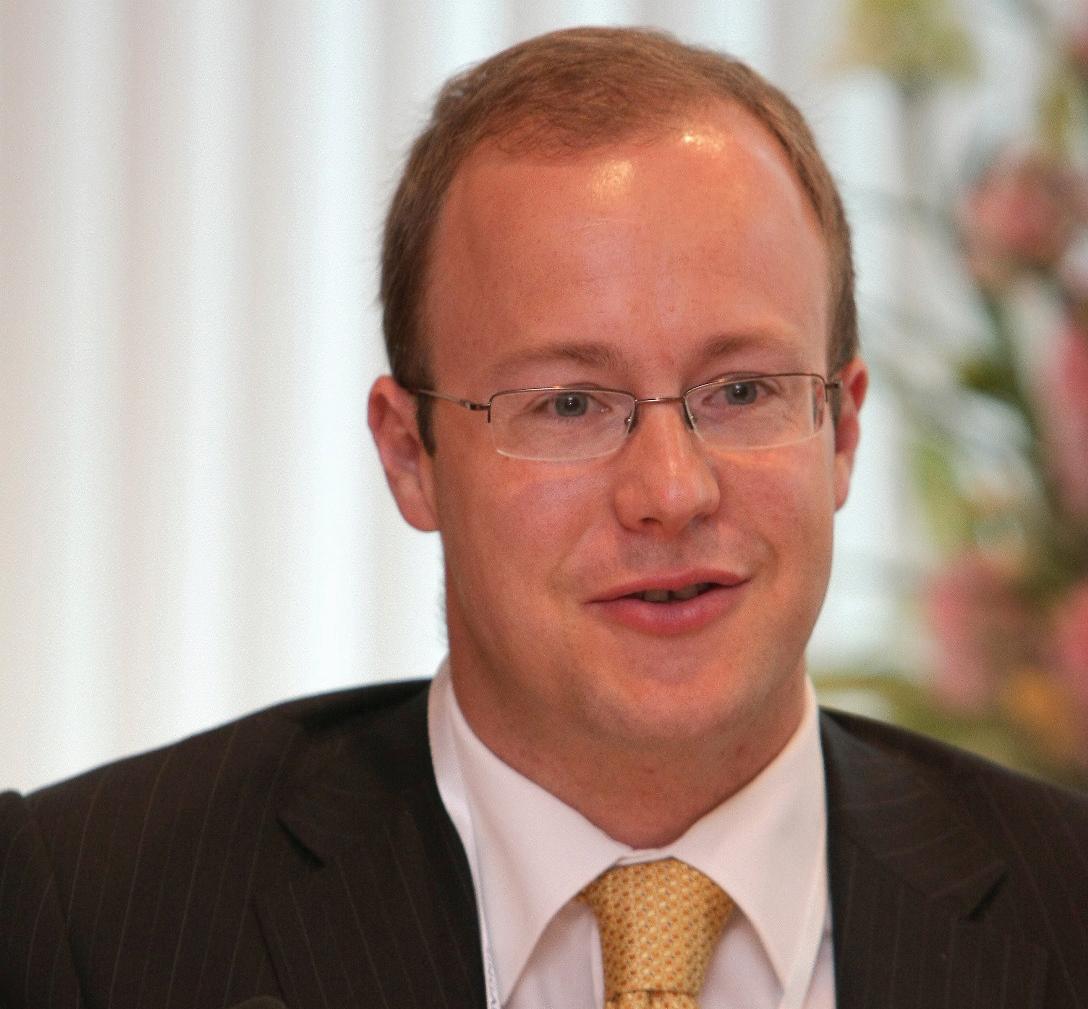
Greg Wyght, vice-president safety and quality for CHC Helicopters, is the visionary behind the CHC Quality and Safety Summit (see “Priming the Pump,” pg. 23). Wyght’s passion in taking aviation flight safety, accident prevention, quality assurance as well as occupational health and safety and tying it all into one Safety Management System, led to the development of this popular event.
Since the first summit in 2005 when 35 employees met in the Czech Republic, the event has grown to more than 600 attendees, attracting an impressive bevy of speakers on both the fixed and rotary side of the equation. This year’s summit is set for March 28-30 in Vancouver and is expected to attract record attendance.
Whether it’s drywalling. . . or digging a ditch – you do it the best you can do it.
whose passion and vision have helped transform their organizations – and more importantly – educate and provide value to customers and clients.
The first is Peter Murray, president of Talon Helicopters in Vancouver (see “Living Large!” pg. 18). His operation is the quintessential Canadian success story – a small business born on a dream and a prayer, slowly growing into a vibrant, thriving company through elbow grease, creativity and sound decision-making.
Founded April 22, 1997, Talon has grown from a small staff with a smattering of key clients to a highly efficient group of 10 with loyal
Wyght is well aware of the event’s impact, and is proud his passion and commitment have helped facilitate change. “[Due to this event] we will get safer pilots, safer engineers, better safety culture within the helicopter industry, lower interest rates because everyone’s accident rate drops, so there’s a number of intangible benefits we get from that,” he says.
At Helicopters magazine, we salute change makers like Peter Murray and Greg Wyght and look forward to highlighting other industry leaders committed to the “passion principle” in the months and years ahead.
If you have a visionary leader in your organization whose story needs to be heard, please contact me at mnicholls@annexweb.com.
First Swiss-made helicopter unveiled
n what it is calling the next revolution in the rotary aviation industry, Marenco Swisshelicopter Ltd. introduced a brand new helicopter concept to the world market at Heli-Expo 2011.
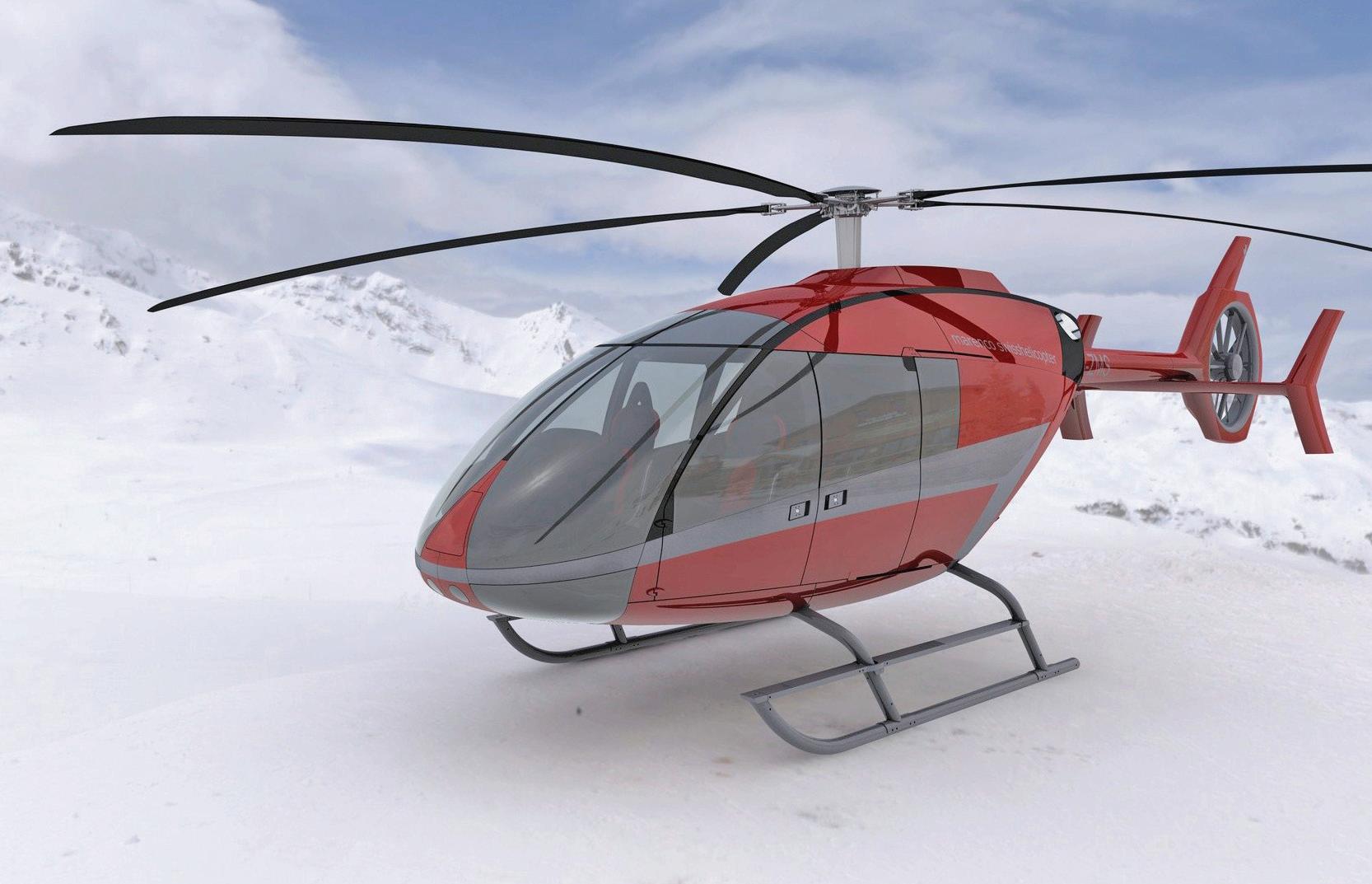
The light single-turbine SKYe SH09 is the first ever Swiss-made helicopter.
Positioned in the 2.5 metric ton class, the SKYe SH09 is designed to offer exceptional hot and high performance, a flexible engine concept and a low noise signature thanks to the newly developed dynamic assembly and a shrouded tail-rotor. The modularity of the cabin makes the most of the flat floor and the unique high ceiling concept, offering multiple seating arrangements
with five to eight individual crashworthy seats.
Rear access loading is facilitated through clamshell doors for cargo and medical stretchers, making it desirable for passenger transport and emergency evacuation roles.
With a fast cruise speed of
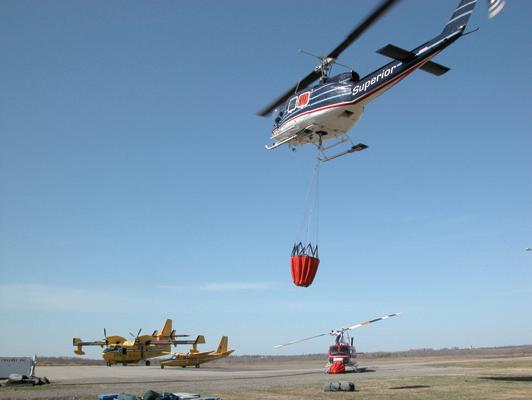
Superior Helicopters Canada Inc., a whollyowned subsidiary of Discovery Air Inc.’s Great Slave Helicopters Ltd., has been awarded a new two-year contract with the Ontario Ministry of Natural Resources (OMNR).
The contract is for three Bell medium helicopters for aviation, forest fire and emergency services in Northern Ontario, with the three contracted machines based in Wawa, Chapleau, and Cochrane. Commencing April 1 and spanning two fire seasons to March 31, 2013, the new contract is based on utilization but will result in minimum annual revenues of approximately $1.5 million.
“This contract win proves the benefit of our strategy to deliver a full range of specialty avia-
270 km/h (145 knots), it is not only one of the fastest single engine light helicopter in the category, but it also offers very long range – in excess of 800 kilometres (430 nautical miles) with standard fuel tanks.
Construction of the first
The new contract for Superior Helicopters is based on utilization but will result in minimum annual revenues of approximately $1.5 million. (Photo courtesy Superior Helicopters)
prototype started in early 2011, and the first test flights are targeted for 2012. Marenco Swisshelicopter Ltd. presented a full-size mock-up of the SKYe SH09 at Heli-Expo.
For more information, visit the website at www.marencoswisshelicopter.com.
tion solutions to our customers,” commented Dave Jennings, president and CEO of Discovery Air Inc. “Our Hicks & Lawrence subsidiary has been a prime supplier of fixed wing airborne fire management services to the OMNR for many years, and being able to expand that relationship to include a rotary wing contract illustrates the value of a diversified capability base to meet the needs of our business and corporate customers.”
In addition to Ontario, Great Slave Helicopters, its subsidiaries and aboriginal partners currently service forest fire contracts in Alberta, Manitoba and the Northwest Territories, and provide back-up support in B.C. and Yukon.
The light single-turbine SKYe SH09 is the first ever Swiss-made helicopter. (Photo courtesy of Marenco Swisshelicopter Ltd.)
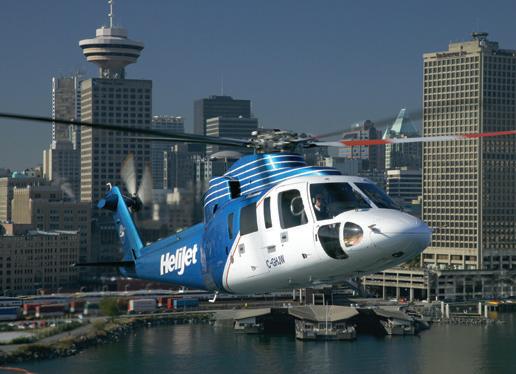
Troy MacDonald has been appointed the new director of sales of Richmond, B.C.-based Helijet International. In his new role, MacDonald is responsible for revenue generation for Helijet’s scheduled and charter services, with the support of a highly qualified management team.
MacDonald started with Helijet in 1994. (Photo courtesy of Helijet International Inc.)
MacDonald started with Helijet in 1994 and began working in the sales department as the Victoria sales manager in 2005. He also co-manages Helijet’s sport fishing clients and contracts in Haida Gwaii (previously Queen Charlotte Islands).
Rick Hill, vice president Operations and Commercial Programs of Helijet commented, “Troy’s been a tremendous asset to Helijet for more than 16 years. He knows our scheduled and charter business inside and out and there’s no one better qualified to manage that side of our sales. That means maintaining our reputation for service, safety and reliability our travelling clients count on.”
Naval Aviation Investment in B.C.
rime Minister Stephen Harper, accompanied by Peter MacKay, Minister of National Defence, recently announced the Harper government will be building a new helicopter facility at Patricia Bay, near Victoria, B.C., to further strengthen Canada’s West Coast defences.
“This facility and the new Cyclone helicopters it will house are part of providing the Canadian Forces with the people, equipment and support they need to get the job done,” said
Prime Minister Harper. “It is a solid investment in the future of naval aviation in Canada.”
The project, which is part of the Canada First Defence Strategy, is expected to generate more than 800 jobs over the full construction period. Part of Canadian Forces Base Esquimalt, the project includes a new 20,000 square-meter facility that will consolidate the operations and support functions of the 443 Maritime Helicopter Squadron into one building. It is anticipated that the facility will be com-
pleted in the winter prior to the arrival of nine new CH-148 Cyclone Helicopters in the spring of 2014. The Cyclones will replace the aging CH-124 Sea King Fleet, which are currently in use in the military.
Infrastructure improvements at Canadian Forces Base Esquimalt – the home of the Pacific Fleet, and approximately 4,000 military and 2,000 civilian personnel – are continuing to generate economic benefits and significant employment opportunities.
CHC Helicopter Tracks New Course
HC Helicopter has made a number of executive management changes, including two appointments and two retirements.
After 29 years with CHC Helicopter, Christine Baird, CHC’s president of Global Operations, has announced her retirement from the organization.
In 1997, when Baird became president of what was then Canadian Helicopters International, the company had annual revenues of $35 million. By the time Baird was finished leading the company through the mergers of Court, Lloyds, and Schreiner, Global Operations boasted revenues of $560 million annually. This amazing feat made Baird one of
After a legendary career with CHC Helicopter, Christine Baird is retiring following 29 years with the company. (Photo courtesy of CHC Helicopter)
the most well-known and respected leaders in the international helicopter industry.
“Christine Baird has been a powerful visionary and leader who used her keen instinct to
HELICOPTERS MAGAZINE P.O. Box 530 105 Donly Drive South Simcoe ON N3Y 4N5 Tel.: 519-428-3471 Fax: 519-429-3094
GROUP PUBLISHER/EDITORIAL DIRECTOR SCOTT JAMIESON e-mail: sjamieson@annexweb.com
PRESIDENT MIKE FREDERICKS e-mail: mfredericks@annexweb.com
RETURN UNDELIVERABLE CANADIAN ADDRESSES TO ANNEX PUBLISHING & PRINTING INC., P.O. BOX 530, SIMCOE, ON N3Y 4N5 CANADA. email: ncuerrier@annexweb.com
Published five times a year by Annex Publishing & Printing Inc.
Printed in Canada ISSN 0227-3161
CIRCULATION e-mail: ncuerrier@annexweb.com
Tel: 866-790-6070 ext 208 Fax: 877-624-1940
Mail: P.O. Box 530 Simcoe, ON N3Y 4N5
SUBSCRIPTION RATES Canada – 1 Year - $25.00 (includes GST - #867172652RT0001) USA – 1 Year $35.00 Foreign – 1 Year $45.00
not just take over the world of helicopters but reshape it in her vision,” said William J. Amelio, president and CEO of CHC Helicopter.”
In other company changes, Tilmann Gabriel will transition from his post as president of European Operations and take over leadership of CHC’s Search and Rescue division, and Scott Pinfield will become interim leader of the new Flying Operations division.
Assuming the position of Chief Legal Counsel, Michael O’Neill will replace Martin Lockyer, who has announced his retirement from CHC. Mr. O’Neill joins CHC after serving as senior vice president and general counsel for the Lenovo Group.
Occasionally, Helicopters magazine will mail information on behalf of industry-related groups whose products and services we believe may be of interest to you. If you prefer not to receive this information, please contact our circulation department in any of the four ways listed above.
Helicopters Magazine is an associate member of the following Canadian aviation associations:
Magellan Combats Wire Strikes for HAL
agellan Aerospace has announced an agreement with Hindustan Aeronautics Limited (HAL) in Bangalore, India for a new Wire Strike Protection System (WSPS). The agreement includes the design and development of a WSPS for the HAL Advanced Light Helicopter (ALH), which will be carried out at Magellan’s Bristol Aerospace division in Winnipeg in 2011. Bristol is a global expert for this unique system, offering a proven design and acknowledged technological expertise.
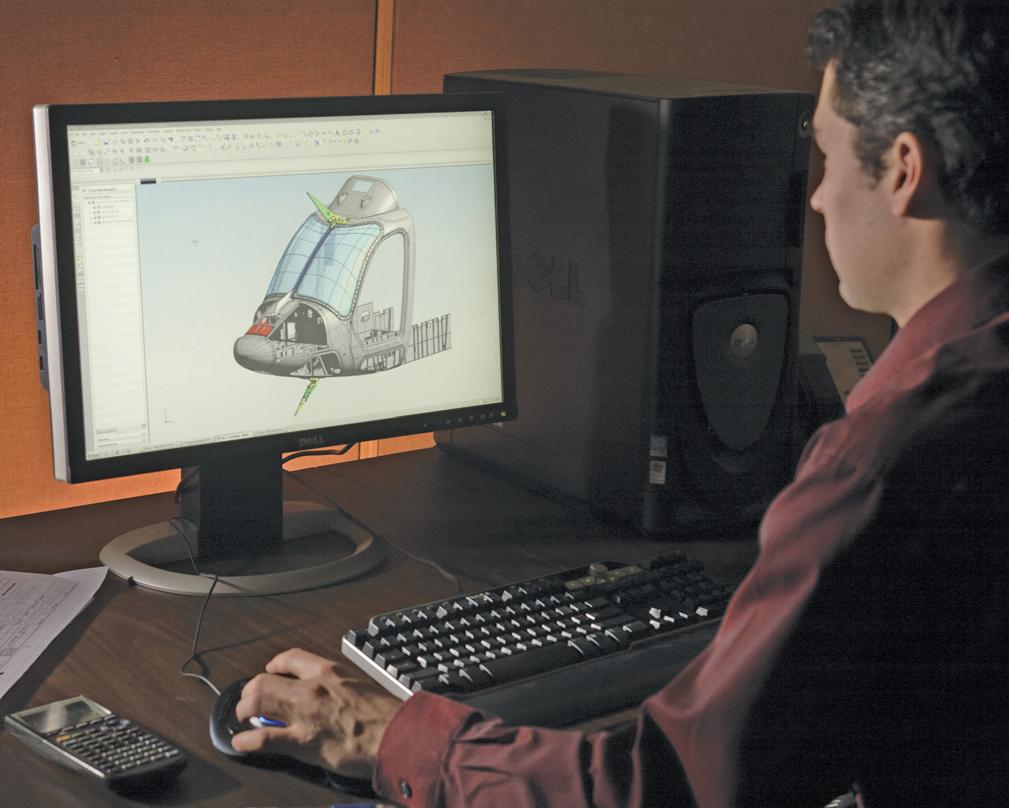
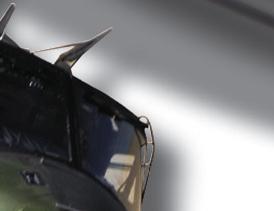
The AHL system is comprised of an upper and lower cutter, and windshield deflector, designed by Bristol to be integrated into the unique structure of the ALH.
In 1977, Bristol, along with the Canadian Forces, designed the WSPS to provide a measure of protection against the potentially devastating consequences of inadvertent encounters
Design and development of the Wire Strike Protection System for HAL will be carried out at Magellan’s Bristol Aerospace division in Winnipeg. (Photo courtesy of Bristol Aerospace Ltd.)
with horizontally strung wires and cables.
In 2009, a milestone was reached with the delivery of the 20,000th Wire Strike Protection System kit. More than 65 models of WSPS have
Trinity Covers off the North
rinity Helicopters, an aboriginal-owned helicopter charter service based in Yellowknife, N.W.T., is focused on the future. Responding to robust exploration in Yukon and Nunavut, and a rebound in exploration in the Northwest Territories, Trinity has made a strategic decision to position itself where it can best serve its customers.
By April 1, Trinity Helicopters will have bases in all three territories, providing faster response, better access and lower costs for helicopter services for northern industry.
Trinity’s expansion plans include a base in Whitehorse (Yukon Territories), and Cambridge Bay and Iqaluit (Nunavut), bringing the number of Trinity’s bases to four across the North.
“We’re a northern company,” notes Trinity’s president, Rob Carroll. “So it makes sense that we have a pan-territorial presence. With four bases stretching from Whitehorse to Iqaluit, we’ll be where the exploration action is, and able to respond quickly to industry needs.”
To support the expansion, Trinity plans to more than
been developed for commercial and military customers around the world, and new systems continue to be designed for new helicopter developments that are increasing in size and complexity.
MARCH
March 23-24
Aerial Firefighting Conference and Exhibition Washington, D.C. www.tangentlink.com/events
March 25-27
HAC 15th Annual Convention and Trade show Vancouver, B.C. www.h-a-c.ca
March 28-30
CHC Safety & Quality Summit Vancouver, B.C. www.chcsafetyqualitysummit. com
double its fleet with the addition of six helicopters by midApril. With the new machines, Trinity’s fleet will consist of four Bell 206 LRs, one 206 L-1, one 206 L-4, three Bell 407s, and two Jet Rangers.
When the expansion is complete, Trinity will have 11 helicopters and 22 employees operating from its bases in Whitehorse, Yellowknife, Cambridge Bay and Iqaluit.
“The acquisitions are simply good business” says Carroll. “We’re responding to what we see happening in the exploration sector across the North.”
June 20-26
49th International Paris Air Show Le Bourget, France www.paris-air-show.com
JULY
July 6-7
CBAA 2011 – Annual Convention, Trade Show and Static Display Calgary, Alta. www.cbaa.ca
For a full list of events, please visit www.wingsmagazine.com and click on Events in the Community section.
The Safe Approach
The
Importance of Implementing
reating a safe, secure environment for clients and employees to work in is a standard to which all helicopter operators should aspire.
And when you get right down to it, having an effective quality/safety management system (Q/SMS) is not only an worthy goal – it’s the very process by which you will attain it! Intending to have an effective Q/SMS will help all organizations turn their corporate minds in the right direction.
Transport Canada (TC) defines SMS as, “a documented process for managing risks that integrates operations and technical systems with the management of financial and human resources to ensure aviation safety or the safety of the public.”
SMS has been developed (in part) from quality management principles found in the International Organization for Standardization (the ISO) 9000 family of standards. The ISO website states: “The ISO 9001:2008 standard provides a tried and tested framework for taking a systematic approach to managing the organization’s processes so that they consistently turn out product that satisfies customers’ expectations.” These are not new ideas – they have been around since the industrial age. What is new though, is the global intention for this standardization to occur. Q/SMS are developed to ensure – as much as possible – that everyone knows what is expected, and that everyone is pulling in the same direction. Most companies need Q/SMS if they want to operate in the international market. The oil and gas industry is a big proponent.
Q/SMS is only effective if it gets proper attention throughout its life cycle.
There are at least a couple of ways to implement Q/SMS. Many healthy organizations already have systems in place to ensure the quality of their products, and the safety of their employees. A Q/SMS can be developed by documenting these systems, then comparing and improving (if required), using the ISO standard. A Q/SMS can also start out as an off-the-shelf, plug-and-play system that you then mould around your needs. According to TC, a fundamental principle of SMS success is that the organizations build the system themselves. This way they are more reflective of the operations’ needs.
Think of Q/SMS as a process – not some manual sitting on a desk.
a
Proper Q/SMS Environment
Companies may fail at this point if they feel that once they have a Q/SMS in place everything will fall in line. A proper Q/SMS is a living process. It is important for everyone in the organization to buy into the system. It cannot be pushed down from the top level of the organization – especially if the processes are not reflective of the reality of the shop floor. Remember, a Q/ SMS is a procedure whereby you document the current (or ideal) process, check to see whether you are on track, then make the appropriate changes necessary to align yourself with the ideal process. This is called the “plan, do, check, act” quality cycle. If your documented processes are ones that are not possible to achieve in the current business model, then you have already lost the game – and the people on the shop floor.
Q/SMS is a closed-loop, continual improvement process. A process that expressly states the management of risks is integral to the management of the business itself.
The basics, according to TC, are as follows. There needs to be a policy on which the system is based. There must be a process for setting safety goals, and measuring performance against those goals. There must be an ability to identify, evaluate, and manage safety hazards. This must be combined with a structure for reporting hazards internally. Employees need to understand their role in the process, and be fully trained in their own job functions. Finally, there must be a mechanism in place that allows for periodic audits of the SMS itself.
Transport Canada requires operators to demonstrate the effectiveness of their SMS. It wants to see how well you are able to identify, assess and respond to safety concerns before they become safety occurrences.
A Q/SMS is only effective if it gets proper attention throughout its life cycle. The right processes must be identified initially, and then properly documented. The whole organization must buy into the process, and then be trained to work within it. The process must be closed looped, and include a procedure to continually monitor performance.
Many of us have done these things for years in one form or another. The quality/safety management system is the methodology that helps us prove to ourselves, and to others, we are doing the right things!
Neil MacDonald is an aviation lawyer with Harper Grey LLP. He has completed an ISO 9001:2008 QMS Lead Auditor course, holds an ATPL-H, and flies as an IFR Off-Shore Captain. nmacdonald@harpergrey.com. This is not a legal opinion. Readers should not act on the basis of this article without first consulting a lawyer for analysis and advice on a specific matter.
VERSATILITY FOR YOUR MISSION VALUE FOR YOUR BUDGET
Wherever the mission calls, the AW119Ke can deliver
The largest unobstructed cabin in its class, easily reconfigurable, with up to 8 seats
The fastest multirole single turbine helicopter with proven worldwide support
A Shrinking Pool
What Will Come With the Demographic Dips of Tomorrow?
t’s official. It must be, because the Globe and Mail says so. Alongside the obligatory story of 2011 New Year’s babies ran a de facto obituary for the Baby Boom as the first wave of boomers, born in 1946, will be hitting that magic number 65 at some point this year. Like the sound barrier once was to high fliers before us, turning 65 is not quite as intimidating now that we find ourselves approaching it and passing on through it.
Sixty-five isn’t what it used to be, as many boomers bailed out of the workforce well in advance (in the spirit of full disclosure, I confess to being one who leapt at the first opportunity). This has softened the impact on the workforce as the largest cohort is about to leave. Look at the situation in many Canadian police forces and fire departments. Police and fire personnel in most cases are able to take a full pension at an earlier age, as a reflection of the work environment. Over the past decade, retirements ballooned in departments across the country, with the result that average age and years of service have dropped significantly. The generation coming in may be better educated than the one it replaces, but the former lack the practical experience that only comes from doing the job. This situation has created a vacuum, if you will.
The Canadian Forces faces a similar situation. In the words of Maj.Gen. Yvon Blondin, commanding officer of 1 Canadian Air Division, “I have a lot people with lots of experience and a lot of people with no experience and nothing in between.” It’s not a shortage of pilots that threatens
the future can be found in the huge disparity between the numbers of students projected to graduate from high school this year and the number of students entering Grade 1. Across the country, the number of students entering the school system has dropped drastically, to as much as 25 per cent below the number of students completing Grade 12 in the same school district. There are a few areas where enrolment numbers are up, but they are very much in the minority.
The pending approval of the Mackenzie Valley pipeline and other mega projects in northern Canada will place an increased demand on aviation resources. The need for personnel at all levels is expanding at the same time as the pool of available talent is shrinking. While elementary school enrolments are headed downwards, post-secondary institutions – universities, colleges and technical institutes – have been expanding across the country, both in terms of the number of institutions and the number of students enrolling. Jack Baryluk of BCIT’s aerospace program says that no one graduating from its programs has difficulty finding a job, and often they have the luxury of choosing from several offers. In several instances, an entire class has been recruited by a single organization.
In a Feb. 16 address to the Vancouver Board of Trade where he discussed the importance of the aerospace industry to the country in general and the metro Vancouver region in particular, David Schellenberg, CEO of Cascade Aerospace and Vice-Chair of the Aerospace Industries Association of Canada said that his company could use 100 people. New hires. Right now. In an industry that employs more than 80,000 people nationwide, how many unfilled positions are there today, let alone ten years from now?
The need for personnel is expanding at the same time as the pool of available talent is shrinking.
to ground the air force, but a shortage of skilled aircrew and maintenance personnel. Recent groundings of CF helicopters were not the result of safety concerns or pilot shortages, but rather of a lack of qualified flight mechanics. The ground crew for the 2010 Snowbirds included a private (lowest rank in the CF) for the first time in most people’s memory: testimony to how shallow the pool is. For the military, at least, the irony is that attracting and retaining pilots is the least of its worries. The downturn in the world’s airlines has played a large part in that.
The situation is only going to get worse, as evidenced by the numbers of students enrolled in public schools across Canada. The clue to
If the job market is getting this tight today, what’s it going to look like a few years from now, when those Grade 1 students of today are graduating from high school? As the boomers slide down the other side of the bell curve, what comes with the demographic dips in the years ahead? What will the impact be on commercial aviation in general? More specifically, what will the impact be on the smaller operations? Is this the start of a trend that will see the larger operator consolidate its positions and the small operator follow the family farm into the pages of the history books?
Who will be the hewers of wood and carriers of water for future generations?
Paul Dixon is a freelance photojournalist living in North Vancouver.
Choosing your fire fighting bucket is a critical decision. As an operator you know that the cost of an AOG to your revenues, to your reputation and to the forest itself cannot
Bambi has been responding to AOG’s for 29 years in critcal timeframes, without fail, without question. It’s not on the spec sheets or in the operating manual but it comes with every bucket...
Response time is everything. That is how you are being measured. That is how you are being paid. That is how you choose your next bucket...
Image Is Everything
Actions and Appearances Are Important, Too
s pilots, we are all familiar with the mechanics of how a helicopter flies, but without a customer, it will stay in the hangar. It’s usually not too much trouble to meet the objectives. But how much time is spent analyzing how our actions and appearance influence those same customers?
For pilots in the light- to intermediate-category, clients are usually sitting right beside you, watching your every move. Have you ever wondered how your actions are being interpreted? You should. Your purpose – and that of the helicopter – is to make money for the owner. Superlative skill at the controls is not the only criterion.
Pilots and engineers are on the front line as public relations for the company and should be aware that with customers, sometimes the most innocuous occurrence can have far-reaching consequences.
I once had to respond to an irate client of ours who informed me that, in spite of one of the pilot’s impeccable qualifications, he would not be flying with us again. When asked why, he related an experience which he perceived to justify his misgivings.
All throughout his last flight, the pilot in question immediately switched off a recurring warning light. (The light in question was on the 206 instrument panel: “HTR Fail.”) Understanding the implications of “Fail,” but not “HTR,” the client convinced himself that the pilot was trying to hide a serious deficiency when in fact the pilot was only cycling the Janitrol heater.
may be uneasy or interested in what’s happening, let them know what’s going on. For example, your approach to a mountain repeater site will be less stressful to the electrician if you let him know you’re going to do a low recon first before circling to land. If you don’t, he is going to fill in the blanks and later – over coffee – regale his co-workers with the harrowing first attempt you made at landing. This does happen and, all too often, reputations are irrevocably damaged.
Flying in a helicopter is an exciting adventure for occasional passengers and they will readily describe and often enhance the danger when relating to others. If you provide the scenario without a timely explanation, their limited knowledge will provide the rest.
I have been queried numerous times by customers who were looking for an explanation as to the actions of a pilot they had flown with, wanting to know if they were in any danger. Without knowing all of the circumstances, I never pass judgment, but prefer to reassure their safety and suggest that if it happens again, simply ask the pilot.
Appearance works in the same manner. For example, flight suits used to be prevalent among helicopter pilots, but since EMTs usurped and accessorized, the zipper coverall has given way to street clothes. But remember, you are flying a multimillion-dollar helicopter and entrusted with the lives of passengers. Let’s face it, if your favourite dress in the summer is shorts, flip-flops and your ears look like the spine of a day timer, you are probably going to be the topic of discussion on the customers’ drive home.
Your purpose . . . is to make money for the owner. Superlative skill at the controls is not the only criterion.
“What we have here is a failure to communicate,” to borrow a line from the captain in the movie Cool Hand Luke. Had the pilot been a little more attuned to the man sitting beside him, his passenger would not have harboured misconceptions nor shared them with other potential customers.
People who charter helicopters usually do so on a regular basis and are familiar with normal practices. Erratic or repetitious cockpit checks will only heighten their unease and will no doubt generate spurious speculation later on.
Here’s one way to handle the situation: if you perceive passengers
Engineering also comes under scrutiny. If you saunter by a helicopter looking like you should be pushing your belongings in a grocery cart, don’t expect to inspire confidence. You may be the most competent engineer on the roster, but passengers don’t know that. They will judge the image you present to them, and relate that to the machine and the company.
Qualifying to fly or maintain a complex machine like a helicopter is not easily gained. It takes years of hard work and perseverance – so, why would anyone allow that accomplishment to be challenged or degraded by a false impression?
If you think adjusting attitude, dress and deportment just to please a customer is not worth your time, try flying without one.
A native of Spruce Grove, Alta., Michael Bellamy has been flying fixedand rotary-aircraft in a variety of capacities since 1971, and is an accomplished author of several books, including Crosswinds
Our Mission:
Platinum Award Winners
Air Asia Company Ltd.
Alpine Aerotech Ltd.
Arrow Aviation Co. LLC
Avialta Helicopter Maintenance Ltd.
Eagle Copters Maintenance Ltd.
Fuji Heavy Industries Ltd.
Helipark Taxi Aereo E Manutencao Aeronautica Ltda
Motorflug Baden-Baden GmbH
Northwest Helicopters LLC
Patria Helicopters AB
Rotorcraft Support, Inc.
Sikorsky Aircraft Australia Ltd. DBA Sikorsky Helitech
Servicio Tecnico Aereo De Mexico (STAM)
Uniflight, LLC
Your initial purchase of a Bell Helicopter is just the beginning of our relationship. That’s because your ownership experience is important to us from every angle. With more than 120 customer service facilities across 34 countries, you’ll get the best support in the industry. That includes the Bell genuine parts inventory, Bell trained technicians and the highest service facility quality. In fact, each year, all Bell-approved customer service facilities undergo a comprehensive audit. Please join us in recognizing this year’s select group of 14 service facilities that achieved platinum status for 2011. On a Mission.
The Priorities of Survival Creating
Fire and Securing Protection are Prime Concerns
n the first part of our “Survival” series, we drew up a dire scenario sure to horrify any pilot.
Crashing in the remote wilderness after a long, cold day of working sling loads in mountainous terrain, you managed to survive. Now, alone in a lifeless and desolate wasteland, night is falling. Glancing back through a smoke-filled crevice at what is left of your helicopter – lodged absurdly sideways and smouldering at the base of a narrow gorge, you compose yourself, take a deep breath and automatically recall your most important survival checklist: Please Remember What’s First, dictating the order of your safety priorities: Protection, Rescue, Water and then Food.
More than 95 per cent of those experiencing an aviation accident survive the crash but many struggle beyond that point. It can take up to three days to succumb to dehydration and as long as three weeks die from lack of food. However, exposure, especially if it is extreme and compounded by injury, can immobilize you in less than three hours –so it’s imperative to act quickly. Protection encompasses every aspect of your immediate safety and is your top priority.
Retrieving your flight survival kit (with first aid supplies and other essentials) from your aircraft as quickly as possible will be immensely valuable, but not vital and certainly not at the risk of additional injury – so caution and common sense must prevail. Obtain what you can, but only when, and if, it is safe.
In the early moments following a crash, administering emergency first aid by tending to injury and shock – including caring for the
Beyond protection against the threatening environmental elements of cold and wind, or bugs in dense bush, fire allows you to:
• facilitate your own rescue by building a smoke/signal fire
• boil water to sterilize wounds, bandages and first aid implements
• see and move about in the dark
• avoid hypothermia by staying warm and dry
• in extremes, heat stones to hold against your body core for warmth
• dry any wet apparel and dry out damp firewood
• eliminate food and waterborne parasites by boiling/cooking
• protect yourself from foraging predators
• fashion tools for work and weapons for hunting
• separate (cut) larger logs for structures and supports
• raise your spirits and boost your morale
anxious state of mind of others – is critical. Nightfall will bring additional hazards and more challenges, so you must find suitable shelter and establish and maintain a reliable fire without delay. Every step will be aided significantly by the items stocked in your flight survival kit, and of these, fire-making implements are without question the most valuable tools at your disposal.
Your ability to make fire impacts literally every aspect of your existence in the wild and significantly improves your chances of survival. As well as waterproof matches, every survival kit should include a flint/magnesium stick.
Your shelter needs will always be determined by the climate and when combined with fire, a good shelter will save your life. Expending as little energy as possibly for the greatest reward is crucial, so locating an existing shelter far outweighs the effort required to construct one. If you can’t find shelter you can usually craft a compact and dependable “debris shelter” in less than 20 minutes, even in the most barren of locales.
Made from scattered debris, this shelter consists of a roughly twoto three-metre length of any relatively straight beam such as a branch or downed evergreen tree, and a collection of branches, bushes, boughs, birch bark, tarps etc. With one end resting on the ground, securely position the other end of your beam onto a low limb of an upright tree, slightly less than half your height from the ground, creating an approximate 30-degree sloping angle. Break off any branches on the underside of your beam then lean and pack as much debris as you can along both sides, leaving a small entrance opening at the high end base of the upright tree. In winter, pack snow against the debris sides to reinforce and seal any open areas. By lining the floor of your shelter with dry leaves, pine needles or cattail down, and covering it with evergreen boughs, you will prevent your body heat from being drawn away by the cold ground. In essence, you are constructing a miniature, enclosed, cave-like nest that will act as an insulating sleeping bag, preventing loss of body heat and protecting you from hypothermia – and you can make one in under 20 minutes.
Once safe and protected, facilitating your own rescue will be your next priority . . . one of the main topics of Part 3 of our series.
The Priorities of Survival is Part 2 in a series aimed at providing pilots with critical wilderness survival skills and insight. Coming editions will highlight fire-making and rescue-signalling techniques and explain how to correctly stock a flight survival kit.
Dan Gibson is a consultant with the Helicopter Association of Canada, an award-winning pilot and president of Bear Beaver Aviation Services. He teaches wilderness survival skills for the Ottawa Flying Club in the Commercial Pilot/Aviation Management Program at The Algonquin School of Advanced Technology in Ottawa.
Weathering the Storm
HAC Conference Tackles Key Issues Head On
he American Industrialist Henry J. Kaiser once said, “Problems are only opportunities in work clothes.”
Well, Mr. Kaiser’s words are being put to the test in the Canadian helicopter industry today. If obstacles are opportunities, then our industry’s proverbial cup runneth over . . .
It has been many years since our industry has seen such difficult times. The past 24 months have witnessed a number of industry business casualties, and we are not out of the woods yet, but there are promising signs of recovery and reasons to be optimistic. The Helicopter Association of Canada’s Convention this spring aims to capitalize on the opportunities and challenges facing the Canadian helicopter community. The companies that weather the storm will be stronger and well positioned to emerge from the current economic circumstances healthier, more robust, and resilient.
As always, advancing safety is at the top of HAC’s agenda and a number of the convention programs this year are aimed at improving the safety performance of the industry – particularly challenging in the current economic climate. We have expanded our offering of safetyrelated sessions and courses to include Risk Management, an FDM Workshop, a Mountain Flying Ground School, Pilot Competencies for Helicopter Wildfire Operations, SMS for Small Operators, as well as our staple courses, including Wires, and Certified Quality Systems Auditor courses. Even our luncheon speaker, author Randy Mains, sponsored
Council (CAMC)) to help develop Occupational Standards for pilots to ensure that the helicopter pilots of tomorrow can meet employers’ expectations. The Occupational Standards will also help flight schools and colleges develop a more meaningful curriculum.
Naturally, all eight of our committees are meeting at the convention, and these gatherings are really the crucible for the issues that will define the Canadian industry in the coming year. HAC relies on the issues and recommendations that flow from its committees to establish its priorities.
No meeting of the Canadian helicopter community would be complete without an opportunity to dialogue with the regulator, and this year I will be holding an “open mike” joint session with Transport Canada’s Martin Eley, the director general, Civil Aviation. Faced with its own budgetary challenges, the department has been hard-pressed to engage with industry across a variety of issues, including SMS implementation for small operators, PINSA approaches, and low flying permits, to name only a few.
The regulator needs to be engaged with us in a discussion of the issues affecting our interests.
by Helicopters magazine, will be theming his talk “Swinging for the Fences in Tough Economic Times.”
For the first time since Transport Canada folded the tent on its Instructor Refresher Courses, HAC is offering a Helicopter Instructor Refresher Course of its own. In recognition of the fact that we need to groom Canada’s youth for a place in the helicopter industry of the future, HAC this year is offering special convention discounts and sessions to engage with the pilots and engineers of tomorrow.
HAC has been working with the Canadian Council for Aviation & Aerospace (CCAA) (formerly the Canadian Aviation Maintenance
In an SMS culture, industry was supposed to have the flexibility to innovate, but getting the attention of the regulator for industry-driven initiatives is becoming increasingly more difficult. The CARAC process has been choked with a backlog of more than 600 amendments that have been processed through CARAC, but have yet to come in to law. The process, even when it is working is cumbersome and slow, but it is currently collapsing under its own regulatory weight. In short, the process is settling with power, and the terrain is looming large. In a climate where the helicopter community needs now, more than ever, to innovate in a heavily regulated environment, the regulator needs to be engaged with us in a discussion of the issues affecting our interests. It needs to make provisions for the industry to benefit, in a timely and tangible way, from its efforts to develop best practices and take some control over its own destiny.
In short, there are challenges ahead, but the Canadian helicopter community has seen difficult times before. HAC will continue to work with its members and Transport Canada to prevail, and prosper, in spite of our challenges.
Humorist Don Marquis once said, “An optimist is a guy who never had much experience.” I prefer the historian Charles A. Beard – “When it’s dark enough, you can see the stars.”
Fred Jones is president/CEO of the Helicopter Association of Canada (HAC).
Talon Helicopters is Making Noise Out West
udwig Mies van der Rohe, the famed German architect whose pioneering spirit set him apart from his 20th-century contemporaries, once stated, “God is in the details,” when commenting on the restraint in modern design.
It was this steadfast commitment to minute elements and a “less is more” mantra that propelled him to the top of his industry – creating iconic, balanced structures of space and simplicity that continue to impress today.
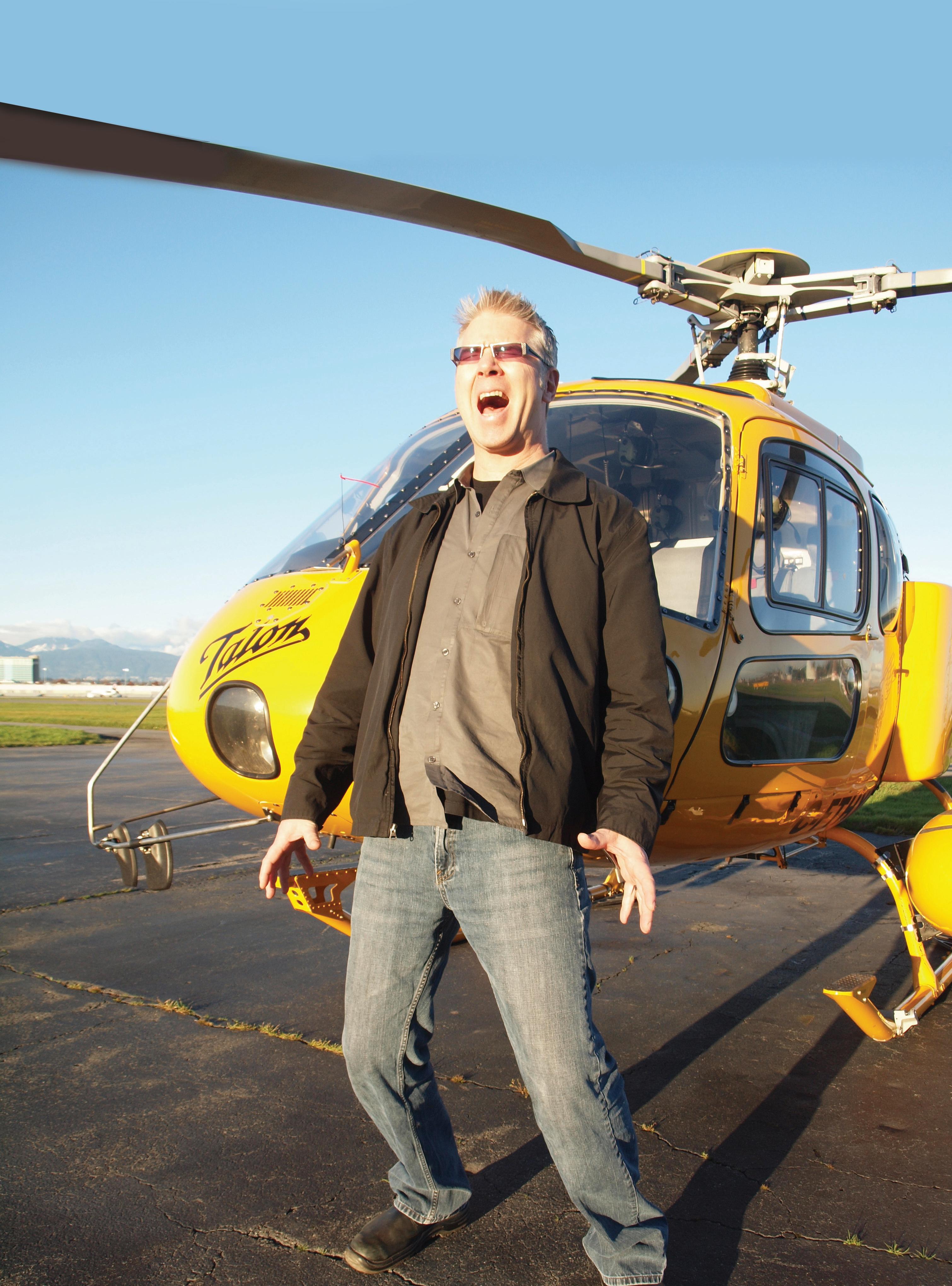
Spend a few hours with Talon Helicopters’ president and operations manager Peter Murray at the company’s efficient home base at Vancouver International Airport and it’s evident this same pioneering spirit and steadfast attention to detail is alive and well in the Canadian helicopter industry.
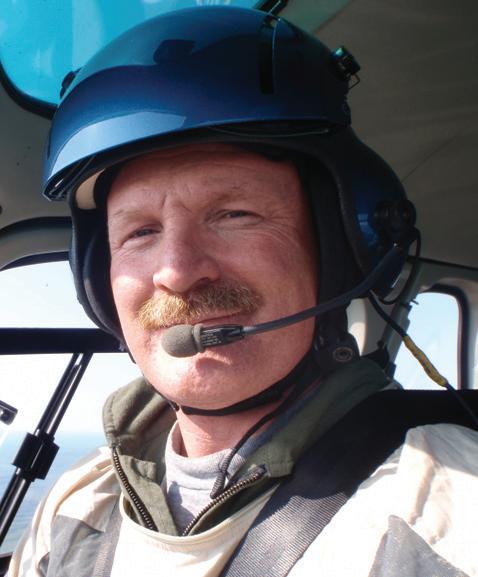
To say the 50-year-old Vancouver native is passionate about his craft and seeks to deliver the best experience for his clients is an understatement. When I arrived at the Talon hangar on a crisp November afternoon, Murray gave me a warm smile and hearty handshake before quickly disappearing into the cockpit of one of the mainstays of the Talon fleet – the Eurocopter TwinStar 355F2 Max sitting nearby. No time to waste; Murray needs to speak. He motions me closer to have a peek inside the cockpit and starts explaining in intricate detail about the aircraft’s makeover a few years back.
Purchased in Newfoundland from CHC Helicopters, this 1981 AS355F1 has been carefully reconfigured to suit Talon specifications for ease of pilot use and concerns for the utmost safety standards for clients. Safety is paramount at Talon and Murray works tirelessly with engineers and pilots to ensure the fleet always exceeds standards.
Murray designed and implemented the changes on the TwinStar himself with the help of Maxcraft Avionics, located in Pitt Meadows, B.C. The results are impressive: from luxurious leather seats, to a retooled electrical system, to manipulation of pilot controls, to shrinking of the overhead panel – it’s all the “Talon way.”
“I’ll be honest with you, Matt. I think I do have a bit of OCD,” Murray jokes as he moves on to show me another aircraft in the Talon fleet, a Eurocopter AS350B2 (of which Talon has two). “But it only
applies to the helicopters – it doesn’t to my home life. I do care about details, and I think it drives everybody around here crazy, but that’s OK.
That’s my job in life.”
Concentrating on all aspects of the business from marketing to flying is a critical part of survival in today’s market, says Murray, especially for a small operation like Talon – and it means plenty of long hours from its president. “I’m the accountable executive, office manager, president and line pilot . . . but you have to be for the customer. And it shows in the final product. I can honestly say, nobody does it like we do.”
Murray’s passion for the helicopter industry – and his deep understanding of his local environment – can be traced back to his roots. Murray grew up in North Vancouver’s Lynn Valley and spent countless hours exploring the vast outdoor wilderness of Seymour Demonstration Forest and Grouse Mountain.
His connection and passion for nature was obvious at an early age, but his love of helicopters was born in his teens. At 17, he got his first ride just east of Pemberton on June 27, 1978, in a Gazelle piloted by Ron Jeffery, a good friend to this day. Murray was hooked; he knew this would become his career. “It seemed like a rocket to me,” he says.
Murray started training after high school at the Delta Helicopter School. Upon completing the program in 1982, he eventually caught on with a local company flying an Enstrom, which they used to search for pine mushrooms. In 1990, he moved over to Canadian Helicopters
and was placed in the Mountain Training course in Penticton. He soon progressed to base pilot and base manager, but decided the corporate world was not his long-term aspiration – starting his own firm was. On April 22, 1997, Talon was born. It started small with a smattering of clients and has grown to 10 staff with loyal clients in such industries as film, fire fighting, telecommunications, SAR and television.
Murray has been very selective in forming his team, adding that it takes a special kind of pilot to fly with the firm. Most have come from major B.C. operators such as Canadian Helicopters or Highland Helicopters, where they have acquired the skills necessary to handle a variety of roles. Longlining experience is crucial, he says. Pilots need at
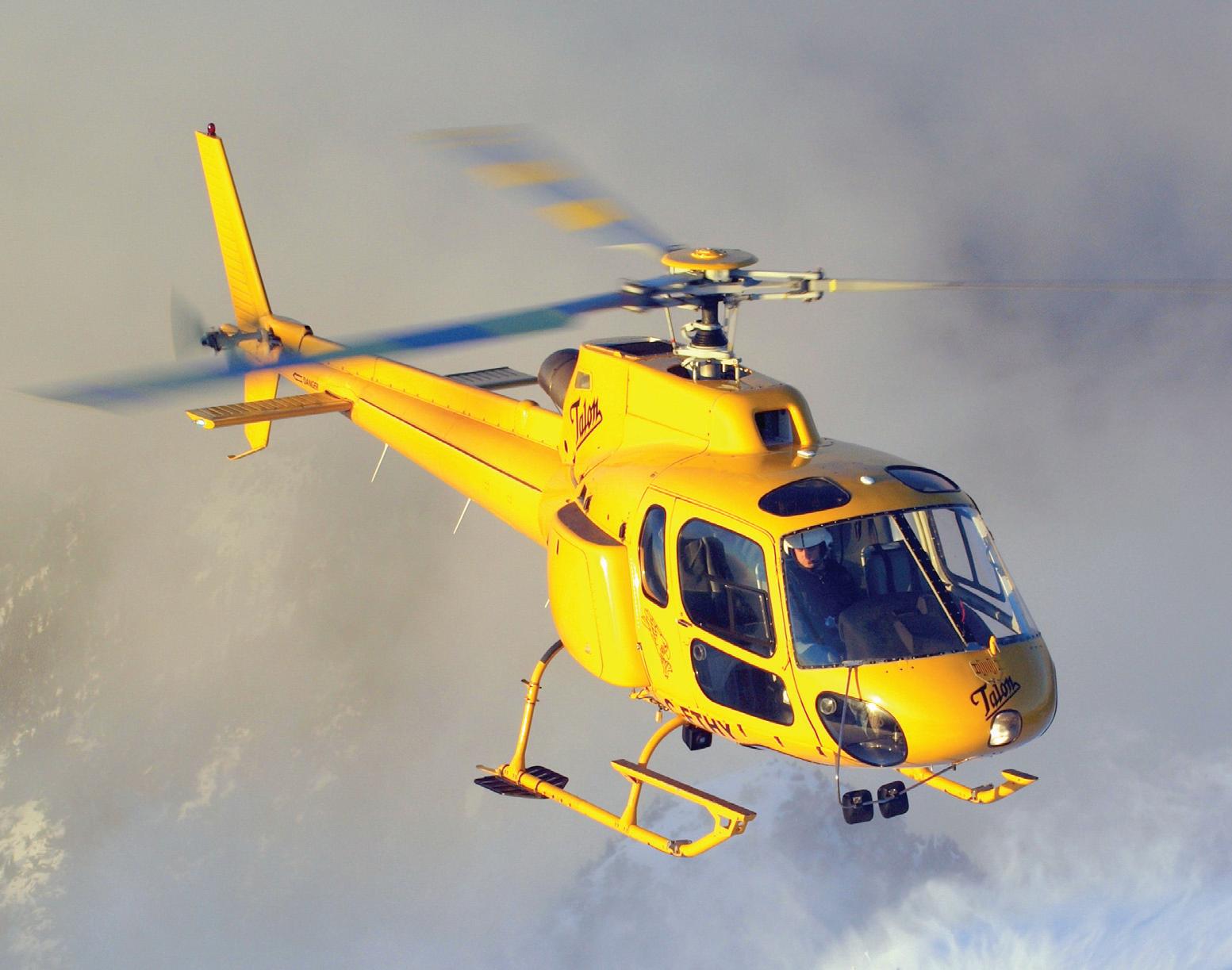
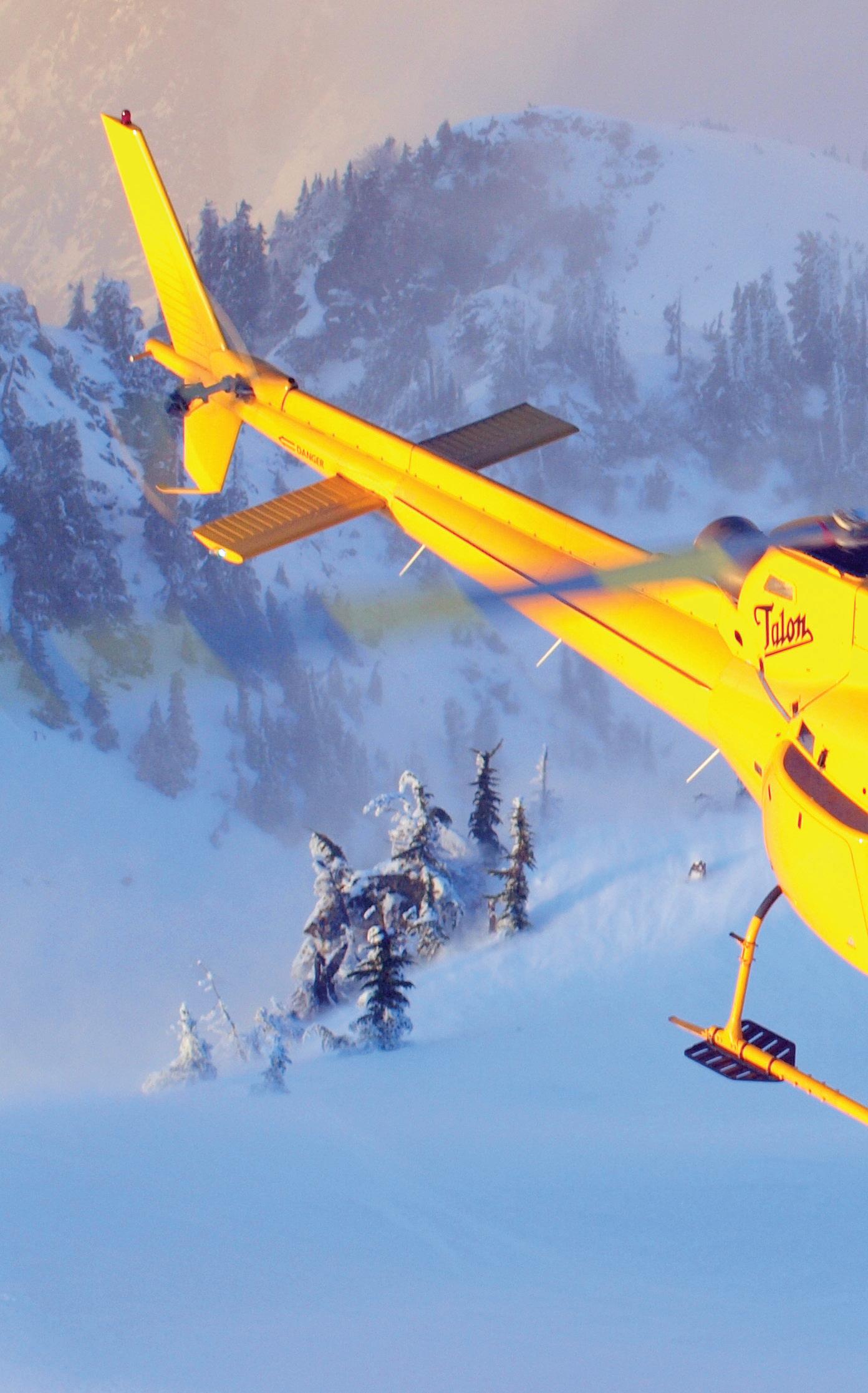
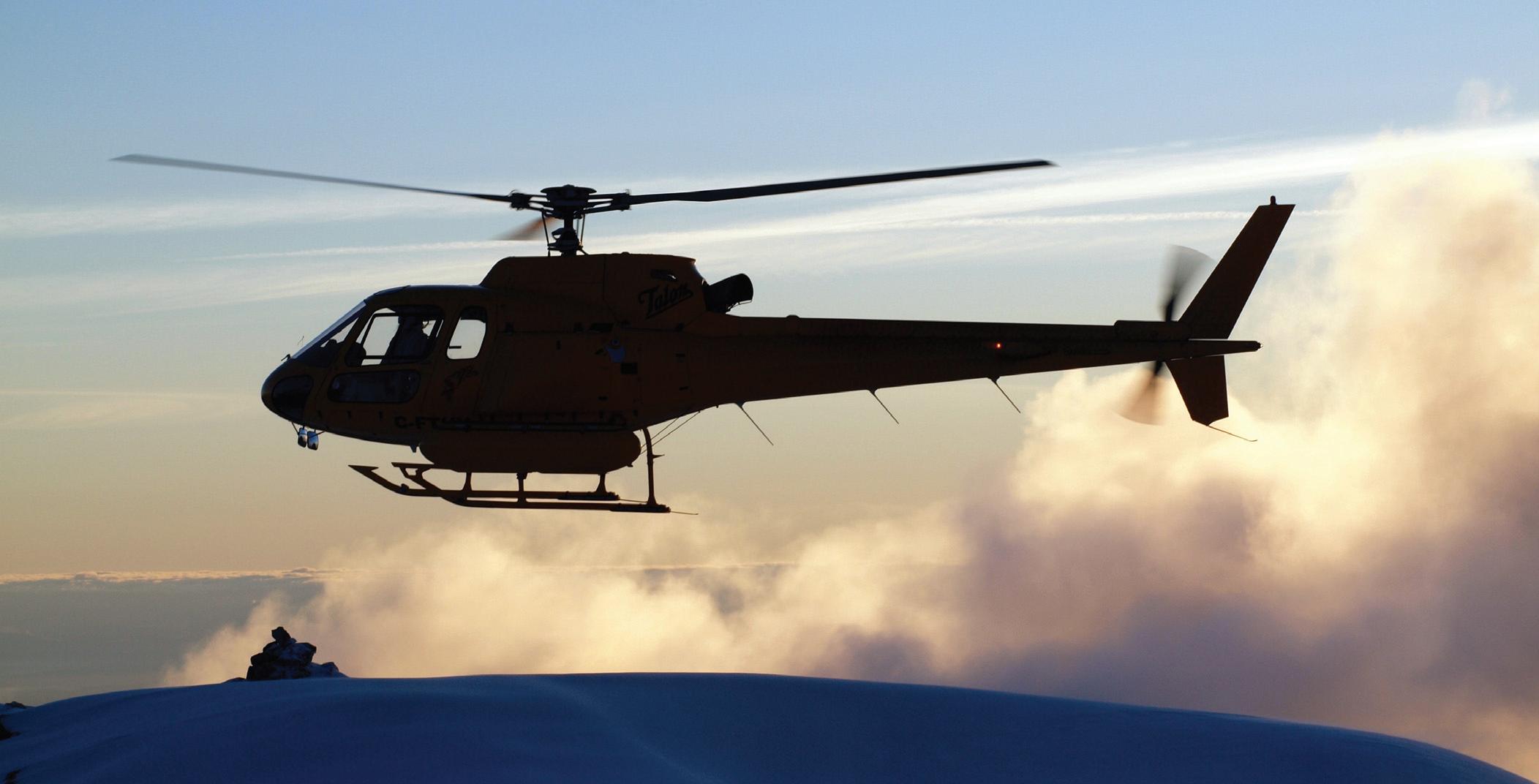
LEFT: Talon’s AS350-B C-FTHZ takes to the skies in the mountains just north of Vancouver. (Photo by Matt Nicholls)
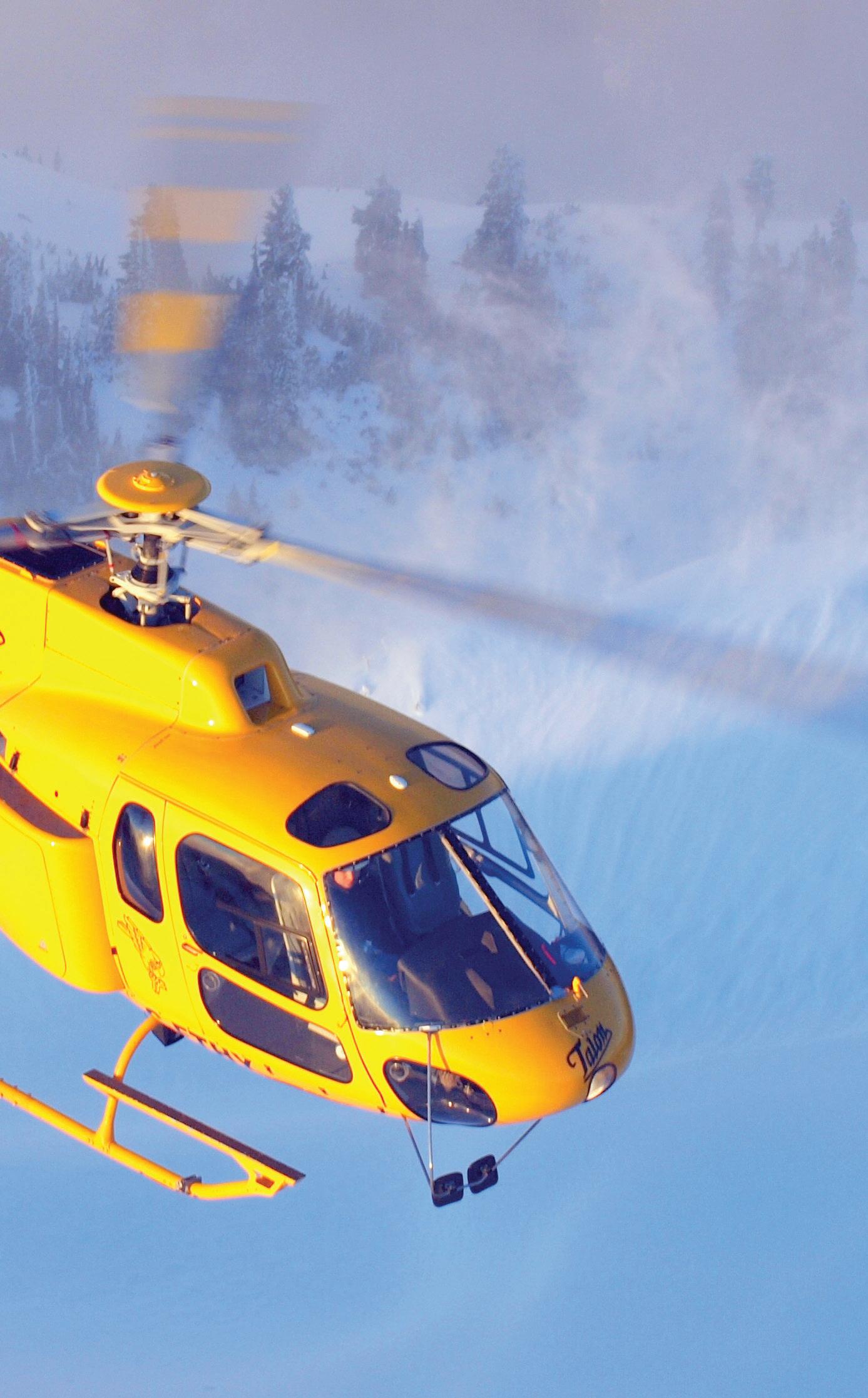
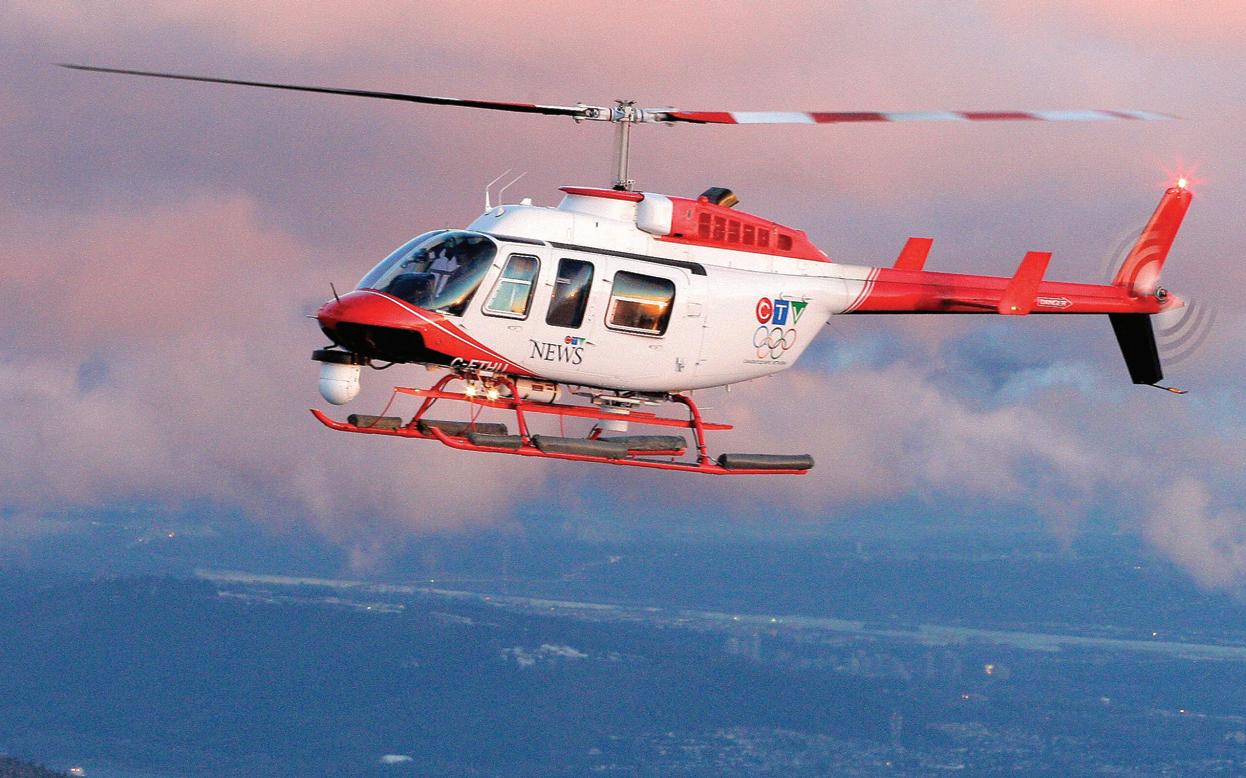
BELOW: Talon's clients come from a wide cross-section of industries, which includes CTV's Chopper 9. (Photo courtesy of Talon Helicopters)
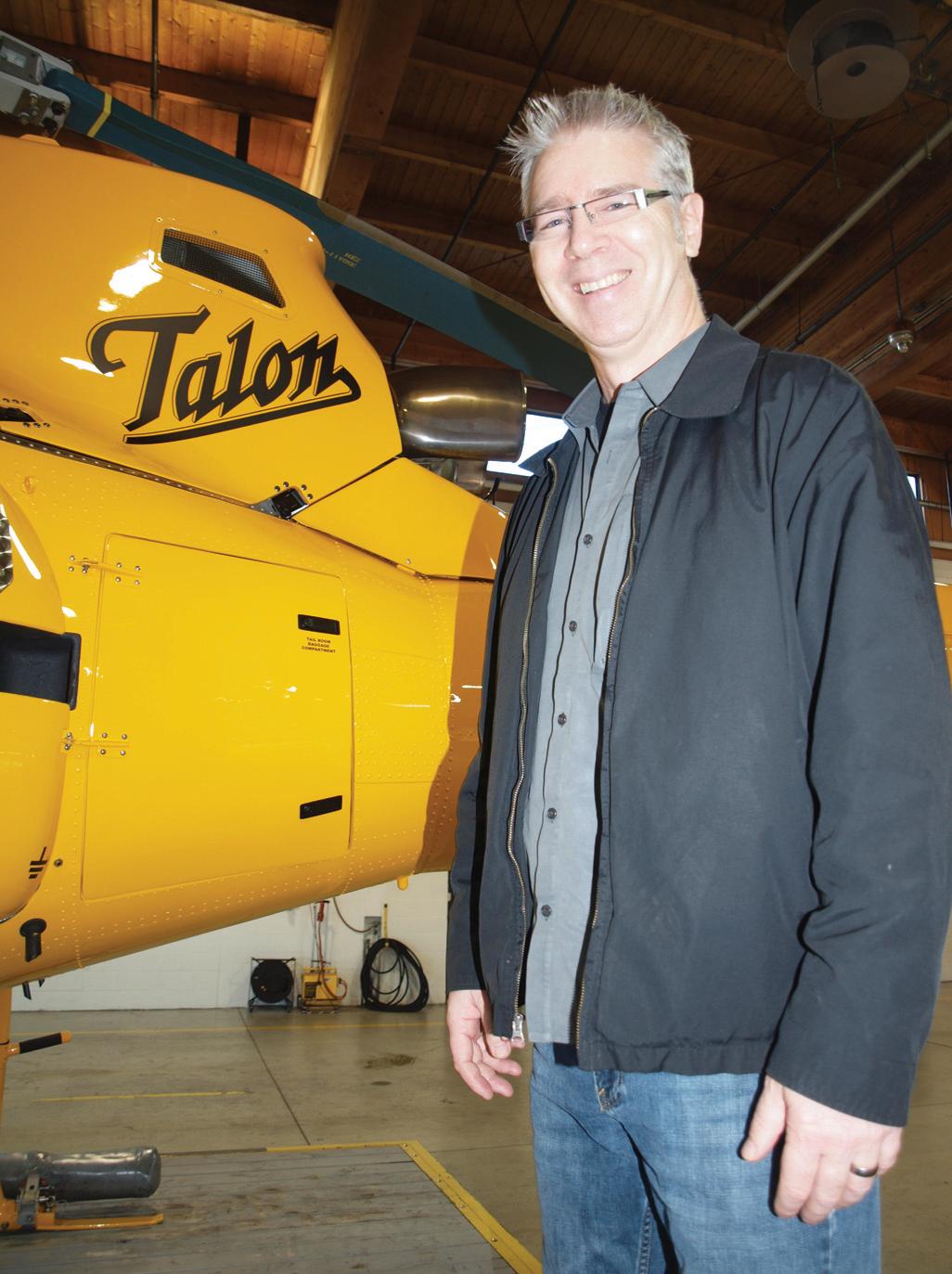
BELOW LEFT: Presenting just the right image is part of what Talon is all about, says president Peter Murray. “Whether people like it or not, marketing is a critical part of your success – and you must be carrying it out consistently.“ (Photo by Matt Nicholls)
least a couple of thousand hours of mountain flying experience, but that isn’t always enough.
“Even a couple of thousand hours of mountain flying doesn’t give you longlining experience,” says Murray. “Our stuff is all about placing a load on a little platform amongst guide wires and towers; a minimum of 150 feet of line would be a short line here.”
Attitude is also critical, as chief pilot Kelsey Wheeler can attest. He understands the demands of Talon’s clientele – and his boss – and admits it takes a unique pilot to “get it.” Like Murray, Wheeler is a former employee of Canadian Helicopters. When Wheeler came on board five years ago – “we joke we are stuck to each other,” he says –the 35-year-old had amassed 2,500 hours of flying time. He’s closer to twice that now. Wheeler loves the diverse nature of his job and the benefits of working in the city environment – working close by and returning home each day to his young family. Many pilots his age still return to a desolate northern oil base camp each night. Murray has a young family as well, making work/life balance a key part of Talon’s corporate culture.
“One of the great things about working at Talon is you never know what you’re going to be doing each day,” Wheeler says. “One day, you could be flying some rich guys doing some film work, then you’ll be
Mountain SAR operations are a key component of Talon’s business. Many of these rescues take place in questionable weather conditions and during the fading light of day.
Keys to Success in a Tough Market
• A calculated approach. Upgrading the fleet to four B-3s would be wonderful, Talon’s Peter Murray says, but it’s not fiscally responsible. “Move slow with fleet development. You have to look at how many years, how many hours it takes to get that investment back.”
• Work to standardize. Trust and empower your engineers to understand the needs of the pilots. It’s always team first. “I’m fortunate the engineers I have feel the same way and I don’t restrict them from what they will spend money on for the aircraft. There’s no holding back.”
• Be resourceful. It applies to everything – even the computer system. Murray purchased a computer worth $6,000 for $250 and upgraded it with a new copy of Windows 7, some new RAM, and it runs like a charm. “I do all the marketing stuff too, all the packages, I do all that stuff. Maybe it’s called micromanaging but it’s too expensive to hire people to do it right.”
• Never compromise on safety. Talon has an SMS system in place, but it’s about more than just a label – it’s the intrinsic nature of all aspects of a business. “It’s not a ‘Safety Marketing System.’ Show me your incidents and accidents, show me the attitude of your people, show me the type of spots they are picking to land . . . that’s when I will tell you if you are running a safe operation.”
• Put customers first. Adding accents will translate into more business. “When you travel around Canada and look at helicopter operations, typically they are in the bush. They’re like pickup trucks – they get dirty. That’s not our market. We are going to put in leather seats, stereo headsets and new windows; the right things bring customers back and elevate us to a new level.”
fighting fires. You might even be in a beer commercial.”
Working with a leader like Murray is also a plus – and it’s fun. “There aren’t a lot of quiet moments with Peter around,” he says, laughing.
Finding the right mix of talent is key to any successful firm, but creating the right image is equally important. In creating his company, Murray was careful to project the right image. “Talon” was chosen because it’s rugged, aggressive, and fits the image of the West Coast. “It also says, ‘I’ve got you, we’re not letting you go,’” Murray points out. It projects an image of things being done with care, efficiency and strength.
Choosing yellow as the fleet colour was done for a variety of reasons. It is a highly visible colour, essential in an environment like Vancouver’s that gets plenty of cloudy, rainy conditions. Few companies at the time chose a solid colour for their helicopters and yellow was rare, distinctive. Murray still smiles when he hears the comments others make when they see one of the Talon fleet in action. “When I’m bucketing at a fire, I always hear over the radio, ‘I love that colour,’” says Murray. “Yellow is not my favourite colour, but it works for us.”
A diversified business model is paramount for smaller helicopter operators, and Murray admits there have been some challenges in the past few years with “rich” competitors – “rivals,” as he likes to call them – cutting into their business.
“They took business away from us at low prices because they have the money to do so, but they’ve now since pulled back because they’ve lost money,” Murray says. “It’s not about personality; it’s about not having a lot of experience in the business and going in cheap.”
Some of Talon’s important clients include major telecommunications companies – Rogers, Bell, Telus, Metro Vancouver – and others in the areas of fire fighting, Class D rescue, dam construction, maintenance,
(Photo by Matt Nicholls)
watershed, snow surveys and TV camera work (HD or film). Some pilots also do what they do best – act like helicopter pilots in TV shows and movies.
Another top client is CTV News: Talon operates “Chopper 9,” a Bell 206L-4 that keeps watch over the city. “They’re a great customer in the way they listen to us about safety and weather. They absolutely do not push, and are very safe.”
Of all the operations Talon flies, its role in SAR in the Vancouver area may be the most vital. Talon has been involved in hundreds of flight hours of training and working with local SAR operations in the Greater Vancouver area, including teams from Lions Bay, Chilliwack, Coquitlam, Ridge Meadows, Squamish, Whistler and North Shore Search and Rescue.
Having performed countless numbers of Class D missions over the past 20 years, Murray is an expert in longline rescues, and is accident and incident free. He has received several awards for his SAR work over the years, including the 2010 Leadership Award of the National Search and Rescue Awards of Excellence Program. The prestigious award, presented by Lt.-Gen. W. Semianiw of Canada Command last September in Montreal, recognizes exemplary service, commitment and dedication to SAR services across the country.
“Basically, the award is for the length of time I have been involved in SAR,” Murray says, modestly. “I’ve been doing it for about 20 years, not only just going out on paid searches (the government pays for our helicopter), but providing advanced training to local teams.”
Most SOS calls – including the gruelling, high-profile rescue of injured Vancouver snowshoer Chris Morley from a steep slope above Theta lake in January 2007 – come in near dusk, leaving rescuers with a fast-fading window of daylight to mount an operation often made more challenging by unpredictable weather conditions and tricky terrain. It’s an environment in which the cool, calm Murray excels.
“Flying through that crap with the doors off . . . it’s very challenging and when you’re done, you feel great. It’s a job well done and you helped some people out who were in a very precarious position,” he says.
Tim Jones, search-and-rescue manager for North Shore Rescue, the organization that nominated Murray for the award, has flown with the Talon president dating back to when the two worked together at Canadian Helicopters. He has high praise for Murray’s
ability to run a business while still finding time to give of himself as a volunteer for SAR operations – many of which cut into precious family time.
“I am so appreciative of and impressed with what he represents as a small operator in this country,” says Jones. “It’s the passion of flying and dealing with the challenges of running a successful business that impress me the most about Peter. For me, I learned all about what it is to succeed in this business.”
Jones also marvels at Murray’s commit-
ment to the SAR cause – he always manages to volunteer his time and equipment for SAR operations at all hours of the day and night when required. “And he does it all because of his bona fide sense of community,” says Jones. “He’s a tremendous pilot, one we rely on immensely. If Peter wasn’t around, we, as an organization, would be in big trouble.”
While receiving accolades is nice, Murray would prefer to focus his energies on building
his firm. He is optimistic Talon will continue to win contracts in the competitive B.C. space, and forge stronger relationships with existing customers.
“In any business, you can’t let it stagnate, you’ve got to keep spicing up what you’re going to deliver,” says Murray. “You can’t just stand still in this or any business . . . McDonald’s just didn’t make the cheeseburger and stop there.”
For Peter Murray, stagnation simply won’t do – it just won’t happen. Living large on the B.C. coast, living his dream? Now, that’s more like it!
Detailing the Talon Fleet
• Bell 206L-4: “Chopper 9” used to provide ENG service to CTV News. It’s equipped with an FLIR stabilized camera system and digital microwave downlink. It is always equipped with emergency pop-out floats. It’s the only fulltime news helicopter in Vancouver. The pilots flying Chopper 9 are all experienced mountain pilots who also perform SAR work, including Class D rescue, forest fire protection and aerial camera work for film.
• Eurocopter TwinStar 355F2 Max Peter Murray initiated and worked out a new improved electrical system for the aircraft with Maxcraft Avionics. The aircraft is used primarily for low-level flight over built-up areas, including film work and external lift work. It is also the aircraft of choice for Class D rescue for SAR work.
• Eurocopter AStar 350B and Eurocopter AStar 350B2 The AStars and TwinStar are used equally for fire fighting, construction, powerline and film work. They are all equipped with Eurocopter Squirrel Cheeks, and pop-out floats for the AStars for over-water flight.
• Eurocopter EC-120B New to the fleet, uses will include fire fighting, tours and film work.
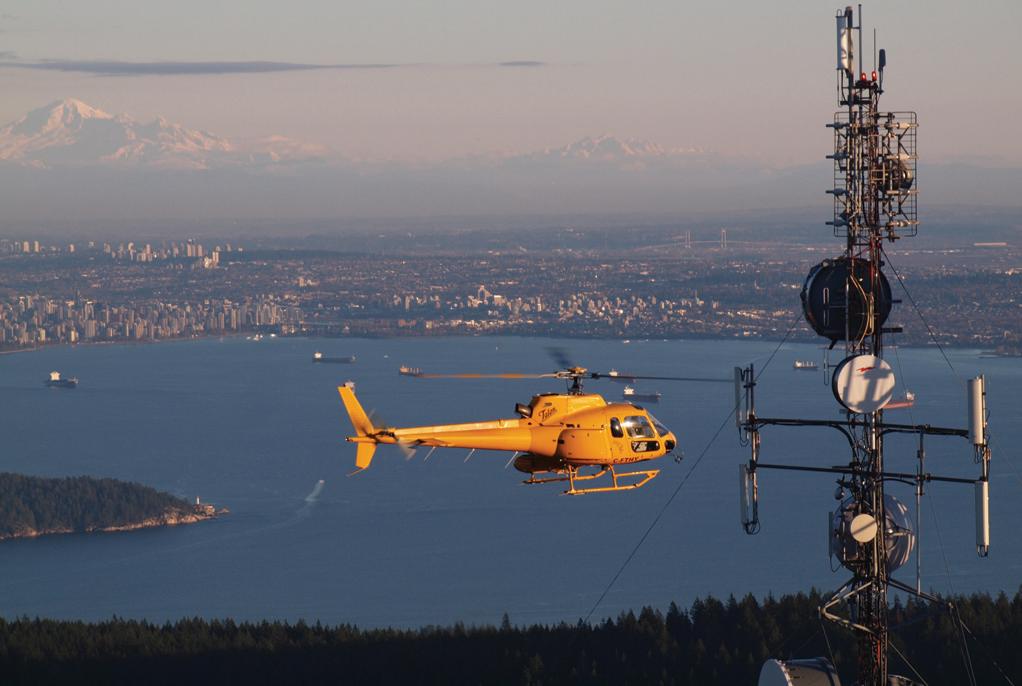
Talon works with several major telecommunications companies, including Rogers, Bell and Telus. (Photo by Matt Nicholls)
LEFT: The CHC Safety & Quality Summit in beautiful Vancouver is rapidly developing into one of the most important events of the year. (Photo by Paul Dixon)
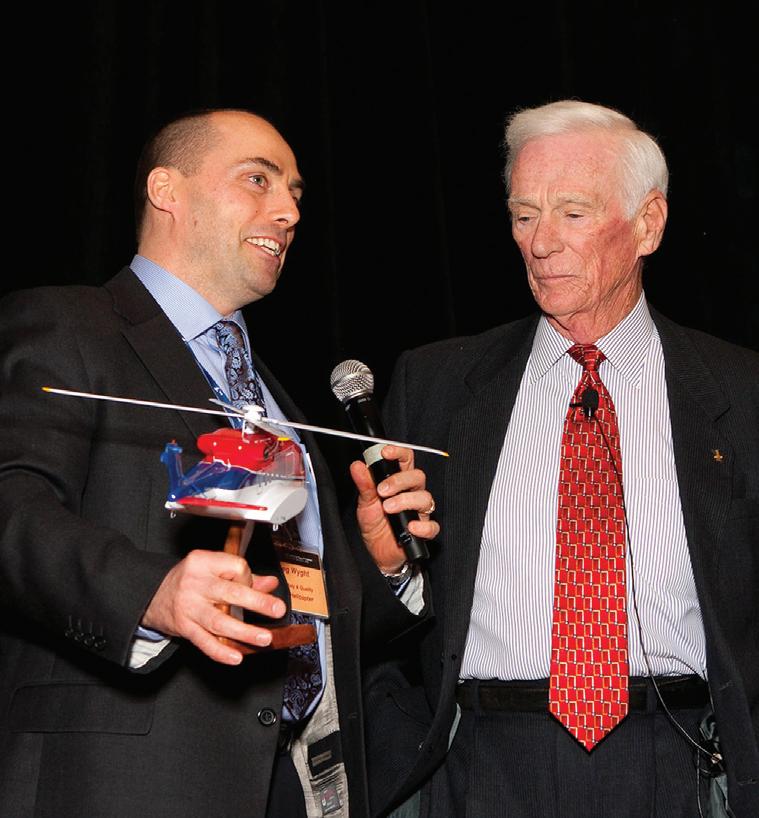
BELOW: Greg Wyght, CHC’s vice-president, safety and quality (left), chats with Capt. Eugene “Gene” Cernan, at last year’s event. Cernan is the last man to walk on the moon. (Photo courtesy of CHC)
he CHC Safety & Quality Summit is quickly emerging as one of the must-attend aviation conferences of the year – and it’s doing so in a world still suffering from economic uncertainty.
The event’s reputation for excellence and innovation has been achieved in seven short years through the vision, passion and dedication of one man – Greg Wyght, CHC’s vicepresident, safety and quality. Wyght is fortunate to have the support and trust of corporate management, who believe in his principles and vision. The upcoming summit, to be held from March 28-30 in Vancouver, promises to build on its stellar reputation as a can’t-miss gathering based on excellent educational and networking opportunities. This year’s theme is corporate responsibility – where does it end and personal accountability begin?
With a background in air ambulance operations, Wyght came to CHC as a base manager at one of its overseas operations. His directive from the president of the company at the time was to “go in there and change the safety culture,” which he managed to do after some focus and hard work. “I put in a number of programs and they were very successful,” Wyght says. From there, he was named vice-president, safety and quality in 2004, and his assignment from the CEO was to
create a common standard across the entire worldwide organization.
The challenge was taking aviation flight safety, accident prevention, quality assurance, as well as occupational health and safety, and tying it all into one safety management system (SMS). At the time, CHC had nine different entities under one corporate umbrella, with nine different systems. It was quickly determined that not everyone had the same level of training, or, as Wyght says, “was speaking the same language.” The solution was to seek out the best training, so he undertook to find it.
“One of the things I promoted was that the mission and vision of the safety quality department was to be a separate auditing department, but to also be an advisory service to management. The only way we could do that was with the best training in the world,” he says.
To create the best training model possible, Wyght talked to colleagues from around the globe, especially the oil company aviation advisors with experience in aviation safety. He also talked to major aviation educational institutes such as Cranfield, Embry-Riddle, University of Southern California, Southern California Safety Institute, looking at the curriculum as well as who took the training. After six months of research, he settled on Dr. Peter Gardiner and the Southern California Safety Institute as the best there were for occupational risk management, or as Wyght describes it, “a data-driven risk management approach.”
In 2005, the first safety summit was held in Prague, Czech Republic, as an in-house event with 35 CHC employees in attendance. The event was a success, but Wyght recalls, “the CEO just about fell over when he saw the price tag . . . one training course for three days and you spent $100,000? But he recognized the huge value of it and asked if there was any way we could make it more cost effective.”
The one thing CHC lacked as an organization or an industry was to capture best practices right across the industry from all the different operators. So, what Wyght proposed to his CEO was to make the next event a non-profit conference where it’s not just about cost recovery, but aimed at bringing in competitors, other operators in the industry CHC doesn’t compete with, customers, and regulatory authorities. “The goal was to bring in experts, learn from them, and that way we’ll sort of prime the pump,” he says. “I told him, we’ll give them everything we have from our SMS, we’ll run SMS courses and teach people what we teach our people. We’ll give them our protocols, we’ll give them everything and eventually they’ll start giving back.”
Wyght also devised a five-year plan for the conference to reach profitability. For each of the first three years, CHC would pay for the entire event, but by the fourth year, they hoped to recoup 50 per cent of their costs. By year five, the goal was to break even. “The second year, we had no marketing budget, so we just told all our competitors, told all the oil companies, and we ended up with about 80 attendees, which we were very happy with,” says Wyght. “The following year, we were just over 150, and then the fourth year 325, so each year, we had kept doubling and it was all primarily word of mouth. In 2010, we had just under 600, about 450 external and 140 or so internal. We have just over 5,000 names of people who have stated they want to hear more.”
When CHC was purchased by U.S. equity firm First National in 2008, Wyght was challenged on the concept of the conference by new corporate higher-ups. “They said, you’re a helicopter company, why are you running a conference?” he recalls.
To alleviate their concerns and sell them on the validity of the event, Wyght met with senior management and tried to convince them that the conference was not only a benefit to CHC from a safety perspective,
but also a benefit for the entire industry. It was an opportunity to educate and subsequently raise the corporate brand – in a very positive way. “I told them we can impact the safety of the industry and that will benefit us,” he says. “We will get safer pilots, safer engineers, better safety culture within the helicopter industry, lower interest rates because everyone’s accident rate drops, so there’s a number of intangible benefits we get from that.”
The outcome? “First National agreed to allow the conference to go ahead [that year] and they came to the Summit with their CEO, and a number of senior management were absolutely sold, says Wyght. “The day after the summit, I posed the question – are you satisfied, will you let us run it again? They said, absolutely.”
This year’s speaker lineup for the CHC Safety & Quality Summit packs a punch. Some headliners include:
• Dr. Graham Braithwaite, director of Cranfield Safety and Accident Investigation Centre. Braithwaite, who holds a Bachelor of Science in Transport Management and Planning and a PhD in Aviation Safety Management from Loughborough University, joined Cranfield University in 2003 as director of the Safety and Accident Investigation Centre and became Head of the Department of Air Transport in 2006. His research interests are in the fields of accident and incident investigation, human factors, safety management and the influence of culture on safety. He is a Fellow of the Royal Aeronautical Society and a Member of the International Society of Air Safety Investigators.
• John Nance, best-selling author, professional speaker, pilot, licensed attorney and aviation correspondent for ABC News and Good Morning America. He will also be a keynote speaker at the event.
Nance is a decorated Air Force pilot veteran of Vietnam and Operations Desert Storm/Desert Shield and a lieutenant-colonel in the USAF Reserve. He is a nationally known author of 19 major books, a sought-after columnist and has long been listed in Who’s Who in America, Who’s Who in American Law and Who’s Who Among Emerging Leaders in America.
• Dr. Tony Kern, CEO of Convergent Performance, will also be a keynote speaker at this year’s event.
A former pilot and internationally recognized expert in the field of human error in aviation, Kern has written five books on the subject and lectured around the globe for nearly two decades. He is making his second consecutive address at the Summit. He was a command pilot and flight examiner in the B-1B bomber, and has senior staff and leadership experience, including service as the chair of the Air Force Human Factors Steering Group and director and professor of military history at the USAF Academy.
Dr. Graham Braithwaite, director of Cranfield Safety and Accident Investigation Centre, is one of the keynote speakers at this year’s event. (Photo courtesy of CHC)
“So, we’ve been very fortunate. CHC commits to a certain amount they put into the Summit each year, a big part of the investment is the six-member team and the number of hours they put in, as well as priming the pump by spending a ton of money up front before we get our money back.”
In many ways, the Summit isn’t like any other industry event. There is no trade show; it’s purely content driven. It’s a point that has been raised by some in the past, but for Wyght it’s a non-starter – it doesn’t fit with the original objective.
competitors are free to share problems and challenges openly and without fear. But it’s a challenging concept.
“It was difficult to create that atmosphere in a competitive market,” Wyght says, “so what we thought we would do is pay money initially to bring in the best speakers we could in the world. People like Scott Schapell, Doug Weightman, Tony Kern, Patrick Hudson, Graham Braithwaite. We’ve been really fortunate in getting them. The vision I was proposing to my CEO, was to bring in the best minds in the industry. We create 90-minute lunches and 30-minute breaks and we provide the food for them for breakfast, lunch and the breaks. That was a strategic decision with the idea that they don’t have to go anywhere, they just stay there and we talk. We build the relationships.”
We’re not selling anything . . . it would kill what we are trying to create.
“The decision was made at the very beginning that the event would be strictly non-commercial,” he says. “This is just purely focused on aviation safety, safety in general, but specifically aviation safety. We’re not selling anything . . . it would kill what we are trying to create.”
Another key objective, Wyght says, is to ensure the conference exudes a sense of objectivity – competition is left at the door. Operators,
THANK YO U CANADA!
For making DTI a global I
leader in SMS Training!
Canada is leading the way in SMS implementation, and DTI Training Consortium of Atlanta, GA, is proud to be a part of your success.
DTI – the training choice of North American federal I regulators as well as individual operators – is offering its internationally heralded SMS/QA for the Aviation Industr y to everyone interested in real world, practical applications of the new Safety Management Systems requirement in Canada.
The Summit boasts some 70 workshops running over three days, but realistically, attendees can only get to about 10 of them. Says Wyght: “We have two sessions of plenary and then 10 choices you can make out of 70, so we thought we would have at least 33 per cent new speakers, or new sessions, every year. The idea being that you could go to only the new sessions every year and you’d have a choice of two. We have course feedback forms and we’ve generally had 80 per cent feedback. We take that and we rank them, from one being worst to five being the speaker is walking on water in six different categories. They must score 80 per cent or higher or we don’t bring them back for next year.”
DTI is expert in all aspects of SMS/QA, period! I We’ve actually done it, hands on, no sugar coating, and have come to determine that if you are a reputable company, you are probably doing 80 to 90 percent of what you need to do to implement a great system. Let us show you how to get the extra 10% that will make you stand out in the crowd! 10% that will you st
Visit: www.dtiatlanta.com
Call: 1-866-870-5490
Email: staboada@dtiatlanta.com Call or email for a FREE CAP Planning Guide
While several of the headline speakers are summit fixtures, Wyght adds new wrinkles every year to keep everyone on their toes, if not on the edge of their seats. With the theme of this year’s summit being “Corporate Responsibility vs. Personal Accountability: two sides of the same coin,” they keynote address will be in the form of a political-style debate with John Nance taking the corporate side and Tony Kern stumping for personal accountability. To keep things moving, Scott
“Last year, we had more than 125 presidents, vice-presidents, managing directors, etc., in attendance.”
“ They said, you’re a helicopter company, why are you running a conference?
Schapell act as moderator, or as Wyght sees it, “winds them up.” Graham Braithwaite of Cranfield University will act as a freelance hitman, jumping in on either side of the debate as he sees fit. It's all in keeping with Greg Wyght’s vision of a “different learning experience.”
One of the most impressive trends developing over the years is the level of attendees checking out the content. “Three years ago we were struck by the high percentage of delegates who carry the title president, vice-president, managing director, that level in a company,” Wyght says.
To target this high-level group, one room has been set up for the executive-level session. “We’ve brought special speakers and we’ve targeted them with, ‘what does an executive level need to know about aviation safety?’ The idea is that they teach for a while and then we challenge them with questions. We try to get them talking to each other. Aviation company presidents, the oil company aviation CEOs, and Transport Canada’s general director is there. At that level they are talking to their peers and not sitting with their employees, where they may not bring up some subjects. This allows them to deal with those issues.”
In the same vein, Wyght says one of the highlights of this year’s conference will feature an SMS course for middle managers. “I talked to Tom Anthony, the director at USC, and asked him to gear it for HR people, accountants, people who don’t have an aviation background, but need to have the passion and value aviation safety over all other aspects of our business.”
That is precisely how to describe Greg Wyght – a man with a passion for safety, whose dedication and vision is responsible for a truly worthwhile and necessary event.
The CHC Safety & Quality Summit offers all helicopter operators a chance to assess and evaluate safety matters in a non-competitive environment. (Photo by Paul Dixon)
POWER BUILT ON TRUST
CAE Training Sites Preparing Pilots for Duty
estled in the British countryside, some 10 miles from the historic city of Oxford is RAF Benson.
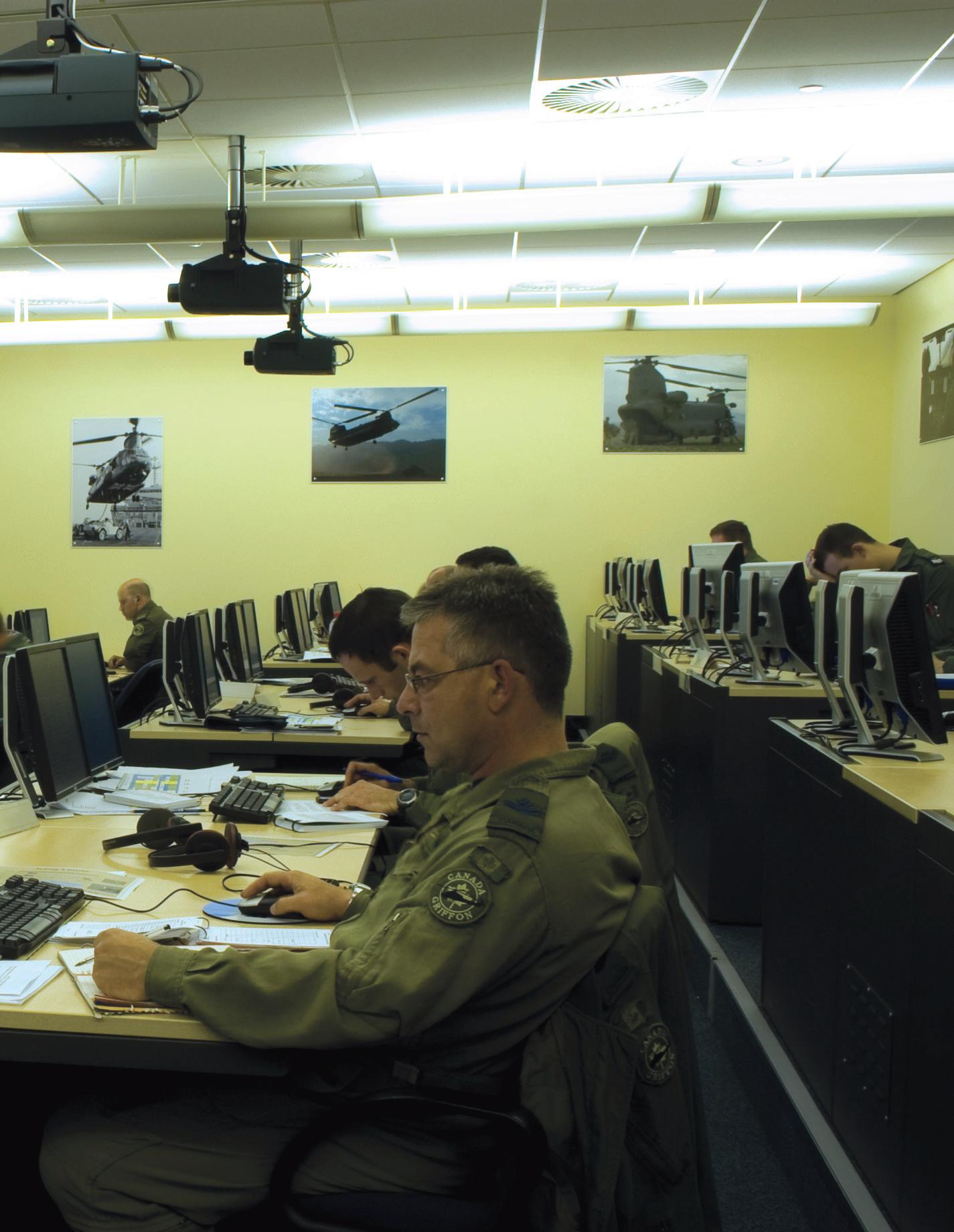
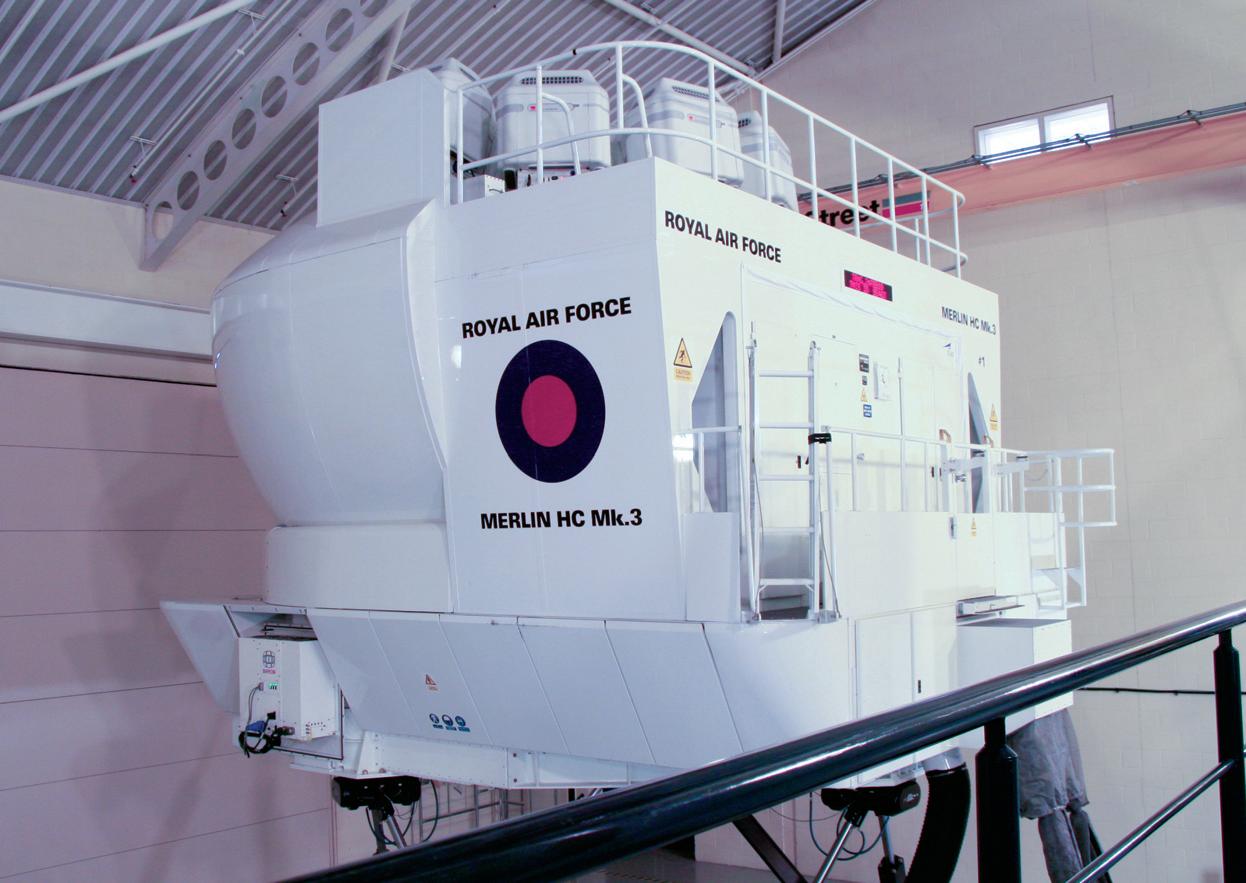
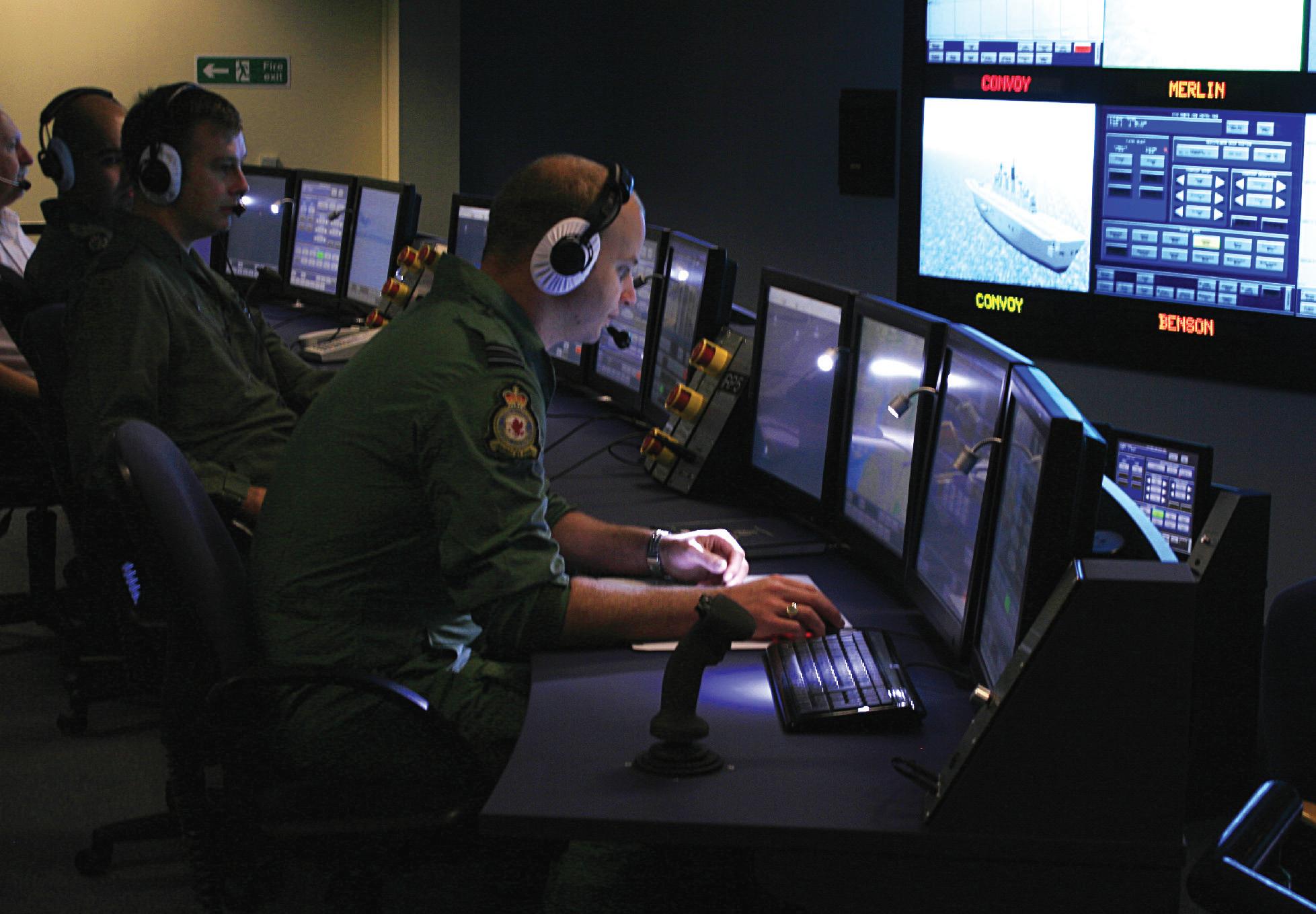
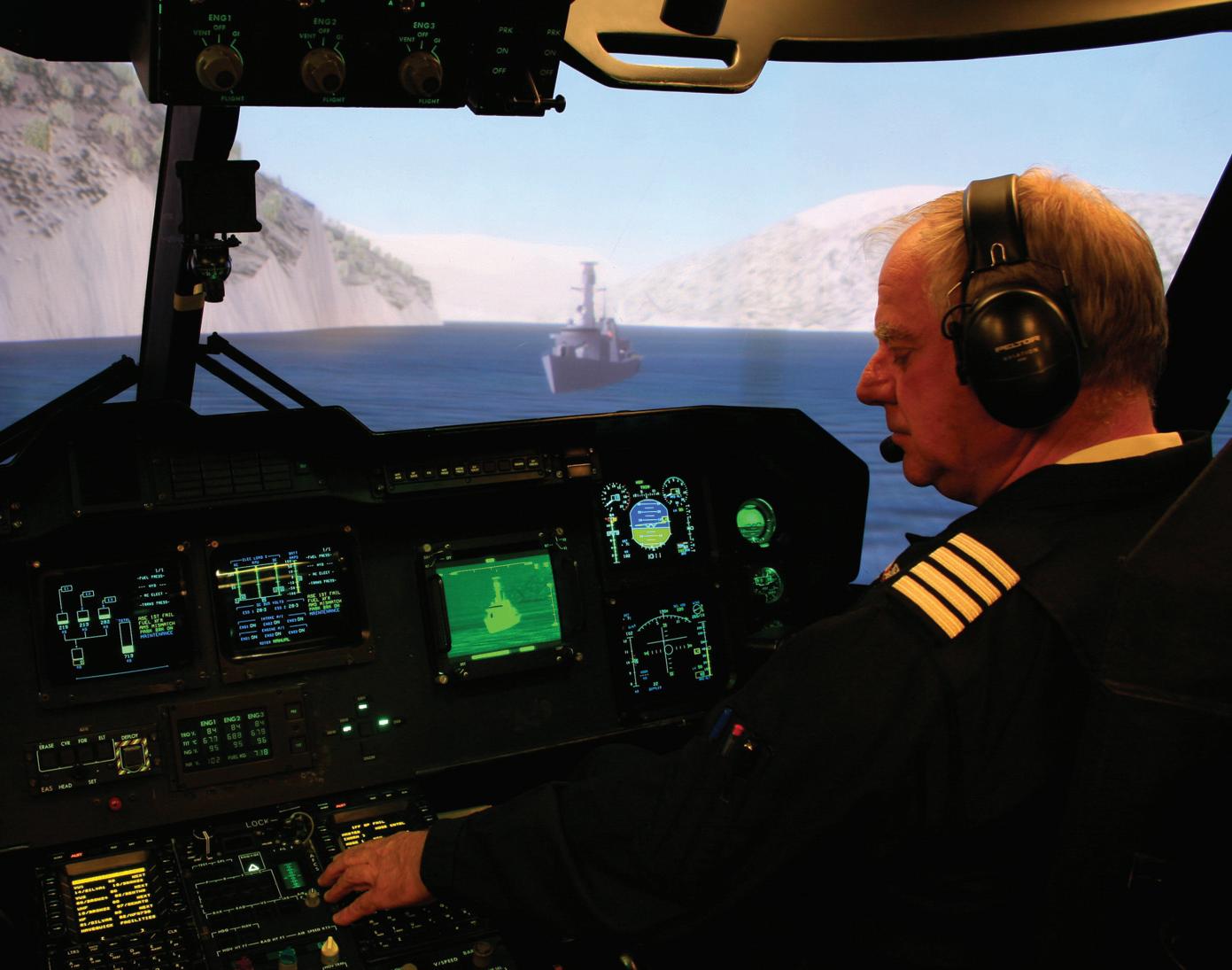
Home to squadrons that operate Eurocopter SA330 Pumas and AW101 Merlins, it also houses the Medium Support Helicopter Aircrew Training Facility (MSHATF). The MSHATF is owned and operated by CAE under contract to the United Kingdom’s Ministry of Defence. Besides classrooms, conference rooms and offices, the $158-millionplus facility houses six CAE full-motion helicopter simulators – two for the Merlin, one for the Puma and three for the Boeing Chinook. As soon as they complete basic training, helicopter pilots come to the MSHATF to typically spend three weeks in ground school and three to four weeks in the simulator. Such is the degree of simulation that a week after they graduate, they are off to Afghanistan.
That the facility operates five days a week from 8 a.m. to 10 p.m. and is fully occupied is an indication of how essential are the services it provides. It is not only that helicopter usage in Iraq and Afghanistan has increased dramatically for the NATO allies, but also that search-and-rescue (SAR), coastguard and medevac roles at home have increased as well.
Between 25 per cent and 33 per cent of helicopter training is presently done on simulators, depending on the type of helicopter. For the RAF, 68 per cent of conversion training on the Merlin is synthetic. The advantages of simulation-based training over live training are that it is safer, it enables realistic mission planning and rehearsal, it is more environmentally friendly, it is highly “immersive” in operational experience and finally, it is much more economical – it provides training at one-tenth of the cost of live flying. With the budget restraints that the U.K. is going through while still having to meet its commitments in Afghanistan, the last advantage is especially valid.
CAE helicopter mission simulators feature unprecedented realism for helicopter-specific mission training, including offshore, emergency medical services, law enforcement, longline, high-altitude, corporate, and other operations. The simulator enables pilots to practise challenging procedures without such risks as those associated with lowlevel flight, confined area operations and autorotation.
The MSHATF’s costs are partially offset for CAE by hiring the facility out to third parties. Of the 10,500 hours “flown” here annu-
ally about 1,600 hours are by air arms other than the RAF. Besides the U.K. Ministry of Defence, the CAE facility is also used by helicopter pilots from the Canadian Forces (CH-47D and the CH-149); the Royal Netherlands Air Force (CH-47D); Australian Army Aviation (CH-47D); Royal Danish Air Force (EH-101); Italian Navy (EH-101); Royal Oman Air Force (Puma) and the Japanese Self Defense Force (EH-101).
With the RAF, Australian and Canadian Chinook (CH-47D) pilots do their pre-Afghanistan training here. To improve their predeployment training the facility has two visual databases depicting Afghanistan – one as a mountainous terrain and the other a dusty plain typical of the countryside.
As Canadian Forces’ Griffon pilots know well, it is the latter terrain that poses problems because of the amount of dust kicked up by the rotors. The “dusty plain” simulation takes the pilots through the whole brownout process, allowing them to practise set approaches with no loss of life or machine. Each mission at Benson is designed to give pilots what they would expect in theatre – including coping with exposure to enemy fire – small arms and RPGs in the “hot” landing zones.
Pilots who have been in Afghanistan also regularly return to the MSHATF to keep the instructors updated on changing conditions in theatre and how well their pre-deployment simulation training worked.
Like the CH-47D pilots, Canadian Forces Cormorant pilots do their full-flight simulator training at the MSHATF, although the Canadian Forces also have a lower level training device for the CH-149 that was built by Atlantis Systems International.
Simultaneous with the Lynx Mk8 maritime helicopter fleet upgrade in the Royal Navy, CAE UK plc completed a major upgrade of the CAE-built Lynx Mk8 Full-Mission Simulator (FMS), and delivered a new Lynx Cockpit Procedures Trainer (LCPT) and a CAE Simfinity
LEFT: Helicopter pilots typically come to the Medium Support Helicopter Aircrew Training Facility to spend three weeks in ground school and three to four weeks in the simulator.
(Photos courtesy of CAE)
BELOW: The CAE Tactical Control Centre in Oxford, U.K., has two Merlin simulators.
Another Montreal-based simulator company that is realizing international success in the rotary-wing market is Mechtronix Systems, an MWC Company. Mechtronix specializes in the design and manufacture of flight simulation training devices for general, business and commercial aviation. With more than 20 years of innovative leadership in the global flight simulation and training market, Mechtronix Systems’ customer base is present in America, Europe and Asia. Following a first order from Bell Helicopter, the company entered the simulator commercial helicopter market to meet the demand for low-cost training devices, for which Mechtronix Systems’ technology and industrial process were perfectly suited.
Bell Helicopter followed with a second order for a Bell 412EP Full Flight Trainer. The simulator was qualified level 5 under FAA regulations and is used for entry-level pilots for cockpit familiarization and to introduce rotary-wing aircraft handling skills at the initial stages of training. This unit is currently being used to satisfy the training needs of a Chilean helicopter operator.
Mechtronix Systems’ success in the commercial and business aviation markets is rooted in three basic principles: instituting inhouse global production to reduce costs, providing customer support service to ensure a perfect transition from the production floor to the customer facility, and ensuring fidelity of existing customers.
“One of our strengths lies in our ability to create strong relationships with our customers. These allow us to have a deep understanding of the type of training tools our market needs and allow us to produce the most realistic simulators,” explains Xavier Hervé, president and COO of Mechtronix Systems.
System-Based Trainer (SBT) to the Royal Naval Air Station (RNAS) in Yeovilton, U.K. The total package gave the Royal Navy a comprehensive suite of synthetic training devices in support of the Lynx Mk8 maritime helicopter. The simulator upgrade meets the Defence Equipment and Support (DE&S) Flight Simulator and Synthetic Training (FsAST) Project Team requirement to incorporate the second-generation anti-jamming tactical UHF radio for NATO (called SATURN), replacement of the central tactical system, the new Successor Identification Friend or Foe (SIFF) system and the latest Defensive Aid Suite (DAS) into the training devices. With the full complement of training devices, the Lynx Mk8 helicopter crews are fully trained to meet current and future operational commitments.
As these are maritime helicopters, the simulation can recreate layered fog, 3-D puffy clouds, falling snow, rain, hail, blowing effects – both brownout and whiteout with snow, sand or dust. It also has a library of storm fronts, 3-D waves, whitecaps, ship wakes, blowing flames, and smoke and water “recirculation.”
“The suite of synthetic training equipment is a very welcome and much-needed capability,” said Commander Nigel Amphlett, Royal Navy Commander, Lynx Helicopter Force. “Not only does it enhance the output of the operational conversion unit, it improves the operational effectiveness of the front line.”
CAE is a world leader in providing simulation training with 29 training centres that include Montreal, Tampa (Florida), Stolberg (Germany), Sydney (Australia), RAF Benson (U.K.), Sesto Calende, Italy and Singapore. In India for example, CAE and Hindustan Aircraft Ltd. have established a joint venture company called the Helicopter Academy to Train by Simulation of Flying (HATSOFF). In 2010, HATSOFF began operations at a new helicopter-training centre in Bangalore. The HATSOFF training centre includes a CAE-built full-mission helicopter simulator that features CAE’s revolutionary
❑
❑
❑
roll-on/roll-off cockpit design, which enables cockpits representing various helicopter types to be used in the simulator. The first training program HATSOFF is offering is for operators of the Bell 412 helicopter. Additional cockpits for the Indian Army/Air Force variant of the HAL-built Dhruv, the civil variant of the Dhruv, and the Eurocopter Dauphin will also be added to the HATSOFF training centre.
But simulating rotary-wing aircraft and designing a training program to meet a customer’s training objectives are major challenges. Helicopters maintain unique charac-
landmarks and offshore structures, 3-D sea states. They also draw from a worldwide database derived from satellite imagery.
When accurately simulated, vibrations combine with visual and sound system cues to ensure the aircrew develops proper control strategies while experiencing representative workloads. Vibrations in helicopters, in addition to creating a harsh operating environment, provide the aircrew with rotor dynamic feedback critical to its ability to control the
“ No other company has designed training systems for a greater variety of rotary-wing platforms.
teristics in areas such as aerodynamics and vibration that make high-fidelity simulation a difficult task. CAE image generators (IGs) enhance the realism of pilot training through extensive use of advanced weather simulation, including wind conditions, lighting and variable visibility, realistic animation of rotor downwash and recirculation effects, high-density urban environments, moving objects and people, geographically correct
aircraft. CAE’s high-performance 3-DOF (degree-of-freedom) vibration platform, installed under the cockpit, subjects the entire cockpit to vibration cues that are validated with actual helicopter recorded data.
CAE’s Blade Element Rotor Model (BERM) is the basis for modelling the blade aerodynamic characteristics of all helicopters. The BERM
The Tactical Control Centre at the CAE training facility in Oxford, U.K. The MSHATF is owned and operated by CAE under contract to the U.K.’s Ministry of Defence. (Photo courtesy of CAE)
CAE’s $158-million-plus facility in Oxford, U.K., houses six full-motion helicopter simulators –two for the Merlin (shown here), one for the Puma and three for the Boeing Chinook. (Photo courtesy of CAE)
models the complex airflow around the rotating airfoils and accurately simulates the blade hinge and hub articulation, as well as all of the power-drive linkages. In addition, the accurate simulation of blade malfunctions is a fundamental and integral part of the BERM.
The CAE Medallion-6000 series is the latest member in CAE’s powerful Medallion image generator family. The series combines the proven, industry-leading feature set and image quality of previous CAE Medallion visual systems with the power and capabilities of the latest commercial-off-the-shelf graphics processors. The CAE Medallion-6000 provides a highly modular, scalable and portable visual solution designed to satisfy the full range of military training needs, particularly for lowlevel helicopter simulation applications.
Ground handling simulation has proven to be one of the most challenging aspects of flight simulation. To achieve simulation fidelity in crosswind takeoff, landing on sloping terrain, or taxiing on different surfaces, the interaction of the helicopter’s tires and landing gear with the ground must be accurately simulated. CAE has developed advanced ground handling models that faithfully simulate the heli-
copter’s on-ground directional stability and control characteristics.
The Common Database (CDB) was a CAE-led development originally for the United States Special Operations Command. This database architecture is designed to significantly reduce the timeline it takes to get a fully correlated database in operation within a range of training and mission rehearsal systems. Correlation of multiple databases in varying formats has been one of the major obstacles facing military forces wanting to practise and rehearse missions in simulation. The CDB architecture effectively removes this obstacle by allowing all users, or “clients,” of the data required to access the information from a common database source and do so in real time. These clients include not only the out-the-window visual scene in a simulator, but also other systems in the simulator requiring data, such as sensors, computer-generated forces and communications systems.
No other company has designed training systems for a greater variety of rotary-wing platforms. CAE has simulated helicopters from virtually all the major manufacturers. As its Medium Support Helicopter Aircrew Training Facility (MSHATF) in the U.K. proves, the Montreal-based company is a world leader in helicopter simulation.
T he single best way to maximize safet y and effi ciency for demanding missions is with EM S Aviation’s Sky Connect Tracking System. A complete solution that helps actively manage your fleet with features and benefits you won’t find anywhere else
Attitude + Attitude = Performance
t was born in the basement of a building on the grounds of the Pacific National Exhibition in east-end Vancouver 53 years ago with three Second World War surplus Harvards as teaching aids. Today, after more moves and name changes than a witness-protection plan refugee, the British Columbia Institute of Technology (BCIT) Aerospace Technology Campus has a home of its very own. Opened in 2007 under the flight path of YVR runway 26L, this glass slipper is the real thing.
Gordon Turner joined BCIT as associate dean of aerospace programs in the spring of 2010 after more than 31 years with Air Canada. His challenge is to double the enrolment levels of the old facility to meet the well-documented current and future shortages in the work force, locally, nationally and internationally.
BCIT is the only institution in North America accredited under both Canadian and European standards – Transport Canada, Canadian Aviation Maintenance Council (Canadian Aviation Maintenance Council (CAMC) recently announced its new identity – Canadian Council for Aviation & Aerospace (CCAA)), and European Aviation Safety Agency (EASA) – enabling graduates of the program to work immediately in many countries around the world. Turner is proud to point out that they have just passed their most recent EASA B2 audit with flying colours. “It seems,” he says, “that we are either in the midst of an audit, preparing for an audit or have just finished one.”
From its inception, the BCIT program has been based on the concepts of the aircraft apprenticeship training program developed by the RAF almost 90 years ago, which saw the students’ day split equally between academic and hands-on training. Students apply in the afternoon what they learned in the morning. Instructors are critical to the BCIT program. Unlike many post-secondary facilities in Canada and around the world that use professional lecturers to deliver classroom sessions, augmented by a handful of technical instructors in the shop, BCIT relies solely on people from the industry. While looking for people with a minimum of 10 years in the business, or as Gordon Turner says, “actively using their certification,” there’s a lot more to it than just holding the qualifications. “We’re looking for people who want to expand themselves and motivate young people. We’re not looking for people who see this as an escape from the industry. It’s not just the technology, it’s the people.” In 2006, after nearly 30 years working for companies such as Island
Helicopters and Frontier Helicopters, Liz MacFarlane, the first female graduate of the program, returned to BCIT as an instructor.
Jack Baryluk’s business card introduces him as BCIT Aerospace’s “industry and training consultant,” giving little clue to the positions he has filled in more than 20 years with the program, among them acting associate dean, business development lead, chief instructor and hangar manager. He joined BCIT in 1986 after 15 years with Okanagan Helicopters and Highland Helicopters. Coming out of high school, Baryluk wanted nothing more than to work on jet engines. Then, as he says, he discovered helicopters, which have “jet engines and everything else!”
As both Turner and Baryluk know, school-aged children looking at aviation as a potential career are almost exclusively focused on being a pilot, with little awareness that there are myriad of other career paths under the aviation banner. One of the biggest challenges in recent years has been attracting students during the pre-Olympic building boom in British Columbia, as many were drawn to construction jobs. According to Turner and Baryluk, although a significant proportion of BCIT Aerospace students do enrol directly from high school, even more have been in the work force and realize they need formal education to provide long-term stability in their lives.
Baryluk says it’s about “conditioning young people and getting them to be disciplined.” The instructors have to understand that Gen Y is very different from the baby boomers. According to Baryluk, the program only teaches three things “One, attitude, two, attitude, and three, attitude.” It’s about people who understand that they have to clean up after themselves. For Turner, it’s being able to follow instructions and understanding that all work is “done in accordance with.” He says the students who enter the program are already very motivated and when compared to the BCIT student population as a whole, discipline issues within the aerospace program are much lower. The same issues exist, just at a much lower ratio.
A new class starts every two weeks, year round, with 17 students to a class. Classes include avionics, maintenance, structures, aircraft gas turbine (jet engine) programs, overhaul training and repair, and aircraft mechanical component training. Currently graduating about 400 students a year, the goal is to double the current enrolment.
ABOVE: BCIT’s 3,700-square-metre hangar houses an impressive array of fixed- and rotary-wing aircraft, including a WestJet 737-200 and a cutaway Bell 212.
RIGHT: Tim Thiessen, Morgan Gameche and Halil Buberoglu on a Bell 212 in the hangar.
(Photos by Paul Dixon)
A large part of Baryluk’s job is promoting BCIT Aerospace around the province – from job fairs to trade shows to Rotary Club luncheons. The B.C. Ministry of Education’s own figures for student enrolment for the 2009/10 school year tell the story: 64,000 Grade 12 students leaving the system this year and only 42,000 Grade 1 students entering the education system. For Ontario, the numbers are 217,000 Grade 12 students and 132,000 Grade 1. That’s the future, with schools competing for students.
BCIT sponsors the largest air cadet squadron in British Columbia, 692 Squadron RCACS. Formerly sponsored by Air Canada, increased airport security in the post-9/11 world saw the squadron turned away from there and BCIT was fortunately placed to take them on. “It’s a great relationship,” says Turner. “Hundreds of cadets are exposed to the campus and our programs, and if we don’t get them, there are lots of brothers, sisters and friends out there who wouldn’t have heard about us otherwise.”
Trading on Vancouver’s well-established position as Canada’s gateway to the Pacific Rim, BCIT attracts a significant number of students from Asia as the aviation market expands. Dorset College in Vancouver partners with BCIT to provide a 26-week certificate in aircraft studies that will provide international students with the requisite language and math skills to enter the 16-month Aircraft Maintenance Engineer
diploma program. At any time there are three or four classes of international students.
Today, after years of hand-me-down and borrowed facilities, the aerospace campus has its own purpose-built facility with offices, classrooms, workshops and the hangar all under one roof. The futuristic design was not based on whimsy, but is the result of a tightly constricted building footprint created by the proximity to a major arterial road on the front side with an environmentally sensitive marsh area of the Fraser River estuary to the rear and the vertical axis limited by the immediate proximity to the airport runway. The height restriction made the use of standard construction cranes impossible, necessitating the modification of equipment specific to the site. The north wing of the building is office space that is leased to aviation-related businesses, further cementing industry-school partnerships, while the south and west wings house the administration, library, cafeteria, 40 classrooms
March/April 2011
and 22 workshops. Classrooms are outfitted with the latest computers and data projectors, while wireless access points cover the entire campus as well as more than 1,000 VoIP data drops. As Baryluk says with evident pride, “Of all the facilities the program has been in over its lifetime, this is the first time the classrooms have been specifically designed as classrooms and not converted offices or storage space.”
steam locomotive that had been cut in half longitudinally to reveal its inner workings. As he struggled to explain the workings and purpose of a mixing unit to a class, he thought, “I sure wish I had a cutaway like that locomotive.” It took more than five years for students and instructors working after class on their own time to complete the project. Everything works and, when powered by an electric motor, it clearly illustrates how every moving part of the aircraft is interconnected.
“ The program only teaches three things: one, attitude, two, attitude, and three, attitude.
The south and west wings make up two walls of the 3,700-squaremetre hangar, housing the aircraft collection, dominated by the WestJet 737-200. For students in the workshops, it’s as close as you can get to a real-world work environment, minus the paycheque. The orientation of the hangar and the glass walls allow the students to see and hear aircraft taking off and landing and, in the case of “heavies,” feel them as they pass over.
Among the many aircraft in the hangar is a cutaway Bell 212 that was the brainchild of Baryluk. Visiting the Smithsonian in Washington, D.C., some years before, he had been impressed by the display of a
The close relationship with the aviation community is overwhelmingly apparent from the names of the corporate partners emblazoned on the walls as testament of their largesse. The provincial government provides the basic funding, with some specific grant funding from the federal government, but operational funding comes from tuition and the generosity of the professional community. One example is the Air Traffic Management and Integrated Security Simulation Laboratory (ATM Lab). The first air-traffic control training centre for a public post-secondary anywhere, it was the result of a $2 million investment from the federal Western Economic Diversification Fund, with equipment donated by Raytheon Canada.
The library, as Baryluk takes great pride in telling a visitor, is the second-largest aviation library in North America, after the Smithsonian, thanks to the support of Royal Bank to create the space and Eurocopter Canada to maintain the collection.
BCIT Aerospace provides training in many ways, from licensing course material to other Canadian institutions to creating and delivering customized training off site or on site. Recently, Baryluk travelled to Europe to deliver the EASA B1 Module 12 on behalf of Lufthansa. Lufthansa doesn’t own or operate any helicopters, but their clients do and Lufthansa is part of the BCIT family. The future is now.
ABOVE: Jack Baryluk and the cutaway of a Bell 212.
LEFT: Chris Watts and Tanya Drake in a shop. Women make up seven per cent of BCIT Aerospace students. (Photos by Paul Dixon)
Your corporate sponsors invite you to the 2011
HELICOPTER GALA
Saturday, March 26th, 2011
7PM - 10PM | Elephant & Castle Pub, Vancouver
IN CONJUNCTION WITH the Helicopter Association of Canada’s 15th Annual Conference & Trade Show, March 25-27, 2011
Gold Sponsors
Silver Sponsors
The Danger of Fudging the Facts
ave you ever heard of a pilot hiding or masking medical conditions from his aero medical doctor? Have you done it yourself? All pilots want to keep their medical status intact, but some pilots want to keep it so badly they will mask medical issues they have been developing for some time. They justify that they are still OK to fly and will ground themselves when their condition has deteriorated enough to be dangerous. Well, as one very popular book puts it, “Let ye without guilt cast the first boulder . . .”
Unfortunately, most of us are not good judges of our true medical condition because we tend to overlook deterioration with age and figure we are “normal.” In many cases we are simply unable to diagnose symptoms accurately or judge the importance of losses in cognition. (Could it be a lack of mental alertness that precludes us from seeing this loss of mental cognition?)
Perhaps the true story of a professional pilot who drove a twin turboprop into the ground will serve as an example of the tendency for pilots to tenaciously hold on to their medical validations. The captain flew below minimums during a non-precision IFR approach and then below minimums for the circling approach during a rainstorm with weather as low as 300 feet and 2.5 miles in fog. He levelled off marginally above the terrain but failed to apply power in the level off and repeatedly ignored stall warnings. As a result, the aircraft stalled and plunged into the ground and the six people on board died.
Toxicology tests determined the pilot possessed several medical issues that would have grounded him – had they been divulged. The testing detected sertraline in the pilot’s kidney and liver. Sertraline is a prescription antidepressant medication used for anxiety, obsessivecompulsive disorder, panic disorder, post-traumatic stress disorder and social phobia. The records also documented a diagnosis of diabetes without any indication of medications for the condition, and noted three episodes of kidney stones, the most recent case (two years prior to the accident) when the pilot experienced “severe and profound discomfort” from a kidney stone while flying. None of these conditions or medications was noted by the pilot on his medical application forms; each would have precluded him from holding a pilot’s licence.
COPA (Canadian Owners and Pilots Association) members who attended the COPA AGM in Summerside, P.E.I., last June had the great pleasure of attending a seminar by flight surgeon Dr. Trevor Jain entitled: Stay Fit – Stay Flying. It was humorous, entertaining and packed with information about medical conditions – many of which our aging pilot population encounter through time. He started by explaining the position of the aero medical doctor and his need to protect the flying public, the general public and pilots – in that order.
Many pilots feel conflicted about reporting medical issues, but really, your fitness to fly is of paramount importance to you and your passengers. What do you think about the twin turbine pilot who killed – no, murdered – six people? None of us would knowingly risk our passengers’ lives – would we?
Pilots with medical questions relating to the Canadian Aviation Regulations (CARs) should refer to CAR 424.17 (4). However, this article will attempt to address most of the go/no go issues in the CARs. Dr. Jain puts forward a simple question that most of us could answer without hesitation: “Would I allow my family to fly with a pilot who has this medical condition or is taking this medication?”
A medical evaluation tries to cover all the bases, including eyes, ears, nose, throat, respiratory system, digestive system, risk factors for strokes and heart attacks, malignancy, psychiatry, MSK (musculoskeletal), genitourinary system, HIV/AIDS and diabetes. Now, in some detail . . .
• The Eyes Have It: Myopia - pilots can hold a Class 1, 2 or 3 medical certificate if their visual acuity (VA) is equal to or less than 6/60 (20/200) but is correctable with prescription lenses. In the case of cataracts, the medical licence is suspended when the cataract impedes the vision such that the minimum vision standard is not attainable during testing. Intraocular lenses are not permitted; however, the pilot is suspended from flying for six weeks after surgery. If a colour deficiency is noted, the pilot may fly with a restricted medical permit, but must fly daylight only and when operating from a controlled airport with two-way radio communication. Contact lenses are now approved for all categories.
• Listen to the Details: If a pilot fails an audiogram test, he may still be able to fly after further testing. Minor, dry (no discharge) perforation of the eardrum is acceptable; however, wet discharge showing infection will result in grounding until cleared up. Otitus and sinusitis conditions will also require grounding until overcome. Meniere’s disease revokes the medical certificate until an ENT doctor says otherwise, and labyrinthitis requires grounding while the infection is acute.
• Better Breathe Well: Wanna fly? Give up smoking before it’s too late. To determine the risk of licence continuation, a pulmonary function test may be required to ensure adequate
ABOVE: Many pilots feel conflicted about reporting medical issues, but fitness to fly is of paramount importance to you and your passengers.
RIGHT: Being aware of your medical limitations will go a long way to help you fly safely.
oxygenation as well as an arterial blood gas test. For those who think wearing a pulse oximeter should suffice to gauge oxygenation, Dr. Jain was adamant they are unsuitable as the sole device to rely upon for oxygenation. Also, a person must be fully cured from pneumonia before resuming flying operations; COPD/emphysema are usually grounding if active treatment is required.
• Hernias: Significant hernias require temporary grounding until they are repaired. If there is any question about the severity of a hernia, a medical consult is necessary.
• Gall Bladder: With cholelithiasis (the presence of gall stones in the bladder), minor incidental stones with easy passage may not become a grounding issue. However, symptomatic, recurring stones will require grounding. Essentially, the issue here is the immense pain and incapacitation that occurs during stone passage.
• Genitourinary Disease: Kidney stones (Renal Calculi) can result in grounding with repeated occurrences; however, the single passage of a stone may be OK as long as imaging shows negative results for additional stones. I believe the non-medical term here would be a quarry Cancer of the prostate may be acceptable for licence continuation after a report from the surgeon or oncologist.
• Asthma: There are so many fitness and medical concerns associated with asthma that it becomes a complex issue to assess. Those with the disease know there are many causal factors to be avoided, but can you fly with asthma? Your doctor will look at many considerations in the fly/no fly decision to determine the flying risk including: length of time the applicant has had the disease, severity, number of ER visits and hospitalizations in the past five years. If the symptoms are mild and well controlled, an applicant may be able to hold Cat 1-4 medicals. Pilots with moderate cases may be able to fly on a restricted category licence; however, severe, poorly regulated cases will preclude flying.
• Gastrointestinal Diseases: Dyspepsia or esophagitis treated with antacids are OK if there are no side effects present. But gastric duodenal ulcers are disqualifying while the ulcers are present and under treatment. (An exception occurs when long-term treatment results in no side-effects).
• Metabolic Disorders: Thyroid issues may be acceptable after an internist or endocrinologist indicates the condition has stabilized and there is an acceptable degree of risk. Diabetes mellitus, (DM) on the other hand, is complex in terms of medical validation. Applicants who can control their blood glucose with diet alone are fit to hold all medical categories –provided they have no cardiovascular, neurological, ophthalmological or renal complications that could result in a subtle incapacitation while flying. An applicant on oral hypoglycemics must meet the conditions above and will also need to show the medicine and dosage they are taking provides stable blood sugars without any intervention (medical issues) for a period of six months in order to obtain a medical validation.
Because of the incapacitating nature of DM, additional tests will be required, making the acquisition of medical fitness assessment an uphill battle.
• Musculoskeletal Diseases: Locomotor dysfunction such as all amputations, malformations, arthritis and other losses of function will be individually assessed by the medical practitioner. In some instances, a flight test will be required.
• Psychiatric Diseases: Watch this one! Pilots with anxiety disorders that require active treatment, those with substance abuse/dependence or those under treatment for ongoing depression are typically grounded. In many cases, the U.S. FAA allows pilots to fly even if using certain antidepressants. Transport Canada is currently looking at the issue.
• Malignancy: No flying is permitted while a pilot is undergoing chemotherapy. Pilots are assessed on an individual basis when the doctor receives pathological and oncology reports that include staging treatment, prognosis and followup.
• HIV/AIDS: The major concern in this situation is the potential development of psychiatric and/or neurological complications;
CD-4 count and viral load measurements are taken into account for the medical practitioner to say yea or nay.
• Have Some Heart: Be aware, chest pain is grounding until the cause is determined. Acute coronary syndrome possibilities are multifaceted and full-blown ischemic heart disease will result in at least six months’ grounding. Medical science can predict the likelihood of a potential heart attack by considering just seven items: high blood pressure, being of the male persuasion, diabetes, high body mass, smoking, high (bad) cholesterol and advancing age. The good news is you can modify your lifestyle and potential for heart attack or stroke by losing weight, exercising, stopping smoking and adopting healthy eating. The choice is yours.
• Strokes: Strokes (TIAs) are commonly misdiagnosed during emergencies and lead to a loss of licence. However, a clear CT scan, normal neck Doppler and normal echo helps get the pilot back into the air. Pilots who have had TIAs are often able to fly again in three years with no repeat attacks. Unfortunately, pilots with cerebral vascular events are normally not permitted to fly.
The aero medical doctor is there to protect the flying public, the general public and pilots. Being aware of your medical limitations and expected recuperation time after being sick will go a long way to help you fly safely and obtain your fit-to-fly endorsement. Attempting to mislead your aero medical doctor is not only foolhardy and counterproductive, it can also be deadly.
Special thanks to Dr. T.N.M. Jain, MSM, CD, MD, Flight Surgeon, Emergency Specialist, Dive Medicine Consultant
ABOVE: Medical science can predict the likelihood of a heart attack by considering just seven items: high blood pressure, being of the male persuasion, diabetes, high body mass, smoking, high (bad) cholesterol and advancing age.
BELOW: Attempting to mislead your aero medical doctor is not only foolhardy and counter-productive, it can also be deadly.
Trans North Helicopters at Whitehorse, Yukon is accepting applications for the following positions:
PILOTS
Minimum 2000 hrs, endorsed on BH06, AS 350 & Hughes 500’s. Must have mountain experience with long line proficiency moving diamond drills or similar operations. Full time and seasonal positions available. Competitive wages and excellent benefit package. Applications by email to Stephen Soubliere, Chief Pilot chiefpilot@tntaheli.com or by fax (867) 668-3420
AME’S
M1 & M2 with experience/endorsements on BH06/L, AS350 and Hughes 500. Full time, permanent, competitive salary and excellent benefit package. Applications by email to Charles Hoeller, Chief Engineer choeller@tntaheli.com or by fax (867) 668-3420
BASE MANAGER
Job Opportunity at Lac La Biche, AB
Minimum of 1500 hrs PIC, endorsed on Bell 206 and Eurocopter AS350 series aircraft. Must meet all Contrail standards
APPRENTICES and BASE PILOT positions available throughout northern Alberta If interested
COMPONENT OVERHAUL SPECIALISTS
Bell & Eurocopter Leasing & Sales AS350 FX2 & B2 B206L1/C30 Available for Lease
uring a tour of a BCFS (BC Forest Service) helicopter fire suppression base, I introduced myself to the AME servicing a heavy helicopter. He curled his lip and sneered: “I know who you are; you’re the guy who advocates dragging Bambi buckets in moving rivers and I’m the guy who has to repair them.”
With introductions complete, albeit not in an overly friendly manner, we entered into a discussion about the partnership known as “pilots break them and technicians fix them.” I opened with the fact that we are both in the field to serve the customer’s needs while providing revenue to our employer and if the only water source was a moving stream, then we were compelled to use that water supply. He countered with the fact that he was primarily in the field to fix the helicopter and keep it serviceable and not to spend a lot of his time repairing buckets.
It appeared to be a stalemate until I added that during times of high workload, I would remain behind at the end of a flight and help the engineer with his tasks. This might entail holding tools or parts in place, repairing buckets under his supervision, becoming a “gofer” locating lubricants etc., or simply supplying him with coffee or moral support to ensure the tasks were all completed at a reasonable hour.
Our harangue ended in mutual acceptance of each other’s tasks that often overlap and are not necessarily well defined. There is a lot
to determine how many hours a pilot can work in a day and how much rest time is due, there is no such thing in place to protect engineers. Moreover, there are no legal limits as to how long a company can leave an AME out in the field nor how many days he can work in a row.
Are engineers superhuman? When I asked whether he would like to see regulations in place similar to pilots, he started backpedalling, as if a ferocious dog were about to attack. (Incidentally, I think of Transport Canada as a well-meaning organization, not a vicious canine at all . . . ) No, this hard worker definitely did not want additional regulations because he said hard and fixed rules cannot adequately address all of the situations that one finds in the field and operators and their crews need to be flexible. (We already figured that out after the duty time limitations were applied several years ago, didn’t we?)
Since it is question period, do you recall why Transport created all those restrictive rules in the first place? Here’s a hint. Pilots pursuing pay packages were motivated to fly hundreds of hours a week for months on end and if you asked them their name at the end of a 17-hour day, they may have thought they were a reincarnated and levitated Lothario . . .
There is little or no consideration given to technicians in terms of duty hours or time in the ‘bush.’
of give and take during operations in the bush, and the ability of a pilot or engineer to flow with the unpredictable is one of the attributes that defines a superior employee. Getting along with each other makes the job much easier for all concerned. (Customers witnessing helicopters crews menacing each other with heavy tools are inclined to lose confidence in the safety level of our services).
This same senior engineer (who likely thinks of himself as middle-aged), also observed there is little or no consideration given to technicians in terms of duty hours or time in the “bush.” Although there are plenty of onerous and rigid regulations in place
Unfortunately, this level of fatigue leads to high accident rates. So what’s the solution to the engineer’s dilemma? Engineers want companies to consider the hardships of long days and weeks or months in the field and cycle replacements on a more frequent basis. Companies would likely counter that cycling crews is costly and there is a shortage of qualified technicians available. However, as a pilot who has logged many months in tents and motels, I am sure we can agree that a “bushed” engineer is one of the last people we want working around “our” helicopters. May I suggest that company leadership and the engineering staff get together to set some acceptable guidelines for technicians duty times (don’t forget the apprentices) so that we provide a better lifestyle and safer working situations for all concerned. The alternative is Transport’s mighty sword writing regulations into stone! And we don’t want that, do we?
This is Ken Armstrong’s last regular column. Helicopters would like to thank Ken for his many contributions to the magazine over the years. His expertise and professionalism will be missed. Best of luck in your future endeavours, Ken.