



Platinum Sponsors
Gold Sponsors
Silver Sponsors
Break Sponsor
Presented by:
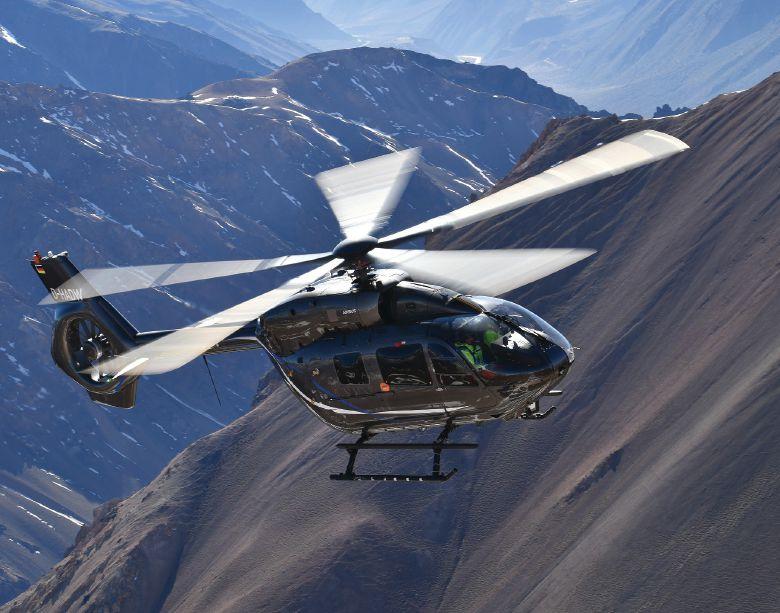

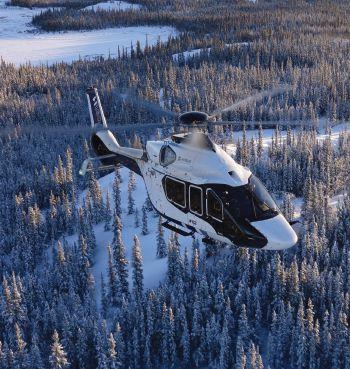
The five-bladed H145 during testing in the Andes. (Photo: Anthony Pecchi)


Perseverance on the East Coast in the face of tragedy
ova Scotia from April and into May went through one of the most-challenging four weeks in its history, framed by three tragedies that began on April 18 with the worst mass shooting in Canada’s history, which occurred in the midst of a global pandemic shutdown. A few days after Sub-Lieutenant Abbigail Cowbrough stood on the deck of HMCS Fredericton – deployed in the Mediterranean – playing Amazing Grace on her bagpipes as a tribute to the 22 mass-shooting victims, she would become the first of six military members identified as being killed in the April 29 crash of a Canadian Armed Forces CH-148 Cyclone helicopter.
The Cyclone, operating as Stalker 22, was attached to HMCS Fredericton as part of Standing NATO Maritime Group 2 under Operation REASSURANCE. At the time of the accident, Stalker 22 was conducting concurrent flight operations as the Canadian frigate was training with Italian and Turkish ships. The helicopter was operated by members of the Royal Canadian Air Force’s 423 Maritime Helicopter Squadron, which is part of 12 Wing Shearwater, based in Halifax Harbour, which also serves as home station for HMCS Fredericton.
The entire country would again mourn with Nova Scotians with the loss of Halifax-born Captain Jennifer Casey, who died on May 17 as a Canadian Forces Snowbirds jet crashed shortly after taking off from Kamloops Airport in British Columbia. At the time of the
years working in broadcast radio as a reporter, anchor and producer in both Halifax and Belleville, Ontario. Her first CAF assignment as a public affairs officer was at 8 Wing Trenton, described as the RCAF’s home of air mobility.
Casey spent the 2018 season with the CF-18 Demo Team, travelling across North America and the United Kingdom with the NORAD 60 jet. She then joined the Canadian Forces Snowbirds in November 2018. Although preliminary reports on the Snowbirds and Stalker 22 accidents were released by the Department of National Defence, both events were still under investigation at press time.
On May 27, a week after the Snowbirds accident, Canada’s Department of National Defence, located the crash site of the CH-148 Cyclone, approximately 220 nautical miles east of Catania, Sicily. A joint mission between the CAF and the United States Navy (USN) was conducted to find answers for why the accident happened and to bring home the remains of the missing fallen military members.
USN became involved because the search-and-recovery effort required its REMORA III remotely-operated vehicle (ROV) to dive to a depth of 3,143 metres, where it quickly located a large piece of the helicopter’s fuselage, before finding remains of the fallen. The debris field spanned approximately 260 by 230 metres.
At the time, Lieutenant-General Mike Rouleau, Commander Canadian Joint Operations Command, said, “We do not leave our fallen behind and recovering Stalker 22’s crew is of the utmost importance to all of us in the Canadian Armed Forces and the Department of National Defence.”
We do not leave our fallen behind and recovering Stalker 22’s crew is of the utmost importance to all of us in the Canadian Armed Forces. ‘‘ ’’
accident, the Snowbirds were taking part in a mission called Operation INSPIRATION, which began on the first weekend of May, flying across the country from east to west to lift the spirits of Canadians and to help recognize those doing their part to fight the spread of COVID-19.
Captain Casey joined the Canadian Armed Forces (CAF) in August 2014 as a direct entry officer. She previously spent several
The military members lost in the Cyclone accident include: Sub-Lieutenant Matthew Pyke, Naval Warfare Officer, originally from Truro, NS; Master Corporal Matthew Cousins, Airborne Electronic Sensor Operator; SubLieutenant Abbigail Cowbrough, a Maritime Systems Engineering Officer, originally from Toronto, ON; Captain Kevin Hagen, Pilot, originally from Nanaimo, BC; Captain Maxime Miron-Morin, Air Combat Systems Officer, originally from Trois-Rivières, QC; and Captain Brenden Ian MacDonald, Pilot, originally from New Glasgow, NS. | H



• Mechanical Specialties
• Drallim Aerospace (Cargo Aids)
• Bell Helicopter • Breeze-Eastern
Bristow Group Inc. and Era Group Inc. have completed their merger and the newly combined company will operate under the Bristow Group name. Headquartered in Houston, Texas, Bristow will continue to be a publicly traded company on the New York Stock Exchange – using the stock ticker “VTOL”. Back in midMay, Bristow and Era announced the leadership team for combined company.
“The combination brings long-overdue consolidation in the industry, better prepares us to navigate today’s market challenges, and ensures we remain the global leader in helicopter services with an outstanding culture focused on safety and providing excellent service to our valued customers,” said Chris Bradshaw,
president and CEO of Bristow. The company states the merger strengthens Bristow’s global position, with significant operations throughout the Americas, Nigeria, Norway, the United Kingdom and Australia for offshore aviation transportation and search-and-rescue.
Bristow now has a combined fleet of more than 300 aircraft, creating the world’s largest operator of S92, AW189 and AW139 model helicopters. The company owns more than 80 per cent of its combined fleet. The company states the merger also realizes an annualized saving of at least US$35 million through the elimination of redundant expenses and enhanced operational efficiencies. The company also expected to hold a combined cash balance of more than US$250 million at closing.

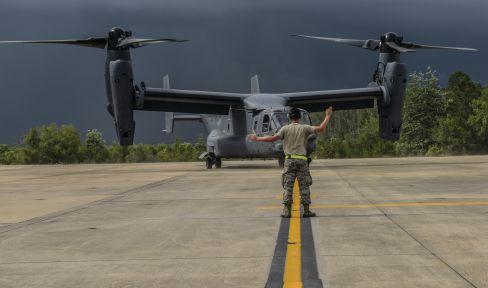
The Bell Boeing V-22 team recently delivered its 400th aircraft, a CV-22 for U.S. Air Force Special Operations Command. The first production V-22 was delivered on May 24, 1999, and today deliveries occur under the Multi-year Procurement III contract valued at US$5 billion. That contract runs through 2024 and includes variants for the U.S. Marines, Air Force and Navy, as well as the first international customer, Japan.
Bell Boeing explains the CV-22 variant of the aircraft primarily performs special operations missions, including infiltration, extraction and resupply. The Marine Corps variant, the MV-22B, provides transportation of personnel, supplies and equipment for combat assault, assault support, and fleet logistics. The Navy variant, the CMV-22B, is the replacement for the C-2A Greyhound for the carrier onboard delivery mission. The V-22 has been deployed in a variety of combat, special operations, and humanitarian roles since becoming operational in 2007. It has accumulated more than 500,000 flight hours.
Leonardo announced its AW109 Trekker light-twin-engine helicopter has been chosen to support Emergency Medical Service (EMS) operations from Rouen Hospital in Normandy, France. SAF Hélicoptères will operate the AW109 Trekker, with a customized EMS interior. It is expected be delivered by the end of 2020 from Leonardo’s Vergiate final assembly line in Italy.
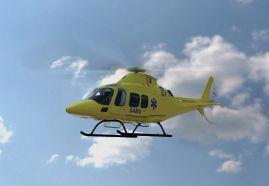
The contract award marks the entrance of this Leonardo light-twin helicopter model into the French civil helicopter market. Leonardo notes this follows the use of its AW109 Power and Grand aircraft for EMS missions in the country. It also expands the number of French commercial customers using Leonardo helicopters, including the AW109 series, AW169 and AW139 for a range of missions. SAF Hélicoptères is part of Groupe SAF, which in 2019 celebrated its 40th anniversary after being founded for mountain-rescue and population-protection missions. Groupe SAF today operates 65 helicopters and supply services addressing medical transports, lift and heavy-lift, mountain rescue aerial work, VIP transport and tourism flights, as well as maintenance and training.
Leonardo explains the AW109 Trekker maintains the AW109 Grand airframe, large cabin and performance while offering greater payload at a competitive cost. The helicopter includes large sliding doors on both sides to provide easy entry and exit for litters and medical attendants. The AW109 Trekker is the latest addition to Leonardo’s helicopter portfolio and the company’s first light-twin to offer skid landing gear.
The Montenegro Air Force signed a purchase agreement for two Bell 505 Jet Ranger X helicopters, which will be used to train its pilots. Under the agreement, Bell will also provide training for three pilots in France and eight technicians at the Bell Training Academy in Fort Worth, Texas.
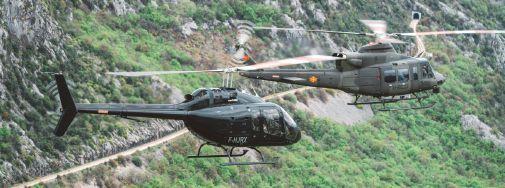
The two 505s will be manufactured by Bell Textron Canada at its facility in Mirabel, Quebec. The sale was facilitated by Canadian Commercial Corporation, which helps domestic exporters access foreign government procurement opportunities, through a government-to-government contract. The two helicopters will then be delivered out of a Bellowned service centre in Prague, Czech Republic. The 505, with an adaptable cabin design, integrated Garmin avionics suite and dual channel FADEC, is rated for a speed of 125 knots (232 km/h) and a useful load of 1,500 pounds (680 kg).
Lilium, which is developing a five-seat VTOL all-electric aircraft for regional air mobility, extended its most recent fund-
ing round to US$275 million. This increased the Munich-based company’s total investment received to date to more than US$375 million. The most recent funding round was significant based on a US$35 million investment from Baillie Gifford, given the Scottish asset management firm’s track record of investing in tech companies like Amazon, Tesla, Airbnb, Spotify and SpaceX.
Unveiled in May 2019, the
HELICOPTERS MAGAZINE
P.O. Box 530 105 Donly Drive South Simcoe ON N3Y 4N5
Tel.: 519-428-3471 Fax: 519-429-3094
Toll Free: 1-888-599-2228
Website: www.helicoptersmagazine.com
EDITOR JON ROBINSON email: jrobinson@annexbusinessmedia.com
MEDIA DESIGNER ALISON KEBA
CONTRIBUTING WRITERS
MASSIMO BERGAMINI, DAVID CARR, MARIO CYWINSKI, TRACEY FREDRICKSON, KATHY FOX, FRED JONES, KENDRA KINCADE, CARROLL MCCORMICK
NATIONAL ADVERTISING MANAGER MENA MIU email: mmiu@annexbusinessmedia.com 416-510-6749
ACCOUNT COORDINATOR BARB VOWLES email: bvowles@annexbusinessmedia.com 416-510-5103
CIRCULATION MANAGER JAY DOSHI email: jdoshi@annexbusinessmedia.com 416-442-5600 ext. 5124
GROUP PUBLISHER, VP SALES MARTIN MCANULTY email: mmcanulty@annexbusinessmedia.com
COO SCOTT JAMIESON email: sjamieson@annexbusinessmedia.com
RETURN UNDELIVERABLE CANADIAN ADDRESSES TO ANNEX PUBLISHING & PRINTING INC., 111 Gordon Baker Rd., Suite 400, Toronto ON M2H 3R1 email: subscribe@helicoptersmagazine.com
Published four times a year by Annex Publishing & Printing Inc. Printed in Canada ISSN 0227-3161
CIRCULATION Email: jdoshi@annexbusinessmedia.com Tel: 416-442-5600 ext. 5124 Fax: 416-510-6875 (main) 416-442-2191
Mail: c/o Circulation, 111 Gordon Baker Rd., Suite 400, Toronto, ON M2H 3R1
SUBSCRIPTION RATES
Canada - 1 year $31.50
funds plus applicable taxes www.helicoptersmagzine.com/subscribe Annex Privacy Officer
Privacy@annexbusinessmedia.com
Tel: 800-668-2384
Occasionally, Helicopters magazine will mail information on behalf of industry-related groups whose products and services we believe may be of interest to you. If you prefer not to receive this information, please contact our circulation department in any of the four ways listed above.
Lilium Jet features 36 all-electric engines mounted on its flaps. The company is building the aircraft to hold a single-charge range of 300 kms, which would take just one hour to travel, connecting not only urban and suburban areas, but also cities.
Targeting a market introduction for the aircraft as early as 2025, Lilium in October 2019 completed its first manufacturing facilities for the aircraft.
No part of the editorial content of this publication may be reprinted without the publisher’s written permission ©2020 Annex Publishing & Printing Inc. All rights reserved. Opinions expressed in this magazine are not necessarily those of the editor or the publisher. No liability is assumed for errors or omissions. All advertising is subject to the publisher’s approval. Such approval does not imply any endorsement of the products or services advertised. Publisher reserves the right to refuse advertising that does not meet the standards of the publication.
Helicopters Magazine is an associate member of the following Canadian aviation associations:

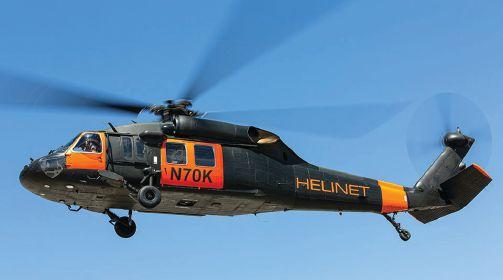
Helinet Aviation Services, based at Los Angeles’ Van Nuys Airport, signed contracts that will see the diverse operator add a UH-60 Black Hawk helicopter to California’s aerial firefighting fleet. The service expansion also signals the formalization of Helinet’s Utility Services division. The former U.S. Army Black Hawk helicopter is on standby at Van Nuys to assist with firefighting missions under call-when-needed contracts with the U.S. Forest Service and the California Department of Forestry and Fire Protection (CAL Fire). Through Helinet’s partnership with the Black Hawk’s two private owners, Brown Helicopter and Anduze Helicopter, the UH-60 is supported by a team of pilots, a fuel truck, back-up equipment and maintenance technicians. Helinet explains this aircraft is the first of several UH-60 Black Hawks it intends to operate in the aerial firefighting sector over
Helitrans of Norway took delivery of two Airbus H125 helicopters through a new electronic process under COVID-19 restrictions.
the next few years. The addition of this specialty-equipped firefighting Black Hawk augments Helinet’s existing UH-60 MovieHawk, which has been leveraged for motion-picture and television industry work over the past four years. When using Bambi PowerFill buckets, Helinet explains the UH-60 helicopter can drop up to 900 gallons of water and can be refilled in less than a minute. Helinet also notes the UH-60 Black Hawk
Bell Textron Inc. announced agreements with nine aerospace companies to form what it is calling Team Invictus. The companies, listed below, are producing the Bell 360 Invictus prototype submission as part of the U.S. Army’s Future Attack Reconnaissance Aircraft (FARA) program, which aims to procure a new rotorcraft platform. The Bell 360 Invictus program was unveiled in October 2019.
The Army’s FARA schedule
targets first flights from both Bell and Sikorsky for the fourth quarter of its fiscal 2022, with the goal of fielding aircraft in 2028. Sikorsky was the second company chosen to continue its development for the FARA program, which at one point also included bidders AVX Aircraft, Boeing and Karem Aircraft. Bell notes Team Invictus is applying digital design and manufacturing technologies, including maintenance as part of the design process. The corporate mem-
has the versatility to reach the low altitudes required for effective water delivery and to hold flames in check during the early stages of a fire. The Sikorsky UH-60 Black Hawk cruises at 160 knots and is capable of lifting up to 8,000 pounds of external cargo. Helinet’s callwhen-needed contracts cover Type 1 helicopters, which are the largest used on fires and must be uniquely equipped to meet federal specifications in the U.S.

Nine companies to be part of Bell’s Team Invictus prototype build. (Photo: Bell)
bers of Team Invictus working to deliver the 360 Invictus prototype, as described in part by Bell below, include: Astronics, Collins Aerospace, GE Aviation, ITT-Enidine, L3Harris, Parker Lord, Mecaer Aviation, MOOG, and TRU Simulation.
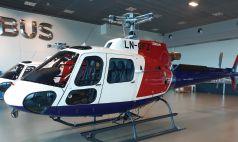
Helitrans of Trondheim, Norway, is the first customer to take delivery of new Airbus helicopters using the aircraft maker’s e-delivery process, which it devised to enable deliveries under COVID-19 health and safety restrictions. Airbus explains Helitrans formally accepted the latest two H125s into its fleet following a series of actions that allowed all the requirements of the normal process to be met without the need for physical meetings or travel.
The Airbus e-delivery system relies on the customer accepting flight-test and inspection findings conducted by authorized Airbus staff in place of their own employees who usually perform those tasks. Airbus explains key elements include an expanded test flight including the customer acceptance tests, a video inspection of the helicopter and loose object check, disinfection of all items, and the aircraft documentation verification. The summary information was presented via an online video conference with representatives of Airbus Helicopters, authorized dealer Østnes and Helitrans, which enabled the formal transfer of title to take place. The helicopters were then transported by road to Norway to be received by the customer at Trondheim.
Flightdocs is joining ATP to create one of the industry’s largest providers of cloud-based software for aircraft maintenance tracking, troubleshooting, recurring defect analysis, inventory management, and flight scheduling. With the addition of Flightdocs, ATP states it will now support 75,000 maintenance professionals across more than 7,500 customers in 137 countries. Founded in 2003, Flightdocs states it grew to become the second largest
provider of aircraft maintenance tracking and inventory management solutions within business aviation.
Founded more than 50 years ago, ATP provides aircraft technical publications and regulatory information, connecting more than 45,000 maintenance professionals to the OEM content and airworthiness directives. ATP’s software division provides repetitive defect and troubleshooting applications, focused on reducing operating costs, improving reliability, and supporting technical knowledge sharing. The Flightdocs platform will now leverage the technical publication libraries, regulatory content, and chronic defect analysis and troubleshooting software offered by ATP.
Drone Delivery Canada Corp., with the assistance of its sales agent Air Canada, entered into a three-month commercial agreement with DSV Air & Sea Inc. Canada, which is the Canadian arm of the global transport and logistics company DSV Panalpina A/S. Under this second agreement with DSV, Drone Delivery Canada (DDC) will deliver healthcare related cargo from DSV’s warehouse in Milton, Ontario, to local DSV customers.
DDC will deploy its Sparrow cargo drone and patented FLYTE system for the new contract, utilizing its cargo drop capability previously announced on June 10, 2020. At the destination, DDC states the Sparrow will hover at a lowered altitude, drop untethered cargo in a designated area shared by multiple DSV transactional customers, then return to DSV’s DroneSpot. The route is approximately 3.5 km.
Flights will be remotely monitored by DDC from its Operations Control Centre located in Vaughan, Ontario. DDC expects to begin operating under this new contract in the third quarter of 2020, with the potential of additional routes being added by the end of the year.
Japan’s National Police Agency (JNPA) ordered one new H225 and four H135 helicopters as part of its fleet modernization program. Currently operating 12 H135, four H155 and six AS365 helicopters, with one H215 and two H225 already on order, JNPA deploys its fleet for missions like law enforcement, personnel and VIP transport, goods transportation and disaster relief, as well as wide area support.
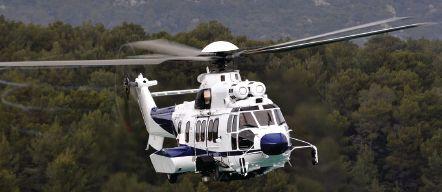
The five new helicopters will used to complement the agency’s law enforcement capabilities. The new order will take JNPA’s Airbus fleet
to 30. Airbus notes, that in Japan, H135 operators benefit from the training support offered by the aircraft manufacturer’s Kobe-based H135 full flight simulator centre. There are currently 94 H135 helicopters operating in Japan. Globally, Airbus has delivered more than 1,375 H135s to about 300 customers, clocking in over 5.4 million flight hours.
An 11-ton-category twin-turbine rotorcraft, the H225 is the latest member of Airbus Helicopters’ Super Puma family that has accumulated more than 5.7 million flight hours in all-weather conditions around the world.
Robinson Helicopter introduced optional impact-resistant windshields for its R22, R44, and R66 aircraft to provide greater protection from bird strikes. The company explains, that due to the lack of requirements surrounding small-category helicopters, it based the new design on FAA requirements governing largetransport-category helicopters. Robinson explains the new windshields are constructed of energy-absorbing polycarbonate, whereas standard windshields are made of acrylic, and installed with distinctive retention hardware. As well, a special hard coating applied to the
Robinson windshields provides protection from scratching and weather degradation. Testing of the windshield technology was conducted at the Southwest Research Institute in San Antonio, Texas, where a 2.2 lb (1 kg) bird, the FAA’s standard test weight, was used to simulate a bird strike. Tests demonstrate the R22’s windshield provides protection at impact speeds of up to 90 knots, while the R44 and R66 windshields provide protection at impact speeds of up to 100 knots. No special maintenance or inspections are required, explains Robinson, although a cabin cover is recommended for prolonged outdoor exposure. | H
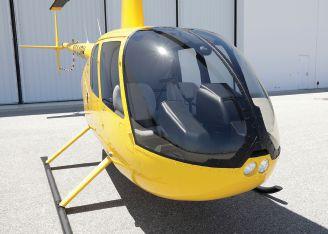
The new windshields are constructed of energy-absorbing polycarbonate, whereas standard windshields are made of acrylic.

n what seems like ages ago, in January, Ford Motor Company held a drive event for its all-new Super Duty pick-up truck in sunny Arizona. Much has changed since that time and, as a result, Ford held a virtual launch event for its most important vehicle, the all-new 2021 F-150 pick-up. Actor Denis Leary hosted the event, held at the former Willow Run plant in Michigan, which is significant for being where Ford build the B-24 Liberator bomber plane during the Second World War.
The Ford F-Series has been the top-selling pick-up truck in Canada for 54 years, and more recently the top-selling vehicle period for many years in both Canada and the U.S. Ford introduced the EcoBoost turbocharged engine to its line-up when V-8 powered trucks were the norm. More recently, Ford introduced an aluminum body on the F-150 at a time when steel was thought to be the only option. Now the 2021 model is taking things a step further, with the F-150 being available with a hybrid powertrain for the first time.
Playing off the EcoBoost name, the new hybrid model is named PowerBoost, and combines the 3.5 litre EcoBoost engine (mated to a 10-speed automatic transmission) with a 47 horsepower (35 kilowatt) electric motor, and a 1.5 kW-hr lithium-ion battery. The new hybrid model is capable of going an estimated 1,100 kilometres on one tank of fuel, and can tow at least 12,000 pounds (when properly equipped). The hybrid model is available on all trims, XL to Limited.
options are available: A 3.3L V-6, 2.7L EcoBoost V-6, 3.5L EcoBoost V-6, 3.0L Power Stroke V-6 diesel, and 5.0L V-8. Horsepower and torque number will be released at a later date. All models are mated to a 10-speed automatic transmission.
Many F-150 owners use their trucks to tow trailers, therefore Ford has introduced new trailer friendly features, such as trailer theft alert, which sends a message to a mobile device when the trailer is being unhooked and the truck is locked, trailer light check, which can check if trailer lights are working through FordPass app, and trailer reverse guidance, that shows various views along with steering wheel graphics of the trailer by using five cameras. Pro trailer backup assist is also available. Technology is top of mind for many today and a plethora of new additions to F-150 for 2021 highlight this. The new SYNC system can connect Apple CarPlay, Android Auto, and AppLink apps wirelessly. Two centre stack screen sizes are available for 2021, including the standard eight-inch and an available 12-inch. Ford has incorporated some unique features into the new truck. On the inside of the truck you can find lockable fold-flat rear underseat storage with dividers; available front seats that fold flat 180 degrees; and available flat surface in centre between seats, as the shifter folds down, and a flat cover folds over the centre. On the outside, zone lighting allows for individual exterior lights to be turned on/off; clamp pockets are built into the tailgate; as is a new work surface that includes a ruler, pencil holder, mobile phone holder, and cup holder; and the side of the tailgate now has cleats for tying down long items.
The hybrid model is capable of going 1,100 kilometres on one tank of fuel and can tow 12,000 pounds.
PowerBoost also comes with Pro Power Onboard, which turns the truck into a mobile generator, eliminating the need for a generator to be placed in the bed of the truck. The integrated on-board generator is available in three levels: A 2.4kW system with two 120V 20A outlets (with a run time of 85 hours on a full tank) is standard on the PowerBoost; a 7.2kW system with four 120V 20A outlets and a NEMA L6-20 240V 30A outlet (can run for 32 hours on a full tank) is available on PowerBoost; and a 2.0kW system with two 120V 20A outlets is available on 2.7L and 3.5L EcoBoost and 5.0L V-8 models.
In addition to the new PowerBoost powertrain, five other engine
Ten new driver-assist technologies are added for 2021, including Active Drive Assist, that allows hands-free driving on Canadian and United States divided highways, by having a camera facing the driver and making sure they are focusing on the road. Intersection Assist, detects oncoming traffic while driver is doing a left turn, and will apply brakes if needed. Active Park Assist 2 is also new. Ford has also made more safety features standard on all model from XL up.
With all the changes to the Ford F-150 for 2021, the company is poised to continue to be the number one selling pick-up truck for years to come. New F-150 models will be available in the fall. | H
Mario Cywinski is Editor of Machinery and Equipment MRO magazine and a member of the Automobile Journalists Association of Canada.

Drones, personal flying vehicles and air taxis may be part of our everyday life in the very near future. The introduction of these aerial craft into cities will require the built environment to change dramatically. Drones and other new aerial vehicles will require landing pads, charging points, and drone ports. They could usher in new styles of building, and lead to more sustainable design.
My research, presented in Drone Futures, explores new paradigms in Unmanned Aircraft Systems (UAS) in landscape and urban design. explores the impact of aerial vehicles on urban design, mapping out possible future trajectories. Already, civilian drones can vary widely in size and complexity. They can carry a range of items from high resolution cameras, delivery mechanisms and thermal image technology to speakers and scanners. In the public sector, drones are used in disaster response and by the fire service to tackle fires which could endanger firefighters.
During the coronavirus pandemic, drones have been used by the police to enforce lockdown. Drones normally used in agriculture have sprayed disinfectant over cities. In the UK, drone delivery trials are taking place to carry medical items to the Isle of Wight. Alongside drones, our future cities could also be populated by vertical takeoff and landing craft (VTOL), used as private vehicles and air taxis.
These vehicles are familiar to sci-fi fans – the late Syd Mead’s illustrations of the Spinner VTOL craft in the film Blade Runner captured the popular imagination, and the screens for the Spinners in Blade
pads, solar photovoltaic panels for energy efficiency, charging points for delivery drones, and landscaping to mitigate noise emissions.
A number of companies are already trialling drone delivery services. Existing buildings will need to be adapted to accommodate these new networks, and new design principles will have to be implemented in future ones. The architect Saúl Ajuria Fernández has developed a design for a delivery drone port hub. This drone port acts like a beehive where drones recharge and collect parcels for distribution. Architectural firm Humphreys & Partners’ Pier 2, a design for a modular apartment building of the future, includes a cantilevered drone port for delivery services.
The Norman Foster Foundation has designed a drone port for delivery of medical supplies and other items for rural communities in Rwanda. The structure is also intended to function as a space for the public to congregate, as well as to receive training in robotics. Drones may also help the urban environment become more sustainable. Researchers at the University of Stuttgart have developed a re-configurable architectural roof canopy system deployed by drones. By adjusting to follow the direction of the sun, the canopy provides shade and reduces reliance on ventilation systems.
Public concerns about VTOL use focused on the safety of those on the ground and noise emissions.
’’
Runner 2049 created by Territory Studio provided a careful design fiction of the experience of piloting these types of vehicle. Now, though, these flying vehicles are reality. A number of companies are developing eVTOL with multi-rotor jets.
These aircraft have the potential to change our cities. However, they need to be tested extensively in urban airspace. A study conducted by Airbus found that public concerns about VTOL use focused on the safety of those on the ground and noise emissions. The widespread adoption of drones and VTOL will lead to new architecture and infrastructure. Existing buildings will require adaptations: landing
Demand for air taxis and personal flying vehicles will develop where failures in other transport systems take place. The Airbus research found that of the cities surveyed, highest demand for VTOLs was in Los Angeles and Mexico City, urban areas famous for traffic pollution. To accommodate these aerial vehicles, urban space will need to transform to include landing pads, airport-like infrastructure and recharge points. Furthermore, this whole logistics system in lower airspace (below 500 ft), or what I term “hover space”, will need an urban traffic management system. One great example of how this hover space could work can be seen in a speculative project from design studio Superflux in their Drone Aviary project. A number of drones with different functions move around an urban area in a network, following different paths at varying heights.
We are at a critical period in urban history, faced by climatic breakdown and pandemic. Drones and aerial vehicles can be part of a profound rethink of the urban environment. | H
Paul Cureton is a drone pilot and Senior Lecturer in Design at ImaginationLancaster. This article was originally published by The Conversation.
BY JON ROBINSON
The annual Top 20 Under 40 program, presented by WINGS and HELICOPTERS, recognizes exceptional young leaders influencing the direction of Canadian aviation and aerospace. These leaders, who are all under the age of 40, were initially put forward through a nomination process lasting over several months.
The 20 honourees, presented here alphabetically, were then determined based on their demonstration of leadership, innovation, influence, achievement and dedication shown to their organization and the Canadian aviation industry.
Associate Director, Strategy and Growth, Greater Toronto Airports Authority Toronto, ON
Prabh Banga, age 34, was deeply involved with municipal public policy when an opportunity arose at Toronto Pearson. “I always had a desire to work in the sustainability field at a global level,” says Banga.
Moving over to Canada’s largest airport in 2015, she initially focused on regulation and compliance, before adding more complex sustainability integrations from operations and employees to passengers and the community. Banga then joined the team preparing Pearson’s 201737 Master Plan, delivering content and project management. This would evolve into an integral role in writing GTAA’s strategic plan, as a key member of the airport’s new Strategy and Growth department. Here, Banga increasingly worked with then GTAA CEO, Howard Eng, who was succeeded by Deborah Flint in mid-2019.
“Deborah is very much known as a leader in sustainability in the aviation world. She was integral in developing LAX’s sustainability plan… using [it] as a business driver,” says Banga. “I'm working closely with her now on thinking about what sustainability looks like in a post-COVID environment… and how do we use this as an opportunity to not only rebuild ourselves, but to also shape the aviation industry.”
Banga is involved with a range of international working groups like Airports Council International North America, Transportation
Research Board, Global Reporting Initiative Stakeholder Council, and the Sustainability Consortium. She also represents Toronto Pearson on the Airport Benchmarking Group, a collaboration of nine of the world’s largest airports focused on customer experience and emissions reduction.
ADAM BENINGER
Director, Operational Control Centre, Canadian North Ottawa, ON
Adam Beninger, age 36, was identified as an emerging leader within Canadian North and in 2018 the airline’s executive team gave him for a challenging new position as Director of Integration surrounding the merger between First Air and Canadian North. In this new role, Beninger would establish the structure, planning, communications and ongoing reporting to steer the organization through the merger, working directly with senior and executive management.
Beninger demonstrated what Canadian North CEO Chris Avery describes as exceptional competency as a meticulous project manager: “The merger and integration process is incredibly complex and Adam has done an exceptional job bringing all of the operational and corporate teams together.”

Beninger first joined Canadian North in 2003 in the cargo department at First Air’s Ottawa International (YOW) location. In 2011, he transitioned to the Operational Control Centre as a Duty Manager, ultimately being promoted to Chief Duty Manager three years later. In this role, Beninger was responsible for leading an essential operating unit and a team of eight duty managers. He is described as the change management leader in the OCC, improving processes and procedures for this 24/7/365 department. He is also a primary contributor to its emergency response planning team.
In 2017, Beninger was the recipient of a Nanuq Award which is an annual peer-driven internal program that recognizes four to five employees across the entire company. The benchmarks to receive the award focus on exceptional customer service skills, innovation and exceptional leadership to provide positive changes that improve safety and efficiency.
Check Pilot and Co-owner, Tintina Air
Whitehorse, YT
Ian Cosco, age 32, grew up in a family of pilots. After spending nine years as a professional freestyle skier, reaching the World Cup circuit, Cosco earned his Commercial Pilot's License in 2014 through BCIT’s Flight Operations program and in early 2015 became a First Officer on the Super King Air with Alkan Air out of Whitehorse. He would then also fly the BE20 for Carson Air before returning to Whitehorse to join Tintina Air in April 2017. Dave Sharp, who founded Tintina 10 years ago, was engaging a succession plan. Cosco invested in the company with two other pilots, Geoff Koots (page 20) and Freddie Feldman.
Tintina Air provides access to many remote locations throughout the Yukon, Northwest Territories, Northern BC and Alaska. Collectively, its pilots average more than 9,000 hours in a variety of aircraft – with Sharp holding more than 15,000 hours of primarily bush flying. “Dave started the idea that he could go into more aggressive strips [and] that has held true for Tintina,” says Cosco. “We go into some strips some other companies won’t, because we have the experience and different safety measures.”
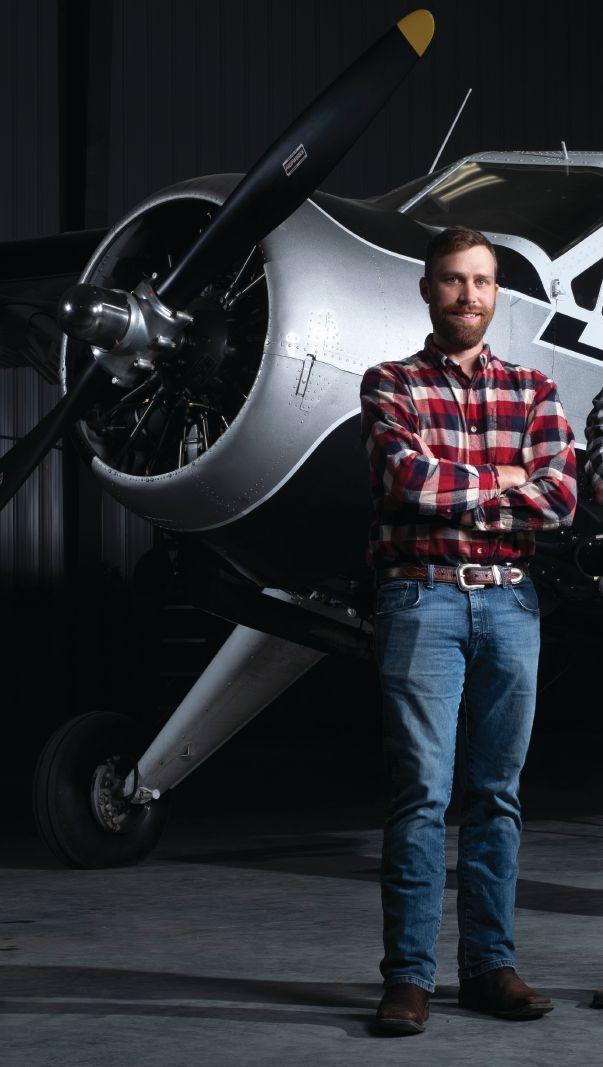
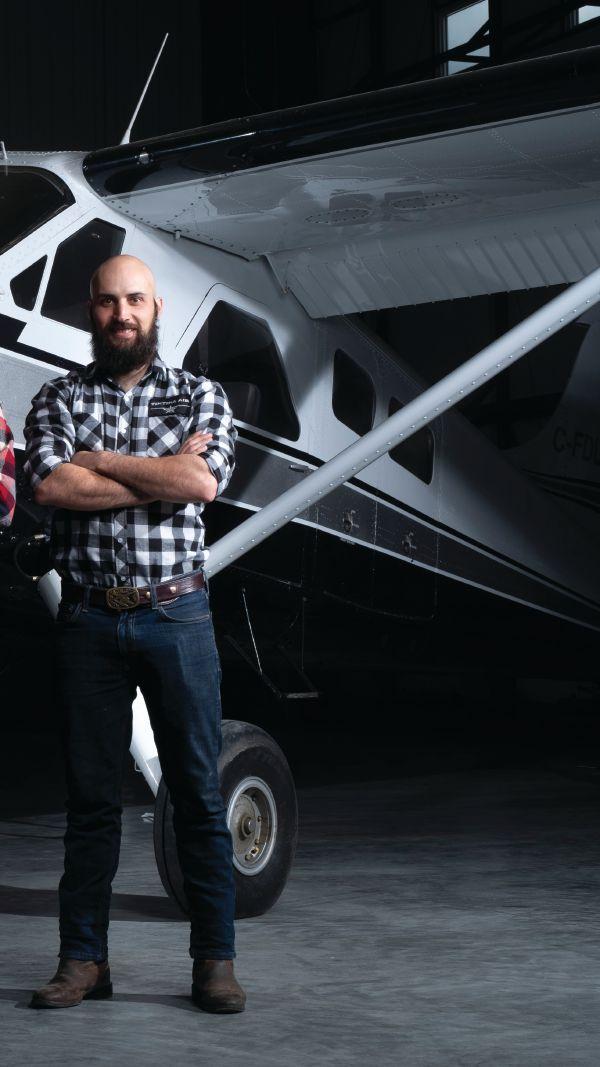
MAIN: Geoff Koots (left) and Ian Cosco of Tintina Air.
BELOW: Prabh Banga of GTAA; Adam Beninger of Canadian North.

Tintina now has eight aircraft in its fleet and the operation is focused on developing a new business model for single-pilot IFR and VFR bush flying. Tintina in 2018 completed the build of a 10,000-square-foot hangar to house its new AMO capabilities.
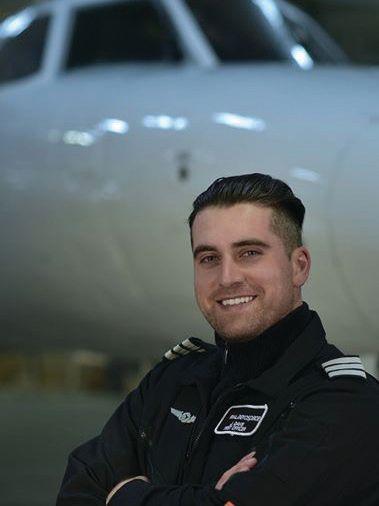
JONATHAN DAVIS
Instructor, Aerobatic and Tailwheel, Calgary Flying Club Springbank, AB
Jonny Davis, age 30, first flew in a helicopter at age eight growing up in Newfoundland and Labrador, but his passion for flight was fueled by his older brother, Ben, a fixedwing pilot. The younger Davis focused on becoming a Canadian Forces pilot, but with few new spots becoming available, he instead turned toward a military SAR Technician program that was accepting direct-entry applicants.
Davis in 2010 trained at Manitoba Emergency Services College, but the Canadian military changed plans with the bulk of its deployed members set to return from Afghanistan. Davis refocused on flight training, leveraging Harv’s Air in Manitoba to receive a mix of Private Pilot’s Licence and aerobatics training. He became qualified as an aerobatic flight instructor in mid-2015 and that same year began his Commercial Pilot’s License out of Gander Flight Training. His CPL was finished in Pitt Meadows, BC, while pursuing a Bachelor of Interdisciplinary Studies at Thompson Rivers University in Kamloops, focusing on Expedition Leadership.
“I have a dedication to learning… sharing knowledge is a gift when it's done the right,” says Davis, who has been involved in a number of aviation working groups,
including Transport Canada’s GA Flight Safety Campaign. He is now exploring the impact of human factors in aviation.

ADAM FALLWELL
Director, Flight Operations, AirSprint Calgary, AB
Adam Fallwell, age 37, was introduced to aviation at a young age due to his father’s career at Canadian Airlines. He began flying at age 14 and then attended Mount Royal College’s aviation program, graduating in 2003. After a few years of flight instructing, Fallwell was hired by as a PC-12 First Officer at AirSprint, which holds the largest fractional fleet of private aircraft in Canada. Fallwell, over the next 12 years at AirSprint, would climb the ranks of PC-12 Captain, Senior PC-12 Captain, Assistant Chief Pilot, Chief Pilot, and now Director, Flight Operations. He would play important roles in the launch of two new aircraft types in Canada, the Cessna CJ3+ and the Embraer Legacy 500/450. Fallwell worked with Transport Canada and Embraer in assuring aircraft Type Certificate approval, training program development, writing standard operating procedures, and line indoctrination programs for the new Legacy 500/450 aircraft.
In his current role, Fallwell oversees the flight department consisting of around 80 pilots; and liaisons with Transport Canada and the other departments within AirSprint. With AirSprint’s recent expansion into overseas operations, Fallwell continues to work with his team in developing new training and standards for these operations.
First Officer, Air Transat Toronto, ON Blake Haché, age 26, has been with Air Transat for 1 1/2 years, becoming one of the youngest North American pilots ever to fly an Airbus widebody. He was crossed trained as an Airbus 330/320 First Officer before being furloughed as a result of COVID-19. Without any family connections to aviation, Haché became an Air Cadet and received both a Glider Pilot Scholarship and
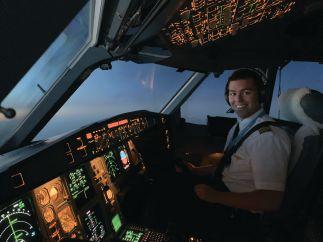
Private Pilot Scholarship with the program, finishing as a Warrant Officer 1st Class. He started at Air Transat at just 24 years of age on the Airbus 330, having already amassed some 3,000 hours.
Prior to Air Transat, Haché joined Bearskin Airlines as a First Officer on the Fairchild Metro. He was promoted to Captain at age 22 and spent two years with the Thunder Bay operation. Prior to Bearskin, Haché was a PC-12 First Officer for Air Bravo for one year. There, he flew medevac and charters, obtaining his ATPL at just 21 years of age. Prior to Air Bravo, Haché at age 20 began flying a GA-8 Airvan in Northern Ontario on a summer contract. He started his career as a Flight Instructor with Confederation College at 19 years of age after graduating from the college’s Aviation Flight Management Program.
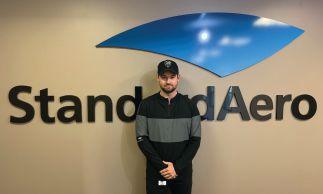
MPI Technician and Operations Lead Hand, StandardAero
Summerside, PE
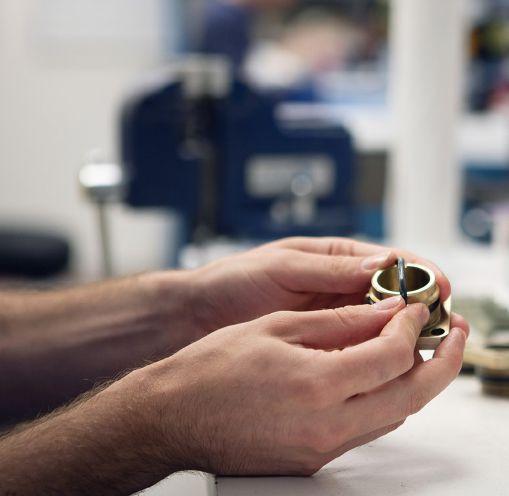
Jonathan Jessome, age 27, began working with Vector Aerospace in 2016 as a Parts Cleaner, employing chemicals and an abrasive blast process in accordance with Pratt & Whitney Canada manuals. He also signed on as one of the company’s First Responders. A year later, Vector was sold by owner Airbus to StandardAero. By this time, Jessome took on a new role as Accessories Technician, testing and inspecting fuel surge accumulators, oil to fuel heaters, and reduction gearbox rear housing PCU port repairs. Concurrently, Jessome was also tasked as a Training Associate to develop a program for Cleaning Technicians.
Jessome in January 2019 was appointed
to his current role, overseeing a group of employees and helping to lead daily operations. Earning his Magnetic Particle Inspection Level II certification, Jessome also performs magnetic particle inspections of PW100, PT6A and JT15D engines, complying with quality regulations and ensuring that applicable checks and tests are completed and documented. With his best-practices acumen, Jessome continues to take on challenges for the department’s training requirements, identifying gaps and creating new training materials.
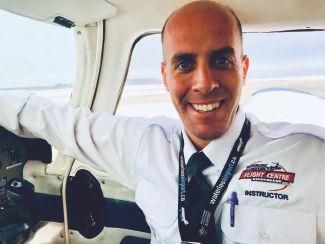
Flight Instructor and MIFR Team Lead, Waterloo-Wellington Flight Centre Waterloo, ON Steve Johns, age 35, started flying in 2004. A graduate of the Conestoga College/WaterlooWellington Flight Centre Aviation Program, Johns completed his Flight Instructor Rating and has now been working with the WaterlooWellington Flight Centre (WWFC) as a flight instructor for 14 years.
As a Class 2 instructor, with his vast experience, Johns’ duties with WWFC have included Ground School Instructor, Flight Instructor, Multi/IFR Team Lead, Supervisor, Company Check Pilot, Duty Pilot, Authorized Person, Radio Examiner, and Acting

CFI. As a flight instructor, he provides multi and IFR ground school and flight instruction to students enrolled in Conestoga College, University of Waterloo, and Integrated Airline Transport Pilot’s Licence programs. As a Multi/IFR Team Lead and Supervisor, he trains and supervises new instructors teaching in these departments He also ensures students in this phase of training meet program benchmarks, which includes conducting check rides for students.
Johns is currently working with Sunwing and Jazz pilots to design and implement a syllabus for WWFC’s new Multi-Crew Cooperation Course. He has also spent multiple summers in Northern Ontario as a Birddog Pilot, patrolling for wildfires, flying reconnaissance, and assisting waterbombers in suppressive air attacks.

Aviation Safety Manager, Barrick Gold Toronto, ON Prateek Konnur, age 27, enrolled Seneca’s Aviation Safety program in September 2011. As a student, Konnur served two internship placements at Porter Airlines, which included a team project to explore the threat of lasers to aviation. The work was recognized nationally by the industry based on compelling data focused on mitigating the risk.
Konnur graduated from Seneca with the highest academic standing in 2014 and was immediately offered a full-time position within Seneca’s School of Aviation Safety department. Over the next four years, he played an integral role toward elevating the safety and quality of Seneca’s flight training and producing the next generation of professional pilots. During this time, Konnur obtained his Commercial Pilot’s License and completed a Masters’ degree in Aviation Management with Griffith University via distance learning.
In September 2018, Konnur was hired by Barrick Gold’s corporate flight department as an Aviation Safety Analyst. To expand his professional development, he earned another postgraduate qualification in Leadership Communication from Harvard Extension School. Today, Konnur is responsible of overseeing all aspects of Barrick’s Safety Management Systems, working toward being qualified as a corporate pilot with Barrick to complement his managerial duties and fulfill a long-term career goal.
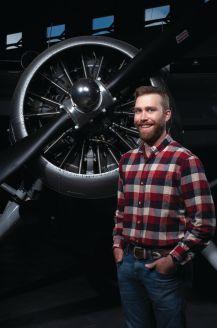
Chief Pilot and Co-owner, Tintina Air
Whitehorse, YT
Geoff Koots, age 31, found his passion for aviation after starting flying lessons in his last year of high school. After completing his primary flight licences, Koots moved from a small town just outside of Red Deer, Alberta, to take a ramp job in Fort Simpson, Northwest Territories, with Wolverine Air.
Koots returned next summer to fly a Cessna 206 for Wolverine. “It was a great place to learn with a lot of experienced people,” says Koots, who then had an opportunity to fly for Whitehorse Air Services. In the summer of 2012, Koots met Dave Sharp who was hauling fuel drums to his Beaver at Dawson City Airport. Koots by next Spring joined Tintina Air, which Sharp founded to provide charter access to most any airstrip in the region.
“The work that we do, and our fleet, is what drew me to Tintina Air,” says Koots. “When I first started here, we had two Beavers on wheels and that really caught my interest.” In 2017, Koots and Ian Cosco
invested in Tintina Air, along with pilot Freddie Feldman, with Sharp preparing to step away from the business.
Koots is rated to fly all eight of Tintina’s aircraft, which typically generate 80 to 85 per cent of the company’s annual revenue through the months of July to September. A lot of this flying is done for mining companies that need to access – and have supplies brought into – difficult locations.
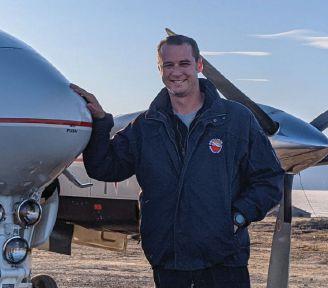
Training Captain, Keewatin Air Winnipeg, MB Matt Leis, age 28, comes from a family of pilots including his father who flew for the Canadian Forces. Earning his Glider License before a Driver’s Licence, Leis graduating from Carleton University in 2014 with a Bachelor’s degree in Political Science and Government. During this time, he also worked on earning his Commercial Pilot’s License with a group 1 multi-IFR from Ottawa Aviation, where he worked as a dispatcher.
Leis in 2018 took a pilot position Winnipeg-based Keewatin Air, primarily flying medevac patients out locations in Nunavut. “I never even thought of it honestly, to begin with, but then when I started talking with my bosses here, it seemed like a great gig, the rotation… and I was able to go First Officer straight on the King Air, which is multi-IFR turbine time for a guy fresh out of flight school,” says Leis, who quickly upgraded to Captain and then to Training Captain. He has now flown hundreds of medevac missions. “I love the flying… We get to fly to the top of the world sometimes.”
In addition to Winnipeg, Keewatin holds bases in Nunavut (Cambridge Bay, Igloolik, Iqaluit and Rankin Inlet), Manitoba (Churchill and Thompson), and the Northwest Territories (Yellowknife) as a lifeline to the north. “We get a lot of support from management… They have tons of
experience flying and they’ll give you their two cents and help you work out the problem. Our medical staff is also really excellent up here, too.” With the two-weeks-on, two-weeks-off schedule, Leis notes the closeness of the entire team, but points to his primary pillar over the past five years. “It’s [difficult] being away from home quite a bit… I couldn't have done any of this without the support of my wife. She’s been absolutely phenomenal.”
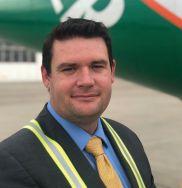
JAMES LINDSEY Vice President, Corporate Business Development,
Perimeter Aviation
Winnipeg, MB James Lindsey, age 38, found a passion for aviation early in life, enrolling in the aviation management program at Georgian College in Barrie, Ontario. While there, he acquired his Private Pilot’s Licence at Lake Simcoe Regional Airport. After school, he attended Loughborough University to complete a Master of Science Degree in Airport Planning and Management.
Lindsey then started his career as an aviation planner and, over the course of the next 12 years, established himself as one of Canada’s foremost aviation planners and airport technical experts. His background includes the creation of airport master plans both in Canada and internationally, instrument approach design, and he is just one of a handful of heliport exports in Canada. Lindsey eventually went on to lead WSP Canada’s aviation planning, engineering and architectural efforts as Director, Aviation.
In 2016, Lindsey moved to a subsidiary of Winnipeg Airports Authority as Director, Airports. In this role, he developed and rolled out a SMS-as-a-service model that is now offered at more than 30 airports in Canada. In January 2020, Lindsey moved to Perimeter Aviation as VP of Corporate Business Development, where he has helped to led the organization through the unprecedented impact of COVID-19. At Perimeter, Lindsey is also leveraging his background in planning for a new terminal expansion. He explains Perimeter’s engagement with the Northern communities it serves has really stood since he first joined the organization. “We understand and appreciate how these communities rely on us. We take that responsibility very seriously,” says Lindsey.
Commercial Charter Services
• Astar 350, Bell 407 and Bell 206
• Robinson R22, R44, R66
Campbell River Base
e-mail: info@ebhelicopters.com www.ebhelicopters.com
Gold River Base
Tel: 250-283-7616
Fax: 250-283-7555
Port Alberni Base
Tel: 250-720-8915
Fax: 250-720-3641

• AW 119KE
Approved Robinson Dealer
• New & Used helicopter sales
• Complete overhaul facility R22, R44 and R66
Avionics
• Helicopter and Fixed-wing complete avionic services

Airport Duty Officer, City of Abbotsford Abbotsford, BC
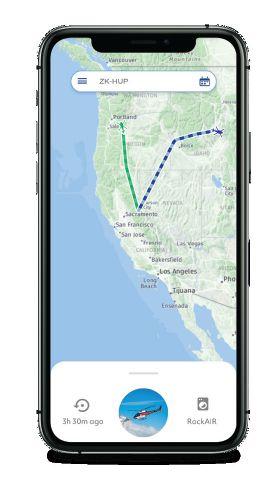
PATRICK O'BRIEN Manager, Flight Operations, Innotech-Execaire Aviation Group Dorval, QC

Mindi Mahil, age 30, has been in aviation since being hired by YVR as a screening officer for G4S and the Canadian Aviation Transportation Security Association in 2008. During this time, he attended SFU to obtain a Bachelor’s degree in Political Science. In 2014, he was hired as an Airport Service Delivery Manager for CATSA from 2014 to 2016.
Mahil then joined Abbotsford International Airport, YXX, as an Airport Technician. During his first year, Mahil took the team lead in fostering critical relationships with all airport partners and tenants. He was then promoted to Airport Duty Officer, overseeing the entire operation (terminal and airside) at the age of 28. As Duty Officer, Mahil played a vital role during YXX’s growth from 480,000 passengers in 2015 to 1 million in 2019.
Mahil works closely with Transport Canada to keep all of the airport’s documentation up to standards, which included rebuilding the Safety Management System, Emergency Response Plan and Security Plan. For the past three years, he has led the emergency operations planning and execution of the annual Abbotsford International Airshow, one of the country’s most important. Mahil was recently elected to the Abbotsford Youth Commission board.
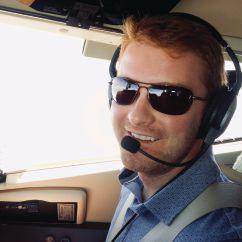
Patrick O’Brien, age 31, began his life in aviation at age 12 with the Air Cadets, where he earned both his Glider and Private Pilot’s Licences, aging out as Squadron Commander of 690 Lakeshore in Montreal. O’Brien then received a Bachelor of Science degree from Carleton University, where he also earned an MBA in International Business, while pursuing his Commercial Pilot’s Licence and multi-IFR at Cornwall Aviation.
In 2013, O’Brien joined Execaire, a division of IMP Group, where he currently manages the company’s Operational Control Center based out of the Pierre-Elliot Trudeau International Airport. It is one of the busiest 24/7 dispatch and flight following centres for business aviation in the country, managing more than 10,000 flight legs a year to every continent. “[We flew around] 585 city pairs last year, which is unbelievable if you compare that to an airline schedule… it’s a real delicate dance and that’s why I love it,” says O’Brien, who remains an avid aviator, earning type ratings on the B1900D, Learjet 60, Citation X and the Challenger 650. In his role as a pilot, he has amassed experience flying the B1900D in West Africa, the Learjet 60 around North America and the Citation X and the Challenger 650 in worldwide operations. O’Brien is also helping to lead Execaire’s technological development, rolling out an industry-first, full-service client iPhone app called FlyExecaire.
The newest version of the app will also centralize Execaire’s Fatigue Risk Management, Flight Risk Analysis and SMS.
O’Brien is also leading the implementation of paperless flight deck solutions with plans to convert the company’s 40-plus aircraft fleet to electronic journey logbooks in 2021. O’Brien is also leading Execaire’s CORSIA implementation, leveraging data analytics to formalize plans to minimize the operation’s carbon footprint.

WESLEY PHILLIPS
Manager, Operations and Avionics, Cascade Aerospace Abbotsford, BC
Wes Phillips, age 36, started his career as an Avionics Apprentice after graduating from BCIT as one of its top students in 2004, quickly gaining his AME license. Within three years at Cascade Aerospace, Phillips became Crew Lead for a team of technicians on multiple aircraft types, performing in a range of situations from heavy C-Check maintenance to complex modification programs.
Phillips was soon promoted to the Engineering Liaison Group as Cascade’s Avionics Representative in 2010 before another promotion to Avionics Supervisor. He oversaw approximately 80 Avionics Technicians, across multiple aircraft, project types and shifts, while also helping to recruit and develop apprentices. In a supervisor role on the Q400 multi-mission program, his organizational skills and influence among the functional departments enabled the successful execution of an exceptionally challenging modification – one of the most complex ever undertaken in Canada.
Phillips gained a LEAN Blackbelt certification and was instrumental in streamlining the Avionics wiring harness shop, reducing turn times to complete harness wiring kits for RCAF C-130 aircraft, before turning his attention to an AUP program for Mexico. He
was then promoted as Project Engineer to help streamline the process for a subsequent Avionics Upgrade Project. With is most recent promotion, Phillips is now responsible for overseeing all of Cascade’s avionics and modifications programs. On a current multi-line Avionics flight deck upgrade program, his team executed work on more than 50 aircraft, averaging 40 per cent shorter times than competing MROs, and with zero post check defects related to the modification.
ANDREW POPE
Vice President, Customer and Commercial, Canadian North Ottawa, ON Andrew Pope, age 32, leads Canadian North’s airport and cargo operations, marketing and sales, and community relations. His team plays a critical role in representing the airline in all 35 communities in which it operates.
An alumni of Queen’s University, where he completed a Bachelor of Engineering

STAY




degree, Pope joined Canadian North in 2015 as VP, Scheduled Services & Cargo; and as Senior Director, Strategic Analysis & Business Planning. With a background in productivity improvement and project management, Pope was promoted in 2018 to lead the process of merging First Air and Canadian North in terms of operations.
As Vice President, Integration, Pope provided leadership to the planning and postmerger integration efforts in 2018/2019 which resulted in many notable corporate achievements. This included championing the assembly of an integration plan by working with a large team of peers from all areas across the organization, as well as
building and managing a high-performing Integration Management Office team Pope also led the organization’s execution of post-merger integration with an aggressive list of deliverables achieved in the first four months, including a merged network and integrated flight schedule, migration to a single reservation system, rebranding and a harmonization of commercial processes.
Technician, StandardAero Summerside, PE
Matt Ross, age 35, initially joined Atlantic Turbines (a predecessor company of StandardAero) as a Process Assistant in 2007, working in the company’s Thermal Spray and Epoxy shop. In this role, Ross helped to develop a new hard masking process as part of a continuous improvement project. This reduced the time and consumables required to repair components, minimizing cost and TAT.
Two years later, Ross transitioned to the Paint Shop within what was by then Vector Aerospace. He was also able to cross-train in the company’s Plating Shop and on Vector’s CNC thermal spray and sub-assembly processes. In

2011, Ross earned the opportunity to crosstrain within Vector’s Mainline Inspection team, which he joined later that year. Since moving to Mainline Inspection, within what is now StandardAero, Ross has qualified for his Class 1 and Class 4 inspection stamps. He has trained on all sections of the PT6A, PW100 and JT15D engine lines, and spent months in the PW150A shop, before its relocation to Singapore.
“When you make a decision on a component in inspection, you need to be confident that it’s safe... at the end of the day, there’s always going to be somebody on the aircraft,” says Ross.


Montreal, QC
Elizabeth Tessier, age 38, discovered a passion for aviation in her youth attending air shows at St. Hubert Airport, YHU. At age 16, she landed a job at the airport’s cafeteria, even if it meant a long bus ride, to spend the summer learning about aircraft.
Tessier also found a passion for business development, which led her to pursue a
communications degree at Université du Québec à Montréal. Her career began leading the Montréal region for DO & CO, a hospitality and airline catering company, while also focusing on the early development of her three children. Tessier returned to work full time with a pharmaceutical lab before taking on a role to lead corporate accounts for operator Airmedic based at YHU. After two years with Airmedic, Tessier connected with Chrono Aviation, which operates one of the largest air charter fleets in Quebec.
Chrono wanted to develop an FBO at YHU, under a tight timeline based on a new transport contract with a mining company that would require the use of 737-200s. Tessier jumped at the opportunity to lead sales development for the new FBO, LUX Ground Services. “We worked really hard to open and the result is incredible... it gave me so much experience.”
After completion of the LUX FBO, Tessier moved to World Fuel, which she describes as an incredible opportunity to visit airports and FBOs across Eastern Canada. “Being part of the biggest network in the country, we’re not only selling fuel, we’re doing so much
more with software, customer service, contract fuel… There are so many different models everywhere and this is what makes it even more exciting,” she says. Overseeing Ontario, Quebec and all of the Atlantic provinces since late-2019, Tessier has already established new contracts with facilities in the Montreal area and in the competitive Atlantic region. “They’re our business partners… helping them grow is our core business,” says Tessier. “I truly enjoy working with our customers and take it personally when providing them with support.”
Duty
Winnipeg, MB
Sayge Tremblay, age 20, became involved in the aviation industry at age 14 through a unique program at Sturgeon Heights High School, which has been running for 18 years under the leadership of former bush pilot Joe Vodopivec. Tremblay then joined the Air Cadets, earning Glider and Private Pilot’s Licences.
Tremblay has been a Duty Officer with Vanguard Air Care for the past two years, serving as a key part of the team providing air

High winds, smoke, night skies. We fly where others can’t. Equipped with the most advanced aerial firefighting systems and equipment, FIREHAWK ® is the most capable and effective initial fire attack aircraft on the market. Visit lockheedmartin.com/firehawk
Lockheed Martin. Your Mission is Ours.®
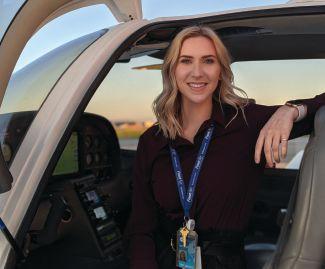
ambulance services for Manitoba. As the interface between the Provincial Centralized Dispatch System, medical teams and the operational Flight Crews, her duties are critical to the success of Vanguard’s medevac missions. Tremblay also works closely with the maintenance department at Fast Air and is relied upon to train new duty officers joining the team.
Outside of work, Tremblay is tremendously active in a number of organizations promoting the aviation industry. She a is member of the Board of the Manitoba Aviation Council, recently becoming its membership lead. She is also active with Canadian Women
in Aviation and the Manitoba 99s. She recently began her own program called CJL5 Millennials in Aviation to engage young professionals to expand their networks and career opportunities. Tremblay’s ultimate goal is to become a commercial pilot, which she is currently working toward.
Vice President, Operations, AirSprint Calgary, AB
Jared Williams, age 38, has amassed more than 6,000 hours of flight time and nine type ratings. At age of 18, he became one of Canada’s youngest ever flight instructors and by age 21 held an Airline Transport Pilot Licence, flying as a First Officer on various turboprops. At age 26, Williams became Chief Pilot of a regional airline where he was eventually promoted to VP of Operations at the age of 30.
In 2017, Williams joined AirSprint, Canada’s largest private aviation fractional ownership company, where he took on the role of Vice President of Safety and Quality. During this time, he implemented new practices and increased his knowledge through Safety Leadership Training Certification with both Wyvern and University of Southern

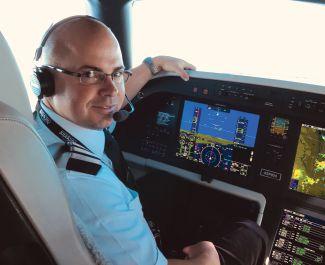
California. Williams also obtained a MOOC Aviation Accident Investigation Certificate through Embry Riddle University and trained with the Canadian Council for Aviation & Aerospace Quality Systems Auditor Certification. He became a Kenyon Team Member for Emergency, Accident and Disaster response in the aviation sector.
In his current role, Williams oversees a staff of more than 100 and all operational aspects of AirSprint, including operations control, flight operations, maintenance, training and standards, and owner services. Maintaining his passion for flight, Williams continues to fly for AirSprint and is currently an Embraer Legacy Captain. | H





KENDRA KINCADE
Ifell in love with helicopters just recently when I became involved with the 417 Helicopter Squadron in Cold Lake. One of the things that caught my attention was the amount of maintenance that goes into making sure the helicopters are safe to fly. So, I decided to explore this world of helicopter maintenance a little more and discovered a lady by the name of Crystalle Laamanen.
Laamanen is an Aircraft Maintenance Engineer (AME) who loves to share her passion for working on helicopters. She graduated from Canadore College’s aircraft maintenance program when she was just 19 years of age. After graduation, she was relocated to Yellowknife, NWT, to work as a helicopter mechanic. Following her true passion, she later moved to Nova Scotia to become an Instructor at NSCC where she is currently still instructing. Not able to quite leave the operational work behind, Laamanen also does AME contract work in northern Canada during the summer. I called Laamanen to find out more about her career as a helicopter AME.
What made you want to be a helicopter AME?
I don’t really have a glory story to answer this, to be honest. I took an interest in helicopters as most kids do. I grew up in the era of Matlock and The Beachcombers – both shows had helicopters in them. I can also remember talking to a guidance counselor in high school and trying to discuss what direction I should go after school. Her ideas sounded boring to me; and I had thought about being a helicopter paramedic and also a helicopter mechanic. When I brought that idea forward, I was met with “You do realize you are a girl, right.” My mind was made up!
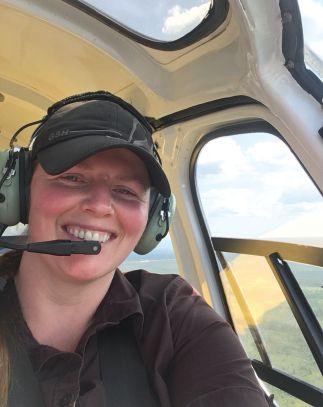
Why do you enjoy teaching?
I wanted to be a teacher to help the industry. I had a great mentor at Canadore. He was my helicopter teacher and a large part of why I was successful and why I chose the helicopter field work route in aviation. I wanted to inspire others as he had inspired me. My favourite part of teaching is watching the confidence change from day one through until graduation. There are usually 100 to 150 students in our school and I teach the helicopter modules along with Publications, Human Factors, and a few others.
Why does mentorship matter to you?
I think mentorship is crucial for attracting and keeping young people – men or women – in the industry. Many young adults do not currently come to the trades programs with the experience that would be beneficial for
them to succeed. They lack skills and, therefor, they lack confidence. If we can mentor them and help build their confidence, it will help them get closer to the comfort zone and they will be more likely to stay, improve and be great AMEs. I had many great mentors along the way and each one has helped me to grow, succeed; and given me the knowledge and confidence to carry on.
Do men and women learn differently?
There are many ways that people learn. What works for some may not necessarily work for others. The gender doesn’t necessarily determine that. Whether you are a visual (learn by seeing), auditory (learn by hearing), or kinesthetic (learn by doing) learner, it comes down to the individual and not the gender. As with anything, in order to learn it you need to have interest in the subject matter. It doesn’t matter who you are, how you learn, or if you are a man or a woman, if it doesn’t interest you, learning it will be very difficult.
Why are there not more female AMEs?
I have been asked this question many times in my 20-plus years in the industry and I think the answers often are too complicated. My answer is simple: It doesn’t matter if you are a man or a woman, you need to have an interest in that line of work to do the job. There are more women who are estheticians – why? Because more women are interested in that trade than men. It’s the same thing. I grew up on a farm and I am a tomboy at heart. There is nothing saying girls can’t be AMEs, it is just not a lifestyle that interests all females – or males.
Do you believe COVID will have a massive affect on the shortage of AMEs?
I believe the shortage is going to be worse as operations get back up and running throughout the industry. Some schools have slowed intakes and graduates will be less. Many Baby Boomers who were laid off, or were home due to COVID, will be retiring or taking early retirement and the shortage gap will widen. The industry needs more AMEs and the only way to fix that is to teach and train and graduate more students.
The problem is not going away anytime soon and I absolutely feel AME is still a smart career choice. Most programs are two years long and, by the time the newest intakes graduate, the industry will likely be ramping back up. Will it be at 100 per cent – No. Will it get there – Yes. When it does get there, will we undoubtedly need more people trained than ever before. | H
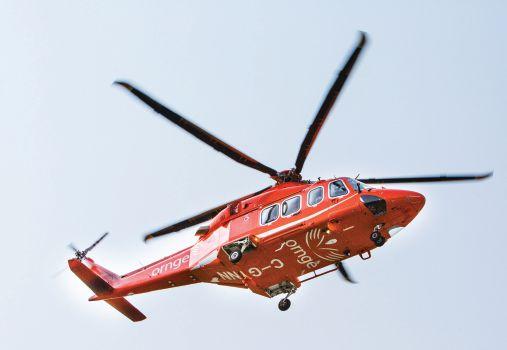
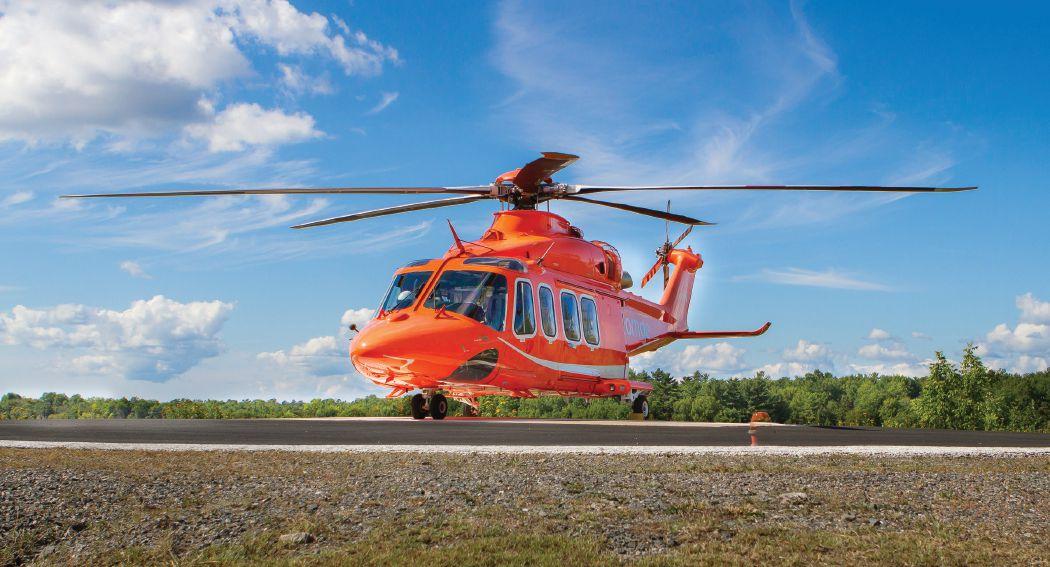
Twelve Leonardo AW139s, accessing helipads daily at regional hospitals throughout Canada’s most-populous province, are the most recognizable life-saving vehicles of Ornge’s air and land ambulance fleet. (Photo: Ornge)
BY HELEN HAXELL
During the spread of COVID-19, Leonardo has seen operators of its aircraft adapt, react and overcome the challenges posed by the pandemic across geographies.
Air ambulance operators Ornge and STARS have managed to continue conducting life-saving missions across Canada throughout the emergency. Both of these healthcare organizations shared with Leonardo how they are adapting to the new normal; and how the Leonardo AW139 helicopter has been supporting their patient transportation missions during these difficult times.
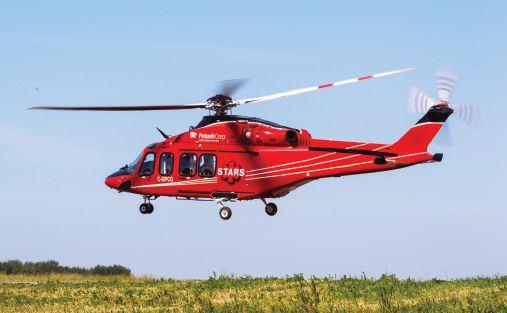
STARS serves Western Canada, catering to remote areas and communities, as well as highways and passenger transportation. Operating from six bases in the provinces of Alberta, Saskatchewan and Manitoba, the non-profit air ambulance operator in May was seeing around 12 per cent of its missions involve patients with influenza-like illnesses, which may include COVID-19.
“Our team has adapted very well to the challenges posed by COVID-19,” says Mike Haska, director of marketing and communications at STARS. “We have undertaken significant efforts to develop and train crews on enhanced procedures and secure supplies of critical equipment to protect our crews.”
Ornge also shared similar sentiments and emphasized how the great people behind these organizations are ensuring its business as usual despite these trying times. “Like every healthcare organization, the health and safety of Ornge staff and patients is our top priority,” says Joshua McNamara, public relations officer at Ornge. “Ornge staff have adapted to the pandemic and helped implement a number of innovative solutions including enhanced telemedicine support, an expanded Critical Care Land Ambulance program and more.”
Ornge provides a vital lifeline to the people of Ontario with a large, coordinated fleet of air and land vehicles operating out of 12 bases across the country’s most-populous province – with 13.4 million people, according to a 2016 census. Launched in 2005 as a non-profit and headquartered in Mississauga, the Ornge fleet includes 12 Leonardo AW139 helicopters, eight Pilatus Next Generation PC-12 airplanes and 13 Crestline Commander land ambulances.
Both operators are adhering to guidelines and directives from the provinces’ health authorities as well as Transport Canada regulations. The twin-engine AW139 is operated around the world and, in September 2019, the 1,000th helicopter of the type was delivered. The helicopter is well-suited as an EMS platform with a spacious and configurable cabin which can accommodate up to 15 people.
“The AW139 is a state-of-the-art aircraft allowing Ornge to access patients in remote locations. Additionally, the AW139 travels faster and allows our crews to transport patients safely due to state-of-the-art navigation and on-board technology,” says McNamara. “The range, speed, and versatility of the aircraft allow us to respond to a variety of types of patient transports, which is critical as we respond to COVID19 and non- COVID-19 patients across the province.”
Within the STARS fleet portfolio are three AW139s, alongside other aircraft, which enable the air ambulance operator to operate 24/7. “The AW139 is a modern and capable helicopter for EMS operations,” says Haska. “We continue to see steady mission volumes across our bases so ensuring we are ready to respond to patients in need, whether their medical circumstances involve COVID-19 or not, is crucial.”
The AW139 has been adapted to the challenges posed by the pandemic. Haska explains that not only are the crew more adept and learned with wearing Personal Protective Equipment (PPE), but they have adapted the helicopter’s configuration and equipment placement within each aircraft to suit the mission. “Select equipment or supplies [can] be off-loaded prior to responding to a COVID-19-positive or suspected patient to reduce the amount of decontamination required post-mission,” says Haska.
STARS’ air medical crews are extremely experienced and highly trained to deal with many types of infectious diseases, so the team’s existing processes were able to deal with the COVID-19 threat well. However, the frequency has increased by which the crews use PPE such as masks, gowns and gloves on all types of missions during this time. “This is to ensure our staff are not required to self-isolate in the event a patient is later found to have been COVID-19 positive,” says
“This helps us ensure we can maintain 24/7 operations across our bases.”
This approach is similar to Ornge which has enhanced its cleaning to high touch areas. “Leonardo has provided Ornge with instruction for approved methods of disinfection in the cockpit and cabin for the AW139,” says McNamara. “The company remains supportive and responsive and continues to provide seamless support for maintenance activities since the onset of COVD-19.
“We’re also grateful that, as the world faces a strain on the supply chain due to numerous requests and organisational shutdowns, Leonardo's supply chain remains uninterrupted and Ornge continues to receive the necessary parts to maintain our aircraft,” adds McNamara.
As operators like STARS and Ornge continue to meet the threat of COVID-19 head-on, Leonardo plays a key role in the work of the air ambulance services and the crucial role they play in undertaking lifesaving missions around the world, day after day. | H





















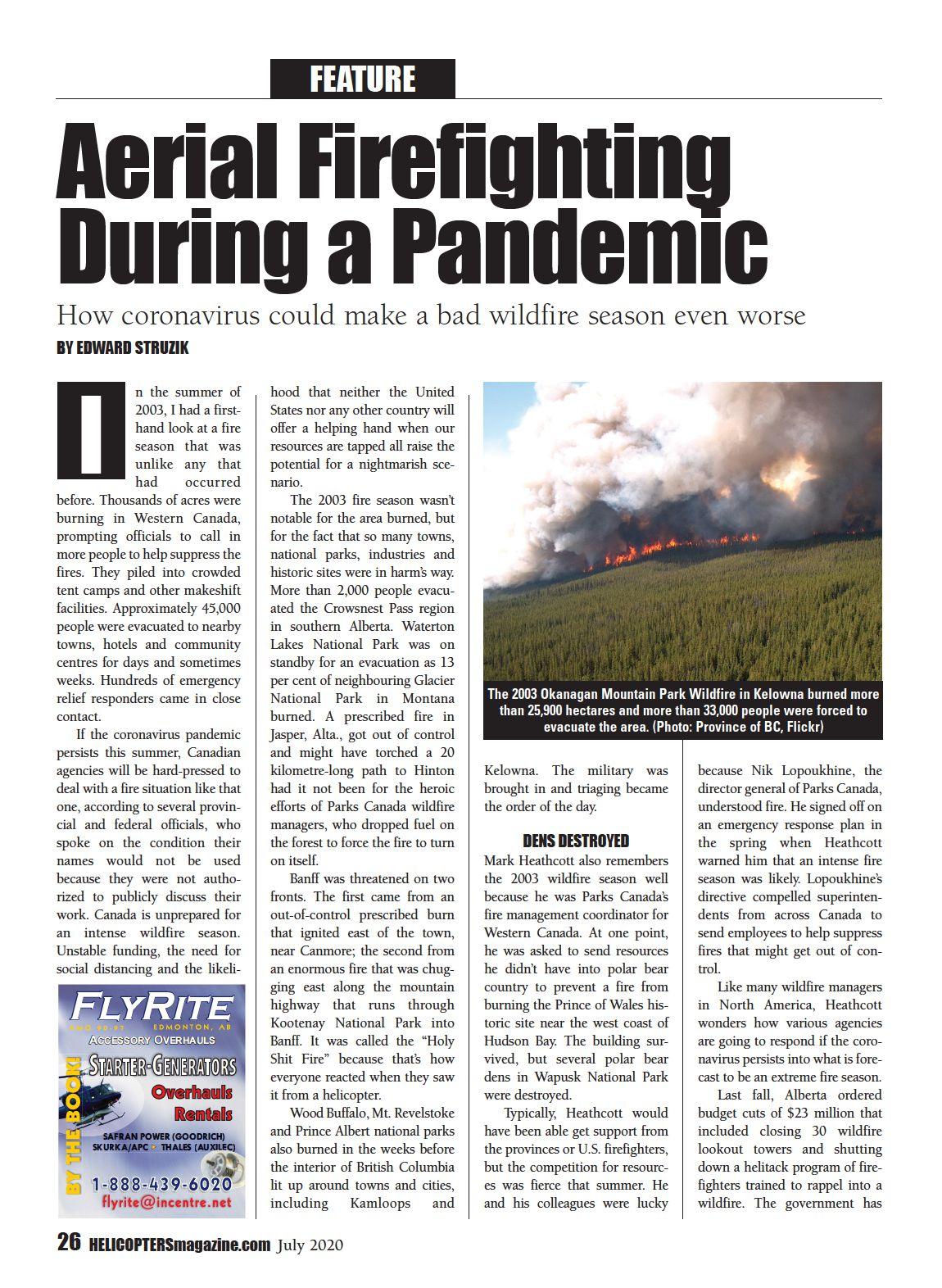
since found $5 million to hire 200 more firefighters.
In early April, Victoria Christiansen, who heads the U.S. Forest Service, laid out some broad guidelines, including a recommendation that firefighters be deployed in ways that minimize travel to other geographic areas. This is bound to result in our American friends denying or limiting our requests for help.
Christiansen is also recommending social distancing, which is almost impossible to do in the tent camps typically used by firefighters in Canada. She’s calling for more seasonal employees to be hired, without admitting that this may not be possible without additional financial support, and with a workforce that might be reluctant to take on an already dangerous job in which they could be quarantined for up to month before and after a fire.
Heathcott voiced the concern of others I talked to when he noted that it will difficult to mount the usual attack. “Perhaps the crews will be dispersed, ‘coyote camping’ in small units, spotted out along the fireline, walking in on the fires,” he said.
“This may occur anyway, as the Canadian fleet of helicopters may already be decimated with the loss of revenue from the early end to heli-skiing and the lack of winter seismic work.”
Even if contract helicopters remain available, he wonders, how does one social distance in the compact cabins and tents?
“We will see increased competition for the resource, and more fires may be lost at initial attack. With a reduction of air support, crews may be exposed to increased danger on the fireline and we may see increased work refusals, gun-shy fire managers and more let-burn situations.


Forget about inter-agency deployments, everyone will be hunkering down on their own turf.”
One of the many things the coronavirus pandemic has taught us is that being unprepared for emergencies comes at a high price. Dealing with the pandemic is a challenge because there is not enough robust data available to inform us how we can get back to some semblance of normalcy. That’s not the case with wildfire.
Since 2003, wildfires have been burning bigger, more often and in increasingly unpredictable ways. Projected increases in area burned suggest the current state of wildfire management in Canada will be unable to cope with increasing wildfire activity.
Restricting people from going into the backcountry, as some provinces are now doing, will help but not solve the problem. There is a vaccine of sorts that could minimize the risks wildfires pose to human health and safety. The latest blueprint for that comes courtesy of the Canadian Forest Service.
Instead of investing more, however, we have been spending less. Unless that changes, our response to a wildfire season like the one in 2003 may end up being as chaotic and scary as the ongoing response to the coronavirus pandemic. | H
Edward Struzik is Fellow, Queen's Institute for Energy and Environmental Policy, School of Policy Studies. He is the author of Firestorm, How Wildfire Will Shape Our Future. This article was originally published on The Conversation.


The new H145 reaches the summit of Aconcagua after 15 minutes of climbing.
The H160 includes a range of innovations like Helionix’ accrued pilot assistance, flight envelop protection, and sound-reducing Blue Edge blades. (Photo: Airbus) (Photo: Anthony Pecch, Airbus)
BY JON ROBINSON
The plans for a new five-bladed H145 unveiled by Airbus at last year’s Heli Expo was somewhat overshadowed by stunning advances in Urban Air Mobility and VTOL applications. Answering questions at a press conference, Airbus Helicopters CEO Bruno Even described the company’s heavy involvement in the Urban Air Mobility sector, most notably with the CityAirbus demonstrator, at the time just a few weeks away from its May 3, 2019, first flight – “We want to position Airbus Helicopters on this new business opportunity… to be ready to launch the program when we consider the market is ready.”
Airbus given its size and far-reaching portfolio is deeply involved in Urban Air Mobility platforms, researching all forms of electrifying aviation, but the company is
also clearly focused on the development of near-term, mission-ready innovation, most notably with the five-bladed H145 and newgeneration H160.
In a span of just 12 days, beginning on June 19, 2020, Airbus announced the Type Certificate approvals for both its new H145 variant and then the H160 from the European Union Aviation Safety Agency. Approvals from other major national certification bodies, such as the Federal Aviation Administration and Transport Canada, were expected to follow shortly – understanding the potential for irregular delays under the current COVID-19 business environment.
The first North American delivery of a medium twin-engine H160 is expected to take place in the U.S. later this year, while Airbus has also confirmed the first Canadian order – both to undisclosed customers. In developing and certifying the H160, Airbus
leveraged three prototypes that flew more than 1,500 hours. Designed over several years as a multi-role helicopter, the H160 includes a range of innovations, including safety features like Helionix’ accrued pilot assistance and flight envelop protection, as well as the aircraft’s visibly defining, soundreducing Blue Edge blades.
“This helicopter is full of innovations starting from vehicle, gearbox, avionics and one of the main breakthroughs in its technology is this blade,” explains Tomasz Krysinski, head of research and innovation for Airbus Helicopters, during a briefing at Heli Expo 2019. “It is really the way we want to generate value for the customer, to do things in the most cost-efficient way. And the value here is really everything that touches the environment and noise.
“Only with this shape of blades are we able to reduce at least three decibels. It has
divided the power of the noise by a factor of two,” adds Krysinski. “And it is a virtuous circle, because with this shape, not only do you improve the noise, but we also improve the performance with a reduction of vibrations.”
Beyond the new-generation advances found on the H160, Krysinski continues to describe how Airbus is strategically focused to generate value for customers through mission-ready innovations, what he refers to as developing techno-bricks that are validated on flagship products and ultimately integrated with the company’s legacy fleets to add immediate value in the field.
“I was very proud to see on the H145 two techno-bricks we developed on demonstrators… one was the Blue Copter helicopter,” says Krysinski, referring to the new five-bladed Bearingless Main Rotor (BMR) design and, secondly, the less talked about wireless Airborne Communication System (wACS), allowing for secure transmission of data generated by the helicopter in realtime, including in-flight.
“The five-bladed [H145] BMR is a completely new technology in terms of the shapes of the blade and in the dynamic tuning, so that we significantly improve the vibration of the aircraft. We improve the performance,” says Krysinski, noting how both techno-bricks reached the H145 in approximately two years. The new H145 BMR is based on work that started with a similar design integration on the H135 several years ago. In 2016, the concept for an H145 next-generation BMR was put on a DC135 test bed that was eventually flown later that year. The BMR technology was then flown on a 145 test bed in 2017.
“It was so convincing that later on we decided during a common memorandum of understanding with Kawasaki and Airbus in April 2018 to serialize this rotor and bring it to the market,” explains Alex Humpert, senior vice president and head of H145 programs with Airbus, during another press briefing to introduce the five-bladed H145. “It’s characterized by design simplicity and thrust efficiency.”
Humpert explains the H145 BMR technology immediately showed there was no time delay control experienced by pilots when maneuvering the test aircraft, which, with five blades, also presents a reduced aerodynamic excitation relative to the fourbladed H145. The new design is retrofittable for existing Fenestron-equipped H145s.
Humpert also points to how the fivebladed H145 features a shorter rotor diameter of 10.89 metres relative to the 11-metres of the four-bladed H145. This reduction
actually provides more thrust and allows for more mission flexibility in terms operating in cities or conducting rescues, for example. Another advantage of the five-bladed H145 is in the ability to fold its blades for storage. The new H145 is also lighter than its fourbladed predecessor, which helps to increase the useful load of the helicopter by 150 kilograms (330 pounds). The simplicity of the new BMR design will also ease maintenance operations, including the availability of an optional health monitoring system with usage monitoring (HUMS).
The new version of the Airbus H145 proved its might back in September 2019 when experimental test pilot Alexander Neuhaus and flight test engineer Antoine van Gent set its skids down on the Aconcagua, the highest mountain in the Southern Hemisphere, culminating at 6,962 metres (22,840 feet) in Argentina.
Airbus Helicopters states this is the first time that a twin-engine helicopter has landed at this altitude, as the company used the test to confirm the performance and flight envelope of the fived-bladed H145. Airbus explains the conditions for the Aconcagua mission were extreme, due to the atmo-
spheric conditions in the area and the winter season. The helicopter took off from Mendoza and flew 30 minutes to the foot of the Aconcagua where it began its ascension. After 15 minutes of climbing, dealing with gusts of up to 30 knots and ever-increasing low air density, the helicopter landed at 1:45 pm on the summit, at a temperature of -22ºC. Back in May 2005, Airbus Helicopters test pilot Didier Delsalle landed a singleengine H125 on Mount Everest.
Prior to this successful high-altitude test campaign in South America, another fivebladed H145 prototype performed several test campaigns in Spain at medium altitudes and in Finland for cold weather. Powered by two Safran Arriel 2E engines, the H145 is equipped with full authority digital engine control (FADEC) and the Helionix digital avionics suite.
The best-selling H145 family (BK117, EC145 and H145) has more than 1,350 helicopters in service and has clocked more than 5.5 million flight hours. Airbus states it has already received orders for the new fivebladed H145s in every industry segment and certification for the military variant is expected in 2021. | H


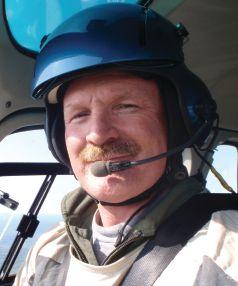
An opportunity to engage industry members who need interaction
COVID-19 is changing the way that we think about most everything from personal and social relationships to business interactions. Will the hospitality and tourism industry ever be the same in the age of social distancing?
Associations have long understood that members benefit significantly from networking with customers, suppliers and – in most industries – even their competitors. In an industry that understands that relationships thrive on personal interaction, the association business may very well be conducted in a very different way.
Unless we develop a vaccine, can we ever let our guard down when it comes to an infectious disease like coronavirus that can be asymptomatic but highly contagious – particularly in a global economy, where individuals are traveling internationally with regularity? As we well know, Canada can reduce its infection rate to near-zero, but all it takes is a large gathering of people, and one or two asymptomatic infected people, to spike the infection rate, again.
But will video conferencing ever become a substitute for face-to-face business connections? Will trade shows ever be the same with masks and elbow-bumping?
The worst part of the pandemic drove people to try video meetings and training. The technology certainly presents opportunities for group interaction or training for people in different locations, but will it every be a substitute for face-to-face interaction; and how enduring will the use of technology be in the new post-Coronavirus age? It is unlikely
regional circumstances allow. As much as some would like a return to the old ways of doing business, I believe that it is unlikely to occur.
The lasting effect of our Canadian experience with COVID-19 will be felt through four primary factors: 1) the availability of a vaccine; 2) public comfort levels with domestic and international travel; 3) the social distancing precautions that are in place in any given country or region; and 4) the ability of Canada to respond in a timely way to hotspot outbreaks of Coronavirus (or the next similar outbreak).
At least in the near-term, we can expect a gradual return to a hybrid convention model that will include the ability for remotely located individuals to participate at some level by video; and a modified trade show model that will reflect the four factors described above.
Ever-the-optimist, the pandemic experience will present some new opportunities as well. Associations are adapting to offer new leadership – helping members locate and navigate government programs; and offering their members new online learning opportunities. Associations will need to adapt to video conferencing and other online tools to engage and support their members.
Associations can use these new tools to leverage their government relations efforts more effectively. The new technology has the potential to offer a more efficient mechanism for stakeholders and their associations to interact with their regulators – that is, of course, if the government can ever embrace commonly used software that will make that possible. It also has the potential to return some of the face-to-face contact that we lost when the CARAC process was largely reduced to an administrative exchange of correspondence.
Associations will use new tools to help their members cope... better able to gauge and respond to their needs in meaningful ways.
that our businesses will ever return to the old normal. We have already seen how working-from-home will affect the use of conventional office space in our major cities. We know that major companies are re-examining the value of office space – they are leaving, without any expectation of coming back.
We know that Provincial and local governments have been allowed to set their own pace for a staged return to business, as local and

Associations will use more Webinars and new tools for member engagement, and find ways to help their members cope with the new normal. In short, associations will be better able to gauge and respond to the needs of their members, in meaningful ways.
As Charles Darwin is often quoted as saying, “It is not the strongest of the species that survives, nor the most intelligent that survives. It is the one that is most adaptable to change.” The same can be said of associations and we intend to use the challenging circumstances we are currently experiencing to propel HAC and its members to change to better suit the needs of the industry. | H
Fred Jones is president and CEO of the Helicopter Association of Canada.