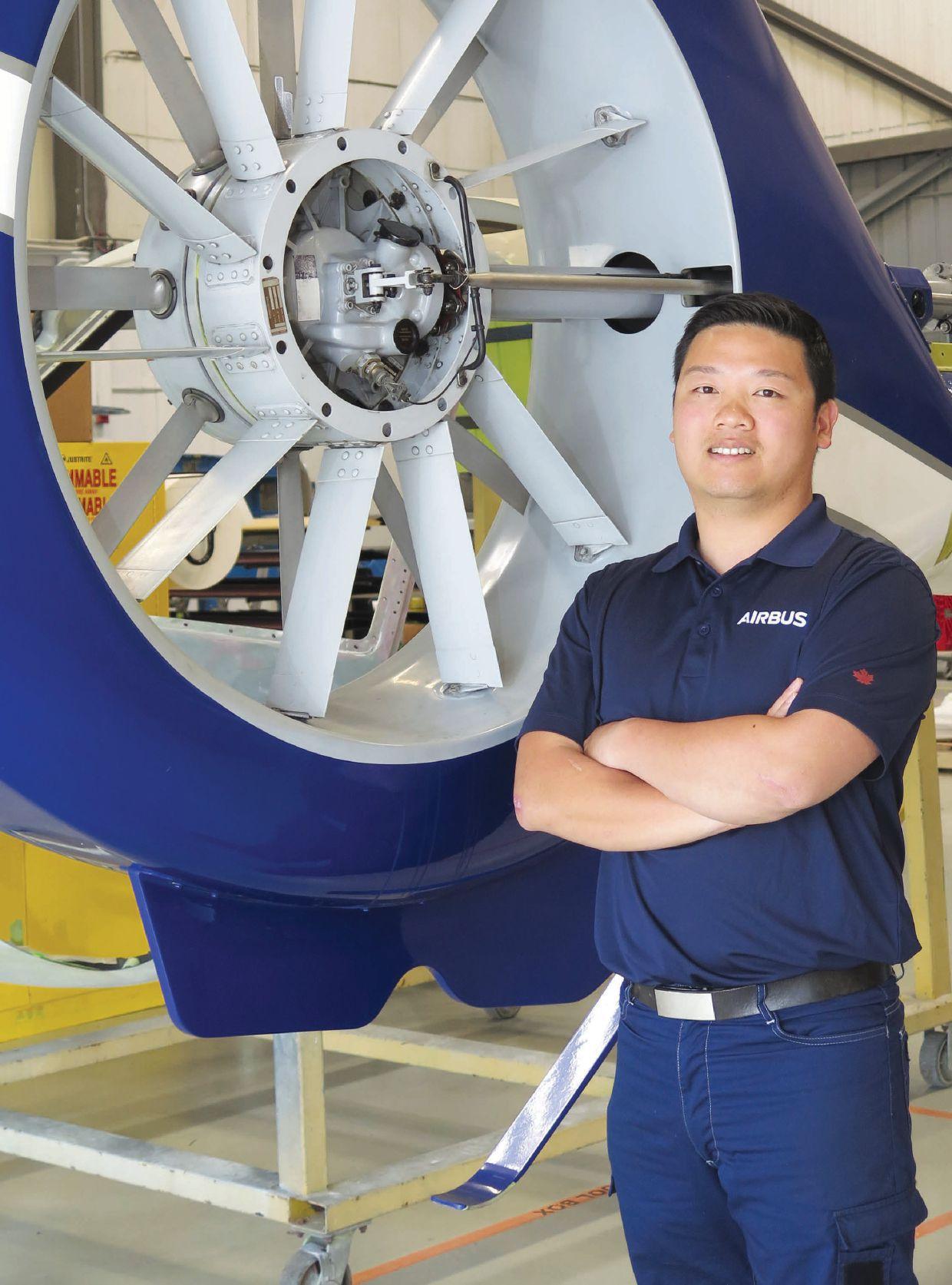
Norman Kwong, Dynamic Component Technician, Airbus Helicopters Canada
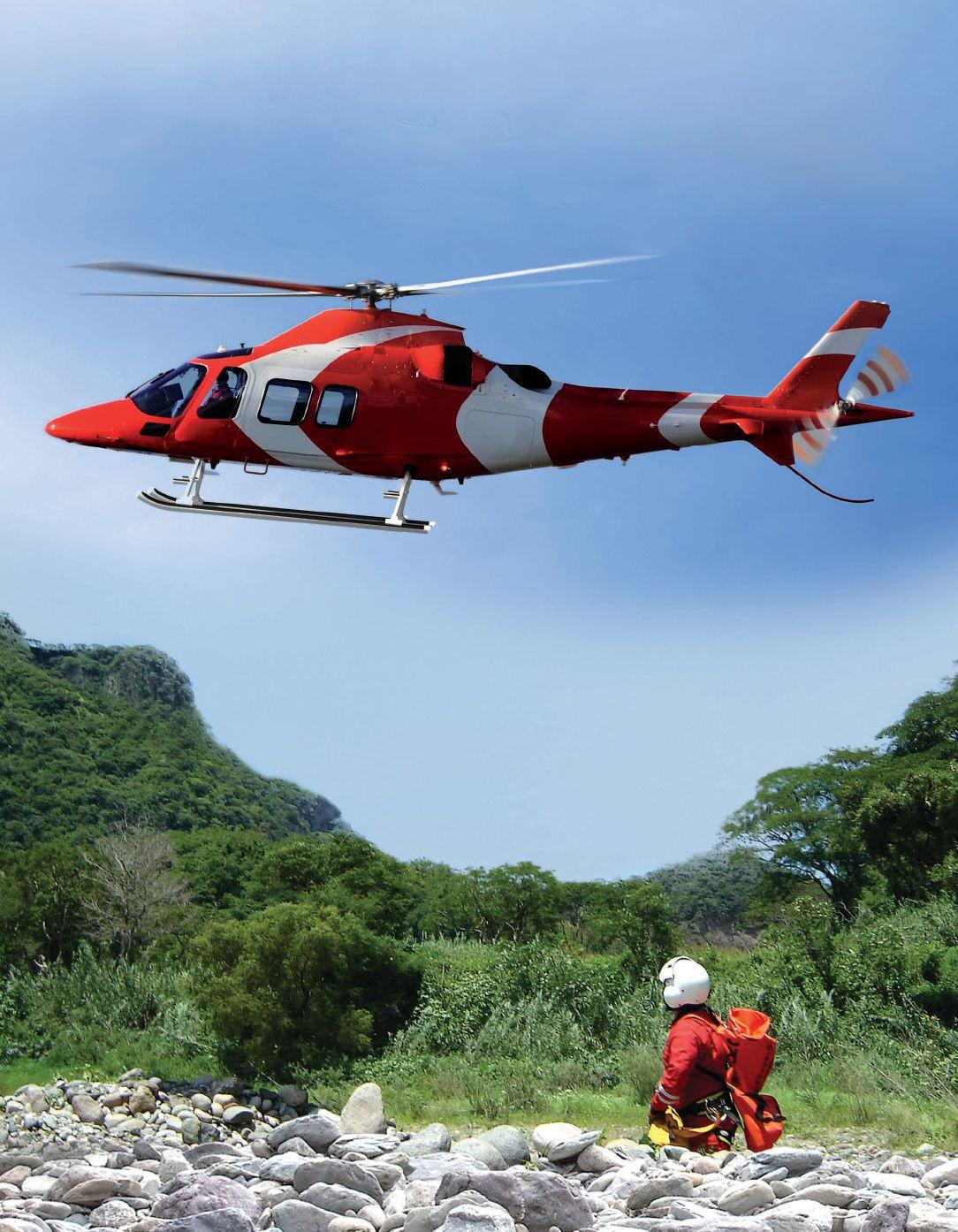
Leonardo Helicopters are renowned for performance, versatility and safety. The AW109 Trekker - an evolution of the proven AW109 platform - is the newest light twin, designed for demanding utility and aerial work operations.
Equipped with robust skid landing gear, a latest-generation glass cockpit and advanced avionics, the Trekker provides the excellent handling qualities, high productivity and operational flexibility you demand.
Inspired by the vision, curiosity and creativity of the great master inventorLeonardo is designing the technology of tomorrow.
B.C.’s
CMATT
NICHOLLS
is editor of Helicopters
anada boasts one of the safest regulatory operating environments in the world but there is plenty of room for improvement – and changes are necessary to ensure it remains safe and secure in the months and years ahead.
Two critical regulatory issues facing Transport Canada (TC) are the establishment of comprehensive regulations for the use of unmanned aerial vehicles and systems (UAVs, UASs) and the development of a concrete regulatory approach to pilot fatigue – a hot button issue being debated across the country by both pilot unions and aviation associations.
On the unmanned side, the challenge is creating the right environment to ensure economic growth, innovation and commercial development while mitigating risk and protecting public safety.
In 2016, there were 148 unmanned vehicle/airplane incidents nationwide and the number is on the rise. Near misses at large Canadian airports are becoming more prevalent and while TC has upped its marketing efforts and has erected NoDroneZone signage, more needs to be done.
Continuing to establish the safest regulatory environment possible
TC proposed new pilot fatigue regulations at the end of March but it failed to sufficiently deliver the goods for pilots representing a wide percentage of the industry – non-commercial, non-scheduled operators in locations where flying is simply a necessity. Many of these operations represent an important lifeline connecting communities that need search and rescue (SAR) services, medevac, firefighting and more. So, it’s not surprising, the new regulations were met with scorn from Canadian aviation associations for myriad reasons. A coalition of nine regional and national Canadian associations –fixed- and rotary-wing – is vehemently against a “one-size-fits-all” approach and contends it fails to reflect the majority of flying operations that take place on a daily basis.
The coalition also contends that TC has simply not considered the measured recommendations the Canada Transportation Act Review made last year that maintain the regulations should be redeveloped to fit different segments of the aviation community.
The coalition’s advised next step is necessary: stop forcing the issue, revisit the process and introduce more comprehensive, sensible fatigue legislation that more accurately reflects operational tendencies in this country – not dictated by large operators flying scheduled, commercial service.
In 2016, there were 148 unmanned vehicle/airplane incidents in Canada.
TC has established recreational drone regulations and penalties – to which not everyone is enamoured – and is actively developing a framework for all types of unmanned aircraft. The good news is federal Transport Minister Marc Garneau is cognizant of the threat and his team is being proactive in creating a workable unmanned framework.
In a recent interview with the Montreal Gazette, Garneau spoke candidly with reporter Bill Brownstein about his fear of a drone-aircraft type of accident, noting, “That’s the kind of nightmare scenario that keeps me at night . . . I don’t ever want to be in a position if something were to happen, having people immediately say, ‘Why didn’t you do something?’” Obviously, this is a man with a plan.
The pilot fatigue issue is in more of a slumber – a fatigue-inducing process that has been going on for years with no suitable solution in sight.
As outlined in the coalition’s “Safer Skies for All” open letter to Garneau: “Yes, this process has been going on for seven years and everyone is fatigued-with-fatigue . . . It is difficult to admit that we’ve been heading down the wrong path, but what’s done is done. If nothing changes, the result will be something that no one wants: one regulation that doesn’t seem to fit our diverse Canadian aviation needs . . . The unions do not have a monopoly on safety. Lives are precious to all of us and Canadians deserve to fly safe, with appropriate regulations in fatigue.”
It certainly seems a “reset” is necessary and will help prevent increased operational costs, fewer flights, logistical snafus and ultimately, not compromise an already safe operating environment – all situations that may occur under the proposed fatigue legislation.
Canada has always been a global leader in the development of its regulatory policies. TC must continue to take a careful, responsible approach with its regulatory development both in the unmanned space and with its pilot fatigue processes.
We need to get this right.



























Airbus Helicopters grabbed headlines at the 2017 Paris Air Show when it unveiled a sleek new, aerodynamic configuration of the high speed demonstrator it is developing as part of its Clean Sky 2 European research program.
The new helicopter, codenamed the Racer (which stands for rapid and cost-effective rotorcraft), will have a top cruise speed of more than 400 km/h, making it ideal for a number of missions where speed is of the essence – a costeffective, efficient option for operators in a variety of markets including business aviation, commercial air transport, public services, search and rescue (SAR), and medevac. The final assembly of the Racer is expected to start in 2019 with a first flight in 2020.
“Today we unveil a bold vision for the future of highspeed rotorcraft,” noted Guillaume Faury, Airbus Helicopters CEO. “This new project, pulling together the

skill and know-how of dozens of European partners through the Clean Sky initiative, aims to bring increased speed and range at the right cost, thanks to a simple, safe and proven aerodynamic formula. It will pave the way for new timesensitive services for 2030 and beyond, setting new benchmarks for high-speed helicopter transportation.”
Airbus design engineers are equipping the Racer with a special “box-wing” design that will provide lift in cruise mode while isolating passengers during ground operations from the “pusher” lateral rotors designed to generate thrust in forward flight. The Racer will be powered by RTM322 engines. It will also sport a hybrid metalliccomposite airframe combining
A number of helicopter OEMs descended upon CANSEC 2017 May31-June 2 with the hopes of getting some good news about the Royal Canadian Air Force’s CH-146 Griffon program. The versatile, aging Griffon is still chugging along, and according to Defence Minister Harjit Sajjan, it will be a while before a replacement for the Griffon program is announced. Instead, the Liberals are embarking on a “life extension”
low weight with cost efficiency. The conceptual design of the Racer is patterned after Airbus’ sleek X3 helicopter, which achieved a speed of 255 knots (472 km/h) on June 7, 2013. The Racer’s design includes a combination of a traditional main rotor and innovative lateral rotors to give it an efficient, aerodynamic signature.
program for the aircraft, which will see it get some much-needed upgrades. (For more, see “Heads of the Class,” pg. 25.)
Both Airbus Helicopters with its H145M and Leonardo Helicopters with its AW family of helicopters have a variety of hardware that could replace the Griffon, but it remains to be seen when and if the RCAF will commence a procurement to replace the Griffon.
Bell Helicopter had quite the week in mid-June as three undisclosed Canadian customers picked up their new 505 Jet Ranger Xs. The 505 short-light single is built at the Bell facility in Mirabel, Que. and is one of the key jewels in the Bell Helicopter family. The fiveseat short light single has a useful payload of 1,500 pounds and a cruise speed of 125 knots.
“It has been a particularly significant week for Bell Helicopter as three Bell 505 built in Canada take flight with these first Canadian customers,” Cynthia Garneau, president, Bell Helicopter Textron Canada Ltd said. “The Bell 505 symbolizes our return to the short-light-single market, a segment that Bell Helicopter defined 50 years ago. For Bell Helicopter, our employees and our customer base, there’s a lot to be excited about with this aircraft.”
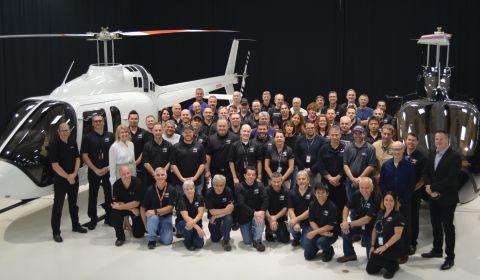
Bell Helicopter employees at the Mirabel, Que. site show off a newly completed 505 Jet Ranger X. (Photo courtesy of Bell Helicopter)
The 505 deliveries follow the type certification from Transport Canada Civil Aviation (TCCA) in December and Federal Aviation Administration (FAA) certification in June.
Vancouver International Airport (YVR) hosted the 44th annual Canada’s Aviation Hall Of Fame Dinner June 15 and it was a veritable who’s who of the Canadian aviation and aerospace industry.
Some 500 people filled the area between Gates 260 and 298 for the opportunity to meet and applaud this year’s inductees into Canada’s Aviation Hall Of Fame – Errol Boyd, Robert Deluce, Danny Sitnam, and Rogers Smith.
The Belt of Orion Award for Excellence was also accepted by Lt. Col (ret) Fern Villeneuve on behalf of the RCAF Golden Hawks aerobatic team.
Just after dinner, a special video tribute highlighted some of the many accomplishments of this year’s award nominees:
• Daniel Sitnam, founder of Helijet Airways and Pacific Heliport Services. In 1986 Daniel established Helijet with one helicopter and 14
employees. Today, Helijet is the world’s largest scheduled helicopter airline, serving southwestern B.C. and Vancouver Island and has flown more than 2.2 million passengers.
• James Erroll Boyd James went overseas with the Canadian Army in the First World War, but was able to transfer to the Royal Naval Air Service. He was initially tasked with intercepting Zepplins over southeast England, he was eventually posted to France. Shot down, he landed in neutral Holland where he was interred for the duration of the war. After the war, he pursued several non-flying paths, before becoming the first Canadian to fly the Atlantic in 1930. He flew for Pan American during the 1930s and then after war broke out in Europe, he recruited American pilots to come to Canada before
HELICOPTERS MAGAZINE P.O. Box 530
105 Donly Drive South Simcoe ON N3Y 4N5
Tel.: 519-428-3471 Fax: 519-429-3094
Toll Free: 1-888-599-2228
Website: www.helicoptersmagazine.com
EDITOR MATT NICHOLLS email: mnicholls@annexweb.com 416-725-5637
MEDIA DESIGNER BROOKE SHAW
CONTRIBUTING WRITERS
RICK ADAMS, DAVID CARR, BRIAN DUNN, PAUL DIXON, WALTER HENEGHAN, FRED JONES, CARROLL MCCORMICK, COREY TAYLOR
NATIONAL ADVERTISING MANAGER MENA MIU email: mmiu@annexweb.com 416-510-6749
ACCOUNT MANAGER KORY PEARN email: kpearn@annexweb.com 519-902-8574
ACCOUNT COORDINATOR STEPHANIE DEFIELDS email: sdefields@annexweb.com 1-888-599-2228 ext. 257
GROUP PUBLISHER MARTIN MCANULTY email: mmcanulty@annexweb.com
COO TED MARKLE EMAIL: tmarkle@annexweb.com
PRESIDENT & CEO Mike Fredericks
America entered the war.
• Porter Airlines president and CEO Robert Deluce. An active pilot, he has held management positions at a number of airlines White River Air Service, norOntair, Austin Airways, Air Creebec, Air Manitoba, Canada 3000 and currently, Porter Airlines which has grown since its inception in 2006 to become a major commercial carrier in Central and Eastern Canada and down into the U.S. Robert joins his father Stanley Deluce who was inducted into the CAHG in 2007.
• Rogers Eben Smith first flew with the RCAF before moving to the National Research Council as a test pilot. From there, he moved to NASA where he flew many aircraft, including the SR-71 Blackbird, while concurrently flying F-16s with the US Air National Guard.
• The Belt Of Orion Award for Excellence was awarded to the RCAF Golden Hawks, the team that set the bar for all those who have followed.
RETURN UNDELIVERABLE CANADIAN ADDRESSES TO ANNEX PUBLISHING & PRINTING INC., P.O. BOX 530, SIMCOE, ON N3Y 4N5 CANADA. email: subscribe@helicoptersmagazine.com
Published five times a year by Annex Publishing & Printing Inc.
Printed in Canada ISSN 0227-3161
CIRCULATION Email:apotal@annexbizmedia.com Tel: 416-510-5113
Mail: c/o Circulation, 80 Valleybrook Dr. Toronto, ON M3B 2S9
SUBSCRIPTION RATES
Canada - 1 year $29.95
USA- 1 year $54.50
Foreign - 1 year 60.00 plus applicable taxes
www.helicoptersmagzine.com/subscribe
Occasionally, Helicopters magazine will mail information on behalf of industry-related groups whose products and services we believe may be of interest to you. If you prefer not to receive this information, please contact our circulation department in any of the four ways listed above.
No part of the editorial content of this publication may be reprinted without the publisher’s written permission ©2017 Annex Publishing & Printing Inc. All rights reserved. Opinions expressed in this magazine are not necessarily those of the editor or the publisher. No liability is assumed for errors or omissions. All advertising is subject to the publisher’s approval. Such approval does not imply any endorsement of the products or services advertised. Publisher reserves the right to refuse advertising that does not meet the standards of the publication.
Helicopters Magazine is an associate member of the following Canadian aviation associations:
Two years ago, in the wake of the mass murder/suicide of 150 passengers and crew on board Germanwings 7525, I wrote about the importance of looking out for our fellow pilots’ mental well being. I pleaded that the rush to regulate in the wake of the disaster not be done in haste, lest pilots with mental illness are driven underground, stop seeking help, and further put the travelling public at risk.
Earlier this spring, the U.S. Congress enabled legislation enacting Basic Med for the general aviation community, which came into effect, in the U.S. only, for GA pilots operating aircraft with less than seven seats and under 6,000 pounds maximum gross weight. Arguments were made, successfully, that with less than one per cent of all GA accidents resulting from a medical event, that the burden and cost of a regular medical exam outweighed the benefits.
I am not intending to re-litigate this matter but the development led me into a recent conversation about what is done in the Canadian helicopter industry regarding aircrew medicals. A question was posed as to whether or not companies should take a more proactive role in facilitating the medical exams of their pilots.
Now, I am certain many of you will squawk about what I am about to write, about the intrusion into our personal lives, about the costs associated, etc., but hear me out. I previously wrote, and continue to be aware about, the practice that many pilots use of having a favourite doctor for their aircrew medical, separate from their personal or fam-
exams are done based on international medical standards for aviation. Physicians apply directly to Transport Canada and are interviewed by a Regional Aviation Medical Officer before appointment.”
There is a training program and a renewal process every four years. I do not know how often they are audited or how continuing standards of professional conduct are maintained. But I have been engaged in many anecdotal conversations about doctor shopping and standards for these medicals that run the gamut of, “Hello, how are you?” to pushups, burpees, step tests and the like! The point is, among the nearly 1,000 approved CAMEs, there is a divergence in the standard. This divergence is not good for aviation in general, and definitely not good for commercial operations.
The solution, however, is quite simple. All commercial operators should mandate that the regular aviation medicals required of their pilots be completed with CAMEs selected, vetted and approved by the employer. I am also advocating that since the employer is mandating which examiner is to be used, then the employer must also pay for these exams.
I am not suggesting that these exam results be shared with the employer. Privacy laws in Canada protect the doctor-patient relationship and Transport Canada’s rules are clear about when a doctor must report to the regulator. My position is simply that as a reasonable control against “doctor shopping” and as a sign of due diligence on the part of the operator, mandating which doctor or medical organization is to be used is actually a best practice.
“ This divergence is not good for aviation in general and definitely not good for commercial operations. ‘‘
ily physicians.
And the reasons are simple – going for a medical is the one day where we may lose our right to work, and lose our means of employment. However, if companies are truly interested in ensuring that their employees are fit for duty and fully compliant with the aviation medical standards, then they should take control of the process.
Transport Canada hosts on its web site a full listing of all doctors certified to sign off on aviation medicals. It reads: “The Civil Aviation Medicine Branch of Transport Canada appoints and employs doctors who check aviation personnel for medical conditions. These medical
Furthermore, regular medical exams should be mandated for aircraft maintenance engineers as well. Our AMEs are a critical piece of the puzzle, without whom we could not fly, and whose work is the epitome of “safety critical” activities. Maintenance errors can have catastrophic results and we all deserve to be assured that every step is taken to minimize risk to the travelling public. Therefore, having the employer step up to enact what I propose is not a big leap forward.
Doctors vow under Hippocrates to “Do no Harm.” Let’s join them.
Walter Heneghan is an experienced and well-travelled pilot who has served as the top safety professional at Canadian Helicopters and Summit Aviation. He is currently working with CHC Helicopter in Kazakhstan as an SMS development specialist. He is a regular contributor to Helicopters and Wings magazines.
PAUL DIXON
Shakespeare wrote about a winter of discontent more than 500 years ago. Well, we’ve certainly had our winter of discontent, though while the Bard’s seasonal woes were followed by a “glorious summer,” Canadians will have to wait and see how ours play out.
The irony is that many regions of the country have seemingly gone straight from winter to summer with only the briefest pause at springtime. I was chatting with Brad Fandrich at Valley Helicopters recently, and his take on current environmental conditions is that “the new normal is, there is no normal.”
Weather forecasting on the West Coast in particular is a matter of trying to gauge the constant tug-of-war between the warm, moist air coming off the Pacific and the dry air infiltrating down through the mountain passes. With the performance of the jet stream through the past winter, we’ve seen storms across the country in record numbers.
It’s one thing to know what the weather will be tomorrow or next week and make sound business decisions in the present tense, but businesses that exist primarily to provide services to other companies, need to understand what today’s clients will be doing five, 10 or even 20 years in the future. So, how will the weather, 20 years in the future, affect your key customers?
The Pacific Climate Impacts Consortium is part of the University of Victoria and has published reports outlining the effects of rising temperatures in the various regions of B.C. You may not live in B.C.,
Operators
your business in the vulnerable zone?
• Increasing loss of glaciers will mean less cold water making its way into river systems, which will place additional stress on salmon stocks, which are particularly sensitive to water temperature. If any part of your business comes from wilderness adventure or coastal fishing lodges, what would the collapse of the salmon stock mean to you?
• Inland flooding from rivers and streams will increase in severity with a corresponding rise in property damage and interruption to commerce. Areas that are susceptible to flash floods and mudslides will see an increase. So, again re-assess your exposure to local threats.
In many areas of the province, a shorter winter would see a corresponding lengthening of the wildfire season, but as much as two months, something that has happening in recent years.
In early June, both the Trans-Canada highway west of Revelstoke and Hwy 97, the major north-south route in the Okanagan, were closed for days due to extensive flooding and washouts. In Penticton, B.C., the water level in Lake Okanagan (a not-insignificant body of freshwater) rose to the extent that the SS Sicamous, last of the great sternwheelers to work on the lake, floated free for the first time since 1951.
Low-lying infrastructure such as airports, ferry terminals and port facilities will be vulnerable.”
but this peek into the future applies to you wherever you live. In the simplest terms, Canada will be influenced by more rain (is that possible in Vancouver?), longer heat waves, and feel the effects of rising oceans. The effects and impact of these changes will vary by region. By 2050, if temperatures continue to rise at current rates, the following will occur:
• Rising sea levels will see sandy beaches disappear, especially when coupled with storms that are more frequent and extreme. Low-lying infrastructure such as airports, ferry terminals and port facilities will be particularity vulnerable. Is
Fandrich also commented that at times he’s had to land in the snow up in the mountains so he can hook up his bucket and go to work on a wildfire. It sounds crazy unless you’ve been there, but you’re going to see more of that in the years ahead. Even in the middle of the big city, I can testify that when the rain stops and the sun comes out, there’s a ferocity I’ve never experienced before as the UV rating goes straight to the top of the scale.
So, think about who your customers are today and how environmental changes will influence operating conditions. These alterations could bring new opportunities, but you have to look as far ahead as you can.
The emergency management office I used to work with had a sign over their front desk that read, “It wasn’t raining when Noah started to build the ark.” Some people know when it’s going to rain and others just get wet.
Paul Dixon is a freelance writer and photojournalist living in Vancouver.
Don’t look now, but the world has been changing around us in every way imaginable. People are living longer, healthier lives, crime is the lowest it has ever been, never has so much wealth been created across the widest possible range of demographics, and at the same time, never have so many people been so pessimistic about the future and the passing of “the good ol’ days.”
Perhaps sometimes we don’t realize the old days weren’t that good if we really measure, as our beliefs aren’t always fact based; we often see in the world of negative politics as if that dictates the current state of the world.
When it comes to technology in helicopters, look how far we’ve come. The improvements in reliability (translation safety) aside, helicopters are faster, smoother, quieter, roomier and sexier than ever. Not many operators are promoting first or second generation aircraft anymore, although I do see the odd Hiller fly by.
install exceedance monitors in every aircraft moving external loads, maybe we’ll never get another customer request for their “favourite pilot” – the one who can fly faster, longer and higher than anyone else. Levelling the playing field will eliminate competition amongst peers, and will also quiet those voices in our own heads, the ones that are constantly wondering if we’re doing all we can to please the client.
There are even cheap HUMS units for most legacy helicopters available now, which should be mandatory for aircraft that work primarily in areas that preclude landing quickly in the event of an emergency.
Aside from the hardware that is going to help us get that accident rate even lower, some of the software products that are available now are astounding. In the same way that “wizards” made computer program installation accessible to anyone with thumbs, new safety software can replace thousands of hours of annual labour, while automating much of the process.
There is an adage that says, “nothing can be made idiot-proof because idiots are so ingenious,” but I was just exposed to safety management software that can take a company from thinking SMS is when you send your buddy a text message, to an advanced state of corrective action plan closures in just a few months. In two days, a room full of pilots and engineers, with no previous experience, became safety and risk technicians. I am still amazed.
New safety software can replace thousands of hours of annual labour, while automating much of the process.
With so many improvements will we see broad fleet renewal in Canada anytime soon? It seems doubtful, for two reasons. First, there simply isn’t the money right now to talk about running out and buying new Mk V helicopters. Second, there are market nichés not easily filled by new aircraft, for cost of acquisition reasons, yes, but also due to capability. What can really replace a 205++ in the market it services? The venerable 212, while no longer seen offshore, probably delivers the highest margins of any medium twin, while reliably producing day after day.
Since there are no clear replacements and no financial freedom to do so even if we wanted to, can we still improve our operations, even just incrementally? The answer is a resounding yes. Every operator needs to invest in products that can help drive the cultural shift in safety both here in Canada and around the world. For example, install flight data monitors in your helicopters and review the data they produce.
When pilots realize they’re not alone out there, maybe we’ll have seen our last tragedy from “diving at the moose” syndrome. If you
All we need now is the cooperation of clients to truly “risk rate” all we do, so we can get the right aircraft for the job, the right pilot flying it, and the right mix of ground and maintenance support to ensure uninterrupted service. I look forward to the day that we look at a project, determine the risks, build a profile of aircraft and crew to make sure it’s done safely – and then not have a client come in and show us their prescriptive requirements. This usually disqualifies everyone in the company and requires finding somebody who’s flown a triple-engined heavy helicopter, in IMC, on NVGs, offshore of the coast of Antarctica.
“
If we as an industry can get everyone on the same page, instead of working in opposition, maybe we can get that accident rate to finally approach zero. It’s a tall order for sure, but with all the progress around us, surely it’s possible.
Corey Taylor is the vice-president of business development for Newfoundland’s Universal Helicopters.

RICK ADAMS
CAE loyalists might be forgiven if they refer to the company founder as Saint Ken Patrick.
The Second World War Royal Canadian Air Force (RCAF) Wing Commander who founded the company in 1947 – on Saint Patrick’s Day – was an icon of the Canadian aerospace industry. He was awarded an OBE (officer of the most excellent order of the British Empire) for his work with radar, as well as a legion of merit by the U.S. government for electronics. Born on the East Coast in Saint John, N.B., Kenneth Roland Patrick died at 86 on the West Coast in Victoria, B.C.
Prior to founding Canadian Aviation Electronics (CAE), Patrick was general manager of RCA Victor in Montreal. In 1986, he founded Vancouver-based Avcorp, which designs and builds major composite and metallic airframe structures for Bombardier, Boeing, Lockheed Martin and other OEMs.
Patrick was chairman, as well, of Canadian Vertol Aircraft, and then a director of Boeing Canada when the Seattle giant absorbed the maker of the CH-46 Sea Knight and other vertical-lift aircraft.
The modern history of rotorcraft flight simulators can be traced to Tactical Aircraft Guidance System (TAGS) technology CAE developed in 1969-73 on a Boeing Vertol CH-47C contract. The control system, which simplified helicopter flying and improved flight stability, led to spin-offs in helicopter simulation and the Canadarm remote manipulator for NASA’s Space Shuttle program.
of each blade. “It transformed helicopter simulation,” said Perey. “It’s become the foundation for every helicopter simulator since.”
Other innovations on the Australian program included a 60-degree vertical field of view by 220-degree horizontal five-segment glass mirror visual display, including chin window coverage, driven by seven channels of image generation (with night vision goggle-specific databases).
On the civil side, the current state of the science is CAE’s Series 3000 simulator with 12-foot direct-view dome display, which has enabled the level of immersive, low to the ground (or water) visual feedback which helicopter pilots had long pleaded for.
Perey also notes the new cockpit vibration system as providing critical cues for how the engines and rotors are performing. The new flagship example of the 3000 will be a package scheduled for delivery next year to Transport Canada’s training centre in Ottawa.
The roll-on/roll-off design will accommodate interchangeable Bell 412EPI and Bell 429 cockpits, which plug into a mother ship with common motion and 220-degree by 95-degree, 10-projector visual.
From its first contract (signed a week after the company’s founding), installing radar systems above the Arctic Circle to detect Russian bombers, CAE has grown in spurts to about 8,000 employees worldwide at some 160 sites and training locations in 35 countries.
Each year they train more than 120,000 crewmembers in defence, commercial aviation, business aviation, ab initio, and rotorcraft, as well as healthcare professionals.
CAE has grown in spurts to about
8,000 employees worldwide at some 160 sites and training locations.
About a decade ago, CAE triggered revolutions in both military and civil helicopter flight simulation. The flagship program on the defence side was the S-70A Black Hawk for the Australian Army, the first to be qualified under the Civil Aviation Safety Authority (CASA) Level 5 standard (equivalent to U.S. Federal Aviation Administration Level D).
Phil Perey, senior director, global military business development, said CAE conducted its own flight-testing to capture the data necessary for the aerodynamic modelling.
The extensive data was also applied to the new blade element rotor model (BERM) in which the complex airflow is tailored to each segment
“
CAE prefers to be regarded as a training services provider, though the foundation of that remains its ability to continue innovating in simulation and emerging technologies.
The company also showcased some of its innovative side at the 2017 Paris Air Show in late June, with a number of key announcements and contract signings including the introduction of its comprehensive Airline Pilot Demand Outlook, a decade-long look at the training and development needs of the global aviation industry.
For its anniversary, CAE will be celebrating throughout the year, as befits the first SIM manufacturer to survive seven continuous decades. Kudos to them, and a toast to the vision of Saint Ken.
Rick Adams is chief perspective officer of AeroPerspectives, an aviation communications consultancy in the south of France, and is the editor of ICAO Journal.
COMPILED BY MATT NICHOLLS
inding and retaining talented employees continues to be one the greatest challenges facing many of Canada’s top aviation and aerospace companies, but fortunately, many firms are blessed with employees who are taking the reigns and implementing change for the better; developing value-added efficiencies to enhance operations.
In our annual Top 20 Under 40 report, Helicopters magazine uncovers 20 influencers who have altered their respective organizations for the better, spearheading change on a number of levels.
The 20 individuals profiled here were carefully selected by our editorial team following an online nomination process. Candidates were nominated based on their influence at work, leadership in their communities, commitment to clients/colleagues and more.
In most cases, nominators had several years of experience working with the candidates, observing how they cultivated their skills and grew in their respected spheres.
Featured alphabetically, our Top 20 Under 40 achievers represent the resourcefulness, commitment and dedication organizations are craving in today’s marketplace. We salute the achievements of all who participated.
LOCATION: ST. JOHN’S, N.L.
Jason Arthur, 35, is certainly making a name for himself in the Canadian helicopter industry.
An IFR offshore first officer with Cougar Helicopters, Arthur holds a Group 4 instrument rating and is certified on the Sikorsky S-92, Bell 412 and Chinook CH-147. He also maintains a fixed wing Group 1 instrument rating with multiengine ratings and boasts more than 2,200 accident-free flight rotary wing hours.
Arthur is a graduate of Mount Royal University and served in the Royal Canadian Air Force (RCAF) from 2004-14 as a unit flight safety manager, aircraft captain and flight instructor. In 2009, he completed the mountain flying course at Canadian Helicopters School of Advanced Flight Training and is now working on his BSc in Aeronautics with a minor in helicopter operations and safety.
Since joining Cougar in 2015, he has taken additional responsibilities in the industry. He sits on the HAI membership committee and is a mentor for its military to civilian pilots program. He is also a mentor at Mount Royal and works as a fundraiser for the Wounded Warriors Foundation.
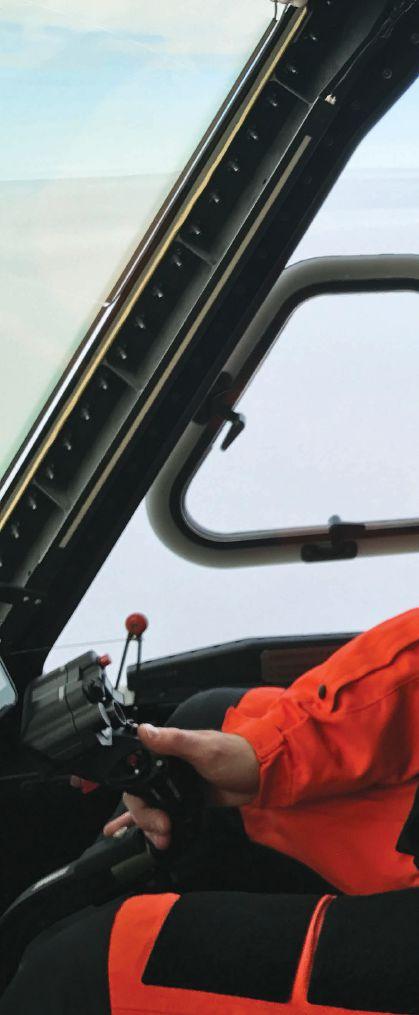
Arthur is always looking for opportunities to do things better. He is indeed a rising star at Cougar Helicopters and within the industry as a whole.
TITLE:
LOCATION: WINNIPEG

Motivated, determined, dependable. These are just three of the words that accurately describe Heather Bisch, 36, charter flight co-ordinator, with Winnipegbased Fast Air Ltd.
Bisch is the primary contact between Fast Air Ltd. and its business jet customers and owners, an often delicate and demanding role. On
a nearly daily basis, she skillfully manoeuvres the intricacies of international operations, customs, customer specialized requests and many other tasks. Her patient demeanour, outstanding communication skills and clever problem solving ability always gets things accomplished – and done well.
Bisch is also tasked with preparing flight crews to ensure they have a seamless trip –providing the executive experience to the customer. She also schedules aircraft for maintenance or coordination of defect rectification while away from base if required. In each role she is intuitive and resourceful, ensuring customers and crew have the information they need.
Bisch is truly an aviation junkie. She has a broad knowledge of the industry and is a proud supporter of the Royal Aviation Museum of Western Canada. In the office, she inspires camaraderie and helps create a
fun atmosphere where everyone is welcome. She is an asset to not only Fast Air, but the industry as a whole.
NAME: LOUIS-PHILIPPE CHARLAND
TITLE: CABIN CREW MANAGER, IFS
TORONTO, AIR CANADA
LOCATION: TORONTO

Louis-Philippe Charland, 37, is an ambassador for safety, professionalism, training and customer service.
Commencing his aviation career as a flight attendant with Air Transat in 2000, Charland’s passion for aviation took hold. After gaining experience as a line flight
attendant, he joined Privatair in Geneva, Switzerland. For the next six years, he worked his way into positions of in-flight director of the VVIP scheduled and charter flights, cabin safety instructor, and security team member.
In 2014, he accepted the role of in-flight supervisor and cabin safety trainer at Air Georgian. In this capacity, Charland assisted the flight attendant manager in supervising the Toronto base, assessing flights and line checks, and creating and delivering the flight attendant training program.
In 2015, he joined Transwest Air as flight attendant manager, responsible for the professional standards of the cabin safety department. He then joined Air Canada in the capacity of in-flight services training; he did so while still attending to his many responsibilities at Transwest while they searched for a suitable replacement.
Charland is an excellent trainer. His knowledge is enviable and his enthusiasm is infectious. He is also active in the industry. He works for ATAC and NACC, actively sharing experiences to help foster industry development.
Colin Dempsey is one of those individuals you know will go far. Since joining the Northern Air Transport Association (NATA) in 2011, the 32-year-old has tirelessly served first as its executive assistant and currently general manager. NATA is the advocacy group and industry association focused on the creation and maintenance of the safest and most efficient-possible operating environment for northern and remote aviation in Canada.
The general manager position rolls the functions of bookkeeper, event planner, web master, graphic designer, membership coordinator, association representative and referee all into one. Somehow Dempsey, has not only managed to get all of this done, but to excel at the process. He has also juggled being the owner of an art gallery, the president of the Northern Frontier Visitor’s Centre in Yellowknife, managing the local farmer’s market, teaching at the local
college and being a landlord.
In addition to the skills in the day-to-day running of the association, Dempsey has been a quick study in all the various aviation and government relations challenges.
With a strong moral compass and sense of fairness he is always striving to do the right thing whenever possible, be if for NATA or his involvement in local politics. It would be hard pressed to pick only one word to describe Dempsey from the long list that comes to mind: diplomatic, conscientious, hardworking and more.
NAME: LINDSAY HAI
TITLE: SENIOR FINANCE PROJECT MANAGER, VECTOR AEROSPACE LOCATION: SUMMERSIDE, P.E.I.

Lindsay Hai’s interest in aerospace dates back to when she was a child growing up in Hong Kong. Hai’s father, a 40-year veteran with Cathay Pacific, immersed his daughter in the business. By the time she was 10, she had travelled to 18 countries worldwide.
In 2009, the now 30-year-old joined Vector’s Engine Services – Atlantic team as a financial analyst while in the last year of study for her bachelor’s degree in business administration at the University of Prince Edward Island.
Hai would continue working in the financial analyst role with Vector while simultaneously studying for both her MBA and certified management accountant (CMA) designation at Saint Mary’s University, Halifax. She graduated in 2013 at the top of her class, receiving the E.L Whitman Gold Medal Award.
Upon graduation, Hai spent one year with the IMP Group in Halifax as an internal auditor, assisting the company’s management with identifying and evaluating risk management, control and governance processes. In 2014, she was welcomed back to Vector, initially as a senior financial analyst.
Just 18 months later, Hai was promoted to business performance manager, in which role she was actively involved with Vector’s continuous improvement initiatives.
One year after her initial management appointment, Hai was promoted to senior finance project manager. Her rapid rise through Vector’s leadership is a reflection of both her strong academic credentials and her approachable character.
Outside of Vector, Hai sits on the Investigations Committee for Chartered Professional Accountants P.E.I and is actively
involved in her local community. She truly is an invaluable member of the Vector team.
LOCATION: CALGARY
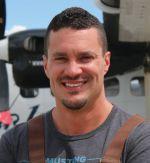
For Lee Hawke, it’s truly the advancement of a new generation of aircraft maintenance professionals that motivates his every day since joining Rocky Mountain Aircraft in 1999.
As a Southern Alberta Institute of Technology, aircraft maintenance engineering technology graduate, Hawke received his AME M1 licence in 2002. He has travelled extensively in support of key contracts within the organization including throughout Europe, India, North and South America.
In his role as lead engineer and crew chief, Hawke, 38, has contributed to the growth and development of many AMEs including a past nominee. He is also passionate in his commitment to the continued growth of the organization as demonstrated in his more than 18 years of dedicated service.
Always ready for a new challenge, Hawke’s daily life starts with a mindset steeped in achieving the highest standards and work ethic based on leading by example. As a leader and motivator of young people within the aviation community, Hawke’s creative approach has also served to encourage others to participate and become involved in numerous aviation events and organizations.
As a key member of Rocky Mountain Aircraft, Hawke also sits as a member of the S.A.I.T aircraft maintenance technology advisory committee. He is a regular contributor to implementing new processes and improvements.
Hawke is a consummate professional who continues to provide a new generation of aircraft maintenance engineers with the knowledge and skills to thrive within this organization and in their careers.

top-notch customer service. Goes above and beyond what’s expected. Ask those that nominated Annemarie Mercedes Heikenwälder for a Top 20 Under 40 award in 2017 and these are just some of the words and phrases used the describe this dynamic 28-year-old polyglot. Heikenwälder, in fact, wins the distinction of garnering the most nominations of anyone in 2017 voting.
Heikenwälder is the manager of sales and business development for St-Hubert, Que.-based FBO H-18. It’s a demanding role on a variety of levels, but one Heikenwälder flourishes in. Having officially started as a customer service representative, Heikenwälder quickly became the manager of sales and business development.
When she began her new role, occupancy at the hangar was sitting at some 40 per cent, but within two years, she had brought the occupancy level to a cool 100 per cent. And that’s not all. Heikenwälder’s commitment to training has enabled H-18 to be widely recognized now by clients, customers and competitors for its high safety standards, service excellence and more.
Heikenwälder completed her IATA aviation management certificate from Stanford University earlier this year, and continues to impress clients and colleagues with her professionalism, integrity and commitment to top service standards. She actively supports industry associations and her drive, diplomacy and competitive edge will serve her well as she continues her aviation career.
(AND EDWARDS AFB, CALIF.)
NAME: ANNEMARIE MERCEDES HEIKENWÄLDER
TITLE: MANAGER, SALES AND BUSINESS DEVELOPMENT, H-18
LOCATION: ST-HUBERT, QUE.
Driven. Passionate. Dedicated to providing
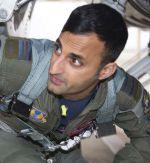
Since he was 17, Major Jameel Janjua has chosen a life of service and adventure.
Major Janjua, 38, is an experimental test pilot and fighter pilot with the Royal Canadian Air Force (RCAF). He is currently an exchange officer and test pilot to the United States Air Force (USAF) at Edwards AFB, Calif.
Janjua’s background reflects an unparalleled work ethic and opportunities he has capitalized on as a RCAF pilot. He
graduated first in his class at the Royal Military College of Canada, receiving the Governor General’s Silver Medal. He subsequently completed a master’s in aeronautics and astronautics at the Massachusetts Institute of Technology (MIT).
Following pilot training and conversion to the CF-18 Super Hornet, he was selected for the Fighter Weapons Instructor Course (FWIC).
Janjua’s leadership in combat was proven during a three-year exchange tour flying Tornado GR4’s with the Royal Air Force (RAF). He completed more than 80 missions/450 hours on combat operations in Afghanistan and Libya with the RAF. Following his return from the U.K., he once again sought out highly specialized training in aviation by petitioning to become one of Canada’s very few military test pilots.
After an intense yearlong course, he became only the fourth Canadian ever, including Chris Hadfield, to receive the Liethen-Tittle award as the top graduate of the U.S. Air Force Test Pilot School (USAF TPS). Following graduation from USAF TPS, Janjua was selected to remain at Edwards AFB as an exchange test pilot. He is also the lead test pilot on the team of
experts that advances Automatic Collision Avoidance Technologies in the USAF.
Janjua is certainly a role model for young Canadians to show them that anything is possible, including their wildest dreams.
NAME: SUZANNE KEARNS TITLE: ASSOCIATE PROFESSOR, UNIVERSITY OF WATERLOO
LOCATION: WATERLOO, ONT.

Suzanne Kearns, 37, has been passionate about aviation since her childhood growing up in Wiarton, Ont.
She began flight training at the age of 15, soloed on her 16th birthday and had her private airplane and helicopter pilot licences signed off on her 17th birthday. She finished high school and moved to North Bay, Ont. and received her commercial rotary-wing licence from Canadore College.
In 1998, she earned a bachelor’s degree in aviation, graduating with a bachelor of science degree in aeronautical science in


2000 and subsequently a master of science degree in human factors and systems engineering in 2002.
Upon returning to Canada, she was hired by the University of Western Ontario as a full-time lecturer. While working full time, she completed her PhD in education and was promoted to assistant professor in 2008 and subsequently an associate professor in 2014.
Her research reflects the combination of her interests – exploring the impact of human factors on aviation safety, along with a variety of educational theories including competency-based education. She is also actively involved with the University Aviation Association (UAA). She is now the past president of the association. Kearns also volunteers to support the International Civil Aviation Organization’s (ICAO’s) Next Generation of Aviation Professional (NGAP) program, as vice-chair of Outreach.
In 2016, Kearns accepted an invitation to move into the University of Waterloo’s aviation program where she has already made an impact. She teaches about 100 aviation students each year in courses she has developed in human factors and international aviation.



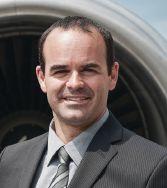
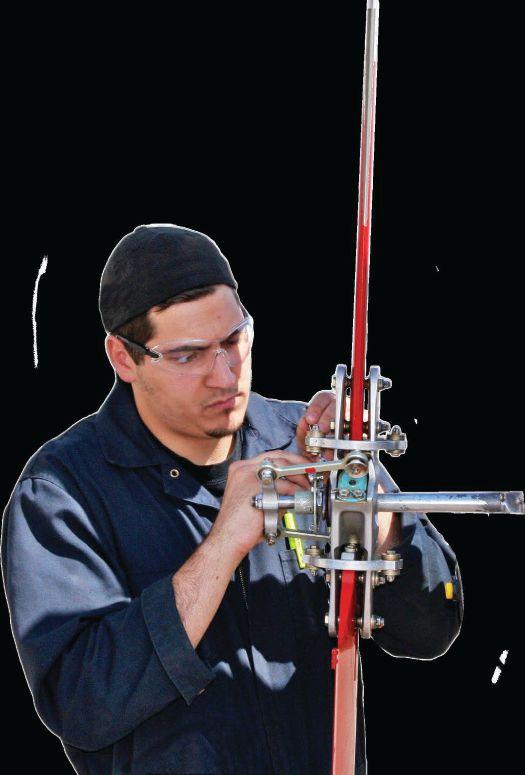
NAME: NORMAN KWONG
TITLE: DYNAMIC COMPONENT TECHNICIAN,
AIRBUS HELICOPTERS CANADA
LOCATION: FORT ERIE, ONT.
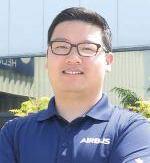
The importance of details is certainly something Norman Kwong understands.
For the past four years, the 33-year-old has worked as a dynamic component technician in the repair and overhaul department at Airbus Helicopters Canada in Fort Erie, Ont. – a challenging and very detailedoriented profession.
Kwong graduated in 2006 from the University of British Columbia with a bachelor of science, focusing on physics. He furthered his education at the British Columbia Institute of Technology (BCIT) and completed the aircraft maintenance engineer (category “M”) program in 2008.
In his role as dynamic component technician in the Airbus Helicopters Canada repair and overhaul department he is directly responsible for receiving customer parts, completing initial assessment and paperwork and expediting the completion of repair and overhaul work.
Kwong completes each job task with the customer in mind, displaying strong attention to deadlines, accuracy in completion of work and high standards of quality. His knowledge of repairing dynamic components is unparalleled and his customer services skills are exemplary.
Earlier this year, Kwong was asked to take on additional responsibilities as an official trainer of Airbus Helicopters. In this role, he teaches Airbus Helicopter employees on the AS350 dynamic components overhaul. This new opportunity will directly impact Airbus Helicopters repair and overhaul employees worldwide.
Kwong’s strong work ethic and drive for continuous learning is helping Airbus Helicopters Canada maintain a solid leadership position with customers worldwide.
NAME: ALAIN MADORE
TITLE: PRESIDENT/ CEO, DART AEROSPACE
LOCATION: SAINT-LAURENT, QUE.
“There’s an importance in following market trends and pushing for growth in our industry,” states Alain Madore as he settles into his new office, as president and CEO of

DART Aerospace. This 35-year-old MBA graduate and aerospace engineer has been working in the aeronautical industry for close to 15 years now. Driven by business strategies and opportunities, Madore has plans to leverage his experience and his vision to continue to grow the business and adapt it to changing market conditions.
During his five years at DART Aerospace, the newly appointed president and CEO has restructured the commercial organization that has thereafter made its proof: DART has outperformed the market over the last few years despite the industry downturn.
Madore has also put much effort into the rebranding of the company as well as increasing business relationships with OEMs. He previously worked for Bombardier in marketing and business development and has brought his passion for operational excellence to DART.
He has travelled to more than 30 countries and has developed a taste for global expansion and the fundamentals of doing business internationally. His unprejudiced, customer-first focused mentality has brought him thus far in his early career and he wishes to inspire young leaders in wanting to strive for advancement of the industry’s technologies.
LOCATION: MONTREAL

For the past six years, Jeppesen Canada Ltd. systems architect Marius Magearu has worked diligently on delivering the Jeppesen Manpower (JMP) crew management product to commercial operator, Aeromexico. And over that timeframe, the 34-year-old’s commitment and dedication to the project has been exemplary.
Magearu began work on a mock JMP project in 2011 to make sure the Montreal office was ready to handle all aspects of the implementation process. He even travelled to Sweden for up to three months at a time to be closer to the development team to better understand the product and process development.
Magearu’s hard work has paid off, and
twice his peers throughout the years for the project’s development have recognized him. At a specific users conference, for example, Aeromexico presented the program to the audience, explaining how it created significant cost savings for the organization. It was indeed a defining moment for Magearu and the Jeppesen team.
Magearu’s ironclad relationship with Aeromexico is indicative of how he works with his entire team. He consistently shows strong leadership ability and is not only extremely knowledgeable, but is an outstanding coach and mentor to his team members. Highly motivated and enthusiastic, he received the Captain Jeppesen Award last year, the company’s most prestigious internal award, for his resourcefulness, creativity and commitment to the organization.
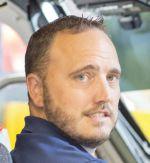
Scott Markwick is an invaluable member of the Heli-One team.
Markwick, 37, has been at Heli-One for 10 years, working his way up from lead mechanic, airframes to manager, base maintenance.
He grew up in B.C. and after high school, immediately started the airframes structures AME program at BCIT. He received his AME S licence at 23 and has worked in fixed- and rotary-wing maintenance roles ever since.
Markwick has been in leadership roles for the past seven years. As the youngest base maintenance manager at Heli-One, he recognizes the importance of bringing up new generations of AMEs and actively encourages and mentors apprentices that join the shop.
As one of two of his original AME class to still be in aviation, he recognizes the importance of newer aircraft mechanics honing their skills in a variety of ways in order to be flexible in a dynamic job market.
Markwick has been instrumental in implementing new processes and project management methodologies to increase the efficiency at Heli-One. He is very dedicated to his career, colleagues and industry, and takes great care and consideration in all aspects of his craft.
LOCATION: TORONTO

Ehsan Monfared has certainly accomplished a great deal in a very short timeframe.
The 28-year-old associate lawyer with Toronto-based Clark & Company is becoming a strong advocate for industry, often calling out various regulatory bodies when policy decisions are inefficient or unproductive for accomplishing their stated objectives.
Monfared regularly deals with Transport Canada in matters relating to foreign and domestic operating authorities, UAV regulation, and CARs violations and enforcement. He also currently serves as an officer for the Canadian Bar Association’s (CBA) Air & Space Law Section. He be will moving to the position of vice chair later this year.
During his short term with the CBA, Monfared has led the preparation and issuance of commentary to various regulatory bodies including submissions aimed at the
CTA review and the currently ongoing Regulatory Modernization Initiative. He has also been actively involved in the rapidly changing area of UAV regulations in Canada and working closely with Unmanned Canada in the planning of its annual conference.
Monfared is very involved with industry associations, particularly the CBAA. His regular involvement in aircraft transactions has exposed him to the practical and operational challenges present in Canada’s aviation industry. He was immersed in the recent dispute between the business aviation community and the GTAA in relation to access restrictions at Toronto’s Pearson International. He has also helped clarify various legal issues affecting aviation on national news outlets.
Concise and thorough in his approach to all projects, Monfared is certainly an emerging force in the Canadian aviation community.
For Andrew Persaud, the sky literally is the limit.

The 28-year-old assistant chief pilot with Vancouver’s Skylink Express –Canada’s largest regional air cargo feeder carrier – oversees the operation of hundreds of weekly flights around North America. He does so with tremendous efficiency and skill. Persaud is also a training captain on the Beechcraft 1900 and Cessna 208B Grand Caravan regional freighters.
Persaud has a passion for aviation and possesses diverse educational background, giving him a unique view of his industry. He graduated from York University with a liberal arts degree and was vice-president of the York University Aviation Association.
Growing up in Toronto also gave him a keen sense of community and he quickly understood the importance of giving back to his community. He volunteered as a pilot for Hope Air, flying Canadians in need from rural locations to urban centres and is currently volunteering for the Urban Pilot’s Network, a non-profit organization geared towards mentoring youth in the pursuit of academic and aviation opportunities.
Recently, Persaud added to his impressive achievements by becoming a captain

with the Department of National Defence, working as a training officer for an air cadet squadron in Richmond, B.C. In grooming the aviation leaders of tomorrow, Persaud actively shares his message of hard work and dedication combined with the passion to soar.
LOCATION: CALGARY
Devising solutions to enhance supply chain management, internal program management and customer account management is simply par for the course for Matieu Plamondon.
The 38-year old is vice-president of operations and customer fulfillment at Calgary-based FLYHT Aerospace Solutions Ltd., a role that includes overseeing operations not only here at home but also in Europe, China, India and with other global customers. He does it all with determination and verve, showing a commitment to excellence that is truly infectious.
FLYHT is adopting lean processes in its operation and Plamondon has uncovered key assets in the company’s efforts to create and improve standard processes. He has identified new ways to measure, created metrics that highlight improvements and has demonstrated significant objective enhancements in all areas.
Plamondon bring more than 18 years of experience to his role and works hard to ensure his customers get maximum value from the products FLYHT creates. He joined the FLYHT team because he maintains that real-time data that the Automated Flight Information Reporting System (AFIRS) offers can increase efficiencies and safety throughout the industry.
Plamondon has a diverse background in aviation. He started his journey as a maintenance apprentice while earning his pilot’s licence and working part time as an airlines operation agent.
A “high potential” executive on the rise, Plamondon is certainly making a difference on a number of key levels – not only at FLYHT but in the aerospace industry as a whole.
NAME: DAWEN NOZDRYN-PLOTNICKI

For 34-year-old Dawen NozdrynPlotnicki, the numbers tell the story.
As director of advanced analytics and Boeing’s business consulting analytics practice lead, Nozdryn-Plotnicki is responsible for leading the analytics team in collaborating with Boeing’s airline, airport and defence customers to enhance their operations and maintenance through applied analytics.
Her consultive approach combined with astute business acumen and technical abilities has provided a blueprint for the concept and development of Boeing Vancouver’s Digital Aviation Labs division, which opened last September. Today, Nozdryn-Plotnicki leads a team of data science and analytics professionals in the new labs environment, bridging the gap between technical and business groups to find solutions to some of the most challenging problems facing commercial carriers today.
Since joining Boeing in 2014, NozdrynPlotnicki has worked on a number of projects, ranging from anomaly detection using text mining and machine learning to inventory optimization and passenger flow stimulation. Her focus as a leader revolves around empowerment – encouraging others to shape their careers, grow as leaders and excel in all aspects of their profession.
Nozdryn-Plotnicki’s team has been recognized with a number of top awards and she continues to be the driving force for its success. Her leadership skills and technical acumen are beyond reproach and as aviation technology continues to evolve at lightening speeds, one thing is certain: the possibilities of what Nozdryn-Plotnicki and her team can do next are endless.
TITLE:
PACIFIC, CAE
LOCATION: MONTREAL
A go-getter from the outset, 32-year-old Alexandre Prevost started his journey at CAE as a financial analyst in Montreal in 2008 and his career has been on the fast

track ever since. Prevost has quickly climbed management ranks into finance, operations and business development roles, now covering CAE’s training business in Asia. During his time at CAE, Prevost has developed strong relationships with customers all over Asia, and has been instrumental in solidifying and growing CAE’s presence in the region.
No better was this demonstrated than during the company’s landmark joint venture with Kuala-Lumpur-based airline AirAsia, where he played a pivotal role. This relationship has proven to be a great success, with AirAsia being a key partner in developing CAE’s next generation of training products – the results of which will likely shape the next generation of pilot training on a global scale.
Prevost holds the highest role in CAE’s civil division in this region and he has myriad responsibilities, including creating and maintaining relationships with various airlines, increasing the number of airlines using CAE training solutions and more. After only one year in his current role, Prevost has surpassed all financial objectives and has secured a number of key partnerships.
Dedicated and driven, Prevost is certainly one to watch in the months and years ahead.

If you’re looking to meet a young leader who has had a tremendous impact on the aviation industry, look no further than WinAir’s commercial manager Kyle Vergeer.
At 29, this budding executive boasts an extensive portfolio that is worthy of attention. Born into an aviation family, Vergeer was immersed in aviation when he was just an infant. At 11 months, he took flight for the first time in his father’s Cessna 140 from a private grass runway located steps from the family home.
At 12, he enrolled in the Royal Canadian Cadets in London, Ont., retiring
from the program six years later as a Cadet Squadron Commander. He then initiated his career at an MRO stores department and followed with a role as a safety management systems administrator, where he learned about aviation maintenance and inventory control.
Vergeer joined WinAir in 2008, and after several years of dedication and organizational growth, he was promoted to commercial manager. His responsibilities included co-managing staff, overseeing operations, generating new business opportunities and assembling and accompanying implementation teams for new product installations.
It’s in this role that Vergeer shines. Acting as process consultant, he takes a hands on approach to maintenance management and helps organizations streamline operations, improve efficiencies and save capital expenses. An active voice in industry associations, he is also completing
his pilot’s licence and striving to become a subject matter expert in aviation maintenance standardization.
TITLE: STRUCTURES ENGINEER AME S, AVIALTA HELICOPTER MAINTENANCE LOCATION: VILLENEUVE AIRPORT, ALTA.

Suffice to say, Jonathan Wood had his sights set on an aviation career at a very young age.
Wood started his career with Great Slave Helicopters at the age of eight
doing anything he could do to help out including everything from sweeping to sanding. He attended NAIT in Edmonton focusing on sheet metal maintenance and graduated in 2000. Feeling inspired, he
packed his bags and started working back in Yellowknife with Air Tindi.
He got his big break as an apprentice and was sent to work under veteran sheet metal engineer Don Netskar to rebuild one of Tindi’s Twin Otters at Ken Borek’s hangar in Calgary. While working there, he rekindled his love of helicopters and shifted gears to work for Chinook Aviation on various helicopter types. A variety of positions followed, including a stint in the Antarctica to recover a crashed Basler DC3 off the ice and more.
In 2008 he joined Avialta Helicopters where he focuses on complex structural repairs on both helicopters and fixed wing aircraft. He is constantly learning new techniques, technologies and processes and continues to hone his skills with OEM training, attending HAI technical courses.
Wood is not only a creative, dedicated professional, he is a true leader and mentor to the entire Avialta team.
WOULD LIKE TO CONGRATULATE THE WINNERS AND NOMINEES OF THIS YEAR’S TOP 20 UNDER 40 AWARDS PROGRAM.
for sponsoring this important national initiative.
Please stay tuned for next year's online nomination process and remember to vote for your firm's top young leaders!



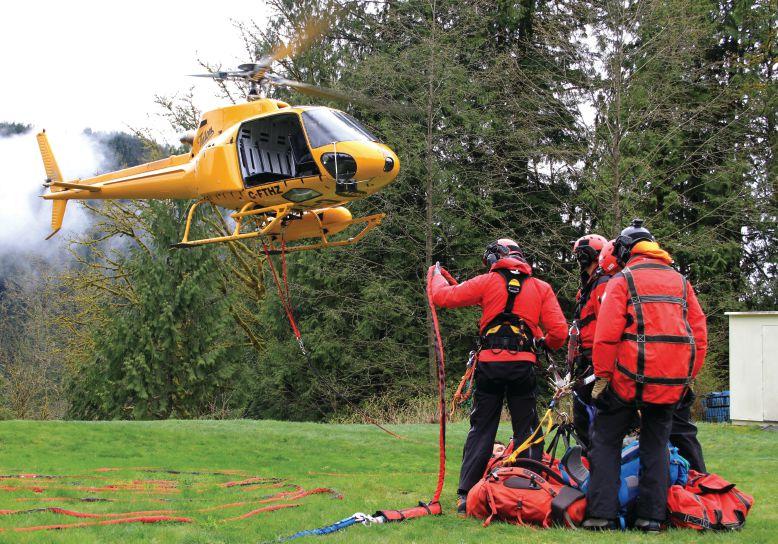
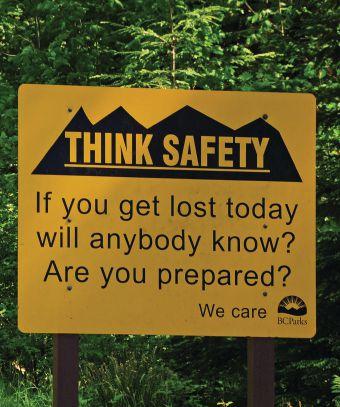
Below: This sign at the bottom of the road to Mount Seymour says it all – but SAR events continue to rise. (Photo by Paul Dixon)
BY PAUL DIXON
Tourism and outdoor recreation have become major drivers in B.C.’s economy and continue to grow every year.
As B.C.’s traditional resource-based economy has waned, the tourism sector has expanded into a fourseason industry, attracting millions of visitors and residents to get out and explore the great outdoors across the province. However, fun in the outdoors can quickly become trouble and the growth in outdoor recreation has also seen a growth spurt in search and rescue (SAR) incidents province-wide.
In B.C., there are more than 2,500 volunteers in 80 communitybased teams that respond for SAR and the numbers reveal that they’ve been pretty busy. Over the past few years, there has been a marked increase in the number of SAR calls in the province. For example, in 2013, B.C. had some 1,067 SAR calls, while that number jumped for well over 2,000 last year, according to the Emergency Management BC, the provincial agency that oversees volunteer SAR teams in the province.
In most areas of B.C., the outdoors is literally staring you in the face and no more so than the southwestern corner that stretches from the Fraser Valley in the east, through Metro Vancouver and up the Sea To Sky Corridor to Whistler and beyond. When you look at the
mountains of Vancouver’s North Shore on a bright, sunny day they look even closer and more inviting than in tourist brochures.
It’s often said that you can leave your hotel or office in downtown Vancouver and be on the ski slopes or in a mountain meadow in a matter of minutes. It’s true and you have your choice of three different mountains to choose from – Cypress (home to the 2010 Winter Olympic freestyle skiing events), Grouse or Seymour. What is deceiving to so many is that once you get yourself to the mountain, far too many people are not mentally or physically prepared for the trip they set out on, no matter what the season.
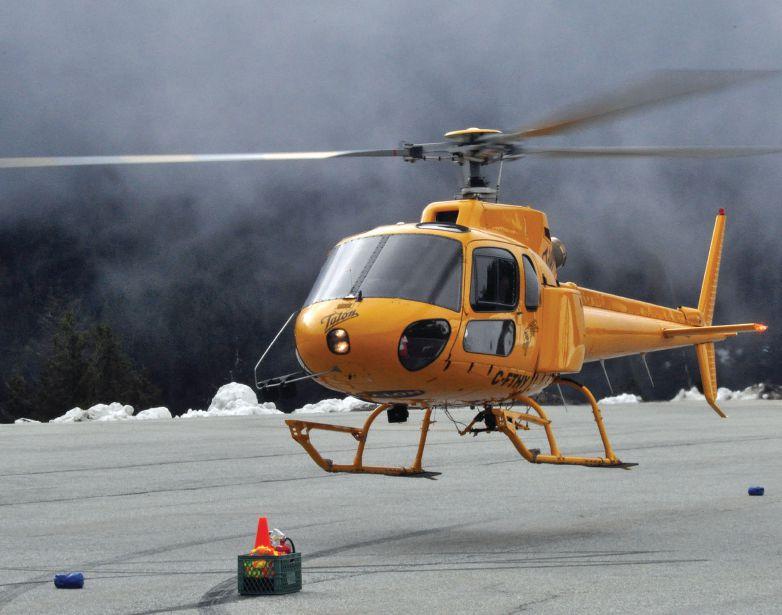
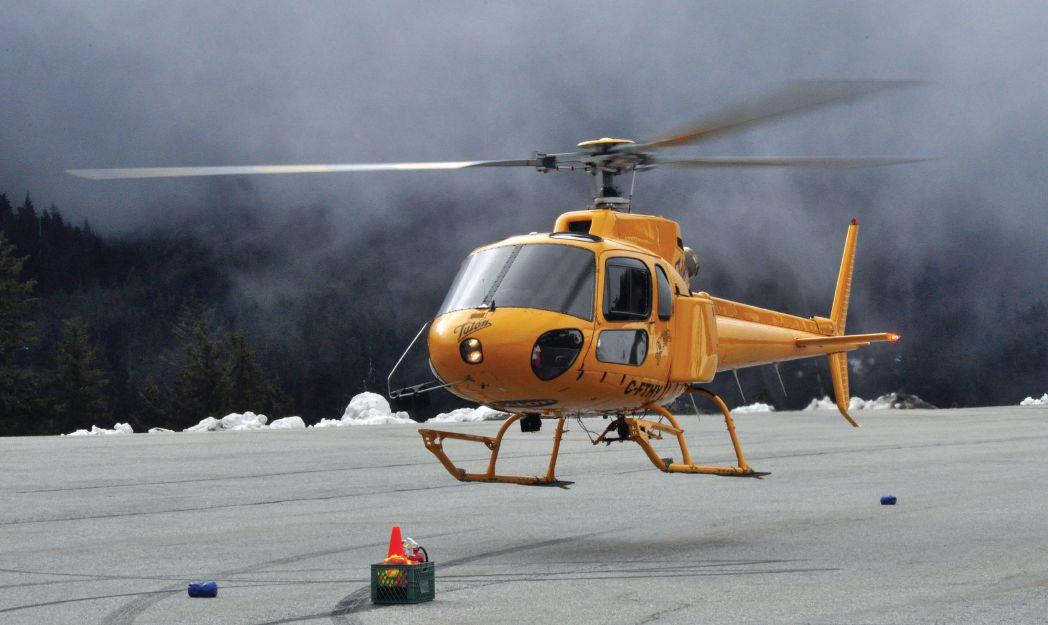
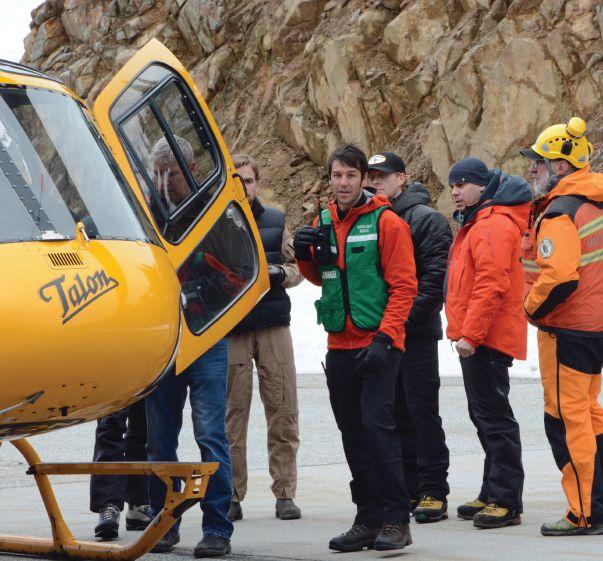
Peter Murray of Talon Helicopters has spent a lot of time flying in support of SAR teams in southwestern B.C. and he maintains it’s a simple matter of the more people that are attracted to the outdoors means more people getting in trouble.
“Despite all the information and all the signage,” he says, “people are still naïve about the mountains, they just have no idea. You look at the mountains from the south [view from downtown Vancouver] and they seem so gentle, but once you get into them it can be very treacherous.”
This past year, winter arrived early and stayed late. Two of the ski hills on Vancouver’s North Shore, Cypress Mountain and Grouse
Mountain, didn’t shut down until the 2017 Victoria Day weekend. Even well into June, there was three feet of snow down to the parking lots at Cypress and Mount Seymour on the other end of the North Shore. For Murray, it meant taking part in many more SAR calls.
“This winter had a lot of snow, it lasted a long time,” he told Helicopters. “Our winter-style SAR calls are extending late into spring. There are more injuries, even on simple hikes, where people need to be flown out.”
While the three ski resorts are privately operated and have maintain ski patrol operations for their own areas of responsibility, there is an extensive backcountry area behind the resort areas within provincial and regional parks that attracts legions of snowshoe enthusiasts and backcountry skiers. For North Shore Rescue (NSR), the early arrival of winter saw a spike in calls as a series of storms produced more snow than people anticipated. Mike Danks, NSR team leader, says this resulted in people being overwhelmed by the snow.
“People weren’t able to navigate in whiteout conditions, they were overwhelmed by the snowpack conditions and the avalanche danger,” he says. “We had a number of situations where people were actually involved in smaller avalanches.” Finding themselves confronted by the imminent threat of an avalanche is unsettling for even the most experienced backcountry types. People panic and their decisionmaking ability suffers, which generally means heading into even more treacherous terrain.”
Tony Baker Gully at Cypress Mountain is named after a young man who died there 30 years ago. It has earned a fearsome reputation. Tony Baker was a 14-year old boy who took a wrong turn at the top of the mountain and went down the gully that now bears his name. In early December 2016, NSR had to retrieve two out-of-bounds skiers from Tony Baker Gully.
“Two men in their early ’40s,” recalls Danks, “ducked under the ropes for a couple of quick turns, but the moment they went under the rope they triggered an avalanche that carried them down quite a distance.” While they weren’t buried, they were scared and poor decisionmaking compounded their problem.
“They kept going further down into the gully,” says Danks, “until
they couldn’t move any further. They couldn’t go up or down. They were soaking wet and they spent a really chilly night because we could not send members into that avalanche danger.” The next morning, the weather cooperated and NSR was able to reach the two and working with Talon extracted them using a longline.
In March 2017, two backcountry skiers, described by Danks as “very experienced,” were hit by an avalanche in Tony Baker Gully and carried more than 100 metres downhill to the edge of large cliff. One was buried under 10 feet of snow. “They would have died,” Danks told media at the time, “had they not been properly trained and carrying safety gear.”
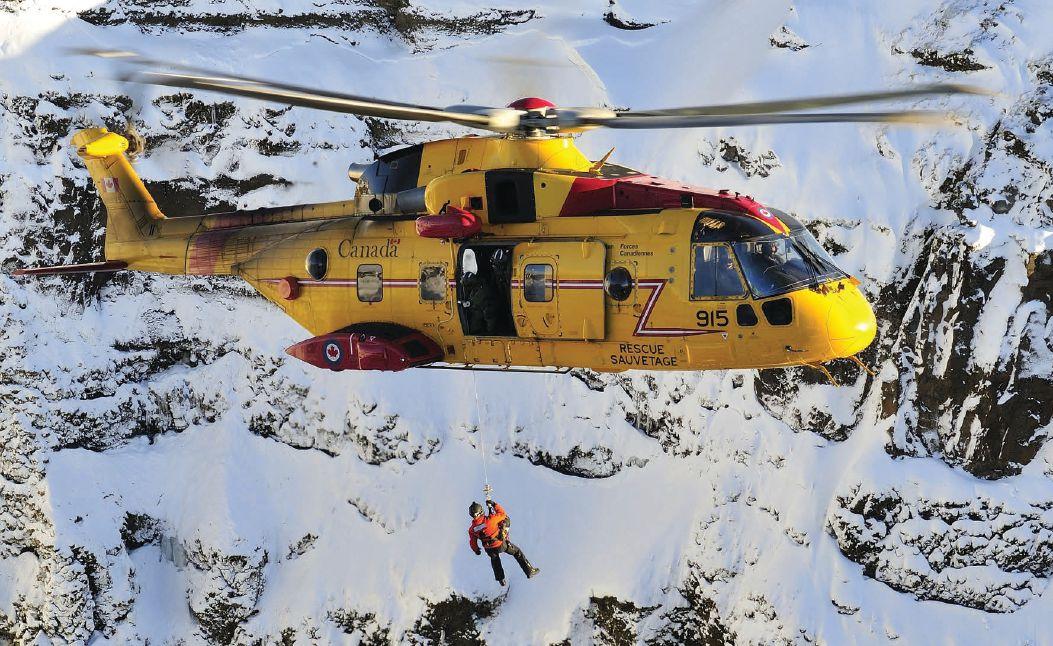
The two men were fortunate that a second group of five backcountry skiers saw what happened and made their way down, dug out the victim and administered care until the SAR teams arrived. The badly injured skier was packaged and loaded onto a Talon helicopter, but instead of flying to the resort parking lot and transferring to a ground ambulance for the long ride to the hospital, the helicopter flew the patent directly to a park adjacent to Lions Gate Hospital.
Not all incidents have happy endings. The NSR spent the week between Christmas and New Year’s in 2016 searching Cypress for two missing snowshoers. Their car was found in the Cypress parking lot at the end of the day on Christmas Day. When the search began the next morning, there was no indication as to what route the experienced backcountry snowshoers might have taken in an area that includes several mountains and many miles of backcountry trails. Weather hampered the search until the end of the week, when it cleared enough to allow two helicopters to search the most likely areas.
“We didn’t see any sign of these guys,” said Danks, at the time. “With the amount of snowfall that we had over the period that they were missing, the high avalanche danger and the low ceiling with the clouds, it was a very challenging search.” The search was eventually called off after a week and the missing men have yet to be found.
In early April 2017, five snowshoers died when a cornice collapsed beneath them on Mount Harvey, to the north of Cypress Mountain above Lions Bay on the Sea To Sky corridor. Six experienced and wellequipped hikers had set out on the established trail in what were




described as extreme winter conditions. One of the hikers fell behind the group and when he reached the summit of Mount Harvey, expecting to see his friends, it quickly became apparent what had happened. The hiker saw that tracks leading to a point where there was a sheer break in the snow where there had been a cornice.
In a statement at the time, Martin Colwell, leader of Lions Bay SAR noted, “It appears these people stepped onto that cornice, which is unsupported snow, especially with the heavy snow and wind we’ve had, and it broke, sheered off and they fell to the base of Mount Harvey.” A total of 86 SAR members from Lions Bay, North Shore Rescue, Coquitlam, Pemberton, Whistler, Surrey and Central Fraser Valley responded – along with two helicopters – but searchers were unable to access the area at the bottom of the mountain until daybreak the next day due to the high risk of avalanche.
A barometer of mountain conditions on Vancouver’s North Shore as spring arrives is the opening of the Grouse Grind, the challenging trail up the face of Grouse Mountain known affectionately as Mother Nature’s Stairmaster. As has been the case in most years, the trail officially opens in April or early May. But 2017 saw the opening delayed until June 17 due to the snowpack and icy conditions at the upper end.
When the Grind opens, people are deceived into thinking that it is open season on the hundreds of miles of hiking and mountain-biking trails throughout the mountains. What too many people don’t realize – as Murray mentioned – is that the Grind is on the sunny side of the mountain. Winter conditions on the backsides of the mountains and in the many steep valleys that separate the mountains can persist well into late summer. It can be a beautiful warm sunny day, but all too often hikers discover that back in the mountains, the shadows can be long and dark as the sun disappears and temperatures drop rapidly.
Murray grew up on the North Shore and spent his childhood on those trails. He is well aware of the inconsistent environmental conditions of that location. “It can be misleading,” he says. “When people set out on a trail. It seems so tame, but they don’t realize it’s a wild
forest. Then the temperature starts to drop and they get turned around . . . then they’re lost.”
Murray doesn’t keep track of the reasons that lead people to get lost or injured in this area of the province, he just concentrates on finding them and getting them out. “There are so many different people,” he says, “and so many different reasons. The reality is there are hundreds that go up there unprepared and nothing happens. It’s not a sure thing, it’s just that the more people you have go up there like that, the greater chance that you will have something happen.”
The warnings and advisories about the inherent dangers of going into the outdoors are plentiful. There are signs on roads, large postings in parking lots and at trailheads. It takes a conscious effort to ignore those advisories and set out unprepared, yet thousands of people do so every year. “It’s kind of crazy,” Danks says. “It’s inexperienced and not physically fit people going out and trying hikes that aren’t easy hikes.”
Michael Coyle, search manager with Coquitlam SAR, reports a similar sentiment. As the days get longer, people are lured into the outdoors, but they don’t read the fine print on their maps or they rely on social media or apps for directions. They see what appears to be a relatively simple three- or four-hour walk, but they don’t understand that that a journey involves a significant elevation gain. They set out too late in the afternoon and get caught out in the darkness without a flashlight or warm clothing. And then suddenly, a twisted ankle can become a major problem. Coquitlam and NSR report both dealt with a number of similar incidents in late May and early June.
On May 27, NSR held a full-day training session on Mount Seymour for new members, specializing on avalanche beacon search techniques, rock climbing and rappelling as well as first aid. The team also held a staged briefing that drew a full turnout of local media to acknowledge a significant contribution from the TB Vets organization as well as to demonstrate some of the emergency medical equipment they deploy in the field – a Zoll X Series Monitor/Defibrillator along with their Zoll Autopulse and Oxylator ventilator.
The demonstration included packaging their mock patient for transport and loading them onto a waiting Talon helicopter. Late in the afternoon, as they were wrapping up on Mount Seymour, NSR was paged out for two unrelated instances of lost/injured hikers.
For Coquitlam SAR, the first weekend in June saw some members spend both days participating in a UAV evaluation (Coquitlam is one of two teams in the province participating in a study of UAVs funded by EMBC), while other team members were involved in training exercises. At the end of the day, they were paged out to find three teenagers who were lost in the Coquitlam Lake area. Again, the teens were unprepared, unequipped and poorly dressed. The following weekend, Coquitlam was paged out on the Saturday evening after a full day spent at a fund-raising BBQ.
The ground search and rescue teams in B.C. are 100 per cent volunteer, of which they are fiercely proud. And while the rescue missions certainly garner media attention, the lion’s share of their time is spent in training, certifying a wide range of disciplines and above all, fundraising. This money comes from a wide range of sources. Funding comes from the provincial government as well as regional district and municipalities. Then there is grant writing, as well as making applications and presentations to local service clubs.
In the end, it’s a multi-prong, complicated process and with more and more people converging on B.C.’s diverse outdoor opportunities, it will indeed be up to operators like Talon, Valley Helicopters, Blackcomb and more to ensure the province’s weekend warriors return safely at night.
BY JOE ATHERTON
he aviation world, as it were, descended on Ottawa for the CANSEC Defence and Security Trade Show May 31-June 2, which is hosted by the Canadian Association of Defence and Security Industries (CADSI).
TThe two-day event is the largest and most important defence industry event in Canada and it serves as an opportunity for defence companies to strut their stuff when it comes to new innovations, platforms and products, and new collaborations which are oriented primarily for the Canadian market. Hosted at the EY Centre, this year’s show attracted more than 11,000 registrants from 61 countries with some 700 booths.
The biggest helicopter story during CANSEC was that of Leonardo Helicopters re-establishing “Team Cormorant” as an effort to position itself to secure a contract for a CH-149 Cormorant Mid-Life Upgrade (CMLU) and conversion project. Team Cormorant comprises of Leonardo Helicopters, the Original Equipment Manufacturer of the EH101/AW101 helicopters; IMP Aerospace, the Prime Contractor for Cormorant In-Service Support; and other key Canadian companies who will supply and support aircraft components, technology, systems, simulation and training.
The Royal Canadian Air Force (RCAF)
began operating the CH-149 Cormorant in 2000. Like most platforms these aircraft have had their share of challenges, however fleet reliability and mission availability have steadily increased over time. That persistent mission, search and rescue (SAR), is deemed by the RCAF to be a “no-fail” mission. The 14 CH-149 helicopters are very capable aircraft, however they are noticeably deficient with regards to modern sensors which have become ubiquitous in SAR operations; key among these are electro-optical infrared (EO/IR) sensors and search radars.
Sean McElliott, senior product marketing manager at Leonardo Helicopters spoke with Helicopters magazine about the CMLU. “We’ve looked at the Cormorant fleet and realized there are some challenges regarding
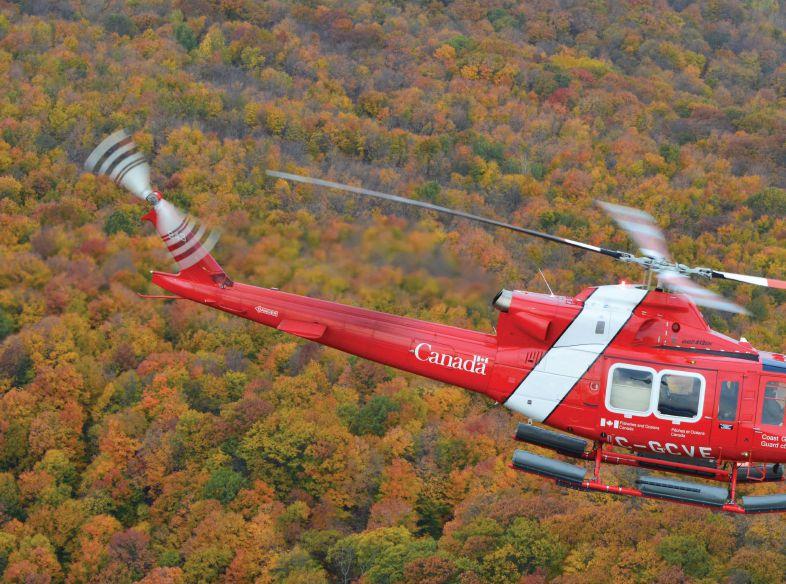
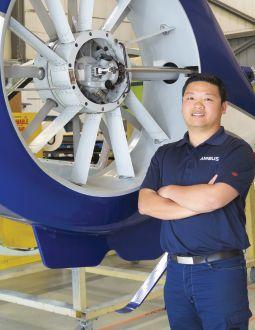


obsolescence and through-life cost of ownership, so we put an unsolicited bid to the Canadian Government last year to say we’ve got technologies on the aircraft that we’re manufacturing today for our export customers, like Norway, which we believe would benefit not only cost of ownership but also give much greater capability to the SAR fleet,” McElliott said. “What we’ve done is leverage the package that we have on the Norway aircraft, packaged that with bits that we think are pertinent to Canada, and offered that in our proposal.”
Team Cormorant proposes to leverage the fleet of VH-71 Kestrel helicopters which the Canada acquired from the U.S in June 2011 for $164 million. These aircraft were originally meant to be used as spare parts and are being housed at IMP facilities in Halifax.
If successful in its bid, Team Cormorant proposes to modernize the VH-71 fleet into an upgraded Cormorant configuration, which will allow existing CH-149s to enter the CMLU without any interruption of SAR service. Once all aircraft are upgraded and harmonized to a common standard, the RCAF will have the additional aircraft required to re-populate CFB Trenton, which is currently fielding smaller and shorter range CH-146 Griffons in a SAR role.
The common fleet of upgraded Cormorants would incorporate a new Rockwell Collins glass cockpit, new aircraft management system, new communications
systems, new navigation systems, FADEC engines, EO/IR sensor, a surveillance radar, advanced vision enhancement, and more.
“With the upgrade and enhancements that we’re proposing, the Cormorant will be optimized for continued SAR service out to 2040 and beyond,” McElliott said.
Also in attendance at CANSEC was CHC Helicopter, a global firm well known for providing offshore transportation to the oiland-gas industry, flying SAR and emergency medical missions and delivering maintenance/repair/overhaul and support services. The company is keen to position itself as a provider of helicopter SAR in Canada while the proposed Cormorant Mid-Life Upgrade takes place.
“The Cormorant Mid-Life Upgrade will likely take two or three aircraft off front-line service over a six year period,” Mick Fry, director of sales and commercial, SAR/EMS at CHC Helicopter said. “A potential option which we’ve suggested to the government is that they put a temporary commercial solution in to backfill that capability loss. We’re proposing to backfill Cormorant bases with our S-92 or AW189 aircraft, which would take pressure off the SAR system during the CMLU.”
CHC is currently providing SAR service for the Australian military, Irish Coast Guard, and others.
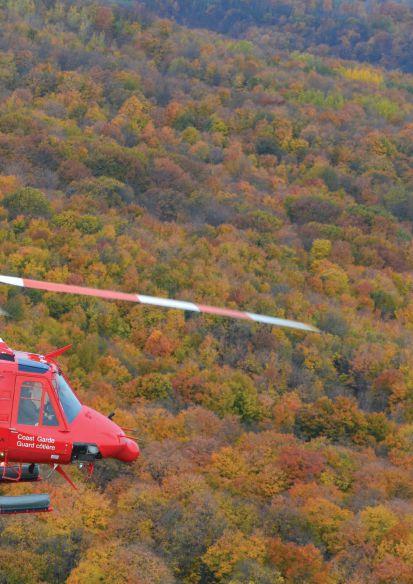
As our regular readers know, the CH-148 Cyclone Maritime Helicopter was grounded after a flight control incident occurred ear lier this year. Sikorsky identified that the root cause of the incident was isolated to the software in the Flight Control Computer (FCC), and that there were no external or aircraft-specific contributors to the event.
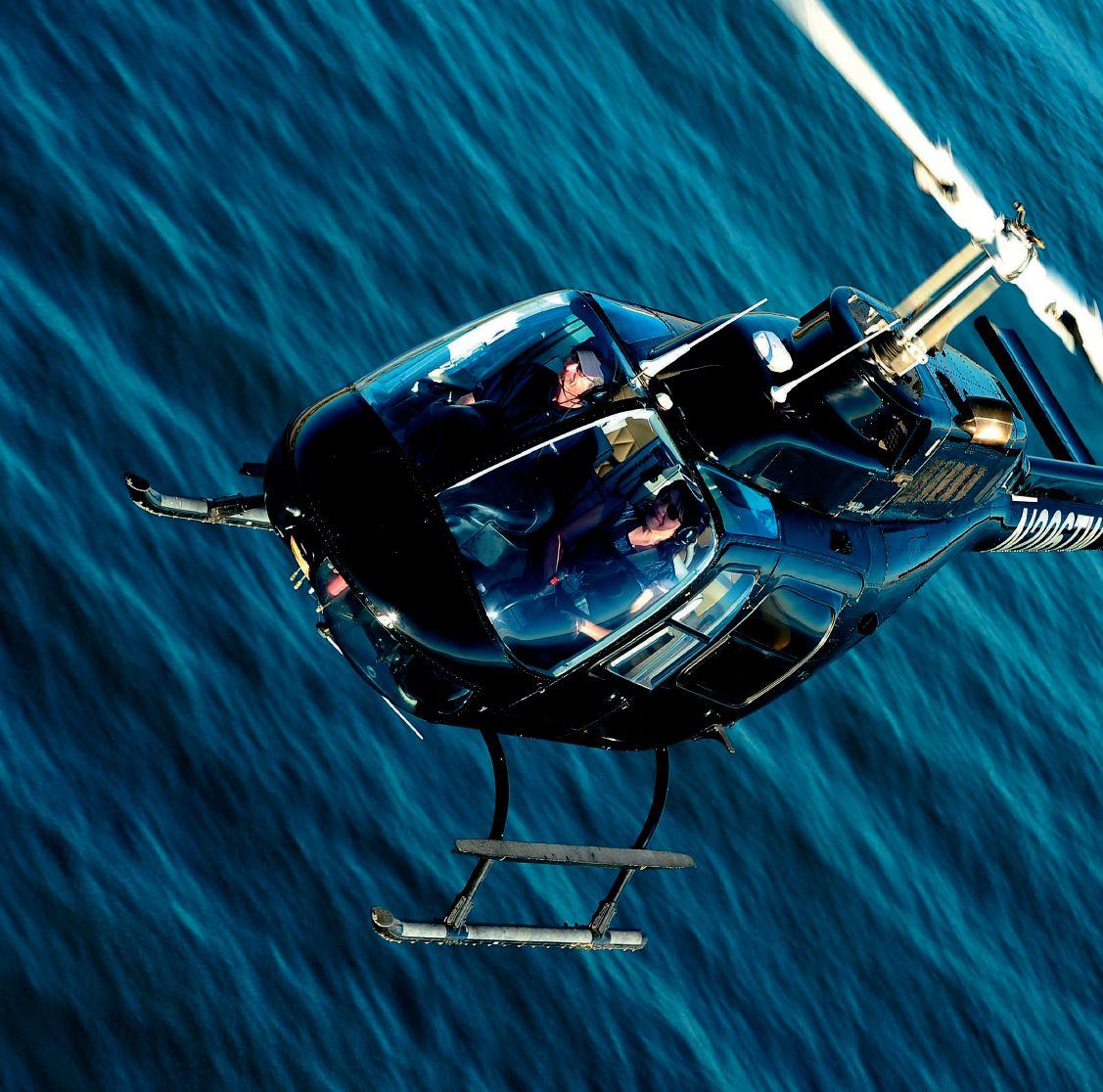
The FCC software where the root cause was isolated is common across all CH-148 aircraft. According to a company spokes person: “Given that we understand the FCC software, we were able to define a safe operating envelope for the aircraft to resume flight operations. A software modi fication is in progress to eliminate the issue and return to the full CH-148 flight enve lope. A software modification that elimi nates the issue will be in place prior to Block 2 deliveries. The overall impact to the schedule is still being assessed and we are working closely with Canada to miti gate the impact to the CH-148 schedule.”
Sikorsky Flight Test aircraft resumed flights April 27, and aircraft at Shearwater resumed flights May 16. Aircraft initially started flying with conservative flight limits as the investigation progressed. Now that the investigation is complete, there is a flight envelope in place that ensures safe aircraft operation while allowing the RCAF to progress training and initial operational test and evaluation. Six Block 2 aircraft are on track for delivery in June 2018.

At StandardAero, we’re lowering our customers’ DOCs by implementing preventative practices that reduce unscheduled engine removal and emergency maintenance. As an OEM authorized Rolls-Royce AMROC, our comprehensive support programs are designed specifically to increase M250 MTBR, keeping you in the air with worldwide Service Centers and Mobile Service Teams available 24/7.
AOG and need it now? We have an extensive M250 engine accessory and exchange pool, supported by our fresh M250 rental fleet and quick turn-times.
www.standardaero.com/heli +1.204.318.7544

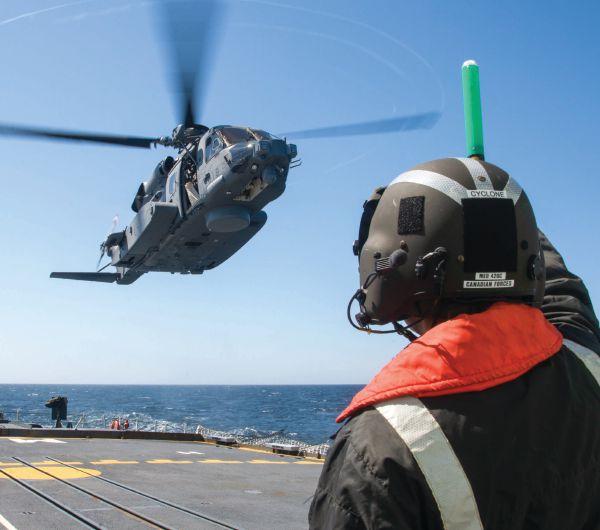
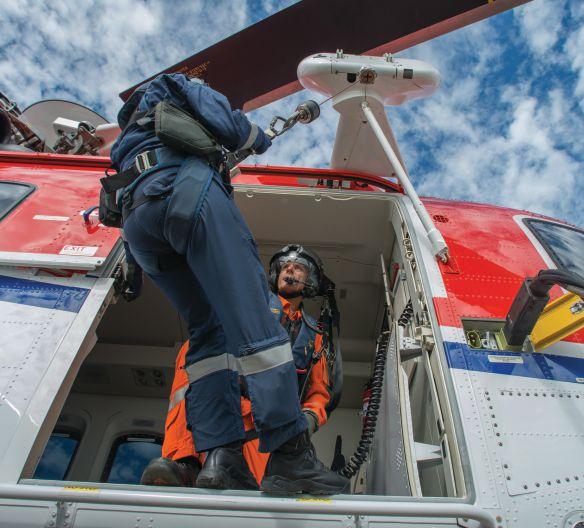
The highlight of CANSECs outdoor static display was a new Bell 412EPI in service with the Canadian Coast Guard. The Government of Canada has acquired seven aircraft to fulfill the medium-twin role, two of which are now on duty at Coast Guard Stations in Prince Rupert and Parry Sound.
The remaining aircraft will deploy to their respective bases once pilots complete their type certification training in Ottawa, after which they will ferry aircraft to their new home bases. All seven Coast Guard Bell 412EPI aircraft are expected to be in service by October.
“The 412EPI gives us faster speed, and because it has more internal fuel we can get cabin volume back since we don’t need to fly with auxiliary tanks all the time like we used to,” noted David Weir, chief pilot – rotary wing for Transport Canada. “The single-engine performance on the EPI is magnificent. There’s a lot of things that we do in the coast guard, like putting towers up, so if we were to lose an engine that that time, we can still hold the piece of equipment up on one engine. That’s a really big deal for us. The other advantage of the 212 is we have completely new avionics with full glass, stabilized, AFCS – we didn’t have any of that in the 212. The platform is also capable of doing day, night, and single pilot IFR.”
Esterline Avionics Systems showcased its advanced displays and CMC Electronics
brand Integrated Helicopter Solutions at this year’s CANSEC. On show for the first time was Esterline’s helicopter demonstrator featuring an extensive range of the company’s core avionics capabilities, integrated with an Esterline TREALITY brand dome visualization systems.
“Our Integrated Helicopter Solutions are highly flexible, allowing for multiple levels of modernization, from a minor upgrade to a full avionics suite,” noted Don Paolucci, vice president, navigation and integrated systems, Esterline CMC Electronics.
“Our goal is to optimize situational awareness for our commercial and military customers and ensure their mission success.”
The core of the company’s showcased integrated helicopter solutions includes smart multi-function displays, flight management systems, TacView portable mission displays, global positioning system sensors, doppler velocity sensors, mission computers, electronic flight bags and aircraft information servers, and a wide range of high-quality display products.
Unmanned systems are becoming more prevalent at defence and security exhibitions like CANSEC. Two systems were displayed prominently this year: the QinetiQ Mosquito and the Schiebel/MDA S-100 CAMCOPTER.
The Mosquito is a cost-effective unmanned helicopter target designed primarily for use in military weapons training exercises. The Mosquito can simulate
rotary-wing threats for ground-based air defence, air-to-air pilot engagements or naval ship defence systems. It is also an ideal target for satisfying test and evaluation requirements for new weapon systems.
Various mission requirements can be satisfied using a wide range of internal and external payloads, including visual and radar signature enhancement, miss distance scoring, video and transponder packages.
The Mosquito can be delivered as a system with the QinetiQ Universal Target Control Station.
On display at the MDA booth was a Schiebel S-100 CAMCOPTER Unmanned Air System (UAS). The Vertical Takeoff and Landing (VTOL) UAS needs no prepared area or supporting launch or recovery equipment.
It operates day and night, under adverse weather conditions, with a range out to 200 km, both from land and at sea. The S-100 navigates automatically via pre-programmed GPS waypoints or can be operated directly with a pilot control unit. Missions are planned and controlled via a simple point-and-click graphical user interface, and high-definition payload imagery can be transmitted to the control station in real time.
The S-100 was on display as a potential option for an anticipated Royal Canadian Navy UAS requirement.
The rotary footprint factored prominently at CANSEC 2017. This trend is sure to continue as the RCAF will eventually seek to upgrade or replace its CH-146 Griffon helicopters.
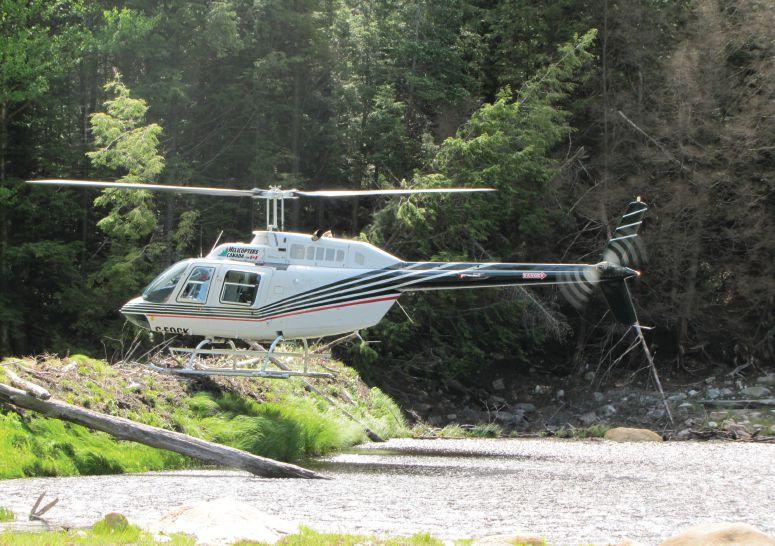
Left: Helicopters Canada Flight Training and Charter offers a number of helicopter training options. (Photo courtesy of Helicopters Canada).
Below: Space abounds at the North Bay airport. (Photo courtesy of City of North Bay).
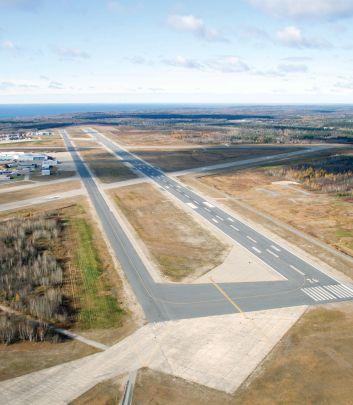
BY MATT NICHOLLS
Punching above its weight. Open for business. Finding just the right niché to build on a strong foundation.”
Poignant expressions all and certainly accurate ones to describe the city of North Bay’s aerospace footprint – a developing infrastructure with strong ties to the past striving towards an even brighter future.
Located some 344 kilometres north of the GTA and centrally located between Sault Ste. Marie to the west and Ottawa to the east, this vibrant northern city of some 51,000-plus located on the shores of Lake Nipissing has one of the most diverse economies of Ontario’s northern communities – and a very rich aerospace history to boot.
Much of that history is connected to the Royal Canadian Air Force (RCAF). Since the 1930s, North Bay has served as a strategic location for the RCAF as home to both 22 Wing North Bay and its 21 Aerospace Control and Warning Squadron.
The city’s military footprint is extensive and has grown from its initial use as an emergency landing field in 1933 to playing key roles in both the Second World War ferrying Liberator and Lancaster Bombers across the Atlantic to Europe. It also played critical roles during the outbreak of the Korean War before transforming into the main
nerve centre for NORAD.
In October 2006, Canadian NORAD Region air defence operations moved out of its Underground Complex into a new state-of-the-art installation named the Sgt David L. Pitcher Building, after a Canadian serviceman who was killed in the crash of a U.S. Air Force AWACS patrol plane in 1995.
The new $16 million command centre was built above ground and the complex proudly continues its role as one the most important air bases in Canada, responsible for the air defence of the nation almost half of the North American continent.
In 2010, CFB North Bay’s operations centre took the first steps towards transitioning from air to aerospace defence, commencing preparations for Sapphire, Canada’s first military satellite. CFB North Bay commenced surveillance of space via Sapphire, Canada’s first military satellite that was launched into orbit from India in February 2013. Today, Sapphire is performing surveillance of objects orbiting at 6,000 to 40,000 kilometres altitude, and delivering data on those objects to the Space Surveillance Operations Centre (SSOC) in North Bay’s operations centre.
In 2014, the Government of Canada awarded a contract to Raytheon Canada Ltd. for the operation and maintenance of the North
Warning System. The North Warning System is comprised of 47 unmanned long- and short-range radar stations along the Arctic coast from Alaska to Labrador.
The North Warning System is used to ensure Canadian sovereignty in the North and to support North American air surveillance and air defence operations under the North American Aerospace Defense Command (NORAD) agreement.
North Bay’s military footprint past and present is a strong one, yet the future of its aerospace footprint lies in attracting new and diverse commercial and business partners to its hub around Jack Garland Airport.
Located minutes from the downtown core and situated around acres of wide open green space, the airport is served by regional, international and charter operators including Air Canada, Porter Airlines, Bearskin Airlines, Jazz Aviation LP and Sunwing. The city has invested more than $30 million in the past decade to upgrade the airport and surrounding lands, making it a prime spot for aerospace companies looking to expand and grow.
With its 10,000 ft. runway, ample room for hangar space, MRO capabilities, fully-



serviced parcels with full water and sewer connections, power, fibre-optic network access and competitive land values and incentives to offset development and operation costs, it’s a prime spot for aerospace companies to call home.
Rotary- and fixed-wing aviation training on both the flight and maintenance engineering sides of the equation are a true hallmark of the city’s aerospace footprint, with a variety of options available to aspiring students. The airport is home to some of the most respected training schools in the province, with Canadore College’s School of Aviation, Helicopters Canada Flight Training and Charter and Essential Helicopters all calling Jack Garland home.
Other key aerospace players dot the site including Voyageur Aviation Corp. (Chorus) the Ministry of Natural Resources and Forestry (MNRF) – with its new $9.5 million state-of-the-art Fire Response Facility this year – and Comsatec Inc., an energy management firm based in Callander, Ont. and Toronto.
With some 48,000-plus aircraft movements last year, the airport is a bustling spot with a diverse mix of aircraft and operations according to Jack Santerre, the airport manager at Jack Garland. Santerre recently took
Helicopters on a tour of the airport and the surrounding property.
Erin Richmond, manager of economic development for the City of North Bay underscores the progress that is being made, acknowledging that ironclad partnerships between industry and the city and ease of operations are drawing cards that should foster growth.
Santerre is on the team and is impressed with the way community partners work in unison. “The City of North Bay as a whole is a very strong supporter of the aviation community,” he said. “The city realizes the importance of an airport and how it helps drive the economy in the community. Airports are not only transportation hubs, but they are catalysts for economic development and growth.”
It also doesn’t hurt to have a mayor that lives and breathes aerospace – it’s in his blood. Mayor Al McDonald’s father was an RCAF pilot who was stationed all over Canada in a variety of roles. He shared some of his adventures and visions for North Bay’s aerospace future with Helicopters during a lunch break on our tour.
“From a North Bay perspective, I think we have a great opportunity here,” McDonald said. “But it is about political will – it is putting a lot of time and effort into developing it. We have all the pieces here, it’s just how do you give it even more attention.”





It’s no surprise the H145 is the helicopter of choice for rescue missions. Whether at sea, on a mountain or in a blizzard, it can bring help to where it’s needed. Compact and versatile, it provides outstanding ight performance under the most extreme conditions.
Resilience. We make it y.




One of the pieces firmly in place in North Bay is its educational offerings for aspiring aviation students. Canadore College School of Aviation is one the most respected colleges in Ontario, offering students a diverse mix of academic programs in fixed- and rotary-wing operations. From flight training at partner Essential Helicopters to one of the college’s structural, mechanical, avionic and composite repair and engineering programs, the college has a solid reputation throughout the industry.
A tour of the bright, inviting campus reveals not only a high competency level of academic proficiency, but an equally high level of commitment, dedication and passion from its instructors, ensuring students are properly and effectively prepared for future industry roles.
The college prides itself on its 15-1 student to professor ratio and is equally proud of the fact its instructors – most active in the field themselves – bring hundreds of years of practical experience to their roles in a variety of engineering and maintenance fields. It is also basking in the glow of a new multi-million dollar composites wing and a $400,000 boost to its avionics program.
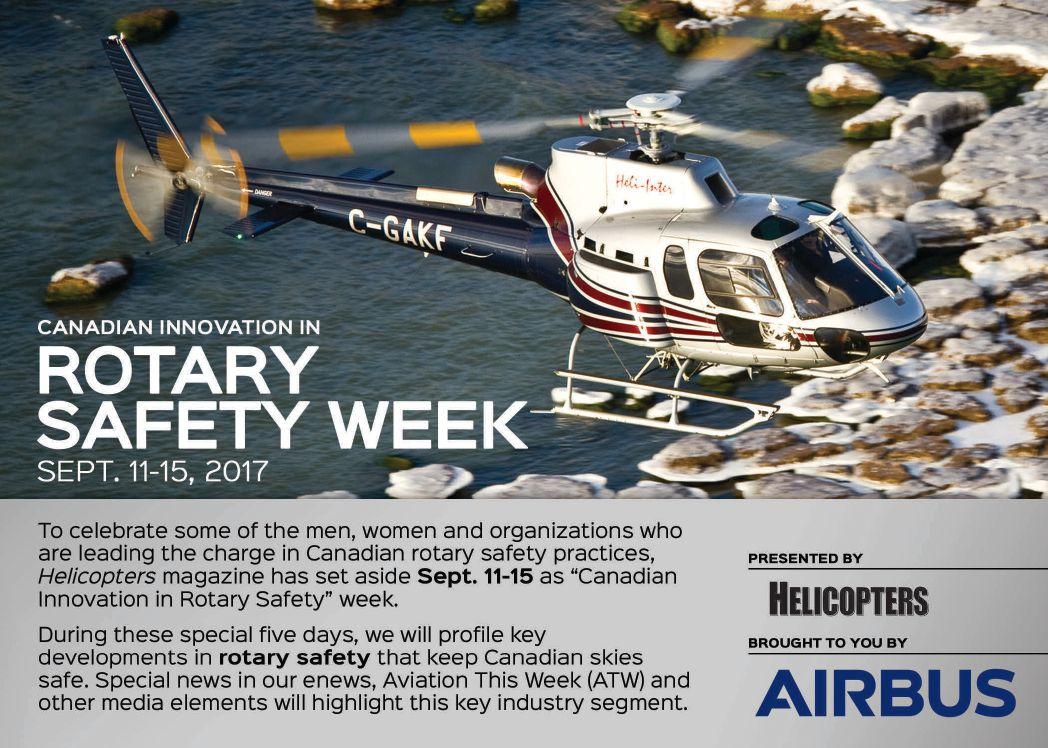
To be awarded at ATAC’S 2017 Canadian Aviation Conference & Tradeshow in Montreal, Qc, November 6-8th
e Award recognizes and honours a flight instructor, either fixed or rotary wing, who has made a significant contribution to safety in Canada, also having demonstrated superior teaching skills.
Jane & Rikki Abramson established this Award in 2003 through Air Transport Association of Canada, and will personally present this year’s award. The recipient's name will be engraved on the prestigious perpetual trophy and entered in the associated logbook, both on permanent display in the Canada Aviation & Space Museum in Ottawa.
Generously supported by:



Nominations can be made at any time throughout the year, prior to the deadline of September 14th, 2017
For entry requirements contact Jane Abramson, Founder & National Administrator
Phone: 438-257-0881
Fax: 438-257-0865
Email: janeabramson@videotron.ca ww w. dcamaward.com



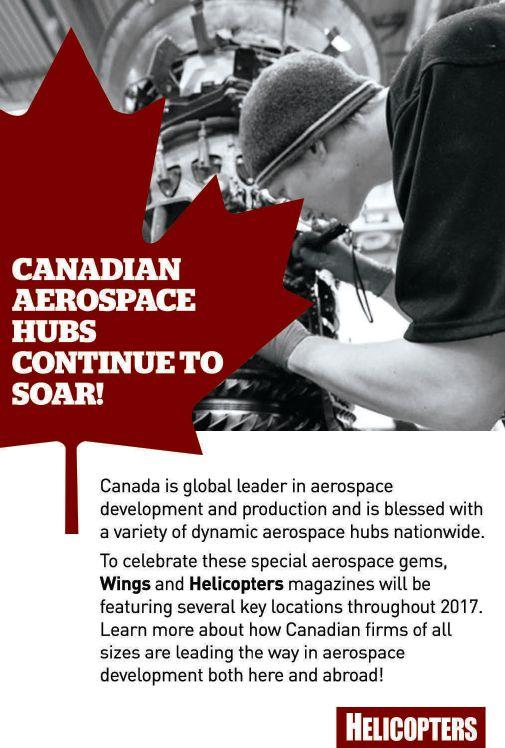
Aspiring helicopter pilots hoping to make their mark in the rotary world have two strong options in Helicopters Canada Flight Training and Charter and Essential Helicopters. Both offer students intimate hands-on class instruction from experienced, industry-respected pilots. Current industry trends in forestry, mining and aerospace have created increased demand for both helicopter charters and qualified rotary pilots.
Founded in 2000, Helicopters Canada Flight Training and Charter has experienced

steady growth with a fleet of six helicopters, delivering internationally recognized flight training programs. Programming includes commercial licencing, private licencing, for eign conversions, night rating, and more. Training at Helicopters Canada aims to pre pare students for the realities and skills required in the industry. The students build their time learning advanced flying tech niques, which can include short- or long-line slinging, hover exit and water bucketing. It is not uncommon for students to graduate with five to 10 hours of solo slinging.






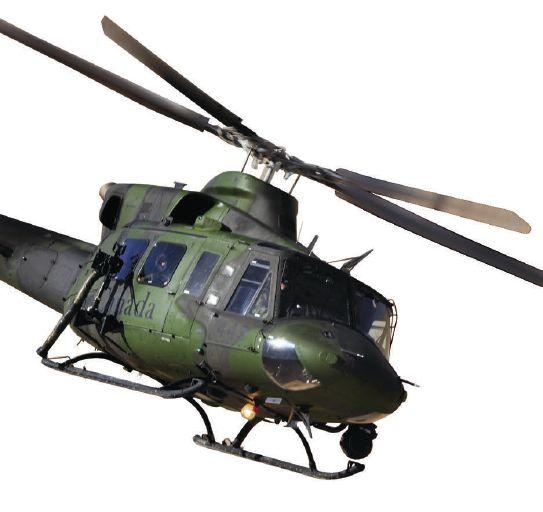

Head Office:
Field Maintenance for Bell 206, 206L, 205, 212, 412 and Robinson R22 and R44.
Dynamic and hydraulic component overhaul and part sales for the Bell 204, 205, 206, 206L, 212, 407 and 412.
Structural Repairs Fixtures for Bell 206, 206L, 407, 205, 212, 412.
Approved Woodward HRT Licensed Repair Service Facility Approved Bell Helicopter Customer Service Facility
Transport Canada Approval # 3/86 EASA Approval Number 145.7106

18 Terry Fox Dr., Vankleek Hill, ON, K0B 1R0
T: 613.678.3027 F: 613.678.2776 Gerry@helitradesinc.com
Alberta Facility: Site 5, Box 7, RR2, Airdrie, AB, T4B 2A4 T: 403.912.4658 F: 403.948.6475 info@helitradesab.com
Ontario Facility: 4536 Side Rd 10, New Tecumseth, ON L9R 1V4 Phone: (705) 435-4031 Gerry@helitradesinc.com


HE_April16_Helitrades_CSA.indd 1 2016-02-17 8:53 AM


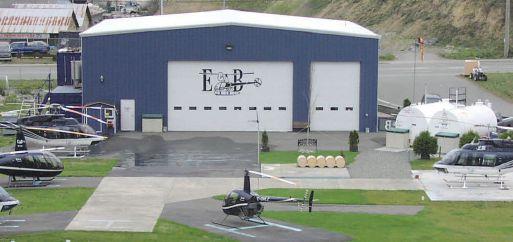







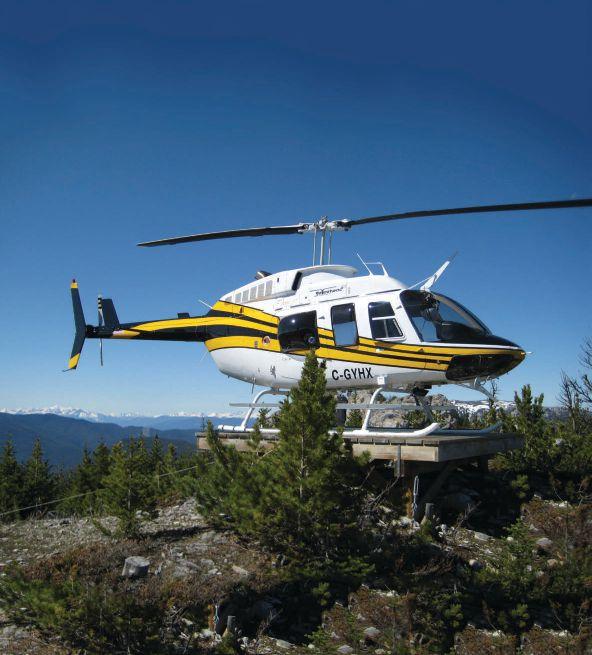






BY PHIL CROUCHER
One problem with helicoptering is that there are virtually no flying clubs, at least of the sort that exist for fixed wing, so pilots get very little chance to swap stories, unless they meet in a muddy field somewhere, waiting for their passengers. As a result, the same mistakes are being made and the same lessons learnt separately instead of being shared. Even when you do get into a school, there are still a couple of things they don’t teach you, namely that aviation runs on paperwork, and how to get a job, including interview techniques, etc. – flying the aircraft is actually less than a third of the job. This book is an attempt to correct the above situations by gathering together as much information as possible for helicopter pilots, old and new, professional and otherwise, in an attempt to explain the why, so the how will become easier.


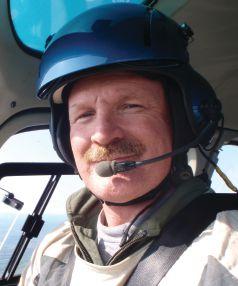
FRED JONES
s Helicopters goes to press, the Canadian helicopter community is being led to believe that the draft Fatigue Management Regulations published in a Canada Gazette I Notice of Intent (NOI) on March 25 (www.gazette. gc.ca/rp-pr/p1/2017/2017-03-25/html/notice-avis-eng. php) will be published for public consultation in Canada Gazette 1 by the end of June with very few changes.
Fortunately, Transport Canada (TC) has indicated that they can still make changes in response to comments received, which is a very good thing. Historically, TC has adopted the practice of fine-tuning regulations, rather than making significant changes post CanadaGazette I.
If ever there was draft regulation in need of an overhaul, it is this one. Nine national and regional associations from across Canada have maintained that this regulation is so badly flawed, it needs to be sent back for some significant revisions, in a meaningful dialogue with all industry segments. Since 2010, when the fatigue management-working group began its deliberations, the process has centered on the needs of the large scheduled international airline community.
TC occasionally listened to the concerns of the other segments of the industry, but the regulator has largely ignored their input.
Their mantra, and the mantra of the pilot’s unions, has been “a pilot is a pilot.” It is true that all pilots are subject to fatigue – however, the way that fatigue is mitigated should vary across different industry segments. The existing regulations recognize industry segment-specific needs across a wide variety of issues, including emergency services, dispatch system requirements, training standards – the
should be respected and provides very general guidance. TC has attached numbers that, in some cases, have been pulled from thin air.
Sometimes the NOI regulations defy the science – the “zeroing provisions,” which have served the industry and its flight crews well for the past 10 years, were summarily removed in the NOI regulations. TC’s response: “The cumulative flight hours can get too high.” There is strong support in the science that three days free from duty, “zeros” all fatigue – including any fatigue from duty hours and flight hours. Our industry is largely based on periods of deployed duty – followed by extended periods of time free from duty. Pilots are happy, operators are happy and fatigue is mitigated in a most significant way. When was the last time a helicopter flight crew member asked, “Can I take one day off each week, in camp?”
We believe TC has little awareness of the devastating impact that these proposed new regulations will have on a diverse Canadian commercial aviation community. Last year, TC circulated a survey to determine the impact of the proposed new regulations. The survey was, however, complicated and very poorly drafted. It was also circulated in the heart of the summer operating season and relied upon the survey’s respondents to patch together an incomplete lay-summary (no regulatory text) of the revisions to the regulations since the 2014 Notice of Proposed Amendment (NPA), while viewing the old regulatory text. TC notes it got a three per cent response-rate from air taxi operators.
HAC is not saying that the fatigue management regulations in Canada do not require some adjustment. There is widespread acknowledgement that tour lengths need to be adjusted downwards, and we do need to recognize the fatigue-relate science as it applies to disruptions of the window of circadian low (WOCL).
If ever there was draft regulation in need of an overhaul, it is this one.
list goes on and on.
The Americans and the Europeans have recognized that different industry segments should be regulated differently – having proceeded with new airline-only rules, for now. In short, the Canadian regulations were drafted to recognize the unique requirements of diverse sectors of the commercial aviation community, serving many isolated communities in a large country. The NOI draft regulations defy that principle.
Except on a very few issues, even the fatigue-related science rarely identifies hard numbers. It identifies fatigue-related principles that
We also need to better protect the opportunity for eight hours of rest, for example. And we are not airlines and we should not be treated like airlines. The current NOI proposal will not improve safety – it will only make the cost of our services higher and aggravate the existing shortage of experienced helicopter pilots.
Sadly, our customers and the communities that we serve will pay the price of this misguided new regulation, if it moves forward in its current form.
Fred Jones is the president/CEO of the Helicopter Association of Canada and a regular contributor to Helicopters magazine.














It’s no surprise the H145 is the helicopter of choice for rescue missions. Whether at sea, on a mountain or in a blizzard, it can bring help to where it’s needed. Compact and versatile, it provides outstanding ight performance under the most extreme conditions.


Resilience. We make it y.

