s a newcomer to this industry, I must say I was amazed by Colin Pelton’s story of fighting B.C. and Alberta wildfires, as told by Paul Dixon on page 14. The long hours, the dangerous conditions, the lack of communication, the unpredictable demands, the skill and expertise required, the stress of seeing people and property threatened – I had no idea that flying helicopters could be such a heroic activity. My one and only helicopter trip was a tour over Niagara Falls. My two main thoughts were that the door I was pressed up against seemed awfully flimsy and that if that whirlygig on the top stopped going around, we were going to turn into a falling rock. I actually had heard of autorotation, but hadn’t heard anything good about it.
Finding out that fighting forest fires was such a big part of what helicopter pilots do in parts of this country made my entrepreneurial side wonder if this is a growth industry. That turns out to be hard to determine. As Dixon reports, 2017 was a record year for wildfires in B.C., but the country overall had fewer fires than the 10-year average. The effects of climate change are the big variable, but it seems unclear just what they will be. Natural Resources Canada states rather flatly that climate change will increase the number of fires and damage done by fire, which makes sense at first blush when one
Inspiring stories
Bravery in the cockpit and the boardroom highlight this issue.
pilots rises, there is clearly an opportunity in the business for any young person thinking about a career in aviation. By all accounts, resources for firefighting are stretched to the breaking point – thus the long hours for existing pilots. It’s a great time for anyone with a passion for flying and an adventurous streak to attend one of our upcoming Careers in Aviation Expos to ask the experts what is involved in becoming a rotary wing pilot. Our Toronto event takes place April 28 followed by an Expo in Edmonton on May 12. Attendees will have a chance to hear talks by top experts on just about every aspect of aviation and to sit at mentor tables in small groups. You might even hear some stories like Pelton’s right from the horse’s mouth.
I hope we see lots of women at the CIA Expo. I’ve been interested since getting involved with this magazine to see the determined push from all quarters to get women interested in aviation roles, from the Women in Aviation section in the magazine through events like Girls Take Flight, happening April 21 in Oshawa, Ont. Girls Take Flight is organized by the Canadian Ninety-Nines, a chapter of an international organization founded in 1929, which now spans 44 countries. With an organization like that, it seems inevitable that we’ll see great improvement in the level of female participation in our industry. Helicopters magazine will certainly be dropping in to check it out and report on the day in these pages.
I had heard of autorotation, but hadn’t heard anything good about it. ‘‘ ’’
thinks about higher temperatures. But later in the same article NRCan blames a lower rate of fires in some areas due to increased precipitation due to...climate change. So does climate change make fires more likely or less likely? I suppose the answer depends on where you are in the country. Hotter weather here in southern Ontario usually means more thunderstorms off the lakes and higher humidity. I suspect that’s not true in the Okanagan.
Whether or not the overall demand for wildfire-fighting helicopter
Speaking of women in aviation, don’t miss our inaugural Visionaries feature interview with Cathy Press, CEO of Chinook Helicopters, on page 24. Press is celebrating 20 years at the helm of Chinook and is presiding over its addition of fixed-wing training services. She’s a real inspiration to anyone, male or female, who is considering a career in aviation.
Press was interviewed by our correspondent, Paul Dixon, who also contributed our cover story in addition to his regular column. Sadly, this is the last we’ll be hearing from Paul in these pages. He’s announced his retirement from writing in this magazine to focus on a book and his photography. Dixon was a big part of Helicopters magazine for the last 10 years and his insight will be missed. Best of luck in the new ventures, Paul!
Air Uber
Voom, an on-demand helicopter-booking platform, is now joining Airbus Helicopters as part of the company’s strategy to provide new urban mobility solutions for commuters. Initially incubated in A3, Airbus’ Silicon Valley outpost, Voom launched commercial operations in April 2017 in Sao Paulo, Brazil, flying thousands of passengers over the last ten months, and plans to expand its presence this year.
“Urban transportation on and below ground is reaching its limits, and naturally Airbus is looking to the skies to redefine a third axis for public transportation solutions,” said Matthieu Louvot, Airbus Helicopters executive vicepresident of customer support and services. “Voom will allow us to grow the usage of existing helicopters for the benefit of urban citizens and operators. With Voom we will also
explore and develop new business models in order to support our innovation roadmap.”
Voom is building the future of urban air mobility today by making helicopter transportation accessible and affordable to urban commuters. The platform connects travellers with trusted and licensed helicopter operator partners, providing a new escape to urban congestion by taking to the skies. Voom air taxi flights can be booked on their website in as little as 60 minutes in advance.
“We are thrilled to join Airbus Helicopters to build the urban air mobility experience around the world,” said Voom CEO, Uma Subramanian. “Our services provide convenient, reliable and affordable air transit to urban areas that so desperately need an alternative to traditional ground transportation. Following our launch in Brazil, we are expanding into
Flying into history
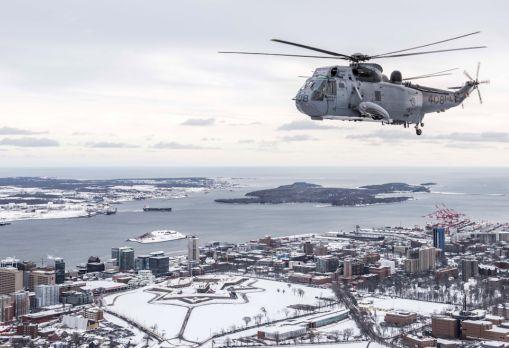
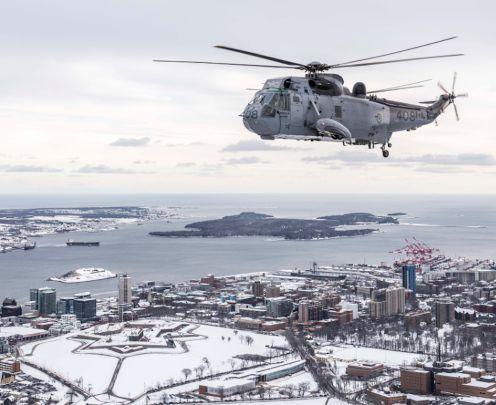
423 Maritime Helicopter Squadron conducted its final operational flight of CH-124 Sea King helicopters on Jan. 26 with a flypast over Halifax Harbour and Shearwater, N.S. 423 Squadron personnel will now turn their full attention to transitioning to the CH-148 Cyclone, the Royal Canadian Air Force’s new maritime helicopter. It’s not the last time that residents of the Halifax and Dartmouth area will see the venerable Sea King in flight, however. 443 Maritime Helicopter Squadron, located at Patricia Bay, B.C., will support Royal Canadian Navy operations on both coasts until the Sea King is formally retired at Patricia Bay at the end of this year. Both 443 and 423 Squadrons are part of 12 Wing Shearwater. The Sea King has been in service with the Royal Canadian Navy and Royal Canadian Air Force for 54 years. The first Cyclone detachments onboard Navy ships are planned for mid-2018.
additional cities, beginning with Mexico City early this year.”
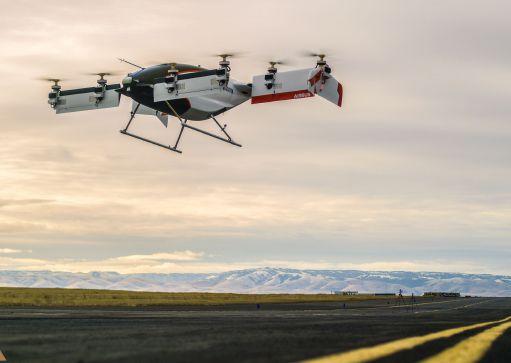
As part of its bold vision for the future of vertical take-off and landing systems, Airbus is exploring a range of breakthrough urban mobility solutions. This includes ondemand helicopter rides for events; the four passenger, self-piloted CityAirbus eVTOL demonstrator; the single pas-
senger, self-piloted Vahana eVTOL aircraft by A3; the Altiscope project by A3 helping to shape future regulations and air traffic control requirements to safely integrate eVTOL aircraft in urban skies; autonomous urban parcel delivery by drones through the Skyways project; and finally the Racer high-speed demonstrator, which aims to connect the heart of distant cities.
The 423 Maritime Helicopter Squadron made a Halifax fly-over the last mission for its CH-124s. Photo courtesy Corporal Anthony Laviolette
Airbus hopes its Vahana automated VTOL aircraft can someday form the backbone of an air-taxi service. Photo courtesy: A3 by Airbus
Bell Helicopter rebrands
Bell Helicopter has announced it has rebranded to be known as simply “Bell.” The new brand strategy and modernized logo are rooted in the company’s focus on innovation and customer experience. Bell will roll out the rebrand over the next year. “Bell has always been about more than just helicopters. Our team has spent the past 80 years pushing the boundaries of flight, and now we will accurately reflect that quest,” said president and CEO, Mitch Snyder. “The look captures our innovative spirit without detracting from our core mission of providing safe and unsurpassed experience to our customers.”
The most notable update, aside from its brand name change, is a new logo. Bell wanted to highlight the tenacious pursuit of flight with its depiction of a dragonfly, while grounding the logo with a shield to illustrate the company’s stellar reputation in reliability and quality. “The dragonfly can take off and land wherever it wants, fly quickly and efficiently in any direction, and hover at will. It represents the mastery of flight, something Bell strives to achieve,” added Snyder.
Bell teamed up with FutureBrand, a global strategic brand and design consultancy, to complete its first rebranding since Textron purchased the defence businesses of Bell Aircraft Corporation in 1960, some of which became Bell Helicopter. The process, which began in the summer of 2017, helped refocus the company’s communications to more accurately reflect how employees go above and beyond to bring the experience of flight to customers.
“This rebrand is not just about a new logo,” said Snyder. “We chose to do this because we see ourselves at the forefront of technology. We believe this refresh embodies the idea that we can make the vertical dimension more accessible.”
Out of gas
Imperial Oil warned Transport Canada in February that quality problems with avgas shipped from its Strathcona, Alta., refinery in December and January could cause problems with aircraft fuel gauges. The resulting shortages led to fears that small aircraft and helicopters could be grounded as airfields ran out of fuel. However, Imperial claimed in a March 7 release that the problem is under control. Imperial says its has made significant progress towards resolving a potential fuel quality issue in aviation gasoline (sometimes referred to as “avgas” or “100 low lead”) shipped from Strathcona refinery since Dec. 28. Imperial has identified all locations that received potentially off-spec product and has completed close to all of the testing at those sites. At this point, approximately 70 per cent of the sites tested have been confirmed as fit-for-use. It has also been working around the clock
Imperial says it is still investigating to find the cause of the avgas quality problems that led to a shortage in western Canada this winter.
to secure alternative supplies from across North America. These efforts are reported successful and Imperial believes its supply of avgas to customers will normalize by the end of the March.
“This has been a challenging situation and we appreciate all of the patience, understanding and co-operation we have received from our customers, their resellers and from endusers,” said Jon Wetmore, vicepresident of Imperial
HELICOPTERS MAGAZINE
P.O. Box 530 105 Donly Drive South Simcoe ON N3Y 4N5
Tel.: 519-428-3471 Fax: 519-429-3094
Toll Free: 1-888-599-2228
Website: www.helicoptersmagazine.com
INTERIM EDITOR PATRICK FLANNERY pflannery@annexweb.com 226-931-0545
MEDIA DESIGNER BROOKE SHAW
CONTRIBUTING WRITERS
RICK ADAMS, DAVID CARR, BRIAN DUNN, PAUL DIXON, WALTER HENEGHAN, FRED JONES, JAMES MARASA, CARROLL MCCORMICK, COREY TAYLOR
RETURN UNDELIVERABLE CANADIAN ADDRESSES TO ANNEX PUBLISHING & PRINTING INC., 111 Gordon Baker Rd., Suite 400, Toronto ON M2H 3Rq email: subscribe@helicoptersmagazine.com
Mail: c/o Circulation, 111 Gordon Baker Rd., Suite 400, Toronto, ON M2H 3R1
SUBSCRIPTION RATES
Canada - 1 year $30.85
USA- 1 year $56.00
Foreign - 1 year 62.00 plus applicable taxes
www.helicoptersmagzine.com/subscribe
Annex Privacy Officer
Privacy@annexbusinessmedia.com Tel: 800-668-2384
Occasionally, Helicopters magazine will mail information on behalf of industry-related groups whose products and services we believe may be of interest to you. If you prefer not to receive this information, please contact our circulation department in any of the four ways listed above.
Downstream. “We recognize this situation has significantly disrupted the avgas flying community and we apologize for this.”
Impreials says its investigation into the cause of the issue is progressing. The refinery and research team are working to solve the problem, and begin manufacturing avgas again as soon as possible. Imperial encourages end-users to stay informed about Transport Canada NOTAM instructions.
Helicopters Magazine is an associate member of the following Canadian aviation associations:
Photo courtesy Bell
Photo courtesy Imperial Oil
On Traxxall Airbus
Montreal-based Traxxall Technologies has announced a partnership with Airbus Helicopters. All new Airbus Helicopters delivered in the U.S. and Canada will include the Traxxall aircraft maintenance tracking and inventory management system for one year. Additionally, Traxxall and Airbus Helicopters will offer a special promotion for in-service helicopters.The partnership will also provide customers with an end-to-end digital experience for their operations. They will benefit from a seamless data exchange between Fleet Keeper, Airbus Helicopters’ electronic technical logbook, and Traxxall’s maintenance tracking system.
“We are pleased to announce a partnership with Traxxall,” says Thierry Meouchi, head of connected services for North America at Airbus Helicopters. “The Traxxall team has developed an excellent maintenance tracking and inventory management
system. We are confident that our decision to include Traxxall with all new deliveries in the U.S. and Canada will be greatly beneficial to our clients.”
“We are very proud to announce a partnership with Airbus Helicopters,” continues Mark Steinbeck, president of Traxxall. “The selection of Traxxall by an industry leader like Airbus Helicopters shows the confidence that operators can place in Traxxall’s system and support. We’ve assembled a unique team of aviation professionals and we look forward to serving Airbus Helicopters’ clients.”
In other Traxxall news, the company has announced a new client, Heliservicio.
Heliservicio is a leading helicopter transportation company with more than 40 years of operating experience. The company specializes in offshore transportation for the international oil and gas industry. Operating a fleet of 22 Bell 412 EP and 429 intermediate
Even up at Airbus
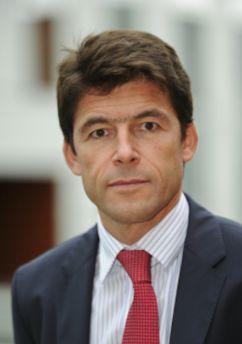
Airbus SE has appointed Bruno Even, 49, CEO of Airbus Helicopters, effective April 1. He will report to Airbus CEO Tom Enders and join the company’s executive committee. Even comes to Airbus from Safran where he was CEO of its helicopter engines business since 2015. He succeeds Guillaume Faury who assumed his duties as president of Airbus commercial aircraft in March.
“I am very pleased that we could attract an experienced executive in Bruno Even to join Airbus,” said Enders. “Bruno
has climbed the management ranks at Safran at a very young age. His broad background of the helicopter business and his strong customer focus combined with program and engineering expertise make Bruno the ideal candidate to succeed Guillaume Faury and to continue our successful improvement journey in a very demanding business environment.”
A graduate of the Ecole Polytechnique, Even joined the French Ministry of Defence in 1992 where he was in charge of the space component’s
“WE ARE CONFIDENT THAT OUR DECISION TO INCLUDE TRAXXALL WITH ALL NEW DELIVERIES IN THE U.S. AND CANADA WILL BE GREATLY BENEFICIAL TO OUR CLIENTS.”
helicopters, Heliservicio’s experienced pilots are supported by skilled technicians and a stateof-the-art operations and logistics center. Last year, Heliservicio began an assessment of all available aircraft maintenance tracking systems. At the end of this process, the company selected Traxxall for the maintenance tracking of its entire fleet.
“We started using Traxxall last spring and have been very pleased with its performance to date,” says Zerlyk Uziel Mejia Nambo, engineering manager for Heliservicio. “It helps us maintain our fleet at a very high level, which is essential given the challenging nature of most of our missions. Traxxall has the capacity to help minimize unscheduled downtime
development for the Helios II satellite. In 1997, he transferred to the Ministry of Foreign Affairs to become technical advisor for the director of strategic affairs, security and disarmament. In 1999, he joined Safran Helicopter Engines (ex-Turbomeca) where he held a number of management posts up to executive vice-president of support and services. From 2013 to 2015, he was CEO of Safran Electronics and Defense (exSagem).
and contain downtime necessary for maintenance milestones. Efficiently managing downtime is essential to optimal fleet performance and the overall success of our business. Based on our experience, I would recommend Traxxall to fellow aircraft operators.”
“We are very pleased to be working with Heliservicio,” continues Steinbeck. “The Heliservicio team is highlyrespected because they have developed an exemplary culture based on safety, continuous training and operational excellence. Their impeccable safety record is testament to the importance that they attribute to aircraft maintenance and we are very proud to be contributing to Heliservicio’s continued success.”
The move follows Enders’ announcement that he would not seek another term as CEO and Fabrice Bregier’s resignation. This led to Faury being tapped to head commercial aircraft and created an opening in the helicopter division.
Bruno Even. Courtesy AIrbus
Airbus signs order for first H160s for the North American market
Airbus Helicopters has signed the first order for four ACH160s with an undisclosed, North American customer. The launch customer, a major U.S. business entity with extensive experience in corporate aviation, has opted for one aircraft to be delivered in “Stylence by ACH configuration,” the in-house, private and business design product line; with the remaining three aircraft to be delivered in “ACH Exclusive configuration,” the select design product line which allows the highest level of customisation and bespoke craftsmanship.
“With the launch of Airbus Corporate Helicopters (ACH) last year, now followed by the first order of this new generation helicopter by a corporate customer, the ACH160 is set to revolutionise the way our private and business aviation customers travel,” said Ben Bridge, executive vice-president of global business at Airbus Helicopters.
Although the ACH160’s cutting-edge design and technology provides passengers with a truly business-jet-like passenger experience, it was the low external sound levels, witnessed during a flight demo at the company’s headquarters in Marignane, France,
which helped the customer commit to an order for four aircraft. The ACH160 represents a step-change in passenger experience with its panoramic views, low sound levels, smooth flight even at high speeds, and the high-quality, ACH interior fits and customisation options that meet the high standards of private and corporate customers.
“The H160 is set to become a market reference for private and business aviation, air medical services, and passenger transport in North America, revolutionizing the way our customers travel,” said Chris Emerson, president of Airbus Helicopters and head of North American region. “We look forward to supporting our customers as they gear up to operate this new-generation helicopter.”
Sacramento Police Department to operate first law enforcement-configured Bell 505 Jet Ranger X
Bell has announced the signed purchase agreement for the sale of the first law enforcement-configured Bell 505 Jet Ranger X to the Sacramento Police Department.
The Bell 505 will be outfitted with several law enforce-
ment provisions including high skid gear and is scheduled for delivery this spring.
“The enhanced visibility, manoeuverability and advanced avionics of the Bell 505 make it the choice aircraft for our operations” said Greg Brown, sergeant at Sacramento Police
The Sikorsky CH-53K King Stallion completed an external lift of a 36,000-pound payload at the Sikorsky Development Flight Center, achieving a maximum weight on the single centrepoint cargo hook. This milestone marks completion of critical flight envelope expansion activities for the CH-53K as Sikorsky prepares to deliver the first aircraft to the U.S. Marine Corps this year.
The CH-53K lifted the external load of 36,000 pounds into a
hover followed by a flight demonstrating satisfactory handling qualities and structural margins. The gross weight of the aircraft topped out at just over 91,000 pounds, making this the heaviest helicopter ever flown by Sikorsky.
“The successful completion of these last critical envelope expansion tests further demonstrates the maturity of the CH-53K aircraft,” said Michael Torok, Sikorsky vice president of Marine Corps Systems. “We look
Department’s Air Operations Unit. “The Bell 505 will be invaluable in reducing manhours spent as well as response times in critical routine calls of service.”
With a speed of 125 knots and useful load of 1,500 pounds, the Bell 505 is
forward to bringing this unique and exceptional heavy lift capability to the United States Marine Corps and our international customers.”
Prior to the 36,000-pound lift, the CH-53K lifted various external payloads up to 27,000 pounds, including a Joint Light Tactical Vehicle (JLTV). The CH53K can carry a 27,000-pound external load over 110 nautical miles in high/hot conditions, which is more than triple the external load carrying capacity of the legacy CH-53E aircraft. Other flight envelope accomplishments include tethered hover demonstrating flight speeds to 200 knots, angle of bank to 60 degrees, takeoffs and landings from sloped surfaces up to 12
designed to be safe and easy to fly while providing significant value to the operator. The customer-driven design of the aircraft places safety, performance and affordability at the forefront, blending proven systems with advanced technology and a sleek, modern design.
degrees, external load auto-jettison, and gunfire testing.
“The payload capability of this helicopter is unmatched, triple that of its predecessor and better than any other heavy lift helicopter in production,” said Col. Hank Vanderborght, U.S. Marine Corps program manager for the Naval Air Systems Command’s heavy lift helicopters program. “The CH-53K program continues on pace to deploy this incredible heavy lift capability to our warfighters.”
The CH-53K is also garnering international interest. Rheinmetall and Sikorsky recently signed a strategic teaming agreement to offer the CH-53K for Germany’s new heavy lift helicopter competition.
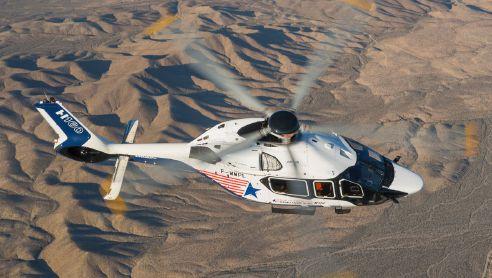
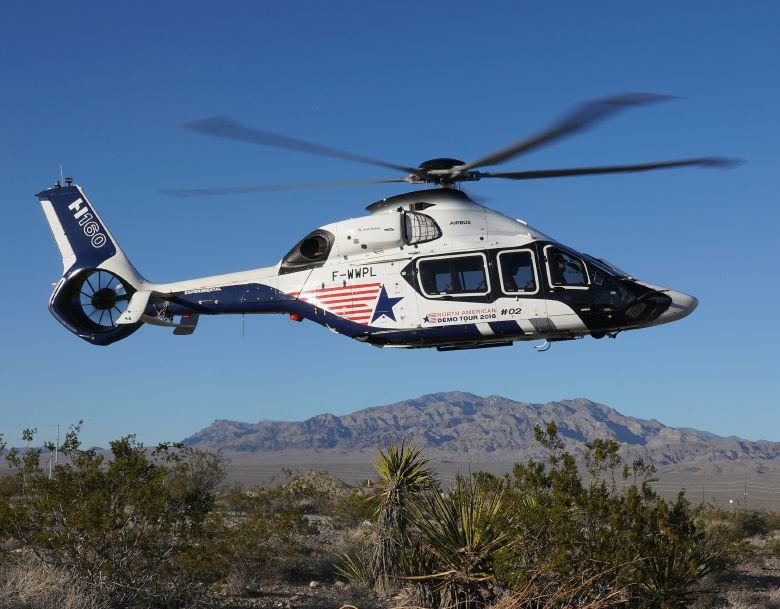
AIRBUS H160. PHOTO COURTESY JAY MILLER
Irecently started down a path that I first heard about in 2006, when I saw Professor Sidney Dekker speak at the Transport Canada Aviation Safety Seminar in Halifax. These seminars were a tremendous contribution to the Canadian industry and, for the life of me, I never quite understood why TC stopped hosting them.
Dekker, the keynote speaker at the seminar’s plenary session, was speaking about the new view of human error — that a finding of human error really marks the beginning of a safety investigation and not the conclusion — and why this concept was not only worthy of being broadly adopted by the aviation industry but also deserved further study. He had just founded the post-graduate degree program at Lund University in the study of human factors and system safety and was raising the program’s profile. I remember thinking that this course of studies would be an interesting pursuit, but also that Dekker would be a bear of a prof!
Well, I am now in the process of obtaining my post-graduate degree and for you this means some of my traditional diatribes about safety in our industry will be interspersed with tidbits from my academic pursuits. You may even get a tip or two about a great book to read, but I promise I won’t ask for assistance with my assignments.
Earlier this winter, I read with some incredulity about the quarantine of the sale of avgas 100 LL for fuel manufactured after Dec. 28, 2017. The quality control issue regarding the product from the
Black swan events
How to risk-assess incidents like the national fuel quarantine
AvGas sales in any risk management planning sessions. So, how should we risk-assess these types of seemingly “black swan” events?
Black swan events came to life in Nassim Nicholas Taleb’s books, Fooled by Randomness, which concerned financial events, and The Black Swan, which extended the metaphor outside financial markets. A black swan event has three common attributes: it is an outlier, beyond the realm of regular expectations; it carries an extreme impact; and, after the fact, we create explanations that make it explainable and predictable.
This national quarantine of avgas seems to fit into this definition. That it does so is of little solace to those flight schools and small charter operations who have to shutter their operations (and their cash flow), due to something completely out of their control.
But, as risk managers and safety professionals, we can learn a valuable lesson from this event. Spring is when we prepare for the upcoming season, completing pilot, dispatcher and AME training, lining up contracts and finishing annual inspections so that we can concentrate on staying safe and making money in the summer.
This is also the time of year, during a period of low flying activity, to sit with your crews and managers and reassess your operations from a risk and safety point of view. What are the identified hazards in your operation? Are the risks associated with the hazards properly assessed? Are your controls in place to manage the risk? Are your mitigation measures sufficient to minimize the impact of an event? Now, on top of that, and in light of the fuel quarantine, I challenge you to consider what else can hurt your people or impact your operation and business.
Where are those vulnerabilities to your business that could have severe or catastrophic consequences?
Strathcona refinery raised an interesting point: how could an operator possibly risk-manage an event like this?
Certainly, from a mitigation perspective, grounding your aircraft until you can confirm fuel quality is a no-brainer. Inspecting and testing your fuel stock is a clear requirement. Communicating with the fuel supplier to fully understand the quality control concerns would be the logical next step. And finally, sourcing a clean supply to get back into business would likely take up a lot of your attention. But, from a planning perspective, I am willing to venture that very few (if any) companies would have foreseen such a blanket halt to
As former U.S. Secretary of Defence Donald Rumsfeld became famous for saying in the context of Saddam Hussein: What are your unknown unknowns? Where are those vulnerabilities to your business that could have severe or catastrophic consequences, but that you have not yet thought about? Do not wait for the black swan to arrive. Own your process, think out of the box and get prepared for the next national fuel quarantine.
Walter Heneghan is an experienced and well-travelled pilot who has served as the top safety professional at Canadian Helicopters and Summit Aviation. He is currently working with CHC Helicopter in Kazakhstan as an SMS development specialist. He is a regular contributor to Helicopters and Wings magazines.
WALTER HENEGHAN
JSSI. A BETTER APPROACH
For nearly 30 years, we’ve provided maintenance support for virtually every make and model of business and regional jet, turboprop and helicopter on the market. Wherever you fly, enhance your ownership experience with a complete range of maintenance, financial and consulting services from JSSI.
Emergency management
Is your business prepared for the disruption caused by disasters?
woke up on January 23 to news of a major earthquake overnight near Alaska, which set off tsunami warnings from the Aleutians to Baja and sent residents of coastal towns scurrying for high ground. The earthquake was real enough and while there was a tsunami, it thankfully wasn’t of a magnitude large enough to do any damage. Over the past few weeks, I’ve lost count of the power outages across southwestern B.C. and Vancouver Island.
It’s hard to believe that it was ten years ago that I approached Drew McCarthy, then the editor of this magazine, with my pitch for an article on the role helicopters could play in a post-disaster response and recovery.
I had just “retired” from almost 30 years in public safety and emergency management, but wasn’t quite ready to head out to the pasture. Drew liked my idea, and a decade later I’m still here, watching other people work and writing about it.
One thing I’ve come to realize about the helicopter industry is that the successful operators I’ve met are generally already operating with an emergency management mentality. They may not realize it as such, but, to borrow from baseball, they’re pitching from the stretch all the time. When things go sideways, they’re already leaning into it.
Ten years ago I included this survey in my article as a self-test to help people evaluate their degree of readiness and give them some direction in planning for the future. Now would be a good time to take a quick refresher and answer the questions for yourself:
• Are your vital records protected from the harm that could be caused by a disaster?
• Are you prepared to stay open for business if your suppliers cannot deliver, your markets are inaccessible, or basic needs (e.g. water, sewer, electricity, transportation) are unavailable?
• Do you have plans to continue to operate even if senior management cannot reach your place of business?
• Have you worked with public officials and other businesses in your community to promote disaster preparedness and plan for recovery?
• Have you consulted with an insurance professional to determine whether your coverage is adequate to help you get back in business after a disaster?
Count your “yes” answers. This will indicate how well-prepared you are for the disruption caused by a natural or human-caused disaster.
7 – 10 “yes”: You are well on your way.
4 – 6 “yes”: You have lots of work to do.
1 - 3 “yes”: You should get started immediately.
There is nothing foreign or exotic in these 10 points. These are questions you are likely already confronting on a regular basis. Now, it’s time to take each of these questions to the breaking point. You want to figure out where your normal processes will most likely fail and by doing it now you can take steps to address those potential shortcomings. Understand what you can control and what you can’t control. Address the issues that are within your control and, when dealing with suppliers, try to identify the potential points of failure in the supply chain and work with them in building resilience.
Your emergency plan is simply an extension of the way you operate your business. ‘‘ ’’
• Are you concerned that your normal business operations might be interrupted by a natural or human-caused disaster?
• Have you determined what parts of your business need to be operational as soon as possible after a disaster, and planned how to resume those operations?
• Do you and your employees have a disaster response plan to help assure your safety and to take care of yourselves until help can arrive?
• Could you communicate with your employees if a disaster happened outside their normal working hours?
• Can your facilities withstand the impact of a natural disaster, and are your contents and property sufficiently protected?
Now is the time to clarify with your clients what their expectations of you are in the case of a disaster. You may find yourself in a position where the need far exceeds your ability to meet it. You may be legally required to provide service to certain sectors to the detriment of other long-time customers. Now is the time to clarify what you will be expected to do and be prepared to do it.
Your emergency plan is simply an extension of the way you operate your business every day; an added layer of resiliency that you add across your entire operation. There’s a saying in emergency management: fail to plan and you are planning to fail. It may sound trite, but it’s not a cliche. It’s your choice.
Paul Dixon is a freelance writer and photojournalist living in Vancouver.
PAUL DIXON
MAY 30-31, 2018
EY CENTRE, OTTAWA
Produced
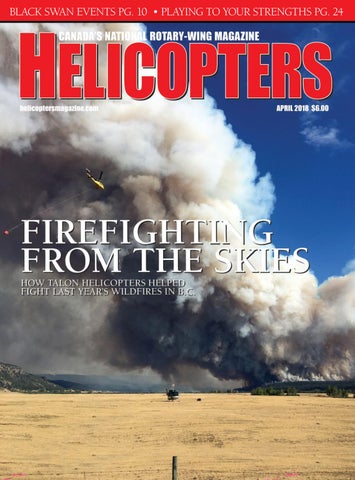
Firefighting from the skies
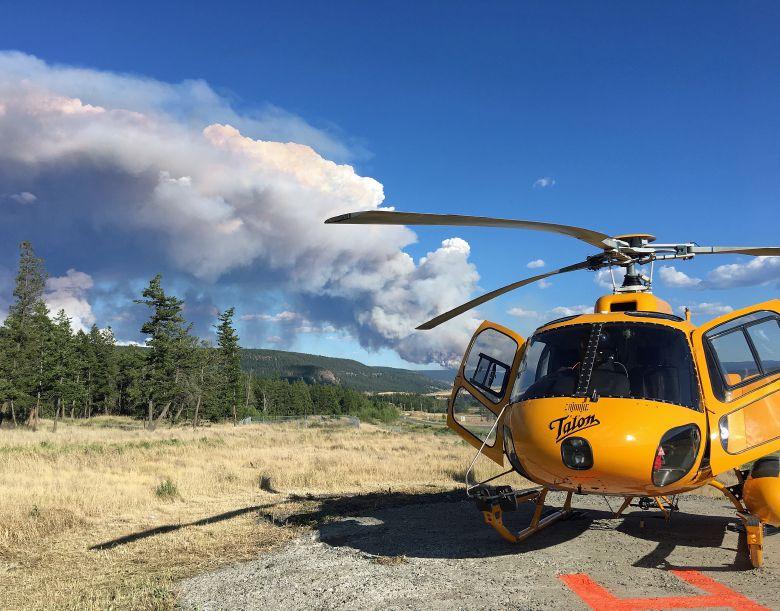
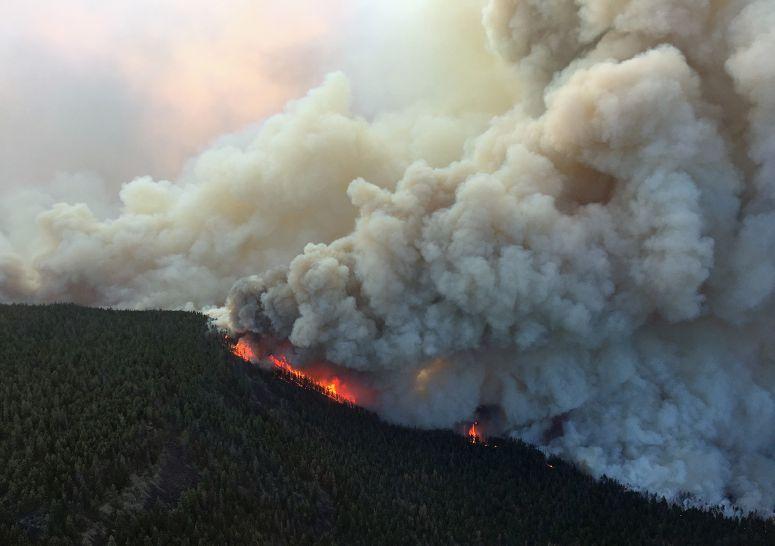
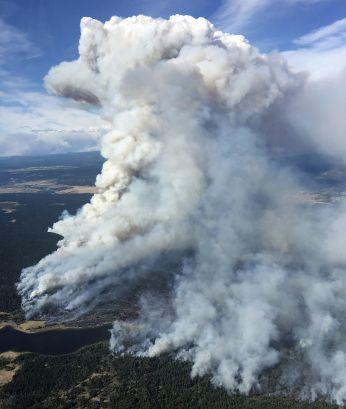
LEFT: July 15 — Where there is smoke, there is most definitely fire.
BELOW: July 15 — A massive fire. Photos courtesy Colin Pelton, Talon Helicopters.
Colin Pelton of Talon Helicopters shares his experience fighting B.C.’s wildfires
BY PAUL DIXON
2017 was a record year for wildfires in British Columbia, which is nothing to cheer about. The raw numbers are staggering in and of themselves: 1,200,000 hectares burned, and tens of thousands of people evacuated from communities across central B.C.
In an unprecedented action, the province of B.C. declared a provincial state of emergency that was in effect from July 7 through September 15. B.C. is divided into six geographical regions: Coastal (southwest B.C., metro Vancouver and Vancouver Island), Northwest, Prince George (northeast B.C.), Kamloops, Southeast B.C. and Cariboo. The Coast and Northwest regions had light years, while the Cariboo region was home to almost 72 per cent of the total burned, with the Plateau Fire responsible for 545,000 hectares.
Colin Pelton of Talon Helicopters spent the summer out on the Chilcotin Plateau, working on and around some of the largest fires of the summer.
THE FIRE TSUNAMI EMERGES
His firefighting season started in High Level, Alta., 1,075 kilometres
from his home base in Vancouver.
“We went up there on spec, got a couple of days work, but then it rained. We left the machine (AS 350 B-2) up there for a couple of weeks before the weather started to improve. I went back up and flew the machine from High Level to Williams Lake (approximately 575 kilometres) on June 28. When I got there, I was third in line behind the local machines. The weather was looking hot and dry and the thinking was that something was going to happen in B.C. or Alberta. So, I sat there enjoying Williams Lake, watching the machines pile up on the ramp. At one point there were 17 intermediates there, all on spec and maybe six mediums.”
July 6 and 7 were the days the fire tsunami reared its head across the Chilcotin Plateau west of Williams Lake. Over those two days, 140 new fires were reported across the province, most of them in the Cariboo region. On the afternoon of July 7, Colin Pelton was sitting at the Williams Lake airport, in his words, “enjoying the airshow” as aerial tankers shuttled through the tanker base, reloading and heading off to fires in the region.
“My phone rang about 3:00 in the afternoon. They said they had a bunch of targets out to the west, so they wanted me out there right
away. I packed up and took off. It was beautiful and sunny in Williams Lake, but as soon as I turned west there was lightning bolts coming down everywhere. Dry lightning. No rain — and that’s what was producing all the targets out there.”
EXPANDING AREAS OF OPERATION
The storm forced him to take a circuitous route to pick up the initial attack crew he had been dispatched for. As he flew, he made note of the spot fires caused by dry lighting, but lost count after reaching 30. By the time he reached his crew and they loaded up, an hour had
passed. In that hour, the magnitude of the situation was clearly written.
The mission was to conduct an initial fire report (IFR) on each spot fire but “each of those spot fires I had seen on the way out that had been two or three trees had now grown to over a hundred hectares. There is no way you could have responded to all of them. Every fire we saw was beyond the capability of available resources. At that point we decided to ditch our gear, go with full fuel and
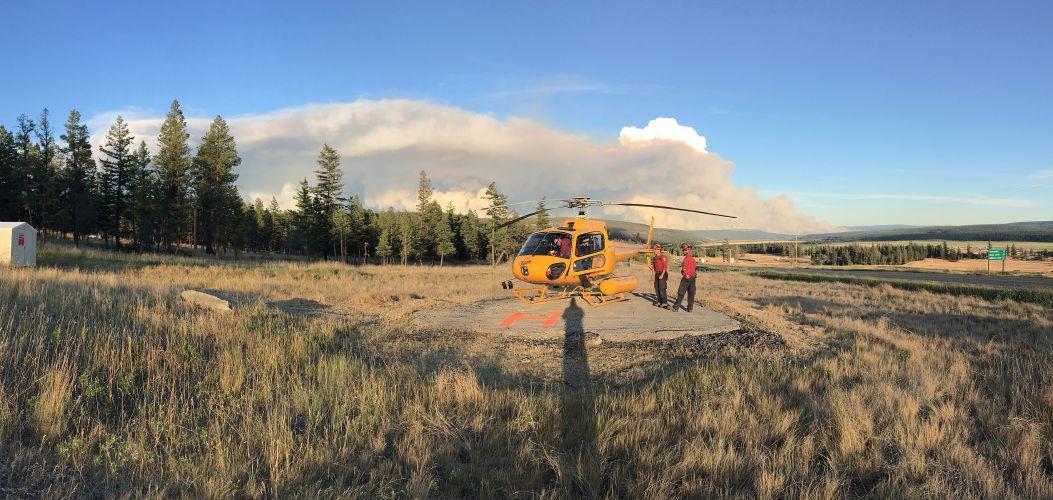
July 7, 8:30 p.m. – Forestry pad at Alexis Creek; 22 kilometres to Hancevill, 112 kilometres to Williams Lake.
survey as many fires as we could before dark, which was about 25.”
The IFR is an assessment of the size of the fire, the fire rank (Rank 1: “smoldering” to Rank 6: “blow up”), fuel types and “values at risk” (immediately threatened life, property, timber resources and other special values), as well as potential water sources and road access.
The next morning, July 8, started with more of the same, but with an expanded
area of operation. “We were doing tactical evacuations, landing in people’s yards and telling them to pack up and either leave now or be ready to leave.” The challenge was that that even when evacuation orders were issued across the region, few people left. Ranchers don’t want to leave their animals and many people, especially the local First Nations people, are intent on protecting their way of life.
The place names – Hanceville, Lee’s
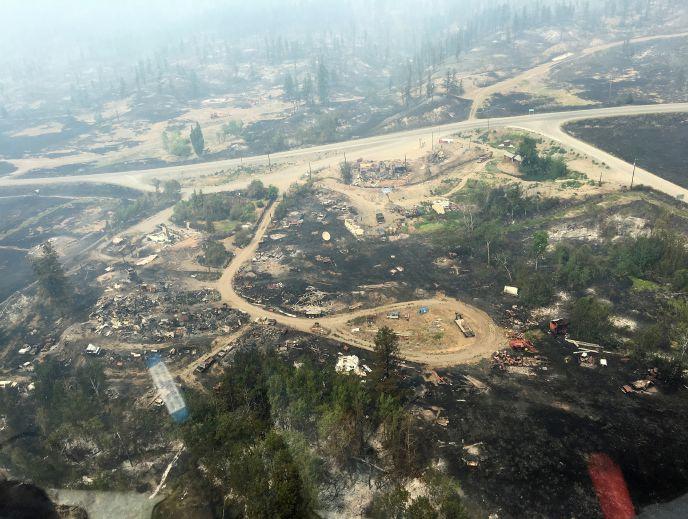
July 8, mid-day – Lee’s Corner destroyed by the fire. Site of a trading post and store since 1893.
Corners, Alexis Creek – that dot Highway 20, which stretches across the Chilcotin from Williams Lake to Bella Coola on the coast, are reflective of the first Europeans to settle in the region in the later years of the 1800s. First Nations people have lived in the area for thousands of years and living with wildfires has been part of their way of life since the very beginning. Fires have burned across the Chilcotin plateau since the last ice age.
FACING THE FIRESTORM
The region is a mix of timber and open grasslands. The trees aren’t the giant conifers of the coast but a mix of pines, spruce and fir. The pine beetle infestations over recent decades have left large areas of standing dead timber. Combined with a period of extended drought, high temperatures and strong prevailing winds, the dry lightning of July 6 and 7 touched off a firestorm. Those initial fires that Pelton and his IA crew had plotted grew into major fires. Then, through a combination of topography, fuel load and wind, the fires began running towards each other at a rate previously unseen in B.C., merging into the monster fires that appeared unstoppable.
After starting on what became known as the Hanceville Fire (which grew to 240,000 hectares), Pelton and his AStar were moved about 40 kilometres west along Highway 20 to what initially was the Chezakut Fire on the north side of Puntzi Lake. That fire became one of the 20 fires that merged into the Plateau Fire, as it became known, eventually covering 545,000 hectares.
“We worked that for a solid month and a half once the fires merged,” he recalled. “It was unbelievable to see the expanse of it. We had one quadrant — just one quarter of it — and it would take us over an hour to fly just that one quarter of the perimeter. We did a little bit of everything: initial attack, evacuations, a lot of admin stuff, flying fire bosses and moving crews. We did a fair bit of bucketing, especially in the beginning when there were houses threatened.”
Additionally, he said, “The intermediates are good because they can do everything. Some days we’d do admin, we’d do bucketing, we’d sling gear. We’re multi-purpose, whereas the mediums stuck to bucketing, and the lights just did admin. We did everything.”
COMMUNICATION IN THE AIR
At the best of times, communication is a huge challenge across the region. There is no cell phone coverage between Williams Lake and Bella Coola. The wireline phone system was disabled by the fires, as was the electrical infrastructure across the region. It was an “interesting” situation to be in, as Pelton recalls.
“The first week we didn’t have any power because the lines come from Williams Lake and they were burned out. No running water either. We eventually got a generator. Then there was no phone communication other than the satellite phone in the helicopter,” he explained. “We were on our own out there for a while.”
By the time he was moved up onto the Plateau Fire, the radio traffic was unlike anything Pelton had experienced.
“It was unbelievable. You had four or five frequencies going at once and they were all busy. Your priority is always to the VHF, but then fire centre expects a regular check-in and then there are simplex frequencies for air-to-ground. We called in a lot of tanker requests as part of the admin. There was one day we called in 10 or 15 tanker requests, and I’d never called in one before.”
While it was isolated being out on the plateau, there was a huge advantage to having the wind on their side, he said.
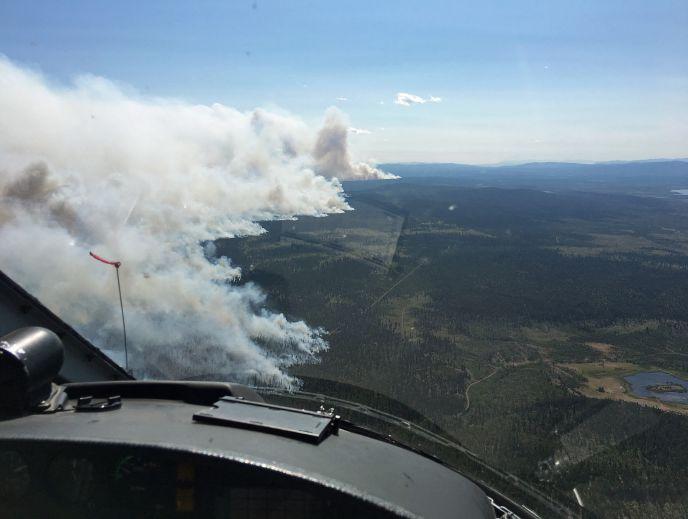
“We were in clear air most days and while there were days where it was socked in, we didn’t have much of the smoke. On the clear days, you could see the columns of smoke rising all around you. 360 degrees there were columns of smoke, because there were fires everywhere.”
While the west side was relatively clear, Pelton spoke with pilots who were flying on the east side of the fires — they were constantly dealing with smoke. Smoke from the fires spread across much of Alberta, the rest of British Columbia and down the Pacific Coast as far as Oregon, triggering public health advisories.
A TREND TOWARD SUPER-FIRES?
Into September, as the fires were finally losing their momentum, Pelton continued scanning for hotspots and knocking them down. The last couple of days were spent patrolling the perimeters and then on Sept. 15 it was all over for Colin Pelton and Talon.
“It snowed, we were released, and I went home. It all came to a grinding halt,” he said. Seventy-five days at work on the
fires — the same start and finish as the provincial state of emergency.
The fires may have died down, but the work is far from over. A group of academics and fire ecologists drafted a letter to the provincial government, warning that 2017 represents the “new normal and part of an emerging trend of global super-fires.”
“Moving forward, the types of warm, dry, windy conditions that we saw this summer are projected to become more and more
common because of climate change. With our forests in their current state, we will become susceptible year after year to wildfires,” said Lori Daniels, a professor of forest and conservation sciences at the University of British Columbia and one of the authors of the letter.
The provincial government has since initiated an independent review of the 2017 fire season, with the report due in April 2018.
EVENT
HAI Heli-Expo 2018
New prototypes, partnerships and more
Thousands of industry professionals attended the world’s largest helicopter exposition and tradeshow this year to see the latest and greatest in the industry, from small trainers to attack helicopters. The HAI Heli-Expo 2018, held at the Las Vegas Convention Centre from Feb. 26 to March 1 featured, as always, a number of new helicopters and accessories, networking opportunities and professional education courses. Several companies, including Airbus and Waypoint, shared news and showed off prototypes at the show. Read on to find out more.
H160 PROTOTYPE HEADLINES AIRBUS HELICOPTERS’ PRESENCE AT HELI-EXPO
The H160 prototype headlined Airbus Helicopters’ presence for the first time at an international airshow at the 2018 Heli-Expo.
“We are proud to be bringing the H160 prototype to Heli-Expo for the first time,” said Ben Bridge, executive vice-president for global business. “This aircraft is emblematic of the company’s transformation
The H160 prototype landed in Las Vegas and headlined Airbus Helicopters’ presence at the HeliExpo 2018. Photos courtesy Airbus.
in every domain from concept and design to the revamped industrial production model enabling enhanced industrial maturity from entry into service and capitalizing on key digital technologies for greater customer support and maintenance. All of this has been done with our customers’ priorities in mind and we are excited that they will get to experience the H160 shortly with the U.S. demo tour kicking off after the show.”
Maintenance demos on the H160 were performed daily to show how maintenance has been optimized and facilitated thanks to its unique design and new processes like the Operator Zero campaign.
Alongside the second prototype of the H160 Airbus Helicopters displayed its HGeneration range of mission enablers including HCare services that allow customers to focus on their operations safely, efficiently and cost-effectively. On display was an H125 in a law enforcement configuration, the H135 equipped with Helionix, and the H145 in a private and business aviation configuration.
In its on-going commitment to innovation and the future of flight, Airbus Helicopters is incorporating new digital and electrical
technologies into products and services alike. An example of this is CityAirbus, Airbus’ self-piloted battery-powered aircraft designed with the latest safety standards to transport four passengers for inner-city flights.
A mock-up of this project was showcased at Heli-Expo as the project team is maturing technologies that will allow a demonstrator to fly at the end of this year.
WAYPOINT DEBUTS OLDER AW139 RECONFIGURATION PROGRAM
Waypoint Leasing and Italian airframer Leonardo Helicopters launched a new partnership at Heli-Expo 2018 involving the Waypoint medium utility helicopter (MUH), which made its debut at the show. On display at Leonardo’s Heli-Expo booth was the program prototype, a reconfiguration of one of Waypoint’s older, off-lease AW139 offshore transport helicopters. The work, performed by Eagle Copters over several months in Calgary, involved stripping out the medium-twin helicopter, removing superfluous equipment, and lightening it.
Under the program, early vintage “short nose” offshore and VIP transport versions can be converted to serve a wide range of utility mission areas, including firefighting, light EMS/SAR, mining, powerline support, cargo and utility transport and general aerial work. To support it, Leonardo has rolled out a program specific to the MUH.
“We are pleased to work together with Leonardo Helicopters and take advantage of the full AW130 lifecycle, which will greatly benefit utility operators,” said Allen Rowe, the leasing provider’s managing director of sales and relationship management. “Waypoint’s MUH offers modern technology, the latest safety systems and the superior performance of the AW139 at comparable costs to competing legacy utility aircraft. This program leverages the success of the existing AW139 platform with the opportunity to serve the global utility market segment.”
The AW139 has achieved more than two million flight hours and has proven itself capable of supporting a wide range of missions, according to Leonardo senior vice president of global sales, Emilio Dalmasso.
He added that the cost-competitive program will include entry into service, as well as comprehensive training and dedicated power-by-the hour support plans. Waypoint and Leonardo plan to take the MUH on a demonstration tour.
FASTER TURN TIMES INCREASED CAPABILITIES
ENHANCED CUSTOMER SERVICE
TWO INDUSTRY LEADERS SETTING A NEW STANDARD IN HELICOPTER MRO
For over a century, customers have relied on StandardAero and Vector Aerospace as the industry experts for operational efficiency, innovation and custom MRO solutions. Today, we’re one company – Bigger…Better…and Bolder – committed to providing best-in-class rotary-wing support for our customers! Contact us to see how we can help you.
Engines
• GE T700/CT7
• Pratt & Whitney Canada PT6T
• Rolls-Royce M250 and RR300
• Safran Arriel 1 and 2
Airframes
• Airbus AS350/EC130 series and AS332/H225 Super Puma
• Sikorsky S-92, S-76 and S-61
www.standardaero.com/heli
Accountants R Us
Manage your company prudently to avoid the accountant invasion
As the extractive industries ramp up and enthusiasm spreads in our industry, the ever-pervasive fear that, once again, every operator will suddenly feel “expansive” is becoming more acute. After a decade and a half of unprecedented growth, followed by an almost five-year downturn, let us hope that prudency is the watchword of the day!
Humphrey Neill, a famous investor, once said something along the lines of, “It’s amazing how many people mistake bull markets for brains.” We see this often in our business. In fact, the margins can be so high compared to the direct operating costs that once the fixed costs are covered the margins can be incredible. Of course, the caveat here is that if you don’t fly enough you may not even cover your fixed costs. What to do then?
My pilot instinct says to first reduce those fixed costs. The obvious target is your overhead structure. A few years ago, you had one person doing safety, HR and lease management. Now there is someone in every role and even HR has an assistant. Maybe it made sense to turn one position into four when times were good, but can you turn four into one when things go bad? It seems reasonable to identify the essential positions and then work down. We don’t want to see unemployment, but this is business. The whole must survive.
These measures might seem reasonable, but they’re not often seen, or at least not initially. The usual action is to do nothing the
for failed strategies.” I’m not advocating doing nothing and waiting for the market to turn, but bringing in more finance-oriented people to fix things hasn’t worked yet, or at least not as a sole measure.
To avoid the accountant invasion, manage your company prudently at a growth rate that allows for down cycles. We all know of companies that grew with wild abandon, but that is the exception, not the norm. The efficacy of a decision should not be based on its outcome, but on its likely outcome. Betting the family fortune might double it, but was that a good decision? Regardless of outcome, we know it wasn’t.
Back to the fixed cost structure. This includes insurance, rent, mortgage payments, the accountants, the safety people, the ops manager and chief pilot — pretty much every single penny spent that isn’t related directly to spinning rotors and collecting revenue. That bill at the end of the year needs to be divided among your revenue producing assets – the helicopters. If you “save” by reducing your fleet and leaving your fixed costs intact, obviously every aircraft takes a bigger load. The start of the death spiral!
It’s true that there is a fixed cost component to every aircraft. If you have helicopters, either owned or leased with no prospects of revenue, then you do need to downsize. However, if an aircraft can cover its individual fixed cost and its variable cost as well, taking no share of the overhead, it’s still better to operate it.
It’s amazing how many people mistake bear markets for failed strategies.
first year and panic the next. Then, hire more accountants. Next, start getting rid of aircraft, because eroding your revenue base somehow leads to better earnings. My microeconomics professor insists that if you’re covering your variable costs (fuel, component overhaul reserve, direct wages, flight pay, etc.) you should keep those things working, and he has all kinds of graphs to prove it. Well no accountant I’ve ever met has seen those graphs.
After watching more than one company struggle, I have concluded that the aforementioned famous investor’s witticism has an inverse: “It’s amazing how many people mistake bear markets
For example, I worked at a company that had Bell Medium aircraft, leased with no annual minimum from the lessor. A better deal could not be found, yet they were returned during a market downturn to “save money.” The height of stupidity aside, the aircraft made a tidy seven-figure return for the operators that took them on and weren’t overcome by accountants.
Before I’m killed in an alley by accountants, I want to say the accounting function is essential. But in our nuanced and relationship-based industry, operations and maintenance need to be included in decision-making — not told what to do by people who view operations as numbers on a page.
Corey Taylor is the vice-president of business development for Newfoundland’s Universal Helicopters.
COREY TAYLOR
RICK ADAMS
Brand reputation begins with the company name, and the mouthful that was Marenco Swisshelicopter (aka MSH) was too long. It was also too associated with company founder Martin Stucki — the name Marenco is derived from Martin Engineering and Consulting — who started the venture in 2007 in his family’s farmhouse.
The new name is the übersimple Kopter. With a K. The K is supposed to evoke the company’s Suisse Deutsch home base near Zurich, representing “solidity, dependability.”
The new logo – the cross of the Swiss flag stylized as four rotor blades – was developed by Winkreative, a Swiss-headquartered branding specialist that has done work for Air Canada, Porter Airlines and Bombardier. “We conceived the name Kopter for its strong, single-minded confidence and ownability,” they said.
Andreas Löwenstein, Kopter’s CEO, likens the $3.5-million SHO9 single-engine rotorcraft that is currently in development to “a flying Swiss pocket knife.”
Targeted at the medical, rescue, law enforcement and tourist sightseeing markets (up to eight passengers), the SHO9’s 2,650 to 2,800-kilogram takeoff weight design features a composite body and blades, a high-visibility cockpit with digital avionics, a shrouded tail rotor, a flat floor and a high ceiling. Honeywell’s HTS900-2 turbine engine will enable a cruise speed of 140 knots and a range of 800 kilometres.
But brand reputation is more than a name and technology. At its
Kopter with a K
was brought in last March to “transform in very short term this totally engineering-minded company into a helicopter manufacturer.” That required production experience, product support savvy, supply chain, sales and pilot training. “You do not certify the aircraft only, you certify a system,” he said in an interview.
Two of his key hires are chief technology officer Michele Riccobono, former head of flight test operations at Leonardo Helicopters in Italy, and COO Jan Nowacki, who led the airframe and rotor blades divisions of Airbus Helicopters in Germany. “We have people who have shown in their prior jobs that they are totally up to the mission,” said Löwenstein.
Since then, Kopter has grown rapidly, with more than 100 new employees in the past year. The company now has a workforce of about 250.
“We are the perfect example of the globalised industry,” said Löwenstein. “We have 17 nationalities from all parts of the world.” That includes Canada – Concordia University alum Andrew Shahidi is marketing product manager. “If you are experienced but still a young engineer, you want to live the adventure. You want to have achievement. In bigger organizations this is difficult. I think they have quite quickly identified our company as the only one in Europe where you can have this start-up flavour and do solid and serious work. We have young engineers with huge responsibilities; you can show here that you have something in the gut. It’s a bit like the Google of helicopters.”
Kan an upstart kompany krack the krowded light helo market? It's a bit like the Google of helicopters. ‘‘ ’’
core, a brand is built on the people behind it, their skills, their experience and their passion to persevere through the inevitable setbacks of birthing a new aircraft.
Stucki, who had sketched helicopter designs as a schoolboy, had the initial vision of “a helicopter from pilots for pilots.” He was able to attract investors, sign launch customers and assemble prototypes, but multiple delays slipped the original 2015 first-delivery date to 2018, and at the end of 2016 the board rather abruptly cast the founder aside.
Former Eurocopter deputy executive vie-president Löwenstein
EASA certification is now expected at the end of 2018 or in the first quarter of 2019. The allimportant FAA certification –especially for EMS sales – should follow six to eight months later. The U.S. allows single-engine aeromed, but Europe currently requires twin-engine. Transport Canada certification would begin following a firm order.
Kopter has sufficient firm orders to cover the first two years of production (six aircraft the first year, 20 the second), 19 “pre-contracts” and more than 120 letters of intent, including some from Horizon Helicopters in Whitehorse, Yukon, plus two others in Quebec, unannounced as yet.
Rick Adams is chief perspective officer of AeroPerspectives, an aviation communications consultancy in the south of France, and is the editor of ICAO Journal.
FATAL TRAPS FOR HELICOPTER PILOTS
Acquire the life saving skills needed to eliminate or reduce most helicopter accidents.
Fatal Traps for Helicopter Pilots analyzes all aspects of helicopter accidents, including flight basics, engineering, meteorology, flight training, and human factors. This life saving guide shows how proper preparation can help prevent accidents by addressing causes such as aerodynamic problems, mechanical failures, poor loading, mid-air collisions, and more.
Filled with case studies and first-hand accounts of accidents, the book organizes accident types by primary causes, presenting proven methods for eliminating or reducing the possibility of each type. Greg Whyte, an ex-commercial helicopter pilot and professional aviation writer, draws on his own flying experiences and those of other flight veterans to provide a wealth of practical information and safety tips that are essential for everyone who flies, maintains or crews in helicopters.
Playing to your strengths
Cathy Press relies on the Canadian market as Chinook Helicopters moves into fixed-wing
BY PAUL DIXON
Cathy Press, through her company, Chinook Helicopters, has been a major player in Canada and abroad, providing training to the rotary-wing market. I last spoke with her at the B.C. Aviation Council Silver Wing Awards gala in October 2017, where she was the recipient of the Back and Bevington Air Safety Trophy, awarded annually for the “most significant contribution to Air Safety in the province of British Columbia.” Past recipients represent a “who’s who” from all sectors of the B.C. aviation community. When I spoke with Press earlier that evening, she was excited to share a few details about her impending trip to India exploring potential new markets. We parted with a commitment to get together upon her return and talk about what the future looks like for both herself and Chinook.
We finally had that talk in mid-February, in her office at Chinook’s facility at Abbotsford International Airport (YXX) after a walk through the building, now bulging with the addition of the fixed-wing program and new simulators for rotary and fixed-wing.
PD: You’ve got a lot going on here recently — and not to mention this is your twentieth year as CEO.
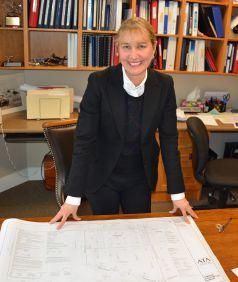
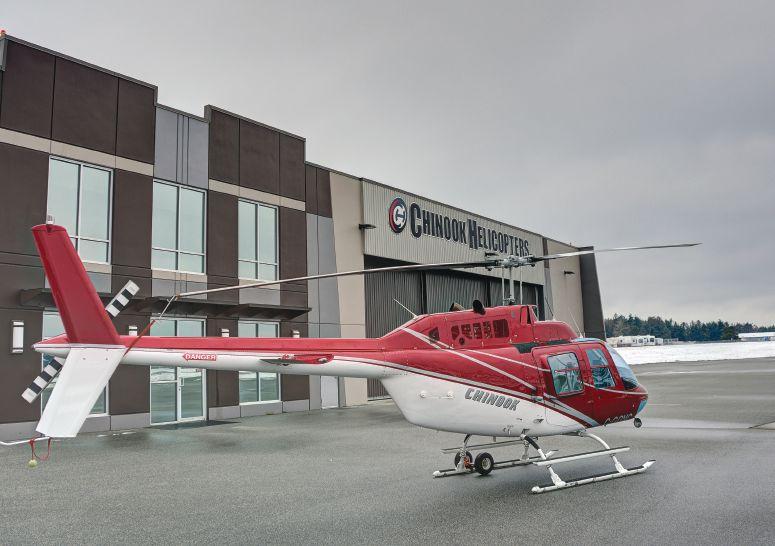
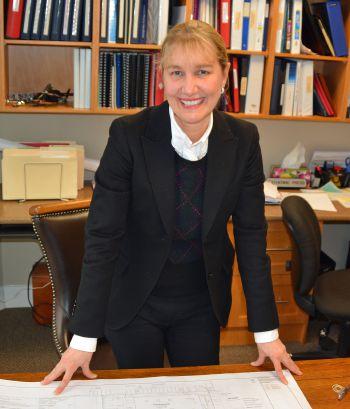
LEFT: Airside at Chinook Helicopters. Bell 206 on the apron. BELOW: Cathy Press at her desk looking over plans for the new 18,000 square-foot addition to house the fixed-wing program. All photos courtesy Paul Dixon.
CP: Yes, it is 20 years since I took over from my father as owner of the company that he started in 1982. We had three Bell 47s when I took over and now we have 19, 12 rotary (Bell 47, Robinson R44 and Bell 206) and seven fixed-wing (Cessna 172 and Diamond DA 42). The fixed wing is new, all in the last year.
PD: Why move into fixed-wing?
CP: There were several things. We saw a need in the local market, but the main objective was to support our helicopter IFR program. Then through a company in Thailand that we’ve had a long-standing relationship with supplying helicopter people, we were approached to provide fixed-wing training as part of a cadet program. The numbers were 15 [students] immediately and it has the potential for five years. It was an opportunity that was presented to us through that existing relationship and we made the decision to go ahead and invest in the aircraft to do the project.
PD: There was also a recent announcement about a partnership with the BCIT [the Airline and Flight Operations Commercial Pilot Program].
CP: We’re going to provide the helicopter training component, which is new. I probably approached Gord Turner at BCIT about five
years ago and it has taken that long to get the course through all the different committees that are involved. The student starts off at BCIT for the fundamental aviation background and then they do their fixed-wing PPL (with Pacific Flying Club at Boundary Bay) and then they start their commercial helicopter license with us. It gives them a broader knowledge of the industry and when they start with the helicopter they are definitely ahead of someone coming in off the street.
PD: You’ve got a strong connection with Thailand and I know you have a long history with China as well, but when we spoke at Silver Wings you were on your way to India the week after. Were you part of one of the provincial or federal trade delegations that have been over there recently?
CP: I did the trip personally, totally on a personal basis. I contacted trade commissioners in Delhi, both federal and provincial, and they were very helpful. In Delhi we tried to do a market scan of what existed there in terms of pilot training and what we see is that all their helicopter pilot training is sent out to foreign markets – Canada, the U.S. and Australia are the main players. We got an idea of what that market looks like and we had some meetings while we were there, made a presentation and [got to] be part of a panel at an aviation expo. The expo was quite small compared to what we would expect. We had already met most of the people at the expo through the trade commissioners. The market is just beginning.
PD: You are very hands-on in getting out into the foreign markets. Have you had any comments along the way about the fact that you’re a woman? I know I said foreign markets, but even in Canada there aren’t many women in similar positions in the aviation industry.
CP: In my 35 years in the business I haven’t felt any pressure about being a woman. Maybe it’s because I grew up in an aviation family and had aviation people around me all of my life. I haven’t spent a lot of time or energy being concerned about what sex I am and what people might think about it. That said, I am very supportive of young women in the business. Now, I have joined a group of women in Vancouver and this has been very helpful to me and [the] business from a leadership point of view. When I was younger and the business was smaller, it was the pilots and the mentorship around the specific job skills that I needed, but now as the business morphs, I need business skills and I don’t have them. Now, I’m able to reach out to people who are in different businesses to gain the skillset that I need. It’s sometimes easier not to be in the same business, because then you could be in competition with each other.
The more I am involved with these people, the more I realize that there are many of the same situations in all businesses. It’s also interesting because people are in all different phases of their businesses. Some are growing their businesses, some people are winding down, some people are selling their businesses. Businesses are in different life cycles, so when people are in different life cycles and you can find out what they are going through it gives you, just like in our own human development, an idea of what we can expect at different stages.
PD: People are apt to think that their
business is unique and not like other businesses. Have you found many differences or similarities with aviation and the business community at large?
CP: I’m not seeing much difference with aviation. There are some very niche things and we have our own challenges. I’ve gone to meetings where the conversation is centered around Millennials – how they are highmaintenance, they need the world and you must make them feel good about themselves and on and on. I put my hand up and said I’ve worked with helicopter pilots for 30 years, so is this really new? (Laughs). I’m also
involved with AIAC to be a voice in some areas, such as the length of time it’s taking to process pilot licenses and registration papers. We (helicopters) don’t make up a large enough part of the market to really get attention from a lot of people. Even though we think we’re important, we’re just not there in numbers. Fixed-wing takes up more than 80 per cent of the market and now UAVs are getting lots of attention. The helicopter is a small part of that, but you need such incredible skills to do all the jobs within that business itself. That’s what makes it challenging. You need such detailed skillsets.
PD: You say you’re new to these groups, but I noticed you received some recognition from that larger business community in the past year.
CP: Yes, there was the BMO Celebrating Women in Vancouver Award and there was an Enterprising Women of the Year Award. [Press didn’t mention it, but the BMO Award was in the category of Innovation and Global Growth, and the Enterprising Women award is presented to female business owners from around the world.]
PD: Can we talk about customer service, as you see it? Maybe it’s something in the water out here, but everyone associated with Chinook, whether they are students, staff or alumni, is unfailingly positive about what Chinook is doing.
CP: For me, this business is built very much on being honest with people, whether they like it or not. Being straightforward with them and caring about where they are going with this, even if caring about them means they don’t continue in aviation. Our strength, over the last 35 years, has been in being able to have those conversations with people. Be transparent with people, right from the first day they walk in the door.
PD: With your trips to India, China and other overseas markets, are you considering taking Chinook to those markets?
CP: I’ve looked at different scenarios and at the end of the day I am a Canadian. I like my business in Canada, I enjoy the business and I like what I have. I worked hard to get to this point and I don’t see the need to create something just for the sake of creating something. I can do the best job I can do by having people come to my establishment where I can control the time, the amount, the service, the aircraft – all of it. As soon as I step into another country, I lose control of the people who work on the aircraft, test the aircraft, fly the aircraft. There would be a loss of control and we don’t know what that would look like. Provide service, first and foremost to Canadians, and secondly to the different countries.
I don’t want to work with just one country. I want to be the company that works with all countries, because we will diversify, and we will be a stronger and better company as a result. The Thai market has pushed the acquisition of the fixed-wing aircraft. The foreign market pushed towards the seven aircraft, but it’s Canadians that will maintain them. We were going in that direction, but now we’re getting there more quickly. We are building a new 18,000-square-foot facility next door to accommodate the fixed-wing program.
I’ve gone into this with my eyes open – this is what I can count on and this is what we are doing today. Even if we had a total collapse of the foreign market, we could survive in the Canadian market. Our strength has been adding on to what we already do. That has worked out very well for us.
Maintenance hangar at Chinook, with 1 Bell 206, 1 Robinson R44 and 4 Bell 47s on the shop floor.
Minister of Transport Marc Garneau will soon be deciding whether the draft flight and duty time regulations that were published in Canada Gazette, Part I on July 1, 2017, should be brought into law this summer, and how much they should be modified in response to comments from industry stakeholders.
The Helicopters Association of Canada (HAC) argues that our customers, especially our clients located in northern and remote communities, will suffer most. Even among all the other industry segments that will be adversely impacted by the proposed new regulations, Canadian Aviation Regulations (CAR) Subpart 703, Air Taxi Operations, would be the most adversely affected.
Recent estimates indicate that the current regulations will call for 30 to 50 per cent more helicopter pilots. Experienced flight crews are hard to come by in today’s regulatory climate, and the new regulations will aggravate the existing shortage of these crews at all levels of the commercial aviation community. Every spring and summer, I continue to receive calls from operators whose machines are on the ground due to a growing shortage of experienced drivers. When our industry starts to rebound, and new, more conservative flight and duty time regulations kick in, it will constrain the operations of our customers and, HAC would argue, put the cost of our services beyond the reach of many northern and remote communities.
I urge you to take a few minutes to explain our dilemma to your customers – to describe how we will have no option but to raise their rates in order to pass on the cost of these expensive new regulations.
Who gets hurt most?
The impact of the proposed new flight and duty time regulations
required to double-crew a Long Ranger or an AStar — or charge them for rotating your pilot out approximately every two weeks, rather than every three or four weeks.
If you are a MedEvac service provider, you should explain to the Ministry of Health why you will need to triple-crew or quadruple-crew a 24/7 operation, and why your dispatch reliability will diminish considerably as a result of the proposed regulations’ limitations.
Explain to all your customers that your flight crews in the bush will now be limited to an average of 4.8 flying hours, but in the context of an average 9.1-hour duty day during a 23-day tour. Tell them that Transport Canada has refused to recognize the recuperative value of five or more consecutive days off at home, and that they believe an 11-hour duty day spent in a hotel, watching TV, on a day where no flying occurs, is somehow relevant to the fatigue that your pilot experiences two weeks later.
Pilots will be hurt, too. Pilots should tell their crews why they can no longer go home for extended periods of time off between tours, and that they may be called upon more often to take shorter, more frequent periods of time off away from home. The “zeroing provisions” have been in place for about 20 years, to the benefit of helicopter operators, customers and pilots, but Transport Canada has seen fit to summarily remove them from the draft regulations published in the Canada Gazette.
There are a few kernels of science in the new regulations, but they are otherwise not science-based, nor do they reflect any operational experience in our industry, as Transport Canada has asserted. Simply put, they reflect an airline-centric model for managing flight and duty time limitations for flight crews, with some window dressings that allow the departmental staff to claim they have listened to the industry’s concerns.
Ultimately, all Canadians will pay for these misguided regulations.
Transport Canada says they are “still listening,” but the possible changes that are currently under consideration focus on the very fringe of the oppressive regulatory provisions that will cause our industry segment the most harm.
Contact your customers in the First Nations communities you serve and tell them that your hourly costs are likely to rise precipitously during freeze-up and breakup. Explain to your oil and gas customers, as well as your mining and exploration customers, that you will be
Ultimately, all Canadians will pay for these misguided regulations. In other industry segments, underserved communities will receive even less service, and the cost of fresh fruit and vegetables will rise. HAC and others believe that they will not improve safety in the commercial aviation community, but will only serve to increase the cost of our services and the cost of air travel to the Canadian public as a whole.
Fred Jones is the president/CEO of the Helicopter Association of Canada and a regular contributor to Helicopters magazine.
Extending the Reach
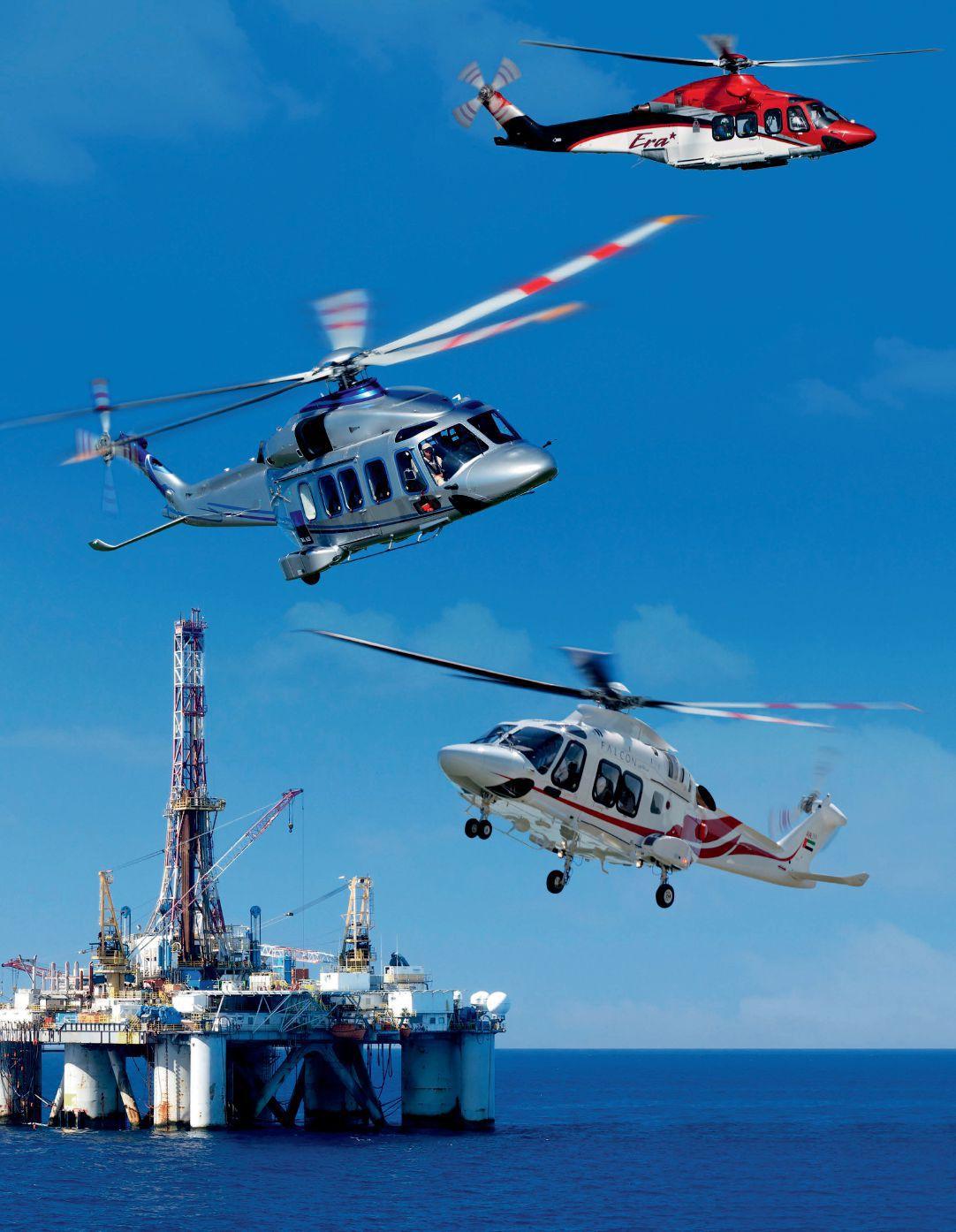
Leonardo Helicopters support the oil and gas industry with unrivalled, cost-effective products at the top of their class in terms of safety and performance. Thanks to maintenance, training and technological commonalities the AgustaWestland product Family enables a new standards in helicopter fleet management.
Inspired by the vision, curiosity and creativity of the great master inventorLeonardo is designing the technology of tomorrow.
A BREEZE.
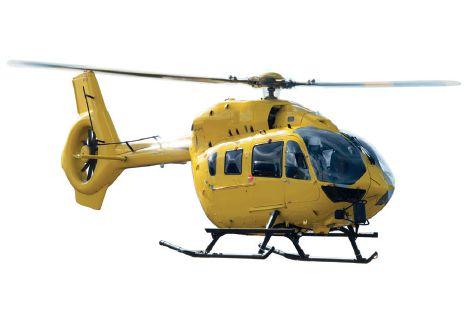
It’s no surprise the H145 is the helicopter of choice for rescue missions. Whether at sea, on a mountain or in a blizzard, it can bring help to where it’s needed. Compact and versatile, it provides outstanding flight performance under the most extreme conditions.