nhancing safety standards in the global helicopter industry is a process that is constantly evolving, as individual operators, OEMS and regulators strive to introduce new technologies and procedures to help prevent accidents and incidences throughout all levels of the business.
New data introduced by the International Helicopter Safety Team (IHST) in early March confirms that this collective commitment to a new safety paradigm is paying off. In most parts of the world, safety standards are on the rise, while accidents are on decline. The report also suggests global operators are actively embracing new strategies to redefine personal safety commitments.
“We have collected data from more than 50 countries and the total number of accidents are down,” Tony Molinaro, a public affairs officer with the Federal Aviation Administration (FAA) and communications consultant for the IHST said. “And while fatal accidents are down, we wish it could be a little more.”
North American numbers reveal the accident rate in the U.S. dropped from 121 in 2015 to 106 in 2016, with 17 fatal accidents in both years. In Canada, the total number of accidents dropped from 31 to 27 over the same time period, with three fatal accidents in 2015 and two in 2016.
European accident numbers across 32 countries showed a stark improvement, dropping from 84 accidents in 2015 with 17 fatal
A Safe Vision
IHST Moving Closer to Zero Accidents Worldwide
Having analyzed more than 1,000 accidents, the IHST’s global regional teams have concluded that the implementation of the following key systems have helped reduce accident rates:
• Safety Management Systems (SMS)
• A structured program for initial and recurrent training
• Health and usage monitoring systems (HUMS)
• Flight Data Monitoring (FDM) programs, an area where Canadian companies continue to take the lead
• Structured programs to fully comply with a manufacturers’ recommended maintenance practices
The IHST’s data also identified specific “occurrence” breakdowns. Most accidents are caused by: in-flight loss of control; unintended flight into Instrumental Meteorological Conditions (IMC); and low altitude operations. The U.S. Helicopter Safety Team is developing safety recommendations aimed at mitigating fatal accidents in these key areas. Two have been completed – loss of control and IMC. After everything is scored, likely this spring, safety enhancements will be developed.
“It’s more of an analytic point of view to determine the cause and effect of an accident,” Molinari said. “We know the numbers are going down, but we want to find out if the actions operators are taking is actually causing the accidents to go down – it wasn’t just coincidence or luck. We need to do a better job of applying metrics after the fact to understand the data.”
The numbers show decreases in the U.S., Europe and Mexico and we are back on track in Canada.
accidents to 52 accidents in 2016 with 12 fatal accidents. This is better than 50 per cent improvement over numbers from 2013, when there were 103 accidents, with 25 fatal accidents.
Not all countries are showing improving accident rates, however. Brazil, and the countries that form the Commonwealth of Independent States, including Russia, are showing increases.
“This doesn’t take into account flying rates, which certainly has an effect on the data. Some countries just are not flying as much,” Molinaro said. “But the numbers do show pronounced decreases in the U.S., Europe and Mexico and we are back on track in Canada.”
The IHST is also implementing outreach programs to help industry identify areas where the largest number of fatalities occur, including: personal/private sector; commercial helicopter operations; agricultural; and air ambulance. A number of themes surfaced in the report that revealed the root of accidents. Key reasons include: issues with performance planning; weight and balance concerns; pilot instrument proficiency; need for weather reporting improvements; and fatigue management.
“There is an expanded commitment to safety in the helicopter community,” Molinari said. “We’re also seeing a much stronger relationship between governments and industry to develop regulations that work. It is a struggle at times, but the relationship between industry and government is vital to reducing accidents and discussing safety responsibilities together.”
The IHST’s continued work in helping to redefine the global helicopter safety paradigm is not only admirable, but it is essential to the continued growth of this dynamic industry.
@Helicopters_Mag
Rugged and Reliable
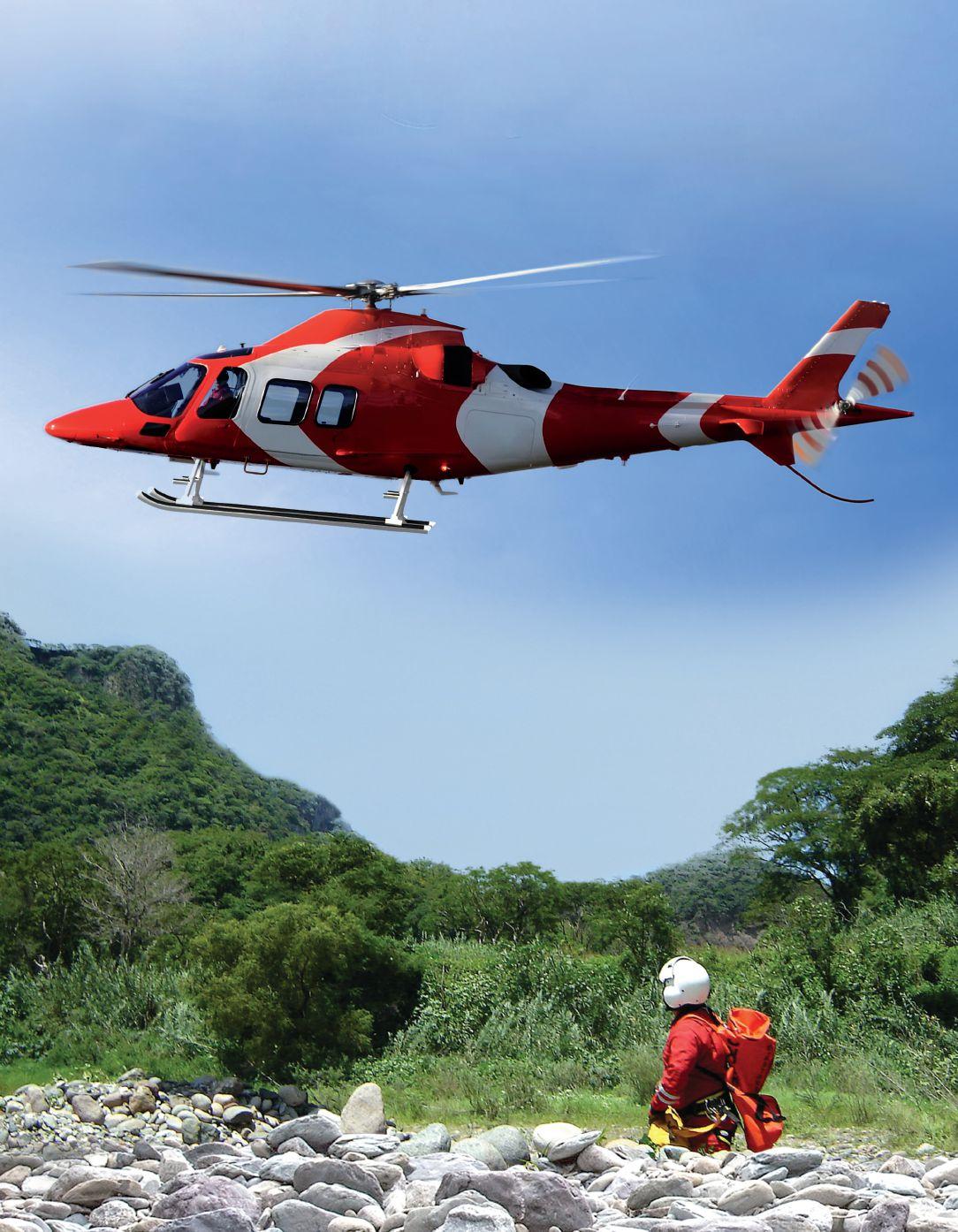
Leonardo Helicopters are renowned for performance, versatility and safety. The AW109 Trekker - an evolution of the proven AW109 platform - is the newest light twin, designed for demanding utility and aerial work operations.
Equipped with robust skid landing gear, a latest-generation glass cockpit and advanced avionics, the Trekker provides the excellent handling qualities, high productivity and operational flexibility you demand.
Inspired by the vision, curiosity and creativity of the great master inventorLeonardo is designing the technology of tomorrow.
CHC Group gets brand new look
The CHC Group is actively trying to put the negativity of its 2016 behind as it continues on in its restructuring process. As part of the corporate refurbishment, CHC has introduced a new corporate brand and website.
The company’s fresh, new logo captures the company’s early heritage as Okanagan Helicopters and updates the current hummingbird logo. The company has also introduced a new position statement, “Reach Beyond.”
Karl Fessenden, president and CEO of the CHC Group explained that the brand changes were implemented to better illustrate what CHC is trying to do for its customers but also clearly identify its future path. The company is currently in the process of redefining itself amidst a severe downturn in the economy, which forced it to file for bankruptcy protection last year. It is also dealing with the fallout of a crash of an Airbus H225 Super Puma helicopter last April in Norway that killed 13 crew and passengers.
“As we progress to the completion of our restructuring process, we have taken the opportunity to rethink every aspect of our company, including how we present ourselves to customers and the global market,” Fessenden said. “Our goal in this process was to enhance our brand in a way that it stands apart visually, but also communicates who we are as a company, including our dedication to helping our customers get where they need to go safely and reliably. Our modern design captures CHC today but also pays homage to
our
Helicopters heritage.”
In commenting on the “Reach Beyond” positioning statement, Fessenden noted CHC continues to look for ways to enhance safety and work with clients to meet increasingly high demands. CHC is celebrating its 70-year history in 2017, emerging from humble beginnings as a crop dusting operation in B.C. In 2004, it separated its maintenance, repair and overhaul arm (Heli-One) from its Helicopter Services division.
While restructuring efforts
are ongoing, it is still very active in global offshore markets in a variety of countries and has signed a number of new contracts in recent months, including a new deal with Siemens Wind Power GbmH to provide helicopter support of the construction of the Veja Mate offshore wind farm under construction in the German North Sea. The company is also in the midst of planning and executing its popular CHC Safety & Quality Summit. The annual spring event has moved to the fall this year and will run Sept. 27-29 in Dallas, Tx.
Okanagan
The CHC Group has introduced a new cleaner, corporate logo.
Taylor heading to Universal Helicopters
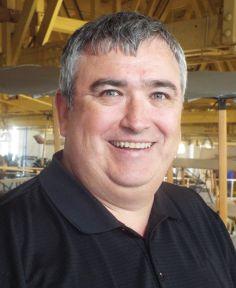
Enigmatic helicopter professional Corey Taylor is on the move. Taylor is heading to the East Coast to join the Universal Helicopters team as its new vice-president of business development.
Taylor has a vast amount of experience in the Canadian helicopter market. He is a pilot and most recently has taken on a variety of leadership positions in management to broaden his skills and knowledge base. His latest role was general manager for Great Slave Helicopters and prior to that, operations manager with VIH Helicopters Ltd. He is also a regular columnist for Helicopters magazine.
Helicopter professional and Helicopters columnist Corey Taylor has joined Universal Helicopters
“I am honoured to join the Universal team, where most employees have stayed for their entire careers,” Taylor said. “The reputation of the company is so big that I thought there were literally a hundred helicopters working. It’s not quite that big so the pressure is down a little, but my job is to get the company there. And with the foundation I’m seeing, we’ll be playing with the big boys before too long. Or maybe that’s big ‘byes’ since I’m on the East coast now.”
Headquartered in Happy Valley-Goose Bay, Labrador, Universal Helicopters has 19 aircraft flying a variety of missions in Newfoundland, Labrador and the Arctic. The company has three bases in St. John’s, Gander and Labrador. Universal president and CEO Shane Cyr noted that Taylor’s appointment is part of the company’s strategic vision to grow in both Canada and abroad.
“The past few years have been challenging in the helicopter services market,” Cyr said. “The future is looking better and Corey has joined the team to help grow the Universal Helicopters business by accessing new geographical areas to operate in and locate new markets.”
Breaking the BVLOS barrier
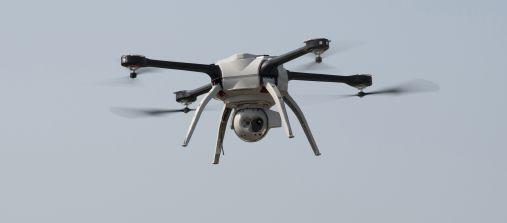
Canadian aviation history was made in late February as Alberta-based Ventus Geospatial flew an Aeryon sUAS SkyRanger for the first Beyond Visual Line of Sight (BVLOS) flight.
Working in conjunction with Unmanned System Canada, Ventus is the first Canadian firm to meet the stringent criteria required to fly a UAS under BVLOS conditions. The flight took place at the Foremost UAS Range in Alberta. The SkyRanger, manufactured by Waterloo, Ont. based Aeryon Labs, is a popular sUAS of choice for a number of global companies working in the UAV space in a wide variety of verticals.
The flight trials, among few BVLOS trials worldwide, are a milestone for aviation, establishing safe operational procedures and protocols for operating UAS under 25 kg. (55 lb.) beyond line of sight. The inaugural flight creates the foundation for how sUAS operators can legally and safely fly BVLOS within Canada and across the globe.
Civil and commercial applications, including public safety, power line and pipeline inspection and large area mapping, will be more feasible and more costeffective since a larger area can be covered in a single flight without the pilot adjusting location to keep the sUAS within sight.
“Transport Canada (TC)
HELICOPTERS MAGAZINE P.O. Box 530 105 Donly Drive South Simcoe ON N3Y 4N5
GROUP PUBLISHER MARTIN MCANULTY email: mmcanulty@annexweb.com
COO TED MARKLE email: tmarkle@annexweb.com
PRESIDENT & CEO MIKE FREDERICKS
continues to be a progressive airspace regulator, establishing standards and guidelines, like BVLOS, that enable safe UAS operations within Canada,” noted Dave Kroetsch, president and CEO of Aeryon Labs. “Aeryon is proud to be support TC and our aviation partners using the SkyRanger, which is the first VTOL sUAS to conform to the requirements established by TC for UAV system airworthiness and design.”
Unmanned System Canada chairman Mark Aruja was pleased by the success of the trials and is looking forward to the establishment of safe, functional BVLOS regulations in Canada.
“This year we entered our second decade of working with TC on developing UAV regulation,” Aruja said. “We expect the approval shortly of several more applications for BVLOS operations at various locations across Canada. This will enable our industry to continue to build value for our customers and stimulate new markets.
RETURN UNDELIVERABLE CANADIAN ADDRESSES TO ANNEX PUBLISHING & PRINTING INC., P.O. BOX 530, SIMCOE, ON N3Y 4N5 CANADA. email: subscribe@helicoptersmagazine.com
Published five times a year by Annex Publishing & Printing Inc.
Mail: c/o Circulation, 80 Valleybrook Dr. Toronto, ON M3B 2S9
SUBSCRIPTION RATES Canada - 1 year $29.95 USA- 1 year $54.50 Foreign - 1 year 60.00 plus applicable taxes www.helicoptersmagzine.com/subscribe
Occasionally, Helicopters magazine will mail information on behalf of industry-related groups whose products and services we believe may be of interest to you. If you prefer not to receive this information, please contact our circulation department in any of the four ways listed above.
Re-thinking Canada’s Role in Future Canada/U.S Relations
Control your own destiny or someone else will.” – Jack Welch.
Leadership – it is Canada’s time. I rarely traverse the gap in my regular columns from safety to other areas but the events in our world since Nov. 8, 2016 leave me pondering if there is a need to consider the Law of Unintended Consequences. Since that momentous shift in the tectonic political plates, a number of pronouncements have the ability to really and truly rock our worlds.
So, let’s get started. On Jan 20, shortly after Donald Trump was sworn into office, he signed an executive order suspending the implementation of both new and pending regulations for 60 days. This was followed by an additional directive that blocked federal agencies from issuing any regulation that would cost businesses any more money than they would have already spent and stipulated that every time an agency issued a new regulation, it had to repeal at least two existing ones.
So what right? Well, immediately the Federal Aviation Administration (FAA) withdrew from implementing a number of directives on the books since last year, including some aimed at the growing drone environment. These new regulations are desperately needed to ensure an orderly and safe expansion of an industry that is exploding – delays will potentially cost millions. Furthermore, many national regulators take their leads from the FAA.
capricious administration? I suggest extra vigilance is warranted by operators to ensure communication channels with manufacturers is open and effective to guard against “unforeseen circumstances.”
Another unanticipated development from the new regime in Washington came from the sweeping travel ban and the potential for immigration shakeups that will reverberate worldwide. Apart from the disruption to thousands of travellers attempting to visit the U.S., several airlines had to consider the impact on their flight schedules and crewing requirements. It was reported by National Public Radio (NPR), Bloomberg and other media outlets that Lufthansa, Emirates and Qatar Airways, among others, were forced to juggle crew assignments to ensure none of their staff ran afoul of the ban.
These adjustments have the potential to negatively impact the affected airlines, can further erode consumer confidence and become economic disrupters. While the ban was eventually suspended, future iterations of the American government’s immigration policies may catch more companies and more air carriers unaware.
So, what does all this have to do with us Canadians? Given the chaos south of the border and the shift in the role of the U.S. in global affairs, I think there is a tremendous opportunity for Canada and our agencies of society to step into the breach and take a strong leadership role. We need to have an open mind regarding the developments down south but also need to be prepared to seize the day should the need arise.
These adjustments have the potential to negatively impact the affected airlines.
Delays in approving and implementing new rules, burgeoning industry regulations or safety missives may have a ripple effect elsewhere in the aviation industry. And by requiring a two out/one in ratio for new rules, what additional FAA regulations are at risk and what are the potential safety implications from what could be a slapdash approach to “reducing government’ in aviation oversight?
In addition, does this approach to government open the possibility that important safety missives such as service bulletins or airworthiness directives get delayed or dropped altogether by a bureaucracy falling over themselves to comply with what may be, at times, a
The evident chaos in the early months of the new American government should give us all pause; cool heads will be needed in the next several years. I also think in terms of leadership on other fronts – such as fiscal policy and immigration – Canada and its institutions of government charged with ensuring safe work environments and safe skies needs to be the hemispheric leader in turbulent times.
In this our 150th birthday year we need to adopt and paraphrase Jack Welsh’s quote: let’s control our own destiny . . . and take the lead!
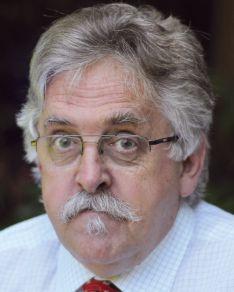
Walter Heneghan is an experienced and well-travelled pilot who has served as the top safety professional at Canadian Helicopters and Summit Aviation. He is currently working with CHC Helicopter in Kazakhstan as an SMS development specialist. He is a regular contributor to Helicopters and Wings magazines.
WALTER HENEGHAN
PAUL DIXON
pring is emerging along the West Coast as winter has been slow to release its grip this year. It has been a difficult winter in many places and looking beyond the weather, it has been an interesting few months around the world to say the least.
There have been some significant changes on the global rotary landscape both large and small. In recent years, I would have been working on a new angle for an article on the upcoming CHC Safety & Quality Summit, but CHC has moved the event from Vancouver to Dallas, Tx. and has changed the dates to September.
The good news is this important industry gathering has survived given the ups and downs CHC has experienced in recent years.
What has happened to CHC since its move to take the company public several years ago may not be a surprise but it still came as a shock.
Another reality check for the industry came late in 2016 when Erickson joined CHC in seeking Chapter 11 protection. Here are two major players with global reach and recognition brought to their knees by the downturn in the oil and gas markets. It’s difficult to imagine a helicopter landscape without either of these companies given their long and proven performance records over the decades but there’s no reason to doubt that they will be there in one
Finding Your Way
Adaptation and Flexibility are Paramount for Future Survival
when you include the support and supply industries and move out further into affected communities as people pack up and move away.
The good news is oil and gas production is coming back, at least in some areas of the United States. Texas, which reported a loss of 98,000 jobs in the oil patch, is seeing a resurgence in oil exploration and production, but – and it’s a big but – there is no corresponding upswing in employment or re-employment. As the world prices remain low, some players in Texas can make a profit on producing oil for as little as $35 a barrel. The key to success in this formula is relying on automation and technology to replace the human element in every possible instance. This is a harsh reality check for many who have seen overseas workers as their main competition. In most cases, the high-paying jobs that have disappeared have been taken over by automation – industrial robots. The human element will never disappear from the job site, no matter where it may be on the face of the planet, but it is inevitable that the job site is evolving to the point where the human role is now to support the technology.
The good news is oil and gas production is coming back, at least in some areas of the United States.
form or another many years into the future.
The question that hangs over these two industry giants is the same one that hangs over most, if not all, operators. What will the industry look like in the future, be it this year, five years or 20 years from now?
Thousands of jobs were lost in North America as the oil patch slowed to a crawl over the last couple of years. When companies stop exploring for oil, stop producing oil and stop shipping oil, there are the immediate job losses.
And the total economic impact is numbered in the millions
However, have no fear – there is very much a future for helicopters. Everything to do with oil and gas is going to be here for a long time and with the rise in solar, wind power and other forms of green energy generation, there will be plenty of work. Electricity, no matter how it is created, requires transmission lines and opportunities abound, whether it be in emerging markets around the world or in rebuilding aging infrastructure in first world countries. Aerial firefighting has also become a growth industry. I don’t think there’s anyone wishing for more work in this field but the number of fires and the increasing size and intensity of fires is creating an entirely new paradigm.
The challenge for your organization – for you personally in fact – is to see your future and chart a worthwhile course. It’s going to be a rough ride in the future and not everyone is going to survive. It seems to me, those who have done well in the past and are able and willing to adapt in uncertain times are the ones who will be standing at the end. Remember change is inevitable but progress is optional.
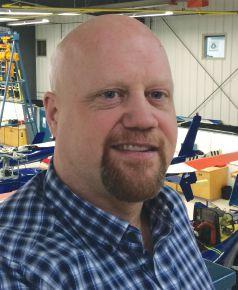
Paul Dixon is a freelance writer and photojournalist living in Vancouver.
COLUMN
Collaborate and Adapt
HeliOffshore Pools Resources for Innovative Safety Research
The helicopter industry is in “survival mode,” according to some observers, buffeted by depressed oil prices and fatal accidents that have grounded key aircraft in the fleet. The natural expectation of tough economic times is that helicopter operators might shirk on safety measures and productivity could suffer as employees fear a redundancy notice.
Instead, the 30-month-old association, HeliOffshore (https://helioffshore.org/), has initiated multiple projects aimed at improving safety. “Members have adopted a plan to undertake a fundamental review that will enhance the reliability and resilience of the offshore fleet and the systems that support it – both human and machine,” said Bill Chiles, HeliOffshore chairman and former CEO of Bristow Group.
A key to their approach is collaboration. “When we pool our efforts it’s incredibly affordable. It allows work like this to happen. It’s a way of getting stuff done despite the pressures,” said Gretchen Haskins, HeliOffshore CEO. “It’s the kind of a thing that any one organization would struggle to do by themselves, but together it makes sense.”
“The projects we’re doing have grown rather than reduced and are more results and outcome-focused,” she added.
Now 100+ members strong, the group has created a collaborative framework that focuses on carefully selected priorities. It’s four “workstreams” include system reliability and resilience, operational effective-
tor in Aberdeen, Scotland, and demonstrated that a pilot could gain up to 24 seconds of digital warning time – that’s huge in creating a decisionwindow margin when an aircraft is in danger of striking obstacles or controlled flight into water (the cause of nearly one of every five accidents). “Lives will be saved because of this,” Haskins said.
HeliOffshore is also midway through a pioneering study which attempts to determine what visual cues the pilot uses to handle various flying tasks in an automated cockpit in an IFR environment. It could lead to changes in cockpit design, procedures and crew resource management (CRM) training. The study uses special head-scan and eye-tracking glasses in an Indra full-flight simulator, also in Aberdeen. “We’re looking at what both guys do as a joint crew, the pilot flying and the pilot not flying,” said researcher Dr. Steve Jarvis of human factors specialists Jarvis Bagshaw. “What you look at is driven by what you’re trying to achieve.”
Dozens of pilots from Bond, Bristow and CHC Helicopters are participating in the research. “The validity of the work is high,” said Jarvis. “These are professional crews in a high-fidelity environment.”
In Phase 2, currently underway and targeted for completion by yearend, crews will be presented with abnormal and emergency scenarios, providing a comparison for what information pilots focus on when things go awry. Among the data analyses is how older pilots scan versus the younger generation and more experienced pilots (over 1,000 flight hours) versus less experienced.
The projects we’re doing have grown rather than reduced and are more results and outcome-focused. ‘‘ ’’
ness, safety enablers and survivability. Its safety strategy attempts to match with the European Aviation Safety Agency (EASA) action plan.
One success story which was fast-tracked, starting in 2016, will be implemented by the end of this year: a software change to helicopter terrain awareness and warning systems (HTAWS). How is that a big deal? Even simple changes to a software algorithm require regulatory approval, which is normally an excruciatingly slow process, which takes place only after manufacturers and operators have tested and validated the proposed changes.
The software code change was evaluated in an Airbus flight simula-
The U.K. Air Accidents Investigation Branch determined that, in a Super Puma crash off Shetland in 2013, flight instruments “were not monitored effectively.” The AAIB noted that neither pilot had received training in developing and maintaining effective instrument scan techniques for the instrument displays (there was no requirement to do so at the time).
“It’s a strange dichotomy. I would say this is the hardest time many people have ever faced; it’s very challenging. At the same time, it strengthens peoples’ resolve and they get more connected to why safety matters and that they have to get it right,” said Haskins. “I see an ongoing commitment. It doesn’t mean we aren’t completely cognizant that its really tough out there. It’s about genuinely making a difference to safety on the front line.”
Rick Adams is chief perspective officer of AeroPerspectives, an aviation communications consultancy in the south of France, and is the editor of ICAO
Journal.
RICK ADAMS
COREY TAYLOR
oes anyone want to work off-site anymore? I count myself in the group that loathes being gone too long these days.
I can remember when you took a helicopter from the hangar with snow still on the ground and returned end of season with flurries in the forecast and the hay long cut and bailed. I know many pilots who saw their kids grow a foot between them leaving and coming home again.
Of course this led to some cases of AIDS (Aviation Induced Divorce Syndrome) but for some, the passion for flying and seeing the world outweighed the familial responsibilities and often financial pressures forced pilots and engineers into accepting conditions that seem beyond the pale when viewed through today’s societal lens.
That said, those were halcyon days in the helicopter industry. It could truly be viewed as a rugged pioneering spirit coupled to a strong work ethic focused on customer service. Today, nobody wants to go to a camp, even in the highest reaches of the arctic, unless they can get WiFi.
Gone are the days when it was great just to have a tent to one’s self and maybe some decent food. Not being a luddite, I think the creature comforts and shorter tours are good things and companies caring about people’s quality of life and not just how much revenue they can generate is a sign of progress – but there are also challenges associated with these ever-changing mores.
Since virtually no one runs up against the flight and duty time envelope these days, particularly regarding the consecutive-days-worked
Taking More Control
Self-Regulation Could Have Merits in Specific Areas
are provides flexibility in the event of unforeseen operational circumstances – again, bad planning in many cases – but as we have seen with the Transport Canada FDT Working Group squabble of the last few years, outside observers care about what is in the statutes, not what the operators “may” do to be more restrictive. It’s sort of like when you get a credit check and they take the sum of the limits on your cards and assume you’re maxed, rather than checking the balances.
If it’s true that operators are self-restricting their tour lengths and other expectations, then this is an opportunity to get out in front of the regulator and produce a new standard that may be voluntary at the outset but could be enshrined in law later, much the way other industry best practices have gone.
There is very little support for the proposed changes in the VFR helicopter industry and the Helicopter Association of Canada (HAC) did propose some alternate limits. But what about producing a structure, supported by HAC, and then having operators volunteer to abide by it? Variances could be granted for unforeseen circumstances but would need to be documented and reported. We could beta test a new set of rules well in advance of something unworkable becoming law. This works in other industries, so why not for the helicopter industry in Canada?
While we’re self-regulating, there are other things we’re allowed to do that make little sense with all we’ve learned over the years. For instance, if you hoisted or long-lined someone to hang a marker ball on a conductor, the aircraft would need to be a twin with the ability to hover on one engine.
We could beta test a new set of rules well in advance of something unworkable becoming law.
allowance, wouldn’t it be prudent to self-manage ourselves into something that more closely resembles current norms?
Operators tell me all the time they won’t even allow (never mind force) a pilot or engineer to work 42 straight days anymore – barring emergencies, often to be confused with bad planning – and if they did, they certainly wouldn’t let them take five days off and go back for another six-week stint. Even as I write this, it seems hard to believe that 42-5-42 was very common in the not-too-distant past, especially when there was a decent fire season to be had.
Some believe that leaving the flight and duty times standards as they
’’
However, if you use a bench on the side of the helicopter and have the marker ball installer doing the work from that bench, you can use a single-engine helicopter (hovering between phases) as if this is somehow safer.
A recent fatal accident in Canada tells the story and how anyone can make the case that a Class D load of any (non-emergency) kind, whether above or below the skids, should be able to utilize a single-engine helicopter is beyond me. As an industry that clearly cares about our people, let’s not wait for the regulator to make rules for us that we should be making for ourselves.
Corey Taylor is the vice-president of business development for Newfoundland’s Universal Helicopters.
COVER STORY
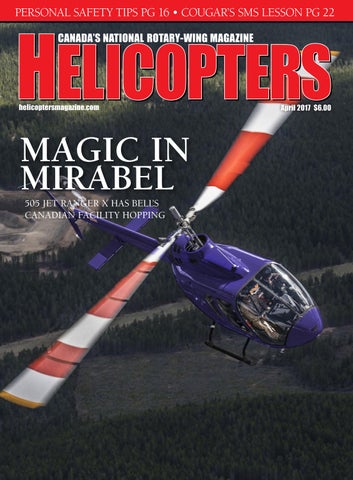
Magic in Mirabel
505 Jet Ranger X has Bell’s Canadian Facility Hopping
BY MATT NICHOLLS
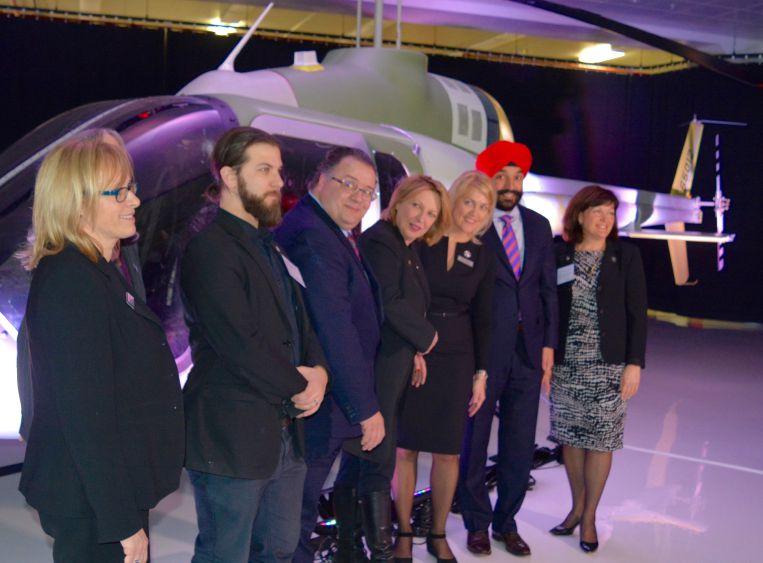
You definitely know something important is up when former Montreal Canadien Guy Lafleur is in the house. And even though the superstar right winger and current helicopter pilot was a shining NHL star in the mid- to late-1970s, he still provides plenty of “wow” factor wherever he goes, especially in La belle province. Lafleur was one of the key dignitaries Bell Helicopter brought in to its Mirabel, Que. facility in early February to mark a momentous occasion for Mirabel and the Canadian helicopter industry: the rollout of Bell’s first 505 Jet Ranger X the company’s newest member of the Bell helicopter family.
Joining “the Flower” in the house were several prominent politicians, including Navdeep Bains, minister of innovation, science and economic development and Christine St-Pierre, minister of international relations and la francophonie and minister responsible for the Laurentides region in Quebec. Key members of the Bell Helicopter Textron Canada leadership team and hundreds of Mirabel employees also helped introduce the new model.
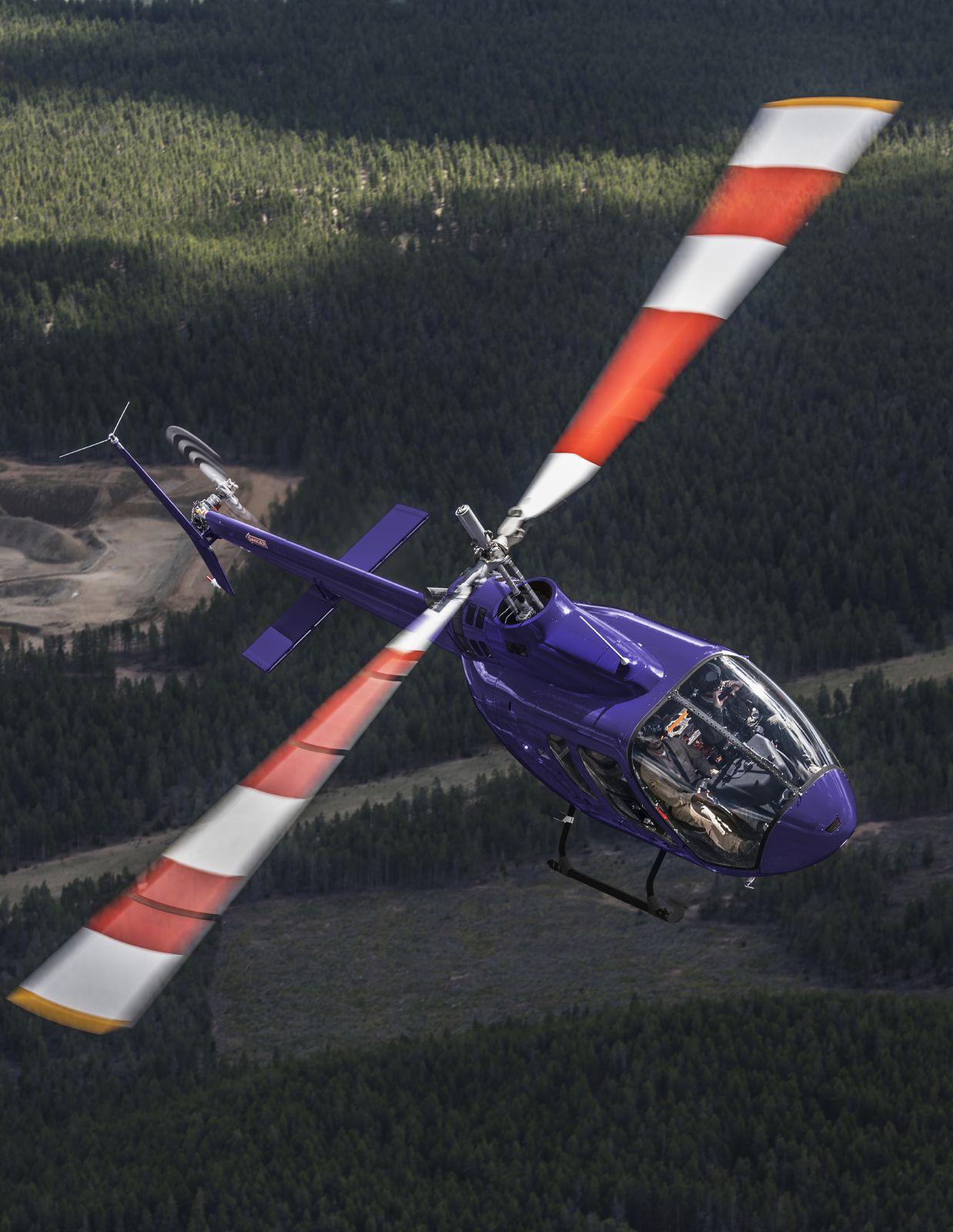
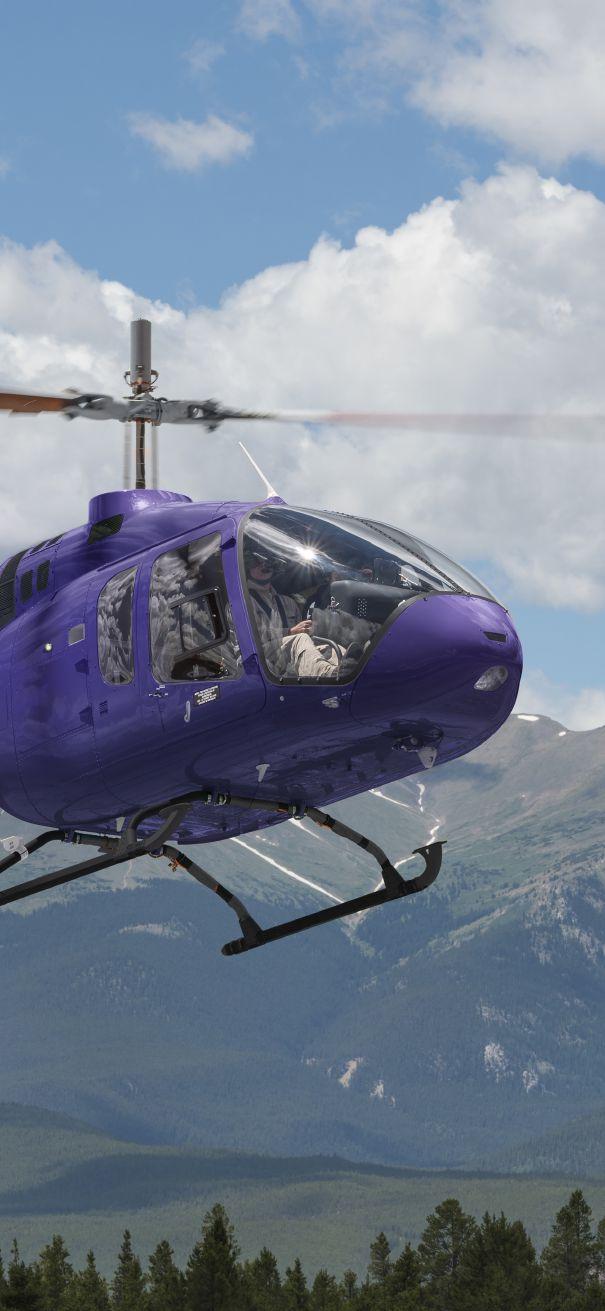
One of four new helicopter programs currently in production for Bell, the 505 Jet Ranger X is a five-seat light single aircraft designed for a multitude of missions including corporate, parapublic, MEDEVAC, utility, training and more. First announced at the Paris Air Show in 2013 and unveiled at HAI Heli-Expo in 2014, the new model received Transport Canada certification in late December 2016.
The 505 Jet Ranger X is expected to receive Federal Aviation Authority (FAA) certification in the first quarter of 2017 and European Aviation Safety Agency (EASA) certification in the second quarter of 2017, which will enable Bell to start rolling out its new machines to the more than 400 customers who have signed letters of
intent from around the world. The first production models were showcased for clients at HAI Heli-Expo in Dallas in early March 2016.
Bell announced in May last year that the production and final assembly of the aircraft would be moved from its Lafayette, La., facility to Mirabel, a move that has helped rejuvenate a facility that is already home to the design, manufacturing, flight testing and aftermarket support of the Bell 429, 412 and 407 programs.
With the veritable Bell 206 program coming to a close, Mirabel certainly will welcome the addition of the 505, as it adds to an already buoyant lineup. In addition to its four active programs, Mirabel also
supports the Royal Canadian Air Force’s (RCAF) Griffon fleet as part of its “Optimized Weapon System Management” program – and more good news is on the way. Bell president Mitch Snyder announced at the Aerospace Industries Association of Canada’s (AIAC) annual Canadian Aerospace Summit last November that a new helicopter will be introduced soon with final assembly also be heading north of the border.
“When looking for locations to make investments, companies such as Bell Helicopter look for the most innovative countries – the ones with the most skilled and creative people who can turn ideas into solutions,” noted Bains during the 505 rollout. The 505 program added 100 highly skilled jobs at the Mirabel plant and is just the latest example of the longstanding relationship the various levels of government have had with the facility. Mirabel celebrated its 30th anniversary in 2016 and the Government of Canada has been one of its top clients over the years. “Our government’s support for innovation in the aerospace sector is a key part of our plan to drive economic growth to create better Canada,” noted Bains.
Quebec’s aerospace footprint remains vibrant and the output from Bell’s Mirabel facility is a big reason why. According to a 2014 Statistics Canada report highlighted in the AIAC’s most recent state of the aerospace industry report released last year, 55 per cent of aerospace manufacturing in Canada is produced in the province of Quebec and Bell Helicopter Textron Canada plays an important role in that production.
Since 1986, Bell’s 900 highly-skilled Canadian employees – most are based in Mirabel – have helped produce more than 4,850 helicopters at its 660,000 sq. ft. facility. And while the helicopter industry continues to suffer through a prolonged downturn – one Mirabel has not been immune to, experiencing its own employee cutbacks in recent years – Bell is banking on a strong rebound in the months ahead. Keeping production lines humming at the Mirabel site with
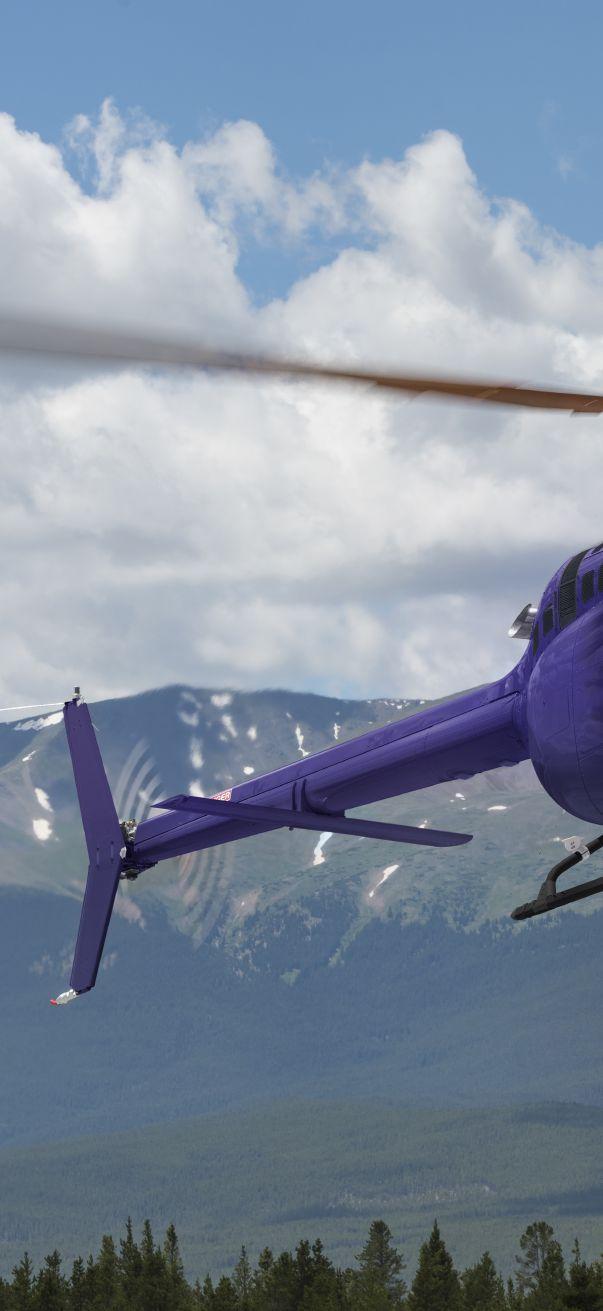
MAIN: Bell’s new light 505 Jet Ranger X has caught the eye of some 400 operators around the world. ((Photo by Bell Helicopter)
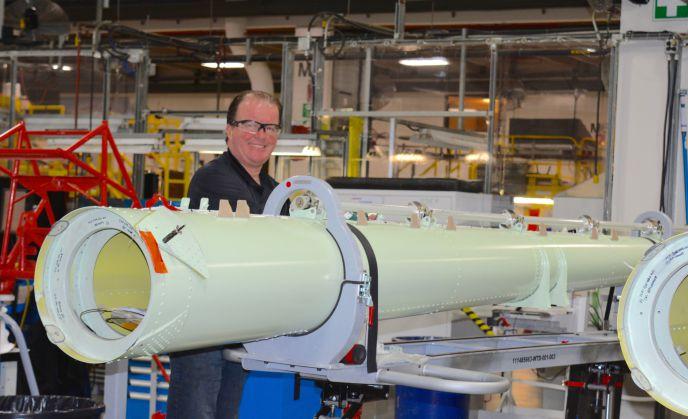
BELOW: Mirabel employees are highly engaged and passionate about the products they produce. (Photo by Matt Nicholls)
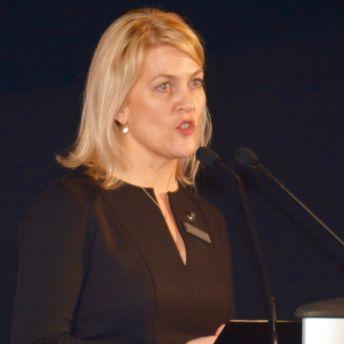
BOTTOM LEFT: Bell Helicopter Textron Canada president Cynthia Garneau has taken Mirabel to new heights. (Photo by Matt Nicholls)
existing and new programs is essential to the future success of the company and the Canadian aerospace footprint as a whole.
“Throughout the years, the aerospace sector has capitalized on the efficient supply chain, highly-skilled workforce and considerable capacity for innovation at Bell’s Mirabel site,” noted St-Pierre. “The assembly of the Bell 505 in Mirabel shines a light on the world-class expertise. This clearly demonstrates our know-how in the aerospace field.”
LEADING BY EXAMPLE
In his address during the AIAC conference in the fall, Snyder spoke passionately about the need for his company to innovate and remain focused on developing new, cutting-edge products in spite of a downturn in major markets. It’s a message that Bell Helicopter Textron Canada president Cynthia Garneau has certainly taken to heart and she was very enthusiastic to give Helicopters an exclusive tour following the 505 rollout. LaShan Bonaparte, program manager for the 505 Jet Ranger X, also joined to share more insight about the aircraft.
Garneau, who replaced Raymond Leduc as president of Bell Helicopter Textron Canada in February 2016, has worked tirelessly to position Mirabel for future success. In the past year, she has streamlined operations, created efficiencies in processes and galvanized employees for future growth. Production lines for all programs have been refined – the temporary legacy 505 production line will soon change with a more functional layout – and modifications to the site itself are in the works. Some aesthetic changes have already been implemented, as Garneau noted, pointing skyward.
“For the new assembly area, we wanted to create a ‘wow’ reaction from visitors and employees,” Garneau enthused as we toured the 505 production line. “We took the opportunity to improve the lighting, brightened the floors and ceiling with white paint and branded it with grand pictures of products hanging above the line. With the 206 production ending soon, we will look at doing the same throughout the facility but we will do it incrementally.”
To tour the facility, you can certainly understand how Bell continues to excel in program development and remain a key player in the Canadian market. The Mirabel site is not only efficiently organized but the drive, creativity and commitment from employees is immediately apparent. On our tour, employees on the 429, 407 and 505 programs were highly engaged as individual teams and with us, as many requested photos to be taken. Smiling for the cameras, taking pride in the work they were doing – this joie de vivre is not the case at other manufacturing
plants Helicopters has visited in the past.
“The level of engagement from employees here at the Bell facility in Mirabel certainly stands out,” Garneau said smiling. “We are a facility that has never been unionized. We value the consultative relationship that we have with our employees. It functions in an organized way where the team elects reps and they have the freedom to communicate freely. We meet as a team and they voice their concerns with management. We work through these issues . . . we find solutions together.”
One example is the implementation of a reduced work week for employees due to the slowdown in production. “We consulted our employees to suggest a reduced work week – in all areas,” Garneau noted. “So, we were able to free up one Friday every couple of weeks. People love their Fridays off.”
The collaborative approach Garneau and management work to instill with the team is also reflective in the awareness employees have about the market in general. If you think you can come into the Mirabel facility, pick an employee at random and catch them off guard by stumping them with a few questions on the state of the helicopter industry, trends, buyer tendencies and what not, don’t get your hopes up. Rest assured, these guys will know what’s going down.
“Our employees are very, very well informed when it comes to the market,” Garneau points out. “They know what it means to be competitive, remain competitive and they ask me some very tough questions in terms of cost, sales pursuit, govern-
ment interaction, government support. They know how this business runs. We have been here for 30 years and our customers and employees are very loyal. We have a very low attrition rate because they want to stay here.”
NEW KID ON THE BLOCK
The Bell team and Bonaparte in particularly are very excited about the 505 Jet Ranger X. It’s a project that has been Bonaparte’s baby now for more than a year. Formerly working on the 429 program, she carries the same passion and pride to her new role and was eager to explain the 505’s attributes as we moved from workstation to workstation.
The 505’s calling card for operators, Bonaparte explained, will be its combination of affordability, versatility, safety and advanced technology, enabling crews to get tasks done more efficiently and effectively. Bell has not officially revealed a unit price, Bonaparte noted, but she did explain that the aircraft will sell in the “US$1 million range” depending on configuration.
A tale of the tape notes that the aircraft will have a maximum service ceiling of 20,000 feet, a payload of 1,500 pounds and travel 340 nautical miles on a single tank of fuel. It comes with the well laid out Garmin G1000H avionics suite and has plenty of power from its Safran Arrius 2R engine with dual channel FADEC (Full Authority Digital Engine Control) system. The aircraft will be flexible and adaptable Bonaparte explained – something Canadian operators will
Putting on the Ritz: some of the key dignitaries at the 505 launch in February.
(Photo by Matt Nicholls)
appreciate given their tendency to partake in various missions for a wide array of customers. The turnaround time with these various missions is often tight and the 505 can adapt.
“We consider the 505 to be a blank canvas,” Bonaparte said. “The features we put into this aircraft – the flat floor, the passenger seats that can be removed, the useful load capacity on this aircraft – we are leaving it up to our customers to tell us how they want to utilize the aircraft.”
In developing the aircraft and finding ways to maximize its potential, Bell worked
with a customer advisory council from all over the world to refine the final product. It’s a process, Bonaparte said was invaluable in creating all aspects of final design.
“We focused on what our customers’ missions were, what they focused on, what was going to be important to them,” she said. “They wanted reliability – so we have a proven rotor and drive. It has fantastic auto-rotation capability, high inertia. The power train and power systems are top notch, giving customers top performance on a warm day while still having the appropriate payload on their airframe. We
The World is Your Oyster
DYNAMIC CANADIAN TRIO IS READY TO GO GLOBAL
Three intrepid helicopter pilots have set their sights on conquering the world this summer – and putting their Bell 429 to the max in the process.
Bob and Steven Dengler, a father-son team with a passion for aviation, are joining forces with helicopter ace Rob “Dugal” MacDuff to fly a Bell 429 Global Ranger helicopter more than 37,000 kilometres in just over one month. It’s called the “C150 Global Odyssey” (C150GO) and is the world’s first ever global father/son global circumnavigation. The journey begins in the nation’s capital on July 1 – to coincide with the nation’s 150th birthday – and zigzags the globe after that. The crew will visit more than 100 airports in 14 countries.
C150GO is a registered Canadian not-for-profit organization developed to support and raise funds for the Southlake Regional Centre Foundation and True Patriot Love Foundation. Some of the featured stops on the team’s schedule include Confederation Bridge in P.E.I., the Alexander Graham Bell National Historic Site in Nova Scotia, Signal Hill National Historic Site in St. John’s, Nfld., Marconi Centre in Poldhu, U.K. and the Canadian National Vimy Memorial in Vimy, France. The team also plans to swing by Bell’s Mirabel facility to visit the home of the Bell 429.
wanted to make sure the safety features were appropriate for an aircraft in this space. We focused in on the customers and what they wanted to see in a new product, not so much with a competitor in mind.”
COMPLETING THE PACKAGE
Having almost successfully completed the Canadian Coast Guard’s $123 million contract for seven new 412 EPI mediums and 15 429 light twin-engine helicopters – and continuing to meet the market demand for the popular 407 model – Bell’s Mirabel facility is ready to meet the challenge the new 505 brings. With production rates estimated at 50 helicopters in 2017 increasing to 150 by 2018, some refinements may be needed at the Mirabel site to get up to speed.
But Garneau is confident her team is ready to meet any challenge that lies ahead and they will do so in its efficient, dependable and professional manner that has been the Mirabel hallmark for three decades. “I am very confident we can meet the challenge, we have the talent, the skill and the commitment from our teams,” she said. “When operators are ready to make a change, they will see the value of the 505. And particularly in Canada – Canadians are very good at taking care of their aircraft.”
Bonaparte agreed adding, “We are going to continue to innovate and maintain a presence here at Mirabel, now and in the future. It’s good for our company, it’s also good for the Montreal aerospace hub, it’s good for Canada overall.”
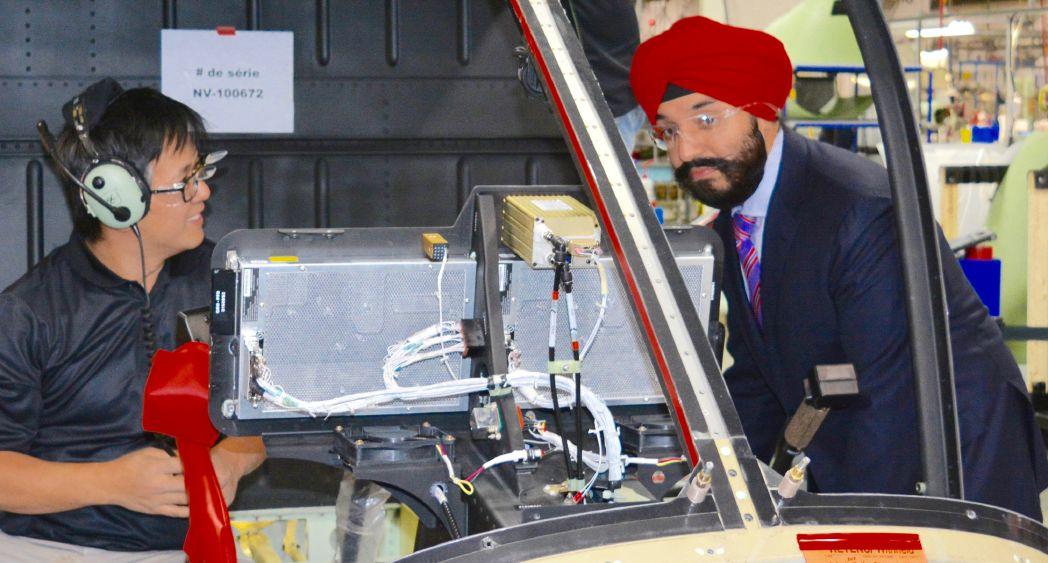
Navdeep Bains, minister of innovation, science and economic development, gets a closer look at a 505 in production.
(Photo by Matt Nicholls)
FEATURE
Up Close and Personal
Enhancing Your Personal Safety Envelope – 2017 Version
BY WALTER HENEGHAN
Some of us are old enough to remember Paul Simon’s groove – 50 ways to leave your lover – but in this feature, I challenge you with some ideas gleaned from industry, with 15 ways to enhance your personal safety tools – for pilots, engineers, support staff and, yes, company managers.
Hopefully this insight and advice helps all of us approach the busier flying season of 2017 with a new perspective and approach to operations with tools that will keep us safe.
1. Are you fit for duty? The IMSAFE (illness, medications, stress, alcohol, fatigue and eating) mnemonic can be used as a daily reminder to check in with yourself every day you go flying. It’s easy to slip in these areas of personal care, especially when the forests start burning and the blades start turning. Just imagine if the pilot who was arrested on-board the Sunwing aircraft earlier this year after being inebriated in the cockpit had had a habit of checking his personal IMSAFE checklist before he went to work that day? It surely wouldn’t have played out the way it did. And what will the ramifications be following that gross error in judgment? How will the aviation industry and government accurately evaluate fit-for-duty measures for airlines and potentially other operators? This mnemonic can’t exist in a bubble. Challenge your coworkers to consider its use. And if you see your work mate is fatigued or working while ill – don’t let them put themselves in harm’s way, either.
2. Are you a professional? Do you think you are a good decision maker? What tools do you have or has your company developed to aid you in making the best decision, every time, with the information you have available? Is your pilot decision-making (PDM) or crew resources management (CRM) training adequate? Have you properly reviewed your company documents, manuals, SOPs, before arriving for annual training? Doing this type of review will help your mindset and make you more aware, and a better, more professional aviator. Dr. Tony Kern, the CEO of
Convergent Performance and a renowned aviation expert, talks and writes extensively about the ethos of a professional pilot; the qualities needed to be safe. He also writes about the need for ever vigilance. “If we do not choose to make the pursuit of professionalism separate from the frequency of unprofessionalism, we unwittingly commit to a reactive process driven by the behaviours or our least professional cadre,” he notes. This season, commit to a proactive stance to be a conscious professional, not in desire but also “by deed.”
3. Data helps decision-making. There are many sources of information that can help in enhancing your personal knowledge base. Online forums such as PPRUNE, to the Transportation Safety Board (TSB)/National Transportation Safety Board (NTSB/ Skybrary) among others, are invaluable. I encourage you to go to the TSB website and review its “Watch List” and read their reports from recent investigations. Find out where others have gone astray to arm yourself against similar occurrences. Peruse the CADORs for your aircraft type to learn what issues your colleagues have experienced over the past year. Ask your safety manager or operations manager for safety event summaries from your company. As the old Transport Canada (TC) safety letter used to say: “Learn from the mistakes of others – you won’t live long enough to make them all yourselves!”
4. Survival of the fittest. Too many companies pay lip service to survival training and other aspects of the traditional health and safety requirements of the workplace. Before the season ramps up, review your training and qualifications for WHMIS (Workplace Hazardous Materials Information System), TDG (Transportation of Dangerous Goods), First Aid/CPR, personal survival gear and overnight survival training. Review your survival equipment as well and always dress for the weather. Think of it this way – dress for the overnight in the bush, not for the 30-minute flight back to base.
5. Pre-prep part II. While we are on the topic of pre-season
– to over-prepare for the eventual failure – and to stack the deck in your favour.
6. The MRO perspective. Aircraft maintenance engineers (AMEs) play a critical role in the helicopter industry and much of what has already been highlighted in this piece can be put to use by them. In some ways, the challenges for AMEs are more insidious but the consequences are equally grim. The message for our AMEs is simple: consider the threats of ensuring the aircraft is airworthy when it is released into service and the types of errors you could make that could result in a negative outcome. Consider the IMSAFE checklist – especially the “F” factor, fatigue. Engineering teams work hard and put in long hours, often in “challenging” work environments, away from the base, away from home and with the revenue pressures leaning on their shoulders. Extended workdays are the norm and fatigue can be commonplace. Very few companies have mature, fatigue risk management programs and even fewer customers place the same limits on the duty days of the engineers that they do for the pilots. To my truck driving, wrench turning, all-night-working maintenance colleagues I say, bravo but be aware!
preparation, I want to revisit the words from a guest speaker at the CHC Safety & Quality Summit in 2014, my old classmate commander Chris Hadfield. Chris spoke of his experiences as an astronaut and of his time on the International Space Station but the one item that really stuck with me from his presentation was his admonishment that the best way to prepare for failures was to accept that they would occur and prepare, prepare, prepare for that eventuality. This means taking the gist of Tony Kern’s push towards professionalism and applying it with the tenacity of a NASA astronaut. Stack the deck for a successful and positive outcome by thinking through and working out the failure scenarios well in advance. Practically speaking, what does this mean? It means deciding how you will deal with a mechanical failure while on the job. It means working out an exit route in the event of deteriorating weather. It means thinking about what can go wrong today and coming up with a solution today before going flying today. This discipline can lead you to consider all the threats you will face and the errors you may be prone to make. It will help you come up with strategies to capture them before they bite you. I have written previously about threat and error management and why I consider that paradigm – one that provides a great risk management mindset during flying operations. I encourage you all, and this applies to pilots and AMEs alike, to read up on this concept and to follow commander Hadfield’s lead
7. Know your threats. A recent study from the International Air Transport Association (IATA) Safety Report found “. . . that in 26 per cent of airline accidents, a maintenancecaused event started the accident chain.” So, let’s recap (and review) what the most common maintenance errors are: incorrect/incomplete installation of components; fitting of wrong/ worn parts; electrical wiring discrepancies, damage on installation; loose objects (tools etc.) left in the aircraft; component/part not installed or missing; inadequate lubrication; access panels or cowlings not secured; fuel or oil caps/panels not secured; and equipment/system not activated or de-activated. It’s also prudent to consider the use of an excellent investigation framework, developed and championed by Boeing. The Maintenance Error Decision Aid (MEDA) “. . . is a tool for investigating the factors that contribute to an error – maintenance organizations can discover exactly what led to an error and remedy those factors. By using MEDA, operators can avoid the rework, lost revenue and potential safety problems related to events caused by maintenance errors.” Many companies that have adopted this tool have reduced the incidence of maintenance error and saved money, helping to sustain profitability and a competitive edge. Consider these categories, review your own incidents/occurrences against this list and devise strategies to manage the risk of falling prey to the same causation factors. Knowledge is power after all.
8. A quality approach. Quality assurance and quality control help provide operational control and safety assurance, so be vigilant with this aspect of the maintenance world. Don’t bust the chops of your quality assurance staff – take their audits and
ABOVE: Properly understanding the threats in your work environment is paramount to safe operations. (Photo courtesy of Airbus Helicopters Canada)
RIGHT: Ensuring your PDM and CRM training is up-to-date is critical for safe operations. (Photo courtesy of Airbus Helicopters Canada)
feedback as valuable input into the makeup of your operation. After all, it’s about confirming that your maintenance practice is a good maintenance practice. Better yet, do things the correct way and follow your published maintenance manuals and industry best practices to avoid the findings in the first place.
9. A personal toolkit. Don’t forget to review and inspect your personal protective equipment. Companies are obliged to provide it and employees are obliged to
FEATURE
wear it. I still find bench grinders with no guards, “bump caps” on workbenches, safety glasses in toolboxes and wedding rings on fingers. We all know at least one engineer with fewer digits than they were born with – and others who were scarred or otherwise injured from their decision to disregard the protections provided by PPE. Also remember hearing protection – jet engines destroy ears. This admonition extends past the hangar floor and into both the cockpit and helicopter cabin. We need
to ensure that our passengers are protected as well.
10. Housekeeping tips. Every summer, an engine is damaged because of poor tool or rag control. If you work for a small operator this could be catastrophic to the business or to your employment. And never forget that this type of nonforecast maintenance cost can place a huge burden on the operation, introducing stress and operational pressures that only serve to compound the errors. Consider introducing sound tool and rag control policies and sticking to them. FOD walks and other controls help reinforce the need for disciplined workplaces and will reduce the possibility of unnecessary, non-forecast and costly maintenance events.
11. Understanding ops. Proper maintenance of operations gear is also something that needs to be considered. While most companies have clear policies in place for post-winter annual inspections of the slings, lanyards, cables, buckles and the like used in vertical operations, it is vitally important that regular, indeed daily, inspections take place. The use of deficient ops gear can have dire consequences and any loss of load is costly, embarrassing and potentially deadly. Never take your ops gear for granted.
12. Time to address IFR. While all of what has preceded this section remains valid for IFR operations, the multi-engine world presents other challenges. Too many accidents stem from communication breakdowns and non-compliant cockpit practices. Standard operating procedures are generally written in blood; they exist for a reason. Study them. Use them. Challenge your fellow pilot when he or she fails to adhere to them. Always remember that it’s your life in that aircraft, too – don’t lose it by failing to challenge non-compliant behaviour. Here’s some advice from the TSB web site: “ . . . The first officer made many attempts to communicate his concerns and suggest a go-around. In the absence of clear policies or procedures allowing a first officer to escalate from an advisory role to taking control, this first officer likely felt inhibited from doing so . . . The crew’s crew resource management (CRM) was ineffective [and] training did not provide the crew with sufficient practical strategies to assist with decisionmaking and problem solving, communication and workload management.”
13. In the heat of the night. Instrument and night flying abilities are the ultimate perishable skill in our industry. Take the opportunity whenever possible to hone
these skills by flying approaches in day VFR, without flight directors, or by executing approaches that you don’t normally fly. In the EMS world, don’t wait until your annual SIM training to hone your IFR knowledge and in the offshore
environment, approach your night training sorties with vigour. My daughters’ skating coaches used to say that perfect practice makes perfect – and that certainly applies here.
14. A question of risk. Risk
MRO teams play an essential role in keeping operational safety standards at an elite level. (Photo courtesy of Heli-One)
assessments are great tools to raise awareness of the hazards you face on a regular basis. Some operators actually mandate Pre Flight Risk Assessments (FRAT) for everyday a pilot heads out flying. These mini-checklists don’t take much time to complete and may have a need for management oversight or approval prior to dispatch. Don’t roll your eyes – these tools serve a valuable purpose because they absolutely make the hazards to be faced on any given tasking overt and conscious. The key tool in managing risk lies in identifying the hazards we face and the FRAT tool helps. The HAI website (www.rotor.org/fra) offers an online tool that can give you an idea of how to design/ use this great dispatch and decisionmaking aid.
1 5. Importance of SMS. Safety management systems (SMS) exist to make us all better. Be an active participant in your company’s program. Get involved in risk assessments and review your company’s
FEATURE
hazard registry. Review and commit to the safety policy and safety goals. Be a “reporter” – file safety reports so that all of your colleagues can benefit from your experiences, so that your AMEs know what’s going on with their aircraft and so that your customers have confidence that your company is providing the best service possible. Again, communication is key.
A REALITY CHECK
In 2016, (from the CADORS database), there were 27 accidents involving helicopters with three fatalities and 11 injuries. The accident rate was down, largely driven by the significant downturn in the economy. The International Helicopter Safety Team (IHST) reported the continuation of the downward trending in the accident rate as well, expecting 3.3 accidents/100,000 flight hrs., which represents a 33 per cent reduction in accidents since 2013.
Recently, the Conference Board of Canada reported that there is an expectation of an uptick in economic growth in the exploration, mining and oil and gas sectors this year, which will inevitably lead to a similar increase in helicopter activity. Take the time to consider safety strategies, hazard identification, risk assessment and other mitigation measures that help raise the overall consciousness within our industry – and amongst ourselves.
James Reason, the dean of safety and risk management, once noted, “An unquestioning belief in the attainability of absolute safety can seriously impede the achievement of realizable safety goals, while a preoccupation with failure can lead to high reliability.” This preoccupation with failure, whether you are a NASA astronaut
Canadian astronaut
Hadfield said the best way to prepare for failures was to accept that they would occur – and prepare in advance. (Photo courtesy of CSA)
or a 1,000-hour pilot working in the high Arctic, will keep your awareness levels high and provide an edge in keeping you and your passengers safe. This important “edge” is so very necessary and, at end of the day, will ensure that everybody comes home safe and sound.
Famed
Chris
Chris Horton, Helicopter Pilot // Instructor
FEATURE
A Necessary Change
How Cougar Helicopters Redefined its Safety Culture
BY RICK ADAMS
t N 47°36’58,W052°45’10 lies Cougar Helicopters.
AOn a day with clear blue skies and brilliant sunshine, one could think they found a little piece of paradise. But don’t be fooled! The unforgiving North Atlantic brings with it some of the world’s harshest and most challenging weather conditions. Fog, high winds, freezing rain and sea states are routine to flying conditions, as well as maintenance and ramp operations, off the coast of Newfoundland and Labrador and Nova Scotia in which Cougar Helicopters operates. However, this is home for Cougar and operating safely and efficiently in these conditions is what makes Cougar known as a harsh environment specialist.
At the root of its success in these challenging conditions is Cougar’s Safety Management System (SMS) program. “Over the years, safety has been paramount in everything we do,” said Hank Williams, chief operating officer and a 20-year veteran of the company. “We initially implemented a SMS program 10 years ago. We had separate elements of a SMS in different departments, but they were not consolidated into one system.”
A self-awareness of the lack of depth of the program grew within the organization. Its safety program was not inclusive enough to the then management team and some supervisors. So, much so that at the start of the 2014 auditing program, Cougar had to put its hand up to its customers and conclude that change was required. The audit results reflected the same awareness and so Cougar aggressively went to work. At one point, there was a false start when the direction they took did not work out as they had anticipated. The potential consequences could not be understated. There was a latent threat to the entire operation.
The management team then went looking for outside guidance and found it in British Columbia, the home of Cougar’s parent company, VIH Aviation Group, which is headquartered in Victoria. The company discovered and hired Gary Grass and Abante Intelligent Solutions, safety and quality management consultants. Abante’s forte
is SMS and its clients include rotary- and fixed-wing air operators, airport, oil and gas producers, hydro utilities, academic institutions and industry councils.
“Cougar operates in the very challenging North Atlantic,” Grass said. “They fly multi-engine, multi-crew helicopters in weather conditions that will send shivers down the spine of anyone not operating there, particularly the winter conditions. And they are a very progressive company, highly safety focused.”
Cougar had initially introduced a SMS program about 10 years ago. The first few years, Grass explained, “They built their box. They worked with the mechanics and their customer evaluations went reasonably well. However, the recognition that it wasn’t where it should be caused Cougar to dig deeper, to add safeguards and to enhance training.
JJ Gerber, operations services manager and also a 20-year employee said: “We thought we were managing safety. Events were being reported and investigated, issues were being addressed, and in some cases elements of just culture applied. But it was not cohesive and aligned across the organization. In other words it was done in silos. KPIs were generated, however, they probably had more to do with business progress and efficiency rather than safety. We were managing safety but we needed an integrated safety management system.”
Gerber added, “What was missing was how the elements of a SMS-related to each other. Just as a financial system touches all departments, the principles of a safety system all relate to each other and form a bridge. Though it was a lot of work, the activities SMS makes you do, teaches you about the organization. The last two to three years, I have learned more of how our pieces work together to make safety happen than ever before.”
“It’s not about the box,” Grass said. “It’s not about any of these colloquialisms you hear. Safety management is about how does this work as an integrated group and where are the barriers to success.”
By way of an annual Safety Case, Cougar management strives to
experience. “From the start of this, Gary and I spoke the same language and shared the same ideology about what a safety culture is all about,” Jacobs said. “It’s more than an academic exercise.”
For example Jacobs described a process chart developed for the safe-to-fly process. “If there’s an event with an aircraft or individual, we have quite a detailed chart that takes us through everything that’s related to just culture, fleet grounding, etc. from the perspective of both the helicopter and the staff themselves making sure that if we put someone back to work, they have had the proper assessment, proper coaching, proper retraining – whatever it might take to ensure when they go back flying, they are doing so in a safe manner.”
demonstrate that the company is committed to establishing and nurturing safe systems of work and a positive safety culture focused on the wellbeing of its employees, customers and passengers.
CONSISTENCY MATTERS
The prelude to the organization’s safety analysis was almost a selfinflected wound. The aircraft that brought Grass and the VIH CEO to Newfoundland also had as passengers the chief corporate counsel, the vice-president of business development and the chief financial officer. Many organizations today have rules preventing multiple senior executives from flying on the same aircraft, whether private or commercial.
“What happens when the aircraft crashes?” asked Grass. Obviously it takes with it a significant portion of the business’ brain trust and such a crash could be fatal to the company’s future as well.
“When we arrive at our destination,” Grass noted, “if anyone is watching us come off that aircraft, if our message for the next week is all about safety management, do our words and what they saw not contradict each other? It hit home. They really needed to adjust, from the top down, their concepts and strategies of what this really looks like.”
As part of the transformation of Cougar’s safety persona, the company hired Willis Jacobs, a Canadian Air Force veteran with aero engineering, maintenance management and project management
Another adjustment was the creation of an Occurrence Review Board (ORB) in which every aviation or health and safety event is discussed with all departments represented. The investigation includes follow up actions and analyses of related procedures.
The annual Cougar Safety Case demonstrates and highlights that the company is a proactive organization in its approach to identifying, assessing, analyzing risks and the application of risk mitigation procedures, management of change, as well as responding to incidents and implementing corrective action within the proactive system. Jacobs noted that awareness, assurance, training and accountability are the cornerstones of the risk management strategy.
Indeed, about six weeks after the new “unifed SMS” was implemented, Cougar’s oil and gas clients came by to take a look. They were pleased to see a new and improved more robust SMS program and identified the beginnings of a turnaround.
A GOOD TEMPERAMENT
Two years removed from the implementation of its new SMS, Grass maintains Cougar is “arguably one of the top-performing SMS organizations in the world.”
“We’ve got a good temperament that fits with the organization,” Jacobs said. “You’ve got to make this personal. It’s not just the safety and quality manager’s job. It’s not a manual on the shelf anymore. It’s vertical and it’s lateral and we use it every day.” Indeed, it is the basis of how Cougar operates.
Oil and gas customers expect medium and even small companies to demonstrate the same elements of SMS as the larger service providers, Jacobs noted. “They ask for it in the contract. But they don’t provide a lot of detail,” he said.
Williams is quick to add there are similarities to processes with the new system. He pointed out, “The way we do investigations today is the same, the way we do management of change is the same procedure, the way we do return to safe-to-fly, it’s the same procedure. However, the difference now is about the format and consistency. And that has made all the difference.”
How does Cougar determine that the new way of SMS is an improvement? One measure is an annual, voluntary internal survey.
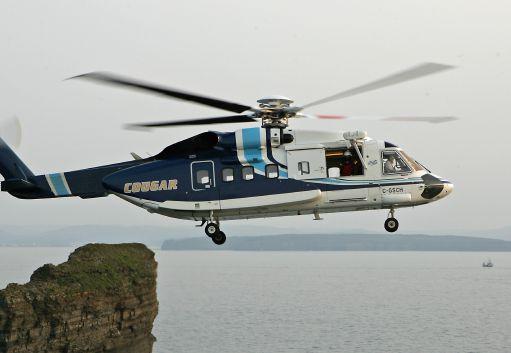
Cougar Helicopter remains one of the world’s most reliable oil and gas operations.
(Photo courtesy of Cougar Helicopters)
RIGHT: Oil and gas customers started to see a change in Cougar’s safety culture.
(Photo courtesy of Cougar Helicopters)
FEATURE
It is a blunt, no-nonsense survey of all employees – engineers, pilots, support staff. Employees are asked what they believe they are getting out of the SMS and whether there is more work to be done. In the first edition of the survey last year, 47 per cent of employees responded. In January 2017, the second edition, the response rate was 61 per cent. “That to me,” Jacobs said, “is the biggest test and the biggest indicator.”
There has also been an increase over the past two years in the number of reports. That suggests employees believe reporting will be
acted upon, according to Williams. “It’s a sign people want to contribute, they want lessons learned and they don’t want a repeat of hazards,” he said.
The new Cougar persona has also helped them weather the recent economic downturn caused by depressed global oil prices. “The same internal champions are still driving safety awareness,” said Grass. “Key stakeholders are doggedly determined in their ability to adjust internally.” He said a recent reengagement with a client and potential new revenue sources are positive indicators.
Abante’s Grass cautioned, however, that “this is a fragile environment because the success of these types of programs are solely and exclusively dependent on the type of leadership at the helm of a SMS-management organization. It comes down to the people and the message the organization tolerates, or does not tolerate, within its ranks to encourage and remove the barriers to individual success.”
In some organizations, “the message from the top gets skewed on the way down.” Safety is claimed to be “a prime focus,” but in the functional efforts to get the job done and
SMS is more than just a buzzword or marketing scheme – it encompasses every level of the business. (Photo courtesy of Cougar Helicopters)
make money, it can get pushed down the priority list “when the challenge is to put bread on the table and not upset the apple cart.”
SAFE? PROVE IT.
Sister company VIH Helicopters was so impressed with the change in Cougar’s culture, they have begun adopting a similar but tailored approach to SMS. VIH is Canada’s oldest privately-owned helicopter company and provides support for emergency medical, firefighting, heli-logging, aerial construction, heli-skiing and charter.
“We always knew we were operating safely,” said Jen Norie, general manager. “But we couldn’t prove it because very little was being formally recorded. So, how do you know for sure? How do we prove it to regulators, to ourselves, our employees and to their families?”
Unlike Cougar, which is driven by its oil and gas customers, SMS is not mandated for operators like VIH. They’re doing it anyway. “People are starting to think differently, to work proactively in order to identify risks that can be mitigated,” she said.
Martin Childs, who is transitioning into a role as VIH’s director of safety (while still acting as operations manager for the parent company’s YYJ FBO Services at Victoria International Airport), said in 2016 there were 25 items reported by VIH Helicopters staff. “In the first two months of 2017, there have already been 17 items reported,” he said. “We’re seeing active participation in the new program.”
Childs said one way to spread the safety culture in the company is to address safety with employees at every opportunity, as well as to make the online internal magazine, Rotorwash, required reading. “Safety is always a hot topic. And it gets people to our online safety reporting site, which includes a summary of hazards,” Childs said. “They can see things that have been reported and that they are being addressed. We are all accountable to one another.”
In order to enhance safety operations globally, VIH is talking with other helicopter operators about forming an informationsharing group similar to the HeliOffshore organization, which was initiated two years ago. For more on HeliOffshore’s initiatives, see “Collaborate and Adapt,” page 10.”
“We’re looking at facilitating a similar forum using the Helicopter Association of Canada (HAC),” noted Norie. “Sharing of best practices and safety learnings in an appropriate forum will benefit our industry as a whole – it just makes sense.”
SAVING YOU MONEY IS OUR BOTTOM LINE
At StandardAero, we’re lowering our customers’ DOCs by implementing preventative practices that reduce unscheduled engine removal and emergency maintenance. As an OEM authorized Rolls-Royce AMROC, our comprehensive support programs are designed specifically to increase M250 MTBR, keeping you in the air with worldwide Service Centers and Mobile Service Teams available 24/7.
AOG and need it now? We have an extensive M250 engine accessory and exchange pool, supported by our fresh M250 rental fleet and quick turn-times.
www.standardaero.com/heli +1.204.318.7544
Nimmo Found
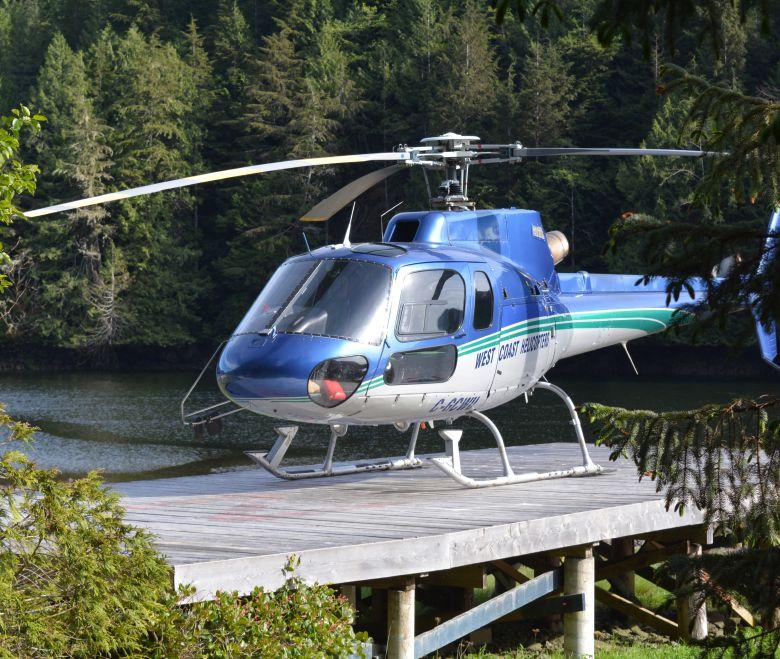
LEFT: Nimmo Bay Resort remains a very important client for West Coast Helicopters.
A river runs through it: anglers in this part of B.C. can check out countless lakes, rivers and streams.
Fishing + Passion + People = Opportunity Realized for West Coast
BY MATT NICHOLLS
Hey Matt. What does it look like on your side? Can you see any fish down there?”
I’m sitting in one of West Coast Helicopters’ immaculate Airbus Helicopters’ AS350 B2s and my good friend
Peter Barratt, the enigmatic vice-president, accountable executive and co-owner of this creative B.C.-based operation is deftly meandering our machine through a narrow mountain canyon along one of the many rivers that dot the pristine landscape in the province’s Great Bear Rainforest on B.C.’s Pacific coast.
Barratt and I, two self-professed fishing fanatics, are scanning the river for this spring’s most sought-after prize – steelhead. It’s a little after ice out and the bigger fish may not be active in the rivers just yet, but we’re determined to give it a try just the same – it’s what real anglers do after all. Since meeting one of the industry’s most personable and successful operators, I am finally joining Barratt for a little fishing, relaxation and a glimpse of not only the West Coast base in Port McNeil, but one of his operation’s most prized clients – Nimmo Bay Wilderness Resort.
Heli-toursim is one of the most important and growing elements of West Coast’s business and Nimmo Bay is its prized jewel. Like many resourceful Canadian operators, West Coast continues to diversify
operations to capitalize on the growing revenue opportunities in helitourism. The company now lists not only heli-fishing as a distinct vertical, but heli-skiing, and heli-hiking as tourism options.
With four bases on the B.C. coast, West Coast continues to be an active player in a variety of sectors including aerial delivery, construction, agriculture (seeding and fertilizing), fire suppression, crew movements, hydro support, medical transport and evacuation, aerial photography and more. With a mix of mostly AStars and Jet Rangers, the company boasts a diverse fleet that can handle a variety of tasks.
Nimmo Bay Wilderness Resort was founded by Craig and Deborah Murray in October 1980 and is still owned and operated by the family.
The resort is one of the world’s first and most successful eco-lodges. Nestled in old growth forest and surrounded by waterfalls, secluded beaches, majestic trees, granite peaks and glaciers, it is an outdoor adventurers dream.
Nine tastefully-decorated two-bedroom chalets dot the premises and spa facilities, a hot tub and much more are available for guests. It’s just a short walk from the chalets to the main lodge, where hearty meals, the finest wines and culinary masterpieces tempt the taste buds of the most discerning visitor.
Fishing was the original calling card of the lodge and indeed
Photos by Matt Nicholls
FEATURE
world-class angling opportunities abound. With some 50 isolated lakes and rivers within a 50,000 sq. km. area of the lodge, anglers can test their skills for several species of salmon and trout. But there are other activities for guests. Kayaking, hiking, whale watching, ecotours and more make this truly a unique outdoor experience. And for the more adventurous visitor, unforgettable helicopter adventures touring the soaring mountain peaks and glaciers in this part of B.C. are simply spectacular. My mountain trek with Barratt after our fishing excursions was truly awe-inspiring. “That’s one of the reasons I haven’t retired,” Barratt said as we sat perched on a mountain top having lunch. “This is
my backyard – and I get to share it. It’s all about people and it’s my job to help them have a great experience.”
Nimmo Bay Resort is in some very elite company. It is one of only two Canadian properties on National Geographic’s Unique Lodges of the World list and has been a favourite spot of many celebrities with plenty of star power. Actress Michelle Pfieffer and her husband David E. Kelly (an American writer and producer of Ally McBeal, Boston Public, Boston Legal and more) have been regular guests at the lodge, as have many former politicians and athletes. They’ve even had the Stanley Cup on site (also on top of a nearby mountain). And yes, Barratt has kissed the Cup.
“It’s a special place and it represents a unique and very important part of West Coast’s client base,” Barratt told Helicopters. “And now the property gets some pretty high rollers. Since Fraser has taken over (Craig and Deborah’s son), the lodge has taken on a high end feel. Consequently, revenues have started to climb.” Increased activity has also meant a bump in flying hours for West Coast.
WHEN OPPORTUNITY KNOCKS . . .
One of the messages that surfaces quite frequently at Helicopter Association of Canada (HAC) conventions each year is the need for operators to recognize opportunities and be willing to craft their operations to take advantage of potentially lucrative situations. It was Barratt’s love of fishing, people and an entrepreneurial spirit – the ability take a chance and seize an opportunity – that spurred him on to help out with the development of the property in the early 1980s.
“At the beginning, Craig had a float there, a boat, he did some salt water fishing,” Barratt said. “I got to know him and he said, ‘can you bring that helicopter out and help me sling the cement up the hill because he was building this pipeline . . . I said no, it’s too much work, let’s go fishing,” he said laughing. Eventually, that job and many others were completed, but both men started looking around at what was
A true visionary and self professed fishing fanatic: West Coast Helicopters leader Peter Barratt. (Photos by Matt Nicholls)
The immaculate chalets at Nimmo Bay Resort are both rustic and comfortable.
there and what might be. “We concurred that we can market this.”
Market it they did – at fishing shows, tourism conferences and more. Soon, partners were added, more helicopters were bringing visitors to the property and much more activity was in the works. As Barratt accurately points out, at the core of the successful development of the project was a belief, commitment and vision that something substantial could be attained.
“It’s all about relationships in the helicopter business,” Barratt said. “And business relationships also start with respect. If you lose respect, you lose everything. So, you need to keep the relationship going. Stuff
THE DAVID CHARLES ABRAMSON MEMORIAL 201 7 A ward
DCAM
FOR FLIGHT INSTRUCTOR SAFETY
pour l’instructeur de vol sÉcuritÉ aÉrienne
To be awarded at ATAC’S 2017 Canadian Aviation Conference & Tradeshow in Montreal, Qc, November 6-8th
e Award recognizes and honours a flight instructor, either fixed or rotary wing, who has made a significant contribution to safety in Canada, also having demonstrated superior teaching skills.
Jane & Rikki Abramson established this Award in 2003 through Air Transport Association of Canada, and will personally present this year’s award. The recipient's name will be engraved on the prestigious perpetual trophy and entered in the associated logbook, both on permanent display in the Canada Aviation & Space Museum in Ottawa.
Generously supported by:
Nominations can be made at any time throughout the year, prior to the deadline of September 14th, 2017
For entry requirements contact Jane Abramson, Founder & National Administrator
Phone: 438-257-0881
Fax: 438-257-0865
Email: janeabramson@videotron.ca
ww w. dcamaward.com
does come along . . . it just does. You have to learn to deal with it.
“Take Fraser at Nimmo Bay. If he gives us grief about a pilot, I say, ‘Fraser, you are absolutely right, I can see it from your point of view. What you don’t know is our point of view. Let me tell you about it.’ I say this to my customers all the time. Why in the world would I purposely go out of my way to piss you off? I understand you have a problem, I am here to fix it. So, we solve it and now we have a safe operating procedure, or safe work practices, or whatever happens to be.”
A LITTLE SLICE OF HEAVEN
In his excellent book Fling Wing , author Jack Schofield describes the development of Nimmo Bay Wilderness Resort, West Coast’s role in the process and the development of the commercial helicopter business on the left coast. Throughout Schofield’s excellent narrative, it becomes clearly apparent that a good deal of Nimmo’s success has been driven by the professionalism and vision of Barratt, co-owner Terry Eissfeldt, the company and the open dialogue that exists between client and operator. But it goes beyond that. It’s also about Barratt’s passion for the B.C. landscape, which has left an indelible mark on his soul, shaping the person he is today.
“On most days, you are busy flying, but if it’s a nice day, you can look around . . . and pause somewhat. This is my backyard,” Barratt said. “I’m not religious but in fact I think am. And sometimes, when I am flying by myself, I think, ‘thank you . . . thank you very much. You’ve got to say thanks whenever you can.’ ”
Home away from home: the comfortable surroundings have played host to some exclusive clientele. (Photo by Matt Nicholls)
Field Maintenance for Bell 206, 206L, 205, 212, 412 and Robinson R22 and R44.
Dynamic and hydraulic component overhaul and part sales for the Bell 204, 205, 206, 206L, 212, 407 and 412.
Structural Repairs Fixtures for Bell 206, 206L, 407, 205, 212, 412.
Approved Woodward HRT Licensed Repair Service Facility Approved Bell Helicopter Customer Service Facility
Transport Canada Approval # 3/86 EASA Approval Number 145.7106
Head Office: 18 Terry Fox Dr., Vankleek Hill, ON, K0B 1R0
Alberta Facility: Site 5, Box 7, RR2, Airdrie, AB, T4B 2A4 T: 403.912.4658 F: 403.948.6475 info@helitradesab.com
Ontario Facility: 4536 Side Rd 10, New Tecumseth, ON L9R 1V4 Phone: (705) 435-4031 Gerry@helitradesinc.com
COLUMN
FRED JONES
Transport Canada’s (TC) fatigue management proposal still has many warts. TC has claimed that the proposed new regulations are “based on science.” The Helicopter Association of Canada (HAC) would argue that there is more science fiction than fact in the current draft.
While the new proposal does respect a few scientific principles, it plays fast and loose with many others. HAC has argued that there are a few anchor points in the fatigue-related science that should be respected. ICAO’s Document 9966 Manual for the Oversight of Fatigue Management Approaches (admittedly, drafted for use by fixed-wing operators – the equivalent helicopters-specific document is under development), at page 8, sets out their foundational principles for the management of fatigue: “1) the need for sleep; 2) sleep loss and recovery; 3) circadian effects on sleep and performance; and 4) the influence of workload.”
Let’s take a closer look at these points:
• Periods of wake need to be limited. Getting enough sleep (both quantity and quality) on a regular basis is essential for restoring the brain and body.
• Reducing the amount or the quality of sleep, even for one night, decreases the ability to function and increases sleepiness the next day.
• The circadian body clock affects the timing and quality of sleep and produces daily highs and lows in performance on various tasks.
The Good, the Bad, the Ugly
Transport Canada’s Latest Fatigue Management Proposal Won’t Fly
In some cases they have abandoned the science. Without any discussion, they arbitrarily removed the zeroing provisions in the current regulations. The zeroing provisions recognized the recuperative value of extended days off – to the benefit of flight crews and operators. They provided a natural incentive for operators to provide extended days off between tours. TC is proposing to implement cumulative duty hours, on top of reduced cumulative flight hours.
In the context of most helicopter operations, cumulative duty hours (as opposed to duty day limits) do little to mitigate fatigue where eight hours of regular sleep is protected, each night. But lets look at a few of the specific changes, and some examples, in an operational context for helicopter flight crews:
• Most helicopter operators will opt for “time free from duty option 3” – 192 duty hours in 28 days (or roughly 6.8 hours/day, average) for deployed operations.
• Under the current proposal, flight crews would be limited to 112 flight hours in 28 days, down from 142 in 28 days, currently. However, time free from duty option 3 only allows for 23-day tours (down from a maximum of 42, currently), for an average of 4.8 hours flying time each day on a 23-day tour.
HAC would argue that there is more science fiction than fact in the current draft.
• Workload can contribute to an individual’s level of fatigue. Low workload may unmask physiological sleepiness while high workload may exceed the capacity of a fatigued individual.
TC’s latest proposal does respect some of ICAO’s basic principles. It does attempt to recognize the effect of interrupting the window of circadian low, for example. What it doesn’t do, is adequately recognize that the science rarely reduces those principles to hard numbers that can be applied in an operational context. While the principle may be “based in science,” the mechanism that is used to apply the principle and the numbers that attach to it are largely arbitrary.
The two scenarios above, when considered together, will mean that the pilot would be able to fly a maximum (average) of 4.8 hours/ day, but in the context of an average duty day of 6.8 hours. That would mean the flight crew member or operator would have to tell the customer that that they would have to do all their flying (to a maximum average of 4.8 hours each day) but within a 6.8 hour window each day –or pay for two pilots to crew the aircraft for more extended coverage. This would be particularly problematic in the North, under extended summer daylight conditions. .
TC’s current proposal for changes to the fatigue management regulations spell disaster for the helicopter industry – and for the customers and communities that we serve. TC should reconsider the option of developing a solution that respects the risk of fatigue, but is better suited to the different segments of the commercial aviation community – and respects scientific principles in an operational context.
Fred Jones is the president/CEO of the Helicopter Association of Canada and a regular contributor to Helicopters magazine.
CANADA’S GLOBAL DEFENCE & SECURITY TRADE
MAY 31 - JUNE 1, 2017 |
HCare is Airbus Helicopters’ redefined services offer, focusing on our commitment to quality service and performance to better meet the evolving needs of our customers. Together with training, 24/7 technical support and connected services, HCare’s innovative solutions for spare parts and MRO services are expertly tailored to your operational requirements.
HCare is Airbus Helicopters’ redefined services offer, focusing on our commitment to quality service and performance to better meet the evolving needs of our customers. Together with training, 24/7 technical support and connected services, HCare’s innovative solutions for spare parts and MRO services, are expertly tailored to your operational requirements.