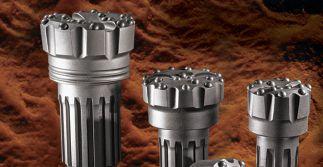
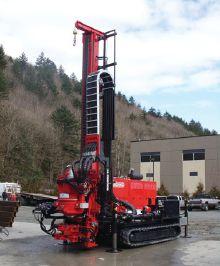
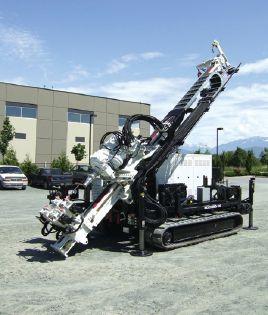
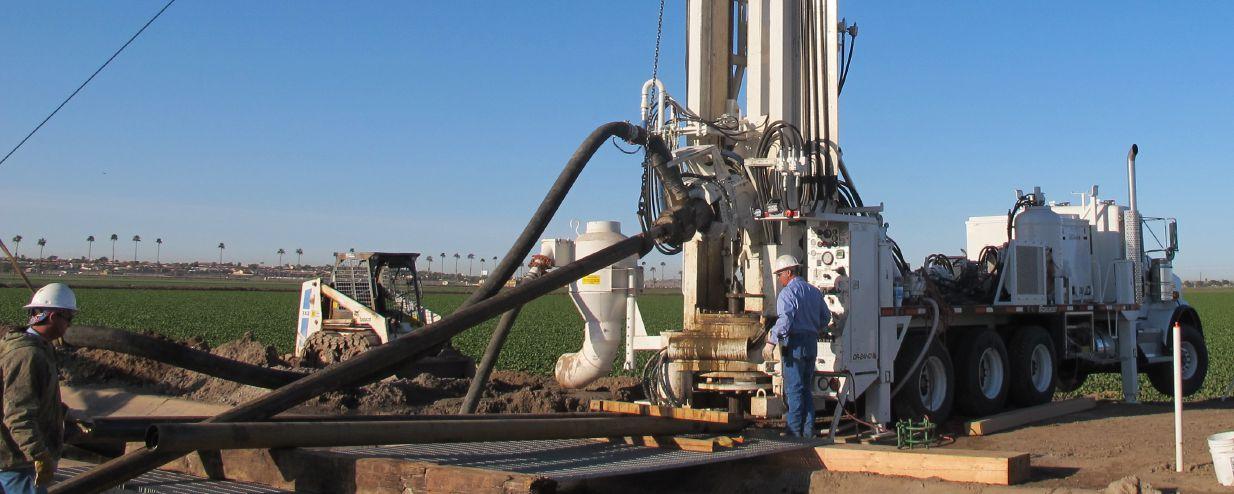
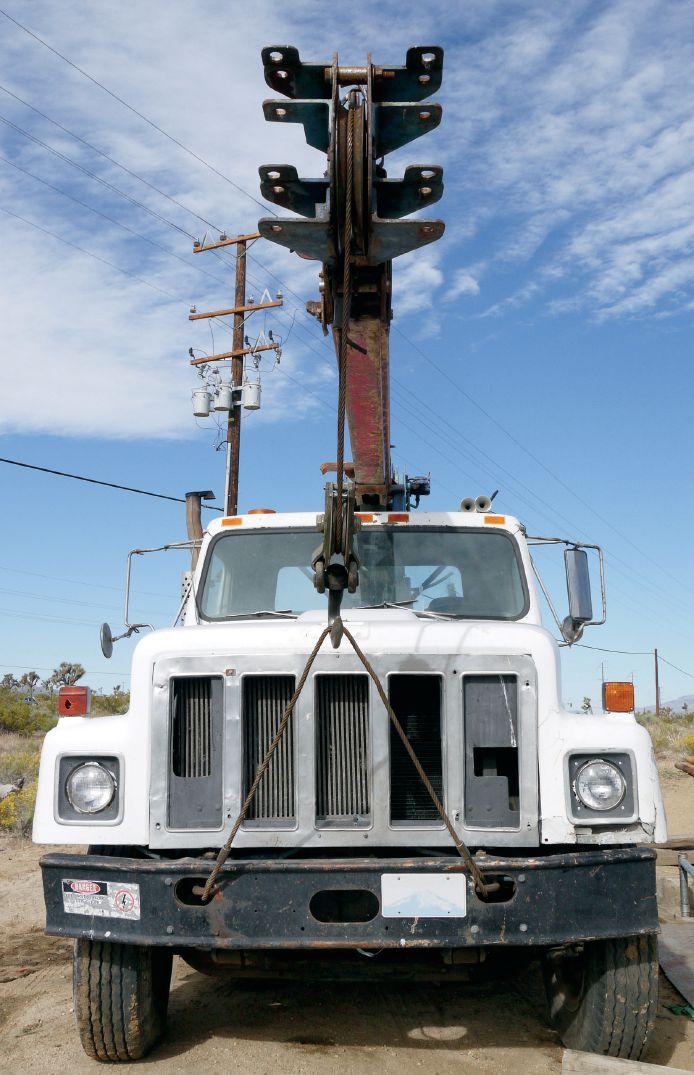
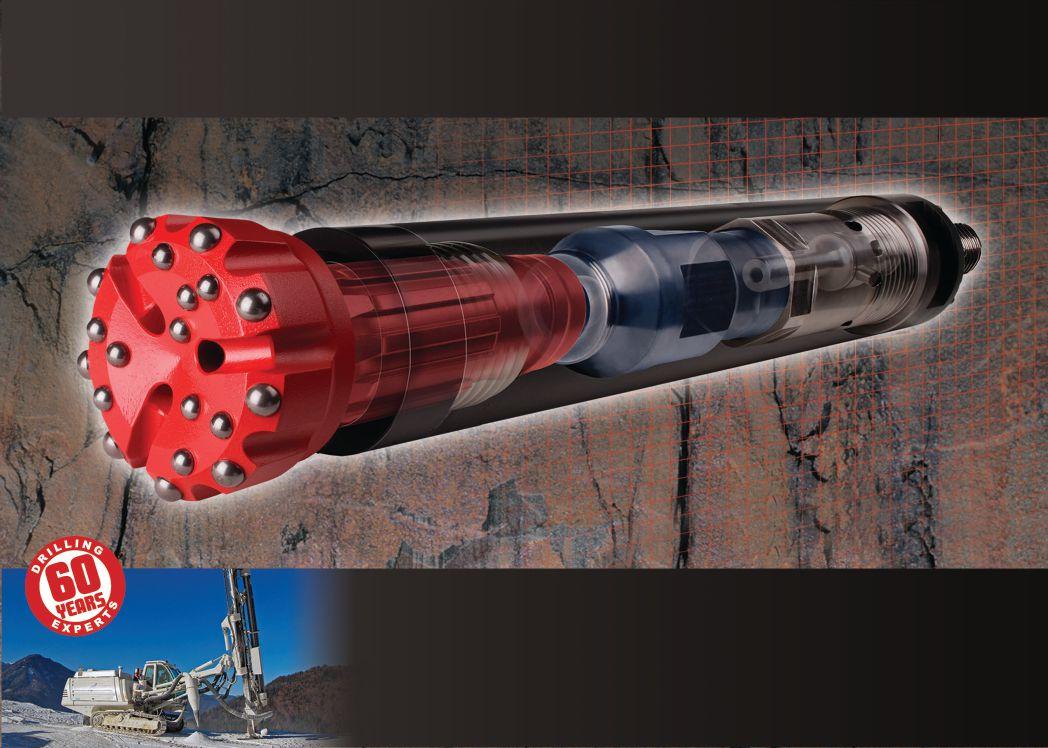
They are manufactured to provide high quality resulting in long lasting performance. Using the latest in CNC machinery our skilled workers implement exacting standards to construct high quality products with American steel—tempered to our specifications—to ensure our products will be the best in the industry. All parts and bits are inspected before leaving our factory to deliver the quality you deserve.
As technology in our industry grows, EDM is dedicated to continuous research and development to maintain our performance and ability to be the best.
EDM’s reliable hammers and bits allow you to focus on getting your jobs done as quickly and cost efficiently as possible.
Hammers and bits from EDM’s vast inventory have been well tested on job sites around the world. They are tough enough for the gas and oil fields, fast enough for the quarries, and long lasting for the water well industry.
Annex Publishing & Printing Inc. P.O. Box 530, Simcoe, Ontario N3Y 4N5 (800) 265-2827 or (519) 429-3966 Fax: (519) 429-3094
editor | Laura Aiken laiken@annexweb.com (416) 522-1595
Occasionally, Ground Water Canada will mail information on behalf of industry-related groups whose products and services we believe may be of interest to you. If you prefer not to receive this information, please contact our circulation department in any of the four ways listed above.
Serving the Canadian ground water industry for 39 years.
The mainTenance mindseT
Keeping on top of the most preventable repairs
18 a high road To low lead
The changing lead policies for plumbing products in Canada 24 The nexT generaTion
How Albert Oostenbrink is saving time and money through technology
www.groundwatercanada.com
26 cross- canada updaTe: parT 2 What’s happening with water in the Maritimes and Canada’s North. 4 no easy answers
ON THE WEB:
Is Keystone XL a distraction from a much-needed conversation about water? By Laura Aiken
6 i ndusTry news
16 n ew producTs
Red Deer to host AWWDA convention
The Alberta Water Well Drilling Association (AWWDA) is holding its annual convention and trade show at the Sheraton Hotel in Red Deer, Alta. The event will take place from April 10 to 12 with a pub night theme.
Saskatchewan farm areas may see increased flooding Canada’s biggest wheat- and canola-producing province, Saskatchewan, could see above-average spring flooding across most of its farming areas, reports Reuters.
No easy answers
The Canadian government sure wants to ship our oil to the U.S. via the Keystone XL pipeline, but when is the focus going to shift to water?
by Laura Aiken
oWhat if the U.S., already facing serious water scarcity and droughts, was no longer able to grow abundant food?
il and water don’t mix well, even when used as words in the same sentence. There has been a lot of opposition to the Keystone XL pipeline that TransCanada wants to complete. Right now, the public preoccupation seems to be with oil versus the environment, with ground water as a factor in the latter. However, more lobbying would be wisely spent on fresh water as the star attraction. Water, not oil, is poised to be the world’s next blood diamond. What if the U.S., already facing serious water scarcity and droughts, was no longer able to grow abundant food? Canada is the biggest importer of American agricultural products, reports the U.S. Department of Agriculture. In 2011, the department website stated: “Furthermore, in fiscal year (FY) 2011, increased demand and higher prices are expected to result in record U.S. exports [to Canada].” Exports to Canada in 2011 were forecasted to be up two billion. Would we leave our American neighbours parched? What will we sell to pay for potential costs of climate change? CNN reported on data released by financial services company Allianz and the World Wildlife Fund that showed the cost to coastal infrastructure due to sea-level rise could put $28 trillion worth of assets at risk by 2050. A different report issued by the B.C. government late last year estimated the cost of dike improvements to cope with sea-level change at $9.5 billion by 2100 (as reported by the Vancouver Sun).
To recap: The big U.S. aquifers are running out of water with less rain to renew them, we depend on U.S. farming and we are also facing potentially huge climate change costs. In 25 years, Keystone XL could be just a blip in a North American conversation that would have been better spent with the focus on water because
I just don’t believe this pipeline is the future maker or deal breaker. With or without it, the environment is in trouble. This data likely does not hinge on a “what if” the pipeline is built.
Then, there’s the rest of the world. Let’s take a look at some recent headlines: The coming water wars? (CNN, plight of freshwater reserves in the middle east); Newfound aquifer may ease Mexico City’s water woes (Los Angeles Times, reporting that Mexico City is sinking, sometimes more than a foot each year, due to over-pumping of shallow aquifers in outlying areas); and Saudi Arabia stakes a claim on the Nile (National Geographic, reporting on how Saudi Arabia has nearly drained what’s considered one of the world’s largest underground freshwater reserves). Certain areas of the world are simply running out of water.
The Canadian water supply may seem bountiful, but it’s not endless, it’s not always where it’s needed and it faces challenges of drought and climate change. However, the rest of the world may see Canada as one tall glass of water. It’s going to take a titanium backbone to be a leader in the conservation of water, and our eagerness to extract oil makes us look more like a Shell tycoon than a protégé of David Suzuki.
Canada will need to ask itself what it will take to create a mindset of scarcity and protection when it comes to our water. Will we need to charge every household per use? Perhaps if all residents received a bill for their water use, it would leave some resulting government income to help offset the costs of water infrastructure, including well installation and maintenance. There are no easy answers, but this shouldn’t stop the search for better solutions.
Don’t miss our
issue! We’ll be focusing on pumps.
INDUSTRY NEWS
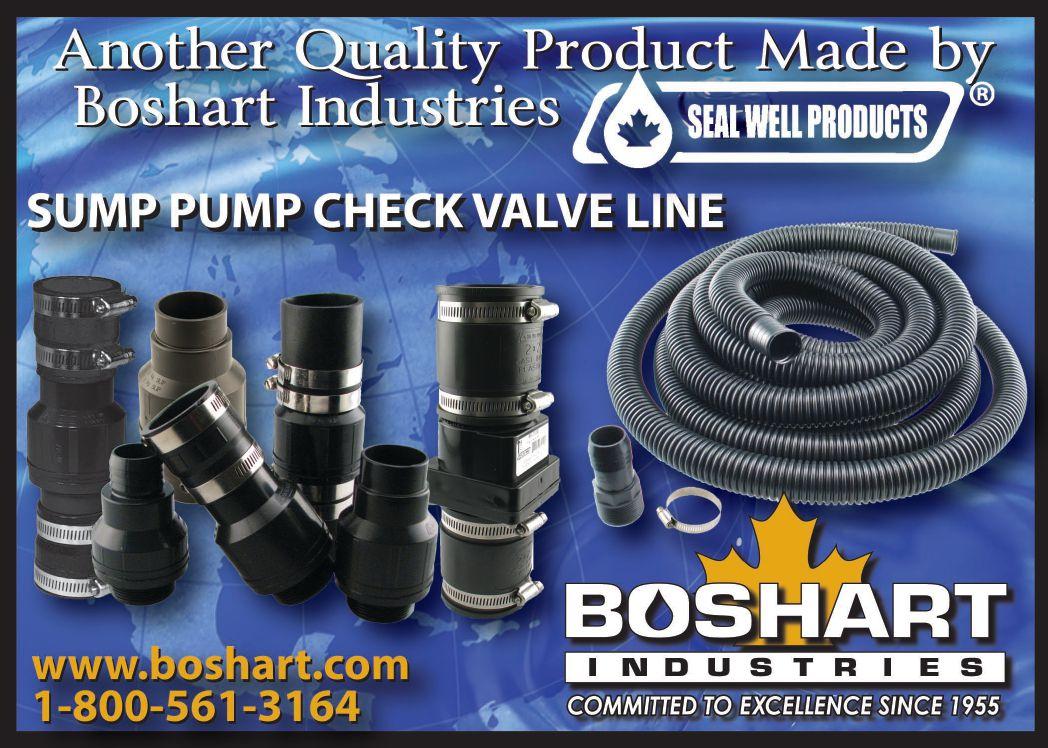
BoS hART I NDUSTRIES AcqUIRES
FlomATI c coR poRATI oN
Boshart Industries completed the acquisition of Flomatic Corporation on Dec. 21, 2012, in a share purchase transaction from Watts Water Technologies, Inc.
The sale excludes the backflow product line of Flomatic Corporation, which was retained by Watts. Flomatic Corporation is based in Glens Falls, N.Y., and has been in the business of manufacturing valve products for water and wastewater for more than 80 years, specializing in check, foot, gate, butterfly and automatic control valves for the water well industry. Flomatic is an ISO 9001- and 14001-certified company with ARRA compliant and lead-free products.
Boshart Industries has been in business for more than 55 years, supplying the plumbing and water well markets. “This acquisition will only strengthen both companies as we both share the same vision and commitment to excellence,” said Gary Boshart, owner of Boshart Industries, in a company release. No changes are anticipated in the management of either Boshart or Flomatic operations.
Kris Yungblut joins boshart
Kris Yungblut has joined Boshart as vicepresident of finance, and will oversee finance, accounting and human resource functions at Boshart Industries.
Yungblut brings to Boshart five years of experience in the financial services industry, in addition to two years with BlackBerry (formerly Research in Motion).
WATER G R oU p STREAmlINES opERATI oNS IN cANADA
WaterGroup announced in January it has made a decision to centralize and expand its manufacturing, assembly and distribution centres. Canadian operations will remain in Calgary, Alta., and Cambridge, Ont., with U.S. operations in Fridley, Minn., and Libertyville, Ill. The company says this decision will better serve its customers by improving “just-in-time” delivery throughout Canada and provide additional support for U.S. and international business expansion. As a result, WaterGroup will close its manufacturing plant in Regina, Sask., by September 2013.
The announcement was made to the employees of the Regina plant as soon as the decision was finalized. WaterGroup says it will be providing the Regina plant employees with a range of support services, including severance pay, an employee assistance program and career counselling.
“We would like to thank our Regina plant employees for their dedicated service and continued support. This decision does not in any way reflect the performance, contributions or the commitment of the workforce in Regina. We are confident they will help as we transfer the business to our other operations,” said Ryan Kirk, vice-president and general manager of WaterGroup, in a press release.
As a result of this move, WaterGroup will be hiring additional staff in the expanding Calgary and Cambridge facilities.
cGWA lookING AT REcEIvERShIp
The fallout from the final ruling in the dispute between the Canadian GeoExchange Coalition (CGC) and the Canadian Ground Water Association (CGWA) is ongoing while the two parties continue to negotiate the consequences of the judgment. The CGC was awarded $267, 061.77 in damages on March 29, 2012, after a Montreal tribunal ruled in its favour following a threeyear dispute with the CGWA over a matter related to the development of a national geothermal training course.
Wayne MacRae, executive director of the CGWA, released the following update in the winter edition of The Canadian Ground Water Journal:
“As you know, approximately 85 per cent of association income is based on provincial membership dues, which are voluntary and paid at the discretion of the provinces based on value for service. The provinces have made it clear to our directors that they are unwilling to pay for their dues until a settlement is achieved. This leaves the association in a position of only being able to operate until the end of March based on present budget numbers, which means we will be forced into receivership after that date.”
At the heart of the dispute is a question of original content in the comissioned development of a geothermal program. What was delivered by the CGWA was a 95 per cent cut and paste version of an existing course created for Ontario well drillers pertaining specifically to Ministry of the Environment (MOE) regulation 903, said Denis Tanguay, executive director of the CGC. Two technical schools were listed in the dispute as subcontractors of the CGWA.
The CGC put forward a repayment proposal in August that included financial and non-financial options, said Tanguay.
“We offered three payments of $50,000 over three years and the non-financial options would be allowing us to come to your show [CanWell], we would have a booth, a keynote speaker, you [CGWA] will recognize our training, promote our training, and make sure every province registers at least 20 persons [for training]. These are direct costs for the industry but they need to get trained anyway,” Tanguay told Ground Water Canada in an interview.
MacRae addressed the CGC’s offer in his editorial statement, noting that the CGWA had been working on a settlement for several months through Serge Crochetière, the association’s lawyer.
“However, despite Mr. Crochetière’s best efforts, the only settlement offered was for twice as much money as the CGWA ever had in its possession as well as endoresments for CGC program and guest speakers at future CanWell’s to spread their message.”
MacRae closed his statement by writing that the association is continuing to work through their issues.
G R oU pS To pARTI cI pATE IN WATER TAk INGS h EARING
The Council of Canadians and Wellington Water Watchers (WWW) –with legal representation from Ecojustice – are now parties to a case involving Nestlé’s water takings in Hillsburgh, Ont.
Last Thursday, the two groups won the right to challenge a proposed agreement between Nestlé and the Ministry of the Environment (MOE), which would permit water withdrawals from a shared water source during low water conditions. The agreement stems from Nestlé’s appeal of an MOE ruling requiring them to reduce their water takings during times of drought.
Both Nestlé and the MOE strongly opposed the groups’attempt to intervene but their arguments were rejected by the Environmental Review Tribunal (ERT). By gaining party status through the ERT, the groups will ensure the local aquifer is protected. Last March, the two groups formally requested a review of Ontario’s Permit To Take Water process as it applies to licences granted by the province to bottle water, urging Ontario to overhaul its approach, which is inconsistent with the Public Trust Doctrine (PTD). The PTD holds that certain natural resources, including ground water, belong to all Canadians and cannot be privately owned or controlled. This is because of the resources’ inherent importance to each individual and to society as a whole.
“We believe this case presents an exciting opportunity for the ERT to recognize that the Public Trust Doctrine provides a valid legal basis for upholding the Director’s decision to add drought-related conditions to Nestlé’s Permit To Take Water,” said Maude Barlow, National Chairperson of the Council of Canadians, in a press release.
“The MOE should stand by the conditions it imposed on the permit renewal, even though we do not agree with this permit in general. The mandatory conservation measures are prudent and consistent with what is asked from private citizens. No one should profit from shortage. The lawyer for Nestlé opposed “adding a third leg to the stool,” meaning party status for WWW and the Council of Canadians. “Everyone knows what happens when you try and sit on a stool with only two legs. We are here to ensure its stability and proper foundation,” said Mike Nagy, Chair, Wellington Water Watchers, in the release.
“The MOE and Nestlé opposed our clients becoming parties in the appeal. We believe that more public participation, not less, is the best way to ensure that the importance of our common water resources is not forgotten,” said Will Amos, lawyer for Ecojustice, in the release.
The groups are concerned that under the proposed agreement, Nestlé’s ability to take up to approximately 1.1 million litres of water per day from Hillsburgh for its bottling operations in Aberfoyle will not be subject to mandatory restrictions during droughts. The City of Guelph issued a red alert last summer requiring a 20 per cent mandatory reduction in water use from Guelph residents because of drought conditions. Wellington County farmers, livestock producers and residents were seriously impacted when they experienced the worst drought in over a decade last summer. Guelph Eramosa Township, neighbouring township to the Town of Erin, was on Level II restrictions (yellow alert) well into November. On Feb. 19, the groups learned that Nestlé and the MOE struck a deal to allow Nestlé to pump water for its bottled water operation without restrictions during Level I or Level II droughts.
Passavant-geiger and johnson screens join forces
Passavant-Geiger GmbH, a wholly owned subsidiary of Bilfinger SE, acquired Johnson Screens, a global company specializing in screening products for water infrastructure, wastewater treatment, hydrocarbon processing and general filtration. Passavant-Geiger GmbH and Johnson Screens Inc. will form the Bilfinger Water Technologies Group.
The management of Johnson Screens Inc. has welcomed the merger and will continue to be part of the management of the Bilfinger Water Technologies Group, according to a press release. Johnson Screens, which was founded in 1904 and is headquartered in New Brighton Minn., staffs about 1,200 employees. The company manufactures mechanical components for the separation of solids from liquids and gases, and also offers related services from 11 locations around the world. The products are used for the extraction and treatment of drinking water, and play a role in wastewater treatment and refining applications for oil and gas as well as other industrial applications.
oWa comPletes best Practices guide
The Ontario Waterpower Association (OWA) has completed a guide entitled Best Management Practices Guide for the Mitigation of Impacts of Waterpower Facility Construction. This initiative was undertaken in partnership with the Ministry of Natural Resources and Fisheries and Oceans Canada. The resource document consists of 38 activity-specific best management practices, including topics related to in-water work, civil construction, vegetation management, and other key considerations.
Water power is renewable, reliable and durable and accounts for more than one-quarter of Ontario’s energy mix. The OWA has identified more than 3,000 megawatts of additional untapped potential that, if developed, could help moderate electricity prices for decades to come.
The document is an addition to the series of best practices the OWA has produced for feature species, including Lake Sturgeon (2009), American Eel (2010) and Channel Darter (2011). The BMP was developed by GENIVAR Inc. and Natural Resource Solutions Inc., with contributions from a wide array of industry practitioners and agency staff.
by Darryl CaI lE s
The N aTure of ri S k
you work hard for your money. Time to put your money to work.
overdependence on conventional wisdom and following the crowd are only two of the myriad of risks historically facing investors. nowadays there are many more risks that are not necessarily market related. indeed, many of today’s investment dangers are difficult to detect and manage. in the business of managing wealth, investment behaviour can be driven by career risk.
At some levels of the investment business, there is a tension between protecting clients’ money and protecting one’s job. There are monthly sales quotas that many firms expect to be met by their sales force and pressure not to be wrong on your own. To prevent being wrong all alone, many advisors watch what others are doing and flock for safety. The resulting herding action drives prices above or below fair value. When purchasing mutual funds or “seg” funds from an advisor, you may pay him or her in one of several ways. You, the purchaser, ultimately fund all of these fees and commissions. If you don’t know what questions to ask or are not prepared to read a lengthy prospectus, you may never be aware of the money that actually changes hands as the result of your transactions. In addition, the annual embedded fee charged by the fund company can run as high as three per cent or more before any returns get into your pocket. You may never know If your advisor has been found guilty of breaking the rules as set down by the body that licenses him or her, (for example, MFDA for mutual fund salespeople, IIROC for brokers). Results of an investigation will be posted on the regulatory body’s website. However, victims of wrongdoing and other clients are not normally notified. Do your homework before agreeing to work with any advisor.
Third-parT y verificaTion of prices
Where do your statements originate? Are they produced on your advisor’s letterhead in his or her office? Is the information on the statement independently verified? As your first line of basic safety, you must insist that your money be held at an independent custodian from whom you can obtain clear reporting and disclosure on a timely basis.
A fiduciary duty is the highest standard of care in equity or law. A fiduciary must act at all times for the sole benefit and interest of the client. The fiduciary can make a profit, by consent, but he must not put his personal interests in front of his duty of care. It is appropriate for you as a client to ask your advisor if he or she has a legal fiduciary duty to you. If not, ask if you can have a “fiduciary pledge” signed. It is a contractual commitment that helps ensure that your advisor can’t profit at your expense.
Darryl Cailes is executive vice-president at Enriched Investing Incorporated. He can be reached at dcailes@enrichedinvesting.com. This document is for information only and should not be construed as an offer, or a solicitation of an offer, to buy a security or investment service. Before making an investment, prospective investors should review offering documents that summarize the objectives, fees, expenses and associated risks.
Drill Smarter
Drill faster, cheaper, smarter with Sonic Drill Corporation’s award-winning, patented drilling technology. Put it to work on your next project to heat up profits and cool down costs. It’s the perfect choice for geothermal installations, environmental investigations and mineral explorations.
• Drill 3-5X faster (depending on conditions).
• Drill, case, loop and grout in one step for geothermal projects.
• Collect continuous, undisturbed core samples to 300 ft.
• Drill using water or air (depending on conditions).
• Produce up to 70% less mess, lower your site clean-up costs.
• Various rig sizes (some fit in a 20’ shipping container to drastically reduce shipping costs).
The Dual Rotary Method
Foremost Dual Rotary drills are commonly used for domestic and municipal water wells across Canada and internationally. The Dual Rotary method has been proven repeatedly where unconsolidated formations (sand, gravel, cobbles and boulders) make it difficult to drill a cased hole using conventional drilling techniques. The versatility of this unique drilling rig makes it one of the most efficient and cost effective methods for drilling in difficult formations.
Dual Rotary (DR) drills feature two rotary drives, including a unique lower rotary drive that is used to advance steel casing through unconsolidated overburden. The lower drive feeds and rotates the casing independently of the top drive. The casing is held securely in the lower drive by a set of power-operated jaws. A carbide-studded casing shoe, welded to the casing bottom, cuts through the overburden. Once the desired casing depth is reached, the DR continues drilling openhole like a conventional top drive drill. There is no need to trip out or change tools when transitioning to openhole drilling.
The independent rotary top drive simultaneously handles a drill string, which can be equipped with a down-the-hole hammer, tri-cone, or drag bit. Cuttings are typically evacuated with air, however Foremost DR drills can also be configured with pumps for mud or flooded reverse circulation drilling.
The upper and lower rotary drives feed independently on separate hydraulic cylinders. This means that the bit position can vary in relation to the casing shoe. In most situations, the bit is advanced slightly ahead of the casing for best penetration rates. In heaving formations, or at times when it is desirable to obtain a clean sample of the formation, the casing can be advanced ahead of the drill bit.
Over the years, the Dual Rotary method has proven very effective for advancing steel casing in difficult unconsolidated overburden. In addition to the primary benefit of effective penetration, the rotation of the casing results in very straight holes, and the casing can be easily extracted using the lower drive. This is useful in well abandonment applications and for exposing well screens.
Improved Safety Features
Foremost has worked diligently to improve several features of the Dual Rotary rig over the years. One of the latest improvements has been made to the discharge swivel mounting. On previously built models, the rotating discharge swivel is attached to the top drive by a set of chains – these chains are merely slipped over hooks on the discharge swivel body. Caution must be taken to ensure the chains do not come unattached during casing loading or any other time the discharge swivel is suspended below the top drive.
The newly available Hydraulic Discharge Swivel Clamp mechanically clamps the discharge swivel to the bottom of the top drive. With this new component, the only way to release the swivel from its mounted position is by pressing a Murphy Switch and activating a hydraulic lever. This is a much safer way to secure overhead drilling components, resulting in fewer incidents and increased uptime.
For more information about Foremost Dual Rotary rigs, visit www.foremost.ca/DR
mai NTe N a N ce mi N d S e T
how to keep your rig running right.
by laura aI k E n
“
you
can say check the oil, check the valves before you go out, but i’d say check the mindset,” says rich clarke, director of sales and marketing for simco drilling and my first phone call for this article.
Hmmm. I mull this insight over. I think of the four cars (at least, and I am baring my soul here to admit it) that I have sent to early graves with my own maintenance mindset. I’ll take it in next week, I’ve thought, only to once find myself eventually stranded in the middle of a Toronto intersection shortly before needing to be on an airplane. I even drove without a working fuel gauge for nearly a year, as if that’s not asking for trouble. Doing proper maintenance on a car can seem a monumental task in a busy life, and attending to the needs of a rig in a busy business is triple that and then some. Breakdowns cost money and lost time on the job, that’s a given. Sometimes procrastination is at play, but that’s too complicated a subject to delve too far into here. Here are a few words from two procrastination experts as to how deeply humans and the art of putting things off are intertwined:
“We see that procrastination is even more complex that we once thought –an interweaving of not only individual psychological, behavioural, and emotional issues, but also social, cultural, and technological dynamics, biological and neurological predispositions, and universal human tendencies,” wrote Jane B. Burkha, PhD, and Lenora M. Yuen, PhD, in their book Procastination: Why You Do It, What to Do About It Now.
Why we don’t do what we need to do when we should is complex, but reflecting on the important things helps keep the big things in view. This is pretty key when you think about how central maintenance is to keeping your
moneymaking machine on the road. On that note, let’s look at how the hydraulic system takes centre stage when it comes to keeping your drill boring hole after hole.
hydraulic oil doesn’T wear ouT, iT becomes conTaminaTed
A hydraulic system is like the arteries of a rig – clog it up and the machine’s going to have a heart attack. A lack of maintenance when it comes to keeping the hydraulic system clean is the number 1 reason Sonic Drill Systems rigs land in the shop, says Kevin Reimer, the company’s sales and operations manager.
“Regularly changing filters and regularly taking an oil sample analysis to test for water content and/or other contaminates like metal: That’s the key thing for sonic rigs. It should be a very common preventative measure for rotary rigs or any other type of drill rig for that matter. Hydraulic oil preventative maintenance testing analysis and filter element replacement is front and centre the most key thing to having a long life on your equipment and avoiding any mechanical issues and expensive breakdowns.”
If you’ve experienced a breakdown caused by a dirty hydraulic system, you already know that repair can be a long and expensive process. A poorly maintained hydraulic system can cause pump failure, says Reimer, which introduces steel and/or iron that contaminates the hydraulic system and can threaten other critical components like the drill head.
“Hopefully it’s just a pump replacement, but worst case, it’s a pump replacement and
an entire cleaning of the hydraulic system, which is a very arduous process. It takes about a week to do the job, and it’s expensive to replace a hydraulic pump considering all the oil and labour [required] to flush out an entire system.”
Hydraulic oil doesn’t wear out; it becomes contaminated. Oil sample analysis can monitor contamination levels, oil condition and wear trends. Oil degradation is subject to many factors such as heat, water entering the system, iron or steel partials, working environment, and the rate and type of contamination. However, the single most important factor determining the life of the oil and the equipment is the type of filtration used to filter the bloodline of the component.
Sonic Drill Systems trainers cover preventive maintenance on all rigs when doing onsite commissioning with our customers, plus the machines have reminder maintenance decals and a manual that outlines clearly the periodic maintenance interval times. If you suffer from either procrastination or forgetfulness, two human traits shared en masse by the species, try enlisting supplier support services. For example, Sonic Drilling will put together a maintenance program for its clients, and then send regularly scheduled reminders when it’s time to do an analysis sample, oil change or filter inspection/replacement. However, Reimer says that he doesn’t see enough drillers take the advantage of this available service.
Darren Swolley of SIMCO Drilling, also mentions the hydraulic system as being at the root of a lot of repairs. Keeping the hydraulics and oil clean and cool is the ticket. If you’re tempted to shortcut on your next filter purchase, consider this common sight of Swolley’s:
“[Drillers] putting the incorrect filters on a hydraulic system – putting a cheap filter you can get from an auto parts store for $30 bucks when you should be using one that cost $75 or $80 bucks is a pretty common thing when it comes to hydraulics.”
The daily grind
There are simple things that should be checked each day before any drilling is done. Swolley shares a simple list of top
What percentage of repairs could have been predicted?
things to keep an eye on:
• Check all the fluids.
• Check grease points.
• Check the bolt heads of the parts that move a lot and make sure the nuts and bolts are tight.
Little things, but of course, they are the seeds of bigger things. Swolley estimates that 60 to 70 per cent of the repairs he sees could have been predicted. Most jobs are in and out of SIMCO’s shop in a day, he says, unless it’s a major fix. The company
provides next-day shipping for parts, but it’s a costly service and Swolley says the drillers who see the wobbly part ahead of time and allow for the two to three days ground shipping are the ones avoiding the emergencies and breakdowns.
SIMCO rigs come with a fully loaded maintenance guide, but in the end, it comes down to drillers applying it.
“Unfortunately businesses get busy and it’s hard to do the small things that can save you a lot of money.”
NEW P RODU cTS
s chramm adds new exploraTion drill rig
Schramm has added the model T685EX to its exploration drill rig product line.
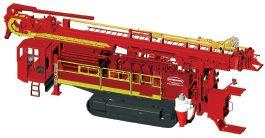
The Schramm T685EX is a heavy-duty drill rig specifically designed for mineral exploration applications. Schramm says the T685EX features a high-capacity top head, sampling equipment, power breakout and automated pipe handling systems. It is offered in both track and truck mounting to offer optimum mobility and is available in hoist packages ranging from 18,180 kilograms (40,000 pounds) to 40,909 kilograms (90,000 pounds). www.schramminc.com
p ump conTrol wiTh go r emoTe from g rundfos Grundfos has released the Grundfos GO Remote, giving you handheld control from your Apple or Android smartphone or the new iPod-based device from Grundfos.
If you already have a smartphone, simply order the appropriate mobile interface device from Grundfos. The Grundfos GO Remote app can be downloaded free of charge in the Apple or Google app stores. www.grundfos.ca
w ireless daTa logger from Tand d
TandD Corporation has released its new wireless data logger, the RTR-576, for use with any of its RTR-500-series
wireless data collectors. This instrument has a CO2 range of 0 to 9.999 parts per million, a temperature range of 0 to 55 C and a humidity range of 10 to 95 per cent relative humidity.
Used with the RTR-500series base unit, the company says the recorded data from the RTR-576 can be collected via wireless communication, and can also be used for data monitoring, warning monitoring and data management through networks to construct a data-logging system to match the needs and environment of the user. www.tandd.com
TransmiTTer displays, conTrols conducTiviT y, resisTiviT y or saliniT y
Sensorex says the CX-3000 Transmitter monitors changes in process fluids, displaying conductivity, resistivity or salinity, along with temperature, for process control in water, chemical, electronics, food production, environmental and wastewater applications.
The CX-3000 measures one of three critical process parameters: conductivity, resistivity or salinity. A simple push-but-
ton interface enables user-programming on-site for desired monitoring, with a password protection option for added security. The company says the CX-3000’s dual output design eliminates the need for a separate temperature transmitter. Its large backlit LCD screen displays selected parameter and temperature simultaneously.
The CX-3000 can be wall, panel-, or pipe-mounted for easy integration in most installations. The line-powered unit meets 100-240 VAC power requirements for use internationally. Two adjustable Hi/Lo relay contacts deliver results to automated process control systems. www.sensorex.com
At DOOSAN Portable Power, we expose our equipment to conditions in the extreme, including temperatures ranging from -30° to 140° F, in the name of extreme performance. Rigorous testing and Tier 4 technology ensure that our machines perform efficiently in the most demanding and complex settings across the world. Ingenuity, innovation and steadfast customer service make ours the coolest, hottest name in portable power today. Put us to the test.
by kEvI n Wong
a high road To low lead
The state of lead policies for plumbing products in canada.
For most canadians, the lead issue is very old. Back in the 1980s, the plumbing industry opted to limit lead contact to eight per cent in an attempt to drive down exposure to the chemical. Back then, it was a consolidated effort of the manufacturers, the policy makers and what would become the plumbing code on either side of the border.
Toxicologically, it is safe to say that no amount of lead is acceptable for human exposure. Nevertheless, lead from historical uses has pervaded our lives, from the soil we stand on, to the air we breathe to the water we drink. It is an understood historical relic. It is everywhere.
california 2006
Fast-forward to California, early 2006, and the State Bill AB 1953 that Senator Chan introduced and proposed to limit lead in plumbing to an average of 0.25 per cent of the wetted surface area.
With an enforceable date of Jan. 1, 2010, hardwired into the California legislation, there were a number of challenges that had to be overcome, namely:
• The need for a referenced standard and test procedure
• The decision as to which state department was going to monitor and enforce in California
• How were manufacturers going to comply?
This was a challenge to the testing bodies, the manufacturers, and the regulators and policy makers in California, including their water utilities professionals, the California Department of Toxic Substances Control (DTSC), the health department and the Environmental Protection Agency (EPA). This was truly a challenge where all the stakeholders had to pool their resources and knowledge to develop a solution to meet the legislative challenge.
c hallenges of enforcemenT and compliance
The first task that was determined by the regulators was to codify something into a standard. Since NSF 61 was already the wellrecognized and -referenced standard of choice for many of the nation’s water purveyors and regulators, it was the first choice so that there would be no need to add a new reference standard into regulation. In many places, NSF 61 was already written into regulations. All that was needed was to reference the latest version of the NSF 61 standard with the requisite requirements once it was developed and published. It was an administrative solution at best for the regulators and a desirable solution for manufacturers since many would already be compliant with ther standard and familiar with its stringent testing procedures.
The formulaTion of nsf 61 – a nnex g
In September 2007, East Bay Municipal Utility District (EBMUD) proactively responded to these issues with a proposal (issues document) to the NSF Standard 60/61 Joint Committee that a new Annex be created for Standard 61 that establishes a standardized evaluation method for product certification purposes. By the winter of 2007, the NSF 60/61 Joint Committee responded positively to the issue document whereby regulators from California were asking the NSF 61 technical committee to integrate California’s low-lead requirements into the standard.
“Cotey
Eddie G. - West Texas Farmer
The Joint Committee already had a Lead Task Group established to work on continued refinement of NSF 61 with respect to lead. This task group was expanded to include representatives from the California Department of Public Health, EBMUD and other interested parties.
A draft was set up as an addition to NSF 61. The opening sections of the draft revision add references to the general section (Section 3). Annex G then covered the specific aspects of calculating the weighted wetted surface area of a product. Concerns over what products are covered and excluded as sources of water for drinking and cooking are therefore the same as those listed in each of the product-related sections in the main body of Standard 61. For instance, in Section 9, kitchen and lavatory faucets are included, but tub/shower valves, toilet tanks fill valves and other items are excluded.
In November of 2008, NSF 61 Annex G came into being as a referenceable section of NSF 61. Then the task group worked with the various testing labs to develop a number of ways to determine and test to the Annex G requirements. Now manufacturers had a standard, a test protocol and the tools and interpretations to share with the supply chain, regulators and testing labs. In reality they were part of the process to develop all these so all these developments did not comes as a surprise.
The Canadian Institute of Plumbing and Heating (CIPH) took an active part in the development of the test protocol, benchmarking the procedures, lab testing them and interpreting the results to find where challenges in interpretation could take place. All this was done to ensure that the government, certification labs and industry were all working off the same methodology and ending up with the same interpretation of the data.
Once a testing protocol and standard was completed, the critical issues of having to deal with the Calfirnia legislation were managed. The industry was ready for California’s January 2010 deadline.
The NSF Lead Task Group now had to wrestle with some of the technical, legal and logistical impacts of what it had
done to comply with California’s laws.
The two major issues were that the bulk of NSF 61 was a chemical extraction and technical standard based on chemistry, while the Annex G protocols were a calculation. This conflict affected manufacturers because they could meet one section of NSF 61 yet fail the Annex G criteria and vice versa.
The solution was to take the Annex G requirements out of the NSF 61 standard and place them into their own separate standard, then have the Annex act as a pointer to that new standard. Through late 2009 and 2010, the task force worked on developing what would become the NSF 372.
The developmenT of nsf 372
In November of 2010, the NSF Drinking Water Additives Joint Committee approved the release of NSF 372 Drinking Water System Components –Lead Content. This new standard allows product to be evaluated to only a lowlead criteria without having to be fully NSF 61 certified. NSF 61 – Annex G now refers users to the new standard.
Currently in Canada, certified plumbing products are already required to conform to NSF 61 for material safety. The new NSF 372 standard is a method that could be used to demonstrate compliance to a 0.25 per cent weighted average lead requirement.
oTher a merican sTaTes
As the events in California unfolded, other U.S. states were considering passing similar low-lead laws. The Plumbing Manufacturers Interantional (PMI) and other associations, including CIPH, lobbied firmly for these other states to harmonize their technical requirements and allow for reasonable implementation dates to allow manufacturers and the supply chain to adjust to the new requirements and clear inventory in a responsible manner.
What the associations recognized at the time was the increasing trend of independent legislative actions from interested states to want to create legislation similar to California’s, but each with differing language and requirements. Allowing this trend to progress would create a disaster for the plumbing industry in America.
A national solution was required. PMI successfully advocated for lowering the national standard for lead in the Safe Drinking Water Act. The industry lobbied for changes to the U.S. Safe Drinking Water Act. Through late 2009 and 2010, the associations, led by PMI, lobbied for a change in the U.S. Safe Drinking Water Act.
On Dec. 17, 2010, U.S. Congress passed the Reduction of Lead in Drinking Water Act. The legislation was presented to President Obama for signature and approval on Dec. 28, 2010. CIPH received word from our friends at PMI that the president had signed the bill into law on Jan. 5, 2011.
The new law provided a 36-month implementation period from approval, after which manufacturers and importers will be required to comply with the new standard. It uniformly reduces the lead standard for pipes, pipe fittings and plumbing fittings from as much as eight per cent to 0.25 per cent across the nation, which is consistent with the current state laws in California, Vermont and Maryland. CIPH, along with the Plumbing Manufacturers International and allies, worked tirelessly over the last few years with jurisdictions such as California and other states to advocate changes to the U.S. lead standards, to develop technical standards, and to educate key decision makers on lead policy development.
The industry, on a national scale in the U.S., had a referenced NSF standard, a method of how to achieve it, a federal regulation to apply, and a timeline of 36 months.
The Jan. 4, 2014, deadline and c anada
As of early this year, manufacturers are abiding by the laws in the U.S. and managing their respective applicable products for low-lead requirements, in time for the deadline. The EPA has not yet indicated how it will be rolling out supporting regulation for the act. As we approach 2014, this will crystalize into a clearer approach and guidance by the government.
In the early stages of the developments in California, CIPH got involved in the NSF Lead task force and the standards development work. Lead was not a critical challenge in Canada
PENTEK INTELLIDRIVE™ WATER PRESSURE CONTROL CENTER
3 drives cover all your needs
Models up to 5HP, Three Phase
Models up to 2HP, Single Phase
- Up to 1-1/2HP, 2-wire applications
- Up to 2HP, 3-wire applications
For submersible or above ground well pumps
State of the Art Surge Protection
LCD Diagnostics
Ground Detection
Pentair Canada Inc. 269 Trillium Drive, Kitchener, ON N2E 1W9 519-748-5470 • www.pentair.com
Simple Well Point
• Water level monitoring Groundwater sampling
615 Barbed fitting; 1/2” ID Tubing to Surface
• Narrow dia. water level monitoring
• High groundwater sample integrity 615C Compression fitting; 1/4” ID Tubing to Surface
• Vapor / Soil Gas Monitoring
• Ideal for initial site investigations
• High quality stainless steel piezometer tip
• 3/4” NPT drive extensions
• Completes a simple, cost effective well
• Drives 20 to 25 ft in suitable soils
at the time. The institute determined that early involvement was in the best interests of the members, and the Canadian industry.
In the Canadian context, the U.S.-styled federal regulatory approach and route was untenable. In 2009, the institute wrote Health Canada indicating that “blanket” regulations were not desirable or necessary. Health Canada agreed and went the route of adopting “low-lead” criteria via the model national plumbing and building codes system in Canada.
To achieve this strategy of adopting low-lead criteria into the model codes, the Canadian Standards Association (CSA) created a task force to work on adopting similar 0.25 per cent low-lead specifications and to propose requirements and definitions for inclusion into ASME A112.18.1/ CSA B125.1 and B125.3 Standards for Plumbing Fittings. Manufacturer compliance to lead content requirements can be demonstrated through certification to the referenced standards.
CIPH fully supports integrating low-lead requirements into the appropriate technical standards as this approach places the adopted lead content criteria into a system that is already well understood by the manufacturers and regulators responsible for manufacture, importation and enforcement of products under these standards.
This approach was apdoted by the pump manufacturers in the 1990s, when the industry’s manufacturers went towards a low-lead standard to eliminate the metal from their products.
This is reflected in their standards. At the same time, that industry worked to remove other harmful concerns including mercury.
The challenging question that remains is that the work to be done will eventually include other well supplies and components, and other products. Will this be done via regulatory pressure or will the industry take the leadership role?
The provinces and territories currently follow the Model National Plumbing or Building Codes, which reference the technical standards for plumbing products. CIPH believes that all provinces should be directed to adopt any updated codes and fully utilize their present authority to eliminate the sale and installation of non-compliant product from the Canadian marketplace. Comprehensive application of existing enforcement models will remove the need for any new Canadian federal regulation pertaining to lead content in plumbing products.
CIPH encourages the appropriate federal departments, including Industry Canada and Health Canada, to work together and to work with the provinces and territories to ensure that timing of such code adoption in Canada will coincide with implementation of the similar American legislation.
w haT’s lef T To do?
Currently, what is left to accomplish:
• Integrating the standard into other CSA standards for applicable product.
• Referencing the latest versions of the CSA standards into the NPC.
• Adopting of the model NPC by the provinces via their building regulations.
CIPH continue to urge Canadian regulators to consider a strategy that will align Canadian lead content guidelines and timelines with the Jan. 5, 2014, effective date stated in the American legislation. Uniform requirements and effective dates in both countries will help to protect the health and safety of the public by preventing any potential for dumping of non-compliant product. It will also provide Canadian manufacturers a clear strategy for developing products that will be compliant for both domestic and export markets.
i mplicaTions for The waTer well indusTry
As this becomes adopted into the supply chain, specifiers, engineers and other professionals will have to start looking at how they specify and design plumbing sytems in the building. Only the potable water systems anticipated or intended for human consumption will be affected. The rest will follow the established requirements.
In the near future, provincial regulators will be looking beyond the traditional plumbing infrastructure to manage the lead issue. As this happens, we anticipate that well regulations and infrastructure policy may change. When that day comes, the industry will be ready.
kevin Wong is the executive director of the Canadian Water Quality association and the manager of the Canadian association of Pump Manufacturers. For more information, please contact kevin at k.wong@cwqa.com.
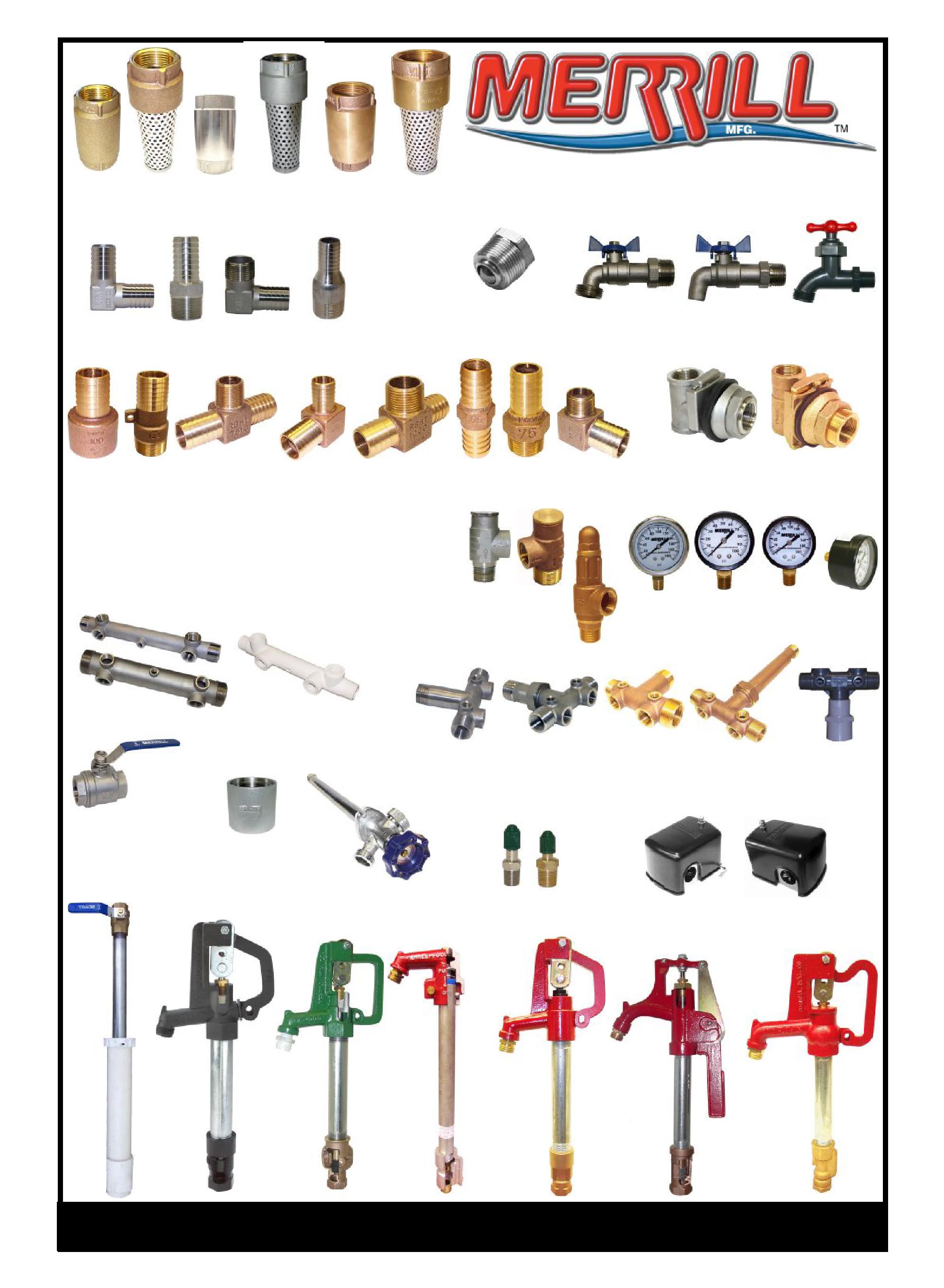
18 Models - No Lead Brass Check & Foot Valves
33 Models - No Lead Stainless Steel Check & Foot Valves
58 Models - No Lead Bronze Female Adapters, Rope Adapters, Hydrant Tees, Elbows, Tees, Couplings, Male Adapters, & Hydrant Elbows
25 Models - No Lead Brass Insert Fittings
4 Models - Stainless Steel Pressure Relief Valves
6 Models - No Lead Brass Pressure Relief Valves
6 Models - No Lead Brass Heavy-Duty Pressure Relief Valves
11 Models - Stainless Steel Tank Tees, Unions & Packages
Models - No Lead Brass Tank Tees, Unions & Packages
Models - PVC Tank Tees & Packages
The N ex T ge N eraTio N
how albert oostenbrink embraced technology to make his business more efficient.
at the young age of 25, a lbert o ostenbrink was already making big plans. h e was working at a high performance engine shop when a couple came in to sell their $20,000 boat in order to pay for a $20,000 drilled well.
by JulIE F Itz-gE ralD
Oostenbrink’s interest was piqued. Having to sell a luxury item to pay for access to drinking water – our most basic need – seemed a hefty price to pay and he wanted to learn more. Oostenbrink’s family was in the irrigation business so he knew about all things water, but he wanted to carve out his own path as well as be his own boss. In 2005, Richard Peters of Peters Well Drilling Ltd., in Chilliwack, B.C., was looking to retire. The timing was right and Oostenbrink jumped at the opportunity.
“It just worked out really well. You can tell if you’re going to fit or not. It was a huge learning curve. Richard went around with me for the first two years and introduced me to the clients that he had been dealing with for 22 years and that his dad dealt with for 27 years before that. He introduced me as the new guy. It’s a really good story of a turn-key business for sure,” he says.
As a certified pump installer and drilling technician, combined with decades of knowledge passed down from Peters, Oostenbrink quickly formed a solid understanding of the business. Now at the helm of Peters Well Drilling, he saw the opportunity to make operations more efficient through new technologies that were making a splash in the industry.
The drilling rig that he was using was an “old pounding machine” built in 1971 by the founder of the business, Henry Peters. The machine was converted from an old hay baler. “I could probably go out in the yard and start it
up right now,” Oostenbrink says. “It’s a really dangerous machine and it’s slow. I knew when I bought the company that it needed to be changed, but I didn’t know with what.”
He did his research and matched two pieces together: a track machine from an Italian company and a sonic drilling head from the Netherlands that fit onto the track machine. Before making the purchase, Oostenbrink rented a similar machine in Vancouver and tested it out for three days. The results were better than he was hoping for. “It’s a safer machine and does a better job on the well. It takes a lot less time and is much more efficient,” he explains, noting that he no longer gets stuck in customers’ yards with the old trailer-mounted pounding machine either!
Another area that needed attention was the service trucks. Oostenbrink purchased new service vans and implemented an organized bin system to avoid time-consuming trips into town to pick up additional parts. Now when he arrives at a job, he can fix 99 per cent of the problems with the tools and parts in the van, allowing him to complete jobs efficiently without incurring any costly downtime.
In addition to making operations in the field more efficient, Oostenbrink also focused on cutting down on paperwork in the office. At Canwell 2008, Canada’s National Groundwater Convention & Tradeshow held in Edmonton, Alta., he met Rick Oberle from Geographic
Continued on page 33
cro SS- ca N ada u P daTe: ParT 2
what’s new with water issues, programs and regulations in each province and territory.
in the last issue, we covered happenings in western c anada and c entral c anada. r ead on for what’s new in the m aritimes and the n orth.
by tr EE na HEI n
n ova s coTia
The province’s Water for Life strategy was published in 2010 under the Environmental Goals and Sustainable Prosperity Act. It provides a road map for water management in Nova Scotia over the next 10 years and beyond. The strategy resulted from three years of research, analysis and consultation with all levels of government, business and the public. It calls for enhancing the communication system for receiving and sharing water quality and quantity information with government and the public; building, supporting and integrating existing water-monitoring networks to bolster baseline data and assessment tools, and to identify stresses on quality and quantity; identification of ecologically significant
water resources, such as wetlands and critical groundwater recharge areas; engagement with post-secondary institutions, industry, and communities in order to improve knowledge about water-related issues across the province; and, determination of possible impacts of climate change on Nova Scotia’s water cycle. As part of the strategy, the Nova Scotia Watershed Assessment Program is underway, a joint initiative involving the Dalhousie University Hydrologic Systems Research Group and Nova Scotia Environment. The team has gathered data, constructed a geodatabase, created watershed models, and produced a series of maps. Watershed report cards and a public geodatabase will be available by early 2013.
n ew b runswick
In May 2012, amendments to the province’s Clean Environment Act have meant water and waste water commissions are subject to greater accountability and strengthened governance rules. New measures include setting term limits for water commission members, allowing municipal and rural community councils to appoint their own members, requiring commissions to submit annual budgets, financial statements and reports to communities and the Minister, requiring commissions to conduct annual general meetings open to the public, and authorizing the Commissioner of Municipal Affairs to direct a financial audit of a commission.
p rince e dward island
In August 2011, Prince Edward Island released the Annual Report of the Department of Environment, Energy and Forestry for the preceding fiscal year. It covers wetland restoration and development of watershed protection
plans, free clinics to test nitrates levels in well water and new rules to prohibit the spreading of untreated septage on land.
n ewfoundland
In January 2012, the main report of the project entitled Study on Water Quality and Demand on Public Water Supplies with Variable Flow Regimes and Water Demand was released. The study sought to determine the effects of variable water demands on water quality and use in a selection of communities that supply industrial, residential, commercial, and institutional water users. The study team assessed the design and operation of the water supply systems in light of historical water use records and water quality records.
In March 2012, the province also released its Study on Identification and Characteristics of Sewer Overflows in NFLD and LB, which identifies and characterizes both combined and sanitary sewer overflows from
B & H Construction, LLC of Goldsby, Oklahoma, relies on the productivity and durability of the GEFCO 30K for the fastest completion of water well and geothermal drilling in the industry.
The GEFCO 30K, mounted on a 6 x 4 truck, is perfect for shallow municipal or deep residential water wells. 25,000-lb. single-line winch combined with the hydraulic rod spinner makes tool handling fast and easy. This is the flagship of the GEFCO water well line, and has been for decades.
public wastewater collection systems throughout the province.
Two other recent reports released in September 2011 include a study on pathogen inactivation in drinking water systems (an assessment of the current drinking water disinfection standards and guidelines used in the province), and a study on organic matter in drinking water.
n orThwesT TerriTories
In 2011, the Northwest Territories government released NWT Water Stewardship: A Plan for Action (20112015) It describes actions that put into motion the vision of the Northern Voices, Northern Waters: NWT Water Stewardship Strategy, developed by all water use partners in the jurisdiction. The plan lays out a partnership approach to improve and enhance water stewardship at all levels of government, designates lead water partners and provides deliverable dates for each action item. The plan is intended to be
2012
B & H Construction
a living document, which is subject to ongoing reviews and audits to ensure its implementation continues to advance the intent of the strategy. Annual status updates will be published to track and report on plan’s progress, and subsequent action plans will outline activities beyond 2015.
Almost all drinking water in the Yukon comes from ground water, and there are six government branches that handle water matters in this territory.
A status update in 2012 reported that the goal of having water partners identified was complete. They have begun to share and examine existing
policies, frameworks, procedures, regional land use plans, interim measures agreements and other agreements related to the strategy. In September 2012, an update stated that descriptions of the roles and responsibilities of water partners had been developed and were being shared.
yukon
Almost all drinking water in the Yukon comes from ground water, and there are six government branches that handle water matters in this territory. These government agencies are now putting the finishing touches on a draft Yukon Water Strategy. It will be released to the public in early 2013 and input will start being collected at that time, says Heather Girousek, a policy analyst with the Water Resources Branch of Yukon Environment.
n unavuT
During fall 2012, the Government of Nunavut invited nominations for
appointment to the Nunavut Water Board (NWB), which was created in 1996 to regulate the use and management of water in the territory, except in the national parks. The powers and responsibilities of the NWB were further defined by the Nunavut Waters and Surface Rights Tribunal Act 2002. NWB can issue, renew, amend and cancel a water licence but has no enforcement powers.
“We had eight applicants for the board appointment ad,” says Jacquie PepperJournal, manager of communications, education and outreach at Nunavut’s Department of Environment. The successful applicant began a three-year term in mid-December.
There is no shortage of water talk across the Canadian landscape. Stay tuned to Ground Water Canada to find out what’s happening in your home province and beyond.
treena Hein is a science writer based in ontario.
d rilli N g for re S ource S
an observation well network expansion program in B.c. aims to provide long-term info about ground water resources.
nearly nine million c anadians – about 30 per cent of c anada’s population – rely on ground water for domestic use, according to e nvironment c anada.
The resource is often taken for granted, and as the age-old adage goes, you don’t know what you have until it’s gone. Many Canadians are in the dark about water resources, and the Regional District of Nanaimo in British Columbia is trying to change this with an observation well network expansion program.
The project started out as a partnership between the Regional District of Nanaimo (RDN) and the British Columbia Ministry of Environment. The program is run by the British Columbia Ministry of Forests,
Lands and Natural Resource Operations (MFLNRO). The ultimate goal is to collect information on the quantity and quality of water in an aquifer and determine how it is affected by human activity. The program falls into one of the goals of the region’s Drinking Water and Watershed Protection service: to improve information about the region’s water resources.
Prior to the beginning of the program, there were 14 government-drilled and monitored observation wells in the region.
“The idea was to identify where there
by stEFan IE WallaCE
were gaps in the current ground water data in our region, and then to go out and see if we can collect more data to fill those gaps,” says Julie Pisani, special projects assistant for Drinking Water and Watershed Protection program with the Regional District of Nanaimo. “Usually the ministry is responsible for drilling and maintaining the observation wells, but we saw this as an opportunity to create a partnership to achieve our goals under the drinking water and watershed protection program, to gather more data and fill
those data gaps.”
The timing couldn’t have been better. At the end of 2009, the Regional District of Nanaimo was awarded a Towns for Tomorrow grant from the provincial government. The grant provides funding to help communities in British Columbia address infrastructure needs in areas such as water and wastewater, recreation and culture, community development and more. This allowed for some existing wells to be added to the network in 2010 before the program began. In 2011, drilling for Phase 1 of the network expansion program began. Four wells were added in 2011 –two in Nanoose, one in Yellowpoint and one in Qualicum River Village, drilled by Drillwell Enterprises and Red Williams Well Drilling. Three wells were added in 2012 as part of phase 2, in Hilliers, Spider Lake and Qualicum Bay. Sonic drilling was involved in this phase, completed by Mud Bay Drilling from Surrey, B.C. The drilling in phase 3 was scheduled to be completed by the end of March, with plans to drill observation wells on Gabriola Island, Qualicum Beach and South Wellington. Qualicum Drilling is involved in this phase. Pisani told Ground Water Canada in an e-mail that drilling on Gabriola Island did not hit water, so that well will not be included in the observation well network, however, the RDN is currently looking for an existing well in the area to fit with monitoring equipment. In total, 16 new wells will be added to the network.
“The numbers don’t add up because
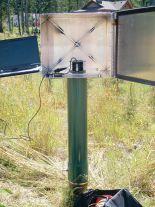
In July 2010, Benson Meadows received monitoring equipment in an unsued well before the network expansion program began.
Photo courtesy Regional District of Nanaimo
there are five additional wells that were added to the network that were not drilled,” Pisani says. “They were, essentially, wells that existed on people’s property that were not being used, so these people donated their well into the network.”
The monitoring equipment was installed and added by the MFLNRO and those five wells are now part of the network. Additionally, one well received monitors in two separate layered aquifers that were within the same borehole, counting as two observation wells.
“We went through all the different aquifers where we currently have observation wells and identified the ones that we needed to have monitoring in,” says Graeme Henderson, a ground water technician with the MFLNRO who has been a technical advisor for the project. Henderson says an internal review of the
provincial observation well network was completed in 2009.
“We had a list of bedrock aquifers and sand gravel aquifers that were prioritized based on a whole slew of criteria. We had a consultant do a whole review. Using that as a backbone we worked with the Regional District of Nanaimo to suggest what aquifers would be best monitored to support our goals, which are the same goals as the RDN to create a wideranging monitoring network so they can get a better handle on the ground water resource.”
A request for quotation was administered for each phase from the Regional District of Nanaimo.
“We went with different drillers for each of the phases based on logistics and quotations,” Pisani says. In the second phase of the program, the district partnered with the Geological Survey of Canada to complete the sonic drilling required.
“The Geological Survey of Canada was performing a study in the Nanaimo lowlands, covering our regional district, and completing sonic coring to try and study the aquifers and map them in our region,” Pisani says. “We had a partnership with them in our second phase to do the well drilling and sonic coring concurrently.”
Henderson provided monitoring equipment suggestions and installed pressure transducers in the wells. The device is deployed beneath the water and has a diaphragm in it that measures
pressure. An internal algorithm calculates the pressure into a water level, which is logged every hour and added to the provincial ground water network website for the public to see what’s happening in the wells. Henderson calibrates the loggers, downloading and publishing the data. Some of the pressure transducers are equipped with satellite telemetry.
“At the wellhead there’s an antenna and a solar panel and a signal is sent up to the government satellites, then bounced down to the Victoria server,” Henderson explains. This eliminates the task of visiting the well and downloading the data, making the data available on the same day, rather than having to wait until Henderson completes maintenance rounds, which happen at least twice a year. When Henderson obtains and calibrates the water level and confirms that the data is valid, it will be listed online as validated data.The results of the project will be long term.
“We’re hoping to monitor the aquifers where there were no observation wells before and get that water level data and collect it over the long term, with the overall goal of the data affecting land-use decisions, planning, development and overall public awareness,” Pisani says. “All of this information is available online for the public to look at to find out how each area is doing. Individual wells fluctuate with usage quite a bit, so these observation wells are helpful because they’re pretty stable as there’s no pumping going on out of that borehole.”
Pisani says the RDN hopes this project piques the interest of surrounding communities, but at the end of the day it’s often a matter of funding. The Towns for Tomorrow grant covered 75 per cent of the program’s expenses, with the remainder covered by the Drinking Water and Watershed Protection service.
As part of another component of the expansion program, separate from the observation well network, the regional district put out a request for volunteers who were interested in wells on their properties to host water level loggers.
“The areas where we did the mail out were identified by another study we have going on, a water budget study,” Pisani says. “We have hydrogeologist consultants putting together a water budget for all of the ground water and surface water in our region – mapping the aquifers and surface water sources and trying to quantify how much water is held in those sources, as well as how much water is coming out and from what land uses.”
In general, Pisani says the community reaction to the observation well network expansion program has been positive. The RDN has links on its website that provide updates to the project so that residents can stay in the loop, and residents of the regional district were informed via a mail campaign that the project was happening in their community.
“There was some pushback from some of the residents, but we’re talking to the public as they come by and assuring them that this is a monitoring program,” Henderson says. “It’s in everyone’s best interest that we have a handle on how much ground water there is and what’s happening to it in the long run.”
Insights, a firm specializing in research, mapping and database development. Geographic Insights launched a software system called WellMagic in 2002, which has since become a leading management system for the water industry. WellMagic is a single system that allows drillers to manage all details of their business, including estimating, work orders, invoicing, tracking maintenance, as well as filing well logs with provincial agencies. It was exactly what Oostenbrink had been looking for and he bought it on the spot.
The impact that WellMagic has had on his business has been huge. “I was spending so much time transferring information from one document to the next and doing so many unnecessary steps. I was working so many nights in the office trying to get paperwork done. With WellMagic, once you have the customer’s information there, it’s all in one program. A well log takes literally five minutes. You can e-mail estimates
and work orders. If I need to look up a well I did six years ago, I just type in the homeowner’s name or address and I can find out exactly what I did there, how deep the well is, when it was put in, water sample data and equipment used. The nicest thing about it is that I can literally do an estimate in five minutes and e-mail it to the customer directly from WellMagic.”
Oostenbrink says another big benefit of the software is its implementation by B.C.’s government.
“The B.C. government has moved up technologically as well. The old way was to submit handwritten well logs. The Ministry of the Environment (MOE) has gotten together with WellMagic and they work with automatic uploads through WellMagic. I can type out a well log and upload it directly to the MOE’s website.”
As with any software, there are bound to be glitches every so often. However, Oostenbrink says, help is just a phone call or e-mail away. Through remote access the problem is resolved
quickly, either the same day or by the next day. The monetary investment for the software was recouped quickly and the time that he has gained back has been priceless. Instead of working until 11 p.m. to complete estimates and well logs, he’s now home by a decent hour, enjoying time with his wife and four children.
While Peters Well Drilling has evolved to make operations out in the field and in the office more efficient through new technologies, one part of the business hasn’t changed: Oostenbrink still maintains his predecessors’ neighbourly, helpinghand attitude. In fact, he still calls on Peters to bounce ideas off of him and chat about the business. By keeping up with emerging technologies to ensure efficiency within the business, Oostenbrink can continue to offer customers the best rates possible for the installation of wells, pumps, tanks and filtration systems. Perhaps he’s even allowed some to hang on to their luxury boats for a little longer!
flow fundamentals
How does heat transfer fluid flow affect the efficiency of geothermal systems?
by Benjamin Hénault
You may doubt that the actual flow of heat transfer fluid in your geothermal loop plays an important role in effective heat transfer. But did you know that its impact is either too great, or negligible? Did you know that without a flow regulator of some kind, flow within the loop will change constantly over the year? Flow is generated by a circulation pump (and its motor), and depends on the pump’s efficiency, power rating, and the system’s overall bleed rate. The bleed, or loss, rate will vary as a function of loop configuration (diameter, durability, length, pipe fitting) and fluid properties (viscosity, density, type, concentration). Fluid properties will vary as a function of fluid temperature. In summary, if a parameter changes, the balance of the system is undermined. Since the system is a loop, entering values depend on exiting values.
You likely have already heard of flow types, of which two concern us: laminar and turbulent. Between these two modes, there is a transitory state, where fluid is sometimes laminar and sometimes turbulent. Each mode has its advantages. Laminar flow allows fluid circulation at much lower pumping energy than turbulent. Turbulent flow gives us a comparatively better heat exchange at each spot on the pipe, as the fluid’s thermal resistance is smaller. More precisely, the heat exchanger will be smaller, and implicitly less expensive, to extract the same quantity of heat from the same geology. A geothermal system running at full capacity must always have turbulent flow. In economic terms, a compromise is required in paying more for pumping energy to reduce the total HX length.
Geothermal system designers must ensure that the systems provide turbulent flow in the worst possible operating conditions, i.e., the lowest system temperature. The lower the slower the heat transfer fluid flow, the more viscous the
fluid must be. The more viscous the fluid, the more the flow approaches laminar flow. The less heat exchange that occurs in this laminar mode, the more the heat transfer fluid chills.
A too-high antifreeze concentration in heat transfer fluids will raise fluid viscosity for the same temperature, even though its freeze protection will be inferior. There is also no need to have too high of a concentration in the loop, as doing so will raise flammability and handling safety concerns, and the system will run generally less efficiently. Compliance with the minimum freeze protection prescribed by CSA C-448 is sufficient.
Manufacturers recommend circulation flow to the heat pump. Generally, this figure is three U.S. gallons per minute, per ton of refrigerant. A simple system will have the same total circulation flow in its borehole field as in the heat pump. The more boreholes are connected in parallel, the smaller the flow in each borehole; thus the choice of pipe diameter matters therefore to borehole field flow type and rates. The same applies to pressure losses – they must be the same so that flow rates in all boreholes are the same. At first glance, a geothermal system’s operations are quite simple: a pipe in the ground that can capture or reject heat. However, for system cost-effectiveness, knowing which factors affect loop flow is fundamental to avoid surprises during system startup. Are you certain that your geothermal systems are working with optimal flows? Perhaps that may be a source of your problems.
Benjamin Hénault is a professional engineer. since graduating from École de technologie supérieure, he has worked as the technical advisor at Canadian geoExchange Coalition and is studying geothermal research for his masters degree at École Polytechnique de Montréal.
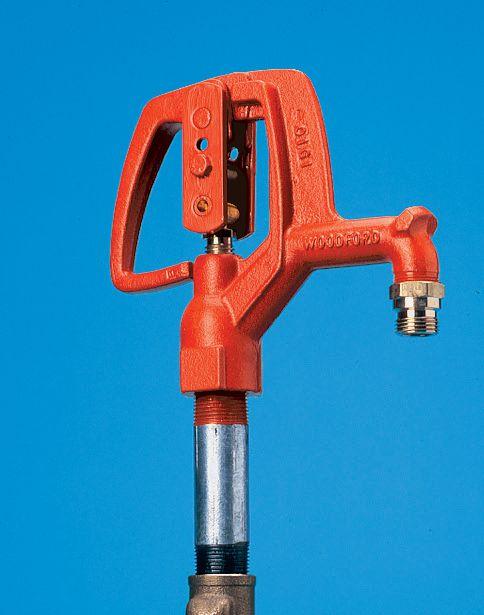
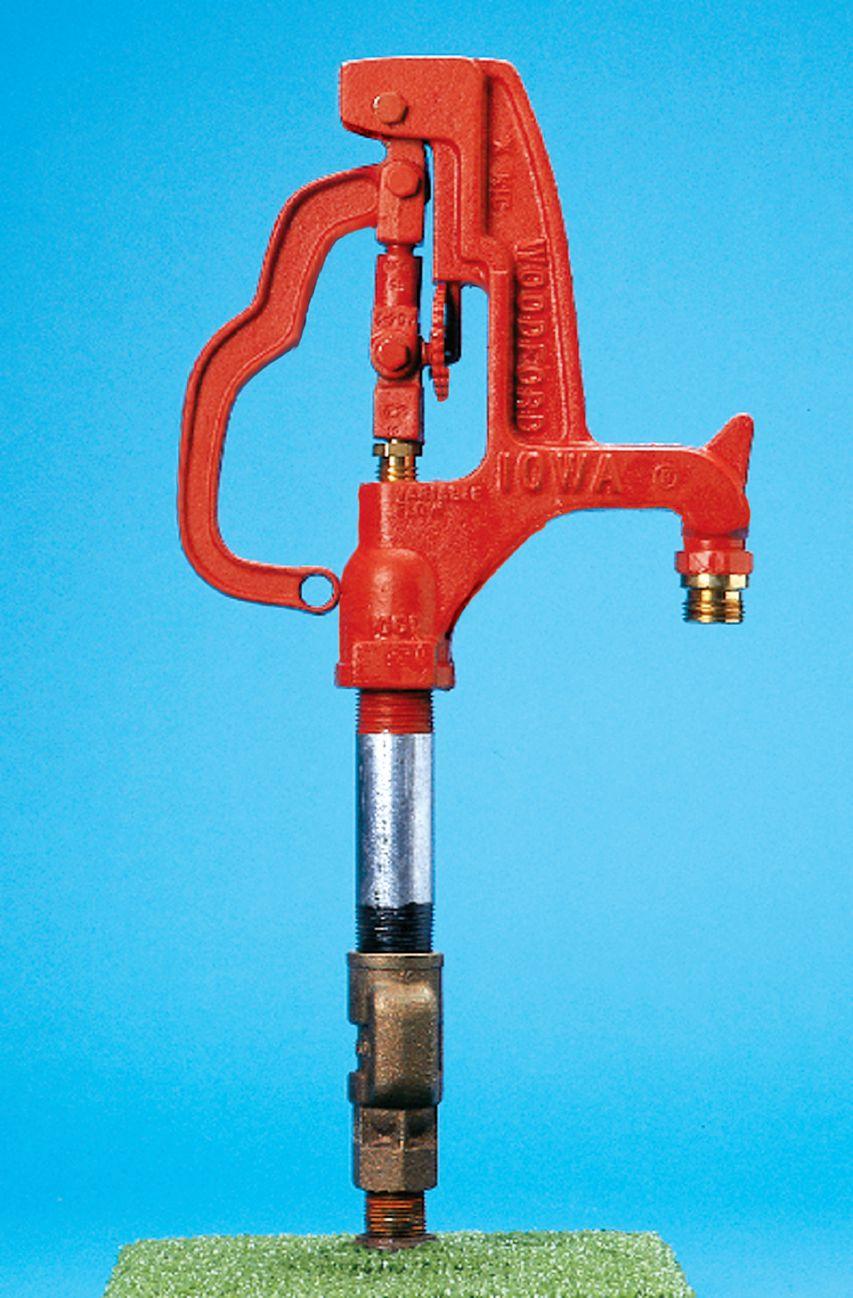
Producing yard hydrants for over 80 years. Many years of unequaled trouble-free service. It’s what your customers want from a yard hydrant. And that’s what they get with a Woodford yard hydrant. After all, Woodford has been making them for 80 years.
Represented in Canada by: J. Wright Sales in the Maritimes 506-459-5719
Agence Laverdure in Southern Quebec 800-528-4873
Les Ventes Bergeron in Northern Quebec and Eastern Ontario 613-445-4170
Armco Agencies Inc. Western and Southern Ontario 905-238-8448
WestCan Mechanical Sales in Saskatchewan 306-347-2700
Preferred Sales and Marketing in Alberta 403-547-5237
Hy-line Sales in British Columbia 800-266-3114
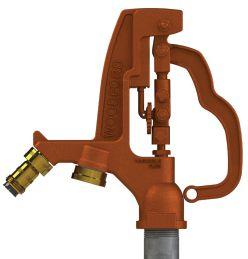
Woodford Model Y34 Freezeless Yard Hydrant
The original. Parts are always available even for the ones made 80 years ago. Includes an adjustable link for lever lock-in tension. A one piece, variable flow plunger has a large cushion type seal to assure shut off even when foreign particles are present. Repairs can be made with hydrant remaining in the ground.