
PREMIER ISSUE



COLUMNS

12
COVER STORY Think Global
With demand in cannabis rising around the world, international markets should be a point of interest for every Canadian LP BY
LINDA JOHNSON
18
The Future is Now
The official legalization of marijuana in Canada is still months away, but the cannabis market is a busy place for LPs, investors and everyone else looking to capitalize on its growth
BY MATT MAURE R
The Grower’s Mind
Several of Canada’s top cannabis producers take the time to discuss the ever-changing market and how production techniques continue to evolve BY
TREENA HEIN

From the editor
By Paul Grossinger
Grow With Us
Not a day goes by without the topic of cannabis making headlines across Canada.
Just the other day, I came across the following news stories: B.C. Truckers Association weighs in on how government should handle legal pot; Ontario government says it won’t put LCBO-run cannabis stores near schools; New Brunswick to sell pot from government stores, will check ID at door; Provinces still struggling with pot regulation ahead of legalization.
Although most of these new stories focus on the consumer and retail aspect of cannabis, it just shows the trending nature of cannabis in Canada. More specifically, the legalization of marijuana — medicinally and recreationally — in this country is not only a hot-button topic that is here to stay, but also the spark that has led to what many believe will be a billion-dollar industry.
However, at the root of all this interest in cannabis is the fact that: Someone has to grow it. Someone has to cultivate it. Someone has to harvest it. Someone has to sell it.
And this is where Grow Opportunity comes into play. As the first publication dedicated to the production of cannabis in Canada, Grow Opportunit y is focused on providing LPs with the information they need to build and expand their business, as well
as plant the seeds for future success. Grow Opportunity ’s quarterly publication and digital and social platforms will act as a resource tool for industry investors, C-suite executives, managers and staff at LPs from coast to coast, as well as to those decision makers involved in the actual growing, harvesting and curing of cannabis. We are here to tell the LP story, and to help you grow as quickly and fruitfully as your very own crop.
I witnessed the passion people have for the cannabis industry, and the utmost desire that LPs have to produce the best quality product they can.
In preparing for the launch of our premier issue, I have attended several industry events over the past few months, including Lift Cannabis Expo in Toronto and the most recent Grow Up Conference in Niagara Falls, Ont. At these two events, I witnessed the passion people have for the cannabis industry, and the utmost desire that LPs have to produce the best quality product they can.
At Grow Up, specifically, I really came to learn that there is much more to the cannabis world then what you see in the headlines. Or what the layperson believes Canada’s cannabis market is all about. The
science pedigree, the agriculture expertise, the horticulture know-how that is in this industry is immense and is what really makes Canada’s LP community shine above all other cannabis producers around the world. And then there is the technology and business innovation that members of the industry are creating in order to stay ahead of the competition as we get closer to July 1, 2018 — the day Bill C-45, The Cannabis Act, becomes the law of the land.
However, with all this being said, there is still so many unknowns that come with the legalization of marijuana: Who will sell it to consumers? What will the demand be? What will the LP landscape look like as more licences are issued by Health Canada under the Access to Cannabis for Medical Purposes Regulations (ACMPR)?
In this issue, we have tried to answer some of these questions and provide you with just a sneak peak of the cannabis-related content we intend to produce. From our cover story on the growing export markets for LPs to our feature story on cultivation trends with several of Canada’s leading LP companies, our content will be personal, engaging, relevant and practical.
I look forward to hearing your story ideas and learning how we can grow together in what sure is to be an interesting and rewarding journey.
Fall
Vol. 1, 1 growopportunity.ca
Fall 2017 Vol. 1, No. 1 growopportunity.ca
EDITOR
EDITOR
Mari-Len De Guzman mdeguzman@annexbusinessmedia.com 289-259-1408
Paul Grossinger pgrossinger@annexweb.com 416-510-5240
ASSOCIATE PUBLISHER Adam Szpakowski aszpakowski@annexweb.com 289-221-6605
NATIONAL SALES MANAGER Adam Szpakowski adzpakowski@annexweb.com 289-221-6605
NATIONAL ADVERTISING MANAGER Nashelle Barsky nbarsky@annexweb.com 905-431-8892
NATIONAL ADVERTISING MANAGER Nashelle Barsky nbarsky@annexweb.com 905-431-8892
NATIONAL ACCOUNT MANAGER
NATIONAL ACCOUNT MANAGER Sarah Otto sotto@annexweb.com 888-599-2228 ext 237
Sarah Otto sotto@annexweb.com 888-599-2228 ext 237
ACCOUNT COORDINATOR Mary Burnie mburnie@annexweb.com 519-429-5175 888-599-2228 ext 234
ACCOUNT COORDINATOR Barb Comer bcomer@annexweb.com 519-429-5176 888-599-2228 ext 235
CIRCULATION MANAGER Barbara Adelt badelt@annexbusinessmedia.com 416-442-5600 ext.3546
MEDIA DESIGNER Brooke Shaw
CIRCULATION MANAGER Barbara Adelt badelt@annexbusinessmedia.com 416-442-5600 ext.3546
GROUP PUBLISHER Martin McAnulty mmcanulty@annexbusinessmedia.com
MEDIA DESIGNER Brooke Shaw
PRESIDENT & CEO Mike Fredericks
MAILING ADDRESS
GROUP PUBLISHER Martin McAnulty mmcanulty@annexweb.com
P.O. Box 530, 105 Donly Dr. S., Simcoe, ON N3Y 4N5
COO
Ted Markle tmarkle@annexweb.com
PRESIDENT & CEO Mike Fredericks
MAILING ADDRESS
SUBSCRIPTION RATES 1 year subscription (4 issues: Winter, Spring, Summer, Fall): 1 year offers: Canada $25.00 + Tax USA $35.00 USD FGN $40.00 USD GST # 867172652RT0001
P.O. Box 530, 105 Donly Dr. S., Simcoe, ON N3Y 4N5
SUBSCRIPTIONS
Roshni Thava rthava@annexbusinessmedia.com Tel: 416-442-5600, ext. 3555 Fax 416-510-6875 or 416.442-2191 111 Gordon Baker Rd., Suite 400, Toronto ON M2H 3R1
SUBSCRIPTION RATES 1 year subscription (4 issues: Winter, Spring, Summer, Fall): 1 year offers: Canada $25.00 + Tax USA $35.00 USD FGN $40.00 USD GST # 867172652RT0001
ANNEX PRIVACY OFFICE
SUBSCRIPTIONS
privacy@annexbusinessmedia.com Tel: 800.668.2374
ISSN: 2561-3987 (Print) ISSN: 2561-3995 (Digital) PM 40065710
Roshni Thava rthava@annexbusinessmedia.com Tel: 416-442-5600, ext. 3555 1-800-668-2374, Fax 416-510-6875 80 Valleybrook Dr, Toronto, ON M3B 2S9
ANNEX PRIVACY OFFICE privacy@annexbizmedia.com Tel: 800.668.2374
Occasionally, Grow Opportunity will mail information on behalf of industry-related groups whose products and services we believe may be of interest to you. If you prefer not to receive this information, please contact our circulation department in any of the four ways listed above.
PM 40065710

Occasionally, Grow Opportunity will mail information on behalf of industry-related groups whose products and services we believe may be of interest to you. If you prefer not to receive this information, please contact our circulation department in any of the four ways listed above.
We recognize the support of the Government of Ontario


Long-term care agreements
WeedMD Inc., a federally licensed producer and distributor of medical cannabis, has signed agreements to supply medicinal cannabis products with three long-term care and retirement home providers in Ontario.
These include peopleCare Communities, Arbour Heights, and the Belmont Long Term Care Facility, which together total nine homes with more than 1,000 beds across the province.
“Being chosen as the exclusive cannabis provider to these communities highlights our ability to provide medicinal cannabis products in conjunction with our integrated priority program developed for the long-term care, assisted living, and seniors’ markets,” said Bruce Dawson-Scully, CEO of WeedMD.
JWC gearing up production
James E. Wagner Cultivation (JWC), a medical cannabis company in Ontario’s Kitchener-Waterloo area, is moving into the empty Lear Corp. manufacturing plant. JWC has signed a lease for 275,000 square feet and plans to move in this January. Its plans include hiring between 400 to 600 employees by the end of next year, and approaching Conestoga College about developing an accredited program to train people in commercial cannabis cultivation and processing to meet the growing market.
Space Cowboys advising hemp project
Space Cowboys, Inc., in Loveland, Col., has been retained to provide consulting services for the New Brunswick hemp project of the Marijuana Company of America. Space Cowboys will assist MCOA to maximize cannabinoid production as the group ramps up cultivation operations in New Brunswick in the coming years.
ACRES has completed its first sale of dried cannabis to Aurora Cannabis Inc., one of Canada’s leading licensed producers. Aurora will sell cannabis procured from 7ACRES to its medical cannabis patients with a producer’s mark specifying the cannabis as “SunGrown by 7ACRES.”
School’s In for Cannabis
Canada’s first post-secondary course for the production of commercial cannabis will welcome its first students next September.
Niagara College will launch a graduate certificate program in commercial cannabis production in 2018. School officials say it is responding to a need for skilled graduates who are knowledgeable in the complex regulations and requirements of the emerging industry.
“We’re a pre-emptive college, and one of our key strengths is our ability to anticipate and respond to emerging industries, trends and labour-market needs,” said Niagara College president Dan Patterson.
The program, which will be
located at the school’s Niagara-onthe-Lake campus, is a one-year post-grad program open to students with a diploma or degree from an accredited college or university in agribusiness, agricultural sciences, environmental science/resource studies, horticulture or natural sciences, or an acceptable combination of education and experience.
“This program will produce graduates who are skilled and knowledgeable Greenhouse and Controlled Environment Technicians who are also trained in all of the procedures, requirements, regulations and standards for this industry,” said Al Unwin, associate dean of Niagara College’s School of Environmental and Horticultural Studies.

Protecting Your Intellectual Property During the Cannabis Boom
Kimberly McManus, Patent Agent/Partner, Aird & McBurney LLP

Cultivation with an Organic Twist: L-R; Dr. Av Sing, PhD, PAg/Organic Agronomist , American Cannabis Company Inc. and Randy Flemming, Cultivation Advisor, American Cannabis Company Inc.

Starting a Commercial Cannabis Grow Operation: Jae Park, Director of Business Development, Ample Organics.
in Cannabis:
for InvestInMJ.com.
Coming Together at Grow Up
On Oct. 6-7, Canada’s cannabis industry came together in Niagara Falls, Ont., to participate in the inaugural Grow Up Cannabis Conference & Expo. With more than 100 exhibitors on the Expo floor, hundreds of attendees explored the latest products, technologies, solutions and
services in the cannabis industry, as well as sat in on dozens of educational sessions geared towards licensed producers, licensed producer applicants, suppliers, equipment manufacturers, investors, lawyers, government officials and growing enthusiasts.

Investing
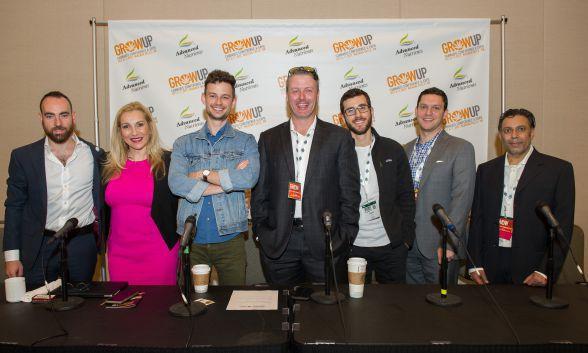
Investor’s Breakfast L-R; Michael Lickver, Executive VP of Strategy, Cannabis Wheaton; Cheryl Shuman, Beverly Hills Cannabis Club, CEO & founder; Matei Olaru, CEO, lift.co; Jonathan Sherman, Lawyer, Cassels Brock & Blackwell LLP; Aaron Salz, Founder & CEO, Stoic Advisory; Brad Rogers, COO and President , CannTrust; Vin Maru, Research Analyst, Editor-in-Chief
Jobs & Justice: How To Grow Businesses and Communities Through Legalization Reparations : Jackie Subeck, CEO, Hey Jackpot.
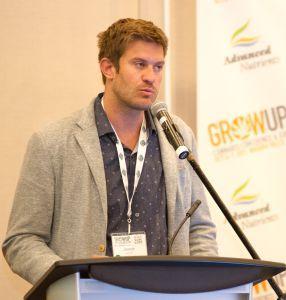
Jim Diodati, The Honourable Mayor, City of Niagara Falls, kicks off Grow Up Cannabis Conference & Expo.
Closing Keynote with Charlotte’s Web: Medicinal Cannabis, History, Challenges and Advancements: Jesse Stanley, CEO, Stanley Brothers.
VETOQUINOL GREENHOUSES

Growing Cannabis sativa?
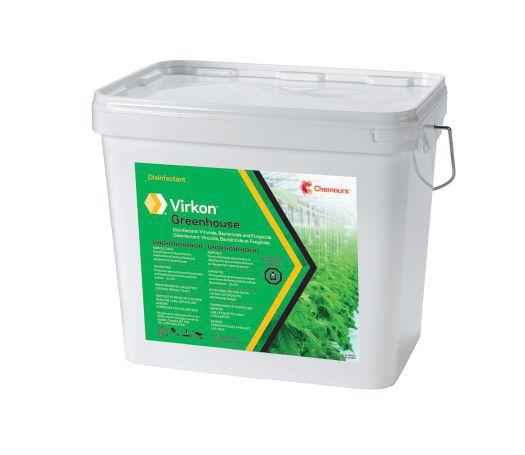
Instead of using bleach, disinfect with Virkon™ Greenhouse
A professional-grade greenhouse disinfectant with an excellent safety profile. Greenhouse
A growing plant requires care and attention, be it Cannabis sativa or any other culture. As a professional grower, your business deserves a safe, efficient, and high-performance disinfectant. Virkon™ Greenhouse Optimize disinfection and make sure your production keeps growing.
Virkon™ Greenhouse is a broad-spectrum disinfectant for hard surfaces and equipment in greenhouses.


By James Eaves
Greenhouse or Indoor Farm: That is the Question
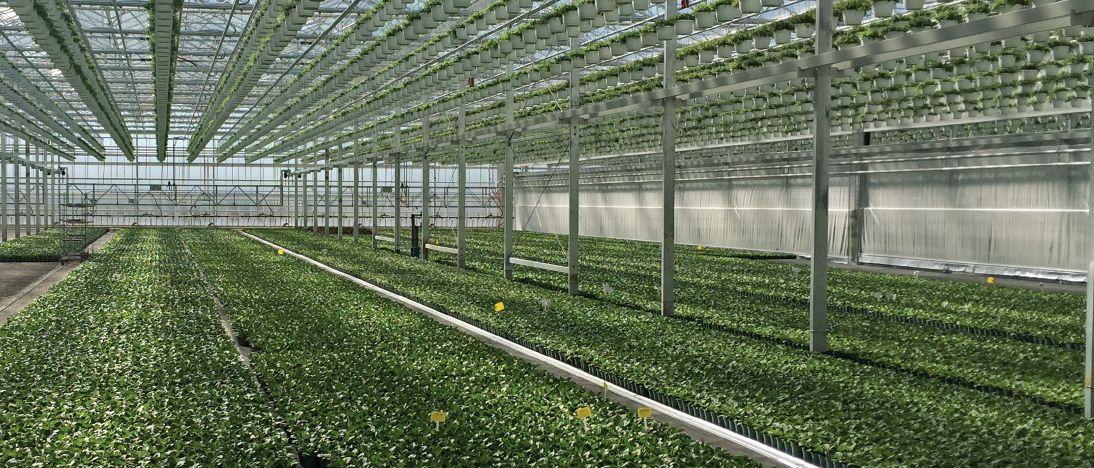
It is often assumed in the cannabis industry that greenhouse production, rather than indoor production, will become the norm, especially since costs can be substantially reduced by using the “free power of the sun.”
However, in reality, the sun is not free. It comes at a cost of having lower control of the growing climate. Whether or not that cost exceeds savings from using less electric lighting will depend on factors like farm location, outdoor climate, and customer segment, just to name a few. Rather than focusing solely on capital and operating expenditures, growers should focus on the value of the business, which depends on costs but also revenues, the variability of those revenues, and something called “option value.”
Consider Costs
The most common argument for a greenhouse is that it lowers your energy and lighting costs. There are several reasons why this argument is not complete. For one, greenhouses are poorly insulated. The most efficient greenhouses have R-values of around 1.90, whereas indoor farms can have R-values that exceed 40. If your greenhouse is located in a place with cold, dark winters, this could mean you will spend more on additional heating than you will save on electricity.
Greenhouses use fewer lights, but the exact savings is highly dependent on location. Daily Light Integral (DLI) refers to the number of light particles received during one day in a particular location. Cannabis typically needs a DLI of around 35 to grow well. Indoor
farms install enough lights to provide that level consistently throughout the year. Advanced greenhouses use supplemental electric lighting for periods when the sun provides less than the required DLI. For instance, in January in Vancouver, the sun provides an average DLI of around 2. As little as 60 per cent of that light may actually reach the plants inside a greenhouse, implying a DLI deficit of 34. So, in order to maintain stable growing conditions all year around, the grower needs to install nearly the same lighting equipment as an indoor farm.
Managing Risk
A greenhouse grower may be tempted to install fewer lights, since, sticking with the Vancouver example, for the other nine months, the DLI is at least twice January’s level. But then at least one harvest will have yields and product quality characteristics that are inferior to the others, reducing revenues. At the same time, supplementing sunlight with electric lighting causes significant quality variations that can frustrate customers that demand repeatable and consistent product experiences. Josh Gerovac, a horticulturalist at Fluence Bioengineering, explained:
“We’ve found that variations in the production of cannabinoids (e.g., THC and CBD) are most influenced by spectral light quality, and to a lesser degree light intensity. The proportion of radiation being delivered from a supplemental light source relative to solar radiation significantly varies throughout the year in a greenhouse. Depending on the spectra of supplemental light, the
overall light quality being delivered to the crop could be completely different during winter as it is in summer, which can cause significant inconsistencies in cannabinoid production.”
Increased fluctuations in internal climate increase the risk of pest and mould infestations. Research has shown that temperature and relative humidity can vary significantly throughout a greenhouse because of non-uniformity in light distribution, and changes in temperature as you move closer to poorly insulated walls. These factors will also change rapidly as solar radiation fluctuates with the time of day and weather. Also, the greater the variations, the greater the
James Eaves is an agricultural economist and professor in the department of management at Université Laval. His research focuses on technology trends in the cannabis industry and methods for increasing the profitability of growing in control environments.
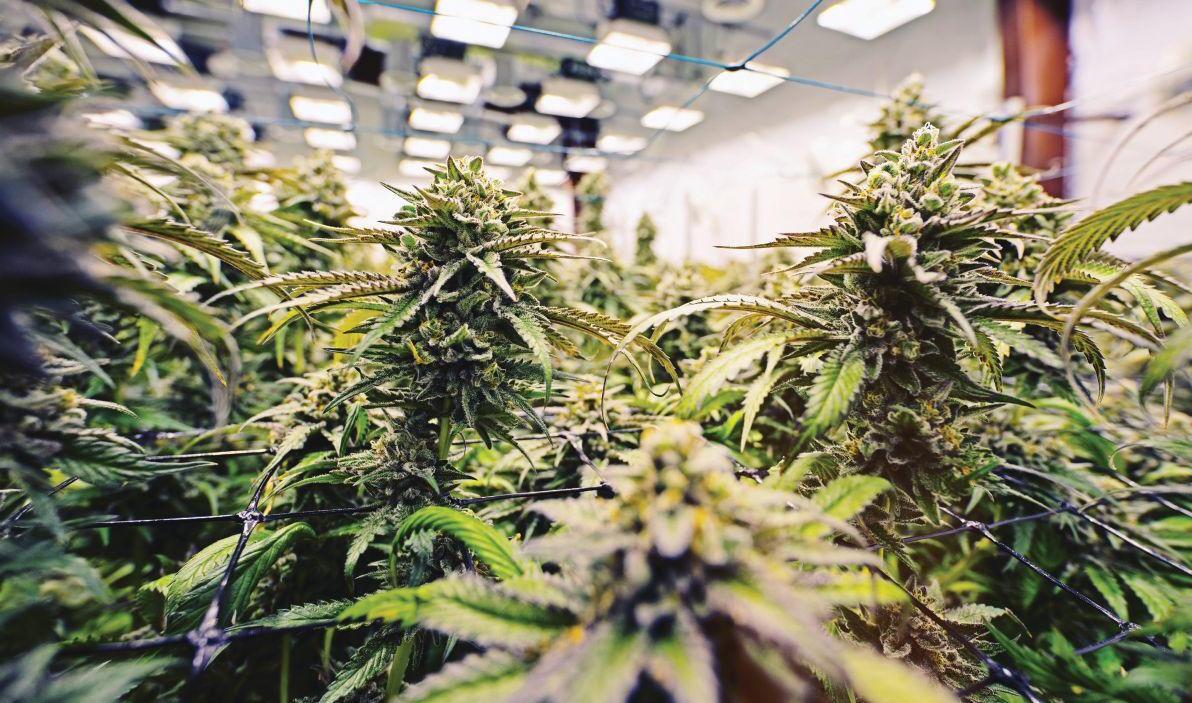
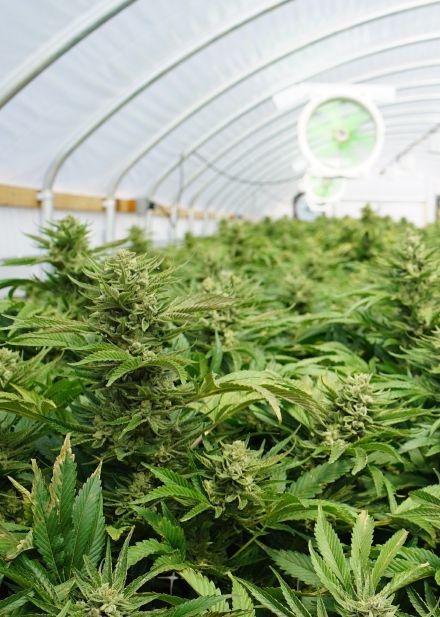
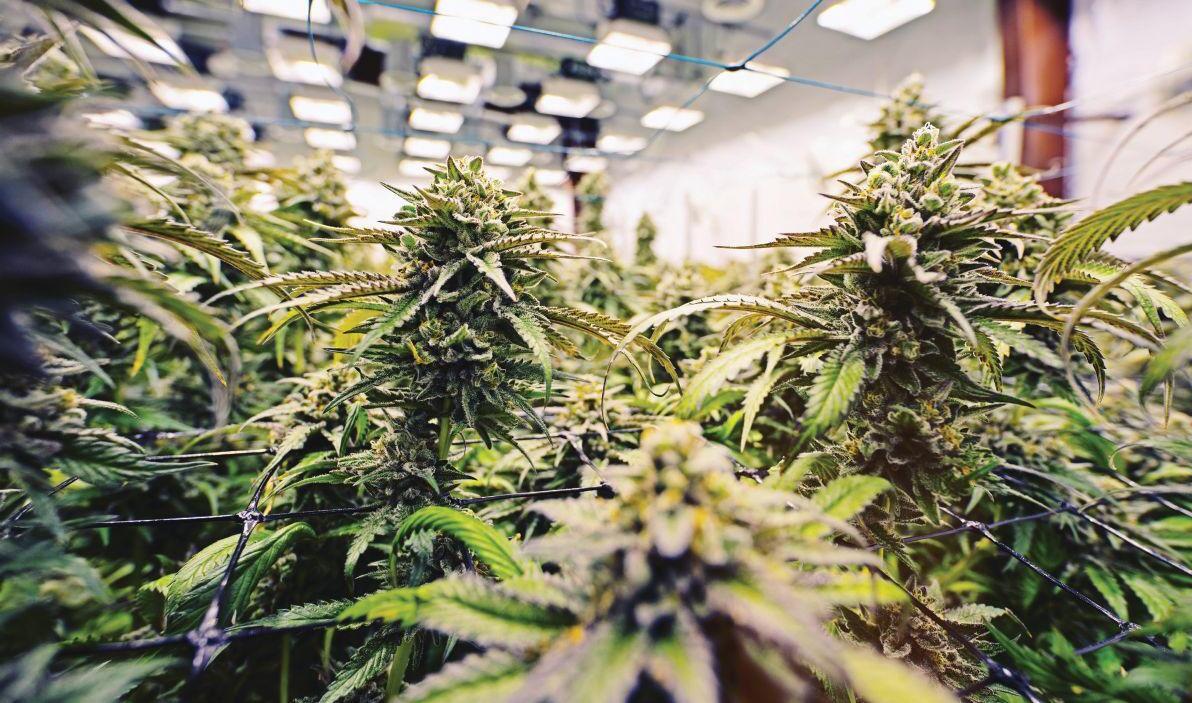
LIGHTING UP: Although greenhouses use fewer lights than indoor farms, exact energy savings are not always easy to calculate.
risk of pest and mould outbreaks. Internal climate variations exist in indoor farms as well, but more uniformed light distribution, better air filtering, and a much higher R-value make them easier to manage.
Revenues
The value of control will also vary with the customer segment. For instance, if your target segment cares more about price than the quality of the flower, or prefers oil, then control will matter less. If your customers care more about flower quality, then control will matter more. A non-scientific survey of several dispensaries
in Vancouver revealed that these retailers believe that indoor grown cannabis sells from anywhere between 10 to 50 per cent more than greenhouse grown. This is consistent with data reported for the U.S. by The Cannabis Benchmarks Report, which shows that indoor grown flower consistently sells for between 20 and 30 per cent more.
Option Value
Under certain conditions, an indoor farm will create relatively more “option value.” This is the financial value created by decisions today that increase the number of options we will have in the
future. For instance, if the farm is located in an area where it is difficult or costly to expand, growing in a warehouse with LED lights gives you the option to expand upwards, increasing revenues per square-foot of building footprint. Moreover, having more control of light placement and more uniform plant sizes and shapes creates more choices for automation. Finally, the price of LED lights is expected to drop exponentially over the next few years as their efficiency rapidly increases. An indoor grower will benefit more from those technological improvements than a greenhouse grower.
In the end, any comparison of the two growing technologies needs to extend beyond the cost of lights and electricity. The value of a business depends on costs, revenues, risk, and the flexibility to make choices in the future. Those factors vary considerably from one business to the next. In places like Santa Barbara, Calif., a greenhouse is clearly superior, but Canada has cold, dark winters and the lowest electricity prices in North America. So, compared to places like California or Colorado, the likelihood of an indoor farm being the right choice is simply going to be higher here.










THINK GLOBAL
When it comes to selling their product, expertise and industry know-how, Canadian LPs should look at the export market as a key source of revenue.
By Linda Johnson
There is no doubt that the Federal Government of Canada’s decision to legalize recreational use of cannabis has opened up huge opportunities for licensed producers across the country.
Yet, some Canadian licensed producers have had their eyes turned outward, as an ever-growing number of countries around the world are approving medical cannabis as part of their very own health-care systems. These companies are already exporting to countries such as Germany, Australia and Brazil. For producers considering new markets, it’s important to know how to identify the opportunities — as well as potential pitfalls — of the export market and be aware of strategies that can help them succeed.
“It seems like a month doesn’t go by that a major economy somewhere in the world doesn’t signal that it’s looking more closely at cannabis, whether that’s for medical or for recreational purposes,” says Jordan Sinclair, director of communications at Smiths Falls, Ont.-based Canopy Growth. “The tide has
Canada, because of its well-established medical cannabis system, is leading the world. We are the global leader in cannabis production know-how, and that’s manifesting itself all the time.”
David Hyde, owner and principal consultant at David Hyde and Associates in Toronto, says producers in Canada are seeing just the beginning of the export opportunities to come. He expects exports to rise with growing demand for very specialized products: organic products, for example, sun-grown product or particular strains preferred in some markets.
“I think the sky’s the limit,” believes Hyde. “There will be a lot of differentiation. It won’t be just the export of dried cannabis or oils, but, as we broaden out the regulation, we’re going to see the export of starting materials, genetics and different products that become legalized down the road, maybe derivatives.”
In the future, too, he adds, Canadian LPs may be selling to foreign governments. “As more countries legalize, whether it’s for a medical or a recreational regime, you may see their governments control the

supply. And to start them off, they may need to purchase part of our supply or backstop their supply with a country like Canada,” he says.
Canada has an opportunity to lead the world in medical cannabis exports, says a spokesperson for Nanaimo, B.C.-based LP Tilray. Some countries, including Germany and Mexico, that have legalized medical cannabis are still years away from having a domestic supply chain, so they need the product Canadian producers can provide.
Currently, Tilray is seeing strong

export demand for pharmaceutical-quality medical cannabis products that are precisely formulated and easily titrated and that can be ingested orally, such as liquid drops and capsules. “Those formulations are more familiar to patients, physicians, governments and regulators, and in some jurisdictions they are in fact the only permitted form factors,” the spokesperson says.
In addition, most countries require medical cannabis products, regardless of type, to be produced using Good Manufacturing Practices (GMP), which is the most
rigorous standard that manufacturers of medical products must meet in their production processes.
Canada has achieved its pre-eminent position in the international cannabis market, in part, because federal regulation permits medical marijuana production across the country, says Jonathan Sherman, a lawyer and Cannabis Group member at Toronto-based law firm Cassels Brock. Moreover, capital markets here help companies participate in the export market.
“The fact that companies in
Canada can go public and can access public money creates an opportunity for licensed producers to expand and to service both the domestic market and some export opportunities.”
More importantly, he adds, because Health Canada established rigorous standards for cannabis exports, people in other countries trust Canadian LPs and know that the quality of cannabis grown in Canada complies with strict government regulation.
“It’s because of that trust factor, Health Canada’s licensing regime and the fact that there are very
EXPORT ADVICE: When looking at branching out beyond Canadian borders, LPs should look into areas related to country-specific cannabis legislation and trade regulations.
The World is Your Oyster
Here is a snap shot of the countries in all four corners of the world that are looking to Canada to help with their cannabis supply
Australia
Brazil
Cayman Islands
Chile
Croatia
Cyprus
Germany
New Zealand
South Africa

strict regulatory requirements and oversights that other countries are comfortable relying on the work that Health Canada is doing,” asserts Sherman. “It has provided a unique opportunity where, in Germany, for example, you’re seeing a large number of Canadian licensed producers going through the licensing regime there.”
Exporting producers have, however, obstacles to watch out for. For instance, there is an extensive legal terrain to navigate, Hyde says. First, they must receive an export licence through Health Canada, which requires them to meet conditions regarding, for example, product standard and record keeping.
Producers must also deal with international supply agreements, and when dealing with a foreign country, it can be difficult to know which laws apply.
“The licensing for you may be in Canada, but the licensing for [a partner company] may be in Germany, for instance. If things get a little bit grey in the middle, you could have a level of risk in complying with the German regulations — and also in dealing with business laws around getting paid and other such things. There are international business risks that will be in play,” says Sherman.
Different methods of record keeping in foreign countries may also increase an exporter’s risk. Where every transaction is tightly controlled, as in Canada, tracing product to each patient who bought some is fairly straightforward. But another country may not have the same record-keeping system or the same traceability.
“I think the sky’s the limit. It won’t be just the export of dried cannabis or oils, but, as we broaden out the regulation, we’re going to see the export of starting materials, genetics and different products that become legalized down the road.” - David Hyde
“There is a level of risk on the LP in Canada,” adds Hyde. “If they have a recall and it touches a foreign supply, how much can that recall be facilitated in a country where the regulations may be looser than ours?”
Another difficulty, Canopy’s Sinclair says, is the regulatory uncertainty that exists in many countries today. The legal situation in the U.S., for example, has created a very unclear business environment. The law differs from one state to another, and federally it remains illegal to conduct cannabis business. “As a publicly traded company, that precludes us from participating in that market,” he says.
“On the up side,” he adds, “it allows us to build a strong lead in North America and build on the lead that Canada already has without competition coming from south of the border.”
When identifying potential new export markets, Canopy, in addition to a clear federal legal framework, looks at population sizes and the type of medical system a country has. “If they have socialized medicine,” explains Sinclair, “this is certainly an advantage for a company because you are not introducing a product that will be paid for by the end consumer, which unfortunately is the case today in Canada.”
With the all uncertainties and complexities in regulation, Sherman says producers who want to get into the export market should secure the advice of someone who is well-informed about cannabis legislation and Canadian export and trade regulations. The company also needs to find good advisers on the ground, in the jurisdiction that will be importing the product.
Then, he adds, the producer must make sure to conduct all its activities in strict compliance with the law. “So, it’s important to have good advisors to navigate that process and make sure you’re conducting operations legally and in the most efficient way possible.”
The opportunities available to Canadian producers are evidenced by Canopy’s progress, Sinclair says. The company has export agreements to supply product to pharmacies in Germany. It has product going into South America for research purposes and recently acquired export agreements to ship supplies to Australia. The company also exports intellectual property.
“It’s an amazing boom time for Canadian cannabis companies,” he says. “The ones that act quickly now are going to reap the rewards.”
Linda Johnson is a freelance writer in Toronto.
Complete Growing Solutions For Cannabis Production
When it comes to cannabis production, leave it to us! From growing media to nutrient solutions, our range of professional products helps you reach your goals by o ering the best conditions for your crops to grow quickly and healthily.
Moreover, our technical expertise and various lab analysis services are available to you to ensure your peace of mind.

Nutrients
Lighting
Growing Media
Lab Services
SUNLIGHT GARDEN SUPPLY

America’s #1 Brand of Horticultural Lighting Fixtures
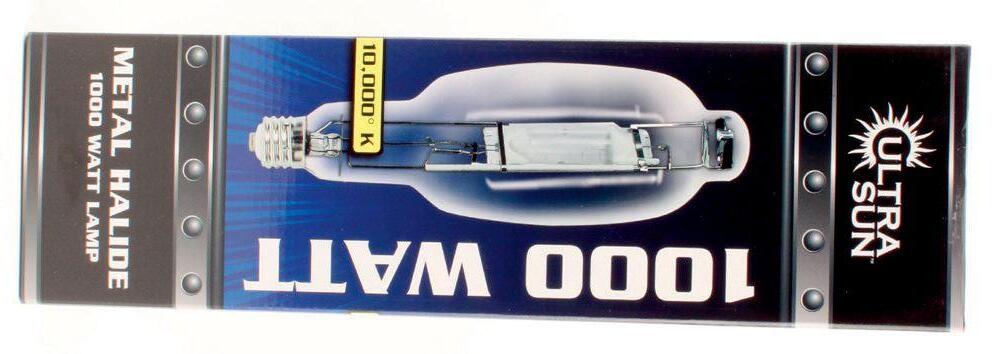
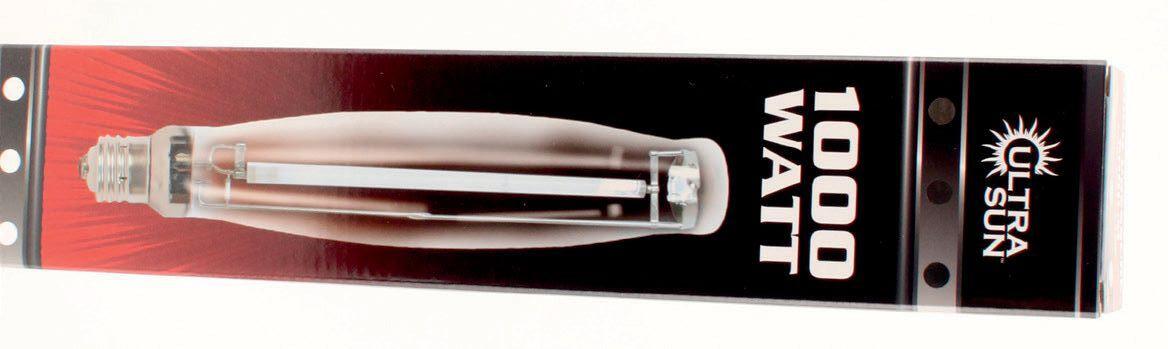
Sun System® high performance lighting fixtures for serious growers. Our stateof-the-art design, quality material, 95% reflective German aluminum interior. We offer a full line of LEC® Lighting Fixtures. Made in USA.

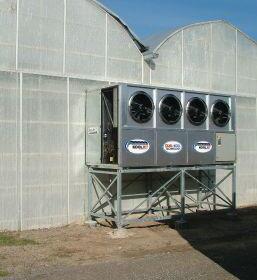
Premium Quality Equipment to Cool, Heat, Humidify or Dehumidify Your Indoor Garden
Ideal-Air™ has a complete product offering to control temperature & humidity in your garden. Dehumidifiers, air conditioners, air ducting/fittings and a wide variety of HVAC accessories.
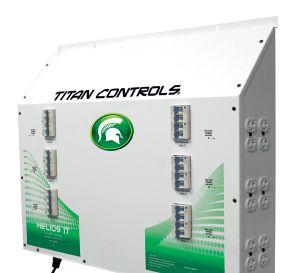
Controlling Your Growing Environment
Titan Controls® manufactures a range of environmental controls, precision timers, lighting controls and CO2 controllers and equipment.
GROW WITH

Gro Pro® containers & accessories offer variety and flexibility for all growers. Premium Growing Media and Amendments
A Complete Line of Indoor & Outdoor Growing Containers

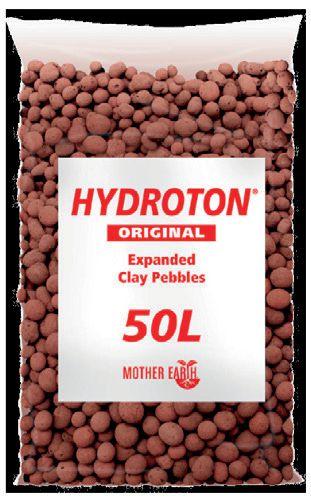
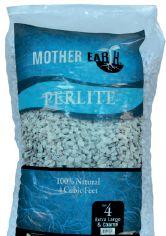
Original and Giant size Hydroton® set the standard. Premium Coco is made in Holland and RHP certified. Mother Earth Perlite is the best and largest available. Biochar is an amazingly effective soil





IS NOW OPEN IN CANADA

Black Ops® Carbon Filters feature virgin activated Australian RC-4/12 granular carbon with an open air mesh design to maximize airflow. Offering a wide variety of sizes to meet all your ventilation and air purification needs.
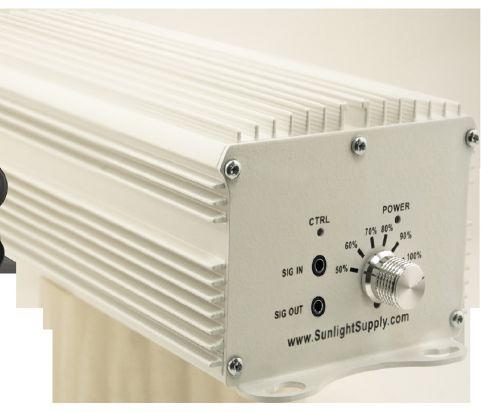
The new Sun System® 1 series of ballasts are controller compatible with signal ports for on/off/dimming functions. Control up to 400 Sun System® 1 Ballasts with 1 Etelligent® Controller (sold separately).
®
Setting The Standard for Water and Air Management Products
Professional grow light solutions
sunlightgardensupply.com Affordable Advanced Air Purification Technology.
Powerful oscillating, centrifugal and mixed flow fans
Offering pro series high velocity metal drum fans, metal oscillating fans, metal floor fans, centrifugal and mixed flow fans.
A wide variety of commercial water pumps, air pumps, air stones, diffusers, water chillers and more. Eco Plus® has a solution for every water and air requirement for indoor gardening.
Gavita specialized horticultural lighting— from single fixtures to large greenhouses, research and professional horticultural markets. Now offering the new e-series fixtures that are plug and play installable.
The Future is Now
From distribution to ancillary products to a continued interest in the medicinal market, Canada’s cannabis market is ripe for the taking for many licensed producers.
By Matt Maurer
April 13, 2017 feels like yesterday. That of course was the day that the Government of Canada introduced Bill C-45, the Cannabis Act, into the House of Commons for its first reading.
It’s hard to believe that many months have now passed and we are barreling towards the legalization of the use of recreational cannabis, scheduled to take effect in July 2018.
From late May and into early June, 2017, the Cannabis Act had its second reading in the House of Commons. It was then referred to the Standing Committee on Health who spent a week in early September hearing evidence from more than 100 witnesses and digesting information submitted in more than 100 written briefs. By the time you’re reading this, the Committee ought to have completed its section-by-section analysis of the Act and have returned it to the House of Commons for a Third Reading.
While the federal members of parliament were off on summer vacation the provinces and territories were (some more than others) diligently beginning their own preparations for legalization. Online surveys were launched, town halls were held and studies and reports were prepared and presented by staff. The role of the provinces and territories in legalization is not insignificant as rules relating to distribution, sales and consumption of recreational cannabis will all be sculpted by the provinces and territories themselves.
To date, only two provinces had publically commented on their intentions. On September 8, Ontario indicated that recreational cannabis will be sold

online, exclusively by the provincial government, and through a limited number of storefronts. Consumption in Ontario will be restricted to private residences. One week later the Government of New Brunswick indicated that a Crown Corporation will be established to oversee the sales of recreational cannabis; it also announced that it had entered into agreements with two licensed producers to supply recreational cannabis to the province. However, the Government of New Brunswick’s news did not definitively indicate whether or not there will still be a place for private retail within the province. The rest of the provinces and territories will be announcing their plans over the next few months.

Just as interesting as the rollout of the provincial plans is what is currently taking place at Health Canada with respect to applications to cultivate and sell medical cannabis. The interest here lies in the fact that an existing licence to cultivate and sell medical cannabis also grants the licence holder the right to cultivate and sell recreational-use cannabis.
In late May, Health Canada announced some small but important changes to the licensing process, including an increase in the department’s capacity to review and process applications and undertaking certain stages of the review of applications concurrently. Since that announcement, the number of licences to cultivate and sell medical cannabis jumped
On September 8, Ontario indicated that recreational cannabis will be sold online, exclusively by the provincial government, and through a limited number of storefronts.
by more than 30 per cent and the number of new licences granted is expected to continue at a steady pace for the foreseeable future.
FIERCE COMPETITION … EVENTUALLY
While there are many divergent viewpoints in the cannabis market, one prediction that seems to be universal among industry pundits is that demand for cannabis will greatly outstrip supply once legalization takes effect. While it may not come out and admit it to the public, the federal government also shares this concern. Indeed, those changes implemented by Health Canada to the licensing application process were designed to significantly ramp up the amount of cannabis that will be available to Canadians. These predictions and the concern of the federal government are not unfounded. One needs to look no further than Nevada to see a recent example of this occurring.
In the short term, many predict that every gram of cannabis that is grown in Canada will fly off the shelves instantaneously. However, with the rate at which new licensees are coming on line, and the significant expansion projects that existing licensees are undertaking, it is only a matter of time until supply catches up with, or even exceeds, demand. Once this happens prices will plummet as they did in Colorado and other jurisdictions and invariably a number of licensed producers will be pushed out of the game, whether through acquisition or otherwise.
In the near future, however, simply having a licence and being able to grow will keep a licensed producer afloat, but sooner than later only those companies with strong management teams and competitive advantages will thrive.
WHERE’S THE GROWTH?
Many entrepreneurs and investors have already turned their focus away from cultivation and onto ancillary businesses that deal with cannabis accessories and services. There are a number of reasons why this area of the market will grow.
For starters, the cultivation marketplace has a high barrier to entry, is becoming crowded and some of the early entrants are already significantly established. Many investors see a more “wide-open” opportunity in the ancillary and services market. The opportunity for greater returns is leading more and more investors to park their dollars in this segment of the market.
The term “wide open” not only applies to the fact that the ancillary and services market is (arguably) underdeveloped, but it also applies to the more lax legal restrictions that are imposed on these types of businesses vis-à-vis cultivators. Additionally, if other provinces and territories decide to follow Ontario’s path and seize control over sales and distribution, accessories and services may be the only frontier for start-ups for the foreseeable future. With a low barrier to entry, more relaxed regulations and products and services that are limited only by the imagination, the potential upside in this sub-set of the market is tremendous.
A THRIVING MEDICAL MARKET
While the recreational market is the hot topic, do not underestimate the potential that lies in the existing medical market. There are a number of factors that indicate that the medical market will remain strong and thrive alongside the recreational market.
For starters, licensed producers will retain the ability to sell direct to consumers in the medical market. Conversely, in provinces like Ontario, licensed producers will be forced to sell to the government who will no doubt seek to push down the price per gram in order to ensure that there is significant room to factor in the province’s mark up and taxes while still having an ultimate retail price point that is competitive with the black market. In the medical market, licensed producers can skip the middle-man and take advantage of better margins while possibly even setting a retail price that is

lower than the recreational market as a result.
In addition to price, other reasons why people may continue to obtain prescriptions and purchase cannabis through the medical system as opposed to the recreational system include: the ability to have health insurance cover some, or all, of the cost, and the ability to obtain tax credits and potentially more expansive rights of possession and consumption, which are only one Charter challenge away from existing.
In the end, Canada is just beginning its journey down the cannabis path, but there is one thing for sure: more and more Canadians will come along for the ride.
Matt Maurer is the chair of Minden Gross LLP’s Cannabis Law Group. He provides business and regulatory advice to a wide range of cannabis industry stakeholders, including licensed producers, producer applicants, and foreign businesses that are looking to enter the Canadian market.




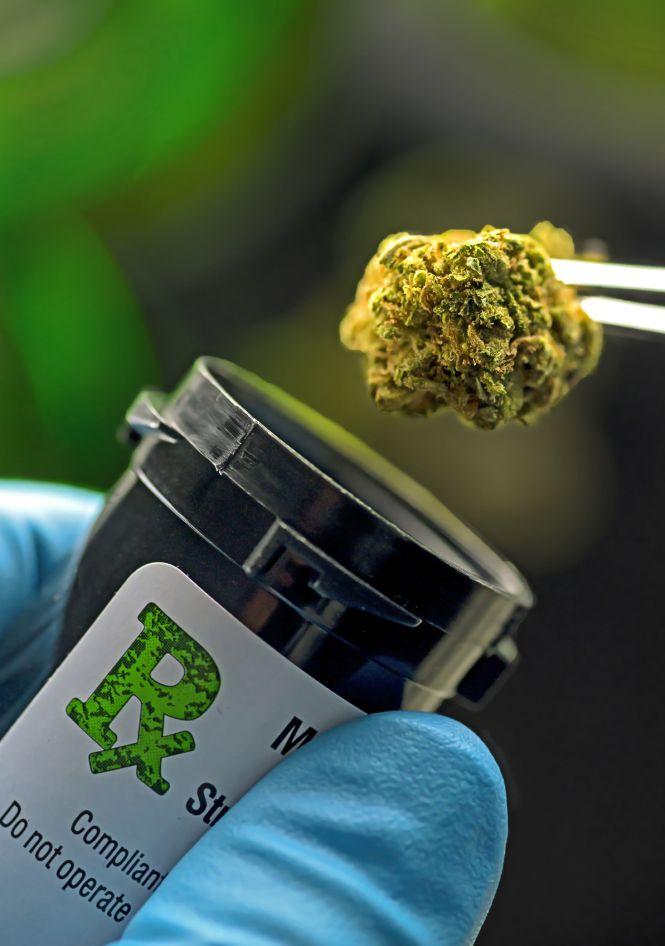
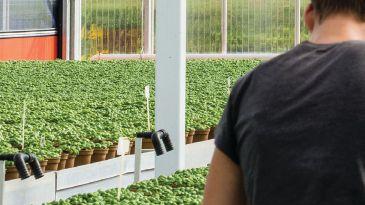
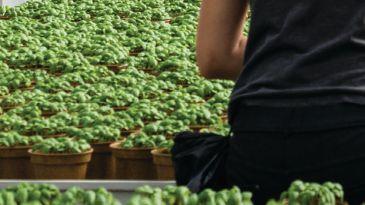



MEDICINAL MARGINS: Even as they prepare for a surge in business due to the legalization of the recreational market, LPs cannot ignore the medicinal marijuana business, which, for some, could produce higher returns.































HUMIDITY IS KILLING YOUR CROPS. AND YOUR PROFIT MARGIN.
Humidity. It’s the constant threat that no one wants to talk about. However, with our exclusive Agam VLHC technology, air is continuously dehumidified and filtered, capturing and neutralizing fungal spores on contact. You get healthier, more abundant crops, use less fungicides and cut energy costs by about 60%. Start clearing the air today.


Visit envirotechcultivation.com/agam to watch Agam VLHC in action.









The Grower ’ s Mind
Taking the pulse of cannabis cultivation with some of Canada’s top producers
By Treena Hein
Similar to other industries, how cannabis is produced and processed has evolved over time — and it will only continue to evolve as new companies join the elite group of licence producers in Canada that already exists. Grow Opportunity recently sat down with the leadership at some of Canada’s largest LPs to hear their insights on how cannabis cultivation has changed, lessons learned in growing, the innovation being achieved and what the future holds in the market.
Organigram
Some Canadian cannabis companies have a master grower, but others such as Organigram in Moncton, N.B., do not.
“We have developed a team of experts as we have evolved from only being a plant-focused operation to a production operation,” explains CEO Greg Engel, who has worked in biotech his entire career. “Yes, you need a very specific horticultural approach with people who specialize in that, but you must have a focus on the production aspects as well.”
Like others, Organigram began its enterprise with smaller growing operations. Although Engel says it’s not that difficult to grow cannabis in a small scale, there are big challenges in scaling up. “The environmental conditions have a huge impact on quality and there is also much more automation,” he explains. “We have 23 new production rooms holding 1,560 plants each in addition to our original 13 rooms that each hold 1,200


plants. We chose to do all indoor cultivation because it provides a higher degree of environmental control where higher levels of cannabinoids can be consistently and reliably achieved.”
Because cannabis plants transpire at a very high rate and can release up to 90 per cent of the water they’ve been given within the first one or two hours, dehumidification is one area of environmental control that has evolved significantly at Organigram, Engel notes. “We’ve also learned you can’t take a one-size-fits-all approach, and we’ve gained a lot of experience over time adjusting conditions for various strains. Some are eight weeks or 10 weeks in flower, and so on.”
Engel believes that going forward, there will be more industry innovation and change in downstream production processes rather than in the growing process.
“‘We’ve come a long way and feel very confident in our current growing and production processes, but we’re also very aggressive in determining new techniques and innovations within the industry,” he explains. “Under the ACMPR, we can access genetics through other licensed

producers, but starting plants from other sources is quite a lengthy process. It takes about nine months to do sexing and see which offspring really produce.”
Organigram holds genetics for about 55 different strains, with a core production group of about 12 strains that address various medication conditions. It cycles another 12 or so seasonally. Part of the firm’s decisionmaking about which strains to grow has been a focus on end products, but also on production traits such as, cultivation consistency and disease resistance.
Supreme Pharmaceuticals
Toronto-based Supreme Pharmaceuticals — with its cultivation operation, 7ACRES, located in Kincardine, Ont. — does not


Treena Hein is a freelance writer based in Pembroke, Ont.
For Cam Battley, Aurora Cannabis, Greg Engel, Organigram, and John Fowler, 7ACRES (Clockwise), ongoing innovation in cultivation will be the main differentiator between those Canadian LPs that succeed and those that do not.
Your journey begins here
Based in Chatham-Kent, Ontario, AMBI is a vertically integrated biotech company and late-stage ACMPR applicant dedicated to the development, maturation and accessibility of cannabis for medical and adult-use purposes through scientific plant and product research and development, innovative production and processing approaches, comprehensive clinical and health benefit assessments and an unwavering commitment to customer value. Together, let’s begin the journey today!


have a master grower either, and its CEO, John Fowler says “our biggest accomplishment has been moving from a ‘master grower’ organization with a skilled technician at the centre, to a learning organization where skills and expertise are distributed across a diverse labour pool.”
Fowler started out in the cannabis sector as a cultivator, then as a patients’ rights advocate and later as an attorney. In terms of what he sees as the biggest changes in the Canadian cannabisgrowing industry, he notes: “It was a big transition to learn to [grow ‘good’ cannabis] in a highly-regulated environment where you have to be forward thinking rather than reactive to ensure compliance with standard operating procedures.”
wide cultivation challenge, one that requires “dozens or hundreds of people to work as one.” For Fowler, the industry has come to realize that use and cultivation of cannabis is thousands of years old, and “conceptualizing our market in a more holistic view, rather than having a myopic focus on the legal medical market as it stands today, has helped us shape a company set up for long-term success in Canada and abroad.”
GH_AndyLang_June2016 copy.pdf 1 2017-10-17 9:45 AM
He also lists scaling up as an industry-
The biggest change at Supreme/7 ACRES, in Fowler’s view, is the injection of capital and non-cannabis expertise. “If you told me a decade ago we’d be raising nearly $100 million to grow cannabis and building a team that includes not just cannabis growers but multiple PhDs and Master’s degrees in horticulture and related fields, I would not have believed it.
“This allows us,” adds Fowler, “to take
our output to the next level in terms of quality, consistency and efficiency. The techniques themselves have not changed in concept, but have been improved to reflect better facilities and a scaled approach to cultivation.”
To Fowler, the future of cultivation will likely be influenced greatly by market segmentation: commoditizedcannabinoids for input material into various products and high-end flower for direct consumption. “We are focusing on the latter, as our systems and expertise allow us to maintain craft quality at scale,” he says. “From a grower’s perspective, understanding this segmentation is essential to market positioning. If, like us, the focus is on quality, then the key factor for success will be maintaining that quality as output scales. Those looking at cannabis as a commodity likely have
different factors for success, primarily cost control.”
Aurora Cannabis
Cremona, Alberta-based Aurora Cannabis does have a vice-president of of production and chief cultivator who leads a cultivation team, and executive vice-president Cam Battley says “we’re literally learning new things on each grow cycle for each strain, with respect to how subtle adjustments to lighting, HVAC, CO2, nutrients and growth medium pH balance can enhance yields and cannabinoid levels.”
Battley, who has years of experience in the international biotech/pharmaceutical sector, notes that growing techniques have been significantly impacted by the availability of advanced technology.
“Some of the technology and automation we’re employing at our new
800,000 square-foot ‘Aurora Sky’ facility at Edmonton International Airport has never been used before anywhere – not just in cannabis, but in agriculture,” he reports. “We’re driving the science of cultivation and production, and defining a new state of the art.”
For example, with the establishment of the firm’s Plant Tissue Culture lab, Battley says Aurora is now among a handful of producers capable of using micropropagation for plant replication, which offers many advantages over traditional cloning, particularly for cultivation on the scale of Aurora Sky.
“Also, the days of growing large ‘trees’ are long gone,” he adds. “Factors like production cost per gram, risk management, and growing and producing under ‘Good Agricultural and Collection Practices’ and ‘Good Manufacturing
Practices’ conditions have taught us that smaller plants with higher densities and shorter production cycles provide significant advantages in these three areas.”
Innovation is critical at Aurora, and Battley says its cultivation team will continue to push the boundaries in terms of optimizing plant health, yields and cannabinoid levels.
“They’ll continue to explore concepts such as interplant signaling, and gain additional understanding on how best to cultivate very large numbers of plants in a controlled space,” he proudly notes.
“What we hope to achieve is multiple advancements of the art and science of cannabis cultivation that deliver sustainable enhancements in quality to the benefit of patients and consumers, while at the same time further reducing per gram costs of production.”

Streamlined Application Review and Assembly – Minimal client input required; PipeDreemz will facilitate the majority of the process for you.
Site Approval –
Site location is critical. We will review and report on our client’s site acceptability.
Security Design & Implementation –
Internal and external security design and installation of security systems.
Standard Operating Procedures –
We can supply you with recommended procedural guidelines (SOP’s) for processes within the facility, QA/QC, security, production, record-keeping and sanitation
Regulatory Oversight –
We keep your builder and facility within the regulations and security requirements.
On-Site Training –
Our multidisciplinary team will visit your site and train your staff on the required regulatory processes and procedures.
Production Planning –
We have 45 years’ experience with production planning for commercial production facilities including marijuana.
Engineering Design –
Good Manufacturing Practices and Good Production Practices are applied to the building design. Advice and recommendations on equipment, and everything in between.

By Dr. Mohyuddin Mirza
Scheduling Matters When It Comes To Growing Cannabis
It is definitely an understatement to say that cannabis production and processing is on the rise in Canada. Alongside this increased interest comes the development and dissemination of many myths surrounding its cultivation. (Mainly borne out of people thinking they have secret recipes to grow bigger buds with strong THC, CBD and turpentine contents.)
The simple fact is that cannabis is a plant like other plants and it works on the same principles of photosynthesis, respiration, transpiration, assimilates and translocation to various parts of plants. It responds to temperature, relative humidity, carbon dioxide and other factors in the same way as other greenhouse crops and it is susceptible to diseases and insects the same way as other crops. The big difference between cannabis is that it is treated like we are manufacturing pharmaceuticals in a greenhouse or indoors.
Science Lesson
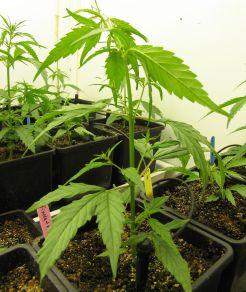
• The cotyledon leaves will look different than the true leaves;
• Seed germination requires a temperature of around 2025°C in the growing medium and they germinate in three to five days;
• All the seed may not germinate at the same time. Remove from germination area once 60 per cent of the seeds have germinated or sprouted;
Cannabis sativa and cannabis indica are the two most commonly used species along with cannabis ruderalis. Not to mention there are several other strains or clones being grown in the market place too. I remember that under older regulations, growers were issued permits for a certain number of plants, so each and every plant was cared for in such a way that a lot of spacing was provided and multiple pinching were done. Thus, the plants set buds on the upper part of the plants. When it comes to cultivating cannabis, here are a few pointers to keep in mind when scheduling your grow:
• 16-18 hours of light will be needed. Avoid very high light levels at seedling stage. If the lights are fixed then a shade cloth can be used to reduce the light intensity;
• From the start, focus on the use of biological disease and insect control products as registered by Health Canada;
• Use of unregistered products must be avoided at any costs. Take every step to avoid accidental contamination from water or air;
• It is recommended to thoroughly study the current products registered by Health Canada. How the biologicals work is very important? For example, certain products of spores of beneficial microorganisms need high humidity to germinate and initiate infection of insects. Also, be aware if the use of these registered products is going to affect your Integrated Pest Management Program;
• Focus on managing plant
Dr. Mohyuddin Mirza is an industry consultant who can be reached at Drmirzaconsultants@ gmail.com.
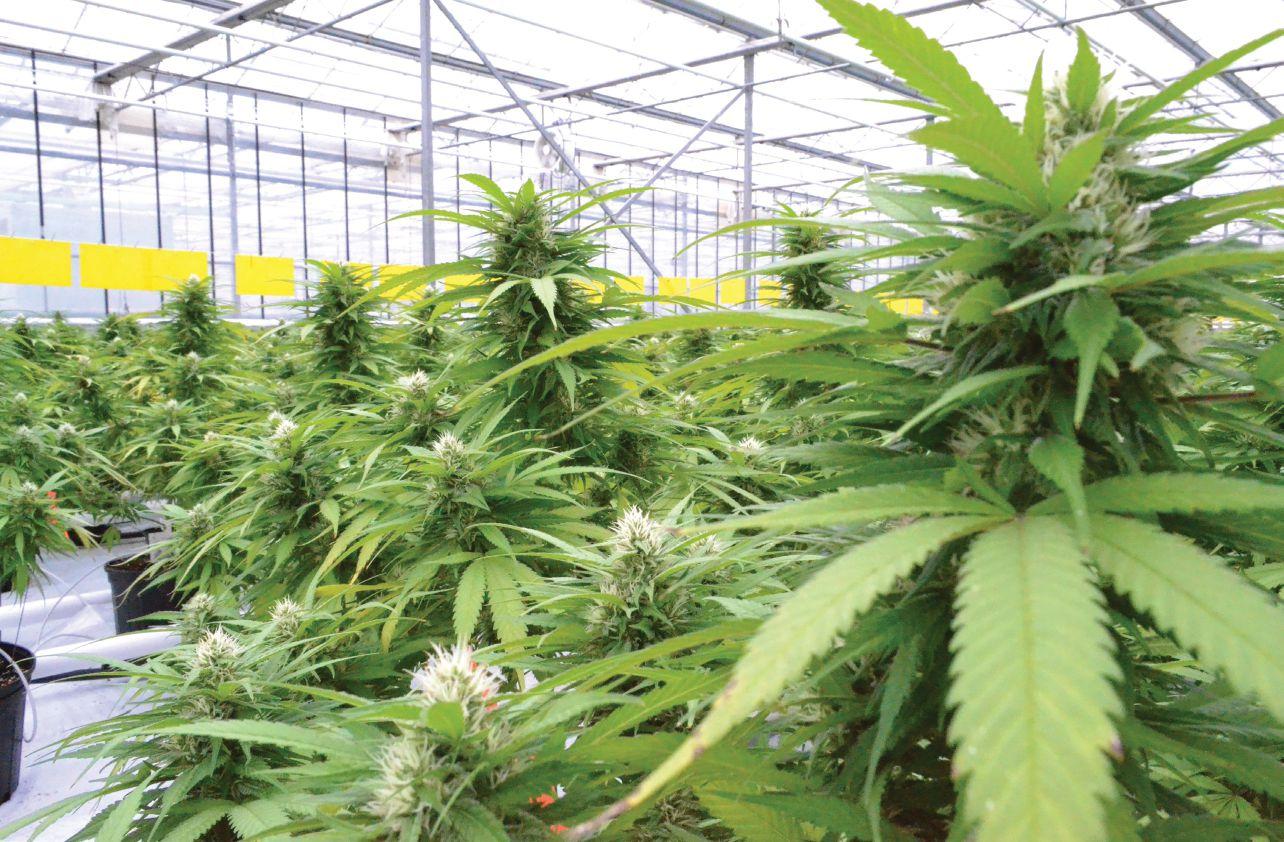
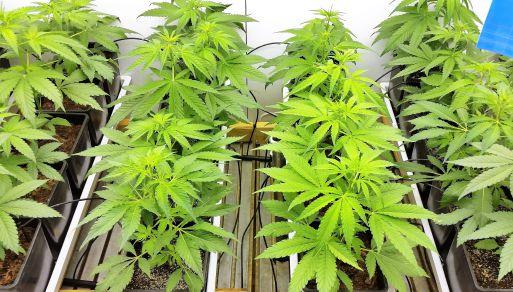
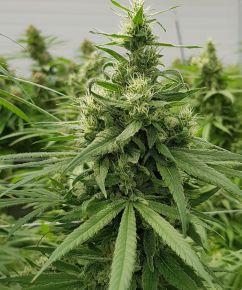
Picture on the left illustrates four-week-old seedlings of cannabis sativa. A good example of how vegetative plants should look like. Good green colour, nice width on leaves. Picture on the right shows good branching habits of cannabis. This is important for taking the side shoots for further rooting.
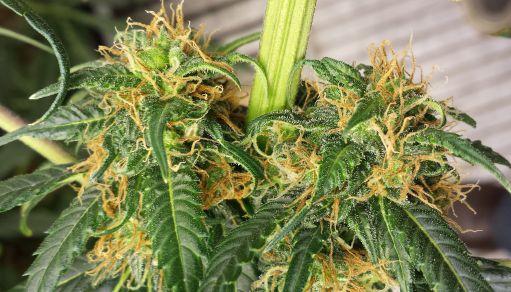
These two pictures show what typically happens at bud stage. Few days after the photoperiod is reduced to 12 hours of light and 12 hours of darkness, the flower starts developing (picture on left). These flowers start turning brown and one can also see lot of hair developing on the leaf surface, called trichomes.
health right from the start; root zone health is most critical;
• Don’t go by fixed number of days the plants should stay in veg mode. For planning purposes many growers assign number of days in veg mode or veg room, instead of looking at the condition of plants. Basically, we want plants with good, strong branches, proper leaf expansion and no diseases or insect pressure. If veg plants go into bud room with powdery mildew, thrips or spider mites, then it will be difficult to control them;
• Understanding nutrients and their management for
cannabis is just as important as with any other crop. PH and Electrical Conductivity (E.C.) are two important values that growers must know in depth. PH must be monitored on a daily basis both for the feed solution and leach coming out of the growing medium. It should be remembered that pH in the root zone will change due to alkalinity of water, fertilizers being acidic or alkaline and the stage of growth of cannabis plant. When lots of roots are produced like in veg state, the pH will have a tendency to go towards alkaline side. If pH surpasses the 6.5 mark then expect iron chlorosis in the
young growth.
• Managing E.C. is also very important. I have seen E.C. values over 5.0 mS in the root zone, which will cause the new growth to be very dark green or almost blueish in colour. Leaf size will be smaller too.
Currently, most indoor production of cannabis is in soilless growing media, including peat based and coir or coir based. Each growing medium has its advantages and benefits and growers must understand that. Go for growing media with medium porosity and good drainage when put into containers. If coir is used then
make sure that it is tripled washed with good quality water and E.C. is below 2.0 mS. Similarly, make sure that there is enough dolomite lime is added to counter any acidic pH coming from peat moss.
Remember, growing cannabis is a science so ensure you have an analysis of the growing medium. This starts by checking if there is enough nutrient charge to begin with, and adopting irrigation and fertigation practices based on the characteristics of the growing media, including drainage, cation exchange capacity, percentage of organic matter, air porosity and water holding capacity.


By Wael Lahoud
How to marry physical and logical security into a cohesive plan
Over the past five years, Canadian businesses have seen the threat of hacktivism, cyber extortion and the incidences of data breaches grow exponentially. No industry is immune to these threats, not even license producers of cannabis across Canada.
For every LP, securing their operation is not an option; furthermore, managing their risks of exposure to regulatory scrutiny, litigation, reputational costs, and business loss is becoming a daily task they cannot ignore. Throw in the mandatory breach reporting, notification measures, and the costly fines proposed by the Digital Privacy Act (Bill S-4) and its amendments to PIPEDA, security concerns for LPs are only going to increase in complexity.
Canada’s Access to Cannabis for Medical Purposes Regulations (ACMPR) act stipulates requirements for physical security at cannabis production facilities. Many producers — whether licensed or in the licensing application phase — rely on physical security integrators or consultants for selecting the proper security equipment and measures to comply with ACMPR regulations. Unfortunately, the security design plans, selection of equipment and their implementations are often executed in silos without an overarching organizational-wide security program that includes a holistic view of cyber security and its related business risks.
Current physical security technologies, such as video surveillance, electronic access control,

intrusion detection, and their monitoring and management systems increasingly rely on IP networks. Most of this is done by local on-premise or over wider networks spanning beyond the LPs premises and control. Despite the many advantages IP-based physical security systems present, the fact of the matter is that many are still vulnerable to cyber security attacks due to manufacturers lagging on securing their equipment throughout the production process or installers and designers not considering cyber security as a priority or part of their scope.
With the digital transformation trends in IT and the LP’s shift to using operational technology (OT) for production, environmental and other building control
efficiencies, it is not uncommon to see IoT and physical security systems converging on a unified network platform. In other words, security is now operating along -
Despite the many advantages IP-based physical security systems present, the fact of the matter is that many are still vulnerable to cyber security attacks.
side other business-critical systems that deal with clients’ private health and sensitive data. Because of this convergence of technology, LPs are now at risk of having potential security gaps that may be neglected or otherwise missed. Other aspects of this problem
Wael Lahoud is a professional security consultant, advisor and expert in physical security with over 14 years of experience. He is the founder/owner of Goldmark Security Consulting, which focuses on the security risks and the intersection of business and technology.
SMART SECURITY: When it comes to developing an LPs security plan, protecting one’s assets, facilities, staff and data should all be included from the get go.
include the misperception that designing and implementing physical security systems on segregated or separate IP networks eliminates the need for extensive cyber security measures. In fact, the converse is true in that the stakes are even higher when such networks are advertently or inadvertently linked to the production or enterprise networks to meet operational requirements. Examples include the remote video surveillance monitoring by thirdparty security service providers or even local monitoring by security managers over the corporate network. Again, leaving LPs exposed to the same critical cyber security business risks and losses that are commonly reported in the news these days.
ACMPR Security Compliance is a regulatory requirement, and it should
ADDRESSING THE NEEDS OF BUSINESSES AS WE CULTIVATE THE SEEDS FOR ENERGY SOLUTIONS
not be considered an ultimate secure state for LPs as it may only provide them with a false sense of security. The incidences of cyber security breaches of physical security systems is on the rise, despite the hefty investments in traditional security measures, such as firewalls and anti-virus software. For me, relying solely on these old-school approaches and managing security in physical and logical silos within an organization is simply not working.
Security should no doubt be a critical aspect of every LPs business plan and ultimate success. It is a complicated and expensive issue that cannot be ignored – an issue that is only going to become more complex because of the converged relationship between an LP’s physical and cyber security controls, measures and processes.

• Direct Purchase Planning
• Asset Optimization
• Strategic Commodity Plan
• Market View
• Forecasting
• Balancing
• LDC Interface
• Recommendations
Dedicated to Energ y E xcellence
As an agricultural owned energ y co-operative, the only one of its kind in Ontario, we bring a new approach to natural gas and electricity markets
Call for a free energ y consultation: 1-866-818-8828 • 519-763-3026 www.agenerg y.coop
Security Pointers
Embrace organizational change by assigning an organizational-wide qualified security leader accountable for all aspects of IT, OT, physical security, and even IoT.
Actively engage cyber security subject matter experts or independent consultants, not associated with any manufacturer or security service provider, in all facets of IT, OT and physical security planning, design, implementation, and operations.
Develop a comprehensive and converged security program while ensuring that overall electronic security measures and their overall architecture form part of the organizational cyber security program.
Avoid replicating the risks associated with flawed physical security designs and invest the proper time and resources in analyzing your organizations’ specific cyber security risks. Replicating vulnerabilities may expose your business as well.
Have a cyber security plan ready and be sure to practice it – cyber security should not be an afterthought.


By Adam Orens
Surviving and Thriving in Canada’s Wild Cannabis Markets
One can’t blame Canadian cannabis entrepreneurs and investors for feeling a bit motion sick from turbulence, while waiting to see where different layers of government will land on key policies. Unfortunately, you can’t completely blame Ottawa for the hurry up and wait antics. Canadians are simply experiencing legalization through a “parliamentary” process, rather than through an electoral ballot process, like in the U.S.
The ballot-measure/electoral process in Colorado and six other U.S. states begins with a well-defined set of rules. If voters approve them, then most of the work is already done. Nothing in cannabis legalization is easy, but this system gives U.S. lawmakers and regulators a much easier job by defining 80 per cent of the rules with a single vote. Canadian government officials, entrepreneurs, investors, and licensed producers may look longingly to these states for clues about how legalization would roll out in Canada. Those individuals would do better, however, to look toward lesser-known jurisdictions, like Vermont.
Vermont’s process is legislative, similar to Canada’s – and the state still has not fully agreed on ideas about what should be legal, how much, or how it’s produced, consumed, or distributed. For such a controversial issue, it is no wonder progress is slow – lawmakers have long-standing convictions on the matter, and lobbyists exert power during every step of the way.
The result is a “compromise,” “delay,” and “fear of failure” approach to legalization. For example, Canadian parliament chose to delay legalization of high-potency and edible products, thinking that it would be safer and easier to adopt an incremental approach. While this sounds reasonable, unfortunately, it is fraught with risk. Consumers still clearly demand concentrates and edibles, so that banning them risks creating a potentially large illicit market, rather than eliminating one. The first low-budget, suburban butane hash oil explosion has the potential to undo any goodwill that was fought to obtain in Ottawa in the name of public safety.
Similarly, investors in Ontario are on their heels after a decision to distribute cannabis exclusively through the province’s LCBO outlets. While everybody knew this was a potential policy choice at the provincial level, it differs greatly from what most current cannabis businesses understand, and from the models currently in effect in the U.S.
How does one invest in a highly-uncertain market such as this?
We see only two ways: either “all in” or “all out.” Successful LPs are going “all in,” by making big bets on locations, influencing legislators and the debate, and establishing “best practices” — even before it’s allowed. (Illegal) dispensaries who have gone ‘all in” in Vancouver gained crucial knowledge of the market and have established a foothold. Despite the efforts of B.C’s provincial government, these early investors and operators will continue to operate in the nearterm, even if it’s through shell

Ottawa’s decision to delay legalization of high potency and edible products comes with the risk of consumers continuing to support illicit markets to get what they want.
organizations or brother-in-law ownership licences.
Canadians are simply experiencing legalization through a “parliamentary” process, rather than through an electoral ballot process, like in the U.S.
The other option is “all out,” which includes to completely waiting until the dust settles. This strategy can be useful for those investors who enjoy picking up “failing” firms and turning them around. There will be plenty of individuals and firms who get caught on the wrong side of the policy. Those distressed companies could be bought or revived more efficiently after the major waves have crashed, allowing for smooth sailing to the patient and savvy investor.
While most observers of Canada’s legalization process find interest in it because it’s the first OECD sovereign nation to fully legalize cannabis. It almost goes without saying that there are aspects of the Canadian market that make it a safer investment than in the U.S — namely national-level legalization. Whatever your interest in this market is, the cards will fall over time and there is no doubt we will look back at these times as the times to remember.
Adam Orens is the co-founder of the Marijuana Policy Group, which is currently providing market sizing estimates to Health Canada (mjpolicygroup.com).