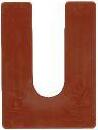
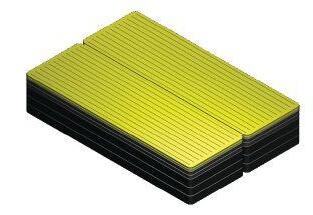
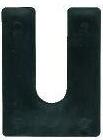
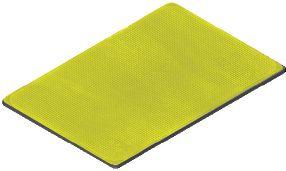
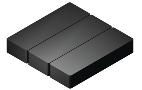
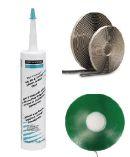
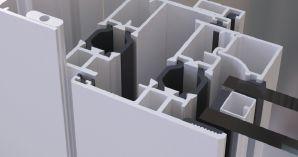
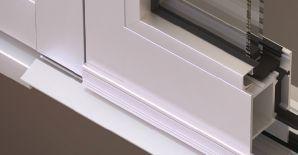
Grove Shims™ has the perfect shim for all your shimming needs. With color-coded shims and solid thicknesses, the right shim can be easily applied for perfect alignment. No guesswork or realigning. Our shims save you time and money.
* Contact us about eligible tariff fee reimbursements on the purchase of Grove’s shims only. “This ad applies to U.S. and Canada only. Offer expires 12/31/20.”
Need help? Just ask! We’re here to help.
978-534-5188
Visit us online to see all of our available solid 3x4 Shims.
www.groveshims.com
Free Samples are Available Upon Request. Grove Shims™ is the leading producer of plastic structural shims We have been in business since 1962, making shims since 1975, our family-owned business provides prompt, personalized attention to each order. In addition to our large line of in-stock shims, we will custom fabricate parts to meet your unique requirements. Unlike many competitors, our shims are solid and do not have hollow voids, so you can depend on them in crucial, load-bearing conditions.
18 Under the glass
Presenting the journey of Lahey Glass, pride of Dartmouth, N.S. 24 Innovations
A look at how the latest advances machine learning can be used to count fragments in tempered glass strength tests. 28 Seen at GlassBuild Connect
GlassBuild could not be a live event this year but the show must go on. Here are some interesting new products that were seen at the virtual GlassBuild Connect event.
ASSOCIATIONS
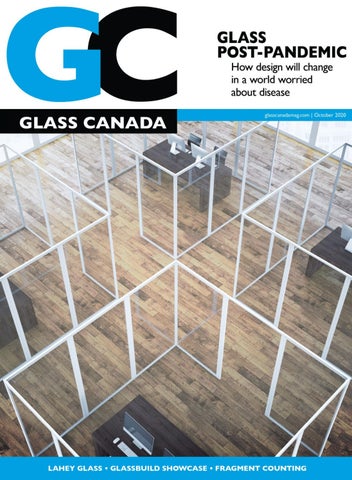
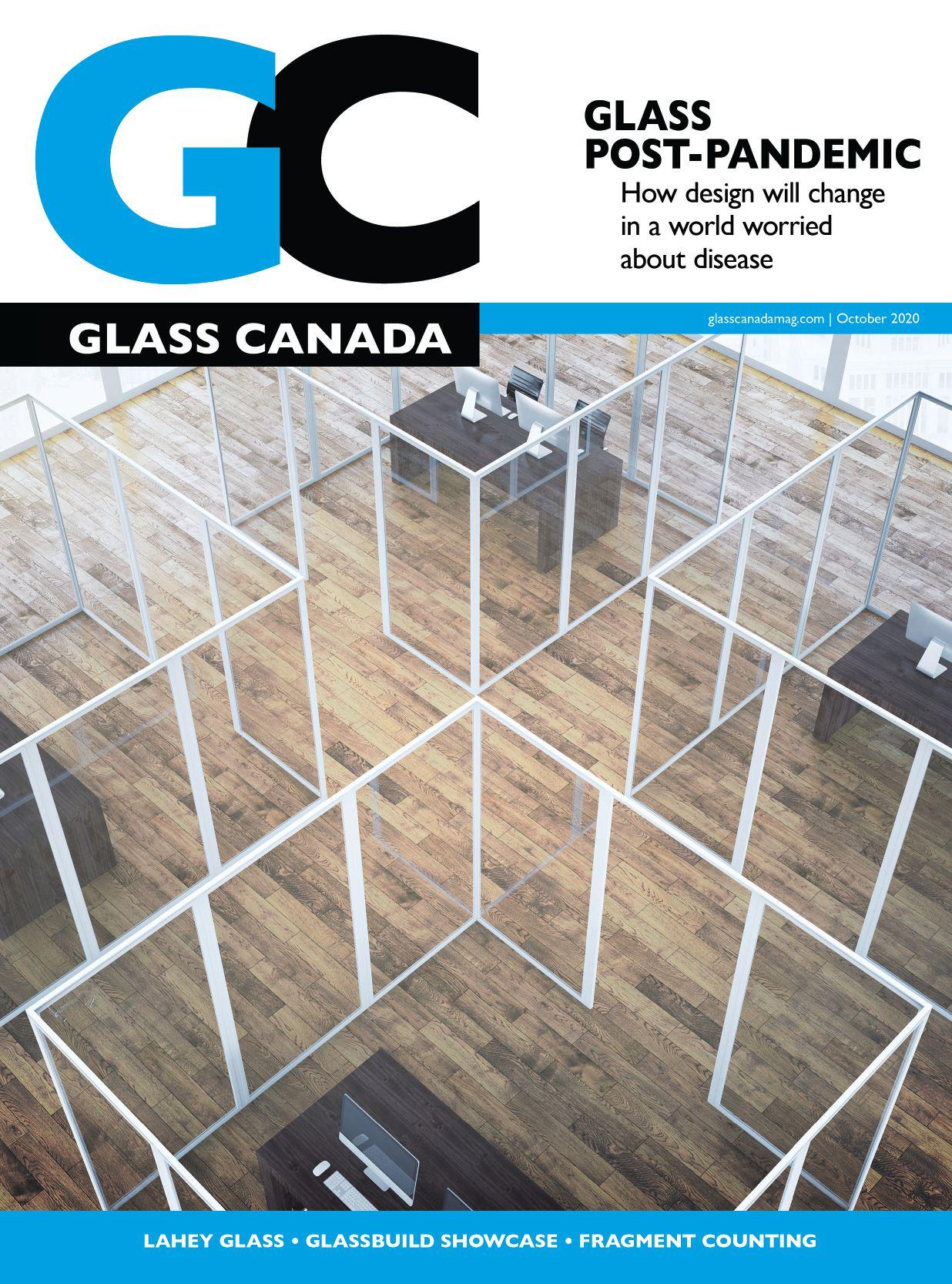
Is high-density office space a thing of the past? Here’s a look at how the pandemic will have a significant influence on building design and architecture in the near and distant future.
Bridging the distancing
Nicole Harris and Patrick Flannery talk about the crucial role the NGA has played in keeping its members across the U.S.A. informed and connected to critical resources during the pandemic, including calling state governments to explain why float glass plants can’t just be shut down.
Fortune favours the prepared
Supply chain disruptions have been manageable...so far.
From the conversations I’ve had, it doesn’t sound like most fabricators and contractors have been too severely affected by supply chain disruptions due to COVID-19...yet. The Canada/U.S. border has remained open to commercial traffic continuously throughout the lockdown, and even offshore shipments were allowed to land once the health protocols were ironed out. Everything has been slower and required more organization but all-in-all it sounds like our shops have been able to get what they need. But rumblings of shortages and longer lead-times are growing. It looks like the U.S. is not going to be out of the pandemic woods any time soon. You can hardly fault their determination to do business, but the uneven response to the pandemic has certainly prolonged the need for countermeasures while simultaneously not actually eliminating the hazard. If a big second wave, or a new administration, forces a more severe lockdown, we could be in trouble when trying to get components from the south when inventories held in Canada run dry. Doubly so if the resulting overall recession claims our suppliers and dealers.
NEXT ISSUE
• Supply Chains
• Passive House
Deloitte has some advice for how companies can prepare for supply chain disruptions. For starters, enhance focus on workforce planning. Your labour force is probably the most important part of your supply chain, and one that can obviously be disrupted if someone gets the virus in your company. Where would you go for replacements if key personnel suddenly weren’t available? One thing to keep in mind: unions have stables of trained glaziers available on short notice. Focus on Tier 1 supplier risk. While a manufacturer can often get various companies to distribute their goods, they have fewer options when it comes to the raw materials and basic components they need. If you see a threat to suppliers at that level, it’s time to plan for a disruption to availability of all the downstream products. Illuminate the extended supply network. You probably buy your most important components from the same few dealers. But is the same thing available from others? Now would be a good time to know. Understand and activate alternate sources of supply. Might be time to take that lunch with your supplier’s competition. Update inventory policy and planning parameters. Maybe the tax hit for keeping some more components and materials in storage is worth it these days. Enhance inbound materials visibility. You know it’s been ordered, but you probably don’t know if it’s actually coming until it arrives. Successful businesses want to know. Prepare for plant closures. Both yours and theirs. If the worst happens and a supply disruption forces suspension of business, you can mitigate the damage by having a plan in place. Focus on production scheduling agility. I think we can all see the benefit these days of being able to quickly adjust to changing circumstances and come up with new schedules, new methods and even new products on the fly. To be honest, this industry’s abilities in this regard have been surprising and impressive. Evaluate alternative outbound logistics options and secure capacity. What if your truck can’t get across the border? Or your workers can’t get on site? Or your salesmen can’t make calls? It could pay to cover those bases. •
GLASS CANADA
October 2020
Volume 32 • Number 5 Annex Business Media
P.O. Box 530, Simcoe, Ontario N3Y 4N5
EDITOR | Patrick FLANNERY pflannery@annexbusinessmedia.com 226.931.0545
ASSOCIATE EDITOR | Sukanya RAY GHOSH srayghosh@annexbusinessmedia.com 647.203.7031
VP SALES/GROUP PUBLISHER | Martin McANULTY mmcanulty@annexbusinessmedia.com
COO | Scott JAMIESON sjamieson@annexbusinessmedia.com
AUDIENCE DEVELOPMENT MANAGER Urszula Grzyb ugrzyb@annexbusinessmedia.com 416-510-5180
CIRCULATION
Tel: 416-510-5180 Fax: 416-510-6875 or 416-510-5180 Mail: 111 Gordon Baker Rd., Suite 400, Toronto, ON M2H 3R1
SUBSCRIPTION RATES
Canada - 1 Year $37.00 (plus tax) U.S.A. - 1 Year $85.00 (in CDN dollars)
Publication Mail Agreement #40065710 Printed in Canada ISSN 0843-7041
Occasionally, Glass Canada will mail informationon behalf of industry-related groups whose products and services we believe may be of interest to you. If you prefer not to receive this information, please contact our circulation department in any of the four ways listed above.
Tariffs dropped, retaliation avoided, but quotas implied
The U.S. government announced it has dropped a 10 percent tariff on Canadian aluminum exported to the U.S. hours before Canada was set to impose retaliatory tariffs on manufactured aluminum U.S. imports, including aluminum windows and door components. But the Americans are threatening to re-impose tariffs retroactively should Canadian aluminum exports exceed unilaterally imposed quotas. The U.S.-based Aluminum Association said it welcomes the end of tariffs and supports tariff- and quota-free trade in aluminum products between Canada and the U.S. Trump has invoked Section 232 of the U.S. Trade Expansion Act to justify the tariffs, which would otherwise be in violation of the USMCA free trade agreement. Section 232 allows the U.S. to restrict trade where import of a product would imperil national security. So somehow importing aluminum from Canada is suddenly posing a threat to U.S. national security. Trump had announced on Aug 6 that the U.S. was planning to put a 10 percent tariff on Canadian aluminum ingots entering the U.S., effective Aug. 16. In response, Ottawa had threatened $3.6 billion in retaliatory tariffs on American aluminum goods entering Canada. “Aluminum doors, windows and their frames and thresholds for doors” were on the list of potential products targeted for tariffs, and
were part of the retaliatory tariffs Ottawa imposed in 2018 in response to the U.S.’s 25 percent tariff at the time. Commenting on the move on Trump’s announcement on Aug. 6, Augustine Lo, an export attorney, sent the following analysis.
In March 2018, the Trump administration imposed a 10 percent tariff on various aluminum imports, sourced from anywhere in the world. Initially, Canadian aluminum products, along with Mexican products, were exempt. Then, in June 2018, Canadian and Mexican aluminum products were added back onto the tariff list, which prompted Canadian and Mexican retaliatory tariffs on U.S. products. Despite this tit-for-tat mutual imposition of tariffs, the three countries nevertheless signed the new USMCA in November 2018 to replace NAFTA. To facilitate USMCA’s ratification by their national legislatures, the three countries declared a tariff truce in May 2019. The Trump administration once again exempted Canadian and Mexican aluminum from the Section 232 tariffs, while Canada and Mexico rescinded their retaliatory tariffs against U.S. products. The Trump administration also agreed not to re-impose Section 232 tariffs unless there was a surge of Canadian and Mexican imports beyond historic levels, and negotiations to address that surge are unsuccessful. This truce paved the way for the USMCA’s entry into force on July 1.
FGIA updates Fenestration Sealants Guide
TheFenestration and Glazing Industry Alliance has updated a technical document intended to aid in the selection, use and application of sealants commonly used in fenestration systems. AAMA 851, “Fenestration Sealants Guide for Windows, Window Walls and Curtain Walls,” an FGIA standard, is the first update to this document, originally published in 2009.
“AAMA 851 is an excellent resource in helping identify areas of consideration when selecting sealant systems,” said Steve Altum, chair of the fenestration sealant application guide task group. “Choosing the right sealant system for the right application is critical to building or manufacturing products that can meet today’s industry standards and requirements.” Altum added that understanding proper joint design and the end performance requirements are critical to meeting intended design loads and maintaining quality, long lasting products.
“This guide will help to identify some of the key considerations such as substrates, environmental, joint movements and compatibility of components used in the overall system design,” said Altum. AAMA 851 reviews the type of sealants currently in use and their application following accepted standard practices. It encompasses both field and factory applications. AAMA 851 may be purchased from the FGIA Online Store.
Illustration: Alison Keba
CANADA’S GLASS ASSOCIATIONS
Fenestration Association of B.C.
Amy Roberts of PFG and Jason Loutet of Intertek talked to Rishi Sharma of the B.C. Construction Council on the FenBC podcast about the value of participating in the Builders Code. The Builders Code sets a standard code of conduct for workers on construction sites in B.C. It defines an “acceptable worksite” as the starting point for reducing risk and ensuring a safe and productive environment for all workers. You can listen to this by subscribing to the the FenBC podcast.
I am putting out a call to all FENBC members who are photographers or just take some great pictures. What are you doing during this time of COVID-19? How are you working in your offices or at home? How is life on the jobsite? Do you have a project you are proud of? Do you have a person who has gone above and beyond in keeping everyone safe. How did you spend B.C. Day? The large picture on the home page of our new website is actually a slider with six different pictures. There will be an opportunity to feature the top six pictures sent in that represent our life in construction during COVID-19. If you have a picture to share, please send it on to Zana at zgordon@fen-bc.org. Finally, I would like to urge you all to stay diligent during the summer. The construction industry as a whole has been steadfast in its abilities to ensure safety for everyone. Our numbers are impressive compared to some other sectors, but I have received information over the past few days from very reliable sources that this crisis is not
over, not by a long shot. It is likely to be a very difficult fall and winter for everyone. All you need do is look across our border to the U.S. to see what can happen when we let our guard down.
AVFQ
Window and door and glass manufacturers have been very busy since the resumption of activities last May. In order to support them, AVFQ is offering its members several concrete training courses in sales and marketing, the BIM approach as well as the famous FIT window installers program. The latter, based on the CSA A440.4-07 standard, is offered online and enables participants to be equipped with best practices. Starting in November, the AVFQ will be providing a second part of the training, which will explain in detail, using live commentary video clips, the correct installation of a door or window. These two trainings are available in both French and English. In the near future, industry-specific trainings on project and production management will be added. Cancelled in March, due to the pandemic, the Salon RV CEBQ-AVFQ will be held on Nov. 12 with a unique virtual experience. Think of something similar to Google Street View. This activity targets architects and engineers. Manufacturers will have the opportunity to present their products, new features and developments and thus encourage their use in projects. In addition to the booths, three conferences on thermal simulations, BIM and new glass products will rally participants. With this same virtual experience, the 2021
Annual Conference will take place on Feb. 17 and 18. It will be an excellent opportunity to meet the entire Quebec glass and fenestration industry. Several new membership requests were received to join our very proactive association.
Provincial Glaziers Association of Alberta
We as an association have been on a hiatus since March when all of this started. We have a directors meeting scheduled in mid-September to get rolling again and have discussions on what we have seen, how individual firms and the glazing trade in its entirety has been affected and what we see moving forward for both the association and trade. Much more to report in the next issue.
Architectural Glass and Metal Association
From time to time, the AGMCA uses this space to turn the spotlight on our volunteer directors or its member companies. This month, we salute Angelo Cairo of Stouffville Glass.Stouffville Glass was founded in 1979, by Angelo’s father, Ross Cairo. Angelo started working for his father every summer from grade school. It was a small family-run business that focused on offering top-notch service to its rapidly expanding customer base. They eventually diversified and began offering a full line of windows and doors. The company grew but kept
service as their mainstay. Ross kept overheads down, and cites quality service at reasonable prices, as his key to success. Upon graduating from George Brown College, specializing in Architectural Technologies in 2004, Angelo took over the day-to-day operations and he quickly identified the need for expansion of the facility. In 2006, they moved into a 10,000-square-foot facility in Stouffville, Ont., where they remain today, with an eye for further expansion in the very near future. Angelo and Ross continued to invest heavily in the business with CNC manufacturing and 3D technology to keep pace with the demands of today’s highly technical projects. With the assistance of a group of dedicated staff, Stouffville Glass has completed several high profile and challenging projects in and around southern Ontario. Angelo became a director of the AGMCA in 2018 and he has a keen interest in the development and training of our apprentices. Angelo believes that new apprentices are the lifeblood of our industry and he sits on our Glazier Apprenticeship Training Committee, with oversight on the entire training process for glaziers in our province. He can be reached at angelo@ stouffvilleglass.com
Ontario Glass and Metal Association
Activities of the OGMA have been on hiatus due to the pandemic. There really isn’t anything to report at this time. All meetings and events are suspended until further notice.
The Buildings Show and BUILDEX Alberta go virtual
Given the uncertainties facing the construction industry in 2020 due to COVID-19, The Buildings Show and Buildex Alberta have announced that they are coming together to provide a national digital platform that virtually connects more than 70,000 design, construction and real estate professionals across Canada at Buildings Week, Nov. 30 to Dec. 4. Powered by Buildings Canada and Informa Connect, Buildings Week will provide opportunities for generating new business, continuing professional education and reconnecting with peers to support the growth and development of the industry now and in the future. The virtual event experience comprised of The Buildings Show, Construct Canada, PM Expo, HomeBuilder and Renovator Expo, World of Concrete Toronto Pavilion, and Buildex Alberta, offers everything that industry stakeholders have come to rely on from the face-to-face events, plus innovative features not possible from the in-person show. Attendees can explore virtual booths and an online marketplace to discover leading product innovations, learn about technical specifications, watch live product demonstrations, connect with clients and colleagues and much more. Attendees can also continue to join interactive panel discussions, hear from industry thought leaders and follow or get involved in the discussion by using audience polls, speaker Q&As, and group chats. There will be a mixture of live, pre-recorded and on-demand content from
across the industry and now, for the first time, across the nation. Over 100 professionally accredited educational seminars, virtual panels, technical presentations, keynote sessions and professional development workshops will now be offered online. The early bird deadline for discounted education programming expires Nov. 13. More information is available at thebuildingsshow.com.
Skills Ontario’s Jennifer Green appointed youth advisor
Ontario’s Minister of Labour, Training and Skills Development, Monte McNaughton, and, Minister of Education, Stephen Lecce have announced the appointment of three advisors to a new committee that will advise the Ontario government on system improvements and other measures that will better enable and encourage youth to pursue the skilled trades. Jennifer Green, director of competitions and young women’s initiatives at Skills Ontario, is among the new advisors who will be providing their expertise, time, and talent to serve Ontarians. Green is an industrial mechanic millwright by trade with firsthand knowledge of the apprenticeship and broader education system and an extensive background developing programs that lead to skilled trades careers. This panel of advisors, including Adam Melnick and An-
drew Pariser, consists of industry leaders that will work with youth, educators, business, parents and other key partners and will advise the Minister of Labour, Training and Skills Development on how to make the skilled trades a viable choice for young people. Green is among the advisors who will work to introduce students from grade one to secondary school to the skilled trades in order to ensure that Ontario’s youth are aware of and encouraged to pursue the opportunities in these career paths. Skills Ontario plays a key role in skilled trade promotion and the Government of Ontario is investing $5 million in the organization to help Skills Ontario continue to deliver programs and reach youth across the province.
“We need to reach kids earlier, to let them know that a career in the trades is every bit as worthwhile as a career outside the trades,” says McNaughton. “Today’s investment into Skills Ontario will help us do just that, as they continue to develop and deliver compelling programming.”
“We are proud to deliver skills solutions and to build our future skilled workforce with the Government of Ontario,” says Ian Howcroft, CEO of Skills Ontario. “We thank the government for the support they are providing to help us have more impact and to strengthen our partnership. As an organization dedicated to encouraging and inspiring youth to pursue the essential skilled professions, we are thrilled to play a key role in not only promoting these careers, but also offering support for the system in which they run.”
Keystone Certifications recently achieved Standards Council of Canada accreditation for the Fenestration Certification Program. This credential enables the program to demonstrate product compliance with Canadian national and provincial building codes as well as the National Energy Code of Canada and the Canadian Energy Star Program. Keystone becomes the first U.S. fenestration certifier to hold both U.S. (ANSI) and Canadian (SCC) accreditations and to offer associated certification services on both sides of the border. Program referenced standards include the NAFS and CSA A440S1 structural performance, ASTM impact resistance and CSA A440.2 energy performance. Keystone Certifications has been certifying fenestration products since 1998 as an ANSI-accredited certification body and an NFRC-licensed inspection agency.
StatsCan building permits report: June 2020
The $687-million-dollar Oakridge Centre mixed-use redevelopment project in the city of Vancouver helped raise the total national value of building permits by 6.2 percent to $8.1 billion in June, to a level comparable to preCOVID levels. Overall, seven provinces reported gains for the month. The value of non-residential permits rose 4.6 percent to $2.7 billion in June. Institutional permits were up 47.7 percent to $841 million, driven by gains in British Columbia (162.8 percent) and Ontario (60.3 percent). In contrast, commercial (9.1 percent to $1.3 billion) and industrial (four percent to $591 million) permits were down in June, following strong gains for both components in May. The second quarter of 2020 started with record declines in April, following the implementation of COVID-19-related measures by businesses and governments. The easing of those measures in May allowed construction intentions to bounce back and continue to advance in June. Despite the rebound seen in the last two months of the quarter, the value of building permits was down 12.8 percent compared with the first quarter, a fourth consecutive quarterly decline. The second quarter decrease was the largest reported since the fourth quarter of 2008, during the financial crisis. Compared to the second quarter of 2019, the value of permits declined 17.4 percent nationally. Losses were reported across all provinces and territories except Newfoundland and Labrador, where quarterly gains in the institutional sector drove the increase in the total value of permits of 25 percent.
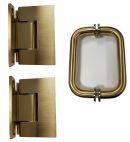
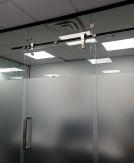
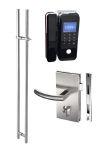
our special customizable platform, Safeguard Glass Systems creates incredible
Frameless Shower Hardware
Sliding Systems Glass Partitions Railing Systems
by MARG WEBB
Canadian commercial codes update
Although 2020 will likely be remembered mostly because of the COVID-19 pandemic, it is worth noting that many important activities have continued since the beginning of this year. Among these, the various standing committees responsible for a code or a section of a code in Canada, overseen by the Canadian Commission on Building and Fire Codes, have met, virtually, several times since April in order to finalize the current 2020 code cycle of the National Building Code and the National Energy Building Code (NECB) for publication. The date of publication was initially planned for fall 2020 in conjunction with the usual five-year cycle updates, however, the commission announced earlier this year that this date has been post poned to November 2021.
FGIA submitted public comments in March 2020 on the proposed changes to the energy codes within NECB that were to affect our industry. Please be aware of the most recent proposals that will be adopted for publication in 2021 and that are likely to affect the commercial building envelope industry. The main change that is worth noting is the proposed reduction of the maximum U-values for fenestration and doors that was accepted by the Standing Committee on Energy Efficiency.
There was another proposal to reduce the fenestration-and-doors-to-gross-wall ratio where the proposed reduction values depended on the heating degree days’ region. An informal indus try coalition between FGIA, AVFQ, Fenestration BC and WestLab Canada advocated strongly on behalf of the industry and the members of the SC-EE tabled this proposal for further discus-
It is crucial to do some thorough research ahead of time when designing and building a commercial project.
FGIA
sion during the next 2020-2025 code cycle. In 2017, the SC-EE implemented mid-cycle code changes increasing the stringency of U-values for fenestration. Proposed for 2020, a reduction in both the FDGWR and the maximum U-values would mean a second increase in its stringency on the fenestration U-values for glazing products compounded by the FDWR reduction – a double whammy to our industry.
Once published, this new version of the codes will be in effect from 2020 through to 2025 at the national level. However, it is important to note that this version of the code is not necessarily adopted in each of the provinces. In order to know what the provincial requirements are, you must understand which version of the national code is in effect in a given province. There are also some provinces that use a modified version of the code, so it is crucial to do some thorough research ahead of time when designing and building a commercial project.
Alberta and Saskatchewan currently use the most recent version of the NECB, while others like Manitoba are using an older version, and British Columbia, Ontario and Quebec have their own specific energy codes or a modified version of the NECB. Ontario’s energy code, known as SB-10 has not been modified since 2019, and British Columbia’s step code is not foreseen to un dergo any changes in the short term. On July 1, the province of Quebec approved the NECB with modifications while allowing for an 18-month phase-in period. The modified code also allows for 40 percent fenestration and window to gross wall ratio for all climate zones for the prescriptive path compliance. Fenestration and door area in the performance compliance path must be the same area in both the reference and design buildings. In British Columbia, the city of Vancouver intends to implement changes to its building bylaws on Jan. 1, whereby storefront, curtainwalls, windows and door assemblies will have a maximum allowable U-factor of 2.27.
Needless to say, with the Canadian effort to reduce energy consumption in buildings, our industry is highly likely to see more changes and pressure to improve its products and solutions. It is a trend that has been set in the past few years and will continue. FGIA will soon be adding a new web page for Canadian codes and regulations. •
Join now as a 2021 new member and enjoy membership benefits for the rest of 2020—for FREE.
With the combined expert resources of AAMA and IGMA, the Fenestration and Glazing Industry Alliance (FGIA) brings industry leaders together to improve home and building performance through better glass, window, door and skylight technologies and standards.
An FGIA membership gives you access to an indispensable support network of peers, product certification from the industry leader in standards, and discounted rates on training, certification and professional development.
Whether as an individual or business, joining FGIA will give you a leg up in an increasingly competitive industry.
Join the alliance today at Join.FGIAonline.org
MOVING TO THE COUNTRY
by RICH “DOOMSDAY” PORAYKO
Ask a farmer or biologist what happens if too many animals are grouped together. Eventually disease breaks out. Healthy animals need to be separated from the sick ones. Entire herds are decimated.
Human beings are no different. City planners and architects are not microbiologists. Whether you subscribe to climate change or not, it turns out that although the environment absolutely needs protection, perhaps the actual “emergency” was the risk of a global pandemic.
Spoiler alert: no happy ending.
The densification experiment has failed. Density is dead. Commercial buildings are on life support. During a recent webinar in July on what glass businesses will need to “hit the target and make the facades of the future,” it became painfully obvious that the people in charge are completely tone deaf with the reality of what is really going on.
Or maybe not. Implementing the strictest energy codes in the world during a time when the worldwide forecast for new commercial construction is expected to grind to a halt will undeniably decrease the amount of emissions coming from new buildings that are postponed, re-located or never built.
Good riddance to the open office concept. Once thought to have boosted productivity and collaboration, time and again the open office concept has been proven to have the opposite effect including decreased moral and meaningful interaction.
“The COVID-19 pandemic has upended our lives and businesses by altering how and where we live, play, learn, work and heal, changing how building occupants enter, navigate and interact with buildings across most market segments,” says NGA vicepresident of business development, Andrew Haring, during the
National Glass Association’s GlassBuild Connect industry roundtable. “It’s the new normal of design construction.”
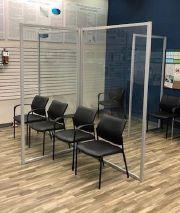
Domenic Cristofaro, associate principal at HED, told online attendees that COVID has transferred the role of glass in building interiors from a functional design aesthetic to an important component in a defense against the transmission of COVID. “Glass panel dividers and partitions will be used in interior environments, not only to define interior spaces, but to separate employees and visitors to ensure their health by preventing the spread of disease,” Cristofaro says.
“We’re seeing a socially distant behavioural style that’s quickly becoming the norm in almost all building types,” he goes on. “People are becoming wary of standing or sitting too close to one another. It’s unlikely that professional offices will continue to utilize open plan layouts. If benching workstations and conference rooms continue to be utilized, glass barriers will need to be installed to separate occupants and minimize the risk of virus transmission.
“As corporate employees return to their offices, they will have staggered office hours to avoid overcrowding,” said Cristofaro. “COVID has put an end to the over-densification of commercial
ABOVE: The use of glass as an interior building material is expected to become an integral part of design strategy, as well as a strategy of occupant health and safety.
office buildings.”
As the real estate industry comes to grips with the full impact of social distancing in commercial office buildings, and the new normal begins to crystalize, Cristofaro told design firms involved in the workplace tenant improvement market sectors that they can expect an increase in workload.
“The trend toward the reduction of workspaces and the adoption of materials that are easy to clean and sanitize, like glass, will be preferred for interior environments. Corporate commercial real estate portfolios may also see a short-term reduction in office space leases. A possible long-term solution to shifting demand may be to reposition a portion of commercial office buildings as either apartments or condominiums.”
Cristofaro said that as design, construction and real estate moves forward, “the use of glass as an interior building material on all market sectors and occupancies will be an integral part, not only of design strategy, but also as a strategy of occupant health and safety.”
Impact to process
“Before COVID-19, designing a building often meant face-to-face workshops and meetings of various stakeholders and often involved significant travel,” said Joe Conover, vice-president at Clark Construction Group.
Conover told attendees these design meetings create a very collaborative atmosphere. “The result is a very high-quality product in the design. Because we can’t travel now, we are relegated to the world of Zoom. And we need to account for time zones so sometimes we’re talking hours for our meetings, not days. We could start at 6:00 or 7:00 in the morning on the west coast and it’s already late afternoon in Europe. This makes it very difficult to establish that collaborative atmosphere. It also makes it difficult for people to focus on the same level. While we are still working to achieve the same level of quality, we have to work a lot harder and a lot longer to get there”.
“We also look for that face-to-face meeting with manufacturers,” said Conover. “If I am working with a glass fabricator, I’m going to visit their plant. I want to see the tempering line, laminating room and the IG line. I want to understand what they do and how they do it. I want to understand their QC program and their processes. I want to meet the people that execute it.
Materials that are easy to clean and sanitize, such as glass, will be preferred for interior environments.
The more we know about who they are and how they do it, the less likely we are to ask them to do things that they can’t do. This also affords us the opportunity to establish relationships with people high up in the operation. The people that make it happen and make the decisions.”
Conover added that in the event that things went sideways, he wouldn’t have to fight his way through the organization to find somebody to help him. “I pick up the phone and I leverage a relationship that I’ve already established. These visits also involve significant travel. Sometimes international. At the very least, interstate. We’re not doing that now. We’re back to Zoom again.”
“We are utilizing local third-party inspectors to be our eyes and ears on the ground but that doesn’t replace us being there ourselves. We have also tried, with very limited success, to do virtual tours. This is a big ask. They are running a factory not a movie production facility. The jury is still out on supply chain,” said Conover.
Sometimes, he notes, there are over a thousand people working on a job site every day. Each one of those people needs to be monitored for symptoms. They need to have their temperature taken. They must do a questionnaire. It is necessary to have processes in place for contract tracing in the event that someone tests positive.
This involves additional PPE. At the very least masks. “We evaluate the various workspaces on a site for opportunities for distancing,” explained Conover. “Every room is evaluated for airflow and size. We determine what the same occupancy for
that room is and manage the workflow and prioritize the tasks.”
Clarkson Construction also modifies the flow of people onsite. “We restrict the number of people on the hoist and where they stand. Stairways are directional. Stairway #1 is up. Stairway #2 is down. Hallways are also directional. These are all impacting productivity on the jobsite, but we are getting better at it every day,” added Conover.
Changing demands
Randall Froebelius, president and founder of Equity ICI Real Estate Services and vicechair of the Building Owners and Managers Association International shared the real estate industry’s worst-kept secret that over the past several months, there has been a significant impact from COVID. According to Froebelius, traditional retail has been considerably impacted. “Some retail landlords will survive. Others will not.”
Restaurants are only allowed to open to 50 percent capacity. “We’re worried they may not be able to cover their operating expenses,” said Froebelius. “We were in an environment where densification of office space was increasing significantly especially over the last three or four years. That has reversed and done a 180 right now.”
“Office landlords are looking at what’s going to happen. Building operations and service contractors need to deliver services in a different way. By entering a workplace or a person’s home, we are introducing a whole new level of safety and security that must be addressed. Our tenants have an extremely high expectation of indoor air
“We have an increased role in screening and contact tracing as well,” said Froebelius. “Most of our members have had instances of COVID positive cases in their buildings and their response to that is a very, very delicate balance dealing with public health authorities and who do you advise and how quickly can we find everybody.”
“Going forward, our business has always been about service and differentiation based on the amenities and quality of the delivery experience that our property management groups provide. This isn’t going to change but the economics and the expectation levels are going to be very different. So, one of our biggest challenges is getting our members ready for that new post-COVID world.”
Touch points in a commercial building have always been repulsive and should’ve been phased out years ago. The future of entering and navigating a building is handsfree. Touchless motion detector openers, foot levers and arm pulls have been on the market for years. This is another area that city planners and building designers missed when they took their eye off the ball to reduce carbon emissions and failed us by not anticipating they were creating massive petri dishes for spreading viruses.
Large-capacity power-operated revolvers cannot be used because of the confined space. Wedging doors creates pressurization issues. Constant cleaning of touch surfaces on all door hardware only has questionable effectiveness yet it still needs to be done, adding soft and hard costs, opportunity costs and the risk of damaging hardware finishes.
Hearing someone speak from behind a screen can be difficult. Especially if they are wearing a mask. “We’ve installed screens and found that people aren’t able to communicate,” said Froebelius. “We are looking at addressing that without making too big of an opening.” In the midst of chaos, there is opportunity.
“We’re not convinced that the traditional office space is dead,” said Froebelius. “People are noticing that those interactions with your team and staff are missing. People aren’t ready for that entirely remote workforce.”
The two mantras of the Great Recession were “cautiously optimistic” and “it’s getting busier.” People aren’t even trying to hide it this time. There is outright panic
throughout the construction industry. Although today’s chapter doesn’t have a happy ending, barring a vaccine anytime soon, it’s not all gloom and doom.
Froebelius explained that there is still an incredible demand for residential space in downtown Toronto. “There are office properties that will be potentially less desirable through this. Older properties that are being replaced by new construction. There is a lot of office construction underway in Toronto, as well. All brand-new high-rises going up.”
“There is a term ‘the flight to quality’ and if there is vacancy available in those better buildings, tenants will move from the older, more obsolete, less efficient buildings. I could see some of those buildings being demolished for residential condominiums but not necessarily converted. The industry that I’ve seen develop in Toronto is that it makes sense to demolish a C- or B-class office building to replace it with a residential tower. It could trigger some of that.”
When one door closes, another door opens. Froebelius told attendees that BOMA members are finding that automatic door operators are failing due to increased use. Before COVID-10, automatic doors were mainly used for accessibility-challenged people to access buildings. According to Froebelius, everyone is understandably wanting to hit their elbow on the door button. “People are avoiding touch points. That puts an excessive load on the operators. If they fail, the building becomes a much more difficult place to access.”
Connor Leahy, business development manager for Assa-Abloy glass solutions division, also explained that while the ground-up construction has slowed down, the interior remodel is blowing up. “It’s booming. Let’s take the existing buildings and look at refurbishing them.” If there has ever been a time to pivot to healthcare, personal barriers and touchless entry, that time is now. This final quarter will set the tone for 2021. Good luck. •
the
PROUDLY CANADIAN SINCE 1989
COMMDOOR ALUMINUM: RESHAPING BOUNDARIES
THE SPECIALIST IN CURTAIN WALLS, WINDOWS AND DOORS
With our transparent approach, we have been serving the commercial and industrial demand for architectural aluminum products since 1989. A proud member of the Toro Aluminum Group of Companies.
CURTAIN WALL
FIXED WINDOW SERIES
HIGH PERFORMANCE CURTAIN WALL
ENTRANCE FRAMING
OPERABLE WINDOWS
SLIDING AND BI-FOLD
SWING DOORS
MISCELLANEOUS PRODUCTS
QUALITY PRODUCTS, INNOVATIVE DESIGNS AND A LASTING RESULT.
With a long and successful history in the commercial glazing industry, Commdoor Aluminum provides high-quality architectural aluminum building products for engineers, architects, glazing contractors, designers and building owners.
Growing Lahey Glass
A Nova Scotia glass company is thriving under new owners
Mason Roman cutting out a polycarbonate shield.
JAMES F. LAHEY GLASS | At a glance
Location
In 2010, two Nova Scotians seized an opportunity to buy Lahey Glass, a more-than-a-century-old company based in Dartmouth. Under the new ownership the company has grown. Even after the COVID-19 pandemic struck, a quick product pivot has kept Lahey Glass busy while waiting for its commercial and residential work to pick up again.
It marked a major career shift for Gerard and Brent MacIntyre. Brent was a commercial diver and Gerard was a vice-president for Farmers Dairy when opportunity knocked and they bought the company. In business since 1892, its heydays were behind it and it was just ticking over in a 2,000-square-foot space with a couple of employees.
By 2016, James F. Lahey Glass 2010, as the company is officially known (“Lahey had been in Dartmouth since 1892 and we wanted to preserve the history,” Brent says), had seven employees, including the MacIntyre’s.
In 2018 they moved the company into a 15,000-square-foot space in
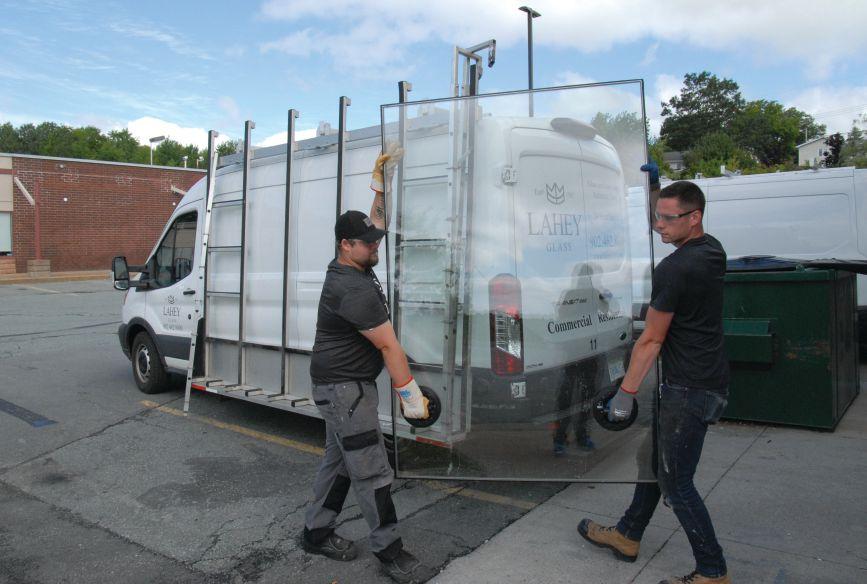
Lower Sackville. “We were growing and expanding and our old 2000 square-foot facility was going to hold us back in the future,” says Brent. Today, Lahey has 23 employees, a fleet of 17 Ford Transit vans equipped with special glass racks, and some F-150 half-ton trucks.
“We always had a small service division and through quality work we were able to attract more customers, hire more technicians and put more trucks on the road. Our service department is the foundation of our business. Recently, we got into the automatic door business; we are now an authorized Stanley distributor,” says Brent. “Automatic doors are a division we have been working very hard to grow. We are very excited to be an authorized vendor for Stanley Automatic doors. Stanley is a great industry-proven brand and we are proud to sell their products like swing and sliding doors.”
In 2019, Joe Fiander joined the ownership group here at James F. Lahey Glass. Joe was a vice-president for Sobeys in charge of construction and real estate.
Lower Sackville, N.S.
Owners
Gerard MacIntyre, Brent MacIntyre and Joe Fiander
Number of Staff 23
Facility 15,000 square feet
Products and services
Commercial services, residential services, automatic doors and custom plexiglass barriers
Joe’s role as owner and chief business development officer is very important for the future growth of the company.
On the commercial side of the business, Lahey specializes in new installations and renovation construction. While the company does not get involved in new high-rise building construction, it does service work on them that ranges from fixing leaks, installing new en-
Photo credit: Carroll McCormick
James Brown and Greg McLean load glass on a Lahey truck.
trances and replacing glazing, Brent says. “This month we have swing stages set up to do repairs on leaks at an 18-storey office building in downtown Dartmouth. Next in line is a 23-storey office building in downtown Halifax.”
“Big is just not in our business plan. We are a residential and commercial ser vice company that does automatic doors and small-to-medium construction. There is not much we can’t do: jobs for a couple hundred bucks up to contracts worth hundreds of thousands.”
On the service side, Lahey sup plies glazing for new construction and provides repair services to homeowners and apartment buildings. All windows eventually steam up, get a cracked pane or need hardware replaced. When that happens, the service department can handle it. “Through our service department we also service aluminum doors, entrances and have a locksmith service,” explains Brent.
Out in Lahey’ s busy warehouse-slashworkshop, two suction cup-wielding staff lift large sheets of glazing onto a van’s side rack. Recent projects the crews have gone out on include new commercial construction; small and large office renovations; skylight repair and replacement; repairs of leaky windows; and swing stage replacement of insulating glass.
Another employee cuts a mirror on a large worktable. “We do a lot of mirror work; for example, new mirrors in homes, custom mirrors, mirrors in gyms. Mirrors are a good business for us,” notes Brent.
While Lahey stocks and cuts all its single-pane flat glass orders itself, it orders insulating glass from glass manufacturers for double- and tripleglazed windows. “It is something we have to outsource. We also order from manufacturers all of our aluminum window frames and entrances. They are outsourced and built offsite as well. We order in lots of tempered glass. At this time, there are no tempering operations in Nova Scotia. So, we order our tempered glass from P.E.I. or Quebec,” explains Brent.
Around the corner past racks and racks of glass and mirror stock, past a huge rolling rack with perhaps 100-150 completed glazing orders – tagged and
“I tell every person I hire that you have to enjoy coming into work. We have a very positive attitude here,” says Brent MacIntyre.
ready to move out – and a tidy stock room with shelves packed with supplies ranging from tubes of caulking and bin after bin of replacement parts for sliding doors, a young man is cutting sheets of polycarbonate glass and sanding smooth the rough edges. Behind him are eight-foot-high stacks of bundled sheets of polycarbonate and acrylic, which include supplies Lahey bought up locally, plus three tractor-trailer loads from the United States. It’s the material secret to how Lahey acted quickly to make lemonade out of the lemons, that is, the COVID-19 pandemic and the resulting economic pandemonium.
It was all about the polycarbonate shields that now greet everyone in probably every retail establishment in the province, and an astute decision to capitalize on a crying need in the midst of an economic meltdown. “It happened in early March when COVID hit heavy here. We could see that the home service business would drop a lot. We pitched the idea to Sobeys, one of Atlantic Canada’s largest grocery chains. Our pitch was accepted with a very strict timeline and we supplied all their stores in At-
lantic Canada. After that, we completed several government jobs, guards for the local casinos and many office buildings and dentist offices,” Brent explains.
“We also designed a DYI polycarbonate guard that clients could put together in six seconds for [places like] convenience stores, pizza shops and gas stations. We sold hundreds of them. It was low cost and still gave the end user a good product. They were very popular.”
“What we saw is that some of the service side dropped in business. We do a lot of aluminum door service, but with a lot of stores closed, doors weren’t being blown open or broken, for example. But we made a strategic pivot and started selling polycarbonate. Now everyone has these guards, and residential business is starting to pick [back] up. But we are still making guards every day,” Brent says.
As the mad rush to fill polycarbonate and acrylic guard orders tapered off, regular commercial and retail business began to return.
We circle back to discussing the company’s regular business, which Brent describes, in one way, as relationship building. “Our focus is the Halifax
Photo credit: Carroll McCormick
UNDERtheGLASS
Regional Municipality but we have service contracts that require us to go all over the province. On the commercial side we go all over Nova Scotia, and we have completed projects in Prince Edward Island, New Brunswick and Newfoundland.”
While new installs are good business, Brent believes that playing the long game is the big ticket. “We want to be there for the follow-up and be an after-sale service [provider] as well.”
Part of Brent’s job as chief operating officer is providing consultation. “A big thing for me is that I like to understand what I do. I won’t necessarily be doing the install, but I want to be able to explain to the end user and have them know exactly what they are getting.”
And with the company’s focus on maintenance, he’s the man to ask about the pros and cons of various products. “There are a lot of times an architect will ask about a product and I can talk about how much the maintenance will be,” Brent explains.
There is a dynamic tension, perhaps a bit like that between the production and maintenance sides in manufacturing plants, between a great look and ease of maintenance. “Our construction side wants a window to look pretty, but our service side wants a window that is easy
to repair,” he comments.
The glazing industry, at least in Nova Scotia, is not one served by any vocational programs graduating people trained and ready for action. “It’s tough. You get people from other companies or you have to train in-house, for the most part, including teaching glazing and carpentry skills. Still, all the employees take outside training in, for example, fall arrest, WHMIS, first aid, and swing staging.”
The company culture is big on safety and a rewarding work environment, Brent explains. “I tell every person I hire that you have to enjoy coming into work. We have a very positive attitude here. You have to enjoy the people you work with and the place where you come to work. I make sure they understand that we are very big on the Lahey culture. We have Lahey functions. We make sure they understand that. It is not always the task that is the job. It is the environment. The three owners are here every day, in the trenches. Our doors are always open. It is not always in a company that you can come in and talk about something with the owners.”
The rewards for Lahey’s employees include good job security, Brent says. “The diversity of the business is that we
don’t have a slow season. We are at full capacity all year round. We want to keep all of our employees rolling all year.”
“The safety culture here is really big,” Brent says. “We bring up areas of concern to try to eliminate any jobsite accidents. We remind our employees to use safety tape, clean up messes, and keep all of our work and safety gear in great shape. This work culture is in place to keep our employees and public safe at all times.”
“We do on-site toolbox talks – safe job procedures, safe work procedures. We do hazard assessments of anything out of the norm. We identify potential hazards and how to avoid them. We are a member of the Nova Scotia Construction Safety Association. We are COR certified – a yearly audit of our safety practices to make sure we meet or exceed the industry standards”
Looking around the city, Brent MacIntyre sees glass wherever he looks. “We are a good-sized company. We spend a lot of time on the radio and social media to get the message out. We are building slowly and organically to build the Lahey brand. The goals we have been working toward are to have a great team, great customer experiences and to do a good job.” •
Chris Evans, Chris Eye and Justin Brown working on a downtown Dartmouth high-rise.
Photo credit: Lahey Glass
A look at the new regulations for curtain walls and how the use of the ‘performance’ and ‘prescriptive’ approaches to meeting these regulations will play out in the 2020s and beyond |
BY TREENA HEIN
THE FUTURE OF ENVIRONMENTALLY FRIENDLY FACADE DESIGN
Glass curtain walls are used for a variety of reasons, chief among them to stabilize the interior building temperature and cut down on the building heating and cooling costs. They can also reduce UV light, which reduces degradation of items within the building. Curtain walls, in addition, are architecturally striking.
However, we are now at a point in time where the sustainability of glass curtain walls is being closely examined. How energy efficient are they? How are features evolving? What lies ahead in terms of meeting Canada’s National Energy Code for Buildings (NECB) 2020?
First let’s take a look at the Code and how it’s evolving. Robert Jutras, UL’s principal engineer for Building Science, notes that there is no uniformity in the application of the Code across Canada. Various provinces use the 2011, 2015 and the 2017 versions of the NECB (see map below), and in some cases, other factors come into play as well. It’s not known how this state of affairs will be affected as NECB 2020 is released later this year.
“NECB 2020 has gone through public input and the comments are being reviewed on the changes,” Jutras explains. “One main change is the introduction of energy performance tiers to the Code, similar to the BC ‘Energy Step Code.’ These four tiers are used to do a performance calculation (a whole-building evaluation of energy efficiency) except that tier 1 includes the option to evaluate building energy efficiency using the prescriptive route, which is a collective evaluation of all the components.”
In addition, the ‘U’ values (thermal performance in watt/m2/°C) proposed in
STATUS OF ENERGY CODE ADOPTION IN CANADA
NECB 2020 for both doors and vertical fenestration are reduced compared to NECB 2015 and NECB 2017 U values. This is because new higher-performance component products are now available and they are being used in different ways. This change, says Jutras, has prompted many comments from industry.
The third main change proposed in NECB 2020 is a reduction in the total vertical fenestration and door area that can be used in a building. This, if it appears in the final edition, will impact the prescriptive compliance path, says Jutras, but will also impact the base energy calculation in the performance calculation path. “There have been many comments from the fenestration industry as a whole in North America about this,” says Jutras. “The main associations, contractors and also some architects have all commented that this is a big step. NECB was
updated in 2017 and it’s now being changed again, and it’s a lot to demand of the industry in terms of adapting.”
Jutras and others believe that the way NECB 2020 reduces both U values and also the allowable fenestration surface puts a lot of pressure on the industry. “These requirements are hard to meet in some locations,” he explains. “So if you want to use the products available on the market right now, you may have to meet the requirements of NECB 2020 through the whole-building performance evaluation approach, looking at how aspects such as the heating and electrical systems in the building can make it possible.”
News Up Date: Since the preparation of this article and further to representations from the industry and constructive discussions from all parties, the committee responsible for the development of the
NECB 2020, has agreed to postpone till Code cycle 2025 the potential adoption of reduction in the total vertical fenestration and door area. This will reduce the pressure on the industry, for the time being, as only new reduced U values will be part of the NEBC 2020. This change of events still needs the approval from the Code Commission but should be as described. That being said, it is important for the industry to understand the intent of the Code in the up coming changes and act diligently to help achieving these goals in a the near future.
>>CURTAIN WALL COMPONENTS
In terms of the prescriptive path, Louis Fortin, an engineer and UL’s project director for Glass, Window and Curtain Wall, notes that the individual components of curtain walls and their raw materials continue to evolve in terms of energy efficiency. “The 2017 ASHRAE Handbook (Chapter 15) outlines the U value achieved with individual fenestration products, with different frame materials and glazing, low e or two low e, size of air or argon space, with double or triple glazing,” Fortin explains. “To meet the prescriptive requirements of NECB 2017 for example, you may have to change the type of glazing used. Triple glazing is almost mandatory to be able to meet NECB 2015, 2017 and the next one in 2020. You have to look at the U value of individual items, and then you have to factor in the climate zone, the amount of allowable vision glass (which goes down as you move into more northern climate zones) etc.”
Fortin also points out that products used in European curtain walls are more efficient than in North America and keeping an eye on this is therefore valuable as these advances are likely to spread here. He points to a report by Nathan Van Den Bossche at the National Research Council of Canada called ‘Thermal optimization in curtain wall design, a comparative analysis of European and North American Curtain Wall Frames’ (part of a larger report titled ‘High Performance Roofing and Walls Technologies’), which examines the performance of curtainwall frame, frame length, glazing unit thickness, use of more insulation in the inner cavity and other factors.
“They use materials that we don’t use in North America and combine things in different ways,” notes Fortin. “Materials such as fibreglass in the frame makes a huge difference in the overall U value, as
does the thicker glass, more insulation in the glazing cavity, and so on. Instead of an aluminum pressure plate, for example, you can use a polymer pressure plate, or you use an alternate system of structural glazing (a toggle system) to fix the sealed unit in place. These produce very good U values as well.”
Fortin believes that in North America, the design of the next generation of curtain wall should, to achieve a better U value, include changing the thickness of the Insulated Glass Unit, using a different width of mullion and different length of fastener fin, and include additional insulation in the glazing cavity. Triple glazing may also become common.
>>NEW PRODUCTS
Indeed, new curtainwall products are becoming available for the North American market. Among these, curtain wall systems using fibreglass or wood mullion can be used in a captured or structural glazing system, says Fortin, which allows the achievement of better R and U values. He also points to a new vacuum insulated glass (VIG) product, which as the name suggests, encloses a vacuum instead of gas. “Their use is marginal now but we are beginning to see use increase,” says Fortin. “It allows you to use thinner glass and still achieve very good U value, especially in high-performance framing.” However, the industry has concerns about durability of VIG, even though the technology has existed for 20 years and has been used in other products before being incorporated into windows about five years ago. “We don’t know if it will hold its insulating capability for 20 to 25 years, which is what’s needed,” Fortin says. He notes that the National Fenestration Rating Council had begun performance studies on the product and the Fenestration and Glass Industry Alliance is working on a durability testing program to validate its long-term performance.
>>CHALLENGES LOOKING FORWARD
Fortin believes that it will be hard but not impossible for the construction industry to have buildings with a large amount of glass to meet the NECB requirements with the prescriptive (individual component evaluation) approach. “We generally don’t want to have less vision glass, and in many existing curtain walls, it’s not possible for the spandrel to reach even the 2015 NECB R or U requirements, or to meet them with products on the market right now in Canada,” he says. “I think that if you want to have the all-glass building look, you can use double or triple-glazed glass cladding and meet the requirements. A curtainwall is airtight, it’s easy to install and it’s reasonably priced, but poor in terms of thermal performance compared to a standard wall. The vision part is OK in terms of efficiency but the opaque part is not. The glass cladding is about 60% more expensive than traditional curtain walls but it meets requirements.”
He adds also that if the opaque spandrels of a curtainwall don’t meet the requirements in the prescriptive approach, the building still may be possible to meet the requirements using the whole-building performance approach. Lighting, heating and cooling and so on have also evolved along with exterior building materials and glass, and Fortin says different versions of various building systems can be integrated to make a building that is Code-acceptable. Indeed, he believes that in medium and large projects, it will be not be possible in the future to use the prescriptive path.
“I think the glazing industry need to bring forth new glazing systems with more efficient framing,” he says. “The most challenging issue to resolve will be the opaque part of the curtain wall and there will definitely be a cost effect on building construction if we still want to continue constructing all-glass building envelopes.”
UL CONTACTS: Louis Fortin - louis.fortin@ul.com; Ryan Harper - ryan.harper@ul.com and Robert Jutras - robert.jutras@ul.com
UL helps create a better world by applying science to solve safety, security and sustainability challenges. We empower trust by enabling the safe adoption of innovative new products and technologies. Everyone at UL shares a passion to make the world a safer place. All of our work, from independent research and standards development, to testing and certification, to providing analytical and digital solutions, helps improve global well-being. Businesses, industries,governments, regulatory authorities and the public put their trust in us so they can make smarter decisions. To learn more, visit UL.com/buildingenvelope.
Robot counting Machine learning finds application counting the fragments in tempered glass strength tests.
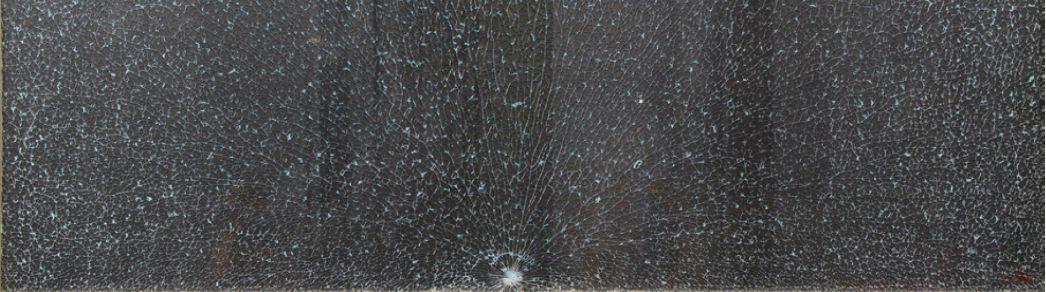
This is the 50-by-50square-millimetre centre region of a 10 mm sample. In the segmentation, border fragments are blue and center fragments are yellow. Border fragments are counted as halves according to the EN 121501 standard.
Tempered glass is produced by the heat treatment process where the glass pane is first heated beyond its transition temperature and then subsequently cooled rapidly to produce a temperature gradient through the thickness. The aim is to freeze the glass when the glass has the correct temperature gradient and then, when the temperature becomes uniform, the residual state is in a parabolic stress profile through the glass thickness. The destructive test and fragmentation due to breakage is the way to define the stress and safety level of tempered glass. Fragmentation shows several things about the stresses, including the stress level and the uniformity of the stresses. The standard EN 12150-1 has defined the punch test where 1,100 by 360-square-millimetre tempered glass is impacted with a pointed tool at the mid-point of the longest edge. From the breakage pattern, the number of the particles in the 50-by-50-square-millimetre area is counted from the minimum fragment count area. The standard defines the minimum number of fragments for different glass thicknesses for the safety of architectural glass. defined as the relationship between the number of fragments and the midplane tensile stress level for different glass thicknesses
between 1.8 and 8.2 millimetres. The counting of fragments is essentially a visual task, where human operators use their brains very efficiently to separate individual shards from the broken glass. For a human, this task seems very easy and it is easy to forget how such a task requires very sophisticated and welldeveloped pattern recognition abilities, which is the very purpose our brains have developed for. The definition to count the number of fragments is simple and shown as an example in standard EN 12150-1. However, while the task may seem easy, it is very laborious and time-consuming. The counting process is also very repetitive and prone to human errors due to lack of concentration and fatigue. Due to that, it possible that counting results may and vary across examiners. Especially when the fragment number is high, the size of fragments is small, and by the human eye it might be difficult to define which are the smallest fragments to count and which fragments are inside the counting area.
In the traditional automated process, a photo of the fragmentation pattern is processed and analyzed with image analyzing tools. There is equipment for automated fragment counting based on image analysis, like CulletScanner from
Fragmentation pattern of 4mm test sample.
Fragmentation pattern of 10mm test sample.
SoftSolution and FROG by Deltamax. Recently, machine learning has revolutionized the field of computer vision, as deep neural networks are able to learn very abstract representations of the underlying data. This gives new tools to analyze fragmentation patterns. However, deep neural networks need a good amount of well-annotated data. This is the timeconsuming part to make a good model for particle counting.
In this paper, the focus is to present a novel way to count the fragments in the tempered glass by using the latest advances in the field of machine learning.
Theory of glass fragmentation
Glass fragmentation after breakage is mainly stress-dependent. In the fragmentation process, the growth of cracks can be divided into two parts. First, the glass needs a high enough stress level for cracks to grow spontaneously. This stress level must be present in the heat strengthened glass when all the cracks should grow to the edge. Second, in the tempered glass, the bifurcation of the cracks is needed for a high fragment count. This bifurcation phenomenon needs a higher induced stress level.
The initial fracture point and external support or force affect the fragmentation of the glass. These things have an influ-
ence on the stress distribution on the crack tips and, due to that, the fragmentation pattern changes. The initial fracture point is defined in the standard. The time after the breakage when the number of the fragments should be counted is set to three to five minutes in the EN 12150- 1 standard. This is important because, after the initial crack propagations, secondary cracks are forming. These secondary cracks are usually perpendicular to the initial crack edges and the number of those is also dependent on the initial stress state.
Fragmentation of thin and thick glasses are similar. However, for thicker glasses, the crack edges are rougher than for thinner glasses. Also, for thick glass, the fracture edge surface can be tilted. The rougher crack edge causes a wider crack line and the tilted crack surface can be seen as a white area due to the highly scattered reflection of the light from the crack surface. These both can affect the counting of fragments.
One approach to fragment count is to define the relationship between the residual stress level of the glass and the fragment count. This is important if the optical stress measurement equipment is used for a quality check of the tempered glasses.
Data
annotation
Modern deep-learning neural networks
rely heavily on the amount of data they can utilize during training. They adjust their internal representation of the problem by iterating over the dataset multiple times. With very sparse data, this leads to a possibly overfitted model that has only learned a very specific set of data. This kind of model is usually unable to generalize to the whole domain of the problem, making it unusable in a wider range of applications. This case is no different. However, in the case of glass fragment segmentation, the dataset is much simpler than, for example, general images gathered from the internet. In glass segmentation, only one class of objects is presented: the fragment itself. The neural network model has to learn how to distinguish between a fragment and nonfragment regions. An example of a widely used, more complex dataset is ImageNet, which contains over 15 million images belonging to roughly 22,000 different categories. The images are collected from the internet and annotated by humans. Modern neural networks have shown human-level performance even on very challenging datasets such as ImageNet.
Data annotation is very time consuming and expensive due to the need for human labour. The amount of data is usually a bottleneck in model performance, especially when applied to a specific task
INNOVATIONS
and no freely available datasets can be utilized. Glass fragmentation is an example of such a problem. For the model to learn how to segment the fragments, it must be shown numerous examples of correct, or ground truth, segmentations.
Subjectivity of fragment counting
The task of fragment counting is very subjective by its nature. It is often not clear which areas of the broken glass can be counted as individual shards and even the standard does not give unambiguous instructions for it. Therefore, the actual person doing the fragmentation test can have a significant effect on the fragment count even when the fragments are counted from the same region. Even more variation is introduced, when the individuals are required to choose the region of least fragments.
The subjective nature of fragment counting was experimentally investigated. The goal of the experiment was to investigate the variation in fragment counts across several human examiners. The test
consisted of two test samples of thicknesses four millimetres and 10 millimetres. Two glass thicknesses were chosen because the fragmentation pattern is very different for thin and thick glass. Thickness has a significant effect on breakage pattern and visual appearance of fragments. In general, it is easier to count fragments from thinner glass. The test was organized as follows.
Two standard-size (1,100 by 360-square millimetre) tempered glass lites with fourmillimetre and 10-millimetre thicknesses were broken. Each individual counted the fragments from two separate 50-by50-millimetre regions: one from the centre of glass and one freely chosen region of least fragments. The coordinates of the freely chosen regions were also reported to compare how each individual finds the least-cullets areas from the glass.
The results show that there is significant variation in fragment counts across human examiners, even when everyone counted fragments from the exact same region. Differences are even greater when the examiner freely chooses the area of least cullets.
For the four-millimetre glass, the count of the AI model was within one standard deviation of the average human count. For 10-millimetre glass, it was slightly further away. However, this does not mean that the AI model is wrong, since the task is highly subjective. The corresponding fragment count of the AI model for the four-millimetre and 10-millimetre samples were 98 and 68, respectively. There are many small fragments that the AI system counted as individual fragments and a human might not. This is especially true in the case of a 10-millimetre sample. In the 10 millimetres sample, the AI system included many small fragments in the final count, which is not wrong but results in a higher number than the average human examiner. One benefit of the automated system is that it is consistent in its decisions and the results do not vary due to tiredness, lack of concentration or other conditions affecting human examiners. •
This paper has been reprinted with permission from GPD Glass Performance Days.
#9 Walton Tower, Chicago Courtesy of Ventana Design-Build Systems
by DAVID HESKA
Conferences and free money
We are full swing into autumn and life is starting to settle into a more typical routine. It’s been six months since the first wave of the pandemic hit and many of us have now returned to a different-looking office or plant facility. This month I thought I would share my thoughts on two trends I have seen, which I’m sure you’ve also observed.
First, let’s talk about virtual conferences. I understand how important conferences are to non-profit associations. Sponsorships keep these organizations afloat and too often the value of these associations is minimized. I also do not want to only throw stones at virtual conferences, especially when I’m speaking at one next month. So, I thought I would highlight some of what I’ve seen virtual conferences can and cannot do. Of course, virtual conferences will appeal to more people, save businesses travel time and money, and, if you are an analytics geek, you’ll love all of the data that the online conference platforms can offer.
But virtual conferences fail to provide the much-needed captive audience that our sales teams long for. Most of the business activity at conferences occurs away from the tradeshow floor at after-hours dinners and networking events. The benefits of in-person networking cannot be downplayed. Have any of you seen an online platform that can provide an effective way of casually, bumping into new and old faces? I didn’t think so.
Online, everything needs to be planned, programmed and scheduled. Have any of you tried to participate in an all day, eight-hour, virtual conference? I tried, but failed. To be honest I’m not sure that it can be done. But when someone gets on an airplane and travels to a
Most of the business activity at conferences occurs away from the tradeshow floor at after-hours dinners and networking events. The benefits of in-person networking cannot be downplayed.
THE ENGINEER
conference, they are committed. With a virtual conference you’re in and out all day. If I was to guess my own level of engagement in virtual conferences I have attended I’d say it’s less than 50 percent. So as soon as our health care professionals give us the green light, I’ll be joining the chorus of people calling for a return to in-person conferences.
The second trend I’ve seen in recent months is the idea of free money. Budgeting is on my mind right now both at work and through my involvement with a non-profit organization. In both spheres, income needs to match or exceed expenses. Sure, there might be a year here or there that’s out of line, but profitability matters and you won’t have a sustainable future without it. I was recently talking to a small business owner about how she is managing the uncertainty of these times. She reminded me of the Canada Emergency Business Account.
Small businesses with payroll less than $1.5 million are eligible for a free $10,000. It’s not worded exactly like that, but that’s what it is. Businesses are eligible for interest-free loans of up to $40,000, and up to $10,000 is eligible for complete forgiveness. Who wouldn’t sign up for that? I’m thankful our federal and provincial governments have dug deep into their pockets to get us through the depths of the pandemic. Now, as we ride this out, our businesses need to turn back on, find new efficiencies and rebuild our vibrant economy.
So, if you get that extra $10,000, invest it wisely. •
David Heska, P.Eng. is a director with WSP’s building sciences team in southwestern Ontario. He oversees the operation of the Hamilton, Kitchener and Windsor offices. David has been involved on window simulation projects as well as the design and replacement of windows in commercial and residential buildings. He can be reached at David.Heska@wsp.com.
GLASSBUILDSHOWCASE
Seen at GlassBuild Connect
Jumbo IG fabrication
forelspa.com
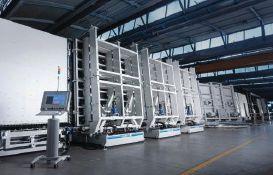
The No Limits IG line by Forel meets all requisites for the ultra-large size and facade markets. Capable of managing the sheet curvatures, weights and stepped units required by the extra-jumbo format, the No Limits IG line goes beyond the restrictions of commercial architecture. It can process extra-jumbo units up to 12 metres in length and 3.3 metres in height with a capacity per linear metre of up to 350 kilograms for
Unmanned IG line
erdmanautomation.com
Fabricators can reduce labour from four to six operators down to less than one and shift labour into areas demanding more critical thinking with Erdman automated IG lines. Fabricators can produce one fiveby-10-foot IG unit per minute (or in 90 seconds with gas fill). The robotic work cell can be run around the clock and produce 1,440 units (non-gas filled) in 24 hours at 100 percent efficiency. Glass shops can save roughly half the floor space of an equivalently productive manual line. Erdman automated lines eliminate direct labour, which means safety because all the heavy lifting is performed by robots. They also produce cleaner IG because of reduced handling.
single panes and 550 kilograms for assembled panes, with thicknesses up to 40 millimetres for a single pane and 100 millimetres for an IG unit. The No Limits IG line can also assemble units with up to three chambers and is able to handle offsets up to 250 millimetres on the upper and lower edge and 1,000 millimetres on the leading and trailing side, thanks to the dynamic support of the coupled panes. Each machine that makes up the line is equipped with devices developed specifically to handle large dimensions, substantial weights and any non-planarity throughout every phase. The line can process both rigid and flexible spacer and the sealing robot can use up to three different sealing products in a continuous sealing mode, offering enhanced productivity.
Self-dressing diamond drills
salemdist.com
The Thunder Cut from Salem Flat Glass and Mirror is a new generation series of stainless-steel body core drills that boasts the advantage of overall cost savings for the fabricator. These premium, highspeed, self-dressing diamond core drills are produced in multiple working lengths for both manual and CNC machinery from a variety of equipment manufacturers. The Thunder Cut series accomplishes superior process speeds. These increased feed rates result in cycle times that are reduced significantly (40 percent), which can equate to a time savings on average of 40 minutes to two hours daily. Additionally, with their specific bond design, the Thunder Cut core drills have achieved three to five times the life expectancy of standard drills, resulting in reduced maintenance and replacement costs.
Four-edge grinding
hhhtempering.com
Craft precision chamfers or remove edges and coatings with ease using this four-edge horizontal glass grinding machine from HHH Tempering. Fabricators can pair it with a horizontal glass washer, loading table and glass cutting machine to create a complete fabrication set-up. Designed for architectural glass, the grinder removes coatings and cleans rectangular glass edges. It includes an intuitive and convenient interface. The machine identifies size, thickness, width and position of the glass and uses an energy-efficient servomotor system.
Automated lamination
lisec.com
The LiSec PlusLam is a semi-automated and affordable lamination line suitable as an entry product. It is a standard line equipped with sophisticated machinery and laminating technology. This semi-automatic laminated glass line is distinguished by its manual interlayer placement and manual interlayer trimming. In combination with an accurate high-pressure autoclave, the PlusLam is suitable for the production of all common composite and laminated safety glass products. A variety of options in combination with the base line can increase the automatization level up to a fully automated lamination line. Depending on requirements, the PlusLam can be configured with a 1-Nip or, as an option, with a 2-Nip press if higher output is required. Operation is designed to be simple, smart and precise.
RESOURCEDIRECTORY
CNC work centre
intermac.com
Master One, Intermac’s new three- or four-axis CNC machining centre for processing glass, executes a wide range of machining operations using the latest technology with no compromises on performance. Featuring a small footprint and ergonomic design, the Master One is suitable for both large companies that require high run-time for multiple shifts and smaller companies that require precision and ease of use. The Master One features maximum acceleration and axis speeds, effectively minimizing wait times and promoting quicker processing times. When it’s enhanced with the optional pressure intensifier, 40 to 60 percent faster processing speeds can be achieved. The Master One is equipped to operate the revolutionary Diamut Helix tool that produces holes in glass, complete with integrated upper and lower countersinks for glass sheets up to ¾-inch thick. The Helix tool accomplishes it all using a single tool that requires no tool change. Like all Master Series machines, Master One is offered with the new Sophia IOT platform for monitoring production, identifying malfunctions and assisting clients with maintenance operations, replacement parts and preventive maintenance.
900
deceuninckna.com
Made from a revolutionary fiber-reinforced polymer (FRP), Innergy Architectural Products from Deceuninck deliver both structural strength and thermal performance – the best properties of aluminum and polyamide – for today’s modern buildings. Moreover, it improves the thermal performance of commercial windows, doors, curtain wall and storefront systems without the need for a complete redesign. Innergy AP parts are customdesigned to fit existing commercial fenestration products and include pressure plates, structural thermal struts, reinforcements, and curtain wall components. The offering builds from Deceuninck’s Innergy Rigid Thermal Reinforcements already used in window and door frame chambers for enhanced energy efficiency. Innergy Architectural Products replace aluminum and polyamide parts with customized fiber-reinforced polymer components that deliver up to 900 times more energy efficiency than aluminum. The material science behind Innergy AP is Deceuninck’s Rovex technology – an advanced composite of continuous glass fibers and polyurethane polymer, which has been commercially available since 2012. The fiber-reinforced polymer has been tested on key performance attributes compared to traditional materials such as aluminum and polyamide.
I’m
by FRANK FULTON
It’s time to call it a day
In looking back, I’ve spent the better part of a lifetime in the glass and architectural metal industry. I was exposed to it at a very early age since my father, Fred Fulton, was one of the pioneers in the insulating glass industry in Canada and would talk about the business when he got home from work in the evenings.
My first full time summer job was at Sealite Glass in 1971 where for the princely sum of $2 per hour I hand-applied the primary butyl tape seal to the aluminum spacer bars that were used to make the insulating glass sealed units. I had visited the factory many times over the years prior to this but it was a thrill to be working there and making money, even though it meant leaving the house at 5:30 am every day and taking four different TTC buses to arrive by 7:00 am. My kids would ask me years later if I was upset about getting ripped off at two bucks an hour, but the bus fare was 15 cents each way and you could buy a chocolate bar or a bottle of pop for a dime, so it’s all relative.
Through most of my school years, I spent summers getting an education in glass fabrication on the insulating glass assembly line; the automated glass cutting line; warehousing and shipping; and trucking. I didn’t care much for the glass cutting since it was pretty boring and dangerous and I would have cut off some toes if it weren’t for the steel toed boots I had to wear. Coincidentally, Ennio Rea worked on the line beside me. That’s where we first met. My favourite job was delivering glass and driving trucks. I particularly liked hoisting skids of glass around with the boom installed on some of the trucks.
planning to write one final You Bet Your Glass column for Glass Canada in December and then call it a day.
I took a few summers away from the glass industry though and had a few memorable jobs, the type you look back on with fond memories but that seemed pretty terrible at the time. In 1976, an uncle got me a job working on the construction of the Alaskan oil pipeline. I worked at a few different camps on the North Slope, all located above the Arctic Circle in the tundra without a tree in sight. It was a real adventure being on my own and so far removed from civilization. The typical work week was 12 hours a day, seven days a week and over the course of my 10 weeks up there, I was making more money than most executives would be making. The downside: it was pretty lonely at times.
The following summer I went out to Edmonton with some friends and got a job as a carnival worker, a “carnie.” The show I worked for was a far cry from what you see at the CNE or Calgary Stampede. Our group would set up at local fairs and rodeos across northern Alberta and Saskatchewan, sometimes in some pretty rough towns, run a bunch of rides, sell greasy food, and take money from the pockets of unsuspecting rubes at the games of chance. We’d then tear it down at the end of their fair and drive on to the next town to set it all up again. The upside to this job was that carnies were highly coveted by a certain female demographic. The downside was that half the guys in these towns we visited wanted to take a piece out of you, and unlike my Alaskan job, I came home at the end of that summer with seven dollars less than when I arrived.
So, why am I telling you all this? I don’t know if it’s the COVID isolation and the resulting minimized amount of human interaction but it seems to me that there’s not a whole lot of interesting stuff going on within our industry right now. Of course, it could just be that I’ve been out of the loop. I’ve only been in the office where I’ve been working a few times this entire year and last time was now over six months ago. I’m feeling like I’m not as connected to the industry as I used to be and I feel that it’s time to let someone else give you their take on what’s going on. So, I’m planning to write one final You Bet Your Glass column for Glass Canada in December and then call it a day. I just thought I’d tell you a bit about myself first. •
Frank Fulton is the president of Fultech Fenestration Consulting, a director with the OGMA, and a former principal in Fulton Windows. fjfulton@gmail.com
High-Performance Curtain Wall at York University’s Schulich School of Business Baird Sampson Neuert architects’ design embraced the client’s goals of promoting innovation, connectivity and collaboration using sustainable design to maximize thermal energy performance and daylighting to reinforce the school’s landmark presence. The solution is not just a product—it’s a collaboration™
Visit obe.com/case-studies to see how our team of technical experts partnered with the glazing contractor to take this project from vision to reality. Let’s solve your next project, together.
Pilkington Energy Advantage™ C
Meets Canadian ENERGY STAR 2020 ER
The new Pilkington Energy Advantage™ C allows for improved passive solar energy efficiency and reduction of thermal transmittance while maintaining the pyrolytic coating benefits of ease of handling and fabrication with a robust and durable surface. The Canadian ENERGY STAR® 2020 specification for residential buildings can be met using Pilkington Energy Advantage™ C in various double glazed and triple glazed IGU configurations.