

Introducing OptiQ™ Ultra Thermal Windows – the smartest window you’ve ever met. The result of a pioneering partnership with the U.S. Department of Energy, OptiQ™ Windows reach a new level in thermal performance due to the groundbreaking features integrated into its design. OptiQ™ Windows are available in multiple configurations offering versatility and options for customization. The only thing smarter than the windows themselves is using them.

Across the country, provinces are taking different approaches to address the decline in the numbers of skilled glaziers. But where is the national solution?
14 Safety gear that talks
RFID technology can make your safety practices easier to document and more effective.
18 Fit and finish
Cut corners and half measures will not wash at Euro Vinyl Windows and Doors.
7 CGA Newsletter
Compliance with federal Not for Profit Act, Member in Good Standing stamps, OGMA Race Night
21 Fenestration Canada
Working hard to keep members up to date.
24 IGMA
Critical changes to glass loading standards are in the works.
17 Fenstration Forum By Brian Burton 22 You Bet Your Glass By Frank Fulton 26 European Scene By John Roper
Stay connected with your colleagues with the Canadian Glass Association’s updated member directory. Pull out our special section for a handy listing of architectural glazing professionals from across the country with complete contact information. With an introduction from CGA president David Langton.
Stay informed with daily news and updates at



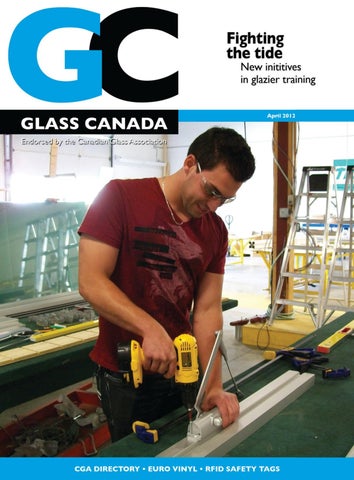
You may have noticed something different on the cover of this issue of Glass Canada: a human being. Don’t be alarmed,
this is all part of a plan to keep your magazine relevant.
Those of you who have received the magazine for a while will know that we traditionally feature some striking piece of glass-intensive Canadian architecture on the cover. We will still be doing that, but we are going to change it up fairly frequently, as well. One reason is simply for variety. Each magazine cover should be a strong statement in itself that causes the reader to stop, look and read about what is inside. We need to find different themes and looks to keep you, the reader, interested and engaged.
Another reason is my feeling that we need to talk about some of the issues and events in the industry as well as the technology and methods. Technical discussions will always be an important part of Glass Canada. But you, dear reader, are already a technical expert in your craft and it would be presumptuous of me to think I have anything to teach you about how to design a building envelope or install a window. It is good to see other people’s installations and read a bit about what they did and how they overcame the challenges posed by the project. But I think it may ultimately be more useful to you to read about regulators’ reactions to falling glass problems, standards in material handling safety or, as in this issue, strategies for relieving the industry labour shortage – areas where you are certainly concerned, but may not be an expert. This magazine’s mission is to help you make money in your business, so I want to be sure the content you are reading is useful and new as well as interesting.
Our shift in cover themes also reflects a broadening of this magazine’s focus. Glass Canada has always been distributed to residential window and door fabricators and contractors as well as commercial architectural glaziers, and we want to make sure we are speaking to all the sectors of the glass industry in Canada. Someone whose main business is making vinyl windows for the replacement residential market (like Euro Vinyl, on page 18) gains little from seeing and reading about a massive skyscraper re-cladding project. I think we can find a good balance of content that is focused on the various sectors of the industry, along with content that is potentially of interest to everyone, as is this issue’s cover story.
Finally, photos with people in them are just innately more interesting to look at. An old editor of mine used to use the example of a beautiful painting of a majestic mountain landscape. The scenery and the colours and the themes could be as beautiful and moving as you like, but if you just add a little hiker down at the base of the mountain, instantly the whole picture becomes about that person. Is it a man or a woman? What is he/she doing there? Will the hiker try to climb the mountain? Our brains are actually wired by evolution to seek out people and focus on other people to the exclusion of much else. As an editor, I might as well take advantage of that to make a more interesting cover. I’d be interested to
Annex Publishing & Printing Inc. P.O. Box 530, Simcoe, Ontario N3Y 4N5
pflannery@annexweb.com 226.931.0545 LABRIE dlabrie@annexweb.com 519.429.5187
mmcanulty@annexweb.com 519.429.5178
tjacobs@annexweb.com 519.429.5183 | 888.599.2228 ext. 219
mmcanulty@annexweb.com
Publication Mail Agreement #40065710. RETURN UNDELIVERABLE CANADIAN ADDRESS TO CIRCULATION DEPARTMENT, P.O. BOX 530, SIMCOE, ON N3Y 4N5
e-mail: jmatheusik@annexweb.com
Printed in Canada, All rights reserved. Editorial material is copyrighted. Permission to reprint may be granted on request. ISSN 0843-7041
e-mail: jmatheusik@annexweb.com Tel: 866.790.6070 ext. 201 Fax: 877.624.1940
Mail: P.O. Box 530, Simcoe, ON N3Y 4N5
Canada - 1 Year $36.75 (includes GST)
($39.55 includes HST/QST) U.S.A. - 1 Year $50.00 (in US dollars)
Occasionally, Glass Canada will mail information on behalf of industry-related groups whose products and services we believe may be of interest to you. If you prefer not to receive this information, please contact our circulation department in any of the four ways listed above.
www.glasscanadamag.com










CRL acquires Columbia



by RICH PORAYKO
Canada needs more glaziers. Most of the problem comes from simple demographics: baby boomers represent a disproportionate percentage of the workforce, and most of them are set to retire within 10 years. This same problem faces every business in every sector (except possibly computer-related fields), but in the trades it is particularly acute. The reason? A long-term, systematic neglect of trades training in educational institutions at every level, in every province. Even in an uncertain economy, the difficulty in recruiting and training ticketed glaziers is a common thread across the country. But in some places, efforts are emerging to combat these trends and prevent skilled glazing from becoming a lost art.
In B.C., the Canadian Occupational Projection System estimates there are currently 2,340 glaziers employed in the province with 90 new jobs being added and 230 workers retiring in the next three years. This works out to an estimated total of 320 new positions being created by 2015. With baby boomers set to start exiting the workforce, B.C. Labour Market Information (BCLMI) studies suggest over the next 10 years, the B.C. glazing industry will require approximately 1,100 new glaziers.
Complicating matters, on Jan. 1, 2011, the Energy Efficiency Act of B.C. was enacted and is enforcing strict requirements for commercial glazing applications. “As the glazing industry grows in responsibility on commercial projects and in the custom residential market, the need for a trained workforce is more important today than ever,” says David Langton, president of the Glazing Contractors Association of BC and partner in Kelowna, B.C.-based Competition Glass. “As tighter building codes reflect the building enclosure as a whole, energy costs continue to rise and so does the need for efficient products, including a workforce that is trained to install these products correctly. The need for an industry that is current in its thinking and practices is now more important than ever before.
“To paraphrase the old saying, ‘Education, education, education,’” Langton adds. “Year after year our membership has provided feedback that training was the number one priority.”
Debra Dotschkat, Glazing Contractors Association of BC director and general manager of Kelowna glazing contractor Glass Canada Inc., agrees. “In 2010, the GCABC board put out a survey to its members to determine the main areas of concern in the industry. What we received back was a resounding call for better education.”
But in the midst of all this demand, programs offering apprenticeship training are few and far between. Thompson Rivers University is no longer training glazing apprentices leaving the Finishing Trades Institute of B.C. as the only Red Seal certified provider in the province. “There is an incredibly limited pool of provider choices and because apprentices can only get through school at a certain rate, there is also only a limited group of trained glazing professionals,” says Zana Gordon, GCABC executive director. “So without another provider, not enough glaziers were being trained. The GCABC saw an opportunity to improve the way the program was being provided to the industry and realized that they needed to take control of their own training.”
“[Increasing the supply of trained glaziers] has been a goal of this association for many years,
LEFT: Apprentice training programs like this one at the Southern Alberta Institute of Technology are creating hope that a new generation of glaziers will be
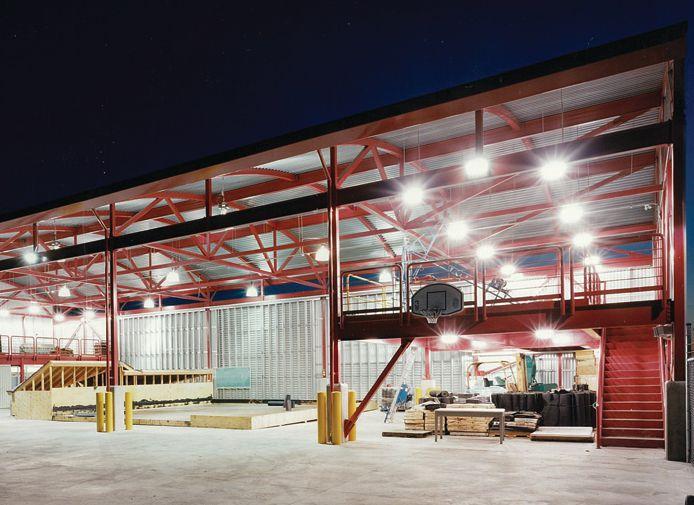

so the GCABC put its wallet where it was most needed and started providing the GCABC Glazing Apprentice Program on Jan. 30, 2012,” Langton reports.
The outline for the program was developed by the National Occupational Analysis; however, the association consulted with the B.C. Construction Industry Training Organization, then broke into groups of subject matter experts who worked with a curriculum writer to help create the learning and instructions resources.
“Experts supplied knowledge, shop
drawings, safety advice, formulas, best practices and time proof reading to make sure all the information was current, accurate and clear,” says Dotschkat. “Hundreds of volunteer hours were put into this project by all involved and every minute was worth it given our final product, to which the GCABC retains all rights.”
“For six months the experts met via telephone conferences and wrote these new student and instructor manuals,” says Langton. “We are very proud of these manuals and know that they are the most
LEFT: The GCABC Glazing Apprentice Program is being
Contractors Association of British Columbia Institute in Langley, B.C. The institute is one of a very few buildings in North America purpose-built for trades training. Photo by Rich Porayko. BELOW: Graduates of the SAIT apprentice glazier program are prepared to challenge the Red Seal exam, making them
anywhere in Canada. Photo by Jill Ramage.
up-to-date training resources for the glazing industry in North America.”
Level One apprentices work on the basics with an emphasis on safety. Successful students receive a first aid certificate, fall protection ticket, rigging and hoisting training and Construction Safety Training Systems ticket. Level Two drills down into detailed drawings and specifications, glass cutting, edge treatment, flashing, fabrication and installation of window and storefront systems. In addition to commercial glazing, Level Two also includes specific training on residential windows, doors, showers, mirrors, solariums and skylights. The Window and Door Manufacturers Association of B.C., in partnership with Home Owners Protection Office, B.C. Hydro’s Power Smart program and the City of Vancouver, is creating a guide on retrofitting replacement windows and doors that will be a mandatory resource for each Level Two apprentice. Level Three apprentices are required to learn and understand the GCABC Glazing Specifications Manual, which includes the requirements and legalities of the B.C. Energy EfficiencyAct and various building codes, bylaws, regulations and manufacturer’s specifications.
In order to write the interprovincial exam to become a Red Seal-certified journeyman glazier, apprentices must have a minimum of 6,400 hours of work experience in the field and three levels (18 weeks total) of in-classroom training. Modules are broken into six-week building blocks with the focus being hands-on learning. “There are only a few small trades that have an inter-provincial Red Seal. It means that no matter where they
are trained, once they complete Level Three and pass their interprovincial Red Seal exam, they are journeyperson glaziers anywhere in Canada. This is unlike other types of ticketed trade certifications,” says Gordon.
The program is being offered at the award-winning Roofing Contractors Association of B.C. facility. The RCABC will administer the widely respected Construction Safety Training Systems course to all apprentices enrolled in the GCABC Apprentice Training Program. Controlled by the B.C. Construction Safety Association, the CSTS equips Level One apprentices with practical skills and proven prevention strategies to stay safe on the job. “It is a web-based program consisting of 15 training modules,” Gordon explains. “The program is designed to provide individual workers with a solid base of knowledge about workplace safety. The emphasis is on workplace hazards and how to avoid them. Participants watch narrated video clips of construction sites and common hazards and
are guided through the correct response in each situation. Web-based training allows participants to learn at their own pace and to test their knowledge through interactive questions and scenarios. The course is very comprehensive and covers personal protective equipment, workplace hazards, WHMIS, fall protection, ladders and scaffolds, environmental conditions, the law and defensive driving. There is no one else offering this to glazing apprentices.
“The apprenticeship program is about the industry and ensuring that we have safe, qualified, trained, skilled workers in the field,” Gordon continues. “Any training program can only be as good as the industry that is involved in it. I am very impressed with the level of support from the association membership. This group of owners has recognized the need to invest in their industry and their future. We recognized the group of subject matter experts as Volunteers of the Year at our annual general meeting on Dec. 6, 2011. I could not have done all this
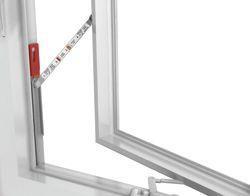
Safety and security are of utmost importance for homeowners, especially those with small children. Truth Hardware has developed an engineered solution which meets ASTM F2090-10, the new industry guideline enacted to address the issues of accidental falls and egress opening.
SafeGard™ meets the following ASTM F2090-10 guidelines:
without their input and support. The staff at RCABC has been extraordinary in their assistance and advice.”
“The launch of the Glazing Apprentice Program is the fulfilment of an exciting new step for the GCABC and the glazing industry as our Level One students attend our new school with an amazing curriculum to learn,” says Dotschkat. “This has been an exciting process for all involved and we cannot wait to see our first Red Seal journeypersons complete this new program and welcome them into our industry. Thank you to all involved from the board, SMEs, members and our executive officer for going above and beyond to make this a reality.”
According to a forecast by the Construction Sector Council, the demand for glaziers in Alberta is going to rise 22 per cent over current levels by 2019. Ten years ago, the Glass Trades Association and the
Continued on page 16

RFID tags can be linked to a web portal that offers manuals, inspection checklists, training records, industry regulations, product advisories and other useful tools. Users can increase safety, prove compliance and save time. (Photo courtesy of Capital Safety)

Radio frequency identification technology has existed for years, and though most have heard of it, there is still a great deal of confusion about how the technology is used in conjunction with fall protection equipment.
RFID improves efficiency when tracking and logging safety equipment. It also streamlines and standardizes the process. Recent estimates show that companies employing RFID technology can achieve between 35 and 50 per cent improvement in time-savings when using RFID over a pencil-and-paper recording system. RFID tracking systems facilitate tracking of safety equipment and management of safety inspection programs, including electronic inspection records rather than handwritten notes, thereby promoting the safety of workers who use the equipment.
does
RFID technology uses radio waves to transmit data from identification tags on a piece of equipment to a handheld device for the purpose of automatic identification and tracking. An RFID tag or marker is attached to a piece of
equipment, giving that item a unique identifier.
A handheld transceiver communicates with a tag’s built-in antenna, enabling it to read the code using radio waves before storing the information in a database. This allows the device’s user to easily see where pieces of fall protection equipment are located in real time, and what working condition they are in.
Most RFID tags used in conjunction with fall protection equipment are classified as passive, meaning they require no battery and are powered only by the radio waves used to read them. To activate the tag, a handheld reader is simply held near the RFID tag, which is most often embedded within the tracked object itself.
There are three main frequencies that RFID systems use: low, high, and ultrahigh. Generally speaking, a higher frequency means faster data transfer and a longer read range. However, higher frequencies are also more sensitive to interference from environmental factors, such as metal and liquid. Each frequency has its advantages and disadvantages, and no single frequency is ideal for all situations.
The history of RFID
RFID technology has been around since the 1970s when it was used to track larger assets, such as nuclear missiles, shipping containers, and even cows. These original tags were large and bulky, made of metal coils, antennae and glass. Over time, the technology was commercialized, making it more affordable for everyday use. In the 1990s, RFID evolved from being just a mobile database into a network tool by adding the ability to link objects to the Internet through the tag.
Today, the application of RFID technology has expanded to nearly every market. RFID can be found in everything from automated toll collection systems to building access control to management of safety equipment (which we will discuss in more depth below). Some say RFID applications are limited only by people’s imaginations.
Most importantly, RFID systems improve worker safety. Tracking and reporting is an often-overlooked aspect of fall protection, but ensuring that equipment is regularly checked and approved for use is critical to worker safety. RFID ensures that the equipment each worker receives is compliant with all applicable safety standards and regulations and has been inspected on schedule.
Another benefit of using an RFID system is on-site material asset management. A typical RFID technology system for fall protection equipment comprises RFID tags, PDA readers and a web portal. Each RFID tag is programmed with a unique ID that registers the model type and history of the equipment it is linked to. The passive tag transmits a variety of coded information to the PDA, which displays the product make and model and inspection records, in addition to jobsite and worker assignment. This data is linked to a personalized web portal that can provide further information, including user manuals, inspection checklists, training records, industry regulations, product advisories and other useful tools. By tracking use and status, inventory management is greatly improved, ensuring that required equipment is available when and where it is needed.
RFID also aids in the management of safety inspection data. By electronically storing information, inspection records usually filed away can be provided at a moment’s notice when inspections occur. Since there is no downtime while managers search for records, no working time is lost and productivity remains high.
Not only does RFID technology simplify the process of tracking and checking inventory, but it also saves companies time, money and stress.
Many fall protection manufacturers are embracing the RFID trend and a great deal of
equipment now comes embedded with an RFID chip as a standard feature. This is something to consider when investigating and purchasing fall protection equipment – is the equipment ready to be used with an RFID system immediately? As mentioned earlier, fall protection equipment embedded with RFID technology makes managing a safety program easier and more cost-effective.
If a piece of fall protection equipment does not have an embedded RFID tag, and was produced before this technology was available, retrofitting kits can help. Retrofitting kits are widely available for all types of equipment, regardless of brand, to extend the benefits of RFID technology to an existing inventory. To start electronic record keeping with a retrofitting kit, the tag is simply attached to the piece of equipment and the user is prompted to enter the model number, make and date of manufacture.
At the click of a mouse, RFID technology enables equipment tracking, equipment compliance and, most importantly, worker safety. With all the benefits RFID provides, it’s no wonder most fall protection manufacturers are choosing to embed RFID tags in standard equipment and develop their own RFID safety systems. Once companies start using RFID systems for fall protection equipment, it’s hard to imagine going

Shari Kowalke is the I-Safe sales specialist with Capital Safety. She can be reached at skowalke@capitalsafety.com. Capital Safety is a leading designer and manufacturer of height safety and fall protection equipment under the DBISALA, Protecta and Uniline brands. Capital Safety offers fall protection and rescue systems, as well as training courses. For more information, contact Capital Safety at 800-328-6146 or visit www. capitalsafety.com
Southern Alberta Institute of Technology saw big problems on the horizon with only 56 registered glazier apprentices in the whole province. These groups pulled together construction companies, glazing contractors, window fabricators and other stakeholders from academia and government to launch a new glazing apprenticeship program in Calgary with instructors Ed Dalzell, Brian Risbey and Gene Aquilini. The success of that program led to its expansion to SAIT’s Edmonton campus and a full-time glazing instructor there, Craig Stafford. In June of last year, the Edmonton campus celebrated its first graduating class of 16. The graduates are now qualified to challenge the Red Seal exam, and the SAIT programs have brought the number of registered apprentices in Alberta up to 350. Jim Brady, co-owner of Desa Glass and past-president of the Glass and Architectural Metals Association, says, “The trade takes care of us, so we take care of the trade.”
In 2008, the Ontario Ministry of Train-
ing, Colleges and Universities commissioned a report by Tim Armstrong, a former deputy minister in the Ontario government, to investigate the impact of expanding compulsory certification of trades in the province. Armstrong determined that the benefits of such an approach would outweigh the drawbacks, saying in his report, “I have concluded that there is a strong probability that registration and completion rates in compulsory trades are and will remain greater than those in the voluntary trades. Accordingly, the resulting overall increase in health and safety training should result in better health and safety performance in compulsory than in voluntary trades,” and “There is a lack of hard evidence as to whether consumers have greater protection when trades are made compulsory. Instinct, supported by experiential evidence from a number of stakeholders, supports the inference that the tendency will be for enhanced consumer protection if work is performed by a compulsorily-certified tradesperson. As to economic impact, compulsory certification is likely to lead to higher wages within the affected trade. However, the
net cost to employers is almost certain to be lessened when certain offsetting items are factored in: productivity gains, retention benefits, reduced risk of skill shortages and improved health and safety performance, leading to lower WSIB premium costs.” All this led Armstrong to recommend the creation of a College of Trades for Ontario with broad authority to regulate and certify tradesmen.


NEW PREMIUM N-SERIES VACUUM CUP features a new, low-marking pad, durable one-piece cast handle, long-lasting powder coat finish plus all the advantages of our original metal hand cups
NEW EAZI LIFTER WINDOW CRANE makes light work of challenging window installations
NEW VACUUM PAD FOR COATED SURFACES designed to handle Low-E glass directly on the coated side without leaving permanent marks
Request your new product brochure today. Visit www.powrgrip.com or call 800.548.7341 .




Following another report by the chair of the Ontario Labour Relations Board, the Ontario College of Trades was created by the Ontario College of Trades and Apprenticeship in 2009. Under the Act, the College is empowered to issue licences and certificates of membership, protect the public interest through investigation and discipline mechanisms, set standards for training and certification, conduct research and collect relevant data to support future apprenticeship and certification policies, and remove barriers and increasing access for internationally trained workers. Since that time, the College has been set up with an organizational structure and elected an eclectic board of governors consisting of people from all walks of life. Union leaders, small business owners, public servants, working tradespeople, CEOs of large corporations – the Ontario College of Trades board is a real cross-section of Ontario’s working population. It is chaired by Ronald Johnson, a former MPP and deputy director of the Interior Systems Contractors Association of Ontario.
The College is divided into four sectors: construction, industrial, motive power and services. Architectural Glass and Metal Technician is a non-compulsory designation under the construction sector. Its five board members, appointed on Feb. 15, are Steve Laird, Marc-Andre Leclair, John Rempel, John Bastedo, Greg Bracken and Anthony Menecola. One of the first jobs of this group will be to review the existing journeyperson-toapprentice ratios in the trade and make recommendations to either maintain the status quo or change them. These reviews are scheduled to begin in the fall of 2012, and industry stakeholders can make written submissions for the panel’s consideration.
Governments, associations and educational institutions across the country are slowly stirring in response to the labour crisis facing the trades. We can only hope it is not too late to prevent a permanent loss of knowledge and ability in Canada’s

Brian Burton is the author of Building Science Forum and is serving on CSA’s Fenestration Installation Technician Certification Committee. Brian is a research and development specialist for Exp (The new identity of Trow Associates). He can be reached at brian.burton@exp. com or through www. exp.com.
Acompound variable also presents itself when designers begin using new materials and systems, or start using traditional materials in new ways. A case in point would be the increasing popularity of using glass for non-structural infill for balcony guardrail systems in residential highrises. In the past, these systems typically employed metal pickets or plates, pre-cast concrete, masonry, or combinations of these materials, which were fully supported by various means to the top of the balcony slab. Over the past 15 years designers gradually began to incorporate glass into their guardrail designs, as glass offers an esthetically pleasing appearance and provides for more outdoor light into the living space. Because of recent changes in how the glass panels are mounted and supported, the glass often falls from the guardrail assembly to other balconies and the street below when it breaks. These design changes have led to increased reports of balcony guardrail failures in the past year, most of which were primarily related to material failures. The majority of these failures involved breaking glass infill panels in residential buildings in downtown Toronto. In the past, breakage of this type was not usually an issue because the glazing infill was smaller, mounted inboard of the edge of the slab, captured on all edges and therefore rarely resulting in glass falling from the building.
These recent failures have attracted a considerable amount of attention from the media, regulatory authorities and the architectural and engineering communities. Engineers involved with the subsequent investigations uncovered a number of fundamental issues associated with the design of glass balustrades and infill panels.
There is a lack of substantive guidance regarding the design and use of guardrail systems. There is no applicable reference standard.
The first of these is the lack of substantive guidance regarding the design and use of guardrail systems, aside from the information given in the building code. There is no applicable reference standard.
Investigating engineers have found that designers follow different design protocols to determine structural loads for guardrails. No data relating to actual wind loads acting on these systems is currently available. There are legitimate arguments that involve interpretation of the building code, and clarification is required as to whether guard loads and wind loads should be determined independently or simultaneously.
There is no specific guidance given in the existing codes and standards regarding the use of tempered and laminated safety glass for use in guardrails. Neither is there mandated guidance regarding post-breakage retention for glass infill or balustrades. There are no mandated test procedures to evaluate guardrail systems for guard load, wind load and impact testing, and there is only limited guidance regarding the materials and design of balcony guardrail assemblies.
The various professionals involved in the investigations of these incidents quickly concluded that development of a formal guardrail standard was required to ensure adequate quality control and safety. As a result, the Canadian Standards Association has been asked to proceed with development of a standard for balcony guard assemblies after consultation with various stakeholders. This process would involve bringing the appropriate industry representatives and authorities and engineering experts together as a technical committee to develop a reference standard that could then be adopted into existing building codes. The finished standard is expected to provide an introduction discussing applicability, specification guidance, performance parameters and a list of terminology; a list of referenced publications (for instance, ASTM Standards) for materials and testing; definitions providing for loads (guard and wind), assembly types and applications; general requirements for specific applications, assembly types and loading requirements; test requirements including sequence, specimen sizes, details and methodologies; materials requirements setting out prescriptive requirements for the guardrail system components and component
craftsmanship has permeated the whole company.
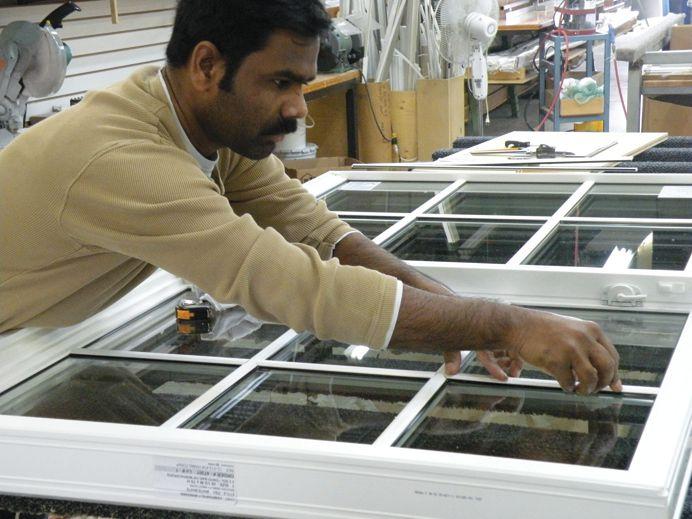
In a martial arts fight, a single wrong step can open you up to a devastating attack from your opponent. This is a principle Christopher Meiorin, president of Euro Vinyl and Muay Thai enthusiast, seems to have taken to heart while building his Woodbridge, Ont.based window and door fabrication enterprise. Attention to detail and commitment to professionalism are everywhere you look both in the front office and the shop floor. Little is left to chance, from the marketing and branding effort through the order-taking and production process right down to the décor on the shop floor. Meiorin is a serious man, and when he says he wants to have the highest quality product in the business, competitors should take him very seriously indeed.
Euro Vinyl produces casement, awning, fixed, hung, slider and tilt-turn vinyl window systems as well as tiltturn doors and, now, patio doors at its 20,000-square-foot facility just north of Toronto. It uses Rehau systems exclusively. The company employs 30 at peak times. Key machinery on the shop floor
includes four-point welders at both the casement and slider/hung stations, a CNC seam weld cleaner and an automated saw centre. On the shop floor, everything is clean and well lit. Walking lanes are clearly marked and steel railings protect the area where people work from the areas where material is being transported. Meiorin has hung banners with the Euro Vinyl logo and its slogan, “It starts inside,” around the shop to integrate the workspace with overall corporate culture and create a more attractive space for visiting clients. The tooling and fixtures for the welders and saw centre are stored lovingly in padded trays on moveable carts. “If I came back here and found one of these fixtures on the floor, someone would have a problem,” Meiorin growls. The front office and show room have recently been redecorated with a modern look.
Meiorin takes a lot of pride in his management team. Theo Neequaye joined the company as a glazier in 1995 and has risen through the company to become operations manager. He handles orders and accounts. Mario Canario was
Location: Employees: Established:
Owner: Website:
a 28-year veteran of Repla Windows and Doors before Meiorin lured him away in 2003 to become his production manager. Canario was a key piece to the puzzle when Meiorin’s partners activated their shotgun clause, because Meiorin was unwilling to buy the company with experienced production help on the floor. When Canario agreed to join the team, Meiorin felt confident that he could go ahead with the purchase.
Vinyl grow. His new sales manager, Laura Weil, has brought a raft of new ideas to the organization and the whole company has a feeling BELOW
manoeuvring around piles of work-in-progress here. Walking lanes are clearly marked and protected with solid barriers.
The latest addition to the team is the new sales manager Laura Weil. Weil had been selling window and door systems in southern Ontario for 12 years and her name kept coming up every time Meiorin asked about good sales representatives, but he had never met her. Finally, they bumped into each other at the Windoor show and set up a meeting. That one-hour meeting turned into a six-hour strategy session and very soon after, Weil was working at Euro Vinyl. She has only been with the company for a year, but already had a huge impact on the corporate image and marketing approach. She has spearheaded the implementation of Euro Vinyl’s new Customer Relationship Management software system from Solve 360, implemented the online quoting software from WTS Paradigm and overhauled the company’s meetings with its dealer clients. On hiring Weil, Meiorin says, “It was a big commitment on my part because she said ‘Here is what I can do for you as a company but what I need from you as an owner is a commitment to the strategies.’ It wasn’t like we were hiring her and said, ‘OK, here is three weeks training, get out there and sell windows.’ There isn’t a day when I am not held up to my word.”
Euro Vinyl’s market is high-end residential replacement in southern Ontario. Its channel is a network of window and door dealers, but Meiorin does not leave all the marketing efforts up to them. “We try to find that balance between marketing ourselves to the dealer but also providing that dealer with enough information for them to go into a customer’s home and effectively, professionally sell windows,” Meiorin says. To that end, Euro Vinyl works with a marketing agency called Raining Creative to generate slick print and digital communications.
Meiorin chooses his dealers carefully and build strong relationships with them. Because he produces a high-end, value-
added product, he looks for dealers that concentrate on selling into this kind of market. Meiorin does not want to be just another option in his dealer’s catalogue. “We are looking for the dealer that can go to market and really, truly sell valueadded,” he says. “Working through Al’s Bargain Basement is not all that successful because it is very rare that they can upsell.” While Meiorin acknowledges that many of his dealers have lowerpriced products they can fall back on when cost is driving the sale, he always wants Euro Vinyl to be the dealer’s first position.
Golf clubhouses have been a lucrative sideline for Euro Vinyl. Meiroin handles

When a man takes glamour shots of his equipment, you know he is a fan of good workmanship.
these sales personally, even though he doesn’t golf. He has leveraged a relationship with an architect into clubhouse projects all over Ontario and into the U.S. as far south as North Carolina. Euro Vinyl’s Rehau systems are uniquely suited to clubhouses. “They are basically made to look like really big houses,” Meiorin explains, “but they have to perform at a commercial level. So the idea is you have to supply a product that fits into a residential look and feel but can meet a commercial standard.” He says these projects are fun, but they have dropped off lately. Most new golf courses in the U.S. are built as part of a subdivision development. The developer builds a golf course and clubhouse at cost, and finances the project by selling the hundreds of residential lots around it. With the housing crash and subsequent recession in the U.S., new developments have dropped off so precipitously that Meiorin has not seen much of this work lately.
Meiorin’s choice to operate in the high end of the market flows from his own personality. “It is really, truly where

I feel most comfortable,” he says. “When I go out back and the guys are working on a large job and it incorporates a lot of subdivided lites that you know are finicky and look horrible if not done properly, I like that. I like seeing a really nice product and knowing that we made it. It is just a sense of pride. I know some might get a sense of pride strictly from the numbers, like today we reached a benchmark of 500 windows. But I like going back and saying ‘This is just beautiful. We are making some really, really nice product here.’”
In the ring, tailoring the right strategy to defeat your opponent is often the key to victory. This is another principle Meiorin understands well and has applied to his business. Euro Vinyl has a number of specific, thought-out strategies for success that it deploys consistently across the organization. Most of these are centred around relationships – finding them, building them and protecting them as the company evolves. Probably the most important of these is Euro Vinyl’s relationship with its dealer
network. Meiorin has always placed a high priority on choosing the right dealer partners, visiting them frequently and getting them together regularly to educate them about Euro Vinyl and to collect their feedback. In the past, this took the form of an informal conference held every three or four years with just 15 or 20 key dealers. Under Weil’s influence, these sporadic meetings are being turned into an annual Dealer Day, bringing together a number of company resources to produce a larger, more organized event. Guest lists, invitations, registrations and updates are being handled through the company’s Constant Contact social media marketing software. The last event had 60 guests instead of 20. Weil and Raining Creative made attractive, effective communications material for the event. And one of Euro Vinyl’s other key partners, Rehau, the German polymer giant, played a key role by offering its academy in Burlington, Ont., to host the event. The Rehau academy is one of several around the world. They are state-of-the-art training and conference centres for Rehau’s partners in its various business sectors. Euro Vinyl’s long-

standing relationship with Rehau gave it an opportunity to host its dealer event in a truly impressive setting. While the last Dealer Day in February was a larger and more elaborate event, Meiorin finds it a challenge to accommodate both the new dealers who need to be introduced to Euro Vinyl and his old friends who have been working with the company for 15 or 20 years. He admits he missed the intimacy of his older functions where dealers would sit in small groups and give him valuable feedback on the company and its products, and he plans to work to bring elements of that back to future Dealer Days.
Another critical strategic approach for Meiorin is his very tight relationship with key suppliers. The first and most important of these is Rehau. Euro Vinyl uses Rehau vinyl systems exclusively and touts the advanced manufacturing technology at Rehau’s Winnipeg extrusion plant as a key component of its success. For the rest of its window components, Euro Vinyl relies on Cardinal insulating glass and Truth hardware. Meiorin admits none of these are the lowest cost suppliers, but their commitment to quality mirrors his own. Weil has brought WTS Paradigm, a business management and manufacturing systems provider, into the fold. And all the major capital machinery on the Euro Vinyl floor is supplied by Urban. Canario suggested using Urban machinery when he started with Euro Vinyl, and now Meiorin is completely convinced it is the best manufacturer of vinyl window fabrication machinery in the world. When he gets talking about his Urban equipment, Meiorin is like a kid with a new toy. “I love the investment we made in tooling,” he says. “I’ll show you some of it and it is like an artifact. I photographed some of it as an art form. I was out back at the new saw centre and I just started goofing around with the camera.” When a man takes glamour shots of his equipment, you know he appreciates good workmanship. Meiorin probably inherited that quality from his father, Peter Meiorin. Meiroin’s father ran the terrazzo and marble company his grandfather started in Toronto, Sandrin Precast. So Meiorin grew up around the construction trades. He was working for a builder called Great Gulf Homes in 1986 that built its own windows and needed someone to take

Yvan Houle is president of Fenestration Canada. Fenestration Canada’s mission is to represent and support all aspects of the window and door manufacturing industry.
Preparations are moving along well for the 2012 Annual General Meeting. The event is scheduled for June 6 to 9 at the Fairmont Chateau Montebello. In this most spectacular Quebec setting, we plan to have some great networking opportunities and social events, along with a significant business program featuring topical speakers on timely subjects.
The Fenestration Canada committees continue to work hard in support of the association’s agenda. They focus on such key issues as the Win-door show, membership and marketing, education, technical issues and government relations. Sometimes the committees work independently within their mandated areas and sometimes they work collectively to address critical issues. Most recently, experts in technical issues, government relations and the education group worked together to create a training presentation designed to provide unbiased information to educate building code officials and related groups on specification issues related to fenestration products. This presentation has three sections, the first of which covers the National Building Code 2010. Included in this component is an overview of the code sections concerning windows, doors and skylights with reference to the North American Fenestration Standard and what is covered under the NBC. Section two discusses what NAFS is, how it is different from the Canadian Standards Association standard, the new performance ratings, the Canadian supplement to NAFS and what the new labelling requirements are. A third section discusses how the performance requirements for fenestration products are determined, including design pressure and Canadian water-resistance requirements.
This presentation will be made available to FC members and will be modified for various target audiences. The plan is to review it at the Montebello meeting, with the objective of creating a webinar series designed to help demystify the standard and to educate specification writers, builders/contractors and building code officials, guiding them toward a performance-based approach versus a material-specific, prescriptive approach to specification. The areas that will be covered include window installations (with subsections on meeting current codes and meeting new code amendments), energy codes and performance-based approaches to specifications. The idea is to offer a series of webinars to interested groups in the fall of 2012.
After delivering a well-received program at last year’s Banff meeting and a well-attended series of webinars in fall 2011, the Education Committee worked with the Win-door Committee to present a topical series of standing-room-only presentations at the Education Pavilion during the November show. The Education Committee has already identified a number of interesting topics as potential program subjects for Montebello. These include health and safety regulations, FITT training and green products, including an overview of green labelling and green certification product requirements. An economic presentation by CMHC or the Conference Board of Canada is being considered, as are talks about doing business on the Internet and via social networking. It has also been suggested that an overview of the work that was done in the province of Quebec on behalf of Hydro Quebec to inform distributors of upcoming changes to energy/ building codes should be considered.
Along with content for meetings, the Education Committee is considering a number of other projects to provide value to our members. Among the subjects being considered are developing Building Code officials training on the CNBC 2010 and NAFS-08 with the objective of standardizing the interpretation of fenestration product requirements in their inspections. This information could be provided through the Internet and/or the production of an official reference document in booklet or brochure format.
One final note, the 2013 Annual General Meeting will be held in St. John’s, N.L., at the

Frank Fulton is president of Fultech Fenestration Consulting. He has been in the industry for 30 years and can be reached via e-mail at fultech.fc@gmail.com.
During his tenure at the Calgary Construction Association, Don Ward was involved the Standard Practices Committee that dealt with contract issues including promoting the use of complete drawings and specifications prior to tender call. “I was a vocal member on the Task Force Committee that lobbied the provincial government to reduce the statutory holdback on the Alberta Standard subcontract document from 15 per cent to 10 per cent, thereby giving us all an extra five per cent on each progress payment! This was, needless to say, not an easy task to complete but we did win the day and accomplished our objective to the benefit of all trade contractors.”
Being a strong believer in fairness in bidding, Ward was involved for many years with the Alberta Bid Depository where he served as vice-chairman from 1984 to 1987 and chairman from 1987 to 1990. Ward became the initial chairman of the board of the Alberta Construction Tendering System when it came into effect in 1991.
Ward was also a member of the Alberta Construction Association’s Executive Committee for three years. This association deals primarily with the provincial government, conducting advocacy and public relations on all provincial construction matters of interest to all trades and contractors.
In 1992, as if he didn’t have enough volunteer positions to keep him busy, Ward accepted a position on the board of directors of the Canadian Construction Association. Ward says, “I spent 10 years on that board where I was heavily involved in the Standard Practices Committee dealing with contract document issues, tendering practices and the promotion of construction industry
His belief in a fair, transparent and equitable bid system was unwavering. The industry needs his leadership once again.
standard documents. I was also an active member on the Standard Practices Steering Group. I spent much time revising wording and conditions on CCA and Canadian Construction Documents Committee documents where I took great care to ensure that all sectors of the construction industry, not just trade contractors, were protected and treated fairly.”
During this 10-year stretch with this CCA, Ward also served a three-year term as the chairman of the Trade Contractor’s Council after serving two years as vice-chair.
Ward’s contributions to the industry are legendary and he has received a number of welldeserved awards of recognition, including the Ted Walden award “in recognition and appreciation of outstanding contributions, achievements and dedication to the objectives of the Calgary Construction Association,” as well as their Person of the Year award “in appreciation for outstanding service.” He was also awarded the Ernest Dobbelsteyn Memorial Trophy “for outstanding contributions made to the Canadian Construction Association’s Trade Contractor’s Council and Canada’s Construction Industry.” The Glass and Architectural Metals Association bestowed an honorary lifetime membership in 2001.
Dave Smith, executive vice-president of the Calgary Construction Association, says, “Don as CCA president led by example as he chaired the newly formed Alberta Construction Tendering System, formerly known as the Alberta Bid Depository. His belief in a fair, transparent and equitable bid system was unwavering. The industry needs his leadership once again to establish ethical business practices that will be embraced by contractors from coast to coast.”
Don Ward retired from Griffin Glass in September 2003. He had a small saying posted in his office at that read:
“There are three types of people: Those that make things happen, Those that watch things happen, and Those that wonder what happened.
its overflow work. So they approached Meiorin’s father. He helped Meiorin to set up shop with two partners. They called the company Euro Vinyl because they were making European-style tilt-turn vinyl windows, which were very new in the market at the time. Meiroin bought out his partners in 2003.
Meiorin says that at the age of 49 with his two daughters growing up he has found a new urgency to focus on the business and drive growth aggressively. He plans to work with his dealers to find ways to help them expand their reach into new markets. He recently read Four Seasons: The Story of a Business Philosophy by Isadore Sharp and found inspiration in the hotel owner’s ideas of how to build a world-beating brand. “A lot of his expansion came in down markets,” Meiorin says, “so when the other hotels were squeezing the numbers and laying off staff he was out expanding. He was out buying properties because he could get them for less. In order to do that, you

Meiorin is proud of his worker-retention record. Several people on acquired skill and experience is one reason why Euro Vinyl is able to hold its market position on quality.
Discipline, respect for craftsmanship and a sharp eye for strong ideas – if these qualities have any value, Euro Vinyl Continued from page 20
have to have pockets. Now we don’t have bottomless pockets, but I work really hard and, well, I don’t drive a Ferrari for a reason. I really believe that when I buy a piece of equipment I like to write a cheque and say, ‘Thank you very much.’ So we are able to bring on the Lauras and implement some of these ideas and

strategies at a time when a lot of other companies really have their heads in the sand. They are waiting for the economy to turn around.”


Bill Lingnell has over 46 years of experience in the technical field of glass and architectural products. He holds three Masters of Science degrees in engineering: civil, mechanical and engineering science. Lingnell is the technical consultant for the Insulating Glass Manufacturers Alliance.
The past two articles focused on the history and updating of the ASTM Standard E-1300 “Standard Practice for Determining Load Resistance of Glass in Buildings,” which basically brought us up to date on where the current version ASTM E 1300-09a sits. This January, a special task group meeting was held in New Orleans to craft much of the future events and potential modifications for the standard. Active committee members from the United States and Canada attended this meeting in an effort to evaluate and present the items that will be balloted through the ASTM process. The resulting ballot seeks to update, add to and enhance the procedures and methods that have been requested by the architects, specifiers, designers, engineers, and contractors that use the standard, and the code groups that reference the standard.
The ballot that is presently being reviewed and voted on by members of the ASTM E 06 sub- and main committees has a number of additions that enhance the standard. For example, the upper load limit has been increased from 10 to 15 kilopascals for coverage in the standard for uniform load conditions. The existing non-factored load charts have been revised with new charts to provide load lines for the increase in the load condition. An addition of a non-factored load chart and deflection chart for 25-millimetre glass will now be incorporated into the standard. These additions will aid in the usefulness of the standard for expanded load capacity and thickness capabilities.
The appendix of an ASTM standard is nonmandatory however, it may end up being a valuable tool for users of the standard.
Glass type factors for wired, patterned, etched, and sandblasted glass have been incorporated into a table for monolithic or laminated glass. A special note that excludes drilled, notched and grooved glass, or glass with surface and edge treatments that alter the glass strength, is also incorporated in the revised standard.
The ballot will also incorporate a new appendix that has the potential to be a major improvement to the standard. The appendix is titled “Method for Determining the Load Resistance of Heat-Treated Glass.” This will be an alternative method of calculating the load resistance of heat-treated glass for a three-second load duration using a heat-strengthened type factor when considering heat-strengthened glass, or a fully tempered type factor when considering fully tempered glass. The procedures for determining the load resistance will be similar to the methodology presently used for annealed glass, except special equations have been derived to accommodate the surface compression stress for the heat-strengthened glass and fully tempered glass. There are non-factored load charts for four-sided support conditions using a three-second load duration for a probability of breakage of eight lites per 1,000 for heat-strengthened glass and a set of charts for fully tempered glass also. The residual compression stress in the surfaces of the heat-treated glass from the heatstrengthening or tempering process is part of the equation that will give the user the appropriate type factor to use with the charts in determining the load resistance. The appendix of an ASTM standard is a non-mandatory portion of a standard; however, it is anticipated that this may end up being a valuable tool for users of the standard.
The main committee will meet in April in Phoenix to discuss the results of the





John Roper is the editor for The Installer, The Fabricator, The Conservatory Installer and Glass Works magazine published in the U.K.
Currently in the United Kingdom we do not have a window trade exhibition. Glassex, which began in 1982, was shut down after a failed attempt to merge with Interbuild, the general building exhibition. That suffered the same fate a year later. There was a very good reason for this: nobody came. The same thing happened to a series of brave little regional shows.
Well, that is not entirely true. Of course, people visited, but not in sufficient numbers and not the right people. Glassex in the beginning was an artisan’s event. The people who came made and installed windows. No frills, that was what they did and often they looked like they had just come off a jobsite. When Emap (a British publisher) bought the show in 1986 or thereabouts, it quickly became apparent that they did not take seriously people who were not wearing suits and did not look just like they did. They stopped all of that nonsense – no kids, no buggies, no dogs. (Actually dogs were never allowed, but the exhibition manager got the job of looking after them.) That meant no wives and, therefore, very soon, no window installers. At least not the small ones: the one-man-band companies, the core of the industry at the time, the guys who carried cash. What you ended up with was the suit-wearing marketing men, salesmen and journalists: people who did not spend money on the equipment on offer.
So now somebody is launching the Fabricator and Installer Trade Show – FIT for short. And my question is, “Why, even now, perhaps especially now, would anybody go?”
For me, these days, exhibitions defy logic. Back when communication was either difficult
or expensive we needed them. Manufacturers used them to launch new products. It was a good place to keep up to date and catch up with colleagues.
But now? New products are on the website. Want to catch up? Tweet me, find me on Facebook or LinkedIn. Why drive 200 miles to be bullied by car park attendants and humiliated by security men just to grab a seriously overpriced cup of coffee?
The organizers claim they will take a fresh approach to the event appropriate to the industry of the 21st century, offering ideas and working solutions designed to work in the real world. Additionally, The FIT Show has been “tailored to the needs of exhibitors and visitors following industry research.” Which strikes me as typical marketing-speak. It does not actually say how they will do this. And note: visitors come second.
Here is the same problem about to repeat itself. The organizers of FIT claim it will be different. They are ignoring what happened before and the reasons the established exhibitions failed. They are also ignoring all of the other ways we can communicate these days.
There is an exhibition in the U.K. that is successful. EcoBuild is attracting all kinds of exhibitors who want to push their environmental credentials even if, as in some cases, they don’t have any. This year will be its third manifestation but the visitor problem persists for window companies. Unless you want to see architects and journalists, you are, frankly, wasting your money.
In both cases people are not looking at the facts. EcoBuild, a fabulously glitzy show, is trading on its title – its claimed environmental credentials. An exhibition cannot intrinsically be environmentally friendly. In fact it is probably quite the opposite. For exhibitors it is a case of seen-to-be-green. Visitors may want to buy or specify environmentally friendly building products but will, in some cases, be disappointed.
As far as FIT is concerned it has no such pretensions. It is there to make money for the organizers, which it will do because companies are prepared to sign up. Finding willing exhibi-