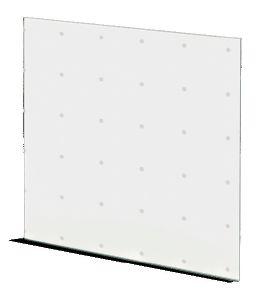
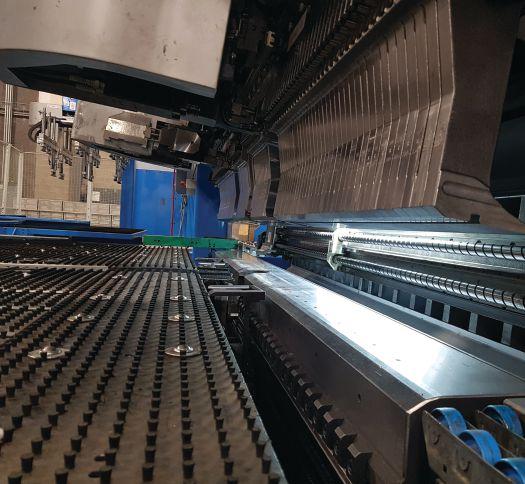
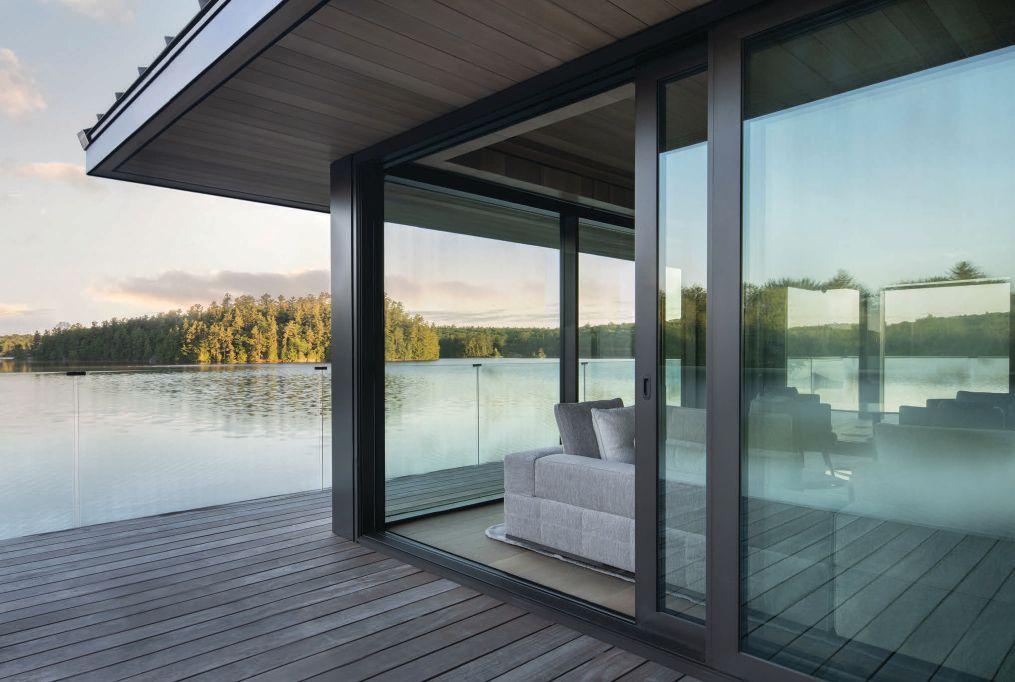
Introducing BirdSmart™ Bird Safe Glass by Vitro Architectural Glass, a first-surface laser-etched glass with a low-e coating produced at one central location.
Now you can order all your glass — including bird safe glass — from the name you know and trust. vitroglazings.com/birdsmart
BirdSmart™ Speck 6 Inline 2x2
GLASS CANADA
Facade designs with easily replaceable glass and components are the gold standard of sustainable building. But how feasible are they? Smart people around the industry chime in.
GlassTalk Episode #72
Verifying VIG
David Cooper of VacuumGlass has been researching and developing VIG technology for over decade. He joins GlassTalk to update us on the state of VIG technology and availability, and evaluate the likely impacts on our trade in the years ahead.
22 Top Glass 2025
Here’s what’s going on at Canada’s architectural glass show.
24 Top Glass Sneak Peak
There are tons of new exhibitors and new products at Top Glass this year.
7 Canada’s Glass Associations
18 Fenestration and Glazing Industry Alliance
20 Fenestration Canada
12 The Engineer By Claudio Sacilloto
30 That’s Rich By Rich Porayko
Tariffs and the Good Thing
We could be living through another inflection point of disruption.
Since at least the oil crisis of the 1970s, property owners have understood that conserving energy by making buildings more insulating is a Good Thing. Yet commercial construction – where the owner doesn’t occupy the building – changed very slowly if at all. A Good Thing was out there, but the economic market realities slowed its adoption. It just didn’t make sense for property owners to fork out upfront building costs for which they would have to carry debt for in order to save tenants energy costs. That is, until changing awareness and politics caused today’s government regulations to force the issue. Once they did, the pace of change, innovation and advancement in energy-efficient glazing became breathtaking. The disruption of climate change and the subsequent government response has stimulated an all-out rush toward the Good Thing that may see, in our lifetimes, our buildings generating more energy than they use.
Now let’s make a dizzying pivot to trade and Trump’s tariffs.
NEXT ISSUE
• Great glazing
• AI design
• Saving birds
Pierre Trudeau said Canada is a mouse in bed with an elephant. Every small twitch of the great American beast threatens to crush us entirely. Even since the signing of NAFTA, we’ve received occasional reminders that our utter dependency on the U.S. for trade and security is a vulnerability. We feel it when our dollar depreciates, when American banks collapse, when the softwood lumber dispute heats up or whenever another patriotic Buy America campaign becomes popular. In this industry, we have an especially poignant example in the absence of any national capacity to produce float glass. We lament being the “drawers of water and hewers of wood” – and have been lamenting it for at least as long as I’ve been alive.
There has been no shortage of proposed solutions. There are huge markets across both oceans with whom we have good relations and could presumably cut free trade deals. Our governments could get serious about promoting value-added manufacturing in this country. Why haven’t these things happened?
The risks and expense of exploiting foreign markets and driving Canadian manufacturing has always been evaluated in light of the opportunity cost of simply continuing to ship low-cost things at low-cost rates across the free border and making our money off the dollar spread. It’s been too easy and safe.
Until now, maybe. Trump has launched a trade war with us in violation of every North American trade agreement. Justin Trudeau has said outright that the objective is to weaken Canada economically to the point where we will agree to be annexed. Whether that is the true motive or not, for the first time in living history we are confronted with the fact that the U.S. cannot be trusted to observe its commitments and act as a friendly partner.
Maybe this is the climate-change-level disruption that forces our approach to trade and business in a new direction. Maybe now is the time to look for new markets and new investments in productivity and product development.•
@GlassCanadaMag
GLASS CANADA
March 2025
Volume 37 • Number 1
Annex Business Media
P.O. Box 530, Simcoe, Ontario N3Y 4N5
READER SERVICE
Print and digital subscription inquiries or changes, please contact Angelita Potal, Customer Service Rep.
Tel: 416.510.5113
Fax: 416.510.6875
Email: apotal@annexbusinessmedia.com
Mail: 111 Gordon Baker Rd., Suite 400, Toronto, ON M2H 3R1
EDITOR/PUBLISHER | Patrick FLANNERY pflannery@annexbusinessmedia.com 226.931.0545
GROUP PUBLISHER | Danielle LABRIE dlabrie@annexbusinessmedia.com 519.429.5187
AUDIENCE DEVELOPMENT MANAGER | Shawn ARUL sarul@annexbusinessmedia.com 416.510.5181
MEDIA DESIGNER | Lisa ZAMBRI
CEO | Scott JAMIESON sjamieson@annexbusinessmedia.com
SUBSCRIPTION RATES
Canada - 1 Year $37.74 (plus tax) U.S.A. - 1 Year $86.70 (in CDN dollars)
Publication Mail Agreement #40065710 Printed in Canada ISSN 0843-7041
Occasionally, Glass Canada will mail information on behalf of industry-related groups whose products and services we believe may be of interest to you. If you prefer not to receive this information, please contact our circulation department in any of the four ways listed above.
The Trump administration announced on March 4 that it would impose 25 percent tariffs on all goods entering the U.S. from Canada except for energy imports which would be taxed at 10 percent. It also planned to impose separate and additional 25 percent tariffs on Canadian raw steel and aluminum starting March 12. Amidst a strong backlash from both Canadian and American politicians and industry groups, the White House altered the proposed tariffs later the same week, first exempting Big Three automakers then reducing the tariff on potash to 10 percent. Canada implemented retaliatory tariffs on $30 billion of American goods and threatened to tariff an additional $125 billion worth of goods at the end of the month. On March 7, Trump announced a delay on American tariffs until April 2, and modified the threat to only include goods not registered under the Canada US Mexico Agreement (about 68 percent of Canadian exports). Canada left tariffs on the $30 billion list in place, saying only a final removal of all tariff threats
is acceptable, but announced it would not go forward with the $125 billion escalation pending American actions on April 2. Industry-related items affected by Canadian tariffs at print time include doors, windows, fenestration framing, wood building products, powered hand tools and door and window hardware. The second tranche of tariffs, if implemented, is anticipated to include all plastic and metal building materials, cranes, metalworking machinery and tools, photovoltaic devices, vehicles, 3D printers and architectural glass including float glass and insulating glass units.
Ontario construction group challenging Green Standard
The Residential Construction Council of Ontario has filed a legal application in the Ontario Superior Court of Justice against the city of Toronto over the escalation of the Toronto Green Standard performance measures. RESCON says it is seeking a mandatory order that would enforce the Building Code Act and prohibit the city from imposing building regulations on planning applications because they are beyond the legal authority of the city. In a statement, RESCON said it agrees that the city has authority under the Planning Act over land-use planning matters and can impose site-specific controls over the development of land within city boundaries. However, it argues the manner of construction and construction standards are not subject to site plan control because those matters are already governed by the Ontario building code.
“The city is overstepping the scope of its planning authority by mandating technical building measures already covered in the OBC which
have been progressively updated and grounded in research, building science, thorough consultation as well as cost-benefit analysis,” explains RESCON president, Richard Lyall. “Individual municipalities do not have the authority to develop their own building regulations.”
Ontario homebuilders are among the most sustainable and are part of the solution to climate change, RESCON added. Municipalities are not technical standards development bodies and not well-equipped to deal with such regulations, which is why building codes are developed at the federal and provincial level. The actions of select municipalities are duplicating efforts taking place at uppertier governments, slowing approvals and increasing costs to consumers.
RESCON is an association of Ontario residential construction contractors focused on labour relations, technical standards, building science, labour supply, housing affordability, health and safety and government advocacy.
COMING EVENTS
April 2 - 3
AVFQ Congres Quebec City avfq.ca
April 8 Canadian Glazing Conference Surrey, B.C. fenestrationcanada.ca
April 29 - 30 Top Glass Mississauga, Ont. topglasscanada.com
May 21 - 25
CSC Conference St. John’s csc-dcc.ca
May 27 - 30
Fenestration Canada Spring Conference Halifax fenestrationcanada.ca
June 12
OGMA Spring Golf ogma.ca
June 16 - 18 FGIA Summer Conference Online fgia-online.org
Oct. 6 - 9
FGIA Fall Conference Indianapolis, Ind. fgia-online.org
Oct. 20 - 21
Top Glass West Calgary, Alta. topglasswest.ca
Nov. 4 - 6
GlassBuild America Orlando, Fla. glassbuildamerica.com
CANADA’S GLASS ASSOCIATIONS
AVFQ
The great Quebec family of the glazing and fenestration industry will meet for our annual conference April 2 and 3 at the magnificent Chateau Frontenac. This year, we emphasize the importance of the team and the humans behind it. During these two days, participants will have the opportunity to attend 10 cutting-edge conferences and workshops, led by experts in our sector, around a unifying theme: “The Team, the most efficient technology.”
We have developed nine new training courses with different topics related to human resources, six capsules specific to the world of fenestration and glazing in terms of health and safety and four capsules on artificial intelligence.
AGMCA
Our current ICI collective agreement with the IUPAT is set to expire on April 30 of this year. Preparations are already well underway for the upcoming round of bargaining. We have heard from many of our members and it seems their number-one concern remains the difficulty in finding and retaining properly skilled glaziers. We continue to work with the IUPAT and all levels of government to improve their recruitment and training processes. Members are urged to contact us with any other specific concerns they would like addressed this round.
Our annual general meeting was held Dec. 5 in Toronto. Nominations were received, elections were held and we are pleased to announce our
board of directors for 2025 : Tony Menecola (Applewood Glass), president; John Bastedo ( FMR National Contract Glazing ), vice-president; Barrie Eon , treasurer; Kline Holland ( FMR AFG), director of labour relations; Bill Byers (Transit Glass); Noel Cunningham (Flynn Canada); Angelo Cairo (Stouffville Glass); Tim Isaak (Peninsula Glass) ; Steve Leblanc (Contract Glaziers); Joe Buck (FMR Merit Glass); and Noel Marsella, executive director.
GAMA
Withmembership at an impressive 55 members and a bustling lineup of initiatives, the year promises to be another significant one for GAMA.
One of the standout highlights for GAMA this year is the success of the 2025 Glazier Trade program. First-year registration has hit a perfect 100 percent, while second-year enrollment is strong at 80 percent.
In April, GAMA will host a joint dinner meeting with Construction Specifications Canada at Goldray Glass. All attendees will have the opportunity to take a guided tour of Goldray’s impressive plant, providing a firsthand look at the latest in glass manufacturing and innovations.
We are thrilled to announce that GAMA, in collaboration with the Provincial Glaziers Association of Alberta, has secured full support and funding from our members for the second SAIT Glazier Program initiative in a year. This exciting project will give fourth-year students the opportunity to fabricate and install a new curtainwall and entrance system project as a hands-on assignment. A huge
thank you to our generous donors who made this possible: Metro Glass, Arconic-Kawneer Canada, Garibaldi Glass, Grant Metals, Glass Guild, Russel Metals and Griffin Glass.
This year, we are actively spreading awareness about the Skilled Trades and Apprentice Education Act (STAE), which, as of 2022, eliminated the Provincial and Local Advisory Committees (PAC/LAC) for trades, glaziers included. These committees were vital in facilitating communication between the government, industry and associations. In place of the PAC/LAC, Alberta’s Apprenticeship and Industry Training (AIT) introduced the My Skilled Trades Network (MySTN) in 2023. However, it has faced challenges due to limited open discussion and transparency. This lack of industry input has left the construction sector without a clear voice in decision-making processes that affect all trades. GAMA’s goal this year is to encourage industry leaders to sign up for the MySTN, engage in the platform and work together to establish clear back channels for discussion and input.
GAMA’s highly anticipated annual golf tournament is just around the corner. Join us on Thursday, June 12, at Lakeside Greens in Chestermere, Alta., for a fantastic day of golf, food, drinks and prizes. Registration details, sponsorship opportunities and tournament information will be sent out in early March.
OGMA
TheOntario Glass and Metal Association is excited to be celebrating its 35th anniversary this year. As we reflect on our journey and look ahead to the
future, we want to express our deepest gratitude to all our members, both past and present.
Nominations for the 2025 OGMA Awards for Excellence are now open. The awards recognize outstanding work in glass and metal construction in Ontario. There are two awards: one for excellence in execution and one for excellence in design. Visit the OGMA website at ogma.ca for a full list of criteria and to download the nomination form. Nominations close on March 28 with the awards being presented at Top Glass on April 30. Winners will also have their submissions promoted on our website and social media pages. To nominate yourself or another project participant, email Steven Peso at speso@tremco.ca.
We would like to welcome Steve Legg as the newest member of our board and welcome back April Donvito, who returns after a brief hiatus. For 2025, the board of directors consists of Blake Sanders, president; Andrew Dolphin, vice president; Steven Ringler, past president; Keith Elmer, treasurer; and Steve Peso, John Rania, Robert Maggiacomo, Yoga Arulnamby, and Heather Sakai, directors. Our administrator is Lori Brooks.
OGMA is pleased to announce that it has renewed its strategic partnership with the Toronto Chapter of Construction Specifications Canada. In April, OGMA and CSC plan to host a joint seminar at the Toronto Cricket Club, with a goal of fostering collaboration and the exchange of knowledge between our two organizations.
The OGMA Spring Golf Tournament is scheduled to be held on June 12. The venue is still being confirmed.
We look forward to seeing everyone at Top Glass!
Sales shuffle at Walker Glass
Walker Glass has announced that Mike Bomok, sales representative for eastern Canada, retired at the end of 2024. Bomak’s area of service included Ottawa, Quebec and the Maritime provinces. Bomok joined the Walker team in 2008 and since made a major impact on sales. Over the years, he built strong
Peter Neudorf Sr. 1930 - 2024
Peter Neudorf Sr., co-founder of Ferguson-Neudorf Glass in Beamsville, Ont., passed away on Dec. 3 in his 95th year. The family published the following obituary: Peter Neudorf Sr. was born on March 1, 1930, in the small Mennonite Village of Neuanlage, Sask. In 1942, at the age of 12, he moved to Ontario near the town of Jordan with his family. At this time, Neudorf had not yet learned to speak English as his first language was Low German. As a young boy on his way to school, Neudorf would pass a beautiful 20-acre farm and think to himself, “How is it possible that someone could own something so wonderful?”
Neudorf’s grandmother had taught him a Plautdietch (Low German) saying, “Wann aul, dann aul,” which translates to, “If you’re going to dream, dream big.” And that is
relationships with his many clients, attracting deep respect across the industry.
“I want to extend my deepest thanks to Mike for all these years with Walker. He has developed an outstanding rapport with his clients over the years and has played a key role in establishing Walker as a leader in his market,” said Alan Harrison, sales director.
“Mike will be greatly missed by the entire Walker team,” says Charles Alexander, Walker’s vice-president of sales and marketing. “He has done his work with a smile and a good-natured attitude while demonstrating great professionalism each day. Thank you, Mike, for all that you have brought to Walker.”
Following Bomak’s departure, Walker announced updates to its sales team. Claudine Brun will oversee the south shore region, extending to Quebec; Abdellah Barkallil will manage accounts in Montreal and the north; and Danik Dancause will take charge of clients in the Ottawa region and the area from Riviere-du-Loup to the Maritimes. To support this transition, Claudine Brun will continue leading the customer service team while stepping away from her product management duties. Abdellah Barkallil will adjust his role, splitting his time equally between customer service and sales. Danik Dancause will retain his position as marketing operations manager while assuming these new sales responsibilities.
exactly what he did. In 1962, Neudorf and his wife, Dora bought that very special property and forever it would be known as The Farm. Family has always held the number-one place in Neudorf’s heart. Dora and Peter had just celebrated their 73rd wedding anniversary nine days prior to his passing. He was a proud, loving and supportive father to their eight children, Sandy, Jeff, Peter, Rob, Bill, Catherine, Terry and John, their 14 grandchildren and 15 great-grandchildren.
The number-two spot in Neudorf’s heart was his work. Ferguson-Neudorf Glass, the company he founded with his dear friend, Keith Ferguson, was his life’s passion and legacy. Even in his last year, he still managed to get to the office to see how things were going and he especially enjoyed touring his two plants on his golf cart and talking to his many employees.
The number-three place is held by his love for pinot noir (which he planted at
The Farm) and the joy of sharing a bottle or two along with a bite to eat with family and friends. He sure enjoyed his daily card games with Dora, keeping a yearly tally of who was winning.
Although Neudorf converted to Catholicism when he married Dora, his passion for the Mennonite religion would stay with him throughout his life. He was especially interested in the history of Mennonites from the Reformation to modern times. Keith Ferguson once commented that if Peter didn’t make it in the glass business, he would have become a history professor teaching young Canadians about the evolution of the Mennonite religion throughout the world.
Neudorf will be sadly missed. He was a father figure to many young people throughout his life. He will forever be remembered as a humble, hardworking and generous man who was an inspiration to everyone he met.
Rea stands down
Ennio Rea, 72, has retired from Imagic Glass after a remarkable 56year career in the architectural glass industry. His journey included time with some of Canada’s most iconic fenestration companies and taken him quite literally around the world.
Rea started in the industry at Moore Glass in 1968, working a summer job on the floor at the Toronto glass fabricator. In 1969, Moore was bought by Glaverbel, which later became AGC Glass Europe. In 1973, the growing Indal Group brought Moore into the fold with Temp Glass, the first company in Canada tempering architectural glass. Rea started out driving a fork truck on their floor. He spent 13 years at Temp Glass, rising to shift supervisor then inside sales.
“In 1978 they got tired of looking at me and put me out on the road,” Rea reports. By 1983 he was sales manager.
Rea explains that Temp Glass was a great opportunity for him because they were at the forefront of Canada’s fabrication technology at the time. Building codes were requiring safety glazing for the first time in patio doors, storm doors and showers, and manufacturers were having to rely on costly American or European glass. Temp started with a high-speed tempering line then added an architectural line capable of everything from six to 19 millimeters. “We could do the heavy stuff, the fancy stuff,” Rea remembers. “It really ushered in a new era for glass.”
Rea jumped over into another growing glass segment in 1986 when he became a part owner of Clearrex Glass, an insulating glass manufacturer. He describes his role at Clearex as “jack-of-all-trades,” covering everything including sales, estimating, purchasing and customer service. Unfortunately, the 1989-90 recession claimed Clearrex and Rea had to move on.
That brought him to possibly the most dynamic innovator in the Canadian fenestration world, Royal Group Technologies. Rea landed a job selling Vic De Zen’s Royal Building System all over the world. For the first time, Rea was out of the glass industry but still very much adjacent to it. The system uses vinyl-based panels with a cavity filled with concrete or steel bar to make
walls. The system was provided in kits with three different house models and was ideal for fast, inexpensive construction in places where materials were hard to come by. Rea became a globe trotter, travelling to the United Arab Emirates, Kuwait, Qatar, Turkey, Russia, Japan, the Phillipines, Algeria, Nigeria and Croatia, among other places. He was in Kuwait during the first Gulf War and saw the aftermath of fighting there. His favourite places are Dubai and Japan. “I went to Dubai when it was a two-camel town,” he remembers. “It was amazing to see it just grow up out of the desert. You see the architecture now, they are just rich – loaded.”
Rea loved the travel but it took a toll. In 2001, after 10 years crossing eight or nine time zones several times per year, he suffered a heart attack. Then, typical of his generation, he couldn’t wait to get back to work. After just two months off he took a trip to Mauritius. This proved to be too much and he became very ill and had to return after a week. Rea took this as a sign he needed to move on to something that kept him in Canada.
“One door closes, another opens,” Rea comments cheerfully. He’d barely resigned from Royal when Oldcastle Building Envelope came calling. Over the next 15 years he worked for Oldcastle, ProTemp, Saand and Trulite, crisscrossing Ontario in his car from Sault St. Marie to Windsor and back again. He tried to retire in 2016, only to have Adam Shearer lure him back two years later to Imagic Glass on a promise of a three-day work week. As if the old salesman was going to stick to that. “If my phone rang on Monday or Tuesday, I answered,” Rea laughs.
One feature of Rea’s career has been a deep commitment to industry associations. He is very proud of his leadership at the former Metro Toronto Glass Association between 1978 and 1993, serving two terms as president. In that role, he chaired the committee organizing IMAGE ’86, a hugely successful glass fabrication machinery show in Toronto that brought attendees from all around the world. Starting in 2004, he served as president for two terms of the Ontario Glass and Metal Association. In 2011 the association awarded him the Lifetime Achievement Award.
Rea’s accomplishments as an industry leader are impressive. But there’s little doubt he is most famous for his jokes told at the OGMA golf tournament. The after-dinner
speeches just won’t be the same without the exploits of Dirty Ernie, though maybe in today’s political climate it’s best that Ernie head off into retirement with his author.
Rea leaves the glass business with fond words for the people who helped him along the way. He names as his mentors Ian Moore at Moore Glass, Wayne Metcalfe of Moore and then Temp Glass and Bernie Leaman of Commercial Aluminum (part of Indal). Rea credits them with teaching him how to deal with customers and respond effectively to their demands.
Reflecting on his long success, Ennio accurately points to his own personality as part of his secret. “I don’t have any enemies, just friends that don’t like me,” he quips. “I’ve always tried to be a good person and tried to help. It’s easy for me to make friends and I’ve put those traits to good use. There were difficult times but my attitude was always damn the torpedoes and full speed ahead.”
Rea’s colleagues have weighed in with their congratulations. “Ennio joined Imagic Glass in the summer of 2018,” Imagic president, Adam Shearer, remembers. “We had been a customer of Ennio’s while he was at Trulite. We became accustomed to Ennio’s jovial personality, warmth and, of course, his signature jokes. His lengthy career in the industry allowed him to build and nurture so many important relationships with glazing contractors, fabricators and others. Ennio was instrumental in helping to grow Imagic’s presence and business in Ontario and other provinces. We are truly thankful for Ennio’s commitment and contributions to our business and, more importantly, for his friendship. Congratulations, Ennio, on a tremendous career. Enjoy your retirement –you have certainly earned it!”
“I met Ennio as a board member of the Metro Toronto Glass Association,” Steve Wetmore remembers. “And Ennio was the master of ceremonies for every single event we attended. He was the joke teller and he was the speaker. He is a legend in my eyes and I always loved looked forward to anything Ennio had to say. God love Ennio!”
Rea’s future plans include enjoying his five grandchildren with his wife, Rossana, and following the Blue Jays and Maple Leafs from his home in Newmarket, Ont. He admits to some mixed emotions on retiring. “When I was working I felt useful,” he says. “I don’t want to feel useless. My main reaction is, where the fuck did the time go?”
Message from Blake Sanders, OGMA president
It is with great honour and excitement that I write to you as the new president of the Ontario Glass and Metal Association. I am truly looking forward to serving our vibrant and dedicated community of professionals as we continue to build on the successes and challenges of the past.
As I step into this leadership role, I would like to express my gratitude for your unwavering support over the years. For the past four years, I have had the privilege of serving as both secretary and vice-president of the OGMA, working alongside our board to advocate for our industry, expand our educational initiatives, and strengthen the bonds within our community. I am proud of the work we’ve done and am excited to carry this momentum forward in my new role as president. I want to express my extreme gratitude to our now past president, Steven Ringler, for the dedication and commitment he showed to our organization as he led the OGMA over the past two years. I can only hope to fill the role as well as he did.
Looking ahead to 2025, I am excited about the upcoming events that will bring us together, including our highly anticipated second annual Members’ Meet and Greet, Spring and Fall Golf Tournaments, and Annual Fishing Derby. These events have long been a highlight for our members, offering valuable opportunities for networking, camaraderie, and enjoyment. I encourage all of you to participate, as these gatherings are not only a chance to relax but also to engage with colleagues and friends in our industry.
In my tenure as vice-president, I’ve had the privilege of seeing firsthand the incredible work our members are doing, whether it be through advocacy, safety training, or educational programs. Moving forward, we will continue to support our AGMCAmerged $1,000 bursary twice a year for students in the Glaziers and Metalworkers Apprentice Program, as well as further our collaboration with Workplace Safety and Prevention Services (WSPS) to ensure our members remain at the forefront of safety
regulations and industry best practices.
Additionally, we are currently working on updating our website, enhancing its functionality and accessibility. We are committed to creating a space where members can easily access valuable resources and stay informed on the latest developments.
The OGMA continues to provide a platform for your voice on both the provincial and federal levels. Our involvement with allied associations, government bodies, and lobbying groups ensures that our interests are always represented. I encourage you to stay engaged with our updates, which you can access through Glass Canada magazine and the OGMA website, and to take advantage of our Health and Safety Manual program, designed specifically to support your business.
As we move forward together, I encourage your input and ideas. The OGMA is your association, and I am committed to ensuring that we remain a vital resource for your success. Please don’t hesitate to reach out to me or any of our board members with questions, concerns, or suggestions.
Tri-Temp Glass has manufactured tempered glass for showers, railings, entrance systems, interior partitions and architectural glass applications since 2007.
• Tempered up to 96 x 144
• Custom Laminated up to 86 x 144
• Bent Tempered Laminated to 66 x 96
• Back Painted Glass
• SentryGlas Lamination
• Opaci-Coat-300 Spandrel
MATERIALS
Galvanized/Mild Steel 26ga to 1/4”
Painted and Anodized Aluminum 0.032” to 1/4”
Pre-painted Steels
Stainless Steel/Brass/Copper/Zinc
SERVICES
Shearing/Punching/Notching/Routering/Bending
Stud & Spot Welding
Assembly/Prototypes
Backpan Fabrication
Callender-Wilson promoted to CEO of Bass Installation
Natasha Callender-Wilson has been named CEO of Bass Installation, a Mississauga, Ont.,-based glazing contractor. Her previous title was vice-president. CallenderWilson has been at Bass almost since its inception in 2003. Her previous experience included working for an electrical contractor and a large Mississauga developer where she learned about other specialty trades and the role of the general contractor in major projects. She has a degree in economics and psychology from York University and a diploma in accounting business systems from Humber College. She has also continued her professional development with programs and courses through Ironworkers-Impact and the Toronto Construction Association. Finally, she has recently graduated from the Business Development Bank of Canada Ivey Academy Leadership and
Growth Management Retreats’ growth driver program. Callender-Wilson brings a strong track record to the CEO role. She helped guide Bass through the significant challenges posed by COVID and the subsequent volatility in the Toronto construction market. She appointed four important directors to the Bass team: Kevin Gallagher, director of field operations; Rob Gabriele, director of business development; Samantha Berger, director of people and culture; and Ana Mera, CFO. On her watch, Bass has initiated its first supply-and-install project: the Sixteen Mile sports complex in Oakville, Ont. The company has grown steadily and now boasts 140 employees.
“We’re continuing to leave our fingerprints on the glass across the great city of Toronto,” Callender-Wilson quips. “The plan is not to stop,” she goes on. “We will keep building and growing for as long
as we can, building communities where people can work, play and live.”
On taking the CEO position, Callender-Wilson says it is satisfying to been seen and heard. Bass Installation has always been noteworthy for its support of worthy causes and Callender-Wilson plans to continue the tradition. “We recently participated in third annual Dreamer Day Festival, an event by hosted by Build a Dream, where we met with over 3,000 female students all interested in fields like skilled trades, STEM, emergency response, entrepreneurship and leadership,” she said.
Stephen Callender will remain as president of Bass, focusing on overseeing current and future projects while upholding the strong relationships the company has built with unions and partners. He also remains president of ACCA, secretary treasurer for TCBN, and sits on the Ironworkers-Impact Ontario regional advisory board.
by CLAUDIO SACILOTTO
Productive processing
Recently, I received a call from a homeowner looking to modify their windows and doors. They asked if there were any drawings available for reference. The products in question were long obsolete and I couldn’t find anything on my computer. However, the inquiry piqued my curiosity, so I ventured into the archive closet. Buried in a dark corner, I found a binder containing aluminum profile drawings from years gone by. As I flipped through the pages, I became engrossed in these handdrafted designs.
Someone had clearly spent countless hours hunched over a drafting table with a scale ruler to create these parts. Anyone familiar with the process knows how time-consuming it is and how meticulous you need to be. And these were done on paper – imagine the frustration if a mistake was made or if the design needed tweaking. The drafter would likely have to start from scratch.
Compounding the challenge was the complexity of figuring out how the various parts fit together to create a complete fenestration product. The designs had to be simple. Product evolution must have taken decades, and innovation would have been a slow, difficult process.
Eventually, the drafting table gave way to two-dimensional computer-aided design (CAD), which must have been a huge relief for designers wanting to make quick adjustments. This was the era where I first started using design software. I began working with AutoCAD 11, which eventually evolved into tablet use and, later, the computer mouse – truly a game changer. With this shift, innovation became faster, but despite the convenience of 2D CAD, our designs didn’t necessarily improve right away.
The next major leap came with the transition from 2D to three-dimensional CAD, which allowed us to visualize products in three dimensions. More importantly, 3D CAD enabled us to analyze how these products would perform under stress. We could simulate fatigue, predict failure points and optimize components for strength and material efficiency. This was a significant turning point in the industry.
Complex problems are often uncovered when you can see and touch a real 3D object.
THE ENGINEER
With 3D CAD, it quickly became clear where things were headed: 3D printing. Over the past 15 years, the fenestration industry has seen remarkable advances in window design, largely driven by 3D printing. The most significant advantage of this technology is its ability to rapidly prototype and iterate designs. This accelerates the testing and refinement process, allowing products to reach the market faster.
One experience stands out in my memory. Our design team was working long hours on a brand-new product. We started from scratch in SolidWorks, a popular 3D drafting software. The product incorporated many innovative features and we were convinced it was the ultimate fenestration solution. On the computer screen, it looked perfect: beautiful, functional and ready for production.
To validate the design, we 3D printed all the components to create a miniature version of the product. After assembling the prototype, we were shocked to discover a sizable hole that would have caused significant air leakage. How did we miss this? The 3D model on the 2D monitor didn’t reveal the flaw. But the 3D printer saved us. We were able to correct the issue before moving forward with costly extrusion dies. This incident was a clear reminder that complex problems are often best uncovered when you can physically see and touch a real 3D object. In this case, the 3D printer more than paid for itself.
Today, 3D printers are standard in our industry, and rapid prototyping has become a common practice. These advancements have dramatically sped up the product development process and allowed us to get products to market more quickly.
As 3D printing technology continues to evolve, its role has expanded. Larger print beds and advanced materials have taken 3D printing beyond the realm of prototyping and into actual production. Additive manufacturing, which produces parts directly from digital files, now enables us to create complex shapes that would have previously required expensive molds or intricate machining. What once took days or weeks to produce can now be accomplished with just a few clicks of a mouse.•
Claudio Sacilotto is director of engineering for Novatech Patio Doors.
YOUR ONE STOP SHOP FOR SPECIALTY FENESTRATION PRODUCTS
Canada’s premier certified fabricator of Schuco, Reynaers, and Keller products. All tested in North America to meet NFRC and North American fenestration standards. Uncompromised quality, service, and support for over 40 years.
High performance, all aluminum construction. Made in Canada. MAKE AN ENTRANCE WITH THE MONOLITH DOOR
REPLACEABLE FACADES
Can
the carboncounter’s dream become reality?
by PATRICK FLANNERY
Low-carbon construction means long-lasting construction. Resiliency, durability and recyclability are the hot buzzwords in sustainable building circles. When calculating the embodied carbon balance sheet for a project, there is probably nothing that goes straight to the bottom line like extending the life of the building does. Avoiding having to tear out major components and engage in long labour- and energy-intensive retrofits will be a coming priority for designers – especially on institutional builds but also on commercial construction if codes continue their present trend. So the pressure is on for facade designers to consider not only how their envelope will meet today’s needs, but also what will happen to it as its components approach the end of their lives.
Building with more expensive, longer-lasting materials is an obvious answer and part of the equation. But there’s another wrinkle to consider. We know from recent experience that what is considered acceptable and even state-of-the-art today may not be tomorrow. Once upon a time the greatest environmental concern on a jobsite was smog-creating nitrous oxide emissions. Then deforestation entered the chat, encouraging limiting the use of lumber. General production of landfill waste rose up, touching off three decades of obsession with recycling. Next, toxicity from materials such as formaldehyde and asbestos had its day. Then came the big daddy: carbon dioxide.
The idea is to install facades that can be upgraded before they look like this. Embodied carbon considerations will push us to develop facades that never become obsolete.
Mitigating that initially took the form of improving air/water tightness. Then thermal performance, which is morphing into solar heat gain as air conditioning becomes a bigger part of the energy budget in Canada. Now we’re moving on to embodied carbon. And don’t forget reflectivity and bird-friendly needs.
All of this is to support the point that chances are some part of a facade built today (and most likely including the glass) are going to need to be replaced before the building gets torn down. Knowing this, it may be time to think about how glazing can be made easier to remove, replace and upgrade after installation. Moving designs in this direction would also address a long-standing request from property owners that designs be easier to service and maintain, even if their desire to pay for such features has been, uh, “limited.” We may be at a point in history where regulations drive interest in replaceable facades past the cost concerns.
The problem
Most glazed facades today are simply not designed to be taken apart at all, ever. The use of silicone to avoid mullions and caps and create unbroken glazed surfaces for esthetics is a major culprit. Cutting out silicone is “messy and labour-intensive,” according to Peter Dushenski of GlasCurtain, a stick-built fibreglass curtainwall fabricator.
Experts Michael Aoki-Kramer, Graham Finch, Brian Hubbs, Ed Thiessen and James Higgins from RDH Building Science outlined the problems with removing siliconeglazed facades in their 2015 paper, Re-Glazing of All Glass Curtain Wall Buildings. In it, they described replacing the insulating glass on a 48-story tower in Vancouver. “The building uses a unique aluminum-frame curtainwall system where the IGUs are adhered to the frame using structural silicone on the offset edge of the exterior-most lite. The SSG curtainwall achieves an architecturally appealing look with no extruding mullions or snap caps. The original IGU installation work was completed at the factory and the curtainwall frame was then installed on the building. This SSG system presented a difficult challenge with respect to glazing replacement work. The curtainwall frame could not be removed from the building, so the replacement work had to be completed in the field. [...] In addition, the design of the curtainwall frame only allowed glazing replacement work from the exterior of the building. This meant the replacement work had to consist of:
1. Removing the IGUs from the curtainwall frame and discarding them;
2. Installing replacement IGUs in the curtainwall frame using structural silicone sealant;
3. Holding the replacement IGUs securely in place while the structural silicone cured; 4. Installing silicone sealant in the joints between the IGUs for water shedding and esthetics.”
RDH came up with a number of innovative solutions to these problems, which was why this paper was being presented at a BEST conference. These included a custombuilt scaffolding ring to provide a work platform to lift the units to the required level and proprietary “clip rails” to hold the new IGUs in place while the silicone cured. The refurbishing project cost $6 million.
George Torok of Stantec has seen his share of hard-to-refurbish projects. “I’ve just been through some emergency repairs on a condo here in town with a leaky window wall in two locations,” he reports. “In both cases the culprit was poor cut-and-paste work with sheet stick-and-peel membranes. One location required disassembly of window wall components, which wasn’t too difficult but still awkward because some spandrel components were installed originally from the exterior and so could be removed. A few were not and required some creativity. The second location required disassembly of a ‘cassette-style’ metal composite cladding assembly that was installed shingle-fashion from right to left on each floor and from the bottom to the top of the building. It was theoretically demountable...as long as you were willing to strip from the top down. And the location we had to address was, of course, at the very bottom. 24 floors. Room for improvement in both designs, for sure.”
COVER STORY
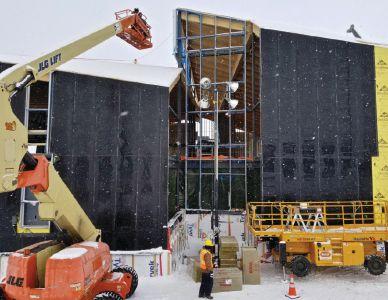
A common element afflicting most attempts to install replacement IGUs in existing curtainwall designs is the need to do so from the exterior of the building. This requires swing stage work handling heavy units then some method for holding the replacement units in place while the silicone cures. In the case of the RDH project, this went so far as to demand the design and manufacture of new clamping tools. Not something a building owner or renovation contractor wants to take on every day.
Replacement of large units, even when it can be done from the inside, encounters an almost comical problem: they are sometimes too large to fit into elevators and staircases to be taken up to the installation floor. RDH had to modify the building elevators to take its new units up in the BEST case study.
Possible solutions
One way to start toward making facades
more easily replaceable is simply to use stick-built systems. Because they rely on less silicone and more mechanical connections, they are always easier to take apart. But Dushenski notes that even SSG designs can incorporate more mechanical fastenings to make disassembly easier.
“You can add a mechanical connection to it, like with toggles,” he explains. “Toggles will twist into the rebate between two of the lites. If there are three lites, it will be the inner two.”
Jeff Makimoto, technical advisor for Fenestration Canada, shared his thoughts on a system concept that would make replacing and upgrading curtainwall much more feasible. He thinks it could be possible to redesign both stick and unitized systems to make it possible to glaze them from inside the building.
1. Design a new integral cap and pressure plate as one hollow die; 2. Put the standard glazing gasket (nor-
mally on the mullion in the raceway) on the new cap;
3. Design a pressure plate that goes around the full perimeter of the IGU;
4. Redesign the back mullion to accept a press-in wedge gasket around the full perimeter;
5. Size the glass and panels so they are taller vertically and installed with a lift and set method;
6. Size the glass and panels so they are smaller than the horizontal daylight opening by a minimum of 0.125 inch. Makimoto thinks this concept would minimize or eliminate the need for external glass and panel replacements using swing stages and lift equipment (provided the units are sized small enough to travel in the elevator). He points out that replacement would then be much safer for workers and not require them to have large equipment tickets.
In general, older and more conservative facade designs lend themselves more
The look of the future? Punched windows are easier to replace and upgrade.
easily to replacement. Punched windows can often be simply popped out and reglazed or replaced on site. Square and rectangular units on flat walls are much easier to remove and reinstall than odd shapes on articulated facades. Lower buildings overall make replacement from the outside more feasible.
The future
Overall, the idea of making facades more replaceable and upgradeable runs up against a familiar opponent: upfront cost, and what project owners are willing to pay. “I’m not going to hold my breath,” Dushenski says. “The carbon conversations are still mostly in the sphere of larger owner-occupied institutions. Basically universities and different levels of government. They are looking long term and they’ll say ‘If we invest in a little better of a system now our energy costs will be lower and every single year our service costs will be lower for 10, 20, 30, 50, 100 years. And sometimes they will rationalize it in terms of carbon or other environmental things. But the developers will
always build the cheapest things possible to satisfy their markets and their investors and their clients.”
Last word goes to Steve Gusterson of Alumicor. “Most curtainwall systems are aluminum framed and incorporate silicone gaskets. They last a very long time. The most common dramatic failures are either leakage – which is usually immediate and can be attributed to poor custom component design or general execution – or IGU failure. If the IGU lasts 30 years, chances are the framing, gasketing, air/vapour barrier and thermal break technology has advanced enough that the existing framing system would probably be unsuitable. To me, that means everything should come off the wall and an entire new facade installed. That offers the building owner an opportunity for a fresh look and the ability to upgrade to more current building envelope technology (for instance, getting rid of spandrel areas) and architectural design, leading to increased revenue. If the owner is upgrading the facade, chances are they are thinking a comprehensive upgrade to many other
Stick-built systems, with their reduced reliance on silicone, are inherently more amenable to being partially disassembled for re-glazing.
components as well. Roof, mechanical, interiors. So the most important element is that freaking IGU. It’s gotta last 50 years at least. Maybe VIG will become more affordable if the manufacturer can promise an extended life expectancy.”
Thanks a lot, Steve •
by AARON BLOM
Canadian content
The Fenestration and Glazing Industry Alliance’s flagship education and certification program, FenestrationMasters, has been completely revamped and updated to improve the learner experience, reflect current industry requirements and includes new Canadian content, all hosted on a new, user-friendly learning management system. FenestrationMasters provides robust training for industry professionals of all levels. From sales and marketing to engineering and management, this training covers the full scope of the fenestration industry.
FenestrationMasters 3.0 takes a deep dive into performance standards, products and materials, test methods and code requirements. The third edition also covers the North American Fenestration Standard’s Canadian Supplement and Canadian building and energy codes, neither of which were part of the previous editions.
There are two ways to achieve this professional certification. The Associate level covers introductory content, and the Master level adds even more highly technical information.
FGIA’s self-paced FenestrationAssociate certification course offers 19.5 hours of robust, well-rounded industry content. No prerequisites are required for the Associate program. This course is suitable for professionals that are newer to the industry and/or those with a less technical role.
The FenestrationMaster course includes an additional 3.5 hours of technical content for experienced fenestration industry professionals. Members can purchase this program for a discounted fee, which includes a 12-month subscription to the program with the option for a three-month extension. Non-members can also purchase this program.
This information will equip professionals with the knowledge and tools needed to ensure their products meet or exceed Canadian requirements.
Both the FenestrationAssociate and FenestrationMaster exams are available via a remote proctor, so candidates can take the exams from the comfort of their own computer.
This course is designed to empower participants with a nuanced understanding of the requirements governing fully fabricated fenestration products. Participants will dive into the mandatory performance requirements of each performance class, as outlined by NAFS-22 and its predecessors. From dissecting the complexities of compliance to delving into testing methodologies, candidates will acquire the knowledge and skills necessary to elevate their proficiency in fenestration performance and specification.
This five-part NAFS module will ensure industry professionals are finely tuned to the evolving demands of fenestration product certification. In this segment, candidates will explore the Canadian fenestration landscape, focusing on the National Building Code of Canada and the National Energy Code of Canada for Buildings. Participants will dive into the latest updates and revisions to NBC and NECB, understanding their implications on design, installation, and compliance. From deciphering energy efficiency requirements to navigating compliance pathways, this information will equip professionals with the knowledge and tools needed to ensure their products meet or exceed Canadian requirements.
FenestrationMasters offers information for professionals in both commercial and residential sectors. Professionals specializing in commercial products will benefit from modules addressing special performance challenges, including acoustical performance, hurricanes, wind-borne debris, and blast mitigation; skylights and sloped glazing; glass fundamentals; understanding insulating glass systems; profile performance; finishing touches; hardware and fenestration components; building and energy codes; installation; anchorage and field testing; and storefront, entrances and curtainwall.
FGIA is also offering two modules from FenestrationMasters as stand-alone, a la carte programs: “Specifying windows, doors and skylights using NAFS” and “Fundamentals of Insulating Glass.”
FGIA’s professional certification programs are the perfect way for your business to distinguish itself from the competition. •
FGIA
Aaron Blom is FGIA’s technical training specialist.
FGIA brings industry leaders together to improve home and building performance through better glass, window, door and skylight technologies and standards.
An FGIA membership gives you access to:
• Technical standards
• Market studies
• Professional development
• Certification discounts
• And an indispensable community of industry peers
Whether joining as an individual or business, FGIA will give you a leg up in an increasingly competitive industry. Join the alliance today at Join.FGIAonline.org
by ADRIAN EDGE
Tariff turmoil
TFor those of you following the rollercoaster ride that is the trade relationship between the U.S. and Canada, it’s been an interesting few months. The topic has been covered by every major news outlet in North America and talked about by every major politician in North America. If you’ve found yourself engrossed in potentially unhealthy speculation, I’m right there with you. In Canada, we’re looking at two new tariff arrangements that could impact us: a worldwide 25 percent on steel and aluminum and a specific 25 percent across all Canadian goods. Neither are implemented at the time of this writing. A good mentor of mine reminded me that all plans are like Swiss cheese. Cut the top off and there are holes to be explored. For our industry, this is going to be a very important moment to look at those holes.
My hope is to provide you with a brief history of tariffs, what you can be looking for to find the holes for yourself and the support you can expect from us as this moves forward.
Tariffs are an ancient economic tool. There’s evidence that tariffs were levied on goods as early as 3,000 BCE in Mesopotamia and used as a method of weakening rival states in ancient Greece. One of the first examples of tariffs being used as a large-scale economic weapon is in the Napoleonic Wars. From that point on, they have been used in nearly every major conflict including both World Wars and the Cold War. As countries have moved into the industrial age, tariffs were often considered essential tools for protecting key resources and providing short term revenue for the government.
The problem with tariffs have been their nature to act as a double-edged sword. The damage inflicted on one country is damage done to both. Worse is when that weapon is used on a wide breadth of countries and industries. The unintended consequences are painful and inevitable. The best example of this is the Smoot and Hawley Tariff Act passed in 1930 as a means to support domestic agriculture. The damage done to trade between the U.S., Canada and Europe was devastating. Once all countries had retaliated, trade overall had decreased by nearly 60 percent.
Providing clarity on who has responsibility for paying the tax can be added as language to your contracts.
So what can you do about it?
Fenestration Canada
When a tariff is placed against another country, the tax is paid based on who is handling the duties. This is key because, for those exporting to the U.S., this would be something you can look at now. If you manage the shipping of your products into the U.S., the duties are assigned before the product is shipped and you are paying for the tariff tax (or at least the first one to get the bill is). If your customer is arranging for the shipping from Canada to the U.S., they will be the first one to receive the tax. Providing clarity on who has responsibility for paying the tax can be added as language to your contracts with U.S. customers.
If you are the one owning the shipping to the U.S., there are a few tactics worth considering. For intercompany transactions between the U.S. and Canada, you should consult with your accountant or reach out for consulting support to review transfer pricing policies. You can look at unbundling your transactions (an example is to ensure a line item for shipping costs is broken off, as it’s not considered a cost that can be tariffed). Last is to review how much of your product supply was sourced in the U.S. For products purchased in the U.S. and used to make Canadian products, the finished product only requires tariffing for those “value-added” additions made here.
By the time you read this, you will know whether the broad tariffs on all Canadian goods went into effect April 2 as threatened and whether the March 12 tariffs on steel and aluminum came into effect. Whatever happens, Fenestration Canada stands ready to support you and our industry.
On April 8 in Surrey, B.C., Fenestration Canada is hosting our second Canadian Glazing Conference where I’ll be providing an update on this topic informed by what we know at that time on how the industry is managing these changes and the overall strategy Fenestration Canada intends to put forward. Hope to see you there. •
TOP GLASS 2025
CANADA’S GLASS SHOW
Let’s come together as a national industry on April 29 and 30
Top Glass is a Canadian glass brand. It is owned by Annex Business Media, Canada’s largest independent trade publisher, and hosted by this magazine, which has served the Canadian architectural glass industry exclusively for 45 years. Top Glass has taken place in Toronto since its inception in 2014 and is overwhelmingly attended by Canadian glazing contractors, glass fabricators, architects and specifiers. This B2B channel, and this show, lives or dies with Canada’s glass market.
Of course, anyone in the world is welcome to come and we have deep love for our international vendors and sponsors. With their support for Top Glass, they demonstrate their commitment to the Canadian glass industry and desire to promote their Canadian distribution and representation here. It’s a great metaphor for our Canadian openness that makes us a mosaic of companies and cultures that benefits all.
You can see our Canadian identity in our list of non-profit partners. There’s
Fenestration Canada, our national association. The Fenestration and Glazing Industry Alliance is a North American group that has held every other big conference in Canada since its inception. Ontario’s glass industry associations figure prominently, as do the mighty IUPAT glaziers. And we get great support promoting the show from the Ontario Architects Association and the Construction Specification Council.
If we played hockey against any other show in the world, we’d kick its ass, that’s for sure.
Get fired up and come on out to Mississauga April 29 and 30. Here’s our 2025 lineup.
April 29 - Trulite Plant Tour
Registered attendees can tour Trulite Glass and Aluminum at 385 Connie Crescent in Vaughan, Ont., the day before the show. Part of one of North America’s largest glass fabrication networks, Trulite has been manufacturing insulating glass, spandrel,
TOP GLASS AT A GLANCE
When: Trulite Plant Tour Tuesday, April 29
Conference and exhibition Wednesday, April 30
Where: The International Centre 6900 Airport Road, Mississauga, Ont.
Registration: topglasscanada.com
custom printed and laminated architectural glass since 1975, as well as custom architectural aluminum solutions. But today, the plant is a showcase of new fabrication technology with over $20 million in new equipment installed in the last two years, including a Glaston lamination oven, an HHH tempering furnace, a Tecglass digital print line and a LiSec insulating glass line. Sign up online at topglasscanada.com, then drop by on the 29th to see the latest in advanced glass manufacturing and talk to the people who execute it. Tours will run all day from 10 to 3 and attendees will be assigned a suggested time slot.
April 30 Conference and Exhibition
9:00 a.m. - Show opens
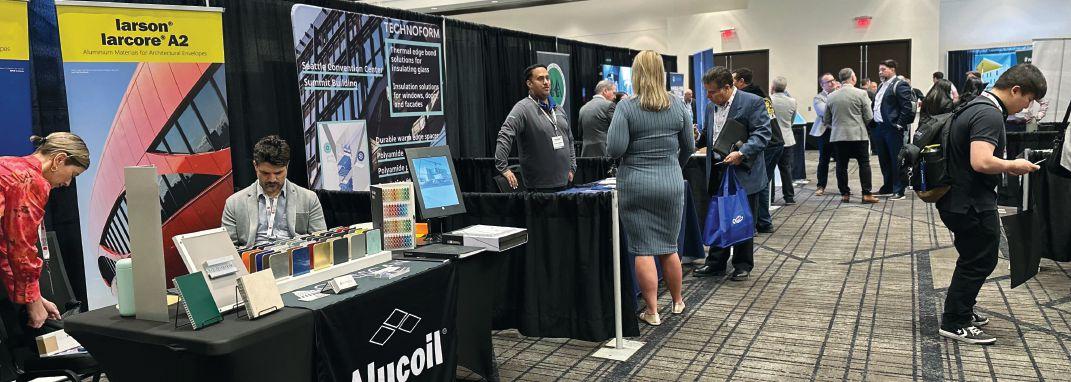
Top Glass is where you can visit top suppliers to the architectural glass industry. Over 40 vendors with a laser focus on Canada’s ICI glazing market will be on hand to answer your questions. You might learn more on the show floor than in the lecture hall!
10:00 - 11:00 a.m
Cross-Country Codes and Standards Update
Terry Adamson
Amy Roberts
The 2025 National Building Code and National Energy Code for Buildings are due for updates this year. And those codes point to AAMA/FGIA standards that have been revised since the 2020 codes went into effect. Fenestration Canada technical director, Terry Adamson, and Fenestration and Glazing Industry Alliance director of Canadian and technical glass operations, Amy Roberts, will team up to deliver a top-line look at the important changes affecting architectural glazing. These include new limits on solar heat gain.
Adamson and Roberts work with the committees and standards authorities that are writing the rules we will use to specify architectural glass going forward. There are no better sources for information on what is new and what is coming in Canadian codes and standards.
11:00 - 12:00 a.m.
The Glass Marking Panel
Architectural glass can be altered on its surfaces in a myriad of ways and for a number of reasons. Adding colour and design; changing opacity and translucence; meeting standards for bird and human safety; increasing thermal resistance – it pays to know what fabricators can do to change the look and performance of glass
Matthew Christie, Architectural Manager and Sales Representative, Walker Glass
Andrew Dolphin, General Manager of Glass Operations, BVGlazing Systems
Adam Mitchell, Marketing Manager, AGNORA
Adam Shearer, President, iMagic Glass
with advanced marking technology. So we’ve invited four experts from top marked-glass producers to outline their techniques and explain the possibilities and benefits of each. Join Adam Mitchell of AGNORA, Andrew Dolphin of BV Glazing, Adam Shearer of iMagic and Matt Christie of Walker Glass for an exploration of ceramic frit, laser etching, digital printing and acid etching.
12:00 – 1:30 PM We’ll take a break for lunch, which will be available for purchase at the cafeteria restaurant in the International Centre.
1:30 PM – 2:00 PM OGMA Awards of Excellence
Celebrate our industry with the Ontario Glass and Metal Association as they recognize outstanding achievements in design and execution. Top Glass is proud to host the OGMA as it announces the winners of its Awards of Excellence. Two awards will be presented to Ontario companies, one for outstanding design of an aluminum and glass building envelope and another for outstanding execution of an aluminum and glass architectural project. The awards are judged by an independent panel of architects and honour OGMA members and friends for the great work they do. The smiles are big and the plaques hang forever!
2:00 PM – 3:00 PM
The Training our Future Panel
Moderator: Travis Nevins, IUPAT Glaziers
Jamie Clifford, Ontario Finishing Trades Institute
Matt Fox, IUPAT Glaziers Training Specialist
Alex Shikhman, Building Envelope Systems Installations
Noel Marsella, Architectural Glass and Metal Contractors Association
The pace of change in North American architectural glass challenges everyone to access the skills and knowledge we need to execute today’s projects. The International Union of Painters and Allied Trades is deeply committed to building the glazing workforce we need through its programs and with the help of the Ontario Finishing Trades Institute. Representatives from IUPAT and OFTI will discuss the needs of tomorrow’s workforce and how they are meeting them. Joining them to provide perspectives from contractors and the industry will be Alex Shikhman, president of BESI, and Noel Marsella, executive director of the AGMCA.
3:00 PM – 4:00 PM
Esthetics of sustainable design
Presenter: Juliette Cook, Ha/f Climate Design
As we push our ingenuity, our clients and our governments toward more sustainable building envelope design, we must not lose sight of our mission as architects to create beautiful expressions of culture in the built environment. How can we communicate our commitment to sustainability through our facades and propagate it through our communities? Juliette Cook, partner at Ha/f Climate Design, has thoughts and examples from real-world projects that are sure to inspire your next architectural glass design.
Cook is an intern architect, lecturer, researcher and new mother. Cook has experience as a material research specialist at MASS Design Group, and as an architectural designer and sustainability consultant at White Arkitekter.
4:00 PM - Show ends.
Show closes, organizers collapse. •
Juliette Cook
TOP GLASS SNEAK PEEK
Experts in Canadian specialty glass
glassopolis.com
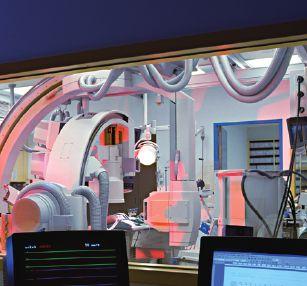
Glassopolis will present its line of X-ray radiation shielding glass at Top Glass. The Protect-X product family includes monolithic and laminated lead glass with lead equivalency up to 3.2 millimeters of lead. This X-ray glass is also available with sound control and switchable privacy features. Hospitals, medical centers and security screening installations use Protect-X to safeguard their staff against X-ray radiation. Protect-X is inventoried and fabricated in Canada and priced in Canadian dollars to be your best value. Glassopolis, based in Toronto with sales staff across the
country and has been supplying X-ray glass to Canadians since 1980. Glassopolis will also display at Top Glass a range of other specialty glass products including fire-rated glazing like Schott Pyran, Protect3 Safety Glass (security
Structural interlayer
trosifol.com
The SentryGlas ionoplast interlayer is five times stronger and up to 100 times stiffer than conventional laminating materials. Glass reinforced with SentryGlas can be used as a more active structural element in building envelopes due to its exceptional strength, which presents numerous innovative design possibilities. The clarity of SentryGlas is maintained, even after years of service, in addition to its durability. SentryGlas significantly resists moisture exposure and discoloration over time. SentryGlas was originally developed to provide the necessary protection for hurricane glazing in the United States. However, it has since expanded its global application footprint as structural engineers worldwide have recognized the potential advantages of its exceptional structural capabilities. Facades, overhead glazing, balustrades, doors and partitions are among the applications.
glass for forced entry and bullet protection), and even windstorm-rated glass for extreme weather protection. Glassopolis staff are experts in the Canadian building codes, with consultation available in the Toronto office.
Full range of insulating glass
xygna.com
Insulating glass is one of the most popular choices of XYG North America’s customers, valued for its exceptional ability to create a comfortable indoor environment and its highly customizable features. XYG North America offers a wide range of sizes, colours, and shapes to accommodate diverse project requirements. XYG units provide superior thermal insulation, reducing energy costs by keeping interiors cooler and warmer in winter. They deliver enhanced indoor comfort, maintaining optimal humidity levels and improved air quality. Useful for effective noise reduction, XYG IG minimizes external noise, making it ideal for offices, hotels and hospi-
tals. XYG products are highly customizable and can be combined with other glass types such as low-E coated glass, laminated glass, tempered glass and ceramic fritted glass to maximize desired needs. XYG offers a costeffective solution without compromising on quality, ensuring clients receive the best value for their investment. Backed by a comparable industry warranty, XYG products provide reliability and peace of mind. The suppliers’ agile manufacturing process allows it to meet diverse project needs efficiently, making XYG a dependable glass partner. With a dedicated Toronto sales office, XYG provides localized support and seamless service tailored to requirements.
GLASS
TOP GLASS SNEAK PEEK
Go big All curving methods available
bigfootdoor.com
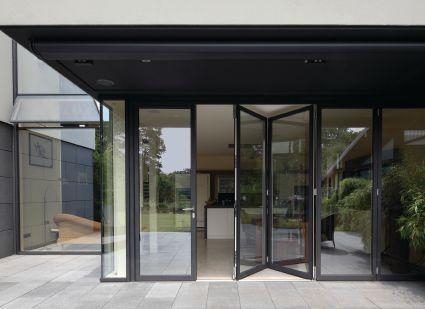
As a Canadian certified fabricator of Schuco and Reynaers products with over 40 years of experience in the fenestration industry, Bigfoot Door is committed to delivering innovative and high-quality solutions. Its fenestration products are rigorously tested in North America to meet stringent standards, including Passive House and net-zero requirements. In collaboration with Schuco and Reynaers, it continues to push the boundaries of architectural design and innovation, all under one roof right here in Canada. The Schuco AS FD 75 bi-fold door offers a wide range of design options in both in-swing and outswing configurations. With basic depths of 75 and 90 millimeters, this system provides high thermal insulation and industry-leading maximum sizes. The low-profile threshold is both stylish and functional, allowing for seamless access and a harmonious transition between indoor and outdoor spaces.
metalcurving.com
For over 40 years, Rimac Metal Curving Specialists has built a reputation of quality and trust in the Canadian and North American metal curving market. With a vast array of services, Rimac truly is a one-stop shop for custom curved components. Its wide variety of services include metal curving, vinyl curving, press brake forming, sheet metal shearing, custom machining and final cutting. Although curving is the specialty, Rimac can provide complete fabrication of parts, including final cutting and custom machining, providing customers with complete parts ready for installation in their assemblies. Rimac takes the risk out of working with multiple vendors by acting as a single source for complete components. The fabricator uses various methods for curving, including stretch forming, roll forming and rotary draw bending. Each method of curving provides unique advantages and disadvantages. By providing various methods for curving, Rimac has the ability to provide the best quality of parts, with minimal distortion, at the best price. The sheet metal shear and press brake, each measuring 13 feet, three inches long, allows Rimac to fabricate custom brake formed profiles, flashings and claddings to compliment the customers curved extrusions. The full-service machine shop augments services by allowing the shop to drill, tap, notch and contour parts, as well as provide final cutting and mitring of components. This allows Rimac to provide customers with complete parts, ready for assembly.
Guns and tools well
cs2sales.com
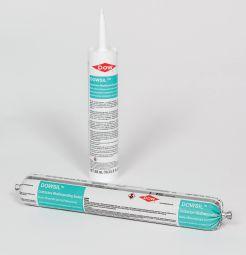
DowSil Contractors Weatherproofing Sealant (CWS) is a top sealant for perimeter window installation. Colour trends change so CS2 recognizes that and stocks 60 of the most popular window frame colours. CWS is a single-component sealant that cures through moisture exposure. This medium modulus sealant is designed to create durable, flexible, and watertight joints. Notably, it exhibits exceptional adhesion to a variety of porous and non-porous substrates, all without the need for priming. Its specialized formulation makes it ideal for effectively sealing joints that undergo dynamic movement. Other applications include EIFS; bedding of mullions, panels and frames; tilt-up panels; curtainwall joints; and many other uses. It is easily gunnable in all weather conditions from minus 29 to 49C. CWS is highly economical considering its performance. With movement capability of plus or minus 40 percent it offers high performance for cost. Users often comment on how well it tools. Installers love working with it, and samples are available. CS2 has been in business for 20 years and has a central location for pick up or delivery. In-house experts can assist with product selection. CS2 is the exclusive distributor for Dow Chemical silicones in Ontario as well as Saskatchewan, Manitoba, New Brunswick, Nova Scotia, PEI and Newfoundland and Labrador. Contact CS2 for any silicone needs including two-part IG or structural sealants, one-part structural silicones, polyurethanes, foams and many more specialized sealants and glazing accessories.
Bring on the bird-friendly
ultisol.com
Ultisol offers bird-friendly glass with frit on surface #1 and low-E on surface #2 that complies with Ontario and most North American standards. It is tested and approved by the American Bird Conservancy. Ultisol offers it on all major low-E’s such as Guardian,Vitro, Cardinal, Saint Gobain and others. The company offers standard and custom-made designs. Ultisol has successfully supplied its bird-friendly glass to several projects such as the University of Ottawa Health and Science Building, the 2 Bloor Street West podium renovation in Toronto and 6301 Campeau Street in Kanata, Ont. Ultisol is a facade solution company that offers engineering and material supply to facade contractors. Based in Toronto it serves both the Canadian and U.S. markets.
WHY CHOOSE RIMAC?
TOP GLASS SNEAK
Achieve a superior fit and finish
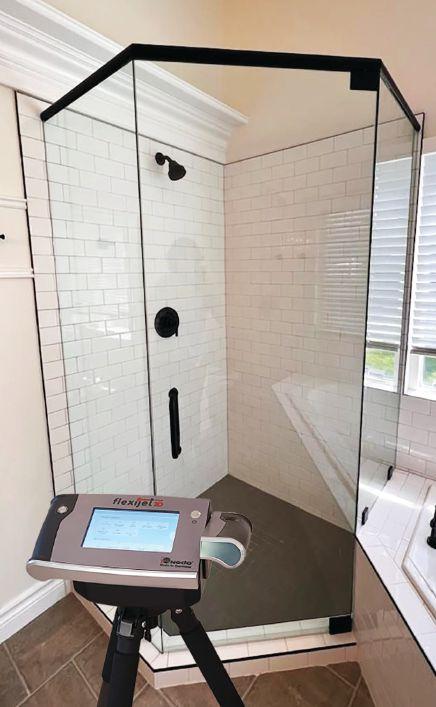
laserproductsus.com
Laser Product Industries Limited is the manufacturer of a leading digital templat-
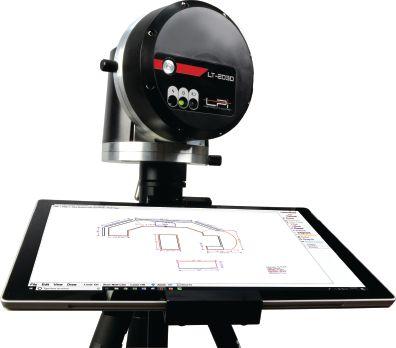
ing system for a wide range of industries, including the glass industry. A flagship product is the LT2D3D laser system specifically designed for digital templating. The LT2D3D is a versatile and high-precision laser system that offers advanced capabilities for measuring and templating surfaces. With its two- and three-dimensional measuring functionality, this system allows for precise templating, making it ideal for applications in custom architectural glass, glass production and countertop fabrication. The key feature of the LT2D3D is its high-speed and high-accuracy measuring capabilities, which result in clean and precise measurement every time. This not only helps to increase productivity and efficiency but also ensures the accuracy of the fit and finish
of fabricated products to meet the rigorous standards of the industry. Additionally, the LT2D3D comes equipped with user-friendly software: LT3 Raptor. LT3 Raptoe is a new digital templating platform designed with a robust cloud-based management hub to make users faster and more efficient not only in templating but also in other areas of the process including job management, programming and more. Overall, the LT2D3D from Laser Product Industries is a top-of-the-line laser system that provides glass manufacturers with the precision measurements needed to stay competitive in the industry. With its advanced technology and user-friendly design, this system is a valuable tool for any surface manufacturer looking to enhance their production capabilities and fabricate high-quality products with maximum accuracy.
Gaskets for Canadian conditions Transparent with the power off
canplexextrusions.com
electraview.com
Canplex specializes in providing top-tier custom extrusion solutions that stand at the forefront of the North American glazing industry. With over two decades of excellence in PVC extrusion, TPV (vulcanized thermoplastics) and other extruded polymers, it delivers innovative, durable and efficient sealing solutions tailored to meet the requirements of clients. Canplex TPV gaskets for curtain walls are not just a testament to a commitment to quality and performance, they represent a significant leap forward in the industrial and commercial window and door industry across Canada. These TPV products are designed to outperform traditional materials, offering a high-quality, economically advantageous alternative to rubber, EPDM and silicone gaskets. Canplex TPV gaskets are engineered to withstand extreme weather conditions, ensuring long-lasting performance without degradation. Enhanced thermal insulation properties reduce energy costs, making Canplex gaskets an eco-friendly choice for sustainable building designs. Canplex offers custom solutions designed to meet the unique specifications of each project, ensuring a perfect fit and optimal functionality.
ElectraView OneZero by McGrory Glass is new glass technology that seamlessly integrates privacy and lighting features. This advanced glass solution ensures swift privacy while allowing 80 percent of natural light to diffuse through, enhancing user experience in various environments. Unlike traditional electronically controlled switchable glass, ElectraView OneZero boasts a “power-off” transparent state, significantly reducing energy consumption. By activating power only when privacy is required, it aligns with eco-friendly practices and offers potential energy savings. Moreover, when integrated into daylighting strategies, it may contribute to environmental sustainability by minimizing the need for artificial lighting and climate control, while effectively managing thermal transmission. OneZero is also highly versatile. McGrory can combine decorative features and life safety products without compromising privacy, design or energy efficiency. From acid-etching to high-resolution laminates; X-ray and radiation shielding; fire-rated; forced-entry; and impact-safety glass, OneZero caters to diverse needs while enhancing user well-being through privacy, safety, security and the biophilic effect. ElectraView OneZero delivers superior benefits in privacy, energy efficiency, life safety and decorative features. Its innovative design makes it an optimal choice for various settings across sectors, prioritizing both functionality and esthetics.
Easy sealing to the vapour barrier Field to design to field
alumicor.com
The new Alumicor RainBlade 2900 Series of aluminum-framed, thermally broken, fixed windows offers architects design flexibility, building owners high performance and glazing professionals simplified shop fabrication and field installation. The RainBlade TrueLine 2900, ShadowLine 2970 and FeatureLine 2990 fixed windows can complement nearly any architectural style, finish colour and building type. Suitable for both new construction and renovation applications, these windows have been successfully tested to provide architectural grade, industry-leading air, water, structural, acoustical and thermal high performance. They support Canadian model energy codes and stretch codes for institutional, commercial and industrial buildings. Engineered for use in individual punched openings or continuous ribbon spans, the Alumicor RainBlade 2900 Series interior-glazed, fixed windows feature a full rainscreen design with a minimal sight lines. Aluminum frame depths range from 109 to 179 millimeters for 25.4-millimeter dual-glazed insulated glass units and 127 to 197 millimeters for 44.5-millimter triple-glazed IGUs. Paired with triple-glazed IGUs, Alumicor RainBlade Series’ high thermal performance framing can meet energy code compliance, LEED criteria and other energy efficiency and sustainability goals. Along with its sustainable attributes and high performance, the Alumicor RainBlade 2900 Series allows for esthetic creativity. The framing profiles are flush-front RainBlade TrueLine 2900, bull-nosed RainBlade ShadowLine 2970 and capped RainBlade FeatureLine 2990, but different framing styles also can be combined. All models showcase optional 45-degree cut-corner joinery for a crisp, clean appearance. High-performance anodized or painted finishes are available in standard colours, specialty finishes or custom colours. Dual finishes also may be specified to present different colours on the interior and exterior framing. Making tie-ins to the air-vapour barrier simple without compromising performance, all RainBlade fixed windows use a prime seal gasket rather than a labour-intensive, wet-seal heel bead. Saving effort on the jobsite, RainBlade ShadowLine 2970 and FeatureLine 2990 window framing also can be shop-glazed when using optional receptor systems to facilitate installation of pre-glazed split-mullion units. Alumicor RainBlade 2900 Series fixed windows also seamlessly integrate with Alumicor operable vents and windows for natural ventilation.
Flexijet 3D is the future of accurate measurements for showers, railings, mirrors, storefronts, and more. Flexijet empowers facade designers with the measurement tools, skills, training and support they need to measure direct-to-digital right on the jobsite. With consistently accurate onsite measurements, there’s no room for error. Say goodbye to physical patterns and templates - measurements that used to take days now take hours with one person and Flexijet 3D. By streamlining the on-site measurement process, contractors can avoid return visits and eliminate communication errors. Flexijet 3D automatically saves a picture of each point measured with its built-in camera so the user is certain of exactly what was measured. And because Flexijet 3D is creating the digital file in real-time, the user leaves the jobsite with site-verified measurements and completed measurement files that are ready for design.
Visit wpg.com for more information or call 800-548-7341 to locate an Authorized Dealer in your area!
by RICH PORAYKO
Rich Porayko is business development director for Fenestration Canada Commercial
Quality under stress
Pressure to cut corners is rising and must be resisted.
The glazing industry in Canada has undergone significant changes in just a few short years. Not long ago, the concept of glass allocation was something many of us in the industry had never encountered. Yet, today, we face a drastically shifted economic reality with crippling tariffs, the GDP plummeting, limited commercial projects and major glazing contractors vying to secure even modest projects, such as high school builds. This shift raises important questions about quality, workforce and the practices we rely on to maintain our standards.
Fundamental to our industry is the belief that you get what you pay for – at least, that’s the hope. When purchasing insulating glass units, how often are they properly inspected to ensure key specs are met? Take low-E coatings. While there are tools like low-E detectors or simple tricks like holding a flame to verify the coating is present, how many glazing contractors actually check? What about the desiccant? Was the correct amount used, or even used at all? And argon gas – was it filled?
Even worse are the alarming reports of fabricators offering to include a false label claiming a unit has low-E. This highlights a pressing issue in the glass industry: mislabeled products can compromise project quality, energy efficiency and compliance with regulations. Unfortunately, these oversights can lead to significant quality issues that are not always immediately apparent.
These shortcuts and quality concerns tie into another significant issue in the industry: workforce practices. Rumors of illegal workers in B.C.’s glass industry abound. Typically, Employment Standards only steps in if an employee lodges a formal complaint. However, many of these workers, often in the country on visitor or study visas, accept being paid under the table or working in
The challenges confronting the glazing industry call for renewed efforts to uphold high standards.
THAT’S RICH
substandard conditions because Canadian standards, even when exploitative, are deemed safer and preferable to those in their home countries.
Understandably, these workers avoid reporting unsafe working conditions to authorities, fearing it could jeopardize their immigration status. This dynamic not only perpetuates unsafe practices in the industry but also creates an extremely uneven playing field where less reputable businesses unfairly gain a competitive edge by cutting labour costs.
Amid this challenging landscape, reputable fabricators stand out by maintaining rigorous quality control processes. These manufacturers deploy trained QC personnel who adhere to strict daily procedures and utilize comprehensive checklists. For example, argon, desiccant and silicone durability tests are routine. Edge deletion methods, cutting wheel quality and washer maintenance are meticulously monitored. It’s the systems and procedures that truly matter.
What’s more, competition among manufacturers has intensified dramatically. By current estimates, there are roughly 25 tempering furnaces for in Vancouver alone. Not all are operational due to infrastructure and power supply hurdles. However, the sheer number signals an aggressively competitive market, which heightens the need for differentiation through quality and innovation.
The challenges confronting the glazing industry, from cost-cutting and workforce practices to quality assurance and technical gaps, call for renewed efforts to uphold high standards. The focus on quality and ethical practices has never been more critical. The pressure to cut corners for shortterm savings must be resisted in favour of long-term quality and sustainability, not only to protect the reputation of businesses but to ensure the safety and satisfaction of end-users.
The challenge lies in staying informed and vigilant, working only with trusted suppliers who prioritize transparency and quality over shortcuts. It’s not just about meeting standards; it’s about upholding the integrity of your work. •
Canada’s Own Source for Specialty Glass
Glassopolis proudly supports the Canadian glass industry. We manufacture in Canada, employing Canadians, to serve Canadian customers and partners with the best fire-rated and specialty glass products. We have been here for 113 years.
Our family-owned company o ers Corning® Med-X® Glass: high-quality transparent protective shielding against x-ray radiation:
• Extensive Radiation Shielding/ Leaded X-Ray Glass Stocked: Largest Available Sizes in the Industry, Biggest Inventory in North America
• Customizations & All Plate Sizes & Thicknesses Cut Specifically to Customer Requirements, Delivered Direct to Job Site
• Single Source Supplier (Including Fire-Rated Systems & Switchable Privacy Glass), In-house Lamination & Print/Film Division, +250,000 SF of Production Space