Working with the best fire-rated glass and framing suppliers in the industry — AGC, Forster, and SCHOTT — McGrory provides sustainable fire-rated system solutions with superior sightlines.
against x-ray
• Extensive Radiation Shielding/ Leaded X-Ray Glass Stocked: Largest Available Sizes in the Industry
• Customizations & All Plate Sizes & Thicknesses Cut Specifically to Customer Requirements, Delivered Direct to Job Site
18 Laser Focused
With significant investments in cutting-edge laser etching technology, venerable Concord, Ont., fabricator BVGlazing positions itself to meet the future needs of North America’s architectural glass market.
Episode #58: The Innovators
James Satterwhite and Doug Milburn of Advanced Glazings in Sydney, N.S., are bringing a product to market that few others can. Their Solera and SoleraWall products use an aerogel IG fill to achieve amazing thermal performance. In this conversation, they spill fascinating details of just what aerogel is, why it is a special building material and how it might address many needs in the coming world of net zero building.
12 Living where they worked
A wave of conversions from commercial space to living space is washing across the country. Here’s a look at the challenges glaziers face.
24 Top Glass Ten
Your preview of the big birthday celebration for Canada’s architectural glass conference.
7 Canada’s Glass Associations
10 Fenestration and Glazing Industry Alliance
16 Fenestration Canada
22 The Engineer By Claudio Sacilotto
30 That’s Rich By Rich Porayko
Plant tour mania
Top Glass Ten looks like it’s going to be extra-special.
EDITORIAL
Holy smokes, did we ever get a huge reaction to our day of plant tours that we added on to the Top Glass schedule. The event “sold” out (it is free) within a month of registrations going active. If you aren’t registered by the time you read this, well, maybe next year. But do go ahead and join us at Moxies at the Sandman Signature afterwards. There’s no registration list for that one.
For anyone who may have missed the memo, we’ve invited interested parties out to tour Bigfoot Door and Saand’s nearby fabrication plants on April 29, the day before the regular Top Glass conference and show on April 30 at the International Centre. The plants will run tours four times during the day, with attendees given their times to show up. We’re doing it that way so as to prevent any one tour getting overloaded… our hosts say they can’t easily accommodate more than 15-20 at a time and parking at some of the locations is limited. Trelleborg has stepped up to provide refreshments.
It’s going to be a super-interesting opportunity for everyone to see glass heat treating, tempering, etching and lamination, along with IGU, custom fenestration and curtainwall fabrication. I particularly hope many of you from the design and architecture world come out to see what goes on behind the scenes.
• VIG
• Saand
• BEC report
When you do something like this for the first time, you never know what the response is going to be. I was quietly ready to get a couple dozen of my closest friends to show up and to frame my photos carefully so as to make it look like more. Our industry organizations have struggled at times in recent years to fill up events, sometimes even with very good content. We blame the internet for making it less necessary to leave the office and industry consolidation for there just being fewer companies to invite. But people still like to get together when the event looks fun or interesting.
The chance to learn more about these three big fabricators (and from them) won’t end at the plant tours. Ryan Spurgeon of Antamex, Andrew Dolphin of BVGlazing and Adam Franklin of Saand will join me on stage at Top Glass the next day for a state-of-the-industry panel discussion. For that talk, we’re going to add Ray Wakefield of Trulite for extra interest and expertise. I like it: first we tour the facilities, then we talk to the managers.
Another gratifying thing as we round out a full decade of Top Glass is to see how our relationships with this industry’s associations and organizations have grown. When we started, it was pretty much just the Ontario Glass and Metal Association helping us out. As “founding partners” they will always have a special place at Top Glass and present their Award of Excellence there. But now we welcome the Architectural Glass and Metal Contractors Association, IUPAT, the Fenestration and Glazing Industry Alliance and Fenestration Canada, too. Make sure to visit the ever-lively Association Row and say hi to the people who dedicate their time so generously for all of us.
All told, it looks like Top Glass is going to be a little extra special on its 10th anniversary. See you at Top Glass! •
GLASS CANADA
March 2024
Volume 36 • Number 1
Annex Business Media P.O. Box 530, Simcoe, Ontario N3Y 4N5
READER SERVICE
Print and digital subscription inquiries or changes, please contact Angelita Potal, Customer Service Rep. Tel: 416.510.5113 Fax: 416.510.6875
Email: apotal@annexbusinessmedia.com
Mail: 111 Gordon Baker Rd., Suite 400, Toronto, ON M2H 3R1
EDITOR | Patrick FLANNERY pflannery@annexbusinessmedia.com 226.931.0545
AUDIENCE DEVELOPMENT MANAGER | Shawn ARUL sarul@annexbusinessmedia.com 416.510.5181
MEDIA DESIGNER | Curtis MARTIN
CEO | Scott JAMIESON sjamieson@annexbusinessmedia.com
SUBSCRIPTION RATES
Canada - 1 Year $37.74 (plus tax) U.S.A. - 1 Year $86.70 (in CDN dollars)
Publication Mail Agreement #40065710 Printed in Canada ISSN 0843-7041
Occasionally, Glass Canada will mail information on behalf of industry-related groups whose products and services we believe may be of interest to you. If you prefer not to receive this information, please contact our circulation department in any of the four ways listed above.
Canada’s premier certified fabricator of Schuco and Reynaers products. All tested in North America to meet NFRC and North American fenestration standards. Uncompromised quality, service and support for over 40 years.
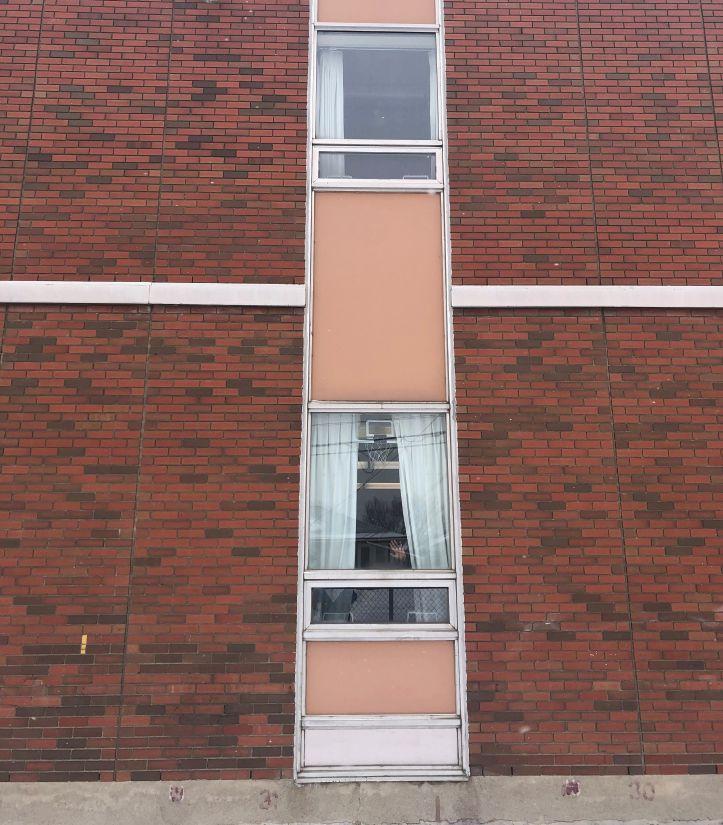
Brady of Cal-Tech Glass in Calgary is raising the alarm over hardboard spandrel panels installed in the 1960s and ‘70s that contain asbestos. He cautions that project owners may not be aware of the asbestos content in the products and that glaziers should take precautions before accepting jobs that involve their removal or disposal. Brady points to two products he has identified that may constitute a risk. According to original product literature available online, certain GlasWeld and Alcoa Asbestos Alply Wall Building Panels may contain asbestos.
“I have attached a picture of a project that I quoted earlier this year,” Brady
reported in a email. “I told the general contractor that I didn’t want to remove the existing unless it could be proven that they weren’t GlasWeld panels containing asbestos. They did a test and it was in fact asbestos. Had I not made them check, unsuspecting glaziers could have been put in harm’s way. I didn’t get the job but at least an addendum came out making everyone aware that these needed to be professionally abated. Given the new practice of removing old framing and installing new energy efficient frames, I think it would be prudent to teach apprentices and journeymen about the history of this product.”
Nice turnout for GlassBuild
The
2023 edition of GlassBuild was the largest in more than a decade featuring 481 exhibiting companies occupying 188,300 net square feet. The event drew more than 8,700 participants as it celebrated its 20th year. GlassBuild 2023 drew participants from all 50 states as well as attendees from Canada and 65 other countries.
“In Atlanta last week, we celebrated 20 years of GlassBuild America, delivering on our promise to bring buyers and sellers together for two-and-a-half days of incredible energy and connection-making,” said Nicole Harris, president and CEO of the National Glass Association. “Next year we head to Dallas for the first time, and judging from the non-stop exhibitor signups and attendee buzz last week, GlassBuild America 2024 is looking like another record-breaking show.”
The next GlassBuild America will take place Sept. 30 to Oct. 2 at Kay Bailey Hutchison Convention Center in Dallas, Texas.
PHOTO COURTESY JIM BRADY
CANADA’S GLASS ASSOCIATIONS
AVFQ
The big family of the glazing and fenestration industry will meet at the AVFQ Annual Conference. From April 16 to April 18, 350 participants are expected in Trois-Rivieres to train and connect with other members of our business community. More details at avfq.ca. A delegation from Quebec attended the Fenesterbau Frontale exhibition in Germany which was held in March. In addition to attending this largescale exhibition, members of the delegation had the chance to visit plants at the cutting edge of automation. As the impact of doors and windows is significant in relation to construction waste, the AVFQ commissioned a study to find possible solutions to reduce the footprint of our industry on the environment. The results will be known at the Annual Conference in April. The AVFQ is the industry’s leading organization for its 245 members!
PROVINCIAL GLAZIERS ASSOCIATION OF ALBERTA
Stephen Neis, director of apprenticeship delivery and industry support services for the Ministry of Advanced Education, addressed the Glazing and Metal Association (GAMA) dinner meeting on March 14. On March 15, GAMA joined the Canadian Construction Association and the Construction Specification Council for a night at the Calgary Roughnecks lacrosse game against the San Diego Seals. TheGAMA meetings are scheduled for April 4 and May 2.
FENESTRATION MANITOBA
In the ever-evolving landscape of manufacturing, our members are laser-focused on enhancing every aspect of their operations. From refining manufacturing processes and tightening quality control to pushing the boundaries of design and improving energy efficiency, our manufacturers are committed to staying ahead of the curve. However, challenges persist, particularly in recruiting and retaining skilled labour and navigating complex regulatory environments and incentive programs. At Fenestration Manitoba, we recognize the vital role we play in supporting our members through these challenges and opportunities. Beyond technical assistance, we prioritize fostering a sense of community through social events and networking opportunities. Our goal is not only to maintain Manitoba’s reputation for excellence in window and door production but to expand our reach across North America. We draw inspiration from organizations like MBEC (Manitoba Building Envelope Council), whose collaborative approach has led to significant improvements in building standards. By sharing best practices and learning from others, we aim to elevate the entire industry.
With a strong and dedicated board, led by our executive director Marcie Wilson, and the recent addition of Jonah Trusty from Armwood Windows, we are well-positioned to support our members and seize the opportunities that lie ahead in 2024. Together, we will overcome obstacles.
AGMCA
Formany members of the Architectural Glass and Metal Contractors Association, 2023 thankfully saw a return to total man hours worked at a level not seen since prior to the pandemic. A year of labour stability and an easing of supply chain issues were contributing factors resulting in better productivity. The number one concern of AGMCA members, however, remains the difficulty in finding and retaining properly skilled glaziers and we continue to work with the IUPAT and all levels of government to improve their recruitment and training processes. Our annual general meeting was held Nov. 30 in Toronto. Elections were held and we are pleased to announce our board of directors for 2024: Tony Menecola (Applewood Glass), president; John Bastedo (FMR National Contract Glazing ), vice-president; directors Bill Byers (Transit Glass), Noel Cunningham (Flynn Canada), Angelo Cairo (Stouffville Glass), Tim Isaak (Peninsula Glass) and Joe Buck (FMR Merit Glass); Kline Holland (FMR AFG), director of labour relations; Barrie Eon, treasurer; and Noel Marsella, executive director.
OGMA
I t is that time of year again: nominations for the 2024 Ontatio Glass and Metal Association Awards for Excellence are now open. The awards recognize outstanding work in glass and metal construction in Ontario. Visit ogma.ca for a full list of criteria and to download the nomination form. Nominations close on April 5 with the awards being presented at Top Glass on
April 30. To nominate yourself or another project participant, email Steven Peso at speso@ tremco.ca.
The OGMA board of directors would again like to thank Brian Wiles, Frank Fulton and Steve Gusterson, all of whom retired recently from the OGMA board, for their years of volunteer service to association. We are currently looking for energetic industry players to join the board for 2024. Please contact any current board member for further information or email info@ogma.ca. For 2024, the board of directors consists of Steven Ringler (Alumicor), president; Blake Sanders (Spandreltech), vice-president; Keith Elmer, treasurer; Eric Diotte (RSVP Agency), secretary; Andrew Dolphin (BVGlazing), past president; and directors Greg Parkin (Burlington Glass), Steve Peso (Tremco), Robert Casinelli (Cadwin) and John Rania (Rimac). Our administrator is Lori Brooks.
The 2024 OGMA membership campaign is now underway. Please be on the lookout for your membership package, which would have arrived by mail this month. If you are interested in joining the association or are looking for more information, please email info@ ogma.ca.
The OGMA Spring Golf Tournament is scheduled to be held on June 12 at Glen Eagle Golf Club in Bolton, Ont. The annual OGMA Lifetime Achievement Award will be presented at the tournament.
What’s next? We look forward to seeing everyone at the 10th annual Top Glass Conference and Exhibits, being held on April 30 at the International Centre in Mississauga, Ont. •
INDUSTRYNEWS
Integro files for bankruptcy
Integro Building Systems filed for bankruptcy on Aug. 31. It’s assets are in the hands of a trustee and a preliminary report has been issued listing creditors. According to the notice to creditors, Integro went out of business owing over $45 million in excess of assets. According to the preliminary report, Integro had three projects underway in Toronto at the time of its bankruptcy: Portland Commons, 489-539 King Street West and 25 Ontario Street. State Window has guaranteed the completion of the Portland project.
From the trustees report:
lntegro Building Systems Inc. was one of the largest curtainwall manufacturers and installers in North America and carried on their business from their leased premises at Huntington Road in Vaughan, Ont. [...] lntegro was experiencing financial challenges as a result of issues on a U.S. project and the impact of the post-COVID-19 economic environment including logistical challenges, increasing wage and raw material costs, material shortages, the impact of recent strikes on construction schedules and labour shortages. On top of this,
Agnora acquires U.S. fabricator
Agnora has announced the acquisition of West Coast Glass Products, a premium architectural glass fabricator based in Cerritos, Calif. Established in 1988 by Rusty Neubauer, WCP produces high-performance insulated glass materials. Agnora and WCP will continue to focus on fabricating custom, high-quality architectural glass for premium residential and commercial customers.
“We’re excited to be able to extend our sizing and glass capabilities for each company. Agnora’s oversized capabilities, coupled with our ability to fabricate high-quality, traditionally sized glass allows both companies to come to the table as a total glass solutions provider.” Says Rusty Neubauer, president of WCP.
“We’re thrilled to align with a proven, established, and industry-leading partner. With over 30 years in business and longstanding relationships with customers across North America, WCP aligns perfectly with Agnora’s mission to be a customer service company first and foremost.” Says Corey Boland, CEO of Agnora.
Agnora is a glass fabricator in Collingwood, Ont., known for production of oversized specialty glass.
the company’s financial situation was significantly impacted by fixed price contracts it was locked into on projects and decreasing demand for its curtainwall product as commercial office requirements have declined in the face of the increasing business practice of working from home. In July 2023, the company closed down its operation in British Columbia and subleased its facilities in Surrey, B.C., to a third party. As a consequence of these factors and their impact on cash flows, the company began to accumulate significant liabilities to its suppliers, subcontractors and Canada Revenue Agency. In order to address its financial issues, in 2022 certain of lntegro’s directors made an equity injection in holdings of approximately $6.1 million, which was then loaned to lntegro. Additionally, lntegro reached out to the general contractors and the owners of the current projects to seek financial assistance by way of earlier draws, advances on future draws and direct payments to suppliers. Although these measures helped lntegro continue in the interim it did not resolve its underlying working capital problems.
According to a 2018 report, Integro had 120 employees. James Wilson was president.
Morrison Hershfield acquired
Stantec, a sustainable design and engineering firm, acquired Morrison Hershfield, a 1,150-person engineering and management firm headquartered in Markham, Ont. Founded in 1946 and employee-owned, Morrison Hershfield has a strong presence in the Canadian architectural glass community. It has has offices in 22 cities in Canada and the United States, and one office in India. With a particularly strong presence in Canada, Morrison Hershfield will increase Stantec’s Canadian workforce by approximately 10 percent. Stantec said the acquisition is expected to expand Stantec’s presence in most major Canadian markets and further strengthen its U.S. presence in buildings engineering. Morrison Hershfield is one of the few large Canadian-based engineering firms with core strengths, business lines and clients that are additive to Stantec’s presence in multiple key growth markets, including the Greater Toronto Area. Similarly, Stantec’s global market presence and client relationships is expected to accelerate Morrison Hershfield’s business line growth opportunities as part of Stantec.
“We are thrilled to bring a firm of Morrison Hershfield’s stature into the Stantec fold,” said Gord Johnston, president and CEO of Stantec. “Our firms have shared a mutual admiration over many years. Stantec and Morrison Hershfield have a similar history from our roots in the Canadian market, growing and diversifying services both by geography and service line. And, importantly, our values and culture are very well aligned.”
“Joining the Stantec family marks a historic moment for our 78-year-old company. Stantec is a highly successful firm that shares our corporate values and mission, with a unique culture that complements our own,” said Anthony Karakatsanis, president and CEO of Morrison Hershfield. “With access to Stantec’s depth of renowned experts, resources, and cutting-edge technology, we will be able to provide our employees with exciting and meaningful work, growth and professional development for the long term. This acquisition provides us with access to many high-profile North American and global projects and markets in the communities where our employees live and work.”
Morrison Hershfield engineers George Torok and Yvon Chiasson are active in a number of glass organizations and on codes and standards committees.
Xinyi project manager disciplined
According to a Jan. 20 London Free Press report, Chris Pidgeon, the sometimes outspoken project manager for the failed attempt to bring a Xinyi float glass plant to Stratford, Ont., was found by his professional governing body, the Ontario Professional Planners Institute, to be in violation of two sections of its code of conduct and suspended from practice for a month. The suspension follows a complaint from Get Concerned Stratford, the citizen’s group that fought the Xinyi proposal. Pidgeon retired from his company, GSP Group, on Dec. 31, 2023. Xinyi Glass, a primary glass manufacturer headquartered in Hong Kong, abandoned its attempts to build a float glass plant in southern Ontario following failures to get municipal approval for the project in two jurisdictions. Councils in the Guelph area and Stratford either rejected the proposal outright or put consideration on indefinite hold, blaming COVID. Pidgeon came out strongly in public in defense of his project, going so far as to suggest racism lay at the roots the opposition in comments to the CBC and in newspapers. According to the Free Press report, the tribunal found Pidgeon in violation because GSP received money both from Xinyi and the city of Stratford. Get Concerned Stratford also referenced a section prohibiting “dishonourable or questionable conduct” but it is unclear how Pidgeon is alleged to have violated that. OPPI has said it cannot comment on a specific disciplinary case.
Shellard joins Fenestration Canada board
Fenestration
Canada has welcomed Geoff Shellard to its board of directors. Shellard is Pacific Northwest architectural design manager for Guardian Glass. This strategic move signals Fenestration Canada’s commitment to leadership excellence and its foresight into the evolving commercial glazing industry. With over nine years of distinguished service in the fenestration sector, Shellard brings a wealth of experience to the FenCan board. His role as an architectural design manager and involvement with Fenestration Canada and the glazing community have positioned him as a key influencer in the glass industry.
“Fenestration Canada has always been a place to bring together all facets of industry knowledge and life experience under one banner,” said Shellard. “My hope is for the FenCan Commercial Chapter to help Canadian glaziers operate less in a silo, to utilize their Chapter more as a community and a gathering place for collaboration.”
“Geoff’s acute understanding of the market, honed through his extensive interactions with fabricators, glaziers, architects and specifiers, provides a unique perspective to challenges and successes within our industry,” said Cam Drew, president of Fenestration Canada. Drew, who is managing partner of Thermoproof Windows and Doors, added, “As a brand champion and advocate, Geoff’s insights will drive strategic planning and contribute significantly to expanding the commercial chapter membership. His appointment aligns perfectly with FenCan’s mission to provide guidance for the association’s future, ensuring sustained growth and innovation.”
Notes
from the Fall Economic Statement
Ottawa
released its 2023 Fall Economic Statement in November. The statement announces that cooperative housing corporations that provide long-term rental accommodation would be eligible for the removal of the GST on new rental housing. The measure is not intended to apply to co-operative housing corporations where occupants have an ownership or equity interest. The removal of GST will not apply to substantial renovations of existing residential complexes. To build more rental apartments, faster, the statement announced an additional $15 billion in new loan funding, starting in 2025-26, for the Apartment Construction Loan Program, bringing the program’s total to over $40 billion in loan funding. This investment is expected to support more than 30,000 additional new homes across Canada, bringing the program’s total contribution to over 101,000 new homes supported by 2031-32. To build more affordable housing, the statement announced an additional $1 billion over three years, starting in 2025-26, for the Affordable Housing Fund. This investment will support non-profit, co-op, and public housing providers to build more than 7,000 new homes by 2028. This top-up is to be supported by $631 million previously intended for the one-time top-up to the Canada Housing Benefit. The 2023 Fall Economic Statement also announced that in the coming months, the federal government will advance the next phase of its work to remove the barriers to internal labour mobility, including by leveraging federal transfers, and other funding, to encourage provinces and territories to cut the red tape that impedes the movement of workers, particularly in construction, health care and child care, within Canada. This work will include working with provinces and territories towards full interprovincial labour mobility for construction and health care workers to meet labour market needs and expanding on the success of the Red Seal Program to improve the mobility of tradespeople and eliminate further barriers, such as duplicative credential recognition. The federal government is working to eliminate other barriers to internal trade by removing unnecessary federal exceptions in the Canadian Free Trade Agreement. The federal government launched in May 2023 a new selection process under the Express Entry immigration system to prioritize permanent residency applicants with specific skills, work experience, education, or certifications, including in the construction sector. Since May, 1,500 workers with experience in the trades have been invited to call Canada home. Following extensive engagement with unions, the government has focused this year’s application process on candidates with work experience including in carpentry, electrical, welding, plumbing, contracting, and other trades that can help build more homes, faster.
by AMY BECKER
Amy Becker is the Fenestration and Glazing Industry Alliance’s glass products specialist. She can be reached at abecker@FGIAonline.org
Your guide to doing it right
The many benefits of prioritizing daylighting and views in buildings are well established, but guidelines for vetting and selecting glazing systems are essential for unlocking these qualities. Luckily, the Fenestration and Glazing Industry Alliance is here to help with its updated IGMA TM-3000, North American Glazing Guidelines for Sealed Insulated Glass Units for Commercial and Residential Use. The comprehensive guide updated with new technologies walks manufacturers, fabricators, specifiers and contractors through all the glazing system components, addressing important points to consider, and potential concerns. IGMA TM-3000 addresses considerations for glass types, framing, clearances, setting blocks, spacer shims, glazing materials, glazing systems, storage and handling, glass protection and cleaning for both double- and triple-glazed IGUs. The document is all-inclusive, covering every aspect of glazing systems from A to Z. The latest update even addresses vacuum insulating glazing. Here’s a sample of just some of the autoritative advice it contains.
Glazing systems typically include silicones, polysulfides, polyurethanes, acrylics, latex, and butyls applied as gunned-in-place glazing sealants. When evaluating these systems, the selected materials for the glazing system and interior of the IGU must be compatible with all glazing system components. This includes the IGU sealant, which may be in contact with or encased under expected environmental conditions. The guidelines refer to three common types of IGU glazing systems: structural glazing, butt glazing, and dry glazing. Structural glazing or stopless glazing, where the IGU is retained only by a silicone sealant or adhesive joint, requires special care as seal
We’ve updated the authoritative standard for glass installation.
failure of a unit glazed without exterior stops could cause the exterior lite to fall from the building. Butt glazing, which is stopless glazing without a supporting mullion on any IGU edge, is not recommended unless the glass is stiff enough to avoid the high shear stresses caused by wind loads on the unit sealant, which could potentially lead to seal failure. Dry glazing refers to the portion of the glazing system that utilizes a non-mastic compound as the seal between the glass and frame. All major glazing components and materials – glass, gaskets, aluminum, wood, fiberglass, and vinyl – have tolerances. However, tolerances can add up and cause major problems such as glass not fitting and gaskets not sealing. Consequently, individual tolerances must be verified with the fabricators. Structural gaskets, also called zipper gaskets or lock-strip gaskets, are pre-formed, cured elastomeric mechanical seals used to install glass or solid panels in a supporting framework. And boot glazing, also called wrap-around marine glazing material, is available in rolls or strips which wrap around the perimeter length of the IGU.
Glass type and thickness should be installation-specific, firmly supported and resist applicable loads based upon CAN/CGSB 12.20-M89 or ASTM E1300-16, and the National Building Code of Canada, as determined by code jurisdiction. When manufacturers address pre-glazing considerations, this lends a higher level of quality assurance. This includes manufacturers’ shop drawing review, a pre-installation procedures meeting and inspection of the glazing system, and breather or capillary tubes. The glass fabricator or manufacturer should also be consulted regarding the glass construction, strength and compliance with specifications and glazing details. And the sealant manufacturer should be consulted for assurances of sealant compatibility and strength, approval of spacer shim materials and for recommendations on optimum joint configuration and proper adhesion to glass and support members.
This document is being updated, meaning a new version will soon be available. In the meantime, the current version of IGMA TM-3000 can be accessed at FGIA’s online store. •
FGIA
CONTACT US TODAY
Ask about our full line of tooling and supplies.
Exclusive Tooling Setups
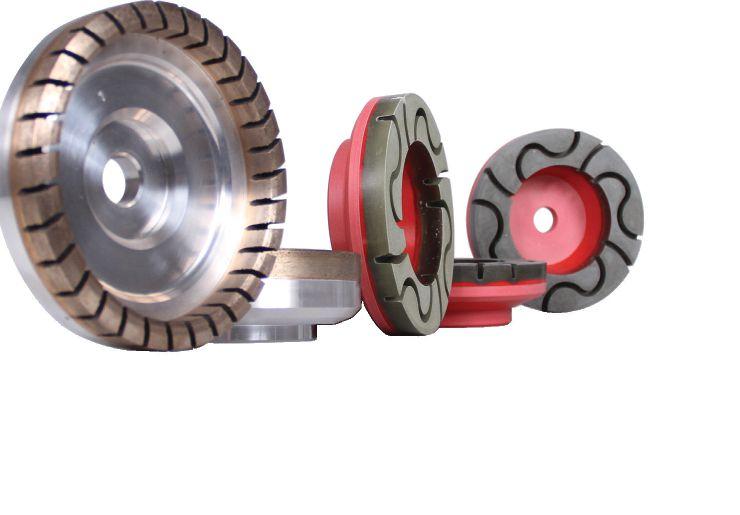
Salem carries premium tooling and supplies that cover every aspect of the glass fabrication process –including an exclusive line of diamond and polishing wheels for KODIAK® machinery. Our KODIAK® tooling setups include the highest quality metal bonded diamond wheels, SUPERIOR resin diamond wheels and Vero cerium polishing wheels.
PROVEN RESULTS
Heavy-Duty Polishing Machines
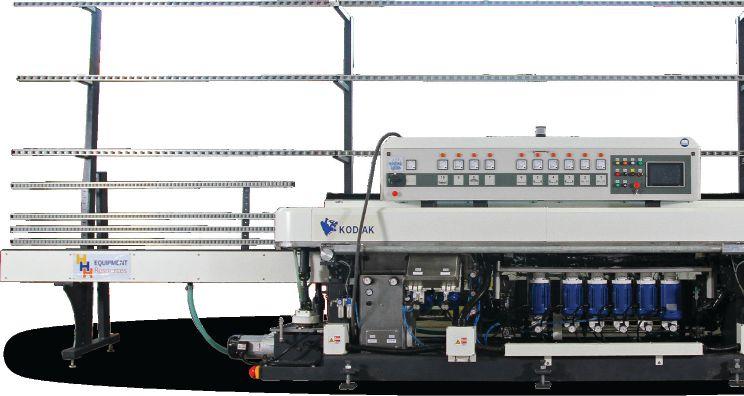
HHH brings you our ever evolving, exclusive lineup of KODIAK® edgers, miterers and bevelers. Our KODIAK® equipment comes backed by expert consulting and training, full parts stocking, 24/7 U.S.-based technical service and an industry-leading warranty.
CONTACT US TODAY
Ask about all of our machinery solutions.
LIVING WHERE THEY WORKED
Converting commercial space to residential use
by TREENA HEIN
The huge increase in working from home during the pandemic changed many things in our society, including the use of downtown office space. So many firms have permanently adapted to having completely remote or part-time remote working scenarios.Company leaders also like the savings from renting less office space and, unfortunately, the pandemic also caused many other companies to go under, vacating yet more office space. Combine that with the dire need for more housing in Canada, and you have growing numbers of conversions of commercial buildings to living space. All over the country, office towers, but also malls and even industrial spaces, are being turned into condos and rental apartments.
Before we look at how the glass elements are handled within these conversions, here’s a quick overview of the trend and some of the government actions that are likely to accelerate it.
Leading cities
Rich Porayko, commercial business development director for Fenestration Canada, says he’s hearing about a large amount of discussion on this topic. As far back as 2005, he worked with Garibaldi Glass, who supplied the IG units for the condo retrofit of Westcoast Transmission commercial building in Vancouver, a notable project at the time and still today.
But in the market of Vancouver and its surrounding communities, Porayko reports that the trend of commercial-to-condo retrofits hasn’t caught on yet, “even though the rent and real estate prices are among the highest in the country.” In his view, paperwork and approvals are a big factor. He notes that while obtaining permits in Canadian cities is “daunting” for big projects like these retrofits, it’s especially tough to get it done in Vancouver.
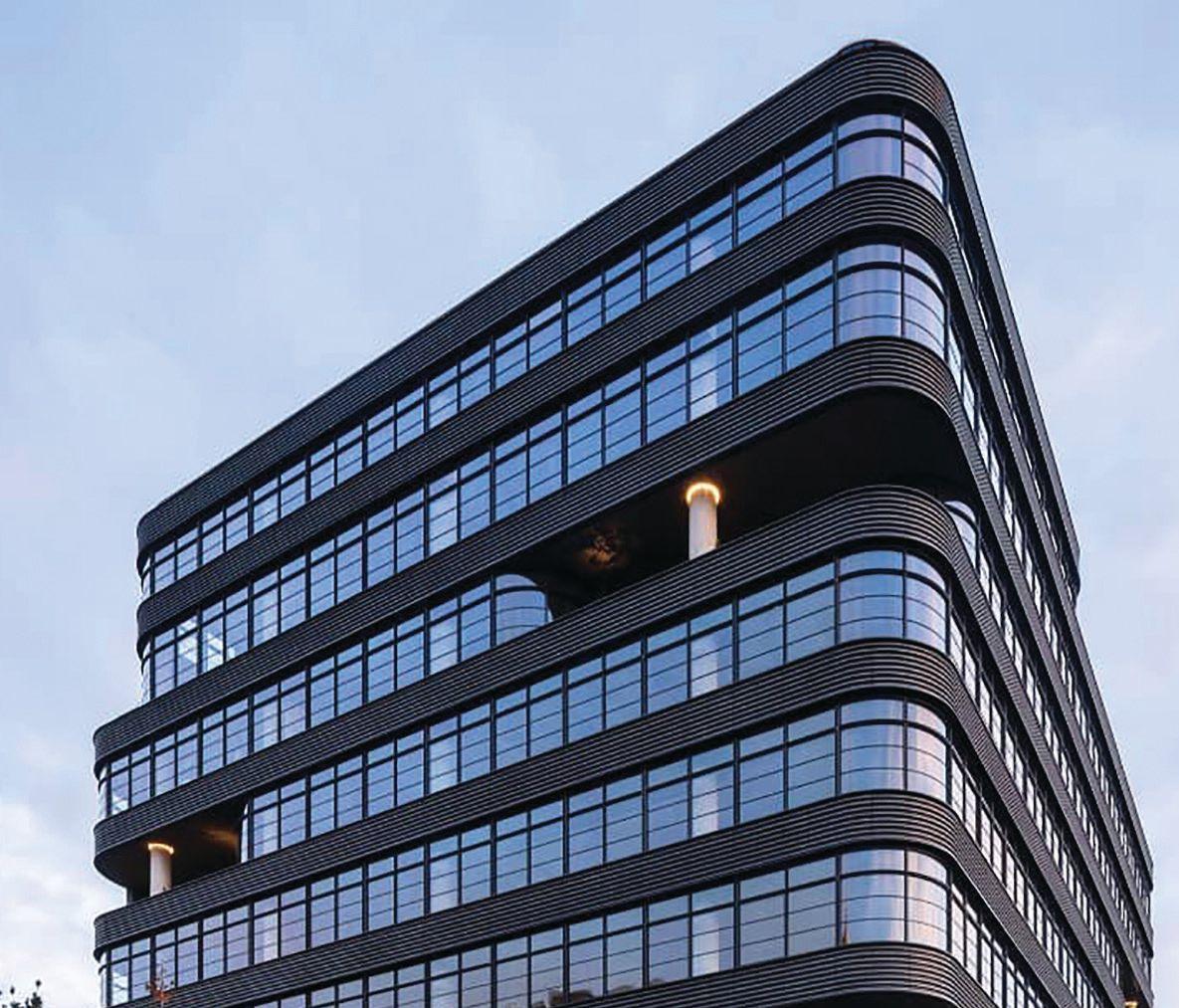
Conceptual renderings for an SGA Architects project. Top concerns for facade designers converting commercial space include daylighting, ventilation and sound suppression. Also, supporting and draining the window assembly can be tricky if the conversion switches to a residential-style operable window.
carries some challenges for glaziers.
However, as Geoff Shellard (architectural design manager at Guardian Industries in Vancouver) recently pointed out on LinkedIn, not many of the commercial buildings in Vancouver are viable for conversion anyway. There just aren’t many buildings that fit the criteria, he says, of older age and of limited present-day value, with a high level of vacancy, an appropriate location, manageable projected retrofit costs and a suitable building design.
While Vancouver may not have a lot of commercial-to-condo potential due to downtown building characteristics, another Canadian city has taken the undisputed national lead. It’s Calgary, home to more corporate head offices per capita than any other city nationwide.
By 2021, Calgary had experienced an extended downturn in oil prices and the COVID pandemic was in full swing. City leadership started up a unique incentive program, reports Porayko, one that’s unprecedented not only in Canada but across North America. The city reached its current funding limit of $253 million in October 2023.
“This program offered building owners $75 per square foot to convert underused office space into residential apartments,” Porayko reports. “Within a span of two years, the program has yielded approval for 13 office-to-residential conversion projects, while an additional four projects are currently undergoing review.” One example is the Dominion Centre, which will soon
finish conversion to 132 new homes. The largest Calgary office conversion project to date, Palliser One, will be converted to almost 400 residences.
Incentives clearly work where the buildings are suitable, and could work to spur conversions in Vancouver, Toronto, Ottawa, Edmonton and Montreal, where downtown vacancy rates currently range from about 12 per cent to over 20 per cent. In London, Ont., it’s 28 per cent. In late January 2024, the city received $74 million from the federal housing accelerator fund, and staff are now preparing a proposal for a commercial-tocondo program.
In the U.S., Duanne Render at global design firm Render recently reported that Chicago is currently offering municipal, state and federal funding under a new commercial-to-condo initiative called “LaSalle Street Reimagined.” The city of Portland is also looking at offering a broad incentive package.
In October 2023, the U.S. Federal government published a guidebook for conversions, outlining funding opportunities, some of the regulations and so on. But across the U.S. – with and without incentives – many conversions have already been completed in numerous other cities like San Francisco, Atlanta, Boston, New York and Houston.
Design implications
On the building design front, floor plate size (the window-
to-core distance inside a building) is a significant factor in terms of daylighting the condos that result from these building conversions. Deep floor plates make it harder for natural light to reach the interior of the apartment, especially if many walls are added. SGA, an architecture and interior design firm based in Boston and New York, has weighed in recently on floor plates and condo conversions on their website, noting that the sizes and dimensions found in office buildings often don’t “align nicely with ideal floor plate sizes and dimensions for residential units.” In these cases, to maximize use of natural light, SGA suggests the use of a light well, and/or open condo layouts that could include flexible indoor-outdoor spaces or balconies.
Many regulatory issues come into play besides typical building standards, from energy efficiency standards to affordable housing to asbestos abatement. Regulations in some jurisdictions need to be vastly updated as well, to address the specifics of these conversions.
Like any other construction project,
the electrical, HVAC, glazing and all other aspects of a condo conversion require some proven solutions along with a little or a lot of unique approach.
But as Mike Battistel (president of Cascadia Windows and Doors in Langley, B.C.) explains, the changes that might be required to the glazing and glazed entrances of commercial buildings to make them suitable for residential living “really depends on what is there in the first place. In many cases, no changes would be required.”
He adds however, that “in some cases, if the windows are approaching the end of their useful life, it serves as an ideal time for window replacement when there will be no disruption to the occupants.”
That being said, office building facades aren’t always appropriate for residential use. “For example, when new partition walls need to be installed perpendicular to the existing fenestration system, the window frames may not be wide enough to accommodate the partition wall butting up to it,” Battistel explains. “In other cases, the window
frames may not be positioned in the best possible location for the partition wall placement.”
Some experts point out that in some jurisdictions, such as California, compliance with the light and ventilation regulations for residential buildings requires the entire curtainwall be replaced with a system that incorporates operable windows. But new solutions have emerged. Battistel explains that it’s possible to install operable vent adapters into existing curtainwall glazing systems and some existing window wall systems. Cascadia Windows has a fiberglass curtainwall vent adapter specifically for this purpose.
Office buildings typically do not have as many operable vents as residential buildings, but Battistel adds that it’s possible to work around the dearth of windows with the ventilation system and also the fire suppression system.
George Torok, building science specialist with Morrison Hershfield, notes that some older office buildings considered for conversion have simple wall assemblies. “Precast concrete panel-clad
walls are essentially face-sealed except for joints in buildings constructed since the late 1980s, which are likely to be two-stage or ‘rain screen’ type,” he explains. “It’s generally accepted today that windows should be installed with the window-to-wall joint following the rain screen principle. This may be difficult with residential window assemblies which generally have deeper frames than commercial window assemblies, which could be greater than the depth of the precast.”
Torok notes that if the new window assemblies are supported by the precast, some kind of sleeve may need to be added around the perimeter of the window openings to support the frame and allow for application of a waterproofing membrane for sub-sill drainage. Otherwise, a wind-bearing steel stud wall assembly will be needed inward of the precast to which a sleeve and waterproofing membrane can be applied, similar to the approach for new high-rise residential wall assemblies.
Mass-wall masonry assemblies would pose a similar challenge, he adds. “The detailing must also allow for connection to air and vapour barriers in the surrounding wall assembly, and the window should be positioned within the plane of the insulation in the wall assembly. At the exterior, new exterior frame-to-cladding sealants will likely be applied to existing, soiled cladding, which may affect adhesion.” A careful study of installation detailing should be made early in the design process to ensure such issues are addressed properly.
Looking at a specific conversion, the 360 Laurier project in Ottawa, Torok and his colleagues have reviewed the architectural drawings and he notes the plan is to replace the existing aluminum-framed windows with hybrid-framed products (usually vinyl interior and aluminum exterior). Torok thinks this is a good idea. “Canadian building codes have included an exception to using combustibleframed windows in high-rise buildings that typically must be built with noncombustible construction, provided that the window-to-wall ratio was fairly low and the window openings were separated from each other vertically and horizontally by non-combustible cladding,” he says. “That may be one of the design
considerations for using hybrid windows in the 360 Laurier project. The 2020 National Building Code of Canada has removed those constraints – mostly –which may help with office-to-residential conversions, allowing high-performance windows to be installed on more extensively glazed buildings.”
Noise is also a concern in commercialto-residential conversions. The team at Giroux Glass (an employee-owned glass, glazing and architectural metal firm in the U.S. southwest) recently pointed out in a blog post that because viable conversion candidates are often located in busy downtowns areas with high decibel levels, “replacing windows to ensure functionality also provides developers the perfect opportunity to improve their soundproofing as well.”
Torok notes that operable windows with low air-leakage resistance – especially hinged types such as awnings, hoppers and casements – will help with mitigating mid-to-high frequency sounds. He adds, however, that the glass package may need to be adjusted,
too. “It’s already common for thermally broken aluminum-framed windows and window wall assemblies to include IGU with wide cavities between the panes to control noise,” he explains. “That’s the low-hanging fruit. It may also be necessary to consider using asymmetric IGU with two panes of glass of different thickness, in some cases with the inboard pane of laminated glass.”
This is not without challenges, and Torok notes that the frame must have flexibility to use IGU other than the usual symmetrical type with two panes of fourmillimeter glass (typical for aluminum/ vinyl hybrids) or six-millimeter glass with a 13-millimeter cavity. Also, the frame needs to be able to support the added weight of an asymmetric IGU, and the load needs to be transferred to the surrounding wall assembly through the installation detailing so the frame does not distort over time.
Overall, Battistel believes that if a building conversion “is done strategically and effectively, occupant comfort can be the same in most building types.” •
Join us at the CGC
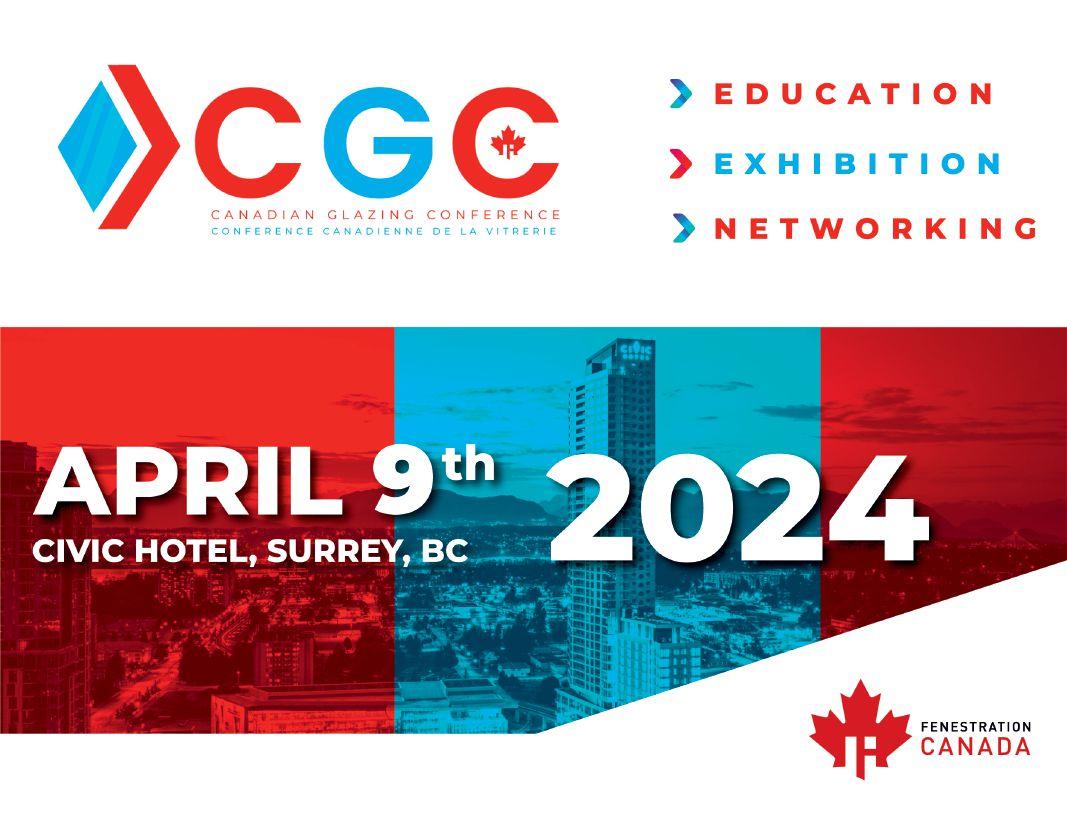
Fenestration Canada’s Canadian Glazing Conference is coming to Surrey, B.C.’s Civic Hotel Autograph Collection on April 9. The inaugural CGC event will encompass a diverse array of subjects related to the commercial glazing industry. Professionals in fenestration from across Canada will converge in Metro Vancouver to partake in this first-ever gathering.
The conference is scheduled to kick off with a presentation on glass technology energy performance by industry veteran, Geoff Shellard, Pacific Northwest architectural design manager for Guardian Glass. Shellard will share his insights on the trends that are driving innovation in fenestration and commercial glazing including float glass and coatings manufacturing, new products, designing with solar heat gain coefficient and new technology.
Other notable speakers at the CGC conference include Casey Anderson, marketing manager for ICD High Performance Coatings and Chemistries, manufacturer of the Opaci-Coat 300 waterbased silicone glass coating. Anderson’s AIBC-accredited presentation, “Silicone Coatings: A guide to specifying spandrel and back-painted glass,” will provide specifiers, architects and designers critical education about specifying silicone-based glass coating technologies based on project-driven requirements. Attendees will learn about key technical, esthetic and performance considerations for spandrel and back-painted glass, including applicable standards. Product defense methods will also be addressed to improve communication between design and construction teams and strengthen their data-driven focus to utilize silicone-coated glass to meet design and performance goals.
Layton Consulting’s Anton Van Dyk is set to speak on “The Engineering Process: Before or after you quote a project.” Van Dyk’s presentation will cover the story of fenestration engineering and how structural engineering has been managed in construction. Van Dyk will discuss the transition from standardized fenestration systems to customization systems and how this impacts engineering.
The inaugural Canadian Glazing Conference promises to be a great event for commercial glaziers.
Attendees will learn how to identify who is responsible for code compliance and how responsibility is passed through the process. They will also learn how to navigate conflicts on codes and standards and who can make the decisions. We’ll also discuss how to dentify and assess specifications that appear to be “copy and paste” versus the request for project-specific structural design and thermal modeling.
Fenestration Canada also welcomes back Don Welsh from Tormax Canada who will once again delve into the world of automated entrances and explore a wide range of pedestrian automatic doors. Welsh’s presentation will cover project requirements, building code compliance, site conditions, product applications, fire routes, barrier-free designs and more. Don’t miss this opportunity to be (re)introduced to the wonderful world of automated entrances.
Rounding out the free educational content is Sean Pander, green building manager for the city of Vancouver. Pander’s presentation will provide detailed insights into the process and procedures involved in constructing a commercial building in the beautiful but complex City of Glass.
In addition to the various presentations and talks, FenCan’s Canadian Glazing Conference will feature networking opportunities including coffee and a free lunch for all attendees. A growing tabletop trade show will allow exhibitors to have the opportunity to share their latest products and services from high-performance glass coatings to glazing hardware, tools and accessories.
Fenestration Canada’s inaugural Canadian Glazing Conference is set to be a valuable forum for commercial glazing industry professionals. We hope it will demonstrate the many ways that the field of fenestration is evolving and highlight the important contributions that Canada’s glazing industry is making to the global market.
Registration is open for glazing contractors, glass shops, installers, window and door manufacturers, building product manufacturers, glass fabricators, architects, engineers, facade consultants and glass equipment suppliers. Limited tickets are available. Registration is priced at $150 plus GST. Fenestration Canada has secured a limited number of rooms at the exquisite Civic Hotel Autograph Collection. Visit our website for further details and secure your spot now. •
UNDERtheGLASS |
Laser focused
BVGlazing invests in latest laser etching technology for bird-friendly glass.
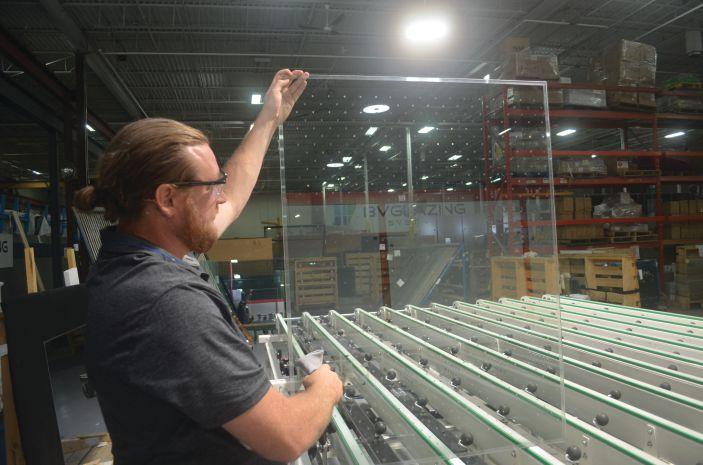
Andrew Dolphin with his laser etcher. The technology gives him the ability to etch bird-friendly patterns onto surface 1 on low-E glass. Can you feel the love?
AT
A GLANCE | BVGlazing
If you check out BV Glazing Systems’ website, one of the first things that pops up on its home page is their slogan, “Enhancing Skylines.” As a company with more than 60 years’ experience delivering solutions to the window wall, curtainwall and railing industries (they were previously known as Allan Window Technologies), they’ve been enhancing skylines in some of the biggest cities in North America for decades. The company operates all over North America, including four cities with some of the most impressive skylines: Toronto, Vancouver, Seattle and New York.
While serving these major markets has its advantages, it also requires the company’s products to evolve quickly to stay in compliance with the latest building standards and municipal codes to remain a leader in building envelope fabrication. The company’s most recent investment is a new laser etching machine supplied by Orion Laser Tech out of Belgium. It was the first of its kind to be installed into the North American market. BVGlazing’s machine was installed at its fabrication plant
in Concord, Ont., which runs three shifts, five days per week and also weekend overtime as required. The main application for this impressive piece of equipment: bird-friendly glass.
“The latest Toronto Green Standard version 4 adopted the CSA’s A460 birdfriendly requirements, and that means your bird-friendly markings have to go on the first surface of your glazing products, which is the exterior surface of a building,” explains Andrew Dolphin, general manager for BVGlazing Systems. “Due to thermal performance the low-E coatings have to remain on the second surface. The previous way we produced bird friendly was with ceramic frit paint, but you can’t do that on a piece of low-E glass. The laser will etch the first surface of the lowE glass before it goes on the furnace and then we make the sealed unit.”
While there are other options for firstsurface bird-friendly markings, Dolphin says the laser etcher was the best option overall.
“You can also buy acid-etched sheets but for our business using the laser made more
economic and practical sense. The laser allows us to use any glass substrate and lowE. And to size while holding a starting point so that the markings will line up, which is a feature most architects seem to like.”
The bird-friendly market is certainly experiencing significant growth, with Toronto, New York and Ottawa already birdfriendly glass markets and many others looking into it.
“Just about every major city in North America is looking to go to it,” Dolphin says. It was clear to him when Toronto was introducing bird-friendly standards that the regulations would pose a significant challenge to the industry. Speaking on the GlassTalk
podcast in 2021, Dolphin said, “We’re talking about the first 16 meters of every building in Toronto. Who’s going to be able to supply that amount of glass to the market? You know, with energy codes you can’t move the low-E to surface three. And a lot of lowEs are second surface only. So you’re talking
about taking away a lot of options for architects and developers. I’m just interested to know if the cities have done their research and understand what the repercussions are.” These were the considerations that spurred BVGlazing to start looking for better ways to produce bird-friendly glass.
Investments in equipment are making life easier for workers and reducing waste and rework.
Laser-focused
BVGlazing decided to team up with IGE technologies to procure the Orion Laser machine after visiting Orion’s plant in Belgium. “They specialize in precision equipment and lasers which seemed like a pretty good combination to make a laser etching machine.
“It’s a fairly simple machine with a lot of technology in it. The operation of it is very easy. We kept it very simple. We run two different bird-friendly patterns. We currently don’t do lines. We only do certain spacings that the codes require. That helped make it very easy to operate. I had three shifts running it within two weeks of installation,” Dolphin says.
While the Orion Laser Tech laser etcher comes at a significant up-front investment, the machine reduces overall operating costs when compared to using more traditional methods. It also makes the overall production process for bird-friendly glass
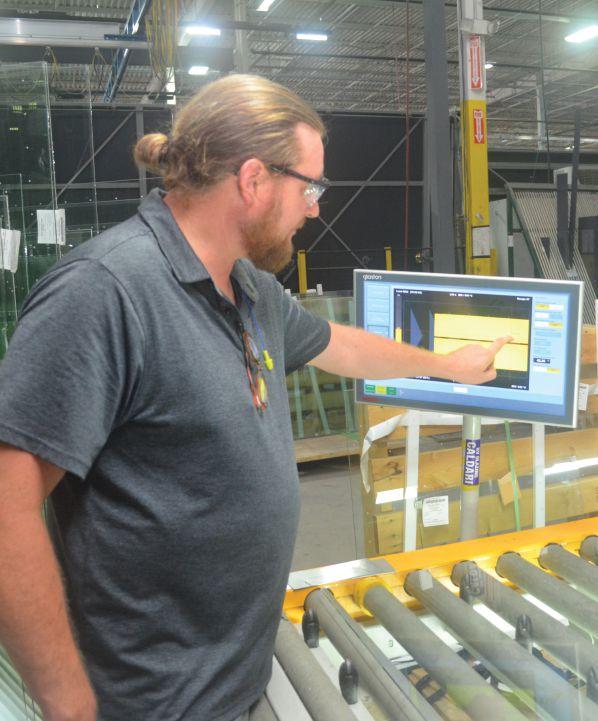
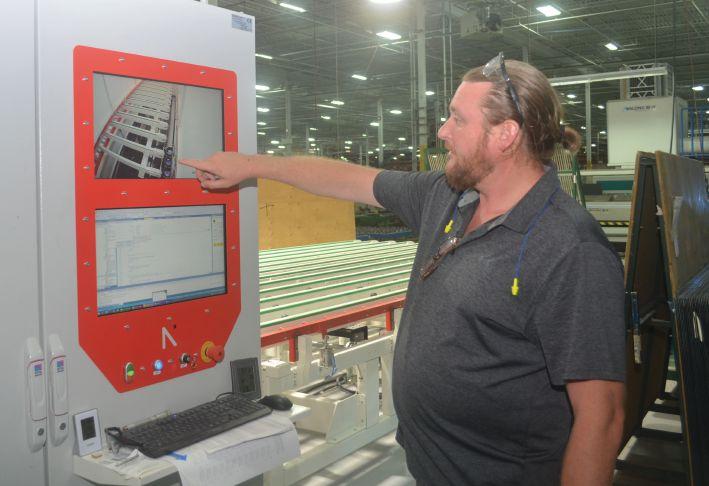
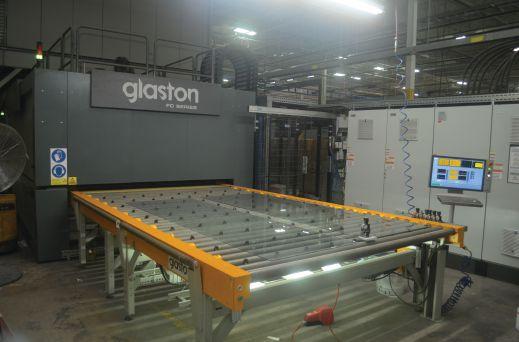
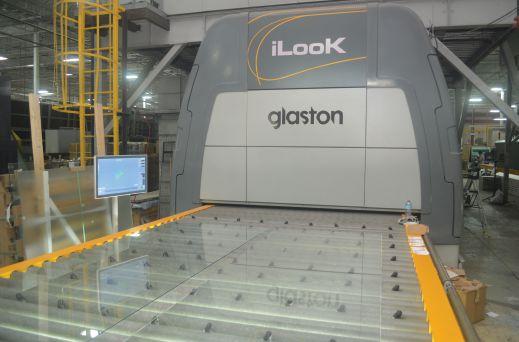
BVGlazing’s two Glaston tempering furnaces have pleased Dolphin with their consistency and quality. The attached inspection software allows on-the-fly adjustments and collects useful data.
more sustainable.
“There are no inputs. There’s no paint. There’s no screens. It’s literally just a little electricity. It doesn’t even use that much amperage – it’s around 60 amps,” Dolphin says.
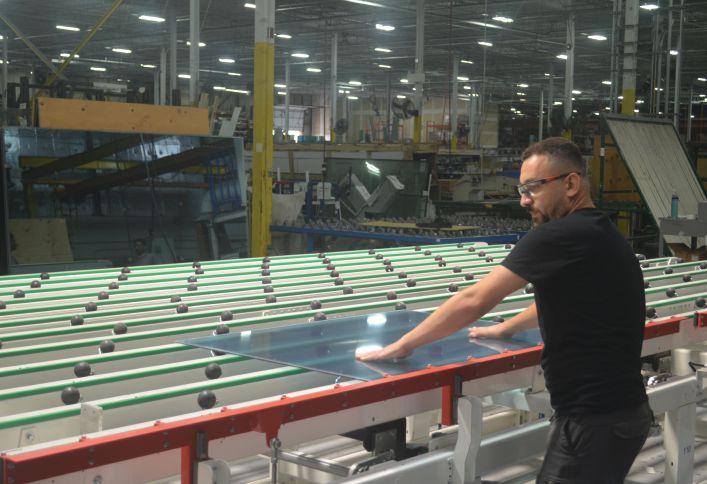
The machine is easy to set-up and requires very little labour.
“If you have a crane on each end, you can just have one person load it onto the machine. Then it does the markings and the same person can offload it,” Dolphin says.
The laser etcher can produce upwards of 800 square feet of bird-friendly glass per shift. Dolphin says there is definitely a market for all that glass. “The market is big for this glass. Our own
requirements are very large. And there’s a huge market coming up in the future. Dolphin says. “We’re a pretty forward-thinking company. I guess there’s a risk to anything, but we noticed the need in the market and went for it. Our senior leadership is very supportive.”
Investment in new technology
The glass department at BVGlazing’s Concord facility has been growing quickly, so the company is regularly reviewing its options for new fabrication equipment.
“About seven years ago, we made a huge investment into the glass department. We have a full operating glass facility here that provides glass to our curtainwall, window wall and railing departments, and also provides some glass to the market,” Dolphin says. Added around that time was a jumbo LiSec cutting table with an overhead gantry crane with 67 pick positions. It does XYZ cutting and shapes up to 132 inches, at four- to 19-millimeter thicknesses. “It’s our workhorse here now, Dolphin gushes. “It’s a great cutting table. We’ve got online edge deletion, which is really nice.” Dolphin added some racks fabricated in-house at BVGlazing’s commercial division. “They’ve got some really good steel workers down there.”
The big addition also included two LiSec IG lines with capacities of 96 by 180 inches with gas fill presses. Also an FC 500 furnace from Glaston bringing the company’s total up to two Glaston tempering furnaces. Dolphin says the automation is improving quality and efficiency. “We get really, really flat glass coming out with two Glaston furnaces now. The furnaces are equipped with Osprey and Ilook technology for peak-to-valley roller wave measurments. And we’ve also got thermal scanning coming out of the furnaces so operators can make sure they are getting even heating and make adjustments on the fly.
“The less times you’re touching things, your quality goes up,” Dolphin explains. “Glass handling is where you create a lot of your scratches and scuffs and especially when you’re dealing with low-Es. Low E coatings are really sensitive and easily damaged. So a lot of that has helped. Even just updating our carts to make sure we have the right padding and the correct wheels and fixing the floors and all those things. Because, you know, it’s a killer in glass fabricating. It’s one thing that people who don’t live it don’t understand. You’re remaking anywhere from two to
10 percent of every order. Trying to actually implement that into a production plan makes life very difficult. So the lower rework you can get and the more consistent you can get it, you can really put better plans in place.”
The Concord facility is considered a parts facility, producing aluminum panels
as well as the framing for the company’s window wall systems.
“We do the cutting and fabricating and then across the street they do the glazing. We also have a warehouse here and we have another building that does our railings and stick curtainwall,” Dolphin says. Future expansion plans for the Con-
Look closely. You can just see the bird-friendly pattern. Dolphin says his laser etcher can manage up to 800 square feet per shift.
cord-based fabrication plant include increasing cutting and tempering capacity. “We are constantly reviewing our capacity and market conditions to decide if investment in more machinery is needed. Working for BVGlazing and our outstanding team has been amazing. I’m not sure I could of gained this kind of experience anywhere else”
A bright future
While higher interest rates and inflation have slowed new construction temporarily, Dolphin expects the slowdown to be short-lived. With record numbers of new immigrants entering Canada over the next few years, and the majority of those people headed to major cities like Toronto and Vancouver for employment opportunities, the demand for new high rise residential construction will only increase, spiking demand for all of BVGlazing’s products within the building envelope. •
by CLAUDIO SACILOTTO
Why glass is invisible
As a young child, I used to wonder what made glass invisible. Was it magic? Or just something that only scientists understood. I finally decided to take a trip down nerd road and figure out what makes this stuff so completely transparent. After all, this is the principle material in our industry.
The main raw material for glass is sand. Typically, sand is mostly silica in the form of quartz, which in its pure form is transparent, clear and colourless. Impurities in the sand will impede the glass’s colourlessness and transparency, therefore sand needs to be purified so that it can be made invisible. When molten glass is quickly cooled, the glass molecules (mostly silica, soda ash, and lime) cool into an amorphous solid without the crystalline structure that is common in many other solids. There are no grain boundaries or other crystallographic defects that could scatter light. As it is losing energy, the glass matrix (in an attempt to minimize its surface energy) will form an ultra-smooth surface that is essential for transparency, as there are no angles to refract or reflect light in various directions.
But how does light pass completely through? Light energy comes in the form of photons. When photons strike a material, they can either pass through it, get absorbed or are reflected. When we look into the subatomic structure of the atoms that make up glass molecules, we perceive electrons “buzzing” around a dense nucleus. The reality of these “buzzing” electrons is that they are fixed to prescribed orbitals or electron energy states. The gap between the various electron
It’s the size of the subatomic band gap in its electron shell. Obviously.
THE ENGINEER
energy states is known as the band gap. Every material has its characteristic band gap. It’s these gaps that are responsible for many of its material properties. It just happens that the band gap for glass is fairly large. Metals typically have small or no band gaps and this is the reason why they are opaque. It’s no coincidence that materials with very small band gaps are also electrically conducting as small band gap differences are also responsible for electrical conduction.
The band gap of glass is such that photon energy from visible light (in the 400 to 700 nanometer range) is not high enough to promote its electrons across the band gap. Therefore, photons pass right through the material unobstructed. For other materials such as metals, the energy band gap is small. Therefore, visible light photon energy will get absorbed by the electron in the metal and be promoted across the band gap. The photon stops there. This is why materials such as metal are opaque. Conversely, higher energy radiation from the electromagnetic spectrum, such as ultraviolet light (in the 10 to 330 nanometer range) has sufficient energy to promote the electrons in glass across the band gap. Just like a metal, the photons lose their energy to promote the electrons and the photons stop in their course. For the most part, glass is opaque to most UV light (with the exception of UV-A light in the range of 330-400 nanometers). Needless to say, it is difficult to suntan behind a window.
So, you may also wonder why sand, the raw material for glass, is not transparent. This has to do with the fact that each grain of sand is a small crystalline glass cube. These cubes have facets that face many directions. The refraction of light with the facet will scatter it in many ways and the overall collection of these cubes of quartz results in an opaque appearance. Wetting sand further increases the refractive index differences of the sand with water, so the sand will appear to be darker. Interestingly, immersing quartz sand in a liquid with the same refractive index will result in the sand becoming invisible as there will be no more light scattering.
The invisibility of glass is a result of its unique atomic structure and light transmission properties. Whether in architecture, art, or the lenses of my glasses, the invisible wonder of glass continues to captivate and enrich our world. •
GLASS
INDUSTRYEVENT
TOP GLASS TEN
Exclusive learning to cap off a decade
Top Glass, Canada’s show for the architectural glazing industry, goes down for the 10th time April 29 and 30 at the International Centre in Mississauga, Ont. The in-person conferences happen on April 30 in the lecture theatre adjacent to the exhibit hall. Admission and parking are free. The conference sessions are recognized for continuing education credits by most professional associations and attendees receive certificates of attendance to confirm their participation.
Here’s what you’ll find at Top Glass Ten. For more details and to register, visit topglasscanada.com.
April 29 Plant Tours
On April 29, the day before the regular show program, over 100 Top Glass attendees will tour the nearby facilities of major fabricators to see glass, facade and custom entrance fabrication up close. Registration for these tours filled up fast and is now closed.
Meet the Fabricators Panel
Andrew Dolphin, general manager at BVGlazing Systems
Adam Franklin, CEO of Saand
Ryan Spurgeon, former president of Antamex
Ray Wakefield, technical sales representative at Trulite
We’re going to talk about Canada’s glass industry with four people who know it best. Executives from four of Canada’s fabricators of glazed building facades will take the stage at Top Glass to tackle industry issues, share their insights into the trends that will shape the future, and take your questions about how the products you specify are made. It’s a peek behind the curtain guaranteed to boost your understanding of the architectural glass world.
Concepts in Thermally Broken Aluminum
Jonathan Chauvette, president of StarliteCorp
Steve St. Pierre, senior design engineer at Ensinger
Extruded aluminum profiles, are entering a new era of challenge and opportunity. The urgent need for improved insulating
values in facades coupled with an emerging understanding of the importance of embodied carbon threatens the status quo. At the same time, the need for rapid construction of lowcost housing and market demand for larger glass spans recommends we improve aluminum designs rather than abandon them. Jonathan Chauvette of StarliteCorp and Steve St. Pierre of Enginger are experts in aluminum profile processing and will share new methods and approaches for creating thermally broken aluminum profiles with surprising energy efficiency characteristics.
For the Birds: Bird-friendly glazing design and trends
Amy Roberts, FGIA director of Canadian and technical operations
Many anti-collision measures aimed at preventing bird impacts are being utilized by designers and installers. Architecturally, they range from shutters to shades and netting to mesh screens. But what is even more exciting are the innovations in bird-friendly glazing itself. In this session, Amy Roberts, FGIA director of Canadian and technical glass operations, will address key topics related to bird-friendly glass including design considerations and trends for specifiers; the connection between energy requirements and bird-friendly requirements; the challenges of fabricating bird-friendly glazing; and what’s next for bird-friendly glass.
Cross-Country Codes and Standards Roundup
Terry Adamson, Fenestration Canada technical director
From his perch atop Fenestration Canada’s technical services department, Terry Adamson has the advance scoop on upcoming changes to the codes, standards, regulations and laws that govern how we build glazed facades. In this presentation, he gives us an overview of the main regulations controlling the energy performance of Part 3 building envelopes in the various jurisdictions across the country and notes recent changes and coming updates. He will also note where shifting regulations are likely to change how facades need to be designed to meet code in the future. •
TOP GLASS TEN SNEAK PEEK
Over 60 years of expertise
prevost-architectural.com
Prevost Architectural Aluminum manufactures a wide selection of high-quality aluminum building materials for upscale institutional, commercial and residential markets. It is known for its leading-edge designs and possesses superior anodic oxidation treatment expertise. Prevost has worked in partnership with architects, glaziers and general contractors since 1959, developing curtainwall systems, doors, windows, skylights, and other durable products in innovative designs. One of the first Quebec manufacturers to produce high-performance curtainwall, Prevost manufactures efficient and robust window equipped with the patented MaxSeal glazing stop. Prevost also introduced the P-55 Evolution, a silicone-free curtainwall. It recently developed the Series 6000 Window Wall, a new-generation building envelope system.
Speeds up every part of the process
laserproductsus.com
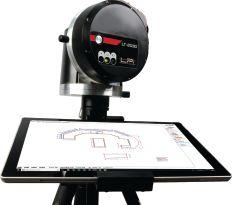
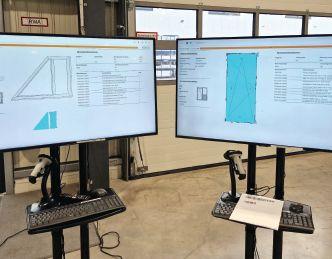
Laser Product Industries manufacturers digital templating systems for a wide range of industries, including the glass industry. One flagship product is the LT2D3D , a cutting-edge laser system specifically designed for digital templating. The LT2D3D is a versatile and highprecision laser system that offers advanced capabilities for measuring and templating surfaces. With its two- and three-dimensional measuring functionality, this system allows for precise templating, making it ideal for applications in custom architectural glass, glass production and countertop fabrication. The key feature of the LT2D3D is its high speed and accuracy and its measuring capabilities, which result in clean and precise measurement every time. This not only helps increase productivity and efficiency but also ensures the accuracy of the fit and finish of the fabricated products that meet the rigorous standards of the industry. Additionally, the LT2D3D comes equipped with user-friendly software – LT3 Raptor – that is a new digital templating platform designed with a robust cloud-based management hub to make contraactors faster and more efficient not only in templating, but also other areas of the process including job management and programming.
Reduced-maintenance hinges
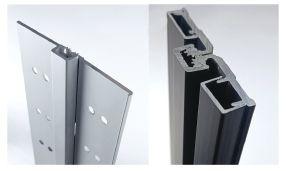
BHS Canada offers aluminum geared continuous door hinges which provide a secure and long-term solution for high-traffic commercial door openings. The continuous hinges are available in full-mortise and full-surface types. They are designed for new construction or retrofit applications and reduce maintenance costs while outperforming traditional hinges in schools, offices, airports, storefronts, hotels and public and industrial buildings.
Get software advice at Top Glass
klaes.de
“We organize business,” is the central claim of Klaes and also the motto for its appearance at Top Glass 2024. The world German software provider presents innovative IT solutions for intelligent digitalization, giving customers permanent benefits due to transparent and short workflows. Its focus includes all processes in the value chain. Klaes software solutions for producers and dealers of windows, doors, facades, conservatories and other complex construction projects are intended to make the various business processes as simple as possible. This particularly applies to existing solutions, with long-term updateability of all solutions a central goal of Klaes. Highlights at Top Glass, in addition to the well-known construction solutions, are the new Klaes e-Prod which combines the extremely diverse areas of application in production and logistics with new freedom for individual adjustments, the first expansion stage of the new Klaes material management. Alu Plus enables aluminium window producers to implement their entire workflow in one software with machine connection, the standardized Klaes CRM solution and connections to the configurators of Growe/Roltex and Pirnar. Get your personal advice from Klaes at Top Glass 2024.
SHOWCASE
Add fire resistance to any glass spec
nvoy.ca
PolFlam produces fireresistant glass for internal and external applications. Its fire-resistant glass can be used in partitions including frameless butt-jointed partitions and windows and doors, and also facades including roofs and smoke barriers. PolFlam fire-resistant glass can be installed in various tested and certified framing systems including aluminium, steel and timber systems. It can be also combined with all glass treatments including low-E, solar control, sound control, laminated, anti-burglary, bulletproof, opaque, coloured and decorative and anti-reflective. PolyFlam supplier, NVOY Architectural Products, is presently seeking Canadian and American distributors.
No need for triple glazing
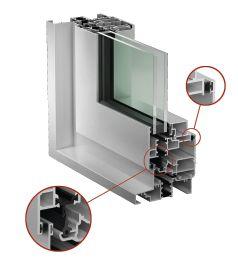
Elevate your low- to mid-rise projects with Reliance-TC LT, an energy-efficient curtainwall technology designed to meet the needs of both glaziers and architects. This lightweight system offers outstanding thermal performance, featuring U-factors as low as 0.29, eliminating the need for triple glazing. Design possibilities are endless with a slim two-inch sightline, a versatile twin-span application and a dual-finish option for a tailored esthetic both inside and out. Beyond superior performance, Reliance-TC LT prioritizes sustainability with LEED eligibility and Red List Free compliance. Meticulously engineered for maximum efficiency, its lightweight design makes handling effortless, while the shear block assembly and dry glazing ensure seamless installation. Reliance-TC LT empowers design and construction professionals to achieve unparalleled energy efficiency, impeccable esthetics and a seamless installation experience.
Bird-friendly low-E
The Ultisol International range of products keeps evolving. It now offers bird-friendly glass with frit on surface #1 and low-E on surface #2 that complies with Ontario and most North American standards. It is tested and approved by the American Bird Conservancy. It’s offered it on all major low-Es such as Guardian, Vitro, Cardinal, Saint Gobain and others. Ultisol offers standard and custom-made designs. Its bird friendly glass has been provided to several projects such as the University of Ottawa Health and Science Building, the 2 Bloor Street West podium renovation in Toronto and 6301 Campeau Street in Kanata, Ont.
Ultisol is a facade solution company that offers engineering and material supply to facade contractors. Based in Toronto, it serves both the Canadian and US markets. Ultisol also offers value engineering and cost-effective solutions to architects, contractors and builders.
Biggest installation yet kuraray.us.com
The glass windscreen/rainscreen facade system installed at the new Kansas City International Airport parking garage was developed and specified in conjunction with Kuraray and Bendheim in New York. The glass panels are six feet wide by 14 feet high, one of Kuraray’s most extensive applications of SentryGlas Translucent White thus far. The new terminal includes 1 million new square feet of space, 39 gates, 6,150 parking spaces and the arrivals and departures split into two levels for customer convenience and better traffic flow. Locally, the $1.5 billion initiative is the largest single infrastructure project in the city’s history. With features such as a sensory room, all-gender restrooms and provisions that will allow extra-wary travelers to practice clearing security and boarding a real aircraft, the terminal is setting new accessibility and inclusiveness standards for the entire airport industry. SentryGlas is the original ionoplast interlayer.
Maximize capacity, flexibility and efficiency
bottero.com
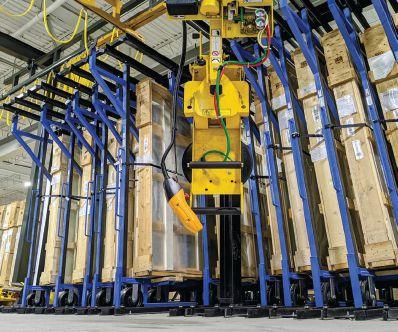
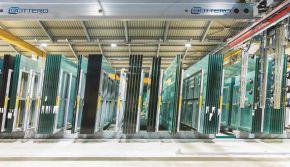
Glass stock management systems have always been a key point for every glass factory. Bottero solutions for glass storage and handling can provide answers for any facility that wants the connection between the material storage areas and the production lines to be more efficient, allowing for improvement in the capacity, flexibility and efficiency of the plant. Capacity means the possibility to maximize glass stock with advanced and compact warehousing systems by means of fixed racks on the floor, concertina movable racks and/or sliding racks for the entire range of glass sizes (from regular to super-jumbo size) and glass types (from clear float glass up to low-E and mirror products). Flexibility means the possibility to decide to pick up glass plate-by-plate with an overhead crane loader or to move entire glass packs with a shuttle system and/or telescopic loader. Efficiency means the knowledge of every single glass piece available in stock and its maximum level of optimization along the entire process. Remnant plate management is a key add-on for temporary glass storage to maximize your offcut and yield management. Bottero systems are compact and optimize the warehouse as well as speeding up connections, while also offering the possibility to quickly manage glass sheets along differences in material, format and thickness.
SHOWCASE
Large, lightweight, non-combustible glasscan.ca
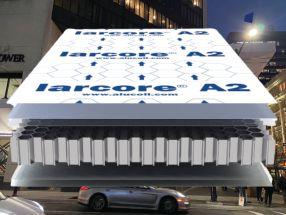
Larcore A2 by Alucoil is an all-aluminum honeycomb panel system. Larcore A2 panels are fire-rated, having passed multiple fire rating tests worldwide including the CAN ULC S-135 fire test that permits them for non-combustible construction in Canada. Alucoil’s aluminum honeycomb panels are uniquely fabricated on a continuous line that not only ensures quality control but also allows for jumbo sizes of architectural panels up to a whopping two-by-10 metres in length. Larcore A2 panels are extremely lightweight and rigid leading to fast and easy installation of big flat panels making any type of visual distortion like oil canning a thing of the past. These large, lightweight panels result in cost savings by reducing the amount of hardware and substructure required for installation. Alucoil’s all-aluminum honeycomb panels are perfect for facades, projections, sun shades, fins, soffits and more. There are hundreds of developed colours and specialty finishes to choose from with optional custom colour development available. Digital printing is also available. The Alucoil single-source warranty covers both panels and paint. Visit GlassCan proudly representing Alucoil at Top Glass 2024.
Custom solutions available
canplexextrusions.com
Canplex specializes in providing top-tier custom extrusion solutions for the North American glazing industry. With over two decades of excellence in PVC extrusion, TPV (vulcanized thermoplastics), and other extruded polymers, Canplex delivers innovative, durable and efficient sealing solutions tailored to meet the requirements of clients. It’s TPV gaskets for curtainwall represent a commitment to quality and performance and a significant leap forward in the industrial and commercial window and door industry across Canada. Canplex TPV products are designed to outperform traditional materials, offering a high-quality, economically advantageous alternative to rubber, EPDM and silicone gaskets. They are engineered to withstand extreme weather conditions, ensuring long-lasting performance without degradation. The enhanced thermal insulation properties reduce energy costs, making Canplex gaskets an eco-friendly choice for sustainable building designs. Canplex offers custom solutions, designed to meet the unique specifications of each project, ensuring a perfect fit and optimal functionality.
Power off transparency
electraview.com
McGrory Glass introduced ElectraView OneZero, a glass technology that seamlessly integrates privacy and lighting features. With an innovative design, this advanced glass solution ensures swift privacy while allowing 80 percent of natural light to diffuse through, enhancing user experience in various environments. Unlike traditional electronically controlled switchable glass, ElectraView OneZero boasts a revolutionary “poweroff” transparent state, significantly reducing energy consumption. By activating power only when privacy is required, it aligns with eco-friendly practices and offers potential energy savings. Moreover, when integrated into daylighting strategies, it may contribute to environmental sustainability by minimizing the need for artificial lighting and climate control, while effectively managing thermal transmission. ElectraView OneZero is also highly versatile. Decorative features and life safety products can be combined without compromising privacy, design, or energy efficiency. From acid-etching to high-resolution laminates, X-ray/radiation shielding, fire-rated, forced-entry, and impact-safety glass, it caters to diverse needs while enhancing user well-being through privacy, safety, security, and the biophilic effect.
SHOWCASE
Replace out-of-code wired glass
glassopolis.com
With the updates to building codes, traditional wired glass can no longer be used. But what is the code compliant alternative? Glass ceramics are great but are not always budget-friendly. The answer is Protect3 safety glass from Glassopolis. Protect3 is the lowest cost way to comply with the National Building Code. It has the appearance of traditional wired glass but is upgraded to provide full impact safety. It is UL fire-tested, certified, and carries the UL mark to guarantee its compliance. Protect3 is available from authorized fabricators in your area or directly from Glassopolis, Canada’s expert source for fire-rated glass. Protect3 won’t cost an arm and a leg. It’s simply a great replacement for traditional wired glass.
Fast, accurate on-site measurement
flexijet.info
With Flexijet 3D anyone can quickly, efficiently and cost-effectively take site measurements, assess dimensions accurately to the millimetre and insert the data directly into CAD. Whether the user is a beginner, an all-rounder or a CAD specialist, with Flexijet 3D they benefit from the principle of “measurement drawing,” which offers many advantages over conventional measuring techniques. Reduced trips to the job site, enhanced accuracy, elimination of physical templates and faster turnaround are some of the benefits Flexijet can deliver on the journey to digital measuring. Think about being able to measure a complete set of stairs in less than an hour and pinpoint stand-off locations in one trip. What savings would be seen? For more information, drop by the Flexijet booth at Top Glass.
Glazing multi-story buildings solved
quattrolifts.com
A major problem for glass, window and panel installers is to install units above ground level into multi-storey buildings. Traditional glazing robots work best for installing at ground level where the operators can stand close to the material to allow for precise movement. The Omni 1800 has overcome this problem by becoming a specialised glazing robot for working at heights. The Omni 1800 glazes multi-storey buildings and houses, using a telehandler or off-road forklift, which can be used inside and outside a building envelope to allow for safe and efficient glazing of glass, windows, panels and stone weighing up to 1,800 pounds. The Omni 1800 is accurately controlled by the wireless remote controls, one used by the forklift driver outside the building envelope and the second remote is used by the operator on the inside of the building at the level where the panel needs to be installed. This allows the installing operator to see close-up what precise movements are required to install the panel safely. There are six degrees of movement that are speed-adjustable, allowing for precise movement during installation: 12 inches forward movement; a 12-inch side shift; 12-inch vertical shift; 90 degrees forward tilt to horizontal; 360 degrees rotation and a 30-degree side pivot. The Omni 1800 has a fully integrated and independent power supply to drive the electric actuators and vacuum pumps. All components and batteries are housed under the Omni’s distinctive blue hood. The Omni 1800 has been designed with safety in mind with multiple fail-safe systems to protect people when handling panels at height. The Omni 1800 comes standard with a reusable steel transport crate for safe transport to the site and separate legs to store the Omni when the forklift is required elsewhere.
SHOWCASE
One-stop shop for all components
metalcurving.com
For nearly four decades, Rimac Metal Curving Specialists has built a reputation of quality and trust in the Canadian and North American metal curving market. With a vast array of services, Rimac truly is a one-stop shop for custom curved components. Its wide variety of services include metal curving, vinyl curving, press brake forming, sheet metal shearing, custom machining and final cutting. Although curving is the specialty, Rimac can provide complete fabrication of parts, including final cutting and custom machining, providing customers with complete parts ready for installation in their assemblies. Rimac takes the risk out of working with multiple vendors by acting as a single source for complete components. The fabricator use various methods for curving, including stretch forming, roll forming and rotary draw bending. Each method of curving provides unique advantages and disadvantages. By providing various methods for curving, Rimac has the ability to provide the best quality of parts, with minimal distortion, at the best price. A sheet metal shear and press brake, each measuring 13 feet, three inches long, allows Rimac to fabricate custom brake formed profiles, flashings and claddings to compliment the customers curved extrusions. The fullservice machine shop augments services by allowing the shop to drill, tap, notch and contour parts, as well as provide final cutting and mitring of components. This allows Rimac to provide customers with complete parts, ready for assembly. This also allows it to build custom tooling, quickly, in house, and at low cost. Rimac’s team of experts is dedicated to delivering the best customer service in the industry, preparing a competitive and comprehensive quotation, outlining all necessary details for the job. The company has an inclusive social media presence, showcasing some of its best work. For more information, visit Rimac at booth 44 at Top Glass 2024.
Go big and stay home
bigfootdoor.com
As a premier fabricator of high-performance aluminum window and door systems, Bigfoot Door has the selection to fit any residential or commercial project. Its partnerships with cutting edge system suppliers Schuco and Reynaers allow it to offer European windows and doors that are tested in North America to meet all NFRC and North American Fenestration Standards. These high-performing products are top class and are also available to meet Passive House standards. The window line includes tilt-and-turn, casement, awning, fixed and curtainwall. Doors include lift-and-slide, bi-folding and the exclusive Monolith entrance door series. All products can achieve massive sizes and weights. Many models are available with automation and motorization. Bigfoot Door products are proudly made in Canada. When looking to maximize views, they say “go big and stay home.”
by RICH PORAYKO
Rich Porayko is business development director for Fenestration Canada Commercial
Bring on AI
Oh great, now AI is angry, too. The secret is out, and AI has taken the world by storm. In an alarmingly short amount of time, the advancements are showcasing a plethora of benefits for almost any industry, including our beloved Division 8. More and more apps and websites are using AI co-pilot virtual assistants to generate text and automate routine tasks, freeing up valuable time and resources for more complex projects. This technology can assist with tasks such as content creation, search engine optimization, and user engagement optimization. For instance, LinkedIn has now enabled AI to re-write your LinkedIn post.
Do I use Artificial Intelligence? All the time. I, for one, welcome our new AI overlord.
I love that Spotify’s deejay, known as DJ X knows my music taste so well that it can almost instantaneously pick a better play list than I can. DJ X is a personalized AI guide based off the voice of Spotify’s “head of cultural partnerships,” Xavier “X” Jernigan. X recognizes my affinity for The Tragically Hip, apparently particularly from 2016, a year marred by Gord Downey’s struggle with brain cancer during The Hip’s final tour. Was that really eight years ago? I can barely remember what I had for breakfast, but AI remembers the exact songs I was listening to most almost a decade ago.
Two words: generative fill. It is a miracle. Adobe Photoshop’s generative fill or Canva’s Magic Edit, among others, are powerful AI-driven features that enable users to edit and generate complex images in a matter of seconds. This feature uses machine learning algorithms to create stunning graphics from a single image that is used as a reference. Removing an object in Photoshop is a straightforward process. However, the challenging aspect lies in accurately filling in the background behind the object or person. Photographic cloning works great however, with generative fill, graph-
Colour me enthusiastic about the potential for this emerging technology.
THAT’S RICH
ic designers can modify and add sophisticated designs that regularly would have taken hours to create from scratch. Recently I wanted to post a photo on social media from a trip to Bethlehem in 1999. The only problem was an ex-girlfriend was in the image so it wasn’t appropriate to post. Using the generative fill feature, I highlighted the object (a person in this case) and clicked the remove button. Within seconds, the app provided multiple thumbnail options with the object removed and replaced with filled-in details of the Church of the Nativity and its surroundings, previously obstructed in the twenty-five-year-old two-dimensional photo. Not only was this a huge time savings, but it also created an exciting value-added service that was previously cost-and-time prohibitive.
AI offers predictive capabilities that help companies forecast trends. Businesses are using AI to predict potential problems in their production processes before they become big issues. Manufacturers can quickly and efficiently analyze data to identify potential defects and adjust to achieve optimal quality targets preventing wastage and increase efficiency, ultimately leading to significant cost savings and increased profitability. AI-powered computer-simulation is allowing architects and designers to create hyper-realistic design models of the built environment in a quicker, more efficient and cost-effective process than traditional design methods.
Glass businesses looking to automate customer service can provide an even more significant edge. AI-powered chatbots can handle customer queries and complaints 24/7, helping consumers get the help they need when they need it, without having to wait for human intervention. Additionally, AI-powered customer service solutions help optimize communication channels, allowing businesses to streamline their customer service operations even further.
Some people are upset about the changes AI may bring. But they should remember that if some countries severely restrict AI, other countries will continue to develop and grow the technology leaving them behind. With the construction landscape going through uncertain times, there is a lot talk about adapting to change. When the world changes, you have to change with it. There is truth in saying that the only way to prevent AI from taking your job is to use AI to do your job better.