FGIA brings industry leaders together to improve home and building performance through better glass, window, door and skylight technologies and standards.
FGIA’s Insulating Glass (IG) Fabricators Workshop Video Series offers:
• Knowledge expansion on insulating glass best practices
• Virtual instruction from industry experts
• Ten 20 to 30-minute training segments
Unlimited on-demand access for six months
Invest in your professional growth today at FGIAonline.org/IGWorkshop.
Your guide to everything at Canada’s architectural glass show.
GLASSTALK EPISODE #45
14 Branching out and up
The owners of Baywest Glazing Systems have taken an established Langley, B.C., glass business in new directions.
18 Bird friendly, confirmed
University of Saskatchewan studies show a dramatic effect from bird-friendly glazing.
ASSOCIATIONS
8 Canada’s Glass Associations 10 Fenestration and Glazing Industry Alliance
11 Fenestration Canada
COLUMNISTS
12 The Engineer By Claudio Sacilotto
30 That’s Rich By Rich Porayko
Around the WorldThomas Simko, RMIT University
Glass Talk host Patrick Flannery reconnects with an old friend who is now a lecturer in mechanical engineering with a focus on fenestration technology at RMIT University in Melbourne, Australia. Thomas Simko has travelled the world researching the latest concepts in glass, glazing and building facades and he joins the podcast to give us the view from Down Under.
Fenestration Canada wants you
EDITORIAL
We welcome FenCan’s efforts to reach out to the architectural glass sector.
GLASS CANADA
March 2023
Volume 35 • Number 1 Annex Business Media P.O. Box 530, Simcoe, Ontario N3Y 4N5
READER SERVICE
Print and digital subscription inquiries or changes, please contact Angelita Potal, Customer Service Rep. Tel: 416.510.5113 Fax: 416.510.6875
Email: apotal@annexbusinessmedia.com
Mail: 111 Gordon Baker Rd., Suite 400, Toronto, ON M2H 3R1
NEXT ISSUE
• Smart glass
• BEC report
We’re welcoming some new voices into Glass Canada this year, as you’ll see in the pages ahead. Fenestration Canada has long been Canada’s national organization for the residential window and door industry, dating back to its origins as the Canadian Window and Door Association. It’s so venerable that it was originally managed by the Canada Wood Council (hi there, Richard Lipman), harking back to an era where most of our home windows were wood framed. There’s been a lot of water under the bridge since then and the association became self-governing about 10 years ago and changed its name to what it is today. Now the association is evolving again in response to fundamental shifts in its members’ markets. Specifically, it’s adding an architectural glass division and hoping to attract membership from among you, the readers of this magazine, who focus on institutional, commercial and industrial projects, high-rise residential and custom glazing. You may also notice that Fenestration Manitoba is now appearing on our Canada’s Glass Associations page. That’s because I’m persuaded that they are serving the commercial industry in their region along with the residential market.
EDITOR | Patrick FLANNERY pflannery@annexbusinessmedia.com 226.931.0545
AUDIENCE DEVELOPMENT MANAGER | Shawn ARUL sarul@annexbusinessmedia.com 416.510.5181
MEDIA DESIGNER | Alison KEBA PRESIDENT/COO | Scott JAMIESON sjamieson@annexbusinessmedia.com
More and more residential fabricators are getting involved in larger multi-unit builds that require commercial standards and approaches. Luxury custom homes are having curtainwall installed. Advances in thermal breaking are bringing aluminum back as a framing material on single family homes. Relaxation of flammability rules is bringing vinyl in as a potential on high-rise builds. A lot of Fenestration Canada’s members, more perhaps than ever before, would benefit from services and technical information aimed at the architectural glass sector.
Fenestration Canada was never explicitly only for residential vinyl fabricators –it just kind of panned out that way, probably as a result of the association’s origins. FenCan leaders have expressed for a long time that they’d like to have more involvement from the commercial sector. Now, the association has put some real meat into its efforts to attract you. Rich Porayko, who will be familiar to all regular readers, has been brought on board as its director of business development for the commercial division. Jeff Makimoto, formerly of TAGG Industries, is the new technical advisor for ICI sectors. These are hires, and good ones, that demonstrate FenCan’s determination to serve the architectural glass side.
You’ll find all the details in Fenestration Canada’s inaugural column on page 11. I’m excited to welcome them into the fold as an association partner along with the Fenestration and Glazing Industry Alliance and all our regional groups. •
• Software @GlassCanadaMag
SUBSCRIPTION RATES
Canada - 1 Year $37.00 (plus tax) U.S.A. - 1 Year $85.00 (in CDN dollars)
Publication Mail Agreement #40065710 Printed in Canada ISSN 0843-7041
Occasionally, Glass Canada will mail information on behalf of industry-related groups whose products and services we believe may be of interest to you. If you prefer not to receive this information, please contact our circulation department in any of the four ways listed above.
Working with the best fire-rated glass and framing suppliers in the industry — AGC, Forster, and SCHOTT — McGrory provides sustainable fire-rated system solutions with superior sightlines.
• Extensive Radiation Shielding/ Leaded X-Ray Glass Stocked: Largest Available Sizes in the Industry
• Customizations & All Plate Sizes & Thicknesses Cut Specifically to Customer Requirements, Delivered Direct to Job Site
NEWS
FGIA FenBC meets for the first time
The inaugural 2022 Fenestration and Glazing Industry Alliance FenBC Region
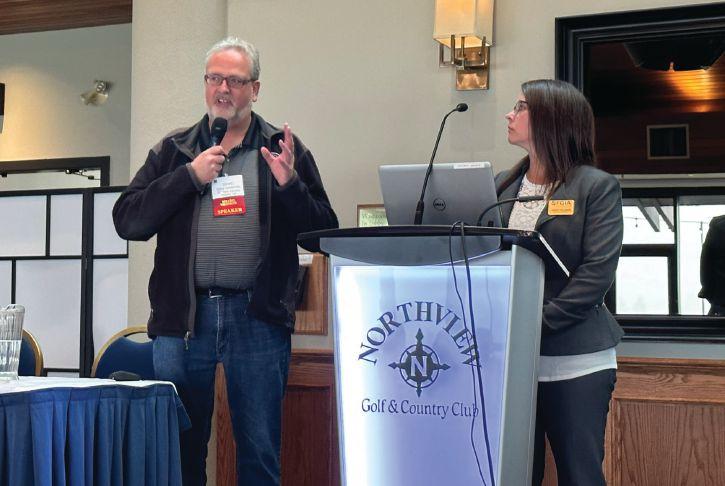
Technical Summit was held Nov. 16, 2022, at Northview Golf and Country Club in Surrey, B.C. This first-ever meeting of the FGIA FenBC Region covered important topics of interest to the fenestration and glazing industry specifically in British Columbia, featuring speakers from Ecolibrium Energy Solutions, E3 Eco Group, Ply Gem Canada, Sentinel Glass and UL Canada. Attendees gathered to engage and network with fenestration professionals and learn the latest updates on codes, standards and sustainability with a focus on both residential and commercial market. The summit featured topics relevant to both residential and commercial markets as well as specific breakout tracks for each segment.
“ We’re super excited about this new venture with the FenBC region,” said Yglesias. “We want to give people the opportunity to get involved where maybe they didn’t have the opportunity before. We’re still doing performance standards, product certification, education programs, code and regulatory influence, virtual forums, webinars, and in-person events. We still have maintained the residential and commercial focus on U.S.
and Canadian markets. That backbone has remained unchanged.”
In 2021, FGIA and FenBC entered into a collaboration agreement. “The concept at that time was about sharing information and member benefit privileges,” said Yglesias. “We offered member rates for FGIA events and education programs. Our team and FenBC were sharing advocacy, regulatory and code information back and forth. We already had structure in place. This region will operate moving forward with its own board of directors. We’ll have events that are focused on B.C. issues and B.C. topics. We’re going to be looking for a lot of guidance from the membership to help us identify where we need to focus our attention. We’ll still support the technical education committee as well as the government affairs committee.”
Yglesias told attendees that there are a lot of other great advantages of putting these organization together. “For FGIA, it helps strengthen our Canadian presence as an organization. We’ve had US and Canadian members for a long time. The Insulating Glass Manufacturing Alliance was based in Ottawa and was very active within Canada in terms of standards setting, regulatory requirements, and code requirements.”
COMING EVENTS
April 19 Top Glass Mississauga, Ont. topglasscanada.com
April 27 - 28
Congres AVFQ La Malbaie, Que. avfq.ca
May 23 - 26
Fenestration Canada Spring Conference Kelowna, B.C. fenestrationcanada.ca
June 7 - 10
AIA Conference on Architecture San Franciso, Calif. conferenceonarchitecture. com
June 12 - 15
FGIA Summer Conference Vancouver fgiaonline.org
June 14
OGMA Spring Golf Bolton, Ont. ogma.ca
June 14 - 16
Glass Performance Days Tampere, Finland gpd.fi
Oct. 31 - Nov. 2
GlassBuild Atlanta, Ga. glassbuildamerica.com
FenBC region president, David Goldsmith, and FGIA executive director, Janice Yglesias, helped kick off FenBC’s new chapter as a region of the FGIA.
Provincial Glass strikes a blow against homelessness
Provincial Glass president, Brett Lucier, is co-founder of The Fight to End, a charity doing good works in London, Ont. On Feb. 2, the organization presented a $300,000 cheque to Youth Opportunities Unlimited, proceeds from its Fight to End Homelessness event held Nov. 9, 2022. Youth Opportunities Unlimited is a charitable organization dedicated to building a community where youth are embraced with safe housing combined with wrap-around supports. The Fight to End hosted the highly anticipated 2nd Fight to End Homelessness at RBC Place, a black-tie premier boxing event which brought passionate Londoners together for the cause.The event featured 32 community champions who entered the process with little to no exposure to boxing Over 18 weeks of fight camp hosted by Get Enhanced, an FTE partner, they prepared to step into the ring for their first Boxing Ontario-sanctioned match in front of nearly 1,000 attendees. Through incredible effort by sponsors, participants and volunteers the event raised $300,000 for Youth Opportunities Unlimited. The cheque presentation was held on Feb. 2 at Youth Opportunity Unlimited’s You Made It Cafe at the corner of York Street and Richmond Street, across from Joan’s Place.
On behalf of top sponsor Drewlo, Jerry Drennan, COO, spoke to responding to the urgent needs in the community. “Drewlo, and many other developers in the city understand there’s a need and we want to do our part. Partnering with Fight to End, and seeing our own Carrie O’Brien in the ring was a great way to continue to give back and support the mission of Joan’s Place.”
Avi Bar leading sales for Alumicor
Alumicor has named Avi Bar vice-president of sales. He will manage the company’s sales and client services teams and the overall sales strategy for its architectural aluminum building envelope products. Bar succeeds Steve Green who announced his retirement effective Feb. 24. Green has been a key part of Alumicor’s leadership team.While continuing to lead Alumicor’s success, Bar also oversees the sales and client service teams for two additional Apogee Enterprises brands,Tubelite and Linetec. Bar draws from more than 20 years of leading large national sales teams in growing, fast-paced and complex business environments across multiple industries, in both the U.S. and Canada. His experience includes establishing and executing successful strategies and digital, transformational solutions. “We are excited to have Avi join our leadership team, where his strong leadership, relationship-focused approach and solutions-oriented mindset are an asset to our team and to our customers,” said Alumicor’s president, Jon Close.
Most recently, Bar worked as the national sales manager for ASI Group, a world-leading manufacturer of commercial washroom accessories, toilet partitions, lockers and visual display products. He previously served in functional and business leadership roles at View Dynamic Glass, Advanced Glazings and altPower.
Currently living in New York, Bar is multilingual. He has an economics degree from Royal Holloway, University of London, in England.
Youth Opportunities Unlimited’s board chair, Terry Gillis, shared his astonishment at the large donation. “I was with some other board members as the announcement was being made and we kept watching the tally going up and up and I thought, is there a technology glitch? We were absolutely blown away by the money raised by the Fight to End Homelessness. This is such an incredible boost to Joan’s place and helping us meet our collective goal of building a safe and affordable home for youth, young mothers and mothers-to-be who are experiencing or at risk of experiencing homelessness. Once again, the London community outdid itself. And to that we say thanks.”
This year’s event planning is underway with the participant application window opening in May. More information is at fighttoend.ca.
Azon founder passes at 95
James (Jim) Dunstan, founder of Azon USA, based in Kalamazoo, Mi., passed away among close family members on Dec. 29, 2022, at the age of 95. Dunstan, along with his wife, Ruth Dunstan, founded Azon in 1977 with a modest investment. Azon has grown to become a world leader in the production of machinery and thermal barrier chemicals for energy-saving fenestration products. Although headquartered in Kalamazoo, Azon also has affiliate operations in the United Kingdom, South Korea, and China. Dunstan’s passion for Azon and the industry it serves is well known. He was deeply involved in the aluminum industry even before founding Azon. Azon is a member of AAMA and AEC and their various committees. Dunstan also served as a board member for the National Association of Manufacturers. He responded fervently whenever the aluminum extrusion industry came under attack.
“Softly, we said goodbye to our strong, smart and loving dad and grandpa,” wrote Nancy Peterson, daughter of James and Azon’s former director of market communications. “While it is sad he is gone, we know he is at peace leaving behind a wonderful legacy.”
CANADA’S GLASS ASSOCIATIONS
AVFQ
The entire AVFQ team is already preparing for its 2023 Annual Conference, which is being held at the beautiful Fairmont Le Manoir Richelieu in the Charlevoix region from April 26 to 28. This year’s theme is: Transition: Will you be part of the movement? The conferences will focus on digital transformation, equipment but also on human resources and how to support them well through these changes. An exhibition is in the program as well as the Gala des Prix Lumieres aimed at rewarding projects across seven categories. Registrations are underway at avfq.ca. With regard to digital transformation, the AVFQ has obtained significant funding to support its members and their teams. We are offering several training courses on team management in the context of changes as well as building information modeling. These training videos will allow the AVFQ to offer a range of tools and training to its members, helping them to successfully enter the digital world. The AVFQ is currently working in conjunction with the Regie du batiment du Quebec, which is the organization that issues licenses for construction contractors. The steps are aimed at modifying the categories of licenses for doors and windows so that future holders are required to pass exams to obtain their license in addition to taking mandatory training. Thus, the objective of increasing the quality in construction would be pursued. The scarcity of labour is of course affecting window and door manufacturers and glaziers. The AVFQ has developed a video presenting the professions in our industry and hopes it will attract new people. A solid vis-
ibility plan will allow wide distribution in order to reach a very large number of prospects. The AVFQ continues to offer the FIT window installers training which presents good practices with regard to the CSA A440.4:19 standard. The training is available in English and French. It allows you to acquire the knowledge to take the installer certification program exam. Several other trainings are also offered, including curtainwall installation, CSA A500:16 standard for building guards and project management in construction. The AVFQ is the industry’s leading association for its 220 members.
Provincial Glaziers Association of Alberta
TheProvincial Glaziers Association of Alberta has seen relatively little activity due to time constraints and a lack of volunteers. Shortages of workers in the industry has led to shortages of time for all. We did find the time to read through the Alberta government’s new Skilled Trades and Apprenticeship Act and a subsidiary document, Designated Trades and Restricted Activities Regulations, which lays out glazing as a restricted trade with a specific set of restrictions. These include only having registered journeypeople or registered apprentices doing our work, with a ratio of two apprentices to one journeyperson – but allowing those deemed qualified by the employer, with no criteria listed, to carry out the work of a journeyperson. And no mention of how this will be enforced. It appears that there are no longer compulsory
trades. Subsequently, the PGAA sent a list of queries to Mike Fernandez, the assistant deputy minister of advanced education, on Feb. 10 and received a response with partial answers the next day. Mike himself is the registrar and administrator for all trades. On the balance of our queries, there seems to be no criteria and no enforcement. Mike had proposed a meeting with our group and asked John Brosda from apprenticeship delivery and support services to set up a meeting to discuss our queries, but this had yet to happen as of Feb. 24. The PGAA has committed to a Try-A-Trade Booth at Skills Canada’s Alberta Competitions, May 3 and 4 in Edmonton. Volunteers are currently being sought for this event. Our website, pgaa.ca, was down on Feb. 10 but was back up the next day. The assumption is that the website was hacked. In early March, as the Northern Alberta Institute of Technology first-year glazier class begins, the PGAA will be supplying all students with a $500 bursary to help them bridge the transition to employment insurance, as was done for Southern Alberta Institute of Technology students in January. The PGAA will also need to have an annual general meeting in March and will need a quorum of members to move forward. Gary Porter and Mei Whyte also attended the Alberta Trade Contractors Coalition Champagne Toast for Terry Milot, chairman, to celebrate his Queen Elizabeth II Platinum Jubilee Medal for his work on the Prompt Payment Act. It was a nice event attended by a number of ATCC people and Bill Black of the Canadian Construction Association, who also received the same award, for his work on COVID documentation
and safety procedures. There were a lot of great conversations on the new Skilled Trades and Apprenticeship Education Act. Terry was meeting with the minister for advanced education, Demetrios Nicolaides, the following Monday and Gary forwarded several of our concerns on to Terry over the weekend.
Architectural Glass and Metal Contractors Association
From time to time, the AGMCA uses this space to highlight some of our member companies. This month we salute Redspire Architectural Glass. Redspire is a long-standing AGMCA member glazing contractor, with a strong history of performance and reliability in our industry. It was founded in 2012 by John Mastrofini, John Stewart and Steve Mastrofini. Each founding partner brought with them unique and valuable skill sets. John Mastrofini has been providing design and engineering services to our industry for over 40 years, and in fact wrote the Glazing Systems Specification Manual in cooperation with the AGMCA and OGMA. John Stewart is Redspire’s operations manager with many years of hands-on experience gained from his background as a journeyman glazier. He has overseen several high-profile projects in the Greater Toronto Area. Steve Mastrofini has been providing design and engineering services to our industry since 2002. As a computer engineer, Steve combines his software skills with his understanding of curtainwall systems to provide unparalleled efficiency to the Redspire team. When Redspire
was first formed, they worked out of a 4,000 squafre-foot shop in Caledon, Ont., with an original team of six employees. Over the years, through hard work and determination, Redspire gained a reputation for quality and reliability and today has grown into a new 14,000-square-foot facility in Brampton, Ont., with a team of 42 employees. They specialize in podium glazing, custom facade and entrance glazing, interior glazing, glass guards and balustrades, oversized glass, decorative glazing as well as curtainwall. Architects and owners look to the AGMCA as a source for trusted glazing contractor services, and Redspire certainly fits that bill. To contact the team at Redspire, please email them at info@redspire.ca. To find out more about the AGMCA, please contact us at info@agmca.ca.
Fenestration Manitoba
Theboard of directors of Fenestration Manitoba, with support from executive director Marcie Wilson, continues to abide by its mission to continue to promote high quality manufacturing, design and marketing of all types of window and door products. We are proud to be serving our members and are excited for what 2023 holds for our organization and industry. Manitoba has a long history of developments for window and door products. Triple IG units, low-E coatings, use of non-conductive spacers, PVC window frames, fiberglass window components, composite components and wood window systems all had their launch in the factories of manufactures in Manitoba. In my travels to meet many of our members, I am amazed at seeing the use of new products and manufacturing systems and it is clear to me that Manitoba has not lost that entrepreneurial spirit and continues to lead our industry. Because Manitoba is a province of less than 1.3 million
people, our local fenestration industry has always been focused not only on selling quality windows and doors within our province, but also markets across Canada and the United States. Knowing that the innovations that originated in Manitoba are used around North America and in some cases the world, is a source of pride for Fenestration Manitoba and its members. This year, Fenestration Manitoba will have a strong focus on building relationships with educational facilities here in Manitoba. RRC Polytech is developing certification programs for the proper installation techniques of windows and doors. We are excited to work with RRC Polytech on this important step for the fenestration industry that is of great importance to our members. We will begin discussions of what this will look like at a tour and presentation at the Centre for Applied Research in Sustainable Infrastructure (CARSI) at RRC Polytech’s Notre Dame campus in April. Watch for more details at fenestrationmanitoba.ca and we hope you can join us. Glass suppliers such as Cardinal, Vitro, and Guardian are also making some significant upgrades to new performance coatings. Fenestration Manitoba continually seeks to have them involved in updating our membership on new codes and product developments for Manitoba’s cold climate. We continue to have important conversations with the Manitoba provincial governments to advocate on behalf of our members for the continuation of incentives for the replacement of windows and doors as well as to expand these programs to other areas of new construction. These programs are key and we are working hard to ensure the government understands how important they are to Fenestration Manitoba members. Our board has made the difficult decision to postpone the FenCon Show to spring of 2024 for many reasons
Top - Bottom: April Donvito, Eric Diotte, John Rania, Mahendra Ojha, Robert Casinelli
that all connect back to ensuring that FenCon is the well-attended and informative discussion for the window and door industry it has always been. Fenestration Manitoba is excitedly planning for next spring and we look forward to seeing you all at FenCon in 2024. Fenestration Manitoba is grateful for the important relationships with other industry organizations such as Fenestration Canada, FGIA , AVFQ and many others. We are grateful for what we learn from one another when we work together. We encourage members to seek out additional memberships that will strengthen their operations and invite members from other organizations to join Fenestration Manitoba and attend our events. It is through these important partnerships that we all can make the industry stronger and better. Thank you to all our fenestration partners across Canada for all that you are doing.
Ontario Glass and Metal Association
Thein the coming weeks for more information about these new appointments. The OGMA is happy to announce that, for the first time since 2019, we are once again recognizing outstanding work in glass and metal construction in Ontario with our Awards for Excellence. There are two awards: one for excellence in execution and one for excellence in design. Any OGMA member in good standing and/ or Ontario Architect Association architect is eligible to win an award for a project completed in Ontario. Members of the OGMA (in good standing) may submit as many nominations as they wish. Visit ogma.ca/award-forexcellence-in-designand-execution for a full list of criteria and to download the nomination form.
Ontario Glass and Metal Association is excited to announce the addition of five new members to our board of directors: April Donvito, Eric Diotte, Mahendra Ohujja, John Rania, and Robert Casinelli have accepted positions on the board, joining us at our board meeting in March. Visit ogma.ca
Projects nominated will be reviewed by a volunteer panel of judges. Nominations close on March 31, with the awards being presented at Top Glass on April 19. Winners will receive their award at the show and have their submissions promoted on our website. To nominate yourself or another project participant, email Steve Gusterson at s.gusterson@ alumicor.com. Speaking of Top Glass OGMA will be exhibiting at the show, with members of our board of directors in attendance. Be sure to stop by our booth to say hello. We will also be returning to the Glen Eagle Golf Club in Bolton, Ontario, for our annual Spring Golf Tournament. Be sure to note Wednesday, June 14, and watch your inbox for more details. •
by AMY ROBERTS
Amy Roberts is FGIA director of Canadian and technical glass operations
Living in perfect harmony
Construction codes are essential in supporting safe, energy-efficient homes and buildings and safe, effective practices for the estimated 1.4 million Canadians employed in the construction industry. Last November, the government of Canada announced a new governance model for the National Model Code development system as part of the Canadian Free Trade Agreement’s Regulatory Reconciliation and Cooperation Table. The current code development standing committees will be retained until the next code development cycle begins in 2025.
Harmonizing codes across federal, provincial and territorial (FPT) governments can benefit the entire industry by reducing regulatory burdens and associated costs, increasing collaboration through an integrated process, and enhancing clarity across jurisdictions. With this new approach, the code development system strives to be more responsive to provincial and territorial code priorities, resulting in more efficient construction in Canada. The new model is expected to contribute to lower construction costs for industry and reduce internal trade barriers related to manufacturing, operation, inspection, education and training. The economic benefit to Canada attributable to the harmonization and timely adoption of construction codes has been estimated at $750 million to $1 billion by 2028.
The NRC served as the signatory of the Construction Codes Reconciliation Agreement on behalf of the federal government, alongside provinces and territories. The NRC supports the new FPT governance model by co-chairing both the Canadian Table for Harmonized Construction Codes Policy and the Canadian Board for Harmonized Construction Codes, as well as through the NRC’s Codes Canada team.
Harmonizing codes can benefit the whole industry.
EUROPEAN SCENE
In November 2018, the government of Canada invested $13.5 million annually to ensure that the national codes and construction codes are freely available to the public. Current National Model Codes are accessible online at nrc.canada.ca. In 2020, the government of Canada signed the Construction Codes Reconciliation Agreement to harmonize the National Model Codes with Canada’s provinces and territories. Existing provincial and territorial building, fire, plumbing and energy regulations will continue to remain in effect. Design and construction officials should consult the relevant provincial or territorial government to determine what regulation applies to their project’s location. The new FPT governance model replaces the Canadian Commission on Building and Fire Codes, the committee responsible for code development in Canada since 1991. The new model is structured as follows.
The Canadian Table for Harmonized Construction Codes Policy (the Codes Policy Table) is responsible for overall governance. The Codes Policy Table comprises deputy minister-level representatives from the FPT governments.
The Canadian Board for Harmonized Construction Codes, or the Codes Board, is the decisionmaking body for the codes. The Codes Policy Table oversees the Codes Board and sets the strategic direction for the codes.
The Advisory Council for Harmonized Construction Codes is composed of construction sector organizations, which provide the Codes Board with advice on key policy issues.
The codes community includes code users, interested organizations and the public, which provide input through public reviews and participate in public meetings of the Codes Board.
Technical committees develop proposed changes to the National Model Codes. The technical committees include subcommittees and working groups. When the next code development cycle starts in 2025, the technical committee areas of responsibility may be reassessed under the new codes’ governance model. A callout for members of the new technical committees will be announced as part of planning for the next code development cycle. This will be a great opportunity for more diverse voices to join in the discussion. •
FGIA
by RICH PORAYKO
Rich Porayko is business development manager, commercial, for Fenestration Canada
FenCan going commercial
Fenestration Canada is excited to announce the formation of our new commercial glazing chapter. With unparalleled support from peers and experts alike, FenCan will provide a unified voice for commercial glazing contractors and related industry stakeholders and will work to promote the industry and advance its interests. Fenestration Canada’s Commercial Chapter will provide members with access to resources, training, and networking opportunities including immediate contact to Jeffrey Makimoto, our commercial chapter technical advisor. I am on board as business development manager to support members, implement strategies, identify opportunities, promote growth and boost the industry. We encourage all commercial glazing subcontractors and affiliated businesses to join and help shape the future of our industry. Together, we can create a vibrant commercial glazing trade for years to come. Our membership is what drives us. We are guided by our members to build a strong and active commercial membership base that reflects Canada’s world-class glazing subcontractors.
Fenestration Canada’s 240-plus members already provide valuable input into decisions impacting our operations, programs, and activities. We will work hard to ensure your voice is heard and that it has a meaningful role in shaping our Commercial Chapter. Commercial industry members will also get immediate access to Fenestration Canada’s valuable residential support via technical director Terry Adamson, with technical advice, seminars, industry documents, events and networking along with many other resources and activities. Members are encouraged and welcome to partici-
We are offering a free 12-month membership to the first 30 commercial glazing contractors and related businesses that join before March 31.
EUROPEAN SCENE
pate in both commercial and residential activities that are of interest to them. Fenestration Canada is proud to be leading the commercial glazing industry into the future with this chapter. We look forward to having you join us on this exciting journey and encourage you to reach out with your needs and concerns.
To demonstrate member value and encourage member participation, we are offering a free 12-month membership to the first 30 commercial glazing contractors and related businesses that join before March 31, 2023 and agree to participate in meetings and committees. Contact info@ fenestrationcanada.ca to join! We believe that by offering free membership to the first 30 commercial glass businesses active in Canada for 12 months, we can demonstrate the value of Fenestration Canada’s Commercial Chapter and make a strong business case about the value glass companies gain from membership.
FenCan’s commercial chapter is committed to proving its value quickly and getting things moving quickly. To facilitate this, we have decided to hold Commercial Chapter meetings every second Thursday of the month. These “Second Thursday” meetings will provide opportunities for connecting with each other, sharing ideas, and engaging in meaningful conversations. We look forward to having a productive and successful journey together as an organization. We offer a range of services including educational events and networking opportunities ensuring that all our members have the tools they need to succeed. It’s not just about making valuable connections - it’s also about having access to specialized knowledge which will help strengthen your business for years to come.
Learning by day, Kelowna by night! This May 23 through 26, join us in beautiful Kelowna, B.C., for Fenestration Canada’s Spring Conference. Surrounded by wineries, golf courses and Lake Okanagan, it’s the perfect spot to relax after a day of learning or join us for some fun offsite events. Be prepared to stay for an extra day, including an extended winery field trip experience.
For more information about Fenestration Canada’s Commercial Chapter and how you can get involved, please contact Rich Porayko at rich@fenestrationcanada.ca. •
by CLAUDIO SACILOTTO
Claudio Sacilotto is director of engineering and quality at Sunview Patio Doors in Woodbridge, Ont.
The importance of design
Iwas asked a while back to be a regular contributor to Glass Canada magazine. Being the window nerd that I am, I’m sometimes burdened with lots on my mind so I thought, “Yes, for sure!” A great outlet to express my thoughts. Quarterly contribution to this magazine will be fun, and I hope to contribute a little bit of the delight that I got from reading David Heska’s articles. Replacing David’s contribution will be challenging. For the past five years, when the Glass Canada magazine arrived on my desk, it was his article I turned to first. I have big shoes to fill.
A little bit about me. I am a materials engineering graduate from McMaster University and have spent my entire career in the building and construction industry. Ten of those years I was devoted to working with a testing and certification agency. The rest of the time was in manufacturing, mostly in product design.
In my current role at a fenestration manufacturing facility, a lot of common product design practices are used, so I thought I’d share some of my thoughts about the design process and how I’ve found it works best. This applies to the development of new products and the modification of existing ones.
In order to enable a design, we need to have direction. Inputs into our design practice come from many voices. Feedback from customers and service technicians help us understand what issues are occurring in the field. Factory workers, supervisors and managers manufacture the products, so their input is very valuable as they best understand processing information. Building codes dictate the hard boundaries of many design considerations. For example, product strength and energy performance requirements are not easy targets for fenestration products in the building code. Ultimately, these
It is vital that the design process use a multifacted design team.
THE ENGINEER
EUROPEAN SCENE
design inputs need to be consolidated and thoroughly analyzed by senior management in order to establish a strategic direction of design. Oh, by the way, the product needs to look good. That is most important.
It is vital that the design process use a multi-faceted design team. If the design team is too heavily influenced by one skillset and there is no consultation or discussion with other colleagues, then the project runs the risk of being unsuccessful. Imagine group of engineers aiming to improve an obsolete product. Without input from other key people in the organization (such as sales or senior management), there could be a lot of wasted effort spent designing and developing a product that won’t make the company profitable. A varied age group also contributes to a successful design team. Younger employees can bring fresh new skills. Older employees can offer previous experience and knowledge. A combination of both is crucial.
Brainstorming is extremely important. In my current role, I get our team engaged in weekly three-hour-long design meetings. In those brainstorming meetings, I’m amazed by how many ideas get generated. Many ideas can start off silly but then evolve and then actually start making sense. My favourite example of this happened to me when someone suggested building a magnetic levitating sliding door; something you’d think is reserved for futuristic high-speed trains. However, after some very ingenious designs with a very ambitious team (and many prototypes), we designed, produced and manufactured a sliding door that was magnetically levitating and moved on a cushion of an invisible magnetic field. Not a standard or traditional product in any sense. Though this product is a niche product for a niche market, it goes to show that sometimes the craziest ideas are not that crazy.
In today’s boom of glass tower construction that we see in the cities, fenestration is playing a bigger role than ever in the design of buildings. Architects are always going to stretch the boundaries of their design and expect more from the fenestration industry. It is very important that we arm ourselves with helpful tools and a very effective design process. The future is always ahead and waiting for us. •
UNDERtheGLASS |
Branching out and up
Baywest Glazing Systems explores new frontiers
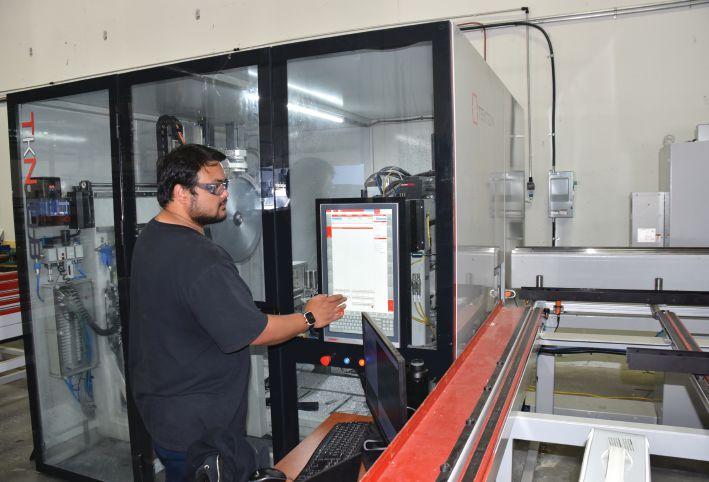
Baywest has invested in automation to make its thermally broken products, filling a need in B.C.’s step code environment. Zedrick operates the machining centre.
AT A GLANCE | Baywest Glazing Systems
When chartered professional accountant Brent Friesen purchased Clearbrook Glass with his father Bruce Friesen in 2015, a majority of his experience had been working in large businesses, creating metrics for their finance, accounting and projection challenges. “I worked as an auditor at a large accounting firm as well as a controller for a financial planning company,” says Brent Friesen, owner of Langley, BC-based Baywest Glazing Systems.
“Brent and I decided to do something together and we looked for an opportunity,” says Baywest director, Bruce Friesen. Clearbrook Glass had worked with Bruce in a past business and when the company went up for sale, the pair thought it would be a good opportunity. “We bought it in 2015,” explains Bruce. “They were doing auto glass, showers and residential service calls.”
“We learned that business and around three years ago, we decided to really focus on the commercial side,” adds Brent.
“Commercial glazing has a much higher level of complexity, opportunity for inno-
vation, and collaboration with Vancouver’s best general contractors and developers,” says Bruce.
“We built a fabrication team and last summer we felt a name change to Baywest Glazing Systems better communicated our focus towards the commercial market,” says Brent.
“We like the idea of innovating and creating our own curtainwall storefront and doors and other products,” says Bruce. “We have fully automated our shop to produce window frames and doors and we’ve developed very good systems for importing materials.”
“We’re really focusing on the storefront and commercial game right now,” says Brent. “We’ve invested in our own thermal break insertion machine which allows us to insert polyamide strips into aluminum and create very high performing products. There is a lot of opportunity in the curtainwall and storefront side.”
“Bruce and I have mutual respect for each other. There are times where I’ll say, ‘I don’t think that’s a good idea,’ and there’s times where he’ll say, ‘let’s do it this way,’
Location: Langley, B.C. No. of Staff: 30
Shop: 14,000 sq. ft.
Established: 1990
Owners: Brent and Bruce Friesen
Focus: Glass fabrication and contract glazing
Markets: Southwestern B.C.
Website: clearbrookglass.ca
“We are committed to being trustworthy and easy to work with while creating beautiful glass work.”
but overall, it’s working efficiently. We celebrate our different strengths and it’s been a good team.”
“Brent has a brilliant mind for innovation and engineering which comes from his great uncle, Pete Friesen, who holds world records for moving large buildings, so it’s great to see that develop in him,” says Bruce.
“I’ve always been fascinated by how things work, how things fit together, and
how they’re designed, so figuring out how these systems work has been surprisingly fun,” says Brent. “That has led to designing some of our own systems which we’re really excited about. We’re just finishing designing a very high-performing thermally broken swing door.”
According to Brent, the thermal modelling of Baywest’s sleek new thermally broken design is showing promising results. “We’re excited to bring this to market. Our goal is to help our customers build great buildings, meet the energy code, and contribute to an efficient design. We feel there’s an opportunity for others who are having the same problems achieving Step Code compliance with the doors that are in the market right now. We’re really excited about rolling that out in the next couple of months. I’m spending a lot of time setting that up.”
A stabilized supply chain has allowed Brent and his team to take a breath. “I am the primary person to source suppliers, so that’s been a fair bit of my job. The last couple months seem to be much better than it has been in the past, both for availability and price. One of the impacts of having a tough supply chain is we’ve had to look for alternates and try and get good at managing where we’re getting materials from. We’re going to events like GlassBuild America and keeping our eyes open for product.”
Managing a more inflationary environment over the last two years has been challenging. Contracts have been a challenge because of rising costs. “We’re trying to figure that out with the associations,” says Brent. “It’s on the radar, and we’re trying to approach projects a little more thoroughly to understand where our costs are and where the risk is. Hopefully, it’s made us a better, much smarter subcontractor in our quotes.”
Not surprisingly, finding people in Metro Vancouver is a struggle. “We’re working hard. Wages are going up, and it’s competitive to find top players. We have our own installers and subcontract some work. We’re looking at if subcontracting is an opportunity for future growth to help manage the increase in team.”
Baywest’s sandbox is typically Vancouver to Chilliwack, however they recently completed a firehall in Squamish, a warehouse in Prince George, and a First Na-
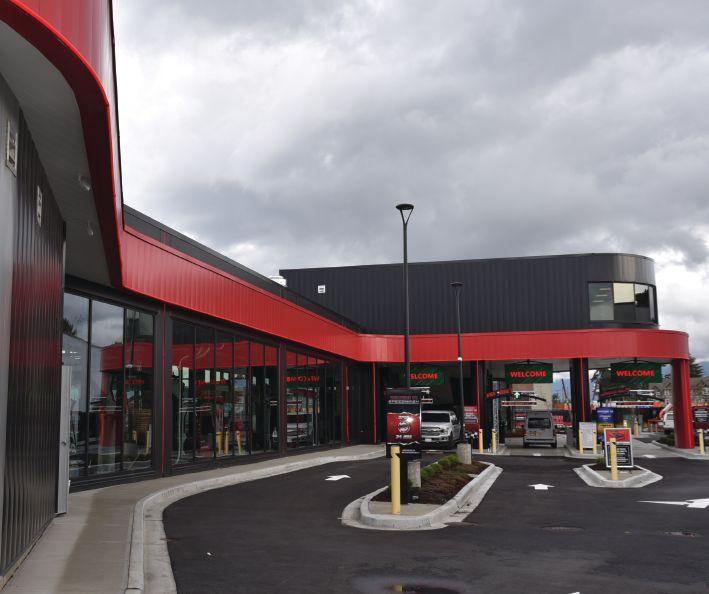
Here’s Baywest’s work at a Speedwash in Chilliwack, B.C. It has tall glass lites in a curtainwall system. Imported glass was used for the oversized pieces, which turned out really well.
Brent (left) and Bruce are a father-and-son team. They came from outside the industry to purchase Clearbrook Glass.
This was a curtainwall job on the second and third floor with storefront on the first floor. There were a number of transitions between vision glass and spandrel glass.
tions community centre in Sechelt.
One of the interesting projects Baywest is working on at the moment is called Riverworks for Ventana Construction. It’s a Conwest Developments mixed use project near YVR airport in Vancouver. “It is one of the largest jobs we’ve done,” says Brent.
Riverworks features four-level waterfront offices facing the Fraser River with adjacent three-story light industrial units. Operable floor-to-ceiling windows provide fresh air and ample natural light with stunning double aspect views of the mountains to the north and the river to the south. The offices also include private covered decks and exterior walkways overlooking the Fraser River. The industrial units are roughed in for large freight lifts. “It’s a great location and a bit of a different concept for warehousing with the elevators using the vertical space,” shares Brent.
Axiom Builder’s Kathleen Tower is a great example of some the high-end podium level work Baywest has been completing. The project features a large, glazed entryway with tall glass openings. “It’s starting soon, but we’re getting all the material lined up for it now,” says Brent.
The Telus building retrofit was a large project for Baywest. “We needed to work with the existing system to replace 300 units including a tall atrium over a parking lot,” explains Brent. “We had to use scaffolding instead of going with the boom lift.”
“The oversize laminated glass we installed for Cartier in down-
town Vancouver was a big lite,” says Brent. “We were happy to do it. We sourced it from Agnora in Collingwood [Ont.] who did a great job. Working with oversize glass is tricky, but the install went well.”
Logistics for jumbos aren’t the same as standard glass products. “We bought a car trailer in Ontario and sent one of our guys, who drove the glass back to Vancouver. We received the glass on time and got a great trailer out of the deal, so that was a win.”
“One of the things that is important to us is just trying to innovate,” says Brent. “A large part of that is through our processes. We’ve invested in some great fabrication drawing software that’s doing our shop drawings. We’re using computer processes and CNC equipment to reduce errors, increase accuracy, and improve speed. We want to keep thinking, ‘How is there a better way to do this?’”
“We know we’re not the big gorilla in the glazing industry yet, so it’s critical to keep improving. Every job counts, and we really want to deliver well and be innovative in our products and our process. We’ve been getting into glazing on warehouses. Usually, the windows themselves aren’t
technically challenging but the hard part is organizing and getting the job to flow well. There has been a lot of learning experiences. We realized that we were going around the building seven or eight times on one of these very large warehouses. We asked the question, ‘How can we reduce the install time and create a better job?’.
“My dad and I believe in Lean manufacturing. We evaluated our process and changed how we were setting up materials and our team to a more effective method. This was very helpful and now we’re able to do bigger projects, more efficiently with even better install results. This way our team is happy, the builder and contractor are satisfied, and we all win.”
Looking ahead, Brent and Bruce say they are focusing on investing in their team and getting quality projects. “We’ve got some big jobs now that we want to execute well,” says Brent. “We’re excited to see what happens with the commercial glass associations, especially here in B.C. They have already produced some good networking. I’ve met some interesting people and I’m really looking forward to seeing what happens there.” •
Bird friendly, confirmed
The University of Saskatchewan found bird-friendly glazing stopped collisions altogether.
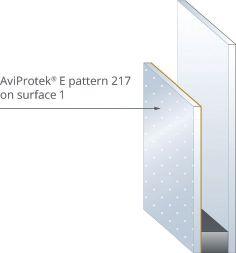
The University of Saskatchewan chose Walker’s Aviprotek E design 217 that uses acidetched marks in a twoby-two-inch pattern on surface #1. And it worked to prevent bird strikes.
When Flad Architects took on the University of Saskatchewan’s Collaborative Science Research Building (CSRB) in 2018, they knew they were in for a challenge. This project was designed to meet the institution’s strict Sustainability Strategy and aim for Green Globes certification, as well as contributing to community life on campus and supporting the needs of multiple science faculties.
To meet its goals, the building would have to serve state-of-the-art research labs with enhanced energy needs, include greenhouses for crop research, give sight lines onto campus activities, and merge seamlessly into the university’s traditional Collegiate Gothic aesthetic. Oh, and of course, it would have to be bird-friendly. As if that wasn’t enough, all this was to take place at the heart of the Canadian prairies, in frigid ASHRAE climate zone 7A.
How on Earth was this going to work?
Chitani Ndisale and Chuck Mummert of Flad Architects, together with the University of Saskatchewan and Keith Henry
of Henry Downing Architects, told us how they accomplished these ambitious goals.
Commitment to sustainable development
The University of Saskatchewan’s sustainability strategy commits the institution to be “the university the world needs.” Strategies to meet this commitment include a robust framework based on the United Nations’ sustainable development goals. To achieve these goals, the university is directing its efforts toward long-term solutions such as energy-efficient architecture and learning programs geared toward sustainable development. As a research centre dedicated to eco-friendly agriculture, the CSRB project was a golden opportunity to act on these principles. Ndisale, the project manager, was enthusiastic about the opportunity. He describes the experience, saying, “It was a wonderful thing to be able to work on a project where everybody, from the funding stream perspective to the actual campus goals, aligned in wanting a building that was ecologically responsible.”
Photos courtesy University of Saskatchewan
Why use bird-friendly glass?
Even though the city of Saskatoon and the province of Saskatchewan have no birddeterrent building legislation, bird-friendly glass at the University of Saskatchewan was non-negotiable. Faculty and staff had had enough of seeing birds collide against campus windows. Furthermore, ecological health was at the heart of the new building’s mission. It only made sense to take measures to protect wild bird species.
Flad Architects tackled the problem head-on by selecting bird-friendly glass for the building’s windows. After extensive research, they chose AviProtek E design 217, which features a two-by-two-inch pattern of five-millimeter acid-etched dots on the first surface. Several factors led to this choice. First, the pattern itself: the acid-etched markers are placed close enough to satisfy the CSA A460:19 standard for bird-friendly building. This standard is widely accepted as the best model for bird-deterrent glass. It requires that visual markers be spaced no more than 50 millimeters apart either vertically or horizontally, so small bird species won’t try to fly between them.
Second, the placement of the pattern. Visual markers must be placed on the first surface of the glass. This is because the first surface will be visible to birds in most weather and lighting conditions, whereas markers on inner surfaces are often hidden by reflections or glare. These principles have been tested on many buildings as well as in field studies and have proven themselves to be the best method for effective bird strike deterrence.
Let’s see how well they performed at the University of Saskatchewan.
Bird collisions: risks and results
Since the CSRB’s construction, graduate students have studied bird-to-glass collisions in Saskatoon and on the University of Saskatchewan campus. A 2021 master’s thesis analyzed collision rates in Saskatoon based on data gathered from FLAP Canada’s Global Bird Collision Mapper website. Candidate Abbey Duinker found that the city’s downtown core represented fully one-fifth of recorded bird strikes in Saskatoon. The University of Saskatchewan campus saw some of the very highest collision rates within that same neighbourhood.
An earlier thesis from master’s candidate Anang Grace Yashim recorded bird strikes
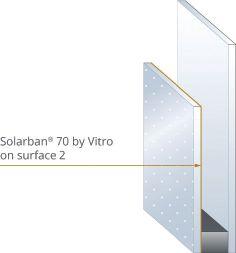
Using acid etching to create the bird-friendly pattern allows the design to be on surface #1, where it is more effective, while allowing low-E coatings to go on the interior surfaces for better energy efficiency.
against four different campus buildings, including the CSRB. The study was conducted over three months during the spring/ summer migration and breeding seasons, when wild bird activity was at its peak.
Like Duinker, Yashim found that the campus windows posed a serious threat to local bird life. The Agriculture and Bioresources building alone accounted for nine bird collisions over the three months of observation. Interestingly, none of these collisions occurred at the acid-etched portions of the facade, nor around the acidetched glass adjacent to the building’s rooftop garden.
There were zero collisions recorded against the CSRB.
What should we conclude from these studies? Even in a proven high-risk area such as the University of Saskatchewan campus, bird strikes are preventable. Effective bird-friendly glass can mean the difference between life and death for bird populations.
High latitude, high performance
In addition to preventing bird strikes, the CSRB had to follow the University of Saskatchewan’s 2021-2030 Sustainability Strategy, which is modelled on the United Nations’ sustainable development goals. The team at Flad Architects was also aiming for Green Globes certification. This might not seem too difficult at first, but let’s not forget that they were designing a building to serve the specialized energy requirements of multiple science labs. Oh, and of course there was the question of heating a 72,118-square-foot complex through Saskatoon’s sub-zero winters. Reaching the project’s energy efficiency targets would be a challenge.
The team at Flad Architects could have made their lives easier by reducing window space. However, that would have meant compromising on the project’s esthetic and future users’ visual comfort, and the team wasn’t willing to make those concessions. Ultimately, they found their solution in a Solarban 70 low-emissivity coating from Vitro Architectural Glass. They were able to pair this treatment with bird-friendly glass from the AviProtek E series, which combines bird-deterrent markers on surface one with a Solarban low-e coating on surface #2. At the CSRB, the resulting sealed units delivered an SHGC value of 0.27 and U-value of 0.28 while maintaining 64 percent visible light transmittance. With this combination, Flad Architects was able to meet their project performance goals without sacrificing views or aesthetics.
Ndisale explains, “From the design perspective, having higher percentages of glazed area obviously made the building a lot more attractive. But there was a lot of back and forth, a lot of integration. We worked with our engineering partners to come up with that perfect balance of opaque surfaces versus. transparent surfaces. The glass product allowed us to have the maximum allowable percentage of glazed areas because it had a higher performance level.”
The work that Ndisale and his colleagues put into integration paid off. The project earned two Green Globes certification, as well as Honourable Mention for Integrated Design in the 2019 Premier’s Awards of Excellence.•
This article was originally published on the Walker Glass blog.
Photo: courtesy Vitro
ESTABLISHED AND STRONG
Top Glass occupies a valuable space as Canada’s premier
by PATRICK FLANNERY
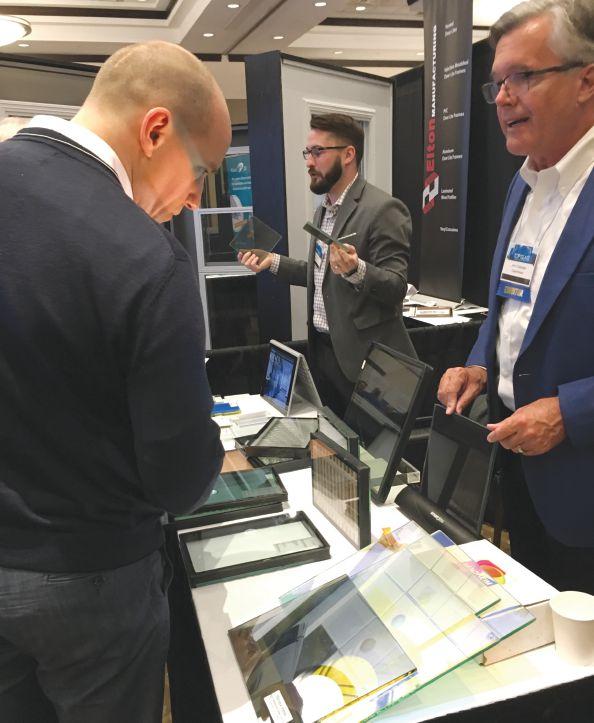
It’s hard to believe, but Top Glass will host its ninth edition this April. From humble beginnings as a conference quickly thrown together in 2014 by a team that had never done this before, the show has grown to welcome around 300 glazing contractors, glass fabricators, architects, specifiers and building engineers to the International Centre each year. Attendees sit in four education sessions and browse a show floor with over 50 of Canada’s top suppliers to the glass and glazing industry. How did that happen? At a time when many marketers and organizations are scrambling to find ways to grab your attention, we can reflect on a few things that the Top Glass team got right from the start, and continues to get right today.
The first is the laser focus on the architectural glass industry. Like this magazine, there is nothing in Top Glass that is not about the business and technology of putting custom glazed facades on buildings. You won’t find education sessions here about HVAC systems or roofing. There are no suppliers of property management software or
ABOVE: Top Glass is our annual opportunity to come together and talk about the Canadian architectural glass industry.
AT A GLANCE TOP GLASS 2023
Date: April 19, 2023
Location: International Centre, 6900 Airport Road, Mississauga, Ont.
Hours: 9:00 a.m. to 4:00 p.m.
Parking: Free on site
Registration: topglasscanada.com
Sessions:
10:00 Full Circle: The promise of wood glazed facades for tomorrow’s energy-efficient buildings
11:15 But How Does It Look?: Principles of colour, reflectivity and transmittance in architectural glass
Presenter: Heather Sakai, Guardian Glass
12:15 Lunch break
1:00 OGMA Awards of Excellence
1:30 Skylight Geek Out: A deep dive into refurbishing the Eaton Centre’s Galleria roof
Presenters: David Collins, Zeidler Architecture, and Andrew Crosby, RJC
2:45 Priority Blender: The impact of embodied carbon on how we think about climate-friendly glazing.
Presenter: Claudio Sacilotto
premier event for the architectural glass industry.
patio stones exhibiting on the show floor. Those involved with vinyl windows for low-rise residential should go to WinDoor. Maybe this could be a bigger show and make more money by welcoming all those sectors, but the focus is on you, the commercial glass person, and maximizing the return on your time invested with the highest degree of interest and relevance. People seem to appreciate it. Even architects, who have to deal with all those other building elements, seem to appreciate that they are spending a day looking at glass...just glass.
Speaking of time, another thing the show has gotten right is the quick and easy format. Both exhibitors and attendees tell us they like having everything happen in one day of intense activity, then done. No need for hotels. Because registration is free and the International Centre is relatively easy to drive to an park at, attendees can make their decision to come at the last minute if things aren’t going crazy at the shop. Could the show recover some costs with a registration fee and charge
exhibitors more for a two-day event? Sure. But the focus is on you and making sure this thing is as convenient and valuable for you as possible.
Finally, and probably most importantly, there’s the quality and generosity of the speakers, exhibitors, sponsors and association partners who have seen the need for an annual event bringing this country’s industry together. There are other much bigger North American shows for architectural glass and we support and work with them. But this is Canada’s show and everything here is relevant to Canadian commercial glaziers. Everyone you see at Top Glass is there because they are commited to serving your business where it is and in its market. That’s something no one else can say.
I don’t mind saying Top Glass is one of our proudest achievements here at Glass Canada , and I look forward to welcoming you all on April 19 and for many years to come. See you at Top Glass! •
10:00 a.m.
PRESENTER
Luc Paquet, Unicel Architectural Corporation
Full Circle
The promise of wood glazed facades for tomorrow’s energy-efficient buildings
At Top Glass April 19 at the International Centre in Mississauga, Ont., Luc Paquet, architectural representative for Unicel Architectural Corp., will present Full Circle: The promise of wood glazed facades for tomorrow’s energy-efficient buildings. His session will explore how new technology and engineering are intersecting with a new understanding of the carbon footprint of building materials to create an opportunity for perhaps the oldest building material of all: wood. Unicel Architectural has developed a Passive House-certified timber curtainwall product and Paquet shares what they have learned about constructing glazed facades out of wood that previously could only be executed in aluminum. His presentation goes inside the design, engineering and installation of the modular product, with looks at actual project cases and the science behind it all.
About the speaker
Luc Paquet is the eastern Canada Architectural Representative for Unicel Architectural, an architectural glazing fabricator based in Longueuil, Que. He brings over 25 years in sales, 13 years as an architectural representative and 10 years with Unicel to the topic. •
Photo:
Unicell Architectural Corp.
11:15 a.m.
PRESENTER
Heather Sakai, Guardian Glass
But How Does It Look?
Principles of colour, reflectivity and transmittance in architectural glass
Time to get back to basics with a discussion of the esthetics of glass and how facade designers can achieve the look and visual performance they want with today’s glazing technology. But this isn’t your dad’s glass colour discussion – innovations like large format glazing, advanced low-E coatings and PVB lamination translate to cost efficiency, energy savings, safety and noise reduction, making things possible we wouldn’t have contemplated before. Class is in session with Guardian’s architectural design manager for the Toronto area, Heather Sakai. Heather will go over the science around glass visual performance and offer some inspiring studies of great looks achieved.
About the speaker
Heather Sakai is the Ontario territory sales manager and architectural design manager for Guardian Glass. In her current roles she works directly with a network of Guardian SunGuard certified fabricators providing sales and technical support. She also works directly with design professionals to assist with project review and provide guidance on glass and glazing selections for commercial project work to ensure building envelope enclosures meet all esthetic and performance requirements. She has worked with Guardian Glass for seven years and is passionate about all things glass. •
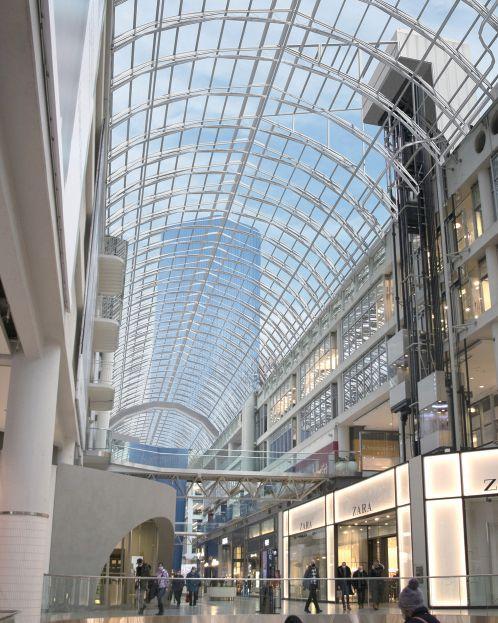
A deep dive into refurbishing the Eaton Centre’s Galleria glass roof
The galleria skylight roof at the CF Toronto Eaton Centre is on of the most iconic and familiar pieces of structural glazing in Canada. Built in 1977, it now requires a complete replacement to address 50 years of wear-and-tear and bring it up to modern standards for energy performance and maintenance. The design and operational challenges of executing this high-profile project over an operating retail space are daunting, but Zeidler Architecture and RJC Engineers have tackled them with a number of truly remarkable technical innovations. Perhaps more remarkable is the level of detail and expertise our presenters, Andrew Crosby and David Collins, bring to this comprehensive study of every aspect of the skylight’s design and installation. Big panels to reduce the number of cross-members? Check. Thermally broken patch fittings? Check. New pressure caps to avoid wet glazing? Check. Invisible button system? Check. Heat sinks to prevent condensation? Check. Glass nerds, get ready for a level of glazing engineering discussion that will have you on the edge of your seats.
1:30 p.m.
PRESENTERS
David Collins, Zeidler Architectural
Andrew Crosby, RJC Engineers
About the speakers
Collins is one of Zeidler’s leading architects and project managers. With nearly 20 years of experience, he is skilled at all phases of project execution and is particularly adept at client and team management. His work in commercial, residential, and mixed-use developments extends across Canada, Asia, and the Middle East. Collins is recognized for his ability to lead complex projects in challenging conditions, exemplified by his asset renewal work such as the CF Toronto Eaton Centre Bridge and the Galleria Revitalization, the Allan Gardens historic Palm House Restoration, and Sherbourne Estates, a complete overclad and repositioning of two aging concrete rental towers. Crosby has approached facade engineering with a passion. He has been involved with numerous projects engineering glass, steel, cable and aluminum structures throughout Canada and the U.S. With a speciality in structural glass design, he strives to push the structural glass industry further. Crosby has worked on a wide range of complex glass structures including glass bridges, skylights, stairs, fin walls, cable net wall and innovative feature elements. His portfolio includes the glass observation boxes (the Ledge) at the Sears Tower in Chicago; Calgary Eaton Centre’s barrel vault skylight and glass bridge; and Glacier Skywalk in Jasper National Park. •
Photo: Zeidler Architectural
2:45 p.m.
PRESENTER
The Priority Blender
The impact of embodied carbon on how we think about climate-friendly glazing
For at least 20 years, the emphasis for environmentally conscious building envelope designers has been reduction in operational carbon emissions by making facades airtight and more insulating. After years of investment in R&D, the glass industry has the technical capability to meet government goals for net zero construction. But now focus is shifting to the impact of carbon emissions created by the manufacture, fabrication, installation, maintenance and disposal of building components, and soon government codes will call for measures of these “embodied carbon” contributors to climate change. Sunview engineer and Glass Canada columnist, Claudio Sacilotto, will explain how embodied carbon changes the calculation for what constitutes “climate-friendly” glazing, and the trade-offs designers will need to balance when specifying the high-performance designs of the future.
About the speaker
Claudio Sacilotto is a professional engineer with over 16 years’ experience working in testing, design, R&D and fabrication of commercial glazing components at Intertek and Sunview Patio Doors (now part of Novatech). He runs Sunview’s R&D facility and gets to play with 3D printers and build test apparatus all day. He’s a member of the CSA A119 Technical Committee on Performance Standards for Windows, a CSA group representative in the Joint Document Management Group and sits on Fenestration Canada’s Technical Services Committee.In a moment of weakness he recently agreed to write Glass Canada’s technical column, The Engineer. •
Claudio Sacilotto, Sunview Patio Doors
Photo:
TOPGLASSPREVIEW
Advanced cutting systems
The EVO cutting platform is the top of the range of Bottero cutting systems, offering exclusive performance and flexibility. Thanks to the option of equipping the machine with two additional tools besides the cutting tool, EVO systems can be also equipped with low-E glass grinding and laser marking or labelling of the processed piece. This option makes the EVO system ideal for forming part of the automated and controlled production flow, which is typical in advanced window and glass fabrication factories using Industry 4.0 principles. The EVO range stands out due to its modularity and versatility, thanks to the float cutting tables that can be totally custom configured according to specific customer requirements, from stand-alone cutting tables up to intensive high-automation production systems with fully integrated lines including stock management, loading, low-E grinding, labeling, cutting and automated breakout modules.
Each constructive and functional feature of the EVO range is designed to ensure extreme processing precision and maximum productivity for each specific production requirement.
Fast, accurate on-site measurement
flexijet.info
With Flexijet 3D anyone can quickly, efficiently and cost-effectively take site measurements, assess dimensions accurately to the millimetre and insert the data directly into CAD. Whether the user is a beginner, an all-rounder or a CAD specialist, with Flexijet 3D they benefit from the principle of “measurement drawing,” which offers many advantages over conventional measuring techniques. Reduced trips to the job site, enhanced accuracy, elimination of physical templates and faster turnaround are some of the benefits Flexijet can deliver on the journey to digital measuring. Think about being able to measure a complete set of stairs in less than an hour and pinpoint stand-off locations in one trip. What savings would be seen? for more information, drop by the Flexijet booth at Top Glass.
Bird protection and beauty
walkerglass.com
The new BirdSecure Pro interlayer has been introduced by Kuraray as a bird-friendly glazing solution that protects a building against bird strikes while being esthetically pleasing to humans. The product is available in both Trosifol PVB and SentryGlas ionoplast versions and can be combined with the corresponding interlayers to provide additional benefits such as acoustic or structural performance. Stop by the Kuraray Advanced Interlayer Solutions Division booth at Top Glass to discuss laminated glass requirements.
Patio doors for new heights
groupenovatech.com
Simple and efficient, the Studio aluminum patio door exceeds industry performance standards. Ideal for high-rise projects, this door is built to withstand the harsh weather and wind loads at the top. Essentially, Studio is a flexible aluminum patio door system tailored for architectural applications with extensive customization options such as colour, sill finishes, glass, hardware and more. The Studio Patio Door is an ideal choice for architects and constructors who are looking for a patio door that combines esthetic appeal with high functionality. The Novatech Studio Patio Door also stands out for its high level of durability. With the Novatech Studio Patio Door, professionals can be confident that they are choosing a product that will provide long-lasting value and superior performance.
Avoid stock shortages
damacglass.ca
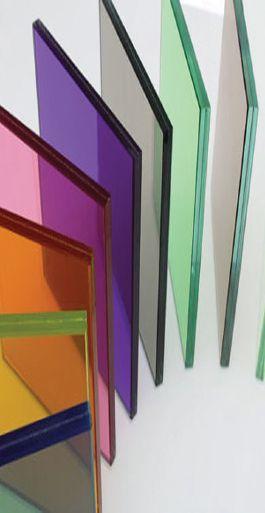
Damac Glass is a leading company specializing in the import and distribution of high-quality float glass and mirror. It has established a reputation for delivering top-notch products and excellent customer service. it offers an extensive line of products with a wide range of options, including clear float glass, colour float glass, sapphire float glass, acid-etched, mirror, low-E glass, tempered panel glass, laminated glass and shower door glass. Damac can provide a variety of thickness in float glass – such as three-, four-, five-, six-, eight-, 10- and 12-millimeter – and also tempered panel glass in 12 millimeter thickness and shower door glass in 10-millimeter. Float glass is available in a range of dimensions, for instance, 96 by 144 inches and 96 by 130
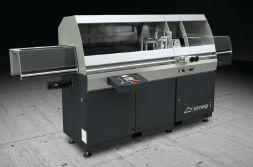
An Emmegi aluminum processing centre is like a Ferrari...either you have one, or you want one. High performance, quality Italian design – Emmegis are designed to be the object of envy and pride, just like the cars. Starlight is an official agent for new Emmegi machines in Canada and has a large inventory of used machines for those looking for a rapid delivery at competitive prices. The Emmegi ER single headsaw is a rising-blade cutting-off machine with automatic cycles for 90-degree cutting, equipped with an NC bar feeder. It can be set up with four different diameter blades. The blade feed is NC electrical-driven. The machine is provided with a pneumatic system for automatic separation of the cut piece in order to ensure maximum quality of the cut surface. It can be also provided with inverter to control the blade rotation speed for the best adjustment to the cutting profile. It can also be equipped with an automatic bar loading magazine and with custom drilling units for particular needs.
inches, and other sizes to suit any needs. Standard sizes for for tempered panel and shower doors are available as well. Imported float glass from Damac is manufactured by known factories to meet ASTM, CE or ISO standards for quality and durability. Any specific requirements and requests for customization options for the glass, such as tempering, edge polishing, drilling or etching to meet the needs of any construction or renovation project, are accepted. Damac Glass understands the importance of affordability when it comes to purchasing products. That’s why it strives to offer our products at prices that are highly competitive in the market without compromising on the quality of the goods or the level of service provided. Damac has invested in high stock levels of float glass in various sizes and thicknesses. By buying from Damac, contractors can benefit from a wide selection of float glass without the need to wait for lead times and can avoid the risk of stock shortages.
Get organized
klaes.de
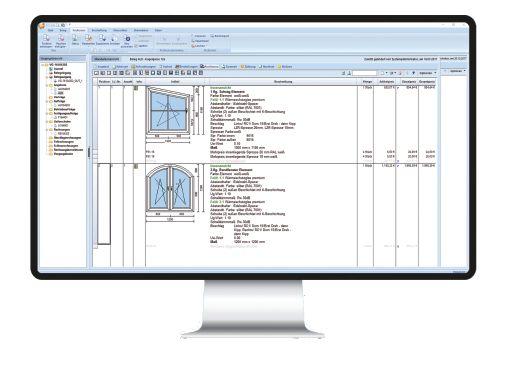
Customised ERP solutions from Klaes organize companies of all sizes. From manageable and flexible solutions for material-independent processing in the building elements trade to highly integrated and consistent ERP solutions for the industrial production of windows, doors, facades and conservatories.
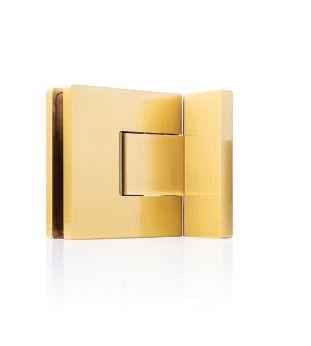
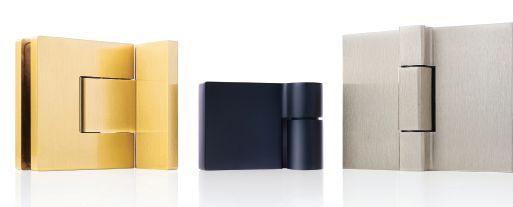
CRL has introduced Bellagio, Como and Lugano, three new offset shower door hinges representing the highest-quality in European design and durability. These solid brass hinges have been rigorously tested to 100,000 cycles, five times more than the industry standard, making them ideal for residential and heavy-duty commercial applications. With snap-on covers that conceal screws and matching brackets, Bellagio, Como and Lugano are available in Chrome, Matte Black, Brushed Nickel and Satin Brass finishes. Bellagio is a double-acting hinge with tight gaps to prevent water infiltration. Its compact design self-centres from 25 degrees. It features an adjustable positive closure and can support up to a 50 kilogram glass door with two hinges. Maximum door width is 1,000 millimeters with eight- to 10-millimeter tempered glass. Snap-on covers conceal the screws. Como installs into a glass hole template with no cutouts. It is a 180-degree free-swinging hinge ideal for wheelchair accessibility. The design allows for a saloon door configuration. Capacities are as Bellagio, above. Lugano features rise and fall action in an ultracompact design, perfect for a pitched curb and use with no ledge for wheelchair accessibility. It flush mounts inside making it easy to clean the glass. Lugano supports up to a 45-kilogram glass door with two hinges with a 900-millimeter maximum door width. Eight- or 10-millimeter tempered glass is acceptable with snap-on covers that conceal the screws.
The one-stop-shop
metalcurving.com
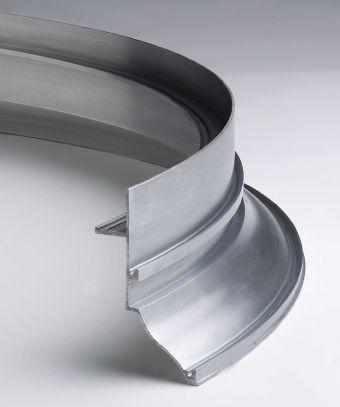
For nearly four decades, Rimac Metal Curving Specialists has built a reputation of quality and trust in the Canadian and North American metal curving market. With a vast array of services, Rimac truly is a one-stop shop for custom curved components. Its wide variety of services includes metal curving, vinyl curving, press brake forming, sheet metal shearing, custom machining and final cutting. Although curving is the specialty, Rimac can provide complete fabrication of parts, including final cutting and custom machining and providing customers with complete parts, ready for installation into assemblies. It takes the risk out of working with multiple vendors by providing a single source for complete components. Rimac uses various methods for curving, including stretch forming, roll forming and rotary draw bending. Each method of curving provides unique advantages and disadvantages. By providing various methods for curving, Rimac gains the ability to provide the best quality parts with minimal distortion at the best price. Rimac’s sheet metal shear
Balancing light mcgillarchitectural.com
Buildings and people go hand in hand. As such their comfort while time spent in offices, hospitals, commercial, leisure or recreational spaces, requires careful balancing of natural and artificial light. Many factors impact the design of facades such as geographic, climatic, elevation, and of course relationship to the sun and seasons. One design ingredient used to assist these design considerations and provide striking visual interest is the use of sun shading elements. McGill Sun Screens can help to significantly reduce the cooling demands of the building and, when used in combination with interior light shelves, can optimize the use of natural light to create a more pleasant, energy-efficient work environment. Whether a sunshade is positioned vertically, horizontally or parallel to the exterior facade – or incorporates extruded fins, perforated sheet or custom-shaped extrusions – the design potential is limitless. Important factors are considered in the design of sun shading elements. McGill reviews the structural adequacy of the substrates whether they be curtain walls, exposed structural steel, panels, masonry walls or other facades. The amount of cantilever and the impact of wind loads and snow loads for northern climates are also important. When designing, equal importance is the given to the effects of transferring the structural loads to the building without causing negative impact due to vibrations and movement tolerances. With over 40 years’ experience in designing bespoke sun shading systems as well as louver and entrance grille products for the built environment, McGill Architectural Products has created a solid foundation of design flexibility to meet any designers technical and aesthetic needs.
and press brake, each measuring 13 feet, three inches long, allows the company to fabricate custom brake-formed profiles, flashings and claddings to compliment customers’ curved extrusions. The full-service machine shop augments services by allowing Rimac to drill, tap, notch and contour parts, as well as provide final cutting and mitring of components. This allows Rimac to provide customers with complete parts, ready for assembly. This also allows the shop to build custom tooling, quickly, in-house and at a fraction of the cost. Rimac truly is a one-stop-shop for custom curved components. Rimac’s team of experts is dedicated to delivering the best customer service in the industry. Sales will prepare a competitive and comprehensive quotation, outlining all necessary details for any job. The company also has an inclusive social media presence, showcasing some of its best work.
RESOURCEDIRECTORY
by RICH PORAYKO
Let’s get engaged
Earned media is the coverage or exposure that a business, organization or individual receives from sources outside of their direct control. Also known simply as publicity, it is a form of marketing and public relations which involves creating positive content about an organization or product that can be shared through different media channels such as magazines, blogs and social media.
Earned media has become increasingly important for glass businesses seeking to maximize their reach and build relationships with customers. By leveraging earned media opportunities, companies can increase brand awareness and establish credibility and trust with customers. Businesses who use earned media strategically are more likely to drive traffic back to their website and products.
To maximize the effectiveness of earned media outreach efforts, companies should create relationships with influential journalists, bloggers and other content creators who can help spread the word about their products or services. When building relationships with influencers, it’s important to do your research beforehand. If you spend time on Linkedin or attend enough conferences, tradeshows, presentations, receptions and tailgates with magazine editors, business leaders and industry insiders, you get to know who’s who. Once you’ve identified potential influencers to work with, it’s important to reach out and start a conversation. Social media is a great start however there is no place better to build a relationship than an in-person trade event like Top Glass, WinDoor, GlassBuild America and BEC.
Additionally, businesses should be proactive in creating engaging content that will get customers talking. By combining earned media strategies with traditional advertising, businesses can more effectively reach their target audience and increase brand recognition.
Thought leadership can help glass businesses establish their brands.
THAT’S RICH
Earned media is a powerful tool and an essential part of any comprehensive marketing strategy. It can create positive conversations on social media platforms to share their messaging, promote thought leaders and ultimately drive conversions.
Thought leadership can help glass businesses to establish their brand as an industry leader and attract more customers and better team members. By creating informative and thought-provoking content that demonstrates subject matter expertise, businesses can demonstrate their view and become a trusted source of knowledge. Thought leadership also provides other advantages such as increased visibility within the glazing industry and improved customer relationships. Additionally, it gives glass companies an opportunity to showcase their products and services in creative ways, which can help lead to increased sales. Ultimately, by focusing on thought leadership, businesses gain more trust and credibility from their target audience while also driving innovation and growth within their organization. Creating thought leadership content is not something that should be taken lightly. It takes careful planning and strategic execution to make sure the content has an impact. Companies should first decide on the topics that they want to discuss and research extensively on the subject matter. After telling the story, businesses need to decide where it’s going to be published in order to maximize its reach and potential for success.
By taking advantage of thought leadership, glass companies can benefit from increased visibility within the industry while also establishing themselves as a trusted authority. Through effective planning and strategic execution of content creation, businesses can use thought leadership to drive innovation and growth within their organization. This, in turn, can lead to more customers and higher profitability. Want to be engaging? Engage me. The key to successful content is ensuring that it contains relevant information and meets the needs of readers. This means creating content that focuses on your audience’s interests, is well-researched and accurately reflects your brand identity. Easy right? Taking this approach will nearly always guarantee pain and disappointment. People want to be informed. They do not want to be sold. Consider that the three basic purposes of writing are to inform, to persuade, and to entertain. Tick all three boxes, and watch the magic happen. •
Rich Porayko is a professional writer and founder of Construction Creative.
DID YOU KNOW?
Salem is the largest distributor, by volume, of cerium oxide in North America!
Cerium oxide is used to polish glass due to its unique ability to react with the silica in glass both chemically and mechanically. Salem has a wide variety of cerium polishes, including AXION, SALEM 22, VISTA and more, that have different characteristics and achieve specific polishing goals. We work with you, concentrating on your application first, and then introduce a product that will perform the best for your process.
Contact Salem Today for your cerium solution and explore our full lines of tooling, supplies and equipment that GO BEYOND THE EDGE
SIGN UP FOR ONLINE ACCOUNT and place your order today.