Facade designers are intrigued by vacuum insulating glass that delivers a higher energy performance without excessive weight. Two leading researchers update us this new technology.
When information technology is the topic, media outlets across the country turn to Carmi Levy to explain what is going on and give them the deep background on the issues. So we invited him to Glass Talk to share some very practical advice on how to think about your IT department and personnel and how to source and vet providers that will make your life and business better, not worse. Levy has seen it all and we discuss it all.
18 Under the Glass - Saand
Unhappy with high-volume architectural glass sales in North America, this Toronto-based fabricator is driving forward with investments in new technology.
22 BEC conference report
Once again, Rich Porayko is our Canadian eyes and ears at the Building Envelope Conference in Nashville.
24 New product showcase
The latest and greatest to please your clients.
Canada’s Glass Associations
Fenestration Canada
The Engineer by Claudio Sacilotto
That’s Rich by Rich Porayko
A word about ChatGPT
EDITORIAL
AI won’t replace human voices in these pages.
At Top Glass Ten in April (an incredible couple of days, by the way) I hosted our Meet the Fabricators panel with Adam Franklin (Saand), Ray Wakefield (Trulite) and Andrew Dolphin (BVGlazing). One of my notes for questions to ask was simply “AI AI AI.” Ever since Tesla showed people cars could drive themselves and ChapGPT showed people software could instantly generate intelligible copy, artificial intelligence seems to be the only technology people can talk about in relation to almost any topic.
We’ve been hearing for a long time now that AI can optimize fabrication processes by collecting and processing data on material use, time spent on tasks, maintenance intervals, scheduling and more. On the installation side, there are opportunities for collecting data to improve logistics, equipment maintenance, safety and work quality. The possibilities are exciting but are probably not being deployed by anyone other than the largest players. The theoretical endpoint of AI and automation where the factory runs itself without any people in it and the product gets shipped and installed by robots is still a long way off. But AI has another potential application that is much closer to implementation: creating magazines like this one.
NEXT ISSUE
• Great Glazing
• Deki Home
• AI safety
At Christmas last year my family sat around the dinner table after the meal while my brother played with ChatGPT on his phone. He had the AI compose songs about each of us, complete with chords, then picked them out on his guitar. The results were hilarious, but also astonishing and a bit unnerving. All he needed to do was put in a simple prompt and seconds later an composition was complete. The songs weren’t great but they were no worse than a lot of the crap you already hear. I haven’t played with it extensively but hypothetically it should be possible to generate an article on some general information. If it could generate something half decent, it would save me hours of time and our magazine hundreds of dollars in freelance writing costs. There it is: the fear that a new technology will cost jobs, brought for the first time to the creative sector. Our jobs here at the magazine seem safe enough for the present. ChatGPT can’t interview Canadian glazing contractors, understand what they have to say and write an article about them that captures what’s interesting about their businesses.
Whether we are conscious of it or not, every time we read something we have an assumption that a human wrote those words. How we react depends on our assumption that the writer knew what they meant and intended to convey the message on the page. AI does not have awareness. To present its work to you in the same way we present a human work would be dishonest.
That’s why I commit to you here that you won’t read AI-generated copy in Glass Canada without attribution as such. And I’ll make every effort to make sure AIgenerated images are flagged, too. It’s important for you to be confident that what you read here is the product of the real insight and judgement of human being.
GLASS CANADA
June 2024
Volume 36 • Number 2 Annex Business Media P.O. Box 530, Simcoe, Ontario N3Y 4N5
READER SERVICE
Print and digital subscription inquiries or changes, please contact Angelita Potal, Customer Service Rep. Tel: 416.510.5113 Fax: 416.510.6875
Email: apotal@annexbusinessmedia.com
Mail: 111 Gordon Baker Rd., Suite 400, Toronto, ON M2H 3R1
EDITOR/PUBLISHER | Patrick FLANNERY pflannery@annexbusinessmedia.com 226.931.0545
GROUP PUBLISHER | Danielle LABRIE dlabrie@annexbusinessmedia.com 519.429.5187
AUDIENCE DEVELOPMENT MANAGER | Shawn ARUL sarul@annexbusinessmedia.com 416.510.5181
MEDIA DESIGNER | Alison KEBA
CEO | Scott JAMIESON sjamieson@annexbusinessmedia.com
SUBSCRIPTION RATES
Canada - 1 Year $37.74 (plus tax)
U.S.A. - 1 Year $86.70 (in CDN dollars)
Publication Mail Agreement #40065710
Printed in Canada ISSN 0843-7041
Occasionally, Glass Canada will mail information on behalf of industry-related groups whose products and services we believe may be of interest to you. If you prefer not to receive this information, please contact our circulation department in any of the four ways listed above.
ership by Ontario courts on March 14. Former president Ryan Spurgeon issued this message to employees:
While it appeared we were on a path to overcome the prior noted issues, we have been unsuccessful in finding a new ownership group, capital partner and/or support for the organization to move forward in the current state. Every attempt has been made to breathe life into Antamex and, I assure you, until the final minute every stone was being turned over. We must accept reality head on – we ran out of time to retain new ownership or capital to continue operations as-is.
I begrudgingly and with heavy heart advise you that as of 10 am this morning [March 14], Antamex has been placed into a court appointed receivership.
Deloitte Restructuring has been granted receivership control of Antamex and is the legal fiduciary of the organization from here on out. Phil Reynolds and Richard Williams of Deloitte and their respective teams will be onsite today to take control of the organization and to determine the future of the organization.
My time as the president of the organization is officially complete and the legal stewardship of the organization is in the capable hands of Phil and Richard.
I cannot thank each one of you enough for your loyalty, service, commitment and focus in making Antamex what it is. I do not accept this outcome lightly. I am gut wrenched to humbly admit to you that I could not find a path forward for our organization and, most importantly, our people. I appreciate that Antamex moving into receivership is hard news to accept and the potential waves of emotions that will ensue, but I must ensure that you hold your head high. Be proud of what you have accomplished together: the complexities we have overcome, the mountains we have climbed to bring back the Antamex
brand, and please never lose your grit – it is what sets apart the people of Antamex.
Again, I thank you for everything these past five years and, while it has been a rollercoaster ride of wins and losses, I leave Antamex today with immense pride in you allowing me to steward this organization through the good and the bad. I genuinely hope that we cross paths again and will always remain available to each of you regardless of the outcomes herein.
Court filings show that receivership proceedings were initiated by Economic Development Canada in February. EDC had loaned Antamex $12.5 million to purchase glass processing equipment in 2021, which was leased to Antamex’s partner company, Naverra Glass in Norwich, Conn. In early January this year, Naverra’s facility was padlocked by its landlord for failure to pay rent, with former employees telling US Glass that the company had laid staff off in November 2023. Various disputes then emerged in the U.S. over ownership of the equipment. This cut off Antamex’s access to the equipment in the facility, which was the collateral for the EDC loan, causing the EDC to declare Antamex in violation of its loan agreement and call the loan. Antamex made extensive efforts to find investors and buyers to either reopen the Norwich facility or repay the EDC loan but without success. Following the filing of the application for receivership, Antamex made further efforts to find investors to rescue the company as the long disruption to its operations had left it unable to cover costs. Those efforts continued right up to the day of the court decision to put the company into receivership, again without success.
Spurgeon appeared on the GlassTalk podcast Episode #26 in August 2021 to discuss Antamex coming back into private control after being sold by Oldcastle and his plans for the Alliston and Norwich facilities.
COMING EVENTS
Sept. 16
FGIA Fall Conference Minneapolis, Minn. fgiaonline.org
Sept. 30 - Oct. 2
GlassBuild Dallas, Texas
glassbuildamerica.com
Oct. 17
Top Glass West Calgary topglasscanada.com
Oct. 22 - 25
Glasstec Dusseldorf, Germany glasstec-online.com
Nov. 6
FenBC Regional Technical Summit Surrey, BC fgiaonline.org
International Builders Show Las Vegas, Nev. buildershow.com
March. 9 - 11
BEC Conference Las Vegas, Nev. glass.org
CANADA’S GLASS ASSOCIATIONS
AVFQ
The big family of the glazing and fenestration industry met at the AVFQ Annual Conference last April with 365 participants, a new record! Conferences on current economic issues, artificial intelligence, automation and industry 5.0 particularly caught the attention of delegates.
Gina Gaudreault, who has led the AVFQ for almost six years, will hand over the torch shortly. She is retiring from full-time professional life. Under her leadership, the AVFQ experienced strong expansion and raised the professionalism of the organization to a high level.
The AVFQ is the industry’s leading organization for its 250 members!
Glass and Architectural Metals Association
It’sbeen an extremely active and exciting year so far with the Glass and Architectural Metals Association board spearheading a number of initiatives. Some of these include trade promotion at local high school fairs and Southern Alberta Institute of Technology glazier program practical project updates and enhancements by our associations and association members. GAMA and PGAA are also working closely with Glass Canada in potentially securing the prestigious Top Glass trade conference and bringing it to western Canada, specifically Calgary in the fourth quarter of 2024.
The GAMA golf tournament will be held on June 13 in Chestermere, Alta. It’s an event that is highly anticipated on a yearly basis and according to early registration and sponsorship numbers will be a well-attended occasion.
Alberta is still facing significant labour shortages in the trades. We as an association will continue our efforts in promoting and highlighting our unique trade with continued support of our glazier program, which is offered through SAIT and the Northern Alberta Institute of Technology
With this being the 59th year of this amazing, dynamic and ever evolving association, GAMA is continuing to strive and grow on what seems to be a monthly basis. May’s association dinner meeting was held on May 9 where an impressive number of five new members were successfully voted into join GAMA, pushing our membership to over 50.
Fenestration Manitoba
Fenestration
Manitoba continues to look for ward to accomplishing the needs of its manufacturing members. With the pace of many changes in codes, testing and compliance for installations we look at other organizations that provide information that have the resources and expertise that we can pass on to our members. With limited resources we seek relationships that will keep our members informed and productive. Accomplishing this with manufactures with between 25 and 60 employees is a challenge. They must rely on the data and details that we as an effective organiza-
tion can give.
We are grateful for the educational facilities that work with Fenestration Manitoba. Efficiency Manitoba and RRC Polytech provide us with those services working closely with Fenestration Manitoba and others organizations in Canada.
Architectural Glass and Metal Contractors Association
Over40 years ago, the Architectural Glass and Metal Ccontractors Association and its member glazing contractors helped establish the Architectural Glass and Metal Technician training program with the assistance of the Ontario government and the IUPAT. This red seal program includes an 8,000-hour apprenticeship program, requiring three separate in-school sessions. We are proud to continue to offer this training, as provided by the Finishing Trades Institutes. By navigating the FTI calendar, apprentices and trainees can look for courses alongside health and safety information to see when they’re offered. Visit the FTI website at ftiontario.com to see what’s available.
Each year, along with the OGMA, we award a bursary to the most outstanding apprentice that goes through our training system. This year’s award was presented to William Joel Scott at the annual spring golf tournament. Congratulations William!
OGMA
Thank you to Ontario Glass and Metal Association board of directors members Steve
Ringler, Blake Sanders, Steven Peso, Andrew Dolphin, Robert Casinelli, John Rania, Yoga Arulnamby and Keith Elmer for representing the OGMA at the Top Glass conference on April 30 along with our administrator, Lori Brooks. The show was wellattended and was a wonderful opportunity to connect with our current members, as well as to speak with potential new members about the benefits of membership and about our upcoming events.
Welcome to Heather Sakai from Guardian Glass, who has joined the OGMA board of directors. As always, we encourage energetic industry participants to join the board and have a positive impact on the glass and metal industry.
OGMA held its inaugural members-only meet-and-greet at Longshots Shooting and Social in Vaughan, Ont., on March 27. We had 32 members attend and a fun time was had by all at this networking event. We are looking forward to next year’s event, where we will celebrate OGMA’s 35th anniversary.
The OGMA board of directors sadly shares the news of the passing of long-time OGMA member Cliff Harding of Harding Glass. Cliff passed away after a two-and-a-half-year battle with cancer on April 22. We send our condolences to Cliff’s family and friends.
We are planning our next fishing derby, which will be taking place in mid-August, and planning other events for the summer and fall. As always, if you have any ideas for seminars, educational sessions, or networking opportunities, or would like to arrange a plant tour that could be of benefit to our members, please reach out to info@omga.ca. Be sure to follow us on LinkedIn.
Top Glass celebrates 10 years in style
Top Glass, Canada’s trade event for the architectural glass industry, celebrated its 10th birthday with a tremendously successful day of learning, business-building and conversation. The event attracted 350 attendees to the International Centre in Mississauga, Ont., to join about 100 vendor staff at 50 exhibitor booths. Education sessions were well-attended with some good engagement from the audience. Attendees heard from a panel of glass fabrication executives, got education on birdfriendly glass, discussed re-cladding old facades for increased energy performance and learned what is new and coming in energy codes and standards. Gary Watson from Diamond Schmitt accepted the OGMA Award of Excellence for Design from Steve Peso, recognizing their work on the Robarts Com-
Haring departs NGA for Frameless Hardware Company
Andrew Haring, vice-president of business development at the National Glass Association has left the association to become chief marketing officer at Frameless Hardware Company.
“Andrew greatly impacted NGA in many positive ways,” said Nicole Harris, president and CEO. “He worked very creatively to elevate NGA’s visibility for our important advocacy and education initiatives. Andrew and his team also infused our events, especially GlassBuild America, with new excitement. I know he will bring this tremendous energy where he goes next, and I look forward to seeing how.”
Haring joined NGA in 2018 after departing from C.R. Laurence as vice-president of marketing.
“I was an advocate and member of NGA before working here and will remain one forever,” says Haring. “I now have a sounder understanding of the importance of this incredible trade association, and I’ll take that and the friendships I’ve gained over the years with me. I will continue to champion NGA as the voice of the glass industry at every turn and on every level.”
In his new role with FHC, Haring will join the executive committee and be responsible for marketing initiatives to help tell the FHC story and communicate their value to glaziers and fabricators alike.
“I worked with Andrew for years in previous roles,” said Chris Hanstad, president and CEO of FHC. “I know his track record, capabilities and potential. We are positioned for seismic movement and growth right now, and I trust Andrew to help us achieve both. Who wouldn’t want the ‘glass nerd’ on the roster?”
“I’m absolutely pumped for this opportunity,” said Haring. “I believe in this company, its leadership and ability to help the glazing community. Having watched their launch and trajectory from the sidelines, I’m ready to step in and help build something truly special—something that is good for the industry, and something that’s been missing. While I’m excited to step back into the for-profit ring, just know that I adore NGA and will continue to champion and support them as I always have in this new role.”
Haring will be based out of FHC’s headquarters in South Gate, Calif.
mon. Tony Menecola of Applewood Glass took home the Award of Excellence for Execution for the Escarpment House. The Top Glass Plant Tours the day before the conference were a huge hit with over 100 attendees touring Bigfoot Door and Saand Rexdale. Top Glass returns to Toronto April 30, 2025. Top Glass West debuts Oct. 17, 2024, in Calgary.
Stekar reaches a new milestone
Norea Capital has become a shareholder of Stekar, a Quebecbased leader in architectural systems made of glass, aluminium and mixed materials for building facades
More than 30 years after it was founded by Raynald Doyon and his wife Sylvie Poulin, Stekar has reached an important milestone with the introduction of Norea Capital and business development manager David Drouin into the company’s share capital.
This investment of nearly $10 million by Norea Capital will enable Stekar to pursue growth in Canada and break into the New England market. Particularly with Stekar’s distinctive multifacades product which meets both Canadian and American energy efficiency requirements.
It was in these terms that Antoine Auger, Stekar’s CEO and shareholder, hailed the high value-added partnership with Norea Capital, new private equity shareholder of the company and will support Stekar in setting up a board of directors with a majority of external members and implement our strategic initiatives.
“We are shapers of urban heritage, with a passion for a job well done and customer satisfaction,” says Doyon, who remains a shareholder, strategic advisor and director. Our succession plan has been meticulously planned since 2011, with the hiring of Antoine Auger as president of Vitralum Pro Installation, our subsidiary, and then as manager of Stekar starting in 2017. I am fully confident that Stekar is poised to reach new heights under Antoine’s leadership.”
PHOTO COURTESY OF RICHARD LACASSE.
Federal budget seeks to drive building
The 2024 Canadian federal budget was unveiled April 16. Several measures designed to incentivize housing construction could affect our businesses. Many of the federal proposals are limited to encouraging the provinces to take various actions, since housing is a provincial jurisdiction. Some major initiatives aimed at small business are noted, too.
CARBON REBATE
Businesses with under 500 employees in Alberta, Saskatchewan, Manitoba, Ontario and the four Atlantic provinces will get a new refundable tax credit returning $2.5 billion in collected carbon taxes.
LIFETIME CAPITAL GAINS EXEMPTION
Capital gains on the first $1.25 million in sales of small business shares will be tax-exempt, up from the present $1 million. The exemption will be indexed to inflation going forward,
REDUCED CAPITAL GAINS INCLUSION
The so-called Canadian Entrepreneurs’ Incentive reduces the inclusion rate to 33.3 percent on a lifetime maximum of $2 million in eligible capital gains for business owners. Over time this will increase to $3.25 million when selling all or part of a business.
OPENING PUBLIC LANDS TO DEVELOPMENT
The budget promises to “overhaul” the Canada Lands Company’s policies to make it much easier for federal land to be sold or leased to
developers for homebuilding. The measures included bundling properties for transfer, selling federal land for $1, allowing development on actively used property and renovating existing buildings for residential use. The budget also proposes to sell or lease land owned by Canada Post and National Defence for housing development.
MONEY FOR DEVELOPMENT INFRASTRUCTURE
The budget promises to launch a new Canada Housing Infrastructure Fund within Infrastructure Canada.This will flow money directly to municipalities to help them build water, wastewater, stormwater and solid waste infrastructure to service expanded development.This money is set to flow only if provinces agree to certain actions including allowing more housing units per property, freezing development charges and preapproving designs from the federal Housing Design Catalogue.
STIMULATING RENTALS
To build more rental apartments, the budget announced an additional $15 billion in new loan funding for the Apartment Construction Loan Program. The objective is to fund 30,000 new units. Of that amount, at least $100 million will be used to build homes above existing shops and businesses. A number of reforms to reduce red tape in the program are also proposed.
RECOGNIZING FOREIGN TRADESPEOPLE
The budget includes money to streamline foreign credential recognition in the construction sector.
EUROPEAN ENGINEERING. CANADIAN MADE.
Canada’s premier certified fabricator of Schüco and Reynaers products. All tested in North America to meet NFRC and North American fenestration standards. Uncompromised quality, service and support for over 40 years.
Best quarter in a year for commercial permits
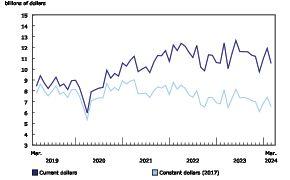
Month over month, the total value of building permits in Canada decreased 11.7 percent to $10.5 billion in March. Construction intentions in the non-residential component declined 16.7 percent to $4 billion. Declines were observed in all components except for the commercial component. The total value of building permits fell 11.6 percent in March, following two consecutive months of increases. Non-residential construction intentions decreased 16.7 percent to $4 billion in March, with reductions in the industrial (down 46.1 percent or $629.8 million) and institutional (down 22.2 percent or $293.1 million) components. The large decline in the industrial component was due to the lack of major industrial permits issued in March compared with February, which was the second-highest monthly level recorded. The commercial component tempered the declines in the non-residential sector by growing 5.8 percent to $2.2 billion in March. The total value of building permits in the first quarter of 2024 was $33.4 billion, a 3.7 percent increase from the previous quarter ($32.2
billion). This represents a partial rebound from the fourth quarter of 2023, which was the lowest quarterly total value since the third quarter of 2021 ($30.5 billion). The growth was driven by British Columbia (up 20.1 percent or $988.4 million), which posted significant gains in the commercial and industrial non-residential components, and in the multi-unit residential component. Despite quarterly gains, construction intentions in the first quarter of 2024 remained lower than the average quarterly levels of the previous two years. Construction intentions in the non-residential sector increased 6.9 percent to $13 billion in the first quarter, led by the commercial component (up 22.3 percent to $6.6 billion), which posted the highest level of the previous four quarters. Growth was driven by permits for office buildings. Overall, nine provinces and territories reported increases in commercial construction intentions, led by Ontario (up 34.8 percent or $710.1 million), Quebec (up 31.2 percent or $296.6 million) and British Columbia (up 32.4 percent or $269.3 million).
The Ontario Association of Architects, which regulates the practice of architecture in the province, hosted its biennial Celebration of Excellence on May 23, at the Niagara Falls Convention Centre. The event celebrated the best in projects by Ontario architecture practices. In addition to previously announced awards, three new winners were revealed. Dialog Ontario Inc., received the People’s Choice Award for the Centennial College A-Building Expansion in Toronto, which was selected by members of the public as their favourite among the Design Excellence winners during a two-week online voting period. This expansion seamlessly integrates Indigenous teachings with sustainability, making it the first LEED Gold, zero-carbon, WELL-certified mass timber facility in Canada. It emphasizes “Two-Eyed Seeing” and sets new standards for academic environments, Architect Deborah Wang, curator and artistic director of the DesignTO Festival, received the Medal of Service for her significant contributions to the profession and the public through promotion, advocacy and education. Ottawa architect Barry J. Hobin, was awarded the Lifetime Design Achievement for his half-century commitment to design excellence, workplace equity, creative collaboration and social responsibility. In addition, A.J. Diamond, Raymond Moriyama, and Adrienne Tam were posthumously added to the Honour Roll, recognizing prominent deceased members of the architectural profession. Toronto’s Lanescape Architecture Inc., which converts under utilized spaces into urban laneway housing, was also honoured as the Best Emerging Practice — an award for a nascent firm that demonstrates a clear vision, well-articulated goals, proven effective strategies and thoughtful consideration of employee wellness. The Michael V. and Wanda Plachta Award was presented to MacLennan Jaunkalns Miller Architects (MJMA) in association with Raimondo plus Associates Architects Inc., for the Neil Campbell Rowing Centre in St. Catharines. MJMA was also honoured with the Lieutenant Governor’s Award for Design Excellence in Architecture for the Churchill Meadows Community Centre and Sports Park in Mississauga.
Phil Northcott of C-Change Labs presented his EC3 embodied carbon calculator – an online software tool with a free basic version – at the Fenestration Canada Spring Conference in Kananaskis, Alta, at the end of May. The calculator enables building designers and project managers to load Environmental Product Declarations from their suppliers into the tool and combine them with operations data to produce embodied carbon analyses for their buildings. Such data is likely to become an important element of building commissioning as governments move to requiring measuring, reporting and, eventually, restriction of the levels of embodied carbon present in construction projects. EC3 has amassed a large database of EPDs for most elements of building construction, including glazing and facades, and is encouraging architectural glazing suppliers to add their EPDs to the database as they become available. Northcott noted that while EPDs for mass-produced inputs such as glass and aluminum are common, there are very few EPDs for glazed assemblies, mostly because those tend to be customized products using different materials in different amounts depending on the project. He called this problem “solveable.” He said EC3 has collected over 147,000 EPDs and users are about one third architects. The conference also heard from Drew Webb at Tremco explaining Volatile Organic Compound restrictions. He noted that all major manufacturers of adhesives and sealants have eliminated restricted VOCs from their product formulations and in some cases actually improved performance as a result. He also informed the group that their existing supplies are not subject to restriction.
by CLAUDIO SACILOTTO
Protection where it matters
Modern architectural design loves large open spaces.
But, with building space at a premium, designers and architects are being tasked with making small spaces seem larger. Glass does a wonderful job at doing this. A bigger view of the outdoors and transparent walls are some of the hallmarks of open concept design. Opaque walls are being replaced with glass to make these spaces seem more grandiose– it’s a trend that lets us enjoy an unconstrained feeling within an indoor space.
While creating these spaces, designers and architects have the foremost thought of occupant safety and need to deal with stringent building and fire codes that are designed to keep the building occupants safe. Opaque walls can harbor fire-resistive materials, transparent walls will be challenged to keep a fire at bay if one were to break out.
Consider a building partition between an office space, corridor and stairwell. We’re accustomed to seeing wire mesh glazing being used in the partition. Glass-encased wire mesh is very common in schools, arenas and public spaces. In the case of a fire, the high temperature will cause glass to crack. The steel wire mesh holds the glass shards together and prevents the spread of fire and smoke across the partition long enough to satisfy the rating required (usually long enough for occupants to escape a fire. This is how this unsightly wired glass became to be considered fire-protective glazing. Unfortunately, wired glass has been the cause of many severe injuries for people who’ve mistakenly penetrated the glass and injured by the sharp wires. Often the wires cause more damage to the person than the broken
Wired glass has been the cause of many severe injuries for people who’ve mistakenly penetrated the glass and injured by sharp wires.
THE ENGINEER
shards of glass. Recent versions of many building codes have outlawed the use of wired, annealed glass as a fire-protective material. However, if the glass can be made to be impact resistant (by introducing a fire-rated film on the glass) then wired glass can still be a valid and cost-effective option. The reason why glass breaks so easily during a fire is due to its brittle nature. Glass also has a significant coefficient thermal expansion and therefore is very susceptible to thermal shock. A better material for fire protection is ceramic glass which is a composition that partially contains a crystalline structure into the amorphous matrix of silica glass. This is achieved by the introduction of nucleation agents to the raw material and then carefully heat-treating it to enable silica crystallization. By incorporating a crystal structure in the glass matrix, the glass can withstand thermal shock as the volume changes associated with thermal shock are minimized. Not only is the glass-ceramic matrix mechanically stronger, it also resists high temperatures up to 800 C (1470 F) easily without breakage. We see this type of glass being used on stove cooktops, because of this property.
For higher ratings, fire-protective glass may not be enough protection. Transparency is the reason why high fire ratings are difficult to achieve with simple glass. Regular fire protective glass may keep fire and smoke away for a short while but long exposures of radiative heat transfer is what will eventually spread fire across a glass partition. This is the challenge with large glass walls.
Opaque walls can resist fire spread rather easily and inexpensively. The best solution for achieving better fire ratings is to use glazing that consists of multiple thin layers of transparent, endothermic, intumescent material sandwiched between glass. In a fire, intumescent layers will undergo a chemical reaction and become opaque thereby impeding the passage of radiant heat. The glass on the fire side will crack and the fire will eat away at the next layer, thereby prolonging the protection. More layers mean more rating time. So, for large glass walls like transparent walls that separate a factory floor from an office, fire-resistive glazing may be what you require. This will be the most expensive glass option, but the one with the best protection.The requirement for fire ratings will be dictated by the ever-changing building code. These ratings, based on the time it takes for the glass to maintain integrity, there are many fire protection options available.
The window
of the future
The long promise of VIG may soon be kept
by TOM SIMKO and CENK KOCER
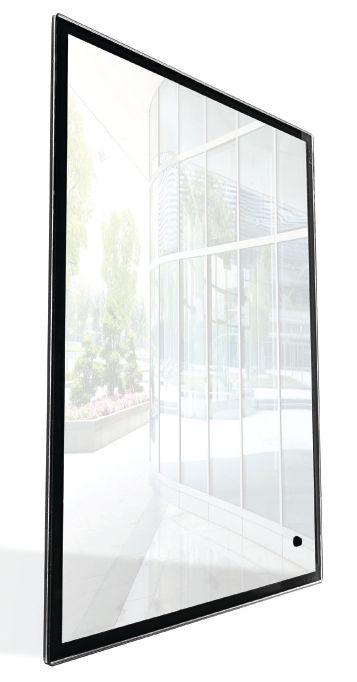
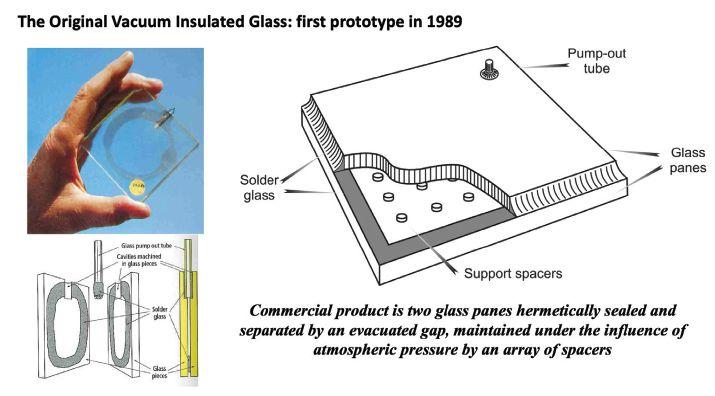
Vacuum insulated glass (VIG) consists of two panes of glass separated by a submillimeter evacuated gap. To maintain the gap separation against atmospheric pressure, the panes are held apart by a regular array of tiny metal or ceramic pillars (typically, cylindrical, 0.5 millimetre in diameter and 0.2 mm in height). The perimeter of the panes is sealed around the glass edges using either a fused solder glass or a metal solder. VIG is effectively a flat transparent thermos flask.
In conventional double glazing, there is an insulating blanket of Argon gas, or air, in the gap between the panes. Heat flows across this space via conduction through the gas, radiative heat transfer between the glass surfaces and, to a smaller extent, convective flow (slight air currents) within the gap.
VIG eliminates the conductive and convective heat transfer in such an Argon- or air-filled layer because the inter-pane gas is replaced by a vacuum. This more than compensates for the heat conduction through the support pillars that become tiny thermal short circuits between the panes. The fused edge seal leads to edge effects and losses similar to those in the edge spacer of a conventional double glazing.
The first practical VIG was developed in 1989 by a research group in at the University of Sydney, Australia, led by Professor Richard Collins. By about 1994, this group had connected with Nippon Sheet Glass (NSG) of Japan, and by 1996 NSG had the ability to manufacture commercial products at some volume and was optimizing the manufacturing process.
By 1998 to 2000, NSG was producing commercial quantities of VIG units. Its priority was to design products with a center-of-glass U-values of 1 to 1.5 watts-per-meter-squared-kelvinwith a thin profile suitable for retrofitting older style Japanese houses and buildings, which typically had just single glass in frames with a recess of about six mm. Therefore, NSG built its initial VIG product, trade marked as SPACIA, using two sheets of three mm glass, leading to a unit that was only 6.2 mm thick. The pillars were about 0.4 mm in diameter and spaced in the array 20 mm apart. The current range of design options for SPACIA offers products with U-values from 0.7 to 1.2.
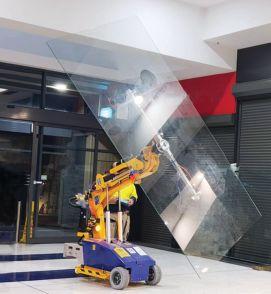
LEFT: Slowly but surely, VIG projects are proliferating. The above Vitro project at Lafayette College in Pennsylvania uses its VacuMax product, which the company says is capable of achieving R20 insulating values with an 8.3-millimeterthick unit.
NSG found there was strong demand for VIG in Japan, especially for use in retrofits. The thinness of the units (6.2 mm) is about a third of the thickness of conventional double glazing. This makes it ideal for retrofitting buildings with openings originally set for single pane windows. It reduces cost and leads to a more consistent aesthetic look. VIG has been one of NSG’s top-performing products in that there has always been a good demand to production volume ratio, and the company currently produces about 500,000 units annually. It has consistently increased its annual production volume. Outside of Japan, it markets SPACIA VIG under the Pilkington brand of the NSG Group.
Moving forward 20 years, the VIG technology is gaining significant interest among architects and builders because of the low U-values that are possible. There are, however, some questions seem to be unanswered for many. For example, can you see the pillars? Yes, of course the pillars are visible, but only if you get up close or someone points them out. Since all of us are used to looking through windows, we don’t naturally focus on that plane of the glass. Thirty years of experience has shown that occupants in their day-to-day routine don’t notice, or mind, the pillars.
Can you purchase SPACIA in Canada? Yes. You need only contact NSG directly in Japan, or
Though the concept of VIG goes back to 1913, it took until 1989 for a viable prototype to be invented. Moving from concept to commercial viability has been almost as slow, but new energy efficiency requirements might change the caluculations.
the North American offices of NSG or Pilkington. The company would likely be interested in supplying the product, especially if there is a volume order. But of course the key question is cost. In Japan, VIG can be manufactured for about half the cost of conventional double glazing. However, since NSG only manufactures SPACIA in Japan, this advantage disappears for overseas importers due to transport costs, taxes and customs fees, which can double or triple the cost.
Nevertheless, for volume purchases (e.g., large buildings), VIG can still be economically competitive with conventional products. It’s just a matter of scale. That said, you can still order it for your home if you are willing to accept the costs associated with shipping etc.
The reason why NSG hasn’t set up manufacturing outside Japan is that the performance of VIG is comparable to that of triple glazing, for which the U-value is about 0.9 to 0.7. However, the market penetration of triple glazing in North America, for example, is typically only a few percent – certainly no more than 5 percent. With such a low uptake for this conventional design with a close U-value to VIG, NSG didn’t think it worthwhile building up an overseas presence. In-
stead, it decided to focus on the already strong demand in Japan for its VIG, particularly around retrofits.
However, in North America things started to change about three years ago. We are aware of several buildings constructed in the USA with VIG from Japan and China. These include buildings in Florida, Minnesota, Wisconsin and New York. SPACIA was also used for the restoration of the Winston-Salem Union Train Station in North Carolina and heritage
buildings on the MIT campus.
What is driving this growing uptake in the USA? Higher thermal efficiency standards are encouraging building designers to seek high-performance and passive house outcomes. They want to be able to say they are using the newest and best technology to obtain the best possible performance from the façade.
Another factor is that, with the better insulating VIG, the temperature on the room-side glass surface can be warmer in winter and cooler in summer, leading to better occupant comfort (for example, for someone sitting near the window) and reducing the potential for condensation.
In the early 2000s, several smallvolume companies popped up in China, like Beijing Synergy. Since then, other key smaller players that have established themselves include: Hengda Glass in China; Egon Windows and Doors in South Korea; Taiwan Glass; AGC Glass Europe; and Panasonic, Japan. Currently, there are about 20 companies in China claiming they can produce VIG, but only about five of them could be considered capable of providing reliable and appreciable quantities.
Of the well-known major window manufacturers, Guardian Glass, USA, built a small pilot production plant that led to it selling VIG in small quantities. Saint-Gobain, PPG, Cardinal and Velux showed some interest in the technology and might have done some research. Certainly they all have, in many ways and over many years, indicated the desirable future potential of the VIG technology. These companies, unfortunately, have so far not worked towards commercial production or, with small volumes, don’t have as much of a presence in the VIG arena.
In recent years, AGC (Asahi Glass Company) opened a VIG production plant in Belgium. The AGC product has proven highly successful finding consistent demand from the residential sector in Europe. In a more recent development, in March of 2024, Guardian Glass and VELUX Group entered into a joint development agreement concerning the manufacture of a tempered glass VIG in the USA. This partnership could see the first manufacturing plant for North America.
There are VIG products marketed
with U-values well under 1 – even as low as 0.4. However, it is our opinion these products might be pushing the design limits of the technology. We believe the separation of the support pillars should not exceed 40 mm as that can lead to stresses that can compromise the edge seal. In using larger separations producers employ glass panes of thickness 5 mm or more, making the whole unit thicker and heavier, which is undesirable. Such design options which impact mechanical strength have led to a limited warranty of 10 to 15 years for most products. However, for the more conservative or proven designs by NSG, and recently by AGC in Belgium, the VIG products are sold with a 20-year warranty, which is longer than that offered by all of the other manufacturers.
There is another major design category for VIG: the hybrid-VIG glazing. A standard VIG unit is paired with single pane of glass, with an air- or Argonfilled gap between the VIG and single pane. This is effectively a double-glazing but with one of the conventional panes replaced with VIG. Or you can think of it as, technically, a triple glazing with
a vacuum and gas gap, as it has three sheets of glass.
The hybrid-VIG is ideal for retrofits of double glazing facades. Given the comparable thickness, it is well suited to being installed in the frame space of the original double-glazed unit, bringing the U-value down from, for example, 2.3 to 1.7 to about 0.8 or lower. It just wouldn’t make sense to put in basic VIG as there is room for the extra insulating layer afforded by the hybrid design.
Other advantages of the hybrid VIG include: the temperature difference across the VIG unit is lower so the thermally induced stresses are lower, and there is the added advantage that you can design a desirable level of sound insulation that is not possible with single panes or conventional double glazings.
Triple glazing is not necessarily the best option to meet this target. It is costly and has a higher energy embodiment than single VIG. Aside from the need to accommodate the extra weight and thickness, and the architectural impact of that thickness, these two factors make it difficult to meet the European standard for operable (openable) windows and
doors; it can be too thick and heavy for the frames of operable products. And if you need to add in safety and laminate, it just gets thicker and heavier, whereas VIG can still stay within the limits of double glazing and, by using a thin glass pane as the laminating pane, not exceed those limits by much.
In the USA, the Department of Energy’s 2014 Roadmap for Windows and Building Envelope Research and Development called for the development of residential windows with a whole window thermal resistance of R10 by 2020. This overall window value corresponds to a center-of-glass U-value of about 0.25 to 0.35 W/m2K, which is hard to achieve.
Although this did not pass into policy or building codes, and it only served as guidance to answer questions and provide an aspirational target, it signalled a recognition that much better window performance should be possible, and an official desire to attain it was real and immanent.
Such highly insulating windows were developed, but they were quite dark due to the types of surface coatings used to
limit radiative heat transfer, and the units were thick and heavy, also making the proposed technology solution costly. The same roadmap called for windows to be developed for the commercial sector with a whole window thermal resistance of R7.
From 2020 the product that North America swung to was called the thin triple – two sheets of glass with an ultrathin sheet in the middle to reduce the thickness and weight of this triple glass configuration. However, since 2020, issues have been noted with this design: the thin glass bends easily, affecting the view; and there are issues with gas leakage and permeation. Also, the thin glass isn’t cheap, as the production of it is different from regular float glass. So the thinking is VIG will also displace this design. Simply, this design can still be enhanced by replacing one pane with a VIG unit.
While users are willing to do better with windows, suppliers tend to limit access to new technologies like VIG because they believe cost is an issue. So suppliers might not even present VIG as an option. In most cases we know that, although codes and performance standards might not require them, better windows can help reduce the costs and environmental impact.
What’s the future for VIG? A key factor in driving greater uptake of this technology is government policy, building codes in the area of energy efficiency standards, and educating the end-users of the technology. With higher thermal efficiency targets for commercial buildings, and houses, comes the need to employ highly insulating components in the building envelope. It’s not rocket science to design highly insulating walls with U-values below 0.5 W/m2K. The trick is to come close to this value or achieving even lower values for the windows so they are no longer the weak link in the building envelope.
Realistically, such targets are best met with the Hybrid-VIG design. It’s a case of if governments mandate to build it to tighter standards, they – the customers –will come.
Tom Simko is a researcher at RMIT University, Melbourne Australia; Cenk Kocer is a Senior Researcher at the University of Sydney, Australia, leading the VIG Project.
by AMY ROBERTS
Amy Roberts is FGIA’s Director of Canadian and Technical Glass Operations.
Strength without added weight
Canada aims to reduce its overall greenhouse gas (GHG) emissions by 40 to 45 percent below 2005 levels by 2030 and reach net-zero by 2050. The building and construction industry accounts for 30 percent of Canada’s GHG emissions. Low-carbon construction materials will help drive down GHG emissions. The glass industry is committed to doing its part in the world’s fight against climate change reducing its carbon footprint and looking at new and innovative technology. One new piece of technology is intriguing in this area: the use of innovative lightweight glass–plasticcomposite panels. That said, before getting too invested, it is crucial to remember that the future of plastics in Canada is currently unknown. The country is currently working toward banning single-use plastics and the government recently solicited feedback about a newly proposed federal plastics registry. FGIA’s Rapid Response Team has already sent in comments and several suggestions.
These panels comprise a lightweight, transparent polymer polymethylmethacrylate (PMMA) interlayer core and protective cover layers of thin glass in a fully bonded transparent sandwich assembly. The interlayer core can be up to 20 mm thick. The cover layers can either be 0.5 to three mm-thick annealed glass or chemically strengthened glass.
Features
Since a radical polymerisation process is used to manufacture these panels, it is possible to adjust the transparency, UV-transmittance, adhesion and mechanical parameters of the PMMA interlayer
Researchers found these panels are an effective, lightweight substitute to conventional glass in the building industry.
core. Additionally, multi-coloured panels can be produced. Infills like LEDs, fabrics, metal grids, and solar panels can also be integrated into the panel’s design.
The lightweight PMMA interlayer reduces the panel’s dead weight when compared to conventional laminated glass, thereby meeting the demand for lightweight, durable glass structures with strong load-bearing properties. They also cater to the design trend of fully transparent structures offering homogeneous views. Researchers have studied the mechanical properties, such as strength, rigidity, ductility, temperature dependency, and durability, of these composite panels. In a nutshell, they found that these panels are an effective, lightweight substitute to conventional glass in the building industry. In the ensuing paragraphs, I’ll summarize the test results.
Study Results
The composite panels exhibited linear load-bearing behaviour. Researchers didn’t observe any creep effects of the interlayer material, which proved the persistent short-term stiffness of the PMMA interlayer core. The study also found the thickness of the glass cover layers significantly influenced the load-bearing behaviour of the overall composite panel. The composite panels with one-mm cover layers showed higher weight reduction, but at lower specific stiffness than monolithic glass. Thus, we can safely conclude that glass–plastic-composite panels offer adequate mechanical performance for structural applications.
However, the brittle failure characteristics of glass–plastic-composite panels can limit its use in buildings. This can be overcome by modifying the PMMA core interlayer with nanoparticles for enhanced ductility even after glass breakage or processing into laminated structures, thus enabling the use of glass–plastic-composite panels in applications requiring safe failure.
The studies show that glass–plastic-composite panels are a suitable novel solution with the ability to meet the architectural goals of lightweight, transparent, and strong all-glass buildings.
FGIA
UNDERtheGLASS |
Enhancing efficiencies
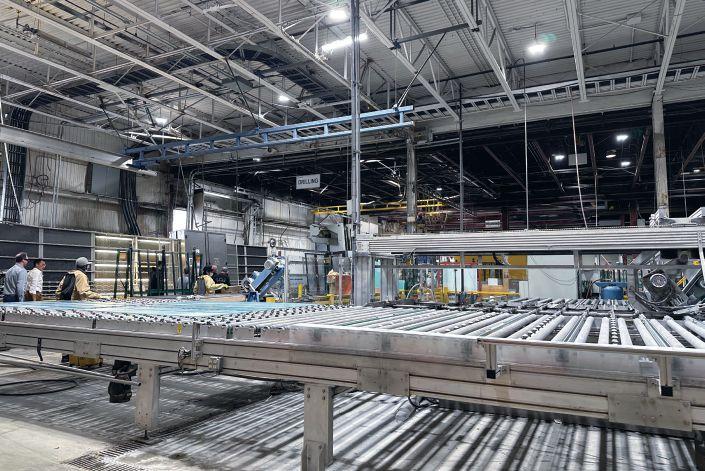
Saand invests in new tech for Etobicoke facilities
Emil Leucuta runs Saand’s Attwell Drive facility. He’s keen on using newer information technology to streamline processes and limit his time running from location to location. Improved communication allows him to keep activities coordinated between Saand’s four plants.
AT A GLANCE |
Saand
Aleader in the glass fabrication sector, Saand has grown to become one of the top suppliers in North America. With four locations across Ontario – two in Toronto, one in Ottawa and one in London – the company boasts more than 570,000 square feet of manufacturing space featuring state-of-the-art equipment. Saand employs approximately 400 people between its four locations.
Investing in the latest equipment has been one of the keys to Saand’s success over the years. Recently, the company invested in several new pieces of technology, including an oversized tempering furnace; digital printer; lamination line; and automated seaming system; to optimize its Toronto operations, located minutes apart from each other on 250 Brockport Drive and 355 Atwell Drive in Toronto.
“We have trucks back and forth here probably 10 times per day,” says Emil Leucuta, plant manager for the Atwell Drive facility in Etobicoke.
The facility on 355 Atwell Drive is the company’s newest location, purchased from Guardian in 2013. To enhance op-
erations at this facility, Saand invested in the facility’s Glaston Pro L lamination line, Lattuada upright polisher, and an Intermac vertical drill and double polisher.
“The lamination line is the jewel of this building. It is the only one in all four facilities,” Leucuta, says.
While the Greater Toronto Area (GTA) is home to approximately 50 companies that can temper glass, there are only about five that can laminate glass, Leucuta explains.
“That gives us a big advantage in the market,” he says, adding that having one of the largest cold rooms in North America allows the company to consistently keep a larger amount vinyl stock than most of its competitors.
Saand’s lamination line is automated, so it also offers efficiency advantages over manual production lines. The unit can work on glass with dimensions up to 96” x 130”.
“It’s much faster and has improved quality greatly. We can do about 10,000 square feet of billets in 16 hours. For custom work, we can do 4,000 to 5,000
Market reach: North America
Locations: Ottawa, London, two in Toronto
Main services: Architectural glass cutting, edge conditioning, polishing, tempering, lamination, heat treating, heat soaking, digital printing, insulating glass manufacture
Employees: 400
Total plant: 570,000 square feet
Instituted: 1988
square feet, depending on the different shapes and sizes,” Leucuta says.
The biggest market for laminated glass is customers looking for insulated glass (IG) units. Much of the laminated glass production performed at the Attwell facility is then shipped to Saand’s Brockport location for its IG customers.
The company recently purchased an automated seaming and washing system from Ashton and Benteler (respectively) which has greatly improved quality, safety, and productivity. It is able to work on two
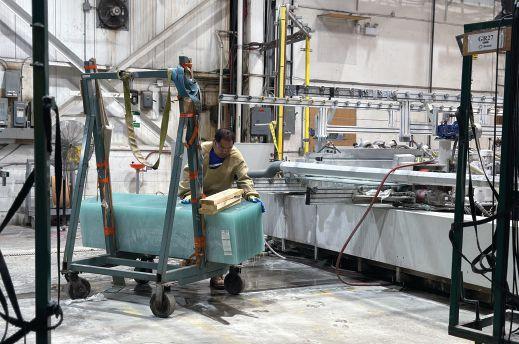
Saand’s lamination line is “the jewel of the business.” It’s 96-by-130-inch capacity enables Saand to take on projects others have to turn away. They find it’s a great enhancement to their IG fabrication business.
edges simultaneously, significantly increasing production speeds.
One advantage of the automated seaming system is that it is much easier to operate than the company’s previous seaming equipment, which was a discrete machine resulting in extra handling.
Saand also recently invested in a Lattuada vertical polishing machine. The new vertical polisher has worked so well for the company that Saand purchased a second polisher for its Brockport facility.
The oversized furnace and digital printer were purchased in 2023 for the Brockport facility.
The North Glass oversized furnace was purchased in November 2022 and can temper glass in dimensions up to 130” x 204”.
“It’s the biggest sheet of glass that we purchase in this business,” says Farad Rashid, operating manager for Saand’s Brockport facility.
The furnace was purchased largely to service the commercial IG market, although it is also used to service the residential sector (mainly the condominium market). Tempering plays a crucial role in this business right now, so producing top quality is vital, Rashid adds.
“Our customers are looking for better quality and larger sizes, especially on the high-rise buildings. You can see it when the sun rises, and the sunshine is there. You can see the distortion,” he says. “We have had good tempering on our glass, but we were looking for something that is really going to help us minimize that impact.”
The oversized furnace was purchased in order to meet demands from customers looking for larger units.
“They’re asking if we can make larger units. It’s not a small game anymore. They’re asking for us to do oversized units,” Rashid says.
The company linked its jumbo cutting line to its new oversized tempering furnace and the results have been positive.
“Because it’s brand new, the accuracy is there, and the technologies are all updated. So, it is able to produce the good quality
Saand’s large tempering capacity enables it to keep up with the demand for ever-larger glass. The new furnace can handle sheets up to 130 by 204 inches.
glass that our customers are looking for,” Rashid says.
The digital printer was purchased for the manufacturing of custom designed printed and bird-friendly glass, which has been picking up in demand in recent years as cities put forth new requirements and regulations on new builds.
Rashid says moving away from manual production will greatly improve production quality and efficiencies and open the company up to new opportunities in the marketplace.
“Going to digital printing you’re opening yourself to the market where you’re saying, ‘I can print any print for you, no matter how complicated,’” he says. “Basically, you’re just receiving the drawing from a customer that is approved, and you’re creating a program and relying on the machine to do that job for you where it minimizes all the errors and is very fast… it also gives us the capability of opening our arms to more business that is complicated.”
With the Atwell and Brockport facilities being so close together, the production facilities can rely on each other for support when needed for almost all types of glass cutting and fabrication.
“We cannot supply IG production [at Atwell], and they cannot help us with lamination, but the rest we can do between us,” Leucuta says.
Software assistance
Saand has recently developed a custom software tool that allows employees to pull up any work instructions they might require for
producing products on machines they may not be entirely familiar with from any computer on the production floors of all four facilities. This can help employees jump from one machine to another to assist different departments when work is busier at particular stages of the production process.
“For example, if I don’t have too much in tempering, and I ask some of the guys to go and help doing PM and lami, obviously they will need to go through this first. It’s all kind of instructionbased, how to do the PM, what to clean, what to check, change the filters, change the rollers,” Leucuta says. “I can go to Ottawa and look at their operation’s cutting. Even if I’m not familiar with their machine, because they’re different machines, I can read their work instructions. And with a little bit of experience, I will be able to take my cutting guy and he will be able to jump on that machine.”
It is also a great training tool for new employees to learn about the different pieces of equipment; and learn which types of quality issues can potentially arise on those machines. The software also has a preventative maintenance checklist for employees to review.
For the plant managers, the software offers the advantage of being able to identify quality and other production-related issues between the plants, and being able to communicate to each of the four facilities.
“As a quality manager, sometimes I need to go to Ottawa or London to address a few issues, but my time is limited. So, I’m trying to do everything online,” Leucuta says. “I have a meeting scheduled weekly with all facilities to discuss the issues that they have. And the good thing is, if I see an issue was in London, and I see the same issue in Ottawa, when Ottawa starts working on a project, I just tell the guys from London to communicate with Ottawa. So, sometimes you don’t need to go to all the way there. Or sometimes, somebody comes with a great idea and shares it, so we can implement it at the other three locations.”
Saand has been in operation since 1988, supplying glass fabrication services for more than 35 years. By updating its facilities with the latest production software and investing in state-of-theart technologies, the company is positioning itself for success for decades to come. •
Manufacturing PVC and Aluminum Patio Doors for over 40 years!
The plant’s throughput capacity is around 10,000 square feet per day.
Talking commercial glass
Fenestration Canada’s inaugural Canadian Glazing Conference (CGC) kicked off in Surrey, B.C., on April 9 marking a significant event for FenCan and over 160 professionals in the industry. The conference was a melting pot of innovation and networking, providing attendees with a comprehensive overview of the current state and future direction of the industry in Canada.
The CGC event hosted a series of presentations and talks that covered a wide range of topics critical to the Canadian glazing industry. Key themes included advancements in codes, standards and regulations, which are pivotal in shaping the industry’s compliance and operational excellence. Green building design was another significant topic of discussion, highlighting the industry’s commitment to sustainability and environmental stewardship. Sean Pander, green and resilient buildings manager with the city of Vancouver provided a session called “Energy Codes in the Cities of Glass.”
“There are two main drivers of rapidly evolving energy codes in B.C. in particular and similar changes will ripple out across the country,” said Pander. “The first is the growing concern around climate change. There is the Clean B.C. Plan that has set out very ambitious targets. Similarly, many local governments in B.C. have adopted a climate emergency declaration and plan.”
Layton Consulting’s Anton Van Dyk provided the session “Fenestration Engineering – When?” highlighting how important a building’s fenestration system is for energy, water and air performance yet the fenestration systems are often designed late in the project adding cost, inefficiencies, and
Canadian Glazing Conference provided a forwardlooking perspective on the glazing industry, touching on emerging trends and opportunities.
FENESTRATION CANADA
missed opportunities. “Over the last five years, I’ve really questioned why the industry does certain things at a certain stage,” Van Dyk said. “The introduction of thermal performance has really put how we choose to calculate it front and centre. If you think EPDs are the next thing, they are.” Van Dyk introduced the concept of siloing design to CGC attendees.
FenCan’s training and recruiting emerged as vital discussions, reflecting the industry’s focus on attracting talent and addressing workforce challenges. The importance of drawing new people and equipping them with the necessary skills and knowledge to excel in an evolving industry landscape was emphasized.
Exhibitors seized the opportunity to showcase their latest products and services, ranging from high-performance glass coatings to an array of glazing hardware, tools and accessories. One of the most valued aspects of FenCan’s CGC conference was the abundance of networking opportunities. Attendees enjoyed coffee breaks, a complimentary lunch and a mixer event, all of which facilitated engaging conversations among commercial glazing professionals, exhibitors, and industry leaders. The Canadian Glazing Conference provided a forward-looking perspective on the glazing industry, touching on emerging trends and opportunities. The evolution of codes, standards, and regulations continues to influence the industry’s trajectory, with a growing emphasis on sustainability and energy efficiency.
Green building design remains a pivotal trend, with the glazing industry playing a crucial role in developing solutions that support sustainable construction practices. The discussions and presentations at CGC painted a picture of an industry that is not only responsive to current challenges but also proactive in shaping a sustainable and innovative future.
Watch the full conference on FenCan’s YouTube channel and stay up to date with future events at fenestrationcanada.ca.
Thank you to our sponsors Sherwin-Williams, JSA Machinerie, PrefERP, Tremco, CAD-PLAN, Screenco, INT Machinery Co, Servitek Foussier and Glass Canada. •
BEC 2024 FEATURE
by RICH PORAYKO
Apivotal moment for the glass sector happened earlier this year. The 2024 National Glass Association’s Building Envelope Contractors Conference welcomed over 800 industry professionals. This annual congregation of glazing contractors, glass fabricators, suppliers and fenestration serves not just as a meeting point but as a beacon for future directions in the industry.
State of the industry
President of Vitro Architectural Glass, Ricardo Maiz, set the tone with a compelling presentation on the state of the industry, charting the trajectory from past achievements through present challenges to future opportunities. It’s not a surprise that construction is down from its peak period over the past few years. “We have stagnating demand,” said Maiz. “Prices don’t increase much. Freight has doubled. Electricity, sand, labour, soda ash – all the inputs
Annual wisdom from industry leaders
used to produce the sheets of glass eventually coming to your business. We’re in a margin crunch. Our demand hasn’t grown. Our prices don’t grow. Our inputs have grown dramatically.”
Maiz explained to attendees that the industry has changed. “Since 2005, 13 tanks have shut down. There have been big shifts in the industry with some consolidation and a huge jump in solar. Near-shoring and reshoring is big. Companies are locating in or near to the U.S. and North America. Imports into the U.S. are shifting from China and Asia Pacific to North America. It makes our supply chains more efficient.”
As the industry continues to evolve, Maiz shares that we’ve seen the first wave of consolidation. “AGC exited this market. Cardinal is growing in the residential market. Vitro is taking over the PPG assets. I call it the first wave. I don’t know if there is going to be more
but I foresee more activity in one way or another.”
Building a greenfield investment for float glass manufacturing in North America is exceedingly difficult. “It’s massive amounts of capital,” said Maiz. “Margins to date that don’t exist in order to get the return. That’s why you don’t see new float glass investments. You see acquisitions and buying assets at values lower than replacement value.”
Maiz is dubious as to how much growth we’re going see, even in the solar space. “The solar boom is coming but will this tighten supply to other markets.”
ABOVE: The BEC 2024 conference explored what is next for the industry and the stagnating demand for glass.
Disruption is coming
Troy Johnson, president of Harmon, Inc., provided the conference keynote, “Disruption is Coming. Are you ready?”
The Hover Dam. The Empire State Building. Skyscrapers. “There is this very tangible connection between the skill and the communal nature coming together to do these amazing feats,” said Johnson. “People tend to not leave construction because there is this community where your skill and value is very tangible.”
Johnson spoke of the root causes of inefficiencies. “The first is the lack of investment in technology transformation. When the problems are really hard to solve, and the risk adjusted profits that we should be making as an industry aren’t high enough, there are not these mega bets on investment that you see in other industries because there is a risk-reward problem that is keeping people from doing it.
“We also don’t have really good systems in construction,” said Johnson. “There is a heavy reliance on people. That is generally a good thing. It makes people valuable and they get good pay. But it’s also challenging because those people can just walk out the door. And when humans are the fall points on everything, mistakes happen.”
Dealing with delay
Vic McConnell from Smith Cashion and Orr presented a session on common ways to protect your company’s exposure from scheduling delays called “How to Manage Delays and Avoid Exposure.”
One, read your contract. “When you turn in a proposal, it’s based on time of performance,” said McConnell. “It’s key to other trades’ time of performance, so you need to have a really clear understanding of that. You need to understand the changes clause, it’s the process to which you are entitled to additional compensation. It could also be the process in which someone else on the project makes you liable for delay.”
Two, look at your waiver clauses. “How much damage can you recover,” asked McConnell.
“How much damage can the owner recover for a delay related problem on your project?”
Three, notice in claims clauses. “Almost 100 percent of the time, when there is a delay claim on a project, it comes down to communication. Unfortunately, by the time you are into a major delay causing event, that step has already been missed, because someone didn’t provide communication and notice in a timely manner.”
Reading your contract, documenting the delay, and requesting a time extension are critical. “Prove your damages with documentation,” said McConnell. “Make the claim timely. Proceed under protest if the claim is not granted immediately and finally, you don’t want to forget to invoke dispute resolution.”
Engaged employees
Tom Jackson, president and CEO of Steel Encounters, returned to BEC to share lessons he’s learned on employee engagement since his last BEC presentation on the topic six years ago.
“Set your cultural expectations,” shared Jackson. “Communicate, communicate, communicate. Deliver your message with regularity using multiple mediums and cascading messaging through your employees. Teach every employee about your business. Here’s a hint, use metrics.”
Jackson emphasized the importance of employee recognition and accountability. “I believe the foundation of a good culture begins with a mission, vision, and values. All three bring clarity as to why our business exists and set the expectations for everyone who works for us.”
“Do your customers make you successful?” queried Jackson. “We want to be mutually like-minded with our customers. Same with vendors. Sometimes if a vendor is causing continual problems, we can’t continue the partnership. It’s not a successful partnership for us.”
“Build successful employee owners,” said Jackson. “Four simple words. If your employees know your financial goals, and how they are impacted, they will become more interested in helping you achieve the bottom line.”
Big takeaways
BEC 2024 highlighted that the architectural glass industry stands at a crossroads, facing pressures from economic fluctuations, operational efficiencies, and the urgent requirements for sustainability.
The past few years have witnessed seismic shifts– 13 tank shutdowns symbolize a period of intense reevaluation and consolidation. The rigorous capital needed for greenfield investments in float glass manufacturing foreshadows additional strategic acquisitions and the prudent utilization of existing assets. Despite the uncertainty surrounding growth prospects, including in burgeoning markets like solar, the underlying message speaks volumes about the need for communication, agility and innovation. •
Tri-Temp Glass has manufactured tempered glass for showers, railings, entrance systems, interior partitions and architectural glass applications since 2007. • Tempered up to 96 x 144 • Custom Laminated up to 86 x 144
• Bent Tempered Laminated to 66 x 96 • Back Painted Glass
SentryGlas Lamination • Opaci-Coat-300 Spandrel
PRODUCTSHOWCASE
Hurricane-certified glazing systems
unicelarchitectural.com
Unicel Architectural has announced its Vision Control louvered glazing and curtainwall systems have been certified for hurricane resistance in the U.S. state of Florida. A select group of Unicel Architectural glazing system products recently passed a series of Florida performance tests including Testing Application Standard (TAS) 201-94 – Impact Test Procedures (Large Missile); TAS 202-94 – Criteria for Testing Impact and Non-Impact Resistant Building Envelope Components Using Uniform Static Air Pressure; TAS 203-94 – Criteria for Testing Products Subject to Cyclic Wind Pressure Loading; ASTM E1886-13 – Performance of Exterior Windows, Curtain Walls, Doors, and Impact Protective Systems Impacted by Missile(s) and Exposed to Cyclic Pressure Differentials; and ASTM E1996-17 – Performance
High clarity, low solar gain
vitroglazings.com
Solarban 72 glass from Vitro is a triple-silvercoated solar control low-E glass designed specifically for application to Starphire Ultra-Clear and Acuity low-iron glass substrates by Vitro. In addition to its high visible light transmittance, Solarban 72 delivers superior clarity and solar
Units
• Fenestration Computer Simulation
• Safety Glazing
• EIFS
• Cladding & Building Systems
• Air Barriers
• Thermal Performance
• Condensation Resistance
• Instrumentation & Test Equipment
of Exterior Windows, Curtain Walls, Doors, and Impact Protective Systems Impacted by Windborne Debris in Hurricanes. The certified Aluminum curtain wall system (700S) can feature insulating glass units with Vision Control; insulating glass units with Vision Control Mini; insulating glass units with ViuLite; and insulating glass units (without integrated shading). These products are now certified under Florida Building Product Approval number FL 41609, making them officially compliant with the structural requirements of the current Florida building code including within the region’s “high velocity hurricane zone” (HVHZ). Hurricane-rated windows are made from multiple glass panes reinforced with a polymer layer, are designed not to shatter when broken and don’t require additional storm shutters or other protective devices.
control performance. Specially engineered for vision glazings, Acuity glass is ideal for distinctive exterior applications such as atriums, skylights and spandrel glass. In a one-inch insulating glass unit, Solarban 72 Acuity glass provides a VLT of 67 percent and a solar heat gain coefficient of 0.28.
Double thermal break
Acro Aluminum has introduced an aluminum thermal door with improved thermal efficiency and water penetration resistance. Designed with a double thermal break, it achieves a U-value of 0.27. An innovative threshold design provides robust water resistance at 180 Pascals while meeting ADA standards for easy entrance. The structure of the door is an interior aluminum U-channel that uses polyamide shear blocks to support aluminum cladding around the perimeter of the door. This creates a double thermal break giving the door a U-value of 0.27 with a double-glaze low-E IGU, superior to many triple-glazed aluminum doors. Other benefits include no glass stops, improving security with a sleek look; the ability to easily accommodate different finishes on the interior and exterior with slide-in and -out cladding; and no bowing from unequal expansion of crimped aluminum when exposed to hot sun. The door is being fabricated out of Acro Aluminum’s Vancouver warehouse.
acroaluminum.ca
Improving curtainwall thermal preformance
technoform.com
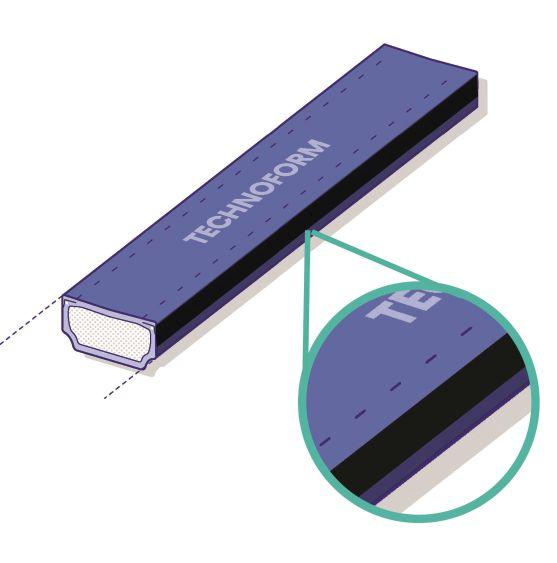
Technoform has added a new plastic hybrid stainless steel warm-edge spacer to its family of edge seal solutions for insulated glass units. With a matte black finish applied to the sidewall of the spacer, the risk of “shiners,” or exposed stainless steel at the edge from the spacer, can be reduced. Referenced as Technoform SP25, this product development is the latest in Technoform’s extensive catalog. Designed for use in structural silicone glazing applications, the black sidewall of the SP25 spacer reduces the chance of steel visibility where there is not full coverage of the sidewall by primary polyisobutylene sealant. PHSS spacers by Technoform are composed of a high-performance engineered polymer with a thin, low-conductivity, stainless steel wrapping the back and sides. Technoform’s PHSS spacers minimize heat transfer and maximize protection against gas leakage and moisture penetration. The new black sidewall spacer enhances esthetics, allowing fabricators to ensure consistency of colour at the edge, while achieving high thermal performance and durability. Simulations following the National Fenestration Rating Council standard procedure show that using Technoform’s spacers in structural glazing systems can decrease the fenestration assembly’s U-factor by approximately 0.04 to 0.05 compared to using an aluminum box spacer. This is a significant improvement of over 11 percent and provides an easy, drop-in solution for improving curtainwall thermal performance to meet more stringent energy codes. Technoform’s spacers also can increase the NFRC Condensation Resistance rating and improve the sightline temperature. The new SP25 spacer surpasses the durability requirements of ASTM E2190 with a dual seal PIB/ silicone sealant system. The Insulating Glass Certification Council lists SP25 as an approved spacer in the PHSS classification. SP25
black sidewall spacer currently is available with a 0.5-inch width. Additional sizes are planned for release. Technoform’s standard PHSS spacer catalog of solutions are available in 18 widths (IGU cavity dimensions) spanning 0.25 to one inch and in five standard colours: black, light gray, dark gray, white and bronze. Additional colors and sizes also are offered through Technoform’s customized solutions program.
Always hungry, never thirsty
Rich Porayko is business development director for Fenestration Canada
Commercial by RICH PORAYKO
This may be an unpopular opinion, but I hope I work until I’m old. Not because I must or have to, rather I want to.
An increasing number of individuals are opting to continue their careers into their 70s – and it appears its unrelated to professional success. Many people dream of retiring early to enjoy leisurely days with no obligations, but that lifestyle can quickly become monotonous – without purpose, it kind of looks boring. There are those who genuinely enjoy their careers, the challenge of the game and the camaraderie of teamwork. Personally, I aspire to continue working well into my later years. I find the more I enjoy what I do, the busier I get.
A common misconception among today’s younger generation is the belief that success may only come from crypto, being an influencer (follow me on LinkedIn) or drop shipping from a beach (visit sandandsoda.com today) but this simply isn’t true. In fact, trades and blue-collar jobs are extremely lucrative, even in today’s economy.
Influenced by social media, many attempt to emulate the lavish lifestyles they see online, whether authentic or not. It’s important to recognize that wealth can be earned without extensive knowledge in a specific sector, especially in blue-collar trades. Hard work, budgeting, and living within one’s means are key components for financial stability. Discipline, saving money, smart investments, and spending wisely are essential for success.
“Your number one wealth building tool is your income,” says Dave Ramsey, author of the bestselling book Total Money Makeover. “All of the millionaires that we interview, unless they inherited
It’s important to recognize that wealth can be earned without extensive knowledge in a specific sector, especially in the blue-collar trades.
their money, which is less than 10 percent, did it by saving and investing their income.”
Ramsey continues, “When you give your income to someone else, you don’t have it anymore. And when you give your income away, you’ve given up your economic future, all for crap. All the money comes in, all the money goes out.”
Like Ramsey, I agree that retiring from work to do a whole lot of nothing isn’t a great plan. “Fishing and golf, you’ll just get fat. Don’t do it. Hedonism leads to heart attacks. If you’re 48 years old, you have another 50 years on the planet potentially. What are you going to do with the rest of your life? It doesn’t have to be a 40-hour a week grind. It might be you open a business. But it’s somethingwhere you put your hand to the plough.”
“It’s a weird cancer that has grown out of the dream of ‘I want to work hard so I can do nothing’,” says wealth expert John Delony. “It’s a recipe for disaster. Relationally, physically, emotionally, spiritually. It will collapse you. There is no great joy except in serving.”
There are several experienced glass geeks showing us how it’s done. They’ve been around, know what’s up and love what they do. It’s not just the money – but, yes, money is a factor. My goal for financial freedom is choosing to work, but not needing to work. “Money in the bank gives you freedom to start a business, retire, or go on vacation,” says Ramsey. “The more we are able to save, the more freedom from money we have.”
Always hungry, never thirsty. It’s the unyielding passion for growth, learning and achievement. A relentless pursuit of goals and the constant desire to surpass one’s milestones while maintaining contentment and fulfillment in one’s personal life and relationships. Echoing the wisdom of the Japanese proverb, “When you’re thirsty, it’s too late to think about digging a well,” reminds us to prepare and persevere ahead of need. With an estimated 20 to 25 years ahead for me to keep forging my path, my hands are steady on the plow, ready for the work that lies ahead.
STAND OUT FROM THE COMPETITION. BECOME A FENESTRATIONMASTER® .
FenestrationMasters provides a unified measure of success for professionals across the glass, glazing and fenestration industries through education and professional development.
Why become a FenestrationMaster?
•
Broaden your knowledge—Learn about a wide range of industry topics.
•
•
Stay current—Keep up-to-date on industry standards and best practices. Make it official—Certification validates your industry expertise.
•
Access from anywhere—Online courses and proctored exams provide a fully digital experience.
Elevate your expertise. To become certified, sign up at FGIAonline.org/FenestrationMasters.