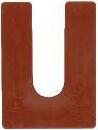
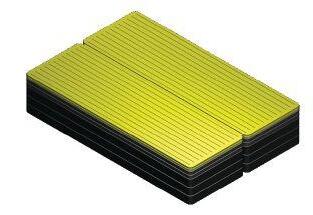
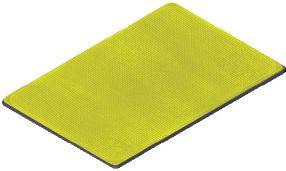
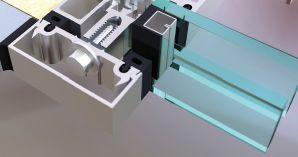
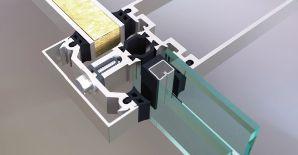
Grove Shims™ has the perfect shim for all your shimming needs. With color-coded shims and solid thicknesses, the right shim can be easily applied for perfect alignment. No guesswork or realigning. Our shims save you time and money.
* Contact us about eligible tariff fee reimbursements on the purchase of Grove’s shims only. “This ad applies to U.S. and Canada only. Offer expires 12/31/20.”
Need help? Just ask! We’re here to help.
978-534-5188
Visit us online to see all of our available solid 3x4 Shims.
www.groveshims.com
Free Samples are Available Upon Request.
Grove Shims™ is the leading producer of plastic structural shims. We have been in business since 1962, making shims since 1975, our family-owned business provides prompt, personalized attention to each order. In addition to our large line of in-stock shims, we will custom fabricate parts to meet your unique requirements. Unlike many competitors, our shims are solid and do not have hollow voids, so you can depend on them in crucial, load-bearing conditions.
We Did In The Pandemic
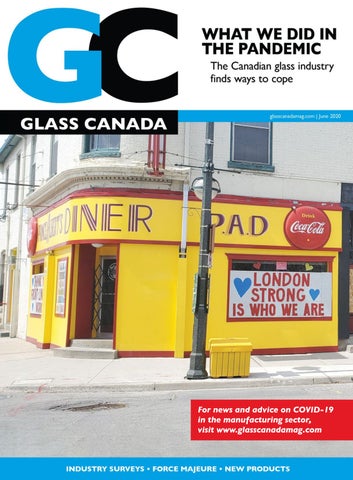
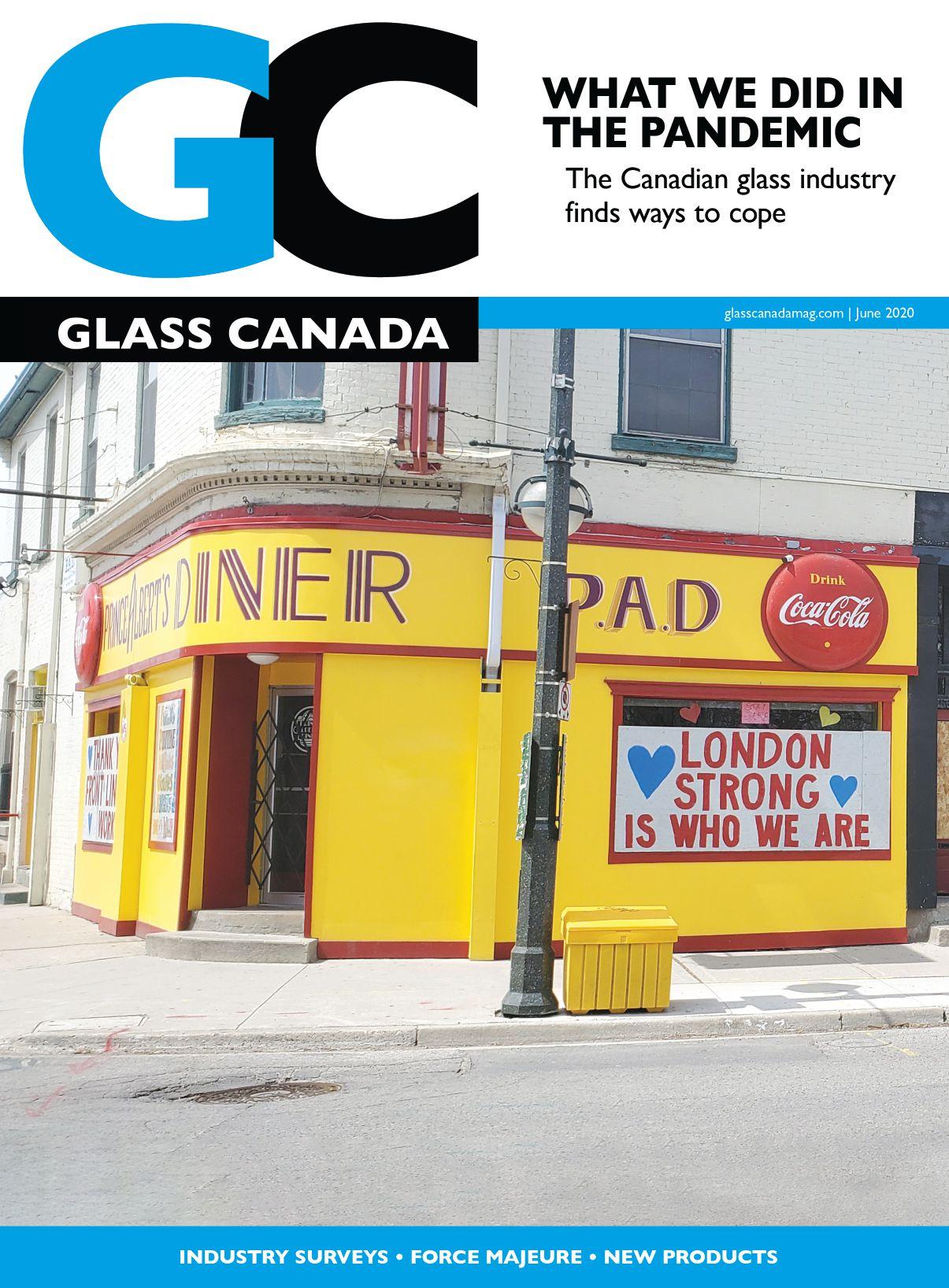
Here’s just a few of the stories from around Canada’s architectural glass industry. On the cover: London, Ont.’s, iconic Prince Albert Diner, boarded up by Provincial Glass.
COVID Specials
The Glass Talk podcast has been in overdrive, pumping out critical information for your business. Check out the feed on your favourite podcasting service for information on the latest government assistance, updates from pandemic experts, jobsite delivery, receivables insurance and more. Or find all the episodes at glasscanadamag.com.
18 When lightning strikes
It doesn’t get much more act-of-God than a plague. But even in the pandemic, applying the force majeure clause is not always straightforward.
24 Surveying the wasteland
Polls of Canadian contractors reveal an industry reeling from economic downturn and worried about what’s next.
26 Top Glass products
Here’s what was going to be on display at Top Glass in April until...well, you know.
David Heska
Frank Fulton
How lucky we are
The pandemic has revealed strength in our industry and our communities.
Considering the blow we’ve been dealt to our ability to carry on business, not to mention our personal routines and even personal health security, I have to say I’m proud of the Canadian reaction.
First of all, people have taken this seriously. We’ve listened to experts, thought and talked about the problems and their solutions and, largely voluntarily, made big sacrifices in our lives and our bank accounts. The great and somewhat amazing thing is, we haven’t done this out of self-interest. We all know that an individual’s chance of dying from COVID-19 is small. For most, it’s like a nasty flu. Most of you reading this are still working age, which means you are younger than the groups most at risk. Yet you made the great effort anyway. You shut down and reorganized your production floor. You sent valuable workers home. You spent hours scouring equipment and vehicles. You learned how to use Zoom. You hastily designed service windows to install at local cash counters. You went blind looking at government websites to find the funds needed to keep the lights on and the workers fed. You donated time and equipment to help out the local health authorities and charities protecting the ill. And through it all, you watched your revenues slow or stop for a time.
NEXT ISSUE
• Aerogel
• Window Wall
Why did we do all this? Because we knew the effort was necessary to protect those most at risk and to preserve our hospital capacity to save as many of them as possible. We took individual hits – some big, some small – for fellow Canadians we don’t know and will never meet. As a country, our intelligence, sense of civic responsibility and common decency has never been on stronger display.
Then there’s how we did it, and I’d say we did it with style. It’s a well-kept secret that Canadians have the best sense of humour in the world. In my many, many conversations over the last few months, I’ve encountered almost no negativity of any kind. People are smiling, laughing and cracking jokes at their own expense about their hair and eating habits on lockdown. They are finding ways to donate and to thank health and essential services workers. They are cheerfully putting up with the vagaries of Zoom and kids blundering into important meetings. There’s been no sense of hysteria or fear in the country; instead I’ve picked up a kind of resigned determination to get on with it and make the best of it. Kind of like the way winter makes us feel every year anyway.
Lord help me, I’m even a bit proud of our political leaders. Admittedly, it’s a low bar these days in light of the deadly, divisive, corrupt, incompetent clown show to the south, but I have to give credit to Ottawa and the premiers for having a plan, communicating clearly, acting on expert advice and doing their best to react to a bewildering new set of problems. Mistakes have been made for sure, but by and large I feel like they have been forgivable ones under the circumstances.
Most of all, I think at this time we all can feel lucky to live here in Canada where, for all its warts, we have the strength of society, depth of resources and stability of government to weather this thing. There are places in the world where bodies have piled up in the streets. Instead, here, I think we will very soon be looking at a roaring recovery. •
GLASS CANADA
June 2020
Volume 32 • Number 3
Annex Business Media
P.O. Box 530, Simcoe, Ontario N3Y 4N5
EDITOR | Patrick FLANNERY pflannery@annexbusinessmedia.com 226.931.0545
VP SALES/GROUP PUBLISHER | Martin McANULTY mmcanulty@annexbusinessmedia.com
COO | Scott JAMIESON sjamieson@annexbusinessmedia.com
AUDIENCE DEVELOPMENT MANAGER Urszula Grzyb ugrzyb@annexbusinessmedia.com 416-510-5180
CIRCULATION
Tel: 416-510-5180
Fax: 416-510-6875 or 416-510-5180
Mail: 111 Gordon Baker Rd., Suite 400, Toronto, ON M2H 3R1
SUBSCRIPTION RATES
Canada - 1 Year $37.00 (plus tax)
U.S.A. - 1 Year $85.00 (in CDN dollars)
Publication Mail Agreement #40065710 Printed in Canada ISSN 0843-7041
Occasionally, Glass Canada will mail informationon behalf of industry-related groups whose products and services we believe may be of interest to you. If you prefer not to receive this information, please contact our circulation department in any of the four ways listed above.
STAND OUT FROM THE COMPETITION. BECOME A FENESTRATIONMASTER® TODAY.
Now through the end of June, enroll in our online FenestrationMasters® program and pay the discounted member rate—whether you’re an FGIA member or not.
With the combined expert resources of AAMA and IGMA, the Fenestration and Glazing Industry Alliance (FGIA) provides a unified measure of success for professionals across the glass, glazing and fenestration industries.
Our wide-ranging FenestrationMasters program offers professional certification and education for all things fenestration. The program covers the full breadth of the industry, including performance standards, products and materials, test methods, and code requirements. The courses are online and self-paced, with a year to complete, making certification easy to achieve from the comfort of home.
Sign up today and take advantage of member pricing. Learn more at fenestrationmasters.FGIAonline.org
NEWS
Farewell to the CGA
The Canadian Glass Association has been officially dissolved and removed from the Canadian registry of industry associations. The decision was taken by the board March 27. Association president David Langton of Competition Glass had announced his intention to step down earlier this year.
“It is with regret that I inform you we have dissolved CGA, said Zana Gordon, executive director. “We could not keep it going. There is no national support for this association. B.C. and Alberta were on board completely, but with no support from the rest of the country we have no choice. So sad.”
The association was formed in 2001. Attending the formative board meeting was Keith Pynoo (Kawneer), Dan Pappas, Dave Husson (Artec), Bill Snow (Edmonton Glass), Steve Petersen (A1 Power Doors), Ken Thomas and Chris Skalkos (Glass Canada). Pynoo was elected chairperson at that meeting. Original goals of the association included forming a liason between glaziers and the Canadian Construction Association and producing a set of national glazing specifications.
The CGA also hosted several Glass Connections events in various locations across the country. It attempted to support the formation of an Atlantic trade group as well, but that association drew little support and ceased operations after a few meetings.
The association was structured as an
“association of associations” with provincial associations across the country acting as the members and sending delegates to sit on the board. The CGA was dealt a blow in 2014 when both the Glazing Contractors Association of BC and the Quebec glass association, AVFQ, withdrew their memberships.
Frank Fulton discussed the difficulties the CGA was facing in his You Bet Your Glass column in April 2018 Glass Canada. “The beginnings of the CGA were encouraging,” he wrote. “In 2009, the Glazing Systems Specifications Manual for Ontario was completed and distributed widely by the OGMA and AGMCA in Ontario. A few years later a national version was produced, squabbles about the ownership of the manuals arose and what began as a cooperative effort between the provincial associations devolved into a situation of mistrust.” Former CGA president Jim Brady of Cal-Tech Glass Services was quoted by Fulton: “The biggest problems we face are a lack of funding and people willing to volunteer their time to do the work and tackle the issues.”
Glass Canada supported the CGA with print advertising and a newsletter page. The newsletter page will be maintained under a different heading to provide a roundup of news from associations across the country.
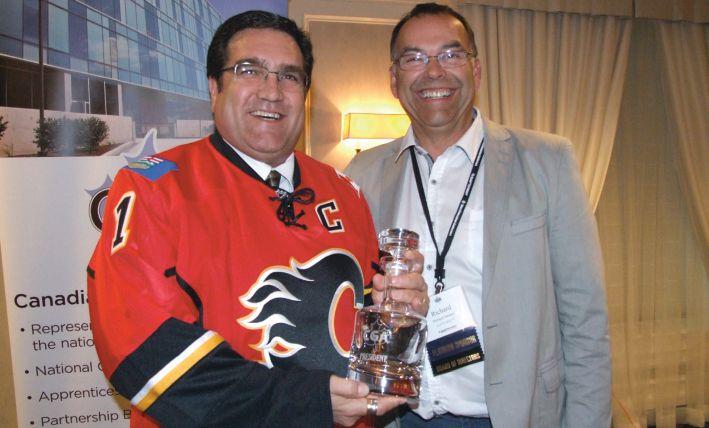
ABOVE: Jim Brady of Cal-Tech Glass Services and Richard Verdon of RSVP - two of the CGA’s long-time strong supporters.
Glaston CEO retiring
Arto Metsanen has announced he will retire from Glaston Jan. 1, 2021, and agreed with the board of directors he will step down as CEO on June 1. Glaston’s board has nominated current deputy to the CEO, Sasu Koivumaki, acting CEO as of June 1. The recruitment process for a new CEO has been initiated.
“Sasu, who has a long background in the company, a good market view and strong customer relations, assumes the acting CEO responsibilities. Arto remains at the company’s disposal until his retirement and helps ensure a smooth transition into the new leadership. Arto has played an important role in Glaston’s development for more than ten years and I want to thank him for his work for Glaston’s good and wish him a good and well-deserved retirement”, chairman Teuvo Salminen commented. Koivumaki joined Glaston in 2002 and has held several positions at the company, including senior roles in finance and sales. He has been member of the executive management group from 2012 and was appointed deputy to the CEO in 2015. Koivumaki has degrees in science and economics.
CORRECTION
In our Great Glazing feature “The Oculus” last issue we mistakenly identified the glazing contractor as Pomerlau. The glazing contractor for the project was Vitierie Fortin. Glass Canada regrets the error.
CANADA’S GLASS ASSOCIATIONS
Fenestration Association of B.C.
FenBC has been working hard at keeping our membership as up-to-date as possible on all the COVID-19 protocols and changes.Yes, we had to cancel all of our in-person meetings and events. We are working on a series of webinars and podcasts over the next few months that will keep our membership informed and up-to-date. The new FenBC website will be live soon. It will include a more mobilefriendly and most impressively will now include a membersonly discussion board. This discussion board will include access to members-only publications, minutes to meetings, committee chat rooms and membership discussions. FenBC is holding membership GoToMeetings. This is just an opportunity for FenBC members to talk about their experiences during this time, share insight, offer support and perhaps have a laugh or two. FenBC has decided not to hold its Annual Industry Conference on Oct. 29. Instead we will be offering the same topics via webinar over the month of October in one-hour sessions held weekly. As with all of our conferences and webinars, these will be recorded and available for members. FenBC is working with Morrison Hershfield to get our Glazing Systems Specification Manual completed. Given the current crisis, this project has been delayed. We are looking to get back to it in the next week or so. The FenBC Technical/Education Committee is working hard at developing a Best Practices Guide for many of the technical standards and codes for the fenestration industry.
Provincial Glaziers Association of Alberta
PGAA’s annual general meeting was to be held on March 18 but did not meet quorum and has been subsequently postponed until further notice. The directors meeting was held as scheduled. The pandemic is causing a vast amount of uncertainty in the Alberta construction realm. All public events associated with the glazing trade have been postponed or cancelled until further notice (Skills Canada, Try a Trade, glazing association golf tournaments, BBQ’s, etc.). At the board level, we are entertaining open discussions on what we can do as an association to provide added value to our members in these uncertain times. PGAA is providing the members information on the pandemic as well as the Alberta Construction Association’s reports, updates, reactions and directions via the association’s website. The PGAA will be working on developing updated information packages that promote the glazing trade in Alberta. We are working on a brochure displaying current information on our Calgary and Edmonton teaching institutions (with apprenticeship program information), photos of our members’ projects and glazing trade specifics such as potential wage earnings and trade requirements. This will be available to download directly from the PGAA website and will be a beneficial document for handouts at trade shows, school showcases and any other trade-related event. PGAA’s environmental scan discussed at the directors meeting held in March of 2020 was discouraging
again for both North and South markets with limited projects to tender and an overabundance of glazing contractors (even coming from neighboring provinces) submitting pricing with minimal margins. This has only been amplified with the introduction of COVID-19, causing many delays to projects and awards.
Stay safe everyone!
Architectural
Glass and Metal Contractors Association
AGMCA member glazing contractors are facing unprecedented challenges. As a result of the pandemic, many are struggling with project shutdowns; availability of their workforce; supply chain challenges; government regulations; and a host of productivity issues, not to mention the cash flow tap that has been virtually turned off. In this context, it is also difficult and sometimes impossible to meet milestones and other project deadlines on the sites that do remain open. The AGMCA is part of an industry-wide lobby group urging government to exempt our contractors from liability for delays caused by the COVID-19 pandemic. It is our opinion that it should constitute force majeure in contract terms.
Needless to say, our Glazing Contractor Appreciation Day events have been cancelled, and our glazier training centres, along with the vital apprenticeship programs they deliver, have been suspended.
At the time of this writing, the pandemic curve is starting to flatten and governments are beginning to consider the gradual reopening of our economy. Ontario is the third
largest construction market in North America and our member glazing contractors are a big part of that. There is no playbook for this one. Our glazing contractors are swimming hard against the current and doing their best to develop new stickhandling techniques. Throughout the pandemic crisis, the AGMCA has endeavoured to keep its members up-to-date with all the latest regulations, government assistance programs and industry-related bulletins, some of which have changed on a daily basis. COVID-19 related links and information can be found on our website at agmca.ca
Ontario Glass and Metal Association
In this space it is customary to let everybody know about the events we have forthcoming and the initiatives that are underway. However, due to the current COVID-19 reality, there’s not a whole lot to tell you about. We cancelled our annual spring golf tournament and have not planned any seminars as yet for 2020. Our fall golf is scheduled for Thursday, September 24 at the Country Club in Woodbridge and we sincerely hope to be able to host the event, but time will tell and we’ll keep you updated as the date approaches.
In the meantime, we will continue to distribute information to our members that we hope is helpful in finding solutions to managing your business and weathering the economic storm. We sincerely hope that you are diligent in safeguarding your health as well as your families, employees, and co-workers. We look forward to seeing you when circumstances permit.
Apogee outlines corporate response to pandemic
Apogee Enterprises has provided an update on its business operations and actions the company has taken to align costs with market conditions.
“As the situation surrounding the COVID-19 outbreak continues to evolve, we remain focused on three imperatives: maintaining the health and safety of our employees; continuing to meet our customers’ needs; and ensuring the long-term health of our business,” said Joseph F. Puishys, Apogee’s CEO. “I’d like to recognize the entire Apogee team for their tremendous efforts during this challenging time. We have quickly adapted our operations to ensure a healthy working environment, while supporting our customers with the products and services they need to keep critical infrastructure projects on schedule.” Puishys continued, “While most of our facilities remain fully operational, parts of our company are experiencing various levels of negative impact from the COVID-19 situation, especially the continued closure of our Large-Scale Optical segment. As a result, we have taken a number of preemptive measures to align our company’s costs with the current market environment. We are doing so in a way that minimizes workforce reductions and maintains the capabilities and capacity we’ll need as markets recover.”
The company’s three architectural segments continue to operate and serve customers, while taking the necessary precautions to ensure workforce health and safety and comply with local regulations. In the architectural services segment, projects are generally progressing as planned and orders remain strong, with backlog expected to increase in the first quarter. Architectural Framing Systems and Architectural Glass have seen some projects delayed or temporarily halted, particularly in regions with more COVID-19 related restrictions such as New York, Pennsylvania, California and Quebec, where job sites and customers are closed.
Given the current economic and operational uncertainty, the company has taken several significant proactive measures to manage its cost structure and cash flow, while minimizing job losses and preserving the capabilities required to meet demand as customers restart and the market recovers. To-date these actions include: 25-per cent reductions to
the CEO’s salary and board of director fees; 15- to 20-per cent salary reductions for other business leaders; a 10-per cent reduction in hours for much of the salaried workforce; suspension of company matching contributions for U.S. 401k retirement plans; suspending merit pay increases for salaried and office employees; a company-wide freeze on new salaried hires; furloughs or reduced hours for many manufacturing employees; restricting capital expenditures to essential maintenance and safety-related projects; and suspending share repurchases. These actions are expected to reduce fiscal 2021 costs by approximately $20 million, beginning immediately, and will be fully implemented by the end of May. While these actions are planned to be temporary, they are expected to remain in effect for the next six months, to be reevaluated as the economic situation becomes clearer. With these cost actions, combined with the company’s previously announced cost reduction plans, the company expects to realize approximately $40 million of total savings in fiscal 2021.
Puishys concluded, “Looking ahead, I remain confident that Apogee will emerge from the COVID-19 situation poised for future success. With our diverse portfolio of marketleading brands, innovative product offerings, deep customer relationships and network of facilities located near key North American markets, we are well positioned to resume growth when the environment normalizes. We will continue to monitor the situation closely and will provide further updates when we have greater visibility into our expected financial performance for the rest of the fiscal year.”
NGA offers guidance on California compliance
The National Glass Association is offering a new resource in the form of an online FAQ that addresses compliance of glass in buildings in accordance with the California AB262 legislation, also known as the Buy Clean California Act.
“The Buy Clean California legislation has generated a lot of questions about its impact on the use of glass in construction in the state,” said Chris Dolan of Guardian Glass and member of the NGA Forming Committee. “We think stakeholders and other interested parties will find the NGA Frequently Asked Questions a helpful document. It summarizes key elements of the legislation, defines flat glass and processed glass to their respective Product Category Rules and offers guidance on what is required when bidding on California state-funded projects.”
The FAQs go into detail on additional topics, including:
• The definition of a public works project and how it fits into CA AB262
• Key legislation dates that affect eligible materials accepted
• Definitions of flat glass and processed glass according to the legislation verbiage
• Requirements to bid on a California state-funded project
• Methods to locate data and address questions surrounding data for Global Warming Potential and compliance with AB262
“NGA continues to work with the California Department of General Services and other interested parties to clarify the language of the bill and to ensure they understand the effects on public works building projects in California and to provide education about glass and glazing supply,” said Urmilla Sowell, NGA advocacy and technical director.
Photo:
Tremco forms new group
Tremco Incorporated’s Commercial Sealants and Waterproofing; Roofing and Building Maintenance; and Tremco Barrier Solutions operating divisions – together with Dryvit Systems; Nudura;Willseal;Weatherproofing Technologies and Weatherproofing Technologies Canada – have announced they are joining forces under a single corporate identity: the Tremco Construction Products Group (CPG). Representing the combined power of these recognized leaders,Tremco CPG becomes a provider of comprehensive systems and services for all six sides of the building enclosure.
According to Doug Rende, senior vicepresident for marketing and technical services with Tremco, “Beginning now and continuing over the coming months, customers should expect to see the new brand identity on all customer-facing materials.”
The Tremco CPG portfolio includes: Tremco Commercial Sealants and Waterproofing’s water and vapour barrier systems for all vertical and horizontal surfaces; Tremco Roofing and Building Maintenance solutions; analytical, maintenance and information-based roofing services from Weatherproofing Technologies and Weatherproofing Technologies Canada; Tremco Barrier Solutions’ residential weatherresistant barrier and basement waterproofing; cladding options from Dryvit Systems in stone, masonry, metal, terracotta and brick; NewBrick, an innovative, lightweight insulated brick veneer that provides a comprehensive, whole-wall alternative to traditional brick; Nudura’s ICF foundations and wall systems; and Willseal foam expansion joints that streamline installation.
Bracamonte joins Vitro
VitroArchitectural Glass has announced that Martin Bracamonte has been named vice-president of operations. In his new post, Bracamonte will oversee operations for four U.S. plants operated by Vitro Glass in Carlisle, Penn.;Wichita Falls,Texas; Fresno, Calif.; and Salem, Ore. His primary responsibilities will include increasing operational efficiencies, production output, product quality and overall customer satisfaction.
Ricardo Maiz, president of Vitro Architectural Glass, said Bracamonte brings a wealth of leadership to his new post.
“Martin has experience across a wide range
of disciplines in the glass industry, from innovation to sales, operations and executive management,” he explained. “As a result, he understands the demands of our customers and end-users and offers an array of knowledge to help our organization meet and, ideally, surpass their expectations.We are pleased to add him to our team.”
Martin joins Vitro Glass from IGE Glass Technologies, where he served as president and CEO. During his 29-year career in the glass industry, he has held senior management and executive posts at several leading glass manufacturers.
Ontario to pay for apprentice tools
The Ontario government has announced it is providing apprentices grants to purchase tools, protective equipment and clothing for their trade, along with forgiving previous loans to purchase tools. The government is providing an Ontario Tools Grant of $2.5 million in 2020-21 and $7.5 million in 2021-22 and ongoing. This will help new eligible apprentices purchase the equipment they need to start their careers. Construction and industrial trades apprentices can get $600 each.
To be eligible for the new grant, apprentices must have:
• completed level 1 training on or after April 1, 2020;
• an active registered training agreement; and
• been registered as an apprentice for at least 12 months.
The government is also forgiving more than $10 million in outstanding loans owed by apprentices for tool purchases made at the beginning of their careers. The Loans for Tools Program allowed thousands of new apprentices to buy tools, equipment, clothing, manuals and code books required for their trade. About 19,000 apprentices who participated in the program owed, on average, $495.
“If we are going to rebuild our economy, we must reach out and help the workers and businesses that are suffering as a result of COVID-19,” said Monte McNaughton, minister of labour, training and skills development.
COMING EVENTS
JUNE 16
Webinar: Envelope 2050 Online glasscanadamag.com
JUNE 18
Webinar: Energy Code Evolutions in 2020 Online glass.org
JUNE 18
Webinar: Seven Deadly Construction Clauses Online aia.org
FGIA Annual Conference Amelia Island, Fla. fgiaonline.org
FEB. 23
FenBC Technical Conference and AGM Surrey, B.C. fen-bc.org
JUNE 21 - 24
FGIA Summer Conference Vancouver fgiaonline.org
OCT. 18 – 21
FGIA Fall Conference Phoenix, Ariz. fgiaonline.org
What We In The Pandemic
We Did Pandemic
Reports from the glazing frontlines
By TREENA HEIN
While Canadians and the rest of the world wait for the spread of COVID-19 to hopefully decrease, owners and managers of glass businesses in Canada are doing exactly what their peers in other sectors are doing: their best.
Direct prevention of infection and spread, finding work where possible, using spare time effectively, helping out the community – this and more is the temporary new normal. But while this pandemic is extremely stressful to be sure, as you will read below, glass business owners, as they always have, are using their skills, experience and ingenuity to weather the storm. Please note that these reports were gathered in early-to-mid April.
Let’s jump in and check on Provincial Glass, which has served residential and commercial customers in London, Ont., and surrounding areas since 1983. “We do windows, patio doors, shower enclosures for homes and for property managers in apartment buildings and condos,” says president and owner, Brett Lucier. “We also have a 24/7 emergency service.”
Business was down significantly in March and while April was looking worse, Lucier’s focus at that point was to get as much work as possible in emergency services and asset protection. That is, through previous relationships, social media and networking, Provincial Glass branched out in March and April into board-ups (applying boards to protect business windows and doors from break-ins), applying security film, putting in bars/gates and installing partitions at store checkouts and in medical offices. “Some coverage in newspapers has also helped,” said Lucier. “We’re also getting calls all the time from people who want us to do shower enclosures and so on, and the dam is building and when we are allowed to go into residences, we will have a lot of work. But I’m really concerned that when restrictions are eased, people won’t hold to the existing restrictions and the easement will have to be reversed. That would be disastrous.”
Sometimes it’s remarkable to see how fast things have changed.
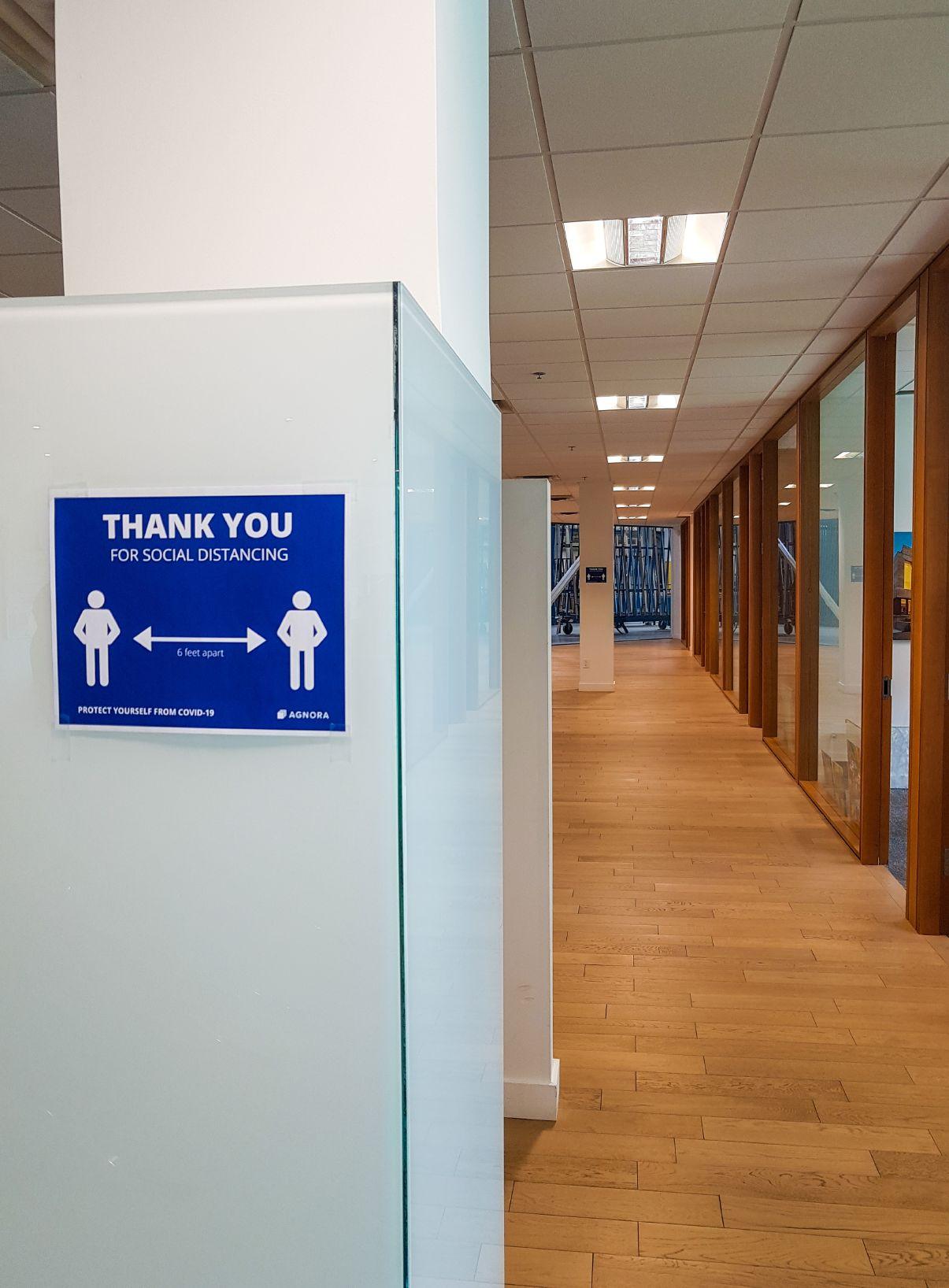
Companies have had to scramble to do a million little things – like make social distancing signs.
Cascadia Window and Door in Langley, B.C., was fortunate as of late April to not have suffered a reduction in production of its fibreglass-framed windows and doors, of which about 80 per cent are exported to the U.S. “We have had a small slowdown in quotes, and we have concerns about the long-term effects of the pandemic on construction,” said president Mike Battistel. “There will be a slowdown of some size but there’s no way to know it now. A large percentage of our projects are commercial construction such as schools and hospitals, so the impact on us will likely be less than manufacturers that work on exclusively residential.”
To make sure employees stay safe, the first action Battistel took was have all office staff work at home. And to keep plant staff safe, Battistel created a COVID-19 safety officer role and
filled it with a new hire. “It’s actually someone who worked for us several years ago, Ben Ricketts, who had gone into sports coaching and his current job as a technical director of a volleyball club is on hold. So it’s a perfect fit,” Battistel explains. “He does an interview with every worker on the morning and afternoon shifts, disinfects common surfaces and documents everything. He also reminds employees to stay two meters away from each other. If workers have to work within two meters, which is rare, they use respirators.”
Prior to the outbreak, the shifts would overlap by a few minutes so that workers could explain what they’d been working on, but now only shift managers do this, and everything is thoroughly disinfected between the shifts as well. Anyone with any type of
cold or flu stays home and Battistel is offering lots of overtime hours in case they do have to take time off and want to make it up. “We’re also staggering lunch and break times and we’ve spent a lot of time sourcing masks and hand sanitizer,” he says. “With the protective gear, the dedicated COVID-19 safety officer and everything on the whole, we are glad our employees feel comfortable.”
Feet to the fire
During this pandemic and always, members of the Architectural Glass and Metal Contractors Association (AGMCA, which has represented unionized glazing contractors of Ontario since 1979) put health and safety of employees first. Executive director Noel Marsella reports that all members are
enforcing disease spread prevention protocols such as distancing, masks and handwashing stations. The number of people in onsite elevators is limited, and vehicles must only carry the driver. Some sites are also performing temperature checks.
“After the health and well-being of all employees,” said Marsella in late April, “the survival of our member’s businesses is paramount. Related to that is an industry-wide concern over possible liabilities related to finishing construction contracts according to initially laid-out timelines. Because the general contractors are liable for not completing contracts on time, they are holding their subcontractors’ (our members’) feet to the fire to get projects done on time. Members have been receiving letters that point out
penalties associated with delays. The standard contract language and most ‘force majeure’ clauses do not cover this pandemic.”
To finish contracts, companies certainly need enough workers, but productivity is also hampered by biosecurity protocols. Material availability is also a growing worry. And while AGMCA members are hoping for the best on all these fronts, they are also asking for regulatory change. Marsella explained in late April that that the AGMCA, as part of a larger industry group of Ontario Construction Associations, called on all its members in April to send emailed letters to the government, requesting that contractors/subcontractors be exempt from liability for project delays due to COVID-19.
This all relates, however, to the small amount of construction still going on in Ontario in April, about 20 per cent of normal. That includes infrastructure, health care facilities (a hospital in Vaughn where Marsella says three glazing companies are working, another hospital in Brockville and a few other projects), residential construction that was already underway, and service work. “As projects sit idle, financing costs, insurance costs, bonding costs and in some cases even equipment rental costs are just a few of the expenses that will continue to accrue,” he noted. “None of these costs were anticipated when the projects were bid and there will have to be a further discussion on how they will be addressed so that bankruptcies do not skyrocket.”
At Agnora in Collingwood, Ont.,
London, Ont.’s, iconic Prince Albert Diner, boarded up by Provincial Glass. Glazing contractors are finding work where they can.
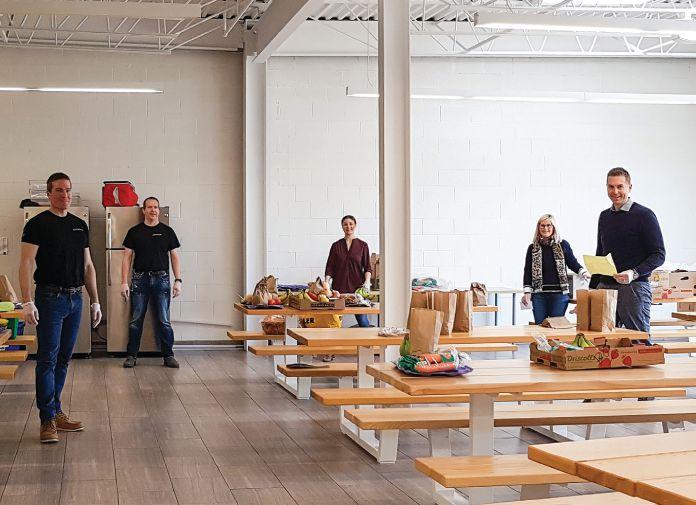
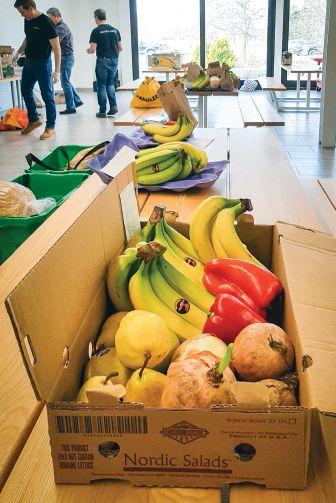
they are using physical distancing, have added hand sanitizers, and have stepped up cleaning of common surfaces. Marketing manager Adam Mitchell reports that a staff member who lives on a farm has organized a workplace food order and packaging system so staff members and their vulnerable loved ones don’t have to go to the grocery store or go less often. As of early April, food businesses were regularly dropping off food ordered ahead of time, where staff then placed the appropriate items in boxes for the specific families and
individuals according to their orders. The businesses included a bakery, butcher, produce-seller, chocolatier and a local restaurant called The Kitchen, which makes frozen lasagnas.
Here are some additional reports from the front line, slightly condensed from glass companies in Ontario and B.C.:
Neal Turner
General manager, Westeck Windows and Doors, Chilliwack, B.C.
“The impact has been significant. In order to ensure the safety of our workers, customers and society at large, we’ve needed to change the way we do business in almost every aspect.
We currently have approximately 70 per cent of all administration and sales staff working from home. Physical distancing has been incorporated in all remaining functions, from production work to boardroom meetings. We have recognized that implementing all the best practices to stay safe and heathy is only the start. Consistent communication and collaboration with our staff are more important now than ever before.
With the June 1 commercial launch of our new innovative, highperformance slider, casement and casement combo windows, Westeck is optimistic about the year ahead. In general terms of the industry at large, I anticipate a major repositioning of market share. Small and overleveraged manufacturers will either close their doors or be consolidated.”
“We are having to commit significant time and additional resources into ensuring that the jobsites are safe for our employees to enter. In the case of private residences, this includes a number of COVID-19 screening questions of the occupants prior to each visit. This is of course in addition to additional measures of physical distancing, hand washing and sanitising activities.”
Jeff Jessup
Owner, Valley Window and Door and Postech Pembroke, Pembroke, Ont.
“The impact of COVID-19 on our business is huge. We have no new revenue coming into our business, not to mention we were having a reasonably strong start to the year, which means we still have some product arriving but are unable to install that product. Our office is closed to the public but a few of us are still there answering any phone calls that are still coming in for any window emergency or just calls in general. The calls that are coming from customers asking questions about when we will be back to work, or being asked to be put on a list once we are back to work.
When we were still able to install, we provided the recommended cleaning practices to our crews along with social distancing. They were also told that if they did not feel safe to do a job, they did not need to do it.
I really don’t know what to ask our governments for at this point. I think they are doing everything they can to soften the blow to our economy. Unfortunately, the window industry in Ontario was still trying to get over the effects of the GreenOn program. I bet the provincial government wishes it had all that money back right now. I think our industry will continue to suffer for another year or so, as most homeowners will not be making window and door renovations a top priority. Most homeowners like the rest of us will just be focused on getting back on their feet and putting money away for the next rainy day.”
John Mealey
President, The Glass Place, Collingwood, Ontario
“The effect of COVID-19 on our business has resulted in a decline in sales and increased installation times. The sites that remain open have been very good at communications while implementing strict protocols that have allowed us to remain operational.
It’s been challenging to deal with the stress of an uncertain market; however, we have been able to cope with this situation by focusing on some of the opportunities this has brought us. We have hired two new people in the last three weeks and have been able to spend more training time with them. We have created several high-productionvalue videos for external sales and
Together apart. Agnora employees host a “farmer’s market” while keeping up their distancing.
internal training. Our training library is almost complete where we have documented each measuring, handling and installation situation such that our practices are standardized.
This video library, deep equipment maintenance and other important but usually-neglected items would be impossible to complete without having this time.
We have been contributing locally where we can by using our vehicles to deliver food/pharma one day per week. Well, that was until we had a social media shaming situation where someone thought we were working. So we had that corrected, but since then, we had to park our work vehicles and use personal vehicles to support our community. We have supplied many local businesses with plexi safety barrier protection that has been at a reduced rate or complimentary for any of our
customers that request it.
We have created individual plans for our staff as each situation is unique. Some had to be self-isolated, others needed to stay home to look after kids, some wanted to work if it was available and we could create a safe environment (which we have). We rotate shifts now to reduce people in our shop and have closed the retail portion of the shop.
I have to say how thankful I am to be Canadian and how our various forms of government have reacted. Initially it was a bit confusing, but at this time we have applied for and received as much assistance as we require to keep our staff in place. I think they were really smart in terms of providing sufficient liquidity for people to take advantage of a period where spending is minimized to a lack of opportunity. This will help the economy when it’s opened back up by having some pent-up demand and
liquidity. The programs were incredibly efficient in terms of disbursement and while I’m sure there are some gaps, all things considered and notwithstanding political affiliations, I would give our government very high marks.
Assuming things begin to normalize by June, I think the challenges will appear in the fall/winter as new builds get back on track and confidence slowly returns to the market. My view is that it will be at least a year before we get back to a new normal and feel this is the most significant event of our lifetimes. On a personal note, I’ve enjoyed enriching my relationships with family, co-workers and friends that I have not had the time to connect with in the past and thankful to have this opportunity that created even deeper bonds. I generally find it less stressful to be an optimist as a choice and feel this will set a positive tone and create opportunities through this challenging period.” •
WELCOME AMANDA AND SUKAYNA!
We’re growing our team so Glass Canada can bring you more.
Amanda McCracken has joined Glass Canada as national account manager. She’ll work with Danielle Labrie, who has been promoted to publisher. Amanda’s job will be to work with our advertisers to create great online and print campaigns reaching the Canadian architectural glass industry. She’s no stranger to the construction industry, with previous experience on Crane & Hoist magazine.
“Amanda’s energy and organization are going to be huge assets to everyone working with her. I’m really excited to see what she can do to drive our channels forward.” - Danielle Labrie, publisher
Reach out to Amanda at 226-931-5095 or amccracken@annexbusinessmedia.com.
Sukanya Ray Ghosh has come on board as associate editor. She’ll assist editor Patrick Flannery with every aspect of researching, writing and producing great content to help your business, online, in print and at Top Glass. Sukanya brings valuable insights from her time in the automotive sector, writing for publications like CarCare Business, Collision Management and TireNews. With her Masters of English degree, look for some sparkling prose in Glass Canada!
“Sukanya’s going to enable us to explore some new territory in the channels and make better the things we already do. And she’ll correct my grammar. I’m looking forward to introducing Sukanya to this fascinating industry. ” - Patrick Flannery, editor
Sukanya can be reached at srayghosh@annexbusinessmedia.com.
GLASS CANADA
PROUDLY CANADIAN SINCE 1989
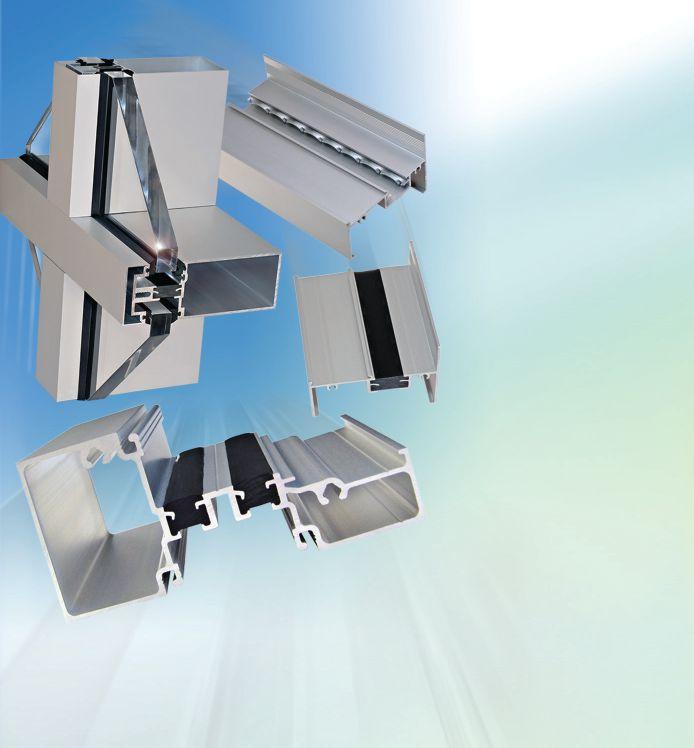
COMMDOOR ALUMINUM: RESHAPING BOUNDARIES
THE SPECIALIST IN CURTAIN WALLS, WINDOWS AND DOORS
With our transparent approach, we have been serving the commercial and industrial demand for architectural aluminum products since 1989. A proud member of the Toro Aluminum Group of Companies.
CURTAIN WALL
FIXED WINDOW SERIES
HIGH PERFORMANCE CURTAIN WALL
ENTRANCE FRAMING
OPERABLE WINDOWS
SLIDING AND BI-FOLD
SWING DOORS
MISCELLANEOUS PRODUCTS
QUALITY PRODUCTS, INNOVATIVE DESIGNS AND A LASTING RESULT.
With a long and successful history in the commercial glazing industry, Commdoor Aluminum provides high-quality architectural aluminum building products for engineers, architects, glazing contractors, designers and building owners.
WHEN LIGHTNING STRIKES
Contract law has long granted exceptions for “acts
by TREENA HEIN
As everyone in private industry is aware, the challenges of the pandemic for businesses have been numerous. Among the biggest? Safeguarding employees, restrictions on business activities, general economic constriction and uncertainty about the future.
However, for those in the glass and construction industries, COVID-19 also has raised the spectre of legal disputes related to delays in contract completion. Timelines are being hampered by a number of factors, chiefly stringent biosecurity protocols.
This has certainly been the case for Cascadia Windows and Doors of Langley, B.C. “Physical distancing requirements are contributing to a reduction in productivity,” reports president Mike Battistel. “When workers need to ride a man-hoist up the highrise tower to start working, there are only four people allowed in the hoist at the same time, compared to the 20-person maximum of normal times. It is great to see these measures being taken on the sites to help reduce the spread of COVID-19, but unfortunately, it will inherently result in project completions taking longer.” Battistel adds that some clients have asked him to postpone window shipments for a few weeks until sites are ready to receive them.
Contract completion – and possible legal liability – is an industry-wide concern, according to the Architectural Glass and Metal Contractors Association (AGMCA, which has represented unionized glazing contractors of Ontario since 1979). Executive director Noel Marsella notes that because general contractors are liable for meeting deadlines, they are pressuring their subcontractors (AGMCA members) to keep working at the pace required. Some AGMCA members have been receiving letters that refer to penalties associated with delays. In April, the organization (as part of a larger industry group of Ontario construction associations) called on all its members to send emailed letters to the government, requesting exemption from liability for project delays due to COVID-19.
Contract content
Contract completion in light of COVID-19 centres on something called the force majeure clause (FM for short). Typically found in construction contracts, it discharges the parties
Like a bolt from the blue, the pandemic has stopped business without warning and in a manner beyond anyone’s control. But the legal treatment may not be so clear-cut. The lockdown will have downstream consequences that contractors may or may not agree are subject to force majeure interpretation.
“acts of God”...but does lockdown count?
from meeting the contract obligations, or allows for suspension of these obligations, due to unforeseen and uncontrollable events.
Lampros Stougiannos and Erica Shadeed have been advising clients on the numerous issues raised by the pandemic in recent weeks, and note that while FM clauses differ in wording, FM events are generally defined as beyond a party’s reasonable foresight and/or control, and which render performance outlined in the contract impossible. Typical terms used in an FM clause include ‘unforeseeability,’ ‘irresistibility,’ ‘acts of God,’ and ‘events beyond a party’s reasonable control,’ but FM clauses also can include a list of example events such as natural disasters, pandemics and government-decreed stop-work orders.
Stougiannos and Shadeed (respectively a partner and lawyer at the Montreal offices of global law firm Dentons) recently wrote an article about FM in Quebec, noting that in that province, even if contracts don’t contain FM clauses, parties may have recourse to the concept of FM that exists in Quebec’s Civil Code. However, if there is no FM clause in your contract in Quebec, similarly to demonstrating that FM exists in any dispute, you have to prove that the event is irresistible, unforeseeable and exterior to your organization and its control.
Stougiannos and Shadeed also note that many contracts include provisions allowing one or both parties to terminate their agreement following the occurrence of a FM event that continues for a specified number of days or months. “At the time the contract was drafted,” they explain, “such a possibility was likely considered by the parties to be quite remote. However, given the circumstances surrounding COVID-19, that may no longer be the case.”
They mention that contractors should provide notice to the other party in their contract if the performance of their obligations has been, or may be, impacted by COVID-19 – whether the contract calls for it or not. They add that “Given the ongoing nature of the COVID-19 pandemic and the possibility that additional or differing measures may be taken by the government in this regard, parties should consider reserving their rights with respect to the impact of COVID-19 in order to ensure they can benefit fully from any relief once the pandemic has ended and governmental measures rescinded.”
Stougiannos’ and Shadeed’s best piece of advice for contractors? “Read your contracts and speak with your lawyer. The impact of COVID-19 may allow parties to claim the occurrence of a FM or to seek forms of relief for things like increased costs. It is important to understand what your rights and remedies are. In addition, many contracts require parties to provide notice to the other party before a specific deadline if they are claiming some sort of relief. If you miss the deadline you could lose your rights, so carefully reviewing your agreements is critical.”
As is the case with everyone else, Stougiannos and Shadeed cannot be sure if there will be many actual legal disputes this year stemming from the pandemic, or if everyone will work it out without legal action. “Many parties will undoubtedly seek to amicably address the impact COVID-19 may be having on their contracts,” they say. “However, there will be many cases where parties will simply not be able to agree for a variety of reasons and will instead choose to have the matter settled by arbitration or by the courts. It really will depend on what the impact is, what their contract says,
Photo credit: Sjo /Getty Images.
THAN MEETS THE EYE
and how much flexibility both parties have to offer concessions without compromising their business.”
Gerry Argento, a partner based at the Montreal office of Miller Thomson law firm, has also had inquiries regarding FM clauses. As Stougiannos and Shadeed do, he advises contractors to carefully read their contracts, consult their lawyers, and “in addition, document and keep good records, be sure to comply with any notice requirements and keep lines of communication open.”
Comments from industry members
We contacted several glass firms in late April to canvass the situation. While AGMCA board member John Bastedo (vice president of National Contract Glazing in Ottawa) says his firm hasn’t had to deal with any contract issues so far, another board member hasn’t been so fortunate.
“I had a project where my installers were concerned about the limited space on the site and the number of men working there from various trades – about a hundred – and my men refused to work and chose to stay home for their safety,” explains Tony Menecola, president of Applewood Glass in Mississauga, Ont. “The project manager for the general contractor called me and told me if I didn’t have men back on site the next day that he would have no choice but to send me a notice of default for failure to adhere to the schedule. He also assured me that they had implemented safety screening of all workers and had added hand-sanitizing stations throughout the site. My men reluctantly returned to work. The site was shut down as ‘non-essential’ a few weeks later.”
Menecola has not had a lawyer look into any contracts, but says he’s alerted his general contractors that there may be delays on his end due to the pandemic.
The situation has been similar for another AGMCA board member, Tim Isaak, owner of Peninsula Glass in Welland, Ont. As of late April, he had informed contractors there would be delays due to COVID-19 and had not consulted a lawyer about contracts nor received notice of possible penalties – but he’s “very concerned” this will become an issue during the summer.
“This is a very slippery slope,” he explains. “Projects are delayed because of the stoppage by the government. Our supplies have been focusing on projects that have been deemed essential. We have had to make the choice to place orders on hold or have them produced and shipped. Once they are shipped, the suppliers expect payment. But we cannot access the job sites. However, once things open up the suppliers will be swamped with orders and the projects will be delayed by that as well.”
“Is this a COVID-19 delay?” he asks. “Really it is. But will it be viewed that way by the contractors and the lawyers? For that we will need to wait and see.”
From his big-picture view, Marcella reported that by May 8 the government had not yet interceded with any legislation relating to project delays. “Our members are documenting any and all COVID-19-related delay concerns on a daily basis,” he says, “and are hoping that if government does not step in that they will be met with a degree of flexibility and reasonableness by owners, general contractors and, if it gets that far, the judicial system.”
Marcella describes AGMCA member-contractors as an “inherently a resilient and optimistic group” which is now starting to pivot its attention to preparing to restart the industry. “Clearly it will not be business as usual for a long time,” he says, “and our members will be trying to balance their commitments to their clients, suppliers, landlords, and above all, their valuable employees.” •
by DAVID HESKA
Condensation and the coronavirus
Ihope that all of our Glass Canada readers are safe and healthy during this unique time. Everyone is talking about the coronavirus so I figured that I might as well jump on the bandwagon and address a recent article from the Globe and Mail. In the article they asked a question about how humidity might impact the transmission of the virus. According to the article, there was some evidence that the virus may not live as long or transmit as readily in air with higher relative humidity. So will warmer and humid summer weather cause the spread of the virus to slow? Is there evidence to show that COVID-19 has spread more in countries with colder climates? I will leave the answers to those questions to scientists and medical professionals. What I want to dive into here is glass, facades, and Building Science 101. My colleague, Alex McGowan, joined Patrick Flannery for Glass Talk Episode #9 last month to discuss this very topic, so here’s a crash course.These issues might gain extra relevance if humidity is indeed found to have an effect on infectious disease spread.
Here are a few statements from the Globe and Mail article. “Most Canadian buildings are advised to maintain humidity levels between 35 and 55 per cent…In older buildings it’s difficult to sustain those levels” and “less than five per cent of buildings currently comply with ASHRAE’s standard.”
The first statement is true, and although I have not read the report about the number
When clients replace older, leaky curtainwall systems with a new, tighter system, they call us complaining of water droplets on the inside pane of glass.
THE ENGINEER
of buildings meeting the ASHRAE standard I do believe it’s less than five percent.You may be asking, what does that mean and why should I care? Here’s the answer: There are two ASHRAE standards that discuss humidity. The first is ASHRAE Standard 55 “Thermal Environmental Conditions for Human Occupancy” which considers occupant comfort and appropriate temperatures. The second is ASHRAE Standard 62 “Ventilation for Acceptable Indoor Air Quality” (which is split into two parts for commercial and residential buildings). The newspaper article took the stunning, low, five per cent number and presented it in such a way that readers might think “What are we doing wrong?” Well, guess what? Most buildings in Canada have not been required to comply with these ASHRAE standards. Buildings are “advised” to maintain humidity between 35 and 55 per cent, but other than occupant complaints, nothing will happen if the humidity in buildings falls below this range. And here in Canada, with our months of cold, dry Arctic air and forced-air furnaces blasting away, getting indoor humidity levels up is often seen as more trouble than it’s worth.
Increasing humidity levels in buildings is not just as easy as making a few HVAC adjustments. The study of building science looks at the interaction of the building façade with all of the other components in the building.This is why when clients replace older, leaky curtainwall systems with a new, tighter system they call us complaining of water droplets or frost collecting on the inside pane of glass.The humidity in the room has not changed, but the pathway for moist air to escape has been blocked. Now when this humid air meets the cold surface of glass, condensation appears and complaints follow.
I will close with a couple of recommendations. As buildings become tighter, designers and manufacturers need to work together in order to be able to properly add and remove humidity. One solution on the HVAC side is the use of heat recovery ventilation systems. One solution on the glass and façade side is the use of more operable windows. The old adage still stands: “Build tight.Ventilate right.” •
by MARGARET WEBB
FGIA goes virtual
As we know by now, this spring’s efforts to slow the spread of COVID-19 have left those planning industry events in 2020 having to think fast and adapt accordingly. This has been the case for the Fenestration and and Glazing Industry Alliance as well – our Summer Conference scheduled to take place in Chicago, Ill., has transitioned from an in-person event to a virtual one. The virtual conference takes place Tuesday, June 23 through Thursday, June 25, in designated blocks with plenty of breaks to reduce meeting fatigue. Registration will remain open throughout the event, for those who decide to join in after it begins.
Because FGIA’s membership is made up of those in Canada as well as the United States, the conference content will cover matters of interest to both. Here is a rundown of some of the Canadian topics that will be covered, and when.
On June 23, participants will have access to a Canadian legislative and regulatory report. This will include the current status of the Canadian General Standards Board (CGSB) Glass Standards, including the proposed reaffirmations of four active standards and the proposed harmonization of CGSB 12.1 and ANSI Z97.1, both covering safety glazing. It will also include updates on proposed future work activity, such as updating CAN/CGSB 12.20, Structural Glass Design in Buildings. Since this standard has not been updated since 1989, this will be a major undertaking for the Canadian industry. CGSB, a subdivision of Public Works Canada, operates on a cost-recovery basis for standards development and maintenance. Even reaffirmation of a standard requires funding of $30,000. We will report on funding estimates that have been pro-
FGIA will provide the same high-quality industry content participants have come to know, only in an online format
vided by CGSB for the CAN/CGSB 12.20 work and the proposed harmonization of CAN/CGSB 12.1 with ANSI Z97.1. A report on current CSA activities will also be included. Anyone with industry ties to the Canada marketplace will be interested in the latest on these matters.
Later that day, participants will hear an update on FGIA certification programs and gain an understanding of COVID-19’s impact on each. First up will be the IGMAC Certification Program and a discussion of its harmonization with the IGCC-IGMA program. Current statistics on the program’s participants, plants and certified products, including air and gas content, will be shared. Following this, there will be comparable information about the IGCC-IGMA Certification Program shared, along with an update on the Rapid Assessment Chamber (RAC), an IGCC research and development project, partially funded from the Glass Products Council R&D fund.
On June 24, a codes report will highlight Canadian information pertaining to the Joint Task Force on Safety Glazing as well as a report on submitted public comments on proposed code changes to the National Building Code of Canada (NBCC). Finally, a market transformation status update will be provided to those registered for the conference.
On June 25, the final day of the event, an hour session will be held about various U.S. and Canadian financial relief programs available to large and small businesses as well as individuals and employees. While this conference will not focus solely on COVID-19’s impact on our industry, we are planning to have some discussions about the pandemic during the event. Beyond financial relief, the topics being strategized are lessons learned and forecasting of what is to come.
In general, three or four meeting sessions will be hosted each day beginning at 10:00 a.m. Central time and wrapping in the late afternoon, with plenty of breaks. We know time zones will
THE ENGINEERFGIA
be different across the breadth of those attending, so the schedule allows for folks to grab lunch at a reasonable time based on where they are tuning in. Sponsor promotion, video clips and fun trivia activities will take place during these breaks.
FGIA will provide the same highquality industry content participants have come to know, only in an online format using Zoom video webinar that is password-protected to ensure the security of the event. There will be one track, making it easy to connect and to know you will be in the right “room.” Additionally, we understand those who come to our world class in-person events love doing so for the networking. To meet this need, FGIA will be hosting optional “happy hours” following Tuesday’s and Wednesday’s sessions– BYOB, of course! Meet up as a small group in a themed “room” online with moderatorled discussions of topics you care about most or elect to join a social “room” for general conversation and catching up.
FGIA staff has worked hard to plan a blended slate of association business sessions as well as panel discussions, speakers and other content of most value to those in the industry in these unusual times. Keynote speaker Dan Hampton, known as “Danimal,” is a retired Hall of Fame NFL player for the Chicago Bears. He will address the importance of leadership and adapting to change – clearly a relevant topic given current world events.
While the format has changed, the quality level will be what participants have come to expect from FGIA. Plus, being a virtual event allows an opportunity for colleagues who are unable to attend in-person conferences to connect with and reap the value provided by the association.
Contact FGIA at meetings@FGIAonline.org with questions about the upcoming virtual Summer Conference. We hope you’ll join us. •
systems produced with Azon structural thermal barrier technologies—the MLP™ or Dual Cavity—for aluminum windows and curtain wall, along with high performance glazing components for insulating glass, will yield a fenestration system capable of upholding the highest efficiency and sustainability standards
SURVEYING THE WASTELAND
by ONTARIO CONSTRUCTION SECRETARIAT, RICS AND CANADIAN INSTITUTE OF QUANTITY SURVEYORS
Surveying businesses and issuing reports on the devastation caused by COVID-19 is practically a market research segment unto itself now, and Canada’s industry is no different. Two reports, one from the Ontario Construction Secretariat and one by RICS and the Canadian Institute of Quantity Surveyors cast significant light on the initial impact of the lockdown implemented by provinces to slow the pandemic.
The OCS surveyed 200 ICI contractors between April 22 and 29. Here’s what they found.
Ninety-eight per cent of contractors have been impacted by the coronavirus to some extent, with more than half (52 per cent) reporting that most or all of their work has stopped. When it comes to how much of their work has been impacted, contractors report on average that 64 per cent of their existing work has stopped, and 65 per cent of their upcoming work has been delayed. Supply chains
Reports reveal the lockdown’s carnage.
have also been affected by the coronavirus, with 63 per cent of contractors reporting medium to high impact. Contractors’ biggest concern right now is ensuring the health and safety of their workers and staff, followed by global recession and workforce productivity. Other prominent concerns include supply chain disruptions, keeping their firms in business, and their ability to meet contractual deadlines.
Contractors reported on average that Ontario’s April 3 shutdown order impacted 62 per cent of their construction activity. Sixty-three per cent of contractors agreed with the province’s decision to shut down parts of the construction industry, 22 per cent disagreed. Under current restrictions and with current government supports, 16 per cent of construction firms expect they would go out of business within three months,
ABOVE: Different regions have experienced the pandemic differently. The West has been hard-hit by the concurrent collapse in oil prices. Ontario and Quebec have had the most severe lockdowns. Atlantic Canada seems to have fared best, though things may not be over in Nova Scotia yet.
“Covid 19 already
-Parrsboro, Nova Scotia
“The value of Canandian Dollar vs USD greatly affects our pricing.” -Thunder Bay, Ontario
“Covid 19 va detruire le marche de la construction
-Ottawa, Ontario
“Covid-19 - I expect 1015% of contractors and subcontractors will go insolvent through 2020.” -Calgary, Alberta
“Price of oil and COVID-19 will have significant impact in our region.” -Edmonton, Alberta
“COVID-19 affecting productivity amongst consultants/owners and sites, claims for loss and/or expense.”
-Kelowna, British Columbia
“The impact of coronavirus on labour and economy is expected to be significant with a long recovery.”
-Vancouver, British Columbia
“Available specified or preferred materials are delayed from Quebec closures.”
-Halifax, Nova Scotia
“There will be a larger amout of residential & commercial trades looking to work for cash.”
-St. John’s, Newfoundland
“Customers are very apprehensive to allow work to continue or would like delayed to May/June.”
-Toronto, Ontario
“The global pandemic has created less demand, and will have major economic ripple effects for years.”
-Calgary, Alberta
WASTELAND
another 28 per cent would go out of business within three to six months. So far this year, 83 per cent of contractors report that their revenue is down compared to the same point last year. On average, revenue has declined by 42 per cent. The majority of construction firms (56 per cent) expect that to stay in business, but they will need government support.
The most common actions taken to lower the risk of coronavirus spread on construction sites included encouraging more-frequent hand washing (88 per cent); increasing availability of hand sanitizer and hand-washing stations (85 per cent); and establishing a procedure that allows workers to call attention to unsanitary conditions (84 per cent). About three-quarters (74 per cent) of contractors have laid off construction site workers, while 42 per cent have laid off office staff. Fifty-five per cent of contractors have applied for government assistance, and 30 per cent have taken out loans as a result of the coronavirus economic disruption.
The Q1 2020 RICS/CIQS Canada Construction and Infrastructure Survey took data out of a global survey that collected 1,323 responses from a broad cross-section of construction companies. It’s findings look at the construction sector generally, with a regional breakdown.
Respondants are inevitably reflecting the impact of the spread of the pandemic in their feedback. Fears about implications for economic activity have deepened, and despite a huge array of government fiscal interventions (worth in the region of 14 per cent of GDP), the recovery process is likely to prove quite protracted. The suspicion that the legacy of the pandemic will cast a shadow over the construction and infrastructure sectors for some time to come is evident in the forwardlooking metrics contained in the survey. Workloads are anticipated to remain subdued over the next 12 months, with employment projected to drop and, most notably, profit margins viewed as coming under pressure. In net balance terms, the headline reading for the latter has turned around from plus-28 to minus-32 as concerns have grown about the pricing
environment in a more challenging market.
Despite the overarching shift in the narrative regarding the delivery of construction and infrastructure projects for the time being, shortages of skills and labour more generally continue to be highlighted as obstacles to activity by contributors to the survey (with the inference that they will again be relevant when the lockdown ends). That said, the proportion of respondents signalling concerns about these issues has diminished somewhat since the end of last year. For skills, the proportion identifying this to be a problem has dropped from over 60 per cent to less than 50 per cent. And for the wider category of labour, it has slipped from just under 60 per cent to close to 40 per cent.
Predictably, insufficient demand is now viewed as more of threat with an increasing number of responses noting material shortages as a barrier. Financial constraints remain an ongoing theme although encouragingly for now at least, this issue doesnt appear to be worsening. There is a substantial disparity in conditions based on geography. In net balance terms, workloads in the prairies and territories contracted at a much quicker pace than in other parts of the country. The bulk of respondents in this region are based in Alberta and also dealing with the fallout from the collapse in oil prices. This dynamic is mirrored in other metrics, most notably expectations for tender prices and construction costs, where deflation appears to be a signficant risk.
B.C.
Participants in the first-quarter survey from British Columbia noted a sharp reversal in activity. After reporting increasing workloads in all sectors (including infrastructure) in the fourth quarter of of 2019, construction market activity was said to have contracted, albeit modestly, at the start of 2020. There are some signs that this will persist in the near term with new enquiries and new workloads contracting, as delays in payment are rising. There does not yet appear to be a significant reduction in
headcounts, however.
Contributors appear to believe that it may get worse before it gets better. Workloads (both infrastructure and noninfrastructure) are expected to contract over the next 12 months, as headcounts are trimmed and profit margins deteriorate.
Ontario
Although respondents in Ontario saw a significant slowdown in construction market activity during the first quarter, they were more upbeat than in many other parts of the country. After reporting an increase in workloads across most segments of the construction and in the fourth quarter, the market appears to be in somewhat of a ‘holding pattern,’ with activity neither increasing nor decreasing. This also appears to be the case with the pipeline of current demand. Contributors reported little change in new business enquiries, new workloads and headcount. However, repair and maintenance workloads declined while delays in payment increase, perhaps serving as warning signs for the industry. Amid the uncertainty of how the COVID-19 pandemic will play out, workloads and headcount are currently expected to be little changed over the next year.
Prairies and territories
An already difficult market environment in the prairies and territories appears to be made worse by the COVID-19 outbreak and subsequent collapse in oil prices. Contributors noted that workloads across all segments of the market, including infrastructure, contracted sharply to start 2020. This is likely to persist given that new business demand and fresh workloads are also contracting at a quicker pace (in net balance terms) than what was reported in the fourth quarter. Meanwhile, payment delays are rising. A lack of demand, financial constraints, and competition appear to be driving the contraction. Companies appear to have begun to trim headcounts, which is expected to continue over the next year as workloads contract and firms see a significant deterioration in profit margins. •
TOP GLASS... NOT TOPGLASSPRODUCTS
OUTDOORS IN commdooraluminum.com
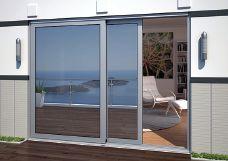
Imagine blurring the line between being outside and inside a home. With the Commdoor folding door system homeowners can finally connect their outdoor oasis with the indoors. Thermally broken and top hung, this system is created for four-season use. The simple slide of a door ushers in fresh air; or the sweet sounds of waves meeting the edge of the dock; or the rustle of leaves on a blustery day. Perfectly suited for private residences, restaurants, golf courses, event centres and entertainment complexes. Help clients experience the full potential of their space with Commdoor folding door system.
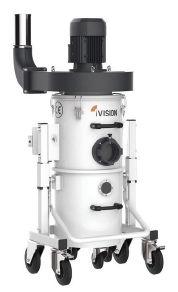
MADE FOR ALUMINUM AND PVC int-machinery.com
iVision manufactures industrial dust and chip collectors specifically designed for aluminum and PVC applications. The product range offers a solution for every volume of production with variously sized units and several options. iVision suction units are particularly suitable for singlehead and double-head miter saws, automatic saws and flat table CNC routers milling composite or aluminum panels. The iVision dust collectors feature high-performance centrifugal fans or turbines; a visual filling indicator; a complete steel structure; anti-scuff wheels with parking brakes; a quick-release container; a silencer to reduce noise levels; a pneumatic filter shaker; and a cleaning kit.
CLOSING THE GAPS
klaes.de
software to close all the gaps between departments. Klaes 3D can execute design; quotes; getting shop drawings; making revisions; creating production papers and production drawings; installation drawings; and purchase orders.
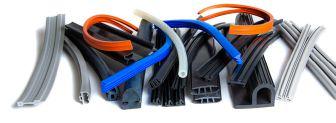
HIGH PERFORMANCE SEALS
Viconerubber.com
Let creativity happen! Vicone’s “no compromise” approach empowers engineers and designers to do their best work. A wide range of EPDM and silicone glazing seals are offered custom-made to specifications for all kinds of complex and innovative projects: curtain walls, windows, skylights and storefronts. Vicone’s goal is to help clients achieve high-performance glazing systems to meet the building facade’s energy efficiency and sustainability objectives. Today’s rapidly changing environment requires a nimble approach. Vicone thrives on challenges with decades of rubber engineering experience and solutions.
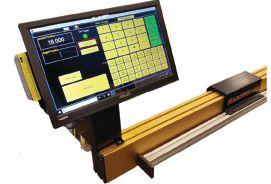
STOP OR
PUSH
int-machinery.com
RazorGage ST is a programmable servo-controlled length stop that can be used both as a stop gage or pusher. Variously sized touchscreen Android or Windows 10 Pro interfaces are available. Its windows-based software features functions for almost any purpose. Transfer files with WiFi, USB drive or Bluetooth. The optional Autolist feature sorts cutlists and optimizes yield. Available strokes are four to 60 feet with two-foot increments. Superior accuracy and repeatability are achieved through near-zero backlash transmission and motion system design consisting of double pre-loaded precision linear bearings, a planetary gear drive train and a two-inch-diameter re-machined timing belt pulley. The RazorGage ST comes with a crash detection system; five years’ warranty on the drive belt; and fraction keys with decimal equivalents. It accepts cut lists in CSV format that can be output from Microsoft Excel or Notepad. A label printer is optional.
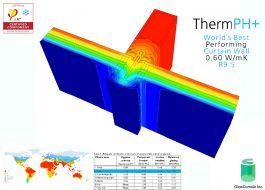
PASSIVE HOUSE CURTAINWALL glascurtain.ca
Klaes 3D is specialized ERP software for manufacturers of windows, doors, curtainwall, window wall, railing and shower doors. It’s designed to be one
ThermPH Plus, GlasCurtain’s newest fibreglassframed curtainwall system, is now officially the highest thermally performing curtain wall in the world, according to Passive House Institute
in Darmstadt, Germany. Leveraging its next-generation TPFRP technology and a unique design that eliminates thermal bridging, ThermPH Plus achieves Ucw = 0.600 W/m2K (0.106 Btu/ft2F, or R 9.5) and pHA-plus efficiency class. This is the world’s first curtainwall system to achieve PHI Cold Climate Certification and the first curtainwall manufactured in North America to achieve any PHI certification. GlasCurtain’s newest design is already garnering international recognition. ThermPH Plus is one of three Innovation Award finalists at JEC World 2020, the leading international composites show, in Paris, France. Other Innovation Award finalists this year include Volkswagen, Hyundai and Anheuser-Busch InBev. GlasCurtain’s managing director Peter Dushenski is looking forward to exhibiting at his second consecutive Top Glass in 2020, as well as to speaking for the first time.
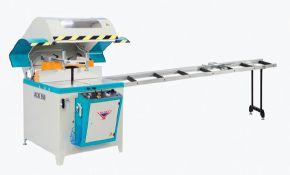
POWERFUL CUTTING int-machinery.com
The Yilmaz ACK 550 upcut saw is designed for straight- and miter-cutting large-size extrusions such as curtainwall profiles. The machine carries a 550 millimeter saw blade that is fed upwards by means of a hydro-pneumatic cylinder and driven by a powerful 5.5 horsepower motor. After the profile is clamped and the hood closed, the operator holds the two push buttons to raise the the blade up until the cut is completed. As soon as one or both buttons are released, the blade returns back to the original position. The table can be rotated for mitre angles with pre-set location points at 75, 60, 45, 30, 22.5, 15 and zero degree on both the left and right sides. It also has a pivoting range from minus 75 degrees left to plus 75 degrees right (infinitely adjustable) that can be locked in position by a mechanical brake. The safety hood is operated pneumatically via push button. The ACK 550 comes standard with 550 mm saw blade and features easy front access for blade replacement. Other standard items include a spray mist saw blade lubrications system; two vertical and one horizontal clamps; an air gun; adjustable saw blade feeding speed; and interior LED lighting. Thanks to the reliability of the machine, the manufacturer covers it with a two-year factory warranty. VERTICAL IG PRODUCTION
The Erdman high-speed Dura line produces insulating glass vertically in a fashion that nearly doubles the speed of traditional vertical lines. Vertical production eliminates the need to tip a unit up to four times in the production sequence. This saves time, eliminates injury potential, qualifies more operators for service and minimizes breakage. The Erdman high-speed Dura line produces IG at a
rate nearly twice as fast as a traditional IG Line. Total labour for the Dura line is three or four operators producing at least 1,200 units per shift. The speed comes with other innovations and benefits such as reduced floor space; reduced labour; and higher-quality product.
CLEAR FIRE-RATED safti.com
SuperClear 45-HS-LI is a revolutionary, optically clear, low-cost fire rated glass product for all 45-minute applications with hose stream. Safti First’s new SuperClear 45-HS-LI is approved for glazing in all 45-minute doors, sidelites, transoms and openings in large sizes. It meets strict fire, hose stream and safety requirements without wires, tints, films or laminates. SuperClear 45-HS-LI is proudly U.S.A.-made for fast lead times and affordable pricing with costs significantly less than ceramics or safety wired and better VLT, STC and OITC performance values. SuperClear 45-HS-LI is listed and labeled by Intertek and Underwriters Laboratories.
TOPGLASSPRODUCTS
TARGETS GLASS PROCESSING spil.glass.com
To maintain and grow a company’s position in the glass market, the focus needs to be on three key elements that drive the industry: quality, efficiency and productivity. These three elements must complement each other to ensure continuing productivity at the highest level and smooth operation. To maintain this complexity, SPIL Glass software is the ideal solution for any glass processing industry. This unique business management software has been especially designed for glass processing and its complexities. SPIL glass was designed to simply organise, manage, and control every step and element of a glass processing businesses. From prospective customer to order entry, planning, production, delivery and transferring records to the financial module, every detail of your glass processing business is managed by SPIL Glass software leaving you time to focus on growing your business in the marketplace. Not only does the SPIL Glass assist in quality, efficiency and productivity management, it also provides the tools for sales growth, reduces waste and alerts any critical errors as they occur within the business. SPIL Glass software is a comprehensive yet simple to use application for all Glass processing businesses.
www.spil.com.au
PRODUCTIVITY AND FLEXIBILITY bottero.com
The 548 LAM from Bottero is designed to offer productivity and flexibility at the highest levels. Bottero has always been committed to promoting the development and the popularity of laminated glass by constantly researching and developing new technological solutions able to improve the production and increase its possible range of applications. Bottero cutting lines for laminated glass are a suitable answer to the growing demand for productivity and flexibility the market requires. 548LAM represents the point of reference in the cutting systems of laminated glass and it is available both in stand-alone version and in dual-line combined with a monolithic cutting table (BKM, BCS and EVO ranges). The level of automatization of 548LAM is able to manage in a fully automatic way complex optimisations with X, Y, Z and W cuts on float glass and low-E up to 12 millimeters thick.
ONE-STOP SHOP
lothars.ca
Lothar’s Industrial Sales is a onestop shop for high-quality spare parts for the aluminum and PVC window and door industry. From Teflon to drill bits, knives to cutting blades or even custom drill heads, it has what fabricators are looking for. Lothars also produces custom punch dies, specifi-
cally designed for the window and door industry. Lothar’s Industrial Sales is the exclusive Ontario dealer of Weiss adhesives and cleaners.
SELF-DRESSING DIAMOND CORE DRILLS salemdist.com
The Thunder Cut, from Salem Flat Glass and Mirror, is a new generation series of stainless-steel body core drills that boasts the advantage of overall cost savings for the fabricator. These premium, high-speed, self-dressing diamond core drills are produced in multiple working lengths for both manual and automated (CNC) machinery from a variety of equipment manufacturers. The Thunder Cut series has accomplished, at minimum, double the process speeds of any product on the market today. These increased feed rates result in cycle times that are reduced significantly (40 per cent), which can equate to a time savings on average of 40 minutes to two hours daily. Additionally, with their specific bond design, the Thunder Cut core drills have achieved three to five times the life expectancy of standard drills, resulting in reduced maintenance and replacement costs.
ADVANCED IG litezone.ca
LiteZone is a next-generation, awardwinning, ultra-energy-efficient insulating glass unit. Windows using LiteZone achieve overall insulating values up to R17 (U=0.0588) and up to R19.6 (U=0.051) at the centre-of-glass (NFRC method). LiteZone embraces the need for thicker insulating glass units to achieve these remarkable insulating values. LiteZone can be thicker because it has a proprietary system to allow the air pressure between the inside and outside of the glass unit to equalize with changing temperatures, while keeping water vapour from entering the unit.Its insulating and other performance values are customized to specific project requirements by varying the number of suspended films, the space between the layers and the number of low-E coats used in the configuration. LiteZone is air filled so that there is no concern with deteriorating insulating values or with decompression of IGUs due to escaping argon or krypton. LiteZone has an extremely strong and flexible edge seal that is impermeable to water vapour. Edge seal stress due to changing temperatures is minimal because all the materials used have comparable coefficients of linear thermal expansion and because the unit is pressure-equalized. The expected life of LiteZone is more than 60 years. Because it only uses two glass lites, LiteZone weighs less than triple-pane glass units. With its weight, performance, and other important advantages, LiteZone provides design flexibility to use large windows and generous glass areas. LiteZone insulating glass is manufactured in Edmonton and is offered as an option by a growing number of quality window, window wall and curtainwall manufacturers.
CAPABILITIES metalcurving.com
For 35 years, Rimac has built a reputation of quality and trust in the Canadian and North American metal curving market. It provides a wide variety of services, including metal curving, press brake forming, sheet metal shearing and machining. Rimac has various methods for curving, including stretch forming, roll forming and rotary draw bending. Each method of curving provides unique advantages and disadvantages. By providing various methods for curving, the company has the ability to provide the best quality parts with minimal distortion at the best price. Rimac recently acquired a sheet metal shear and press brake, each measuring 13 feet, three inches long. This added service allows it to provide custom brake-formed profiles to compliment its curved parts. The full-service machine shop augments services by allowing the fabricator to drill, tap, notch and contour parts. This allows Rimac to provide customers with complete parts, ready for assembly. This also helps the company to build custom tooling, quickly, in house, and at a fraction of the cost. Rimac truly is a one stop shop for custom curved components. Its team of experts is dedicated to delivering first-rate customer service with expertise in the industry. Rimac prepares competitive and comprehensive quotations, outlining all necessary details for the job. The company maintains an inclusive social media presence, showcasing some of its best work.
THERMALLY BROKEN ALUMINUM Alumicor.com
The ThermaSlide 7000 thermally broken aluminum sliding insert patio door is an elegant sliding patio door engineered to meet higher architectural requirements with excellent air, water and structural performance; world class thermal-efficiency; outstanding acoustical properties; a two-inch sill; and assurance against forced entry. Canadian winters demand superior thermal performance and the ThermaSlide 7000 delivers. It also provides dual finish capability and has achieved accredited laboratory testing of NAFS 11 – AWPG40. Ideal for the commercial and residential markets, the ThermaSlide 7000 design offers large size capabilities plus a low sill height with a narrow profile interlock for ease of entry and a less obstructed view, appealing to design considerations for greater daylighting. The ThermaSlide 7000 is fabricated by Alumicor, in Alumicor’s controlled environment, where quality can be easily monitored and achieved, reducing field issues, all with Alumicor’s product guarantees. Accommodating a one-inch double-glazed sealed unit, the ThermaSlide 7000 insert patio door is designed to be field glazed, making installation easier. The ThermaSlide 7000 can be installed into virtually all Alumicor framing systems, into existing openings or into rough openings. With high structural and thermal performance, it is an optimal design for exterior applications.
by FRANK FULTON
Life’s new reality
For the past number of months it seems we’ve done nothing but lived and breathed the new reality of life, the COVID-19 reality. We’re probably in the midst of what will likely be the most historically significant event of our lifetimes. Future generations will be affected and many things we took for granted just a few months ago will never be the same. My expectation is that life will not normalize until a proven vaccine is in place and the best scenario for that seems to be mid2021. I don’t know about you but I feel like I’ve been living the movie Groundhog Day for the past few months. I’m itching to see friends and colleagues, to eat dinner at a restaurant, to golf, to shop, to be doing anything that changes the tedious routine I’m forced to follow. At the same time I’m glad that our governments have chosen the path of protecting lives and not exposing people to risk in the interest of short term economic gains. For the first time in my life, last week I paid for drive-thru fast food with a credit card. I believe that by the time this pandemic is over we will be a cashless society. I also believe that you may never shake another hand for as long as you live.
I have a feeling that the way we are used to working will be changed forever. Working remotely felt pretty weird at the beginning of this escapade but as we get more used to the routine, the more natural it seems. If the work can get done without the need of maintaining the expense of an office environment, working remotely may become the norm and not the exception. The spinoff of this will be a huge decrease in the demand for rental office space, empty office buildings, and a big decline in the construction industry. For the same reasons, I can see business travel and remote meetings being pared down to a minimum. If teleconferencing works so well while we are self-isolating, why not
I hope there is the realization of the importance and contributions of those who we all came to rely on so heavily.
YOU BET YOUR
after? I also anticipate that leisure travel will decrease significantly. I expect that airlines and the businesses that cater to leisure will be facing a very difficult number of years to come.
The most heartbreaking outcome of the COVID-19 outbreak has been the devastating loss of so many seniors lives. It has exposed those institutions whose responsibility it is for the well being of these people as incompetent, mismanaged, and governed by greed. We have a system where bureaucratic apathy coupled with underfunding and profiteering homecare owners calling all the shots exposed this vulnerable class of people to unacceptable risk. Perhaps now that it is too late, seniors care homes will be legislated to strict rules of compliance that safeguard the residents and not the owners.
There are two silver linings I would like to see coming from the pandemic. I hope there is the realization of the importance and contributions of those who we all came to rely on so heavily during the emergency: grocery store workers, food processors and preparers, delivery people, sanitation workers, health care workers in hospitals and in seniors homes, to name a few. Instead of simply expressing our gratitude, I hope the day has finally come when these working poor can be rewarded properly for the work they do and that fair and decent living wage legislation is immediately put in place.
Along the same lines, it was exposed that most of the support staff working in senior care facilities were forced to work at a number of different homes and as a result were spreading the virus from home to home to home. The reason they had to work at different homes is because they are offered only part time work. Although these are clearly full time jobs, and probably some of the most distasteful work you could ever imagine doing, the operators of these homes are allowed to take advantage of loopholes in the labour laws and the working poor they hire. The government permits them to conduct their businesses in this way to cut costs by paying the workers no benefits. This practice is not limited to health care and it is my hope that the silver lining in this tragedy is that the government create legislation with teeth to put an end to the disgraceful way some companies are allowed profit on the backs of marginalized employees. •
GLASS
Ultra thermal performance with a slim sightline.
Kawneer’s 1620UT/1620UT SSG Curtain Wall System surpasses expectations. Built on the success of the 1600UT Curtain Wall platform, the new system sets the standard for thermal performance. A narrow 2" sightline enhances the sleek, monolithic look of the exterior and views from the interior. And, an engineered polymer thermal break and the ability to accommodate 1" insulating glass increases building performance and occupant comfort. 1620UT/1620UT SSG Curtain Wall System: When less means more.
ARCHITECTURAL SYSTEMS ENTRANCES + FRAMING CURTAIN WALLS WINDOWS kawneer.com