Introducing the newest kid on the block: MetroView™ Window Wall
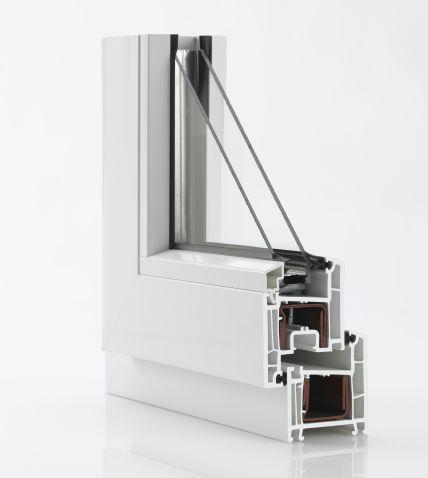
Top to bottom, the new FG 501T Window Wall –the first in the MetroView™ Window Wall series –offers the look of a curtain wall with a slab-to-slab framing system that’s perfect for mid-rise multifamily and commercial applications. With air and water performance equal to many curtain walls and a range of aesthetic options including slab edge covers for a seamless transition between floors, MetroView™ Window Wall offers a beautiful frame for life
As Canada moves to relax restrictions on the use of vinyl in high-rise applications, opportunities for energy-efficient design open up.
16 Chasing the one per cent
The Building Envelope Conference hears optimistic insights as the U.S. market heats up.
18 Top Glass smashes expectations
Canada’s commercial glazing conference sees a surge in interest and participation.
DEPARTMENTS
20 Under the Glass
Windsor’s Contract Glaziers completes an evolution from contractor to full-service custom fabrication.
6 Industry News
ASSOCIATIONS
Salem opens its doors, Tim Harris passes, new national sales manager for Fenzi, free online Lean resource... 7 Canadian Glass Association
A new web spun
EDITORIAL
The Glass Canada website is revamped and ready.
Hooray! The overhaul of our website, glasscanadamag.com, is finally complete and the new, totally redone site is now live for you to go and take a look. I think this new layout is going to provide a huge improvement to the online experience for all our readers.
If you use a mobile device to visit our site (as about a quarter of our visitors do) you will see the biggest difference. Gone is the tiny version of our desktop site with miniscule print and links too small to tap. The new version is a true mobilefriendly site with headlines arranged vertically for easy scrolling on a phone or tablet. If you have tried to visit glasscanadamag.com on a mobile device before and been discouraged, I encourage you to try again.
NEXT ISSUE
The experience on a desktop will benefit from our new “everything upfront” layout that puts more of the content on the home page rather than buried behind links and menus. It’s friendlier for someone who just wants to browse to see what is new and to be able to choose from a big selection of articles, news items, opinion columns and other content without necessarily being exactly sure of what they are looking for. If you are looking for something specific, the new search engine is much improved. There is also a large archive of video, instead of just one featured box.
• Three ways to quote
• Design Integration
Another major upgrade has been to the way our technology information is organized. You can now choose from Glass, Hardware and Glazing Systems, Machinery, Insulated Glass, Software, and Film and Laminate categories. From there, it is easy to select a subcategory and browse the new product releases submitted by our suppliers. It is a fast and easy way to get a sense of what is new and available. The rest of the content is organized around which part of the business you are most interested in: items on productivity and innovative, energy efficient technology for fabricators; items on design and good business practices for contractors. Codes and standards are so important they get their own category, which I’m hoping to turn into a very useful resource for the industry.
The boundaries between digital and print media are breaking down. No, that is not just Information Age communications theory woo, it actually means something specific. It means that where a print magazine might once have been viewed as something different and distinct from the online channels, with a different function and different content, it is now becoming more and more part of an integrated communications strategy where a message is put across in several different ways so that readers can absorb it however and wherever they wish. The goal of our website is to give you everything you might get from reading the print edition, plus enhanced access to all the information resources of the Internet, plus access to the interactivity of social media.
I hope our site will become a regular drop-in for you when you have a spare moment or two. Please send me your feedback and suggestions – we want to make glasscanadamag.com your online home for glass industry business information. •
MEDIA DESIGNER | Brooke SHAW GROUP PUBLISHER | Martin MCANULTY mmcanulty@annexweb.com
Publication Mail Agreement #40065710. RETURN UNDELIVERABLE CANADIAN ADDRESS TO CIRCULATION DEPARTMENT, P.O. BOX 530, SIMCOE, ON N3Y 4N5 e-mail: subscribe@glasscanadamag.com
Printed in Canada, All rights reserved. Editorial material is copyrighted. Permission to reprint may be granted on request. ISSN 0843-7041
Occasionally, Glass Canada will mail information on behalf of industry-related groups whose products and services we believe may be of interest to you. If you prefer not to receive this information, please contact our circulation department in any of the four ways listed above.
www.glasscanadamag.com
n ’ t m i s s i t
Including a site visit to NREL I
�e Brown Palace Hotel & Spa
Octob er ––,
R e g i s t e r n o w
NEWS
New Canadian location for Salem
Salem
Distributing invited local members of the glass industry to its new location in Concord, Ont., for a grand opening celebration from May 20 to 22. Guests were treated to refreshments and Salem-branded giveaways, as well as a chance to meet the staff and management of this North Carolinabased glass products distributor. “We wanted to open a location in Canada to facilitate pickups,” explained Dan Reinhart, vice-president of sales and marketing. “Many of our customers want their order delivered, but a significant number still like to be able to drop by and get what they want right away.” Reinhart was visiting the facility for the open houseSalem’s Canadian glass product specialist is Cameron Fiermont, formerly of Trulite and ProTemp. He is one of the three staff stationed in Canada.
With over 3,000 SKUs available in North
America and an inventory valued at around $4.5 million, Salem has mastered the logisitical challenge of getting items to customers fast. Consumable products for the glass industry such as abrasives, polishing wheels, diamond tooling, cerium oxide (Salem is one of the largest distributors of cerium oxide in the world), sealant, dressing sticks and corner protectors (and much more) can be picked up at the 2,000-square-foot warehouse or delivered next-day from North Carolina. Larger machinery is delivered directly to the customer. Salem sells bevelers, CNC work centres, cutting tables, drills, edgers, laminating lines, digital printers, sandblasting units and tempering ovens from such notable names as Bovone, Cefla and Intermac.
Salem is a 100 per cent employee-owned company.
COMING EVENTS
June 12
GAMA Golf Tournment Okotoks, Alta. pgaa.ca
June 24
OGMA Race Nite Toronto, Ont. ogma.ca
June 28 - July 1
AAMA National Summer Conference Seattle, Wash. aamanet.org
GANA Fall Conference San Antonio, Texas glasswebsite.com
Oct. 18 - 21
AAMA National Fall Conference Cambridge, Md. aamanet.org
Nov. 3 - 5 Windoor Toronto, Ont. windoorshow.com
April 20, 2016
Top Glass Mississauga, Ont. topglasscanada.com
CGA Newsletter
Canadian Glass Association
The Canadian Glass Association is hosting its Glass Connections Conference June 3 to 4 at the Sheraton in Saskatoon, Sask. At just $220, it is a steal with top-notch speakers and a sold-out exhibitor tabletop show, provided in a condensed two-day format. Join us on June 3 for the CGA Annual General Meeting and find out what’s new with CGA and participate in the election of officers. Follow that up with A Touch of Saskatchewan Cocktail Party, hosted by PenWest Sales that will allow you to network with both your old friends and new industry peers. The second day of the event is packed with high-quality speakers, continuing education credits and 15 of the industry’s top suppliers as part of our tabletop exhibit.
The CGA Technical Committee is hosting a call for volunteers to serve on the group. We hope you will consider sending one of your technical staff to serve on the Technical Committee and help to bring your expertise to both the regulatory bodies governing codes and to the members of the Canadian Glass Association. If this is something that you would be willing to do for your industry, please contact us at info@canadianglassassociation. com. The first meeting has not yet been scheduled, but will be held via conference call. The chair of the CGA Technical Committee is Brent Harder of Ferguson Corporation.
The CGA has joined the Glass Association of North America’s Glazing Industry Code Committee earlier this year and will have two representatives from its membership
Canadian Glass Association 619 Liverpool Road, Pickering, Ontario L1W 1R1 Tel: 604.855.0245 • Fax: 866.253.9979 www.canadianglassassociation.com
serving as voting and alternate representatives on behalf of the organization. The GICC’s mission is to encourage greater knowledge and acceptance of architectural glass, glazing materials, and glazing systems as safe, efficient, effective, and economical construction products among model code and building code organizations and officials, federal, state, and local regulatory agencies, as well as the general public. It also seeks to inform our industry about the activities of these organizations, officials, and agencies. Brent Harder of Ferguson Corporation will serve as the voting representative and Blain Denholm of Alberta Glass, will be the alternate representative. We appreciate their support in volunteering to help CGA better serve the Canadian glass and glazing industry.
Ontario Glass and Metal Association
The Ontario Attorney General has commissioned a review of the Construction Lien Act. The OGMA has approached the commission to present the concerns of our industry to the review panel. The outcome of this review could be the most important piece of legislation in decades and could make a huge difference in your ability to be paid for work.
Congratulations to our inaugural Award of Excellence winners who were honoured at the Top Glass Conference and Exhibits show on April 15. The winners are N45 Architecture for the Isabel Bader Centre for the Performing Arts, and Flynn Canada for the Ryerson University Student Learning
Centre.
Congratulations to Ron Knox of Security Mirror, latest recipient of the OGMA Lifetime Achievement Award. Ron grew up in the industry, spent many decades with Joseph Taylor Ltd., and is a former director of the Metro Toronto Glazing Association. Ron was presented with a commemorative glass trophy at the spring golf tournament on May 28.
We’d like to extend a warm welcome to our new OGMA members who have joined since the beginning of the year:
• Barrie Metro Glass
• BG Distribution
• C3 Polymeric
• Harding Glass and Mirror
• RPM Rollformed Metal Products
• Salem Flat Glass and Mirror
• Stadia Industries Please extend them a greeting at our next event.
Architectural Glass and Metal Contractors Association
As previously shared, Barrie Eon has decided to retire from the association after serving as manager for over 33 years. Tony Menecola of Applewood Glass, president and chairman of the Search Committee, has announced that Dennis Haatvedt has accepted the position of executive director of the AGMCA. Having Dennis at the helm will most definitely provide valuable industry expertise to many aspects of the association’s representation within the unionized sector of our industry. Dennis has clearly demonstrated his longstanding dedication to our association,
having served in a myriad of positions within the AGMCA, most importantly as president and chair of the Negotiations Committee. Please join the AGMCA board in welcoming Dennis onboard and wishing Barrie a very happy, healthy and fun-filled retirement!
Provincial Glaziers Association of Alberta
One of our association’s more ambitious initiatives is soon to yield results – that is the Master Glazier program. The first of nine courses, Division 8 Blue Print Reading is scheduled for completion by the end of May. SAIT Polytechnic and the PGAA will be able to offer this course some time after that. Individuals interested in course details can go to the pgaa.ca to sign up. SAIT Polytechnic, our apprenticeship program provider, has 11 glazier apprenticeship classes scheduled this year at the Calgary and Edmonton campuses. As of September, the glazing school will be moving from its current off-campus location back to the main campus. Alberta Apprenticeship and Industry Training held its annual awards night. Each year the AAIT board identifies apprentices in over fifty trades who scored the highest combined mark during the final period of apprenticeship training for the selection year. This year’s Top Glazier award winner was David Mann from Century Glass in Edmonton. Alberta trains graduates 20 per cent of the apprentices in Canada. These awards serve to recognize the quality programs we have in Alberta.
Free online Lean resource
A tragic accident
Tim Harris, technical service manager for Quanex IG Systems, passed away April 23 as a result of injuries sustained when a rack of windows fell off a fork truck at an industry facility. Harris, an industry veteran of 40 years, had been with either Tremco, Truseal or Quanex for 31 years.
A staunch supporter of the Insulating Glass Manufacturers Alliance, Harris was a regular attendee at IGMA
Don’t change the Channel
Bendheim’s Channel Glass Wall Systems have been named the Architizer A+ Jury Award Winner in the prestigious competition’s Building Products category.
Channel Glass was chosen from entries submitted by over 100 countries. A panel of over 300 renowned jurors, including architects, designers, cultural thought leaders and developers, deemed Bendheim’s glass systems the category winner and representative of the best in the world of architecture.
Over the last three years, the highly esteemed, global Architizer A+ Awards program has strived to recognize the industry’s top international architecture and design offerings. Each submission is evaluated based on form, function, and innovation. Notable industry leaders participating on this year’s jury include Charles Renfro, Bjarke Ingels and Tom Kundig, as well as respected individuals from fields outside of architecture including Tony Hsieh, CEO of Zappos; Yves Behar of Fuseproject; John Edelman, CEO of Design Within Reach; Cameron Sinclair of Architecture for Humanity; and Barry Bergdoll of MoMA.
Bendheim Wall Systems’ Channel Glass offers a stunning alternative to traditional exterior and interior flat glass wall systems, creating virtually seamless glass walls of unlimited lengths. Channels of glass, standing as tall as 23 feet, are available in six decorative textures, three specialty thermal coatings, and hundreds of ceramic frit colors. The glass contains a total recycled content of approximately 60 per
Acomprehensive online resource from Creative Safety Supply teaches companies the 5S industrial organization system associated with Lean business methods. Through videos, text and diagrams, visitors are linked to extensive information on how to Sort, Set in Order, Shine, Standardize and Sustain their work environments for maximum efficiency. The resource is free online at creativesafetysupply.com.
“We have worked very hard to put together an extremely valuable resource on 5S. 5S is the system developed in Japan during their industrial explosion to make manufacturing facilities, warehouses and other facilities more efficient and safer,” said Alice Todd of CSS. “We believe it is the most comprehensive page on the internet about 5S. It has everything an organization needs to implement a 5S program, to make themselves more efficient and profitable.”
conferences and chaired a number of work groups including the Glazing Guidelines Work Group. Under his leadership, the IGMA developed the residential glazing guidelines video and harmonized the Sealed Insulating Glass Manufacturers Association and Insulating Glass Manufacturers Association of Canada glazing guidelines, which continues to be relevant today.
cent, and is manufactured by Lamberts in Europe’s only ultraclean burning, oxygen-fueled cast glass furnace. It is the only factory-produced tempered channel glass certified by the Safety Glazing Certification Council (SGCC) and available with 100 per cent heat soak testing.
Clearview authorized to apply Azo-Brader
Clearview Industries is now an approved Azo-Brader applicator working closely with Azon to follow the processing guidelines for producing structural thermal barriers with a mechanical lock as applied in the Clearview patio door systems.
Tom Marsala, general manager of Clearview, said, “We are pleased to join the Azon approved Azo-Brader applicator program. We are convinced that a pour-anddebridge thermal barrier with an Azo-Brader mechanical lock is the best choice for our patio door systems.”
The key to qualifying as an approved applicator is the ongoing confirmation testing Azon performs to ensure proper application of the thermal barrier products. Participants in the approved Azo-Brader applicator program adhere to strict quality control procedures and testing to qualify for the Azon 10-year warranty of the thermal barrier polymer. In addition to the warranty, quality assurance practices, and AZO/Tec design service analysis, Clearview receives certified training of Azo-Brader machine operations, as well as marketing support.
New national sales manager for Fenzi
Fenzi North America has announced that Bob Lalonde, based in Montreal, has taken on the position of national sales manager.
Fenzi general manager, David Devenish, announced, “Bob joined Fenzi North America last spring and has showed a strong commitment to his customers throughout all of Canada, ensuring Fenzi’s place in the marketplace is well represented.”
Fenzi, based in Italy, is a world leader in providing chemicals for the glass processing industry, with the Toronto facility focusing on the IG components side of the business. Fenzi North America manufacturers polysulfide at its Toronto facility, while distributing a complete line of other sealants and components used for day to day IG production.
Sarrough to lead CCI
CCI Group has announced the appointment of Gus Sarrouh as CEO. Sarrouh brings more than 27 years of global experience in the consulting engineering and construction industries.
“We are very pleased to have Gus join our team,” said Gina Cody, executive chair of CCIG. “His vast industry experience and knowledge will be invaluable as we continue to grow into the premier consulting engineering company in Canada.”
A well-known figure in the engineering and construction industries, Sarrouh has previously held leadership roles at NORR Consulting, Giffels Construction Company and Cion, a global full-service architectural, engineering, construction and building science services company. His most recent position was chief operating officer at the Ingenium Group, the parent company of Giffels, NORR, Archial NORR and Cion. With 900 employees in 30 offices across the world, the
Devenish adds, “With Bob’s extensive background in IG sealants, his knowledge and support has proven invaluable as we move forward with our expansion plans. The recent opening of our warehouse in LaSalle, Que., is the first step under Bob’s direction. Bob’s experience in the sealant industry and his dedication to servicing his customers sealant needs is exactly the philosophy that we want to bring to all of our customers.”
Lalonde comments, “I really enjoy being part of the Fenzi team and am thrilled to be working with such a customeroriented company. I’m thrilled to be bringing the Fenzi way to my customers and friends throughout the industry.”
Devenish goes on, “As we expand our products into both the residential and commercial markets, under Bob’s leadership we will continue to solidify our position in Canada and the U.S. as a leading supplier to the insulated glass business, as we continue to service our existing customers and grow our core business products.”
Ingenium Group offers an extensive range of engineering, architectural, project management, construction and designbuild services. Sarrouh’s extensive project experience includes involvement with Toronto Pearson International Airport, the Law Society of Upper Canada (Osgood Hall), the Scarborough Pan-Am Aquatic Centre and the Union Station redevelopment.
“I’m excited at the prospect of guiding this talented group of professionals as we focus on further enhancing our levels of client service, expanding our service offerings and growing our geographic reach,” said Sarrouh. “Over the past few years, the company has transitioned from a firm focused on primarily providing inspection and testing services in the GTA to a firm that offers a wide-range of building science, environmental and geotechnical engineering services across Canada. I look forward to lending my insight and knowledge as CCIG reaches the next level of success.”
Tom Marsala
Bob Lalonde
High on vinyl
vinyl
Changes may soon allow more vinyl fenestration in Canada.
by CORRIE NEUKIRCHNER
Vinyl does not really burn. It certainly melts and deforms under sufficient heat and, when heated, releases enough heat to fail standard combustibility tests, but it doesn’t burn in the sense of being consumed by flame and releasing hot particles and flaming brands that spread fire to other areas. Yet the Canadian National Building Code, and the provincial codes that follow it, has long considered vinyl a combustible material, and therefore subject to severe restrictions on its use on the facades of Part 3 buildings. As a result, Canadian building designers have been cut off from many of the vinyl options available to European and U.S. builders. As energy efficiency requirements tighten, many feel it is time Canadian code authorities revisit the question of vinyl’s suitability for high-rise fenestration and give building envelope designers a powerful tool to improve energy performance.
The wheels are in motion. An industry group at last November’s Windoor show saw a presentation by Peter Senez of Sereca, a fire safety consultant, who showed dramatic evidence of the ability of vinyl window frames to withstand fire. He had photos of burned building facades showing both vinyl and aluminum frames. The vinyl-framed windows did not appear any more destroyed by the fire, and in some cases appeared to have held together better. Fire had not spread appreciably more around the vinyl windows as opposed to the aluminum ones. Obviously, these were not controlled tests and didn’t prove anything, but the issue would seem to bear further investigation. Senez, and a speaker from the National Research Council, laid out a roadmap by which the industry could do the necessary research and have the building code changed at its next revision in 2020. Many in the room were enthusiastic to take up the project.
There are significant potential benefits to using uPVC vinyl in high-rise and commercial building applications. The building envelope, while important in terms of aesthetics, is also the most contributing factor when it comes to energy loss. Windows and doors make up a sizable portion of the building envelope; therefore, their quality – including that of their profile materials – determines how effectively the building is insulated from uncomfortable temperatures, moisture, drafts and exterior noise. Increasingly, vinyl is proving its advantages over other materials in this regard and changing the commercial windows landscape in Canada.
“We are very happy to learn that there will be a push from the vinyl window industry to enhance current code in Canada vis-à-vis window use in non-combustible buildings” said Helmut Grohschaedl, director of the window and door business unit for Rehau. “For years in Europe and in the U.S., architects and building owners have looked to uPVC windows for their robust designs and tremendous u-values, which have allowed them to meet both performance grades and energy requirements.”
LEFT: Significant improvements in energy use, water and air infiltration support the argument for vinyl profiles as a key element in a building’s efficiency and occupants’ comfort. Rehau takes a look at recent trends and renovation projects in which their uPVC window and door designs replace aluminum in anticipation of changing building codes in Canada.
According to Grohschaedl, the company has a longstanding background working in collaboration with fabricators to deliver on a broad spectrum of window and door design needs. In addition, a strong commercial market support program offers a variety of services to fabricators, architects and developers working in collaboration with Rehau.
“With more than 50 years of experience developing window and door profiles and designs for installations throughout Europe – and more than 30 years in North America – we are well-equipped and ready to support the growth of uPVC in the Canadian commercial market,” Grohschaedl said.
The path to realizing uPVC benefits
Window framing materials directly affect solar heat gain resistance (or lack thereof) in high solar radiation zones. More conductive frame materials like metal will elevate indoor temperatures and increase the load demand on the building’s HVAC system. Similarly, conductive window framing materials will emit cold when outside air temperatures are low, requiring the HVAC system to compensate.
A commercial-grade uPVC material has natural insulating properties which maintain consistent indoor temperatures, drastically reducing HVAC system loads and therefore directly impacting energy consumption/savings. Additional design elements that contribute to energy savings include multi-chamber frame and sash, quality glazing, and of course, a
professional installation job.
The end result is that building owners are able to pocket energy savings on these projects throughout the years or to downsize the HVAC loading on large projects in order to save on initial build costs.
Moisture performance, IAQ and sound abatement
Beyond energy savings, a window or door’s framing material and design is directly related to how well they are able to keep exterior weather-related moisture from leaking into the window frame itself and to prevent condensation from forming due to differences between indoor and outdoor temperatures. A high-quality, high-performance uPVC window and door design will protect from moisture and mold damage and thus help ensure indoor air quality.
Another benefit of uPVC windows is their ability to block the transmission of sound, a quality that has contributed to their increased popularity in commercial buildings where occupant comfort is put on the list of priorities, such as apartment, condominium and hotel projects. There, quiet habitations translate directly to occupant satisfaction, which means revenue.
An array of application and design possibilities
The benefits of uPVC are no longer limited to certain types of projects. In the U.S. specifically, uPVC steel-reinforced windows are increasingly being installed in high-rise buildings, opening up a wide range of opportunities for architects to design to high-performance standards – from apartment and condominium buildings to office spaces and mixed-use developments. This creates many uses where architects can specify these highperformance products and take advantage of all the benefits outlined earlier – from apartment and condominium buildings, office spaces to mixed-use developments as well as hotels and resorts.
UPVC windows further contribute to architectural interest and attractiveness as they are easily foiled with solid colour or woodgrain patterns to create a design concept for the interior as well as exterior. An example of this is the loft trend, in which architects have been able to keep the industrial look when recovering older, urban industrial sites. On the outside,
colours such as anodized, bronze, and black restore the original looks while the interiors are warmed with colours such as white, clay and beige.
The following examples illustrate how building owners are benefitting from highperformance uPVC window and door designs.
Holiday Inn Gaithersburg
In 2007, the then 35-year-old Holiday Inn Gaithersburg underwent a complete renovation centred around its property management company’s “Our Big Green” initiative to conserve resources, reduce and recycle waste and incorporate the latest in sustainable building methods and products. The major focus of this renovation was a total window replacement to improve the hotel’s aesthetics and sound abatement properties, and most significantly to enhance its energy performance. A hybrid uPVC Rehau curtain wall design system from Rehau was selected after energy modeling results showed they could provide a regulated utility cost reduction of 12.4 per cent, translating to both a $10,000 annual energy cost savings and the project’s qualification for a 60-centper-square-foot tax deduction through the Energy Efficient Commercial Buildings Tax Deduction program. Since the renovation’s completion in 2009, the Holiday Inn Gaithersburg has more than realized a return on its investment, and has noted a high level of guest satisfaction.
101 Ocean Boardwalk
The windows at 101 Boardwalk had leaked drastically for years. After a change of ownership in 2012, tenants were promised that keeping them dry was priority number one. The architect’s plans called for tearing off the façade in order to properly replace the 2,311 windows. Rehau System 4500 uPVC tilt-turn windows increased strength, improved energy efficiency and allowed for efficient water drainage. The system also exceeded New Jersey performance requirements for hurricane and impact-resistance.
Windows from a half-dozen or more manufacturers were initially considered, but ultimately the developer and owner decided on Rehau windows because of their value and the payoff they would provide in terms of energy efficiency.
“Price, quality and workmanship sold the
job,” a representative from the developer said. “We were impressed by the ability to build them quickly and the ease of installation. The windows had to be customized to fit the building and not the other way around.”
Beverly Garland Hotel
With guest happiness in mind, hotel management recently sought a solution to sound-abatement issues with the original doors leading to exterior balcony-patios. “The hotel’s location near the ever-bustling Los Angeles freeway and Universal Studios amusement park meant that the original aluminum-frame exterior doors were no longer sufficient in insulating guests from sounds outside,” the hotel’s general manager explained. “In addition, energy management had become a concern as we realized the HVAC systems were working extra hard to maintain agreeable temperatures for our guests. When we came across the System 4500 uPVC solution from Rehau, we were encouraged it could meet our performance needs right off the bat.”
Rehau’s western region sales manager, Ralph Childs, adds, “They were very excited about the thermal value of the System 4500 door design, which translates to significant energy cost reductions when compared with the performance of aluminum frame doors. Also, our claycoloured profile blends nicely with the historic hotel’s rustic mission-style and wood features.”
”Our experience with the doors now that they have been installed has been phenomenal,” hotel representatives said. “We’ve seen a real reduction in noise coming into the room, and the overall aesthetic exterior appeal is even better than expected. Also, our housekeeping staff has found they are easy to clean, operate and maintain.”
On the right path
A typical payback period for an investment in high-efficiency uPVC windows and doors in a commercial application is approximately three years. Afterward, energy savings become an ongoing net
gain on the balance sheet. Add improved climate control, sound abatement, structural performance and practically unlimited design possibilities and uPVC simply makes more sense for a large percentage of projects.
“We have seen a dramatic change in the mindset of not only building owners but also architects and the developers in the U.S. during the past 10 years,” Grohschaedl said. “With any new product – or even an established product in a new application – change takes time. But we are more than confident that vinyl will continue to gain in the commercial construction market with proven, clear advantages over other framing materials. With those advantages speaking for themselves, I believe vinyl will quickly gain ground in the Canadian commercial construction market, as well.” •
About the author
Corrie Neukirchner is marketing manager for windows and doors at Rehau Construction.
Labor Saving
by SKIP MACLEAN
Skip Maclean is president of Fenestration Canada. He is business development manager for Tru-Tech Doors and has over 40 years’ experience in the window and door industry.
See you in Vancouver
The Fenestration Canada Annual General Meeting and Conference being held at the Fairmont Hotel Vancouver in downtown Vancouver, June 4 to 6, will see us open our doors to all fenestration manufacturers and stakeholders with an incentive of free Affiliate status privileges for the balance of 2015. This incentive applies to all non-Fenestration Canada members registering as delegates for the full AGM program. It is a great way to try on membership and see how it fits.
An informative program containing education, technical sessions, business development and networking opportunities are planned for the delegates while companions will be treated to a showcase of one of Canada’s superb natural locations. Full program, registration and hotel reservation details are posted on the association’s website.
Following its groundbreaking sessions in 2014, the Fabricators Council will continue to provide roundtable sessions open to fabricators only. Chaired by Lisa Bergeron of Jeld-Wen, these opportunities help us to determine future education topics and allow fabricators to voice their concerns, network with manufacturers across the country and provide a forum for action items such as the recently completed survey on compliance interpretation requirements.
Jean Marois of Royal Building Products and Robert Jutras of CLEB as co-chairs of the Technical Services Committee continue to provide the foundation of our association and promote the dissemination of technical information regarding fenestration products. They liaise with U.S. and international fenestration associations and effectively represent our industry from a Canadian perspective.
Take the time, invest in your business and think about membership in Fenestration Canada.
Our Education Committee led by Jean-François Kogovsek provides education topics and presentations determined by the changing trends in our industry. J.F has prepared an extremely topical line up of seminars and industry interactions for our upcoming AGM in Vancouver. The AGM will feature top industry speakers, relevant discussion and debate regarding changes and regulations facing our industry and a supplier’s tabletop showcase. Habitat for Humanity Canada will also be on hand to answer your questions regarding their initiative providing Canadians who are less fortunate with a helping hand through adequate housing and community services.
My term as president will come to an end in June. As I look back at the good work completed and consider the efforts required to move forward, I feel secure in knowing our industry and association are teeming with individuals who possess the skills, determination and drive to represent Canada’s fenestration industry at the highest possible level. It has been a privilege to have served with such a dynamic group. During my term as president I have made many friendships and developed key relationships that would likely never have been possible without the opportunities Fenestration Canada has provided. I appreciate the opportunity to be a part of the ever-changing landscape of window and door manufacturing. Our window and door manufacturers produce quality, energy efficient fenestration products designed for some of the most challenging climates and environments in Canada and beyond.
Our industry has a storied past – help us determine the future. Get involved! I believe our industry is a key driver of Canada’s economy and can be for many years to come. I encourage all manufacturers and stakeholders to join Fenestration Canada and lend their voice and support in maintaining a strong and vibrant position in Canada’s future. Take the time, invest in your business and investigate membership in Fenestration Canada. •
INDUSTRYEVENT
INSIGHT AT BEC
by RICH PORAYKO
The pain is finally over. The U.S. glazing industry that has been suffering from recession and the post-traumatic stress disorder that followed, has finally recovered. In fact, “recovered” is a poor choice of word. A familiar word that we haven’t used for a while was being thrown around with a lot more confidence at the recent Building Enclosure Contractors (BEC) Conference in Las Vegas. Growth. Not recovery or optimism, but growth. And lots of it. At least until 2018 or 2019 (barring any major geopolitical event). So buckle your safety belt because the next four or five years are going to be wild.
Produced by the Glass Association of North America, this year’s BEC speakers were exceptionally high calibre as usual. James O’Callaghan of Ecker O’Callaghan described the journey of designing, manufacturing and building Apple’s famous flagship glass cube stores and staircases around the world in his
Everyone eying opportunities in Las Vegas.
presentation “the Future of Glazing Technology.” “Transparency becomes very important when you want to make sure that people have a very clear vision of navigation when they are looking from one side of the retail store to the other,” O’Callaghan said. In a presentation that needed to be seen, in order to be truly appreciated, O’Callaghan chronicled the trials, tribulations and enormous successes of designing, manufacturing and building with massive, never-been-done-before oversized laminated glass. The incredible project included using autoclaves from
the aerospace industry, developing a method to splice laminated glass together in a similar fashion to plywood and handling, shipping and installing huge lites of glass. The Future of Glazing Technology could easily be summed up in one word: wow. Industry blogger and glass rockstar Max Perilstein was everywhere. Not only did Perilstein moderate a thoughtprovoking fabricator Q&A panel, he got to throw two pitches to one-handed former pitcher for the Yankees and the Angels, Jim Abbott, during Abbott’s ovation-receiving keynote.
ABOVE: James O’Callaghan of Exker O’Callaghan described the journey of designing, manufacturing and building Apple’s famous flagship glass cube stores.
by Rich Porayko
Photo
Perilstein also nailed it with his fullhouse presentation on social media.
But the powerhouse Glazing Industry Update presentation by Apogee Enterprises CEO, Joe Puishys, was the one that had everyone buzzing about for the rest of the conference. Candid and intense. Nothing short of what you’d expect from someone that runs a $935 million a year publicly traded company. Apogee touches every part of the U.S. glazing industry and reaches well into Canada. As the largest glass fabricator in North and South America, Viracon is the single largest out of the seven companies currently in Apogee’s portfolio. Glazing contractor Harmon is Apogee’s second-largest company. Apogee also owns Canadian architectural framing systems leader Alumicor and it’s American counterpart Tubalite as well as aluminum window systems and curtainwall manufacturer Wausau, paint and anodizing finisher Linetech and picture framing and engineered optics specialty glass manufacturer Tru Vue. Puishys, only three years deep in the industry and admits he is new to the business, but he used the presentation to “describe his observations as an ‘outsider.’”
“I believe our industry is a good industry,” Puishys said. “It’s had its bad times. It’s a complicated business with low margins. I thought ‘how complicated can the industry be with no moving parts?’ No circuit boards. No programmable logic controllers. I was shocked with the low margins. As an industry, we don’t get paid for the complexity of the work that we do.”
Sound familiar? It gets better. “This industry moves at glacial speed. Who wants to be the best buggy whip manufacturer in the United States? We need to be careful because this industry is slow to adapt. This is also an incestuous business. Look around the room. You’re with your competitors. You’re with your suppliers. Sometimes they are the same person.”
This industry landscape is changing. “Certainly you used to be able to
Continued on page 22
GLAZIERS
systems produced with Azon structural thermal barrier technologies—the MLP™ or Dual Cavity—for aluminum windows along with high performance glazing components for insulating glass,
yield a fenestration system capable of upholding the highest efficiency and sustainability standards.
INDUSTRYEVENT
TOP GLASS GETS RAVES
by PATRICK FLANNERY
Top Glass, Canada’s conference event for the commercial glazing industry, smashed through expectations on April 15 at the International Centre in Mississauga, Ont., with glaziers, fabricators and architects swarming an expanded show floor and education seminars packed to standing room only. The one-day event welcomed over 280 attendees from right across Canada, and attracted coverage by the U.S. trade press. The event was powered by strong support from industry suppliers, including Gold Sponsors Tremco and Alumicor, and Speaker Sponsors Erdman Automation and RavenBrick.
In just its second year, Top Glass has shown remarkable growth. Compared to the inaugural event, show organizers recorded:
Canada’s glazing show takes another big step.
• 281 attendees up from 150 - 87 per cent increase
• 42 exhibitors up from 30 - 40 per cent increase
• 51 architects and building engineers - more than triple the number from 2014
• 135 glazing contractors and building envelope fabricators
• Total glass building professionals on the floor: 402
The four seminar sessions relocated to a room in the same hall as the show floor, making it easier for attendees to move back and forth between the sessions and the exhibits. The first two sessions were standing-room only, and even the final session of the day was more than three-quarters full.
Another new addition was the Ontario Glass and Metal Association’s presentation of its Awards of Excellence. Angelo Cairo of Stouffville Glass, OGMA president, and Steve Gusterson of Alumicor, OGMA vice-president, presented the Award of Excellence in glass building execution to Michael Roche of Flynn Canada for their work on Ryerson University in Toronto. Richard Brightling and Tom
Carolan of Jigsaw Marketing/Stella Hardware accepted the award for design on behalf of N45 for the Isabel Bader Centre for Performing Arts in Kingston, Ont. Both winners expressed their gratitude at the recognition.
The education sessions began with Paul Gulletson, project manager with CSA Built Environment Group, previewing CSA’s upcoming A500 Building Guards standard. The new standard will cover most aspects of balconies, balustrades and other structures designed to prevent falling from height on buildings, but Gulletson focused on the aspects related to areas where glass might be used. The new standard will include requirements for materials, fasteners, hardware, connections to the structure, connections to glass components. Key information for attendees was the revelation that A500 will include guard load, impact resistance, wind load and post-breakage retention requirements and that designs will need to be tested, potentially on-site, in order to be certified. Gulletson says a mixture of proscriptive and tested performance requirements will
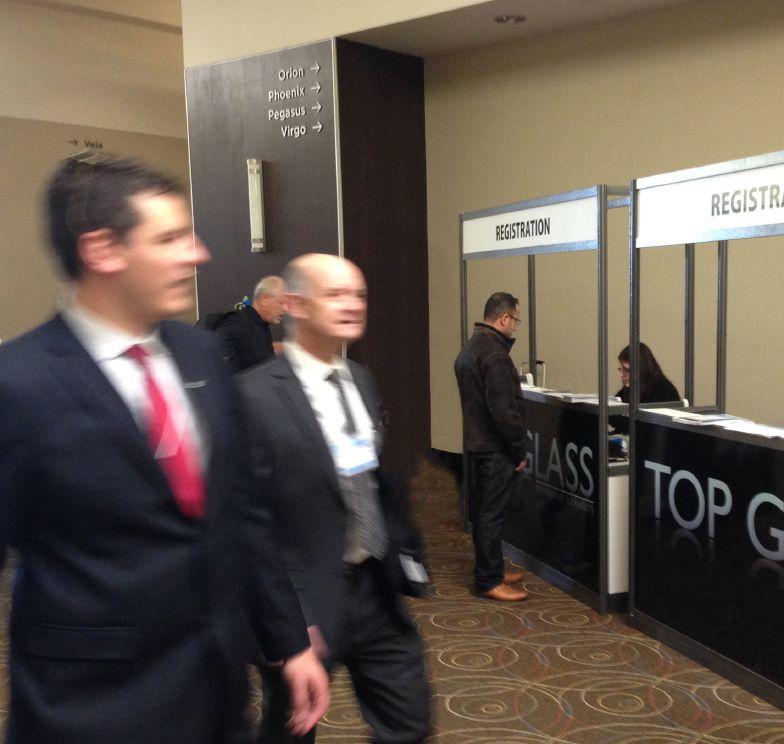
ABOVE: Top Glass 2015 experienced a surge of interest, with a buzzing show floor and standing-roomonly seminars. The conference returns April 20, 2016.
Photo by Rich Porayko
RAVES
be used, leaving designers with some flexibility. Use of laminated glass will not be mandated as long as the material used can meet the performance specifications.
Next up was Stephane Hoffman of Morrison Hershfield with some great technical guidance on thermal performance of building envelopes. He shared a great deal of science on how heat is transmitted through common spandrel, curtain wall and window wall designs, comparing designs with varying window-to-wall ratios. He showed how careful attention to envelope detailing could achieve much higher efficiency performance, and how new technologies such as vacuum insulated curtain wall could help even more. Hoffman summed up by pointing out that simply adding more insulation is not always the best solution to achieving better thermal performance and that putting additional thought into design, especially with the help of advanced modelling technology, could be even better.
Hamid Vossoughi and Ehab Naim Ibrahim of Halsall Associates provided a fascinated crowd with insights into working with Chinese curtain wall fabricators drawn from their direct experience. Their discussion illustrated the explosive growth around the world of Chinese building envelope fabrication, and the surging market for glazing and construction in China itself. They discussed the trade disputes that have arisen over Chinese export pricing and noted that concerted action by Canada’s glazing community has largely corrected the problem of Chinese unitized curtain wall entering the country at unfair prices. Ibrahim answered the ubiquitous questions about Chinese quality by showing a series of draft specifications, complete with red-inked changes. The message was that Chinese pricing is very sharp - you get what you pay for and nothing that you don’t.
High quality is certainly achievable, but must be specified. Vossoughi said the Chinese challenge should be treated as an opportunity by North American fabricators to get better, especially through innovation and research. The two even gave some examples of the kind of cuisine you might sample on a trip to China - not for the timid! Architects attending the presentation commented afterwards that information of this kind is simply not available from any other source.
Finally, Louis Moreau of Agnora kept bums in seats right to the end of the day with his entertaining, well-informed and educational discussion of the challenges of fabricating “big-ass glass.” Agnora has the capability to temper, laminate and heat-strengthen single panels up to 130 by 300 inches. As a result, Moreau and his team have been involved in a number of unique projects and solved some problems that anyone trying to meet demand for larger and larger format windows will be likely to encounter. Anyone asking a question won a t-shirt!
Top Glass returns to the International Centre April 20, 2016. Proposals for presentations are being accepted now until August 31. To submit a presentation proposal, please email Glass Canada editor, Patrick Flannery, at pflannery@annexweb.com. •
Other glass fabricators have digital printers. But no one makes them do what GGI can. Alice® 2.0 is the biggest, highest resolution directto-glass printer, capable of handling up to 110” x 236” at 720 dpi. At GGI, we’re dedicated to making your most creative visions come alive, in glass. 800.431.2042
128 “K” shaped fins of 9/16”, lowiron, laminated glass, printed with Alice®, NYU-Washington, DC
The evolution of a glazier
From small contractor to major fabricator.
The Calgary airport project marks the finishing point in Contract Glaziers’ evolution from a glazing contractor into a manufacturer of high-tech curtainwall. The airport features a complex double envelope that reacts dynamically to control UV and airflow.
There are many stories out there of businesses with humble beginnings that went on to become major success stories. These stories have some elements in common – hard work, risk-taking, seizing opportunity and forging new ways forward, just to name a few. While some business histories may add in these elements, embellishing here and there, all of these elements and more are truly part of the story of Windsor, Ont.based Contract Glaziers, which began in 1971 as Windsor Glass.
“My father Jan came to Canada in 1969 from the Czech Republic with my mother Alexandra and two children, and he borrowed $500 to start his company,” explains Contract Glaziers CEO, Michal Chlumecky. “He worked very, very hard and built a very successful business, taking it from a small local full-service glass shop into a small contract glazier. It was amazing what he accomplished from nothing.”
Michal began cutting glass for his father when he was 10 and also spent his teenage years working at the family business. Of his education after high school,
AT A GLANCE | Contract Glaziers
he says, “I wanted to be an architect but I didn’t have the artistic talent for it. I was told I would make a great engineer, but I ended up with a degree in commerce and economics, and I envisioned working for a big bank in downtown Toronto. In my youth, I thought it would be glamorous.” Meanwhile, his father had continued to grow the company, and by the time of Michal’s university graduation, Michal felt his path laid in taking the family company further forward. “I was in knee-deep before I knew it, and I’m glad it worked out the way it did,” he says. “To be part of something my father worked so hard on, and to have transformed our company from a glazier into a high-tech curtainwall manufacturer and contractor is something that I’m extremely proud of.”
That transformation began not long after Michal joined the company on a full-time basis after graduating from university. Michal could see big opportunities – if, and only if, some problems could be solved and an ambitious strategy put in place. “We knew that if we did our homework well and we were intelligent about it, we could compete as a
Owners: Jan and Michal Chlumecky Date established: 1992 (started in 1971 as Windsor Glass)
Number of employees: about 220
Office locations: Windsor, Detroit, Calgary
Manufacturing facilities: Two, both in Windsor, with combined plant area of 125,000 square feet
Main Products: fabrication/ installation of curtainwall
Contract Glaziers specializes in unique design solutions for custom-made building envelopes, challenging the limits of technical feasibility.
curtainwall manufacturer,” he explains. However, when they looked at the jobs they were beginning to take on, there was a problem. Of all the company’s costs, the biggest one was highly-skilled onsite labour. It was also the company’s biggest risk factor.
Solving the problem would not be easy. While highly-skilled labour was expensive, the availability of workers who could install curtainwall was very low
at that time, in the late 1980s and early 1990s – and on both sides of the border. The hard truth was that this labour pinch could make or break Contract Glaziers. It had to be dealt with.
One way to mitigate the risk would be to simplify the entire process so that the need for highly-skilled employees in the field was much reduced. It was a big change in focus, to bring the production of unitized curtainwall in-house, but one Michal saw as the only option. It was no small capital investment to create the manufacturing plant and hold large amounts of inventory – a risk in itself – but it worked out. In setting this course, Michal had set Contract Glaziers apart. Loosened from its labour shackles and with new strengths to build on, the company was able to grow by leaps and bounds.
While Michal’s father Jan was uncertain at first about the change in focus, he came to see what a systematic change from a simple glazier to a curtainwall engineering and manufacturing house would mean. “It took some discussion, but I knew we needed to change, that you can’t be all things to all people,” Michal says. “It was scary for my father as it would be for anyone in that situation, but he came to see that when we weren’t distracted and doing work of all kinds, we could become experts at one element. We could focus on our strengths and continuously improve on them.”
Contract Glaziers’ growth in the early days came from mid-scale projects, where unitized curtainwall was not being used. But to make those early inroads, Michal and his staff had to convince those who designed and constructed these buildings to go with something new. “From both an architect’s and a building contractor’s point of view, it was uncharted territory,” he says. “We had to do a fair bit of salesmanship, pointing out the advantages from a performance and an efficiency standpoint. The architects needed to feel comfortable. But it helped that the unitized curtainwall presented a way to speed up the construction process, and that was attractive to the building contractors.”
It also helped, Michal says, that the pool of architects and contractors of midsized project that needed to be reached was fairly small. “And add to that, that there was an industry movement towards the use of unitized curtainwall,” he explains. “It helped create a general acceptance. More and more Canadian companies were using it in southern Ontario, and we in Canada
were ahead with unitized curtainwall use compared to the U.S., so it all helped with getting the U.S. architects and builders to move in that direction.”
By 1992, Michal had established a U.S. office in Detroit and changed the firm’s name to one that would work both north and south of the border. Southeastern Michigan provided access to a market in excess of five million people within an hour’s drive. “There weren’t a lot of unitized curtainwall competitors there,” Michal adds, “so we could focus on perfecting our design and manufacturing capabilities.”
nated,” he says. “But it’s a core part of our business, allowing us to go directly to fabrication.”
Michal lauds his “incredible pool of employees,” who are strong in both advanced technology use and systems design. “We have brilliant people who are dedicated to the company, and I say without hesitation that our number one advantage is our people,” he states. “We have people who have been with us for so long and have been instrumental in the growth and development of the company. They are proud of Contract Glaziers and of what they have accomplished individu-
It was a big change in focus, to bring production of unitized curtainwall in-house.
Computer modelling
Part of the process of developing strength in unitized curtainwall manufacturing was the development by Contract Glaziers of modelling software. Having a computer model of a building would mean that instead of doing manual calculations for each piece of glass, which are both difficult to audit and time-consuming, the entire production process would be simplified. Custom-designed software would automatically bridge the model and the manufacturing process – seamlessly, quickly and without errors. By now it was the early 2000s, and Michal and his staff set to work scouring around for software tools that could be adapted. They eventually settled on a number of modelling software packages used in the automotive industry and hired people to make the changes they needed, keeping at it until it was right.
“Building information modelling has gained a considerable amount of traction over the last several years,” Michal notes. “While some may model for contract compliance, we model everything in order feed production. It’s an effective way to handle complex geometry, but for us it has allowed us to go direct from model to production quickly and efficiently.” He notes that the architectural community has also embraced modelling over the last five to six years as a valuable tool for coordinating all the trades. “It’s actually rapidly becoming a requirement from the construction and architectural community, so that everything is properly coordi-
ally. I have nothing but the utmost respect for them. A lot of people say these things as a cliché, but I am sincere.”
One of the recent high-performance monumental projects that Contract Glaziers has taken on illustrates the complexity in system design and geometry at which the company excels. “The Calgary International Airport has a dual skin active outer wall, with a three-foot airspace cavity between them,” Michal explains. “It has integrated air louvres to regulate air flow between the two walls, and the way it works is state-of-the-art technology. There are temperature and solar sensors and integrated blinds that reflect the UV out in the summer and the controlled louvres allow convection airflow inside the wall space to keep the outer wall cool. In the winter, the blinds are angled to redirect the UV rays to superheat the air space and keep the exterior wall warm for occupant comfort.”
Other recent Contract Glaziers projects include the Halifax Library, which CNN named one of the top architectural designs in the world, and the Manulife Tower in Calgary. “We are working on it right now, it is unique in that its building footprint increases as you go up,” Michal says. “It has triple glazing with conical, concave and convex bent glass, and a very whimsical design. You couldn’t do this without proper modelling. Our modelling has allowed us to pursue projects like these with aggression across Canada and the U.S. market.” •
Continued from page 17
measure the seven-to-eight-year construction cycle with a stop watch. Those days are over. The end market reacts to every little bit of news today, both negative and positive. Clearly, strong market conditions exist across all sectors. Two years ago, we were saying the good news is we’re not talking about a double dip recession. A year ago, we were talking about growth again. It felt better. The ice was starting to form but didn’t feel thick enough to feel good although we are feeling better. Today, I feel like the ice is very hard. I believe our end markets are going to grow nicely for the next three, more likely four, possibly five years. Two years ago, Texas was the hot spot and everyone ran there. A year ago, it was pockets of growth. Now it’s almost every geography.
“If you think oil prices are going to stay where they are now for a long time, you’re silly. The tide is coming in and this is chance to take advantage of it. Do not overrun the growth curve. It’s a fatal mistake and most people make it. You chase the growth and you end up right in the ditch because when the market changes, you are going too fast for the curve. Start planning now for the downturn, however, there is a lot of time.
“Labour is going to be a big issue. There are new foreign participants. My advice is to suck it up and get used to the competition.
“Retrofit is a big deal for us.” According to Puishys, aesthetics and energy are the main triggers for a building owner to re-glaze their building. “We consider retrofit to be the main
market. There are five million commercial buildings out there with 70 billion square feet of glass. These buildings consume 40 per cent of the energy in the United States. Even a higher percentage of typically fossil-fuel-generated electricity. Twothirds were built before the advent of low-E glass in around 1980. More than half are monolithic. One per cent of that market is equal to what comes out every year in new construction. Yet, for the most part, we are all chasing that one per cent.
“This is a wonderful opportunity for us. We have the bandwidth to drive the change. I’ve hired a team that is out there generating this for us. We did around $20 million in the business year that just ended in an industry we didn’t even participate in three years ago. We went from $5 million, to $10 million to $20 million in three years and I believe this is a $100 million opportunity for my business.
“Do not overrun the growth curve. It’s a fatal mistake and most people make it.”
- Joe Puishys
“Typically, it’s not that type of work our internal glazing company wants to handle. Hopefully all of you will benefit from this. I challenge my competitors to drive this effort by educating building owners and maintenance companies that there is a lot of money in the payback of higher rent and energy savings. Don’t think of the World Trade Center as a target for this. Think the MUSH market: Municipals, Universities, Schools and Hospitals. In fact, the number-one user in the United States of energy performance contracts is the federal government.
“Family comes first but bleed company blood. For many of you, this is a family business. I don’t care if I’m in a meeting with the board, if one of my family members calls, I’m taking the call to make sure it’s not an emergency and then I’ll rejoin the meeting. I tell my troops to take the call because you never know. Now, I tell my kids, please don’t call me unless you have to because you know I’m going to take the call. At the end of the day, family is all that really counts. But I tell my people that I hope that the company is a very close but absolute second. And I’m a company guy. I really believe in loyalty.
“Hire people that are bigger and better than you. It’s the only way to succeed. “A” people hire “A+” people to work for them. “B” talent hire “C” people to work for them. I tell my people I want people better than you working for you. It doesn’t mean you have to step aside for them. That’s not the way we run our company. Hire the best people. And I’ve been lucky enough to surround myself with people that are smarter than I am.
“Start thinking about 2020 now so that we don’t all get on a drunken bender like we did seven years ago and pay for it. Fortunately, the industry didn’t remove a lot of capacity other than float glass. It’s going to be dicey for the next 18 to 24 months, however I feel very good where we are.” •
About the author
Rich Porayko is a professional writer and founding partner of Construction Creative, a marketing and communications company located in Metro Vancouver, B.C. richp@constructioncreative.com
Half Page.indd 1
2015-05-29
by BRIAN BURTON
Brian is now involved with an innovative multidisciplinary firm that specializes in technical business writing: Award Bid Management Services http://award-bidmanagement-services. com/. The firm assists companies interested in selling goods and services to governments and institutions. He can be reached at Burton@award-bidmanagement.com
History in glass
Last fall I had the opportunity to visit the Corning Museum of Glass, which is close to the Canadian border in upper New York State south of Syracuse. I would estimate it’s about a 90-minute drive from the border and well worth your time and effort.
The iconic museum, created in 1951 by Corning Glass as a gift to the United States to mark the 100th anniversary of Corning, is dedicated to relating the history of glass, glassmaking and disseminating information about scientific glass research. It has grown over the years to become a world-class venue attracting thousands of visitors each year, providing daily guided tours, interactive workshops and more. Even on the weekday I visited, there were hundreds of visitors.
A visitor leaves with a profound understanding of the versatility, complexity and usefulness of glass in our world. I can’t really imagine another single material that would be able to command such focused attention and the engaging story it weaves that encompasses thousands of years and hundreds of countries. The one-of-a-kind museum venue is very large and I was happy I brought my camera, laptop and notebook.
The highlights for me were the featured exhibits on the Crystal Palace and the windows in the Space Orbiter. You will also be impressed with the Window, Vessel and Optical galleries. Each gallery has its own separate room providing a well-organized series of exhibits, photographs and illustrations.
The engaging story it weaves encompasses thousands of years and hundreds of countries.
The Window gallery comprises a very interesting component of the museum with a section on technical improvements and a museum scientist present to answer questions and explain technical details. He explained the use of more and larger windows by builders in the ‘60s and ‘70s that ran into a roadblock in 1973 when the energy crisis hit. At that time, the fact that windows provided relatively little thermal insulation became a pressing concern. A chemist by the name of Roy Gordon already knew that a tin oxide coating could make windows more energyefficient. His challenge was to somehow make the coating transparent. Gordon tried a two-phase chemical vapour deposition process which involved combined gases above a hot glass sheet. The gases reacted and deposited solid layers that formed a non-reflective coating of tin oxide on the surface. Eventually manufacturers invested in more intensive research and within a decade they succeeded in automating the process. Today we see energy-saving windows everywhere around us.
FENESTRATION FORUM
The museum’s Optical gallery describes some of the remarkable ways that glass reacts and responds to light, featuring exhibits about the role glass played in optics including telescopes, periscopes, scientific instruments, lighthouses, modern fiber optics and computers.
I was impressed with the extensive museum exhibit on the Crystal Palace, which was moved from its original site in London’s Hyde Park and then destroyed by fire. This structure made the general public aware of the tremendous potential of glass in architecture for the first time in the 1850s. The statistics of the Crystal Palace were astonishing. It required 3,300 iron columns and 293,635 panes of glass. The elegant completed structure, built in less than six months, was five times larger than the Palace of Versailles and taller than Westminster Abbey. The reason for its lasting architectural significance is that the building was the first example of prefabricated architecture, a concept well suited to glass and cast iron.
The information and exhibit on the U.S. Space Orbiter was very interesting and is apparently very popular with visitors for good reason. The space shuttles have 37 optical-quality triplepaned windows of various sizes that were manufactured specifically for each spacecraft. The windows were designed to withstand intense re-entry temperatures, atmospheric pressure and the pressures created by the vacuum of space. •
by FRANK FULTON
Frank Fulton is president of Fultech Fenestration Consulting. He has been in the industry for 30 years and can be reached via email at fultech.fc@gmail.com
A bid for fairness
Afull year has now passed since Bill 69 was set aside by the Standing Committee on Regulations and Private Bills of the Ontario Legislative Assembly. You may recall that Bill 69, named the Prompt Payment Act 2014, was a private member’s bill presented by Steven Del Duca, Member of Provincial Parliament for Vaughan. Its main provisions would have seen that the financial risk on construction projects would be more equitably shared and would have provided subcontractors with greater recourse to collect money owed to them.
The negative feedback from a few large contractors, developers and municipalities, intent on keeping the playing field tilted in their favour, was so great that the bill was derailed. At the same time, so strong were the arguments in favour of the proposed changes contained in the bill that the Attorney General of Ontario made a commitment to review and make changes to the existing provincial laws.
The promised action, now just underway a year later, is “the launching of an expert review of the Construction Lien Act that will include the examination of payment issues within the construction sector.” The Ontario Ministry of the Attorney General has appointed Bruce Reynolds as counsel to conduct the review, which will involve extensive consultation with the construction industry followed by a report with recommendations to the province by December 2015. Bruce Reynolds is a senior partner at Borden Ladner Gervais LLP, the chair of BLG’s International Construction Projects Group and an internationally ranked construction practitioner.
The current version of the Construction Lien Act was enacted in 1983 and sets out a complex
The outcome of this lengthy review process will determine the playing field for our industry well into the future.
system of rights and trust provisions to provide financial protection to construction suppliers and landowners while working to balance the interests of the many other parties to a construction project. It does not deal with payment of money owed from one party to another or what to do when payments are late. It is anticipated that the review will focus on reducing the financial risks companies face when they are not paid for services on time; making sure payment risk is distributed fairly among all industry participants; and finding ways to ensure that companies pay for services and supplies on time.
The outcome of this lengthy review process will determine the playing field for our industry well into the future. Its importance to your business cannot be overstated. It may entitle the glazing contractor to payment in a set time frame. It may determine and legalize your right to suspend work or to terminate a contract due to non-payment. It may improve your payment terms of holdbacks and it may set the rules for the upfront disclosure of financial information by owners and contractors.
These improvements to the act will only happen if our glass and architectural metal industry and the construction industry in general can present strong arguments to convince the review commission that the current laws are unfair and that it is in the best interests of the construction community to change them. What is certain is that the opponents to prompt payments, the large contractors, developers, and municipalities, will be well-prepared and unified in their objection to change and will make sure to be heard loud and clear.
On behalf of our industry, the Ontario Glass and Metal Association has made a formal application to the legal firm conducting the review to present our arguments in favour of changes to the act. The strength of our presentation will depend greatly on the support of our industry. To this end we are asking you to provide us with your experiences where the current laws have let you down or caused you financial loss and legal expense. Please contact me directly, and I can assure you that all replies will be held in strict confidence and that no information will be disclosed without your explicit consent. •
Pilkington Glass Education Center
Pilkington North America is now sponsoring a Continuing Education Center. This educational resource helps architects, specifiers, students and construction industry professionals learn about glass design, specification and production. The courses feature comprehensive information on a variety of topics, including:
• Architectural Glass: Production, Selection and Performance
• Design Solutions Using High-Performance Glass
• Properties and Performance of Vacuum Insulated Glazing
Visit www.pilkington.com/architects for more information.
COMPLETE PROJECT SOLUTIONS
• Complete your opening with stock inventories of matching Frames, Storefronts, Curtain Walls, and thermally broken options, creating cohesive, performance-driven building fronts
Designed to appeal and engineered to perform, CRL- U S Aluminum Entrance Doors set the standard for commercial entrances Our systems are consistently built to the highest industr y standards, ensuring years of reliable ser vice
WHAT YOU CAN EXPECT IN EVERY U.S. ALUMINUM DOOR:
BETTER PERFORMANCE
• CORNER-LOC®: Patent pending corner construction technology features precision alignment tabs, a robust mechanical fastening system, and robotically applied welds; yielding the most durable door assembly on the market
• Lifetime warranty on corner construction
• NFRC rated and tested to the highest industr y standard
FASTER DELIVERY
• Others claim shorter lead times, we opted to remove them altogether
• Doors and Frames are in stock, ready to buy or ship
EASIER INSTALLATION
• Adjustable Leveling Screw: Top rail of ever y door has an adjustable leveling screw to compensate for minor variances in door openings after installation
• Preset Glass Setting Blocks: Eliminates any confusion regarding proper placement of setting blocks
For over five decades, CRL-U S Aluminum has developed a reputation for innovative products, unparalleled ser vice, and complete project support worldwide
That wealth of experience, coupled with the largest selection of architectural systems, enables you to design, create, and build with complete confidence