Get wall-like R-values with the aesthetic and daylighting benefits of glass With VacuMax™ vacuum insulating glass (VIG) by Vitro Architectural Glass, it’s possible to achieve R-values as high as R16 in a nominal 1-inch insulating glass unit. VacuMax™ VIG —the ultimate thermal insulation in a window.
Learn more at VacuMaxVIG.com
Insulated concrete form construction is not new, but is growing in popularity due to its ease of installation and energy-efficiency potential. Here’s what you need to consider when putting windows in these buildings.
16 That family feel
Aerloc Industries brings a small town family feel to their institutional projects.
20 Vaccines and the law
Can you require employees to be vaccinated? It’s complicated.
23 Needed on site
Our showcase of the newest gear and tools glaziers need up there.
Canada’s Glass Associations
Ontario Minister of Labour, Training and Skills Development, Monte McNaughton, joins the podcast to explain the new Skilled Trades Ontario regulator. Then a panel of Ontario glazing contractors comments.
Advancing our industry
EDITORIAL
In 2022, we’re looking to drive more involvement from women in the glass industry.
Back in 2016, the Ontario Glass and Metal Association honoured Dolores Primo with its Lifetime Achievement Award at its spring golf tournament. It marked the first time a woman had won the award. Primo was a true groundbreaker and not just in the glass industry. She started work at Pilkington in Concord, Ont., in 1971 when it wasn’t very common for women to work out of the house at all. In her acceptance speech, she talked about her third position in the industry (at a different company) in 1980 and how she had trouble persuading her bosses to give her an outside sales role because they doubted a woman could handle it. She showed them, racking up impressive sales for eight years before leaving to start Armourguard. She built that into $5 million company before selling it to HGP (now Oldcastle Glass) in 1997. Primo worked as the general manager there until 2003, when she left to start ProTemp Glass – a $25 million company by the time she retired in 2009.
NEXT ISSUE
• Top Glass
• Dawson Glass
• BEC report
Primo noted that through most of her working life, she was the only woman in the room. Think about what that means. For all those years, and the decades and centuries before, companies were missing out on people who could potentially be the kinds of leaders who drive organizations to new heights. The historical failure of our society to welcome and encourage women into certain workplaces has to be seen as a tragic missed opportunity.
There are a lot more women in the room at industry events today, but they are still a small minority. It’s tempting to think that there is something about the nature of this work that is inherently unattractive to women and prevents them being fully represented. Maybe. But I think the more important barriers lie elsewhere.
The first is the culture that persists in offices, shops and on jobsites. Women still get catcalled from construction sites. Many describe meetings where they are the expert or responsible person, but the client turns to the man in the room for questions and ans`wers. Even if some of this behaviour is unconscious, it needs to be addressed so that women can feel 100 percent welcome in all organizations. That’s something every manager and owner should give some thought to.
The other barrier is in the rarity of examples like Dolores. Young men grow up seeing their male relatives, friends and mentors working in the trades. That makes it easy for them to picture themselves working in the trades when they grow up. Young women have few such role models. That’s something we here at Glass Canada hope to play some small role in correcting.
This March, Glass Canada will join with nine other B2B media channels for two celebrations of women in manufacturing and construction. Advance: Women In Construction is a day of online presentations and panel discussions taking place March 10. Advance: Women In Manufacturing happens March 22. Details are at women-in-construction.ca and womenincanadianmanufacturing.com.
This is our chance as an industry to really raise the profile of the women who are making these businesses work. Please join us!
•
GLASS CANADA
February 2022
Volume 34 • Number 1
Annex Business Media
P.O. Box 530, Simcoe, Ontario N3Y 4N5
READER SERVICE
Print and digital subscription inquiries or changes, please contact Shawn Arul, Audience Development Manager
Tel: 416.510.5181
Fax: 416.510.6875
Email: sarul@annexbusinessmedia.com
Mail: 111 Gordon Baker Rd., Suite 400, Toronto, ON M2H 3R1
EDITOR | Patrick FLANNERY pflannery@annexbusinessmedia.com 226.931.0545
VP SALES/GROUP PUBLISHER | Martin McANULTY mmcanulty@annexbusinessmedia.com
COO | Scott JAMIESON sjamieson@annexbusinessmedia.com
SUBSCRIPTION RATES
Canada - 1 Year $37.00 (plus tax) U.S.A. - 1 Year $85.00 (in CDN dollars)
Publication Mail Agreement #40065710 Printed in Canada ISSN 0843-7041
Occasionally, Glass Canada will mail information on behalf of industry-related groups whose products and services we believe may be of interest to you. If you prefer not to receive this information, please contact our circulation department in any of the four ways listed above.
FGIA’s Leadership Development Program focuses on the soft skills needed to achieve your full potential. Invest in your growth with interactive online sessions, minimal time commitment and a customized experience.
Communicating effectively with people, setting goals by personality type and understanding accountability in the workplace are just a few of the necessary skills needed to become a great leader.
The Program offers monthly modules via online webinar/broadcast. You can develop your strengths while learning how to connect, influence and lead.
You have the industry expertise. Now strengthen your soft skills. Register today at FGIAonline.org/BeAGreatLeader.
NEWS
INT Machinery adds support staff
INT Machinery has added new personnel to enhance its service to clients. The Mississauga, Ont.,-based machinery dealer carries a full line of production equipment and tools for metalworking and PVC extrusion processing.
Saty Kaur has been brought on as sales assistant and marketing manager. She will be responsible for supporting INT Machinery sales representatives and producing their machinery quotations. She will also coordinate incoming shipments from European suppliers and domestic shipments to customers. Kaur will also be in charge of marketing on social media accounts and newsletters to keep customers updated on INT Machinery lines and industry news. Kaur is new to the industry and at 22 years of age is eager to learn the field.
Vinaayak Rambarran is INT’s new service support representative and spare parts manager. He will be responsible for providing spare parts and consumable items, including quotations, shipment and invoicing. He’ll also be the
in-house “first responder” when customers have service issues and will assess what needs to be done before dispatching field service technicians. Rambarran has education in automation and experience as a project engineer focused on mechanical design.
Both Kaur and Rambarran will work from INT’s Mississauga office.
“INT Machinery believes in young professionals and is willing to invest in young people,” commented Luca Tosetti, general manager. “These hires confirm our intent to be a long-term player in the glazing and window industry.”
Rambarran said, “I am excited to join the INT team because it is providing a unique opportunity to work in the automation industry and with room to grow.”
Kaur chimed in, “I am excited to join the INT Machinery team as it will allow me to learn new skills. I believe that by working at INT I will have the type of knowledge to succeed in this role and I am looking forward to grow with the company.” •
COMING EVENTS
2022
March 1 -3
FGIA Annual Conference Amelia Island, Fla. fgiaonline.org
June 23 – 25 AIA Conference Chicago, Ill. conferencearchitecture.com
Oct. 12 – 13
Facade Tectonics World Congress Los Angeles, Calif. facadetectonics.org
Oct. 18 – 20
GlassBuild Las Vegas, Nev. glassbuildamerica.com
Saty Kaur, sales assistant and marketing manager, and Vinaayak Rambarran, service support representative, have joined INT Machinery.
CANADA’S GLASS ASSOCIATIONS
AGMCA
The Architectural Glass and Metal Contractors Association held its annual general meeting on Dec 2, which, fortunately, was prior to the onset of the Omicron variant. The meeting was the first live event in two years for the association, held under strict protocols, at Cibo restaurant on King St in Toronto.
The AGM is held annually and it gives AGMCA members a chance to come out and meet our board of directors. It is an informal way to raise any items of concern they would like us to bring forward to the IUPAT.
This year’s event was especially important given that 2022 is a negotiation year and preparations are well under way to present our glazing contractors’ concerns at the bargaining table.
Beside the normal legalities of a typical AGM, the meeting also includes reports and updates on topics such as labour relations, apprenticeship and training. It is also when nominations are considered and elections of directors are held. Directors returning for the second year of their two-year term are: Noel Cunningham of Flynn Canada, John Bastedo of National Contract Glazing, Angelo Cairo of Stouffville Glass, and Tony Menecola of Applewood Glass and Mirror.
Nominated and elected for a new two-year term were: Tim Isaak of Peninsula Glass, Bill Byers of Transit Glass, Kline Holland (ret. AGC) as labour relations director, Joe Buck (ret. Merit Glass) as director of apprenticeship and training, and Barrie Eon of the AGMCA.
The association would like to thank all its member contractors for their continued support and participation.
OGMA
AndrewDolphin’s term as president of the OGMA concluded at the end of 2021 and on behalf of the entire board of directors we would like to thank Andrew for his direction and leadership over the past number of years. Needless to say, COVID created some unusual challenges for our association during Andrew’s reign and he did a great job of keeping our group working together.
Jeffrey Makimoto has been voted in as president for the next two-year term. Jeff has been a member of the OGMA board for a few years now and has been working as the plant and quality manager at T.A.G.G. Industries for the past decade. Jeff brings 37 years of working experience with him and we are looking forward to his taking the reins.
Steve Ringler of Alumicor takes on the vice-president role. SPRING GOLF: Until Omicron raised its ugly head at the end of 2021, things were looking good for our spring golf tournament scheduled for Thursday June 2, at the Pipers Heath Golf Club. We’re keeping our fingers crossed that we’ll be able to hold this event so mark your calendar now and think positively.
AVFQ
The AVFQ takes the representation and defense of its members to heart. The pandemic will have generated significant business increases in all construction sectors in Quebec. And it’s not finished yet! For 2022, demand is expected to increase by two percent compared to 2021. The major works and institutional sectors will reach peaks in volume of work. With the government of Quebec having brought forward a large number of its capital
projects, including schools, seniors’ residences and hospitals, the activity of door and window manufacturers and installers will be positively impacted. Residential construction should be slightly down, but still at historic highs. Lots of work for our members!
Under the theme “The future is now,” the AVFQ’s annual conference will feature more than a dozen workshops and conferences. The pandemic has forced us to move the date of the annual conference to April 21 and 22 at the magnificent Chateau Frontenac in Quebec. The program and registration are available at avfq.ca. The Prix Lumieres Gala will be back to reward the most beautiful projects in the industry. We will also be launching the AVFQ’s 60th anniversary celebrations.
Quebec’s RBQ is the organization responsible for implementing provincial building regulations and codes. It has adopted the new Quebec building code in recent weeks. As a result, reference is made to the CSA A440.4:19 standard, which has also been recently updated. The AVFQ has modified its training to reflect the changes made to the standard.
The AVFQ is organizing a trade mission to Germany in French from July 9 to 17. Participants will visit plants in Germany and attend the Fensterbau Frontale show. Remember that Fensterbau Frontale had to be moved from March to July because of the pandemic.
The AVFQ is the industry’s leading association for its 200 members.
FENBC
FenBC Is busy as ever planning for 2022. This year will see the retirement of the FenBC executive director, Zana Gordon.
After 15 years with GCABC/ WDMA-BC and FenBC there is going to be a change in management. Unfortunately, FenBC cannot give you all the details at this time as we are still working on the planning and transition of management. What I can tell you is that the FenBC membership will be very happy with the course the board of directors has set in place. Commercial contractors, window and door fabricators, suppliers, associate members and installers will all be well-served by the course the board has set in place. More to come very soon.
May 12 is our golf tournament! We have not had an opportunity to golf or meet in person since February, 2020. What a long two years it has been. More information will be coming soon on the FenBC golf tournament. Very exciting!
FenBC has held a series of online workshops for the BC Reference Procedure for Using THERM to Determine Window Performance Values for Use with the Passive House Planning Package. Daniel Haaland and Neil Norris of RDH Building Science have led workshop attendees through the reference procedure in a fourhour workshop.
FenBC has completed the work on the Glazing Systems Specification Manual and it will be ready for sale the first week in February. The Glazing Systems Specifications Manual is intended to reflect all aspects of the practice of glazing in Canada. Users of the manual may belong to one of the following: students and apprentices, glaziers and related trade disciplines, suppliers and manufacturers, general contractors and developers, engineers, architects and specifiers. There are many facets to the glazing industry and as such the subject matter covered in this manual is broad.
Ontario launching new agency to better serve tradespeople
The Ontario government has launched Skilled Trades Ontario, a new Crown agency, to improve trades training and simplify services. The new agency will promote and market the trades, develop the latest training and curriculum standards, and provide a streamlined user-friendly experience for tradespeople. These changes are aimed at creating more workers for in-demand jobs and preparing Ontario for a strong economic comeback.
“We’re redrawing the system to address Ontario’s labour shortage and make the trades a career of choice for more people,” said Monte McNaughton, minister of Labour, Training and Skills Development. “The skilled trades provide well-paying and rewarding careers that are vital for our economy.”
The new online services will help apprentices conveniently manage their careers in one place with an online one-stopshop for scheduling classes and exams, submitting forms, paying fees and more. These changes will reduce the skilled labour shortage the province currently faces – estimated at 350,000 by 2025 – by making it easier for more people to learn about and enter the trades, including reducing processing and registration times for applicants from 60 days to 12.
BuildForce releases 2021 construction results
BuildForce
Canada has issued it’s national summary of Canadian construction activity. Increases in provincial public-sector capital investment led institutional building demands higher in most provinces in 2020, partly offsetting significant declines in commercial and industrial investment. Institutional building construction is expected to be a strong source of growth through to 2024, supported by hospital and education projects in Quebec, Ontario, British Columbia, and Nova Scotia. Canada’s construction employment is expected to begin a recovery in 2021 and rise throughout the coming decade, albeit at more muted levels than those experienced over the past 10 years. The pace of growth depends on the success of the domestic and global roll-out of vaccines, the pace of the economic recovery and the return of migration and immigration. Non-residential construction is projected to lead near-term growth between 2021 and 2023, driven by a large list of public transit, health care, education, roadwork, and other civil infrastructure projects. Although some major projects experienced setbacks and deferrals in 2020, most continue to move forward. The start or ramping up of major LNG, utility, public transit, and infrastructure projects are more pronounced in 2021 and 2022, with the largest increases expected in British Columbia, Ontario, and Quebec. Increases in provincial public-sector capital investment led institutional building demands higher in most provinces in 2020, partly offsetting significant declines in commercial and industrial investment. Institutional building construction is expected to be a strong source of growth through to 2024, supported by hospital and education projects in Quebec, Ontario, British Columbia, and Nova Scotia. Overall, non-residential employment is projected to increase by 39,800 workers between 2021 and 2025, and another 5,000 to 2030 – up 44,800 workers (eight percent) compared to 2020. The full report is available online at buildforce.ca
“The creation of Skilled Trades Ontario is an important milestone, and one I am thrilled to be a part of leading,” said Michael Sherrard, chair of Skilled Trades Ontario. “The implementation of a successful apprenticeship and skilled trades system is critical to the economic growth and success of our province, and today’s announcement is the next step in securing that future for us all.”
An independent board of directors will lead the agency in delivering on the government’s skilled trades strategy to break the stigma surrounding the trades, simplify the system, and encourage employers to hire more apprentices.
“The skilled trades are the backbone of our province, offering 144 well-paying and in-demand careers for people to choose from,” said CEO and registrar, Melissa Young. “I commend this government for bringing generational change that will remove the stigma surrounding the trades, cut down on red tape, and ensure all young people know these jobs offer a clear path to a better life.”
For more on the creation of STO, subscribe to the GlassTalk podcast to hear Glass Canada editor Patrick Flannery’s interview with Minister McNaughton.
John Baldry 1927 – 2022
The Ontario Glass and Metal Association mourns the passing of one of the true pillars of our industry, John Baldry. Baldry was born and raised in Warrington, England. He was the youngest of four children. He was predeceased by his wife, Helen, of 58 years, in 2008 and by his companion, Gerlinde in 2020. Baldry is survived by his two sons, Mark and Allen, their wives, and numerous grandchildren and great grandchildren. After he completed his obligatory service in the Royal Navy, in 1946, Baldry joined Pilkington Glass. Starting in the mail room, he quickly rose within the company and was a long-time executive of Pilkington Glass in England, as well as India (where both his sons were born) and finally transferring to Canada. With the company changing ownership over the years, John was vice-president of marketing for many years before finishing his career as president of AFG Glass, Canada. In 2001, Baldry was awarded the Ontario Glass and Metal Association Lifetime Achievement Award.In his retirement, Baldry jumped into golfing and was a long-time member of the Donalda Club. One of his notable accomplishments was scoring three hole-in-ones. He cherished his friendships with his golfing buddies, as well as all the friends he had made in the glass industry. He enjoyed salmon/lake trout fishing and travelled throughout Canada looking for that trophy. Baldry was a one-of-a-kind gentleman, and our industry is stronger today because of him. He will truly be missed.
PHOTO CREDIT: AGMCA.
Margaret Webb retires after 22 years’ service to the industry
TheFenestration and Glazing Industry Alliance (FGIA) announces the retirement of stalwart industry leader Marg Webb, after 22 years in the glass industry. Webb began her time at the Insulating Glass Manufacturers Association of Canada in 2000 prior to that organization’s transition into the Insulating Glass Manufacturers Alliance, where Webb led as Executive Director for nearly two decades. At the beginning of the year, she resigned her post as FGIA’s Glass Products and Canadian Industry Affairs Director for a long-deserved retirement.
“Marg has been a strong guiding force within the glass and especially insulating glass industry for many years,” said Janice Yglesias, FGIA Executive Director. “Her exceptional work ethic, strong leadership and no-nonsense approach have paved the way for advancements and growth in that market. Her reputation has always preceded her throughout the industry and her knowledge and expertise are well respected. With Marg’s retirement will most certainly come an obvious hole in the glass industry, and one that will be felt by many for some time. But this rest and relaxation has been earned after many years of dedicated service to the industry and is well-deserved.”
Webb shares some of her proudest accomplishments and fondest memories, while those who worked closely with her send their remembrances and well wishes.
“When I started with IGMAC right before the merger, I was the only female leading an industry organization,” said Webb, who was hired at the time for her background in certification, having previously written a program for the Canadian Manufactured Housing Institute and organization development and change management. “Now, 22 years later, they are all led by strong, competent women. I’d like to think that I had some influence in opening up executive positions for women in the industry.”
Webb was instrumental in the October 2000 IGMAC merger with the Sealed Insulating Glass Manufacturers Association (SIGMA), resulting in IGMA.
“I happened to be a good fit,” she said. “My degree in human resources with
a specialty in change management and organization design and development was one of the reasons I was hired. I was responsible for taking the two organizations and merging them into one, including their similar, but different, corporate cultures. Within two years, the two cultures melded, combining the technical expertise of both organizations and the fun events that the IGMAC organization was known for.”
Twenty years later, Webb co-led the unification of IGMA with the American Architectural Manufacturers Association to form FGIA. Webb’s accomplishments during those two decades include merging the IGMAC and the Sealed Insulating Glass Manufacturers Association; collecting close to $200,000 to fund ongoing research; combining the IGMAC and SIGMA glazing guidelines and developing the quality manual; creating an ASTM thermal stress model for IGUs; working with the Glass Association of North America to develop a product category rule for processed glass; completing a 25-year field correlation study of IG durability; and validating the GlassGas device for certification programs.
A favorite memory of Webb’s is a
“girls’ night” tradition started at the Glass Association of North America (GANA).
“The first one was in Las Vegas as part of their conference, and we had a blast,” said Webb. “We had drinks at the ice palace, we went on a roller coaster. It was Jennifer Kempf, Urmilla JokhuSowell, Julia Schimmelpenningh and some other gals. We were in an elevator talking about butt glazing, and we had people in the elevator who were not in the industry. The looks on their faces listening to us talking about butt glazing was so much fun.”
Webb achieved IGMA’s goals despite limited personnel and resources, as IGMA was made up of herself and Allison Beck, who passed away from liver cancer in 2013. “We were two people, plus Bill Lingnell, but the amount we got accomplished was incredible. Kate [Webb’s daughter] was hired to fill Allison’s position and she is possibly the best assistant I have ever worked with,” said Webb.
Tributes to Webb have poured in from industry leaders across North America. A longer version of this article including these comments is available at glasscanadamag.com.
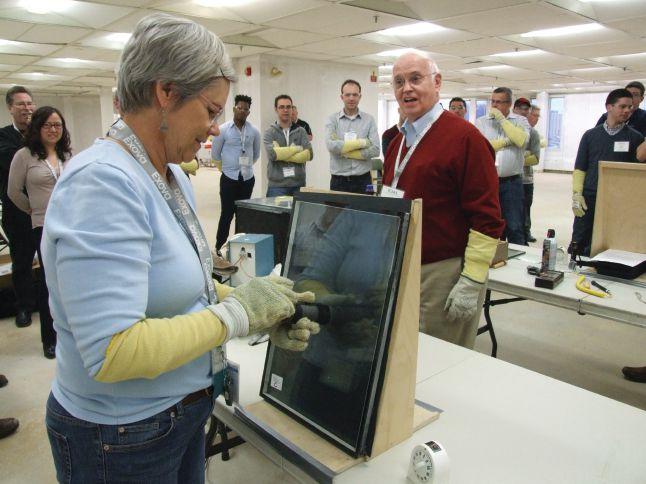
Webb tries her hand at condensation testing at a fabricator’s workshop at Exova in Mississauga, Ont.
Countering the “tough” image
by AMY ROBERTS
FGIA Director of Canadian & Technical Glass Operations
The typical image of construction work is that of strong, hard-working, resilient workers who log long, purposeful hours braving the elements to build anything from houses to high-rises. But does this reflect reality?
Most construction jobs are high-pressure environments where the focus is on productivity, with workers having little control over their often-repetitive workload, methods or schedule. Also, the project-to-project and seasonal nature of construction contributes to worries over job security. Besides the unpredictability of employment, there is the expectation of overtime and working long hours, sometimes in stormy environments. The exhausting physicality of the work and workplace injuries can lead to chronic pain, depression and psychological trauma. More recently, although construction work usually takes place in relative isolation from the general public, COVID pandemic risks have only made it worse. A corollary to the macho image is that workers are unlikely to acknowledge or divulge such psychological stress, which contributes to widespread industry inattention to worker mental health.
As a result, workers often resort to alcohol or other drugs to numb physical and/or emotional pain. Accordingly, the construction industry has been disproportionally affected by the opioid epidemic. Doctors often prescribe various types of opioids to help cope with pain, which can make it easier for workers to become addicted. According to CNA Financial, almost three out of four injured construction workers were prescribed a narcotic pain killer in 2016. They are likely to turn to alcohol and/or illicit drug markets once their prescriptions run out.
The exhausting physicality of the work and workplace injuries can lead to chronic pain, depression and psychological trauma.
Statistics Canada found that 33 per cent of workers in the construction industry reported poor mental health. In addition, 64 per cent of construction workers wished their employers did more to support mental health initiatives.
What to do?
Among the commonly published recommendations relating to this problem are those that focus on employee engagement. Examples include:
• Acknowledge burnout. The pandemic and labor shortage has placed added pressure on companies and workers to handle increasing backlogs. Employers should understand and empathize with the resulting employee burnout.
• Institute mental health and wellness programs. For example, the Canadian Mental Health Association offered resources for employers seeking to support their employees’ mental health with workplace training.
• Education is needed. Many construction workers recognize the fact that alcohol or drug use can negatively impact work, but they don’t understand the extent of the impact.
• Sell your company culture. Make it known that the company is aware of the psychological challenges without stigmatizing anyone and has help available.
Re-Mind, a collaboration between the BCCSA and Work to Wellness Rehabilitation Inc. to improve construction workers’ access to mental health information and services, offers tools and resources pertaining to these topics. Plus, the Canadian Centre for Occupational Health and Safety now has a free online course called Substance Use in the Workplace: Addressing Stigma. The goal of this 30-minute course, available in both French and English, is to help workplaces understand and respond to the impact of stigma toward people who use substances. The course can be found on the CCOHS website and is recommended for those interested in learning about substance use and how to support those affected without using “stigmatizing language.” The traditional image needs updating, and the underlying humanity should be addressed. •
Installing
into ICF
Things you need to know when putting windows into insulated concrete form walls.
by TREENA HEIN
Aas you read this, thousands of insulated concrete form buildings are going up across Canada, in addition to many detached residential homes, garages and barns. This type of construction is now gaining significant momentum for the first time since its arrival in Canada in the early 1950s. And you may be surprised to learn that Ontario has the highest density of ICF adoption in the world, according to Douglas Bennion, building science and code compliance specialist at BC-based ICF manufacturer, Airfoam Industries. Bennion also serves on the board of directors at ICFMA, the Insulating Concrete Forms Manufacturers Association, and chairs its technical committee.
As Rob Vandenbroek, owner of Vandenbroek Construction in Walton, Ont., explains, “The sky’s the limit of the size and height an ICF building can be. Currently, we are working on a twin tower 25-storey building in Waterloo.”
Before we look at window installation with this construction method, here is a quick description. ICF units are foam blocks with “teeth” on the top and grooves on the bottom. They are cross-linked together with interconnecting web materials, and the hollow core between the two panels is filled with rebar-reinforced concrete. It’s an airtight and strong building envelope that’s fire, sound and storm-resistant. ICF is also very energy efficient in terms of both heating and cooling. As a construction method, ICF is safe and easy for workers. For both contractors and clients, it’s also cost effective because it saves a lot of steps and, therefore, greatly increases the speed of building completion. (See the new issue of our sister publication Canadian Contractor for a general article on ICF.)
Windows in ICF
From the window manufacturer’s perspective, “ICF tends to be more precise than traditional pouring methods,” explains Louis Moreau, head of technology and innovation at Agnora in Collingwood, Ont. “So, opening sizes are more reliable and may allow window frames to be premanufactured without having to wait for onsite measurements.”
There are several approaches to installing windows in multi-storey commercial and residential ICF buildings. Bennion first notes that, overall, installation in these buildings will be basically the same as in any building with insulation on the exterior, which is a building type that’s, in his view, becoming more common in Canada.
Different window installation methods for ICF buildings were subjected to independent field testing and code-compliance analysis at a site in Surrey, B.C., between 2014 and 2016 by Bennion, other industry professionals and provincial government staff. The results were used to create best practices for installing air- and watertight windows and doors in ICF buildings, and were incorporated into the BC Housing Licensing and Consumer Services’ ICF Field Testing Report which applies to all buildings from single-detached homes to high-rises.
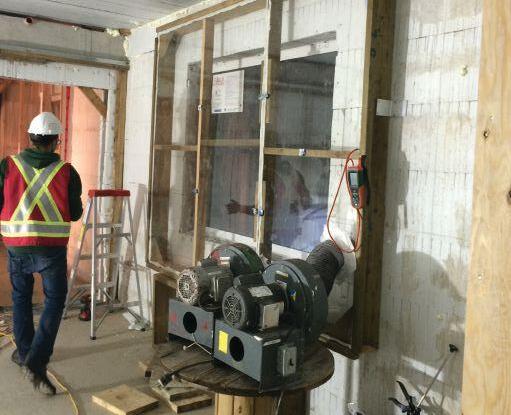
Four window assemblies (constructed on site) were tested with air and water spray treatments in accordance with regulation ASTM E1105. Two of the assemblies met midlevel expectations. They resisted air and water infiltration up to 300 Pascals, equivalent to moderate or severe conditions experienced by low-to-mid-rise construction in B.C. One of these assemblies was a recessed wood buckout left in place after the pouring of concrete,
COVERSTORY
with both the exterior and interior window faces sealed with foam backer rod and silicone sealant. The other was a flanged window with a wood substrate flush to the exterior face of the ICF wall (commonly used in low-rise residential buildings finished with face-seal or cladding).
The other two of the four assemblies met highest-level expectations and resisted air and water infiltration of 700 Pa, similar to the most severe conditions faced by high-rise construction of any building use category. One of these assemblies had an internal wood buck, but with the exterior insulation and finish system basecoat layer wrapped from the building exterior back into the window opening, past the window’s position. This is commonly used in commercial and multi-family residential systems finished with face-sealed EIFS or stucco.
The other assembly had the forming material stripped after concrete pour, leaving the concrete core exposed. This is commonly used in multi-storey commercial and multi-dwelling buildings of any height, says Bennion. A box-framed window was positioned at the exterior face of the concrete core, and the interior and exterior faces of the window were sealed to the concrete core with foam backer rod and silicone sealant. Because this method needs no added flashing, it was also simplest and least expensive for ICF installers.
The method of installing inset or flanged windows and doors by fastening to the furring strips moulded into foam bucks made by various firms was not tested. (The furring strips are anchored into the concrete providing proper load transfer from the window or door to the concrete substrate). However, Bennion explains, the four methods that were tested “are not meant to be copied exactly, but rather in theory of how they are able to provide a connection between the window frame and the water-tight core of the concrete, or EIFS face seal. If these proprietary systems are able to emulate what was tested, then all good.”
Overall, Bennion advises treating an ICF wall much as you would a framed wall that has an exterior insulation layer. “The key is a “through-wall flashing” technique that sheds water from the water-tight plane to the exterior of cladding,” he says. “In the case of framed construction, that watertight plane is the weather-resistant barrier, usually building paper or synthetic sheathing membrane placed over plywood sheathing. With ICF, the water-resistant barrier is the concrete core. So, everything to do with sealing has to be connected back to the concrete core. You will see this in the form of a ‘reglet’ or groove cut over the top of window openings. So, big picture, moving to ICF construction from framed building requires a shift in thinking, where the concrete core becomes watertight plane, vapour barrier and air barrier combined.”
Brett Lucier, president of Provincial Glass in London, Ont., says that most of the windows they’ve installed into ICF over the last year have been anchored to internal wood bucks, but he also says they’re seeing more new options every week. He’s heard about the foam bucks available from some firms but hasn’t examined them yet. “Proper anchorage is obviously important, along with the proper seal, and every job is different,” Lucier says. “We tell the contractors a bit bigger is better for ICF openings just to make sure windows will fit.” Overall, he reports that installations into ICF
Brett Lucier recommends making the openings in ICF builds a bit larger than needed to make sure the windows will fit.
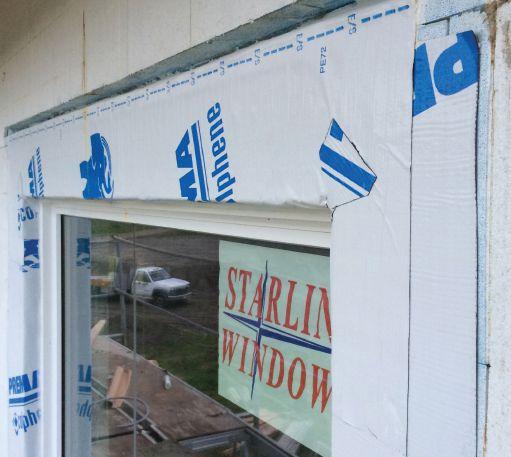
The choice of window installation method for ICF buildings is dependent on climate, building height and exposure conditions.
Testing ICF installed windows with air and water spray treatments in accordance with regulation ASTM E1105.
residential, commercial and institutional projects for the company were up perhaps 25 per cent in 2021 over 2020.
Drainage plane?
Kody Horvey, owner of Up to Kode in Red Deer, Alta., says, “Regardless of your exterior cladding system, you still need a drainage plane with flashing, drip caps and proper water shed to manage water and allow it to exit from behind your cladding. A lot of commercial windows have drainage built into the window itself, but that needs to be incorporated into the cladding and the building envelope to make sure the water flows out.”
Horvey has done both flush and recessed window installation into ICF buildings,but tends to do more flush outside installation because it’s faster (and more economical for the building owner). Bennion adds, “our research indicates that flush-mount windows in ICF are less reliable in terms of leakage. The installation is also more complex (if you want it to resist water), and there
fore not necessarily less expensive.”
Bennion suggests the choice of window installation method for ICF buildings is highly dependent on the local climate, building height and exposure conditions. “The value of our study lies in the fact that the results apply to such a wide range of building types and conditions,” he says.
Training for ICF building installation
As to whether ICF window installation should be a part of the curriculum for window installation training programs across Canada, Bennion is firm. “Without question,” he says, adding that “Ontario has the highest density of ICF adoption in the world, so [training is] especially important there.”
Neither the Finishing Trades Institute (FTI) of BC or Ontario, nor the new
Tips for installing windows into multi-storey commercial /multi-dwelling buildings, from Douglas Bennion
1. Don’t over-think installation of windows in ICF.
2. Use clip systems to fasten windows in place (NOT flanged windows)
3. Find the shortest, simplest way to seal the window frame to the concrete core.
4. Use a “Capture and Drain” method that relies on the interior rod and caulk to do the sealing, leaving exterior caulking (if any) perforated at the sill and able to drain to the exterior. (Think ‘car door.’)
5. Use metal sill flashing with end dams that shingle over self-
GLASS CANADA
UNDERtheGLASS | BY ALEX MACKENZIE
That family feel
How the Dendekker family built a glass dynasty
AT A GLANCE |
Aerloc Industries
Aerloc Industries has grown from a small, niche storm door business into one of the most recognizable names in the Ontario glazing fabrication and installation industry under the care of owner Peter Dendekker Sr. Despite the success and growth of the company, vice-president of engineering, Edward Laman, says the company is still a family business. “We are definitely a family company. There are enough of us in the industry, but maybe less so than there used to be. I have four brother-inlaws – two Dendekkers and two others married into the family – that are in the business in some way as well. There are four or five from the next generation that are also here, so it’s a multigenerational business.”
“The company was purchased by my father-in-law from a partner in 1978,” Laman continues. “It’s been a continuing operation under that family, the family I married into, since the 1970s and we moved from a storm glass, storm doortype business to the early days of some storefront work. Then we got into a little bit of aluminum, like non-thermally
broken store fronts, and then into the ‘70s, ‘80s, and ‘90s started really expanding into the institutional and commercial sector. Now we’re heavily in the institutional areas where we do most of our work. We do a lot of schools, we do a lot of recreational type centres, libraries and churches. We also do some commercial work; we work for the retail sector to some degree and some high-rise residential. So, sort of the general mix but focusing more on the institutional.”
According to Laman, the credit for Aerloc’s success is to be placed squarely with Peter Dendekker Sr. “My father-inlaw really is the visionary that got us into this industry. He is semi-retired but he is still working from home and does certain things for our business. It really was his hard work and my mother-in-law’s, who has passed away. In the ‘80s and early ‘90s when it was a bit of a smaller operation with less employees, they basically did everything from soup to nuts in terms of running the office, running the shop. A lot of their hard work set the groundwork for the next generation to come in and try to expand certain sectors, and now, trut
Location: Dundas, Ont.
No. of Staff: 60
Competencies: Aluminum and glazing fabrication and installation
Market focus: Institutional and commercial projects
Acquired: 1978
Main region: Southern Ontario
fully, it will go on to the next generation where there’s some guys here in their 20s from the next generation who are taking on roles, so hopefully we can keep the ball rolling for the next generation.”
Expert care, every step of the way
Another factor that has contributed to Aerloc’s success is the way they handle projects. “We’ve always not done a project manager-type model,” Laman explains. “We have the front end, the administration, the sales, the engineering and layout. My department would deal with the
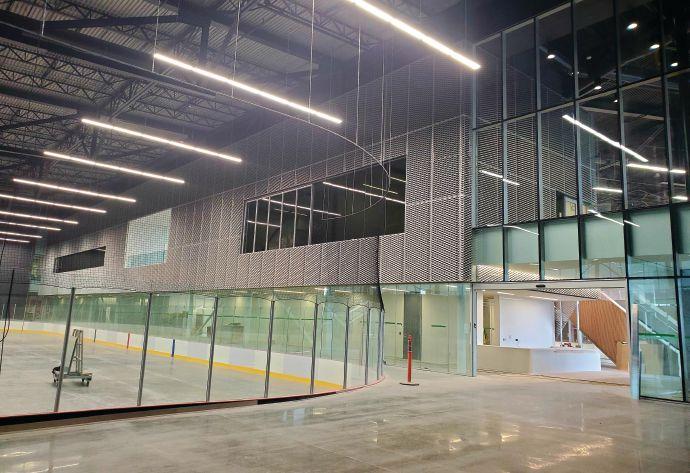
One of Aerloc’s more recent and exciting projects has been this Canada Summer Games facility in St. Catharines, ONT.
engineering, the layout, the site measuring, shop drawings, and then we hand it off to the production and installation. So, in every aspect of the business there’s a partner or person in charge, and all projects go through those three individuals rather than my project, your project. We do like that approach with a specialized skillset in each of the three or four areas of the company and every project goes through those different elements. When people contact us they sometimes say, ‘Who’s running this job?’ Well, we’re all running it. What’s your question exactly and then we’ll put you to the right person.”
This mentality of specialization, of having the right person working on the specific aspect of the project that they are most adept at also translates over into Aerloc’s manufacturing and installation practices. “We have our own lines of products and we partner with other manufacturers and suppliers in the industry, so we do some of both and that’s a bit unique in that way,” says Laman. “We have all our own installation forces while we are a manufacturer. So, for some projects we basically are able to bring in our own material, produce the windows ourselves, and install them with our own installers all under the control of the company rather than using subcontractors. Not that we never do work with subcontractors or other manufacturers, but it’s mostly that from start to end of a project, you’re dealing with Aerloc employees. Maybe a little different from a glass shop that doesn’t tend to have the manufacturing resources or a manufacturing facility that doesn’t have the installers.”
COVID confusion and ever-present issues of supply
These days, it seems impossible to talk about any business without looking at the way they have handled, and continue to adapt to, the COVID-19 pandemic. “Our industry, I think generally, did not have a huge slowdown. Obviously proper care had to be taken for the employees’ safety for job sites. But in the first year of the pandemic when the provincial government was shutting jobs, opening jobs, saying these jobs can stay open, these jobs couldn’t – because we do some in
the healthcare sector as well as some residential – we had for a few months there when all of a sudden you’re shifting gears because you have 20 projects on the go and 10 of them can no longer be worked on for two months, but you’re working on five that three are shut down, two aren’t,
and you’re shifting all this material and resources.”
Beyond the initial disruptions of the 2020 shutdowns, the aspect of industry that has been one of the hardest hit across the board has been supply. Laman notes, “There have been some
Azon Saves Energy
products in our history, I’m sure common to all companies like us, but in particular something last year like mineral wool insulation that goes in back pans, common delivery lead time would be something like four weeks suddenly stretched out to four or five months. When you’re not anticipating that you can’t get a component that you need to actually finish the job, it has definitely created some scheduling hiccups and headaches. The other thing related to supply, because of the tight supply issues, is the price pressures. It’s hard for companies like ourselves who have fixed price contracts on major institutional projects to all of a sudden see aluminum is going up 10 percent, glass is going up 10 percent, then you find out it’s going up another 10 percent, all the while you’re working on a project that might have a two-year end date that you have a fixed price on. So that’s been challenging to deal with some of the things that are going on related to the pandemic.”
However, with great challenge comes great change, and Aerloc Industries is ready to adapt to meet those challenges. “The market obviously is changing, that’s something we always have to adapt to,” explains Laman. “The energy performance of products continues to be driven down, staying on top of the current new products from the primary glass manufacturers. But the challenges, probably more recently, have mostly been related to what’s going on around us with not being able to perform how we would prefer to perform. We have always liked to give as short of a lead time as possible, and then, if we’re partnering with a supplier on a job and they can’t even give us raw materials for over three months, you have to go to a site and tell them you’re not likely seeing product here for months on end. That’s something that is just new in the last year or two, where we’re usually able to tell them in four, six, or eight weeks we’ll have forces on site.”
Another widespread headache for companies during this time is the issue of labour. For Aerloc, however, the tightknit nature of a family company has kept them out of the worst of it. “We’re thankful that we have a strong team of people,” says Laman. “Most of our employees have been here for quite some time. Most of our installation lead hands
A look at Aerloc’s contribution to the inside of the Canada Summer Games facility in St. Catharines, ONT.
Aerloc’s history of fabricating and installing for institutions means it has all the expertise needed to work on projects like this one at an elementary school in Oshawa, Ont.
Aerloc works with all sizes of institutions including workin on this student life centre at the University of Waterloo in Waterloo Ont.
In addition to school facilities, Aerloc also works on a number of community centres and libraries, like the Valley Park Library in Hamilton Ont.
and foremen have been in here for at least a decade, most of them for 20 years. Most of the staffers in the office and such are similar long-term employees, so we’re thankful for what we have. But when you try to acquire new labour, these are things common to the industry, but it is challenging to get new committed team members or even basically manufacturing workers for the shop because of the labour shortage right now. We have a lot of longstanding employees that we’re thankful for. So, we appreciate that we’re able, as part of our family business, to have various employees that have been with us for a long time that are really a strong key to our success.”
An eye to the future
Another part of Aerloc’s success comes from its focus on the potentials of the future. Laman describes the forward movement of the company: “We hope to stay in the market sectors we’re in and potentially expand. We are currently working on some of our own designs for some future products that have to do with lower thermal transmittance and better energy performance, because that’s where the market is going. We’re keeping an eye on new technologies like vacuum insulated glass and when and how that will be available and it likely will get added into our market. And then, there are the things that we don’t control. We bring in insulated glass, but there are all these newer regulations with regards to bird friendly, etc. So we find ourselves staying on top of what is going on in terms of glazing technology. We really do try to keep informed and attend, when such things are available, seminars. Virtually mostly, but they’re starting to come back again.”
In addition to keeping an eye on future technologies and market opportunities, Laman also expresses a feeling of optimism. “I’m optimistic about the pandemic, in that, in the next coming months, hopefully, if some of the experts are right, it will start to ease off and we’ll have to learn to live with it a bit more as a normal way of life. It’s the wrinkles in the supply chain, when they wrestle out, I think we can go back. Head forward in a positive way. In some ways doing what we used
to do, but, hopefully, we learned a few new tricks and some lessons from the pandemic as well. I think in every crisis in a business or life, you have to try to see what you can learn from it in order to make improvements for future operations. So, we’re trying to do that.” •
Tri-Temp Glass has manufactured tempered glass for showers, railings, entrance systems, interior partitions and architectural glass applications since 2007.
• Tempered up to 96 x 144
• Custom Laminated up to 86 x 144
• Bent Tempered Laminated to 66 x 96
• Back Painted Glass
• SentryGlas Lamination
• Opaci-Coat-300 Spandrel
Peter and Nell Dendekker built a 44-year legacy in the glass business that will pass safely to the next generation.
VACCINES AND THE LAW
by Patrick Flannery
Encouraging or requiring employees to get vaccinated –or refraining from doing so - remains a fraught issue across the country. Last fall, lawyers Lisa Stiver and Kristin Kersey presented a webinar on behalf of the Winnipeg Construction Association offering valuable advice on how employers in the construction industry should approach the issue of COVID vaccination in their workplace and on jobsites. Here are some highlight points.
Some advice on your status as an employer.
Are employers allowed to require employees to be vaccinated?
The short answer to this is, “yes.” Nothing prevents a private company from making vaccination status a condition of employment, and disciplining or even terminating employees who fail to comply. The pitfalls are all in the crafting of the policy and its implementation, but they are not insurmountable.
Contrary to popular belief, people in Canada, including employers, are actually allowed to practice discrimination against one another...except on the very specific grounds laid out in the various pieces of human rights legislation. An employer has to make sure their vaccine policy does not prevent someone from working because of a medical condition that prevents them from being vaccinated, or a real religious commitment that forbids them from taking vaccines.
Many people resisting vaccine mandates reference the Canadian Charter of Rights and Freedoms. The presenters pointed out that this document only restricts government behaviour and challenges can’t be brought against private companies or individuals.
Privacy is another concern. Employers can ask for employees to provide proof of their vaccination status without violating any principles of non-consensual sharing of medical information. But
the lawyers recommend the minimum amount of information be collected. The information should be shared with as few people in as possible, and the policy should clearly lay out what constitutes proof, who needs to provide it, who will have access to it and when it will be discarded. The same goes for test results.
An employee that is fired for failing to comply with a vaccination policy that was brought in after they were hired could potentially have a constructive dismissal case, but it’s still unclear how the courts would view this. To protect themselves, employers should explore all other options before dismissal, including working from home, modified hours or a different position altogether. Dismissal in a union shop will of course be much harder and all these matters will need to be approached with reference to the collective bargaining agreement. Courts will look at whether there were options other than dismissal when deciding these cases.
The presenters made an important point about hiring once a vaccine mandate is in place at a company. If a company includes in its job posting that only vaccinated people may apply, this could be construed as discrimination against people unable to receive a vaccine under human rights laws. Instead, the requirement to be vaccinated should appear as a condition of employment at the offer stage and not be mentioned before that unless the candidate asks.
ABOVE: What are the responsibilities of a company? What are your rights as an employee? And how do we make sense of these trying times?
Are employees allowed to refuse to work in workplaces without a vaccine mandate?
The short answer to this one is, “no.” Employers do have a duty to take reasonable measures to provide a safe workplace for employees. Failure to follow government guidelines for masking and social distancing has been considered a dereliction of that duty. But, so far, this duty has not been considered to go so far as to require a fully vaccinated workplace. An exception here is people with pre-existing conditions that make them especially vulnerable to viral infection or more likely to become dangerously ill if they do get COVID. The employer will have a duty to accommodate their condition under most provincial laws protecting the disabled.
What constitutes a valid exemption?
In their company policy, companies can exempt or require employees to have vaccines as they see fit. But the policy must provide for exemptions for medical or religious reasons, or risk falling afoul of human rights legislation. Courts have rejected claims of “singular beliefs” as grounds for gaining a workplace religious exemption from vaccines, and human rights tribunals have clarified the beliefs must be part of an established religious practice.
Vax or test?
While a simple vaccine mandate may seem the simplest, the presenters pointed out several practical drawbacks. Terminating employees for violating the policy may attract legal challenges, no
matter how justified the employer is. And these days no one can afford to lose good employees. Even if employees comply, their morale could be impacted. A more common approach has been to allow employees to not vaccinate but to require testing of those who do not.
Procedures, policies and meetings, oh my
One point the presenters returned to frequently was the need for a clear written policy laying out expectations, procedures and penalties, if any. If an employee seeks an exemption from a requirement to get vaccinated on medical or religious grounds, the company should follow a procedure to hear the employee’s case and discuss options even if management feels strongly the exemption will not be allowed.
Vaccination on the jobsite
Vaccination on construction sites can be mandated in a CCDC contract but the requirements must be reasonable and allow for the scope of work, with its inherent risks, that needs to happen. Contractors and subcontractors must be allowed to negotiate alternatives and accommodations where needed and possible. One unique problem in construction is the presence of several overlapping authority structures on every jobsite. Who’s the boss? This can make it hard to monitor and enforce any vaccination policy. In general, worksite health and safety is always the responsibility of the general contractor, and it will be up to them to ensure the compliance of the subtrades. •
Platinum Sponsor
Gold Sponsor
Silver Sponsors
by DAVID HESKA
David Heska, P.Eng. is a director with WSP’s building sciences team in southwestern Ontario. He oversees the operation of the Hamilton, Kitchener and Windsor offices. David has been involved on window simulation projects as well as the design and replacement of windows. He can be reached at David. Heska@wsp.com.
Sharpen the saw
Suppose you were to take a nice Christmas walk through the woods and you came upon someone working feverishly to saw down a tree.
“What are you doing?” you ask.
“Can’t you see? I’m sawing down this tree,” is the reply.
“You look exhausted! How long have you been at it?”
“Over five hours,” he returns, “and I’m beat! This is hard work.”
“Well, why don’t you take a break for a few minutes and sharpen that saw? I’m sure it would go a lot faster.”
Credit for this little story goes to Stephen Covey in his classic book The 7 Habits of Highly Effective People. Fairly obviously, he is not making a point here about actual logging best practices (though the intervals for blade sharpening are something of a science in forestry...but I digress). Rather, it’s a metaphor for the need to take time away from using your most important tools to actually maintain and improve the tools themselves. In the case of a business professional, that tool is your mind.
We all like new beginnings and the start of a new year always reminds me of the importance to pause to reflect on the year gone by. I hope you’ve been able to do the same. In Covey’s book, after writing about being proactive, putting first things first and thinking winwin, eventually he reaches his seventh and final habit. That’s “sharpen the saw.”
Whatever your job, whether a tradesperson, a business leader, or a consultant, the main point is the same. “We must never become too busy sawing to take time to sharpen the saw.” That leads
Improvement doesn’t just happen by osmosis.
THE ENGINEER
to the question: What is your saw? What’s one of the business tools and skills you used most in 2021 that may be a bit dull and in need of some maintenance?
Each of us should seek to continuously grow and improve, both professionally and personally. Improvement doesn’t just happen by osmosis. Fortunately, our industry associations offer many opportunities to sharpen our skills. Fenestration Canada and the various provincial bodies run excellent events throughout the year. The Fenestration and Glazing Industry Alliance and the National Fenestration Rating Council are always hosting virtual seminars for us to join online. Finally, why not check out a Harvard Business Review webinar or even your local university’s continuing education courses?
I’ve been reminded of a few things over these COVID years, and one of them is that we are more than just physical beings who should be concerned with our physical health. Obviously do not neglect your physical well-being and safety. Make it a priority! But also make your social, spiritual and mental health a priority. Make time to connect with friends and loved ones. Spend time in nature, listen to music and gaze up at the stars pondering life’s big questions. Or read a classic book, a biography or a National Geographic magazine. All these sorts of activities are recommended by Covey because of the benefits they have for our overall mental acuity and energy level. Maybe they are more like cleaning out the fuel lines on the chainsaw than actually sharpening the blade, but the effect is similar.
Why not sit and talk with someone in the next few weeks about your goals for 2022? Learn from your past and then commit to sharpen your saw. In recent discussions I’ve had, one of my favourite questions has been, “What will you stop doing? What will you start doing? And what will you continue to do?” Three simple questions but hopefully they can set you on the right course for the year to come. Cheers! •
NEEDED ON SITE
New cordless system
hilti.ca
Hilti has launched the Nuron 22-volt cordless battery platform. Nuron is a single 22volt battery platform that enables cordless tools on all kinds of jobs, from light-duty drilling to heavy-duty concrete breaking. Launching with more than 60 tools, the battery platform enables heavy-duty applications that were once restricted to corded, gas-powered or higher voltage battery systems. Nuron brings intelligence to the core of the platform – all tools generate data which is then stored on the Nuron batteries and sent securely to the cloud during every charge without any operator interaction. The data collected includes information such as tool usage, tool utilization, charging location and battery state-ofhealth. The completely reengineered Nuron
Fewer drips
dewalt.ca
batteries are more durable including a new, robust fiberglass-reinforced housing and external shock-absorbing bumpers which provide extra protection even in the toughest conditions. And, the electronics are fully sealed to protect against moisture, dust and other jobsite contaminants. Hilti’s dust removal systems are available for all Nuron tools and active vibration reduction comes as standard. Active torque control is a key safety feature available with many more tools in the new Nuron product range. Hilti also has worked with construction professionals to develop two new technologies for increased safety with angle grinders. The new 3D ATC system switches off the tool and activates the disc brake when there is sudden, uncontrolled movement
The 20-volt Max adhesive gun is available in three the 10-ounce DCE560; the 29-ounce DCE570, or the 300 to 600 millilitre sausage tube DCE580, which provides the professional with the ability to choose the format that suits their typical use best. Key features include anti-drip which briefly auto-retracts the plunging rod when the trigger is released. Also featuring a variable-speed trigger and variable-speed dial, each of the 20-volt Max adhesive guns provide finite adjustments in the speed at which material is released. To limit user fatigue and ensure the proper amount of material is released, the gun’s trigger can be locked at a specific setting during use.
Keep swiping
milwaukeetool.ca
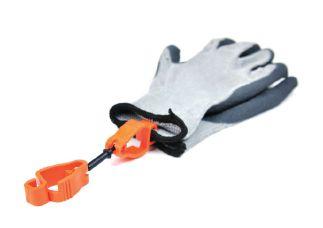
Milwaukee Tool’s dipped gloves are designed to provide durability, all–day comfort, and superior dexterity for handling small objects. SmartSwipe index fingertips provide full access to touchscreen devices without removing the gloves and the textured nitrile palm provides excellent grip performance. The gloves are made of a nylon and lycra blend to provide all-day comfort and wick away moisture and also feature high-dexterity fingertips to maximize control when handling small objects. The gloves are certified EN388 1-4 3 for abrasion; to EN388 1-5 1 for cuts; EN388 1-4 2 for tears and EN388 1-4 1 for punctures.
in any direction. The same risk-reducing function comes with the new SensTech system, which senses when the operator’s hand is removed and engages the electric brake, e.g. when the tool is accidentally dropped. Additionally, each Nuron tool has a recommended tethering method and Hilti offers an ANSI-compliant tethering system to help avoid falling objects when working at heights.
Rugged rivets surebonder.com
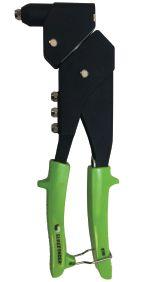
Keep the Heavy Duty Swivel Head Rivet Tool on hand for when your project calls for multiangle rivet installation. Compatible with several rivet sizes and easy to adjust, use and clean. The Surebonder Heavy Duty Swivel Head Rivet Tool allows for solid, dependable rivet installation without requiring you to switch tools to reach different angles. It features a rugged die cast steel construction ensures strong riveting performance on even demanding or repetitive projects, a swivel head that rotates 360 degrees to facilitate installation from a number of different angles, and a spring-loaded handle and 1.7-pound weight to enable comfort. It is recommended for use with aluminum rivets of 3/32”, 1/8”, 5/32” or 3/16” diameter; steel rivets of 3/32”, 1/8” or 5/32” diameter; or stainless-steel rivets of 1/8” or 5/32” diameter.
TOOLSHOWCASE
Vacuum loss warning
wpg.com
Wood’s Powr Grip offers an eight-inch industrial-grade plastic hand cup for flat surfaces. The cup features a 125-pound capacity and an industrial-grade plastic handle for lightweight and rugged rust-resistance. Features include a fast attach and release function. A red-line indicator warns the user of any significant vacuum loss. Supplied with protective carrying case.
Drive fasteners faster
dewalt.ca
Fog-free
milwaukeetool.ca
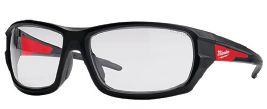
Performance safety glasses from Milwaukee Tool are designed with high-impact, fog-free lenses. For added protection, the lenses are high-velocity impact tested, providing wearers with military grade impact protection. The protective eyewear features fog-free lenses so the lenses will stay clear and unobstructed on any jobsite. Durable anti-scratch lenses protect the eyes while withstanding the demands of a job site. Clear and tinted options are available so eyes stay safe whether working indoors or outdoors. Rated to ANSI Z87.1+ and CSA Z94.3 standards.
Featuring the Versa-Clutch system, the screwgun dials in the proper torque needed to effectively drive fasteners. For metalto-metal fastening and commercial roofing and framing, the 20V MAX XR Versa-Clutch Adjustable Torque Screwgun has high power, sufficient to drive heavy-duty fasteners into metal and wood. The brushless motor in the DEWALT 20V MAX XR VersaClutch Adjustable Torque Screwgun limits the necessity of repairs and provides long life.
Many uses
ryobitools.com
PThe Ryobi 18V ONE+ hp Compact Brushless Cutoff Tool cuts through metal, plastic, tile, pipe, wire shelving, drywall, cement board, PVC, and vinyl siding. It is compact in size at 8.5” and light weight — ideal for one-handed operation and cutting in tight spaces.
Over 225 ONE+ Tools, all work with any RYOBI 18V ONE+ battery. Get more power, longer runtime and longer motor life provided by the brushless motor combined with advanced electronics and higher performance lithium-ion batteries. The wire form depth gauge ensures tool is flat to the work surface for increased cutting accuracy and stability. The carbide abrasive blade cuts drywall and plastics like PVC and vinyl siding, the diamond tile blade cuts a variety of tile, including ceramic and porcelain, as well as cement board, and the metal cut-off wheel cuts steel, aluminum, diamond plate, and copper. It also includes a forward/reverse cutting feature to change the direction of sparks and cut debris.
Maximum impact
ridgid.com
RIDGID introduces the Brushless 18V 3-Speed Impact Driver. This tool features a 2,250 in.-lbs. of torque for the most demanding applications. RIDGID Brushless Motors offer more runtime and longer motor life with 3-speed settings for added jobsite versatility, Tri-Beam LED for eliminating shadows on the work surface, and a one-handed bit loader for quick and easy bit changes. With registration, this tool is backed by the Lifetime Service Agreement.
Versatile and lightweight millerfallprotection.com
Falling tools are a major cause of jobsite injury. Miller tool lanyards are engineered to deliver the assurance expect from Miller fall protection in a broad offering. Miller lanyards are designed to be reliable and safe, with a durable design and lasting materials that reduce chances to drop tools in the first place. Versatility is a focus, including adjustable products that can match any tool type and size. Compact and lightweight, Miller lanyards are made to reduce the worker’s fatigue and increase productivity. They are simple: easy to choose, easy to install, and easy to use. The superior mobility design allows natural movement. The Bandit tool lanyard conveniently attaches to the user’s belt. Tools are attached with the carabiner or by cinching the cord around tool. The WristBandit tool holder attaches to user’s wrist with Velcro. Tools are attached by cinching the lanyard cord around the tool. Miller products meet all applicable OSHA, ANSI and CSA standards.
Certified fall protection
tenaquip.com
The ExoFit NEX Arch flash harness from Tenaquip is CSA-certified class AR with a 420-pound capacity. It features Nomex/Kevlar fibre shoulder straps with back and leg comfort padding. The Tech-Lite stand-up PVC-coated aluminum back D-ring provides confident anchoring and DuoLok quick-connect chest and leg straps secure the user. Leather insulators protect from static discharge. Nomex/Kevlar fibre webbing, belt loops and built-in lanyard keepers add convenience. Revolver vertical torso adjusters ensure a good fit. An impact indicator with integrated flame-resistant trauma straps and built-in reflective materials add another layer of safety.
Rise and grind
craftsman.com
V20* Cordless 4-1/2-in. Small Angle Grinder features a powerful highperformance motor providing you with the grinding power you’ll need on the job. This unit is built with the user in mind providing control and versatility while adding comfort during use. It features high performance: powered by 8,500 RPM for aggressive applications, a cast metal gear housing that dissipates heat during extended use, a tool-free guard position for flexibility of application, a 3-position handle for versatility, and a contoured over-molded handle for added comfort.
Professional choice
thorhammer.com
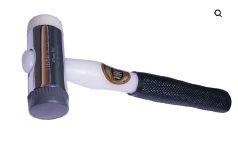
The 712 Thor glazing hammer allows glaziers to install windows without damage or marks to the frame. The hammer has a 38 millimeter face and weighs 650 grams. It comes fitted standard with one hard white nylon and one soft grey face on a plastic handle. The faces are designed to wear and to be replaced by hand. All faces are one-piece moulded. There are no metal pegs or inserts to damage the workpiece as the face wears. Serrations in the metal head prevent the faces from coming loose during use. The faces have a shoulder for extra strength and to prevent fracture from misdirected blows. The easily interchangeable heads allow for use as a multipurpose striking tool in most assembly applications, including engineering, furniture, shopfitting, partitioning, glazing, injection moulding dies and more.
RESOURCEDIRECTORY
by RICH PORAYKO
Rich Porayko is a professional writer and founding partner of Construction Creative, a marketing and communications company. richp@ constructioncreativecom
Hope is not a strategy
Pablo Picasso once said that our goals can only be reached through the vehicle of a plan. There is no other route to success. As part of my recent research into supply allocation, I got into a wide-ranging discussion with a veteran industry executive that touched on the more general issue of strategy in the glass industry. He didn’t want his name used, so let’s call him Bob. I want to share some of his thoughts here.
In a nutshell, Bob feels much of the glass industry lacks a strategy. “About three years ago, I was with an HR manager and the provincial government had just announced that minimum wage was going to have a series of increases. I drew a line on the whiteboard and showed where the union contract and minimum wage intersect, which is our current present time. And we know what is happening at the moment with labour.” Bob knew even then recruiting was going to be a disaster because “minimum wage is for the least skilled and least experienced people. Not workers who you need to run a modern glass factory.”
Bob says that when wages are the same or very close to minimum wage, people get paid the same for making fast food as they get for making high-performance sealed units. “Well, you can imagine the effect that has on recruiting and quality. The pandemic has made it worse. The game has to change. It has to be about productivity, not lowest labour cost.”
“When somebody buys an iPhone, they’re paying a significant premium over other products because Apple knows that you can make more on the premium side than you can on the cost containment side,” he says. “The glass industry is missing a strategy to deal with this massive shift. And it really has to focus on productivity and quality as opposed to output and cost.”
Who has a plan to consistently deliver better quality than ASTM?
THAT’S RICH
If you’re a worker that can work at a glass plant, Bob says you can certainly work at Amazon. “You’ve proved that you can show up on time and that you’re comfortable in a warehouse or industrial environment, and you can work shift work. You’ve got all of the credentials that would qualify for Amazon.”
Your employment strategy comes down to the employer package versus employee effort. “You have to be more appealing to the same worker.”
Bob warns of short-term thinking. “If suppliers are at capacity, it is an easy thing to say, ‘Well, I don’t need to have a business strategy because I’m selling all that I can.’ The price of lumber went through the roof in the summer time. All-time-record highs. But then what happened? Projects got cancelled. Demand fell off. Prices tumbled. You don’t want to price your product out of the stratosphere so that maybe they put less glass in the buildings or go offshore. Or if enough components have price increases, maybe they cancel the project. Capitalizing on short-term price bonanzas can kill your golden goose.”
The glass industry is aging. “If you wanted to know who are the up-and-coming driving forces in the glass fabricator world that are under 40, I suggest that list is limited. Anybody who’s looking at selling or having a succession plan, they’re going to be dealing with a very limited number of options. If you’re planning on passing the baton in five years, you need to know who you are going to be passing it to.”
Bob says higher quality is another big strategic factor that the construction industry is concerned with. “Everybody knows that ASTM standards are the floor. They’re the minimum. Who has a plan to consistently deliver better quality than ASTM? And by how much? And do they stand behind it?”
This is how strategy drives tactics. “Unfortunately, it’s what’s missing at many fabricators,” says Bob. “They could have happier customers, higher productivity, a better culture, and keep their costs down, if they adopted effective strategy.”
There are global shocks to the market that are in play now. And there are ones that will certainly come in the future. Do you have a strategy strong enough to win the long game? And if you don’t, that means you need a strategy tune up. •