New studies have turned up some intriguing numbers about injury rates in unionized workplaces.
The solutions you need to move and lift glass safely.
The Ontario Glass and Metal Association educates members about proposals for Prompt Payment legislation.
Slow out of the gate
EDITORIAL
After a shaky start, there are reasons to hope in 2016
I feel like 2016 has started out on an unsettling note. Oil prices have crashed, taking our dollar, stock markets and most of Alberta with them. China’s growth is slowing, sending a chill through the American growth forecasts. No Canadian hockey team is in a playoff position; the first time this has happened this late in a season. The cheapo Blue Jays are taking Josh Donaldson to arbitration over $450,000. I dropped my new iPad. Grim tidings all around.
As always, when times get tough, Glass Canada leaps into action. We are trying a number of new things this year to give you as many opportunities as possible to get the industry information you need in the format that works best for you.
NEXT ISSUE
• Top Glass show issue
• National Contract Glaziers
We held our inaugural Winter Webinar in December, with Stephane Hoffman of Morrison Hershfield reprising his excellent Top Glass talk on thermal transmission through curtainwall assemblies. We attracted a nice audience of 42 attendees who logged in right at the start and stayed with us throughout, asking some great questions along the way. Stephane’s presentation was recorded and can be seen online by following the link on our website and entering some registration information (it is free.) By the time you read this, we will have held our second webinar with Louis Moreau of Agnora discussing large-format glass fabrication - a hot topic for sure. Watch for our last webinar of this season on Feb. 24 featuring Michael Mesure of FLAP Canada discussing the issues and technology involved in preventing bird collisions with glass buildings. Registration for that one is free as well, thanks to the generous support of Walker Glass, a Canadian pioneer in the field of bird-friendly glazing.
Safety while working at heights is an issue of particular interest to us as we send workers hundreds of feet up the sides of skyscrapers to manipulate modules and panels weighing thousands of pounds. Glass Canada will be joining several other construction industry publications in May of this year to host a special theme week dedicated to working-at-heights safety. Watch your Glass Canada newsletter and our Twitter and Facebook feeds for details about this awareness-raising event.
Another new initiative here is NicheTV, a short online video that will be delivered to your inbox and available on the website that includes industry news, feature interviews, project and plant tours and anything else we think you will find interesting and helpful. We promise to keep the videos short and on-topic, so don’t touch that delete button!
Finally, it isn’t exactly new any more, but Top Glass returns April 20 to the International Centre in Mississauga. Once again, we’ve landed a spectacular lineup of great experts to bring you up to speed on key technical and business issues. Check out topglasscanada.com for all the details and to register for free. With all this going on, it is hard to stay pessimistic for long. Let’s put our heads down and get together as an industry to make 2016 the best year yet. •
GLASS CANADA
February 2016
Volume 28 • Number 1
Annex Business Media P.O. Box 530, Simcoe, Ontario N3Y 4N5
EDITOR | Patrick FLANNERY pflannery@annexweb.com 226.931.0545
Canada - 1 Year $35.50 (Plus GST/HST/QST) U.S.A. - 1 Year $62.00 (in US dollars) Foreign – 1 Year $ 71.00 www.glasscanadamag.com/subscribe
Occasionally, Glass Canada will mail information on behalf of industry-related groups whose products and services we believe may be of interest to you. If you prefer not to receive this information, please contact our circulation department in any of the four ways listed above.
Joint IGMA/GANA Winter Conference program announced
The Insulating Glass Manufacturers Alliance has announced details of its 2016 Winter Conference, to be held in sunny southern California at the Hyatt Regency Indian Wells from Feb. 29 through March 3. Last fall, the IGMA launched a new feature for sponsors and attendees at their Fall Technical Conference in Denver: Ignite Breakfasts. During the Ignite Breakfasts, several speakers give their best presentation with only five minutes and 20 slides in which to convey their message to attendees. The response was overwhelmingly positive and many sponsors asked the IGMA to bring Ignite back so that they would be able to join the fun.
Serious business will include meetings
of the Glass Safety Awareness Council, the Education Task Group, the Technical Services Committee and the Emerging Technologies and Innovation task groups. Networking opportunities will include the President’s Welcome Reception, a visit to the Boomer Amusement Park (including a miniature golf tournament, rock climbing, go-karting, bumper boats and a virtual studio) and a classic Hollywood-themed dinner.
The Glass Association of North America will hold its Annual Conference in conjunction with the IGMA conference, beginning March 2 with joint IGMA/GANA activities and continuing through March 5.
Aubertin to handle Canada for Sika
Richard Aubertin has succeeded Michael Hardman as general manager of Sika Canada. Hardman has taken a role as senior vice president of mergers and acquisitions for Sika North America, a key role to strengthen Sika’s market positions and competitive advantage on the North American continent. Aubertin comes back to Canada after completing a mandate of almost three years in Europe where he served as general manager and delivered outstanding results
for Sika Portugal. He originally joined Sika Canada in 1999 and held successively the positions of market field manager for residential construction, regional sales manager for commercial construction and business unit manager for commercial construction before his departure for Portugal. Familiar with the Canadian market and the organisation, he is once again ready for a new challenge and Sika wishes him the best success for his new position.
COMING EVENTS
Feb. 21 - 23
GANA Building Envelope Conference
Las Vegas, Nev. glasswebsite.com
Feb. 29 - March 2
IGMA Winter Conference Indian Wells, Calif. igmaonline.org
Feb. 24
Winter Webinar: Fabricating the big stuff Online glasscanadamag.com
March 5
CSC No Frills Tradeshow Toronto, Ont. csctradeshow.com
As the CGA begins 2016, its committees and board of directors are hard at work on a number of fronts. Among other projects, the CGA board is working on an extensive overhaul of the CGA website, canadianglassassociation.com, which will include a publication store and an updated project showcase.
The CGA Glass Connections Committee has confirmed that Glass Connections 2016 will be held Sept. 13 and 14 at the Westin Ottawa. Topics will include code updates, electrochromic glass and sustainability. The CGA Technical Committee is meeting quarterly and recently released a Wired Glass Advisory. This committee will be representing CGA in its membership of the Glazing Industry Code Committee (GICC). GICC, which is a committee under the Glass Association of North America (GANA), advocates for industry code positions on energy, structural, and safety building codes.
In late 2015, Bill Yanek was named the new executive director of the CGA. Bill also serves as the executive vice president of GANA. By working in both roles, Bill will be better able to coordinate joint efforts between CGA and GANA.
Provincial Glaziers Association of Alberta
After a successful offering of the first course in our Master Glazier Program – Reading Division 8 Plans – the PGAA and SAIT Polytechnic are pleased to announce that all 12
students achieved the 80 per cent minimum pass mark. This speaks to the quality of the students upgrading their skills in the Master Glazier Program. Congratulations to all of you. A second offering of Reading Division 8 Plans will start Feb. 26 and is now open for registration at sait.ca. For complete details on the MGP go to pgaa. ca and link to education. The second course in the MGP, Doors and Hardware Installation, is nearing completion. We expect to be able to offer this course in late spring or early this summer. These courses are currently being offered only at the SAIT campus in Calgary. However, for the convenience of those Northern Alberta students wishing to take the MGP courses and unable to travel, SAIT will offer them on at the SAIT Edmonton Glazing campus. Please go to pgaa. ca and click on About Us and send an email to the PGAA with your name, contact info and course you are interested in. The PGAA will put you on an “Edmonton” list. Given sufficient interest your course will be offered in Edmonton. You will be contacted with the date to see if that works for you. Remember, you do not need to be a journeyman glazier to take these courses. You may simply want to upgrade your skills. You do however need to be a journeyman glazier to obtain Master Glazier Certification. This program is also available to journeyman glaziers outside of Alberta. Please contact the PGAA and we will walk you through the process.
Participation in our Certificate of Leadership program was successful again this year. Thank you to Brad Simpson from CalTech Glass Services in Calgary for the success of this program. You can view the recipients on
our website.
Brent Harder from Ferguson Glass in Calgary attended the first GICC (Glazing Industry Code Council) meeting via conference call. The committee prepared an advisory on Wired Glass that was given to the CGA board for their approval. It was approved and will be available on the CGA website in the near future.
The PGAA is in the process of updating our website with a new platform. I would like to thank Al Ryland from Alumicor Calgary for heading up this project. We should go live early this spring. That’s it from Alberta.
Ontario
Glass and Metal Association
The legal review of the Construction Lien Act is now well underway, an information package has been completed by the legal review group for distribution, and the review group is preparing their recommendations for the Ontario government. Their submission has been delayed until March, 2016. The OGMA has teamed up with the Prompt Payment Ontario (PPO) group to represent our interests in bringing fair payment terms into law. PPO had its’ day at the table with the review group at the end of October. Updates on the status of the review will be distributed as they become available.
Our Winter Seminar took place on Jan. 21 at the Richmond Hill Golf Club. Geza Banfai, a leading construction law expert, presented an up-to-the-minute update on the status of the Ontario Construction Lien Act review, discussed the legal pitfalls encountered and remedies
available to glazing contractors and suppliers and held a lively question and answer period. [See full report on page 24.]
The OGMA will once again be asking members to submit a presentation on a project they are particularly proud of and would like to brag a bit about. Keep your eyes open for your submissions package and don’t be shy about blowing your own horn. Winners will be presented with a beautiful plaque that you’d be proud to display in your office at the Top Glass Conference on April 20.
Mark your calendar on May 26 and plan to be at the outstanding Pipers Heath Golf Club for our Spring Golf Tournament. Then mark your calendar again on Sept. 22 and plan to be at the renowned Country Club in Woodbridge (formerly the Board of Trade Golf Club).
If you are conducting business in the glass industry in Ontario, the OGMA is the voice that represents your interests at the provincial and federal level. Protect your business interests by becoming a member or as an associate member if you are a consultant to the industry. Please visit the OGMA website for more information.
After a year of preparation, the safety manual is now ready for use by the metal and glass industry. The manual was created by qualified health and safety professionals and is a timesaving tool enabling glass shops to establish their own company program. Not only will this support a company’s efforts to eliminate workplace injuries and illnesses, it will also lower costs and time related to WSIB claims. Additionally, the health and safety manual provides proof of compliance with the new OHSA Regulation 297/13.
Yanek to manage CGA
BillYanek has been named the executive director of the Canadian Glass Association. Yanek is currently the executive vice-president of the Glass Association of North America and president of its subsidiary association management company, Centric Management. He will remain in those roles as he adds the CGA post.
“I am extremely excited to work more closely with CGA as it strives to provide industry leadership to the Canadian glass industry. CGA is an industry ally of GANA and also a new member of GANA’s Glazing Industry
Wong joins Alumicor
Alumicor is pleased to announce that Edmond Wong joined Alumicor in October in the role of regional sales manager for southwestern Ontario. In his new position, Edmond will report to Steve Gusterson, vice-president of sales in the central region.
“I am excited to have Edmond on the Central sales team where his enthusiasm, sincerity and work ethic will bring value to all elements of Alumicor’s
Code Committee (GICC). My role with GANA and this new appointment will complement each other and make both organizations more effective.”
As executive director, Yanek assists the CGA in its pursuits to represent and support the interests of the glass and related industries at the national level and to serve as the voice of the CGA membership. CGA also strives to act as a conduit for the flow and transfer of important industry information.
Yanek replaces Ashley Charest, who has left the association to pursue other opportunities.
Four Square philosophy,” said Gusterson.
Edmond has been associated with the glass industry since 2009, specializing in consultative sales and technical support of high-performance building envelope materials in Canada. He is well known at the Toronto chapter of CSC (Construction Specifications Canada) and has established a very credible reputation within the design community.
New account executive at GANA
The Glass Association of North America has announced that Sara Neiswanger has been appointed the new account executive for the association. Neiswanger will replace Ashley Charest. Neiswanger brings with her a wealth of expertise in administration, event planning and membership management. She has held the position of technical resource coordinator for GANA for the past six years. In addition, Neiswanger has served as the executive director for several clients under Centric Management and Consulting, a forprofit subsidiary of GANA, specializing in association management services. GANA said it welcomes the promotion of Neiswanger to the account executive position and wishes a fond farewell to Charest. Charest has provided exceptional service to the GANA membership and board of directors for over 15 years. In coordination with the board, volunteers and fellow GANA staff she was a key component in the planning and management of exceptional industry events; the marketing and promotion of industry-recognized technical resources; and the advancement of the GANA brand among glass, glazing and construction stakeholders.
“Ashley has served as an incredibly valuable asset over the last 16 years. We wish her the best in her future endeavors,” shares Bill Yanek, GANA executive vice-president. “Ashley and Sara have worked together for many years and both have exceptional skills for association management. We look forward to Sara taking on this important leadership role.”
Neiswanger earned her Bachelor of Business Administration in marketing and management from Washburn University in May 2006. She is an active member of the Kansas Society of Association Executives.
Industry veteran Berkowitz passes
Edwin J. “Ed” Berkowitz, chairman of the Board of JE Berkowitz, died on Jan. 8, 2016.
Berkowitz served as a past chairman of the Flat Glass Marketing Association, a predecessor association integral to the formation of the Glass Association of North America (GANA).
“When I reflect on all the wonderful people I’ve had the pleasure of meeting in the glass industry, I count Ed Berkowitz among my favorites, for so many reasons. He was a great businessman and sharp as a tack. But it was his generosity of spirit and his sense of humour that I’ll always remember and treasure,” reflects John Dwyer of Syracuse Glass Company. “He made a big impression on me early in my career at our GANA northeast roundtable meetings, always welcoming, curious, willing to listen and share his thoughts and advice with a style that was all his own.”
View’s Tinianov joins USGBC
View has announced that Brandon Tinianov, vice-president of business development, has joined the U.S. Green Building Council’s (USGBC) Advisory Council. In his USGBC position, Tinianov will leverage his industry leadership and perspective to help support the USGBC board of directors’ efforts to promote environmental and social responsibility around the way buildings and communities are designed, built and operated.
“I am a passionate advocate of the mission that USGBC represents – market transformation of the built environment with specific regard to energy efficiency and human comfort,” said Tinianov. “I’m honoured to join the ranks of the leading minds in green building and look forward to working together to advance the global sustainability movement.”
As an Advisory Council member with both technical expertise and robust connections to the green building community, Tinianov, and his fellow volunteer leaders, will help to shape the USGBC’s agenda and scope of work. As an ambassador for green building, Tinianov will also be charged with spearheading new initiatives and advocating for advanced design standards.
“Brandon’s years of industry expertise and leadership will be an invaluable resource for USGBC and our mission,” said Rick Fedrizzi, CEO and founding chair of USGBC.
“The USGBC Advisory Council’s sound advisement will
Berkowitz served in the navy during World War II and was a graduate of the University of Pennsylvania where he majored in Economics. He also earned his law degree at Temple University. Upon graduating, he began employment at J.E. Berkowitz under the mentorship of his father and after a few years began running the company. In 1986, Berkowitz passed the title of president and CEO of J.E. Berkowitz to his son Arthur Berkowitz. Sharing a passion for contributing to the industry, Arthur Berkowitz has been and continues to be highly involved in GANA activities. Arthur Berkowitz is a past president of the GANA and Centric board of directors and was the initial chairperson of the GANA Insulating Division when it was founded in 2003.
“On behalf of GANA members and staff, our sincere condolences and prayers go out to all the Berkowitz family,” shares Bill Yanek, GANA executive vice-president. “Ed Berkowitz was a giant in the industry and his legacy continues with his son Arthur. Ed’s leadership and impact won’t be forgotten.”
play a critical role in the advancement of the green building movement worldwide as we work toward creating greener buildings, greener cities and a more sustainable future.”
“All of us at View are proud of Brandon’s election to the USGBC Advisory Council,” said Rao Mulpuri, CEO of View. “Throughout his career, Brandon has been a major advocate of the value that technology plays in creating high performance buildings. He has a strong pulse on the green building industry, and brings a creative and strategic mind to his day-to-day work. We know he’ll be a compelling driver of USGBC’s mission.”
Tinianov is a recognized expert in energy efficiency and building sciences. In addition to his work with USGBC, Tinianov serves as an expert on the California Technical Forum, a joint project of the Public Utilities Commission and U.S. National Research Development Council with the goal of evaluating and initiating new energy efficiency programs in the state of California.
USGBC’s highest-level customer engagement platform, the Advisory Council recommends policy and initiatives to the board of directors. The board retains the legal authority to make policy, direct staff and the ultimate fiduciary responsibility and liability for the advancement of USGBC’s business and mission. The board of directors and Advisory Council will serve as the two leading bodies of USGBC, a new governance structure that will be implemented in 2016. Advisory Council members were selected through a contested election.
by SKIP MACLEAN
Skip Maclean is president of Fenestration Canada. He is business development manager for Tru-Tech Doors and has over 40 years’ experience in the window and door industry.
Hot issues
As we reflect upon another year, we must pause to give thanks we live in such a wonderfully diverse, dynamic and tolerant country. Canada provides its citizens the opportunity to prosper, the tools to succeed and the security and freedom we all need to lead a safe and happy life. Although the recent changes in national government bring some uncertainty, there is a sense of renewed optimism looking towards the future. Pending changes and initiatives such as the CETA (Comprehensive Economic Trade Agreement) and the TPP (Trans Pacific Partnership) agreements will provide Canadian companies and products greater access to international markets presenting enormous opportunities for the fenestration industry. The emerging housing market in the United States will also provide an avenue for several Canadian window and door producers to market their products and services. Understanding code and energy compliance requirements will become an essential component of doing business in the future regardless of whether your market is regional, national or international in scope.
Fenestration Canada has also embraced an initiative from the National Research Council to help association members and the industry sector in general to have all stakeholders participate in pending changes to the National Building Code. The fenestration industry has approached NRC to investigate whether there is a need to regulate combustible windows in non-combustible construction considering current materials and techniques. The research project will deliver data needed to support a future code change request and improve market access for combustible window designs with good fire performance. The project’s scope will reduce or eliminate the need for future fullscale tests as window materials and designs evolve.
The research project will improve market access for combustible window designs with good fire performance.
FENESTRATION
To modernize the code, specific research is needed to identify potential hazards related to combustible fenestration and provide a technical framework to manage those risks. NRC has defined specific objectives for a research program that would address all the issues relevant to a code change. A code change proposal based on the research would have to originate from industry. A test program has been developed by the NRC, fenestration industry representatives and the project’s technical committee aimed at acquiring the data needed to support a potential code change. Interested industry manufacturers and suppliers are now being asked to participate.
The New Year will also bring many changes on the association and industry fronts, not the least of which is Windoor North America. Canada’s signature window and door trade show and education event will be moving to Montreal, Que., for 2016. The event will be held at the Palais des Congrès de Montréal from November 15 to 17. This change in venue was brought to realization by the hard work of the show committee and the desire to deliver a more meaningful show experience. Windoor committee chair Stephane Labelle is looking forward to working with the show committee to provide a stellar show experience and a memorable event.
This year’s Annual General Meeting will also be held in La Belle Province at the Fairmont Hotel in spectacular Mont Tremblant, June 8 to 10.
Now is the time to become involved in Fenestration Canada. Membership provides you with a voice and clear unmistakable benefits that will help prepare you and your company to embrace the challenges ahead and reap the rewards that are there for those who reach for them. Invest in membership, invest in yourself! For more information, visit fenestrationcanada.ca or windoorshow. com. If you are not a member, contact us and let us show you the value of membership. Networking, technical resources, education, government relations, Windoor North America – together we can accomplish, so much. •
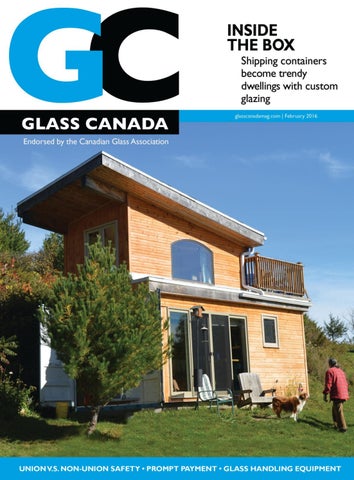
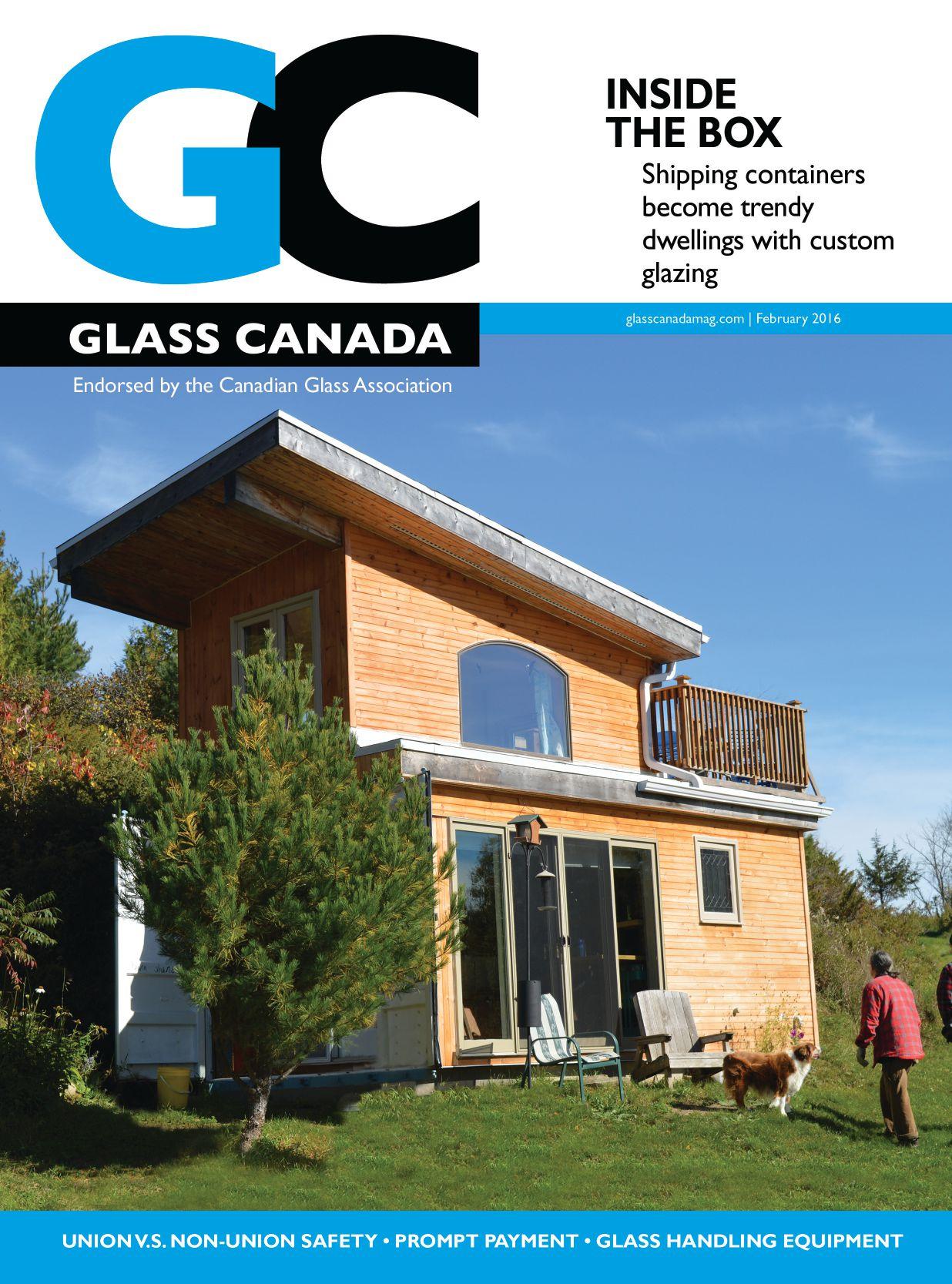
Inside the
box
Great glazing can turn shipping containers into a home.
by JACK KOHANE
Living in a steel box might sound Houdiniesque, but crafting a home out of a shipping container can be an escape from the ordinary. “There’s nothing odd about it,” says Christoph Kesting, a Waterloo, Ont.,-based advocate for social justice housing, who believes it’s possible to never buy anything new. “Whatever you want, you can find a used item somewhere. For those thinking environmentally, why not incorporate it into your house? All you need to do is buy a shipping container or three.”
Kesting, 34, president of design/build firm C. Kesting and Associates, claims that the idea of turning a shipping container into a dwelling isn’t new. Around the world, shipping container architecture has been increasingly peppering the landscape. In his travels, Kesting has seen these types of containers being used as housing in Vancouver, and in Geneva, inspiring him to take on a project of his own.
“As the global population increases, we’ll need to find a different way to house inhabitants,” he says. One answer, as he sees it, is Kesting’s Container House, which he’s dubbed the Foxden. According to Kesting, The Foxden demonstrates a lifestyle which is both about simplicity and a sort of natural ergonomics, an imaginative abode which eases neatly into empty suburban lots, infills for city living, and remote landscapes. And for the budget-conscious, a Foxden unit is available for about $48,000 with local delivery and reassembly.
Designed with portability in mind, this container creation (dimensions: 20 feet long, eight feet wide and 8.5 feet tall) can be picked up by standard tilt-and-load trailers. “Delivery time ranges from three to five days,” notes Kesting. And he’s happy to negotiate the completion of the Container House in the buyer’s chosen location with options that fit their lifestyle. “That is, we can bury it, clad it with antique barn-board and trick it out with plumbing within a few weeks,” he points out.
But despite being an edgy-type of dwelling, no one wants to live in a steel coffin. “That’s where glass windows and doors soften the feel of the box,” nods Kesting. “We choose windows with high R-value and glazing, purchased from Dundas Windows and Specialties in Toronto, a fabulous family-team. But just about anything goes here. You can choose to have a traditional door with windows, or sliding glass or French doors for the entire container opening.” Removing metal from containers to install windows and doors can be done in a number of conventional ways, including a plasma cutter, cutting torch, grinder, and even a jig saw for small openings.
Building with shipping containers is the ultimate in recycling, but people still need to end up with liveable space. Glazed containers can provide a foundation for permanent homes, jobsite offices and even portable rental shelters.
Asked how one snags a permit to build a container house, Kesting explains that each municipality is different with its own rules and bylaws. “But as it is with all types of housing, the first best step is get a permit by working with an architect and municipal building department,” he advises. And how much does it cost to buy a shipping container? “I got my 20-foot container for $1,500,” he smiles. To help others who want to live in a box, Kesting has written a free e-book, “9 Critical Steps for Zoning and Building Code Approval,” available through his website, www. howtobuildacontainerhouse.com.
Lucas Griffin agrees there are many benefits to owning a shipping container shelter. “Containers are the strongest self-standing structure in the world, and are built to be stacked, which makes them a natural building block. We sometimes call containers ‘Big Boy Lego,’” chuckles the president of Secure-Rite Mobile Storage, headquartered in Kelowna, B.C. which supplies new, used, or modified shipping containers (and rentals) to customers across Canada. “Container buildings are factory built, so quality control and consistency is a big benefit. And containers
Fabricating windows for shipping containers doesn’t require many changes to the standard design. The biggest challenge is ensuring the structural specifications meet code, which may require the help of an engineer to establish the design.
are built to be shipped via ship, train, or truck, so they are cost-effective to deploy and deliver to the building. Our new and used steel storage containers are durable, secure and weatherproof, available in lengths of 6, 8, 10, 20, 40, or 45 feet.”
Glass windows and doors installed in Secure-Rite container homes are generally low-E, double-paned glass, while larger openings use structural glass. “We cut out the area of the container where we want the window to go, build a structural steel frame based on our engineered requirements, and install a thermally broken frame with glazing inside the opening,” explains Griffin. “The glazing is secured inside our steel frame by screwing the normal frame into our structural steel frame.” Most of his company’s residential style windows are supplied by PlyGem Windows, while most of his commercial style doors and windows are sourced from Glass Canada. “We use the latest technology in our windows and frames to ensure these installations meet current building code standards,” he adds.
Before buying any containers, one should design how to live in a shipping container, cautions Griffin. “Figure out how much space you want, or really need, and start working up a floor plan. The simplest arrangement of containers is to line them up, but you are really
only limited by your imagination and checkbook.” For example, four containers that are 40 feet long and eight feet wide, when set up all side by side, can be re-purposed into a building that’s 40-by32 feet, a livable 1,280 square feet.
There are now about 30 million steel shipping containers in existence, filled and floating, or sitting empty in a port. Costs of shipping empty containers back to their origin are high, so most times containers are plopped unused in ports. If one lives near a port with abundant containers, then the energy required to transport the steel container to a local building site will be lower than an inland location, far from the port. There are many places to buy containers, and a quick search on the net will turn up an abundance of sites, or search craigslist for containers that are being sold nearby.
Searching for an innovative cottage design, visitors at the recent 2015 Fall Cottage Life show in Toronto didn’t have to look far. Euro Vinyl Windows and Doors, one of Canada’s leading glass suppliers to the burgeoning container home industry, provided the show-stopper with its new container home (one modified for the residential market). The steel home supplied by Giant Container Services, featured full pane windows and modern accents. “We promote it as the perfect
for a summer home getaway,” chimes Christopher Meiorin, president of Euro Vinyl from his 30,000-square-foot plant in Woodbridge, Ont. He recommends to anyone who wants to work with a container to keep it simple. “Use the standard dimensions of a 20-by-eightby-eight-foot (or 40-foot long) container so that they fit on trucks, under bridges and do not require additional building materials to finish. We provide an unfinished shipping container with a glazing package for $20,000 to $25,000 (F.O.B. Toronto). Insulating, adding electrical and finishing can be achieved by most local contractors. The space is small enough that repurposed or recycled building materials can be utilized.”
Laura Weil heads up sales and marketing for Euro Vinyl. She points to the tilt turn window, tilt turn door and sliding door systems as the key window and door types utilized in its shipping container home. “They provide the best sound abatement, physical performance and security when closed and are the most efficient for air infiltration when open,” she says. “We offer fully glazed containers or more common would be partially glazing, depending on the purpose and application. The modern home designs that we apply these same products to are also utilizing a similar glazing specification; typically in a urban centre the front façade will have minimal glazing to maintain a certain level of privacy and home comfort while the rear elevation will be a larger portion of glass to bring in natural daylight in and to capture their private view. This same principal works well in the smaller space too - a balance of glass to wall space is a good design.” The end result is a truly Canadian container design with its biparting doors gliding across the face and full tilt turn glazing opening the end wall to bring in a full view.
Weil is getting the message out by using social media, promoting the development of the project via @glasshausliving Instagram and collaborating with fellow ‘instagrammers’ on materials and final finishings. “This suited our needs perfectly as our Glasshaus Living mantra ‘design with daylight’ was perfectly executed. What we look forward to demonstrating just how incredibly quiet this space is too. We have learned a lot about how to effectively insulate and finish the unit.”
by BRIAN BURTON
Brian is involved with an innovative multi-disciplinary firm specializing in website design and development; Award Bid Management Services http://award-bidmanagement-services. com. The firm also assists companies interested in selling goods and services to governments and institutions. He can be reached at; brianburton1995@gmail.com
Putting out fires
Many readers have indicated their interest in fire protective fenestration components and this forum will provide some general explanations of available options. The reader should keep in mind that every glazing application or building is unique and will require special attention. Unfortunately there is no simple formula where one size fits all.
As a rule, obtaining a design review quote from a life safety consultant can be very useful. In my experience it also helps keep your knowledge regarding definitions, product labeling and product limitations up to date. However, manufacturers are generally your best source of information about fire protection.
You should carefully study all applicable codes, standards and occupancy requirements that may apply to a specific building or occupancy type. One reader asked me who is responsible for errors or omissions with regard to installation of fire-rated products. While no single professional is ultimately responsible, because of the number of parties involved in specifying, designing and installing fire rated products, theoretically the owner and designer and his representatives are ultimately responsible for ensuring compliance. Designers may view glaziers as glass experts and solicit their input, but glaziers are not usually solely responsible for the performance of fire-rated fenestration. Regardless of who may be responsible, when it comes to life safety, it’s essential to avoid mistakes. After narrowing the options, review the product literature in detail noting any and all special requirements, limitations or exclusions.
There are important differences between fire-protective and fire-resistive glazing systems. “Fireprotective” means the glazing defends against the spread of flames and smoke. Examples include
Regardless of who may be responsible, when it comes to life safety, it’s essential to avoid mistakes.
FENESTRATION FORUM
wired glass, glass ceramics and specially tempered glass. Fire-protective glazing is typically suitable where building codes allow “opening protective” assemblies. Such glazing is available with fire ratings ranging from 20 to 180 minutes. It’s use is subject to area and size limitations under the applicable building code.
Fire-resistive glass provides the same protection against flames and smoke as fire-protective glazing, however it adds further protection by limiting the transfer of radiant and conductive heat. Fire-resistive glass products generally incorporate several layers of glass with fire-resistive interlayers, suitable where building codes require an assembly designated “fire resistant” to enclose a space.
The glass product most often associated with fire rating for the last 100 years is polished wired glass. The product is relatively inexpensive, however, because of its low impact resistance, the International Building Code has prohibited its use in hazardous locations in some facility types.
Another option is glass ceramic, which provides greater design flexibility and can withstand the thermal shock of water from sprinklers or fire hoses. Glass ceramics are also available in insulated glass units.
Fire-rated glass wall panels are another option. These multi-layer assemblies effectively block the transfer of radiant and conductive heat.
Read the literature on fire-rated products carefully. Architects and designers should always be wary of product listings that carry what appear to be unusual limitations. Limitations should raise red flags.
Some architects question whether fire-rated glass really necessary if the building has sprinklers. While sprinklers do save lives, they are not a substitute for the use of passive fire-rated glazing materials. If sprinklers do not activate due to faulty manufacturing, poor maintenance, a loss of water pressure or other reasons, fire-rated glass will still perform its critical function of compartmentalization. •
THE SAFETY FACTOR
A new study looks at the safety records of companies but lost time lower. Does that make them safer places
by RETAIN CANADA
Workers at unionized construction workplaces in Ontario are more likely than their non-unionized counterparts to file job-related injury claims, but less likely to file claims that result in time off work.
That’s one of the findings of a new, groundbreaking study that set out to probe whether unionized construction companies experience fewer workplace injuries than non-unionized ones. The study by the Institute for Work & Health (IWH) was funded by the Ontario Construction Secretariat (OCS), a tripartite organization of government, employer and trade union representatives that promotes the value of organized industrial, commercial and institutional construction in Ontario. The study was recently published online by the Journal of Occupational and Environmental Medicine.
Using claims data from the Workplace Safety and Insurance Board (Ontario’s workers’ compensation board), the study found unionized companies in Ontario’s industrial, commercial and institutional sector, compared to their non-unionized counterparts and when taking firm size into account, have:
• 13 per cent higher rates of total injury claims (both allowed and not allowed);
• 28 per cent higher rates of allowed no-lost-time injury claims (i.e. claims that require health care but don’t result in time off work beyond the day of injury);
• 14 per cent lower rates of allowed lost-time claims (i.e. claims that involve missed days of work); and
• eight per cent lower rates of musculoskeletal injuries.
When not adjusted for firm size, the results show unionized firms have 13 per cent higher rates of total injury claims, 35 per cent higher rates of no-lost-time claims, 23 per cent lower rates of lost-time claims, and 17 per cent lower rates of musculoskeletal injuries.
However, adjusting for firm size takes into account that larger firms, both unionized
Commercial glazing is a dangerous job. Worker safety is a constant focus of Canada’s construction unions. New studies throw light on how unions impact safety performance on Ontario construction sites. The results are mixed, and counterintuitive. A union on the jobsite seems to mean more claims, but less lost time.
companies with unionized workforces. Claims are higher, places to work?
and non-unionized, may have greater resources to devote to injury prevention and post-injury work accommodation.
“These findings suggest to us that unionized workers may be more likely to report injuries, including injuries that don’t require time off work, at workplaces where managers and supervisors are committed to safety,” said Dr. Ben Amick, IWH senior scientist and co-lead investigator on the study.
While unionized workers may be more inclined to make work-related injury claims, these findings suggest that their claims are less likely to be of a serious nature, he adds.
“The lower rates of lost-time claims might also suggest that unionized workplaces are safer,” added Dr. Sheilah Hogg-Johnson, IWH associate scientific director and project co-lead. “It could be they do a better job educating workers, in part through apprenticeship training. They may have more effective health and safety programs and practices. They may give workers more voice to influence the health and safety of their work environments, and to report not only injuries, but also near-misses.”
Other factors also need to be ruled out before one can say with confidence that unionized construction firms are safer, Amick noted. One potentially confounding factor may be that unionized workers are older and more experienced at working safely. Another may be that unionized workplaces are better at offering employees modified work the day after an injury.
“Our research doesn’t allow us to say what explains the difference in claim rates between the unionized and non-
unionized firms,” Hogg-Johnson said. To help dig deeper, the IWH team is currently studying the organizational practices and policies of a sample of construction firms to examine what is behind the apparent union-safety effect.
Studies comparing unionized and non-unionized workplaces are very difficult to do because of a lack of data. They require datasets that are large enough to ensure that the sample is representative of the labour market. Thanks to the involvement of OCS, the IWH research team had access to a very comprehensive, province-wide database of unionized firms in the province’s industrial, commercial and institutional construction sector.
For this study, the research team analyzed seven years of injury claims data (2006 to 2012 inclusive) for 5,800 unionized firms employing 720,000 full-time-equivalent (FTE) workers and 39,000 non-unionized firms employing 810,000 FTEs.
“Creating safe and healthy workplaces is a core deliverable of unionized construction firms in Ontario,” said Sean Strickland, chief executive officer of the Ontario Construction Secretariat. “We’ve recognized the need to move beyond simply saying unionized construction workplaces are safer, to actually proving that they’re safer. This groundbreaking study is only the first step in understanding the conditions that lead to better health and safety outcomes for Ontario’s construction workers.”
Retain is a multimedia website delivering the pension and benefit information small and medium sized businesses need to recruit and retain top talent. retaincanada.ca
by MARGARET WEBB
Margaret Webb is the executive director of the Insulating Glass Manufacturers Association.
Preparing for change
Architects and engineers are upping the game on building envelope design: unusual aesthetics, improved thermal performance and taking into account the human factor using daylighting controls. The fenestration industry has felt the impact of these new designs and has risen to the challenge with complex products such as dynamic glazing and insulating glass configurations not seen before.
So, do current insulating glass certification programs meet the needs of the industry? For the majority of products available in the marketplace, the answer is a resounding yes. Based on tried and true fundamentals of physics developed at the National Research Council of Canada by Dr. Dick Solvasen, the standard 300-by-500 mm, four millimeter glass test units have an edge seal pressure that exceeds most of the conditions an insulating glass unit will endure during its lifespan. But what about the products that aren’t mainstream: the dynamic glazings, the complex constructions that include opaque interior lites, asymmetrical cavities and glass thickness, unique materials within the cavity, bent glass units? Do current certification guidelines provide assurance from the manufacturers of these products to their customers, building owners and occupants? Perhaps not. Compounding this, a major turnover in plant personnel is happening right now as the Baby Boomers are retiring, taking with them a wealth of knowledge and experience in the fabrication of insulating glass units just when that expertise is needed most.
These are some of the issues the IGMA board of directors discussed at its strategic session held in early January this year. Recognizing that the needs of the manufacturers are changing, the
Baby Boomers are retiring, taking with them a wealth of knowledge and experience in the fabrication of insulating glass units.
IGMA board is addressing these two fundamental areas along with the rest of its work. The Certification and Education Committee has now been divided into two separate, distinct committees so that both strategic areas get the directed focus they need.
The Certification Committee is currently developing new equivalency guidelines based on performance attributes rather than material properties so manufacturers will be able to change desiccated material, sealants and spacers based on performance equivalency rather than on generic categorization. A new topic being introduced at the upcoming IGMA 2016 Winter Conference in Indian Wells, Calif., in the first week of March is how to develop certification program guidelines for complex product configurations so that manufacturers can, with confidence, provide assurances to their customers and reduce liability concerns for themselves. Certification programs must change to address the changing marketplace.
So too must the way we fabricate insulating glass units, whether they are a typical or complex product configuration. Knowledge and experience is rapidly leaving the industry and we must find a way to manage that knowledge capital for future generations. IGMA has developed the IG Fabricator Workshop: two days of both classroom and “hands-on” instruction specifically designed for the next generation. The first workshop is being offered March 22 to 24 at the Intertek testing facilities in Plano, Texas. This is a new era in training. No more sitting in a classroom while the instructor changes PowerPoint slides for two days. Trainees will receive in-class theory and practical knowledge that will be transferred to the laboratory setting where they will be able to see the impact of testing firsthand, learn how to take a frost point, do gas measurements, test for sealant adhesion, check desiccant capacity and other quality-control measures. The entire program consists of four sessions, each with its own hands-on component in a laboratory setting. This workshop is given by industry experts who know their stuff and are willing to share their expertise and knowledge using adult education principles developed for Gen X, Gen Y and Millennials to ensure that this expertise gets passed onto the next generation. For further information on the IG Fabricator Workshop, visit the IGMA website at igmaonline.org. •
IGMA
GLASSHANDLINGSHOWCASE
Long track record
barkow.com
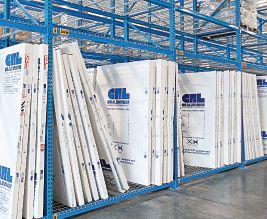
Since 1879, F. Barkow Inc. has been building high-quality exterior and interior glass racks. The product line now covers racks for cargo vans and pickup trucks all the way up to semi-trucks and trailers. Barkow’s fully-welded, high-quality, high-performance products are built to safely transport glass and built to last. All Barkow glass carriers are custom-built by hand and are available in aluminum, high-tensile steel or stainless steel. Stainless steel is more durable than steel or aluminum and is virtually maintenance-free. Barkow’s glass racks are now engineered and designed to fit the new generation of cargo vans, the
Ford Transit, the Dodge ProMaster and the Nissan NV. The new vans are modeled after the original European design of the Sprinter and offer fuel-efficient V6 engines to complement the aerodynamic aesthetics. The glass racks designed for these newer vans feature the following: four StakeLoc self-locking stakes that automatically self-lock into the ledgeboard for safe glass transportation; 24-inch lower splash panels to protect glass from debris during transportation; “B” load-holding slats that allow for the use of straps; and lower mount bars to stabilize the bottom of the glass rack. These features are exclusively designed for added safety and protection while transporting glass.
Advanced control system
erdmanautomation.com
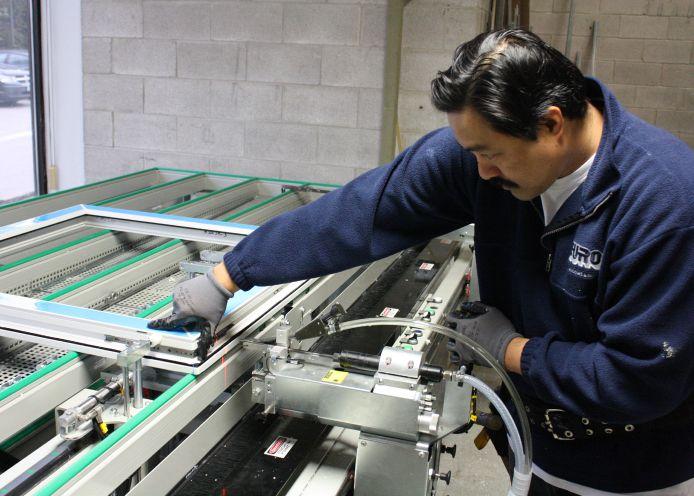
The Erdman Hand Assist glazing/back bedding table offers a state-of-the-art servo control system using Erdman’s fluid metering technologies to provide a consistent-diameter bead of sealant to your product at speeds up to 30 inches per second. This machine control will allow any
operator to reliably and consistently apply a properly proportioned bead of sealant. Hand Assists are available to perform hot, cold or two-part glazing and can be set up for bead sizes from .06 up to .5 inches diameter. The Hand Assist uses hardware and software brands recognized around the world. Using the Hand Assist, almost anyone can realize professional glazing results in minutes. The table reduces waste by up to 85 per cent and cleanup time as much as 95 per cent. The Hand Assist also reduces rejections due to improper bedding or glazing. Custom models, configurations and sizes are available.
New mobile lifters
ergorobotic.com
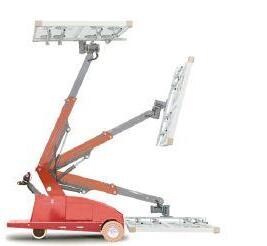
Ergo Robotic Solutions, a manufacturer of glass handling and installation machines in Queensbury, N.Y., has added two new models to its product line-up: the GM 800 and the GM 1200. Built upon the popular workhorse design, the GM 2000-12, the new smaller machines deliver the same reliability, manoeuverability and versatility of their larger counterpart in a smaller form with more affordable pricing. The GM 800 has a lift capacity of 800 pounds and can lift a load to a height of 10 feet to the center of the lift hub. The GM 1200 has a lift capacity of 1,200 pounds and can lift a load to a height of 11 feet. The standardpowered articulations include three boom movements and both vertical and horizontal tilt. Optional add-on power articulations include lateral side shift, rotation, and “EZ Pick”, an Ergo Robotic Solutions innovation for picking up and placing a load in one smooth movement.
Visitors to ergorobotic.com can watch a video of a GM 800 performing an outside installation from the inside on a mocked-up wall with ease. The GM 1200 and the GM 2000-12 can all perform the same operation in exactly the same fashion.
Power loss warning
wpg.com
The Premium edition of Wood’s PowrGrip’s popular P1 channel lifter now features a dual vacuum system and power loss warning buzzer for added safety, a high-flow vacuum pump and blow-off for greater productivity, and reduced power consumption for extended time on the jobsite. PowrGrip’s channel lifters are comprised of one or more pad channels for gripping loads plus interchangeable lift frames for rotating and tilting materials. These vacuum lifters may be ordered as complete units or as individual components to expand existing channel lifter systems. Lift frames are available in single-channel or double-channel styles. Pad channels can be switched from one frame to another in minutes.
Hydrostatic drive
glgcan.com
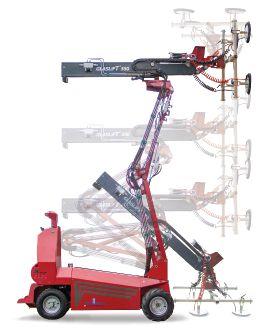
With the front twin-wheels, and hydrostatic drive, the GlasLift 550/1212 from GLG can operate in all kinds of terrains. The machine lifts 550 kg from floor level up to four meters in a fully parallel operation, offering 430 mm of boom extension. The GlasLift 550/1212 can reduce labor and Workers Compensation costs with increased jobsite productivity and reduced workforce fatigue. The lifter is easily transportable, capable of fitting into jobsite elevators. Precision controls allow millimeter positioning accuracy. The machine weighs 1,450 kg with a maximum width of 46 inches, minimum length of 90 inches and minimum height of 56 inches. The wheels are filled with rubber foam. The GlasLift carries a charge current of 110 or 220 V with 12 2 V batteries. Charging time is approximately five hours with up to 16 hours autonomy.
Adjustable racks
theglassrackingcompany.com
The Contractor Glazing Truck from The Glass Racking Company features a 14-footlong body designed for service companies and companies that require transportation of glass and windows to sites for installation. The Contractor body features a lockable front storage area and a rear bed with a secure-strap glass retaining system. The external racks are fully adjustable in height on the passenger side and allow for glass or windows up to 10 feet high to be transported. All glass racks supplied by the The Glass Racking Company come complete with a full set of spring-loaded external load-retention stakes for load securing.
INDUSTRYEVENT
GETTING PAID ON
by PATRICK FLANNERY
The passion in the room was palpable at times when Geza Banfai, a veteran construction lawyer with McMillan in Toronto, addressed a gathering of the Ontario Glass and Metal Association at Richmond Hill Golf Club to update members on the Ontario government’s review of the Construction Lien Act and the potential for prompt payment legislation in the province. The OGMA is a member of Prompt Payment Ontario, a construction industry lobby group seeking reform of the existing rules and new laws to help smooth the flow of payment through the contracting hierarchy. Banfai gave a background presentation from his vantage as one of the drafters of the original Construction Lien Act back in the early ‘80s, then answered questions and led a lively discussion of what the glazing industry needs to see in the future.
Banfai started out by discussing the results from a comprehensive survey Prompt Payment commissioned to inform their submission to the Construction Lien Act review.
The OGMA updates the industry on prompt payment
The survey revealed that Ontario glazing contractors waited around 60 days on average to be paid for completed work. Over a quarter had accounts payable on their books that were 90 days old or older. Many claimed their businesses had faced insolvency due to late payments, and most had been forced into bad situations such as missing payroll, delaying payments to suppliers, missing loan payments and delaying investment. Almost no one uses the Construction Lien Act, citing a number of
difficulties with the most common being the 45-day time limit on filing a lien. Now that Ontario glaziers are used to waiting 60 days for payment, the 45-day deadline is usually past before they even consider the payment late. Filing a lien is seen as too cumbersome and likely to damage the relationship between the glazier and the general contractor.
Banfai took a look at possible remedies that glaziers can pursue and discussed their pros and cons. In the case of late
ABOVE: When it came time for question, presenter Geza Banfai had his hands full. Ontario glaziers are incensed at the trend toward longer and longer delays before payments are made and holdbacks released. They also want to know why they should pay for expensive mediation proceedings.
payments while a project is still under way, downing tools and suspending work is considered the “nuclear option” that few contractors want to consider for fear of the damage to their reputation and the potential for lawsuits. Simply suing contractors for outstanding amounts is expensive and time-consuming. The Construction Lien Act has limitations and is not in any event a method for actually getting paid. Non-binding arbitration is something Banfai said is often effective and much less expensive than suing, but is something both parties must agree to. The problem, he noted, is often one of getting the payer’s attention. To that end, he recommends a legal device known as a Notice of Intent to Lien, which is simply a written message to the property owner outlining the work done, the existing contract, the amounts owed and noting that payment is overdue. These notices can be very effective as they go around the general contractor and can have the effect of halting the flow of payments down the chain. Often, the owner is entirely unaware of payment issues between the general contractor and the subcontractors, and a Notice serves to alert him to the problem. Owners do not want difficulties of this kind on their worksites, and they very much do not want liens on their property, so it is likely that the general will get a phone call shortly after such a notice is received. Presto, you have his attention.
Then Banfai took a look at what Prompt Payment Ontario hopes to achieve with its efforts. Banfai pointed out that Canada remains one of very few jurisdictions in the Western world that does not have some form of prompt payment legislation. He says they favour a holistic approach involving new prompt payment legislation, reform of the Construction Lien Act and the introduction of an adjudication process aimed at speeding up decisions and getting the money flowing in advance of any court decision. The way this is done in other jurisdictions is to have an arbitrator meet with the parties and make an interim decision about what should be paid. Later, a judge can make a final decision and overturn the arbitrator’s finding, but Banfai says this rarely happens. In fact, most cases that go to arbitration are withdrawn following the arbitrator’s decision and never reach court. This is a big win all around. Some features Banfai would like to see in future prompt payment legislation would include a requirement that contractors cannot hold back entire payments because tiny parts of the job remain unfinished or disputed. He would also like to see guidelines allowing glaziers to be able to quit work if not paid promptly. The overall effort is to push Ontario’s construction culture back to a 30-day payment standard. The review may also recommend contractors be required to create a fund to cover holdbacks so the money is ready to release when the work is done.
The review of the Construction Lien Act was supposed to be complete at the end of last year, but it has been extended.
by FRANK FULTON
Frank Fulton is president of Fultech Fenestration Consulting. He has been in the industry for 30 years and can be reached via email at fultech.fc@gmail.com
Entrepreneur and gentleman – Part 2
The early days of insulating glass in Canada were like the wild west. There were no standards, very limited technical knowledge, and upstart companies were beginning to spring up mindlessly slapping pieces of glass together and selling them to an unwitting public. The 30-storey B.C. Hydro Electric building in Vancouver was one of the first large scale projects to use sealed units and every unit failed within a year, giving the industry a black eye and raising questions about the future of this highly touted new product.
During the 1950’s Canada Mortgage and Housing (CMHC) was financing most mortgages and also writing and enforcing the standards for building materials. To get financing for a project the materials you used in its construction had to be CMHC compliant. Partly in response to the Vancouver disaster, insulating glass units were added as a component under its jurisdiction, setting the benchmark for production systems, quality, and reliability. Fulton recalls, “As this developed, I became more interested in trying to become a producer for the huge market that I saw was developing.”
Fred was selling to a number of large and small businessmen for Pilkington Glass and talked a lot about the great potential for the growth of the insulating glass business. “One of my customers, Al Weiss who worked with W & H Aluminum, liked the idea of making sealed units and asked me to come with him as a full partner to form a company. The name we chose for the company was Sealite Glass Limited.”
“Al introduced me to his business friend who he believed would make a good partner for me. His name was Joe Shapiro and we were partners for 12 great years and remain friends to this
Fred believed the industry would do better by setting its own benchmarks and policing the industry with people who understood the business.
day.” The team opened their doors on Bridgeland Ave. in 1959, not far from the Yorkdale Shopping Mall. “I spent almost all of my time calling on customers and architects trying to drum up business and Joe did a remarkable job of running the operation and the plant. Together we made a great team, worked hard and had a lot of fun doing it. It was an exciting time.”
Fred had learned a great deal about the manufacture of insulating glass and had developed strong relationships with many glaziers and window manufacturers during his tenure at Pilkington and this experience had a great deal to do with the successful start of Sealite. Pilkington, PPG and the other major sealed unit manufacturers all sold insulating glass to contractors and builders, but Fred determined that the best way to grow Sealite was by only selling to and supporting the clients he knew best: glass shops and window manufacturers. As a result, coupled with much better pricing than the majors and a seal failure warranty backed by Lloyd’s of London, Sealite was able to establish itself as the major supplier of insulating glass to the glass trade at the time.
In addition to being a trailblazer Fred was a natural leader and was a founder and first president of the Insulating Glass Manufacturers Association of Canada (IGMAC). Although CMHC had established standards for insulating glass, Fred believed the industry would do better by setting its own benchmarks and policing the industry with people who understood the business. He put in many hours working with a hard-nosed competitor, Paul Butler from Armalux, to establish the details to make this work. “It was a fine association where eventually every producer joined and we developed our own standards, relieving CMHC of their responsibility. Thanks to the standards developed by IGMAC, sealed units made in Canada were the best and most reliable in the world. I actually consider the starting of IGMAC as one of my biggest accomplishments in business.”
If you’re like me, you probably check out the glass and windows in old buildings, and on a number of occasions I’ve come across Sealite units that have been in service for over fifty years with their seals intact and as clear as the day they were made.•
) n e e d d o o r S n oW ?
With our new Stock Door Program, our most popular door and frame configurations are in stock a
2) Let uS fabricate for You
Take the guesswork out of quoting your fabrication labor, reduce costly fabrication errors, and, most importantly, save time Our KD Storefront Fabrication Service provides installation-ready
Our unique combination of quality, inventory, expertise, and tur nkey services gives you maximum