No matter how ambitious your latest projects may be, whatever you have in mind you should have Pilkington Special Applications Glass in mind too. Pilkington Optiwhite™ is so versatile it can be specified for a surprisingly wide range of applications. Our extra-clear, low-iron float glass is virtually colorless and has excellent light transmittance, making it the ideal choice for applications where glass edges are visible or where transparency and purity of color are desired. Pilkington Optiwhite™ ensures a more natural and brighter view.
For more information, please call 800.221.0444, email us at buildingproducts.pna@nsg.com, or visit www.pilkington.com/na
Pilkington Optiwhite™
The best supplies from the best suppliers. That’s why we call it Top Glass.
DEPARTMENTS
the Glass Provincial Glass gets a jolt of energy from can-do co-owner, Brett Lucier.
ASSOCIATIONS
Hello, architects
Glass Canada is reaching out to those who design our great glazing projects.
One question I always have to ask myself as a magazine editor is, “Who am I talking to?” The value of magazines, especially trade magazines, lies in direct and relevant communication with a certain audience. This is where magazines and their attached digital channels are different from other kinds of media. We make our daily bread by capturing the attention of a very specific group and, in effect, selling that attention to others (advertisers) who might want to talk to that group. Other media channels (newspapers, TV and radio stations, generalinterest websites) use a different value calculation that involves putting advertiser messages in front of as many eyes as possible. Their mission is to deliver advertisers the most eyeballs possible. Our mission is to deliver the right eyeballs.
NEXT ISSUE
• Top projects
• Monomers
• Top Glass report
Delivering the eyeballs of the Canadian commercial glazing industry is something Glass Canada must do fairly well, or we would not have been around for more than 30 years now. But shifts in the way our industry does business force us to constantly ask ourselves the question above. Increasingly, architects and building engineers are seeking more information on the materials they use and looking for novel solutions to problems of energy efficiency, air/water ingress, electronics integration, reflection, structural integrity and bird safety, among others. In response, fabricators and industry suppliers have to focus more of their attention on reaching these highest-level specifiers. Even at the fabrication and contracting level, “design-build” is a term we hear more and more often. It isn’t enough to be good at taking someone else’s product and hanging it on a beam. The demands of design and concept now permeate every part of the glazing process, and the distinction between design and execution becomes ever more blurry.
With all this in mind, Glass Canada has decided to increase its exposure to architects and other design professionals by sending our magazine to over 1,000 new readers in addition to our regular circulation. We have always gotten great feedback from designers who read us, and we think there are many who will appreciate our in-depth information on Canada’s most popular building material. If you are part of this new readership, or one of the many old ones, we’d love to hear your input on what content would better help you to understand the glass industry and specify your glazing projects. And don’t forget to mark your calendar for Top Glass, our April 15 trade show. The education program is chock full of information designers need, like a look at the new CSA balcony glass standard and discussions of energy efficiency laws and codes.
Few in my business will be able to resist making some comments about the horrific slaughter at the Charlie Hebdo office in Paris, and I’m no different. The sacrifice of the Charlie Hebdo artists is both inspiring and humbling. I’d encourage everyone to go online and find the cartoons that so enraged the Paris terrorists and at least absorb and understand the underlying critiques they made, whether you agree with them or not. I can’t think of a better way to honour the brave artists who gave their lives for the freedom that makes this magazine and many others possible. •
GROUP PUBLISHER | Martin MCANULTY mmcanulty@annexweb.com
Publication Mail Agreement #40065710. RETURN UNDELIVERABLE CANADIAN ADDRESS TO CIRCULATION DEPARTMENT, P.O. BOX 530, SIMCOE, ON N3Y 4N5 e-mail: subscribe@glasscanadamag.com
Printed in Canada, All rights reserved. Editorial material is copyrighted. Permission to reprint may be granted on request. ISSN 0843-7041
Canada - 1 Year $36.75 (includes GST) ($39.55 includes HST/QST)
U.S.A. - 1 Year $50.00 (in US dollars)
Occasionally, Glass Canada will mail information on behalf of industry-related groups whose products and services we believe may be of interest to you. If you prefer not to receive this information, please contact our circulation department in any of the four ways listed above.
www.glasscanadamag.com
We are the only company in the industry with an expansive knowledge of connectivity and innovative glazing products backed by all-inclusive warranties:
• PROTECTIVE GLAZING Meeting blast and hurricane/impact resistance requirements
• RESTORATION GLAZING Providing custom solutions to restoring window and curtain wall systems in aging structures
• STRUCTURAL GLAZING Offering total system compatibility for 2- and 4-sided structural silicone glazing
• TRANSITIONS Eliminating window-to-wall interface issues with patented transition assemblies
INDUSTRY NEWS
Feds proposing Apprentice Loan
The government of Canada has proposed to create the Canada Apprentice Loan by expanding the Canada Student Loans Program to provide apprentices registered in Red Seal trades with access to over $100 million in interest-free loans each year.
Apprentices in skilled trades do most (80 to 85 per cent) of their learning during on-the-job paid employment. They are also required to participate in technical training for short periods of time ranging from six to eight weeks each year. Apprentices can face significant costs to complete these periods of technical training required by their program, including educational fees, tools and equipment, living expenses and forgone wages. These costs can be particularly acute for apprentices who intend to complete their training after a number of years on the job, while supporting their families.
“I think it’s great that they are funding a program, however, in order to really attract people to the skilled trades sector some serious motivation needs to be in place in order to cover the labour gap which we are currently experiencing,” said Angelo Cairo of Stouffville Glass, president of the Ontario Glass and Metal Association. “We all know it will get worse over the next five to 10 years
considering the baby boomers are currently between the ages of 51 to 69. I believe for the program to be effective the funding needs to be only paid back if the person does not continue with that trade for the next 10 years or more and they may only choose one trade to enroll in.”
Apprentices registered in a Red Seal trade apprenticeship will be able to apply for interest-free loans of up to $4,000 per period of technical training. Interest charges and repayment of the Canada Apprentice Loan will not begin until after loan recipients complete or terminate their apprenticeship training programs. At least 26,000 apprentices per year are expected to apply for over $100 million in loans. The estimated net cost of these loans to the Government would be $25.2 million over two years and $15.2 million per year ongoing.
“We definitely think this is an area that is worthy of supporting and encouraging,” said Al Dueck of Duxton Windows and Doors, past president of Fenestration Manitoba. “A better educated and more capable workforce will add value to Canada’s building stock and the efficiency of the fenestration industry.”
March 5 No Frills Trade Show Toronto, Ont. csctradeshow.com
March 8 - 10 GANA BEC Conference Las Vegas, Nev. glasswebsite.com
March 18 - 20
Glass Processing Automation Days San Antonio, Texas gpad-conference.com
Glass Performance Days Finland Tampere, Finland gpd.fi
June 28 - July 1
AAMA National Summer Conference Seattle, Wash. aamanet.org
Sept. 16 - 18
GlassBuild Atlanta, Ga. glassbuildamerica.com
CGA Newsletter ONTARIO GLASS AND METAL ASSOCIATION CANADIAN GLASS ASSOCIATION
The CGA’s Glass Connections event program, taking place June 3 and 4 in Saskatoon, is almost full. Below are two excerpt presentations that will be given.
“The Evolution of Glass and High-Performance Coatings” will be presented by Guardian. This one-hour interactive presentation provides an overview of the basics of glass and its manufacturing process. It discusses various types of lowE technologies available in the market and defines relevant energy terms. The presentation also uses a case study format and shows multiple project examples to discuss current trends in glass usage, application and important design considerations.
“Sealant Technology: Urethanes vs. silicones” will be presented by Scott Waechter of Dow Corning. Waechter will speak about the differences in sealant technologies available in the market and why the trend over the past decade is toward the use of more silicone sealants. He will also speak about proper building joint design, best practices in sealant installation, silicone in structural glazing, sealant testing and IG sealants. Additional topics include air/vapour barriers and silicone transition strips, LEED and high-performance insulation for curtain walls.
Opportunities are now open to sponsor and exhibit at CGA Glass Connections 2015. Make sure to put your request in early. Registration for attendees is also open.
Newthis year, we want to formally recognize some of the great work done by companies in the architectural glass and metal industry with an Award of Excellence. This is your chance to blow your own horn and show off some of the great projects you’ve done.
Awards will be bestowed for Excellence in Architectural Glass & Metal Design and for Excellence in Architectural Glass & Metal Execution. The Awards for Excellence are annual awards that recognize excellence in the design and execution of a non-residential building that incorporates the use of architectural glass and metal. One award will be presented in each category.
Any member of the OGMA in good standing may submit as many nominations as they wish. Projects nominated will be reviewed by a panel of judges consisting of one OGMA director and two practicing architects. Submittals for nominations must include a minimum of 10 photographs of the nominated project and a comprehensive description of between 200 and 500 words. Submissions should be sent in digital format, accompanied by high resolution, print-quality photos.
The following criteria must be met in order for a project to be considered:
• Nominations must be made on the official nomination form, which must be completely filled out.
• The project must be located within the province of Ontario.
• The project architect must be
registered with the OAA.
• The glazing contractor must be registered as a business in Ontario.
• The project must have been completed within the last five years.
• Nominations must be made by a member in good standing of the Ontario Glass & Metal Association; however, the glazing contractor and the architectural/design firm need not be.
• Members are not restricted in the number of nominations submitted.
• The project must incorporate glazing systems from North American manufacturers.
• Projects nominated need not be large; nominations can be made for portions of a project.
• Nominations will be judged upon:
• Unique, pleasing or complex design or features.
• Level of difficulty in design.
• Level of difficulty in execution and the quality of fabrication and installation, as indicated in the photos provided.
• Incorporation of elements of sustainable design.
Deadline for receipt of submissions is February 25, 2015.
The architectural firm and glazing contractor selected to receive an award will be notified on March 6, 2015.
The awards will be presented at the Top Glass Conference on April 15, 2015. Award recipients are encouraged to attend the show to receive their award and to present the highlights of the winning nominations to show attendees.
Don’t be shy. Make sure to get your submission in.
We are also looking for nominations for contributors to our industry and our association that you feel have stood out and should be recognized with the
OGMA Lifetime Achievement Award. You’ll be receiving a nomination form in January and we’d truly appreciate your proposal.
Once again we are heading off to Woodbine Racetrack for an evening of outstanding dining, camaraderie, and wagering on huge four-legged beasts at our traditional Race Nite. It’s all going to happen in mid-April and when we have the date nailed down our members will be getting a notice sent directly to their computers.
You can mark Thursday, May 28, in your calendar and plan on being at the Piper’s Heath Golf Club for the OGMA Spring Golf.
After a year of preparation, the OGMA/WSPS safety manual is now ready for use by the metal and glass industry. The manual was created by qualified health and safety professionals and is a timesaving tool enabling glass shops to establish their own company program. Not only will this support a company’s efforts to eliminate workplace injuries and illnesses, it will also lower costs and time related to WSIB claims. Additionally, the health and safety manual provides proof of compliance with the new OHSA Regulation 297/13.
Reminder to all Ontario manufacturers: the Ministry of Labour has announced that all workplaces governed by the Occupational Health & Safety Act must provide training for supervisors and workers by July 1, 2014, and that the training must meet the specific requirements set out in the regulation. The training must include instruction in seven key areas for workers and six key areas for supervisors. It is imperative that your company satisfies these requirements as penalties will be imposed on those that have not complied. If you still have not trained your staff, contact the OGMA to find out how to access the courses you need.
AGC sells fabrication business to Trulite
AGC Glass Company North America has announced the sale of the assets of its U.S. Commercial Fabrication business unit to Trulite Glass Solutions . The transaction marks Trulite’s fifth acquisition since April 2011 and second acquisition in the fourth quarter of 2014. AGC says it holds a leading position in primary products and will continue to focus on the core strength of its business in manufacturing glass and innovating new coating technologies. In addition, the company will continue to invest in expanding the capabilities of its Ohio and Pennsylvania residential fabrication plants. AGC’s team of architectural representatives will continue to work closely with designers and architects, driving specifications for AGC architectural and interior products in all the regions of North America.
Clearview Industries has announced the appointment of John Campacci as its business development manager. Campacci brings 25 years of experience as a sales manager and business development manager in the window and door industry, primarily in the patio door market.
“With Clearview’s vision to be more
“As part of the worldwide AGC Group, we are committed to the North American market and innovation in float glass and coating technologies. With this new structure, we will focus on serving our business partners even better in our key segments: commercial, residential and industrial,” said Michael Antonucci, senior vice-president and general manager of AGC North America Building and Industrial Products Division.
“This acquisition will allow Trulite to continue to better serve our customers while broadening our national presence and working with them to improve our business,” said Paul Schmitz, CEO of Trulite. “This transaction is further evidence of our commitment to create the best company in the industry through continued growth and operational excellence.”
innovative and market growth orientated together with John’s strong communication skills and extensive market knowledge, this is a sure recipe for long term success,” said Tom Marsala, general manager.
Campacci says he is excited to join the Clearview team of dedicated individuals that are driven for continued success and long term growth.
Glass Processing Automation Days returning in March Campacci joins Clearview
Glass Processing Automation Days has announced that its 2015 conference is open for registration. Organizers say GPAD is where the best minds in the North American glass industry meet annually to discuss advancements and trends in glass automation.
Ronald Crowl, president and CEO of FeneTech, a manufacturer of glass software systems and founder of GPAD, has finalized the dates, location and event program for this year’s conference. “Fabricators spend large amounts of money on equipment and software for their businesses every year. GPAD is an excellent opportunity for executives to gather in one place to learn about integration of software and the latest machinery - how to get the most out of their investments,” Crowl said. “I’ve been in the industry nearly 20 years and GPAD is helping to fulfill my vision of bringing the best minds in the industry together to create new standards and systems that provide significant value.”
The GPAD conference will take place at the Hyatt Regency Riverwalk in San Antonio, Texas, on March 18 to 20. This event offers glass processing executives the unique opportunity to gain insight on competitive advantages and increased profitability through modern machinery and software technology. Event highlights include live
presentations about new and upcoming equipment and software options from leading manufacturers, Q&A sessions with industry key opinion leaders and networking with top executives of other glass processing companies and suppliers.
The 2015 conference agenda is designed to continue the momentum created during the 2014 event in New Orleans, LA. “I attended my first GPAD event last year and am interested in the focus of how different technologies benefit the glass fabricator,” stated Darrell Aldrich, technical operations manager at Cardinal CT in Irving, Texas.
“The New Orleans meeting was the beginning of what could grow into a must-attend for anyone wanting to keep up with technology in glass fabrication.” added Jim Arnold, president of Glassource in Grand Haven, Mi. “I really enjoyed GPAD in 2014, the format provided for a fast paced but interactive experience. The presentations allowed for plenty of question and answer from the audience, which was great because it brings up perspectives that may otherwise not be presented. The vendor displays also provide for some good one-on-one time to further discuss the presentations and there were plenty of social opportunities as well to discuss industry topics with peers in a relaxed setting. I am looking forward to the 2015 GPAD in San Antonio.”
Guardian Industries has announced the company is now offering Health Product Declaration (HPD) information for its flat glass and coated glass products. Designed by the non-profit Health Product Declaration Collaborative, the HPD is a voluntary, standard format for reporting product content and associated health information for building products and materials.
“Guardian supports architects and designers that want to be environmentally and socially responsible with the products they specify, and are incorporating energy efficiency and sustainability in their designs,” says Chris Dolan, Guardian’s director of marketing for North America.
Kennedy joins C.R. Laurence
C.R. Laurence has a new architectural sales representative for its U.S. Aluminum business in southern Ontario. Andrew Kennedy joined the company in December and is covering a territory stretching from the Greater Toronto Area into southwestern Ontario. Kennedy comes to CRL after three years at Sika
Saint Gobain fighting for control of Sika Guardian offers Health Product Declaration
Saint-Gobain has announced a deal to acquire a controlling interest in Sika while buying only 16 per cent of the company’s shares from the majority shareholder, the Burkard family. Sika’s board of directors and group management has threatened to resign if the deal clears anti-trust review.
Saint-Gobain said in a release, “The transaction involves Saint-Gobain’s purchase of Schenker Winkler Holding AG, owner of 16.1 per cent of Sika’s capital and 52.4 per cent of its voting rights, for 2.3 billion euros. Saint-Gobain does not intend to launch an offer for Sika’s remaining shares and has full confidence in the company to continue developing the business. The transaction is subject to clearance from the competent anti-trust authorities and is expected to be finalized in the second half of 2015 at the latest.“
Correction and clarification
In December Glass Canada’s cover story, “Dodging the rays,” author Vicente Montes’ name was misspelled. Glass Canada regrets the error. In addition, Stephen Weidner, vice-president of Pilkington North America, objects to my statement in the same issue that Bob Maltby, author of Bob Maltby’s Glass Book, “...was heavily involved when PPG’s new float glass process was brought to the company.” Weidner
“We’re offering the Guardian HPD for our commercial exterior, interior and residential product families.”
The HPD includes Guardian’s clear low-iron and tinted glass (annealed and tempered), pattern glass (including Berman Glass editions), SatinDeco, ShowerGuard, DiamondGuard, ClimaGuard and SunGuard (low-E and reflective) products. Architects, designers and Guardian’s independent fabricator and glazier partners can view the Guardian HPD by visiting the Sustainability and Certifications page at SunGuardGlass.com. The HPD will soon be available via Guardian’s ecoScorecard, GreenWizard and Autodesk Seek libraries.
and 12 years at Trulite. According to the company website, CRL designs, engineers and manufactures a wide range of architectural hardware, including commercial and residential architectural railings, hardware for “all-glass” commercial entrances, transaction hardware and frameless shower door hardware. The U.S. Aluminum Division manufactures and supplies a complete range of products for commercial, institutional, retail and government buildings.
Sika’s board released a statement of its own: “The board of directors and the group management of Sika were informed Dec. 5, 2014, that the French group SaintGobain intends to indirectly acquire all shares held by the Burkard family, Sika’s current majority shareholder. If the transaction were to be closed, Saint-Gobain would control 52.4 per cent of all voting rights and 16.1 per cent of Sika’s share capital. The board and group management are informed that Saint-Gobain will not make an offer to public shareholders of Sika AG. The board and group management of Sika AG have neither been involved nor consulted in connection with the proposed transaction. The board and group management do not support the change of control of Sika to Saint-Gobain.They have therefore decided to resign following closing of the transaction.”
writes, “Pilkington invented the float process in the late 1950s. PPG was the first North American licensee of the Pilkington float process, acquiring the rights in 1962-63. In 1966, Libbey Owens Ford subsequently licensed the float technology from Pilkington, not PPG as stated in your editorial.”
TOP GLASS RETURNS
by PATRICK FLANNERY
Riding the momentum of its smashing debut last year, Glass Canada is once again bringing Top Glass to the International Centre in Mississauga, Ont., on April 15. The one-day conference and supplier expo will bring together glazing contractors, building envelope fabricators, architects and specifiers for a oneof-a-kind opportunity to learn about critical topics in the glass construction industry, meet some key industry leaders, browse the latest technology and services and re-connect with old friends. The focus is on commercial architectural glazing - and it’s the only show of its kind in Canada.
Top Glass 2015 will feature an enhanced seminar program with a very special educational opportunity that no one involved in facade construction can afford to miss. Breaking and falling balcony glass has been a lightning-rod issue in major urban centres across the country for years, and Top Glass attendees will have an ex-
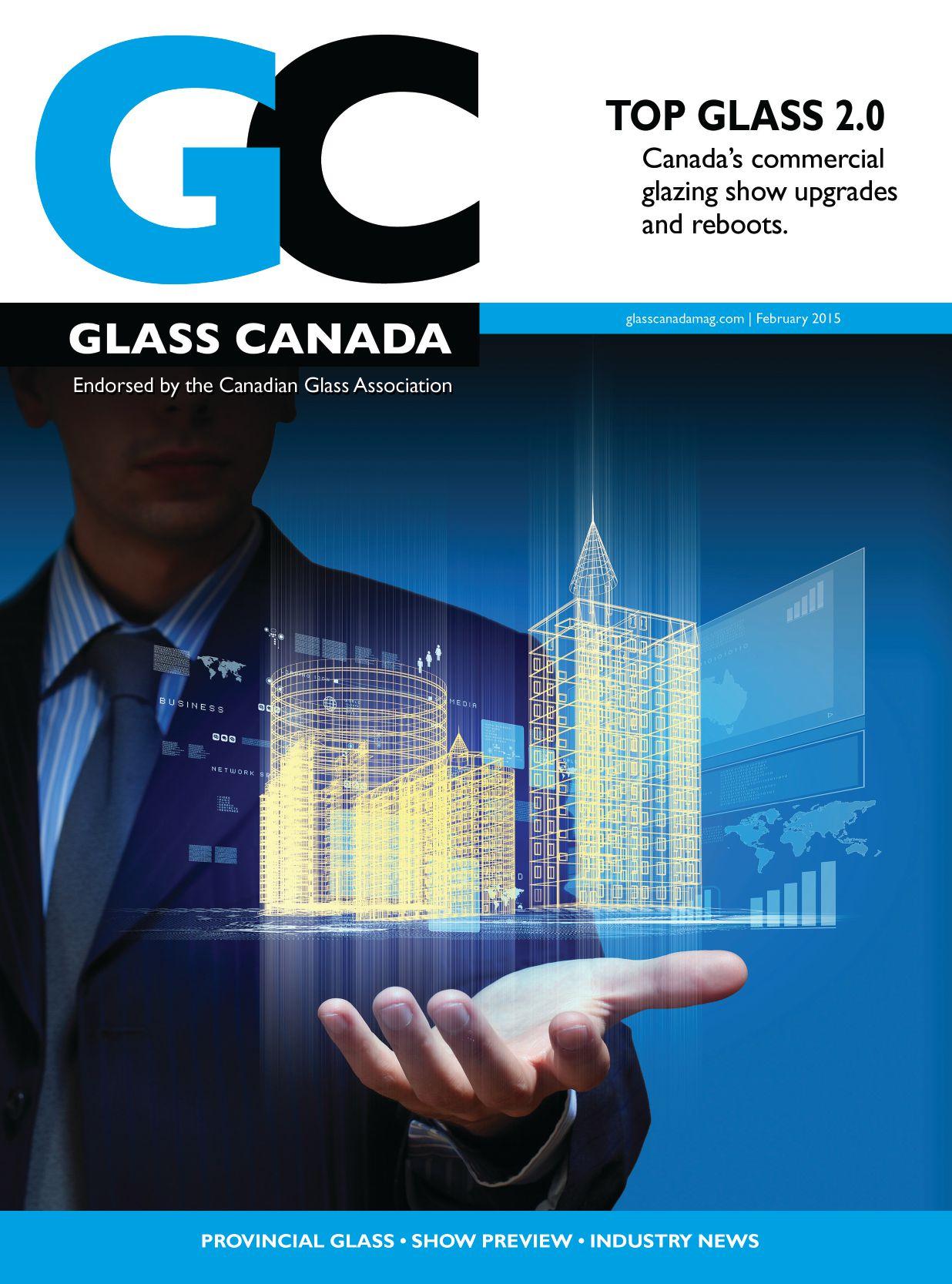
Canada’s glaziers will gather in April.
clusive sneak peek at the CSA’s draft A500 standard for Building Guards, due for publication later this year. Unless you are on one of the industry technical committees developing the standard, this will be your first chance to see the standard before it is released to the public. Paul Gulletson, the CSA project manager in charge of coordinating stakeholder input for the standard, will give attendees the lowdown. You may be surprised at what is in this new document; it is significantly different from the U.S. approaches to this issue.
The A500 talk will only be the start of what promises to be a day of extremely valuable, exclusive, industry education. Where else can you hear Ehab Naim Ibrahim and Hamid Vossoughi of Halsall Associates share their experiences with Asian curtain wall products in a presentation sure to get tongues wagging. Then, Stephane Hoffman of Morrison Hershfeld runs down recent critical changes to commercial facade codes and standards and includes
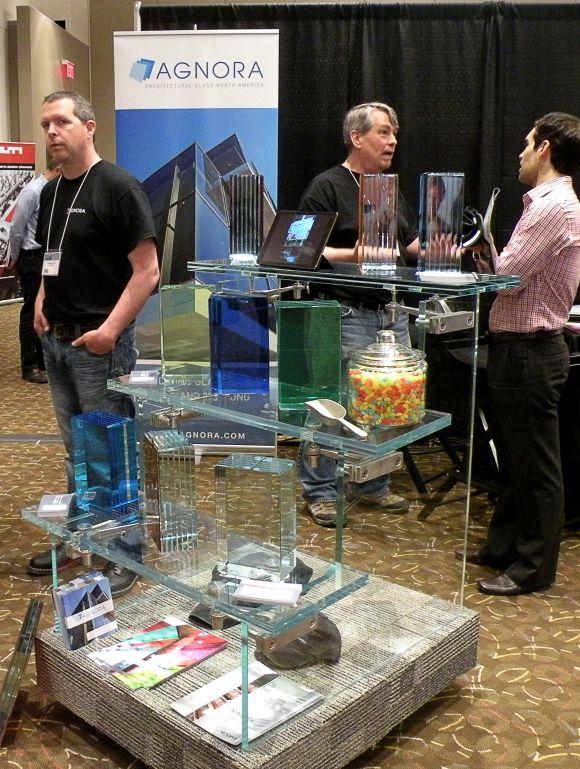
ABOVE: It’s Glass Canada’s annual celebration of everything that makes our commercial glazing trade great. Canadian building envelope fabricators and glazing contractors execute some of the most advanced designs in the world, and Top Glass is your opportunity to find out what is new and what is coming.
examples of how his team meets them - for free! Finally, glaziers and fabricators can get a new understanding of what is possible when AGNORA’s Louis Moreau shares some of the Collingwood, Ont., fabricator’s adventures in designing and building “bigass glass.”
Booth sales have been brisk and the Top Glass show floor will once again feature a great round-up of Canada’s top suppliers. You can see a preview of some of the products that will be on display on page X.
Use your time at Top Glass to connect with some of the great organizations that work hard to promote and advance this industry. You will find the Ontario Glass and Metal Association, the Canadian Glass Association, the Insulating Glass Manufacturers Alliance and the Construction Specification Canada Toronto Chapter on our show floor. In a very special event, the OGMA will be presenting its Award of Excellence for top glazing project in Ontario on the show floor. Who will win?
Sneak Peek: A look at the draft CSA A500 Building Guards standard
There has been no hotter topic over the past few years in the Canadian glass industry than balcony glass failures, and Top Glass will be your chance to get a sneak preview of the new CSA A500 Building Guards standard. CSA standards are often referenced in the Canadian National Building Code and other codes across the country.
Key technical requirements will be presented from the draft standard in its present form. The pre-eminent standards development organization in Canada, CSA Group is currently working with regulators, developers, manufacturers, and consultants to develop a consensus-based standard to address the design of building guards. Developed through a consensus process, this standard is targeted for publication later
in 2015. This presentation will provide an overview of CSA Group and the accredited consensus process used to develop the draft standard CSA A500 Building Guards. Since 2011, Paul Gulletson has been a project manager in the Built Environment Group at CSA where he manages a portfolio of technical committees that are responsible for developing a variety of standards for construction and civil infrastructure. Working with a diverse group of stakeholders and volunteer technical experts from across Canada and the U.S., Paul has facilitated CSA’s accredited consensus process to develop standards including CSA O86 Engineering Design in Wood, CSA A770 Home Inspection, CSA B805 Rainwater Harvesting Systems, and the new standard in development, CSA A500 Building Guards. Before joining CSA Group, Paul managed technical development projects as an applications and project engineer for an industrial manufacturer. Paul received his Bachelor of Mechanical Engineering from McGill University and is a licensed professional engineer in the province of Ontario.
Off-Shore (Asian) Curtain Wall and Glazing: Challenges and opportunities
Off-shore curtain wall and glazing systems have become popular over the past few years primarily due to their cost competitiveness. This has created concerns for North American suppliers not only with respect to potential unfair pricing, but also for the design and construction community with respect to quality control and delivery issues. It is inevitable that supply of such systems entering the Canadian market will likely grow given the global marketplace. This presentation will discuss our direct experience, including the challenges and opportunities we faced delivering projects using such systems. We will also look into
the future and the potential positive impact that this may have in our curtain wall and glazing industry.
This seminar is presented courtesy of the Ontario Glass and Metal Association.
Ehab Naim Ibrahim, MRAIC, BSSO, LEED AP, is a building science consultant and project manager at Halsall Associates. Ehab’s consulting objectives are to creatively develop and improve successful construction practices through teamwork and interaction with design professionals, installation trades and contracting divisions. Ehab’s major focus areas are on innovative envelope solutions, sustainability, service development, and active consulting on constructability and durability aspects of façade designs. He also assists with detailed efficient solutions, overseeing construction document and specification reviews, as well as dynamically establishing concepts for non-traditional façade systems integrating innovative concepts and technologies. Ehab has over 22 years of experience working in architectural firms, manufacturing, and consulting firms in both Canada and Germany. His specialty is curtain wall and glazing, with direct experience working with off-shore curtain wall systems.
Hamid Vossoughi, M.Sc.Eng., P.E., P.Eng., is a project principal at Halsall. Hamid is driven by delivering unique solutions to complex and challenging problems by exploring innovative solutions with each new project, based on his diverse experience in structural and restoration engineering combined with his specialty contracting experience, Hamid strives to deliver an optimum solution meeting the client’s business and technical needs on every project. Hamid has over 27 years of experience in consulting and construction. His focus is on design, repair and renewal of building façades.
Continued on page 25
Paul Gulletson
Ehab Naim
Hamid Vossoughi Stéphane Hoffman
TOPGLASSPREVIEW
Canada’s top commercial glazing suppliers will show off the latest and greatest at Top Glass. Here’s a sneak peek.
Maximum light
alumicor.com
Booth: 17
Alumicor is proud to be a gold sponsor of Top Glass Conference and Exhibits 2015, where it will display its new addition to the Entrance Doors collection, the Phantom Door. For a sleek façade with zero sight lines, the discrete Phantom Door is an innovative design solution. It is a natural extension of the design aesthetics when wrapping a building in a waterfall of glass providing natural illumination. Additionally, the door corners are both mechanically fastened and plug welded for dual-moment construction.The Phantom Door is suitable for SSG
curtain wall applications and is available in custom sizes, finishes and designs. Alumicor also offers zero-sight-line vents for natural ventilation while delivering maximum security. The Phantom Vents allow random placement of operable windows and have been fully tested to current performance standards. Alumicor champions LEED with a commitment to sustainable design through the exclusive use of recycled aluminum. Fully dedicated to support green building projects, Alumicor is devoted to maintaining LEED eligibility. Since 1959 Alumicor has driven innovation with its products and manufacturing capabilities that effectively respond to the evolving needs of the architectural and building community. Alumicor has earned respect and recognition for technical competence, responsiveness and integrity and is a preferred Canadian-based supplier of architectural aluminum building envelope products.
Compressionseal tech
rehau.com
Booth: 1
Rehau’s comprehensive line of commercial uPVC window and door designs includes solutions to address the tight building envelope goals of today’s sustainable construction projects. Featuring uniquely engineered compression-seal technology, highperformance windows and doors from Reha provide notable energy efficiency, structural and acoustical performance and security.
“Compression-seal technology uses special gaskets that are compressed, via multipoint locking hardware, between the operable sash and frame of a window or door,” said James Clavel, Rehau sales director for Ontario. “Similar to the seals surrounding doors and windows on cars and airplanes, these gaskets create a tight barrier that inhibits air, noise and water infiltration.”
Rehau compression-seal designs are some of the highest performing windows and doors available in North America, suitable for buildings targeting LEED Platinum, German Passivhaus and hurricane impactresistance ratings.
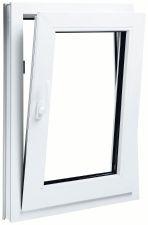
One of the featured designs at Top Glass 2015 will be the Rehau System 4700 Geneo tilt-turn window design. The Geneo achieves exceptional strength and thermal performance without the use of steel reinforcement. The proprietary RauFipro fiber-composite material and unique Geneo profile design combine to achieve U-values down to 0.13, STC ratings up to 45 and forced-entry resistance of Grade 20. In addition, these profiles feature a patented integrated reinforcement system (IVS), with screw channels and additional lateral stiffening that ensure the highest degree of strength at all critical points of the system.
Other designs exhibited at Top Glass will be the Rehau System 4500 tilt-turn window design and System 1400 casement window design.
Replaces wired glass
glassopolis.com
Booth: 6
Glassopolis offers Protect3 safety glass as the best value replacement for traditional wired glass, which has been proven dangerous and has been banned in the U.S.A. School boards across Canada are looking for ways to economically replace their wired glass with something that is impact-safe to the highest standards. Protect3 safety glass is fully certified by ULC and meets tough ANSI Z97.1 impact safety standards. Each piece comes ULC-marked and approved for use in schools, hospitals and other commercial applications. Glassopolis offers a range of specialty glass including a full range of fire-rated glass, lead x-ray glass, switchable privacy glass, security and ballistic glass, and more.
Bendable spacer
fenzi-na.com
Booth: 4
Chromatech and Chromatech Ultra stainless steel warmedge spacers have been added for distribution, manufactured by Roll Tech, a Fenzi-owned company. These spacers are available with corner keys and connectors for those wishing to bend
on bending equipment, providing improved thermal properties over traditional aluminum spacers. Both Chromatech and Chromatech Ultra spacers are available in a wide range of air space widths.The Chromatech Ultra has a polycarbonate bridge across the top, available in traditional white, grey and black colours. Combined with Fenzi Hotver 2000 HM Butyl, Fenzi Thiover Polysulphide, Fenzi Poliver Polyurethane, Fenzi Molver 3A Desiccant, Fenzi Butylver PIB and Alu Pro aluminum spacer profiles, Chromatech spacers can be part of a complete IGmanufacturing system.
Money-saving machinery
erdmanautomatin.com
Booth: 15
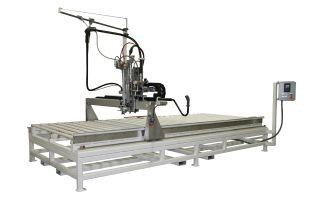
Erdman Commercial Equipment has helped customers more than double their production without increasing their cost. Erdman Equipment Lines provide safe and easy handling and precise manufacturing. It can help commercial fabricators achieve increased production and a higher level of consistent quality product. Erdman Equipment for curtain wall and interior glass partitions includes structural sealant applicators, cap bead sealant applicators, commercial pressure roll-downs, frame assembly stations, glass handling manipulators, tilt/ tip equipment, sawing equipment and conveyor lines.
Easy installation
jigsawarch.com
Booth: 14
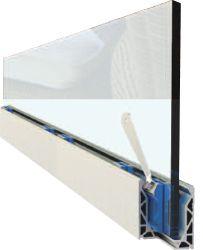
Posiglaze railing systems from PureVista allow for fast installation because they are designed to be installed without needing to ensure the fitting surface is totally level. They are fully adjustable after installation due to their unique, simple adjustment system allowing horizontal alignment of each glass panel. Lightweight and extremely strong, Posiglaze components are anodised for increased protection against the elements. The system is tested and engineered to meet the strictest building regulations (with the appropriate fixing and glass thickness) in both domestic and commercial installations. It can be installed in a wide variety of applications. The system will accommodate glass thickness of 12 mm in strengthened glass and 21.5 mm in laminated glass. Posiglaze is suitable for many applications from residential to commercial settings using the same profiles, making for quick and easy product selection and installation by the installer.
Labour saver
kearmfg.com
Booth: 27
Kear Fabrication has been doing business for over 16 years specializing in equipment for glass handling, material handling, window fabricating and custom fabrication. Located just outside of Toronto, Kear knows the main dilemma facing many window fabricators and glass shops is whether to concentrate on good quality or to be affordable. The Kear
At GGI, we love functional glass. From custom frit patterns to true color fades, Alice® gives you the ability to control light transmittance, solar heat gain and privacy with your glass design. Whether it’s a wall system for an office interior or a custom glass canopy, GGI has the solutions for any application.
Palo Alto Medical Foundation Sunnyvale Center
TOPGLASSPREVIEW
Window and Glass Manipulator is the ideal solution to enable one employee to handle a job that would usually require two or more. Glass fabricators can be assured your investment is being handle quickly, efficiently and, most importantly, safely. Designed with the operator in mind, Kear manipulators can be fabricated to handle loads in excess of 800 pounds. Controls can be operated via radio or motion activated. The head moves in a 340-degree circle with a brake that can only be released with the operator present. Swiftly move your glass up, down, forward and reverse. It even has an option allowing you to pick materials up and lay them down horizontally.
Three-level solution
tremcosealants.com
Booth: 9
Tremco’s T3 Building Solutions System introduces a foolproof method for window installation in commercial construction, taking the risk out of the highest risk connection on the building envelope.The T3 System provides a secure seal while accommodating projects with large variance in window type, size and geometry, as well as changes of plane with the bonding surface as with proud-sitting windows. T3 offers a continu-
ous tie-in with the AVB system to ensure connectivity and compatibility throughout the building envelope. This includes not only window-to-wall transitions, but also curtain wall connections, control joints, building fasteners, penetrations and transitions such as roof to wall and foundation to wall. T3 can accommodate movement caused by thermal expansion and contraction, vertical displacement and lateral shear, as well as seismic conditions. Products include pre-compressed, self-expanding, flexible, polyurethane foam tapes, breathable flashing materials, mechanically fastened, engineered transition assemblies and single-component, gun-grade polyurethane foams. An economical choice for architects and building owners, T3 offers true peace of mind, addressing problems plaguing commercial construction the most: structural deterioration, occupant discomfort and energy loss. It also prevents mould and mildew growth caused by moisture infiltration, ensures longer lifespan weatherseals and helps reduce energy consumption.
Tunable smart window
ravenbrick.com
Booth: 11
RavenWindow is a thermochromic, heat activated, smart window that can save up to
30 per cent on energy costs in a building. Applied as a filter inside the insulating glass unit, RavenWindow is programmed at the time of manufacture, to transition from the clear state to the tinted state once the tunable set temperature is reached. In the clear state, RavenWindow allows free passive solar heat into the building when it is desired, like on a cool morning or a sunny winter day. When the set temperature is reached, RavenWindow transitions to the tinted state in a matter of minutes, blocking unwanted solar heat from entering the building, like on a hot sunny summer day. Providing savings on heating and air conditioning costs, allowing for an attractive payback period are the two main benefits of RavenWindow, but glare mitigation on TVs and computer screens, the complete blocking of harmful UV rays and increased occupant comfort round out the advantages of this technology.
30 years of quality
lothars.ca
Booth: 8
Lothar’s has proudly supplied the glazing industry with quality products for the past 30 years. Products include custom-made spindle drill heads and parts, high-speed steel and carbide router bits and custommade fabrication tooling including punch dies; saw and weld fixtures; corner cleaning equipment; and end-milling cutters. Check out the website for a new used equipment section.
by BILL LINGELL
Bill Lingnell has over 46 years of experience in the technical field of glass and architectural products. He holds three Masters of Science degrees in engineering: civil, mechanical and engineering science. Lingnell is the technical consultant for the Insulating Glass Manufacturers Alliance.
Nothing in between
The Insulating Glass Manufacturers Alliance (IGMA) is preparing to release an informational paper giving an extensive overview on the subject of vacuum insulating glass (VIG). One of the IGMA technical committees, Emerging Technologies & Innovations, has been working on the document for over a year and has collected some very interesting and educational information and data on this topic.
There are many contributors and experts within the IGMA membership working on this effort and it looks like the finished product will assist those in the glass industry – designers, architects, specifiers, engineers and end users of VIG – to understand the product along with the technology and science that goes into this type of insulating glass unit.
This article is intended to give an outline of a few topics that will be covered as VIG becomes of viable use to the glass and glazing industry. Developing VIG knowledge has been part of this association’s efforts to provide energy efficient products, and advance the use of glass. The paper begins with a brief history of the concept that had a patent described for VIG as early as 1913 with today’s versions similar to the original patent. The VIG unit normally consists of two pieces of glass with an evacuated space between each layer and sealed to keep the vacuum in the space. The principle is to virtually eliminate conductive and convective heat transfer. The gap between the two pieces of glass is very narrow (usually around one millimeter) as compared to a conventional IGU that uses air or an inert gas (usually six to 13 mm) to assist in minimizing conductive heat transfer. Due to the vacuum in the space, the VIG unit requires pillars, spacers,
There has been extensive research, development, testing, and commercialization of VIG in the past twenty years.
IGMA
or stanchions to maintain the gap and keep the two glass lites from touching. These spacers are carefully engineered and placed so that the glass stresses are managed properly due to the loading from the atmospheric pressure and vacuum in the space.
The control of radiant heat transfer can be minimized by placing a transparent low-E coating on one or both of the internal surfaces of the VIG. There has been extensive research, development, testing, and commercialization of VIG in the past 20 years with efforts supported by industry and governments to attain the energy benefits from this technology.
A direction for future VIG research would be to comprehend some of the heat transfer characteristics as compared to the conventional IGU. The basic concept of both VIG and IGU is to improve the overall heat transfer coefficient or lower the U-factor of the product as compared to a single lite of glass. Both VIG and IGU do this by having two lites of glass and a sealed air gap or gas cavity, further reducing conductive and convective heat transfer. There will be a small amount of energy transferred by conduction around the edge seal and pillars (in the case of VIG). An important property of VIG is that these units significantly reduce conduction and convection in the space between the lites because the residual gas between the lites with the high vacuum is such that the volume of residual gas remaining is approaching zero. When there is a vacuum in the space there are very few molecules which will in turn reduce the energy transfer between the lites. This condition will be illustrated in the paper.
The level of vacuum attained will influence the residual conduction of air within the VIGU and researchers have found that the lites need to be evacuated to a pressure low enough that the distance between molecular collisions is about the same as the distance over which the gas is contained. Obviously, another important issue with the VIG system is that once the vacuum is attained the port or method through which the vacuum was pumped out must be sealed in a manner to keep the vacuum locked in the VIGU. We will have more on these topics as the paper advances through the IGMA process. •
Making friends Provincial Glass seeks to forge new relationships.
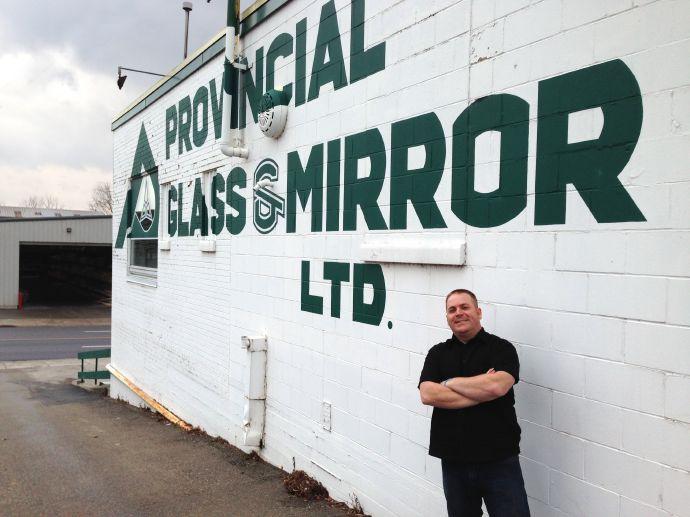
Provincial Glass operates out of an older factory building in downtown London. Lucier’s office was formerly the building’s vault. He likes the facility for its central location and generous showroom space.
AT A GLANCE | Provincial Glass
It’s a tough world out there. Margins are tight, clients are demanding, suppliers can be unreliable and the competition bloodthirsty. After years duking it out in the tough business of glazing, it is natural that many of us become more cynical and defensive - skeptical about anything new, suspicious of the motives of others, careful about whom we associate with and generally less likely to seek out collaboration and new relationships. It’s a well-earned caution learned in the school of hard knocks, and it’s an attitude you see a lot when you look around this aging industry. Past a certain point, we start to care more about protecting what we have than finding something new.
That’s why Brett Lucier, the 36-year-old co-owner of Provincial Glass in London, Ont., is such a breath of fresh air. Lucier is all about the social - and not just Facebook and Twitter, though he’s big on that, too. Lucier has a vision of a collaborative approach to this business that sees abundance where others see scarcity
and friendship where others see rivalry. He’s out there looking for new friends every day, and positively bursting with eagerness to tackle the challenges the old guard hate, like energy standards and safety regulations. He’s an example of the preference for working together we have heard about in the Millennial generation...but does it work? So far, he has doubled Provincial Glass’s business since he became part of the ownership team with Gaston Drapeau, the company’s longtime owner. Maybe there is some hope for the future in this industry after all.
First off, the company in numbers: As of 2014, it’s a 30-year-old firm, currently with 27 employees, with a fleet of 12 service vehicles, 24-hour service and a 7,000 square foot shop on York Street in downtown London (original location was on Ridout Street). The original owner, Drapeau, is 65 and still involved, though taking a less active role. The company carries North Star for residential windows, and relies mainly on Kawneer, Alumicor and Windspec for its
Location: London, Ont.
Founded: 1984
Owners: Gaston Drapeau and Brett Lucier
Employees: 26
Facility: 7,000 square feet
Serves: Mainly southwestern Ontario between Chatham and Kitchener.
Focus: Commercial storefront, residential glass service and window renovation/replacement
architectural products. Provincial Glass is a regular recipient of awards from local newspapers and business groups, such as Readers’ Choice and Best of London. Provincial gets most of its business in the Chatham-to-Kitchener corridor in southwestern Ontario.
So, now, meet the new boss. Lucier is pretty young to be heading up a glass company, a family man with two children (Cole, 9, and Claire, 7) and
a former budding architect, who seems a bit surprised to end up where he has. Lucier attended London’s Fanshawe College graduating as an architectural technologist. “I was originally going to be an architect,” he remembers. “I got accepted to the University of Michigan. My parents took one look at the first year’s tuition, room and board - $30,000 - and said, ‘You’re going to college.’ And away I went. I sold my drum set, and afforded the first year of tuition at Fanshawe, went and graduated.”
After school, Lucier took a co-op position then worked with several different architects and an engineer.
“After I got out of Fanshawe, and worked with a couple of architects and engineers, I realized that this is not what I wanted to do. As a technologist, I get really no credit, and nobody knows who I am, usually. So, I said this isn’t working, I need to change this up and I took a job at a building box store, designing kitchens. I designed kitchens for about a year. Greatest job I ever had, probably made $13 an hour. Loved every second of it. Worked with three beautiful women the whole time. And part of my position there was I had to phone local glass companies to find glass for the kitchens. So, for the cabinets and the corners, or for shelves or the glass in-fills, and/or backsplashes, to co-ordinate those as well. I called around and got a couple prices and it turned out that Provincial Glass was the cheapest price. So we started ordering from Provincial Glass for a couple orders. About two or three weeks after that, there was an ad in the paper for a junior estimator that had
architectural knowledge and some glass knowledge. I said, ‘Well, I’ve ordered glass shelves, what more could there be?’”
That was 14 years ago. Lucier slowly moved his way up the ranks within the company to get to where he is today. Going from architecture to glass has been a pretty interesting turn for Lucier. After 14 years, he is still excited about the prospects for finding change and growth in his market. “Every day is still exciting for me, and especially looking ahead, looking at the future of glass and the future of glass companies, using things like social media and getting into networking,” he enthuses.
If Provincial Glass has a niche it would probably be shopping plazas and strip malls. The business splits fairly evenly between commercial and residential. On the commercial side, Western University and Fanshawe College are big customers. Residentially, Provincial does shower enclosures, vinyl windows and entry doors. The business model is one you do not see as much any more: a one-stop shop for glass. “If it has glass, we can help you out,” says Lucier. For 20 years, Provincial has done the storefront repairs and renovations for all the GoodLife fitness clubs across southwestern Ontario and has written the specifications and installation instructions for GoodLife’s mirrors for all their clubs across Canada.
An early challenge for Lucier at Provincial was the new student centre at Fanshawe College. It was at the time the largest project Provincial had ever done - almost a million
dollars of glass and aluminum. Lucier got his trial by fire dealing with the architect as a green estimator. “Having to measure things on my own, lay things out on my own, for a large-scale project, it was overwhelming some days,” he remembers. “But at the end of the project, to be able to look and see everything in was pretty incredible.” Though he had left the school some time before, Fanshawe still had a valuable lesson or two for him.
But the technical aspects of managing Provincial were not the hardest ones for Lucier to overcome. Networking and selling did not come naturally to him. “Gaston’s been the face for 25 years,” Lucier explains. “Now that he’s pulled back, I’ve had to force myself to get out and be noticed and get my face as Provincial for the future. Which is good, because it’s forced me to originally be doing something I wasn’t comfortable doing but now I love.”
Having conquered face-to-face networking, Lucier is now taking it to the next level. “Technology is big. It’s not going away. This new-fangled Internet thing is here to stay. It might be around for a little bit longer,” he laughs. Lucier is unusual in the industry in his enthusiasm for social media, especially as a channel for smaller glass companies. “Using things like Facebook and Twitter for free advertising - why put out the advertising when you can reach all your friends and their friends’ friends for free?”
realized the potential for his shop. He’s started with a simple Facebook page for Provincial, then got involved with a Twitter account where he can watch for industry information and post messages to people interested in buying glazing services. Down the road, he sees potential in using YouTube to help train employees and inform customers, as well as position Provincial Glass as an expert resource. And then there is the word-of-mouth networking aspect. “All my staff is on social media,” he explains. “So all their friends can all do the same. Even my installers are on social media, a lot of them, because I have a very wide mix of ages. The majority of guys do social media, especially the younger guys. I bet we generate anywhere from one to five
“Technology is big. This new-fangled internet thing is here to stay. “ - Brett Lucier
leads a day through social media. And that’s through friends of friends.”
Lucier’s involvement with social media started with personal use, then gradually evolved and grew as he
But Lucier’s networking isn’t limited to contraptions with a screen and keyboard. He is also an advocate of being a member of community associations, like the London and District Construction Association and the Ontario Glass and Metal Association. He says there are multiple reasons to give back to the community on behalf of your business: “Number one, it makes you feel good. Number two, you are helping somebody out and, number three, you are getting your name out in a positive light. Gaston himself just did, for Jesse’s Journey, parts of a walk from Quebec to Winnipeg, which is 4,000 kilometers. Myself, I’m usually involved in sports-related stuff. I do Hockey Helps the Homeless. I do multiple things for cancer. Again, any way you can get out. I did one of those mini Tough Mudders this year [Jesse’s Journey’s Xtreme Warrior Challenge], which was on a bucket list.”
Lucier’s progressive approach to business does not stop with his marketing strategy. Shortly after getting involved with Provincial, he became concerned about the workers’ tendency to live paycheque-to-paycheque without saving any money. After buying into the business four years ago, Lucier started up a retirement plan and offered an improved benefits package to try to stabilize his employee’s lives and attract their loyalty. “Keeping my guys happy is priority one. There’s a lot of things we do for these guys. Almost monthly, if not every other month, we do a social outing. So, whether we’re doing a brewery tour, whether we’re doing paintball, whether we’re out at a comedy club, whether we’ve got a suite at a hockey game, we try and get as many people as we can involved—office staff, installers, helpers, everybody - just to get out and blow off some steam. And when you’re doing team building activities like that, it goes a long way.”
The health and safety of his employees is another concern for Lucier. “We had an employee injured five years ago. It scarred me for life. I never want someone to go through that again.” It was under these stressful circumstances that Lucier found that safety material published by government health and safety authorities had little application to a smaller business. “The literature wasn’t
out there, the material wasn’t out there,” he says. “The knowledge wasn’t out there, especially with the smaller glass companies. So that was one thing that I learned by reaching out, by talking to other glass companies: what do you do in this situation? How do you guys do this? Is there a safer way that we could do this? And then implementing those here has gone a long way to keeping our guys safe.”
Lucier does admit that finding out how to keep employees safe was only half the battle. Getting employees who had worked in the industry as long as he had been alive to change their ways was the other half.
Collaboration and cooperation are Lucier’s default settings, even when it comes to competing glass businesses. “I think there’s a lot of glass companies, and that we can help each other,” he says. “There’s enough work, I know, in London and surrounding areas that we’ll get some crossover every now and again, but I mean, I don’t look at it as competition so much as we can help each other out. You know, if I need a piece of aluminum that I don’t have in stock, I can pick up the phone and there’s probably three different glass companies that I can call right now that I know may have it. And they’ll give it to me. And we’ll swap it out in the next couple of weeks or something like that. I see great benefits with not closing any doors, with not burning any bridges. I’m not asking everybody to like me. But you never know when you’re going to need somebody.”
In terms of the future of his company, Lucier plans to just keep plugging away, and rolling with the seasons.
“I know when we get the high winds or heavy snowfall,
there’s a lot of accidents and things like that, that tend to bring work our way. And the buildings keep going up, new strip plazas keeping going up. I mean, London keeps continuing to grow, so it’s a great market that we’re expanding out the edges.”
A lot of the work revolves around actually building up the company itself from within, it seems.
“I take great pride in some of these younger guys – they came in as not knowing a lot but have now developed into amazing glaziers. They’ve really taken the ball and run with it. And they’re prime, they’re in their 30s. As good as they are now at 30, or mid-30s, they’re in a pretty good position. It’s great for them, it’s great for me, too, because hopefully I’ll be able to hold on to them for another 20 to 20-plus years.”
But he seems very happy with the industry he’s ended up in.
“There’s never a boring day. You could be going into all different kinds of restaurants, meet all different types of people. I enjoy the construction sites but I think I enjoy the businesses and residential stuff a little bit more. I think they’re just different,” he said.
“Glass is – I love it. I find that glass breaks, that’s why we’re in business. As long as we’re not the ones breaking it, we’re all set.” •
Find more Under the Glass profiles online at glasscanadamag.com
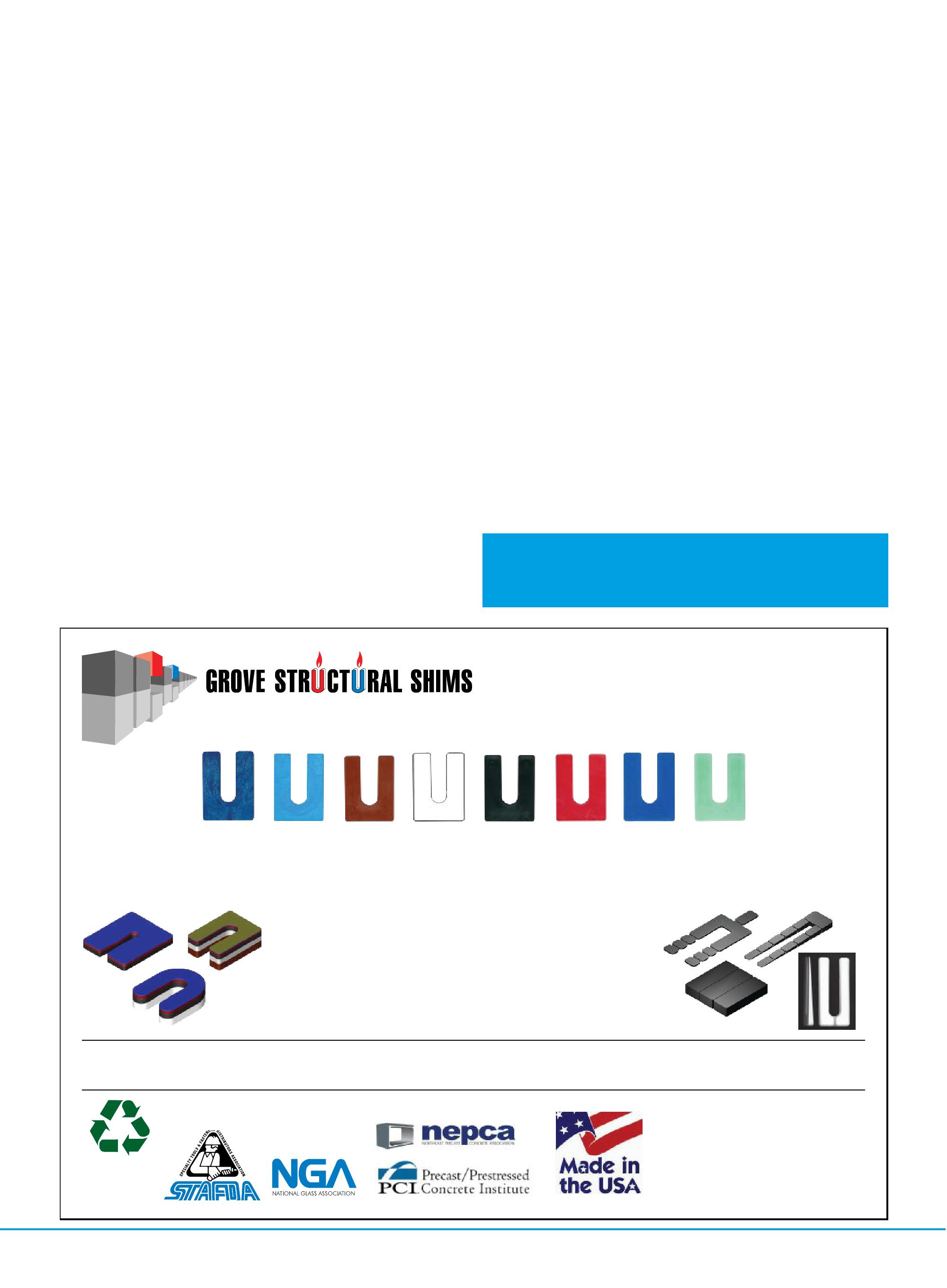
Grove Products Shims are made from recycled plastic.
by BRIAN BURTON
Brian is now involved with an innovative multidisciplinary firm that specializes in technical business writing: Award Bid Management Services http://award-bidmanagement-services. com/. The firm assists companies interested in selling goods and services to governments and institutions. He can be reached at Burton@award-bidmanagement.com
Lessons from tragedy
The well-publicized collapse of the Algo shopping mall in the northern Ontario community of Elliot Lake demonstrated a number of classic patterns that are typical of catastrophic building failure. “Catastrophic” not only describes what amounts to a total structural failure, it also refers to results of these kinds of events. This collapse resulted in two unfortunate fatalities and a dramatic rescue attempt by first responders, creating a great deal of distress in the community.
Catastrophic failures that result in fatalities receive a great deal more media attention than projects that experience minor failures causing problems with building operation or performance. This is natural, but it tends to mask the reality that small problems turn into big problems, and give people the mistaken impression that the safety of the buildings they occupy is closely monitored.
Aside from the fact that the building was 33 years old and clearly at the end of its effective service life, the occurrence did involve some unique circumstances which played an important role. The fact that vehicles, out of necessity, had to be parked on the mall roof because no outdoor parking space was available on the site could be traced back to the conversion of the building to retail space when it was purchased more than a decade ago. The evidence indicated that the collapse was primarily caused by rusting structural connections between columns and beams. Considerable water penetration had occurred over time. The structural distress was compounded by this continual water leakage, freeze/thaw cycles and the presence of salt. One location in particular was cited as the critical failure point.
The industry has unfortunately been plagued by significant quality control problems for decades.
The unfortunate event prompted the Ontario government to initiate a formal inquiry in 2013 which eventually released transcripts and published a number of recommendations based on its findings and evidence provided by over 100 witnesses. Inquiries of this nature are complex and expensive. In this case, the intent was to investigate the actual building failure as well as the response to the accident by police, firefighters and first responders.
FENESTRATION FORUM
The inquiry’s report was quite explicit in describing what the inquiry panel considered professional oversight by local building inspectors and engineers. It found that the evidence of serious building deterioration was clearly apparent and had been brought to the building owners attention on more than one occasion. The inquiry heard evidence that building inspectors as well as others observed the building’s rapidly deteriorating condition and reported on the problems on a number of occasions. The building owner was apparently warned repeatedly that the building was at risk and repairs that were made were obviously ineffective.
Unfortunately the inquiry board found that most of these inspection reports were ignored for the most part and the deterioration continued unabated for some time. The point that should be stressed here is that we do in fact have adequate regulations and safeguards contained within our building code and supported by legislation. If they are not adequately enforced, we are wasting time, money and, in extreme cases like this, lives. Again, building professionals specifically told the mall owners that remedial repairs were urgently required and apparently the reports were ignored.
Even though we might have been able to learn specific lessons about how and why this particular failure occurred and what could have been done to prevent it, the industry has unfortunately been plagued by significant quality control problems for decades and a single event, or inquiry for that matter, is unlikely to solve all the problems.
In fact each Canadian citizen pays, without knowing the details, approximately $2,000 a year to repair defective construction which could have been avoided in most cases by applying building science principles and a degree of discipline with regard to issuing building permits and effective regulatory enforcement. •
by SKIP MACLEAN
Skip Maclean is president of Fenestration Canada. He is business development manager for Tru-Tech Doors and has over 40 years’ experience in the window and door industry.
Resolve to make a difference
With the holiday season just passed and the promise of a New Year ahead, it is important we reevaluate our lives and businesses and ensure we maintain the values that define who we are. Canada has a rich history of generous philanthropy and a genuine concern for those less fortunate. The window and door industry has its share of caring, dedicated individuals who give their time, their efforts and monetary support to the needy in Canada and abroad. Recent contact with Habitat for Humanity has exposed how much more help is needed and how easy it is for us to get involved.
Habitat for Humanity is an organization dedicated to providing affordable housing for low income Canadians. Habitat has two new distribution facilities to accept and distribute window and door products to new builds and restoration locations. The Vancouver and Brampton, Ont., locations distribute all manner of products used in home building. With over 90 ReStore locations across the country ready to accept your imperfect, obsolete or overstocked windows and doors, Habitat provides low-cost fenestration products to those in need while increasing your brand awareness. Habitat can also provide you with a letter of acknowledgement or tax receipt.
Here are some basic Habi-facts:
• Since 1985 over 2,500 Canadian families have realized affordable Habitat ownership
• Over 11,000 Canadians have volunteered their time and resources to build housing in over 47 countries
• 65 local Habitat affiliates serve over 300 communities from coast to coast in Canada
• The Habitat global network is active in over 70 countries and has built or repaired over 800,000 homes
What better way to improve a family’s chance for a good life than to help them provide their children with the warmth and security...
I grew up hearing “charity begins at home.” What better way to improve a family’s chance for a good life than to help them provide their children with the warmth and security owning a home can bring? Fenestration Canada wants to encourage all its members to reach out to Habitat and discuss how you can become involved. Encourage your company and co-workers to get involved. By improving living conditions through good, affordable housing, Habitat and you can help families achieve greater stability and health while breaking the cycle of poverty.
Fenestration Canada’s annual general meeting will be held in Vancouver June 4 to 6 and we hope you will all be there. We are reaching out to Habitat to join us at our reception so that you can get more information regarding their efforts and needs. Don’t wait to get involved. Reach out. Please contact our head office or Habitat directly. Visit www.habitat.ca. Habitat can provide necessary materials for use on websites, newsletters or email blasts if desired. Make a difference this year!
In other association news, the Membership and Marketing Committee, chaired by Laura Weil of Euro Vinyl Windows, is about to announce the launch of our new website (oops, looks like I scooped them!) The new platform promises to be more user-friendly and current. Updates will soon be done internally allowing information and news to be current and timely. Members will also have access to update their information and profile. The new-look site was preceded by the creation of an improved prospect brochure and the committee is working hard to promote membership value. A newly formed committee was enacted to plan, organize and promote our upcoming AGM, being held in the breathtaking city of Vancouver. The planning process is well underway and details of the programs are expected shortly. Thanks to Terry Adamson of Westeck Windows and Fenestration B.C. for their support and contribution in organizing this event.
Windoor 2014 capped off what was, for most, a pretty good year overall. Attendance at the 20th anniversary show, although hindered by horrific weather to the south, was fairly representative of previous years. Opening night celebrations included recognizing our 20 year exhibitors: Amesbury/Truth, IGMA, Novatech and TrimLite, as well as several pioneers of the show. •
COVERSTORY RESOURCEDIRECTORY
Continued from page 11
Practical Solutions to Standards Challenges in Facade Glazing
Design and construction must address minimum standards required by Canadian and Ontario building codes. Additional requirements may be imposed by insurers and clients to achieve better quality and higher performance. This presentation will give a summary of current building code requirements of relevance to the design and construction of glazed facades in Ontario (National Energy Code for Buildings 2011, OBC Supplementary Standards SB-10, Energy Star, LEED). Illustrations from recent work by the MH Building Performance Group will show the effective thermal performance of thermal bridging in building envelope systems. Practical examples will illustrate effects of current codes individually and in combination that should be addressed while design is still fluid, so that the design can achieve the performance required by the client. Potential performance-related consequences of failure to address these requirements will be discussed and illustrated.
Stéphane Hoffman joined Morrison Hershfield in 1994. With a Master’s degree level education that combines structural engineering, building science and architecture, Stéphane brings a well-balanced consulting approach to the building envelope, blending scientific analysis with an understanding of aesthetics considerations. He is particularly adept at providing innovative design concepts and construction alternatives that provide value by improving durability and increasing energy efficiency. As a key technical leader, Stéphane has worked on projects throughout North America and led the expansion of Morrison Hershfield’s building science practice in the United States. He now leads their Façade Engineering Group focusing on conceptual design of cladding and glazing systems. As a senior member of the team, his knowledge and skills are leveraged throughout the firm. The breath of his knowledge and experience is often called upon to troubleshoot and help resolve issues on both new and existing buildings.
Building the Big Stuff: Daily fabrication challenges unique to big glass
Glass fabrication and design choices have evolved to enhance installation applications for larger glass panels than formerly thought possible. Large-format fabricators are challenged to enhance esthetics in structural applications. This presentation will look at how raw material sizes differ across markets and fabricated glass components, evaluating the new tools available to fabricators for maximum quality results. Project examples from some of the world’s largest monolithic glass installations will be analyzed.
Louis Moreau is a member of the AGNORA start-up team. As senior technical specialist, he brings a unique mix of international experience in float manufacturing, high-performance vacuum coatings, large building glazing and high-end glass fabrication. Louis considers architecture as the purest form of art and he loves glass. He likes to explore the limits of materials and processes in order to come up with innovative, easy-to-build solutions. The most ambitious façade projects he’s worked on include More London Plot 1 and Plot 6; Mid City Place in London, U.K.; Tour Granite in Paris, France; Sperone Westwater Gallery in New York, Queens Museum of Art and Onassis Staircases. •
RESOURCEDIRECTORY
Louis Moreau
by FRANK FULTON
Frank Fulton is president of Fultech Fenestration Consulting. He has been in the industry for 30 years and can be reached via email at fultech.fc@gmail.com
AODA: Are you in compliance?
In November, the Ontario Glass & Metal Association hosted a multi-topic seminar where the 65 people who attended took away a ton of informative, valuable and eye opening information. David Thompson and John Hodder, building science specialists with Entuitive Corporation discussed “Positioning Glass and Aluminum Curtainwall Systems for the Future” and Charmaine Mitchell with Workplace Safety & Prevention Services (WSPS) introduced and explained the benefits of the new OGMA/WSPS Health and Safety Policy Manual. But, it was the presentation by Jennifer Threndyle from WSPS that had the group shaking their heads and biting their nails.
You see, Ms. Threndyle is WSPS’s resident expert on the Accessibility for Ontarians with Disabilities Act legislation. Some of her examples of what companies have to do to comply with these new laws sent a shock wave through the room. If your business has a retail element open to the public you will be affected. If you have customers who you have to communicate with you will be affected. If you hire employees you will be affected.
The Ontario Ministry of Economic Development, Employment and Infrastructure enacted AODA in 2005, which set out a clear goal and time frame to make Ontario accessible by 2025. The Act lays the framework for the development of province-wide mandatory standards on accessibility in all areas of daily life. The “accessible customer service” section of the act came into effect on Jan. 1, 2012, for all Ontario businesses and organizations with one or more employees. Private and non-profit organizations with 20 or more employees were required to file an accessibility compliance report to prove that their organization met the standard by Dec. 31, 2014. If you haven’t done so, consider yourself in breach and open to severe penalties. The filing deadlines differ for smaller companies and larger organizations with more than 50 employees, so it is advisable to check the AODA website.
YOU BET YOUR GLASS
By the end of 2014, you were to have created your accessible customer service plan, trained your staff in applying your plan in practice, documented your plan describing your policies and made it available to the public, including the maintenance of a log of who was trained, when, and in what disciplines. Then you should have filed your compliance report with the ministry.
Accessible customer service is far more reaching than being just about ramps and automatic door openers. It’s about understanding that people with disabilities may have different needs, and the onus is on you and your business to consider and determine what their needs may be and remove any barriers that prevents a person with a disability from fully participating in all aspects of society. These barriers include physical barriers, architectural barriers, information and communications barriers, attitudinal barriers, technological barriers, and corporate policies and practices.
It is also important to understand that the types of disabilities you must accommodate are not limited to people in wheelchairs. You must be prepared and provide proof that you are able to provide customer service to people with any number of physical disabilities as well as mutes, people with speech impediments, people reliant on guide dogs or other service animals, people with mental impairment or a developmental or learning disability, blindness or visual impediment, deafness or hearing impediment, inability to understand spoken language, and mental disorders. Dealing in compliance with the Act when encountering other types of disabilities will be more challenging and it may be in your best interest to have an expert such as WSPS assist you with putting together your plan.
Alternatively you can try doing the plan, training, and filing on your own, or claim ignorance and do nothing. But be aware that every person who is found guilty of an offence under this Act is liable to conviction and a fine of up to $50,000 each day. If a corporation is found guilty, the fine can be up to $100,000 per day, and every director or officer who is found guilty of not carrying out their duties pertaining to the Act are subject to fines of up to $50,000 per day.
All of this is for compliance to the Customer Service section of the Act only. By the end of 2016 you’ll have to file your compliance documents for the Disabled Employment Standards section. •
ARCHITECTURAL HARDWARE
Frameless
Shower Door Hardware
Architectural and Commercial Hardware
Architectural Railings
U.S. Aluminum Doors and Entrance Systems
Storefronts
Curtain Walls
Windows
Office Partitions
CRL93G
GLASS AND GLAZING
Glass and Glazing Tools, Machinery, and Equipment
Sealants, Adhesives, and Fasteners
Door and Window
Replacement Hardware
Auto Glass Tools and Hardware
Truck, Van, RV, and Automotive Windows Back by Popular Demand The