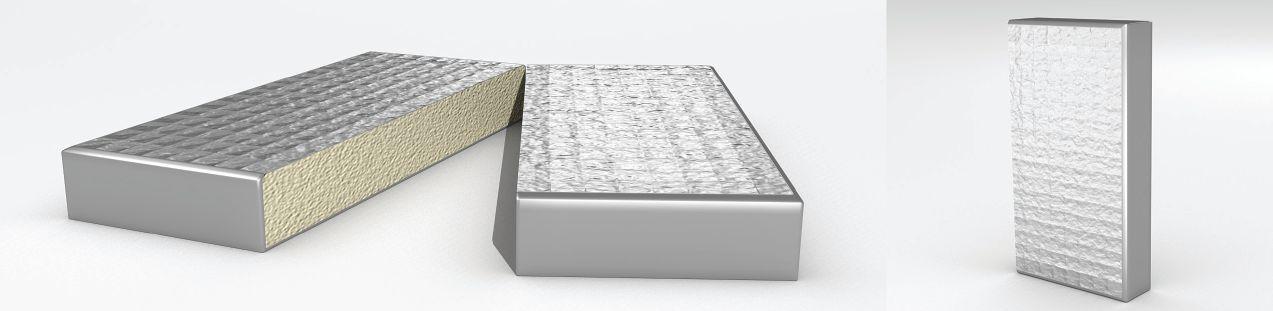
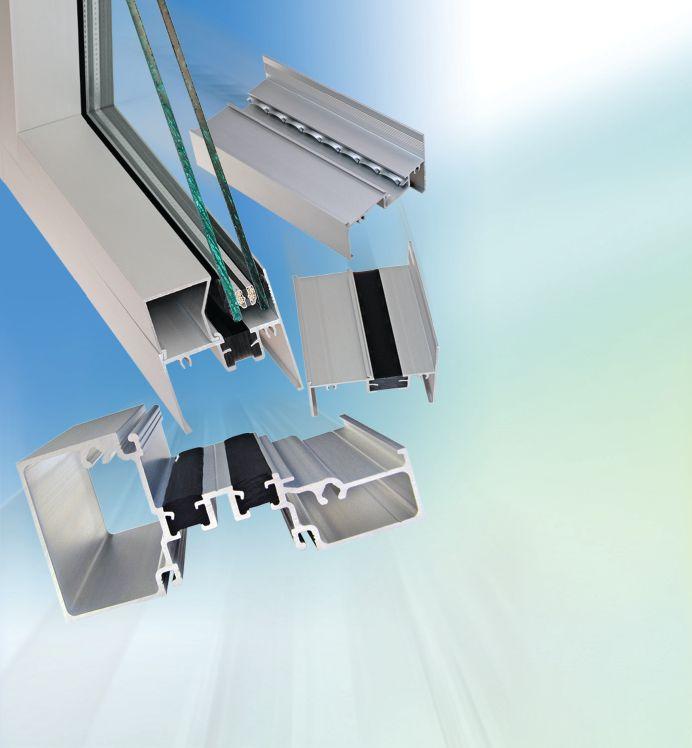
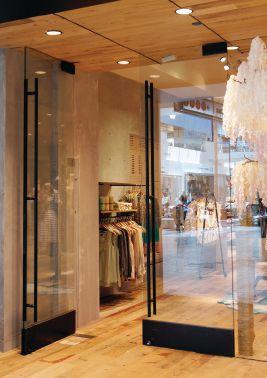
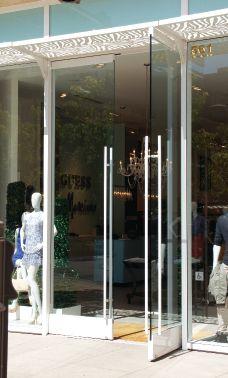
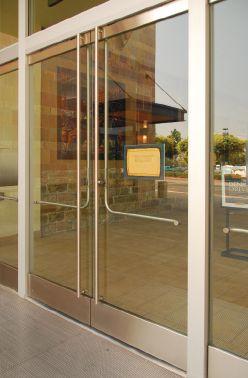
Automated efficiency takes insulated metal back pans and curtain-wall engineering to a new level. Refinements to traditional building envelope technology have put Lenmak Exterior Innovations’ EnvaTherm® back pans ahead of the competition.
Innovation in foam delivery technology yields soft, even, self-sealing insulation that provides a competitive R-value for consistent, reliable performance. The breathable foil backing maximizes insulative potential and protects against fire and UV damage.
EnvaTherm® insulated back pans have many clear advantages:
• Government acceptance of EnvaTherm® as a component of a non-combustible assembly up to 12 storeys (CAN/ULC-S134 Fire Test of Exterior Wall Assemblies)
• Complete pans are produced in approximately one minute due to automation efficiencies
• There is no loss of thermal performance due to air movement through panels
• Minimize the entry of drafts, humidity and allergens; does not support growth of mold
• The use of stick-pins is not required
• 80% lighter than panels that use traditional curtain-wall technology
• Each panel is totally self-contained for easy installation, handling and shipping
• Oversized panels maintain complete seal when properly installed
• Prevent noise transfer
EnvaTherm® insulated back pans are designed for use in curtain-wall systems in conjunction with a variety of architectural finishes, including opaque glass panels featuring UV-resistant finishes or metal panels for areas that do not require glass. Innovation in insulation technology ensures efficiency of production and proven real-world performance.
Flawless from Fabrication to Finish
Automating your processes can save time and improve quality, and these top suppliers can help.
The world’s largest green building expo packs them in in San Francisco with education and a Train concert.
Exploring the heights
EDITORIAL
Glass Canada is going to show the world that Canadian architectural glazing is the best.
It is a balmy -16 C outside (-25 with the wind chill), yet I’m sitting comfortably in my kitchen’s eating nook with windows surrounding me on three sides. It is a miracle of modern building technology, but one so commonplace here in Canada that no one ever thinks about it any more.
Building in and for cold climates is a daunting task. Just Google “cold weather construction” and you’ll find a parade of articles from just about every subsector of the construction industry talking about how to cope with low temperatures. Many common materials used in the southern U.S. wouldn’t last one winter up here (for example, Saltillo tile). Then there is the complex and dynamic science of how to make a dwelling that can be heated and cooled efficiently without making it look like a cave.
GROUP PUBLISHER | Martin MCANULTY mmcanulty@annexweb.com
Publication Mail Agreement #40065710. RETURN UNDELIVERABLE CANADIAN ADDRESS TO CIRCULATION DEPARTMENT, P.O. BOX 530, SIMCOE, ON N3Y 4N5 e-mail: subscribe@glasscanadamag.com
showcase
In both these areas, Canadian glazing professionals are world-beating experts. Every year, our landscape sees new glass construction projects that raise the bar for cold-weather functionality and energy efficiency. But they also raise the bar for architectural conception and beauty. I doubt there is anywhere in the world you could go to see more examples of innovative, modern glazing in a cold-weather setting. We have the money and the expertise to build beauty in the snow, and boy, do we use them.
This needs to be celebrated. With anxiety about imported components and an aging workforce eroding confidence in the future of our industry, we need to remind ourselves of the incredible achievements of the Canadian glazing trade. That is why Glass Canada is going to launch Top Glass in May of this year.
Top Glass will feature 10 breathtaking new buildings with innovative and architecturally groundbreaking glazing elements. Of course, there will be big, beautiful photos. But in addition to the “architecture porn,” Top Glass readers will get an in-depth analysis of the glazing project as only Glass Canada can deliver it. My hope is that Top Glass will be a bubbling cauldron of ideas and inspiration for Canada’s glaziers, and a strong source of pride for everyone associated with the industry.
Here is where you come in. I bet you can think of two or three (or four, or five) projects right off the top of your head that made you stop and say “Wow!” Well, I want to know about them. I’m looking for Glass Canada readers to send in their suggestions for projects we should cover. All you need to do is e-mail me at pflannery@annexweb.com and tell me about the project you have in mind. I’ll do the rest of the research and follow-up. Because we want the latest and greatest, I’m going to concentrate on projects that have been finished in the last year or so. Otherwise, anything you think is a great example of architectural glazing is fair game. •
Printed in Canada, All rights reserved. Editorial material is copyrighted. Permission to reprint may be granted on request. ISSN 0843-7041
CIRCULATION
e-mail: subscribe@glasscanadamag.com
Tel: 866.790.6070 ext. 208 Fax: 877.624.1940
Mail: P.O. Box 530, Simcoe, ON N3Y 4N5
SUBSCRIPTION RATES
Canada - 1 Year $36.75 (includes GST)
($39.55 includes HST/QST)
U.S.A. - 1 Year $50.00 (in US dollars)
Occasionally, Glass Canada will mail information on behalf of industry-related groups whose products and services we believe may be of interest to you. If you prefer not to receive this information, please contact our circulation department in any of the four ways listed above.
www.glasscanadamag.com
NEWS
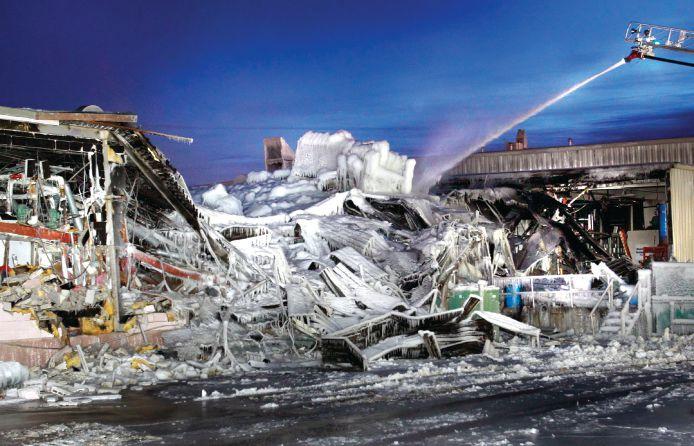
Omniglass rises from the ashes
One of Canada’s leading manufacturers of fiberglass for window and door frames has been reborn one year after fire destroyed its predecessor. Omniglass SCT began work on new fiberglass pultruded frames and components in November 2012, at their new location inside Structural Composite Technologies’ state-of-the-art composite plant in Winnipeg.
Omniglass SCT was formed by partners John Zadro, president of Structural Composite Technologies, who will be president of the new company, and Leroy Dankochik, general manager of both the predecessor and the new companies. Together they purchased the assets, including the patents and processes of Omniglass, a successful Winnipeg business that was destroyed by fire a year ago. Omniglass SCT has hired 10 former employees, including Laurie Davies, founder and former CEO of Omniglass, to assist with sales and business development.
“We are bringing back a respected name in fiberglass to the North American window and door industry,” said Zadro. “We are returning Omniglass SCT to what it did best: designing and manufacturing the best fiberglass components possible for windows and doors.”
Fiberglass windows and doors are rising in popularity because of their superior structural strength, thermal resistance and paintability. They have been grabbing increasing marketshare in commercial construction (where they qualify for coveted LEED environmental certification) as well as the residential market where quality, durability and aesthetics are increasingly important.
“Omniglass SCT has a strong, respected brand name in the window and door industry as well as valuable designs and patents,” said Zadro. “We have pledged to restore the company’s reputation of winning business with high quality, on time production. Our motto is: we don’t make windows, we make them better. We have already signed several deals with window and door manufacturers, including many former clients, who always appreciated the quality of Omniglass products.”
Omniglass SCT will do business alongside privately-owned Structural Composite Technologies. Founded in 1961, Structural Composite Technologies custom fabricates fiberglass equipment for multiple industries: mining, chemical, utilities, wind energy, transportation, and construction industries throughout North America.
Hartung Glass Industries has announced that Kirk Johnson has been named chief operating officer. Johnson, a well-known, 17-year veteran of the industry, joined the company in September, 2011, as regional sales manager and was promoted to director of sales in January, 2012. Roughly half of Johnson’s experience has been in sales with the other half in operations. Johnson will have overall sales and operational responsibility for Hartung Glass Industries and its divisions including Agalite Shower and Bath Enclosures, Holcam Bath Enclosures and Lami Glass Products in all ten locations from Canada to Texas.
“I am very excited about the opportunity to contribute to Hartung in a different role,” says Johnson, who worked as director of sales for the last year. Previously, Johnson worked in a variety of capacities with ACI/Vitro for a total of over 10 years and Arch Aluminum and Glass for over five years. Johnson and his family will be relocating to Seattle, Wash.
PHOTO CREDIT: WAYNE GLOWACKI, WINNIPEG FREE PRESS
CGA Newsletter
CANADIAN GLASS ASSOCIATION
We have completed our programming for the Glass Connections Montreal 2013 Conference at the Delta in Montreal on May 29-30.
The program will include a breakfast, lunch and table top opportunities. As this year’s conference is held in Montreal we will also be providing translation services for all attendees.
Thanks again to a great technical committee, Leonard Pianalto (RJC), Steve Gusterson (Alumicor), Brent Harder (Ferguson) and Shawn Wessel (RSVP Agencies).
Our colleagues at the AIPVFQ – Association des industries de produits de vitrerie et de fenestration du Québec will be our local hosts. Their directeur general, Gilbert Lemay, will provide some assistance for us on the day of the event. Thank you to AIPVFQ and Gilbert for their commitment and support.
We will be holding our first AGM on May 29 at the Delta under the new set of bylaws. This will be a very interesting time for us as it will be the first time we will have an elected board of directors.
More information on the conference and the AGM will be posted on our website (www. canadianglassassociation.com) very soon.
ONTARIO GLASS AND METAL ASSOCIATION
OGMA members were saddened by the passing of Colin Gollert on Oct. 29 at
Canadian Glass Association P.O. Box 595 Abbotsford, B.C., V2T 6Z8 Tel: 604.855.0245 • Fax: 866.253.9979 www.canadianglassassociation.com
Colin Gollert, 1941-2012.
the age of 71. A former board member of the Metro Toronto Glass Association (the predecessor of OGMA) and the recipient of the 2010 OGMA Lifetime Achievement Award, he commenced his working life at PPG’s local branch and during the next several years worked there and at the main regional branch in London, Ont. In 1964 he was transferred to Calgary where for five years he was part of the Alberta sales team. He was called back east for promotion and in 1969 he took up a national sales manager position, operating from PPG’s Toronto head office. He resigned from PPG in 1972 and was hired by Gerry Harrison as Ontario sales manager for Walker Glass. In 1974, the company was merged with Atlantic Glass to form Walker Atlantic Glass with Gollert joining Alex Cox, George Scullion and Harrison as the founding partners. He sold his shares and withdrew from the partnership in 1987 taking a sort of sabbatical, until in 1993 he re-joined Walker Glass as Ontario sales manager. His responsibilities were expanded two years later to include western Canada. The year 2011 stands out as it was in that year that Colin posted the all-time best single-year sales record for any sales person in Walker’s 70-year history, one
year before his death from throat cancer.
The Ontario Glass and Metal Association announced at its fall seminar that it is giving a bursary award to first year students in the Glaziers and Metalworkers Apprentice Program run by the Ontario Industrial and Finishing Skills Centre The award will be for $500, twice per year, beginning in 2013. We agreed to fund the award for a term of three years. The criteria for receiving the award has not been settled as yet, but will be awarded based on one or a combination of highest marks, attendance and effort as determined by the instructor.
Time to start thinking about spring and our seasonal social events. Race Nite will take place at Woodbine Racetrack on May 2, featuring thoroughbred racing for your entertainment and (hopefully) profit. Our spring golf tradition continues May 30 at Glen Eagle Golf Club in Bolton, Ont. Don’t worry, you will only remember the good shots.
GLASS TRADES ASSOCIATION
The GTA handed out its 2012 awards at its Jan. 7 meeting. The winners were:
• 1st year – Wolfgang Kron from Specialty Glazing
• 2nd year – Amber Pollock from Flynn
• 3rd year – Garet Gagne from Alumatec
• 4th year – Mike Carline from Specialty Glazing
The recipients were chosen not only for their grades but also for their overall attitude, willingness to help others and desire to learn.
• Don Simpson Award –Wolfgang Kron from Specialty Glazing
• Bill Blakeny Award – Garet Gagne from Alumatec
The following companies were presented with the Certificate of Excellence Award:
• All Glass Parts
• Alberta Glass
• All Weather Windows
Commercial
• Architectural Glass
• Creative Glass
• Desa Glass
GLASS AND ARCHITECTURAL METALS ASSOCIATION
The GAMA has announced the results of its board elections held Nov. 8, 2013. The new board is:
• President: Chris Johnson (Oldcastle BuildingEnvelope)
• First vice-president: Jim Cossar (Nabco Entrances)
• Education: Ed Dalzell/ Brian Risbey/Dennis Lidfors (SAIT)
• PAC: Jim Brady
Energy standards now law in Ontario
Fenestration Canada is reporting that the Ontario provincial government has announced changes to its Green Energy Act requiring windows sold in Ontario to meet certain energy efficiency standards. The change takes effect January 1, 2013, but the requirements for windows will not take effect until January 1, 2014. Doors and skylights are not included at this time.
The requirement applies to residential windows only. In basement windows incorporating a load-bearing structural frame, the window must now be doubleglazed with a low-E coating. All other
New CEO at Trulite
Trulite Glass and Aluminum Solutions has announced the appointment of a new CEO, Paul Schmitz. Paul replaces Jeff Leone who, for the previous two and a half years, was responsible for the successful integration of three companies: Arch, UGC and Vitro. The board wishes to thank Jeff for his numerous contributions and making progress toward becoming the industry leading glass and aluminum provider.
Most recently, Schmitz led ThermaSys, where he was responsible for driving growth in sales and earnings across seven operating divisions. This was accomplished through the implementation of lean manufacturing principles, consistent kaizen events and an intense focus on customer responsiveness. Schmitz is a graduate of Kansas State University where he earned his Bachelor of Science in mechanical engineering.
Quanex buys Alumco
Quanex
Building Products has announced it signed a definitive agreement to acquire the assets of Alumco and its subsidiaries in an all-cash transaction. The assets to be purchased include Aluminite, a screen producer for the window and door industry. The acquisition is expected to be accretive to earnings per share in 2013 and close by December 31. The purchase price and other financial information related to Alumco will not be publicly disclosed. Alumco is headquartered in Chehalis,
windows must meet a U-factor of at least two watts per square meter on centre, or an energy rating of no less than 17. Windows must also be certified and labeled to CSA A440.2 or NFRC thermal standards.
Excluded products include:
• decorative windows that have stained glass panels, iron inserts or blinds contained in a sealed insulating glass unit,
• heritage replacement windows intended to be installed in a heritage building,
• glazing replacements in an existing sash or frame, if the U-factor
of the replacement glazing is equal to or less than the Ufactor of the original glazing,
• decorative sidelights for doors,
• windows that are designed for a specific building, and windows that fall outside the scope of the certification programs for CSA or NFRC.
The Ontario Green Energy Act has been in place since 2009.
These requirements are not as strict at the building code requirement, but they do mean that all windows sold in Ontario will have to be certified to CSA A440.2 or NFRC.
“Paul’s accomplishments as an executive along with his management experience give him invaluable perspective. He is a proven leader and we are pleased to welcome him to the Trulite team,” stated Mike Alger, group CFO at Sun Capital.
“I’m excited to join Trulite and look forward to the opportunity of growing the business through achievement of real operational excellence,” said Schmitz.
In other Trulite news, Sun Capital Partners has announced that its affiliated portfolio company, Trulite Glass and Aluminum Solutions, has completed the acquisition of Western States Glass Corporation of northern California, a leading glass fabricator and distributor. Terms of the deal were not disclosed.
Formed in 1991 and headquartered in Fremont, Calif., Western States Glass has built a reputation for its expert
service and for providing critical technical guidance to customers. The company also operates facilities in Fresno and Sacramento, California.
With the completion of this transaction, Trulite says it will be positioned to expand its combined end market reach and service customers throughout the entire state of California with a wide array of products, including tempered, insulated, and mirrored fabricated offerings.
“We are pleased to continue supporting the growth of Trulite as a market leader in the glass and aluminum fabrication sector through the addition of strategic add-on acquisitions such as Western States Glass,” said Marc Leder, co-CEO at Sun Capital. “We look forward to working with management to ensure that Trulite is delivering the best service, quality and value to its customers.”
Wash., and has nine manufacturing facilities located throughout the United States that produce and market window and patio door screens to original equipment manufacturers. Alumco’s window screens primarily serve vinyl window manufacturers, which Quanex does not currently serve with window screens. The new business will become part of Quanex’s Engineered Products group.
“I’m pleased to welcome the team from Alumco into the Quanex family,”
said David Petratis, chairman, president and CEO of Quanex. “The acquisition allows us to expand our presence in the fenestration segment. Quanex currently manufactures window screens for wood window manufacturers. This acquisition creates the opportunity to become a leading window and door screen producer in North America, allowing us to extend our product offering and geographic footprint. Doing so will enable Quanex to further support North American window OEMs.”
Farley restructures
Farley Windows and Doors received protection from its creditors under the Companies Creditors Arrangement Act (CCAA) in a court order dated Nov. 30. The order suspended Farley’s obligations to pay employees and suppliers until Jan. 11, 2013.
The Alexandria, Ont.-based vinyl window and door fabricator and its U.S. subsidiary retained all assets and bank accounts. Its operating lines of credit were capped, and no new loans could be taken out. It was required to continue to pay rent and taxes, but not interest on principle. The company was allowed to sell off real estate and assets to raise funds, or pursue the refinancing and/ or sale of the company to a third party. It could maintain all normal operations during the protection period.
Farley Windows and Doors released the
Laflamme passes
Fenestration Canada has announced that Richard Laflamme passed away on November 30 at the Hôtel Dieu in Quebec City. He was 55 years old.
Well known in the industry, Laflamme grew up in a business environment. In 1950, his father founded R. Laflamme et Frere, manufacturer of windows and doors with a plant in Saint-Apollinaire. He worked 25 years for the company as director of sales, and subsequently as president and CEO. He contributed and participated actively in all important milestones of the company’s development. The personal and
following statement regarding its restructuring plan:
“Farley Windows and Doors has received protection from its creditors under the Companies’ Creditors Arrangement Act (CCAA) in a court order dated Nov. 30. The order suspends Farley’s obligations to pay its creditors for amounts owing prior to Nov. 26 in order to provide time for the business to restructure its operations and finances. The current stay is in place until January 11, 2013.
“During this period the company will operate in the normal course and its suppliers have committed to continue to provide materials to support operations.
“As part of the restructuring, Farley can sell off real estate and assets to raise funds, or pursue the refinancing and/or sale of the company to a third party.”
professional values that guided him throughout his life were human respect, commitment, passion, hard work, integrity, open-mindedness, and recognition of the importance and value of his peers.
Laflamme was also actively involved as a volunteer in the Lotbiniere region of Quebec as a business mentor. He contributed actively to the economic development of the region by sharing his experiences and providing his services.
The association has expressed its most sincere sympathies to his wife Joëlle and his entire family.
Wiles joins Walker Glass
Walker Glass has announced that Brian Wiles has joined the sales and architectural promotion team for Walker Textures acid-etched glass and mirror products. Wiles has over two decades of experience and knowledge in the glass industry. He worked for different glass fabricators in Southern Ontario including most recently ProTemp whom he was associated with since 2006. His territory is the greater Toronto area.
“It is an exciting opportunity for me to work with Walker in expanding their sales
and architectural presence in this dynamic Toronto market,” says Wiles. He will continue to serve as the Treasurer of the Ontario Glass Association.
“We are very excited to have Brian with us. His extensive experience and knowledge of the territory will be key with our clients. It will also permit us to have a greater and continuous presence with the architectural community in Toronto,” says Ross Christie, vice-president of sales and marketing.
This May, Glass Canada will launch a new supplement for the architectural glazing industry called Top Glass. The supplement will go to everyone who presently gets Glass Canada, and will feature innovative and striking new examples of architectural glass construction in Canadian buildings.
Top Glass gives members of the Canadian glass construction industry a chance to get their favourite projects featured.
Projects featured in the supplement are subject to the following criteria:
1. They must be in Canada.
2. They should have been completed no more than about a year ago.
3. They should be visually interesting.
4. They should include innovative and/or technically challenging elements.
Industry suppliers interested in advertising in Top Glass should contact sales manager Danielle Labrie at dlabrie@annexweb.com or 519-429-5187.
FIGHTING COMPLACENCY
Practical ideas for preventing lacerations and crush
by COLLEEN CROSS
You’ve been handling glass for 20 years and you know what you’re doing. You’ve done the same job, handled the same size of lites many times before. You know what to expect. Right? Well, according to Mike Burk, your natural complacency puts you at risk for injury.
Burk, product sales specialist for Quanex Building Products of Ohio and chairman of the Insulating Glass Manufacturers Alliance’s Glass Safety Awareness Council, presented a seminar at Win-Door last November that caught the attention of Glass Canada. In it, he laid out several case studies to a small audience and used a method of analysis worthy of a CSI to analyze them.
In his talk, Burk urges us to think IGMA. No, not the association – this IGMA is an acronym for four key safety points. He suggests those involved in fabricating and handling glass, in fact, anyone entering a plant, consider those four key letters – whenever faced with a task or situation: I (instruct), G (gear), M (move) and A (attitude). Instruct – Do workers know their risks, and do they have, and follow, clear instructions on weight limits and procedures? Gear – Do workers have, wear and maintain the appropriate PPE and equipment? Move – Do workers move deliberately and safely, always considering their surroundings, and giving themselves an escape route should something go wrong? Attitude – Do management and workers share safety as a priority, and fight complacency in the workplace?
Although it’s not possible to expect the unexpected, says Burk, by viewing situations, including past incidents and near misses, through this special lens, he thinks we can learn to recognize and prevent dangerous situations.
APPLYING THE IGMA METHOD: A CASE STUDY
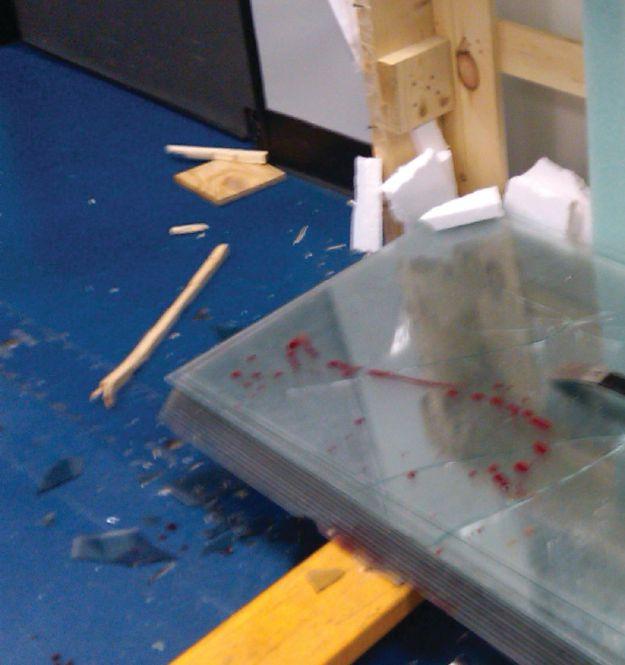
Burk thinks case studies can provide invaluable clues to prevention. Consider this WorkSafe BC case study in which a worker in a glass and window installation shop had his neck lacerated and his ribs broken.
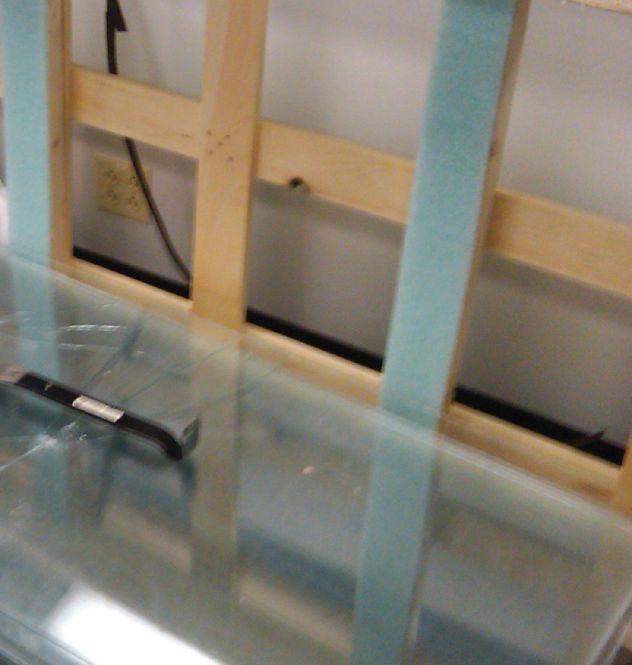
“Large sheets of glass (3/8 inch thick, 34 inches by 80 inches) were sitting in an A-frame cradle. A young worker tipped several of the sheets toward himself so that a second worker could access sheets deeper in the stack. As more sheets were tipped
When you handle glass every day, it is easy to forget how dangerous it can be. Mike Burk, chairman of IGMA’s Safety Awareness Council, recommends a four-step process for reinforcing safety in your shop.
crush injuries when handling flat glass.
forward, the increasing weight of the stack caused the worker to fall back against a work table. The falling glass sliced the worker’s neck, and the impact of hitting the table broke several ribs.”
Analyzing the incident using the IGMA approach, Burk suggests, draws out the pertinent issues:
Instruct – Were workers aware they had other options? They shouldn’t take shortcuts, Burk says, but instead use whatever equipment is available to them to secure the glass.
Gear – Was the worker wearing proper neck protection, such as a turtleneck-style dickey?
Move – Was the glass secured so that even if it did shift, it wouldn’t fall on the worker?
Attitude – Burk says some workers have the habit of leaning one glass sheet in a pile forward to hold it while another person retrieves another sheet from farther inside the pile. This situation, he says, can be very dangerous, because as the glass moves, its centre of gravity shifts, throwing the worker off balance.
INSTRUCT
Do workers know their risks? Do they have, and follow, clear instructions on weight limits and procedures?
Assess your risks – Burk recommends employers develop a template to identify tasks, calculate the risks they involve and determine how to prevent injury by way of asking questions and observing workers.
However, he notes that risk assessment only goes so far when you’re looking at safety, because you can’t always anticipate problems.
“A hazard identification and risk-assessment process is really the cornerstone of any health and safety program, and what that
does is enables the workplace to be proactive in trying to solve these issues,” says Dhananjai Borwanker, a technical specialist with the Canadian Centre for Occupational Health and Safety.
Set and post clear guidelines – Borwanker says employees, too, have a responsibility to consistently follow guidelines to minimize the dangers.
These guidelines, says Burk, may include instructions from supervisors on how to dispose of glass when making trim cuts; for example, rules about breaking the cuts into smaller pieces or just lightly tapping the glass into the bin to prevent shards from flying through the air, and instructions about bagging discarded glass separately and labelling it. Such instructions help workers by taking the guesswork out of the process.
Learn from case studies – Burk says small group meetings can be helpful in creating an atmosphere of problem solving and prevention. He suggests employers use case studies and analyze near misses. He has found this last approach very effective. Sometimes it’s easier to talk about mistakes that were made when no one has been injured, he notes. However, realizing how close they came to injury creates a sense of urgency about solving the problem.
He cites “Measuring Safety Excellence: A Practical Framework,” by Shawn M. Galloway for Occupational Health & Safety Online, who takes the approach that we should begin with the end in mind when reviewing incidents.
“Being in the United States at the time of the London 2012 Olympics, the results are known hours before the events are broadcasted,” writes Galloway. “Viewers know who won prior to watching their performance. This vantage point moves the viewer beyond results to understanding what performance
contributed to it. We must think the same way with our safety measurement systems.”
Know your weights – Knowing the weights of the lites you’re handling can prevent all-too-prevalent crush injuries, says Burk in his presentation. He urges employers to have clearly defined instructions on the maximum weight one human can safely lift, the minimum weight that requires two people, and the minimum weight that requires the use of mechanical assistance. According to GANA Glass Information Bulletin 01-0408, “Glass weighs approximately 2,531 kg/m3, or 158 lbs/ft3. A 3.0 mm, or 1/8" glass weighs 7.6 kg/m2, or 1.6 lbs/ ft2.” The translucent appearance of glass is deceptive, warns Burk, who uses the example of a bowling ball to drive home how dense and heavy the substance is. “A standard bowling ball, with 27-inch circumference, usually weighs 12 to 16 pounds,” he says. “A bowling ball made of glass weighs about 30 pounds, so it’s almost twice as heavy.”
Only by knowing how much lites weigh can workers estimate, how the centre of gravity might shift when a lite moves or falls, says Burk.
GEAR
Do workers have, wear and maintain the appropriate PPE and equipment?
The ASTM E2875/E2875M, Guide for Personal Protective Equipment for the Handling of Flat Glass, covers safety equipment requirements.
Know body’s four critical areas –Are all workers aware of the four most critical locations on the body? Burk reminds us that cuts to the wrist, neck, underarm and inner leg are most likely to be fatal because those involve main arteries, and may result in almost instant
death. He also points out that hand injuries, though not usually fatal, appear to be the highest occurrence among workers; thus, special attention should be paid to choosing and wearing proper gloves with adequate cut resistance.
Workers should have access to, and for their part, never fail to wear, the appropriate personal protective equipment for each of these areas. “For a long time people didn’t wear neck protection at all,” he says, “but it is critical.” Aprons provide inner-leg protection and riveted grommets provide underarm protection. Supervisors must instruct employees – in particular, installers, who tend to be less well prepared than manufacturers – on when and how to wear the equipment and how to know when it needs replacing.
Ray Wakefield, manager of technical services at Trulite Industries in Vaughan, Ont., and former president of the IGMA, says his company stepped up safety measures more than a year ago, with positive results. “I would say yes, there’s been an improvement in safety,” says Wakefield, “but I can’t back it up with numbers.
“What we introduced was a Kevlar shirt, with long sleeves and a mock turtleneck, so that it does protect workers around the neck more than just having arm guards and a vest with only a t-shirt underneath, in addition to the standard hard hat, safety glasses and safety boots,” Wakefield says. “And that is something that they all wear, including supervisory personnel that are in the plant. You get better buy-in when supervisors wear them to – and they do.”
The shirt is readily available, if “not cheap,” says Wakefield. A great feature of this shirt is that its distinctive orange colour and grey sleeves stand out in a large plant. “A guy could be a hundred yards away and if he’s not wearing his
shirt, you see it.”
Cut protection and resistance – In preventing laceration injuries, it’s important for management and employees to understand the difference between cut protection and cut resistance.
Most workplaces have strong cut protection, which involves many elements: PPE, machine guarding, training, equipment layout, handling equipment. But, while there is a lot of gear out there, not all of it is cut resistant,” Burk says. “Cut resistance is the ability of the material to resist damage from a moving, sharp object. Make sure that the cut resistance is adequate for the job.”
The ASTM F1790/ISO 13997 evaluation standard for North America, has a cut, or rating, force scale from 0 to 5, and a Cut Protection Performance Test for cut resistance only, not puncture resistance – 0 means an object will slice right through it, 5 means 3,500 grams will be resisted. Burk says most workplaces require a rating of 4 or 5, depending on the particular job.
The European standard is CEN EN388, and the two are not interchangeable. EN388 offers a Cut Index that measures resistance, puncture, tear and abrasion: the number of cuts it takes to break through the material. The scale here is 0 to 5 as well, with 5 the equivalent of 20 cuts to break through.
Protection can take many forms, he concludes on the subject, but resistance is crucial.
Use proper handling equipment and inspect it regularly – Burk says it’s important that supervisors have proper and well-maintained handling equipment available, and that workers use it. Workers have access to useful tools and equipment, he says, but sometimes take shortcuts, feeling they don’t have time to use it. “You’ve got to set rules about
SAFETY TIPS FROM CCOHS
Although you can’t anticipate every situation, says Dhanaraj Borwanker of the Canadian Centre for Occupational Health and Safety, there are a few things you can do to prevent dangerous situations and injury:
• Don’t try to catch falling glass.
• Store glass in dry conditions.
• Maintain and inspect your equipment before use, especially if you’re going to a different site.
• Make sure floors are level.That’s really important when you’re going to a new worksite.
Make sure not only that the floor is level but also that it can handle the weight you’re putting on it.
• If there are windy conditions, tie the glass down.
• Keep glass that you’re taking to a worksite out of the way of other workers and find a place where it will be safe while you’re doing your tasks.
• Wherever possible, use mechanical aids to lift and move the glass itself.
when they can do that, and when they need to use the equipment,” he cautions.
Slot racks are sometimes overloaded, and loaded with lites that are much too tall for their size. A-frames and L-racks also can be overloaded very easily, with the added danger that they are on wheels, meaning a bump or imperfection in the floor can upset an entire rack and cause a worker to be crushed. Ask yourself, “How much can this [rack] hold safely,” says Burk, and “develop rules and regulations for its use.”
Inspect this and other equipment regularly. “Ties and straps, carts and racks, hoists and lifts, all need to be in good working order,” he says. As an example, many ties wrap around raw edges and are heavily worn over time; thus, they must be inspected and the inspection recorded. Suction cups must be clean, demonstrate good suction, and be in the correct position. Lastly, wheels and casters bear a lot of weight, and shatter stops must be in place in case they cannot handle that weight, advises Burk.
MOVE
Do workers move deliberately and safely, always considering their surroundings, and giving themselves an escape route should something go wrong?
Burk suggests we consider movement on two levels: are we moving safely, slowly, and methodically, and are our surroundings conducive to safety?
When workers take shortcuts to save time, they open themselves up to injury by skipping key steps and precautions. Management can play a role in preventing such incidents, he says, by allowing workers adequate time to carry out tasks.
Is there any object that might obstruct our movement? Are floors even and dry? Are we working at an unfamiliar site? If a lite falls unexpectedly, do we have in mind a clear route of escape and do we have room to escape?
Having clearly expressed rules and procedures is important, but do we know what to do when things go wrong? By assessing situations, especially those that involve a new worksite or unfamiliar elements, using IGMA or any other method, we can identify potential problem scenarios and create contingency plans.
Burk’s video, Glass Handling Safety, taken from his MyGlassClass online safety course, offers a good example of setting up an escape route. As demonstrated in the video, escaping can be as
simple as two people, who are carrying a large lite vertically, standing on the same side of the glass and holding it firmly with their bottom hands turned outward, so that the glass will naturally fall away from them. You can find the short video by searching “glass handling safety” on YouTube.
ATTITUDE
Do management and workers share safety as a priority, and fight complacency in the workplace?
Early on in his Win-Door presentation Burk cautions against complacency: “We get comfortable,” he says. “We let down our guard. We are not always aware. We don’t always watch and warn our co-workers.”
Although intangible, attitude is a very important element of safety for him. To sum it up, in an ideal world, employers and employees both see safety as a priority.
Employers should impress upon employees the danger of the work they are doing, says Burk, and they must do more than pay lip service to employees when dealing with their concerns if they want to have their trust.
For their part, says Burk, workers should watch out for fellow employees, let them know when they are doing something wrong and correct them if possible. “Don’t be afraid to report an incident or violation,” he says. “You might be the next one to get hurt.” This is especially important, he adds, when working with more vulnerable workers, such as those who are young, inexperienced, or who have a language barrier and may find it difficult to understand and follow rules.
The most significant bad habit Burk has observed says more about an attitude of complacency than gear: people not bothering to use their equipment. He says this is sometimes the case with management, who are just entering a plant for a moment to check something, and don’t take the time to wear proper PPE.
Burk’s favourite example of complacency is the skilled, experienced and well-equipped kayaker who is approached from behind, and beneath the water’s surface, by a shark. “I can’t say it enough,” he says. “Don’t get comfortable. Don’t ever let down your guard. Always stay aware. Watch and warn your co-workers.”
Determined to be good Shortcuts hold little appeal for Garibaldi Glass.
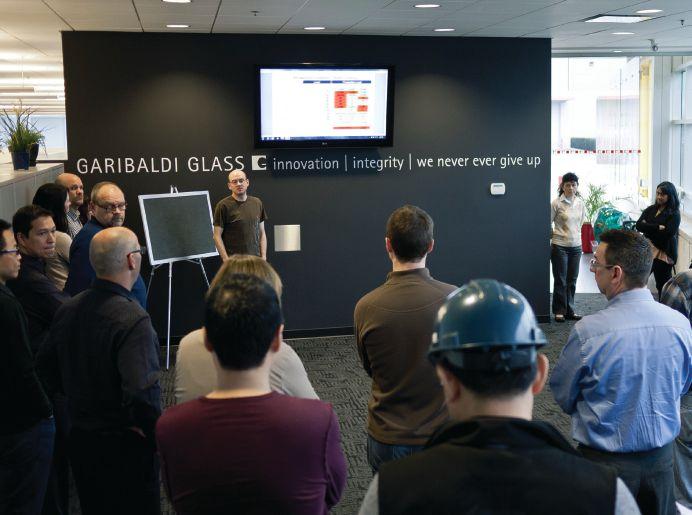
The staff huddle is an informal meeting a supervisor has with the whole Garibaldi team each morning. Sometimes the discussion is not even about work. Co-owner Carey Mobius feels these quick updates boost morale and keep everyone on the same page.
So often in life and business, we are tempted by the easy way out. We can always see the right path, the path of integrity and correct action, but so many attractive shortcuts present themselves. Paths that incur less risk, that involve less time or energy or worry. Paths that work well in the short term at the cost of our long-term welfare. The story of Garibaldi Glass is the story of three brothers who were determined to take the right path, and stuck to their best understanding of the correct way to do business even when formidable obstacles and easier ways out presented themselves. The result has been the formation of one of North America’s most innovative and respected custom glass fabricators, with a shiny new facility and a book of business that could be the envy of anyone in the glass construction industry around the world.
When the boys’ father, Bernd Mobius, had a heart attack in 1976 and died four years later at the age of 42, and the small glass shop he started in north Vancouver was on the brink of insolvency, it probably would have been easier for
AT A GLANCE | Garibaldi Glass, Burnaby, B.C.
18-year-old Carey to let it fail and let his mother, Doris, find some other way to support the family. But Carey made the decision to keep his father’s business going because he and his brothers had grown up in that shop. When they were young, his father ran a pet shop out of the front of the business so the boys would have something to do while he and their staff worked inside. It worked well, because other children would come into the shop and play with the Mobius boys and the pets. So, when the bank told the Mobiuses that the shop was going out of business in six weeks, Carey, two weeks away from graduating high school, stepped in to take over. “What we did at that time was worked out asses off on the phones in the front end by day,” Carey remembers. “We were really just buying one stock sheet at a time from the vendors as the orders came in just to keep our doors open, and that went on for years. Just growing some legs again. We’d be on the phones by day then stick around to do our cutting or whatever we had to do at night so it could go out with the glaziers in the morning, then be back
Location: Burnaby, B.C. No. of staff: 150 Plant: 160,000 sq.ft. Owners: Carey, Chris and Craig Mobius
Founded: 1966
Garibaldi Glass provides custom glass fabrication, including doors and entranceways, curtainwall, marine glass, interior glass and special projects, to builders and homeowners in B.C. and around the world. Named after Garibaldi National Park near the company’s original location in Squamish, B.C., it is run by the three sons of its founder, Bernd Mobius.
on the phones. Back then it was seven days a week, probably an average of 14 to 16 hours per day.”
This determination brought Garibaldi back to viability as a custom fabricator and installer for commercial and high-end residential homes. Carey’s brothers, Chris and Craig, joined the company full -time as they graduated high school through
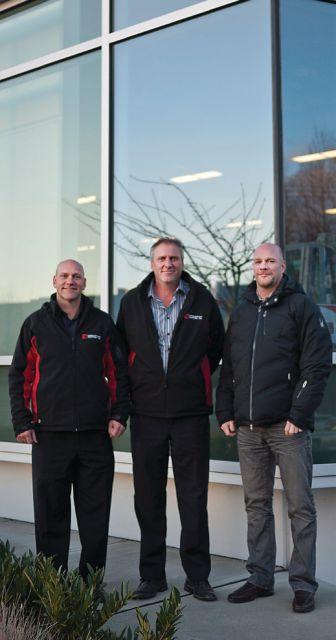
Right: From the left are Carey, Chris and Craig Mobius in front of Garibaldi’s test wall. The test wall allows architects to view full mock-ups of their designs up to 55 by 88 inches in size, including spandrels if necessary.
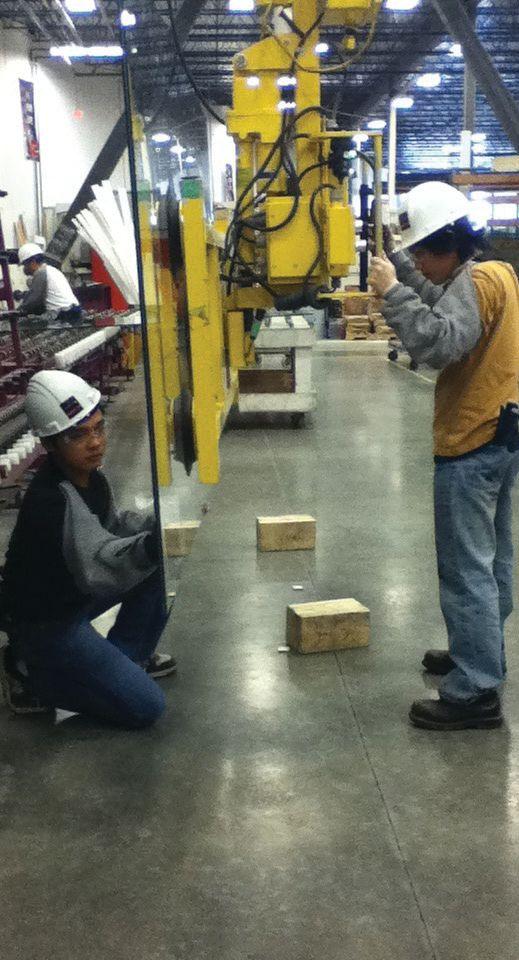
Bottom: Frequent quality checks are routine at Garibaldi. Taking on challenging projects keeps employees sharp, so even the simpler tasks are done right.
the ’80s, with Chris gravitating toward production as the company’s VP Operations, and Craig concentrating on sales. Carey has the CEO title. Carey is proud of the fact that two of the company’s original employees are still with Garibaldi: Nick Meissner and Betty Scott, who recently retired at the age of 71. The focus on team is another area where the Mobiuses refuse to compromise on best practices. First thing every morning, the entire administrative workforce gathers for what they call “the Huddle.” Various supervisors guide them through a discussion of what has happened recently, what is planned for the day and what is upcoming on the work schedule. Other company news and updates are passed along, and even personal notes about things in the staff’s lives they wish to share. These meetings frequently end with a number of smaller breakout meetings where staff from different areas of the organization take the opportunity to co-ordinate their efforts on specific projects. The whole thing takes between 10-15 minutes and delivers a great boost to morale and interdepartmental communication.
Another early milestone was the acquisition of a horizontal tempering furnace in 1990 to replace the old tong-hung one they had. This marked the beginning of another Garibaldi trait that would characterize the company going forward: a willingness to tackle any manufacturing challenge and build the equipment and competencies necessary on the fly. “We didn’t have the funds to buy a proper [furnace],” Carey remembers, “so we had to buy one that was dysfunctional. It was a 30-inch and we bought it for next to nothing and that became our project for the next year. Ernie, Nick, Betty and a few others –every night, every weekend we would break it down, build what we could, buy appropriate parts and try to make it work again. We pulled it out of the plant every single day. We literally put all the equipment in a road in a fairly busy area and we came out one day and there was an
actual parking ticket on our tempering furnace because we had taken a parking spot.” Chris is confident in saying Garibaldi had the first horizontal tempering furnace in western Canada. It is probably even more certain that it has the only parking ticket issued to a tempering furnace anywhere in the world. In any case, the fearless early adoption of new technology has rolled on throughout the company’s history.
In 1999, the Mobius brothers were once again pushed to the wall and given a choice to take bold action on behalf of the company, or to risk failure. Garibaldi had always been a service company, with
“There are some people who go to work to make a profit for today and some who go to build a business.” – Carey Mobius
an installation side that made up about half the business. In 1997, growth forced a move from its north Vancouver origins to a 42,000-square-foot leased facility in Burnaby, B.C. The move stretched the company’s resources, then the recession of the late ’90s bit. By 1999, circumstances were becoming dire. “We couldn’t figure out why we weren’t getting the business on the manufacturing end,” Carey remembers. “We had great equipment, great people, but a lot of people were not buying from us. And we couldn’t figure out what was going on and no one would speak to us even though we were friends with everybody.” The brothers did some soul-searching, then decided to shut down the contracting side of the business. It turned out to be exactly the right move. “Friends in the industry that we had known for years replaced every dollar we lost in installation within six weeks,” Carey says. “They said, ‘That is what we were waiting for. You are no longer a competitor of ours.’” Since then, Garibaldi has focused entirely on manufacturing with no installation
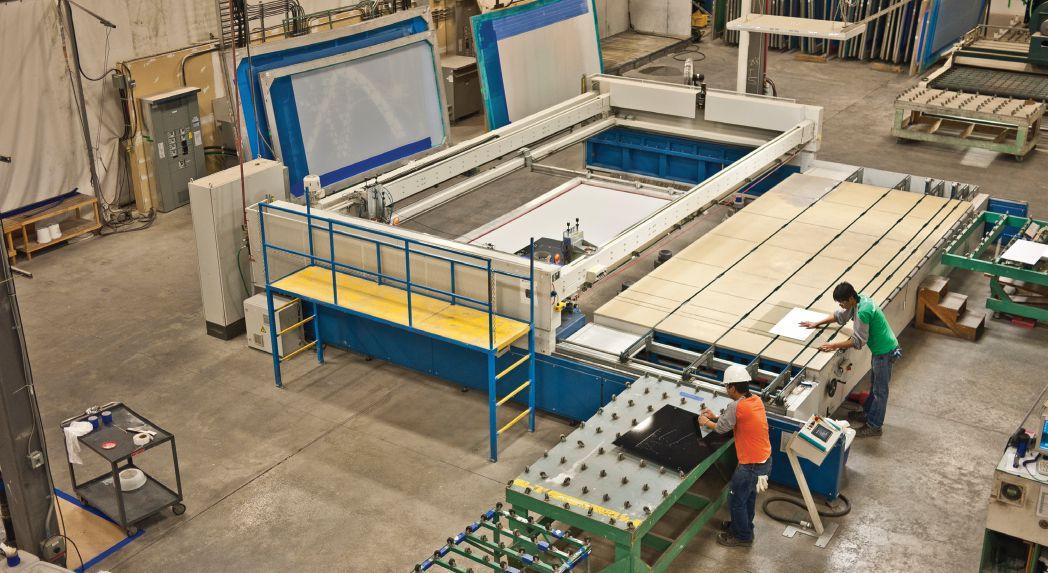
Garibaldi’s ability to screen print custom ceramic frit patterns sets it apart from most North American glass fabricators. It can apply frit to sheets up to 80 by 160 inches and 3⁄16 to ¾-inch thick. Solid and translucent colours are available.
component to the business.
The commitment to excellence is perhaps most evident in Garibaldi’s new 160,000-square-foot plant, opened in January, 2011. For years, Chris says, the brothers had dreamed of getting into a facility built to lean manufacturing principles. The Mobius brothers have a penchant for industry involvement and travel, and have toured dozens of glass fabrication plants all over the world, taking careful note of what they like and don’t like. “In the old days, we would open the phone book, when there still were phone books, and go visit a plant in the area,” Chris remembers. “We got a lot of ideas from that. Then, every single person who works here had a say in the design. We asked everyone to tell us what they would like to see in the new plant.” To this input, the brothers added some serious analysis to optimize the workflow. They created a spaghetti diagram to track the path of each common component as it moves through the shop, counting steps and touchpoints. Then they placed workstations to minimize those values, reducing the chances of worker fatigue, lost time and damage to workpieces. They also made a “blue sky” plan, placing every kind of equipment they could ever envision needing in the
plant, with capacity for a tripling of production. This established, pre-planned layout allowed Garibaldi to bury all the power and plumbing for the shop floor in the slab. Adding new equipment will be as easy as setting it in place and pulling the utility lines up from the existing trench. Their hard work to set things up right today will save hours of time and thousands of dollars tomorrow.
The move itself was an exercise in refusal to take half measures. Every company wishes to minimize downtime in a plant move. Garibaldi took that principle to a new level. On Dec. 22, 2010, the old plant shut down for the last time. The entire workforce worked for 24 hours straight, then went home to spend Christmas with their families for the next two days. Everyone returned on the 27th, then worked through to Jan. 4 with a day-and-a-half break over New Year’s. “We moved an 85,000-squarefoot, 24-hour-per-day facility from a full stop to full restart with all equipment, including the office, in six calendar days,” Carey says. “We moved the entire operation, including a double-bay tempering furnace. The vendor thought we were insane. They had never moved a furnace in less than five weeks.” To do it, Carey says, the team planned for two- and- a-
half years and had the schedule down to 15-minute increments with unassigned people who could jump in and help the moment any team fell behind.
Fear of new challenges is not in the Mobius DNA. The brothers happily jumped into a contract to supply glued-in marine glass for boat windows. Around 12 years ago, the company was approached to put a perimeter frit on some panes for urethane application. At the time, almost all marine windows were framed because of the challenges of vibration and thermal expansion coupled with the need for a durable, watertight seal. But this builder wanted a sleeker look, with glued-in glass. Garibaldi found that only one other company in the world was doing this kind of work at the time, and jumped at the opportunity to be second. “A large corporation would never have gone through the pain and suffering we went through to get good at marine because they would just look at the bottom line,” Carey says. “We look at the potential down the road. The reason we stuck to marine, even though it is not a big part of our business, is that it sets the bar for quality in our plant. So even if we are doing something as simple as railing glass, we minimize defects because the quality expectation is so high in our plant.”
One side effect of the Mobius’ unwillingness to compromise on best practices is they end up doing a lot of things for themselves that other companies would usually outsource. Take applying ceramic frit. When they saw opportunity in that market, they looked around at how others were doing it, briefly contemplated the price on new machines built in Europe, then decided to build their own. They called in frit supplier friends to advise and used their in-house machinebuilding expertise to construct their first screen-printing ceramic frit applicator. “We learned there is a line between too fine and too coarse on the application process,” Chris says. “The frit comes out like toothpaste through a screen. If you build it coarse, you get less detail but you can go faster.” The ability to screen-print ceramic frit has helped Garibaldi with its marine projects, its first big commercial project at 401 Burrard in Vancouver and many of the “crazy” requests the company gets from high-end custom homebuilders and commercial developments in the area. They can apply a wide range of patterns and colours, and have a method for using lines and dots to
reduce heat gain through the glass.
When it comes to being a good member of the glass community, Garibaldi once again takes the path less easy, but more positive. Each year, it hosts Garibaldi Glass Day: an educational event and tabletop show that attracts more than 500 people to the plant and the company throws a big party at the end. “One of the things I miss in this industry is the camaraderie that used to exist 15 or 20 years ago,” Carey says. “There used to be so much more interaction between vendors and competitors. That is part of this. The industry needs to come together as one. Products are changing so fast we want to take the opportunity to have industry people share their knowledge.”
Carey can remember the day he real-
ized that the only way forward for the company was to do things the right way, no matter how hard things got. “Back in 2000 when we were up against the ropes and didn’t know if we were going to make it because we were stretched so thin, it was actually a drive into work that did it for me,” he says. “I came across this bridge and it came on like a lightbulb. I realized right then and there that there are some people who go to work to make a profit for today and some who go to build a business. If you build a business and you build the model right and you stick to your goals and you stick to your values, the profits and the revenue should come in. That is what we have done ever since that day. Just stick to what we feel is right and don’t deviate from it.” •
What: Guided tours of the state-of-the-art manufacturing facility, structural door department, CAD lab, and sales office. Plant and office tours need to be booked in advance.
by BILL LINGNELL
Bill Lingnell has over 46 years of experience in the technical field of glass and architectural products. He holds three Masters of Science degrees in engineering: civil, mechanical and engineering science. Lingnell is the technical consultant for the Insulating Glass Manufacturers Alliance.
Multiple cavity challenges
The Insulating Glass Manufacturers Alliance will be releasing a new document to assist the industry in providing the proper technical procedures for multiple-cavity insulating glass units. The document is titled Design Considerations for Multiple-Cavity Insulating Glass Units. IGMA has recognized that the demand for increasingly energy-efficient fenestration products continues to rise. One method for addressing this demand is to increase the number of cavities in an IG unit. This method, while effective, can create new challenges. The guidelines presented in the document are therefore intended to assist those who design, specify, manufacture and install insulating glass units.
The purpose of this document is to guide the design, fabrication and use of multiple-cavity IG within the fenestration industry. The document is not intended to duplicate pre-existing guidelines for single-cavity IG. Rather, it is meant to expand upon those guidelines where requirements for multiple-cavity IG differ from those of single-cavity IG.
These guidelines have been developed from the collective experiences of insulating glass manufacturers, glass and glazing material suppliers, contract glaziers, design engineers, industry consultants, and persons experienced in successful IG manufacturing. The document will reflect existing technology and be subject to periodic review and change when new technologies become available, as is the normal process in IGMA. The document will contain various sections to cover the scope, reference documents, terminology, and design considerations. Under the design considerations section, many of the important technical issues are covered, including altitude limits, coatings, condensation, fabrication techniques, gas filling, glass thickness effects, non-structural intermediate layers, optical considerations, structural applications, thermal stress and wind loads.
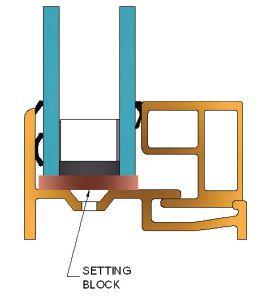
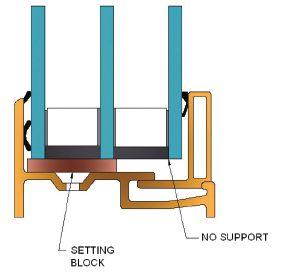
The following two figures show an example of a frame arrangement and setting block condition that is designed for a single-cavity IGU but neglects proper support for the third lite of a two-cavity or triple IGU.
Another example of the difference in single-cavity and multiple-cavity units is the response to temperature changes and air pressure differentials. Multiple-cavity units experience greater bending stress in the glass, larger lite deflection and higher edge seal pressures for the given lite and cavity thicknesses than would be experienced in a single-cavity unit. The lite deflections will be greater from resulting changes in temperature and atmospheric pressure and will be noticed more so in thinner glass and larger unit sizes. It is also known that small units with thick glass and large aspect ratios will experience exceptionally high edge seal pressures and even more so when the cavities are large. These conditions may have a tendency to have an adverse effect on the seal integrity and hence the long-term performance of the unit.
Other examples of negative performance conditions will be experienced when asymmetric glass thicknesses are used on the exterior lite or when laminated glass is used because of the glass deflection differences due to the stiffness differences of the glass lites. The conditions that relate to a thinner centre lite and different cavity temperatures may present uneven pressures on the inner and outer lites that cause different values of deflection. The presence of different cavity sizes may cause asymmetric stresses on the glass lites as well as the IG unit seals. •
IGMA
by TERRY ADAMSON
Terry Adamson is technical director at Westeck Windows in Chilliwack, B.C., and sits on the Fenestration Canada board as an affiliate association member. He is former president of WDMA-BC and is now a director on the board of FenBC and vice-chair to the residential division.
Implementing NAFS
British Columbia seems to be leading the pack (well, we like to think so) with the implementation of the B.C. Building Code 2012. It was implemented on Dec. 20, 2012, along with the NAFS-08/Canadian Supplement governing windows, doors and skylights. To say there has been some activity would be a huge understatement. Fenestration BC has been working hard to get the word out, via numerous webinars and seminars. We have also seen industry experts providing in-depth information to building officials during their province-wide tour of code update seminars.
Of great interest is how NAFS differs from A440 and the implications for manufacturers of windows and doors. Even with over four years of preparation time and the large amount of information provided by Fenestration Canada as well as Fenestration BC the readiness of many window manufacturers and most door manufacturers is far from where it needs to be. Although it appears the window folks are making progress with the labs getting busier, the door industry seems to be playing catch-up. There are some door manufacturers that have been preparing, and are seeing success in the labs, but many are still at the gate looking in.
We do not expect to see projects built under BCBC 2012 in need of doors and windows for a few months yet, but already I am hearing some wavering from building officials where we may possibly see a delay of implementation of NAFS with respect to swing doors only. Although nothing is official today, the concern is that, should the standard be enforced, there may not be
There are some door manufacturers that have been preparing and are seeing success in the labs, but many are still at the gate looking in.
FENESTRATION
sufficient rated and tested product to supply the demand. This is disappointing considering the amount of warning and information provided over the last few years by the various associations.
Of course, this may provide some relief for those who are not ready if they can jump-start their programs and are able to produce rated products to meet any possible delayed implementation date. There is no question that the challenge and frustration for door manufacturers is significant. But the frustration to those that took heed a few years ago and have already produced and tested is just as intense.
We can all agree that to develop products for testing is a lengthy and costly endeavor. Once you have succeeded, you want to begin to sell your products to recover these costs. This may be a challenge if they need to compete against untested products for long periods.
So here we go in B.C. NAFS is with us and it looks like 2013 will be interesting as it rolls out in new projects later this year. If you are not ready, you might see a short reprieve, but the time to take it seriously has passed and you need to make your plans and get busy on solutions. Contact your local association or Fenestration Canada – they are your best resources for information and members that can assist you. You do not want to be left in the dust by your competition.
Fenestration Canada offers members support and information on technical issues. The association’s technical consultant reports regularly on the latest issues and initiatives and represents the association on key committees and at national and international meetings where programs that impact fenestration products are being formulated or are evolving. Whether it is Energy Star, standards, and building codes or incentive programs, members are kept informed on important issues.
One way Fenestration Canada keeps members up to date is through seminars and webinars hosted by our technical consultants. Last year, the association hosted two webinars titled “Building Codes in Canada – Are You Ready?” where Jeff Baker and J.F. Kogovsek gave listeners the inside scoop on the national trend toward putting energy efficiency requirements into building codes. The presentation was recorded in English and French and is available to Fenestration Canada members any time through the member’s portal on the website. •
AUTOMATION SHOWCASE
Automatic positioning
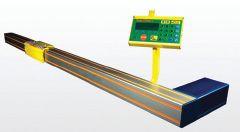
Measuring cuts can be quick and easy with a TigerStop lineal positioner. TigerStop automates your existing equipment with simple, affordable technology made to grow with you. TigerStop goes to the exact position quickly and accurately with the push of a button. All the operator does is set it and forget it. Wakefield Equipment also offers a full line of TigerStop-equipped up-cut, chop and V-notch saws from CTD Machines and Atech Machinery. These are versatile, heavy-duty, industrial saws built with top components to ensure long-lasting accuracy for years to come.
www.wakefieldequipment.com
Lifting made easy
Bystronic one-column lifts simplify glass handling thanks to their low dead weight and rigid guidance. The vacuum lifters are used in an X-Y craneway or slewing crane. All functions of the lifting equipment with a column are achieved pneumatically. The vacuum lifting technology works using Venturi nozzles. Since 1998, Easy-Lift has been popular in the glass processing industry. More than 1,500 pieces of equipment sold speak for themselves. The Easy-Lift is available for loads of up to 500 kilograms. In the standard version it is equipped with a pneumatic turning and tilting function as well as a pneumatically height-adjustable control unit. The integrated automatic economy operation for vacuum creation reduces energy consumption. www.bystronic-glass.com
Economical IG
The Erdman 400 Series line of equipment is a simple and economical solution to your
IG production needs. This low-cost insulating glass production system works with all flexible spacer systems applying your spacer straight with true 90-degree corners. Minimal operator training and no data input is required for standard operation. The 400 Series spacer applicator with a tilting grid muntin station, roll press and 400 Series secondary sealer pictured above is capable of producing more than 400 units per shift with two entry-level operators. The 400 Series performs straight-line application of spacers with true 90-degree corners and minimal operator training or expertise required. No data input is required for standard operation, and operators can run shapes or units manually. The machine has a small footprint of 12 feet by 30 inches. www.erdmanautomation.com
Four-point welder
The AKS 1900 from Urban is designed as an economic, vertical, four-point welder for vinyl window frame or sash profiles. The weld seam limitation is two mm. An optional 0.2 mm tight pinch is possible with special features. The machine is available in left-hand fixed or right-hand fixed configurations for flexible line layout.
Flexible fixture configurations include a standard quick-change system, optional separate top and bottom tiers or optional independent doublestack clamping. The welding heads are driven on a strong linear ball rail system. Maintenance is easy due to the accessible and numbered components, the real-time temperature monitoring, the maintenance menu with full self-diagnostics and the tool-less quick-change weld fixture and Teflon systems. The bottom heads are fixed and the top insertion height can be changed based on frame height for ergonomic loading and unloading. The AKS 1900 includes an industrial PC with a Windows XP user interface. A touchscreen interface is available on request. Data input is via manual keypad entry or download from 3.5-inch floppy disk, USB stick or network connection. Bar code reading capabilities are available on request. www.u-r-b-a-n.com
Wide range of products
Olbricht, from Hamminkeln-Brunen Germany, concentrates in glass automation and handling equipment for the architectural, automotive, appliance, photovoltaic and specialty glass industries. Available equipment includes loading and unloading for machines and automated lines, handling systems for flat and curved glass, CNC cutting machines for flat and curved glass, automatic breakout and grinding systems, laser and grit-blast edge deletion systems, robotic inspection vision and stacking systems, automated packing systems with interleave paper, automated laminated glass and parts assembly systems and custom, one-of-a-kind, assembly systems. www.cassosolartechnologies.com
Tube lifter
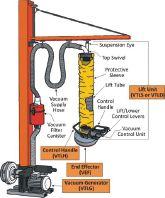
Vantage Series tube lifters from Wood Powr-Grip are designed to be easy to use and to speed production. Productivity and operator safety are enhanced because of the Vantage’s ergonomic and easily configurable features. Using heavily constructed Vantage Series lifters can reduce load damage and lower investment and service costs. Wood’s Powr-Grip’s Vantage Series lifters comprises four basic components: a lift unit, a vacuum generator, a rigid or flexible control handle, and an end effector. Interchanging these components makes these lifters suitable for nearly any application. Maximum load capacity for the Vantage Series is 440 pounds, minimum load capacity is 65 pounds. The Vantage Series is for flat-to-flat load movement only. Available accessories and options include quick disconnects, drop protection valves, angle adapters, bottom swivels, extended release valves, standard release valves, universal joints, a noise-reducing enclosure and large filters. www.powrgrip.com
Gantry glass handling
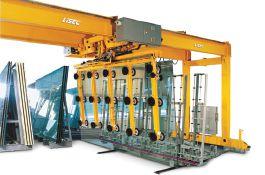
The PKL/SBL series from LiSec is a gantry system with electronically controlled floor drive units that runs on flat guide rails or directly on concrete floors. The automatic drive synchronization is controlled by optical sensors and ensures exact positioning of the loading system relative to the receiving station. The robust bridge drive system ensures exact positioning of the double suction frame and is available in rotating or tilting versions. It features process-controlled operation from pickup of large-sized sheets through to transfer to the turning table. A special high-speed version is also available with multiple drives and precision guides for the floor and gantry movement along with optimized handling and travel procedures. The PKL/SBL system supports up to 60 loading positions. Double-sided tilting and rotating suction frames are available. The control produces optimized travel routines for the shortest possible cycle times. It is available in half- and full-gantry versions. www.lisec.com
Fluid systemdispensing guide
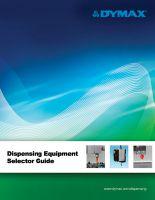
Dymax Corporation has released a new selector guide for manual and automated fluid-dispensing systems. This comprehensive guide provides detailed product information and is organized in a manner that makes comparison easy. Specifications such as dispense modes, viscosity range and material compatibility are included, as well as the type of supply reservoir that each unit can accommodate. The guide is available for download on the Dymax dispensing equipment webpage.
Dymax, in alliance with some of the world’s leading dispensing companies, has developed high-quality, field-proven dispense systems to fit many dispensing
applications. These systems include various automatic and manual dispensing systems, spray valves and related components for seamless integration into the assembly process. Dymax Application Engineers are available to help create the best dispensing solution for the application.
www.dymax.com
Efficient glass washing system
The founder of Best Makina started working as a European glass machinery technician and created his first machine for glass in Europe in 1985. With over 100 employees, the company is able to rapidly manufacture quality machines due to its experience. In 2004, the enterprise received an accreditation of the ISO 9001 norm and Best Makina is present in all glass-specialized expositions around the world. Best Makina’s product line includes complete
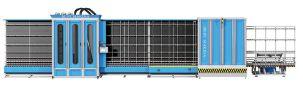
IG-unit fabricating CNC equipment, horizontal butyl extruders for spacers, two-component hydraulic pumps, automatic spacer-bending machines and manual or automatic roller conveyors. The BWPL is one of Best Makina’s CNC glass washing machines. The roller conveyors, water pumps and brushes are all automatically started to save energy. To wash the glass, the machine uses highly pressurized water injection along with polyamide brushes. The BWPL is also equipped with energy-efficient air knives to effectively dry the glass. This glass washing machine’s daylight illuminators also consume low amounts of energy. A complete cycle only takes 25 seconds to complete per glass unit and the BWPL has an extra conveyor rack to increase productivity and for processing oversized glass. This machine will also do double, triple, stepped and facade glazing. In addition, it will automatically detect the unit’s dimensions and will adjust the pressure settings accordingly. This model also comes with a tilting table for oversized glass unloading. www.bestmakina.com
Azon Saves Energy
INDUSTRYEVENT
RIDING THE GREEN
by Rich Porayko
The U.S. Green Building Council welcomed close to 25,000 to San Francisco, Calif., for its 11th annual Greenbuild International Conference and Expo on Nov. 14, 2012. According to the organizers, the event is the world’s largest conference dedicated to green building. San Francisco, booming with construction but apparently saturated by offshore curtainwall, marked the biggest expo in Greenbuild’s 11-year history, featuring three floors and 1,660 booths displaying the latest technological innovations and cutting-edge products for everything from toilets to flooring.
The event was recently described by glass blogger Max Perilstein as a “portrait of disgusting excess” and a “gluttonous ego fest” due to the contradictory nature of having a huge, debatably green-washed commercial trade show event with swanky hospitality suites and swag bags all punctuated with a rock concert featuring the band Train, in the name of sustainability. With that said, it was a major architectural event, all the players made an appearance and the overall mood was very positive.
The sessions were well attended and high-calibre; however, reviews from the expo floor were mixed. Originally slotted for three days and then trimmed to two, some exhibitors felt the retooled intensive schedule of 150 back-to-back seminars detracted from the show floor. Others were put off by how spread out the expo was over the three large buildings that make up the Moscone Center. As with any show, location is important and exhibitors with prime booth spaces were happy as mobs of attendees, including A-list architects and major west coast glazing contractors, would cluster in certain areas causing booms for some exhibitors and busts for others.
The world’s largest sustainable design event visits
ties and even dual cavities on our thermal break products for aluminum window companies.”
Overall, the quality of the attendees was very high, with suits and professional business attire the norm, raising the bar from the Birkenstocks and ponytails of past AIA Expo attendees. From the glass and metal perspective of the show, surprisingly, there wasn’t much representation from Canada other than a shared booth from the government of New Brunswick.
Mike Gainey, warm edge business manager for Azon USA, was happy with the event. “It’s been fun. People are looking for improved energy performance and they know that every little component that goes into glass and glazing is important and the products that Azon offers fits right into this regeneration of green building and improved overall U-factor. In the glass and glazing industry as a whole, the aluminum and glass suppliers have put together a good package that makes sense economically and is energy efficient wise as well. The warm-edge product continues to grow in the commercial product. Even though the pour and de-bridge thermal barrier has worked really well for a long time, Azon has continued to improve with wider cavi-
Mike Brogan of Skyco Shading Systems was also pleased with the turnout. “It’s been awesome. The technology level has been changing. You can see it throughout Greenbuild. In every aisle there is something new and innovative. It is really changing the whole spectrum on how we are designing and controlling energy in buildings.”
According to Brogan, Skyco offers innovative and unique solar shading products such as light harvesting panels that can power shades with no wiring and solar control fabrics that can change the way a building is shaded for energy performance and comfort. The company distributes louvre systems that Brogan claims are light redirecting, which means they control heat and glare while harvesting daylight and maintaining views to the outside. “Those are the four aspects to the perfect building facade,” Brogan says.
The seminar “What You Need to Know about Bird-friendly Design and Why” was interesting. Don’t roll your eyes just yet. This is real and is coming to major urban centres across Canada soon, if it hasn’t already been adopted by your local council.
GREEN WAVE
the West Coast.
Co-presented by Christine Sheppard, Bird Collisions Campaign Manager for the American Bird Conservancy, the audience was told that that collision with glass (also known as a strike) is the single biggest known killer of birds in the United States, claiming hundreds of millions or more lives each year. Sheppard claims that unlike some sources of mortality that predominantly kill weaker individuals, there is no such distinction among “victims of glass.” The several-hundred-strong paying audience of architects, politicians, media and students heard that because glass is equally dangerous for strong, healthy, breeding adults, it can have a particularly serious impact on populations.
“Bird kills at buildings occur across the United States,” claimed Sheppard. “We know more about mortality patterns in cities, because that is where most monitoring takes place, but virtually any building with glass poses a threat wherever it is.” The audience was told that the first 14 floors are the most dangerous as they are more likely to reflect trees or enclose an atrium, which are apparently death factories for birds. Mirrored and reflective glasses are also apparently dangerous day and night.
The group has been successful in lobbying major cities such
Greenbuild continues to grow, and is experiencing some of the associated pains. But when it comes to sustainable design, it is still the place to get the latest information and the jump on the upcoming trends. (Photo credit: Oscar Einzig)
as New York and San Francisco to adopt a “lights out” policy to turn off public and private lights after midnight – not to save energy but to reduce birds getting trapped in beams of light and colliding with buildings.
According to the ABC, the push to make buildings greener has ironically increased bird mortality because it has promoted greater use of glass for energy conservation; however, luckily for the glass industry, green buildings do not have to kill birds. Many functional and attractive solutions are available including screen-printed frit patterns, etched glass, exterior shades, screens, latticework, grilles, and other devices outside or integrated into the glass.
Ironically, the “Natural Light for All” town hall more or less contradicted everything that was discussed in the bird-friendly design seminar and advocated for more glass and access to natural light and views. It was co-presented by Jean Hansen, sustainable interiors manager for HDR. Hansen told the audience that daylight affects us in numerous ways. “Psychologically, physiology, biologically – we require access to natural light for our health, performance, and visually, especially those responsible for complex tasks. Daylight suddenly provides us with a balanced spectrum of colour. Intuitively, we are attracted to spaces that signal liveability, comfort, well-being and emotional feelings. We are attracted to daylight views, and distant views for surveillance. Natural light has also been shown to speed the healing process.” But everyone in the glass industry already knew that, right?
More than 5,000 gathered in the LEED Gold Moscone Center for the closing plenary, which featured several speakers and special guests, including California Governor Jerry Brown.
“My message today is these things go together: a healthy climate, a healthy environment, and healthy individuals,” said Governor Brown. “California is at the forefront of innovation, and it’s up to you to galvanize the rest of the United States. I see this conference as a mobilizing vehicle to help get this job done.”
Let’s hope that Governor Brown is right. Greenbuild 2013 will be held Nov. 20 to 22 in Philadelphia, Pa. Don’t forget to buy your carbon offset credits and pack your body armour. •
About the author
Rich Porayko is a professional writer and founding partner of Construction Creative, a marketing and communications company located in Metro Vancouver, B.C. richp@constructioncreative.com.
by BRIAN BURTON
Brian Burton is the author of Building Science Forum and is serving on CSA’s Fenestration Installation Technician Certification Committee. Brian is a research and development specialist for Exp. He can be reached at brian.burton@exp.com.
Thanks, NRC
The Canadian glass construction industry has benefited greatly from over 50 years of technical input and indirect assistance from the National Research Council and the Institute for Research in Construction. The Canadian Construction Materials Commission has also played a role by fostering continuing innovation in the industry. I have written on a number of occasions about the tremendous importance of the construction industry, which rarely receives the attention it warrants as one of Canada’s largest economic sectors. In 2009, its contribution was $69.1 billion while providing employment to hundreds of thousands of Canadians, according to Statistics Canada. Significant economic and social benefits have been derived from the National Model Building Code, which was introduced in 1941. The development of our model building code system can actually be traced to the postwar housing boom in the 1930s and work on code development began in earnest in 1937. In 1986, the Division of Building Research became part of the NRC. The NRC had, and still does have, a focus on many other specialized industries in addition to construction including transportation, manufacturing, technology transfer, telecommunications and many other advanced and developing technologies. One of the major initiatives undertaken by the NRC involved the production of the Canadian Building Digests, which began in earnest in the early ’60s when a core group of researchers began producing the well-known series. The CBDs were modelled on similar material that was published by the British Building Research Establishment, which has been in continuous operation since 1917 and is now a non-profit trust. As a monthly publication, the CBDs reached many thousands of readers
In many ways, the Canadian Building Digests trace the development of our understanding of cold weather building science.
FENESTRATION FORUM
including architects and building designers. At the time they started producing the CBDs there was a focus on dealing with condensation issues and developing methods to avoid the repeated wetting and drying of construction materials and the costly effects this had on buildings in Canada’s extreme climate. When it came to cold weather construction, there were certain factors relating to building performance that attracted the attention of government researchers. For example, in addition to condensation, the movement of moisture in relation to indoor and outdoor environmental conditions, air leakage and the thermal performance of various elements contained within the building envelope were considered problematic and complex from a building science point of view. The CBDs eventually addressed what came to be known as the “open rain screen” concept and also explored the stack effect, ice lensing and the analysis of structural movement and deflection. Much of this research was driven by the increasing trend toward high-rise commercial office buildings.
The energy crisis in the early 1970s drew attention to energy conservation measures which have continued to the present time. Some of the information gained from the production of the CBDs eventually led to publication of the 1983 book Building Science for a Cold Climate, which is still considered relevant today. The CBDs also dealt with issues relating to health and safety, acoustics, technology transfer, daylighting design, and many other factors that affect the overall performance of buildings, construction materials, and occupant comfort and productivity. You can access 240 CBDs online at http://archive.nrc-cnrc.gc.ca/eng/ibp/irc/cbd/digest-index.html.
In total, this group of researchers at the NRC produced 250 CBDs, of which fenestration was the subject of close to 20. In many ways, the CBDs trace the development of our understanding of cold weather building science. The CBDs continued to be issued until 1988 and they are still available in printed form from the NRC.
In my opinion, there is certainly a lot to be gained from revisiting and rereading these important documents. They definitely enhanced our understanding of performance of buildings in cold weather and there are many countries that would benefit from Canada’s substantial investment in this unique field. •
by FRANK FULTON
Frank Fulton is president of Fultech Fenestration Consulting. He has been in the industry for 30 years and can be reached via e-mail at fultech.fc@gmail.com.
No easy answers
If you are an aluminum window manufacturer, curtainwall systems provider, or commercial glazing contractor in Canada, your life has become a lot more complicated recently, and this is only the beginning. If it hasn’t hit you on a job yet, don’t worry, it will. Hopefully this heads-up will save you some grief and a big loss.
Building codes across the country have changed or will be changing to ensure that all future buildings are constructed in a much more energy-efficient manner. Personally, I think the moves are in the best interests of all of us and our future generations. However, the guidelines, or the lack of them, for putting the code requirements into practice leave a lot to be desired. In Ontario, two major changes to the Ontario Building Code have taken effect within the past year. They are, Supplementary Standard SB-10: “Energy Efficiency Supplement,” and Supplementary Standard SB-12: “Energy Efficiency for Housing.”
SB-12 (at 27 pages the easier to follow of the two documents) deals only with housing excluding highrise construction. Besides providing compliance requirements for the entire building, it prescribes a U-value for windows and doors. That requirement on its own is easy enough for the window manufacturer or contractor to comply with, as using the National Fenestration Ratings Council’s thermal modelling tools to determine the U-value of a window or door product is a routine practice in the industry. However, the U-value of the windows or doors required to comply with SB-12 is a moving target and changes depending on a number of factors. The first is the location of the house within the province: is it in Heating Degree Days Zone 1 or 2? Next, is
Ask that an addendum to the specifications be issued clearly stating the thermal requirements.
the type of heating system installed in the house natural gas or electric? The degree of efficiency of a natural gas heating system will affect the U-value required, as will the ratio of windows to wall area. Based on where all these variables fall, the required U-value of the windows can vary between 1.4 and two watts per square metre on centre – a huge range. Some well-designed, double-glazed, aluminum window products with upgraded thermal breaks and glazed with lowE glass and argon gas will only be in compliance for buildings in southern zones if the building is equipped with 90-per cent efficient natural gas heating and a window-to-wall ratio not exceeding 17 per cent. For other areas, or where the heating system is less efficient, or where the area of windows in the building is greater than 17 per cent, aluminum windows will most likely need to be triple glazed with two low-E coatings and argon, or glazed with heat mirror. Vinyl, fibreglass, or wood windows are capable of complying to most of the requirements depending on the glazing used. Northern zones require triple glazing.
As if using SB-12 weren’t complicated enough, SB-10 is a 113-page document designed for use by professional building engineers in the design of all buildings other than low-rise housing. It is used to determine the required U-value for the glazing in a building, but is well beyond the understanding of, and of little use to, most window and glass guys. As with SB-12, the U-value requirement for the glazing is a moving target determined by other factors.
So the problem facing window and curtainwall contractors is how to bid a project and be certain that they are in compliance with the building code. Most specifications do not clearly spell out the U-value requirements of the windows or curtainwalls, and the bidder will never know enough about the rest of the construction to determine what the U-value has to be. When bidding projects where a U-value is not clearly stated for the glazing in the specifications, ask that an addendum to the specifications be issued clearly stating the thermal requirements. If it is not, cover yourself by stating the U-value of the products you are proposing in your bid, with a qualification to your bid that you cannot determine compliance to the building code without further clarification from the architect. Otherwise, you will be on the hook for compliance after the fact, and this could end up costing you a lot of money to fulfil your contract. •
Showcasing the Largest Selection of Door Systems in One Catalog! Order, View or Download at