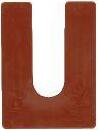
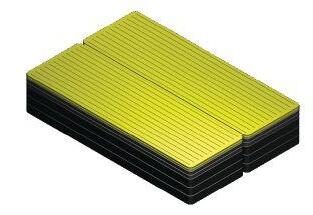
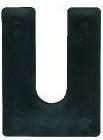
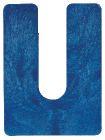
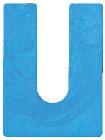
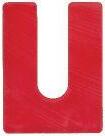
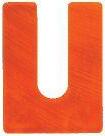
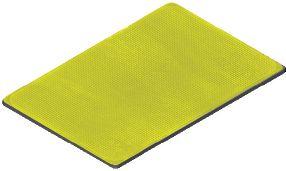
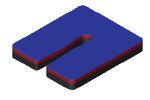
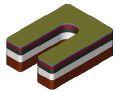
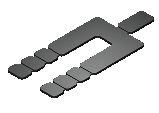
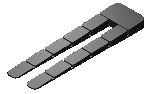
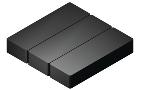
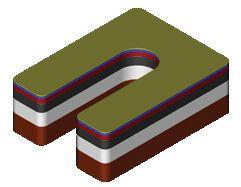
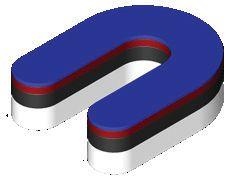
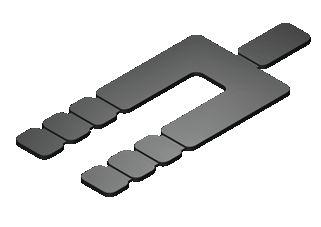
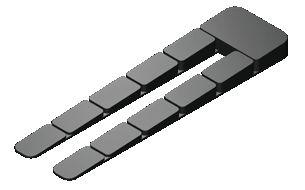
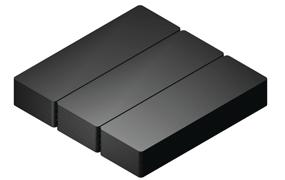
Grove Shims™ has the perfect shim for all your shimming needs. With color-coded shims and solid thicknesses, the right shim can be easily applied for perfect alignment. No guesswork or realigning. Our shims save you time and money.
* Contact us about eligible tariff fee reimbursements on the purchase of Grove’s shims only. “This ad applies to U.S. and Canada only. Offer expires 12/31/20.”
Need help? Just ask! We’re here to help. 978-534-5188 Visit us online to see all of our available solid 3x4 Shims. www.groveshims.com
Free Samples are Available Upon Request. Grove Shims™ is the leading producer of plastic structural shims. We have been in business since 1962, making shims since 1975, our family-owned business provides prompt, personalized attention to each order. In addition to our large line of in-stock shims, we will custom fabricate parts to meet your unique requirements. Unlike many competitors, our shims are solid and do not have hollow voids, so you can depend on them in crucial, load-bearing conditions.
Here’s a look at the what aerogel, a remarkable light-transmitting, super-insulating and lightweight material, can work wonders when creating facades or panels.
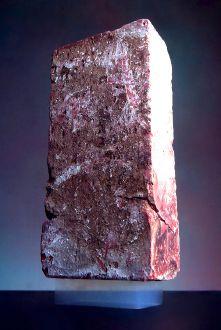
On the cover, a block of aerogel floats on a flame. It protects the flower placed on top of it.
Getting window wall right
Virtual events
Here’s a look at how virtual industry events are providing value and sharing relevant information.
16 A step further
Our look at the F150 upgrades for 2021. 22 BIM for curtainwall systems
How Building Information Modeling can help generate predictable budgets and delivery dates while also paving the way for better management of building assets post-construction.
New product showcase
Our look at top new supplies to power your products and installs.
COLUMNISTS
Haya Soghrati of UL Canada joins Patrick Flannery to share her knowledge of window wall standards and testing. The discussion ranges across the relevant standards governing window wall today, the implications for design and testing, requirements for energy efficiency and more. To listen, go to glasscanadamag.com > Podcasts or subscribe to the GlassTalk podcast on your favourite podcasting service.
A seat at the table
EDITORIAL
It’s better for all of us if we include workers in our decision-making.
The New Class War, a book by Matthew Lind, offers an insight into what is going on in worldwide politics that I think is bang-on, and pretty relevant to our industry. Essentially, he argues that politics is about the exercise of power in three spheres – government, economics and culture – and that an “overclass” of educated urban elites has established a stranglehold on this power in developed countries, upending a more egalitarian post-WWII arrangement that included the working class in the running of society. Since this is a business magazine, I’ll focus on the economics.
Lind points to the importance of trade unions and local industry associations in the decades following the war, remembering that they were included in threeway negotiations with governments and corporate owners on policy, including things like minimum wages, sector wages and industry regulations. The arrangement led to the creation of the modern middle class throughout the Western world. But, in Lind’s telling, the overclass only reluctantly agreed to this powersharing as a way to restart the postwar economy, and, in the ‘70s, began to push back, using issues like stagflation, the oil crisis, inflation and the need to counter Japan’s rising industrial strength as wedges to drive “neoliberal” ideas.
NEXT ISSUE
• Prompt payment
• Storefront
We were slower here in Canada than the U.S. to accept neoliberalism, but I remember well the rising tide of rhetoric in the ‘90s against Crown corporations, unions, regulation, welfare...essentially any application of taxpayer dollars that was under government control. These arguments were predicated on two assumptions: that public debts and deficits would eternally drive up the tax bill until the economy was ruined, and that public agencies couldn’t organize a two-car parade. Neither of these assumptions were (or are) wrong in the broad sense. But by demanding total freedom for markets and corporations and sidelining organizations with a more collective focus that might have had a motive to act for the working class, we created an environment of maximized productivity at the cost of financial security for non-professional working people. Outside of a union, pensions and job security are hard to come by, as is a wage that might buy a house in an urban area. And private-sector unions have nowhere near the membership they used to.
“Good,” you are probably thinking, and to some extent, I agree. In general, I like governments to do what only governments can do and nothing else. But the polarization that is ripping the U.S. apart right now has its roots in these issues, and it would be naive to assume Canada will always be immune. Then there is the backlash. Young people are skeptical of capitalism and even democracy in numbers we haven’t seen before. They certainly don’t see government debts and redistributive economic policies as a problem. Someday soon, they will be making the rules and if we don’t establish a new dynamic (or re-establish the old dynamic) between the masses and the elites, we may be looking at a set of policies that is very bad for business. Even at the level of your individual company, things work best when everyone, top to bottom, feels a sense of ownership and responsibility. We need to give workers a seat at the tables of power in our industry and in our communities. •
GLASS CANADA
August 2020
Volume 32 • Number 4
Annex Business Media
P.O. Box 530, Simcoe, Ontario N3Y 4N5
EDITOR | Patrick FLANNERY pflannery@annexbusinessmedia.com 226.931.0545
ASSOCIATE EDITOR | Sukanya RAY GHOSH srayghosh@annexbusinessmedia.com 647.203.7031
VP SALES/GROUP PUBLISHER | Martin McANULTY mmcanulty@annexbusinessmedia.com
COO | Scott JAMIESON sjamieson@annexbusinessmedia.com
AUDIENCE DEVELOPMENT MANAGER Urszula Grzyb ugrzyb@annexbusinessmedia.com 416-510-5180
CIRCULATION
Tel: 416-510-5180
Fax: 416-510-6875 or 416-510-5180 Mail: 111 Gordon Baker Rd., Suite 400, Toronto, ON M2H 3R1
SUBSCRIPTION RATES
Canada - 1 Year $37.00 (plus tax) U.S.A. - 1 Year $85.00 (in CDN dollars)
Publication Mail Agreement #40065710 Printed in Canada ISSN 0843-7041
Occasionally, Glass Canada will mail informationon behalf of industry-related groups whose products and services we believe may be of interest to you. If you prefer not to receive this information, please contact our circulation department in any of the four ways listed above.
Kawneer’s 1620UT/1620UT SSG Curtain Wall System surpasses expectations. Built on the success of the 1600UT Curtain Wall platform, the new system sets the standard for thermal performance. A narrow 2" sightline enhances the sleek, monolithic look of the exterior and views from the interior. And, an engineered polymer thermal break and the ability to accommodate 1" insulating glass increases building performance and occupant comfort. 1620UT/1620UT SSG Curtain Wall System: When less means more.
ARCHITECTURAL SYSTEMS ENTRANCES + FRAMING CURTAIN WALLS WINDOWS kawneer.com
NEWS
Surety Association of Canada announces new bond form for IPD project
On May 7 the board of directors of the Surety Association of Canada gave its approval to a new specialty bond form designed for use with Integrated Project Delivery projects. The new bond template had been under development for more than a year and is designed to be used in conjunction with the standard CCDC-30 -Integrated Project Delivery Contract. The IPD model seeks to create a team approach where all parties enter into a single contract, and where the decision-making, the risks and the profits are shared. Proponents of the model suggest that this approach should minimize, if not eliminate the adversarial dynamic that can develop when each party pursues its own interests; and hopefully incentivize more cooperative and collaborative relationships. IPD presents a new set of challenges to the construction industry as it works to create a sustainable and workable model that puts the theory into practice. One such challenge surrounds risk mitigation and, in particular, the risk of contractor failure. In discussing the need for protection against that risk of contractor failure, SAC has found that IPD proponents will often dismiss these concerns. They point to the all-hands-on-deck approach of the IPD arrangement and suggest that this coordinated focus on the common interest diminishes any such risk to the point of being insignificant.
SAC president Steve Ness suggested that this simply is not the case. “Bonding companies have learned the hard way that the risk of contractor default doesn’t always originate within the four walls of the project itself. Many and perhaps most of the issues that give rise to project contractor failure are business- or finance-related and may have little or nothing to do with that contractor’s ability to successfully perform the work on any particular project.” he said.
Ness pointed out that replacing a failed contractor mid-way through a construction project can be an expensive proposition, begging the question of what will happen should a major participant in an IDP contract become insolvent. In response to this challenge, SAC has developed a template performance bond that responds to the unique structure and working dynamics of the IPD project arrangement. In creating this new product, SAC
undertook a comprehensive review of the complex inter-relationships between parties to IPD contracts. From there, the drafting team identified the points of vulnerability to that risk of failure of the project contractor and/or one of the other construction participants to the IPD team. While the new bond template is intended for use with the CCDC-30 standard, it also seeks to be flexible enough for use with modified versions of this document and for other variations on the IPD theme. A few highlights and observations:
• The new bond arrangement contemplates that each construction participant in the project will post its own bond that guarantees the performance of its obligations under the IPD contract. Thus, there may be several bonds on any given project, posted by each of the major construction parties.
• As the source of project funding and ultimate bearer of the financial risk of a cataclysmic event, the owner is the logical choice as obligee or beneficiary under the bond. The SAC IPD Performance Bond identifies the owner as the sole obligee under the instrument.
• The SAC IPD Performance Bond will protect the owner from any increase in costs of completing the principal’s work under the IPD contract following that principal’s default and termination under the terms of the IPD contract. This will include any additional direct costs to complete the principal’s work along with any HST/GST and owner’s expenses.
• A claim on the bond can be advanced when the principal is in default of its obligation and its participation in the project has been terminated by the other members of the IPD team.
“The risk of a major contractor insolvency or failure, if not adequately managed, can have catastrophic consequences to the project and all of its participants. A surety instrument specifically created for use on IPD projects will go a long way to mitigating that risk,” added Ness.
A specimen copy of the new SAC IPD bond along with a user’s guide that explains its features can be reviewed and downloaded from the SAC website.
INT Machinery expands technical service staff
INT Machinery recently added Serdar Akmese as field service technician. Akmese is responsible for increasing INT Machinery’s service capabilities. He brings with him his service experience developed over several years working for a premium European window machinery manufacturer. His addition attests to the constant growth of INT Machinery both in the residential windows and commercial facades industries. Additionally, INT Machinery added the representation of Oemme to its line of brands across Canada. Oemme is an Italian manufacturer of thermal break assembly machinery including knurling, thermal break inserting and rolling machines. With the addition of Oemme, INT Machinery now offers a full range of solutions for the aluminum window industry.
CANADA’S GLASS ASSOCIATIONS
AVFQ
Itis with a renewed team in 2019 and a lot of creativity that we have rethought our events. For example, the new AVFQ Omnium Golf Tournament and a much larger version of our annual convention that included the Gala Prix Lumieres. During this evening, seven awards were presented to AVFQ member companies. Sensitive to the needs of our members, we have developed value-added training programs. We believe in the importance of having qualified installers and that is why we have taken the lead. The demand for this training, offered in both French and English, has exploded. To support our members in digital technology, we have launched Building Information Modeling training that will continue this fall. AVFQ has obtained government financing to offer various training courses ranging from health management systems to sales and marketing during the pandemic. The presence of the AVFQ at industry conferences in Canada and the U.S. has certainly played an important role in our growing notoriety. The membership rate has strongly increased and the requests are constantly surging. Despite current constraints, AVFQ continues to perform throughout this period. Our members needed our support and that is what kept our team motivated. Gathering, informing and representing our members was the priority. Our crisis management was generously applauded. We are exploring various avenues to offer attractive and adapted events. Why not a hybrid concept, both virtual and face-to-face? This is a possibility for the Salon Rendez-vous CEBQ-AVFQ that
has been postponed to the fall and for the 2021 AVFQ Annual Conference. We continue to keep our members informed of industry innovations and improvements, supporting them with the new challenges they face. AVFQ is present at various events, on industry committees and in political and ministerial circles, determined to defend the interests of its members. We are proud to be the only Quebec association that is an expert in our field, and we will continue to innovate to offer our members professional services, up-to-date information and relevant training.
Fenestration Association of B.C.
It
has been a bit of time since we have been able to tell you what FenBC has been doing during COVID-19. On a daily and weekly basis, we have been reviewing notices, newsblasts and other associations’ communications to see what information is relevant to the FenBC membership. We have provided a few webinars from other organizations. Our FenBC hosts, Amy Roberts and Jason Loutet, have been busy recording new podcasts to keep the FenBC membership informed of current industryrelevant topics. We are ensuring that the FenBC membership has the most up-to-date information on protocols to ensure the safety of staff and in offices or on-site in the community. We have engaged the services of Jeff Baker of WestLab to represent the interests of our FenBC membership during discussions on the 2020 National Building Code. FenBC has a new website that is mobile and tablet friendly.
We will soon have a membersonly discussion page ready that will provide membership with access to all the technical papers, podcasts and recorded conference sessions. FenBC now also has a a Bid Central account so we can monitor new opportunities for bidding. We have added a Government Relations Committee with Anton Van Dyk as the chairperson. FenBC has been working closely with FGIA and is a member of several associations that allow us to participate in key industry conversations. That about brings you mostly up-to-date on what FenBC has been doing. If you want to participate on one of our committees please let Zana know – zgordon@fen-bc.org.
Architectural Glass and Metal Contractors Association
Onceagain, our AGMCA glazing contractors have risen and met the unprecedented challenges that the global pandemic continues to throw at them. They have successfully identified the risks, determined what controls were needed to create a safe workplace, implemented safety plans, and communicated these actions to their valuable employees and any other people entering their place of business or jobsites.AGMCA member contractors have treated the health and safety of their valuable glazier and metal mechanics as paramount, and take pride in the fact that our industry has one of the lowest infection rates in the province. Our members are inherently a resilient and optimistic group, and they have met the many challenges head-on. From project shutdowns, to supply chain
disruptions, to adapting to site meetings via Zoom – all while managing cash flows that have virtually dried up. Our glazier training centres, along with the vital apprenticeship programs they deliver, have re-opened and the warm weather has brought some welcome relief. This battle is far from over, but all AGMCA members should be commended for their outstanding efforts to date. Visit us at agmca.ca.
Ontario Glass and Metal Association
Asa member of Prompt Payment Ontario, the OGMA recently distributed a link to members to a guide (Ontario Construction Act –Trade Contractors Guide) for glazing contractors to use to understand the procedures to follow to enhance their chances of being paid for the work they do. You can access a copy on the OGMA website ogma.ca. The COVID-19 pandemic has put a hold on most of the activities we would normally be working on. We cancelled our annual spring golf tournament and have not planned any seminars as yet for 2020. Our fall golf is scheduled for Thursday, Sept. 24, at the Country Club in Woodbridge and we sincerely hope to be able to host the event, but time will tell. In the meantime, we will continue to distribute information to our members that we hope is helpful in finding solutions to managing your business and weathering the economic storm. We sincerely hope that you are diligent in safeguarding your health as well as your families, employees, and co-workers and we look forward to seeing you when the circumstances are better.
Skills Ontario receives additional support from Ontario government
Ontario Minister of Labour, Training and Skills Development, Monte McNaughton, has announced that the government of Ontario is investing an additional $3.5 million in Skills Ontario for the 2020-2021 school year to help the organization help continue to promote the skilled trades. This is in addition to $1.5 million in new funding the government provided earlier this year to support outreach and promotion to youth, educators and parents.
“As Ontario carefully reopens, the skilled trades are an essential part of the recovery and future of our economy,” said McNaughton at the Skills Ontario Virtual Skills Summit. “We need to continue to promote the skilled trades to young people to give them access to jobs that are fulfilling, meaningful, and well-paid and to keep the many industries that depend on skilled trades
thriving. Skills Ontario does this very well.”
“On behalf of Skills Ontario, we thank Minister McNaughton and the government of Ontario for their tremendous support of our efforts,” said Ian Howcroft, CEO of Skills Ontario. “Our objective is to connect education, experience and employment for youth so that they can be aware of, explore and pursue the incredible opportunities in the skilled trades and technologies. We are grateful for the increased support from the Ontario government, and look forward to continuing to deliver programs to help strengthen our economy and secure our future. The pandemic has underscored the importance of skills and technology careers, and they will help lead us out of our economic challenges.”
Vitro releases technical paper addressing safe glass handling
Vitro Architectural Glass has published a glass technical document titled “Decontaminating Glass Surfaces” (TD-154). Developed in response to customer questions related to glass handling and safety during the COVID-19 crisis, the five-page primer addresses a range of topics of interest to glass fabricators and window manufacturers as well architects, specifiers and designers. They include: using glass for protection and isolation in hygienecritical environments; machine-cleaning of glass; localized cleaning of uncoated glass surfaces; recommended cleaning procedures for coated glass surfaces; and recommended products for glass cleaning. Paul Bush, vice-president of quality and technical services, explained that due to glass’s ability to be cleaned and sanitized easily, it has been used throughout history to protect human life during plagues, epidemics and pandemics. In addition, the float glass process is completely automated, which
means architectural glass is produced without human contact.
“The unique characteristics and properties of glass make it an excellent material choice for interior spaces where easy-to-clean surfaces and physical barriers between people and their environments are required,” he explained. “It is ideal for walls and partitions because it enables us to see what is on the other side of a barrier while protecting us from potentially harmful viruses and bacteria.”
Specialized applications for glass walls and partitions include isolation rooms, sterilization rooms, burn units, clinics, maternity wards, pharmacies, laboratories and more. Although it is not anti-bacterial, glass with specialized coatings such as Clarvista coatings can help ensure safer, more hygienic surfaces in showers, bathrooms, spas, swimming pools and other damp, humid environments because they do not rust or stain.
NGA cancels GlassBuild America 2020
TheNational Glass Association has announced that GlassBuild America, slated for Sept. 15 to 17 in Las Vegas, has been cancelled. The event will return in 2021, Sept. 13 to 15 in Atlanta. The state of Nevada currently prohibits public gatherings of more than 50 individuals in any indoor or outdoor areas. The Las Vegas Convention and Visitors Authority does not anticipate that this limitation will be increased in a manner to allow large groups to gather in the Las Vegas Convention Center exhibit halls and meeting rooms in time for NGA’s September 2020 event.
“We are deeply disappointed by the COVID-19 impact on our trade show,” said NGA president and CEO, Nicole Harris. “This loss will not only be felt by the buyers and sellers who look forward to coming together each year to do business at GlassBuild but has a significant financial impact on NGA – a non-profit trade association.
“GlassBuild America funds everything NGA does on behalf of the glass, glazing and fenestration industry,” continued Harris. “It’s what enables NGA to advocate for building codes and legislation, educate our industry and stakeholders and promote glass and fenestration to all. NGA’s board of directors remains committed to our mission, purpose, and vision as we pivot resources to ensure we continue to protect, preserve and grow our industry and our member companies.”
In anticipation of this outcome, NGA has worked behind the scenes to produce an online marketplace called GlassBuild Connect: The Glass and Fenestration Online Experience. GlassBuild Connect will showcase exhibitors’ product and services for buyers and prospects to explore online during the entire month of September. Online attendees will also have access to educational events, economic and trends forecast presentations; product demonstrations; and other informative programming throughout the month.
For more news, podcasts and other great content from the architectural glass industry, please visit glasscanadamag.com.
The Architectural Glass and Metal Certification Council has been looking for ways to continue with the AGMT program for glazing technicians with the restrictions of the pandemic. The organisation is therefore offering remote testing for the written component of the AGMT certification program. For the remote format, AGMCC has enlisted the services of a company that specializes in remote proctoring. The glazier is required to set up the computer camera as well as his/her phone camera. This allows the remote proctor see the test candidate from two different angles to ensure that no aids are being used to answer the questions. The test can be completed on the computer. Glaziers can visit the website agmtprogram.com to sign up for the remote testing. Once AGMCC has gathered a pool of candidates that have passed the written test, the organization will consider the next steps to conduct the physical test. However, that will be possible only when the situation is safer. AGMCC has applied and received approval from ANSI to ensure that the remote testing is properly recognized and candidates receive the required accreditation.
NGA releases new resource: Glass for Personal Protective Barriers
The National Glass Association has just released a Glass Technical Paper titled “Glass for Personal Protective Barriers” – a new and timely resource for the glazing and glass-building products industry and for all facilities and businesses managing customer interaction. The Glass for Personal Protective Barriers GTP addresses the use of protective barriers in retail, medical, educational and manufacturing facilities and businesses. It was written in response to the implications associated with the COVID-19 pandemic and the need to minimize potential exposure to the virus for both employees and consumers.
“This GTP is so important and relevant to the industry right now,” said Urmilla Sowell, NGA advocacy and technical director. “It succinctly provides the key considerations of why glass is a recommended material for protective barriers, the types of glass that may be used for protective barriers, and more.”
The GTP elaborates on the differences between the use of plastic sheets and glass, cleaning practices and installation considerations. The complimentary GTP can be downloaded from the NGA Store at glass.org which also has a host of additional resources.
StatsCan building permits report: April 2020 Guardian Glass announces leadership changes
The total value of building permits issued by Canadian municipalities plummeted 17.1 percent to $6 billion in April. The decrease in April was the largest decline since a similar drop in October 2008 during the financial crisis. When combined with the March decline, the value of building permits fell by 28.1 percent from February levels. Declines were reported in eight provinces, with the largest in Quebec (34.1 percent) and Ontario (20 percent). Although most municipalities were still issuing permits in April, Quebec’s decision to shut down non-essential construction activity due to the COVID-19 pandemic led to it posting its largest month-over-month percentage decline on record. The value of commercial permits was down 21.5 percent to $1.2 billion in April with the largest decline reported in Quebec (56.6 percent), setting another record month-over-month percentage decrease for the province. Industrial permits fell 34.7 percent to $377 million following gains in March, with declines posted in six provinces. Major projects in the form of schools and nursing homes helped drive gains for institutional permits in some parts of the country. However, growth reported in six provinces failed to outweigh sharp declines in Ontario (46.2 percent) and Quebec (28.2 percent), which pulled the national total down 10.5 percent to $533 million.
Ron Vaupel, president and CEO of Guardian Industries, has assumed leadership of the company’s glass business following the departure of Kevin Baird, formerly president and CEO of Guardian Glass. In further changes at the senior leadership level, Rick Zoulek and Guus Boekhoudt have each been named executive vicepresident for Guardian Glass. Zoulek oversees the company’s operations in North, Central and South America, while Boekhoudt will now add Guardian Glass operations in India, the Middle East and Africa to his previous responsibilities in Europe and Asia. These changes are effective immediately. The company states that this will increase the momentum of its continuing operational transformation to ensure that Guardian Glass remains the preferred global supplier of architectural glass solutions.
“In this rapidly changing business environment, it is imperative that we understand the complex requirements of our customers and continue to provide the products and services that they value,” said Vaupel.
by DAVID HESKA
Gazing into the crystal ball
To say the times have changed is an understatement. The life we are all leading today and our careers in the glazing industry have all been dramatically impacted by the events of the past six months. We’ve adjusted to more working from home, video conferencing, face coverings and even an online version of Top Glass back in July.
During the Top Glass event, the highlight for me was listening to the Young Executives Panel comprising some of the brightest young leaders from our country’s architectural glazing industry – Nathalie Thibault, Andrew Dolphin, Mike Bruno and Peter Dushenski. Nathalie is the technical director of Canadian affairs for the Fenestration and Industry Glazing Alliance. Andrew is the general manager of glass operations at BV Glazing. He manages glass quoting, production and purchasing of all glass products. A second-generation president, Mike is president of Alumitex Window and Doors, a commercial fenestration fabrication company that has been around for more than 50 years now. He is also vice-president of Fenestration Canada. Peter is the managing director of GlasCurtain, a curtain wall manufacturer specializing in fibreglass-framed systems.
The panelists discussed a wide range of topics including anticipated code changes, increased competition from European and Chinese suppliers, but of most interest to me was how each person answered the question “What’s the most important thing you think will change in our industry in the next 10 years?”
How would you answer that question? If you were to gaze into your crystal ball and see 2030, what would be different then compared to now? The panelists provided their projections
“Knowledge needs to be transferred from those with grey hair and experience to the next young executives and skilled labourers.”
THE ENGINEER
including stricter energy codes, the critical nature of domestic supply chains, a greater focus on carbon and embodied carbon, increasing automation, and a lack of skilled employees. I could elaborate on each of these but the last three jumped out to me.
Firstly, the buzz word of “sustainability” will remain but one of the anticipated shifts will be toward a greater understanding of full lifecycle environmental impacts of materials and products used. Is it really the most sustainable building if your windows all had to be manufactured and shipped from Germany instead of Toronto or Vancouver? Durability also becomes a critical factor when considering embodied carbon because as part of the calculations you need to make accurate assumptions as to how long a product will last before being replaced. Much work as already been done in this area and it will become more prevalent in the next few years.
Secondly, automation is here and will continue to accelerate. Automation is going to ramp up on the manufacturing plant floor, in the engineering design office, in the testing laboratory, and on site. Companies that have invested in automation will be stronger and more efficient with a distinct competitive advantage and, although it may sound crazy to say during a global pandemic, the truth is now is a great time to invest in technology and automation. So, where in your organization could a repetitive task be completed more efficiently if it were done by a computer or a robot?
Finally, during the Top Glass panel the lack of skilled employees in the glazing industry was discussed. Simply put, it’s hard to find good people. Retiring baby-boomers is one thing, but the fact that even our farmers cannot find Canadian labourers to work in their fields indicates a greater issue at hand. Obviously we are not going to solve an entire national economic dilemma ourselves, but it is incumbent upon us to be asking how we can attract 15- to 20-year-olds into our industry. Knowledge needs to be transferred from those with grey hair and experience to the next young executives and skilled labourers.
I see a bright future and listening to the Top Glass panelists gave me even more confidence that we are on the right track with leaders like Nathalie, Andrew, Mike and Peter at the helm. •
VIRTUALEVENTS
INDUSTRY EVENTS MOVE ONLINE
There is an old and well-known proverb, “Necessity is the mother of invention.” All the innovations and inventions we see around us every day show us how true this is. The greatest examples can be seen in the current times with people constantly adapting to the pandemic to push ahead with what they want to do despite the countless restrictions. Online events are gaining momentum in all industries. Why not the archi-
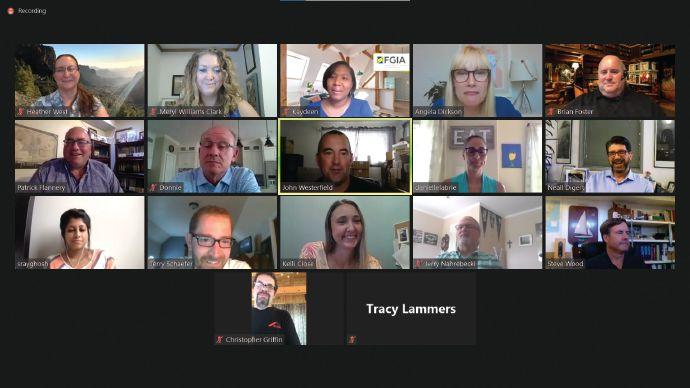
Exploring new ways to get together.
tectural glass industry as well? Here are two examples of recent online industry events that were very successful.
Top Glass Online
The popular industry event Top Glass took place online on July 7, after the live event was initially postponed to September and then cancelled altogether for 2020. Looking forward to the interesting line-up of speakers and presentations, attendees joined in through the GoToWebinar app at 10 am. And it was an information-packed event indeed.
The day kicked off with a panel discussion with some young bright leaders of Canada’s architectural glazing industry – Nathalie Thibault of FGIA; Mike Bruno from Alumitex Window and Doors; Andrew Dolphin of BV Glazing and Peter Dushenski of GlasCurtain.
The conversation started with the impact of the pandemic as witnessed by the panellists and then moved on to the topic of energy standards. The panellists also talked about competition from foreign suppliers and how the pandemic had impacted the supply chain and also the impact of sanctions for buying from China. They felt it is better to put contingencies in the quoting model to mitigate the risk as well as keeping some reserve if it is necessary to switch to local suppliers. The session ended with a discussion about the future of the industry. The group suggested that energy codes, embodied carbon and domestic supply chains would evolve. Test methods and protocols would employ stricter standards to ensure more durable products. This in turn would
impact cost. Lack of skilled workers in all aspects of manufacturing would also influence production numbers. Dolphin noted that automation was the future for increased productivity.
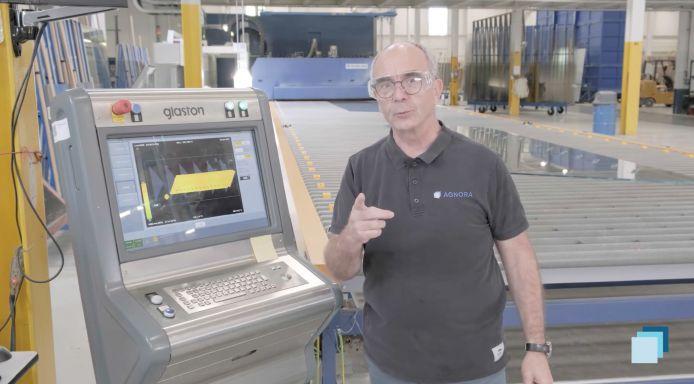
How do you make an online presentation more interesting? Would using a lot of videos work? The next session did just that. Louis Moreau from Agnora was able to take all attendees through a tour of Agnora’s fabrication plant while he showed why architects want larger glass and how it is produced. The entire series of prerecorded videos was able to keep the audience hooked till the end. They were able to see different processes in the plant, including cutting, edgework, lamination, IGU, heat treatment and heat soak testing. Moreau explained the benefits of using oversized glass; its various applications; what to watch out for and how to avoid common mistakes when specifying and installing larger glass. Ending the presentation with the logistics of handling, Moreau noted that it is important to think ahead when dealing with oversized glass.
Both the post-lunch presentations were highly technical. The third session of the day focussed on what glazing contractors and architects need to know about fire-rated glass and glazed systems. Presented by Fred Fulton of F1 Glazing Solutions, the presentation dealt with the key attributes of glass; classifications of fire-rated frames and doors; rules to be followed; applications; and safety glazing standards for the different categories of fire-rated glass, among other things.
Louis Fortin and Claudio Bardetti from UL were the last
ABOVE: The Young Executives panel discussed pressing issues of the industry.
presenters of the day. Their session focussed on the current state of baseline energy codes for commercial facade design; where they are heading; and the strategies to achieve them. Bardetti took the attendees through the evolution of baseline energy codes starting at the energy crisis in the 1970s, moving on to the Paris Accord and then to the PanCanadian framework. The Pan-Canadian objectives include making more energy efficient buildings; retrofitting existing buildings; improving energy efficiency for appliances and equipment; and supporting building codes and energy-efficient housing in Indigenous communities. Key points that will influence energy codes were also shared during the presentation. Touching on code structures and paths to conformity, Bardetti noted that there are three options – the prescriptive option, the trade-off option and the performance option.Taking the baton from Bardetti, Fortin went on to discuss what is achievable with actual fenestration systems, especially with present day technology. Concluding the session with tools that could help achieve the targets, Bardetti noted that innovative software
offered several advantages in this regard.
To keep the interactivity with the audience going throughout the day, each session was followed by some questionand-answer time. Attendees sent in their questions during each presentation. The speakers answered as many of them as time permitted. Attendees were encouraged to get in touch with the speakers afterwards in case their questions were
not answered or they had some new ones. Some quick audience polls were also interspersed in-between the sessions to keep attendees engaged.
Online platforms offer a unique advantage. While the actual event is over, Top Glass online remains an ongoing event full of all the valuable information that was shared. Those who did not get the opportunity to participate on July 7
Louis Moreau took attendees on a video tour of Agnora’s fabrication facility.
can simply visit the event page, register and access all the knowledge-heavy sessions at their leisure.
FGIA online summer conference
The Fenestration and Glazing Industry Alliance held its Summer Conference online June 23 through 25, after cancelling the live event originally scheduled to take place in Chicago.
Attendees joined through the Zoom web conferencing app, which allowed them to see and hear the various panelists and thier presentation slide decks. They could ask questions via chat. Recordings of the proceedings are available to registrants at the FGIA website.
Here are some notes from the conference:
• Washington has ammended wildlife protection laws to make only intentional bird kills punishable. Could put a damper on bird-friendly glass sales.
• The U.S. Energy Star program is looking at shifting its source of funding from taxes to user fees. It’s only a proposal at present.
• The U.S. Environmental Protection Agency may require all new chemicals entering the market to be evaluated and approved before being offered for sale. But there are already thousands of substances on the known list.
• Activity in Canada has continued almost without interruption, albeit more slowly and less profitably. Commercial border traffic has continued, though non-essential travel has been drastically reduced.
• Building starts and permits in Canada remain strong and experts are saying construction will lead the recovery. Renovation spending has actually gone up.
• Lending requirements have tightened, but interest rates remain low and will likely be held low for the foreseeable future.
• Natural Resources Canada remains committed to its market transformation targets and Energy Star is likely to play an important role. If the provinces don’t play ball, the possibility of national regulation is still out there. Most of NRCan’s attention is on HVAC at the present, but could return to fenestration before long.
FGIA welcomed attendees to the three-day virtual conference on the morning of June 23 with an introductory general session.
• Committees updating the National Energy Building Code have been stalled by opposition from homebuilder groups to introduction of tiered energy standards similar to B.C.’s Step Code. Margaret Webb, FGIA Canada director, reported that her and a determined group of industry advocates (Lisa Bergeron and Robert Jutras, AVFQ; Jeff Baker, WestLab; Zana Gordon, FenBC; Nathalie Thibault, FGIA) are fighting another attempt to reduce window/ wall ratios in the 2020 update to the National Building Code.
• According to NRCan estimates, there are 1,400 commercial glazing companies in Canada, but 16 of them do two-thirds of all the work.
The second day started out with an excellent panel discussing manufacturing and customer contact during the pandemic. Danny Smith (Ceridian), Lisa Bergeron (Jeld-Wen), Richard Braunstein (Oldcastle) Jeff Jackson (PGT Innovations), Greg Lambas (Katerra) and Matt Nuss (Vitrum) provided the discussion. Takeaways from the panel: uneven government responses are leading to uneven economic consequences; consistent messaging and communications internally and externally are the most important thing companies can do; the value of industry associations has been showcased as never before; and no one can be confident of the long-term effects of the pandemic, which might even be positive. Braunstein made the intriguing suggestion that the pandemic may lead to long-term changes in architecture. •
It was not all work; attendees enjoyed a relaxing happy hour at the end of the first two days.
A step further
Our look at the F150 upgrades for 2021.
The all-new 2021 Ford F150 pick-up will be available with a hybrid powertrain for the first time. Named PowerBoost, the hybrid model will be available on all trims, XL to Limited.
In what seems like ages ago, in January, Ford Motor Company held a drive event for its all-new Super Duty pick-up truck in sunny Arizona. Much has changed since that time, and as a result Ford held a virtual launch event for its most important vehicle, the all-new 2021 F-150 pick-up.
Actor Denis Leary hosted the event, held at the former Willow Run plant in Michigan, which is significant for being where Ford build the B-24 Liberator bomber plane during the Second World War, in a mile-long assembly line. Ford representatives and select Ford customers also helped launch the vehicle.
The Ford F-Series has been the topselling pick-up truck in Canada for 54 years, and more recently the top-selling vehicle period for many years in both Canada and the United States. While
some would take it easy when being on top, Ford chooses to do the opposite. Ford introduced the EcoBoost turbocharged engine to the line-up when V-8 powered trucks were the norm, more recently, Ford introduced an aluminum body on the F-150 at a time when steel was thought to be the only option.
“Since 1948, our hardworking F-Series customers have trusted Ford to help them get the job done,” said Jim Farley, Ford COO. “F-150 is our flagship, it’s 100 per cent assembled in America, and we hold ourselves to the highest standard to make sure our customers can get the job done and continue to make a difference in their communities.”
Now the 2021 model is taking things a step further, with the F-150 being available with a hybrid powertrain for the first time. Playing off the EcoBoost name, the
PHOTO CREDIT: Ford Motor Company
new hybrid model is named PowerBoost, and combines the 3.5 litre EcoBoost engine (mated to a 10-speed automatic transmission) with a 47 horsepower (35 kilowatt) electric motor, and a 1.5 kW-hr lithium-ion battery. The new hybrid model is capable of going an estimated 1,100 kilometres on one tank of fuel, and can tow at least 12,000 pounds (when properly equipped). The hybrid model is available on all trims, XL to Limited.
PowerBoost also comes with Pro Power Onboard, which turns the truck into a mobile generator, eliminating the need for a generator to be placed in the bed of the truck. The integrated on-board generator is available in three levels. A 2.4kW system with two 120V 20A outlets (with a run time of 85 hours on a full tank) is standard on the PowerBoost; a 7.2kW system with four 120V 20A outlets and a NEMA L6-20 240V 30A outlet (can run for 32 hours on a full tank) is available on PowerBoost; and a 2.0kW system with two 120V 20A outlets is available on 2.7L and 3.5L EcoBoost and 5.0L V-8 models.
In addition to the new PowerBoost powertrain, five other engine options are available. A 3.3L V-6, 2.7L EcoBoost V-6, 3.5L EcoBoost V-6, 3.0L Power Stroke V-6 diesel, and 5.0L V-8. Horsepower and torque number will be released at a later date. All models are mated to a 10-speed automatic transmission.
With the truck being redesigned inside and out, the front end sees a new front fascia, choice of 11 grilles, three headlight options (halogen, LED, LED with bending), 13 wheel options, and addition of active grill shutters and an active air dam. Ford says that every panel on the truck has been redesigned.
Glazing contractors use their trucks to tow trailers, so Ford’s new trailer-friendly features are of interest. These include trailer theft alert, which sends a message to a mobile device when the trailer is being unhooked and the truck is locked; trailer light check, which can check if trailer lights are working through FordPass app; and trailer reverse guidance, that shows various views along with steering wheel graphics of the trailer by using five cameras. Pro trailer backup assist is also available.
Technology is top of mind for many today and a plethora of new additions to F-150 for 2021, highlight this. Over-the-air updates, which allow for many updates to be done in the background, while larger updates can be scheduled when the owner wants, reducing the amount of downtime needed for updating the vehicle. The new SYNC system can connect Apple CarPlay, Android Auto, and AppLink
apps wirelessly. Two centre stack screen sizes are available for 2021, standard eight-inch and available 12-inch. An available 12-inch digital gauge cluster is also added.
“We see it as our duty to deliver not just what our customers want and need, but what they might have never thought possible,” said Craig Schmatz, Ford F-150 chief engineer. “The F-150 will be tougher than ever, and with fully connected over-the-air updates, it opens up a much wider range of potential enhancements – from predictive maintenance to feature upgrades.”
Ford has spent a lot of time speaking with its customers about how they use their trucks. As a result, Ford has incorporated some unique features into the new truck. On the inside of the truck you can find lockable fold-flat rear under-seat storage with dividers; available front seats that fold flat 180 degrees; and available flat surface in centre between seats, as the shifter folds down, and a flat cover folds over the centre. On the outside, zone lighting allows for individual exterior lights to be turned on/ off; clamp pockets are built into the tailgate; as is a new work surface that includes a ruler, pencil holder, mobile phone holder, and cup holder; and the side of the tailgate now has cleats for tying down long items.
WHAT’S NEW FOR 2021
• All-new interior and exterior
• PowerBoost hybrid model
• Clamp pockets on tailgate
• Tailgate work surface
• Max recline seats
• 11 grilles options
• 13 wheel options
• 12-inch digital gauge cluster
• 12-inch landscape centre display
• SYNC 4
• More driver assistance technology
• Lockable rear under seat storage
• Interior work surface
• Pro trailer backup assist
• Trailer reverse guidance
• Trailer light check
Ten new driver-assist technologies are added for 2021, including Active Drive Assist, that allows hands-free driving on Canadian and United States divided highways, by having a camera facing the driver and making sure they are focusing on the road. Intersection Assist, detects oncoming traffic while driver is doing a left turn, and will apply brakes if needed. Active Park Assist 2 is also new. Ford has also made more safety features standard on all model from XL up.
With all the changes to the Ford F-150 for 2021, the company is poised to continue to be the number one selling pick-up truck for years to come. New F-150 models will be available in the fall.•
BUILT ON AIR
Window manufacturers and architects are capitalizing
by CARROLL MCCORMICK
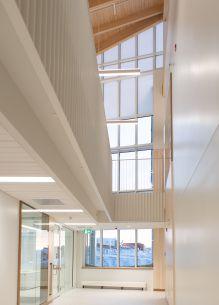
Natural light floods the interior of the new Nunavut Arctic College expansion at the Nunatta campus in Iqaluit, the capital city of Nunavut. To help keep out the Arctic cold, which can dip as low as nearly minus 50 degree Celsius, some of the windows contain a remarkable material called aerogel.
Advanced Glazings, based in Sydney, N.S., manufactured 152 aerogel-filled windows, totaling 1,570 square feet and rated at R18, for the 3,000-square-metre building, which the Nunatta campus occupied in November 2018.
Advanced Glazings specializes in creating translucent, aerogel-filled glazing units, under the tradename Solera. “Our value is really built around how we can improve the glass facades to improve illumination, reduce glare, heat gain and (create) thermal balancing,” says Jim Satterwhite, CEO.
The architect of record for the Nunatta Campus expansion, Toronto-based Teeple Architects, achieved a 27.8 percent glazing-to-mass ratio, with 9.8 percent of the envelope made up of Solera units and triple-glazed vision glass comprising 18.2 percent of the building envelope. “A mix of Solera and triple-glazing units allowed us to provide a higher-than-average R value than would typically be achieved via the recommended double-glazed units,” says Stephen Teeple. “Aerogel creates interesting interior and exterior patterns of light,” he adds.
Having used Solera before, Teeple was familiar with aerogel’s insulating and lighttransmitting properties. “In situations where natural light is really important, like in Nunavut, the lack of light can be hard on people. Aerogel Solera is absolutely optimal for maximising lighting and getting optimal building performance,” he says.
What is aerogel?
Sometimes referred to as frozen smoke, because that is what a block of it looks like, aerogel is said to be the lightest solid ever made. While its weight varies according to the manufacturing process and the material used (typically silica), Guinness World Records lists a graphene aerogel as the world’s least dense solid, at 0.16 milligrams per cubic centimetre, or 160 grams per cubic metre.
Courtesy: Julie Jira
The mix of vision glass and aerogel-filled glazing is clear to see in this exterior view of the Nunatta Campus facility in Iqaluit, Nunavut.
capitalizing on the insulating properties of aerogel.
Aerogel is strong: A 2.5-kilogram brick is supported by a two-gram block of aerogel.
Aerogel is 99.8 percent air, yet it is structurally quite strong.
NASA has a photo of a 2.5-kilogram brick sitting on a two-gram piece of aerogel. Press on it a bit, and nothing happens. Press very firmly and it will shatter like glass.
Aerogel – made from gel but not a gel itself– was invented by the American scientist and chemical engineer Samuel Stephens Kistler. He announced it in a 1931 paper published in Nature called “Coherent Expanded Aerogels and Jellies.”
It has been used in various ways; for example, as thickening agents in cosmetics and in spacecraft to trap space dust. But its real claim to fame is its excellent insulating properties. NASA has used it to insulate space suits and the Mars Rover. More pedestrian products include cycling gloves and thermal sports bottles.
But for its high cost and opacity (researchers are working to solve this problem) perhaps it would long ago have become the insulating material of choice in windows. That said, some building designers are specifying aerogel-filled windows or panels where vision glass is unnecessary, or using a mix of translucent and vision glazing units.
Creating inspired systems
Advanced Glazings added aerogel to its product line about nine years ago. It offers its Solera and SoleraWall lines of insulated glass daylighting units in various thicknesses, with R values ranging from 2.2 to 25, or U-values ranging from 0.47 to 0.04.
Advanced Glazings developed a solution that keeps the granular aerogel that they use (aerogel sheets are more expensive) from settling. “The granular aerogels cannot simply be put in between the panes. We make a honeycomb material and use it for light redirection and thermal control in the thick, insulated units. We put the aerogel in the honeycomb, which keeps it stable for the life of the glazing,” Satterwhite says.
Looking south of the border, Manchester, N.H.,-based Kalwall, which makes museum-quality facades, sky roofs, skylights, canopies and walkways, makes aerogel-filled panels made of fibreglass-reinforced polymer.
“The exterior face sheet is 0.07 inches thick and the interior pane is 0.045 inches thick, bonded to a structural grid core. We are part
Light floods the interior of the Nunatta Campus facility, a huge plus during the low-light months in Canada’s Arctic. High-insulating aerogel-filled glazing reduces the penalty of a higher glass-to-wall ratio.
Courtesy: Julie Jira
way between a wall and a panel. In each of the spaces – cells – within the grid core we place granular aerogel,” says Sam Keller, the creative director for Kalwall.
The goal with these panels is to transmit perfectly diffused light that mimics the transmission of the sun. While its aerogel-containing systems are translucent, the aerogel blocks none of the visible wavelengths of the electromagnetic spectrum, according to Keller. “You are seeing the true colour fidelity.”
“It is a niche product for us. We’ve done over 1,000 applications. The only real barrier to entry is the price point,” Keller says, adding that systems with their aerogel option cost two to three times more than their conventional systems.
“Aerogel granules are vastly less expensive than monolithic, optically clear block or sheets of the material, which to my knowledge, no one produces at a commercial scale, even to this day,” Keller explains.
Kalwall has been selling systems
containing aerogel since about 2003. Keller’s grandfather and founder of the company brought aerogel into Kalwall. The company lays claim to having invented the translucent structural sandwich panel.
“Aerogel was his ideal material for a light-transmitting, super-insulating, lightweight material to integrate into his translucent panel design. He developed his own patented aerogel formulations, but those have never been manufactured at a large scale. Kalwall partnered with Cabot Industries to offer the first commercially available fenestration system using aerogel. The brand name is Lumira,” Keller says.
Speaking to the translucency of Kalwall panels, which can be placed to great effect and little disadvantage view-wise, Keller points out that while vision glazing is great at letting in light, it is not good at much else. “Glass is especially ill-suited to skylights, particular large top-lighting applications, because they allow too much heat gain and not enough thermal insu-
lation, plus glare and areas of high contrast,” he says.
The Yale Sculpture Building in New Haven, Conn., to cite one example, uses Kalwall panels. They have a U-factor (or value) of just 0.05, compared to 0.5 for panels with a simple air gap, or 0.23 to 0.1 for panels filled with glass fibre insulation.
“Most aerogel customers are looking to design the highest performance building envelopes possible. They may be designing for LEED, BREAM, Net Zero, Passive House or other voluntary green standards that exceed minimum energy code requirements. Buildings that are typically commercial, institutional and/or governmental entities think more about life cycle costs and want to demonstrate leadership in sustainable building practices,” Keller explains.
Alternating rows of glass and translucent Kalwall panels filled with Lumira aerogel on the Yale Sculpture Building illustrate how vision glazing and better-insulated translucent solutions can coexist.
Courtesy: Peter Aaron, OTTO
properties to provide additional levels of thermal break insulation in its premium aluminum windows. It has been offering aerogel in its products globally for about seven years. “The use of aerogel was really driven by strict thermal codes in Europe,” says Ben Halvorsen, president of Origin USA.
Origin uses an aerogel that, combined with needled backing fibres, makes a flexible and resilient blanket. Its use as a thermal break yields a U-factor as low as 0.3 in a double-glazed window and as low as 0.15 in a triple-glazed window, according to Origin. The company asserts that aerogel improves a window’s overall thermal efficiency by 67 percent.
When aerogel is not selected, Origin’s windows are manufactured with a polyamide thermal break, offering a U-factor of 0.34. While the difference between 0.3 and 0.34 sounds small, Halvorsen notes that, “This can be the difference between meeting structural codes or not.”
Thermal efficiency is not just about keeping out cold. Origin has customer bases in hot countries, like the United Arab Emirates, where keeping homes cool is the main challenge. “It costs more to cool a home than to heat one. This is a tremendous burden on the planet,” Halvorsen says.
a huge incentive to adopt widespread use of aerogel if the goal is simply to meet code and contain costs,” Keller says.
Halvorsen believes that window designers are not pushing the innovation envelope hard enough. “We should be challenging one another. We recently came out of the International Builders Show in Vegas. The consensus was that there was nothing new in the industry. I think that is a real shame. It reflects a lack of drive and innovation in the industry.”
It may be more a lack of awareness than disinterest that lies behind aerogel not becoming a more mainstream solution for improving the thermal performance of windows. Halvorsen recalls a luncheon of architects at which Origin was giving a course it called “Structural, Thermal and Environmental Material Performance for Today’s Doors and Windows” for American Institute of Architects continuing education credit.
“For the first time, we saw 150 architects sit up and pay attention. This is really so cool. Very few industry experts are aware of aerogel. We have probably been remiss in not announcing our use of aerogel to the world,” Halvorsen says.
Innovations and the future
A recent example of combining aerogel with an innovative product solution is a newly developed glass wall cladding system Advanced Glazings debuted just last year on the 10,000-square-foot expansion of a facility owned by Procase, also in Sydney. Advanced Glazings describes this system as a “frameless glass-based daylighting solution” with the product name SoleraWall.
Courtesy: Origin
Halvorsen also values the lower weight of aerogel and the sense of environmental responsibility that motivates clients that choose the aerogel option. “Aerogel is the lightest solid in the world, which can be important when weight is an issue,” he says.
In somewhat the same way that some people happily pay a premium for electric cars, some will pay more for better insulated windows, Halvorsen says. “What sells aerogel is that we are very environment-sensitive. Saving $50 a month does not sell aerogel.”
Roadblocks to widespread adoption
Cost has been a disincentive to the widespread adoption of aerogel in the window industry, but so have insufficiently challenging code requirements and a simple lack of awareness about aerogel. “Today there is still a mismatch between what most energy codes require for fenestration and the cost of aerogel. There is also the primacy of glass and vision glazing. There is just not
The Procase facility expansion uses 150, eight-by-threefoot SoleraWall panels in the top half of the walls, allowing diffused natural light to pour into the building. Because the panels lock together to create the walls, they do not need a framing curtainwall system – a weak link for thermal performance, according to Shane Webb, architectural product consultant at Advanced Glazings. Webb notes that 63 of the panels took three workers just four days to install – less time than it would have taken using a traditional curtainwall system. It is also less expensive than traditional curtain walls, according to Advanced Glazings.
“We soft-launched SoleraWall last year. We currently have about $3.5 million in SoleraWall projects in the pipeline and further marketing activities in progress in North America and the European Union,” Satterwhite says.
Is aerogel the future of window and curtainwall design? The applications by Advanced Glazings, Kalwall and Origin certainly suggest that it could win in a tougher building code showdown between adding more panes of glass and using aerogel. “Hopefully, as energy codes for fenestration strengthen, adoption will increase and prices will fall,” Keller says. “High-performance insulated glass can only improve so much. Other approaches, including designing with more translucent, aerogel integrated products will be required to achieve superior building envelope performance.”
Asked what he, as an architect, envisions the future of aerogel-filled windows to be, Teeple replies, “With aerogel I think the future is that there will be more highly detailed energy modeling of the product with more nuanced glass-to-wall ratios, because we are not counting it as glass. It has a great future as energy modeling becomes more sophisticated.” He adds, “The quality of light you get is so beautiful. It becomes a great option for creating different qualities of space.” •
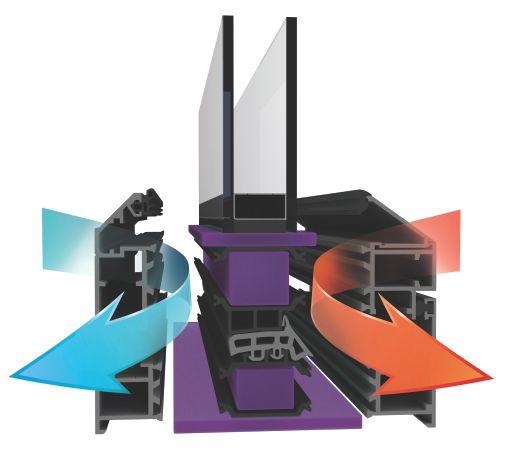
Aerogel, shown purple, as a thermal break in Origin windows.
BIM for curtainwall systems
curtainwall
Effective use of 3D modelling is good for business.
by JAY POLDING
Building Information Modeling has become the gold standard in the building industry over the last 20 years. Building owners and investors expect to see 3D digital models before a shovel goes in the ground and beyond. They feel that the BIM method will result in a more predictable budget and delivery date as well as a better way to manage their building assets post-construction. This has resulted in a sharp increase in Requests for Proposals which require BIM. How can you effectively meet the BIM requirement and gain benefits to your business?
The BIM execution plan
Often a BIM execution plan is specified in the RFP. This document is typically developed by the prime consultant, often the architect. The BIM execution plan’s purpose is to define the overall goals of BIM on a specific project. It seeks to define the why, who, what, how and when. Often, this information is defined in a table called LOD matrix. This table defines how detailed your 3D model needs to be.
Many curtainwall systems companies already use advanced software like Autodesk Inventor or Dassault Solidworks to design detailed 3D models, extract bill-of-materials and send plans and code to the shop floor. So, why do these files not usually fulfill the requirements of the BIM execution plan? It comes down to computing power and the differences in software.
In a curtainwall system there can be hundreds of units and glass panes, thousands of mullions, screws and a lot of insulation and sealant. One by one, the computer can easily handle these objects. Add them all together in one file and you have a very slow model, perhaps even crashing the computer. The architect’s Revit model contains the curtainwall system as well as all the other systems like structural, mechanical, electrical, plumbing, interior finishes and more. Therefore, it is necessary to reduce the detail of each of these components to their essential dimensions so the building can be displayed in one file without slowness or crashes. Even in the current CAD workflow, shop drawings for the architect often are at a reduced detail compared to the shop drawings that go to the shop floor. This carries through to BIM.
Level of detail and development
The curtainwall system must be integrated with many other systems in the building. Since the architect and engineers are often using Revit, they require that most consultants, including curtainwall systems companies, provide Revit files for coordination. To manage the size of files, the Revit model detail is defined in the LOD matrix which is found in the BIM execution plan.
The LOD standard was developed by the American Institute of Architects and is managed by a group called BIMForum. The LOD standard ranges from 100-500. Curtainwall systems companies are in the LOD 300, 350 and 400 range. (A full description of the LOD specification can be found on the BIM Forum website, bimforum.org.)
The detail jumps quite quickly from basic to complex. Many shop drawing packages for architects are required to be LOD 300 which is comparable to the detail provided by 2D CAD. LOD 300 provides the most flexibility to change while not compromising quality. Exceptions to
this might be requested, like providing 3D anchor locations. Many have found it useful to integrate their existing 2D CAD extrusion details into the 3D Revit model to provide that extra level of detail. A considerable amount of effort is added when all curtainwall systems are required to be modelled at LOD 400.
How and when files are exchanged
The BIM execution plan defines how and when files are to be exchanged. How files are exchanged can range from the current methods of email and FTP to cloud Common Data Environment sites like BIM360. The BIM execution plan may define how often a 3D model is required to be uploaded. This ranges from uploads and downloads at key milestones, to bi-weekly uploads and downloads, to a live link inside of BIM360 design with changes seen instantly. The CDE provides a place for non-technical people to view and markup drawings and models on mobile devices without having to know a complex software.
Benefits for curtainwall systems companies
The opportunities of BIM are more than winning an RFP. Much benefit can be found in extracting data from the BIM models. Curtainwall systems have many parts, whether they are stick-built or unitized. Counting, scheduling, optimizing and ordering all these parts has historically required much effort. This challenge is met very well by BIM technologies. Most BIM tools, like Revit, can provide immediate, live data for estimation and ordering.
Another benefit is reducing onsite waste and time by digitally templating and measuring. An accurate point cloud scan of a building can be brought right into Revit, Inventor, Solidworks and other systems. This enables a digital template to be built to precise, real world, measurements. Further, these digital point clouds and templates can be shared with others in any part of the world.
BIM data can be re-used for your manufacturing processes. For instance, key points from Revit can be linked into
Inventor or Solidworks to assist in building the shop-floor drawings and data.
Cloud technologies like BIM360 can allow for quality control to extend to the field. Using their mobile devices, installers can access the latest plans and request information based on videos and pictures they take on site.
Digital transformation has accelerated in recent times. BIM is a foundational technology which other opportunities grow out of. Software companies like Autodesk, Trimble and Nemetschek are investing billions in the digital transformation of the construction industry. Many students are coming out of school with the desire and knowledge to use these digital tools. With a proper technology strategy, curtainwall fabricators are exceeding expectations and reaping the rewards of using BIM. •
About the author
Jay Polding is an industry account manager at AEC with SolidCAD. He has 20 years of AEC industry experience both in Canada and internationally.
Whatever stunning decorative artwork your design team creates, we can print it on architectural glass, utilizing the Vitro-Jet F Type printer. This state-ofthe-art, cutting-edge digital printing technology offers 1440 dpi for supersharp resolution. With a prismatic array of industry-accepted colour formulations including RAL, Pantone, NCS, and Color-Book, the design possibilities are infinite.
NEWPRODUCTS
A fresh take on the original
wpg.com
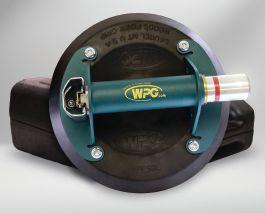
Wood’s Powr-Grip developed the first hand-held vacuum cups in the 1960’s and has gained the reputation of being the gold standard in glass, stone and metal materials handling. The recent disruptions in global supply networks and related material cost increases have revealed a need to future-proof the hand cups. After conducting a new engineering analysis and streamlining its manufacturing processes, WPG will be making some minor but meaningful updates to its best-selling hand cups. In the new product, aluminum plungers replace brass plungers to help avoid disruptions in material supply. New vacuum pads provide superior grip, as well as easier attachment to lightly textured surfaces. Its improved metal handles offer an updated coating for a more secure hand-hold. The price remains the same. One goal of the refit project is to protect customers against future price increases. WPG expects that investment in manufacturing efficiencies will largely pay for themselves. The hand cups operate in the same userfriendly, ergonomic way familiar to users. The new hand cups are designed with the same strict engineering standards and pass the same inspections as before. Each cup is individually tested before leaving the WPG facility. Other than a new number for the vacuum pad, the replacement part SKU’s have not changed. WPG understands that changes to tried and trusted products may be unexpected. But the company guarantees that the only changes customers will notice are good ones – the best being the future-proofing of the hand cups. The redesigned hand cups began shipping in July.
Creating sturdy insulated units
guardianglass.com
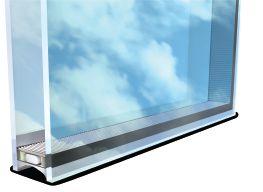
Guardian Glass North America has updated its residential insulating glass products. Its proprietary warm-edge spacer currently manufactured in its Sun Prairie, Wis., fabrication facility is now branded as Guardian Align. Additionally, Guardian changed the colour of its primary polyisobutyl sealant to black in order to create cleaner-looking sightlines that seamlessly blend in with more modern and contemporary window frames. Failure is not an option for Guardian. The company understands that failed insulated units lead to expensive warranty repairs and brand destruction. Therefore, Guardian has designed IGUs using Guardian Align spacers to have a robust seal that provides high argon retention rates and low seal failures to ensure customers can focus on making and selling windows, not replacing them. IGUs constructed by Guardian Glass with the Guardian Align spacer and new black sealant offers customers improved thermal insulation while providing durability and strength. The result of extensive research and development, Guardian Align spacers include several features such as ultra-thin, low-conductivity corrugated stainless steel construction; 90-degree corners with a hermetic fourth corner joint; high-strength, low-conductivity PIB primary sealant with an extra-long diffusion path; high-modulus, commercial-grade silicone
secondary sealant; and a 20-year warranty.
“Guardian Align spacers are extremely durable with impressive thermal insulation performance,” explains Scott Billings, vice-president and general manager of glass fabrication at Guardian Glass North America. “IG units made with Guardian Align spacers and our robust coating portfolio deliver value to our customers in both residential and light commercial applications.”
Two cranes in one
bglift.com
The M 400 from BG Lift is not only an exceptional compact crawler crane but also a tireless pick and carry crane capable of moving with millimetre precision in very narrow spaces and lifting up to 1.6 tons. The innovative technology of the double cross-beam stabilizers gives the crane greater positioning possibilities, thus facilitating its use even in operating situations that have always been considered impossible. The small size and weight, combined with great manoeuverability, greatly reduce intervention times, increasing quality and guaranteeing total safety. The equipment has a maximum lifting capacity of 8,800 pounds and a maximum working height of 69 feet. It weighs 9920 pounds and is 50 inches wide.
New to the Spacer M family
technoform.com
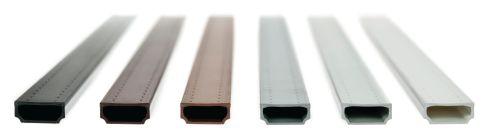
Technoform has added a high-profile, plastic hybrid stainless steel warm-edge spacer to its Spacer M family of durable high-performance insulating glass edge seal solutions. With a profile height of 8 millimetres, this is one of the tallest PHSS spacers available for high-performance insulating glass units in energy-efficient window, door, curtainwall and facade systems. PHSS spacers are composed of a high-performance engineered polymer with a thin low-conductivity stainless steel backing to minimize heat transfer, and to maximize protection against gas leakage and moisture penetration. At a height of 6.85 millimetres, the standard Spacer M provides excellent thermal performance with more flexibility for radius shapes and bent IGUs. Spacer M with wire, at the same 6.85-millimetre-height, provides the same high thermal performance with enhanced rigidity for processing larger IGUs. At a height of eight millimetres with the reinforcing wire, Spacer M high profile still delivers strong thermal performance and durability while providing significantly improved processability. This is particularly helpful for processing the largest IGUs. The Spacer M high profile allows existing users of less thermally efficient eightmillimetre-tall aluminum and stainless steel spacers to keep the same edge designs, while increasing thermal performance of their IGUs. It has the highest desiccant capacity and longest primary seal path of all Technoform PHSS spacer solutions. Third-party simulations following the National Fenestration Rating Council
standards show that using Technoform’s spacers in aluminumframed, fixed window systems with a polyamide thermal break typically can achieve a five- to 10-percent improvement in overall system U-value over standard aluminum spacers and equal to non-metal spacers. When used in structural glazing systems, the improvement in fenestration U-factor can be even greater at up to 14 percent. Technoform’s spacers also can increase the condensation resistance rating by 17 percent and improve the sightline temperature up to 12 F. Minimizing condensation lowers the opportunity for mold and mildew, which supports good air quality, health and wellness. By reducing the heat transfer at the edge of glass, Spacer M solutions also contribute to enhancing thermal comfort for building occupants, making the interior floor space next to the building envelope more useable, helping people stay more productive and further contributing to the bottomline. PHSS spacer solutions give design professionals the freedom they need to achieve their esthetic vision by visibly improving sightlines. The wide range of size configurations and colours blend with nearly any window frame. Technoform’s Spacer M solutions are available in widths (IGU cavity dimensions) spanning 0.25 to one inch and in six standard colours: black, light gray, dark gray, white, champagne and bronze. Custom colours and sizes also are offered through Technoform’s customized solutions program.
Plastic shims for every job
groveshims.com
Typically withstanding ten tons of compressed force, lightweight plastic U-shaped shims by Grove Shims are designed to fit around bolts and anchors. They are often used for aligning windows and curtain walls. The rounded shape allows greater flexibility in align ing the shim with no protruding corners. The shims are offered in eight sizes as well as four colour-coded thicknesses. They are suitable for the precast, tilt-up, and glass industries. For similar applications, Grove Shims offers horseshoe shims (U-shaped shims with square outer edges) in various sizes. Additional property details about the U-shaped shims and other Grove products are available in its detailed plastic shim information chart. Grove Shims also has a lot of other helpful resources specifically designed to help with levelling objects more efficiently. Grove Shims makes custom shims to customers’ requirements. Any shape and size of plastic shim can be special ordered in firesafe, self-extinguishing materials. All of its plastic shims are made in America from high-quality plastic. Its wide variety of colourcoded shims and solid thicknesses are easily applied for easy alignment every time. Plastic shims won’t rot like wooden shims and won’t rust like metal shims. Grove Shims places prompt, personalized attention to every order focusing on accuracy and quick shipping.
X-ray protection from radiation
raybar.com
the minimum standard. Additionally, Ray-Bar treats and cures its x-ray glass with a permanent specialized surface coating that permeates deep into the glass crystalline structure to provide dirt repelling easy-to-clean x-ray glass that resists the adhesion of bacteria to its surfaces and thus produces the results of inhibiting bacterial colonization and “bio-film” build-ups. Its coatings and treatments do not wash away or wear off from cleaning or utilizing sanitizing solutions. However, any caustic or abrasive cleaners should never be used on any glass products. The glass was tested before and after the treatment coating was applied and also fared well against other standard glass as tested by a qualified independent microbiology laboratory. All laboratory tests and results verified excellent performance when using properly treated coated glass against the example of glass exposed to Staphylococcus aureus for resisting the pathogen’s bacterial adherence and desorption performance (elimination of an absorbent substance from a surface). Other available options for Easy-Clean x-ray glass are Easy Clean x-ray glass with higher shielding protection levels; Easy Clean x-ray safety glass (impact resistant); Easy-Clean fire-rated x-ray glass IGU (insulated glass unit); Easy Clean x-ray glass IGU with integral mini-blinds; Easy Clean laminated x-ray safety glass (impact resistant); and Easy Clean
Ray-Bar’s Easy-Clean x-ray glass provides x-ray protection from alpha, beta and gamma ionizing radiation for proper shielding of medical diagnostic imaging procedures. Protective level: 1.6MM / 4# / 1/16” Pb with shielding equivalency of 150 kilovoltage peak is
RESOURCEDIRECTORY
RESOURCEDIRECTORY
t:
tf:
A sleek option
The new Palermo series glass-to-glass 180-degree hinge is unlike any other hinge in this product line.The precision lines help shape the unique design of this hinge for 3/8-inch to 1/2-inch (10 millimetre to 12 millimetre) glass. All fasteners are concealed. The hinge has an adjustable closing position that is accessed when the door is hung.The hinges are selfcentering within 30 degrees of the closed position. Using two hinges, a maximum door width of 39 inches and a maximum weight of 110 pounds can be achieved.
Samples for evaluation
vitroglazings.com
Vitro Architectural Glass has introduced two Solarban Acuity glass sample kits, each offering architects and building designers a different way to compare and evaluate these products during the specification process. A separate “Coating Evaluation Kit” enables architects to select four different Solarban low-E coatings on four-by-six-inch samples of Acuity glass.This allows architects to see and compare the appearance of multiple options from the Solarban family of coatings, which includes five distinct products with a range of solar heat gain coefficient, visible light transmittance and exterior reflectance properties.The “Clarity Comparison Kit” kit contains two four-by-six-inch samples, enabling side-by-side comparison of any selected Solarban solar control, low-emissivity coating on both clear and Acuity glass. Each fourby-six-inch sample uses the coated and interior lite of the same glass to render a clear, accurate demonstration of the low-iron aesthetic. Acuity glass is available in six-, eight- and 10-millimetre thicknesses and stocked at all Vitro facilities for immediate shipment. All Solarban Acuity glasses are available through the Vitro Certified Network with similar lead times as other low-glasses.
Hurricane options
kawneer.com
Kawneer’s 1600 Wall System1 curtainwall provides reliability with versatile features. It is a stick fabricated, pressureglazed curtainwall for low to mid-rise applications and is designed to be used independently or as an integrated system, with 1600 Wall System2 curtainwall, to provide visual impact for almost any type of building. 1600 Wall System1 curtainwall hurricane-resistant curtainwall is an impact-resistant 2 1/2-inch sightline curtain wall system that offers an additional line of defense against high winds, heavy rains, and hurricanes. Key features include a pressure-glazed system with concealed fastener joinery for a smooth, monolithic appearance; fillers producing uninterrupted seam lines by snapping onto optional openback mullions; and compliance with current codes requiring protection of openings in wind-borne debris regions.The impact-resistant framing options are 7-1/16-, 7-13/16-, 10-1/16- and 10-13/16-inch.
by MARGARET WEBB
Where have the standards gone?
I’ve been speaking and writing for years about the impending lapse of Canadian glass standards, and the response has led me to believe this isn’t a big priority for the industry. However, many industry members have spoken to me directly about how important some of the Canadian glass standards are to them: CAN/CGSB 12.1, “Safety Glazing”; CAN/CGSB 12.8, “Insulating Glass Units” and CAN/CGSB 12.20, “Structural Glass Design in Buildings”.
Here are the costs from the Canadian General Standards Board to undertake the work to reaffirm the five active standards, update and revise the CAN/CGSB 12.20 standard and harmonize the CAN/ CGSB 12.1, “Safety Glazing” standard with its U.S. counterpart, ANSI (now ANAB) Z97.1, 2015.
• Reaffirm (no technical changes) the five active standards: $30,000
• Harmonize CAN/CGSB 12.1 with ANSI (ANAB) Z97.1: $39,000
• Update and revise CAN/CGSB 12.20: $140,000 (including reaffirmation of five active standards) The board advised in March that this work would need to commence this August if we were to meet the 2022 deadline for republication and that all funding must be received by that date for the work to proceed. I developed a funding proposal outlining the objectives, barriers and consequences to various industry stakeholders and possible funding mechanisms to sustain the standards in the future with input from Nathalie Thibault, FGIA manager of glass products and Canadian industry affairs, and Zana Gordon, executive director of the Fenestration Association of British Columbia. All three of us have reached out to multiple industry organizations, companies and federal and provincial agencies. To date, we have had no success in raising any funds, even just to cover the reaffirmation costs of $30,000. Of course, the current COVID-19 pandemic has not helped matters.
If the industry wants these standards, it is time to ante up.
After months of our unsuccessful efforts to raise any funds for this work, I advised CGSB of our results. The management team at CGSB has now committed to covering the cost of $30,000 CAD for reaffirming the five active standards. However, this issue is going to come up again in five years and we have no commitment from CGSB that they will cover the costs to reaffirm at that time.
Why should the industry care if we have Canadian glass standards? CAN/CGSB 12.2, 12.3 and 12.4 probably have little value to the industry. CAN/CGSB 12.2, “Flat, Clear Sheet Glass” has no relevance as no one manufactures sheet glass any more. CAN/CGSB 12.3, “Flat, Clear Float Glass” has not changed in many, many years. There are no longer any flat glass manufacturers in Canada and the equivalent ASTM standard covers this product well. CAN/CGSB 12.4, “Heat Absorbing Glass”, is outdated, so if the industry wants it to be relevant to today’s products, it requires a major revision as well.
So, what about CAN/CGSB 12.20, “Structural Design of Glass in Buildings”? This standard has not been revised since 1989. It is a difficult standard to use so many design professionals and industry members are using the IGMA Glass Design Program, which has been updated to be code-compliant but addresses issues not in CAN/CGSB 12.20 and also is not totally user-friendly either, but better than the standard. ASTM E1300 is referenced in the National Building Code, however it does not adequately address the live loads we experience here in Canada due to snow accumulation. The fundamental principle behind ASTM E1300 and CAN/CGSB 12.20 is different. As thermal performance becomes more and more stringent, products will be forced to triple and quad glazing to meet these codes. The effect of the federal Market Transformation Initiative is already having an effect on the current code cycle with more stringent U-factors for fenestration products, proposed reductions to fenestration and door wall ratios and the mandate from the Canadian Commission on Building and Fire Codes to start moving product performance to the 2030 Net Zero deadline.
A lot of time and effort have been expended by FGIA and FEN-BC to secure funding. If the industry does not support this both in action and funding, then these have been wasted efforts. If the industry wants these standards, it is time to ante up.
FGIA is interested in your opinion, so please let us know how important the standards are to you and your company. A copy of the funding proposal is available upon request to the FGIA office. We not only welcome your feedback, we encourage it. •
by FRANK FULTON
High exposure fenestration installation
To the casual observer, a window is just something you look through to see outside and there’s not a lot of thought given to it beyond that. For people involved in the application and installation of fenestration products, however, there are a mind-boggling number of intricate details that have to be considered and addressed. A slip up or oversight on any one of them can result in leaks, condensation and mould, all of which are going to cost someone a lot of money to mitigate.
To provide a roadmap to follow from design concept through detailing, testing, installation, and final inspection, the Canadian Standards Association has recently released a new national standard entitled CSA A440.6:20 “High Exposure Fenestration Installation”. This standard applies to the installation of fenestration products in buildings of four or more stories in height of all occupancies, including residential punched and ribbon windows, window wall, curtainwall and storefront. According to the standard, “The users of this document include persons engaged in the design, selection and detailing of fenestration products and their installation into wall or roof assemblies; installers of fenestration products; specifiers of fenestration systems; technical staff of fenestration manufacturers engaged in designing fenestration systems; and persons and organizations that train fenestration installers.” I was very impressed by the amount of detail covered at every step of the process and with the illustrations provided to support the directions and recommendations.
“Improper installation of fenestration products can reduce their effectiveness, including
“The standard contains a lot of very useful reference material that I could see myself looking for when working on a job.”
YOU BET YOUR GLASS
causing excessive condensation, unacceptably high levels of air, water, and sound leakage, and deterioration of the wall and roof systems into which they are installed. This standard was developed to address issues that can adversely affect the performance of fenestration products when installed in building walls and roofs, and into both new and existing buildings subject to high environmental exposures.”
Besides outlining all the steps from start to finish of a window project, the standard also contains a lot of very useful reference material that I could see myself looking for when working on a job. There is a section on caulking that includes joint design size as a factor of temperature range expectations as well as a table identifying the sealants that are compatible with surrounding building materials. There are also good details on anchorage and recommended anchor types that vary by the substrate they are attaching to. The sections on treatments to ensure the continuity of the critical barriers – air, vapour, and water, were most informative.
Something I saw being addressed for the first time in this new standard was a forwardlooking section on the effects of anticipated climate change and how it could impact fenestration product design and application. Changes in temperature, precipitation and humidity affect the level of various elements in the air, such as salt and pollution that could lead to accelerated degradation of some fenestration and building materials. The standard reviews climate data and tries to predict future weather based on four different models. This in turn is intended to be used when considering the performance requirements of the window products taking into consideration that the lifetime of a building will be 50 to 100 years.
From what I see in this new standard, I believe it won’t be long before it is being referenced in project specifications and being used by every design office. It will be in the hands of every consultant and quality assurance person on your jobsites. So, it wouldn’t be a bad idea to get a copy of it now to get ahead of the curve. I’m pretty sure you’ll find a lot of information that will help you a lot and can be put to immediate use on your projects. •
www.agcglass.com/MyConsultant
Extra-Clear Anti-Reflective Solution
Pilkington OptiView™ is an anti-reflective, pyrolytic coating that can reduce reflection to less than 2%. It can be applied to Pilkington Optiwhite™, an extra clear, low iron float glass that is colorless with excellent light transmittance. When combined, it is the ideal choice where transparency, purity of color and anti-reflective properties are desired.