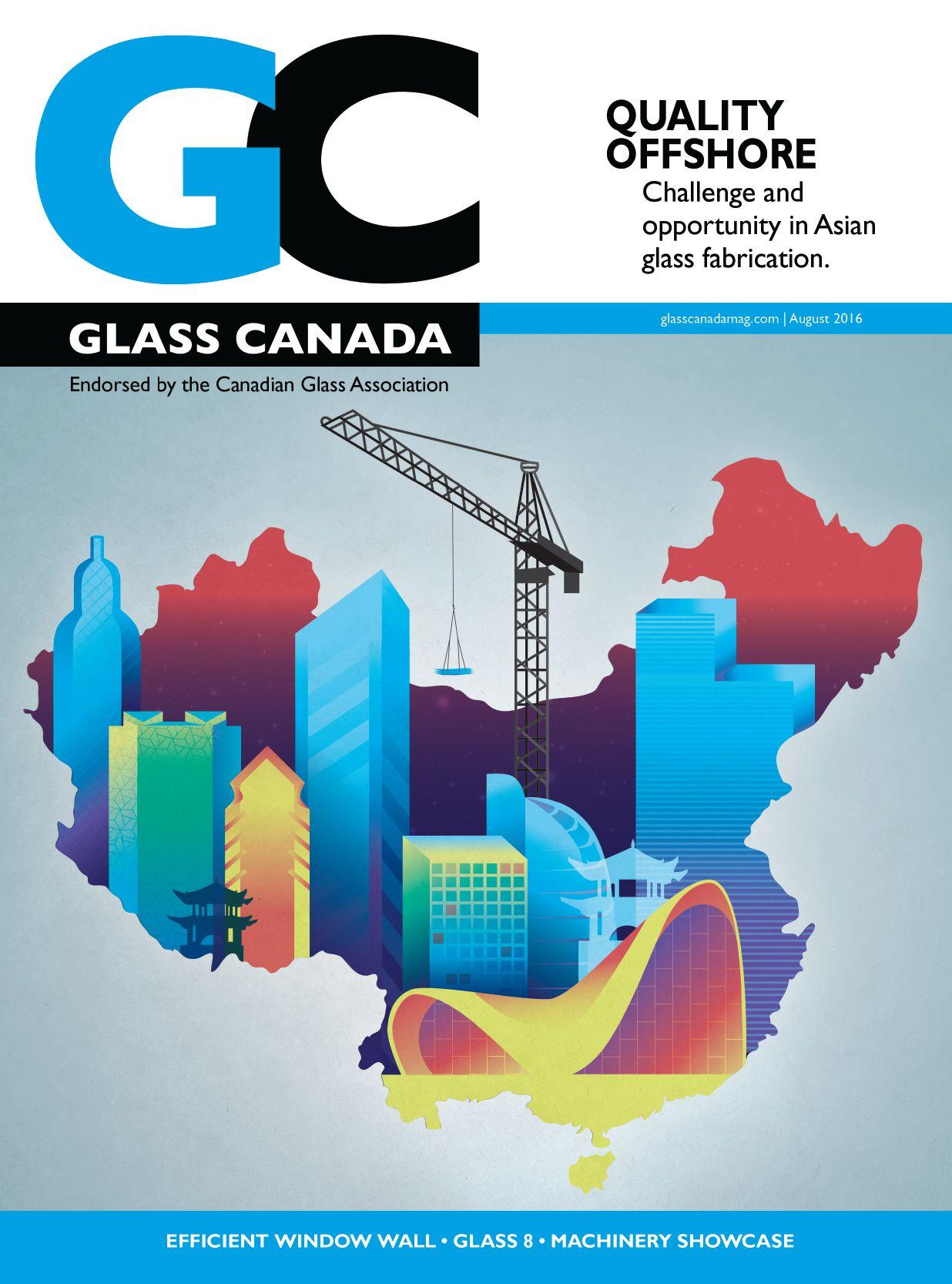
In a global world, understanding how to work with Asian building envelope suppliers is a key to success.
The
Dean
Technology is critical to your process. These innovative products can lead to profits in your shop.

In a global world, understanding how to work with Asian building envelope suppliers is a key to success.
The
Dean
Technology is critical to your process. These innovative products can lead to profits in your shop.
EDITORIAL
August 2016
Volume 28 • Number 4
Annex Business Media P.O. Box 530, Simcoe, Ontario N3Y 4N5
• Codes update
• Export tricks
• Point-supported hardware
In our last issue, we covered the Ontario Glass and Metal Association’s participation in a lobbying day at the Ontario legislature, where association president, Angelo Cairo, joined other construction industry professionals to talk to Members of Provincial Parliament about the need for new rules governing payment of contracts. Delays in paying for completed construction contracts have been creeping up for years across the country, to the point where small subcontractors are waiting 60 days on average for resolution of their outstanding invoices. This unacceptable state of affairs has disastrous consequences for business owners, employees, suppliers and the economy in general, and the lobby group (Prompt Payment Ontario) and the OGMA are to be praised for taking action to raise awareness with politicians. Cairo reports that the meetings went well and that legislators were surprised by many of the points the group raised – especially the fact that payment delays are usually not because of poor performance or incomplete work on the part of the contractor, but rather due to project owners and general contractors passing on the delays they experience in their own cash flows. In effect, these much larger, wealthier entities are using the subcontractors’ time, labour and credit to help finance their projects. Shockingly, municipalities are some of the worst offenders. It remains to be seen whether the Ontario government will take any action on the group’s recommendations to reform the Construction Lien Act and put some form of arbitration tribunal in place. These issues are not unique to Ontario and I would hope that our other associations across the country would take up the cause in their own jurisdictions. Perhaps there is a role here for the Canadian Glass Association to coordinate a national movement.
American associations often take strong political positions on many issues affecting their members. Some attend lobbying conferences in Washington, D.C., and their state congresses annually, not just when there is a particular issue to address. This seems to me to be one function that an industry association can perform better than any other organization. When a government receives mixed signals from individual business owners, it has no mandate for action. Associations are understood to be run according to democratic processes and to therefore have the best claim to speak for the entire sector. Any responsible politician is going to be hard-pressed to ignore the expressed will of an entire segment of the business community. When associations take political action, they have the best chance to influence real change.
We often bemoan the codes, taxes and regulations that are enforced on us by governments, often in response to interests other than ours. We Canadians certainly tend to be less political than our friends to the south, where you can scarcely order a hamburger without getting into a discussion about the latest election. Maybe we should be taking a page from their book and communicating more with governments through our associations. Then it would just be a simple process of getting everyone inside an association to agree on the message... •
@GlassCanadaMag
EDITOR | Patrick FLANNERY pflannery@annexweb.com 226.931.0545
SALES MANAGER | Danielle LABRIE dlabrie@annexweb.com 519.429.5187
ACCOUNT COORDINATOR | Stephanie DeFIELDS sdefields@annexweb.com 519.429.5196 | 888.599.2228 ext. 257
MEDIA DESIGNER | Emily SUN
Publication Mail Agreement #40065710
Printed in Canada ISSN 0843-7041
CIRCULATION
email: asingh@annexbizmedia.com Tel: 416-510-5189
Fax: 416-510-5170
Mail: 80 Valleybrook Drive, Toronto, ON M3B 2S9
SUBSCRIPTION RATES
Canada - 1 Year $36.75 (includes GST) ($39.55 includes HST/QST) U.S.A. - 1 Year $50.00 (in US dollars)
Occasionally, Glass Canada will mail informationon behalf of industry-related groups whose products and services we believe may be of interest to you. If you prefer not to receive this information, please contact our circulation department in any of the four ways listed above.
Annex Privacy Officer privacy@annexbizmedia.com Tel: 800-668-2374
No part of the editorial content of this publication may be reprinted without the publisher’s written permission. ©2016 Annex Publishing & Printing Inc. All rights reserved. Opinions expressed in this magazine are not necessarily those of the editor or the publisher. No liability is assumed for errors or omissions. All advertising is subject to the publisher’s approval. Suchapproval does not imply any endorsement of the products or services advertised. Publisher reserves the right to refuse advertising that does not meet the standards of the publication.
glasscanadamag.com

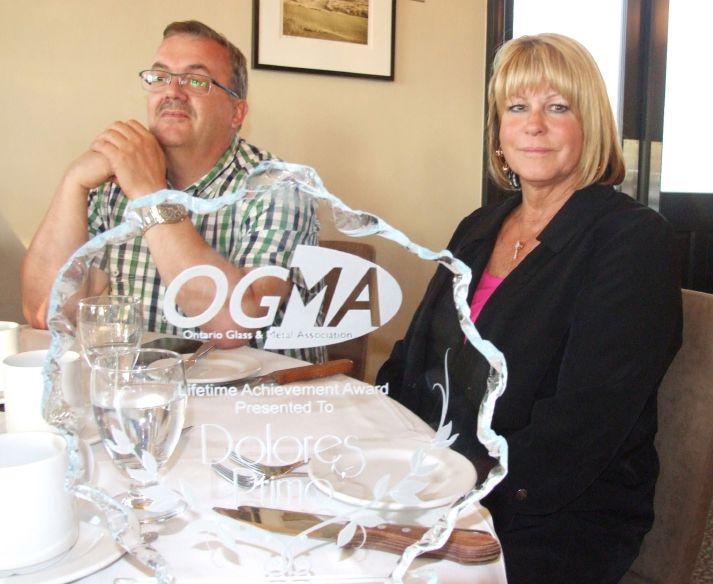
Dolores Primo was given the Ontario Glass and Metal Association’s Lifetime Achievement Award at its spring golf tournament May 26. The presentation marked the first time a woman has won the award. Ennio Rea of Trulite, an OGMA director, noted Primo’s many groundbreaking accomplishments over a remarkable 38-year career. Primo started in the glass industry with Pilkington Glass in Concord, Ont., in 1971 as a purchasing clerk. She worked there until 1979, cross-training for many other roles in the company. She became office manager at Byrne Glass briefly in 1979, then moved to Tempglass in 1980 where she started on the order desk. It was at Tempglass where she had to fight against some old-school attitudes to advance to an outside sales position, landing the job in 1981. According to Rea, Primo was the first woman sales representative in the glass industry in Ontario. She excelled in the role, staying with Tempglass and later Indalglass until 1988. After a brief stint with Walker Atlantic, Primo was contacted by Art Adler to start up a company with him and John DiMarco. Together with Rea, Ivan Martintoni, Larry Varey and Bruce Cook they built Armourguard into a $5 million company before selling to HGP
(now Oldcastle Glass) in 1997. Primo was general manager of the operation. After the sale she went with the new owners, helping Oldcastle establish a new plant location in Concord and a new sales benchmark of $7 million. In August, 2003, Primo left to start ProTemp Glass in partnership with Martintoni and Gianfranco DiMarco. By the time she retired in 2009, ProTemp’s sales were about $25 million annually. Primo thanked everyone at the OGMA and all her friends in the industry, saying she was honoured to be recognized.
Other business at the golf banquet included presentation of the OGMA’s annual $500 education bursary to Mike Vanhoist, an apprentice glazier with TRB. Cairo explained that Vanhoist entered the industry with Metropolis Glass at the New Oakville Hospital in October, 2014. He transitioned to CGI on the same site in May, 2015. He is currently employed with TRB and has been since August, 2015, and is working on the L.R. Wilson Hall at McMaster University. He was recently promoted to foreman on this project. Before entering the glass trade,Vanhoist completed his Civil Engineering degree at the University of Waterloo in May, 2010, and worked for five years as a site superintendent for PCL Construction.
The merger of the two businesses of Dorma and Kaba to form Dorma Plus Kaba was completed in September, 2015. Dorma Plus Kaba Group thus became one of the top three companies in the world for security and access solutions, with total sales of more than 1.9 billion Euros and more than 16,000 employees in around 50 countries. Kaba Group is headquartered in Rumlang, Switzerland and the Dorma Group is based in Ennepetal, Germany. The companies say the merger will allow them to offer a leading range of products and services from a single source thanks to complementary portfolios, value chains and geographical presence in all major markets. Dorma’s family owners have increased their commitment in the business by acquiring a 9.1 per cent stake in Kaba Holding AG together with Kaba’s family shareholders. Together, the groups of family shareholders own 27.3 per cent of the shares. Kaba Holding AG, listed as “dorma+kaba Holding AG,” will hold 52.5 per cent of the combined Dorma and Kaba business, while Dorma’s family owners will hold 47.5 per cent.

Assummer is in full swing, the CGA is gearing up for its Sept. 13-14 Glass Connections Conference in Ottawa and continuing its code advocacy through its membership in the Glazing Industry Code Committee (GICC). The Glass Connections agenda is set offering six AIA Learning Units. In addition to the programming, the CGA is partnering with the Canada Science and Technology Museum. The new museum will be offering tours on Sept. 13 and representatives will be participating in the Glass Connections table top exhibits and educational sessions. Visit canadianglassassociation.com for the latest on the event.
On the code advocacy front, GICC Code Consultants provided testimony at the preliminary code hearings in April. The hearings will set the 2018 International Energy Conservation Code (IECC). Next steps in the code cycle include public comments on the results over the summer, a second code hearing in October in Kansas City, and a final online vote of code officials in November and December of 2016. GICC Code Consultants will be attending these meetings and supporting GICC’s proposals. During the April code hearings, GICC was successful in its proposals for the glazing industry, especially on the commercial side including CE249, which would have harmed highly glazed buildings. GICC was also successful on the residential side. Overall, only small changes were made to the main prescriptive requirements (including the updated window
U-factors). Most of the debate was about flexibility in the main performance path and the Energy Rating Industry (ERI) performance path, including the balance between trade-offs between high efficiency HVAC, envelope, and use of solar PV. The committee went towards adding flexibility for all these, but placing a “backstop” on how much the envelope could be traded-off.
CGA’s initiative to provide online technical resources is underway. The new CGA online bookstore is live and electronic manuals provided by the Glass Association of North America (GANA) are available for instant download. Proceeds raised from online sales provide valuable funding for CGA, so order your copies today from our website. Available publications include: <i>Engineering Standards Manual; Fabrication, Erection, and Glazing Hours Manual; Guide to Architectural Glass; Project Managers Reference Manual; Laminated Glazing Reference Manual; Protective Glazing Manual.
It is with great sadness that we bring the news of the passing of our long time friend and industry colleague, Jim Epworth, founder of Upper Canada Glass in Oak Ridges, Ont. Jim left us in his 84th year on June 11 and is survived by Joyce, his wife of 62 years, sons Howard and John and daughters Marjorie and Joanne. Jim was one of the really good guys in our business. He will be remembered fondly by everybody who knew him. The legal review of the
Construction Lien Act has now been completed by the review group and their report has been submitted to the Ontario government. As of June it had been translated into French and all that remains is for it to be released to the public. Prompt Payment Ontario has been lobbying government representatives for its release. Details of its content will be distributed to the industry as soon as available.
Race Nite had been scheduled for June 22, but due to unforeseen conflicts the date has been changed to August 17, so mark it in your calendar and get ready for an evening of exciting thoroughbred racing, outstanding food, and great camaraderie in the decadent Woodbine Club dining room at the Woodbine Racetrack. It’s the perfect venue for getting to meet and have a drink with industry colleagues. Keep your eye open for your flyer or look on the OGMA website to register.
If you like getting up early and welcoming the sunrise with a beer, the OGMA Fishing Derby event is for you! Boat departs at 6 a.m. on Aug. 10 from Port Credit Harbour in Toronto.
Mark your calendar for Thursday, Sept. 22 and plan to be at the renowned Country Club in Woodbridge (formerly the Board of Trade Golf Club). Companies have until the end of the year to put accessibility policies and procedures in place for the communication of all of your information and your employment practices. To find out your legal obligations, go to ontario.ca/page/accessibilitylaws, then contact WSPS to help you put it in place.
If you are conducting business in the glass industry in Ontario, the OGMA is the voice

a big
that represents your interests at the provincial and federal level. Protect your business and support our fight for prompt payment legislation by becoming a member or as an associate member if you are a consultant to the industry. Please visit the OGMA website for more information.
After a year of preparation, the OGMA/WSPS safety manual is now ready for use by the metal and glass industry. The manual was created by qualified health and safety professionals and is a timesaving tool enabling glass shops to establish their own company program. Not only will this support a company’s efforts to eliminate workplace injuries and illnesses, it will also lower costs and time related to WSIB claims. Additionally, WSPS and the health and safety manual will get your company compliant with the new OHSA Regulation 297/13 as well as AODA requirements.
The Insulating Glass Certification Council (IGCC), sponsor of the IGCC/IGMA certification program, North America’s leading IG certification and quality assurance organization, is currently testing a pilot program that would enable IG manufacturers to provisionally certify their products in just four weeks. The existing full certification takes an average of 24 weeks. Provisional certification would enable the manufacturer to sell a certified product pending the outcome of full ASTM tests. The Provisional Certification (PC) Program was designed to assess the ability of a manufacturer to take an established type and arrangement of sealant(s) and components and assemble them to a speci-
Tyman PLC, parent company of AmesburyTruth, has entered into a definitive agreement to acquire the Bilco company. The acquisition will enable AmesburyTruth to broaden its commercial product portfolio and further penetrate the commercial market segment. Bilco is a leading supplier of specialty access products for both residential and commercial markets. The terms of the agreement took effect in July, at which time Bilco became a wholly owned subsidiary of AmesburyTruth. Bilco will continue to manufacture commercial and residential access products from its existing facilities. The company has a strong presence in North America and select international markets.
“Bilco has excellent brand recognition, enabling growth for other AmesburyTruth products,” said AmesburyTruth president and CEO, Jeff Graby. “Bilco is a very good fit for our business. The products play a critical role in providing solutions for building openings in
fied standard. The program was evaluated by a correlation study last year. This study compared the program’s pass/fail data to identical units that were evaluated to IGCC’s existing certification results with surprising precision. The program utilizes the test methods outlined in ASTM E-2190 for the stability of the gas fill and the unit’s durability when subjected to high humidity and accelerated weathering environments. Evaluation is made after a shorter exposure time but with more stringent pass/fail criteria, along with additional quality assurance requirements developed by IGCC. PC is not applicable for designs and materials which have no successful track record with ASTM E-2190 tests.
Aug. 8 - 11 IGMA Summer Conference Banff, Alta. igmaonline.org
Aug. 17 OGMA Race Nite Toronto, Ont. ogma.ca
Aug. 18 PGAA Golf Red Deer, Alta. pgaa.ca
Sept. 13 - 14 Glass Connections Ottawa, Ont. canadianglassassociation.com
both the commercial and residential segments enabling AmesburyTruth to play a greater role in providing a total solutions package.”
“We are pleased to be part of a company that has a rich history steeped in innovation,” said Tom Crowley, Bilco’s president. “We see this acquisition as an opportunity to evolve our product portfolio. Customers can expect to receive the same great quality, value, and service. Additionally, our company will have access to best in class business practices designed to streamline our business processes while delivering enhanced value to our customers.”
“We were pleased to find a buyer whose values aligned well with the Bilco brand that our grandfather, George Lyons, worked so hard to build,” said Robert Lyons Jr., Bilco chairman and CEO. “AmesburyTruth was the perfect choice as their business has had a long history of satisfying customers, and we believe their culture will help Bilco evolve as a business.”
Astrategic alliance between Nicolas Riou, managing director of Riou Glass, and René Thibodeau, head of ThermoVer, was made official in April at a meeting held at ThermoVer’s Quebec location. Riou Glass is a family-owned glazing group based in Reunion and Mauritius, France, employing 900 workers at 14 locations. Riou has acquired an interest in ThermoVer, a flat glass transformation business located near Montreal. The alliance is intended to provide assistance in the ongoing development of ThermoVer, which will be investing $2 million in 2016, to
enhance glass-processing expertise within the business in Quebec. This will be based on the experience, products, technology and support available within the Riou Glass group.
The partnership will also develop the distribution of high-performance glass products in North American markets and to further Riou Glass’ international goals.
For Nicolas Riou, it’s a return to his roots. He owns a hunting and fishing reserve near Rimouski, Que., which was founded in 1751. Riou plans to move to Quebec to assist in the development of ThermoVer.
Sept. 20 - 23 Glasstec Dusseldorf, Germany glasstec-online.com
Sept. 22
OGMA Fall Golf Toronto, Ont. ogma.ca
Oct. 19 - 21 GlassBuild Las Vegas, Nev. glassbuildamerica.com
Nov. 15 - 17 WinDoor Montreal, Que. windoorshow.ca 2017
Feb. 6 - 8 GANA BEC Las Vegas, Nev. glasswebsite.com
April 20 Top Glass Mississauga, Ont. topglasscanada.com
Walker Glass has announced the expansion of Steve Morren’s territory to include the western Canadian provinces. Steve will continue to promote Walker Textures products to architects, designers, specification writers and contract glaziers in Ontario as well as continuing to be responsible for developing and promoting programs to OEM companies across Canada and U.S.A. Morren joined Walker two years ago. With his knowledge of the Ontario market his impact was immediate on various projects including some that required bird-friendly glass. Before joining Walker, Morren had over 35 years’ experience in the glass industry. He started his career in 1978 with PPG

Industries, then with Walker Atlantic, Fulton Windows, Eastern Float glass and Saand in Toronto.
“It was a natural for us to expand Steve’s territory to the Western Canadian provinces,” said Marc Deschamps, business development manager. “We have noticed increased demand for our products and solutions from architects and designers in this region. Steve has been successful in creating the necessary links between the various players that are involved in each project. Architects, designers, glaziers and our clients in these markets will benefit from his knowledge and expertise.”
CSA Group has announced that its key accessibility standard has been referenced in the National Building Code (NBC), an important step toward the harmonization of accessible design requirements. CSA B651-12 Accessible Design for the Built Environment was first published in 1990 and is now in its fourth edition. The standard contains requirements for making buildings and other facilities accessible to persons with a range of physical, sensory, or cognitive disabilities. It was developed to fulfill an expressed need for a national technical standard that covers many different types of buildings and public spaces.
“The Technical Committee on Accessible Design has worked for many years to make this harmonization possible. Accessible design opens doors for people of all abilities and is an essential part of our built environment,” said Magali Depras, president of Standards at CSA Group. “By giving designers clear and consistent requirements and expectations across the
Everlam has announced that Harald Hammer joined the company as CEO. Hammer replaces Luc De Temmerman, who will join the board of directors. Everlam is a global provider of PVB film in the architectural laminated glass market. Hammer brings extensive leadership experience in the chemicals and plastics industries. Prior to his appointment at Everlam, he spent 18 years at Borealis, a specialty plastics manufacturer, in various commercial roles including leading their engineering applications, mobility, Borouge JV and film and fiber business units. Prior to Borealis, Hammer spent 11 years at PCD Danubia, a polyolefin supplier.
Commenting on the new appointment, chairman Greg Parekh said, “I am delighted to welcome Harald. His knowledge of similar industries, success at building a multicultural joint venture in Singapore, as well as his track record in implementing SAP systems and operating processes will greatly
country, the work of creating accessible spaces is made easier.” The accessible design provisions in the CSA Group standard were comparable to those in the NBC, and it was clear that creating a single source document would help simplify the design process. Over the past three years the technical committee has worked with its counterpart committee at the National Research Council, the developer of the National Building Code, to align and update the design requirements in both documents. Once that was complete, the B651 could be directly referenced in the NBC. Users of the recently published 2015 edition of the National Building Code now have the option to use either the design requirements in the NBC or those in B651. The CSA and NBC technical committees are continuing to work towards referencing CSA B651 as the sole source for accessibility design requirements in the 2020 National Building Code of Canada.
benefit Everlam. I would like to take this opportunity to thank Luc De Temmerman for his contribution in helping Everlam transition to an independent company and setting it on the right strategic track. I am pleased Luc will join the board of directors and that Everlam will continue to benefit from his deep PVB industry experience and relationships.”

Hammer commented, “I am passionate about the opportunity to work with some great people and lead Everlam into a period of further expansion. I share Everlam’s values of high product quality, service excellence and innovative solutions.”
Lumon panels can be slid and folded back to allow the user to choose how open or closed they want their outdoor space to be. Yet the company reports solid test results on noise reduction and energy efficiency.
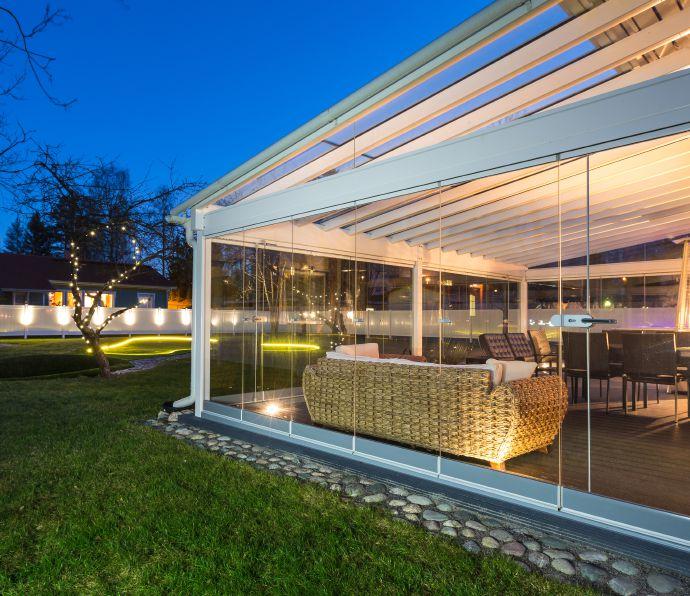
There’s no glass and aluminum enclosure like it. “At least, no other frameless, retractable glass sunrooms, solariums and three-season rooms can rival us for style, appearance, functionality and user-friendliness,” says John Van Iperen, sales manager for Lumon Canada. “Our quality and continuous product development have really paid off.”
Finland-based Lumon has a 35-year global presence, exporting its products to over 20 different countries and employing more than 675 employees, producing annual sales of around $100 million. Specializing in glass and aluminum constructions for condos and private residential homes, Lumon is one of the leading suppliers in the European balcony and terrace market boasting one million customers worldwide. Lumon Canada marked its first foothold in the North American market in 2011 with a presence in Cookstown, Ont. The company has since grown to encompass plants and showrooms in Stoney Creek, Ont., Abbotsford, B.C., and its new state-of-the-art, 60,000-square-foot production facility in
Woodbridge, north of Toronto, manufacturing and servicing the North American consumer market in tandem with sales consultants and dealers across the continent.
“We now install about 1,000 balconies per year in Canada,” says Van Iperen. “Toronto as the condo capital of North America is a good starting point for us. The great market potential is a good combination for success in Canada and also in the U.S.”
The Lumon product consists of an operable glass panel portion and a guard portion which forms a balcony enclosure. The system is not hermetically sealed as there are ventilation gaps between the operable glass panels. The operable glass panel portion consists of an upper extruded aluminum telescoping loadbearing track, a lower extruded aluminum glide track and six-millimeter-thick tempered glass panels. The upper telescopic track is attached to the perimeter of the concrete slab ceiling of the balcony using drop-in anchors and stainless steel bolts while the lower extruded aluminum track is secured directly to the Lumon railing system.
Each glass panel is attached to the upper track with two ball bearing rollers that serve as the upper hinge/upper rail guide, and to the lower track with an alloy hinge and plastic guide that rides inside the lower track. All glass panels can slide and be opened, except for one hinged panel at the end of the glass portion, which is fixed in place, but can be opened by swinging it inward. A plastic latch mechanism keeps the fixed-in-place glass panel closed or
truded aluminum channel profiles (glazing beads) are fastened to the upper and lower edges of the panels. The glazing beads are cut wider than the glass panels to prevent glass-to-glass contact when in the closed position and to provide ventilation between the glass panels.
The guard portion is composed of sixmillimeter-thick tempered glass infill panels, galvanized steel anchors and extruded aluminum handrails, posts and sills. The
Lumon Canada uses the same product design as in Europe, but has developed a new system for this market because the wind loads are higher here.
partially opened for ventilation. The other glass panels can be moved laterally, swung open at 90 degrees and locked in place with the hinges of adjacent panels. To fully open the system, the movable glass panels can all be shifted to the end with the fixed-in-place panel. A webbed nylon tether strap secures the glass panels while they are in the open position. Ex-
extruded aluminum handrail connects to the posts with stainless steel bolts and rivets while the extruded aluminum sill connects to the posts with stainless steel bolts. The top of the glass infill panels is held in the track formed by the edge of the handrail. This track is lined with an EPDM rubber seal and a clip-in extruded aluminum retaining profile. Another extruded alumi-
num sill with an EPDM rubber seal holds the bottom of the glass panels in place along with a clip-in extruded aluminum retaining profile. The extruded aluminum posts, which are connected by a friction wedge plate, fit overtop of the steel foot anchors to which they are held with stainless steel threaded rod inserts and stainless steel cap hex nuts. The anchors are held in place to the concrete slab with a chemical adhesive anchoring system.
Speaking from Lumon’s stylish Woodbridge headquarters, Van Iperen points out that Lumon did its homework prior to entering Canada. “Though Lumon is backed by decades of research and development, in coming to Canada we knew we had to be fully prepared with the right specifications and building codes for this market.” Lumon Canada uses the same product design as in Europe, but has developed a new system for this market because the wind loads are higher here. “The new system is even higher quality than our original system, which makes us proud,” smiles Van Iperen.
The Lumon balcony glazing system has been awarded the European Technical Approval (ETA-06/0019). The Lumon
20–23 September 2016
Düsseldorf, Germany
Pure inspiration! glasstec, the world’s leading trade fair, presents solutions and products for energy-efficient construction.
The best way to prepare for your show visit is to use the sector guide on the glasstec portal, where you will find all the offers for your sector.

glazing system is among the first in Europe to get this approval and CE marking. The CE marking is given, for example, to building products that fulfill the EU’s health and safety requirements.
With its roots in Finland, Lumon has a long history of high performance in extreme temperatures. “From the cold winters in Winnipeg to the hot summers in Toronto to the rainy seasons of Vancouver, our solariums are designed to excel in all kinds of weather conditions throughout the whole year,” touts Van Iperen.
In North America, Lumon’s glass specs are six-, eight-, 10-, and 12-millimeter tempered glass, heat-soaked if face mounted onto the balcony. “When designing a system, we start by checking to ensure the product meets all of the local requirements,” says Eric Koski, Lumon’s consumer condo sales manager. “We buy glass from a local supplier and monitor how it is measured, and then do all of the assembly in our own operations with constant quality checks. We check everything again before we go to the installation site.”
At present, Lumon’s glass components are supplied by Accurate Glass and Mirror based in Barrie, Ont. But Lumon plans to cut, polish and stock its own glass panels as its North American business mushrooms.
Lumon is CCMC-approved, having undergone rigorous laboratory wind load and snow load tests. “Our frameless retractable glass keeps out wind, rain, and debris without permanently enclosing your balcony, so you can enjoy your transformed balcony without worrying about zoning restrictions,” asserts Van Iperen. “We are also proud to be a green company with a negative carbon footprint that meets all LEED standards.”
Complementing its balcony glass enclosures, Lumon also offers customers accordion-style ceiling and window
blinds to shade sunrooms or solariums from the sun and provide privacy when needed. The blinds are custom-made according to the dimensions of each pane of glass. They are then fixed to the glass, moving seamlessly with it. The blinds can be opened and locked in place from either the top or the bottom. When pulled up entirely, the blinds are almost invisible.
“Our ceiling and window blinds are made of 100 per cent polyester, making them durable and easy to wash,” notes Koski, adding that they are also anti-static. “Our projects include precise product measurements, railing designs, strength and resistance calculations, production and installation plans, drilling drawings, and product-specific technical details so that the time devoted to planning and installation is reduced as much as possible.”
Asked what about Lumon’s balcony and patio enclosure systems are most asked by his customers, Van Iperen replies, energy savings and noise reduction. The key features of Lumon’s glass system, he claims, include noise reduction by roughly 50 per cent, and energy savings of up to 11 per cent in condos and on average 5.9 per cent of a residential building’s heating energy consumption. As well, according to test results confirmed by university studies and technical research, corrosion of reinforcing elements slowed by one third in the walls and one half in the ceilings of the balconies, while it was found that concrete deterioration stopped almost completely in the protected areas. States Van Iperen, “Condo owners appreciate the glazing systems not only for the caliber of their construction and installation, but also because they provide opportunity for more use of balconies and terraces in areas with high winds and colder climates. Doing something for the building envelope – to improve it or pro-
Lumon aims to end the reputation of window wall as being lower performance and prone to problems with heavier engineering and high-quality components. Architects love the views, now they have something that can also take the wind and cold.
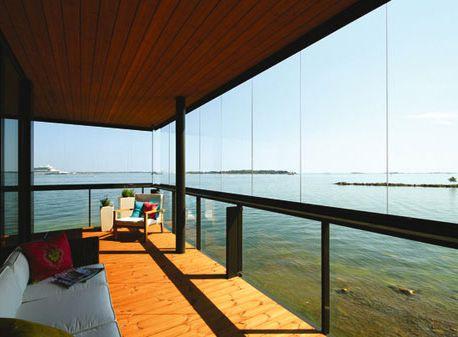
tect it – is usually really expensive. Our system is affordable and it can save energy because it provides extra energy for the building envelope. It keeps out all of the elements – snow, wind, rain, pigeons – and keeps the concrete slab dry, so it reduces the need for maintenance.”
Koski emphasizes that it’s an investment for the building owner, one which allows the condo owner to use the space much more. “Additionally, it improves safety issues in balconies. It cuts a large percentage of noise, which can be a problem in urban downtown areas. With our system, the balcony becomes an extra private room for condos, which owners really appreciate.”
Currently the condo market is about 30 per cent of our business and 70 per cent residential. We expect those numbers to split with the impressive growth in condos. We are experiencing tremendous growth and see doubling our size within the next five years,” says Iperen. •


SEPTEMBER 13-14, 2016 OTTAWA, ONTARIO
Offshore building envelope products arriving on our shores is a reality that is not going away. Understanding how to extract the best from overseas providers may be your best route to success.

by THOMAS TRUDEAU
We live in a globalised world. Global trade is a fact of life and is becoming increasingly prevalent in the construction industry now more than ever. Arguably the sector most affected by this shift is Section 8, glass and building exteriors. One needs only to look around the downtown core of any major North American city to see towers that have been clad in curtainwall panels from China or South Korea. If one looks closely, they may also notice that these buildings are, in some instances, highlighted by the pockmarked plywood window infills that have yet to be replaced. Perhaps all the balcony doors are missing. Or, a tower crane has become a semi-permanent installation. While using offshored material has its benefits to suppliers in both in terms of price and capacity, there are related risks. Mitigating these risks is crucial to ensuring the success of your project or supply chain endeavour.
One of the challenges of using offshored suppliers is what I refer to as “known unknowns.” These are difficult to define because you don’t know what the issue is until it’s too late. Because you are dealing with different business cultures, ethics, local quality standards and practices, and a range of other aspects which impact production quality, things come up that need to be nipped in the bud before they snowball out of control. Problems are not always the result of malicious intent, but may be simply due to a lack of understanding or acceptance of the need to meet higher standards.
One root cause of known unknowns can be found in the culturally engrained idea of saving face. Instead of risking looking incompetent to their superior or client, a worker or manager may just find a work-around that makes the problem “go away,” or, more likely, shift to the next guy. A great example of this I will always remember was when a line worker found that applying weather seal around the interior perimeter of a backpan assembly was not feasible due to the unique panel configuration (a valid issue). Instead of red flagging this to his superiors, he decided to improvise and seal the exterior perimeter of the louvre insert instead. Not only would this have resulted in major water infiltration issues, it would have required extensive remediations once the panels were installed on site. Luckily, in this case, the modification was spotted early on and only a dozen or so panels required remediation. I cringe to think what the result would have been had no one identified this issue.
The above example raises another common issue with many Asian suppliers. You cannot expect the typical factory worker to have much if any understanding of the “why” of what they are doing. With this is mind, we cannot fault the worker for not understanding that what he was doing was incorrect. However, due to the need to save face, he was unwilling to be the one to delay production by bringing up the issue with his superior.
I touch on this on the mitigation section of the article, but in order to reveal the known unknowns, one needs to have eyes on production and a competent intermediary to identify and rectify these issues as they arise.
“Quality fade” is a term recognised by most individuals who have had issues with offshore

suppliers, coined by Paul Midler in his book Poorly Made In China. This phenomenon occurs when suppliers are eager to secure business with you and will bend over backwards to make that happen. The fade aspect comes into play once the supplier has secured the contract, and is off hunting for the next one. They stop paying as much attention to your product quality and start concerning themselves with product quantity. This can metastasize with systemic issues not dealt with and snowball over time, or it can be more malicious by intentionally incorporating cheaper material substitutions and/or using less material than required. A good example of intentional quality fade is having an aluminum extruder speed up or slow down extrusion rates, resulting in thinner profile walls in the mid-section of a given length. An inspector may look at both ends of the extrusion and they look fine, however if you were to cut open the middle, it would be a different story. Another example is the conscious inclusion of defective materials in production to complete the order as quickly as possible.
Production speed, usually one of the benefits of going offshore, may also result in quality fade. It is quite common for line managers and QC inspectors to receive financial bonuses for quantity not quality. This seems counterintuitive and it is. When there is actually personal financial incentive to fill containers as
quickly as possible, one can imagine how easy it would be to look the other way when issues would hold up production. Because – shocking as it may seem – that quality inspector in Beijing does not especially care if some windows in Toronto leak.
To add to the above phenomena, there is often a significant disconnect between the project managers and factory staff in larger facilities. While management may be really involved in the start-up of production, once it is fully underway, as long as shipments are on time, they are doing their job. This disconnect can make resolving quality issues difficult to do from a distance. Confusion and misinformation can result from a lack of communication between these two critical elements of a supplier.
One of the more challenging aspects of using a supplier on the other side of the world is coordination and oversight. It becomes difficult and tedious to chase after and monitor changes, remediations, replacement materials and all the other fluid elements that go into a production process. This, in combination with the communications issue between the office and the fabrication shop, may result in more complications and delays.
While there are challenges to be overcome when choosing to use an offshored supplier, it can be a profitable venture
with adequate oversight and employment of mitigation strategies. The following are several strategies that help ensure a successful project.
It is crucial to make sure the supplier you are using has the equipment, knowledge and capacity to provide the required product. Most will advertise themselves as having this capability even if it is not the case. In some cases, they may simply take the contract and then subcontract it out to an unknown supplier who does have the capacity. This introduces an element of uncertainty and potential for quality issues. Make sure to identify and review the production capacity of all subcontractors. Suppliers who have mainly worked on Asian projects can be excellent choices to introduce overseas, however they also may be stuck in their ways and not understand or think necessary the changes in process and quality that are required. It is critical that a facility is reviewed, in person or by a credible third party, to ensure they fit the bill.
Money talks. This is true in any industry in any country. However, in the case of overseas supply, it holds more true than ever. Having a carrot on a stick in the form of future contracts will help encourage suppliers to meet your requirements. If they think there is potential for more work, they will see the value in putting in the extra time and effort on your job. On the other hand, if they see the project as a one-off deal, they will be less inclined to accommodate. By building a relationship and fostering the idea of mutual benefit, you will be able to demand a higher production quality.
Suppliers may have in-house quality assurance/quality control manuals, and sometimes these are sufficient to be adapted to your project. There have been cases however where a supplier has, for example, indicated that 100 per cent of incoming material will be checked. This looks great on paper but is one of many potential red flags. Will they actually check 100 per cent of materials? Absolutely not. The very fact they are saying this indicates a level of unscrupulousness. Once a supplier is selected, it is a good idea to sit down and develop or refine a project-specific QAQC plan. Plans should at a minimum define batch sizes, sample rates and related standards. This will serve several purposes. First, it is you setting the bar for your project quality standards. Second, this is the
stage at which a supplier may ask questions without losing face or time and money. Last, it provides a framework for subsequent production reviews. The majority of suppliers, especially ones looking to break into the North American market, are willing to adopt your quality requirements as long as they are not unreasonably burdensome.
It is critical that once a QAQC plan is established, periodic reviews of production and quality records be carried out. There is a tendency in the industry to have intensive checks up front, then taper them off after some initial good results. To be sure, intensive initial production reviews are beneficial, however, the key to consistent quality is consistent review. If a supplier knows that their work will be inspected on an ongoing basis, there will be more pressure to do the job right. This helps negate quality fade, maintain communication and catch any known unknowns before they become a major issue.
Once all the above have been established, you are in pretty good shape to
move forward with production. There is, however, one major component I feel is often overlooked: doors and windows. These are complex systems and are also critical to the building performance. After the initial PMU tests (which are usually given extensive attention to quality), there is very little tangible inspection of these units until they arrive on site or, sometimes, until the majority have been installed. In a typical construction job, windows and doors are tested in-situ and often times small adjustments or remediations are required. This becomes more complicated when your window and door supplier is thousands of kilometers away. For this reason, it is highly recommended that operable systems are periodically tested in the factory, prior to shipping and throughout production. Including these tests as a requirement to for overseas suppliers should be industry standard, or adopted as best practice. Having a third party conduct these tests will ensure that they are done in conformity with performance standards and are reported on in a nonbiased way. This serves two purposes. First, if failures occur, remediations can
be identified and carried out on all units prior to shipment. Secondly, failures can be directly attributed to fabrication and not installation.
This article is not intended to scare you away from using an overseas supplier. It is simply to raise awareness of considerations that would not normally be required when using a domestic supplier. There are many benefits to going overseas. Price is the obvious one. On top of that, capacity is often much larger both in terms of ability to produce more in a shorter time and also to produce specialised product more readily. Often times, the cost of implementing production oversight is outweighed by the savings gained. Get the best of both worlds. Do not sacrifice product quality for product cost. Done right, using offshored suppliers can have enormous benefits to your bottom line and production capacity. •
Thomas Trudeau is the owner of Bridge Facades, a QAQC and supply chain consulting company based out of Seoul, South Korea, and operating across Asia. He can be reached at ttrudeau@bridgefacades.com
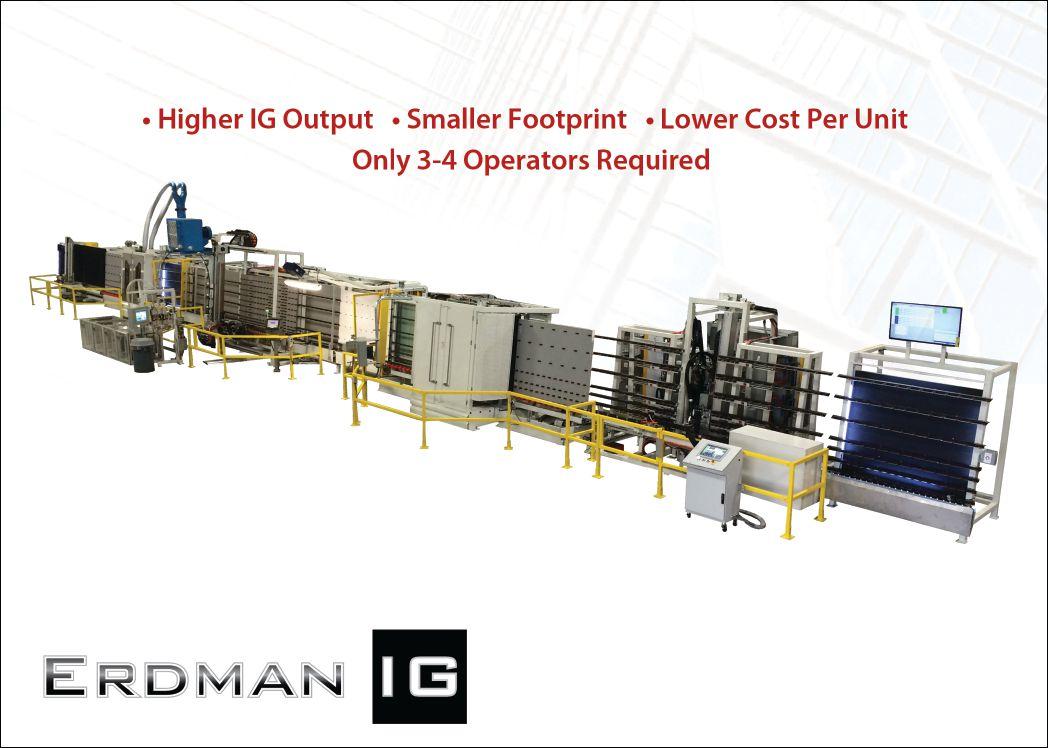

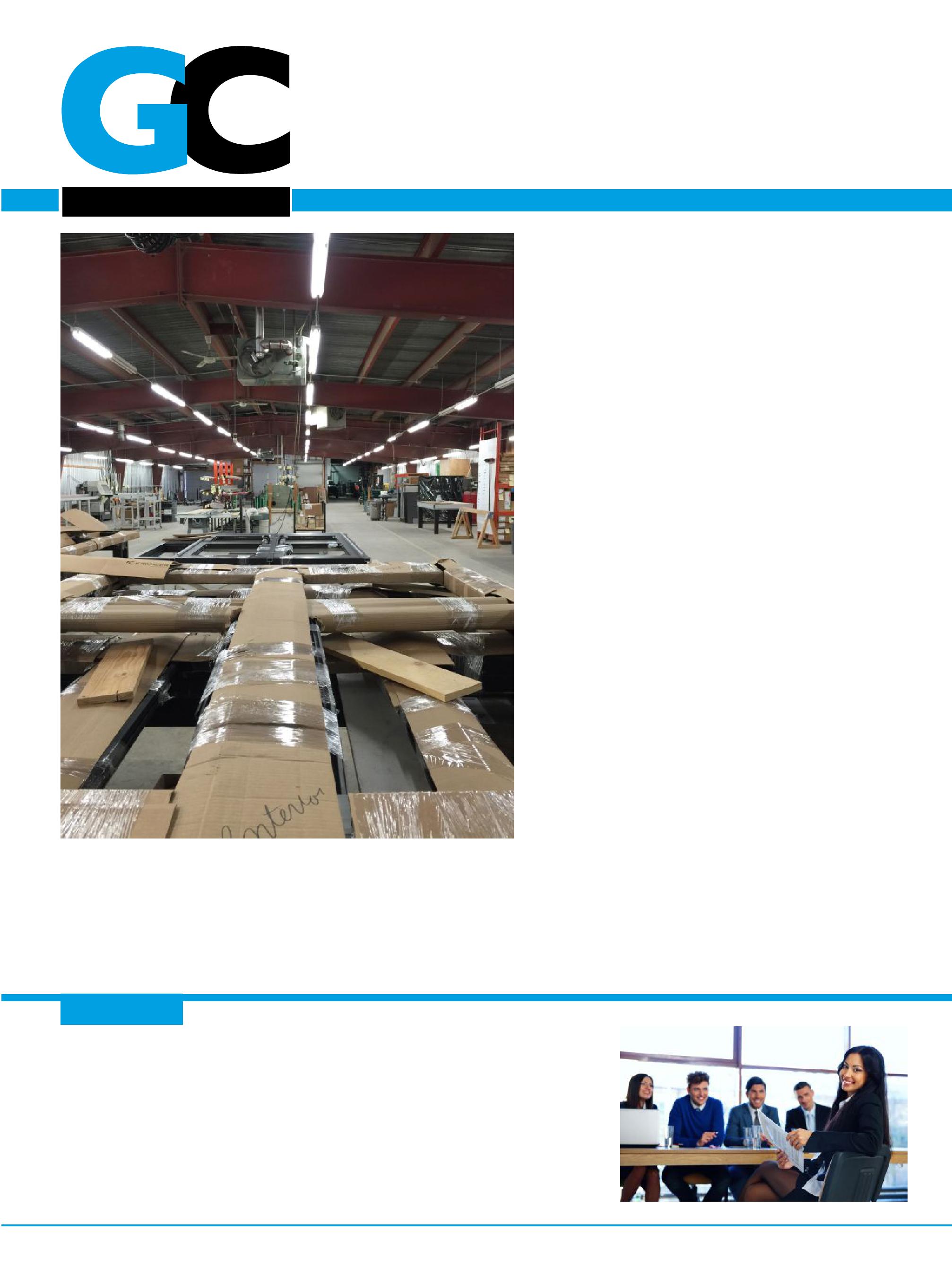
Glass 8 is producing full curtainwall assemblies in its 14,000-square-foot plant. Building envelope fabrication is only one of their four services.
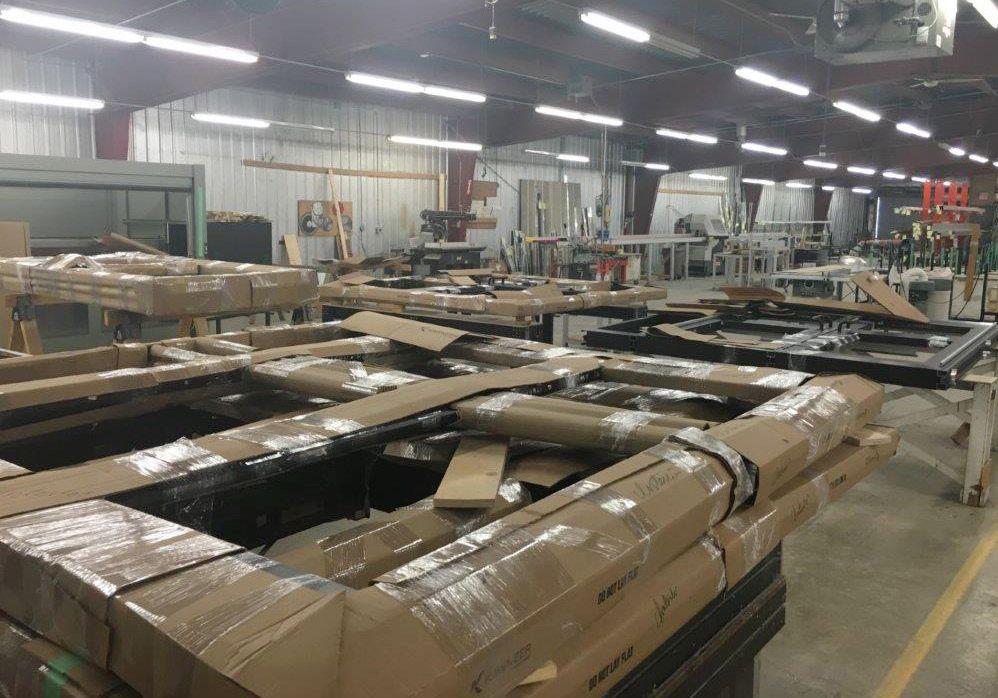
There was a chocolate cake on a side table at the Glass 8 office at the eastern edge of Winnipeg. It said ‘Congratulations, Glass 8’ in blue icing. It was explained that the cake was a gift from a client. Not bad for a Thursday.
It’s not every day they have cake at Glass 8, although it’s still very early days at the office, run by Dean Borys and Michael Hockham and their 16 employees. Glass 8 is merely a few months old – Borys got it up and running in late 2015 and Hockham joined the team in early 2016 – and the cake was presumably a house-warming (or a business-warming) gift of sorts.
“The Glass 8 name is kind of a reference to Division 8, so it’s construction specifications; anything in Division 8 is generally opening related, windows related, so if it’s glass and Division 8, that’s what we do,” said Borys.
But this particular physical premises isn’t a stranger to the glass business. What is today Glass 8 used to be a business called Allan’s Glass, housed here in a long, one-storey office and workshop in St. Boniface’s light industrial area along Dugald Road. It was run by a man named John Borys.
“I know a little about Allan’s,” said Dean Borys, John’s son, before he corrected himself. “I know a lot about Allan’s, actually. I joined Allan’s Glass in 2001. It was a family business, owned by my dad. We were doing work all the way out to Saskatchewan, and Alberta, obviously Manitoba, Nunavut, Northwest Territories.”
John Borys had purchased Allan’s Glass in 1983 and by 2011, the family business was doing well enough that it was eventually approached by All Weather Windows, who inquired as to whether Borys would want to sell.
Said Borys, “We’d grown it quite substantially and it was a time for us to consider selling it, so we did. We sold it to All Weather and they kept the name Allan’s Glass. I stayed on to work with them in this building until 2014 and then they asked me to go to Edmonton and take on the role of director of their commercial division.”
That lasted until Borys got itchy feet for his entrepreneurial roots.
“It was a time for me that I thought, you know, I’ve done the small business entrepreneurial side until 2011. I want to try the corporate side of things. I thought
Owners:
Dean Borys and Micheal Hockham
Location: Winnipeg Employees: 16
Inception: 2015
Products:
Curtainwall and commercial glazing, design/build consultation, emergency glass service, interior glass products
it was a great opportunity. I learned a ton from it. I don’t regret it for a second. But it took a year and a bit for me to realize that I’m more truly entrepreneurial than corporate. And that was when I met with All Weather, it was actually late September, and let them know I was going to be leaving and simply because I need to get back and doing something more entrepreneurial.”
The timing, in retrospect, seems serendipitous; it was at about that time that Borys found out that All Weather wanted to offload their Allan’s Glass division in Winnipeg. Borys leapt at the chance, as did the employees, with 100 per cent of them joining the new company.
Hockham also grew up in the glass
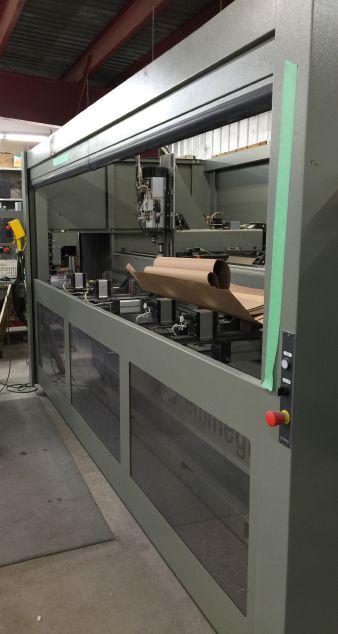
TOP: Modern technology is a key part of Glass 8’s strategy. Their new Emmegi Phantomatic T4A can machine in 4-axes to quickly make complex components to specification.
MIDDLE: Micheal Hockham BOTTOM: Dean Borys
trade, also with an early start.
“I started as a very young boy in the glass trade, so I was maybe 12 years old, cutting glass in the evenings and helping family members with the family business on weekends,” Hockham says with his northern English accent (he was raised in Yorkshire, UK). “And then I started an apprenticeship at 16 and worked my way through the trade. So I’ve been around sort of 34, 35 years within the trade.”
Hockham left the UK 14 years ago and ended up travelling and consulting in a variety of places, including the Middle East and Thailand. His CV is littered with references to far-flung projects and places like Doha and Bangkok.
“It’s a great place for construction, and for our trade, it’s fantastic, with towers going up as far as the eye can see,” he said about working and living in Thailand. “It was a great experience for me.”
In terms of his Canadian life, it may eventually prove to be a little more stable than southeast Asia was.
“I was there during the red shirts civil war,” said Hockham. “It was a tough time 2010. A time and situation that prompted us to leave. We gathered bullet holes in the truck as we were trying to escape.”
In the space of several years, Hockham has gone from working in an environment with desert heat and sandstorms to a tropical one with monsoons and great humidity (and civil unrest). But he says that those aren’t nearly as impressive as the prairie climate with its thaw-melt cycles and potential 60 C swings of temperature.
“I’ve never seen it before. I’m used to fluctuation in temperatures, plus 50 in Qatar, and the dreaded Middle Eastern sandstorms,” he says. “It is a fantastic experience, but it doesn’t compare to what you have here. This is an anomaly for me. When I first arrived, I didn’t really know how to deal with it. Everything is completely wrapped with membrane and the fluctuations, from minus 30 to plus 30 C, is horrendous to work with.”
After Thailand, Hockham ended up in Canada with his family and was hired through a recruiter to work for an-
other contract glazier before joining All Weather Windows, which is how he met Borys. Both insist that this new company wouldn’t have been formed without their partnership.
Says Borys, “I had told people that after we sold Allan’s Glass, I had no interest in coming back into the commercial glazing market as an owner, unless I could find a partner who complemented my skill set and kind of filled the voids in some places. So my role is the director of pre-construction, Michael is the director of operations. “
“(I deal with) everything from design, estimating, budgeting, that falls into pre-construction. So I’m working with clients, pre-award, at tender-stage and
“It took me a year and a bit to realize that I’m more truly entrepreneurial than corporate.” - Dean Borys
estimating. And as soon as we secure the contract, we turn it over to Michael’s team, who’s responsible for the execution of those contracts.”
But this story isn’t just about a couple of guys setting up a cozy neighbourhood business to take care of window damage from bird strikes and errant baseballs. They’ve got bigger plans than that.
“We’ve always talked about Glass 8 being really about four divisions,” said Borys. “We’ve sort of branded them all with 8s. Enclose8, Design8, Space8 and React8. So React will be our emergency division (with 24 hour service); Design will be our design-build consultancy –to architects, any type of information they need, we can source the suppliers. Space8 is actually interior space, and Enclose8 is our exterior curtain wall/entrance division.”
“One thing we’ve already secured is that we have a new interior partition product. Right now, the interior partitions that are sold across North America are generally a bit heavy, very component-heavy, and single-glazed,” said


Borys. “The system that we’ve brought in, we call it Switch, is a double-glazed product, it’s fully modular, it’s relocatable. The customer can have an office looking one way and in a matter of hours turn it into two or three offices, and if they’re in a leased space, they can take it with them into the next leased space.”
“That’s our newest product; it hasn’t been seen before. Our agreement is directly with the European manufacturer. And we have Canada-wide distribution rights.”
Added Hockham, “It’s great for a tenant-improvement package. Once the tenant’s in, if they can expand or, God forbid, they have to downsize, they can move and shift their office. They can have a boardroom or a smaller space very quickly.”
“That’s one of the main things, that because it’s modular, we can stock product here and have it ready to go in a matter of hours,” said Borys.
Hockham said that with Switch they will be “able to give the clients exactly what they want, the architects especially. A lot of products, once budgetary constraints are apparent, are value-engineered out. We believe we can get products into this market that offer architects exactly what they want simply due to us being able to source a better quality and fairer price.”
“There are lots of products out there, and they claim to be demountable and relocatable,” said Borys. “However, as Michael said before, they are very component heavy, very difficult to relocate. With this being entirely modular, very easily to relocate and double glazed, so you’re provided with a lot of acoustical value in a wall system.”
The pair insists that Glass 8 is not just about offering particular products but, rather, a different way of doing things and a different approach to their industry.
“I think one of the things we talked about, the vision that Michael and I discussed in the past, is that our trade as glaziers, we want to change the way the industry sees the trade of glazing, the perception,” said Borys. “Michael is from the UK, he’s worked all over the world, and outside of Canada and into Europe, the trade of glazing is a craft. It’s something different than it is here. And we really want to change that perception here, try to bring some of that craftsmanship here and really change the way the industry sees it.”
Hockham adds, “I believe there to be an unfortunately engrained negativity with certain construction trades here in Canada and the glazing industry is no exception. Delivery at field level by ‘inhouse’ employed teams is so dependent upon structured project management and operational excellence. Companies all too often celebrate the award of a project, only to move on to searching for the next award. Sales are of course important to any company, but so is your deliverable to your client and good old fashioned ‘repeat business’ cannot be beaten.”
For now, though, the pair’s families still live in Edmonton, and the two will commute. They will be based out of their Winnipeg headquarters, attending
to projects throughout Canada initially through the use of subcontractors before they build teams in other provinces.
“Allan’s only ever had one physical location,” said Borys. “They executed projects in different locations; it’s the same model for Glass 8. Even though our fabrication facility is here, the same way we will ship product up to Nunavut for installations, we will ship product into Edmonton, Calgary, Regina, Saskatoon, wherever our customers are.”
They have already lined up a number of projects, a new school here, a University of Manitoba project there. And if things go the pair’s way, there may eventually be even more Thursdays with cake at the office. •



by BILL LINGNELL
Bill Lingnell has over 46 years of experience in the technical field of glass and architectural products. He holds three Masters of Science degrees in engineering: civil, mechanical and engineering science. Lingnell is the technical consultant for the Insulating Glass Manufacturers Alliance.
This month we will explore a new document that is presently in committee and being reviewed for future publication by IGMA. This publication will address one of the many technical areas the organization works on to expand the knowledge base and meet the many needs of the insulating glass industry. It is intended to provide an overview of some of the topics that IGMA encounters with respect to enhancing the important guidelines and informational data on the subject matter. The new document is titled “Voluntary guidelines for insulating glass unit cavity width manufacturing tolerances, TM-4400-xx.” The intent of the document is to present voluntary manufacturing tolerances that relate to the cavity width of an IGU at the time of fabrication of the unit. The guidelines are not intended to address all conditions that exist in an IGU once the unit leaves the manufacturing facility.
It is well known that there are dynamic conditions that exist in IGUs that are determined by environmental factors and changes in the overall window system that will result in conditions that cause a reduction or expansion in the cavity width of the unit. There is a large amount of information about cavity width variability on the IGMA website (igmaonline.org). Topics include the effects of altitude differences once the IGU leaves the manufacturing facility and whether the unit is going through a major elevation change from the manufacturer’s plant to the customer’s location and/or a project site. The concerns of temperature and barometric changes will deserve attention and consideration as to the cavity width condition once the IGU is in the final glazed
Dynamic conditions that exist in IGUs that are determined by environmental factors and changes in the overall window system.
position. There is also information on solar reflectance with discussion of design options to reduce the certain occurrences that naturally occur due to solar conditions.
The guidelines being prepared for the “Voluntary guidelines for insulating glass unit cavity width manufacturing tolerances” publication are intended to assist in determining the maximum cavity width reduction in the IGU at the initial point of manufacturing. The goal of these guidelines will assist in the evaluation of the manufacturing process of the IGU prior to its being shipped from the manufacturer to the customer for double (single air/gas cavity) and triple (two air/gas cavities) IGU’s. The cavity width is defined as the outside to inside dimension of an IGU, typically the distance between the number two to the number three surfaces or, in other words, the distance between the facing surfaces in an IGU. Cavity width variability is determined by the difference between the nominal cavity width thickness at the IGU edge and the cavity width thickness measured anywhere in the IGU. Normally it would be expected that the greatest cavity variance would occur near the center of the IGU.
Illustrations will be shown to demonstrate the conditions that will be “unrestricted,” “potentially limited” and “limited” to provide guidelines related to the known and anticipated cavity conditions. Supplemental charts will be included to offer guidance for the allowable IGU cavity reductions at the time of manufacture. The charts will be set up to give guidance for cavity width reduction allowances according to nominal cavity widths less than or equal to eight millimeters, greater than eight millimeters, and less than or greater than 13 mm for a series of IGU short-side dimensions. These basic conformance requirements along with additional technical commentary are in the review stage by a task group that consists of industry professionals from primary glass manufacturers, window suppliers, sealant and spacer suppliers, test laboratories, consultants and insulating glass unit manufacturers.
Once the task group is finished with the overall document it will be forwarded on to the technical services and technical policy committees prior to final approval by the board of directors of the IGMA and then on to publication for use in the industry. •


by BRIAN BURTON
Brian is a construction writer from Ottawa Ontario who served on the CSA’s Fenestration Installation Technician Certification Program Personnel Committee. You can contact Brian at blueblade49@gmail. com or learn more by visiting burton’s-pen. com.
When construction professionals consider the challenges we may encounter in the coming decades the question of what we need to do to effectively “future-proof” our buildings will inevitably enter the equation. Updating and renovating buildings as standards, use and technology change carries costs. Designs that anticipate and mitigate those future costs are more valuable.
Windows and doors are important in any consideration of future-proofing. For instance, today domestic and commercial consumers are generally more cognizant of issues like energy efficiency, safety, quality and sustainability than they were even a few decades ago. Fenestration components in buildings are also seen now to represent a fundamental and vital connection with the outdoors, which consumers value. They are a complex element of the building envelope. Innovations in fenestration elements we have seen over the years are significant and these innovations will almost certainly continue. But in what direction?
The construction sector, where the primary focus usually remains on the next project, has traditionally been somewhat slow in prognosticating for a number of justifiable reasons. To start with, most buildings are one-off prototypes. They are not built in batches by robots on assembly lines. The construction process has never been successfully mechanized or automated. To design each building, considerable expertise and co-ordination are required. Modern buildings are also extremely complex and costly to design and build – much too expensive to allow any attempts at systematic or radical innovations on most projects.
As the needs of occupants changes, our designs will have to adapt or run the risk of obsolescence.
There are other reasons why re-thinking the construction process is difficult. For example, buildings are characterized by inherent immobility, meaning they are difficult to re-locate or reorientate. As a result, once occupied, it becomes extremely expensive to modify, repair or adapt them to other uses. Construction also lacks the cost and time benefits of standardized replaceable components. Individual building components and materials wear out at different rates. Construction projects are also prone to inherent deficiencies due to factors such as compression, overlap and concurrency.
But the expectations of the occupants – always exceptionally high in Canada – will continue to grow. Our population demographics are changing. By 2056, one quarter of all Canadians will be older than 65. As the needs of occupants changes, our designs will have to adapt or run the risk of obsolescence – whether it be structural, functional or aesthetic – that can carry enormous financial consequences. Aging occupants will have a lower tolerance for safety risks and/or failures of building components. Security will be a heightened concern.
Younger buyers will have quickly evolving requirements with regard to information technology and will expect buildings to react to changes in environmental conditions: maintaining adequate levels of thermal comfort, indoor air quality, ventilation, sound control and daylighting, combined with an acceptable degree of occupant or building management control over the indoor environment.
To meet the challenges of the future, we will need an adequately skilled young workforce. A large number of our existing skilled workers are approaching or have reached retirement age. Analysts estimate we will need 400,000 new workers over the next decade and more as we move forward. Attracting enthusiastic and motivated young workers to opportunities in the construction trades is a persistent problem because of the less-than-stellar reputation the industry has developed over the years. Although the reputation may be undeserved, a career in the construction industry is generally viewed as repetitive, hazardous and physically demanding. Most experts agree that the construction industry needs to develop a long-term strategy to attract young energetic workers. •

by ALLAN DOYLE
Allan Doyle is general manager and partner of Global Windows and Doors in Richibucto, N.B., and president of Fenestration Canada. He has over 30 years’ experience in the fenestration industry.
Abig shout out from the shores of the Northumberland Strait to all the readers of Glass Canada!
This is my first column as president of Fenestration Canada and I want to introduce myself. I have over 32 years in the fenestration business on the operations and engineering side. An industrial engineer by training, I have been a shop floor supervisor, production manager, plant manager, director of engineering, operations manager and currently function as the general manager and partner at my current home, Global Windows and Doors in Richibucto, N.B.
As a fabricator, I want to share why I am a Fenestration Canada member. In 2005, the window and door market was very competitive and the regulatory factors that concerned fabricators were CSA A440 results, CSA certification, and local housing authority approvals. Most fabricators were pedaling their own versions of energy performance. Consumers were demanding products with improved energy performance and we all had our charts showing the U-values of the many low-E and spacer products on the market, and why our version was best.
Along came Energy Star. Although a voluntary program, it was viewed by most stakeholders as an independent verification of the energy performance of a window and door. Your product gained immediate acceptance by the consumer when you could label it with the familiar Energy Star logo. Government incentive programs raised the awareness of Energy Star in the consumer. They were looking for Energy Star products and, if you did not qualify, you were limiting the
The education, resources and networking opportunities provided by Fenestration Canada guided our efforts.
market where your products could be sold. Dealers and distributors wanted to offer Energy Starqualified products when required.
At the time, the process to earn Energy Star labelling seemed incredibly complex and I knew we needed help. CWDMA (Fenestration Canada’s old handle) was offering education seminars on Energy Star and inviting testing labs and Natural Resource Canada (NRCAN) representatives to speak at events such as the annual general meeting and WinDoor. Being in front of those who created, managed and worked the program was invaluable and accelerated the process to certification. Since then, I have been a regular attendee at all Fenestration Canada events. The whole North American Fenestration Standard (NAFS) labelling process was not comfortable or easy for our organization, but the education, resources and networking opportunities provided by Fenestration Canada through webinars and seminars guided our efforts to achieving compliance with the National Building Code.
My involvement with the board and Executive Committee has led to my current position as president. Fenestration Canada has lots going on in the next few months and I want to share some of the good news.
The first pillar of our association is education. The next big event on the Fenestration Canada calendar is a one-day education and planning event in Abbotsford, B.C. on Oct. 25. Fenestration Canada is bringing together key speakers that will focus on the current situation in western Canada, and Jeff Baker of Westlab will present the national picture and changes to codes and standards that will impact the West. We particularly want to attract fabricators and suppliers who focus on the western Canada. There will be an opportunity to participate in a panel discussion at the end of the presentations. This will be the first stop of a travelling road show planned for 2017. I hope to see you in B.C. for this excellent opportunity.
That wraps my first column for Glass Canada and I look forward to getting to know more of you over the next two years. I`m going to WinDoor, see you there. •
fenetech.com
bromerinc.com
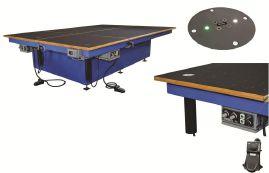
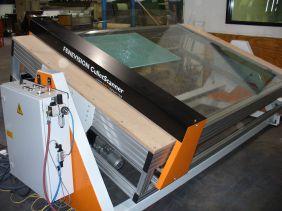
The FeneVision CulletScanner provides an automatic one-pass fragmentation test of tempered and heat-strengthened glass, eliminating the need for manual counting. It has the ability to scan an entire glass piece and evaluate it in seconds. The CulletScanner features full analysis achieved in three simple steps, including automatic and comprehensive analysis of every cullet without the user having to define where the scanner should focus. It generates and stores full high-resolution images that can be printed out at a 1:1 ratio. Users have the ability to easily perform manual checks or verify counts, as well as printing certificates for all tests performed and storing the results. Every fragment is detected and measured with identification of impact points by excluding areas around the edge of the test glass. The CulletScanner can operate as a standalone station or be integrated with the current production system. Additional benefits include Windows-based software requiring no special hardware requirements. Manipulation of the system is not possible and the entire scan is archived using a compression algorithm. The package includes the CulletScanner table and licenses for the analysis software. Customized setup is available with an option to purchase a fully equipped PC.

bystronic-glass.com
The B’Vario TPS and B’Jumbo TPS are individual insulating glass manufacturing production solutions providing unique versatility. They only differ in the available working heights. The B’Vario TPS is available at a minimum height of 1.60 meters whereas the B’Jumbo TPS is a large-dimensioned line of up to 3.30 meters. Both can be additionally equipped with the new finisher feature for the esthetic smoothing of the thermoplastic spacer bevel joint. In either case, the spacer is applied directly onto the glass by machine from a single drum as part of the insulating glass production. The width of the spacer can be changed as desired during operation without any time loss. This way of production eliminates the need to stock different spacer profiles and connectors. The finisher is a newly developed optional machine that can make the patented bevel joint of the TPS spacer invisible. With this standard, proven solution, the gas-tight bevel joint does not require any thermal-mechanical reworking. With the optional use of the new finisher, the customer can additionally smooth the bevel joint leading to an upgraded esthetic result. The overall result is users now have the ability to make the bevel joint nearly invisible. Additionally the optional finisher can easily be integrated into existing TPS IG lines. The size, shape and thickness of spacer remains unchanged and processing of shaped formats is possible.
Bromer’s latest innovation is the Thick Glass Breaker developed to revolutionize the way craftpeople cut thick glass in shapes or straight lines. The precision-engineered system, which can easily be added to any breakout table, offers an ajustable impact power controlled by a regulator with an LED lights platform to help to align the score over the chisel to cut different glass thickness (½-inch, 5/8-inch and ¾-inch). The TGB is very safe to operate, activated by a pedal on the ground with the workers working with their hands on top of the glass.
By maximizing the precision, TGB ensures a low distortion on the cutting edge with almost no flare to minimize when grinding and polishing . This patent-pending, high-performance and safetyminded innovative system is now available for the glass industry.
salemdist.com
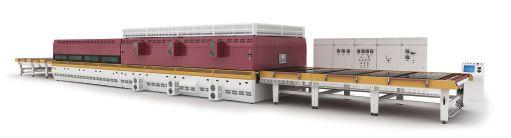
Salem Flat Glass and Mirror is bringing customers glass tempering solutions through NorthGlass, a premiere manufacturer of glass tempering systems. NorthGlass offers stable and reliable intelligent control systems that allow for fast and accurate regulation of all furnace mechanisms. NorthGlass third-generation A-series tempering furnaces have an ideal tempering process using anti-deformation ceramic transition rollers at entry and exit doors, lateral-swing quenching walls and a staggered arrangement of each of the eight-row blowing nozzles for even quenching. Each machine is equipped with a user-friendly interface and has an easy, convenient replacement process of conveyor transmission belts without disassembly. All furnaces are UL-approved and use minimal energy as a result of continuous production. These new generation tempering lines will deliver substantial benefits to glass operations at significantly competitive prices. NorthGlass and Salem Flat Glass and Mirror firmly believes that continuous innovation in processes and mechanisms will prove successful against the challenges in today’s increasingly competitive market.
billco-mfg.com
Billco Manufacturing offers a new detergent dosing system designed for complete process control, allowing the user to obtain a more accurate and consistent cleaning process throughout a production shift. By default, the new system administers and maintains a pre-defined detergent ratio within the wash tank by measuring the incoming water fill volume. Additional modules can be enabled on the system, allowing the user to dose additional detergent into the wash tank based on an interval of time, the
number of modules entering the glass washer or by feedback of a process variable. Each module can be enabled to add detergent independently of the other modules, and multiple modules can be can be enabled as required by the process. Such design eliminates the dilution effect by water carryover and solution drag-out from the wash zone that occurs when a single dose is added at the beginning of a shift and results in inconsistent quality. The Billco detergent dosing system is a stand-alone system that can be easily incorporated with any washer regardless of the manufacturer or age of the washer.
glaston.net
GlastonAir air flotation technology is for tempering extremely thin glass. GlastonAir is the successful result of Glaston’s extensive R&D work. The unique air flotation technology allows a higher exit temperature, making it possible to temper thin glass down to two millimeters. The stable bottom heating ensures excellent and consistent end product quality. The GlastonAir furnace
tempers glass as thin as two millimeters with a maximum sheet size of 1,000 by 2,000 mm. Its tempering norms are comparable to the three-millimeter EN standard, including fragmentation. GlastonAir keeps precise control over the high heat transfer and air volume rates as the glass exits the furnace and enters the quench. This enables the fast glass surface cooling that is needed for successful thin glass tempering. The new air flotation technology used in GlastonAir provides homogeneous support of the glass throughout the processing line, avoiding any problems with waves or other optical problems. GlastonAir does not require large quench blowers or excessive cooling power. In fact, it consumes less than half of the energy needed with conventional methods for heat threatening thin glass. Therefore, it provides a lower investment and lower energy consumption solution, ensuring a superb end product for various applications where weight and cost are an issue.
lisec.com
High-quality products deserve the best treatment. This is why LiSec only allows trustworthy heads and air to touch the glass. With the patented AeroFlat air-cushion system, the surfaces of the glass panes are not touched during the tempering

process. The result is top quality flat glass – economic and future-proof. AeroFlat provides no waiting time when the types of glass are changed. It features wear-free ceramic components with significantly shorter heating times. No cooling of the heating zone is required in case of glass breakage, and the cycle time is the same
for coated and uncoated glasses. Operators can be trained in only five days and half the staff is required compared to conventional plants. Tempering of double-sided coated/laminated and printed glass sheets is possible with the AeroFlat system, as is tempering of structural glass. The technology creates maximum convection in the circulatory system allowing thermal tempering of glass from one to 10 mm thickness. The patented cooling air routing means no sulfur dioxide gas is required, making the process environmentally friendly and sustainable. AeroFlat creates no roller waves, no white stripes, no roller pickups and the coating-friendly process is due to a shorter standing time in the furnace. AeroFlat offers improved anisotropy and high quality due to stable processes with more than 95 per cent plant availability.
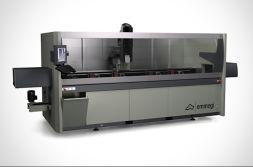
The Emmegi Phantomatic M4 is a CNC machining centre with four controlled axes and an X-axis stroke of 3,000 mm. It is used for machining bars or workpieces in aluminium, PVC and light alloys in general. The fourth controlled axis allows the electrospindle to rotate continuously from zero to 180 degrees to machine the profile edge. The four-kilowatt electrospindle in the S1 position can reach 20,000 RPM. It has a nine-place manual tool storage and a four-place automatic storage installed on top of the
cabin. The machine can also be equipped with an additional fourplace automatic storage as an option on the other side of the cabin. The profile is positioned by a pneumatic stop on the left side. It is blocked by four sturdy clamps which are positioned automatically with axis X. The installation of a second optional pneumatic stop on the right side allows oversize machining of bars whose length is double compared to the work field. It also has a mobile work table that facilitates the workpiece loading/unloading operation and significantly increases the workable section.
The Master 35 - 45 Series from Intermac represents the last evolution of five fully digital interpolating axes work centres. The increasing request for flexibility from customers all over the world has found an answer with these models, which combine the traditional quality of Intermac and its capability to execute all kinds of processing with precision, productivity and a high quality level of the processed piece. The machine control is based on a commercial Windows PC in order to grant full connectivity and a much easier use for the operator. The quality of Intermac’s products start at the design stage, where the most advanced CAD modeling systems simulate static and dynamic torque generated during machining operations, showing how to improve the machining process. High quality components, materials and numerous quality tests performed on each machine guarantee to customers a highly reliable machine. The five-axis head with the rotative infinite C axis and the tilting A axis from minus 90 to plus 90 degrees grants maximum flexibility and enables the execution of the most complex machining. The 14-position rotating tool change makes it possible to manually and safely load the tools even when the machine is working. As an option it is possible to equip the machine with an additional 14-position tool change. The machine’s base is made up of an extremely rigid structure with an aluminum worktable rectified to grant maximum flatness of the work area. This is an indispensable condition to get a perfect processing result. The axes move by recirculating ball screw at 60 meters per minute with accelerations permitting the heads to reach the maximum speed in a very short time. An automatic device to lubricate the guides and screws grants high reliability over the time of every moving part
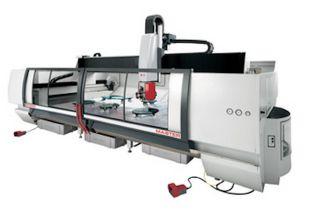

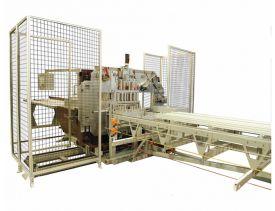
protomach.ca
The ProMCU saw with CNC machining center from Protomach reduces waste of space, allowing users to cut and machine pieces in same cycle. Waste can be minimized by managing various criteria such as the number of cuts, the length of the last waste of the bar and the time of machining. The in-feed pusher allows machining of more than one opening in a full bar to cut the pieces automatically and without any setup. The ProMCU makes it possible
to machine the frame and the mullion to install the lock, the handle hardware and to locate the hardware holes. Profile installation support can be to the right or to the left of the 45-degree saw based on the customer’s need. The fully programmable advance of the extrusion allows optimization of the loss between successive cuts. The touchscreen Windows-based optimization software works from a database of customer orders directly located on the factory network. Options include a computer used to transfer information from fabrication software to the machine’s PLC. The 90-degree option on the ProZSS makes it possible to cut mullions and meeting rails while preserving the principle of basic optimization. Other add-ons include a profile loader, System Optimization Plus software, assistance for programming, saw blades, jigs and fixtures.
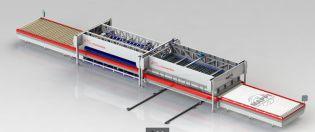
s-b-m-s.com
The Mappi ATS EcoConvection tempering furnace is the result of the experience and the technology developed in over 300 installations worldwide. It includes advanced technical characteristics including reduced-size heating elements and is equipped with temperature control, a high efficiency transmission system, lower chamber extraction and completely automated software management. Control of the individual heating zones is interfaced with thermocouple data enabling automatic heating zone management in order to avoid overheating. Independent control of the conveyor’s motors for the heating section and the quench section is standard. The ventilator is powered by DC motors with electronic speed control that provides considerable energy savings. The software completely managed by a Siemens PLC Tele-service system, which allows Mappi to check quickly the conditions of the furnace.
designintegration.com
Designed with Uvekol, this line allows easy production of liquid laminated glass.
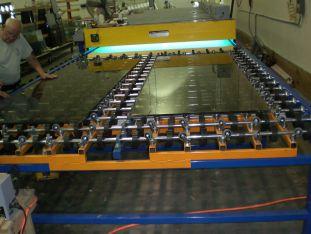
Three key benefits are cost of equipment, cost of production and no need for a clean room. Process components include a taping table where the operator prepares a piece of glass, sealing off the edges of glass. At the tilting assembly table the operators apply a second layer of glass, combining two pieces of glass with a gap between. On the filling table, operators fill the gap between the glass with liquid resin. Next the piece moves to the UV curing oven where ultraviolet light cures the resin between the glass. This bonds the liquid to the glass.



by FRANK FULTON
Frank Fulton is president of Fultech Fenestration Consulting. He has been in the industry for 30 years and can be reached via email at fultech.fc@gmail.com
Over the past few years I’ve looked back at the lives and achievements of a number of contributors and entrepreneurs that have influenced our industry. If grades were handed out for rags to riches success stories, Peter Neudorf could very well be at the head of the class.
Peter Neudorf, the elder brother to ten siblings, was born in the small Mennonite community of Neuanlage, Sask., in 1930. At a very early age, Peter had to help out his father, Cornelius, the owner of the local general store, by selling vegetables in the back alleys of Saskatoon. Although Peter was a third generation Canadian, because the family lived in a small isolated rural community he grew up speaking only German. During World War II, Peter’s family moved to the St. Catharines area of Ontario so Cornelius could find work. This would be Peter’s first opportunity to attend an English-speaking school. So imagine, the world was at war with Germany and Peter and his brother Bill showed up at Fairview School speaking only German. The Neudorf boys had to toughen up quickly. Peter says he enjoyed school but was there for a very short time. With a large family and very little money Peter was required to get a job at the age of 12. He worked at area farms for a year before getting a job at Canadian Canners in St. Catharines. All of his hardearned money was given to his parents, a practice Peter would continue for many years.
Peter was initiated into the glass industry when he got a job at Niagara Glass in 1945. Over the next 11 years he learned the trade, met Theresa, the love of his life, was married, and started a family of seven children. In 1956, Peter decided to open his own glass company and founded
The world was at war with Germany and Peter and his brother Bill showed up at Fairview School speaking only German.
Ontario Glass Craftsmen. In large part due to Peter’s hands-on approach, the company became one of the largest glazing contractors in Ontario over the ensuing years.
In 1986, Neudorf was planning to bid on the National Art Gallery project in Ottawa. One of the competing bidders was to be Keith Ferguson of Ferguson Glass. The two men met, decided this job would go better if they combined forces and that collaboration lead to the founding of Ferguson-Neudorf Glass.
Initially one would think this an odd couple: Keith was a university graduate with a business degree, Peter a self-educated, hands-on glazing contractor. Keith took a calculated and methodical approach, Peter a “grab the bull by the horns” and “shoot from the hip” approach. However, together they combined a set of skills that launched an organization that would become amongst the leading North American companies in the field of curtainwall and skylight construction.
Over the past 30 years, Ferguson-Neudorf has steadliy grown in both ability and size. Today they operate out of two facilities with their main plant and head office in Beamsville and an assembly plant near Fort Erie totaling 270,000 square feet with up to 300 employees. Between the two plants there are 10 glazing lines capable of producing in excess of one hundred modules of custom curtainwall a day.
Keith Ferguson passed away in 2010 and the Neudorf family purchased all his shares. “Out of a deep respect for Keith, his name will always remain in the company’s name,” says Jeff Neudorf, president. To this day, Peter still comes to the office every day of the week and walks the floor of both facilities two or three times a week, but it’s the sons: Jeff, John, Bill, Peter Jr., and nephew Danny who now do all the heavy lifting. When talking of the great Canadian entrepreneurs who have made an impact in our industry ,and great Canadian success stories in general, Peter Neudorf is most certainly there amongst them. •
See Glass Canada’s 2013 profile of Ferguson-Neudorf, “Vision and Execution,” at glasscanadamag.com > Community > Under the Glass
Digital display turned “off”
Digital display turned “on”
Pilkington MirroView™ 50/50 and Pilkington MirroView™
Pilkington MirroView™ 50/50 and Pilkington MirroView™ are ideal for concealing digital displays and video screens for commercial and residential applications.
The glass appears to look like a normal mirror when the display is ‘off’, but when the display is ‘on’, the image shows through the mirror for an unobstructed view of the television display behind. This modern and transitional glass is very durable and can easily be handled, transported and processed. Pilkington MirroView™ 50/50 is designed for use in applications with high ambient light, whereas Pilkington MirroView™ is designed for low ambient light applications.
Take the guesswork out of quoting your fabrication labor, reduce costly fabrication errors, and, most importantly, save time. Our KD Storefront FabricationService provides installation-ready materials and hardware bundled by elevation. Glass sizes and step-by-step installation instructions are included. Our unique combination of quality, inventory, expertise, and turnkey services gives you maximum flexibility and profitability. See crlaurence.ca/fabrication .