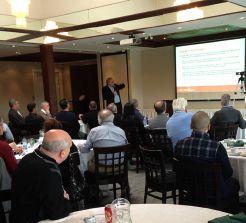
Top Glass hosts Canada’s top suppliers to the glass fabrication and glazing trades. Come learn from these experts in fenestration and façade construction.
18 Seminar program
Exclusive talks address new technologies, codes and standards, modes of failure and tips for success.
24 Show floor preview
Check out some of the groundbreaking products that will be on display April 20.
ASSOCIATIONS
COLUMNISTS
Canada’s show for the architectural glass industry returns April 20 to the International Centre in Mississauga. This is your guide to the exclusive education and networking opportunities.
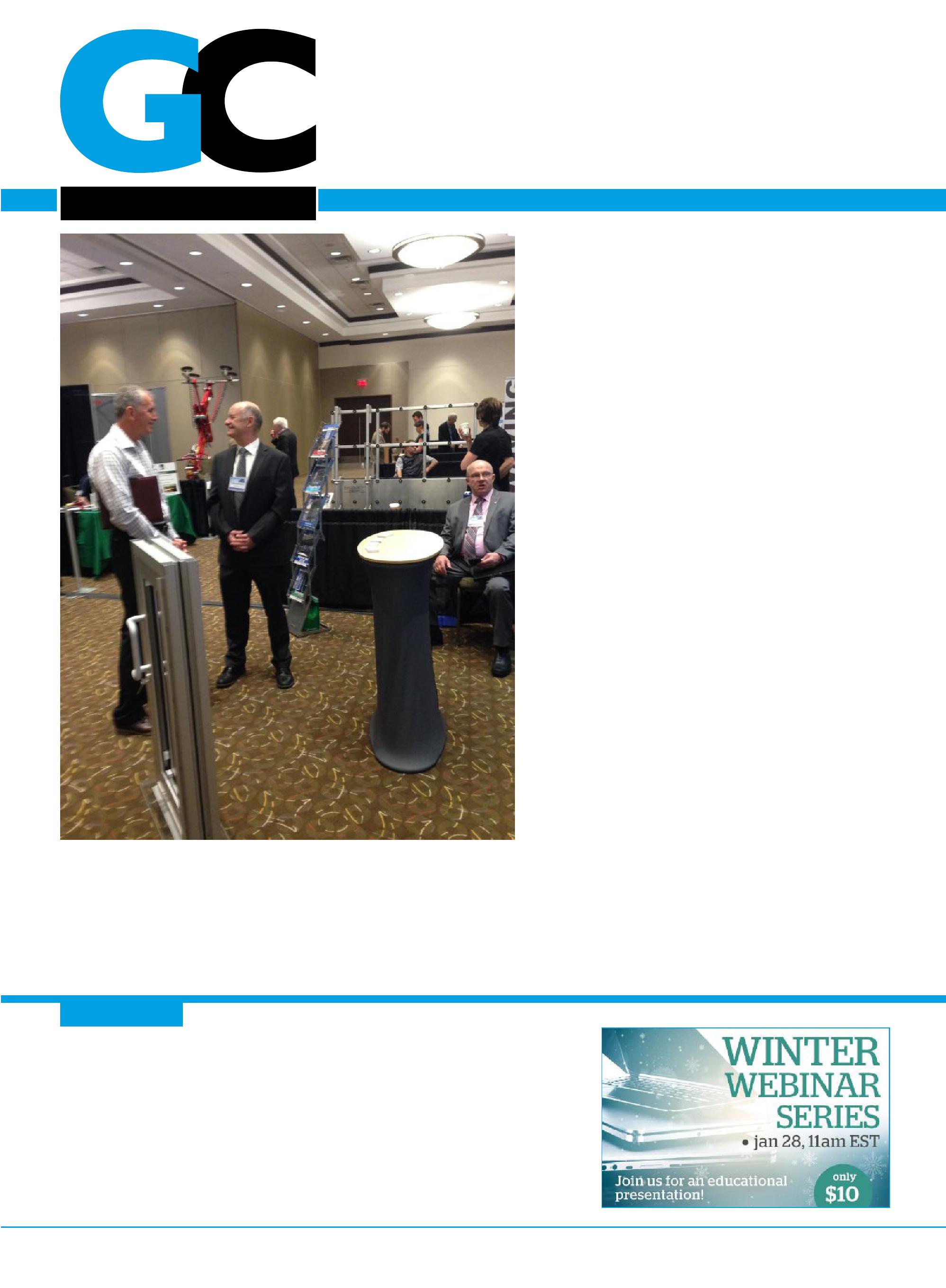
Winter Webinar recordings
Missed a Glass Canada Winter Webinar? Follow the link on our homepage for full recordings of our exclusive educational presentations. Now available: Energy Efficienct Spandrel Design with Stephane Hoffman; Building the Big Stuff with Louis Moreau; and Your Pane is Their Pain with Michael Mesure.
All aboard for Top Glass
EDITORIAL
It’s worth the trip, and now the trip is even easier.
Welcome to our April issue where the big focus is on Top Glass, our education and trade event for the commercial glazing industry. Interest and participation in Top Glass has exceeded all our expectations so far, and if the registration numbers and booth sales are any indication, we are in for another great show this year. Many thanks to our sponsors – Alumicor, Tremco, Commdoor and RPM Rollformed Metal Products – and all of you, who give this event so much support. It’s always encouraging to see how much appetite for learning and networking is still out there in this industry.
NEXT ISSUE
• Canada’s Top Glazing Projects
• Flat Glass Showcase
Top Glass takes off on April 20 at the International Centre in Mississauga, just around the corner from Pearson airport. Getting to Top Glass has become even easier this year, especially for those of you who live and work in downtown Toronto, with the addition of the UP rail link to Pearson. Hosting events for the glass industry has always been a balancing act between accommodating fabricators and contractors, who tend to be located outside the core and down the 401, and accommodating architects and engineers who tend to be downtown and don’t want to drive, or sometimes even own a car. We came down on the side of the suburbanites with our selection of the International Centre (hoping that the free parking would make up for having to drive), but now there’s a way to get very close for a nominal cost in under half an hour without having to brave the traffic on the Gardiner. Having arrived at the airport on the UP train, a cab to the conference would only be a few bucks. The airport cabbies may not like the short trip, but hey, there’s always Uber.
The UP link can also provide a nice solution for those of you coming in from outside the GTA, as well. A couple weeks ago, I took a Via train from London (where I work) to Union Station, then jumped on the UP to get to my flight from Pearson. Previously, my options were driving in 401 traffic and parking at ridiculous expense, driving and staying an extra night at an airport hotel ($$$) or taking an out-of-town shuttle from London and waiting close to two hours after my flight to catch the return bus. By contrast, the train trip was reasonably priced, didn’t take significantly longer than a drive in traffic and I was able to work over the train’s WiFi the whole way. You could even have a beer if you wanted to. What’s not to like? Regardless of how you get there, we think Top Glass will be worth the trip.
If you are an Ontario architect looking at your June 30 deadline to submit your learning credits, here’s your chance to get four of them in one day. We’ve taken a look at the Ontario Architects Association guidelines for learning credits and it’s our view that all our topics would meet the criteria. The OAA doesn’t certify seminars in advance, but we are happy to provide descriptions of the courses that should satisfy the association as to the content and length of the session. See you at Top Glass! •
GLASS CANADA
April 2016
Volume 28 • Number 2
Annex Business Media
P.O. Box 530, Simcoe, Ontario N3Y 4N5
EDITOR | Patrick FLANNERY pflannery@annexweb.com 226.931.0545
Canada - 1 Year $36.75 (includes GST) ($39.55 includes HST/QST)
U.S.A. - 1 Year $50.00 (in US dollars)
Occasionally, Glass Canada will mail informationon behalf of industry-related groups whose products and services we believe may be of interest to you. If you prefer not to receive this information, please contact our circulation department in any of the four ways listed above.
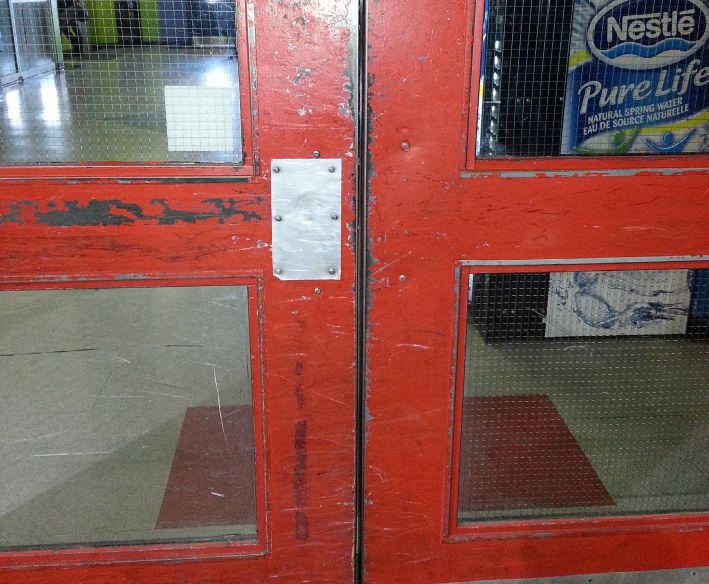
The Canadian Glass Association has issued an advisory to the industry cautioning specifiers that wired glass is a fire protection glass, not an impact-safety glass. The advisory says “Wired glass should no longer be used in human traffic locations.
The U.S. Standard for impact safety, ANSI Z97.1, has been regularly updated. Wired glass does not pass ANSI Z97.1 and is not considered an impact-safety rated glass in the U.S. In 2006, the International Building Code removed the impact-safety exemption that had permitted wired glass to be used in human impact locations. As a result, wired glass is no longer used in human impact locations in the U.S. and most countries in the world. Canada remains one of the last countries still permitting the use of wired glass in human impact locations. Canadian Standard CGSB 12.11 M90 covering wired glass was last published in 1990. Many Canadian building codes refer to this old standard and still permit the use of wired glass. [...] The CGA recommends that the standards and building codes be updated as soon as possible to eliminate the use of wired glass in human impact locations to avoid further injuries to Canadians. ”
In related news, the CAN/CGSB Glass
Committee, chaired by Margaret Webb, Insulating Glass Manufacturers Alliance executive director, has released an updated version of the standard for public review.
“After 18 months of development, the new draft CAN/CGSB 12.1, Safety Glazing standard is ready for public review,” said Webb, noting this was a combined effort with members of the ANSI Z97.1 committee to ensure that standards harmonization between Canada and the U.S. was accomplished. “Members of this committee are to be commended for their commitment to this work. It is a great privilege to provide leadership to this group of dedicated, experienced and knowledgeable people, each representing their own sector of expertise, who have drafted a standard that has not been updated for decades. It was a huge undertaking.”
The public review period opened January 27 and closes March 29. Individuals who want to submit comments are advised to use the form provided by CGSB. Interested parties can access the draft standard on the CGSB website at tpsgc-pwgsc.gc.ca > Canadian General Standards Board > Standards Development > Notification of Standardization Activities > Standards Available for Public Review.
COMING EVENTS
March 16
Provincial Glaziers Association of Alberta Annual General Meeting Red Deer, Alta. pgaa.com
April 4 - 5
National Fenestration Rating Council Spring Meeting Alexandria, Va. nfrc.org
April 20
Top Glass Mississauga, Ont. topglasscanada.com
May 26
Ontario Glass and Metal Association Spring Golf Milton, Ont. ogma.ca
July 6 - 9
GlassCon Global Boston, Mass. glassconglobal.com
Sept. 20 - 23
Glasstec Dusseldorf, Germany glasstec-online.com
Sept. 22
Ontario Glass and Metal Association Fall Golf Woodbridge, Ont. ogma.ca
Oct. 19 - 21
GlassBuild Las Vegas, Nev. glassbuildamerica.com
Nov. 15 - 17
WinDoor Montreal, Que. fenestrationcanada.ca
CGA Newsletter
CANADIAN GLASS ASSOCIATION
Asspring 2016 approaches, the CGA committees and board of directors are hard at work on a number of fronts. Among other projects, the CGA board is working on an extensive overhaul of the CGA website, canadianglassassociation.com, which will include a publication store and an updated project showcase.
The CGA Glass Connections Committee has confirmed that Glass Connections 2016 will be held Sept. 13 and 14 at the Westin Ottawa. Topics will include code updates, electrochromic glass and sustainability. The CGA Technical Committee is meeting quarterly and recently released a Wired Glass Advisory. This committee will be representing CGA in its membership of the Glazing Industry Code Committee (GICC). GICC, which is a committee under the Glass Association of North America (GANA), advocates for industry code positions on energy, structural, and safety building codes.
CGA board members will be on hand at Top Glass in Missis-
Canadian Glass Association 619 Liverpool Road, Pickering, Ontario L1W 1R1 Tel: 604.855.0245 • Fax: 866.253.9979 www.canadianglassassociation.com
sauga, Ont., on April 20 at booth 43 to answer any questions you have about the association, our events and services. If you have been giving any thought to membership, the show will be a great opportunity to talk it over with us. Our association is growing and we have lots to offer.
ONTARIO GLASS AND METAL ASSOCIATION
Thelegal review of the Construction Lien Act is now well underway and the review group was to have prepared their recommendations for submission to the Ontario government by the end of March, 2016. The OGMA has teamed up with the Prompt Payment Ontario (PPO) group to represent our interests in bringing fair payment terms into law. To review up to date information on issues, surveys, and submissions, go to: constructionlienactreview.com/documents
OGMA SPRING GOLF:
Mark your calendar on Thursday, May 26 and plan to be at the outstanding Pipers Heath Golf Club. This event sells out every year so book early. Get more exposure for your company by sponsoring a hole or some of the other promotional opportunities.
RACE NITE: On June 22, get ready for an evening of exciting thoroughbred racing, outstanding food, and great camaraderie in the decadent Woodbine Club dining room at the Woodbine Racetrack.
GONE FISHIN’: If you like getting up early and welcoming the sunrise with a beer, this event is for you. OGMA members take to the waters of Lake
Ontario for a day of salmon fishing. Details TBD.
FALL GOLF: Mark your calendar on Thursday, Sept. 22 and plan to be at the renowned Country Club in Woodbridge (formerly the Board of Trade Golf Club).
BECOME AN OGMA MEMBER: If you are conducting business in the glass industry in Ontario, the OGMA is the voice that represents your interests at the provincial and federal level. Protect your business and support our fight for prompt payment legislation by becoming a member or as an associate member if you are a consultant to the industry. Please visit the OGMA website for more information.
OGMA/WSPS safety manual: After a year of preparation, the safety manual is now ready for use by the metal and glass industry. The manual was created by qualified health and safety professionals and is a timesaving tool enabling glass shops to establish their own company program. Not only will this support a company’s efforts to eliminate workplace injuries and illnesses, it will also lower costs and time related to WSIB claims. Additionally, the health and safety manual provides proof of compliance with the new OHSA Regulation 297/13.
ONTARIO
GLASS AND METAL ASSOCIATION
PROMPT PAYMENT LEGISLATION REVIEW: The legal review of the Construction Lien Act is now well underway and the review group was to have prepared their recommendations for submission to the Ontario government by the
end of March, 2016. The OGMA has teamed up with the Prompt Payment Ontario (PPO) group to represent our interests in bringing fair payment terms into law. To review up to date information on issues, surveys, and submissions, go to: http:// www.constructionlienactreview. com/documents/
SPRING GOLF: Mark your calendar on Thursday, May 26, 2016 and plan to be at the outstanding Pipers Heath Golf Club. This event sells out every year so book early. Get more exposure for your company by sponsoring a hole or some of the other promotional opportunities.
RACE NITE: On June 22, get ready for an evening of exciting thoroughbred racing, outstanding food, and great camaraderie in the decadent Woodbine Club dining room at the Woodbine Racetrack.
FISHING DERBY: if you like getting up early and welcoming the sunrise with a beer, this event is for you! Details shall be forthcoming.
FALL GOLF: Mark your calendar on Thursday, September 22, 2016 and plan to be at the renowned Country Club in Woodbridge (formerly the Board of Trade Golf Club).
OGMA/WSPS SAFETY MANUAL: After a year of preparation, the safety manual is now ready for use by the metal and glass industry. The manual was created by qualified health and safety professionals and is a timesaving tool enabling glass shops to establish their own company program. Not only will this support a company’s efforts to eliminate workplace injuries and illnesses, it will also lower costs and time related to WSIB claims. Additionally, the health and safety manual provides proof of compliance with the new OHSA Regulation 297/13.
Geza Banfai of McMillan educated OGMA members about payment law in Ontario at a lunch presentation in January. He presented the results of a survey by Prompt Payment Ontario.
IGMA separates Certification and Education committees
The Insulating Glass Manufacturers Alliance has broken its Certification and Education committees into two separate committees following deliberations at its strategic planning session in January. According to its release, “The insulating glass industry has seen many new technologies enter the market to address energy efficiency, daylighting and aesthetic needs of the commercial and residential fenestration markets. Combine this with the number of retirements of our most experienced industry leaders and the industry is certainly facing an incredible amount of change over the next few years. So how do we manage the potential loss of capital knowledge in our industry in a time when architects and engineers are pushing the building envelope? Recognizing that current certification programs fulfill a need for existing products in the market but may not
address the need to certify complex products and that the industry’s current rate of turnover may result in a loss of experience and knowledge, the IGMA board of directors has separated Certification and Education into two separate and distinct committees.”
The new Certification Committee, chaired by Roland Rossman of Garibaldi Glass will focus on existing certification program guidelines while developing new ones to address new technologies. The Education Committee, chaired by Bill Briese of GED Integrated Solutions will focus on IGMA’s educational programs and workshops. The first IG Fabricator Workshop, a combination of in-class and hands-on instruction, will be offered March 22-24 at the Intertek facilities in Plano, Texas. IGMA is actively soliciting membership for both of these committees.
Updated standard for thermal performance
TheAmerican Architectural Manufacturers Association has updated and released a document laying out the process for determining the thermal performance characteristics of fenestration systems, specifically in commercial buildings. This document was last updated in 2012. Fenestration impacts building energy use through four basic mechanisms: thermal heat transfer, solar heat gain, visible transmittance and air leakage. Condensation resistance is considered not to affect energy use and is therefore not a concern of the building codes. However, CRF is an important thermal performance characteristic and is therefore included in this document.
“The primary driver for this revision was for improvement and clarification of the reporting certificate,” says Joe Hayden
of Pella, chair of the AAMA 507 Review Task Group. “This was previously referred to as a Certificate of Compliance, and has now been changed to a Fenestration Product Rating Certificate to better indicate its intended purpose.”
Some additional improvements were also made to the certificate, says Hayden, and an SI version has been added. Other revisions to the document included the removal of outdated information, minor incremental improvements and editorial clarifications. AAMA 507-15, “Standard Practice for Determining the Thermal Performance Characteristics of Fenestration Systems in Commercial Buildings,” as well as other AAMA documents, may be purchased from AAMA’s online publication store.
MINNESOTA GROWTH FOR VIRACON
Viracon has announced that it is expanding its flagship manufacturing facility in Owatonna, Minn. The expansion will add over 360,000 square feet to the existing site footprint of 1.2 million square feet. The facility addition will house the latest glass manufacturing technology and fabrication equipment to increase Viracon’s maximum finished product size capability. Through this addition of larger glass capabilities, Viracon hopes to strengthen its competitive position as a world-class manufacturer of architectural glass for the commercial building market.
“We are very grateful for the ongoing opportunities we are given to be part of iconic commercial buildings all over the world, like One World Trade Center which is the tallest structure in North America, and Costanera Center which is the tallest in South America,” noted Kelly Schuller, president of Viracon. “This expansion is a very significant project, which builds on our 2014 new coater investment and is the next step in a long range program to ensure we remain at the forefront of architectural glass technology and continue to be a valued partner on distinctive buildings, large or small. Along with larger size capabilities we are also introducing higher
levels of automation for increased efficiency and even greater levels of glass quality.”
Viracon is investing in these capabilities to meet growing demand from architects for larger expanses of glass in exterior facades. This demand is being driven by building owners and developers who are looking for bigger, unobstructed views and better daylight and energy management. Garret Henson, Viracon’s vice-president of sales and marketing, states, “By adding larger size capabilities up to 130 by 236 inches to our comprehensive portfolio of architectural glass products, we are able to offer architects and building owners solutions that support their big glass designs and energy conservation goals without compromise. Knowing that the typical commercial project that Viracon participates in has a long design and build phase, our architectural design and technical service teams began offering design and performance guidance for oversize glass in January, 2016. Viracon’s sales and estimating teams also started quoting these new larger sizes in January for buildings that require glass deliveries in the second quarter of 2017 and beyond.”
PPG RELEASES NEW CATALOGUE
PPGhas published its new architectural glass catalogue featuring vibrant photography of award-winning buildings, detailed product descriptions and comprehensive performance data for PPG’s entire line of glass products. Products include low-iron, performance-tinted, and passive and solar control low-E glasses, such as Solarban 90 glass that debuted late last year. Glenn T. Miner, PPG director of construction for flat glass, said the glass catalogue remains a tangible resource for architects, specifiers and building professionals seeking to balance sustainability and aesthetics. “PPG is continually adding to and enhancing the quality of its online offerings, but there always is considerable demand for the glass catalogue because of its convenience and the extraordinary project photography it highlights.” The PPG glass catalogue contains an educational section about glass and energy management that explains how coated low-E glasses such as Solarban and Sungate 400 glasses diminish energy use in commercial buildings by reducing heating and cooling loads and transmitting high levels
of natural light. Heating, ventilation and air-conditioning equipment, along with artificial lighting, consume nearly 60 per cent of the energy used in U.S. commercial buildings. The brochure also uses graphics to illustrate terms such as solar-heat-gain coefficient, visible light transmittance, light-to-solar-gain ratio and U-value. This helps readers better understand the performance data that is presented throughout the catalogue in comparative graphs and tables. There also is a section about the PPG Certified Fabricator Network group, a collection of elite PPG-trained and -audited suppliers that provide exclusive access to proprietary high-performance PPG glass products, and then back them with world-class customer service before, during and after installation.
Stroik to lead building envelope team for Tremco
Tremco
Commercial Sealants & Waterproofing has announced that Brian M. Stroik has joined Tremco to head the Building Envelope Solutions Team, which focuses on integrated design, construction, testing and site support for high-performance buildings. Stroik brings to Tremco more than 20 years of experience and was formerly the corporate quality senior manager for the Boldt Company, a national construction firm based in Appleton, Wis. During his tenure at Boldt, Stroik led the company’s quality team and was instrumental in the development and implementation of Boldt’s Enclosure Quality Management program, recognized nationally for its excellence in building envelope construction. Stroik is a recognized industry leader in the construction of energy efficient, sustainable and durable buildings. He continues to work with key industry organizations including the Air Barrier Association of America and the National Building Enclosure Council. His primary focus with industry organizations has been on research and education regarding building enclosures, energy
efficiency, and retrofitting and upgrading existing buildings. A frequent speaker on the subjects of commissioning the building enclosure and quality in construction, Stroik has chaired numerous speaker sessions at national conferences and hosted roundtable discussions. He holds the following industry positions and affiliations:
• Chair of the National Building Enclosure Council (NBEC)
• Second vice-chair and a director of the Air Barrier Association of America (ABAA)
• Advisory board member of the Building Enclosure Technology and Environmental Council (a council of the National Institute of Building Sciences)
• Founder and chair of the Building Enclosure Council of Wisconsin (BEC-WI)
• Voting member of ASTM E06 – Building Performance
• Senior member of the American Society of Quality (ASQ)
CRL-U.S. Aluminum and ARCOM have announced a partnership that will incorporate CRL-U.S. Aluminum products into MasterSpec. MasterSpec allows architects, engineers, and design professionals to write customized specifications for clients. With the addition of CRL-U.S. Aluminum products, ARCOM hopes to make the product selection process easier, improving project efficiencies. CSI product categories from CRL-U.S. Aluminum that will be added to MasterSpec include: 08 41 13, Aluminum Framed Entrances and Storefronts; 08 44 13, Glazed Aluminum Curtain Walls; and 10 22 19, Demountable Partitions. The ARCOM staff reviews each manufacturer and product in detail prior to approving a listing to ensure each meet the MasterSpec quality criteria.
“We continually aim to simplify the product selection process by providing applicable materials using the architecture and design community’s preferred channels,” said Lloyd Talbert, president of C.R. Laurence. “As a product of the American Institute of Architects, the MasterSpec platform is a logical and effective path to accomplishing this.”
The ARCOM team will also work with CRL-U.S. Aluminum to provide Basis of Design MasterSpec sections. These are made available through the company’s Product MasterSpec program. ARCOM and CRL-U.S. Aluminum believe the new MasterSpec initiatives will benefit all design professionals by simplifying the product specification process of architectural aluminum systems.
by SKIP MACLEAN
Skip Maclean is president of Fenestration Canada. He is business development manager for Tru-Tech Doors and has over 40 years’ experience in the window and door industry.
Hot issues
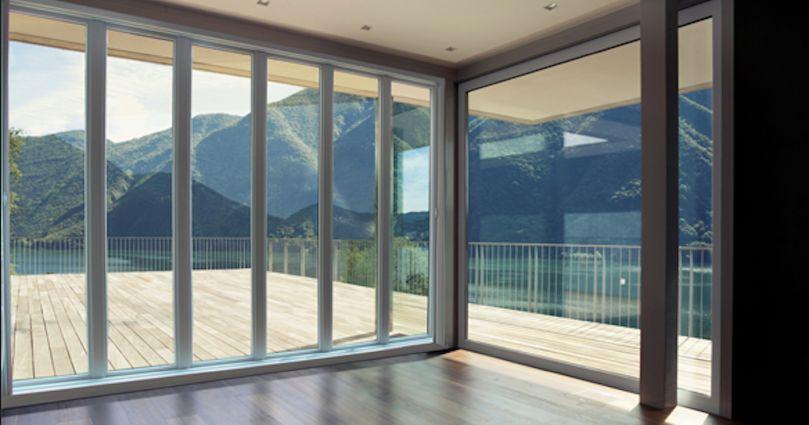
The use of commercial glazing in residential applications is becoming more and more common for many new single-family construction styles. There is a sector of the custom home building market that is designing structures that take advantage of natural lighting, for instance, window walls that open up for maximum use of living spaces. The positioning and size of the window area has become a critical area of home design. Vinyl windows are now being considered for many multifamily dwellings that were once the strict domain of aluminum systems. It is pretty hard to keep up with all of the changes in products, systems and construction techniques.
Canada’s most influential window and door trade show – WinDoor North America – is moving to Montreal. The Palais De Congres de Montreal will house the event, which will be held November 15 to 17. Quebec’s window and door association, the AVFQ, is looking forward to collaborating with Fenestration Canada in staging this world-class event. The event will feature exhibits from leading suppliers of components, machinery and services important to both the residential and light commercial window and door fabricator. With the crossover of product use between commercial and residential fenestration suppliers there is sure to be plenty of discussion regarding the new fire code legislation regarding combustibility. WinDoor provides a platform for education and technical discussion between all levels of fenestration professional.
Technical discussion and the interaction between industry and government is always an area of great interest to our members. The process to update the building code has begun. Fenestration
Fenestration Canada is being proactive to ensure that fenestration professionals are involved.
Canada is being very proactive to ensure that fenestration professionals are involved in the initial process of determining these changes. These issues speak to the very core of our business success. The ability to influence and participate in these changes is critical. The Fabricator Council and Technical Committee are two ways to become involved and will provide valuable insight into what the future of our industry might look like.
There have been several new additions to the board of Fenestration Canada. The additions include Laura Weil of Euro Vinyl Windows in Woodbridge, Ont., J.F. Kogovsek of Maxam Marketing in Saint-Bruno-de-Montarville, Que., and Ryan Dudeck of Paramount Windows in Winnipeg. Robert Jutras of Air-Ins in Montreal rejoins the board after a one-year hiatus. Jennifer Small of Screenco Manufacturing in Concord, Ont., has been appointed third vice-president. Allan Doyle of Global Window Systems in Richibucto, N.B., will become president this June at our AGM taking place in Mont Tremblant, Que., June 8 to 10. Please be sure to check our website –fenestrationcanada.ca – for information regarding the window and door industry.
We also have some changes to announce in staffing. After three years, Fenestration Canada and Robert Rivard have made a mutual decision not to renew the existing management contract. On behalf of the board of directors I want to extend my thanks to Robert and his team for their dedication to Fenestration Canada and for their accomplishments. We will miss him, Denise and Mireille and we wish them great success in their future endeavours.
Looking forward to the future, Fenestration Canada is pleased to announce a new partnership with Zzeem Association Management. Zzeem will provide full service management for Fenestration Canada including the WinDoor North America trade show. The Zzeem team delivers a highly accomplished and experienced complement of association professionals with decades of experience in managing associations like Fenestration Canada. Their commitment to serving our members and to the success of our organization, were key determinants in the board’s decision to engage Zzeem.•
BRING YOUR VISION.
“Our choice in glass opens up a historical structure to highlight its character, while creating a bright, comfortable, modern workplace.
SNX 51/23 delivers exceptional clarity and energy performance, without unwanted tint or re ections.”
by BILL LINGNELL
Bill Lingnell has over 46 years of experience in the technical field of glass and architectural products. He holds three Masters of Science degrees in engineering: civil, mechanical and engineering science. Lingnell is the technical consultant for the Insulating Glass Manufacturers Alliance.
IGMA Technical Publications - Part II
Let’s take a look at some more of the technical documents available through IGMA that support glass design, specification, energy efficiency, glazing procedure, performance data, testing, certification and quality assurance, including field studies along with other guides relating to the manufacture, fabrication, design and end use of insulating glass units
Language of Sealed Insulating Glass Units, TR-1400
This report is intended to provide many of the terms and phrases that are used throughout the insulating glass industry. Since there are some words that have the same sounds and spellings their meanings may be different depending on the industry. As an example, the term “glazing” means one thing to the baker while it means something entirely different to a curtainwall contractor. Another example is the word “lite.” It means something significant to the beer industry, but it means something completely different to the insulating glass manufacturer. Other items specific to the insulating glass and glazing industry are noted in the document.
Guidelines for the Use of Capillary Tubes, TB-1601
This bulletin has been established to give the manufacturers of insulating glass units specific guidance on how to accommodate the changes in elevation when transporting or installing units when changes in elevation are critical to the performance of insulating glass. The function of the capillary tube and the differentiation of it from a breather tube are noted along with
The four referenced documents are still only a few of the many that have been developed by IGMA over the past few years.
IGMA
other considerations that are important during manufacturing, handling and glazing of units with capillary tubes. The design principles referencing aspect ratio, temperature differentials, barometric pressure changes and glass stresses are also important issues covered.
Minimum Sealant Dimensions Bulletin, TB-1201
The contents of this document represent a survey of information obtained from sealant suppliers for guidance toward minimum sealant dimensions for dual seal, single seal and other special spacer systems regarding the sealant types that are commonly used in insulating glass fabrication. Specific notes and physical dimensions along with diagrams are provided to assist the user on the minimum measurements to be used for the various configurations shown.
Preventing Insulating Glass Failures, TM-4100
This manual was developed as a series of best practices for insulating glass manufacturers with specific guidelines on fabricating, shipping and glazing insulating glass units. Listings of “Do’s and Don’ts” are provided for certification testing, cutting and washing, desiccant practices, spacer handling, primary and secondary sealant applications, material inspections and glazing and installation are among a few of the items covered in detail in this publication.
The four referenced documents are still only a few of the many that have been developed by IGMA over the past few years. Stay tuned for additional information on the technical information available that should be in any manufacturers’ library. We also plan to provide updates on current publications as well as giving indications of what will be coming in the future. These publications are available from the IGMA online store at igmaonline.org. •
Here we grow again
Interest in Top Glass continues to build for the show’s third edition
by PATRICK FLANNERY
Trade shows are changing, and Top Glass seems to have a formula that works in today’s environment. Gone are the days of massive, multi-level booths costing tens of thousands of dollars and featuring every single product the company makes, plus a bar and waitresses. The trend now is focus and efficiency – pick a compelling message and make sure attendees can get that message as clearly and as quickly as possible. It’s an evolution that parallels the evolution of the Internet. Once designed for browsing and showing off the graphic talents of web page designers, the Web has been transformed by search engines into a tool for getting to the exact information you want quickly and from anywhere. Likewise, Top Glass puts the emphasis squarely on critical information for the commercial glass industry, with a full-day free seminar program, a show floor crowded with small booths, some recognition of industry excellence and not a lot else. The cost is low (even the parking is free!), access is quick and easy from anywhere in the GTA and the whole program is packed into a single day. In response, the show has seen attendance jump by 50 per cent since its first edition and the show floor grow by more than 25 per cent.
Top Glass Five Ws
WHEN April 20
WHERE International Centre, Mississauga, Ont.
WHO Glazing contractors, glass fabricators, architects and building engineers
HOW The generous support of Gold Sponsors, Alumicor and Tremco, and our Silver Sponsors, Commdoor Aluminum and RPM Rollformed Metal Products
WHY Obtain OAA learning credits, discover latest technology, meet old friends and new contacts
Schedule of Events
10 : 00 Registration desk and exhibits open.
11 : 00 Vacuum Insulating Glass: Standards development in emerging technology presented by Bill Lingnell, IGMA
1 : 00 Window Wall: Fundamental flaws and smart solutions presented by George Turok, Morrison Hershfield
2 : 30 OGMA Awards of Excellence Presentation
3 : 00 The Longevity Equation: Common modes of failure in insulating glass units and what to do about them presented by Brian Hubbs, RDH Building Science
4 : 30 Laminar Glass Bonding: Innovations in non-mechanical glass fixation by Werner Wagner, Sika
All presentations will take place in the lecture theatre located on the show floor. All presentations eligible for Ontario Association of Architects structured learning credits. Certificates of attendance will be issued.
Floorplan
11:00
TOPIC / Vacuum insulating glass: Standards development in emerging technology
PRESENTER
/ Bill Lingnell, IGMA
VIG comes of age
New guidelines for the ultimate insulating glass.
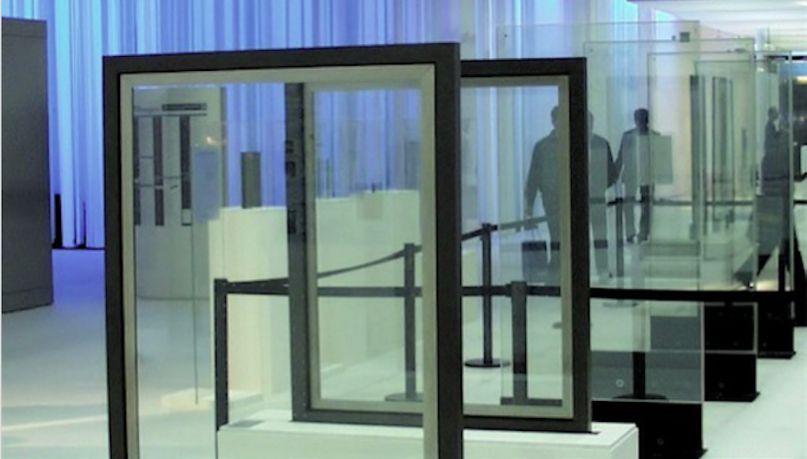
Vacuum Insulating Glass (VIG) is not a new concept and has its roots at the beginning of the 20th century. The general objective of VIG designs, much like conventional non-evacuated insulating glass technology, is to improve the overall insulating properties between an external environment and an internal environment by slowing the rate of thermal energy transfer across two or more lites of glass. Like conventional IG’s, a small amount of energy is still transferred across the VIG unit by means of conduction through the edge seal as well as across the pillar array and by radiated energy between opposing surfaces within the space between the lites. However, VIG differs from conventional or even gas-filled IG units. VIG significantly limits convection and conduction within the space between the glass lites by significantly reducing the amount of residual gas between the lites to a high vacuum such that the volume of residual gas remaining approaches zero. Convective heat loss is not a factor in VIG due to the lack of gas within the cavity. As VIG technology continues to evolve from a laboratory success into commercial reality, manufacturers and start-ups are developing VIG solutions of their own. Commercial architects, glazers and window and door manufacturers alike are now becoming anxious to implement this emerging technology into their products.
About the speaker
Bill Lingnell has been involved in engineering, technical management and construction of major building projects throughout the United States, Canada, and other countries. He has consulted as a technical authority and specialist for general contractors, manufacturers, fabricators, owners, developers, architects, and individuals relating to the many facets of glass and wall systems used on architectural construction projects. As a consultant, he has also served engineers, testing agencies, insurance companies, building managers, window producers, curtain wall consultants and the legal profession on many projects and assignments requiring specialization in glass and wall system technology. He serves as the technical consultant to the Insulating Glass Manufacturers Alliance. Lingnell has over 48 years of experience in the technical field of glass and architectural products and is considered one of the world’s foremost experts in the field.
Fixing window wall
Tales and advice from the front lines of window wall failure.
Using photos and examples from real-world window-wall failures, George Torok will draw on Morrison Hershfield’s experience across North America dealing with building designers, developers, builders and other vested-interest groups to discuss ways to prevent and address problems with window-wall construction. In his Top Glass presentation, George Torok will discuss his work with manufacturers and labs to test and correct problems before construction. Downstream from construction, Morrison Hershfield has worked with building owners and legal counsel to resolve water leakage and other failures, and this presentation will include case studies from these experiences to illustrate common errors and suggest solutions. George draws a straight line between the problems and the solutions with this unflinching report from front lines of facade construction.
About the speaker
George R. Torok, C.E.T., BSSO is a building science specialist, project manager and a member of the façade engineering team of Morrison Hershfield in Ottawa. He has over 28 years experience in new building design and existing building envelope performance failure investigation, assessment and rehabilitation, research and standards development, teaching and training. George specializes in repair, upgrade and replacement of glazing systems, including windows, window walls, curtain wall, and skylights. He is active in the development of standards governing design and installation of fenestration systems, including CSA-A440.4 Installation of Windows, Doors and Skylights, CSA Fenestration Installation Technician – Level 1 (FIT-1) certification program and Natural Resources Canada Energy Efficient Fenestration Steering Committee. He is Technical Advisor to the Siding and Window Dealers Association of Canada and developed SAWDAC’s training course for the CSA FIT-1 certification program. He has made presentations at several of the Canadian Conferences of Building Science and Technology, Canadian Glazing Association, Construct Canada, the Ontario Building Envelope Council and the Building Envelope Council Ottawa Region, among others. George has written articles on building technology for Construction Canada and Condominium Manager magazines. George is a past president of OBEC and currently is a director of BECOR.
TOPIC / Window Wall: Fundamental flaws and smart solutions
PRESENTER / George R. Torok, Morrison Hershfield
Glass that lasts
Taking on the issue of insulating glass failures.
Over the past few decades the use of glass and glazing on high-rise buildings has increased dramatically. More recently, as a result of increased industry recognition of the importance of energy efficiency, the trend is towards more energy efficient glazing systems. Common methods of improving thermal performance of insulating glass units (IGU) includes the application of high performance coatings, use of triple glazing or warm edge spacer technology, and installing solar selective films on or inside the units. While these solutions have all been effective at improving thermal performance, there have been cases where the implementation of this new technology has resulted in premature and costly failures. Hubbs’ educational presentation uses case studies to demonstrate and explain the variety of problems that can occur with glass and glazing after installation. The case studies included examine each type of IGU failure, and help to explain how different investigation techniques were used to find the failure mechanisms. The presentation includes research findings on common symptoms indicating IGU failure (condensation within the sealed unit, corrosion of the low-E surface films, deflection of the edge spacer, and volatile fogging) and how each symptom shows where the IGU design or manufacturing issues introduced failure mechanisms. Given that, in most cases, a failed IGU will need to be replaced requiring extensive and costly work to remove and replace each failed unit, Brian’s presentation will offer insight into how IGUs work and how to optimize the IGU design for longevity, as well as offer risk reduction recommendations to avoid the most common causes of IGU failures. A
There have been cases where implementation of new technology has resulted in premature and costly failures.
checklist of items to include in specifications to address the key aspects of high performance glazing and glass will also be presented.
About the speaker
3:00
TOPIC / The Longevity
Equation: Common modes of failure in insulating glass units and what to do about them
PRESENTER / Brian Hubbs, RDH
Brian Hubbs is a managing principal and senior building science specialist at RDH Building Science. He is a seasoned consultant with nearly 25 years’ experience, practicing exclusively in the field of façade engineering and building science — experience that has gained him a reputation among his peers as a practical engineer and researcher who constantly delivers innovative solutions. He has a unique blend of theoretical and hands-on knowledge gained from completing hundreds of building enclosure investigations and rehabilitation projects, as well as from façade engineering and construction review of building enclosures for new buildings. Brian’s experience includes work on high and low-rise commercial, institutional and residential building projects in many cities and in virtually all climatic regions across Canada and the United States. Brian has extensive experience with a variety of building enclosure systems, components, and materials. This includes steep and low-slope roofing systems, wall claddings of all types, windows, stick built and unitized curtain wall, glazing and structural glass walls and skylights, as well as below-grade and plaza waterproofing systems. Brian also has extensive experience designing, testing and constructing unique high-rise building facades with unitized curtainwall, skylights, and window-wall systems manufactured offshore in Asia and Europe. An engaging and vibrant presenter, Brian regularly speaks at seminars, conferences, and guest lectures on a range of building science topics.
BRIAN HUBBS
New ways to bond glass
A visitor from Switzerland discusses advances in laminar bonding.
Werner Wagner of Sika will discuss the development of a composite product comprising a glass panel, a silicone adhesive layer and a load-transferring metal panel that allows the use of glass in overhead as well as vertical situations without any visible mechanical fixings, creating a large uniform opaque glass surface.
About the speaker:
Dr. Werner Wagner has been active in the glass and façade business for 20 years. With a chemical and technical background he has established the technical service of Wacker-Chemie (Germany) for façade projects and was also responsible for product development of silicone sealants and adhesives, gaining profound experience in project management and marketing. When Sika Switzerland acquired Wacker’s façade silicone business in March 2004, he joined Sika and is now not only responsible for the marketing department of Sika Façade Systems but also for the business development in the Chinese façade market. He is author of several papers about sealing and bonding in façades and has attended countless conferences as speaker and chairman.
PRESENTER / Dr. Werner
Acknowledging expertise in glazing
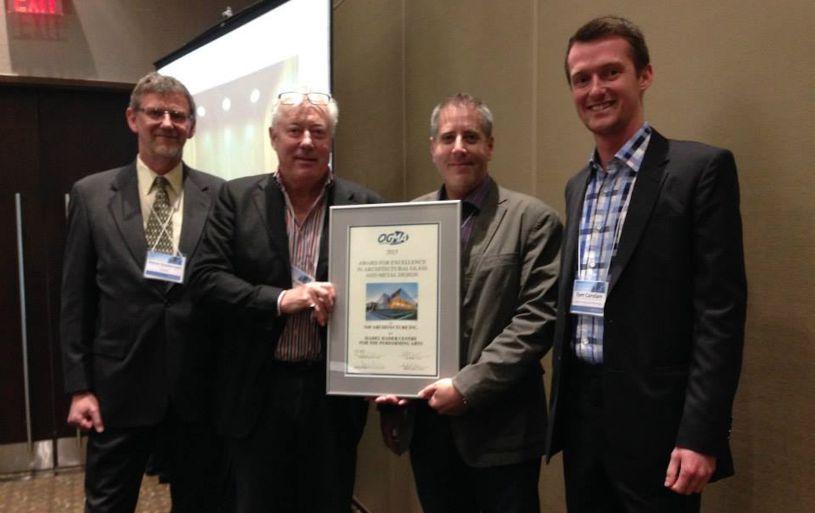
The Ontario Glass and Metal Association will once again honour outstanding achievement in the glass construction industry with its Awards of Excellence at Top Glass. Awards are presented in two categories: Excellence in Architectural Glass and Metal Design and Excellence in Architectural Glass and Metal Execution. The awards recognize an OGMA member company’s performance on an outstanding glazing project. Nominations are judged by an OGMA director and a panel of two architects.
Award criteria
• The project must be located within the province of Ontario
• The project architect must be registered with the OAA
• The glazing contractor must be registered as a business in Ontario
• The project must have been completed within the last five years
• Nominations must be made by a member in good standing of the Ontario Glass and Metal Association, however, the glazing contractor and the architectural/design firm need not be
• Members are not restricted in the number of nominations submitted
• The project must incorporate glazing systems from North American manufacturers
• Projects nominated need not be large; nominations can be made for portions of a project
Judging criteria
• Unique, pleasing or complex design or features
• Level of difficulty in design
• Level of difficulty in execution and the quality of fabrication and installation, as indicated in the photos provided
• Incorporation of elements of sustainable design 2:30
/ Ontario Awards of Excellence PRESENTER / OGMA
TOPGLASSPRODUCTS
SNEAK PEEK
What you’ll find on the show floor at 2016 Top Glass.
FIELD-FRIENDLY INSTALLATION
commdooraluminum.com
Booth 15
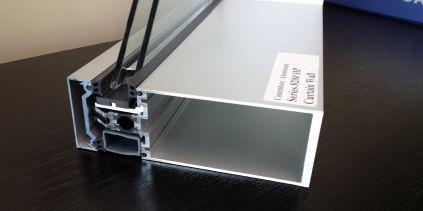
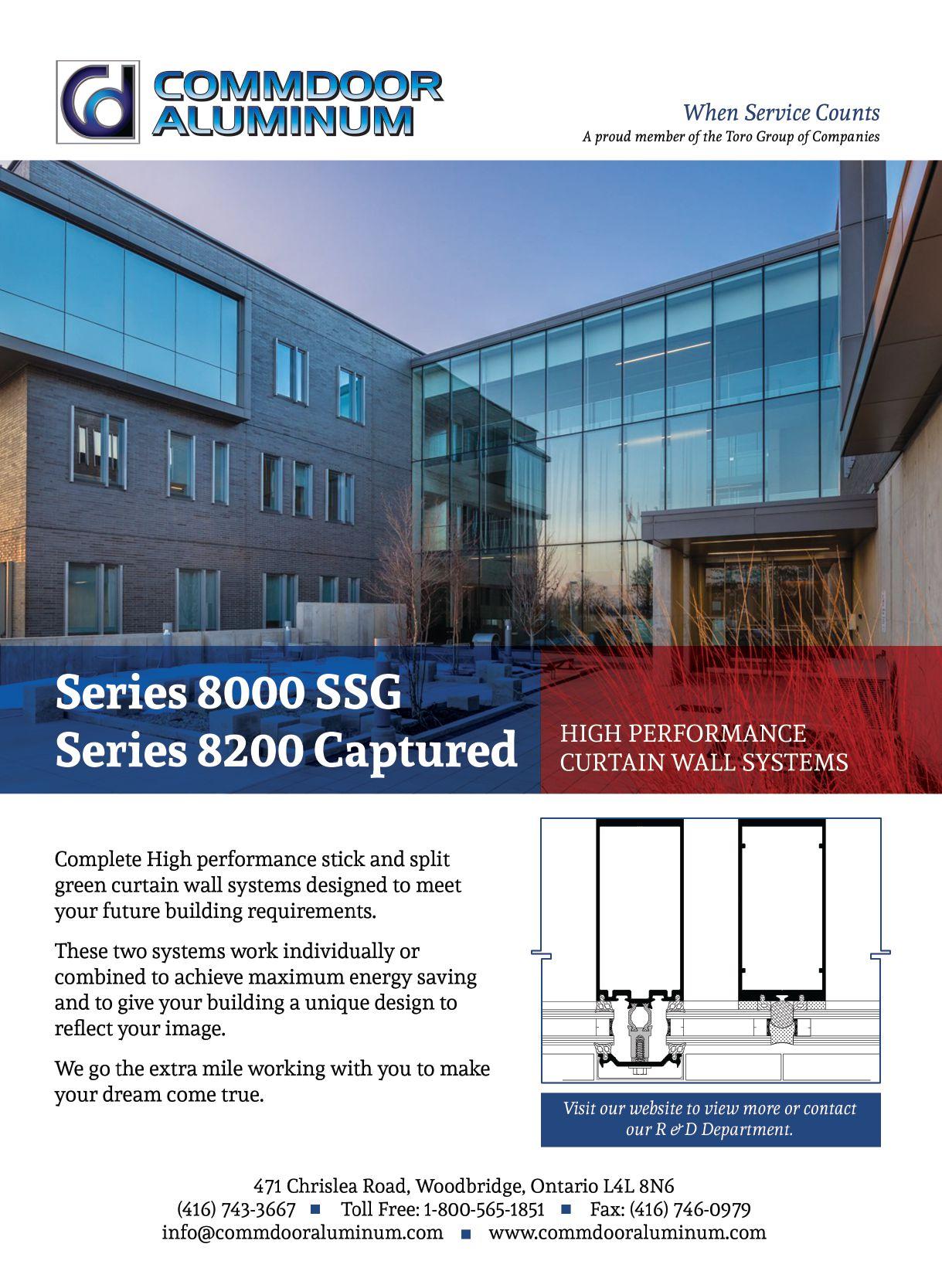
The Commdoor 8200 HP curtainwall system has been designed to meet new thermal performance requirements, such as SB 10. The initial series 8000 curtainwall utilized standard curtainwall design based on a thermal break between the back section neck and the pressure plate. The newest version, the 8200 HP series, now offers a dual polyamide thermal break which is capable of achieving the desired thermal performance. The system face width is 2 ½ inches with five back section depths available from four to 10 inches. Traditional caps and pressure plates are available along with structurally glazed versions offered in stock lengths up to 24 feet,two inches. Available in both traditional stick and
split vertical mullion versions, the 8200 HP system provides greater flexibility to suit varying job site applications. It is designed for low- to mid-rise building designs and is desirable for its ease of shop fabrication and field-friendly installation. The 8200 HP series is designed to accept a variety of infills: glass and glazing up to 1 3/4 inches triple glazed along with Series 225 operable vents, 2000 series SSG vents or commercial doors
including Series 4487 high-performance terrace doors. Most system profiles are in stock in either clear or bronze anodized finishes, with custom colours also available.
HUGE DEMAND
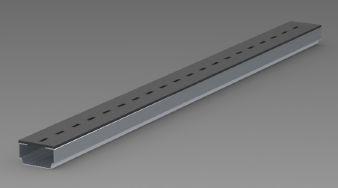
photo: Black_Long.jpg
rpmroll.com
Booth 30
RPM Rollformed Metal Products has fabricated high-quality fenestration products at its Ontario manufacturing facility for nearly 30 years. Products include spacer, grill bar, Climatech spacer (warmedge), desiccant, corner keys and connectors. RPM’s spotlight product is the Climatech spacer (warmedge) one of the company’s busiest production lines for 2015 thanks in part to an IGMA TBC Classification. RPM saw a staggering 300 per cent increase in demand from Canadian fabricators for Climatech. Climatech spacer features an electrolytic chrome-coated steel with perforated plastic to absorb desiccant. This thermally broken warmedge spacer is sought after and specified for both residential and commercial use.
FULL SEALING SYSTEM
tremcosealants.com
Booth 10
Tremco’s T3 Building Solutions System is designed as a foolproof method
for window installation in commercial construction, taking the risk out of the highest risk connection on the building envelope. The T3 System provides a secure seal while accommodating projects with large variance in window type, size and geometry, as well as changes of plane with the bonding surface as with proud-sitting windows. T3 offers a continuous tie-in with the AVB system to ensure connectivity and compatibility throughout the building envelope. This includes not only window-to-wall transitions, but also curtainwall connections, control joints, building fasteners, penetrations and transitions such as roof-to-wall and foundation-to-wall. T3 can accommodate movement caused by thermal expansion and contraction, vertical displacement and lateral shear, as well as seismic conditions. Products include pre-compressed, self-expanding, flexible, polyurethane foam tapes, breathable flashing materials, mechanically fastened, engineered transition assemblies and single-component, gun-grade polyurethane foams. An economical choice for architects and building owners, T3 offers true peace of mind, addressing problems plaguing commercial construction the most: structural deterioration, occupant discomfort and energy loss. It also prevents mould and mildew growth caused by moisture infiltration, ensures a longer lifespan for weatherseals and helps reduce energy consumption.
Rooted in infinite possibilities
From the roots of opportunity stem endless possibilities. Kawneer, Traco and Reynobond architectural products offer innovative solutions that redefine responsibility and performance. They work together to provide a foundation for inspiring new creations that shape our cities and towns worldwide. Together we build.
TOPGLASSPRODUCTS
KNOWS THE INDUSTRY
sunlife.ca
Booth 4
Yvonne Parker of Sun Life Financial worked for 27 years in the glass industry and knows the value of hiring and retaining top employees. Sun Life Financial’s Workplace Solutions can help with a variety of financial services that complement the workplace plan at no cost to employers or employees. Financial education seminars are available to help employees achieve lifetime financial security. Topics include individual financial consulting, termination and retirement services and specialized services for executives. Even small business owners can provide benefits packages that can make a big difference to ownership and the employees without breaking
the budget. Attractive benefits packages give employees incentive to join and stay with the company. Sun Life offers customized, affordable plans to meet the needs of business owners with three to 50 employees.
TILT-TURN REVOLUTION
rehau.com
Booth 26
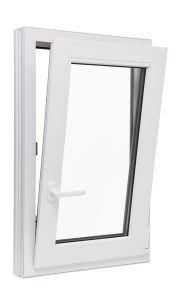
The Rehau System
4500 uPVC window and door design offers a unique product for large openings in both residential and commercial markets.
Matching System 4500 door designs allow for configuration into tilt-slide, bifold, and inward or outward opening single- and double-panel entry. These uPVC windows and doors not only far exceed aluminum on thermal performance, they can also meet the highest available
structural standards. This system produces some of North America’s highest performing window and door units due to its specific characteristics and benefits. Fusion-welded corners enhance structural strength and offer a cleaner finish. Dual overlapping compression seals resist air and water infiltration. Specific chambers on the main profiles (frames, sashes and mullions) can accommodate galvanized steel reinforcement. Insulated glass up to 1 3/8 inches thick achieves U-factors down to 0.18. The multi-point locking system increases security and ADA-compliant hardware solutions achieve disability design goals. Multiple chambers, compression seals, glazing and reinforcement abilities ensure STC’s in the low 40’s.
COMPACT AND VERSATILE
dorma.com
Booth 17
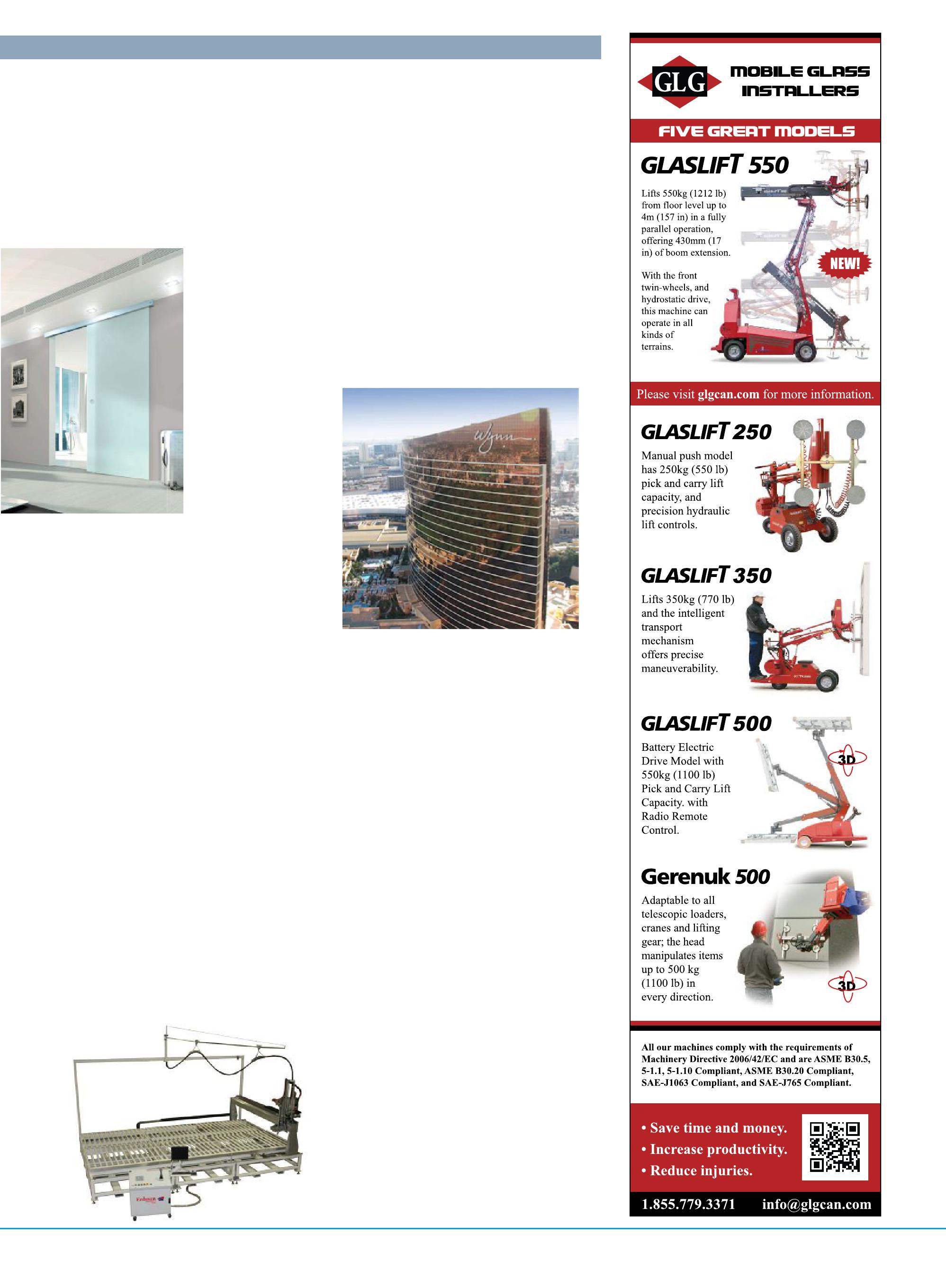
Dorma introduces MUTO Comfort, a new manual sliding door system.
MUTO’s deceptively simple, clean design conceals a range of optional features that enhance ease of operation and convenience, including self-closing action, the Dormotion damping mechanism (Dorma SoftClose) and a door position status indicator. The versatile MUTO Comfort delivers multifaceted solutions. Suitable for glass, wood, and other types of door applications, MUTO supports doors weighing up to 330 pounds. Easily installed and adjusted, with a removable front cover, MUTO offers unparalleled design in multiple finishes, including aluminum, a finish similar to satin stainless or over 200 custom RAL colours. MUTO is available in single- or doublepanel, synchro, self-closing, and telescopic models. The system offers extraordinary convenience housed in a slim profile, impressing by virtue of its compact elegance and extensive functionality, creating a sliding door system with enhanced user-friendliness.
AUTOMATED SEALANT APPLICATION
erdmanautomation.com
Booth 9
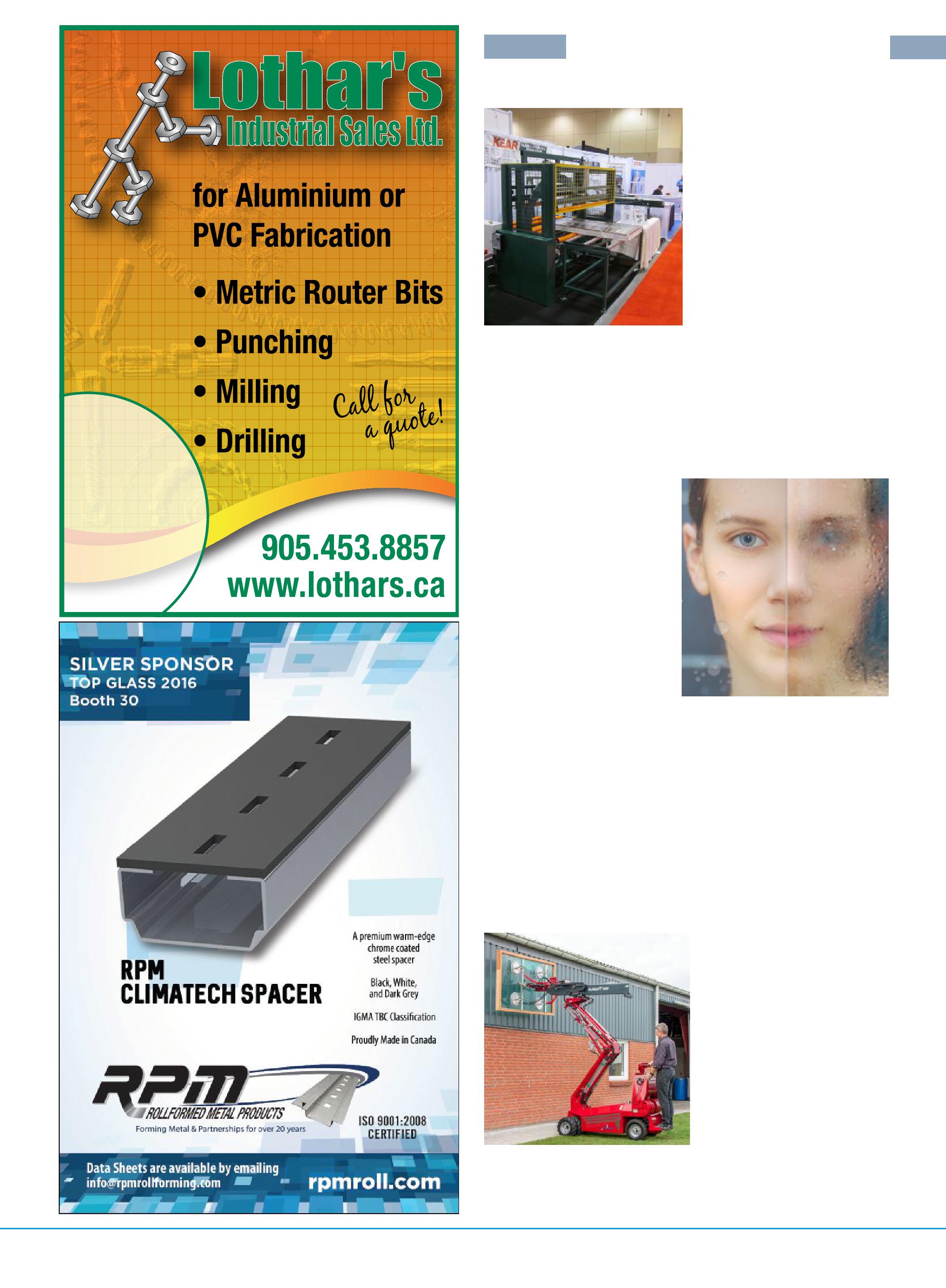
The Erdman structural/cap bead semiautomated sealant applicator for commercial glass is a semi-automated sealant application system that stand outs as a precise multitasker. Joystick control by the operator offers greater accuracy of sealant application due to increased visibility provided by cameras and monitors. This feature works especially
well for larger curtainwall and multi-lite panels. Another groundbreaking feature is the ability to apply either the structural sealant or the cap bead. In the past, the two different applications would have required two individual stations. Now consolidated into one streamlined system, the switch between applications requires minimal fuss; reducing waste in time, floor space and resources.
SEEKING PARTNERS
csgholding.com
Booth 34
Tianjin CSG Energy-Saving Glass Company, a subsidiary of China Southern Glass Group, is now the largest glass processing business in China. Its leading products are low-E coated glass and related products such as insulating glass, laminated glass, enameled glass and safety glass. Working with overseas curtainwall businesses, Tianjin has provided glass products for projects all over the world. In Canada, its very first project was the expansion of the Vancouver Exhibition Center in 2010. Tianjin is now looking for partners who would like to work with it as it expands into the eastern Canadian market. It offers quality, service and competitive pricing to add value to these partnerships.
AUTOMATED WRAPPING
kearmfg.com
Booth 16
Kear Fabrication serves the fenestration industry searching out the best possible products on the market. No single equipment manufacturer is the best at everything. Individual fabricators have certain packaging requirements that are essential for success.
20, 2016 The International Centre, Mississauga, ON
TOPGLASSPRODUCTS
Kear wrapping machines have been designed to quickly and efficiently wrap completed windows prior to shipping. Accordingly, the K-29RWM Ring automatic wrapping machine includes a motorized feed width customized for the customer’s size with a motorized feed length at least 24 inches long. The machine includes easy film changes and is PLC programmable with manual tensioner stretching. Power rollers control the in and out feeds and hook pulls control the automatic cutoff of the film with an automatic one-cycle. The wrapper requires only 230V/1 phase power and 90 psi shop air.
PATENTED GLASS COATING
dfisolutions.com
Booth 35
Just like the benefits of a non-stick cooking pan, Diamon-Fusion is a protective glass coating product that makes cleaning surfaces much easier than non-coated surfaces. From hard water stains and calcium deposits to environmental elements and even graffiti, fewer contaminants stick to glass surfaces coated with Diamon-Fusion and are easier to remove when they do stick. This world-class coating makes glass and other silica-based surfaces easier to clean, increases brilliance, protects and creates a more hygienic surface while eliminating the need for harsh and harmful cleaning chemicals. Diamon-Fusion also makes surfaces more scratch- and impact-resistant. To apply the coating, no special equipment is needed and there is no cure time. The coating offers contractors the optimum in flexibility as it can be applied in the shop or at a customer’s site.
NO OUTRIGGERS
glgcan.com
Booth 13
One of the major factors that sets GLG machines apart is that they do not require stabilizers or outriggers, resulting in increased productivity on the jobsite. The machines are engineered with a lower center of gravity in the design of the chassis so that a seamless installation process becomes possible, allowing one man to pick, carry and install panels with precision accuracy.
Additional features include stainless steel hardware, foamfilled no-flat tires and side shift control. The GL250D is the base model, which is a manual push mobile glass handler capable of picking, transporting and precision placement of 550 pounds. The GL350 is a self-propelled, battery electricdrive mobile glass handler capable of picking, transporting and precision placement of 770 pounds. The GL250/GL350 front lift frame is designed to lift loads straight up or down with lift geometry similar to a fork lift. The GL550 features a self-propelled, battery electric hydrostatic drive for rough terrain mobility. The GL550 can lift, transport and precisely place panels weighing 1200 pounds. The GL5003D battery electric mobile glass handler and installer can lift, transport and precisely place panels weighing 1100 pounds. It has telescopic front axles in lieu of outriggers to increase mobility.
EQUALIZES PRESSURE
litezone.ca
Booth 42
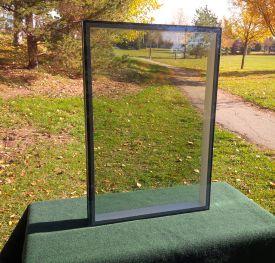
LiteZone Glass introduces LiteZone, a breakthrough in insulating glass technology. LiteZone insulating glass achieves the high insulating values and long life comparable to any IGU available. LiteZone can achieve up to R19.6 at the centre of glass and as high as R17.0 for an overall window. Its insulating and other performance values can be varied to satisfy specific project requirements. This scalability is achieved by varying the number of suspended films, the space between the layers and the number of low-E coats used in the configuration. LiteZone varies in thickness between 1.75 and 7.5 inches. LiteZone is air-filled and has a proprietary system to allow the air pressure between the inside and outside of the glass unit to equalize with changing temperatures, while keeping water vapour from entering the unit. Edge seal stress due to changing temperatures is minimal because all the materials used have comparable coefficients of thermal expansion.
DESIGNED TO A HIGHER STANDARD
securitymirror.com
Booth 1
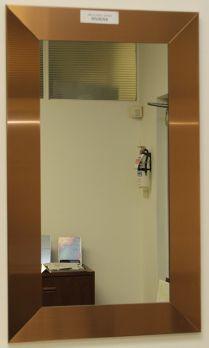
Security Mirror Industries has designed a high-end, theft-resistant, stainless steel framed mirror that looks good in any installation, from fast food restaurants to expensive steak houses to residential settings. Named after some of the favorite classic cars from the past, the new models will add class when parked in any décor. The New Classic Series comes with a wide three-inch frame and is available in five different finishes and five different sizes. Designers wanting to
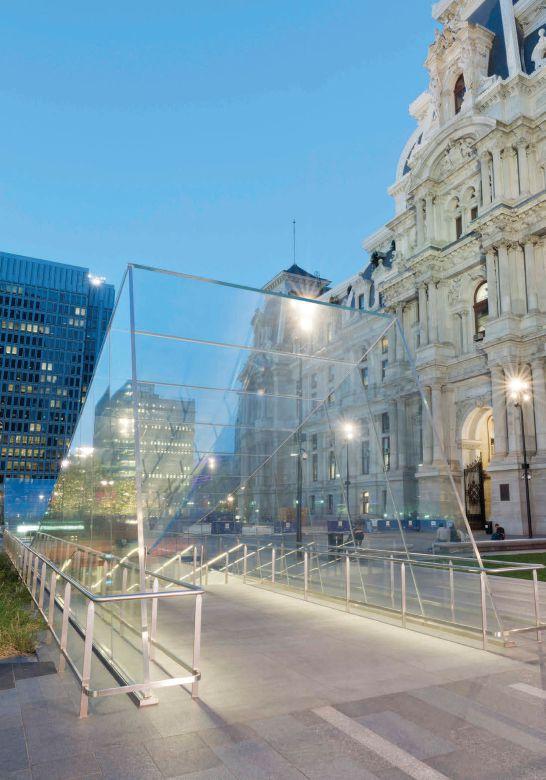
It takes more than the latest equipment to turn a sheet of glass into a work of architectural art. At GGI, we enjoy pushing the capabilities of our machines, we love taking on unique projects, and we are proud to work with architects and designers who are dedicated, as we are, to enhancing the built environment.
Dilworth Park
92 lites of 5-ply and 7-ply laminated, oversized, structural glass that protects access to public transit without any metal structure supporting the roof.
Architect: KieranTimberlake Installed by APG International
TOPGLASSPRODUCTS
create something unique and different can try glazing with one of Security Mirror’s beautiful Antique Mirror patterns or with a mirror-finished polished stainless steel insert. Other designs include Bel Air brushed etched silver stainless; Cutlass brushed black stainless; Phantom stainless mirror-on-mirror; Riviera hairline rose gold stainless; and Viper brushed satin stainless. SMI stainless mirrors are five-millimeter clear mirrors in three-inch-wide stainless steel frames.
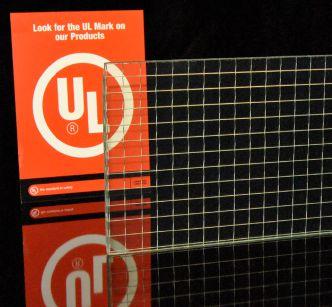
ALTERNATIVE TO WIRED
GLASS
glassopolis.com
Booth 5
Protect3 Safety Glass from Glassopolis is the fully C-UL certified, impact-safe alternate to GPW. Wired glass will not pass the new Canadian glass standard for impact safety and unlabeled firerated glass is not allowed under the building code. Protect3 Safety Glass is designed to be the lowest cost, fully code- and standard-compliant labeled alternate to wired glass. It is factory manufactured in Canada and is permanently marked with the C-UL symbol to ensure it passes all Canadian building inspections. It is available cut and labeled for project sales or in whole cases to companies wishing to fabricate it.
HIGH PERFORMANCE CURTAINWALL
alumicor.com
Booth: 25
Alumicor ThermaWall SM 2600 curtainwall is a high-performance, pre-fabricated, pre-glazed split-mullion curtainwall featuring a 2 ½ inch profile with mullion depth of 5 ¼ or 6 5/8 inches in both
double- and triple-glazed configurations. Ideal for low to medium rise curtainwall, the split mullion and expansion/ stack horizontal makes prefabricated or pre-glazed panel installation a snap. The pre-glazing capability affords shop-fabricated quality control and the polyamide structural thermal break provides complete thermal separation of caps and pressure plate screws from interior components. Two-, three- or four-sided structural silicone glazing capability offers freedom in design. Anchor options ranging from complex to simple will suit any project budget. ThermaWall SM 2600 is fully tested to current performance standards.
PAYS FOR ITSELF
booth 20
ergorobotic.com
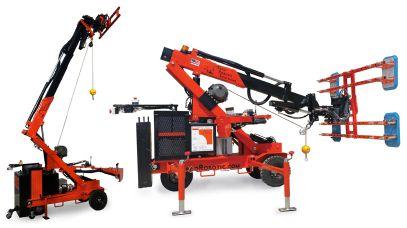
The GM 2000-16 with winch from Ergo Robotic Solutions has a maximum lifting capacity of 2,000 pounds and a maximum lift height of 16 feet. It can easily fit in a freight elevator and goes through a standard man door. It has an unladen weight of 3100 pounds without its 1400-pound counterbalance. The standard handling articulations include tilting the load left and right as well as up and down; shifting side to side;180 degrees rotation and the optional EZ Pick, an Ergo Robotic Solutions feature for picking and placing loads with one movement. When equipped with a
winch, as pictured, it can also lift sections of curtainwall into position from the floor below, making the machine doubly useful in the field and eliminating costly cranes in many instances.
EVERYTHING YOU NEED salemdist.com
Booth 7
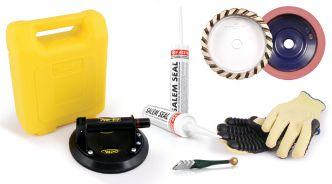
Salem Flat Glass and Mirror provides machinery and supplies to help glass companies achieve success. In addition to an impressive machinery line, which includes Bovone bevelers and edgers and a new line of CNC work centers from Denver, Salem also carries an extraordinary line of diamond tooling and supplies for fabricators and glaziers. From diamond wheels to core drills as well as felt polishing wheels and cerium oxide polishing compounds, fabricators will find Salem products to be superior in performance and value. For glaziers, Salem offers silicone sealant, cutters, gloves and more, including a vast array of material handling equipment.
FOUR OFFICES
TO SERVE YOU bgdistribution.ca Booth: 31
GL_April16_EliteEuopean_CSA.indd 1
Single-Source Supplier of Comprehensive Glazing Systems
BG Distribution is an architectural hardware and electronic security distributor with four offices: Ottawa, Montreal, Quebec City, and Toronto. The company remains focused on providing competitive pricing without compromising the personal service and technical support that its clients have come to expect. BG always strives to offer new and innovative products to better meet the growing needs of companies in the architectural glass business. The experienced and knowledgeable customer service team supports a diverse client base comprised of locksmiths, school boards, universities, hospitals, government agencies, glass companies and contract houses.
by FRANK FULTON
Frank Fulton is president of Fultech Fenestration Consulting. He has been in the industry for 30 years and can be reached via email at fultech.fc@gmail.com
An entrepreneur and a gentleman III
In my previous two columns I told you about Fred Fulton’s early days in Toronto, his beginnings in the industry with Pilkington Glass, the start up of Sealite Glass, and the establishment of the Insulating Glass Manufacturers Association of Canada.
Sealite Glass was a great success story, continued to grow since its inception in 1959, and opened an office and production facility in Montreal in 1962. Fred Fulton and Joe Shapiro had made Sealite a major player and this did not go unnoticed by the big boys. In the mid 1960s Fred and his partners were approached by a large Belgian glass manufacturing company looking to grow their business in Canada and to improve their insulating glass production processes in Europe. The company was Glaverbel Glass. The Belgians liked what they saw, determined that owning Sealite would help them meet their North American growth objectives, and made them an offer they couldn’t refuse.
“After a period of time I was asked to assume the role of executive vice-president for Glaverbel Canada and to work on the integration of all of Glaverbel’s many branches across the country,” Fred reports. Glaverbel had done a major acquisition campaign of glass companies throughout Canada to establish a nationwide footprint. “This was a demanding but very interesting role which again involved coast to coast travelling. We also sent teams of people to Glaverbel’s facilities in Europe to assist them in organizing their plants to achieve the same quality of insulating glass we were producing at Sealite.”
During the 1950s the float glass production process had been developed and perfected by Pilkington Glass and by the mid 1960s this much-improved product was seriously shrinking the
Fred Fulton would have to be considered amongst the top entrepreneurs in the history of the glass industry in Canada.
YOU BET YOUR GLASS
demand for sheet glass. All of Glaverbel’s glass operations in Europe produced only sheet glass. Fred tried to convince the Belgians that the days of sheet glass were numbered and recommended that they move into float glass production to stay viable. They chose not to go in this direction and instead, in the mid 1970s, decided to close shop in Canada and sell off their network of companies.
“Glaverbel in Canada was a fine company to be with, but some years after I joined they were sold to the Ford Motor Company and I decided that I would leave the new organization and hopefully plan a different future. I left on good and friendly terms,” Fred remembers.
The sale of Sealite Glass had contained a noncompete clause so Fred was unable to immediately go back into the glass business. As it happened, the assets of a company by the name of Dominion Home Improvements (DHI) involved in the apartment window business became available and Fred, “wanting to keep my hands in with the people I knew in the business,” purchased their equipment.
In 1978, with this used aluminum window production equipment, a small inventory of aluminum extrusions, DHI’s former shop foreman Mike Suto and six shop employees, Fred opened the doors of Fulton Windows in a 12,000 square foot factory on Aimco Blvd. in Mississauga. The product offering consisted of Series 1200 fixed and sliding windows.
Fred once again started pounding the pavement calling on the people he knew best – glass shops and commercial glazing contractors in the Toronto area – only to learn that most of them seldom buy windows. The method for many of these companies, as it remains today, was to buy lengths of aluminum profiles, fabricate it themselves, install it, and glaze it on site. Fred then pushed the idea that Fulton Windows could fabricate and assemble the Series 1200 window framing for the glazing contractor at a cost lower than they could do the work themselves. The glazier could then free up their inside fabricators to install more and increase their business. This was an approach that worked very well for companies involved in supplying glazing during the boom in factory construction surrounding the greater Toronto area during the early and mid 1980s. Fulton kept adding new products to meet demand in tnhis strong market. To support customers in the school window market, Fulton designed and introduced the 5100 Series double hung window followed by the 2000
Series vent system. Then to complement the window offerings, Fred brought Werner Kloke into the fold and introduced exceptionally well-designed and glazier-friendly curtainwall and skylights systems as well as the 2250 Series tilt/turn window system. Werner also brought a good rapport with the leading architects in the country to Fulton Windows
By the time 1990 rolled around, the Canada-wide construction boom had begun to implode and the economy plunged into recession giving birth to the catch phrase “stay alive until 1995.” With sons Frank, Fred, and Bob on board, a fully rounded product offering, an experienced engineering group and a wonderful team of dedicated people throughout the organization, Fred turned his eye to new markets and landed in Hong Kong, where eventually a great relationship with an exceptionally progressive and talented company called United Reliance Corporation was forged.
While businesses throughout Canada struggled greatly in the early ‘90s, about half of Fulton’s local customers found themselves unable to stay afloat. But Fulton’s approach of supporting the glazing contractors kept some business coming in from their broad base of customers. At the same time, Fulton was supplying a growing stream of custom curtainwall and skylight products to Hong Kong, eventually supplying a large section of the curtainwall for the Hong Kong Convention and Exhibition Centre that was built to host the ceremony returning Hong Kong to China from British rule in 1997.
Fulton’s ability to do business on the international stage did not go unnoticed. The Export Development Corporation branch of the Government of Canada, whose role was to promote capable Canadian companies, introduced Fred to a construction consortium in Japan. This unique umbrella organization, made up of companies across Japan involved in the building of business hotels and rental apartments, sourced innovative construction materials from suppliers around the world. Double-glazed and thermally broken aluminum windows were practically unheard of and rarely used in Japan in the early ‘90s. Fulton customized some of its existing products to meet the requirements of the Japanese market and was able to supply a far superior product at a cost less than the local manufacturers’ single-glazed offerings.
By the mid 1990s with the Canadian market just beginning to show signs of recovery, Fulton’s business in Hong Kong and Japan had grown to the point where more than 50 per cent of sales were being shipped to Asia.
During the downturn years, expecting that construction would have to rebound eventually, Fred had his engineering group developing a user friendly, multi-storey, unitized curtainwall system to supply to the glazing contracting market. Prior to this, a fully unitized and factory-glazed curtainwall was not readily available to these customers. The product was introduced to the market as FULWAL 4, and Fulton backed the dealer with in-house design and engineering horsepower.
When the North American economy rebounded towards the end of the decade, Fulton’s Canadian window business came back and FULWAL 4 opened new avenues. Fulton’s market footprint expanded into centres throughout the United States as well as the Caribbean and Europe.
By the time Fred and family sold Fulton Windows to Oldcastle Glass in 2006, the small company that had started in 12,000 square feet with seven employees had blossomed into a pretty formidable entity in a 130,000 square foot facility with over 200 people.•
by BRIAN BURTON
Brian is involved with an innovative multi-disciplinary firm specializing in website design and development; Award Bid Management Services http://award-bidmanagement-services. com. The firm also assists companies interested in selling goods and services to governments and institutions. He can be reached at; brianburton1995@gmail.com
Success in-situ
Manufacturers can minimize their difficulties with on-site or “in-situ” testing by adhering to certain well-established quality-control principles, which can be important to reduce the chances of costly failures. Yes, on-site testing can be a complex undertaking. The number of components that that are encompassed within the scope of a typical on-site test may account for at least part of the complexity. When you include the fenestration components themselves, environmental barriers and various components of the wall or roof assemblies, it’s not surprising that the process can become perplexing. Manufacturers may also pay closer attention to product quality for prototypes assembled specifically for laboratory testing than they normally do for products coming straight off the assembly line and shipped directly to the construction site.
Adding to the challenge is the large number of applicable standards and the environmental problems that can be encountered on-site in attempting to successfully simulate a severe weather event, which can be difficult even in controlled laboratory settings. The components themselves have likely been moved on a number of occasions before installation and testing. Changes may by caused by vibration, thermal deformation or UV radiation. All good reasons to ensure your products are protected from damage during storage, handling, installation and commissioning.
One important principal, aside from ensuring products are installed in accordance with the draw-ings, specifications and building codes, involves paying close attention to the connection details between fenestration products and water-resistant barriers in the wall or roof system. They must be properly lapped to perform as intended. Failure to ensure continuity where systems compo-nents interconnect can be a potential source of air or water leakage during testing
On-site testing can be a complex undertaking.
and during the buildings service life.
FENESTRATION FORUM
Another principle involves ensuring that quality-control checks are completed before construction, during construction and after project close out. After commissioning maintenance instructions should be provided to the owners. These QC steps can and should include a review of the final construction documentation including shop drawings, arranging pre-construction/ pre-installation meetings with individual trades and confirming on-site construction inspection is ad-equate and regular. The proper assembly, inspection, witnessing and testing of a mock-up that is inspected and ideally photographed before finishes are installed is also part of this over-all sys-tematic quality assurance process.
For installers, good building practice also involves making sure that on-site conditions are suitable when installing sealants and weatherstripping. This includes ensuring that surfaces are dry, clean and free from contaminants such as dust or construction debris. Temperature may also be a factor in proper sealant application and contractors should pay attention to the manufacturer’s instructions.
There are certain testing protocols that should be confirmed. Test specimens and locations should also be examined for any damage or defects prior to commencing test set up. The test equipment should be calibrated, the samples preconditioned. Preconditioning refers to the practice of making adjustments for ambient conditions to reduce adverse effects of wind and temperature at the project site. The test equipment pressures should checked during testing. Cycle times should also be monitored.
In many cases on-site testing failures can often be traced to one or more of the following reasons: components were not properly installed or lack of experience or judgment by fenestration technicians and/or testing personnel. Sometimes the product or opening dimensions change because components were transported to site, moved numerous times prior to installation and exposed to weathering forces such as water, temperature fluctuations, and UV radiation. Lack of sufficient detail in the construction documentation and problematic location of test specimens are two more common causes of failure, as is interface components not being properly lapped. •
THE ENVELOPE THAT PUSHES BACK
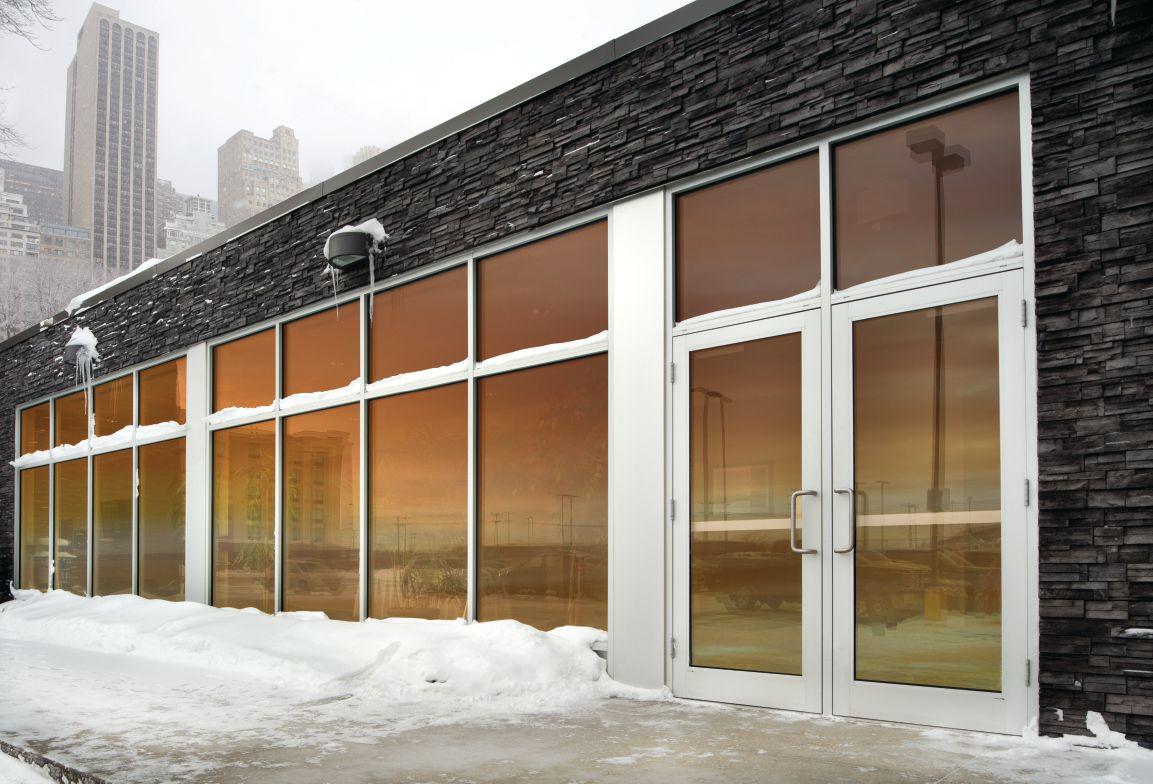
INTRODUCING ARCTICFRONT™ SERIES 45X HIGH PERFORMANCE DUAL THERMAL STOREFRONT SYSTEM
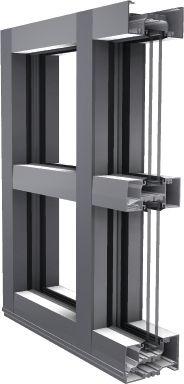
When it comes to meeting energy codes for thermal performance, opposites do not attract Keep the cold air out and the warm air in with the new ArcticFront™ Series 45X High Performance Storefront System from CRL-U.S. Aluminum. By incorporating dual polyurethane thermal break points that act as a superior thermal barrier, it can produce U-factors as low as 0 19 The system excels at maintaining desired internal temperatures and condensation resistance In addition, the NFRC Rated ArcticFront™ Series 45X comes in the familiar design and installer-friendly features of a traditional storefront.
– 2" x 4-1/2" Overall System Dimensions
– Dual Polyurethane Thermal Breaks
– U-Factors as Low as 0 19 Using Low-e 1" Insulating Glass