

Editorial: Pop quiz .........................3
One hundred days to close ...........4
Thermal spray as a sputter target production method.........7
Modern look with LEED friendly daylighting .....10
Coming Events .............................12
A guide to warm edge ................13
One certification ...........................15
Coated glass ..................................16
European Scene:
You
Annex Publishing & Printing Inc. P.O. Box 530, Simcoe, Ontario N3Y 4N5
Editor- Chris Skalkos cskalkos@annexweb.com 519-420-7710
Advertising Manager- Laura Cofell lcofell@annexweb.com 519-429-5188 (888) 599-2228, ext 275
Sales Assistant- Ryan Culver rculver@annexweb.com 519-429-5183 (888) 599-2228, ext 219
Production Artist- Emily Sun
Group Publisher- Martin McAnulty mmcanulty@annexweb.com
Publication Mail Agreement #40065710. RETURN UNDELIVERABLE CANADIAN ADDRESS TO CIRCULATION DEPARTMENT, P.O. BOX 530, SIMCOE, ON N3Y 4N5
e-mail: ncuerrier@annexweb.com
Printed in Canada, All rights reserved. Editorial material is copyrighted. Permission to reprint may be granted on request. ISSN 0843-7041
Circulation
e-mail: ncuerrier@annexweb.com
Tel: 866-790-6070 ext. 208 Fax: 877-624-1940
Mail: P.O. Box 530, Simcoe, ON N3Y 4N5
Subscription Rates
Canada- 1 Year $39.00 (with HST/QST $42.12)
U.S.A. - 1 Year $54.00 (in US dollars)
From time to time, we at Glass Canada make our subscription list available to reputable companies and organizations whose products and services we believe may be of interest to you. If you do not want your name to be made available, contact our circulation department in any of the four ways listed above.
Irecall a conversation I had several years ago with an architect who had an unorthodox way of testing the knowledge of glass sales representatives who visited him. Prior to the sales presentation he would ask the rep two basic questions: “What is glass made of? How was it invented?”
He said that he posed these questions because he wanted to see if the sales reps were selling the product or if they were just selling a brand name according to a scripted sales pitch.
Glass is an amazing product. Of course, if you work in the industry you already know that, but how much do you really know about the product that you sell or work with every day?
Let’s see.
True or False?
Glass is composed of silica sand, lime and soda.
True or False?
Glass is a solid material.
True or False?
Large area vision glass was first introduced in the 1950s by Alastair Pilkington.
Glass was first invented by:
(a) The Venetians in the 13th century
(b) The Romans around 44 BC
(c) The Babylonians around 250 BC
(d) The Egyptians around 1500 BC
(e) The Phoenicians around 5000 BC How did you do? I know I flunked it faster than a Grade 10 math test. If you didn’t get 100 per cent you can join me in the detention hall after class, or you can flip to Frank Fulton’s column in this issue titled “Glass for Dummies.”
As a new columnist to Glass Canada this is only his second article and I believe it’s a valuable one. Over the years I have read a lot about the history of glass, but never in such a concise and easy-to-read article.
This complex product has a rich history as impressive as the building envelopes it helps to enclose. I think it’s important that all glass professionals, whether they are making glass, installing it or selling it, have a thorough understanding of the product that is the basic substance of their livelihood.
If you can’t impress an architect with this knowledge, you can at least impress friends at a cocktail party. Failing that, you can join me in the detention hall.
Editor, Chris Skalkos
Answers:
False: Five per cent is made up of about 50 other chemical elements to affect colour, viscosity or durability.
False: Its physical structure does not conform to liquid, solid or gas. It is actually more of a liquid than a solid, described by The American Society for Testing and Materials as having “…the random atomic arrangement of liquid but which somehow has been frozen in place…”
False: Louis Lucas de Nehou perfected a technique for the production of “cast polished plate” glass in 1688 making large vision areas possible.
(e): It was the Phoenicians who first invented glass, but others also contributed to its evolution as the product we know today.
Clarification:
An article in the February issue referenced only one company that offers heated glass products with UL approval. In fact, Prelco Inc., in Rivere-Du-Loup, Que., also offers a “heated glazed window, model Prel-Therm,” which achieved UL certification in 2006.
The next issue of Glass Canada will look at the warming trends in solar glass technology. The newest products in decorative glass will also be reviewed. Watch for it in June!
By Chris Skalkos
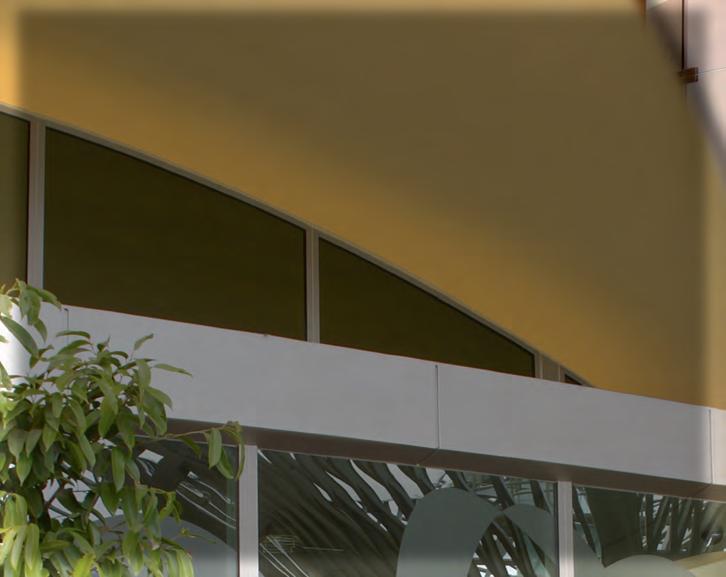
As the first government building in Ontario to achieve LEED Silver certification, the Durham Consolidated Courthouse, in Oshawa, Ont., is a testament to the role glass can play to achieve both visual and design performance goals in energy-efficient buildings.
The six-storey courthouse will be a technologically advanced, integrated facility that will consolidate Superior Court and Ontario Court justice services currently operating from the Durham region. The project is being delivered under the Government of Ontario’s Infrastructure Ontario Alternative Financing Program (AFP) and the building design will conform to the Canada Green Building Council’s Leadership in Energy and Environmental Design (LEED) Silver certification standards, with an emphasis on energy management and conservation.
WZMH Architects in Toronto took on the project. The firm’s experience includes significant institutional, residential, corporate, hospitality and recreational projects in Canada, the U.S., Europe, Asia, and the Middle East. Architect Carl Blanchaer says that the clear and spandrel glass products played an important role in the building’s esthetic design and performance goals.
“The concept was to make the courthouse transparent and accessible to people in the community. We wanted people to see inside and make it feel open to the general public,” he says, adding that clear glass was used on most of the building. “Today’s low-E glass is perfect for that and you still get good performance and visibility.”
Viracon supplied 83,000 square feet of glass for the project, a product Blanchaer says was chosen based on the firm’s previous experience with institutional projects. “The glass had good specs; we needed 70 per cent

PRINCIPAL ARCHITECT: WZMH Architects, Toronto, Ont.
GENERAL CONTRACTOR: PCL Constructors Canada Inc. Mississauga, Ont.
GLAZING CONTRACTOR: Verval Ltée, Ottawa, Ont.
GLASS SUPPLIER: Viracon, based in Owatonna, Minn.
TOTAL AREA VISION GLASS: 83,000 sq.ft.
IG UNITS: Approx. 2,800 - Unitized: 1,700; Stick: 1,100; 3 x 10 ft.

light transmittance, which was a key requirement.” He adds that from a design perspective the amount of daylight filling the building, especially in waiting areas, was important. “These are areas that are considered ‘stressful’ and we wanted daylight filling these areas inside,” he says, explaining it helps to create a calming mood for courthouse users.
The light transmittance in the vision areas also contribute to energy savings, helping to minimize artificial lighting indoors. Christine Shaffer of Viracon says the glass used on the Durham Consolidated Courthouse incorporates Viracon’s VE1-2M high performance coating. “The coatings offer a balance between light transmission and solar energy control. Combined with a clear glass substrate, as was used on the courthouse, the coating allows high visible light transmittance, low exterior reflectance and the lowest U-values available, thereby reducing radiant heat transfer.”

Verval Ltée, glass contractor responsible for glazing the project installed 2,800 IG units with 1,700 units in the stick system for the large openings using Kawneer’s 2500 PG Wall and 1600 Wall Systems for the unitized curtainwall structures. Charles Turpin, company president, says the glaziers on site snapped the pre-glazed sections together using a specialized hoist to access the glazing area. “It was modified to increase its lifting capacity just so it could hold the weight, which exceeded 1,200 pounds,” he says.
The building’s central tower is wrapped with the curtainwall for the first three floors using the pre-glazed stick system, a straightforward installation except for the different variants. The north and south sides both have aluminum and glass “bump-outs” that protrude from the face of the curtainwall. They are alcoves for usable space within the building, 30 feet wide and covering three floors. “The more corners, the more lining up we had to do. Since it was so big we couldn’t afford to be off-square, but we’re used to that,” says Turpin, adding that they

The six-storey courthouse built under the Government of Ontario’s Infrastructure Ontario Alternative Financing Program (AFP) will conform to the Canada Green Building Council’s Leadership in Energy and Environmental Design (LEED) Silver certification standards.
worked closely with general contractor PCL Constructors Canada on very tight glazing schedule. “We had 100 days to close-in the building envelope and this required close communications
GL-1: Low-E
Make-up: 1⁄4 inch (6 mm) VE1-2M No. 2; 1⁄2 inch (13.2 mm) airspace; 5⁄16 inch (8 mm) Clear.
Transmittance: Visible light 69 per cent; Solar Energy 32 per cent; UV 10 per cent.
Reflectance: Visible Light (ext.) 11 per cent; Visible Light (int.) 12 per cent; Solar Energy 31 per cent.
U-Value: NFRC Winter: 0.29 BTU/(hr x sqft x degrees F); NFRC Summer: 0.26 Btu/(hr x sqft x degrees F).
Shading Coefficient: 0.43
Solar Factor (SHGC): 0.38
Relative Heat Gain: 90 BTU/hr x sqft
GL-2: Low-E Spandrel performance data
Make-up: 1⁄4 inch (6 mm) VE1-2M No. 2; 9⁄16 inch (14 mm) airspace; 1⁄4 inch (6 mm) Clear - with VC1350 ceramic frit spandrel No. 4
U-Value: NFRC Winter: 0.30 BTU/(hr x sqft x degrees F); NFRC Summer: 0.25 BTU/(hr x sqft x degrees F).
GL-3: Silkscreen
Make-up: 1⁄4 inch (6 mm) Ultrawhite - with V1086 sim. Sandblast Silkscreen No. 3058 – full coverage No. 2; 1⁄2 inch (13.2 mm) airspace; 5⁄16 inch (8 mm) Clear.
between the project manager and the site superintendent with particular attention to preparation,” says Turpin. “It was like a Swiss army knife…very well planned.” ■
Transmittance: Visible light 50 per cent; Solar Energy 44 per cent; UV 22 per cent.
Reflectance: Visible light (ext.) 19 per cent; Visible light (int.) 18 per cent; Solar Energy 15 per cent.
U-Value: NFRC Winter 0.47 BTU/(hr x sqft x degrees F); NFRC Summer: 0.49 Btu/(hr x sqft x degrees F).
Shading coefficient: 0.65
Solar Factor (SHGC): 0.56
Relative Heat Gain: 137 BTU/hr x sqft.
GL-5: Spandrel
Make-up: 1⁄4 inch (6 mm) Ultrawhite - with V-175 white ceramic frit spandrel No. 2; 1⁄2 inch (13.2 mm) airspace; 5⁄16 inch (8mm) Clear.
U-Value: NFRC Winter: 0.47 BTU/(hr x sqft x degrees F); NFRC Summer: 0.49 BTU/(hr x sqft x degrees F).
Metal Supplier: Kawneer
Curtainwall Specified: Unitized 2500 PG Wall (Dow Corning 983 Structural, Primer “C”); Stick: 1600 Wall System (795)
Aluminum Panel Supplier: Embury (Kastner Metal) - Colour: Duranar BK-20413 XLF (exterior); Duranar UC-106016 F (interior).
Advanced coatings are right on target. Over the last 30 years, the glass industry has increasingly introduced advanced coating technologies to achieve valueadded products for improved esthetics and performance.
Low-E glass, for example, has evolved considerably since its inception, spawning new variations of itself in high-performance and reflective glass. The rejuvenation of low-E in commercial glazing projects has been evident in several high-profile buildings in both Canada and the U.S. The advancements in glass coating technology for both
the Pyrolytic and Sputtered processes have already produced a wave of “easyclean” glass products and spectrally selective glass.
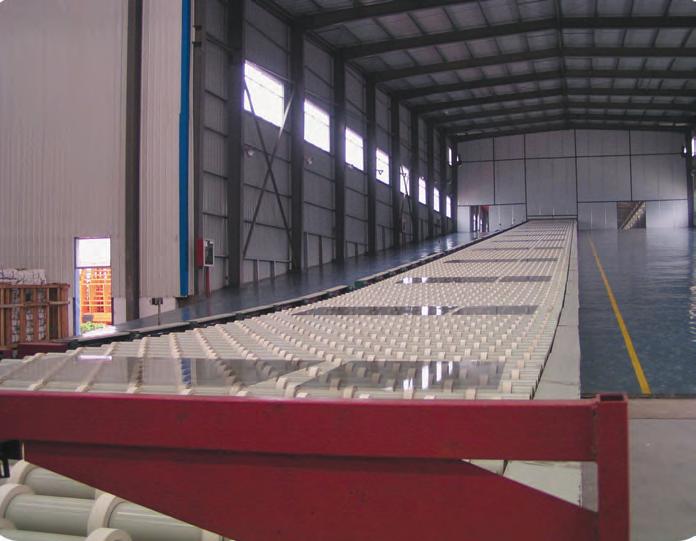
While the end products are known, the process behind glass coating technology is complex, and some of the latest research indicates that vacuum coating by sputtering has established a leading position. This is because of its relative ease in scalability to high volumes and its wide variety of available materials and possible coating stacks for a variety of applications in the architectural, automotive and display markets.
Common glass coatings are for antireflection, low-emissivity (low-E), solar control and as transparent conductive oxides. In all of these fields, the desired
functionality of the coating can only be achieved by a well-designed stack of multiple thin layers, consisting of pure metals, alloys and compounds.
Sputter deposition of metals and alloys is a quite straightforward DC process and mainly defined by the quality of the target material. However, the deposition of nitrides and the even more insulating oxides has evolved significantly and is typically performed by sputtering in a partially reactive gas to stabilize the process.
Studies show that the use of rotating cylindrical magnetrons instead of planar magnetrons has several advantages. A cylindrical target may contain more material and has a clearly superior utilization yield in comparison to planars, which results in much longer
production runs and reduced downtime of the machine, increasing the throughput of the coating equipment. Another advantage is the possibility to use higher power densities because the heat load is divided equally over the circumference of the target to increase deposition speed.
A preferred method to produce these sputter targets is thermal spraying and the latest trends for some of these target materials are advancing.
Thermal spray process as a sputter target production method
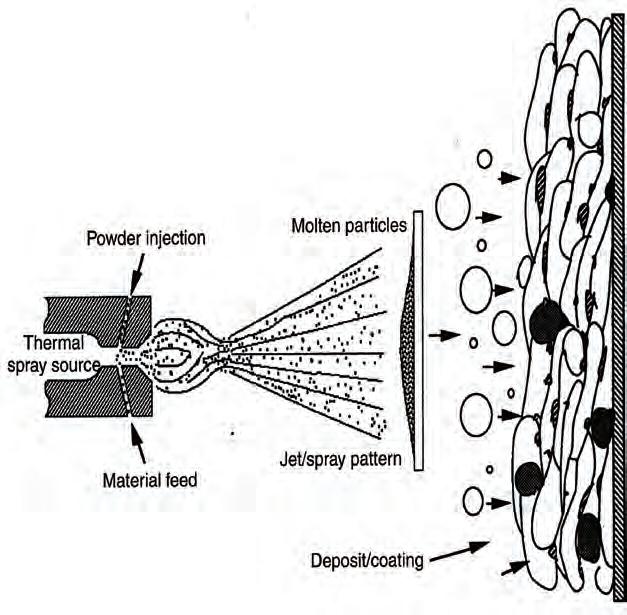
Thermal spray is a generic term for a group of coating processes used to apply coatings with a layer thickness under 10 millimetres. The process uses a concentrated heat source to semi-melt feedstock materials, typically in wire or powder form. The resulting heated droplets are accelerated by process gases and propelled towards a substrate. Upon impact, the droplets are deformed to splats and solidify rapidly to form a coating. The thermal spray technology has grown from simple Zn and Al coatings to encompass most metals, alloys, ceramics, carbides, plastics, and nano-materials.
This versatility in feedstock materials is a major benefit of thermal spraying for sputter target manufacturing. In addition, thermal spraying is characterized by a high coating deposition rate. Because of the high cooling rates of the process the backing tube is hardly affected by any thermal interaction with the molten droplets so no diffusion layer between the substrate and the coating is formed. This means that the target material preserves its desired composition over the whole layer thickness and maximizes the utilization of target material for sputter deposition.
Sputter target materials
TiOx targets – The production of TiOx targets is a typical example of how the strengths of thermal spraying can be combined to result in a valueadded target product. The high process temperatures allow the ceramic Ti- oxide to be melted and the high cooling rates result in a conductive TiOx material at room temperature.

The use of a Ti-oxide target instead of a pure metal Ti target increases the sputter deposition speed and enhances the process stability in reactive processes substantially.
Si(Al) targets – Si02 and Si3N4 thin films are sputtered starting from SiAl targets. The successful production of SiAl targets by thermal spraying takes advantage of key features of the spray
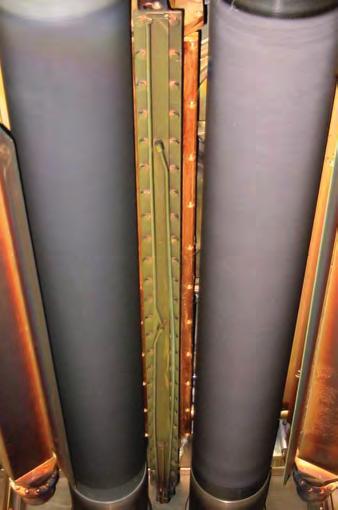
targets, as compared to standard thermal sprayed Sn.
process. Its inherent flexibility for target geometry allows a wide variety of target diameter, length, straight or dog-bone target ends, while maximizing the target sputter capacity by increasing the target layer thickness.
Sn targets – The latest development in Sn target manufacturing is the transformation of the standard thermal spray process into an innovative Advanced Thermal Spray Technology, capable of producing coarse-grained, high-density structures with controllable grain morphology.
Very fine splats of 10 pm by 100 pm in size, with an orientation parallel to the backing tube, give the Sn structure its typical layered architecture.
The very fine lamellar structure is substituted by coarse grains of about 200 pm by 1 mm in size.
Sputter characterization of HighDensity Sn has been performed on test targets in a lab-coater. The sputter behaviour has been compared to standard thermal sprayed Sn and cast Sn targets in terms of burn-in behaviour, arc rate, deposition rate and I-V characteristics.
Burn-in tests show a similar lower arc rate for High-Density and cast Sn
Besides the similar sputter behaviour of the High-Density structure compared to cast targets, the ability of the Advanced Thermal Spray Technology to adjust the coating structure (density and grain morphology) by controlled process parameter modifications is a powerful tool to further optimize the sputter process in terms of process stability (arc rates) and throughput (deposition rate).
ITO targets – ITO is one of the best performing transparent conductive oxides in thin film industry, combining a high visual transparency with a high electrical conductivity and stable thermal and chemical properties. The development of rotating cylindrical ITO targets is driven by the need to overcome some limitations inherent to the common planar lTO targets. These planar targets typically consist of ceramic tiles, bonded to a metallic backing plate.
Rotating cylindrical ITO targets have been developed by several manufacturing methods. All of the targets are designed as single piece components, with the bonding of the ITO layer to the backing tube generated during the target production process. The obtained densities vary between 92 per cent and more than 99 per cent of the theoretical value for ITO.
Large size prototype targets of 1700 mm in length and up to 4-mm layer thickness have been produced for sputter deposition testing on polymer web in different roll coaters.
The sputter behaviour of this rotating ITO targets has been compared with commercially available planar ITO tiles, consisting of various tiles bonded to a backing plate.
The process stability of the rotating cylindrical targets is similar to planar targets, all exhibiting a stable sputter voltage with low arcing rates during long sputter periods. Nodule formation did not occur on the rotatable targets after the sputter tests.
The optical light transmission measured before and after annealing of the ITO film, gives a systematically higher value for the rotating cylindrical target Resistivity values measured before and after annealing and after a chemical durability test, give similar results for both target types. The same conclusion applied to the grain size determination and the adhesion qualification.
Powerful coating technology for target manufacturing
Advances in target manufacturing are being prompted by the increasing market and growing demand for thin film sputter deposition. This is focused primarily on
Continued on page 22
All-glass or frameless glass systems for interior applications are a breakthrough in designing and outfitting interior office space with frameless glass office fronts.
The multiple hardware options available today and the technical information provided by manufacturers and suppliers can guide glaziers from initial design through to installation. These attractive glass systems also offer architects and interior designers a streamlined way to create modern frameless glass interior office fronts.
Frameless glass systems provide everything design professionals need to deliver a remarkable, glassdominated interior, including design assistance, tempered glass panels and hardware, turnkey installation and ongoing maintenance. The versatility of the systems now available to the market permits a variety of standard and custom designs.
“They are revolutionizing how interior glass systems can be specified, ordered and installed,” says Tom Teagardin, director of DORMA Glas Division of DORMA Group North America. The company manufactures and markets a wide range of products for the architectural openings industry including its new allglas™ interior office front system.
The system offers design options that maximize the amount of glass while minimizing framing and hardware. The major benefit of this for architects and designers is that an all-glass system can contribute to the daylighting points toward LEED (Leadership in Energy and Environmental Design) building certification.
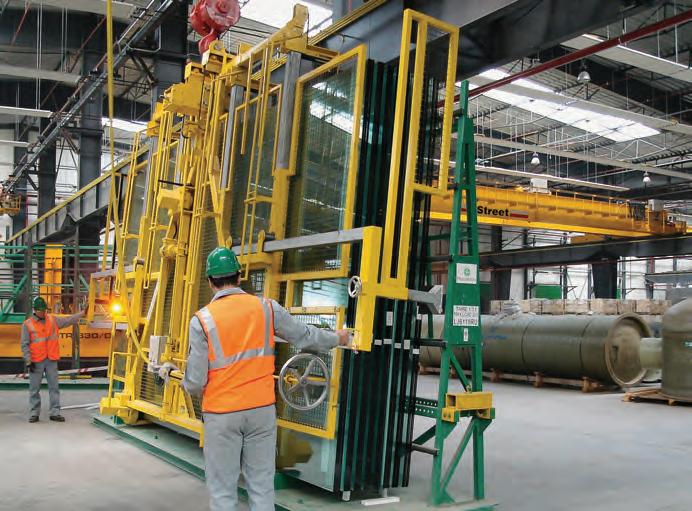
The company’s allglas systems also cover swinging and sliding doors for office fronts such as its new VISUR double-acting pivot system that enables the installation of all-glass, double-acting doors without any visible fittings. All of the hardware components for both single- and double-door configurations
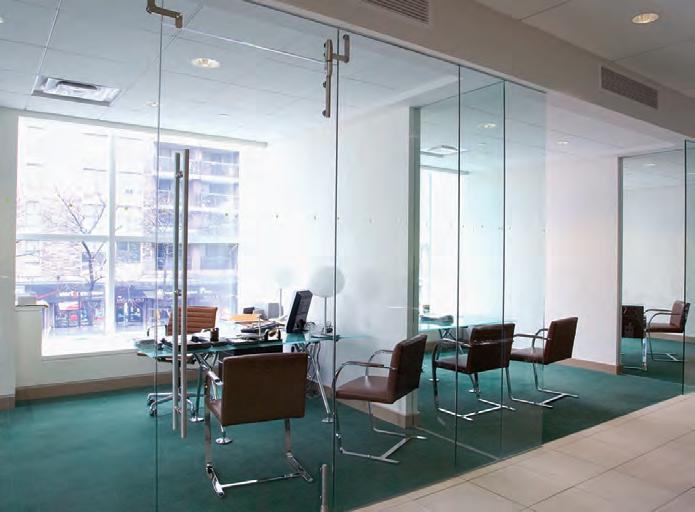
are completely concealed in the surrounding structures of the door panel, making it an ideal choice for modern commercial office applications. Because of its unobtrusive appearance, the VISUR system gives architects freedom to create unique designs without the concern of conflicting door hardware.
The company says the system includes a header tube, and top and bottom pivots and is available for a glass thickness of between 3/8 inch (10 millimetres) and 1/2 inch (12 millimetres), a maximum door panel weight of 187 pounds, and a maximum door panel height of 98-7/16 inches.
The VISUR system can be paired with the DORMA RTS88 concealed overhead door closer to operate the closing function invisibly. RTS88 closer models meet interior barrier-free demands on wide centre-hung single- or doubleacting doors and conform to ANSI A156.4 requirements.
VISUR is available in aluminum with a satin stainless steel look and aluminum clear anodized finishes. The products are not only stylish, but durable. Endurance tests have subjected the VISUR doubleacting pivot system to 500,000 operating
cycles, proving that the system will stand up to demanding traffic over time.
While the frameless or all glass look has been popular in Europe for years, products such as the unique European-designed LOOP structural glass hardware system are crossing the Atlantic to offer architects in North America a contemporary design and reliable performance for all-glass façades, canopies and overhead applications.
The stainless-steel LOOP system derives its name from its circular shape. The clamping brackets provide a distinctive way to connect adjacent glass panels of all types and thicknesses at their intersection to form interior or exterior wall assemblies. The fitting requires no preparation of the glass, eliminating the need for drilling or machining before installation. The LOOP’s steel retaining ring imparts the right amount of grip pressure to maintain the position of glass panels. It also provides a reliable hold for tie rods or cable-type bracing arrangements for wall, floor and ceiling connections.
The LOOP system is part of the company’s structural glass hardware
line, which includes GlassFins and Spider Systems.
www.dorma-usa.com
C.R. Laurence also offers frameless glass products from interior office doors and partitions to frameless shower enclosures.
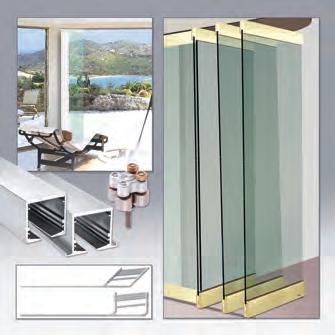
Its Stacking Partition System (SPS) is a versatile option for moveable “all-glass” walls and partitions that utilizes the company’s exclusive Intelli-Track Roller to provide directional control and direct panels to the proper track.
This system allows architects and specifiers to design stacking doors and parking configurations to fit almost any situation, including partitioning off interior spaces, providing all-glass doors for storefronts, and expanding indoor/ outdoor seating space in sidewalk cafes. Glass panels can be simply stacked against an end wall or stored out of sight in a “parking closet.”
Applications include retail stores and malls, restaurants and sidewalk cafes, automobile dealerships, stadium club boxes, reception hall room dividers, pool houses, and recreation centres.
In the system, glass panels are suspended from an overhead track by two rollers per panel. Directional Intelli-Track Rollers work with both manual and self-guided intersections on the track to provide directional control, and allow for smooth, almost effortless panel movement. The rollers can be positioned on either the inside or outside track, and when they come in contact with the switching block, will travel the direction the switching block is oriented. This prevents accidental
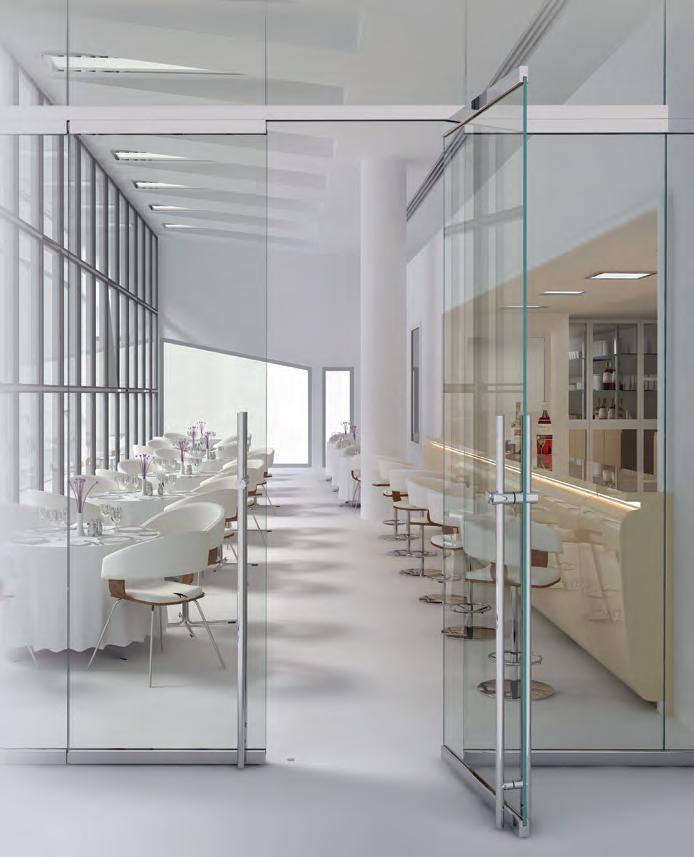
panel rotation and directs the panel to the proper track in the parking area. A multi-point locking system offers a secure, easily operated entrance.
The system creates a completely wideopen area that can be subdivided with different parking configurations for each
“Insulated Back Pans a Speciality”
structure. The Intelli-Track Roller allows glass panels to accommodate an abrupt 90-degree turn so they can be parked in 90-degree or 135-degree perpendicular or parallel parking configurations. Receiving sockets in the floor secure the panels in place.
The SPS utilizes the company’s patented Wedge-Lock Glass Securing System for door rails at the top and bottom of the glass panels. Two styles of overhead tracks are available – standard, for almost any installation, and flanged, for drop ceiling applications. Two rollers per panel will support 470 pounds (213 kg).
All-glass entrance
Entrances also get the all-glass look with hardware such as CRL’s new line of Locking Ladder Pulls.
They come in a variety of styles and sizes and are intended for use with glass doors made from 3/8 inch to half inch (10 to 12-millimetres) thick tempered glass.
The Locking Ladder Pulls feature a fully concealed deadbolt locking mechanism inside either a one-inch (25-millimetre) or one 3/8-inch (35millimetre) diameter tube. Models are available that lock into the floor, or to the floor and header or transom. Horizontal Locking Ladder Pulls that lock into a jamb or sidelite are also available.
The company describes the Locking Ladder Pulls as the newest and most practical option for all-glass entrances. To lock or unlock, you simply turn a key or thumbturn located at a comfortable height above the floor. Because the deadbolt mechanisms are conveniently located there is no need to bend over or kneel down to reach for the lock at the bottom edge of the door.
Made of durable Alloy 316 stainless steel tubing, Locking Ladder Pulls come in seven different styles and sizes, including 53-inch and 59-inch pulls
that lock into the floor, 84-inch Double Locking Ladder Pulls that lock at the transom or header and the floor, 55-inch Triangular Locking Ladder Pulls and right hand models that lock into the floor, 84-inch Triangular Double Locking Ladder Pulls that lock at the top and bottom, and 24-inch Horizontal Locking Ladder Pulls for double or single door with fixed glass panel installations.
Wall-to-wall shower
The trend for the all glass look is not new to residential markets as frameless shower enclosures have been available for a few years.
CRL’s Hydroslide Frameless Sliding Shower Door Kit, introduced last year, is designed for full standing showers or can be installed above bathtubs.
The system is ideal for compact areas and allows consumers dealing with small spaces to achieve the all-glass look. The Hydroslide Kits can accommodate shower designs with fixed glass panels on either end or both sides at 90 or 180 degrees, and
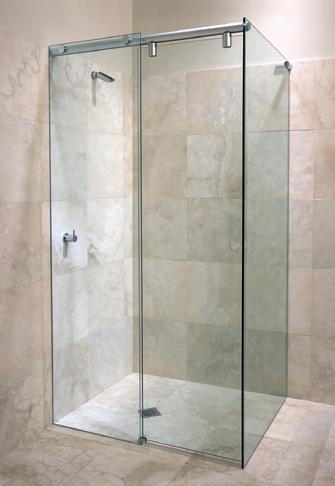
can be used for floor-to-near-ceiling glass panels with a sliding door.
They are available in either 60-inch (1524-millimetre) or 84-inch (2134millimetre) widths. Installers can cut the width to size, and height is optional as long as the sliding door glass weighs less than 88 pounds (40 kilograms).
These architecturally appealing designs come in chrome, polished brass, brushed nickel, and oil rubbed bronze finishes and can be installed in a 180-degree, wall-to-wall shower or a 90-degree, wallto-glass shower with accessories.
CRL is also developing a Hydroslide Bi-Fold Hinge Series featuring a wallmount and a glass-to-glass model to create a bi-folding door with the same Hydroslide appearance. ■ www.crlaurence.com

DATE EVENT PLACE CONTACT
By Joe Erb*
Do you feel like your approaching the point of Green burnout?
If you do, you are not alone. Environmental buzzwords topped many 2008 lists of words that should be banished from Queen’s English for either being misused or overused. Familiar words and phrases such as going green, building green, greening, green technology, green solutions, and many other variations were included.
Green is an extremely broad philosophy and nearly impossible to define. Some say changing your light bulbs to fluorescents and participating in a recycling program makes you green. Others take it much further by changing the way they eat, dress, travel, shop and remodel their homes.
Due to its vague definition, companies around the globe and in all market sectors have used and misused the words and concept of green (enough to be banished) to capture audiences. With so many companies on the bandwagon, how can you tell which products make a real difference and which are following a colour?
In building sciences, environmental terms like sustainability are much simpler to characterize because definitions and boundaries exist in the forms of laws, regulations and the Leadership in Energy and Environmental Design (LEED) Green Building Rating System. Although imperfect, LEED has well-defined parameters buildings need to meet for certification, including parameters for energy efficiency and sustainability.
LEED and other similar programs have changed the way architects and builders specify projects. Designing and building sustainable structures has created a resurgence in the demand for high-quality, high-performance building products that will stand the test of time.
In today’s world of tradeoffs and Value Engineering (VE) there are three prongs: quality, durability and price. The problem is that one or two of the prongs are often sacrificed at the expense of the other. So how do we get the best of all three? Sub-par building products sold on price alone are no longer acceptable in a world that is looking to preserve the environment for future generations.
Best practices for modern architecture include designing for energy savings now, energy savings for the long term and choosing products that will not end up in landfills long before their time – and that includes windows and window components.
Much has been written about windows and the way they affect energy loss in a building envelope. In simplest terms, windows are openings that create an opportunity for heat

to transfer. It has long been recognized that windows, despite their propensity for losing energy, can serve as a valuable tool for saving energy.
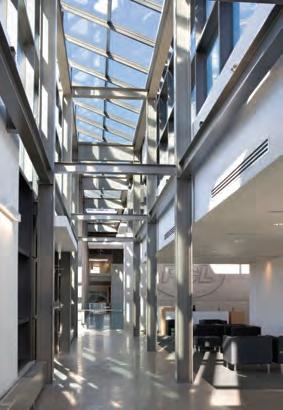
Daylighting is the use of natural light through windows, skylights, light shelves, and other techniques that supplement or replace electric lighting. When implemented properly, daylighting can significantly reduce a facility’s lighting costs and overall energy usage.
Daylighting provides opportunities to meet today’s stringent energy regulations, but are window technologies up to the task of adequately reducing energy demand for the long term? With today’s improved Low-E and reflective coating technologies, it is increasingly important to ensure the edge seal technologies will preserve the integrity of the insulating glass (IG) unit.
For more than 40 years, rigid metal-based spacer technologies, such as aluminum and stainless steel, have been acceptable edge seal spacers. They served their purposes to separate the two panes of glass (typically clear over clear) in an IG window unit. Metal spacers are durable, but have two inherent problems that prevent them from being effective, long-term insulators.
First, metal is conductive and therefore facilitates heat transfer, giving windows the bad reputation of being energy wasters. New high-performance coatings and argon gas filling have helped offset some of these overall negative effects, but they do not solve the fundamental issues at the edge of glass.
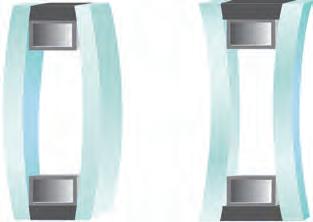
Rigid spacer pumping action. Stress on the PIB Butyl and secondary seal can result in seal failure, potentially rejecting the Butyl in the sightline.
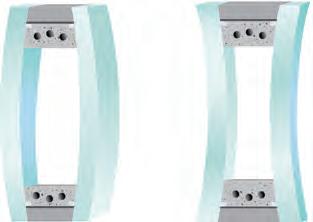
Triple seal silicone foam spacer flexes with pumping action. PIB Butyl is contained between acrylic adhesive and sealant, preventing movement into the sightline.
Second, metal-based spacers are rigid. While this may sound like a positive for structural purposes, the rigidity of these systems do not allow for natural expansion and contraction of glass due to environmental factors, such as temperature changes, barometric pressure changes, snow loads and wind loads. The rigidity of these spacers can actually be a detriment to windows, creating sealant stress and stress cracks that ultimately lead to seal failure.
Recognizing the many shortcomings of aluminum and stainless steel spacers, the industry has seen numerous alternatives enter the marketplace over the years that used increasingly less metal, resulting in significant improvements in IG energy performance and long-term durability. With these technologies the term
warm edge technology was coined. By definition, warm edge is any spacer that improves thermal performance over traditional “cold edge” aluminum spacers.
However, be cautioned that not all warm edge spacers are created equal. Some consider stainless steel spacers warm edge because the thermal performance is a little better than aluminum. Although this is a step in the right direction, it is not a significant step. Rigid metal-based systems still have the same shortcomings as traditional aluminum bar and tend to be more difficult to fabricate.
Advanced, flexible silicone foam spacers on the other hand provide significant improvements in thermal performance and provide the flexibility for natural expansion and contraction of glass in the field. The manufacturing process for flexible silicone foam IG is also streamlined dramatically. Reduced labour and increased output are benefits that the fabricator and the end user appreciate immediately and for the long haul.
However, some may still live under the misconception that it has to be metal to be strong. This simply is not the case. In fact, today’s flexible silicone foam spacers have demonstrated the strength needed to support the largest commercial IG, such as a four-sided silicone structural glazed curtainwall, in some of the most challenging climates around the world. The strength, performance and durability of these systems have been proven in the field for many years and through independent third-party ASTM E330 testing.
contribution to LEED Certified Projects for Energy and Atmosphere credits warmer sightline – up to 16 F/8.8 C, for significant condensation resistance
improved U-Value by up to 12 per cent for significant energy savings noise reduction by up to 2 dB
Any way you look at it, to achieve optimal thermal performance, long-term durability and sustainability, reducing metal in the IG is a necessity.
Warm edge has gained wide acceptance in the residential building market since 1991 when only 15 per cent of IG manufacturers had adopted the technology. Today, that acceptance rate has risen to more than 90 per cent.
Awareness in the commercial segment is steadily growing as well. The continued focus on achieving LEED certification has quickly furthered efforts to promote highperformance glazing. The number of jobs that are being specified for warm edge technology is increasing daily in the commercial market. Warm edge has also been written into the master spec for LEED projects in a growing number of architectural firms.
Regardless of whether you like the word Green, remember there are technologies that can and will make a difference today, tomorrow and for generations to come. With the dynamics of technology today, true warm edge is just the beginning. The industry should embrace the changes that work and build with the next generation in mind. ■
•
The technologies do exist to take full advantage of daylighting and windows are opportunities for success in terms of durability and energy savings. Architects and builders should seek window systems that incorporate flexible, silicone spacer technologies. When compared to aluminum, flexible silicone spacers provide the follow advantages: reduced sealant stress for long-term durability
*Joe Erb is a product manager for Edgetech I.G., specializing in the company’s commercial products. Erb has worked in the fenestration industry for more than 14 years and regularly speaks to architects about warm edge technology and high-performance through the AIA’s continuing education program and other architectural forums. He can be reached at jerb@edgetechig.com. To learn more about warm edge technology in achieving LEED certification, visit www.edgetech360.com.
By Pat Bolen*
Dual IGCC-IGMA trademark offers manufacturers strong market recognition of both programs in Canada and the U.S.
Several years of negotiations between the Insulating Glass Manufacturers Alliance (IGMA) and the Insulating Glass Certification Council (IGCC) came to fruition on Feb. 3 with an agreement to combine their insulating glass certification programs into one.
“IGCC is well known in the United States…IGMA is well known in Canada and now they’re together,” says IGCC president Ray Wakefield of Trulite Industries.
The agreement harmonizes the Canadian CGSB 12.8 and US ASTM E773/E774 standards resulting in the ASTM E2188, E2189 and E2190 for insulating glass testing. It represents the more stringent requirements of each program offering insulating glass manufacturers one program labelled with the a dual IGCC-IGMA trademark for strong market recognition of both programs in Canada and the U.S.
Wakefield says the process started with an announcement in June 2004 that the two organizations would work closely together to harmonize their respective program requirements, although he adds the process went back as far as 2000 and has been the result of compromises on both sides.
Wakefield credits IGMA executive director Margaret Webb and IGCC administrative manager John Kent, who he says worked hard to arrange the merger.
Webb says “the Insulating Glass Certification Council (IGCC) was formed by members of the Sealed Insulating Glass Manufacturers Association (SIGMA), one of the predecessor organizations to IGMA, in a response to a need for an independent certification agency.
“In Canada, the Insulating Glass Manufacturers Association of Canada (IGMAC), the other founding organization took over the Canadian program from the Canadian government. Both programs have closely mirrored each other in terms of process, procedures, industry and public interest involvement and program requirements. The IGMA program was launched by IGMA in 2003 and specifically offered product certification to the ASTM E 2190 harmonized insulating glass standard for manufacturers who looked for certification in both Canada and the U.S.”
Wakefield says the IGMA program was launched for companies like Trulite, which sells on both sides of the border, while companies that chose not to sell in the U.S., did not have to meet the new certification. After the launch of the program, Wakefield adds there were friendly discussions with the IGCC to come up with similar terms, which was followed by a look at the two programs to see if they could be merged and a lot was seen to be similar.
Webb also states “IGMA and IGCC have set the bar for insulating glass certification in North America as well as setting
an example of what can be accomplished when two organizations work closely together for the benefit of the entire industry.”
One of the compromises that Wakefield says made the merger possible was the agreement that testing, which in the past had been done every year by the IGCC and every two years by the IGMA, after initial certification. ASTM E2190 testing can occur annually after the first two years; if no failures occur, then testing may occur once every two years at the discretion of the participant.
The advantages of one certification program, says Wakefield, is that when a company bids on contracts in the U.S., it simply says it is certified under IGCC rather than explaining its IGMA certification process details.
“This shows you belong,” says Wakefield. “It’s just that much easier.”
With the establishment of a common North American standard accomplished, Wakefield says the same process is already well advanced in terms of coming to an agreement with the European Union ISO standards. ■
*Pat Bolen is a professional writer based in Ontario.
We make more than tape.
We make ideas.
We make it right every time.
We make good on our promises.
PPG Industries has shipped its 20millionth square foot of Solarban 70XL glass since it was introduced in 2006 as the world’s first triple-silver-coated, solar control low-E glass. Solarban 70XL glass is a high-performing environmental glass measured by its light-to-solar gain (LSG) ratio.
Solarban 70XL glass is the newest and highest-performing product in PPG’s residential glass portfolio that allow window manufacturers to provide premium, Energy Star-approved products that reduce heating and cooling costs for homeowners.
Scott Follett, director of new products and services for PPG Performance Glazings, says the clear-glass esthetics and environmental advantages associated with this glass product have made it popular among environmentally progressive architects. “Acceptance of Solarban 70XL glass is widespread and increasing around the world. We expect that trend to accelerate as sustainable building principles become part of international building design standards.”
To date, Solarban 70XL glass has been specified for thousands of buildings, encompassing projects with less than 1,000 square feet of glass as well as towering skyscrapers featuring hundreds of thousands of square feet of glass.
Due to a proprietary, triple-silver coating developed by PPG, Solarban 70XL glass transmits 64 per cent of the sun’s light in a standard one-inch insulating glass unit, while blocking 73 per cent of its heat energy, for a light-tosolar gain (LSG) ratio of 2.37.
The company says that according to independent energy-modelling studies, the glass can reduce annual coolingrelated energy costs up to 13 per cent when it is specified instead of dual-pane tinted glass in a standard, window-walled, eight-storey office building. According to the same study, heating, ventilation and air-conditioning requirements in the same building are reduced up to 20 per cent, and carbon emissions are cut by nearly 500 tons a year.
Gary Danowski, vice-president, PPG Performance Glazings, says Solarban 70XL glass could play a critical role
in the development of carbon-neutral buildings. “This product has become extremely popular for projects seeking to achieve LEED certification, including more than a dozen in just the last year,” he says. “Solarban 70XL glass is esthetically versatile and fulfills the industry’s desire for products that reduce reliance on fossil fuels and make buildings, safer, healthier and more enjoyable places to work and live well into the future.”
www.ppg.com
The new ClimaGuard 75/68 low-E glass from Guardian Industries is made specifically for residential windows to provide unprecedented protection from the cold with superior insulation and clarity.
With energy costs and consumption growing concerns for many homeowners, having the right glass can address both issues.
ClimaGuard 75/68 low-E glass allows in 75 per cent of the sun’s natural light while also allowing in 68 per cent of the sun’s heat to warm homes naturally. Its Uvalue of .28 provides excellent insulation while maintaining high heat gain.
“Homeowners can increase energy savings with ClimaGuard 75/68 lowE glass,” says Scott Thomsen, chief technology officer for Guardian Industries. “It is raising the bar in residential glass and meets or exceeds Energy Star requirements in all northern zones.”
Homes in colder climates will benefit from ClimaGuard 75/68’s performance in extreme temperatures. It insulates 42 per cent better than double-clear glass, retaining heat and warmth to lower energy use.
The high-performance glass maintains a comfortable and consistent interior temperature. Coupled with the glass’s neutral appearance homeowners no longer have to choose between energy savings and esthetics.
ClimaGuard 75/68 joins Guardian’s complete line of high-performance lowE residential glass products that are designed for all climates throughout North America.
Last spring Guardian expanded its architectural product line with the introduction of Guardian CrystalGray, an innovative float glass substrate with a very light grey tint, ideal for a wide range of architectural glass markets.
In addition to an attractive neutral colour, Guardian CrystalGray has an improved light to solar gain ratio compared to standard blue and gray tinted float glass. The technology behind Guardian CrystalGray allows higher light transmission while reflecting infrared energy, thereby reducing the heat gain for many architectural applications.
This float glass in combination with coatings can help buildings achieve LEED (Leadership in Energy and Environmental Design) certification.
The company says CrystalGray was developed for the high-performance architectural glass market through “voice of the customer” research with Viracon, Inc., in Owatonna, Minn. Viracon offers Guardian CrystalGray as part of its specialty float glass product line that also includes Guardian UltraWhite lowiron float glass.
Like standard float glass, Guardian CrystalGray float glass can be used monolithically, tempered, laminated and fabricated. It can also be used on the exterior or interior lite of a vision insulated glass unit or in spandrel glass applications.
www.guardian.com
AGC Flat Glass in Europe has launched a unique active coating for new-generation triple glazing called Planibel Tri.
This unique coating, specially designed for triple glazing assembly in residential applications, combines comfort and cost efficiency with an eco-friendly footprint. AGC says the coated glass saves up to 10 per cent of the annual energy consumption in residential applications. Its specially designed coating minimizes thermal loss with a very efficient U value and its high solar factor optimizes the free natural solar energy flowing through the glass, resulting in a very high energy savings. ■
www.agc-tri.com
By John Roper*
Glassex, the U.K.’s only dedicated window trade exhibition, passed away on Jan. 20 after a long illness. There has always been a lot of nostalgia around the event, and that is to be expected with a relatively small industry such as this. The event was launched in 1980 by Eagle Exhibition Consultants, which was owned by a flamboyant character called Desmond Corcoran. Glassex quickly got into the trade psyche to the extent that people still allude to what the show was like in the 1970s.
It was controversial from the beginning. Recent wrangles about the show being held biennially are not new. Back in 1982 the Glass and Glazing Federation – itself a different organization compared to today – expressed the opinion that Glassex should be held every other year. Desmond was never one to be told what to do and the 1983 event (my first) was officially boycotted by the GGF. Not that the boycott made a lot of difference, GGF members still attended and those that wished to exhibit came to arrangements with non-members to use their stands.
Of course, the original event was a glass trade show. The glass trade was still big and buoyant in the early 1980s with merchanting as well as processing forming part of the structure. What changed things was the growth of the embryonic replacement window industry and the decline of the merchanting sector as delivery systems allowed more processors to take delivery of glass in jumbo sheet size. Window fabricators too began to manufacture their own sealed units.
In 1986 Desmond Corcoran retired and sold his business to another exhibition organizer, Trade Promotion Services, which, within weeks, was itself bought by EMAP. From there the window trade and Glassex prospered together.
Although the show looked great with double deck stands and lots of glitz, there were complaints about fewer visitors – broadly not true, though the peak in around 1988 was 15,000. The problem was that the show got bigger but the industry itself stayed the same so the same number of people were being spread out over a larger area. Other things affected attendance too. EMAP banned children from the show. Sunday had always been known as “family day” because one-man-band traders would bring the family for a day out at Glassex. (OK, not my idea of a family day out either but it worked for some.) Stop the kids and, I guess, the guys had a hard time justifying the trip back at home.
The problem with “golden” ages is that they mostly exist in the minds of the people who remember them and however hard you try you can never go back. A succession of organizers, marketing and salespeople have come and gone. Competent all of them, but no doubt being told by the industry about the great days of Glassex and wondering why they can’t bring them back. The problem is that no one sees the history and therefore can’t appreciate and respond to the changes that have taken place in the industry. They say “there is no glass at Glassex.” Of course not – look at what happened
in the 1980s. There are no double-deck stands because the vinyl systems manufacturers that used them don’t need to sell in the same way and their market has shrunk. So too have the number of systems manufacturers, by the way.
The industry is smaller; the case for biennial or regional is stronger than ever. The merge with Interbuild, which has also been long discussed, was scheduled for 2010. A general lack of interest has now caused the 2009 event to be co-located with Interbuild this year.
Perhaps it will be good. Perhaps the U.K. windows industry will recognize that it is not separate from the building industry. Windows after all are a building component. For Glassex, I think it is already too late. For the window manufacturers, many of whom will, for the first time, come face to face with builders; it may well be a new opportunity.
Glassex R.I.P. ■
* John Roper is the editor for The Installer, The Fabricator, The Conservatory Installer and Glass Works magazine published in the U.K. His comments reflect industry news, trends and opinions in Europe.
Readers may request the literature items featured in this review. Simply contact the companies directly using the phone numbers indicated to request their latest brochure(s).
Phone: 905-637-6997
Toll-Free: 800-567-5800
Fax: 905-631-7246
Email: info@thamesvalleybrick.com
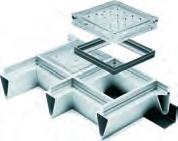
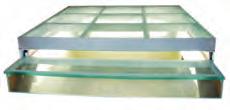
How do you open up an area to pedestrian traffic without creating “dead space” below? Or show floors in an entirely new light?
The answer is a GlassWalk engineered floor system from IBP. Light passes through a GlassWalk floor, so more natural light reaches the space underneath. Floors are offered in: Glass Pavers 6” or 8” square and Structural Glass units up to 4’ square
Each GlassWalk floor is custom manufactured to your specification and is easy to install.

By Frank J. Fulton*
If you’re reading this, you are probably involved in the glass business. That being the case, there is also a good chance that at some point in your glass industry career one of your friends, family, customers, or colleagues will ask you a question about glass. The objective today is to make you look like a genius when asked some basic questions by somebody who will never know if you’re making up the answer or giving them the straight, informed goods. You may also find this useful for boring people you meet for the first time at a party.
What every good Glassman (or woman) ought to know . . .
Glass is roughly composed of 70 per cent silica sand, 13 per cent lime, and 12 per cent soda. The remaining five per cent is made up of about 50 other chemical elements to affect colour, viscosity, or durability. When heated to about 1,500 degrees C this mixture turns into a thick molten mass like molasses on a cold day.
It is a very unique material in that its physical structure does not conform to the liquid, solid, or gas. It is actually more of a liquid than a solid, and The American Society for Testing and Materials (ASTM) in its definition of glass states that it is “an unusual material which has the random atomic arrangement of liquid but which somehow has been frozen in place so that it is a solid and permanent substance”. Other definitions refer to glass as an “amorphous solid.”
Like many great inventions glass was first produced by accident in about 5000 BC, when a crew of Phoenician sailors transporting blocks of soda landed ashore on a beach near Belus in Asia Minor. When it came time to eat, they couldn’t find any rocks to put their cooking pots on, so they improvised and used blocks of soda to support the pots over the fire. Once the fire got blazing, the sand and soda created a pool of molten glass.
Around 1500 BC Egyptians discovered
how to produce goblets and small bottles by repeatedly dipping a silica paste core on the end of a metal rod into molten glass, then later removing the core. At some point around 250 BC, Babylonians began using hollow metal rods for this procedure and stumbled upon glass blowing. As a result, producing bowls, bottles, and cups became relatively much easier and less expensive, and the Roman’s demand for glass products as status symbols skyrocketed. Demand throughout the Roman Empire in many ways led to the birth and growth of the glass industry. There is even evidence that crude cast glass was tried in some important Roman buildings and villas, but mostly the rich used thin, translucent sheets of alabaster to enclose wall openings. Unfortunately, with the demise of the Roman Empire, the fledgling glass industry stagnated for almost a thousand years and almost disappeared.
The 11th century saw the birth of the flat glass industry. German glass craftsmen are reported to have developed a technique, further developed by Venetians in the 13th century followed by the French, where molten glass was blown into an elongated balloon shape. The ends of the balloon were cut off, the remaining cylindrically shaped glass cut in half lengthwise with shears, then flattened on a hot iron plate. This produced what was known as “broad sheet” glass. The quality wasn’t all that good and later on they began to produce “blown plate” glass, which was essentially hand polished broad sheet glass. It was a bit better and easier to see through but labour-intensive and expensive.
For the next 600 years, most flat glass was produced from flattening out blown glass in one manner or another. “Crown glass” was first produced in France around AD 1320 by blowing a globe of molten glass and spinning it on a table using centrifugal force to create a glass disc about 1.6 metres in diameter. Small pieces were cut from

the disc and soldered together with lead strips to create window glass. “Cylinder glass” was produced by blowing a cylindrical shape hanging vertically and could create a “pod” measuring up to three metres long and 45 centimetres wide, that was then cut and flattened in a similar manner to broad sheet glass. Both methods required laborious hand grinding and polishing until the industrial revolution brought about steam-powered machines to improve on these functions.
It’s interesting to note that Pilkington Glass originated in 1826 as the St. Helens Crown Glass Company.
As the production of glass lites became possible, some of the rich began to replace the shutters on the “windeyes” in their homes with windows made of glass.
In 1688 the crafty Frenchman, Louis Lucas de Nehou perfected a technique for the production of “cast polished plate” glass by pouring molten glass onto a large heated iron casting table and rolling the material into sheets up to three metres by 1.8 metres. The product was then ground and polished. You can just imagine how the architects ate this up even though it was very expensive. Finally, large vision areas were possible instead of a bunch of small pieces of glass held together with lead.

By David Husson, CGA president

The Canadian Glass Association (CGA) has scheduled its semi-annual meeting to be held in Vancouver, B.C., on May 29, 2009.
During this meeting the association is going to look at ways that we can meet not just the needs of the existing membership but the needs of glass companies in regions where there is no official organization.
Along with this we are going to develop a plan that will enable us to raise revenue for the association in order to expand the services provided. I would like to reach out to all the membership by asking them to submit their suggestions as to what services they would like the CGA to provide for them.
Over the past few months, Zana Gordon has updated the Canadian Glass Association website. We would encourage the membership to submit photos of recently completed projects that we could show on the website. Please contact Zana at zgordon@canadianglassassociation.com. ■
By Ross Wady, GTA president

The Glass Trades Association of Northern Alberta (GTA) has announced the full enrolment of its second-year Glazier’s class in Edmonton, starting May 11, 2009. Both the 2008 first-year classes were sold out. This augurs well for the continuation of our glazing school in Edmonton.
The GTA is now looking to fill additional first- and second-year Classes. For glaziers in central and northern Alberta wishing to attend school in Edmonton, contact Lynn Allen (GTA

apprenticeship committee chair) at 780-459-4708 or Ross Wady (GTA president) at 780-487-4888. I wish to extend a big thank-you to all of our industry partners who have worked so hard to bring this program to Edmonton. ■
By Ennio Rea, OGMA president

The Ontario Glass and Metal Association, along with the Architectural Glass and Metal Contractors Association (AGMCA), have completed the Ontario Glazing Systems Specification Manual project as reported in previous newsletters. The manual has been printed and the associations are formulating a distribution method for members. Check the association websites for updates: www. ogma.ca and www.agmca.ca.
Because of the positive response we received for Race Night in 2008, we have organized another one for this year. This year’s event will be held on Wednesday, April 29, at Woodbine Racetrack and will feature thoroughbred racing for the evening. Flyers will be sent to members.
Of course, our annual Spring Golf Tournament is always a crowd pleaser and this year’s edition will once again be held at Kleinberg Golf Club on Thursday, May 28. We have changed the venue for the Fall Golf Tournament this year, which will be held at BraeBen Golf Club in Mississauga on Wednesday, Sept. 16.
And, finally, on this year’s agenda, we are planning an educational seminar for late October or early November. The topic has yet to be decided; however, it will encompass a review of the glazing manual. Stay tuned for further developments.
On a personal note, I would sincerely like to thank all the individuals who were instrumental in bringing the Ontario Glazing Systems Specification Manual to fruition. I’m sure that it was a labour of love and they are all to be commended for it. ■

Ltd.is a leading supplier in the window and building
in the manufacture of all architectural elements in the panel sector.We thrive on our strong reputation for successfully completing innovative curtainwall projects nationwide, and extensively develop partnerships with glass companies, engineering firms, and architects both in Canada and the USA.
SpandrelTech Ltd. 16 Erin Park Drive, Erin, ON N0B 1T0 • (519) 833-9684 • www.spandreltech.com
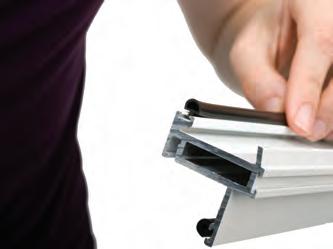
Lauren Manufacturing’s iDea Seal recently passed AAMA 701/702-04 for Replaceable Fenestration Weatherseals and will be added to the American Architectural Manufacturers Association’s (AAMA) Verified Components List.
The iDea Seal has a co-polymer design that benefits window and door manufacturers through reduced labour and manufacturing costs while providing a superior seal. These benefits are a result of the seal’s rigid base, which allows for easy channel installation during assembly.
The AAMA’s Verified Components List documents all window and door component manufacturers who have submitted samples for testing to an AAMA Accredited Independent Laboratory and those samples were found to be in full compliance with the specification.
“While most of our products are custom designed, we are happy to also offer components verified to meet industry standards of AAMA specifications 702-04,” says Sheryl Ashleman, Lauren’s market manager for building and construction.
The EPDM bulb, offered in dense or sponge, provides outstanding sealing properties including excellent compression set, abrasion resistance and a broader temperature range than plastics. The 70 durometer and grade 2 sponge EPDM bulbs have passed ASTM specification for cold cracking and cold flex bond testing along with ASTM stain resistant specification D-925 and 925B.
Lauren’s iDea Seal technology is also available in custom designed profiles to fit custom window needs.
www.lauren.com

Organizers for Win-Door North America have unveiled a new floorplan and a new IG Alley Feature Area for the company’s show in 2009.
The new IG Alley feature is planned to showcase companies in the engineering and manufacturing sectors of insulated glass. Live, ongoing impact and pressure testing demonstrations will allow show attendees an up close view of testing procedures and the chance to gain valuable technical advice from product testing experts and government officials.
“This show has always been the best value in North America,” says show chairman Matt Kottke. “That’s even more important in today’s economic climate, so we’re making sure that exhibitors and show visitors get maximum benefit for their dollar.”
“Exhibitors in the show know they can count on solid cost controls,” says show manager, Patrick Shield. At WinDoor buying exhibit space really does represent a full package. We’ve held the line on booth rental rates and space rental includes free material handling, free basic electrical, free on-floor storage of shipping crates, a draped backdrop, and free advance warehousing when they work with our chosen supplier. On show days we even supply a complimentary lunch. That means a company can set their budget, plan for the show and know what they’re spending.”
“We all know we’re faced with the challenges of a tough economy right now,” says Kottke. “But it’s a well documented fact that continued marketing efforts during a recession can pay off with new business and growth. Even though activity has slowed, business is still being done and buying decisions are still being formulated. It only makes good business sense to be on that shopping list when
buyers are ready to commit, and the best way to do that is to put your best foot forward at the show.”
Win-Door North America is being held Nov. 17 to 19, in Toronto, Ont., in the South Hall of the Metro Toronto Convention Centre.
www.windoorshow.com
Edgetech I.G. announced that Guardian Industries has recently transitioned from aluminum box spacers to Super Spacer to improve the thermal performance and long-term durability of its residential IG units.
“The NFRC and government regulators have raised the bar, and we are answering the call,” says Shane Sieracki, general manager for Guardian’s Webster, Mass., manufacturing plant. “Aluminum spacer for residential markets could no longer meet energy efficiency requirements, and it was time for a change.”
Guardian Industries, a manufacturer of IG units for the residential market, examined a number of spacer systems before making the switch to Super Spacer.
“We looked at all of the available options, and Super Spacer was the definite choice for us,” Sieracki says. “Super Spacer provided us with the thermal performance and durability we required.”
Guardian is taking advantage of Edgetech’s experienced and knowledgeable Technical Service team. The team visited the plant, listened to Guardian’s specific needs, and then put together a custom line layout design. Edgetech also assisted with equipment installation and provided comprehensive training to ensure a seamless transition to Super Spacer.
Guardian’s investment in Super Spacer and equipment is just one part of its efforts to be a stand-out supplier to the IG industry.
“We believe in reinvesting in our products to stay ahead of the competition.” ■
www.superspacer.com








Continued from page 9
the target materials for Ti02, Si02 and S13N4 and ITO films, which are commonly applied in coating stacks serving various applications such as anti-reflection, lowemissivity, (low-E) solar control and transparent conductive oxides.
Thermal spraying has proven to be a powerful coating technology for target manufacturing.
The key advantages of high process temperatures, partial reduction of the sprayed particles and high cooling rates allow the production of electrical conductive, suboxidic TiOx targets. These TiOx targets have increased sputter deposition rates in stable conditions. SiAl targets can be manufactured in a wide variety of target geometries and Al dopant level, with the Al homogeneously spread in the Si matrix.
By transforming the spray process into an Advanced Technology, High-Density Sn targets with controllable physical properties. This High-Density structures show similar sputter behaviour as cast Sn targets. The ability to fine-tune the spray process allows further optimization of sputter stability and yield.
Single piece rotating cylindrical ITO targets have already been developed.
Comparisons to commercially available planar target shows comparable sputter behaviour and layer characteristics in terms of optical, electrical properties, thermal stability, grain size and adhesion to the substrate. Power densities can be increased by a factor of three compared to planar targets, resulting in a three times higher deposition rate. ■
Continued from page 18
By 1773, the British Cast Plate Glass Company was producing cast polished plate. PPG started production in the U.S. in 1883.
By the mid 1800s the use of glass to enclose wall openings became commonplace.
The first drawn glass, as opposed to blown or cast, was produced in the U.S. in 1903, made possible by the technical advances in power and machinery available at the time. “Machine drawn cylinder” sheet glass was similar in nature to its blown predecessor, which used gravity but the cylinder was mechanically drawn vertically in sizes up to 12 metres long that were annealed, cut, then reheated and flattened into large sheets.
A huge advance was developed in Belgium by Emile Fourcault, and the
commercial production of vertically “drawn flat sheet” glass began in 1914. For the first time it was possible to create a continuous ribbon of reasonably good quality and economical glass by mechanically drawing it from a tank of molten glass through a ceramic die, known as a Debiteuse, followed by a controlled cooling process. The ribbon was then cut to length at the top of the cooling shaft. Sheet glass could be produced from one to six millimetres thick depending on the speed the glass was drawn from the tank. The downside to this process was that difficulties in controlling the initial cooling of the molten glass would result in visual waves in the glass.
The most significant strides in the manufacture of glass were made by Alastair Pilkington in the 1950s when he
Article derived from research paper titled “New trends in rotatable target manufacturing advances coating applications on glass” by authors Wilmert De Bosscher, Hilde Delrue, Anja Blondeel and John Van Holsbeke of Bekaert Advanced Coatings N.V., in Deinze, Belgium. www.bekaert.com/bac
conceived the idea of forming a horizontal ribbon of glass by floating the melted raw materials at high temperature over a bath of molten tin. Interestingly, Sir Alastair was not even related to the founders of the company of the same surname. The float glass process superseded both the plate and sheet glass processes to become the universal process for the manufacture of the high-quality flat glass we are accustomed to today.
With this modicum of glass knowledge you should now be capable of impressing your friends and maybe even the occasional architect. ■
*Frank Fulton is president of Fultech Fenestration Consulting, offering technical and improvement project assistance to the glass and metal industry. You can reach him at fultech.fc@gmail.com.









DOOR AND SIDELITE RAILS PATCH








Over 250 color pages showing products for the construction of beautiful 'all-glass' storefronts and entrances. See many beautiful installations showing theproducts in use to help give you ideas and make the right selection for your next job. All CRL catalogs can be downloaded or viewed online at crlaurence.ca

AH10 'All Glass' Entrances AND LP10 Commercial Door Handles