Laura Cofell (519) 429-5188, (888) 599-2228, ext 275 lcofell@annexweb.com
Production Manager
Julie Turkheim
Production Co-ordinator
Colleen Brennan
Circulation Co-ordinator
Kim Widdis kwiddis@annexweb.com
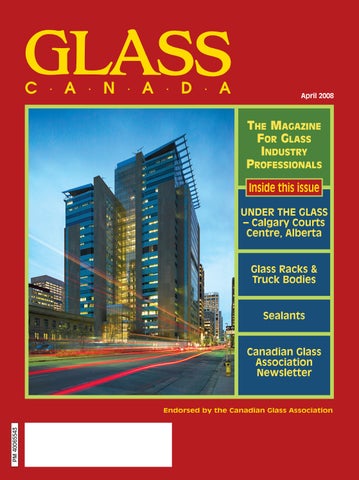
Cover: Calgary Courts Centre, Alberta. Photo courtesy of Kasian Architecture Interior Design and Planning. Photographer Robert Lemermeyer.
Printed in Canada. All rights reserved. Editorial material is copyrighted. Permission to reprint may be granted on request.
Member of:
Published six times a year, February, April, June, August, October, December (Buyers’ Guide).
CLAIMS: for missing issues must be made in writing within three months of publication and will be subject to the availability of back issues.
Publications Mail Agreement #40065543
Return undeliverable Canadian addresses to Annex Publishing & Printing Inc., 145 Thames Rd. W., Exeter, ON N0M 1S3 Canada.
April 2008, Vol. 20. No. 2 ISSN 0843-7041
UNDER THE GLASS Soaring towers of justice
At one million square feet, the Calgary Courts Centre in Alberta, which has achieved LEED Silver Certification, is one of North America’s largest and most unique courts facilities. Principal architect is Kasian Architecture Interior Design and Planning.
Glass is key element in innovative courthouse design.
At one million square feet, the Calgary Courts Centre is one of North America’s largest and most unique justice facilities. Unlike traditional courthouses which are dark impenetrable structures, this LEED Silver Certification designed building features two glass and concrete skyscrapers that are connected by one of the largest atriums in Canada.
These soaring towers of justice are designed to address the users and the context of their environment by using glass to embrace the transparency of a public space. This $300 million dollar
facility required a complete rethinking in design to deliver a courthouse that meets the modern needs of Alberta’s justice system.
In planning for the project, the Government of Alberta called for a ‘dignified and highly accessible contemporary facility that will act as the embodiment of democratic rights, individual freedoms and justice’.
Robert Wenarchuk, senior construction administrator for Kasian Architecture Interior Design and Planning, the principal architect and interior designer for the project, says the building’s design is inspired by those ideals.
“Besides providing an area for the vertical circulation, the glass atrium is a major symbolic element. The complex is
CLARIFICATION: The article Step up to the winner’s circle, in the February issue of Glass Canada, page 14, made reference to a Fein cutout tool that does not cut skin. Although accurate for ‘round saw blades’ most other blades are capable of cutting skin and are shipped with protective covers to prevent cuts when handling.
Chris Skalkos, editor
UNDER THE GLASS
designed to be an expression of the judiciary that goes beyond the historical precedent of solid and dignified stone buildings to include elements of openness and accessibility,” he says.
“The solution had to be one that is transparent and solid, dignified and open as well as straightforward and functional. The provision of justice is a democratic process and represents the highest aspirations of our society. This required the utmost in transparency for the environment within which justice is delivered. In this instance, the glass atrium serves as a metaphor for the justice system and those who provide it,” he says.
The Calgary Courts Centre is one of the few courthouses to join provincial and federal jurisdictions in the same building. The design efficiently accommodates the two levels of court by providing many multi-functional courtrooms that can be used by either jurisdiction. It has 73 courtrooms and a multi-purpose room specifically designed for Aboriginal justice ceremonies. Separate traditional circulation systems have been implemented for the public, employees and prisoners.
However, unlike any other courthouse, this building makes a bold visual statement with its two glass and concrete skyscrapers, with the north tower standing at 24 storeys tall and the south tower at 20 storeys. The towers are joined by a 26 storey atrium outfitted
Unusual in a structure of this size, the building incorporates triple glazed windows in the towers. Tinted glass was used to reduce glare and direct sunlight, making the space more comfortable for employees and visitors.
The most unique architectural feature is the design of the central glass atrium which is a visual representation of the theme for the building: the openness and transparency of justice.
The extensive use of glass and windows provides natural light throughout each structure in the complex to reinforce the design theme of transparency.
UNDER THE GLASS
with elevator lobbies and public gathering spaces at all levels. The elevator lobbies also act as walkways that join the two towers through the atrium.
Wenarchuk says designing an enormous glass atrium was done for a number of reasons. Opening the building up as a public space with its all-glass structure, the atrium creates a calming mood for courthouse users. It also provides a substantial amount of natural lighting which flows throughout the building. The atrium is also the main hub for traffic flow, housing 12 glass public elevators which transport users to elevator lobbies on each floor. The lobbies also act as walkways that join the two towers through the atrium and provide spectacular views of the Calgary urban landscape and the Rocky Mountains.
PROJECT’S OFFICIALNAME: Calgary Courts Centre (CCC), Calgary, Alberta.
PRINCIPALARCHITECT:
Kasian Architecture Interior Design and Planning Limited.
PRINCIPALINTERIOR DESIGN CONSULTANT: Kasian Architecture Interior Design and Planning Limited.
ASSOCIATE ARCHITECT: NORR Limited, Architects and Engineers.
SUSTAINABLE DESIGN CONSULTANT: Green Building Services.
The concept of the atrium in itself is an architectural marvel of glass and steel that grew out of the desire for a seamless interconnection with the typical functions that courts fulfill. “As far as we know, it is the highest and largest ‘cold weather’ atrium in the world,” says Wenarchuk, explaining the design challenges behind it. “Mitigating the stack effect and designing the atrium to withstand internal stack effect pressures had to be calculated and resolved by the engineers. The fact that we essentially have three independent towers tied together was another challenge. The north and south towers as well as the atrium had to be tied together while allowing for differential movements caused by a number of variables. For example, each tower is a different height so the towers would
PROJECT PROFILE
GLAZING CONTRACTOR INTERIOR AND EXTERIOR: Ferguson Corporation.
CURTAINWALLINSTALLER: Ferguson Corporation.
TIMELINE:
Start date: August 2005. Completion date: Summer 2007.
naturally not sway in unison and that needed to be mitigated to avoid torsion of the atrium,” he says.
“The two towers are concrete construction while the atrium is structural steel so the long-term creep of the concrete towers needed to be allowed for while keeping in mind that the structural steel towers would not react the same. Environmental issues had to be addressed during construction. For example, the atrium steel connections could not be tightened to their design criteria until the atrium’s temperature was stabilized in its final state,” Wenarchuk explains.
Richard Neal, project manager for Ferguson Corporation in Calgary, Alberta, says the installation of the unitized curtainwall was not only unique, but extremely challenging for
• Sealants: Dow Corning Structural 983. Weather seal 795.
• Vent supplier: West Vent, Calgary. Vent model: XT-445V
• Revolving doors (2): CJ Rush 1500 Series #8 stainless finish, installed by Auto Magic Entrance Systems, Calgary, Alberta. ■
UNDER THE GLASS
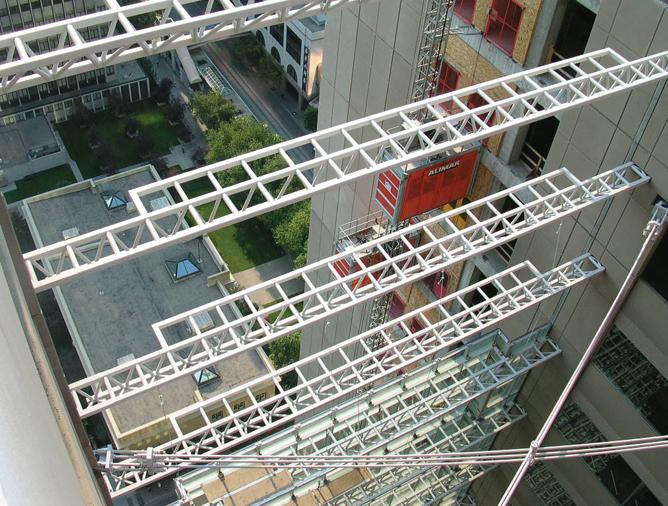
The atrium, standing 123 metres tall and incorporating more than 1200 pre-glazed curtainwall panels, posed a great challenge for glaziers from Ferguson Corporation in Calgary, Alberta. Glaziers had to use the triangulated steel trusses that the panels hung from as work platforms, using a small swing stage to access the area on the east and west elevations.
the company’s glaziers. If the 4300 millimetre and 5050 millimetre floor heights were not enough of a challenge, the atrium, standing 123 metres tall and incorporating in excess of 1200 pre-glazed curtainwall panels, posed an even greater challenge.
“On the east and west elevations of the atrium, we used the triangulated steel trusses that the panels hang from as work platforms and we had to use a small swing stage to get our workers up to the trusses,” says Neal, adding that a series of safety lines were hung from the roof trusses so they could tie-in to them when they were working on the trusses. On the south elevation, the glaziers had to set up a series of tandem swing stages from the roof trusses to install the glazed panels.
“We have a couple of employees on our crew that are experienced rock climbers,” he jokes, adding that the company only used employees that felt comfortable working at those heights. Compounding the installation challenges was the tight 33 month start to finish construction schedule that allowed little float time and could only be achieved using a unitized curtainwall system. Atotal of 3600 panels were used to close in the two towers and the atrium.
While the Calgary Courts Centre makes a tremendous visual impact, Wenarchuk says it also exhibits a high degree of performance which contributed towards its LEED Silver Certification. “The high thermal efficiency curtainwall framing and triple glazing installation substantially reduced heating and cooling demands. This enabled a simpler HVAC system design that eliminated most supplementary heat and associated piping contributing to a
UNDER THE GLASS
reduction in heating and cooling capacities,” he says.
“The associated capital cost avoidance off set much of the incremental cost for a superior performance building envelope that contributes significantly to a reduction in energy consumption and operating cost. Superior thermal comfort and acoustic performance might be considered as added value, but it simplified the HVAC system’s design,” says Wenarchuk.
“The emphasis on superior building envelope performance also meant superior air tightness and this was of critical importance to the successful design of a very tall atrium building in a cold climate,” mechanical engineer, Marc Gaudet from Hemisphere Engineering says, explaining that observations through the first winter indicate a significant impact on comfort and a meaningful reduction in heating demand.
From the choice of construction materials, to the concept of a glass atrium at its heart, the Calgary Courts Centre is an architectural symbolic expression of how justice should be transparent and visible to all. This aspiration evolved into a central theme of the design, brought together by the innovative use of glass and metal, for the ultimate transparency of justice. ■
SHOW REPORT Economy hot topic for show
TCREDITS:
• Information compiled and contributed by Kari Viccars, marketing communication specialist, Kasian Architecture Interior Design and Planning.
• Photography courtesy of Kasian Architecture Interior Design and Planning.
• Photographer: Robert Lemermeyer.
• Additional photography courtesy of Brent Harder, Ferguson Corporation.
• Edited by Chris Skalkos, editor Glass Canada
he Canadian Window and Door Manufacturers Association (CWDMA) hosted Win-door North America 2007 in Toronto, Ontario, from November 13 to 15. More than 150 exhibiting companies participated at this highly focussed fenestration trade show which featured all the latest computer hardware, software, doors, door lites, hardware, machinery, sealants, weatherseals, testing services, wood products and systems for the window and door industries. In addition to the domestic exhibitors, show organizers say attendees from the US and other countries boosted the show’s international presence which has been growing throughout its 13 year history.
The first day of the show was very busy and the hottest topic on the show floor was the strength of the Canadian dollar and the country’s steady economy compared to the slump in the US housing market due to the sub-prime mortgage crisis. For some US based manufacturers this was even more reason to exhibit at this show, to drum up more business
north of the border, while Canadian manufacturers talked about adjusting to the currency’s parity.
“This is the only show in Canada where I can see so many of my customers,” says Frank Sangiuliano, president of Ameri-Can Machinery, who had a large booth to exhibit his company’s line of high output manufacturing equipment such as CNC machining centres and cleaners, four point welders and profile bending machines. “Ashow like this is useful for window manufacturers to see what’s new in the industry, compare technology and analyze the difference between high quality machinery and low quality imports,” he says.
Urban Machinery’s Jason Wadel, technical sales engineer for central and western Canada, says Win-door provides a venue for customers to see how they can customize their window fabricating equipment for the Canadian market. “The windows Canadian manufacturers are producing are a little different than what you see in the US, so we customize our machines a little to suit the Canadian market and we try to display this flexibility to our customers who could most benefit by it,” he says. “That’s why we have our machines working in our booth. We invite customers to bring samples of their window profiles to test out our machines,” he says.
Win-door 2008 will return to the Metro Toronto Convention Centre from November 11 to 13. ■
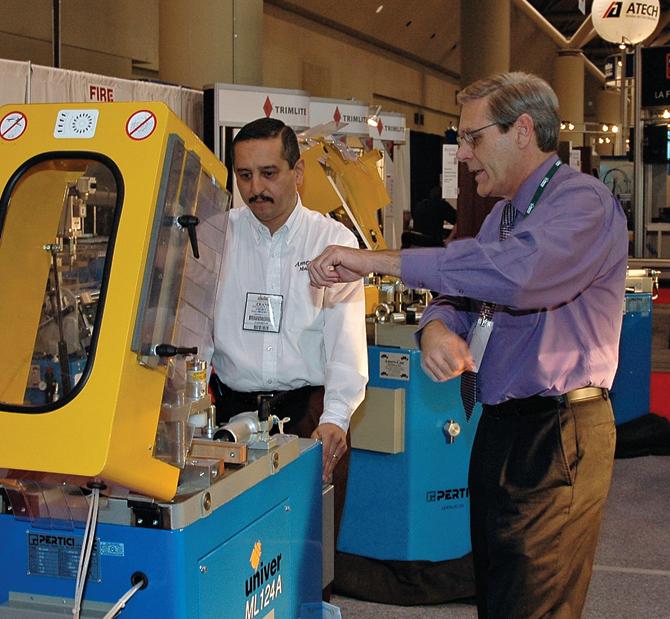
Frank Sangiuliano, president of AmeriCan Machinery (centre), gives a tour of the machinery on display at his booth during Win-door 2007.
The next Win-door show will be held at the Metro Toronto Convention Centre in Toronto, Ontario, November 11 to 12, 2008.
SEALANTS
Silicone transforms global architecture
AThe Washington Mutual Tower is an example of how the construction industry has been revolutionized by structural silicone glazing which can replace mechanical fasteners as a way to adhere glass to building frames.
s reflections of sun and clouds glide across uninterrupted facades of mirrored glass and metal, building designers take pride in knowing they are designing some of the most functional and innovative buildings that grace city skylines.
In just a generation, the construction industry has been revolutionized by structural silicone glazing, which can replace mechanical fasteners as a way to adhere glass, ceramic, metal, stone and other materials to building frames. “Architectural imaginations soared once the limitations of mechanical fasteners were lifted,” says Ron Fillmore, global industry executive director for Dow Corning’s construction industry. “Today’s buildings are taller, sleeker and more resilient to harsh environments than ever before.”
Exhibiting strength, stability and versatility, the natural chemical properties of silicone sealants enable excellent adhesion and compatibility with multiple substrates, allowing for improved functionality and longevity. Designed to transmit wind-loads from the glass to the building’s framework, silicone glazing systems are able to flex, extend and compress with the daily stress of thermal shear, while maintaining their adhesive strength in the face of earthquakes, hurricane winds, ultraviolet rays, temperature extremes, moisture and acid rain.
Such revolutionary technology began more than 30 years ago as a two-sided glazing system, where vertical joints were glazed with silicone. This advancement served as a springboard for four-sided glazing, and then for the structural glazing of insulating glass panels. “In the early 1960s and 1970s, structural silicone glazing was a new and unproven concept, but the possibilities were tantalizing,” says Fillmore.
Dow Corning engineers evaluated their sealants’ compatibility with all possible substrates, testing for adhesion, movement capability, fatigue and failure. They analyzed joint designs, stresses and environmental variables, and monitored every design and installation detail. “Once the glazing technology proved successful, architects were no longer satisfied with square shapes and two dimensions,” says Fillmore. “They
asked for and received the technical support to structurally glaze triangles and other unexpected shapes to create three-dimensional curtainwalls.”
New two-part, fast-cure sealants led to improved quality and performance of curtainwalls, and the use of structural silicone glazing blossomed. Some extreme examples can be found around the world.
In 1985, a 7.1 magnitude earthquake caused billions of dollars of damage to the San Francisco Bay Area. Yet, large lites of glass sealed tightly with silicone remained unscathed at the World Savings Center in Oakland.
Standing tall in the ‘rain shadow’ of the Olympic Mountains, the 55 storey Washington Mutual Tower experiences few dramatic storms. Instead, it is continually shrouded in clouds and coated in drizzle, rarely seeing a sunny day. In nearly 20 years of damp and gloom, punctuated by repeated seismic events, there have been no reported changes in the structural sealants used in the building’s construction.
Natural light streams through the glass panels of the renovated Charlemagne building in Brussels, Belgium. Silicone bonds the structural joints and provides a weather sealant around the panels, maintaining the thermal integrity of the structure.
The third-largest trade fair complex in the world, located in Frankfurt, Germany, covers 476,000 square metres (5,123,621 square feet). For more than 20 years, the building’s structure has remained intact despite extreme variations in temperature, humidity, infrared and ultraviolet radiation.
Home to the Hong Kong Stock Exchange since the 1980s, Exchange Square’s 656 foot towers are among the largest silicone structural projects of its time. The towers are a further testament to silicone’s reliability under extreme weather conditions, holding strong against severe heat, humidity, heavy rains and typhoons. ■
Article contributed by Dow Corning Corporation, a company specializing in silicon-based technology and innovation, offering more than 7000 products and services.
Manufacturers shift gears
Truck body and glass rack makers rumble through economy woes.
Under the looming economic downturn, truck body and glass rack manufacturers in the US are helping customers maximize the use of their glass carriers to propel sales. Glass Canada spoke to several companies for their thoughts on where industry trends are going.
“Record sales” is how Paul Schodorf, owner and president of Schodorf Truck Body and Equipment in Columbus, Ohio, describes 2007 for his company saying it was surprisingly good despite the housing slowdown. “We just had a great year, and so far this year is actually ahead of last year, which was ahead of the year before. But we do feel it’s starting to slow. We’re feeling the results of the slowing construction industry that started in the fall.”
“February will probably be the first weak month we’ve had in 15 years... we build a quality product. Once somebody has ours, they don’t want anything else. There is a lot of repeat business for us.”
New diesel emission laws that were introduced in January 2007 have affected large truck sales, says Schodorf, by increasing the cost of every diesel engine by $4000 to $12,000. After the large amount of pre-orders for trucks in 2006 made it the biggest year in 15 years, the increased price in 2007 made it the slowest in 15 years, says Schodorf. “This year looks like it will be like that too for large trucks,” he adds.
Especially good for Schodorf were their small pickup and van lines as well as the one tonne truck with a 10,000 to 12,000 GVW (gross vehicle weight) that takes a one to twelve foot long glass body. “All three were equally strong,” he says, with vans popular in urban areas for more security and trucks selling well in more open areas. Although there is more demand than ever for better gas mileage, Schodorf says he has not seen a trend towards smaller trucks.
After making the switch to aluminum bodies several years ago, Schodorf says nothing has been introduced yet that is cost effective enough to replace aluminum. He adds that although aluminum and steel prices tend to be up and down, the trend recently is upwards with no down.
by Pat Bolan*
“We’re seeing huge pressure on the price of raw materials going up which obviously has to do with the cost of oil.”
Despite the rising cost of fuel, Schodorf says neither the smaller shops it usually deals with nor larger companies have altered the way they do business. “What people tend to do is replace a vehicle because the used one is costing too much to maintain and it has
GLASS TRANSPORTATION
become an unknown factor. They might have a payment on a new unit that’s predictable. On the new unit, they have a warranty, so they know what the costs are going to be.”
Schodorf says another trend in the industry are customers looking at one tonne trucks with 12,000 GVW over smaller 9500 GVW trucks since the heavy trucks have dual rear wheels and a longer product life because they are not being overloaded daily. “Some people might tend to get a larger vehicle that lasts longer, which we think is a smart move.”
There is also a trend towards gas engines, says Schodorf, since many of the advantages of diesel are no longer there. Although gas engines will get fewer miles per gallon, the overall cost of the vehicle relative to the amount of miles put on it will be less. He adds that life cycle costs are an important factor for any customer looking at a vehicle. “They should look at the life of the vehicle, what its demands will be as far as capacity... if they bought a van or pickup before, do they have to again? Not necessarily.”
The Mercedes Sprinter, which came out several years ago, took the industry by storm says Schodorf, but they are becoming hard to find and are priced over $40,000 without a glass rack. “They are starting to lose their value because they’re priced so high... but if you get the diesel and you’ve got twice the life and you can walk around inside it, you have a nice truck there.”
Goosenecks back in vogue
Monte Berger is national sales manager for larger glass rack bodies and trailers for Unruh Fab in Kansas and says there is not one product for the company’s larger market that is selling better than anything else. “We’re selling a lot of truck bodies, a lot of semi-trailers as well as the accessories and the ergonomics.”
Robin Donker is Unruh’s national fleet manager for pickup and van racks along with warehouse accessory
(material handling) products. She says in the first quarter, the company is promoting its pickup and van racks and due to that, is seeing an increase in their sales of those products. For van and pickup truck sales, Donker says it is strictly customer preference depending on the unique needs of each individual glass shop. “If they have secure places to keep their vehicles, a lot of them prefer to work off the pickup rack. But if they have an insecure place where they leave their vehicles, then they prefer the van where they can lock their tools inside.”
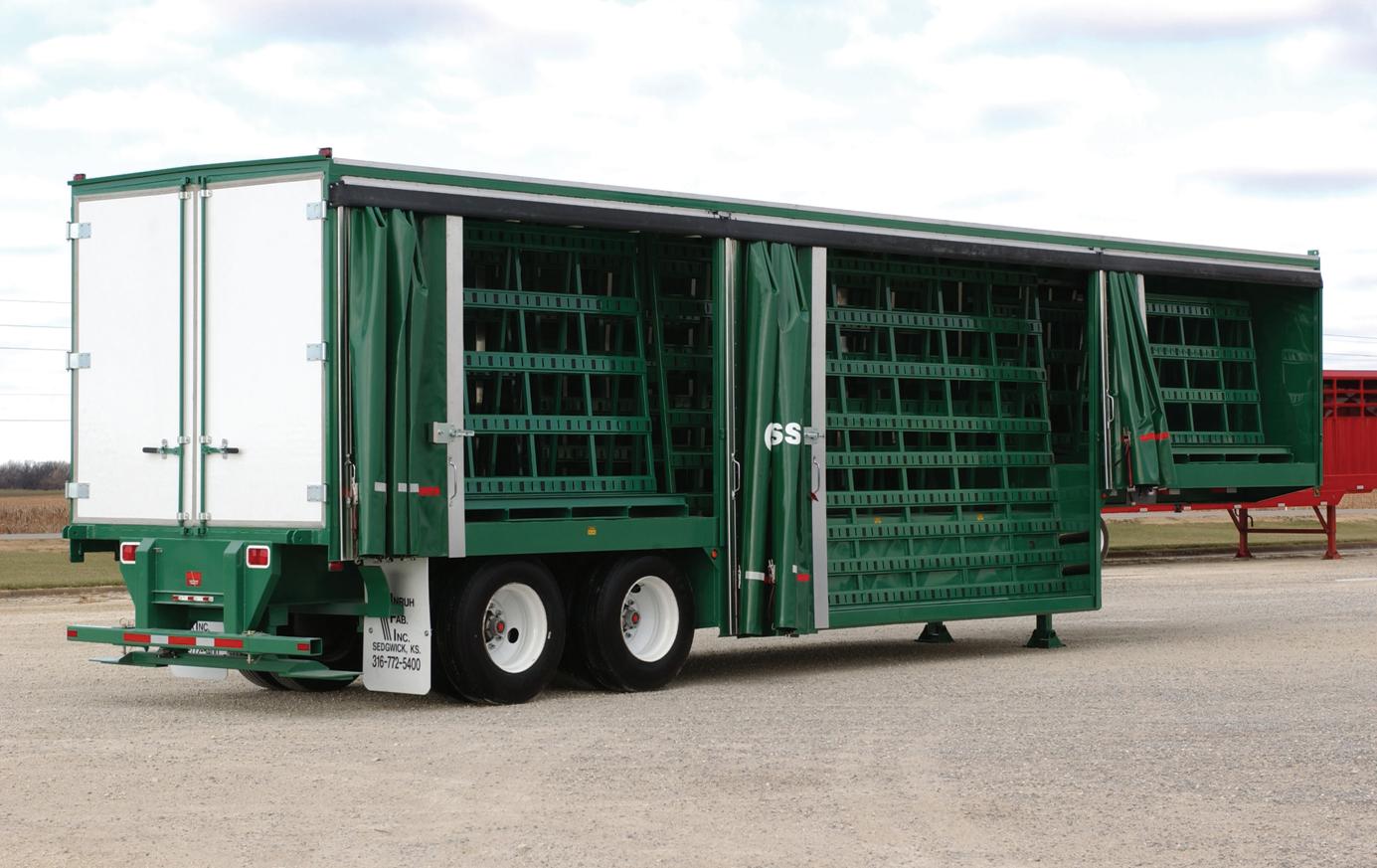
One item Berger says the company is working on is gooseneck trailers to maximize every trip a customer makes. After being popular 20 years ago, he says they faded away but with rising fuel prices, “guys are having to build 20 to 24 foot tandem axle gooseneck trailers and they are putting a hitch on the back of their straight trucks that they’re already hauling glass with. And they are able to haul twice as much glass for the same amount of fuel.” Although most of the sales of the trailers have been in the midwest and Berger says he does not know whether it is an industry-wide trend, Unruh has sold quite a few in the past three or four months.
Another strong selling item for Unruh are semi-trailers with forklifts on the back with several sold in the past year after not selling any in the past 10 years. The advantage of the setup, says Berger, is better customer service. “They can take that forklift and unload glass and haul it in to smaller shops that may not have a forklift.”
Donker says after Unruh purchased the rights to Weathers Auto Glass a year ago, her focus will be on getting literature and brochures in customers’ hands, “and let them know those products are still available through us... by the time we got the tooling in and built the prototypes and made sure where we were going to be at, we are just now starting to promote that.”
Donker adds that 10 years ago, almost everything she sold was steel with only a small amount of aluminum, but in the decade since, it has been reversed. “Now, due to fuel consumption and trying to lighten the vehicle, everyone is switching to aluminum. So that has been the big change for us. Ninety percent of the pickup and van racks I sell now are aluminum.”
Although Berger says Unruh does do some work in Canada, and there have been requests from Canada to buy straight trucks, it was difficult to get a truck chassis across the border. “About the only way we could do it was to buy a truck in Canada, drive it down here, put a body on it and drive it back to Canada and that doesn’t make a lot of sense for anybody.”
Go for gas
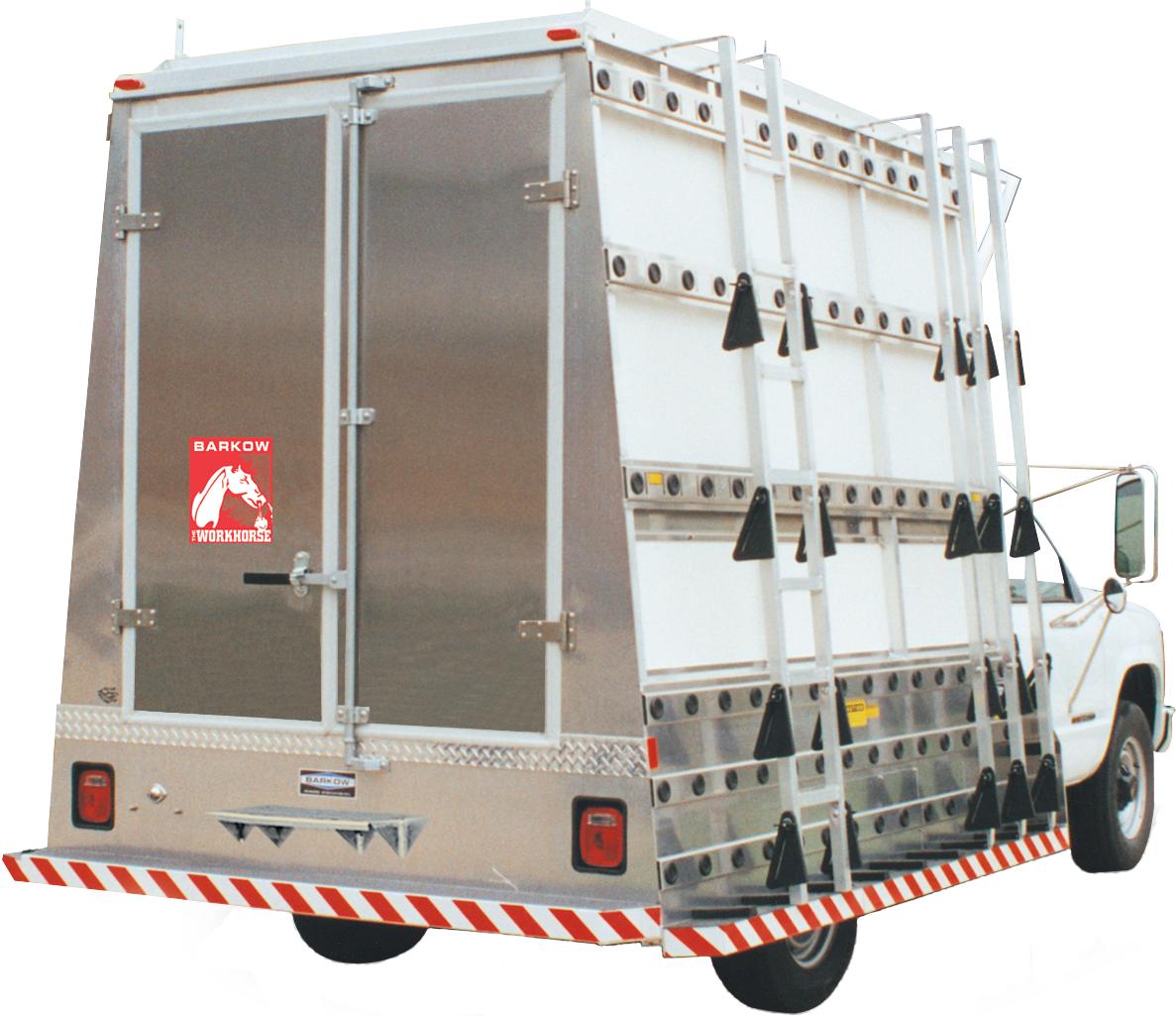
John Weise, owner and president of F. Barkow in Wisconsin, says the exchange rate has worked to his advantage and “stainless steel is still the best way to go.” He says the company sells a lot of van racks and a steel rack is $400 more than aluminum. “I think $400 is a lot of money but if you are talking about a life span of 10 years, maybe it’s not that much money.”
While Barkow is still heavily weighted in favour of gas engines, Weise says it makes sense for the added expense of diesel if a customer’s mileage is going to be 30,000 to 35,000 miles a year. “Then you recoup the added expense of the engine and the fuel. But if you’re below that, I think it still makes more sense to go with gas.”
Weise notes that despite increases in gas prices, the gap between gas and diesel costs has not closed much, due to the increased emission standards for diesels. “It used to be a diesel engine was roughly $4000 more than a gas engine. Now it’s probably closer to $6000 or $7000 more.”
Lise Mercure, co-owner of Bromer in Quebec, and Virginie Mercure, in marketing, say with a long lead time of up to six months fabricating their products, there was a large difference in price between the time the products
PHOTO COURTESY OF F. BARKOW
GLASS TRANSPORTATION
were ordered and the time they were delivered due to the change in the dollar. Despite the rise, Lise says the orders are still there for Bromer although their profit is less than it had been.
Lise says the company was absorbing the cost of the rising dollar but has also tried to offset it recently with changes to its prices and by making its production more efficient. Bromer’s orders to the US are still strong, says Lise and its November and December were very good. “We were anticipating some reductions in the sales, but it’s constant.”
For 2008, Lise says she is hoping the Canadian dollar goes back down. “I don’t understand why it is so high. It doesn’t help the economy of Canada. We’re always researching new equipment so that helps us out too. Our customers know when they have a problem and need a solution, they give us a call and we work for them.”
“That’s what we’re good at,” says Virginie. “Developing new solutions and trying to find the right solution at the better cost for the customer.”
Bromer’s shipping rack with removable wheels was introduced in the US three years ago and despite not advertising it much, word of it has spread north of the border. “Recently, we’ve had a lot of calls for that,” says Lise.
“It is very versatile,” says Virginie who adds that the rack also fits what she describes as one of Bromer’s “star products, the patented pole system. We have it on every glass rack that goes on trucks. We have it also on the dollies, it is a way to secure the glass in a very easy and fast way. It is a very versatile rack that can go from the shop floor directly to the trailer. It’s a good product that we like and it’s getting more popular.”
Engaging the Canadian market
One of Bromer’s newest products is its automatic seaming machine that seams four glass edges or three different glass lites at one time. The machine can be applied to any line, according to the company.
“This is a product that we have a really good demand on,” says Lise. While most of the orders have been from the US, Bromer has had three from
Canada recently. While Bromer has been hoping to bring one of its seaming machines to a trade show, Lise says they probably would not have any available due to the amount of orders.
While 80 to 85 percent of Bromer’s customer base is in the US, Lise adds that it is also enlarging its market in Canada. “For about two years now, we have more orders than we did before.”
Virginie says Bromer has acquired a lot of new customers for its van and pickup glass racks in the east coast provinces. “We’re getting a good response from them, so this is a new market in Canada that we are developing.”
Overall, Virginie says vans remain more popular for security reasons and the Sprinter van, with its inside height feature, also remains popular.
Lise says while 10 years ago, Bromer might make a couple of van racks a week, “now production is three racks a day.” Customers are also looking for more options that will allow them to maximize both large and small vehicles. “The units are now equipped inside and out,” says Lise.
“The market is changing. You can see all the stone business, it has grown a lot. More of our clients in the glass industry are looking for stone as well. In the US, we have a lot of customers that use our pull out draw racks just to store the stone to have a display. Here in Canada, it’s popular but not as popular as it is in the US.” Lise adds that many customers are adding stone to their glass business. “It’s the same product, the same machine. You just change some parts of it and you can use it for glass or for stone.” ■
PHOTO COURTESY OF UNRUH FAB
SEALANTS
Compatibility of bituminous membranes
Problems arise when membranes come in contact with soft PVC substrates.
Scrupulous detailing of the building envelope to control air and vapour flow, as well as to prevent water penetration into the building, seems to be getting more professional attention now than in years gone by.
The driving forces behind this are numerous. For one, Al Gore and his movie, An Inconvenient Truth, has heightened our social conscience in recent years and governments are responding with incentives to build more energy efficient buildings. In part, this is being achieved using membranes and sealants to control the flow of air and vapour in an effort to minimize the use of heating and air conditioning, and in turn, our impact as a society on the
COMING EVENTS
planet. In addition, some parts of the northwestern US and southwestern Canada exhibit rain forest-like climatic conditions which demand specific attention to air and vapour movement as well as waterproofing detail, simply to keep buildings dry and free from rot, corrosion or dangerous moulds.
Regardless of our reasons, we continue to use more bituminous based self adhered membranes such as ‘peel and stick’, or liquid applied air and vapour barriers for this purpose. The glass industry is no different from any other. All the detailing behind a curtainwall or glass façade envelope is being done with these same products, liquid or fairly unstable bituminous based ‘peel and stick’ membranes, in contact with many other components of the glazing system, and tied together or overlapped at a weather seal with a sealant of some kind.
by David Metzler*
The sealants used in the weather seal on a glass building are, more often than not, a high end neutral cure silicone, polyurethane or in some cases even a thermoplastic sealant. Both of these membranes, self adhered and liquid, as well as the various sealants have been tested for compatibility by most of the leading manufacturers of these products. Generally, the neutral cure silicones and low VOC polyurethanes contain little or no solvents. In fact, even the highly solvent thermoplastic sealants are not causing these membranes to breakdown to the point of flow.
Light coloured sealants applied in direct contact with the membranes’ bituminous face will often discolour, even if left to cure in a confined airspace near these membranes. Dow Corning has tested its sealants and concluded that performance is not compromised
DATEEVENTPLACECONTACT
2008
May 3GDAS Annual General MeetingSaskatoon, SK(306) 477-4327 & Autoglass Technician Competition
May 13-16Ninth International AluminumOrlando, FL(847) 526-2010, www.etfoundation.org Extrusion Technology Seminar & Expo
May 29GCAof BC 17th Annual Hazelmere Golf & www.gca-bc.org Golf TournamentCountry Club, BC
May 29OGMASpring Golf TournamentKleinburg Golf &(416) 360-8367 Country Club, ON
Jun 7GTAGolf TournamentSandpiper Golf Coursewww.gta-ab.com St, Albert, AB
Jun 12OGMAAnnual General MeetingTBA(416) 360-8367
Jun 13GAMAGolf TournamentChestermere, ABwww.gamaweb.org
Aug 23GDAS Bill Knapman MemorialElbow, SK(306) 477-4327 Golf Tournament
Sep 18OGMAFall Golf TournamentCarrying Place Golf &(416) 360-8367 Country Club, ON
Oct 6-8GlassBuild AmericaLas Vegas, NVwww.glassbuildamerica.com
Oct 21-25Glasstec 2008Düsseldorf, Germany(312) 781-5180, www.glasstec.de
Nov 11-13Win-door 2008Toronto, ON(800) 282-0003, www.windoorshow.com
For a listing in the Glass Canada Coming Events Calendar, send details to Chris Skalkos at: cskalkos@annexweb.com
SEALANTS
by this discolouration and for aesthetic purposes, simply substituting for a darker coloured sealant would avoid the discolouration. Based on field experience, the same can be said of any of the higher end silicones or polyurethanes.
More serious problems start to arise when these membranes
Since energy efficiency and the control of air flow and protection of buildings from water ingress is so important in the way buildings are constructed today, the likelihood of these liquid or self adhered membranes being eliminated is unlikely.
The solution: If possible, stay away from PVC components and avoid high solvent sealants within the system being assembled. PVC glazing stops, PVC setting blocks and PVC gaskets can easily be substituted for alternative materials in new construction.
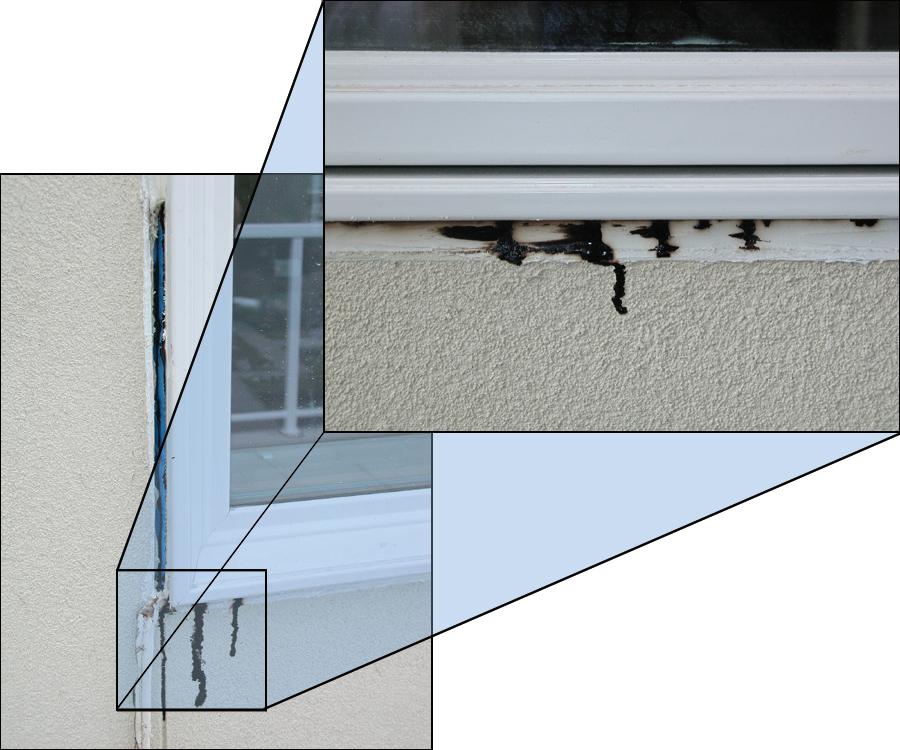
A‘peel and stick’membrane placed in contact with a soft PVC material/gasket. Plasticizers have caused the asphalt in the peel and stick to become liquid and flow out of the system.
with soft PVC substrates. Henry/Bakor Company has tested and concluded that the plasticizers in PVC are attracted to the asphalt (bitumen). The plasticizers then render the asphalt very plastic and in some cases to the point of a flowable liquid. It has also been established that higher temperatures will accelerate this reaction. For this softening and flow of the asphalt to occur, there must be physical contact, albeit incidental, of the PVC and bituminous membranes. If the design allows for a separation of the membranes from the PVC gaskets or soft PVC membranes, no plasticizer migration will take place. Otherwise, any contact, however incidental, between these two product groups must be avoided.
Despite the alarming incompatibilities between soft PVC and bituminous membranes, PVC window frames, typically, present less of a problem. This grade of PVC is more rigid and less prone to plasticizer migration within that PVC. However, testing is always recommended to confirm compatibility of bituminous membranes with any PVC substrate!
If a PVC membrane or PVC gasketed system is already in place, there is always the option to substitute the bituminous air/vapour or waterproofing membrane with a membrane that does not contain asphalt. There are many polyurethane based liquids that can be substituted for bituminous based air and vapour barriers as well as waterproofing membranes. These products are typically not vapour permeable and, as
such, cannot be substituted in a vapour permeable air barrier application. The other downside to these liquids is that many of these products still typically rely on a solvent carrier and therefore are not the most environmentally friendly to apply.
As all glass professionals know, options do exist!
AUTHOR’SNOTE:This article does not address sealant adhesive compatibility to the self adhered and liquid bituminous membranes. This topic has been examined by all the large sealant and membrane manufacturers. It is well documented and information relating to this issue is available from any of these manufacturers: Tremco, Dow, BASF, Henry/Bakor, Soprema. ■
*David Metzler is with Cascade Aqua-Tech, a wholesale distributor of specialty products for the construction and manufacturing industry in western Canada specializing in sealants, coatings and waterproofing materials as well as numerous companion products.
G LASS R ACK B ODIES
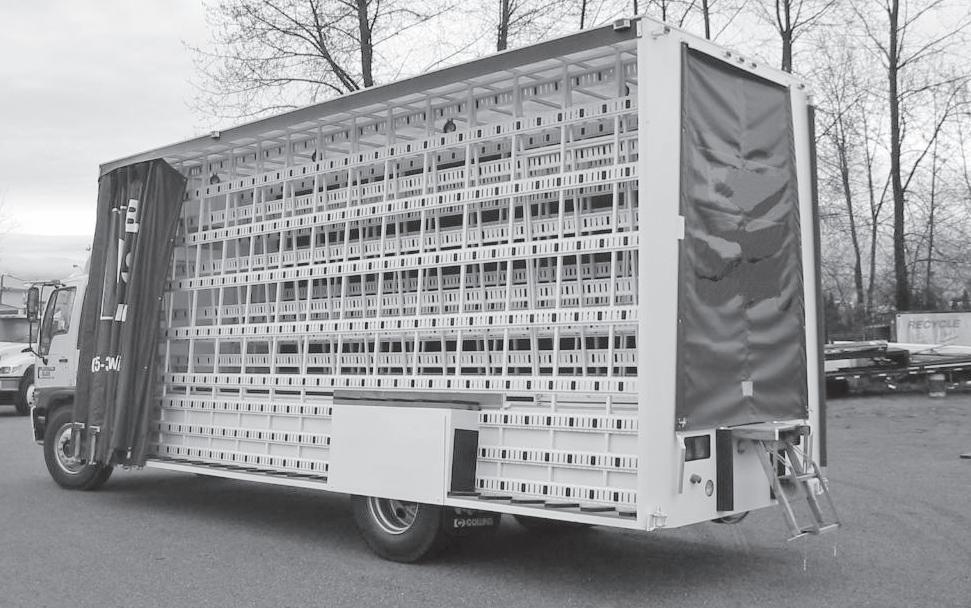
Transports the largest glass panes manufactured on outer ledges as well as skids containing bulk materials loaded through rear opening.
Full range of custom options to suit specific glass companies.
Unique custom design by Collins Manufacturing to meet specific glass industry requirements.
CANADIAN GLASS ASSOCIATION
#23 21848 50TH AVENUE • LANGLEY, BRITISH COLUMBIA • V3A 8A9
TELEPHONE: (604) 880-6757 • FAX: (604) 608-4950
WWW.CANADIANGLASSASSOCIATION.COM
CGA newsletter
David Husson, CGA president
In an effort to visit as many locations across the country, the Canadian Glass Association (CGA) will be holding its semi-annual meeting in Edmonton, Alberta, in June.
The CGA has several items to address, such as marketing, government liaison and the approach to take to develop contacts in Manitoba, Quebec and the Maritime provinces.
During the last CGA annual general meeting, held in Toronto in November 2007, the association agreed to begin to use a part-time executive director. This will enable the CGA to increase its profile as well as keep it on the course that the executive directors have chosen.
I have been in negotiations over the past month to recruit a qualified individual for this role and hopefully, with the executive’s approval, I will have the individual in place by the next Glass Canada issue.
If there are any issues or items which you would like to have discussed during the CGA meeting in Edmonton, please feel free to contact me at: dnhusson@yahoo.com ■
GCA of BC
Zana Gordon, executive director, for the Glazing Contractors Association (GCA) of British Columbia submits this report:
This is an exciting time for the Glazing Contractors Association with many changes, including a change in the administration. Victoria Schifferns has left the association to develop her own business. As the new executive director, I have spent much of my time reviewing and reading materials to get familiar with the association and the current programs while researching new opportunities to provide education
for professional development, new social activities, new publications, industry and apprentice recognitions.
The apprenticeship program is moving into a new phase. The British Columbia Institute for Technology (BCIT) will be offering the final modules of the pilot program in the early fall.
The GCA and the Construction Industry Training Organization of British Columbia (CITO BC) will then begin the National Occupational Analysis (NOA) process to ensure we are offering an apprentice program that reflects the needs of the industry and an effective curriculum. Recent numbers show there are approximately 361 active apprentices in the glazing industry. Thompson River University (TRU) will offer the Glazing Apprentice Program at its facility. With the drive and persistence of the Glazing Industry Training and Recruitment Committee (GITRC); Chairperson, Frank Luciani and the commitment from the TRU Dean of Trades and Technology, Ralph Finch, the modular based apprentice program is moving forward rapidly. TRU has three Module A courses
offered in 2008 and one Module B course slated for 2009.
Frank Luciani, the GITRC chairperson, has begun the process of communicating and lobbying with the provincial government the need for a capital equipment grant to initiate the glazier program. This grant for $250,000 requested will provide hand tools, lab training aids and a building mock-up for curtainwall construction. Kawneer Company has contributed more than $12,000 in materials to assist in the success of the program at TRU. Luciani will keep us up to date on the progress of this application.
There is a new website for the GCA of BC. The new site is posted but is being modified daily until it is completed. Visit www.gca-bc.org
May 29, 2008 is the date for the 17th Annual Golf Tournament to be held at Hazelmere Golf and Country Club. This tournament was a huge success last year and the social committee is hoping to achieve the same level for this year. The social committee will be reviewing possible activities for 2008 and a calendar will be on the website.
The GAMA executive members are (back row left): secretary, Brent Harder; past president, Rob Pedersen; treasurer, Ron Walder; social director, Greg West; safety director, Stacy Gallant; first vice-president, George Kennedy. Front row: guest speaker, Gwen Phillips; president, Margaret Townsend; Calgary Construction Associate liaison, Glenda Dewar; Newsletter, Dan Taylor.
I look forward to my involvement with the Glazing Contractors Association and anticipate great successes. ■
GAMA
Margaret Townsend, president of the Glass & Architectural Metals Association (GAMA) submits this report:
I’d like to start by thanking all of the members of the Glass and Architectural Metals Association (GAMA) executive for their support. Alberta continues to experience very high levels of construction activity so the numerous hours of volunteering that they’ve given are greatly appreciated.
GAMA is having another great year with strong support from our industry as we now have 45 paid members. We look forward to our monthly meetings, having already lined up some interesting guest speakers for upcoming meetings. The March general meeting was joint with the Spec Writers Association, April we welcomed Greg Soroka of Goldray Industries and in May we will be hearing from the Insulated Glass Manufacturers Alliance (IGMA).
Our annual GAMANewsletter is just about ready to be published with reports from the executive board as well as some great project photos. Thanks to Dan Taylor for the dozens of hours he has put in to make this publication a success.
The annual GAMA golf tournament has been confirmed for June 13, 2008 at the Lakeside Greens in Chestermere.
We remain committed to our ‘Certificate of Leadership’ program. Our goal is to promote safety, training and participation/commitment of our members. Each year, we poll our members and acknowledge their achievements in these areas at the Annual General Meeting.
Rob Pedersen, our past president, has taken on the task of ensuring our representation at career fairs, both at the Calgary Construction Association in April, as well as Calgary and area high schools.
As in previous years, we use our Annual General Meeting in November to honour our top apprentices. As well as being recognized by their peers, these dedicated students are also presented with gift certificates for tool supplies from GAMA as well as from Calgary Fasteners. Congratulations to the following winners for 2007:
1st Year Winner, Robert Trufen, Ferguson Glass; 2nd Year Winner, Robert Trufen, Ferguson Glass; 3rd Year Winner, Cameron Wright, Alpine Glass; 4th Year Winner, Dale England, Alberta Glass; Lou Thomas Award Winner, Cameron Wright, Alpine Glass.
AGMCA
Ontario’s compulsory certification for Skilled
Trades
The Architectural Glass & Metal Contractors Association (AGMCA) submits this report:
As previously reported, the Ontario Minister of Training Colleges and Universities had, in 2007, appointed Tim Armstrong, a special public policy
LITERATURE/
MULTI MEDIA REVIEW
Readers may request the literature items featured in this review. Simply contact the companies directly using the phone numbers indicated to request their latest brochure(s).
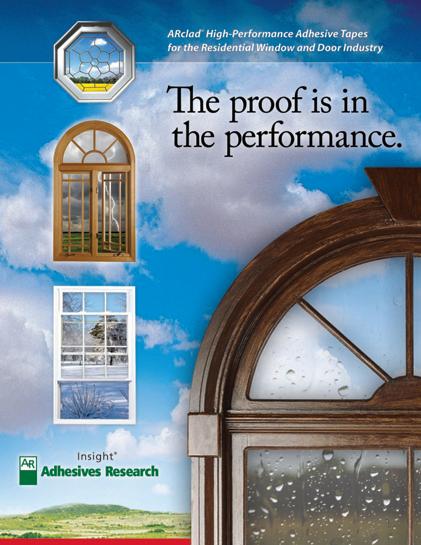
For a copy of this brochure call 717-235-7979 or visit www.adhesivesresearch.com
Contact us at 419-666-5942 or e-mail sales@glassline.com
ARclad® High-Performance Adhesive Tapes
for the Residential Window and Door
Industry
ARclad® Muntin Mounting Tapes:
• The only tapes specifically developed for SDL bonding
• Built to withstand the heat, cold and weather extremes of SDL bonding
• Exceptional foam-to-surface wet-out
ARclad® Next-Generation Glazing Tapes:
• Significantly enhanced bond to glass
• Exceptional resistance to heat and moisture
• Immediate bonding –no need for cure time
Adhesives Research
Precision Diamond Tooling…
Glassline Corporation provides a complete line of precision made Diamond Tools – designed, engineered and fabricated by our experienced staff to fit specific customer requirements. We stock a large supply of standard products, many available for immediate shipment.
We specialize in partnering with customers to provide consulting services and recommendations on the correct glass machinery or tooling solutions for unique fabrication needs. Take advantage of our technical expertise.
Glassline Corporation
Rimac – Metal Curving Specialists
The shape of the future is unlimited using Rimac’s ability to curve metal into the boundless creations of today’s architects and designers. Rimac offers unrivaled quality and service in the metal curving industry. With decades of experience specializing in the curving of sections for a variety of industries, together with our state of the art equipment and technology provides our clients with the ability to push the design envelope to new dimensions. At Rimac we have a full service machine shop and foundry within our facility, allowing us the flexibility to manufacture required tooling on site. This saves our customers time and money. Rimac prides itself on creating the most comprehensive quotes in the industry. There are no surprises at the end of a Rimac job. Contact us today for our full colour brochure!
Rimac
CANADIAN GLASS ASSOCIATION
#23 21848 50TH AVENUE • LANGLEY, BRITISH COLUMBIA • V3A 8A9
TELEPHONE: (604) 880-6757 • FAX: (604) 608-4950
WWW.CANADIANGLASSASSOCIATION.COM
advisor and a past Deputy Minister of Labour, to lead a review of Compulsory Certification in the Skilled Trades. The mandate was to consider how expanding compulsory certification to trades, that are now voluntary, would impact the following factors: Health & Safety, Registration of New Apprentices, Completion of Trades Training, Consumer Protection and Economic Impact.
This past December, Armstrong invited apprenticeship and certification stakeholders to participate in discussions relating to the mandate given to him by the MTCU Minister. He has also held many meetings with economists from the Ministry of Finance and the Labour Market Information and Research Branch of the Ministry of Training, Colleges and Universities. These meetings were to help determine whether data existed that relates to the five impact factors.
Stakeholders and other interested parties were urged to participate in this review and further invited written submissions concerning the effect of expanding compulsory certification on each of the five factors. During the course of the review, Armstrong had arranged stakeholder meetings across Ontario during the month of February. The Architectural Glass and Metal Contractors Association in concert with the International Union of Painters and Allied Trades (IUPAT) represent a significant portion of the primary participants in the Architectural Glass and Metal Technician Trade (formally known as Glazier & Metal Mechanic Trade). They have jointly demonstrated a long standing common interest in increasing the health and safety performance, apprenticeship and journeyperson training and certification system, improving protection of consumers and creating economic benefits in Ontario’s glazing trade.
Jointly the AGMCA and IUPAT, with the assistance of Ontario training director, Michael Carter, produced a comprehensive brief to the Minister’s Appointed Review Chair. It was clearly noted that the brief submitted by AGMCA and IUPAT supported
Compulsory Certification for the Glazier Trade servicing the industrial, commercial, institutional (ICI) and high-rise/condominium sectors.
Further, the ‘Glazier’ brief contained broad based support from the Industry’s Provincial Advisory Committee for the Architectural Glass and Metal Technician, Local Apprenticeship Committees in Ottawa, Toronto, Hamilton and Kitchener-Waterloo. There was also support from the Ontario Glass and Metal Association and many Union and non-Union glazing companies. A final report is expected to be completed early this summer.
Ontario Glazing Systems Specifications Manual close to completion
As previously reported, the AGMCA in concert with the Ontario Glass & Metal Association (OGMA) and the National Capital Glass Association (NCGA) have been working diligently together to put in place an Ontario Glass & Glazing Systems Specifications Manual
The Manual concept was created by the Glazing Contractors of British Columbia, followed by the Manual adjusted by the glass associations in Alberta to serve that province’s building and construction market. The Ontario initiative is close to being completed. We are in the final stages of ensuring all is consistent, based on the consent of British Columbia and Alberta documents. Once completed, the document will be made available to several audiences including architects, specifiers, as well as contractors. ■
OGMA
Ennio Rea, president of the Ontario Glass and Metal Association (OGMA) submits this report:
The OGMA has been busy planning its activities for the summer and the association has a few dates to note for its members.
The OGMA’s very popular Spring Golf Tournament has been set. Past tournaments have featured up to 150 golfers on the course while dinner has attracted upwards of 200 people in the
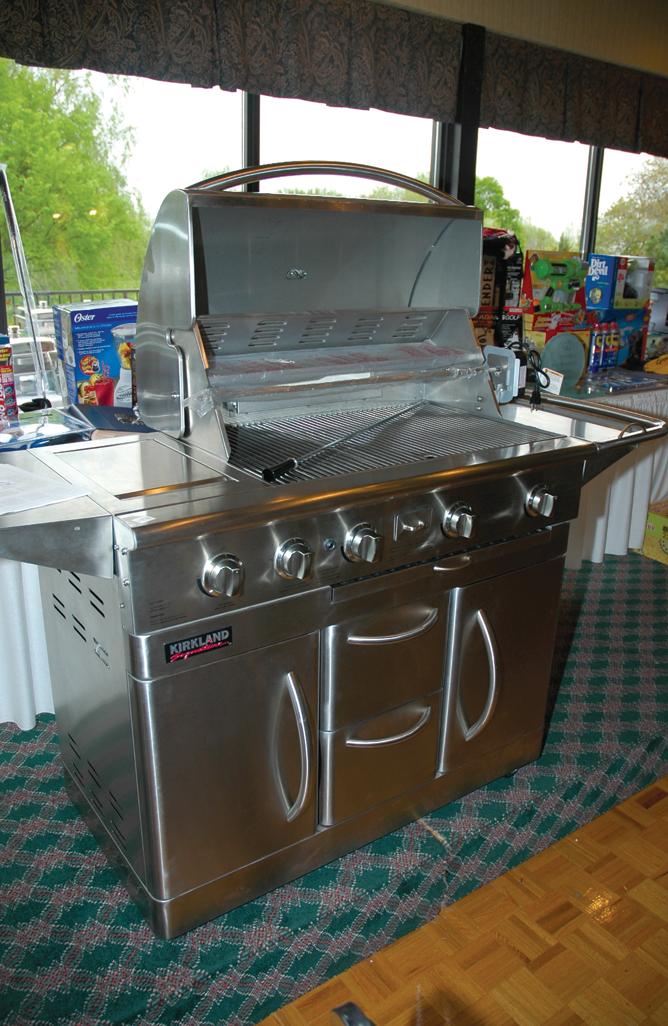
past. The prize table has featured some high-end items such as a professional racing mountain bike, Kirkland stainless steel gas grill/barbecue, X-box game cube and wide-screen LCD TVs. Lifetime Achievement awards are also presented during dinner.
This is the main networking event for the OGMA and a great opportunity to socialize with customers or suppliers while rubbing elbows with your competitors.
Date: Thursday May 29. Tee-off: 11:45 am (shotgun start-scramble format). Location: Kleinburg Golf & Country Club. Price: $190 plus tax, includes golf, dinner and power cart. Dinner only: $63 plus tax. Contact Brian Wiles (416) 360-8367 for tickets or Lee Baker (416) 421-3300 for hole sponsorship.
The Fall Golf Tournament has also been set for September 18 at Carrying Place Golf and Country Club.
The OGMA’s Spring Golf Tournament regularly features high-end items for draw prizes.
In other association news, the OGMA will hold its Annual General Meeting on June 12. This is also a tentative date for the launch of the Glazing Systems Specifications Manual that has been modified for use in Ontario. ■
Atrium acquires North Star
Atrium Companies, based in Dallas Texas, has acquired Canadian window manufacturer North Star Vinyl Windows and Doors. The addition of the Ontario based company gives Atrium and its family of brands a significant presence in the Canadian window and door market.
Headquartered in St. Thomas, Ontario, North Star Vinyl Windows and Doors operates a 223,000 square foot, state-ofthe-art manufacturing facility producing a complete line of energy-efficient vinyl windows and patio doors. Seventy percent of the company’s product goes to the replacement/remodeling market, with 30 percent going to new construction projects. North Star sells 90 percent of its volume to dealers in Canada, with 10 percent of its product going to dealers in the US.
“We started building this company in 1985 and it has grown remarkably in that time,” explains North Star president, Jim Banman. “Joining forces with Atrium allows us the opportunity to take North Star to the next level. It’s the right move at the right time for both sides.”
In addition to manufacturing windows and doors, North Star’s business is vertically integrated and owns and operates its own vinyl extrusion lines, known as North Star Profile Extrusions. Adding to the bottom line, North Star’s extrusion capability also enables the company to produce window systems for outside manufacturing customers.
Unified franchise
Uniban Canada has acquired Ziebart Canada’s master franchise and the rights to the 28 existing Ziebart franchises outside of Quebec. This transaction completes the purchase of Ziebart’s master franchise and its franchises in the province made in 2002 to diversify the VitroPlus network.
This transaction resulted in the creation of VitroPlus/Ziebart. Outside of Quebec, it will bear the name of UniglassPlus/Ziebart and offer the same services as VitroPlus/Ziebart, including windshield replacement among other automotive services. This expansion allows Uniban Canada’s networks – which include: VitroPlus, Ziebart, VitroPlus/Ziebart, Ram-ko in Quebec and UniglassPlus/Ziebart, Ziebart, Unipro Auto Glass and Accessories outside Quebec –to offer nationwide coverage which strengthens Uniban Canada’s value proposition while offering 225 point of sales.
Uniban Canada also includes one of the largest distributors in Canada, PH Vitres d’Autos which has 18 warehouses across the country as well as 217 mobile units in order to support Uniban Canada’s operations. ***
Canada to update Model National Energy Code
The Insulating Glass Manufacturers Alliance (IGMA) has announced that the Minister of Natural Resources Canada (NRCan) and the president of the National Research Council Canada (NRC) have embarked on a joint venture to update the Model National Energy Code for Buildings
Published in 1997, the Model National Energy Code for Buildings has not been updated by the Canadian provinces or territories since then. Three years ago, discussions at the
standards development organizations contemplated withdrawing the energy code. Today’s announcement is part of the Canadian government’s ecoENERGYinitiatives.
Margaret Webb, IGMAexecutive director, attended the press conference to ask if the updated code would cover residential and commercial buildings.
Bruce Clemensen, chairperson of the Canadian Commission on Building and Fire Codes (CCBFC), noted that the new code will not include buildings covered under Part 9 of the National Building Code of Canada; therefore, residential buildings will be excluded from the code requirements with the focus on buildings greater than three storeys.
Webb also asked if there would be a formal liaison between the CCBFC and the Office of Energy Efficiency (OEE) as work on updating the code proceeds. The OEE is responsible for the Canadian ENERGY STAR program.
Clemensen noted that these working relationships have not yet been developed but anticipated that they would be established.
It is anticipated that the updated standard, development of which will be under the mandate of the CCBFC, will be published in 2012. Anew standing committee on energy will be formed to develop the code and the Canadian Code Centre is seeking volunteers to participate on the committee.
For additional information, contact: www.igmaonline.org
PROFESSIONAL SERVICES
Testing Laboratory
INDUSTRY NEWS
Setting the mark
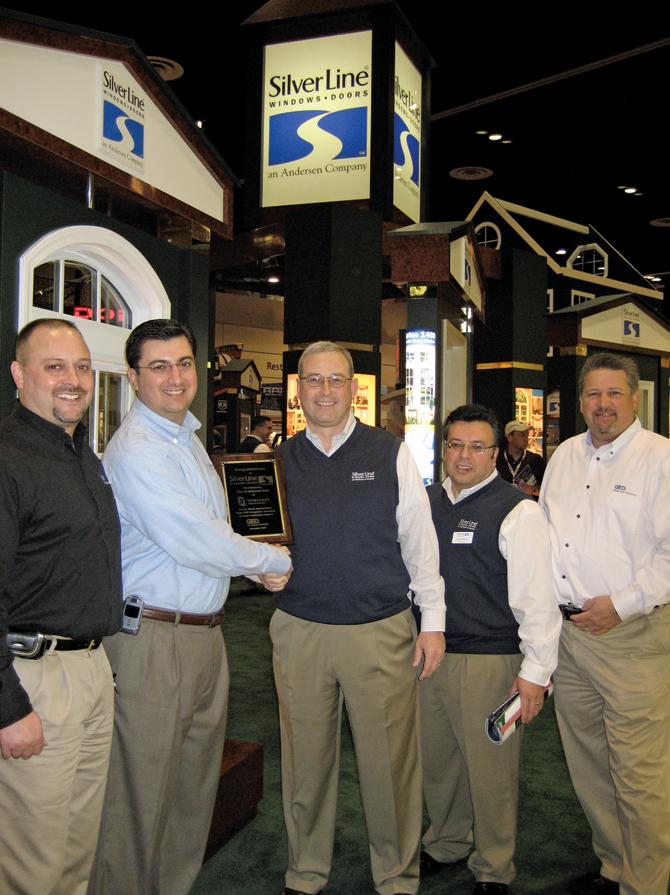
Silver Line is celebrating a milestone after manufacturing its 10 billionth foot of Intercept Spacer since the product’s introduction in 1992. The company says the Intercept Spacer has been installed in more than 500 million windows throughout North America and Europe and attributes this manufacturing achievement to the many window and door manufacturers worldwide that
Silver Line is congratulated for producing the 10 billionth foot of Intercept Spacer at the International Builders Show in Orlando, Florida.
From left: Tom Calcei, regional manager, GED; Peter Baka, business development manager, GED; Randy Isles, president, Silver Line Windows; Dominic Benevenga, vice-president of engineering, Silver Line Windows; Bill Weaver, vice-president of sales and service, GED.
BUSINESS TO BUSINESS
GLASSLINE
A premier equipment supplier for the glass industry is looking for Independent Sales Agents for our Diamond Tools Product Line in the Canadian markets
Glassline manufactures all types of diamond tooling –periphery and cup wheels, core drills, seamers, countersinks, router bits, specialty combination tools, etc., and offers redress services for glass and stone tools.
Email cover, resume with qualifications, other representational affiliations, etc. to: glasslineca@google.com
Glassline Corp. | Perrysburg, OH, USA www.glassline.com/pages/diamond01.html
insist on producing high quality, durable, long-lasting systems.
Silver Line Windows, an Andersen Company, was congratulated by GED as the producer of the 10 billionth foot of Intercept Spacer in the fourth quarter of 2006 with a plaque presented to company president, Randy Isles.
***
Royal closes Winnipeg plant
Royal Group’s window and door profile extrusion facility in Winnipeg, Manitoba, has closed, says Georgia Gulf Corporation which acquired Royal Group in October of 2006. The extrusion operations currently in this facility will be transferred to other Royal Group profile extrusion plants as part of a plan to optimize manufacturing operations and improve financial results.
The company says this move reflects its pursuit of improved manufacturing efficiency and reduced fixed cost. “Customers purchasing window and door profiles from our Winnipeg facility will be better served by our other facilities, as these plants house the latest in extrusion technology,” says Bill Doherty, Georgia Gulf’s vice-president of custom products.
Royal Group has profile extrusion facilities located strategically throughout North America to serve its window manufacturer customer base. Royal Group’s Canadian window and door profile extrusion plants are located in Toronto, Ontario and Montreal, Quebec.
***
Greater design flexibility
Goldray Industries has announced a licensing agreement with DecoTherm Custom Glass Decoration. Goldray will produce DecoTherm’s digital ceramic frit designs on glass. Its unique manufacturing equipment expands the maximum panel size to 80 by 144 inches.
The company says this is a novel way to apply ceramic frit patterns to glass and offers greater design flexibility with the use of shading and colour. DecoTherm’s digital process allows it to create unique designs for short-run projects without the prohibitive up front screen costs.
***
Industry appointments
Ultrafab has added John Rancourt and Sylvi Labelle as sales representatives for Quebec. Rancourt and Labelle, possessing more than 21 years experience in the window and door industry, will represent Ultrafab and be responsible for day to day sales operations in Quebec.
Rancourt also operates Quincaillerie Rabel, a Quebec based distribution company that services the window and door industry in Quebec and eastern Canada. Serancourt’s primary office and the Quincaillerie Rabel distribution warehouse are located in Terrebonne, and will carry the complete line of Ultrafab sealing solutions.
***
Arch Canada ULC dba Trulite Industries has appointed Richard Verdon as a sales representative covering a territory that includes Ottawa, Montreal, Kingston and other locations in eastern Canada.
“Verdon is well known by his customers in the markets he will cover and will further Trulite’s development in those territories,” says general manager Gerry Duffy. “With more than 30 years experience in the glass industry, he is well respected and is known for his superb customer service techniques.”
Verdon is also one of the founders and former president of the National Capital Glass Association, of which he remains a director. “He will be strongly supported by everyone at Trulite,” adds Duffy. * * *
Intermac America has appointed sales veteran Carey Brayer to the position of North American glass product manager. Brayer has 20 years experience in management, business development and sales, with particular expertise in the glass industry. He will lead sales efforts for Intermac’s complete line of glass machinery in Canada and the US, including the
Verdon
INDUSTRY NEWS
Master Series which offers CNC solutions ranging from entry-level machines to the Master Twin, a state-ofthe-art four-axis work centre introduced to the North American market for the first time in October 2007. Biesse America established Intermac Canada in April 2007, after acquiring AGM, Inc.
AGC Flat Glass North America has appointed Steve Micheli as vice-president of the company’s fabrication division. ***
Flynn makes dual acquisition
Flynn Canada has acquired Bahry’s Glass. Principals of Bahry’s, Ron Kokotilo and Brian Romanchuk, have taken an equity position in Flynn and will be staying with the company in senior management positions.
The company says this ensures longterm employment as well as personal growth opportunities on a national and regional scale with a strategy of combining the Bahry’s staff with the current Flynn staff members in Alberta who are involved with the company’s architectural metals sector.
Flynn Canada currently employs more than 2800 people in 16 offices located from coast-to-coast. The company says the merger will allow it to take on major glazing projects throughout western Canada, while sharing best practices with its current glazing operations in central Canada.
Flynn Canada has also purchased the assets of AGS Contract Glazing which will allow it to assume certain outstanding contracts. Andy Jackson will remain with the company in a consulting position through this transition period before he assumes a senior management position within the organization.
Agathering of autoglass professionals
Attendees of the 2008 National Auto Glass Conference gave a collective ‘thumbs up’ to the event’s new educational emphasis. The 18th annual event was hosted by the National Glass Association (NGA) and held February 11 to 13 in Tucson, Arizona.
Nearly 200 autoglass professionals attended the conference and offered high praise for its enhanced focus on executive education and practical
problem solving. Participants engaged in first-time sessions on such topics as changing technology demands for the independent shop owner, increasing profitability through diversification, and training, recruiting and retaining employees.
New location
The Canadian Window and Door Manufacturers Association (CWDMA) has moved its office to 130 Albert Street, Suite 1208, Ottawa, Ontario K1P5G4. Telephone: (613) 235-5511, Fax: (613) 235-4664, E-mail: info@ cwdma.ca ■
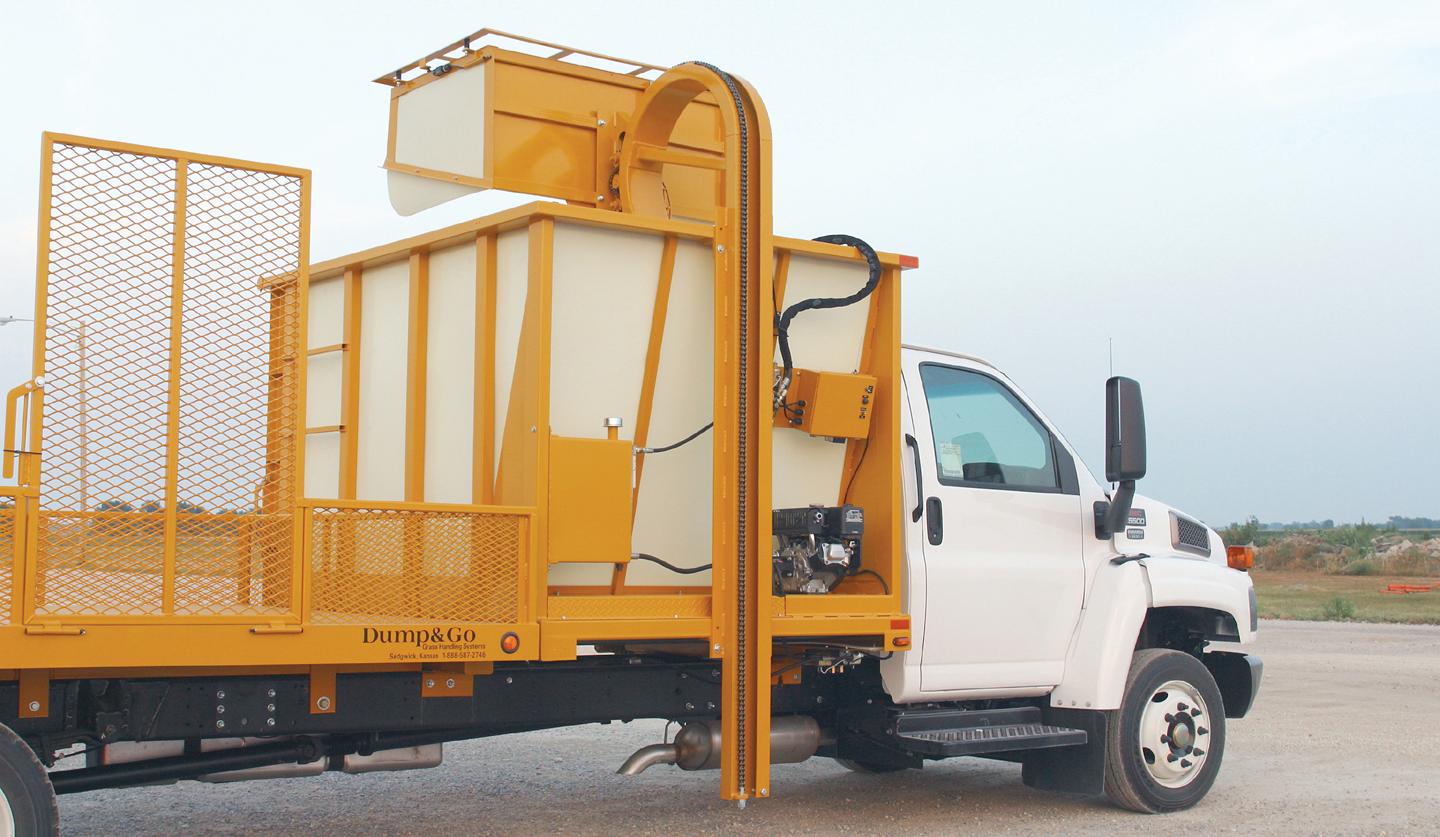
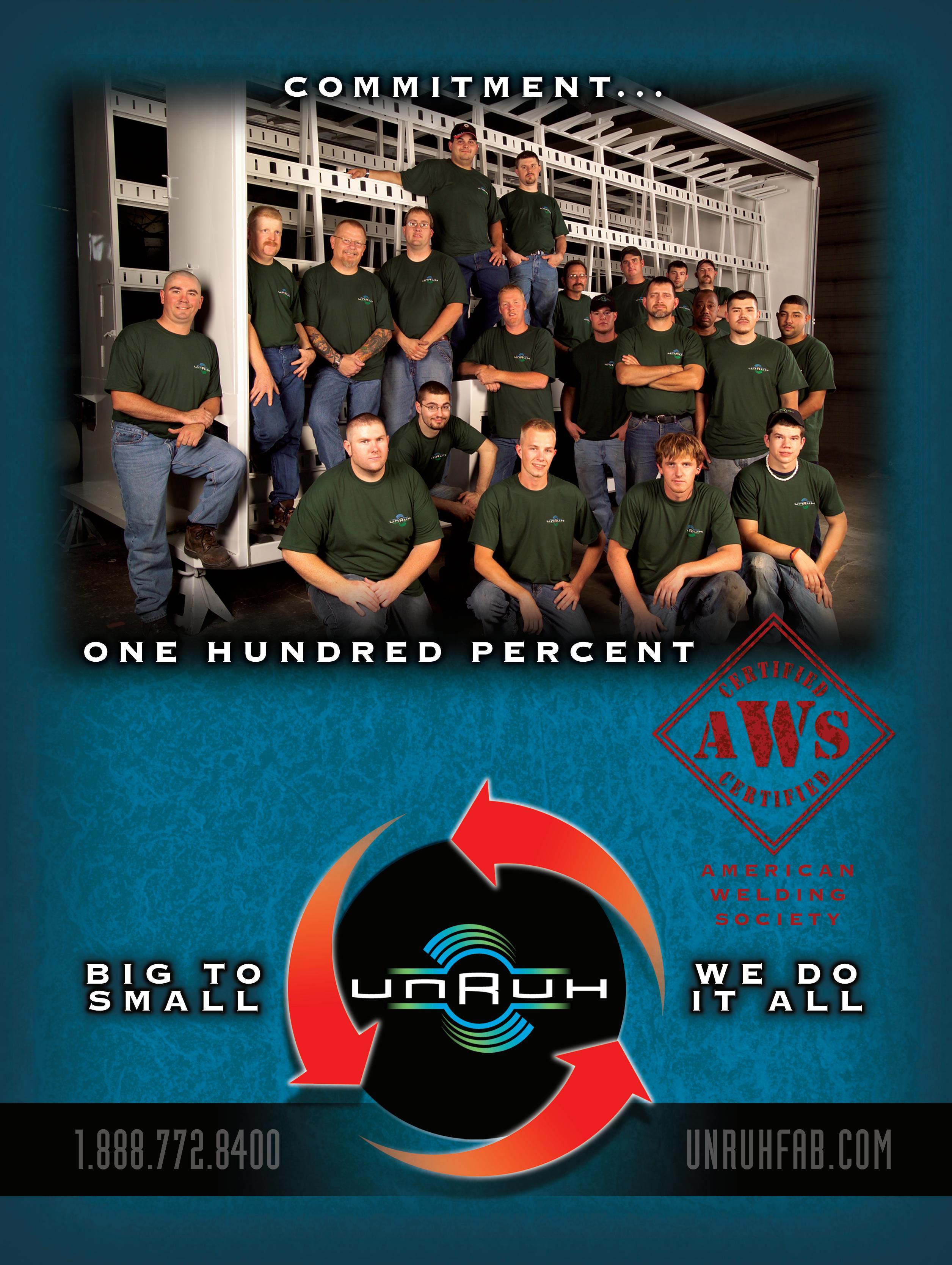
Commitment...to Quality, Durability and to you, the customer. We feel a true obligation for our customers to provide only the most durable, well built glass rack truck bodies and trailers in the industry. With that in mind, Unruh made a significant investment in the people - who really are the life blood of Unruh. Each and every one of our welders at our Sedgwick plant are now AWS certified. Proudly achieving AWS certification for each of our welders is just another way that Unruh strives to be as good as we can be.
Unruh Built... Unruh Tough.
AND NOW YOU WILL!
With every Chassis Mounted Body purchased we’re going to include a rear view camera and dashboard monitor...FREE! It’s a great safety feature that could save you thousands down the road. Great in both day and night conditions and installed is valued at $1000. But hurry, this deal must end with the coming of the new year, December 31st.
*With purchase of any Chassis Mounted Body
MANUFACTURED
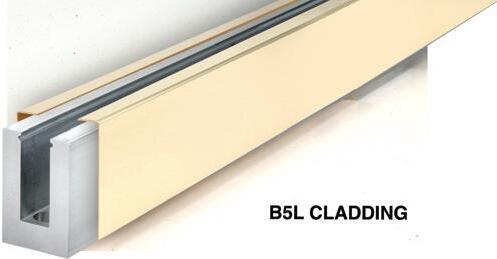
STRUCTURAL GLASS RAILING SYSTEMS
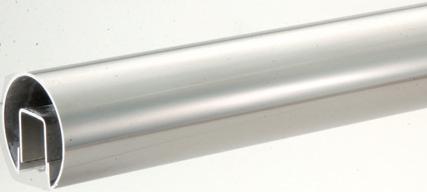
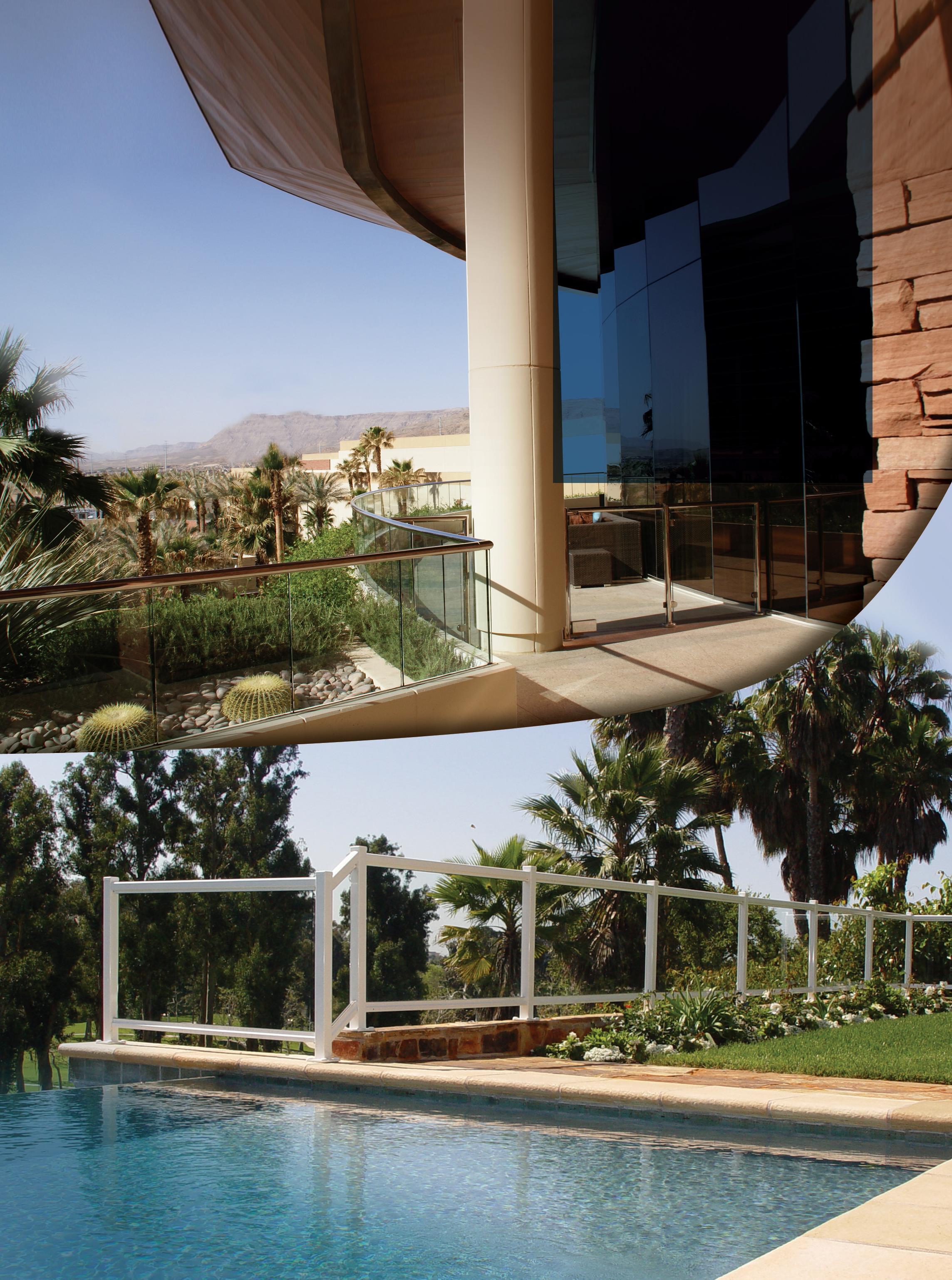
Perfect for projects where clear viewing and a sophisticated appearance are desired. Glass Railings also serve as an effective wind barrier, combining practicality and pleasing aesthetics to create an ideal outdoor balcony environment.
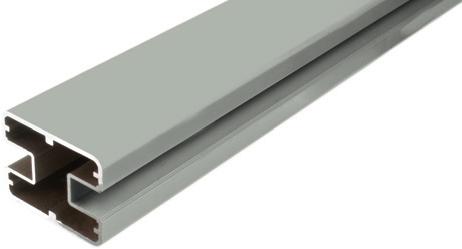
ARS ALUMINUM RAILING SYSTEM
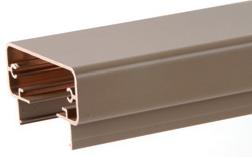
Available in many configurations, these impact resistant extruded aluminum railings feature high structural durability, and are specially coated to resist the corrosive effects of the elements and salt water.
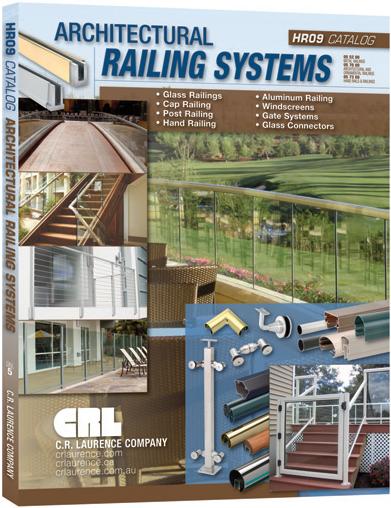
HR09 Railing Systems Catalog features our structural glass, aluminum and post railings, hand and guard rails, windscreens, patio posts, and more. See beautiful pictures of installations to give you ideas and inspiration for your jobs. It can be viewed online at crlaurence.com.