Releasing beneficial insects isn’t always the most effective course of action | 12
Dynamic LEDs and pest management
Using LED lighting for managing pests 22
Biopesticides: A primer
An examination of the major categories of biopesticides | 32
FEBRUARY 2023
greenhousecanada.com
Feeding Generations
Feeding generations
Family-owned Beverly Greenhouses has been growing vegetables since 1960.
Beverly Greenhouses has been feeding people for more than half a century.
BY MIKE SHORT AND SARAH JANDRICIC
Energy saving technologies in greenhouses from a plant viewpoint
2: Methods for reduction of energy
“New” things to look forward to... ?
HEATHER CLARK
DR. KENNETH FRY
Aiding greenhouse innovation
While putting together the 2023 sector outlook for the January issue of Greenhouse Canada, I ended up having the wonderful problem of having too much information to place into the article.
One of the interviews I was not able to fit into the sector outlook was with Agriculture and Agri-Food Canada (AAFC), where I had asked a few questions related to recent initiatives and projects that have gotten underway to support greenhouse operators with growing their operations in the coming years.
The AAFC was kind enough to provide a few examples of such support, so I thought I would share a few of them.
One example of a recent initiatives to support the greenhouse sector is the AAFC’s AgriScience and AgriInnovate programs, funded through the Canadian Agricultural Partnership, a $3 billion, five-year (2018 to 2023) investment by federal, provincial and territorial (FPT) governments, which was made available to indoor farming system developers and users.
The Agricultural Clean Technology (ACT) Program is another interesting initiative that could benefit greenhouse operations (while not specifically designed for the sector).
The ACT Program offers support for the development and adoption of clean technology that will help drive the changes required to achieve a low-carbon economy and promote sustainable growth in Canada’s agriculture and agri-food sector, the AAFC explained:
The ACT Program offers support under two streams:
• Research and Innovation Stream: Supports pre-market innovation, including research, development, demonstration and commercialization activities, to develop transformative clean technologies and enable the expansion of current technologies
• Adoption Stream: Supports the purchase and installation of commercially available clean technologies and processes with a priority given to those that show evidence of reducing greenhouse gas (GHG)
“The feds added $330 million to the ACT Program this past March...”
“The AgriScience program aimed to accelerate the pace of innovation by providing funding and support for pre-commercial science activities and cutting-edge research that benefits the agriculture and agri-food sector and Canadians, while the AgriInnovate Program supported projects that aim to accelerate the commercialization, adoption and/or demonstration of innovative products, technologies, processes or services that increase agri-sector competitiveness and sustainability,” the AAFC stated, again adding that the intake period for both programs is now closed.
emissions, and other environmental co-benefits
Due to high demand, the Adoption Stream is currently not accepting new applications; however, the feds added $330 million to the ACT Program this past March to scale up the development and adoption of clean technology in the sector. The AAFC stated that details on this program will be available in 2023.
To learn more about the ACT Program, visit: https://agriculture.canada. ca/en/programs/agricultural-clean-technology-adoption-stream.
Aurora Cannabis announces sale of Polaris facility
Aurora Cannabis has closed the sale of its Aurora Polaris facility. The announcement of the facility’s closure came in August 2021 and is part of a series of efforts to cut costs. At the time, Aurora announced that the closure would impact eight per cent of their global workforce.
This is not the only facility the Canadian cannabis company has closed in recent years, as
they are hoping to better align supply with demand. In 2022, the cannabis company had already announced the closing of three facilities, including the Aurora Sky facility, where 13 per cent of their workforce was employed.
Headquartered in Edmonton, Alta., Aurora serves both the medical and consumer markets. Source: Aurora Cannabis.
KAM’S GROWERS SUPPLY REBRANDS
After a year of successful collaboration and teamwork, the Kam’s – Royal Brinkman partnership will be fully realized with the company name “Kam’s Growers Supply” officially changing to Royal Brinkman Canada. The new name and logo will be proudly displayed on vehicles, buildings, web channels, and more. In January 2022,
Kam’s Growers Supply became part of the Royal Brinkman Group. This allowed both companies to provide better service with a broader product range, inventory that is globally sourced but stocked locally, all supported by international knowledge and a team of local sales and agronomy professionals.
BY THE NUMBERS
The name change marks the full integration of Kam’s with the Royal Brinkman Group. Kam’s Growers Supply was founded in 2005 by Kameron Fordyce,
Greenhouse sector growing in Canadian agriculture
who will remain on as general manager at Royal Brinkman Canada. Royal Brinkman is also a family-owned organization, dedicated to creating a better and sustainable future for the entrepreneur in protected horticulture. Started in the Netherlands over 135 years ago, it now has 15 branches and approximately 500 employees worldwide. Source: Royal Brinkman.
(Source: Statistics Canada, 2021 Census of Agriculture, released May 2022)
23.2% 0.4% 219.7 million sq. ft
Total increase that farms in Canada reported in total greenhouse area from the previous census, to 330.5 million square feet in 2021.
The total greenhouse area for fruit and vegetables in 2021, which accounted for approximately two-thirds (66.5%) of Canada’s total greenhouse area.
Total area of fruits, berries and nuts increased 0.4%, from 332,812 acres in 2016 to 334,182 acres in 2021.
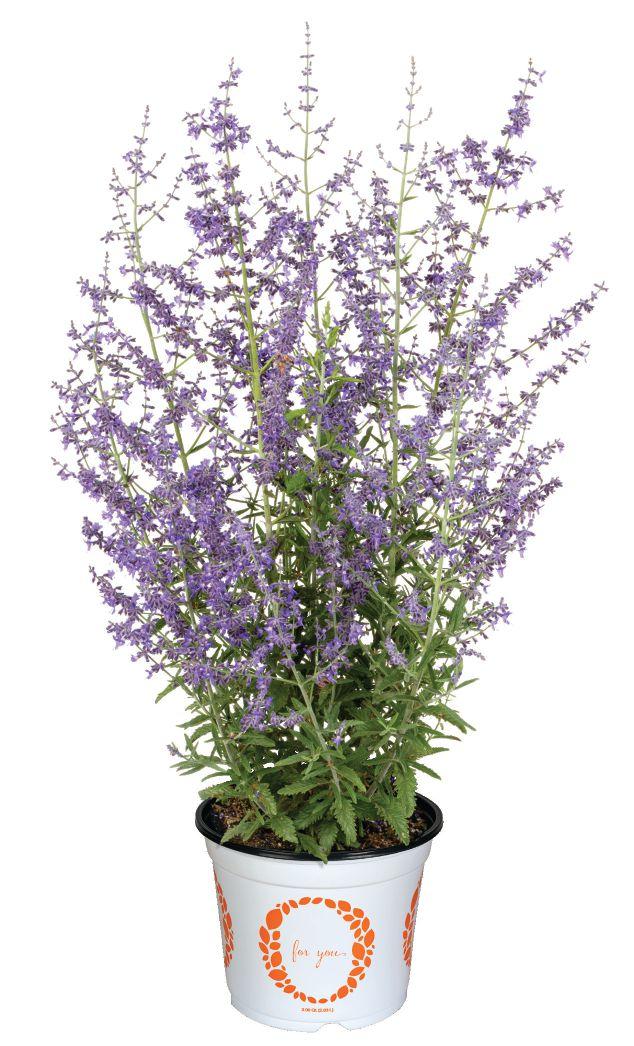
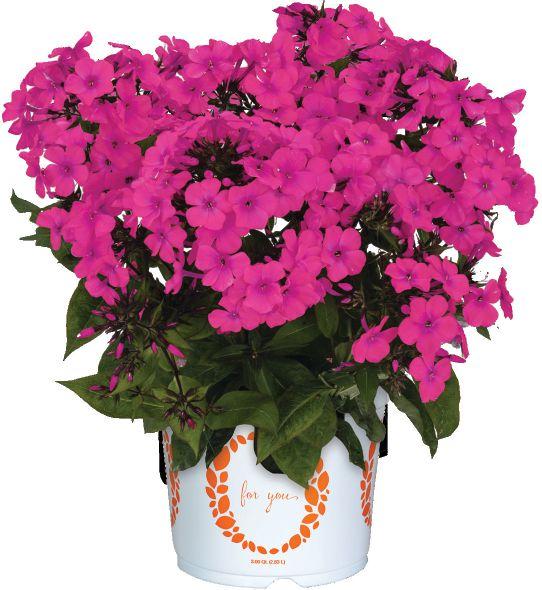
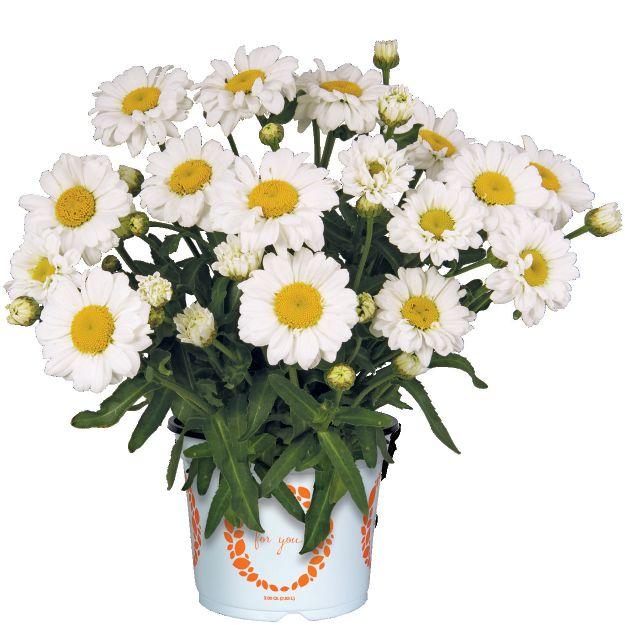
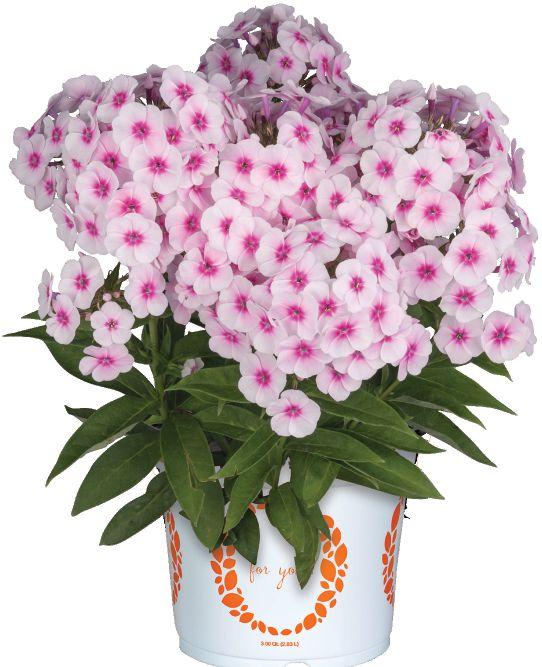
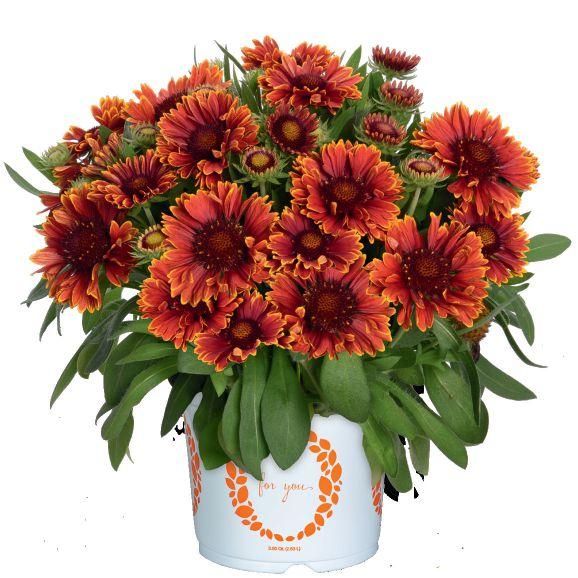
Images from top left to right
Perovskia atriplicifolia Jelena 88411
Phlox Flame® Pro Cerise 80434
Phlox Flame® Pro Baby Doll 80438
Gaillardia SpinTop™ Yellow Touch 62456
Leucanthemum Sweet Daisy™ Jane 80393
Gaillardia SpinTop™ Red Starburst 62517
FEEDING generations
Beverly Greenhouses has been growing vegetables since 1960.
BY ANDREW SNOOK
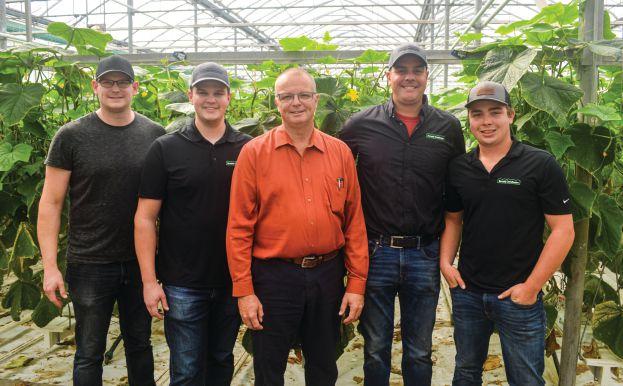
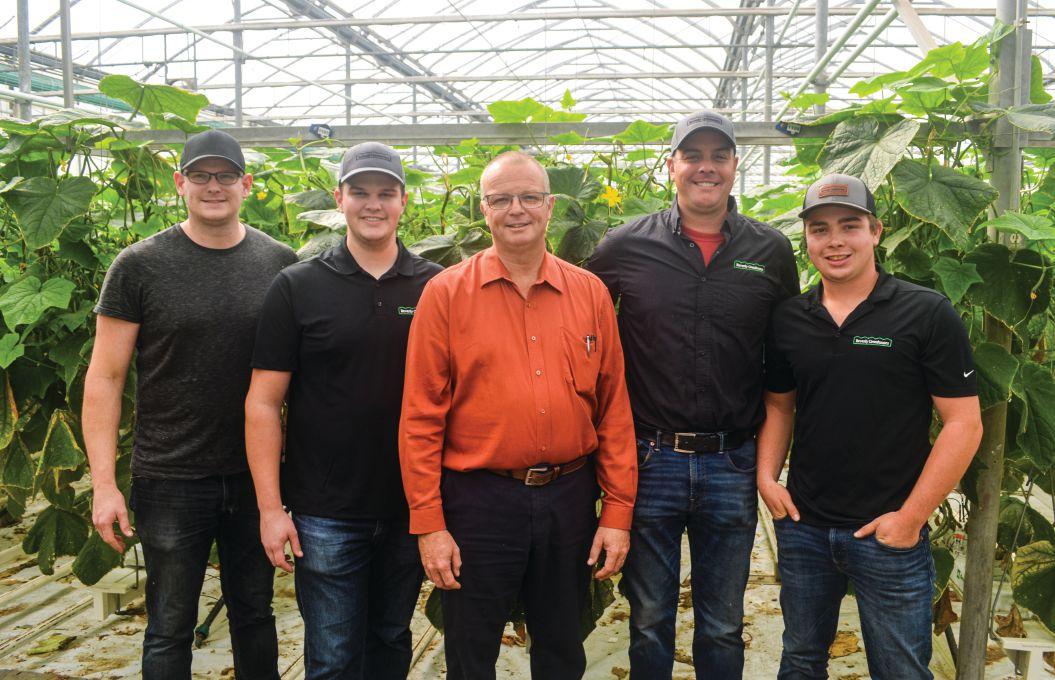
From left: David, Daniel, Jan, Dale, and Adam Vander Hout.
The Vander Hout family has been feeding Ontario residents for more than 60 years.
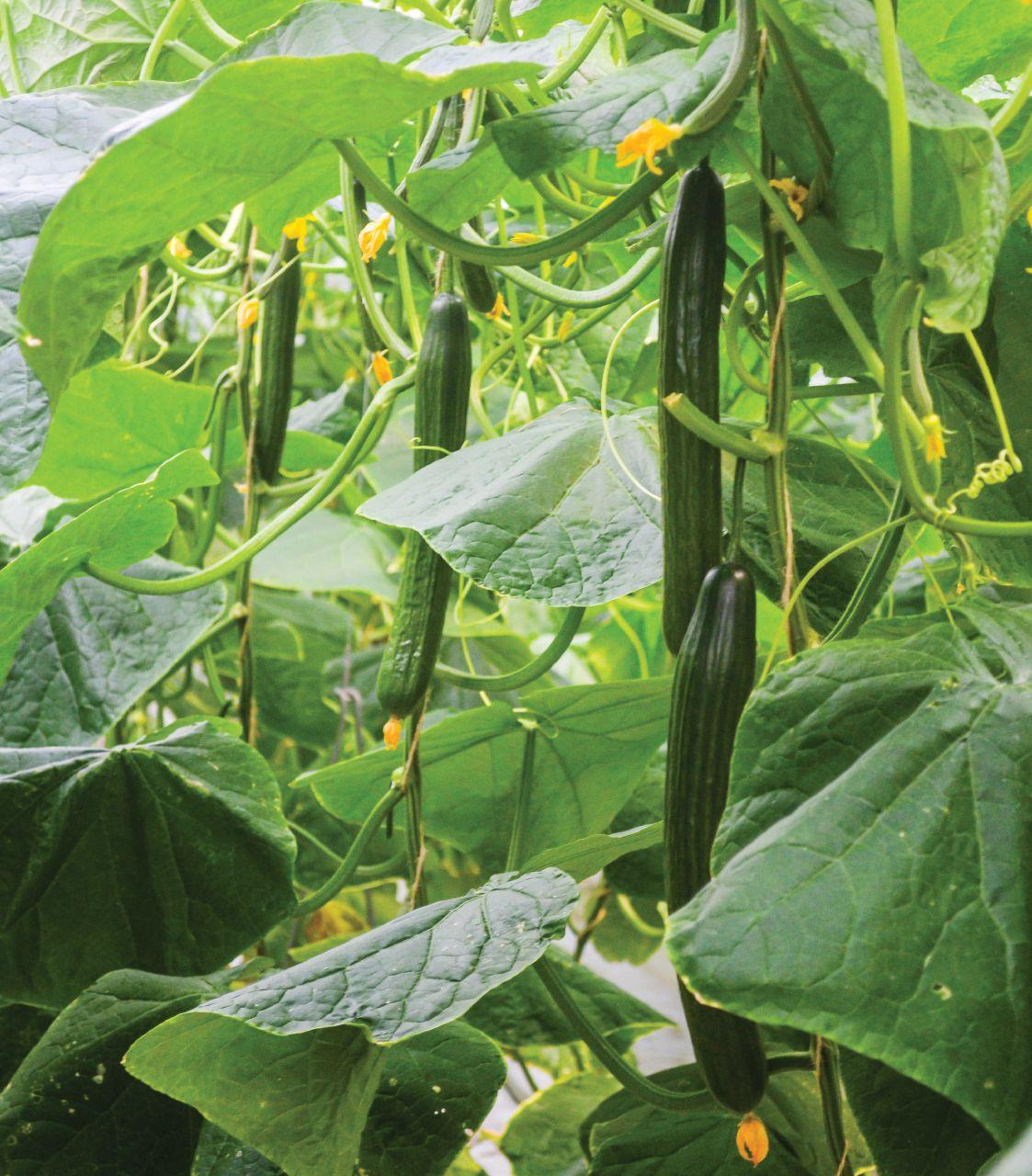
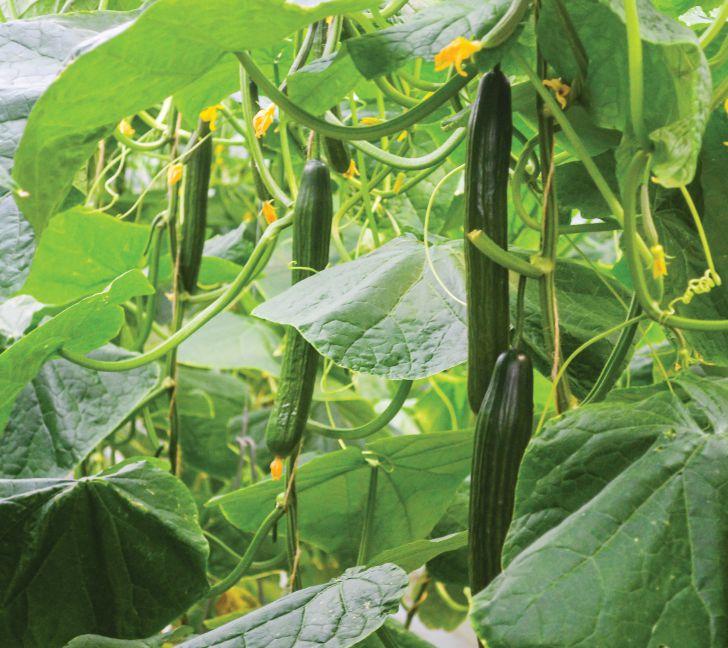
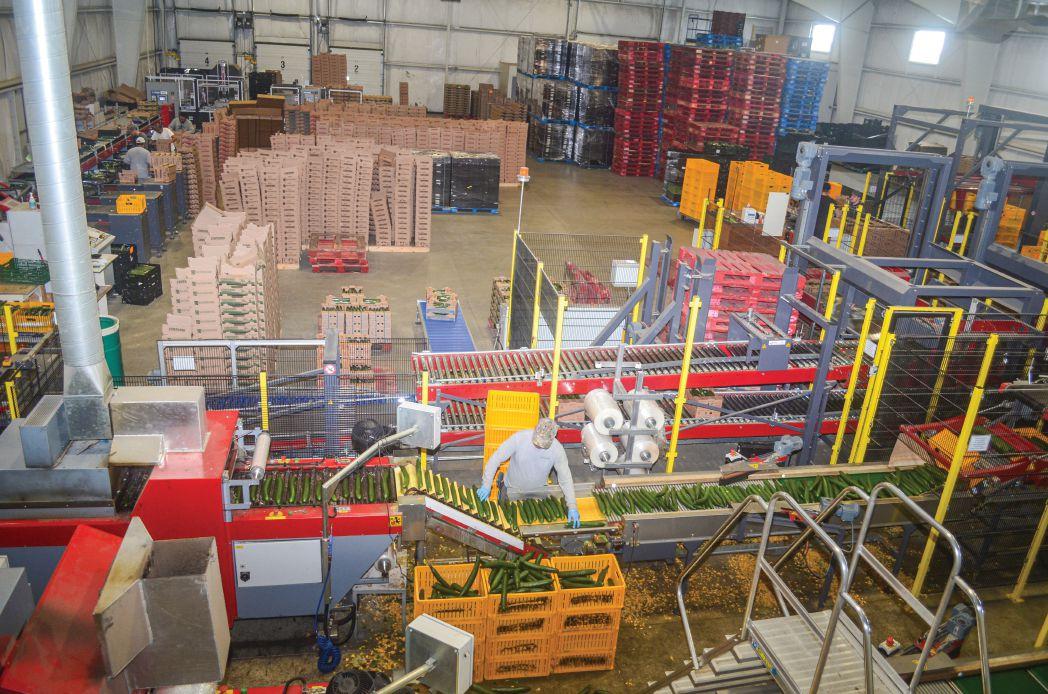
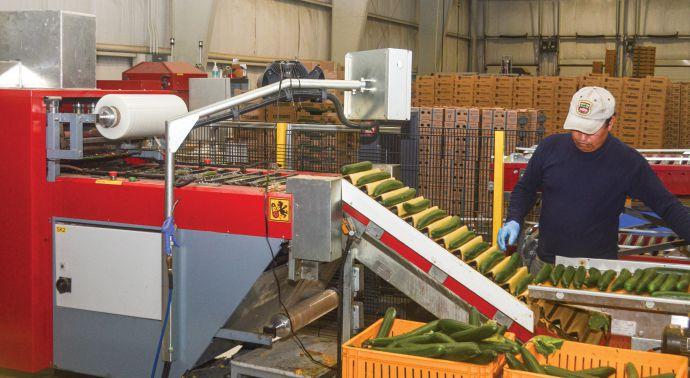
When Jan Vander Hout (Sr.) started up Beverly Greenhouses in 1960, he started with a 1/4-acre of greenhouse space where he grew tomatoes; in addition to some outdoor crops. In 1968, he built a one-acre greenhouse, and added another 1/3acre the following year. Throughout the 1970s, Beverly’s Greenhouse’s growth became constrained due to lack of available land, but the Waterdown, Ont.-based grower did make a major change to its operations during that decade. In 1978, the company decided to focus on growing English cucumbers exclusively, and for the past 44 years that aspect of the operation hasn’t changed.
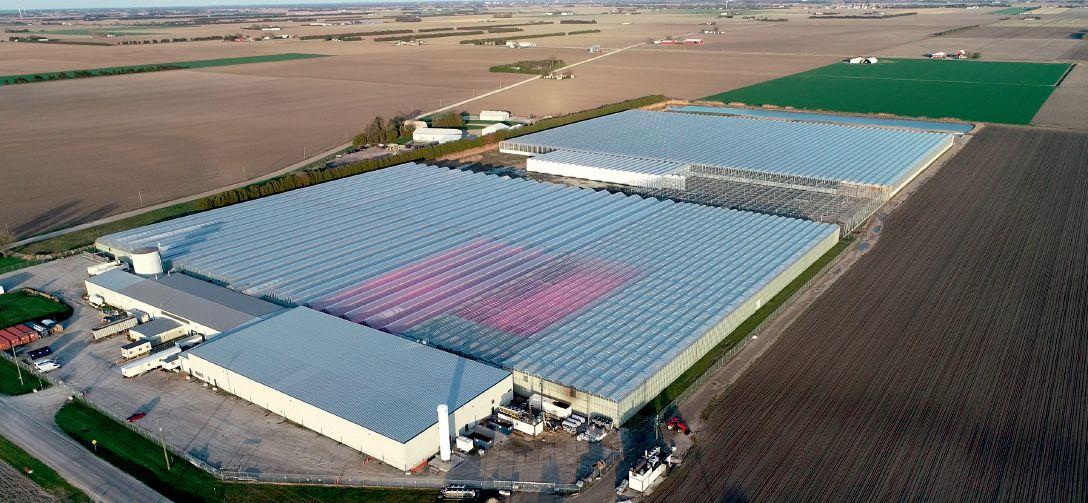
In 1984, Jan and his son, Marshall Vander Hout, purchased additional land and expanded the greenhouse operation further. The company has undergone several expansions since that time, with a major expansion in 1996, and further expansions in 2005, 2006, 2012 and 2017 (which included building their own propagation houses). The greenhouse operation’s total acreage now stands at 30 acres with two acres committed to propagation.
The company is currently managed by the third generation of the Vander Hout family: Marshall’s two sons Jan (Jr.) Vander Hout and Dale Vander Hout.
Jan (Jr.) says the decision to significantly expand the operation while continuing to focus on the cucumber market came from wanting to take
advantage of economy of scale.
“This maximizes the use of our automated packaging line. Focusing on one crop maximizes our production potential,” he says.
Beverly Greenhouses does not sell direct to stores. It partners with Bayshore Vegetable Shippers in the Burlington, Ont. area that sells their cucumbers to major retailers such as Loblaws, Metro, Sobeys, Costco, and some American retailers south of the border.
LEFT
In 1978, the company decided to focus on growing English cucumbers exclusively, and for the past 44 years that aspect of the operation hasn’t changed.
control. Dale says the push for increased automation will be faster than ever moving forward.
“With all the A.I. and sensors coming in, I think there will be more change in the next 10 years than in the last 10 years. Robotics is coming in hot,” he says.
“I think there’s a lot of drive for automation for picking and deleafing as well,” Jan adds.
The labour shortages generated due to travel restrictions during the COVID-19 coronavirus pandemic have played a key role in the push for automation.
“It really showed the labour vulnerability in this sector,” Jan says, adding that people will never be completely replaced. “There’s always going to be labour. You’re never going to be without it.”
Beverly Greenhouses uses a bioreactor to generate a healthier water environment through encouragement of positive microbial activity, Jan explains, adding that the water creates a very positive microbial push ln the root zone. “Using the Bioreactor we’ve created an environment where the benificial organisms take out the detrimental ones.”
Beverly Greenhouses does not sell direct to stores. It partners with Bayshore Vegetable
AUTOMATING OPERATIONS
In the fall of 2013, the company jumped further into the world of automation. They invested heavily in an automated packaging line for its packing house.
Dale says the investment generated better efficiency in the packaging operations and helped create better working conditions for employees.
“We’re always looking for ways to automate because we want Beverly Greenhouses to be a great place to work and to reduce labour demand especially in our busiest times,” Jan adds.
The company has also invested in software to automate various aspects of their water systems and climate
In addition to creating a healthier root zone, Jan says there are the immeasurable advantages of a more wholesome tasting fruit due to the natural biome in the irrigation water.
“We really think recirculating water through the biofilter is the best way to attain optimal environmental performance,” Jan says.
VIRUS MANAGEMENT
While Beverly Greenhouses has the advantage of being in a relatively secluded location, away from other greenhouse operations, the company takes virus management very seriously.
“Between crops we deal with viruses as if they were already here,” Jan says. “Every time the greenhouses are cleared out and
sanitized to prepare for the next set of crops, growing media is replaced for the incoming plants to reduce the chance of cross-contamination.”
Dale says their operation has a stringent set of procedures in place for sanitization of the greenhouse. He adds that Beverly Greenhouses has been fairly fortunate over the years in terms of outbreaks of destructive viruses like the cucumber green mottle mosaic virus, which has been a significant problem for some operations in Ontario.
“We’ve never dealt with it here,” he says.
“We can’t get it from another farm through propagation because we propagate our own,” Jan adds.
That said, no set of procedures is 100-per-cent guaranteed to prevent a virus from entering a greenhouse, Jan acknowledges.
“We’re pretty isolated here, but contractors come in here to fix the plumbing, electrical and other things, and they could bring it in from another greenhouse,” he says.
Dale says the industry has learned to adapt to the cucumber green mottle
mosaic virus over time.
“I think the industry has learned how to grow with it,” he says.
COST CHALLENGES
Nothing in the world right now is getting cheaper, and that includes the products needed to run greenhouse operations.
“Right now, cardboard is up 42 per cent. Anything plastic is up 50 per cent, and natural gas is double for those who have not hedged,” Jan says. “Increased costs of inputs in the short-term need to be passed on to the consumer.”
For the cardboard needed for packaging the cucumbers, there are limited alternatives.
“We have looked at ways to see how we can make our boxes less expensive, like reducing the paper weight, but there’s only so much you can do,” Jan says.
Energy costs are another big concern for many greenhouse operations throughout Ontario.
“If you’ve got a lit greenhouse, electricity prices are a big concern,” Jan says. “Natural gas has gone up a lot in the last couple of months.”
One of the ways Beverly Greenhouses
reduces its costs is through burning waste wood in its boiler system to generate heat.
“We basically make half of our own hydro while using all the waste heat from the generators, and much of our greenhouse heat comes from waste wood. We’ve been doing that since the 1980s,” Dale says.
The greenhouse has two co-gen plants on site for producing electricity.
“Our generation cost is lower than we would pay to Hydro One,” Jan says.
Market value for cucumbers hasn’t kept up with increased operating expenses, so finding ways to improve efficiencies and cut costs is vital.
“Over the last couple of years, we’ve found these little efficiencies,” Jan says. “Cucumber prices have not gone up in price to keep pace with inflation, not by a long shot.”
SUCCESSION CHALLENGES
Just as Marshall learned the family business from his father, Dale and Jan learned how to run the operation over time from their father. The two sons are confident that some of their children (David, Daniel and Adam Vander Hout) will be able to take
The labour shortages generated due to travel restrictions during the COVID-19 coronavirus pandemic have played a key role in the push for automation in many greenhouse operations.
over the family business over time, making Beverly Greenhouses a fourth-generation family business.
“Dad took over the business over time, and we took over the business over time. Now, we have a generation that wants to take care of the business over time,” Jan says.
Jan says finding ways to organically transfer the various responsibilities of the business to different family members can be difficult.
“We haven’t arrived there yet, and in fact, you never actually get there, there is always the next step. It’s a challenge. How do you make it fair for everyone and not create any problems with the company? Mitigate taxes? Make it affordable for the next Gen? We’ve got to give credit to our grandfather and our father,” he says.
When it comes to favorite aspects of running the business, Dale says he enjoys the variety that comes with managing greenhouse operations.
“I like the combination of working with people, equipment, working outside and working with plants. You get to do a bit of everything,” he says.
Market value for cucumbers hasn’t kept up with increased operating expenses, so finding ways to improve efficiencies and cut costs is vital.
For Jan, he’s passionate about feeding people.
“I like that we’re growing food, something that’s fundamental for human consumption,” he says. “I also do a bunch of volunteering on boards of agricultural associations; I really enjoy interacting with other farmers and government.”
When it comes to future plans for
Beverly Greenhouses, Jan says the business will continue to focus on finding ways to optimize operations.
“We will continue to look for opportunities to improve overall efficiencies,” Jan says.
“We’ll continue to find things to naturally integrate into the business,” Dale adds.
A PLACE FOR Pesticides
There are times when releasing beneficial insects isn’t the most effective or economical course of action
BY MIKE SHORT AND SARAH JANDRICIC
Born out of a need to battle insecticide-resistant pests with relatively few chemical options, the greenhouse floriculture industry in Canada has earned its place as a world leader in the use of biological control over the past 30 years. Most of the time, high-quality, residue-free crops can be produced exclusively with this pest management tactic. Sometimes, however, there are times where releasing beneficial insects isn’t the most effective or economical course of action.
Focusing on biocontrol as the main tool in the IPM toolbox means opportunities to reduce your bottom line with pesticides for specific pest issues can be missed. More serious situations can also arise when growers are hesitant to intervene early in a pest management issue with chemical controls, over fears they will irreparably damage their biocontrol program.
Although some level of apprehension before digging into the pesticide cabinet is absolutely warranted, both pesticides and biocontrol have a place in successful crop production, if care is used. In this article, we’ll guide you through some scenarios where we see a place for pesticides in greenhouse ornamental crops, which pesticides to pick, and how to use them most effectively.
A TIME FOR PESTICIDES
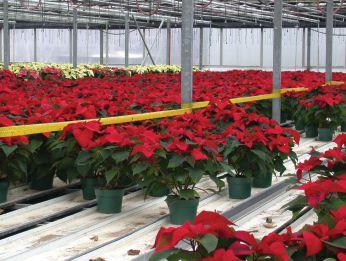
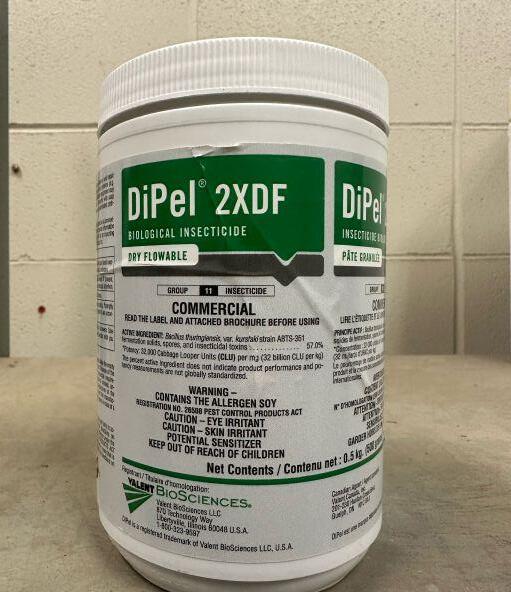
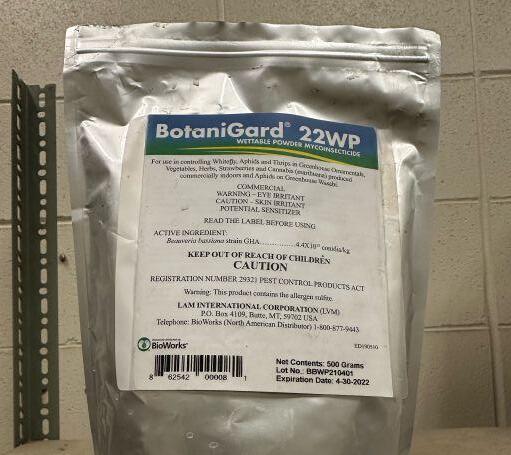
flower thrips (WFT) or onion thrips can fly into greenhouse crops through vents and other openings and cause significant damage quickly. Since predatory mites are not able to kill adult thrips, this is the time to aggressively add in weekly sprays of Beauveria-containing microbial pesticides (Fig. 1). This can drastically reduce adult thrips populations. Some growers are able to manage thrips populations in summer crops, such as garden mums, using Beauveria and mass-trapping alone, with significant cost savings.
Once the days become darker, shorter and colder, certain biocontrol agents can also become less effective. This is fairly
1
Although the days of “calendar spraying” are long behind us, you’ll still want to take note of when certain pests predictably become a problem and have a management plan in place. This plan should include biocontrol agents, mechanical controls (e.g. mass trapping), sanitation (e.g. rouging plants infested with more sedentary pests, like Lewis mite) as well as potential pesticides in case these tactics aren’t effective.
Applications of pesticides are sometimes your best bet in a floriculture IPM program. Always check the label for any instructions on how to best apply the product (e.g. “spray to glisten” for some products; “spray to runoff” for others).
A time of year we know can be a potential issue is hot, summer months. When outdoor crops are harvested, or when weed hosts die off, large numbers of adult western
common knowledge when it comes to Orius and parasitoids for aphids and whitefly, but the predatory mite N. cucumeris has recently been shown to establish less in winter as well 1. One strategy to combat this is to get good establishment of your natural enemies in fall and go into these drearier days with low pest levels that can be ridden out. If this isn’t achievable,
FIGURE
Growers know that when it comes to controlling and monitoring a production environment, a simple, flexible, sustainable control system is crucial. This is why you can depend on Reliable Controls. Our nationwide network of factory-certified Authorized Dealers will help you design, install, and commission a comprehensive control system paired with an intuitive, custom-tailored graphical interface. Take command of your precisely controlled environment. Generate tracking reports and analytics. Reduce your carbon footprint while improving productivity, quality, and serviceability.
To learn more about this cost-effective, Canadian-made solution, please contact a Reliable Controls
Authorized Dealer near you.
Canada: 403.561.4148
Canada: 647.982.7412
then sometimes repeated pesticides applications can get you through this period. Biocontrol agents can be reintroduced when climate conditions are more favourable (generally in the first week of March), as long as you use chemical products with short-tomoderate residuals (see Table 1).
WHEN PESTS ARE ON THE RISE
Probably the best time to consider incorporating pesticides into your IPM program is when monitoring indicates
pest levels are rising dramatically. This could indicate a sudden influx of pests (from outside or from incoming plant material), or that your biocontrol program is unable to keep up for some reason.
A good example of this is with thrips pests other than western flower thrips (WFT). Growers are understandably reluctant to turn to pesticides because of our experience with WFT and its widespread pesticide resistance. However, typical mite-
based biocontrol programs designed for WFT aren’t entirely effective for thrips pests like onion thrips (Thrips tabaci) 2, tropical tabaco thrips (Thrips parvispinus) 3 and Echinothrips (Echinothrips americanus) 4. Relying on predatory mites only in these cases can result in high thrips population and significant crop damage. Luckily, all three of these thrips species are more susceptible to pesticides than WFT. Applications of products such as Success (spinosad), Kontos (spirotetramat), Ference (cyantraniliprole) and Beleaf (flonicamid) likely won’t cure your problem entirely but can knock back the problem long and hard enough for you to get out of a jam. As these products have varying ranges of efficacy on these thrips species, they may be best used in combination. All of these chemicals are somewhat compatible with natural enemies (see Table 1), so you can get back to implementing biocontrol in a few weeks, when any residual effects from the pesticide are likely to have passed. Rotating introductions of natural enemies with pesticides also lengthens the time needed between pesticide applications, helping to avoid resistance.
PROBLEM AREAS
When considering the use of pesticides, the location of the pest problem can also play a factor. In years past, a pest found in one corner of the greenhouses warranted blanket pesticide applications across the whole crop. Now, the dangers of pesticide resistance and derailing biocontrol programs is too high for this type of application, without careful thought. But when applied as spot-spray, or in more selfcontained areas, many pesticides can more easily fit into biologically-based IPM programs.
A good example of a problem area where pests pop up year after year is outbreaks of spider mites along the south walls of greenhouses. We often see consistent “hotspots” here, where temperatures may be higher at certain times in the season. Spider mite outbreaks can also occur along the greenhouse walls when weeds are killed off around the perimeter of the greenhouse. Interior weed control and a spot spray of a miticide with a shorter residual in this area of the crop may be the most effective and timely method for impeding further problems. The key to knowing when and where
Floriculture crops can have radically different structures and densities. Consider the canopy density when choosing your application equipment and the type of chemical (contact, translaminar or systemic).
these hotspots might occur is longterm scouting records. Referring to past years notes and pest counts, growers can identify pest patterns and trends to guide their pest management decisions seasonally.
Another common problem that often occurs regularly is in short-term crops. It is common for some growers to broker a certain crop to fill a sales need or utilize available space while partnering with another greenhouse. Often, these products arrive with a pest already present. Time constraints may not allow biological control to be the most effective control measure. Or, the pest may not have an effective natural enemy that works quick enough. For instance, mealybug that arrive on tropical house plants. In this case, the best course of action is to place the short-term crop in a smaller zone by itself (if possible) where a pesticide can be applied without affecting other zones that may have established biological control. Depending on the chemical used, toxicity could persist, so biocontrol may have to be delayed on any follow-up crops in that zone.
CHOOSING THE RIGHT PRODUCT
The key to successfully integrate pesticides into your IPM program is understanding both the direct toxicity of the product on your biocontrol agents
(mortality rate) and the time the product is still present in the plant, or on leaf surfaces, and remains toxic (residual toxicity time).
Most of the major biocontrol suppliers give compatibility ratings from 1-4 for pesticides, based on guidelines from the International Organization of Biological Control. Products rated a “1” have studies which indicate they cause anywhere from 0-25% direct mortality of particular biocontrol agents. These are considered “compatible” in the industry. Products rated 2-4 cause 25-100% mortality and are considered “moderately soft” (2) to “hard” (4) on biocontrol agents and are often not recommended for use in an IPM program involving natural enemies.
These ratings offer a quick and easy guideline and will be incorporated into OMAFRA’s new pesticide reference tool that will be launched for greenhouse crops in 2023 (Crop Protection Hub, cropprotectionhub.omafra.gov.on.ca). However, as with any quick reference tool, these simple compatibility ratings don’t necessarily tell the whole story.
With a compatibility rating of 2-3 (depending on the insect), soaps and oils are actually some of our best chemical tools in an IPM program that relies mostly on biocontrol. Despite being non-discriminately toxic against all natural enemies (insects and mites),
they have a very short residual time. This means biocontrol agents can be rereleased once the product is dry or will continue emerging out of sachets already in the crop.
Even more toxic chemicals have their place. In crops where biocontrol is limited (for example, those that use predatory mites only), moderately toxic products can be used as spot spray or to knock back a pest outbreak, as long as they also have moderately short residual times for the natural enemies in use (see Table 1 for product examples). In practice, we see some producers who have success with a single application of a product like Avid (abamectin) to get on top of thrips with one shot. They are then able to re-introduce predatory mites in sachets after a few weeks, as the residual for this product is only two weeks. To be extra cautious, some growers add 50% to the residual time before re-introducing (i.e. giving Avid three weeks, instead of two).
Conversely, products rated a “1” should not be seen as having zero ramifications on biologically-based IPM programs. By applying these products, you may be reducing your population of a biocontrol agent by 25% with each spray. With several consecutive sprays, this could negate your introductions entirely.
FIGURE 2
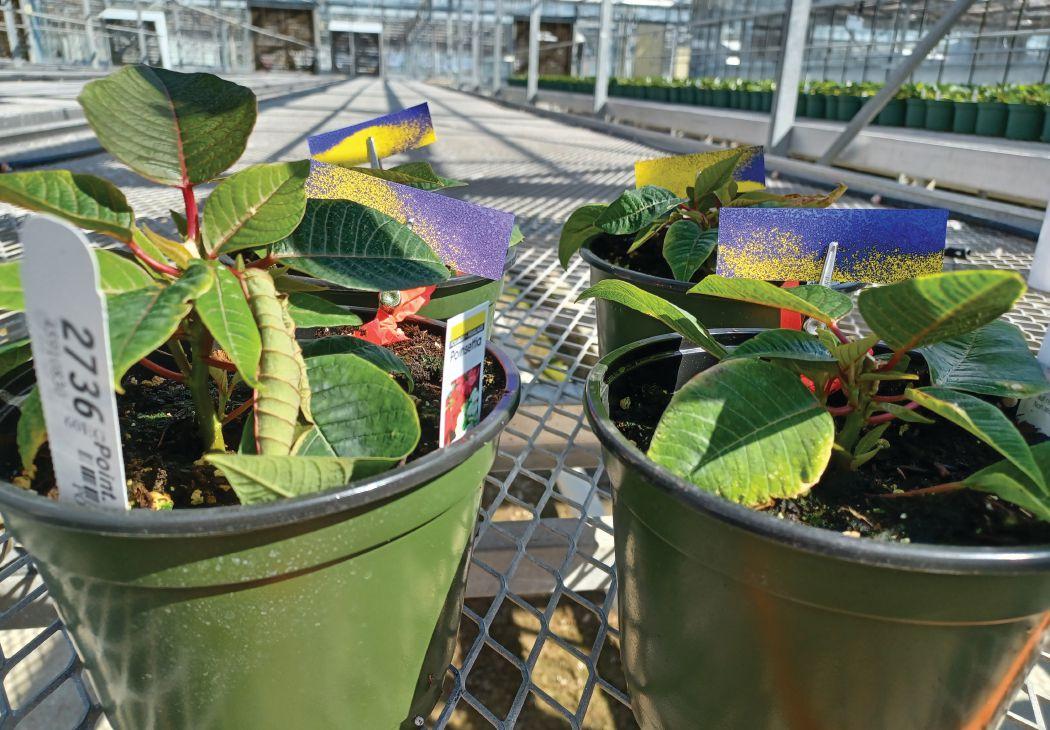
An example of using water-sensitive paper in a poinsettia spray trial. Here you can see how the leaves blocked the spray from reaching certain points of the plant (yellow areas). Blue areas indicate good spray coverage.
Additionally, the complete ramifications of a product may not be entirely captured in current compatibility databases. An example of this is Beauveria -based products. Although consistently rated a “1” against all natural enemies, repeated applications are known to kill both Aphidius colemani and Orius insidiosus at high rates in a greenhouse setting 5 Similarly, compatibility rankings don’t often take into account sublethal effects of a pesticide – negative impacts on things like natural enemy reproduction, searching behaviour or lifespan. Ultimately, this means there is no product currently on the market that can be considered completely compatible.
Further, there are many products where side effects are unknown –especially new products, like Ferrence (cyantraniliprole) and Ventigra (afidopyropen), where the data just hasn’t been generated yet. The lack of
a negative compatibility rating should never be seen as permission to spray. Instead, test patches should be done in the crop, with monitoring of presence and reproduction of biocontrol agents in that area.
HOW THE SPRAY IS APPLIED CAN BE CRUCIAL
As growers know well, the floriculture crops we grow can vary dramatically in crop architecture and canopy density, across plant types and depending on their stage of growth (Fig. 2). In a perfect world, we would have specific sprayers designed for each crop to achieve the best possible canopy penetration and application efficiency.
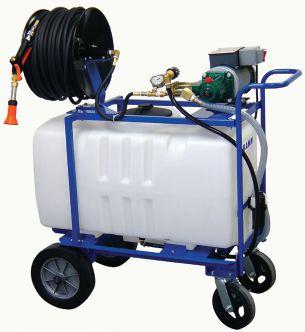
Because this would not be economically feasible, most growers use a single hydraulic sprayer, which utilizes high volumes of water and pressure to apply insecticides and fungicides to all crops. These sprayers can be effective when crops are young and spaced out,
but once the canopy has closed, getting product where it needs to be (generally on the undersides of leaves within the plant canopy) can be incredibly difficult. Where possible, we’ve found the best way to get the best control of most pests (either insect or disease) is through drench applications of systemic products.
For products that are contact or translaminar only, and cannot be drenched, correct choice of machine, nozzle or pressure can make the difference between good and poor coverage. For instance, to help biopesticides like Beauveria work more effectively for thrips suppression, they should be applied via hydraulic sprayer at higher pressures to create more of a mist, or through a Low Volume Mister (LVM) when weather is humid. Compared to conventional hydraulic sprayers, foggers or misters produce smaller (and more numerous) water droplets, which are suspended in the air for longer. This allows lateral air
FIGURE 3
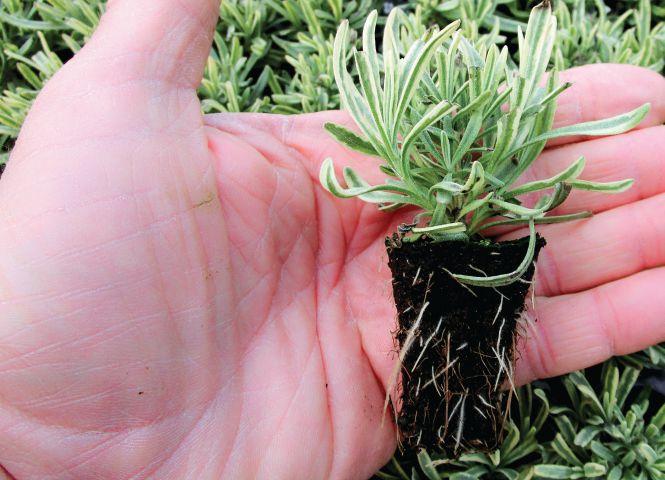
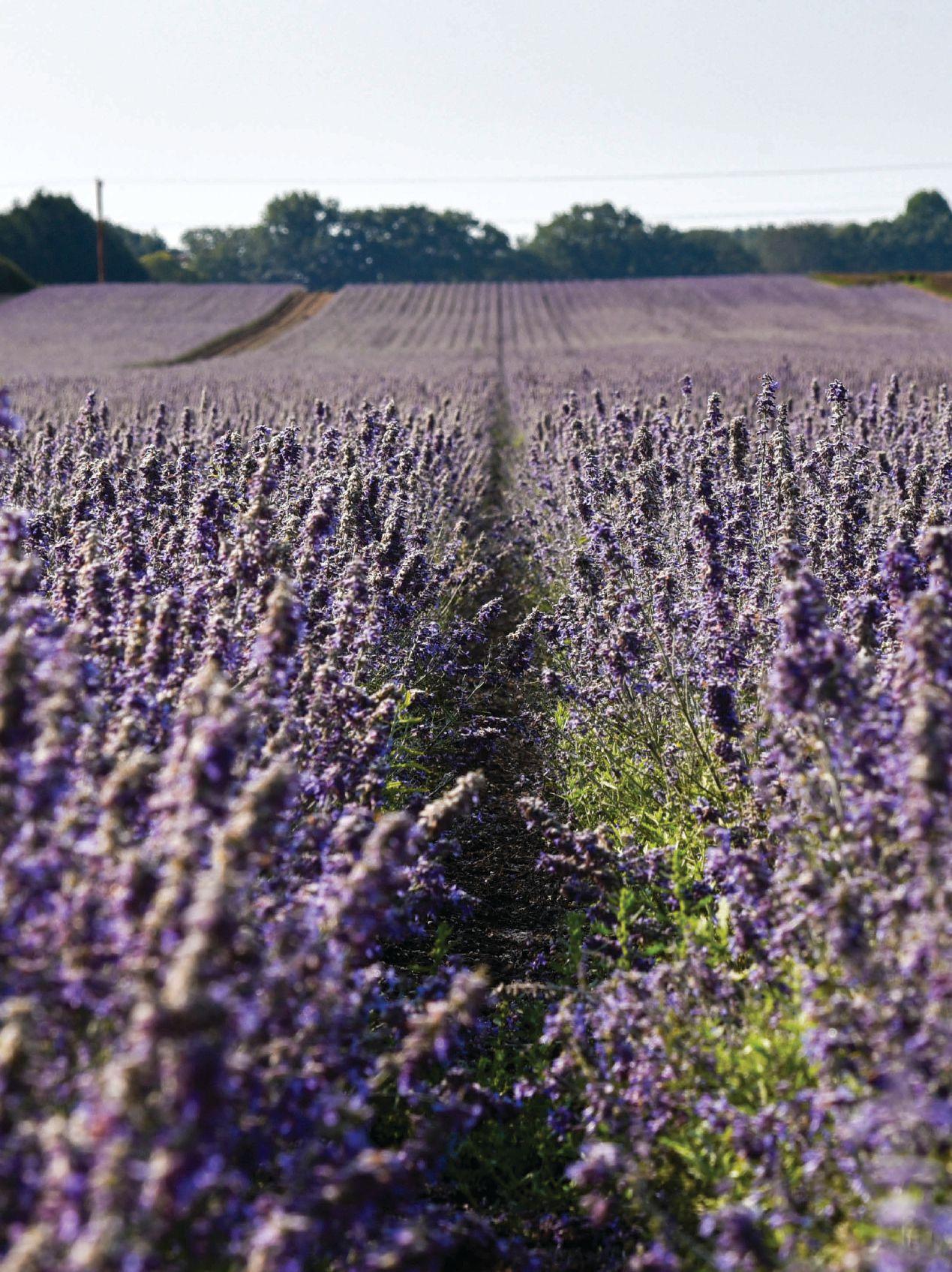
Our fields are meticulously cared for to create some of the largest, most generously graded bare root perennials in the industry. Upon harvesting, our product is cleaned and trimmed, stored properly, and capable of filling out a container in the first year. The result is a strong, reliable retail presence. With hundreds of varieties to choose from, there is something for everyone!
v Characteristics
Completely Compatible (0)
Somewhat Compatible (1)
Toxic, but have a regular place in biologically-based IPM (2)
Highly Toxic, but sometimes needed (3)
Compatible with ALL bios –NO direct mortality or sublethal effects of any kind
LOW MORTALITY of most bios, MINIMAL SUBLETHAL effects and SHORT RESIDUALS
Product examples (not an exhaustive list)
Don’t currently exist N/A
BotaniGard (Beauveria bassiana)
Beleaf (flonicamid)
Citation (cyromazine)
Coragen (chlorantraniliprole)
Dimilin (diflubenzuron)
Ference (Cyantraniliprole)
Floramite (bifenazate)
Shuttle (acequinocyl)
Talus (buprofezin)
Vendex (fenbutatin oxide)
BotaniGard – causes high mortality of Orius; can negatively impact aphid parasitoids and their banker plants.
Beleaf, Ference – considered safe for predatory mites; unknown or moderate negative effects on parasitoids; hard on Delphastus
Citation, Dimilin – hard on Aphidoletes, lacewings and Delphastus; can be hard on P. persimilis (1 wk residual)
Floramite, Shuttle, Talus – can negatively affect P. persimilis (residual of 1 wk) and immature parasitoids. Talus is hard all coccinellids.
Super Toxic – never ever use (4)
TABLE 1
HIGH TOXICITY, but VERY SHORT RESIDUALS.
Can re-introduce all natural enemies almost immediately.
MODERATE RESIDUALS, with MODERATELY HARD TOXICITY on many biocontrol agents (including predatory mites).
Use as SPOT SPRAYS, for CLEAN UP or in crops where BIOCONTROL IS LIMITED.
LONG residuals, EXTREMELY toxic to all natural enemies (mites and insects). Greenhouse registrations being phased out for many.
DDVP (dichlorvos; not currently registered)
Landscape oil (mineral oil)
Insecticidal soaps
Avid (abamectin)
Fujimite (fenpyroximate)
Pylon (chlorfenapyr)
Kontos (spirotetramat)
Success (spinosad)
Tetrasan (etoxazole)
Deltaguard (deltamethrin)
Orthene (acephate)
Lorsban (chlorpyrifos)
Revised pesticide compatibility rankings on natural enemies. Developed by OMAFRA staff.
movement in the greenhouse to carry Beauveria spores held in the droplets into the plant canopy, instead of just settling on upward-facing surfaces. For information on using LVMs in greenhouses, check out OMAFRA’s “Sprayers 101” website (www.sprayers101.com) and search for “foggers.”
As a final note on contact insecticides, you should always make sure to place water sensitive paper (Fig. 3) within the crop (in target or hard to reach areas) when spraying these products to determine if you’re actually getting the product where it needs to be. If you’re new to using this tool for assessing pesticide coverage, you can read about it in the three-part series, “Assessing Water Sensitive Paper,” on sprayers101.com.
HOW DO I KNOW IF MY PESTICIDES ARE WORKING?
As a final note on pesticide use, it’s critical that growers compare pest numbers before and after a pesticide application to determine if the spray was effective. Plant taps and card counts are necessary to help with an informed decision on whether further action is needed. Take note of the predominate life stage of the pest (i.e. larval thrips versus adults) to determine the correct pesticide product to use and whether that life stage continues to dominate after the spray. When done correctly, only one spray may suffice (for thrips larvae) or a series of weekly sprays may be needed for a knockdown (thrips adults). The time of the year and levels of pest pressure will determine the urgency
Non-discriminatory in their toxicity but non-toxic once dry
Success, Fujimite, Kontos, Tetrasan: hard on all predatory mites, Orius. ca. 2-4 wks persistence. Some hard on aphid parasitoids.
Avid, Pylon: ca. 4 wks persistence; toxic to Orius and Diglyphus for long periods (6-12 weeks). May affect biocontrol on other crops in same compartment.
8-12 week residuals for all. Will be difficult to re-establish biocontrol programs.
and frequency of the sprays and whether your biocontrol can take over the job when done with the sprays. If your spray application did not have the desired control, it may not necessarily be the fault of the chemical. Check your water pH (most need a range of 6.5-7.5 to be effective), or maybe your nozzle is becoming worn out. Doublecheck the dilution rate as stated on the chemical label. In some cases, more than one application is needed, so don’t despair if the first one was not as effective as hoped. In other cases, products may take a while to translocate to growing points (as we often see with Beleaf, which can take up to two weeks), so patience may be in order. When more than one pest is present
in your crop, it is important to note that when applying a chemical against the targeted pest, it may have a negative effect against the secondary pest. Many insecticides can also affect predatory mites (e.g. Success, Intercept), while miticides can also affect certain insect biocontrol agents (e.g. Fujimite, Tetrasan). An example of this is when abamectin (Avid) is used for mites. It will repel adult thrips away from the area, only to return with a vengeance when the chemical has dissipated. Another well-known negative interaction is when imidacloprid (Intercept) is applied for aphids. Here, spider mites will be aggravated to reproduce causing more of a problem immediately after the spray. Knowing about these interactions can help the grower make an informed decision regarding their overall plan of attack.
THE TAKE HOME MESSAGE
Overall, to produce crops both sustainably and economically, any one pest management tactic shouldn’t be considered the “end all and be all” solution for all crops and pests. Both
bios and pesticides can work in synergy – with careful planning. Being able to switch tracks and to stay dynamic in your pest control solutions is often the key for tricky situations. The more tools a grower has, the more proactive and long-term pest solutions can be realized in their facility. These tools can include both pesticides and biological control.
REFERENCES:
1. Roselyne M Labbé, Dana Gagnier, Les Shipp. 2019. Comparison of Transeius montdorensis (Acari: Phytoseiidae) to Other Phytoseiid Mites for the Short-Season Suppression of Western Flower Thrips, Frankliniella occidentalis (Thysanoptera: Thripidae), Environ. Entomol. 48 (2):335-342, https://doi.org/10.1093/ ee/nvz017
2. Summerfield, A., Buitenhuis, R., Jandricic, S. and Scott-Dupree, C. 2022. Pesticides for onion thrips: efficacy and compatibility with biocontrol. Poster presentation, 2022 Canadian Greenhouse Conference. At: Niagara Falls, Ontario. Access at: https://www.
4. Opit, G.P., Peterson, B., Gillespie, G and Costello, R.A. 1997. The life cycle and management of Echonothrips amiericanus (Thysanoptera:Thripidae). J. Entomol. Soc. Brit. Columbia 94, 3-6.
5. Ludwig, S.W.; Oetting, R.D. 2001. Susceptibility of natural enemies to infection by Beauveria bassiana and impact of insecticides on Ipheseius degenerans Acari: Phytoseiidae. J. Agric. Urban Entomol. 18: 169–178.
Dr. Sarah Jandricic is the Greenhouse Floriculture IPM Specialist for OMAFRA since 2015 and has been working in greenhouse floriculture entomology for over 20 years. Mike Short (M.Sc.) is owner of Eco Habitat Agri-Services and Greenhouse IPM instructor at Niagara College. He has been providing IPM consulting services for greenhouse crops for over 25 years.
HOW LED DYNAMIC lighting contributes to pest management
Multi-zone
light management enables targeted pest control
BY
ROSE SÉGUIN – AGRONOMIST, SOLLUM TECHNOLOGIES
Ask any grower who has transitioned from unlit to lit greenhouse cultivation – the effect on greenhouse pests can be immense. According to suppliers of biologicals for pest control and pollination, adding supplemental lighting to your greenhouse can double the required amounts. There are multiple reasons behind this, one of these being that supplemental light boosts crop performance, which may attract more pests. Also, supplemental lighting allows growers to plant in the late summer/early fall when pest pressure outdoors is naturally high. Despite the higher costs of biologicals, the increased
ABOVE
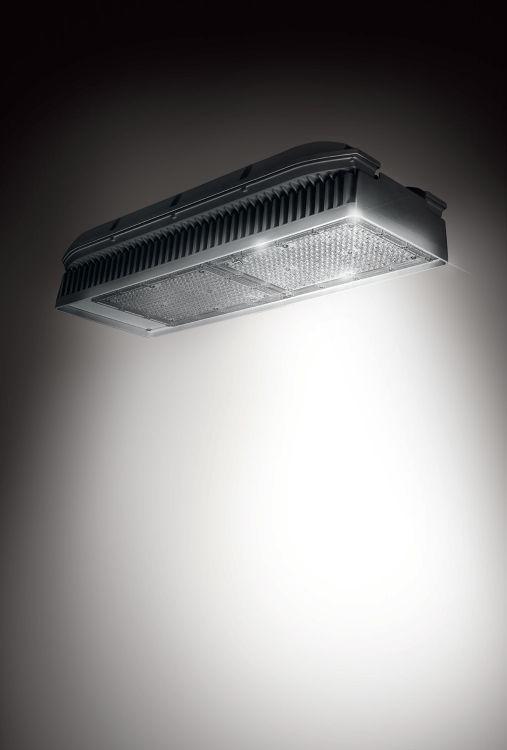
yield and product quality under supplemental lighting makes it worthwhile. However, lighting strategies need to consider the potential impacts on the activity of pests and biological control agents. With Sollum’s dynamic LED grow lights, growers can easily modify their photoperiod, light intensity, light spectrum and lighting zones at any time. This means that supplemental lighting is no longer a simple On/ Off switch but can be used to assess how light affects different insects and mites in the greenhouse. Then, lighting can become a tool to manage these species.
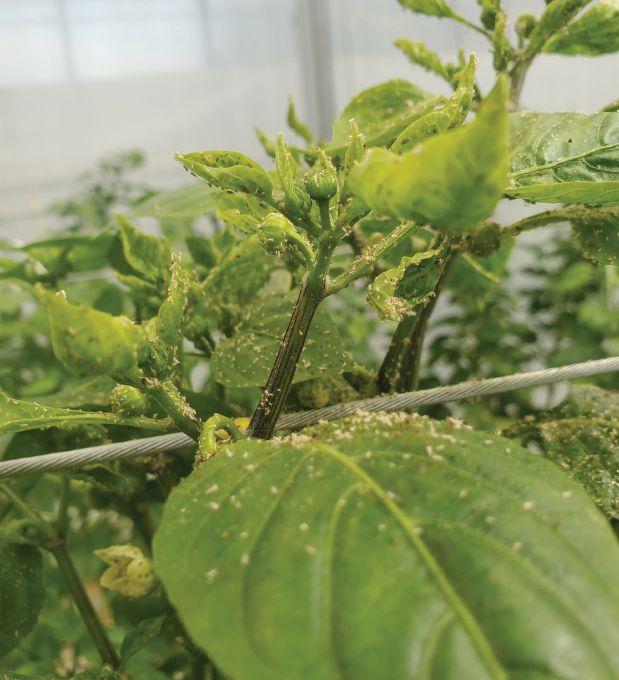
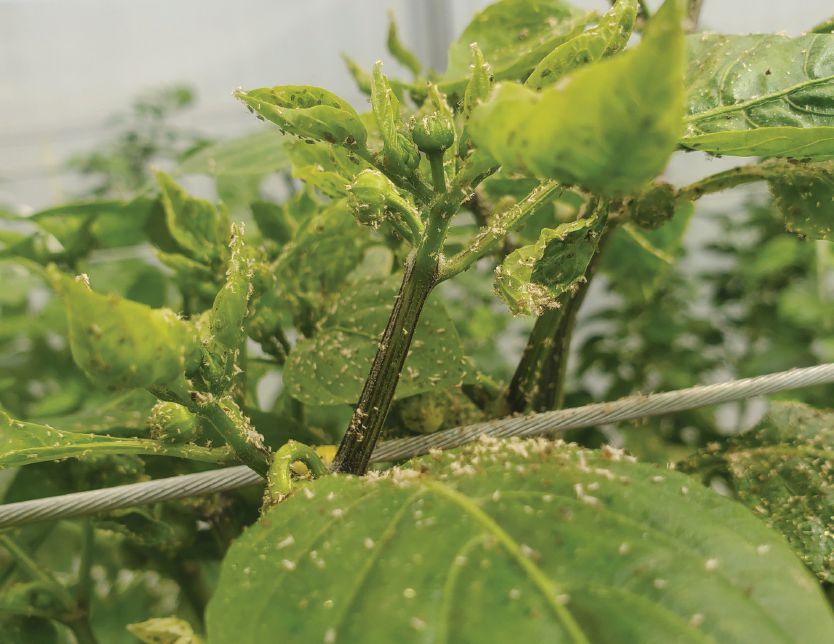
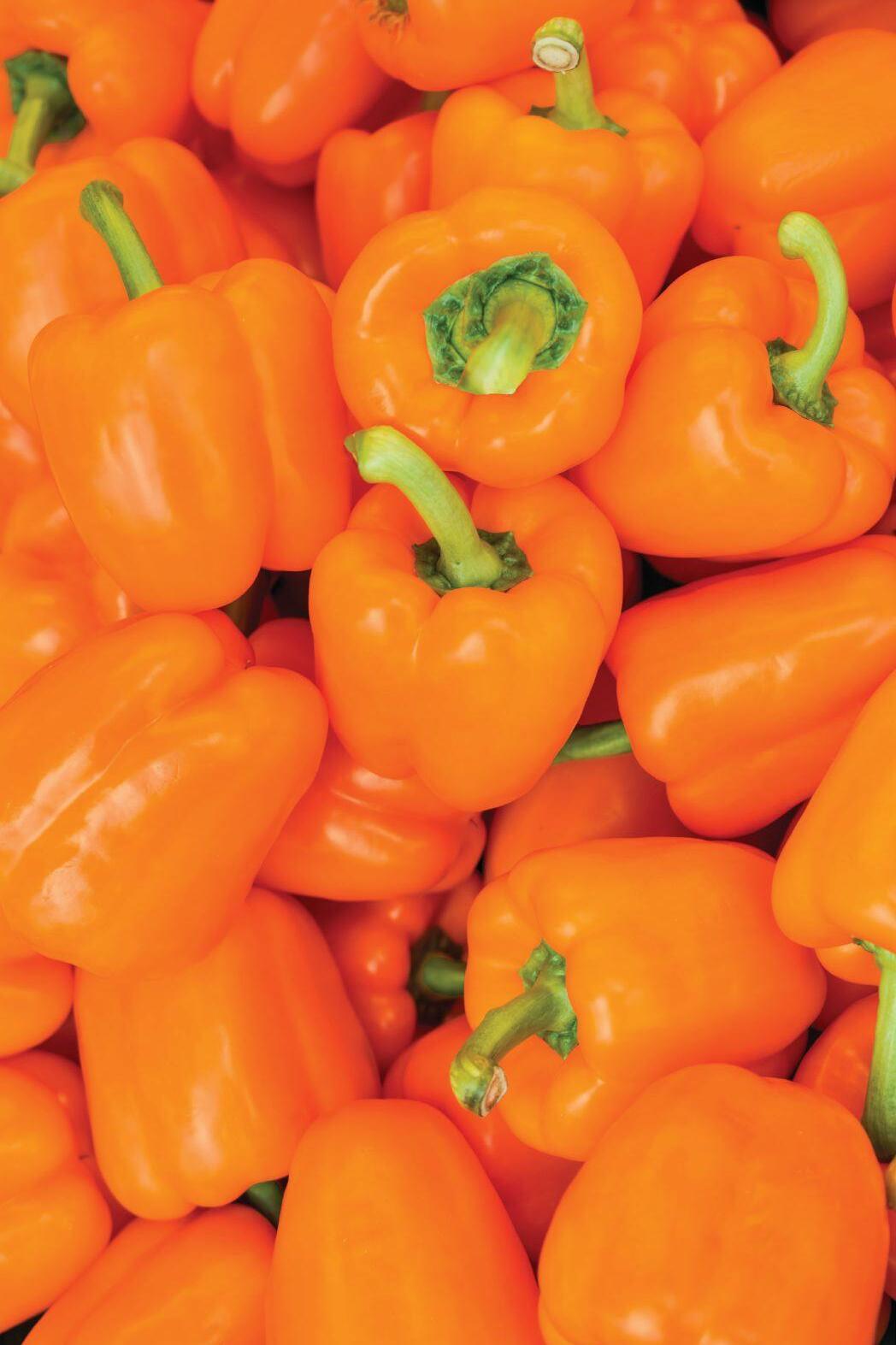
Figure 1 - Green peach aphids overrun the head of a pepper crop, severely hindering growth and fruit set.
Common greenhouse pests and their biological control agents.
Amblyseius cucumeris 12.5 h with day temperature of 22°C and night temperature of 17°C
Orius insidiosus 11-12 h
Orius majusculus 14-16 h
Aphidoletes aphidimyza 15.5 h
TABLE 2
Examples of biologicals and their critical photoperiod, under which diapause occurs.
In this white paper, we focus on integrated pest management (IPM) and how dynamic lighting can be another weapon in the IPM toolkit.
WHAT IS INTEGRATED PEST MANAGEMENT?
IPM is a holistic approach to managing insects, mites and diseases in the greenhouse. This is done through a combination of cultural, physical, biological and chemical practices, with chemical use typically being the last resort. In recent years, biological control of greenhouse pests has become the shining star of pest management. Rather than eliminating insects, mites and pathogens from the greenhouse, IPM brings in predatory or parasitic species to manage pests and diseases.
For this white paper, we will focus on the relationship between supplemental lighting, pest insects and mites, as well as biological control agents. And we will refer to pest insects and mites collectively as pests, and biological control agents simply as biologicals.
LIGHT-ASSISTED IPM: IS IT POSSIBLE?
Pests and biologicals both have vision systems and photoreceptors that make them sensitive to light conditions. Many studies have observed the behaviour of pests and biologicals under different light spectra, photoperiod and intensities.
Takeaway
When transitioning towards lit production, it is important to communicate that to your biologicals provider and discuss which biologicals will perform well under supplemental lighting. For now, most of that focuses on applying the appropriate photoperiod to keep your biologicals out of diapause. In the future, we expect this to be finetuned according to light intensity and spectrum.
Effect of photoperiod on diapause:
When greenhouse conditions are unfavourable to insects and mites, many species enter diapause. This dormant state can be triggered by temperature, photoperiod, low food supply, population pressure and the presence of predators.
Of these, photoperiod is considered the strongest signal as it indicates the arrival of the winter season (Bryon et al., 2017).
For the classic greenhouse crops (i.e., cucumbers, tomatoes, peppers and strawberries), a photoperiod of ≥16 hours is typically recommended. This is above the diapause threshold of most greenhouse pests and biologicals, so most species will not enter diapause. While greenhouse pests may not enter photoperiod-induced diapause, growers also need to think about their biologicals’ diapausing behavior.
For example, Orius insidiosus is highly effective against thrips during the summer but is notoriously difficult to establish in a greenhouse during the winter. However,
Aphids
supplemental lighting may make it easier to use Orius for winter production as growers will be able to provide the necessary photoperiod. Recent work by OMAFRA showed that while Orius develops rapidly under summertime conditions, females lived longer and produced more eggs under supplemental LED lighting for 20 hours. The researchers also reported that Dicyphus lived longer under high-intensity LED lighting (Labbé and McCreary, 2020).
Various studies have explored the effect of light spectrum on greenhouse pests’ behaviors. Most insects and mites that we come across in greenhouse settings reportedly have trichromatic
Identifcation of spider mite
Blue-enhanced spectrum to slow reproduction before biologicals are introduced
Takeaway
vision and are most sensitive to blue, green and ultraviolet light. For example, a study found that two-spotted spider mites may be driven to enter diapause under blue light (Suzuki et al., 2008). Another study then looked at western flower thrips and reported that thrips settled more under blue light and were possibly less active, whereas green wavelengths were linked to more feeding on leaves (Stukenberg et al., 2020).
WHAT ABOUT MY STICKY TRAPS?
The debate between blue and yellow sticky traps is ongoing, with yellow traps currently being the most used although some growers prefer blue sticky traps for
thrips. However, studies show that pests’ attraction to sticky traps may be affected by the type of supplemental lighting. In other words, the colour and intensity of supplemental lighting can impact pests’ perception of the sticky trap. Looking at the western flower thrips, OMAFRA studied how thrips respond to sticky traps under HPS and LED lighting (50% red, 50% blue). The researchers found that under HPS lighting, thrips numbers were highest directly under the light fixtures but decreased on the fringes of the HPS zone. Under 50R50B LED lighting, thrips numbers were higher at the edges. Thrips’ attraction to the traps also depends on the weather. Under cloudy conditions, thrips in the LED treatment preferred yellow traps over blue ones.
Introduce biologicals & return to broad spectrum
Greenhouse pests and biologicals can see, and they are sensitive to certain wavelengths over others. Because of this, light spectrum and light intensity can affect the activity of pests and biologicals in the greenhouse.
WHAT COULD LIGHT-ASSISTED IPM LOOK LIKE?
Knowing that pests and biologicals adapt their behaviour according to light conditions, the question then becomes, “How can supplemental lighting be used as another tool in IPM?”
Taking the two-spotted spider mite as an example, research shows that females undergo reproductive diapause under
FIGURE 2
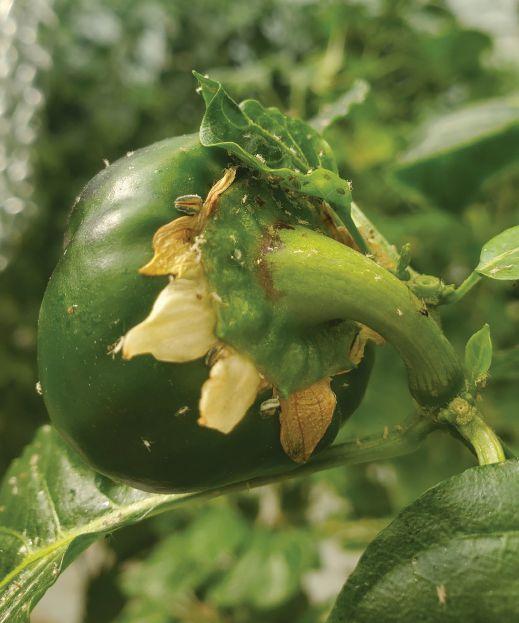
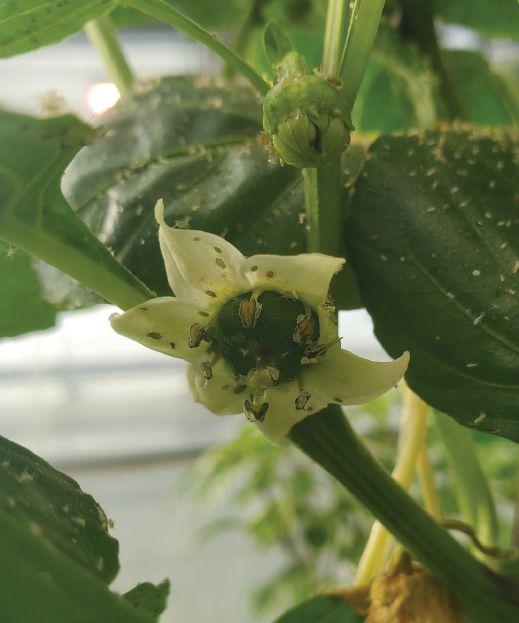
and thrips feeding on young pepper fruit, stunting its development and leaving marks on the fruit skin.
Takeaway
Opting for narrow-spectrum lighting can significantly impact greenhouse insects’ attraction to sticky traps and reduce their efficacy. Broad-spectrum lighting appears to be effective at ensuring that pests can see and be attracted to sticky traps. Yellow sticky traps are generally the most effective for mass trapping of greenhouse pests, partly because yellow traps are more reflective and appear brighter.
short-day conditions and slow egg development. Bringing light into the equation, a study by Suzuki et al. (2008) found that blue light could induce diapause and suppress mating behaviors of spider mites. That said, diapause also makes insects and mites more resistant to IPM and environmental stresses. This emphasizes the point that dynamic lighting is about striking a balance in the greenhouse environment. In this case, a potential light-assisted control strategy could look like: Furthermore, dynamic lighting allows growers to create and recreate lighting zones at any point. For light-assisted IPM, this means that the grower could create a light zone over the infested area alone to keep the pest from spreading into the rest of the
CONCLUSION
As the only LED provider that offers a truly dynamic solution for growers, Sollum Technologies allows growers to adapt their lighting strategy at any point and to potentially use dynamic lighting as a pest management tool. Research into the potential of dynamic lighting is underway with both industry and academic partners, meaning that growers who choose Sollum Technologies as their lighting provider also gain the support from our partners and their cutting-edge research, as well as Sollum’s evolving catalogue of light recipes.
REFERENCES
1. Bryon, A., Kurlovs, A.H., van Leeuwen., T., Clark, R.M. 2017. A molecular-genetic understanding of diapause in spider mites: current knowledge and future directions. Physiological Entomology. 42(3): 211-224.
2. Labbé, R., McCreary, C. 2020. Arthropods and greenhouse lighting: Like moths to a flame. Greenhouse Canada.https:// www.greenhousecanada.com/arthropods-and-greenhouselighting-like-moths-to-a-flame/
3. Stukenberg, N., Pietruska, M., Waldherr, A., Meyhofer, R. 2020. Wavelength-specific behavior of the western flower
WE’RE HIRING
Marketing and Event Coordinator
As the Marketing and Event Coordinator, you will work collaboratively with the Executive Coordinator and CGC committees, and report to the Board of Directors. Your responsibilities include but are not limited to:
• Attending regular meetings of the various committees and completing action items.
• Implementing advertising and marketing plan.
• Developing and maintaining the sponsorship program.
• Assisting in the development of the yearly conference theme.
• Managing website.
• Organizing functions related to the educational speaker program and pre-conference activities.
• Managing the CGC on-site during the week of the conference.
The CGC is a non-profit organization dedicated to running a yearly 2-day trade show with educational sessions. The CGC is usually held in early October in Niagara Falls, Ontario. This conference is targeted at Canadian agricultural producers that grow food, ornamental, and medicinal crops in controlled environments like greenhouses and vertical farms. The CGC is dedicated to supporting and advancing the Canadian greenhouse sector through education, knowledge transfer, and research.
What we offer:
• Very flexible work schedule and working remotely.
• Compensation commensurate with knowledge and skills.
Qualifications:
• Post-secondary education, and previous experience with event planning or management is preferred.
• Required skills - Computer (Microsoft office, website design, social media), good time management, excellent communication, both verbal and written, and strong interpersonal skills.
Job Type: Contract (yearly or multi-year contracts can be negotiated).
CGC Board of Directors Chair Shalin.Khosla@gmail.com
ENERGY SAVING technologies in greenhouses from a plant viewpoint
Part 2: Methods for reduction of energy costs
BY DR. MOHYUDDIN MIRZA
INTRODUCTION:
The primary goal for any greenhouse operator is to reduce energy costs per dollar value of crop produced, may it be vegetables, bedding plants, ornamentals, tree seedlings, strawberries or cannabis. Increasing crop yields and quality is another way of reducing energy costs. To emphasize the point of higher yields, the following table correlates gross margins sensitivity analysis of cucumber production and price of natural gas.
Table 1 shows that if the production of cucumbers is 80 fruit/plant then your dollars per sq.foot net revenue would be in negative at a gas price of $ 5.50/GJ. The figures were prepared at a certain price level and the actual numbers will change with the price of cucumbers.
In order to go to a positive revenue at $ 9.50/GJ of gas price, one has to produce 100 cucumbers.
The point is that in order to offset higher heating costs or other input costs, prepare a sensitivity table like this and know how many cucumbers need to be produced to pay for increases.
I know some growers produce 80 cucumbers per plant, get better price because of direct retailing and are able to absorb additional heating or energy costs by increasing their price. In the wholesale market, the growers have less control over the price they need to pay for the operating costs.
METHODS FOR REDUCING ENERGY COSTS:
There are three major ways to reduce energy costs.
TABLE 1
Number of cucumbers per plant, 8 sq feet/plant.
TABLE 2
1 payback periods are estimates only and will depend on specific greenhouse conditions and operational parameters.
TABLE 1
Common greenhouse pests and their biological control agents.
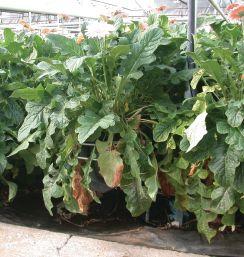
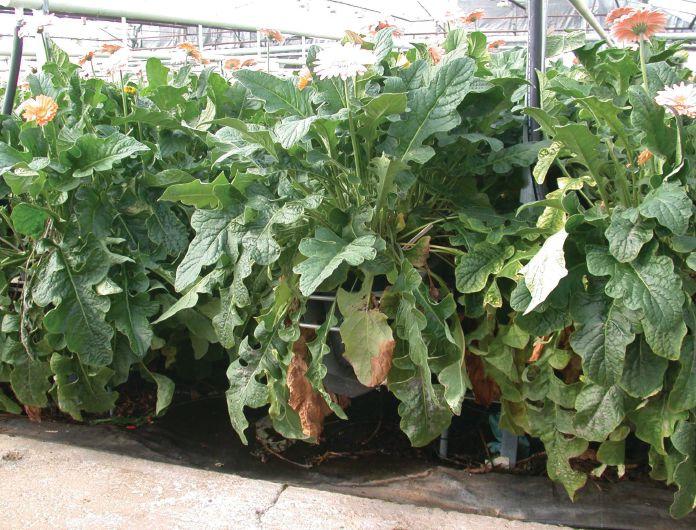
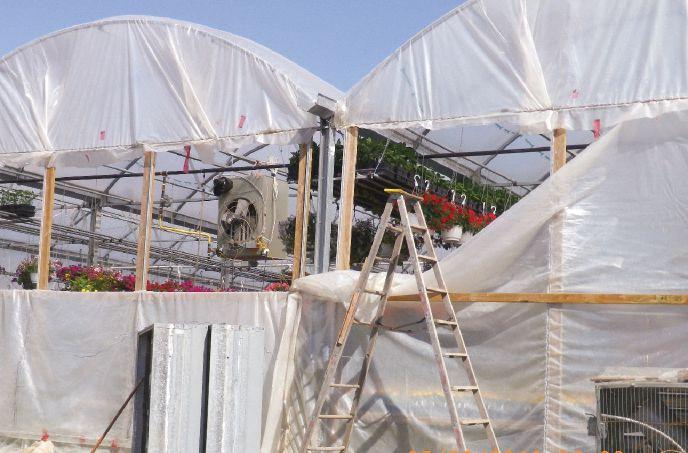
This picture below shows a neglected greenhouse where the grower got side tracked to do other things and could not plan properly.
1. Improved maintenance of existing equipment and structures/buildings
2. Capital investments to improve energy efficiency
3. Switching to a lower cost fuel wherever possible.
Table 2 summarizes methods to reducing greenhouse energy costs.
TIPS TO REDUCE ENERGY COSTS:
Here are a few more tips to reduce energy costs in a greenhouse operation. The possible impact on greenhouse crops productivity should always be kept in mind when considering methods to reduce energy costs. There have been many instances where growers started using much cooler temperatures to reduce energy use which resulted in plants becoming too vegetative and delay in crop maturity.
Greenhouse structure
That is the first step in energy savings. The picture on page 27 shows a neglected greenhouse where the grower got side-tracked to do other things and could not plan properly. I don’t need to discuss this greenhouse more but you get the message.
The grower had also excuses to justify
why the greenhouse was in this shape. The plastic did not come in time, then I got busy, then the bedding plants season started, and now, I will fix it after the season.
The grower was able to complete his bedding plant production cycle in this state of the greenhouse but a lot of energy was wasted.
WEGA Family
Thus, proper maintenance of the greenhouse structure is essential and the first important component of energy management. Even a wellconstructed double poly greenhouse will have 0.5 to 1.0 air change per hour.
LEFT
The pictures on pages 27 and 28 highlight the transition from double poly roof to glass structures to get better sunlight, high PAR transmission, and low vapour condensation.
Good maintenance and inflation of double poly roof systems should get the highest priority.
Greenhouse maintenance to reduce energy costs includes repairing leaks in all areas of the outer structure, ensuring proper inflation of a double poly roof and regular replacement of roof poly to maintain anti-condensate and Infra Red (IR) properties.
Good maintenance and inflation of double poly roof systems should get the highest priority as 60 to 80% of a greenhouse structure heat loss is through the roof.
Use of proper greenhouse roofing materials is very important. It is worth mentioning that greenhouse roofing materials keep on changing based on several factors sometimes not related to heat loss properties.
In Alberta in the 1980s, glass was the most commonly used roofing material and every few years hail storms would devastate the greenhouse structures. That resulted into a switch to double poly structures from 1990 till about 2004. That is the time when growers shifted their focus to winter production and start switching to much improved glass to get maximum light transmission.
The above pictures highlight the transitions from double poly roof to glass structures to get better sunlight, high Photosynthetically Active Radiation (PAR) transmission, and low vapour condensation.
Energy screens have to be managed properly to reduce heat loss.
Thus, the point is made that a greenhouse structure should be well maintained and proper glazing or roofing materials be used to get more natural light into it and minimize heat loss.
An audit of heat loss through the structure is very useful tool to determine and plan for energy management.
The value of automation
A conversation with the CEO of Stratus Designs.
BY HEATHER CLARK
Adam Clarke is the CEO of Stratus Designs, a Reliable Controls authorized dealer since 2020, located in B.C.
He’s a specialist in engineering building automation solutions for cannabis facilities, indoor/greenhouse food production, and specialty GMP processing facilities. His farm on Galiano Island serves his local community with year-round fresh produce. Adam has worked in HVAC+R for 16 years, contributing to award-winning projects.
Why should you automate your growing operation?
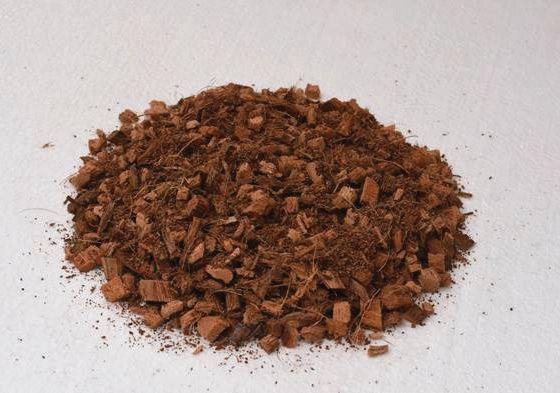
The first rule of all growing operations is they’re all different. Whether you’re growing lettuce, flowers, or cannabis, your plants will always be different from your neighbour’s next door. You could grow in rockwool, coco coir, soil, hydroponically, etc. Whatever your method, you’re working with a living plant, and that plant requires specific parameters for optimal growth.
The most important parts of growing plants are plant yield and plant health. If you have big yields
ABOVE
and healthy plants, you’re in a position to improve the bottom line. Automation is the one thing most people don’t pay enough attention to when it comes to growing plants.
For many years automation systems have existed for fertigation and other plant-specific aspects of a facility. However, often those systems are proprietary, or they don’t play nice with other controls systems. Greenhouses should be automated in such a way that the operator can access all systems through one interface without the need for integrating many different systems. The ease of the interface is as important as the functionality of the automation. Once a grower is able to do full integration with fertigation, temperature, humidity, CO2, O2, O3, etc., they will be able to reach optimal plant health and yield.
Automation gives farmers the ability to produce consistent, repeatable crops while helping improve efficiency, from both plant-yield and energyreduction perspectives. Without automation in
The most important parts of growing plants are plant yield and plant health. If you have big yields and healthy plants, you’re in a position to improve the bottom line.
your growing facility, you’ll spend more money on labour and have less/lowerquality product to sell.
What do people get wrong when they try to automate? (What to avoid)
When most companies start to automate their growing facility, they don’t realize what’s available and tend to get stuck in the old way of automating. A few companies have been around a long time in horticulture, and as with many things, they haven’t had a big need to modernize their systems.
When I first got into greenhouse design, I couldn’t convince any of these long-standing companies to allow a BACnet or Modbus interface, as they were scared we would “steal” their stuff. The majority of proprietary control in horticulture isn’t that sophisticated in comparison to a large commercial or industrial automation system. Reliable Controls is perfectly suited to run the back end of a greenhouse, and we use it all the time — both in our own facility at Galiano Grow House and through Stratus Designs for our customers.
For horticulture, it’s important to make sure your sensors and other elements are well suited for the environment. Typically, we find the only sensors that survive are the ones rated for full washdown; wipe-down sensors are ill-suited for these applications. The best way to avoid control issues in growing is to write in plain words exactly what you want to accomplish. We need sequences tailored for each application and each site. Remember, the only thing growing facilities have in common is they are all different. Don’t assume pre-canned and re-used programing is going to cut it. Plants are living things, which means the automation needs to be dynamic as well.
What’s the best/worst greenhouse you’ve been in and why?
It’s difficult to define the best or worst greenhouse I have ever been in as the best greenhouse is the one that’s best suited for its application and conserves as much energy as it can while still producing an optimum crop. Some plants need only a bit of frost protection, and an uninsulated, unheated greenhouse is fine. Other plants need an environment with tight control of temperature and humidity so perhaps are never suited for a greenhouse.
The key to any successful greenhouse is to know the environment you need
Automation gives farmers the ability to produce consistent, repeatable crops while helping improve efficiency, from both plant-yield and energy-reduction perspectives.
The key to any successful greenhouse is to know the environment you need and determine whether you can achieve it.
Understanding energy usage and best-use cases in greenhouses can be very difficult.
and determine whether you can achieve it. What level of automation will reach that sweet spot of plant yield and optimal plant health? If your crop is temperamental, don’t put it in a bad greenhouse. Likewise, if a crop will grow in any conditions, don’t put it in a greenhouse that is completely climate controlled. You won’t get a proper return on your investment. Greenhouses, like any other structure, need to be built to suit the application they’re intended for.
How does energy consumption factor into decisions when looking to become more efficient in your overall growing operation?
Understanding energy usage and bestuse cases in greenhouses can be very difficult. Energy is not the only thing you need to calculate to determine profitability. To understand the efficiency to up-front capital on a greenhouse growing operation, you need to first understand exactly how the plant in question grows. Can you confirm what every degree of temperature does to that
plant growth or how relative humidity affects the growth rate? Without these details you can’t start to calculate energy savings or why to automate.
Less energy doesn’t mean more savings; sometimes we need to increase energy consumption to increase crop yield, which means more money for the company in the end. In growing operations, I think there are more savings on higher plant yields and lower labour costs than in saving energy. If more energy gets more food, or more energy reduces labour costs, perhaps more energy isn’t an issue. Consider we are growing a crop that needs to reach its full potential and needs to be used in society. We aim to deliver topquality plants at a good price while not wasting energy. We do, however, use the amount of energy required to reach the optimal plant growth. Ultimately, when you have a healthy, happy plant with a higher yield, you use less power per unit of crop. Heather Clark is a marketing writer for Reliable Controls.
DREAM. GROW. THRIVE.
Biopesticides: A Primer
An examination of the major categories of biopesticides
BY DR. KENNETH FRY
All products represented as killing, harming, or negatively affecting a pest must be registered by the PMRA. We are familiar with synthetic and naturally occurring pesticides such as neonicotinoids (synthetic insecticide), pyrethrum (natural insecticide), azoxystrobin (fungicide), and glyphosate (herbicide). These products are synthesized or extracted from plants or microbes to be used against pests. However, there is another category of pesticide, biopesticides, that you may not be as familiar with.
Biopesticides, as defined by the Pest Management Regulatory Agency (PMRA) of Canada, are pest management agents derived from natural sources such as fungi, bacteria, viruses, plants, animals, and as we shall importantly note, minerals. In general, these products are of natural origin and are typically whole microorganisms. However, under the seemingly specific term “biopesticide,” the PMRA includes non-biological materials or substances used by the general public for other purposes.
In this primer on biopesticides, we will examine the major categories of biopesticides, their characteristics, and delve into the details of some common products available for use in
ABOVE
greenhouses. There are three major categories of biopesticide; microbials, semiochemicals, and what are called non-conventional pesticides.
CATEGORIES OF BIOPESTICIDES
Microbials
Microbial products contain living organisms such as bacteria and fungi or their metabolites. Some microbials, such as viruses, have a very narrow host range. An example is the virus Autographa californica registered for use against the cabbage looper. It will not affect any insect outside of caterpillars in the cutworm Family Noctuidae. Another example is using viruses as a vaccine. The product V10 is an attenuated version of the virus strains related to the Pepino virus. It confers crossresistance to tomatoes. However, do not use this product in a greenhouse with peppers or eggplant as they could become infected.
The majority of microbial products available are fungi. Examples include Beauveria bassiana, Lecanicillium muscarum, and Metarhizium anisopliae which infect insects and mites and Trichoderma harzianum, T. asperellum, and Gliocladium catenulatum that prevent plant diseases. It is important to pay attention to the scientific name
Biopesticides, as defined by the PMRA of Canada, are pest management agents derived from natural sources such as fungi, bacteria, viruses, plants, animals and minerals.
of the microbial to know which pest they are targeting, you also need to pay attention to the strain of the microbial. For example, there are several strains of Beauveria bassiana (GHA, ANT-03, PPRI 5339) and the label for strain PPRI 5339 differs from the others by including spider mites.
Most fungal microbials require humid or moist conditions to germinate and grow. If conditions are suitable, these biopesticides can persist in the crop resulting in low-level suppression of a pest, contributing to a sustained integrated pest management (IPM) program.
Some microbial products are composed of bacteria or their metabolites or by-products. Bacillus thuringiensis var. Kurstaki is a bacterium that produces para-sporal crystalline bodies (proteins) that bind to the midgut cells in caterpillars. The result is a cessation of feeding and eventual death of the insect pest. Bacillus subtilis is a bacterium that produces lipopeptides that are toxic to disease-causing bacteria and fungi. It is effective at reducing existing infections of powdery mildew and in reducing the development of powdery mildew and Fusarium root and stem rot, if applied preventatively.
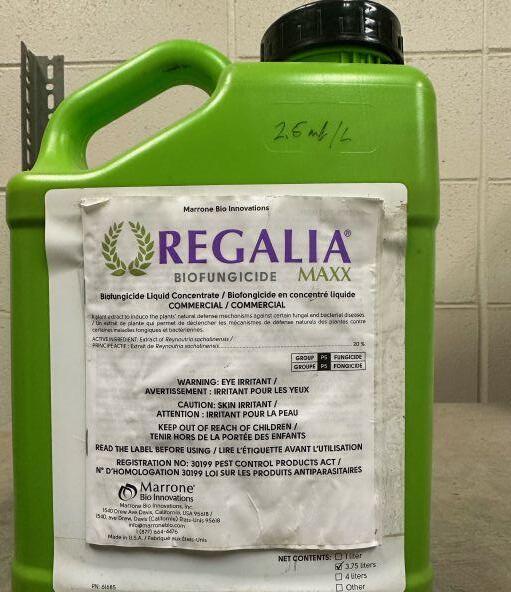
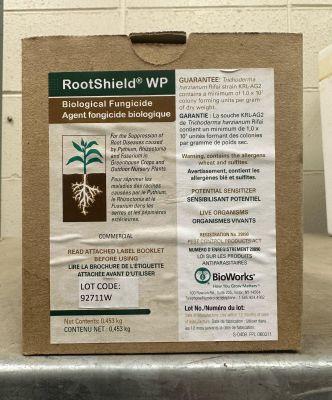
Not all microorganisms in biopesticides are pathogens, some are beneficial microorganisms that do not kill the pest, and instead, they outcompete the pest for resources or space. An example of this is Trichoderma harzianum, a fungus that colonises the root zone of plants, displacing potential plant pathogens. Some other biopesticides, such as an extract of Giant Knotweed, Reynoutria sachalinensis, induce a plant defense response.
Microbial biopesticides are not identical to conventional pesticides. Microbials are more often effective in a preventative role rather than a reactive role in an integrated pest management plan. There is often a time lag between when the products are applied and results are detectable.
Semiochemicals
Semiochemicals are message-bearing compounds released by an organism to affect the behaviour of the same or different species. This category includes pheromones, kairomones and allomones. Pheromones are compounds released by insects to communicate with other insects. Most commonly, pheromones are released by female insects to attract males of the same species for mating. Males may release pheromones to confirm to the female they are of the same species and are suitable candidates for mating. Mating pheromones can be used as a lure to a sticky trap. Using pheromones attractive to only one species, for example, the cabbage looper, will reduce contamination or by-catch in the lure, making it easier to count the number of target pests in the trap. Mating pheromones can also be released in high volume to disrupt mating by making it difficult for the male to locate the female.
An allomone, where the receiver of the scent does not benefit, can enhance the effectiveness of parasitoids in a biological control program. When a parasitoid wasp such as when Aphidius ervi lays an egg inside a potato aphid, she leaves an allomone to indicate that the host has been parasitized. This ensures her offspring do not have to compete against the larvae of another wasp, thereby reducing the probability of duplication of effort by the wasps.
Kairomones are compounds given off by one organism that benefits another organism. Predators can detect the scent of their prey and parasitoids can detect the scent of their hosts. Host plants that have been damaged by plant-feeding insects release
Biopesticides are considered to be reduced-risk pesticides because they are generally not broad-spectrum.
compounds that inform predators and parasitoids that prey or hosts, respectively, are present. In insect monitoring, traps are often baited with host plant odours to exploit this effect. A practical use is in determining where best to release biological control agents. Previously damaged or currently infested plants will be attractive to pests, possibly becoming hot spots, so releases should focus on these areas initially.
23_000088_Greenhouse_Canada_FEB_CN Mod: December 29, 2022 10:44 AM Print: 01/06/23 2:20:25 PM page 1 v7
Nobactra 10 bacteria and Oregano Oil Bacterial Diseases Vegetables
Venerate Burkholderia rinojensis
Non-conventional
“Non-conventional pesticides” is a catch-all term for everything else that does not fit into the above categories or that of conventional synthetic pesticides. This category of products is substances used by the general public for other purposes that have been adapted or adopted for use in pest management. Examples include garlic, salt, vinegar and essential oils. If one of these everyday substances is formulated and used expressly for pest management, then it must be registered with the PMRA. This is an important point, you cannot simply grab a jug of vinegar out of the kitchen and use it for disease suppression. Similarly, any other commonly available substance cannot be repurposed for pest management. The products have to be specifically registered for use in pest management. When a product is registered, factors such as phytotoxicity, toxicity to humans and non-target organisms, and the impact on the environment have been evaluated. While it may seem redundant – after all, we have used some of these products in cooking and cleaning for ages – the substances may not have been used at the concentrations or in the formulations that the pest management product is. A little garlic in a pasta sauce is vastly different from the amount of garlic applied as a repellent. Similarly, seemingly benign orange oil contains limonene, a terpene that functions much like the insecticide pyrethrum which inhibits neurotransmission by blocking sodium channels in the nerve axon.
Sucking and chewing insects, mites
Characteristics of biopesticides
parasitoids used in a biological control program. Biopesticides targeted against plant diseases are less likely to harm mycorrhizal fungi or other beneficial microorganisms in the soil or on the plant. A downside is that these products are not designed to be a total solution for a crop. Instead, several different products, each targeted at a specific pest, need to be used in an IPM program.
Biopesticides that contain microorganisms can often be applied using the same equipment used for conventional pesticides. However, always check the label to confirm that this is PRODUCT
Biopesticides are considered to be reduced-risk pesticides because they are generally not broad-spectrum. They target a narrower range of organisms than conventional pesticides. This is important for protecting beneficial insects such as pollinators or the predators and
A significant benefit of biopesticides is the lower probability of resistance being developed by the pest. Given that most of these products are living organisms themselves, there is inherent variability in the products such that the target is less likely to defend against it with a single mutation or adaptation. Another benefit of biopesticides is the limited residual time in or on the crop. This results in shortened re-entry intervals allowing rapid access to the crop post application.
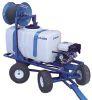
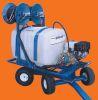
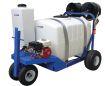
Hydra Sprayer
the case as there are exceptions. For example, hot fogging devices are not recommended for fungal or bacterial pathogens (for example Beauveria bassiana or Bacillus subtilis) as the heat will harm the microorganisms being applied. Droplet size and how you apply the product to the crop may also be different. For example, the fungal pathogen targeting whiteflies and thrips, Beauveria bassiana, should be applied in a fine mist to disperse the spores over the plant surface. Do not apply to run-off as is commonly done with conventional pesticides, instead, you want the spores to remain on the surface of the plant so that the pest will more readily encounter the spores.
A common characteristic of biopesticides that can result in a grower not realising their effectiveness is that the effect is often delayed. Instead of the near-instantaneous death caused by many conventional pesticides, biopesticides can take days to suppress the pest population. Another consideration is the pest cadaver may not be easily detected due to being broken down or consumed by
Biopesticides are becoming increasingly common in the marketplace.
the pathogen. If you are going to adopt biopesticides as part of your integrated pest management program, be certain to read the product label to ensure proper application methods are employed and determine how to recognise the impact of the product (e.g. what does an infected pest look like).
There are an impressive array of products for use in Canada now (Table 1) as well as several products in the registration process (Table 2). Some products available in other countries may yet come to be registered in Canada (Table 2) so keep an eye out for new registrations.
Biopesticides are becoming increasingly common in the marketplace with large corporations investing in their development through in-house work and by acquiring small biotech companies. The kinds of products being developed are expanding to include photosensitisers, new species of fungi and bacteria, and novel proteins from a variety of animals (for example, Spear-T contains a protein from scorpion venom). The range of products being developed is impressive, allowing growers to refine their IPM plans to reduce toxicity to plants, non-target organisms, workers, and the environment.
Kenneth Fry, Ph.D. is an instructor for the School of Life Science & Business at Olds College in Olds, Alta.
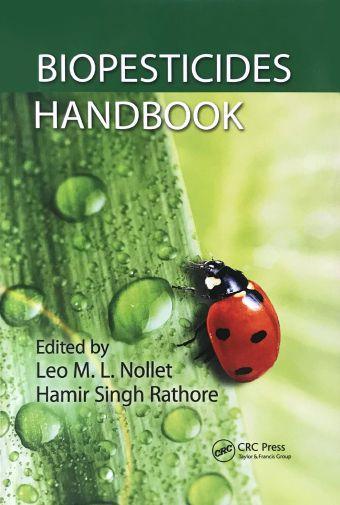
BIOPESTICIDES HANDBOOK
The need to feed an ever-growing global population combined with increasing demand for sustainable agricultural practices has generated a significant rise in demand for biopesticides. By responding concurrently to the interests of farming, forestry, and industrial sectors, biopesticides offer a considerable potential for utilization in sustainable agriculture. The Biopesticides Handbook details the benefits of biopesticides all along the food chain, offering a full spectrum and review of the range of organisms and organic products that may be used in the biological control of insects.
$118.75 | Item# 0367868499
2023
FEBRUARY
Feb. 15-19
Northwest Flower & Garden Festival Seattle, Wash. gardenshow.com
Feb. 22-23
Ontario Fruit and Vegetable Convention (OFVC) Niagara Falls, Ont. ofvc.ca
Feb. 28 to March 1
Canadian Federation of Agriculture AGM Ottawa, Ont. cfa-fca.ca
MARCH
March 14-16
FVGC 2023 AGM
Vancouver, B.C. fvgc.ca
March 14-16
Ottawa Valley Farm Show Almonte, Ont. ottawafarmshow.com
March 29 to April 2 CAST 2023
California, U.S. 2023cast.com
APRIL
April 19
Sawaya Gardens Hydrangea Trial Open House Waterford, Ont. sawayagardens.com
April 25-27
CPMA Convention & Trade Show Toronto, Ont. cpma.ca
To submit an upcoming event, contact editor Andrew Snook at asnook@annexbuinessmedia.com.
CANADA CLASSIFIEDS
RATES: Minimum order $75.00 or 84¢ per word, word ads must be pre-paid. CLASSIFIED DISPLAYS: $72.00 per column inch. GENERAL INFORMATION: Payment must accom- pany order. Copy required on publication close date. All advertising copy subject to the approval of the publisher. Send order and remittance to: Classified Dept., Greenhouse Canada, P.O. Box 530, Donly Dr. S., Simcoe, ON N3Y 4N5 Canada
ADVERTISERS
“New” things to look forward to... ?
This time last year, I was writing about the major flooding affecting the Fraser Valley in B.C. due to “atmospheric rivers.” This year, I sit looking out on about 14 inches of snow that fell a few nights ago and temperatures dropped to -11oC, and hear the freezing rain as it falls on top of that. Later today, apparently, the weather is due to warm up to +4oC, and we need to be ready for severe flooding. YVR airport has effectively been closed for a couple of days, all the major highways are a glorious mess, and advice is not to travel anywhere. Despite this, when I do get out, I see the warming glow of HPS lamps at the local propagator reflecting from the low clouds, magnified by the whiteness of the snow beneath –signs of the new vegetable crops just ahead around the turn of the year. For me, it’s a wonderful sign of optimism. We’ve officially just begun winter, but it already seems that spring is but one corner away.
But with this warmer weather and longer days comes the awakening of a seemingly everincreasing army of pests and diseases to contend with. Tomato Brown Rugose Fruit Virus (ToBRFV) has now been with us for about seven years. In that time, it has been found in 35 countries across four continents and spawned what seems like its own research department. Syngenta have set up their “ToBRFV Information Center” to help inform of the disease. Cases have been found in pepper plants and it is known to infect over 40 species of plants
leaves similar to Western Flower Thrips (WFT), T. parvispinus also inflicts characteristic damage to growing points, causing stunted growth. Heavy infestations cause damage in the young leaves, which sometimes resembles broad mite damage. Damaged fruits may subsequently stick to leaves and exhibit brownish, and sometimes wet, spots,” reports Koen Merkus, IPM and Pollination Specialist at Biobest in HortiDaily.3 The emergence of new pests and diseases is not because a brandnew species of insect, virus or fungal pathogen is suddenly created, of course. But for whatever reason, the causal organism finds opportunity to gain a foothold where not seen before. So, what do we do about such new troubles? There are several strategies to consider for dealing with any or all of these new pests/pathogens:
• Stay informed: Talk to colleagues, consultants, reps, educators, researchers, conferences, and follow the press.
• Start clean, stay clean: Quarantine, sanitation, general hygiene protocols should all be a regular part of doing business.
• Stay ahead: Use resistant varieties, as they become available and commercially competitive.
“Pepper growers are being warned about a ‘new’ species of thrips.”
across four families. Crop losses can be huge (up to 70%), and certainly more than growers should be expected to stand, economically. It really has become a disease for the ages. It is also occurring in unexpected places: “Recently, the Tomato brown rugose fruit virus (ToBRFV) was found in the basin water of a tomato grower in Belgium, while the virus had not (yet) been found in the greenhouse.”1 For a great review paper on ToBRFV, check out the Shaokang Zhang et al2 paper referenced in the footer. (All Canadian authors, I might add.)
Pepper growers are being warned about a ‘new’ species of thrips; Thrips parvispinus. Primarily a pest of ornamental crops, this thrips is posing a threat to greenhouse vegetables, too, creating yield losses in bell and pointed pepper crops in Spain. “While causing damage to flowers and
• Stay the course: Use all possible control options, even legislative ones, if you’re unfortunate to have notifiable pest outbreaks (If you use a plant vaccine, make sure it’s legal!)
• Stay alert: Follow what’s going on in other sectors as to what might be in the pipeline.
I’ve always found growers to be resilient, inventive, curious and able to come up with or embrace solutions offered to them to overcome the challenges thrown their way. I have no doubt that this will continue.
1. Robert de Hoo, HortiDaily.com, December 2021.
2. Shaokang Zhang et al, (2022) “Tomato brown rugose fruit virus: An emerging and rapidly spreading plant RNA virus that threatens tomato production worldwide.” In Molecular Plant Pathology. (ncbi.nlm. nih.gov/pmc/articles/PMC9366064/ Dec 23 2022.)
3. “Pepper growers should remain vigilant for new thrips threat” (hortidaily.com/article/9489804/peppergrowers-should-remain-vigilant-for-new-thripsthreat/).