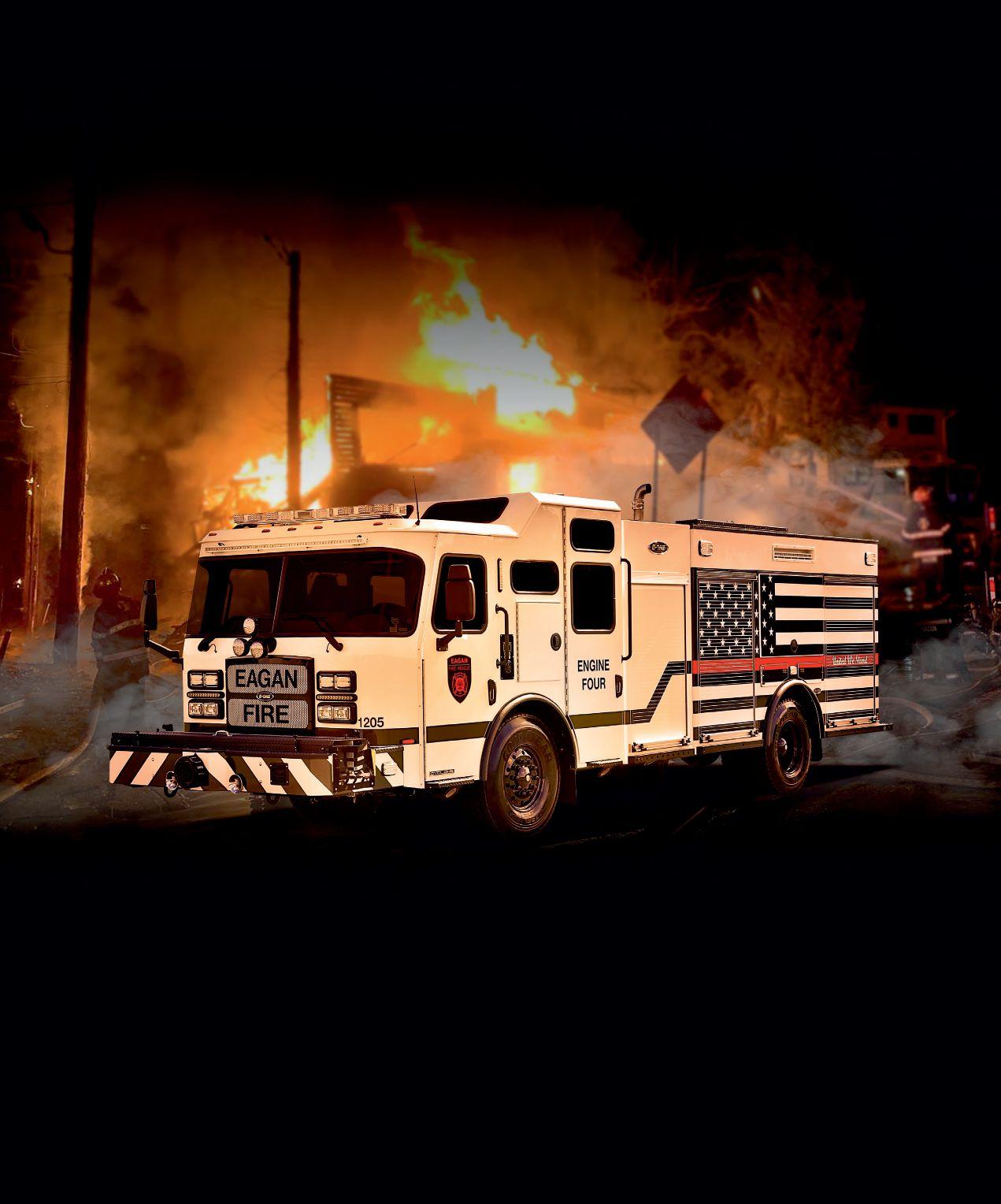
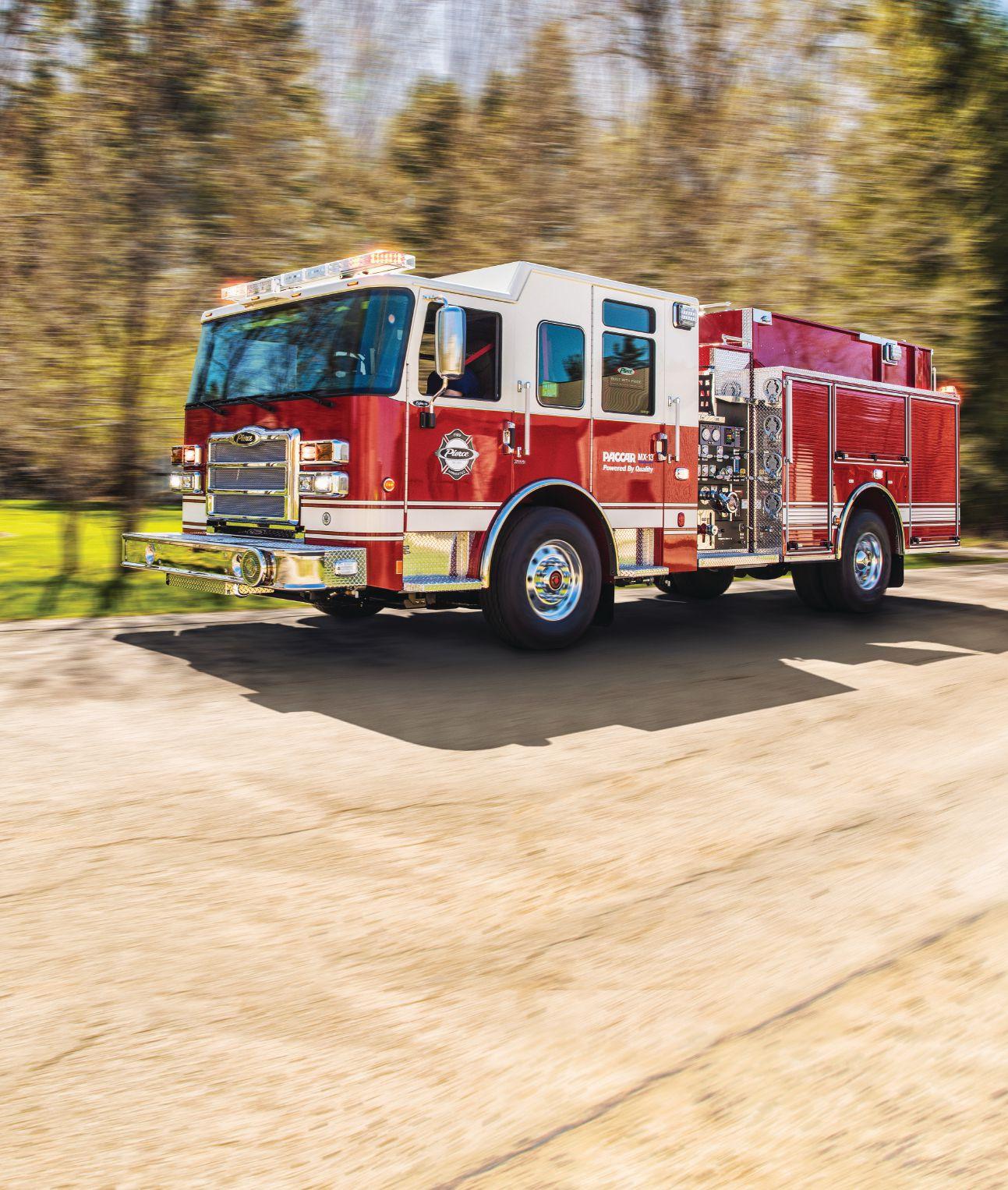
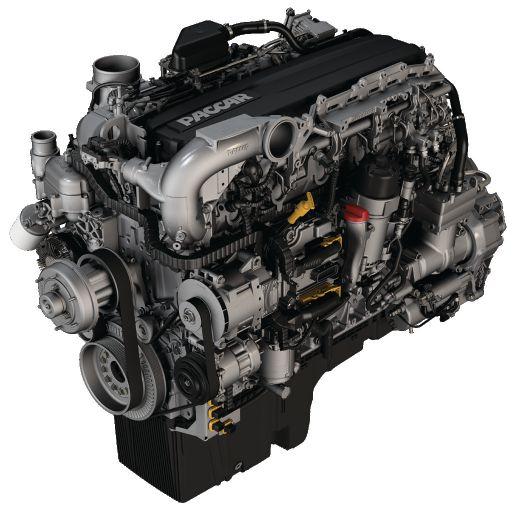
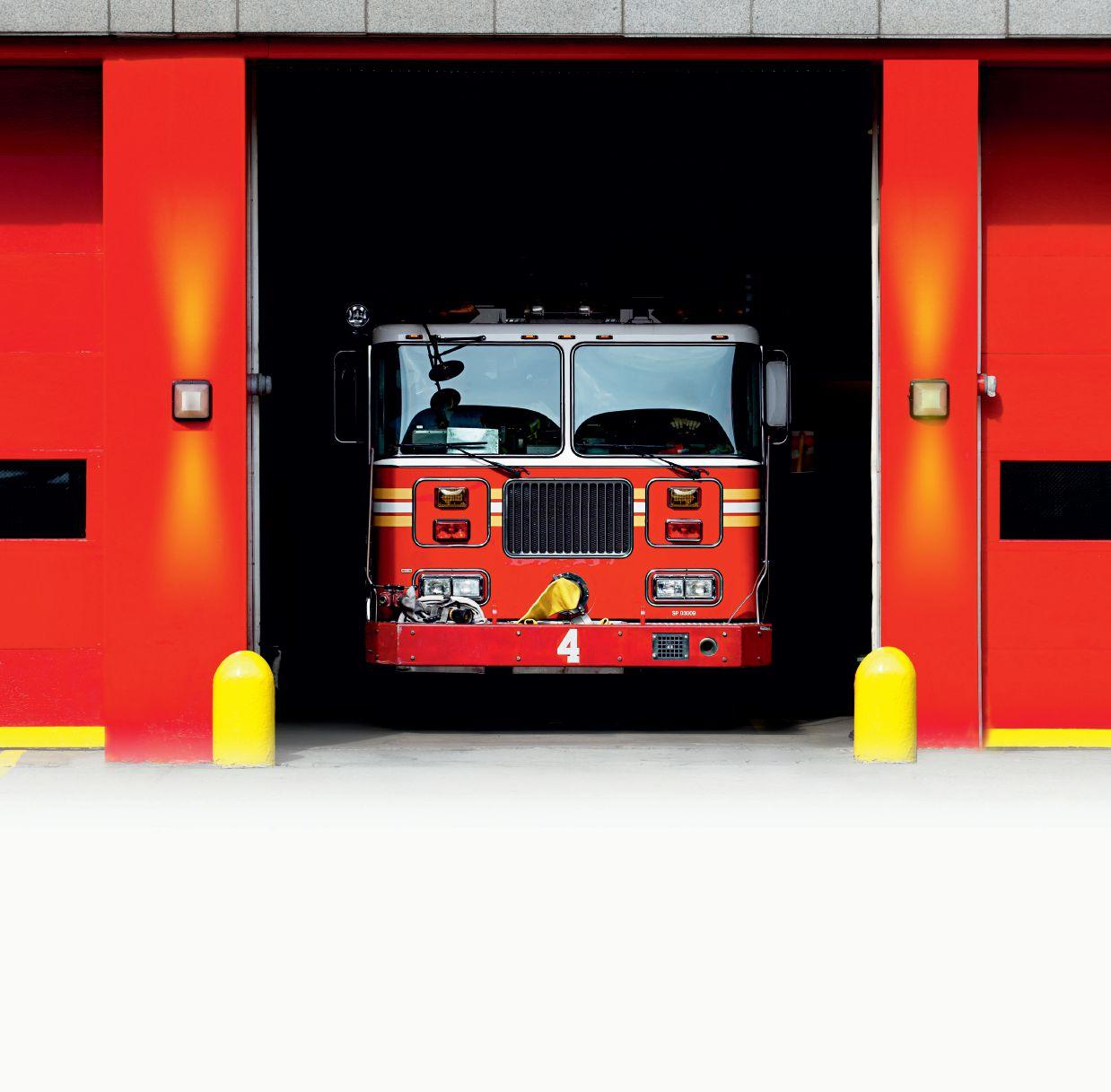
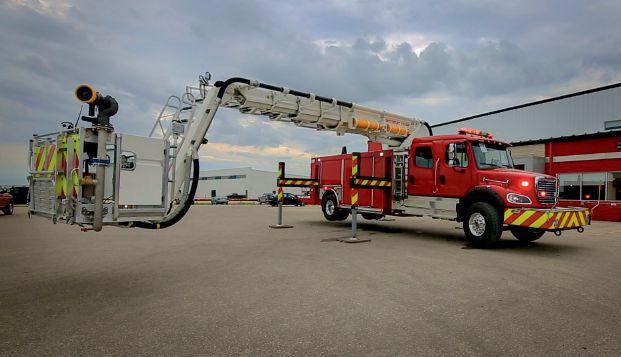
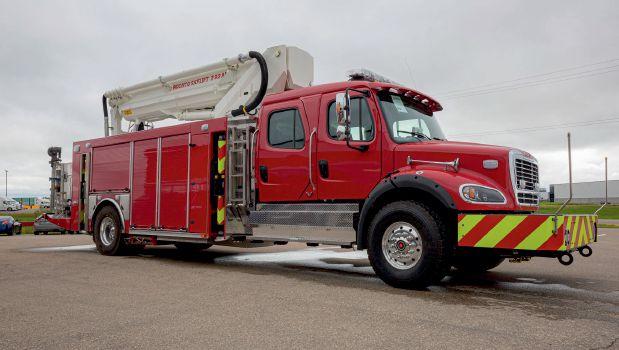
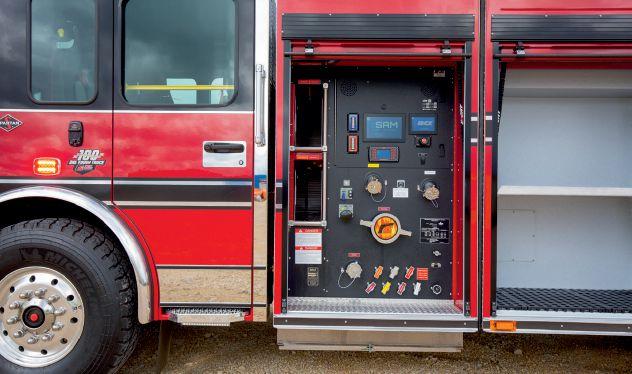
THE NEW 2020 E-ONE CYCLONE® CAB BIGGER AND BETTER THAN EVER BEFORE.
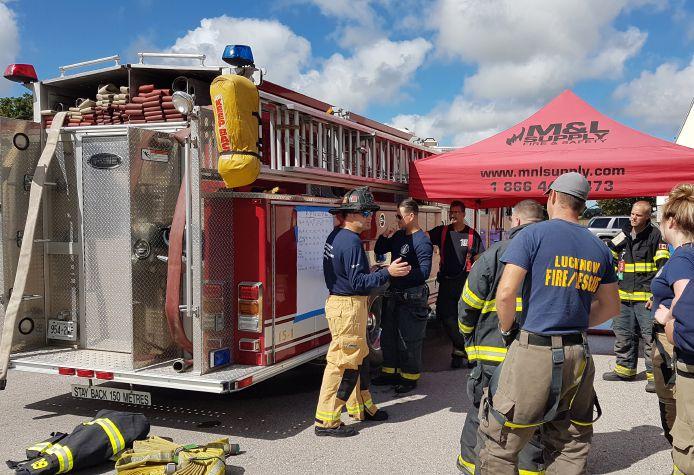
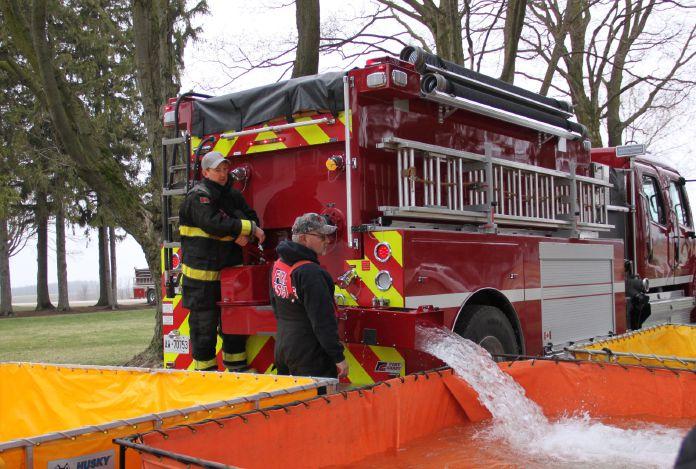
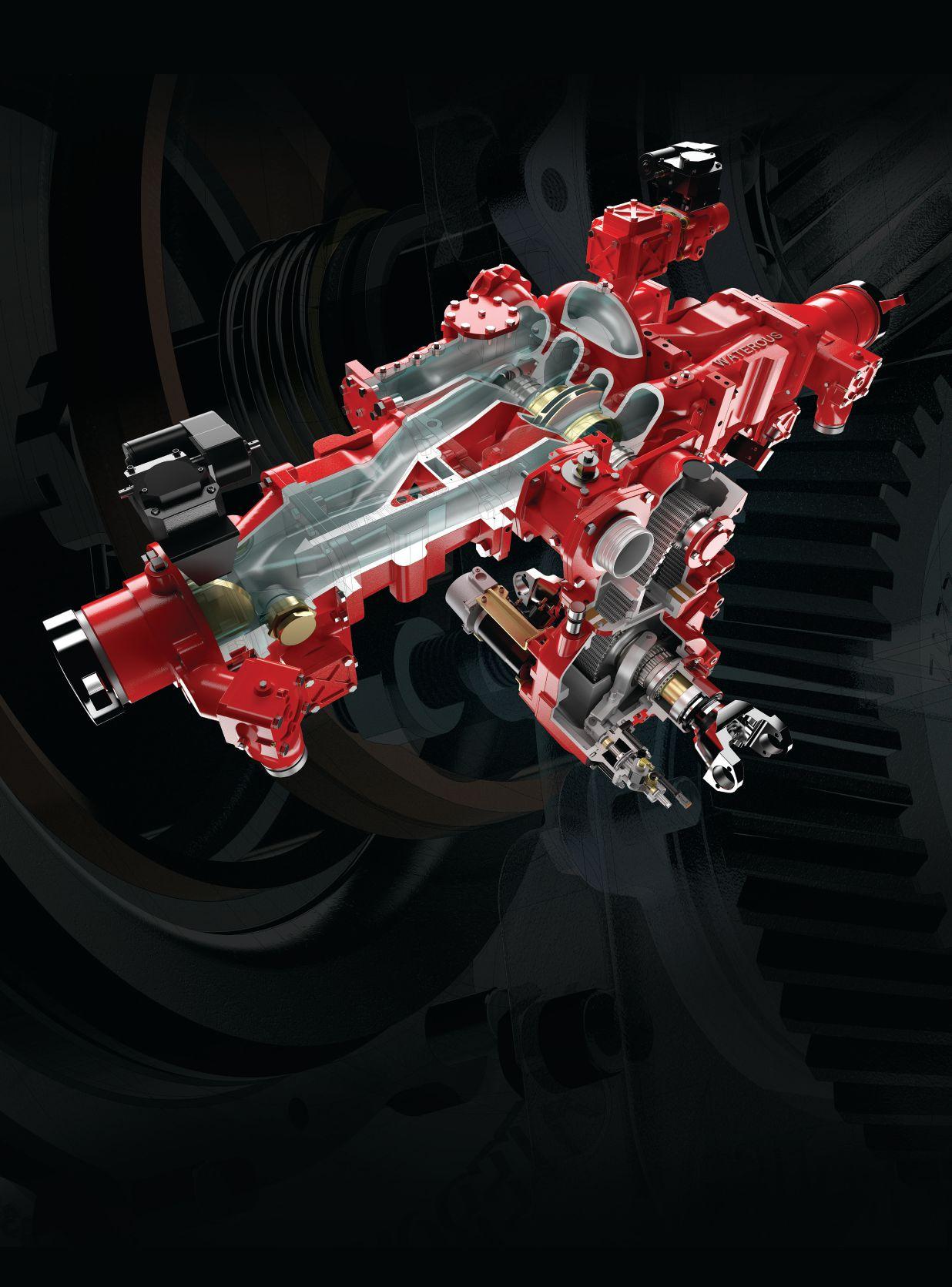
The new 2020 E-ONE® Cyclone cab features updates and refinements suggested by firefighters just like you. The new 100” wide cab provides more space for your crew with a generous 27” between door and engine cover for both driver and officer. The Cyclone is available in five cab lengths with a flat roof (low or 4” raised) or one of four raised “vista” roof designs that include the 4” raised front roof. The Cyclone cab provides excellent visibility for driver and crew with its low profile dash, one piece door glass and a reduced profile interior A/C system.
FEATURES
THE POWER OF STORY
Storytelling is a powerful leadership technique. The retelling of an event (a success, a failure, a moment of clarity) can teach a lesson to the audience or inspire action.
By Laura Aiken
20 BREAKING DOWN BORDERS
Firefighters Without Borders is a Canadian-based NGO that provides donated equipment and training to departments in need. Learn what the organization is doing to aid in fire fighting efforts worldwide.
By Brieanna Charlebois
32 FIGHT OR FLIGHT
A new study shows cancer deaths in firefighters are continuing to rise. How can we reverse the cancer trajectory? By Larry Thomas, Chris Biantoro and Len Garis
38
RELEASING TRAUMA
A retired volunteer lietunenet shares how he built resilience through re-visiting trauma with conscious awareness.
By David Gillis and
Ruth Lamb
BY LAURA AIKEN Editor laiken@annexbusinessmedia.com
COMMENT
Evolving technology
In this edition’s Firelines, David Balding poses interesting and important questions about technology and its role in the fire service. One aspect he raises is whether members of the fire service will be willing to part with the hands-on nature of some tasks, like priming a pump and operating valves, in favour of automation. You can read his full column on the subject on page 18.
There are good reasons to debate technologies. On one hand, innovations create tremendous efficiencies, make work easier and even reduce the number of people required for a task. In other industries it has supplanted many jobs (while creating others of course). This is a subject of contention unto itself.
ON THE COVER
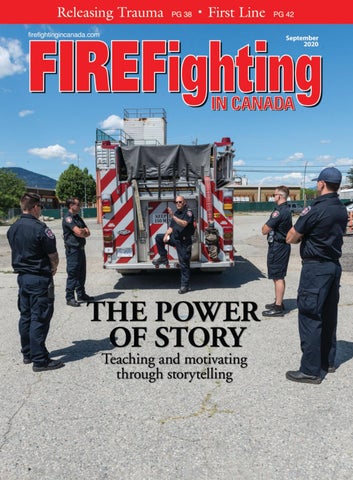
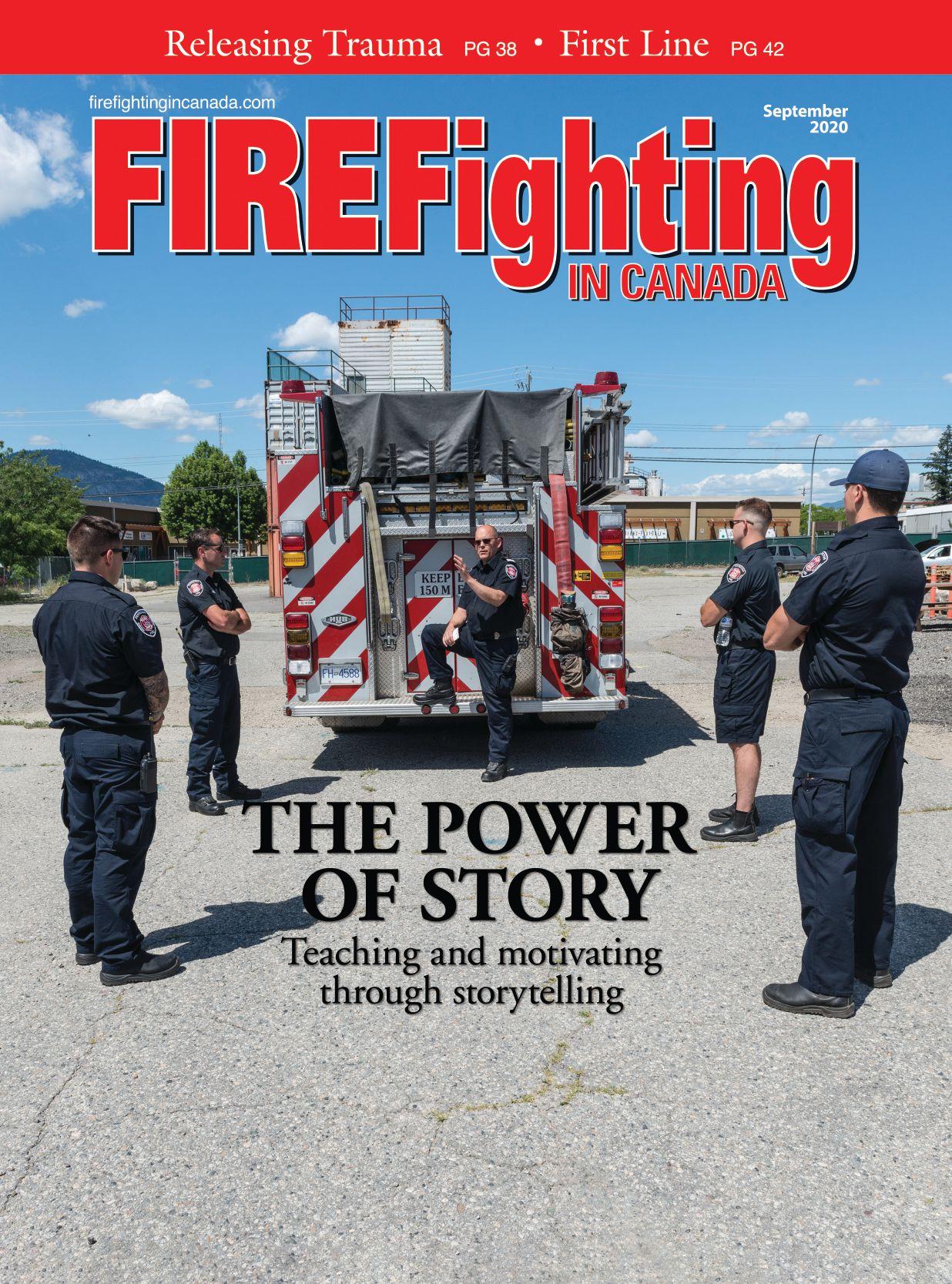
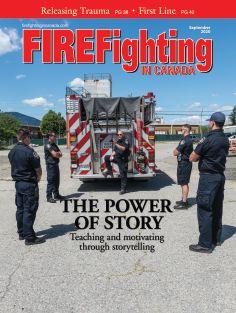
Mike Biden, photographer with the Penticton FD, sent us this shot to show story in action. Full story on page 10.
On the other hand, there is well-founded concern for the lose of tactile skills and muscle memory. I once read a true story of a plane crash where the pilots, so well entrenched in operating the airplane’s automated flying systems, were at a loss to do a simple correction when those systems failed and they were required to fly manually. The plane crashed, killing all aboard and leaving a black box of tragedy. Automation so rarely fails, yet it might. It could. It seems important to consider how we will practice the skills, retain that muscle memory, should we need it again if our technology fails. A self-driving car, properly done, will be far safer than humans behind the wheel. Humans don’t have the greatest track record on earth as drivers. But if that technology should have
a glitch, is there ever a time, in a future of self-driving cars, when one will still need the skills to take over the wheel? I’m not sure. Instincts ere with a fear of losing skills in a trade-off, albeit in this instance overall safety being a very worthwhile trade-off. The pandemic has shown us our reliance on the internet, and the astounding agility that was made possible in part because of it. In the fire service, technologies are creating a fascinating vision for the future. Electric fire trucks, virtual reality training, augmented reality systems that uses haptics to engage real sensory details like the smell of smoke and heat, pump automation, drones...the list could trail on and on. It’s a very cool time in technology for fire departments. Innovations in design are also continually taking everything from bunker gear to SCBAs to the next level.
Economics and efficiency often drive the adoption of technologies and these things are realities we all engage with. As technology continues to change the way things are done in the fire service, it will be important to consider skills gained and what may weaken other skills, if any. The pandemic has pushed even the most camera shy into the world of Zoom and this may foster more acceptance and interest in technologies, leaving the fire service with plenty to consider.
ESTABLISHED 1957 SEPTEMBER 2020 VOL. 64 NO. 6
EDITOR LAURA AIKEN laiken@annexbusinessmedia.com 416-522-1595
MEDIA DESIGNER JAIME RATCLIFFE jratcliffe@annexbusinessmedia.com
GROUP PUBLISHER/VP SALES MARTIN MCANULTY fire@annexbusinessmedia.com
COO SCOTT JAMIESON sjamieson@annexbusinessmedia.com
PUBLICATION MAIL AGREEMENT #40065710
RETURN UNDELIVERABLE CANADIAN ADDRESSES TO CIRCULATION DEPT.
P.O. Box 530, SIMCOE, ON N3Y 4N5 e-mail: subscribe@firefightingincanada.com
Printed in Canada ISSN 0015–2595
CIRCULATION e-mail: bolechnowicz@annexbusinessmedia.com Tel: 416-510-5182 Fax: 416-510-6875 or 416-442-2191
Mail: 111 Gordon Baker Rd., Suite 400, Toronto, ON M2H 3R1
SUBSCRIPTION RATES
Canada – 1 Year - $25.50 (GST - #867172652RT0001)
USA – 1 Year $58.50 (CDN)
Annex Privacy Officer
Privacy@annexbusinessmedia.com
Tel: 800-668-2374
Occasionally, Fire Fighting in Canada will mail information on behalf of industry-related groups whose products and services we believe may be of interest to you. If you prefer not to receive this information, please contact our circulation department in any of the four ways listed above.
All advertising is subject to the publisher’s approval. Such approval does not imply any endorsement of the products or services advertised. Publisher reserves the right to refuse advertising that does not meet the standards of the publication. www.firefightingincanada.com
STATIONtoSTATION
ACROSS CANADA: Regional news briefs
Oshawa department adopts new location technology
What3Words assigns three words to a three by three metre square to identify the exact location of an emergency.
In an emergency, seconds matter. This is the reason Fire Chief Derrick Clark said his fire department in Oshawa, Ont., was drawn to a new and free location technology called what3words.
What3words divides the world into a grid of three metre by three metre squares, the app assigns each square a unique threeword identifier, allowing first responders to pinpoint the location of an emergency with more ease.
The Oshawa fire department is the first Canadian department to adopt the technology. The Oshawa fire department is the largest in Durham region and serves about 166,000 community
THE BRASS POLE
Promotions & appointments
In July, MELANIE JONES was promoted to deputy fire chief of Kingston Fire & Rescue in Ontario. Jones joined Kingston’s fire service 26 years ago, rising through the ranks from firefighter to captain. In 2013, she was promoted to the position of chief training officer. She became deputy fire chief
on July 19, becoming the first woman to hold the position at the department.
DANIEL SMITH took over the role as deputy fire chief in Port Hope, Ont., on April 6. Smith has 20 years of service with the department, is a certified fire officer, holds a diploma in fire protection engineering and an executive diploma in municipal management. He is currently pursuing a bachelor’s degree in
members. The dispatch zone covers Oshawa, Whitby and Clarington fire services, with alerting coverage for Brock, Scugog and Uxbridge.
“When a community member is in distress, their exact location is one of the most important things we need to identify quickly,” said Clark. “In Oshawa, we have almost 410 hectares of trails and greenspace, as well as large rural and remote expanses of country north of the city. What3words is a powerfully accurate tool that will help us dispatch the right resource directly to the scene of any emergency.”
He said the department has begun training their staff and implementing what3words, joining many emergency services and 911 call centres around the world who have adopted the UK-based technology.
Mobile users can use what3words by downloading the free app or by using the online map at what3words.com. It is available for iOS and Android. While the app is encouraged, it is not the only way to use the technology. When someone calls 911, the department can also send them a link that will assign three words to their location and allow the dispatchers to quickly locate them. The technology covers the entire world. There is also no cost for emergency services looking to implement the technology.
“All fire chiefs know how difficult it can be to increase budgets and, especially with the current restrictions due to COVID-19, we’re seeing significant losses in all our communities,” said Clark. “This is something that you can easily start using at no cost so it’s a real win-win for everybody.”
emergency management.
In June, TRAVIS STONE was promoted to deputy fire chief for Perry Fire Services in Ontario after a unanimous decision from council. Stone began his career at age 15 as a junior firefighter with the Perry Township fire department. He pursued a career as a paramedic and began working both as a volunteer firefighter and primary
care paramedic. He also served with the Burks Falls and District fire department since 2014 and was promoted up to acting captain in 2019 with both Perry Township and Burks Falls.
Previously the city’s deputy chief, EDWARD WOLFE was promoted to the position of fire chief for White Rock, B.C. Wolfe joined the White Rock Fire-Rescue Service in 1991 as a suppression
Free virtual addiction treatment for first responders
A Toronto-based addiction treatment centre started a virtual rehab program that is free for first responders across Canada.
Trafalgar Addiction Treatment Centres offer fourweek rehabilitation programs, providing patients with 20 hours a week of individual, group and family therapy. In November 2019, Trafalgar launched its Local Heroes program and began offering free treatment spaces to first responders who didn’t have access to care. The 30-day program treats concurrent addiction and mental health disorders.
When COVID-19 hit the program needed to transition online. In June, Trafalgar partnered with OnCall, a Toronto-based online health service, to offer virtual treatment.
“COVID-19 has really
changed our ability to provide access to mental health treatment,” said Shane Saltzman, CEO of Trafalgar.
“Moving to an online platform has allowed our services to become more accessible from an outpatient perspective.”
Saltzman explained the goal of the program is to provide a unique, preventative outpatient program; not to wait until people hit rock bottom. He said transitioning to online treatment has enabled Trafalgar to expand its services nationally.
With patients from across Canada, the centres have been able to provide treatment to three virtual rehab groups each day. Prior to the pandemic, Trafalgar was only able to offer one rehab program per day. Trafalgar has also grown its team of outpatient program therapists from four to 12 full-time staff to support
the growing demand for its services.
Saltzman said the partnership with OnCall has been an overwhelming success, particularly among first responder participants.
“With the launch of the virtual addiction program, we
now have the opportunity to support our first responders because they’re struggling,” he said. “The aspect of offering treatment at no charge is also changing the conversation and allowing people to recognize that this community needs support.”
Virtual reality fire education project to launch in Calgary
The Calgary Fire Department will be the first in Canada to launch a virtual reality education program.
In 2019, the city reported a 41 per cent increase in firerelated injuries so this project
aims to address gaps in the current education model.
The virtual reality fire and life safety education pilot will focus on high risk citizens including children, seniors and those who do not speak
English well. The program exposes participants to various fire-related situations so they will be able to identify potential fire hazards more easily and quickly. It will also be offered in a variety of
languages and settings. The pilot will be developed in the next several months and the department said it will work with technology companies to launch the program.
firefighter. He was promoted to captain in 2009, then to deputy chief in 2014. He officially moved into the role of chief on May 30.
Retirements
After over 41 years working in Oakville, Ont., Fire Chief BRIAN DURDIN retired on June 30. He began his career as a firefighter with Oakville Fire Department in 1980. He worked his way through the suppression divi-
sion from a recruit firefighter to captain. After a brief period as a training officer, he returned to the suppression division as a platoon chief. In 2005, he became the assistant deputy chief and was promoted to deputy fire chief in 2008 before taking on the role of fire chief in 2016.
After 33 years with the department, Prince Edward County Fire Chief SCOTT MANLOW retired
in June. He joined the service with the Prince Edward County department at age 30, working first as a volunteer before eventually moving into a full-time position. In 2004, Manlow was named deputy chief before moving into the chief role two years later. He spent a total of 14 years at the helm before officially retiring on June 26.
Last Alarm
DOUG ARMOUR, assistant fire chief in Maple Ridge, B.C., passed away from cancer on July 12 at the age of 49. Armour began his fire fighting career with Maple Ridge Fire and Rescue in 2001 as a paid-on-call firefighter and received a career position in 2007. In 2015 he became a training officer for the department before being promoted into the position of assistant fire chief in July 2017.
Trafalgar Addiction Treatment Centres partnered with OnCall to deliver virtual rehab. PHOTO:
STATIONtoSTATION
BRIGADE NEWS: From departments across Canada
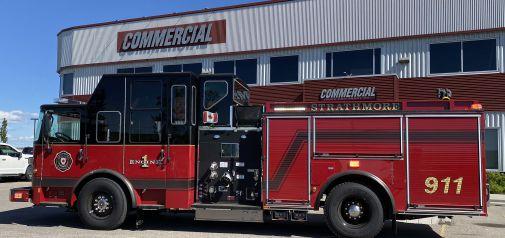
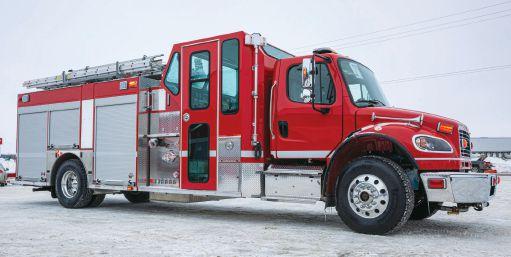
The Strathmore Fire Department in Alberta took delivery of a TME pumper from Commercial Emergency Equipment. The unit sits on a Saber FR chassis and runs on a Cummins L9 450 HP engine. It is equipped with a Waterous CSU 1,750 GPM pump that holds 500 US gallons of water.
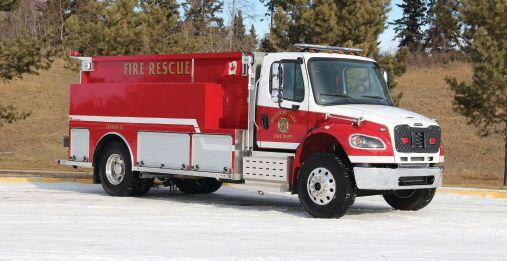
Williams Lake Fire Rescue in British Columbia took delivery of a Freightliner M2 106 two-door cab and chassis from Rocky Mountain Phoenix. This unit runs on a Cummins ISL 9L 350 HP engine. It is equipped with an Allison 3000 EVS automatic transmission and a Hale RSD 840 IGPM PTO driven fire pump with a 1500 imperial gallon water tank.
The Red Deer Fire Department in Alberta took delivery of this Rosenbauer tanker from Fort Garry Fire Trucks. Sitting on a Freightliner M2-106 chassis, the apparatus runs on a Cummins L9 350 HP engine with an Allison 3000 EVS transmission. It is equipped with a stainless-steel ER pumper 4-man crown enclosed pump with a Hale DSD 1250 pump and a 40-gallon fuel tank.
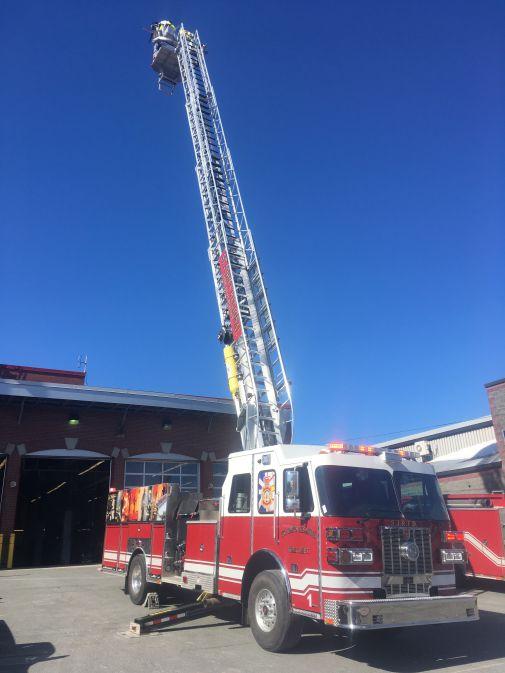
St. John’s Regional Fire Department in Newfoundland. The unit sits on a Sutphen TSAL4K / 62” 10” RR chassis and runs on a Cummins L9 450 HP engine with an Allison EVS 3000 transmission. It is equipped with a Hale QMax 1500 US GPM pump with 1250 IGPM capacity.
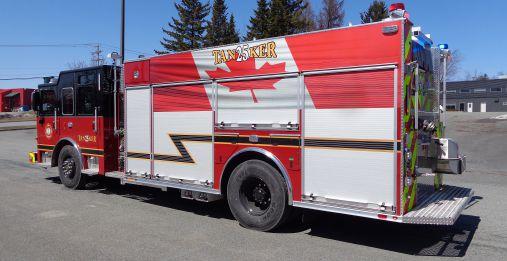
The Township of Springwater, Ont., received this MaxiMetal/ Pierce Mfg pumper delivered by Commercial Emergency Equipment. The apparatus sits on a Saber FR chassis and runs on a Cummins L9 450 HP engine. It is equipped with a Waterous 1,500 GPM pump that holds 1500 gallons of water.
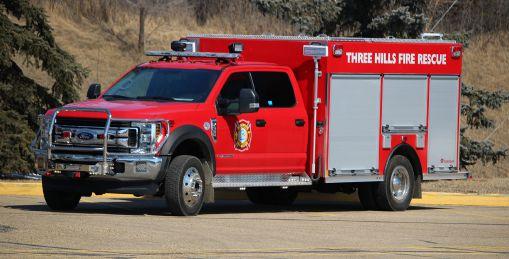
Three Hills Fire Rescue in Alberta was delivered this light rescue from Rocky Mountain Phoenix. The apparatus sits on a Ford F550 chassis and is equipped with a 6.7L Power Stroke V8 turbo-diesel engine with 330 HP and 750 lb-ft of torque.
WILLIAMS LAKE FIRE RESCUE
STRATHMORE FIRE DEPARTMENT
RED DEER FIRE DEPARTMENT
ST. JOHN’S FIRE DEPARTMENT
SPRINGWATER
THE POWER OF A STORY
Storytelling is a powerful leadership technique. Here’s how you can use it to teach lessons and inspire action.
By LAURA AIKEN
We all love a good tale. Storytelling, a cultural practice of global commonality, is as fundamental as the nose on your face. In life, the narrating self loves referring to milestones as the opening and closing of chapters. A relationship come and gone, children born and then moving away. So ends a chapter and a new one begins. It’s the story of life.
In organizations and leadership, storytelling is a powerful tool for imparting a memorable lesson. We are hardwired to engage and immerse with a story. Just hear or read a good one and think of how life tends to fade into background as our imagination parses a world of pictures from the details. A good story captivates attention like a woolly mammoth suddenly in your path.
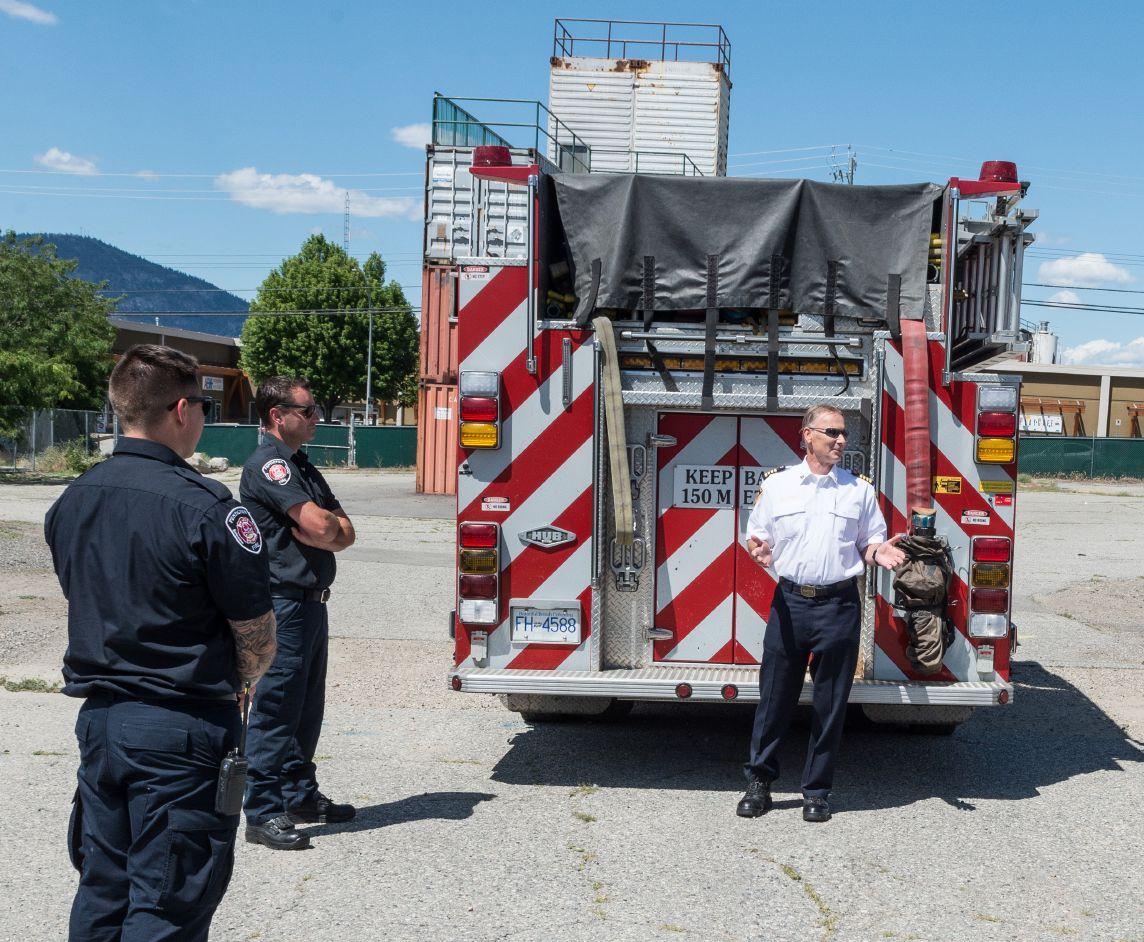
LEFT To deliver an oral story best, organize your thoughts in bullet points so you can talk naturally. Penticton photographer Mike Biden captured this photo at the Penticton FD to illustrate capturing an attentive crew with a great story.
ABOVE Paul Smith is one of the world’s best known experts in organizational storytelling.
Storytelling as an art has many teachers, and in the world of leadership and organizational storytelling, Paul Smith is one of the most highly regarded. Smith was one of Inc. magazine’s Top 100 Leadership Speakers of 2018 and he has authored several books, including the Amazon No. 1 bestsellers Lead with a Story, Sell with a Story, and The 10 Stories Great Leaders Tell.
When asked what defines storytelling, Smith first clarified what storytelling is not.
“Storytelling is not good advice, a great presentation, a well written memo or a great speech. It’s not three really compelling reasons to buy the product I’m selling. There are a lot of things it’s not that people often mistakenly refer to it as. All those things I’ve just said you’ve heard people refer to as ‘Oh, that was great story.’ No, that was good speech, or a great memo or an effective sales pitch. Story is something special.”
Fundamentally, story is a narrative about something that happened to some-
one, he said. A good story has an interesting narrative that teaches an important to lesson that will serve you well. Story requires a main character, a goal and something blocking that goal. There are events along the way, a struggle and either success or failure. Sound familiar? Of course. That is the arc of every story as we are wired to recognize it.
“I focus on story first,” said Smith, “because that’s the main place people get into difficulty when trying to craft a better stories. The thing that they’re trying to crack isn’t even a story. So, no matter how much lipstick you put on that pig, it’s never going to be a story. It’s just a pig with lipstick on it.”
Storytelling is not just engaging an audience with a leadership message. To really understand storytelling, you have to start with the definition of a story. Remember, something has to happen to someone or it’s not a story.
■ WHO NEEDS TO TELL STORIES?
While storytelling is highly effective for the boss, Smith said everyone can benefit from better storytelling, even those that don’t manage anyone. Those people still need to make recommendations and exercise influence over peers. Smith teaches courses in storytelling for CEOs and executives all the way down to new hires because everyone can benefit from storytelling.
And while the stories may be different, the craft is the same — the structure, the techniques that create emotional engagement; the surprise ending, these apply no matter who is telling the story. The difference lies in what the story is about.
■ HOW DO YOU CRAFT A GOOD STORY?
Like all things done well, the end result often looks as natural and effortless as rain’s trip from sky to earth. Ask plenty of writers, and they will assure you this is not the case. If your efforts feel like a struggle, that’s natural. Creation is work. Stories are by design. And, to this end, Smith said you need to start with the end in mind. He recommended knowing the answer to these two questions before you craft your
PHOTO: PAUL SMITH
PHOTO: MIKE BIDEN
story: Who is my audience? What do I want them to think, feel or do after listening to my story that they likely weren’t going to do otherwise?
With these answers known, you can proceed with finding your ‘something that happened to someone’ that will accomplish your goal with your audience. This isn’t fiction, no invention is needed, just a flip through the rolodex of time.
In your own life, and that of your friends, family and colleagues, query for times of success, failure or a moment of clarity that fits with the desired feeling or action you want to happen in your audience. He suggested thinking of a time when you saw someone do something really well, a time you witnessed someone perform poorly, a lightbulb-style realization or a hard-luck lesson learned.
“Whatever taught you that lesson, the first time will teach other people the lesson when you tell it to them in the form of a story,” he said.
In Hollywood, narrative essentials means a hero, a villain and an epic battle. In an organization, that translates to a main character that’s relatable facing a challenge the audience might too might face one day, an ensuing struggle to reach that challenge and an obstacle getting in the way of success. The event your building your story around should contain these elements.
Once you’ve got your event chosen, you’re ready to incorporate story crafting techniques.
■ THREE KEY TECHNIQUES
Once you are ready to design your story, Smith said there are three vital techniques to success: structure, emotion and surprise.
To structure your story well, Smith said your story needs to answer these eight questions:
• Why should I bother listening to the story?
• Where and when did to take place?
• Who’s the main character and what did they want?
• Who or what is creating an obstacle?
• What did they do about it?
• How did it turn out in the end?
• What did you learn from it? Or what should they learn from it?
• And what do you think they should go do now? (So that’s your opportunity to make a recommendation of what they should go do now that they’ve heard.)
Once you have your questions answered, create an outline to help organize your fundamentals, but do not, Smith emphasizes, write out the story word for word. To deliver it best orally, stick to bullet points to avoid sounding like you are reading a written story with complex and longer sentences. If the story is to be shared by email or on a website or the like, then of course, write it out. Also, if you write it your oral delivery you may end up memorizing it word for word and it will sound like you are reading it – not a great technique for capturing an audience with a story.
There are multiple techniques you can use to stir up emotional engagement. Emotion is often characterized as the defining element of a story. The use of dialogue helps, says Smith, because you’re relating what the character thinks and feels rather than a third-party re-telling that may come off as a case
A good story has an interesting narrative that teaches an important to lesson that will serve you well.
’’
study. You can also use telling and showing to impart emotion, with showing being the more powerful technique. At minimum name the emotion – he or she was happy or sad — an audience will understand. Even better, show the character in action. An angry person might start yelling or sad person start crying. Use the physical manifestations of the emotion to trigger empathetic emotions in you audience.
“For some reason that I’m not going to pretend to be able to know, human beings find it more a more powerful way to appreciate the emotions is when they figure it out from the clues and what happened, then from you just hitting them over the head with ‘she was sad.’ Better for them to figure that out from the action of what’s going on.”
The third important technique is sur-
prise, and while there are many ways to incorporate surprise, Smith says one way is to create a surprise ending, which you can do with just about any story. For example, a seemingly simple childhood event may turn out to be pivotal when the audience finds out at the end who it is that is being talked about. You can take a vital piece of information that belongs at the beginning and tell it at the end. It could be about the identity or the when or the where. The key is to choose something the audience was expecting to learn earlier, said Smith. A surprise ending helps make the story even more memorable because it activates more connections in the brain.
■ HOW CAN STORYTELLING BACKFIRE?
There are ways to sink yourself as a story-
teller. You can’t walk around telling stories all day, Smith said. Most of your conversations with people will be regular back and forth, explaining or giving directions. You also need to ensure you aren’t always the main character in your stories or you risk coming off as self-centered and arrogant. You should be the ‘villian’ in some of your stories and share your failures fearlessly.
“A caring leader will tell you all of their failures,” said Smith.
A big mistake to watch out for is starting your story out by saying “let me tell you a story.” Right away people will be wary they are about to be manipulated or lied to.
People can have negative associations with the word story in the context of expecting to hear the truth. People think of someone ‘making up stories’. The word story almost never helps you when you’re telling a story, said Smith.
So, don’t say you’re going tell a story. Just jump right in!
䄀昀 昀漀爀搀愀戀氀攀 刀攀氀椀愀戀氀攀
吀爀甀猀琀 䘀椀爀攀倀爀漀㈀ 琀漀 栀攀氀瀀 眀椀琀栀 礀漀甀爀 挀爀椀琀椀挀愀氀 昀椀氀攀猀
愀渀搀 瀀爀漀瘀椀渀挀椀愀氀 爀攀瀀漀爀 琀椀渀最⸀
BY MATTHEW PEGG Fire chief Toronto
WLEADERSHIPFORUM
Canada’s red cups
ithout any doubt, 2020 has presented a number of unprecedented challenges for first responders, with COVID-19 at the forefront of not only international media coverage, but literally at the forefront of our daily lives.
In March, for the first time in more than 28 years, I stepped away from being directly connected with the fire service. I did so to take on the responsibility for leading the City of Toronto’s response to the global COVID-19 pandemic.
In that role, which has been the most demanding of my career, I had a front row seat to the incredible, selfless and amazing work our frontline first responders, healthcare professionals and essential and critical service workers continue to deliver, day in and day out, without question or fail.
The perspective I gained in this role left me feeling immensely grateful for all that these women and men have done and continue to do each day. Thousands of lives have been saved at your hands and I, for one, will be forever grateful.
As with any incident command operation, we quickly established the overarching strategic priorities that informed each and every decision throughout the response. Our priorities were as follows: to save lives, prevent our healthcare system from becoming overwhelmed and do all that we can to protect our social and financial economies.
Each and every day, our teams worked non-stop to deliver on these priorities. While serving as the COVID-19 Incident Commander, I made a number of observations that have had an impact on me. The one I will share with you this month, while seemingly odd, has been especially poignant for me.
we really need at the time we buy them, and can be rather cumbersome and even annoying to store when we don’t need them.
We often think about cutting back on the number of red cups that we keep on hand, as we get lulled into believing that we can always, quickly and easily get more when we need them.
If there is one thing that COVID-19 has taught us, it’s that things we take for granted can become scarce, and even unavailable, when big trouble hits. And so, we keep our supply of red cups in stock for when we need them most.
Red cups get us out of a jam, without celebration or ceremony, and just simply go to work meeting the need at hand. They are the perfect response to the unplanned or uncomfortable situation and are brilliantly effective in all that they do.
And so are our first responders, healthcare professionals and our essential and critical service workers – the perfect response to an emergency situation that threatens all that matters to us.
It is here that I sincerely hope that the parallels between our first responders and red cups ends though. These cups, despite their brilliance and usefulness, are easily disposed of and forgotten once the immediate pressing need has been met.
COVID-19 caused me to realize that Canada’s first responders are truly the “red cups” of society. ‘‘ ’’
COVID-19 caused me to realize that Canada’s first responders are truly the “red cups” of society. Come on, you know what I am talking about — the big red plastic drink cups that we have all used at one time or another. Let me explain why this analogy seems eerily accurate to me.
Red cups are there when we need them. While nobody may ever actually plan to need them, they are the perfect solution to a pressing or unplanned need. When the need arises, whether an impromptu get together, or the unexpected breakage of our regular glasses, the red cups are there, in an instant, to get the job done.
Red cups generally come in seemingly larger quantities than we feel
Matthew Pegg is the chief with Toronto Fire Services, having previously served in Georgina, Ajax and Brampton, Ont. Contact Matthew at matthew.pegg@toronto.ca and follow him on Twitter at @ ChiefPeggTFS.
As we continue to transition from COVID-19 response to recovery, it will become increasingly easy for us to forget and disregard all that has been sacrificed, given and achieved by so many, especially considering that the majority of this service was largely invisible to most.
So, from one person who has been given the privilege of witnessing firsthand the amazing work our first responders, healthcare professionals and each of our critical and essential service workers delivered in response to COVID-19, I offer my sincere thanks.
While I too may quickly toss my next used red cup into the recycle bin, I won’t soon forget all that has been done by each of these public servants.
Cheers to each and every one of you, who have given so much, in response to the most challenging emergency our country and world have experienced in a very long time.
BY GORD SCHREINER Fire Chief
Comox, British Columbia
MSTOPBAD
Getting through this together
anaging our way though Covid-19 has been a huge challenge for fire service. This global health crisis has forced us all to quickly change and adapt. The fire service is positioned well to tackle the necessary changes.
As long as there has been a fire service we have been sharing with each other. When firefighters and departments work together, everyone wins. We do not need to compete with each other but rather we need to work together and share with each other as together we are stronger. This means working closely together both internally (within our fire station) and externally (with the broader fire and emergency service community).
Internally, when all members (including leaders) of a fire department are pulling in the same direction, both the fire department and firefighters thrive. The result is a better place to work and service to our citizens. Firefighters who share with each other are typically better prepared for their next incident. Sharing our knowledge and gently pushing each other to be better makes us all safer and more effective.
I have seen our firefighters get consistently better because of team closeness. Great firefighters are here for the team—not for themselves—and the team is here for our citizens. So, when we play as a team, everyone wins. When firefighters work together opportunities are also increased for them. Whether it is helping each other with training, fitness, job searches and life challenges, together they are stronger. I visit many fire stations each year and I can tell quite a bit about the fire department after meeting some of the firefighters there. I am happy to say most fire departments “get it” — fire fighting is a team sport.
Externally, when fire departments reach out and work together with other fire departments (and other emergency service agencies), the same good things happen. Fire departments that share and train with other fire departments increase the safety and effectiveness of their firefighters and organization and helps to enhance the services they provide to their citizens.
In my department, we are constantly training with other departments, both though our training centre and during our regular weekly training sessions. We are also always looking to improve and find new and better ways of doing things. I know first-hand that this interaction has really helped our department to improve our services, increase our safety and make us better. We are always willing to share
Gord Schreiner joined the fire service in 1975 and is the full-time fire chief in Comox, B.C., where he also manages the Comox Fire Training Centre. Contact him at firehall@comox.ca and follow him on Twitter at @comoxfire.
our training centre, training props, lesson plans, power points and guidelines with others as we know that most will do likewise.
When I share something with another department I simply ask that if they improve it, to please let us know the improvements so we can consider them. I was recently asked what I thought the most significant change in the fire service was during the past several years and my answer was the internet. The internet allows us to share very quickly and also to see what others are doing right or wrong. I have several good friends who are leaders in the fire service whom I have never met in person, however, we are constantly sharing and trading ideas with each other.
I love having other firefighters and departments come here to train or visit with us as it broadens our firefighters’ training and knowledge. Fire departments that work closely together to deliver their important services thrive and their citizens receive better value for their taxes. Mutual aid agreements assist departments in ensuring adequate resources are available. Automatic aid agreements assist departments in providing timely responses. Both types of agreements do so with little increased costs and huge benefits. The community benefits in so many ways and the fire departments also benefit in many ways by providing a safer and more effective service. Large or small, modern fire departments have realized that they can’t go it alone. Developing strategic partnerships is a win-win for us all.
Training together prepares us better to work together during a mutual or automatic aid incident. Sharing resources with each other is common sense and fiscally responsible.
My departments have also benefited from me travelling all over Canada delivering my Safe and Effective Scene Management program (aka #stopbad program). I get to visit dozens of fire departments each year and learn from each. I often come home with some great ideas as to how to improve our services and or training at my department. Some of the best ideas I have seen come from some of the smaller fire departments who need to be more creative due to their smaller budgets (doing more with less) and I freely share all that I have learnt.
For those few departments that, for whatever reason, choose to go it alone, they are only hurting themselves and their communities. Working closely with neighbouring fire departments is a win-win for all involved and is also expected by our citizens and politicians.
We don’t need to reinvent the wheel, just borrow a wheel and maybe make it spin better then pass on your improvements to others. Our department has been sharing with departments from all over Canada to our mutual benefit for many years now and we will continue to do so because, together we are stronger.
BY DAVE BALDING Fire Chief Nipawin, Saskatchewan
AFIRELINES
Embracing technology
recent product presentation that has the potential to revolutionize pump system operation gave me pause for to reflect on the impact of technology and other advancements on fire fighting. This relatively new innovation added a layer over existing technology to enable touch screen operation of virtually all facets of an apparatus’ pumping system.
While there may be pushback from some, it showcased the extent we rely on technology in today’s fire fighting world. Would we be ready to lose touch with another bastion of fire fighting, physically engaging pumps, priming them and operating valves? Possibly.
Make no mistake, I’m not suggesting we, in the fire service (a potentially deadly job invariably with high stakes), dash out and adopt new techniques or advancements with reckless abandonment. I believe in waiting for techniques and technology to progress from their infancy and become proven. It’s incumbent on us to bring our departments forward, keeping pace with new developments.
Is every advancement and technology for every department, in every situation? No, for a couple of reasons. Take CAFS (Compressed Air Foam Systems), for example. While there may be differing views on its effectiveness, I view this innovation as a way to more effectively suppress fire while making the attack easier on responding members. As with any tool or technique, it’s a local decision that should be made by those who know their local circumstances best.
Expense is another consideration when adopting new ideas. Most developments, such as CAFS, come at a financial cost that is not always easily accessible by smaller departments and can make the evaluation and decision-making process even more critical. There are changes that are mandated in the interest of firefighter safety by the various codes and standards agencies that regulate our profession. For example, the change from demand breathing apparatus to positive pressure. Though replacing older models was expensive, the benefits of the new model better ensured the health and safety of our firefighters and, ultimately, outweighed the cost.
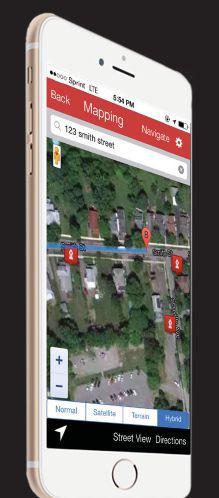
of mobile applications, allowing responders to indicate their availability for callouts, alert them to emergency incidents and provide confirmation of their response. There are functions, like mapping, that often provide a better-informed response. The way we see fires changed dramatically with the adoption of thermal-imaging technology, which permitted us to find the seat of a fire, victims and our colleagues. Drones (relatively new concept) are also enhancing our abilities on fires and other responses.
Fire suppression strategies have also evolved. We’ve come a long way from rudimentary nozzles to the complex equipment we use today. For instance, foam and positive pressure ventilation were once new concepts. In its early days, positive pressure ventilation gained criticism that adding air to a building on fire as preposterous but the practice is now accepted and valued. Research has introduced a new understanding of fire behaviour leading to tactics like door control—so vital with vent-controlled fires in volatile buildings. Some have begun using other tactics, including innovations like heavy hydraulic extrica-
Is every advancement and technology for every department, in every situation? No, for a couple of reasons. ‘‘ ’’
tion tools, many now available in battery powered models. Those that engage in rope rescue may be utilizing a recently developed piece of hardware: the Multi-Purpose Device (M.P.D.), a Canadian invention which allows change from lowering to raising without changing hardware in a rope system.
Progress changes the way we deal with emergencies in a myriad ways. The way we are summoned to help the public continues to improve. Pagers, now the standard for volunteer departments, were once a new development. Recent years have also seen the introduction
Dave Balding joined the fire service in 1985 and is the fire chief with the Nipawin Fire Department in Saskatchewan. Contact Dave at d.balding@nipawin.com and follow him on Twitter at @ FireChiefDaveB.
These are but a few aspects of how our profession has been altered by technology and progress. It should be kept in mind that the many advancements at our disposal on today’s fire ground augment and improve existing practices and seldom replace previous or more basic elements of fire fighting outright.
Fire is a powerful force and while the rudiments of fire fighting can still be distilled to ‘putting wet on red’ , it’s incumbent on us to make the best tools available to our firefighters: techniques and strategies, hardware or other new developments, to enable them to perform with the utmost safety and effectiveness.
A true game-changer. The eDRAULIC® Watertight Extrication Tools (EWXT) are the first of their kind. They allow rescuers to operate submerged in fresh water up to 11 feet, unencumbered by hoses or power units. And they’ve been thoroughly tested and proven, because trouble doesn’t just stay above water. THE EWXT, PROVEN FOR UNDERWATER RESCUES
BREAKING DOWN BORDERS
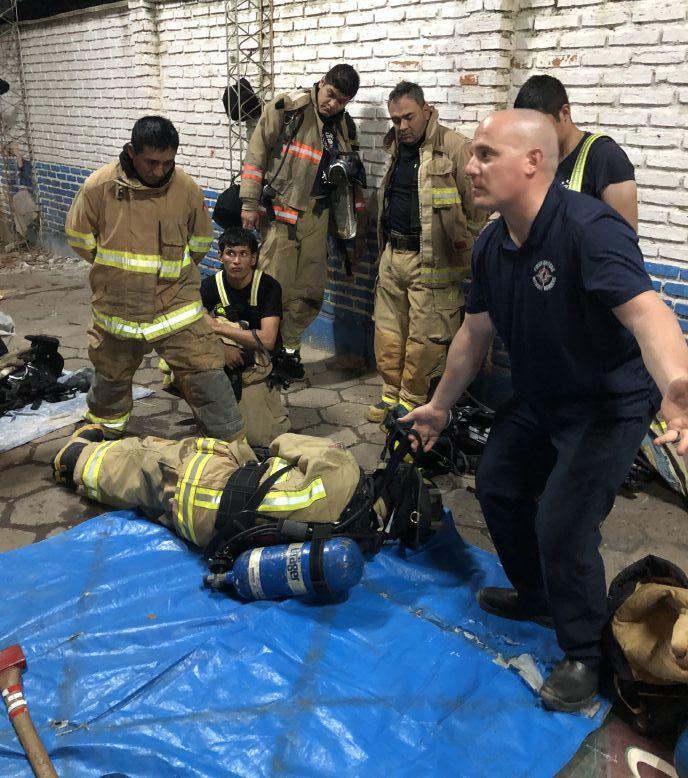
Firefighters Without Borders is a Canadian-based NGO that provides donated equipment and training to departments in need. Here’s their story.
By BRIEANNA CHARLEBOIS
For nearly 20 years, Firefighters Without Borders has donated equipment and provided training to departments in need around the world.
The organization came into existence in response to the devastating terrorist attacks on Sept. 11, 2001. Wanting to make a positive impact, several members from Station 114 in Mississauga, Ont., decided to sponsor a child through World Vision. After visiting its headquarters, the group was tasked with choosing a sponsor and ultimately chose a child from Indonesia. Sadly, two weeks later, one of the firefighters, Kevin Bailey, then 34, died unexpectedly in a rock climbing accident. To honour him, people were asked to donate to World Vision.
Then, in 2004, the remaining group learned about a fire in Ventanilla, Peru, that left more than 600 people homeless. With the same altruistic mission and Bailey in mind, firefighters Alan Hills, Tom Gojak, Andrew Melville, Aron Reppington, and Jamie Stark travelled to Peru at their own expense with World Vision’s Destination Life Change volunteer program. Before leaving, they asked other fire stations and local corporations for equipment donations. They were able to collect and deliver firefighting gear, Spanish training manuals and rescue equipment so the local department could be better prepared in the future.
The success of the first trip brought on interest in several similar projects; the organization was born. Firefighters Without Borders has since become a recognized NGO charity and have completed 25 projects in over 20 countries.
Jon Pannunzio has been the director of training and accreditation with the organization since September 2018. He is also the chief training officer for the Whitby
Jon Pannunzio, director of training and accreditation, travelled to Bolivia in December to provide training to local firefighters.
fire department in Ontario. He explained the goal of every project is to provide a fully-operational training plan in an effort to fill gaps for fire departments that may not have the resources or tools to do so on their own.
“Our mandate is to help improve the capacity of partnering departments both in Canada and abroad, whether that be by providing training, equipment or support,”
he said, referencing recent projects in Lac Seul First Nation in Ontario in November and his most recent training deployment to Bolivia in December.
“It is a true partnership in the sense that we lay out our expectations for them and then we’re pretty clear on what we’re going to be able to provide in terms of results and expectations from the crew,” he said.
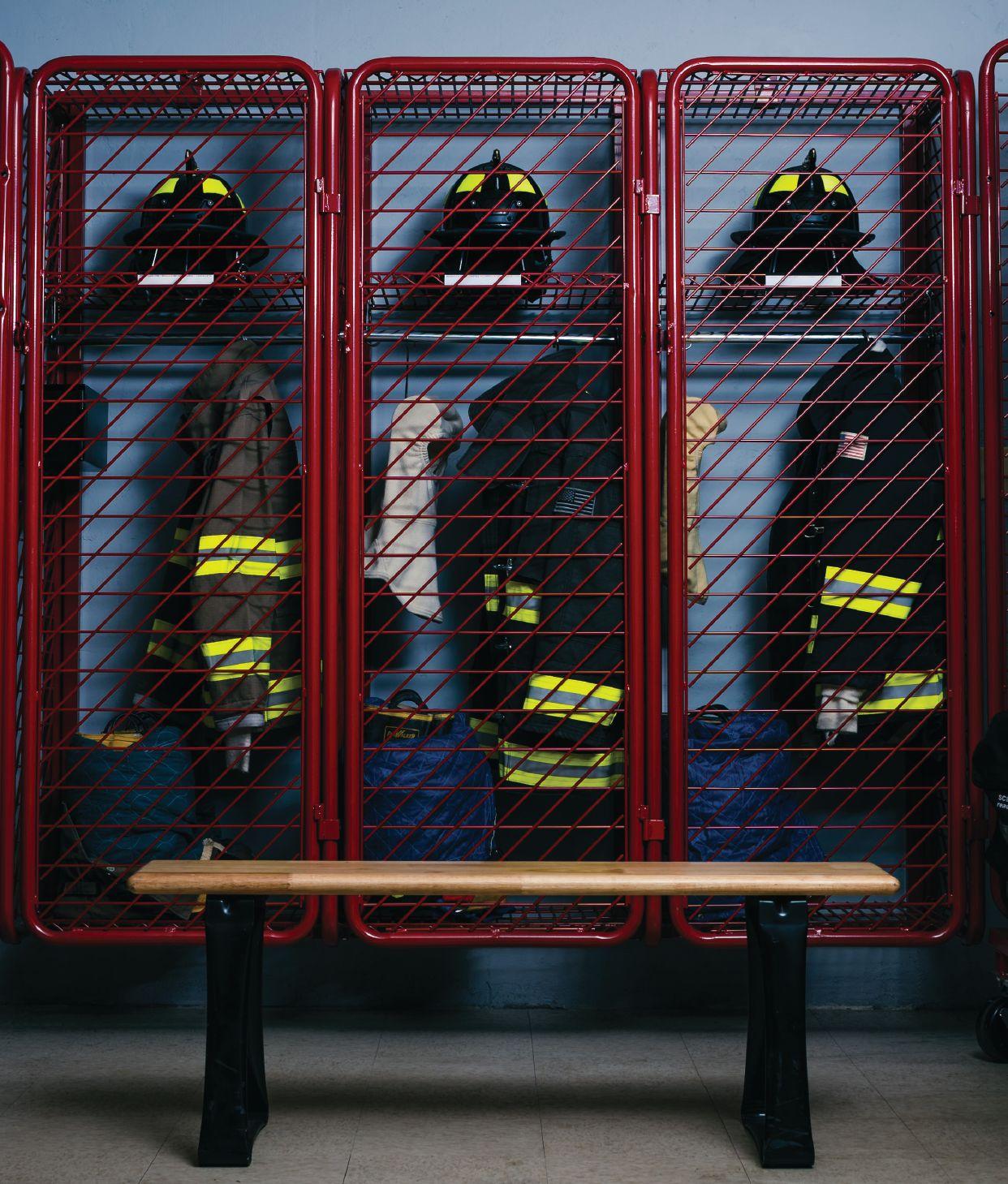
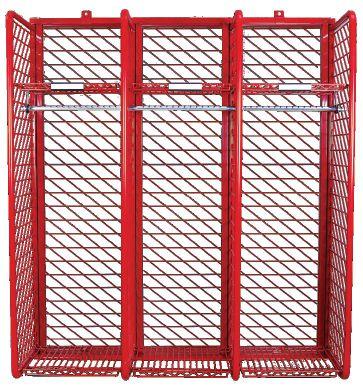
Ready Rack is the PPE care and maintenance specialist, offering an advanced line of PPE washing, drying and storage equipment. Keep your station organised with Ready Rack!
Wall Mounted Red Racks
Their goal—which begins with the 12-person board of directors when choosing a location and project—is to ensure they have the necessary resources to keep the training program running smoothly and consistently after the Canadian trainers return from the deployment.
This is why Frank Lamie, president of Firefighters Without Borders and retired Toronto deputy fire chief, said he initially became interested in volunteering with the organization.
“What really drew me to Firefighters Without Borders is we don’t do any disaster relief; we focus on sustainability. So, when we’re selecting a project, the main thing we look for is, after we give them equipment and go down and train them on using that equipment, whether they will be able to carry on and continue training others once we’re gone,” he said. “Our role is really to prepare them to look after their own disasters.”
After an assessment and decision is made on a project, trainers customize the curriculum and program for the department’s needs. They will then travel to the destination for about two weeks to help demonstrate various training tactics in a “train-to-trainer” model.
“There’s never a one-size-fits-all program,” said Pannunzio. “You have to be flexible and you have to be able to adapt once you’re there to be able to kind of meet all their needs and make any necessary adjustments.”
The organization’s latest project was set to take place in St. Lucia in May before the COVID-19 pandemic hit Canada.
The project was chosen because a variety of economic factors led to challenges in funding from many government services, leaving the St. Lucia Fire Service (SLFS) unprepared to fight major fire emergencies.
Earlier this year, Firefighters Without Borders also committed to help construct a new training facility in St. Lucia. Pannunzio said this will act as a training facility for the entire South Eastern Caribbean and will have the capacity and equipment to provide training opportunities, not only for St. Lucia, but for neighbour-
ing countries as well. Pannunzio and a team of three trainers had planned a two-week training trip in May, but as borders closed and COVID-19 cases surged, the trip was postponed.
“The biggest thing we provide is continued support and partnerships,” said Pannunzio. “So, even though our trip has been pushed, we are in constant communications with their fire chiefs and their senior officers.”
Though the trainers do not yet know when it will be safe to travel again, SLFS has received a number of donations and deliveries on behalf of Firefighters Without Borders. They took delivery of a pumper truck on March 20, an aerial truck on June 5 and a shipment of donated equipment on April 24.
“Internationally, firefighters share the same pride and passion that we do in Canada. Every community I have worked with has welcomed us with open arms and you can see they are really grateful and committed to becoming better,” Pannunzio said. “It’s been very rewarding because it’s clear that, just like us, they want to make sure their firefighters have the best equipment and training available so, in the event of a fire, everybody comes home safe.”
Lamie also noted that anyone interested in volunteering with Firefighters Without Borders should visit the website firefighterswithoutborders.org to learn more. With warehouses in Calgary and Mississauga, those interested can volunteer to sort and test donated equipment and gear. Anyone interested in becoming trainers or taking on larger roles within the organization are also encouraged to reach out via the website to find out how to become certified and, once borders reopen and travel is again freely permitted, aid in upcoming missions.
Breaking down borders by overcoming cultural and language differences, Firefighters Without Borders has spent nearly two decades delivering firefighter training to departments around the world to ensure safer communities and practices.
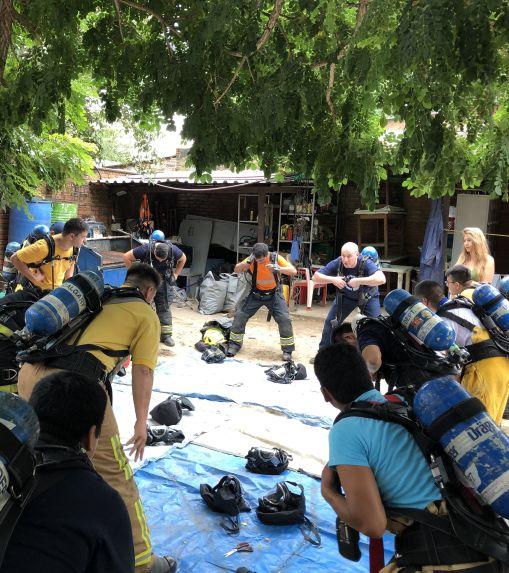
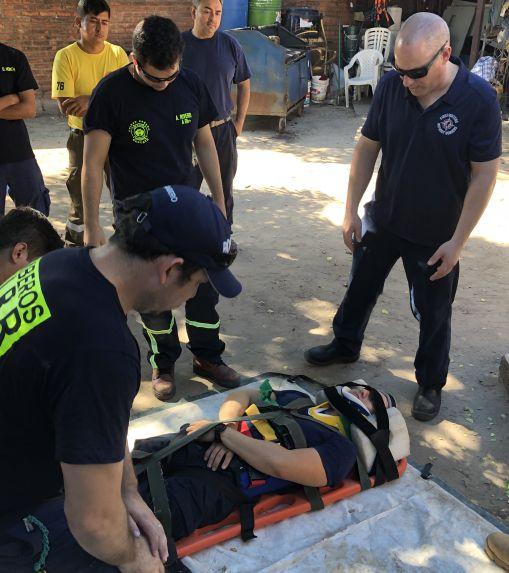
A team of trainers deploy for two weeks to conduct a train-to-trainer program with local firefighters.
With a focus on program sustainability, trainers customize the curriculum for each department’s needs.
PHOTO: FIREFIGHTERS WITHOUT BORDERS
PHOTO: FIREFIGHTERS WITHOUT BORDERS
TRAINER’SCORNER
Caring for compassion fatigue
By ED BROUWER
Author’s note: This is simply to provide information! It is NOT to be used to diagnose or to be used as a cure of any kind! If you or someone you know is thought to be suffering from PTSD seek professional help immediately.
You’ve just left the hall. Your shift has finally ended and you’re on your way home. You’re presently stopped for a red light. You close your eyes for a moment as “Paint it Black” by the Rolling Stones plays on the radio. Just then you hear the loud blare of a horn. Half in a daze you lift your foot off of the brake and begin to roll through the intersection only to realize the light is still red. “What?” Once again, the driver behind you blows his horn: Beep! Beep! You look up, but the light hasn’t changed. You look in the mirror and say, “Idiot, it’s a red light.” Beep, beep, beep! You give a glare that could stop a charging rhino and mutter, “Are you out of your freak’n mind? One more time buddy! Just one more.” Beep, beep! “You gotta be kidding me! Really? Really?” Beep, beep!
You slam the selector into park as you jump out of your car and storm towards the driver behind you—who happens to be grinning like a fool. You reach in through the window, grab the guy by the shirt, pull him halfway out and yell, “What do you want?!” The now fearful driver stutters, “Your…your…your bumper sticker says, honk if you love firefighters!” Stunned you look at your bumper and realize you are standing in the middle of the street, holding up traffic with the light now green. You smile sheepishly as you notice for the first time the three wide eyed seniors in the back seat. It isn’t until you are back in your vehicle that you realize you have something in your hands. Funny, you think, it looks a lot like a clerical collar.
Reactions like those described above are not normal, you do know that — right? Joking aside, we are going to take a look at what is being labelled ‘the silent killer’, and that is Post Traumatic Stress Disorder (PTSD). I realize that there have been numerous articles written on this subject, but given the current state of affairs in our country I urge you to take a few minutes and review this all important subject.
PTSD is one of several anxiety disorders that affect one in 10 people, making it the most common category of mental health problem, reports the Canadian Mental Health Association. In amongst PTSD is the complex issue of compassion fatigue, and that is the main subject before us today. Compassion is defined as a feeling of deep sympathy and sorrow for another who is stricken by misfortune, accompanied by a strong desire to alleviate the suffering.
The famed theologian Albert Schweitzer said: “… but this I do know, you who will be truly happy are those who will have sought
NO HYDRANTS, NO PROBLEM
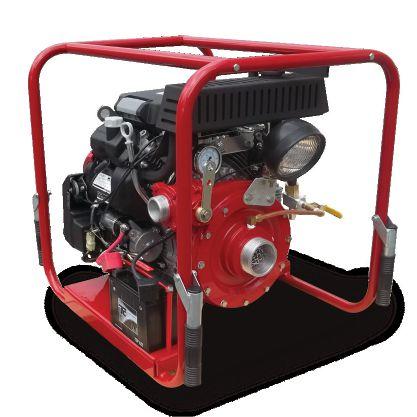
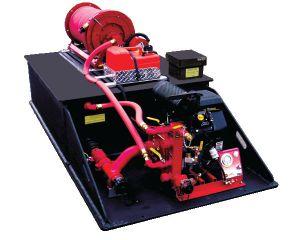
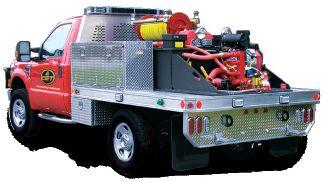
CET manufactures portable pumps, skid units, brush trucks and more to allow fire departments to Adapt, Improvise & Extinguish fire in almost any scenario where hydrants are scarce and static water resources maybe all you have to work with. CET- Providing fire ground solutions since 1908.
1 2 3 4
Portable Pumps (PFP-20hp-HND-MR Shown)
50+ models to choose from for both fire attack & resupply operations from static water sources like lakes, rivers, ponds and pools
Arrives Completely pre-assembled, pre-plumbed, pre-wired and pre-tested ! Simply mount to your chassis, connect electrical and go fight fire!
Brush Trucks (Custom Built)
Solid/Affordable/Practical
Isn’t it funny how day by day nothing changes, but when you look back, everything is different? - C. S. Lewis. ‘‘ ’’
GEAR WE CLEAN YOUR
for and found a way to serve.” First responders are all about serving but the COVID-19 pandemic is taking a huge physical, mental and emotional toll. Limited PPE, long work hours, social distancing, isolation and a real and constant concern for family and loved ones is causing overwork, exhaustion and in some cases, compassion fatigue.
Compassion fatigue is medical: the physical and mental exhaustion and emotional withdrawal experienced by those who care for sick or traumatized people over an extended period of time.
Tim Jarvis, renowned scientist and survivalists, said that “unlike burnout, which is caused by everyday work stresses (dealing with insurance companies, making treatment choices), compassion fatigue results from taking on the emotional burden of a patient’s agony.”
Some researchers consider compassion fatigue to be similar to PTSD, except that it applies to those emotionally affected by the trauma of another (eg, client or family member) rather than by one’s own trauma, as reported by Michael K. Kearney et al. in The Journal of the American Medical Association, March 2009.
Compassion fatigue is a type of burnout. It can come on suddenly with little warning, and has been known to reload past traumas, compounding the problem.
There are common symptoms, such as re-living an event through memories, nightmares or flashbacks, avoidance and emotional numbing, increased alertness and aggression or insomnia, headaches, and profound sadness. It can also lead to drug or alcohol addiction, depression or other illnesses.
Throughout my career I have stood strong in my faith. It has been the rock-solid foundation beneath my at time quivering legs. One of my life statements is, “What man is a man who does not make the world he lives in better.” For years this statement provided guideposts and gave me a sense of purpose. But to be honest, as of late it’s become a bit of a burden.
Have you ever felt like your circle of concern is bigger than your circle of influence? Does it seem that no matter what you do to make things better, nothing ever changes? If you do, you’re not alone.
And yet, one word we heard a lot in the beginning of this pandemic was that this is going to be different. “Isn’t it funny how day by day nothing changes, but when you look back, everything is different?” said the author C. S. Lewis.
There is a scripture verse that states we should always be ready to give a reason for the hope seen in us. Certainly, my hope is in God, but sometimes, because I wear my emotions on my sleeve, I don’t come across as compassionate let alone hopeful. I’m concerned for you, my fellow trainers, and not just in regard to the infection and the economic spinoffs that will hit our families. However, I must understand and be okay with the fact that I have little if any control
over your situations.
Recently a friend of mine asked, “How are you Ed?” Rather than my usual “I’m okay,” I replied, “I’m hopeful.” He looked at me sideways and asked, “What are you hopeful for?” I said, “Not sure, just hopeful.”
I think of the first responder’s role as being bringers of hope. We can’t guarantee a perfect outcome, but we can bring hope. I have witnessed — as I’m sure you have — that strange thing that happens within patients/victims when we pull up on scene. Even the crowds of onlookers seem to let out a sigh of relief.
May we never lose that gift. Fight to keep hope alive. I realize it seems that no matter what we sacrifice nothing seems to change. One pandemic leads into another. COVID-19 is not the first, nor will it be the last. However, we can be hopeful.
As a training officer it’s important to remember you are dealing with people who tend to have a ‘rescue mindset’. That is, they (we) are the helpers, not the ones who need help.
One of my councillors (yes, I did reach out) asked me what I did for “Ed”. After several answers he said, “It sounds like you are doing it for “Ed” but really all those things are driven by your desire to help others.”
The lights suddenly came on and I realized I was preoccupied with the needs of others. And dare I say I’m not alone. Please, if you have even a hint of trouble, get help early.
There are a few things you can do before a critical incident. Having an exercise program, following a good diet, and hydrating with water can make a huge difference. Hydrating flushes chemicals from the adrenaline rush out of your body. You can also release them by exercising. Avoid alcohol, sugar, and caffeine.
Building relationships with loved ones is your strongest defense. You don’t need to share all the details of an incident but share how you felt or feel now. Find someone you trust and talk to them about the incident and vent.
The big thing for you and your members to know is they’re not alone. Provide contact info for your department’s critical incident stress management teams, fire chaplains, or other support programs your department has in place.
And please remember your members’ families. A firefighter’s spouse must cope with the constant stress, sacrifice, and frustration of sharing a life with someone who is always walking into danger.
Think about it from the fireground angle. The “we are the rescuers” mindset can and does keep us from calling a “mayday” that would save our physical body, and it keeps us from asking for critical incident stress management that could save us from mental destruction.
Strange how we see deploying the rapid intervention team as rescuing our own and hide from the critical incident response team.
The greatest resource in the Canadian fire service is the firefighter, and although every firefighter is provided with turnout gear, we give them little to protect them from the ravages of emotional trauma.
We must equip them to deal with death, crisis, and suicide. Firefighters must be given opportunity to talk about the pressures involved in traumatic situations, to understand what others have experienced in similar situations, and know that they are not alone in their feelings.
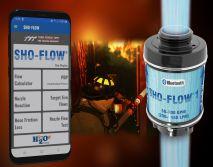
■ TFT LAUNCHES NEW DUAL FEATURE SHOFLOW APP
TFT’s new SHO-FLOW app is a new dual featured application for the fire service. It operates as either a fully functional stand-alone water flow calculator or in conjunction with TFT’s SHO-FLOW Bluetooth Flow Meter.
In stand-alone mode, crews are able to independently calculate all metrics related to getting water to the fire using established fire flow formulas. Its functions include flow rate, nozzle reaction, pump discharge pressure, hose friction loss, and establishing target fire flow rates.
The app was designed to deliver information in either metric or United States customary units and enables an unlimited amount of first responders to see real time flow rate, total water delivered and device friction loss. It also includes instant links to TFT’s water flow education video series, H2KnOw, and recommendations for target fire flows when using water or foam. Android and Apple users can download the free SHO-FLOW app on Google Play or at the App Store.
■ NEW FIREFIGHTER ACCOUNTABILITY SYSTEM NOW AVAILABLE
IN CANADA
Incident Management Technology released the commercial version of its PAMS firefighter accountability software. PAMS is cloud-based and designed to provide simple and effective solutions to firefighter accountability and tracking incident response.
With the goal of improving response effectiveness and increases the safety of firefighters, the use of cloud software and connected devices in the accountability process means all personnel response information is updated instantly and can be seen by the whole department in real-time. The web application also provides a snapshot of high-level data, and knowing exactly who is responding and where can help departments assign firefighters based on individual strengths. The software also provides auxiliary information such as the location of hydrants relative to an incident. pamsfd.com
TRAINER’SCORNER
We must not overlook compassion fatigue as secondary trauma. Every effort must be made to save not only the lives of firefighters, but their emotional health as well.
And now a note, trainer to trainer: If you find yourself experiencing symptoms of PTSD, don’t ignore it! Seek help early. Yes, your work is important. You are caring for people who are caring for people during a pandemic. But you cannot help them help others if you do not first help yourself. I will give you a heads up. Recovery is usually a matter of two steps forward and one back, but you will make progress. Each one of us deals with compassion fatigue (secondary trauma) in our own way and
IN THEWATCHROOM
■ HOLMATRO INTRODUCES NEW CORDLESS RESCUE TOOL SERIES
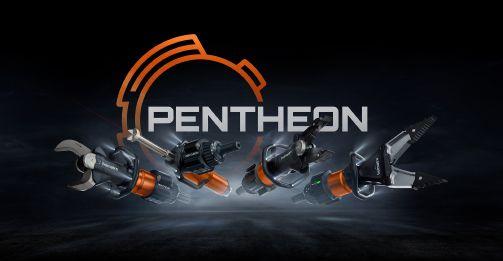
Holmatro has launched The Pentheon Series, a new series of hightech cordless rescue tools. It is equipped with a two-mode control handle for ultimate speed control, rescuers are able, at any time during the rescue operation, to choose between high and low-speed modes.
Within these modes, the speed is still proportional to how far you turn the control handle to its left or right. On-Tool Charging allows for the ability to charge the battery while it remains on the tool. Three chargers can be connected in series to be powered from a single outlet, allowing a total of six batteries to charge without any management, whether placed on a charger or on a tool connected to it.
The Pentheon Series consists of the following rescue tool models: Inclined Cutter PCU50, Spreader PSP40, Telescopic Ram PTR50 and Combi Tool PCT50. holmatro.com
■ ZICO RELEASES NEW QUIC-STRAP
Zico announced the release of the new Quic-Strap: one-inch variable straps. With five different lengths to choose from, this new, thinner line allow for securing smaller equipment, shelf slots, and compartment cubby-holes.
Constructed with of the same heavy-duty materials as the wider twoinch, their pliable nylon was designed to increase its active surface area for better, more secure retention. Each strap also includes two one-inch zinc footman loops for easy installation. ziamatic.com
– Continued from page 27
on our own time schedule. Gradually work back into your routine. And please, let others carry more weight for a while at home and at work. Be kind to yourself. Make self-care a priority. Do your best to practice healthy habits. Cultivate your faith. Reach out over the phone or through a text message to supportive loved ones, friends, and colleagues. Recognize and accept what you cannot change. And if your department provides you with formal mental health support, use it!
Recurring thoughts, dreams or flashbacks are normal and they usually decrease over time. Communicate with your loved ones at home as frequently as possible. Remember that getting back to “normal”
takes time. Some of you were never “normal” to begin with. Sorry, I had to put that in there! That brings up another good point: appreciate a sense of humor in yourself and others. It’s okay to laugh again.
Be assured that there is a road out of this terrible place. Please talk to someone about what you are feeling. You do not have to go it alone.
Ed Brouwer is the chief instructor for Canwest Fire in Osoyoos, B.C., deputy chief training officer for Greenwood Fire and Rescue, a fire warden, wildland urban interface fire-suppression instructor and ordained disaster-response chaplain. Contact Ed at aka-opa@hotmail.com.
BY ELIAS MARKOU Naturophatic Doctor Mississauga, Ontario
IStable sugars make firefighters soar
n the last 20 years, the science of sugar (also known as glucose) and high performance has made great advances. Academically we know more about how sugar behaves in the body then at any time in history, yet all that great knowledge about how balancing blood sugar can excel your body’s performance has been largely ignored by many.
The body’s overall sense of balance is controlled by balanced blood sugar levels. During those busy days, when we are strapped for time, stressed and on the go, we forget to exercise and we all make quick unhealthy dietary choices that throw our sugars out of balance.
When in a state of hypoglycemia (a low blood sugar condition) or hyperglycemia (a high blood sugar condition), the human body experiences many negative physiological outcomes. There is evidence that during low sugar periods the immune system becomes weaker, the body loses its ability to deal with stress, the adrenal glands are thrown out of balance and most importantly for firefighter, there is a significant decline in athletic performance.
We know that exercise is key to balancing sugar in the body. For the sake of this article we will be looking at three nutritional things firefighters can do to maintain a favourable blood sugar balancing act.
DIETARY FIBRE
Blood Sugar meet Fibre! Dietary fibre is by far the most importance aid in helping the body balance its blood sugar levels. Fibre acts like Velcro and delays the release of sugar contents crossing into the body via the blood. Many of you have seen how when water is added to fibre, it forms a gel like substance that causes slower absorption of sugar, vitamins, minerals and micronutrients at the gut level, therefore allowing for sugars to remain balance. No spikes and no dramatic drops in blood sugar means a steady demeanor.
An August 2016 study in the journal of Experimental and Therapeutic Medicine called the “Therapeutic effects of soluble dietary fiber consumption on type 2 diabetes mellitus”, showed how increased and regular consumption of soluble dietary fibre resulted in a significant improvement in blood glucose levels, helped with insulin resistance and balanced a type 2 diabetic patients glucose levels. If fibre can do this in an extreme case like a type 2 diabetic patient, we know in a healthy individual blood sugar levels can be balanced.
Dr. Elias Markou is one very busy naturopathic doctor. He is in private practice in Mississauga, Ont., and is the chief medical officer for the Halton Hills Fire Department. Dr. Markou was a firefighter for six years; he has a special interest in firefighter health and is a writer and blogger who is regularly featured on television, radio and in print. Contact him at drmarkou@mypurebalance.ca
Did you know that Canadian women need on average 25 grams of dietary fibre per day and men require 38 grams of dietary fibre? Most Canadians on average get 15 grams of fibre which is about less than half of the daily required fibre intake per day.
There are two forms of fibre that are key for the body to balance blood sugar. They are soluble and insoluble fibre. You can remember the difference this way: soluble fibre dissolves in water and is found in plant pectins; insoluble fibre cannot be dissolved in water and is often found in plant cellulose. Most plants contain both these fibres in different amounts. Fibre can be found in greens, legumes, whole grains, fruits, nuts, seeds, hemp, chia, ground flaxseeds and bulky vegetables like broccoli.
CHROMIUM
Chromium is one of the most important minerals needed for balancing blood sugar in the body. Chromium plays an important role in glucose metabolism. It helps to enhance insulin activity on sugar making it instrumental in balancing sugar.
We know that diets high in simple sugars like muffins, cookies, white bread and white sugar have been shown to increase the amount of chromium you dump from your body by passing it through your urine. We also know a simple sugar diet can bring on early type 2 diabetes. Whether you are healthy or dealing with sugar balancing issues like insulin resistance, poor sugar metabolism or diabetes, I often recommend being on a chromium supplement. You should also make sure your multivitamin has some chromium.
Chromium is mineral required only in trace amounts, so we call it a trace mineral. Here are some great food sources for chromium, broccoli, organic eggs, grains, onions, beets, nuts, seeds, kale, rapini and brussel sprouts.
MAGNESIUM
There are a number of studies that show a deficiency in magnesium has been linked to insulin resistance which is connected to the incidence of type 2 diabetes. In simple terms — poor sugar balancing.
Dr. Milagros and his research group from the University of Virginia Department of Pediatrics looked at magnesium deficiency associated with insulin resistance in obese children. They found “magnesium rich food or magnesium supplement may be an important tool in the prevention of type 2 diabetes in obese children and adults”. You can see how important magnesium is in balancing blood sugar.
We now know that dietary fibre, chromium and magnesium can help firefighters maintain a favourable blood sugar balancing act. A balanced blood sugar means a balanced life.
Fire Management Certificate Program Graduates 2019-20
Certificate in Fire Service Leadership
Name Position Department
Anthony Black
Captain of Training
Andre Caissie Firefighter
Brendan A. Chase
Adam J. Desjardin
Captain
Firefighter/Paramedic
Craig Genys Firefighter
William Gueth Firefighter
Nelson Johnson Fire Chief
Sean Klemick
Firefighter/Paramedic
Jonathan LeBlanc Firefighter
V. Michael Lees
Firefighter/Paramedic
Ritch Lowell District Chief
Nicholas A. Lozinski Firefighter
Philip Norman Firefighter
Chris Perry Firefighter
Adam G. Pyne Firefighter
Donald Richard Robertson Firefighter
Duncan Cory Rydall
Chief Fire Prevention Officer
Steven Matthew Sherb Firefighter
Kevin Spears Training Officer
Andrew Steeves Firefighter
Travis Tannas
Firefighter/Paramedic
Anthony J. Tataryn Assistant Chief
Kevin Theriault Fire Chief
Daniel Vocelle Fire Chief
Michael White Captain
Jenna K. Wulff Firefighter
Certificate in Incident Command
Geoffrey W. Fisher Deputy Chief
Saint John Fire Department
City of Dieppe Fire Department
Keswick Ridge Fire Department
Brandon Fire and Emergency Services
Barrie Fire and Emergency Services
Malaspina Fire Department
Minden Hills Fire Department
Brandon Fire and Emergency Services
Dieppe Fire Department
Brandon Fire and Emergency Services
Fort Erie Fire Department
Sturgeon County Emergency Services
St. John’s Regional Fire Department
Portage la Prairie Fire Department
Toronto Fire Service
Portage la Prairie Fire Department
Town of the Blue Mountains Fire Services
Brandon Fire and Emergency Services
Clearview Fire and Emergency Services
Kennebecasis Valley Fire Department
Brandon Fire and Emergency Services
Saskatoon Fire Department
Saint Andrews Fire Department
Schefferville Fire Department
Orangeville Fire Department
Toronto Fire Services
Truro Fire Service
Eron E. McCormick Lieutenant Saskatoon Fire Department
Marshall McKenzie Captain
Steven Mervin Captain
Certificate in Fire Service Administration
Certificate in Fire Service Administration
Dennis Aldous Deputy Fire Chief
Jamie Juteau Fire Chief
Trevor J. Kotowich
Director of Protective Services/Fire Chief
Certificate in Fire Service Administration, Human Resource Management
Jamie Cavanuagh Captain
Certificate in Fire Service Administration, Operational Planning
Jesse B. Martell A/Captain
Advanced Certificate in Fire Service Administration
Jesse B. Martell A/Captain
Vegreville Fire Department
Vegreville Fire Department
Woolwich Fire Department
Windsor Fire Department
Town and County of St. Paul
Hamilton Fire Department
Oshawa Fire Service
Oshawa Fire Service
Brent Robillard Captain Brampton Fire and Emergency Services
Fire Officer Certification
Fire Officer IV
Ken Hubbard Deputy Chief-Training & Fire Prevention
City of Airdrie Fire Department
“The program helped advance my career, to achieve the rank of Deputy Chief in charge of Human Resources, as well as having meaningful conversations when discussing budgets, operational changes and long-term planning. I became Fire Chief in the winter of 2019, where my credentials earned through Dalhousie programs were looked upon quite favorably by the selection board. My experience was very helpful and I encourage all officers, particularly those with an interest in management, to look into these programs.”
—Jamie Juteau, Fire Chief - District 4-Windsor Fire Department-West Hants Regional Municipality -Windsor, N.S.
FIGHT OR FLIGHT
Can we do more to prevent firefighter cancer?
By LARRY THOMAS, CHRIS BIANTORO AND LEN GARIS
Anew cross-Canada study that shows firefighter cancer risk is still on the rise is calling into question the measures being taken to protect crews.
With the growing awareness that cancer is the leading killer of firefighters, fire departments across the country have been making greater efforts in recent years to decontaminate their members from the smoke, soot and tar that they inhale, swallow and absorb on the fireground.
However, is this enough? A study of firefighter insurance claims from across the country released in summer 2020 showed nearly nine out of 10 death claims in 2018 were due to cancer – up five per cent from 2015. This represents 738 Canadian firefighters’ lives lost to this disease from 2009 to 2018, or about 74 per year.
Published through the University of the Fraser Valley in British Columbia, Canadian Firefighter Fatality and Injury: Trend Analysis of AWCBC Fatality and Injury Claims 2006-2018 reported on 10 years of claims from the Association of Workers’ Compensation Boards of Canada – the latest in an annual series of AWCBC claims analysis – along with other relevant studies and literature. The authors bring a variety of on-the-job and academic expertise to the subject: City of Surrey, Surrey Fire Chief Larry Thomas, Surrey Fire Services strategic planning analyst Chris Biantoro, and Statistics Canada senior advisor and retired Surrey Fire Chief Len Garis.
“Each additional year of data paints a clearer picture of the risks facing Canadian firefighters,” noted Saverio Lattanzio, president of the Surrey Firefighters Association. “It’s alarming to see the numbers for cancer are still rising. This shows that what we are doing now to protect firefighters is not having the desired impact.”
Evidence suggests fire services leaders should consider policy changes that would lessen firefighter exposure, for example by limiting the number of events they attend and the time they spend in toxic environments, to lessen cancer risk.
INSURANCE CLAIMS SHOW THE TREND
The new analysis compared claims from 2006-2015, 2008-2017 and 2009-2018 and showed, in essence, that cancer is responsible for a growing number of deaths while some of the other traditional killers of firefighters – such as traumatic injury and heart disease – are gradually declining. Mental health issues are also becoming more prominent, year over year. Some of the key takeaways:
• Cancer caused 90 per cent of firefighter deaths in 2018, up from 85 per cent just three years prior. Cancer also caused 33 per cent more time-loss claims (e.g. for treatment) from 2015 to 2018.
• While traumatic injury continues to be the second top killer of firefighters, related deaths dropped 18 per cent from 2015, when it caused six per cent of deaths, to 2018, when they caused 4.9 per cent. While traumatic injuries continue to dominate time-loss claims – making up almost 87 per cent
in 2018 – they are also declining over time.
• Circulatory system diseases, such as heart attacks or stroke, continue to be the third most common cause of firefighter deaths but they are also on the decline, causing 20 per cent fewer deaths in 2018 than in 2015.
• Respiratory system diseases, such as emphysema, are the fourth leading cause of firefighter death. While the numbers remain low, the incidence increased almost 18 per cent over the study period, from 1.7 per cent in 2015 to two per cent in 2018.
• Mental health issues continue to rise and are now the fifth top killer of firefighters. Related deaths increased six-fold from 2015 to 2018 (from 0.2 per cent of fatalities to 1.2 per cent), while mental health time-loss claims increased 131 per cent in the same period (from 1.6 per cent in 2015 to 3.7 per cent in 2018).
BACKtoBASICS
Ladder Dating: The weight and feel
BY MARK VAN DER FEYST
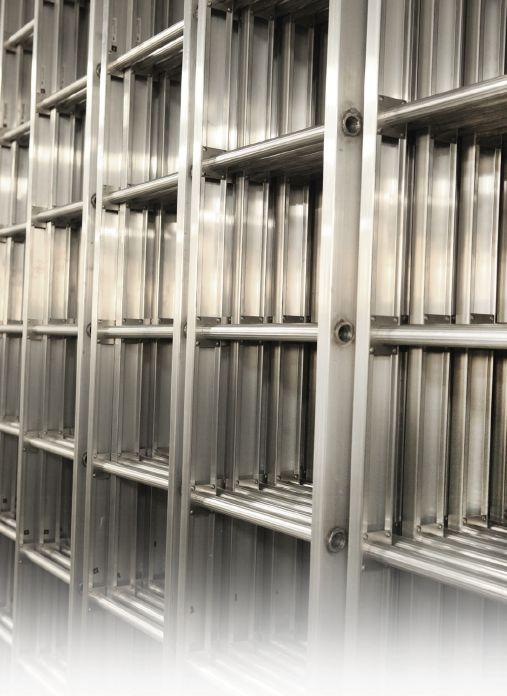
One of the common complaints about ground ladders is the weight of them: “they are too heavy!” This viewpoint has been—and will be—conveyed by many firefighters when asked to grab a ground ladder and they haven’t handled one in a while.
We are continuing with our study on the topic of ladder dating (we need to get to know our ladders just like dating) with a detailed look at the weight and feel of a ground ladder. The ground ladder is an especially useful but underused tool on the fire ground. One reason it is often underused is due to the weight of it.
Now we must address the obvious issue that relates to the weight of a ground ladder: the person themselves. A ground ladder is not a light object, but it is not so heavy that a firefighter cannot easily carry and operate it. Operating a ground ladder does require muscular strength and will require a firefighter to participate in some type of physical fitness routine to build up or maintain that strength. Relying upon an aerial ladder device to always provide ladder support for a structure fire is not always possible or even the best tool to use. The best approach is to use the hydraulic (muscular) support of physical human arms to lift the ladder and place it in position. Firefighters need to work out and this is one of the reasons why.
Besides needing to lift the ladder into position, a firefighter needs to be able to lift/remove/slide the ground ladder from off the fire truck and onto their shoulders. This will involve some physical strength but also some height. Depending upon the location of the ladder bed on the truck, it can be located high, it can be located on a hydraulic arm that will lower down, it may
Photo 1: Ladder mounted on the side above shoulder height.
Photo 2: Side mounted ladder with a lowering arm to bring the ladder down.
PHOTOS BY MARK VAN
DER FEYST
BACKtoBASICS
be located at shoulder height, etc. In photos one, two and three, you will see some examples of different ladder locations on various fire trucks. Some have hydraulic lowering arms, and some do not.
Wherever it is located, you need to know where it is on the fire truck. If it’s too high, you should determine ahead of time how you will be able to grab that ground ladder with the height of your body. This is a part of pre-planning—your station, trucks, abilities, limitations—ahead of time before the order comes across to, “ladder that window”.
The one muscle that needs to be exercised with respect to ground ladders, or anything on the fire ground, for that matter, is the memory. We derive the term ‘muscle memory’ from the constant exercising of the muscles, body and mind in a consistent pattern or method that becomes ingrained into the fabric of our being. Muscle memory is where a person does something like tying their shoe on a repetitive basis, the same way, all the time; when they do this, they are able to complete that action without having to really think about it so when they must perform this action (like tying their shoes), they aren’t surprised.
With respect to the weight and feel of a ground ladder, this holds especially true. The body tends to forget things very quickly
when it is not exercised on a regular, consistent basis. A firefighter that trains with the 24’ ground ladder for about 30 minutes in the month of April, then never touches it again until November, will have a surprise when they go to remove it, lift or carry it, the ladder will seem too heavy to them.
There are a couple of ladder manufacturers that produce ground ladders for the fire service and most departments will buy their ground ladders from one of these manufactures, unless they are made inhouse like in San Francisco out of wood. Seeing as these ground ladders are mass produced and in service everywhere, a firefighter can train on their ground ladder and then go to the neighboring department and use theirs and still feel confident to do so relying upon their muscle memory.
The aluminum ground ladder with a solid beam construction is going to be the lightest in comparison to a truss beam constructed ladder. Here are some weight differentials based upon the two types based upon one manufacture.
TRUSS CONSTRUCTED STYLE
14’ roof ladder – 50 lbs
16’ roof ladder – 56 lbs
2 section 24’ ladder – 110 lbs
2 section 28’ ladder – 118 lbs
2 section 35’ ladder – 141 lbs
SOLID BEAM STYLE
14’ roof ladder – 42 lbs
16’ roof ladder – 48 lbs
2 section 24’ ladder – 75 lbs
2 section 28’ ladder – 114 lbs
2 section 35’ ladder – 139 lbs
As you can see from the weights listed above, one firefighter can easily handle a 24’ ground ladder all by themselves—it is not that heavy compared to the truss block construction ladder; many firefighters can handle a 2 section 28’ ground ladder as well.
So, why am I speaking about only one firefighter as opposed to two firefighters? We need to consider manpower limitations and the constant need to have certain skills completed by just one firefighter. There is not always going to be the availability of two sets of hands to operate a ground ladder and if there is, perhaps the tactic of having both firefighters carry a ground each will increase the effectiveness and efficiency of that team by being able to ladder two windows at the same time.
Certainly, if the only ground ladder available is a 35’ or a three-section ladder, it will require at least two firefighters to carry it and operate it, but the majority of ladder work can be accomplished with the use of a 24’ ladder or a 28’ ladder with just one firefighter.
The weight and feel of a ground ladder can be ingrained into the firefighter’s being so whenever they grab that ladder, it will not be a surprise to them as to how much it weighs or how it feels when trying to raise it into position. This will only come with repetitive practice.
Mark van der Feyst has been in the fire service since 1999 and is currently a full-time firefighter with the WFD. He is an international instructor teaching in Canada, the United States, FDIC and India. He is a local level suppression instructor for the Pennsylvania State Fire Academy and the lead Author of Pennwell’s Residential Fire Rescue book. He can be contacted at Mark@ FireStarTraining.com.
Photo 3: Mounted ladder on a mechanical arm lowering it down to shoulder height
Working under pressure, in a race against the clock, first responders need equipment they can fully rely on. It is for these men and women that we have developed our new Pentheon Series: High-tech rescue tools that are miles ahead of all other equipment on the market, cordless and hose tools alike.
Only the Holmatro Pentheon Series offers you the unrestrained performance, unparalleled speed and ultimate control you’ve never experienced before.
RELEASING TRAUMA
There are ways to build resilience through re-visiting trauma with conscious awareness
By DAVID GILLIS AND RUTH LAMB
In the June 2017 edition of Fire Fighting in Canada, Ruth Lamb and I (David Gillis) wrote an article called “Building Resilience: Core principles to overcoming PTSD”. We wrote about an incident where my mind-body reaction to a traumatic event had changed. It seemed as if I had processed that event differently. I let the trauma enter and pass through me rather than trying to avoid it or let it get stuck inside like many others, adding to the stack of my unprocessed previous traumatic events. I took myself off auto-pilot and started to let compassion and wisdom guide my reflection instead of judgement and criticism. We have written another article to further address how this was achieved as I share my experience as a now retired lieutenant and Ruth articulates her perspective as a registered nurse PhD and Strategic Resilience consultant.
Ruth: We know from the research and our own personal experience that trauma is defined and processed uniquely by each of us. Trauma is real. Trauma deserves respect. And, the best way to restore a healthy resilience (versus the resilience of toxic denial) is to name the issue, and the accompanying emotions, with open-minded awareness. What is more, name what this mix of onslaught is doing to your vitality, your cells, your general physical health and your mood. Then, with kindness towards yourself, start the releasing process. David has given an example of his personal practice for releasing stress and trauma. He is no longer stacking trauma and later suffering the bite-back.
David: To stay resilient during my tenure in the fire service, I had to transition from the role of hands-on reactive firefighter/ first responder to hands-on observer/reflector officer. Now I find myself making a similar shift from reaction to observation and reflection in regard to many levels (past and present) of trauma exposures. I have become more consciously aware of myself being an ‘informed witness’ of the effect that trauma has had on my whole being.
When responding to a call, I’m acknowledging and processing radio updates, being mindful of weather, road conditions and traffic, and reflecting on the experience, expertise, and skill level of the crew. I’m also checking my recall of previous similar events to help formulate a plan of attack and deployment of crew and equipment required. Then there’s me: how am I doing?
I’ve checked everything and everybody else, but have I checked me? What observations and reflections have I made in regard to
myself? Am I calm or agitated? Is there adrenaline and cortisol flooding through my system? What about my heart rate, blood pressure and level of anxiety? Where am I breathing from (chest or belly)? How about the knot in my stomach? Is my game-face on and my armour up? Am I in survival mode scanning my memory banks and re-visiting past traumas before we’re even on-scene?
I now have a greater awareness of the adrenaline and anxiety levels within myself and how that may be affecting the crew. This has aided in my ability to lead well and achieve the best outcome along with helping to ensure that we all return home physically and mentally intact.
Ruth: David is living his new conscious awareness and asking the right questions. He is in witness mode and active firefighter mode simultaneously. He will now know which micro-practice is
Co-author David Gillis is a retired volunteer lieutenant formerly with Squamish Fire Rescue in British Columbia.
best for this emergency moment and those micro-resilience practices will keep him at maximum mental and physical peak throughout this call.
David: As an officer I’ve had to make the dynamic transition from reactor to observer and reflector in order to perform my duties as expected on the fire ground, at the medical calls, the motor vehicle incidents, and the myriad of fire/rescue related calls we attend. To build resilience and continue healing and recovering from trauma exposure, I’ve also had to make a similar ‘whole-person’ transition with mind, body, and spirit.
Through breathing practices, being mindful, learning how to ground myself, calm my nervous system and become more centered, aligned and resourced, I’ve been able to reclaim the ability to start having depth to my feelings again (physically with my bioenergy or vitality, emotionally, mentally and spiritually). At times, this has been an extremely moving experience. I’ve started to acknowledge a deep longing for knowledge that I didn’t know existed, or had long forgotten. One awareness, for example, would be me continuing to read this article instead of flipping to the next one and thinking, “I’m okay, I don’t need that crap!”
I feel that the next two stages (not necessarily linear) of transition and transformation (after reaction, observation and reflection) are acceptance and change. Having the ability to witness and accept that I have not been the one driving ‘the bus’ has helped put me back in the driver’s seat and kept the bus out of the ditch. Along with the strength and desire to make changes, such as ‘breaking the cycle’ of negative reaction to stimulus, and adopting practices that calm my nervous system, I believe I am on my way to being healthier, both mentally and physically.
The full-body armour I used to wear was not only protecting me from outside exposure, harm, and attack from trauma, it was also keeping me from true innermost self-expression, sharing, and connection, not just with others, but also with myself. I had to become more of the person I used to be when I felt safe, not anxious, defensive, and numb, never trusting or feeling safe enough to let my emotional guard down.
Ruth: It is normal to armour ourselves when we do not have the trauma first aid tools that take us through the immediate emergency and then provide us with the resilience practices that re-code and re-stabilize our nervous system, and nurture our whole-person well-being after the call and ongoing in our lives. This ‘normal’ is a dangerous normal. But one inherent to first responder roles if, indeed, resilience practices are not built into all training and professional development programs.
David: Re-visiting trauma comes in many forms: flashbacks, sharing ‘war-stories’, news items, presentations, memories, roadside markers, incident locations, sensory input (all five senses, especially odours), debriefs, training exercises, or the revolving door in my head. There can be triggers with the next call, or even from trauma exposures that go all the way back to childhood. The list is almost endless.
There was a time when the idea of letting my guard down and removing my emotional armour was a very scary thought. I was like a very effective machine on auto-pilot, nothing got to me. During healing and recovery I was asked to create a trauma history, which involved having my butt kicked all the way back to childhood. That was a long journey.
When someone said to me, “...tell me about your childhood...” I simply wanted to check the box that says “...mine was good, how
was yours...?” If fear and anger, guilt and shame, low self-esteem, anxiety and depression, or just being a jerk, are your usual go-to reactions when triggered, now I’m thinking “...mine was good, how was yours...?” is not the best answer.
I needed to create an awareness of reactions that came from an unfamiliar place, my unconscious response to stimulus that conflicted with my true mind, body, and spirit nature (Self). In firefighter language that meant I had to get myself together and my head and heart right but, yes, I know, much easier said than done.
Just prior to my retirement from active duty in July 2018, I responded to a fentanyl overdose call. I believe this event was yet another turning point in my journey of healing and recovery from trauma exposure and my new conscious awareness. Paramedics were already on-scene and had the victim/patient conscious but in obvious distress. Our function was mostly to aid in packaging, removal from the residence, and loading for transport. During that process I spoke to the victim, trying to connect with him and offer support.
Once back in the rescue truck it was my habit to check in with the crew and ask if everyone was okay, but this time it was them asking me, if I was okay. I paused for a moment and said, “I’m not sure.” Then they asked if I knew the victim. Again, I paused and said, “Yes, he’s one of my co-workers.” Such is life as a volunteer firefighter/first responder in a smaller community.
I thought for a long time about what was different with that call. What did my crew see in me, my actions and my body language, that had them showing concern for my situation and asking if I was okay? Had they witnessed an opening in my armour?
Ruth: Let’s address the armouring. There are many types of armouring. Yours is unique to you as David’s is to David. Physical armouring creates the tension bands or other tissue aberrations that lead to stiffness, pain, dysfunction and later, potential pathology. Emotional armouring often leads to shrinking of our mood continuum; we are irritable, we are numb, not happy, not creative. Or we get stuck complaining or angry or resentful, or in some other depletion state. Our bioenergy or vitality is low, or we have entered a brief hyperactive push state that cannot be upheld for long. Then comes the fatigue that does not go away easily, even with a good night’s sleep. When mentally armored we ruminate and forget to take a higher view and actually problem-solve (perhaps along multiple vectors) so real issues are addressed. We must not forget the spiritual, or heart-centered repercussions of bearing-witness each day to all the community brings in each call. To be present, active and engaged, and to follow the correct procedures, and as well stay human and not spiritually armoured, is a challenge. We must have the right tools to live well through this career offering we have gifted to our society.
David: While we continue to build our personal trauma-first-aid tool kits and increase our knowledge, awareness, and understanding of how exposure to trauma (past, present, and future) affects the mind, body, and spirit of firefighter/first responders, we will become better caregivers to ourselves and to others.
David Gillis is a retired volunteer lieutenant with the Squamish Fire Rescue in British Columbia. David can be reached at dgillis512@ gmail.com. Ruth Lamb is a registered nurse PhD and a consultant with Strategic Resilience. Ruth can be reached at ruthlamb2050@ gmail.com.
REVERSING THE CANCER TRAJECTORY
As noted in WorkSafe Magazine – a publication of WorkSafe BC –best practices for decontamination procedures include:
• Either scrubbing and rinsing gear at the scene or sealing it in heavy-duty bags;
• Storing bags with dirty gear in the open air for the trip to the hall, with crews wearing full-body painter’s suits;
• Keeping dirty gear out of the hall and designating a separate machine for washing it; and
• Having firefighters wash any exposed skin at the fireground and then shower as soon they return to the hall.
These practices need to continue. However, they take a reactive rather than a proactive approach, and the continuing rise in cancer-related firefighter deaths indicates there is room for improvement.
The answer may lie with deployment strategies, based on the growing body of evidence pointing to exposure time as a significant risk factor.
For example, Robert Daniels et al. established a direct relationship between time spent on the fireground and lung cancer, and between fires attended and leukemia deaths, in their study of almost 20,000 career firefighters titled “Exposure-response Relationships for Select Cancer and Non-cancer Health Outcomes in a Cohort of US Firefighters from San Francisco, Chicago and Philadelphia (1950 to 2009),” published in 2015 in the journal Occupational and Environmental Medicine
Similar results were found by a study of Ottawa firefighters from 2015 to 2016 by a team of University of Ottawa researchers working with Health Canada, the University of Toronto and the Institut national de santé publique du Québec. Tests of urine and skin wipe samples found firefighters had three to five times more polycyclic aromatic hydrocarbons – which cause cancer and DNA mutations – in their urine after fires than beforehand.
With this information at hand, it is incumbent upon fire services leaders to consider policy changes that would lessen firefighter exposure, for example by limiting the number of events they attend and the time they spend in toxic environments.
The study Canadian Firefighter Fatality and Injury: Trend Analysis of AWCBC Fatality and Injury Claims 2006-2018 can be downloaded for free at https://cjr.ufv.ca/.
Larry Thomas is the Fire Chief for the City of Surrey, B.C., a Chartered Manager, C.Mgr., ECFO, PuMP certified. He has 31 years’ experience and is the administration chief for the fire service Contact him at LSthomas@surrey.ca
Chris Biantoro, PhD, is the strategic planning analyst for the City of Surrey Fire Service, B.C. He has a background of operations research with extensive working experience in advanced analytics, data science, and statistical modeling. Contact him at Chris.Biantoro@surrey.ca
Len Garis, Senior Advisor for the Centre for Social Data Insights and Innovation Statistics Canada, (ret) Fire Chief for the City of Surrey, British Columbia, an Adjunct Professor in the School of Criminology and Criminal Justice & Associate to the Centre for Social Research at the University of the Fraser Valley (UFV), a member of the Affiliated Research Faculty at John Jay College of Criminal Justice in New York, and Associate Scientist Emeritus, BC Injury Research and Prevention. Contact him at len.garis@ufv.ca.
TIME-TESTED PROCESSES. ENGINEERED INNOVATIONS.
FULL-BODIED MIDSHIP PUMPS
OUR REVERSE FLOW WEAR RINGS
Restrict recirculation and improve overall efficiency and longevity of the wear ring.
SEPARABLE IMPELLER SHAFT
Allows the pump transmission to be separated from the pump and removed from the apparatus. The pump remains mounted in the apparatus and can be easily repaired minimizing downtime.
CHAIN DRIVE
TRANSMISSION – Transfers power more efficiently than gear-driven transmissions by having more points of contact between the chain and rotating sprockets.
“Silent” chain drive makes our transmission the quietest in the industry.
In the largest cities across the world, Waterous pumps never fall short. Cast and made in America, our pumps feature industry exclusive innovations. These innovations, along with the Waterous University library of support, help keep your pump running strong and your fire team serving the community.
FLAME-PLATED IMPELLER PERFORMANCE – Bronze impellers are flame-plated with tungsten carbide, creating an ultra-hard surface resistant to wear.
CS/CSU SERIES SHOWN
BY SAMANTHA HOFFMAN Acting Fire Chie, Prevention Barrie, Ontario
I
FIRSTLINE
Partnerships: The value of working together
n the middle of a pandemic community members see three symbols of comfort and security come together in a powerful partnership: a firefighter, a library and a children’s bedtime story.
I’ve always been a big supporter of partnerships and working with community organizations but COVID-19 taught me they are more important than I realized. We can’t work in isolation and we need to take advantage of any and all help available in our communities. The IFSTA Fire and Life Safety Educator (third edition), defines a partnership as “an arrangement where parties, known as business partners, agree to cooperate to advance their mutual interests. The partners in a partnership may be individuals, businesses, interest-based organizations, schools, governments or combinations.”
It’s not about sharing work, it’s about sharing resources. Initially, you may reach out to a prospective partner with a focus on sharing resources, such as research, access to an audience, or communication skills, but you can actually learn and benefit so much more. For instance, while the country was in ‘stay home’ mode, fire departments scrambled to find new ways to get things done. How can we conduct inspections without risk to the building occupants and our staff? What happens when a fire alarm is activated and people need to evacuate the building? What if they are self-isolating? So many questions, so few or varied answers.
Many great public education initiatives began being offered by departments. Firefighters took to social media and read stories, answered questions, did media interviews, offered birthday parades, conducted sessions for housebound seniors over the phone, set up Google classrooms and posted online contests.
For instance, my department shot a short video with the No Dragons for Tea book, written by Jean E. Pendziwol. We used large graphics, animate the reading and create an enjoyable video. We posted to our social media pages where we have thousands of followers who already know or care about fire safety. But, we needed to reach more people so we looked at potential community partners. Naturally, we reached out to our municipal library — a firefighter reading a children’s book at the local library was a winning combination. The library was looking for enriching activities to offer kids that were home from school and the benefits were obvious: access to more families with a variety of topics and subject matter experts sharing stories.
In 2017, my department was approached by a local company, Barrie Real Estate tours, who was offering high definition walk through video tours with interactive immersive 3D virtual reality. We worked with them to develop am educational tour of the department. We received lots of positive feedback but most members of the public still preferred live tours. But, with the closure of fire stations to the public, we didn’t have to scramble and develop an online tour, we were already ahead of the pack thanks to a community partnership.
To summarize, here are some key benefits:
• Engagement: They bring together key individuals from across the community. These leaders, thinkers, and doers can analyze, research,
A partnership is not about sharing work, it’s about sharing resources.
Despite these innovations, lots of uncertainty remained. The one thing that unified us during the pandemic was that everyone was impacted and, regardless of each organization’s area of focus, everyone was trying to do their part. The work strengthens when you find a partner and can meet both of your goals and/or needs. Partnerships, can not only increase your chances of getting your messages heard, but you can learn other innovative skills that will allow you to continue making a difference during a very difficult time.
Samantha Hoffmann has been in the fire safety field for more than 25 years. She is the acting chief fire prevention for Barrie Fire and Emergency Services in Ontario. In 2014, Samantha was named Public Fire and Life Safety Educator of the Year by the National Fire Protection Association –the second Canadian and first Ontario educator to receive the award since its inception. Email Samantha at Samantha.hoffmann@barrie.ca and follow her on Twitter @shoffmannpflso.
plan, and implement using their knowledge and experience.
• Resources: If you don’t have a budget, or have a minimal budget, you can achieve a lot with very little. Partnerships pool resources and can use them to go further, whether it’s a grant, access to fundraising, access to a specific audience or superb marketing materials.
• Credibility: The right partnerships can help validate your efforts and improve your credibility. If community members hear the same messages from different sources and someone they trust, they will more likely believe what they are being told.
• Value: The more work you do in the community, the more essential you become. Partnerships help secure this value.
The benefits of community partnerships cannot be ignored. The more community organizations and members that get involved, the more buy-in and ability to make real long-lasting changes occur. Partnerships matter because they work.
PROTECT YOUR FIRE FIGHTERS FROM CANCER CAUSING AGENTS WITH THE
AUTOMATIC SCBA DECON WASHER
Using a Solo Rescue® heavy duty SCBA washing machine helps avoid exposing the crew to combustion gases, soot particles, toxins and carcinogens released in the maintenance process and also substantially lowers the time spent decontaminating firefighter equipment
HERE’S WHAT A CANADIAN FIRE DEPARTMENT HAS TO SAY ABOUT THE SOLO RESCUE DECON WASHER ………… ..
“We were thoroughly impressed by the Machine’s ease of operation, efficiency and performance. The contaminants that were removed from our SCBA’s that had previously been cleaned by hand was astonishing. The Solo Rescue washer will be an integral part of our exposure reduction program, not only for its superior quality and efficiency of cleaning, but in the reduced exposure to contaminants throughout the cleaning process”
WASH/DECON TWO SCBAs IN 8 minutes
IN ONE HOUR YOU CAN CLEAN/DECON: -14 SCBAs W/MASKS
ü REDUCED HEALTH RISK
ü SAVES TIME 2/PKS IN 8 MIN
ü EASY TO USE
IN ONE HOUR YOU CAN CLEAN/DECON:
• 30 HELMETS
• 60 PAIRS OF GOVES
• 20 PAIRS OF BOOTS
And with the optional second PPE rack you can double the Number of helmets, gloves and boots.
The “Canary” is a portable Electrified Water and Current Tester that can quickly and efficiently detect the presence of dangerous electricity present in water. In addition to detecting electrical currents in the water, its UNIQUE design helps the user pinpoint the source of the electrical discharge
• Construction Companies
• Marinas
• First Responders
• Apartment Complexes
• City Pools
• Waterparks & Theme parks
• Hotels & Camping Centers
• Pool owners & Dock Owners
• And more!
DESIGNED IN CANADA
Study explores wildfire smoke health effects
Arecent research report from the University of British Columbia’s School of Population and Public Health found that exposure to wildfire smoke affects the body’s respiratory and cardiovascular systems almost instantly.
Researchers looked at wildfire seasons (April 1- Sept. 30) in British Columbia from 2010 to 2015. To collect and analyze the data, they used a statistical model to evaluate how ambulance dispatches, paramedic assessments and hospital admissions and diagnoses related to respiratory, circulatory and diabetic conditions with levels of fine particulate matter during wildfire seasons. This data included the date and time of the call, geographic coordinates and call reason.
The authors noted most previous studies on wildfire smoke exposure focused on 24-hour periods but, because fine particulate concentrations can vary within that timeframe, they decided to focus
on a one hour timeframe. Their goal was to find out how imminent it was to address and find an appropriate and time sensitive public health response plan within the province.
A total of 676,401 ambulance dispatch calls from 500,302 individuals were included in the study. Researchers also used hospital discharge data from the British Columbia Ministry of Health for the same timeframe, which included the date of the hospital admission and the diagnosis.
Based on the results, researchers concluded found that exposure to elevated levels of fine particulate matter during wildfire seasons was associated with increased odds of ambulance dispatches related to respiratory and cardiovascular conditions. It also showed increased ambulance dispatches occurring within only one hour after exposure.
“We have long known about the harmful health effects of wildfire smoke but it’s alarming to see just how quickly fine particular matter seems to affect the respiratory and cardiovascular system, and the acute effects for people with diabetes is relatively new to us,” said lead author and University of British Columbia PhD candidate Jiayun Angela Yao in a press release.
Yao said the study also found that people with diabetes have increased odds of health complications within 48 hours following exposure to wildfire smoke, which is relatively new to scientists.
“Anyone with pre-existing heart and lung disease and diabetes is especially vulnerable and should consider purchasing air cleaners, and ensuring that they have adequate supplies of medication at home,” she said.
Researchers wrote that the effects of the study was consistent with previous scientific literature and further emphasizes the need for rapid public health actions to limit exposure to wildfire smoke. Researchers also note the findings warrant further investigation into the impact of wildfire smoke exposure on diabetic conditions.
This study titled Sub-Daily Exposure to Fine Particulate Matter and Ambulance Dispatches during Wildfire Seasons: A Case-Crossover Study in British Columbia, Canada was written by researchers Jiayun Yao, Michael Brauer, Julie Wei, Kimberlyn M. McGrail, Fay H. Johnston and Sarah B. Henderson.
The study focused on wildfire seasons in British Columbia from 2010 to 2015.
PHOTOS BY LUDMILA / ADOBE STOCK
FIRE PREVENTION WEEK IS OCT. 4-10, 2020
This
Firehall
BY TOM DESORCY Fire Chief
Hope, British Columbia
VVOLUNTEERVISION
Time to raise the game for the volunteer
olunteers of the world, the time has come to raise your game. It’s time to step up to the standard of the fire service. No longer are we being painted with the same brush and the same should apply outside the volunteer fire department.
It always pains me to read or hear in the media that a “fire was contained and further damage was averted thanks to the fire department, all of which are volunteers.” To many, that may still conjure up some contention.
Let’s be honest, many communities have had to rely on the instant employee. This was somewhat accurate for fire service when I joined over 35 years ago. There was little training or accountability and members always had an excuse if things didn’t go well. Today, the volunteer fire service has come a long way —not that we had a choice—but, why is it hard to get into a fire department, especially for those that don’t want to take the time to commit to the program?
Volunteer fire departments are demanding. I would like to think that all organizations do the same. It’s okay to put pressure on people to perform. It only makes them better at what they do. Volunteers should always be given the much-needed credit they deserve beyond the fact they gave of their time, because they did so professionally.
To make this point, I’d like to share a story about Tom the plumber. Tom is the owner and operator of Tom’s Plumbing and Heating. He is also a member of the curling club where he often volunteers for various projects. One Saturday, he volunteered to help renovate its lounge and upgrade the washroom facilities. He, of course, stepped up and took the lead. As a professional tradesperson, what kind of job do you think that Tom did? Was it any different because he didn’t get paid for it? The correct answer is no. He did the job with the same professional approach to standards and practice that didn’t differ if he was handing them a bill. The point being, just because you are a volunteer, you shouldn’t sell yourself short. You have the same responsibility to perform professionally, with skill and integrity.
a very stringent criteria for recruitment and training. It’s done, not only from a legal or liability standpoint, but creates an environment of pride and ownership. This is something that we in the fire service know well. To that end, imagine if all volunteer organizations modeled themselves after their counterparts in the fire service?
This year will be the true test of the volunteer world. When we look back on this time, will 2020 go down in history as the year that changed the way we volunteer in the future? In the corporate world many are learning that an employee can work effectively from home. In some cases, they were formerly spending three hours a day in their car to sit at a desk and computer just like in a home office. I’m not saying that this will be the norm, but these alternatives, which were forced upon us may, for some, make sense moving forward.
Have you considered the changes we are going to be faced with in our departments? Will you recruit differently? Have your existing members shown signs of reluctance or has 2020 fueled their desire to serve their community even more? A greater feeling of making a difference in favour of fear, where people might rethink getting involved
We’ve done a lot to raise our game in the volunteer fire service and now is not the time to lose that momentum. ‘‘ ’’
Now, most organizations that rely on an unpaid workforce have
Tom DeSorcy became the first paid firefighter in his hometown of Hope, B.C., when he became fire chief in 2000. Originally a radio broadcaster, Tom’s voice could be heard in the early 1990s across Canada as one of the hosts of Country Coast to Coast. Tom is very active with the Fire Chiefs’ Association of British Columbia as communications director and conference committee chair. Contact Tom at TDeSorcy@hope.ca and follow him on Twitter at @HopeFireDept
or simply don’t have the time anymore.
I wrote at the outset that volunteer organizations need to raise their game, even more than they have already. In these times, the unpaid employee needs to be valued more than ever and not only treated with respect but made to feel proud to be part of the organization—may that be in the fire service or a local service club. For the most part I firmly believe we are there already but maintaining that standard during these difficult times will be tough. The bar has always been high but it will always remain hard to be a volunteer because quality beats quantity any day.
Being a volunteer is a standup moment for all, be it a paid-on call firefighter or a “true volunteer” without remuneration; embracing the feeling of stepping, giving back and making a difference. We’ve done a lot to raise our game in the volunteer fire service and now is not the time to lose that momentum.
FGFT INTRODUCES THE BRONTO ALL-ROUNDER AND SAM EMERGENCY RESCUE
Fort Garry Fire Trucks is a proud distributor of sales, service, and parts for the versatile Bronto aerial platforms that are designed for easy maneuvering, quick set-up, and safe and efficient operation.
We are proud to unveil our brand new Bronto All - Rounder. This resourceful apparatus features a 92-foot articulated ladder platform built on a single axle Freightliner chassis with a 450 HP diesel engine and measures
We are also proud to introduce our SAM Emergency Rescue. SAM is an integrated total water control system that manages your truck’s pump, tank, intakes and discharges freeing up the pump operator to focus on the scene. The SAM system replaces your pressure governor and takes care of opening and closing valves based on operator settings all from a 10 inch
touch screen display. If you’re interested in either of our brand new rigs call our sales department and follow us on Facebook for videos and other updates.