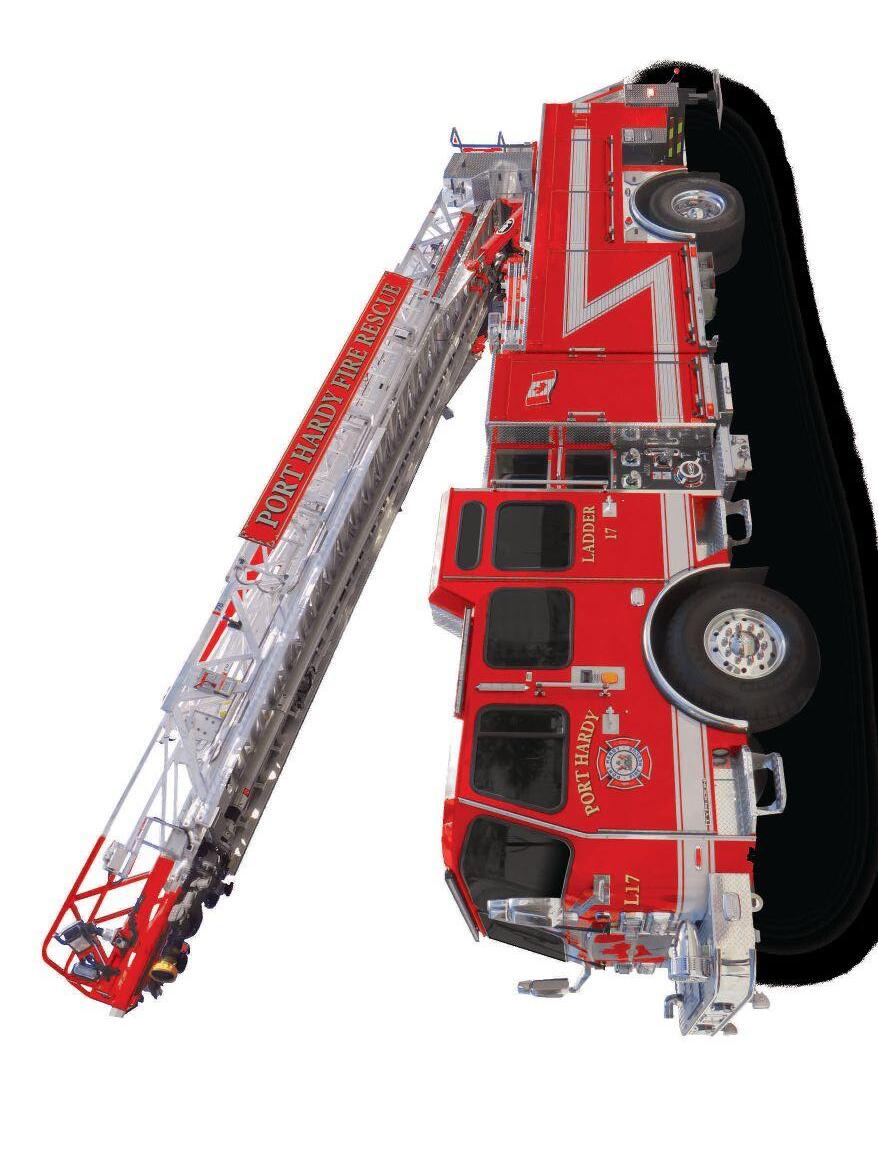
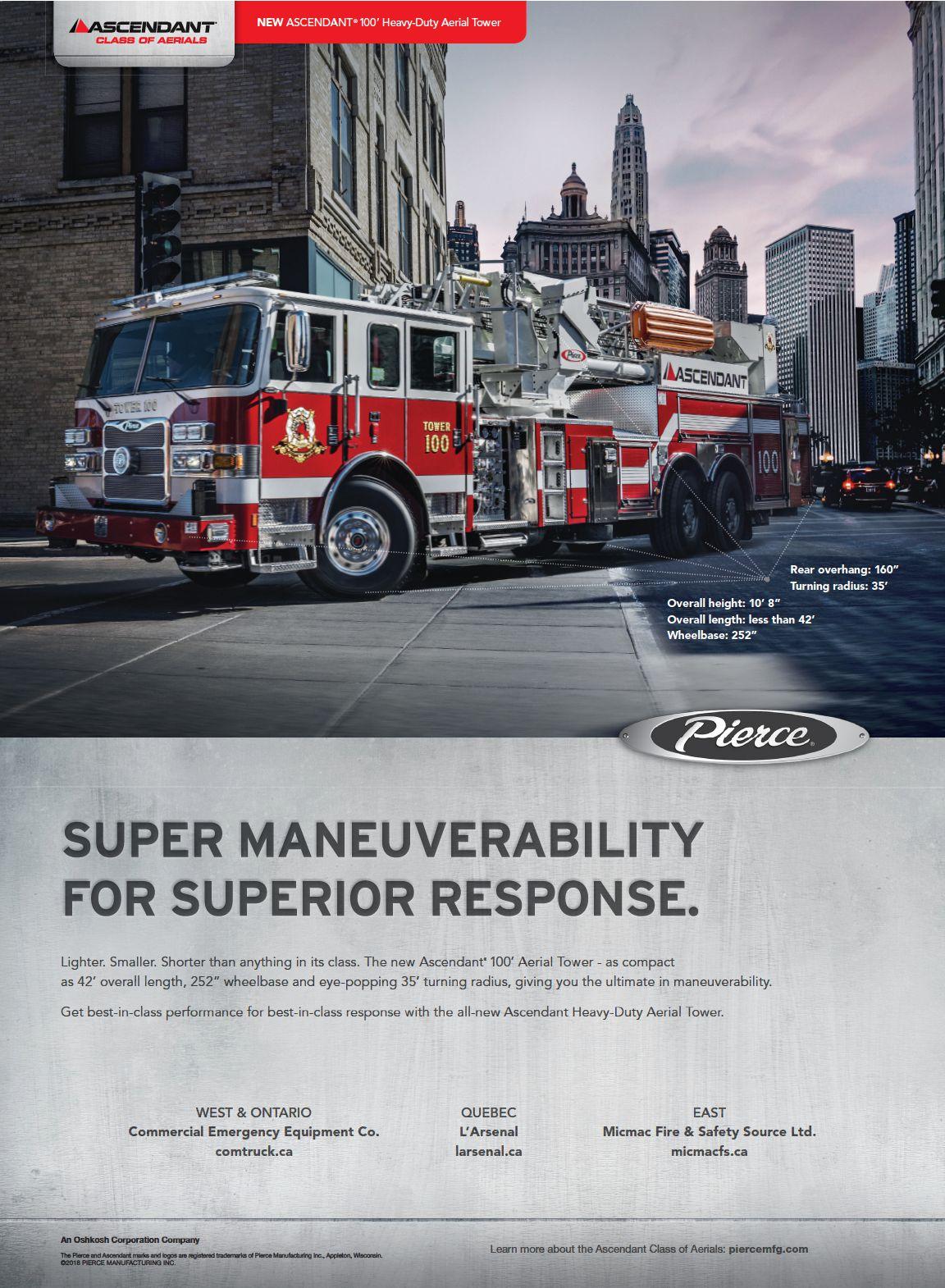
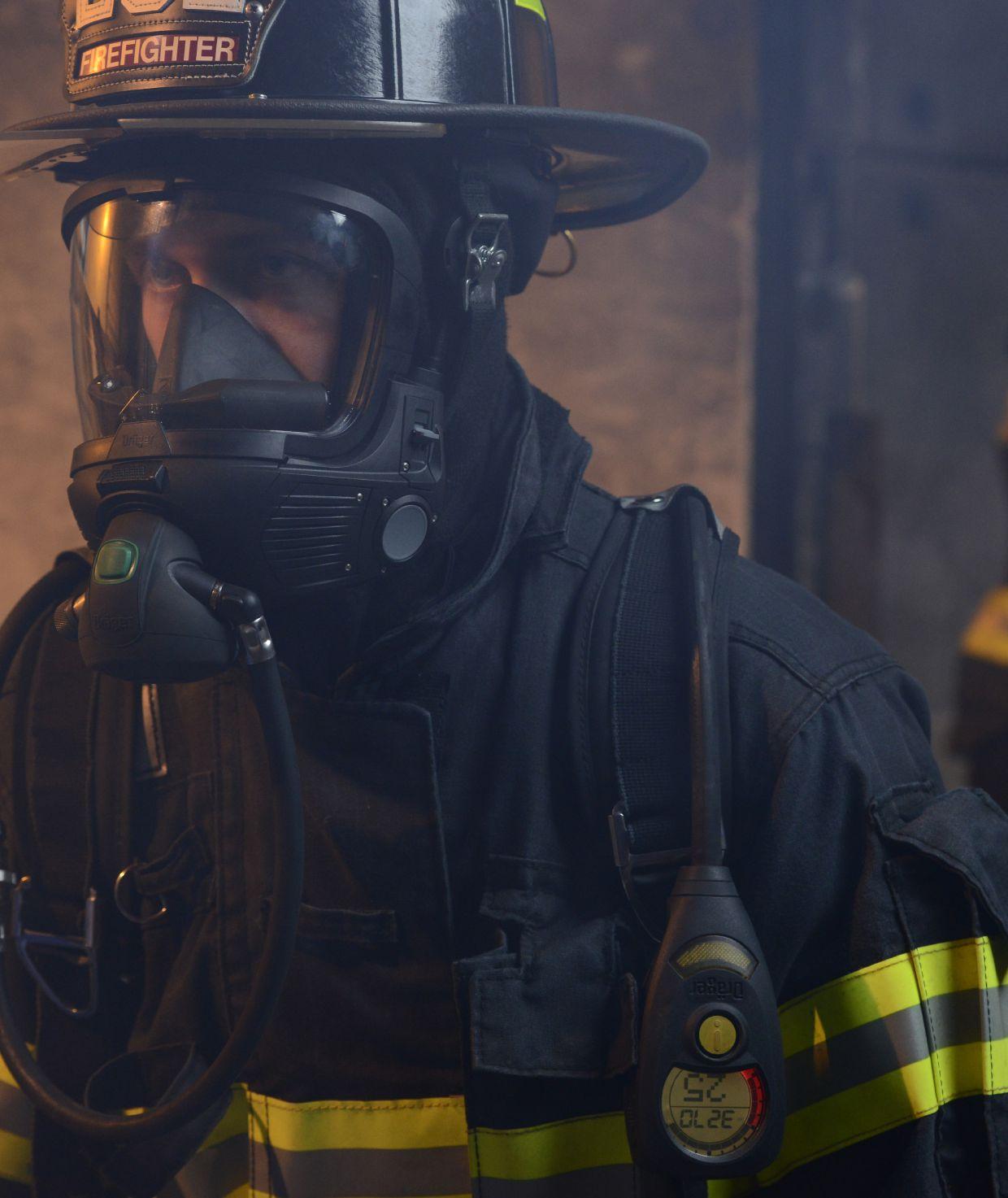
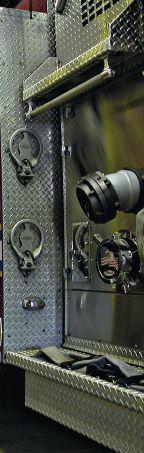
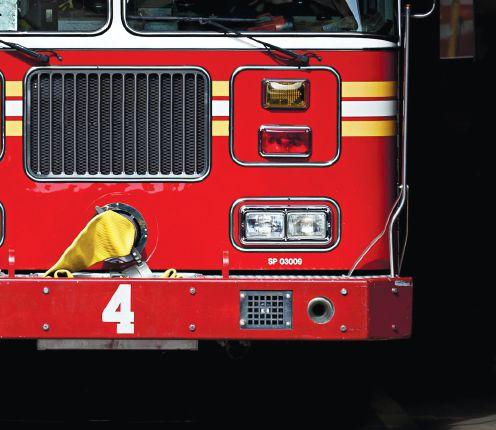
Featuring a 825-pound tip load for increased rescue capability, the HP 78 gets a crew and its gear reliably where it needs to go. The ToughTruss TM ladder design features extruded aluminum construction with a 2.5 to 1 structural safety factor, solidifying E-ONE’s legendary commitment to safety. With the combination of generous compartments, ground ladder storage, hose bed and tank size, the HP 78, like every aerial we make, is revolutionary! For more information, visit: http://www.e-one.com/aerials
8
MFCA CONVENTION A SUCCESS
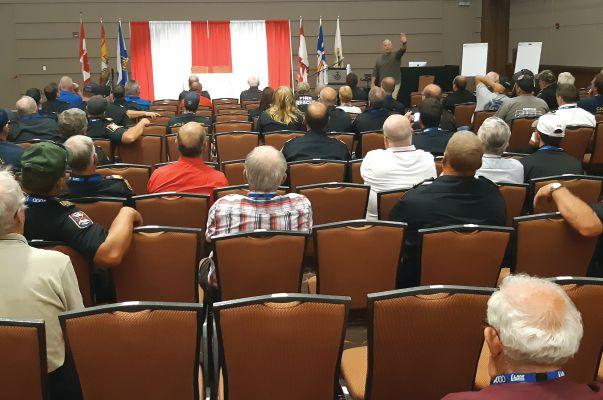
The Maritime Fire Chiefs Association (MFCA) held its 104th annual conference July 13 to 16 in Moncton, N.B., and it was deemed a success by organizers. The event featured information sessions and a slate of keynote speakers who dealt with myriad subjects.
16
VOLUNTEERS MUST BE PREPARED
Kirk Hughes, deputy chief of the M.D. of Taber Regional Fire Department in Alberta, offers up some tips on how volunteer firefighters can better prepare themselves for responding when the tones drop. He also writes about how to speed things up when you reach the hall.
22 THE LIFE-SAVING POWER OF SPRINKLERS
Len Garis and Karin Mark write about a new study that shows how having a sprinkler system in your home can reduce your chance of dying in a fire by 79 per cent. The study bolsters the call for mandatory sprinklers in all new homes.
BY GRANT CAMERON Editor gcameron@annexbusinessmedia.com
S
COMMENT
Passion and dedication
moke had filled the building. Inside, it was dark, I recall, and oppressively hot. The bulky firefighting equipment I wore was heavy, very heavy, especially the helmet.
It was difficult to walk. I crawled up a flight of stairs, feeling my way to the top. I was in a smokehouse, courtesy of some firefighter friends.
My mission?
Find someone trapped in the house and help get them out. They told me the smoke wasn’t real. They told me to remember it was all a drill. They told me not to panic.
They didn’t tell me the bell on my self-contained breathing apparatus would go off, signaling I had only a few minutes to get out of the building. Panic set in. I had to get low, find my way back to the stairs, then feel my way out of the building.
Those same traits were on display again recently at the 104th Maritime Fire Chiefs Association conference in Moncton, N.B.
It was my inauguration as editor of Firefighting in Canada and I can say without doubt that those at the conference were passionate about their job. They came from all over Atlantic Canada. It was certainly an impressive conference. The folks in New Brunswick certainly put on an informative event.
ON THE COVER
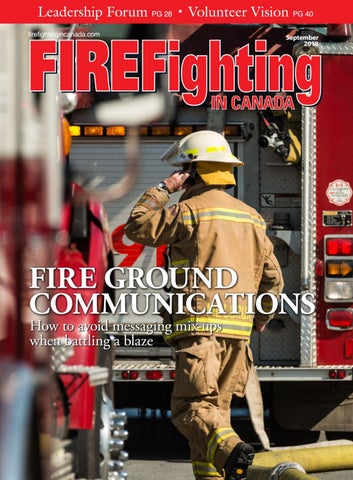
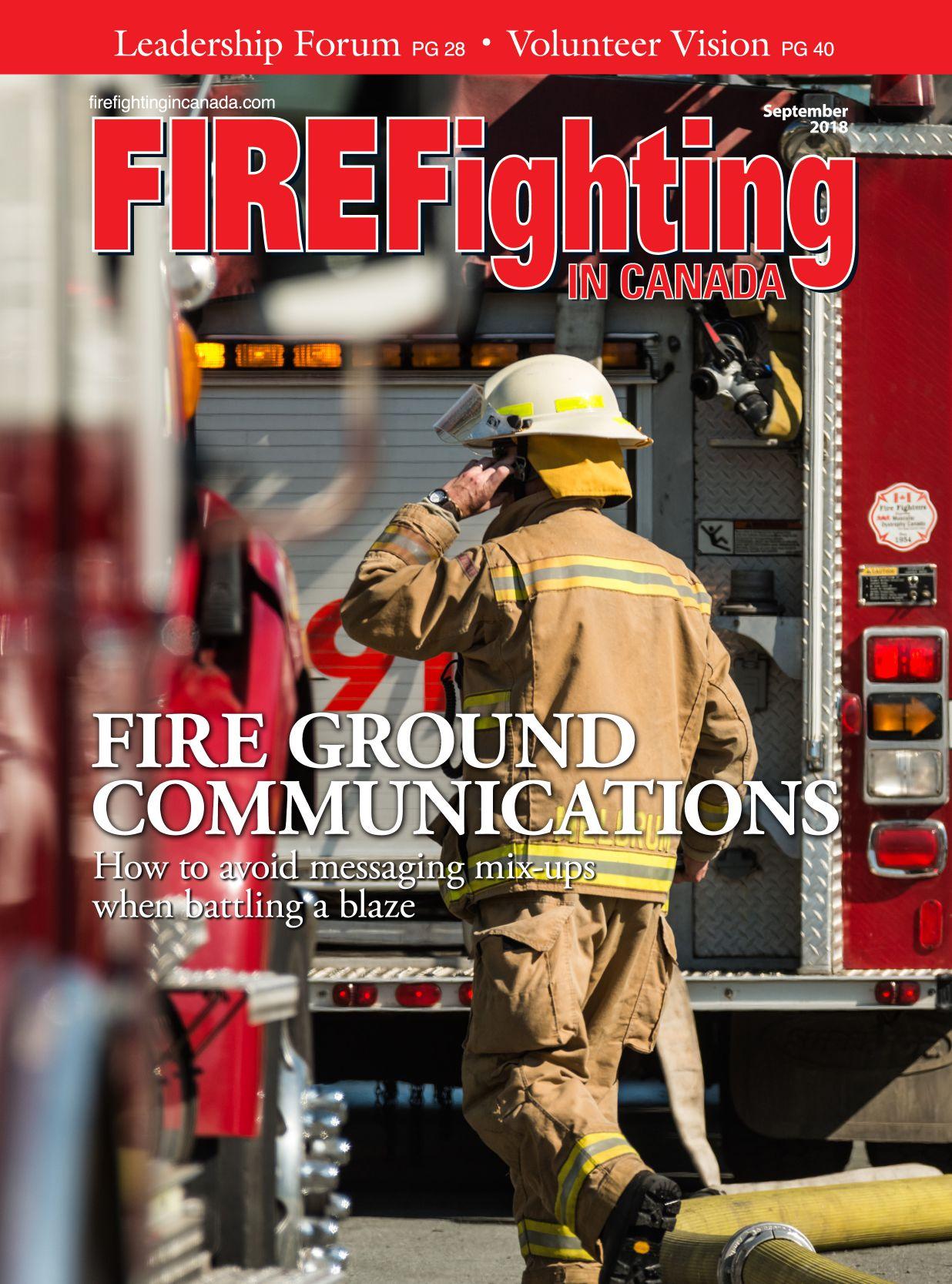
Good communication is key at a fire scene. Mark van der Feyst looks at some basic techniques. See story on page 12.
I was disoriented and unprepared, yet strangely pumped. I saw the exit and stumbled through the doorway. What a relief. Outside, firefighters helped remove my gear.
This was several years ago, but it was an experience I will never forget. It made me appreciate the difficult work that firefighters do.
As a journalist, I covered a lot of fires and saw firefighters take care of business, often under very difficult circumstances. But it was always from a distance. The smokehouse exercise helped me get a close-up look at what firefighters face on a daily basis, albeit in a controlled setting.
The passion, professionalism and dedication that firefighters bring to the job is remarkable.
There were plenty of speakers. One led a session on how incident commanders can rally the troops at a blaze. There was also a trade show, with exhibitor displays and products. Those at the show could learn about new processes, techniques and best practices. Our own Becky Atkinson, who runs the Firehall Bookstore, also had a booth at the event.
It was a remarkable conference, to say the least.
Events such as these are an important part of the firefighting community. They’re a great way for chiefs, commanders and firefighters to get together, network and learn more about the profession.
I, for one, am looking forward to attending more of these conferences, speaking with chiefs and firefighters and learning about the industry. Perhaps I’ll even brave another smokehouse.
ESTABLISHED 1957 SEPTEMBER 2018 VOL. 62 NO. 6
EDITOR GRANT CAMERON gcameron@annexbusinessmedia.com 416-522-1595
Occasionally, Fire Fighting in Canada will mail information on behalf of industry-related groups whose products and services we believe may be of interest to you. If you prefer not to receive this information, please contact our circulation department in any of the four ways listed above.
All advertising is subject to the publisher’s approval. Such approval does not imply any endorsement of the products or services advertised. Publisher reserves the right to refuse advertising that does not meet the standards of the publication. www.firefightingincanada.com
PHOTO BY JOHN RIDDELL
STATIONtoSTATION
ACROSS CANADA: Regional news briefs
Commanders must quickly set their priorities at fire scene
Fire chiefs and commanders must show confidence and provide leadership when they are at a blaze directing crews on the best way to tackle the emergency.
That was the message conveyed by Robert Krause, director of Emergency Services Consultants in Toledo, Ohio, at the 104th Maritime Fire Chiefs Association conference held in Moncton, N.B., on July 14.
“The younger firefighters who do not have your experience, your education, your training, are looking to you,” he said. “Your ability to communicate to them is going to have a tremendous impact.
“The tone you set is contagious. If you’re running around like a
THE BRASS POLE
Promotions & appointments
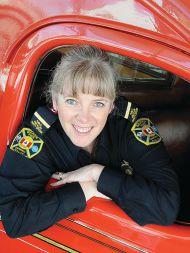
LORI HAMER is taking over the top job as fire chief of the fire department in London, Ont. She is the first female chief in the city’s history and has 22 years in communications/management, 20 of them with the Kitchener fire
department. She has been married 24 years and has two sons, 18 and 20 years old. Hamer began her career as a 911 dispatcher in Kitchener which she said gives her a unique perspective and a different approach to the job. Hamer knows there is learning to be done but says her team is very supportive and she hopes to tackle problems she faces head-on by listening to her team.
chicken with your head cut off, that’s contagious.”
Krause, an active firefighter who has spent more than 30 years working in emergency services, led a presentation called Leadership in Dangerous Situations–Strategies for Fire Ground Commanders.
While commanders are under pressure to make quick communications decisions in high-intensity situations, they must focus and prioritize, he said.
“You guys are the bosses and your firefighters are going to feed off what you do in dangerous situations.”
Although fire scenes are often chaotic and commanders must make decisions under extreme pressure, Krause said they should narrow the focus to the top three issues and how they intend to address them, he said.
“You have to start processing, ‘What are the top three?’ Don’t try to solve all the problems at once.”
Fire chiefs and incident commanders are under the same type of pressure as a commander in battle, noted Krause.
“Composure is absolutely important. You get it by practice, by resiliency.”
Krause said the best way for commanders to ensure their crews will respond appropriately to their direction is by doing repetitive, quality training beforehand.
When someone is under extreme stress, he explained, physiological changes can occur such as auditory occlusion, which means the individual doesn’t hear what’s going on around them. Other times, an individual may lose control of fine motor skills, so they might not function as they would normally.
Training is the best antidote to that problem, Krause said.
“We have to train ourselves and we have to prepare ourselves.”
– Grant Cameron
Thompson, Man., city council formally recognized MIKE BOURGON as the head of Thompson Fire & Emergency Services in July. Bourgon unofficially took on the role in June when the previous chief John Maskerine retired. Thompson council unanimously passed a resolution to appoint Bourgon the director of fire and public safety as of Aug. 13, but they also took the time to praise his overall
ability, leadership skills and commitment to the community as a whole. Bourgon has been working closely with the previous chief for the last six years as his deputy fire chief, which will make for a smooth transition.
Retirements
WAYNE GALLANT has served as fire chief of the Miminegash Fire Department in P.E.I. for the
Robert Krause, director of Emergency Services Consultants in Toledo, Ohio, speaks at a presentation on strategies for fire ground commanders.
PHOTO BY GRANT CAMERON
Active shooters often provide clues, fire chiefs told
Active shooter events have become an all-too-common occurrence in today’s society. Sadly, we’ve borne witness to the deadly carnage that results from assailants who use a gun to snuff out lives of innocent people.
So, what does an active shooter look like?
There are some telltale signs and shooters do provide some clues beforehand, but for the most part they’re difficult to spot, Dave Wiklanski, owner of Alpha Omega Training Solutions, told 100 people at the 104th Maritime Fire Chiefs Association conference held in Moncton, N.B., on July 15.
Wiklanski, a firefighter assigned to the suppression section of the New Brunswick, N.J. Fire Department, said shooters exhibit some common traits, but there is nothing distinctive that sets them apart.
“There is no typical active shooter although the guy who’s sitting in his basement every night watching propaganda is more likely to kill than a guy who says, ‘I’m going to shoot everybody,’” he said.
Wiklanski has nearly 20 years in emergency services. He has a BA in psychology and an MA in behavioural sciences and speaks at events internationally
on psychological health and suicide terrorism.
Title of his session was Active Shooter: Preparation, Response and Recovery.
Wiklanski said that according to the FBI an active shooter is any individual actively engaged in killing or attempting to kill people in a confined and populated area.
An active shooter event can occur anywhere and such a killer can’t be identified solely by their appearance, he said, although they do leave clues of their intentions.
Studies done by the FBI found that the killers, unfortunately, are learning from their predecessors and becoming better at what they do,
he said. Most shooters were between 40 and 49 years old, the studies found, and the youngest shooter was 12.
The majority of shooters are white males, said Wiklanski, and they have varied educational backgrounds.
Their educational level is not necessarily an indicator, Wiklanski noted. Nor is employment. There was also no indicator that shooters were likely to have had previous brushes with the law.
What motivates an active shooter?
Wiklanski said most have an agenda and a reason for their actions. Psychotropic medications are often a contributing reason for attacks while mental-health-related issues are involved in 62 per cent of cases. Financial problems or the death of a friend or relative are also contributing factors.
Disturbingly though, Wiklanski said the shooters usually give some hint of their intentions.
Often, they do something awry or out of place prior to their attack, but nobody speaks up about it, he said, partly because they are afraid that, if they do and there’s no issue, they will lose their jobs.
– Grant Cameron
last six years, but will be retiring after putting in 45 years of service with the department. Gallant received presentations from the Community of Miminegash, the provincial and federal governments and from the fire department at an appreciation night. He told his community that he didn’t join the service to put in as many years as possible, he joined to be a firefighter and he enjoyed doing it.
Fire Chief of Halton Hills Fire Department JOHN DEHOOGE was scheduled to retire in August. DeHooge spent two years at the helm of the Halton Hills Fire Department, but more than 35 years total in other fire departments across Ontario. He started his career in Oakville, Ont., in 1979. During his time with the Halton Hills Fire Department,
DeHooge was instrumental in developing a mental health peer support team and a training program to assist staff in developing resiliency and support for the impacts from responses to traumatic calls. DeHooge also established an Honour Guard and at the time of his retirement was in the process of updating the policies and practices of the Halton Hills Fire Department towards achieving accreditation.
Last alarm
Fire Chief PAT BOURGUIGNON was struck and killed in a pedestrian motor vehicle accident in May. He served as fire chief for Schreiber, Ont., since 2009 and as a volunteer firefighter for 34 years. Mayor Mark Figliomeni said Bourguignon was dedicated to his family and his work.
Dave Wiklanski, owner of Alpha Omega Training Solutions, spoke at a presentation on active shooters.
PHOTO BY GRANT CAMERON
MFCA CONFERENCE
CONFERENCE
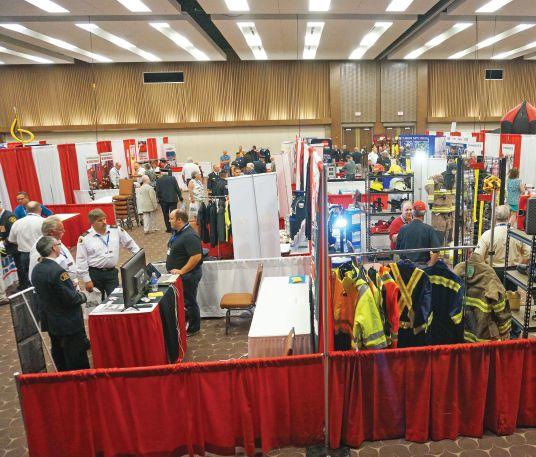
The event featured a slate of speakers who dealt with myriad subjects and a trade show where suppliers and manufacturers displayed products and services
BY GRANT CAMERON
The Maritime Fire Chiefs Association (MFCA) held its 104th annual conference July 13 to 16 in Moncton, N.B. and it was deemed a success by organizers.
“It’s gone really well,” Tory Rushton, newly elected president of the association, said on the final day of the conference. “We have a great trade show here and we have great speakers here every year.”
Rushton, chief of the Oxford Fire Department in Nova Scotia, was elected as president of the association to succeed Charles Kavanaugh, retired chief of the Grand Falls Fire Department in N.B. Rushton has been in the fire service for 20 years and has served as chief of the Oxford Fire Department in Nova Scotia for the last 12. Prior to that, he spent five years as deputy chief of the department.
The four-day conference was held at Hotel Casino New Brunswick.
About 160 delegates, many with their spouses, attended the event, up slightly from the previous year.
The event featured information sessions and a slate of keynote speakers who dealt with myriad subjects.
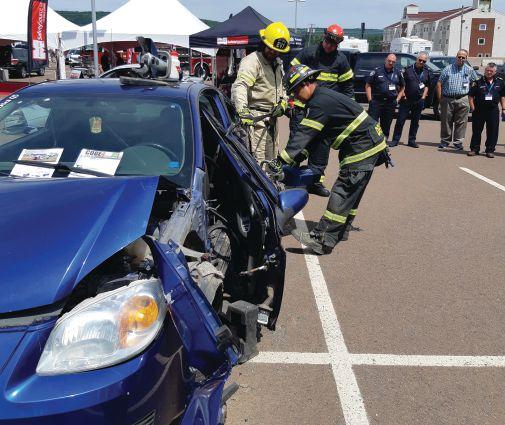
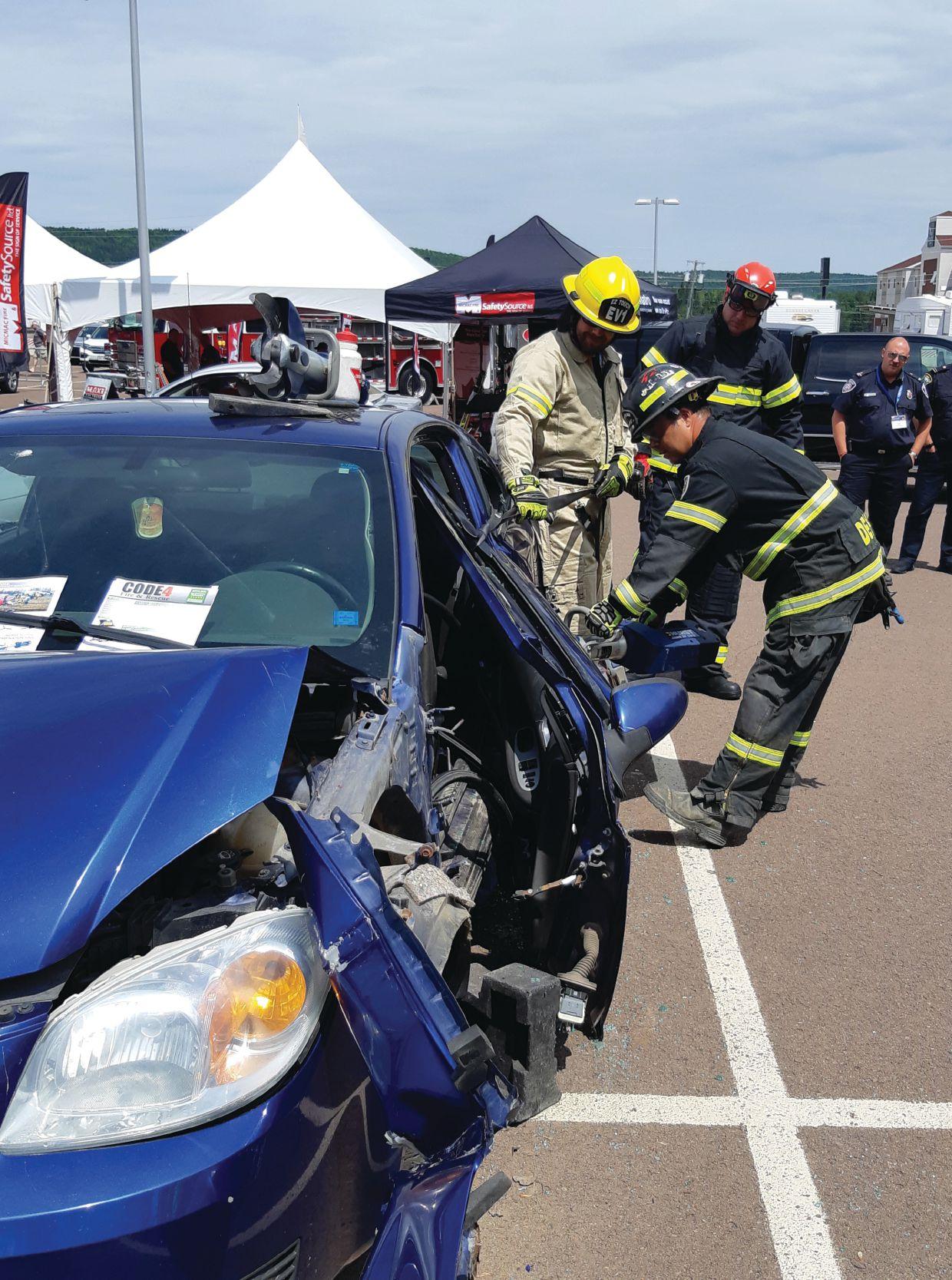
Outside, a number of manufacturers and suppliers set up more than a dozen fire trucks.
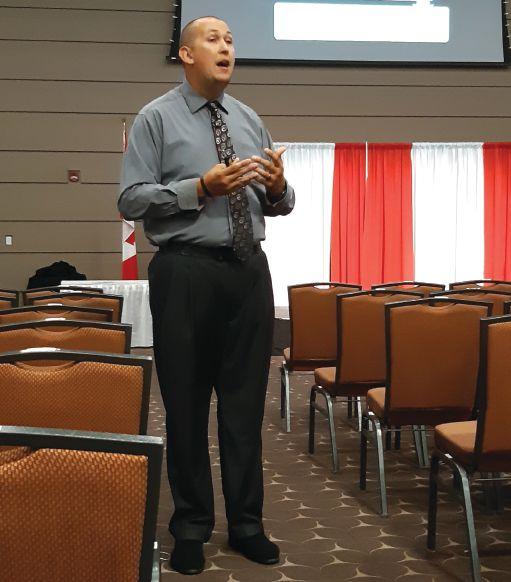
Robert Krause, director of Emergency Services Consultants in Toledo, Ohio, led a talk called Leadership in Dangerous Situations and spoke about why it’s important for commanders to remain calm and make sound decisions at fire scenes because firefighters will feed off leaders’ actions.
Dave Wiklanski, owner of Alpha Omega Training Solutions in New Jersey, led a session on active shooters, noting most have an agenda and the shootings are likely to happen at a school, church or mall. He said such incidents can occur anywhere, but shooters do leave clues they might kill people.
Tanya Bettridge, director of communications at the Ontario Fire & Life Safety Education, talked about social media and how tools like Facebook and Twitter can be used by fire departments to promote safety messages. She urged fire departments to get on the bandwagon and adopt digital tools.
“If you don’t have social media in your fire department, get it,” she said in remarks to an audience of 120 people at a session.
In today’s world, social media is one of the best ways for fire departments to draw attention to the safety cause, she said.
Bettridge, who is public educator/administrative assistant at Perth East and West Perth fire departments in Ontario, was a driving force behind a farm fire safety program at the departments. The program has since been adopted by fire departments and agencies across North America.
Bettridge said social media has become a must-have tool for fire departments that want to get the public thinking more seriously about safety.
“It is the most inexpensive public education tool that you can use,” she said, noting a post on social media can be shared instantaneously around the world.
Bettridge said fire departments shouldn’t ignore online resources because three quarters of Canadians use at least one type of social media and nine billion videos are watched around the world each day.
“That’s where your audience is,” she said.
A trade show at the event featured vendors from across Canada and the U.S. They
had specialized products and equipment on display, along with exhibits of new processes and techniques for fighting fires.
Stephan Rytz, a firefighter and director of training at Scene Safety Company in Saint John, N.B. which specializes in highrisk rescue operations, was a vendor. While he leads a busy life doing two jobs, he’s passionate about health and safety and said he feels good at being able to help save lives.
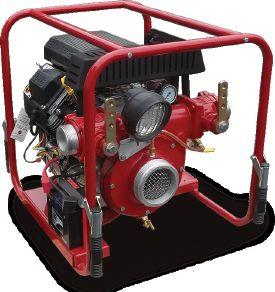
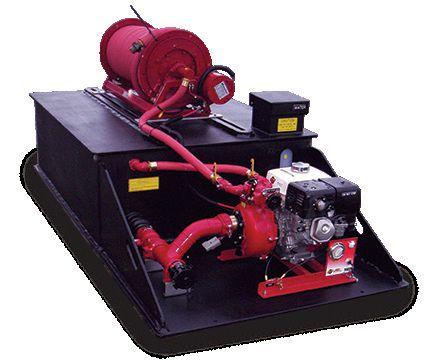
Jean-Michel Boisvert, of Pierreville, Que., Canadian sales manager at CET Manufacturing which makes portable
THE POWER YOU NEED
pumps, was also one of the vendors. He travels regularly across Canada and the U.S.
There was also business to take care of at the conference.
Tory Rushton is the new president of the association.
Meetings of the MFCA were held each morning. One item discussed was whether or not the association should open its doors to all firefighters. Presently, only those who have the word ‘chief’ in their title are allowed to be active or voting members of the MFCA. Fire marshals, deputy fire marshals and fire commissioners are also allowed to cast ballots. Firefighters can attend the event but aren’t allowed to join the MFCA or vote.
A resolution to allow all ranks of fire service in the Atlantic provinces to become full-fledged voting members of the association – and run for executive positions – was put forward as a resolution.
The idea behind it was to make the association more inclusive of all ranks of the fire service.
While there was no vehement opposition to the idea, in the end members decided it would be better to wait another year before making a final decision.
The executive will work on a bylaw over the next year and come up with one that will be presented to the conference in 2019.
MFCA president Rushton said the idea of the proposal is to provide future leaders of the fire service an opportunity to gain more leadership experience through lectures, training and networking.
“We’re trying to open the doors for them to come in to this association and sit on the executive and start to grow with the executive as they grow,” he said.
Such a move, he said, would allow basic firefighters, lieutenants and captains to get more involved in the MFCA.
Rushton said the proposal comes at an exciting time for the association and, as president, he hopes to rejuvenate the organization, define where it’s going and bring more members into the fold.
“I want to grow the membership and maintain the relationships that we have with the other organizations, each provincial association and also the Canadian Fire Chiefs Association.”
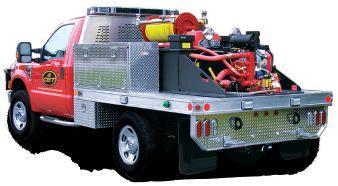
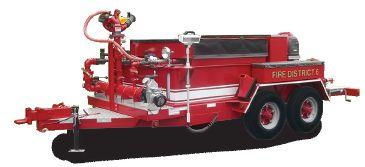
Skid Units
Glider Kit
Portable Pumps
Foam Trailers
LET’S SHOW IT WHO’S BOSS
Good communication is key when firefighters are at a scene BACKtoBASICS
BY MARK VAN DER FEYST
This column was first printed in September 2012, but is worth repeating. While communications may not be an exciting topic for hands-on training, it is necessary. It seems communications is always the one constant denominator in every aspect of our job and it is always being improved upon so that it will work without fail.
Good communication is important and plays a vital role in how well firefighters in a department respond, react and conduct themselves in day-to-day operations. A breakdown in communications leads to a dysfunctional fire department or fire ground.
Different types of communications are used in the fire service that we should all be familiar with and well-versed in. They are written communications, face-to-face communications, electronic communications and radio communications.
In the station, we will be exposed to written, face-to-face and electronic communications.
Written communications include memos, communiques, emails, bulletins and so on. These are usually posted somewhere for all to see or may be directed to one person.
Electronic communications will be in the form of an email sent via mobile phone, text message, Facebook posting, or Twitter. These types of communications will be directed to a single person, for the most part, or to a group of people that have access to the media being used.
On the fire ground, we are limited to certain types of communications that can be used, such as radio, electronic and face-to-face. Communication by a portable radio is the most common method for most firefighters. A portable radio allows a team of firefighters to remain in contact with the incident commander (IC) and each other. It is a lifeline for a firefighter working on the fire ground. Without it, a firefighter would be left to more primitive ways to communicate such as face-to-face. The portable radio gives distance to the working crew by allowing firefighters to be far away from the IC yet still be able to report back or receive messages. Knowing how to use the portable radio correctly is the key to effective fire ground communications.
Of all the ways to communicate with a person or persons, faceto-face is the best.
’’
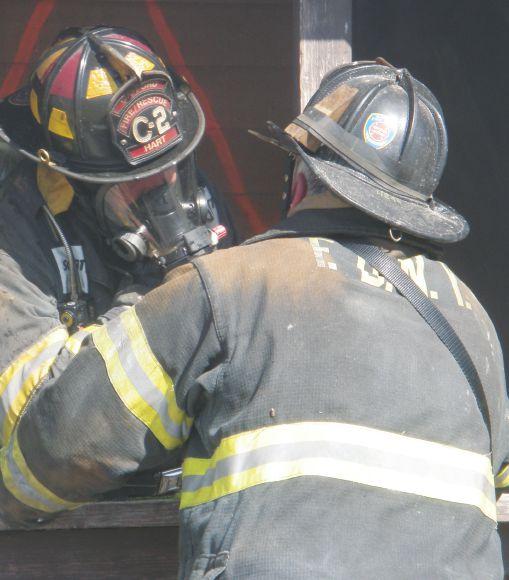
Of all the ways to communicate with a person or persons, faceto-face is the best. It allows the receiver and the sender to have instant acknowledgement from each other when passing on information, asking a question or giving an order. Facial expressions, as well as body language, are also used in this method as a way to convey or receive a message. There is an opportunity to clarify a message so that a full understanding is obtained. The downside to face-to-face communications is that it reduces the distance a crew can be from the IC or sector officer. Close proximity must be maintained to remain in contact with each other. Same goes for interior crews working with a limited number of portable radios and/or failure of portable radios. Defaulting back to traditional face-to-face or verbal communications will be the only way to communicate with each other. For some firefighters, this is a lost art. Dependence upon a portable radio is all they know. Training on how to communicate on the fire ground when the portable radio fails or is lost during an interior operation is a good idea. This will reinforce the
Face-to-face communication is best as it allows instant acknowledgement.
PHOTO BY MARK VAN DER FEYST
When you and your equipment are at their best, there are no doubts when the call comes. Maximum condence is the all-new Super Duty® Chassis Cab. The military-grade aluminum alloy^ body let engineers upgrade the frame, driveline, suspension and brakes. Ford Commercial Vehicle specialists have the uptting and modifying expertise to make sure your Super Duty® is ready for duty. We’ll stop at nothing to make equipping your team easier. FORD.CA/BUILTFORBUSINESS
traditional skills that are needed when such a situation occurs, and it will happen as a portable radio is an electronic device powered by a battery.
When firefighters are using portable radios on the fire ground, communications can become confusing and/or very hard to follow. This can be due to a number of reasons. One reason is the usage of 10 codes. Using 10 codes in the fire service was removed when the National Incident Management System (NIMS) came into
existence. NIMS was created and implemented as a result of the tragedy on Sept. 11, 2001. The communications breakdown that day and in the days that followed led to a common plain text language being adopted and used. Plain text language is everyday language that we use and permits people to be able to communicate with each other.
Within NIMS there are also provisions for common terminology to be used on the fire ground. Terms such as sectors, divisions, geographical designations of buildings,
Alpha, Bravo, Charlie, Delta, roger, over and acknowledge are terms that are used in an effort to reduce the amount of confusion over the airwaves when trying to communi cate via a portable radio or by other means.
Another reason for communication confusion on the fire ground is firefighters yelling into the radio when trying to speak. When a message is being transmitted by the sender and the individual is yelling into the radio, it will be received as a distorted message with the receiver wondering what was said. This can be due to improper posi tioning of the radio to the mouth when transmitting. Avoid holding the radio/ microphone directly in front of your mouth when speaking. Avoid pushing or swallow ing the radio/microphone when speaking. Instead hold the radio/microphone on a 45-degree angle about two inches away from your mouth and you will send a clearer message. If wearing a self-contained breathing apparatus, make sure the radio/ microphone is positioned at the communi cation portals on the facepiece, which will allow you to speak clearly and not sound muffled. Holding your breath while relay ing the message may also help. Removal of breathing sounds help to amplify the message transmission.
Another method is to hold the radio/ microphone directly to the lens of the facepiece when speaking. This requires putting the radio almost at eye level on the outside of the lens. With the radio/ microphone in direct contact with the lens, the message comes across a lot clearer for the receiver. Avoid feedback between other radios on the fire ground when trans mitting. This can happen when all crew members have a portable radio and one is trying to transmit. The feedback distorts the message. Turn away from other radios when transmitting a message.
Using these simple but basic techniques when communicating on the fire ground will enhance the quality of the transmissions and remove the confusion factor for all.
United States and India, and is a FDIC instructor. He is the lead author of the Residential Fire Rescue book. Email Mark at Mark@FireStarTraining.com.
Volunteers Must Be Prepared
Emergency response time is critical to fire departments and planning ahead will enable you to get from your home to the firehall quickly and safely.
BY KIRK HUGHES
It’s evening, that period just after supper and before you go to bed. The kids are asleep and, despite the television being on, you’re on your phone checking social media and looking at funny cat pictures.
Then it happens. The tones drop. Dispatch comes on and gives you information about a possible structure fire just outside your community. Multiple calls have been received. You get up from the couch and hurry to your room to put on some more appropriate clothing before heading outside to start your vehicle. Getting to the firehall takes about six minutes and if you want to make a truck and get to the fire in time to have any impact you need to get moving. Sound familiar?
Response time to any emergency is of critical importance to fire departments all across Canada.
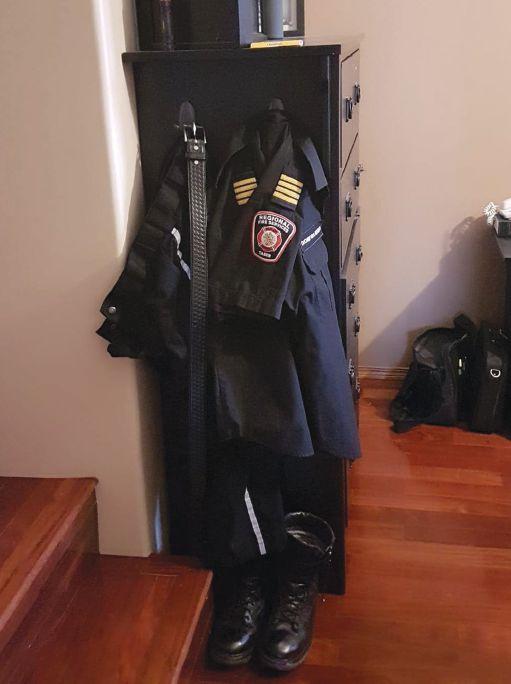
Preparation begins with the individual firefighter. The first step is to prep your individual kit. Having pants, socks, t-shirt (weather depending of course) and boots placed in a dedicated area negates time lost searching for clothing in the dark or in a panic. Ensuring the vehicle used to respond to the hall is clear of snow, full of gas and angled out and not blocked in is also a strategy, aiding in faster reaction times. Another trick is to put the keys to that vehicle in a place that is consistent. Looking for keys or eyeglasses is a time-killer.
Responding from your house to the hall has to be done in a professional and safe manner. Planning ahead will ease that strain. Drive the route under normal conditions. Know the back streets and alleys that you could use in the event of obstruction. Identify hazards you want to avoid such as school zones, playgrounds and seniors’ complexes when travelling to the station. Understand road conditions, watch the weather forecast for precipitation and account for those factors when you respond.
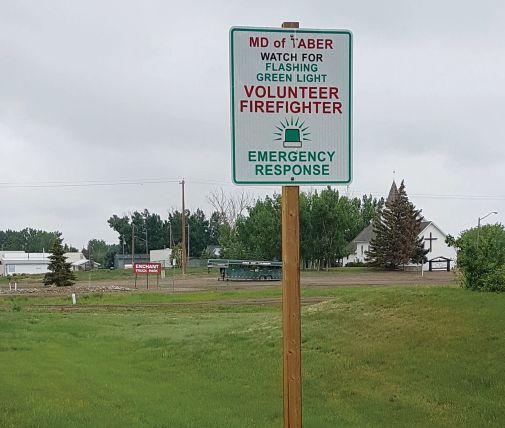
Another innovative way to reduce the timeframe from house to hall is to use a green light. This is unique in Canada and used by many rural departments in many provinces. Some, like Alberta and Ontario, have it written into their legislation. By mounting a green light inside a personal motor vehicle, a statement is being made that you are a firefighter, likely a volunteer, and, when activated, that there is an emergency that requires attending. This may seem like an easy venture to partake in, but it isn’t successful unless an educational component is attached to it.
The first stage is ensuring firefighters using the lights understand their obligations and responsibilities under respective provincial traffic safety acts. Firefighters must know that the use of a green light provides no special privileges and all normal traffic control devices and regulations have to be followed.
An individual prep kit enables firefighters to get out the door quicker.
Once firefighters understand those requirements, the second and more difficult phase begins – creating awareness amongst the public. Not every driver knows what a flashing green light signifies. Posting signs in your municipality that explain what a green light means is a great way to focus that message on anyone that enters your communities via a roadway. Social media posts, school talks and community events are also perfect ways to distribute the message. Green lights do not require another motorist to pull over, but it is a courtesy to yield the right-of-way to the responder, thus clearing the path to the hall. Once at the hall, there are still numerous little ways to speed things up. First, adequate parking is a must. In the Northwest Territories, this includes space for snow machines and snowmobiles. Safe parking spaces that are away from responding bay doors and exit routes is a consideration. Once parked, having the main door
GEAR WE CLEAN YOUR
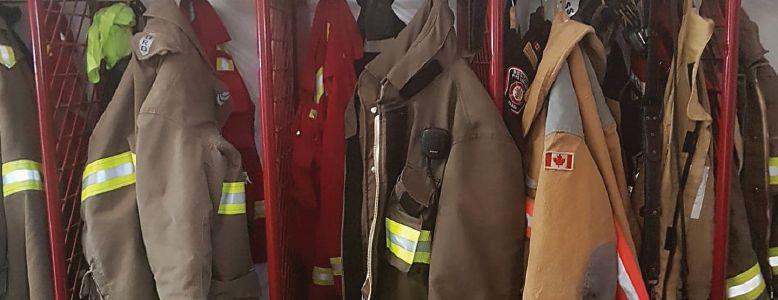
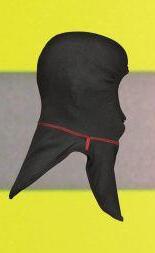
open for firefighters to enter through is a big help. Some departments open one of the bay doors, usually the door without the responding apparatus coming out of it, which allows firefighters moving from the parking lot to gain access to the hall without having to use keys to open locks or punch in access codes to pull the door open and gain entry. Arriving at the lockers, a firefighter should have stored his or her turnout gear in such a manner as to assist with rapid donning. Pre-rolled pants over the boots with gloves and balaclava attached to the coat save time.
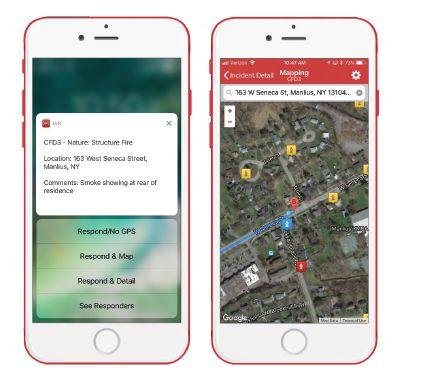
Technologically speaking, the use of firefighter responder apps on cellular devices are beneficial for telling departments who is on the way, sometimes how long it is expected to take them and provides the crucial data of how many firefighters are responding. Knowing who is coming and their specific skill sets and capabilities not only speeds up truck response, but it also arms an officer with advanced knowledge of the differing levels of experience available when a truck arrives on-scene.
Responding to a call from the station often requires advanced training from the officer and driver. The officer must know where the call is, the quickest way to get there, and be aware of any barriers to the response. The driver must have knowledge of emergency vehicle operations, provincial traffic act rules regarding lights and siren usage, and be skilled enough to maneuver a vehicle under stressful conditions.
Post-call review is also an important component to enhancing response times. Determining a department’s level of service is the first step. NFPA 1720 is the standard to strive for. Ignoring that standard is poor planning. Acknowledging the existence of that standard and working on complying accordingly is the right avenue to take. Gaining input from firefighters on how to further expedite responses is also worth a debrief after the call.
Kirk Hughes is deputy fire chief of the M.D. of Taber Regional Fire Department in Alberta. A veteran of the Royal Canadian Mounted Police, Kirk served with the Burlington, Ont., Portage la Prairie, Man., Deline, N.W.T., Fort Providence, N.W.T., and Behchoko, N.W.T., fire departments before taking a position with the Municipal District of Taber as the director of community safety.
A comprehensive education and awareness plan for green lights helps get the message out to everyone.
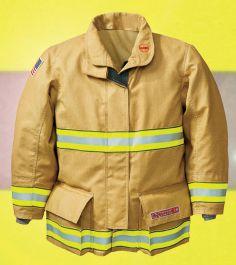
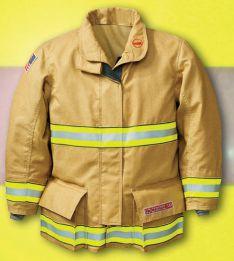
Loaded with safety, comfort and mobility features for unmatched performance, Flame Fighter® bunker gear offers a variety of custom outer shell fabric, liner system, hardware and pocket options to fit your specific needs.
• Patented IsoDri®* moisture management reduces the water absorbtion and helps gear dry faster between runs
• Exclusive Ventilated Trim™ allows vapor to be released, reducing the risk of scald burns
• Thermashield™ provides an additional layer of liner material in the upper back and shoulders to protect against compression burns
• Move-N-Hance™ crotch gusset increases mobility by reducing bunching, twisting and pulling
• Flex Knee™ for easy, natural movement
• Stay Rite™ sleeve wells integrate the sleeve’s liner into a full-length wristlet so that when you reach, the entire sleeve moves with you
For more information about Flame Fighter bunker gear, contact your Starfield LION sales representative at 1.800.473.5553 or visit us online.
STATIONtoSTATION
BRIGADE NEWS: From departments across Canada
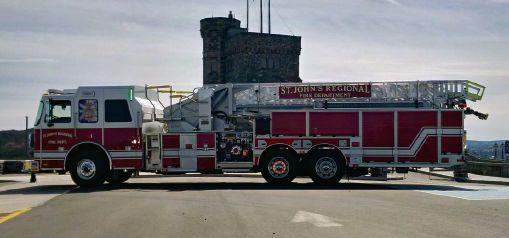
The St. John’s Regional Fire Department in St. John’s took delivery of a new truck from Fort Garry earlier this year. The Sutphen SL100 Aerial Ladder sits on a Sutphen TSAL4K 62” Cab w/ 10” RR chassis. The body is made of stainless steel. It also features ULC S515-13 Labelled and Listed, Weldon VMUX, 23K Front Axle, 48K Rear Axle with Raydan Suspension, USSC Valor Seats, Trident Air Primer, Sliding Hose Bed Storage, AlcoLite Ladders, Outrigger Spot Lights, Whelen LED Warning Light Package, FRC Spectra Scene Lights, and ROM Painted Roll Doors and more.
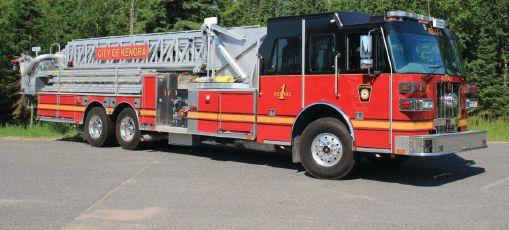
The City of Kenora and Fire and Emergency Services in Kenora, Ont., received a new Sutphen SP90 Aerial Ladder recently from Fort Garry. The truck sits on a Sutphen TSAL4K 62” Cab w/ 10” RR chassis and is made of stainless steel. The truck also features a Cold Weather Package, Q2B Siren, Whelen Elec. Siren, Bostrom Seats with Secure All Brackets, Safety Vision Camera with Monitor for Curbside Jack Leg, Class 1 Pressure Governor and more.
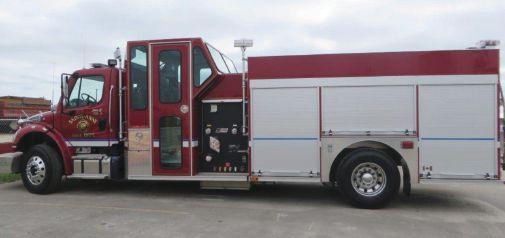
The Ste. Anne Fire Department in Ste. Anne, Man., took delivery of a new freightliner in June from Fort Garry Fire Trucks. The truck sits on an M2 106 chassis and has a Hale DSD 1250 Midship Top Control pump and an MXV four-man crown body style. The body is 5083-321 Salt Water Marine Grade aluminum.
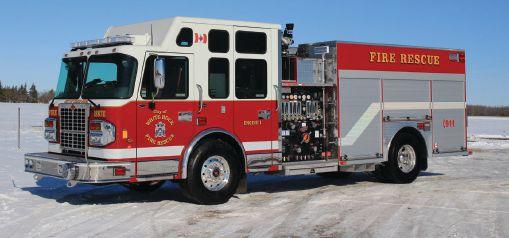
White Rock Fire Rescue in White Rock, B.C., took delivery of a pumper earlier this year from Fort Garry. The pumper sits on a Spartan chassis and is a Metro Star EMFD 20” Raised Roof and is constructed out of 5083 aluminum. The truck features Hale QMax 1750 USGPM, 1500 IGPM Pump, Copoly 720 USG, 600 IG Water Capacity – 30 USG, 25 IG Foam Tank, FGFT Lever Controls FRC InControl 300 Governor, Rear Suction, TFT Hurricane Monitor, Coffin Box Storage, Amdor Roll Doors, Whelen Warning Light Package and more.
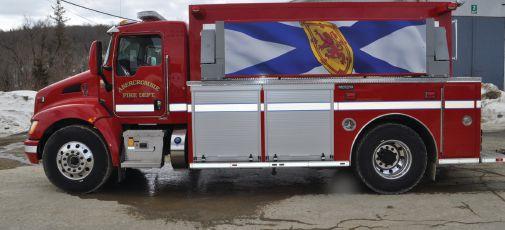
Metalfab Fire Trucks delivered a single axle tanker to Abercrombie, N.S., earlier this year. The chassis is a Kenworth T370 and the body is made out of extruded aluminum. It has a Paccar PX-9 engine with 380 hp and it has an Allison 3000 EVS Auto transmission. The pump is from Hale and has 420 IGPM capacity. The water tank has a 1600-imperial-gallon capacity. The truck also features a Whelen LED warning light system and more.
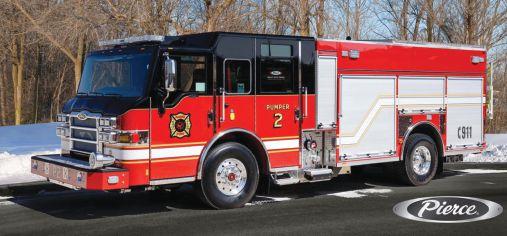
Rama Fire and Rescue in Rama, Ont., took delivery of a new pumper from Pierce earlier this year. The pumper sits on an Impel chassis and has a Cummins L9 engine and 450 hp. The pump is Pierce PUC and features 1,500 gpm. Its tank size is 1,000 gallons and features a Harrison hydraulic 6kW generator.
KENORA FIRE AND EMERGENCY SERVICES
ST. JOHN’S REGIONAL FIRE DEPARTMENT
STE. ANNE FIRE DEPARTMENT
WHITE ROCK FIRE RESCUE
ABERCROMBIE, N.S., FIRE DEPARTMENT
RAMA FIRE AND RESCUE
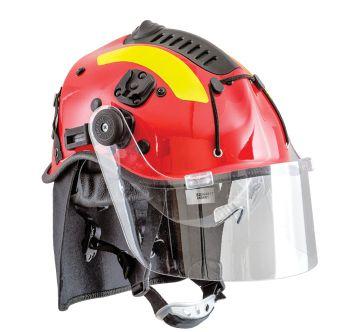
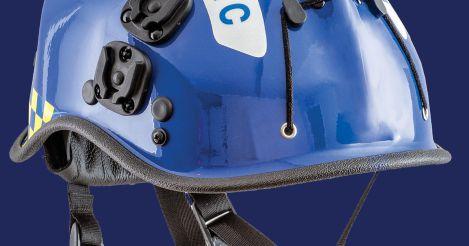
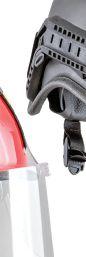
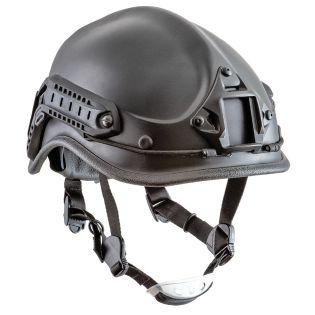
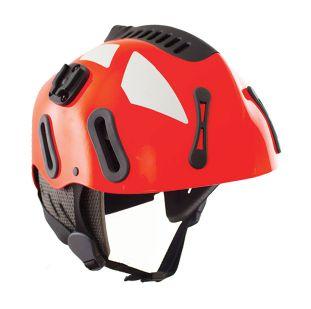
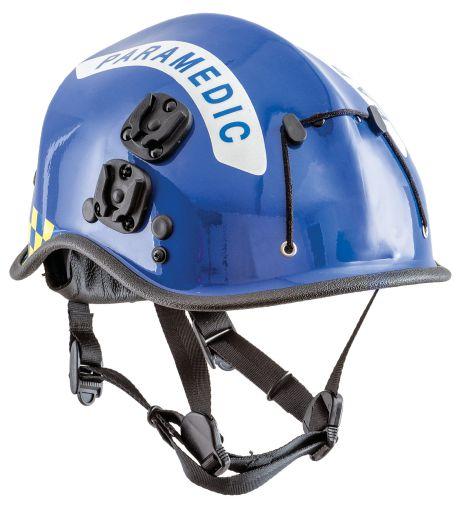
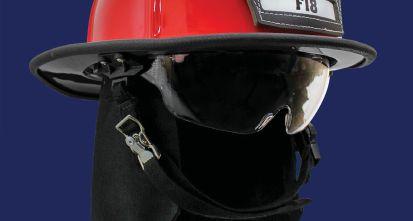
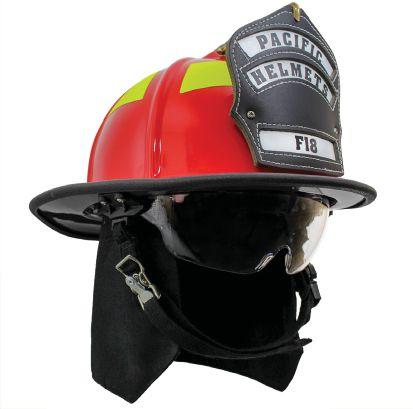
STRUCTURAL FIREFIGHTING HELMETS
New study shows sprinklers save lives
Research results underscore importance of automated systems in homes
BY LEN GARIS AND KARIN MARK
Having a sprinkler system in your home can reduce your chance of dying in a fire by 79 per cent, according to a new study based on 10 years of Canadian fire data.
Released in April by the University of the Fraser Valley in B.C., the study appears to bolster the call for mandatory sprinklers in all new homes in the leadup to the 2020 version of the National Building Code.
Sprinkler Systems and Residential Structure Fires – Revisited: Exploring the Impact of Sprinklers for Life Safety and Fire Spread was written by Len Garis, Arpreet Singh, Joseph Clare, Sarah Hughan and Alex Tyakoff, who analyzed more than 439,000 fire incidents reported in B.C., Alberta, Manitoba, Ontario and New Brunswick between 2005 and 2015.
“We wanted to take a fresh look at the data in light of modern-day
fire response, demographics and building fire risk,” said co-author Clare, a senior criminology lecturer at the University of Western Australia and an international member of the Institute of Canadian Urban Research Studies at Simon Fraser University. “The results underscore the life-saving potential of automated sprinklers in all residential settings, particularly when paired with working smoke alarms.”
The study focused on casualty behaviour, fire spread and fire department resources in residential fires, which numbered 140,162 in the 10-year timeframe. Based on the findings, the death rate per 1,000 in non-sprinklered homes is more than triple that of sprinklered homes, and people are more than twice as likely to be seriously injured in a fire in a non-sprinklered home as in a sprinklered one.
The data also revealed that fires in single-family homes caused more deaths than those in apartments, that senior citizens were more likely to die in a residential fire than younger people, and that
fires in sprinklered homes required significantly less fire department intervention.
The findings support the Canadian Association of Fire Chiefs’ (CAFC) multi-year campaign pushing for mandatory sprinkler systems in all new homes – including single-family dwellings – in the National Building Code.
“We can conclude that increasing the use of residential sprinkler systems would have a rising impact in the years to come, both because Canada’s population is aging and because modern-day furnishings, building materials and open-plan designs carry a higher fire load, as research has shown,” Clare noted.
The study builds on an extensive body of existing research on residential sprinkler systems, including a 2013 study by Garis and Clare and a pivotal 1984 study A Benefit-Cost Model of Residential Fire Sprinkler Systems by S. Ruegg and S. Fuller that demonstrated a 63-to-69-per-cent reduction in the death rate per 1,000 fires, and prompted the U.S. Fire Administration official position that all homes should be equipped with both smoke alarms and automatic fire sprinklers, and all families should have and practice an emergency escape plan.
Data for the new study was provided by the CAFC and the Council of Canadian Fire Marshals and Fire Commissioners through Statistics Canada. Fire incident information available in the National Fire Information Database was also used to examine casualty behaviour, fire spread and fire department response.
Overall, 97 per cent of the fires studied occurred in residential buildings without sprinklers. These fires resulted in 97 per cent of the injuries and 99.2 per cent of the deaths. Less than one per cent
(0.6 per cent) of fires in single-family homes occurred in the presence of sprinkler protection. Of note:
• The death rate per 1,000 for fires in sprinklered homes was 0.9, compared to 3.3 in non-sprinklered ones.
• Only 10 per cent of injuries in fires in sprinklered homes were serious, compared to 23 per cent in non-sprinklered ones.
• Risk of death was not equal among ages and genders. People age 65 and up made up 30 per cent of the fire deaths in single-family dwellings and more than 33 per cent in apartment buildings. Males represented about two-thirds of all those injured or killed in a residential fire.
Sprinklers were also shown to be successful in controlling fire spread. When sprinklers activated, fires were confined to the room of origin 88.4 per cent of the time, which was 1.35 times more frequently than for non-sprinklered buildings. When the type of housing was considered, the disparity was greatest for single-family homes, where fires with sprinkler activations were confined to the room of origin 1.5 times more frequently. In apartments, fires with sprinkler activations were confined to the room of origin 1.1 times more frequently.
In total, only 1.6 per cent of fires in sprinklered properties spread beyond the building, compared to 5.7 per cent in non-sprinklered properties.
Firefighters were also safer when working in sprinklered buildings. They were injured 1.6 times more frequently in non-sprinklered buildings. No serious firefighter injuries were reported in sprinklered building fires, as opposed to 15 per cent for non-sprinklered building fires.
It should be noted that due to variations of fire spread and size or other fire-control mechanisms, sprinkler systems did not always activate when fires occurred. Sprinklers were only required to control 18 per cent of the fires in apartments or 28 per cent of the fires in houses.
Overall, the study makes a strong case for the increased use of sprinkler systems in all types of residential buildings to reduce fire-related injuries, deaths and resource use.
The protection is even greater when combined with early detection. Based on the new findings in combination with earlier research, it can be concluded that fire-related death rates per 1,000 fires are reduced by 43.7 per cent with working smoke alarms and 79 per cent with sprinkler systems.
What can Canada’s fire community take away from this?
“This is further evidence that mandatory sprinkler systems in all new homes would be a large, positive step towards furthering residential fire safety in Canada,” Clare said. “At the same time, we need to acknowledge that most of the population will continue to live in existing non-sprinklered homes. The approach going forward must include working smoke alarms, along with targeted strategies to protect older Canadians and others at higher risk.”
The study can be downloaded for free from the University of the Fraser Valley’s public safety and criminal justice research database at cjr.ufv.ca/sprinkler-systems-and-residential-structure-fires-revisitedexploring-the-impact-of-sprinklers-for-life-safety-and-fire-spread/.
Len Garis is the fire chief for the City of Surrey, B.C. He is also an adjunct professor in the School of Criminology and Criminal Justice and associate to the Centre for Social Research at the University of the Fraser Valley in B.C. Contact Len at LWGaris@surrey.ca. Karin Mark is a former newspaper reporter who writes for publications and provides communications and design services in Metro Vancouver, B.C.
BY SAMANTHA HOFFMANN Public fire and life-safety officer, Barrie, Ont.
HFIRSTLINE
Social media can be used for safety messaging
ow does a yoga pose and a #NationalDayCalendar help you educate your community on the importance of testing and maintaining smoke alarms? Pretty easily if you know which yoga pose faces towards the ceiling and involves raising your hands above your head.
A 2016 study (Yoga Journal and Yoga Alliance) revealed that almost 80 million people practice yoga. They come from all walks of life, different cultures and age demographics. They’re exactly the type of people you want to educate about fire safety.
Of course, you need to have a message that is relatable, that makes people think and drives home the fire safety message that alarms only last 10 years. Make it even better by linking it to the companies that teach yoga in your community and you have a winner.
A tweet by Barrie Fire & Emergency Service about National Yoga Day that prompted people to test their smoke alarms generated a lot of conversations and had people testing their smoke alarms. By tagging the yoga providers, we were able to reach all of their followers too. We started a lot of conversations, exactly what social media is all about.
We know that people learn when they are interested, engaged and involved in problem-solving. If you can successfully create positive emotions around fire safety, the ripple effect can be more pervasive and influential than you may think.
Traditionally, fire departments educate their communities through presentations in schools, churches, general interest groups, or at mall displays. Social media gives you the ability to interact with people in different geographic locations, different occupations and of different ages, all at the same time.
serve them with the type of content that they prefer. A lot of the online video consumption is driven by recreational and entertainment videos, so if we can entertain while messaging we have a better chance of reaching our audience.
If you follow Barrie Fire on social media, you will see we are often putting ourselves out there for fire safety. It allows us to humanize our fire service, share some personality and, in rare cases, showcase some hidden talent. All done with important fire safety messages embedded throughout.
Technology has evolved so much that it is fairly simple and cost-effective to create short videos. Survey your department, find out what talents you have. I am sure you will find, artists, musicians, videographers and editors.
Reach out to your community in search of partners to help you. You can do this in the creation of messages or just by tagging them or mentioning them in your post. Find groups that have large followers and/or similar messages. If you are having issues with outside fires caused by carelessly discarded cigarettes, look for groups of people that are also having issues with cigarettes.
This is where a hashtag comes in. A hashtag is a word or phrase preceded by a hash mark (also used to be known as the pound sign on a telephone), used within a message to identify a keyword or topic
Thanks to hashtags, your post is not limited to just your followers.
Recent Canadian statistics indicate that 91 per cent of all Canadians use social media. Facebook is still the number one choice, with more than 19 million people looking at it at least once per day. Facebook allows you to tell stories, share pictures, videos and have conversations with your followers and their followers.
More than four billion videos are viewed a day on the Internet. People love to consume video and we have to adjust to that fact and
Samantha Hoffmann has been in the fire safety field for more than 25 years. She is the public fire and life-safety officer for Barrie Fire & Emergency Service in Ontario. In 2014, Samantha was named Public Fire and Life Safety Educator of the Year by the National Fire Protection Association – the second Canadian and first Ontario educator to receive the award since its inception. Email Samantha at Samantha.hoffmann@barrie.ca and follow her on Twitter @shoffmannpflso.
of interest and facilitate a search for it. Thanks to hashtags, your post is not limited to just your followers. With thought and the right hashtag, you can get the attention of anyone interested in similar topics. So, just by adding the #smokingcessation hashtag to your fire safety message, you will reach a much larger audience.
It doesn’t have to be a big group with a large following. Just spending time learning about the Internet can help. For example, since cats are the unofficial mascot of the Internet, a social media post with a picture of a cat would get you the attention, then you need to include the fire safety message and finish by linking back to a web page with more information.
Social networking sites such as Facebook, Twitter, LinkedIn, Snapchat and Instagram have become powerful marketing and communication tools. It makes sense to start using these channels to communicate with your community.
BY MATT PEGG Fire chief, Toronto
LEADERSHIPFORUM
Picking the perfect team is no small or easy task
’m often asked what I look for when filling a senior leadership position that reports directly to, and works directly with me, on a daily basis.
As I discussed in a previous column, being attractive and competitive as someone who aspires to move into a more senior role is the function of your relevant education, experience and exposure.
But as the leader of a team, how do you go about selecting from a candidate pool of well-educated, experienced and exposed leaders to fill your key inner-circle roles?
Dictionary.com defines “inner circle” as a small, intimate and often influential group of people.
How do you decide who you will hire, promote or designate to assume the most critical inner-circle roles on your team?
I would like to share a concept I’ve adapted from leadership
author John Maxwell, based upon my own personal experience. There are four key factors that I consider when I’m selecting a leader to fill an inner-circle role.
The first is compatibility.
Regardless of what type of team is being assembled, it is critical that the team members are compatible.
They must be like-minded and willing and able to work effectively together.
Let’s face it, as a leader not everyone is a good match for you. I have known strong and capable leaders who simply couldn’t work effectively together, and despite their obvious individual talents, the team failed.
To be successful as a team and deliver results under pressure, you and your team must be compatible and connected. When you’re
Prepare
not, your team will simply fail.
The second factor is experience.
There is a difference between length of service and experience.
When it comes to assessing someone’s future leadership potential, their demonstrated experience delivering successful results is what really matters.
The truth is that few candidates effectively demonstrate their success in previous leadership roles, and to be clear, simply holding a rank or position does not equate to success.
When I’m assessing experience and especially how that experience fits with the needs of our team, what matters most is an individual’s demonstrated leadership successes in other roles they’ve held, not simply the amount of time they’ve held those positions.
The third factor is common values.
Being a leader is hard work, and while serving as a senior leader can be extremely rewarding, it can also be very lonely, demanding and difficult.
For a leadership team to be effective, efficient and resilient, the members of the team must share a common set of values and ethics.
Regardless of how capable individual members of a team may be, the team will fail if they are not connected by a set of common values and ethics.
To succeed as a team, there must be no question that each member serves for the same purpose and is committed to performing their specific roles to the same ethical and values standards as every other member of the team, without exception and without question.
The fourth factor is loyalty, which is often the most misunderstood. To me, loyalty does not mean that you won’t look at or consider other opportunities.
To me, loyalty does not mean that you promise never to leave the team. In fact, I encourage people I work with to consider and pursue opportunities that contribute to their personal career growth, enjoyment and satisfaction.
In this context, loyalty is knowing without question that the individual will tell me the truth when it matters most and when it is most difficult.
Loyalty is knowing that the individual will tell me when I am wrong and also accept accountability when they are wrong because we are both committed to the success of the team.
Loyalty is knowing that the person will be right there beside me when the going gets tough and we will have each other’s backs.
Selecting members of your senior team is not a small or easy task. These are difficult decisions, with much depending on the outcome of the choices.
My advice to leaders is to consider compatibility, successful experience, common values and loyalty when selecting a team.
For those aspiring to move into senior leadership roles, take some time to honestly assess and understand yourself from these four perspectives.
The only thing worse than not getting a position you want, is getting a position that doesn’t suit you.
Invest the time to understand what type of leader and team fits with who you are.
Matthew Pegg is the chief with Toronto Fire Services, having previously served in Georgina, Ajax and Brampton, Ont. Contact Matthew at matthew.pegg@toronto.ca.
Total confidence. It’s the feeling you get when you can trust your protective equipment to perform day in and day out—and it’s what you can always expect from 3M™ Scott™ Fire & Safety. We’ll never stop improving and innovating new ways to help protect you, so you can get the job done and bring everyone home safely.
Try Building Instead of Buying
By JEFF GRANT
I’m an 18-year veteran and fire chief of a small fire department in the West Kootenays of British Columbia. We average around 100 calls a year and work on a small budget.
Throughout my years as a member of this hall and now as fire chief, I learned how to overcome some of the hardships and struggles that a small-budget firehall goes through.
We all want to provide the best coverage and response to our community. This does not change, no matter the size of your hall.
We recently realized that an area that needed improvement was how we respond to medical incidents.
We started with using one of our engines.
This worked, but proved difficult in winter conditions and due to the amount of long, narrow driveways we faced.
So, we purchased a second hand 1984
GMC 4x4 to make it easier to respond.
We soon realized that this was the way to go. The 1984 proved to be a great truck, as long as you let it warm up and had an idea of how a carburetor works. With the changing demographic in membership, this proved to be a struggle.
We finally saved enough money to replace the truck. With a budget of $50,000, I started to hunt.
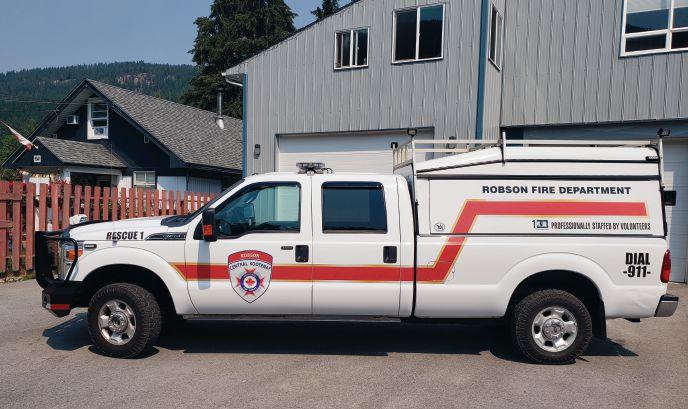
It wasn’t long before I realized that this amount of money was not going to get us far, so I started to look at other options. Soon, I came up with the idea of building our own vehicle.
I found a truck at a repossession lot. It was a 2014 Ford F350 with a contractor’s-style canopy. Perfect!
We bought the truck and drove it eight hours home from Vancouver. Then we went to work.
We installed a centre console to house the radio, siren, and other hard-mounted items.
A 2014 Ford F350 was found at a repossession lot and members turned it into a rescue truck for less than half the original budget.
IN A WORLD WHERE SAVING TIME SAVES LIVES , HURST JAWS OF LIFE ® DELIVERS THE NEW SP 777E2 . THE MOST POWERFUL 32” BATTERY-POWERED SPREADER ON THE MARKET. GET THE JOB DONE , AND GET IT DONE FASTER THAN EVER. LIGHTWEIGHT. HEAVY-DUTY. UNSTOPPABLE
Using the natural ability of your members can be a huge benefit to a small volunteer hall. ‘‘ ’’
We bought a light bar and other emergency lights off Internet providers.
We removed some of the old hardware from our existing truck and had a local decal company do the graphics.
At the end of the project, we ended up with a nearly new, much safer rescue truck for less than half our original budget.
Since then, we’ve had truck manufacturers look at this rig and ask who built it. It looks that good.
We were able to do this as a result of something I learned a long time ago, and that was to use your resources.
One of my captains is a 12-volt technician, another a mechanic, and still another is a welder-fabricator. I gave these members free reign of the work on the truck and soon we had a fully functional rescue truck.
I learned to let members use their natural ability, and instead of holding them back with rules and regulations, enable them with support and give them the tools they need to do the job.
We weren’t done yet.
We had this 1984 GMC that we knew we were going to get nothing for if we tried to sell it. So, we came up with the idea to transform it into a wildland truck.
Certificate in Fire Service Administration, General
So again, I started looking around and found a used skid unit in Kansas. Through grant money I sourced out, we were able to purchase and have the unit shipped to Canada.
When the unit arrived, it was in a state of disrepair. My members stepped up and took over. The skid unit was fully disassembled and rebuilt. The pump engine and everything was gone through or rebuilt.
This again proved to me that using your resources and the natural ability or skills of your members pays huge dividends. Soon, we had a fully functional wildland truck for a fraction of the price of new equipment.
So, not only were we able to build a fully functional rescue truck, we also built a fully functional wildland truck – both in a year and for under $25,000.
This is something we are very proud of.
Not only is there a level of pride involved with responding with something you built, but we know exactly how it was put together.
Using the natural ability of your members can be a huge benefit to a small volunteer hall.
As almost everyone knows, there is not enough time in the day to tackle all we want to as a volunteer hall. With families and fulltime jobs to hold down this is proving to be more of a struggle as the years go on.
I feel very fortunate to have accomplished what we have and look forward to the next challenge.
Jeff Grant is fire chief of the Robson Volunteer Fire Department in Robson, B.C. Contact Jeff at jgrant@rdck.bc.ca.
Certificate in Fire Service Leadership Graduates
Name Position Department
Jeff R. Bignell Firefighter
Shane Chambers Acting Captain
Stephen Clark Acting Captain
Daniel J. Coates Senior Firefighter
Chris Gaylor Director of Training
Jason Horner Firefighter
Brian W. Kroes Manager/Fire Chief
Charles H. Landers Senior Man/Acting Lieutenant
Andrew MacDonald Firefighter
Alex Marshall Firefighter
Jesse Martell Training Officer
Warren G. McGillivary Acting Captain/Firefighter
Matthew Okorofsky Firefighter
Christopher Patrick Acting Captain
Leonard D. Peppler Fire Service Instructor
Sheldon Reynolds Firefighter/Paramedic
Wade Schmidt Firefighter
Mark Schmitt District Chief
Kevin J. Taylor Firefighter/Engineer
James Waffle Acting Captain/Acting District Chief
Robert J. Wark 1st Class Firefighter
Town of Georgina Fire Department
Hamilton Fire Department
Hamilton Fire Department
Saint John Fire Rescue
Stratford Fire Department
Toronto Fire Services
Central Peace Fire & Rescue Commission
Saint John Fire Department
Halifax Regional Fire & Emergency Services
High River Fire Department
Oshawa Fire Department
Guelph Fire Department
DND Fire Service -14 Wing Greenwood/Kingston District Volunteer FD
Hamilton Fire Department
Saskatoon Fire Department
Brandon Fire & Emergency Services
Saskatoon Fire Department
Fort Erie Fire Department
Yarmouth Fire Department
Windsor Fire Rescue Services
Thunder Bay Fire Rescue
Certificate in Incident Command Graduates
John M. Cherweniuk Battalion Chief (Retired)
Richard Craibbe Chief Training Officer
Michael S. Daloise Assistant Fire Chief
Chelsea Dempsey Lieutenant
Glenn A. Innis Deputy Fire Chief
Patrick James Mahoney Fire Chief/Manager Protecting Services
Colin Quinn Captain/Acting District Chief
Douglas William Sirant Assistant Fire Chief
Calgary Fire Department
Oakville Fire Department
Nelson Fire and Rescue Services
Township of Cramahe Fire Department
Sturgeon County Emergency Services
Sturgeon County Emergency Services
Markham Fire and Emergency Services
Cold Lake Fire-Rescue
Certificate in Fire Service Administration Graduates
Certificate in Fire Service Administration, General
Mark Robert Galatiuk Acting Platoon Chief
Martin Eino Hynna Training Officer
Mario Kovacevic Training Officer
Ed Melanson Fire Chief
Michael Radzikoski Firefighter
Donald Rea Captain
Certificate in Fire Service Administration, Human Resource Management
David Paxton Deputy Fire Chief
CFB Shilo Emergency Services
Thunder Bay Fire Rescue
Hamilton Fire Department-Station 24
Fort Erie Fire Department
Port Colborne Fire & Emergency Services
Caledon Fire and Emergency Services
Thunder Bay Fire Rescue
Roree F. Payment Deputy Fire Chief Clearview Fire & Emergency Services
Certificate in Fire Service Administration, Operational Planning
Wayne W. Benner Captain
Port Colborne Fire & Emergency Services
Drayton Bussiere County Fire Chief Lacombe County
Joseph Henry Captain
Advanced Certificate in Fire Service Administration
Matthew J. Slimmon Platoon Chief
Fire Officer Certification
Serge A. Boudreau Lieutenant
Dale W. Gartshore Captain
Port Colborne Fire & Emergency Services
Department of National Defence
City of Moncton Fire Department
Sarnia Fire and Rescue Services
Ken Hubbard Deputy Fire Chief-Training & Fire Prevention City of Airdrie Fire Department
Michael Moore Fire Chief Creston Fire Rescue
Brandon Northrup Fire Chief
Matthew Slimmon Platoon Chief
Jeff Smith Fire Chief/CEMC
Ryan Youngson Firefighter PCP
Serge A. Boudreau Lieutenant
Michael Moore Fire Chief Creston Fire Department Fire Officer III
Township of Cramahe Fire Department
CFB Wainwright Fire Department
Tillsonburg Fire & Rescue Services
Winnipeg Fire Paramedic Service Fire Officer IV
City of Moncton Fire Department
BY DAVE BALDING Fire chief, Golden, B.C.
OFIRELINES
Keep vitality in your department between calls
ur department, like many, has a firefighter association attached to it which supports the department, its members and is a presence in the community. I join their meetings in an ex officio capacity and am fortunate to provide updates, occasionally with views, perspectives and encouragements in the “Chief’s Chat.” My recent offering was around how the overall operation of a fire department is much like our individual emergency responses. On the surface they’re both similar and rudimentary. Members attend training on their designated shifts, much like participating in an emergency response. We show up, make a difference by doing good work and return to the station.
Scratch a little deeper and it’s clear there is much more to the issue. Sure, at a fire scene it’s all about getting the wet stuff on the red, but we do way more than that. There are so many elements in an
emergency response that blend to render a successful outcome. From the time we are dispatched, myriad skills are required and engaged. Concise communications, situational awareness, after-incident briefings are only a few – that’s without mentioning the endless hard skills required. Our performance in emergency situations is driven by more than adrenalin or a simple heathy work ethic. It’s driven by a motivation to get every part of the response right and that entails hard work and attention to detail.
I contend that life at the fire hall between emergency responses needs to be much akin to our efforts at an emergency scene. Every one of us must be fully engaged, always. Like the fire ground, there are so many aspects to the successful day-to-day operation of our departments; for example, turnout gear inspection, keeping apparatus looking good, equipment inventory, maintenance and more.
Through the International Association of Fire Fighters’ Canadian Haz-Mat and CBRNE Training Initiative
Your department can receive a recognized level of Haz-Mat and CBRNE response training using the IAFF curriculum thanks to funding from the Government of Canada
For information about how to receive free Haz-Mat and CBRNE Training through the IAFF, e-mail canada@iaff.org
Par l’entremise de l’initiative de formation en matières dangereuses et CBRNE de l’Association internationale des pompiers
Votre ser vice de protection incendie peut recevoir de la formation à un niveau reconnu en matières dangereuses et CBRNE grâce au curriculum de l’Association internationale des pompiers et un financement du gouvernement du Canada
Pour savoir comment recevoir de la formation gratuite en matières dangereuses et CBRNE par l’entremise de l’Association internationale des pompiers, écrivez-nous au canada@iaff.org
Sure, with minimal effort a department will exist, but we need to go one step further to have our departments thrive and be the best they can be – even in those seemingly dreary times when calls are few and motivation may diminish.
How do we do get there, especially when calls are scarce? It is primarily, in my view, a matter of fire department culture. Creating that culture comes from several places. Leaders within the organization are without question primarily accountable here. We must be engaged and must be seen to be so. The right people in the organization are also key. That is a function of an effective recruiting and selection process and continually growing the most important element of our organizations – our people.
to be informed and engaged and feel as important as they are. Those “Chief’s Chats” I mentioned earlier, along with many daily interactions, go a long way to help in that regard.
Well-presented, challenging training is a keystone for us all. It undoubtedly is one of the most critical requirements for safe and effective responses, but there is more than that. Without question, great training manifests itself in us doing a better job in helping our
The fire service is much more than a job–it’s a lifestyle.
’’
I am fortunate that some of my members have volunteered to take responsibility for extra duties such as SCBA management, driver training and qualification and rope rescue equipment. These members are well supported in terms of any resources they require in their extra duties. They also know they are well supported by the fire department leadership and their colleagues.
I believe in keeping my members fully informed on issues around the department at the operational level as well as goings-on administratively and politically. I do this simply because I want all members
Dave Balding joined the fire service in 1985 and is now fire chief in Golden, B.C. Contact Dave at david.balding@golden.ca and follow him on Twitter at @FireChiefDaveB.
customers. Yes, engaging training between calls builds and strengthens our skills, boosts morale and engages members. Firefighters that train hard as part of a challenging training regime are confident of their mastery of the job.
In a time when members are increasingly busy outside the fire department, we ask them to go beyond performing their core duties in many ways. Is it justified? I say an unequivocal yes. After all, we’re well beyond simply showing up for callouts and two hours of training every week or simply being present for a shift. The fire service is much more than a job – it’s a lifestyle that brings with it a set of values, beliefs, commitment and energy on and off the fire ground.
The Dräger FPS®-COM 7000 ensures clear, hands-free, voice-activated communication to your team without an external radio. Full duplex communication allows simultaneous speaking and listening - breath and ambient sounds are reduced by newly developed digital noise reduction technology. Integrated push-to-talk button to operate a radio that can be connected as an option allows you to communicate using a tactical radio. The tactical radio can be connected with a cable or Bluetooth.
BY TOM DESORCY Fire chief, Hope, B.C.
EDon’t take the image of fire service for granted
very one of us knows the customer experience firsthand. We’re all consumers, and at some point each and every day we receive some form of service. Hopefully, we are treated properly as a customer.
In the fire world, much has been written and said about treating the public we deal with, not as victims, but as customers, providing not only the anticipated or expected level of service, but often going above and beyond whenever possible.
Leaving them with a positive experience on what can be their worst day, strengthens our reputation and brand, and that’s why we communicate a customer-first standard to the members in the department.
In my early days as a volunteer firefighter, I was in broadcasting for a while. I had the opportunity to work in sales, so I’ve always dealt with customers or clients. In one of those jobs I was a salesperson for
a distillery, representing various brands of beverage alcohol to retail stores and licensees. As a sales rep, it really was a dream job in that there were no orders to take, no deliveries to make or bills that needed collection. This was a time in an industry where brand loyalty meant something.
Achieving such brand loyalty is key to any product sales. The shape of the packaging and colour of the label all play a huge role. A company can ride this wave of success for years on one name alone, but competition or one false move in quality or public image can easily topple years of dedication. To me, this begs the question: Have we achieved such a brand loyalty in the fire service? The obvious answer to that question would be ‘yes.’
The beverage alcohol industry, however, began to change in the late ‘80s. Tastes changed and as customers aged there was really no
The Safe Choice for Fire Protection
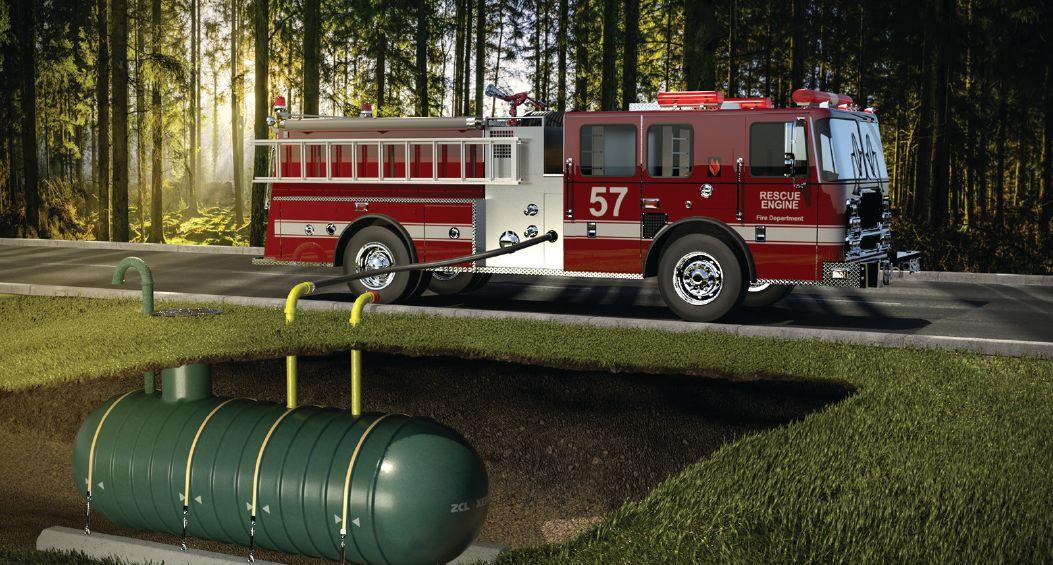
Many fire protection professionals recommend supplemental water supplies to municipalities or engineers for buildings or rural developments. Our fiberglass tanks store the water needed to protect people, homes and offices.
At Motion Canada, we supply everything First Responders need – including solutions. Our experts have worked as First Responders and are knowledgeable about the latest industry trends. All of your First
PREMIUM BRANDS & PRODUCTS
Your employees risk their lives daily. We supply them with the highest-quality products on the market, including Morning Pride, Industrial Scientific, Scott Safety, and Solberg Foam.
SOLUTIONS
24/7/365
You need the right gear and parts to solve problems and mitigate disasters. We have service centres across the country staffed with experts who have worked as First Responders.
ENVIRONMENTAL STEWARDSHIP
Firefighting doesn’t have to have a big impact on the environment. We sell biodegradable foams, which are gone from the environment in only 42 days.
one to replace them at the same rate. There’s an age limit as to who could be a future customer and more didn’t want to be consumers at all. Sound familiar? So how and where do we find these customers?
Advertising is a big part of product success and it’s well known that a lot of products shown on TV and in movies are there for a reason.
So how about our brand? Can you imagine what a company would do to achieve popularity such as ours? Seriously. We’re always featured on TV shows and the big screen.
We don’t have to earn brand loyalty. We just need to maintain it. So, we should always adopt a customer-first attitude, without question, every single day, even taking it above and beyond and into our fire halls.
Our packaging remains the same for the most part. And our quality of service? Well, it speaks for itself. This, however, puts pressure on us all. The most popular and often most successful companies carry their product quality and support forward to their employees. They make their staff proud to make or be part of a favourite consumer good.
what we can to make our members feel proud to be associated with our brand?
Providing great customer service goes beyond the public one-onone that we deal with. I would even go as far to say that when we treat our volunteers more like customers, we build an even stronger brand. A simple thank you after each and every call, for example, goes a long way.
We should always adopt a customer-first attitude, without question, every single day. ‘‘ ’’
Our organization remains sought-after by many. Yet in more communities there aren’t enough people to fill the spots.
Are we doing the same in the volunteer fire service? Do we do
Tom DeSorcy became the first paid firefighter in his hometown of Hope, B.C., when he was appointed fire chief in 2000. He is very active with the Fire Chiefs’ Association of B.C., as communications director and conference committee chair. Email Tom at TDeSorcy@hope.ca and follow him on Twitter at @HopeFireDept.
Many companies have become good at rewarding brand loyalty and, as such, many a fire department has done the same. We may not be in a position to reward our paying customers, but those that represent us will do that as they become more loyal to our brand.
Never take the image we have of the fire service for granted. A lot of people before us have created our reputation. Our organization is raised onto a pedestal every day, so we should continue to ensure our people feel honoured to be part of it.
Why stop if you don’t have to?
1 Christenson J, Andrusiek D, Everson-Stewart S, et al. Chest compression fraction determines survival in patients with out-of-hospital ventricular fibrillation. Circulation. 2009;120:1241-1247.
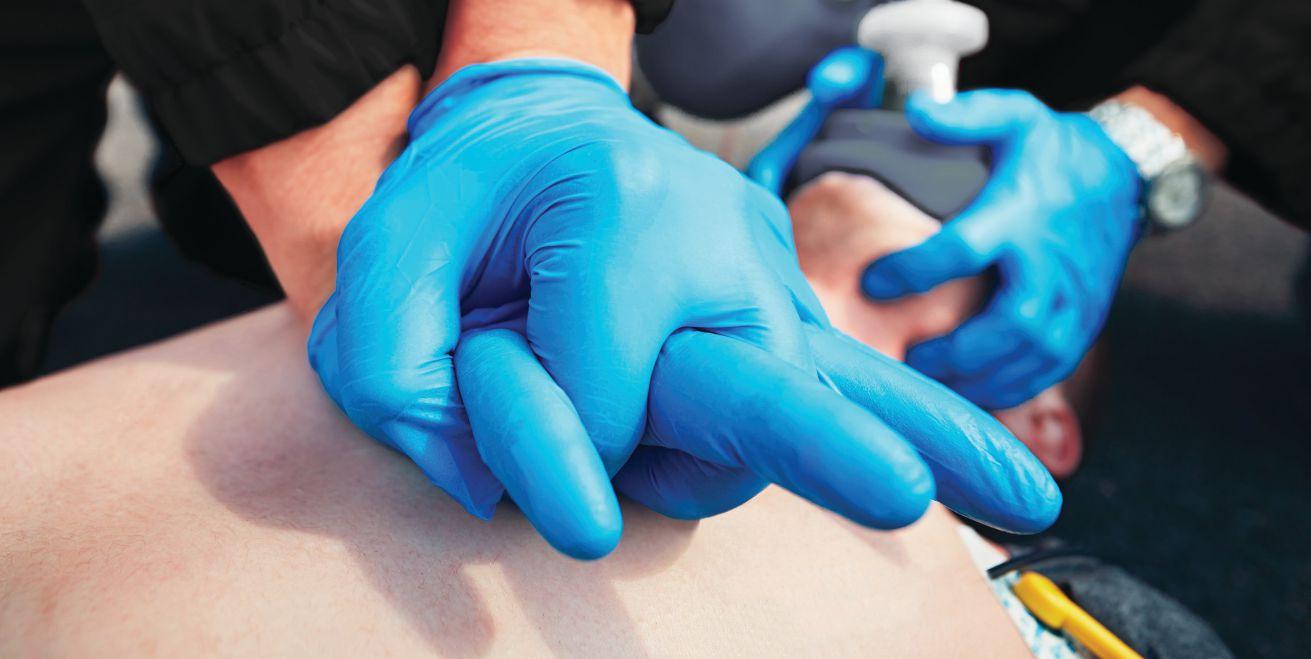
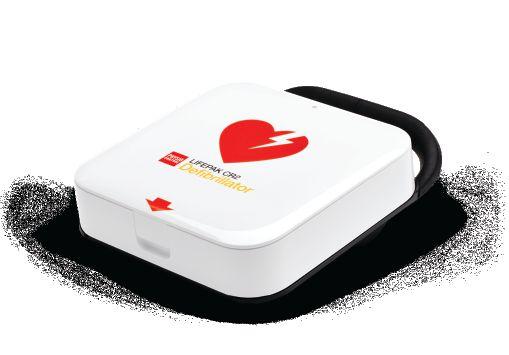
When you keep your hands on the patient, you increase compression fraction—a key factor in successful outcomes1. The innovative LIFEPAK® CR2 defibrillator is the only AED that analyses and makes a shock decision while chest compressions continue, reducing the pause between CPR and defibrillation.
Download more information about the new technology that makes this possible: stryker.com/dontstop
BY SUE DAWSON Deputy chief Barrie, Ont.
TTraining is the key to avoiding liability issue
here is much to consider when it comes to taking calls and dispatching in the fire service.
It is always better to review your technology, operating guidelines and training on a regular basis and not when faced with an investigation due to a potential error or liability issue.
When you look for best practices within fire service communications centres, one document often referenced is NFPA 1221, Standard for the Installation Maintenance and Use of Emergency Services Communications Systems. Chapter 7 refers to operations and 7.4 Operating Procedures describes what call answer times should be.
Emergency alarm processing has some exceptions based on call types, but generally 80 per cent of emergency alarm processing time should be completed within 60 seconds. To achieve this goal, communications centres look towards technology.
But technology has malfunctions, glitches and sometimes people make errors when using it.
What malfunction or glitch would be considered preventable? What can you do to anticipate these problems and prepare for them before they occur?
Computer aided dispatch (CAD) systems use maps. How accurate and up-to-date is your map information?
Delays can occur during the call-taking process. Callers will use common names for a street and not the posted street name. They will report incidents on streets that are considered private roadways. Unfortunately, there are streets that extend from one municipality to another and have the same house numbers.
Do you have up-to-date policies, standard operating guidelines and training on call-taking?
STOP DROP & WORKRITE
Workrite FR Fire Service is the go-to uniform line for a crisp, professional look, easy care and high-quality flame-resistant (FR) protection. Our complete line of station wear maximizes the inherent protection of DuPont™ Nomex® IIIA with specialized construction techniques for added durability in tough conditions.
• Long lasting, looks great on and off the job
• UL certified to NFPA 1975 for added safety
• PerfectPress® permanent creases for a just-pressed look, right out of the dryer
Can you demonstrate regular, up-to-date training takes place for call taking?
Did the call-taker make prompt and adequate attempts to get complete addressing, including the city?
If a specific address will not verify in your CAD system, will the call-taker get a general location that can be used to dispatch fire vehicles?
The nature and urgency of a call can also be a liability exposure. Were enough questions asked to adequately determine the type of call put into the CAD system so the correct number and types of fire apparatus are dispatched?
Call-takers are expected to make specific, quick enquiries so the nature of the emergency can be selected in the CAD.
Many times, multiple calls are received about the same event. Calltakers must exercise judgement as to whether a call is from the same event.
The fifth or sixth caller might also have information that would change the nature of the call.
Instructions provided to a caller have also been scrutinized during investigations and inquests.
The nature and urgency of a call can also be a liability exposure. ‘‘ ’’
What a catch-22.
Should everyone evacuate or stay and shelter in what may seem like a safe location?
They are blind to the actual circumstances of what is going on. Could the advice given potentially make the situation better or worse? How many times has a call-taker indicated that the fire department is on the way?
Is the caller now relying on the fire department arriving and rescuing them?
The first line of defence is a written policy, standard operating guidelines and directives for front-line staff to use.
You will need to keep them up to date, have a regular review process that is tracked and ensure staff in the communications centre are informed of any changes.
Training is always key. Training should be documented and detailed. Once the initial training of a communicator is done, skills should be updated and maintained. Self-study can work well. There is training that should be done regularly each year.
Technology also needs to be evaluated on an ongoing basis. Technology malfunctions should be tracked so they can be addressed in a timely fashion. Keeping technology updated can be a huge expense. A plan for upgrades and why those decisions were made should be documented.
Sue Dawson has been with Barrie Fire & Emergency Service in Ontario in the communications field for more than 30 years. She is the deputy chief of communications and business services. Contact Sue at sue.dawson@barrie.ca.
IN THEWATCHROOM
NEW STARTER MOTOR FOR FIRE TRUCKS
Prestolite Electric has announced a new starter for engines in fire, rescue and other trucks. It’s called the PowerPro Extreme 5, a 12-volt, 4.5-kilowatt starter from Leece-Neville Heavy Duty Systems.
The latest addition to the PowerPro Extreme range offers high-torque, high-efficiency starting power for six- to 10-litre engines used in construction, fire and rescue, pickup and delivery, refuse and school bus applications.
Featuring a planetary gear reduction design, the PowerPro Extreme 5 is available in both 10- and 12-tooth versions.
For more information, go to www.prestolite.com/Corporate/ Home.
ALARM DETECTS HEAT OF POTENTIAL FIRE
Safer Alarms of Stamford, Conn. has announced its global launch of the first Arrow-Certified, fire detection product of its kind since 1965 when battery-operated smoke detectors first hit the market.
The product detects the heat of a potential fire before there’s smoke. This buys people precious time to get out before it’s too late.
The founder of Safer Alarms was inspired by the loss of three children in his neighbourhood to a house fire on Christmas Eve in 2011.
There are two Safer Alarm options – a remote you can place anywhere, especially near the source of most fires such as a stove and laundry room, and one that you can hang from your Christmas tree.
Safer Alarms are not smoke detectors. They are compact, heat sensor and companion remote alarm systems that eliminate an increase in false alarms such as smoke from the stove.
The Safer Home Alarm System and the Safer Christmas Tree Alarm will be in retail stores this fall and sell for about $60, but are offered on IndieGoGo starting at$20each.
To order, go to the IndieGoGo page at www.indiegogo.com/ projects/safer-alarms#.
NETWORK ADDS SPEED TO FIRE DETECTION SYSTEMS
A new Simplex life safety network released by Johnson Controls will greatly increase the speed and ease at which fire detection and life safety systems communicate and operate.
The Simplex ES Net Life Safety Network harnesses the power of IP technology with data rates up to 100 MB per second and a range of network connection choices, including ethernet, DSL and fibre.
For more information about the company’s fire and life safety systems, go to www.johnsoncontrols.com/buildings/securityand-fire-safety.
BY ELIAS MARKOU Naturopathic Doctor Mississauga, Ont.
NCurcumin is very much like nature’s firefighter
ow that we know that curcumin is the hottest thing since the latest firefighter calendar, it’s time to educate firefighters as to how to use it as a natural supplement to help with health.
Firefighters are always looking for ways to maintain a healthy body free from inflammation, injury and disease. Turmeric has been used in the Ayurvedic medical system for 4,000 years. In Sanskrit, the turmeric root was often called the “killer of poison,” in reference to the many health benefits it possesses.
Many firefighters with arthritic joints such as knees, hands, hips and backs are familiar with the drug diclofenac sodium or its common name, Voltaren. This is often used to relieve pain and inflammation in joints.
A 2016 study in the Journal of Medicinal Food looked at the effect of diclofenac and curcumin and determined that a high dose of curcumin alone is just as effective in pain reduction as diclofenac with fewer side effects.
A 2014 study in the Journal of Phytomedicine looked at the synergistic effects of using diclofenac and curcumin and found amazing results in pain and inflammation reduction when they were taken together. Another option for firefighters seeking pain reduction would be to take curcumin and diclofenac together. The study proved this can be done safely. And one last aside, when you take the curcumin it can prevent liver damage that can be a result of the diclofenac.
■
WHAT IS CURCUMIN?
Turmeric root or curcuma longa is a root that belongs to the ginger family. This golden root has a long medicinal history going back as far as 250 BC.
■ CURCUMIN AS MEDICINE
Curcumin has been used in more serious conditions like many cancers. In practice, I use curcumin with cancer patients and I have seen great benefits.
■ INFLAMMATION
Curcumin has been demonstrated to be safe in six human trials and has demonstrated anti-inflammatory activity. It may exert its anti-inflammatory activity by inhibition of a number of different molecules that play a role in inflammation.
A March 2012 study in India used 45 people with active rheumatoid arthritis (RA) and separated them into three groups. One group was given a daily dose of 500 milligrams (mg) of curcumin only, the second group was given a daily dose of diclofenac only, and the third group was given a combined dose of 500 mg of both diclofenac and curcumin. The curcumin-only group testing amassed the highest improvement score and concluded the safety and positive results from curcumin to treat RA was superior from any of the common drugs for treating RA.
■ CURCUMIN FOUND IN FOOD
Curcumin can be purchased as a powder from herbal and health
Curcumin is the most scientific and clinically studied natural substance in medicine and in the world.
’’
food stores.
The active ingredient found in turmeric root is curcumin. Curcumin is that bright yellow extract found in turmeric root. We call these bright pigments curcuminoids. The long list where curcumin has been used for treatments include pain management, inflammation, arthritis, skin issues like acne, eczema and psoriasis. It has been used for issues of colic, digestive imbalance, liver and gallbladder issues.
Dr. Elias Markou is one very busy naturopathic doctor. He is in private practice in Mississauga, Ont., and is the chief medical officer for the Halton Hills Fire Department. Dr. Markou was a firefighter for six years. He is a firefighter health expert and blogger who is regularly featured on television and radio and in print. Contact him at drmarkou@mypurebalance.ca.
The strength of this powder is much weaker than curcumin prepared as a supplement in a standardized extract form. I still encourage my patients to take the powder and I often recommend it in yogurt, warm milk and even in their favourite recipe.
■ SUPPLEMENTING CURCUMIN
I recommend you consult with a naturopathic doctor or even your medical doctor to see the one that is best for you. In studies, I have seen safe dosages range from 3,000 to 6,000 mg of curcumin. I have also used these ranges and seen success in pain reduction and inflammation in my patients.
I encourage firefighters to seek other ways to manage pain and inflammation. Trying curcumin as a natural supplement might be worth a shot.
FROM BOOTS ON THE GROUND TO EYE IN THE SKY, WE’VE GOT YOUR BACK.
FLIR’s wide range of TICs can help you identify hot spots from a variety of distances – making safety the top priority. Learn more at FLIR.ca/fire
Trade in your current TIC — of any brand, in any condition — and receive a trade value of up to $2,950 off select new FLIR K-Series cameras