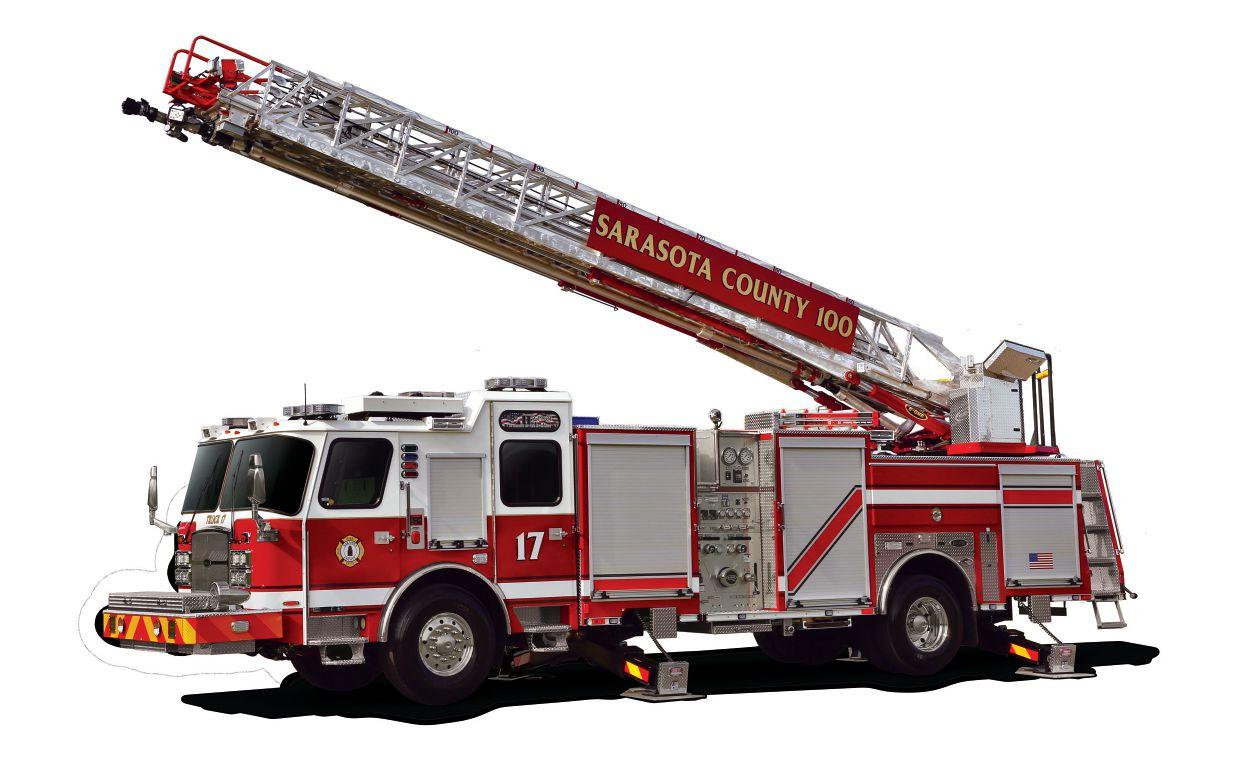
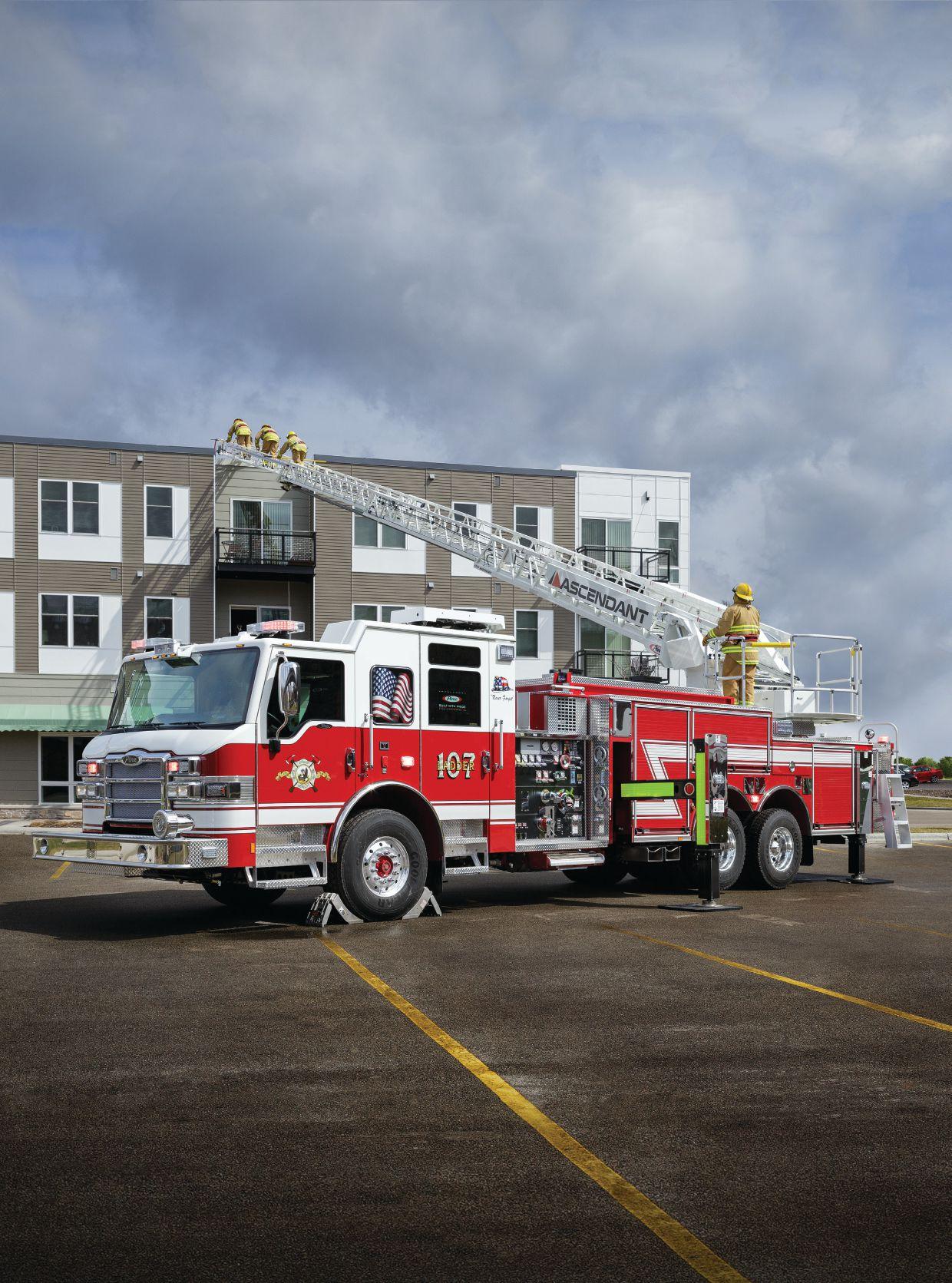
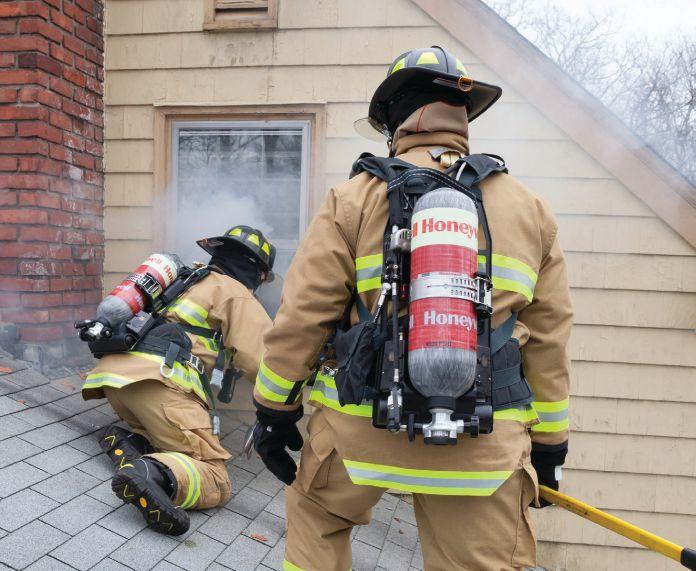
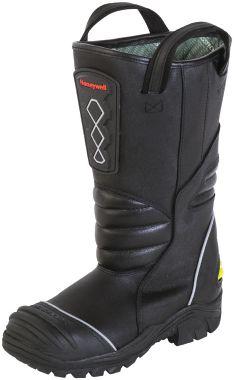
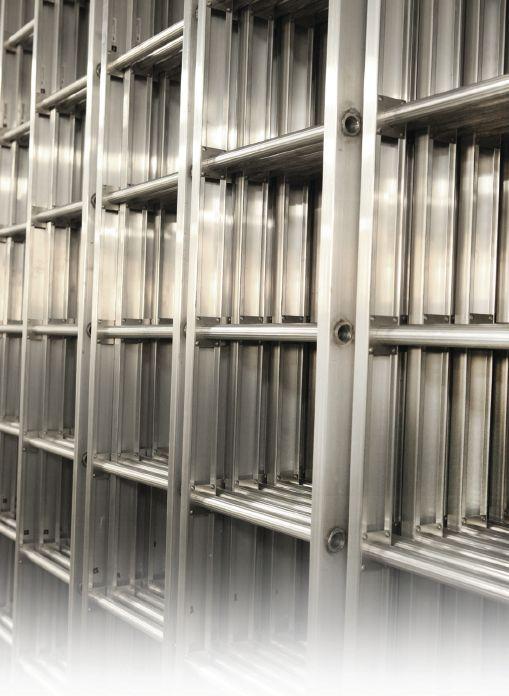
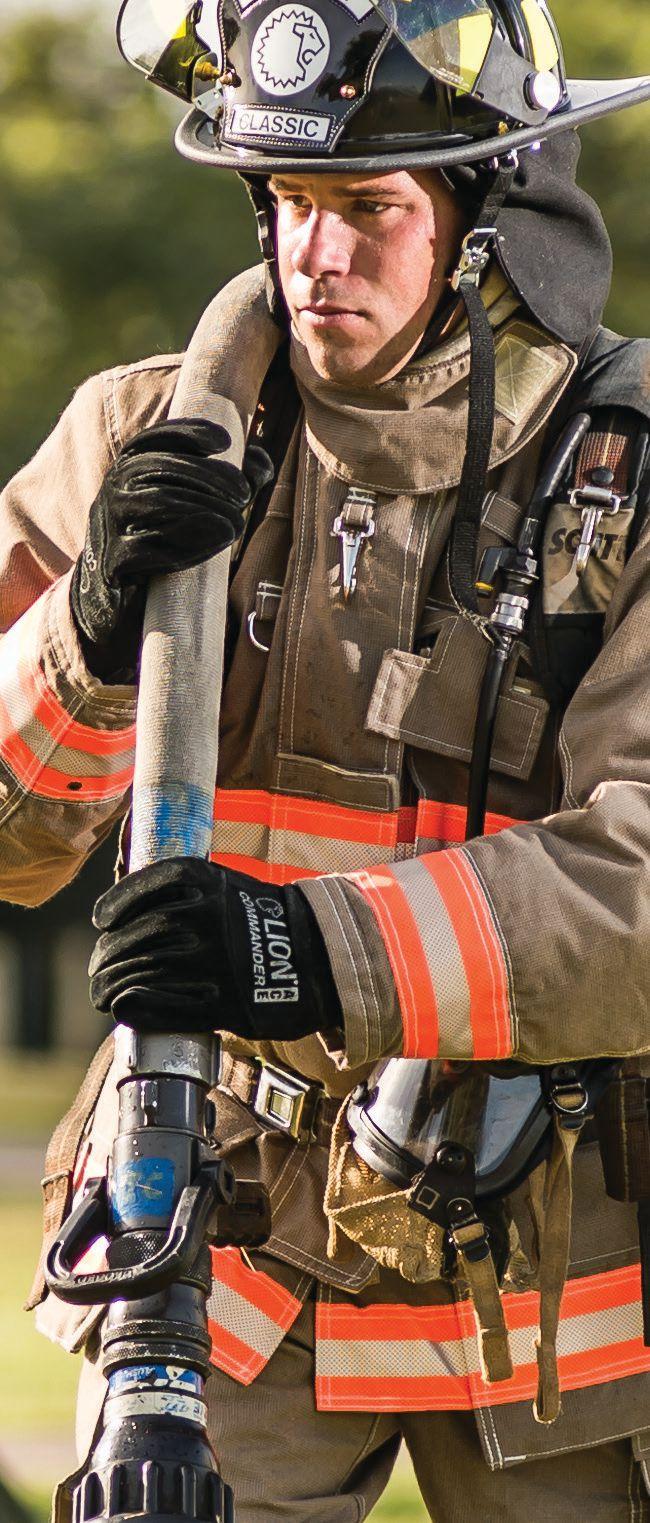
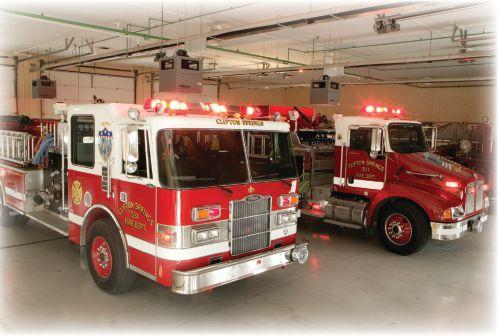
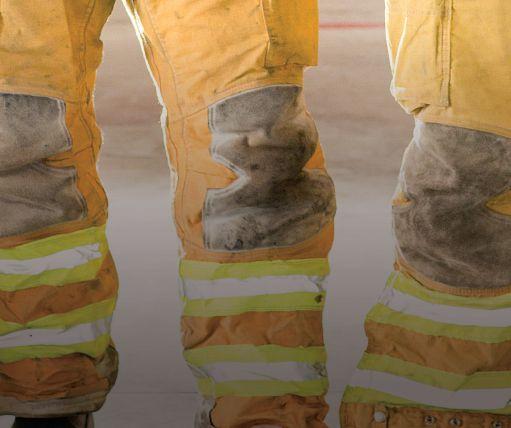
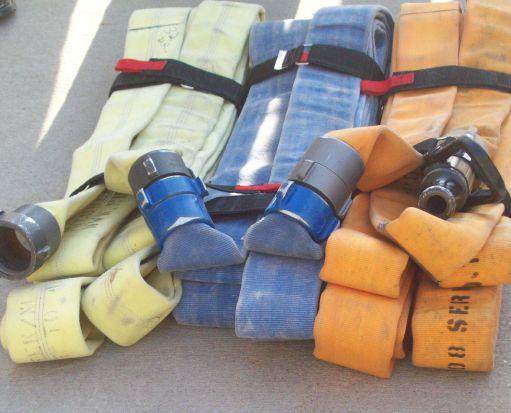
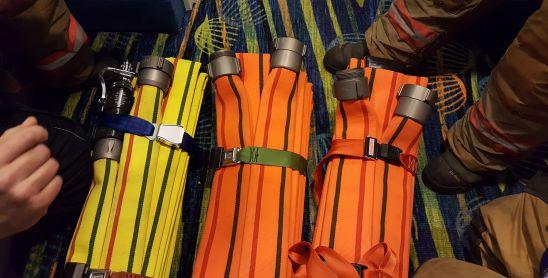
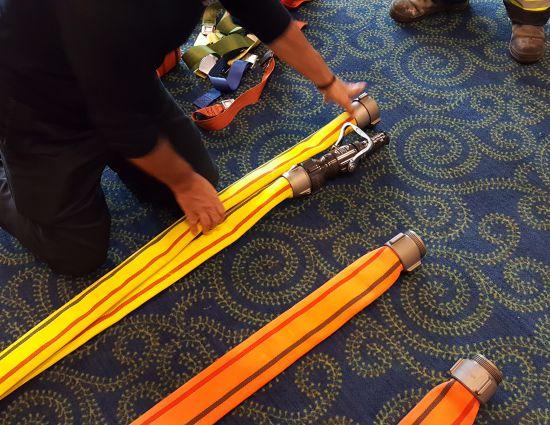
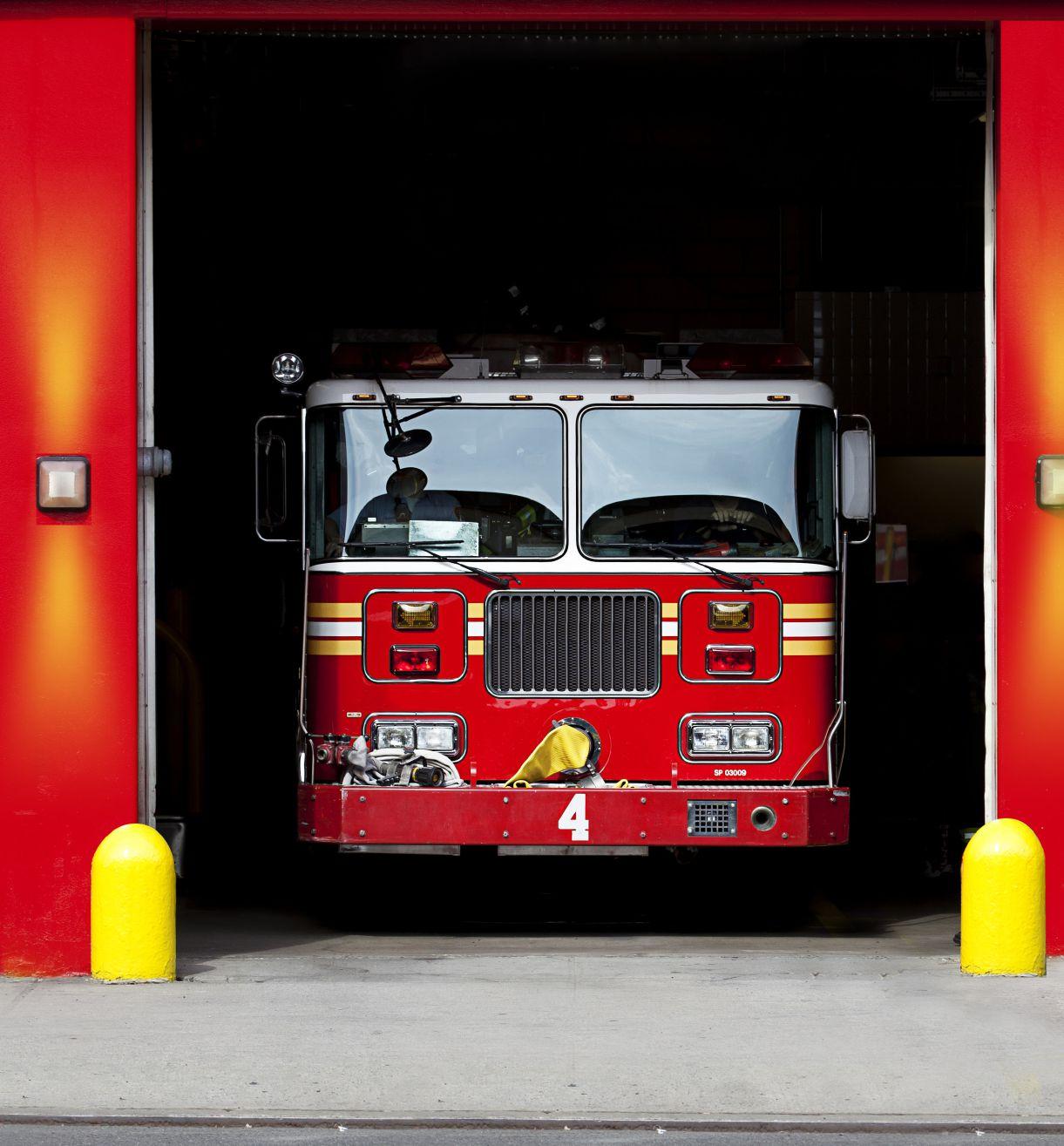
The Metro 100 Quint is a compact and maneuverable aerial perfect for tight streets and crowded environments. Available with the HM 100 or LTH 100 aerial ladder, the Metro 100 Quint features best-in-class stability, full-depth compartments, pump, tank and a SideStackerTM hosebed.
Explore every feature in full, at: e-one-aerials.com/metro-100-quint.pdf
Celebrating
Celebrating
10
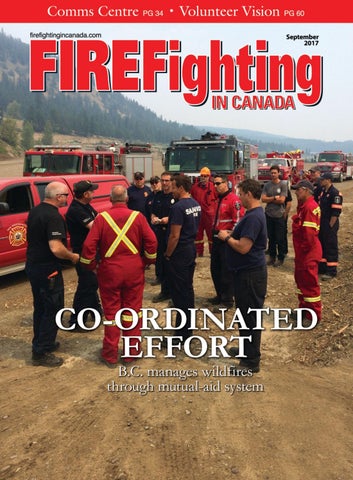
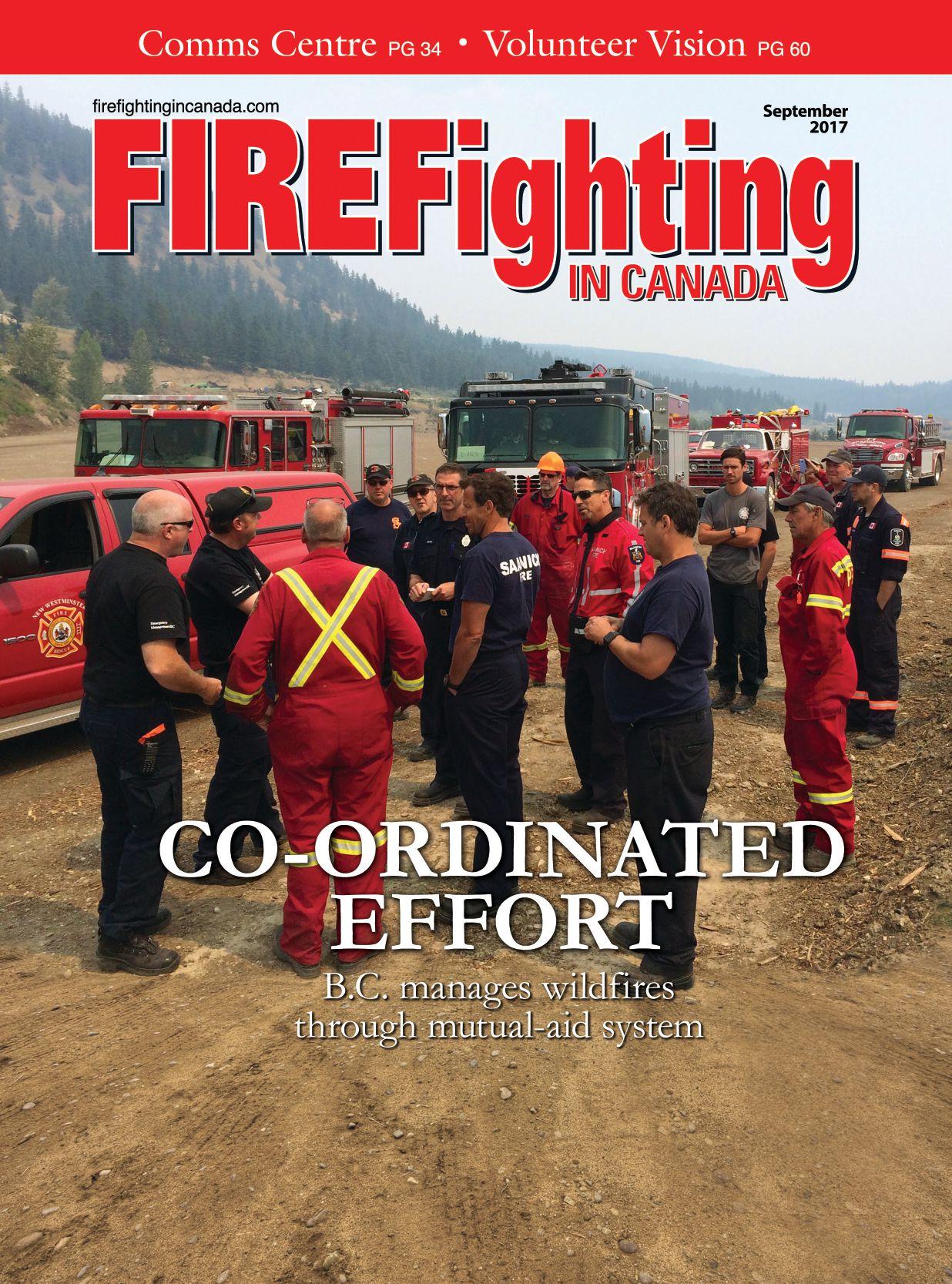
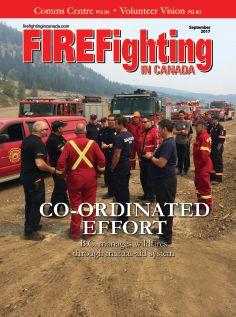
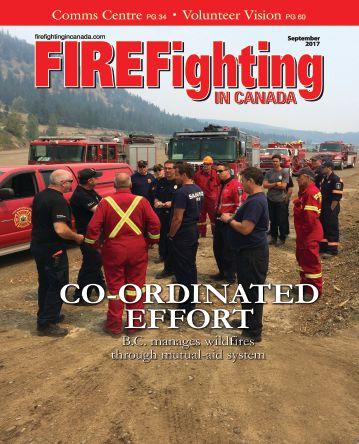
CO-ORDINATED EFFORT
The fire fight in British Columbia this summer was a deliberate, military-like operation born of the 2003 Okanagan Mountain Park blaze. By Laura King
20
BROTHERHOOD AND BEST PRACTICES
Firefighter Richard Wells tells assistant editor Lauren Scott how volunteer and career firefighters worked together to protect Williams Lake.
28 BACK IN SERVICE
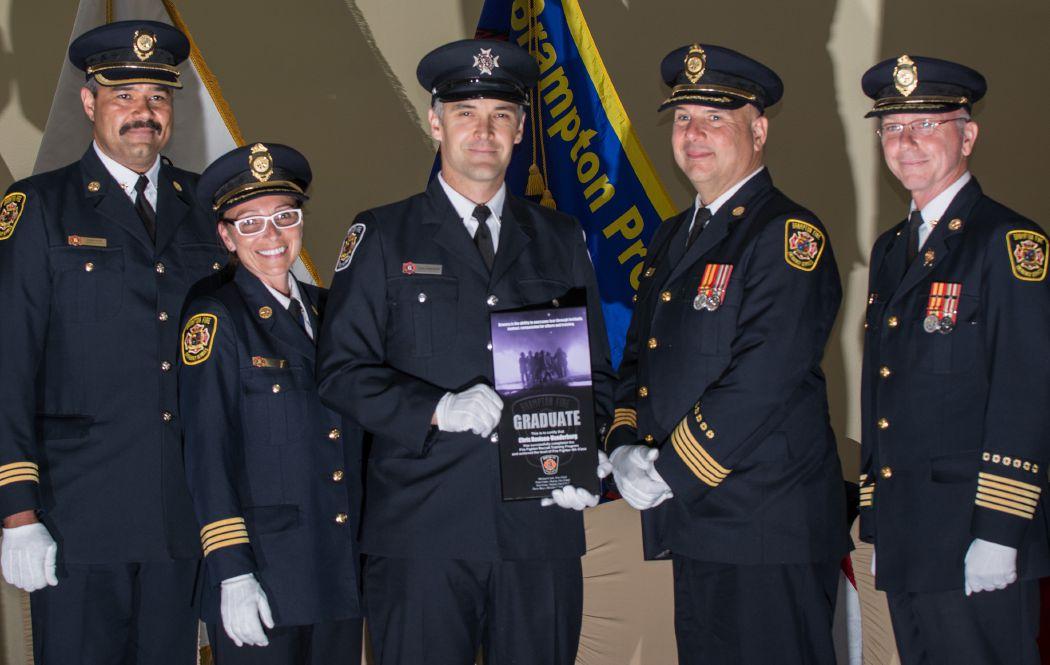
Chris Vanderberg completed recruit school in the spring – for the second time. After 10 years as a training officer Vanderberg went back to the trucks – after completing the training program he created.
36 PREHISTORIC PUB-ED?
In today’s social-media world, some departments are holding on to outdated programs. Publiceducation expert Tanya Bettridge offers a new approach.
44 DATA-DRIVEN DECISIONS
Nowadays, everyone wants to know why. As Len Garis writes, an online course can help leaders understand how to use data as the basis for good decisions.
BY LAURA KING Editor lking@annexweb.com
F
COMMENT
Back to (fire) school
or many, September is the start of the new year – everyone’s enthusiastic about learning, and all the distractions of our oh-so-short summers are gone.
Each September we host a career expo to help aspiring firefighters understand the often complex journey to becoming a recruit.
For our Sept. 30 expo at the Fire and Emergency Services Training Institute in Toronto, we’ve shaken up things: more speakers; and streams for participants – considering becoming a firefighter, in training, or embarking on the job search.
A key consideration in our agenda planning was continuing education, and ensuring that potential firefighter candidates understand that getting hired is the beginning of a learning curve that ends only when their careers wrap up, in 30 years.
effects of unstable and changing global economic and security conditions.”
Councils – and taxpayers – want to know why departments need money for a second set of bunker gear or why it makes sense to hire more public education staff. Having the data to back up financial requests is logical; understanding how to gather and use the data is critical.
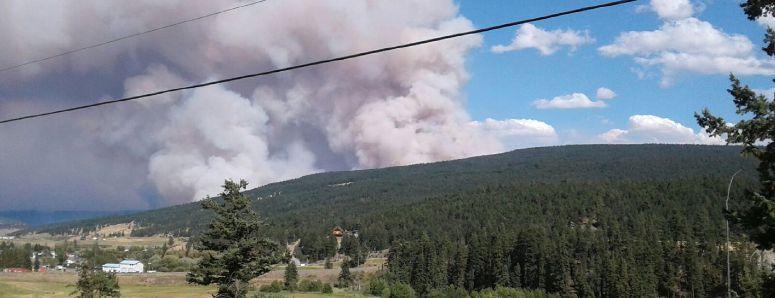
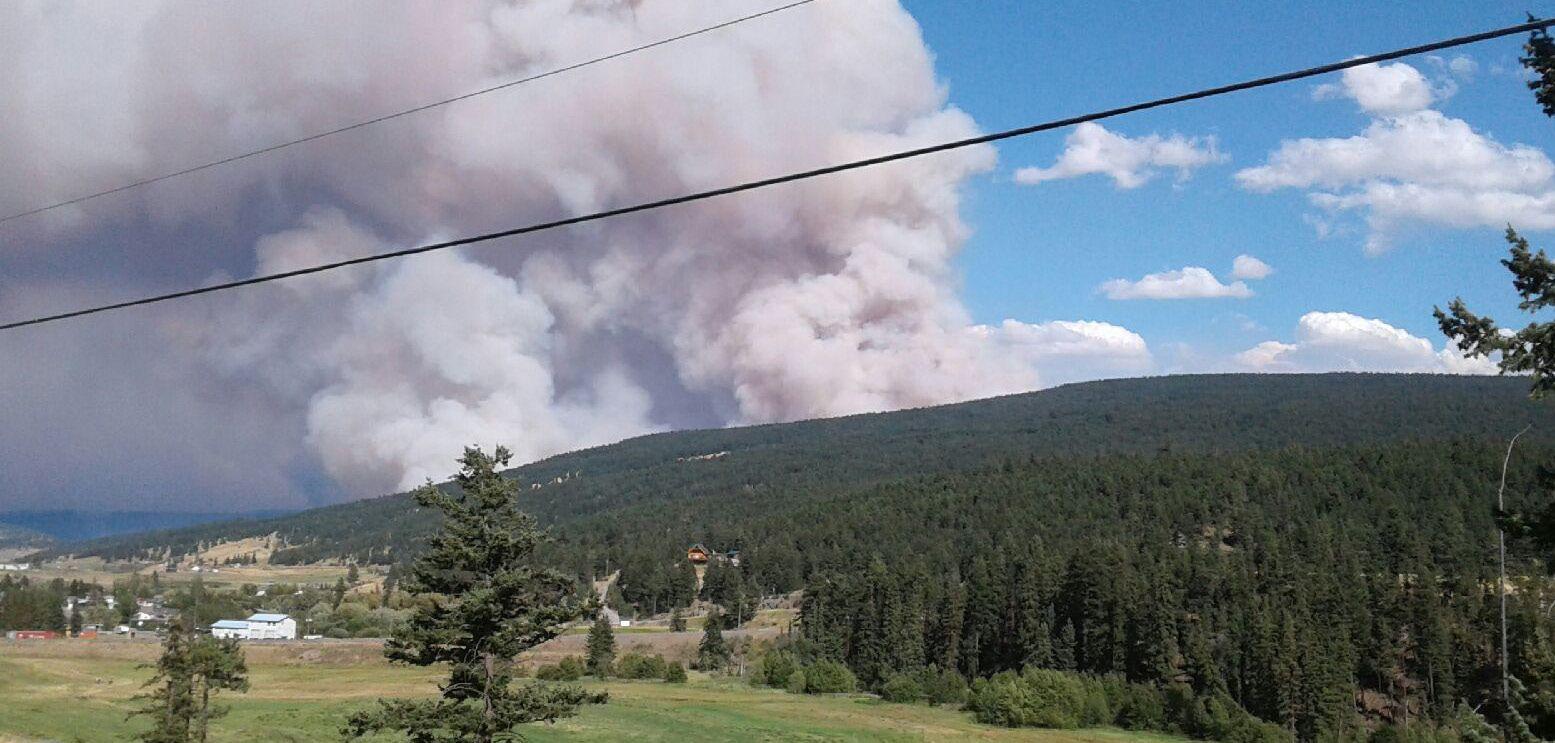
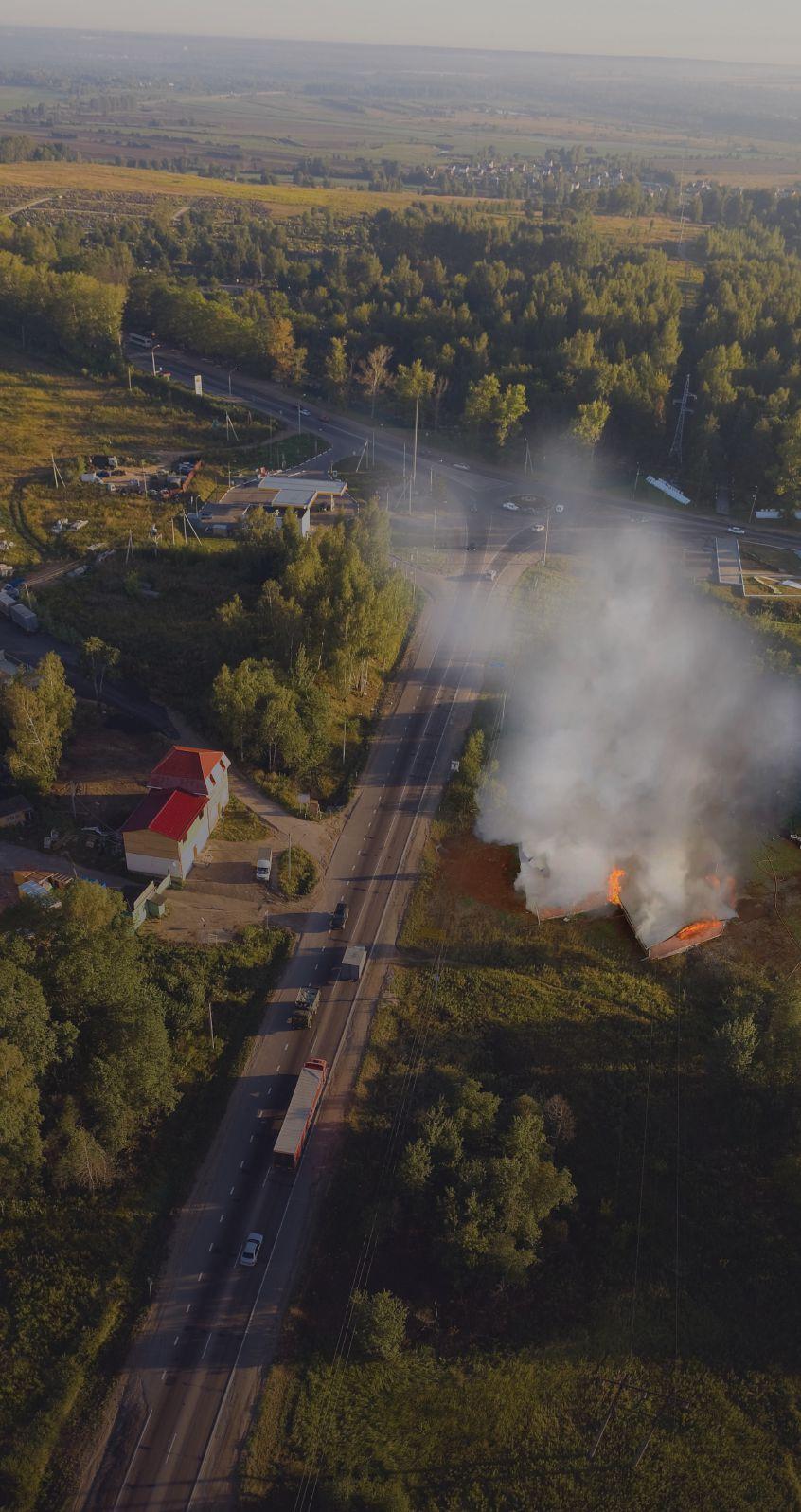
Firefighters from across British Columbia worked together to manage wildfires. See story page 10.
Leadership Forum columnist and PhD candidate Bill Boyes is a proponent of continuing education, and, as he explains on page 42, a new program at Humber College that has been built by fire-service leaders in conjunction with the academics, takes into consideration previous learning credits.
Further, on page 44, Surrey Chief Len Garis – a longtime proponent of evidence-based decision making – details an online program at the University of the Fraser Valley; the course helps officers ensure their actions stand up to scrutiny.
“Evidence-based decision making has grown increasingly important . . . ,” Garis says , “as governments at all levels face shrinking budgets, a growing demand for both efficiency and accountability, and the
Although the Humber program requires classroom attendance in Ontario, the certificate can be achieved over time and is manageable for those out of province.
Certainly, this is not meant to be an ad for the courses, rather a nudge that, as a chief officer – or aspiring chief officer – it’s advisable that as many tools as possible are at your disposal to support your decisions, particularly those that involve finances.
When I graduated in journalism (a long time ago!) I swore I’d never go back to school. Formally, I haven’t. But in the ten years I’ve been editor, I’ve earned certificates in fire-service courses and programs, trained extensively, compiled myriad presentations, audited classes, and soaked up truckloads of information that has bettered our publications and our online products. The pieces of paper – the certificates – provide credibility, so readers know I’ve been there and done that.
Your councils, and your taxpayers, need to know the same of you.
ESTABLISHED 1957
SEPTEMBER 2017 VOL. 61 NO. 6
EDITOR LAURA KING lking@annexweb.com 289-259-8077
ASSISTANT EDITOR LAUREN SCOTT lscott@annexweb.com 416-510-5116
NATIONAL SALES MANAGER ADAM SZPAKOWSKI aszpakowski@annexweb.com 289-221-6605
PUBLICATION MAIL AGREEMENT #40065710 RETURN UNDELIVERABLE CANADIAN ADDRESSES TO CIRCULATION DEPT.
P.O. Box 530, SIMCOE, ON N3Y 4N5 e-mail: subscribe@firefightingincanada.com
Printed in Canada ISSN 0015–2595
CIRCULATION
e-mail: lmalicdem@annexbizmedia.com
Tel: 416-510-5187
Fax: 416-510-6875
Mail: 80 Valleybrook Drive, Toronto, ON, M3B 2S9
SUBSCRIPTION RATES
Canada – 1 Year - $24.50
(with GST $25.73, with HST/QST $27.69) (GST - #867172652RT0001)
USA – 1 Year $42.95 USD
We acknowledge the [financial] support of the Government of Canada.
Occasionally, Fire Fighting in Canada will mail information on behalf of industry-related groups whose products and services we believe may be of interest to you. If you prefer not to receive this information, please contact our circulation department in any of the four ways listed above.
All advertising is subject to the publisher’s approval. Such approval does not imply any endorsement of the products or services advertised. Publisher reserves the right to refuse advertising that does not meet the standards of the publication. www.firefightingincanada.com
STATIONtoSTATION
ACROSS CANADA: Regional news briefs
Canadian generosity helps outfit Mexican firefighters
Prince Edward Island firefighter Kory McAusland rarely does things half-heartedly.
So when an opportunity arose to help to train firefighters in Queretaro, Mexico, McAusland seized
the moment, figuring it would be a learning experience and a one-time gig.
But as a firefighter with the Crossroads Rural Community Fire Department in Stratford and an instructor with the
THE BRASS POLE
Promotions & appointments
MIKE SETH is the new fire chief for Brant County in southern Ontario. Seth began his career as a paramedic at Six Nations and moved from paramedic manager to fire chief in 2004. Seth served as chief in Six Nations for more than a decade
before moving to Thorold in 2014. Seth began his new position in Brant County July 10.
The City of Belleville, Ont., has hired DON CORBETT and PAUL PATRY from Kingston Fire & Rescue as its new deputy chiefs. Corbett served as Kingston’s deputy of operations; Patry was chief fire prevention officer. Both deputies began their new jobs July 31.
P.E.I. Firefighters Association, McAusland knew as soon as saw the students’ ill-fitting, worn and incomplete PPE that he had to do more to ensure their safety.
Through Facebook posts and the generosity of departments across Atlantic Canada, McAusland and Brookfield, N.S., firefighter Shawn Burke collected enough gear to outfit 250 firefighters – including breathing apparatus and spare cylinders.
A new goal – to provide PPE for 1,000 firefighters –was set, and McAusland and the Canadian Bomberos organization he founded manned a booth at the Maritime Fire Chiefs Association conference in Moncton in July.
In a day and a half, the group had commitments from departments and suppliers for hundreds of sets of gear, rescue equipment, a shipping container and four sets of
Jaws of Life.
Plans are being made for a trip to Mexico to deliver the goods.
“There are now 400 sets of gear sitting between P.E.I. and Nova Scotia – in my shed and Shawn’s garage! – and in the last two days we’ve got [hundreds] more,” McAusland said.
All donated gear is cleaned and inspected before being packed. Although the gear may be gently used, McAusland said all PPE is subject to a strict protocol.
“The No. 1 question,” McAusland said, “is would I feel safe putting this gear on?”
Fernando Pelacois, president of the State of Queretaro Fire Department Association, says departments are 52 per cent funded and must raise money for gear, trucks and training.
– Laura King
In June, JOHN LEHMANN was appointed deputy chief with Surrey Fire Service in British Columbia. Lehmann began his service as a fire-andrescue specialist with the United States Marine Corps in 1984. He moved to Surrey in 1992, working his way up to training officer and assistant fire chief by 2015.
Surrey Fire Service has promoted MARK GRIFFIOEN to deputy chief. Griffioen became a firefighter in 1995 and has spent his entire career with Surrey. Prior to Griffioen’s appointment to deputy chief, he served as assistant chief. Griffioen is responsible for emergency planning.
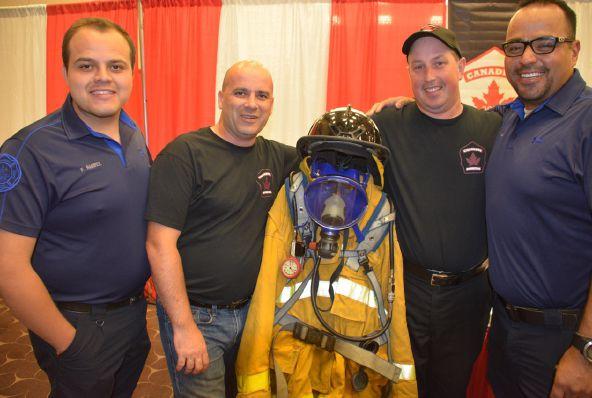
P.E.I. firefighter Kory McAusland (second from left) Nova Scotia firefighter Shawn Burke (second from right) and Mexican firefighters Paco Ramirez (left) and Fernando Palacios raised awareness of the need for gear at the Canadian Bomberos booth at the Maritime Fire Chiefs Association conference in Moncton in July, and surpassed their goals.
PHOTO BY LAURA KING
Department gets four new trucks – all at once
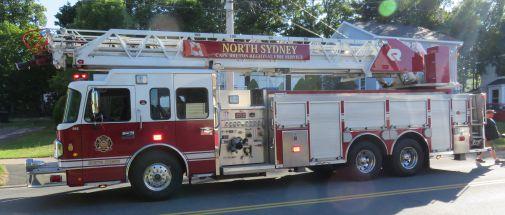
In big communities with large fire services, the arrival of four new fire apparatuses might go unnoticed. In small-town Nova Scotia, receipt of four new trucks is a different story. North Sydney, which is a part of the Cape Breton Regional Municipality, is served by North Sydney Fire & Rescue. Through a series of planned purchases, scheduled replacements and unfortunate events, the organization replaced four of its five front-line apparatuses at the same time.
Called the Gateway to Newfoundland, North Sydney is the eastern terminal of the Trans-Canada Highway and has a population of 7,500 people. North Sydney Fire & Rescue answers between 400
Iqaluit
and 500 calls a year with a quint, two engines, a brush truck and a small rescue, along with some support vehicles and trailers. A roster of 35 volunteers and one career member per shift staff the equipment.
On Oct. 10, a storm dropped 269 millimetres of rain in various parts of the island in a single day. The quint and an engine, which were in the maintenance garage, were lost to flood waters. Insurance coverage enabled the replacement of the 2000 Superior engine with a 2017 Dependable Spartan. The 1997 Simon-Duplex, 85-foot quint was replaced with a 2012 Rosenbauer 109-foot Viper that was cascaded out from the Sydney Fire Department.
North Sydney Fire & Rescue on Cape Breton Island replaced four of its front-line trucks in the spring. Two of the vehicles were scheduled to be updated; two others were damaged in a flood in October. The 2017 Dependable Spartan engine replaced a 2000 Superior engine.
This quint was part of planned equipment replacement and was expedited because of the storm damage. A 2000 Ford 350 that was used as small rescue was replaced with a 2017 Dodge 3500; this purchase had been planned for some time as was the replacement
launches junior firefighter program
Iqaluit Deputy Chief Stephane Dionne hopes a two-week junior firefighter course the department ran in August will result in more volunteers.
The goal of the program was twofold: to attempt to raise volunteer numbers; and providing potential job opportunities for youth.
From Aug. 14 to 25, eight participants, aged 16 to 24,
completed the course designed for high school graduates looking to learn about a career in the fire service.
Trainees learned the basics of fire fighting, using NFPA 1001 as a curriculum guide.
During daily, 10-hour sessions at the Iqaluit Fire Training Centre, participants learned about firefighter safety, PPE, ladders, home and vehicle fires,
first-aid and basic rescues.
Dionne said there are few opportunities for young people in the city, and he hopes to inspire some of them to join the department.
To make the training accessible, Iqaluit offered municipal grants to course attendees. The City of Iqaluit employs 18 fulltime firefighters and has 20
of the brush rig with a Dodge 5500.
Having all this equipment arrive in the same month made things hectic, but also exciting. An open house is planned to present the new equipment to the community.
- Chief Lloyd MacIntosh
PHOTO BY LLOYD
On June 27 DAVE LANG officially became fire chief for the Town of Ajax, Ont. Lang has been with Ajax Fire and Emergency Services for 32 years, having begun his career in 1985. He became deputy chief in 2008, and served as interim fire chief since last September.
The City of Owen Sound in southwestern Ontario has
hired MICHAEL CLARK as its new deputy fire chief. Clark served as chief in Brampton until July 21; he spent 32 years with Brampton in various positions before becoming chief in 2014. Clark was awarded Fire Chief of the Year by the Ontario Association of Fire Chiefs in 2016. Clark began his new role in Owen Sound on July 24.
Retirements
As 20 firefighters joined Halifax Regional Fire & Emergency Services on June 30, Chief DOUG TRUSSLER served his last day. Trussler began his career as a firefighter in Toronto in 1985, working his way up to division chief of
volunteers but Dionne said 38 people is “not enough.” The city’s tallest building is eightstoreys high; should there be a structural fire, Dionne said, firefighters would face major challenges.
Dionne said he hopes the junior program will help to raise the number of volunteers to between 30 and 40.
- Lauren Scott
professional development and training by 1998. Trussler was chief with the districts of west and north Vancouver. He moved to Halifax in 2012.
After 25 years with the Buchans Volunteer Fire Department in Newfoundland, Chief DALE PIERCEY retired in June. Piercey joined the department in 1992 and was chief for 17 years.
MACINTOSH
STATIONtoSTATION
BRIGADE NEWS: From departments across Canada
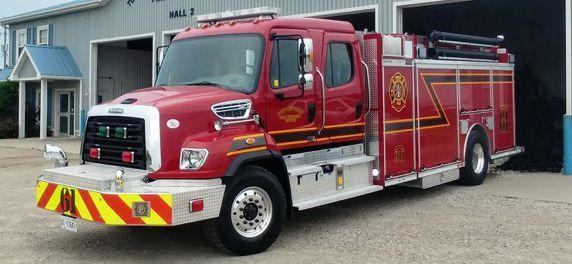
The Southwest Oxford Fire and Emergency Services in southern Ontario took delivery in early July of a rescue pumper by Metalfab Fire Trucks. Chief Jeff VanRybroeck ordered the truck from Carrier Centers Emergency Vehicles. The truck is built on a four-door Freightliner chassis; it comes with 1050 imperial gallon Hale DSD pump with a 1,000-IG water tank. The truck has a FoamPro 2001 system and 20-IG foam cell.
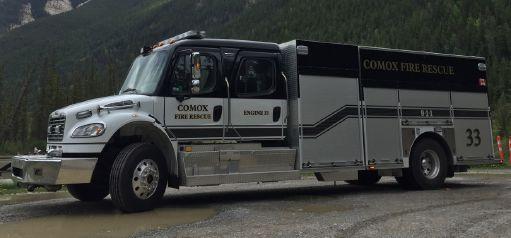
Comox Fire Rescue on Vancouver Island received a pumper from Fort Garry Fire Trucks on June 11. The truck is built on a Freightliner M2 106 chassis and has an emergency rescue body; it runs on a 350-hp Cummins L9 engine and an Allison 3000 EVS transmission. The 2,000-IG Hale QMAX pump is controlled by side-control panels; the truck has a Foam Pro 2001 system.
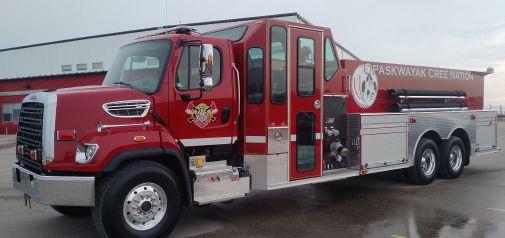
The Opaskwayak Cree Nation volunteer department in Manitoba took delivery of a pumper tanker in late March. The truck, from Fort Garry Fire Trucks, was built on a Freightliner 108SD twodoor chassis and has a four-man crown full-framed tanker body. It is powered by a 380-hp Cummins ISL engine and Allison 3000 EVS transmission. The 2,500-IG Co-Poly Darley LDM 1250 pump has an enclosed top control panel.
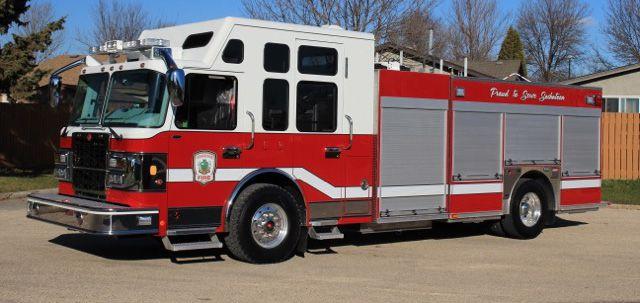
The Saskatoon Fire Department received a custom pumper from Fort Garry Fire Trucks in May. The red-and-white truck is constructed on a Spartan Metro Star chassis with a 400-hp Cummins ISL9 engine and an Allison EVS 3000 transmission. The vehicle has an emergency rescue body with a TME electronic pump panel. It has a 1,500-IG Waterous CSU pump and a 600-IG WP Co-poly tank, and comes with a Class-A Foam Pro 2002 system.
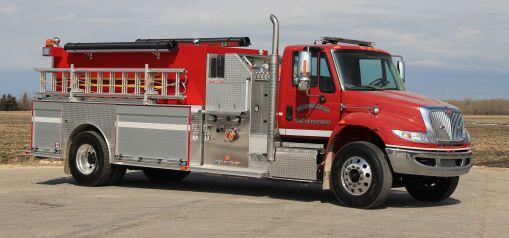
The Miminegash Fire Department on Prince Edward Island added a Fort Garry-built pumper to its fleet in July. The truck was built on a International 7400 chassis and features a 300-hp Cummins ISL9 engine and Allison EVS 3000 transmission. The pumper has cross-control panels that employ a Pro-Poly 1500-IG Hale DSD 1250 pump, and a Foam Pro 1600 system.
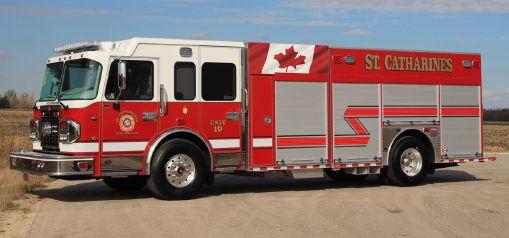
The St. Catharines Fire Department in Ontario recently purchased a pumper from Fort Garry Fire Trucks, which was delivered in October. The truck has a Spartan Metro Star MFD 10-inch raised-roof chassis, an emergency rescue pumper body, a 400hp Cummins ISL9 engine, an Allison EVS 3000 transmission, side-control aluminum panels, annd a 1,050-IG Waterous CS pump; it has a Poly 600-IG tank and a Foam Pro 2001 system.
COMOX FIRE RESCUE
SOUTHWEST OXFORD FIRE AND EMERGENCY
OPASKWAYAK CREE NATION
When you and your equipment are at their best, there are no doubts when the call comes. Maximum condence is the all-new Super Duty® Chassis Cab. The military-grade aluminum alloy^ body let engineers upgrade the frame, driveline, suspension and brakes. Ford Commercial Vehicle specialists have the uptting and modifying expertise to make sure your Super Duty® is ready for duty. We’ll stop at nothing to make equipping your team easier. FORD.CA/BUILTFORBUSINESS
CO-ORDINATED
CO-ORDINATED EFFORT
British Columbia manages wildfires through mutual-aid system, partnerships, and voluntary support from municipal departments
By LAURA KING
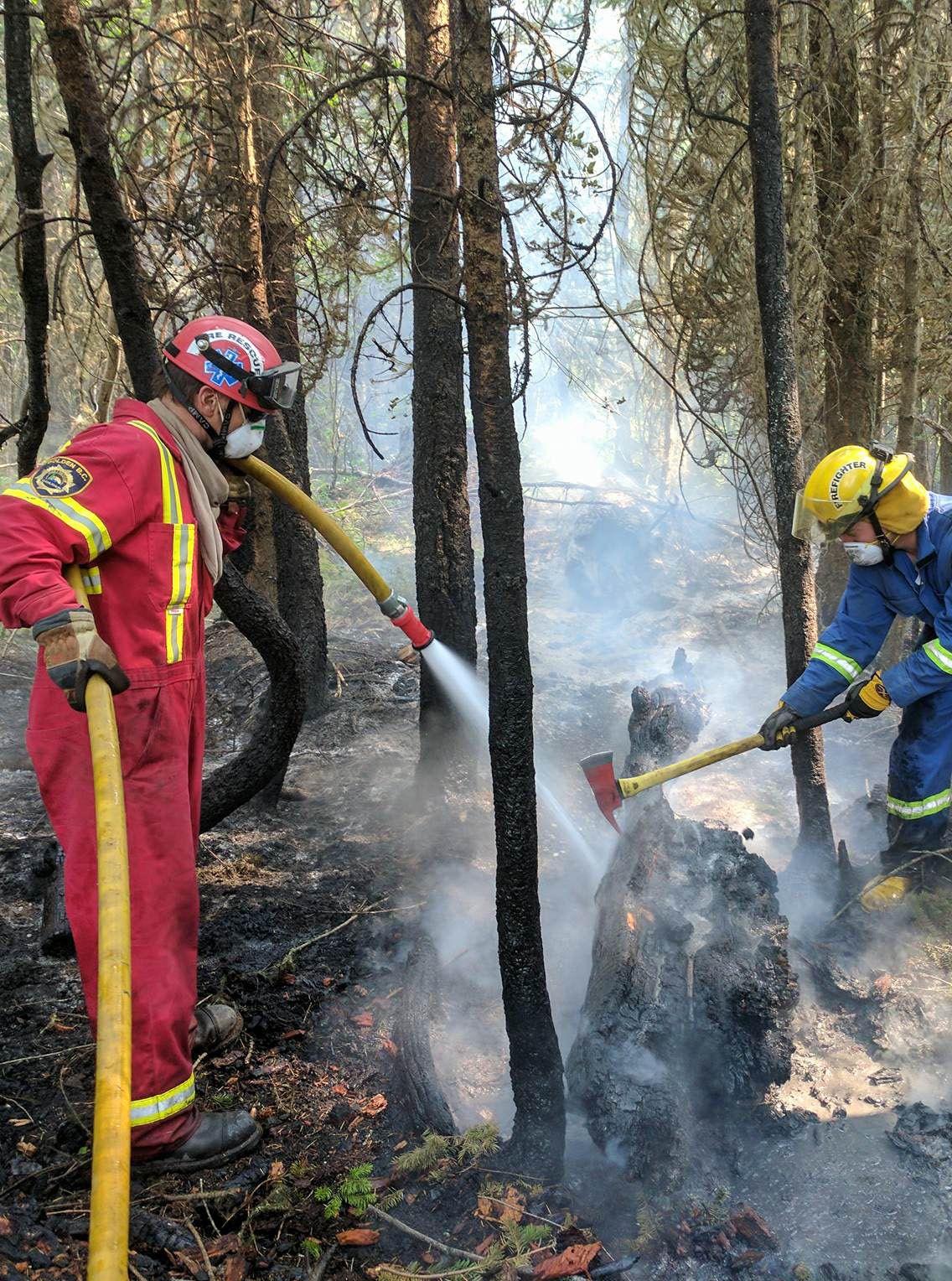
The fire fight in British Columbia in the summer of 2017 was a deliberate, military-like series of operations born of the 2003 Okanagan Mountain Park blaze.
Things went wrong back then: hundreds of homes were leveled; more than 250,000 hectares burned.
The subsequent inquiry into prevention, planning and response was the caveat for a document that helped to make the 2017 fire fight as seamless and effective as such a massive undertaking can be.
Robert Krause worked for 36 years with the BC Wildfire Service, the last 11 as a type-1 incident commander. Krause is now the chief in Burns Lake, but has an agreement with the village that allows him to coach new incident commanders at wildfire scenes. He was twice deployed this summer.
“The biggest thing is everyone has a better understanding of how the process is supposed to work, and what their roles and responses are,” Krause said.
“When we’re speaking to the public and meeting with local government, for example, everyone understands that dealing with evacuations is [municipal] responsibility and BC Wildfire is dealing with the fire.”
The 27-page inquiry document, titled Interagency Operation Procedures and Reimbursement Rates, outlines how the province can request resources, explains the deployment model, pinpoints costs for trucks and firefighters, and details the steps to follow for structural protection.
It is, says Hope Fire Chief Tom DeSorcy, is a bible for those managing resources.
Every fire department in British Columbia has a standing mutual-aid agreement with BC Wildfire: if the municipality calls BC Wildfire, the municipality pays; if BC Wildfire calls the municipality, the province pays.
The document lists rates for apparatuses and firefighters – paid on-call, volunteer, and career – and takes into account collective agreements.
“Before the season begins,” DeSorcy said, “the request goes out from the Office of the Fire Commissioner. We will come forward with a list of available units should they need to be used.”
It’s tough, DeSorcy acknowledges, for a volunteer department to offer resources in early spring, not knowing how many volunteer firefighters will be available at a given time.
“We could offer a tender or a compressed-air foam bush truck, or an engine, and then they could call us and ask us [for it].”
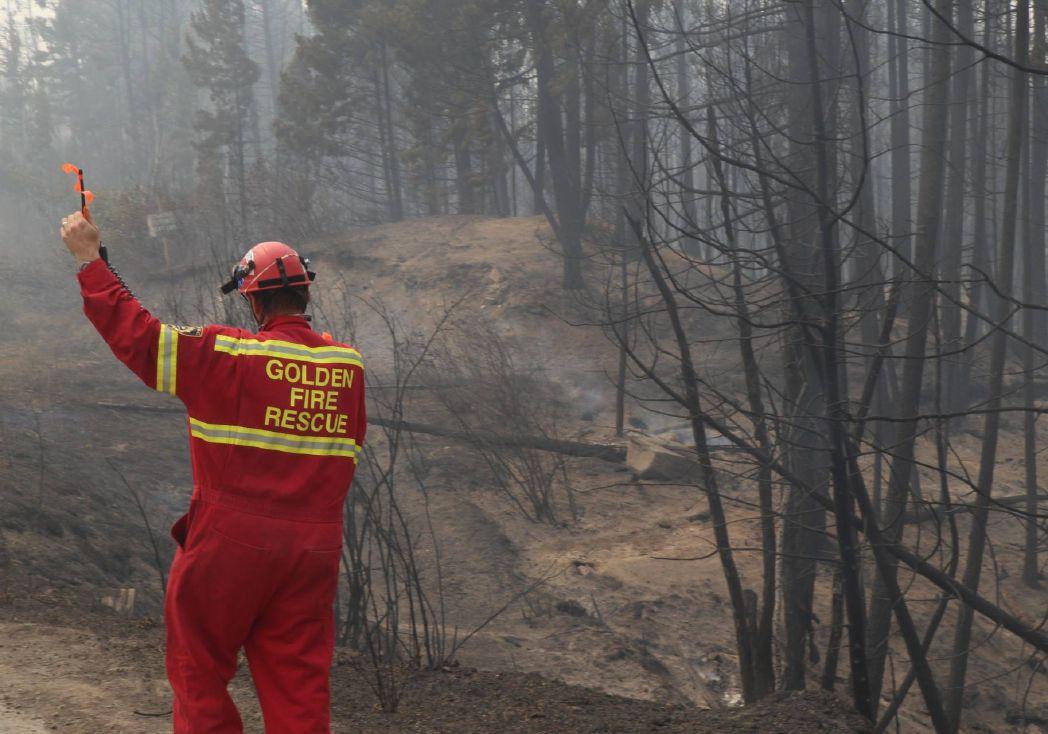
ABOVE The Office of the Fire Commissioner created a provincial department; departments offer up spare resources.
On July 11, at the height of the 2017 wildfire season, the province requested that Hope’s tender respond to Williams Lake.
“So I put the call out,” DeSorcy said. “I had pre-warned the volunteers, so some had prearranged things with their employers,
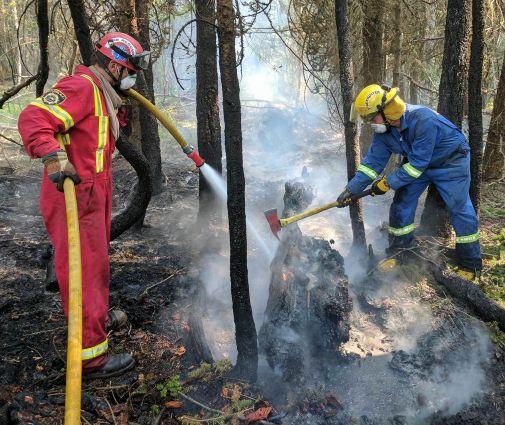
LEFT Firefighters from municipal departments across British Columbia worked with BCWildfire Service to extinguish the hundreds of humancased and lightening-started fires this summer.
Firefighters from municipal departments were deployed to various hot zones across the province over the summer.
and I was fortunate enough to get a couple of people to go at a moment’s notice.
“It’s interesting to pack up the truck and make sure it’s ready to go; [our firefighters are] not used to going for a 400-kilometre run . . .”
And in a 1999 tanker, no less.
“I’d like to send the newer vehicle for creature comforts,” DeSorcy explained, coyly. “But this particular vehicle was sent because these particular operators didn’t have air tickets.
“It was a 1999 Ford water tender, and it was the work horse going down mountain roads in Williams Lake.”
Back in 2003, and during the Salmon Arm fire in 1998, some departments self-deployed, causing confusion.
“I remember the image of all the trucks on the Coquihalla Highway,” DeSorcy said, “lined up at the toll booth, and no one would let them go through without paying – there was no provincial state of emergency and no one knew to let the trucks through. These departments just took it upon themselves to respond.”
Now, the Office of the Fire Commissioner
has the authority once a state of emergency is called to create a provincial fire department and call for trucks from municipalities; those resources are then used for structural protection while BC Wildfire manages the forest fires.
“There’s a partnership with Office of the Fire Commissioner,” said Krause, “that they handle all of the structural firefighting assets. They’re the ones who are able to bring the additional resources into the communities.”
In the summer of 2017, municipal departments voluntarily offered up trucks – spare tenders or pumpers; there was no need for the province to demand resources.
Jason deJong is the fire rescue services co-ordinator for the Cowichan Valley Regional District on Vancouver Island. He spent 11 days in Williams Lake as an incident commander and says the system implemented post-2003 works.
“The provincial fire department established by the Office of the Fire Commissioner was set up well in advance of main fire front moving through Williams Lake,” deJong said in an interview.
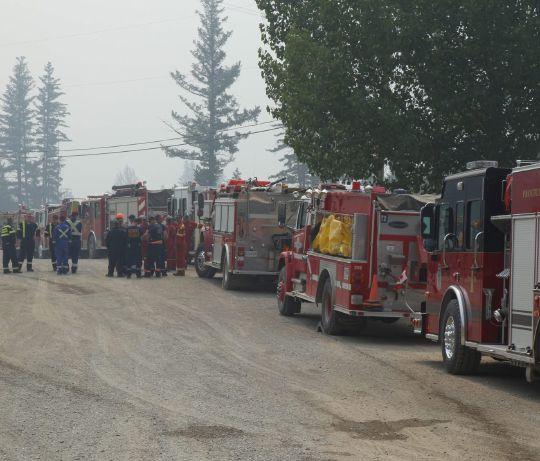
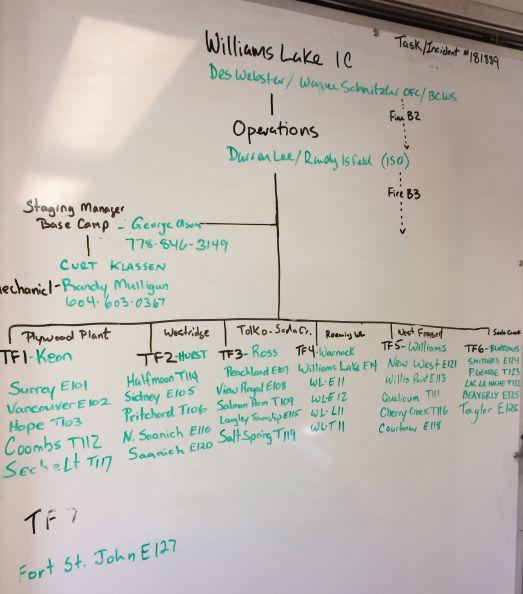
“We had between 30 and 40 fire trucks, engines and tenders. The command structure was set up; the task-force structure was set up. All the prep work was developed for each day.
“Obviously, there was a list of priorities and jobs that needed to be done and as we had time through the subsequent days we would get to those jobs and extend out to more houses and ranches and buildings, even working our way back to town where subdivisions are, FireSmarting homes, working zone by zone, pulling away combustible debris and stuff like that.
“There was a lot of work and preparation ahead of time . . . It has been working out well.”
Under the agreement, communities are reimbursed by the province for offering up their trucks, volunteer firefighters are paid to be away from their jobs, and relationships developed through membership in the Fire Chiefs Association of BC (FCABC) has improved communication.
“I know a lot more people in this business than I did in 2003,” said DeSorcy, who helps the FCABC with communication.
ABOVE
“We are keeping members informed, sending out information that in 2003 I didn’t have – for example, what it means when state of emergency is called, and who’s doing what. I think it’s making a huge difference.”
Indeed, several current or retired chiefs have stepped up to help the Office of the Fire Commissioner, and those chiefs are liaising with the FCABC, which is sharing information through social media.
“We’re local assistants to the fire commissioner,” DeSorcy said, “and they’re using us in that role.”
Overall, deJong said, the system functions efficiently and effectively.
“There was a lot of brain power up there [in Williams Lake] and the organization was great,” deJong said.
“There is a lot of stuff I can take back from there – the command structure and the knowledge behind it. It was a real treat to see. Everyone worked well together. Everyone should be proud.”
In mid-August, BC Wildfire confirmed that the province was experiencing its worst season on record – 894,941 hectares of land had burned since April 1. Several of the larger fires started within days
ABOVE Resources from across British Columbia were brought in to handle fires around Williams Lake; the town was evacuated.
of each other in early July, and burned all summer.
“They all started in about a one-week stretch of time,” said Krause, “a combination of human-caused and a lightening storm that came through.
“We have six type-1 incident-management teams in the province, and all six of those were launched in a five-day period in July, so that immediately puts a huge strain on our ability to manage incidents. Then you’re starting to look at going out of province and out of country to allow for your rest cycles. ”
The six teams vary in size from 11 to 13 people including the incident commander, four section chiefs – operations, planning, logistics, and finance – a safety officer, an information officer, and an air-
branch director. Teams can have any number of other positions, and up to four trainees for the key IMS roles.
Krause was deployed to the Gustafsen fire near 100 Mile House, to assist the teams.
“We helped deal with the evacuation of 100 Mile House the night the fire jumped Highway 97 just north of the community,” Krause said. “I was in the EOC for the municipality and helped co-ordinate among RCMP, local government, and Transportation and Highways.”
Krause was back home in Burns Lake in mid-August, but only briefly, then deployed again as hot, dry weather fuelled the fires.
“There are numerous units and structural-protection sprinkler crews that are still out in the rural areas,” Krause said, “and still hundreds of structures that have structural protection and are still being triaged.”
The province has an arsenal of structural-protection equipment, lots of it purchased post-2003. But in a year like this, Krause said, “obviously
ABOVE
Managing resources and keeping up with changing fire patterns were the biggest challenges for those involved in the fire fight this summer.
we don’t have enough in the province and we have imported some from Ontario and Alberta.”
The biggest challenges, Krause said, are managing resources and keeping up with the changing fire patterns.
“From an incident-management perspective, we need to prioritize the limited number of resources we have available. You hear that B.C. is getting 400 out-of-province resources but they have to get spread among seven or eight fires and suddenly you’re getting only 40 firefighters on the ground; the Elephant Hill fire is 40,000 hectares or larger – so 40 firefighters are a drop in the bucket.
“The other challenge is changing priorities. With fires this big, you might be having great success in one area but in a another, because of wind direction, the fire is burning homes. The fires are massive and trying to organize and manage the safety of responder sand the public is an enormous task.”
That’s exactly what happened to
deJong. He was requested by the Office of the Fire Commissioner to head to Williams Lake to be a task-force leader.
“When I arrived, there was a basic description to show up at the command post for next day. I was partnered with Chief Paul Hurst from View Royal, and we had five or six units attached to us.
“Initially, we were assigned to a certain part of the city in Williams Lake to solidify the sprinkler units and protect a school and certain areas of a subdivision. That night, our role changed a bit. There were other task forces that were assigned to some of the larger saw mills and plywood mills, and we were assigned to assist them setting up . . . Later that evening, the fire progressed across the Fraser River and that’s when the tactical decision was made to evacuate the town.
“We went back to the fire areas to set up structural protection for houses that survived, and set up more structure protection for the mills and the residents that were really close to the fire area. We were working with a couple of crews from Ontario, from the Ministry of Natural Resources, and they had two type-1 trailers come in, and we were setting up sprinkler units and bladder tanks.”
British Columbia has had incident-management teams for some time – in the 80s and 90s, before the province adopted the incident management system, they were called overhead teams – and the post2003 agreement has been updated several times, most recently in May. Yet DeSorcy says there’s still confusion among taxpayers about how the system works.
“People don’t understand what goes on behind the scenes, and maybe we can do a better job to explain why and how we do this,” he said.
Mainly, DeSorcy said, people become concerned when they learn that one of their town’s fire trucks is elsewhere.
“People think, Oh you’ve sent our fire truck away. [They don’t understand that] we have mutual aid, we have backfill. We’re not just deploying people – it was requested of us because they knew what we had a truck available to send. It’s organized.”
The other common concern is evacuations.
“People want to know what happens if we have to evacuate, what happens if we have a fire close by,” DeSorcy said.
“We do our best to say yes we have a plan – we have an evacuation plan in our area that’s ready to go. There are two types of evacuations: one is tactical, if a fire is impinging on a home right now; the other is an alert system.
“It’s well planned, but the public thinks well, maybe we didn’t have to leave this soon. It’s very hard for a community like Williams Lake to say leave – everybody. When do you make that decision? You don’t wait until the flames are licking at your doorstep.”
Over on Vancouver Island, which by mid-August had escaped any major wildfires, deJong had former wildfire-branch employees study weather statistics; they determined that wildfire season starts earlier that it used to, and there are more high and extreme days, on average.
“We compared ourselves to Penticton,” deJong said, “and most people wouldn’t think so, but south island has a lot of similarities; we’re in high to extreme.”
And that, says Krause, is becoming the norm.
“The end,” Krause said over the phone on Aug. 16, “is going to come when we get a true change in the weather. We’ve had a downturn in weather the last three days so we’re making progress, but overall it’s drought for the summer, and it’s still there, and all it’s going to take is two or three days of hot weather again . . . they’re going to continue to burn until we get our fall rain.”
Brotherhood and best practices
Volunteer firefighter learns value of teamwork in Williams Lake
By LAUREN SCOTT
On July 11, Richard Wells, a volunteer firefighter with the Hope Fire Department in British Columbia, was sent to aid in structural-protection efforts in Williams Lake along with a colleague. Wildfires in the surrounding mountain area had the town on evacuation alert for two weeks prior to Wells’ arrival. Wells was greeted by grateful citizens, who were evacuated just days later, after 70 kilometres per hour winds hit the area. On July 27, residents were allowed to return home. By the end of July, more than 800 fires had burned across the province this season, destroying about 4,200 square kilometres.
Q: Walk us through your experience in Williams Lake, starting with when you signed up, to returning home to Hope six days later.
A: Well, the email came out and I thought, “Why not? I’ve got the experience.” It was nice to go help out another township. I didn’t really think much about it. I just signed up and said, “I’ll go if they need us.”
It was just one of those things that a town needed help, and I know how to fight fires. I’ve been doing it for 17 years, so I thought, “Why not sign up and go?”
Q: What was the six-hour drive like through wildfire-affected
areas from Hope to Williams Lake?
A: It was definitely different, because normally there is lots of traffic on the roads. But because most of the road was closed, after we got past where the enclosure started, there was no traffic, [everything was] burned. Both sides of the highway were charred
It wasn’t scary, it was just nerve-wracking seeing how much devastation has been through there and how much was burned. When you looked over to the sides [of the road] you could see the whole mountain had been burned, and then you’d see some hot spots every so often.
And it was like, “Wow this is actually happening.” And we’re going up to protect the town, when everything else we’ve already driven through has been devastated. So the first town we drove through had already lost all their stuff and we were going to protect a town to try and save their stuff.
Q: Did you have any expectations of what it would be like going into Williams Lake?
A: Just going there you saw the burning and you didn’t think it was this bad. And then once you got closer there were hot spots, and when it got dark then you could see flames in the bushes.
Almost every firefighter wants to see flames, but . . . forests are unpredictable. At least a structure is predictable – with the building the only way it can go is burn and come down; with a forest, [the fire] can jump and move, so you have to be extra careful.
PHOTO BY TOM
ABOVE Firefighters from municipal departments were deployed to various hot zones across the province over the summer.
DESORCY
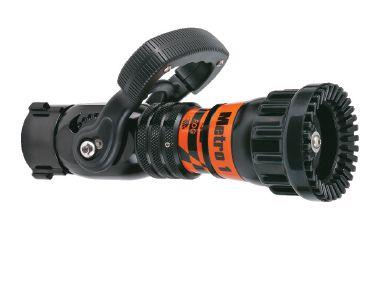
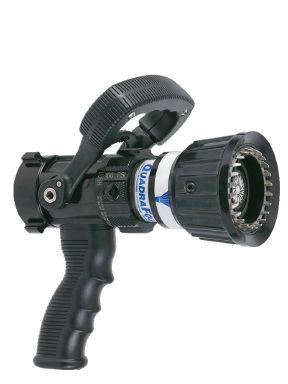
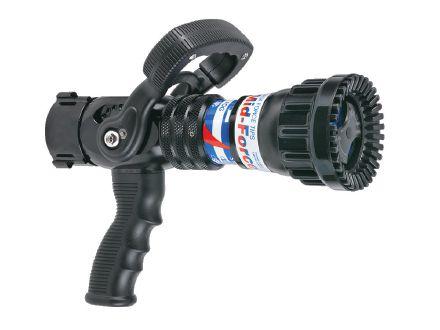
A Full Line of Fixed, Selectable and Automatic Nozzles with Superior Stream and Flow
TFT is recognized by emergency responders worldwide as the inventor of the “automatic” or constant pressure, variable flow firefighting nozzle. Today, we offer the widest range of fixed, selectable and automatic nozzles. Choose from thousands of configurations to meet your needs but know that every nozzle is built with unique features that help you perform better and more safely.
I actually did forest fire fighting for a season when I was younger. So I actually saw it first-hand, so that’s why I wasn’t worried. I know a little bit, but I don’t know all the behaviours anymore, because it’s been so many years.
Q: What happened when you got to Williams Lake? What role were you given?
A: We got set up at the curling rink and . . . [we were told] the fire was still 18 kilometres away, [and to] go get some rest . . . and we would be briefed in the morning. So we had to sleep on a cot in the curling rink.
Q: What happened the next day?
A: So many crews showed up; I reckon there must have been something like 21 units show up that day and throughout the night. So they said “OK, what we’re going to do today is go around and familiarize yourselves with the town, get to know the [saw]mills,” because that was their biggest concern. I think they have four or five mills that they wanted protected because they said if they lost the mills, that’s basically the town’s livelihood…
You could see the smoke off in the distance but no flames because it was so far away.
Q: What did you see on that first day that you were driving around the town?
A: Well it still looked normal because the people were still there; they hadn’t actually evacuated yet. People were still driving around but then they started to notice more and more fire trucks. So everybody was starting to wave and they were happy to see us because they knew we were there to help. They were overwhelmed, but they were nice and pleasant, and everyone was waving, being thankful. They thanked us everywhere we went, for coming. We were like “Yeah no problem, we’re not the heroes, those are all the forestry guys that are doing the work; we are just here to help you guys.” They were happy to see us and they were a little more at ease that there were so many trucks in town. And they knew that we were there to help.
Q: What happened the following day?
A: The next day we were put in our groups. So we were paired up in task forces. There were five task forces and we were task
force one, and that was Surrey, Vancouver, Sechelt, Coombs and [Hope]. There were two engines and three tenders.
The city guys, Vancouver and Surrey, they don’t deal with tenders, because they have all the hydrants and apparatuses, whereas us in rural towns, we have to use tenders to get the water. We had to go pair up with them and practise with our equipment together, so we could get used to running each other’s equipment. So we did a bunch of trials and then the next day . . . that’s when we were told [we would be stationed at] the mill.
We were watching for any ashes, anything falling. We stayed at the mill and drove around because there was so much sawdust, chips, lumber that we had to do patrols regularly just so there were no hot spots.
Q: How did the task force work together and what was your role?
A: It was actually interesting because it was neat to see their equipment and how it works, and we all got along great. It ran smoothly. There were no problems. Everybody [career and volunteer] acknowledged that they are all the same; there was no difference. It was actually really neat, and it was different for me because they’re full-timers and they were happy to be working with us.
Our tenders holds 1,500 gallons and they only hold 300 in their trucks, so basically we had to hook up to them, pump water into them so they could keep their engine flowing, because they’re the ones going to be putting out the hot spots with their hoses, whereas we have to keep them filled with water.
So we did drills where we had two trucks, two engines and two tenders set up and then we would shuttle the water to them, so we were testing to see how long it took.
So when we got that done, we were sent back to the mill every day and we just patrolled that mill. The mill that we were taking care of housed 350 employees, we found out. The mill manager said he doesn’t care about the office, he doesn’t care about the mechanics shop; it’s the mill. He said if they lose the mill, they won’t rebuild and then unfortunately it’s gone. So our biggest concern was the mill.
ABOVE Residents of Williams Lake, B.C., were evacuated on July 15, after weeks of living under an evacuation notice.
PHOTO BY GORD SCHREINER
Q: What happened when the town was evacuated?
A: The wind was supposed to come on the Wednesday [July 12] and that’s why we all rushed up there on Tuesday. But then the forecast changed and the wind was coming Saturday [July 15]. And we were like “OK, it didn’t come Wednesday, let’s see what comes Saturday.”
Well Saturday it actually did pick up. The evacuation order came around . . . 2:30 [p.m.] or 3 o’clock . .
When the wind picked up, the smoke got really bad. All of the sudden, three fires flared up around us. We noticed at noon when we looked up at the mountains . . . all of the sudden all three went up, and we looked up at the side nearest to the mill and said: “OK, we’ve got to go.” So all of us jumped into our trucks, our five-man crew team, and we took off to get to the mill.
That’s when we started noticing more ash falling on us because we were just sitting by the trucks and you could see it all just landing all over our truck and all over us. The smoke was so bad in the morning every day, but the day of the wind it was really bad, and you’d have a hard time breathing with your masks on.
So we were waiting until about 1:30 in the morning and finally we said, “Stand down, we’ve got a night crew that’s going to watch, they’re going to patrol the area to make sure [the wildfire] doesn’t come [into the town] and if it does come, be ready to come back out.”
Fortunately, nothing happened that night; we got to sleep.
Then Sunday, we went back to the mill to make sure [it was not affected]. In the morning we were talking to some other guys that were in the crew and they showed us that a couple of barns on the outskirts got burned, and a house was saved. So, [the fire?] did come close to town, but it didn’t quite get to us, which was fortunate . . .
So Sunday, we just patrolled because the fire was slowly moving, but overnight it didn’t move much. So we didn’t actually have to do anything.
On Monday came my replacement, which was difficult because I had become friends with the other crews.
Q: What was it like to be a crew member in Williams Lake on evacuation day?
A: It was a ghost town; it was definitely different. Nothing was open, not even a
gas station. But then they did open [a gas station] on Sunday for us so we could get fuel . . . A lot of the town [residents] did leave on their own before, so there were not a lot of people [to start with] but then all of the sudden it went to nothing. To drive around and see everywhere closed and police everywhere, it was definitely different. It’s nothing something you see and you don’t expect, because you always have people around you . . . I live in a small town of 8,000, but there are still always people. For these people to have to leave their homes like that is probably difficult.
Q: This was your first deployment; what was it like for you to experience?
A: It was nice because I got to help people . . . It was just nice that we were able to help another community. We went through Ashcroft and we saw that they lost a lot of their homes and [in Williams Lake] we had the chance to help somebody and that’s what we were there for. I’m glad I got the chance to try it, and even though nothing happened, I’m happy to for the opportunity.
Q: Your chief, Tom DeSorcy, has said he sees wildfire response as a great training opportunity for volunteers. What did you learn during your time in Williams Lake?
A: Working with other departments you’re going to learn different apparatuses. We have our own equipment at home, which is completely different from city equipment . . . So, to go there, to learn about their equipment and also to watch how busy the people that are actually fighting the fires are . . . whereas at a structural fire, you have the chief, he’s taking care of everybody, while these guys are trying to maintain a whole city, patrol it and save it.
There’s more to it, you have to learn the routes, the safety, the crews that are there, all the people that are there and how to maintain them and make sure that everybody comes back safe. So there’s a lot more to it than just, “Here, take the truck and go.”
So it was definitely an eye-opener as to how busy it is, how much work it takes and how much training everybody needs.
I think by the time I left, there were almost 40 units . . . But that’s just what they do; people called, so people came. And that’s just the way it is. It’s a brotherhood thing; people call, we’ll help.
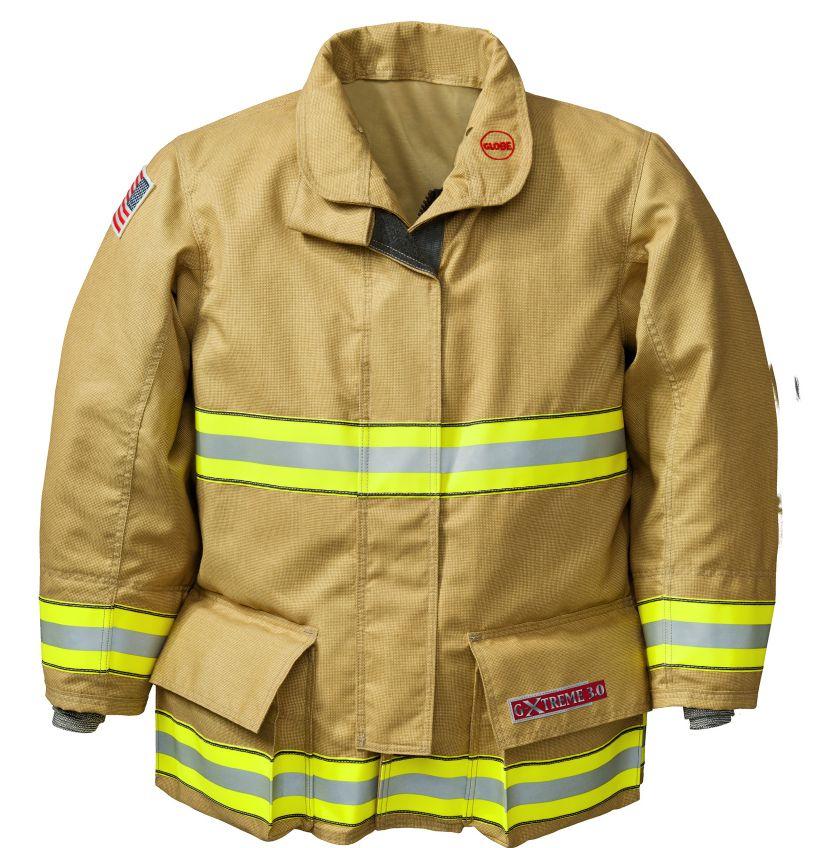
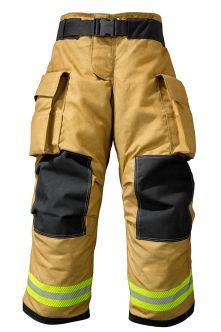
GORE® CROSSTECH® black moisture barrier offers the highest breathability in more conditions in conventional turnout gear
The only turnout gear that comes in SHAPES to fit your body like never before
Retailored fit in the chest and sleeves for unrestricted mobility for even the most athletic firefighter At Globe, we never stop innovating. Retailored from collar to cuff to provide even
Lower collar, deeper neck opening, and hanging throat tab never get in your way
AXTION® Back and AXTION® Sleeve let you make all the right moves
restriction, G-XTREME® 3.0 is the latest evolution of our original breakthrough design. Learn more at globeturnoutgear.com
BY DAVE BALDING Fire chief Golden, B.C.
ATalking about their generation
re some of us of doing a disservice to one of our greatest resources – young firefighters? I’m fortunate to connect with many leaders at conferences, while presenting or attending training. Despite the uniqueness of every department, common themes often arise. A frequent comment revolves around the new generation of firefighters. Interestingly, comments such as: “These new kids just don’t get it,” come from several demographics, not only seasoned veterans.
Baby boomers, gen X-ers, and millennials are all part of the make up of our fire services. A quick online search provides endless definitions and traits of each of these generations – should you wish to pigeonhole your members that way. However, I believe very firmly in getting to know those we lead, not only by their generational traits, but also by their personalities.
Our fire services continue to change – at an ever-increasing rate. Most leaders are embracing new methods and strategies to better our response abilities. The same should be true for our firefighters. While I have yet to meet a fire officer who joined the service to manage, leadership is the most important thing we, as senior members of fire services, do. Sure, today’s firefighters want to know all the whys and wherefores before they carry out their assigned tasks – a concept that wasn’t around when I joined the fire department. When told to jump we simply asked “How high?” While there may not always be the opportunity to give an in-depth explanation for each question, taking the time to answer when available reaps great rewards.
I see today’s fire services as respect-based systems, as opposed to the model many of us know from years ago, which relied mostly on negative discipline – a tool that is still occasionally required. The increasing emergence of positive discipline (reinforcing and rewarding good behaviour and performance) has fostered, in my view, a better environment both on the fire ground and in the fire stations. Thankfully, the dictatorial, inflexible fire officer is becoming a character of the past. My leadership style leans toward the other end of the spectrum and I believe we can be firm and strong leaders without being too laissez-faire.
FIRELINES
have become common. I have heard countless complaints about young firefighters’ lack of work ethic and ambition, but this is simply inaccurate. Yes, these fresh new members have high expectations; some may argue there’s a sense of entitlement as well.
I have been in two departments that have offered junior firefighter programs, and they have been quite successful. The junior firefighters, for the most part, have been ambitious, polite and an inspiration to other members. Yes, they pitch in – with great energy and enthusiasm. This was initially a surprise to me. Training, both theoretical and hands on, comes easily to these new members. Many of the juniors advanced to be become full members with their departments. Invariably, they are excellent firefighters. One of the sharpest officers with whom I had the pleasure of working is still in his twenties – one of those dreaded millennials.
Am I more apprehensive when applicants in their late teens or early twenties walk into my office, as opposed to candidates in their thirties or forties? In short: no. Belonging to an older generation is no guarantee of a great work ethic any more than being young is an indication of lack of ambition or discipline. This assumption speaks, in part, to the
Spend time developing bonds with all of your members and cross those generational boundaries. ‘‘ ’’
The traits of the many generations working alongside you may differ from your own. I argue that was the case when I, and many others my age, joined the fire department.
I also believe that sweeping generalizations about young firefighters
Dave Balding joined the fire service in 1985 and is the chief in Golden, B.C. Contact Dave at david.balding@golden.ca and follow him on Twitter at @FireChiefDaveB
importance of an effective hiring process. We need ambitious, committed and vibrant firefighters – regardless of age.
As leaders, it’s up to us to inspire and remain relevant to all our members. Spend time developing bonds with all your members and cross those generational boundaries. At the same time, it’s critical to model the department’s expected behaviours; we must still recognize problematic behaviours and correct them. It will ultimately be your decision what is acceptable in your department or jurisdiction.
Generational differences exist in many work environments. In fact, the paramilitary nature of fire departments may highlight these differences. Young firefighters are much more than the future of our fire services: while they may be our subordinates, they are also our colleagues. As such, we must continue to garner respect among all department members, regardless of age.
Back in service
TOP Training officer Chris Vanderburg (centre) went back to class – recruit class – and found that fellow students had great insight and ideas.
RIGHT Vanderburg encourages training officers to give recruits time to practice in off hours, experiment with techniques, and ask questions.
Training officer returns to trucks, learns lessons from recruits about former role
By CHRISTOPHER VANDERBURG
In my thirteenth year in the fire service, I left my role as a training officer and returned to the fire ground as a first-class firefighter. I am now back in service, responding to calls.
Some may perceive this move as a step backward, but trading the desk job for the familiarity of the station feels good. I recently graduated from my 16-week recruit class; not a class that I was teaching, but my recruit class. After years as a training officer, I was the student.
In 2004, I joined the Big White Fire Department in British Columbia as a
volunteer. Before I could blink, I became a senior firefighter and, shortly thereafter, I was given a red lieutenant’s helmet. By 2008, I had transitioned to a paid member of our composite department, and began my full-time career as a suppression captain and fire-prevention officer, later progressing to assistant training officer. I know I surprised my chief and mentor Jamie Svendsen when I withdrew my application for the deputy chief’s position for which he had encouraged me to apply. With fewer than 10 years of fire-service experience, I didn’t feel ready. That was the first time I took a
Certificate in Fire Service Leadership
Name Position Department
Dennis Aldous Fire Prevention Officer
Claudio Balice Acting Captain
David Bouskill Acting Captain
J. Todd Boyne Captain
Paul Henry Buffett Captain
Christopher Clinton Senior Firefighter
Brian C. Conway Fire Inspector
Terry Cropley Firefighter
Brad Dunn Firefighter
James Dunn Platoon Chief
Daniel Ellis Captain
Sheri Fisher Firefighter
Thomas Jason Foley Firefighter
Christopher D. Gray Firefighter-Assistant Trainer
Stephen Hickey Firefighter
Chad D. Hills Qualified Officer/Senior Firefighter
Marie Goretti Johannie Leading Firewoman
Rick A. Kachur Qualified Officer/Senior Firefighter
Kelsey Leggette Firefighter
Zachary W. Ma Firefighter
Charles Madder Acting Captain
Steve Mayne Firefighter
Jordan Newton Fire Chief
Jeff Ogden Training Officer
Eric Park Firefighter Captain
Carl Potvin Captain
Len Protz Battalion Chief
Brad Reynolds Firefighter
Marcel Robichaud Emergency Response Trainer
Rick Saulnier Captain
Ryan William Schell Chief Fire Prevention Officer
Adam Shea Acting Captain
Moira Shiels Acting Captain
David Southward Captain
Gordon Tessier Firefighter
Elizabeth VanGorder Volunteer Firefighter Program Manager
Cody Zebedee Captain
Dale W. Gartshore Captain
Gregory Jones Fire Chief
Denis M. Pilon Fire Chief
Ryan Weicker Firefighter
Certificate in Fire Service Administration
Dwayne Killingbeck Captain
Woolwich Fire Department
Hamilton Fire Department
Halton Hills Fire Department
Minto Fire Department-Palmerston Station
Hamilton Fire Department
Saint John Fire Department
Saskatoon Fire Department
Saint John Fire Department
St. John’s Regional Fire Department
CNR Horizon Emergency Services
Minto Fire
Township of Cramahe Fire Department
Saint John Fire Department
Bathurst Fire Department
Hamilton Fire Department
Saskatoon Fire Department
St. Lucia Fire Service
Saskatoon Fire Department
Cramahe Fire Department
CFB Halifax Fire Department
Hamilton Fire Department
Cambridge Fire Department
Lloydminster Fire Department
Brighton District Fire Department
Bradford-West Gwillimbury Fire & Emergency Services
Hamilton Fire Department
Saskatoon Fire Department
Cramahe Fire Department
Irving Oil Refinery
Foothills Fire Department
Central York Fire Services
Hamilton Fire Department
Richmond Hill Fire & Emergency Services
Hamilton Fire Department
Department of National Defence
Halifax Regional Fire and Emergency
Foothills Fire Department
Certificate in Incident Command
Sarnia Fire Rescue Services
Town of Amherst Fire Department
Swift Current Fire Department
Thorold Fire and Emergency Services
Certificate in Fire Service Administration Graduates
Matthew J. Slimmon Platoon Chief
Certificate in Fire Service Administration, Operational Planning
Brent Robillard Captain
Certificate in Fire Service Administration, Strategic Plannning
Peter G. Steenaerts Technical Teams Coordinator
Advanced Certificate in Fire Service Administration
For your cleaning, decontamination, inspection, testing, repair and record keeping of your firefighter’s protective clothing... we have you covered!
• 24/7 access to Firetrack®, the online data base that provides you with complete details of your C&M Program with FSM. We do the work for you!
• ETL Verified
• ISO 9001 Registered
• Fast turnaround
• Complete Bunker Gear Rental Program – Toronto Location
Ontario (toronto) 1-888-731-7377
step backward. It was a good decision at the time. Soon afterward, I returned to my home province of Ontario to join the training division at Brampton Fire & Emergency Services.
“When are you writing to become a captain?” “Do you think you’ll want to be a chief one day?” “Have you thought about instructing or training?” These questions are typically heard in fire halls, and are founded in an obsession with moving up the corporate ladder. Those who become good firefighters are often encouraged to move into officer positions. We are hardwired as a society to keep pushing for the next level, to get more stripes, higher pay, more responsibility. It feels strange returning to square one instead of pushing upwards. I believe that there is value in simply appreciating that it takes a full career just to become a good firefighter, and that solid senior firefighters form the core of the industry. That being said, it takes a team to run a fire department.
My decision to go back to the trucks was based on personal circumstances. It was hard to leave my training-division colleagues; I felt as if I was leaving them in the lurch. I will be forever grateful for the compassion, understanding and support of those closest to me both on and off the job.
I tried to slip into the recruit class quietly. I ditched the uniform and wore business-casual clothes for the pre-class meeting with human resources. I was hoping to fly under the radar for a couple of weeks but it took about an hour before I was recognized by a fellow recruit. By lunch on that first day, the other 12 recruits learned that there was a previous training officer among them. In the first few weeks, I sensed the uncertainty of my classmates; they even joked about me being an undercover boss. I am grateful for their acceptance and inclusion.
Western canada (calgary) 1-403-287-0155
Mid-West USa (Detroit, Mi) 1-866-887-6688
Going through a recruit program was humbling; in many ways, I felt as if I did indeed gain the insight of an undercover boss. Here are a few thoughts about my experience.
1. Being immersed with recruits is invigorating; it re-energized my passion for the job. I always felt pumped up as a training officer whenever a class of recruits started, but this feeling was
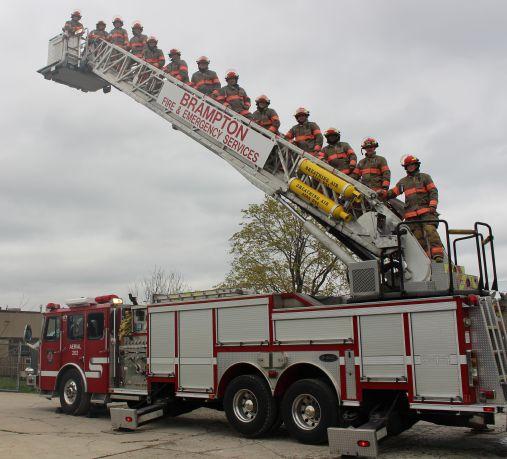
ABOVE Brampton Fire & Emergency Services spring 2017 recruit class included the former training officer who developed the curriculum.
Just as every fire is demanding, so are you and your needs. That’s why our newest series of SCBA solutions can be configured over 45 different ways. And that’s why they are ergonomically engineered to be more stable and comfortable, intuitively designed, and held to the highest standards, so that you can perform more effectively, with less fatigue, and be ready to respond anytime.
amplified as a participant. The experience also made me recognize how much stress I was under as a training officer and how enjoyable it was to sit at the back of the class instead of standing up front and being responsible for content, logistics and group performance. Expectations for training officers come from every level of the organization and are often idealistic; it was nice to be able to focus solely on my own skills and abilities again.
2. In Brampton, our training division had made exceptional strides in creating the right training environment; you can build an environment that allows members to reach their potential, or you can shut them out and not listen to them. Building a culture of acceptance and learning should rank high on any chief’s priority list. This begins in recruit class and it was evident through the growth of some of my classmates over the 16-week program that our department is on the right path using this philosophy.
3. Our class drilled hard before the official start time of the day and even during lunches, downtime and breaks. Generally, recruits try hard to prove themselves; they don’t shy away from hard work. Empower them: allow them access to the equipment during down time to practice and drill; let them experiment with techniques and let them ask questions. They <i>will</i> rise to the occasion and surprise you if you create the right learning environment. This may not be possible in all departments, but having instructors available to supervise and allowing extra practice time makes a big difference in individual performance.
4. Even the most confident of my classmates hesitated to ask questions to the most approachable instructors, worrying that doing so would make them appear vulnerable. Instructors must work extra hard to break down those barriers. Everyone benefits when communication lines are open.
5. I learned that I had room to improve on basic skills that I believed I had mastered People need to be given time to run drills and practice the basics. There is so much content to cover; I counted 411 separate skills during recruit training. There is a big difference between demonstrating something and letting recruits try it just once before signing off, and drilling until the skills are committed to muscle memory. Ensure that your recruit program is developing skilled firefighters and not simply in place to check off boxes.
6. The best instructors created a subject-centered classroom and welcomed input and experience from the students. Be careful not to forcefully insert your methods into your recruits’ training. We need to develop firefighters’ critical thinking, and I learned just as much from some of my classmates as I did from some of the instructors and my previous mentors.
For the record, I was afforded no favours as a recruit. I had to submit a resume, pass the Ontario Fire Administration Inc. fitness test, go through the interview process, and pick up a crateful of textbooks before I began the recruit-training program. I used the side entrance to the building like the other recruits, and parked at the very back of the lot. Two hours before we started our training days, I would occasionally beat another recruit known as Rusty at getting the coffee ready for the training staff. No slack given, but also, none wanted.
Thirteen years in, I got the full recruit experience, or as close as it could be given the circumstances. Both me, and my fire department, will benefit. This fantastic opportunity allowed me to focus on mastering task level skills again and I am grateful to have been able to get back to the basics.
BY SUE DAWSON Deputy chief Barrie, Ont.
BCOMMSCENTRE
Buy-in is critical for training standard
efore anyone becomes an emergency-service call taker or dispatcher and fields live emergency calls, you would think there would be a standard level of education, training and certification required. In Ontario, there is not. We are not alone in this situation. There is a movement developing in the United States toward standardized training and certification. There needs to be a higher level of professionalism associated with this public-safety position; this is a specialized discipline and, as with other vocations, the evolution of fire communications needs to be based on professional standards, certifications and recognized credentials.
In Ontario, each emergency service has its training silo. Policing agencies each conduct their own training based on the Adequacy and Effectiveness of Police Services under the Police Services Act. I believe police services have done a good job establishing a training network through which they share information and teaching plans, but ultimately, each service is responsible to determine its level of training. Emergency medical services in provincially run communications centres are far more standardized and established in Ontario.
The exact number of fire communications centres in Ontario is not even clear. Dispatching-related services can be purchased from other agencies, which adds to the complexity of the issue of training. Fireservices communicators should receive training that reflects some of the unique functions they provide, including incident management, accountability and entry-control systems, and the functions of the safety officer, to name a few.
What are the best practices for emergency service communicators? NFPA 1221 – Standard for Installation Maintenance and Use of Emergency Services Communications Systems, 2013 Edition, is one for sure. Chapter 7 deals with the operation of a communications centre. Specifically, 7.2 speaks to Telecommunicator Qualifications and Training: “7.2.1 Telecommunicators shall meet the qualification requirements of NFPA 1061, Standard for Professional Qualifications for Public Safety Telecommunicator, as appropriate for their position.”
documents. NENA has published a Recommended Minimum Training Guidelines for Telecommunicators document, which lists minimum topics and subtopics to train call-takers and dispatchers. APCO has a Minimum Training Standards for Public Safety Telecommunicators document that identifies minimum training requirements with core competencies that the association recommends should be supplemented with agency-specific information.
If you find yourself in the unfortunate situation of being involved in an inquest or investigation into an issue involving fire communications, you need to be aware of these documents, and others, that may be considered best practices in emergency-services communication.
Professionalism of emergency communications in the fire service is an issue. How do you get compliance with training guidelines and documents when there are several published documents from which to choose? There are many commonalities in the documents and programs, but how do we get standardized certification and accreditation?
I believe standardized testing and certification is the answer. The Ontario Office of the Fire Marshal and Emergency Management (OFMEM), through the Academic Standards and Evaluation Unit
Dispatching-related services can be purchased from other agencies, which adds to the complexity of the issue of training. ‘‘ ’’
Two professional organizations in emergency service communications are NENA (National Emergency Number Association) and APCO (Association of Public-Safety Communications Officials). Both organizations have a presence in Canada and have their own training
Sue Dawson has been with Barrie Fire & Emergency Service in Ontario in the communications field for more than 30 years. She is the deputy chief of communications and business services. Contact her at sue.dawson@barrie.ca.
(AS&E), is accredited to the NFPA 1061 (2014 Edition) I and II. Telecommunicator I is based on call-taking knowledge and skills, while level II refers to dispatching knowledge and skills. Knowledgeand skills-testing materials have been updated and finalized by AS&E with guidance of the OFMEM’s NFPA 1061 provincial advisory committee, comprising experts from various fire departments. The process with skill sheets, scenarios and a team of lead evaluators is ready to participate in the process.
Now we seek the buy-in required by members of the fire service –including communications centres of every kind that are dispatching for fire agencies – to work toward certification and accreditation to NFPA 1061, Telecommunicator I and II. There are seven additional professional qualifications listed within NFPA 1061, 2014 Edition, but Telecommunicator I and II is where it all begins.
Prehestoric PUB ED?
Updating your approach to fire-safety messaging
By TANYA BETTRIDGE
Unless your fire department still houses teams of horses, chances are, your suppression equipment and training have advanced over the years. Can you say the same about your public education? I have an easy three-question test, which, with a great degree of accuracy, can determine whether your public education is outdated.
Question 1: Do your lead-in messages contain the words, “It’s the law”?
Question 2: Is your fire department absent from social media?
Question 3: Do your fire safety talks revolve around Stop, Drop & Roll?
If you answered yes to any of those questions, it is likely that your fire department’s public education is a bit of a fossil. Let’s face it; today’s audience wants bigger, louder, more entertaining . . . and many fire departments are a bit like Mr. Dressup in a Pokémon GO world.
THREE WAYS TO KILL YOUR PUB ED PLAN
1. It’s the law
Have you ever driven over the speed limit? Consumed alcohol before you were of legal age? Jaywalked? You knew it was against the law to do any of these things, right? Of course you did. But you did them anyway, likely because you conducted a cost-benefit analysis in your head that pitted the benefit/fun/convenience against the chances of getting caught/ something going wrong, and you made the choice – conscious or not – to proceed.
Now you understand why people still don’t have working smoke or carbon monoxide alarms in their home, cottages or RVs: most people know it’s the law (after all, it hasn’t exactly been a secret – every province and territory has a law/code for smoke alarms), but the law itself isn’t reason enough for people to comply. There
TOP Fire departments that use old-style messaging for their public education programs are missing opportunities to reach people through social media. Use of social media, along with harder-hitting verbiage and images is more effective.
RIGHT In an effective publiceducation lesson, children should be taught to understand what an alarm sounds like and what to do when they hear the noise.
must be imminent consequences, (death or a large fine) or an emotionally compelling reason (the thought of losing a child or pet – or even a smart phone! – in a fire). The latest effective method? Shame. No one wants their story to go viral for the wrong reasons.
According to fearof.net – a website dedicated to fears and phobias – more people are afraid of butterflies, buttons and long words than fire. After the top three (spiders, heights, snakes) the fear of death made the No. 12 spot. The fear of crime, by the way, was way down the list at No. 65, right below the fear of cotton balls.
What does this tell us? It tells us that the traditional messaging, which tries to use the law/crime or fire as an incentive to change a behaviour, is essentially ineffective at compelling people to do so. The fear of losing one’s own life – or the life of a loved one – however, could be far more effective.
TIP: Focus on the “loss” consequences, rather than the legality or risk of fire.
Try asking your audience to pick only one person/pet/thing in their home to save from a fire. Then tell them that a smoke alarm would allow them time to do that. Or take a humourous route: list everything they
store on their iPhone, and the life-shattering thought of losing that iPhone in a fire.
2. Lack of social media
According to several studies, between 60 and 70 per cent of Internet users in Canada are also social-media users. Seventy-one per cent of social media users are on Facebook and more than 50 per cent are on more than one platform. Seventy-three per cent of millennials and 42 per cent of gen-Xers use social media daily. Essentially, if you want to connect with people between the ages of 17 and 50, you’ll find them on social media. Your public education efforts need to reflect today’s audience and their lifestyle. Your social media presence needs to be instant, attention-grabbing and easy to access, 24-7.
Social media does not produce public education, much like buying a boat does not produce a smoked salmon on your plate. Social media is merely a vessel that reaches the vast majority of your community with one post, tweet, upload or send. Knowing what to post and when is as critical as knowing how to tackle a hazmat scene.
TIP: There are two ways to do this –with or without public education staff.
The demands of social media require trained, knowledgeable staff dedicated to building a following and updating frequently. These staff members should be social-media savvy, have a background in communications/marketing, and be well versed in fire safety. They will likely need smart phones with social media apps, because as you well know, fire department response is not a nine-to-five gig. Like hazmat specialists, if your fire department doesn’t have public-education staff, your suppression or prevention staff have a lot of training to do!
3. Stop, Drop & Roll
Nothing grinds my gears like learning about a prime fire-safety opportunity, in which 99 per cent of the time was spent on Stop, Drop & Roll. Don’t get me wrong; there is absolutely nothing wrong with those three simple instructions. It is my opinion, however, that the ratio of time spent on Stop, Drop & Roll should be equivalent to the ratio of people who catch fire in your community each year versus those who need working smoke alarms and a home-escape plan.
Here are a few things you need to know about the three-step wonder:
• Firefighters and teachers love it because it’s interactive, easy to teach and memorable.
• Very young children tend to confuse the Stop Drop & Roll lesson with the whatto-do-when-you-hear-a-smoke-alarm lesson. Yes, these kids will often stop, drop and roll at the sound of a smoke alarm.
• If we look at it logically, the demographic often taught this lesson, (ages three to seven) are the least likely to catch fire.
Teenagers and young adults are more likely to try dangerous acts and toddlers/ young children are the ones most closely supervised.
It is my opinion that young children should be responsible for knowing two things – and two things only:
1. What an alarm sounds like;
2. What to do when they hear it.
All the other aspects of the lesson should complement those two target objectives. Stop, Drop & Roll could be taught to the class after they have mastered the two above lessons. Learning about fire trucks and the equipment a firefighter has should be accessory subjects – to keep it fun and interesting. The two core lessons (above) will serve them well into adulthood.
TIP: Encourage physical education
teachers to incorporate Stop, Drop & Roll into their warm-up curriculums.
Once kids get to age 10 and up, satisfy their curiosity with the science of fire, and as they progress into their teenaged years, your approach will have to be adjusted to come at them with pop culture, emotionally compelling or humorous approaches. In fact, the 13- to 18 year-olds are the best age group to educate about things like grease fires, CO sources and extinguisher use.
EMBRACING A PARADIGM SHIFT
Suppression success is so easy to measure. Did the fire get extinguished? Did the person get rescued? Was the spill contained and cleaned up? Did enough responders arrive on scene within an acceptable amount of time? If the answer is ever no, adjustments are made. Trucks are purchased, equipment is updated, more training is given, and so on.
There is no way of knowing how many lives your public-education program has saved or positively affected. There is an easy and dreaded way to tell that it’s had a negative effect. Any news article containing
words such as fire, death, injuries, close call, or lucky to be alive is a good indication that your public education (and perhaps, prevention) areas need improvement. Smoke/CO compliancy rates are also an indicator.
Today’s audiences do not question whether they “can”; they question whether they “should.” In the private sector, companies are going after the heart instead of the brain. Watch any commercial or YouTube ad, from WestJet to Lean Cuisine, Ancestry to Apple, Nike to Audi; companies are giving your heart a reason to take notice, often without even mentioning a specific product. Have you ever seen a GEICO insurance commercial that told people to buy car insurance because it’s the law to have it?
Your public education messaging needs to stop giving people rules and start giving them reasons. Your community will assign value to fire safety only if your public education is bigger, louder, and more entertaining.
UPDATE YOUR PUB-ED
1 2 3
TIP: Focus on the “loss” consequences, rather than the legality or risk of fire.
TIP: There are two ways to spread fire-safety messages – with or without public education staff. Use your suppression and prevention staff.
TIP: Encourage physical education teachers to incorporate Stop, Drop & Roll into their warm-up curriculums.
Tanya Bettridge is an administrative assistant and public educator for the Perth East and West Perth fire departments in Ontario. Email Tanya at tbettridge@pertheast.ca and follow her on Twitter @PEFDPubEd
BY BILL BOYES Fire chief, Barrie, Ont .
ILEADERSHIPFORUM
A program designed for fire-service leaders
n past columns, the discussion has focused the importance of career development and the changing role of a chief officer. When considering such a broad topic, it is important to recognize the diversity of Canada’s fire services in the context of developing continuing education and leadership programs that are affordable and accessible.
Career personnel represent approximately one-third of Canada’s fire services, while volunteer and/or paid-on call personnel comprise the remainder. A growing number of municipalities are led by full-time chief officers, however, many aspiring chief officers work full-time outside the fire service, which makes finding the time and money to pursue leadership training a challenge. In addition, many members do not make conscious decisions to work toward senior fire-services positions until later in their careers; this can make attaining the necessary education difficult. These factors directly impact succession planning and personal career development.
How do we develop future leaders to effectively deal with the operational and administrative pressures they will inevitably face? Moreover, how do we create leaders among long-serving members or volunteer/ paid on-call personnel who don’t have the time or opportunity to pursue four-year degrees or any intensive program? We cannot let this roadblock inhibit our efforts to professionalize our services. We must recognize our differences (in terms of time and financial resources) and address them. There is significant work to do to keep pace with the other allied agencies and the broader public sector.
Career-development opportunities in today’s fire services are subject to the challenges that stifle succession planning at the organizational and individual levels. This applies to many professions. Cost, commitment level, time, flexibility and perceived benefit influence whether a program will be pursued; this applies to both fulltime and volunteer members and departments. There are solutions.
the Office of the Ontario Fire Marshal and Emergency Management (OFMEM) and the Ontario Association of Fire Chiefs (OAFC).
Each of the available 24 two-day courses can be delivered in any location as long as a suitable learning environment is available. Currently, courses are being delivered in fire departments, at educational institutions, and even at the OAFC office in Ajax. The courses focus on the required skills fire-services leaders must possess, ranging from leadership to budgeting to change management. The courses are taught by subject-matter experts, who relate the course material to a fire-service context. The $410 cost is relatively inexpensive compared to a traditional post-secondary course or other executive-education programs, and the training can be broken down into manageable durations, so that anyone with a full-time job can easily attend.
One significant benefit of the Humber program involves transfer credits and prior-learning assessments, which allow students to attain the required 18 courses in a shorter time span. Many fire-service members have taken courses throughout their careers; this program allows people to work toward a recognized certificate tailored to what they need to learn, based on what they already know. Several popular
The courses are taught by subjectmatter experts, who relate the course material to a fire service context.
A fantastic example of a specialized, yet flexible program that allows students to leverage past training and education can be found at Ontario’s Humber College. The fire-service executive management certificate program is geared toward those who aspire to enter a leadership position in the fire service or expand their knowledge in fire-service administration and leadership. The program has been endorsed by
Bill Boyes is the fire chief for Barrie Fire and Emergency Service in Ontario. Boyes was recently elected to the Ontario Association of Fire Chiefs board of directors and the NFPA Fire Service Section executive board; he is a member of the IAFC professional development committee. Contact him at Bill.Boyes@barrie.ca
training institutions qualify for transfer credits and prior-learning assessments, such as Ryerson University in Toronto, Dalhousie University in Halifax and the Justice Institute of British Columbia. Leveraging past experience and attaining a recognized certificate can hold more weight on a resume than a number of individual courses.
Some other the benefits of this program are that students have the opportunity to enter into the educational arena, even if they have been away from it for an extended period; the two-day courses are manageable and, once completed, help to instill academic confidence while building an administrative skill set; and, attending courses with colleagues makes the discussions more relevant and relatable. This program provides a balanced and cost-effective solution.
For details about the Humber College program, visit www.oafc.on.ca and click on Education.
Data-driven decisions
Online university course teaches evidence-based model for chiefs
By LEN GARIS
TOP As councils – and even new firefighters – demand data to support budget asks by fire chiefs and reasons for practices and protocols, an online course offered through the University of the Fraser Valley teaches participants how to gather and organize data and review and evaluate the decision-making process.
Fire-service professionals must often make difficult decisions on the job. But how many of these decisions can stand up to scrutiny?
Those interested in making more informed and justifiable decisions have an opportunity to learn from the experts. A new online course at the University of the Fraser Valley (UFV) in British Columbia, entitled Evidence-based Decision Making, will teach students how to identify, collect and analyze data needed to make defensible decisions based on hard evidence.
The course was developed in collaboration
with the City of Surrey and the authors of the three-part series The Right Decision on evidence-based decision making that I wrote with researcher Paul Maxim, who is a professor at Wilfrid Laurier University’s Balsillie School of International Affairs and Director of the masters of international public policy program.
The online course:
• Examines the importance of evidence-based decision making, its role in the public and private sector, and the fundamental approaches;
• explains the components of evidence-based decision making, including
Loaded with safety, comfort and mobility features for unmatched performance, Flame Fighter® bunker gear offers a variety of custom outer shell fabric, liner system, hardware and pocket options to fit your specific needs. This hard-working gear also includes the following game-changing Starfield LION fire protection technology:
• Patented IsoDri®* moisture management reduces the water absorbtion and helps gear dry faster between runs
• Exclusive Ventilated Trim allows vapor to be released, reducing the risk of scald burns
• Thermashield™ provides an additional layer of liner material in the upper back and shoulders to protect against compression burns
• Move-N-Hance™ crotch gusset increases mobility by reducing bunching, twisting and pulling
• Flex Knee™ for easy, natural movement
• Stay Rite™ sleeve wells integrate the sleeve’s liner into a full-length wristlet so that when you reach, the entire sleeve moves with you
For more information about Flame Fighter bunker gear, contact your Starfield LION sales representative at 1.800.473.5553 or visit us online.
the role of critical thinking, different forms of data-gathering, and the use of statistics; • and teaches how to gather, organize, and evaluate the decision-making process.
“Collecting and using data to make evidence-based decisions isn’t just for scientists and academics,” noted Maxim. “It’s a skill that can and should be learned by anyone in a leadership position, or anyone who strives to be in one. Whether you are a business executive, government professional, or fire or police chief, your decisions can make the difference between success and failure in your organization, and in your career.”
The online course is based on The Right Decision series of manuals and companion workbooks, launched in 2014 through a partnership between the City of Surrey, University of the Fraser Valley and the federal Canadian Safety and Security Program.
Typically, people make decisions based on what they have learned through experience or training, on conventional wisdom, or on past practices. Even though these methods do not always achieve the desired results, people are often reluctant to change their approaches; they become comfortable doing the same thing over and over again, even when they are not happy with the outcome.
Evidence-based decision making is rooted in systematic study and data collection – like science – and generally leads to sound and defensible decisions; it is a more transparent process, letting outsiders see and understand the foundations of a decision.
The series provides customized editions for the fire, police and government sectors, the last of which was recognized with a 2016 Professional Development Award from the Canadian Association of Municipal Governments and was presented at a United States conference on transforming local government in spring 2017. Translated versions of the books are being used in academic settings in China.
In the office or laboratory, public or private sector, the core elements of evidence-based decision making are the same: define the problem, identify what data is needed, gather the information, analyze the results, and apply them to a decision.
The origins of today’s evidence-based approaches can be traced to the 1980s, when the United Kingdom government faced significant financial challenges and started to emphasize the need to support policies and best practices with hard data and research. Critics felt at the time that decision makers were wasting resources by basing their decisions on personal preferences, traditional practices and trendy ideas.
Evidence-based decision making has grown increasingly important since that time, as governments at all levels face shrinking budgets, a growing demand for both efficiency and accountability, and the effects of unstable and changing global economic and security conditions.
On some occasions, the process leads to the conclusion that the current way is the best way, after all. Alternately, the process may help identify the options and practices that do not work, rather than finding an optimal solution. These outcomes should not be viewed as failures, as they provide valuable information for future decision making.
Evidence-based decision making is a skill that can be learned by non-academics and becomes easier with practice.
Like the books, the University of the Fraser Valley course strips evidence-based decision making down to the basics, guiding participants through the process of finding and using the information needed to make evidence-based decisions, and then positioning their decisions in a way that will convince others of their merit. Case studies link the concepts to the real world.
Following a successful pilot in fall 2016, the University of the Fraser Valley added the course this year to its continuing-education offerings, making it available to the public.
The City of Surrey, which has embedded evidence-based decision making in its corporate culture, is requiring new leaders throughout its organization and fire service to complete the course.
For information, visit www.ufv.ca > Continuing Studies > Courses & Workshops > Business (course number 80161). The next session begins Sept. 19.
The Right Decision series of manuals and companion workbooks may be downloaded for free from the University of the Fraser Valley’s online resource library at http://cjr.ufv.ca.
Len Garis is the Fire Chief for the City of Surrey, B.C., an adjunct professor in the School of Criminology and Criminal Justice, and an associate to the Centre for Social Research at the University of the Fraser Valley; he is a member of the affiliated research faculty at John Jay College of Criminal Justice in New York, and a faculty member of the Institute of Canadian Urban Research Studies at Simon Fraser University. Contact him at LWGaris@surrey.ca
NEWPRODUCTS
■ DRAGON FIRE LAUNCHES ALPHA-X GLOVE
Dragon Fire Gloves has released its Safety Equipment Institute certified Alpha-X glove. The glove was designed for structural firefighters and is compliant with NFPA 1971 standards. It has a leather outer shell that allows for easy gripping in wet and dry conditions. The gloves are abrasion resistant and has a thermal urethane barrier specifically designed for firefighters. For more information, please visit: http:// www.dragonfiregloves.com/products/ alpha-x-structural
■ PIERCE INTRODUCES HIGH FLOW INDUSTRIAL APPARATUS
Pierce Manufacturing first displayed its new High Flow Industrial Apparatus at the Fire Rescue International conference in Charlotte, N.C., in July. The truck is capable of flowing up to 10, 000 gallons per minute when connected to a hydrant. It has a Darley 2ZSM pump and a Husky 450 foam system. The vehicle is available on a Velocity or Arrow XT chassis. Each chassis model comes with a 600-hp engine. To learn more: http://www.piercemfg. com/pierce/press-release/pierce-introduces-high-flow-industrial-fire-apparatus-at-fire-rescue-international
■ BULLARD INTRODUCED RETRAK HELMET
■
PIERCE ANNOUNCES ASCENDANT AERIAL APPARATUS
First announced at the FDIC conference in Indianapolis this April, Pierce Manufacturing has launched its Ascendant class of aerial apparatus. The configurations showcased include a 32.5 metre (107 foot) tandem rear axle aerial ladder, a 32.5 metre tractor drawn aerial, and a 33.5 metre (110 foot) single rear axle quint aerial platform. All Ascendant class aerials include a weight-optimized structure design with a jack-knife angle of up to 60 degrees and a single set of H-style stabilizers. To learn more: http://www.piercemfg.com/products/products-overview/ascendant/
■ XEROS
INTRODUCES CLEANING SOLUTION FOR TURNOUT GEAR
Xeros Cleaning Technologies has created an eco-friendly polymer cleaning solution that is intended to extend the wear of turnout gear. The solution is NFPA 1851 compliant and is designed to work in low water levels and low temperatures. It uses polymer beads as the primary cleaning agent instead of water, which absorbs contaminants from the gear. For more information: http://www.xeroscleaning.com/xeros-polymer-beads ascendant-107-heavy-duty-ladder
Bullard’s new ReTrak helmet offers an integrated visor engineered on direct feedback from firefighters. The ReTrak features simple, one-handed operation; a comfortable nosepiece; quick removal for cleaning; an increased area of protection; and it easily accommodates eyewear. The helmets meet NFPA 1971 requirements. For details visit www.bullard.com/retrak
■ SPARTAN
HYDRANT BILLED AS SAFER, MORE EFFICIENT
Firefighters in Mississauga, Ont., will be the first in Canada to train using a new fhydrant designed to increase firefighter safety. The Spartan hydrant was unveiled Aug. 17 at the Garry W. Morden Centre in Mississauga. According to inventor and former New York firefighter George Sigelakis, the hydrant fixes common issues such as freezing and unreliable pressure. Mississauga Fire and Emergency Services To learn more about how the Spartan hydrant works, visit https://www.youtube. com/watch?v=HsZRSHWkdEk
the Bullard ReTrak™
NEWPRODUCTS
■ KEY HOSE INTRODUCES LIGHTWEIGHT TRU-ID
Key Hose has launched a lightweight firefighting hose that is designed to reduce kinks, nozzle whip and friction loss. The TRU-ID attack hose is billed as a “true internal diameter” hose for the front lines, available in either 45 millimetres (1.75 inches) or 63.5 millimetres (2.5 inches). The hose has a double-jacket construction and is designed for use with low pressure/ high volume nozzles. For more information visit http://www.tru-idhose.com/
■ FLIR LAUNCHES TICS FOR SMARTPHONES
FLIR has released some of its most portable TICs, which are compatible with smartphones. Some features include nine different colour palettes, a small, 6.5- centimetres wide design, and an Andriod and iOS compatible mobile app. The FLIR One camera can show temperatures from -20 to 60 C, while the FLIR One Pro shows a range of -20 to 400C. For details visit http://www.flir. ca/flirone/
■
DRONE HOPPER RELEASES FIREFIGHTING PROTOTYPE
Spanish company Drone Hopper has released a prototype for its firefighting drone. The drone is designed specifically for use during wildfires and can hold up to 300 litres of water. Features include thermographic cameras, heat sensors and a navigation system. The product is expected to launch in 2018. For more information go to https://www.drone-hopper. com/home
■ DN SAFETY PRODUCTS CREATES FLASHLIGHT
Firefighter and DN Safety Products founder Danny Vartan has invented a safety flashlight tool – the Emergi-Safe fivein-one emergency flashlight. The LED light’s five settings allow it be used as a warning beacon, focused flashlight, emergency strobe, work light or lantern. It has a battery life of 60-plus hours, multiple flash patterns and a lifetime warranty. For information visit http://emergisafe.com
■ WATERAX INTRODUCES REVAMPED BACKPACK
Montreal-based firefighting equipment company WATERAX has released an update to its HPO-2X collapsible backpack. The newest feature is the brass hand pump design, which has both a forward grooved grip and rear pistol grip. The backpack is made of nylon fibre coated with neoprene, which is UV resistant, fireproof, and oil and gasoline resistant. It can hold up to 19 litres of water and has a collapsible design. To learn more, visit http://www.waterax. com/products/hpo-2x/
■ SAFETY AID LAUNCHES GUIDE LIGHT FOR RESIDENTS
Toronto-based Safety Aid recently introduced Guide Light to make finding call locations easier for first responders. Guide Light looks like a regular light bulb, which is installed outside the home. In an emergency, the resident activates the Guide Light via remote control after placing a 911 call; once activated the light changes from a steady white light to a flashing red light, alerting first responders that a patient in distress is inside. For more information visit https://safetyaid. com/?page_id=2421
BY SAMANTHA HOFFMANN Public fire and life-safety officer, Barrie, Ont.
P
FIRSTLINE
An adult approach to fire-safety messaging
revious columns have discussed why all firefighters are responsible for public education, and the use of storytelling as a tool to get our messages across. It is time to add another layer: how to best teach and reach adults.
Firefighters must be able to teach people of all ages, demographics and risk groups. Sometimes education is straightforward – for example, during a station tour or a classroom visit. More often, however, firefighters are at a call, dealing with stressed and upset adults. When the emergency is over, firefighters have a valuable opportunity to teach and make positive behaviour changes.
By imposing meaning onto incidents, firefighters can provide valuable lessons to those who experience fires in their homes, Malcolm Knowles, an adult-learning pioneer, developed five principles. He observed that adults learn best when:
1. They understand why something is important to know or do.
2. They have the freedom to learn in their own way.
3. Learning is experiential.
4. The time is right for learning.
5. The process is positive and encouraging. Incorporating the principles into every emergency response provides opportunity to change lives.
A word of caution: always remember that you are speaking to adults. Speaking in the tone you use with children is offensive, and the damage can be difficult to overcome. Genuine encouragement, regardless of age, is a wonderful point of human interaction.
Good teachers have a number of tricks; they start with what students know and build from there, using examples, repetition, and novelty to make the students’ learning experiences memorable. As emergency responders, we are unaware of the level of fire-safety knowledge of the homeowners or tenants we encounter at calls. Instead of viewing those involved in incidents as willfully disobeying the law (by failing to have smoke alarms, for example), use every call as an opportunity to teach proper fire-safety behaviour.
homeowner for leaving a pot on the stove. What if, instead, you said, “This is the third kitchen fire we have had this week. Kitchen fires are the No. 1 cause of home fires in Canada. We have some tips that can help you remember to stay in the kitchen when you are preparing meals.”
In a classroom, students are given time to review mistakes, relearn, and reassess until they master the content. Yet when community members fail to meet safety expectations, firefighters often respond by assuming willful ignorance, and we often see devastating consequences. When we respond negatively at incidents by reprimanding homeowners, it’s easy to understand why we fail to see positive behaviour changes; adults tend to shut down when they are criticized.
Let’s go back to the kitchen fire. Try to start a conversation and ask the homeowner what happened. Show compassion; if a pot was left on the stove because the kids were fighting or the phone rang, acknowledge how busy life can be. Then suggest alternatives, such as turning off the stove, or setting a timer, or perhaps wearing an oven mitt as a reminder that there’s something on the stove.
Make your conversation meaningful. Explain that cooking fires are common; this will alleviate some of the guilt the homeowner feels about
We could be faced with 50 per cent of our department fleets not being recommended for first-line service. ‘‘ ’’
Imagine that a member of your community has experienced a kitchen fire. As you are venting smoke from the room, you begin to criticize the
Samantha Hoffmann has been in the fire safety field for more than 25 years; she is the public fire and life-safety officer for Barrie Fire & Emergency Service in Ontario. In 2014 Samantha was named Public Fire and Life Safety Educator of the Year by the National Fire Protection Association – the second Canadian and first Ontario educator to receive the award since its inception. Email Samantha at Samantha.hoffmann@ barrie.ca and follow her on Twitter @shoffmannpflso
the fire and allow for learning. Use positive language – more “do” messages than “don’t” messages. Ask questions; the responses will reaffirm that the homeowner understands what you are saying. Giving adults an opportunity to ask questions and discuss what happened allows them to learn new behaviours that will prevent reoccurrence.
Every time you meet a member of your community, whether at a call, at a community function, even in a line up at Tim Hortons, you have an opportunity to educate. You can start a conversation and begin to change safety behavior. People are receptive to safety messages when the conversation is caring, sincere, relevant, informative, and, when appropriate, includes humour.
So to sum up, I turn to this quote by Benjamin Franklin: “Tell me and I forget. Teach me and I remember. Involve me and I learn.”
FROM BOOTS ON THE GROUND TO EYE IN THE SKY, WE’VE GOT YOUR BACK.
FLIR’s wide range of TICs can help you identify hot spots from a variety of distances – making safety the top priority. Learn more at FLIR.ca/fire
BUY ANY 4 FLIR K SERIES TICS, GET A FLIR K2 FOR FREE. A $ 1,350 VALUE!
®
FEATURED PRODUCTS:
· FLIR K2 THERMAL IMAGING CAMERA
· FLIR K33 & 53 THERMAL IMAGING CAMERA
· FLIR KF6 AERIAL APPARATUS
FIXED-MOUNTED THERMAL IMAGING CAMERAS
· FLIR M-SERIES PAN-TILT-ZOOM TICs FOR ARFF, HAZMAT & ALL EMERGENCY VEHICLES
· FLIR AERIAL FIRST RESPONDER KITS
BACKtoBASICS
Simplify the standpipe kit
BY MARK VAN DER FEYST
Many fire-ground tasks can be accomplished by one firefighter during an emergency and in non-emergency situations. One single-firefighter task that is beneficial for small teams to understand is bundling of the standpipe or highrise kit.
Deploying a standpipe or highrise kit always involves a minimum of three firefighters, but packing and prepping the hose kit for deployment can be accomplished by one firefighter.
I was involved with an evaluation process to determine which hose kit is best suited for standpipe operations. One aspect of the evaluation process was the proper repackaging of the hose kit after use on the fire ground. Recognizing that repacking the kit must be simple, so that one firefighter can complete the process, we modified the process. Along with the packing of the kit, there needed to be a similar deployment procedure – simple enough that a team of three firefighters can easily hook up the hose to the standpipe, flake the hose up to the fire floor/door, charge the hose with water, and then advance to suppress the fire.
The hose kit that was chosen after the evaluation is the FDNY highrise or standpipe kit – which originated within the Fire Department of the City of New York. As shown in photo 1, this kit comprises a 65-millimetre (2 ½-inch) hose packaged in three separate 15-metre (50-foot) bundles. The hose kit can also be used with 38-millimetre (1 ½-inch) or 45-millimetre (1 ¾-inch) hoses, as smaller hose loads make it easier for firefighters to carry the bundle up to the floor where it will be hooked up to the standpipe. It is my opinion that any standpipe or highrise operations should be conducted with a 65-millimetre hose for reasons discussed in previous columns.
If 30 metres (100 feet) are needed, then two bundles are taken. If 45 metres (150 feet) are needed, then three bundles are taken. The three bundles are packaged such that, when they are laid side by side, the couplings can easily be attached; this allows for easier staging of the equipment and personnel, while enabling firefighters to prepare for the operation once they are at the floor below the fire floor. With the couplings laid out side by side as shown on photo 2, a single firefighter can make the connections among the three bundles.
To pack the FDNY standpipe hose load, the hose must be laid out flat with the couplings at opposite ends. The firefighter grabs one coupling and walks it down to the other coupling, laying them side by side. The couplings should be in an FM orientation, meaning the female (F) coupling is on the right when facing the couplings, and the male (M) coupling is on the left (see photo 3).
At this point, the firefighter grabs the middle hose section where it has bended in half, and brings that section to the two couplings,
Photo 1: When folding the hose load, the firefighter should line up the hose couplings with each other, making sure everything is even.
PHOTOS BY MARK VAN DER FEYST
Photo 2: Lay all three bundles side by side and connect the couplings together. Completing this task allows for fast and easy hose deployment.
laying it on top of the hose (see photo 4). The middle of the hose bundle can be marked with permanent marker or some other type of marking system. The mark easily identifies the middle of the hose – the point at which to grab when deploying the load.
Next, continue to stack the hose by grabbing the bended ends, walking them down to the coupling end, and folding on top of each other. Then, grab the coupling end of the hose and fold it on top of the hose load with the couplings facing toward the folded end. The couplings should be on top of the load and ready for strapping.
The three bundles are each held together with two quick-release straps, which are used to compress the load. One of the three hose bundles has the nozzle attached to the male coupling; the other two have exposed couplings.
The strapped bundles are ready store on the truck for deployment on the fire ground. This packing process is easy enough for one firefighter to perform any time and anywhere.
Mark van der Feyst has been in the fire service since 1999 and is a full-time firefighter in Ontario. Mark teaches in Canada and the United States and India and is a local-level suppression instructor for the Pennsylvania State Fire Academy, and an instructor for the Justice Institute of BC. He is the lead author of Residential Fire Rescue. Email Mark at Mark@FireStarTraining.com
Photo 3: Ensure that couplings follow a F(emale)M(ale) orientation. When facing the couplings, the female coupling should be on the right, and the male coupling on the left.
Photo 4: Despite smaller teams, fire-ground operations still need to run smoothly and efficiently. Members should be trained on how to complete single-firefighter tasks, such as bundling the standpipe kit.
BY GORD SCHREINER Fire chief, Comox, B.C.
ISTOPBAD
Smart ways to boost firefighter safety
recently attended a conference at which someone asked me what I thought was the most important part of my job. I quickly responsed that the most critical function of a fire chief is to keep firefighters safe. Everything I do is related to firefighter safety, whether it is attending a budget meeting, developing operational guidelines, scheduling training, mentoring, pre-planning, or responding.
How do I keep firefighters safe? First and foremost, firefighters must be well trained. We constantly offer our firefighters training here at Comox; we train several times a week and even use our daily incidents as opportunities to train. It is not unusual for us to do a short training drill after returning from a false-alarm call. Our firefighters are already on the rig, so we might as well have them put on SCBA, stretch a line and raise a ladder. If your firefighters do not know what to do if their SCBA fails, then you need to teach them. Do your firefighters know how to self-rescue and/or rescue their partners? We run rescue drills all the time: drywall breach, Denver drill, window bailouts, thoughthe-floor drill, drags and carries. If firefighters don’t know these simple life-saving steps, then they are not properly trained.
We stress that every member of our fire department is a safety officer. All firefighters must constantly look out for their well-being and that of their teammates. We encourage and support our firefighters’ physical and mental health and wellness. We offer our firefighters free access to our community-owned fitness centre, and we have an in- station gym. We own two mountain bikes and two stand-up paddle boards that firefighters can borrow for recreational use. When we eat at the fire station, we maintain healthy choices; if someone brought in donuts, they would go stale. We have our own garden to grow some of the foods we use for meals.
when our firefighters work at an incident. (This is a small part of our cancer-awareness/prevention program.)
Instead of buying the cheapest gear to meet the standard, choose to purchase higher-rated gear. We have upgraded helmets and issued leather boots to enhance safety. We continue to add thermal imaging cameras (TICs) to our rigs. We have 10 TICs in our single station. Our goal is to have a TIC for every team involved in an incident.
We have added lots of rehab equipment to our rigs. Every one of our vehicles carries oxygen and AEDs. While we can use these for our citizens, they are there primarily for our firefighters. We take our firefighters’ blood pressure in rehab and before each training session.
We expect that vehicles are operated safely by every member of the department. Firefighters who do not follow the rules of the road do not drive; in fact, they are likely to be released from the department. We have added many design features into our new apparatus to enhance safety. Our newest rig has a built-in misting system to help cool firefighters when they work near the rig or are changing cylinders. Our rigs have pre-connected hoselines that can be deployed without the firefighter stepping onto the side steps. We have added fold-down steps
Our firefighters are already on the rig, so we might as well have them put on SCBA, stretch a line and raise a ladder. ‘‘ ’’
We ensure our firefighters have the right equipment, and this equipment is well maintained. We use risk-management principles at the incidents we attend; we cannot save what is already lost.
We have issued two hoods and two pairs of gloves to each firefighter. Every member also has spare PPE, so our firefighters do not have to wear dirty PPE and potentially experience the associated health risks. There are saunas in our station so firefighters can detox after an incident or training. We have added carbon monoxide (CO) detectors to every first-aid bag carried on our rigs; we constantly monitor for CO
Gord Schreiner joined the fire service in 1975 and is a full-time fire chief in Comox, B.C., where he also manages the Comox Fire Training Centre. Contact him at firehall@comox.ca and follow him on Twitter at @comoxfire
to the rear of the apparatus to ensure safer transitions from ground to tailboard. We have added hydraulic ladder racks, which lower ladders to a safe height for firefighters to reach. We have added air-conditioning to improve firefighter comfort and assist in rehab. We have added cup holders in rear seat positions so firefighters can hydrate on the way to an incident. Each truck is equipped with additional respiratory protection (N95, full-face respiatory, and SCBA) for our drivers.
We have enhanced our pre-plans so our firefighters have important information regarding the incident to which they are responding. We have greatly increased our fire-prevention activities to try to reduce the number of serious fires in our community; any time we respond, we are exposed to great risk. Fewer responses mean less risk. Keeping that in mind, regardless of response numbers, we are training more than ever.
Do your part to improve the safety of your firefighters.
FAST Testing
A REVOLUTION IN PARTICULATE PROTECTION
The Life Guard Hood is Honeywell’s latest breakthrough in safety and comfort for first responders. It promotes the safe flow of air around your head and neck while a trusted moisture barrier blocks exposure to hazardous particulates. The protection is proven by the FAST test images.
Tough, lightweight comfort and protection you can depend on.
Download a FREE copy of Firefighter Cancer Support Network’s eBook “Taking Action Against Cancer in the Fire Service” online at Honeywellfirstresponder.com/community-support
Median particulate diameter, 150 mg/m3, 10mph wind speed, 30 minute exposure, standard motion routing, same test subject.
Note: Exposure on chin of Life Guard results due to doffing SCBA with contaminated hands rather than particulate penetration.
IAFF Jan. 2015
Traditional Hood
Honeywell 2017
Life Guard Hood
BY TOM DESORCY Fire chief, Hope, B.C.
FVOLUNTEERVISION
Laid-back leadership that instils confidence
ire-service conferences and educational sessions often deal with the importance of leadership. Good leadership is necessary – at an emergency scene, around the fire hall and even at home. But leadership is not always seen, or in the forefront, as often the best leadership happens behind the scenes.
As a fire chief, it’s difficult, at times, to avoid being the leader. When I gather with a group of people outside of the fire department – at a community event, for example – it is often assumed I should be in charge because of who I am and what I do for a living. The truth is, I have no inherent need to be in charge; I don’t care who the leader is, just so long as we have one.
To be effective in anything we do, someone does need to lead. Whether the position is formally identified or not, someone should be in charge and, depending on the tasks at hand, the well led will often take it upon themselves and step up to be leaders themselves.
I prefer a low-key style of leadership. What is your leadership style? Is it important to you that everyone around knows you’re in charge, and to always be in the forefront of the organization? Or do you lead in a more subtle fashion, outlining expectations and giving your people the freedom to perform to their capabilities?
Every kind of leadership has a place on the team – hands on or hands off – but it is important to understand how your leadership style fits into the department. What kind of reaction do you expect from the people under your command, and the public they serve?
response that saved lives or prevented extensive damage; these types of stories, about firefighter bravery or heroics, are well received by readers and viewers. Rarely do reporters write about the behind-the-scenes training and preparation required to make that save or protect exposures. But true leaders know their impact, even if the public does not.
On the ice or the field, the players get the most attention. While referees ensure fairness, coaches motivate and instruct, and report to club presidents, general managers and owners – a very familiar structure to us in the fire service; everyone knows their roles and where they fit in to achieve overall success in the organization.
I’d like to think I’m like that referee who keeps a quiet lid on things, allows the players to do what they do best, gives the coaches – in our case, the captains and training officers – the authority and confidence to run their drills, and ensures council and taxpayers (upper management, if you will) are informed and educated about the team’s objectives, successes and needs.
No matter which style you embrace, leadership of a successful team can often go unnoticed – as opposed to lack of leadership of an unsuccessful team, which usually results in labour-relations issues, negative
I don’t care who the leader is, just so long as we have one. ‘‘ ’’
Similar to referees in minor- and major-league sports, fire chiefs are responsible for making sure things run smoothly and everyone plays by the rules. Do you consider a referee a leader? I do. Referees are largely responsible for the pace and fairness of play. Rarely do sports reporters comment on how well a game is officiated; headlines seldom praise the individuals wearing the striped shirts, rather the players make the front pages. Occasionally, officials appear in the headlines, usually being blamed for ruining a team’s chances of victory, especially when the home team loses. Referees rarely get attention from the media for calling a great game. Similarly, as fire-chiefs, no attention often means we are managing, leading, and communicating well. Often, we see newspaper stories praising firefighters for a quick
Tom DeSorcy became the first paid firefighter in his hometown of Hope, B.C., when he was appointed fire chief in 2000. He is very active with the Fire Chiefs’ Association of B.C., as communications director and conference committee chair. Email Tom at TDeSorcy@hope.ca and follow him on Twitter at @HopeFireDept
headlines, and management changes.
I prefer when firefighters get the credit, because that’s where it belongs. As chiefs, we are there to provide support to allow firefighters to perform at their best, and to lead themselves as the situation dictates.
Building a successful team takes time, but when that structure is put in place it can be magic. When you allow firefighters to build the confidence to take charge and lead themselves, it not only gives them a serious confidence boost but it is also inspiring, to say the least; not only have you given your crews the tools to succeed in an environment that allows them to emerge as leaders themselves, but you have also allowed them to have a hand in developing their peers along the way. Volunteers need to be needed, and when we further empower them to do what we know they are capable of, they will more than often surprise and instill pride in both you and the members of the community they serve.
Monitors for Safe and Rapid Operation Anywhere on the Fire Ground
BETTER STREAM REACH
Unique design offers the industry’s lowest friction loss and best stream quality when matched with a xed, selectable or adjustable automatic nozzle.
EASY CONTROLS
Easy to install (only 4 wires) with remote, tethered and panel controls for maximum re scene visibility and control. 24/7 SUPPORT
The only manufacturer to offer 5 year warranties and live 24/7 customer support.
RAPID ATTACK
450 degrees of horizontal travel for rapid response to ever changing re scene demands.