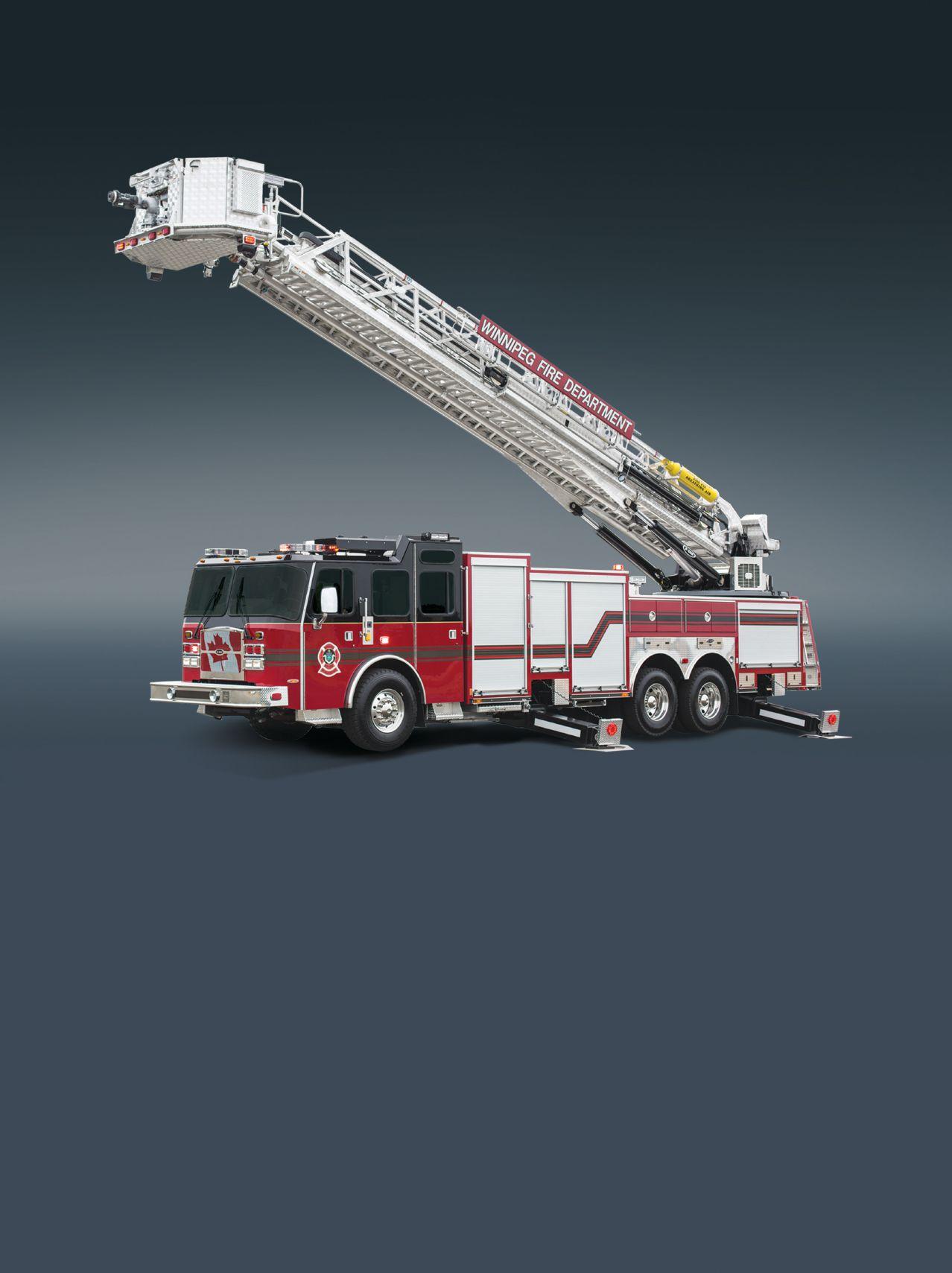
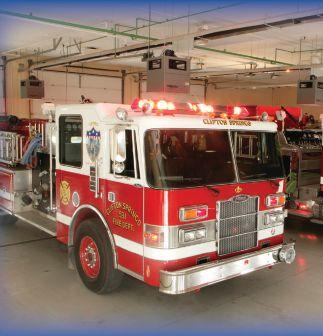
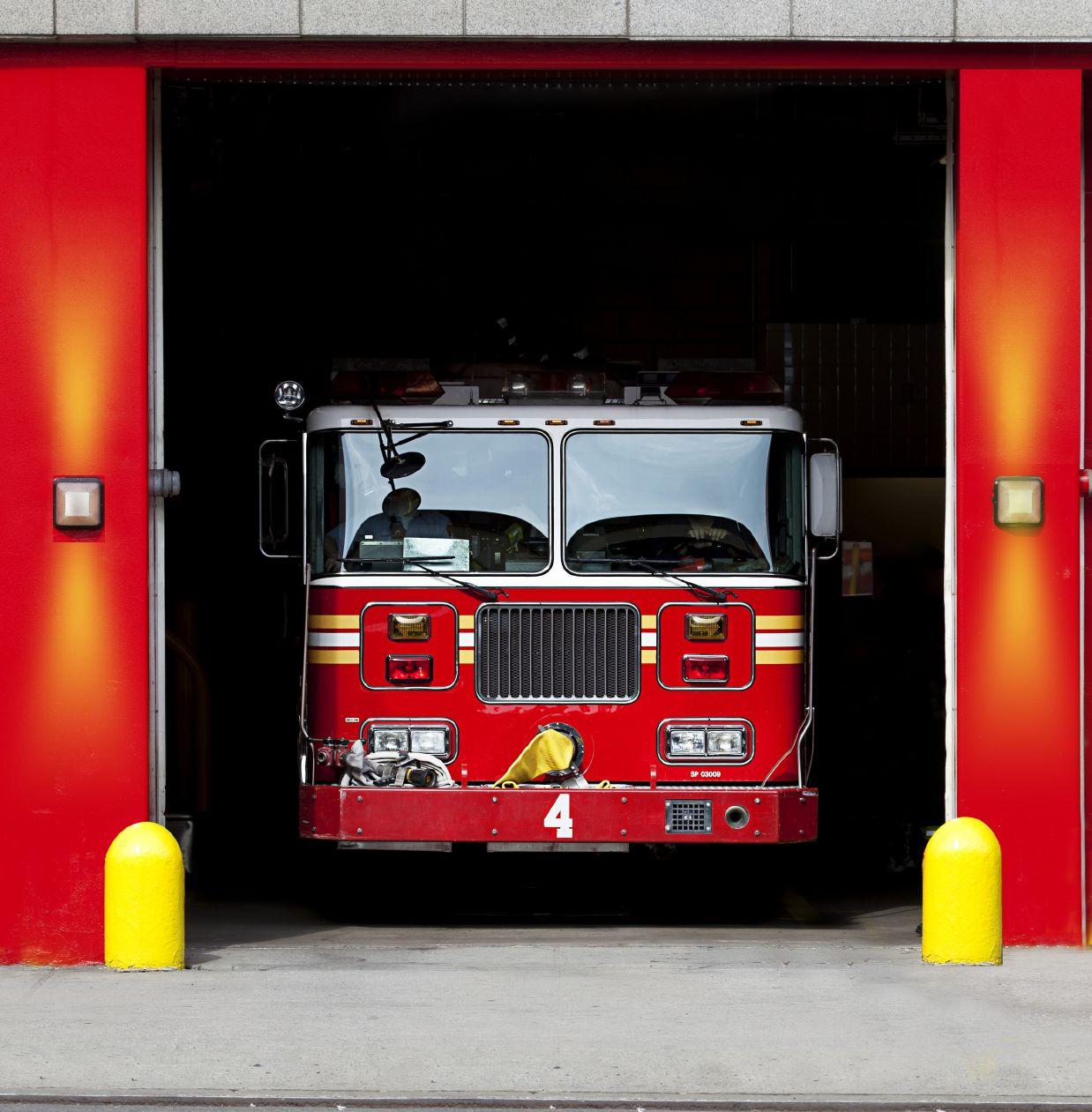
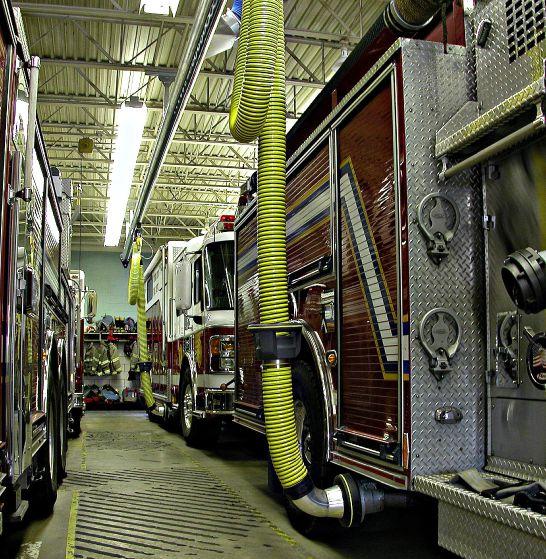
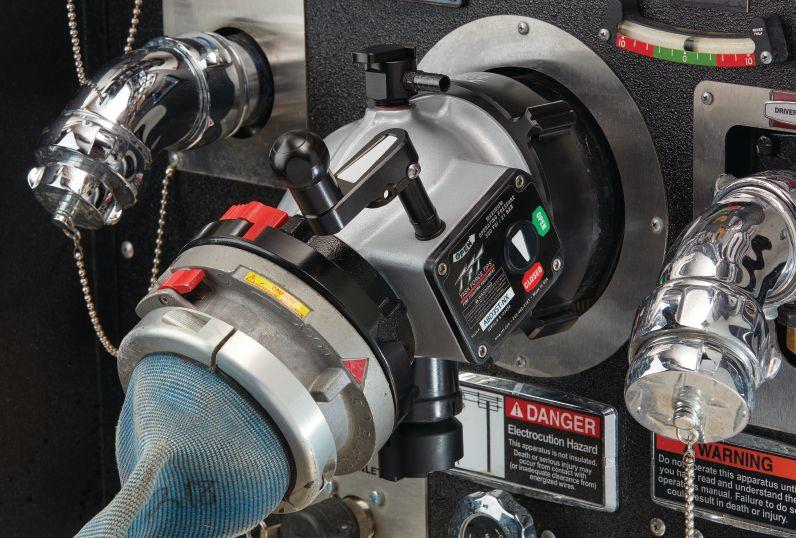
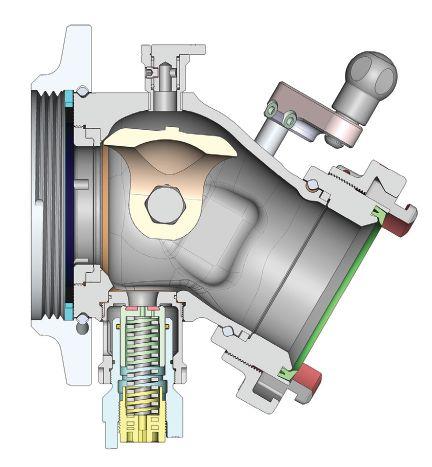
Angled front corners and perimeter step provides easier access to structures.
STRONGEST CAB IN THE INDUSTRY
Keep your crew safe with the cab that withstands over 5x the static roof load and over twice the frontal impact required by NFPA.
1305 LB DRY PLATFORM CAPACITY
The HP 100 Platform has a rated load of 1000 lbs of firefighters and 305 lbs of equipment.
UNMATCHED STABILITY
Rock solid stability, even when tested to one and a half times the rated load over the front with tires off the ground.
PROTECH
Enhanced safety features such as rear camera, ESC, OnGuard collision mitigation, front and side air bag options.
INTEGRAL TORQUE BOX CHASSIS
Manufactured from the ground up. A unique design that combines the chassis frame and aerial torque box to provide a solid foundation.
MORE STORAGE SPACE
Rescue style compartments on each side and up to 182’ of ground ladder storage with tank and pump.
2.5 TO 1 STRUCTURAL SAFETY FACTOR
Exceeds NFPA requirements, contributing to E-ONE’s proven safety record for over 35 years.
JACK DEPLOYMENT IN UNDER 45 SECONDS
When time is vital and space is limited, the criss-cross underslung outriggers deploy to a tight 15’6” spread in under 45 seconds.
INSTEAD OF BUILDING STANDARD AERIALS, WE BUILD REVOLUTIONARY ONES.
The E-ONE HP 100 Platform looks like a rock solid beast. And it acts like one too. It has the muscle to hoist 1,000 lbs of firefighters plus 305 lbs of equipment 100 feet into the air. It also has the toughest cab in the business withstanding over twice the frontal impact required by NFPA and over five times the static roof load. But the HP 100 Platform isn’t just a powerhouse, it’s also versatile. With criss-cross underslung outriggers that deploy to a tight 15’6” spread, the HP 100 Platform can go where other aerials can’t. It’s also quick with jacks that set up in under 45 seconds and variable speed control system that gets the platform into position fast. Whatever the job calls for, the E-ONE HP 100 Platform is up to the task!
10
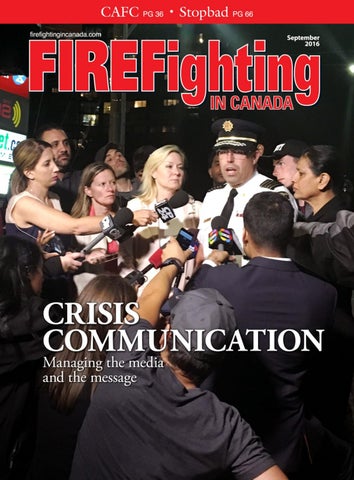
CRISIS COMMUNICATION
Rumours of murder-suicide and a meth lab were among the stories Mississauga Fire Chief Tim Beckett and other officials managed after a house exploded on June 28. By Laura King
20
REGIONAL RESPONSE
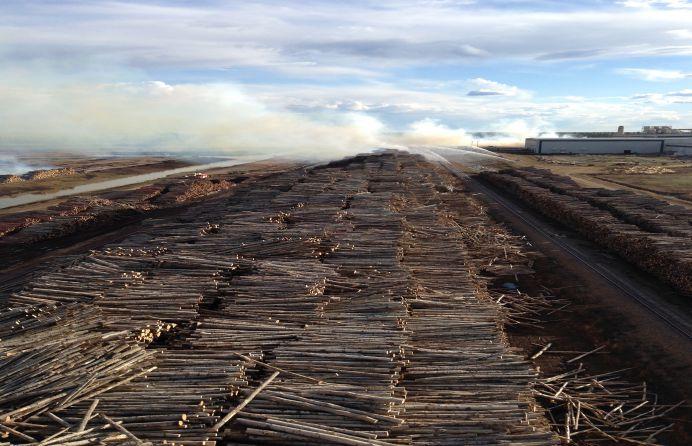
In the Peace Region, co-operation is a priority. This was evident on May 4, when a fire in a pile of waste-wood material spread to a log yard and threatened the Norbord Inc. oriented strand board plant in High Level, Alta. As Chief Rodney Schmidt writes, the key to fighting the fire was to get ahead of it and protect what was left.
26 ANSWER THE CALL
The CAFC launches its recruitment program – named Answer the Call – at its Fire-Rescue Canada conference this month. The program provides tools to help departments attract volunteers. By Maria Church
48
MARKETING SAFETY
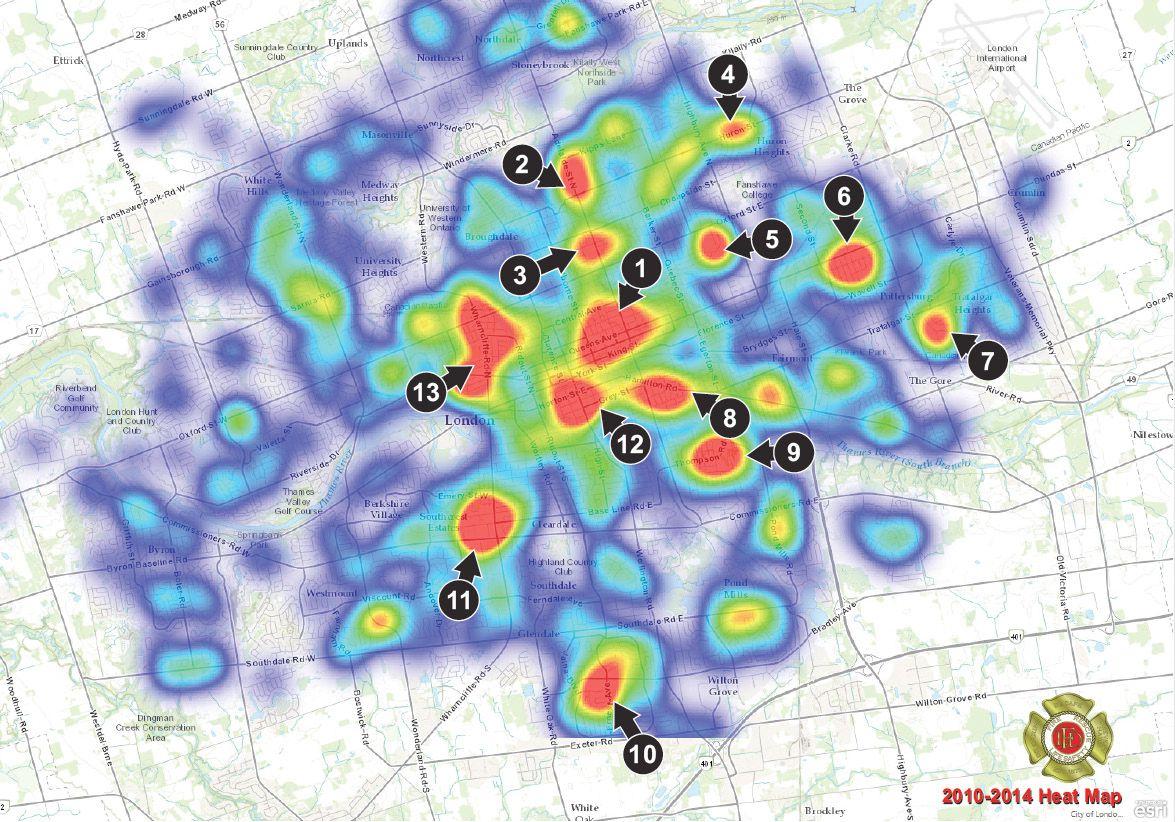
Marketers in the private sector have been tapping into the value of demographic data and locationbased analysis for years. Now, as Chief John Korbada explains, the London Fire Department in Ontario is using data, powerful analytical tools and GIS technology to drive decision making.
BY LAURA KING Editor lking@annexweb.com
I
COMMENT
Feeding the beast
tell a story when I talk to groups of fire officers about dealing with media – a story about being the courtsand-cops reporter for the Halifax Chronicle Herald.
I was on the early shift and did the usual round of police checks to find out what news had transpired overnight.
There was, of course, no Twitter or Facebook, texting or email, and no cell phones.
A body had been discovered, I learned from my calls, in a ball park, so I called our photo desk and headed out, trusty notebook in hand, and a pocket full of dimes.
In those days, the Herald had an afternoon edition. After I talked to detectives at the scene, I drove to the pay phone at MicMac Mall to call in the story. Murder, gang violence, pay back – details given to me on background but not for attribution.
Mississauga, Ont., news outlets had the names of the homeowners and sordid details within hours; myriad photos of the destruction and debris were online instantly; and speculation about the cause was rampant.
Mississauga Fire Chief Tim Beckett’s first call after learning about the incident was to corporate communications. Beckett knew from his media training through the Ontario Association of Fire Chiefs to feed the beast – give reporters something to chew on and let them know when their next meal was coming (the time of the next press conference).
ON THE COVER
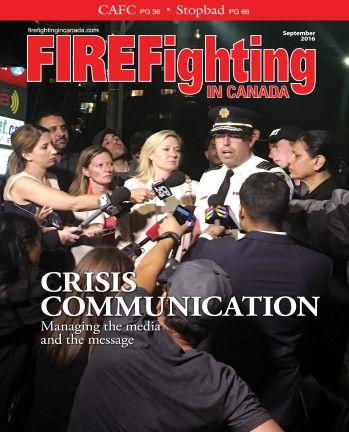
Fire Chief Tim Beckett with Mayor Bonnie Crombie (left) atalks to reporters at a 10 p.m. news conference after an explosion on June 24 levelled one home and damaged others.
See story page 10.
There were no other reporters – or anyone other than police officers and the Herald photographer – at the ball park.
The detectives talked to me because I had cultivated their trust. They knew my deadlines and gave me enough information for a story.
Later, in time for noon-hour newscasts, a press release went out.
There was, in 1986, the luxury of time; deadlines came a couple of times a day, and agencies such as police and fire could reveal only the details they wanted made public.
Not so much in 2016.
In the case of a June 28 explosion in
Beckett and others successfully managed their messages, declined to engage questions about nefarious activity and, in doing so, diffused chaos and soothed overwhelmed and distraught residents.
Still, as much as social media can cause headaches for first responders, it forces agencies to be transparent and fulsome in their dealings with reporters.
It’s OK to tell reporters the cause of an incident is being investigated, to ask for patience or to respect privacy; usually, media will comply, as long as there’s a nugget to put on the suppertime news or the outlet’s Twitter feed.
The trick is to feed that beast quickly, and often, before hunger pangs set in and it goes looking elsewhere for juicy tidbits.
@fireincanada
ESTABLISHED 1957
SEPTEMBER 2016 VOL. 60 NO. 5
EDITOR LAURA KING lking@annexweb.com 289-259-8077
ASSISTANT EDITOR MARIA CHURCH mchurch@annexweb.com 519-429-5184
NATIONAL SALES MANAGER ADAM SZPAKOWSKI aszpakowski@annexweb.com 289-221-6605
PUBLICATION MAIL AGREEMENT #40065710 RETURN UNDELIVERABLE CANADIAN ADDRESSES TO CIRCULATION DEPT.
P.O. Box 530, SIMCOE, ON N3Y 4N5
e-mail: subscribe@firefightingincanada.com
Printed in Canada ISSN 0015–2595
CIRCULATION
e-mail: lmalicdem@annexbizmedia.com
Tel: 416-510-5187
Fax: 416-510-6875
Mail: 80 Valleybrook Drive, Toronto, ON, M3B 2S9
SUBSCRIPTION RATES
Canada – 1 Year - $24.50 (with GST $25.73, with HST/QST $27.69) (GST - #867172652RT0001)
USA – 1 Year $42.95 USD
We acknowledge the [financial] support of the Government of Canada.
Occasionally, Fire Fighting in Canada will mail information on behalf of industry-related groups whose products and services we believe may be of interest to you. If you prefer not to receive this information, please contact our circulation department in any of the four ways listed above.
All advertising is subject to the publisher’s approval. Such approval does not imply any endorsement of the products or services advertised. Publisher reserves the right to refuse advertising that does not meet the standards of the publication.
www.firefightingincanada.com
PHOTO COURTESY
STATIONtoSTATION
ACROSS CANADA: Regional news briefs
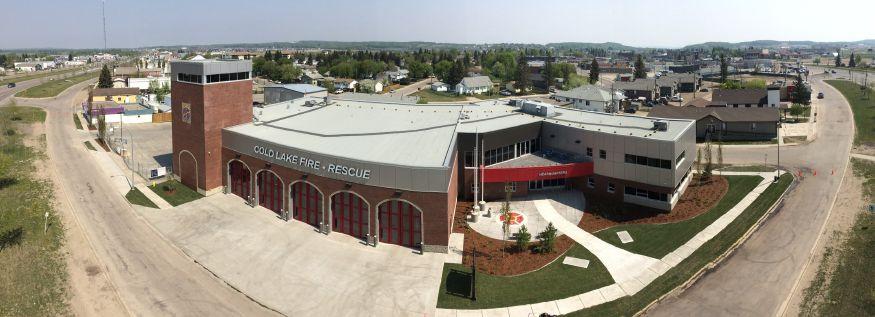
Cold Lake opens 10-bay fire station
Cold Lake Fire-Rescue’s new station opened in June and includes 10 truck bays and a dedicated emergency operations centre that is equipped with breakout rooms and an oversized kitchen for large-scale incidents.
Jeff Fallow, fire chief and director of emergency management for Cold Lake Fire-Rescue in Alberta, knows he’s a lucky man.
In July his department opened a brand-new, stateof-the-art fire station with features that read like a wish list: 10 truck bays, a training tower, dorm rooms for future growth, brick facade with red doors, and, most notably, a dedicated emergency
operations centre.
Cold Lake is a three-hour drive northeast of Edmonton, and four hours south of Fort McMurray, near the Saskatchewan border. While Cold Lake’s wildland-urban interface area lies further from the city boundary compared to Fort Mac’s, Fallow said wildfire is still a potential concern, and the new station is equipped accordingly.
“We now have a proper
THE BRASS POLE
Promotions & appointments
DAVID CUNLIFFE is the new fire chief for the Hamilton Fire Department in Ontario. Cunliffe, who has been acting fire chief since January, was promoted on June 27 after about 11 years with the department, including more than eight years serving
as the deputy chief responsible for community safety and operational services.
Brock Township Fire Department in Ontario promoted CHAD WILSON, MIKE GILLESPIE and WAYNE WARD in May. Wilson and Gillespie, both former Brock captains, were named district chief and chief training officer, respectively. Ward, former chief fire prevention officer for Brock,
room to manage a large-scale incident,” Fallow said. “It has a dedicated space, it has breakout rooms, it has a large table in the middle, its own washroom facilities. We built an oversized kitchen so that if we had to feed people we could as well.”
Cold Lake Fire-Rescue members moved into the new, $11-million station on June 1. More than 500 community members showed up to the
grand opening event on July 9.
“The building was packed and the feedback was very positive,” Fallow said. “We’ve been fortunate in Cold Lake to have quality fire [personnel], and we’ve always had good equipment, and now we have a station that goes with that.”
The 25,000-sqare foot station is built on the site of its predecessor, which was more than 60 years old and not a dedicated fire station. The department has one other station, which is also about 60 years old.
With a population of 15,000 and a service area of about 2,500 square kilometres, the department responds to between 330 and 340 calls per year. About 70 paid-on-call members staff the department, as well as four full-time members – Fallow, two deputies and an administrative assistant.
– Maria Church
Retirements
was promoted to deputy fire chief in charge of fire prevention.
SCOTT GRANAHAN has been promoted to fire chief for Meaford and District Fire Department in Ontario. Granahan joined Meaford in 2015 as a deputy chief responsible for fire prevention after serving in various roles for Brock Township and later Georgina, Ont., since 2005.
LEE SMITH, fire chief for Niagara Falls Fire Services in Ontario for the past nine years, retired in at the end of May after 28 years in fire. Smith, 54, served his entire career in Niagara Falls, holding positions of firefighter, fire prevention officer, captain, deputy chief and chief.
Free online course teaches cold-weather treatment
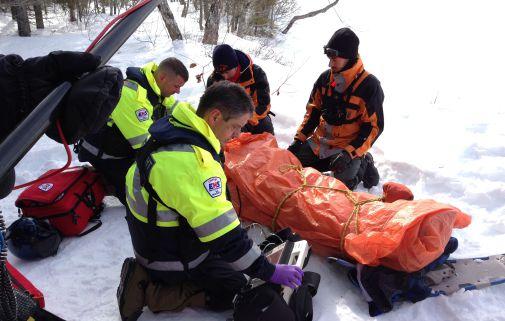
Baby It’s Cold Outside – no, not the popular Christmas song, rather the name of an online awareness and education program that teaches searchand-rescue personnel as well as first responders how to handle patients suffering from cold injuries.
“Around the world we find statistically that a lot of severely hypothermic victims die during or shortly after rescue, and that’s largely because subjects need to be treated very carefully,” said program manager Ted Rankine, TV producer and water-safety advocate.
“Something as simple as lifting them out of the water vertically, for someone with a very cold heart, would cause enough of a blood shift to put them into cardiac arrest,” Rankine said.
Baby It’s Cold Outside – www.bicorescue.com – is free and open to everyone; it provides rescuers with information to properly deal with hypothermic patients, including removal from the cold, rewarming, and packaging for transport.
Gordon Giesbrecht, a professor of thermophysiology at the University of Manitoba, is the researcher behind the course material. Program participants learn from Giesbrecht’s educational video modules and then apply the knowledge to simulated real-life situations. Those who complete the two- to four-hour program receive a certificate of completion.
“The knowledge we’re trying to convey is quite basic,” Rankine said. “Eighty per cent of treatment is
Baby It’s Cold Outside teaches participants about how rescuers should properly treat severely hypothermic patients. PHOTO
keeping patients horizontal and being extremely gentle, but (responders) have a number of decisions that they have to make, and that’s the core learning that we share.”
Canada’s National Search and Rescue Secretariat funded a large portion of the program, Rankine said, while various
other agencies contributed, including the Search and Rescue Volunteer Association of Canada.
Rankine said Baby It’s Cold Outside will roll out a public education portion this fall to help increase awareness about cold-injury prevention.
– Maria Church
Department cracks down on missing smoke alarms
Cornwall Fire Services in Ontario has noticed a spike in the number of smoke alarms purchased for residential units. The motivation behind the spike is money.
Cornwall, a city of 47,000 people 100 kilometres southeast of Ottawa, has one of the highest rates of fires per
MIKE MOLLOY, fire chief and community emergency management co-ordiantor for Meaford and District Fire Department in Ontario, retired on June 30. Molloy, a member of the department since 1995, became fire chief in 2010.
RON PRATT retired after 18 years of service as fire chief for
10,000 people in the province, says Fire Chief Pierre Voisine.
The city passed a bylaw in March that allows the department to invoice homeowners when firefighters install or replace smoke and carbon-monoxide alarms in buildings.
“We give occupants 24
La Ronge Regional Fire Rescue Services in Saskatchewan. Pratt, 64, began his 39-year career as a firefighter in Springside, Sask., in 1977, and became chief there in 1979. Almost 10 years later, Pratt moved to La Ronge, where he started a junior firefighter program.
STEVE FOURNIER, fire chief of the Perth Fire Department in Ontario, will retired on Sept. 30
hours to go to the local store and buy the specific smoke alarm [that was installed in their homes] and return it to us to cancel the invoice,” Voisine said. “The invoice is the incentive to change people’s behaviour – to get people to go to the store and buy the alarm and maybe not
after 26 years in the fire service. Fournier was a firefighter, captain and deputy chief of the Drummond North Elmsley/Tay Valley Fire Department for 14 years before joining Perth as fire chief.
Last alarm
THOMAS
RALPH EICHHORN, Deputy Fire Chief for Lac Ste. Anne County Fire Services –
install it, but at least return it to us.”
After running for just six weeks, 83 per cent of occupants or building owners whose units required the department to install an alarm bought a replacement alarm within the specified time.
– Maria Church
Mayerthorpe Fire Department in Alberta, died from Lymphoma on May 1 at 50 years old. Eichhorn began his 34-year service for Lac Ste. Anne County as a junior firefighter with the Cherhill Fire Department; he then served with Sangudo Fire Department for 10 years, and finally Mayerthorpe Fire Department. He is the longest serving member of the joint fire service.
STATIONtoSTATION
BRIGADE NEWS: From departments across Canada
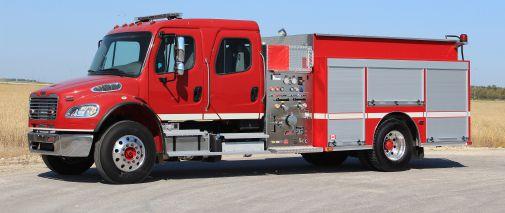
Lintlaw and District Fire Fighting Association in Saskatchewan, under Fire Chief Greg Smith, took delivery in March of a Fort Garry Fire Trucks-built pumper. The unit is built on a Freightliner four-door M2 chassis and powered by a 300-hp Cummins ISL engine and an Allison 3000 EVS transmission. It features a 1,250-gpm Hale DSD pump, and an 800-igallon Propoly water tank.
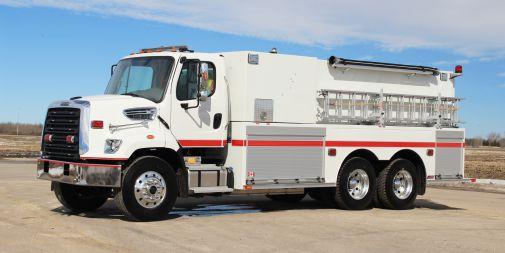
Siksika First Nation Fire Department in Alberta, under Chief Tom Littlechild, took delivery in March of a Fort Garry Fire Trucksbuilt tanker. Built on a Freightliner 108 SD chassis and powered by a 330-hp ISL engine and a six-speed automatic transmission, the unit features a 750-gpm Hale MBP pump, a 3000-igallon Propoly tank, a Kussmaul Pump Plus 1000, FRC LED scene lights, and air actuated dump chute control.
Starland County Morrin Fire Department in Alberta, under Fire
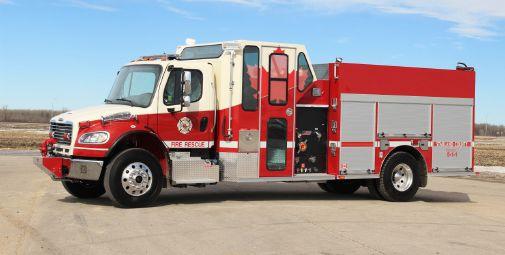
Chief Darcy Davidson, took delivery in April of a Fort Garry Fire Trucks-built pumper. Built on a Freightliner M2 106 chassis and powered by a 350-hp ISL engine, the unit features a 1,250-gpm Darley PSP pump, a 1,000-igallon Propoly water tank, Akron FireFox monitor, FRC Q-65 LED 900 body-mounted scene lights and Sigtronics Intercom System.
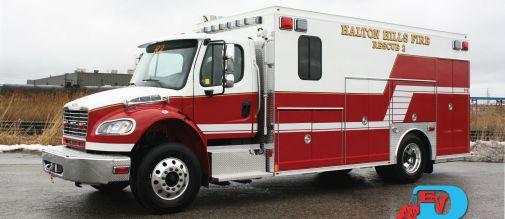
Halton Hills Fire Department in Ontario, under Fire Chief Brent Marshall, took delivery in May of a Dependable Emergency Vehicles-built rescue. The unit is built on a 2016 Freightliner M2-106 commercial chassis, 18.5-foot walk-in rescue body. It features seating for two in the cab and four in the body, a 12,000pound front bumper winch, Honda portable generator, FRC Evolution LED scene lights and Whelen warning lights.
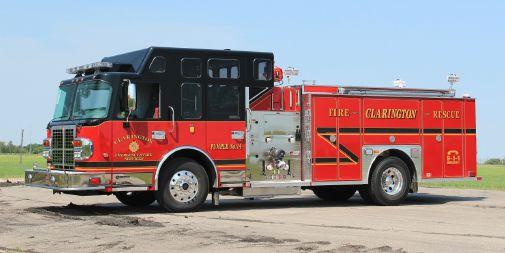
Clarington Emergency and Fire Services in Ontario, under Fire Chief Gord Weir, took delivery in June of a Fort Garry Fire Trucks-built emergency rescue pumper. Built on a Spartan Gladiator chassis and powered by a 450-hp Cummins ISX12 engine and an Allison 4000 EVS transmission, the unit features a Hale DSD1250 pump, a 500-igallon Pro-Poly water tank and a Foam Pro 1600 Class A foam system.
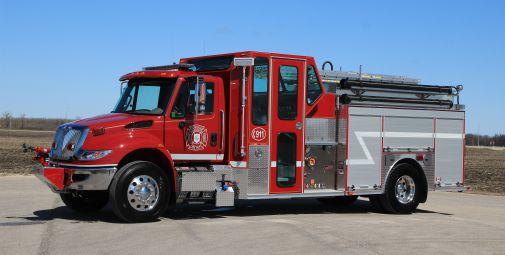
La Ronge Regional Fire Rescue Service in Saskatchewan, under Fire Chief Keven Thomson, took delivery in May of a Fort Garry Fire Trucks-built pumper. The unit is built on an International 4400 chassis and powered by a 330-hp Navistar N9 engine and an Allison 3000 EVS transmission. It features a 1,250-gpm Darley PSP pump, a 1,200-gallon Poly water tank, a Waterous Advantus 6 A/B foam system and an Akron Fire Fox bumper turret.
SIKSIKA FIRST NATION FIRE DEPARTMENT
LINTLAW AND DISTRICT FIRE FIGHTING ASSOCIATION
HALTON HILLS FIRE DEPARTMENT
CLARINGTON
Safe Fleet unites the most innovative and proven technologies from a collection of industry leading companies. The combination of our expert field sales and technical teams offer unmatched service and support with dependable and rugged Elkhart Brass nozzles, monitors and valves. FRC’s lighting equipment, governors and gauges offer the safest, most dependable products in the industry. Innovation and expertise drive FoamPro to deliver concentrate on demand and with precision. And emergency responders trust the safetyinspired, easy-to-operate ROM doors equipped on their apparatus.
Partner with Safe Fleet, and be confident you’re choosing dependable, industry tough products for your integrated system needs. www.safefleet.net+1.816.293.9040
CRISIS COMMUNICATION CRISIS COMMUNICATION
COMMUNICATION COMMUNICATION
Managing the message and the media during a significant event requires full co-operation among agencies
Mississauga Fire Chief Tim Beckett was on his way home on Tuesday, June 28 – after a day of incident management 300 training – when Deputy Chief Jamie Zimmerman phoned unexpectedly.
Zimmerman told Beckett there had been a call for a house explosion that affected four properties; assistant chief Shawn Matheson was on his way to the scene.
Beckett switched on his department radio, heard the description of a massive explosion that had levelled at least one house and damaged others, and turned around.
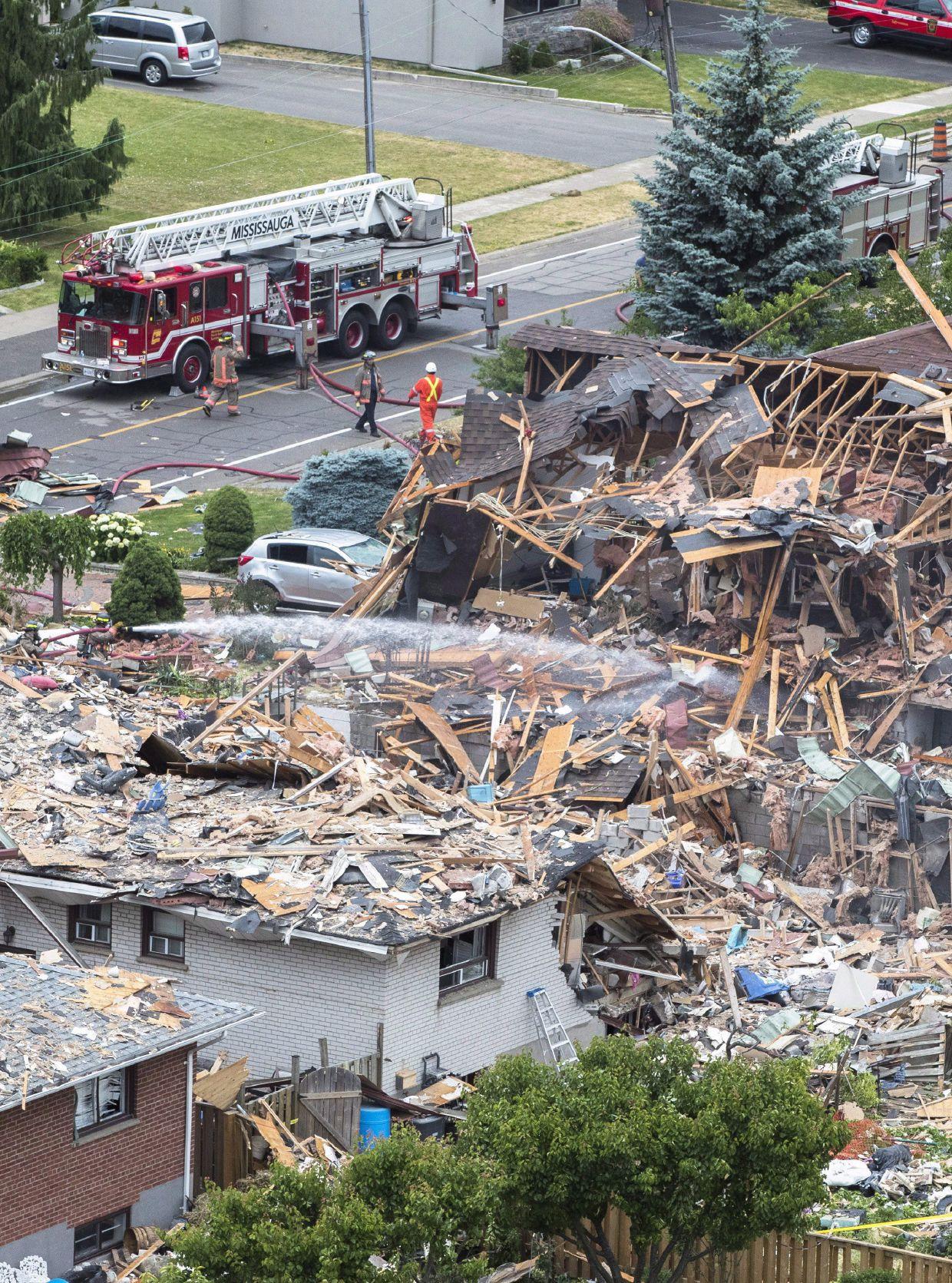
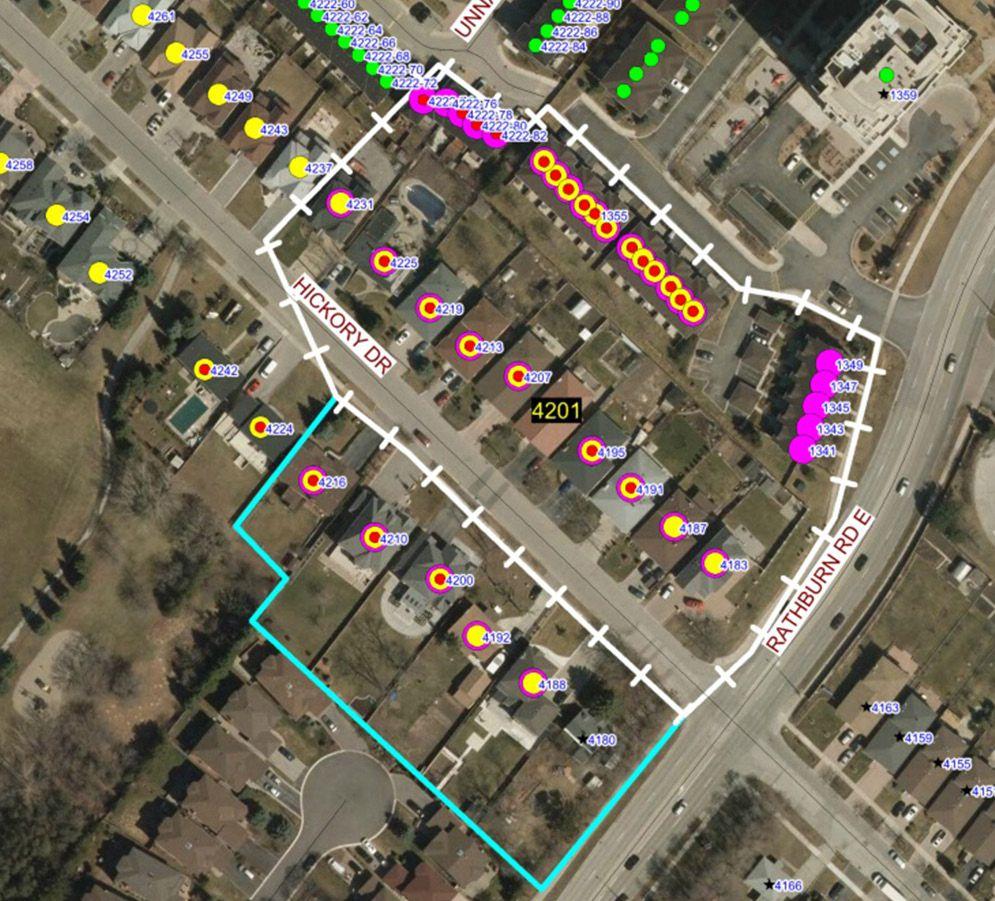
What happened over 72 hours was eerie and complex – an incident that affected people living at 783 addresses in Canada’s sixth-largest city, a multi-agency response, two fatalities (one a convicted killer), disturbing notes found in the street, rumours of murder-suicide and a meth lab, a full-scale communication strategy, and fire and police investigations. Under Ontario’s Fire Protection and Prevention Act, explosions are the purview of fire services; Mississauga Fire and Emergency Services (MFES) was the lead responding agency, and Beckett was the overall incident commander.
By LAURA KING
Communication among agencies, with reporters, and with displaced residents was the critical component that kept a bizarre situation – with myriad media competing for the story behind the story –under control.
Beckett’s next call was to Ivana Di Millo, Mississauga’s director of communications. Either Di Millo or a senior communications advisor was at the chief’s side for the duration of the incident, as was, for the most part, a scribe.
The explosion happened at 4201 Hickory Dr., in the heart of a long-established residential neighbourhood on Mississauga’s east side. The home was destroyed, a giant mass of debris. Thirty-seven homes near or adjacent to 4201 had building-code orders placed on them; four were later demolished. Homes up and down Hickory Drive were affected – glass was blown out, garage doors buckled. Windows – and, remarkably, their frames – in a nearby 18-storey apartment building were shattered. Four weeks after the explosion, residents of 37 addresses remained displaced.
No state of emergency was declared. While the explosion was enormous, there was little fire. Eight trucks responded to the twoalarm call.
Beckett arrived at Hickory Drive at about 5:15 p.m. and was briefed by Platoon Chief Al Hills, the operations-sector commander. It was rush hour on Tuesday and reporters from TV networks, all-news radio stations, websites and wire services wanted footage.
For Mayor Bonnie Crombie, elected in November 2014 and successor to Hazel McCallion – who had been Mississauga’s chief magistrate for 36 years – the 4:22 p.m. explosion was her first emer-
LEFT More than 700 addresses were affected by an explosion on June 28 in Mississauga that flattened one home and damaged many others.
ABOVE Mississauga Fire Chief
Tim Beckett, centre, Mayor Bonnie Crombie, left, and Police Chief
Jennifer Evans focus on a message of safety during a press conferences.
PHOTO
gency incident since taking office, and it was important, Becket said, that the mayor have a presence; “She and the local councillor did a great job being there for the residents. We ensure she was part of the media scrums.” Beckett’s rule: never out-media your mayor.
Beckett brought Mayor Crombie to the scene and joined Peel Regional Police at their command post in a mall parking lot. Fire had established its temporary command post nearer the explosion site. By this time, one fatality had been confirmed, but not yet made public. Police Chief Jennifer Evans was on her way to the scene from a conference in Niagara Falls, Ont.
Unified command had been established near Hickory Drive and a more comprehensive command post was later set up at a nearby fire hall.
A communications war room was created at the civic centre at 5:30 p.m.; a community centre was opened to affected residents at 5:45 p.m.
Social media platforms were buzzing with news of the explosion.
Having participated in media training through the Ontario Association of Fire Chiefs, Beckett knew it was crucial to manage the message, quash rumours, give reporters clips and quotes, and establish a protocol for information dissemination.
The first press conference was set for 6:15 p.m., in time to make the end of the supper-hour TV news shows.
“I’ve got Shawn working on our messaging with Ivana for the press,” Beckett said. “We briefed the mayor; Chief Evans and I determined that I would lead the press conference because it was a fire event. We worked very closely, and Ivana and the police media person worked very closely. It was about consistency of the messaging and who was going to say what.”
Everything, Beckett said, was scripted. Police, fire and corporate communications agreed what to say, and what not to say.
“It’s about anticipating the questions,” Beckett said. “We know right off the bat that somebody’s going to say ‘What caused this?’ So I actually started it off saying, ‘I know many of you are going to be wanting to know what the cause is. Please don’t ask that question because the answer is going to be the same every time; we don’t know the cause, we’re still in an operational mode.’ And then we never got that question.”
A subsequent press conference was set for 10 p.m. In the meantime, an alerts page was activated on the Mississauga.ca website, and a red banner with information and details for residents was posted. News releases were issued at 7:15 p.m. and 9 p.m.
During the evening, the command post moved to the fire hall.
“We started to work our whole unified command,” Beckett said, “and that was key as far as managing the incident – having that strong unified-command presence where police had all of their people sitting at a table, and fire had all our people sitting at a table, we were able to interact right then and there, and then we brought in building officials, Enersource hydro, Enbridge gas, all our different agencies, a [mapping] person . . .”
Personnel with the Office of Fire Marshal and Emergency Management (OFMEM) arrived on scene led by Jeff Minten, an experienced, media-savvy investigator.
“Any questions to do with the investigation were all going to be answered by Jeff,” Beckett said. “My messaging was really about where the evacuation zones were and what we were doing for the community.
“One of the questions we couldn’t answer at the 6 o’clock news conference was what was the impact on the area; I couldn’t give them numbers of residents but we talked in
addresses. The best we could put together was around 700 addresses.”
The next press conference would be at 8 a.m. Wednesday.
To ensure consistent messaging, Beckett refrained from tweeting – that was left to corporate communications – although he did retweet some posts. Senior communications advisor Carley Smith said ensuring the same messages came from politicians, city staff, and responders helped to keep residents and reporters on track.
“Every time there was a news release issued we’d develop key messaging to go out on social media,” said Smith.
Hyperlinks in press releases – 12 releases over seven days – were crafted into tweets; city personnel simply clicked the hyperlinks and the tweets appeared in their Twitter feeds.
Wednesday morning, the story had new legs: word of handwritten letters found on the street outside 4201 Hickory Dr. declaring financial trouble and a sense of doom had been posted on social media Tuesday evening. And news outlets were reporting
The explosion at 4201 Hickory Dr., damaged nearby homes in all directions. Occupants of 37 addresses were still out of their homes in late July.
Low Level Strainer Now Includes Floating Option at NO CHARGE ...
WHOLESALE FIRE & RESCUE
BC, AB, SK, YT, NWT, NT (800) 561-0400
ABC FIRE & SAFETY
MB, SK (800) 665-1250
DEPENDABLE EMERGENCY VEHICLES ON (800) 268-0871
M&L FIRE & SAFETY ON (866) 445-3473
SPI HEALTH & SAFETY Northwest ON (800) 465-6822
L`ARSENAL QC (800) 266-7610
MICMAC FIRE & SAFETY SOURCE Atlantic Provinces (800) 667-3030
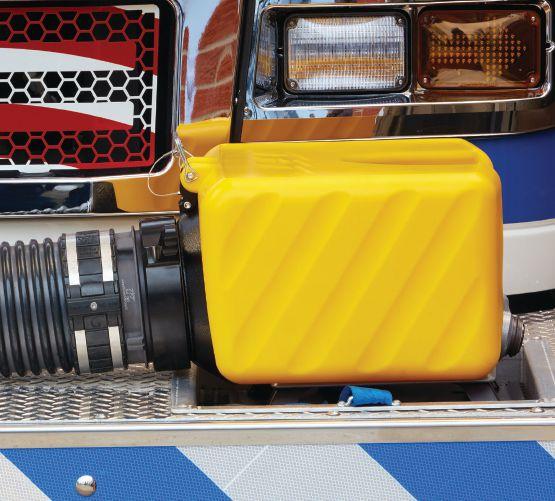
Flotation device allows TFT high volume low-level strainer to collect clean water from ponds, lakes and rivers. The strainer inlet, made of hard anodized and powder-coated aluminum, hangs 18” below water level to avoid sucking surface air and bottom debris. Capable of supporting up to 30 ft of hose, the strainer extends well beyond safety ledges of residential ponds.
The clog-resistant stainless steel filter has over twice as much flow area as a 6” hose keeping friction loss down to 0.5 psi (1” Hg) at 1500 gpm and reducing the potential for air vortexes. Oversized sealed ball pivot allows 45° range of hose angle without constricting the flow path.
Rugged polyethylene float is yellow for high visibility and nests compactly over the strainer for minimal storage space. Float removal is not necessary for low level use, although a tethered latching hinge pin allows the float to be removed or installed instantly if desired. WATER LEVEL 18" e allows TFT volume low-level strainer to collect clean water from
• Available With or Without Jet Siphon
• Supports Up to 30 Feet of Hose
• Clog-resistant Stainless Steel Filter Keeps Friction Loss to 0.5 psi (1” Hg) at 1500 gpm
• Sealed Ball Pivot Allows 45° Range of Hose Angle
• Rugged High Visibility Polyethylene Float Nests Compactly Over Strainer
• Tethered Latching Hinge Pin Allows Float to Be Removed or Installed
that public documents showed the home was owned by 55-year-old Diane Page and her husband, Robert Nadler, 56; Nadler had been convicted of the bludgeoning, strangling and stabbing death of a friend in 1982.
The 8 a.m. news conference would be challenging; even more so with the presence of CP24’s Cam Wooley, a well known, well liked and respected former Ontario Provincial Police sergeant turned reporter.
“He drove a lot of that media conference in terms of the questioning,” Beckett said. “He holds a lot of clout. His big focus was really on the investigation, so Jeff Minten talked about how it was still early and how he was systematically going to be working through things, that it remains an investigation by the fire marshal’s office, because everybody was talking about the fact that this guy was a murderer and asking if it was a meth lab.
“Jeff’s messaging was good: ‘We have no preconceptions of anything because we don’t want to be clouded with that in terms of our judgment, and we’re going to work from the outer perimeter in toward the blast zone.’ ”
On Thursday, June 30, police announced that a second body had been found, but did not identify it as Nadler.
“Thursday at noon we met with police,” Beckett said. “We did a very scripted media scrum where I went in and it was not going to be a free for all, so I walked up and I introduced everybody and I said this is the way this briefing is going to go; I’m going to speak, Mayor Crombie is going to speak, I said we will have the fire marshal’s office speak, and then we’ll have Sgt. Josh Colley speak from the police. We specifically put Josh at the end because there were lots of rumours about [Nadler’s] background and they were going to clarify.
“I remember Josh saying, ‘I do not want to stand there for half an hour answering the same question in the same way,’ so I said, what I’ll do is end up jumping in and controlling who would speak and then indicating the final question.
“I thanked the residents for their patience, co-operation and understanding, all the allied agencies working with us, and then I thanked the media for being good partners, and that started to shift some of the attitudes; it was strategic because I wanted them to continue to respect the privacy of the residents. We were having public meetings with the residents but we weren’t allowing media in. I had said I can’t prevent you from showing up but I don’t want you at the doors. They had their choppers flying overhead and they were up in
the apartment buildings.”
Two issues were at play: privacy for the affected residents at the 2 p.m. neighbourhood meeting, and Nadler’s past.
“Peel Police announced that we had the second body [Thursday] and the male deceased was identified on the Friday,” Smith said, “but people were already asking because they knew the house was owned by this guy and this girl, and there were reported letters going around and that’s what Josh was working on, the management of all the rumours and speculation. We left all that up to the police, but it was co-ordinated so we knew what they were going to say and how they were going to approach it.
“Every question [reporters] would ask, everyone would answer the same way so eventually they stopped asking the same question.”
Those messages were critical, Beckett said.
“We made sure we didn’t play into rumours about a meth lab or murder-suicide; we didn’t play into their speculation or necessarily answer their questions; we stuck to the script and our key messaging. Before we went into any press conference there was always key messaging that was developed.”
Still, some reporters showed up at the 2 p.m. community information session; by then, most residents had been allowed back to their homes – 69 addresses remained affected.
“We didn’t hold a press scrum,” Beckett said. “I kicked off that event and left within half an hour while some other people did their thing and I went out and talked to the press and told them this is what’s happening inside, this is what’s going on, so that was a bit of a reward for them for respecting the residents’ privacy and the fact that they weren’t being allowed in.”
Keeping residents informed led to a smooth return-home process, but there was more to the strategy.
“The key to some of our success with the public was really about under promising and over delivering,” Beckett said. “If we thought we were going to have people back into their homes Sunday night but didn’t have definitive confirmation on that, we didn’t tell them ‘We think you’ll get back in Sunday night.’ We told them that more than likely we’ll get a hold of you Monday to let you know when we will get you in, so then when we did call them Sunday afternoon and tell them that at 7 o’clock Sunday evening you show up here and we’ll get you back into your home, they were
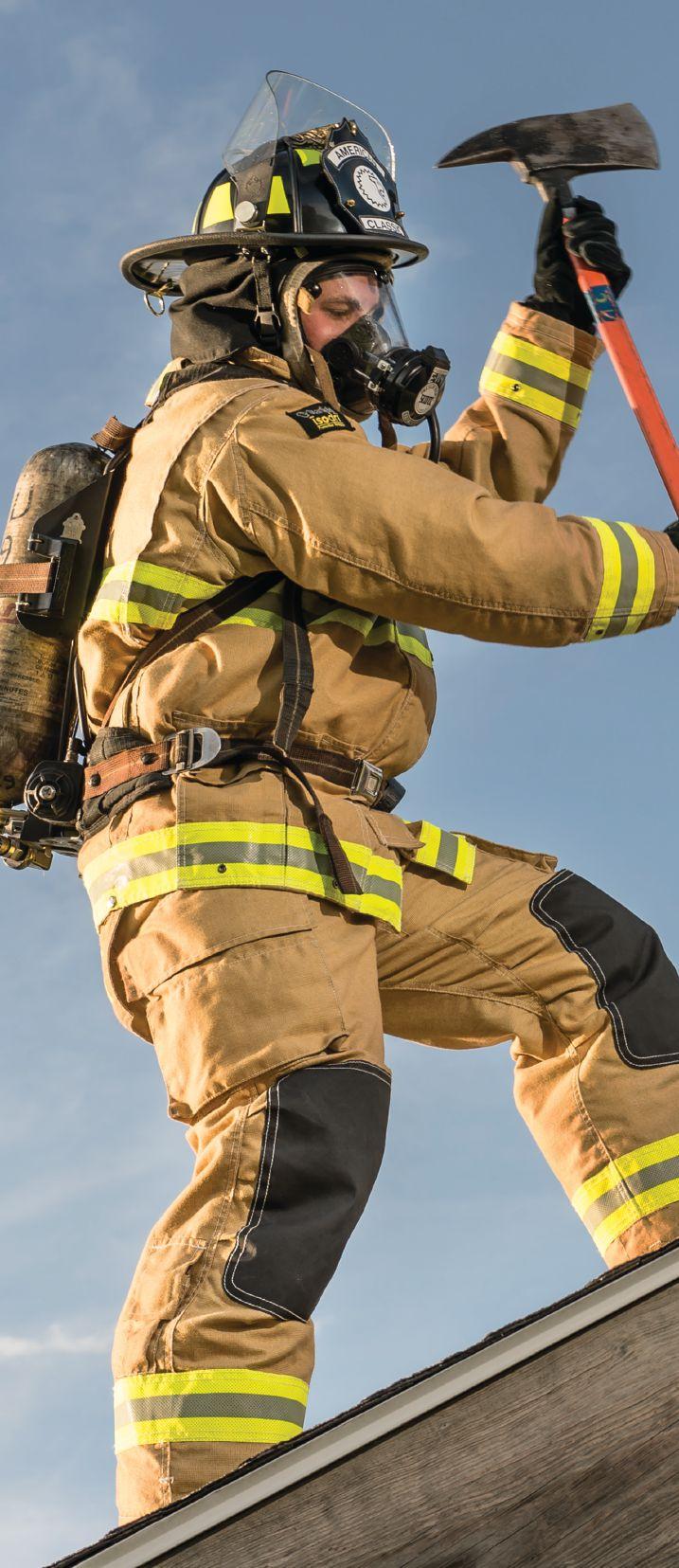
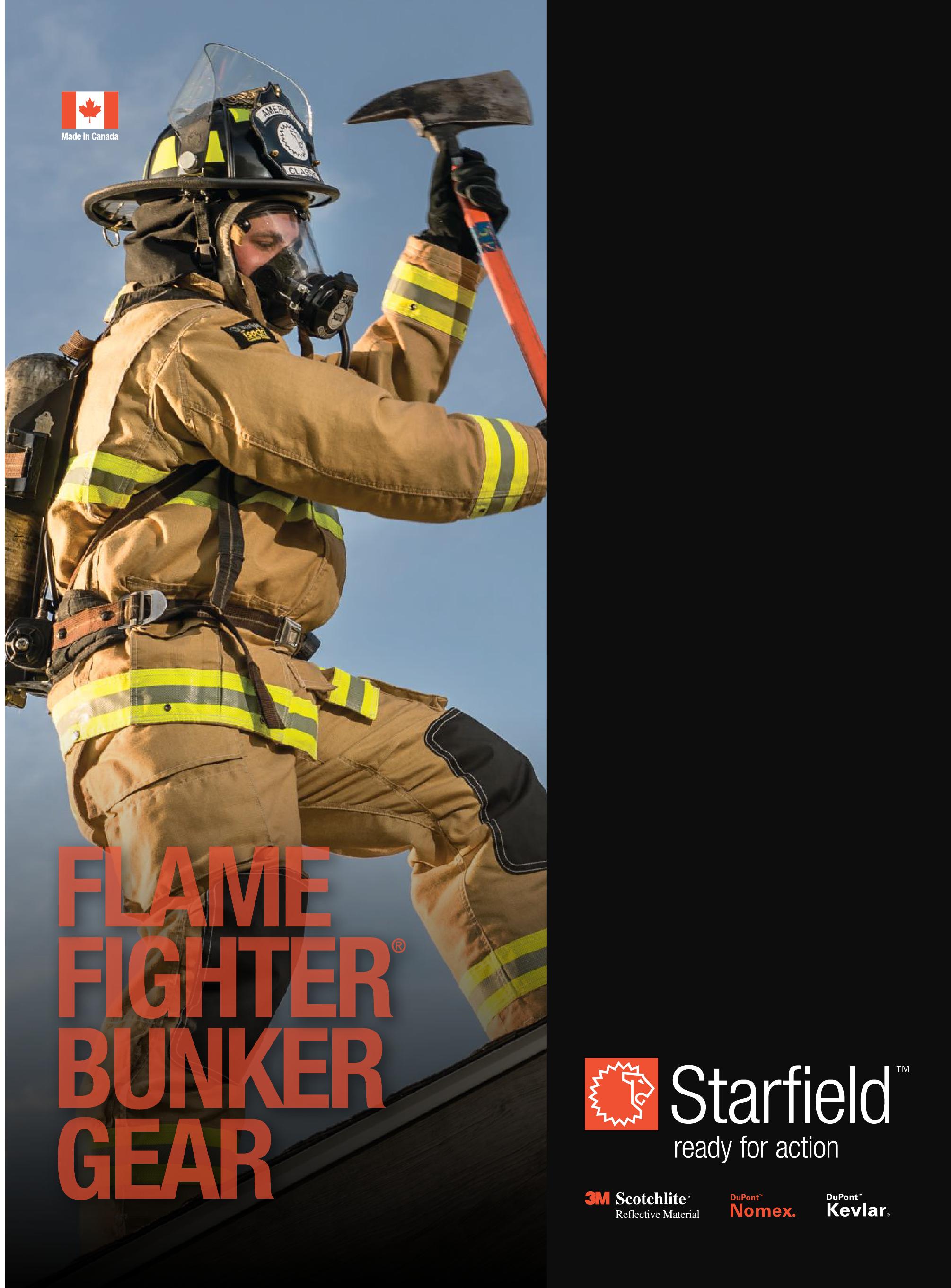
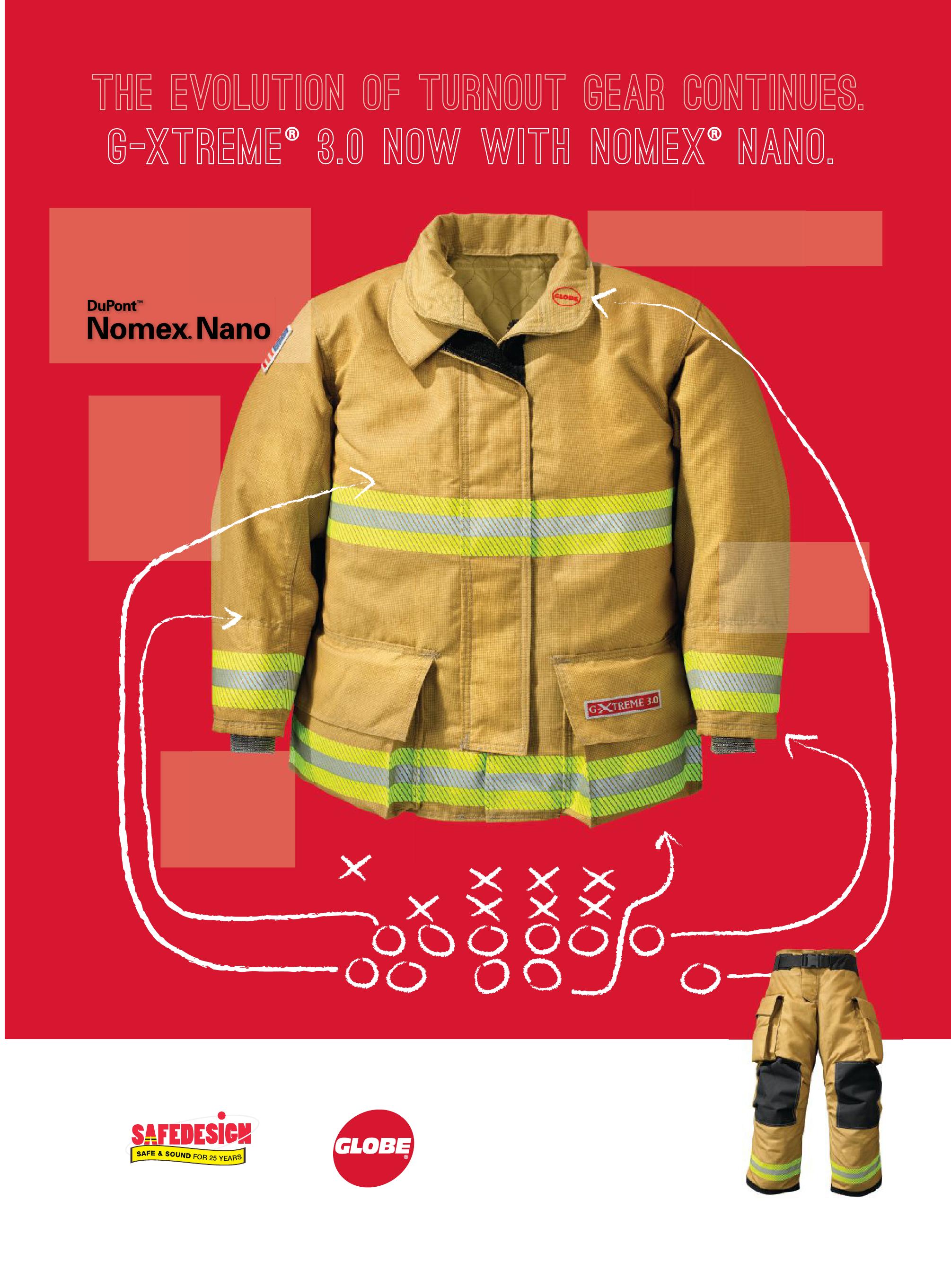
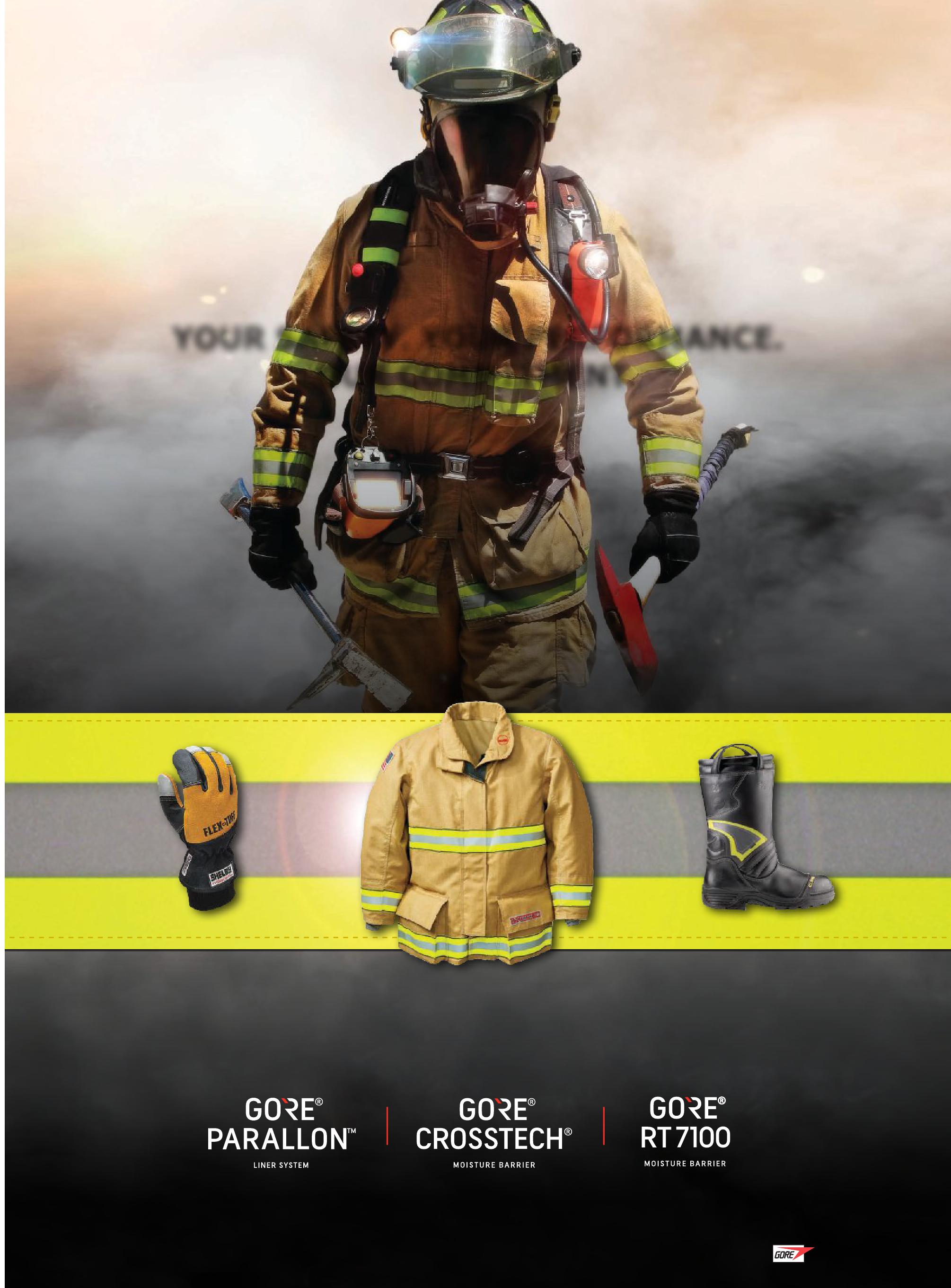
Loaded with safety, comfort and mobility features for unmatched performance, Flame Fighter® bunker gear offers a variety of custom outer shell fabric, liner system, hardware and pocket options to fit your specific needs. This hard-working gear also includes the following game-changing Starfield LION fire protection technology:
• Patented IsoDri®* moisture management reduces the water absorbtion and helps gear dry faster between runs
• Exclusive Ventilated Trim allows vapor to be released, reducing the risk of scald burns
• Thermashield™ provides an additional layer of liner material in the upper back and shoulders to protect against compression burns
• Move-N-Hance™ crotch gusset increases mobility by reducing bunching, twisting and pulling
• Flex Knee™ for easy, natural movement
• Stay Rite™ sleeve wells integrate the sleeve’s liner into a full-length wristlet so that when you reach, the entire sleeve moves with you
For more information about Flame Fighter bunker gear, contact your Starfield LION sales representative at 1.800.473.5553 or visit us online.
absolutely delighted. We worked hard managing this so that we could get them back early.”
At first, getting in touch with residents was challenging; affected families were asked to register with a police hotline. Cell numbers were also collected at the initial meeting at the community centre, which enabled the use of robocalls for further communication. Later, firefighters went door to door to let others in the neighbourhood know about a community meeting at a nearby school.
There were, however, some blips.
Communication with residents of the apartment building in which windows and frames were damaged were inadvertently left out of the loop, and a CityTV reporter caused some headaches.
“This was a key piece that we lost focus on,” Beckett said of the apartment. “The blast came right down an alleyway, there was nothing to prevent it. It came through and went right down and drove right into the middle, and took out windows, not just the panes, the frames – from the second floor right to the 18th.
“Thirty-two residents had prohibited occupancy and we had been told they were being looked after by their condo corp – but we realized on Monday that we had essentially dropped the ball on that piece of communication and we needed to make it right.”
A meeting was scheduled for Monday night, July 4, and Beckett admitted the oversight.
“We knew it could be hostile,” he said, “so the strategy was that I would start to speak and the first comment I made was ‘I owe you an
apology, I know that some of you are concerned that we haven’t communicated with you. I know some of you have taken your frustration out on a number of people in this room. None of the people in this room deserve that frustration directed toward them; you direct that frustration toward me, because at the end of the day I had that call to make.’ I owned it, I ate it, and it calmed everybody down.”
Over the next few days, the neighbourhood was divided into zones and residents whose homes were safe were allowed back; others were escorted in to retrieve belongings. Many homes required repairs. Insurance adjusters and building officials were brought on scene.
By Tuesday, July 5 – a week after the explosion – MFES was still holding the scene and reporters were chomping at the bit for fresh footage.
Beckett agreed to meet a CityTV reporter and allow her to take footage near the Hickory Drive command post.
“I get home and I’m watching City and she’s reporting live and she’s standing . . . right here,” Beckett said, indicating a fenced-off area between Hickory Drive and the damaged townhouse block.
“She had gone through fencing,” Beckett said. “So much for my day.”
While it’s not clear whether a gate had been left ajar, Beckett knew he needed to do some damage control to satisfy other reporters. A media tour of the site, with Mayor Crombie, was scheduled for Wednesday afternoon, July 6.
On Thursday, July 7, the command post shut down and briefing cycles that had run daily – at three, six, 12 and then 24-hour cycles –were scheduled weekly.
Mississauga’s website, and its non-emergency 311 number continued to provide details for affected residents. Robocalls continued through July 21.
For Beckett, there were four key elements to the successful communication strategy.
1. Managing media expectations. “That was important for me,” Beckett said, “and that meant timeliness of messaging and co-ordination of the messaging among all the agencies.”
2. Co-ordinated news conferences. “So that the police weren’t doing their own over here while we’re trying to do one over there,” Beckett said. “We were the spokespeople for the event and it was the right agency doing the speaking.”
3. Treating media with respect. “If you were difficult with them they were going to be difficult with you,” Beckett said. “Giving them some information and identifying them as partners, and giving them a bit of reward now and then for being good corporate citizens, I think helped.”
4. Developing key messages ahead of time and sticking to them. “So that even though [reporters] asked questions, the answer wasn’t necessarily an answer to the question they asked, but it was a part of the message we wanted to get out.”
The Hickory Drive site was released by MFES on July 6; all properties were returned to property owners or their insurance companies. As of Aug. 8, cause of the explosion had not been determined.
Regional RESPONSE
Mill fire demonstrates need for departments to be in sync
By RODNEY SCHMIDT
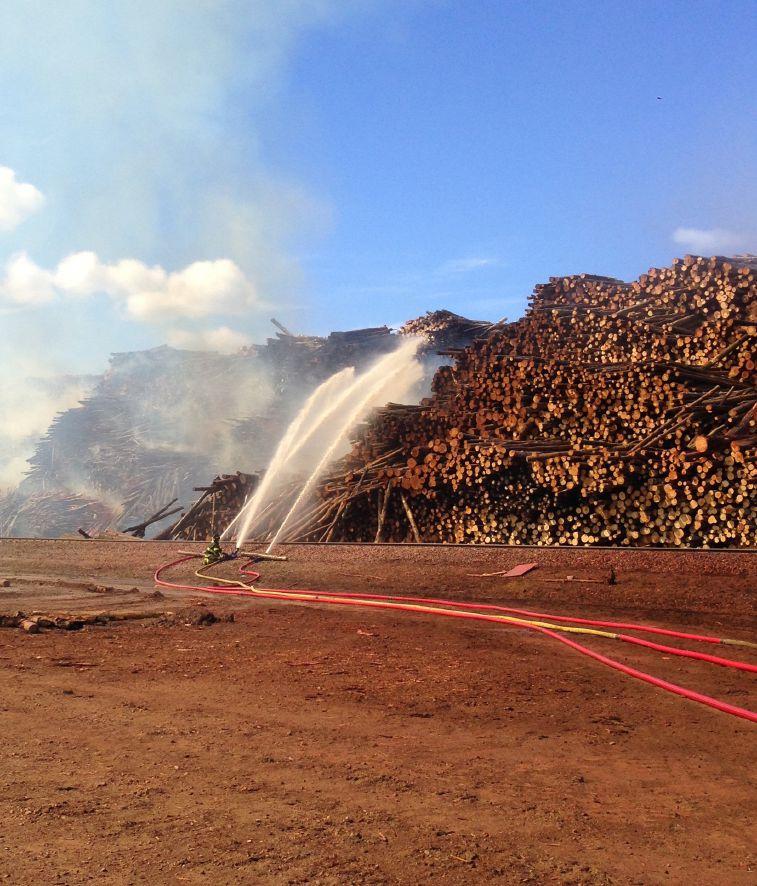
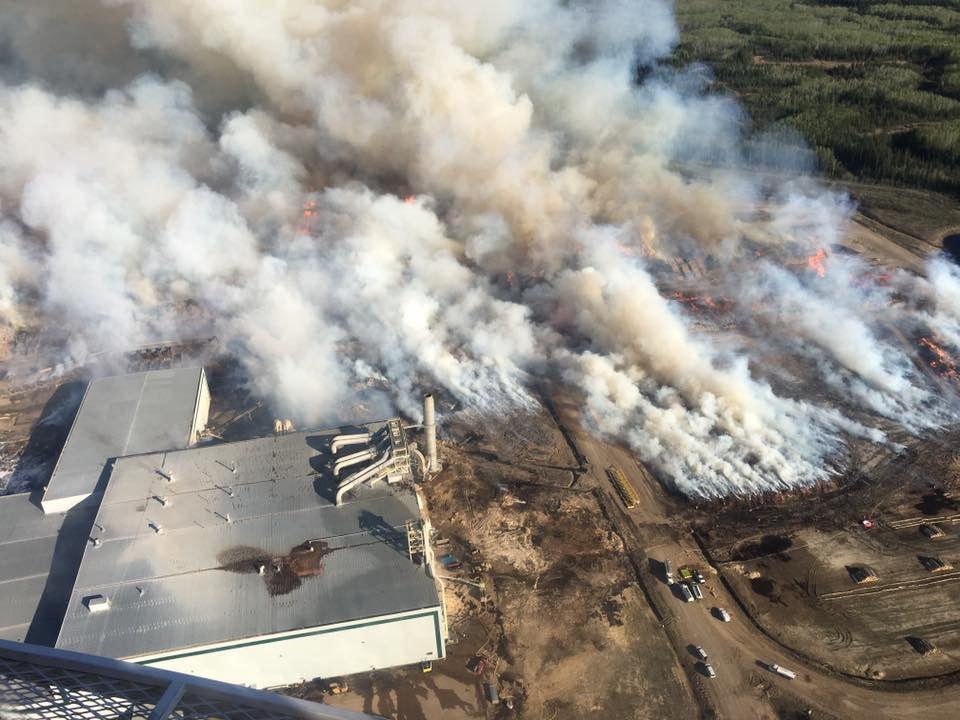
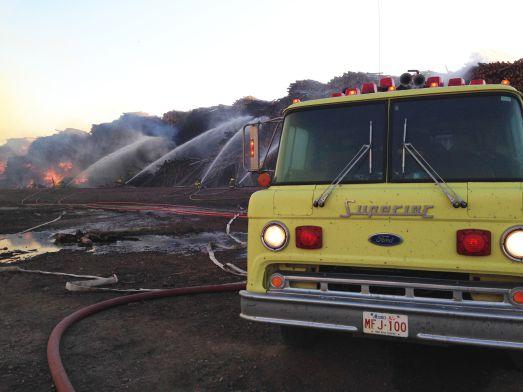
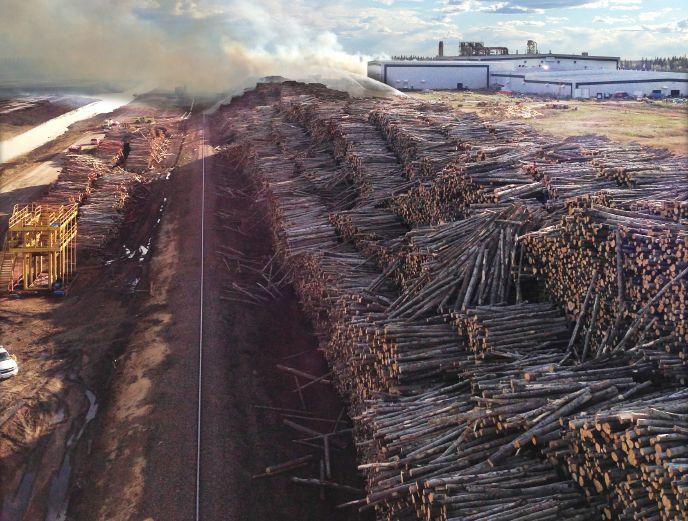
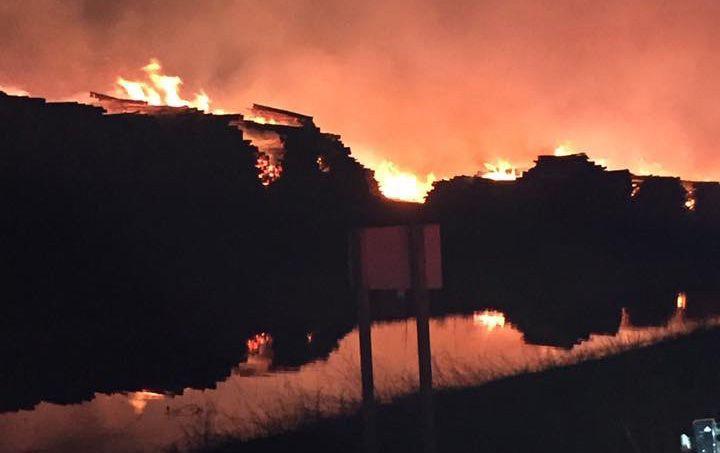
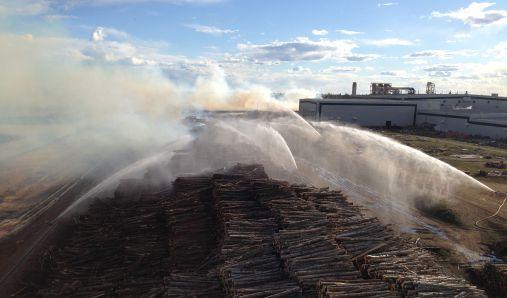
In the Peace Region of Northern Alberta, regional co-operation is a top priority for fire departments. This was very evident on May 4, when a fire in a pile of waste-wood material spread to a log yard and threatened the Norbord Inc. oriented strand board plant in High Level.
One of the largest plants in North America, Norbord’s High Level operation produces approximately 860 million square feet of OSB annually. The building alone covers almost 16 acres: the south-end roof is more than 30 metres (100 feet) high; the log yard is almost 1.6 kilometres (one mile) long.
■ THE INITIAL CALL
At 14:15 on May 4, the High Level Fire Department received a call for an outdoor fire at Norbord, approximately five kilometres south of town. The initial dispatch stated that the fire was in a wood-waste pile (known as a hog pile). The HLFD responded with Squad 1, Tender 1 and Aerial 1. On arrival, Deputy Chief Colin Buchan, announced command and saw a fire isolated to the south side hog pile. The wind, being light from the southwest, was spreading the fire toward the plant.
The initial action plan was to attack the fire head on. Aerial 1 tagged up to a hydrant on the east flank of the fire and was going to use a master stream to contain the fire. While charging the hydrant, the wind changed direction and increased. Moving from full visibility to zero visibility, crews backed out of the area, abandoning hoses
ABOVE AND RIGHT
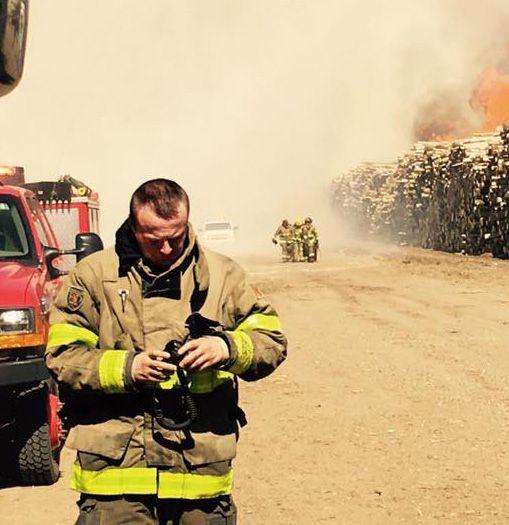
Firefighters from departments across northern Alberta went to High Level to help battle a fire at the Norbord oriented strand board mill in May. A regional agreement drawn up by area departments in the spring speeds up mutual-aid requests.
PHOTOS
in place and moving trucks to a safe area. Reports began coming in that the wind had pushed fire into the mill, and that fires were burning inside the plant. Inside, Norbord’s emergency response team members began battling fire in the wood room and the dry bins (seven storeys in the air.) Deputy Chief Buchan called an all call for all members, and I was notified of a major incident.
■ THE REGION SPRINGS TO ACTION
At 15:00, I was teaching at the Northern HEAT conference in Peace River, 300 kilometres south of High Level, and received a text from officers in High Level about the fire. I immediately contacted dispatch and asked for Buchan to phone me as soon as possible. He called immediately and said the log yard was fully involved and there were fires in the plant; all High Level apparatuses were on scene with all available members. Alberta Agriculture and Forestry - Wildfire Management was on scene with air tankers and helicopters and they were trying to contain the fires in the plant. Buchan requested whatever resources I could muster.
I called dispatch and asked for all available mutual aid from our closest neighbors.
High Level is a remote community of approximately 4,000 people with a wellequipped fire department – 35 members, 10 apparatuses and support units. The closest mutual aid department is in Fort Vermilion, 85 kilometres away, and at that time could not provide immediate assistance. The next closest? La Crete, 110 kilometres away. La Crete dispatched an engine and tender as well as an engine from its rural station in Blue Hills, about 130 kilometres away. The next dispatch went to Manning Fire Department, which sent an engine company from 200 kilometres away. The High Level Fire Department was on its own for a while.
Meanwhile in Peace River, fire instruction came to a halt and officers from various departments were briefed on the situation unfolding in High Level. The night before, discussions were held about the possibility of sending crews to Fort McMurray to help with the wildfire affecting the city, but the mill fire became a priority as our own region needed assistance.
Capt. Mike Frayne from the Peace River Fire Department and Deputy Chief Trevor Grant from the County of Grande
Prairie Regional Fire Service (CGPRFS) took charge of ordering resources. Peace River/County of Northern Lights sent a tender with a crew as well as a support truck and CGPRFS sent and engine company followed by a tender from the (City of) Grande Prairie Fire Department. Meanwhile, I began the trip back to High Level with our three other HLFD members. Hotel rooms and suitcases abandoned in Peace River, we left the training site with bunker gear and SCBA in Squad 3 with lights and sirens for 300 kilometres. En route, we were receiving updates about resources being sent from fire departments across the region, as well details of a local state of emergency being declared for Mackenzie County in the area of the plant, with homes being evacuated.
■ ARRIVAL AT THE SCENE
I arrived at the scene at 17:35 and saw what I thought to be our worst-case scenario: our aerial unit was flowing into the mill dry bins on the seventh floor; and the log yard was fully involved, with air tankers doing retardant drops and helicopters trying to keep it within the plant site. I arrived at the command post (which was being operated out of an engine – our mobile command center/hazmat unit was due for delivery the next week) and met with the deputy chief. Buchan’s report was simple: the crew had to abandon the log-yard fire fight due to limited resources. The log yard was being dealt with by tankers and the structural resources were concentrating on stopping fire in the mill.
Members of Manning Fire were on scene fighting fires on the northeast corner of the plant, and members from High Level and La Crete were working in the mill on interior fires. Another crew comprising members from High Level and La Crete, and wildfire staff, was off site sprinklering a farm, and evacuation areas were being held by the RCMP. I told Buchan to maintain his present course until I could complete an assessment, and I met with the wildfire incident commander (unified command was in place), Amanda Ashton, and we went up in a helicopter to take a look at the entire scene.
Getting in the air to see the entire scene was paramount. While en route back to High Level, another wind shift occurred and, from the air, a picture began to emerge of the best strategy to save the plant site. A considerable portion of the log yard, including the large portal cranes, had not yet been affected and this was where we were going to make our stand. After checking the area – including a fly over of the houses under threat – I landed, called Buchan and the other officers and crews arriving, and began handing out the battle plan. I transferred command at 19:02, assigning Buchan as plant-protection division; other resources, as they began arriving, were assigned to the log yard to carry out the plan.
■ BATTLE FOR THE LOG YARD
I had studied log-yard fires: with two of the largest log yards in Canada in our response area, it is paramount that we
After an assessment, Incident command opted to divid the area into four sections: log-yard west, log-yard east, log-yard south, and plant protection.
A decision was made to protect what wasn’t already burning and ensure the two cranes that feed the plant remained undamaged so the mill could resume production once the fire was out.
know how log yards burn and how to fight them. The key is to get ahead of the fire and protect what you have left. The worst plan is to be a moth to a flame and fight the fire. At least initially.
That is exactly the plan we laid out – a flanking position on two sides: protect the mill and at all cost; protect the two cranes that feed the plant. If the cranes collapse, the mill is down for months and the community would experience a massive financial impact.
The initial plan was to create four divisions: log-yard west; log-yard east; log-yard south; and plant protection. Engine companies were assigned to the four areas.
This was a big-water exercise, the likes of which our department had never experienced. Initially, on scene, we had five engines available for tasking – two from La Crete, two from High Level (including a 50-foot aerial), and one from Manning. The High Level aerial was put into place on the log-yard west division to protect the log pile closest to the cranes; this was a tall order, as the log piles are more than 18 metres (60 feet) high and very wide. The aerial had a good water supply, using a 125 millimetre line from a hydrant that worked at 1,100 kpa pressure flowing over 8,800 litres per minute. The High Level aerial extended its boom and began flowing onto the log pile, along with two ground master streams – a Bitzfire nozzle and a solid-stream ground monitor. The
Blitzfire nozzle was placed in a fire break that was approximately 15 metres wide, and put on oscillate to strengthen the fire break in the main pile. This truck, and the others, would not shut down until sometime Saturday.
Next into position was the Manning engine, also going in the log yard west. The Manning engine also tied to a hydrant with a 125 millimetre (mm) line, and used a master stream to the south of the pile directly against the fire edge to slow the advance of the fire. This truck was replaced with the High Level engine midway through the first night.
On the opposite side of the log pile in log yard east, the two La Crete engines were put into place across the pile from log yard west division. Both engines deployed Blitzfires and master streams as well as 65 mm handlines to protect the cranes and stop fire spread to the main pile. The challenge on the east side was water supply: there was a deep water source along the length of the east log yard road, but no hydrants. A system was put into place supplying one engine with two, four-inch portable trash pumps from the High Level tender and one 65-mm portable pump from La Crete to supply one engine. The second engine was supplied by a tender shuttle. The shuttle had tenders from High Level, La Crete and Peace River/County of Northern Lights, and was joined the
Continued on page 58
AXTION® Back and AXTION® Sleeve let you make all the right moves
Answer the Call
National program aims to draw new volunteers to Canadian fire services
By MARIA CHURCH
TOP The Canadian Association of Fire Chiefs launches its recruitment and retention program at its annual conference in St. John’s in September. A web page for every volunteer department in Canada and standardized promotional material will help to make volunteer firefighting a recognizable brand.
Look around at the faces during your next station training night. That guy – how long has he been here? And him –is he close to retirement? Are there any new faces? How many are women, or represent visible minorities?
If your department is like many in Canada, it’s struggling to recruit in general, never mind attract particular demographics. There’s a plethora of reasons for declining interest in fire services: fewer fires mean fewer exciting calls; new standards for training make the job safer, but more of a time commitment for volunteers; and increasing
demands on fire services’ budgets leave little room for promotional material.
Whatever the reason, the Canadian Association of Fire Chiefs (CAFC) has developed a tool to help market your volunteer department to potential recruits in your community – to help you sell your service, for free.
The association is launching Canadawide recruitment program called Answer the Call in September at its national Fire-Rescue Canada conference in St. John’s. The program, CAFC president Paul Boissonneault said in an interview, is the result of a clear directive from membership.
FIND THE SCBA SOLUTION THAT FITS YOU BEST AT WWW.DRAEGER.COM/SCBA DRÄGER SCBA SOLUTIONS: OVER 45 POSSIBLE COMBINATIONS TO FIT YOUR NEEDS.
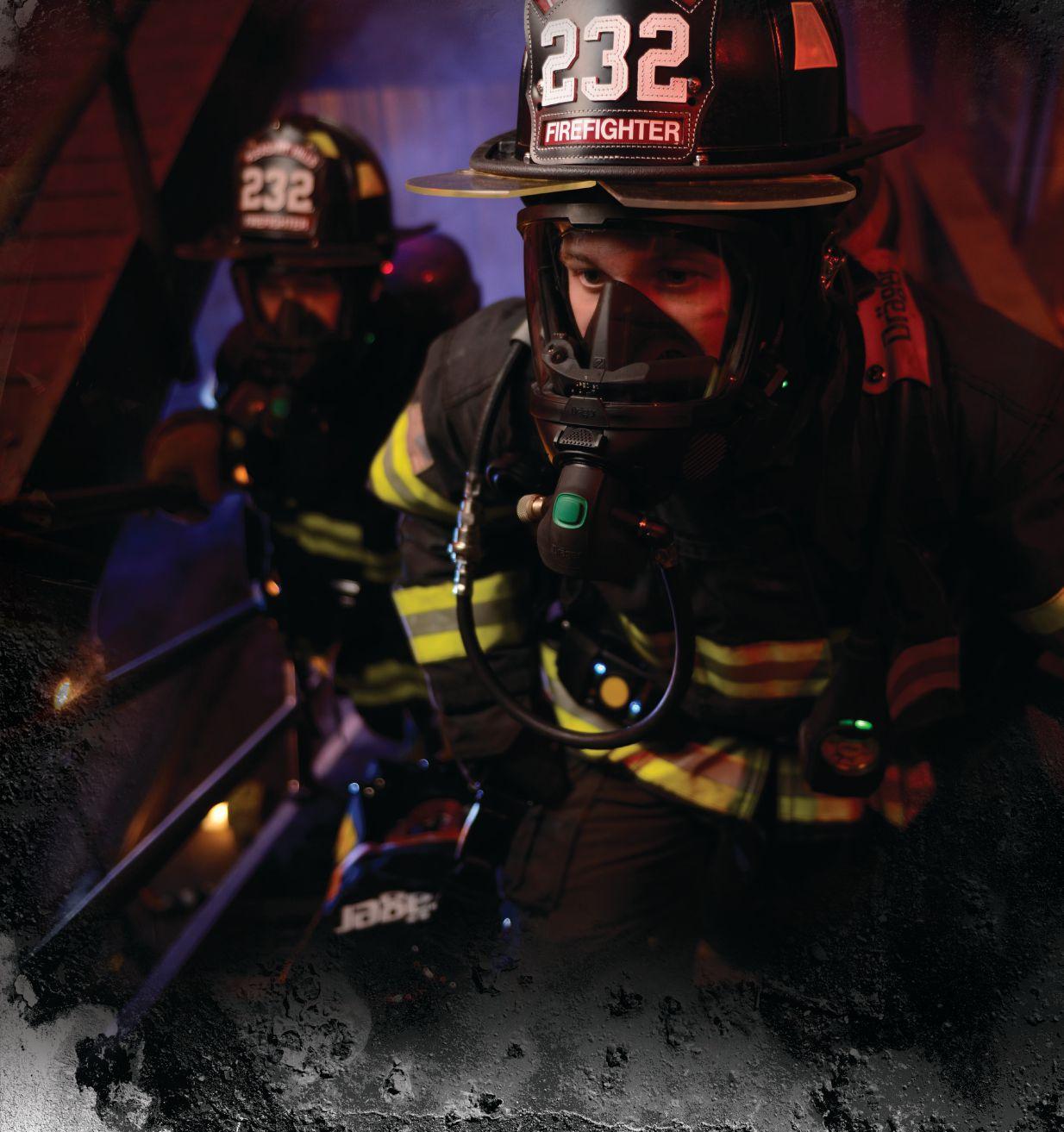
Just as every fire is demanding, so are you and your needs. That’s why our newest series of SCBA solutions can be configured over 45 different ways. And that’s why they are ergonomically engineered to be more stable and comfortable, intuitively designed, and held to the highest standards, so that you can perform more effectively, with less fatigue, and be ready to respond anytime.
“Recruitment is a problem that exists from coast to coast to coast,” Boissonneault said. “The sustainability of volunteer fire departments is a huge issue that Canadians and public-safety services are going to have to face; this became a priority.
“Through conversations with our staff at the CAFC, our NAC members [national advisory council – comprising presidents from provincial chiefs associations] and our board, it became very apparent that the CAFC could act as a conduit for this program to be rolled out nationally,” he said.
After two years in the works, the website www.????. ca will launch in
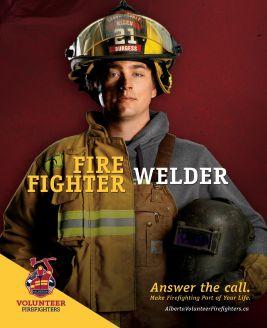
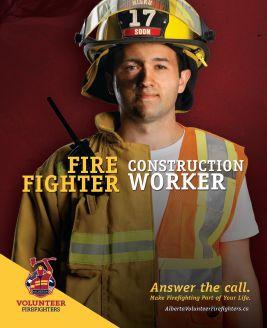
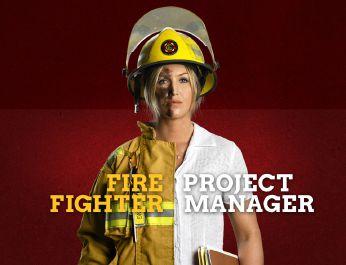
We wanted people in our communities to truly understand that we’re not just firefighters – that’s one half – we’re also welders, carpenters, teachers, lawyers.
Peter Krich, president, Alberta Fire Chiefs Association
September as the central platform for Answer the Call. The website will use modern marketing techniques such as striking images, logos, and videos. Departments across the country – even those that are not CAFC members but want to participate in the program – will receive individual usernames to login and create their own searchable pages within the branded website.
People who happen upon the website – or are drawn there from social media, email or word of mouth – will be able to search for volunteer departments in their areas and view opportunities to get involved.
Vince MacKenzie, CAFC executive member and the fire chief in Grand Falls-Windsor, N.L., heads a six-member working group that is behind the Answer the Call program. MacKenzie said he views recruitment and retention in the volunteer fire service not as a problem, but as a process.
“It’s a process that we as fire departments have to learn to instill in our day-to-day operations just like the process of responding to fires,” he said.
The Answer the Call program, MacKenzie said, hands fire services a simple, uniform process that is proven to work. The CAFC’s program is essentially a Canada-wide version of a similarly named program that has been running in Alberta for about five years.
Peter Krich, the fire chief in Camrose, Alta., and president of the Albert Fire Chiefs Association, is the program’s creator. Almost six years ago, Krich was part of a brainstorming group to address concerns about recruitment and retention in Alberta’s volunteer fire services.
A province-wide study into the causes of volunteer shortages found three distinct barriers: lack of support for the volunteer firefighter from employers and from families; administrative challenges such as time commitments; and lack of awareness of what it means to be a volunteer firefighter. Awareness, Krich said, was the most prevalent concern.
“People understand that when they call 911 and they call for help from the fire department, a big red truck shows up and guys jump out of the truck in bunker gear and they do the job. But who are those individuals?” he said. “People in your community typically don’t know that [volunteer firefighters] have other jobs and they have other lives.”
Awareness was the problem, so branding became the solution, and the fist step was to create a logo. A marketing company designed the Answer the Call logo as a firefighter holding a raised axe with the Alberta landscape in the background; the image was simple, but effective, Krich said. The logo as a sticker, hat or mug, was shared with departments across the province, and is now proudly worn by many volunteer firefighters and displayed by businesses that employ firefighters.
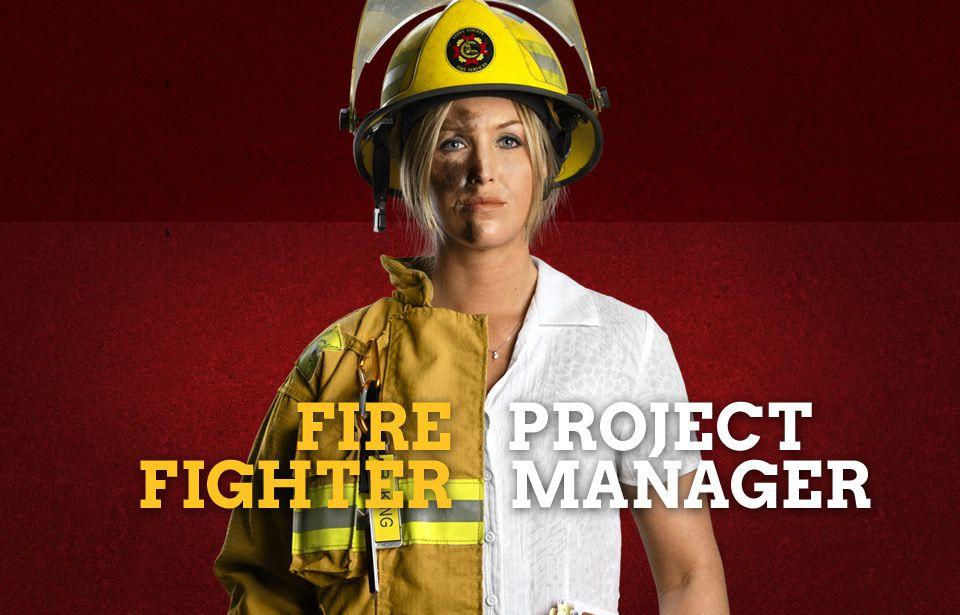
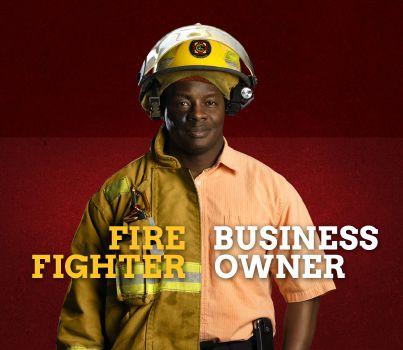
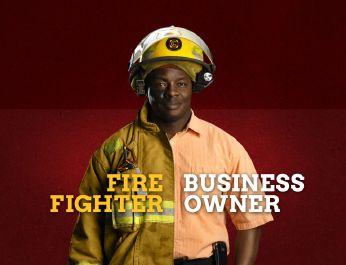
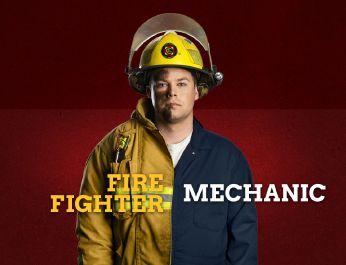
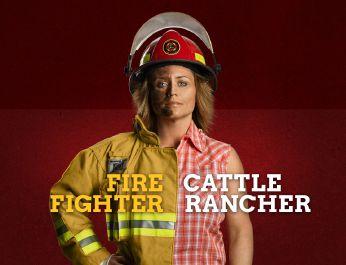
To market the Answer the Call program in a way that would encourage all members of a community to sign up, the company behind the logo designed a campaign that uses images of volunteers split into to personas – one half dressed in bunker gear, the other half in the uniform of their full-time professions.
“This was key to the campaign,” Krich said, “We wanted people in our communities to truly understand that we’re not just firefighters – that’s one half – we’re also welders, carpenters, teachers, lawyers . . . whatever is
on the other side. If people can see themselves on the other side of that bunker gear, they too might answer the call to become a volunteer.”
Next a website – www.albertavolunteerfirefighters.ca – was created to centralize the
campaign materials and as a quick reference for those eager to get involved. A button with the words “Join today” is prominent on the page, and lets users plug in their details and find volunteer departments near them.
After terrific feedback from fire services, government and businesses in the first few years of the program, Krich began presenting Answer the Call to fire service associations across Canada. Two years ago the AFCA came to an agreement with the CAFC to share Answer the Call with all provincial chiefs associations and to rebrand it as a national program.
The symbol of the firefighter, axe raised high, is trusted, Boissonneault said. “It’s, I dare say, majestic, and it’s symbolic of somebody trying to do the best they can in their community in the interest of public safety.”
MacKenzie, as the lead to make Answer the Call as a national program, travelled to the United States to learn about Make Me a Firefighter – the National Volunteer Fire Council’s countrywide recruitment program, which launched in December.
Similar to Make Me a Firefighter, Answer the Call has a far-reaching goal – to
market the entire volunteer fire service to everyone.
“It’s marketing to the public, to the fire service, to employers, to everybody about the merits of volunteer fire fighting, so therefore raising the profile of firefighters,” MacKenzie said. The idea is that an increased profile will help departments retain their members, who will feel more appreciated, and will encourage people who may not have considered volunteering before, to join the ranks.
Departments that use the national Answer the Call website will be able to cater the content on their pages to appeal to specific demographics in their communities, such as including information in different languages. The website will include a tool kit of marketing materials such as posters, banners and brochures that departments can use for their own recruitment campaigns.
Beyond promoting individual fire services, the national program will also encourage departments to share recruitment success stories, Boissonneault said. “One thing we do love in the fire service is not reinventing the wheel.”
A long-term goal of the program is to collect data across Canada to understand vacancy rates.
“I would like to be able to at some point find a measuring stick and say, right now we have a 10 per cent vacancy in volunteer fire departments, or we have seven per cent or 20 per cent, so that we’re able to record that and measure not only the success of the program, but also the basic health of the volunteer fire service,” MacKenzie said.
The national program thus far has cost about $100,000 and has been funded partially through sponsorships and government contributions. Alberta spent about $500,000 to create and execute its program.
Once the website launches, it is designed to be run by Canadian fire services. The CAFC will rely on provincial chiefs associations to encourage uptake, and monitor departments in their jurisdictions. The program, MacKenzie said, will only be as successful as its users allow it to be.
“It won’t solve all our problems,” MacKenzie said, “but it will ensure Canada’s fire departments have tools to enhance the process of successful recruitment within their own communities’ demographics.”
BY TOM DESORCY
Fire chief, Hope, B.C.
IVOLUNTEERVISION
Keep up the message even when it gets old
n spite of 33 years in fire, I’ve started to experience some revelations in just the last several months. I think it all started when I wasn’t paged for a structure fire. I awoke that morning to learn about the call and find out that the crew handled it without me.
Realizing that members really don’t need you to take care of things can be a proud parent moment. Then again, the crews are well trained and always could handle the calls, but I’m still the first-ever paid fire chief around these parts, and it seems like just yesterday that I was tasked with this project. That yesterday was 17 years ago.
The local newspaper came to me recently and wanted to cover a training night – take some pictures of the volunteers in action and tell the story of the work and dedication it takes to do what we do. At first I was excited; this was an opportunity to tell our story and show the community what it takes to do our jobs. But then I got to thinking: is this really news? If it is, the next time Public Works mows the grass the paper may have to run an extra edition.
Have I failed as the self-professed guru of all things media and missed an opportunity to market my fire department, by not making a big deal out of something we do every day? On the contrary, I make a point of always telling my department’s story and doing my best to let the community know just what we’re up to and when. I’m starting to think that maybe my view is tainted by the fact that I’ve been doing this for so long. Back in the day, I had to sell the fire department and the volunteers by explaining to reporters what it takes to protect the community. Perhaps I’ve become complacent knowing now that what we do is just that – it’s what we do.
such as ours had one call a month and a structure fire every two years. There were no medical assists or motor vehicle incidents; it wasn’t that they didn’t occur, we just didn’t go to those events. Of course smoke alarms were nonexistent then, and growing illegal substances in homes . . . can you imagine?
Unfortunately it’s that business acumen that may throw many fire chiefs off our games. We often talk about the increasing demands on volunteers, but what about the demands placed on fire chiefs? Full-time, part-time, it’s all the same for chiefs as our vol unteer services become more and more professional and it becomes easier to disconnect from the fire hall, to lose touch with members. Heck, it seems we spend more time in front of a computer than we do in a truck bay.
I’m seeing this changing role of the chief as a sign to myself and hopefully to others. I remain a proponent of promotion through media and always telling our stories, but I think we have to instill in our members the idea that while what they do is very special and unique, there are times when we don’t really need to blow our own horns. Those times are when members have done their ninth call
Could it be that when our tasks become commonplace we run the risk of being, dare I say, forgotten? ‘‘
If you’re like me, you run your fire department like a business. Could it be that when our tasks become commonplace we run the risk of being, dare I say, forgotten? I can’t help but think back to a time when the fire department wasn’t really front and centre in the community, until of course there was a fire, which was rare. This was a time when a community
Tom DeSorcy became the first paid firefighter in his hometown of Hope, B.C., when he became fire chief in 2000. Originally a radio broadcaster, Tom’s voice could be heard in the early 1990s across Canada as one of the hosts of Country Coast to Coast. Tom is married with two children and enjoys curling, golf, cooking and wine-tasting. He is also very active with the Fire Chiefs’ Association of B.C. as communications director and conference committee chair. Email Tom at TDeSorcy@ hope.ca and follow him on Twitter at @HopeFireDept
of the weekend and they head back to their families and their yard work as though it’s nothing special.
Still, we need to remember not only where we came from, but also where we really are. Where we are should not become where we will always be. While I may have awakened to the service we’ve become, I must always be aware to not take what we do for granted.
Continue to tell your story even though you may have heard it way too many times. Your audience changes as much as your cus tomers and, in true business sense, you’re only as good as your last call. If we treat the fire service as new every day, then the passion doesn’t go away. It will always be fun to ride on a fire truck. I’m thinking I’m going to have to park the duty truck one day and go for a run. Will it make the front page when I do? No, but I will tweet about it afterward.
Cut Rescue Time
Answering the call
By VINCE MACKENZIE
The Canadian Association of Fire Chiefs is about to launch a national volunteer firefighter recruitment program. Answer the Call will feature a variety of initiatives to help Canada’s volunteer fire departments with the challenges surrounding the process of recruiting. This program has been a two-year project of the CAFC, directed by resolution at Fire-Rescue Canada 2014, following a presentation and modeling of a successful program by the Alberta Association of Fire Chiefs. This time has been spent securing agreements, garnering support from all provincial chiefs associations, building and working with an advisory committee, acquiring funding, and designing program materials.
Along with an ongoing and expanding marketing campaign, a flagship piece of this project will be the Answer the Call national website, aimed at helping fire departments attract and recruit new members: this will be done by featuring the profession of a volunteer firefighter, along with an identifiable marketing logo.
The website will have three main parts; a general page that the inquiring public can go to in order to find out what’s involved in becoming a volunteer firefighter; a tool box for the fire department; and a fire-department portal.
The general page will also feature a means for viewers to select and view their local volunteer fire departments. And it will provide a connection to the right place to apply for fire-department membership. This will be done by a search feature built in to the site for the user. The URL will be announced at the national launch in September.
The tool box will provide fire departments with resources to help with their recruiting efforts locally. From brochures, posters, to layouts for printed materials and banners, a fire department will be able to access ideas from across the country for recruitment efforts.
The third and most interactive part of this website is the fire-department portal, through which every volunteer fire department in Canada will have an individual page hosted nationally; the department will be able to edit and update the page with local recruitment information for potential firefighters. This is where the success of localizing this program will lie for departments across the country.
Every fire department will be assigned a free web page, along with a login and password in order to place information specific to individual fire-department recruitment availability
Répondre à l’appel
Par VINCE MACKENZIE
L’Association canadienne des chefs de pompiers est sur le point de lancer un programme national de recrutement de pompiers volontaires. « Répondre à l’appel » fera ressortir une variété d’initiatives visant à aider les services de pompiers volontaires du Canada à relever les défis entourant le processus de recrutement. Ce programme est un projet de l’ACCP qui s’est déroulé sur deux ans et qui émane d’une résolution soumise dans le cadre de Secours-Incendie 2014 Canada, à la suite d’une présentation et d’une modélisation du fructueux programme de l’Alberta Association of Fire Chiefs. Ce temps a été consacré à sécuriser des accords, à obtenir le soutien de toutes les associations de chefs de pompiers provinciales, à créer un comité consultatif et à collaborer avec lui, à acquérir des fonds et à concevoir les matériaux.
Accompagnée d’une campagne de commercialisation, en cours et en voie d’expansion, la page web nationale portant sur « Répondre à l’appel » dont l’objectif consiste à aider les services d’incendie à attirer et à recruter de nouveaux membres sera un fleuron de ce projet, mettant en vedette la profession de pompier volontaire ainsi qu’un logo de marque identifiable.
Le site web comportera trois parties principales, à savoir une page d’information générale qu’un public averti sera en mesure de consulter pour en savoir plus sur ce que signifie devenir un pompier volontaire. Il contiendra aussi une boîte à outils à l’intention du service d’incendie et un portail qui lui soit propre.
La page d’information générale permettra aussi aux utilisateurs de sélectionner et de consulter leurs services de pompiers volontaires locaux. Elle les connectera à l’endroit voulu pour présenter une demande d’adhésion, grâce à un moteur de recherche intégré au site. L’URL sera annoncée lors du lancement national en septembre.
La boîte à outils fournira aux services d’incendie les ressources nécessaires à leurs efforts de recrutement, au niveau local. Par le biais de brochures, d’affiches, de mises en page des documents imprimés et de bannières, les services d’incendie accéderont aux idées sur le recrutement, issues de partout au pays.
De loin le plus interactif, le troisième volet est le portail propre au service d’incendie. Là sera hébergée une page individuelle pour chaque service d’incendie volontaire au Canada, à l’échelle nationale. Les services, partout au pays, pourront la modifier et l’actualiser avec des informations locales à l’intention de pompiers éventuels. C’est sur ceci que dépend leur succès de localisation du programme.
Une page web, une connexion et un mot de passe seront assignés gratuitement à chaque service d’incendie qui pourra y inscrire des informations portant sur les exigences en termes de disponibilité et de critères
and requirements; this will be the page on which viewers will land when they click or search for the area fire department from the main page. There, users will be able to see local information for a volunteer position, should they qualify to become members of your fire department.
The fire-department page will feature a common template through which a department can add its logo, the fire department name, the population it serves and the geographic area. There will be a brief description authored by the fire department of the organizational make up, the required training and eligibility requirements.
In their description, fire departments should also include their general conditions and schedules around recruiting, membership requirements, training requirements, and any special considerations for the available positions. This information will be brief; if users or potential recruits are further interested, then they can moves on to a contact-us button.
Finally, there will be a location through which the user can find contact information for the fire department and click to contact the chief or whoever the fire department sets up to direct potential recruits for further inquiry and processing.
Here is where the fire department comes in, and this is timely: to be successful for your department, it’s crucial that your department to populate its website page with accurate information as soon as possible. Prior to the website launch in September, the CAFC and the provincial/territorial chiefs associations will promote the website to their fire departments.
Populating the individual volunteer fire-department page will not be a lengthy process; we recognize that simplicity is key to the success. A sample template will be available for viewing; the department simply has to follow the provided script. Once the page is completed, the fire department will receive contacts from potential recruits and then start its own individual take-in process. The work of the website will be done once that contact objective is met.
I am very pleased with the work done so far and the support received from the CAFC; the passion displayed by members of our working committee on this initiative has been outstanding. In traveling to conferences and presenting the overview of the program to Canada’s volunteer firefighters, I have seen expressions of excitement and it certainly appears as if Canada’s fire departments are pleased with the progress. Now, it is up to every fire department to take advantage of this national initiative and populate those individual pages.
Vince MacKenzie is the fire chief in Grand Falls-Windsor, N.L. He is an executive member of the Canadian Association of Fire Chiefs and the past president of the Newfoundland and Labrador Association of Fire Services. Email him at firechief@townofgfw.com and follow him on Twitter at @FirechiefVince
de recrutement spécifiques au service individuel. C’est vers cette page que les utilisateurs seront dirigés lorsqu’ils cliqueront ou lanceront une recherche sur le service d’incendie de la région à partir de la page principale. Là, ils seront en mesure de consulter l’information locale sur le poste de volontaire, s’ils devaient se qualifier pour faire partie de votre effectif.
La page des services d’incendie présentera un modèle commun auquel un service pourra ajouter son logo, son appellation ainsi que la population et la région géographique qu’il dessert. Le service d’incendie fournira une brève description de sa composition organisationnelle, de la formation requise et des critères d’admissibilité.
Les services d’incendie devraient décrire brièvement leurs conditions générales et leurs horaires en ce qui a trait au recrutement, aux critères d’adhésion et de formation ainsi que toute considération particulière pour les postes disponibles. Les recrues potentielles ou les utilisateurs plus intéressés pourront appuyer sur le bouton « communiquez avec nous », pour en savoir plus.
Enfin, il y aura un endroit où l’utilisateur pourra trouver les coordonnées du service d’incendie et cliquer pour communiquer avec le chef ou celui que le service aura chargé de diriger les recrues éventuelles et de faire suite aux demandes.
Voici où le service d’incendie a un rôle à jouer, et cela est opportun : pour que votre service réussisse, il est indispensable qu’il remplisse sa page web d’informations précises, dès que possible. Avant le lancement du site web en septembre, l’ACCP et les associations de chefs de pompiers provinciales/territoriales en feront la promotion auprès de leurs services d‘incendie.
Remplir la page sur le service volontaire individuel n’exigera pas beaucoup de temps. Nous sommes conscients que la simplicité est la clé de la réussite. Un modèle sera disponible aux fins de consultation. Il suffira au service de reproduire le script fourni. Une fois la page terminée, les coordonnées des recrues potentielles lui seront acheminées. Après quoi, il pourra commencer son propre processus d’approbation. Le site web aura fait son travail une fois que l’objectif de contact sera atteint.
Je suis très heureux des travaux réalisés à ce jour et du soutien de l’ACCP. La passion dont les membres de notre comité de travail sur cette initiative ont fait preuve a été remarquable.
D’une conférence et d’une présentation à l’autre aux pompiers volontaires du Canada, j’ai constaté l’enthousiasme suscité par ce programme. Il appert que les services d’incendies canadiens sont heureux des progrès. Il appartient maintenant à chaque service d’incendie de tirer profit de cette initiative nationale et de remplir ces pages individuelles.
Collecting data
By ROB EVANS
National fire statistics have been lacking in Canada for as long as we have been a country. A program was first funded in 2011 as a year-long project to examine the development of a web-based database that would be available to fire departments and organizations across Canada. It lay dormant until 2015 when $850,000 in new funding from the Canadian Safety and Security Program, led by Defence Research and Development Canada, was announced by Canadian Association of Fire Chiefs (CAFC) president Paul Boissonneault and Duane McKay, president of the Council of Canadian Fire Marshalls and Fire Commissioners.
Surrey, B.C., fire chief Len Garis, who has been with the program since its infancy, said that based on decisions made on what research questions will be used, initial trail database entry will begin in 2017, with the first results possibly available in the fall of next year. By the end of 2018, a full sample of data will be available for use. When complete the database will:
• Establish a single, central database about Canada’s national fire experience
• Standardize and improve data collection, methodology and analysis
• Link fire data with existing socioeconomic data sets including health, crime, education, housing and more to provide a level of public safety research and data that has never been seen before
• Provide fire marshals and chief officers with evidence-based research they can use to provide policy and operational guidance that respond to trends that currently cannot be adequately identified
• Enhance the ability of fire officials to understand incident dynamics, and actual threats to public safety;
• Provide a valuable data source for in depth academic research that can be combined with incident observations and experiences to generate new knowledge in the public safety domain, and
• Enhance and ensure the ongoing safety of the public, Canada’s firefighters and other first responders. In a recent telephone interview, Ken Stuebing, CAFC
Collecte de données
Des statistiques nationales sur les incendies font défaut au Canada depuis que nous sommes un pays. C’est en 2011 qu’un programme était financé pour la première fois à titre de projet d’un an pour pondérer le développement d’une base de données en ligne qui serait mise à la disposition des services d’incendie et des organisations partout au Canada. Il fut au point mort jusqu’en 2015, moment où la somme de 850 000 $, un nouveau financement du Programme canadien pour la sûreté et la sécurité, dirigé par Recherche et développement pour la défense Canada, a été annoncée par le président de l’Association canadienne des chefs de pompiers (ACCP), Paul Boissonneault, et Duane McKay, président du Conseil canadien des directeurs provinciaux et des commissaires d’incendie.
The national fire incident database with gather information that will be needed to guide operations and determine how fire departments fight fires.
Par ROB EVANS
Grâce à la base de données nationale sur les incendies, des informations seront recueillies pour guider les opérations et pour déterminer la façon dont les services d’incendie lutteront contre les feux. Photo par Rob Evans
Photo by Rob Evans
board member and fire chief for Chatham-Kent, Ont., said fire services are taking a best guess at statistics.
“The sad thing is, we [Canada] have national stats on health and policing but we have nothing on firefighting. . . We guesstimate our stats are 10 per cent of the U.S. stats because we have no other way to gather (stats).”
Moving forward, fire fighting is going to have to change, and quickly, Stuebing says. Those moving up the ranks are going to need the tools to challenge everything known about fire fighting and use the data and evidence to help drive operational decisions. Stuebing believes that the database will go a long way in helping how fire departments do their jobs.
“We’re starting to learn lessons the hard way when it comes to fire behaviour,” Stuebing said. “Fires don’t hit flashover at 20 minutes; fires flash over much sooner.”
By asking the right questions of the data collected, fire departments will be able to gather more information that will be needed to guide operations and how fire departments fight fires.
“Why do we do what we do? Does it still make sense? As fire service leaders, we need to prepare those people coming up behind us to really being questioning the status quo on everything.”
Stuebing cautions that by using new statistics that will be available, new accountability will also be expected of Canada’s fire services. “When we get evidence that is overwhelming saying that this not the best path forward, [something else] is the best path forward, we are going to be obligated to move in that direction,” Stuebing said, “especially if we want to use evidence to guide our practice?”
The project has had some challenges – government changes and getting stakeholders to sign agreements – but Stuebing said he is excited that the database is progressing; he plans to introduce the program to delegates at the CAFC’s Fire-Rescue Canada conference in September in St. John’s, N.L., along with Garis. According to Stuebing, the program is on track to meet measurable goals, and taskforce members will be in front of the membership of the CAFC to share information in St. John’s.
In the meantime, agreements have been signed among some of the stakeholders including the CAFC, the fire marshals and commissioners, StatsCan and some of the provinces. According to Garis, StatsCan has already been collecting data based on information from Canada’s
Le chef de pompiers de Surrey, en Colombie-Britannique, Len Garis, qui collabore au programme depuis le tout début, a déclaré que sur la base de décisions prises quant aux questions de recherche qui seront utilisées, la saisie des données initiale débutera en 2017 et les premiers résultats seront probablement disponibles à l’automne, l’année prochaine.
D’ici la fin de 2018, un échantillon complet de données sera disponible aux fins d’utilisation. Une fois terminée, l’unique base de données centrale <bu> sur les incendies partout au Canada :
• Normalisera et améliorera la collecte, la méthodologie et l’analyse des données.
• Reliera les données sur les incendies aux données socioéconomiques existantes, y compris la santé, la criminalité, l’éducation, le logement et plus encore, donnant lieu à un niveau de recherche et de données sur la sécurité publique encore jamais atteint.
• Procurera aux commissaires des incendies et aux officiers supérieurs une recherche probante qu’ils pourront utiliser pour fournir des orientations stratégiques et opérationnelles qui répondent aux tendances qui, à l’heure actuelle, ne peuvent pas être identifiées de manière convenable.
• Renforcera la capacité des responsables des services de lutte contre les incendies lorsqu’il s’agit de comprendre la dynamique des incidents et des menaces réelles à la sécurité publique.
• Sera une source de données précieuses pour la recherche universitaire approfondie pouvant être combinée avec l’observation d’incidents et d’expériences pour générer de nouvelles connaissances dans le domaine de la sécurité publique; et
• Renforcera et assurera la sécurité continue du public, des pompiers et autres premiers intervenants du Canada.
Lors d’un entretien téléphonique récent, Ken Stuebing, membre du Conseil d’administration de l’ACCP et chef de pompiers dans Chatham-Kent, en Ontario, a déclaré que les services d’incendie estiment les statistiques à vue de nez.
« La grande tristesse, c’est que, nous [le Canada] détenons des statistiques nationales sur la santé et le maintien de l’ordre. Mais, nous n’avons rien sur la lutte contre les incendies… au pifomètre, nos statistiques se situent à 10 % de celles des États-Unis, faute d’autres moyens pour les collecter (statistiques) ».
En allant de l’avant, la lutte contre les incendies devra changer, et rapidement, a ajouté M. Stuebing. Ceux qui graviront les échelons auront besoin des outils nécessaires pour contester tout ce que nous savons de la lutte contre les incendies. Ils devront compter sur des données et des preuves pour prendre les décisions opérationnelles. Il estime que la base de données aidera grandement les services d’incendie à faire leur travail.
provinces and territories and their fire records. These records are being mapped against the Canadian Code Structure on Fire Loss Statistics published by the fire marshals and commissioners in 2002. Garis said that it is important for stakeholders across the country to become involved in what questions they would like answered in the data collection and evidence-based research, including the necessary statistics required for entry into the database. Prior to Fire-Rescue Canada, those interested in being involved at the grassroots level should have access through the CAFC to a questionnaire that will determine what fire
“It’s important from a local, provincial and national perspective that we have good, robust data to formulate decisions for the future.”
-Fire Chief Len Garis
departments want the data to do for their services. How data will be entered and information guiding those interested in the period of testing should be determined by the end of 2016 as the program works toward the actual trial run of the database.
“If we can demonstrate that we can do this, instead of actually following the U.S. and reporting on their statistics, we will also be able to demonstrate that we have 100 per cent comfort in the information that we’re getting from a database because it’s all aggregated together – coming from one source.”
But Stuebing is also not naïve about the amount of work left to do.
“Trying to break down silos in provinces, having people report things the same way and have everyone work together to be able to create a national database – it’s going to be the first time for the fire service in Canada.”
Garis, who has used evidence-based research in his own community to educate specific demographics about fire prevention, believes that this project will benefit the entire country. For fire departments to use information from a national database to improve public safety across the
« Nous commençons à tirer des leçons à la dure quand il s’agit du comportement du feu », a dit M. Stuebing. « Les feux ne s’embrasent pas à 20 minutes… l’embrasement général se fait beaucoup plus rapidement ».
En posant les bonnes questions, les services d’incendie seront en mesure de recueillir plus d’informations nécessaires pour guider les opérations et la façon dont ils luttent contre les incendies.
« Pourquoi faisons-nous ce que nous faisons? Cela a-t-il encore du sens? En tant que dirigeants des services d’incendie, nous devons préparer ceux qui nous suivront pour qu’ils soient véritablement prêts à remettre le statu quo en question sur tout ».
« Du point de vue local, provincial et national, il sera important d’avoir en main de bonnes données solides pour la prise de décision, à l’avenir ».
-Len Garis, chef de pompiers
M. Stuebing nous rappelle que l’utilisation des nouvelles statistiques disponibles sera suivie d’une nouvelle imputabilité des services d’incendie du Canada. « Lorsque des preuves écrasantes viennent affirmer que ce n’est pas la meilleure voie à suivre, [qu’autre chose] vaut mieux, nous serons tenus de procéder dans cette voie », a-t-il déclaré, « surtout si nous souhaitons étayer notre pratique de preuves ».
Le projet a fait face à des défis tels que des modifications gouvernementales et obtenir des parties prenantes qu’elles signent des accords. Mais, M. Stuebing se dit heureux des progrès réalisés par la base de données. Il prévoit présenter le programme aux délégués à la conférence Secours-Incendie Canada de l’ACCP, qui se tiendra en septembre, à St. John’s (Terre-Neuve), aux côtés de M. Garis. Selon M. Stuebing, le programme est en voie d’atteindre des objectifs mesurables et les membres du groupe de travail informeront l’effectif de l’ACCP, à St. John’s.
Dans l’intervalle, des accords ont été signés entre certaines des parties prenantes, y compris l’ACCP, les directeurs provinciaux et les commissaires d’incendie, Statistique Canada et quelques provinces. Selon M. Garis, Statistique Canada recueille déjà des données sur la base d’informations fournies par les provinces et les territoires canadiens et contenues dans leurs dossiers sur les
country, communities will almost immediately see results, according to Garis.
“It’s important from a local, provincial and national perspective that we have good, robust data to formulate decisions for the future.”
Stuebing agrees, “This is where we [the CAFC] want to be, an organization that can answer questions based on data and evidence and be able to substantiate our need for public safety for the federal government or municipal government, whoever are the people that need to make the decisions.
“We need to be seen as a responsible service, using data to guide our decisions and back up our statements, by not only the people that govern us, but also by our colleagues and by the general public.”
In order to be seen as accountable and credible to these groups, the Canadian fire service must move forward with evidence-based reporting, Stuebing said. More and more fire chiefs and administrators are being asked to “show us the data,” he said.
“The days of going into council and pounding our fists on the table saying give me more firefighters isn’t going to cut it any more.”
incendies. Ceux-ci sont cartographiés en fonction du Canadian Code Structure on Fire Loss Statistics, publié par les directeurs provinciaux et les commissaires d’incendie en 2002. M. Garis a affirmé qu’il est important pour les parties prenantes de partout au pays de s’intéresser aux questions auxquelles elles aimeraient qu’il soit répondu par la collecte de données et la recherche fondée sur les preuves, y compris les statistiques devant être saisies dans la base de données. Avant la tenue de Service-Incendie Canada, les personnes désireuses de participer à la base citoyenne devraient accéder au questionnaire de l’ACCP qui permettra de déterminer ce à quoi les services d’incendie s’attendent. La façon dont les données seront saisies et l’information guidant les personnes intéressées par la période d’essai initiale doivent être déterminées d’ici la fin de 2016 tandis que le programme poursuit la véritable période d’essai.
« Si nous démontrons notre savoir-faire au lieu de suivre les États-Unis en faisant rapport sur leurs statistiques, nous prouverons que nous sommes totalement à l’aise avec les informations issues de la base de données, car elles sont toutes agrégées, provenant d’une seule source ».
Mais, M. Stuebing n’est pas naïf quant à la quantité de travail qu’il reste à faire.
« Tenter de briser les silos dans les provinces, faire en sorte que les gens signalent les choses de la même façon et que tout le monde coopère pour créer une base de données nationale sera une première pour les services d’incendie canadiens ».
Selon M. Garis, qui a eu recours à la recherche fondée sur des preuves dans sa communauté afin de sensibiliser des démographies spécifiques sur la prévention des incendies, ce projet profitera à l’ensemble du pays.
Une fois que les services d’incendie puiseront aux informations tirées d’une base de données nationale pour améliorer la sécurité publique partout au pays, les collectivités constateront des résultats presqu’immédiatement, affirme-t-il.
« Du point de vue local, provincial et national, il sera important de disposer de bonnes données solides pour la prise de décision, à l’avenir ».
M. Stuebing est d’accord : « C’est ce que nous [l’ACCP] voulons être, une organisation qui peut répondre à des questions fondées sur des données et des preuves, en mesure de justifier notre besoin en sécurité publique au gouvernement fédéral ou municipal, lequel des deux doit prendre les décisions.
« Nous devons être perçus comme un service responsable, utilisant des données pour guider nos décisions et pour étayer nos déclarations, non seulement par les gens qui nous gouvernent, mais aussi par nos collègues et par le grand public ».
Pour que ces groupes nous jugent responsable et crédible, les services d’incendie canadiens doivent procéder avec des rapports probants, a déclaré M. Stuebing. De plus en plus, les chefs de pompiers et les administrateurs doivent « montrer les données » a-t-il dit.
« L’époque où nous martelions de nos poings la table du conseil en exigeant qu’il nous accorde plus de pompiers est révolue ».
Advocating for change
By PAUL BOISSONNEAULT
It’s hard to believe it has been almost year since I have provided a synopsis to members within the Canadian fire service through Fire Fighting in Canada. Operationally, our CAFC activities have remained consistently busy however, one of the challenges we continue to face is communicating that information. Advocacy at the federal level is extremely important.
Many of the federal advocacy initiatives that have been successful have taken years of work by CAFC members and others, and continuous relationship building. The volunteer income tax credit, the 700Mhz broadband public safety network spectrum allocation, and changes to the Rail Safety Act are a few examples of successes that were not seen immediately. Though advocacy during our government-relations week is extremely effective, more heavy lifting is required at the local level, where meetings between parliamentarians in their home ridings and chief officers can provide an even higher level of effectiveness.
In the past two years an enhanced focus on advocacy and alignment with our national advisory council (NAC) was a priority. Part of that focus was to complete a new strategic plan to drive policy and process. The previous CAFC strategic plan was completed in 2010; since that time, changes required by the Notfor-Profit Act were implemented, the CAFC board was reconfigured, and the NAC was established. These changes, however, did not affect the CAFC direction: inclusion and representation of all our NAC members has always been our strength. Revisiting the strategic plan by way of a working group with members of the CAFC board, members of the NAC, and with Integra Strategic Solutions was completed and brought forward for draft presentation at government-relations week in Ottawa in March. Government-relations week 2016 involved more chief officers, the largest number of meetings with parliamentarians, and the best-attended reception in the Speaker’s Lounge to date. Some of the draft work included a new mission and vision statement for the CAFC, key pillars for focus, and a work-back plan to try to complete by the end of 2016.
The CAFC’s vision statement is now: Uniting Canada’s fire-service leaders. And our mission is: Connecting Canada’s provincial, territorial and allied associations and external stakeholders for the advancement of public and firefighter safety. These updates speak to the CAFC’s role as a facilitator of and advisor to our members’ needs on national issues and federal mandates.
Plaider en faveur du changement
Par PAUL BOISSONNEAULT
Difficile à croire… Mais, presqu’un an déjà s’est écoulé depuis que j’ai présenté mon dernier résumé aux membres des services d’incendie canadiens par le biais de Fire Fighting in Canada Opérationnellement, l’ACCP demeure fort occupée. Toutefois, promouvoir cette information est l’un des défis auquel nous continuons à faire face. Nos efforts de plaidoyer au niveau fédéral sont extrêmement importants.
Bon nombre de nos efforts de plaidoyer fédéraux fructueux, ainsi que le continuel établissement de relations, ont demandé des années de travail aux membres de l’ACCP. Une déduction fiscale aux pompiers volontaires, l’attribution du spectre pour les applications large bande de sécurité publique 700Mhz et l’apport de modifications à la Loi sur la sécurité ferroviaire sont quelques exemples de réussite qui ne sont pas immédiatement palpables. Malgré l’extrême efficacité des activités de plaidoyer menées pendant notre Semaine de relations gouvernementales, il faut faire de plus gros efforts au niveau local, là où les rencontres entre les députés dans leur circonscription et les officiers supérieurs peuvent s’avérer être encore plus efficaces.
Au cours des deux dernières années, nous avons priorisé le plaidoyer et l’alignement avec notre Conseil consultatif national (CCN). Une composante de cet emphase consistait à achever un nouveau plan stratégique devant mener la politique et le processus. Le dernier plan stratégique de l’ACCP a été complété en 2010. Depuis, les modifications imposées par la Loi sur les organisations à but non lucratif ont été mises en œuvre, le Conseil d’administration de l’ACCP a été reconfiguré et le CCN a été créé, sans toutefois affecter l’orientation de l’ACCP : l’inclusion et la représentation de tous les membres de notre CCN a toujours été notre force. Réexaminer le plan stratégique par l’entremise d’un groupe de travail composé de membres du Conseil d’administration de l’ACCP et du CCN ainsi que de représentants d’Integra Strategic Solutions a été achevé et proposé lors d’un exposé de présentation dans le cadre de la Semaine des relations gouvernementales qui se tenait à Ottawa en mars. Plus d’officiers supérieurs ont participé à la Semaine des relations gouvernementale de 2016. Nous avons organisé plus de réunions avec les parlementaires et la réception la plus courue dans le salon du Président, à ce jour. Un élément de l’avant-plan de travail incluait un nouvel énoncé de mission et de vision pour l’ACCP, les piliers principaux sur lesquels mettre l’accent et un arrière-plan de travail que nous devrions tenter d’achever d’ici la fin de 2016.
Dorénavant, l’énoncé de vision de l’ACCP est « Unir les forces vives de la Sécurité Incendie au Canada » et notre mission est « Lier les associations provinciales/territoriales de même opinion et tous les intervenants
As the strategic plan moves forward, advocacy remains one of the most significant areas of dedication for our association, and is supported by the membership. There are some significant issues on which the CAFC has made considerable progress, and there is a necessity to communicate these successes to the tri services, the public and private sectors, and government. The most recent federal budget included:
• The restoration of funding for HUSAR teams – $15.5 million;
• The committal of $145.5 million to implement 33 Transportation Safety Board recommendations around the transportation of dangerous goods.
• Inclusion of the CAFC in mental-health consultations with Public Safety Canada and Health Canada in next steps for first responder needs, and building a national action plan.
Since the budget was passed, there have been discussions with Public Safety Minister Ralph Goodale and Transport Minister Marc Garneau regarding public safety officer compensation for line-of-duty deaths and long-term injuries, resourcing and planning with regard to wildland urban interface fires and FireSmart, the TransCaer online training program for first responders, advanced timeline changes for DOT-111 tank cars, safety standards for legacy jacketed and legacy non-jacketed rail cars, fire-prevention programs for First Nations fire services, and pipeline safety. Interest in a national strategy for mental health, occupational-stress injuries and PTSD will continue to grow. The CAFC and others continue to push for changes to the National Building Codes of Canada for the 2020 edition to include firefighter safety as a core value.
I have watched the CAFC mature and grow. The CAFC is well positioned for the foreseeable future however, growth and success really is dependent upon involvement by members. Departments of all sizes are represented by the CAFC and the benefits are captured through involvement. Chief officers’ voices from coast to coast to coast representing their members and their geographic regions, supporting the NAC and the CAFC, is not only welcomed, but encouraged and needed. In a vast and very diverse Canada, the need for representation and involvement of membership is vital.
The CAFC works hard in the interest of the fire service and public safety. The talent that exists within the chief-officer ranks in the Canadian fire service is plentiful and also needed to do the heavy lifting required to affect positive change.
I look forward to seeing many of you at Fire-Rescue Canada 2016 in St. John’s, Canada’s premier national networking opportunity for chief fire officers. Our friends in Newfoundland and Labrador are always great hosts and we will be sure to “Have a time!”
Paul Boissonneault is president of the Canadian Association of Fire Chiefs and fire chief for the County of Brant Fire Department in Ontario. Contact him at Paul.Boissonneault@ brant.ca
externes pour l’amélioration de la sécurité du public et des pompiers ». Ces mises à jour témoignent du rôle que l’ACCP joue en tant que facilitateur et conseiller en ce qui a trait aux besoins de nos membres sur les questions nationales et les mandats fédéraux.
Au fil de l’évolution du plan stratégique, le plaidoyer reste l’un des domaines de prédilection de notre association, ce que les membres soutiennent. L’ACCP a fait des progrès remarquables sur plusieurs questions importantes. Il faut faire connaître ces succès aux trois services, aux secteurs public et privé ainsi qu’au gouvernement. Le budget fédéral le plus récent incluait :
• Le rétablissement du financement des équipes ELSARMU - 15,5 millions $.
• Un engagement de 145,5 millions $ pour mettre à exécution 33 recommandations du Bureau de la sécurité des transports sur le transport des marchandises dangereuses.
• L’inclusion de l’ACCP aux consultations sur la santé mentale avec le ministère de la Sécurité publique et Santé Canada en ce qui concerne les besoins des premiers intervenants et l’élaboration d’un plan d’action national.
Depuis l’adoption du budget, nous nous sommes entretenus avec le ministre de la Sécurité publique, Ralph Goodale, et le ministre des Transports, Marc Garneau, sur l’indemnisation des agents de la sécurité publique tués dans l’exercice de leurs fonctions et victimes de blessures à long terme, la dotation en ressources et la planification en matière d’incendies de forêt en milieu périurbain, sans oublier le programme de formation en ligne Intelli-feu et TransCaer à l’intention des premiers intervenants, la réduction des délais en ce qui concerne les wagons citernes isolés et non-isolés de la spécification DOT-111, des programmes de prévention des incendies pour les services des Premières nations et la sécurité des pipelines. L’intérêt à l’égard d’une stratégie nationale en matière de santé mentale, des traumatismes liés au stress professionnel et du SSPT continuera de croître. L’ACCP continue d’insister sur l’apport de modifications au Code national du bâtiment du Canada afin d’inclure à l’édition 2020 la sécurité des pompiers en tant que valeur fondamentale.
J’ai vu l’ACCP mûrir et grandir. L’ACCP est en bonne position pour l’avenir. Cependant, la croissance et le succès dépendent vraiment de la participation des membres. L’ACCP représente des services de toutes tailles et pour tirer profit des avantages, il faut participer. La voix des officiers supérieurs d’un océan à l’autre représentant leurs membres et leurs régions géographiques, soutenant le CCN et l’ACCP, est non seulement bienvenue, mais elle est encouragée et nécessaire. Dans un Canada vaste et diversifié, la représentation et la participation de l’effectif sont essentielles.
L’ACCP défend ardemment les intérêts des services d’incendie et de la sécurité publique. Le talent, dans les rangs des officiers supérieurs des services d’incendie canadiens, abonde et il nous est nécessaire pour effectuer le gros travail requis pour apporter des changements positifs.
Je suis impatient de rencontrer plusieurs d’entre vous lors de Secours Incendie 2016 Canada à St. John’s, la principale occasion de réseautage nationale du Canada pour les chefs d’état-major. Nos amis de Terre-neuve-et-Labrador sont toujours d’excellents hôtes.
« Amusez-vous bien » !
BACKtoBASICS
Securing standpipes – Part 2
BY MARK VAN DER FEYST
There are debates among fire service personnel about where firefighters should secure the standpipe in high-rise buildings. Some firefighters propose that the standpipe be secured on the fire floor while others advocate that crews hit the standpipe on the floor below the fire floor. There are considerations for both options that fire services need to understand before choosing one or the other.
■ SECURING ON THE FIRE FLOOR
Easier hose advancement is the biggest advantage of securing the standpipe on the fire floor. Depending on the location of the fire and the location of the standpipe, choosing the fire floor will most often eliminate the short stretch.
The standpipe hook-up on the fire floor works the best when the standpipe is protected within a stairwell (see photo 1). The protection of the stairwell allows a team to secure the standpipe on the fire floor without interference from the unburned particles of combustion that may be accumulating on the fire floor. If the standpipe is located in the hallway of the building (see photo 2) and not in the stairwell, as many are in Ontario, then firefighters will potentially be exposed to an IDLH (immediately dangerous to life or health) environment; it will be difficult or dangerous for the team to make the connection.
Some proponents of a fire floor hook-up argue that it is effective particularly when the fire is contained in a high-rise unit, which means that there is no breach of the fire into the interior hallway. However, this is a dangerous thought process.
The fire service is based on what ifs. In this case, a crew is banking on the fire being contained, making it a nice, neat, simple fire to deal with; but what if it doesn’t? When have firefighters ever dealt with a nice, neat, simple fire in a high-rise situation?
There is a reason why apartment doors have automatic door closures: to try to keep a fire contained. But too often during a fire a door is left open, or is blocked open or is opened by another would-be rescuer and all of the sudden the fire spreads into the interior hallway.
A stairwell door that protects the standpipe, too, can be blocked open, wedged open, left open, or opened by another person, which causes the stairwell to fill with smoke.
■ SECURING ON THE FLOOR BELOW
The main reason for securing the standpipe one floor below the fire floor is the protection and safety of the high-rise attack teams. The floor below the fire floor provides a safe haven for the team to gather, stage their equipment, get things set up and then make the attack.
The floor below the fire floor is essentially a protected stairwell, whether or not the standpipe connection is in the hallway or in the stair shaft. Connecting to the standpipe at the floor below the
Photo 1: Hooking up the standpipe on the fire floor is easiest when you have a standpipe protected within a stair well.
PHOTOS BY MARK VAN DER FEYST
Photo 2: Connecting to a standpipe located in the hallway of the fire floor will expose the team to potentially dangerous conditions if the fire has breached the unit of origin.
BACKtoBASICS
fire floor allows the team to operate even if the fire breaches the apartment or unit, spreads down the hallway and is driven by wind, spreading fire at an aggressive rate.
The most important reason for the floor below hook-up is muscle memory. All firefighters are taught to follow a hoseline out of a dangerous situation, which, if they read the coupling correctly, will lead them to a pump panel. In the case of a high-rise building, firefighters will follow a hoseline out of the dangerous environment or situation to an area of refuge one floor below the fire.
If the hoseline is connected to the standpipe in the hallway on the fire floor, firefighters may struggle to find the exit. Even though building codes may require a standpipe in a hallway to be located within a certain distance from an exit doorway (see photo 3), that does not guarantee firefighters under stress will follow the hoseline back to the standpipe, then have the wherewithal to locate the nearest exit door to get out safely and quickly. Having the hoseline connected to the standpipe one floor below the fire guarantees that a firefighter following the line will find the stairwell.
Setting up on the floor below the fire before making an attack onto the fire floor also allows the initial attack team to breach an identical apartment unit to learn its layout. If the fire is in unit 505 and firefighters accesses unit 405, they should see the exact same unit. This strategy is an on-the-spot pre-plan if crews remember to do it.
So, in conclusion, when approaching a high-rise fire in a building equipped with standpipes, always secure the standpipe on the floor below the fire floor. Doing so will best protect crews and will provide a quick and direct path to a safe area. The short stretch of the hoseline can be overcome with other tactics such as the well stretch or with the addition of supply hose used as part of the high-rise kit. Read more about the well stretch and other tactics to overcome the short stretch in the August issue of Fire Fighting in Canada
Mark van der Feyst has been in the fire service since 1999 and is a full-time firefighter in Ontario. Mark teaches in Canada, the United States and India. He is a local-level suppression instructor for the Pennsylvania State Fire Academy and an instructor for the Justice Institute of BC. He is also the lead author of Pennwell’s Residential Fire Rescue book. Email him at Mark@FireStarTraining.com
Photo 3: Building codes often require a standpipe in a hallway to be located within a certain distance from an exit doorway.
Marketing FIRE SAFETY
London Fire uses demographic data, maps and analysis to reduce residential fires
By JOHN KOBARDA and PAUL VOEGTLE
PAUL VOEGTLE – LOCATION ANALYTICS
SPECIALIST, ESRI CANADA
Several years ago Fire Chief John Kobarda of the London Fire Department in Ontario reasoned that a fire department is really no different than a private company. After all, fire departments offer a service (public safety) to customers (the public), and regularly engage in marketing (fire-safety communications). Could firefighters, then, borrow strategies and tools from private-sector marketers?
Marketers in the private sector have been tapping into the value of demographic data and location-based analysis for years. By
gathering information such as what people buy, what they like to do, where they live and how much they earn, marketers can deliver deep insights to companies eager to better understand their markets. This marketing strategy – known as demographic profiling –helps companies anticipate the needs, wants and desires of existing and potential customers.
By combining this demographic data with maps and applications, companies visualize information in a geographic context for even richer insights. Key decision makers can analyze the information and decide how to market and sell products and services that are more likely to connect with specific segments of the population
A heat map depicts risk of residential fires in London, Ont. Red areas indicate high-risk areas, while numbers represent the demographic profiles in a specific area.
FROM BOOTS ON THE GROUND TO EYE IN THE SKY, WE’VE GOT YOUR BACK.
FLIR’s wide range of TICs can help you identify hot spots from a variety of distances – making safety the top priority. Learn more at FLIR.ca/fire
BUY ANY 4 FLIR K SERIES TICS, GET A FLIR K2 FOR FREE. A $ 1,350 VALUE!
®
FEATURED PRODUCTS:
· FLIR K2 THERMAL IMAGING CAMERA
· FLIR K33 & 53 THERMAL IMAGING CAMERA
· FLIR KF6 AERIAL APPARATUS
FIXED-MOUNTED THERMAL IMAGING CAMERAS
· FLIR M-SERIES PAN-TILT-ZOOM TICs FOR ARFF, HAZMAT & ALL EMERGENCY VEHICLES
· FLIR AERIAL FIRST RESPONDER KITS
in certain areas.
So what if the focus changed from how to market mobile phones to millennials, or where to open a new retail pet store, to trying to connect with 20-somethings whose focus on Snapchat, and not what’s on the stove, is causing an alarming trend in cooking fires? Could firefighters use these same marketing tools and strategies to target subgroups of the general population?
If you consider that fire departments have access to a wealth of information related to the people, structures and neighbourhoods within a community – all of which is tied to a location – then it’s clear that the short answer to the question of whether or not fire departments can use these marketing tools is yes.
This inspired the London Fire Department to put the concept into practice, combining demographic data, powerful analytical tools and GIS technology to drive decision making in several areas.
JOHN KOBARDA – FIRE CHIEF, LONDON FIRE DEPARTMENT
The concept of fire prevention has been around for well over half a century. Despite knowing the best fire is the one that is never fought, fire departments remain heavily focused on extinguishing fires. Even in London, 87 per cent of the fire department’s staff is in the fire suppression division, with just one per cent dedicated to public education. We have a responsibility to protect the safety of our citizens, but the challenge is to find new ways to put fire-safety education into action.
We started from the concept that buildings do not start fires – people do. Viewing the fire challenge from this perspective is what led us to explore how we could use marketing to change people’s fire-safety behaviours. In 2007, we launched our initial fire-safety marketing campaign aimed at educating Londoners about working smoke alarms, as well as cooking, candle and electrical safety. Our early campaigns took a citywide overarching approach that cost approximately $30,000. The campaigns evolved over the next five years, resulting in a reduction of C-occupancy fires (fires in residences, apartments, boarding houses, dorms, hotels) from more than 250 annually to approximately 180. Our early campaigns reinforced the potential and power of marketing fire safety.
In 2011, our approach evolved when we incorporated the knowledge from one
of London’s new deputy fire chiefs, Dave Lazenby, who served in the British fire service. For more than a decade, the British fire service has placed a great deal of effort on risk reduction. Using Lazenby’s knowledge, we encouraged our team to develop a new approach – something we call purpose-driven marketing – that is focused on reaching out to Londoners differently. The idea was to stop looking at Londoners as a homogenous group, and instead recognize that every city is made up of a diverse collection of subgroups, living in different neighbourhoods, with unique backgrounds, habits and preferences.
Executing our new strategy in combination with market-segmentation software acquired by the city, we gained a better understanding of and insight into the demographics throughout London. The tool helped us understand exactly who the people in our city are – how old they are, how they spend their money, what they do in their leisure time, how they consume information, how they think and their attitudes – information that would help us know how and where to communicate to them more effectively. By doing this research, we followed one of the first rules of marketing: know your audience.
heat map that showed that 55 per cent of the fires that occurred from 2010 to 2014 took place in 13 areas, which represented roughly 20 per cent of London’s land area, and 38 per cent of London’s population. Once we combined this information with demographic data, we discovered exactly where and how more than half the fires in the city had occurred, as well as the personality types of the people responsible for them.
Next, we needed to make a connection between these demographic profiles and fires in the city. This is where geographic information system (GIS) technology came into play. One of our firefighters, Scott Walsh, expressed a keen interest in learning GIS software. Within six months, he successfully used the software to identify two specific kinds of fires in the city – careless cooking and careless smoking – that we felt could be reduced with the right messaging and targeting. We also learned that while cooking was the primary cause across the city, it was not the highest frequency in all of the areas identified. In fact, in many areas careless smoking was 10 to 20 per cent greater than cooking-related fires.
This information was integrated into a
In addition to these actions, we also engaged a market-segmentation software company to conduct an analysis of our data. Segmentation is a process that divides a large homogenous group (Canadian population) into clearly recognizable segments or subgroups. Individuals falling into a segment have similar needs, wants, social values, activities and demand characteristics. We learned that of the 68 segmented groups in Canada, 10 have a higher prevalence of causing fires and eight of these groups resided within the areas of concern. The company then looked at the population density of these groups throughout the city and confirmed the correlation. To see a sample of segmentation, enter your postal code into the following website and see how closely the descriptors identify you and your neighbours: www. environicsanalytics.ca/prizm5
Like any big brand about to embark on a campaign, London Fire was now armed with marketing intelligence to determine how to engage our audience. We developed a focused media strategy aimed at three target groups. As one example, we designed careless smoking ads targeting 20- to 30-yearolds and displayed them in places where we knew this age group frequented such as bars and nightclubs.
In 2013, London became one of Canada’s first fire departments to harness predictive analytics and GIS to develop and roll out a fire-education program. That year, we reduced C-occupancy fires by 22 per cent to 131. Whereas London experienced 6.44 fires per 10,000
The London Fire Department in Ontario has opted for hard-hitting fire-safety messaging to target cigarette fires.
residents in 2008, this ratio dropped to 3.52 per 10,000 by 2013. Our efforts and results caught the attention of the Canadian Marketing Association, honoring London Fire Department and Environics with a bronze award in the public service category.
We know that our team can still do better, but we need to do more work to better understand the public’s thoughts and attitudes in order to make greater inroads. We have begun applying the demographic data, maps and GIS-based analysis to the area of fire-prevention inspections. For example, one of the segmented groups we identified, classified as single city renters, are the sole residents in two of the 13 areas. Jack Burt, a fire inspector for London Fire, is applying the data and technology to his day-to-day work.
“By using up-to-date maps, data and GIS-based analysis, I’m better prepared to focus on my assigned area of the city,” Burt said. “Data-driven studies identify areas that are more prone to fires, allowing me to focus my fire prevention efforts in these areas.”
The analytics also drives our annual smoke-alarm campaign. Based on Walsh’ GIS analysis, he assigns crews to canvas residential areas with a higher frequency of residential fires. The heat maps allow us to visualize gaps, revealing areas that need more attention. Targeting segments of the population in specific areas that have historically started a greater proportion of residential fires allows us to maximize limited resources.
Jason Poole, a fire-prevention officer and public fire and life safety educator with the department, says our new approach is making a positive impact.
“Analyzing the plotted heat maps to identify areas with higher prevalence of fires provides educators with an exceptional tool. We display a large version of the map at community fire-safety lectures and seminars. This visual has been a great draw at our events and has brought up many questions from Londoners, especially those living within the hot zones,” Poole said.
In 2015, London Fire spent $120,000 on our fire-safety marketing campaign, an investment that provides 75 million possible impressions. The cost of this campaign – which is roughly the same as the salary of one educator – delivers a greater return-on-investment than previous campaigns, which cost approximately $75,000, plus four educators.
Next on the horizon is a purpose-driven marketing approach to fire station relocation and resource allocation. Our analyses will now also consider the location of greatest fire risks to ensure the resources are in the right place instead of relying on theoretical response areas.
London Fire’s efforts have enabled us to maximize the services offered to residents without increasing operating costs. Our results demonstrate that fire departments across Canada and beyond can leverage the very same marketing data, tools and strategies employed by the private sector to keep their communities safe.
John Kobarda is the fire chief of the City of London’s Fire Department. He joined the department in 1991 and became fire chief in 2004. Prior to joining London, John worked in the private sector as a plant manager, production manager and mechanical engineering technologist.
Paul Voegtle is a location analytics specialist with Esri Canada. He has more than 12 years of experience helping organizations in public safety, banking, insurance, retail, government, real estate and utilities apply location analytics using geographic information systems (GIS).
Certificate in Fire Service Leadership
Name Position Department
Christopher William Allen Firefighter
Terrance Paul Andrews Firefighter
Christopher Bihun Captain
Brent Douglas Roy Black Fire Captain
Jason E. Benn Chief Fire Prevention Officer
Roy Chase Senior Firefighter
Justin Chow Firefighter
Laura Cliff Company Officer
Marc Cormier Division Chief
Deborah C. Davies Senior Firefighter/EMO Coordinator
Luigi Davoli Acting District Chief
Neil Sean DeLory Firefighter
Luc Dugas Firefighter
Geoffrey Ferguson Senior Firefighter
Sean C. Fisher Emergency Services Officer
David C. Forster Fire Inspector
Andrew Graham Crew Chief, Military Firefighter
Chris Grant Firefighter
Kyle Hartley Firefighter
Matt Keay Captain
Timothy Lee Langille Training Officer
André Lebel Lieutentant
Bobby Lennon Firefighter
Randy MacEachern Acting Captain
Timothy Walter Margison Captain
Trevor Martel Firefighter
Stephen Miller Captain, Suppression Division
Patrick O. Neumann Deputy Chief
Shawn O`Donnell Acting Captain
Michael Robert Nixon Firefighter
Cara Pardy Fire Inspector
Sarah M. Peto Firefighter/Paramedic
Addison M. Quilty Fire Inspector
Stephen M. Reid Captain
Thomas D. Robertson Captain
Jeffrey Skaling Deputy Chief
Steel Smith Firefighter
Mike Symes Fire Prevention Officer
Jamie Vanderspank Captain
Doug Wegren Firefighter
Christopher J. Wiemelink Acting Captain
Shane Wilton Firefighter/Paramedic
Dean R. Good
Senior Captain
Darryl J. Thompson Captain
Certificate in Fire Service Administration
Fredericton Fire Department
Gander Fire Rescue
Cramahe Fire Department
Innisfil Fire and Rescue
Wellington North Fire Services
Kennebecasis Valley Fire Department
St. John’s Regional Fire Department
Whitchurch Stouffville Fire & Emergency Services
Dieppe Fire Department
Saskatoon Fire Department
Mississsauga Fire & Emergency Services
Pickering Fire Services
Bathurst Fire Department
Saint John Fire Department
Manitoba Office of the Fire Commissioner
Hamilton Fire Department, Fire Prevention Division
Department of National Defense
Regina Airport Fire Department
Cramahe Fire Department
Markham Fire and Emergency Services
Thunder Bay Fire Rescue
Bathurst Fire Department
Toronto Fire Services
Hamilton Fire Department
Kentville Fire Department
Regina Airport Authority Fire Department
Hamilton Fire Department
Pincher Creek Emergency Services
Hamilton Fire Department
Kennebecasis Valley Fire Department
St. John’s Regional Fire Department
Brandon Fire & Emergency Services
Gander Fire Rescue
Hamilton Fire Department
Halton Hills Fire Department
Canning Volunteer Fire Department
Grand Bay-Westfield Volunteer Fire Department
Innisfil Fire and Rescue
Elizabethtown/Kitley Fire Department
Saskatoon Fire Department
Hamilton Fire Department
Brandon Fire and Emergency Services
Certificate in Incident Command
Waterloo Fire Rescue
Caledon Fire & Emergency Service
Certificate in Fire Service Administration Graduates
Michael R. Bourgon Deputy Fire Chief
Brian Allison Gaudet Platoon Chief
Michael S. Mizner Platoon Captain
Ken Roche Paramedic/Firefighter
Sandy Scott Fire Administration and Finance Supervisor
Certificate in Fire Service Administration, Human Resource Management
Peter S. Winship Platoon Captain
Certificate in Fire Service Administration, Operational Planning
Steven A. Fraser Platoon Captain
Certificate in Fire Service Administration, Emergency Management
Patrick Shaun Kelly Captain
Advanced Certificate in Fire Service Administration
Jim Arnold Captain
Thompson Fire & Emergency Services
Moncton Fire Department
Fredericton Fire Department
St. John’s Regional Fire Department
Kelowna Fire Department
Yarmouth Fire Department
Fredericton Fire Department
Ottawa Fire Service
Saskatoon Fire Department
Michael S. Moore Deputy Fire Chief Town of Creston Fire Rescue
Fire Officer III
Jim Arnold Captain
Saskatoon Fire Department
Brian Bell Captain Langford Fire Rescue
Jory Jenson Captain
Stanley Bruce Lake Training Officer
Douglas William Sirant
Assistant Fire Chief
Cochrane Fire Services
Halifax Regional Fire and Emergency
Cold Lake Fire-Rescue Fire Officer IV
Douglas William Sirant
Assistant Fire Chief
Cold Lake Fire-Rescue
Learn the cross under
By ED BROUWER
At the 2016 British Columbia annual volunteer firefighter training seminar, hosted this year by Osoyoos Fire Department, I witnessed far too many firefighters struggle with their SCBA packs while trying to manoeuvre through tight and narrow openings. Some firefighters spent valuable airtime going low profile, while others took their BA packs right off. Both these methods of manoeuvring through wall breaches or narrow openings have been taught to firefighters for decades and for the most part they are safe and will work. However, there is a third method that our SOO HOT (Saving Our Own Hands-On Training) crew uses that is just too good to not share – we call it the cross-under technique.
Firefighters going low profile, or removing their BAs to push them through narrow openings, takes precious time and it takes even more time to re-don the BAs.
Some fire instructors teach that re-tightening the straps in a survival situation is not that important due to the fact firefighters want to exit the structure as fast as they can. I totally disagree. Firefighters who do not tighten their BAs, which takes seconds, risk becoming entangled, which could result in minutes spent trying to get free. Minutes during a fire could mean the difference between life and death . . . so tighten your straps!
Not only is entanglement a concern, a loose tank flopping around on a member’s back can push up against the helmet, which in turn can jar the mask. And that may be the last thing a firefighter remembers in an IDLH (immediate danger to life and health) environment.
Note: It is always risky to remove the SCBA completely to pass it through a tight, narrow opening. Any time firefighters partially or totally remove their SCBAs within an IDLH atmosphere, they increase both the risk of exposure to deadly fire products and the chance of something going wrong with the SCBA. And if members fail to properly re-don their SCBAs while in an IDLH environment, a number of critical safety issues can develop. Bunched up bunker gear and loose straps can all impede survival and rescue.
There is a commercial on TV that advertises a chair lift for seniors having trouble using stairs. A line in the commercial that always gets me is, “We have the solution, just don’t fall.” Now I find myself saying to you: if firefighters are getting into trouble doffing and re-donning their SCBAs in IDLH atmospheres, we have the solution, just don’t doff!
Our SOO HOT crew recommends and practices a simple cross-under method to manoeuvre through narrow openings. We very seldom, if ever, remove or low profile our BAs.
The cross-under method we have perfected is very simple and once you practise it, I am sure you will agree. We simply stay on our hands and knees; this is the key.
Before entering into a wall breach or manoeuvring through a tight or narrow opening, be sure to sound the floor, look up, look
A firefighter, on his hands and knees, squares up to the studs on a wall breach with his shoulders just touching the studs.
The firefighter puts his right arm through the wall breach, placing his hand flat in front of the left stud to drop his shoulder.
PHOTOS
left and right. In other words, be sure you really want to proceed. In some cases it may be better to wait for the rapid intervention team (RIT) to find you. The following steps assume you have determined it is safe to proceed.
Do not adjust your BA. Get into a crawling position (hands and knees). Stay on your hands and knees throughout the entire manoeuvre. For our practice sessions we use a prop simulating a wall breach opening between 2x4 studs at 16-inch centres. Crawl up to the opening and place your shoulders squarely against the two studs. Now reach your left hand through the hole, placing your hand flat on the floor to the right of the hole. As you drop your hand, your left shoulder will drop and easily slip through the hole. Then take your right hand and go under your left arm, placing your right hand flat on the floor to the left of the hole; your right shoulder will drop and slip through the opening.
Now, if you positioned yourself correctly, your upper body is through the hole and you are still on your hands and knees. Your BA tank is square on your back and already halfway through the opening. Now slowly crawl forward and as your hip touches the side of the hole (left or right, depending on which knee you moved first) drop that hip (under your belly button) but stay on your hands and knees. Your dropped hip should slip through the hole. Now do that with the opposite hip as you crawl forward. That is it – you are through that narrow opening without the risks involved with going low profile or complete
BA removal. This takes no time at all and it saves your air, your energy and maybe even your life.
No doffing, no re-donning, no face-mask jarring, no real effort and above all no time loss. It doesn’t get any better in an IDLH atmosphere with just minutes of air left in your tank.
Please note that when we practise this technique we insist that firefighters inform the incident commander of their objectives and progress. We also implement mayday protocols and RIT response. Use full personal protective equipment (PPE) and use gloves even for radio communications. Practise the way you would respond in the real world.
The cross-under manoeuvre can be another tool in the tool box of firefighter safety. Build a prop and have fun learning the technique. Stay safe and remember: train as though their lives depend on it!
Ed Brouwer is the chief instructor for Canwest Fire in Osoyoos, B.C., and training officer for Greenwood Fire and Rescue. He is also a fire warden with the B.C. Ministry of Forests, a wildland urban interface fire-suppression instructor/evaluator and an ordained disaster-response chaplain. Ed has written Trainer’s Corner for 15 of his 27 years in the fire service. Contact Ed at ebrouwer@canwestfire.org
The firefighter places his left hand through the breach, dropping his left shoulder; both shoulders and BA tank slip through the wall breach with minimal effort.
You protect the public
Let us heLp protect you
For your cleaning, decontamination, inspection, testing, repair and record keeping of your firefighter’s protective clothing... we have you covered!
• 24/7 access to Firetrack®, the online data base that provides you with complete details of your C&M Program with FSM. We do the work for you!
• ETL Verified
• ISO 9001 Registered
• Fast turnaround
• Complete Bunker Gear Rental Program – Toronto Location Ontario (toronto) 1-888-731-7377
Continued from page 24
next morning by the City of Grande Prairie Fire Department. By the end of the week, seven fire tenders were being used continuously to supply water to the engines fighting the log-yard fire.
A wildland engine and a High Level engine positioned at log yard south to begin trying to flow water onto the burning pile, and to save a small section of logs in the south. This operation was abandoned during the night due to resources and the little effect it had on the overall success of the operation.
The plant-protection division was charged with ensuring all fires were out inside the building and creating a standby crew for the plant emergency team. This crew used equipment from High Level’s third engine, and stayed in place until Thursday afternoon when a loss stop was declared in the plant.
Firefighters came from departments several hundred kilometgres away to help battle a fire that started in a waste-wood pile on May 4; at one point the operation was using more than 36,000 litres of water per minute.
During the course of the fire fight, the strategy was simple: daytime operations were to hold the line and prevent fire spread; night-shift crews – during times when there was lower fire behaviour – would direct their efforts onto the fire closest to the logs that hadn’t yet been affected. At night, crews would slowly shift the lines to the south to keep pushing the fire away from the main pile. This battle began Wednesday evening, May 4, and continued without break until Saturday afternoon, May 7, when crews finally started to shut down engines and reduce the water flow. At one point Friday afternoon, the entire operation was using more than 36,000 litres per minute (9,000 gallons per minute) on the log pile.
■ TRANSITION TO SHIFTS
canada (calgary) 1-403-287-0155
USa (Detroit, Mi) 1-866-887-6688
It didn’t take long on Day 1 to know that this incident was going to be lengthy; the HLFD had been on its own for the first hour or two and the entire department had been committed. Buchan and I decided that after the first night we would split incident command into two operational periods: I took the day shift and Buchan managed the night shift. By late Wednesday evening, we had resources arriving from other departments across the Peace Region and they were being assigned. We were also being notified of other resources that would arrive Thursday morning; the challenge was to organize them into useable shifts with apparatus. We had assigned a staging officer for
incoming resources and an accountability officer, someone for check in, and a scribe to record our decisions. A well-site office trailer was ordered and brought in as a command post, and extra communication equipment was ordered and brought to site. Logistics were being handled through the Emergency Operations Center activated at the Town of High Level office. The logistics team arranged meals, equipment, fuel and other needs. The organization of the response was falling into place. The next step was to get our on-site resources split into working shifts.
On Wednesday, the entire High Level department worked through the night because staffing was short. As resources began to arrive, HLFD members were sent home to rest and given a time to report back. I worked until 04:00 Thursday morning, went home to catch some sleep, and returned at 10:00 to relieve Buchan and his crew. By that time, most of the other resources were arriving and we started building schedules. Some departments had arrived the first night only to be told to check into a hotel, get some sleep and report to the command post in the morning for assignment. Almost everyone who had responded from in and out of the community had been working or training through the day Wednesday; some worked a very long first day but by Thursday a schedule was in place and working.
The other challenge was to ensure a credible response was available for other calls in the area. Wednesday night, when Grande Prairie County Regional Fire Service arrived, members were tasked to be a standby crew for High Level response with their engine in case another call came in. Medical responses with EMS were restricted to cardiac arrest calls or fire-related only in order to reduce the manpower needed. Off-shift High Level firefighters were asked to keep pagers on at home in case they were needed for a callout. Fortunately there was just one MVC during the course of the incident.
■ WATER SUPPLY CRUCIAL
The Norbord OSB plant is protected by a five-million gallon fire pond supplied by two fire pumps - one electric pump and a back-up diesel pump. During the course of the fire fight, both pumps were running at full capacity, supplying water to the engines and tenders. It quickly became apparent that the water supply would not last long.
The sheer size of the massive Norbord plant and log yard created challenges for fire crews but pre-plans and solid working relationships ensured a smooth operation.
Enter the Norbord team: its members were tasked with keeping the fire pond full. That task involved many facets: first, pumps were set up to move water from other retention ponds to the main pond. An agricultural pump was used to move water through six-inch aluminum pipe. This worked until the pond from which it was pulling water from ran dry. A fleet of more than 20 commercial water trucks sucked water from every slough, dugout and creek they could find to transport it and dump it into the fire pond. A Cat was brought in to blaze a trail through some forest to another slough, where more pumps were brought in to transfer water. By Friday, the water trucks slowly began
to gain on the pond, out-pacing fire crews in water use. Without these water-truck crews, the fight to save the mill would have been lost for sure.
■ UNDER CONTROL
By Friday afternoon things were starting to look up. On Thursday, all issues inside the plant had been taken care of, and standby crews were taken off line to join the logyard fight; the third High Level engine was released and was assigned on Friday to attack fire in the southeast end of the log yard; it eventually tied to a hydrant supply and attacked the main log pile.
There were also some surprises Friday that caused an increased response. The
GLOVES
Highly dexterous, durable protective barriers remain intact after repeated exposure to high heat.
TURNOUT
GEAR
Gore moisture barriers and liner systems manage heat stress better because they are the most breathable across multiple environments.
BOOTS
Leather boots that include a protective barrier provide better footing and decon more effectively than rubber.
It’s essential to understand what materials go into your gear and how they perform and hold up. To increase your safety and improve gear performance, Gore continues to push the technical capabilities of personal protective equipment. Knowledge is powerful, and the more you know, the safer you are.
County of Grande Prairie engine had been kept in reserve to assist with High Level calls was pressed into service due to a flare up in some previously unaffected logs. This fire grew rapidly and resulted in a second tender-shuttle operation. Resources were requested from Fort Vermilion and Slave Lake, and arrived later that afternoon. The Fort Vermilion tender was immediately put into service and a tender from Manning arrived to assist with the shuttle. Slave Lake arrived with an engine that was placed into reserve status for callouts in High Level.
By Saturday afternoon the blaze had subsided to the point at which an under control could be called. No further fire spread was anticipated. A meeting with Norbord staff was held to discuss turnover the next day. By this time, a private fire contractor had arrived to assist with water supply to the fire pond; the mill had contracted the company to bring an engine to the site for standby and fire patrol.
Saturday evening we began to release of resources back to their home stations.
By Sunday afternoon, a turnover was made to mill staff and the last fire engine returned to the High Level fire hall at 18:00.
■ RELATIONSHIPS KEY
While this incident tested everyone over the course of five days, the response was deemed a huge success. The plant was reopened within two weeks; almost 50 per cent of the log yard was saved, giving the plant enough material to keep running while more wood supply was accessed. Hundreds of jobs were saved and the HLFD had a big win fighting the biggest fire in its 50-year history.
None of this could have been accomplished without relationships. Norbord has been an avid supporter of the HLFD and regular visits and meetings are held with the company in relation to fire protection. The knowledge the HLFD crews have with the plant is second nature, which made a huge difference to the outcome of the incident: because we knew each other, we could have real conversations about expectations, outcomes and eventualities of this large incident.
Another relationship that was key to success is that with Alberta Wildfire Management: the bond is deep and personnel were instantly on board, assisting with air support, unified command on the first day, and providing resources. Keep in mind that this
The blaze that started on May 4 was deemed under control on May 8. Firefighters saved the Norbord building and almost half of the log yard.
incident began during the largest urban interface fire in Alberta –Fort McMurray was burning.
Finally, the relationship among fire departments in Northwest Alberta is second to none. Without hesitation, 13 fire departments came together with 75 firefighters to accomplish what seemed an impossible task. Our neighboring fire departments came to assist from up to 640 km away. To some in Canada, that’s a long distance but to us in Northern Alberta, that’s our neighbors. Recently the Northwest Region developed the Northwest Alberta Emergency Resourcing Agreement. This agreement, designed like a mutual-aid agreement, was developed to assist each other in times of major emergencies with pre-determined rates for response, delegation-of-authority forms, and resource-ordering directions. This agreement was still under final signing by municipalities when the incident occurred, and the region responded under the agreement even though the ink had barely dried. The reason for this is the relationships that have been built across the area.
■
THE FINAL NUMBERS
• Five-day fire event
• More than 20 apparatus
• 75 firefighters
• More than 6,000 feet of hose used
• More than 20 commercial water trucks
•
Why Does FDM Mobile CAD Run from Records?
Because having critical info at your fingertips improves response time and safety: Hazmat, PrePlans, and more. Add integrated runtime mapping, routing, status messaging, and being able to configure your display for top efficiency, and you’ve got the best Mobile CAD in the industry. Visit us today to learn more: www.fdmsoft.com
■ FIRE DEPARTMENTS ASSISTING
High Level Fire Department
• La Crete Fire Department – 110 km away
• Fort Vermilion FD – 85 km away
• Rainbow Lake Fire Department – 145 km away
• Manning Fire Department – 200 km away
• County of Northern Lights Fire Department – 250 km away
• Peace River Fire Department – 300 km away
• Berwyn Fire Department – 300 km away
• County of Grande Prairie Regional Fire Service – 450 km away
• City of Grande Prairie Fire Department – 450 km away
• Municipal District of Smoky River Fire Department – 350 km away
• Municipal District of Big Lakes – 450 km away
• Lesser Slave Lake Regional Fire Service – 470 km away
• Grand Cache Fire Department - 640 km away
■ LESSONS LEARNED
• Get big quickly!
• Plan ahead and know your hazards
• Build relationships with your area departments and key players
• Do not rush to the flame
• Pick a line in the sand and hold the line.
BY GORD SCHREINER Fire chief, Comox, B.C.
MSTOPBAD
Do your part to prevent firefighter cancers
uch has been written about cancer and its relationship to the fire service. The bottom line is that if you are a firefighter you have a higher chance of getting cancer than a non-firefighter. Rather than argue about how many times more likely we are to get cancer, I would rather discuss some ways chief officers and firefighters can help reduce these odds.
We at Comox Fire Rescue encourage all our firefighters to eat a healthy diet and also offer them several fitness options. Members attend scheduled weekly core training sessions at our station, and have access to free family fitness passes to our community-owned fitness centre. In addition our own fire-station fitness centre is open 24/7, 365 days a year. The department also has mountain bikes and stand-up paddle boards available for firefighters to borrow.
We encourage our firefighters to regularly use one of our three detox saunas in the station; sweating out toxins really works! Firefighters are encouraged to shower immediately after any fires. That smoke smell is telling you something: don’t go back to work or bed smelling like smoke. We insist that our firefighters wear their SCBAs all the time. If you are thinking about whether you need SCBA or not just wear it. We recommend that our firefighters have yearly physicals and discuss cancers with their doctors. Early recognition of cancer is key to successful treatment.
In a perfect world every firefighter would have two sets of PPE so that one set can be cleaned while the second set is in service, however, this can be very difficult for smaller fire departments due to the high cost of PPE and frequent staff turnover. Comox Fire Rescue is a small department, and to help address budget concerns, we have issued every firefighter a second hood (balaclava) at a cost of about $40 each. With two hoods, a firefighter can clean one after every fire and use the second hood in service. Firefighter hoods should be worn at every fire as your head has many points at which toxic chemicals can enter your body. To further address the issue of dirty PPE, our department has several loaner sets so that firefighters can borrow
the spare sets while their own are being cleaned.
Firefighters also rinse off their dirty PPE before they get back on the rig to return to the station. In some cases, members will bag the dirty PPE for the return trip. All firefighters carry spare soft clothing in the trucks so that they have something clean to wear after a call. We spend a lot of time washing PPE and uniforms at our station. All our firefighters are issued their own SCBA masks and these, too, get washed after each fire. We have SCBA loaners as well in case a member’s SCBA mask cannot be put back into service right away. Firefighters must wash their helmets too. The helmet liners can be removed and washed and the hard surfaces can be cleaned. We insist that no PPE comes into the office or living areas of the fire station; it must be kept on the apparatus floor.
Our department has installed an exhaust-removal system to the apparatus floor. The system uses roof-mounted scrubber units (no hoses) that activate by sensors. The units scrub exhaust from not just our vehicles but also from vehicles passing by or parking near our station when the bay doors are open. These units also scrub exhaust from the many small motors (saw, fans, generators) that
That smoke smell is telling you something: don’t go back to work or bed smelling like smoke. ‘‘ ’’
run during our weekly vehicle checks.
Gord Schreiner joined the fire service in 1975 and is a full-time fire chief in Comox, B.C., where he also manages the Comox Fire Training Centre. He is a structural protection specialist with the Office of the Fire Commissioner and worked at the 2010 Winter Olympics as a venue commander. Contact him at firehall@comox.ca and follow him on Twitter at @comoxfire
Comox Fire Rescue has added signage all over the station and site that remind firefighters about the things they can do to help reduce the chances of getting cancer – clean their PPE, shower, avoid exhaust and get yearly physicals. To help get the message out, Comox Fire contracted Dr. Kenneth Kunz to deliver two cancer awareness and prevention sessions to our firefighters and other local fire service members. Kunz has a Ph.D. in chemotherapy and many years of experience as an oncologist.
Cancer prevention is now a vital component of fire services. We must understand that these preventative steps are very important and may save a life (maybe even your own). Do your part at your station to help prevent cancer.
Please feel free to contact me for more information.
Low Profile, High Volume, Low Loss...
The 92.7mm Engineered High Performance Flow Path Produces Less Than 0.4bar Loss at 4732 l/min