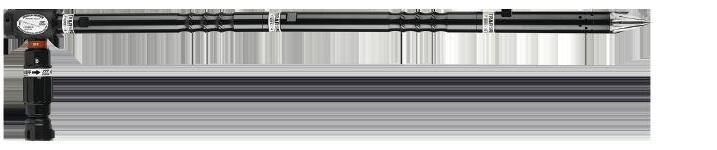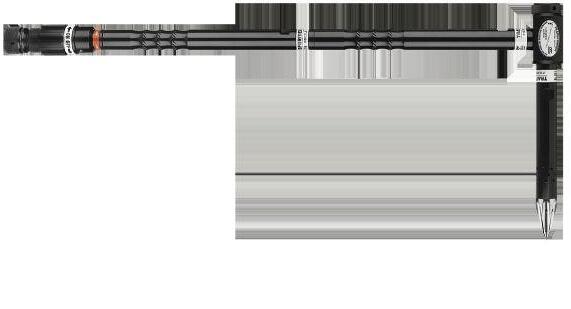
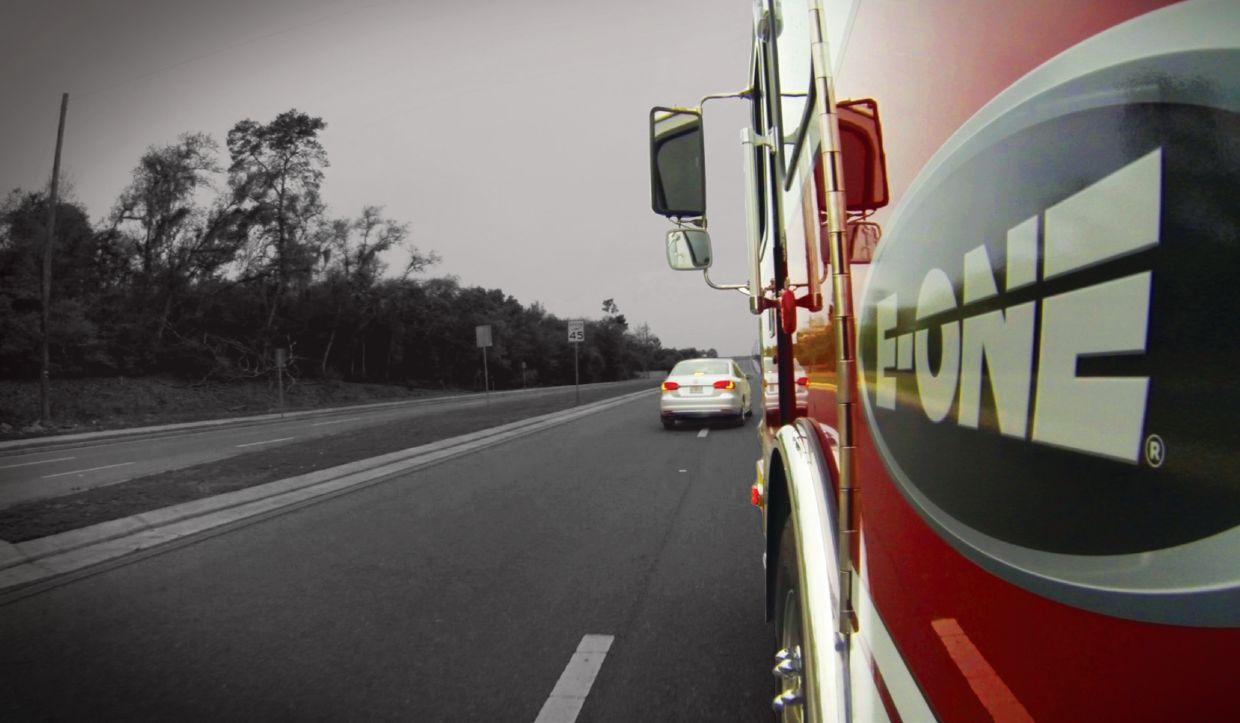
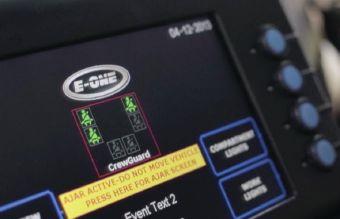
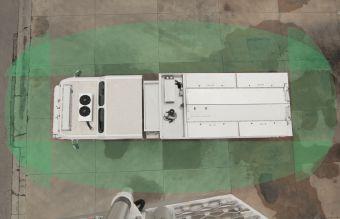
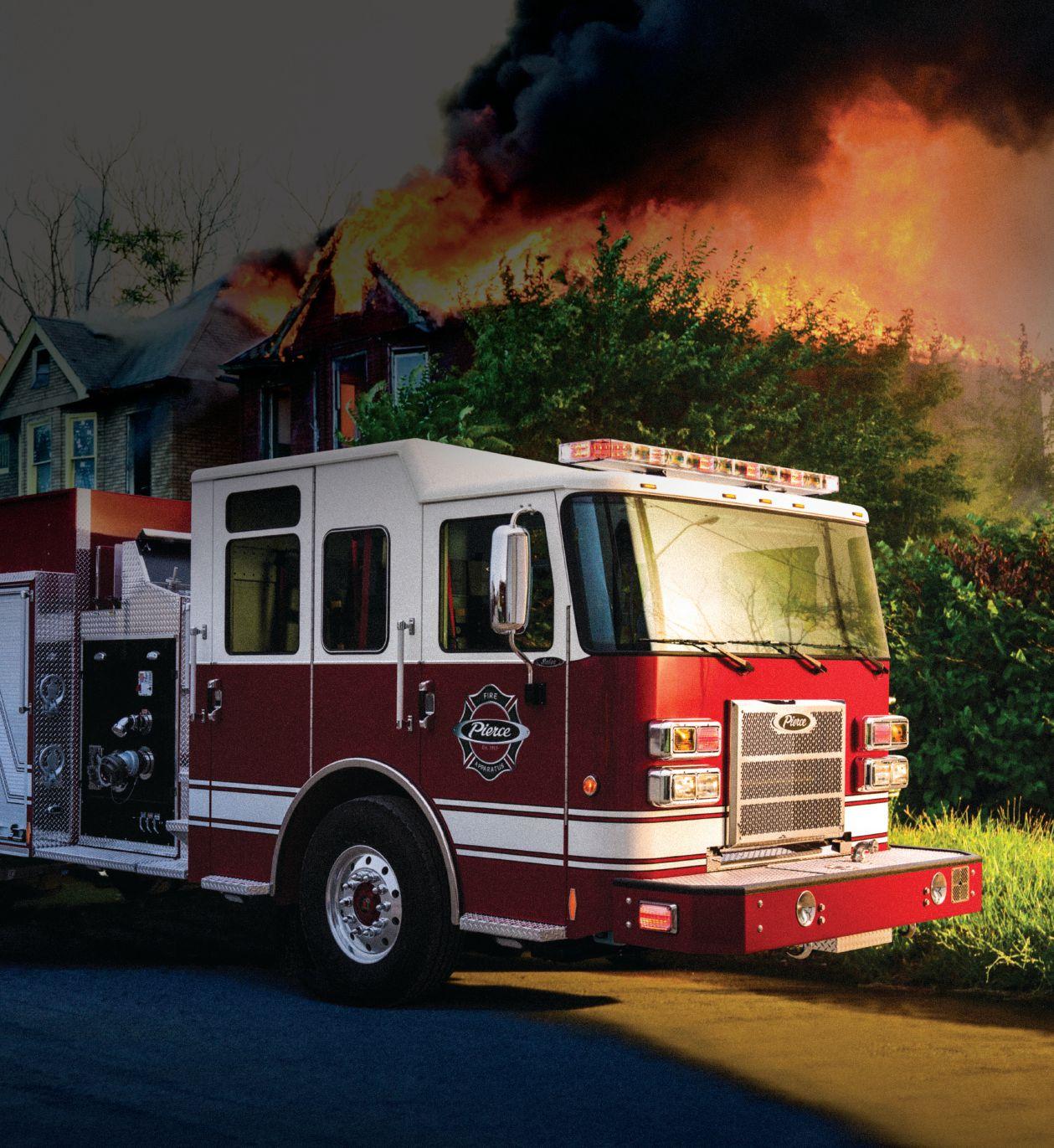
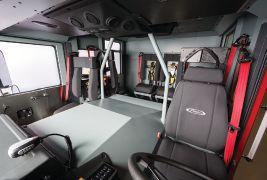
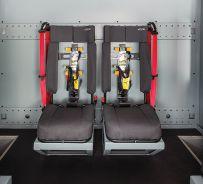
Driving a fire truck at high speeds can be dangerous. That’s why avoiding the accident is the best way to protect your crew and community. E-ONE’s ProTech™ system features OnGuard® for audible collision warning and accident mitigation, G4® (electronic stability control) for added stability, CrewGuard™ for occupant detection, and a 360-degree camera system for perimeter protection.
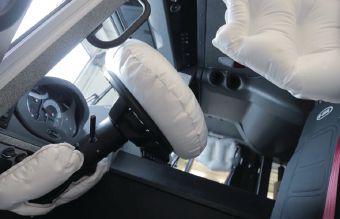
But, if an accident does occur, the impact is cushioned with a steering wheel airbag, driver and officer knee bags, as well as side roll protection. Additionally, every E-ONE cab is designed with a roll cage structure to offer maximum protection for your crew.
E-ONE is committed to safety.


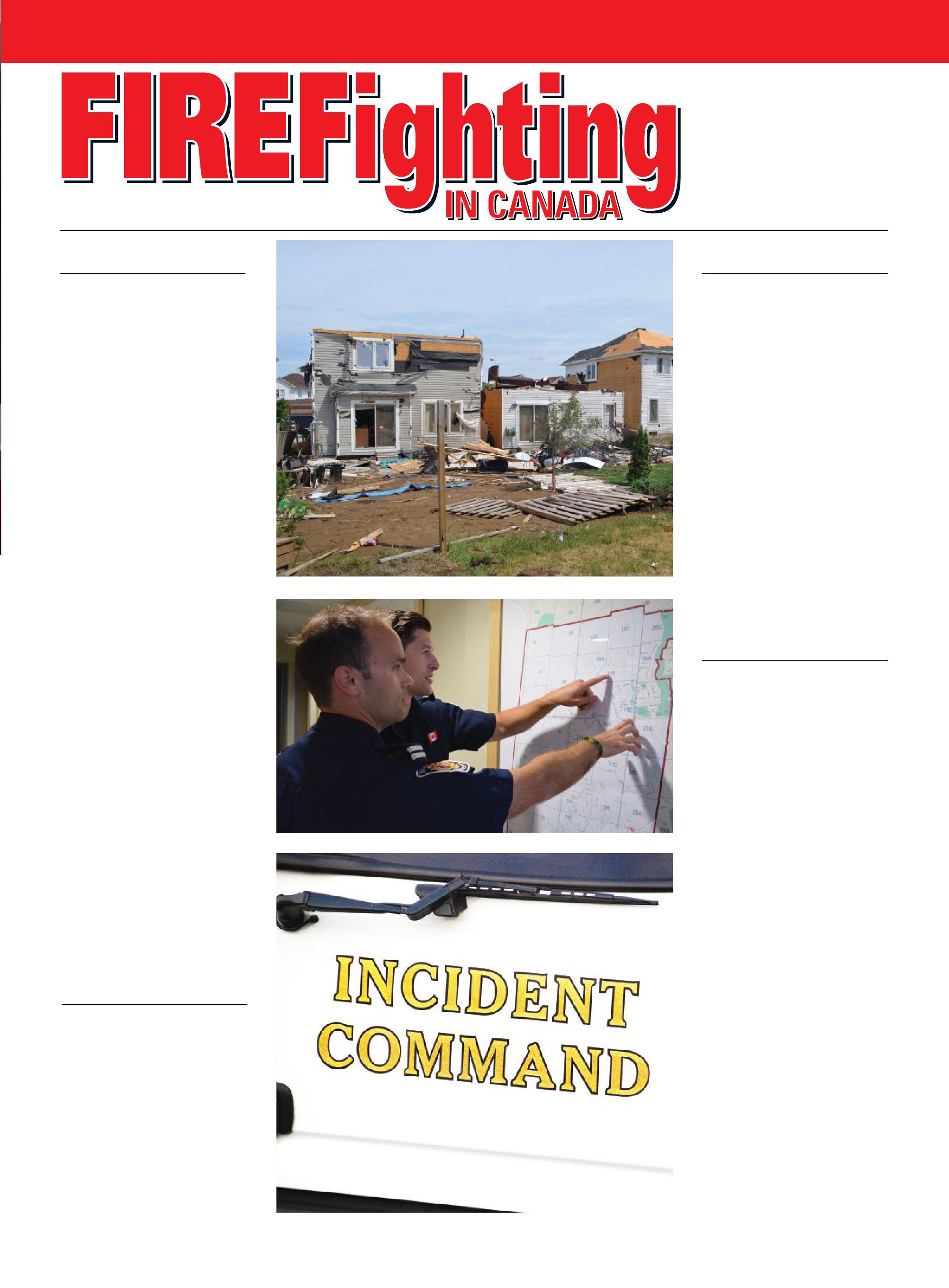
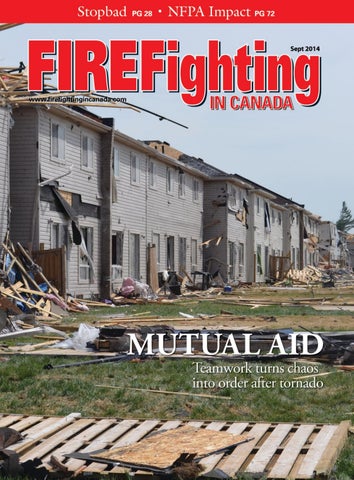
MUTUAL AID
A class-F2 tornado touched down in Angus, Ont., on Tuesday, June 17, just after 5 p.m. As Fire Chief Cynthia Ross Tustin writes, fire operations and emergency-management systems worked together to produce order from chaos.
20
CRUNCHING NUMBERS
A review of response-time data in Brampton, Ont., shows that little things – the location of the printer and maps, the distance to the truck bay from firefighters’ living quarters – can save valuable time and push departments closer to the NFPA response-time. By Capt. Bill Boyes. 62
SIZING-UP THE FIRE GROUND
The first steps towards crew safety on scene are the size-up and 360-degree walk around, which allow the IC to gather essential information on factors affecting responding firefighters.
BY LAURA KING Editor lking@annexweb.com

e all meet people who challenge us to think harder and see things from another perspective.
For the last seven years, Flashpoint columnist Peter Sells has been that guy, the writer with whom I have argued points – won some, lost many, agreed to disagree – and who has forced me to broaden my vision but sharpen my focus.
Sells is headed east – way east – to share his fire-service wisdom with the civil defence organization in Dubai, and this month’s column is his last.
Sells was still with Toronto Fire Services when we met in 2007 and he asked about writing. I wanted his backpage column to be newsy, to tackle current issues and fire-service conundrums and stir up readers. We called the column Flashpoint for a reason! (It was his idea.)
writing things the way he did and my reason better trump his reason (it often did!).
And he taught me to lighten up and let readers sometimes figure things out for themselves (or force them to look up a term or an obscure Sun Tsu reference), which goes against my instinct, but we’re supposed to push each other to think harder and see things from another perspective, right?
ESTABLISHED 1957 September 2014 VOL. 58 NO. 6
EDITOR LAURA KING lking@annexweb.com 289-259-8077
ASSISTANT EDITOR MARIA CHURCH mchurch@annexweb.com
EDITOR EMERITUS DON GLENDINNING
ADVERTISING MANAGER CATHERINE CONNOLLY cconnolly@annexweb.com 888-599-2228 ext. 253
ACCOUNT COORDINATOR BARB COMER bcomer@annexweb.com 519-429-5176 888-599-2228 ext. 235
MEDIA DESIGNER KELLI KRAMER kkramer@annexweb.com
GROUP PUBLISHER MARTIN MCANULTY fire@annexweb.com
PRESIDENT MIKE FREDERICKS mfredericks@annexweb.com
PUBLICATION MAIL AGREEMENT #40065710 RETURN UNDELIVERABLE CANADIAN ADDRESSES TO CIRCULATION DEPT.
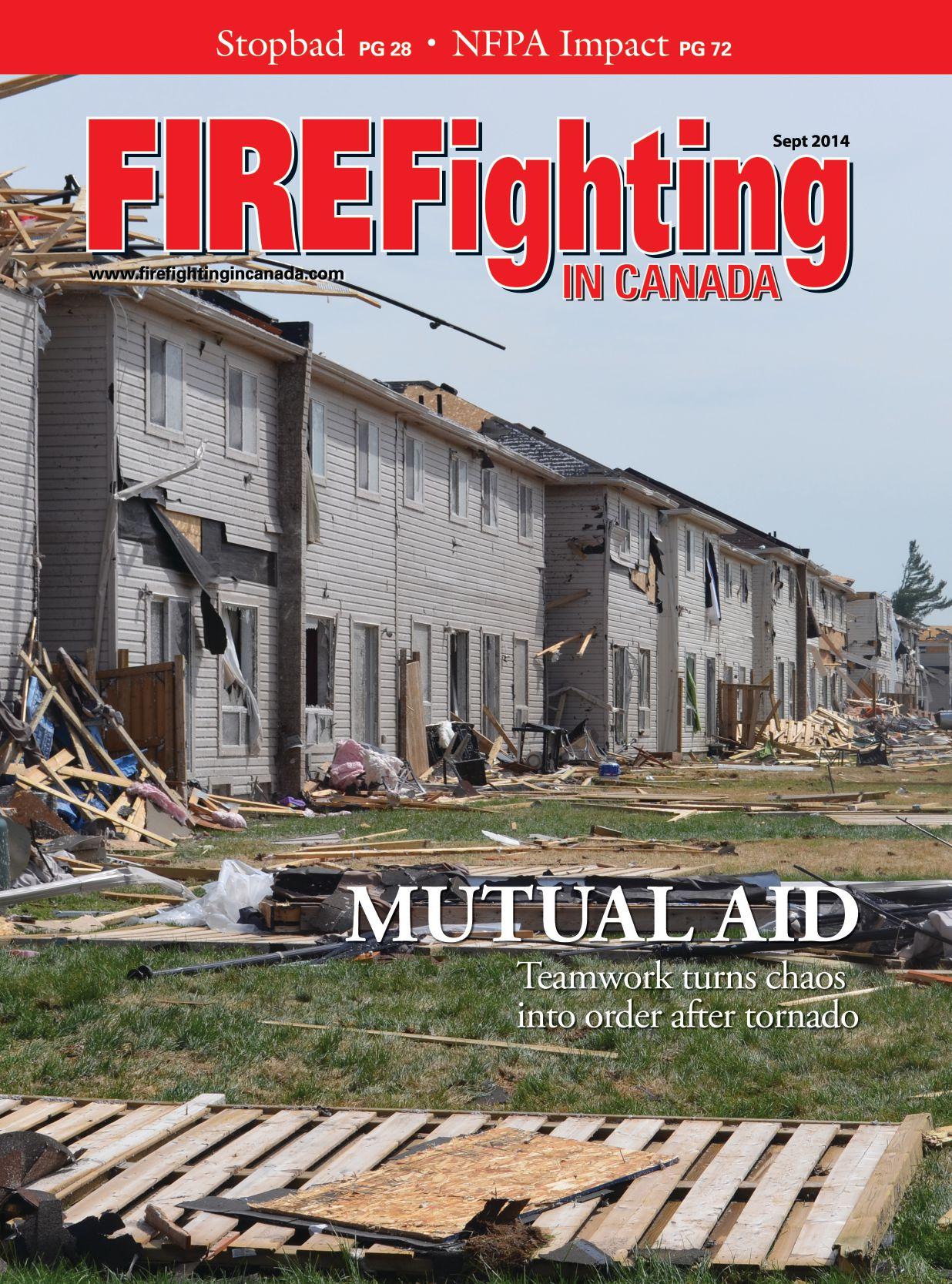
The response to a tornado in Angus, Ont., was co-ordinated, efficient and effective. See story on page 10.
Sells is a master of puns – which I usually edited out; almost all of his 56 columns over seven years included a clever reference to popular music (often left in), a quote from The Art of War (sometimes edited out) or a play on something Star Trek related (usually deleted, under protest – even from Sells’ final epistle on page 78).
Regardless of our writer/editor clashes, we’ve learned from each other; you can read Peter’s column to find out what he has gleaned from seven years of red marks and editor’s comments. For me, Peter answered every fire-service question – about 5,000 by my estimate – I threw at him during my early years as editor.
Peter taught me that if I wanted something changed I better have a good reason – I usually did – because he had a good reason for
The one thing I know Peter learned is that the old period-at-the-end-ofa-sentence-followed-by-adouble-space rule taught in high-school typing does not apply to computer word processing; it’s a single space only. It took years, dozens of reminders and enough red ink (figuratively, of course) to paint a fire truck, but he finally got it. Resistance was futile. -
Speaking of columnists, Winnipeg firefighter Jay Shaw tends to write his blog or column when something riles him; he sits down, pounds out a few hundred-words and hits send.
Then we talk, sometimes tone things down a bit, and the blog is posted or the column is edited for the magazine.
Jay usually writes for Canadian Firefighter and EMS Quarterly, but the piece he sent to me in July about younger firefighters and the need for officers to understand what motivates them was so bang-on for fire-service leaders that I opted to run it here, on page 26.
Jay’s words might help many of you see things from a different perspective.
P.O. Box 530, SIMCOE, ON N3Y 4N5 email: subscribe@firefightingincanada.com
Printed in Canada ISSN 0015–2595
CIRCULATION email: subscribe@firefightingincanada.com
Tel: 866-790-6070 ext. 206 Fax: 877-624-1940
Mail: P.O. Box 530 Simcoe, ON N3Y 4N5
SUBSCRIPTION RATES
Canada – 1 Year - $24.00 (with GST $25.20, with HST/QST $27.12) (GST - #867172652RT0001)
USA – 1 Year $40.00 USD
We acknowledge the financial support of the Government of Canada through the Canada Periodical Fund of the Department of Canadian Heritage.
Occasionally, Fire Fighting in Canada will mail information on behalf of industry-related groups whose products and services we believe may be of interest to you. If you prefer not to receive this information, please contact our circulation department in any of the four ways listed above.
No part of the editorial content of this publication may be reprinted without the publisher’s written permission ©2014 Annex Publishing and Printing Inc. All rights reserved. Opinions expressed in this magazine are not necessarily those of the editor or the publisher. No liability is assumed for errors or omissions.
All advertising is subject to the publisher’s approval. Such approval does not imply any endorsement of the products or services advertised. Publisher reserves the right to refuse advertising that does not meet the standards of the publication. www.firefightingincanada.com
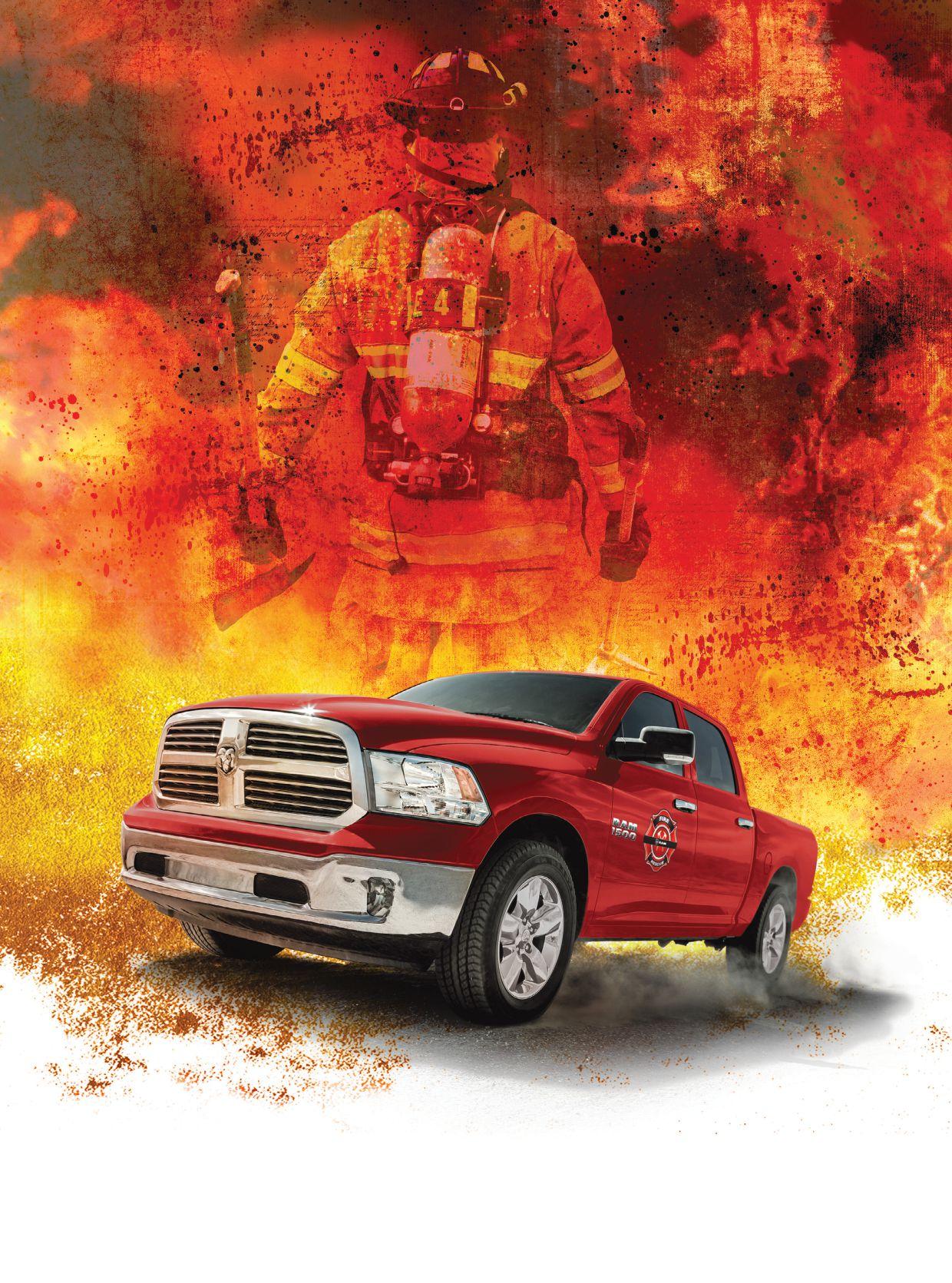
The new 2015 Ram 1500 is the truck Firefighters, EMS and First Responders rely on in the toughest situations. The Special Service* Vehicle features a mighty 5.7L HEMI® V8 with FuelSaver MDS and VVT Technology offers 395 hp and 407 lb-ft torque. And its part-time four-wheel-drive system, Electronic Stability Control, 17-inch steel wheels and 6-speed automatic transmission delivers great power without compromising efficiency. The 2015 Ram 1500 – strong, smart, and versatile, like the heroes that drive them.

Carleton University journalism-school graduate Maria Church joined Fire Fighting in Canada in July as assistant editor and was promptly plunged into bunker gear and a breathing apparatus.
Just a week after wondering if it was OK to write SCBA rather than self-contained breathing apparatus, Church and editor Laura King visited Oakville Fire for some hands-on training.
Crews at Oakville’s Station 5 explained all aspects of the station’s pumper and rescue trucks and their tools and equipment. Training officer Tony Remmig showed Church how to don bunker gear and BA and walked through safety features of the PPE.
Church experienced search and rescue using a thermal imaging camera in the training tower – after
a walk through to get her bearings – then broke glass and cut the door off a car during an auto-ex demo.
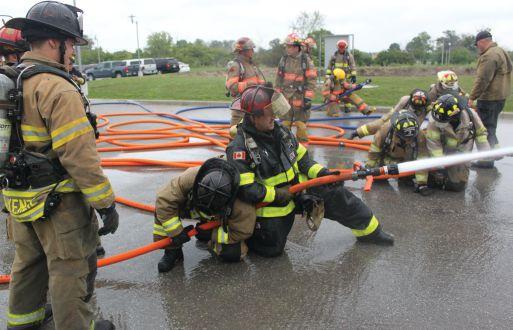
In August, Church visited the Fire and Emergency Services Training Institute at the Greater Toronto Airport Authority, where she experienced live fire and smoke conditions under the tutelage of instructor Rob Lenders, put out a car fire, and crawled on hands and knees, in pitch dark, through a maze, doing search and rescue.
“Hands down, coolest day ever. #lovemyjob,” Church tweeted afterwards.
Church will write and edit for Fire Fighting in Canada and Canadian Firefighter and EMS Quarterly and the www.firefightingincanada.com and firehall.com websites.
Church was a reporter/ editor with the Northern Journal in Fort Smith, NWT, before joining Annex
JASON JONGEN is the new deputy fire chief for the Gravenhurst Fire department in Ontario. Jongen was a captain at Station 2 in Kilworthy and has served as a volunteer firefighter in Gravenhurst for
18 years; he has also been a career firefighter at Canadian Forces Base Borden since 2001.
KEVIN
DONALDSON is the new deputy fire chief for the Town of Greater Napanee Emergency Services in Ontario. Donaldson has more than 20 years in the
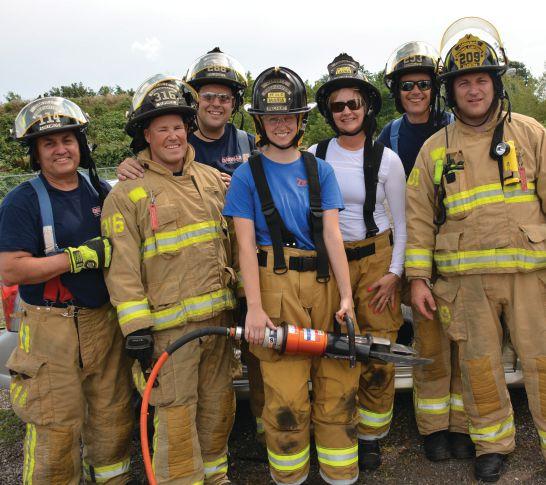
Fire Fighting in Canada’s new assistant editor Maria Church, centre, experienced baptism by fire at the Oakville Fire Training Centre, learning about pumpers, rescues, PPE, smoke, RIT, auto ex, and more. Pictured with Maria after a full day of training are Peter Critikos, Shawn Turner, Blaine Palinsky, FFIC editor Laura King, Dave Kowalyk, and Capt. Mike Gustin.
Business Media and its fire group of publications. Contact Church at mchurch@annexweb.com,
fire service and worked previously for the Township of Stone Mills, where he held the positions of firefighter, captain, deputy district chief and deputy chief.
GILBERT MACINTYRE and CHRIS MARCH have been promoted to deputy chiefs with
friend her on Facebook and follow her on Twitter at @maria_firecan – Laura King
the Cape Breton Regional Fire Service. March started as a volunteer firefighter in 2001; he was promoted from platoon chief July 8 and is responsible for training and fire prevention along with co-ordinating the department’s more than 750 volunteers. MacIntyre has been a firefighter since 2001 and was promoted from platoon chief to deputy of operations for career firefighters.
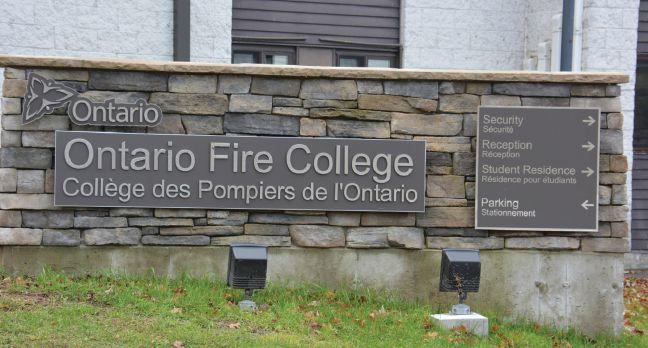
Firefighters in Ontario’s Hastings and Prince Edward counties can do more broadbased training closer to home now that their training complex is affiliated with the Ontario Fire College (OFC).
On July 10, Ontario Fire Marshal Ted Wieclawek helped cut the ribbon at the grand re-opening of the HastingsPrince Edward Fire Training Complex in Quinte West.
The facility is jointly owned by all municipalities in Hastings and Prince Edward counties and is now affiliated with the college.
The facility first opened 30 years ago as a three-storey training tower. Classrooms and washrooms were added,
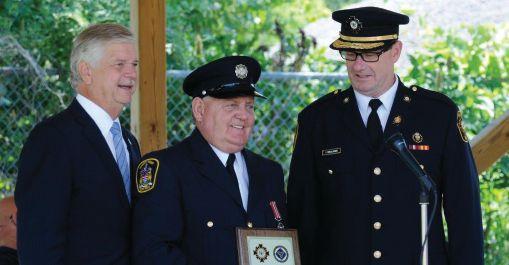
Ontario Fire Marshal Ted Wieclawek (right) presents a plaque recognizing the Hastings-Prince Edward Fire Training Complex in Quinte West as an affiliated teaching complex of the Ontario Fire College to Chuck Naphan, president of the counties’ mutual-aid society, as Quinte West Mayor John Williams looks on.
with funds raised by all the firefighter associations within the two counties and through donations from local companies. The expansion allowed member fire
departments to book the facility and bring their firefighters there to train.
Five years ago, a trainingtower committee was formed to work with the fire college
The Village of Smithers, B.C., was incorporated in 1913, with a population of 400. In the same year, the first fire department was formed –with eight members.
In 1914, two Ajax fire engines were purchased for $400.
And that made the department functional. On Aug. 22, Smithers Fire Rescue celebrated its centennial, with an open house, a barbecue,
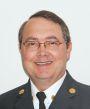
LYLE QUAN retired June 30 from the City of Waterloo, where he had been fire chief since 2010. Quan was a firefighter in Markham for 17 years before moving to Guelph to become deputy chief. Before Quan became a firefighter, he had been a police officer and a paramedic. Quan plans to consult,
auto-ex and rope-rescue demonstrations, and sales of commemorative T-shirts.
Deputy Chief Kelly Zacharias said the change that had the most significant impact on the department was the construction of a new $1.2-million fire hall in 1989.
“With the six-bay fire hall, newer apparatus was able to be purchased to meet our community’s growing needs,” Zacharias said.
“In addition, development of a regional fire-training center has allowed our organization to hone our fire-fighting skills and keep current with new techniques.”
The department has come a long way. In the early years, when a fire was spotted, a wooden tripod five meters high, with a one-meter section of Grand Trunk Pacific rail hanging from it, was smacked with an iron bar
to schedule and hold OFCrecognized courses. What started out with four to five courses a year has grown to more than 16 specialized courses. The OFC affiliation has two benefits: it is difficult due to demand to register for courses in Gravenhurst – there are more than 10,000 fulltime and 19,000 volunteer firefighters in Ontario; and it is much more desirable for firefighters to train close to their home departments so they can be with their families at night.
The committee is now raising money for a three-bay garage and a more modern, climate-controlled classroom.
– Deputy Chief Robert Rutter
to summon firefighters. At the sound of the alarm, firefighters and residents would form a bucket brigade from water ditches to the fire.
Today SFR protects 250 square kilometers. Call volumes average 300 incidents a year. SFR consists of 42 volunteer firefighters, one part time clerk and a full time deputy and chief.
– Smithers Fire Chief Keith Stecko
teach at the Ontario Fire College and write his Leadership Forum and Cornerstone columns for Fire Fighting in Canada.
Deputy chief BRIAN HUNT of the North Bay Fire Department retired in June after 30 years of service.
Deputy chiefs JIM DRISCOLL and RICHARD BULLEY have retired from the Cape Breton Regional Fire Service in Nova Scotia.
Driscoll had been a firefighter for 44 years; he started as a volunteer in Glace Bay and became a career firefighter in 1983. Driscoll oversaw fire prevention and training for the regional service and 35 volunteer departments. Bulley retired July 31.
MARK MEHLENBACHER, the fire chief in St. Catharines, Ont.,
died July 18. Mehlenbacher was on the board of the Ontario Association of Fire Chiefs and had been working on a project to sync EMS and fire dispatch in the province. Mehlenbacher fought a harsh form of skin cancer for months. Mehlenbacher had been a firefighter in Ancaster and Hamilton, a deputy chief in Burlington and chief in Ancaster.
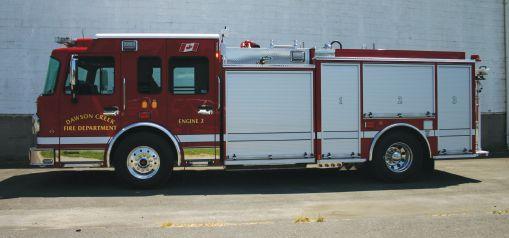
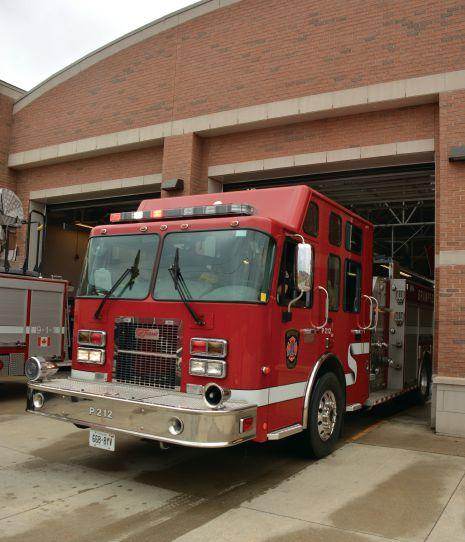
The Dawson Creek Fire Department in British Columbia, under Chief Gordon Smith, took delivery in June of a hub Fire Engines & Equipment-built pumper. Built on a Spartan MetroStar chassis and powered by an Allison 3000 EVS transmission and a Cummins ISL9 450-hp engine, the truck is equipped with a Waterous SCUC20C 1,500 IGPM pump, a Waterous 140-SP CAFS, Waterous Advantus 3 foam system, a 500 IG co-poly water tank, Whelen LED light package, Honda EM5000 generator and Magnafire push-up lights.
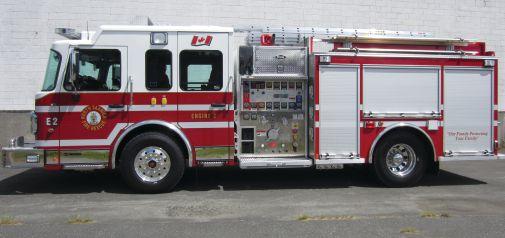
North Saanich Fire Rescue in British Columbia, under Chief Gary Wilton, took delivery in June of Hub Fire Engines & Equipmentbuilt pumper. Built on a Spartan MetroStar chassis and powered by an Allison 3000 EVS transmission and a Cummins ISL9 450-hp engine, the truck is equipped with a Hale QMAX175 1,500 IGPM pump, a FoamPro 2001 foam system, 600 IG co-poly water tank, Whelen LED light package, Smart Power hydraulic generator and Will Burt Night Scan light tower.
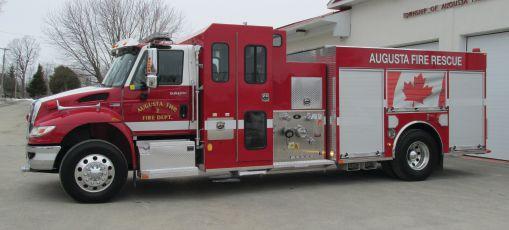
The Augusta Fire Department in Ontario, under Chief Rob Bowman, took delivery in June of an Arnprior Fire Trucks-built rescue pumper. Built on an International chassis and powered by an Allison 3000 EVS transmission and a Maxxforce 9 330-hp engine, the truck is equipped with a Waterous 1,250 IGPM pump, an 800 IG polyurethane water tank and a Waterous CAFS system.
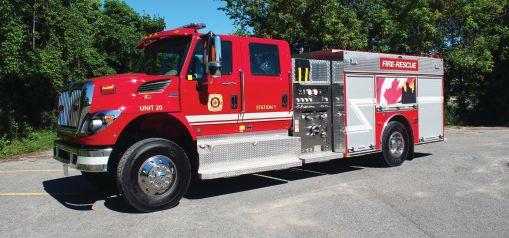
The Mississippi Mills Fire Department in Ontario, under Chief Art Brown, took delivery in June of an Eastway Emergency Vehicles-built pumper. Built on an International 7400 chassis and powered by a an Allison 3000 EVS automatic transmission and aNavistar Maxxforce 9, 330-hp, the truck is equipped with a Hale Qflo+ 1250 1,100 IGPMP pump, a Hale FoamLogix 2.1A foam system, 850 IG polyurethane water tank, enclosed ladder and pike pole storage, enclosed hard suction hose storage, and a Whelen LED emergency light package.
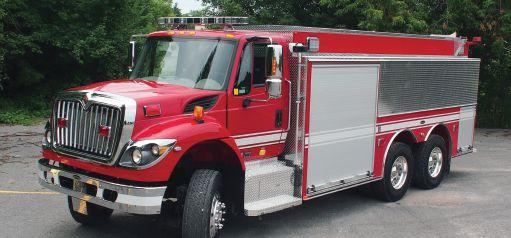
The Innisfil Fire Department in Ontario, under chief John Pegg, took delivery in July of an Eastway Emergency Vehicles-built tanker. Built on an International 7400 chassis and powered by an Allison 3000 transmission and a Navistar Maxxforce 9, 330-hp engine the truck is equipped with a 20-hp portable Honda fire pump, 2,000 IG polyurethane water tank, high side and low side compartments, enclosed porta-tank storage and a Whelen LED emergency light package.
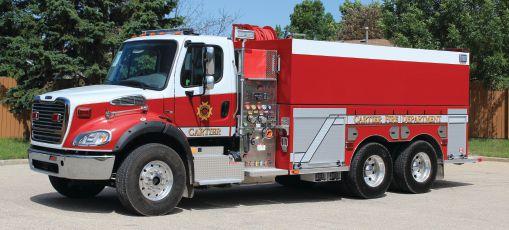
The Cartier Fire Department in Elie, Man., under chief Dan Bouchard, took delivery in July of a Fort Garry Fire Trucks-built tanker. Built on a Freightliner M2-112 chassis and powered by a Detroit DD13 440-hp engine, the truck is equipped with a Hale MBP 800 IGPM pump, a FoamPro 1600 Class A foam system, a 2,000 IG polyurethane water tank, and Ziamatic ladder rack.

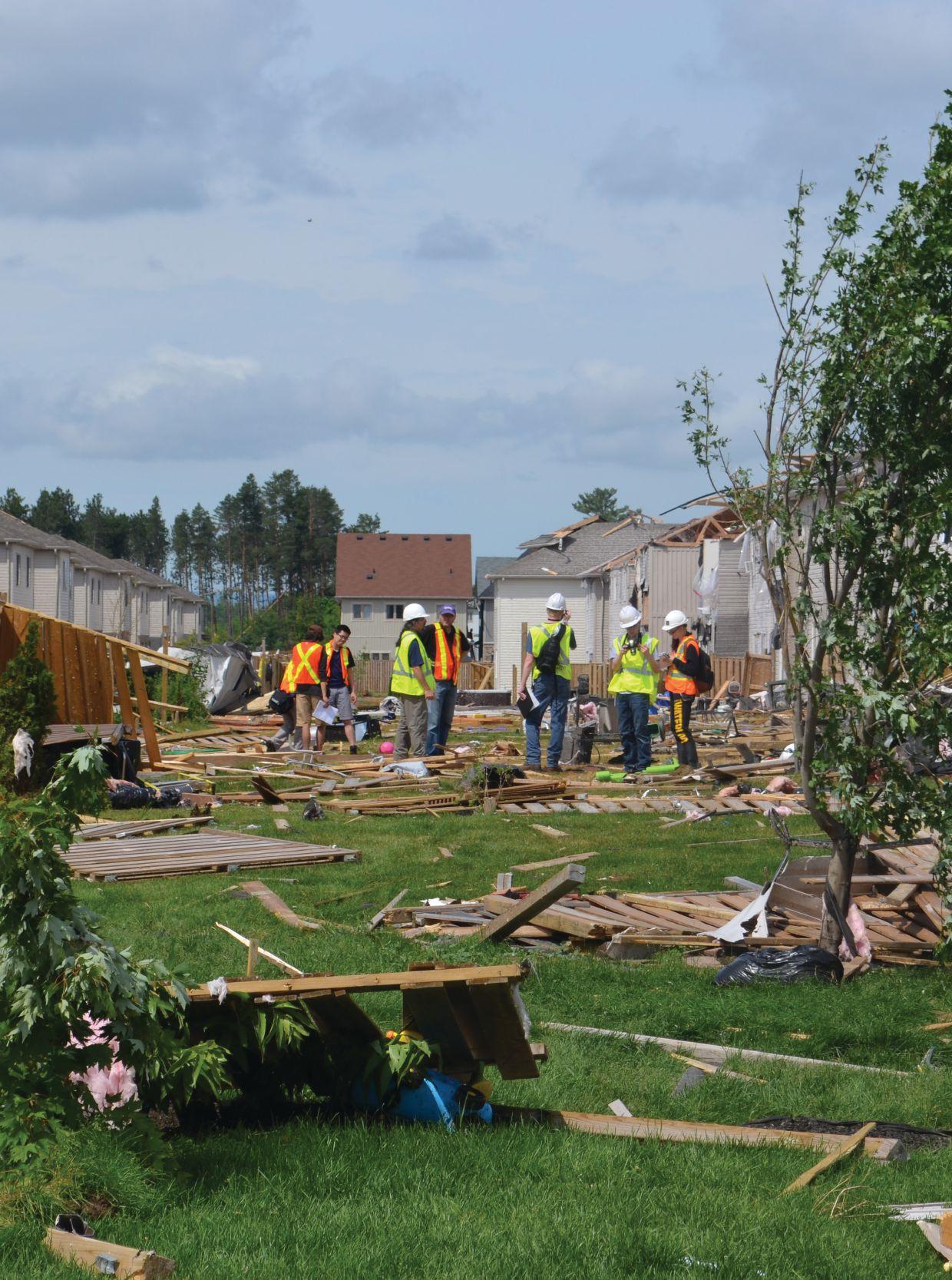

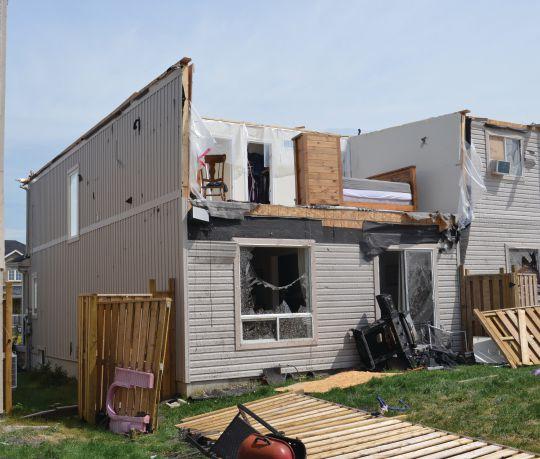
Aclass-F2 tornado touched down in Angus, Ont., on Tuesday, June 17, just after 5 p.m. The force of the wind ripped the tops off homes and moved other houses three to four inches sideways on their foundations. The wind threw debris for kilometres; a Toronto Sun newspaper box was relocated to a ditch five kilometres to the east. Mail was found in farm fields six concessions away. Considering that it was dinner hour, and many people were in their homes, the fact that no one was seriously hurt is a miracle.
What follows is an overview of how the aftermath of the tornado was handled from fire operations and emergency-management perspectives, and how the two systems worked together to produce order from chaos in fewer than 100 hours.
By CYNTHIA ROSS TUSTIN
Angus is located in the Township of Essa in southwestern Ontario and is the largest urban centre within a municipality of 17,000 people. CFB Borden is on our western border and the City of Barrie lies to the east. We are served by a 58 highly dedicated volunteer firefighters from two stations: Station 2 is in Angus, and Station 1 is to the east, in Thornton. The only full-time fire personnel are the fire chief and administrative support. The fire chief has an additional role as the community emergency management co-ordinator (CEMC). Policing is provided through the province from the Nottawasaga detachment of the Ontario Provincial Police (OPP). Emergency medical support is delivered from the County of Simcoe via Simcoe County Paramedic Services. Additionally, the County of Simcoe, as the upper tier regional government, provides services such as emergency social services and garbage pick-up, and maintains certain roads.
The tornado first touched down across the road from the high school in Angus and then bounced east, cutting a swath of damage through established neighbourhoods, rural farms, and businesses. The hardest-hit area was a newly constructed subdivision. The tornado’s destructive force took a path through the backyards of an entire block of homes. The homes on Banting Crescent and Stonemount Crescent, which back onto each other, took the brunt of the impact.
The 911 calls started before the tornado had even cleared the area. The call for the structural collapse of a home on Stonemount Crescent came in first, followed immediately by a call for a structural collapse of a home on Banting Crescent, with people trapped. After that it was a free for all; calls for 10 homes and then 45 homes came pouring in faster than anyone could respond. In all, 104 homes were hit in some fashion. On top of these calls came countless calls for wires down, which our dispatch – handled expertly by Barrie Fire and Emergency Services Communications – prioritized and stacked for mutual-aid departments to handle.
OPP Const. Kyle Kneeshaw was at a home on Stonemount Crescent for an unrelated issue when the tornado touched down. He noted the eerie silence and the green hue to the sky and told the person he was speaking with to get indoors and take cover. They both jumped into the house and before Kneeshaw could slam the door shut, winds making the noise of a freight train threw them both back three metres down the hall. That’s the way most residents describe the tornado: eerie silence followed by freight-train-sounding wind and then torrential rain.
Everyone responded – police, fire and EMS – and mutual aid was initiated. As the tornado was still ripping its way east, Station 1 crews were heading west through the storm at great peril. All emergency responders dodged debris, downed trees and live wires to aid those impacted.
Deputy Chief Doug Burgin ran the incident at the site (Banting and Stonemount crescents). He utilized a command structure with two sectors: Burgin ran overall command and the Banting Crescent side and Station 2 Chief Wally Ogilvie ran the Stonemount Crescent side. Crews from Stations 1 and 2, with the help of mutual-aid crews, completed primary and secondary searches of all 104 homes in less than two hours. Fire crews working in pairs rapidly evacuated residents to areas of refuge, turning off natural gas as they went. A simple spray-painted X on the front of a house indicated that it had been searched.
Simcoe County has a highly effective mutual-aid system. Compatible communications and seamless dispatching make this possible. Lesson learned: we could have used additional tactical channels but proximity and face-to-face reports kept this from becoming overly problematic.
Mutual-aid crews from Springwater, New Tecumseth, Innisfil, Clearview, Collingwood and Barrie helped in various ways. These crews were part of the search-and-rescue teams, handled other calls for help in the municipality and provided coverage for both of our stations.
The incident commander had called at the outset for Hydro One and Enbridge (natural gas) to assist on site. Hydro was an issue because the services were all underground; the only live power that crews had to deal with was in the impacted homes – there were no overhead hydro hazards. But the power needed to be shut down home by home via the transformer vaults – a time-consuming task. Hydro staff worked tirelessly to isolate power to the affected homes for the safety of emergency workers but also keep the power on at the unaffected homes across the street.
While all that was going on, emergency-management systems were being established at the next level up to ensure that everyone had everything they needed to do their jobs. An overall command structure was set up for police, fire and EMS at the OPP satellite office (which happened to be at the high school in Angus). The Community Control Group (CCG) was convened and an emergency declaration was made verbally to the province through the Office of the Fire Marshal and Emergency Management (OFMEM). The CCG was a unified-command structure that initially comprised police, fire, and EMS: it grew to include the mayor and CAO, two councillors, a representative from roads/public works, an OPP staff sergeant and media liaison Const. Kelly Daniels, the chief building official, the county’s emergency management co-ordinator, and, later, an OFMEM rep.
The site was chosen for its proximity to the incident and access – it was not our emergency operations centre (EOC) nor was it the alternate EOC, but it was the best spot from which to work. Another lesson learned: an EOC and alternate EOC are required under the Ontario Emergency Management and Civil Protection Act, but if the situation warrants a better location, use that.
The emergency was declared for two primary reasons: first, so that anyone who volunteered was covered for Workplace Safety and Insurance Board purposes; and second, we were fairly certain that the response and clean up would take time and strain our ability to maintain the continuity of operations. We briefed everyone on the status of the event, outlined the action plans for each group, and determined who could provide which resources.
The key to a quick and successful resolution, at least in my mind, was to keep everyone pushing the rock in the same direction at the same time. We agreed on all the usual CCG items such as scheduled briefings, locations and immediate next steps. That night, the first hours after the tornado, the priority was scene safety and security, and Hydro One’s ongoing efforts to get all the power switched off appropriately.
Three areas turned out to be significant in our handling of the aftermath of the tornado:
• Media – We agreed from the outset that this was a municipal emergency and that messaging to the media would be controlled via Essa Township. This was never a sticking point due to our solid working relationship with the Nottawasaga OPP and because of the calibre and experience of OPP media liaison Const. Daniels.
• Compassion – We agreed that compassion for those affected was an equal priority to safety. Studies from traumatic events show that when affected persons are dealt with compassionately, they recover faster.
• Incident command – Incident command was easily implemented by emergency services but it was also inflicted on other agencies throughout the event. More about this further down.
We decided almost immediately on our media strategy; it was simply the same strategy we all use regularly. This was a municipally declared emergency and therefore media releases would be municipally controlled. Several things made this easy (easier). First, the fire department has always considered the local media to be allied agencies. Literally, they are set up in our email as “Allied Agencies” and when we send out anything, such as a photo of an MVC, it’s a one-button email/text. We are a very small department and in many respects, the local reporters are our public information officers.
When a tornado touches down, reporters will touch down a minute later, and with equal fervour. A reporter from the CTV affiliate in Barrie phoned me as I responded to the call. When I answered (using hands-free) the first question was “How can we help?” I confirmed our response and the generalities of the event, and the reporter told me what the satellite weather was tracking – the tornado, and its path. The reporter also told me where the tornado had started (Angus) and where it was headed. This was helpful for mutual-aid purposes – planning ahead.


BY MARK VAN DER FEYST
One of the major job functions of a truck company is to perform a search of a structure. A search produces positive results when firefighters confirm that there is no one inside or when an occupant is safely rescued. Negative results occur when an occupant is found to have succumbed to the products of combustion.
Another potentially negative aspect of a search is the impact on the members of the search team. Search-team members can become victims when they encounter hazards or become trapped, lost or disoriented.
Holes in floors or stairs are a big hazard for searching firefighters. Buildings are being constructed quickly to save costs, and new building materials such as lightweight trusses, wooden I-beams, silent floor joists, and composite lumber are less sturdy than older materials and are therefore more susceptible to heat and more inclined to fail.
It is imperative that the search team check the floor and stairs when advancing into the structure to ensure that there is no compromise. If search-team members are advancing a charged hose line, they can use the stream of water to check the floor in front of them. The sound of the water bouncing off of the floor indicates a solid surface; if there is an absence of sound, there is a good chance that there is a hole in front somewhere.
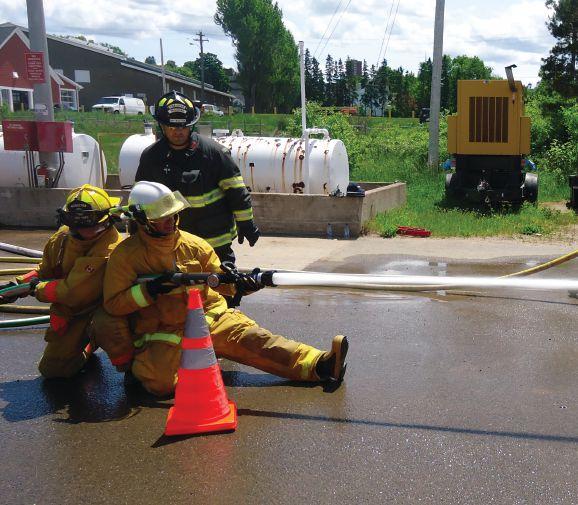
Firefighters can also use their legs to sound the floor in front of them. Extending one leg in front of the body when advancing the hose allows firefighters to check for a solid floor (see photo 1 and check Back to Basics in the November 2008 issue of Fire Fighting in Canada for more detail).
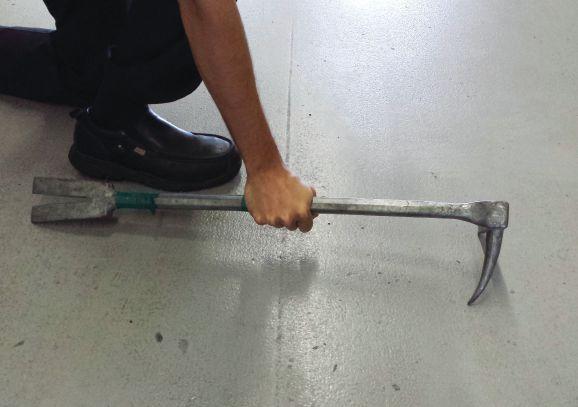
If the search team is carrying only hand tools and not a charged hose line, the tools can be used to check for floor integrity. The Halilgan is best for this type of operation. Hold the Halligan as shown in photo 2; note that the firefighter’s hand is elevated off the floor when the floor is stable, but when the floor has given way, the firefighter’s hand will be pinched because the top part of the Halligan has fallen flush with the surface. When using an axe as a search tool, bang the axe head on the floor to ensure integrity and presence. This method of sounding the floor is not very practical for the lead firefighter in the search team; the Halligan is preferred. The axe is best used for sweeping the floor area.

BY DOUGLAS TENNANT Fire chief, Deep River, Ont.
ublic safety is paramount in our business. Indeed, public safety is not just for the public, it also includes safety for those who provide emergency services to the public. It has been said that there is no cost or effort too great to being safe on the job; provincial ministries of labour, councils, chief officers and union leaders would agree, I think.
It is within this concept of public safety that we face the reality that the safest fires (if there can be safe fires) are the ones that either don’t start or that are very small when the big red trucks roll up to the scene. And public education about preventing fires in the first place is the most effective means of maintaining public fire safety, all the while providing a safe working environment for firefighters. In other words, public fire-safety education is our first and best line of defence for community and firefighter safety.
The goal of every fire service across Canada should be the provision of top-notch public fire-safety education to everyone in our incredibly diverse communities. Anecdotally, our nation’s fire services have been experiencing fewer fires and consequently fewer fire deaths and injuries over the past 20 years. However, it is difficult to confirm this statistically as we have no national program for the gathering and analysis of fire statistics (see Len Garris’s commentary, The case for national numbers, in the June issue of Fire Fighting in Canada). It is due to the proactive nature of public education, revisions to fire and building codes and enhanced enforcement methods that our collective actions have been positive for the safety of the public and firefighters.
Public education works. Teaching the benefits of early detection (smoke alarms save lives) and the outright prevention of fires in the first place means fewer and smaller fires. This results in increased safety, not only for the public but also for firefighters.
with Sparky and Learn Not To Burn. We all live in incredibly culturally diverse communities across Canada. How can we provide even the most basic public fire-safety education to families within this growing diversity?
I don’t speak Urdu, Punjabi or Spanish. I am not intimately familiar with the unique cultural/religious aspects of the wide spectrum of new Canadians who have chosen to live and work in my small community. And, even more compelling is the fact that most of our firefighters don’t have these skills and knowledge either. So how can we effectively become more engaged in public fire safety in our diverse communities?
We need to review the composition of our fire services. To maintain our advantage against the tragedy of fire, Canadian fire services needs to become more diverse themselves. We need to hire more firefighters who – yes, here we go – reflect the diversity of our communities. Anyone who can pass the physical and aptitude tests can put the blue stuff on the red stuff. However, we need firefighters who are familiar with the local gurdwara, yeshiva and mosque to become engaged with those who attend them. We need firefighters who can speak the languages and who are familiar with the unique and intimate cultural aspects of our communities to save lives and ultimately make the job safer for firefighters.
Active and diverse engagement in our communities – big and small – is the key to enhancing firefighter safety.
’’
However, we do have more work to do across Canada to prevent fires in the interest of public safety and to make the job safer for our firefighters. Active and diverse engagement in our communities – big and small – is the key to enhancing firefighter safety. We need to reach into our rather diverse communities to provide comprehensive public fire-safety education. We need to be more engaging of those who speak neither of our official languages and who have not grown up
Douglas Tennant is the fire chief in Deep River, Ont. He joined the fire services as a volunteer in 1978 and has served several communities as a fire prevention officer, chief officer and as a manager with the Office of the Fire Marshal in Thunder Bay, Ont. Tennant was the treasurer and a vice president of the Ontario Association of Fire Chiefs for eight years. Contact him at DTennanet@deepriver.ca
A significant challenge to creating a more diverse fire service is changing the stereotypical image of a firefighter and enabling those from our visibly diverse communities to seek opportunities to join the local volunteer or full-time fire service. Every community is in tune with its needs and circumstance regarding fire-service infrastructure. We could – and should – employ similar efforts to encouraging eligible residents to apply for membership on the local fire department to enhance its diversity.
Bringing on firefighters who reflect the diversity of our communities is not just an aesthetically pleasing thing to do, as columnist Robyn Urback argued in the National Post on July 15, 2013, after Toronto Fire Services announced its goal of a 10 per cent increase in women and minorities. Increased diversity in the Canadian fire service will save the lives of the public and firefighters.

Small changes to fire-hall routines can make a crucial difference to departments’ response times
By BILL BOYES
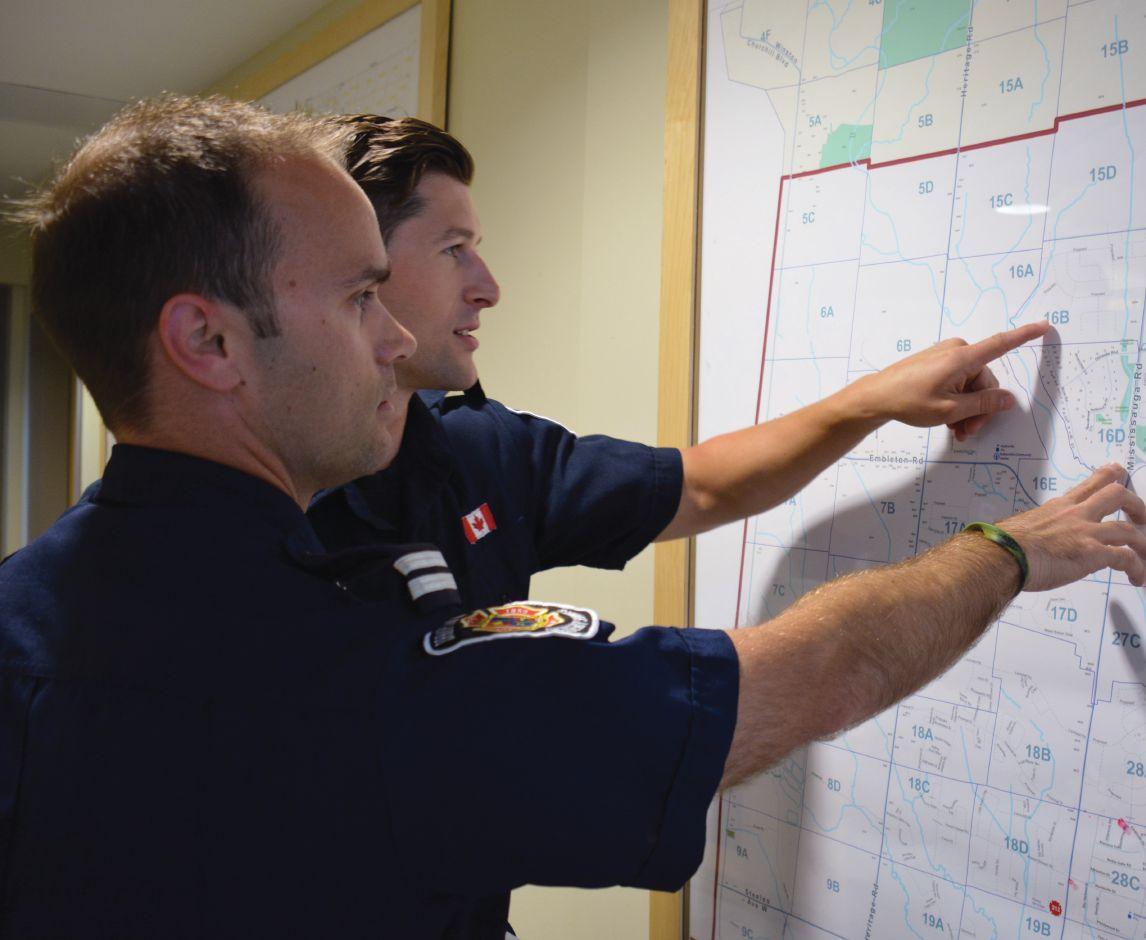
Areview of response-time data in Brampton, Ont., shows that little things – the location of the printer and maps, the distance to the truck bay from firefighters’ living quarters, and whether crews start moving before hearing the entire page – can save valuable time and push departments closer to the NFPA response-time standard.
Bigger changes, such as a high-tech fire station alerting system, can make a significant impact on response times, but they also cost money.
Understanding how response-time data is collected and analyzed is important in order for departments to make sure conclusions drawn from the information are accurate.
Departments that want to try to reduce response times to meet NFPA 1710 can learn from Brampton’s experience.
by Brampton Fire and Emergency Services in Ontario shows that small changes – the location of the printer and maps, the distance to the truck bay from firefighters’ living quarters, and whether crews start moving before hearing the entire page –can save valuable time and push departments closer to the NFPA response-time standard.
* * *
All organizations, including the fire service, must assess organizational capabilities to ensure all relevant legislation is adhered to and industry-best practices are followed.
While fire departments are complex organizations, their data management and evaluation processes are typically less than optimal.
Intuitively, a decrease in response times will improve life safety and property protection by optimizing emergency-response performance. Knowledge of all response time components, from the placement of the 911 call to the arrival on scene, is critical to ensure effective and cost-efficient improvements are made, while maximizing public safety and avoiding unnecessary spending.
The fire service best practice for response times is outlined in 1710; 80 seconds to the 90th percentile is the de facto benchmark, but it is not mandatory. It is unclear how many, if any, North American departments
meet that benchmark.
Acknowledging the importance of turnout time, in early 2013, Brampton Fire and Emergency Services (BFES) in Ontario convened a working group of labour and management representatives to study turnout times and work toward achieving the NFPA standard.
Essentially, the study found that technology has a significant impact on operations and changing simple things – moving trucks around in the bay, better lighting, putting the printer closer to the maps – can make a significant difference to turnout times.
BFES comprises 468 personnel in a community of 600,000 residents. Brampton is Canada’s ninth largest city and the fastest-growing municipality in Canada. The city is served by 13 fire stations that respond to 18,000 emergencies each year.
BFES conducted a comprehensive review of its turnout times from 2011 to 2013. A thorough investigation into response times of other departments across the province was not conducted due to the challenges of fire-service data comparison. While the Brampton study was taking place, the Ontario Association of Fire Chiefs’ response-time committee developed an accepted timeline to be used in Ontario (mirroring NFPA 1710) to ensure all departments use the same language and definitions when conducting response-time analyses.
In 2010, an audit of Atlanta Fire Rescue found turnout times for both EMS and fire incidents are about three times longer than the NFPA standard. In 2010, Atlanta had a turnout time of 187 seconds to the 90th percentile. Interestingly, and based on past practice, the City of Atlanta published median statistics as opposed to percentile-based statistics, which hid the magnitude of the problem.
This highlights the critical importance of understanding the difference between basic statistical terms such as median, mean and percentile. The mean is the average, the median is the 50th percentile, and NFPA 1710 requires the 90th percentile. Fire departments must ensure they measure and report their data clearly and align their data with the applicable industry statutes or standards.
In a 2010 study, researchers from Worcester Polytechnic Institute analyzed simulated and actual turnout times from a wide range
of departments. More than 400 North American departments were contacted to participate; however, just 14 of the 59 respondents met the criteria to participate in the study. Many departments lacked complete or accurate data, which eliminated them from participating.
In the end, the study questioned the validity of the NFPA 1710 turnout-time standard, saying it “may be unrealistically short in today’s fire-service environment and may encourage unsafe practices in an effort to meet unrealistic alarm handling and turnout objectives.”
Brampton conducted a detailed analysis of response data using an internal data analytics program. It was quickly discovered there were substantial problems with the data-collection procedures and resulting statistics; these systems failed to capture accurate turnout times.
Basically, the program was not using the correct computer-aided dispatch (CAD) time stamps when calculating turnout time. Months later, an interim solution was developed with help from the communications division and corporate IT staff. Surprisingly, the use of the correct data did not result in any significant improvements. The analytics program allowed turnout time to be explored at the overall, shift, station and apparatus levels. The turnout times ranged from 143 seconds in 2011 to 141 seconds in 2012 to 131 seconds in 2013.
Quickly, it became evident that there were two major contributing factors to these inflated times: the front-end transmission delay and the back-end transmission delay.
NFPA 1710 defines turnout time as “the time interval that begins when the emergency response facilities and emergency response units notification process begins by either an audible alarm or visual annunciation or both and ends at the beginning point of travel time.”
In Brampton, turnout time commences when the dispatcher chooses the tactical radio channel. Although turnout time has commenced, firefighters in the station have not been notified by the audible alarm. There is a transmission delay because the dispatcher has to select the required apparatus and begin the dispatch sequence. The delay is typically longer in departments that use manual station-alerting systems. Further analysis revealed the front-end transmission delay to be 25 seconds, on average.
Therefore, it becomes crucial to understand how your department’s dispatch and
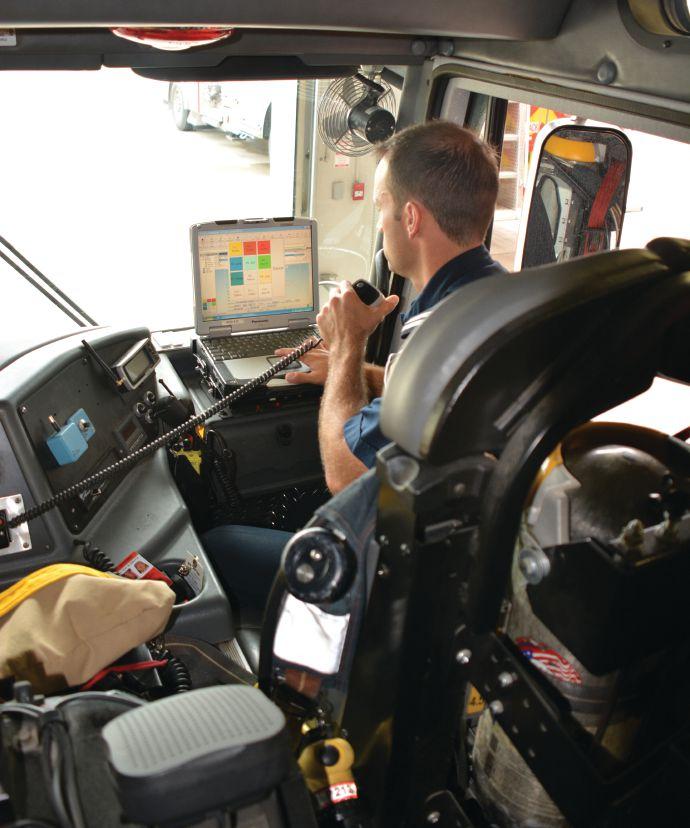
In Brampton, the back-end delay was determined to be five seconds. Brampton activated the mobile data units (MDUs) – the computers in the trucks similar to those in police cars – to allow the captain to press the F1 button to stop turnout time.
data collection processes align with the NFPA definition so that you can correctly ascertain the source of the time delays. Are the delays operational or technologically based?
In Brampton, to overcome the front-end transmission delay, a new station-alerting system is scheduled to be installed later this year. This system will include a countdown clock, automated in-station lighting and improved acoustics through ramped tones and textto-speech dispatch. The countdown clock provides real-time feedback on turnout-time performance and is a visual cue for firefighters to assess their turnout response procedures. Although the new system is a significant capital investment shared by the three fire departments in Peel Region, the potential time reductions that will be realized justify the expense.
Compounding the front-end delay is a similar issue that exists when the captain radios “on the way” to the timestamp that occurs on
the computer when the dispatcher selects the appropriate vehicle and inputs the apparatus as en route.
Within this back-end delay are two components: first, the time it takes to say P204, on the way, 123 Smith St., house fire, all belted; and secondly, the time required for the dispatcher to manually enter the apparatus as en route.
In Brampton, we determined the back-end delay to be five seconds. To overcome this delay, we have activated the mobile data units (MDUs) – the computers in the trucks similar to those in police cars – to allow the captain to press the F1 button to stop turnout time. The verbal “on the way” announcement is still used to inform other apparatuses on the call for operational purposes; this allows all trucks to simultaneously respond without having to wait to get on the radio because of traffic. Hence, turnout time is no longer affected by radio traffic or any human inputting factors.
Coupled with the 25-second front-end transmission delay, a value of 30 seconds was determined for the overall transmission delay. The graph above provides a comparative analysis of Brampton turnout times (minus the transmission delay) to the NFPA 1710 benchmarks. The data clearly shows a substantial reduction in the gap between NFPA and Brampton turnout times if the delay is removed.
The operational issues encountered varied in terms of the impact on turnout time, but the time constraints of NFPA 1710 necessitate an analysis of all possible contributing factors.
In Brampton, the length of the dispatch announcement is 25 seconds. Turnout time is severely impacted if crews listen to the full announcement before moving toward the trucks. If crews at two-truck halls listen to the dispatch announcement to decipher which apparatus is required, their turnout time increases. Firefighters must move to the apparatus at the first sound of the alert sequence. All information provided in the announcement is available on the MDU, which eliminates the need for firefighters to listen to the full announcement before heading to the trucks.
Fire-station design is another variable to be considered when assessing turnout time. Each fire station has unique challenges and travel components that need to be addressed to determine the time it takes personnel to reach the trucks; for example, the time required to get from the living quarters or the dormitory to the apparatuses.
Printers must be situated to minimize travel distance when preparing to respond to a call. In one Brampton station, moving the printer would decrease the travel distance by 26 feet,
saving 5.1 seconds on each response.
Furthermore, it was determined that some trucks were not in the most effective positions within the stations. Moving trucks to the bays closest to the living-quarters entrance would save four seconds per response.
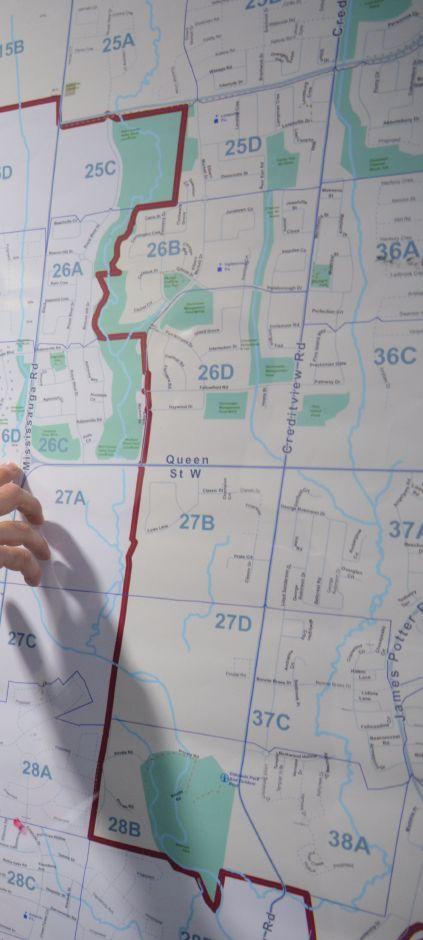
The study found that the maps in the stations are difficult to read; differentiating a street from a map area boundary, or locating the actual street, was problematic. Station map boards were not properly lit at night or situated in the best locations. The incident printouts are ineffective and contribute to delays in turnout time as they are not incident specific and contain a lot of unnecessary information that clutters the page. Pinpointing the address on the map portion of the printout would be a significant improvement. We also found that the cross streets provided are not necessarily major intersections. Altering the maps to include only major intersections nearest the incident enables the driver to get the apparatus going in the right direction and the captain can hone in on the exact location while en route using the MDU.
Given the occupational health and safety concerns of promoting quicker turnout times at the expense of safety, it is important to understand how department polices, SOGs and legislation impact turnout time. Donning PPE and seatbelts takes time. All Brampton personnel were advised throughout this study (and moving forward) that striving to meet the 80-second goal does not mean any policies or legislation could be disregarded. Donning PPE prior to putting on a seatbelt is mandatory before the truck leaves the station.
Brampton uses MDUs in all front-line apparatuses. This study alerted us to the fact
that MDU training for firefighters was lacking and needed to be addressed. Sufficient education and training was not provided on rollout of the MDU and resulted in limited usage of this valuable tool. It was determined that increased use of the MDU would be a key step toward the 80-second goal. To facilitate the widespread adoption of the MDU, a trial was conducted to determine how a change in turnout procedure would affect overall turnout times. The results were positive, despite initial hesitation by firefighters to change their past practices and rely on a technological tool. As of July, mandatory roads and maps training is required each month, and a new turnout procedure has been implemented. The new procedure – detailed below – is very simple: essentially, on hearing the alert tones, all personnel move immediately – they do not listen to full dispatch announcement.
■ DRIVER
1. Obtains the map from printer.
2. a) Correct map = go to the truck; confirm captain has MDU ready, work with captain to reach incident. b) No map = go to map board, confirm route with captain, proceed to incident (contingency plan in case of printer malfunction)
3. Turn on truck and don seatbelt.
■ CAPTAIN
1. Moves directly to truck on hearing alarm.
2. Dons PPE, seatbelt and ensures all personnel are belted.
3. Ensures MDU received call.
4. Pulls up map on MDU.
5. Radios - “P204 on the way.”
6. Go to red pin on the MDU map.
■ FIREFIGHTERS
1. Proceed straight to truck.
2. Don PPE.
3. Don seatbelts.
4. Close bay door (if necessary).
Brampton has experienced sizable growth over the past two decades, increasing the number of fire personnel and stations and impacting turnout time. An unfamiliar incident location requires the driver to spend time studying maps to determine a route. This negatively impacts turnout time, especially if the captain assists the driver at the map board, as he/she will be the last person to board the apparatus. This issue is compounded when
CONTINUED ON PAGE 70

Certificate in Fire Service Leadership
Name Position Department
Peter James Alexander Qualified Lieutenant City of Saint John Fire Department
Glenn Allen Baxter Fire Chief Turner Valley Fire Department
Eric L. Boudreault Training Officer Brandon Fire and Emergency Services
Jason W. Bryant Firefighter St. John’s Regional Fire Department
Martin Corriveau Captain Kananaskis Emergency Services
Crystal Farmer Administrative Assistant to the Fire Chief Six Nations Fire Department
Kevin Garrioch Firefighter/Paramedic
Brandon Fire and Emergency Services
Karen Greeley Firefighter Torbay Volunteer Fire Department
Deanna Leigh Hintze Deputy Fire Chief Turner Valley Fire Department
Daniel Illman Firefighter, Station 24 East Gwillimbury Emergency Services
Ryan Konrad Captain, Fire Prevention Officer Muskoka Lakes Fire Department
Greg Lamb Fire Inspector Courtenay Fire Department
Melvin James Lewis Captain Charlottetown Fire Department
John F. K. MacDonald Firefighter Conception Bay South Fire & Emergency Services
Robert H. MacDougall Firefighter Fredericton Fire Department
Ricky MacNaughton Fire Chief Campbellton Fire Department
Dean Martin Firefighter Town of Greater Napanee Emergency Services
Matthew Mercer Firefighter Portugal Cove St. Philips Fire Department
Roree S. Payment Deputy Fire Chief Clearview Fire & Emergency Services
Chad P. R. Schrader Lieutenant Wolfville Fire Department
Keith Tilstra Training Officer West Lincoln Fire Department
Certificate in Incident Command
Bruno Martina Captain, Special Teams Division Halton Hills Fire Department
Certificate in Fire Service Administration Graduates
Certificate in Fire Service Administration
Bruno Martina Captain, Special Teams Division Halton Hills Fire Department
David D. McKinley Assistant Deputy Chief Fredericton Fire Department
Amy Tereschuk Firefighter, 1st Class Guelph Fire Department
Certificate in Fire Service Administration, Emergency Management
Jim Arnold Captain Saskatoon Fire Department
Roy H. Hollett Deputy Fire Chief Halifax Regional Fire and Emergency
B. Scott MacKinnon Chief Cabot Volunteer Fire Department
Certificate in Fire Service Administration, Operational Planning
J. P. L’Heureux Deputy Chief Swift Current Fire Department
Karen Trecartin Firefighter Kennebecasis Valley Fire Department
Certificate in Fire Service Administration, Strategic Planning
Gillian Boyd Public Education Officer
The Town of Caledon

BY JAY SHAW
Iwas flipping through Twitter and found an article on Xbox firefighters, a term that describes 20- to 30-year-olds who are not respectful, and, apparently, were raised with video-game consoles in their hands.
There are cultural differences between the 1960s post-war era firefighters who trained our fire-service leaders, and the firefighters we have hired in the last 10 years. Many of our chiefs were trained and mentored by old-school, paramilitary, by-the-book type of firefighters. So when an Xbox firefighter comes to the hall with tattoos, piercings, a smartphone and a wrongfully perceived lack of respect, it gets guys talking about how it used to be, and why we need to change the way we do things.
I agree, but I beg to differ on who needs to change. Our fire-service leaders need to learn to motivate the recruits. This is our problem, but we did not create it. This cultural paradigm shift snuck up on us and put Xboxs in the fire station, CrossFit in the gyms, pink fire trucks on the floor, and Movember on our faces.
It is not just the fire-service recruit who is changing, rather the pool of all workers. School systems have changed, young adults have changed, and so have children. Sports teams have embraced inclusion; my 13-year-old son won a ribbon for sixth place in a track meet; you’re number six, so lets go to Boston Pizza and celebrate your awesomeness! What the heck are we doing?
For more than a decade, we have been helicopter parenting, protecting kids from the boogey man and the white-van rapist all at once, while telling them to explore the world and have fun, just wear your helmet, sweetie! We’ve created a society of young adults who expect to be great without hard work. We are accepting workers who may not have the coping skills to survive when some boss tells them they screwed up. But wait, my mom told me I was special, I did my best!
them out for being quiet or unable to communicate. Remember, that new recruit may play video games for four days straight when not at work, sleep till 2 p.m., stay up until 4 a.m., go to the gym while doing some vegetable cleanse, and probably communicates 95 per cent of his or her conversations via text. And we wonder why the rookie can’t talk to a patient or work unsupervised for more than five minutes. Young adults, in the absence of controlled leadership, will follow cultural norms. If we are not parenting young firefighters through great leadership strategies, who is? What behavior do we want? We just can’t complain about the new recruit’s work ethic, then throw em’ an atta-boy because he’s the only one who can figure out the TV remote.
Individuality is a powerful expression of self-worth. When you strip that away and streamline everyone into the same firefighter mould, you have a problem if you’re not filling the void with the culture and organizational systems in which you wish them to work. This is a generalization, as many recruits come from a pedigree of hard work. But just as fast as the newest gaming console becomes obsolete, the types of applicants to the fire service change.
‘‘ This cultural paradigm shift . . . put Xboxs in the fire station, CrossFit in the gyms, pink fire trucks on the floor, and Movember on our faces. ’’
We tell our kids they can be anything they want if they try hard and get good grades, but this parental programming is void of some basic life skills. Today’s firefighters feel entitled because they were raised that way, not because they are trying to tick us off. Very few twentysomethings have fallen flat on their faces. So when they enter the hall and can’t figure out why we don’t think they’re awesome, they get flustered, and they don’t know how to take a veteran calling
Jay Shaw is Firefighter and primary-care paramedic with the City of Winnipeg. Contact him at jayshaw@mts.net and on Twitter @disasterbucket
Mentorship is the solution – instilling values, principles and a detailed plan for expected outcomes. We should identify high-performing peers through recommendations or hall votes. These mentors can be paired with rookies to make sure they understand what is expected of them. We need top-down solutions that form the policies and values we want to instill; we need to work on the hiring processes and initial training of recruits that support the top-down approach. Finally, we need some kind of mentoring in the middle so that crews can support and instill something to follow. If we don’t do this, we risk the herd following anything that may appear shiny and 3D-like and we may be be handing out last-place medals at the house fire when everyone is too special to do any work. But of course you’ll have to text the medals digitally to your recruit, and don’t forget the smiley face icon – you don’t want to hurt anyone’s feelings.

We packed it full of speed and power. And then shrunk it.
BY GORD SCHREINER Fire chief, Comox, B.C.
roper size-up is key to safe and effective fire-ground operations.
Size-up is the process of gathering information that can help us make safe, effective and quick decisions on the fire ground. A good size-up helps us determine a safe approach to solving the problem. We need to act fast. We do not have the luxury of taking our time to gather information before we make decisions.
Great fire officers are constantly doing size-up in their heads even before the incident (pre-incident). This includes being aware of local resources including training level, depth of response, equipment, weather and available mutual-aid partners.
Upon hearing the initial call, a great officer can glean a lot of information. Time of day might indicate whether or not the property is typically occupied. Time of day may also indicate the strength of the response from the department. The location may indicate water supply and type of occupancy. Location name or address might indicate the size of the building, construction type and the possible presence of hazardous materials. While responding to the incident, a pre-incident plan might be used to gain more information.
Once we have arrived on the scene, we have an opportunity to gather much more detail. A quick chat with a key person on scene can make a big difference. People might know if anyone is in the building, how or where the fire started, and what has happened in the past few minutes. Do not discount this crucial information-gathering strategy. Having someone tell us that nobody is home and that the fire started in a pot on the stove is very valuable.
us make a risk assessment and develop an incident action plan before placing firefighters in harm’s way.
Considering the fire conditions allows us to determine the survivability profile of any potential occupants before committing firefighters to a high-risk rescue operation. Could anyone be alive in this structure?
This is a key piece of information because if we believe there could be viable occupants, we can develop an incident-action plan that allows for a rapid primary search (if appropriate). If, after a primary search has been completed and little or no progress toward fire extinguishment has occurred, we should move to a defensive posture. If we determine that fire conditions indicate that the chance of anyone being alive is unlikely, we need to develop an incident-action plan that limits the risk.
We need to think much more defensively these days; buildings are built lighter and burn hotter than in the past. Fire growth can be very rapid and aggressive. Our success is in bringing all firefighters safely back to the station.
Size-up never ends during an incident. Great officers constantly communicate with their teams to track progress and ensure that the incident-action plan is working. Based on the feedback from the team,
‘‘ If we do not have the correct resources to safely and effectively support and protect our firefighters, we should operate in a defensive posture. ’’
Next, conduct a 360 size-up around the building. This is not always possible due to several limiting factors, but get as good a look as you can of the four sides of the structure. A thermal imaging camera is a great tool that can provide more complete information. We might see fire coming out of the back of the building or a victim standing in the backyard. Without this information we might commit firefighters to a high-risk fire or attempt to rescue someone who has already gotten out of the building.
Information gathering during the 360 size-up should include the building’s height and area, type of construction, occupancy type, the location and extent of the fire, and any exposure concerns. Information gathering during the pre-incident, our initial alarm and the 360 will help
Gord Schreiner joined the fire service in 1975 and is a full-time fire chief in Comox, B.C., where he also manages the Comox Fire Training Centre. Contact him at firehall@comox.ca and follow him on Twitter at @comoxfire
the officer is able to prioritize decisions and to continue to work within a safe and effective fire ground. This feedback also helps to ensure that a good accountability system is in place, which includes knowing the location and status of all firefighters in the hot zone.
Size-up continues for the duration of the incident. It doesn’t end after teams are inside.
Size-up can go even further. After the incident is terminated, a post-analysis should be done to review what we observed and did. We can determine if our actions worked or if there may have been safer and more effective ways of doing things. This post-incident analysis allows us to share the process with others and to learn from the incident with the goal of making future incidents safer and more effective.
Remember, if it is predictable, it should be preventable.
For more on size-up see page 58.










BY ED BROUWER
Yes, we are still talking about giving firefighters the training and permission to call a mayday. This is the third column in a series on calling a mayday; I will conclude with a mayday guideline that I hope you will add to your local standard operating guidelines (SOGs).
When a firefighter calls mayday, the rapid intervention team (RIT) is activated, radio channels are changed, and additional units are dispatched. Many of us have trained extensively on these procedures. We have developed special techniques to get downed firefighters out of narrow openings, tight spaces or up through holes. We carry RIT bags on the apparatuses.
We have almost completely ignored the most important first step: training firefighters to recognize when they are in trouble and need help by calling mayday.
What are your department’s rules for calling mayday and when would your members call mayday?
The problem is that we have not clearly defined what it means to be lost, missing, or trapped, so we leave it up to each firefighter to define these terms.
The odds are that you have never been given specific rules on when to call a mayday. We are trained to be the rescuers, not victims. Yet, the RIT won’t be activated unless a mayday is called – the sooner the better for a chance of survival.
So is it a pride thing? Is it that firefighters hate to admit that they might need to be rescued? I don’t think it is that exactly; I believe we have failed to give clear rules for calling a mayday.
As I said earlier, fire departments need to develop clear rules that specify when a mayday must be called and institute mayday-training programs that firefighters must take and continue to pass throughout their fire-service experiences.
I have also discovered that most incident commanders are not prepared to answer a mayday call. I believe both firefighters and officers need to experience what it may be like to call a mayday before dealing with the real thing. If you put on a SCBA and enter IDLH (immediately dangerous to life and health) environments, you need to drill on calling a mayday.
I encourage you to address these issues with your department and to implement training programs that incorporate mayday conditions and procedures. Practice calling a mayday over the radio: blindfold the firefighters, have them wear gloves, hand them radios, and see if they can turn them on, get the correct channel, push the emergency identifier button, push the talk button, and call a mayday. Have someone on another portable radio serve as communications to receive the information: Who is calling? Where are you? What is the problem?
Every time you have live-fire training, place crew members in a
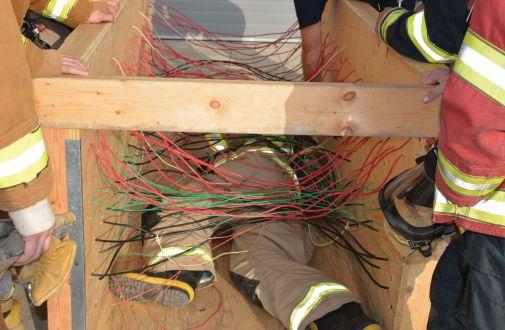
Firefighters must know when to call a mayday – such as when they become tangled – feel comfortable doing so and train on mayday protocols.
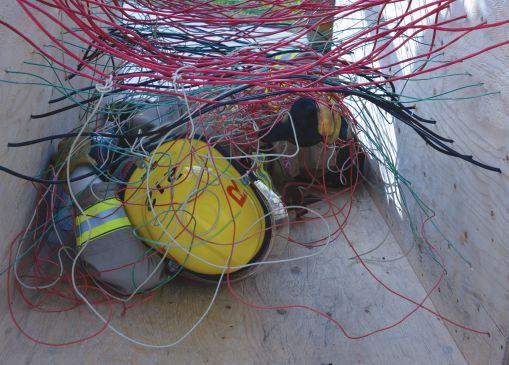
situation in which they must make the mayday decision for themselves. If we want RIT and Saving Our Own to work, we need to give permission to our firefighters to call a mayday.
Just as you have to wear your seatbelt for it to protect you in an accident, you have to call a mayday for the RIT to come to get you out. The big question is, will your members do it?
I thank you in advance on behalf of all future Canadian firefighters who will go home safely after each call. Stay safe, and let no firefighter’s ghost say training let him or her down.
The following mayday protocol was put together several years ago and I submit it to you, updated, as a suggested guideline to be added to your existing SOG. Special thanks to Dr. Burton A. Clarke, Montgomery County FD, MD, Kelowna FD, B.C.,
Greenwood FD, B.C., Charleston FD, SC and in honor of the Charleston 9. RIP brothers.
Mayday parameters
• becoming tangled, pinned, or stuck and the low-air alarm activates;
• falling through the roof;
• becoming tangled, pinned, or stuck and do not extricate yourself in 60 seconds;
• if you are caught in a flashover;
• if you fall through the floor;
• if zero visibility and no contact with the hose or lifeline and unaware in which direction the exit is;
• if your primary exit is blocked by fire or collapse and you are not at the secondary exit in 30 seconds;
• if your low-air alarm is activated and you are not at an exit door or window in 30 seconds;
• if you cannot find the exit door or window in 60 seconds. These nine points may be narrowed down to six: fall; collapse; activated (PASS/low air); caught; lost; trapped
Calling a mayday
Notification of emergency situation (LUNAR):
L - location (where you are, floor, division of entry, quadrant)
U - unit number or team
N - name of firefighter(s) involved
A - assignment (what you are doing such as vent, search)/Air pressure
R - resources (what help you need)
Activate your PASS device after giving mayday information. EIB mayday
1. Press the emergency indicator button (EIB) on the portable radio If unable to press the EIB, or if radio is not equipped with EIB, go to step 2.
2. On the assigned tactical radio channel, call “mayday, mayday, mayday”
3. Give LUNAR. Activate your PASS device after giving mayday information.
Additional self-rescue steps:
Use a tool to make noise; wave your flashlight to draw attention to your location; preserve your air supply; stay with your partner; take actions to self-evacuate (escape); if you cannot escape, retreat to an area of safety (evade); if you cannot evade, attempt to dig in (entrench) in the area of danger; inform the IC of any actions you take so RIT is updated on all actions taken in effort to escape, evade or entrench.
EIB-only mayday
A mayday may also be transmitted by pressing only the EIB, with no follow-up voice transmission.
When only an EIB is activated, dispatch will notify command of the activation. Command will make one attempt to contact the unit verbally. If the unit does not acknowledge this attempt, the unit will be considered a mayday.
A witnessed report
A witnessed report is an occurrence during which personnel see a person or persons trapped: a fall through a roof or floor, or firefighters caught in a flashover, and declare a mayday.
PAR (personnel accountability report)
A unit that is not accounted for in a PAR will be declared mayday.
The rest of the fire ground
All other units must continue their assigned operation unless the IC directs otherwise. This prevents freelancing and helps keep control of the fire incident. Direct knowledge of the mayday situation should be transmitted to the IC through the command structure.
Mayday, dispatch, alert tones
The IC will request dispatch to sound the pre-alert tone and switch all units, except the mayday personnel, the IC or the IC’s designee, and the RIT, to an alternate talk group. If the IC does not acknowledge a mayday, any unit hearing the call must alert the IC of the mayday. The IC will try to determine the exact location of the mayday personnel and order the RIT to intervene as necessary.
RIT assignment
The IC or the IC’s designee will assign the RIT and any other resources necessary to rescue the mayday firefighter. If the IC or the IC’s designee cannot determine the exact location of the firefighter, the RIT should be sent to the firefighter’s (or firefighters’) last known location.
PAR after mayday declaration
Once all units (except the mayday personnel, the IC or the IC’s designee, and the RIT) have switched to an alternate talk group, command will conduct a PAR. Divisions/groups that do not report after two attempts will be considered mayday. If divisions and groups have not been assigned, the PAR will be by unit.
When mayday is over
The IC will announce to all operating units and dispatch when the incident has stabilized and there is a return to normal operations. Consider redirecting the incident-action plan and incident priorities to a high-priority search-and-rescue operation. Development of a rescue action plan is critical.
Additional resources
Consider requesting appropriate resources to meet the needs of the event as necessary, including: an additional alarm; command staff aide; general staff/operations; logistics, planning; specialized resources-technical rescue capability; EMS assets. It is best to call for these resources early; you can always stand them down.
Reinforcing positions
Consider initiating and/or maintaining fire-attack positions and reinforcing with extra alarm companies as needed.
Expanding command
Consider expanding the command organization by requesting and assigning additional officers of an appropriate level to the rescue area, fire-attack area, command staff, and other critical command positions.
Unassigned resources
Consider withdrawing unassigned resources from the rescue area.
Unauthorized access
Maintain strong supervision in all work areas. Control and restrict all unauthorized entries into the structure or search-rescue area.
Command presence
It is critical that the IC create a strong command presence.

Ed Brouwer is the chief instructor for Canwest Fire in Osoyoos, B.C., and Greenwood Fire and Rescue. Contact Ed at ebrouwer@canwestfire.org
By CHRIS DENNIS
The Emergency Vehicle Technicians Association of Ontario (evtao.ca) is a small, non-profit member body of fire-department mechanics that oversees and helps to develop training courses that can be shared with other fire-department mechanics.
The association’s goal is to improve the skills of those who work on fire-department vehicles and make sure mechanics are up to date on standards and repair and maintenance techniques.
Not all provinces require fire-department mechanics – or outside contractors who work on fire-department trucks – to be emergency vehicle technicians (EVTS), but with NFPA changes in the works, EVT certification may become mandatory.
As is the case for fire-operations personnel, there is a group of NFPA standards to assist with maintaining and repairing fire trucks and equipment. A series of guidelines has been set out for maintenance personnel: NFPA 1901, NFPA 1071, and NFPA 1936 are a few.
In Ontario, you must be a certified mechanic to work in a retail business at which services rendered are paid for. In a municipal environment, it is up to the hiring body to employ certified or non-certified mechanics. In most cases, cities do not charge for internal repairs or maintenance, so a certified person may not be part of the job description.
Some municipalities have their own fleet services. They look after city salters, dump trucks, pick-up trucks, utility vehicles, lawn equipment and other municipal needs. The fire department uses these in-house facilities to do their work, but at times it is also a heartache if the technician who repairs lawn equipment suddenly has to do a fire-pump repair without being trained.
The North American EVT program (www.evtcc.org) provides maintenance training specific to emergency vehicles. For the fire service, it covers transmissions, fire pumps, aerials, electronics, vehicle specing and other areas.
Members of Ontario’s EVT association met at the Ontario Fire College in Gravenhurst in the spring. The agenda included motivational speakers, trainers and round-table discussions.
Every year at our training session, there are apparatus-maintenance people, from technicians who work for full-time fire department maintenance divisions to fire-department-trained fleet technicians, to firefighters who just monitor and maintain the fleet for the department. Regardless of the person’s title, he or she must stay current in order to deal with things like liability issues. In past columns I have talked about internal audits, accident of investigations with apparatus, and equipment malfunctions. If there had been a repair done on something that is directly related to human or property damage, the first place an investigator will go is the maintenance department (or the mechanic). The EVT program sets out wonderful guidelines to cover all avenues of preventative maintenance schedules and timelines.
It takes a year to prepare for mechanics week at the fire college, and those who organize the training do so on their own time. The trainers
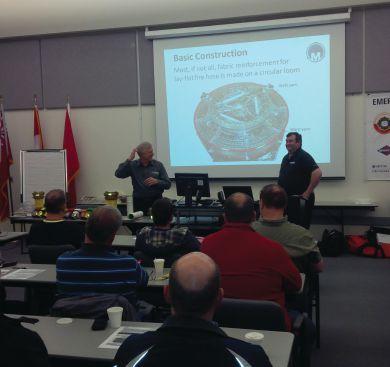
It takes a year to prepare for mechanics week at the fire college, and those who organize the training do so on their own time, and usually on their own dime.
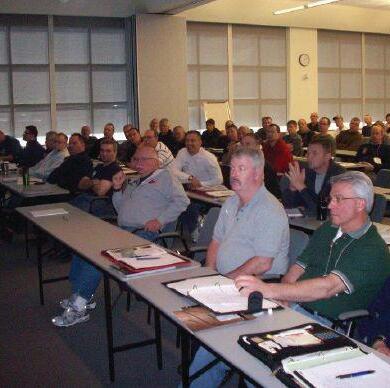
Getting together to learn often leads to problem solving and discussions about issues common to all departments; sharing that information makes your department better.
The sponsorship of the Canadian Association of Fire Chiefs Fun Night is a highlight of our commitment.
We look forward to seeing you there!
FIRE-RESCUE CANADA 2014
September 14-17, 2014
Ottawa, Ontario
SAFEDESIGN APPAREL LTD
34 Torlake Crescent
Toronto, Ontario, M8Z 1B3
www.safedesign.com
TOLL FREE: 1 877 253 9122
Telephone: 416 253 9122
vehicle technicians should keep up to date on improvements and enhancements; spending time together at courses such as that
and the speakers come from Canada and the United States, and they, too, usually do this on their own dime. We have also been supported heavily by the OEM vendors who sell fire trucks or equipment and fire departments that lend us their trucks for the week.
This year’s program consisted of a twoday steering and brakes theory and overhaul class and sessions on safety-restraint systems, compressed-air foam systems course theory and rebuild, fire pumps, aerial overviews, auto extrication tool overhaul and maintenance, rollup door maintenance and overhaul, Wheldon Multiplex systems (entry level and advanced), fire nozzle and monitor overhaul, EVT study courses, engine courses, fire-hose manufacturing and repair. Speakers focused on moving up through the chain of command, mentoring, professionalism, respectful workplaces, life insurance, and health issues.
During the round-table discussion, all technicians had a chance to talk about repairs or defeats they have come across while maintaining fire trucks and equipment. Whether it be a Pierce Spartan, a Smeal, or a commercial truck, its all nuts and bolts and when a bunch of gearheads get together and they not only take apart a fire truck, they also take apart and repair a problem somebody else may have come up against.
The big topic of discussion this year was corrosion – not only paint on the body, but electrics too. Lots of great ideas were shared – including our system for dealing with winter salt and brine.
I recommend that all fire-department technicians attend one of these EVTAO weeks, or something similar in your home province, at least once. Your department will be better for it and be one step closer to being technically and preventative ready.
Something as simple as records-keeping and filing starts with the technician doing your maintenance work; if there is a paper trail – even for a simple headlight change – you are showing due diligence and will be better off.
These are the tracks required for EVT certification in the fire service.
• F1 Maintenance, Inspection, and Testing of Fire Apparatus
• F2 Design & Performance Standards of Fire Apparatus
• F3 Fire Pumps & Accessories
• F4 Fire Apparatus Electrical Systems
• F5 Aerial Fire Apparatus
• F6 Allison Automatic Transmissions
• F7 Foam Systems
If your techs are EVTs now, and are wondering if they should continue on that track, my answer is yes – what better way to know something than to be trained on it exclusively? It’s like live fire; unless you have trained with it and understand it, you will never know it.
Remember, rubber side down, my friends.
Chris Dennis is the chief mechanical officer for Vaughan Fire & Rescue Services in Ontario. He can be reached at Chris.Dennis@vaughan.ca







It is crucial that firefighters sound the floors to make sure there has been no compromise. Here, firefighters practice the safest ways to advance hoselines in today’s homes in which lightweight construction can quickly give way.
Another common hazard for searching firefighters is entanglements such as wires, curtains, residential duct work (the plastic kind with wire mesh) or any type of foreign object that prevents movement. Firefighter survival training comes into play in these situations; firefighters must use a pair of wire cutters to cut their way out.
The worst thing to do is to fight against the entanglement; firefighters will become fatigued quickly and end up exhausted and frustrated. When firefighters become tangled, they need to call a mayday right way. Practise getting free of entanglements to increase confidence and emotional stability when the time comes to deal with a real situation.
A third common hazard for searching firefighters is falling debris; this ties in with entanglements as wires and other items are usually stored above the ceiling. Falling debris will surprise the search team. When the debris is heavy and large, the search team can become trapped under it, or the falling material may injure team members so that they are incapacitated. Lighter, smaller debris will likely startle search-team members and may cause them to become disoriented.
Be aware of the common hazards during a search; train for them and practise the skills needed to navigate through them.

Mark van der Feyst is a 15-year veteran of the fire service. He works for the City of Woodstock Fire Department in Ontario. Mark teaches in Canada, the United States, FDIC and India and is a local level suppression instructor for the Pennsylvania State Fire Academy and an instructor for the Justice Institute of BC. He is also the lead author of Pennwell’s Residential Fire Rescue book. Contact Mark at Mark@FireStarTraining.com


■ Four (4) Adjustable Compartment Shelves
■ 26”/13.5” Deep Compartments
■ Undercoated Body
■ LED Lighting
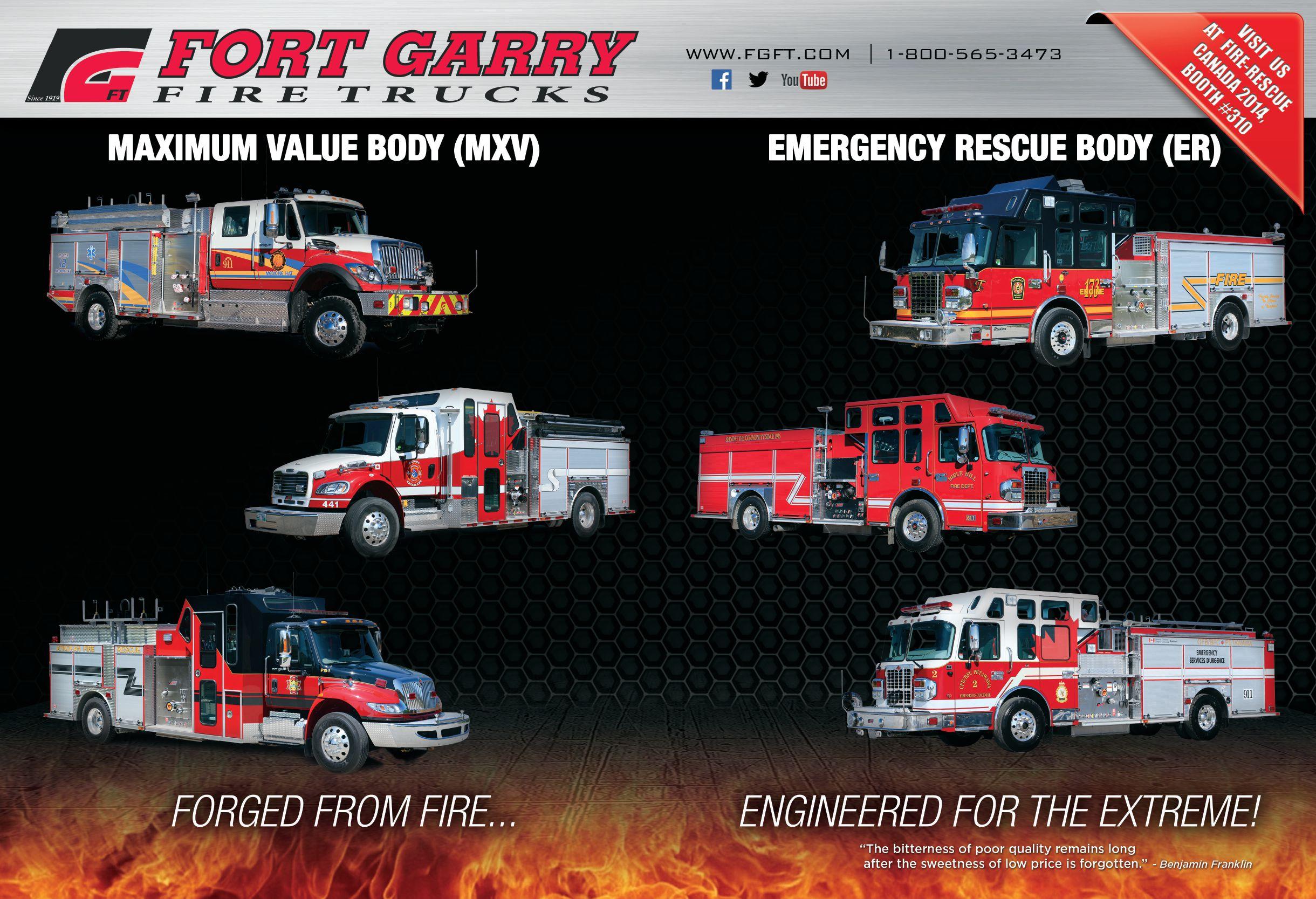
■ Aluminum Extruded Body – 5083 Saltwater Marine Grade
■ 20 Year Body Warranty
■ Darley, Waterous or Hale Pumps
■ Side Control, Top Mount or Top Mount Enclosed
■ 1000 IG Booster Tank
■ Fold Down Ladder Rack
■ ULC or NFPA Tested & Certified
■ Custom Options Available
■ Aluminum Extruded Body – 5083
Saltwater Marine Grade
■ 20 Year Body
Warranty
■ Darley, Waterous or Hale Pumps
■ Side Control, Top Mount or Top Mount Enclosed
■ 600/800 IG Booster Tank
■ Enclosed Ladder, Pike Pole & Suction Hose
Storage
■ ULC or NFPA Tested & Certified
■ Custom Options
Available

■ Four (4) Adjustable Compartment Shelves
■ Full Height Compartments
■ Undercoated Body
■ LED Lighting
By JOHN-PAUL CODY-COX
This year’s CAFC Fire-Rescue Canada conference was aptly named Taking care of business. Ours is an industry that is on 24/7, experiencing challenges as broad as they are complicated.
Our fire departments are constantly tested, from dealing with Mother Nature and the issues she throws at our communities, to human-made (preventable) tragedies such as the nursing-home fire in L’Isle-Verte, Que., in January that killed 32 seniors, and challenges related to the transport of dangerous goods across this country.
The CAFC has been working non-stop on these issues, although our role may not always be apparent to each of you. Our constant consultation with the federal government and other policy stakeholders, the ongoing work this past year to revise and build our corporate structure, and the development of new and relevant member-focused programs are just a few of the many initiatives on which we’re working. We are constantly looking to find better ways to make the CAFC relevant to stakeholders and, more importantly, to you – our members and prospective members.
Looking back on the past year, there are three areas on which the CAFC focused to build a stronger association.
1. Transform the CAFC into a self-sufficient association with sustainable revenue streams and partnerships.
The CAFC is moving to manage and build its own sponsorship programs (something we lacked previously). We expect to make several big sponsorship announcements before the end of the year.
We are also developing close relationships with policy and industry partners such as the Federation of Canadian Municipalities, the Canadian Automatic Sprinkler Association, the Canadian Advanced Technology Association, Motorola, and others. We hope this will lead to the leveraging of resources to help CAFC-member interests, whether in advocacy, professional development, or public outreach.
2. Develop a robust menu of member-focused national programs and services to make the CAFC the go-to fire/public safety association in Canada.
Our Chief Fire Officer (CFO) working group is revising and updating the CAFC’s CFO program. This is a huge project that requires a complete revamp of the program, but the changes will make the program more accessible to all chief fire officers, and will take into consideration the very different needs of career CFOs and their volunteer counterparts and the experiences each faces.
3. Align and focus government-relations activities to build messaging and activities to political stakeholders that lead to consistent policy/funding wins for our community. The CAFC’s national

Par JOHN-PAUL CODY-COX
On s’occupe des choses, le thème de la Conférence Service incendie Canada de cette année, est à propos. Notre industrie en est une qui ne dort jamais, relevant des défis de taille et tout aussi compliqués.
Nos services d’incendie sont testés en permanence, qu’il s’agisse de traiter avec ce que nous réserve Mère Nature, ou de tragédies infligées de la main de l’homme (évitables) telles que l’incendie du foyer de soins de L’Isle Verte, au Québec, qui a tué
32 personnes âgées en janvier ou encore des défis liés au transport des marchandises dangereuses partout au pays.
L’ACCP n’a pas cessé de travailler sur ces questions, bien que notre rôle ne vous soit pas toujours évident. Nos pourparlers constants avec le gouvernement fédéral et autres parties prenantes politiques, le travail que nous avons effectué l’an dernier pour réviser et renforcer notre structure d’entreprise ainsi que l’élaboration de nouveaux programmes pertinents et axés sur les membres ne sont que quelques-unes de nos nombreuses initiatives. Nous nous creusons incessamment les méninges pour trouver de meilleures façons de rendre l’ACCP pertinente aux yeux des parties prenantes et, plus important encore, à vos yeux, vous nos membres actuels et futurs.
En repensant à l’année dernière, l’ACCP a ciblé trois domaines pour renforcer l’association.
1. Autonomiser l’ACCP en la dotant de différentes sources de revenus et de partenariats durables.
L’intention de l’ACCP est de gérer et d’élaborer ses propres programmes de parrainage (ce qui nous manquait). Nous devrions être en mesure d’annoncer plusieurs grands parrainages avant la fin de l’année.
Nous forgeons aussi des liens étroits avec des partenaires politiques et de l’industrie comme la Fédération canadienne des municipalités, la Canadian Automatic Sprinkler Association, l’Association canadienne de technologie de pointe, Motorola et d’autres. Nous espérons ainsi pouvoir mobiliser des ressources pour défendre les intérêts des membres de l’ACCP, que ce soit le plaidoyer, le perfectionnement des compétences ou la sensibilisation du public.
Dresser un menu robuste de programmes et de services nationaux axés sur les membres pour faire de l’ACCP l’association de prévention des incendies/sécurité publique de choix au Canada.
Notre groupe de travail des chefs d’état major (CEM) est à revoir et à mettre à jour le programme de chef d’état major de l’ACCP. C’est un projet énorme qui nécessite une refonte complète du programme. Nous le rendrons plus facile d’accès pour tous les chefs d’état major. Le programme prendra en considération les besoins très différents
codes committee has been busier than ever working on issues from sprinklers for care facilities to wood-frame construction and firefighter safety. We’re making progress. Our work has got the attention of government and other stakeholders such as Canadian Association of Petroleum Producers, the Railway Association of Canada, the Conference Board of Canada, the National Research Council, the Cement Association of Canada, the Canadian Wood Council and others.
The transportation of dangerous goods has also been front and centre. Our focus has been mainly on railways, as much is happening on the regulatory front. We have been in constant discussion with government, industry and like-minded partners. In 2015, we expect to make major progress in ensuring first-responder training for dangerous goods is well-resourced and delivered to as many fire departments as possible in a consistent and sustainable manner.
All these are positive moves, but there is still so much to do. In 2013, the board of directors agreed to a five-year plan to reinvent and improve the CAFC by investing in the infrastructure to make it more relevant to its members and to continue to build on its position as the voice of the fire service.
In 2015, members can expect a focus on projects that affect you, the chief fire officer, in both your day-to-day work and professional development.
The transportation of dangerous goods has also been front and centre. ‘‘ ’’
The CAFC will work closely with fire marshals and commissioners in a concerted effort to look at and advocate for a national statistical/analytical tool for the fire industry. This is a priority for our members; we will work closely with our partners to make it happen.
Additionally, the CAFC is evaluating its leadership-development programs, to ensure all chief fire officers, regardless of budgets or location, have the ability to learn and grow as leaders and access to career-building resources.
We’re excited about what’s in the works and what the future has in store for our association. We believe chief fire officers across the country will start to see the value we’re building for our members as we develop and update more useful tools, and continue to advocate on public-safety issues that affect everyone.
We welcome you to give us a call, ask questions at events, or better yet, roll up your sleeves! Get involved in a committee so your voice and expertise can help to propel the fire industry to new heights on the national stage. Without you, we cannot do what we do.
John-Paul Cody-Cox is executive director for the Canadian Association of Fire Chiefs. Contact JP at jpcodycox@cafc.ca and follow him on Twitter at @jp_codycox. You can also follow the CAFC on Twitter at @CdnFireChiefs
des CEM de carrière et de leurs homologues volontaires ainsi que les expériences qui leur sont propres.
Aligner et centrer toutes les relations gouvernementales pour étoffer un message et des activités à l’intention des parties prenantes politiques et obtenir des victoires politiques/financières cohérentes. Le Comité des codes nationaux de l’ACCP a été plus occupé que jamais, se penchant sur des questions comme les gicleurs pour les établissements de soins, la construction à ossature de bois et la sécurité des pompiers. Nous progressons et notre travail a attiré l’attention du gouvernement et d’autres parties prenantes comme l’Association canadienne des producteurs pétroliers, l’Association des chemins de fer du Canada, le Conference Board du Canada, le Conseil national de recherches, l’Association canadienne du ciment, le Conseil canadien du bois et d’autres.
Le transport des marchandises dangereuses a été à l’avant-plan de nos priorités. Nous nous sommes surtout concentrés sur les chemins de fer, car ça bouge au plan réglementaire. Nous sommes en discussion constante avec des représentants du gouvernement et de l’industrie ainsi que des partenaires sur la même longueur d’onde que nous. En 2015,nous nous attendons à faire de grands progrès dans le domaine du financement des programmes de formation à l’intention des premiers répondants lors de catastrophes dues aux marchandises dangereuses. Nous voulons les offrir au plus grand nombre de services d’incendie possible, d’une manière cohérente et durable.
Ce sont toutes des mesures positives. Mais, il reste encore tant à faire. L’an dernier, le Conseil d’administration a convenu d’un plan quinquennal devant réinventer et améliorer l’ACCP en investissant dans l’infrastructure pour qu’elle devienne plus pertinente pour ses membres. Nous devons continuer de prendre appui sur sa position de porte-parole des pompiers du Canada.
En 2015, les membres peuvent s’attendre à ce que nous mettions l’accent sur des projets qui vous touchent, vous les chefs d’état major, dans votre travail quotidien et dans le perfectionnement de vos compétences.
L’ACCP travaillera de près avec les officiers et les commissaires aux incendies dans un effort de plaidoyer concerté en faveur d’un outil statistique/analytique pour les services d’incendie. C’est une priorité pour nos membres. Nous collaborerons avec nos partenaires, pour la réaliser.
En outre, l’ACCP est à évaluer ses programmes de développement du leadership pour veiller à ce que tous les chefs d’état major, indépendamment des budgets ou de l’emplacement, puissent apprendre et s’épanouir en tant que leaders et pour qu’ils aient accès aux ressources en matière de parcours de carrière.
Nous sommes ravis de ce que l’avenir réserve à notre association. Nous sommes convaincus que les chefs d’état major partout au pays se rendent compte de notre valeur alors que nous développons et mettons à jour des outils plus utiles pour nos membres et que nous défendons les questions de sécurité publique qui touchent tout le monde.
Nous vous invitons à communiquer avec nous, à poser des questions lors des événements ou mieux encore à retrousser vos manches ! Siégez à un comité afin que votre voix et votre expertise propulsent les services d’incendie vers de nouveaux sommets sur la scène nationale. Sans vous, nous n’y arriverons pas.

By DENIS PILON Par DENIS PILON
The Canadian Association of Fire Chiefs (CAFC) has a new constitution and bylaws. Why is this important to you?
Look at it this way; if the CAFC hadn’t changed its constitution and bylaws, it would have ceased to exist.
As a result of the changes, the board of directors now has a new structure; presidents of provincial fire chiefs associations will now become an advisory council to the CAFC instead of automatically becoming directors. As well, committees will be completely restructured to meet the requirements set out by the new constitution and bylaws.
Why did this have to happen?
The new Canada Not-for-profit Corporations Act was passed by Parliament and given royal assent on June 23, 2009, with different portions coming into effect at various times over five years. There are about 19,000 not-forprofit corporations in Canada registered under the Canada Corporations Act, which have until Oct. 17 to become compliant with the new act. Not-for-profit corporations that fail to file certain details with the Justice Department before then will cease to exist.
A vote by CAFC members to adopt the new bylaws on March 24, 2014, was the culmination of more than four years of work. Now that the CAFC is compliant with the act, it’s amazing to see how far we’ve come. The truth is that members of the CAFC’s resolutions, bylaws and constitution committee thought the restructuring process would be fairly simple and that all we would have to do was amend the existing constitution and bylaws to become compliant; so we worked over the first couple years to do just that.
But, over time, committee members came up with pages and pages of both major and minor changes. The scale of the process became evident as each change had to be voted on and approved separately by CAFC members. The logistics and timeframe were becoming increasingly daunting. And there was no guarantee that all the changes the committee members proposed would make the CAFC fully compliant.
Even to those of us crafting and proposing the changes,
L’Association canadienne des chefs de pompiers (ACCP) a de nouveaux Statuts et règlements. Pourquoi est-ce important pour vous?
Considérons les choses sous cet angle : si l’ACCP n’avait pas modifié ses Statuts et ses règlements, elle aurait cessé d’exister.
Suite à ces modifications, le Conseil d’administration est dorénavant doté d’une nouvelle structure. Les présidents des associations de chefs de pompiers provinciales constitueront désormais un Conseil consultatif de l’ACCP plutôt que de devenir automatiquement directeurs. En outre, les comités seront complètement restructurés afin de répondre aux exigences établies par les nouveaux Statuts et règlements.
Pourquoi fallait-il le faire?
Le Parlement a adopté la nouvelle Loi canadienne sur les organisations à but non lucratif qui a reçu la sanction royale le 23 juin 2009. Diverses composantes entreront en vigueur à différents moments, sur une période de cinq ans. Il y a environ 19 000 sociétés à but non lucratif au Canada enregistrées en vertu de la Loi sur les corporations canadiennes. Elles ont jusqu’au 17 octobre pour se conformer à la nouvelle loi. Celles qui omettront de produire certains détails au ministère de la Justice avant cette date cesseront d’exister.
Le vote des membres de l’ACCP en faveur des nouveaux règlements tenu le 24 mars 2014 était le résultat de plus de quatre années de travail. Maintenant que nous sommes conformes à la loi, il est étonnant de constater tout le chemin parcouru. En vérité, les membres du Comité sur les résolutions et les statuts et règlements de l’ACCP avaient, au départ, l’impression que le processus de restructuration serait assez facile. Après tout, il suffisait de modifier les Statuts et les règlements pour être en conformité. C’est exactement ce à quoi nous avons consacré les quelques premières années.
Au fil du temps, nous nous sommes retrouvés avec des pages et des pages de modifications, tant majeures que mineures. Les membres de l’ACCP devaient voter sur chaque amendement séparément, aux fins d’approbation, et l’ampleur du processus est devenue évidente. La logistique et l’échéancier ne faisaient que se compliquer. Et toutes ces propositions d’amendement ne garantissaient nullement notre conformité complète.
Le processus prêtait parfois à confusion, même pour ceux d’entre nous chargés de rédiger et de proposer des modifications.

the process was confusing at times. How were we going to effectively communicate the ins and outs of each and every amendment to members?
In April, 2013, the CAFC hired John-Paul Cody-Cox as the executive director. Cody-Cox brought with him a wealth of experience working with national governing bodies and not-for-profit corporations, including Volleyball Canada and Speed Skating Canada. He quickly realized that time was not on our side.
We needed to move forward fast.
With the blessing of the board, Cody-Cox engaged Steven Indig of Sport Law and Strategy Group, a legal firm with extensive experience with the not-for-profit act. Cody-Cox and Indig conducted a complete review of the existing constitution and bylaws and evaluated the work the committee had completed. However, Cody-Cox and Indig ultimately advised the committee that the best course of action was to stop trying to make amendments to the existing structure and to draft a completely new constitution and bylaws.
Due to time constraints, the board set up a committee consisting of Cody-Cox, CAFC President Stephen Gamble, membership committee chair Gary Barnes and me – chair of the resolution, bylaws and constitution committee, with Indig as an advisor. The committee put together a plan to meet the required deadlines and allow for time to go back to the membership during the process if necessary.
The first step occurred at the CAFC’s annual general meeting in Regina in September 2013 when the membership adopted a change from eight classes of membership to one class. This ensured that future changes could be carried out with just one membership class. At this time, the revision process was explained to CAFC members and the importance of following the schedule was emphasized.
Work continued into 2014 with a number of committees reviewing the proposals and making comments and recommendations. In February and March, two webinars were conducted with members to explain the changes and the process for adoption. Even at this time, some minor changes were being made to the document to ensure it met our members’ expectations and was still compliant.
Then, on March 24, the CAFC made history by conducting its first electronic vote (welcome to the 21st century!); the new bylaws were adopted by a vote of 115 to three.
The work didn’t stop there.
Those necessary details mentioned earlier – known as articles of continuance – were filed with the Department of Justice along with a copy of our new bylaws; these have been approved, allowing CAFC to continue as a not-forprofit corporation.
Now the next steps begin.
Our nominations committee must change the process for nominations and elections to follow the new bylaws. The board of directors has a whole new structure that
Comment communiquer efficacement tous les tenants et aboutissants de chaque amendement aux membres?
En avril 2013, l’ACCP embauchait John-Paul Cody-Cox au poste de directeur général. Ce dernier possédait une vaste expérience de travail au sein d’entités gouvernantes nationales et de sociétés à but non lucratif, y compris Volleyball Canada et Patinage de vitesse Canada. Il s’est vite rendu à l’évidence, le temps n’était pas de notre côté.
Il fallait faire vite.
Avec la bénédiction du Conseil d’administration, M. Cody-Cox a retenu les services de Steven Indig du Sport Law and Strategy Group, un cabinet d’avocats ayant une vaste expérience de la loi sur les organisations à but non lucratif. John-Paul et M. Indig ont procédé à un examen complet des Statuts et règlements existants et du travail effectué par le Comité. À leur avis, le meilleur plan d’action était d’arrêter de tenter d’apporter des modifications à la structure existante. Il valait mieux rédiger de nouveaux Statuts et règlements.
En raison des contraintes de temps, le Conseil d’administration a mis en place un comité composé de John-Paul, du président de l’ACCP, Stephen Gamble, du président du Comité d’adhésion, Gary Barnes, et de moi, président du Comité sur les résolutions et les statuts et règlements. M. Indig agissait à titre de conseiller. Le comité a élaboré un plan visant à respecter les délais et à nous accorder du temps pour consulter les membres pendant le processus, si nécessaire.
Le coup d’envoi était donné lors de l’Assemblée générale annuelle de l’ACCP qui se tenait à Régina en septembre 2013 au cours de laquelle les membres ont adopté la modification prévoyant une seule catégorie d’adhésion plutôt que huit. Nous étions ainsi en mesure d’apporter tout changement futur en ne tenant compte que d’une seule catégorie d’adhésion. Nous expliquions alors le processus de révision aux membres de l’ACCP, tout en soulignant l’importance de respecter les échéanciers.
Le travail s’est poursuivi en 2014. Plusieurs comités ont examiné les propositions, ont fait des commentaires et ont formulé des recommandations. En février et en mars, deux webinaires ont été organisés à l’intention des membres pour expliquer les amendements et le processus d’adoption. Jusqu’à la dernière heure, des modifications mineures ont été apportées au document pour répondre aux attentes de nos membres tout en demeurant conforme.
Le 24 mars, l’ACCP entrait dans le 21e siècle en procédant au premier vote électronique de son histoire. Les nouveaux règlements ont été adoptés par un vote de 115 à trois.
Mais, ce n’était pas fini.
Les détails nécessaires mentionnés ci-haut, ou statuts de prorogation, ont été déposés auprès du ministère de la Justice, accompagnés d’une copie de nos nouveaux règlements. Ceux-ci ont été approuvés et l’ACCP peut donc continuer d’opérer en tant que société à but non lucratif.
Nous devons maintenant passer aux étapes suivantes.
Notre Comité des candidatures doit modifier le processus de mise en candidature et les modalités d’élection afin de refléter les nouveaux règlements. Le Conseil d’administration est doté d’une toute nouvelle structure qui sera pleinement mise en œuvre

will be fully implemented following our 2014 AGM. The presidents of the provincial associations will make up the advisory council, which requires terms of reference.
A new committee structure must be established to meet the requirements set out by the new bylaws.
New internal jurisprudence will also evolve. On occasions when the new bylaws are questioned, the resolutions, bylaws and constitution committee must determine how the bylaws are to be interpreted. Interpretations of the past bylaws will no longer be applicable.
Finally, because the CAFC is a national organization, an official French translation of the new constitution and bylaws will be prepared.
If you were to compare the new constitution and bylaws of the CAFC with the original draft that was adopted when the CAFC was first incorporated in 1965, you would see two entirely different documents; they’ve been amended and changed numerous times over the decades in order to meet the evolving needs of our organization and society at large.
The new bylaws are no different; they are not perfect. Time will tell what changes need to be made to keep up with the evolving needs of the association.
As before, any member can propose amendments to the bylaws, and there is a mechanism that outlines the process to allow for new amendments, as long as they are legal and compliant with the NFP Act.
Over the years, the CAFC has evolved to include the provincial associations, has become the Canadian division of the International Association of Fire Chiefs, and has partnered with the Institution of Fire Engineers, Canada Branch, for our chief fire officer program.
The CAFC has also become a trusted voice of the fire services in Canada, to which successive prime ministers and governments have turned to for input and advice.
There were many mixed emotions for those of us who led this change over the past few years. Mostly, there has been an overwhelming sense of relief that this part of the process is over and the CAFC can move forward knowing it is compliant with the new Canada Not-for-profit Corporations Act. However, we also realize there’s much still to be done.
Throughout this quick evolution, the board of directors has been adamant that, while the CAFC may have to change its structure, it will not sacrifice its commitment to inclusiveness or its representation of Canadian fire services from coast to coast to coast.
We believe we have accomplished this and eagerly look forward to the work ahead.
Fire Chief Denis Pilon, CD, CFO, is the chief of the Swift Current Fire Department in Saskatchewan and is the chair of the CAFC’s resolutions, bylaws and constitution committee. Contact him at d.pilon@swiftcurrent.ca and follow him on Twitter at @DMPilon
après l’AGA de 2014. Les présidents des associations provinciales formeront le Conseil consultatif. Il faudra lui attribuer un mandat.
Une nouvelle structure de comités devra être établie pour répondre aux exigences stipulées aux nouveaux règlements. Une nouvelle jurisprudence interne s’ensuivra. Dans les instances où les nouveaux règlements sont remis en question, le Comité sur les résolutions et les statuts et règlements devra trancher puisque l’interprétation des anciens règlements ne s’appliquera plus.
Enfin, l’ACCP étant une organisation nationale, nous procéderons à la traduction officielle, en langue française, des nouveaux Statuts et règlements.
Si vous deviez comparer les nouveaux Statuts et règlements au projet initial qui a été adopté lorsque l’Association a été constituée en 1965, vous auriez deux documents complètement différents. Ils ont été amendés et modifiés plusieurs fois au cours des décennies afin de répondre aux besoins changeants de notre organisation et de la société en général.
En cela, les nouveaux règlements ne sont pas différents. Ils ne sont pas parfaits. Le temps nous dira quelles modifications apporter pour garder le pas en ces temps changeants et pour répondre à l’évolution des besoins de l’Association.
Comme avant, tout membre est libre de proposer des amendements aux règlements. Il existe un mécanisme qui décrit le processus d’adoption de nouveaux amendements, tant et aussi longtemps qu’ils sont légaux et conformes à la Loi BLN.
Au fil des ans, l’ACCP a évolué et inclue dorénavant les associations provinciales. Elle est devenue la division canadienne de l’International Association of Fire Chiefs et elle a établi un partenariat avec la succursale canadienne de l’Institution of Fire Engineers, dans le cadre duquel notre programme de chef d’état major est administré.
L’ACCP est également devenue la porte-parole de confiance des pompiers du Canada, auprès de laquelle une succession de premiers ministres et de gouvernements ont sollicité commentaires et conseils.
Ceux d’entre nous à la tête de ces changements, sommes submergés d’émotions mixtes. Nous sommes surtout extrêmement soulagés d’en avoir terminé avec cette phase du processus et de savoir que l’ACCP est dorénavant en conformité avec la nouvelle Loi canadienne sur les organisations à but non lucratif. Mais, nous savons qu’il reste beaucoup à faire.
Tout au long de cette rapide évolution, le Conseil d’administration a été catégorique : même si l’ACCP devait modifier sa structure, elle ne sacrifierait pas son engagement envers l’inclusion ou la représentation des services d’incendie du Canada d’un océan à l’autre.
Nous pensons avoir réussi et nous sommes impatients de poursuivre le travail.
Denis Pilon est chef des pompiers et directeur de la gestion des urgences à Swift Current, en Saskatchewan. Vétéran de 31 années dans les services des incendies, il a aussi été chef des pompiers de Melville et de Weyburn, en Saskatchewan. Il est président du Comité sur les résolutions, les statuts et les règlements de l’ACCP. Il représente l’ACCP au Comité sur les résolutions, les statuts et les règlements de l’IAFC. Vous pouvez communiquer avec Denis au d.pilon@swiftcurrent.ca et le suivre sur Twitter @DMPilon

By CAFC EDITORIAL COMMITTEE
Afire rips through a nursing home in the early hours of Jan. 23, in the village of L’Isle-Verte, Que., claiming the lives of 32 seniors. A train derails on July 6, 2013, resulting in the spill of millions of litres of crude oil and an explosive fire that devastates the town of Lac-Megantic, Que., killing 47 people.
These tragedies brought to light the urgency of dealing with two important, national public-safety issues: the need for sprinklers in Canada’s care facilities; and the transportation of dangerous goods across the country. These are just two of the many issues the Canadian Association of Fire Chiefs (CAFC) addressed in 2014 through its government-relations initiatives.
The CAFC is the national public-service association dedicated to reducing the loss of life and property from fire, and advancing the science and technology of the fire and emergency services in Canada.
The CAFC also functions as the voice of the fire services in Canada by ensuring that elected government representatives and officials are aware of, and understand, the concerns of Canada’s fire services. This is achieved in several ways, such as:
• Resolutions from the CAFC presented to the federal government;
• Presentations by fire-service representatives to MPs, ministers and other senior staff;
• Representation on federal committees and working groups that affect the fire services in Canada.
According to the CAFC’s outgoing President Stephen Gamble, “the impact of the CAFC’s government-relations efforts has come a long way in just the past few years.”
Some government ministers and senior officials were having difficulty distinguishing between the CAFC and other fire-industry organizations. But not anymore.
“We’re really making traction,” said incoming CAFC President Paul Boissonneault. “We now have momentum, standing, and acknowledgement,” due to the range and impact of the CAFC’s government-relations work.
In fact, in a video message to the 2013 Fire-Rescue Canada conference, Prime Minister Stephen Harper acknowledged CAFC as a “trusted adviser” to the government. And in the aftermath of the Lac-Megantic tragedy, Transport Minister Lisa Raitt relied heavily on advice and input from the CAFC to address the transportation of dangerous goods.
The CAFC has worked closely with Transport Canada and the Federation of Canadian Municipalities to address the concerns and risks associated with the tremendous increase in the movement of flammable liquids by rail, in particular, the movement of crude oil. According to Transport Canada figures, crude-oil shipments in Canada increased to 127,925 carloads
Le 23 janvier 2014, aux petites heures du matin, un incendie ravage un foyer de soins dans le village de L’Isle Verte, au Québec, causant la mort de 32 personnes âgées. Un train déraille le 6 juillet 2013 entraînant le déversement de millions de litres de pétrole brut, suivi d’une explosion et d’un incendie qui ont dévasté la ville de Lac Mégantic, au Québec, tuant 47 personnes.
Ces tragédies ont fait ressortir l’importance de traiter urgemment de deux questions de sécurité publique nationale, à savoir la nécessité d’installer des gicleurs dans les établissements de soins du Canada et les risques inhérents au transport des marchandises dangereuses à travers le pays. Ce ne sont que deux des nombreux enjeux que l’Association canadienne des chefs de pompiers (ACCP) a abordé dans le cadre de ses relations gouvernementales de 2014.
L’ACCP est une association de service nationale publique qui vise à limiter les pertes de vies et de biens matériels causées par le feu. Elle tente aussi de faire progresser la science et la technologie des services d’incendie et d’urgence au Canada.
L’ACCP est également la porte-parole des pompiers du Canada, veillant à faire prendre conscience aux élus et aux autorités gouvernementales des préoccupations des services d’incendie canadiens, et à bien les leur faire comprendre. Pour ce faire, l’ACCP :
• Soumet des résolutions auprès du gouvernement fédéral.
• Envoie des délégations de représentants des services d’incendie, chargées de rencontrer des députés, des ministres et autres hauts fonctionnaires.
• Siège à des comités et à des groupes de travail fédéraux ayant une incidence sur les services d’incendie au Canada.
Selon le président sortant de l’ACCP, Stephen Gamble : « Nos initiatives dans le domaine des relations gouvernementales ont eu un grand impact, en quelques années à peine ».
Il était difficile pour certains ministres et hauts fonctionnaires de distinguer l’ACCP d’autres organismes responsables des services de lutte contre les incendies. Mais, ce n’est plus le cas.
Aux dires du nouveau président de l’ACCP, Paul Boissonneault : « Nous gagnons vraiment du terrain. Nous avons le vent dans les voiles. Nous avons une présence et nous sommes reconnus dans notre secteur, en raison de la portée et de l’impact de nos efforts dans le domaine des relations gouvernementales ».
En fait, lors d’un message vidéo diffusé dans le cadre de la Conférence Service incendie Canada, 2013, le Premier ministre Stephen Harper reconnaissait l’ACCP comme « un conseiller de confiance » du gouvernement. Et, au lendemain de la tragédie de Lac Mégantic, la ministre du Transport, Lisa Raitt, comptait sur nous au moment d’aborder les questions concernant le transport des marchandises dangereuses.
in 2013 from just 144 carloads in 2009.
The following are some of the important actions that have been implemented, or are currently underway, to address the dangers of derailments involving flammable liquids.
• Although discussions with the Canadian Association of Petroleum Producers (CAPP), the Canadian Fuels Association (CFA), and the Railway Association of Canada (RAC) have been ongoing, the talks have not resulted in any commitment by the industry to assist fire services in updating the training required to safely and effectively respond to large flammable liquid fires.
• The CAFC is represented on the Liquefied Petroleum Gas Emergency Response Corporation (LPGERG) technical committee that is developing the Emergency Response Assistance Plan (ERAP) requirements for flammable liquids. CAPP, CFA and RAC selected LPG-ERC as the ERAP response organization for their members.
The CAFC’s governmentrelations efforts have helped chief fire officers at the local level as well. ‘‘ ’’

• The CAFC is also representing the fire services on the recently created Transport Canada ERAP task force to analyze the need for greater investment and resources for first-responder training. The task force has a one-year mandate to evaluate and provide recommendations to the minister of transport.
The L’Isle-Verte tragedy was the stimulus for a renewed focus on the need for updated regulations during the CAFC’s 2014 Government Relations Week in March. Government Relations Week is an annual initiative of CAFC during which chief fire officers from across Canada visit Ottawa to meet with MPs, ministers and other senior staff to advocate on key public-safety issues.
Efforts this year focused on seeking a change to the National Model Building Code, including a requirement for sprinklers in all care facilities (at the moment, sprinklers are required only in new builds). As of mid-summer, advocacy efforts were ongoing. More Canadian-focused research is required, along with consultation among provincial fire service associations and private partners such as Fire Underwriters Survey.
Proposed changes to the Ontario Building Code would allow the construction of six-storey, wood-frame buildings,
L’ACCP a collaboré avec Transports Canada (TC) et la Fédération canadienne des municipalités pour traiter des préoccupations et des risques connexes à l’accroissement considérable du transport des liquides inflammables par chemin de fer, notamment le transport du pétrole brut. Selon les données de TC, les expéditions de pétrole brut au Canada ont passé de 144 wagons en 2009 à 127 925, en 2013.
Voici quelques-unes des mesures importantes qui ont été mises en œuvre ou qui sont en cours pour traiter des risques de déraillement impliquant des liquides inflammables.
• Même si les discussions avec l’Association canadienne des producteurs pétroliers, l’Association canadienne des carburants et l’Association des chemins de fer du Canada se sont poursuivies, elles n’ont pas encore donné lieu à un engagement de la part de l’industrie pour aider les services d’incendie à mettre à jour les programmes de formation nécessaires pour doter les premiers répondants des outils dont ils ont besoin pour répondre efficacement, en toute sécurité, aux gros feux de liquides inflammables.
• Des représentants de l’ACCP siègent au Comité technique de la Corporation en intervention d’urgence pour les gaz de pétrole liquéfiés (GPL-CIU) qui est à développer les exigences qui figureront au Plan d’intervention d’urgence (PIU) en matière de liquides inflammables. Au nom de leurs membres, l’ACPP, l’ACC et l’ACFC ont choisi le GPL-CIU comme organisme d’intervention d’urgence.
• L’ACCP représente également les services d’incendie au Groupe de travail sur le PIU de Transports Canada nouvellement établi, analysant la nécessité d’investir davantage de ressources dans la formation des premiers répondants. Le groupe de travail dispose d’un an pour évaluer et formuler des recommandations à la ministre des Transports.
Lors de la Semaine de relations gouvernementales qui se tenait en mars 2014, la tragédie de L’Isle Verte était l’impulsion d’un accent renouvelé sur la nécessité de mettre à jour les règlementations. La Semaine des relations gouvernementales est une initiative annuelle de l’ACCP dans le cadre de laquelle une délégation de chefs d’état major de partout au Canada se rend à Ottawa pour rencontrer des députés, des ministres et autres hauts fonctionnaires pour discuter des principales questions de sécurité publique.
Cette année, les efforts ont porté sur les modifications devant être apportées au Code modèle national de prévention des incendies, y compris l’obligation d’installer des gicleurs dans tous les établissements de soins (ce qui n’est présentement obligatoire que dans les nouvelles constructions). Au milieu de l’été, les actions de plaidoyer se poursuivent. Il faut davantage de recherches axées sur les enjeux canadiens. Il faut rehausser la concertation entre les associations des services d’incendie provinciales et les partenaires privés comme les Services d’inspection des assureurs incendies.
Des modifications provisoires au Code du bâtiment de l’Ontario permettraient la construction à ossature de bois pour des immeubles de six étages, comme le prévoit le code de la ColombieBritannique. Cette province autorise déjà une hauteur maximale de six étages lors de la construction à ossature de bois des immeubles résidentiels.
matching British Columbia’s code, which already allows a six-storey maximum height for wood-frame residential construction.
The CAFC has major concerns. There are no Canadianfocused studies on six-storey, wood-frame structures. Proponents of the change frequently cite studies from Europe and Asia, but designs, construction methods and fasteners used in them can be much different than those commonly used in Canada. There are no studies that look at the effect of shrinkage and shifting in wood-frame structures over time, particularly concerning the ongoing effectiveness of firewalls and fire escapes.
Hamilton Fire Chief Rob Simonds chairs the CAFC’s government-relations committee. He commented recently on the association’s advocacy efforts in areas ranging from sprinklers and codes to the transportation of dangerous goods.
“There’s no shortage of issues,” Simonds said. “These issues transcend regions across the country.”
And with a lack of federal funds for any new programs, the CAFC is concentrating its efforts on advocating for policy changes, rather than on money, to enhance public safety.
Issues such as fire safety on First Nations affect communities across the country. A 2010 study found that people living on First Nations are 10 times more likely to die in a house fire than those in the rest of Canada.
In February, Richard Kent, the treasure and commissioner for the Aboriginal Firefighters Association of Canada, and Ottawa Fire Chief John deHooge, an executive board member of the CAFC, spoke to the Senate’s Aboriginal peoples committee about the lack of fire safety in Aboriginal communities.
Aboriginal Affairs and Northern Development Canada and the Aboriginal Firefighters Association of Canada have partnered to launch a national, year-round #BeFireSafe campaign, focusing on the importance of fire prevention throughout the year both inside and outside the home with the aim of reducing fire-related deaths, injuries, and damage.
The CAFC’s government-relations efforts have helped chief fire officers at the local level as well.
“New chiefs, who first participate in government-relations week, find the experience so rewarding,” said Boissonneault. “They’re establishing a network of colleagues from whom they can access expertise, training, and resources to enhance their local fire services.”
Simonds agrees. “Participating in government-relations week enhances their knowledge of the working of government, and enhances their impact locally when chiefs interact with their local MP, MPP/MLAs, and municipal officials.”
By cultivating partnerships and embracing collaborative efforts, the CAFC is finding new ways to help elected representatives and senior officials better understand public-safety issues. The CAFC is actively working to help government be proactive on issues, rather than simply reacting to tragic events.
Ceci inquiète beaucoup l’ACCP. Il n’existe pas d’études canadiennes axées sur les constructions à ossature de bois pour des immeubles de six étages. Les partisans de ces changements citent fréquemment des études européennes et asiatiques. Mais, les conceptions, les méthodes de construction et les fixations étudiées par ces dernières peuvent être très différentes de celles communément utilisées au Canada. Aucune étude ne se penche sur l’effet avec le temps du rétrécissement et du déplacement des structures en bois, en particulier l’efficacité continue des pare-feu et des sorties de secours.
Le chef des pompiers d’Hamilton, Rob Simonds, préside le Comité des relations gouvernementals de l’ACCP. À ce titre, il commentait récemment les efforts de plaidoyer de l’Association en ce qui concerne les gicleurs et les codes portant sur le transport des matières dangereuses.
« Ce ne sont pas les problèmes qui manquent. Ces questions transcendent toutes les régions du pays » a-t-il déclaré.
Compte tenu du manque de financement alloué aux nouveaux programmes, l’ACCP concentre ses efforts sur des changements de politiques, plutôt que sur l’argent, pour améliorer la sécurité publique.
La prévention des incendies dans les réserves des Premières nations a des répercussions sur toutes les communautés du pays. Une étude effectuée en 2010 a révélé que les résidents de ces réserves sont dix fois plus susceptibles de mourir dans un incendie d’une maison que les habitants du reste du Canada.
En février, Richard Kent, trésorier/commissaire de l’Association des pompiers autochtones du Canada, et John deHooge, membre du Conseil exécutif de l’ACCP se sont adressés au Comité sénatorial des peuples autochtones sur l’absence de programmes de prévention des incendies dans les collectivités autochtones.
Le ministères des Affaires indiennes et le Développement du Nord ainsi que l’Association des pompiers autochtones du Canada se sont associés pour lancer #GareAuFeu, une campagne nationale mettant l’accent sur l’importance de la prévention des incendies tout au long de l’année, à l’intérieur et à l’extérieur de la maison dans le but de réduire les décès, les blessures et les dommages causés par les incendies.
Les efforts déployés par l’ACCP dans le cadre des relations gouvernementales ont bel et bien profité aux chefs d’état major au niveau local.
« Les novices ont trouvé l’expérience très enrichissante. Ils se sont constitué un réseau grâce auquel ils peuvent accéder à l’expertise de leurs collègues, à la formation et aux ressources pour améliorer leurs propres services d’incendie, » a déclaré M. Boissonneault.
M. Simonds en convient : « Cela approfondit la connaissance qu’ont les chefs de pompiers de la façon dont le gouvernement fonctionne et renforce leur impact au niveau local au moment d’interagir avec leur député, leur député provincial et les élus municipaux ».
En cultivant de nouveaux partenariats précieux et en favorisant la collaboration, l’ACCP tente de trouver de nouvelles voies pour mieux sensibiliser les élus et les hauts fonctionnaires sur les questions de sécurité publique. Face aux événements tragiques, l’ACCP s’emploie à aider le gouvernement à être en mode proactif plutôt que réactif.
BY LES KARPLUK AND LYLE QUAN
e can’t help but reflect on our careers, the adventures we have enjoyed and how we have been privileged to serve our communities. Some may argue that when you retire from the profession you become a has-been, but we vehemently disagree. In fact, today, our passion to continue to work with fire-service organizations has not dwindled one iota.
We have studied leadership, management, strategic planning, team development, and, after a year of hard work, we wrote Leadership Prescribed - A Handbook for Fire Service Leaders
We have presented jointly and individually at many fire and emergency-services conferences. It’s by doing these presentations, writing these columns and networking that we find out just how many of our present leaders will be retiring and how many up-and-coming leaders are looking for support and mentoring.
As two retired fire chiefs with a combined total of more than 62 years in our great profession, we believe our new role will entail mentoring and coaching existing and future fire service leaders.
Successful leaders understand that only through developing themselves can they succeed in developing others and their fire departments.
We are going to look at seven key steps for developing personal excellence:
Step 1: Create your own mission statement – who are you and what do you want to emulate and achieve as a leader? Make it simple, live it every day, and use it to master your leadership growth.
Step 2: Develop your own strategic plan – look ahead five years and identify what you want to accomplish. Develop some key tasks that will help you to achieve your plan. You must write this down. If you do not write down your strategic goals you will never achieve them. Jump on the education bandwagon when you see a promotional opportunity in the future.
hours. You are who you are, so stop trying to pretend to be somebody else. Yes, you may be vulnerable, but your personal mission statement is also a reflection of you. Follow it, live it, and lead by example. Your team is watching all the time!
Step 5: Search out opportunities to become a larger contributor to your community. This will create a more vibrant networking group and, more importantly, it will help you grow as a person and a leader. You can’t go wrong when you get involved in your community.
Step 6: Your personal strategic plan must be flexible and it is imperative for you to conduct a regular self-assessment of what you have accomplished in your strategic plan – what still needs to be accomplished and how you will get there. Remember, changing and/or adjusting as needed is OK and, in many cases, is a must.
Step 7: The goal shouldn’t be the destination. This may sound paradoxical, but the most important thing here is to enjoy the journey. It is through the journey that we grow and mature as people and leaders. You will stumble, feel as if you have been defeated, and even fail along the way. But these events can shape your character and help you grow to heights that you would never have experienced unless you stumbled
It’s how you meet future challenges that will dictate to you and others what kind of a leader you are . . . ‘‘ ’’
Step 3: Search out a mentor. There are simply too many questions and obstacles to take the journey without a mentor. Your mentor can be a businessperson in your community, or, in the best-case scenario, a fire chief (or senior fire officer) who has been there, done that.
You do not want your mentor to give you the answers; you want your mentor to help you discover the answers.
Step 4: Live your mission statement every day, not just during work
Les Karpluk is the retired fire chief of the Prince Albert Fire Department in Saskatchewan. Lyle Quan is the retired fire chief of Waterloo Fire Rescue in Ontario. Contact Les at l.karpluk@sasktel.net and Lyle at lyle.quan@waterloo.ca. Follow Les on Twitter at @GenesisLes and Lyle at @LyleQuan
and failed. It is by stumbling and failing that you grow into mastering your leadership craft.
Napoleon Hill said that “Before success comes in any man’s life, he’s sure to meet with much temporary defeat and, perhaps some failures. When defeat overtakes a man, the easiest and the most logical thing to do is to quit. That’s exactly what the majority of men do.”
It’s how you meet future challenges that will dictate to you and others what kind of a leader you are, so learn from each experience and take advantage of having a mentor and a strong circle of support from others in the fire service. Don’t quit.
Achieving and maintaining personal excellence is a lifelong journey; there is no actual finish line. As you grow it is imperative that you share what you have learned with others. Before you know it, your retirement will be upon you and others will seek you out for advice.



BY TOM DESORCY Fire chief, Hope, B.C.
here are many tools synonymous with the professions they serve. Think of firefighters and we think of everything from helmets and trucks to ladders and hoses. But one tool is often overlooked; it’s a tool we take for granted yet it carries firefighters into and out of danger on every call. It’s the first thing we jump into at the hall and the last thing we put away as we leave. We do care for these tools, so much so that we take time to cradle them with our turnout pants. These tools even take time away from the hall to hold a few dollars during fundraising drives. I speak, of course, of firefighters’ boots: they are rubber or leather, come in all sizes and, if they could talk, oh the stories they would tell.
People often say we should walk a mile in their shoes, but 50 feet in a fire boot should be enough to get the picture. In my role as communications director with the Fire Chiefs’ Association of BC, I’m a monitor of all things media, and nothing infuriates me more than when people take public shots at emergency services and, in particular, the people who provide them. It comes down to public perception, and like the oft-cited duck-on-the-water analogy that I like to reference –the duck seems peaceful and calm but you don’t see what its feet are doing below the surface – outsiders have no idea about the work and commitment required by officers and firefighters to make a fire department run.
My dad’s volunteer fire service was so far removed from the career departments that I think the public accepted its shortcomings, and there were many, believe me. Then again, with fewer media in the day – and certainly no social media – the public’s perception could have been due to a simple lack of knowledge. Unfortunately, I think this naiveté led to the phrase, “they’re just volunteers.” Oh, how I cringe even writing that. I’m curious though – how many chiefs on the volunteer side have heard it, and how long did it take to stop it?
at work in the morning and look like he or she hasn’t slept all night or that we’d actually be out of the house working long hours or travelling across country to attend a funeral for a person we’ve never met before our kids get up on Christmas morning.
I’m somewhat happy with that because I believe that fire-service membership has its privileges and those privileges make all of this worthwhile. Some of those on the outside don’t understand that there is a certain feeling you get from not only working hard, but also doing the job no matter what that job may be. In the most tragic of situations there’s always sadness, but eventually a little smile for the family I’m a part of and where my boots have been today.
On the topic of privileges, I’ve always made it a point to ensure that our firefighters have access to the little things; it could be as simple as washing your car at the fire hall or borrowing a couple of folding tables. Some may consider that a perk or just another part of being in the social club that’s the fire department. My response is: “Frankly my dear, I don’t give a” darn – or something to that effect. If everyone understood what these people do for their communities, where their boots have been, they’d give them a lot more than that.
People often say we should walk a mile in their shoes, but 50 feet in a fire boot should be enough to get the picture. ‘‘ ’’
We’ve come a long way, but our boots still have miles to go. In other words, our work is far from over. I realize that Volunteer Vision readers understand this, but I think it’s important to recognize that there are people who simply don’t understand how a person could be
Tom DeSorcy became the first paid firefighter in his hometown of Hope, B.C., when he became fire chief in 2000. Originally a radio broadcaster, Tom’s voice could be heard in the early 1990s across Canada as one of the hosts of Country Coast to Coast. Tom is married with two children and enjoys curling, golf, cooking and wine tasting. He is also very active with the Fire Chiefs’ Association of B.C. as communications director and conference committee chair. Email Tom at TDeSorcy@hope.ca and follow him on Twitter at @HopeFireDept
With some of the issues we deal with on an ever-increasing basis, there are times when we’d like to let our boots do the talking; but we need to do it – blow our own horns and tell people what we and our people do every day. While we don’t run in our boots often, we do run on pride and dedication, something that I don’t think was emphasized in the early days when firefighters were part of a group that gathered socially more than they attended fires. Today, we recognize not only the service we provide, but also the fact we have the necessary skills and know-how to provide it. All the more reason to tell everyone. Take care of your family, but don’t forget your friends – they’ve carried you far and wide and you always bring them home. Like your firefighters, give them the attention they deserve and they’ll be there when you need them, and for a long time you’ll be comfortable knowing that both your team and your boots will be along for the ride.

BY ELIAS MARKOU
You are exhausted. You don’t feel in sync with your body and mind. You’re eating way more than you should. Your sleep is disturbed and you get far less than you need. You are stressed. How do you change that?
All of us forget how to cope, manage, and address our stress. Stress directly affects physical health and creates unhealthy behaviours such as obesity, diabetes, injuries, cardiovascular problems and even substance abuse.
Fire fighting is synonymous with post-traumatic stress disorder, or PTSD. A 2009 joint study by the University of Ottawa and the University of Washington focused specifically on PTSD and duty-related trauma within fire services in Canada and the United States. The research showed that 17.3 per cent of the Canadian firefighters surveyed had the disorder and had experienced at least one traumatic event in the last year with known mental stressors present.
But there are also small, daily stressors in firefighters’ jobs. When these stressors accumulate over time, they can have a profoundly negative impact.
Firefighters are constantly in fight-or-flight situations. Even when firefighters head into their days off, it takes almost 48 hours to come off that fight-or-flight response. Anxiously waiting for the next emergency is considered normal duties of the job; the stress of a 30year career in the fire service will have a significant impact on a firefighter’s overall health.
One of the best definitions of stress I have come across was in a 2012 article written by P.J. Norwood, a deputy chief training officer with the East Haven Fire Department in Connecticut, and James Rascati, a social worker with more than 35 years of experience. They cited a definition of stress and its impact on the body: “Upon immediate disruption of psychological or physical equilibrium, the body responds by stimulating the nervous, endocrine, and immune systems. The reaction of these systems causes a number of physical changes that have both short- and long-term effects on the body”. The writers also pointed out that there is no way firefighters can predict which events will affect them.
headaches, anxiety, digestive problems, sleep issues, depression, over-eating or even under-eating; others may feel sadness, irritability and even begin the dangerous interaction with drugs and alcohol. Many firefighters continue to treat the immediate symptoms, but never tackle the stressors.
Research has confirmed that stress is a silent killer, but there are ways to silence this killer. Here is your general plan.
Move It! Move It! Move It! Regular exercise that includes cardio and strength training is a very important part of a stress-free lifestyle. Studies show overtraining can contribute to the out-of-control cycle of stress. Give yourself two days of rest to allow for muscle repair. Occasionally include some leisure activity such as yoga, Pilates, stretching or tai chi to keep things interesting.
Did you know there are foods that help to fight stress? An anti-stress diet should consist of a wide selection of fresh fruit and vegetables. Fruits and vegetables provide the body with essential vitamins, minerals and nutrients. Vitamin C, all the B vitamins (B1, B3, B5, B6, B12), magnesium, calcium and chromium found in vitamin-rich foods should all be part of an anti-stress diet program. Choose a variety of proteins from sources such as fish, beans, legumes, and lean red
Research has confirmed that stress is a silent killer, but there are ways to silence this killer. ‘‘ ’’
Every firefighter’s stress expresses itself differently. There are many ways that stress comes out; firefighters need to know how to carefully listen to their bodies and the presenting symptoms. Remember, symptoms are the signs of stress, not the stress itself. Some firefighters experience
Dr. Elias Markou is in private practice in Mississauga, Ont., and is the chief medical officer for the Halton Hills Fire Department. Contact him at dmarkou@mypurebalance.ca
meats. Ancient grains such as quinoa and millet are high in protein and fiber and should be consumed. Food is the essence of life and energy; make sure you fill your tank with optimum fuel to help you make it through your stressful day.
Sleep is very important. Good rest has a profound effect on immunity, mood, repair and recovery of the body from all stressors, not to mention that a good sleep makes almost everything go away.
Finally, acknowledge that you need help. Even a friendly chat with a colleague, a friend or a family member can go a long way. Half the battle is understanding that you are not alone.
Have you ever asked yourself, honestly, if some aspects of your firefighting career stress you out? If so, ask yourself an even more direct question, “Am I stressed out and what does my body feel like when it is stressed?” Your answers will alarm you.
CONTINUED FROM PAGE 12
We were very fortunate to have the OPP’s media liaison in our midst. Const. Daniels and I jointly wrote our media releases and agreed on the content. Then, I sent the releases to our township website to be uploaded, and Daniels sent them to media outlets. Later, thanks to the Simcoe County emergency manager, my emails started going to 211 – the government and community based health- and social-service line. We used Twitter when possible, but we found it to be a challenge to maintain a social media feed. Lesson learned: a scribe, if available, could help with this.
The media strategy included speaking points for our mayor and councillors. At the end of every day, after we had gathered information from the final CCG meeting, Daniels and I pulled together the speaking points for councillors for early morning press conferences. That meant councillors were calling for the points and clarification at 4:45 a.m. In hindsight, there was probably a better way to do this, but during the event it was effective.
Daniels also set up and controlled all the press conferences, including the one on Friday, June 20, when Premier Kathleen Wynne visited.
In addition to the planned press conferences, CCG members all gave interviews constantly, or at least it felt like constantly. We used our own words, but no one waivered from the content of the prepared messages.
Residents meetings were Daniels’ idea, and they worked out better than anyone could have hoped. Daniels brought the idea forward Tuesday evening at our first CCG meeting and the residents meetings became an integral part of our plan to deal with the aftermath of this event with compassion. The first meeting for affected residents was the next day – Wednesday – at the arena in Angus at 4 p.m. The arena filled up quickly and, as expected, there were a lot of “interested” people, but they weren’t all “affected.” Daniels tactfully asked those people to leave. Reporters who stayed in the room were told there was to be no recording and no questions; the meeting was for the residents and their privacy was to be respected. Press conferences were held outside, afterwards.
The head table for the first meeting was rather full – the mayor and deputy mayor, MPP Jim Wilson and the representative for MP Kelly Leitch and all CCG members. After a short welcome from Mayor Terry Dowdall, we took questions. Lesson learned: prepare briefing notes that can be handed out to attendees. There would have been fewer questions had we each given an update and then answered questions. We never did have the time or resources to prepare the handouts, but we did open with individual briefs from that night forward.
On Wednesday, June 18, our chief building official, Heather Rutherford, and her staff marked the impacted homes with donot-enter signs. Damage included everything from entire second storeys missing and objects impaled into interior walls to homes that had shifted on their foundations.
Several themes came out of the first residents meeting. First and foremost, people needed to check on pets and retrieve medication. Second, people were very concerned about the security of their homes and the items not just in them, but also strewn













by the storm. Residents didn’t want just anybody going through the backyards and were concerned about who would decide what was debris and what was valuable. And of course, they wanted to know when they could return to their homes.





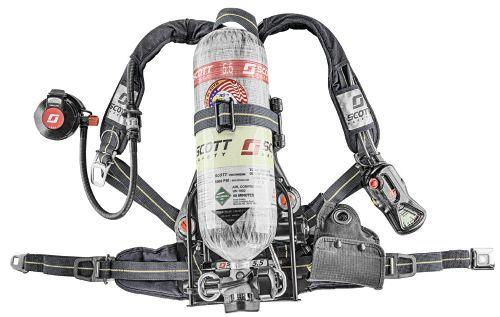
The residents meetings, while exhausting, became invaluable for planning purposes. During the first meeting, those who needed to retrieve pets or medicine were asked to leave their names and contact information at the front desk on the way out. Lesson learned: have a sign-in sheet in Excel so it can grow with the response to the incident. As soon as the meeting ended, a firefighter, an OPP officer and, when feasible, a building inspector met with homeowners at their homes. Within 90 minutes everyone on the list, and many others who had not been at the meeting, had their pets and medications.
From the beginning, security for the homes had been taken care of by the OPP, but after Wednesday’s meeting we took advantage of emergency generators that Simcoe County provided to add additional lighting at night as a reassurance.
Every meeting thereafter yielded good ideas from the residents.
The next priority was to get people back in care and control of their homes as soon as possible – this was so obvious, but not so easy.
The long row of backyards between Stonemount and Banting crescents, which came to be known as the alley, was full of debris and was still dangerous. Among the debris were people’s family heirlooms and prized possessions. The quick fix would have been to turn everything over to contractors for disposal but we had heard the residents’ concerns loudly and clearly, and, by Thursday’s residents meeting, we had a plan. We had also tweaked our messaging. Outsiders and some reporters started Thursday morning by referring to it as “Day 3” after the tornado. We made a conscious effort that morning to start referring to the aftermath in terms of hours; it was more accurate, and quite frankly, it sounded better. So when we opened our Thursday residents meeting, we thanked everyone for attending and for their patience at Hour 47. When people realized that it had been fewer than 48 hours since the tornado, it seemed to take a lot of edge off.
Earlier that day, several members of our CCG team met with Peter Karageorgos of the Insurance Bureau of Canada (IBC) and IBC vice-president Ralph Columbo. Karageorgos had arrived Wednesday to help connect homeowners with their insurers. At the end of Thursday’s meeting, we had a plan for the clean up of the alley that would address the concerns of the affected residents and safety.
The county emergency manager, Cathy Clark, had received an offer of clean-up assistance from a Mennonite group that does disaster relief. The county is responsible for waste and garbage, and arranged for massive dumpsters and disposal. We had developed the agreement with the IBC that any costs would be paid by the insurance companies, based on a mutually agreedupon formula (total clean-up cost divided by total number of homes). Some insurance companies covered 30 homes, some covered six. Ensuring that the cost would not be divided by the total number of insurance companies made for equal billing. One massive clean up was much more expeditious than the piecemeal method that usually follows these types of incidents. The clean up would be done immediately and safely. No one would have any concern about the integrity and scrupulous reputation of

Turnout gear made with GORE® moisture barrier technology enabled lower body core temperatures in a broad range of conditions firefighters face, providing the best option for heat stress management.*
104.0°F Heat Stroke & Fatality
100.9°F Impaired Decision Making
100.2°F Diminished Motor Control
99.9°F Heat Exhaustion
99.5°F Missed Audible Signals
98.6°F Normal Body Temperature
group heading the clean up. And financial issues were settled in advance and were never an issue.
Thursday’s residents meeting also laid out the four-step plan.
• Step 1 (already complete) – scene safety/security and get pets and meds.
• Step 2 – site safety, clean up crew was coming the next day to remove debris from the alley.
• Step 3 – let adjusters onto properties for size-up from the outside so that homes could be boarded and enclosed/ secured.
• Step 4 – get adjusters into the buildings.
Lesson learned: When laying out a step-by-step process to tired, anxious people, choose words carefully and don’t make the system sound so linear. Although steps two, three and four would happen almost concurrently, to residents it sounded as if it would take longer.
Most residents were happy with the plan but a few were extremely vocal about their displeasure. Daniels handled these people well. But more importantly, the other residents in the room shut these people down, and sometimes pretty abruptly.
At every meeting, press conference or interaction with residents we spoke in terms of “neighbours”, “us” and “we.” Never did we use the terms “you” or “them.” Residents caught on to this rapidly. Anyone at the meetings who was viewed as making personal demands that didn’t benefit the group were not tolerated.
There was a third group of people at these meetings – the folks who came forward with real ideas about helping and making our plan better for everyone. We made a point of working their input into our plans and always conveyed that at the next meeting.
“Based on your input, we’ve gotten everyone’s pets and meds.” “Based on your input we’ve asked the Mennonites to be part of the recovery effort when it comes to sorting your personal items and broken construction materials,” and so on.
We closed Thursday’s meeting by asking everyone to provide their adjusters’ names and contact information – which we added to the Excel spreadsheet – and asked residents to let their adjusters know there would be a meeting specifically for them Friday morning at 10:30.
At that meeting, we explained the plan for getting adjusters onto the properties and our safety requirements – work boots and hard hats – and introduced the adjusters to Rutherford, who explained that an engineer would be required to asses each home.
Rutherford’s team of local building officials had already met and strategized and were there to help her staff with the inspections. This first working-group meeting laid out the ground rules and the inspectors and adjusters formed a team rather than two sides. Rutherford had the advantage of knowing all the inspectors. The adjusters came together, facilitated by Karageorgos and an adjuster from State Farm. This approach to responding to a disaster was new and definitely not the way that these people were used to working; they seemed to appreciate the value of the system and quickly got on board. By 1 p.m. everyone in the working group was in the alley assessing the homes and they were done before 3 p.m. The plan was for the working group to meet again briefly the next morning so that other adjusters could understand their plan and fit seamlessly into the existing process. What could we tell the affected residents at Friday’s 4 p.m./ Hour 71 meeting?
• That the premier had visited and the province was very supportive – for example, Premier Wynne ensured that the Electrical Safety Authority (ESA) would be readily available to ensure rapid electrical inspections for those whose homes could be quickly repaired and reconnected.
• That the clean up had begun and that the team in the alley was sorting broken construction materials into dumpsters and that all other items were neatly stacked on the individual lots, outside the back doors.
• That the clean-up crew was so thorough the glass was being shop-vac’d out of the grass.
• That adjusters had been onto their properties and were working directly with the building department; and that boarding and securing their properties was underway.
The really great news came when the local Hydro One guys announced that they had mustered a crew of volunteers with bucket trucks to come and tarp the roofs of homes that were badly damaged and unsafe for construction crews. Those who wanted help from Hydro One were asked to put their names and addresses on the ever-expanding Excel spreadsheet at the front desk on their way out. Everyone left happy.
By 6 p.m./Hour 73, we knew we had a problem. The Mennonites were to come back in the morning with a larger group but no one knew how many people would show up. Earlier in the day, another local group had promised the assistance of about 200 volunteers to help with the clean up; by 6 p.m., none had arrived.
Simcoe County’s mutual-aid plan has many benefits, one of which is that local fire departments use what is essentially our version of crew-resource management to spool up or down based on emergency staffing needs. Throughout the event, either the county fire co-ordinator, or one of four deputy fire co-ordinators, was on scene, acting as scribe for me or acting operationally, ensuring overall coverage and resources for the deputy fire chief or station chiefs who were site managers. The fire co-ordinator for most of the time was Tony Van Dam, the fire chief from nearby Springwater Township.
At 6 p.m. I turned to Van Dam and said, “Call the brothers.” His response was simply, “Don’t worry about it.” The co-ordinators, he said, had already discussed the situation and a mutual-aid call was going out within the hour for volunteer firefighters to help with the alley clean up. By 6:05 p.m., we no longer had a problem.
Disasters like this start as public-safety emergencies and require the extraordinary efforts of police, fire and EMS. However, the disaster never remains a public-safety emergency. Ice storms end up needing utilities people. Floods and mud slides end up needing the roads and public works teams. And the aftermath of a tornado ends up with the building department. Building officials are rarely included in emergency plans or emergency management, and they are never given incident-command training, let alone having their profession’s own mutual-aid contingency.
As mentioned, we used a unified-command approach for all the emergency services, and mutual aid for fire-service purposes. The OPP had enough resources to staff needs internally. But our building department is a tiny, outstanding team of three. We’re used to command posts, sectoring and communication among


groups from the outside that are brought together. But this was uncharted territory for building officials and insurance adjusters.
The second building/adjuster meeting had happened Saturday morning and the working group was out at the site. Fire had set up a command post for the inspectors on Banting Crescent. This gave Rutherford and her group of volunteer building officials – some from as far away as Kitchener – a place to work. Adjusters came to command post with their engineers and were assigned a building inspector so they could assess the buildings and expedite the process. To move things ahead faster, Rutherford accepted verbal reports from the insurance companies’ engineers. The engineers and the adjusters represent the homeowners. The engineers’ reports were necessary to determine which homes could be reoccupied immediately, which ones were safe for people to go into to retrieve belongings, and which homes were so unsafe that only trained contractors could enter.
The command post and the command system allowed us to quickly develop and share communication. Homes basically had four conditions:
1. Not yet assessed
2. Safe for the homeowner to reoccupy
3. Safe for the homeowner to enter but not reoccupy
4. Unsafe for the homeowner to enter
A placarding system for front doors was devised. Information about the conditions needed to be understood and conveyed to homeowners, adjusters and contractors. Consistent wording was agreed upon. A sign board was made for the command post for those working on scene, then the information was put on the Essa Township website and 211, and distributed to the media.
By the end of Saturday, the inspectors and adjusters had visited 85 per cent of the affected homes and were now in the care and control of the property owner’s insurance company. A few inspections remained because some homeowners had been on vacation during the tornado or because the adjusters didn’t have access to engineers on weekends.
Concurrent with the building inspections, the alley clean up was underway. Station 1 Chief Scott Ferguson was the alley boss. Ensuring the safety of all workers was a huge task. The site was dangerous – huge loaders were hauling the hand-sorted debris to industrial dumpsters; and the dumpsters were constantly filled and replaced. There were countless hazards – nails, broken glass, damaged propane tanks and three separate groups suddenly working together. Additionally, Ferguson considered the high heat, the need for substantial hydration and even the special dietary needs of the Mennonites.
Our deputy chief ran operations outside the alley. An accountability system had been set up to oversee the 120 volunteer firefighters who had answered the call for assistance; they were joined by several dozen members of nearby CFB Borden.
The clean up was completed and command was terminated by 1 p.m./Hour 92.
And that’s how you produce order from chaos in fewer than 100 hours.
There are too many details to totally recap this event. Suffice it to say that hundreds of people helped to make the clean up and recovery go smoothly, along with the implementation of some outsidethe-box ideas, and a team with total dedication to the fundamental belief that compassion coupled with unified command is the best way to push the rock.



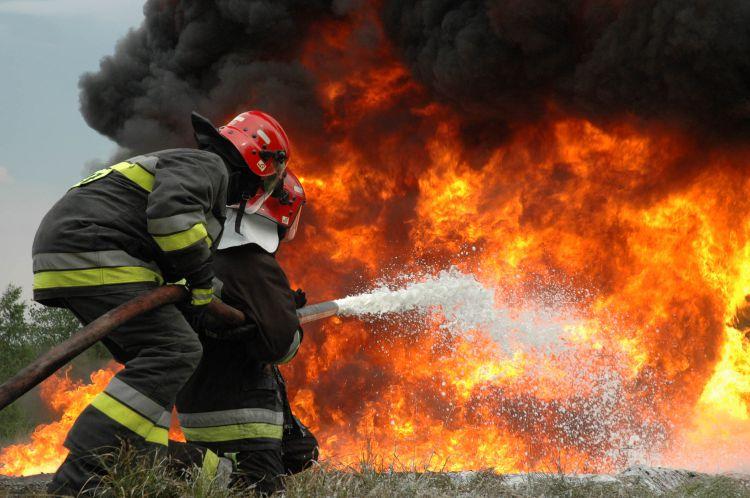
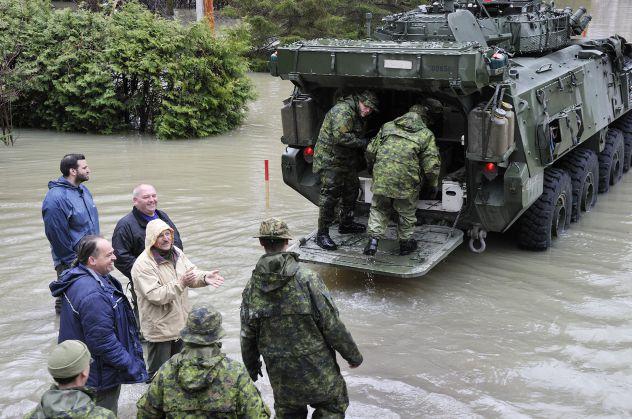
Produced by:
By NEIL CAMPBELL
ABOVE ICs must consider weather and wind, time of day, smoke conditions, find the seat of the fire, look and listen for trapped occupants, check for signs of structural collapse, consider ventilating the structure and, most importantly, consider how all of these factors affect responding firefighters.
Firefighter safety must be every incident commander’s objective. The first steps toward crew safety on scene are size-up and the 360-degree walk around. Gathering information is the foundation of the decision-making process. Information gathering starts the moment contact is made with dispatchers. Immediately, responding crews know the time of day and the weather. These details are extremely important. A residential structure fire at 1 a.m. can present challenges different from those at 1 p.m.; people are usually home in the early hours of the morning and rescue may be the focus. Weather can affect any incident. Windy conditions, for example, can be unpredictable and wind-driven fires can be extremely chal-
lenging. Strong winds can change the IC’s plan for attack, and ventilation must always be considered.
Once on scene, the IC must broadcast what he or she sees to all responding units; simply put, say what you see. An initial size-up report will help build a picture for others who are responding. The initial report should identify the type of building construction, the structure’s height and type of occupancy, the building dimensions and whether smoke or flames are showing. For the incoming units there is a huge difference between hearing “Engine 1 is on scene at 875 Waters St.” instead of “Engine 1 is on scene at 875 Waters St. We have smoke and flames showing on the Bravo side of an apartment building, type-five construction,

50 feet by 200 feet, three storeys tall. We are catching a hydrant at the corner of Waters and Summit Drive. Engine 1 will be command on the Alpha side.”
The goal of the initial report is to help all responding members understand what they may face at the incident.
Command needs to be established by the first-in officer. A report identifying the unit first on scene, conformation of the address, and the location of command need to be relayed to dispatch and all responding units. This information helps to ensure the units are able to stage nearby, secure a secondary water supply if required, or report directly to the IC.
Once the initial on-scene report is complete, the IC must do a 360-degree walk around. This is a fact-finding assessment during which the IC tries to identify many things, mainly the location of the fire. Many firefighters have died after they entered smokefilled structures unaware of the location of the fire and ended up in the worst place possible – above the seat of the fire.
A thermal imaging camera (TIC) is an excellent tool for the IC to use during the 360-degree walk around. TICs can help to find super-heated conditions inside the struc-
ture. Unfortunately, not all fire departments have TICs. An alternate method for finding the seat of the fire is to follow the smoke. Smoke turns from light, wispy laminar smoke to pressurized, boiling smoke when a room or structure can no longer absorb heat. Turbulent smoke is an indicator of super-heated conditions inside the structure. Turbulent smoke is also precursor to flashover and needs to be recognized in its earliest stage. Follow the smoke and you will find the fire. If the IC completes the 360-degree walk around and still isn’t able to locate the fire judging by smoke conditions, then he or she must assume the fire is on the lowest floor of the building or in the basement. It should be the goal of every IC to clearly explain to members of the interior operating teams where the fire is located before they enter the structure.
Also during the 360-degree walk around the IC looks and listens for any signs of a required rescue. A civilian needing rescue becomes a priority and may halt all other fireground tasks. Not all rescues require firefighters to enter the structure. More often than not, a civilian rescue can be accomplished with a ground ladder. People inside structures usually attempt to self-evacuate. Those who can not
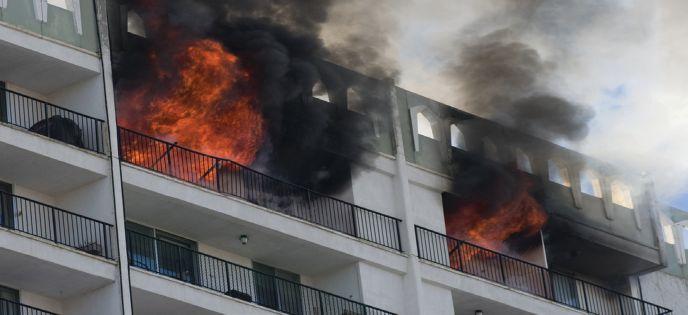
escape will likely be found in staircases, near windows or on balconies.
During the walk around, the IC must also think about ventilating the structure. Ventilation immediately improves the chances of survivability for civilians trapped inside. Opening up the structure as close to the seat of the fire as possible, then incorporating positive-pressure attack with high-pressure fans can create a flow path of fresh air inside the structure to move super-heated fire gases and smoke away from civilians who still may be inside.
One major factor that has the potential to dictate how and where the structure is ventilated is wind. Wind velocity as low at seven kilometres per hour (km/h) can overpower a high-pressure fan and render it useless. Wind velocity as low as 15 km/h can produce a wind-driven fire inside a structure that may result in extreme fire behaviour and rapid fire spread; both are extremely dangerous to firefighters attempting to enter a structure. Wind conditions can change the IC’s plan for an interior attack and force the responding crews to initiate an exterior fire attack instead.




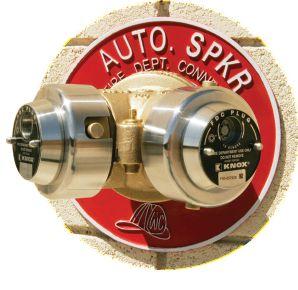
If the situation has progressed past a roomand-contents fire, the IC must look for signs of structural collapse. Two indicators that the IC will always apply to a potential collapse are the presence of brown smoke and the amount of time that has passed since the fire was reported. Brown smoke indicates that unprotected wood is burning, which means the fire is structural: wall studs, floor joists and roof trusses are being attacked by fire and the moment that happens, the structure starts to weaken. The IC must always know how long the fire has been burning and constantly re-evaluate interior operations. After firefighters have spent time inside the structure without establishing fire control, the IC has to consider transitioning to defensive operations.
The IC looks for a multitude of other things, such as the location and securing of utilities and any indication that the fire was intentionally set or the possibility of a clandestine drug lab being located inside the structure.
There is a lot of pressure on the IC to get a plan in place and start tasking the responding manpower. But the IC must ensure the walk around is not rushed; if he or she moves too fast something important may be missed.
Without a proper size-up, the IC will be at a huge disadvantage when trying to keep the crew safe.
Neil Campbell

In the same way that MD certifies a doctor, or CGA designates an accountant, Certi-Fire qualifies your electrician as one of the few experts in all aspects of fire alarm technology.
A Certi-Fire electrician has successfully completed an intensive, four level certification program acceptable to the Ontario Fire Marshal. It guarantees the expertise required to assess your needs, install the correct technology, and maintain and monitor your fire alarm system. It’s one-stop fire alarm security and peace of mind.

BY KEVIN FOSTER Fire chief, Midland, Ont.
ver the last decade in particular, fire departments have faced staffing challenges due to experienced firefighters retiring, less-experienced firefighters leaving for a number of reasons, recruitment of new personnel and declining fire-ground experiences for firefighters promoted to supervisory positions. Therefore, it is imperative that the fire service take steps to ensure that recruit firefighters have positive experiences; departments may then be rewarded by retaining these individuals for longer periods and obtaining greater returns on their investments.
Rarely have I attended a conference of late that hasn’t included a presentation on understanding the new generations of firefighters. But we need to remember that it’s not just firefighters; the issues that concern us in the fire hall are same issues that frustrate people in other workplaces; it’s a generational thing, not a fire thing.
It is often heard in fire-service circles that probationary or less-experienced firefighters just don’t respect the veterans the way they used to. We’ve all heard the different terms used for recruit firefighters, but my personal pet peeve is the word probie. This term degrades and belittles new firefighters. In this day and age, in which we battle bullying and harassment, use of the term is inappropriate.
Some will argue that using the word probie is fine because it’s has always been part of the fire-service jargon and, therefore, is a fire-service tradition. I disagree. As I have written here before, traditions are those ideals and customs that have some type of special significance. Traditions are an important part of fire-service history and it is incumbent on experienced firefighters to share those valued practices and customs with recruits.
to deter words and actions that are deemed to bully students; they have effectively utilized peer-to-peer programs to aid in reinforcing anti-bullying strategies. Amateur athletics is another example; team officials must complete various courses that include content to identify and address bullying. In the workplace, bullying is generally included as a form of harassment that is prohibited. Employers have developed policies to aid in ensuring respectful workplaces for all employees.
The terms bullying and harassment have their dictionary definitions but how those apply to the workplace is often left open for interpretation; essentially the simplest way to explain these terms is to think of them as being words and actions that are continually directed toward others that they find personally unpleasant.
Supervisors certainly would not accept new recruits referring to their captain as “Cap” or the deputy chief as “Dep”, so why is it, then, that some in our profession feel it is OK to refer to a new recruit firefighter in a similar fashion?
Recruit firefighters are the future senior firefighters, captains, deputies and chiefs. Particularly in the volunteer sector, they are also the
We’ve all heard the different terms used for recruit firefighters, but my personal pet peeve is the word probie. ‘‘ ’’
However, the labelling of new firefighters has no special significance, other than the fact that it has been done for a long time. Use of these labels is demeaning, because these terms are commonly tied to some form of meaningless or mundane task that the new firefighter is directed to perform. It is well past the time for the fire service to stop using these words and stop using tradition as a shroud to hide behind. It is time for these terms to exit the fire-service lingo.
As children, many of us heard the rhyme “sticks and stones will (may) break my bones but words will never harm (hurt) me.” Society has come to learn that, in fact, words do hurt, perhaps not physically but certainly emotionally.
Governments around the globe have passed anti-bullying legislation. Schools have certainly taken a much more aggressive approach
Kevin Foster is the fire chief in Midland, Ont. Contact him at kfoster@midland.ca and follow him on Twitter at @midlanddfsem
newest recruiters. Consider the messages recruit firefighters will be delivering to their friends and families. Is that message one that may inspire someone hearing it to become a firefighter?
One last thought: keep in mind that the recruit you are teasing and taunting mid-morning may be the one person you rely on as a team member shortly after lunch. You want that person to be there with full confidence and focus to help get a hazardous task done. You certainly don’t want that firefighter to be thinking about what you said to him or her two hours earlier.
And, if you think that because you were treated this way when you started it is therefore your right or, even worse, your obligation to do it to someone else, do the fire service a favour and retire or resign –you owe your newest members just a little more respect; you may be surprised in the dividends it pays.
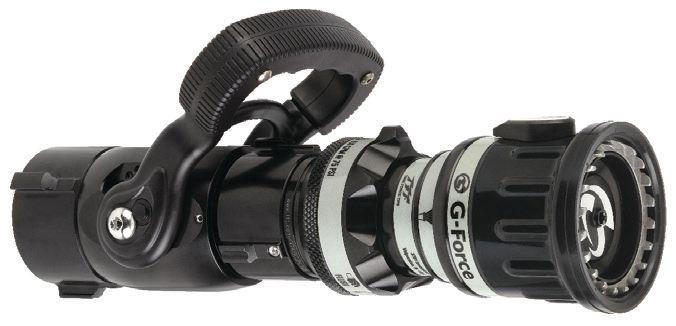

acting captains are assigned to different stations and are unfamiliar with the response area.
Improvements to turnout times could be made if driver specialists were created. In addition to the turnout-time improvements, specialized drivers could help with apparatus-inventory controls, greater awareness of defective and missing equipment, greater familiarity with truck equipment and locations, safer responses, increased familiarity with pre-plans, greater entry control and accountability competency, and more expertise as pump operators.
One final operational finding involved the need for continuous performance measurement. It was recommended that a reporting protocol be developed within CAD for captains to detail abnormally high turnout times. The threshold value will be determined on implementation of the new fire station alerting system, but turnout-time specific issues can be addressed regularly.
Finally, it is imperative that all personnel are advised of their performance to understand how they are doing. In Brampton, this will be accomplished through the use of monthly reports detailing turnout-time statistics, starting later this year.
There are some general lessons that can be taken from Brampton’s experience. Fire departments must ask themselves a few important questions related to data:
• Do you fully understand the available data?
• Have you anticipated the data you may need and how you will collect it?
• Where does the data come from?
• Is it easily accessible?

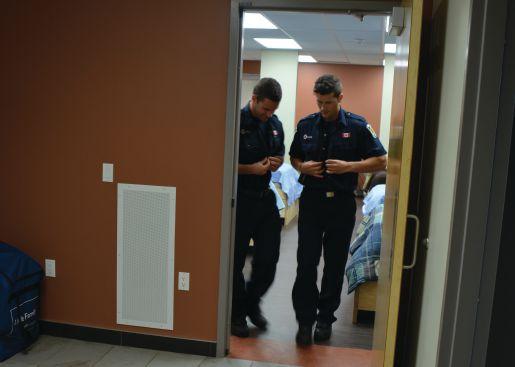
In Brampton, the length of the dispatch announcement is 25 seconds. Turnout time is impacted if crews listen to the full announcement before moving toward the trucks.
• Who are the gatekeepers of the data?
• Although you may believe you have the necessary data, can you get it in a timely manner?
• Is the data valid and reliable?
• How is the data collected?
• What are the underlying assumptions and/or limitations of the data?
For Brampton Fire and Emergency Services, this project has resulted in significant changes that are impacting the entire department. By understanding the data available and placing an increased emphasis on the importance of valid and reliable data, our department is adjusting to realities of the new public sector that demands accountability and efficiency. Moreover, it aligns with the department’s mission statement: to protect our community with trained professionals through active partnerships, providing the highest quality preventative, educational and emergency services.
The purchase and implementation of an automated fire station alerting (FSA) system is a substantial capital investment that will positively impact Brampton’s turnout times and our overall customer service.
Leveraging our current technological capabilities (MDU’s), coupled with a new turnout procedure and the appropriate training to support this initiative, will improve our current level of service.
Brampton’s turnout times in 2014 have been steadily decreasing and should continue to decrease with the new turnout procedure and MDU protocols that began in June. Moreover, the transmission delay will be removed in late 2014 with the new FSA, which should significantly reduce overall turnout times. Brampton anticipates reaching the NFPA standard in the near future and ensuring all past and future recommendations aid in reaching this highly sought-after goal.
The NFPA standard of 80 seconds to the 90th percentile requires a long-term commitment using incremental rather than revolutionary change and continuous assessment to ensure department practices are conducive to achieving the 80-second goal.
Capt. William Boyes of Brampton Fire & Emergency Services is a PhD candidate in human resources management at York University, which supplements his Master’s degree in public policy and administration and Bachelor’s degree in public management from the University of Guelph. Boyes was recently accepted into the USFA executive fire officer program in Emmitsburg, Md. Contact him at william.boyes@brampton.ca
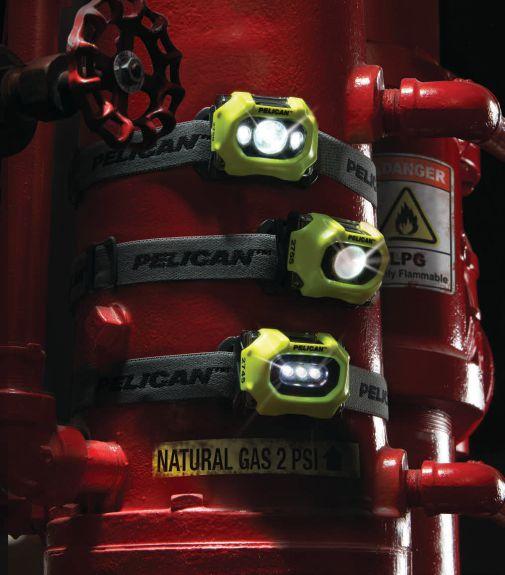


COMBINATION WRENCH
•
• Fits Stortz Hose
• Fits 1-1/4” Hydrant
• Tenzaloy Aluminum Alloy
• Weight: 15 oz.
• Length: 16 in.
MOUNTING BRACKET
• Mounts on the side of the Truck or inside a compartment
• Holds one or two wrenches
• Each wrench is securely
• Weight:
•
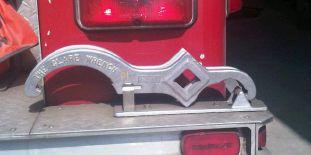
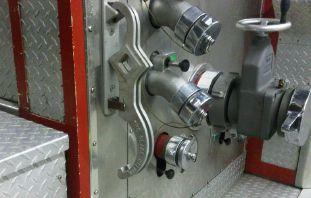

BY SHAYNE MINTZ NFPA Canadian regional director
here’s a trend for buildings made of wood to be built higher and higher. Communities and entire economies in Canada and the United States are built on the lumber industry, and with the decline of the North American pulp and paper market, the wood industry has suffered.
And that’s why wood-frame construction is good: the increased use of wood in mid-rise building construction makes good economic sense; it keeps people working; its supply is sustainable and renewable; it’s atmospherically and environmentally friendly; it’s an affordable building material; it’s broadly available, and easy to work with.
In 2009, British Columbia approved six-storey wood construction and in April 2013, Quebec did likewise. In March, the Ontario Ministry of Municipal Affairs and Housing announced plans to consider the same for residential and office buildings. Mid-rise and tall wood buildings are being built in Austria, Germany, Sweden and the United Kingdom, and when the soon-to-be released 2015 National Model Building Code hits the streets, most of these considerations will be identified or adopted in Canada as well.
During the comment stage of the code-change request process, fire services and other stakeholders submitted several calls for mid-rise wood buildings to be fully tested under three credible fire scenarios – one with a fully functioning fire-protection system and two with partially or fully-impaired systems. It was thought that these tests would help fire services and engineers better understand the dynamics of a mid-rise wood-building fire and what needs to be done to ensure the safety of occupants and first responders from toxic emissions and thermal heat hazards that may arise from a runaway fire.
Particularly in smaller communities, fire departments must ensure at a minimum that there is competent and capable staff to thoroughly review plans for fire- and life-safety protection measures and that plans submitted by the architect, contractor, owner or building representative meet jurisdictional requirements.
There should be verification of compliance with adopted building codes and local standards as well as compliance with adopted policies, utilization of forms and documents related to the permitting process.
Plans also need review to ensure a proper site risk assessment is done. Also, during the construction phase, fire services should ensure, at least, that the NFPA 241: Standard for Safeguarding Construction, Alteration and Demolition Operations is followed.
Plans need review to ensure the proper building occupancy classification is applied, the proper determination of required fire-protection and life-safety systems takes place, and that interior finishes, fire-resistance ratings, means of egress, special hazards and other fire-related requirements as determined by the community are addressed.
Very importantly, a review needs to be done in any case in which there may be an approval of alternate means of compliance.
Fire departments need to know what is being built in their communities.
’’
As vital members of communities’ safety profiles, fire departments should be aware of the various planning and zoning activities going on in their communities. As with all types of construction – wood or otherwise – when a developer approaches the planning department with a proposal for a mid-rise building, someone needs to draw that to the attention of the fire chief or fire-prevention division and ask whether the community has the adequate response capability needed to properly respond to a fire or other emergency, both during and after construction.
Shayne Mintz has more than 35 years of experience in the fire service, having completed his career as chief of the Burlington Fire Department in Ontario. He is now the Canadian Regional Director for the National Fire Protection Association (NFPA). Contact Shayne at smintz@nfpa.org, and follow him on Twitter at @ShayneMintz
With regard to fire and life-safety systems, reviews should include but not be limited to adequate smoke control systems, stairwell pressurization, elevator recall, emergency voice/alarm communications, fire alarms, automatic fire sprinklers, fire pumps, standpipe systems, special extinguishing systems, first-responder radio coverage and the presence of any commercial cooking hoods.
Prior to occupancy, the fire-safety plan needs to be reviewed and approved to ensure there is a proper and accurate human and building audit, adequate fire-control measures, appropriate emergency procedures and the posting of them, and defined roles of supervisory staff, if there are any.
Mid-rise wood construction is coming. Fire departments need to know what is being built in their communities. Being prepared for potential emergencies arising from these types of occupancies is vital for public and first-responder safety.

■ CHEMPRO UPGRADE ENABLES BETTER SENSITIVITY AND READINGS
An upgrade to Environics’ ChemPro100i gas detection device enables it to detect and identify more unknown gases and vapours, including chemical warfare agents and common toxic industrial chemicals, including ammonia and chlorine.
The upgrade, which expands the device’s library of known gases and vapours, is free of charge to existing ChemPro100i customers.
To learn more, visit www.environicsusa.com
■
For 20 years, PowerFlor has being producing and installing its unique raised-floor cable management systems.
The only completely integrated, modular, plug-and-play system on the market, PowerFlor’s heavy duty commercial carpeted panels come preinstalled with power, telecom and data ports, and can be picked up and moved easily with no special tools or training, making it the perfect option to hide hazardous wiring in police or fire dispatch centres.
Visit www.custom-products.com for more information.
Rapid Roll has introduced its premiere portable, temporary fencing system in Canada as an efficient and durable solution to protect pedestrians and workers.
Based on the retractable fencing technology of the Barrier Storage Cartridge, the fencing is able to extend and link to a variety of Rapid Roll posts and bases to create a secure structure. Once the task is complete, the fencing is retracted and easily stored and transported to the next job.
To learn more, visit www.rapidroll.ca
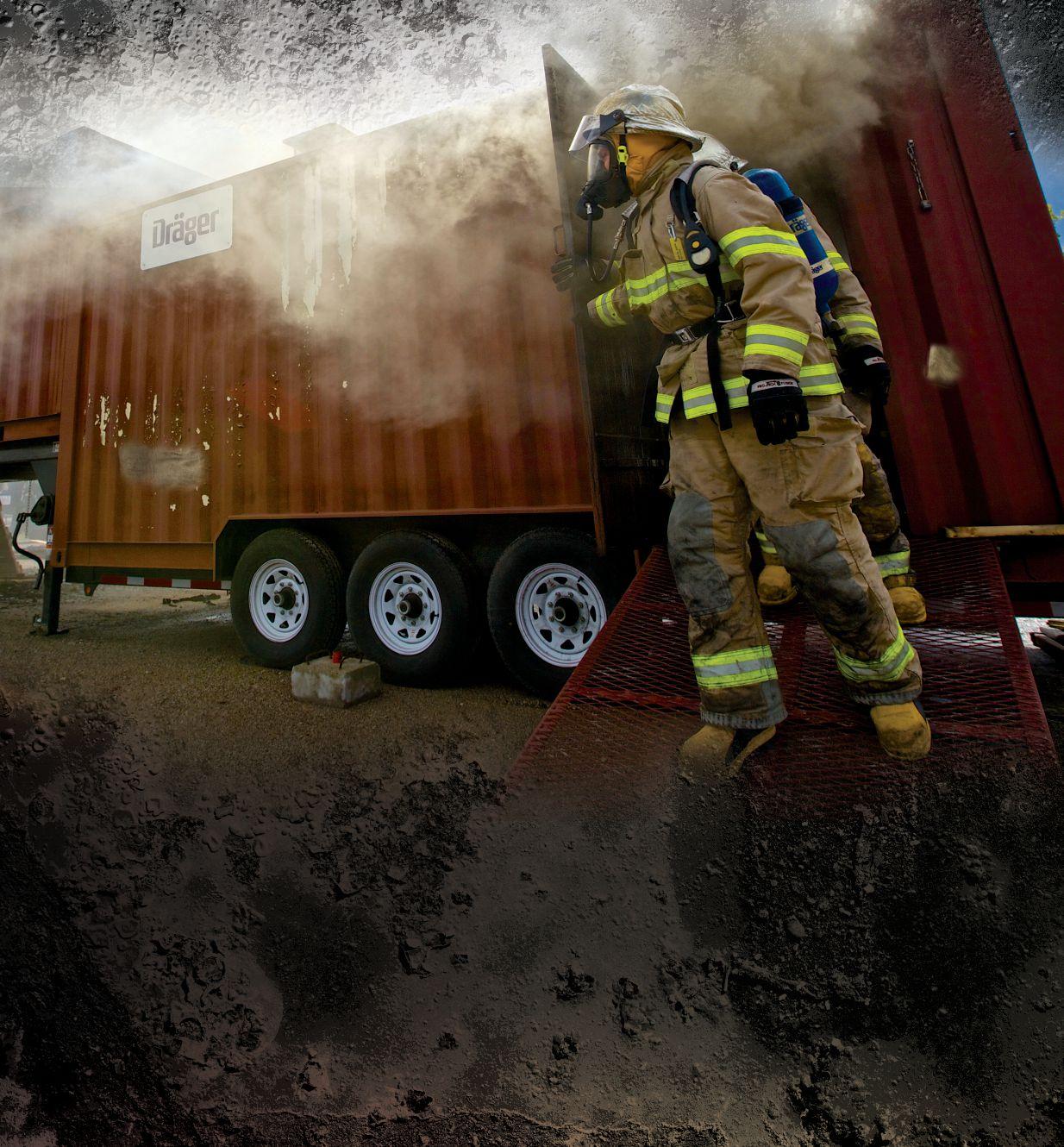

LEARN MORE ABOUT OUR LIVE FIRE TRAINING SYSTEMS AT WWW.DRAEGER.COM/FIRETRAINING STAY ONE STEP AHEAD OF FLASHOVER WITH OUR LIVE FIRE TRAINING SYSTEMS.
Before a fire turns into an uncontrollable one, there’s flashover. That’s why it’s essential to get the training to recognize its signs before it happens. Dräger offers a full range of Class A (wood-fueled) and Class B (propane-fueled) live fire training systems: from the Swede Survival system that teaches about flashover, to portable systems that make live fire training convenient and affordable. What you’ll learn could save your life.
■ PELICAN RELEASES HARDBACK IPAD CASE
Pelican has introduced its HardBack case for the iPad.
The rugged case is crush-resistant and features the same military-grade attributes as the rest of Pelican’s case products, including a watertight seal, an automative pressure equalization valve and a shock-absorbing foam liner. The frame fits iPad generations two to four and features an ear-bud/ speaker port. It can also fold back to act as a stand during presentations.
Visit www.PelicanProGear.ca for more information.
■
Pelican Products has introduced its ProGear Vault series of cases for the iPad Air and the iPad mini.
The cases are designed for consumer use, but are built to the same standard of protection as the company’s fire-specific cases.

The Vault series includes a water-resistance membrane to protect the microphone and speakers, meets the military standard for drops from a minimum of four feet, and is protected against wind-driven rain, dust, dirt, snow and sand.
Visit www.PelicanProGear.ca for more information
■

Kussmaul Electronics has released a combined 40-Amp battery charger and 20-Amp low-ripple battery saver. The automatic modified three-step device does not interfere with radios and other mobile devices.
It also features a one-hour boost voltage for rapid battery recover, an automatic current limit and AC input circuit breaker protection.
For more information, visit kussmaul.com
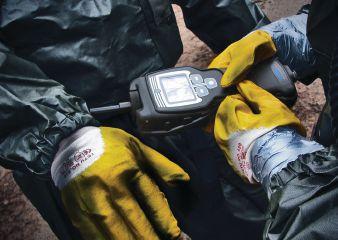
Environics has improved its ChemPro 100i gas detection device with a brighter display.
The new display has a whiter contrast, making it easier to see the device’s graphics. The ChemPro also has improved buttons with better tactile feedback, offering greater ease of use when wearing gloves.
Visit www.EnvironicsUSA.com for more information.







BY PETER SELLS
My first Flashpoint column for Fire Fighting In Canada, back in September 2007, started with this quote by Dr. Kent M. Keith from his 1968 booklet for student leaders, The Paradoxical Commandments: “If you do good, people will accuse you of selfish ulterior motives. Do good anyway.”
I am sorry to say that this will be my final column as a regular contributor to FFIC. I hope is that over the last seven years some good has come to the Canadian fire service through the more than 100 columns and blogs I have contributed, and through conversations they triggered around fire hall kitchen tables. Along the way, I was certainly tagged with many labels and suspected of many hidden agendas, but I anticipated that when I took this on.
It happened like this; I met Laura King, the brand-new editor of FFIC, in the spring of 2007 at the FFIC golf tournament. After a few conversations, we agreed that I would write an opinion column; I was to take on current issues in the fire service, analyze them critically, and give my perspective on why those issues mattered and how they could be addressed.
There were several reasons why these columns and blogs were successful: Laura and I took pains to ensure that I had my facts right and could back up any stated position; we stayed in touch regularly; and when needed, we reacted quickly to late-breaking incidents (more than once, putting finished pieces on the back burner or holding them for later).
Over time, as Laura learned more about the fire service and developed her unparalleled network of contacts, she helped me become a much better writer. She has my undying gratitude for giving me latitude and putting up with my attitude.
be in recognizing the greatness of your organization, rather it should be in continually striving to make it better and better … and even better.
Here’s another one; “I wouldn’t change a thing, I have no regrets.” Seriously? No regrets? The only way that is possible is if you played it safe every time, took no risks, never coloured outside the lines, always did things the easy way – if you were a follower, not a leader. Leadership always involves risk and change always involves some level of pain. People with no regrets are people who never made any mistakes. People who never made any mistakes are people who never made any hard decisions. There are a lot of things I wish I had done differently, some of which I regretted almost immediately and some only after years of reflection. Without those regrets, no learning takes place.
In that first column, I reflected on the closing address given by now-retired Chief Dennis Compton of Mesa, Arizona, at my first IFSTA Validation Conference in 1997. Compton reminded us that the work we had done that week – writing and editing hundreds of pages of fire textbooks – would save firefighters’ lives. I have often wondered how many lives I have saved or injuries I have prevented because somebody did something right or didn’t do something wrong because I taught a
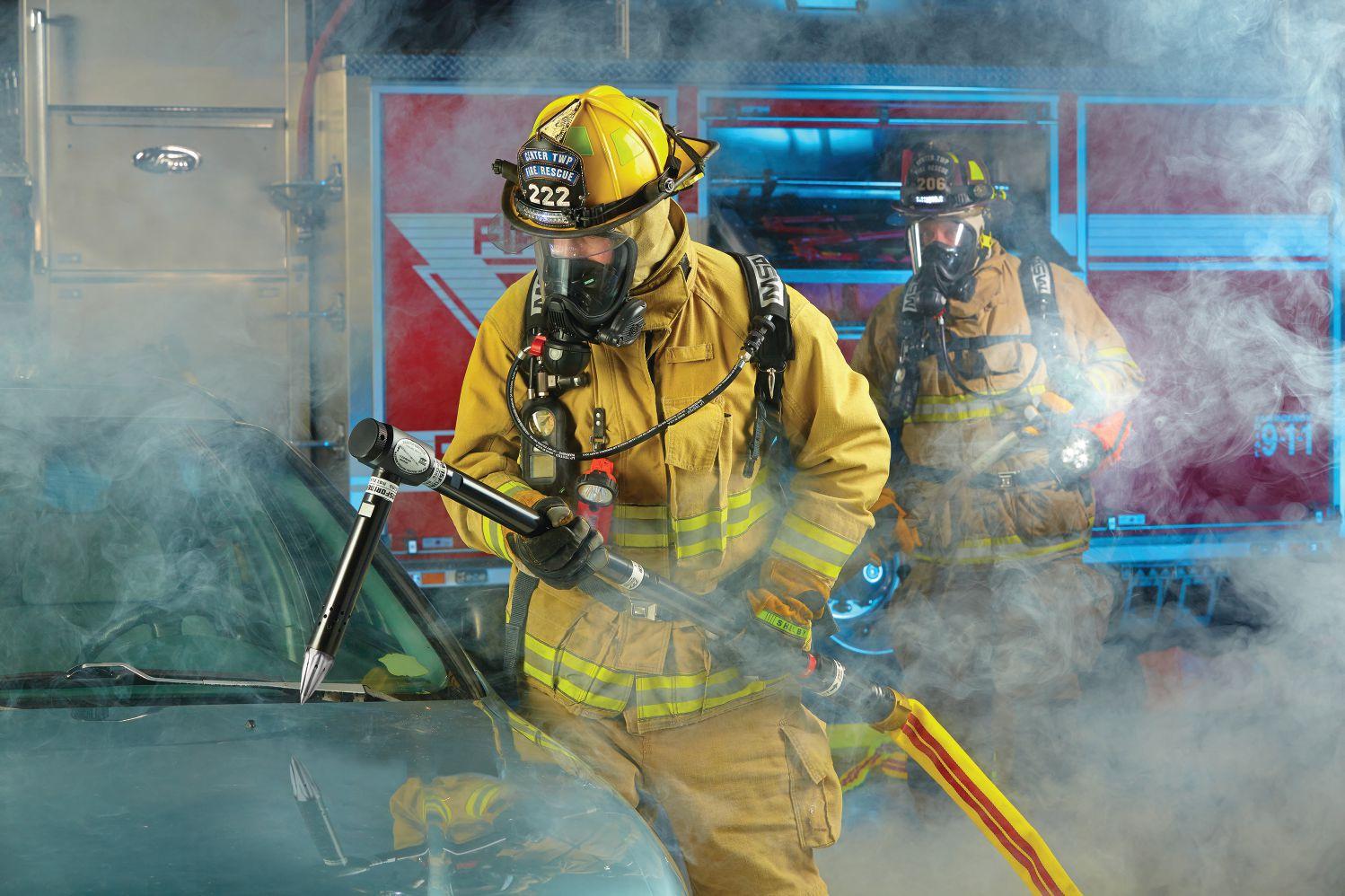
There are a lot of things I wish I had done differently, some of which I regretted almost immediately and some only after years of reflection.
’’
Since this is a retirement address of sorts, let me give you my spin on some things that you often hear at retirement parties. “I have been proud to be a member of the greatest fire department in the world.” That you are proud of your service is admirable, but the rest of it is misplaced and even harmful. The chances that your department is the greatest in the world are miniscule. Your pride should not
Retired District Chief Peter Sells writes, speaks and consults on fireservice management and professional development across North America and internationally. He holds a B.Sc. from the University of Toronto and an MBA from the University of Windsor. He sits on the advisory council of the Institution of Fire Engineers, Canada branch. Peter is president of NivoNuvo Consulting, Inc, specializing in fireservice management. Contact him at peter.nivonuvo@gmail.com and follow him on Twitter at @NivoNuvo
lesson, wrote a paragraph or delivered a lecture. I will never know this, of course, but I know that my motivations were always honest and my efforts were to do good work.
This doesn’t mean that you have heard the last of me. I will make contributions to FFIC from time to time, although from a distance. For the next few years I will be helping to build a new fire/rescue academy for the civil defence organization in Dubai. I will have a spare couch if any of you happen to be in the area.
Finally, as a nod to my comrades from the original Toronto Fire Department, here is my version of the “mop speech.” Fire is the only job that I know in which you can start out on the end of a mop and end up as a training officer, chief officer, management consultant, author, columnist, and international speaker.
Do the good work anyway.