





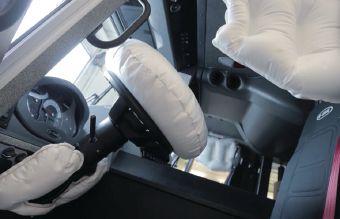



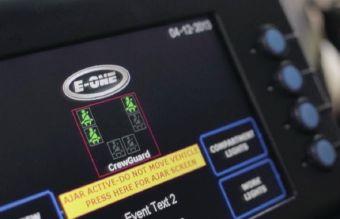

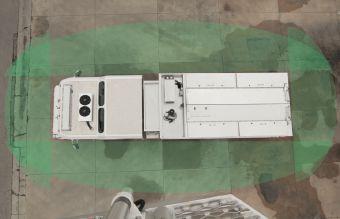

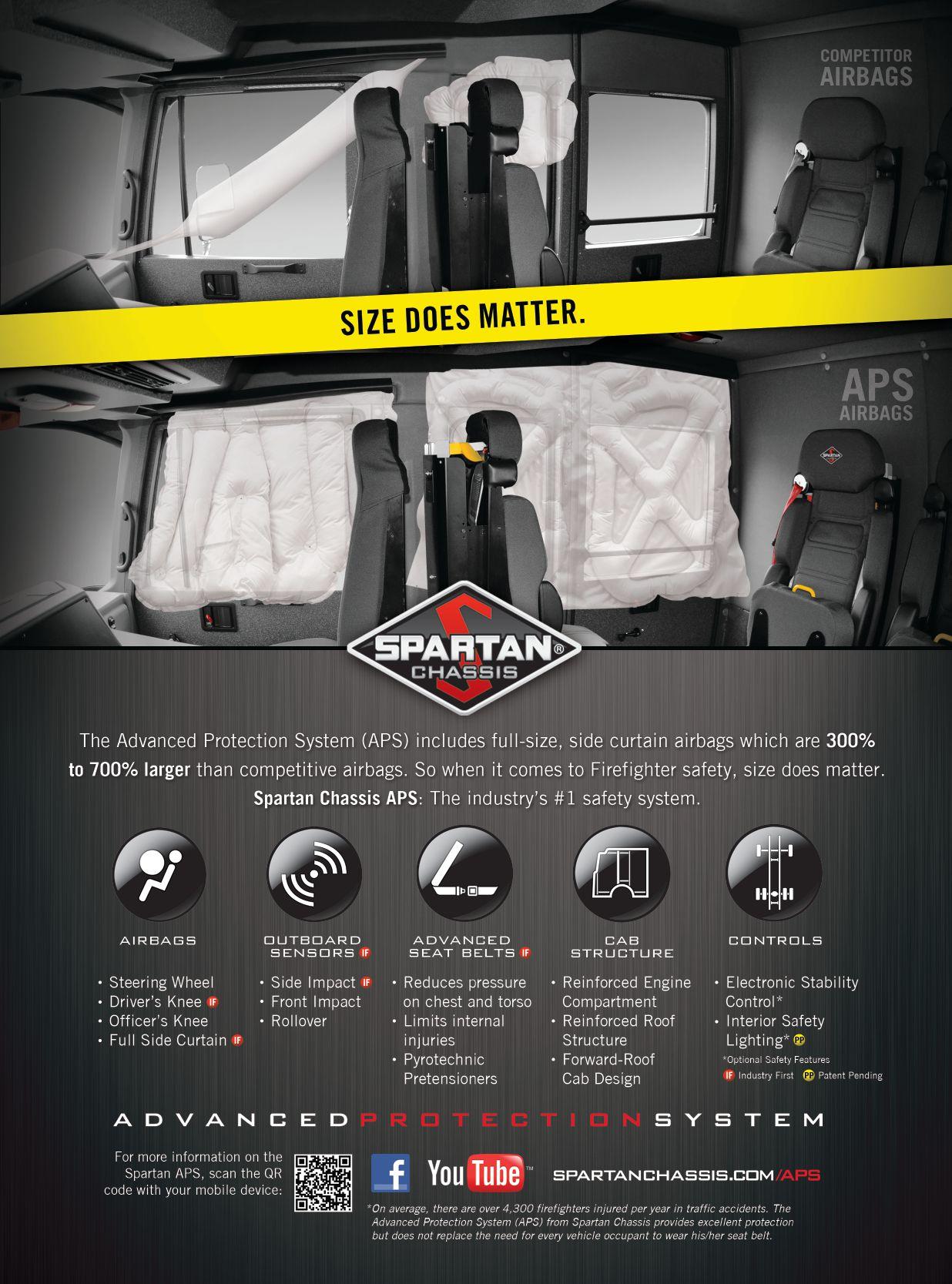
Driving a fire truck at high speeds can be dangerous. That’s why avoiding the accident is the best way to protect your crew and community. E-ONE’s ProTech™ system features OnGuard® for audible collision warning and accident mitigation, G4® (electronic stability control) for added stability, CrewGuard™ for occupant detection, and a 360-degree camera system for perimeter protection.
But, if an accident does occur, the impact is cushioned with a steering wheel airbag, driver and officer knee bags, as well as side roll protection. Additionally, every E-ONE cab is designed with a roll cage structure to offer maximum protection for your crew.
E-ONE is committed to safety.


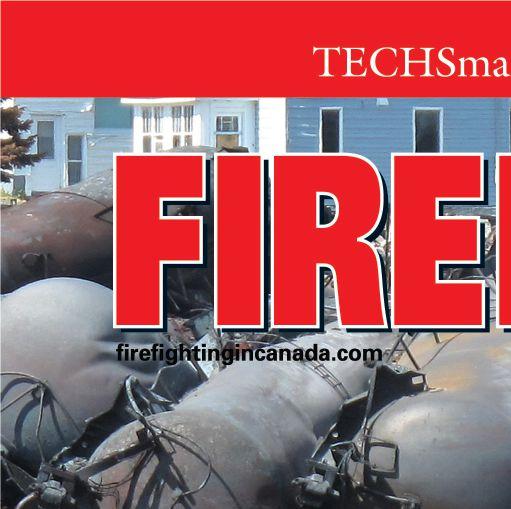
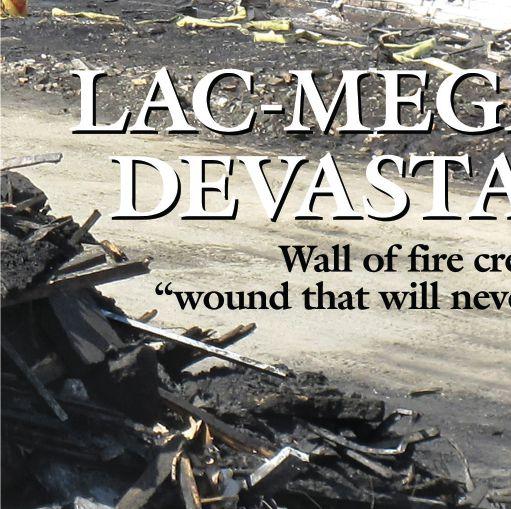
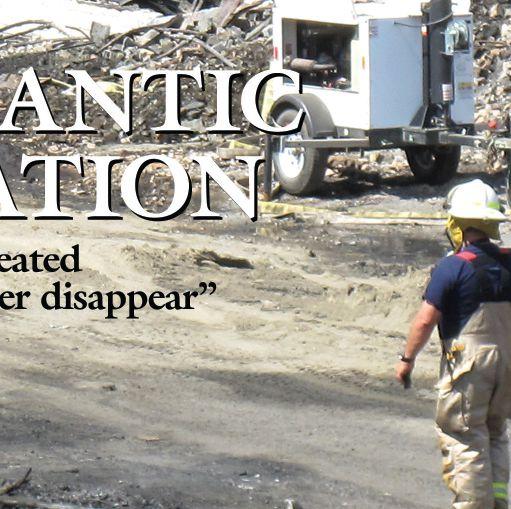
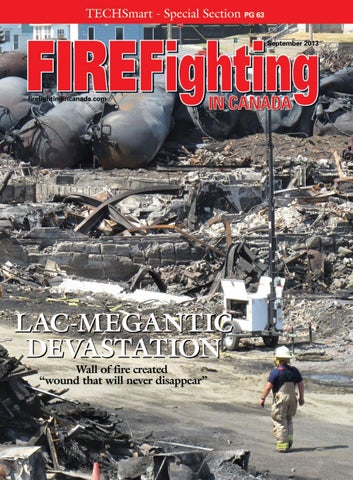
LAC-MEGANTIC DEVASTATION
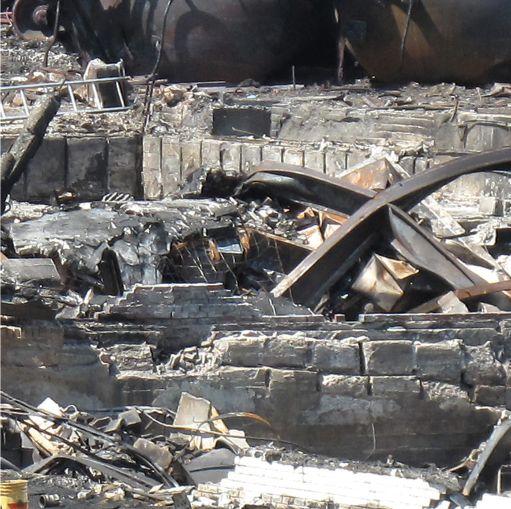
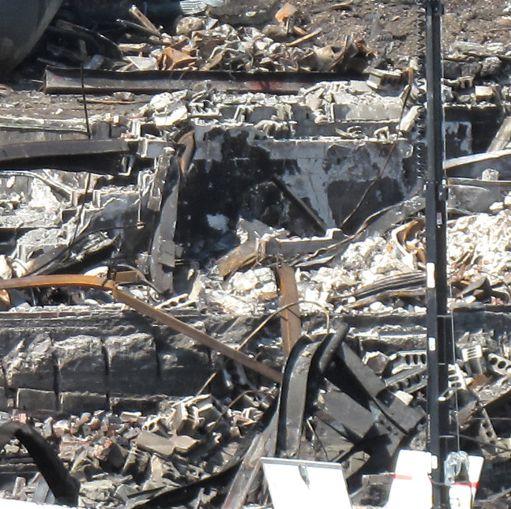
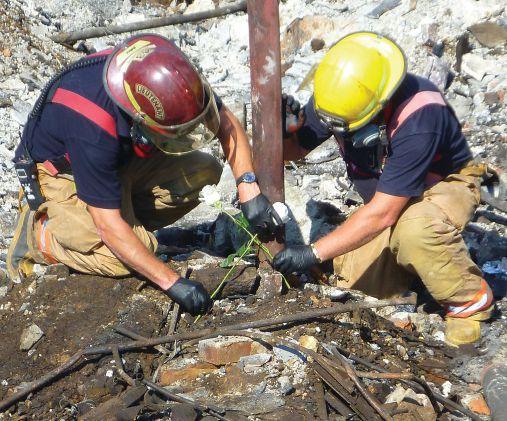
In the aftermath of the horrific inferno that destroyed the downtown core of Lac-Megantic, Que., on July 6, many described the area as a war zone. As Sean Farrell writes, the train derailment and subsequent explosions killed 47 people and sent emergency workers into the rubble for days of painstaking work.
26
RUSH-HOUR RESCUE
On July 8, two major storm cells merged over Toronto, resulting in flash floods that paralyzed parts of the city and major power outages across the GTA. As Deputy Chief Debbie Higgins explains, Toronto Fire Services responded to 1,185 calls – most of which occurred in a 10-hour period.
56 LESSONS LEARNED
In December 2011, a blaze at a marina in the Township of St. Clair in Ontario caused $50 million in damages. But, as Deputy Chief Steve Bicum writes, the disaster gave the St. Clair Township Fire Department the opportunity to assess its capabilities and develop a response to issues that will make it stronger and more efficient for the future.
63 TECHSMART SUPPLEMENT
Assistant editor Olivia D’Orazio reviews new products and processes that improve fire-ground safety.

BY LAURA KING Editor lking@annexweb.com
was in Nova Scotia for a couple of days of vacation in July when stories started pouring into my BlackBerry about a train derailment and fire in Quebec.
The first Canadian Press story landed Saturday morning, July 6, at about 6 a.m. It was five paragraphs long. “Firefighters in Quebec’s Eastern Townships are battling a major blaze in Lac-Megantic, 250 kilometres east of Montreal.
“A train carrying crude oil jumped the tracks this morning, causing several of the 73 cars to explode.
“The fire spread to a number of homes, and hundreds of evacuations have been ordered.
“Flames were visible for several kilometres, and firefighters from nearby municipalities have been called in.
“So far, it’s not known if there are any casualties.”
The second story, shortly after 10 a.m., was more detailed.

Megantic and saw first hand the horror.
As expected, Farrell had trouble reaching anyone connected to the fire service in LacMegantic, so I emailed Division Chief Gary Barnes in Gatineau, to see if he could help.
Remarkably, two teams from Gatineau had been to Lac-Megantic and Barnes put us in touch with District Chief Gilles Vekeman, whose description of his crew’s experience is spelled out in Farrell’s story on page 10.


“A large swath of a Quebec town was demolished on Saturday after a train derailment sparked several explosions and a blaze that sent spectacular flames shooting metres into the sky.
“Up to 1,000 people were evacuated in Lac-Megantic, about 250 kilometres east of Montreal.
“Some people were reported missing, although Quebec provincial police Lt. Michel Brunet said it was too early to say if there were casualties.”
We know now that there were 47 fatalities and that the devastation is incomprehensible.
Having lost most of my French-speaking ability after leaving Ottawa almost 15 years ago, I went looking for a freelance reporter to interview people and write the story and found – through contacts at The Canadian Press – Sean Farrell in Montreal, a stringer for The Associated Press who was in Lac-
Firefighters describe the devastation in Lac-Megantic after a train derailment and explosions on July 6. See story page 10. @fireincanada
Two days after the first stories landed about LacMegantic, I started getting emails from home about a nasty storm in Toronto that was wreaking havoc on the rushhour commute. While there were no fatalities and the event was more of an inconvenience than a disaster, Toronto firefighters responded to more than 1,100 calls, including the rescue of hundreds of people from a stranded GO Train. It’s hard for those outside the GTA to fathom the chaos that ensues when the region’s transportation system is shuttered; hundreds of thousands of people are affected. Toronto Deputy Chief Debbie Higgins was in the city’s communications centre that night and provides fantastic detail in her story on page 26 about how TFS handled the call volume.
These compelling stories, along with our regular columns and training features, are followed on page 63 by our TechSmart supplement, in which assistant editor Olivia D’Orazio explores what’s new in fire and rescue equipment, from lighter hoses to a state-of-the-art firefighter tracking system.
Lots of good reading from cover to cover.


ESTABLISHED 1957 September 2013 VOL. 57 NO. 6
EDITOR LAURA KING lking@annexweb.com 289-259-8077
ASSISTANT EDITOR OLIVIA D’ORAZIO odorazio@annexweb.com 905-713-4338
EDITOR EMERITUS DON GLENDINNING
ADVERTISING MANAGER CATHERINE CONNOLLY cconnolly@annexweb.com 888-599-2228 ext. 253
SALES ASSISTANT BARB COMER bcomer@annexweb.com 519-429-5176 888-599-2228 ext. 235
MEDIA DESIGNER ALISON KEBA akeba@annexweb.com
GROUP PUBLISHER MARTIN MCANULTY fire@annexweb.com
PRESIDENT MIKE FREDERICKS mfredericks@annexweb.com
PUBLICATION MAIL AGREEMENT #40065710 RETURN UNDELIVERABLE CANADIAN ADDRESSES TO CIRCULATION DEPT.
P.O. Box 530, SIMCOE, ON N3Y 4N5
e-mail: subscribe@firefightingincanada.com
Printed in Canada ISSN 0015–2595
CIRCULATION
e-mail: subscribe@firefightingincanada.com
Tel: 866-790-6070 ext. 206
Fax: 877-624-1940
Mail: P.O. Box 530 Simcoe, ON N3Y 4N5
SUBSCRIPTION RATES
Canada – 1 Year - $24.00
(with GST $25.20, with HST/QST $27.12) (GST - #867172652RT0001)
USA – 1 Year $40.00 USD
We acknowledge the financial support of the Government of Canada through the Canada Periodical Fund of the Department of Canadian Heritage.
Occasionally, Fire Fighting in Canada will mail information on behalf of industry-related groups whose products and services we believe may be of interest to you. If you prefer not to receive this information, please contact our circulation department in any of the four ways listed above.
No part of the editorial content of this publication may be reprinted without the publisher’s written permission ©2013 Annex Publishing and Printing Inc. All rights reserved. Opinions expressed in this magazine are not necessarily those of the editor or the publisher. No liability is assumed for errors or omissions.
All advertising is subject to the publisher’s approval. Such approval does not imply any endorsement of the products or services advertised. Publisher reserves the right to refuse advertising that does not meet the standards of the publication.
www.firefightingincanada.com

The all-new 2013 Ram 1500 Special Service* Vehicle, built for Firefighters, EMS, and First Responders, is well equipped for duty. The 2013 North American Truck of the Year is also Canada’s longest-lasting» and most fuel efficient full-size pickup¤, making it a great addition to any department. With 395 HP, 407 lb-ft of torque, Electronic Control System including All-Speed Traction Control, Hill Start Assist and Ready Alert Breaking, it’s the perfect partner for any situation.
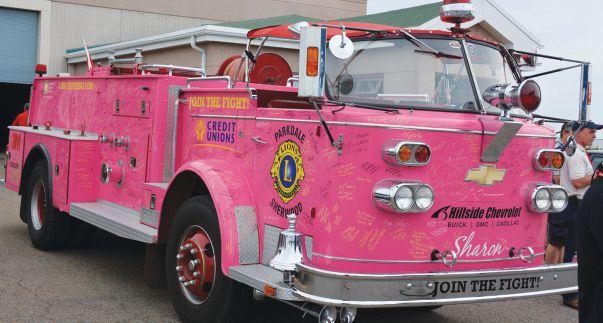
Prince Edward Island’s pink fire truck, owned by volunteer firefighter Barry Stewart, is plastered with names of those who have fought cancer. Stewart’s mission is to raise awareness of screening and research for all types of cancers.
Summerside, P.E.I. – Barry Stewart is easily identifiable by the multi-coloured Sharpie markers he carries with him everywhere he goes.
And Stewart and his Sharpies are in demand.
Stewart owns a 1961 American LaFrance 900 pumper, a dream he chased for years until he finally found the right truck at the right price, in London, Ont.
But instead of storing the truck in his garage and taking it out only for parades and community events, Stewart plastered the truck with pink vinyl (thanks to sponsors Hillside Motors, the ParkdaleSherwood Lions Club, Credit Unions of P.E.I., Beacon Signs, and 3M Canada) and went on a mission to raise awareness of screening and research for all types of cancers.
WADE PIERLOT was appointed fire chief in Coquitlam, B.C., in May. With 32 years of fire-service experience, Pierlot previously served as deputy chief of the Vancouver Fire Department.
IAN JOSEPHSON is the new fire chief for the Chilliwack Fire Department in British Columbia. Josephson, who previously served as assistant chief
in charge of fire prevention, spent the last 12 years with the Chilliwack department. Prior to that, he worked as a fire inspector with the City of Langley.

GORD FOWLER was promoted to platoon chief for the Brampton Fire and Emergency Services in Ontario. Fowler, who joined the Brampton department in 1989, co-manages Brampton’s staffing program.
Plenty of Canadian fire departments and firefighter associations have embraced pink apparatuses to help raise awareness of breast cancer. Stewart, a longtime volunteer fighter on P.E.I. – with Riverview Fire and Rescue for 21 years, O’Leary Fire Department for five years, and now with the North Shore Fire Department – wanted to do something different.
Enter Stewart’s Sharpies. The truck is full of names of mothers, fathers, brothers, sisters, sons, daughters, aunts and uncles who have fought cancer – the fenders, the doors, the side panels and the hood signed by cancer survivors themselves, or their names added by friends and relatives.
“The plan is to get as many names [signed] on it as we can by the end of the year – the names are of the people who have had or have passed away from cancer,” Stewart told The Charlottetown Guardian.
“And what we’ve done is
MIKE VILNEFF is the new fire chief for the Cobourg Fire Department in Ontario. Vilneff, who has more than 32 years of experience, began his career in 1980, when he became a full-time firefighter with the Marmora Fire Department. He was promoted to training officer in 1985, and became chief in 1989. Vilneff joined the Cobourg department in 1997 as deputy chief, a position he has held for the last 16 years. Vilneff sits on the Ontario fire service Section 21 committee.
colour code it with Sharpies. So you’ve got colours for prostate cancer, colorectal cancer, lung cancer and breast cancer and then you have another colour that represents all other cancers. The reason the four have their own colours is because those are the most common cancers on Prince Edward Island.”
Prince Edward Island is one of three provinces – along with Quebec and Newfoundland and Labrador – that does not have presumptive cancer legislation for firefighters.
In Ontario, where several types of cancer are recognized by presumptive legislation, firefighter associations are working to add six additional cancers to the legislation – testicular, lung, breast, multiple myeloma, skin and prostate.
Stewart says there were about 2,500 names on the truck by early August and it had been to more than 30 events.
– Laura King
JEFF BENTLEY retired in June after 33 years with Whitby Fire and Emergency Services in Ontario, most recently as deputy chief of training and communications.
HAL BONNETTA, captain with the Whitby Fire and Emergency Services, retired in June. Bonnetta’s father also served with the department from 1945 and 1971.
In an era before pagers and cellphones, members of the Harbour Grace Volunteer Fire Brigade in Newfoundland were alerted to calls for assistance by a blast from a siren. Two sirens were used to notify firefighters; one of these mammoth sirens was mounted on the old liquor store, and the other was mounted atop a tower in an area known locally as the Plantation. Over time, these sirens were replaced by new technologies and were taken down. The town kept one siren to be used as the noontime siren and for the emergency measures plan. This lone siren was moved around due to renovations, and ended up on a pallet behind the town’s S.W. Moores Memorial Stadium. Retired members of the fire brigade were upset with the siren’s neglect and decided
to restore the unit and put it back into service. The siren was taken to electrician Gerald Sullivan Jr. who, after inspecting the device, told the retirees that, although the siren needed work, it was salvageable.
At the retirees’ quarterly meeting, a co.mmittee was formed and a motion was passed to approach the town’s council and propose refurbishing the unit. Council was very receptive to the plan and found funding to have the unit refurbished. It was agreed that the siren should be installed on the roof of the fire hall, where it would once again be used as the noontime bell. Townsfolk remember that noontime siren from the days of the fishery, and the more important role of a blast announcing a call for assistance in the event of modern
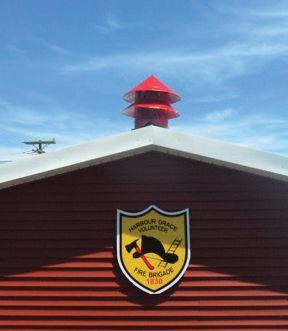
The refurbished siren sits on top of the Harbour Grace Volunteer Fire Brigade’s fire hall in Harbour Grace, N.L.
equipment failure or a disaster. The first blast of the noontime whistle was on July 16.
The restoration project fell into the hands of Dave Regular, a recreation and
maintenance supervisor.
“There aren’t many like it around and I am proud to have been a part of the project,” Regular said.
– Robert Lynch
New Tecumseth Fire Rescue in Ontario, together with the Tottenham Fire Fighters Association, has donated $4,600 to Camp Bucko, a summer camp for child burn survivors in Ontario. The money was raised through the association’s annual boot drive and fireworks display
during the Victoria Day long weekend.
Through donations from various firefighter associations, service groups, and other public and private organizations, Camp Bucko is able to fully fund each child attending the camp.
Dave Krawiec, a district
chief at the Tottenham station, said this donation was particularly special.
“Firefighters usually participate in a lot of [charities], like MS,” he says.
“But this one was closer to the heart – burn victims between the ages of 10 and 17.
“The firefighters can also
get out [to the camp] and help the kids and play with them, and give the kids a chance to have fun and not be discriminated against.”
For more information on Camp Bucko, including how to get involved, visit www.campbucko.ca.
– Olivia D’Orazio
BOB MOWAT, who most recently served as deputy chief in charge of fire prevention, retired in July after 30 years of service with the Whitby Fire and Emergency Services in Ontario. Mowat’s grandfather, father, brother and nephew have each served on the Whitby department, representing more than 134 years of collective service.
JIM CORNER, who most recently served as captain, retired in June after 33 years of ser-
vice with the Whitby Fire and Emergency Services in Ontario. Corner’s grandfather, father and uncle have each served on the Whitby department, representing more than 138 years of collective service.
JANICE LASWICK retired from the Whitby Fire and Emergency Services in Ontario in March. Laswick, who spent 23 years of service with the Whitby department, most recently served as fire prevention officer.
GARRY WILTON , platoon chief for the Brampton Fire and Emergency Services in Ontario, retired in April. Wilton, who spent 35 years in the fire service, joined the Brampton department in 1978 and has co-authored two books about firefighters under the Brampton Firefighters series
ROBERT MYLES died May 23 after a battle with cancer. Myles, who retired after 45 years in the fire service, last served as chief with the Bradford West Gwillimbury Fire & Emergency Services in Ontario. Myles retired in 2009 and was acknowledged for helping to set provincial fire standards, and working to improve relations among fire, the OPP and the Ministry of Transportation.
BY ROBERT
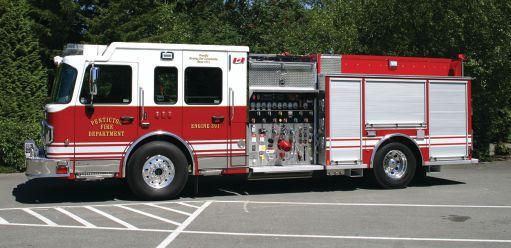
The Penticton Fire Department in British Columbia, under Fire Chief Wayne Williams, took delivery in July of a Hub Fire Engines & Equpiment-built pumper. Built on a Spartan Gladiator chassis, and powered by an Allison 4000 EVS transmission and a Cummins ISX 450-hp engine, the truck is equipped with a Hale 1,5000GPM pump, a Foam Pro foam system, a 500-gallon co-poly water tank, Zico Electric LAS ladder storage, a Whelen LED light package, an Akron Deck Master monitor, a Smart Power hydraulic generator, and a Command Light tower.
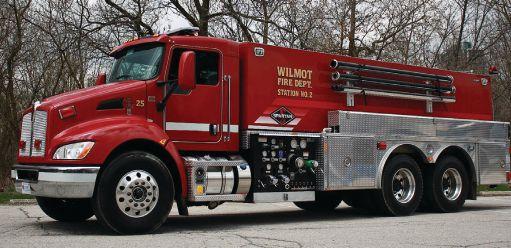
The Wilmot Fire Department in Ontario, under Fire Chief John Ritz, took delivery from Dependable Emergency Vehicles in April of a Kenworth/Spartan ERV-built tanker. Built on a Kenworth T370 chassis, and powered an Allison 3000 EVS transmission and a PX-8 370-hp engine, the truck is equipped with a Hale 750-GPM pump and a 3,000-gallon poly water tank.
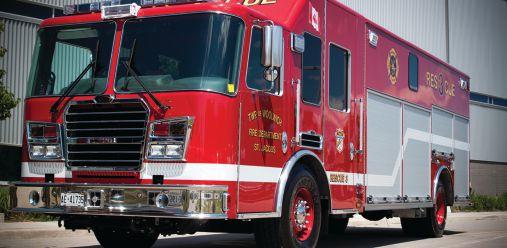
The Woolwich Fire Department in Ontario, under Fire Chief Rick Pedersen, took delivery from Metz Fire & Rescue in June of a KME-built walk-in rescue unit. Built on a Panther 30-metre (100foot) chassis and powered by an Allison 3000 EVS transmission and a Cummins ISL 350-hp engine, the truck is equipped with LED lighting and an Onan 15,000-watt PTO generator.
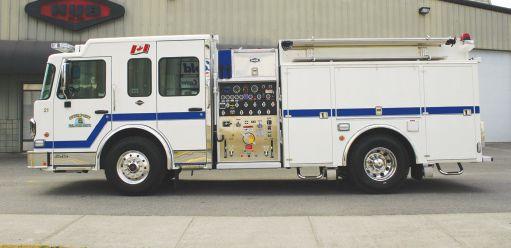
The Otter Point Volunteer Fire Department in British Columbia, under Fire Chief Kevan Brehart, took delivery in July of a Hub Fire Engines & Equpiment-built pumper. Built on a Spartan Metro Star chassis, and powered by an Allison 3000 EVS transmission and a Cummins ISL 400-hp engine, the truck is equipped with a Hale 1,050-GPM pump, a Foam Pro foam system, a 1,000-gallon copoly water tank, a Zico Electric swing-down ladder rack, a Whelen LED light package, a Honda EM 5000 generator, and an Akron DeckMaster electric monitor.
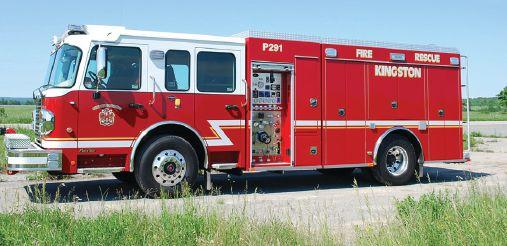
Kingston Fire & Rescue in Ontario, under Fire Chief Rheaume Chaput, took delivery in June of an Arnprior Fire Trucks-built pumper/rescue truck. Built on a Spartan Metro Star chassis, and powered by an Allison 3000 EVS transmission and a Cummins ISL 400-hp engine, the truck is equipped with a Hale 1,300-GPM pump, a Foam Pro foam system, and a 600-gallon poly water tank.
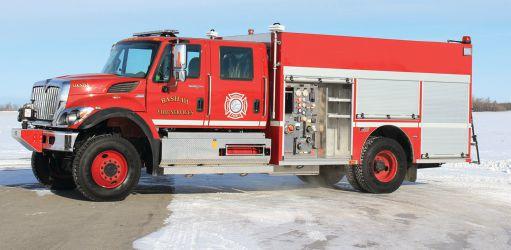
Bashaw Fire Rescue in Alberta, under Fire Chief Ross Garbe, took delivery in March of a Fort Garry Fire Trucks-built pumper. Built on an International chassis, and powered by an Allison 3000 EVS transmission and a MaxxForce 300-hp engine, the truck is equipped with a Darley 1,250-GPM pump, a 1,000-gallon co-poly water tank, a Foam Pro foam system, and a Whelen LED warning light package.
Wall of fire following train derailment created “wound that will never disappear,” fire chief says
By SEAN FARRELL
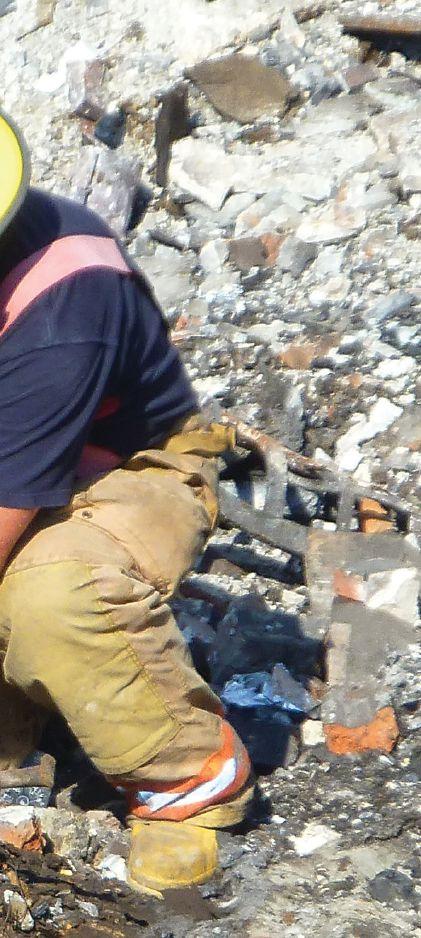
Lac-Megantic, Que. – Prime Minister Stephen Harper called it a war zone.
That description of the LacMegantic train disaster was echoed by many, including the town’s fire chief, Denis Lauzon, who uttered those words in the aftermath of the horrific inferno that ravaged his picturesque Quebec village and claimed 47 lives in the early hours of Saturday morning, July 6.
Without warning, a runaway train of five locomotives and 72 oil tankers came screaming along the railroad tracks sloping down a hill leading to the crossroads at the heart of town, exploding in a conflagration that brought the eyes of the world to this tourism gem, located in southeastern Quebec.
Rolling at an estimated speed of 101 kilometres per hour, almost all of the black tankers derailed as the train banked through a curve. The unimaginable force of the train’s momentum piled the tankers into one another, over and over, stacking the black cylinders together as many ruptured and spilled their lethal cargo. Extracted from North Dakota shale, the shockingly volatile crude oil erupted in a series of staggering explosions, never to make its way to the Irving refineries in New Brunswick.
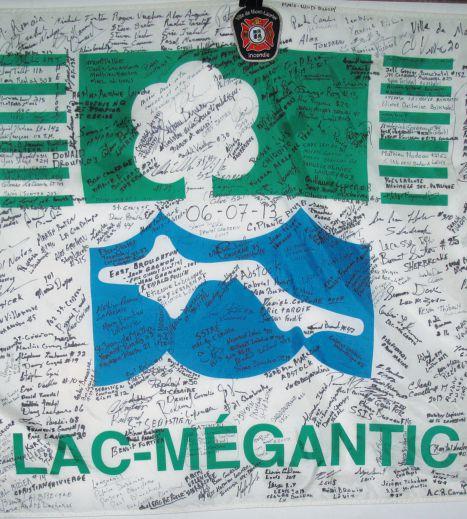
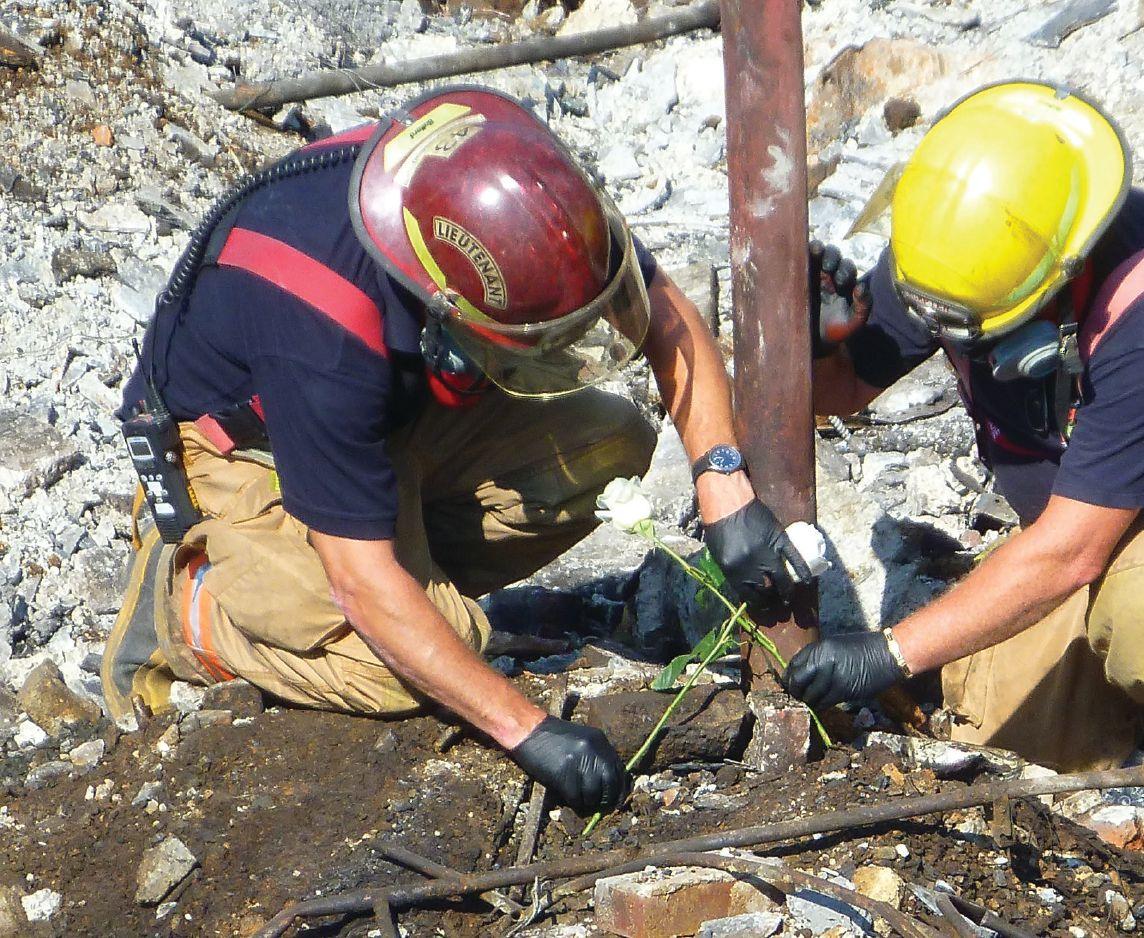
LEFT: Firefighters place roses at the site of the devastation in Lac-Megantic, Que. On July 6, a train carrying oil derailed and crashed into the town’s downtown core, causing an explosion that claimed 47 lives.
ABOVE: A Lac-Megantic flag signed by all first responders who participated in the aftermath of the July 6 train derailment and explosion serves as a display of solidarity with the town and its firefighters.
Lauzon, who commands a volunteer force of about 40 firefighters, was coming out of a nearby house after answering a call about a fire.
“I saw a wall of flames in front of my eyes,” Lauzon told TC Media in the days immediately following the disastrous fire. “My first impression was a forest fire or an airplane crash. As I got closer I could see what it was.”
The train from hell had come to town.
In addition to the towering fireballs from the explosions, flaming oil went hurtling through a swath of downtown that slopes down to the shores of Lake Megantic. A river of lava entered the sewer system.
“We train but not for this type of
intervention,” Lauzon said. “Sure, we saw the trains coming through town. We knew the potential for danger but we never could have imagined a disaster of this magnitude.”
Several people sleeping in their homes and apartments in the path of the destruction never had a chance. Neither did most of the revellers enjoying a typically festive weekend night at the Musi-Cafe, the town’s popular restaurant-bar featuring live music.
Some of those who were outdoors on the Musi-Cafe’s streetside terrace were among the lucky ones who escaped.
In all, nearly one per cent of the town’s population of 6,000 perished in the disaster.
The white-hot glow of the fireballs was so enormous that it showed prominently on a satellite image of Quebec shot on July 6 from space by NASA.
Gilles Vekeman, the division chief of training, strategy and tactics with the Gatineau Fire Service, was part of two teams that lent support from Ottawa’s sister city, 450 kilometres away in southwestern Quebec.
The Gatineau firefighters were called a week after the disaster to supplement and relieve the effort. Vekeman shared his experiences and observations in LacMegantic with Fire Fighting in Canada.
“We had a lot of guys that wanted to go,” Vekeman said. “I’ve got 30 years of experience and I’ve never seen anything like it. It’s like a bomb exploded. The trees, they were blown away, burnt to a crisp. And it smelled everywhere, all kinds of smells. The rocks at the lakeside are like nothing else I’ve ever seen. The top of the rock was like charcoal. A gray powder on top and the rest of the rock exploded.”
The immediate challenge for the LacMegantic firefighters was getting to their equipment. Their downtown firehall was right on the edge of the fire zone.
“The courage and the determination of those firefighters is incredible,” Vekeman said. “I’ve got a lot of respect for all of them. They were very courageous. They made us proud for what they did and I did tell them that they really did a terrific job.”
Help was called in from Sherbrooke and Saint-Georges-de-Beauce, and several fire departments from the adjacent American state of Maine pitched in.
Franklin County dispatcher Stan Wheeler told Reuters that eight trucks
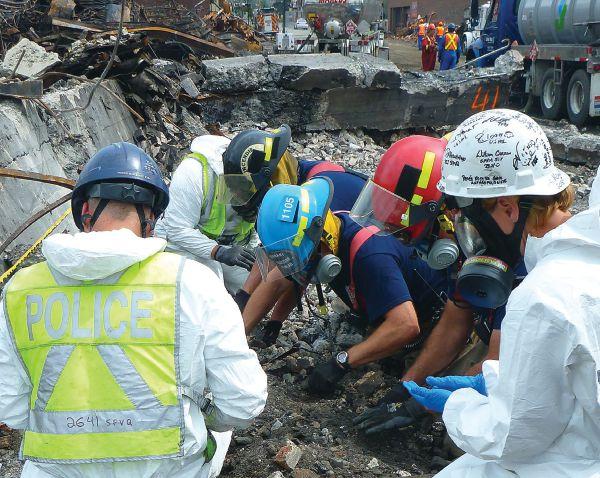
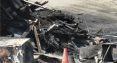
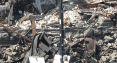
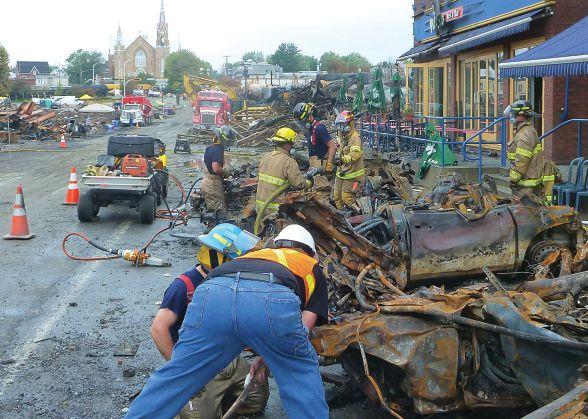
ABOVE: Firefighters and other emergency responders sift through the wreckage looking for human remains after the fire and explosions in LacMegantic, Que., which destroyed 30 buildings in the town’s core.
RIGHT: Firefighters search for victims in the aftermath of the train derailment and explosion.
carrying about 30 American firefighters were sent across the Canadian border.
Rangeley Fire Chief Tim Pellerin and his crew arrived with their pumper and ladder at six o’clock in the morning.
“We just pulled up and the whole downtown was burning,” Pellerin told a local NBC News affiliate. “It was just incredible. We had to stop for a minute and just realize the magnitude of what we were looking at.”
Pellerin and the other Maine chiefs put together a plan and went to work, pulling water from Lake Megantic, fighting to save a local hotel, and spraying the oil tankers.
“We went up there and it didn’t matter what your jacket said and what language it said it in, we fought the good fight to save the community,” Pellerin said. “I don’t know how many times during the 29 hours that we operated up there they came and thanked us and said, ‘We’re so happy to see trucks from America. We’re just so excited to see you guys come.’”
The tragedy had its roots some 11 kilometres up the railroad tracks in the nearby town of Nantes, where the local fire department was called at about 12:15 a.m. to put out an engine fire on one of the train’s five locomotives.
A crew of 12 Nantes firefighters extinguished the fire, which occurred in either the train’s fuel or its oil lines.
The train, operated by the Montreal, Maine & Atlantic Railway (MMA), was parked unattended on the railroad’s main line at the time of the fire. Two MMA representatives arrived on the scene as the fire was extinguished and cleared the firefighters to leave the scene.
Nantes Fire Chief Patrick Lambert told Reuters that it was a “good-sized” fire.
“We shut down the engine before fighting the fire,” Lambert said. “Our protocol calls for us to shut down an engine because it is the only way to stop the fuel from circulating into the fire.”
Investigations by the National Transportation Safety Board of Canada and Quebec provincial police will attempt to determine
what ultimately caused the unmanned train to set itself in motion about an hour later, calamitously gaining momentum and speed as it descended the average 1.2 grade into the heart of Lac-Megantic. The CEO of MMA’s parent company, Rail World Inc., publicly acknowledged on July 12 that it was likely that not enough hand brakes had been applied to prevent the train from rolling.
The now-eerie drive between the two towns along provincial route 161 confirms the disastrous consequences of the region’s topography: it’s pretty much all downhill.
Jacques Pr oteau is the director general of the Quebec National Firefighters’ Academy and was a firefighter for 35 years. In giving his impressions of the firefighters’ work, Proteau repeatedly used the word “exceptional” during an interview with The Canadian Press.
“We aren’t talking about taming a flaming barbecue,” said Proteau, who was not on site in Lac-Megantic, but followed developments closely. “We are talking about dealing with thousands and thousands of degrees that were actively triggering explosions.”
The only comparable disaster Proteau could recall was in 1979 in Mississauga, Ont., when a 106-car train filled with explosive and poisonous chemicals derailed and forced the evacuation of more than 200,000 people. Flames sprawled across 1.5 kilometres but, miraculously, no one was killed and only a few buildings were destroyed.
“This is the type of event that will only happen once in a career,” Proteau said. “This is unprecedented.”
Lessons learned from the Quebec disaster will be used in training future generations of firefighters.
“There are going to be conferences, post-mortems, detailed retrospective analyses, and we are going to draw conclusions about what happened in Lac-Megantic,” Proteau said. “Based on those conclusions, if our programs need to be adjusted or improved, I assure you, they will be.”
First responders had access to a crew of some 30 social workers and psychological counsellors brought in to work with and help the community’s citizens deal with the raw and powerful emotions that only the survivors of such a disaster could know.
A couple of moments will stay with Vekeman from his time in Lac-Megantic. Finding human remains of one of the youngest victims of the disaster was personalized when Vekeman subsequently saw a photo of the smiling child, who had been playing with an older sibling, whose life was also consumed by the fire.
“I had water in my eyes,” Vekeman said. “The next day we were that much more determined to search. That gets you motivated and that gives you an idea of the tragedy that the community of Lac-Megantic has endured.”
Vekeman admits that he was annoyed another time when he
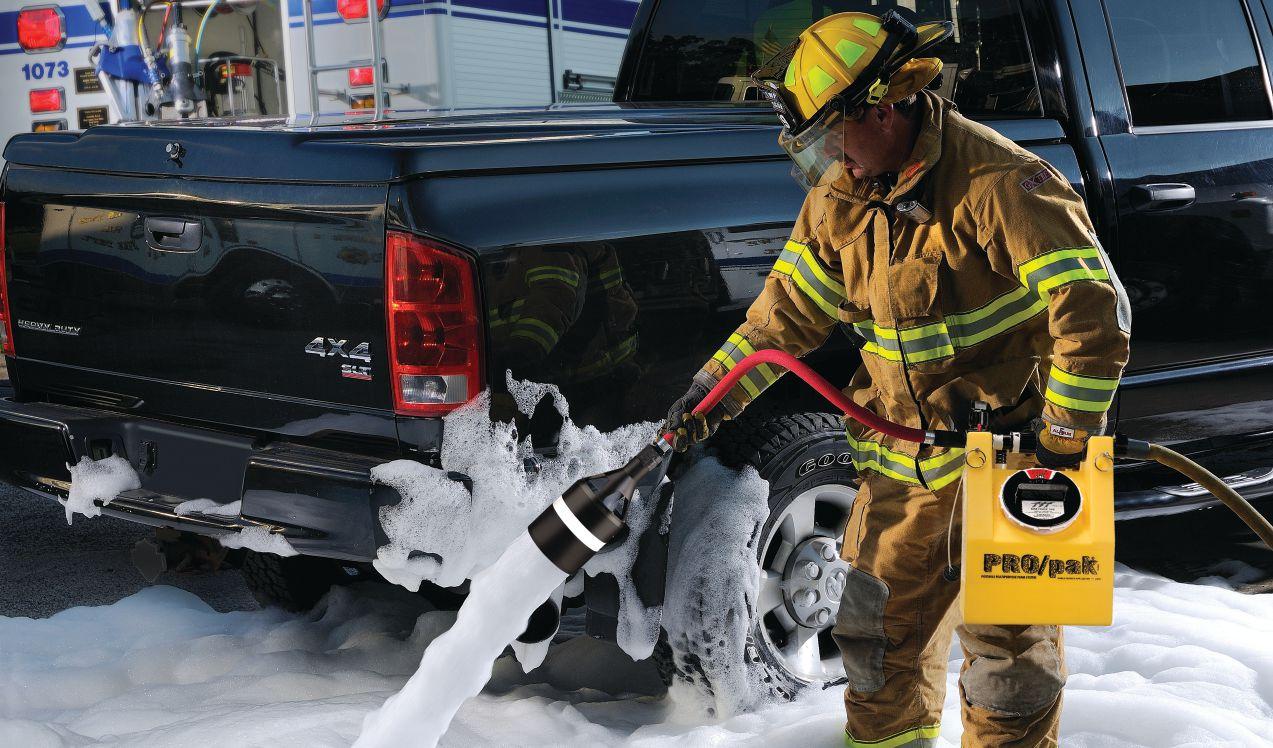
TFT’s compact PRO/pak foam injection and application system is the ideal choice for rapid vapor suppression with any Class A, AFFF or Alcohol Resistant foam concentrate.
Offering nozzle choices for low or medium expansion finished foam, the PRO/pak operates at low inlet pressures, is easily flushed, and provides injection ratios from 0.1% to 6%.
To learn more about how you can improve and simplify your foam operations, contact your local TFT dealer today.

For more information, call your local Globe dealer or Safedesign.
BRITISH COLUMBIA AND ALBERTA Guillevin
Coquitlam, British Columbia 800-667-3362
Calgary, Alberta 800-661-9227
Campbell River, British Columbia 250-287-2186
Edmonton, Alberta 800-222-6473
Fort St. John, British Columbia 250-785-3375
Kamloops, British Columbia 250-374-0044
Prince George, British Columbia 250-960-4300
Trail, British Columbia 250-364-2526
QUEBEC
H.Q. Distribution
LaSalle, Quebec 800-905-0821
Boivin & Gauvin
Saint-Laurent, Quebec 418-872-6552
ATLANTIC PROVINCES
K&D Pratt Ltd.
St. John’s, Newfoundland 800-563-9595
Dartmouth, Nova Scotia 800-567-1955
MANITOBA AND SASKATCHEWAN Trak Ventures
204-724-2281
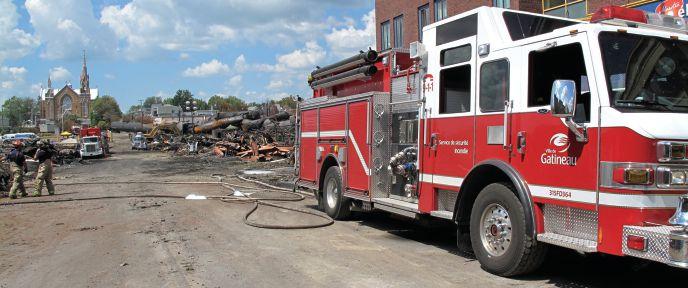
Several fire departments provided aid to the small volunteer department in Lac-Megantic, including two groups from Gatineau, and one from Maine.
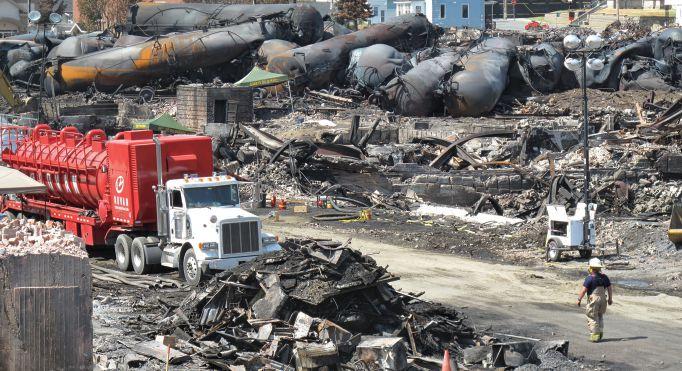
The Montreal, Maine & Atlantic Railway train consisted of five locomotives and 72 oil tankers. When it derailed, the tankers caught fire, causing massive explosions that devastated the town.
was working in the so-called red zone and two women were coming toward him with a police officer.
Incredulous at the sight of one of the women wearing sandals and shorts in the toxic soup of the disaster zone, Vekeman was told that the two were notaries who were anxious to get to a vault-like concrete structure that held various wills and testaments. The invaluable legal documents would be irreplaceable to many in the community.
“She said her grandfather had built it to withstand any kind of fire or explosion, and I said, ‘OK’, and we opened it,” Vekeman said. “All the paper was intact.”
Showered with thank-yous and gratitude, Vekeman said crews from St. Adele and Vaudreuil immediately pitched in as everyone helped remove the precious files.
“It’s unimaginable what it meant to them,” Vekeman said. “Just one will saved could mean so much.”
In all, the remains of 42 victims were located in the arduous and meticulous search. Efforts to find five more people missing and presumed to have died in the blaze were ultimately called off.
“It has branded us,” Lauzon said. “It’s a wound that will never disappear.”
A memorial mass was held three weeks after the disaster. Harper and Quebec Premier Pauline Marois were both greeted with ovations, but the loudest one was accorded to the firefighters.
Vekeman said that a Lac-Megantic firefighter’s comment marked his time in the community.
“He told me that the night of the fire they just felt very lonely, and then he said, ‘The next day we saw the brotherhood and we weren’t alone any more,’ “ said Vekeman. “That made me feel very proud to be a firefighter.”
877-253-9122
Sean Farrell is a freelance writer based in Montreal who reports regularly for The Associated Press and was in Lac-Megantic immediately after the July 6 incident.

By MARK VAN DER FEYST
During training for engine-company operations, instructors teach the importance of advancing the hoseline when a fire attack has been ordered. Finesse and efficiency are required to ensure that the hoseline is pulled off the truck quickly, flaked out, and charged. The way the hose is loaded on the hose bed dictates how it will be pulled off the truck.
One of the more common hose loads is the flat load, which is easy to pull off and to reload. There are variations of the flat load that increase the effectiveness of hose advancement, such as the Minute Man load, which we reviewed in the December 2008 issue of Fire Fighting in Canada. The flat load can be used for both attack lines and supply lines – including one-and-a-half-inch, one-and-threequarter-inch, two-inch or two-and-a-half-inch.
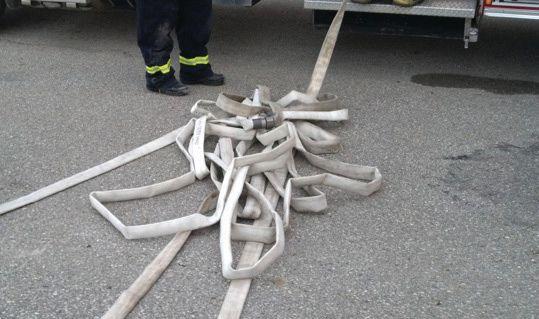
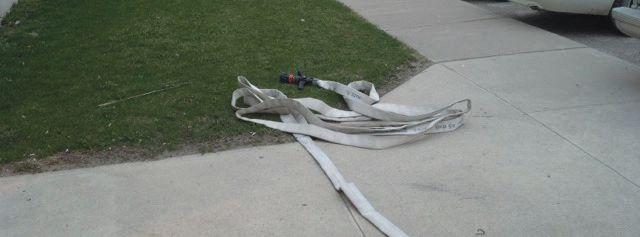
The one pet peeve that I have when overseeing any kind of engine-company operation drill is when a firefighter pulls the hoseline off the truck by going up to the truck, pulling the nozzle over his or her shoulder, and starting to walk away from the apparatus, thereby pulling the flat load off the hose bed in the same manner as a piece of spaghetti being churned out from a pasta maker. If there are 61 metres (200 feet) of hose on the pre-connect bed, then the firefighter will have to walk a distance of 61 metres to pull the load off of the bed. Usually, the pump operator ends up standing by the load and starts to pull the layers off the hose bed; this creates a pile of spaghetti on the ground by the truck (see photo 1). If the pile is not flaked out correctly and the hose is charged, the hose can become kinked or twist itself into knots, or it can be pushed under the apparatus and be pinched or kinked under the truck’s frame.
Pulling the hose as described above is lazy. Most times, the apparatus is parked close to a building, which limits the space in which to pull off the load. There are better and more efficient ways for one firefighter to pull off the flat load.
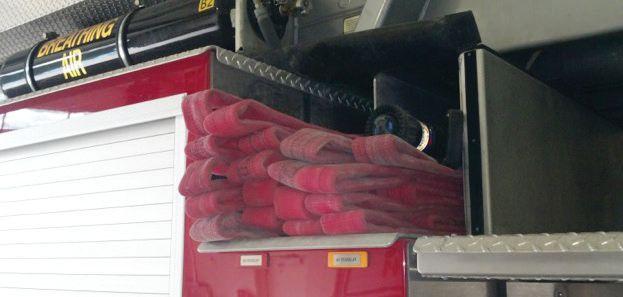
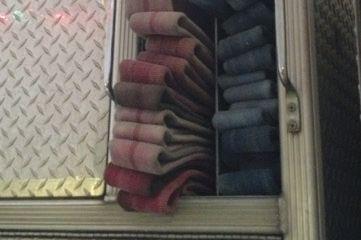
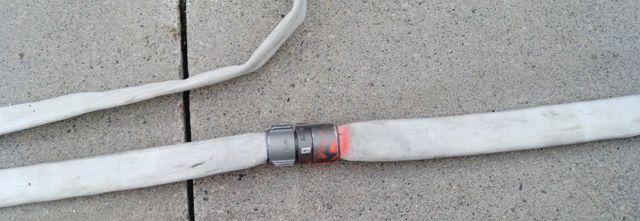
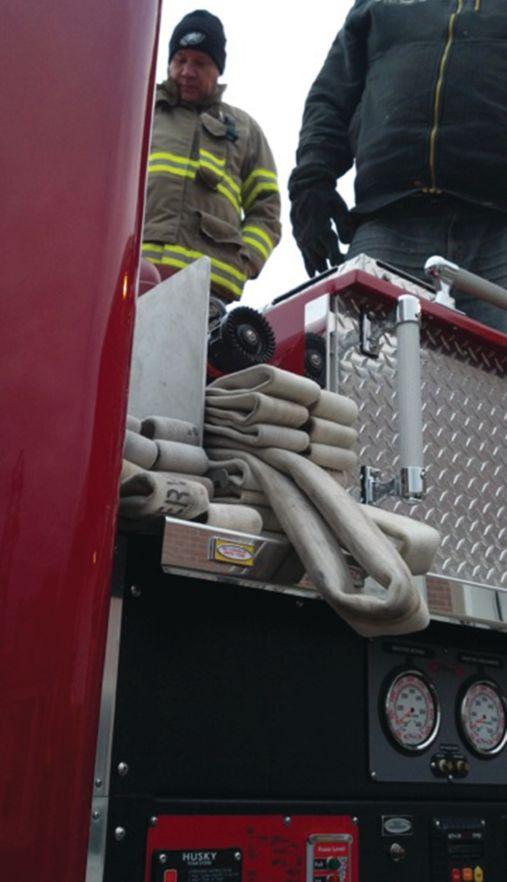
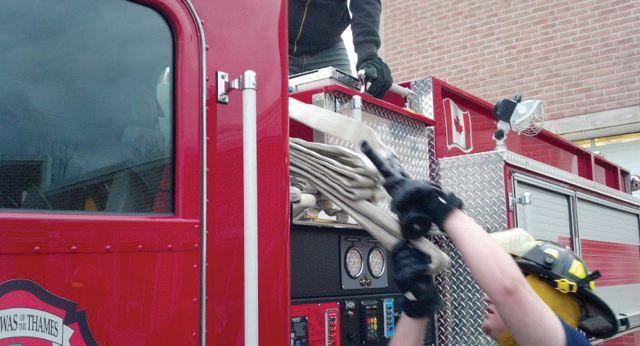
A common feature of the flat load is the folds in the hose. You can see in photos 2 and 3 how the folds produce small loops for a firefighter to use to pull the line off of the truck; a firefighter can grab three to four loops in one hand and pull a long stretch of hose off. Using both hands, a firefighter is able to pull off about eight folds of the hoseline at once, or 15 to 30 metres (50 to 100 feet). That bundle of hose can be dropped on the ground next to the firefighter so that they can go back to the hose load and grab the remaining loops to empty the hose off the truck (see photo 4). With two distinct piles of hose on the ground, the firefighter can grab the nozzle and the middle coupling, and walk toward the entrance of the structure. The middle coupling should be marked to make it easily identifiable. You can see in photo 5 that the middle coupling has been painted orange.
By grabbing the nozzle and the middle coupling, the firefighter is advancing about 30 metres of hose to the front door at one time, which gives the advancing team about 30 metres of hose to bring into the structure.

Another variation of the flat load builds in some handles by identifying two distinct loops with which to pull the load off the truck. As shown in photo 6, the two loops are created at the halfway point in the load. When the load is pulled off, the advancing firefighter carries about 30 metres of hose in his arms, while the remaining 30 metres of hose is flaked off from the hose bed as the firefighter walks away (see photo 7). Once the last 30 metres of the hoseline is completely off the bed, it will become taut because it is attached to the apparatus, forcing the firefighter to let go of the loops and keep advancing the remaining 30 metres of hose.
Once the hose load has been deployed and flaked out, it is important to remove any kinks that may have developed when the line was charged; this needs to be done prior to making entry so that there is no chance of losing water pressure and flow. One hose kink will reduce the water pressure and flow by about 50 per cent; this loss of pressure and flow is detrimental to the life of firefighters. It is critical to maintain constant pressure and flow at all times.
The best way to ensure efficient and effective hose advancement is to practise it. This can be done at any call at which a hoseline is required, during training in any type of weather, or when it’s time to pull the hose off for cleaning or maintenance.

Mark van der Feyst is a 14-year veteran of the fire service. He works for the City of Woodstock Fire Department in Ontario. Mark instructs in Canada, the United States and India and is a local-level suppression instructor for the Pennsylvania State Fire Academy and an instructor for the Justice Institute of B.C. E-mail Mark at Mark@FireStarTraining.com



BY IAN BOLTON
The Nobel Prize committees and the North American fire service have something in common: both often take a decade or more to recognize vitally important scientific research that has the potential to bring about great change and progress in society.
For the fire service, this lack of recognition pertains to the incredibly valuable fire research that has been done over the past two decades by the National Research Council, the National Institute of Standards and Technology and Underwriters Laboratory (UL). Today, this disconnection between the fire research and fire departments is persistent and problematic. Though organizations such as UL often release easily accessible and interactive eLearning modules, alongside their fire research reports, these great learning opportunities are rarely seized by fire departments. In fact, the fire research community has been doing everything it can to share its research and help the fire service perform its duties more safely and effectively. But how many of us have used this information to improve our fire-training programs and our fireground operations? The answer, unfortunately, is very few.
Historically, the fire service has been tremendously task-oriented, focusing on the completion of tasks as a measure of success. While completion of tasks is imperative, focusing only on how to perform those tasks, tactics and strategies, rather than why we perform them, is a very dangerous preoccupation.
Understanding the why helps firefighters become critical thinkers and fire-dynamic thinkers. It is through theory and quantitative fire research that firefighters can develop this understanding of why: Why does the fire develop in this way? Why does the fire react differently if we ventilate here versus there? Why do our tactics influence fire development?
Although many of today’s firefighters struggle with this concept, some of the earliest pioneers of the metropolitan fire service did not.
the fire service and the research is being done in ways the fire service can see and understand. As they see this, they begin to trust the research and open their minds when the results aren’t what they may have expected.”
Trusting the research and opening firefighters’ minds is exactly what the FDNY has been doing over the past year, and now the department leads North America in using fire research to its advantage. Following recent studies that took place on Governors Island in July 2012 in New York, the FDNY was inspired to re-evaluate some of its traditional tactics concerning fire attack and ventilation. Changing an organization as large as the FDNY will not be easy, but with solid research in place to support the efforts, the FDNY leaders are determined to improve firefighter training, safety and efficiency.
“There is always room for improvement, and change is not a four-letter word. We have to be willing to accept change and embrace change,” FDNY Battalion Chief George Healy said, while presenting the results of the study at FDIC in April.
The time for progress and change in the Canadian fire service is now. Over the past decade fire departments across the country have made tremendous progress with many safety-driven initiatives.
The need to continue fire research . . . and apply it to fire training and operations is stronger than ever. ‘‘ ’’
“In order to carry on your business properly, it is necessary for those who practice it to understand not only what they have to do, but why they have to do it,” wrote London Fire Chief Eyre Massey Shaw in 1876. “No fireman can ever be considered to have attained a real proficiency in his business until he has thoroughly mastered this combination of theory and practice.”
Stever Kerber, a fire engineer and director of the Firefighter Safety Research Institute at UL, explains: “Fire research is being done with
Ian Bolton has been active in the fire service for 10 years. While working in Australia he achieved instructor level certification in Compartment Fire Behaviour Training (CFBT) and has received advanced training in fire behaviour and ventilation from the Swedish Civil Contingencies Agency in Revinge, Sweden. Ian works as a firefighter and lead fire behaviour instructor for the District of North Vancouver Fire and Rescue Service. Contact Ian at ian.bolton@firedynamics.ca
However, many of these initiatives have been focused primarily on reactionary measures rather than preventive ones. RIT programs, although critical, are reactionary, and training firefighters to stay out of trouble in the first place should be a primary focus. To achieve this, considerable effort should be directed toward developing comprehensive fire-dynamics and fire-behaviour training programs founded on the practical application of fire research.
Improving fire literacy is critical to improving public safety, reducing economic and social loss due to fire, and reducing the dangers of modern fires to firefighters. As the fire environment has drastically changed due to new fuel load characteristics, ventilation profiles and construction methods, the need to continue fire research into the future and apply it to fire training and operations is stronger than ever. If we fail to pursue fire research and apply it to modernize our fire service, it is highly likely that sooner or later we will fail when it counts.
Certificate in Fire Service Leadership
Name Position Department
Bobby Chandler Firefighter
Christopher Cooper Firefighter

Charlottetown Fire Department
St. John’s Regional Fire Department
Bradley Roy Davidson Plant Protection Supervisor Hudbay Minerals Inc.
Shawn C. Farr Firefighter
Joseph Randy Flanagan Firefighter
Alexander Freeman Fire Prevention Officer
Richmond Hill Fire and Rescue Service
Charlottetown Fire Department
Markham Fire and Emergency Services
Russell Friesen Captain Foothills Fire Department
Gary Gettman Deputy Fire Chief
Mark Goodwin Firefighter/Fire Inspector
Bradley Emerson Gurmin Deputy Fire Chief
John F. Houlihan Firefighter/Paramedic
Chad LeBlanc Firefighter
Coaldale and District Emergency Services
Amherst Fire Department
Leduc County Fire Services
Brandon Fire Department
Middleton Fire Department
John Lowe Deputy Fire Chief, Stat. 29 Mosher River Halifax Fire and Emergency Services
John Oliver Newbery Fire Chief Cremona and District Emergency Services
Brad Perrie Assistant Fire Chief Pitt Meadows Fire Rescue Service
John J. Pollard Deputy Chief Ripley Huron Fire Department
Jeffrey Donald Pyke Firefighter
Tristan Redden Firefighter
Brant R. N. Stephenson Firefighter
Allan J. Tilley Firefighter II
Dieppe Fire Department
New Minas Volunteer Fire Department
Richmond Hill Fire and Emergency Services
Charlottetown Fire Department
Certificate in Fire Service Administration
Certificate in Fire Service Administration, General
Michael Boyle Senior Firefighter
Kennebecasis Valley Fire Department
Darcy W. Knott Captain Kingston Fire and Rescue
Certificate in Fire Service Administration, Human Resource Management
Kerry C. Zado Deputy Fire Chief Langford Fire Rescue
Certificate in Fire Service Administration, Operational Planning
Rocco Volpe Deputy Fire Chief
Certificate in Fire Service Administration, Advanced
Charles B. Wigger Deputy Platoon Chief
Whitchurch-Stouffville Fire and Emergency Services
Canadian Forces Fire Marshal (CFFM) P.J. Mahoney, Fire Chief/Manager of
BY TOM BREMNER Fire Chief, Salt Spring Island, B.C.
ver the last decade the fire service has addressed the same issues over and over. Many of these issues have been around for years – health and wellness, budgeting, safety, inter-agency communication, recruiting, a creative yet realistic future vision.
It is interesting to note how the fire-service issues that have been resolved, such as the volunteer tax credit, have evolved – through government buy-in, personal gain, well-structured processes, luck, or because the fire service dug in its heels.
Still, you would think after all the years that we have been battling these familiar topics, we would have achieved more positive outcomes.
So, where do we begin to examine the reasons for the delays, non-responses, and unacceptable excuses from governments and other agencies, for the lack of action on these issues? How about looking at ourselves, and how we have done things up to this point, and what has worked and what has failed?
Look at how unions gain success: firefighter associations are experts at getting things done. Have we, as managers and fireservice leaders, tried this structured approach? We often talk about this type of organization but have we done anything to move forward? Look at the Canadian Association of Fire Chiefs, which lobbied for the volunteer firefighter tax credit; it took a long time to achieve the tax credit but a structured approach and a long-term plan worked in the end.
Look at the way governments work and operate their internal structures: we need to take a page out of their books. Why do we always think we have to recreate the wheel? We have been respectfully nice far too long in many cases. We keep buying the excuses and public thank-yous – praise with very little challenge. It is overwhelming how many duplicated committees exist within the Canadian fire service, all working for their own needs. Should we not be united in these appeals on a larger scale, in order to gain outcomes that work for the majority?
need to learn and understand that we need help from experts – people and groups that have been successful, understand process and ways to gain success, and can educate us in many different ways. There is no doubt that we have improved over the last few decades; however, on the timing of keeping on top of current service items, we have been in the stall far too long and the rest of the world has got far ahead of us.
So what can we do? Some suggest more regional, provincial and national collective approaches: bringing in more experienced negotiators, learning from the past and looking at how we can better communicate with everyday partners, politicians and communities. We are under the microscope in our communities while trying to figure out how we internally enhance and address our futures. This challenge alone is huge. We have the ability and the opportunity to make revisions and get things right; it will not be easy. Trying to catch up and gain the trust and respect of our own service members is a must. The days of dealing with the challenges alone are mostly gone and we need to collectively communicate, support and advance while fully recognizing the individual differences and challenges we have. We need to understand the various levels within our service and
Look at how unions gain success: firefighter associations are experts at getting things done.
Being the nice guy goes only so far. We need a united effort from coast to coast to coast. No longer is it acceptable to just sit in a room discussing the same stuff over and over to achieve a few, if any, positive outcomes. When will we finally learn to battle using the proper arguments: respect for values, costs and our own safety? Are we afraid to be the tough guys in discussions where we might tick someone off? Well, ticking someone off might be the solution. Let’s stand up for our rights. Let’s hit the meetings with proof and statistics. The biggest downfall for us is ourselves – we lack teamwork and business-like presentations, and we need a well-known advocate for the fire service.
The fire service has long felt it can handle most things alone. We
Tom Bremner is the fire chief for Salt Spring Island, B.C. Contact him at tbremner@saltspringfire.com
how each has different concerns and operational needs. We need to think about what can be enhanced in the common-to-all issues. Once we trust and reduce the infighting, we can improve. We have failed to understand the importance of being united in the areas that can make a huge difference for the majority. The truth is not always easy to accept or understand, but it does make us think and, in many cases, re-evaluate our values.
Change can be perceived strangely. We need it, we fight it and we complain about it, but what do we really do to enhance or manage it?
The wars of this world were not won by individuals; they were won by united, well-structured teams. I think we have to challenge ourselves concerning how we can make a difference; and work toward the common good. Let’s not leave the same challenges and problems for the next generation: let’s deal with them – together – and bring positive outcomes.
By DEBBIE HIGGINS
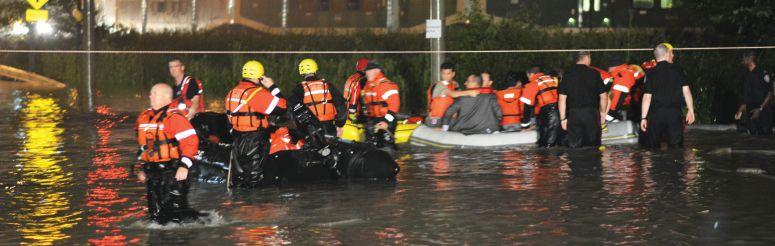
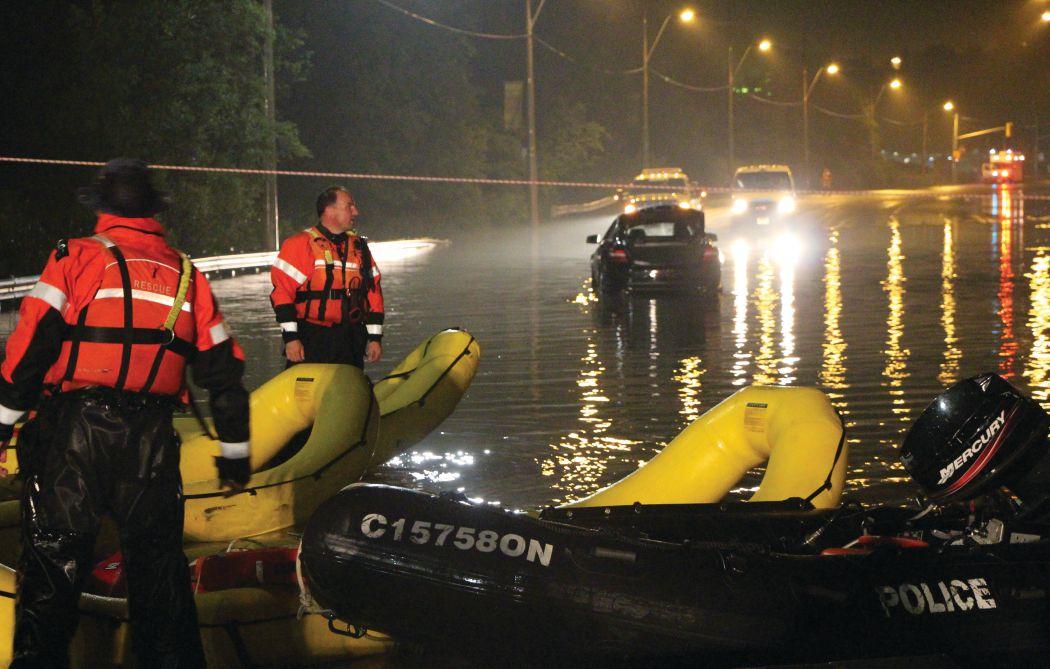
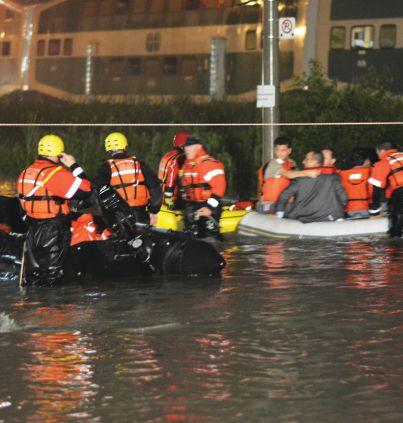
TOP: Rising waters nearly paralyzed the unsuspecting city around rush hour. The result was 1,185 calls requiring 2,386 vehicle responses, the majority of which occurred in a 10-hour period.
RIGHT: Severe flooding caused a rush-hour commuter train to be stranded. Firefighters and other first responders used marine equipment to rescue some 1,400 passengers – 12 at a time.
As I started to write this story, I went back to review a very long email stream with another Toronto Fire Services (TFS) deputy chief from the evening of July 8. A significant rainstorm had hit the City of Toronto; he was at the city’s Emergency Operations Centre (EOC) and I was at our Communications Centre, trying to get a handle on the calls for service. My review of that email string reminded me how fast events occurred that night, and how quickly they changed from moment to moment. Let’s go back to the beginning.
It was late on Monday afternoon and I was completing my day with an off-site meeting close to TFS headquarters in the south end of the city. As the meeting pro-
gressed, I watched the sky get dark and the rain begin to fall in quantities larger than I could ever recall seeing. Within minutes, cars driving by the window were struggling through deep puddles of water that were on the verge of becoming ponds. Shortly thereafter, the power went out. Knowing that our Communications Centre was likely affected (due to proximity), after an outage of more than half an hour, I decided it was time to check in.
The on-call deputy had been trying to reach communications, and when he was unable to, he contacted me and asked me to return as he headed back toward the city. I arrived back at headquarters shortly after 1900 hours to find our telephone lines completely overwhelmed (resulting in the inability to contact the Communications
Centre), calls being received over radio channels from Toronto Police, and more than 350 stacked calls waiting for a vehicle to be available to respond. We soon became aware of neighbouring fire departments receiving our 911 calls; those departments were also having trouble reaching our Communications Centre through the dedicated Ontario Office of the Fire Marshal radio channel – which is assigned to all fire departments in the province – as no personnel had yet been assigned to monitor those transmissions. The Communications Centre was operating on back-up generators, meaning that we did not have all of our resources available to us – we lost our ability to connect with local news channels and traffic-management cameras. Staff truly were working in the dark. Because of the issues with the power, support staff from our CAD and radio sections were called back into service to resolve communications issues as they occurred. In addition, the amount of water on the streets caused many issues for responding vehicles, requiring mechanics to also be called back into service to keep our resources operational.
Staffing in our Communications Centre that night included three recruits who had just graduated the preceding Friday, and who were meant to still be working in tandem with veteran staff. That was quickly determined to no longer be feasible, as it was an all-hands-on-deck situation.
The merging of two storm cells over the greater Toronto area resulted in flash flooding of major arterial roads, water courses, buildings, and hydro vaults, with significant power outages. Communications staffing was at minimum levels and the operations division had six trucks out of service due to insufficient staffing.
The staff who worked the 24-hour shift during which the storm occurred responded to 1,185 calls requiring 2,386 vehicle responses, the majority of which occurred in a 10-hour period. During the course of the storm, TFS responded to and dealt with a structural collapse, one thirdalarm and two second-alarm fires, and 133 elevator rescues, in conjunction with a GO Transit incident requiring the safe evacuation of more than 1,400 passengers from a commuter train.
In the Communications Centre, in addition to the regular call taker/dispatcher staffing (including two captains and a district chief), we had a division chief (who happened to be at the meeting with me when the call came). The on-call deputy returned to the Communications Centre but was
immediately dispatched to the EOC, taking with him the on-call division commander. I remained at the Communications Centre for the duration, calling in an on-duty platoon chief to help deal with specific largescale incidents – such as the technical water rescue of passengers on the GO train – and recommendations for coverage across the city with so many units out of their stations at the same time.
There were no weather watches or warnings in place prior to the start of the storm. A flood watch was issued by the Toronto Region Conservation Authority at 1721, which was upgraded to a flood warning at 1928. By the time the flood warning was issued, the city’s EOC had already been activated, along with the Toronto Police Major Incident Command Centre (MICC). Both of these centres activate when situations call for an emergency management response structure beyond normal daily operations.
Staffing in the EOC consisted of the following departments/divisions, which worked throughout the night to monitor the situation, respond to and reduce the impact of the emergency, and restore the municipality to a normal state as soon as possible:
• Office of Emergency Management (including Emergency Human Services)
• Toronto Fire Services
• Strategic Communications
• Toronto Police Service
• Toronto Transit Commission
• Transportation Services
• Emergency Medical Services
• Toronto Water and Geographical Information Systems (GIS).
In the eight hours between 1600 and midnight, TFS responded to 902 incidents (compared to 127 incidents during the same time period in 2012). As would be expected, a large number of the calls were fire alarm checks (352 incidents) and water problems (139 incidents). Crews were busy responding to address after address, checking on residents and ensuring their safety as the excessive rain flooded basements and other areas. We had 18 calls for wires down, and responded to 100 medical incidents, 25 vehicle accidents (including one with a fire), and 156 rescue calls. The most significant of the rescue calls involved five people trapped in a tree who had been trying to escape the fast-moving water beneath them, and the flooded GO train. In addition, we responded to 54 fire calls, including one that escalated to a third alarm, and two that
became second-alarm fires. The number of stacked calls continued to climb as several incidents tied up a significant number of resources, resulting in fewer trucks being available for single-truck responses. When significant emergencies like this happen in Toronto, our response protocols change to reflect single-truck responses wherever possible, and include a triage system that ensures responses are sent first to fire and medical emergencies, while calls deemed less emergent are stacked while waiting for resources to become available. This, unfortunately, results in a much higher call volume, as residents who have been waiting for a response call in several times, resulting in a significant number of duplicate and triplicate calls that must be reconciled.
The first of the many significant incidents that occurred in the midst of hundreds of other emergency calls came in at 1817. This was a call for a building collapse. The property was a warehouse facility, and a portion of the roof approximately 30 metres (100 feet) by 15 metres (50 feet) had collapsed under the weight of the water. All staff evacuated safely from the building, but the collapse affected the fire detection and suppression systems in the building as the main sprinkler line was ruptured. Gas was shut off to the building, although Enbridge Gas was required to fix a leak in the shut-off valve. Hydro was shut off to the entire building to ensure there were no incidents when power was restored to the area. Our crews secured the building and the property manager arranged for security to guard the site.
The initial call for the GO train incident came in at 1931 and indicated that the train was stranded due to flooding, with between 200 and 300 people on board. Rescue 321 was dispatched, arrived on scene and assumed command within 10 minutes. Police were already on scene, and shortly thereafter their marine unit arrived and began to evacuate passengers using inflatable boats, while TFS set up for technical water rescue. There was concern expressed around this time that the train might tip over as it appeared to be leaning; it was feared that the current from the rising water might be disturbing the track bed. Information from GO later revealed that that the train listed because there is a bank built into the tracks on most curves, and this train happened to be stranded on a curve. EMS crews were taken to the train by boat, and remained on the train to deal
Continued on page 44
CROSSTECH®
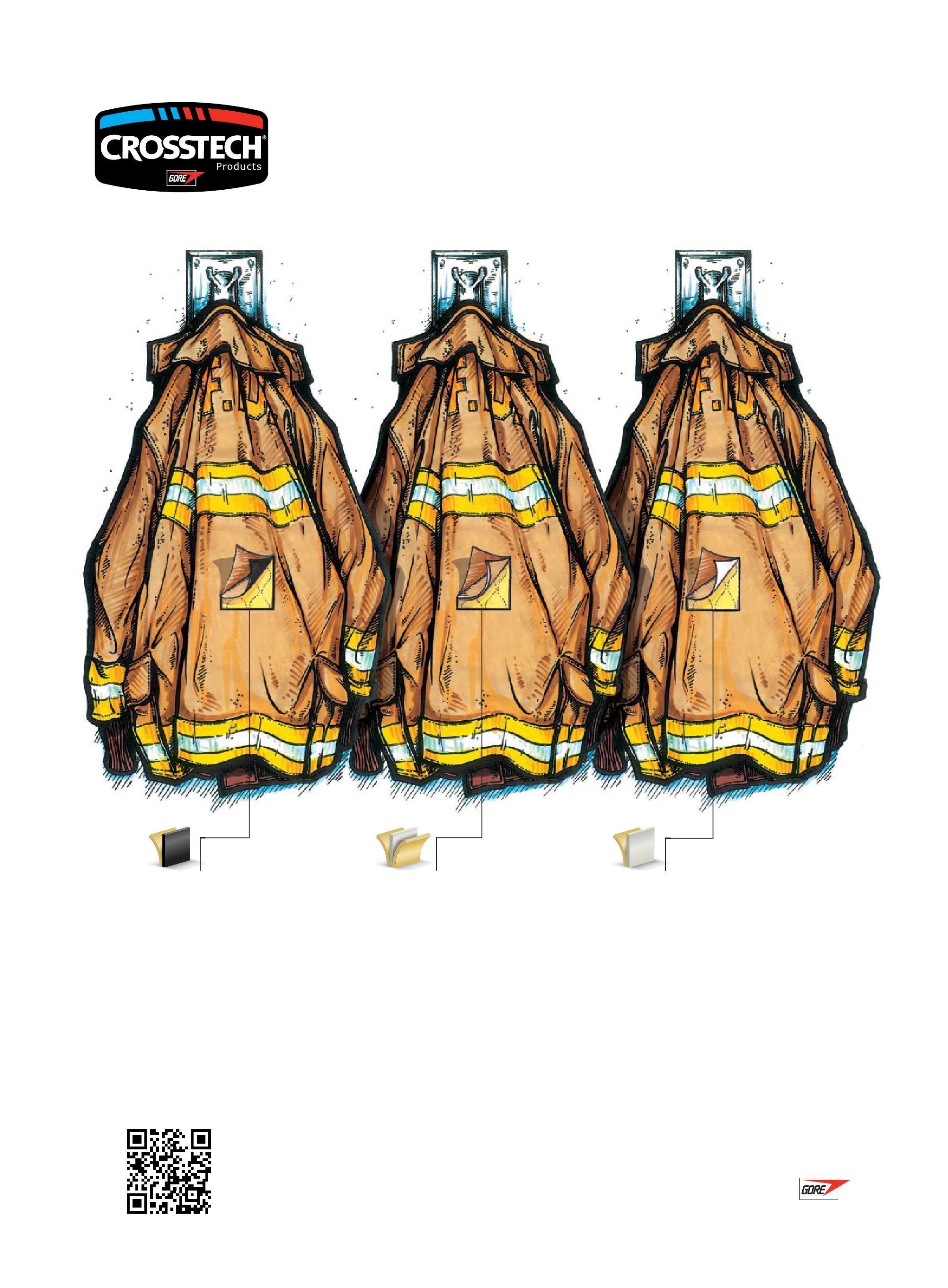
Black Moisture Barrier
• The new industry leader among moisture barriers
• Enhanced durability – proven in the laboratory and in the field
• 3.5-year limited warranty for easy NFPA 1851 compliance
CROSSTECH® 3-Layer Moisture Barrier
• The most rugged durability
• Exceptional resistance to flex and abrasion damage
• Backed by a 5-year limited warranty
GORE® RT7100 Moisture Barrier
• Exceptional combination of performance and value
• Excellent choice for budgetary challenges
• Backed by a 3-year product support program

BY KEVIN FOSTER Fire Chief, Midland, Ont
any of us in the emergency-services field are quite well versed in assessments by experts that indicate significant weather events and natural disasters are becoming more frequent, with minimal warning and harsher consequences than we have seen historically.
We need not look any further than this year’s flooding in Western Canada, particularly in Alberta, followed weeks later by a heavy rainstorm in Toronto that caused major flooding and even required the use of boats to evacuate riders from a GO Transit passenger train, to recognize this to be an accurate assessment.
Large-scale events due to human error, mechanical failure or sabotage such as the Sunrise Propane explosion in Toronto, the Via Rail derailment in Burlington, Ont., forest fires in Western Canada, and the more recent train derailment and subsequent explosion in LacMegantic, Que., are also becoming all too frequent.
As crisis managers, we find ourselves thrust into the fray when these events occur and are entrusted with public confidence to ensure an effective, efficient response to protect residents and their properties, but unfortunately, we often find that there are competing interests that can cause distractions to the task at hand.
When these significant events occur, it seems that some elected officials feel a need to show up and be seen. Occasionally, their presence is to deliver some announcement of financial support to assist in the recovery process for the community affected, but sometimes it is just for a photo op. This was precisely the situation in High River, Alta., where Lethbridge Fire Chief Brian Cornforth found himself during the June flooding, and he publically pronounced his frustrations with such actions. Cornforth has a very valid concern. Unfortunately, Cornforth’s experience with former Public Safety Minister Vic Toews’ visit was not unique; it has happened in many other communities across this country. I had a similar experience after a tornado in Midland, Ont., in the summer of 2010.
to be in their constituencies when disasters happen, and this requires considerable accommodation by emergency services – and prepare to manage within that structure. Change takes time, so to expect others to have an epiphany and alter their behaviour is unrealistic.
In my experience after the tornado, we were advised that provincial representatives were going to visit and we quickly realized that a significant influx of media was sure to follow. Like it or not, this visit became a priority to prepare for and there was not much time in which to do so. We quickly assessed the interests of each sector attending, and struck out to serve those interests. We gathered community information to distribute to the media, established a location for the media event away from the Emergency Operations Centre and the impacted site, planned a tour for the political officials and their staff and, upon request, allowed access to the main impacted area for reporters, I wouldn’t call it the ultimate plan but the disruption was managed.
Secondly, opportunities to communicate and educate politicians or dignitaries about the challenges that these situations cause must be sought out. It is unreasonable to expect others to understand the impact of their actions and behaviours on the management of an event if those people are never advised of such. The most effective way to
When these significant events occur, it seems that some elected officials feel a need to show up and be seen. ‘‘ ’’
In these situations, the emergency-management industry works diligently to protect people and their property and bring some sense of normalcy to the residents impacted by the event, yet others – and not exclusively politicians – wish to capitalize on the moment for political capital, professional accomplishment or personal interest.
The challenge we face is how to address the problem. There is no single, simple answer, but there are several opportunities to explore.
First, recognize the current state – which is that politicians want
Kevin Foster is in his 25th year in the fire service, having begun as a volunteer firefighter in East Gwillimbury in 1987. He was appointed as the chief with the Midland Fire Department in November 2001. He is a past president of the Ontario Association of Fire Chiefs and a certified municipal manager. Contact him at kfoster@midland.ca and follow him on twitter at @midlanddfsem
do this is to share the objectives of the incident managers and explain how they hope to achieve them. Of course, those who don’t want to be educated on a subject can’t be educated until they decide they wish to listen and learn. Which leads to my third point: we need to influence others to want to seek information, listen and learn.
And on that note, we’ve completed the circle back to – the importance of building relationships and advocacy. Strong relationships built in advance of an event will ser ve most effectively during the event.
Large-scale and significant emergency incidents will continue to occur, and community officials will to continue to be burdened with accommodating the special interests of those who feel compelled to inject themselves into the middle of these situations. It is incumbent on us to prepare for that inevitability until the long-term, sustained change in attitude and respect toward the importance of emergency officials to remain focused on the situation is achieved.

By BRAD BIGRIGG
This spring of 2013 had been much cooler and damper than in recent years. Many fire departments in central Ontario had delayed some of their scheduled spring training, including water supply, tanker operations and wildland fire fighting, due to the weather. The number of fire calls over the spring had been considerably lower than usual, as were the number of mutual-aid activations. That changed in mid-May for Springwater Fire and Emergency Services, located north of Barrie, Ont., in Simcoe County.
On Thursday, May 13, at about 2147 hours, the Barrie Fire Communications Centre received a heat detector activation notification from the alarm company monitoring BFI Canada on the Bertram Industrial Parkway in Springwater Township. The facility is a large waste-transfer site known to the fire service from a fire a number of years ago. A full first alarm consisting of the two closest fire stations was transmitted.
Within five minutes, the first-arriving officer was on the scene and assumed command. The initial report included heavy smoke showing, an explosion at the rear of the building and fire through the roof.
The alarm was upgraded and required a response from the majority of apparatuses and firefighters from Springwater Township.
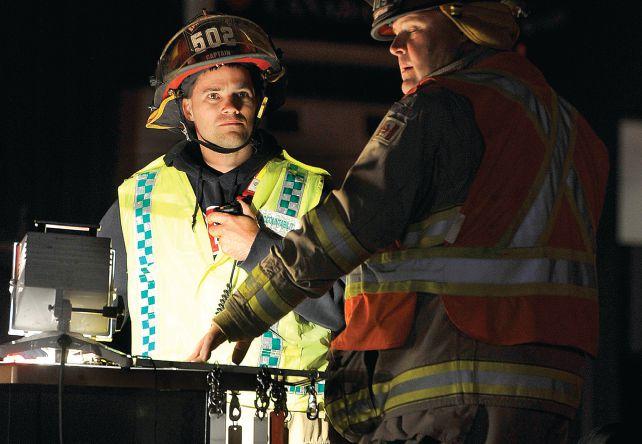
Command was transferred early in the incident to Deputy Fire Chief Craig Williams. Fire Chief Tony VanDam assumed the operations sector, while other senior officers set up safety, accountability, entry control, staging, rehab and water.
Firefighters had immediate access to a 30,000-imperial gallon water storage tank located on site. A defensive attack was implemented from the outset. Relay pumping was used on site due to the size of the facility. The supply pumper operated from the storage tank and four large porta-tanks. The supply pumper fed the building sprinkler system and an attack pumper located at the A/B corner of the building. The attack pumper initially fed lines to the rear of the building until they were relocated. Fire-ground operations were hampered by the amount of equipment in the yard until it could be moved away from the building.
When firefighters made access to the building they found a large volume of fire with flames travelling up interior walls, across the roof lines and out bay doors. There were a number of fire walls and
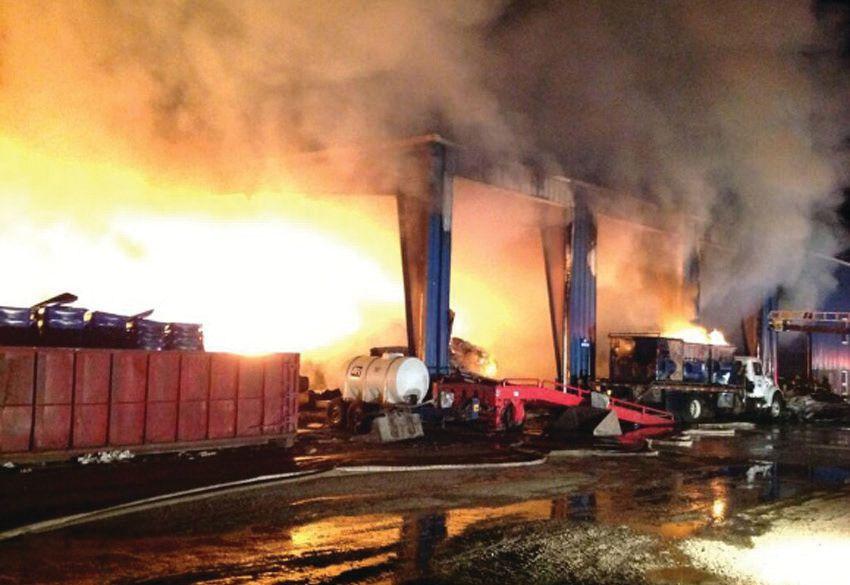
A fire was believed to have started in the refuse storage area at BFI Canada in Springwater Township, Ont., in May. Lessons learned include the need for a sound knowledge of IMS and the ability to rapidly expand the system in a growing emergency; the willingness to activate mutual aid quickly and build the capacity of the tanker shuttle; and the need to know high-risk properties before an emergency occurs.

fire separations within the building that held through the fire.
Springwater firefighters extended hand lines to ensure that the fire was not able to extend to uninvolved areas of the building, including offices and a large maintenance garage. Heavy equipment was called in to move waste and debris to allow for extinguishment, and to control the water runoff from the site.
A tanker shuttle was activated quickly due to the size of the building, the volume of fire and the amount of fuel (waste) located in the building. The tanker shuttle grew quickly from a fivetanker operation using Springwater’s tankers, to a nine-tanker operation through the activation of the Simcoe County mutualaid system. Additional tankers were deployed from the City of Barrie and the townships of Clearview, Oro-Medonte, Essa and Tiny. An aerial truck from Essa Township was also requested to support the defensive fire attack. Balanced emergency coverage for Springwater Township was ensured through the county fire coordinator, using resources from Clearview and Tiny townships.
More than 150,000 gallons of water were required to suppress the fire. Tanker fill sites were co-ordinated and assigned in three settlement areas in order to ensure that domestic water requirements could still be met.
The fire was benchmarked as under control at 0019 hours with full extinguishment occurring at 1300 hours the following afternoon.
At the height of this fire, 19 apparatuses were assigned along with 75 firefighters.
The fire is believed to have started in the refuse storage
Springwater Township Fire Department
• Four stations
• 90 volunteers
• Full-time chief, deputy, FPO and part-time training officer
• 536 square kilometres, population of 18,500
• 17 apparatuses
• Approximately 500 calls per year
area. Damage is estimated at $1.2 million for the property and $350,000 for the contents. The Office of the Ontario Fire Marshal was notified and determined that its involvement in the investigation was not required. The Ministry of the Environment was also notified and attended the scene to ensure that runoff was controlled and collected.
There were no firefighter or civilian injuries. The County of Simcoe Paramedic Services provided a paramedic crew and supervisor throughout the incident. Using a mobile command unit, the paramedic crews set up medical monitoring of each firefighter and regularly liaised with the incident commander. The Ontario Provincial Police provided traffic control on Bertram Industrial Parkway, as well as the surrounding county roads.
Lessons learned from this incident include the need for a sound knowledge of IMS and the ability to rapidly expand the system in a growing emergency, the willingness to activate mutual aid quickly and build the capacity of the tanker shuttle, and the need to know high-risk properties before an emergency occurs. There had been a previous fire at this site (under a different owner). Firefighters knew the facility and there was a working preplan for the site.
Brad Bigrigg has served in public safety throughout Ontario for almost 35 years, as a police officer, volunteer chief fire officer, assistant fire chief responsible for fire and EMS operations, and emergency manager for the Ontario Office of the Fire Marshal. He is currently the assistant fire chief in Orillia, Ont., and an associate instructor for the Ontario Fire College and Emergency Management Ontario. E-mail him at b.bigrigg@sympatico.ca
Dräger equipment isn’t for everyone. It’s for people who have expected nothing but the best of themselves from the very beginning. hen expectations are this high only optimum re equipment can rise to the occasion. Dräger ma es equipment bold achievers can have con dence in. ur integrated portfolio revolutioni es re ghting technology with streamlined components that wor together as one. The result: power to perform at your personal best.



BY LES KARPLUK AND LYLE QUAN
ur intention has always been to bring forward ideas that stimulate readers to think about leadership from a new perspective. This month, we want to focus on the importance of understanding the concepts of self-awareness, recharging your batteries and helping others to grow.
Successful fire departments need leaders who know themselves and have an inner compass that points them in the right direction ethically, morally, emotionally and spiritually. Self-awareness is having a keen understanding of one’s personality or individuality. Successful leaders regularly examine who they are, what they are and what they stand for. Whether speaking to leaders or researching leadership traits, it quickly becomes evident that successful leaders reflect on what they want to accomplish in their lives, why they want to do it and how they will lay out the steps to achieve those goals.
Leaders who understand their strengths and weaknesses are able to lead with passion and courage, and clearly demonstrate through their actions that they have that inner compass that guides them during the trials and tribulations that test us all. These are the leaders who also understand their unique talents and how best to use them in their departments. Without understanding your core values and what you believe in, you will not be able to withstand the storms that are sure to come your way and could damage your attitude. All leaders and teams will face adversity; how you handle this adversity will demonstrate (to you and others) what you stand for and what you are truly made of.
True self-awareness is understanding that you will never be perfect and, in fact, that failure will be a part of the leadership journey. Gen. George Patton said, “I don’t measure a man’s success by how high he climbs, but how high he bounces when he hits bottom.” The leaders who understand the importance of self-awareness will be able to bounce back from failures and grow from the experiences. We believe this is where true leadership growth comes from – from learning about ourselves during those times when we are tested by the events that take us out of our comfort zones. Without knowing what you stand for or believe in, there is potential to succumb to the negative aspects of a situation and become bitter. When this happens, you plant seeds of anger and resentment, which will only make matters worse.
When you, as a fire service leader, experience a potentially lifechanging challenge, it’s that strong sense of self-awareness and your moral compass that will help you to navigate the situation. As such, you may also find this experience to be a real opportunity for personal and professional growth.
Today, leaders in the fire service are experiencing more demands on their time along with greater expectations from municipal governments and their communities. Often, it seems as if we are being pulled in 10 different directions and it doesn’t take long for the energy to be drained from our mental, emotional and spiritual batteries.
We cannot stress enough that it is critical to take the time to recharge. You cannot lead others if you are sapped of your energy. Do not lose sight of what is important to you and your family. We all need to get away from the office and have some “me” time. This will not only help you to refocus but will also help you to maintain a healthy state of mind.
One of the positive benefits to this me time is that it gives you the opportunity to delegate projects to others, which gives them a chance to prove to you that they can get things done. The more you let go of the reins and demonstrate faith in the abilities of your team members,
...didn’t you want the chance to take the reins, to share the responsibility and workload with your chief? ‘‘ ’’
Les Karpluk is the fire chief of the Prince Albert Fire Department in Saskatchewan. Lyle Quan is the fire chief of Waterloo Fire Rescue in Ontario. Both are graduates of the Lakeland College Bachelor of Business in Emergency Services program and Dalhousie University’s Fire Service Leadership and Administration program. Contact Les at l.karpluk@sasktel.net and Lyle at lyle.quan@waterloo.ca. Follow Les on twitter at @GenesisLes and Lyle at @LyleQuan
the more you increase your leadership strength by becoming that supportive leader.
Think back to when you were climbing the leadership ladder; didn’t you want the chance to take the reins, to share the responsibility and workload with your chief? Take the time now to loosen up on those reins and allow your people to grow.
Self-awareness and recharging your batteries are not always about how much you can take on yourself; they are also about identifying your strengths and determining how you can share the workload with your team. Trust in your members; support them; allow them to grow. You will feel a great level of satisfaction knowing that the work is getting done, and that at the same time you are doing some succession planning, with the bonus being that you are giving yourself more of that me time to take care of your other priorities – family and yourself.
By CHRIS DENNIS
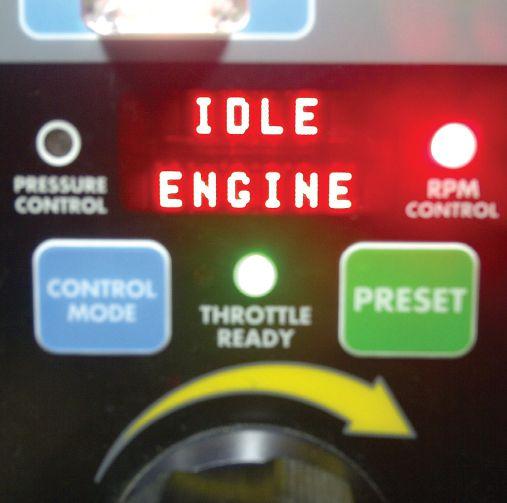
My May column was about internal failures of fire pumps due to overheating, and how to prevent that from happening. I hope you have had a chance to try a couple of things and prove that the movement of water through a pump will help to dissipate heat. I thought since I was focused on fire pumps, I would move into the millennium and talk about electronic pressure governors (EPGs) and how much of a relief – or not – they have been. Essentially, I’m going to explain what an EPG does and why it is not a relief valve.
The NFPA 1901 Standards for Automotive Fire Apparatus 2009 Edition calls for a pressure-control system test that consists of specific pressures and conditions. Under all conditions specified, the pressure shall not rise more than 30 pounds per square inch (psi) or 200 to 215 kilopascals (kPa) from the established pressure. This standard is typically met by using a mechanical discharge relief valve or a pump pressure governor.
Firefighters require a stable water supply. Any unexpected change in pressure, flow or supply creates a serious and dangerous situation. I often say and hear that firefighters are there to make a bad situation good; we did not create the situation and we do not want to be a situation. Health and safety always come first. Generally, water pressure starts off too high and is controlled by limiting it, gating back the discharges in use, sending excess water back into the fire pump, controlling fire-pump speed by manually turning down engine speed with a hand-controlled device on the pump panel, and resetting the discharge relief valve and those discharges. All these methods work well, until the pressure drops below the desired rate and setting. Why does that happen? Because these techniques are just pressure-limiting actions
So how do we control pressure? With the electronic pressure governor, or EPG. The EPG never would have been developed had diesel engines not become fly-by-wire operated. The EPG speaks to the diesel engine though the engine control module, or ECM, via an analog system, or through controller area network (CAN) bus lines and/or a serial line, such as J1939. In turn, the diesel engine, via sensors in the pump, will decrease or increase engine speeds to control pressure, rather than to relieve it.
EPGs are electronic devices mounted on the pump panel that control engine speed. The word electronic is the key; the EPG is really a microprocessor. Some models not only monitor discharge, but also monitor intake to help prevent cavitation. When the fire apparatus industry moved away from mechanical relief valves to EPGs, some of us felt that EPGs were really electronic relief valves, so no more yellow light, green light, pilot valve, on/off switch, or wheels to turn – just buttons to push. Well, many pump operators, when asked what an EPG does, will tell you that it electronically monitors water pressure internally, and if you got water hammer (a pressure surge), the EPG would recognize that electronically and would relieve the pressure in
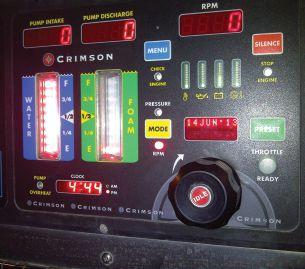
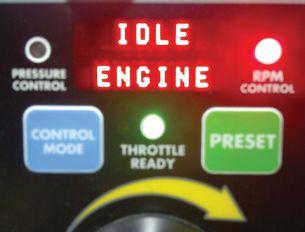
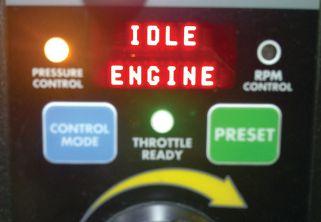
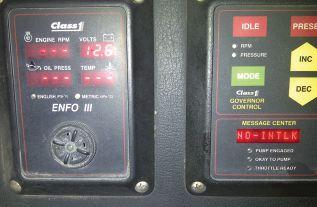
The electronic pressure governor controls engine speed, and raises or lowers it to control water pressure. Use the mode button to switch between contolling the engine’s r.p.m. and controlling its pressure.
An indicator light will illuminate when the EPG is in r.p.m. mode. When in r.p.m. mode, the operator can no longer control engine speed.
Similarly, a different indicator light will illuminate when the EPG is in pressure mode. In this instance, engine speed can increase or decrease depending on the flow of water.
Features on an EPG include a large control knob in addition to push-button controls and programmable pre-set settings, among others.
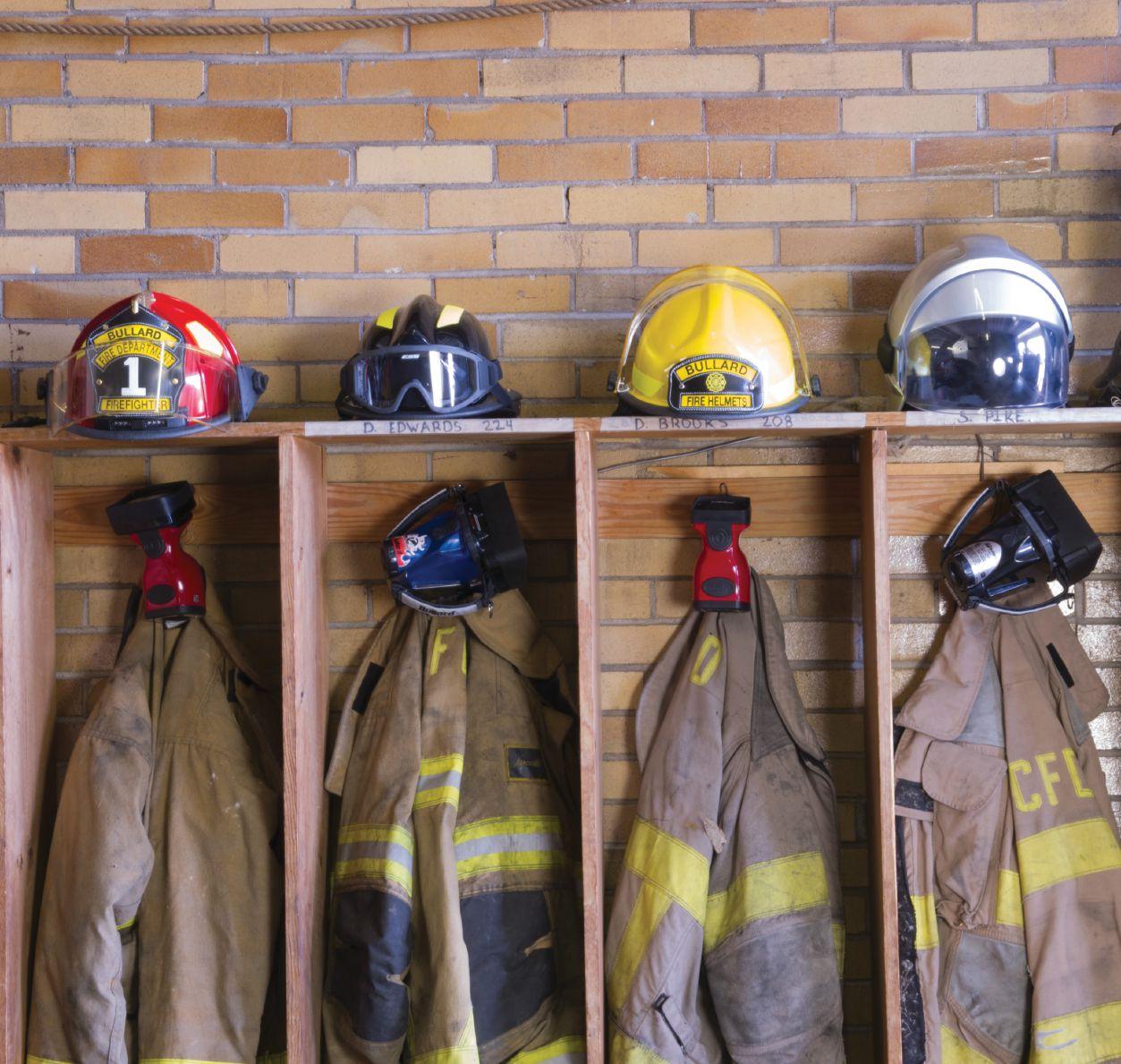

We designed our first fire helmet in 1930. We built our first thermal imager in 1998. Today, our thermal imagers and fire and rescue helmets are used by Emergency Responders worldwide.
Schedule a Bullard product demo with Manfred Kihn, your Bullard Regional Sales Manager:
the pump, so that neither the truck nor any firefighters were hurt, or equipment damaged. No! Well, yes, an EPG is electronic and it does monitor something, but it is not a relief valve.
How does this EPG works in conjunction with a diesel engine? Our department is not afraid of innovation, so when the EPG was introduced, we knew a clear understanding of the internal function of the fire pump and the EPG was critical to be able to deliver the message. Just as I discussed in the May column, sometimes, being able to see and touch a piece of equipment makes it easier to understand its function.
As with all technology, the diesel engine has become so far advanced that it can be precisely controlled using externally mounted devices. The EPG control acts as a throttle position sensor, or TPS, only it is not on the cab floor, but on the pump panel somewhere.
The pressure governor has changed from when it was built into the engine’s electronic control module (ECM). The EPG today is a remote-mounted unit and can talk to the engine ECM through the J1939 CAN bus line or controller network line. It monitors engine functions and sounds an alarm if engine trouble occurs. This means simply that there is no longer a long, vernier hand throttle control cable attached to a mechanical injection pump lever to crank the engine’s idle up and down. The engine’s r.p.m. function is now controlled with the EPG. The EPG gets its signal to increase or decrease r.p.m. through a device known as a pressure transducer, which is mounted in a discharge port in the fire pump and, in turn, regulates the engine speed to maintain a previously set pressure on the EPG at the pump panel. The EPG signal is transmitted by the transducer to the engine, regulating and managing engine speeds – much like cruise control on your car.
When you are traveling down the highway at 100 kilometres per hour (kph) in your personal vehicle, you set the cruise control with the push of a button; it can be cancelled at any time by turning it off at the switch, touching the brake pedal or even pushing in a clutch. The road changes, traffic goes slower or faster, and there are curves and bumps and hills to be climbed up and driven down. Once you set the cruise control and the speed is recognized, it locks in that speed and will maintain it until you decide it needs to be changed. Around tight curves, up hills, down hills, the cruise setting sensor built into the car or truck increases and decreases engine speed to stay at its pre-set point of 100 kph.
The pressure transducer does the exact same thing. The pump operator (driver) turns the EPG to pressure mode from r.p.m. mode with the push of a button. The pressure transducer is the engine cruise control sensor, except that it sees discharge pressure, not road speed. The pump operator can stop or adjust that pressure at any time, just as the vehicle driver can control the road speed. This equates to the pressure governor acting as a kind of cruise control for the pump; if the pressure governor is perceived as a cruise-control device, it will be easier to understand.
Say you have a long lay of 100-millimetre (four-inch) high-volume hose from a pressurized source to your pumper; it is stretched out across the road from one side to the other. The hydrant is open and you are pumping to multiple lines. Two of those lines have firefighters on the inside fighting a stubborn fire. The EPG is set in pressure mode. The discharge pressures are all set and the rig is working flawlessly. Then, all of a sudden, the engine r.p.m. increases by 500 r.p.m. to 600 r.p.m., then ramps right back down to the set pressures and stays there. The firefighters on the inside may have seen

a change in the streams they are managing and in nozzle reaction, due to the rise and fall of engine speed and pump pressure, while the pump operator has had to do nothing more than watch the gauges, listen to the engine, and be prepared to react if something should go wrong at the pump panel.
So what happened to cause the r.p.m. change? Well the street had not been closed down and a car drove over the 100-millimetre hose coming from the hydrant to the truck. Because the flow of water from the hydrant changed dramatically to the truck, the transducer detected an outgoing pressure change and increased the engine r.p.m. to compensate; then, just as quickly as the pressure was adjusted down, it had to go back up, until the transducer signal was at the original pump setting.
The EPG controls engine speed and raises or lowers it to control water pressure; it is not a pressure relief valve.
In photo 1, you can see several buttons. The mode button controls r.p.m. and pressure. Whether the EPG is made by Class 1 Fire Research or by another manufacturer, you must be able to switch from r.p.m. mode (see photo 2) to pressure mode (see photo 3). The mode will be illuminated as active. When in r.p.m. mode, the pressure transducer in the pump has been bypassed. This means there is no longer any engine speed control. The engine speed can rise and fall with the change of water coming in, or because of a lack of water being pumped out. Remember, the pressure transducer controls the engine speed, automatically controlling engine speed through the water being discharged. So, if not enough water, or too much water, is being discharged, the transducer will adjust the engine speed. In r.p.m. mode, this feature is not available, in which case there is a safety issue for all fire hoses flowing water, and for the fire pump itself.
Water hammer (a pressure surge) occurs when a water source has been cut off quickly. Slamming the bail of a nozzle closed causes the water that was speeding out of the nozzle to stop. However, all of that speed and inertia causes a reaction. The water bounces back, creating a hammer effect, which, in turn, harms the equipment. The old mechanical relief valve would have recognized that and redirected the water back into the fire pump on the intake side. The EPG pressure transducer, when in pressure mode, recognizes this action on the discharge side and instantly controls engine speed to soften the blow, not to redirect water or relieve the built-up pressure. Now do you get it?
The last thing I want to mention is doing
We are committed to the safety of those who endure smoke, flames, heat and falling debris to save others. Again and again and again.



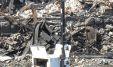


a pump test on the apparatus apron. Be sure all safety-related actions are in place with correct PPE. The EPG check is simple. Turn the knob or push the button to verify that the engine r.p.m. changes; if it increases and decreases, it is working. Switch it to pressure mode, observing gauges and increase and decrease the pump pressure. Verify this against the master gauge if equipped. With the tank-to-pump valve partially closed, it will simulate no water to the pump. If the pump-to-tank valve is open (a discharge), the engine speed will change via the transducer as if you had run out of water. Open the tank-to-pump valve back up, allow a full rush of water into the pump volute, and the engine speed will readjust again and keep the pressure that was set in check. The apparatus pump test is done.
The EPG has removed some of the pump-operator processes but has added another process. Understand your equipment. Keep training. And remember, rubber side down.
• Audible alarm output
• Easy setup and configuration
• Large, easy-to-read alphanumeric display
• 12-volt and 24-volt compatible
• Analog engine control of J1939 CAN control for improved resolution and response
• Improved ergonomic tactile feedback button
• Totally integrated instruments including battery voltage, temperature, oil pressure and r.p.m.
• Integrated engine information reduces required pump panel space
• Programmable presets
• Displays intake and discharge pressure
• Dedicated check engine light and stop engine light

Chris Dennis is the chief mechanical officer for Vaughan Fire & Rescue Services in Ontario. He can be reached at Chris.Dennis@vaughan.ca
• Large control knob – easy to operate with a gloved hand
• Push-button controls
• Automatic regulation of pump discharge pressure
• Single 300 psi discharge pressure sensor
• Programmable pre-set settings
• Always starts in pressure mode at idle r.p.m.
• Displays and LEDs automatically adjusted for day or night operation
• Limits increase of pressure when in r.p.m. mode
• Recognition of no water condition with automatic response
• No pressure or r.p.m. variation when changing modes
• Red idle button – brings the engine to idle r.p.m. quickly
• Manual control of pressure or engine r.p.m. settings
• Diagnostic capabilities
• Interlock signal recognition with throttle ready LED
• Retains warning alerts history
• J1939 CAN bus line for engine information and control
• High idle input for external switch
• Audible alarm buzzer (optional)
• KPa / bar (optional)
• Engine monitoring functions







with passenger concerns. Toronto Transit Commission buses were brought in to provide shelter to passengers once they were safely evacuated from the train. It quickly became apparent that there were more people on board than originally indicated; in the end, up to 1,400 passengers were evacuated. Passengers were removed from the train by boat at a very slow pace – eight to 12 at a time – until midnight when the water started to recede and passengers were able to self evacuate on foot along a parallel track.






At 2046, TFS received a fire call to 1901 Weston Rd., a highrise residential property. This call eventually escalated to a third-alarm fire. The fire was located on the 10th floor, and without power there were no alarms sounding in the building and no elevators operating. This was initially thought to be a hoarding situation as the unit in question had a significant fire load comprising clothing and other debris. The fire extended to the 11th floor apartment above before it was knocked down at 2110. Crews remained on scene for several hours, with the last truck clearing at 0035. Staff from Emergency Human Services were involved in relocating 10 people who were unable to return to their homes.
At 2219, a fire call came in for another high-rise apartment fire. Following our high-rise fire protocol, the call was escalated to a second-alarm response due to heavy smoke in hallway, with a confirmed fire. This fire appeared to be caused by the use of candles during the power outage, which ignited a fire in the bedroom of the unit. The fire was quickly knocked down and the smoke ventilated, with crews clearing within an hour to be available for other responses.
Another second-alarm call came in at 2246 at a detached dwelling – another fire that originated in a bedroom and quickly filled the bungalow with black smoke. This fire was also knocked down quickly, allowing the majority of the crews assigned to be back in service for other emergencies within an hour.
By the end of the night, four vehicles had been removed from service due to engine damage caused by ingesting water in the air intake. Additional damage to vehicles caused by water infiltration has been uncovered since the storm, including control boxes on aerial ladders, water in rear differentials, and damage to electrical components. It was expected that more damage would continue to be discovered in the weeks following the flooding.
When I left the Communications Centre just after 0100 hours on July 9, there were approximately 120 calls still in the queue, all check calls and water problems. The rain had largely stopped, and crews were busy catching up on calls after having resolved the most significant emergencies of the night. It should be noted that many fire halls remained without power for a significant period of time, three until late Wednesday afternoon.
This event caught the City of Toronto off guard, but the emergency protocols kicked into place relatively quickly and city staff and others did a tremendous job mitigating problems.

Debbie Higgins is a deputy chief with Toronto Fire Services, responsible for fire prevention and public education. Debbie previously held the portfolio of staff services and communications, following her promotion to deputy in 2010. Prior to this, Debbie spent 11 years as an executive officer for TFS, with responsibility forspecial projects. Debbie has a degree in applied geography from Ryerson University and a certificate in business from McMaster University. She is completing her diploma in public administration through the University of Western Ontario. Contact Debbie at dhiggin@toronto.ca and follow her on Twitter at @debbiejhiggins







By ED BROUWER
As I was doing the final preparations for my course at FDIC Atlantic in June, I realized there was some important information that I had not addressed in my column on liquefied petroleum gas (LPG) in February, in particular, the incident that occurred on Oct. 2, 1997, during which two Carthage, Ill., volunteer firefighters were killed by a boiling liquid expanding vapour explosion (BLEVE).
As you read this background information, ask yourself if you would have done anything differently. (For the full report on this incident, visit www.usfa.fema.gov/downloads/pdf/publications/tr-120.pdf.)
The fire: According to the report by the U.S. Fire Administration, the incident occurred on a large farm about 16 kilometres north of the City of Carthage. The farm had two water ponds available for drafting, but no public water system. The closest hydrant was located about 1.2 kilometres away in the town of Burnside and was supplied by a four-inch water main.
The initial fire involved the farm’s grain drying operation, which included two 3,785-litre LP gas fuel tanks. These tanks were located about 4.5 metres from the dryer and were less than 1.5 metres apart. The fire was observed to burn violently at times as the pressure relief valve began to operate intermittently, producing a loud noise and flames 12 to 15 metres high.
The call out: At about 4:39 p.m., 911 dispatch received a call for a dryer fire in the town of Burnside. The Carthage Fire Department was dispatched shortly after. The initial response was the department’s routine rural response assignment to what was thought to be a clothing dryer inside a house. (When will we learn that there are no routine fires?)
The response: At 4:48 p.m., Engine 11 and Rescue 10 arrived on the scene of the reported residential dryer fire, only to find it to be a grain dryer fire involving not one, but two large LP gas fuel tanks with nine- to 12-metre intermittent fire plumes coming from the safety relief valves – as well as a fully involved farm tractor.
During his walk-around, the fire chief learned that there were no life-safety issues and nothing of great value at risk; yet, he decided to set up a direct attack. Concerned that the west tank was angled towards their position, the fire chief decided to move the apparatus. Returning to the engine, he found firefighters had already pulled out a pre-connected hose line toward the fires. He ordered Engine 11 to relocate to the south side of the east grain silo. However, in the new position, the rear of the engine was not completely behind the silo and the tailboard was almost in line with the horizontal edge of the tank. It was
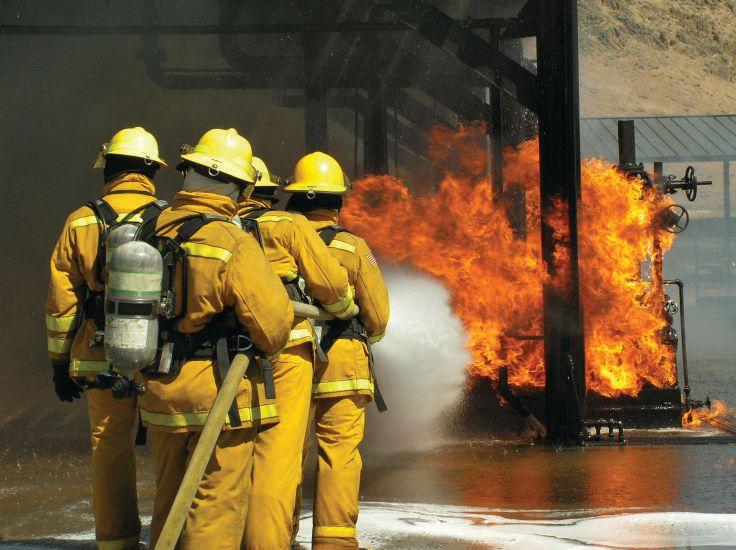
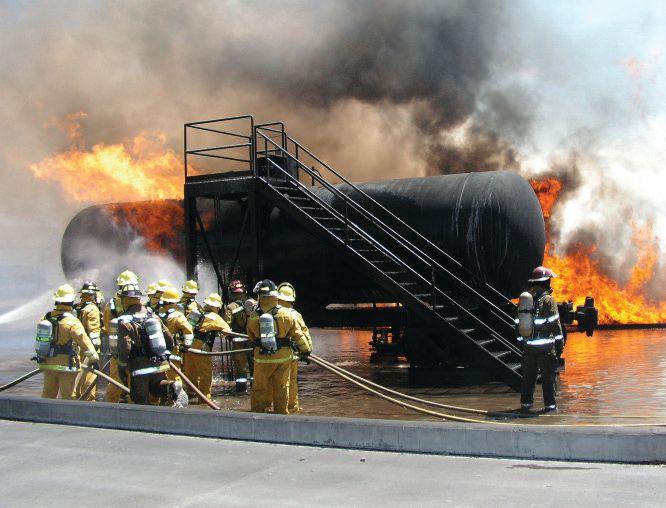
There really is no safe time period in which operations can be established for a liquefied petroleum gas tank fire. In many cases, the best course of action is to retreat to a safe location and monitor the situation from a distance.
And they choose Physio-Control to help make it happen.
Today’s responsive emergency team is always looking to elevate the level of care they deliver, and they rely on evidence and data to get them there. With the CPR Solution from Physio-Control, they have the science-based, guidelines-consistent tools they need to respond better to patients—and the demands of constant performance improvement.
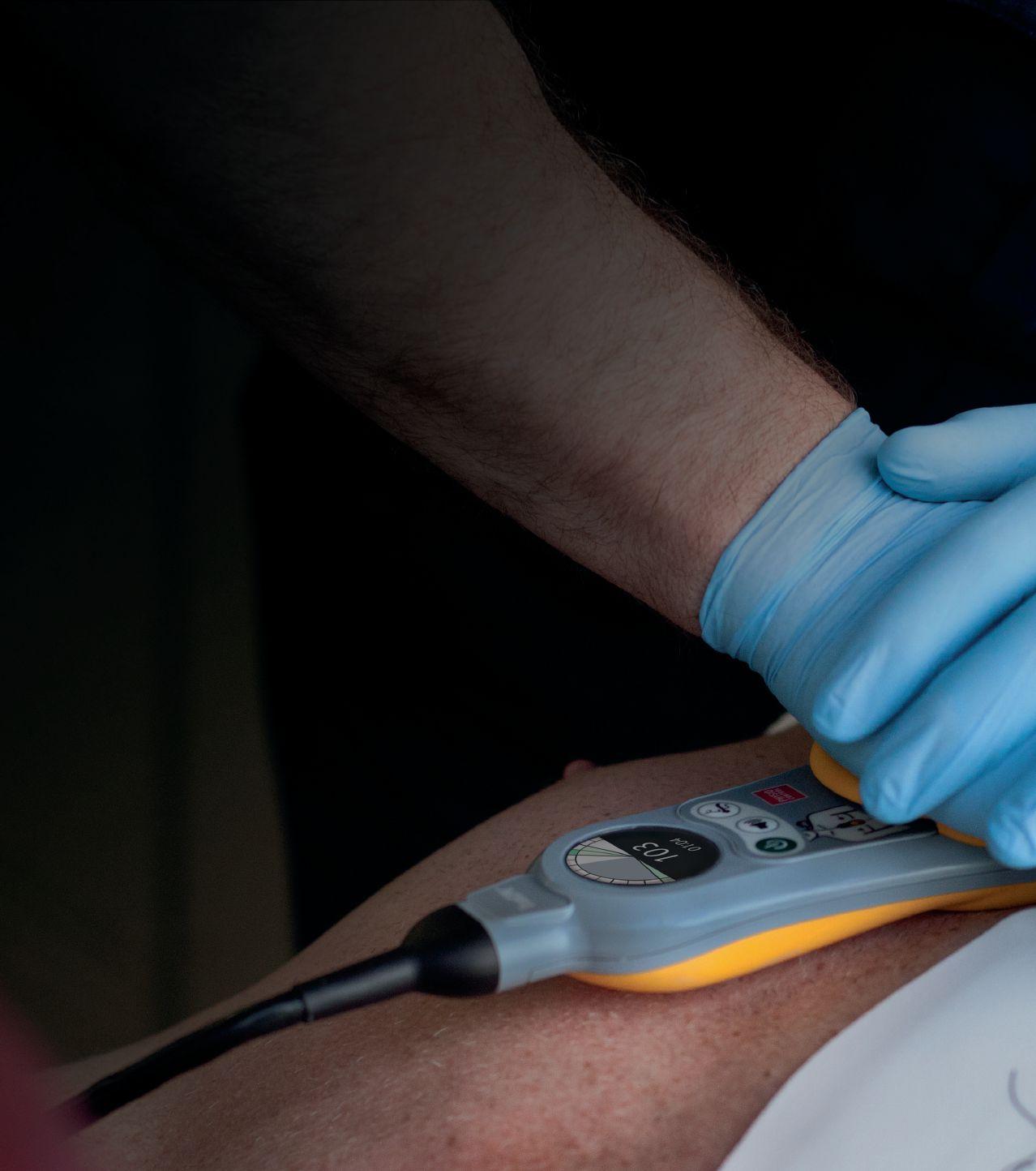
Optimize manual CPR performance and quality through true depth measurement even on soft surfaces, in addition to guidelines-consistent rate, recoil and pause feedback. Only available in Canada.
Provide uninterrupted hands-free compressions at Guidelines-recommended rate and depth, while ensuring personnel safety during transport.
The LIFEPAK 15 monitor/defibrillator with capnography and CPR Metronome provides effective rate control and true physiological measurement of CPR performance.
The rugged LIFEPAK 1000 defibrillator features cprMAX™ Technology which minimizes CPR interruptions by allowing compressions to continue during AED charging.
Features comprehensive CPR analytics for post-incident quality assurance and performance development.

while three firefighters were advancing preconnected hose lines at the rear of Engine 11 that the BLEVE occurred.
Several pieces of the tank were blown harmlessly away, between 182 metres and 198 metres. However, the balance of the tank rocketed through the pole shed, striking the three firefighters at the rear of Engine 11. The first victim was standing at the tailboard and was knocked 15 to 23 metres away. The second victim, standing to the left of the first, was knocked about 40 metres away. Both died instantly. The third firefighter was airlifted from the scene. The tank came to rest nearly 304 metres away.
Your members should understand:
• The more time that the LP gas tank is exposed to fire conditions, especially fire impingement on the metal shell, the greater the risk of BLEVE. In this case, the fire had been heating the tanks for more than 10 minutes with a great chance of flame impingement on the top of the tanks.
• Long fire exposure times and operating pressure relief valves should indicate that the potential for tank failure is imminent. The fire chief in Illinois believed that the relief valve vented two or three times during his size-up.
• Farms and construction sites are typical locations of portable and temporary equipment installations. Expect the unexpected.
• These types of incidents are unpredictable.
• Aggressive actions to cool the tank should be tempered with caution when the area around the tank can be quickly evacuated.
• Should you see steam coming off of the tank surface – get out fast!
Please drive home the fact that containers can be in serious danger of experiencing a BLEVE after less than 10 minutes of intense flame impingement. This time includes the time it takes for you to arrive on scene, do a size-up and place your apparatus and sufficient hose streams in operation.
In other words, there really is no safe time period in which operations can be established. In many cases, the best course of action is to retreat to a safe location and monitor the situation from a distance. The firefighters in this incident had six minutes.
The Latin phrase, Amat Victoria Curam, is painted on our fire truck driver’s truck’s door. The translation Victory Loves Preparation is on the passenger door. The
following steps can help you to be prepared. Pre-plan sites in your area. Time your response to whatever possible BLEVE sites you have. Preplan your strategies.
Know the size and location of tanks in your area, your water supply, the duration of water supply, the capacities of relay units, the water volume of monitors, the capacities of pumps, available personnel and backup.
Plan safe observation points for each potential BLEVE. Develop evacuation plans and know how to contact experts in liquefied gases (for more information, contact the Canadian Transport Emergency Centre, operated by the Transportation of Dangerous Goods Directorate of Transport Canada (CANUTEC) at 613-996-6666).
First-in fire officers must be well trained in hazard and risk analysis. More often than not, it is better to evacuate the area in anticipation of a tank failure, rather than placing firefighters at risk trying to prevent the failure.
The following two experiments were done during our FDIC session:
With a small propane torch I heated up a standard light bulb, which I held with Channellock pliers. I held the flame on the glass area for a count to 35. Then I dipped the bulb in a bowl of cold water – the bulb shattered due to thermal shock.
I also took an empty pop can and filled it about one-quarter full of water. I held the can with the pliers and moved the propane flame along the can at the water level. There was no discoloration or weakening of the can. When the water started to boil, steam could be seen coming out of the opening. I then moved the flame to the top of the can where there was no liquid. Immediately it discolored and weakened the metal; after a second or two the metal was so weak it broke apart as I tapped it with the torch tip.
Until next time, stay safe and remember to train like lives depend on it, because they do.
In memory of W. Douglas Buckert, 23, and Michael D. Mapes, 35, Carthage Volunteer Fire Department. May we honour our fallen brothers by learning from their sacrifice.

Ed Brouwer is the chief instructor for Canwest Fire in Osoyoos, B.C., and Greenwood Fire and Rescue. The 21-year veteran of the fire service is also a fire warden with the B.C. Ministry of Forests, a Wildland Urban Interface fire suppression instructor/evaluator and a fire-service chaplain. Contact Ed at ebrouwer@canwestfire.org

One Step™ CAFSystem provides one-step simplicity, perfect foam, no wasted concentrate, lower flow rates, repeatable performance and more. But don’t just read about the One Step™ CAFSystem, see it in person. We are hitting the road from coast to coast and may be coming to a city near you. Contact Jim Fazekas at jafazekas@waterousco.com to find out more information on a demonstration near you. waterousco.com
Tuff Built’s latest stored energy foam system (SEFS) is now available in a small and inexpensive package. The system can be powered by SCBA bottles, nitrogen bottles, service truck air or shop air.
The package, which still provides the fire knockdown capabilities of a full-sized system, is perfect for homes, businesses, garages, as well as high-risk industrial environments, such as wood processing plants, maintenance shops and printing companies.
For more information on the SEFS, and Tuff Built’s other foam systems, visit www.snuffer.com.
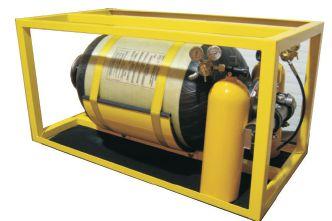
Kochek has released two new models of storz hydrant converters. The new converters feature a dedicated groove on the pentagon nut-styled cap and the button-styled cap, which allows for a more dynamic cable and chain fit.
The converters are also available in new coating and colour options, such as a powder coat, and a quantum and micralox hard coat.
For more information, visit www.kochek.com.
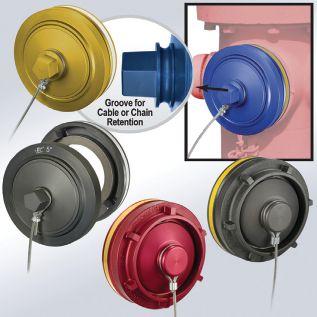
Elkhart Brass has improved its Cobra EXM monitor, which is now available with up to 1,500-gpm capabilities.
The monitor is available in either 1,250-gpm or 1,500-gmp options, standard and severe-duty applications, an EXM control technology package, and easy-to-use twoway controls that allow for wired and wireless operations.
For more information, visit wwww.cobraexm.com.
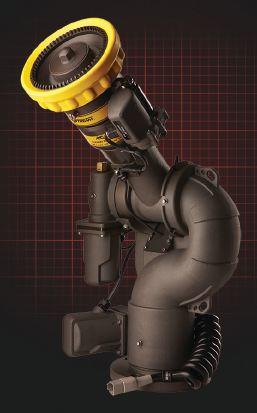
Ready Pack has released an NFPA-approved drying cabinet for hose and PPE. The cabinet has more than two cubic metres (75 cubic feet) of interior drying space, and features five temperature settings and up to 10-hour cycle settings.
The company has also released its hose-washing system, which removes dirt, mud, and fire-site debris from hoselines up to 10 centimetres (four inches) in diameter and up to 30 metres (100 feet) in length.
For more information, visit www.readyrack.com.
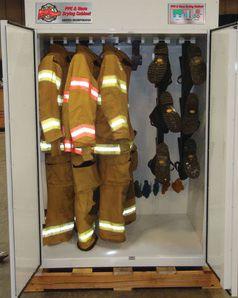
Vetter has developed a light and mobile decontamination shower for hazmat operations.
The showers can be tailored to a department’s needs, and are compact enough to fit on every emergency vehicle. The shower features magnetic fasteners for quick opening and closing of the shower curtain, and integrated gloves allowing rescuers to safely clean a contaminated person from outside the shower. Eight movable shower nozzles at various heights guarantee complete cleaning.
For more information, visit www.vetter.de.
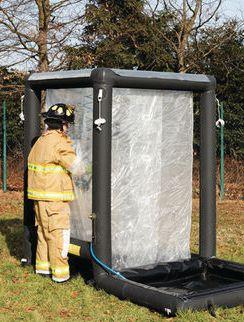
MFC Survival’s water rescue kits can be tailored to suit specific department requirements.
The kits include three lifejackets, one PFD, two throwlines, one loudhailer with a waterproof bag, two clip-on lights, one rescue lanyard and a waterresistant bag.
Drysuits, helmets, a rescue stick and additional lifejackets and PFDs are also available for inclusion in the kits.
For more information on the kits, visit www.mfc-survival.com.
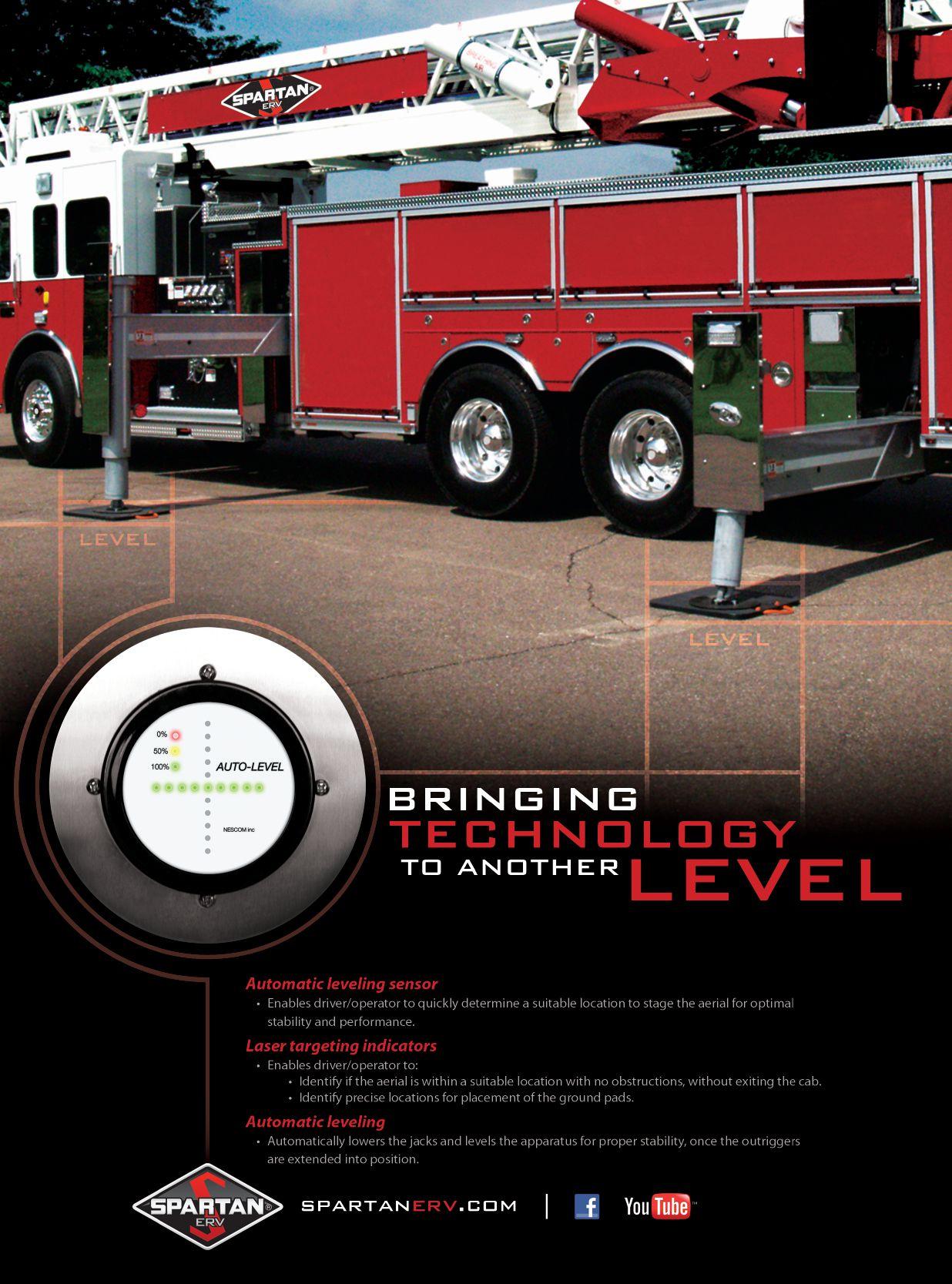
BY TOM DESORCY Fire Chief, Hope, B.C.
have written before about the benefits of involvement in the fire service beyond our own departments. As I expand my affiliations, both provincially and nationally, I continue to be amazed at the dedication and passion that those in the fire service hold for what we do, and just how that passion and pride fuels my positive attitude toward life.
This past year I had the privilege to travel with the executive board of the Fire Chiefs Association of British Columbia (FCABC) to beautiful Nelson. Located in the province’s southeast, this historic community not only played host to the fire-themed movie Roxanne, but also celebrates history at almost every turn, including the Nelson Fire Hall, which is 100 years old this year – something Fire Chief Simon Grypma is very proud of, as is evidenced with each guided tour he gives in the museum. It turns out that, in 1907, the first meeting of the original group that eventually became the FCABC was held in Nelson.
As part of our visit, I had the honour to attend several meetings, including that of the volunteer members in the area. Here was a group of fire officers who came together on a Saturday morning not only to share their issues and concerns but also to proudly report the activities and positive changes made in each of their departments. I will admit I did joke about using this meeting to gather material for this column, but it wasn’t until after we had left that I realized that I had to include it.
Without focusing too much on the fact that we are all getting older, the combined level of experience that was in the room that day was extraordinary. I saw more years of service hanging from those uniforms than I’ve seen in a while, which is a true testament to the pride and dedication that we have for the fire service. It made me proud to be associated with these individuals who have long been trusted by their communities. Another fact, and something that might surprise a lot of organizations, is that usually when there is that much experience in one room, ideas for change are not very forthcoming; in fact, I would suggest that a positive gathering such as this would be rare outside of the fire service. “We’ve tried that before and it won’t work,” is just one of the lines you’d expect – but not
here. Ideas on this day were fresh and in keeping with the times. This group wanted to encourage positive change, not only in their departments, but also in the association that brought them all together.
Those who know me are aware of my positive take on life in general; the fire department has helped me realize this even more. Sure, we all have issues now and again, but more often than not, the people we deal with – the customers we serve on a regular basis –have bigger problems than we will ever have. Their worst day is our every day – we’ve all heard that – but, in the smaller departments, it’s not necessarily every day, and motivation can be a little hard to come by when you find yourself behind a desk responding more to e-mails and phone messages than to fire calls. That’s where positive reinforcement comes in, and there is nothing more positive to me than working with my colleagues on projects. Affiliation with various associations has made that possible. The gathering in Nelson proved that.
Have you ever met another firefighter somewhere else in the world? Sure you have. We’re always wearing a t-shirt of some kind that makes us easily identifiable, aren’t we? Think of the realization you have when you do – that sense of commonality, the sense of
Here was a group of fire officers who came together . . . not only to share their issues but also to proudly report positive changes made in their departments. ‘‘ ’’
belonging. When you are first introduced, do you not feel connected in some way? It’s not something you can vocalize – there is no secret handshake – it’s just there, and we’re the only ones who get it. If you had time to compare notes, I’m sure it wouldn’t take long to discover how much you share.
Tom DeSorcy became the first paid firefighter in his hometown of Hope, B.C., when he became fire chief in 2000. Originally a radio broadcaster, Tom’s voice could be heard in the early 1990s across Canada as one of the hosts of Country Coast to Coast. DeSorcy is married with two children and enjoys curling and golf. He is also very active with the Fire Chiefs Association of B.C as communications director and conference committee chair. Email Tom at TDeSorcy@hope.ca and follow him on Twitter at @HopeFireDept
Often we mire ourselves in the day-to-day operations of our communities: the politics, the neighbourhood disputes and other things that can easily bring us down. When we venture beyond all that, we are reminded that we are not alone, and that others share in our trials and tribulations and, in most cases, are doing something about it.
Take a moment and remember who you are and what you are a part of. Association involvement serves to make me proud and remind me of this.
Is the glass half empty or half full? Who cares, just be happy there is something in it.

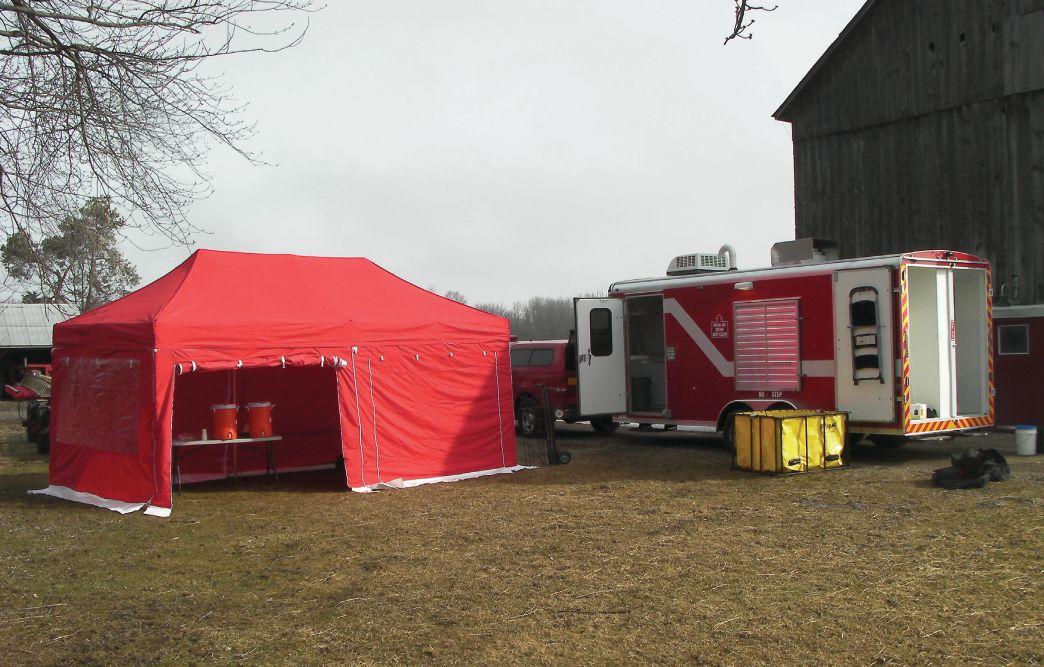
TOP: After a major fire in 2011, the St. Clair Township Fire Department recognized the need for better rehabilitation, hygiene and breathing air facilities. With $100,000 from council, the department bought a mobile air filling station and a tandem-axel, six-metre enclosed, insulated trailer, which was customized by volunteers into three compartments.
RIGHT: The new trailer was completed in January and was used during a structure fire on the coldest night of the year; more than 20 SCBA cylinders were filled on site.
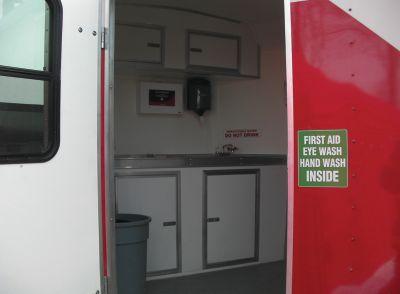
By STEVE BICUM
It isn’t often enough that good things come out of a bad event, but over the last 15 months, that is exactly what has happened in the Township of St. Clair in Ontario.
The Township of St. Clair is a diverse community located about one hour west of London and more than an hour north of Windsor. The 15,000 residents live in small urban centres and small family farms dot the township. The St. Clair Township Fire Department is composed of 180 volunteer firefighters deployed in six fire stations with a full-time chief and deputy chief.
On Dec. 20, 2011, a 2,800-square-
metre (30,000-square-foot) boat storage facility caught fire and burned to the ground. The building and contents were valued at $50 million. A second building, located four metres (14 feet) away, valued at an additional $50 million, was saved. (For a more detailed account, see the September 2012 issue of Fire Fighting in Canada). In that article, several issues were identified, such as building access, firefighter rehabilitation and hygiene, and breathing-air supply. The fire department has spent the last 15 months working to resolve these issues.
A concerted effort by a number of people

was made to work out solutions and to implement them.
Building access for fire fighting was one of the issues identified during the postincident analysis and review (PIAR). Along with this came the issue of pre-incident planning. The fire department has worked hard to develop and nurture a relationship with building department officials. This ensures that everyone is working toward the greater good, and that safety issues don’t become a turf war over who has jurisdiction. Now there is no hesitation for either side to pick up the phone and talk to each other about issues regarding a building or site plan. The fire department has also redoubled its efforts to ensure that fire crews get out and pre-plan these types of occupancies. After a devastating event such as this fire, fire crews could see the benefit of going out and thinking of solutions before they roll up on scene with $50 million worth of product going up in flames. These efforts to build relationships and be proactive ultimately improve safety for the public and for the firefighters.
The fire department was able to develop a solution to the remaining issues of rehabilitation, hygiene and breathing air, in one package. With the full support of the township’s council, almost $100,000 was secured to design and build a mobile air filling station that would address the concerns brought forth in the PIAR. Mayor Steve Arnold said, “It is important to us on council that we provide the best equipment we can to our volunteers. Their safety is our priority and this air trailer will help keep them safe.” Efforts to find a pre-designed, pre-packaged solution were unsuccessful. There was nothing on the market that would address all of the concerns. So, the solution was to build our own.
A tandem-axle six-metre (20-foot) enclosed, insulated trailer was custom ordered with a large vent opening on the side, walk-in doors, and air conditioning. With the help of some volunteers, the trailer was divided into three separate areas. In the front are a countertop and sink with first-aid and eye-wash facilities. A fridge full of cold water and other rehab supplies is in this airconditioned area. Also, a Jordair bottle fill station is set up here so bottle filling can be taken care of in a controlled environment. In the next separate compartment over the axles is a Jordair 23-cubic-feet-per-minute (CFM) diesel-powered breathing air compressor, along with a 5,500-watt diesel generator and the four-bottle 6,000-pound-per-square-inch (psi) cascade system. This area has temperature-controlled louvres and soundproofing to control noise levels. The third area has two purposes. One is to store the 80-litre


The WATERAX BB-4 series is a full line of high pressure centrifugal pumps that has been used by forest agencies for more than 40 years. It has become the weapon of choice in wildland operations. The BB-4 comes in portable & vehicle mounted configurations and is powered by Briggs & Stratton Vanguard 18HP or 23HP engines to deliver pressures up to 440 PSI and 106 GPM . All BB-4 models feature a unique greaseless sealed bearing and a blister-resistant mechanical rotary seal. These latest improvements significantly reduce field maintenance and protect the pump-end against seizure under dry-run conditions.
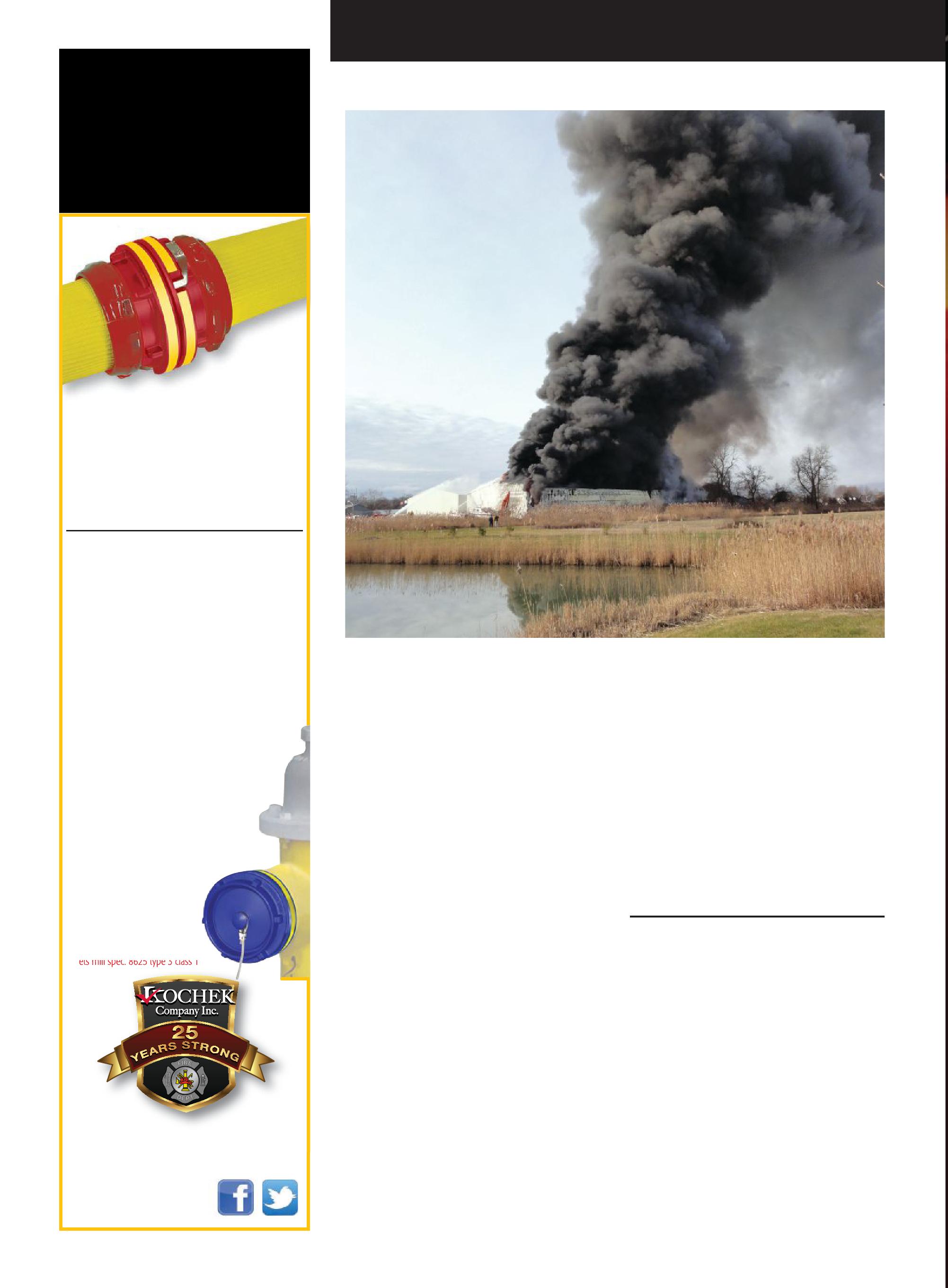
• Forged Storz Couplings 4”, 5” and 6”
• Durable QUANTUM® hard coat and MICRALOX® micro-crystalline anodizing
• Sure grip 3-piece collar for tight secure fit
• Stainless steel locking trigger
• High visibility recessed reflective tape available
• Forged 6061-T6 Aluminum
• High Visibility Reflective Tape (colors)
• Recessed groove protects reflective tape
• Laser engraving on the cap front with your choice of coatings...
A patented process, will extend the life of your aluminum parts up to 10 Times compared to conventional aluminum anodic coatings; more effectively resists salt, and chemical corrosionand attack.
Meets mill spec. 8625 type 3 class 2
• High quality durable hardcoat
• Vibrant anodized color
• Great for color coding
Meets mill spec. 8625 type 3 class 2
NATURAL
• High quality durable hardcoat
• Most often specified by design andmanufacturing engineers
Meets mill spec. 8625 type 3 class 1
A fire in December 2011 caused $50 million in damages to a boat-storage warehouse in St. Clair Township, Ont., and tested the community’s emergency planning.
(21-gallon) fuel tank, which offers about eight hours of operating time. The area also stores a small water tank for non-potable water, a six-metre by three-metre tent for rehab, along with additional rehabilitation supplies. The second area houses a port-apotty (enough said).
The layout of the trailer puts only 220 kilograms (485 pounds) of weight on the tongue of the trailer with the overall weight being 2,700 kilograms (5,952 pounds). This allows the trailer to be pulled by a standard pick-up truck. The trailer is kept at one of the fire stations and responds to structure fires and any other call that the chief on call deems necessary.
Since the trailer was completed in January 2013, it has responded to a residential structure fire on the coldest night of the year – it was -16 C, plus wind chill. More than 20 SCBA cylinders were filled on site, ensuring a constant air supply, and the heated shelter of the trailer provided the firefighters with a place to thaw out. Fire Chief Roy Dewhirst pointed out, “This unit will be a real asset to the department. We can now offer a greater level of safety and care for our firefighters that we didn’t have before.”
The St. Clair Marina Boat Storage fire was a tragic and costly accident. Millions of dollars in property were lost, along with many families’ possessions. Luckily, no one was injured. Too often, it takes a largescale incident like this to highlight issues. However, this gave the St. Clair Township Fire Department the opportunity to assess its capabilities and develop a response to the issues that will make it stronger, more efficient and safer for the future.
Steven Bicum is the deputy fire chief (coordinator of training and safety) with the St. Clair Township Fire Department. He began his career as a volunteer with the Wilkesport Station, where he was training officer, captain and fire prevention officer. He has been chair of Lambton County Fire Prevention Association, vice-president of the LambtonKent Firefighter Association, and an adjunct faculty member at the Lambton College Fire Emergency Response Training Centre. He is an associate instructor for the Ontario Fire College. Bicum has deep roots in St. Clair Township: his children are the fifth generation to live on their family farm. Contact him at sbicum@twp.stclair.on.ca


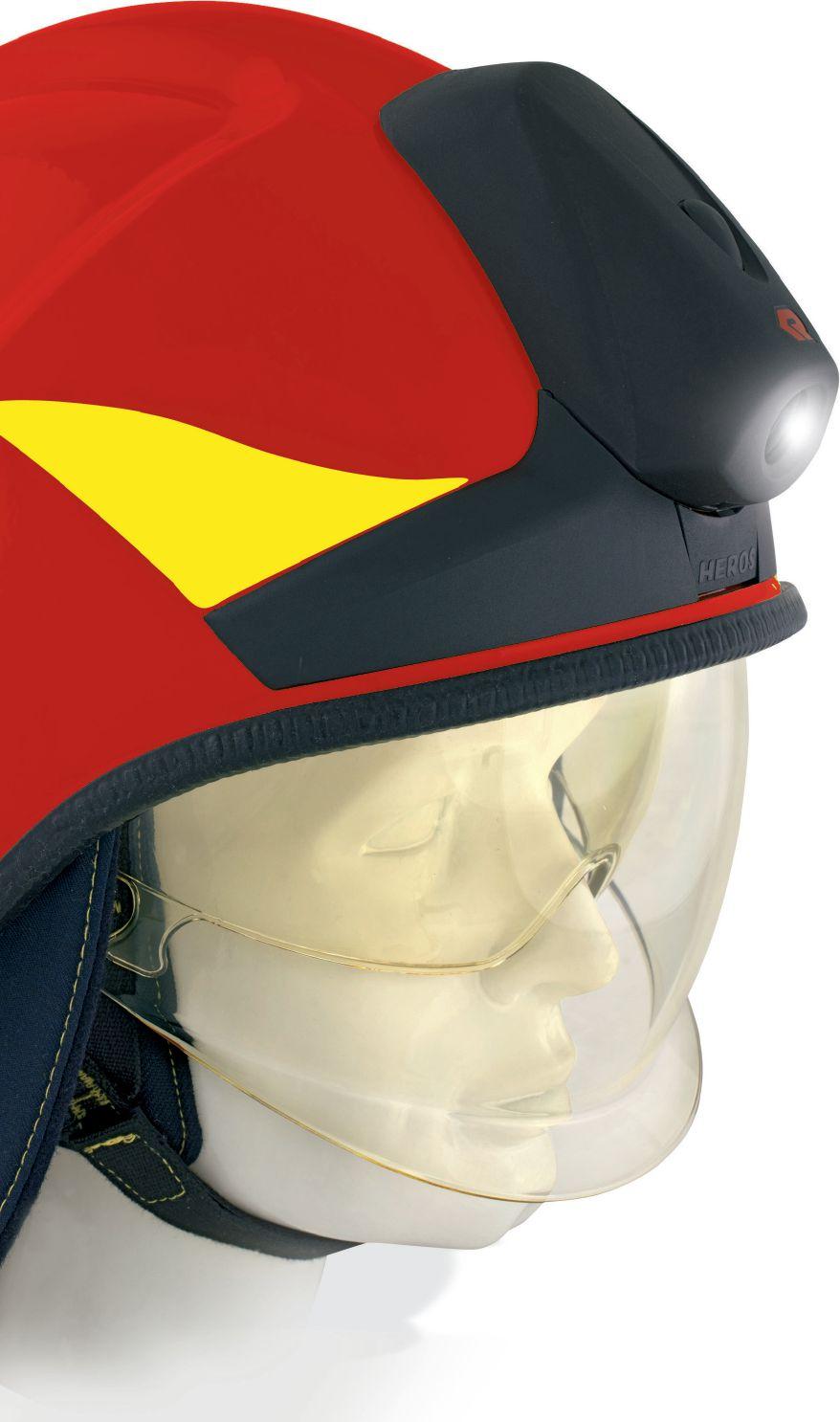



TRACK
COMFORT FACTOR 70 PROTECTING EXTREMITIES
72 MAKING HEADWAY
74 BREATHING EASY
76 ATTACK UNDER PRESSURE
80 HOSELINE ADVANCES
82 BULLET PROOF
84 AUTO-EX UNPLUGGED 86 WIRELESS SAFETY
87 DRIVING CHANGE

Mayday, mayday, mayday.
Those words are some of the most feared on the fire ground. Once a mayday has been called, adrenalin starts pumping and a RIT is assembled to find those fallen brothers or sisters.
How many firefighters need help? Where was their last known position? What condition are they in? What’s the best route to take to reach them?
A group comprising Globe Manufacturing, Zephyr Technology Corp., TRX Systems Inc., Propel LLC and Skidmore College’s Health and Exercise Sciences Department has developed a program to help you answer those questions. The wearable advanced sensor platform (WASP) project combines location tracking and physiological monitoring technologies into an everyday station T-shirt. The shirt is outfitted with a location tracking and a physiological monitoring device, enabling researchers or incident commanders to track not only firefighters inside a building, but also their condition, specifically their breathing and heart rates.
“It’s about firefighter safety,” says Mark Mordecai, director of business development at Globe.
“We want to do as much as possible to make fire fighting as safe as possible, and we felt we had to go beyond that protective shell.”
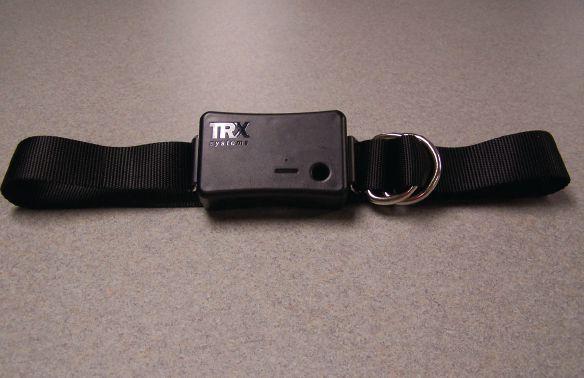
The WASP project started as a research and development concept in 2006. The Worcester Polytechnic Institute in Massachusetts was working to determine if an integrated system was even possible. With interest from the United States military and other organizations, the project moved forward.
In 2008, Globe and its group moved to a trial period, during which they put early adaptions of the shirt on firefighters in Oxnard, Calif., and Boston. The group’s researchers collected data on the firefighters’ stress levels in real duty, and examined what their stress levels were like while on scene and while responding.
The researchers also learned about how the firefighters were wearing the shirts and determined that the comfort and general wearability of the shirts would be critical to the success of the program.
Two years later, the U.S. Department of Defense expressed interest in the program, enabling it to move from a concept to a commercial system. Globe and its partners began to organize several field trials, including those in Champagne, Ill., Atlanta, Fairfax, Va., Annapolis, Md., and at the Texas Engineering Extension Service, part of Texas A & M University. Again, the group learned more about the program – what needed to be changed, what needed to be improved.
The WASP program completed field trials at the end of 2012, and was ready, as of July, to enter into beta testing at select training facilities. Several components have come together to make the device a wearable and functional piece of equipment.
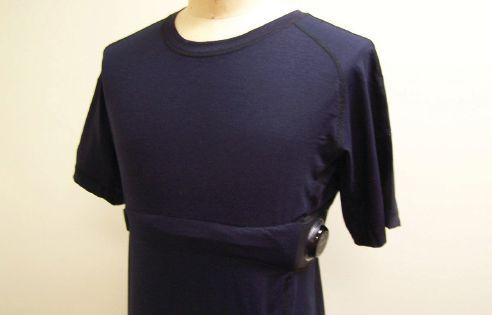
and wires are washable.

The T-shirt, and its structure and makeup, was important for the project. If it was uncomfortable, firefighters would be reluctant to adopt the technology. Propel LLC, a Rhode Island-based company that focuses on textile products for fire and military, was involved from the early stages of the project, developing the shirt, which is worn as a next-to-skin layer.
The shirt has good flame resistance, dries quickly and features a moisture wicking technology.
“It’s designed to be passive,” Mordecai says.
“Put it on at the start of a shift and take it off after. [Firefighters should be able] to wear it on an everyday basis.”
Clare King, president of Propel, says the shirt also stands up to laundering, another important factor for departments to consider when adopting the technology.
“It can be washed several times without the fabric wearing and the seams breaking,” she says.
“The strap component – the physiological part that is integrated into the T-shirt – is washable. The data collection puck is removed before washing, but the rest of [the shirt] – the sensors, the connectors – are all washable.”
Furthermore, the shirt and all of its components can go through 100 wash/dry cycles before they begin to wear.
The location-tracking component uses inertial navigation – a more advanced version of the technology that flips the screen on your smartphone when you turn the device. The primary sensors involved include an accelerometer (inertial sensing), a gyroscope, a compass, a pressure sensor, an arranging sensor, a GPS and a light sensor.
The greatest challenge for TRX Systems, which developed the location-tracking component, was pulling all that information down into a manageable size. The data is processed twice: first in a device that is small enough to be transported to the command centre – either a Motorola APX radio or an Android smartphone – and a second time to a laptop at the command centre.
William English, vice-president of product management at TRX Systems, says the result enables an incident commander to view all the available information at a command station.
“The command centre is where a decision maker can see all the information,” English says.
“[Users] can switch between a two-dimensional and a threedimensional interface – you can move around the building [through the interface] to see everything. The 2-D mode presents information on a given floor, but the 3-D view can see the vertical distribution of people.”
The sensors not only provide information about the location of the wearer, but also offer an idea of the layout of the building – both as a two-dimensional representation of the floor, including various rooms and spaces, and as a three-dimensional representation of the entire building. This enables the incident commander to determine the floor on which the firefighter is working, as well as the vicinity of the firefighter on that floor.
“In terms of building visualization and accuracy, the more information that a user knows about a building, the more accurately [the system] can track,” English says.
English recommends fire departments tour buildings in which radio communication isn’t very strong, or that departments have
This screenshot depicts what an incident commander can see while the system is running. The tracking device can map out the building in both 2-D and 3-D, providing a full idea of the building’s layout.
determined to be at a higher risk. That way, the system will be preloaded with the building’s layout.
“The system integrates known information about the building, but as a person walks through the building, the system can collect information about the building – it detects when you walk up stairs or get in an elevator. Then it can use that information.”
The greatest challenge that TRX faced was tracking the special movements that firefighters make – swinging an axe, or picking up a nozzle off the floor. These movements are more difficult to trace, though English says he and his team are constantly searching for improvements.
“Improving accuracy is something that we’re always going to be doing, and we’re constant going to be focusing our energy,” he says.
English said he sees this component being most useful in RIT situations. If a floor collapses, for example, the incident commander can tell on which level the downed firefighter has landed, and in which area or quadrant of the building.
According to Mordecai, the system can also be useful in a training situation.
“In training, you can make sure people are where they are supposed to be,” he says.
“For an after-action review, [training officers] can review tactics.
“On the fire ground, it’s about recovering a downed firefighter faster. Now you can send a RIT . . . and they can start in the right place and get to the firefighter a lot quicker and more effectively.”
No technology exists to actually prevent a heart attack – not even in the most advanced hospitals – but Zephyr’s contribution to the WASP program can help chief officers determine the level of physical exertion at which their firefighters are working. The physiological monitor can determine if the wearer’s heart rate or breathing rate spikes or plummets.
“It’s there to provide situational awareness,” Mordecai explains. “[The monitor] tracks stress and overexertion levels in real time.
“It allows the incident commander to monitor his firefighters, and where there is a set of physical factors that are outside the

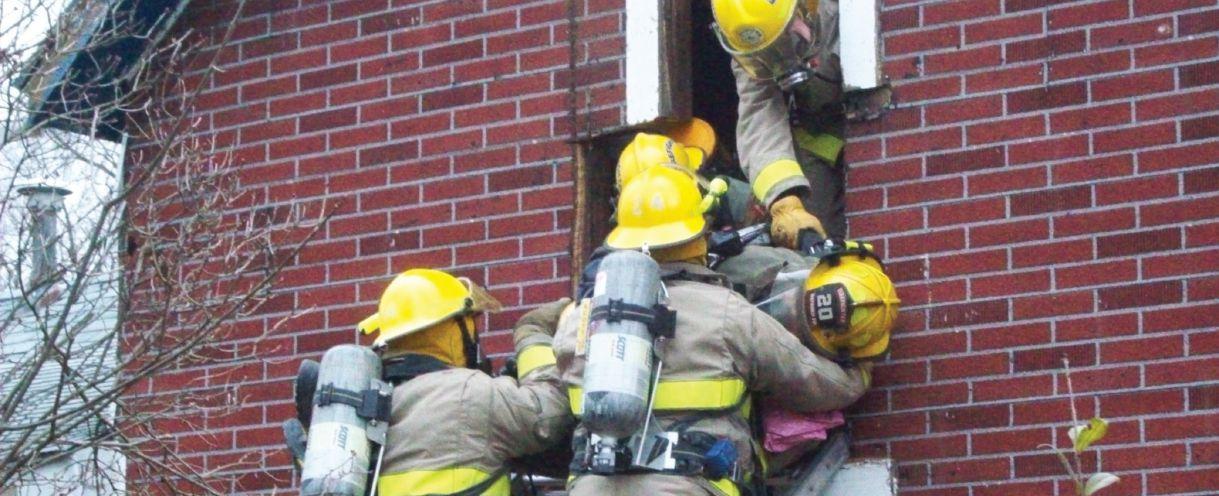
normal bounds, they can check on [the firefighter].”
It’s then up to the incident commander or chief officer who is monitoring the data, to decide on a course of action – maybe the firefighter needs to enter rehab sooner rather than later.
It should be made clear, Mordecai says, that the system cannot prevent cardiac events – nothing can do that. But it provides a set of data that can offer information about increased risk factors.
“It can be a great training tool,” Mordecai says. “It can help you understand what your firefighters are experiencing and help you to provide feedback.
“It is also useful in rehab to see what firefighters are going through and if they’re recovering normally.”
This type of monitoring is also a benefit in RIT situations. If a downed firefighter is unable to communicate, the incident commander can assess his or her vitals. Paired with the locationtracking device, a RIT can better access the mayday firefighter, and increase the chances of a successful rescue.
The WASP project entered beta testing in the summer at several facilities in the United States. Mordecai says the project will move to commercial systems for use at training centres before jumping into an operational environment.
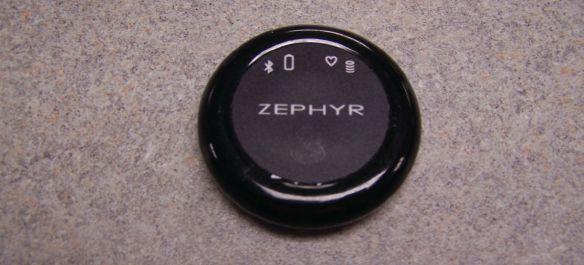
condition.
“It’s important for us to put the tool in the hands of firefighters so they can figure out how to use it,” he says.
“From what we have seen in the field, there has been a tremendous interest in the fire service to do something about these problems.”
For more information on Globe’s WASP project, visit www. globeturnoutgear.com/innovations/wasp.
1. Emergency responder body-worn integrated electronics system development: A body-worn electronics system integrating enhanced communications capabilities, locations and tracking capabilities, situational awareness and environmental sensing capabilities, physiological status monitoring capabilities, and respiratory protective equipment status.
2. Enhance communications in environments that interfere with radio transmissions: Portable network extension of current radio capabilities into areas where coverage is prohibited by environment/terrain (e.g., tunnels, canyons, large structures, ships, etc.)
3. 3-D tracking of personnel: Technology development for tracking and operating personnel in a 3-D environment. The research and development of 3-D tracking systems needs to continue until these systems are fielded.
The InterAgency Board in the U.S. released a list of 22 items slated for priority research and development. This chart provides brief descriptions of the top three items, two of which were incorporated into the WASP project. For the complete list, visit https://iab.gov/Uploads/2012-S&T-R&D-Priority-List-Descriptions.pdf.



COMBINATION WRENCH
Fits Standard Rocker Lug Hose ends from 1/1/2” (38mm) thru 4” (100mm)
Fits Stortz Hose ends from 1-1/2” (38mm) thru 4” (100mm)
Fits 1-1/4” Hydrant nut
Tenzaloy Aluminum Alloy
Weight: 15 oz.



Length: 16 in.
MOUNTING BRACKET
Mounts on the side of the Truck or inside a compartment
Holds one or two wrenches
Each wrench is securely held independently by a stainless steel spring clip
Weight: 10 oz.
5” mounting hole centres for 3/8” bolts




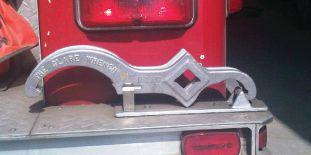



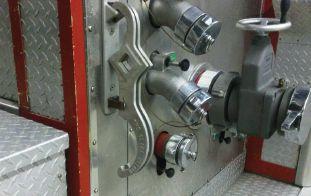



All firefighters know what it’s like to feel cold and damp, or hot and sweaty, after a long incident. That level of discomfort can take a toll on your body – especially if you find yourself facing climate extremes, day after day after day.
Fabrics that are commonly used in station wear – cotton, fleece or polyester – offer little protection against the elements –wind, rain, snow, sleet. As Canadian firefighters, you need that protection.
one to two times its weight – but it doesn’t dry,” he explains.
“So you often have firefighters running into fires and sweating and feeling that sweat heat up, or firefighters getting heat exhaustion because of the wet undergarments, or firefighters coming out of the building and having to take off their gear and freezing because their clothes are wet.”
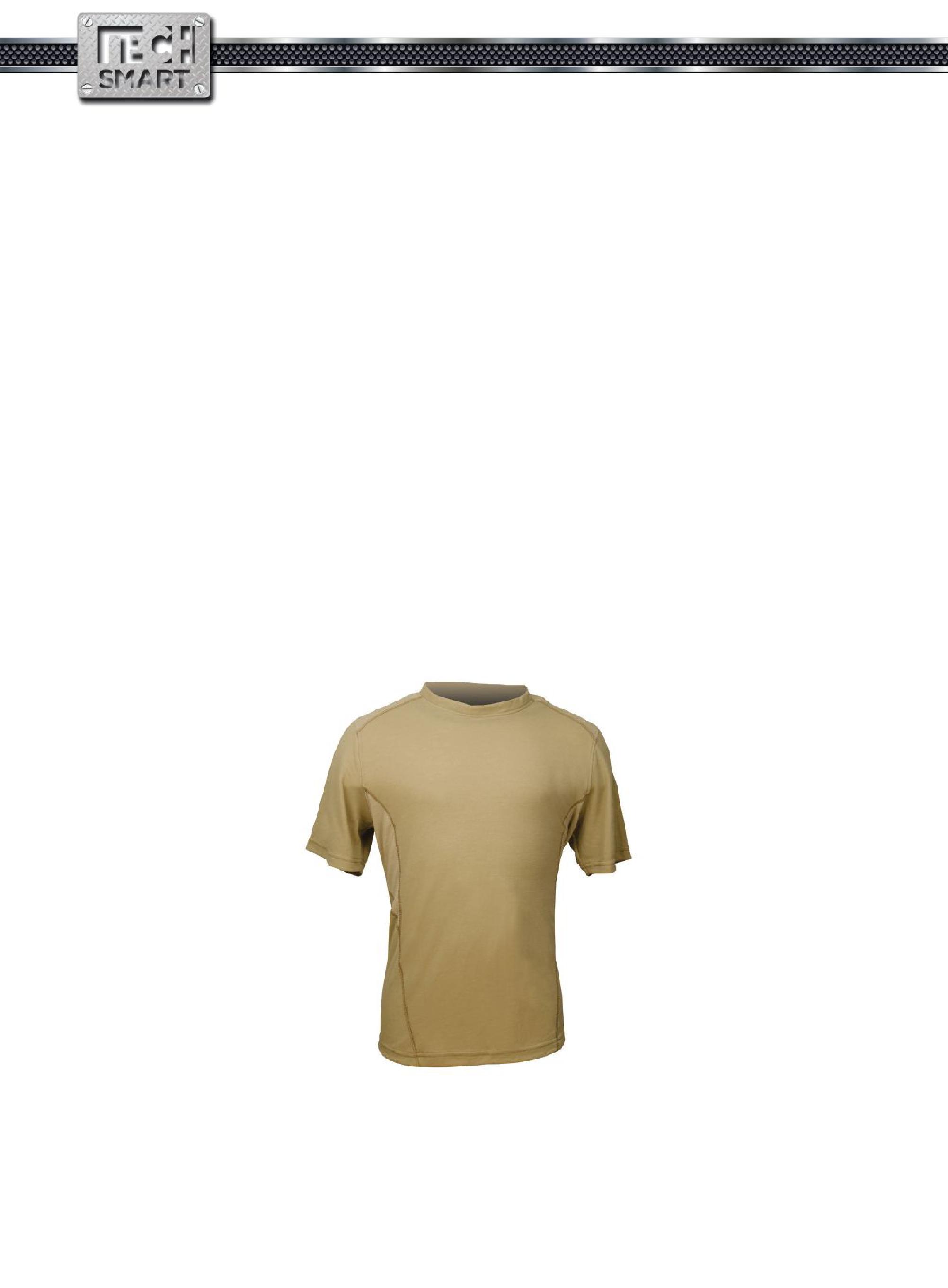
Assistant Fire Chief Kirk Hughes knows this all too well. He works in Déline, in the Arctic Circle, where temperatures hover around -25 C in the winter. In the January issue of Canadian Firefighter and EMS Quarterly, Hughes wrote: “A cold firefighter exhausts more quickly, and rapidly becomes ineffective when the temperature bottoms out.”
Nowadays, many firefighters have taken to wearing athletic products, such as Under Armor or similar moisture-wicking fabrics, under their station wear to keep them comfortable during training or on calls.
Fire Fighting in Canada columnist Mark van der Feyst is a firefighter in Woodstock, Ont., and a trainer. He explains the shortcomings of traditional station wear.
nows this all too well. le, issue of erly, wrote: “A and rapidly becomes oms out.” aken to der rics, s.
“Normally, we’re not supposed to wear anything synthetic,” he says. “We should wear only natural fibres – something fire resistant and that can breathe. Nomex is fire resistant, but it’s not very breathable. Cotton, though, can breathe, but it isn’t fire resistant.”
We ething fire ton, r has taken moisturehters. wear line an ele-
At least one firefighting gear maker has taken note and is producing flame-resistant, moisturewicking products specifically for firefighters. True North has developed its Dragonwear line of station wear and undergarments to help mitigate the issues that myriad Canadian elements can cause.
Simon Levin, sales manager for Dragonwear, says that many firefighters don’t realize that cotton, which is a commonly used fabric in station wear, is not the best material to keep next to your skin.
“Cotton is one of the most absorbent fibres – it can absorb
Being dry and warm has less to do with comfort and more to do with safety, Levin says.
do with Levin says.
“When your core is wet, you have no ability to be warm,” he says. “When you’re not out there worried about being cold, you’re level of concentration is better and your chance of getting hurt is much lower.”
“When your core is we he “When you’re not level of concentratio ting hurt is much lower.”
But protection again of Dragonw a strong co P f t liqu the skin onto The th fabric, which evaporate an
But protection against moisture is not the only function of the Dragonwear product line. The company also produces a series of outerwear products made of strong fleece to keep firefighters warm.
“Ninety-five per cent of our fabrics come out of a mill in Boston, called Polartec, which actually invented fleece,” Levin explains.
Polartec’s patented fabric, which is present in all Dragonwear products, consists of a modacrylic-lenzingrayon blend. The next-to-skin layer of the fabric is hydrophobic; it transfers liquid, including water and sweat, from the skin onto the hydrophilic face of the fabric.
The liquid then spreads across the surface of the fabric, which makes it much easier for the liquid to evaporate and dry as quickly as possible.
“Where it’s not a ch way the fab
“Where the technology gets interesting is that it’s not a chemical application. It’s inherent in the way the fabric is knit,” Levin says.
This Power Dry T-shirt by Dragonwear features the company’s moisture-wicking technology, as well as a flat lock stitch, which provides a flat seam and better stretch and comfort.
“So no was life reta
“So no matter how or how many times you wash it, it will perform that way for the life of the garment.
“Then, as a bonus, it is also a fire retardant next-to-skin layer, with comfort and this technology in it. It becomes a garment that you really can’t do without.”
For more information, visit www.dragonwear.com.
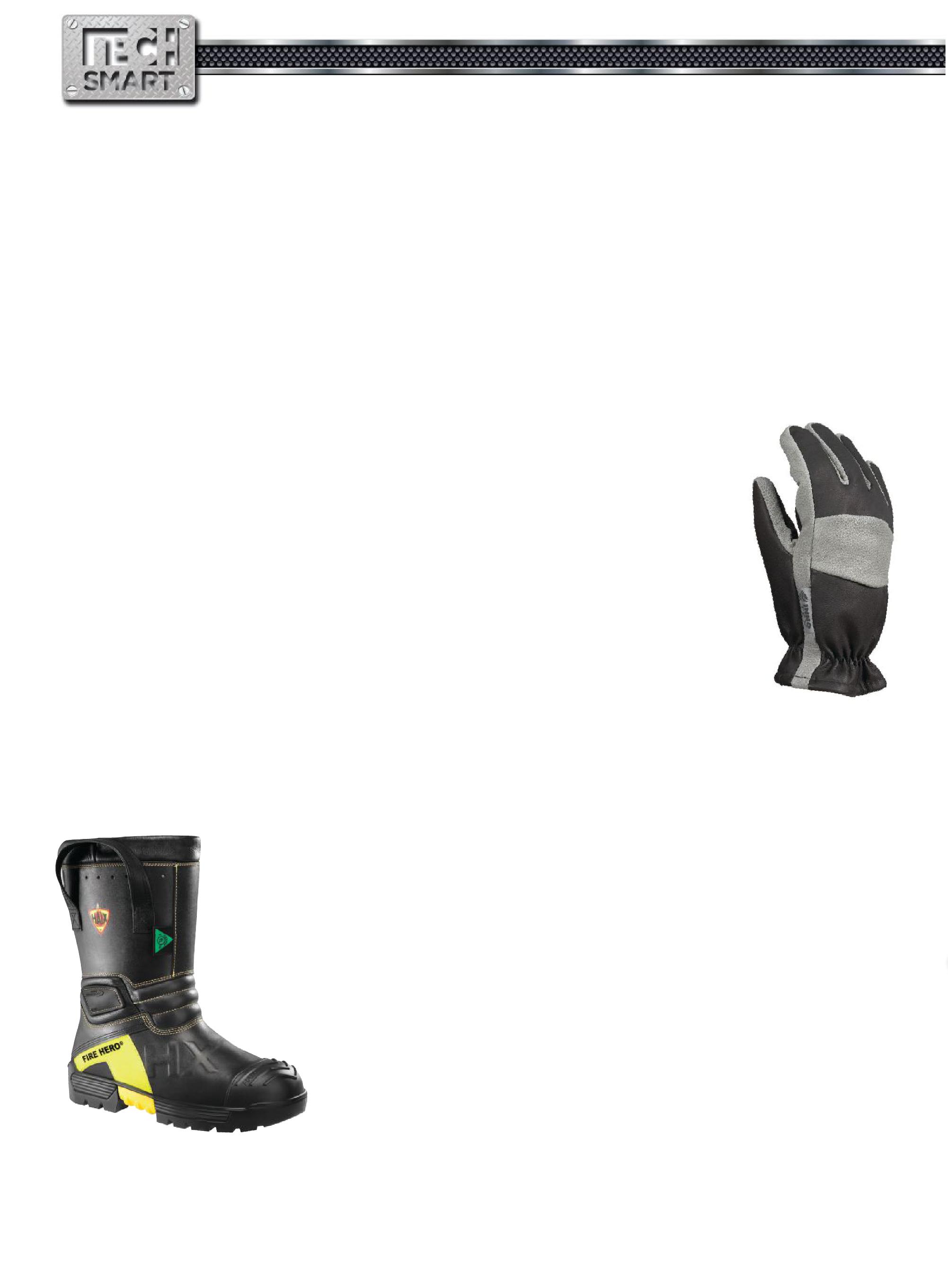
Everyone knows that comfort is key on the fire ground. Extremities are often the hardest parts of the body to keep comfortable – frozen toes, hot hands, reduced dexterity and stiff soles, to name a few issues.
Many gear manufacturers are working hard to improve their products’ comfort. Boot manufacturers, such as Globe and Haix, for example, have developed flexible and lightweight fire boots, making it more comfortable for firefighters to work on the fire ground.
“It’s not just comfort – it’s really performance,” says Mark Mordecai, director of business development for Globe.
“Your feet are designed to be able to flex up to a 50-degree angle; if your boots don’t flex as much, it will affect your gait, your stance and your ability to do your job.”
Globe’s Supralite boot, for example, offers features such as a slip-resistant tread, making working in icy conditions or on a ladder safer. The boot’s upper also uses Globe’s Dragonhide fabric, which the company uses to reinforce and strengthen its turnout gear.
Globe’s composite protection plate better insulates the foot, protecting against cold weather or wet conditions. The sole itself is made from a neoprene-based compound, instead of traditional rubber-based compounds. This further improves flexibility in the boot, allowing firefighters to crouch or kneel in comfort during long suppression operations.
“This is a boot that you can literally run in,” Mordecai says. “It provides firefighters with that athletic performance.”
Haix’s Fire Hero Xtreme boot, meanwhile, has polyurethane foam injected into its sole for better shock absorption and heat/cold insulation. This foam, however, also makes the boot lighter than traditional rubber soles. This means firefighters won’t fatigue as quickly when they’re moving around the fire ground – climbing stairs, retrieving
tools from the truck, or laying hose.
Haix says its boots have good ankle support, which helps to prevent sprains.
“[Firefighters’] feet get them in and out [of a structure],” says Haix spokeswoman Sandy Longarzo.
“They need to be able to run and jump, and good-fitting boots prevent injuries [during those activities].”
Jennifer Mabee, a firefighter with the Township of Georgian Bay Fire Department in Ontario and a Canadian Firefighter and EMS Quarterly columnist, says that comfort on the fire ground certainly affects performance.
nt th the epartment ghter says tainly ts that are h
“If you’ve got gloves or boots that are too big or too bulky it makes it harder to complete tasks that require fine motor skills,” she says.
“It allows you to do your job that much better when your equipment fits properly.”
For more information on the Haix boot, visit www.haix-bootstore.com, and for details on the Globe boot, visit www.globeturnoutgear.com.
Innotex’s new line of gloves uses the company’s PyroPro insert, which provides higher radiant heat protection on the back of the hand and better breathability and dexterity for the palm of the hand.
Hands require the same care when it comes to protection and comfort. Just as flame resistance and heat protection are important considerations for boots, so should gloves have attention paid to their protective properties.
Innotex’s new line of gloves uses its Pyro-Pro insert, which combines a higher density membrane to provide higher radiant heat protection on the back of the hand, while the lighter density membrane offers better breathability and dexterity for the palm of the hand.
“Firefighters work with their hands all the time,” says Stéphane Rousse, marketing and R & D co-ordinator at Innotex.
Rousse says the glove has a three-dimensional design that follows the shape of the hand, making the glove more comfortable.
“In cold weather especially . . . if your equipment doesn’t fit right or isn’t working properly you’re going to get cold sooner,” Mabee says.
“If it’s an MVC call, for example, you need to be able to use your hands.”
For more information on Innotex’s gloves, visit www.innotexprotection.com.
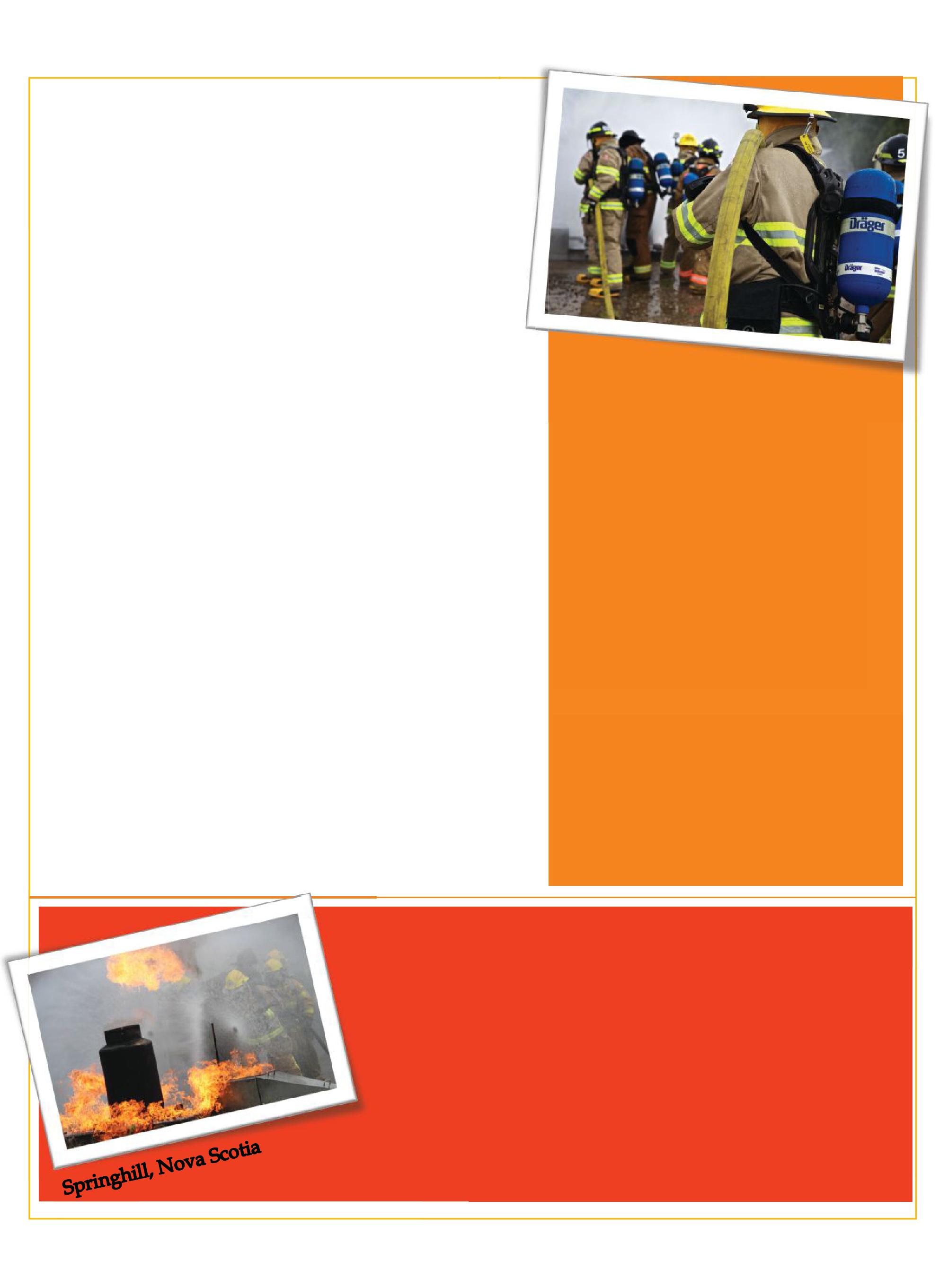
You’ve heard the saying the fire service is 200 years of tradition, unimpeded by progress?
You’ve probably also been a cog in that wheel – taking off your SCBA during overhaul, when you know there are toxins in the air, or maybe laughing at those strange-looking, straightout-of-Star-Wars, European-style helmets that have been popping up on fire grounds across North America.
But the evidence is there to back the design’s efficacy, and several manufacturers have taken notice.
Rosenbauer’s Heros-xt helmet and Bullard’s Magma helmet feature similar design components, which, among other safety benefits, make the helmets more comfortable to wear. For starters, there is no eagle or beaver to get snagged on wires or other objects, and there is no brim to make mobility an issue.
The rounded helmets more evenly distribute weight on the wearer’s head, making for fewer neck problems. They also protect the wearer from side impacts. Bullard’s Magma helmet is available in two shapes – a half shell and a three-quarter shell – providing two levels of protection.
Kyle Innis, operations manager at ResQtech, which distributes the Rosenbauer helmet in Canada, says the first benefit of the helmet is its overall design.
“We’ve eliminated the brim. It extends straight down [and] provides a more ergonomic design,” he says.
“If you compare it to a traditional helmet, it’s low profile. There’s nothing protruding from it, like an eagle or a brim, so there are fewer snag points . . .”
The helmet also features a three-point chin strap, much like those found on motorcycle helmets. This provides better support and prevents the helmet from tipping or tilting as the user wears it.
The light is attached at the front of the helmet so that it shines where a user looks. Also, the light lies almost flat, ensuring that it also doesn’t get caught on anything.
The adjustment knob, meanwhile, is on the outside of the helmet, so that users can tighten or loosen the helmet with a gloved hand. Conversely, the face shield and goggles are integrated within the helmet. When not in use, the shield is fitted inside the helmet, where it remains protected.
The Bullard helmet has similar features, such as a multi-point strap and a face shield that slides inside the helmet.
Huron East Fire Department’s District Chief Tom Phillips, whose Seaforth station has been using the Heros-xt helmet for about two years, says he finds it easier to move around with this
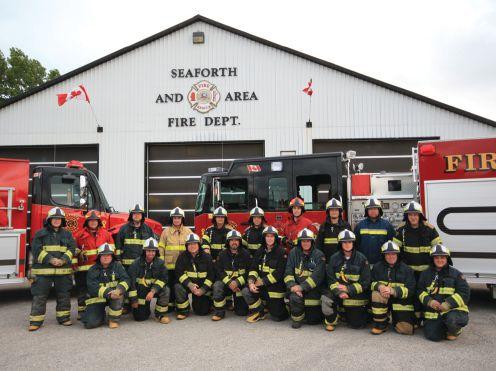
Members of the Seaforth and Area Fire Department in Ontario opted to replace their traditional helmets with the European-style helmets after testing the helmets at a few calls.
style of helmet, especially during extrication operations.
“[During] extrication, you can hit things and get the helmet knocked off,” he says. “With this helmet, it’s easier to manoeuvre if you have to get inside a vehicle.”
The greatest challenge with these helmets is the stigma attached to them. As Phillips says, the traditional helmet is the firefighter’s helmet. But he urges any fire department that is considering making a switch to let the firefighters decide.
“I brought four [helmets] in and [the firefighters] had a chance to use them and wear them,” Phillips explains.
“When I brought them in, I showed them why I was bringing them in. I showed them the features: the adjusting knob, the face shield and goggles, the ear protection, the light.
“I haven’t heard one firefighter say anything about the helmet that they don’t like.”
It’s not the helmet that firefighters are used to, but Innis says that, once crews understand the reasons behind the various style changes, they tend to come around.
“We’re not trying to change the history of fire fighting,” Innis says. “We’re trying to keep the tradition of everybody coming home.”
For more on the Rosenbauer Heros-xt helmet, visit www. resqtech.com, and for information on the Bullard Magma helmet, visit www.bullard.com.
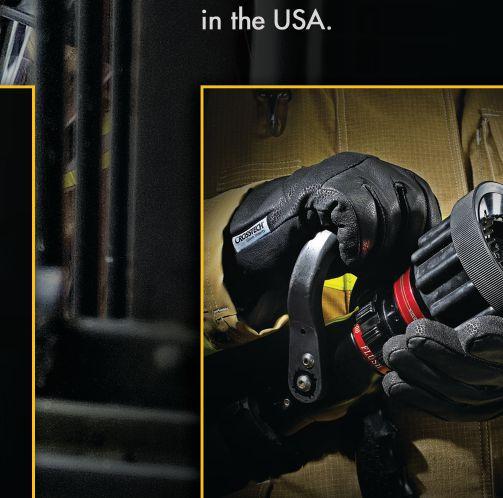







Breathing air becomes a precious commodity on the fire ground. For firefighters who find themselves inside a structure with too little, the consequences can be dire.
The new NFPA standards for SCBA are expected to come into effect this fall. Some highlights from the 2013 edition of NFPA standards 1981 and 1982, as outlined by Scott Safety, include:
• Increased facepiece lens durability through two additional tests, which will measure facepiece performance against high temperature, flame and radiant heat;
• New voice intelligibility requirements that will eliminate the subjectivity of the testing and enhance overall intelligibility using new test protocols:
oSpeech Transmissibility Index (STI) for improved repeatability and reproducibility in the test results, oMechanical communication performance test protocol,
oAmplified communication performance test protocol;
• End-of-Service Time Indicator (EOSTI), or low air alarm, will move from 25 per cent to 33 per cent of the cylinder’s operating pressure;
• All PASS devices will have a universal sound, regardless of the manufacturer.
All SBCA manufacturers are working to apply the new standards to their products, but Scott has gone beyond the 2013 standard, adding new features to its packs to make working on the fire ground safer and more comfortable for firefighters.
“The comfort and weight management is important for firefighters,” says Jeff Emery, senior marketing manager.
“They carry a lot of weight, between turnout gear and SCBA – anything you can do to ease that [weight] reduces the risk of stress injuries.”
Scott added a swivel point to the straps on its SCBA Air-Pak X3 to allow for better comfort when a firefighter reaches up or climbs a ladder. The weight of the pack also sits lower on the waist to better prevent stress injuries.
Deputy Fire Chief Arjuna George with Salt Spring Island Fire Rescue, and a columnist with Canadian Firefighter and EMS
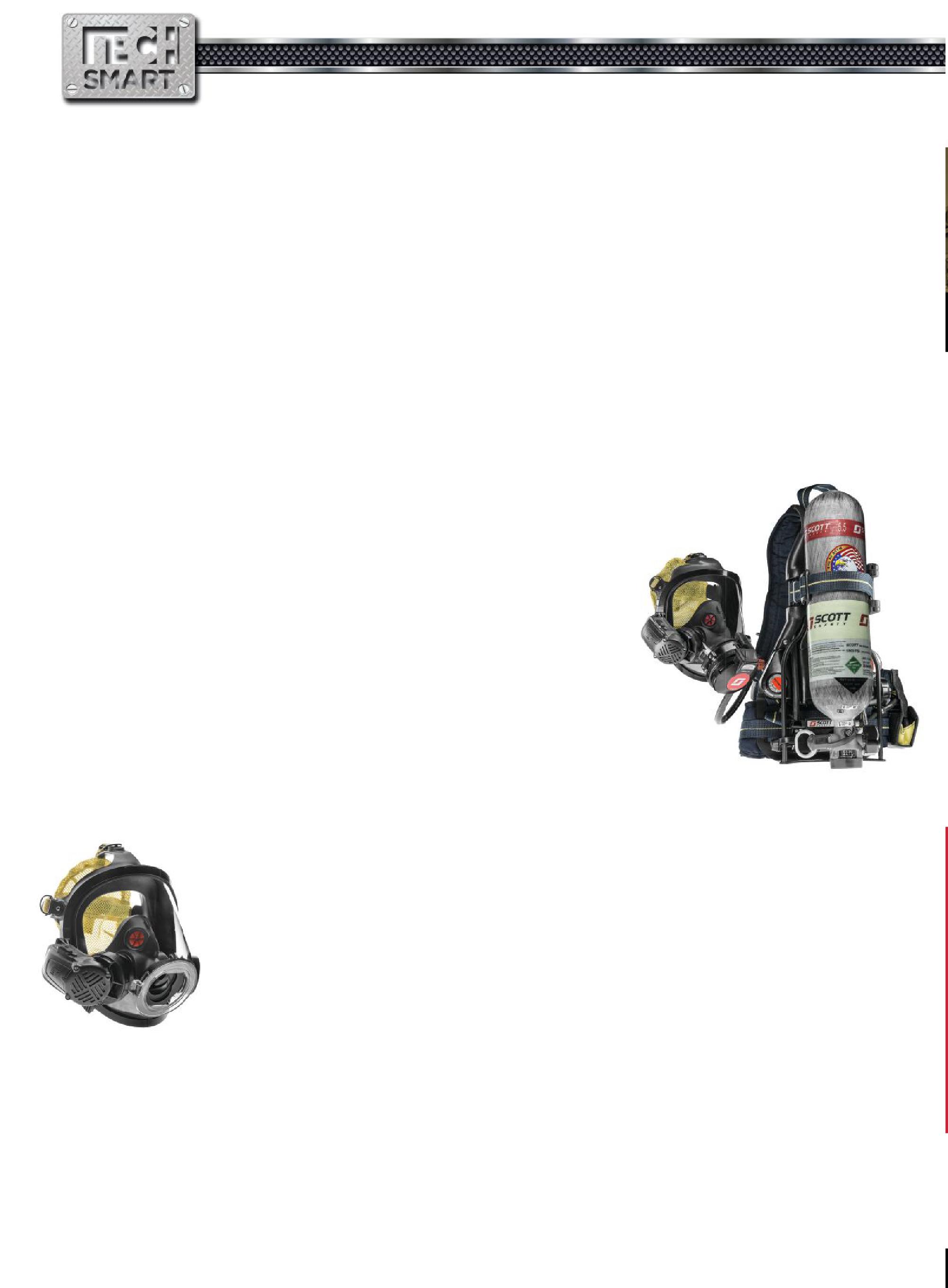
Quar terly, says the comfort of an SCBA pack definitely affects performance on the fire ground.
“Firefighters’ fatigue and stress levels during an operation are huge for health safety,” he says.
“Time for rehab can be drastically shortened because they’re not exerting as much. And, with the advances in personal protective equipment, we’re allowing our members to work easier.”
The hoses and wires on Scott’s pack are hidden in the shoulder straps of the pack to reduce the risk of snagging. The cylinder connection is available in either snap-change or CGA, and a rescue drag loop has also been sewn into the pack, allowing for easier and faster rescues.
g gue and stress levels durfor health an ed d, rs res idden in f the snagging tion is available
Scott also fitted the gauge console with an indicator light for air supply, compliant with the 2013 standards. This enables all members of a team to quickly assess one another’s air levels.
Scott’s new SCBA packs, which were designed to meet the new NFPA standards, better consider a firefighter’s comfort; for example, the packs feature swivel points on the straps, making it easier for a firefighter to reach above his or her head.
“As a captain, you can scan the members of your team and see if you’re good to keep going [into a structure] or if you need to hurry out [of the structure],” Emery says. “It creates better awareness among the team.”
The facepiece, meanwhile, is now available with a voice amplifier that meets the new standard. The amplifier can be mounted on either side of the facepiece and has an on/off switch to conserve the battery.
“Communication is key in pretty much everything we do,” George says.
“Voice amplification helps; when you’re talking through a mask, you sound like Darth Vader – but with a voice amplifier, it’s clear, even through the mask.”
For more information on Scott’s new air packs, visit www.scottsafety.com.



The PyroLance is unlike anything most firefighters have ever seen, though the tool has been on the market for almost three years now. The Aurora, Colo.-based company of the same name has developed a nozzle that enables firefighters to safely access, cool and extinguish a fire more efficiently.
The nozzle, which is startlingly shaped like a rifle, uses high-pressure water paired with a granite abrasive to break through various materials, such as brick, concrete, aluminum and plywood, and access the fire.
Tim Lewellyn, a career firefighter for the Allegheny County Airport Authority in Pittsburgh, Penn., and a columnist for Canadian Firefighter and EMS Quarterly , had heard of the PyroLance, though he’s only seen it used in videos. He says anything that can improve firefighter safety is certainly worth investigating.
“If you have the capability of applying an extinguishing agent without putting a firefighter in that hazardous environment,” he says, “that’s worth looking into.”
He especially sees a benefit to a tool like this in more industrial settings – for container fires, in the transportation industry, in industrial areas and at airports. However, in typical residential structure fires, windows are readily available for a similar type of operation – making an opening and fighting the fire without entering the structure.
The PyroLance also uses the high pressure to break the water into small micro-droplets, which the company says can cool and extinguish the fire faster and more effectively than traditional hoses.
As Bill Ballantyne, president of PyroLance, explains, the high pressure of the tool breaks the water droplets into a fine mist, which offers more surface area, resulting in a more efficient fire knockdown.
“Now, instead of measuring 900 microns in diameter, the droplets measure maybe 90 or 100 microns in diameter,” Ballantyne says.
“They go through the atmosphere and hit the burning gas, and about 90 per cent of the droplets are absorbed.”
The result is less water needed for the operation and less damage from runoff. The abrasive, meanwhile, enables the high-pressure water to penetrate nearly any material, Ballantyne says.
Like Llewellyn, Ballantyne says the tool has exceptional applications in industrial settings.
“The abrasive and the high-pressure water allow the
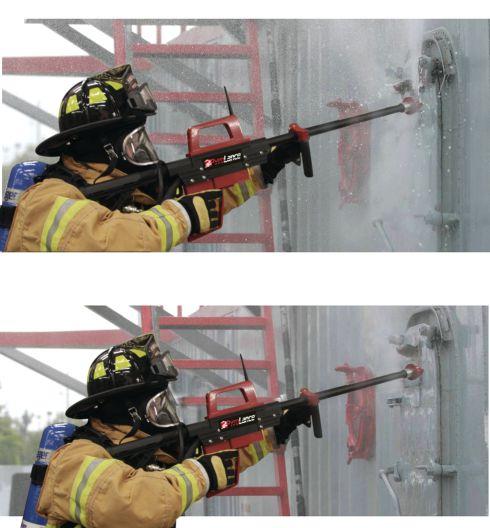
The PyroLance nozzle, which is startlingly shaped like a rifle, uses high-pressure water paired with a granite abrasive to break through such materials as brick, concrete, aluminum and plywood, and access the fire.
nozzle to penetrate the material,” Ballantyne says.
“It allows a firefighter to stand on the outside of a barrier – a shipping container, an aircraft, a warehouse – and the firefighter can pierce through that barrier in a matter of seconds.
“Now we’re not sending a firefighter inside, where they’re exposed to heat and flashover and the dangers of modern construction.”
That’s really the best part of the tool – its ability to keep firefighters out of harm’s way, while still enabling them to do the job.
“Anything that would enable you to put out the fire while keeping the firefighter safe,” Llewellyn says, “I don’t see a con to that.”
For more information on the PyroLance, visit www.pyrolance.com.



Maintaining situational awareness on the fire ground is critical to firefighter safety. Losing that awareness can have fatal consequences, especially inside a structure fire; for example, not noticing that your water pressure is decreasing can put you in a bad situation – one that could easily have been prevented.
Many things can cause water pressure to drop to dangerous levels, such as a kink in the hoseline or a problem with the truck’s electronic pressure governor. While these unpredictable events can still happen, Akron Brass has developed a tool to mitigate the surprise factor.
The company’s HydroFX flow indicator fits on the top of the nozzle and alerts users if the water pressure is dropping or is at a dangerous level: a green light indicates optimal pressure, a yellow light describes water pressure below the desired flow and a red light indicates low pressure.
Departments can customize the indicator to their own standards, and the device can be retrofitted onto all one-and-ahalf-inch or Mid-Range Assault nozzles.
“In terms of nozzle pressure, the indicator [for a nozzle firefighter] is usually the force of the water that we feel, or the stream quality or how far [the stream] reaches,” says Tim Lewellyn, a career firefighter for the Allegheny County Airport Authority in Pittsburgh, Penn., and a columnist for Canadian Firefighter and EMS Quarterly.
“So a visual indicator like that is an interesting concept.”
However, he says that many firefighters may be wary of a product that removes the human component from an operation.
“I can see a lot of firefighters . . . saying that, with proper training, the pump operator can make sure there’s proper pressure so that the nozzle firefighter doesn’t have to pay attention to that.”
Either way, Llewellyn says that water flow is the most important thing on the fire ground, and anything that can help maintain or improve firefighter safety is something to consider.
“Adequate water flow is one of the most important factors that fire-ground commanders and incident officers need to ensure they are providing to firefighters.” says Llewellyn
For more information on the HydroFX indicator, visit www.akronbrass.com.
The average firefighter’s helmet weighs about two kilograms (five pounds). Bunker gear, on average, weighs almost 16 kilograms (35 pounds). SCBA weighs another 14 kilograms (30 pounds). That’s
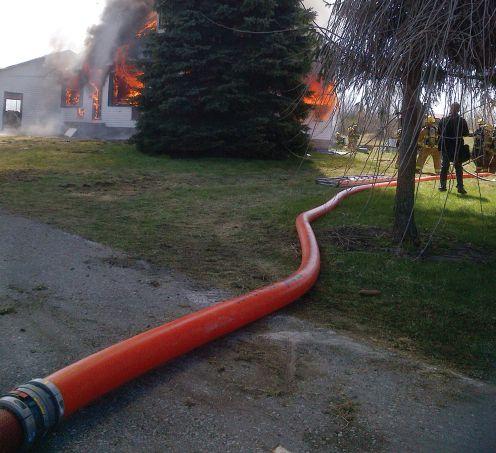
All-American’s Kryptonite hose is made of a circular, woven polyester jacket, covered with a urethane polymer, resulting in a supply line that weighs about 40 per cent less than typical rubber lines.
an extra 32 kilograms (70 pounds) of weight – on top of your own body weight – to lug around the fire ground.
Firefighters obviously don’t need to add more weight to their work on scene, and that’s why fire-service manufacturers are working to use lighter materials in the products they make
All-American Hose has joined the list of manufacturers of lightweight materials with its Kryptonite LDH supply lines. The hoses are made of a circular, woven polyester jacket, covered with a urethane polymer. The result is a supply line that weighs about 40 per cent less than typical rubber lines.
“Lightweight hoses definitely make a difference,” says Lewellyn.
“Especially in the beginning stages of a fire, when there usually aren’t enough people, so you’re pulling hoses on your own – the lighter it is, the easier it is for firefighters to do all the things they need to do.”
This material also makes the hose thinner, so it takes up less space on the truck, and makes the hose stronger. The polyurethane material reduces friction loss, while maintaining the hose’s flexibility.
For more information on the Kryptonite hose, visit www.all-americanhose.com.

As new technologies continuously arise, some things in the fire service have remained essentially the same. The saw is one of those things.
For example, chainsaws are almost always used during ventilation operations to cut through housing materials – wood, stucco, plaster, nails, roofing paper. Rotary saws, meanwhile, are used for heavier materials, such as metal doors during forcible-entry operations.
There’s solid reasoning behind this; the chainsaw is long and can cut deep into thicker materials, such as those found on a roof. A rotary saw, however, has the speed and the power to cut through strong metal objects, such as heavy-duty doors.
Now, Cutters Edge – the developer of the bullet chain, which is manufactured specifically for the fire service – has produced a rotary saw that uses a bullet chain. The Bullet Blade features the speed of a rotary saw and the resilience of a bullet chain.
Cutters Edge president Thomas Ruzich, explains: “Right now, many fire departments will carry both a rescue chainsaw, for cutting materials like wood, stucco, plaster, nails and roofing paper, and a rotary saw, which will cut virtually any material.
“The chainsaw can cut vehicle materials, but you’ll have catastrophic failure – you know you’re going to damage the chain. The Bullet Blade, because it’s moving three times faster than the chainsaw, can cut the materials that [would normally] break the chain.”
It’s a simple law of physics, Ruzich says: velocity will always overcome mass.
Andrew Brassard, a forcibleentry instructor and firefighter with the Milton Fire Department in Ontario, says he could see his team using the Bullet Blade on olderstyle buildings.
“For ventilation on a flat roof, primarily those in downtown cores, for example, I think it would be fantastic,” he says.
Because the chain on the Bullet Blade is running at 100.6 metres per second (330 feet per second), on average, it’s able to cut through things such as a 3/8-inch-thick steel plate, any building material, concrete blocks, rollup doors, garage doors, and large vehicles

– semi trailers, trains, buses, and even aircraft.
“After my 30 years in the fire service, I’ve been trying to find the best tool for cutting into aircraft,” says Ruzich, who is based in Oregon. “Everything behind this was trying to find a tool that worked well on aircraft, that we could use on the crash rescue field. The Bullet Blade can cut through all those materials on the aircraft.”
The Bullet Blade has been in development for several years. Ruzich says he and his team worked to get the chain onto the blade securely. With older rotary saws, when the blade dulls or enough of the picks break off, typically you dispose of the entire blade. With the Bullet Blade, the core of the blade can be reused; the chain is removable and can be taken off and sharpened or repaired, if necessary.
“Up front, it’s a bit more expensive,” Ruzich admits. “But over the life of the blade, it provides cost savings.
“In most cases, you’d only need to sharpen the chain; it’s very, very rare that it would break. That extra speed reduces the breakage so dramatically.”
ing its life. The cuttin of the b bites out of ditional
The shape of the chain also protects the saw, further extending its life. The cutting edge of the saw is protected by the design of the bullet chain. The saw takes smaller bites out of the material being cut than a traditional chainsaw would, but it has a wider cutting ability: only the tip of a chainsaw actually cuts into the material, but a rotary saw offers 180 degrees of cutting activity. So, even with 70 per cent of the picks dulled or broken off, the Bullet Blade can still function.
“We didn’t design it to never break, because that’s impossible,” Ruzich says. “We designed it to break off strategically.”
Because of the Bullet Blade’s composition and ability to withstand moderate damage, firefighters can completely finish difficult cuts without having to switch tools, change a blade, or experience complete failure of the tool.
“The bullet chain is not new – it has been in the fire rescue industry for 25 years,” Ruzich says. “It has served us well for one configuration; we’ve just expanded its usefulness to us.”
For more information on the Bullet Blade, visit www.cuttersedge.com.
Third-party test results show over 40% improvement for the new Commander model’s dexterity rating.
The Commander’s TPP results are above 60, far exceeding the NFPA 1971 standard.
Next-generation CROSSTECH® Insert
It is fully bonded to a form- tting thermal liner to create a “3D” combination of thermal liner and moisture barrier. This results in better exibility, less bul in the palm and improved dexterity.
Replacing the one-piece bac of hand with a threepiece gives better stretch and nuc le protection while allowing for improved grip.
odi ed Finger Crotches and Thumb Designs typically used in 3D models have been incorporated to provide better t and performance.
KOVENEX Thermal Batt
KOVENEX is a ame resistant non-woven fabric made from a blend of three bers. The non-woven needlepunched felt is further stitch bonded with a non-melt Rayon yarn to loc in the bers to prevent thinning and to maintain the loft of the fabric. This delivers excellent TPP and radiant heat protection while enhancing dexterity, which eases dof ng and donning, especially when wet. The ber blend is also cut resistant, tear resistant and very s in friendly uni ue in FR materials.
Incident scenes can be chaotic, particularly multi-vehicle collisions at which flashing lights, injured patients, twisted metal and curious onlookers can add to the mayhem.
The noise of power generators at extrication calls, paired with the stress of moving quickly and efficiently to connect hydraulic hoses and ensure patient and firefighter safety, certainly doesn’t help to instil a sense of calm on scene.
Some responders have found that quieter, wireless, battery operated tools such as Hurst’s eDraulics, Holmatro’s Self Contained Rescue Tools, and Genesis’ EForce line, each of which were launched a few years ago but are gaining popularity, reduce both noise and tripping hazards, and make for a less tense scene.
These tools are entirely battery operated – they do not need hoses, power units, gasoline or couplings to function – but users say they’re strong enough to completely finish a cut.
Auto-ex guru, Calgary firefighter and Canadian Firefighter and EMS Quarterly columnist Randy Schmitz, who has used Hurst’s eDraulics, says he finds nothing lacking in the tools’ power.
“The eDraulics perform exactly the same as any other wired tool or tool that uses a pump,” Schmitz says.
“There is no difference in the amount of cutting force or spreading force or power.”
Schmitz says the greatest advantage is that the tools are easy and quick to set up. With no hydraulic hose to unravel or generator to start, firefighters can arrive on scene and immediately get to work.
“I can grab that tool and I can push a button and I have instant power,” Schmitz says.
“It’s portable; for example, if you go to a crash and the vehicle is in a ravine or down an embankment, you can bring that tool
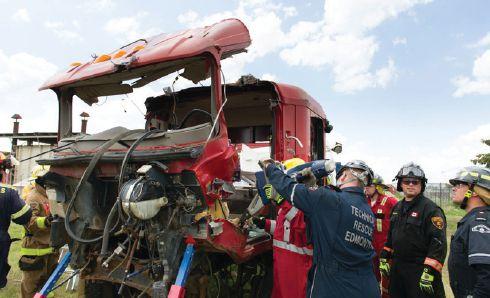

Battery-operated extrication tools, such as Hurst’s eDraulic line, reduce both noise and tripping hazards, and make for a less tense accident scene.
down there very quickly. You can get busy right away.”
Code 4, the Canadian dealer for the Hurst line, recently shot back at competitors’ claims that the eDraulic battery life is inadequate, that the tools’ weight exceeds the United States Occupational Safety and Health Administration standards, and that the price is much higher than other traditional tools.
In a recent newsletter, Code 4 said the tools have been verified by a third party and are compliant to NFPA 1936 standards. Code 4 also said five of the six tools weigh less than 23 kilograms (50 pounds), with the smallest tool weighing just 17 kilograms (37.3 pounds). In addition, Code 4 said, the lack of a hose reduces the lag, resulting in faster movements.
According to Hurst, the battery functions in temperatures as low as -20 C, and because the battery itself provides a certain amount of heat, the tools have been known to successfully operate through ambient temperatures of -29 C. The tools come with two batteries and a 110-volt adaptor.
Schmitz says that these two concerns – battery life and how the tools would function in cold weather – mirrored his own worries. However, after using the tools, these concerns were mitigated.
“I cut up a full-sized minivan – all the doors and the dash and everything – that was about half an hour [of work], and I still had lots of battery life,” Schmitz says.
“You’ve got to make sure your tools are maintained properly and the batteries are fully charged before you start.
“And if the batteries do go dead . . . you can plug back in to the 110 V system and be operational again.”
For more information on Hurst’s eDraulics, visit www.jawsoflife.com, Holmatro’s Self Contained Rescue Tools, visit www.holmatro-usa.com, and on Genesis’ EForce tools, visit www.genesisrescue.com.
YOU ALWAYS ANSWER THE CALL. WE CAN ALWAYS ANSWER YOUR QUESTIONS.
When the alarm bell sounds, you respond. That’s the job. That’s what people depend on. And that’s exactly how Waterous feels about service. This mentality makes our service the best in the fire business. We’re on call to answer your questions from product use to service maintenance. Service you can depend on. It’s our promise. Pick up the phone, put us to the test and see how Waterous measures up. WE ARE WATEROUS. WE ARE FIREFIGHTERS. Where is your pump made?
Afire in East Gwillimbury, Ont., in March that tragically trapped and killed four members of a single family led to discussions in the media about different types of smoke alarms.
The home was equipped with smoke alarms – albeit, not enough of them, according to an investigation by the Office of the Ontario Fire Marshal – but as an interconnected system, hardwired through the room in which the fire started, the alarms failed early into the fire.
Many homes in that neighbourhood, located about 60 kilometres north of Toronto – and in neighbourhoods across the country – are built with similar alarm systems: each alarm is hardwired to the others so that if one alarm sounds, they all do, but, in many cases, if one alarm fails, so do the rest.
Now, manufacturers such as Kidde and First Alert, have developed alarm systems that maintain the benefits of interconnected smoke alarms but mitigate the problems. The systems wirelessly connect each of the alarms in the house using a secure radio frequency; this eliminates the need for wires, and allows the system to be added to an existing home without costly retrofitting.
“Wireless interconnected alarms make it easier for families to protect themselves, and ensure they can escape quickly,” Carol Heller, a home-safety expert with Kidde, explained in an email.
“This means that the fire service can hopefully attend fires and find more families safely outside at their meeting place.”
The alarms also offer several features common to other modern alarms, such as photoelectric technology to reduce the occurrence of nuisance alarms, test and silence buttons, and lower-frequency alarm sounds so that those with minor
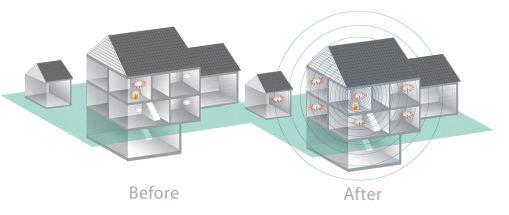
In the event of a fire, all the alarms connected through a wireless system will sound, even if they are not in the vicinity of the fire, ensuring that any occupants have time to escape.



Wirelessly connected smoke alarms offer the benefits of a hardwired alarm system, but mitigate issues such as costly retrofitting. The alarms also have a remote hush feature.
hearing loss can still be alerted.
Robert Comeau, the fire prevention officer for the Quinte West Fire and Emergency Services in Ontario, says his department endorses the wireless alarms.
“We definitely recommend them,” he says.
“You can put them everywhere throughout the house, and by having them interconnected, if you have one activated, every one that’s connected will sound.”
Comeau also points to several other benefits outside of personal protection.
“It saves you a lot of money to use the wireless [alarms] because you don’t need an electrician to add wiring [as with traditional hardwired alarms],” he says.
Kidde’s version of the wireless alarms also feature a remote hush component, so homeowners can quickly silence a nuisance alarm or quiet a low-battery chirp for up to 12 hours. Those types of features also appeal to public educators because they counter homeowners’ arguments for pulling batteries out of sensitive smoke alarms that go off every time the toaster is used.
For more information on wirelessly interconnected smoke alarms, visit www.firstalert.com or www.kiddecanada.com.

Apparatus advances offer fire-ground efficiency for budget-conscious departments
With budgets cuts constantly looming, fire departments need to find efficiencies and make compromises – thus the old adage, doing more with less, seems all the more relevant.
As neighbourhoods become diverse landscapes, departments are being forced to decide between new fire apparatuses that are becoming more and more necessary – a new condo building in town may make a ladder truck a good investment, but your pumper is getting old. . .
Or maybe your existing trucks are having trouble traversing the increasingly cluttered city streets – new bike lanes, separated streetcar lanes, bigger garbage bins, and what seems like a neverending onslaught of people crowded on street corners.
Several truck makers are improving their products so that departments don’t have to compromise their communities’ safety.
Fort Garry Fire Trucks’ newly designed Duster series of trucks have a shorter wheel base, which makes it easier to manoeuvre them around tight spaces. This ease can translate to faster response times.
“Streets today can get congested very quickly,” explains Chris Dennis, the chief mechanical officer for Vaughan Fire & Rescue Services in Ontario, and columnist for Fire Fighting in Canada magazine.
“[A truck’s manoeuvrability] would definitely impact response times. In some cases, you really need to think about the route you take to a scene.
“If the truck has a longer wheel base, and you know there are always cars parked along that street, the truck may not be able to make the turn, but a truck with a shorter wheel base would – that would decrease the response time.”
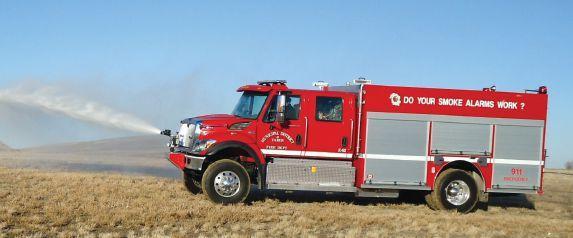
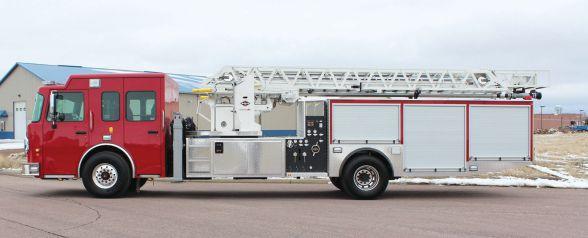
ERV’s multi-purpose aerial-pumper-ladder truck features a 20-metre (65-foot) ladder, a maximum 1,500-GPM pump, and 11 cubic metres (400 cubic feet) of compartment space – all for $425,000 or less.
The Duster pumper truck, for example, retains all the functions of a larger pumper truck, including a 1,000-gallon tank, a 1250 Darley PTO pump, seven cubic metres (252 cubic feet) of equipment space and a two-and-a-half cubic metre (92 cubic foot) hose bed, but offers a shorter wheel base that enables it to better traverse through narrow landscapes.
“It’s a good bush truck, too,” says Fort Garry president Rick Suche.
“It gives [fire departments] a much better turning radius, so if they need to go through narrow bush roads, they can get [to the fire] quicker. There’s also a low centre of gravity so [the truck] is more stable on off-road situations.”
Meanwhile, Spartan ERV has developed a pumper/aerial/ rescue truck, all in one apparatus. The multi-use truck features a 20-metre (65-foot) ladder, a maximum 1,500-GPM pump, and 11 cubic metres (400 cubic feet) of compartment space – all for $425,000 or less.
“Any elevated aerial device makes a great master stream,” Dennis explains. “It’s also a wonderful piece of equipment for reaching rooftops and ventilation.
“If it’s a rural operation, though, you’d want a big water tank . . . So, you need to think about the operation [and] need to know that you have the best truck for the job.”
The aerial features on the Spartan truck include a three-section 20-metre (65-foot) ladder and a 1,000-GPM waterway. The rescue features include 11 cubic metres (400 cubic feet) of storage with LED compartment lighting and custom tool mounting, while the pumper includes either a 300-gallon or a 500-gallon water tank, a 1,250-GPM pump, as well as NFPA-compliant ground ladders.
Protect your connections with the best patented coatings,
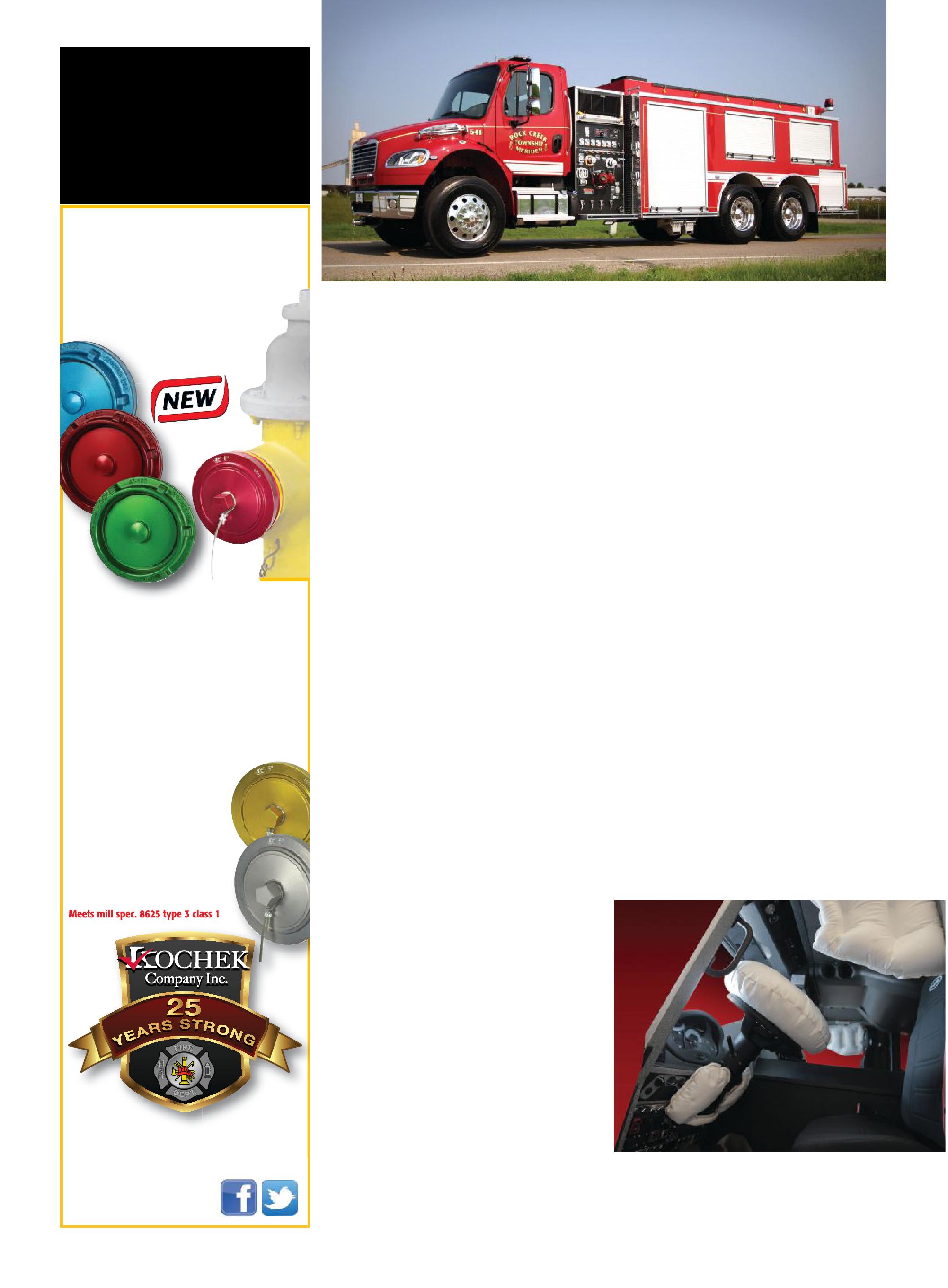
MICRALOX Micro-Crystalline
MICRALOX a patented process, will extend the life of your aluminum parts up to 10 Times compared to conventional aluminum anodic coatings; more effectively resists salt, and chemical corrosionand attack.
15,000 hrs of salt spray without any degradation to finish compared to standard anodic coatings.
Meets mill spec. 8625 type 3 class 2
QUANTUM HardcoatColor
• High quality durable hardcoat
• Vibrant anodized color
• Great for color coding
Meets mill spec. 8625 type 3 class 2
NATURAL Hardcoat
• High quality durable hardcoat
• Most often specified by design andmanufacturing engineers
Meets mill spec. 8625 type 3 class 1
“In the U.S., there are over 24,000 fire departments that do not have an aerial device, and the primary reason is cost,” explained Russell Chick, corporate director of marketing for Spartan ERV, in an e-mail.
“Pumpers are the baseline apparatus for every fire department. The [Spartan truck] . . . is a versatile multi-function pumper. It is . . . ideally suited for today’s price-sensitive marketplace.”
For more information on Fort Garry’s pumper line, visit www.fgft.com, and for more information on Spartan ERV’s multifunction truck, visit www.spartanerv.com.
Many truck manufacturers aren’t re-inventing the wheel so much as they’re improving it.
Midwest Fire, for example, has developed a new body for some of its pumpers and tankers that is made entirely of polypropylene, a synthetic plastic-based material.
As a result the truck is lightweight, rustproof and corrosion-proof. The truck also comes with a lifetime tank and body warranty, and a lower upfront cost than traditional aluminum and stainless steel trucks.
“The cost of materials and the environment have really impacted how fire trucks are being built,” says Chris Dennis, the chief mechanical officer for Vaughan Fire & Rescue Services in Ontario.
Dennis says that, while departments need to consider several things when purchasing a truck, such as environmental friendliness or the types of incidents to which the department responds, the cost of the truck is one of the bigger considerations.
However, Erin Schneekloth of Midwest Fire says the rust- and corrosion-proof nature of Midwest Fire’s All-POLY line of trucks, paired with the company’s lifetime warranty, minimize the cost of the truck over time.
“It can perform no different from any other truck or standard metal-body truck that we could build,” Schneekloth says.
“It would outperform [the other trucks], with the lifetime warranty.”
For more on Midwest Fire’s all-polypropylene truck, visit www.midwestfire.com.
Safety is an important consideration in every part of the fire service – from operations to equipment and everything in between. E-One is taking apparatus safety one step further with its ProTech system.
In terms of accident prevention, the system incorporates a collision warning and mitigation system that uses a radar system to detect a possible collision and warn the driver, electronic stability control that offers support during evasive driving manoeuvres, and 360-degree cameras and backup sensors.
The protection aspects of the system include several airbags: on the steering wheel and in the driver and officer knee areas. The system also involves a cab that was designed like a roll cage to mitigate damage and injuries in the event of an accident.
“The fire trucks today are finally not only meeting the standards set by the automotive engineer – airbags and seatbelt restraints – but are exceeding safety features,” Dennis says.
For more information on E-One’s ProTech system, visit www.e-one.com.


BY PETER SELLS
n my August column, I reviewed a consultant’s report on the potential combination of Toronto’s fire and EMS services, which had just been publicly released. The study recommended that Toronto Fire Services “implement dynamic staging and use predictive modeling and pre-emptive traffic controls to better predict demand and more effectively deploy fire resources and apparatus.”
That recommendation calls for two distinct and unrelated strategies: deployment based on prediction of demand and pre-emptive traffic controls. Pre-emptive traffic controls is a complex topic on its own, so let’s leave that for a future discussion.
The study states that “Toronto’s current fire resources and apparatus could be used more effectively through the use of dynamic staging and an enhanced technology to better predict demand and deploy resources.” My problem with this statement is that it has put the cart before the horse. One cannot conclude that dynamic staging, or any other deployment strategy, would be effective until a predictive modelling analysis has been done. The recommendation appears to suggest a solution to a problem that has not been specifically identified, and certainly has not been quantified.
Let’s understand what is being suggested here. Predictive modelling involves the analysis of past trends and current conditions to determine the most probable distribution of service demands in the future. I first became aware of such modelling as a manager trainee at McDonald’s, as I languished on the wait list to be hired by Toronto Fire. We had binders of data with sales numbers for this day last week, this day last month and this day last year. These were used to predict sales totals in 15-minute increments for today. Staffing of the front counter, drive-through and kitchen would then be scheduled according to expected sales volumes throughout the day. It worked pretty well, for a paper-driven 1980s system. I can only imagine the tools McDonald’s has now.
Dynamic staging involves the placement of emergency response units to pre-defined locations to best respond to event trends predicted by modelling. Staging locations can be existing emergency service stations, other civic properties or even marked locations on the side of a city street. The fire people reading this are getting ready to hang and ignite my effigy, but please hear me out. Dynamic staging has been in use by EMS organizations for a long time, and it makes sense – in an EMS context. Ambulances, especially advanced-care paramedic units, can have average response times in excess of eight, 10 or 12 minutes even within major cities. Their home bases are spread much thinner than fire halls. Dynamic staging of fire resources as suggested (but not analyzed or justified in any way) by the Toronto study amounts to applying an EMS paradigm to a fire-protection infrastructure. Parking a fully staffed quint on a street corner, barking out diesel particulate for hours is a complete waste of time. No training or maintenance is taking place and the tactical advantages are likely minimal. There are better ways to use predictive modelling to optimize fire-response resources.
The Toronto study addresses this point: Although the 24-hour shift model ensures maximal fire response capacity at all times of the day, it does not facilitate peak hour staffing changes, with reductions
Dynamic staging of fire resources as suggested...amounts to applying an EMS paradigm to a fire-protection infrastructure. ‘‘ ’’
In a fire-service context, predictive modelling is used to anticipate call volumes by type and geographic area within defined time periods. Models cannot predict individual fire calls by address or vehicle collisions by intersection, just probabilities of events within perhaps a three-hour window in a specific first-response district. The idea is then to deploy personnel and apparatuses to the best advantage based on those probabilities. Hang onto that thought for a minute.
Retired District Chief Peter Sells writes, speaks and consults on fire service management and professional development across North America and internationally. He holds a B.Sc. from the University of Toronto and an MBA from the University of Windsor. He sits on the advisory council of the Institution of Fire Engineers, Canada branch. Peter is president of NivoNuvo Consulting, Inc, specializing in fire-service management. Contact him at peter.nivonuvo@gmail.com and follow him on Twitter at @NivoNuvo
in planned staffing over the predictable slow time periods of the day.
Step 1: Determine your minimum safe level of staffing and ensure that level is met at all times. Step 2: Use predictive modelling to anticipate peak demands by time and space. Step 3: Schedule additional staffing to meet those demands, in whatever time increments are appropriate.
Does this sound radical? It certainly runs contrary to normal operations for most of us, but in the United Kingdom, where budgets have been slashed drastically in recent years, these strategies are in place.
Two things are clear: we can’t continue to do business as usual and expect to see any service improvements or cost efficiencies without putting all issues on the table; and, any future changes must be analyzed and implemented from a fire-protection perspective putting public and firefighter safety above all other considerations.
OK, light me up.





Two in one alarm provides 10 years of protection from dangers of
Sealed battery and portable, Pea level memory noti es of a CO event in the last 14