Stainless Steel Apparatus that Perform Under Pressure
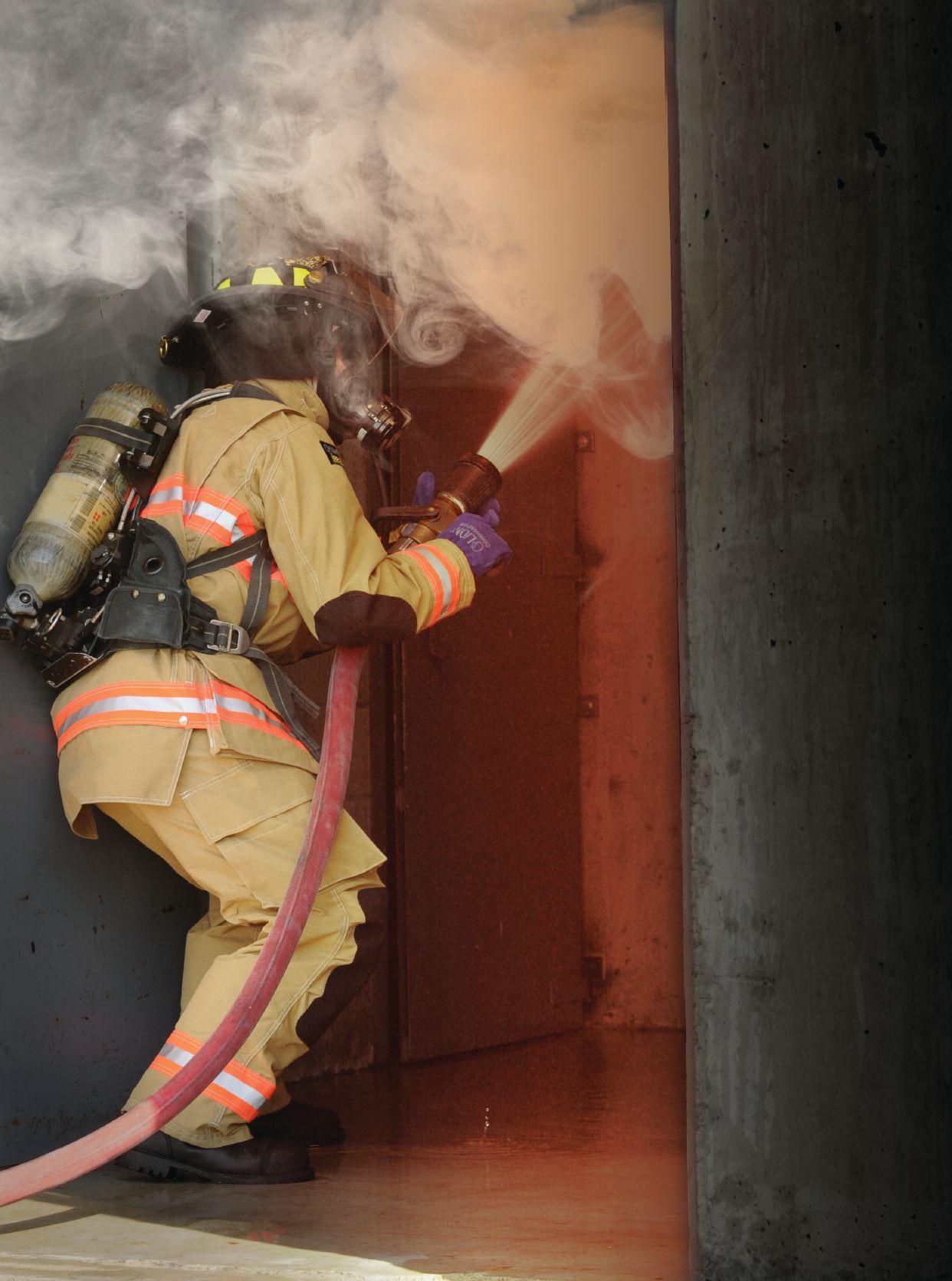
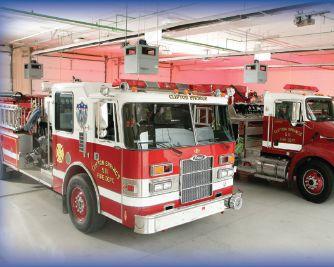
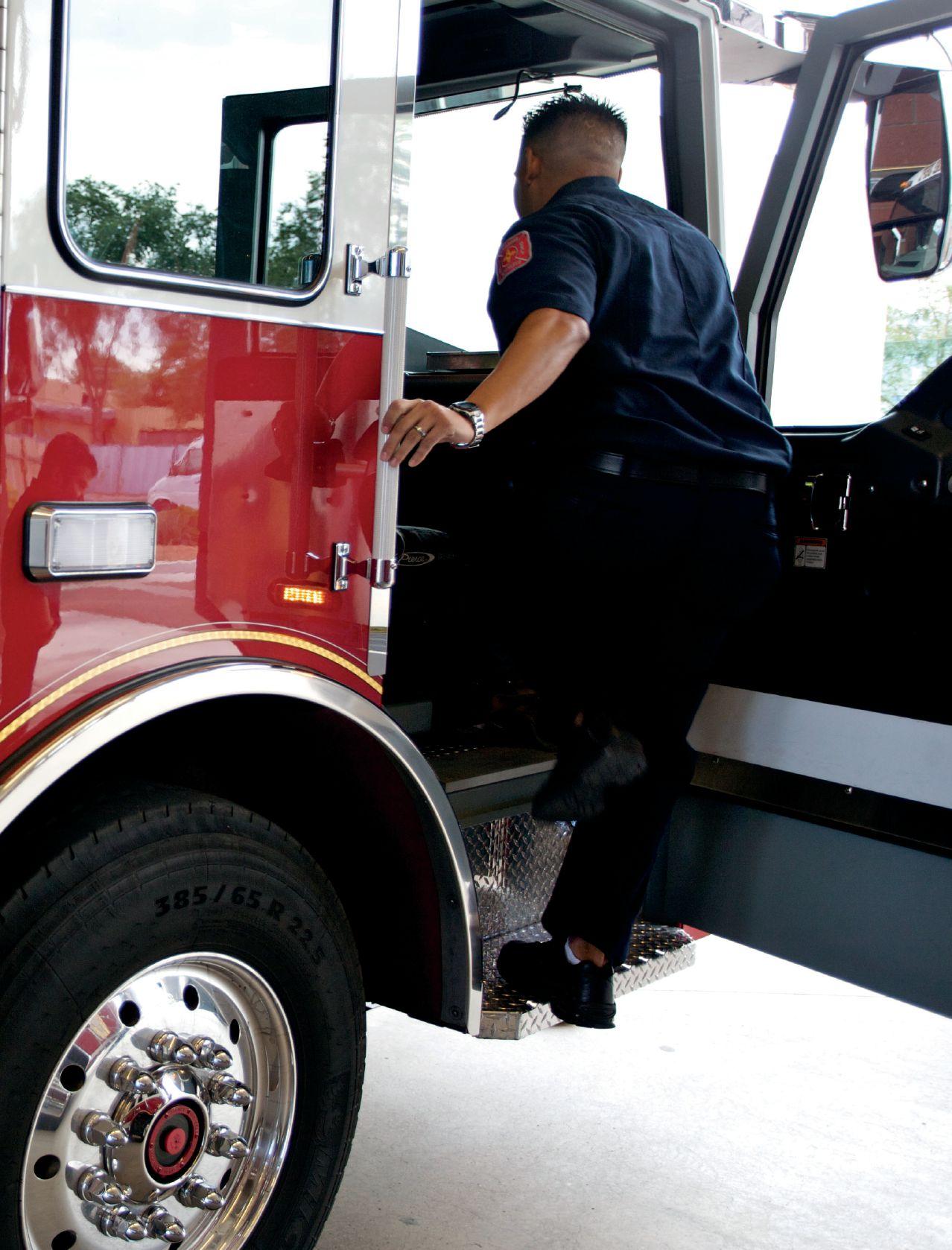
When the scene heats up, you demand outstanding performance from everyone – and everything. E-ONE Stainless Steel pumpers, rescues and aerials never flinch. They’re forged entirely of stainless steel, including hinged doors and the sub-frame. And just like our world famous aluminum lineup, they set the standard for durability and performance.
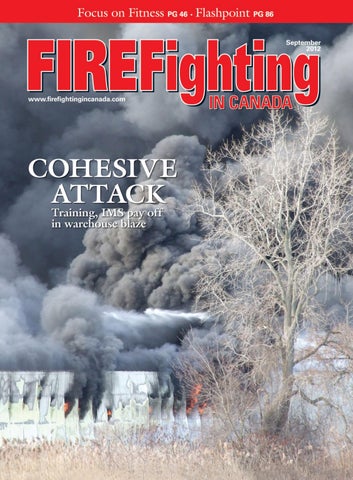
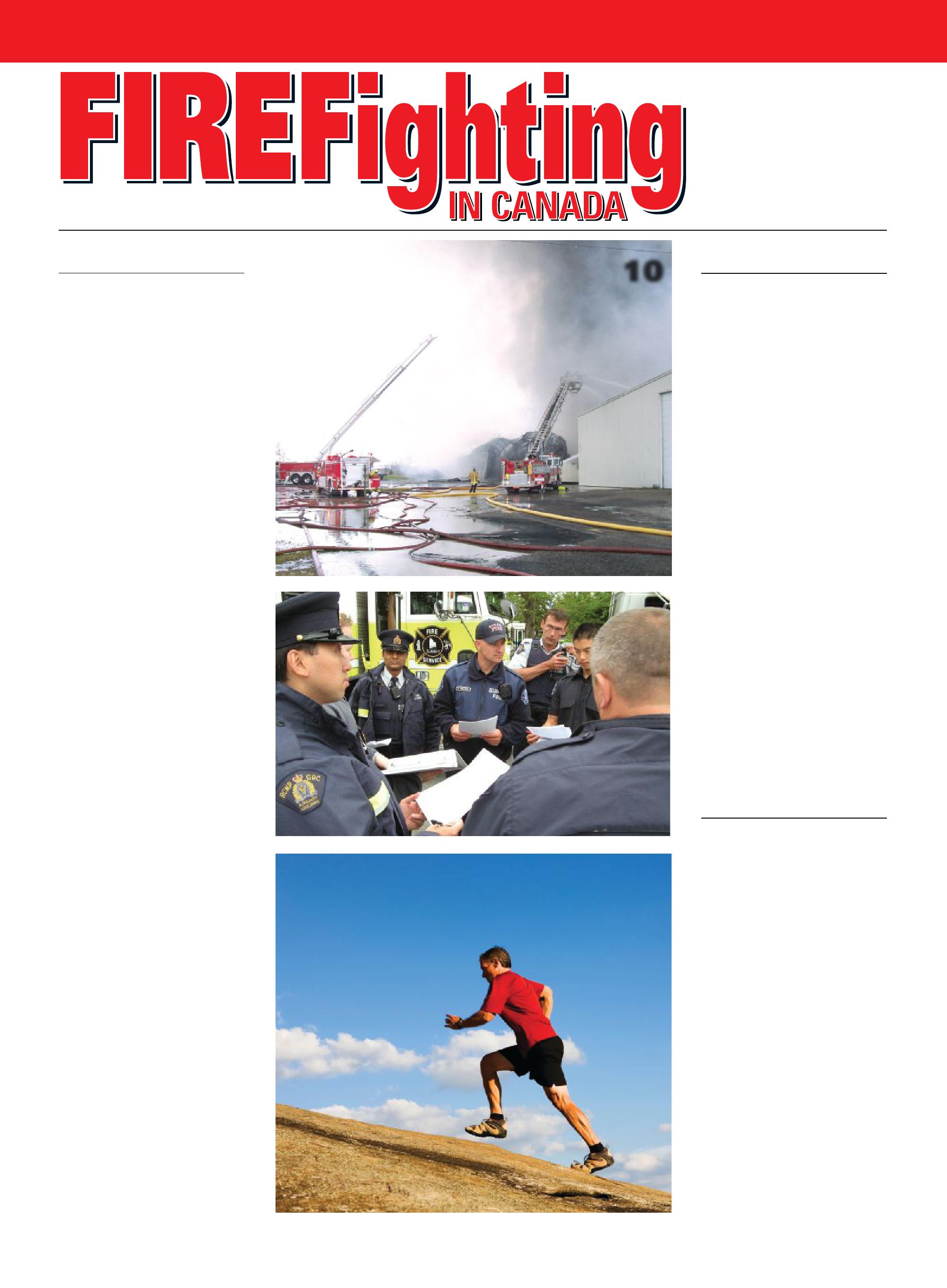
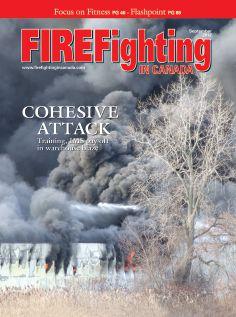
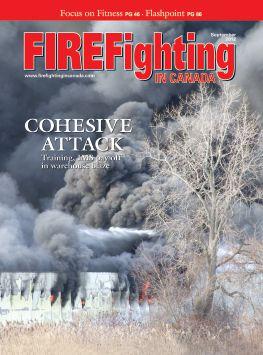
COHESIVE ATTACK
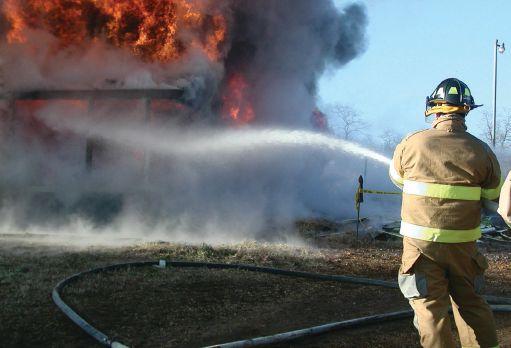
It is generally understood that emergency services will plan, prepare and train for the big one, while it is expected that these plans will rarely be tested. As Deputy Chief Steve Bicum reports, on Dec. 20, 2011, the plans and preparation were tested in the Township of St. Clair in Ontario, when a 2,800-square-metre boatstorage warehouse burned.
14
WALKING THE TALK
A simple plan to go door to door and educate residents about smoke detectors and breakins has paid off, with sizeable reductions in crime and house fires. As Surrey Fire Chief Len Garis reports, along with researcher Dr. Joe Clare and Fraser MacRae, former RCMP assistant commissioner and officer in charge of the Surrey detachment, the refreshing co-operation among agencies made the difference.
26
TOOLS OF THE TRADE Innovations in the car industry continuously create new challenges for rescuers. But as Randy Schmitz reports, fortunately, products are coming to market that tackle some of the most recent hurdles that first responders encounter when responding to vehicle collisions.
46
FOCUS ON FITNESS
With stories and columns on health, wellness and spiritual fitness, our Focus on Fitness section offers advice and and opinions from those who understand the rigours of fire fighting.
By L AURA K ING Editor lking@annexweb.com
a comment
The politics of fighting fire in Canada
t first, other than the Focus on Fitness section starting on page 46, I didn’t think there was a theme to the magazine – rather it was to be a hearty mix of feature stories, thoughtful analyses and howto columns that would satisfy readers of all ilk. But when I flipped through the stories and columns in late August, I saw the forest for the trees: Politics is the theme, and there’s plenty of it.
Two of our columnists – Vince MacKenzie in Volunteer Vision on page 18 and Peter Sells in Flashpoint on page 86 –take different approaches to the end of the trial in Meaford, Ont., after the last of six charges under the Occupational Health and Safety Act was dismissed in August. If nothing else, the charges and the trial sparked some interesting debate about the way the Ontario fire service governs itself through the Ministry of Labour’s Section 21 guidelines on occupational health and safety. Some believe the charges should never have been laid and that the ministry was on a witch hunt; others are frustrated that there was so much pushback from the fire service, particularly in rural Ontario, over the ministry’s handling of the issue and wonder how the fire service is to proceed with integrity and credibility after the ministry’s case was so handily dissected.
fire safety for seniors and other vulnerable residents was to have met a second time, and recommendations are expected this fall after years of pushing by the Ontario Association of Fire Chiefs and other groups for action.
Les Karpluk and Lyle Quan tackle a different conundrum in their Leadership Forum column on page 34 – the delivery of service in an increasingly challenging political and financial climate – while Kevin Foster in his Straight Talk column on page 36 pontificates about the longstanding motto of doing more with less and wonders how Alan Brunacini’s Mrs. Smith will cope when resources are so thoroughly massacred that everyone is doing less with less.
ON THE COVER
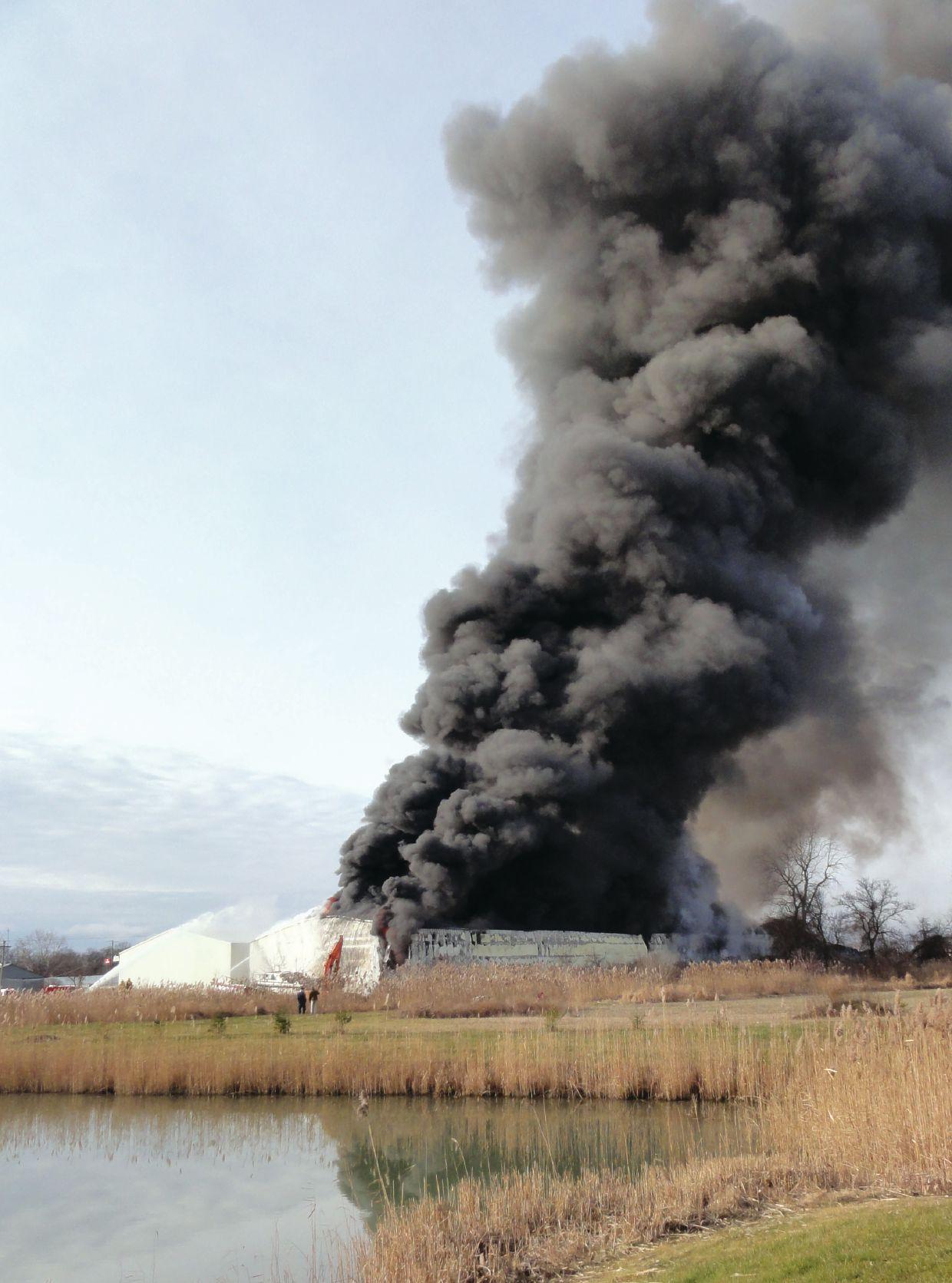
A massive fire at a boat-storage warehouse in St. Clair, Ont., on Dec. 20, 2011, put the department’s training and planning to the test. See story on page 10.
“The fire service must take a leadership role to continue to ensure that our communities have available the necessary emergency response services, regardless of who provides what,” Foster writes.
Foster’s thesis speaks to Karpluk and Quan’s point about service-delivery models but includes other agencies, from non-governmental organizations to service clubs and even labour inspectors – a community forced by politics to work together in challenging times to provide first-rate customer service.
PRESIDENT MIKE FREDERICKS mfredericks@annexweb.com
PuBLICATIOn MAIL AGREEMEnT #40065710 RETuRn unDELIVERABLE CAnADIAn ADDRESSES TO CIRCuLATIOn DEPT.
P.O. Box 530, SIMCOE, On n3Y 4n5
e-mail: subscribe@firefightingincanada.ca
Printed in Canada ISSn 0015–2595
CIRCULATION
e-mail: subscribe@firefightingincanada.ca
Tel: 866-790-6070 ext. 206
Fax: 877-624-1940
Mail: P.O. Box 530 Simcoe, On n3Y 4n5
SUBSCRIPTION RATES
Canada – 1 Year - $24.00
(with GST $25.20, with HST/QST $27.12) (GST - #867172652RT0001) uSA – 1 Year $40.00 uSD
We acknowledge the financial support of the Government of Canada through the Canada Periodical Fund (CPF) for our publishing activities.
Occasionally, Fire Fighting in Canada will mail information on behalf of industry-related groups whose products and services we believe may be of interest to you. If you prefer not to receive this information, please contact our circulation department in any of the four ways listed above.
Elsewhere, Sean Tracey in his NFPA Impact column on page 22 examines the issue of mandatory sprinklers in retirement homes. In the absence of clear guidance (in Ontario in particular) Tracey offers practical advice for chiefs and fire-prevention officers who are accountable for approval of the fire-safety plans for these facilities. By the time you read this, a committee that is looking at improving
While everyone wants the best for Mrs. Smith, helping municipal politicians and bureaucrats understand the importance of a co-ordinated, seamless and cost-effective response is the challenge for fire-service leaders.
Or, as Karpluk and Quan put it, “Proactively demonstrate your leadership; if you don’t, you will be told what to do and how to make it happen. Be the master of your destiny any way you can.”
All advertising is subject to the publisher’s approval. Such approval does not imply any endorsement of the products or services advertised. Publisher reserves the right to refuse advertising that does not meet the standards of the publication. www.firefightingincanada.com
statIontostatIon
across canada: Regional news briefs
Nine Redwood Meadows members honoured
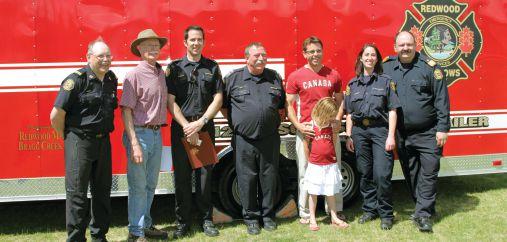
Nine members of Redwood Meadows Emergency Services (RMES), in Redwood Meadows, Alta., were honoured this summer with fireservice medals.
Founding father and retired fire chief Ed Bowen gave 34 years of service to the department and was rewarded with a Federal Fire Service Exemplary Service medal. Also receiving the Exemplary Service medal was retired captain Dave McPherson, who served 31 years, Deputy Chief
George Low, fire communications officer Jason Low, and Capt. Rod Gow, who has more than 20 years of service with RMES.
The local service medal was awarded to firefighter/EMT Andrea Koenders for her five years of service with Redwood Meadows, while Lt. Russ Jenkins, Capt./EMT Jennifer Evans and Fire Chief Rob Evans each received medals recognizing at least 12 years of service to Alberta.
- Rob Evans
Nine past and present members of Redwood Meadows Emergency Services received service medals in July. From left: Capt. Rod Gow, retired Capt. Dave McPherson, Lt. Russ Jenkins, Deputy Chief George Low, MLA Bruce McAllister and daughter Ally, firefighter Andrea Koenders, Chief Rob Evans. Missing are Ed Bowen, retired fire chief, Capt./EMT Jennifer Evans and Jason Low, fire communications officer.
British Columbia names two trainer-of-the-year recipients
The British Columbia Fire Training Officers Association (BCFTOA) has named both Port Alberni Deputy Chief Chris Jancowski and Powell River Deputy Chief Terry Peters trainers of the year – the highest honour that can be bestowed upon a fire training officer in the province.
Training officers are nominated by their peers or by
neighbouring fire departments, and are selected based on a series of qualifications.
“The award is in recognition of outstanding achievement of B.C.’s fire training officers,” said BCFTOA president Dean Colthorp.
“We look at [nominees’] exceptional work in developing and applying new ideas in training, their creativity, use of resources, quality of work,
the brass pole
firefighter in niagara Falls, Ont., and has been a part-time volunteer firefighter with the Town of Pelham since 1992.
and dedication that goes above and beyond, inside and outside of their own fire departments.”
Both Peters and Jancowski were selected for the leadership they showed in developing initiatives designed to help their neighbouring departments.
Jancowski often spends his time training local departments in firefighting skills
– even those stations that are outside of his own jurisdiction.
Peters, meanwhile, has opened his training sessions to other departments, all of which comprise volunteers.
“Both these individuals are outstanding in their fields,” Colthorp continued. “And we’re very proud to give our name to them,” he said.
- Olivia D’Orazio
JIM SALES is the new chief for Toronto Fire Services. Sales had been chief in Markham, Ont., and Edmonton, before becoming the general manager of community operations in Barrie, Ont., in 2008.
GARy BARNETT has been named deputy chief of fire services for the Town of Cochrane, Alta. Barnett, a native of nottingham, England, has more than 30 years of experience in the fire service.
Gustafson has spent his entire sixyear fire career with the Bentley department, fulfilling almost every role in the department.
BRyAN BURBIDGE is the new deputy chief for the Town of Richmond Hill, Ont. Burbidge started his career in 1988 as a volunteer firefighter with the promotions & appointments
& Emergency Services in Ontario. Burbidge, who has more than 30 years of fire-service experience, started in his new position on April 2. Burbidge was a platoon chief in Vaughan, Ont., overseeing 63 full-time and 19 volunteer firefighters with Vaughan Fire and Rescue Services.
ROBERT LyMBURNER has been named fire chief for Pelham Fire Services in Ontario. Lymburner served more than 14 years as a
TODD GUSTAFSON has been appointed fire chief for the Bentley Fire Department in Alberta.
ALEX BURBIDGE is the new chief for the niagara-on-the-Lake Fire
St. Alban’s telethon success bolstered by penny donations
St. Alban’s Volunteer Fire Department in St. Alban’s, N.L., is one step closer to owning a hovercraft, after raising almost $22,500 at its annual telethon, held in early May.
The proceeds will go toward the purchase a hovercraft – valued at $70,000 – to be used for rescue operations. The machine, which can travel over land, water and ice, would enable the department to broaden its ice-rescue services beyond the rescue board and rope that it currently uses.
The St. Alban’s Firettes, who donated $2,500, answered the telephones and issued receipts to donors.
After five hours on the air, the telethon, which was
streamed live online, raised more than $17,775. But the department’s fundraising efforts were bolstered by three groups of children from the neighbourhood, who collected more than 210,000 pennies.
“For the past three years, the children throughout the community have become involved with the fire department telethon by collecting pennies,” said Collier.
“This year, over $2,000 in pennies was raised, and seeing the excitement as they made their donation was truly amazing. We are very proud to belong to a community where everyone comes together for such a worthwhile cause.”
- Robert Lynch, with Cindy Cox
Penny collectors from St. Alban’s, N.L., gather around Fire Chief Frank Collier as they present 210,000 pennies to the St. Alban’s Volunteer Fire Department.
Township of King, before moving to the City of Toronto and then the Town of East Gwillimbury. In 2006, Burbidge was appointed fire chief for the Township of King.
Smithers Fire Department gets like-new ladder truck
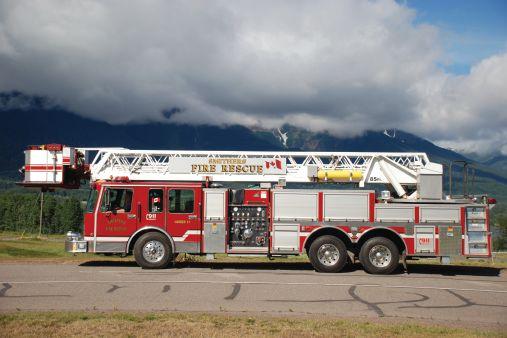
The Smithers Fire Department in British Columbia took delivery of a ladder truck in July, replacing the 40-year-old truck that the department had previously been using.
The updated truck, a 1993 Smeal ladder truck, stretches 85 feet high, and arrived from Fort St. John.
Smithers town councillor Phil Brienesse said the truck came in under budget and two years early.
“We were actually budgeted to replace our ladder truck next year, [and] the budget was for $250,000,” he said.
“The truck that we got from Fort St. John is actu-
retirements
HAROLD TULK, fire chief for Kingston Fire and Rescue, will retire at the end of this year. Tulk has more than 40 years of service, and was named the first fire chief for the newly amalgamated City of Kingston in 2002.
RON SPARKS, deputy fire chief for the city of Peterborough, Ont., has retired after more than 30 years in the fire ser-
vice. Sparks rose through the ranks as a firefighter and chief training officer. He became deputy chief three years ago.
last alarm
SCOTT LEWIS, a captain with the Brampton Fire and Emergency Services, died July 12. Lewis began his career in 1988 and was promoted to captain in 2003.
THIERRy GODFRIND, a firefighter with the Montreal Fire
ally better than what we can receive for that kind of money on the open market and for this we paid somewhere in the market of $130,000.
“It’s an enormous savings for the taxpayer and our last truck was really on its last legs.”
Smithers Fire Chief Keith Stecko raved about the quality of the truck, saying, “It’s exceptionally maintained and [the Fort St. John department] recently did several upgrades . . . I think for our community, given what the cost was for this unit versus a new one, this was an exceptional buy for us.”
-
Olivia D’Orazio
Department, died July 13. Godfrind had been a member of the department for two years. He was 38.
WAyNE MORRIS, 66, died July 30 after a long battle with cancer. He rose through the ranks of the Calgary Fire Department until being named chief in 1999. Morris was influential in implementing a new health and wellness program, as well as the first Canadian aquatic rescue program.
The Smithers Fire Department in British Columbia received this 1993 Smeal ladder truck from Fort St. John.
Photo by Fire
br I gade news: From stations across Canada statIontostatIon
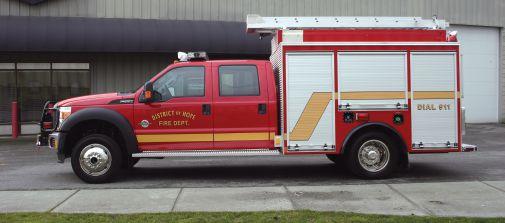
The DISTRICT OF HOPE FIRE DEPARTMENT in British Columbia, under Chief Tom DeSorcy, took delivery in January of a Hub Fire Engines & Equipment-built light attack vehicle. Built on a Ford F550 4X4 chassis and powered by a six-speed automatic transmission and a 6.7-litre diesel engine, the truck is equipped with a Hub Fire Fighter 200 CAFS, a 250-IG co-poly tank, a Whelen light package, a Warn M12000 electric winch, a Honda three-kilowatt generator and a Command Light light tower.
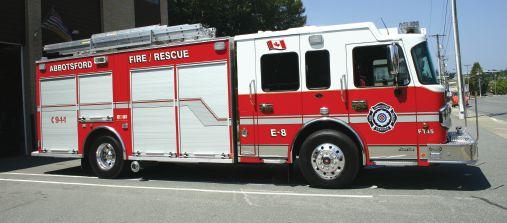
The ABBOTSFORD FIRE RESCUE SERVICE in British Columbia, under Chief Don Beer, took delivery in June of a Hub Fire Engines & Equipment-built pumper. Built on a Spartan Metro Star chassis and powered by an Allison 3000 EVS transmission and a Cummins ISL 400-hp engine, the truck is equipped with a Hale RME 175 1,750-IGPM pump, a Foam Pro 2002 foam system, a 500-IG co-poly water tank, a Whelen LED light package, an Akron Apollo monitor, a Smart Power hydraulic generator and a Will-Burt light tower.
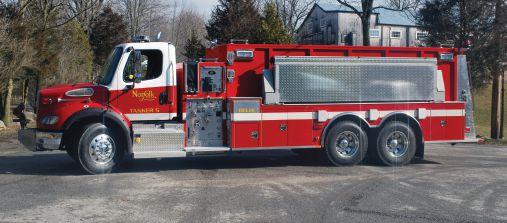
The NORFOLK COUNTy FIRE & RESCUE in Ontario, under Chief Terry Dicks, took delivery in March of an Arnprior Fire Trucksbuilt pumper-tanker. Built on a Freightliner chassis and powered by an Allison 4000 EVS transmission and a Cummins 450-hp engine, the truck is equipped with a Hale AP 50-PTO pump, a 2,000-IG poly water tank, LED scene lighting, an electric ladder and an Akron Forestry monitor.
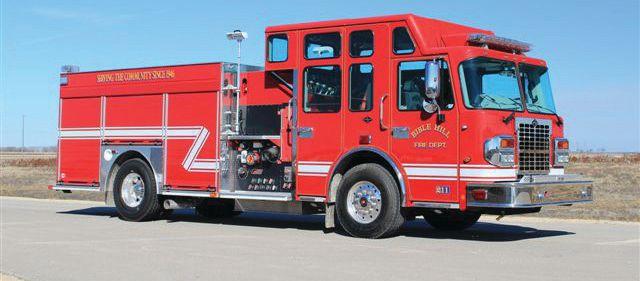
The BIBLE HILL FIRE BRIGADE in Nova Scotia, under Chief Dwane Mellish, took delivery in May of a Fort Garry Fire Trucks-built pumper. Built on a Spartan Gladiator chassis and powered by an Allison 3000 VES transmission and a Cummins ISL9 400-hp engine, the truck is equipped with a Waterous CSU 1,250-IGPM pump, an 800-IG pro-poly water tank, a Foam Pro 2001 foam system, a V-Mux system, FRC LED scene lights, Amdor roll-up doors and a Harrison eight-kilowatt generator.
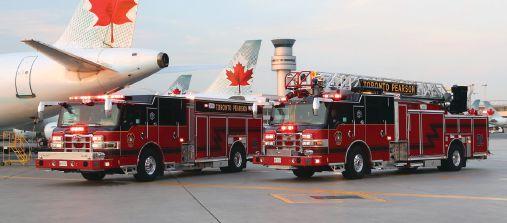
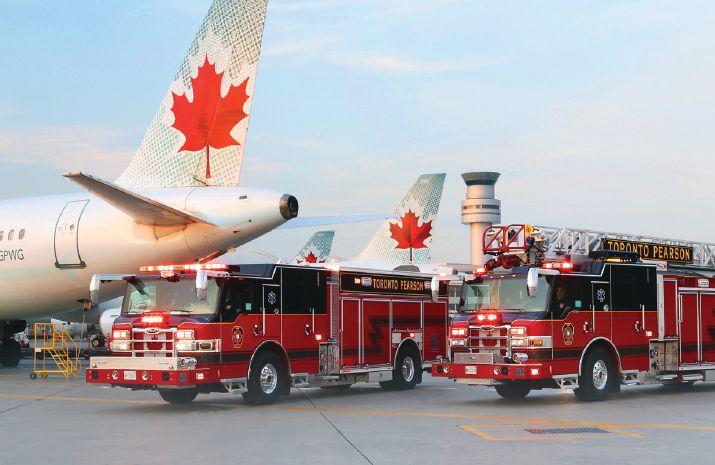
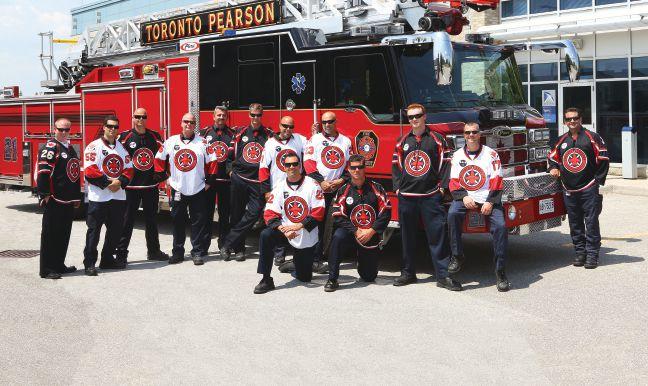
The TORONTO PEARSON INTERNATIONAL AIRPORT in Ontario, under Deputy Chief Dwayne MacIntosh, took delivery in July of a Pierce Manufacturing-built 75-foot aerial unit. Built on a Pierce Velocity custom chassis, and powered by a 500-hp DD13 engine, the truck is equipped with a 1,000-IG water tank, a PUC pump, a Husky 12 foam system, a 10-kilowatt generator, roll-up compartments, and slide-out trays and toolboards.
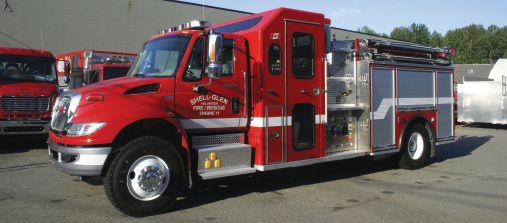
The SHELL-GLEN VOLUNTEER FIRE/RESCUE in British Columbia, under Chief Randy Glen, took delivery in June of a Hub Fire Engines & Equipment-built pumper. Built on an International 4400 chassis and powered by an Allison 3000 EVS transmission and a Maxx Force 9 315-hp engine, the truck is equipped with a Hale QFLO 125 1,050-IGPM pump, a Foam Pro 2001 foam system, an 800-IG co-poly water tank, a Zico electric ladder rack, a Honda EM6500 generator and a Whelen LED light package.
BIBLE HILL FIRE BRIGADE
TORONTO PEARSON INTERNATIONAL AIRPORT
cohesIve
ve attack
Training, IMS prove effective in massive blaze at boat-storage warehouse
It is generally understood that emergency services will plan, prepare and train for the big one, while it is expected that these plans will rarely be tested. On Dec. 20, 2011, the plans and preparation were tested in the Township of St. Clair in Ontario.
BACKGROUND
The Township of St. Clair is a diverse community covering 1,000 square kilometres, (400 square miles), located about an hour west of London and an hour north of Windsor. It shares a 32-kilometre border with the United States. The 15,000 residents live in small urban centres and small family farms dot the township.
The St. Clair Township Fire Department is composed of 180 volunteer firefighters in six fire stations with a full-time chief and two deputy chiefs. The department maintains 19 frontline apparatuses along with several support vehicles, and covers the entire gamut of fire protection, from small rural farms with no water supply, to developed urban areas with many commercial and residential complexes, to heavy oil refineries producing various fuels and plastics.
By STeve BIcuM
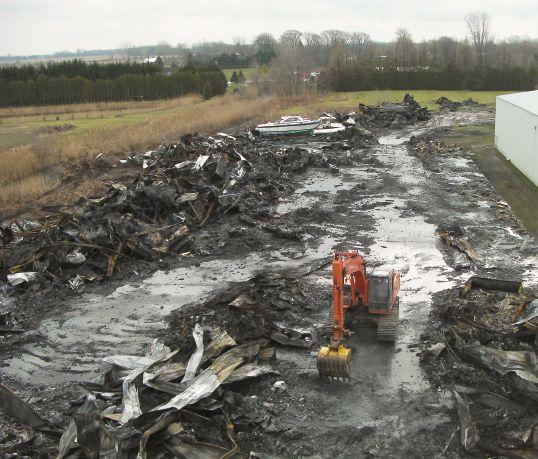
left: A fire in December 2011 caused $50 million in damages to a boat-storage warehouse in St. Clair Township, Ont., and tested the community’s emergency planning. above : The fire flattened the warehouse but crews were able to control the blaze and save an adjacent building.
THE SITUATION
These resources were put to the test that December morning. An employee of St. Clair Marine and Boating entered the 2,800-squaremetre (30,000-square-foot) boat storage warehouse at around 0700 to do some work on one of about 80 boats. Shortly after entering warehouse, the employee heard a noise that turned out to be a fire on the top of an 11-metre (35-foot) yacht. The employee exited the building and ran down the street to find a phone.
At 0713 Port Lambton Station was dispatched, responding with a 5,000-litre-per-minute (L/min.) pump, a tanker and a rescue. Following protocol, the Becher Station was dispatched with a 6,000 L/min. pump, a tanker and a rescue. While responding, Fire Chief Roy Dewhirst could see heavy smoke from 20 kilometres away and immediately ordered the Wilkesport Station to respond with another 6,000 L/min. pump, tanker and rescue.
Chief Dewhirst also activated the Brigden Station and shifted resources to provide coverage protection, since the incident was in the extreme south of the township and was pulling all southern stations out of position.
Port Lambton Station arrived on scene at 0722 to thick, black smoke issuing from a large overhead door that had been blown off its tracks. An area of about 24 square metres (250 square feet) just inside the only access to the building was fully involved. The initial defensive attack was set up, with two hand lines and the deck gun from the pumper drawing from a 2,000 L/min. hydrant.
As Port Lambton Station continued to develop the defensive attack, I arrived on scene and activated the Corunna Station to respond with the 23-metre (75-foot) telesquirt. Wilkesport, Becher and the 5,000 L/min. reserve pumper arrived and began drafting operations in a waterway across the street from the building. Several hand lines and six 3,000-L/min. ground monitors were set up in an attempt to suppress the fire and protect the second 2,800-square-metre (30,000-squarefoot) boat warehouse just four metres away from the fire. Additional
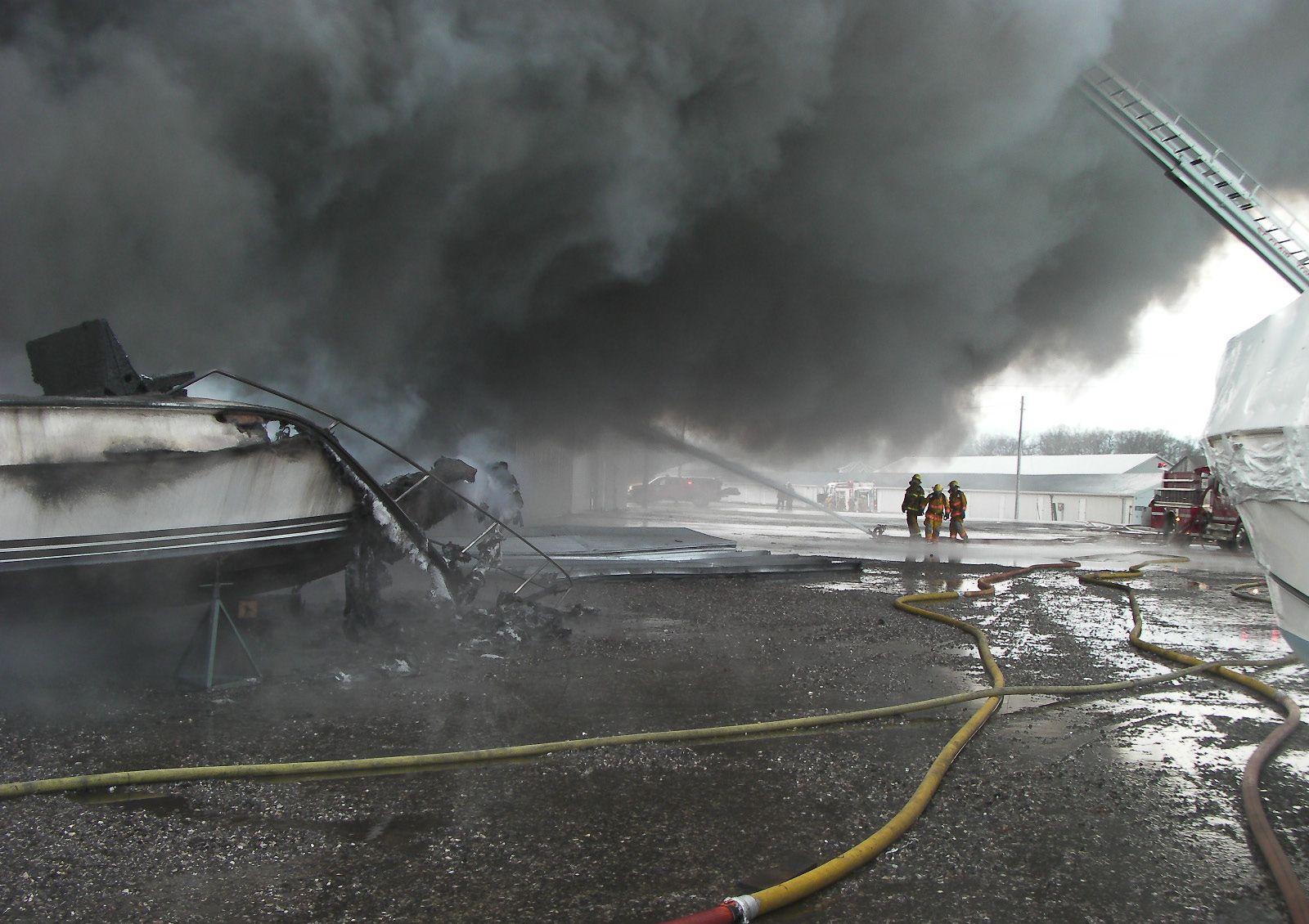
Crews spent 18 hours fighting the massive blaze at a boat-storage warehouse. Within five hours of dispatch, 90 firefighters were on scene with four pumpers, three tankers, three rescues, one fire boat, two aerial devices and six support vehicles.
resources continued to arrive including OPP, EMS and public works.
At about 0800, Chief Dewhirst was contacted by the fire chief of Algonac, Mich., just across the river from the incident, who asked if his department could offer assistance. The offer was accepted, and Clay Township, Ira Township, and the Town of Algonac activated their resources and dispatched a fire boat with an 8,000-L/min. (2,000-gpm) pump, and later sent a 23-metre (75-foot) platform aerial device. The platform crossed the border on the Bluewater Ferry, which was alerted to the situation and expedited the crossing. Canadian border officials, who were made aware of the situation, did not delay the unit.
The defensive attack continued for hours. By 1200, there were 90 firefighters on scene with four pumpers, three tankers, three rescues, one fire boat, two aerial devices and six support vehicles. In addition, several OPP vehicles controlled access to the area, one ambulance was on standby, and one command unit and several public works vehicles with 10 employees remained on scene.
The large number of personnel and equipment was a challenge for the accountability officer, but a new card system put in place four years ago aided in the management of personnel and equipment. The new accountability system includes tags with firefighters’
names and pictures on them and truck tags that have key resource information for each apparatus. Both systems assisted accountability with managing so many resources.
THE ISSUES
There were several issues identified both during the incident and from the post-incident review.
1Environmental
risk. Deputy Chief Tom Boon notified the Ministry of the Environment at around 0900 and liaised with a representative for the remainder of the incident. The thick, heavy, black smoke, although copious, luckily carried over the 100 residences directly adjacent to the area and dispersed over the United States. A shelter-inplace advisory was issued to residents and the OPP encouraged people to stay away if possible. The more immediate threat to the environment was the run-off being generated by the suppression efforts. It was fortunate that the incident was located across the street from the St. Clair River, and with the assistance of public works, loads of sand and clay were quickly brought on scene to seal ditches and drains to the river. Public works also brought in a vac truck to draw off ash and debris that settled on the water’s surface. The biggest containment issue was a small creek that ran
seven metres (20 feet) behind the building. Again, with the assistance of public works, the fire department quickly set up a makeshift containment boom across the creek. A private environmental response company was contacted and quickly arrived on scene to take over containment efforts.
2Access. The fire building was located behind the other boat warehouse, and was 60 metres (200 feet) from the street. There was a small driveway and parking area on the west end of the building where the initial trucks set up, but this area was down wind, ringed with boats, and sometimes engulfed in smoke. This meant that long runs of largediameter hose had to be set out by personnel through mud and standing water.
During the early stages of the incident, efforts were made to try to cut off the fire’s advance. However, the fire started just inside the main access door, and the several small doors on the side of the building were secured from the inside with deadbolts and bars, hindering efforts to enter the building. Once the doors were breeched, a further problem was discovered: the boats, most of which were large yachts – 12 metres long, six metres high and stored on steel stands – were packed in
Continued on page 19
SPARTAN TELSTAR
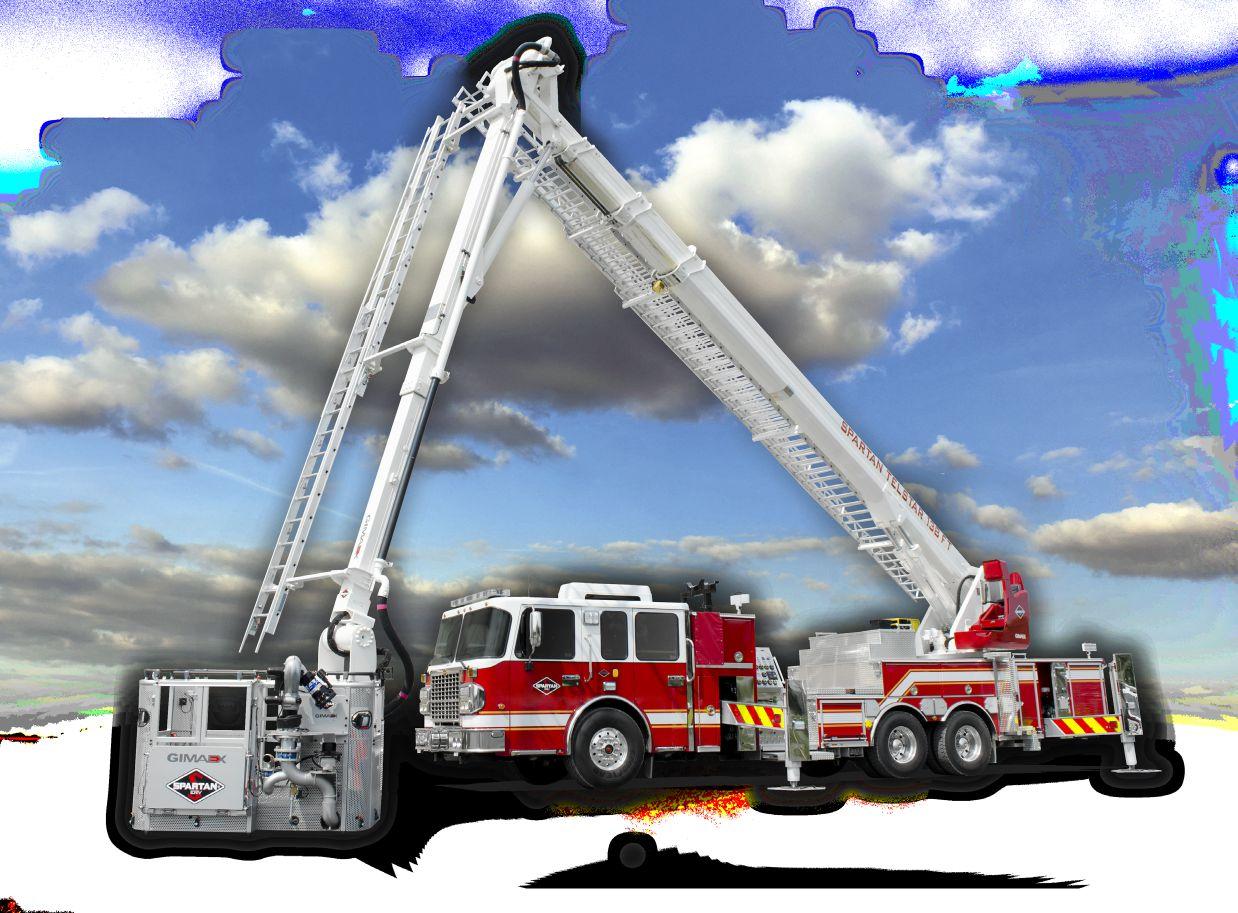
This articulated aerial sets a new global standard for aerial performance and all calls capability. It offers several industry-leading features highlighted by a 138-foot telescopic and articulated aerial platform, which supplies an “up, over, and down” range of motion for navigating around parapets and power lines and enabling you in the most difficult below grade rescues. Compliment this aerial performance with a body configuration that accommodates a full complement of NFPA required ladders and maximized compartmentation, you are ready for any situation.
INTRODUCING SPARTAN ERV
1975 1912 1962 1997 2003 2012
walking the talk
Surrey firefighters and RcMP go door to door to reduce crime, promote fire safety
By Len GaRIS, FRaSeR MacRae and Joe cLaRe
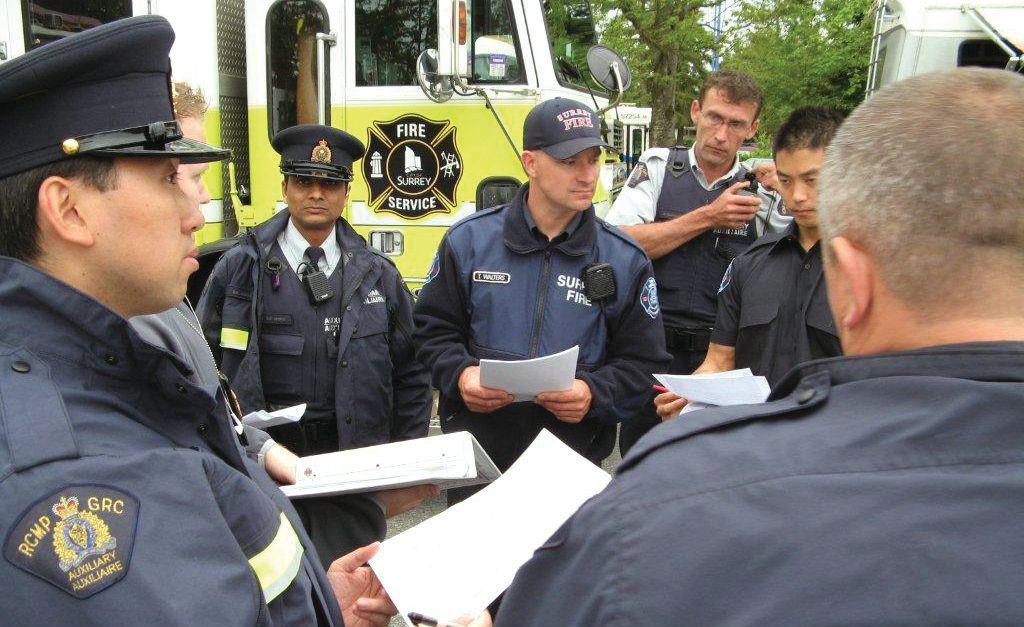
above : Members of the Surrey Fire Services and the Surrey RCMP are briefed before the start of an education campaign, which resulted in a 64 per cent drop in break-and-enters and a 19 per cent drop in the annual rate of house fires.
the number of fires and breakins in an at-risk neighbourhood in Surrey, B.C., dropped significantly after a one-day education and safety blitz conducted by firefighters and RCMP officers.
Through a joint initiative of the Surrey Fire Service (SFS) and Surrey RCMP, teams of firefighters and RCMP officers went door to door in the summer of 2010 distributing educational materials to homes in the Newton neighbourhood. The results included a 64 per cent reduction in break and enters and a 19 per cent drop in the annual rate of house fires following the program.
“Improving safety in our community is a shared goal of the Surrey RCMP
and Surrey Fire Services,” said RCMP Assistant Commissioner Fraser MacRae, who is in charge of the Surrey detachment. “This program illustrates that by working together, we can deliver on our organizations’ public safety objectives in a more proactive and effective way.”
The initiative grew from the City of Surrey’s neighbourhood-development efforts in the Newton area. The RCMP had identified Newton as a hot spot for opportunistic break-and-enters, the result of people leaving doors or windows open or unattended. SFS identified a higherthan-average percentage of cooking fires in Newton after working with the city’s geographic information system (GIS) to cross-reference fire data with addresses in the target neighbourhood. Education
Photo
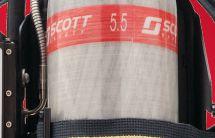
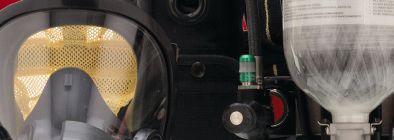
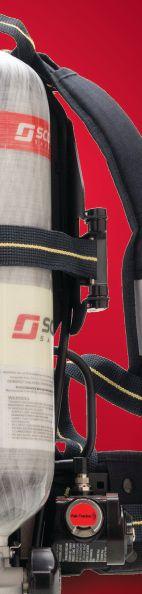
You asked. We listened. Our new 5.5 cylinders offer more than 10% reduction in weight at a reduced profile while keeping the form you are accustomed to. How did we do it? To put it simply, we increased the pressure. That allowed us to build a smaller and lighter cylinder that reduces fatigue, raises productivity and increases safety.
packages containing crime, fire-safety and smoke-alarm information were then compiled for distribution as part of the Safer Summer campaign.
“We didn’t blindly approach this –we know that distributing educational information to residents at their homes is effective,” Surrey Fire Chief Len Garis explained. “There is a large body of international research on this topic, and we’ve seen the results firsthand here in Surrey with our HomeSafe fire safety program.”
The initiative went into action on a summer evening in 2010, when about 80 RCMP and SFS members converged on a unified command post set up in the parking lot of the local recreation centre. The contingent included auxiliary police officers and volunteer firefighters, along with offduty RCMP officers and career firefighters.
Participants were split into teams of four – two RCMP, two firefighters – and received a list of addresses and a 30-minute briefing on the campaign’s objectives: to provide information on summer crime and fire safety, and to show that the city’s fire and police services are working together.
One firefighter and one RCMP officer approached each address, providing the residents with a brief explanation of the Safer Summer campaign before handing them the information package. If no one was home, the packages were hung on the front doorknob.
Team leaders monitored the progress throughout the evening, reporting back to the command unit regularly. Four hours later, the teams had knocked on about 2,200 doors, making direct contact with residents in about 60 per cent of the households.
Both agencies found that the initiative had achieved its primary goal – improved community safety – after analyzing the results a year following the intervention.
For its analysis, the RCMP asked residents who had been approached during the campaign if they had been the target of break-and-enters, and if so, whether the incidents were the result of them leaving their doors and windows unsecured or unattended.
The results were significant. The RCMP findings indicate the campaign may have contributed to an overall 64 per cent reduction in break-and-enters in the targeted area (a decrease of 30 incidents). As well, the overall number of opportunistic break-and-enters in the target area decreased to eight from 30, or 78 per cent, over three years.
A post-campaign evaluation by SFS
also revealed positive results. After analyzing data for the two years before and one year following the campaign, the department found a 19 per cent reduction in the annual rate of residential fires (per 1,000 dwellings) in the target area (to 1.30 from 1.60). There was also an increase in the number of days between fires post-intervention, to one fire every 128.3 days from one fire every 104.1 days pre-intervention.
It should be noted that a total of 10 fires occurred during the three-year evaluation period; given such a small sample size, there is a high risk of variation due to chance. The number of homes visited during the campaign represented about 1.6 per cent of all non-apartment residences in Surrey at that time.
Beyond any reduction in crime and fires, however, the initiative offered considerable value to the City of Surrey because it further strengthened the relationship between the community’s fire and police services. The two agencies have successfully collaborated on issues of shared interest in the past, such as motor vehicle accident responses.
Since the initiative, Surrey RCMP and SFS have made an effort to demonstrate their close working relationship to the community at non-emergency events, such as parades and civic festivals. Consideration is also being given to other potential partnership opportunities in the future.
“This was a community problem, and Surrey’s community services came together to try to combat that problem,” Chief Garis said. “By partnering and sharing resources, we can work more effectively and strategically. Ultimately, our community is the winner here.”
Len Garis is the fire chief for the City of Surrey, B.C., and is an adjunct professor in the School of Criminology and Criminal Justice at the University of the Fraser Valley and a member of the Institute of Canadian Urban Research Studies (ICURS), Simon Fraser University.
Dr. Joe Clare, the strategic planning analyst for the Surrey Fire Service, is also an associate professor in the Crime Research Centre, University of Western Australia, and a member of the Institute of Canadian Urban Research Studies (ICURS), Simon Fraser University.
Until his retirement on May 31, 2012, Fraser MacRae was the assistant commissioner, officer in charge, at the RCMP detachment in Surrey.
By V INCE M AC K EN z IE Fire chief Grand Falls-Windsor, N.L.
aVOLUNTEERvIsIon
Hopes for a governmentsupported fire service
s a fire officer of a volunteer fire department, I maintain an interest in the issues and incidents in the rest of the country. While we all hear about large-scale incidents handled by big-city fire departments, the other 89 per cent of the fire service rests in regular small-town Canada. In the past year or so, I’ve become more and more disturbed with the goings on affecting the volunteer fire service.
If you are any kind of reputable fire officer, you can’t help but be concerned with what I see as ways to point an accusing finger at those who serve their communities. It seems to me that governments and those who are not directly involved in the fire service are sometimes quick to do this.
Occupational Health and Safety (OH&S) has become a buzz phrase in our everyday work life. But the fact is that the Canadian fire service embraced OH&S long before it became a corporate catchall and long before workers’ compensation agencies and OH&S watchdogs took to the prevention side because, in Newfoundland and Labrador at least, they were paying out claims hand over fist to other industries.
It was once described to me in an OH&S course that even though firefighters have one of the most dangerous jobs, historically, injury claims for firefighters were far lower than many other less hazardous occupations. Why? Because for generations, we wore PPE on the job, we drilled our tasks, we maintained our tools and equipment, and we trained and practised for the worst, and then put it all together under some type of command system, with discipline and teamwork.
The issues in Meaford, Ont. – where the fire department and the municipality were charged under provincial occupational health and safety legislation after two firefighters were injured during a search – and the like have me asking whether we are doing something wrong to have the wrath of the Crown swoop down on us for simply trying to help our communities.
of our abilities are looking over our shoulders, scrutinizing every move, but cannot comprehend what it is like to stand on the fire ground and make those crucial, split-second, potentially life-anddeath decisions?
Fire officers are there to make sure we work safely, taking all factors into consideration. Then, those in control on the fire ground try to make the right decisions and execute them with tactical perfection with a crew of firefighters who, five minutes earlier, were at their regular day jobs. Also, the fire officer must make that call with a brief size-up and has just minutes to make decisions. Then, if someone gets hurt in a situation that was already dangerous to begin with, the same government agency will take months to investigate and analyze a decision that was made in minutes, and then decide if you or your department or municipality should be charged for that action.
I met a few of the firefighters from Meaford recently. I admired them and told them I was proud of them as I understand the stress that the charges and the trial must have placed on them (five of the six charges were dropped; the sixth charge, of failing to establish an accountability system, was dismissed in August). No one intentionally sets out to hurt anyone at an incident.
More recently, I also think of our colleagues in Elliot Lake. The initial crew that responded to the collapse of the Algo Centre Mall
Funds for lawsuits should be reallocated to support training. ‘‘ ’’
Where do we get off thinking that we are always doing good and just trying to make our communities safer? Well, after much thought, I concluded that firefighters sincerely care for their communities, but most of all I think they care for the safety of people. That is why I, along with just about every one of my colleagues, continually try to educate myself and stay abreast of the latest training techniques and safety updates.
Why is it, then, that the very governments we serve to the best
Vince MacKenzie is the fire chief in Grand Falls-Windsor, N.L. He is the president of the Newfoundland and Labrador Association of Fire Service, the second vice-president of the Maritime Fire Chiefs Association and a director of the Canadian Association of Fire Chiefs. E-mail him at firechief@grandfallswindsor.com.
would have been the size of my own fire department. I can’t help but wonder what goes through a fire chief’s mind during the incident, and now after the national spotlight has been switched off. I am sure that safety for all was Chief Paul Officer’s prime concern from the activation of the pager to the moment the HUSAR team was called in and when the decision was made to stop the search for safety reasons. Then Premier Dalton McGuinty got involved and called for more action; did McGuinty supersede his province’s own occupational health and safety legislation?
The fire departments of small-town Canada are left to analyze what it is we do, learn as much as we can and hope that everything goes our way at the next call. Don’t be discouraged; sooner or later, with continuous input from the fire service, governments and bureaucrats will get it right, and perhaps the millions spent prosecuting safety mishaps will be reallocated to fund the training required to meet the guidelines set by those very governments and bureaucrats.
Continued from page 12
like sardines. At no point could fire streams get past the perimeter and penetrate the seat of the fire. This meant the fire continued to progress down the length of the building until it was fully involved.
3Accountability.
Accountability within the fire department worked well, but the size of the incident was a challenge. Accountability was set up at the command post at one end of the building. Teams would have to walk long distances to get around the buildings and often teams were switched out and there were delays updating the board. This was unique to this event, but highlighted the issue should there be another large-scale event. The real problem was trying to account for non-fire personnel. OPP, EMS and public works do not operate with accountability tags, so keeping track of them was an extreme challenge and is something the fire department will address.
4Air supply. This was a defensive attack but the nature of the fire meant that many of the firefighters had to remain on air. There were 47 SCBAs on scene with 94 spare bottles. Even with that, 210 refills had to be done, which meant a crew had to transport the bottles 35 kilometres to our filling station and back. This increased the risk to crews and has resulted in council’s approval of the purchase of a mobile filling system.
THE RESULTS
After battling the fire for 18 hours, and with the assistance of two excavators, the blaze was extinguished. Once the smoke cleared, some 80 boats had been consumed at a cost of about $50 million. The estimated fuel load was 725 tonnes (800 tons) of material plus 69,000 litres (18,000 gallons) of fuel. More than eight million litres (two million gallons) of water were pumped.
As a result of the incident, the fire department is analyzing building access, interior storage procedures and pre-planning of the three remaining storage buildings.
For several years, the department has made a concerted effort to ensure that all six fire stations could operate together under the incident management system (IMS), but fire administration didn’t think that this co-operation would be put to such a test. All personnel were able to operate equipment from different stations and work with different personnel under a single incident commander. This IMS approach extended to the other emergency services, the American firefighters, public works, and the other groups and organizations involved. Strengthening the department’s relationships with these groups to ensure clear and open lines of communication, a greater understanding of operational procedures and scene accountability remains a priority.
Despite the large loss, this situation could have escalated to $100 million had the second building not been protected. The fact that there was zero damage to the exposure was due to the concerted efforts of all personnel on scene.
“This was a once-in-a-career fire,” Chief Dewhirst said. In a career that has covered 40 years, we certainly hope he is correct.
Results of the investigation by the Office of the Ontario Fire Marshal were pending at press time.
Steven Bicum is the deputy fire chief (co-ordinator of training and safety) with the St. Clair Township Fire Department. He began his career as a volunteer with the Wilkesport Station, where he was training officer, captain and fire prevention officer. He has been chair of Lambton County Fire Prevention Association, vice-president of the Lambton-Kent Firefighter Association, and an adjunct faculty member at the Lambton College Fire Emergency Response Training Centre. He is an associate instructor for the Ontario Fire College. Bicum has deep roots in St. Clair Township: his children are the fifth generation to live on their family farm. Contact him at sbicum@twp.stclair.on.ca
By SEAN TRAC y Canadian regional manager, NFPA
sProtecting yourself and the most vulnerable
ome say that the best areas on which to focus risk-management efforts are those that keep you awake at night. I lose sleep over care and nursing-home occupancies – not because my wife says she’ll commit me to one someday, but because they concentrate our most vulnerable citizens in one location. It turns out we are killing them in greater numbers in fires because of this.
Recently, we have heard much about this in Ontario. In fact, the evening after the Orillia coroner’s jury announced its findings in the deaths of four elderly Ontarians in early May, two more seniors died in a fire. Let me assure you, this is not just an Ontario problem but one that exists in all provinces where we have residents in older buildings without sprinkler protection. The others have just been lucky so far.
What should keep you awake at night is that, under our fire codes, the local fire authority must approve fire-safety plans for these buildings. That is you. You are the ultimate arbiter of the fate of these vulnerable wards and cannot pass this off. Some jurisdictions pretend not to approve fire-safety plans but simply “review” the plans. This does nothing to absolve you of these duties. What is even more disconcerting is that there is little or no provincial guidance on how to approve these plans and no guidance on the time required to evacuate these facilities. You are in a no-win position.
Part of our problem is that provincial regulations often have different titles for these facilities than what is used in the building and fire codes. We have even seen operators exploit these differences to avoid fire-code decisions. In my view, and according to the NFPA 101 Life Safety Code, nursing homes (B2 occupancies) should all be retroactively sprinklered. In the United States, this is required of any facility receiving federal funds. This was also a change initiated by the nursinghome industry after several fatal fires in 2003. All other care or assisted-living occupancies, be they B3 or C occupancies, should be prepared to prove that all their residents are capable of self- or assisted evacuation in a reasonable time before conditions become untenable and when staffing is at its lowest level.
should be put through the rigors of a timed evacuation to prove its evacuation capability. The use of NFPA 101A can thus identify potential problem facilities. Those that pass the NFPA 101A requirements should still be evaluated every three to five years.
When evaluating a facility using a timed evacuation drill, a target time must be determined. What is an appropriate time for safe evacuation? This is left for the authority having jurisdiction to determine. NFPA 101 uses 13 minutes, but recent experiences in Niagara Falls, Ont., and our current understanding of fire behaviour indicates that this too long. The best tool developed in recent years is a Quebec Ministère de Sécurité report that identifies times for evacuation based on the method of construction, size of facility and fire-alarm and protection systems in place. This document was produced with the involvement of the care industry in Quebec. The times for evacuation range from three minutes for a nine-room facility of combustible construction with smoke alarms, to 13 minutes when protected with sprinklers. Non-combustible structures would have between 13 and 21 minutes to evacuate. This guide is great because it shows how times can be increased depending on the protection features added. Regardless of evacuation time, any facility in Canada that fails in its evacuations
You are the ultimate arbiter of the fate of these vulnerable wards and cannot pass this off.
Currently, fire-safety plans must be submitted annually for your approval. This can be an overwhelming task if your department has too few resources, so I suggest that facility operators complete the evacuation templates found in chapter six of NFPA 101A. This is a tool NFPA has developed to assess occupants’ capability for selfpreservation without having to participate in drills. If the facility is unwilling to complete the form or it fails to do so, then the facility
Sean Tracey, P.Eng., MIFireE, is the Canadian regional manager of the National Fire Protection Association International and formerly the Canadian Armed Forces fire marshal. Contact him at stracey@ nfpa.org
should be required to be sprinklered, construct fire walls or increase staffing. The facility can choose, but it must meet the times.
I have a presentation on this topic available for free download in the NFPA Section of the PTSC-Online website at www.PTSCOnline.ca. We have conducted a number of workshops on this topic in British Columbia and in Alberta. If you are interested in learning more, please contact me.
The lack of resources and guidance in the fire codes and at the provincial level should be causing you to lose sleep. You are ultimately responsible for approving these fire safety plans. It is my hope that we have given you some guidance in the absence of provincial support. I, at least, can sleep a little better at night knowing that when the time comes for my wife to commit me to a care home it will hopefully be protected with a sprinkler system. We all may need these facilities someday so let’s make sure we get them protected.
Born bold.
If you’ve always been a fighter, only Dräger will do.
Dräger equipment isn’t for everyone. It’s for people who have expected nothing but the best of themselves from the very beginning. When expectations are this high, only optimum fire equipment can rise to the occasion. Dräger makes equipment bold achievers can have confidence in. Our integrated portfolio revolutionizes firefighting technology with streamlined components that work together as one. The result: power to perform at your personal best.
GO IN PREPARED:
BACKtoBASICS
Radio communication
By MARK VAN DER FEyST
communication plays a vital role in how well a fire department responds, reacts and conducts itself in its daily operation. A communication breakdown can lead to a dysfunctional fire department or fire ground. Different types of communications are used in the fire service and all firefighters should be familiar with all of them: written communication, face-to-face communication, electronic communication and radio communication.
In the station, firefighters are exposed to written, face-to-face and electronic communication. Written communication includes memos, communiqués, e-mails, bulletins and so on. These are usually posted somewhere for all to see or they may be directed to one person. Either way, there is time for the recipients to read the item and gain an understanding of it. There is also time to ask questions for clarification and to engage in a discussion about the content of the written material. Electronic communication is in the form of e-mail sent via mobile phone, text message, Facebook posting or a tweet on Twitter. The message is generally short and sweet with little room for interpretation or discussion. The idea of electronic communication is to have quick dialogue with a person or group.
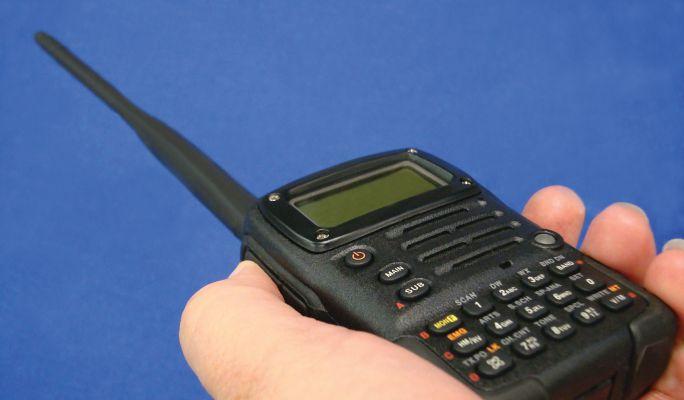
On the fire ground, crews are limited to radio, electronic and face-to-face communication. Portable radio communication is the most common type of communication for most firefighters. A portable radio allows a team of firefighters to remain in contact with the incident commander (IC) and with each other. It is a lifeline for firefighters working on the fire ground. Without it, they are left to more primitive ways to communicate, such as face-to-face. The portable radio gives distance to the working crew by allowing firefighters to be farther away from the IC and still be able to report back or receive messages. Knowing how to use the portable radio correctly is the key to effective fire-ground communication.
Of all the ways to communicate with a person or group, talking face to face is the best. It allows the recipient and the sender to have instant acknowledgement from each other when passing on information, asking a question or giving orders. Facial expressions and body language are part of face-to-face communication and are often used to convey messages or the receipt of a message.
With radio communication, there is an opportunity to clarify the message to ensure that a full understanding is obtained. The downside to face-to-face communication is that it reduces the distance that a crew can work from the IC or sector officer. Proximity must be maintained in order to remain in contact with each other. The same goes for interior crews working with a limited number of portable radios and/or failure of portable radios. Defaulting back to traditional face-to-face or verbal communication will be the only way to communicate with each other. For some firefighters, this is a lost art as dependence upon the portable radio is all they know. Training on how to communicate on the fire ground when the portable radio fails or is lost during an interior operation is a good idea. This will reinforce the traditional skills needed when the time comes
Continued on page 84
Face-to-face communication is the best, since it allows for instant acknowledgment between communicators.
Photos by m ar K van D er Feyst
The receiver of a radio communication may not fully understand the message if distortion is an issue.
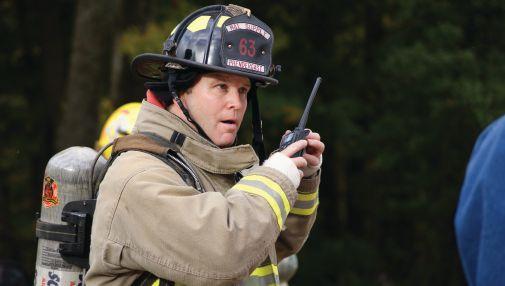
Knowing how to use a portable radio correctly is key to effective fire-ground communication.
auto-ex update
Innovations in the car industry continuously create new challenges for rescuers. Fortunately, products are coming to market that tackle some of the hurdles first responders encounter when responding to vehicle collisions.
PACKExE FILM STRONG ENOUGH FOR SHARPS WRAP
In the August 2011 issue of Fire Fighting in Canada, I wrote about a great new innovation from Packexe, the company that developed a protective film to capture window glass prior to its breaking and removal. Packexe has developed another interesting application.
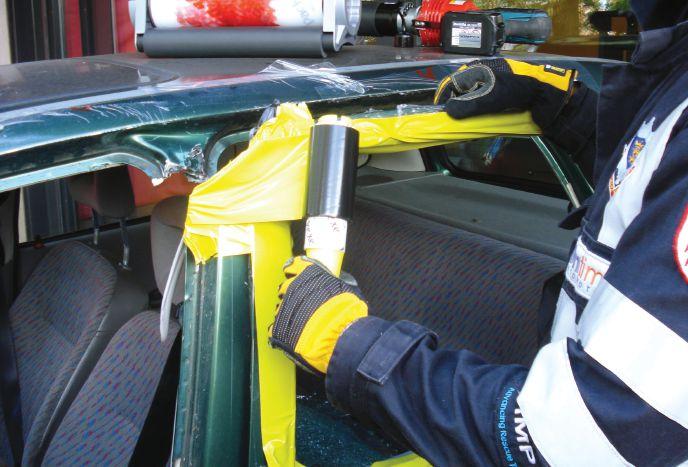
This time, the plastic wrap and mini applicator is thicker, enabling the material to cover up sharp metal after it has been cut or breached with hydraulic and power tools. For example, when the roof is cut off and there are sharp metal pillars exposed, you can protect yourself and your victim by covering the pillars with sharps wrap, as in photo 1. You can also add a small floor mat around the pillar end and use the sharps wrap to cover it up and hold it in place. The product should be available this fall. For more information, visit www.packexe. co.uk/smash.
MANOEUVRING AROUND START/STOP SySTEMS
A new trend has emerged in the auto industry, known as start/stop systems. These systems allow a vehicle to shut down when not in motion – at a stoplight, for instance –thus increasing fuel economy and reducing the carbon footprint. However, the draw on the electrical system within the vehicle
top : (Photo 1) A firefighter uses Packexe’s sharps wrap to cover exposed areas after they’ve been cut with hydraulic tools.
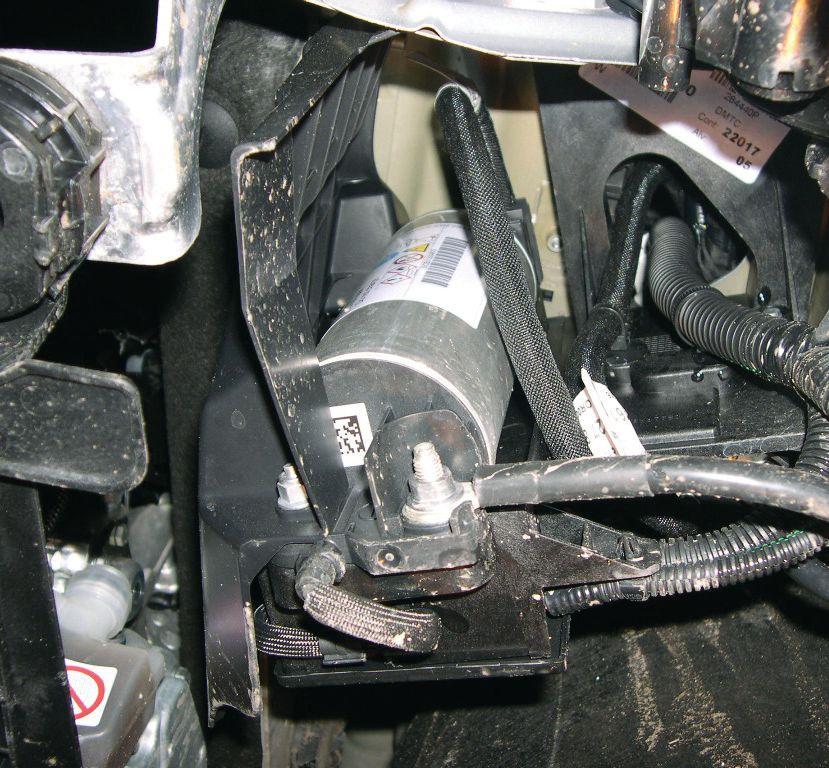
r I ght: (Photo 2) The ultracapacitor, usually located either in the left front wheel well or in the left front fender, contains a chemical called acetonitrile, which is highly flammable and harmful if ingested or inhaled.
new systems, products help rescuers keep up with manufacturers’ advancements
By RandY SchMITz
Photos by r an D y s
chmitz
“The potential problem for rescuers is the hidden pressurized gas inflator.”
can be quite high when immediately reengaging the engine.
To overcome this obstacle, manufacturers can offer two different power sources: a smaller auxiliary battery to handle the extra energy demand placed on the system, which still allows electrical components such as the stereo and GPS to operate unaffected; or an ultracapacitor, which is simply a high-energy storage source.
The auxiliary battery concept has been around for a while in higher-end models (for example, 2009 to 2012 Mercedes Benz C Class and the Mazda 3), and can be dealt with in a rescue situation by simply disconnecting the positive and negative cables (along with the main 12-volt battery cables).
The ultracapacitor, on the other hand, has some uncharted potential issues that may affect rescuer safety. Even though the ultracapacitor can store large amounts of energy, it is functional only with 5.2 volts, so it is not an electrical hazard by any stretch. However, the ultracapacitor contains a chemical called acetonitrile, which is highly flammable and harmful if inhaled, ingested or in contact with skin (check your material safety data sheet for more information). Inadvertently breaching the unit with hydraulic tools could release the solvent product, which could become a hazard. Damage from a collision can also release the chemical. The unit is generally housed in the left front wheel well or in the left front fender.
Manufacturers of these ultracapacitors
and the vehicles that are using them advise rescue personnel to wear full PPE and possibly respiratory protection if a breach is encountered. For fire departments that are working with crash recovery system (CRS) software by Modi-Tech, capacitor location and background information has been added to the software. Currently, these systems are available only in the overseas Peugeot and Citroen models, but many of these vehicles have been imported into Canada, so expect to see more of them. Hybrid buses, which you can find anywhere in North America, are also using the ultracapacitor.
INFLATABLE SEATBELTS AND CENTRE-SEAT AIRBAGS
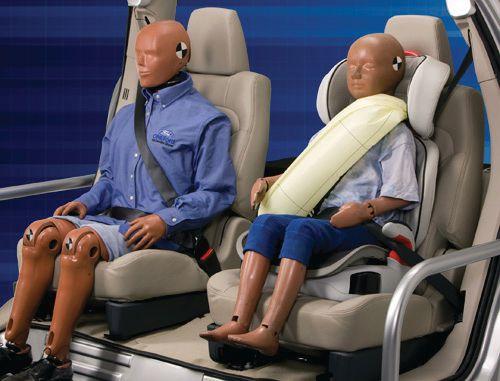
Meanwhile, Ford, being on the cutting edge of technology, has developed the first marketed inflatable seat belt for rear-seat passengers, available in its 2012 Ford Explorer line. The seatbelt is designed to deploy only in frontal impacts to minimize the seatbelt pressure in a collision on the upper chest area of small children and older people (see photo 3). The belt is designed to reduce head, neck and chest injuries. A tubular belt bag inflates with cold pressurized gas from a metal cylinder located behind and under the top seatback and the bottom cushion.
Gas exits through the cylinder via a diffuser and then moves through a small manifold to the buckle assembly. The airbag deploys out like an accordion, expanding across the occupant’s body. The lower lap
left : (Photo 3) The first marketed inflatable seatbelt for rear-seat passengers is available in Ford’s 2012 Explorer line.
strap does not inflate and is the same as a regular seatbelt with the addition of a separate retracting system.
The potential problem for rescuers is the hidden pressurized gas inflator. As mentioned, the cylinder location will not be visible to an unsuspecting rescuer. In the event that the rear seatbacks need to be removed to facilitate an egress path for patient removal, the gas cylinders could be inadvertently cut if using hydraulic cutters to remove the seatback. Thus, rescue teams must expose all seatbacks by cutting the fabric that surrounds the metal framework before using any rescue tools in these areas.
It’s worth noting that not all child seats are compatible with the new Ford inflatable seatbelt system and some carseat manufacturers do not recommend installing their models until further testing has been done. Britiax, for example, is one manufacturer that says its seats are not compatible.
General Motors has just released the centre-seat airbag, designed to minimize occupant collisions within the vehicle during a side-impact collision. The airbag deploys from the right side of the driver’s seat to protect the two front-seat passengers when they are thrown sideways. The Buick Enclave, the Acadia and the Chevy Traverse will be the first vehicles in the GM line to offer the new technology in 2013.
The airbag will also deploy in a rollover as an added benefit to provide separation between occupants. According to the National Highway Traffic Safety Administration, the implementation of this airbag is expected to reduce the death rate in side impacts with belted passengers by 11 per cent. Again, rescuers need to be aware of these supplemental restraint systems when working inside the vehicle to extricate patients.
Being aware of changes that affect rescuers is paramount to maintaining safety for yourself and your patients.
Stay safe!
Randy Schmitz is a Calgary firefighter who has been extensively involved in the extrication field for 19 years. He is an extrication instructor and has competed internationally. He is the education chair for Transport Emergency Rescue Committee (T.E.R.C.) in Canada, a T.E.R.C. International extrication judge and a tester and evaluator for manufactured prototype products for extrication equipment. He can be reached at rwschmitz@shaw.ca
By M IKE B UR z EK
INDUSTRIALoutlook
Emergency management and unified command
the concept of unified command within an incidentmanagement system is often misunderstood during major emergencies or disasters. This is especially true where multiple jurisdictions representing specific interests or stakeholders have various roles and levels of responsibility or accountability. Who, or what agency, is in charge? Who makes the decisions when lives are at stake? A lot of precious time can be wasted while agencies sort out cross-jurisdictional issues and hangups. Every emergency-response professional out there appreciates how any delay in response can lead to undesirable outcomes. In fact, there is nothing more frustrating to response personnel than having to wait for government bureaucrats or corporate leads to decide on the appropriate action plan while the responders’ hands are tied.
Understandably, the decisions that need to be made during a major emergency can be complicated and sensitive. But as difficult and painful as these decisions are to make, someone has to do it. What helps in making these critical decisions is a team approach where the final decision does not rest squarely on the shoulders of one individual. Arguably, better decisions are made when key stakeholders are involved in the process. Sadly, in every jurisdiction across Canada, there have been major emergencies or disasters during which critical decisions have been delayed due to the lack of a unifiedcommand structure.
Emergency responders would agree that an organized structure for managing disasters and major crises is vital. Several versions of incident-command/ management systems have been developed. Indeed, the key principle is to maintain a chain of command in which ultimately one individual, the incident commander, has the final say. This person is responsible for assigning various roles and delegating responsibilities to maintain a reasonable span of control. But what happens if there are multiple jurisdictions and would-be incident commanders?
occasional hiccups, but there are some basic rules for consideration in order to keep the machine running smoothly. These include:
1. Incident command personnel must co-ordinate and operate under a single action plan.
2. Delegation has to be given to one individual in charge of operations to implement the action plan.
3. The incident-command team must be based at one incident command post, the location of which is mutually agreed upon.
Once these rules are determined and communicated, the management of the emergency is just like any other operating under an incident-command/management system.
Additionally, unified command extends beyond the joint development of response action plans. It will likely include the sharing of tactical operations, supply and services, and financial management. The decision about which agency or department should assume the roles of general command staff and the various section chiefs is mutually agreed upon. Clearly, the No. 1 objective is to fully integrate functional elements such as police, fire and ambulance with jurisdictional elements such as infrastructure protection and communications into one team. Assigned roles and responsibilities should be based on the level of juris-
emergency responders would agree that an organized structure for managing disasters and major crises is vital. ‘‘ ’’
The solution is simple: implementing a unified-command structure will ensure decision making is a team process. Such a structure will provide the right mechanism for agencies with primary roles and responsibilities to establish a common set of objectives and priorities during the emergency. Essentially, multiple jurisdictions can be morphed into one structure in which every agency having jurisdictional or functional responsibility can work as a team while being part of the incidentcommand function.
As with any organizational or management system, there will be
Mike Burzek is the director of public protection and safety for the B.C. Oil and Gas Commission. He has more than 20 years of experience in emergency response and public safety, including nine years as a paramedic. He teaches courses, including fire suppression, emergency management and confined-space rescue. He lives in Dawson Creek, B.C., and can be reached at Mike.Burzek@bcogc.ca
dictional involvement, individual qualifications and accountability. The most vital priority for those in the unified command role is to establish a mutually satisfactory incident-management organization, one that reflects all interests, resources, skills and knowledge of the stakeholders.
Once agencies and corporate leads understand the concept and purpose of a unified command approach, it becomes very apparent that it does add incredible value in the event of a major emergency. It is effective in many ways. For one, it solves the challenges of traditional or bureaucratic boundaries including municipal, provincial or federal boundaries. It also facilitates information sharing in a collaborative way and, more importantly, provides a mechanism for communicating critical information to the personnel in the field. Other benefits include resource sharing, common response goals and objectives, more efficient management and better results. There is strength in numbers, but there is greater strength in organized numbers.
NEXEDGE® transforms the radio communications choices available to your agency, offering affordable and secure agency communications in analog, digital, trunked or wide area trunked operation. NEXEDGE® meets P25 compatibility for funding requirements because it is fully upgradeable with P25 operations, while allowing you to migrate to digital on your schedule. NEXEDGE® operates on both 6.25 and 12.5 kHz digital modes. Reduced noise, secure voice communications and increased coverage areas are some of the design features of the exclusive Kenwood NXDN® digital technology.
NEXEDGE® Advantages
Spectrum Efficiency
All NEXEDGE® equipment operates in 25 & 12.5 kHz analog and 12.5 & 6.25 kHz NXDN® digital modes – satisfying spectrum requirements today and tomorrow.
Graceful Migration
NEXEDGE® supports both NXDN® digital and analog modes providing a self-paced migration path which allows a transition to digital at your pace - while accommodating your budgetary, administrative, organizational and timing plans.
Flexible Configurations
NEXEDGE® systems are configurable in traditional conventional, trunked and wide area trunked network operation modes to provide flexibility in meeting your communication goals. IP connectivity for NEXEDGE ® trunked sites provides wide area calling and system scalability over existing private LAN/WAN assets and commercial services.
Digital Voice Technology
NEXEDGE® utilizes state-of-the-art voice digitization and compression technology that combines to provide enhanced range and superior audio clarity.
B y L ES K
ARPLUK
Fire chief, Prince Albert, Sask. AND Ly LE Q UAN Fire chief, Waterloo, Ont.
fWeighing options for service delivery
irst and foremost, we want to acknowledge that the fire service is an important part of any community. In fact, we believe the fire service often forms part of the core values and culture of many, if not most, communities in Canada.
Our profession is proving to be a nimble and adaptive creature that has demonstrated its desire to foster safety and explore more efficient and effective methods of delivering a critical service to the citizens we serve. The intent of many of our columns is to send a message about the elephant in the room that may affect our ability to meet the needs of the profession, the community and our staff. For this column, we thought it would be worth discussing a serviceoption challenge that many fire chiefs face.
In a previous column, we discussed how the landscape is changing for the fire service. This change is not related just to new technology or how we deal with the challenges of the generation gaps in today’s workforce; the landscape is also dramatically changing because of budgets and other economic pressures. So what does this have to do with municipal fire services? Plenty.
Let’s be honest and acknowledge that the days of abundance are gone, as are the days of huge raises and increases in benefit and retirement packages. This elephant is here, standing right in front of us, and if we don’t acknowledge it, well, it’s just going to step on us. Today, we hear from fire chiefs all across Canada who worry and wonder if they can keep their response vehicles fully staffed, or if they will need to take a serious look at peak staffing, reducing the number of firefighters on response vehicles or the number of response vehicles themselves, or even increasing staff by bringing in a larger volunteer (paid on-call) contingent. This last option may be the one to embrace for many departments in Canada.
available to find more efficiencies. Guess what? The elephant is being acknowledged publicly now . . . and it’s walking the streets in our communities. When it walks, you can feel the ground vibrate.
It’s no secret that the City of Toronto has recently put out a request for proposals to have a consulting group look at the potential amalgamation of its fire and EMS services. By the time you read this, the contract will have been awarded. Crazy, you say? Well, get used to it. The fire service is a big-ticket item to fund and all of our city managers and city councils are under a great deal of pressure to find savings in service delivery. Rightly or wrongly, taxpayers view many firefighter associations as going to the trough too often. At times, we become our own worst enemies when we ask for more things (although the requests are often justified), but the reality is that the trough is empty.
What does all this mean? It means that we need to get our heads out of the sand and be the selfless leaders that we are expected to be. This does not necessarily mean that we give in and reduce staff. It means that all of us (union leaders, management and volunteers) need to go to our city managers and councils and demonstrate creative ways to save money by doing such things as:
The fire service is a big-ticket item to fund and all of our city managers and city councils are under a great deal of pressure to find savings in service delivery.
Many small and large fire services in Canada and the Unites States have had to amalgamate their borough and township fire departments into one larger organization in an effort to realize economies of scale. This means that fire chiefs may be asked why they haven’t investigated this option, or at least what options are
Les Karpluk (top) is the fire chief of the Prince Albert Fire Department in Saskatchewan. Lyle Quan (bottom) is the fire chief of Waterloo Fire Rescue in Ontario. Both are graduates of the Lakeland College Bachelor of Business in Emergency Services program and Dalhousie University’s Fire Service Leadership and Administration program.
’’
• creating a purchasing conglomerate for all of the fire departments in the surrounding area
• finding ways of sharing our training programs and facilities to reduce associated costs
• creating more automatic-aid agreements and even contracts for fire services in areas that will be more efficiently serviced by a neighbouring fire department
Proactively demonstrate your leadership; if you don’t, you will be told what to do and how to make it happen. Be the master of your destiny any way you can. You may not get all the wins you want, but you will be recognized for your efforts and this will go a long way in supporting some (if not all) of your cost-cutting recommendations. We have acknowledged the elephant. Have you?
Certificate in Fire Service Leadership
Name Position Department
Dan Bell Captain Whitchurch Stouffville Fire & Emergency Services
Dennis Allan Benson Fire Inspector/Investigator
Jennifer Chamberlain Firefighter
Peter J. Coffey Acting Captain
Shawna-Lee Davidson Fire Inspector
Brandon Fire & Emergency Services
Toronto Fire Service
Burlington Fire Department
Richmond Hill Fire & Emergency Services
Laura Dodman Captain Creston Fire Rescue Service
Peter Ernest Dyson Firefighter Oshawa Fire Department
Shawn Findlay Firefighter LaSalle Fire Services
Arthur E. Francis Fire Chief
Chad Hammer Acting Captain
John A. T. Heffernan Captain
Danny K. Hoyt Lieutenant
Herring Cove Fire Department, Station 60
Burlington Fire Department
Conception Bay South Fire Department
Grand Bay-Westfield Volunteer Fire Department
Russell J. Jenkins Lieutenant Redwood Meadows Emergency Services
Gregory Darrell Jones Lieutenant Amherst Fire Department
Patrick Kelly Lieutenant Ottawa Fire Service
Roger Landry Captain
Chris Matheson Lieutenant
Kara L. McCurdy Deputy Chief
Douglas C. McLean Deputy Chief/Training Officer
Chad N. Murphy Captain
George Rene Phillips Acting Lieutenant
Ontario Power Generation
Grand Bay-Westfield Volunteer Fire Department
Station 38 Middle Musquodoboit
Grand Bay-Westfield Volunteer Fire Department
Conception Bay South Fire Department
Calgary Fire Department
Denis Pleau Fire Chief Riverview Fire & Rescue
Jeff Pulleyblank Firefighter
Adam Read Equipment Officer
LaSalle Fire Service
Grand Bay-Westfield Volunteer Fire Department
Michel Richard Firefighter Moncton Fire Department
Gary Robertson Captain/EMT
David W. Rumpel Deputy Chief
Amy Tereschuk Firefighter (1st class)
Gene M. Thompson Fire Chief/CEMC
William F. Wilford Lieutenant
Redwood Meadows Emergency Services
Saskatoon Fire & Protective Services
Guelph Fire Department
Town of Deep River
Township of South-West Oxford Fire & Emergency Services
Certificate in Fire Service Administration Graduates
Certificate in Fire Service Administration, General
Rick L. Elder Fire Chief
Dalmeny Fire & Rescue Services
William F. Gentleman Captain Kennebecasis Valley Fire Department
Sheila Tanner Maskell Clerk 11
Certificate in Fire Service Administration, Human Resource Management
Normand Beauchamp Deputy Fire Chief
Capital District Health Authority
Swift Current Fire Department
Michael S. Moore Deputy Fire Chief Creston Fire Rescue
Certificate in Fire Service Administration, Strategic Planning
Bruce Lake Firefighter
Certificate in Incident Command
Paul Leo Bruens Platoon Chief
Lyle S. Donovan
Emergency Management Coordinator
Halifax Regional Fire & Emergency Services
Moncton Fire Department
Municipality of Victoria County
By KEVIN FOSTER Fire chief, Midland, Ont.
tDoing more with less backfires on Mrs. Smith
he economic challenges that most governments face today seem to have driven a phenomenon of assessing service delivery to the highest levels once again. And yes, it is once again.
The industry of government has become a cycle of building to save costs, dismantling to save costs, then building again to save costs.
I will rely on anecdotal comments from friends, colleagues and family who have been part of that process in one way or another for more than 35 of the last 50 years; they often speak about having seen this process before and describe what will happen next, usually to an amazing degree of accuracy. You’ve all heard the famous line by Albert Einstein that that insanity is doing the same thing over and over again and expecting different results: rationally, this builddismantle process seems redundant but it has become inevitable in today’s world and the concept of value for service is generally an afterthought. The purpose of the public service is just as the name implies: to serve the public. I believe this is the fundamental principle that must drive the future of protecting the people of this country.
It is becoming more common that, along with the traditional emergency-response agencies – fire, police and EMS – we read in local newspapers or see on local TV reports many other organizations are becoming involved with incidents in the community. It is not uncommon to hear about of the involvement of community service clubs, NGOs, emergency managers, and labour inspectors. At times, it seems the response activities happen in an unco-ordinated, overlapping-of-services fashion rather than in an organized system, as if the multiple-agency participation were a matter of self-justification/preservation. Some might view this as nothing more than a power struggle for survival of the fittest. I am dumbfounded as to how this is in the best interest of the poor Mrs. Smith or Mr. Jones who is in need of help. Now, by no means am I saying that other agencies couldn’t or shouldn’t have a role at an emergency incident; but if they do, then it is impera-
tive to ensure that everyone is on the same page as to the part each agency plays and perhaps, more importantly, what the roles they do not or should not tackle. Quite simply, this is a planning step in advance of an incident: you cannot make up this stuff on the ground at the time of need.
That said, we in the fire service continue to hear from our councils and others that we need to do more with less, yet again – perhaps still is a better way to frame it – but there is no do-morewith-less; we are at the cusp (indeed, some are already over it) of doing less with less. Doing less with less certainly isn’t going to help Mrs. Smith at her time of need.
But perhaps the business concept could be flipped to first analyze the needs of the community then determine which agency may be best to deliver the service in the most cost-effective manner.
All of the sudden this is like business, if you think of the justin-time shipping system that now monopolizes the manufacturing sector; my widgets need to be there by such and such a time, what cartage carrier can deliver them by then and of those, which one can deliver them the at the lowest cost?
I struggle with the fact that we find some expansion of services
. . .there is no do-more-with-less; we are at the cusp (indeed, some are already over it) of doing less with less. ‘‘ ’’
Kevin Foster is in his 25th year in the fire service, having begun as a volunteer firefighter in East Gwillimbury in 1987. For 11 years, Foster was a firefighter with the Richmond Hill Fire Department and in June 1999 he became the first full-time fire chief of the North Kawartha Fire Department. Foster was appointed to his current position as the chief with the Midland Fire Department in November 2001 and is Midland’s community emergency management co-ordinator. Foster is president of the Ontario Association of Fire Chiefs, a certified municipal manager, level III with a fire-services executive designation, and is currently enrolled in the Ryerson Polytechnic University public administration program. Contact him at kfoster@midland.ca
beyond the traditional mandate without a value assessment for such. The self-professed experts will tout that they have this great new idea about how to re-invent the business of the state: run it as a business, they say. This isn’t about making a better widget to improve profitability; it’s about providing services for the greater good.
The fire service must take a leadership role to continue to ensure that our communities have available the necessary emergency response services, regardless of who provides what. Otherwise, this research and planning to find cost efficiencies will go on for months and years, leaving everyone in a state of flux while the operational needs of the communities we serve must continue to be met.
I venture a guess that many public-service managers are facing some of the most difficult challenges of their careers, trying to justify and ensure the services they lead continue to have their piece of the pie. Today the fire service may be well positioned as the allhazards responders but we need to be looking to tomorrow.
TRAINER’Scorner
PTSD – part 4
By ED BROUWER
This is the final instalment in a four-part series intended to provide information. It is not to be used to diagnose or as a cure. If you or someone you know is thought to be suffering from post-traumatic stress disorder (PTSD), seek professional help immediately.
emergency responders see themselves as tough, professional and often unemotional about their dangerous and emotionally challenging work. They often find comfort with fellow responders.
Firefighters often use humour to survive emotionally; however, it is a dark humour that is not always appreciated by those outside the fire service. Unfortunately, some responders will self-medicate with alcohol, drugs or other meds to control anxiety, stress, fear and anger. The danger, of course, is that self-medication can lead to substance abuse.
When your children wear T-shirts displaying statements such as “My dad saves lives for a living, what does your dad do?” it sets a high standard. Shirts with messages such as “All men are created equal, a few become firefighters”, “First in – Last out”, and “Hero Inside” all paint pictures of invincibility.
I fear at times we begin to believe that we have a duty to save every life and stop every fire and God help us if we lose a home to the fire dragon.
The “We are the Rescuers” (same tune as “We Are The Champions” by Queen) mindset can and does keep us from calling a mayday, which would save our physical body, and it keeps us from asking for critical incident stress management (CISM), which could save us from mental destruction.
It’s strange how we consider deploying the rapid intervention team (RIT) to rescue our own but hide from the critical incident response team.
Although our families see us as heroes, our communities sometimes have different opinions. Being confronted with a lack of support and compassion by the citizens you live to protect, or dealing with personal attacks through negative media coverage can add to the already high stress level.
I’ve sat through community meetings at which certain people have attacked our fire department and have torn strips off of our fire chief (a volunteer with 15 years of service). Now, just the fact that you are thinking, “That is nothing, why in our community . . .”, tells me we have a problem.
Most of us have come to grips with the fact that John Q. Public will most likely never get what we do. Local newspaper headlines report the sad news of another fallen hero, the tragic death of a brave firefighter who has died in the line of duty, one of our own who sacrificed his or her life so that others may live or so that homes and property would be saved from the ravages of fire. Most civilians half-heartedly acknowledge the event while searching through the rest of the paper for a baseball score, stock-market figures, want ads or horoscopes. Most civilians cannot relate to this type of tragedy nor can they comprehend the depth of grief that every member in the fire service feels. Their lives are not changed by this tragedy.
Unfortunately, this is not true for the family and co-workers of the fallen firefighter; life as they knew it will never be the same again.
Training firefighters to deal with trauma, stress and grief is no less important than training them to be safe on the fire ground.
A line-of-duty death impacts the lives of all members of the department and their families. It is imperative that everyone is given information about grief and how to cope with the pain and suffering it creates.
It is very important to the physical health and emotional well-being of these men and women that they are given an outlet through which they can express their feelings. As a result of this life-altering event, they may question their self-worth. Surviving this type of tragedy is, at times, almost unbearable.
How does one survive? When someone dies, our response to the loss is equal to our relationship with the person; the stronger the
PRIDE COMES WITH THE UNIFORM. TRUST COMES FROM THE RIGHT EQUIPMENT.
Air-Pak SCBA. Only from Scott Safety. Proven dependability. Reliability. Durability. It’s why fi rst responders across North America trust Scott Safety. And it’s exactly why the Scott Air-Pak has been the industry standard for 80 years. From our skilled engineers to our production workers, we’re focused on one goal: Helping you get the job done safely.
what does trust mean to you? join us on facebook.
TRAINER’Scorner
emotional bond the more intense the grief. In addition, the manner of death (sudden or anticipated) and our personal-life stressors influence our grieving.
When someone dies suddenly (auto accident, heart attack, line-of-duty death) we experience immediate grief: there is no time for goodbyes or I-love-yous. There is no opportunity to express how much we value the friendship, or ask forgiveness. Our grieving process may be complicated by everyday problems such as job-related stress, family struggles (such as divorce), financial worries or personal health issues. These distractions can greatly influence our ability to focus on our grieving, which can delay or even suppress the grieving process.
The International Association of Fire Chiefs’ Foundation (IAFCF) has said that “Stress is one of the most serious occupational hazards in the fire service, affecting health, job performance, career decision-making, morale and family life.”
In addition, it says, “Emotional problems, as well as problems with alcohol and drugs, are becoming increasingly evident. High rates of attrition, divorce, occupational disease and injury continue and suicide is a real and tragic alternative for some.”
These concerns have attracted the attention of the Canadian Association of Fire Chiefs (CAFC). I am pleased to inform you that the CAFC unanimously passed a resolution in September 2011 to lobby the federal government to create a committee to examine posttraumatic stress disorder and its subsequent addictions among fire services personnel across the country, and to provide funding for treatment services.
Perhaps your department has had to cope with the agonizing pain of losing a fellow firefighter in the line of duty. Everybody (I’m sure they mean well) asks how you’re doing. To be honest, there were times I just wanted to reply, “How the hell do you think I’m feeling?” Then there are times when I’m mad because nobody asks how I am. But by reinvesting in life and sharing love with others, you will honour this hero who made the ultimate sacrifice. In so doing, the deceased will never be forgotten.
stress disorder. There are many strategies that can be beneficial for people suffering from PTSD, starting with understanding and support as quickly as possible. These individuals often need to be debriefed about the trauma and need opportunities to freely vent without outside judgments. Some will require more counselling and professional attention.
Sometimes anti-anxiety or anti-depression medications can help. Most can benefit from a program of stress management that leads to controlling their physical responses to fear and anxiety.
The greatest resource in the Canadian fire service is the firefighter, and although every firefighter is provided with turnout gear, we give them nothing to protect them from the ravages of emotional trauma. We must equip them to deal with death, crises and suicide. Firefighters must be given opportunities to talk about the pressures involved in traumatic situations, to understand what others have experienced in similar situations, and to know that they are not alone in their feelings.
A final note to fire-service trainers: We must provide firefighters with help and coping skills. Training them to deal with trauma, stress and grief is no less important than training them to be safe on the fire ground. Without coping skills, emergency-service professionals can experience unhealthy side effects, such as stress, high blood pressure and depression, as well as disabling illnesses including heart attacks, substance abuse and post-traumatic
With all the investment in firefighter training, PTSD prevention could be insurance against loss or injury due to events that would trigger a PTSD response. Every effort must be made to save not only the lives of firefighters, but also their emotional health. Recent research has questioned the usefulness of single-session debriefings, but there is support for longer-term interventions, and there is the promise of new types of interventions for disaster victims.
Here is some good news: even though firefighters might be at high risk for stress as a result of their jobs, it is important to note that most firefighters will not develop PTSD. Several factors have been identified that may reduce the likelihood of firefighters developing PTSD – the most important is having social support available either at home or through the department.
Studies have shown that firefighting personnel should have access to physical activity in fire stations, confidence-building social support from other firefighting personnel and group cohesiveness from their own crews to help to reduce stress.
If you find yourself experiencing symptoms of PTSD for longer than one month, don’t ignore it; seek professional help. There are proven effective treatments to relieve PTSD. Talk to trusted family members and friends. Seek help early. PTSD can be treated successfully. Cope with symptoms in positive and adaptive ways – exercise, healthy nutrition, connecting with others.
The following points may help you:
1. Recognize and accept what you cannot change.
2. Talk to people when you feel like it. You decide when you want to discuss your experience. Talking about an event may be reliving it. Choose your own comfort level.
3. If your department provides you with formal mental health support, use it.
4. Give yourself permission to feel rotten.
5. Recurring thoughts, dreams or flash-
backs are normal and usually decrease over time.
6. Communicate with your loved ones at home as frequently as possible.
7. Remember that getting back to normal takes time. Some of you were never “normal” to begin with. (Sorry, I had to put that in there!) That actually brings up another good point: appreciate a sense of humor in yourself and others. It is OK to laugh again.
Be aware that recovery is not a straight path but a matter of two steps forward and one back. You will make progress. Grief and mourning are normal, healthy responses. Each one of us journeys through grief in our own way and on our own time schedule. Gradually work back into your routine. Let others carry more weight for a while at home and at work. Please, become familiar with the signs of this silent killer called PTSD. Be assured that there is a road out of this terrible place. Please, buddy, talk to someone about what you are feeling; you don’t have to go it alone.
In a firefighter’s world, survival is the only benchmark of success.
Ed Brouwer is the chief instructor for Canwest Fire in Osoyoos, B.C., and Greenwood Fire and Rescue.
The 21-year veteran of the fire service is also a fire warden with the B.C. Ministry of Forests, a Wildland Urban Interface fire suppression instructor/evaluator and a fire-service chaplain. Contact Ed at aka-opa@hotmail.com
Toronto Pearson Adds Pierce to its Response Team
Responding
to airport emergencies requires versatility and planning. In addition to having responsibility for structural firefighting within the airport’s footprint, Toronto Pearson Fire & Emergency Services, located at Canada’s largest and busiest airport, is tasked with handling a wide range of potentialities. “Our department
engine, an aerial platform, and a heavy-duty rescue truck to meet the various types of calls that we’re getting.”
Toronto Pearson’s infrastructure has changed to meet its growing status as an international hub. “We have several tall towers and buildings, an elevated train and, not insignificantly, we also support the
is responsible for all aspects of emergency response on the airport property, including structural fires, aircraft related emergencies, Hazmat, technical rescues, and all medical emergencies,” said Dwayne Macintosh, Deputy Fire Chief for Toronto Pearson Fire & Emergency Services. “The airport property at Toronto Pearson is about eight square kilometers and it’s like a small city, really.”
Toronto Pearson is proactive and diligent when it comes to their firefighting apparatus, as is evidenced by the process for their recent purchase of three new pieces of equipment from Pierce Manufacturing that were delivered in summer 2012. “What we’ve implemented is a wholesale change in our approach to vehicles,” stated Macintosh. “We’ve gone from having structural trucks and several smaller vehicles to a Pierce
new Airbus A380,” said Macintosh. “And we needed to ensure that we were able to respond accordingly. That’s where the aerial comes in. The truck itself is fantastic, and it’s going to make a big difference in meeting the demands that are placed upon us.”
All three of the new Pierce trucks are built for versatility as well as performance. “After an emergency call is completed, we may have to immediately respond to a different incident at the other side of the airport,” Macintosh said. “When these trucks were spec’d out, that was kept in mind. For example, the pumper is outfitted to respond to motor vehicle accidents, structural calls, and medical calls.” The Velocity pumper is also engineered to operate alongside the department’s fleet of Oshkosh Striker ARFF vehicles. “At any
aircraft call, you’re going to see our Oshkosh Strikers and Pierce trucks together because they will work in tandem,” added Macintosh.
The emergency response fleet at Toronto Pearson was purchased with a long-term view, with a focus on quality, reliability, and service after the sale. “When we put this whole concept together, the most important thing to us was quality. We wanted a quality truck supported by great customer service before, during, and especially after the sale. There’s nothing more frustrating than somebody that comes in and sells you a product and then kind of disappears.”
Local dealer support is a vital part of the equation. “From the start,” Macintosh recalled, “we were invited into the Pierce family. John Darch and Darch Fire, out of Toronto, have been fantastic. John’s invited us into the fold and treated us with nothing but the greatest respect. And knowing that we have that great history of service with Oshkosh, I see nothing but the same coming from Pierce. Based on everything we’ve seen to date, we have big, big expectations for the future with Pierce.”
Macintosh summed up his feelings regarding his three new Pierce rigs. “To me, these trucks are some of the nicest trucks I’ve seen in the province of Ontario, and they’re going to showcase the type of fire department we are: progressive, proactive and with state-of-the-art vehicles. I think that says a lot about us.”
A return TO ParticipACTION
By LauRa KInG
If you’re of a certain age (as I am!), you will remember the Pierre Trudeau-backed get-off-your-duffand-exercise campaign of the 1970s and 1980s called ParticipACTION, and the subsequent BodyBreak segments on TV hosted by fitness gurus Hal Johnson and Joanne McLeod.
And, if you’re like me, you likely have some of those gold, silver or bronze ParticipACTION awards in a box somewhere in your basement or taking up space in your parents’ attic. My ParticipACTION awards were all bronze – I was tall, gangly and uncoordinated in my junior high days –except for a silver in long jump. Go figure.
The point is that ParticipACTION stuck, a true Canadian promotion that’s part of the cultural fabric, sort of, but not exactly like the 1972 commercial hosted by Stompin’ Tom Connors that urged us all to go to Prince Edward Island and call 800 – that’s eightdouble-zero, not eight hundred – 5657421 to find out about Cavendish Beach, sand dunes and Anne of Green Gables; if you’re singing that song in your head while reading this then yes, you too are of a certain age. I digress. Federal funding for ParticipACTION dried up in 2001 but he program was revived in 2007; Google ParticipACTION – there are some interesting tidbits on Wikipedia. BodyBreak, however, has had a continuous presence on CTV, with Hal and Joanne, and the couple – both accomplished athletes, and yes, they’re married – actively promote fitness and still look as good as they did in the 1970s, which should be reason enough for all of us to ParticipACT.
All of which is a roundabout way of getting to the point that Fire Fighting in Canada and Firehall.com are thrilled
to have joined with Hal and Joanne and TrueStarHealth to help you maintain or improve your health and fitness through our FirehallFit.com fitness portal.
And that’s why we’ve chosen fitness, health and wellness as the focus of our annual September supplement – the section of the magazine you’re reading right now. We know you are all well aware of the benefits of staying in shape, so we’ve tried to mix things up a bit with some stories and columns on setting up a fitness/wellness program for your department, running a fitness challenge in your hall (everyone likes a friendly wager, no?), knowing when to use heat and ice to treat injuries, and a look at spiritual wellness – something we know is important to many of you.
Once you’ve flipped through this special section, take a minute to log on to www.firehallfit.com and sign in. Hal Johnson and the TrueStar crew visited our becomingafirefighter.com Career Expo in May in Cambridge, Ont., and offered great advice for prospective firefighters about nutrition and knowing what’s in the vitamins and supplements you use. The TrueStar booth was packed after the presentation – even some of the fire chiefs who were on hand as guest speakers were seen buying protein powder and other products. Shhhh!
We’re not here to preach at you about your fitness level, but we do care about your health. And even if you’re old enough to remember Pierre Trudeau, ParticipACTION and Stompin’ Tom singing eight-doublezero-five-six-five-seven-four-two-one, you’re never too old or too busy to get fit. Hal and Joanne will tell you so.
fIrefIghter WELLNESS
By PeTeR SeLLS
You’re fit and trim, strong and flexible. You’ve been focusing on core fitness, managing your cholesterol and getting plenty of REM sleep. Your body is healthy and ready, but you are more than just a body, you are a whole person. I would like to take the conversation about firefighter wellness above and beyond – above the neck and beyond the immediate working world.
Dedicating your life to fire fighting and rescue work is a very personal and noble commitment. Many firefighters find a link between their personal faith and their professional calling. The tenets of every faith include service to the community and giving of one’s self for the greater good. The concepts of heroism, bravery in the face of personal risk, even self-sacrifice – all are common to religious faith and to fire fighting. Choosing such a career or dedicating personal time and resources as a volunteer is a real-world way of answering the other-worldly demands of one’s faith. Finding spiritual meaning in your work can both deepen your faith and help get you through the ugly, dark times that we all must face on occasion. So let’s explore how various faiths view and support a firefighting career, and how spiritual wellness can be part of your overall readiness to act.
As a rookie firefighter in 1987 attending the first of too many line-of-duty funerals, in this case for rescue squad Capt. Donald Babineau, who had been killed in a training accident, I duti fully marched, saluted and stood at attention as I was told to. As I sat in the back of the church along with as many firefighters as would fit, the padre spoke about the captain’s dedication to his career and his pride in serving on one of the Toronto Fire Department’s elite rescue squads. After a poignant pause for effect, he continued with,
heart & soul
“Jesus was a rescuer.”
At that point I rolled my eyes and thought to myself, “Is he serious?” As a young, know-it-all, cynical atheist, I thought the point being made was a cheap and gratuitous attempt to put a religious spin on a real man’s life. I’m twice as old now as I was then, and even though I believe in the non-existence of any god, time, experience and a growing respect for the roles of faith in society have led me to understand what was being said in the proper context: a parallel was being drawn between the service and sacrifice of a firefighter and the service of Christ to mankind through martyrdom. By choosing his career and ultimately losing his life, Capt. Babineau was serving not only his community but his Lord and Saviour. That was the point, and I can recognize its validity even as I reject its veracity.
Over the course of my career I met many hundreds of firefighters who were and are openly devote Christians of many denominations: Catholics, Anglicans, Mormons, Baptists, Presbyterians – all hold their faith sincerely and all are deserving of more respect than I felt in my heart at that funeral long ago.
Fellowships, societies and fraternal organizations of Christian firefighters abound across North America and they are all there primarily to support firefighters and their families through shared faith.
Christian symbolism pervades the fire service in the western world, through the ubiquitous Maltese Cross with its origins in the Crusades, or the reciting of the Firefighter’s Prayer at recruit graduations, but of course we have firefighters of all faiths in our midst. I received a phone call from a Jewish friend one day last winter, inviting me to a breakfast lecture at his synagogue. Focusing on the word breakfast, I accepted. He explained that the lecture was to be given by a female Jewish firefighter about her career. “Is her name Adina Kaufman?” I asked, to which my
Christian symbolism, such as the Maltese Cross, pervades the fire service in the western world.
Protective Fog Patterns
You Can Count On…
No more bent, broken, or missing plastic teeth degrading your protective fog pattern when you demand TFT’s exclusive investment cast stainless steel spinning teeth.
Whether you choose the METRO fixed, Quadrafog selectables, or Mid-Force automatics the rugged dependability and unique design offers a level of safety found in no other combination nozzle.
To learn more about how you can dramatically improve the protection of your initial attack fire crew, contact your local TFT dealer today.
ThunderFog Nozzle with Stainless Steel Teeth
friend replied “How did you know that?” Well, although there are a significant number of female firefighters in Toronto, there are very few of them whom I did not train, either in service or as recruits. And only one of those is a redheaded, smiling Jewish dynamo –you don’t forget people like Adina. Her lecture was called, almost as you would expect, “What’s a Nice Jewish Girl Doing on a Fire Truck?”
Rhetorically, Kaufman posed the question, “What is social action in a Jewish context?” She went on to describe the concept of Tikun Olam, humanity’s shared responsibility (with God) to heal, repair and transform the world. “It’s about the Jewish values of Tzedak, or justice; Chesed, kindness or helping others; and Aryevut, or social responsibility.” Kaufman explained, “We are obligated to give or to act, because need exists.” She quoted Holocaust survivor and Nobel laureate Elie Wiesel who said, “The opposite of love is not hate. It is indifference.” The life lessons Kaufman was promoting are found in this excerpt she shared of a sermon by Toronto Rabbi Aaron Flanzraich; “Who is the most mighty, the most heroic, and the most valiant in human life? It is the person who finds strength in what they can take from themselves, not in what others can give to them. It is the person who finds their courage from what they are, and not from what others think they are.”
Kaufman has taken the core values of her faith and put them into action through her career as a firefighter, as well as in her volunteerism with worldwide relief agencies. She would blush to hear this, but she’s a hero of mine – at or near the top of a short list. She personifies what I am advocating here: seek the harmony that can exist between your personal faith and your fire-fighting self. If you
don’t find harmony, work to create it.
It is impossible, or at least incomplete, to examine Christianity and Judaism without including Islam in the discussion. The three Abrahamic faiths share a common history as well as a common deity. So I put the question to my colleague and former student, Mohammed Al Ahmadi. Since training with me at the Toronto Fire Academy 14 years ago, Al Ahmadi’s career has flourished. He is currently the chief officer of the emergency services protecting the properties of the Dubai Electric and Water Authority. He also operates 911 Firefighting, a growing company providing fire protection technology services, training, consulting and supply. I asked him how his Muslim faith supports a firefighting career, and vice versa.
“There is a word in Arabic, chief,” he explained, “which has many meanings. The word is “shahada”. When you die doing something brave – rescuing someone from a fire or saving someone from drowning, you go to heaven without question. This is shahada.”
I asked if this was the same as martyrdom, as if someone died defending their town or gave their life to save others. “Yes, that is shahada,” he said, “but shahada can also mean certificate, or testimony, anything that means something or someone is being true and honest.”
He explained that public-service jobs in which people give of themselves to help others – firefighters, police, soldiers, doctors, or any form of volunteerism – are highly regarded in Islamic society.
Continued on page 60
an ounce of PREVENTION
B.c. doctor, union join forces to spread message about proper protection to guard against cancers
By Len GaRIS and KaRIn MaRK
In the 18th century, research by Dr. Percivall Pott convinced the British Parliament to pass the Chimney Sweepers Act of 1788 to protect children from exploitation and job-related cancers associated with exposure to smoke, soot and tar while cleaning chimneys.
More than two centuries later, most Canadian provinces have recognized that firefighters face a similar occupational hazard and have instituted presumptive legislation to help the families of firefighters who die from certain cancers. But, as with fire prevention, cancer prevention is an area that needs more attention and a British Columbia doctor is working to help the fire service institute earlier screening and cancer-prevention programs.
Dr. Kenneth Kunz, an oncologist, cancer consultant and researcher, is campaigning for both greater recognition of jobrelated cancers in firefighters and more cancer prevention mechanisms.
Kunz started investigating job-related cancer in firefighters in the spring of 2011 when he was living in Nelson, B.C. At the time, a local fire department asked him to speak on the topic as part of a cancer lecture series he was offering in the community.
The more Kunz delved into the issue, the more he appreciated the risks to firefighters. For example, after reading a publication in the September 2011 edition of the Lancet medical journal about a wide variety of firefighter cancers resulting from the 9-11 World Trade Center disaster, Kunz realized that even a house fire emits a complex mixture of toxic chemicals. He also believes that turnout gear should be improved to offer greater protection to firefighters.
“A year ago we had an apartment block burn down here in Nelson,” Kunz said in an interview. “A firefighter friend told me his wife mentioned that he smelled like a smoked ham for 10 days after the blaze. Those are carcinogens that had found their way into his body and were slowly being excreted.
“I asked him if he wore his turnout gear appropriately, including positive pressure breathing apparatus, gloves and balaclava. Yes, he did. It occurred to me that even if you wear your equipment properly, carcinogens get into your body. They’re aerosolized and find ways in.”
The carcinogens lodge in the body’s fat cells and are slowly released as they are metabolized. That’s why firefighters are at risk of all types of cancers, Kunz said.
“The more research I did, the more I realized there was this vast unmet need. Firefighters started coming up to me and
The carcinogens released at a fire are aerosolized and can find their way into a firefighter’s body, even if turnout gear is worn properly.
There’s no debating compressed air foam’s effectiveness. However, creating CAFS can be challenging - until now. Introducing ONE STEP™ CAFSystems by Waterous. With it you’ll create perfect, non-separating foam on-demand using less water and concentrate, all with the push of a single button. ONE STEP™ even features patent-pending pressure regulation technology that eliminates concerns with high inlet pressures. Get perfect foam, attack, after attack, after attack using ONE STEP™ by Waterous - it makes CAFS simple.
“Once cancer is advanced and has spread through the body, it’s like a fire where flames engulf the house. There is less of a chance of effective intervention.”
“Once cancer is advanced and has spread through the body, it’s like a fire where flames engulf the house. There is less of a chance of effective intervention.”
FIRE LADDERS
saying, ‘One of my partners died of leukemia.’ Another firefighter came up to me and said, ‘I’m battling lymphoma.’ And another firefighter, after undergoing surgery and chemotherapy, described his narrow escape from a death at the hands of esophageal cancer. These were just a few examples.”
To help firefighters establish proper cancer screening and surveillance programs, Kunz developed a letter firefighters can bring to their family doctors that explains the specific cancer risks to firefighters. The letter can be downloaded at the Fire Chiefs’ Association of British Columbia (FCABC) website, www.fcabc.bc.ca.
After consulting with other medical experts in the field, Kunz advocates that firefighters should start being screened for cancer 10 years earlier than the usually recommended age – just like people with a close family member who has had cancer. Kunz also recommends that doctors be on the lookout for all types of cancers, instead of only the ones identified by legislation.
“A thorough and regular screening program is more likely to detect a cancer early, when there is a higher chance of effective treatment,” he said. “Once cancer is advanced and has spread through the body, it’s like a fire where flames engulf the house. There is less of a chance of effective intervention.”
Dr. Louis Francescutti, president of the Royal College of Physicians and Surgeons, said in an interview that earlier screening of firefighters for cancer makes sense from a prevention standpoint.
“Physicians who treat firefighters should make themselves aware of the increased risks faced by this particular patient group,” Francescutti said.
“More preventative screening will lessen the impact of the health risks faced by firefighters.”
Kunz’s campaign has been gaining support within British Columbia’s fire community, from both union and management organizations. Groups such as the FCABC and the British Columbia Professional Fire Fighters’ Association have invited Kunz to make presentations, while the Surrey firefighters’ union local cofunded the development of Kunz’s letter to doctors with the City of Surrey out of their joint health and wellness fund.
“It was important to representatives of both the International Association of Firefighters Local 1271 and the fire chiefs association that we spearhead this issue that affects all firefighters,” said IAFF Local 1271 President Mike McNamara. “Prevention is our key objective. This initiative will save lives.”
Firefighters must learn to become advocates for their own health, Kunz said. For many, that’s a new and uncomfortable role, given the traditional culture surrounding the fire service.
“We have this image of firefighters as heroes who don’t require help,” he said. “It’s not like they are getting cancer because they are lying around all day smoking cigarettes and eating high-fat diets with food preservatives. They’re getting cancer simply by trying to earn a living by protecting the public, and it seems we aren’t protecting the people we expect to protect us: the firefighters. They’re in the business to help people and they are dying of cancer on account of it.”
Kunz’s advice for firefighters who want to reduce their risk of cancer includes:
• Minimize contact with carcinogens – always wear turnout gear appropriately and ensure it is in good repair.
• Take care of yourself – exercise, eat healthy foods and don’t smoke.
• Print out the letter posted at www.fcabc.bc.ca and bring it to your doctor.
flame fighter® –more than bunker gear it’s game-changing protection
Loaded with safety, comfort and mobility features for unparalleled performance and custom options for your unique needs.
Starfield LION’s isodri® and Ventilated Trim® technologies manage the moisture in your bunker gear
The insulating layers and outer shell of an isodri® system are bonded with DuPont’s Teflon® F to restrict the absorption of moisture and keep the protective layer of air intact.
For a free catalogue, visit www.starfieldlion.com
Starfield LION Ventilated Trim ®
The perforations on Starfield LION Ventilated Trim ® provide a conduit for the release of vapor away from the fire fighter’s body, reducing the risk of scald burns to keep you safer.
LIONFIreAcAdemy.cOm trAININg
FOr ALL thINgs PPe
LION Fire Academy is your free online destination for PPE resources and education. Whether you’re a student or instructor, you’ll find helpful videos, training aids and links for all things PPE.
NFPA 1500 NFPA 1851
NFPA 1500 PPE Safety and Use –Learn what every fire fighter should know before using NFPA 1971 compliant gear through an in-depth, 12-part video series. Take the test after each video to earn your PPE Safety and Use Certificate.
NFPA 1851 Training – This video series trains you to perform Advanced PPE Inspections, Advanced PPE Cleaning and Basic PPE Repairs. Take the test afterwards to earn your Manufacturer Trained Personnel Certificates.
“When you put your work in front of you, you are dealing with a person – a customer, a business partner, someone you are trying to save, anyone of any religion – but there is someone between you and your work, and that is God. Everything is connected. God knows if you are doing your work for people to admire you for how strong you are, or if you are doing it for God and because it is shahada.”
This conversation blew me away, and I hope I am doing the concept justice. Shahada has one other particularly important meaning in Arabic, which shows how central it is to Islam: the shahada is the Muslim declaration of belief in the oneness of God, without suspicion, and the acceptance of the prophet Mohammed as God’s messenger. A common English form of the Islamic creed is “There is no god but God, and Mohammed is his messenger.”
Just as John 3:16 – For God so loved the world, that he gave his only begotten Son, that whosoever believeth in him should not perish, but have everlasting life – is the primary tenet of Christianity, the shahada is the central message of Islam. What I learned from Al Ahmadi is that the shahada is tied culturally and linguistically to concepts of fidelity, sacrifice, service and professionalism that resonate throughout the fire service.
Community service is also an integral part of Sikhism. The Punjabi word Seva refers to selfless service for altruistic purposes on behalf of, and for the betterment of a community. The langar, a free community kitchen found at every gurdwara, or Sikh temple, and open to people of all religions is one expression of this community service. Sikhs will also set up a langar during community festivals and celebrations. The longest lines on Canada Day in Mississauga or Brampton, Ont., are often for the amazing vegetarian food being served for free at the langar.
Seva is a means to promote humility and demote egoism which is a fundamental principle of Sikhism. A sevadar is one who performs seva through philanthropic, voluntary, selfless, service. Sikh sevadars perform many kinds of voluntary service – caring for every aspect of the temple and kitchen. Seva is also performed outside of the temple setting on behalf the community. International Sikh aid organizations perform seva for communities needing relief due to a natural disasters.
It is not difficult to imagine that a devout Sikh could emulate the principles of seva through fire fighting.
I’ve only scratched the surface here. Ganesha, the four-armed, elephant-headed Hindu god is worshipped as the Lord of Obstacles. He guides his followers to the righteous path and places obstacles in the way of those who stray. His depictions vary widely, but he is often shown holding objects symbolizing charity, integrity, wisdom and community. He is almost always shown with one tusk broken, which is sometimes interpreted as giving of himself – especially when he holds out his broken tusk in one hand.
Self-sacrifice as expressed in the bodhisattva ideal is the basis of Buddhism.
“May I attain Buddhahood for the benefit of all sentient beings?” In practice, the bodhisattva vow means that one vows not just to attain Nirvana, but to postpone enjoying that enlightenment fully until all other beings too have also reached liberation. We all know firefighters who would just as likely say “I’ve attained Nirvana, sucks to be you,” but they would neither be true Buddhists nor true firefighters. Explore your faith; read, study, pray and learn all you can. You’ve got the rest of your life. Find a state of harmony between your beliefs and how you live your material life. While you’re at it, learn about the other people around you. They may worship your god differently, or worship different gods, or not worship any god at all. I can guarantee that you all have things to learn from each other –about life, about the universe, and about being a better firefighter the next time the bell rings.
Most importantly, a Sikh langar is a great place to snag a really tasty vegetable samosa. After all, a firefighter’s gotta eat, right? Live life, stay safe, and go back for seconds.
Retired District Chief Peter Sells writes, speaks and consults on fire service management and professional development across North America and internationally. He holds a B.Sc. from the University of Toronto and an MBA from the University of Windsor. He sits on the advisory council of the Institution of Fire Engineers, Canada Branch. Peter is president of NivoNuvo Consulting Inc, specializing in fire-service management. Contact him at peter.nivonuvo@gmail.com
• Get routine checkups with a family doctor who knows you and is aware of the cancer risks to firefighters. Establish an annual health maintenance program that includes baseline cancer screening and surveillance.
Now that Kunz has become aware of the risks of cancer faced by firefighters, he feels compelled to join others and spread the word within the medical and firefighting communities. He is also advocating the creation of a national organization dedicated to ensuring that cancer presumption laws across Canada are consistent and comprehensive.
“We know that cancer is a natural consequence of living,” Kunz says. “The fossil records show that even dinosaurs died of cancer. But we can save lives if we consider changing to healthier lifestyles and start cancer screening to catch it an earlier stage. I’m looking to join others in helping to reduce the number of widows and bagpipe ceremonies.”
Firefighters face statistically significant higher risks of getting cancer than the general population. Although the risk is difficult to measure because individual exposures vary, published studies show the increased risk of cancer in firefighters can range from 1.3 times for prostate cancer, to 5.2 times for cervical cancer in female firefighters, to as much as 36 times for kidney cancer in firefighters with 40 or more years of service.
This increased risk is due to repeated and intense exposure to complex mixtures of concentrated carcinogens found in smoke, soot and tar. These toxins can be inhaled, absorbed through the
skin or inadvertently ingested.
In Canada, legislation covering occupational cancers for firefighters was initially championed by Manitoba in 2002 before being adopted in other jurisdictions. Coverage varies from province to province, typically addresses only a prescribed number of cancers (for example, just 10 in B.C.), and imposes time limits – esophageal cancer, for instance, is covered in Ontario only after 25 years on the job. Newfoundland and Labrador have no legislation at all.
“The cancer presumption laws are a good start but they’re not consistent or comprehensive enough, Canada-wide,” Kunz says. Studies show that firefighters can get any kind of cancer, and they can get it any time, as cancer does not obey the stipulated minimum cumulative periods.
“There are over 200 types of cancer. Because the carcinogens are dissolved through their systems, firefighters are likely at an increased risk of getting any of these types of cancer.”
Kunz may be contacted at kenn@netidea.com.
Len Garis is fire chief for the City of Surrey, B.C., and an adjunct professor in the School of Criminology and Criminal Justice at the University of the Fraser Valley and a member of the Institute of Canadian Urban Research Studies, Simon Fraser University. Contact him at lwgaris@surrey.ca
Karin Mark is a former newspaper reporter who writes for publications and corporate clients in Greater Vancouver, B.C.
YOUR SOURCE FOR PARTS!
SALES AND INSTALLATION.
INNOVATION: THE CORNERSTONE OF OUR COMPANY
With its latest advances in protective barrier technology, Gore’s continued commitment to engineering new materials ensures reliable, tested and proven solutions for challenging applications in military, law enforcement, and emergency response gear.
INNOVATION BASED IN SCIENCE
The most innovative products result from a thorough understanding of materials at a fundamental level and their performance in specific environments. At the heart of Gore’s technical capabilities lies the polymer known as polytetrafluoroethylene (PTFE). Our discovery of expanded PTFE (ePTFE) in 1969 laid the groundwork for the true potential of this versatile polymer. Expanded PTFE is a robust microporous material with many important properties such as high thermal resistance and chemical stability. Understanding the science of PTFE allows our engineers to manipulate the polymer into various shapes and forms, resulting in thousands of innovative material-based solutions that deliver extraordinary value.
SOLUTIONS BACKED BY RESEARCH
Our thorough knowledge of polymer science helps focus our research in developing new fabric technologies, evaluating the performance of our products, and optimizing our manufacturing methods. A key component of our research is a concept we call fitness for use, which means delivering the best product to meet the demands of a specific application. Whether developing a barrier for turnout gear, boots, or gloves, we collaborate with firefighters to understand the challenges of their environment and the hazards they face. We combine this knowledge with our extensive research in barrier technology to engineer reliable head-to-toe products.
Our research efforts also address issues that affect the fire industry, yielding potential solutions that meet both the firefighters’ and the manufacturers’ needs. One such current issue is the impact of stored thermal energy (STE) in turnout gear. When released in August 2012, the 2013 edition of the National Fire Protection Association (NFPA) 1971 Standard on Protective Ensembles for Structural Fire Fighting and Proximity Fire Fighting will require ensemble manufacturers to comply with a new test methodology and requirement. Once the NFPA adopted a specific ASTM test method representing one burn scenario, we bought the first commercially available testing apparatus and began investigating alternative constructions for garment composites. The results of this early testing are now helping manufacturers make informed choices on how best to meet the new NFPA requirement.
Our products go through rigorous field trials to evaluate their durability and reliability in real-life situations
RESEARCH SUPPORTED BY TESTING
This commitment to industry research is possible because of our advanced laboratories and our on-going work with established testing organizations. Not only do we perform standard industry testing to ensure quality products that meet NFPA performance requirements, but we also have developed unique test methods to verify that they meet our fitness-for-use criteria. And we don’t stop with simulated environmental and mechanical testing in our labs; we put our products through rigorous field trials to evaluate their durability and reliability in real-life conditions. Only then do we allow these products to carry the Gore label.
INNOVATIVE SOLUTIONS FOR THE FIRE INDUSTRY
For more than 30 years, we have pioneered high-performance fabrics for firefighters and first responders. Because fire departments have different needs, our line of breathable moisture barriers spans the range of durability while protecting against exposure to blood, body fluids, NFPA common chemicals, and water. As the latest advancement in the fire industry, CROSSTECH® black moisture barrier delivers enhanced durability and protection. CROSSTECH® 3-layer moisture barrier is the most rugged barrier in today’s market –providing exceptional protection against abrasion and wear without compromising liquid protection. GORE® RT7100 moisture barrier offers a superior combination of performance and value – an excellent choice for budgetary challenges.
Whatever you’re up against, Gore has you covered with the most innovative barrier solutions.
BECAUSE WHAT’S INSIDE MATTERS.
Three distinct moisture barriers to meet your department’s needs.
CROSSTECH® Black Moisture Barrier
• The new industry leader among moisture barriers
• Enhanced durability – proven in the laboratory and in the field
• 3.5-year limited warranty for easy NFPA 1851 compliance
CROSSTECH® 3-Layer Moisture Barrier
• The most rugged durability
• Exceptional resistance to flex and abrasion damage
• Backed by a 5-year limited warranty
GORE® RT7100 Moisture Barrier
• Exceptional combination of performance and value
• Excellent choice for budgetary challenges
• Backed by a 3-year product support program
CROSSTECH® and GORE® moisture barriers serve the industry’s range of performance and durability needs, helping to satisfy all of your thermal stability, breathability, and protection expectations. They achieve performance measures beyond those required by NFPA 1971, are backed by industry-leading warranties and support programs, and are Oeko-Tex ® Standard 100 certified.*
Equip your team with a field-proven moisture barrier that meets your department’s specific needs.
*A third-party certification ensuring that a product is harmless to human health when used as intended. http://www.oeko-tex.com/OekoTex100_PUBLIC/
By SHERRy DEAN Firefighter
Halifax Regional Fire & Emergency Services
wA fitness challenge for your department
hy is it so hard to get started on the paths to fitness and wellness? It’s not like we don’t know we should do something, and most of us have some clue as to where to start. Yet, here we sit waiting for Monday (my husband’s favourite day to start his fitness regime). The kids, the chores, an injury or some other obstacle gets in the way. Somehow Monday never seems to arrive.
Misery loves company right? You know you will feel better when you work out and eat better; not to mention all the other benefits – and there are many. So why not challenge your co-workers, crews and friends on a little wager? I tend to think most of us are quite competitive and there is nothing like bragging rights to motivate a fire department.
There are all kinds of fitness challenges you can try. What does your department need to improve on? Is it weight loss, fitness, lowering cholesterol or blood pressure? All are measurable challenges. You just need to put the challenge forward and give a little incentive. The incentive doesn’t need to be a big one. Everyone can throw $5 in a pool or perhaps you have some PPE or gear you could put up as prizes.
It’s barely 90 days to the holiday season (for me, that means loads of great food) and 90 days is a reasonable amount of time to produce great results for any challenge. It also sets you up for a great New Year’s resolution. So, let’s work with a three-month time frame: 30-, 60- and 90-day evaluations are great and could provide an interim reward marker. You could always add another three-month challenge when the first one is done!
WEIGHT-LOSS CHALLENGE
We all come in different shapes and sizes so working on a percentage weight loss makes the competition fair for all participants. One firefighter may have 20 pounds to lose and another just 10 pounds, but measuring a percentage loss helps evaluate firefighters on their personal achievements.
• Use one scale for all competitors and weigh-ins.
• Record a starting weight.
has a better effect on longevity and your health. Usually, you will drop weight more quickly at the start and slow down after the first couple of weeks. This is normal and healthy. Don’t stop eating just to win. The challenge should be about health and wellness. If you work hard enough to lose weight, you definitely want to keep it off.
FITNESS CHALLENGE
Perhaps developing strength is your goal. By using markers such as push ups or pull ups you can measure individual improvement. The honour system definitely plays a bigger factor here. Participants must try equally as hard at the start of the challenge as they do at the end. To encourage people to give it their all, a reward could be given for the firefighter who sets the highest marker. You’re really only cheating yourself if you dog it to set your standard.
Start with a timed test with clear parameters. If you are using push ups, tape a small ball to the mat and ensure participants touch their chest to the ball each time to count a push up. For pull ups, use your chin as a body marker. For a rep to count, chins must clear the bar. For those crazy people, add a weight to either push ups or pull ups.
I tend to think most of us are quite competitive and there is nothing like bragging rights to motivate a fire department. ‘‘ ’’
• Record ending weight and subtract this from the starting weight.
• Divide the result by the starting weight and multiply by 100. For example: 230 – 210 = 20 ÷ 230 = .086 x 100 = 8.6% Make an informed decision on the diet you follow. Fads are never good, and don’t starve yourself. Bringing your weight down gradually
Sherry Dean is a career firefighter/engineer with Halifax Regional Fire & Emergency Service and a volunteer captain with the Blockhouse & District Fire Department. She is an NFPA level 1 instructor with hazmat technician and special rescue certifications. Sherry has more than 20 years of experience in fitness and training including the Scott FireFit Challenge, competitive body building, team sports and personal training. Contact her at sbdean@eastlink.ca
CHOLESTEROL OR BLOOD-PRESSURE CHALLENGE
Most fire departments have access to blood-pressure cuffs, but you may have to ask your local EHS or pharmacy to assist with measuring cholesterol. It’s usually quite easy to get help with measuring beginning and ending levels. There are many good approaches to a healthy diet focusing on either of these targets. The Heart and Stroke Foundation and the Canadian Cancer Society are excellent resources, but there are many to choose from. Chances are you will notice some weight loss by improving cholesterol and blood pressure. As with weight loss, remember to keep diet options reasonable.
There are many other options for you to choose from as far as challenges go. You are limited only by your imagination.
Send me a note and keep me up to date on your progress. Work hard and focus on improving your health while you goad – I mean, encourage – your friends! Good luck and good health.
hot and cold TREATMENT FOR PAIN MANAGEMENT
By dR. auSTIn GReen
Knowing when to use heat and when to use ice on acute or other injuries helps to speed the healing process.
In my practice, I’ve treated many firefighters and I tell them all the same thing: think of yourself as an athlete. Athletes, like firefighters, rely on their bodies for execution and performance, and like athletes, firefighters need to find ways to overcome and manage aches and pains to do what their jobs require of them at the level to which they are accustomed. In addition to treatment, ice and heat are cheap, easily accessible and effective tools that firefighters can use to manage aches and pains. Ice and heat can play critical roles in the management and treatment of many issues, but knowing which to use and how to use it could be the determining factor in whether you are helping the problem or making it worse. Here’s what you need to know.
ICE IS yOUR FRIEND
Ice is like a friend who tells you what you need to hear not what you want to hear: in other words, it may not feel good but it’s what you need. Ice will decrease swelling, inflammation and blood flow, reduce muscle spasms and alleviate bruising and pain.
WHEN/HOW TO USE ICE:
• Ice should always be used for acute pain or injuries, or for a reaggravated or re-occurring injury or condition.
• Anything frozen counts as ice, so if you don’t have access to ice cubes or an ice pack, anything you can find in your freezer will do the trick.
• Generally, ice should be applied for 10 to15 minutes, then removed for 30 to 60 minutes so that your skin temperature can to go back to normal. This should be repeated several times.
• When treating an acute injury, apply the ice as quickly as possible – it should be used for the first 24 to 72 hours.
• Ice should be applied after activity, never before it.
• Apply ice only to the problem area; entering a cold tub or applying ice to a larger area will not have the same effect. As mentioned, the goal of using ice is to decrease swelling and blood flow to the affected area; this cannot be achieved if ice is applied to a larger, more general area.
• If you have a chronic condition that is aggravated by activity, apply ice as a management tool to decrease the likelihood of a flare up or further aggravation.
HEAT IS THE KEy WHEN TREATING REPETITIVE STRAIN OR CHRONIC INjURIES
In my practice, about 90 per cent of the conditions I treat are classified
as repetitive strains or chronic injuries, with the other 10 per cent being acute. I use heat on my patients prior to treating them; not a day goes by during which I don’t recommend heat to help manage someone’s pain or condition. Heat will increase blood flow, relax muscles, decrease pain and promote healing.
WHEN/HOW TO USE HEAT:
• Use heat for chronic injuries, such as tight muscles.
• Use before an activity to warm up muscles, not after.
• If you often wake up with stiffness, use heat before bed.
• Heat should be applied for 15 to 20 minutes but can be used for longer. If you use an electric heating pad, be sure not to fall asleep on it as they can cause burning.
• Apply the heat to the problem area. Going in a hot tub or sauna, or applying the heat to a larger area will not have the same effect. As with cold treatments, the goal of using heat is to increase blood flow to the affected area and this cannot be achieved if heat is applied to a larger, more general area.
• Use moist heat rather than dry heat, such as a hot water bottle or a gel pack. So whether your injury is new, acute, or something that’s been lingering for a long time, be sure to use ice and/or heat to help you manage the situation and, most importantly, to stay happy and healthy at work.
Finally, if you are experiencing a problem, get assessed by a qualified practitioner. When it comes to your health, the more active you are in controlling it, the healthier you will be.
Specializing in sports therapy, Dr. Austin Green uses a combination of techniques including specialized soft tissue therapy, chiropractic adjustments, medical-acupuncture and assisted stretching. Green holds a Bachelor of Arts from the University of Western Ontario and a Doctor of Chiropractic from the Canadian Memorial Chiropractic College. Specially designed to help elevate athletic performance and the healing process of sports and fitness-related injuries, the newly launched product line, aptly named Dr. Green’s, includes orthotics, heat packs and products designed to prevent and assist with injury. Contact Green at drg@ yourdrgreens.com
Discover Inspiring Solutions at Canada’s Public Safety and Security Event
Engage in SecureTech’s world-class conference with over 300 attendees and 50 renowned keynote and subject matter experts who will bring their unique perspectives and knowledge to cyber and perimeter security. Register today!
Some of the many Keynote Speakers:
The Honourable Vic Toews, Minister, Public Safety Canada
Sir David Omand, former Security and Intelligence Coordinator, Permanent Secretary, Cabinet Office
Sir David Pepper, former Director, Government Communications Headquarters, UK
Senator Pamela Wallin, Chair, Senate Committee on National Security, Canada
secrets to SUCCESS
Five tips for firefighters to stay fit and healthy despite on-the-job stressors
By Ken SYLvan
being a firefighter is one of the most rewarding, fulfilling careers on the planet. When children are asked what firefighters do, they say, “They save lives...” That is true, but what about the you, the firefighter? Who is helping you save your life? Besides the toxins and dangerous situations that you face regularly, there are many life issues that compound these work issues: lack of sleep, physical stress, lack of recovery, inability to eat, injury, and mental stress.
Despite all those health risks, you are not doomed to life of sickness and ill health; knowing and understanding the stresses that affect health and wellness is a first step in staying mentally and physically fit and healthy.
In order to stay fit and healthy on the job, firefighters should:
1. Take the asparagus test;
2. Establish and adopt an ideal meal plan to stay lean and strong;
3. Get enough sleep; sleep is key to health/recovery;
4. Adopt five key protocols to help maintain health and fitness;
5. Learn to detoxify the body.
1. THE ASPARAGUS TEST
Asparagus supplies folate for the body, but the body doesn’t actually use the folate, rather it converts the folate to L-5 MTHF, or methyltetrahydrofolate, which helps detoxify the body, increase neurotransmitters (this leads to better mood) and is involved in making new cells with exact DNA matches; all this helps reduce cellular mutations such as cancer. The problem is that 35 per cent or more of us have a gene defect that does not convert folic acid to L-5 MTHF, and this produces a pungent smell in the urine after eating asparagus. Being unable to convert folic acide to L-5 MTHF results in a possible increase in certain cancers, heart disease, depression and anxiety. Taking a natural identical folate is an alternative; this is available in products such as Methylator 3.0 by Charles Poliquin or methylator by AOR. Your doctor can do a simple lab test to check for the gene defect, or you can simply eat some asparagus; if there’s no odd smell in your urine then you are fine; odour equals the MTHFR (methylenetetrahydrofolate redectase) gene defect.
2. THE IDEAL MEAL PLAN
What is the ideal meal plan for you? To find the answer, you should find a fitness expert who is Biosignature certified to assess you and let you know what is best for your body. One meal plan doesn’t work for everyone. That being said, if you stick to some general guidelines, you should progress well. Always ask yourself where your
Being physically fit isn’t the only indicator of a healthy firefighter. Adopting an ideal meal plan, getting enough sleep and detoxifying the body all help to maintain peak efficiency.
quality protein comes from at meal time. Choose sources such as bison over grain or corn-fed cow. A healthy animal will yield healthy product for the consumer. Cold water fish such as trout or salmon are sustaining foods. Fish such as cod or sole are low in in healthy fats, so you need to eat more to feel energized for a couple hours. When choosing carbohydrates, look at low glycemic foods such as brown rice, quinoa and root vegetables (squash, sweet potato, yams and cassava). Go raw to stay lean. Chard, collards, dandelion (yes, the stuff in your yard), broccoli, bok choy, cucumbers, zucchini, cilantro, parsley, radishes and peppers – these foods release insulin more slowly than refined or grain-based carbohydrates. Grain-based carbohydrates release a lot of insulin at once, which helps store more fat than necessary.
3. GET ENOUGH SLEEP
Sleep is the key to recovery and good health. Disrupted sleep can alter glucose metabolism, androgen production, thyroid function and blood pressure. Poor sleep quality can affect memory, your immune system and in essence, your ability to heal the body from daily stressors. These stressors can be organ stress from food, preservatives and chemicals, in addition to work and mental stress. Any kind of stress will increase belly fat, something no one wants or needs.
Some simple questions to ask yourself when you are off shift: Do you need an alarm clock to get up? Do you have trouble falling
Photo by l aura Kin G
KOCHEK® LDH and Rural Systems
Your Single Source of Water Supply
asleep? Do you get up more than once a night, or wake up feeling mentally or physically tired? If you answer yes to more than one of these questions you may have some sleep issues.
How can you improve your sleep? Get rid of all electronic devices in your room. They stimulate your central nervous system and keep you in flight or fight mode. Twenty minutes before bed, plan for the next day and write out any questions swirling around in your mind. Studies show that the brain does not like to shut down when holding onto stressful thoughts. Yoga or meditation before bed is ideal to lower blood pressure and quiet your mind. The lower your cortisol – a hormone released by stress – the higher your melatonin will be and the better you will sleep.
4. ADOPT FIVE HEALTH PROTOCOLS
AMagnesium is very important due to its ability promote deeper and uninterrupted sleep. Make sure your supplement includes magnesium fumarate, orotate, taurate and glycinate. Magnesium glycinate supports the nervous system and when coupled with inositol (which supports proper electrical energy and nutrient transfer across cellular membranes) is an amazing mental stress fighter as well.
BSea vegetable formulas, specifically those containing different sea algae, moss, spirulina, chlorophyll, bittermelon, fenugreek and cinnamon, are amazing antioxidants that help keep the body’s pH more alkaline. A higher alkaline level is better for weight loss and toxin loss, helps to lower inflammation, promotes better insulin regulation and leads to less risk of cancer development.
Ccation is vital in avoiding cellular mutation, which is linked with many cancers that plague firefighters.
ELastly, a balanced probiotic formula helps to promote balance. Probiotics are tiny microflora that live in your gastrointestinal tract that help absorb nutrients and create many of the neurotransmitters that affect our mood and thoughts. The message: if your gut lining is dirty, you will have higher levels of cortisol (the stress hormone) in your body. This can lead to more extreme cases of anxiety and other stressrelated disorders. Stressful situations release more cortisol and damage your gut lining, which will result in an increase in belly fat. Probiotics lower inflammation in the gut lining and keep it healthier. This means a happier, leaner you.
5. DETOxIFy yOUR BODy
As I mentioned, the B vitamins from animal protein and strong multivitamins help to detoxify the body. But it is also good to give your digestion a break. Once a week, choose a day to reduce animal protein; use rice protein and almond or rice milk four to five times that day (it is anti inflammatory for the gut lining) to keep you from losing muscle that day. Also, add glutamine, carnitine and leucine. These will help with energy and vitality. If you have a juicer, juice five or six eight-ounce glasses that day. Stick to veggies such cilantro and parsley, which pull out heavy metals from tinned food, and green, leafy vegetables such as bok choy, chard, collards and dandelion leaves. Vegetables such as cucumber, zucchini, broccoli and celery add nice flavour. Add different fibres to help expel harmful estrogens from your system; modified citrus pectin has been shown to work well with liver, estrogen and heavy-metal detoxification. Lastly, drink at least 38 millilitres for every kilogram of body weight. Drinking water not only keeps you leaner from a metabolic point of view, but also promotes healthy bowel movements, which are vital for detoxification and overall health.
Fish oil has many positive effects. It is a major cortisol smasher. It turns on the lipolytic gene for fat burning and turns off the lipogenic gene, which is responsible for fat storage. It also reduces pain management by lowering inflammation, lowers blood pressure, lowers the risk of heart disease and increases serotonin (the happy neurotransmitter). Stress, depression and anxiety can all be reduced by this product.
DA strong multivitamin/mineral that supports liver detoxification and health. These days getting all of our nutrients from our food just isn’t possible. With depleted soils and toxins in many of our foods, we aren’t getting all of our nutrients. Having nutrients in the correct ratios so we can detoxify and perform important body functions is key. Promoting cellular detoxifi-
These five health tips are a great start to ensuring a long firefighting career and a healthy, enjoyable retirement.
Ken Sylvan is co-owner of NeuroFit Life Systems Inc. He has 15 years of experience in the fitness industry, having managed fitness clubs, and trained athletes, competitors and firefighters. Ken has a B.Sc. in neuroscience from the University of Toronto and is SWISS certified, Poliquin Biosignature certified and AFPA certified.
Forged Storz Couplings and Hose
Valves
Storz Adapters
By T ODD A ITKEN Captain Toronto Pearson Fire & Emergency Services
JA model wellness/ fitness program
ust as with all firefighters, we at Toronto’s Pearson International Airport are engaged in physically demanding, unpredictable and potentially life-threatening situations, as we strive to protect the airport community and its guests.
As is the case in all fire departments, it’s crucial that our firefighters are healthy and fit to respond. In December 2010, a wellness/ fitness initiative was created in order to better serve those who rely on us. Participation in this initiative is voluntary, confidential and non-punitive.
Buy-in from all department members is a necessary part of a wellness/fitness initiative; here’s how your department can establish a program.
First, a bit about us. Toronto Pearson Fire & Emergency Services responds to more than 4,500 emergencies annually from two airport fire halls. We have a Pierce pumper, a heavy rescue and a 75-foot aerial, six crash trucks, two light rescues and a platoon chiefs’ van.
At Pearson, we provide a high level of service to our clientele, including symptom relief, medical first responder, confined-space rescue, hazardousmaterials response, aircraft-rescue fire fighting, auto extrication, rope rescue, structural fire fighting, as well as public education and investigations. We also have our own state-of-the-art training academy (Fire and Emergency Services Training Institute or FESTI) which attracts firefighters from all over the world.
Toronto Pearson is the busiest airport in Canada, with more than 33.4 million passengers annually and it is the 18th busiest in the world by aircraft movement. There are more than 40,000 people employed at the airport, 1.2 million square feet of warehouse space and 483,500 metric tonnes of cargo moved each year. Terminal 1 is the 29th largest building in the world (in floor space) at 4.9 million square feet, and has one of the largest parking structures. There are five main runways and 30 taxiways.
The goals of the wellness/fitness initiative are:
firefighting world;
• to promote wellness and fitness within the airport community. A wellness/fitness committee was struck to act as an advisory board to the fire chief in order to make recommendations regarding fitness equipment, programs and education. The committee decided to divide the initiative into six distinct phases:
1The first step was to outfit the fire halls with top-of-the-line, functional-based fitness equipment, designed to strengthen the entire body. This equipment offers everyone the opportunity to benefit from even the most basic physical activities, as well as more extensive and specialized training sessions. Our equipment includes: an Atlantis functional trainer, an Atlantis glute/ham machine, a pull-up/dip station, 40-foot battling ropes, kettlebells, a Smith machine, a SMART balance board, a 12-kilogram ViPR training
Firefighters at Toronto Pearson Fire & Emergency Services in their hockey jerseys in front of their newest apparatus. The department’s wellness/fitness initiative relies on several outside resources and specialists in the region.
tube, a hex-bar, a core board, TRX suspension training equipment, Smart Toners, BOSU balls, stability balls, medicine balls, an adjustable bench, Olympic bars, a rotational torso trainer, plyo-boxes, dumbbells and free weights, a treadmill, a stepmill, a C2 rower and a stationary bike.
• to improve the overall health and physical fitness of the members of the Toronto Pearson Fire Department;
• to reduce the number of work-related injuries and lost workdays due to injury or illness;
• to develop a training environment that is more relevant to the
Todd Aitken is an acting deputy chief at Toronto Pearson Fire & Emergency Services. He works part-time at Twist Sport Conditioning Centre where, as a coach (TSCC-Gold), he trains elite athletes and firefighter combat challenge participants. Contact him at toddaitken@ sympatico.ca
2The next step was to develop working relationships with the following professionals: Dr. Trevor Cottrell, the co-ordinator of the Bachelor of Applied Health Sciences (exercise science and health promotion) program at Sheridan College in Oakville, Ont., Dr. Green’s Health and Wellness Clinic and Twist Sport Conditioning in Whitby, Ont. Green has been working with our firefighters on injury prevention and he makes preliminary assessments to determine any dysfunctions in joints or muscles. Twist has been working
Continued to page 82
Photo by John l ewis
heart health MORE THAN EATING AND EXERCISE
By haL JohnSon and Joanne McLeod
there is no doubt that healthy eating and being active can help protect the health of your heart. Numbers and vitamin support can also play a role.
Given that a 2007 Harvard study showed that firefighters face a much higher risk of death from heart attack when battling a blaze – up to 100 times the normal rate – and are more likely to be struck even when they’re doing less-strenuous tasks, heart health is a crucial part of all firefighter health and fitness plans.
Here’s how you can manage your heart health.
KNOW yOUR NUMBERS
Certain numbers can help define whether you are treating your heart with all the respect it deserves. Your waistline measurement, blood pressure readings and cholesterol levels can help you establish whether you need to make small lifestyle changes and what those changes should be. These readings help you determine whether you are at risk, which denotes a higher probability of health problems such as heart disease, stroke and/or diabetes.
Waistline
Rarely do doctors measure waistlines as part of a routine physical, yet a bulging middle indicates a heart health risk.
To accurately measure your waistline:
Find your natural waist. This is the point between your lowest ribs and your hip bones and is easy to identify by placing your hands on your hips.
Wrap a soft tape measure around your bare waist making sure that it is positioned around your natural waist (the tape measure should touch the top of your hip bones).
When doing this, do not hold your breath or pull the tape measure in tightly, allow for about 13 millimetres (one-half inch) of slack.
You are considered at risk for heart-health problems if your waist measures more than 102 centimetres (40 inches) for men or 88 centimetres (35 inches) for women. People of Chinese or South Asian descent are at risk if the waist measurement is more than 90 centimetres (35 inches) for men or 80 centimetres (32 inches) for women.
Knowing this number can tell you immediately that it’s time to begin the process of lowering your body’s fat through small lifestyle changes such as exercise and eating healthier, and therefore lowering your health risk.
job.
Blood pressure
Blood pressure is a measure of the pressure or force of blood against the walls of your blood vessels (or arteries). The top number represents the pressure when your heart contracts and pushes blood out (systolic) and the bottom number is the lowest
Heart health is crucial for firefighters, who are at an increased risk of heart attack when on the
Blood pressure is a measure of the pressure or force of blood against the walls of your blood vessels (or arteries).
pressure when the heart relaxes between beats (diastolic).
Elevated blood pressure – also known as high blood pressure or hypertension – affects one in five Canadians. It is the No. 1 risk factor for stroke and a major risk factor for heart disease.
High blood pressure often doesn’t have any warning signs or symptoms, but the good news is that you can control it if you know you need to.
Normal blood pressure is between 120/80 and 129/84 mm Hg. The only way to find out if you have high blood pressure is to have it checked by your doctor.
Cholesterol
Cholesterol is waxy, fat-like substance found naturally in your body. It helps you to digest fat. Your liver produces most of the cholesterol and the rest comes from your diet.
LDL, which is known as the bad cholesterol, can build up gradually on the inside of artery walls when levels are high. This plaque narrows the blood vessels and can lead to the signs and symptoms of cardiovascular disease.
HDL, or the good cholesterol, actually helps to carry the LDL cholesterol away from your blood vessel walls to the liver, where it is removed from the body. High blood cholesterol is a major risk factor for heart disease and stroke.
If you don’t know if your cholesterol levels/ratio are within the healthy guidelines, speak with your doctor if:
• You are male and are over 40.
• You are female and are over 50 or are post-menopausal.
• You have heart disease, diabetes, high blood pressure, or are at risk of stroke.
• Your waist measurements are larger than those noted above.
VITAMIN SUPPORT
Omega-3 fatty acids are essential fats, meaning you cannot make them in your diet and their role in cardiovascular disease is very well established. The two omega-3 fatty acids found in fish, EPA and DHA, have been studied extensively and have been found to reduce the risk factors for heart disease, such as cholesterol, high blood pressure and high levels of triglycerides. Research has even found fish oil supplementation to be effective in heart-attack suffers and may even lower their risk of future stroke and heart attacks. Fish-oil supplementation also helps to slow the development of clots in the arteries. Studies have found that eating even two servings of fish a week can reduce your risk of stroke by 50 per cent. Fish oil has also been linked to benefits for inflammation, cancer, eye health, brain health, attention deficit, depression and arthritis. Fish oil is definitely a key supplement when it comes to heart health, but it is also a key supplement to overall health.
Coenzyme Q10 is a powerful antioxidant found in almost every cell in the body. It is often recognized for its antioxidant abilities and for its use as an energy source. However, this enzyme
plays a very important role when it comes to heart health. Research has found that not only may CoQ10 play a role in managing high blood pressure and cholesterol levels but also, studies are finding that it may help produce cardio-protective effects. There may be benefits for individuals suffering from heart failure, in terms of managing fluid retention, inflammation, energy levels and even breathing. There is also evidence that CoQ10 supplementation may benefit heart-attack suffers by reducing the risk of subsequent attacks and improving recovery after a heart attack.
Two additional nutrients that may be effective are calcium and magnesium. These minerals work on a cellular level to improve the function of the heart by encouraging relaxation of the blood vessels. Magnesium regulates calcium levels and works with calcium to maintain heart function. The body maintains a precise ratio of calcium and magnesium with systems in place to auto-adjust levels of these minerals when a temporary imbalance occurs. If the imbalance is not corrected, medical intervention is required.
If you are on a vitamin support program and would like to see how your brand rates in the independent Nutrisearch Comparative Guide to Nutritional Supplements, please visit www.firehallfit.com for the Compare Your Vitamin feature.
The importance of keeping your heart healthy really can’t be overemphasized. In addition to eating healthy and being active, know your numbers and have a vitamin/supplement program in place to make sure you are doing everything you can to take care of your heart.
Visit www.firehallfit.com for more information on nutrition, exercise, sleep, attitude and vitamin support as well as healthy recipes and lifestyle tips.
For the past 24 years, under the umbrella of BodyBreak, Hal Johnson and Joanne McLeod have been communicating to Canadians the important message that making small lifestyle changes can benefit individuals and their families for a lifetime. Hal and Joanne’s mission is to heighten the awareness of the benefits of a healthier, more active lifestyle. Contact Hal and Joanne at hal@bodybreak.com
SEVENTH ANNUAL
Firefighter and Officer Survival
Speaker: Deputy Chief Billy Goldfeder
Deputy Chief Billy Goldfeder of the Loveland-Symmes Fire Department in Ohio returns to Firefighters Speak Up with his usual passion for firefighter safety and an updated presentation with all the anticipated video clips, instruction and surprises. Goldfeder, a firefighter since 1973, co-hosts the website www.firefighterclosecalls.com, home of The Secret List newsletter.
Friday, Oct. 26, 2012
Ilderton, Ont.
Ilderton Community Bible Church
Tickets: $15 at the door
One 6:30 p.m. show – doors opening at 5:30 p.m.
Hosted by Middlesex County Mutual-Aid Association
Saturday, Oct. 27, 2012
Milverton, Ont.
Perth East Recreation Centre
Tickets: $15 at the door
Two shows: 9:00 a.m. & 1:00 p.m. – doors opening at 8:00 a.m.
Hosted by Perth County Mutual-Aid Association
“Everyone Goes Home”
By B RIAN H UMPHRE y Volunteer firefighter Jarvis, Ont.
mThe fitness commitment
ost of the guys I work with as a volunteer firefighter in Haldimand County have no interest in becoming full-time firefighters. They love what I love about the job – the camaraderie, the sense of shared duty, the notion of being called when needed into a critical service that responds for kilometres around this mostly rural region in southwestern Ontario.
Like them, I give 100 per cent on every call that comes in across my pager. And I hope to always stay a volunteer firefighter with my solid team in Jarvis, Ont. But I have a dream to be a fulltime firefighter in a large city. And every day, and in everything I do, I work to achieve my dream. On duty in the fire hall, that means being a leader in any way I can and showing the guys that I have the skills to one day lead a crew as a captain or a chief. Physical fitness is a key part of that leadership by example.
I own and operate a fitness studio, so I try to get some of the guys in my fire hall to turn their heads around in terms of their health and fitness habits. They can be a tough crowd, but the guys say my message radiates from me. “You’re not showing up with a tight T-shirt telling us what to do,” they say. “It’s contagious.”
The combination of exercise and fire fighting works well as an outlet. As is the case for many of you, I can go from having dinner with my wife, to my pager going off, to pulling people out of a car wreck 10 minutes later, and then back home afterwards to decompress. Exercise helps as an outlet for the mind just as much as for the body. Blowing off steam helps keeps the mind focused, but also the natural endorphins that are released through exercise support the brain in a positive way. Some calls are hard to cope with and can stay with you forever. Exercise is a healthy release and stabilizer.
five days a week. My studio is designed with functional equipment that challenges my cardio, strength, balance and all-around fitness. I also use a public staircase to strength train in full bunker gear (this is a great option – and an affordable one – if you can find a staircase like this in your community).
About that staircase. A few years ago I started leading my fitness clients on drills on the Chedoke stairs – the 289 steps on the Hamilton escarpment are a common training spot for firefighters. One night I looked around and there were about 50 people doing the drill and I thought that perhaps I could take this personal challenge on the stairs to greater heights and give something back to my community.
And so the Climb for Cancer was born. Now in its sixth year, the annual climb has raised more than $230,000 and climbers have scaled the equivalent height of Mount Everest 100 times over. The proceeds are all donated to the Juavinski Cancer Centre, a leading cancer treatment facility in Hamilton, Ont.
One of the biggest challenges as a volunteer firefighter is life balance – the organization that is needed to schedule work, family, training at the hall, community events and staying in shape.
Similar to our training schedules, if fitness isn’t planned, it probably won’t happen. ‘‘ ’’
I am fortunate to be in a business that allows me to be active every day of my life. I train hard to better myself
Brian Humphrey lives in Jarvis, Ont., with his wife and two dogs. He was born and raised in Hamilton, Ont., and is a certified personal trainer who owns and operates a private fitness studio called Studio on Frid. Humphrey is the founder and director of an annual cancer fundraiser called Climb for Cancer that has raised more than $230,000 for cancer research. He is a 2nd-class volunteer firefighter in Jarvis with the Haldimand County Fire Department. Humphrey graduated from the Texas Engineering Extension Services (TEEX) recruit fire academy in College Station, Texas, in 2009. He was named trainer of the year in 2007 in the Hamilton Spectator’s reader’ choice awards and philanthropist of the year in 2010 for his work the Climb for Cancer by the Association of Fundraising Professionals. Contact him at brian@livehealthy.me
When working with my clients and motivating our team at the fire hall I suggest that people look at their lifestyles and determine how to make small changes that will make a huge difference. Similar to our training schedules, if fitness isn’t planned, it probably won’t happen.
You have to make exercise a part of your everyday routine, whether its waking up a little bit earlier to get in that workout or going for a walk or run on your lunch break.
Including your family in on your activities helps. Being active with your family is as simple as a swim, a bike ride or a walk after dinner. Both your family and your job depend on your health.
Motivation comes from building a routine and seeing and feeling those incremental changes that allow you to perform to the best of your ability. Staying motivated is knowing you have given your all.
The “Next Generation” Technology of Cutters Edge Rescue Saws are here and are designed and built to deliver 100% reliable, high performance cutting in the most demanding and extreme conditions encountered by Fire Rescue Personnel
Rescue Saw
The "NEXT GENERATION" CE2172RS features a new technology engine that produces 10% more Horsepower with higher torque! It also emits fewer emissions and is more fuel efficient.
New Illuminating Handle Option Available on All Saws.
New Gas Powered Concrete Rescue Saw
The New CE94CRS Gasoline Powered Concrete Cutting Chainsaw cuts reinforced concrete up to 16-inches thick and cuts it up to 40% Faster with the new CE7COI™ Diamond Chain that features diamond cutting segments on every chain link – up to 30% more diamond cutting surface area in contact with the concrete being cut.
New Rotary Rescue Saw
The CE970 H1 Series Rotary Rescue Saw has a new, more powerful 94cc engine for high performance cutting. A new 4-Stage Air Filtration System, incorporating a High Performance K&N Filter as its third stage assures outstanding performance in all cutting conditions. Exclusive Black Diamond and Black Star cutting blades cut a wide variety of materials.
Fully Equipped Sawing Kits are Available for All Three Saws
with our combat-challenge athletes and a few of our hockey players.
3
We then developed a wellness/fitness book that the firefighters use as a reference for information on nutrition and physical fitness. It includes sample exercises and workouts and articles on injury prevention, functional assessment and resources for firefighters. Additional information is collected and made available by our joint labor-management, wellness/fitness team. Chuck La Bercasio and Brent Wakefield, fourthyear Sheridan students in the Bachelor of Applied Health Sciences (exercise science and health promotion) program, assisted the committee in the preparation of this book.
4
At this stage we introduced the firefighters to the new functionalbased fitness equipment. Wakefield worked with each shift and division to demonstrate the new equipment and to develop proper lifting techniques.
Below is the progression that we developed, with each session lasting a couple of hours:
1. Squat/deadlift
2. Push/pull day
3. Linking: functional movements
4. Nutrition
5. Rehab, warm ups and stretching
6. Programming day
5
We are now in the process of developing peer fitness trainers on each shift to assist with nutritional counselling, design fitness programs, provide instruction on various exercise techniques and act as role models within other airport initiatives. The expectation is that the peer fitness trainers will initially become personal training specialists, while upgrading their education in advanced training techniques, movement and performance screening, speed, agility and quickness training, trigger-point therapy, advanced programming principles and high-performance nutrition through Sheridan
College’s human performance training specialist certificate program and with the help of Twist Sport Conditioning.
6
The final phase of the initiative is to develop and monitor personal programs for the firefighters based on their goals, previous injuries, functional assessments, time commitment for training and access to fitness equipment away from the fire hall.
The new gym facility has been available for about a year and has been well received. The results are encouraging from all sides and include:
• a high participation rate among all divisions;
• fewer work related injuries;
• better team building through shift workouts and participation in fitness challenges such as combat challenge and the Tough Mudder obstacle course;
• rehabilitation of existing injuries;
• an opportunity for fitness trainers to improve their credentials.
More Power
In
Less Space
It’s compact profile fits under seats or hugs the wall in storage compartments, leaving more room for gear and equipment. Its optional slide-in mounting plate facilitates easy installation & removal in tight areas.
The 40 amp smart circuitry provides high boost voltage, quickly replenishing batteries, then reverts to float voltage.
The new waterproof indicator provides both digital and bar graph display of battery condition.
Specify the LPC 40 for large charge capability when you are small on available space.
Perfect partners work together to create the best possible outcome for their patient. They support each other without duplicating effort. Designed based on years of partnership with Fire and EMS, the LIFEPAK® 1000 AED, LUCAS® chest compression system and the LIFEPAK 15 monitor/defibrillator work together to support emergency medical teams in managing cardiac arrests. For more information, visit www.physio-control.com or contact info.canada@physio-control.com.
BACKtoBASICS
from page 24
– and it will come – as portable radios are electronic devices powered by batteries and they do fail.
When firefighters use portable radios on the fire ground, communication can become confusing and/or very hard to follow. One reason for this confusion is the use of 10 codes. The 10 codes were removed when the national incident management system (NIMS) came into existence. NIMS was created and implemented as a result of the tragedy on Sept. 11, 2001. The communication breakdown that day and in the days following the terrorist attack on the United States led to the adoption of a common language called plain-text language. Plain-text language is everyday language that allows any person to be able to communicate with another. If different fire departments are working together at a fire, they can speak to each other using plain-text language. Within NIMS, there are provisions for common terminology that we need to use on the fire ground. Certain terms such as sectors, divisions, geographical designations of buildings (alpha, bravo, charlie and delta), roger acknowledge and over are to be used in an effort to reduce confusion over the airwaves when trying to communicate via a portable radio or by other means.
Another reason for communication confusion on the fire ground is firefighters yelling into the radio when trying to speak. When a sender yells into the radio, the message being transmitted becomes distorted, leaving the recipient wondering what was said. This can be due to improper positioning of the radio to the mouth when transmitting. Avoid holding the radio/ mic directly in front of your mouth when speaking. Instead, hold the radio/mic on
a 45-degree angle about two inches away from your mouth and you will send a clearer message. If you are wearing an SCBA facepiece, make sure the radio/mic is positioned at the communication portal on the facepiece; this enables you to speak clearly and not sound muffled. Holding your breath while relaying the message may also help; inhale a breath of air, then speak a few words, inhale again and speak a few more. The removal of breathing sounds helps to amplify the transmission.
Another method is to hold the radio/ mic directly to the lens of the facepeice when speaking. This requires putting the radio almost at eye level on the outside of the lens. With the radio/mic in direct contact with the lens, sending a message comes across a lot clearer for the receiver. Avoid feedback among other radios on the fire ground when transmitting as it distorts the message. This can happen when all crew members have a portable radio and one person is trying to transmit. Turn away from other radios when you are transmitting a message.
Using these simple but basic steps in communicating on the fire ground will enhance the quality of the transmissions and remove the confusion factor for all.
Mark van der Feyst is a 13-year veteran of the fire service. He currently works for the City of Woodstock Fire Department. Mark is an international instructor teaching in Canada, the United States and India. He is a local level suppression instructor for the Pennsylvania State Fire Academy and an instructor for the Justice Institute of B.C. He can be contacted at Mark@FireStarTraining.com
Are you a good candidate to take on a secondary career as one of our Ontario representatives? Visit www.PPES.ca today for additional details.
SPECIALTIES
By PETER SELLS
Trials and tribulations over firefighter safety
an important legal case, perhaps even a landmark case for the Canadian fire service, was concluded in August, almost three years after two Meaford, Ont., firefighters narrowly escaped with their lives after a mayday was called at a restaurant fire in September 2009. The specifics of that incident and the subsequent prosecution by the Ministry of Labour have been well-documented. Here is a quick summary of the charges and their disposition:
The fire department:
• provided insufficient training in use of breathing apparatus;
• had no medical surveillance system to record firefighters’ medical conditions; and
• failed to provide breathing equipment that allowed two firefighters to share one air supply without compromising the seals on their face masks.
Those three charges were withdrawn at the beginning of the trial in September 2011. The trial proceeded on the remaining charges that the fire department:
• failed to establish a rapid intervention team (RIT);
• failed to establish a command post; and
• failed to establish an accountability system.
The RIT and command post charges were subsequently dismissed in March with the final charge regarding an accountability system being dismissed on Aug. 7.
Certainly, those directly involved in this case are thankful of its outcome, however, I believe that there are some disturbing misinterpretations about this case. Here are a few conclusions that cannot and should not be drawn:
• Because of the inherent danger of fire fighting, life-threatening risks will be tolerated;
• Provincial or territorial ministries of labour do not have the ability to make fire department charges stick;
in hundreds of thousands of dollars in penalties and the termination of the employment of several senior officers. It is the third false conclusion that I believe is the most dangerous: complacency is exactly the wrong response to this legal outcome.
I fear that what has been lost on many observers is that it was not only the Meaford and District Fire Department that was on trial; the guidelines to which it was being held and the guidance notes produced by the Ontario fire service Section 21 advisory committee were also on the stand.
It really should not be a surprise that the Meaford charges were withdrawn, given how loosely and imprecisely the guidance notes are written.
For example, although an accountability system must be in place whenever an incident-command system is used, the incident-command system is little more than a strong suggestion. The guidance notes say an incident-command system should be in place. By contrast, NFPA 1561 Standard on Emergency Services Incident Management System states that “the personnel accountability system shall be used at all incidents.” Even to imply that routine incidents may not require the use of an incident command system is irresponsible, given that this is exactly where
‘‘ The guidance notes produced by the ontario fire service Section 21 advisory committee were also on the stand at the Meaford trial.
• These legal outcomes demonstrate that formal, written incident command protocols are not a hard-and-fast requirement, only suggested procedures.
I am not going to dignify the first false conclusion with any discussion, other than to dismiss it outright as a throwback to a previous generation in which machismo passed for professionalism. I would refer anyone who holds to the second false conclusion to the Yellowknife Fire Department. Following the Home Building Centre fire in March 2005 at which a roof collapse resulted in the death of two firefighters, action by the NWT Workers’ Compensation Board ultimately resulted
Retired District Chief Peter Sells writes, speaks and consults on fire service management and professional development across North America and internationally. Contact him at peter.nivonuvo@gmail.com
most firefighter deaths and injuries happen.
’’
In fairness to the firefighters and fire officers who serve on the Section 21 committee, the guidance-note process is handcuffed by Ministry of Labour policy. The notes cannot contain directive terms such as shall or must unless they are referencing legislation. While agencies in other jurisdictions, notably the Occupational Safety and Health Administration in the United States, will entrench NFPA standards into regulations, Ontario’s MOL feels it can give the fire service only a gentle nudge in the right direction and hope for the best; to then turn around and prosecute, using its own lukewarm criteria as standards of performance, is not a fair game.
This is too important to let lie. Best practices in fire-ground command and control are being regularly exercised by large and small fire services all over the world.
Why is the Ontario fire service being made to reinvent the wheel?
Remotely Control Your Water Supply…
Maximize the effectiveness of your crews with TFT’s Hydrant Master remotely controlled hydrant valve. Integrating reliable 900 MHz communications, pre-programmed slow open and close operations, and a digital pressure display at the pumper, this valve is the perfect tool for any pump operator establishing a hydrant water flow operation with limited staffing.
To learn more about how you can improve both effectiveness and safety during initial attack operations, contact your local TFT dealer today.