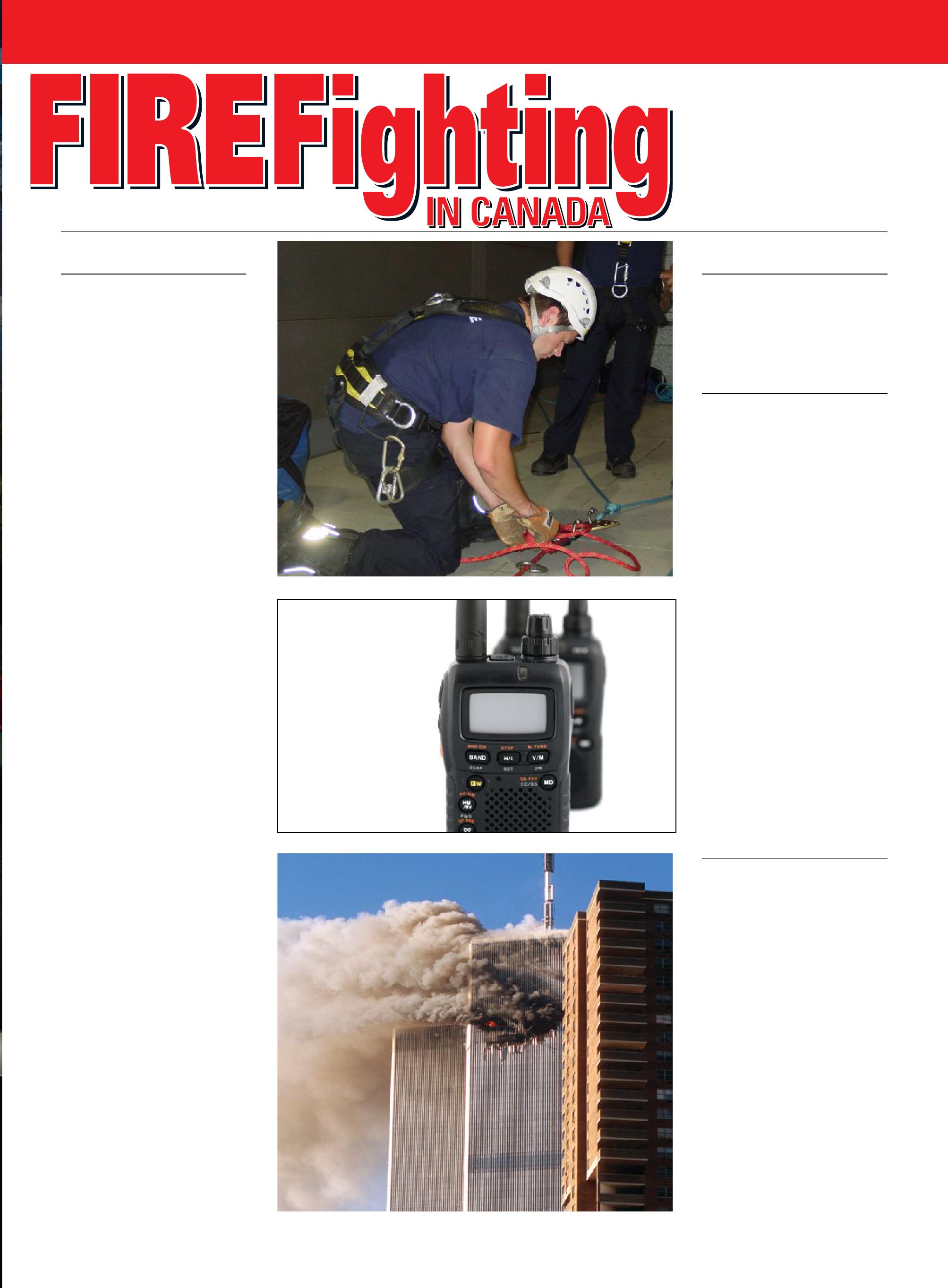
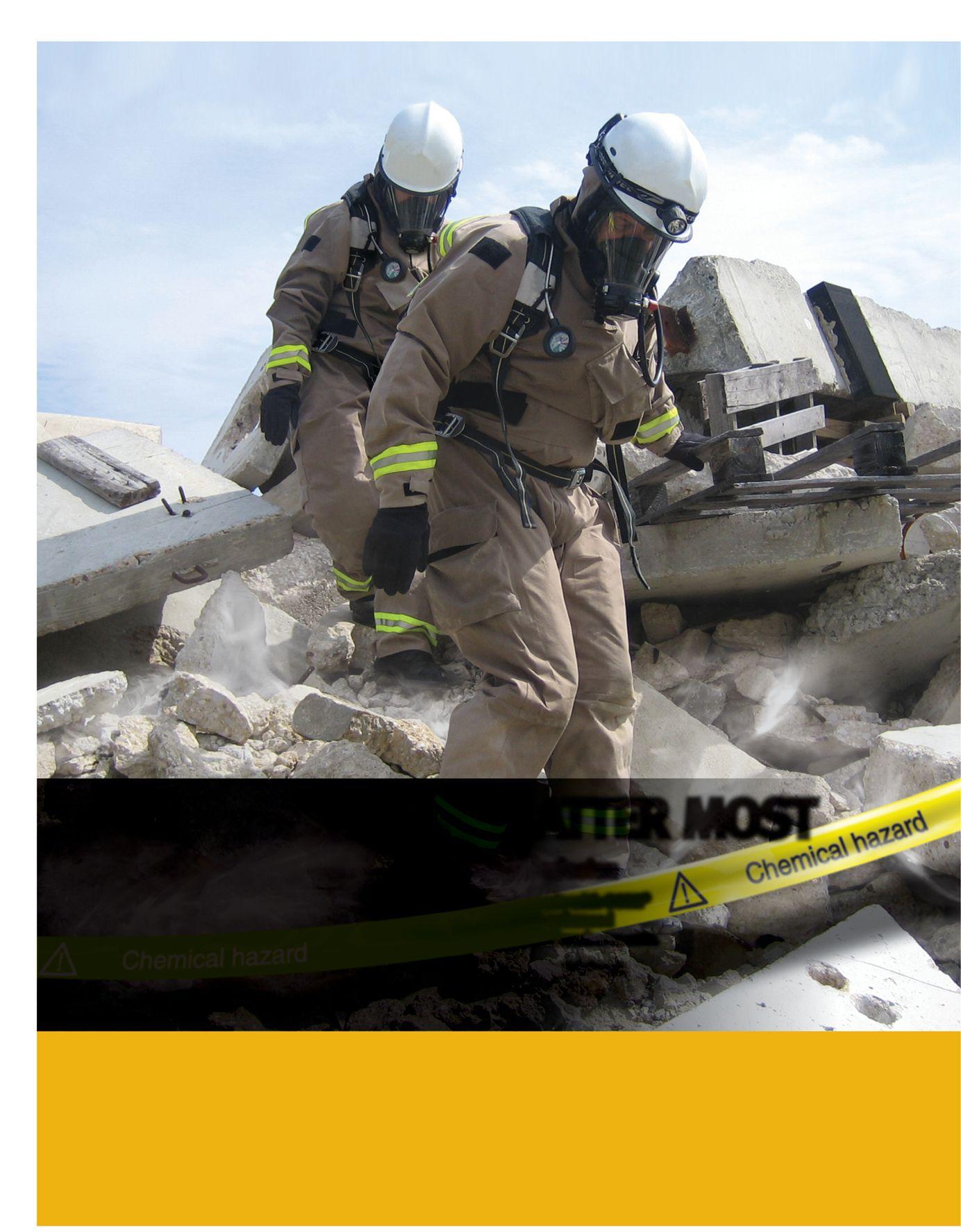
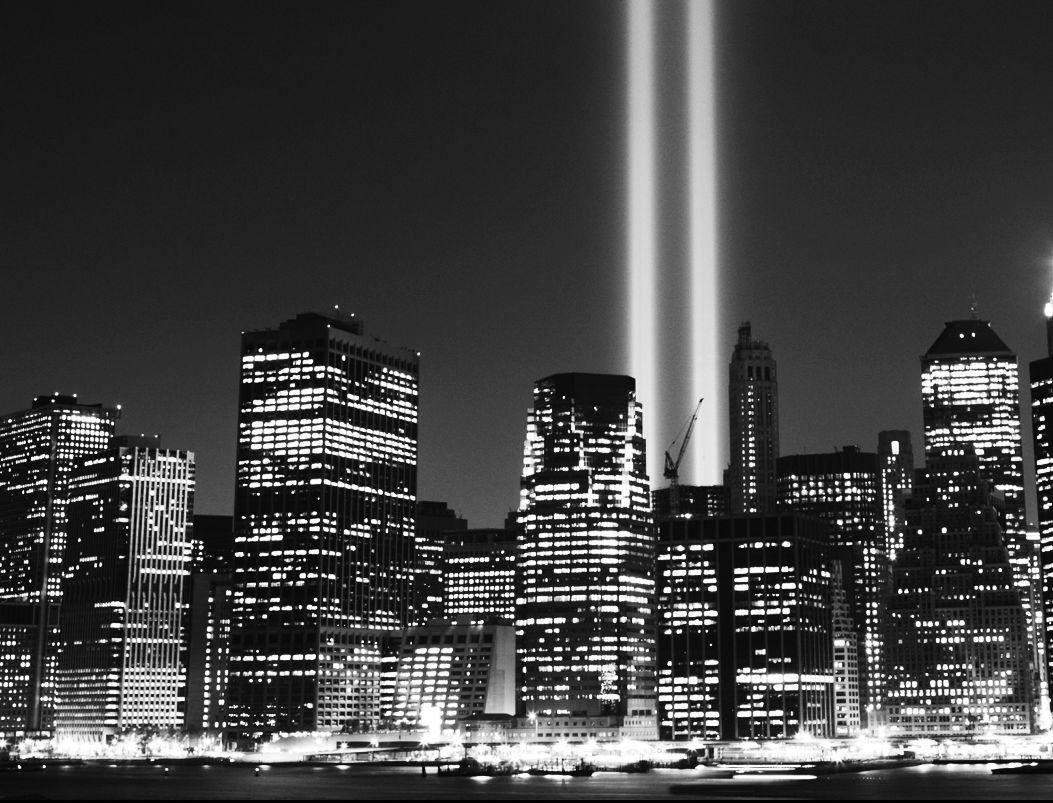
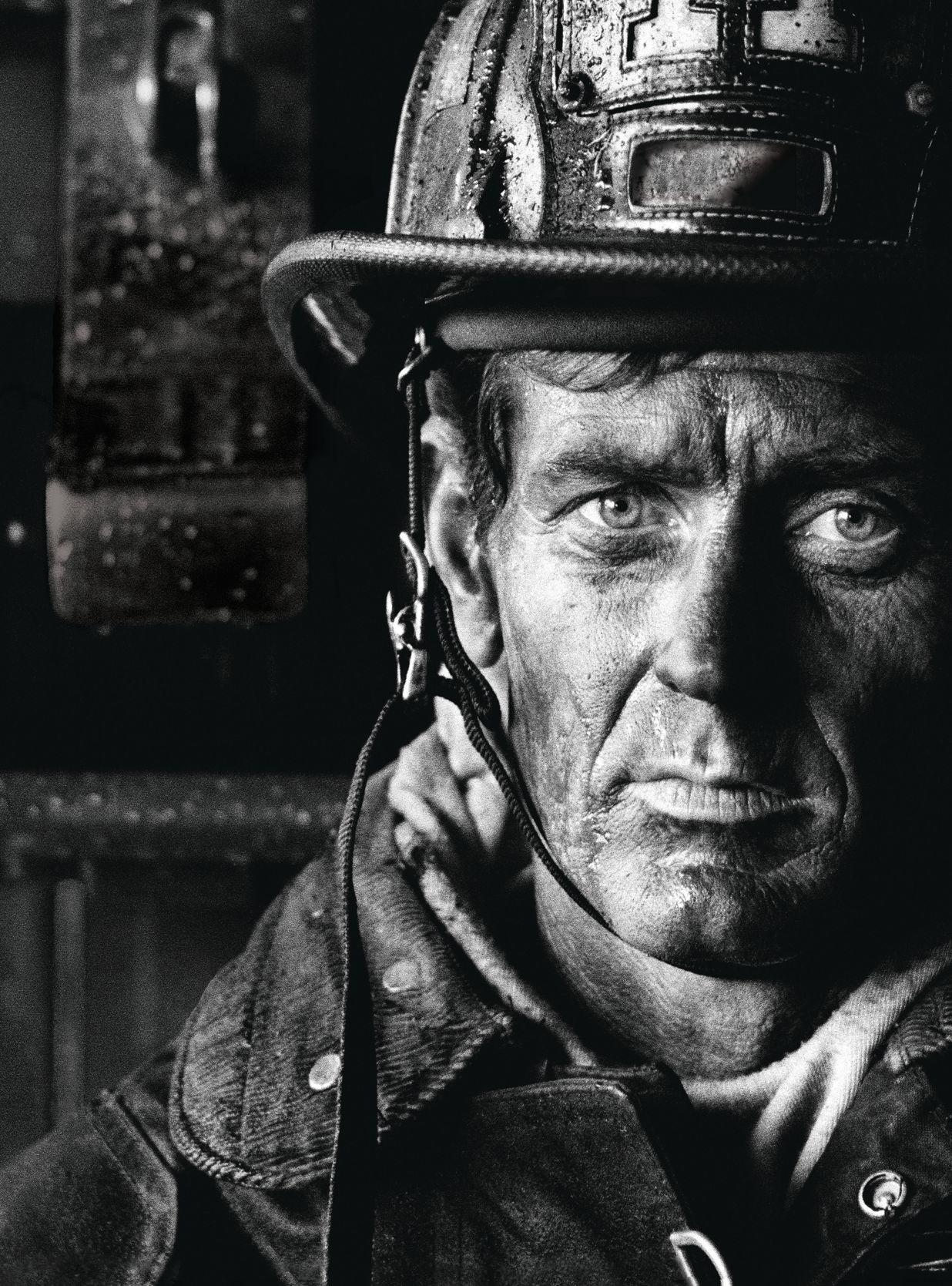
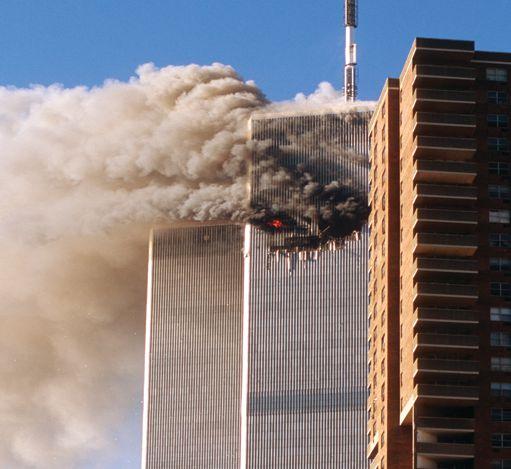
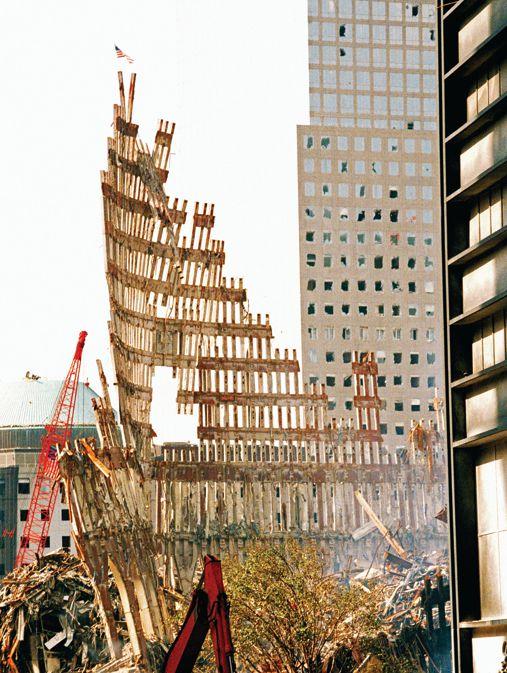
Sept. 11, 2001, was a tragedy, but were lessons learned? In Ontario, says Andy Glynn, the answer is yes.
7
tHe StAtUS OF FeDerAL SUppOrt
What has changed since 9-11? Mutual-aid resources have improved, but as Brad Bigrigg argues, many other fire-service resources haven’t.
12
tHe StAtUS OF INterOperAbILItY
Seven years after the 9-11 Commission suggested that interoperability must improve, most Canadian fire, police and EMS organizations can’t connect. Stefan Dubowski reports.
18
tHe StAtUS OF trAINING
There has been some movement toward standardized training, but according to Brad Patton, 9-11 wasn’t a driving force.
38
tHe StAtUS OF AIrpOrt SecUrItY
The spotlight on the Gander International Airport post-9-11 forced crews to keep safety front and centre in all exercises. By Brian Hicks, as told to Laura King.
50
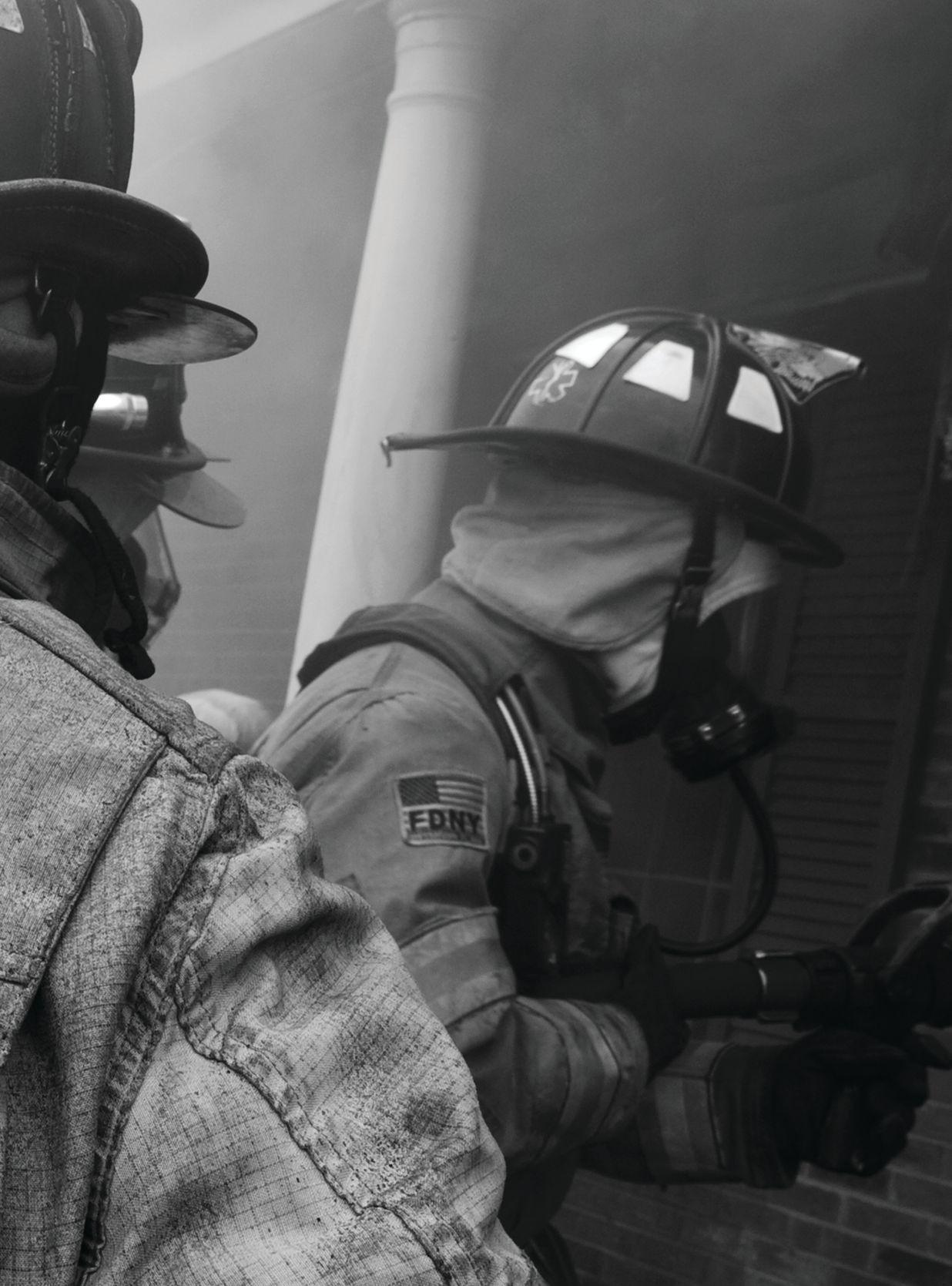
tHe StAtUS OF tHe FDNY FDNY Battalion Chief John Salka shares his story of 9-11.
64
tHe StAtUS OF DISASter mANAGemeNt
Jay Shaw reflects on the capabilities of the fire service in trying situations.
B Y L AURA K ING Editor lking@annexweb.com
IHas anything changed since 9-11? comment
t wasn’t a single, blindingly clear moment of realization that the world had changed. For me, it wasn’t until the second plane hit the south tower of the World Trade Center, about 17 minutes after the first attack on the north tower, that I understood America was under attack on Sept. 11, 2001.
We all know the horrible chain of events that day. And the attacks on the enduring symbols of the western world’s economic and military power indeed changed the world.
The loss of 343 firefighters in the horror makes the 10th anniversary of the attacks more sombre and more of a reason to reflect for fire services everywhere.
In this anniversary edition of Fire Fighting in Canada, we present powerful recollections from fire-service personnel across Canada and we let a Ground Zero responder share his emotionchurning memories of that day.
And on an anniversary of a day repeatedly labelled as “the day the world changed,” we hope to address a question more fundamental to the fire service in Canada: Did your world change the way you do your job and if it did, how?
Some questions have more than one answer; some perspectives on the same issue contradict. Healthy debate is good and we want these pages to be a place for the fire service to explore difficult questions.
For example, in an age of unprecedented technology and communication, there is still a surprising lack of interoperability among levels of government and various emergencyresponse agencies. There have been subtle legislative changes and others that hit like a hammer on a thumb. There have been new programs – such as Ontario’s Heavy Urban Search And Rescue team – that have
national response capability. What have they achieved? And there have been meaningful advances in training.
In this issue you will hear voices celebrating the heroes of 9-11, from Ground Zero to Gander, N.L., and voices honouring the fallen. You will hear compelling arguments that much has changed, and not enough has changed, perhaps leaving Canada poorly prepared to deal with a similar disaster or terrorist strike here. If it can happen in New York and Washington, and if it can happen in London, Bali, Madrid, Mumbai and Oslo, it can happen here.
And utterly without surprise, you will hear that familiar blame for a big part of the shortcomings that exist in the system – a lack of funding from government for fire services and other critical components of emergency response.
The events of 9-11 led directly and indirectly to two wars. It changed the way we travel domestically and internationally. It highlighted weaknesses and strengths at every level of response.
The exploration of the lessons learned and, perhaps, lessons overlooked, is not intended to pay less than full tribute to the 343 firefighters who died that day.
In fact, understanding what fire services have done right since then, and what is left to be finished, is fundamental to honouring the sacrifices of 9-11, so that those who follow will be better prepared, better equipped, and able to survive.
PRODUCTION ARTIST KELLI KrAMEr kkramer@annexweb.com
GROUP PUBLISHER MArTIN MCANuLTY fire@annexweb.com
PRESIDENT MIKE FrEDErICKS mfredericks@annexweb.com
PuBLICATION MAIL AGrEEMENT #40065710 rETurN uNDELIVErABLE CANADIAN ADDrESSES TO CIrCuLATION DEPT.
P.O. Box 530, SIMCOE, ON N3Y 4N5
e-mail: lmorrison@annexweb.com
Printed in Canada ISSN 0015–2595
CIRCULATION
e-mail: lmorrison@annexweb.com
Tel: 866-790-6070 ext. 206
Fax: 877-624-1940
Mail: P.O. Box 530 Simcoe, ON N3Y 4N5
SUBSCRIPTION RATES
Canada – 1 Year - $24.00 (with GST $25.20, with HST/QST $27.12) (GST - #867172652rT0001) uSA – 1 Year $40.00 uSD
We acknowledge the financial support of the Government of Canada through the Canada Periodical Fund (CPF) for our publishing activities.
Occasionally, Fire Fighting in Canada will mail information on behalf of industry-related groups whose products and services we believe may be of interest to you. If you prefer not to receive this information, please contact our circulation department in any of the four ways listed above.
All advertising is subject to the publisher’s approval. Such approval does not imply any endorsement of the products or services advertised. Publisher reserves the right to refuse advertising that does not meet the standards of the publication. www.firefightingincanada.com
B Y A NDY G LYNN Deputy Chief Oakville, Ont.
IThe status of preparedness
t can be said that we learn the most from past tragedies. Sept. 11, 2001, will be forever remembered as a lesson in how vulnerable we were as a society and as first responders. Did we learn anything from that tragedy and are we better prepared today than we were 10 years ago? Yes, absolutely.
Much has happened over the past decade. Some changes have been subtle while others are much more noticeable. Whether the changes of the last 10 years are a direct result of the events of 9-11, or whether the events of that day were simply a catalyst for change that was inevitable, is up for debate. But one thing is certain: 9-11 – and the subsequent white-powder scares – changed the way we do business.
In Ontario, we witnessed an increased awareness around emergency preparedness. Emergency Management Ontario (EMO) almost doubled in size. A large number of fire chiefs were appointed as community emergency management co-ordinators (CEMC), responsible for their municipalities’ emergency management programs. There were changes in Ontario’s Emergency Measures Act (now the Emergency Management and Civil Protection Act), which requires, among many things, each municipality to perform tasks such as hazard identification and risk assessment. Our need to more adequately prepare became palpable, and, after 9-11, the province reacted by implementing programs to better prepare for largescale emergencies such as terrorist incidents.
Increasingly, the province recognized a need for greater protective measures to address the potential for a similar 9-11-type emergency. As a result of 9-11, through the Office of the Fire Marshal (OFM), two of the province’s most visible programs were funded: provincial Chemical, Biological, Radioactive, Nuclear (CBRN) teams and the Toronto Heavy Urban Search And Rescue (HUSAR) team.
capable of deploying across the country, assisting local first responders with structural collapse. All of these teams remain in effect today.
The OFM also received additional funding with the purpose of developing programs aimed at better preparing and supporting first responders in large-scale and human-caused emergencies. One of the programs was the OFM Emergency Management and Response Unit. This unit acquired the technical expertise and specialized equipment to support first responders in the field.
At the first-responder level, there was a much more vigilant approach to incidents, especially immediately after 9-11 and during the white-powder/suspicious-package calls. Because there were so many calls for unknown white powder, larger departments developed Biohazard Rapid Assessment Teams, comprising personnel from police, fire and EMS. These teams would respond and perform a threat assessment before initiating a full hazardous-materials team response.
The fire service has always responded to hazardous materials releases but since 9-11 there has been a twist: is the incident an intentional release aimed at killing people? What traditionally was always a fireservice responsibility is now a shared responsibility with police and, in some cases, EMS. The differences between a Toxic Industrial Chemical
What traditionally was always a fire-service responsibility is now a shared responsibility with police and, in some cases, EMS. ‘‘
The CBRN teams include the Toronto, Ottawa and Windsor fire departments as Level 3 teams, as well as departments in Thunder Bay, Sault St. Marie, North Bay, Peterborough, Cornwall and Waterloo Region as Level 2 teams. These teams have trained to integrate and provide assistance at the local level.
Toronto’s HUSAR team was also the recipient of government funding earmarked for making us safer. Although the HUSAR group was in its infancy prior to 2001, funding became immediately available after 9-11 to expand it into a full HUSAR team. The team is now
After spending 14 years as a firefighter in a municipal department, Andy Glynn joined the Office of the Fire Marshal, where he served as an instructor, program specialist and acting manager of the OFM’s Emergency Management and Response Unit. In 2006, he became a deputy fire chief with the Town of Oakville, where he has held responsibility for training, fire prevention and professional development. He also acts as community emergency management co-ordinator. Andy is a certified Fire Protection Engineering Technologist. Contact him at aglynn@oakville.ca
’’
(TIC) accidental release and a CBRNE (the E was later added for Explosive) intentional release makes for a great debate among first responders. Regardless, police and EMS have increased their capabilities for responding to CBRNE events. In fact, the Ontario Provincial Police has an entire division capable of responding to CBRNE events and/or structural collapse. EMS has also created tactical medics capable of entry into certain CBRNE events. In several municipalities, cross training in CBRNE among all three agencies is the norm.
After 9-11, many of Ontario’s urban fire departments began to devote significant resources to preparing for CBRNE incidents. Purchasing detection equipment and focusing on mass decontamination, along with training all their members in terrorism awareness, became a top priority. In smaller municipalities where training and outfitting a department with the appropriate equipment became
The status of federal support
What has, or hasn’t, changed in the Canadian fire service since Sept. 11, 2001?
For about three years prior to Sept. 11, 2011, FEMA had been delivering emergency-response-to-terrorism training for first responders throughout the United States. I was fortunate to be a member of a 50-person Canadian class that attended this training at the New Hampshire Fire Academy in 1998. What an eye-opener that was: from the moment we entered the training academy, it was clear that the state and federal governments in the United States had not only completed a valid, timely and accurate threat assessment, but had also acted quickly to close the gaps by providing the plans, organization, training, resources and funding required.
Shortly after completing this training, there were a number of attacks on U.S. assets in Africa. These attacks validated the threat assessment completed by the U.S. government and should have served as a wake-up call for other western democracies, including Canada.
Typically, the Canadian response was to do nothing or move slower than the speed of government, hope that the issue would go away, and count on the government of the United States to help us
criticized by senior members of our organizations for even attending this nonsense exercise.
Between the fall of 1998 and the summer of 2001, there were a number of overseas attacks on western assets. Little regard was paid to these events and, individually, they were viewed by most as blips on the screen. Few people envisioned a Sept. 11, 2001-type of attack in the western world.
So what has changed since Sept. 11, 2001? In many cases there have been lots of changes and in other cases there have been virtually none. In Ontario, it took more than a year to announce major initiatives arising out of the events of Sept. 11, 2001. As can be expected, the bulk of the funding went to policing services, even though the fire service’s primary concern is consequence management, which is not a role or responsibility for police services. The leftover funding, which, in my view, was insignificant, was used by the Office of the Fire Marshal to hire a few additional staff, develop a limited emergency-response support capability, install additional training props at the Ontario Fire College, and create one Internet-based self-study package on hazmat/CBRNE awareness for first responders.
It really is time that Canada had a federal minister . . . with the stomach to capably and adequately represent the needs of our fire services . . . ‘‘
’’
if we were involved in a serious event that we couldn’t handle.
Many of the Canadians attending the course in New Hampshire came back to our home organizations with simple and timely training and information designed to ensure the safety of first responders and the civil population during a terrorism-related event.
Simple plans were drawn up to offer similar training to first responders in several provinces. True to bureaucratic form, many of us who attended the training (some on our own time/expense) were
Brad Bigrigg has served in public safety throughout Ontario for almost 35 years, as a police officer, volunteer chief fire officer, assistant fire chief responsible for fire and EMS operations, and emergency manager for the Ontario Office of the Fire Marshal. He is currently the fire chief for Caledon Fire and Emergency Services. Brad is also an associate instructor for the Ontario Fire College and Emergency Management Ontario. E-mail him at brad.bigrigg@caledon.ca
This self-study training was well received – not only by the fire service, but also by members of the broader first-response community. It has been periodically updated and is still the fundamental hazmat/ CBRNE training building block in Ontario today. Unfortunately, none of the other self-study training initiatives envisioned for the fire service following the events of Sept. 11, 2001, was ever developed. Additional funds were made available to Emergency Management Ontario (EMO) to upgrade the Provincial Operations Centre, add field officers and enhance EMO’s planning and training capability. As this article was being prepared, the dividends of this investment were being paid as EMO was co-ordinating the evacuation of 3,500 members of First Nations communities to areas of refuge during a severe forest fire in northwestern Ontario.
EMO was also tasked to develop and implement a provincial Incident Management System (IMS). This project started and stalled for more than two years but finally has some traction. Unfortunately, the original terms of reference were changed, and it will be some time before all first responders in Ontario are working within the same IMS during large-scale or complex events.
EMO was provided funding to acquire a large mobile command post as a province-wide emergency-management resource in support of communities during an emergency. That lasted for about a year. The vehicle has been turned over to the Ontario Provincial Police as part of its fleet of several other large police command posts.
Some significant funding was also directed to the health and public health sectors to develop improved decon, triage and on-site
B Y B RAD B IGRIGG Fire Chief, Caledon, Ont.
medical response capabilities during hazmat and CBRNE events. Unfortunately, there was little or no funding to train staff in these functions.
In some cases, little or nothing has been done with the equipment that was provided to support health care during hazmat/CBRNE events. In other cases, hospital administrators have told fire chiefs that the local fire service will be required/ expected to perform the decon and triage functions following a hazmat/CBRNE event. It never fails to amaze me that so many hospital administrators believe that the fire service will carry out health-care functions at a hospital site. Many hospital administrators (and government bureaucrats) seem shocked to learn that most fire services in Ontario do not deliver operations or technician-level hazmat services and that, regardless, most available firefighters would be at the incident carrying out consequence-management functions, not at the hospital carrying out health-sector functions.
Ontario did create an Emergency Medical Assistance Team (EMAT) to support the health-care system during major incidents. This team has been deployed periodically for public health issues. (As I write this, the team is deployed to Thunder Bay to assess and treat First Nations residents as they are evacuated due to threats of forest fires.)
Following two years of negotiating among the federal, provincial and local governments, the Office of the Fire Marshal entered into memorandums of understanding with strategically located municipalities to provide a CBRNE and a HUSAR emergency response capability for Ontario, programs still in place today. There have been a limited number of activations, deployments and exercises involving these teams. There seems to be little interest on the part of government to pre-position these resources, even when threat assessments warrant it.
Following the events of Sept. 11, 2001, plans were quickly developed and implemented by EMO and the Office of the Fire Marshal to allow the Ontario fire service to request heavy resources quickly without an involved bureaucratic process. This has sped up the deployment of provincial resources, but, in reality, it still takes a significant amount of time to have required resources such as CBRNE, HUSAR or EMAT on the ground and fully operational.
For those who thought that we were living in a close to perfect world 10 years ago, it has become more obvious than ever that there are bad people waiting to do bad things to good people.
Considerable efforts have been made to plan for many more contingencies than ever envisioned a decade ago. Our reliance upon and ability to deploy mutual-aid resources has increased and improved.
At the same time, fire-service resources are dwindling. Many municipalities are reluctant to replace aging apparatuses and equipment or choose to defer the replacement far too long. We are living in a world in which all of our community-safety resources and assets are being questioned and the need is challenged by various levels
Continued from page 6
cost-prohibitive, departments were able to rely on mutual aid or the province for support.
Response to CBRNE was not the only change that occurred –the way the fire service responds to highrise calls may have changed as well. The strategy and tactics developed for a standard highrise incident underwent review to determine if there were any changes necessary to address the potential for a 9-11-type incident. Staging of fire apparatuses, location of the command post, communications, evacuating occupants, fire control and pre-planning all became topics
of government on an annual basis, usually during the budget cycle. There is ongoing pressure to consolidate or regionalize fire services and amalgamate fire services with EMS.
Several Ontario fire departments have been directed to wind down and stop delivering specialized rescue services while others have stopped simply because there is a lack of trained firefighters.
We are delivering fire-protection services in a much different context than we were a decade ago. Many volunteer firefighters have fewer than five years’ service or experience, and, in many cases, volunteer firefighters do not stay on a fire department for more than five to seven years due to social, economic or family circumstances.
While all of this has been going on, police services throughout Canada have received significant funding for staffing, various programs, training and equipment. Police services continue to receive the lion’s share of funding because they are well organized and lobby well. The events of Sept. 11, 2001, have been packaged by some as a law-enforcement problem and politicians at senior levels have been lulled into a false sense of security, believing that increased funding for police services will solve a national security and sovereignty problem.
Police services in Canada got it right a long time ago. When police services were asked to step up and take on additional programs, duties or responsibilities, they learned to say no until they were given authority under the law and were adequately funded. The needs of police services in Canada are represented to the government through the federal solicitor general. We have all witnessed this representation work well following the events of Sept. 11 – new laws, new equipment and additional police officers have been put in place across the country. Perhaps this nation’s fire services should start saying no to new initiatives, when appropriate, until they are authorized in law and adequately funded.
During the same time, very little funding and very few resources have been invested in fire services for training, equipment, technological change and consequence management of large or complex incidents. While all of these additional police officers and peace officers were hired following Sept. 11, 2001, not one additional firefighter position was funded through the federal government. It really is time that Canada had a federal minister or senior public servant with the stomach to capably and adequately represent the needs of our fire services to our national government.
We have been taught during emergency-management programs that all emergencies are local. I believe that this is as true today as it was 10 years ago. Many fire chiefs also believe that the federal government is using this catchphrase as an opportunity to save money and download responsibilities onto subordinate levels of government and non-government organizations, and thus abdicate its responsibility to support those who respond when the government is unable to defend its sovereignty or civil population.
of discussion and likely resulted in changes to the way fire officers size up the situation, and to departmental policies and procedures.
There is no question that the fire service has evolved significantly since the events of 9-11. As is the case with all public-sector services, however, budgets are finite and not every program or recommendation comes to fruition. Despite this reality, investments have been made over the past decade to help ensure that the fire service and other first responders are much more aware, educated and better prepared to protect ourselves and the public we serve. If, as a profession, we continue to respond to crises in this manner, the events of Sept. 11, 2001, will not have been in vain.
tHe StAtUS OF prepAreDNeSS
WHEN MINUTES MATTER MOST
Respond faster and remain focused on the mission
Certified to NFPA 1994, Class 2, durable multi-threat suits made with GO RE® CHEMPAK ® ultra barrier fabric help you respond quicker with enhanced operational capabilities and reduced heat stress in HOT ZONE environments.
L ear n m or e about pr oduc t s f eat ur ing G or e’s innov at i ve C hemB io f abr ic s at ww w.G or e C hempak .com in applications for Technical Rescue, HazMat, Reconnaissance, and Rapid Intervention Teams.
B Y SE AN TRACEY Canadian Regional Manager, NFPA
WOpening Ottawa’s eyes to fire-service funding
hat has changed with the Canadian fire service since 9-11? There has been some advancement of issues in the United States, but the United States was more directly impacted, so this would be expected. What I did not expect to see when I started examining the state of the Canadian fire service since 9-11 is how little things have changed here. Look at support to municipal first responders – this is critical, and as both the International Association of Fire Fighters (IAFF) and the Canadian Association of Fire Chiefs (CAFC) have been pointing out to the federal government, the municipal fire service is the nation’s first response to any crisis. Municipal fire departments are the best available pool of resources in any community to carry out mitigable measures, as well as to provide the initial response to any disaster. Municipal fire departments should be adequately protected and resourced in this critical role.
One measure of the government’s commitment to building resilience is funding and resources for equipment and training to build preparedness in Canadian fire services. However, this is usually a municipal mandate, and municipalities generally fund only to the absolute minimum. In the United States, there has been a major influx of cash to municipalities from the federal government in the past decade through Assistance to Firefighter and SAFER grants. Between 2001 and 2010, more than $4.7 billion was made available to assist American fire departments. Between 2005 and 2010, $1.1 billion was funnelled through the SAFER grant program to help with recruitment and hiring, and $214 million was spent on fire-prevention and firesafety awards: this equates to about $1.90 per capita per year in federal funding going to municipal departments to increase their readiness levels. In 2003, this peaked at $705 million.
The NFPA has been involved with three rounds of review of fire-service needs. The latest firefighters need assessment report, available on the NFPA website (www.nfpa.org), shows that there have been gains in areas such as protective equipment. These gains, however, were directly tied to federal grants to augment municipal funding. (See my August 2011 Fire Fighting in Canada column.)
to respond to all types of emergencies and to enhance the resiliency of critical infrastructure.” However, “JEPP funds may not be used to finance events or equipment purchases of departments or agencies for activities considered to be part of their normal responsibilities.” This leaves a very narrow area of need funded by the federal government. Since 1980 the Canadian government has provided JEPP funding of $165 million to the provinces, or an average of $8 million a year. In 2010, it was announced that this funding would be reduced by $2 million a year starting in 2011. Now, if one includes the HUSAR and CBRNE funding, this amounts to about $117 million since 2001, or an average of only 35 cents per capita, per year (a dismal 18 per cent of the funding rate in the United States) to build resilience in our first responders – a clear indication of disinterest in building communitypreparedness capability.
Canada has developed a CBRNE resilience strategy and action plan, which is intended to be implemented over the next three to five years. It is “to provide the policy framework that guides the creation and maintenance of sustainable capabilities, common standards and steers investments in CBRNE policies, programs, equipment, and training in a common direction.” This is just one area, and it does not appear to have a component to help fund municipal departments. It is also just
Canadians . . . support and hold the fire service in high esteem. Federal politicians and bureaucrats, however, do not get it.
’’
In Canada, the federal government has provided annual funding to the tune of $3 million to support the development of heavy urban search-and-rescue capabilities and $5 million over five years to the IAFF for the rollout of chemical, biological, radiological, nuclear and explosives (CBRNE) training, starting in 2008. Municipal departments also have access to the Joint Emergency Preparedness Program (JEPP). Through this, the federal government provides funds to match provincial and municipal contributions “to enhance the national capacity
Sean Tracey, P.Eng., MIFireE, is the Canadian regional manager of the National Fire Protection Association International and formerly the Canadian Armed Forces fire marshal. Contact him at stracey@nfpa.org
one risk component. What about all the envisioned risks coming from environmental change – flooding, wildland fires, building-to-building fire spread? A review of the Public Safety Canada disaster database revealed only two explosion or chemical-release disasters in Canada in the past decade. Other disasters (to which the fire service is the first response) showed 478 incidents.
So what can we conclude from this? Canadians support and hold the fire service in high esteem. Our federal politicians and bureaucrats, however, do not get it. Canadian fire departments remain our first line of response, yet most departments are understaffed and under-resourced for the potential roles they are expected to perform. Resources (and thus, resilience) are determined in communities based on the lowest amount the community is willing to spend for a fire response. No one envisions the disasters, and when they occur they have far-reaching consequences. If we want to build a more resilient Canada, we need to augment municipal funding.
the status of interoperability
Canadian first responders lagging in ability to communicate
By StEFan DuBoWSkI
It has been seven years since the U.S. National Commission on the Terrorist Attacks Upon the United States (the 9-11 Commission) released its report suggesting that communications interoperability among first responders must improve. Yet even now, most Canadian fire, police and ambulance organizations still can’t connect to each other all that easily.
What’s the holdup on communications interoperability? Emergency services experts say government priorities and funding challenges get in the way. But they also say that Canada’s slow and steady approach could result in a better system overall.
In 2004, the 9-11 Commission found that communication problems among firefighters, police and other emergency-service organizations made rescue efforts all the more difficult. Since then, first responders across North America have been working to implement technologies and procedures that would facilitate communication among firefighters, police and paramedics.
But the pace of change is far from fast. “If you were to ask a fire chief anywhere in Ontario outside of a major city, ‘Can you talk to your local police and paramedics?’ I guarantee the answer would be ‘no,’” says Lance Valcour, retired Ottawa police inspector and communications-interoperability consultant.
Government priority is the main stumbling block. Municipal-, provincial- and federal-government organizations seem keen to improve interoperability, but at the end of the day it simply isn’t a top concern.
“Unfortunately it’s not a high priority compared with fire trucks, equipment and training,” says Terry Canning, provincial interoperability co-ordinator for the Province of Nova Scotia and volunteer deputy fire chief for Brookfield, N.S. He points out that for cash-strapped municipalities – already limited in their ability to raise the funds required to buy new interoperable radio systems and now also struggling with the after-effects of the recession –other items take precedence.
Tim Beckett, fire chief in Kitchener, Ont., and president of the Ontario Association of Fire Chiefs (OAFC), agrees that interoperability doesn’t attract enough government attention.
“The lack of federal and provincial funding for infrastructure has caused municipalities to look at the priorities with their finances,” he says. “The fact that there has not been a widespread need locally, provincially or federally has likely lowered the priority or consideration.”
Another issue is co-ordination. It’s difficult enough to manage the process of researching, acquiring and implementing singleservice radio systems. It’s even more difficult to manage that process when multiple stakeholders are involved – not only police,
Seven years after the 9-11 Commission report, lack of interoperability is still a major concern.
fire and paramedics, but also municipalities, provincial representatives and non-governmental organizations that also play important roles in emergency situations – such as the Salvation Army and the Red Cross. Canning has witnessed the co-ordination conundrum first-hand as Nova Scotia works with New Brunswick and Prince Edward Island on a trans-provincial communication system designed to connect police, fire and paramedics across all three provinces. The request for proposal went out to potential product providers last year, but the deadline for responses has been extended numerous times as the stakeholders hammer out some of the details.
“The way in which the various provinces want to structure paying for it is probably the bigger obstacle,” Canning says, explaining that one province might want to cover the costs from its own provincial coffers, while another might want the municipalities to pay. The funding infrastructure needs to be in place to ensure that the money is available when the bills come due.
tHe StAtUS OF INterOperAbILItY
Continued from page 12
But it doesn’t make sense to rush things, Valcour points out. He notes that since communications interoperability touches so many aspects of the emergency-services spectrum – technology, jurisdictional issues, funding, procedures and others – it’s important for the organizations involved to carefully consider the fundamentals. Which technology should they choose? What’s the best way to
ensure the system is used properly? Is training required? Should they co-ordinate with neighbouring jurisdictions, or go it alone? What about trans-national implications –areas in the United States are implementing interoperable communications systems; should Canadian border towns get in touch with stateside representatives?
Valcour says that the Canadian Interoperability Technology Interest Group (CITIG) – which he has led since 2007 –has held numerous workshops and seminars enabling fire officials and other emergency-
FULLY INVOLVED FIRE TRAINING SYSTEMS.
service leaders to collaborate on strategies and action plans. Earlier this year, CITIG worked alongside provincial, territorial and federal ministers responsible for emergency management as they approved a communications interoperability strategy for Canada and a supporting action plan, covering governance, standards, future communications systems, training and usage.
Meanwhile, various regions across the country are drawing up their own communications-interoperability strategies, aligning the details of their plans with the federal and provincial strategies that CITIG and others have helped to develop over the last four years, Valcour says. Plans underway in Durham Region and Halton Region in Ontario are just two examples, he points out.
Interoperability is becoming a reality in Kitchener, too. “Police and fire both work on the same radio system, and EMS has some of our radios,” Beckett says, adding that the city’s main challenge at this point has to do with operational resources – finding the funds to expand the interoperable capabilities.
For now, “we have interoperation policies relating to command and incident management. We only utilize these on major scenes,” Beckett says.
Major incidents seem to be major catalysts spurring governments to implement interoperable communications systems. Industry observers note that British Columbia and Nova Scotia represent the country’s interoperability elite, further ahead than other areas. In British Columbia, the Stanley Cup riot of 1994 convinced Vancouver’s emergency-service officials that it was time to build a better inter-agency system. In Nova Scotia, forest fires in the 1980s prompted the province to install a tri-service radio platform, and the Swiss Air flight 111 crash in 1998 compelled officials to again consider an even more sophisticated communications system to ensure everyone would be able to connect.
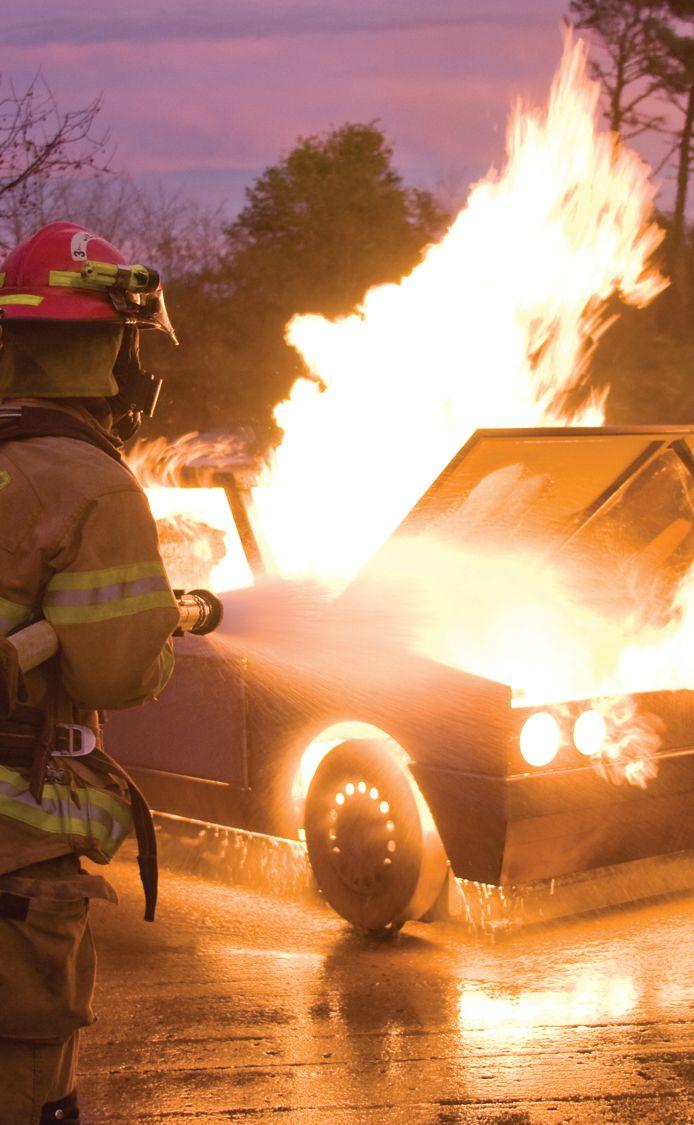
Train your firefighters to combat fully involved car fires with the BullEx Vehicle Fire Training Prop. Two thousand pounds of heavy-gauge steel and 40 million BTU make this prop tough enough to withstand even the most demanding evolutions.
Operate multiple burn zones with the instructor’s controller to create trunk, passenger compartment, engine and wheel well fires. For more information or to see our props in action, check out our videos at www.bullexsafety.com. TRAIN UNTIL YOU GET IT RIGHT. ON THE FIREGROUND, THERE ARE NO SECOND CHANCES.
“Typically these things don’t come cheap so they do need a major driver to bring them to the surface,” Canning says.
Valcour, for one, figures the challenges are surmountable – given time. He used to think it would be realistic for every Canadian province, territory and municipality to have an interoperability strategy by 2013, but lately he’s been adding a year or two to that prediction.
“It’s never going to be moving at a pace that I’d like, but it is moving at a pace appropriate to the resources we have available and the way government works,” he says.
Stefan Dubowski is a freelance writer based in Ottawa.
september 11, 2001
the status of training
Movement to standardize best practices driven by legal liabilities and costs
By BraD Patton
Has the fire service standardized training since 9-11? In my opinion, if we are honest with ourselves, the answer would be no – at least, not because of 9-11. However, there has been some movement in that direction, especially on some of the major health-and-safety issues affecting the Canadian fire service. Standardized training in the fire service is a difficult subject to tackle, as it is fundamentally driven by local needs and circumstances, including funding.
There are many facets to this subject. Numerous fire departments claim to be professional organizations – whether full-time, part-time or volunteer – and I’m sure that they are. Still, we do not have a recognized professional-standards body that reviews and approves all of our training. At a high level, we should all be practising the same fire-ground training regarding the incident command system and firefighter accountability, as well as selection and use of personal protective equipment. We should all know how to rescue our own (as in RIT training) and how to read smoke. We should all know and understand the dangers of lightweight construction and the proper way to fight a fire in a residence. All of these things – and many more strategies and tasks we do every day – are common in the fire service. However, what about auto extrication, first aid, uses of different water supplies, high-angle rescue, water rescue, grass and brush fires, CO alarms and grow ops? What are the standards for these disciplines?
There seem to be a few driving forces in standardizing training, and none is coming from the fire service or as a result of the tragic events of 9-11. For the most part, in Ontario, the Ministry of Labour, legal liabilities and cost efficiency are the catalysts for standardized training. The first two items are connected: if you or your fire department have a firefighter injury – or worse, a line-of-duty death – you will receive a visit from someone from the Ministry of Labour and/or a civil liability lawyer wanting to know how you train, what records you keep, who the training officer is and what his or her qualifications are, among other things. The training you do will be measured against recognized standards to evaluate its adequacy; those standards may come from the Ministry of Labour itself or from other provincial and/ or federal regulations.
You may be measured by industry best practices if, for example, the department down the road has a policy that states that first-in crews must do a perimeter check to look for health-andsafety hazards before approaching the vehicle upon arrival at a motor vehicle accident, and you don’t have this in your policy. If a firefighter gets hurt at the scene, you or your department
A lack of provincial and federal financing for fire deparments plays a role in the standards for training.
could be liable. This example alone is a very good reason for the implementation of standardized training, and there are many more examples of these kinds of comparisons being applied to fire departments.
It is true that there is protection in numbers, so why isn’t there one complete set of standard operating guidelines, a policy and a training guide for auto extrication? Why can’t we just go to a zone or provincial library and pick out the standard lesson plans for auto extrication, water rescue, CO alarms and everything else to which we all respond, and know that these are proven lesson plans and teaching plans that meet expectations?
Although there’s lots of talk about standardized training, different municipalities have different needs.
Photos by laura king
Initial Attack Done Safely With Limited Staff…
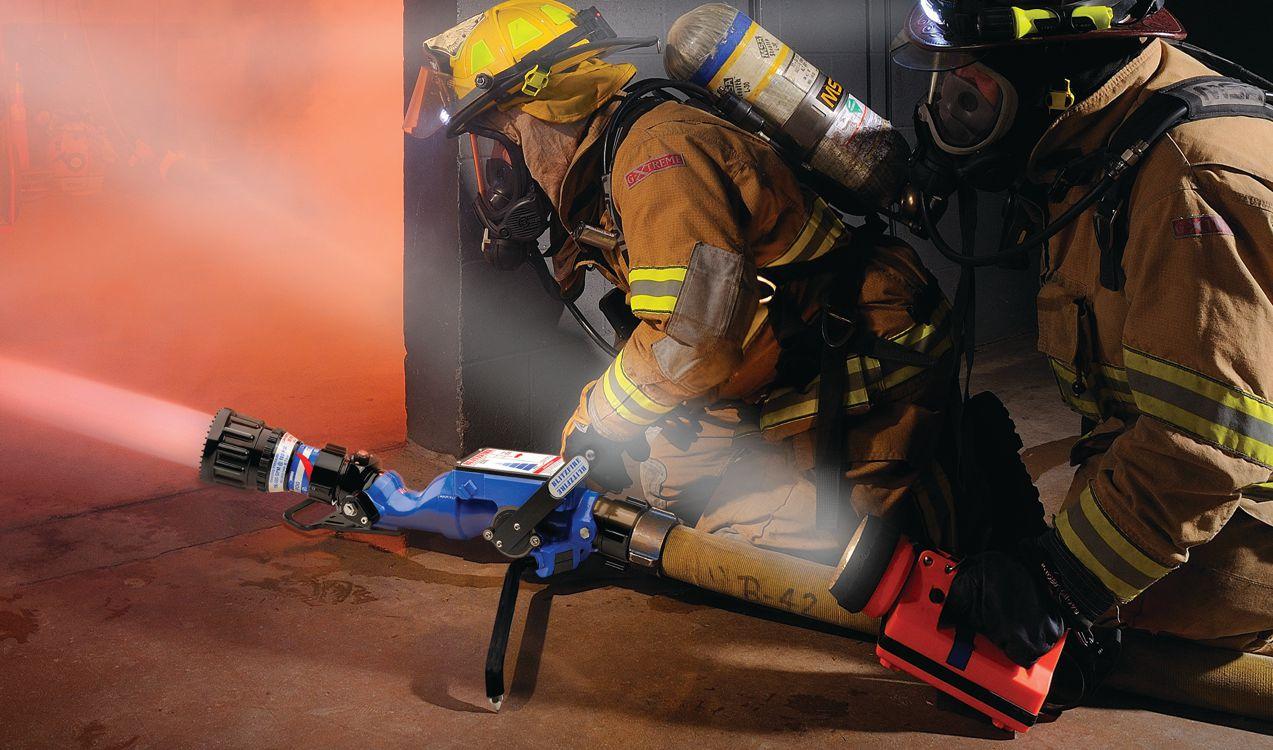
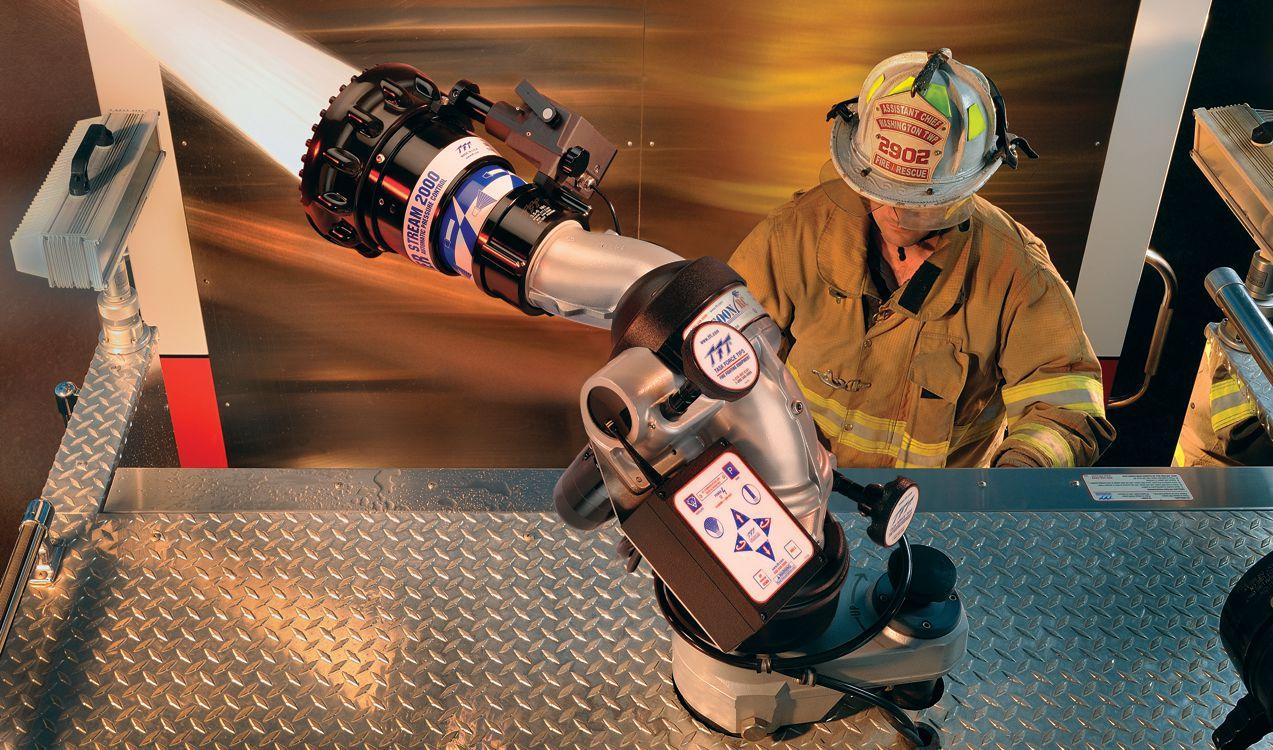
With a flow rating up to 500 gpm, the TFT Blitzfire Portable Monitor integrates an exclusive safety shutoff system that prevents unintentional movement during critical fireground operations.
The monitor’s compact and lightweight design offers a low attack angle and exclusive side valve for complete nozzle man flow control.
To learn more about how you can provide maximum performance and safety to limited staff during initial attack operations, contact your local TFT dealer today.
Blitzfire Personal Portable Monitor
Is standardized training really more cost efficient? In my sometimes-humble opinion, it sure is! It doesn’t take a rocket scientist to figure out that if rural areas can come together and hire one or two training officers to work with several departments, the quality of the training will increase and improve for all departments involved. This kind of co-operation will increase firefighter safety and decrease liability. Once again, if several departments share the cost of hiring and retaining staff, it will be more financially manageable for all involved.
So, let’s look back to the start of this column. What sets the fire service apart from our police and EMS partners? Well, most of us do not get any provincial or federal funding. The wording in our governing legislation may not be as clear as that of police or EMS, but we do have some tools. First, if your department is not meeting health-and-safety regulations, it is imperative that this is fixed, or you must stop providing that service. Regardless of the issue – whether it is staffing, equipment or training – it has to be fixed, even if it means going to your council. In the past, I have called and had meetings with Ministry of Labour staff and health-and-safety professionals and found them great to work with. They can supply a lot of information that you can use or provide to your council. I have even had Ministry of Labour staff assist in the presentations to council; they would rather be proactive and help you prevent an accident than charge you after an accident.
In order for the Canadian fire service to move ahead, it has to start talking with one voice. We can no longer afford to be a fractured organization. We need to work together on our common goals to create a superior fire service; that might mean five or six fire departments amalgamating with one chief, one chief training officer,
three deputies and two fire prevention officers. If that is a more effective and efficient way to deliver services, then we need to put on our big-boy pants and get ’er done! And, we must become much more active in our associations. Associations involving large numbers of fire-service personnel can accomplish a lot, but they need an engaged membership; and they need to listen to the needs of the members in addition to providing solutions to problems. Associations need an energetic executive and that’s where we can help: I encourage everyone who can to join and be active in our associations. There are associations for everyone: fire chiefs, senior officers, firefighters, training officers, prevention officers, mutual aid members and others, at local, provincial and federal levels. Just get out there and start working together. You can find a great list of associations on Firehall.com at www.firehall.com/listlink.php?list=association. Our associations are working with provincial and federal governments to make a better fire-and-rescue service that will safely meet the needs of our communities.
Has the fire service changed since 9-11? Yes, it has. Do I think any of the changes have anything to do with 9-11? No, I don’t. We just know the fire service needs to change and are willing to move forward to make those changes happen.
Brad Patton is fire chief for the Centre Wellington Volunteer Fire Rescue Department in Ontario. Centre Wellington, with a population of 28,000, covers 410 square kilometres and has stations in Fergus and Elora. Contact him at BPatton@centrewellington.com
Fire Fighting in Canada asked fire-service personnel from across the country for reflections about 9-11, from personal anecdotes and memories to broader, all-encompassing stories of that fateful day. Here are some of their thoughts about and analyses of Sept. 11, 2011.
FIrE CHIEF MIkE FIgLIOLA
Greater toronto airports authority
I was the deputy fire chief on 9-11 at Toronto Pearson and happened to be the acting fire chief that day. I was summoned by the director of public safety to attend the Emergency Operations Centre. All he said was that we have a situation. Later that day, I drove down the runway; it was dead silence with hundreds of parked aircraft and North American skies closed. The world was in crisis and our lives changed forever.
FIrE CHIEF LES kArpLuk
Prince albert, Sask.
I was watching the events unfold on television when the towers fell. I knew then that many firefighters paid the ultimate price. The loss of 343 firefighters on Sept. 11, 2001, continues to remind me that our profession is bigger than all of us. Borders may separate us but we are not separated by our desire to serve our communities with pride and professionalism. It’s been 10 years and the images are still vivid for me. We must remember the price paid on 9-11 and never forget the impact on their families. In their memory, we must continue to grow our profession and make it safer.
LyLE DONOVAN
Emergency Management Co-ordinator, Municipality of County of Victoria, n.S.
I had been asked to go to the Halifax Airport to do triage on the people on board the 44 aircraft that were forced to land in Halifax. As I was going through the people, one gentlemen was looking out one of the windows, he could see all the other planes parked on the runways when he said, “I don’t know what is going on, but whatever it is, it’s going to change the world.” For the most part,
the people on the planes for the first little while had no idea what was happening, as we were not allowed to tell them. So that statement stuck with me as it is something that has changed the world.
FIrE CHIEF BryAN BurBIDgE king Fire and Emergency Services, ont.
Aside from the devastation and the thoughts of losing so many innocent people and emergency-services colleagues that day and locally, there was an eerie haunt in the air for the remainder of that day plus several days later in the absence of air traffic overhead. We grow accustomed to the white noise of airplanes flying overhead when we live and work so close to an international airport that it is so noticeable when there is none.
FIrE CHIEF BrAD pATTON Centre Wellington, ont.
My job on 9-11 was to set up and prepare the EOC in Hamilton [Ont.]; the first thing I did was turn on the TVs and watch as the tragic events unfolded while setting up the room. As before, during and after 9-11, I am very proud of the fire service. FDNY did what they always do – save lives first and think about themselves second.
FIrE CHIEF TrENT ELyEA Collingwood, ont.
For me, it’s the families left behind. Some, if not most, never had a chance to lay a loved one to rest. For those, there is a lifetime of a sense of being cheated.
Somewhere in heaven, God is sitting on a throne with 343 firefighters surrounding him all on bended knee. He watches over them as they watch over us.
FIrE CHIEF DENyS prEVOST
Welland Fire and Emergency Services Department, ont.
My thoughts on Sept. 11 are somewhat complicated. A friend of mine spent some time at Ground Zero just a couple of weeks after 9-11, assisting with rescue-tool training as part of his job with Hurst, and he brought me back a fist-sized chunk of concrete and a piece of reinforcing steel from one of the Twin Tower stairwells. These cherished mementos sit on top of my office bookcase next to a Code-3 FDNY 9-11 commemorative pumper another friend gave me. There isn’t a day that I do not see these things and reflect, if only briefly, on the events of that day. Even 10 years after, I find it difficult to watch video of the towers falling. It gives me a feeling of helpless dread, one that I have never otherwise felt in more than 30 years of active and sometimes very challenging fire fighting and rescue. So, 9-11 for me is like a bad memory. Even though I only experienced it vicariously, it has left a mark that will not go away.
FIrE CHIEF BrENT BOyLE
Mira road Volunteer Fire Department, n.S.
One of the things that stands out the most in my mind is the week after 9-11, a cruise ship docked in Sydney [N.S.]. We had a service on the wharf and some of the passengers approached me afterwards and proceeded to tell me that their sons were firefighters at Ground Zero. At the time of the terrorist attack, these people were already at sea. At the time of the service we had on the wharf, they had just learned that both
their sons were safe, but that many of their co-workers had died. To have a hug and a handshake from the family of those firefighters is forever etched in my mind. Thousands of miles does not change the fact that we are all one family. I was privileged to have had those people share with us and that is one of my reflections of 9-11 that I will always cherish.
CyNTHIA rOSS TuSTIN office of the Fire Marshal, ontario
Whenever I see the news footage from that day, I remember being at the fire college. Everything stopped. Everything everywhere just stopped. We watched that horrible day live on CNN. And everyone, absolutely everyone, had tears in their eyes – tears of sadness and tears of pride – proof that even in the face of terror and overwhelming grief, absolutely nothing will stop a firefighter from being a firefighter. Courage is what stopped everything that day, not terrorism.
When the towers collapsed, before any reports of casualties, my first thought was of the hundreds of firefighters that had certainly lost their lives. When asked why I was so sure of this, I replied that there was no question whether new York firefighters were deep in harm’s way when the towers came down. the only question was how many.
- FIrE CHIEF TIM BEEBE upsala, ont.
FIrEFIgHTEr MArk VAN DEr FEyST
Woodstock Fire Department, ont.
(Cranberry township Volunteer Fire Company, 1999 to 2002)
I was living in Pittsburgh and on that day I was at a building near the Pittsburgh airport for an inspection of a sprinkler system. When I was done, I noticed four traffic lanes of airplanes landing from four different locations, with numerous planes landing in succession. Thinking nothing of it, I drove back home and when I turned on the TV I discovered the reason why the planes were landing. About an hour later we were told about an airplane crashing in Somerset County, about a two-hour drive east. That plane flew directly over our township and could easily have crashed in our response area. Later that night, our fire department was asked by FEMA to put together a team to respond to either New York City or Somerset County. Our whole department volunteered to respond. The nation had rallied together that day with U.S. flags appearing on vehicles, buildings, front lawns and in people’s hands as a symbol of determination and freedom.
FIrE CHIEF BrAD BIgrIgg Caledon, ont.
On Sept. 11, 2001, I was the manager of emergency preparedness and response for the Office of the Fire Marshal. I interrupted a senior staff meeting to inform them of what had occurred at the WTC and suggested that we should be making some notifications within the Ontario fire service. The response that I received was that I was “overreacting – it will turn out to be nothing.” I was assigned to the Provincial Operations Centre at about 10:45 Sept. 11, 2001. When I arrived in the POC, I was asked by one of the newer staff there what was really happening. The
only response that I could think of at the time was, “the world as we know it has changed forever, now get to work.” We had multiple notifications to make while trying to evaluate incoming information and threat-assessment data.
DEpuTy CHIEF BILLy gOLDFEDEr E.F.O.
Loveland-Symmes Fire Department, ohio Member-Board of Directors IaFC, nFFF and the September 11th Families association
We all remember what we were doing that morning, and how it impacted our lives forever. We also watched with great grief and sadness what the families of those lost, have gone through – and still do. So, now what? To me, the terrorism aspect is a job for someone else. Sure, we have increased training and awareness on what to do – and what not do – prior to and when we are attacked. We have a local responsibility to be prepared on WMD and terrorism-related issues, but the prevention of an attack belongs to the folks we elect to protect us at the national level throughout North America. So what is our responsibility? The great American politician Tip O’Neill said all politics is local, and that applies to every fire department’s ability to operate in terror response, but, perhaps even more importantly, the day-to-day incidents to which we respond. The fires. The EMS runs. The crashes. The day-to-day stuff. So, in my opinion, the best way we can never forget is to train each and every day and to lead our fire departments each and every day so that we are at peak performance levels when the next attack occurs. By being at the top of our game day to day in training, command, control, operations, accountability, planning and related core functions, we cannot help but be as prepared as possible when terrorism strikes. I’m not sure there is a better way to honour those who were murdered on 9-11.
I was with the oFM at the time and in a class with fire chiefs from around the province. Someone came to the classroom door and said that two planes just hit the twin towers. It was almost unbelievable. Everyone went to the oFC [ontario Fire College] lounge to watch the reports on tV. Most of the oFC staff, some in tears, were already watching the reports. I remember some of the Gta chiefs and deputies running to gather their things and racing back to their municipalities. It was so profound that I can remember this like it was yesterday.
-
DEpuTy CHIEF ANDy gLyNN oakville Fire Department,
ont.
-WAYNE, ASSISTANT CHIEF, NCFD
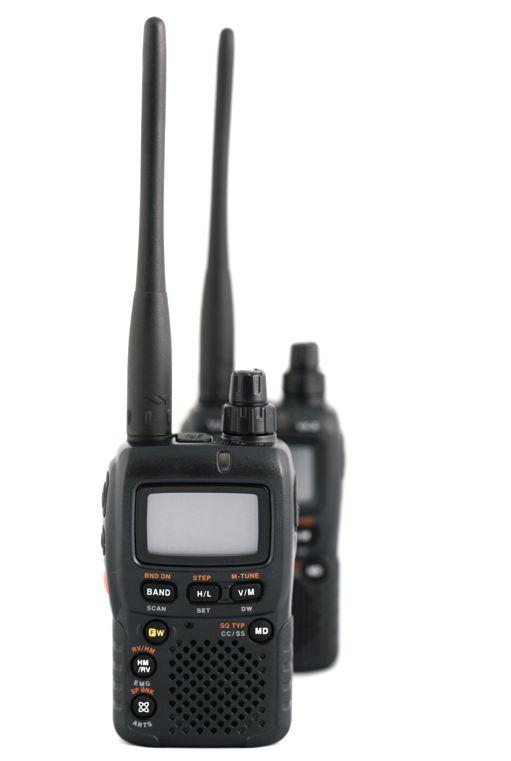
N E XE D G E ® i s de s i gne d to prov i de a dv a nc e d communication solutions to meet the needs of private enterprises and public sectors
Advanced features, extended coverage, strong security and 12 5 / 6 25 kHz compatibility are j us t s ome of the be ne fi ts of a dopti ng NEXEDGE® for advanced digital communications
NEXEDGE® transforms the radio communications choices available to your agency, offering affordable and secure agency communications in analog, digit al, t r unked or wide ar ea t r unked oper at ion.
N EX ED G E ® m eet s P25 c om pat ibilit y f or f unding r equir em ent s because it is fully upgradeable with P25 operations, while allowing you to migrate to digital on your schedule NEXEDGE® operates on both 6.25 and 12.5 kHz digital modes. Reduced noise, secure voice c om m unic at ions and inc r eas ed c ov er age ar eas ar e s om e of t he design features of the exclusive Kenwood NXDN ® digital technology.
NEXEDGE® Advantages
Spectrum Efficiency
All NEXEDGE® equipment operates in 25 & 12 5 kHz analog and 12 5 & 6.25 kHz NXDN ® digital modes – satisfying spectrum requirements today and tomorrow
Graceful Migration
NEXEDGE® supports both NXDN® digital and analog modes providing a self-paced migration path which allows a transition to digital at your pace - while accommodating your budgetary, administrative, organizational and timing plans
Flexible Configurations
NEXEDGE® systems are configurable in traditional conventional, trunked and wide area trunked network operation modes to provide flexibility in meeting your communication goals IP connecti vity for NEXEDGE® trunked sites provides wide area calling and system scalability over existing private LAN/WAN assets and commercial services.
Digital Voice Technology
NEXEDGE® utilizes state-of-the-art voice digitization and compression technology that combines to provide enhanced range and superior audio clarity
CApT. FrED LEBLANC
kingston Fire Department, ont. President, oPFFa
I was in Brockville, Ont., that morning, preparing for a district meeting of OPFFA locals from eastern Ontario. I was then executive vice-president of the OPFFA. I recall then-president Henry Watson telling me that a plane had just hit the World Trade Center. We quickly proceeded to our meeting room and joined about 30 other firefighters and
watched in disbelief. Although we had the natural instincts of fear and sorrow running through minds, we also shared a sense of pride witnessing the truly unselfish and heroic efforts of the firefighters and other emergency response personnel in New York and Washington that morning. I was particularly proud of our union’s (IAFF) efforts in the days that followed, assisting the families of our fallen and helping the FDNY locals cope with this unthinkable tragedy.
Every second counts... Newton Kwik-Dump Valves
E. DAVID HODgINS SBSTJ, B.App.
BuS: ES, CEM, p.Mgr
President & CEo, tarrthail Consulting
A heart of gold has stopped beating, A kindred spirit is at rest, God broke our hearts to prove He only takes the best.
FIrEFIgHTEr CHAD SArTISON
Priddis Fire Department, alta.
Chair, Firefighters1st
When you need help you call a firefighter –it is what we have done since Ben Franklin told us to in 1736. None of the 343 souls who entered the towers on 9-11 realized they were going to become a part of fireservice folklore. Yet 343 of our bravest faced a crucible of fire and heroism unimaginable by any measure, unimaginable even to a fellow firefighter. I had not yet had the honour of calling myself a firefighter on that fateful day in September, but at 30 years old on that day I learned what it meant to be a firefighter.
STEpHEN FENNEr
Halifax Fire (IaFFLo268)
Vice-president, FDIC atlantic
I will never forget Sept. 11, 2001, when the whole world came to a standstill and I lost 343 brothers and sisters of the FDNY. I felt sad and proud at the same time as I watched on TV the FDNY go in and not come out. I remember I was on duty the next day and all we did was watch the coverage, hoping and praying for our brothers and sisters. It is now 10 years later and I am still proud and honoured to be a firefighter, and I hope that should the time ever come, I will have the courage to do what each and every one of them did. You will always be in my thoughts and prayers and ride along with me on every run. God bless.
pETEr SELLS President, nivonuvo Consulting Inc.
That Tuesday morning 10 years ago, we had a recruit class in their final weeks at the Toronto Fire Academy and a full house of several hundred in the auditorium for an arson seminar. I was speaking with the division commander when he took a phone call from the fire chief. He turned to me, told me that the WTC had been struck by two airplanes, the city was on full alert, and ordered me to secure the academy. I had my staff lock all the doors, but the building – as an eerie microcosm of western society – was far from secure or in reality far from securable.
Collectively, and without any awareness, we had allowed our love of our essential liberties to blind us to our lack of safety, temporary or otherwise. Perhaps Benjamin Franklin was wrong about that after all. A few dozen men spent a few thousand dollars and paralyzed the globe, changing the airline industry forever, wreaking havoc with markets and causing economic losses estimated as high as $2 trillion.
In the short term at least, this represents the most lopsided victory in the entire history of human conflict. Not to recognize that we were on the receiving end of mankind’s greatest ass-kicking, and not to react, respond and reorganize accordingly, would have been a disservice to the firefighters, police officers, flight attendants, financial analysts, dishwashers and janitors who died on the job that morning.
BOB SIMpSON
CFD and nFr (retired)
Calgary firefighters joined in a memorial at our Olympic Plaza. There were thousands of people and everyone looked at us with tears in their eyes – crusty, hardened, seen-it-all firefighters joined them, with their tears. The fear and hopelessness felt in those last moments have been felt by most of us at one time or another in our careers – this is what makes the memory so painful, we know how they felt, what they thought, and most importantly, who they thought about in those last few moments. Loss of firefighters continues, almost always for all the same reasons.
My reflections become questions: Did/are we learning from these terrible losses? And are we operating at multi-agency, multijurisdictional situations today any better than we did that day?
FIrE CHIEF VINCE MACkENzIE
Grand Falls-Windsor, n.L., President, nLaFS
On Sept. 11, 2001, I had just returned to my home when a relative phoned and told me to turn on the television for a big fire in New York. As I turned on the TV, I remember seeing the building and remarking immediately that that was no ordinary fire. I did not know that a plane had hit the building at that point, but my gut told me this was a dastardly event. As I watched the events unfold that morning with my then-four-year-old daughter, I remember she said, “Daddy, are you going to go to the big fire?” I remember telling her no, and trying to explain to a four-year-old why not, and all I was thinking of was the firefighters of New York and the hell their spouses and children must have been enduring as they watched it live.
At our Tuesday night training, we lowered an American flag on our flag pole to half staff, and left it there for weeks as the bodies were recovered. One of our volunteer firefighters was a graphic designer and he made up decals that said, FDNY Always Remembered, with crossed American and Canadian flag emblems, that we affixed to our apparatuses. They are still on the trucks today.
To say the fire service hasn’t changed from 9-11 is inaccurate. Words like terrorism, hazmat and CBRNE became the buzz. Even as small-town firefighters, we were learning about anthrax and the like. As we learned those skills, we became better prepared on an allhazards approach, but one often wonders if another dastardly mind is not looking for ways to circumvent this all again. We can only do our duty and train, as we will be first out the gate for the next one as well. It was truly a day when the whole world came knocking on the door of Newfoundland, and left a mark on us all forever.
Harvey Dussault
– the legend lives on
The entire firefighting community suffered a shocking blow when Harvey Dussault, one of the truly great leaders in our industry, suddenly and tragically died on Aug. 2, 2011.
Harvey was president and one of the founding members of Rocky Mountain Phoenix (once Phoenix Emergency) in Red Deer, Alta. Throughout his career, Harvey had always been involved in the fire service in various capacities: as a junior firefighter in Spruce Grove, Alta.; assistant fire chief in Spruce Grove; fire chief in Nisku, Alta.; fire chief in Kananaskis, Alta.; instructor at the Alberta Fire Training School; fire prevention officer with Alberta Fire Commissioner’s Office; general manager at Superior Emergency Vehicles; and volunteer firefighter with both Leslieville and Eckville, Alta., fire departments.
Harvey was a great man who had a real zest for life. He always had a smile on his face, always carried a positive attitude and always put anyone he talked to at ease, whether you had just met him or knew him for years. It didn’t matter if you were family or not; an ally or a competitor. Harvey treated everyone with honesty and respect. He was a great storyteller and prankster, and his long and elaborate tales always left you wondering if the content was fact or fiction – usually a mixture of the two.
In business, Harvey was second to none. He strived to stay on top of new technology and innovative progression, many times leading the drive with new ideas. If issues arose Harvey not only was quick to discuss them, but also had a solution or two to resolve the problem. He devoted many hours to both E-One and Rosenbauer Dealer Councils, always striving to assist with product improvement and manufacturing efficiency. Anyone who was lucky enough to have had the opportunity to work with Harvey looked up to him as an inspirational role model.
Family, animals and his farm were most important to Harvey. He and his wife Julie would spend hours outside working on the barn (Harvey’s second home), tending to their immaculate garden, working with the horses, playing with the dogs and cats, or tinkering with one of the many antique tractors they had acquired. He even had a restored Oliver tractor for their grandson Oliver, the apple of Harvey’s eye. The Dussault home always had an open door, welcoming anybody that dropped by for a visit. A walk around the yard to see the horses, a trip to the barn for a beer or two (or more), and great conversation – you never wanted to leave.
A celebration of Harvey’s life was held on Monday, Aug. 8 at the Eckville Community Centre in Eckville, Alta. As many as 1,000 family, friends and industry people were in attendance for the beautiful and heartfelt ceremony.
Memorial tributes may be made in Harvey’s honour to the following organizations, which work to improve causes close to Harvey’s heart, or to the organization of your choice.
Medicine River Wildlife Centre
Box 115
Spruceview, AB T0M 1V0 403.728.3467
Second Chance Animal Rescue Society
Box 3045
Athabasca, AB T9S 2B9 780.466.7227
All of our thoughts and prayers are with Julie, his children Shane and Desiree and their families, his mom and dad, brothers and sister, and all of his extended family. Rest in peace, Harvey. We all miss you so very much. You made the world a better place for all of us whose lives you touched.
FIrE CHIEF kEVIN FOSTEr Midland, ont.
The most memorable things that stick out for me are people’s reactions at the time. I was attending a seminar with other fire chiefs and recall someone stepping out of the room and returning with such a shocked look on their face and announcing the events. The session immediately broke, as everyone gathered around to watch on TV and I remember the disbelief as many began to pack their bags to return home or contact officials in their communities to help out where they could. I remember the thoughts for those on the aircraft and their families, the recognition that many firefighters would be lost as the collapse of the buildings occurred, and then the support of communities pulling together to hold memorials and collect/make gifts and donations. I am extremely proud of the profession for their actions and of the communities we serve for their support.
FIrE CHIEF HArOLD TuLk
kingston
Fire and rescue, ont.
I was in the last weeks of my tenure as fire chief of Brockville Fire/ EMS before going to Kingston. I was addressing the Ontario Professional Fire Fighters Association labour-relations conference members at the Royal Brock Hotel. A note was passed to me at the podium, marked urgent, which I read to the assembly. It described the terrorist acts taking place in New York City as we spoke.
The initial reaction of the audience was disbelief. Reality set in quickly and we adjourned to secure a television to get the details.
It did not take long for all of us to realize that our brother firefighters were in grave danger. With very little said, we all knew that in this business we have a duty to stay in as long as there is a chance
to bring someone out. The images on the news broadcast grounded all of us and reminded us, without comment or fanfare, of what we are about in this profession.
Even though we were from separate countries and from varioussized fire services, we all knew what was happening before our eyes. The buildings collapsing seemed impossible and the deaths tragic. We had witnessed a terminal moment in history and in the fire services, and as similar as we may be, in many ways we would never be quite the same again.
The firefighters in those buildings were genuine heroes and we will never forget that. What a moment in time – one that will live in the memory of every firefighter in service at that time forever.
FIrEFIgHTEr/EMT LEE SAgErT
Lethbridge, alta.
With information sharing at our fingertips, and a global view of our world, 9-11 really opened the eyes of the fire service . . . We suddenly realized the fallout that can be placed on us when something tragic like 9-11 occurs. Suddenly, your department may be dealing with several jumbo airliners landing in your community as a result of air traffic shutdown. Although the events were on the east coast, the effects can land in your community, literally. Are we prepared?
FIrE CHIEF LyLE QuAN
Waterloo Fire rescue, ont.
On that fateful day, I remember that I was attending a training course at another fire department, and when we heard that a plane
Continued on page 66
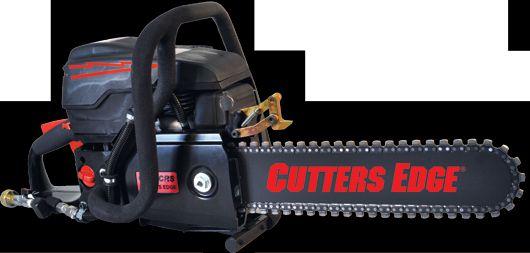
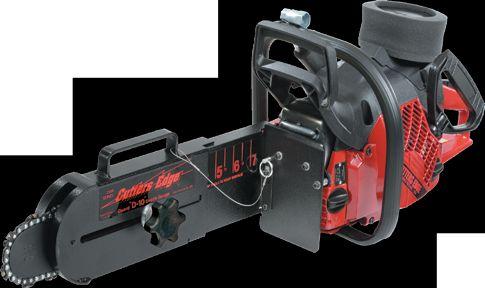
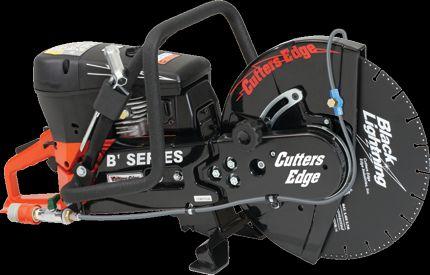
The “Next Generation” Technology of Cutters Edge Rescue Saws are here and are designed and built to deliver 100% reliable, high performance cutting in the most demanding and extreme conditions encountered by Fire and Rescue Professionals.
New 2172 MULTI-CUT® Rescue Saw
The "NEXT GENERATION" CE2172RS features a new technology engine that produces 10% more Horsepower with higher torque! It also emits fewer emissions and is more fuel efficient.
New Gas Powered Concrete Rescue Saw
The New CE94CRS Gasoline Powered Concrete Cutting Chainsaw cuts reinforced concrete up to 16-inches thick and cuts it up to 40% Faster with the new CE7COI™ Diamond Chain that features diamond cut ting segments on every chain link –up to 30% more diamond c utting surface area in contact with the concrete being cut.
New Rotary Rescue Saw
The CE807R Rotary Rescue Saw has a new, more powerful 80.7cc engine and a non-slip rubber Full-Wrap Handle for all position cutting. A new 4-Stage Air Filtration System, incorporating a High Performance K&N Filter as its third stage assures outstanding performance in all cutting conditions. Fully-equipped Sawing Kit is available plus Black Lightning and Black Star Diamond Cutting Blades.
Fully Equipped Sawing Kits are Available for All Three Models
Contact Your Local Cutters Edge Dealer -
QUEBEC
Areo-Fire 615 Guimoind Blvd.
WFR Wholesale
1-800-561-0400
Web: www.wfrfire.com
Longueuil, Qc J4G 1L9
1-800-469-1963
E-Mail: hpicard@areo-feu.com
E-Mail:
the status of airport security
Safety now front and centre in all exercises and preparations after 9-11 shone spotlight on Gander
By BrIan HICkS, as told to Laura kInG
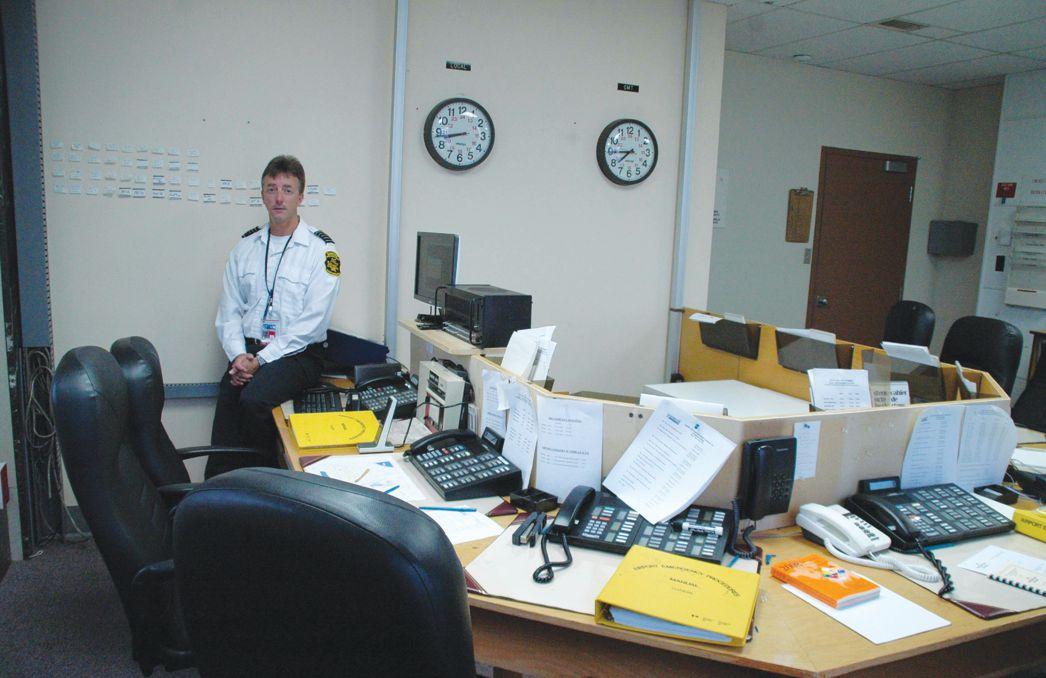
top : Fire Chief Brian Hicks of Gander International Airport sits inside the Emergency Co-ordination Centre, where sticky notes tracking the 38 planes that landed on 9-11 are still on the wall.
Editor’s note: Fire Fighting in Canada editor Laura King interviewed Fire Chief Brian Hicks, manager of Safety and Airside Operations at the Gander International Airport Authority, during the Newfoundland and Labrador Association of Fire Services conference in June. Here is Hicks’ account of 9-11.
Iwas a firefighter at the time; I wasn’t in a management role. I was working night shifts so I was up and I was watching TV . . . and suddenly you hear about a plane crash in New York City and, of course, being in the aviation business for so long, when there’s a plane crash you say, OK, what caused it, how’s the weather . . . you’re going through
a mental checklist, because we deal with aircraft emergencies all the time here, and there was nothing; the weather was clear, the skies were good and there were no mechanical issues reported with the aircraft.
But something wasn’t right, especially when an aircraft hits one of the Twin Towers. It didn’t make any sense, so, of course, that piqued my interest even more, so I called the firehall at the airport and I was talking to the shift that was working that day, and as I was talking to them, the second airplane hit. So then we knew it was an unusual event and that we probably would feel ramifications from it here in Gander, because probably 70 to 80 per cent of all air traffic going across the North Atlantic is probably within an hour and a
Photo by l aura k ing
half diversion from Gander. All the flight paths going over to Europe and back are based on the jet stream, and usually they try to get a tail wind on the way over to Europe and avoid the headwind on the way back, so normally it’s north or south, or directly overhead of the island, so there’s about 1,000 flights a day going over and back.
So, we knew there was going to be some issue; we had felt it before with Skylab, when it came in through the atmosphere and ended up in the Arctic they shut airspace down, so we had a lot of diversions. Even when we get weather on the eastern seaboard and JFK and Philly and these airports get closed, we have diversions here for fuel, so we feel some of the effects.
So, there was airspace closure, and we knew they were going to start landing aircraft here. We ramped up our staff as best we could –it’s hard to react to a mass diversion like that because nobody really plans for that. In my emergency procedures manual, we plan for all kinds of emergency procedures – crashes, hijacking, hostages, all that stuff – but nobody really planned for mass diversion because it just wasn’t an emergency people were thinking about; and then, of course, our management staff and our emergency co-ordination centre was activated, and then we had to think about how we were going to land these airplanes, because you had to have an operational runway, and nobody really knew how many aircraft we were going to end up with, so then we had to come into parking and taxiing procedures . . . and maintain an active runway.
We’re lucky we have two runways here – one is very long, it’s 10,200 feet, and the other is 8,900-feet long – so, of course, you didn’t want to close your long runway down. A lot of these aircraft weren’t planning to divert so, therefore, they had to reduce their landing weights, so they had to dump fuel, or land a bit heavier than they normally would; most of them dumped fuel but if you have a
Surreyfiresafety jul09CFF.pdf 1 25/01/10 1:34 PM
heavy landing you can have hot brakes, and it creates other issues. But everything landed without any problems.
There were 38 heavy airplanes . . . you do your planning, you implement your emergency procedures, call out your additional staff, open up the emergency co-ordination centre, and we had various members of our staff who were on the road and their flights were cancelled and airspace was closed, and they had to drive home. Our CEO was actually out of town and he had to drive home, from the mainland, so it was a challenge for people to get back.
The air traffic landed and I came in on night shift and it was eerily strange because the airspace was closed. At airports, you’re used to planes taking off and landing and you come to work and it’s a big parking lot. I got into work that night at six in the evening and I got briefed. We had a guy manning the phones because we were getting phone calls from families of all the passengers, from Italy, from all over the world, because people were in a panic about their loved ones – they didn’t know if they were safe, didn’t know where they were, and somehow our phone numbers . . . people got a hold of phone numbers and that created some issues . . .
Most of that shift I spent going around delivering meds. Think about it – you’ve got people on an airplane, their bags are in the belly of the aircraft, they can’t get to their insulin, they can’t get to their heart medication, they can’t get to any other prescription drugs that they require, and we had no idea when we were going to get the passengers off the aircrafts and release the bags so they could access them. So the local pharmacies all ramped up and worked long, long hours to and we went delivering meds to the aircraft.
When we boarded the airplanes we didn’t really speak very much about what had occurred, because we didn’t want to incite panic on the flights. Passengers knew the aircraft were diverted to Gander but they didn’t necessarily know the whole story. You wanted a calm, quiet situation on the airplanes, you didn’t want people in a bit of a panic. They knew it was a security incident. They knew airspace was closed down. The captains of various airplanes, we didn’t know to what extent they knew what was going on. Some passengers were on the planes for 10 to 12 hours. Once they got off the airplanes the challenge was you’ve got to house them, you’ve got to feed them, you had to get their bags to them, and you had to determine if there were any security issues with the people on board the airplanes. It was a real challenge for everybody in the security world – the RCMP and customs – to determine if there were any threats on board these airplanes.
Once they deplaned they had to go through the security procedure and check the hand luggage but they didn’t get their suitcases. So, basically, what they had on the airplane is what they took with them downtown.
Procedures have changed. Everybody has been educated. The thing with emergencies is that you have to be very resourceful. You have to know your area and know what you can use. The military had to fly in cots – so there is a cache of cots around here now. We are certainly more prepared now that we were when it occurred. I think it would still take the efforts of all the people who were involved in the beginning, and it would still be a huge challenge.
Gander has 10,000 people and we had 6,800 passengers so you’re talking a tremendous increase in population. RCMP, customs – all these people have more procedures and things have changed tremendously since it occurred; sharing of information is a lot better. CBSA [customs] – their role has certainly changed, from duties being paid on cigarettes to a much broader horizon now for border security and more intelligence. The world certainly has changed. And security has increased on aircraft, so there is a tremendous difference.
As for the fire department – not much has changed for us. We still
Continued on page 74
The status of firefighter health and wellness
on Sept. 11, 2001, 343 FDNY firefighters gave their lives in the collapse of the World Trade Center (WTC) towers. These brave firefighters were survived by almost 11,000 members of FDNY. On the morning of the collapse, 1,636 additional members from FDNY’s 11,000 personnel arrived at the WTC site to assist in rescue/recovery efforts. Over the next week, another 1,320 were deployed and several hundred more arrived later. It has been estimated that in the months following the collapse there were as many as 40,000 rescue workers from various agencies operating at Ground Zero, from first responders to construction workers. The tragedy of the WTC collapse is centred not only on the victims who died on 9-11, but also on the fact that many of the rescue workers and contractors who worked at Ground Zero have suffered permanent damage to their health.
From the moment the towers collapsed, a toxic cloud filled with asbestos particles, shards of fibreglass and other toxins shrouded Ground Zero. These pulverized building materials dominated the atmosphere, while pollutants derived from combustion of the ongoing fires increased as rescue, recovery and cleanup progressed. Respirators were not available early on and were not used consistently even when they became available. It has been reported that FDNY had only 600 respirators for more than 11,200 uniformed members when the Twin Towers fell on that fateful day. Consequently, many of the responders who spent days, or even months, at the WTC site, have reported a slew of chronic upper- and lowerrespiratory ailments. The WTC cough, as it has commonly been referred to, is a condition that was first described in rescue workers from FDNY. Higher rates of upper- and lower-respiratory irritant symptoms have also been described in at least seven WTC rescue/recovery worker groups including firefighters, police officers and other rescue/recovery and cleanup workers. The WTC incident was the largest acute exposure to high-volume particulate matter in a modern urban environment.
was as if you were inhaling Drano,” Prezant says of the air quality for rescue workers at Ground Zero. His work has led to a much better understanding of the medical conditions that have resulted from this large-scale exposure.
It’s hard for any agency to prepare for an event on the scale of 9-11. Could things have been done differently? That question is always easy to answer in retrospect. “We cannot undo the past and we cannot prevent exposures that have already occurred,” Prezant said in a presentation to members of the Wellness Fitness Initiative (WFI) task force. “What we can do, however, is to work to restore the health of those that did survive and prepare for the future.” The message from 9-11 that Prezant wants other fire departments to understand is that medical monitoring is absolutely critical for all firefighters. FDNY had more than 500 workers compensation claims accepted, based solely on discrepancies between post-event medicals and five years of lung function (spirometry) values collected prior to 9-11 through the department’s WFI medicals. Spirometry measures the amount of air exhaled in a single breath. FDNY was one of the 10 founding cities that developed the WFI and had been conducting mandatory annual medicals on all its personnel for five years prior
It has been reported that FDnY had only 600 respirators for more than 11,200 uniformed members when the twin towers fell on that fateful day. ‘‘ ’’
Dr. David Prezant is the chief medical officer and co-director of the World Trade Center medical monitoring and treatment program in the New York City Fire Department, and a professor of medicine at the Albert Einstein College of Medicine. He was at Ground Zero when the towers fell and knows firsthand the impact on rescue workers by the massive plume of particulate matter. “It
Ian Crosby is in his 18th year with the Calgary Fire Department and serves as its wellness and fitness co-ordinator. Crosby developed the department’s wellness centre, which opened February 2005. He is a member of the IAFF/IAFC/ACE peer fitness trainer oversight committee and an instructor for the PFT certification program. E-mail him at Ian.Crosby@calgary.ca
to 9-11. According to Prezant, had the FDNY not had these preexposure spirometry values, its members likely would not have been eligible for workers-compensation coverage. The post-exposure chest X-ray and chest CT scans were normal in almost all cases. And the post-exposure spirometry results weren’t much lower than those of the average population, which likely would have resulted in a decline of coverage. Comparing the five years of pre-exposure spirometry values against the post-exposure spirometry told a much different story.
Prezant had collected spirometry values on 12,079 FDNY rescue workers in the first year post-WTC. He noted that these firefighters had suffered a significantly greater average annual decline in forced expiratory volume in one second (FEV1) of 372 millilitres compared to the normal annual decline of 31 millilitres found in the five years of pre-WTC WFI testing. This test demonstrated a reduction in lung function of 12 times that normally experienced in
B Y I AN C ROSBY
Certificate in Fire Service Leadership
Name Position Department
Michel Amesse Lieutenant Service de Sécurité Incendie de Montréal
Brent Armstrong
Captain, FLM(a) Ontario Power Generation
Jeff Bishop Captain, Fire Brigade Ontario Power Generation
Reagan Breeze Fire Prevention Tech
Ontario Ministry of Natural Resources, West Fire Region
Keith Clarke Firefighter Cambridge Fire Department
Paul W. Daigle Facility Technician/Deputy Chief Irving Oil Refinery
Brandon M. Hatfield Company Officer New Tecumseth Fire Rescue
Derrick G. Huffman
Emergency Response Maintainer, FLM(a) Ontario Power Generation
Timothy David Keddy Fire Chief
Halifax Regional Fire & Emergency Services, Station 48
Kimberly G. Kennedy Firefighter St. John’s Regional Fire Department
Peter D. King Senior Firefighter Saint John Fire Department
B. Scott MacKinnon Chief Cabot Volunteer Fire Department
Donald M. Matthews Platoon Chief Department of National Defence Fire Service
Scott M. McDonald Captain Brandon Fire and Emergency Services
Stephen Parent Acting Captain Pickering Fire Services
Jeremy B. Patterson Firefighter New Tecumseth Fire Rescue
Lorne R. Piercey Deputy Chief
Halifax Regional Fire and Emergency
Leonard A. Sanders Captain/Company Officer King Fire & Emergency Services
Bob Smit Lieutenant Brandon Fire And Emergency Services
Raymond R. Trahan Jr. Deputy Station Chief # 4 Dover Chatham-Kent Fire
Karen Trecartin Firefighter Kennebecasis Valley Fire Department
William Whittaker Inspector Saint John Fire Department
James Wilbee Captain Huron East Fire Department, Seaforth Station 3
Lyle Wood Fire Chief Pineview Vol. Fire Department/Area D. Rescue Service
Certificate in Fire Service Administration Graduates
Certificate in Fire Service Administration, General
R. Wayne Ward Fire Prevention Officer, CEMC (Atl.) Brock Township Fire Department
Certificate in Fire Service Administration, Emergency Management
Jory Jenson Captain Cochrane Emergency Services
Certificate in Fire Service Administration, Human Resource Management
Todd P. Brophy Fire Chief Conception Bay South Fire Department
Cindy Mac Fadyen Fire Prevention Officer Charlottetown Fire Department
Robert J. Reynolds Captain Saskatoon Fire & Protective Services
Certificate in Fire Service Administration, Strategic Planning
David Lazenby Deputy Fire Chief London Fire Department
Advanced Certificate in Fire Service Administration
Craig A. Kennedy Firefighter/Advanced Care Paramedic St. John’s Regional Fire Department
Serge A. Boudreau Lieutenant Moncton Fire Department
Certificate in Incident Command
Jim Pittman Captain
Halifax Regional Fire and Emergency
Eric T. Poll Lieutenant Wolfville Fire Department
B Y V INCE M AC K EN z IE Fire Chief
Grand Falls-Windsor, N.L.
aThe status of fire-service awareness
s firefighters, we tend to see in our own circles, but we also have a greater understanding, awareness of, and respect for the dedication of all our uniformed services.
While Sept. 11, 2001, was a particularly devastating day for the fire service, our profession also recognizes the police and EMS personnel who were sacrificed that day and in the days and events that followed. Also, since Sept. 11, 2001, men and women of our armed forces have been lost fighting the war on terrorism. I dedicate this column to all emergency responders and soldiers lost.
What did the events of Sept. 11, 2001, mean for Canada’s volunteer fire services and small-town fire departments? Reflecting on the last 10 years is not easy; what started out as shock that day progressed to hearing our governments speak highly of our services. It was a proud time to be a firefighter, and many have been inspired to join our profession with 9-11 in mind. The public respect for firefighters has led our elected officials to take notice and to support fire services in the best way they know how.
We in various provincial fire-service associations have benefited from the increased awareness by politicians of what we do. As we endeavour to further the fire services in our respective regions, this newfound awareness has been helpful.
Hazmat, CBRNE, HUSAR and anthrax were the buzzwords of the last decade; gone are the days of just everyday fire fighting. We here in small-town Canada have seen the industry gear itself for these types of incidents; we engage as much as we can and try to absorb as much knowledge as possible on these topics.
so big-time – covert spy stuff – and delving into the minds of the next would-be terrorists was mind-boggling.
But 9-11 did touch Newfoundland and Labrador in a profound and unique way. Being the closest land mass to Europe, all flights caught in the air over the Atlantic Ocean made a beeline for the nearest airport, in Gander. We in small-town Newfoundland saw a population explosion of all cultures stranded for days. Flight crews from around the world slept in the hotel just a kilometre from my fire station.
Volunteer firefighters struggle every day with home, work and fire-department life. While a major terrorist event happening in a community served by a volunteer fire department is unlikely, first responders have to be vigilant to the threats. We can’t live our lives in fear of this type of threat, but we have to be ready and we have to train for all eventualities. The threat of terrorism has made us all more vigilant. The best thing to come out of all this, in my mind, is the fact that the Canadian fire service has adopted an all-hazards approach to training. The terrorism threat has made us better prepared for the everyday tanker truck rollover, for example.
While a major terrorist event happening in a community served by a volunteer fire department is unlikely, first responders have to be vigilant to the threats. ‘‘ ’’
I remember sitting in my first CBRNE class, taught by fine folks from Ottawa’s Office of Critical Infrastructure Protection and Emergency Preparedness (which has since become Emergency Preparedness Canada), on tour to spread the word that Canada’s emergency responders need to be ready. I remember thinking that it was great to be made aware of those types of threats, and as a firefighter, I already had a greater understanding than most. But I also remember wondering how in the world I would sell this training to my department with the knowledge that terrorists are unlikely to strike small-town Newfoundland, or convince council that it needed to fund the training for these new threats. It all seemed
Vince MacKenzie is the fire chief in Grand Falls-Windsor, N.L. He is the president of the Newfoundland and Labrador Association of Fire Service, the second vice president of the Maritime Fire Chiefs Association and a director of the Canadian Association of Fire Chiefs. E-mail him at firechief@grandfallswindsor.com
While I don’t envision Canada’s volunteer fire services being totally ready for all aspects of terrorist threats, we are far more aware of, and a little better prepared for, the next time. I guess the nature of terrorism is just that – a move by extremists to circumvent all of society’s preparations to feel safe and secure.
So, in some respects, all that we do may be in vain if there are those out there studying our every move in order to execute some dastardly event for maximum effectiveness.
The fire service is better prepared since 9-11 – some may argue that it is not well-enough prepared – but then, it seems, no extent of preparation or funding will be enough.
Larger cities have taken advantage of funding for planning, training, and overall awareness. We in the volunteer circles, with smaller communities and budgets, have done our best – but at the end of the day, we will all be scrambling to respond, armed with better awareness if nothing else.
the status of the fdnY
Incident management, better communication the legacy of 9-11
By JoHn SaLka, as presented to Firefighters Speak up
Editor’s note: FDNY Battalion Chief John Salka spoke in Ilderton and Clinton, Ont., in April. Here is his story, in his own words, of 9-11, the aftermath and the lessons learned. Salka’s presentation was riveting and was given in sections based on images and slides. We’ve edited his words a bit for clarity but wanted to maintain Salka’s voice, so readers may find that some areas are better explained as they read further along . . .
* * *
Iended up going down [to Ground Zero] from home. I didn’t see newspapers from that day or from Sept. 12 or 13; we were busy.
The size of the buildings – there are two, one-acre spots; when they fell down they had a negative, dramatic effect on thousands of buildings. The buildings were 1,368 and 1,362 feet high – 110 storeys. There were seven buildings on 1.6 acres.
The towers had 43,600 windows with more than 600,000 square feet of glass – the only reason that’s amazing is because I was there for months and I didn’t see any glass; I didn’t see a piece of glass.
The site is equivalent to about eight city blocks.
Why did the buildings collapse? There’s always been a story that this was a plan by the government, that [George] Bush brought them down; all those people who said . . . More or less the buildings were initially severely damaged by the planes, then the ensuing fires finished them off.
The second plane flew past Newark airport at a very low altitude and high rate of speed, and they knew it was trouble.
Personally, I think it’s a disgrace that 10 years later the World Trade Center is still a construction site, but that’s what happens in New York City.
I really had no idea until months later that in all these cities, people were evacuating their highrise buildings in fear that this might be a more widespread thing. Being so involved, we didn’t realize how widespread the impact was. It was my friend Billy, who said on the radio, a plane just flew into the tower and it looks like it flew directly into it, and this might be a terrorist incident.
* * *
I was at home, driving my son to the bus stop; I was having the front end of my truck looked at – there was a wiggle in it. This was around 8 a.m. I live in the country, but by the time I got to the repair shop I could hear that incessant loud beeping on the TV and people were saying a plane just hit the World Trade Center. The TV in the repair shop – while we’re watching
The FDNY’s John Salka spent months at Ground Zero searching and cleaning up. Salka said he found only one item in the debris that he recognized - a plastic sheet that goes over a computer keyboard.
it in the waiting room – you see that other plane come around the back and hit the other building. It didn’t occur to me that this was a terrorist incident. My mind immediately jumped to, ‘Holy cow, how are we going to put this fire out?’ I was in flip-flops and shorts; I zoomed home, grabbed workpants and a work shirt, and threw some money in my pocket and drove down to the city. I didn’t have that front-end wiggle at 100 miles an hour, I can tell you that. We didn’t think the buildings were going to fall down; I wasn’t thinking this was terrorism, I was thinking, ‘How are we going to put this fire out?’ I get to my fire house and there’s no one there – there’s a note that says, ‘Sign in and go to division.’ We got there – another 100 firefighters were there with their gear. There were people dropping off extra gear, SCBAs, tools . . .
Eventually, it sounded bad enough – we weren’t sure if we should send more people – so we decided to just send people down there. We went out to the street in front of the fire house and stopped a city bus and threw everyone off the bus; all the firefighters got on the bus, and we told the bus driver we’ve got to go to New York. She said she had to call her dispatcher. I told her to do that from the road. I took the chief’s car and drove down on the empty side of the road. * * *
Flight 11 hit the north tower, floors 90 to100.
The catastrophic situation that faced the first arriving FDNY units the moment they arrived was more complex, more dangerous and more challenging than any other fire or disaster on American soil.
Initially, we weren’t going to handle it; it was an unattainable goal. Within 10 to15 minutes, more than 200 firefighters from all
Photo
parts of the city are rushing to the scene. Most companies were sent up immediately to assist with the evacuation of the thousands of people still in the building.
Pretty much everybody above the plane strike died, and everyone below lived.
Thousands of people below the plane strikes were still in danger. Aviation fuel dripped down through the elevator shafts...
Fifteen minutes later, Flight 175, hijacked from Boston, struck the 78th to 87th floors of the south tower.
There were more people above the strike zone and the damaged part of the building was supporting a much larger piece of real estate above it than was the case in the first building.
The second plane was estimated to be traveling 100 miles per hour faster than the first plane that struck the first tower. He was flying as fast as he could without the plane breaking up, and he angled the plane so that all but one foot on the end of the wings hit the tower; he couldn’t have done it any better for what he was trying to do.
This 100 mile-an-hour increase in speed has been estimated to have resulted in as much as a 40 per cent increase in damage due to the energy released during the impact.
The strike to the second building resulted in a 30-storey fireball. We couldn’t handle it; even if the second building hadn’t been hit, the first building would have been a catastrophic event. The standpipe system was rendered useless – never mind when the buildings fell down and broke the water mains in the streets – so what do you do now?
We set up seven command posts but they just didn’t fit into the neat little command-post scenario; it was a little unorthodox as far as the command structure went.
There was an uncontrollable fire – almost 20 floors were involved in the fire. If these buildings did not collapse, it’s doubtful any fire department could successfully extinguish this much fire, this high, in a highrise building. Anybody ever put a large-diameter hose up a stairway? I’m guessing the fire would burn itself out in the two days it would take you to get the hose up there.
Approximately 15 minutes prior to the unexpected collapse of Tower 2, [an officer] ordered the evacuation of Tower 1. The order did not start the process; many firefighters did not hear the order.
After only 65 minutes, Tower 2 collapsed; the event occurred with no warning and severely damaged the fire-department oper-
ating forces and the command structure at the scene. The chief of the department was killed, the first deputy fire commander was killed – basically the whole command structure – all the people in charge of the command structure were killed or severely injured; plus thousands of others were injured, over and above those injured from the initial crash.
I heard that on the radio – I was 15 to 20 miles from New York City and you hear a guy screaming that there is a major collapse.
I don’t know what you do on Sunday morning, but I go to church; my friend Jay Jonas, who was in the building in the stairway, he and his crew survived.
* * *
My friend Capt. Jay Jonas and firefighters from Ladder 6 . . . [Jay] says, with a little frustration in his voice, ‘John, go in through the glass doors, make a left . . .’ He didn’t know the whole building fell down, the whole world stopped; he thought something happened and they got banged around a bit. We said, ‘Jay, the building is gone, it’s on the ground.’ They got him out of there several hours later.
* * *
Tower 2 collapsed rapidly in a pancake fashion.
Anything can happen, anywhere, at the drop of a hat. Those are the lessons we have learned. We are very vulnerable.
Thirty-five minutes after the first collapse, Tower 1 collapsed in an identical fashion. The entire collapse of this 110-storey building took 10 seconds – so quick that the smoke that was coming from the top of the building hadn’t dissipated.
* * *
People were sent across the Hudson River to New Jersey on ferries – New Jersey firefighters were picking them up and helping them; some were distraught, with no shoes on.
They found body parts on the roofs of buildings a year later . . .
* * *
Immediate problems: Accounting for FDNY members, which was absolutely impossible. There were fires in collapsed and adjacent buildings. There was no water. There was concern about secondary devices and attacks; we were worried about it but we weren’t doing anything about it.
Re-establishing command: that eventually happened but not very quickly.
Site access: army guys with rifles were guarding the place; you couldn’t get in unless you were a firefighter.
On Dec. 24 a crane pulled a beam out of the ground that was still red hot at the end . . .
Sometimes you have to throw caution to the wind; if you wanted to worry about safety and do everything the proper way, you would have had to leave. We were beyond worrying about safety.
Our whole accountability system in those days was a printed piece of paper on the dashboard of the apparatus; we now have that augmented by a computerized system.
After the first five or six hours the radios stopped working –there were no batteries; and when it was dark it was dark.
In the year and a half or two years that I worked there on and off, I saw one item that I recognized – one of those cardboard things you put over a computer keyboard. I didn’t find a desk or a wheel off a chair – not a single piece of anything that was recognizable, except for maybe a piece of a Halligan or half a Halligan . . .
The cleanup was very hot and nobody was wearing full gear; eventually we went into a different mode and wore overalls, and a bus would drive you [to Ground Zero] and back and we had tents, showers and new overalls.
There was a six-storey pile of debris. We ran 35-foot ladders to the top. We’re emergency workers – we sometimes have
to do dangerous stuff. Some of these guys were steelworkers; steelworkers with torches, helmets and T-shirts with American flags on them. I had steelworkers cutting beams around dead firefighters. They didn’t have to do that. They poured themselves into it too.
One day we found eight guys, all on top of each other. That was great. Any time we’d find anything – a glove, stripes – we’d stop. Trucks, grapplers – they didn’t move anything out of there without us seeing it. Everything came out of the piles and went into a dumpster, then onto a barge to a landfill, and onto conveyor belts.
They were finding driver’s licences, wedding rings, on the conveyor belts; there were 20 or 30 guys on each side just standing there watching stuff. Everything would have passed 30 guys by the time it got to the end.
The first guy we found had no head – a New Jersey Port Authority guy.
We thought we could still find guys alive in a cavern two weeks later. We were wrong.
We eventually established sub-commands – west command (using a trailer and phone lines), Liberty command, Church command –three sectors. When you got assigned you were assigned to a sector – it was a bit more organized as per the incident command system.
We were using five-gallon buckets for collecting body parts.
We just took what we had to – we set up in storefronts for food stations or morgues. Manhattan was closed.
The FDNY lost 112 pieces of fire apparatus. The department was on normal operations afterwards but I don’t think we got any calls for a week. We had volunteers from Westchester county to cover – a green damn fire engine in my fire house!
* * *
There were 491 people from 91 countries; 343 FDNY – 174 recovered; 23 NYPD; 37 Port Authority police; and 2,800 civilians.
* * *
At FDNY, we started figuring out what we did right, what we did wrong.
Some of these losses were our fault. Some of the men who died in 9-11 didn’t have to die and would be alive today if we did some things differently.
There was a message from the fire commissioner about rebuilding the ranks. We needed a new radio system – a dual radio system – we used handi-talkies and radio – we can communicate with each other; we have very much the same as before but we improved a couple of aspects that did not work so well.
Terrorism training – there’s some terrorism/operational training that people need to have.
Decon capabilities – we can now decon thousands of people at a time; we didn’t have a clue about that before.
Radiation detection equipment – just about every rig has it now.
Protective masks – everyone’s got ’em now; on 9-11 I was fumbling through ambulances full of paper and dust and ankle deep in white dust looking through ambulances for the little white masks so we could stop coughing while we were working; now we have SCBA with them built in.
Staff chief enhancement – we now have chiefs in charge of terrorism. A bunch of them were killed because they were at the fire, standing where a deputy chief should have been standing, looking at a computer screen; maybe some of the staff chiefs should stay where they are or work remotely rather than being down on the scene.
We now have a Center for Disaster Preparedness.
And new fire boats. We didn’t have any water supply – no water – try it for a day at home; does anyone realize what a complicating factor that was? We didn’t have any water; now they’ve
enhanced the whole marine division.
We have new strategic plans for different things, a new Emergency Operation Center – it’s huge, with all sorts of computer-assisted equipment – and we can now pull up pictures of every address.
We have an enhanced accountability system and new recall procedures.
* * *
The first thing was to rebuild the ranks. On Sept 16, 2001, there were 171 promotions. Five days later, we had a new chief of the department, a new chief of operations, two deputy assistant chiefs, five deputy chiefs, 31 battalion chiefs, 62 captains and 69 lieutenants. All of those folks weren’t ready – when you’re 62 names away on a captains list, guys probably got promoted years ahead of the date that they initially anticipated before 9-11. We had to suffer through that a little bit.
* * *
All FDNY members are now assigned a handie-talkie radio with 16 channels, a distress button, a remote mic and a shoulder strap.
There was a time in the FDNY that all our firefighters didn’t have radios. Does anyone know how long ago that was? That was 9-11.
If you don’t have a radio or you’re not with a guy who has a radio then you might not hear the evacuation order. Now, every single guy has a radio. That was a big change. They had to do some other things – our radios were not very reliable in belowground areas, and they weren’t as effective as they were everywhere else, in highrise buildings.
So we had to devise and develop a new radio system. They came out about two years after 9-11 with a digital component in them – there are more than 350 companies with five or six people in each company, and we had to change over every radio in the FDNY in the same minute – five counties, 350 companies,
3,000 firefighters all had to switch from the old radio to the new radio. We switched over, and the first thing they discovered was that standing in front of a fire, I would hear my voice come out of his radio a full second after I said whatever I said – it was absolutely unnerving – you had to wait for your own voice to stop talking before you could start talking again, and there were a couple of maydays that didn’t get out. So, we sent all those radios back, and we had to switch back to the old radios again. Now we have switched to analogue radios again.
The handie-talkie radio – they were point to point – no repeaters or trunking; our fire-ground radios are just point-to-point on the fire ground. Everybody’s on channel 1 all day, every day.
One of the things that we did to enhance our communications system is use a new radio called a command post radio – for underground and highrise. It’s a 45-watt portable radio for use in command-post operation post and sectors. It’s a Pelican case –built in a custom-built 45-watt radio, on the same frequencies as handie-talkie. Battalion chiefs carry them in the cars.
So, we created a separate radio that we can carry into the building.
We also have a vehicle-repeater system in some battalion chiefs’ vehicles – the highrise battalions in New York City have a radio system built into their vehicles with a repeater that can interact with the radios in the highrise buildings.
* * *
Counterterrorism information bulletins are issued by the FDNY Center for Terrorism and Disaster Preparedness. These bulletins discuss current or possible terrorist threats relating to CBRNE issues. These are terrorism-related issues only.
* * *
We have technical decon teams – 25 teams made up of one engine, one ladder and a battalion chief; the teams are deployed at large events in corridors where evacuating crowds will be directed, like Yankee Stadium.
■ cHemIcAL prOtectIve cLOtHING UNIt
If something bad happens, inside that rig is a whole additional set of radios, backboards and full chemical protective clothing. Every CPC unit is trained all the way up to the highest level of protective clothing.
■ rADIOActIvItY mONItOrING
This is carried by all companies, attached to handie-talkie radio strap. The first arriving unit can ID the hazard.
■ prOtectIve mASkS
Think of the injuries that would have been prevented had this piece of equipment been available to all FDNY members on 9-11. We use the Scott twin-cartridge full facepiece respirator.
■ eOc
The EOC supervises thousands of responders. The incident-support center manages large-scale disasters. There are two divisible command center conference rooms.
A direct result of 9-11 is BF4, online accountability reports. These are pre-printed forms that you fill in, in duplicate. There is a blackboard that is a reproduction of the form; one goes in plastic holder on the dashboard and one goes in battalion chief’s pocket, and there’s one online. In our intranet – electronic list – anybody who goes on duty for a shift goes online and signs in – you drag and drop that battalion chief’s name and the five who are working with him on that tour, then the chiefs see who’s on duty in each company.
Additionally, if there’s a tragic situation unfolding – a building collapse that traps two companies – I can see who’s trapped; to take it one step shorter, the deputy chief has access to this in his car. You can view companies in a battalion or division; you can view battalions citywide; you can view officers only and you can view chiefs only.
The system also lists any specialty qualifications that a firefighter has, so if a driver gets hurt he can look at the report and say one of other engines has two chauffeurs on duty and can move someone over.
* * *
■ FIre-GrOUND AccOUNtAbILItY SYStem
We have developed an accountability system that uses the combined technology of our department radio system and our fireground handie-talkie network.
When the IC wants to hold an emergency roll call (PAR) it is announced on the fire-ground handie-talkie to all operating members. Upon hearing this radio call, every member simply “keys” or presses the transmit button on their radio. Every onscene firefighter is immediately identified on the screen, and any firefighter that did not respond is also identified in a different colour, enabling us to know immediately who is missing.
■ mArINe cApAbILItY
We have just received the second of two brand-new boats. We used to have 10 marine companies – we’re down to three now. After 9-11 we realized by the fact that we had to use some formerly sold boats to get water [that we needed more], so we have two, 140-foot fire boats with 50,000 gallons per minute, that can operate in hazardous atmospheres. The whole cabin can be sealed from CBRNE. Beyond that we have a 66-foot FDNY rapid-response boat – and are building 16 more EMS and rapid-response fire boats. FDNY has made a conscious decision to rebuild the marine division.
■ UpDAte AND eNHANce mUtUAL AID
We all must be familiar with what capabilities our neighbours possess. Police, fire and EMS agencies must co-ordinate with OEM
Home and Auto Group Insurance from The Personal
TheIn 2009 The Personal Insurance Company partnered with the Canadian Association of Fire Chiefs to be the group’s new and exclusive provider of home and auto group insurance. under the agreement, this benefit extends to include all fire chiefs, full and part-time firefighters, volunteer firefighters and other CAFC members.
New Pierce Aluminum Aerial Platform Generates a Following
a variety of needs. They also insure mobile homes, cottages, swimming pools, personal watercraft, motorcycles, ATVs, and more.
quite a few bodies of water in the area, and we’re the only department in the region that has a trained water rescue team. The Pierce aerial’s below grade performance, along with the rescue equipment we carry on board, give us excellent water rescue capabilities.”
The Personal provides home and auto group insurance to members and employees of more than 600 organizations across Canada.
town of Morinville lies just outside of Edmonton, Alberta, and the Fire Department’s protection district includes single-family homes, apartment buildings, (ranging from three to five stories tall), a large sports complex and an industrial park. In addition, the department’s responsibilities include mutual aid response for four neighboring communities including a city of 50,000.
The advantages of this voluntary benefit include preferred rates, special discounts, and exceptional service. And should the unexpected happen, claims are handled quickly and efficiently. The Personal provides home and auto insurance products to suit
Auto insurance customers can enjoy additional savings with the Winter Tire Discount, Loyalty savings and student rates, and offers like AccidentFree Protection.
“We evaluated a number of manufacturers and there were two keys that led us to Pierce. First, Pierce delivered an excellent report and proposal to us in their bid. They
single stage pump, Husky 12 foam system with 30-gallon foam cell and a Control Zone pump panel. The 3-section aluminum aerial device features LED lighting along its entire length for enhanced visibility.
The fire department and community leaders took the long view when planning to purchase a new apparatus. The objective was to purchase a vehicle with multiple capabilities. “For the next 20 years, this vehicle will be a front line apparatus for our community, so it was critical that we make a choice that would serve the present and future needs of our department. This was one of those decisions that will impact our department beyond my tenure as fire chief,” said Ron Cust, Morinville Fire Department Fire Chief.
In addition to performing as a front line pumper and responding to aerial rescues, the Pierce rearmount aluminum aerial platform is equipped to support technical rescues such as water emergencies along rivers and lakes in the region. “We have
click
offering convenient hours of operation, you can also take advantage of their online service options at any time of day.
To take advantage of this benefit, you can get a quote by calling The Personal at 1-888-476-8737 or go online at: thepersonal.com/cafc
The vehicle is designed to carry a wide range of rescue gear, including a full complement of rescue tools, ladders and ventilation equipment. In addition, the vehicle carries enough water and foam to handle structural fires, so it can play a primary role in protecting the many 4,000 - 5,000 square foot homes in the area. “Pierce and our local dealer, Wholesale Fire and Rescue, spent a lot of hours with my team devoted to making sure each compartment would hold what we needed to put in there. There was always a very positive response to our requests and questions.”
Maneuverability is another key for the department. “We’ve got some pretty tight streets in our town. I’ve got full time drivers in my department who truly understand vehicle dynamics, and the handling is just amazing.”
answered every question we had. And, the features and technologies on the aluminum aerial met our requirements for safety and performance. The first thing I noticed was when we opened the Quantum door and the steps automatically folded down to a low height. I can open the door and easily step up into it. So, it accommodates all sizes of firefighters. In addition, the ease of operation of the aerial itself is quite amazing – easy to control – and that makes a world of difference when rescuing people off of apartment buildings or in below grade rescues from one of our bodies of water.”
Word has spread throughout western Canada. “Pierce answered the call with this vehicle. It has met and exceeded our expectations. Fire chiefs from all over the region are contacting us for information.”
tribute to the men and women in the fire service, The Personal is donating $5 to the Canadian Fallen Firefighters Foundation for every home and auto insurance quote provided by December 31, 2011.
Pierce dealer, Wholesale Fire & Rescue, is a full line sales and service distributor of fire apparatus and equipment for Alberta, British Columbia, Manitoba, Northwest Territories, Nunavut, Saskatchewan, and Yukon.
The vehicle features a 100-foot aluminum platform, TAK-4 independent front suspension, seating for six firefighters, LED scene lights, and a 4-way rear vision camera. The firefighting system includes a 2,000-gpm
PreFerreD grouP rATes For your home AnD AuTo InsurAnCe Are jusT The begInnIng
officials. We must include or dispatch personnel with our mutual-aid policies and practices. Consider compatibility of radios, SCBA cylinders, hose couplings and any other equipment or tools that we may need to share at large multi-agency incidents. Train and practise before the actual event occurs.
■ WHeN DOeS NeW YOrk
cItY cALL FOr HeLp? Never. On 9-11, the dispatchers in the Bronx called Westchester (so there was that green fire truck in my hall!). Somewhere along the line there needs to be interoperability. The Westchester truck wasn’t compatible with the New York City hydrants; they had to find adapters in closets and whatnot. Mutual-aid partners should be compatible.
We have new recall procedures. The previous recall procedures used on 9-11 –FDNY notified local media, who made public announcements that firefighters were being recalled to duty at the firehouses. There was no confirmation as to who received this message and no specific directions.
Now every FDNY member is notified via automatic telephone dialing system. Only those needed are notified, and they are instructed where to report and what equipment or tools they are required to report with. Press 1 to repeat this message. Press 2 to acknowledge this message. Guys were sitting on laps on the seats in the rigs – nobody thought they were going to die that day. It was a shift change, so lots of guys were in the halls and some who were going off duty went anyway. Some guys threw others off. Eight off-duty firefighters were killed. There were 140 companies in the first hour; only two companies self-dispatched. Otherwise, it was a pretty disciplined effort.
■ INcIDeNt cOmmAND teAmS
We couldn’t even spell incident management teams before 9-11. The first incident commanders to respond were the U.S. Forestry Service. They came to our city and we said, “Oh God, look at these guys in the green uniforms.” Do you know what they know about fire in New York City? Nothing. But they know incident management; they have tents and kitchen utensils and port-a-potties. And now we know how to do incident management – because we killed 343 people in a fire, that’s why. Now we know, and we learned it from them, and now we do it. We send incident management teams all over the world now.
■ LeSSONS LeArNeD
Where the next catastrophic terrorist incident will happen is unknown. What we need to plan for and prepare for is well known. It’s like 9-11 never happened. Seventy per cent of the guys in my department have five years or less. Most people came on after 9-11. It’s just another old thing that happened a long time ago. We were there and we survived.
Three days – everyone was on duty. All 11,000 on duty. About half went to the World Trade Center. It was OK – because we got oodles and oodles and oodles of people. For 12 hours we didn’t get a run. Fires still happened but all the other nuisance calls just didn’t happen.
Every battalion has FDNY-NYPD interoperability radios – still very limited. Most of the interoperability is at the higher levels. If a plane crashes into a highrise in New York City tomorrow there will be a police command post and an FDNY command post. The cops had much better info on the buildings than we did from their choppers in the sky – they knew those buildings were coming down and we didn’t get the message.
There are widows alive today who have never actually been notified by anybody that their husbands died on 9-11. Obviously, they found out, but not officially. We were way over our heads and beyond our ability to handle that.
We didn’t even know who was dead for a couple of days, and then it was impossible; we didn’t have any time for anybody to polish their shoes and drive upstate and tell them their husband was dead.
After you knew you had five guys dead, you took five guys in your company and made them the liaison for the families; then we never relieved the guy – the guy did it for six or eight months; some guys left their families and hooked up with the widows. It was all well meaning – these women start to depend on these guys so badly . . .
In the end, every funeral was conducted; after 20 or 30 or 40 the bagpipe band stopped going and we called in New Jersey. I stopped going; I went one day to three in one day. And then I stopped going.
* * *
Everybody wanted to go and everybody wanted to stay. The hard part was pulling people out. It wasn’t a treat to go down but it was an expectation to go down. Nobody knew nobody. Everybody knew somebody – 70 guys who I knew by first name. You went down there when you were told and you came back when you were told. Some went down there and flipped. Some didn’t.
The status of fire-service advocacy
the 2011 federal election is now history. Many were surprised by the outcome; however, regardless of the result, now is the time to follow up with those elected to ensure they live up to the promises in their stump speeches to assist fire, search-and-rescue and emergency-management services. And yes, there is an identified need for emergency services across Canada to receive federal assistance.
In my May column I spoke about the need for emergency-services leaders to recognize what is required to have elected officials make decisions that will positively impact public life-safety services. The Reader’s Digest version is that legislators will make decisions based on what will get them the almighty vote. Their drive to secure votes is incessant, so it doesn’t matter that the federal election concluded with a majority government in place and that the next election may not be for another four years. Most of these folks will already be focusing their energies to ensure they position themselves with key stakeholders to remain in power, which translates into getting votes. Given that there is officially no Canadian fire service, how do we best influence federal politicians to provide the support required to meet our very well-defined public-safety role and responsibility in an effective and legitimate way?
In case you are wondering about my assertion that there is no official Canadian fire service, allow me to explain. Unlike the American system, fire services in Canada are a municipal responsibility with no direct federal connection. There is some provincial/territorial connectivity to local governments, however most provinces and territories are doing their best to step away from any role or responsibility related to the delivery of local fire-department services. This is especially true for emergency-response services. For that matter, the federal and provincial/territorial governments have been very reluctant to provide municipal governments with adequate support for search-and-rescue and emergencymanagement services as well. Provinces and territories employ fire marshals or fire commissioners to deal with limited and specific legislation, fire-prevention and code issues, but most of these fire-based organizations have been marginalized in the past several years. Oddly, the Canadian Association of Fire Chiefs (CAFC) recently petitioned the federal government to create a federal fire advisor position, only to have its request denied. Federal politicians are very much aware of the order of government when it comes to provinces and territories and its genuine authority, and they are not about to step on any toes – especially when there is really nothing in it for them.
a role related to influencing the federal systems. When major events happen, there needs to be a broad-based systems response that connects all the resources necessary. After all, these fire officials working within their jurisdictions do try to connect municipal fire departments with the provincial/territorial systems, so one would think that these senior fire officials should have some influence at the national level. Unfortunately, this is not the case. The Council of Canadian Fire Marshals and Fire Commissioners (CCFMFC) has, for many years, lacked the focus and motivation to be the national voice for the fire service. I say this having spent a couple of years working as a fire commissioner and member of this organization while trying, with the support of others, to encourage the establishment of a solid vision to be this voice. With due respect, fire marshals and fire commissioners have little to no ability to be influential within their home jurisdictions; therefore, it is almost impossible for them to reach up and out to effectively influence on the national scene. To fill this obvious void, the CAFC has stepped up and is very active in dealing with the federal government’s bureaucrats and politicians. Although this has not produced any real results to date, I do applaud the CAFC and the CCFMFC’s efforts to join forces to be better positioned for petitioning, and hopefully
When major events happen, there needs to be a broad-based systems response that connects all the resources necessary. ‘‘ ’’
influencing, at the federal level.
The International Association of Fire Fighters (IAFF) and its general president for Canadian operations, Jim Lee, have had much more success dealing with Ottawa. As an example, the federal government provided $2.5 million for the IAFF to provide for hazardous materials/chemical, biological, radiological or nuclear training.
It would make sense that fire marshals and fire commissioners have
E. David Hodgins has served with fire, rescue and emergency management organizations at the provincial and municipal levels during his 34-year career. Contact him at e.david.hodgins@shaw.ca.
We must understand that elected officials will step up and support emergency services in a real way only when they see something in it for them, and our job is to identify and present what that looks like. For the federal-based petitioning activities of the CAFC and the CCFMFC to be successful, influencing politicians must start at the local level. It truly is up to the front-line, on-the-ground troops to better connect with their local provincial/territorial elected officials and MPs.
Having said all this, you need to know that I am enormously proud to be a Canadian and extremely proud to be involved as a longtime member of fire, rescue and emergency-management services.
B Y E. D AVID H ODGINS
BY L ES K ARPLUK Fire Chief, Prince Albert, Sask. AND
LYLE Q UAN Fire Chief, Waterloo, Ont.
IThe fine art of communication
t’s hard to believe 10 years have passed since the World Trade Center was attacked, killing about 3,000 people, including 343 of our brothers and sisters in the fire service. No one was prepared to deal with a situation of this magnitude. How does one begin to rebuild after such a tragic event?
In our August column, we offered tips for new fire chiefs. Whether you’re a new fire chief or you’re trying to rebuild after a tragic loss, let’s discuss the art of communicating your vision of your fire department to your staff.
Seneca, the Roman philosopher, said, “To the person who does not know where he wants to go, there is no favourable wind.” We venture to say that if you don’t know where you want to go, then neither will your staff. As a chief officer, you are steering the ship and advising everyone where to go and why; the challenge is to communicate your vision in a way that gets buy-in from your staff.
Vision is a glimpse of the future based on where the leader wants the organization to go. By sharing the vision, you are sharing your values with those you want to inspire and lead. Martin Luther King Jr. is known for his I-have-a-dream speech in which he shared a vision so real that those who heard the speech could picture King’s vision and were inspired.
Words with meaning and substance are powerful. King was able to get buy-in for his vision because he communicated it with passion – passion that was felt and observed by many. The key is that King’s listeners were ready for change and ready to push the boundaries and move toward the dream – even at the expense of going outside of their comfort zones. People were ready to buy into something greater than themselves, something that would benefit the group and not just the individuals.
• Creating the environment for smart long-term decisions that will complement organizational planning.
• Getting staff commitment to the future of the department.
• Planting a seed for the development of a culture of fresh thinking.
If you don’t know where you want to go, you can’t prepare for what the future holds. Thinking outside of the box has never been so important and so needed by the leaders of today; creating and implementing a vision comes down to clearly communicating the need for change.
If morale issues abound in a department, the chances are slim that a fire chief can successfully communicate a vision to staff. It may sound simplistic, but poor morale leads to poor states of mind, which can close the door to long-term decision making and fresh thinking. The cycle is really a catch-22: if your staff is not open to new ideas or a new vision, then the fire chief is more than likely closing his mind to new ideas. It’s a cycle that can be broken only by those with the passion and foresight of Martin Luther King, who sensed when people were ready for change, needed change and required true leadership to make the change happen.
By sharing your vision, you are energizing your people and inspiring them to take on greater things for all the right reasons. The cycle
Let’s learn from our mistakes and build on the successes; put aside any egos and take bold steps forward. ‘‘ ’’
Many fire-service leaders have created images of the direction in which we hope to see our organizations move. After we have created that image, we pat ourselves on the back because the image seems so attainable and worthwhile. That’s fine, but sharing the image with the rest of your staff is often overlooked.
There are many reasons to create and communicate a vision for your department, including:
• Developing staff and increasing the importance of the department in the community.
Les Karpluk is the fire chief of the Prince Albert Fire Department in Saskatchewan. Lyle Quan is the fire chief of the Waterloo Fire Department in Ontario. Both are graduates of the Lakeland College Bachelor of Business in Emergency Services program and Dalhousie University’s Fire Administration program. E-mail Les at l.karpluk@sasktel.net or Lyle at thequans@sympatico.ca
of poor communication must be broken so departments can move forward. Staff (firefighters and fire chiefs) must be willing to share the determination, courage and hard work to take the department into the future. Leaders (with or without bars on their shoulders) must be willing to face the real challenges with courage and to communicate a vision for the department.
Let’s learn from our mistakes and build on the successes; put aside any egos and take bold steps forward. You will be better for it, your staff will be better for it and the community will reap the rewards of building a vision and implementing it.
While we’re talking about vision, it is fitting to remember our brothers and sisters who paid the ultimate price on 9-11. The losses of 9-11 are something we must never forget, as they remind us of the price many will pay while protecting our communities. At the same time, let’s make sure we thank our soldiers for serving our great country with pride. They deserve our gratitude.
Some come back with you
Your gear is exposed to a lot of nasty stuff – contaminants and hydrocarbons that can hide damage, deteriorate protective fibers, and are associated with long-term health risks. It also can reduce the ability of your gear to do its job. Much of this damage is not visible. That’s why you need trained technicians inspecting, repairing, and cleaning your PPE.
Our experience as a manufacturer of turnouts gives us additional insight. We understand how they’re designed to work. This is especially important with the complexity of today’s PPE.
Starfield- Lion TotalCare® – keeping you safer, longer We know how to spot trouble and fix it.
The status of disaster management
sept. 11, 2001, changed the world forever. Fire services worldwide stood up and noticed how vulnerable they are to terrorist attacks. The common thread that holds fire services together is the immeasurable willingness to put others first while facing danger or peril. The problem is that when people truly want to inflict harm, they are motivated by evil, and there may be nothing anyone can do to stop them. Compare this situation to two equally powerful magnets that are polar opposites, and no one wins. This is what really scared North America – there was no obvious way to defeat this new threat. This global increase in terror against the innocent has shaken our core values in much the way the World Trade Center crumbled to the ground. There are people who want to kill us because of the way we express our freedom and live in it.
How Canadians reacted to 9-11 sharply contrasts with the American uprising of protectionism. Look no further than the creation of the Department of Homeland Security and the subsequent policy, and funding shift away from FEMA and all things disaster management. We’ve witnessed this in the heightened coverage of terrorism, airport security changes, and even in racial profiling of anyone who may look like the al-Qaida terrorists who brought down the Twin Towers and crashed loaded planes into the Pentagon and a field near Shanksville, Penn., murdering about 3,000 people, including 343 firefighters.
A disaster-management policy change from an all-hazards approach to a more singular focus on terrorism (bio-terrorism, cyber security) in the United States has been significant since the attacks. The response to Hurricane Katrina is an example of the failure of this new direction. The paradigm shift has been so severe that disaster managers, researchers and officials have told me pre-9-11 policies and funding for comprehensive, all-hazards approaches may never return. America is afraid of its own shadow, and with its foreign policy of being the world’s police force, its citizens arguably have a right to feel this way.
– is the fire service. Before either country’s federal government takes over and sends in the cavalry to deal with a natural disaster, fire services have been down and dirty for 72 hours, completing response objectives. The response capability of the Canadian fire service is so broad and comprehensive it is truly amazing. This year alone, Manitoba and Alberta firefighters have given heroic efforts in flood and forest firefighting disaster responses. We’ve been bleeding for our country for years through disaster response; the Canadian fire service has quietly supported our American neighbours while maintaining a balanced approach to disaster management. Canada has taken CBRNE, terrorism, security and natural-hazard management initiatives in every province and territory in the last decade. As a nation, we are more aware, and as prepared as many of the G8 and G20 nations that we call allies. We’ve strengthened our borders, and taken measures to prepare for everything from the lone-wolf attack – as horrifically seen in Norway – and strengthened our earlywarning system capabilities for weather-related events, all while trying to make our communities safer and more resilient.
The Canadian fire service continues to be on the front
the response capability of the Canadian fire service is so broad and comprehensive it is truly amazing. ‘‘ ’’
This is important, because in the United States and Canada the first line of defence against natural (or man-made) disasters – such as tornadoes, floods, wildfires, hurricanes and pandemics
Jay Shaw is a 10-year member of the Winnipeg Fire Department and is completing graduate studies in disaster and emergency management at Royal Roads University. Jay also works at the University of Manitoba as a research assistant in the Disaster Research Institute. E-mail Jay at jjrg@mymts.net
lines of fighting disasters and should continue to make strong arguments to be at the table when policy and decision makers decide the who, what, where and how. It’s truly not a matter of if it will happen to Canada, rather when, and from what angle we will get hit. Sharing a border with the United States makes us guilty by association in some eyes, and we are, in fact, just as vulnerable. From recovering from the earthquake that will inevitably hit the Pacific coast of North America, to dealing with a biological agent, we need to have a strong voice. So on this 10-year anniversary of the 9-11 attacks, take a moment to think about what you and others have sacrificed for your country and how proud it makes you to be a firefighter. We truly stand on guard for thee.
B Y J AY S HAW
Continued from page 36
had just flown into one of the Twin Towers, the magnitude of what was happening didn’t sink in until we got to the TV. After seeing what was happening in New York, I had to call home immediately to ensure that all was OK. It was at that point that we all realized we had became part of the world’s political and religious struggles – we were no longer immune to issues that were affecting communities (and people) halfway around the world. As such, life changed for many of us, whether we were part of the emergency services or not.
FIrE CHIEF TOM DESOrCy
Hope, B.C.
I recall 10 years ago when I first heard the news at 0700hrs when I got up, was the realization of the date and commenting to myself how ironic it was that this occurred on a day with the date 9-11.
It did take a while to sink in what was going on until airports in Canada were put on alert. Even with a little tiny airpark we were advised locally and all of a sudden it became close to home. At that point, I had been a paid chief for 18 months but the fire service changed for me that day. All of the sudden, I was part of a different team and the rules of the game had changed.
rEgIONAL
FIrE CHIEF CAMMIE LAIrD
Clearwater regional Fire rescue Services, alta.
I am confident most people in North America remember what they were doing on 9-11. I was the fire chief and director of disaster services for the Municipal District of Rocky View, Alta., at that time.
That morning, I was driving into work and was listening to the radio station for various traffic reports, news, and a tune to hum to – just like any other day – while I thought about what I wanted to accomplish that day at work. When the radio announcer reported the first airplane had flown into the World Trade Center, I remember thinking that perhaps a Cessna must have collided with the building, and what a tragedy, and considered that the fog must be bad in New York and what a terrible call for the responders to attend to. A few minutes later the radio reported a second airplane collision into the towers. I arrived at work a few minutes after that and immediately searched the television news reports for any updates and soon came to realize what a horrible disaster was unfolding for our emergency services family in New York. I soon advised the CAO to notify our council that this event would have world repercussions and culminate in a lasting effect for our world as we then knew it.
Later, as the skies grew quiet, I was struck with the eerie sense that more was to come. Twenty-four hours later, we had opened a reception centre for the passengers of one of the grounded airlines in one of our churches and begun the task of gaining an understanding of the enormity of our task and the implications for our world. The world was forever changed that day. Emergency services providers make a difference, through persistence to meet our goals, resourcefulness to realize the next great idea, a keen understanding of team and co-operation, and enthusiasm to ensure success in our missions regardless of the obstacles.
I continue to be a proud member of an honorable profession –the fire rescue service – and value the strong links we have with our other emergency-services providers who keep making a difference, which is the greatest way we can honour those who have made such supreme sacrifices.
TRAINER’Scorner
The status of respect for danger
by eD brOUWer
sept. 11, 2001, is a date most people will never forget. Thousands of innocent lives were lost that day, and millions more were changed forever. We remember the awful sight of victims falling from the towers, and then the collapse of the south tower followed shortly thereafter by the north. We remember seeing faces covered with dust and tears. We remember firefighters, police officers and port authority officers rushing up into the World Trade Center (WTC) towers while civilians ran down stairs.
The following timeline summarizes the crashes and collapses:
• 8:46 a.m. – Flight 11 crashes into the WTC north tower
• 9:03 a.m. – Flight 175 crashes into the south WTC tower
• 9:59 a.m. – The south tower of the World Trade Center collapses
• 10:28 a.m. – The World Trade Center north tower collapses
• 5:20 p.m. – Building 7 (47-storey skyscraper) of the World Trade Center collapses
We may never know the exact number of people who died on 9-11, but we know that the figure is very close to 3,000, including 25 Canadians. Many more have died indirectly. But we do know that 343 firefighters lost their lives in the Twin Towers on 9-11, and that another 300 were placed on leave for respiratory problems by 2002. A total of 411 emergency workers who responded to the scene died as they attempted to rescue people and fight fires. What many don’t know is that firefighters are still dying from 9-11-related issues.
Jim Ryan survived the terrorist attacks of Sept. 11, 2001. What he and his family didn’t realize is that his survival would be cut short eight years later. Ryan answered the call of duty on 9-11, and then went beyond, returning to the blasted ground for months. Early on Christmas morning 2009, the firefighter’s lungs finally overfilled with fluids, the side-effects of pancreatic cancer inflicted on him by the toxic dust he swallowed in hundreds of hours at Ground Zero.
Hundreds of firefighters and other Ground Zero workers have died of cancer since the attack on the World Trade Center, according to New York state health officials. Many developed respiratory problems that came to be known as the World Trade Center cough, which was little understood immediately after the attacks but has become a chief concern of health experts and advocates. Health experts have also found that lung ailments tended to be worst among those who arrived first at the site.
The World Trade Center cough appears to be permanent. A sweeping study of firefighters and EMT workers who inhaled toxic Ground Zero dust found that their lungs have unexpectedly failed to recover since the 2001 disaster.
“We demonstrated dramatic decline in lung function, mostly in the first six months after 9-11, and these declines persisted with little or no meaningful recovery over the next 6.5 years,” Dr. David Prezant, a professor at Albert Einstein College of Medicine in the Bronx, told the New York Daily News.
There are also reported suicides among 9-11 survivors. One firefighter was on the scene at the World Trade Center when both towers collapsed. A friend told the Daily News that on 9-11 the firefighter “felt powerless. People needed help and he was a firefighter and he couldn’t help them.” Six years later – after that firefighter had been promoted to lieutenant –
ringing of PASS alarms on 9-11 was a signal to those watching that so many FDNY firefighters had died.
two of his firefighters were killed in the Deutsche Bank blaze. The building, which was being knocked down, caught fire in August 2007. Asbestos injured 115 firefighters and killed Robert Beddia and Joseph Graffagnino. The weight of all this was too much for this retired firefighter, who had served 25 years in the FDNY.
Many people have stated that the images of 9-11 have been ingrained into their minds. For me, the memory of that day is a sound rather than an image which, even today, arrests my attention. That sound was heard during a very short video clip showing a doctor hiding behind a parked vehicle as the south tower collapsed. As the rumbling subsided, and the thick dust began to settle, the doctor stood up and said something about helping others, and then there was a complete and eerie silence. Then I heard it – the high-pitched alarm of a Personal Alert Safety System (PASS) device. Not one, but 10, then 20 and then, it seemed, hundreds. I feel no shame in telling you that I broke into tears.
A PASS device is, in effect, a small motion detector. Most PASS devices are powered by battery and are easily activated while wearing gloves. The PASS device senses the firefighter’s motion. Inactivity for 30 seconds causes the device to send a pre-alert chirp. A firefighter who has simply been motionless for a time but is otherwise safe will be able to move slightly and reset the activation timer before a false activation occurs. If the firefighter fails to move, the device will go into full alarm mode, emitting a high-pitched audible alarm (95 decibels or more). The PASS device can also be activated manually in an emergency, such as when a firefighter is lost or trapped.
While older PASS devices required manual arming by firefighters prior to entering a dangerous environment, the current application integrates the PASS device into the SCBA so that it automatically arms when the SCBA air supply is engaged or when the SCBA is removed from its mounting bracket. The activation of the PASS device should result in an immediate response to rescue the firefighter(s) in distress.
The
Photo by l aura
The Canadian Firefighter’s Handbook (first edition) states that the most common problem with PASS devices is that wearers simply forget to turn their units on when the unit is not integrated into the SCBA. It goes on to say that oversights of this nature have contributed to numerous firefighter fatalities.
Although the aforementioned problem is of concern, what should concern the Canadian fire service more is the reality that firefighters do not respect the PASS device. It goes off so often in non-emergency situations that, in essence, it’s easy to tune it out or ignore it.
The first sentence under the title Personal Protective Equipment Effectiveness: Street Smarts in the Canadian Firefighter’s Handbook states: “To maximize the effectiveness of all PPE, firefighters must develop automatic behaviours.”
The firefighter’s behaviour (perhaps more specifically the incident commander’s behaviour) toward an activated PASS must change. When activated, the PASS device emits a high-pitched audible alert of at least 95 decibels. On a fire ground, the activation of the PASS device should result in an immediate response to rescue the firefighter(s) in distress. However, because we hear it go off so often during practice or during mop-up, our learned behaviour is to simply ignore it or yell out “wiggle.” Rather than warning us of a true emergency, we see the PASS alarm more as an annoyance.
How often do we hear a car alarm go off and no one responds? Unfortunately, the PASS device is following that same path. It is imperative that training officers re-institute the seriousness of PASS alarms. We must help firefighters develop an automatic reaction to the PASS device other than shouting, “wiggle.”
There are three things that stand out for me in light of 9-11:
• Firefighters must be made aware of long-term health
concerns from working in immediately dangerous to life or health environments. Every effort should be taken to protect our firefighters and their families.
• Critical-incident stress management is a must for our members.
• The activation of a PASS device should trigger our minds to immediately investigate whether an immediate response to rescue a firefighter(s) in distress is necessary.
If you look closely you will see that all three points concern alarms. Alarms should go off for us when we hear an activated PASS device. A fellow firefighter may very well be in distress. Alarms should also be going off for us when we wake up coughing, hacking and spitting up phlegm after a fire. Don’t wait to get checked out – some of us did and now we suffer from cancer and limited lung function. And finally, alarms should be going off for us when a fellow firefighter shows signs of critical-incident stress. Don’t expect them to get help for themselves. We must be alert to those alarms sounding all around us – the bell, indeed, tolls for us . . .
In closing, I want to especially remember the firefighters and their families affected by 9-11, those who, so unselfishly, were more concerned about others to the point of losing their lives – nowhere is it said better than in John 13:15: There is no greater love than to lay down one’s life for one’s friends.
Ed Brouwer is the chief instructor for Canwest Fire in Osoyoos, B.C., and Greenwood Fire and Rescue. The 21-year veteran of the fire service is also a fire warden with the B.C. Ministry of Forests, a Wildland Urban Interface fire suppression instructor/evaluator and a fire-service chaplain. Contact Ed at ed@thefire.ca
Home and Auto Group Insurance from The Personal
In 2009 The Personal Insurance Company partnered with the Canadian Association of Fire Chiefs to be the group’s new and exclusive provider of home and auto group insurance. under the agreement, this benefit extends to include all fire chiefs, full and part-time firefighters, volunteer firefighters and other CAFC members.
The Personal provides home and auto group insurance to members and employees of more than 600 organizations across Canada.
The advantages of this voluntary benefit include preferred rates, special discounts, and exceptional service. And should the unexpected happen, claims are handled quickly and efficiently. The Personal provides home and auto insurance products to suit
a variety of needs. They also insure mobile homes, cottages, swimming pools, personal watercraft, motorcycles, ATVs, and more.
Auto insurance customers can enjoy additional savings with the Winter Tire Discount, Loyalty savings and student rates, and offers like AccidentFree Protection.
offering convenient hours of operation, you can also take advantage of their online service options at any time of day.
To take advantage of this benefit, you can get a quote by calling The Personal at 1-888-476-8737 or go online at: thepersonal.com/cafc
This partnership is about more than just saving you money on your insura�nce. In tribute to the men and women in the fire service, The Personal is donating $5 to the Canadian Fallen Firefighters Foundation for every home and auto insurance quote provided by December 31, 2011.
click
Coping with uncertain times
Editor’s note: This Fireside Chat column was originally published in the November 2001 issue of Fire Fighting in Canada.
the public vision of the urban firefighter everywhere has now become that of the New York firefighter, with his traditional black bunker coat and leather helmet he loves. Certainly the public now has learned two things about firefighters first hand. They run into dangerous places when everyone else is running out, an old saw that was driven home before their eyes at the World Trade Center. They also know that the fire service is the kind of loyal brotherhood that develops where people work in discomfort and danger together on a daily basis, and which serves the people well.
The Fire Department of New York in action upheld the best traditions of the North American fire services right before the eyes of the world. Looking closely at the television coverage fairly early on, the names of a number of different fire departments could be seen on emergency vehicles on the scene. Help was effectively marshalled from afar. It showed that even the huge Fire Department of New York recognized the potential value of calling upon its neighbours.
The fire service has become a player in what is called “a new kind of war,” a struggle of a nontraditional kind. Its length, outcome and spread are an undetermined quantity. The world has changed overnight, permanently, they say. Change in the role of the local fire service is certain. The variety in terrorism – big-time and small – and its form, will determine this role. It may involve big fires or little bacteria, and all kinds of things in between. Much will be expected of the fire service. But that is not such a big change – is it?
Fire departments will be scrambling for equipment, training and more personnel. Some of this demand may be ill thought out or even opportunistic. Obviously, where a local urban fire service was already weak for its job, it should be brought up to scratch. Where forces are already strong, closer determination of needs is in order, in accordance with responsibilities to be spelled out.
Co-operation through mutual and automatic aid is widespread already and specialized disaster teams are being developed, mainly on local impetus. The rushing of unbidden and even forbidden volunteer help over long distances to offer assistance in major emergencies is not to be encouraged. Such action has been known to cause confusion on the scene and may even smack of grandstanding. There ought to be a specific request and preferably previous planning for all inter-jurisdictional responses.
There is no doubting senior levels of government will be involved in our new fire-emergency world. Bureaucrats and politicians will hand out orders and opinions. Money will be spent. New organizations will be brought into play in areas involving fire service responsibilities. Will the Canadian fire service be heard in this, or will it, in its fragmented structure, be trampled on and then left to pick up the pieces in a real emergency? Or will new expertise on handling terror strikes, wherever it comes from, be dovetailed with the first-responder
there should certainly be fire-service input into planning and organization for handling the results of terrorism. ‘‘ ’’
The big war may be long as we are told, but I would not bet on it. If and when ringleaders are smoked out, crises often abate. But it is certain the world climate has been altered.
Many reports and observations on New York’s experience will surely descend upon the fire service at large and will be perused for useful lessons. For example, do not put your city’s overall disaster command centre on the 23rd floor of a 44-storey highrise building in a densely occupied district.
Fire-services consultant and author Donal M. Baird analyzed municipal fire protection across Canada for almost 40 years. From 1963 to 1984, he was director of the Fire Underwriters Survey. Seconded to the National Research Council from 1978 to 1980, he conducted a study of the country’s fire-protection system for the federal government. A volunteer firefighter with Fredericton, N.B., in the 1940s, Baird is a life member of the Society of Fire Protection Engineers, the IAFC and the CAFC. He lives in Oakville, Ont.
services of local fire departments, already in place, who have been accustomed to this role?
There should certainly be fire-service input into planning and organization for handling the results of terrorism. However, the service needs to be professional, strong and unified in its voice. Where is that voice in Canada today? This may be a time when there will come a significant federal government role in fire service matters. Their money may talk loudly. The Americans have their FEMA, finally a strong voice in Washington. We have nothing beyond budgetenfeebled provincial and territorial fire marshals and commissioners.
Constitutionally, the feds have no jurisdiction in local fire protection, but during the Second World War and the Cold War they were there in emergency measures with their pocketbook. Of course, they will say where they spend “their” money. If it involves the fire service and its duties, there must be fire-service input for there to be effective and practical results.
B Y D ONAL B AIRD
tHe
StAtUS OF AIrpOrt SecUrItY
Continued from page 40
respond to emergencies like we always did but there’s no real change to our equipment or personnel, other than that our mindset has changed. When we get diversions now – we always worried about the safety and security of people on board but now there’s a security component that’s in the back of your mind, even if you have sick passengers coming in you ask, is this legit or not? Your mindset has changed, procedures have changed, but firefighters are still firefighters, we go to work and do a job every day.
With mass diversions, the problem with airports is that the winds change, so we can’t say that we’re always going to use this particular area for parking [aircraft] because we don’t know what we’re going to do because it’s based on operations at that particular point in time. So, we might have a mass diversion and have 10 airplanes parked on the apron and if we have a mass diversion then those 10 airplanes will still be here. It’s not a straightforward procedure.
We know what we need to know, and all the agencies in the area know what they need to know. You can never have enough manpower and equipment to deal with that all the time, you have to ramp up to it. Even getting back to 9-11 – they pulled the school buses in here (they took them off strike – the school board bus drivers were on strike!). We had to get people off the airplanes – they were on the runways and all over the place, and they volunteered to come off the picket line and bring the school buses in.
The Town of Gander did a tremendous job accommodating people downtown. We were the arrival site and the departure site. After the first 24 hours, things were cleaned up at the airport other than that there
were airplanes everywhere. And then, of course, for the departure we got busy again. People left the airport and went downtown. It was pretty quiet other than we still had all the bags and we had security everywhere, and we had maintenance people looking after the airplanes. We ensured that we had enough fuel at the airport to put back in the airplanes, because they had dumped their fuel so they needed fuel to get back.
One really interesting thing was that passengers who came in on these airplanes had to get back on the same airplanes and return to their points of departure. So we had Americans who came on, say, a British Airways flight out of Heathrow going to New York – they were supposed to get back on board that airplane and go back to Heathrow, to London. And they’re saying, “No, I’m not doing that,” so, if you don’t do it, then there’s a problem with their bags and there are a lot of security issues around that – not that there’s anything wrong with the person, but it’s just procedures. So there’s a lot of last-minute work that was done because passengers said, “No, I’m not getting back on board that flight . . .” You couldn’t really force them to get back on board, but if you think, from an American perspective, they were saying they weren’t getting back on board that flight because they didn’t know what their future was going to be, and “I’m not going to Europe, I want to go home to the United States of America – I want to go to my family . . .” They could be going to war.
So, they bought used cars, because you can get on the ferry and go across to Nova Scotia. Used-car sales went through the roof here, because people chipped in and bought a car and drove home. Put yourself in those people’s shoes – would you want to go back to Europe again? They wanted to go home.
Continued on page 84
BY P IERRE zUNDEL
A picture of the fireball over Manhattan
Editor’s note: This column was originally published in the October 2001 issue of Canadian Firefighter and EMS Quarterly.
n the hours and days that followed the Sept. 11, 2001, terrorist attacks against New York and Washington, I paced in my home and office wondering how I could get to these places and help the emergency workers there with the horrific task they had ahead.
I called the Red Cross and Emergency Measures Organization to put my name
OMEGA ERT VOICE PAGER
in as a volunteer paramedic and firefighter. I worked with the local EMS organization on duty watches in the event diverted planes were also hijacked on their way to Moncton or Halifax. I walked around like a caged cat, looking for a way to DO something to help. As it became apparent that our colleagues to the south would have all the help they needed from their own counterparts in the United States, I turned my thoughts to the meaning of the attacks for us as members of a small fire department in rural Canada. Is there any lesson for us in those events?
The now ever-present pictures of the fireball and collapse of the World Trade Center taught me that the improbable, the unimaginable . . . the worst can happen. I learned that it can happen without any warning, in the most difficult places to respond and on scales that we never expected. As a firefighter and a paramedic, I have always had an intellectual understanding of the need for disaster planning; for investing in preparation, for training and practice drills. The sight of that second plane hitting the World Trade Center has now carved it on my heart and mind in a way that I don’t think will ever allow it to fade. This says to me, be prepared for anything. Invest in disaster planning now while the disaster is not yet upon us. Learn and practise your incident command system process. Train with other emergency agencies. Do it like it was going to happen tomorrow. It just might.
It was not until the day after the incident that I learned that a big chunk of the leadership of the Fire Department of New York perished under the Twin Towers when they collapsed. My first reaction was a sense of pride in those people putting themselves at the same risk as their frontline personnel. Then I wondered about the additional chaos that must have been created by a chain
of command that was ruptured so early in a huge emergency. This led me to ask whether we should not distribute our leadership team in different places on fire scenes.
I asked myself whether we really serve the best interests of our community when we expose the command structure to excessive risk during an incident. I am still torn by a conflict between the desire to lead by example, to ask nothing of my members that I would not do myself, and the desire to do the best thing for the people we serve. One thing I am sure about after Sept. 11, 2001, is that as leaders in emergency service organizations, we are not invincible. As a result, I will be investing heavily in the coming months in my own department in leadership skill development to help us cope with any losses of command personnel at incidents, in pre-plans and drills for my junior officers to prepare them to take over if the senior group is lost or incapacitated.
None of these things is really a new idea. We all knew them before Sept. 11. What is new is my level of determination to make them happen. I can’t help the Fire Department of New York or the community it serves very much from here. What I can do is be prepared in my own community. How am I going to do this? Well, this fire chief is going to be like a pitbull in pursuing resources, pushing municipal agencies to do their part of disaster planning, improving our ability to respond and communicating the importance of preparation to our members and to our community.
And that picture of the fireball over Manhattan that is now over my desk?
It will remind me why.
Pierre Zundel was chief of the 23-member Stanley (N.B.) Volunteer Fire Department in 2001.
One city’s response to the events of 9-11
By rICk JEFFErSon
Editor’s note: This column was originally published in the November 2001 issue of Fire Fighting in Canada.
In London, Ont., The Fallen Heroes Fund was the brainchild of Mindy Williamson, a morning personality on FM96 radio. She was frustrated, as was everyone at London Fire Services, by the inclination and energy to help in the aftermath of Sept. 11, but little opportunity to do so. She proposed a radio fundraiser.
When she first pitched the idea to station management, Mindy thought it would be an initiative of the one station only. After enlisting the assistance of the London Professional Fire Fighters Association and Fire Services itself, the idea blossomed. The entire Corus Radio group in London banded together to reach the widest possible audience.
That meant four of London’s commercial radio stations were solidly behind the effort. Television and the local daily newspaper were soon on board.
A one-week blitz began Monday, Sept. 17, with a simultaneous broadcast on the radio stations. The morning hosts interviewed Fire Chief Dave Hodgins and LPFFA President Brian George. Then, everybody hit the streets.
In-service fire crews, along with radio promotional staff, set up outside downtown office buildings and suburban shopping malls. Requests started to roll in almost immediately from people who wanted to help by organizing events where donations could be collected. An indication of things to come was an impromptu lunch-hour boot toll on the first day.
Firefighters in surrounding communities also joined in, widening the collection area. A goal hadn’t really been discussed and a radio staffer threw out $100,000 as a reasonable expectation. Little did anyone know just how responsive their community could be.
The International Association of Fire Fighters had set up the New York Firefighters 9-11 Disaster Relief Fund. It was identified as the recipient of the funds raised in the London area. Families of the firefighters and other emergency personnel killed in the terror attack on the World Trade Center would be the beneficiaries of the monies donated to The Fallen Heroes Fund.
As the week went on, there were astounding outpourings of generosity. All the pent-up frustration and impotence people felt flowed in the form of dollars into firefighters’ boots. Small children from a local childcare centre came to fire headquarters with a toy fire helmet overflowing with cash. People came into London’s fire halls carrying their hardearned money and gladly parted with it. Firefighters remarked on seeing people, who seemed to ill afford it, making donations. Others cut $500 cheques without batting an eyelash. Keep in mind that tax receipts were not available because the money was going south of the border.
Firefighters were hugged and many people had tears in their eyes as they conveyed their feelings about the tragedy. Many vowed never to take their emergency protectors for granted. The images of the stalwarts in New York hurrying into the terrorist-spawned nightmare, as civilians fled from it, were indelibly etched in people’s hearts and minds.
The money came in so quickly, the original goal was soon abandoned but for the purposes of the radio stations, a deadline for the blitz was set. A tally after the Sunday midnight deadline came in at a shade more than $250,000.
As of this writing (Oct. 19, 2001), the fund has $354,000 and donations are still being received. The Fallen Heroes Fund is a remarkable testimonial to the fact that altruism is alive and well in the London area.
Rick Jefferson was with the London, Ont., fire service in 2001.
Zero to 1250 GPM in 30 Seconds…
Monsoon Remote Controlled Monitor
With only 6 psi loss at 1250 GPM flows, the remotely controlled Monsoon Monitor from Task Force Tips provides your limited crew with a powerful masterstream that can be placed in service quickly and safely.
The Monsoon, when combined with the Extend-A-Gun telescoping waterway and handheld radio frequency controller, dramatically improves the fire flow performance of any apparatus.
To learn more about how you can integrate amazing new capabilities into your apparatus, contact your local TFT dealer today.
Hands across the border
Editor’s note: This story was originally published in the November 2001 issue of Fire Fighting in Canada.
In the wake of the terrible Sept. 11 tragedy in the United States, the Canadian fire service has reacted in hundreds of different ways. The most common reaction has been to raise funds for the families of the 343 New York City firefighters and paramedics who lost their lives in the collapse of the World Trade Center towers.
Those firefighters lost their lives running in when everyone was running out. Never before had the world realized just what danger firefighters and other emergency services personnel face every day. But those brave souls were just doing their jobs. At the end of the day, if there is anything positive to come out of this sad, sad time, it is that the resilience and important work done by the fire service is at the forefront of our citizens’ minds.
Flags at fire stations and firefighters’ homes flew at halfstaff. Black ribbons were worn over the hearts of firefighters. Letters of support and sympathy were sent to New York or posted on websites from departments and associations across the country. Trucks were adorned with American and Canadian flags, black ribbons and red, white and blue ribbons. Some Canadian firefighters even travelled to New York City in the immediate aftermath, offering to help with the rescue operation. Others prepared to send equipment and personnel, waiting for the word from the FDNY on its needs. New apparatuses at manufacturers’ plants were placed on stand-by, ready to be shipped to New York.
In the end, the FDNY persevered, and most immediate aid from Canada, while gratefully acknowledged, was not, in the end, required.
But everyone wanted to help in some way, and the most obvious was to raise funds for the families of the fallen. The fire service hit the streets and businesses in their communities and was rewarded with an outpouring of financial support from the citizenry; from young children emptying their piggy banks to seniors on fixed incomes, many gave more than they could afford. No one was untouched by the tragic events and all did what they could for the 9-11 fund for the families of emergency personnel lost on Sept. 11.
Many firefighters donated blood, organized memorial services to help in the grieving, or held fundraisers for those families left to cope with the horror of what happened – the loss of a father or mother, son or daughter; so many sad stories. And they continue to protect their communities.
The Canadian Association of Fire Chiefs dedicated its annual conference in September in memory of the firefighters lost in New York, and is raising funds through the sale of a video of the conference memorial service.
The National Fire & Life Safety Foundation, based in Brockville, Ont., has established a relief fund in conjunction with the Ontario Fire Marshal’s Public Fire Safety Council called Project Maple Leaf.
T-shirts, ball caps and other mementoes have been designed in memory of the Sept. 11 events and sold, with proceeds donated to the relief funds that have been established.
Across the country, stories pour in regarding the fire service’s reaction to Sept. 11. In Vancouver, more than 500 offduty firefighters of IAFF Local 18 hit the streets in uniform for a 12-hour blitz to collect donations from citizens and
Pumper 943 from Verdun/LaSalle, Que., responds to a fire. The U.S. flag honours the fallen FDNY firefighters.
Photo by
KOCHEK® Rural Systems
Your Single Source of Water Supply
businesses. Fire Chief Ray Holdgate suspended training drills for the day and provided his firefighters with the use of fire department vehicles to transport firefighters around the city and pick up donations. More than $600,000 was raised for the 9-11 fund.
In Edmonton, along with a relief fund established, a memorial service was held in September, one of many held across the country. Hundreds of firefighters, police officers and EMTs gathered from the city along with many from Calgary, Red Deer, Fort McMurray and several other Alberta communities.
fire fighters with all proceeds earmarked for the 9-11 relief fund and have taken orders from around the world.
In Fredericton, N.B., the firefighters association came up with a voluntary boot drive-thru at their headquarters station and ran it for three days with the full support of management. The first vice-president of the Local 1053 IAFF, Glen Sullivan, came up with the plan and Fire Chief Bert Fulsk didn’t hesitate to support the worthwhile endeavour. They raised more than $10,000 and the firefighters were recognized by their city council in a special public ceremony.
Lightweight, fle xible, and durable are the trademarks of Kochek’s P VC suction hose
It is the only brand designed specifically for the fire ser vice Our patented, field repairable, poly-lock collar and hose are backed by an industr y leading warranty
C all: 800-420-4673 or on the web@Kochek.com.
Strainers
® Durable P VC Hose with lightweight design
Saskatoon held a similar service in early September at city hall. “They gave their best. Unfortunately the consequences were deadly,” Fire Chief Bill Hewitt told the media following the service. “Our job is to protect the heart and soul of our communities. We’re the first ones in and the last ones out.”
As of early October, the United Fire Fighters of Winnipeg Local 867 had received about $40,000 in donations for its 9-11 fund. “We even had five children bring in $35 they raised selling Kool-Aid and doughnuts,” said union president Alex Forrest.
As well, every year in early November, Winnipeg firefighters hold a banquet and ball with proceeds given to various charities. Last year, the event raised about $25,000. The funds from this year’s evening will also go to the survivors of the terrorist attack, said Forrest.
In Thompson in northern Manitoba, the city’s 18 firefighters each contributed a portion of their salary to the cause and have collected other donations. Brandon’s firefighters also raised money for the victim’s families.
In Burlington, Ont., firefighters raised more than $130,000 in a weekend boot drive. They had hoped to raise $2,500 and were overwhelmed by their community’s support.
In the small village of Clifford, Ont., the volunteer fire department got together and held a drive-thru voluntary boot toll for the 9-11 relief fund. In just 2.5 hours on a Friday night, the community of 800 people donated $5,200. “It was amazing,” said Chief Dennis Kaufman of the reaction to his department’s hastily organized event.
Like many departments, the Boucherville, Que., firefighters’ association made up t-shirts and helmet decals in memory of the fallen FDNY
In the town of Oromocto, N.B., the municipal department, in conjunction with the CFB Gagetown fire department, held a car wash and boot drive. They raised close to $3,000 on one Saturday.
The Kingston Peninsula Volunteer Fire Department in New Brunswick placed a sign outside their hall reading “Our prayers are with the New York Fire Department.” The Sussex Fire Department collected more than 800 signatures and messages in a book of condolences that was forwarded to the Fire Department of New York.
Sunday masses were dedicated to firefighters and emergency workers at several churches. Wanting to do their part, the Chance Harbour Field of the United Baptist Church Youth Group organized a complete Sunday service, including musical selections, at the Dipper Harbour United Baptist Church to thank the members of the Musquash, N.B., Fire Department for their service to the communities.
Saint John firefighters held a boot drive and voluntary road toll raising more than $64,000. Firefighter Doug Trentowsky spoke on behalf of Local 771 of the IAFF. “Unreal,” he said, “the citizens of Saint John and the businesses that helped us out were phenomenal.” Saint John firefighters also served a breakfast in conjunction with the Delta Hotel, and held a benefit dance. Trentowsky expects the overall total raised to be near $75,000.
These stories are echoed in virtually every community and fire department in the country. It doesn’t end here. The events of Sept. 11 will not be forgotten.
We will remember them.
With files from Andrew Sanojca, Myron Love and James Haley.
KE P Suction Elbows
LIGHTER. SMALLER. SAFER.
You asked. We listened. Our new 5.5 cylinders offer up to a 15% reduction in weight at a reduced profile, while keeping the form you are accustomed to. How did we do it? To put it simply, we increased the pressure. That allowed us to build a smaller and lighter cylinder that reduces fatigue, raises productivity and increases safety.
Continued from page 74
But it all worked out, you know. And the passengers were fantastic to deal with. Some of them were scared, now knowing, it was hard to get phone lines . . . Aliant here, the local phone company, put out banks of phones on tables in front of their offices, just tables and tables of phones for people to use . . . and I got off shift that morning and going home I was on my motorcycle and there were people everywhere, just sitting on people’s lawns . . . it was very surreal, a really strange feeling. And I got home in the driveway and my wife told me she was pregnant, and I couldn’t help but think . . . I was happy but what’s this child going to be brought into? I was happy, but I was concerned.
Here at the airport we had a very narrow field of vision because we’re focused on planes and passengers. Downtown there was a whole humanitarian thing with clothing, accommodations, transportation, and just being their extended families . . . the whole region was fantastic.
I have three fire trucks that are on 24-7. I have eight permanent firefighters, and then I have six auxiliary firefighters (or equipment operators or mechanics), and of course we have a mutual-aid agreement with the Town of Gander and any time we have mock disaster exercises we always have them come up . . . The municipal fire departments are a great resource for us, and they have different resources too. The Town of Gander has structural responsibilities at the airport. The crash component – we do all that – but if we had a major air disaster we’re calling [Gander Fire Chief] David Brett really quick, and we’re a big diversion airport for North Atlantic traffic.
Our training component – it’s not training for mass diversion but we do train a lot for security issues. All of our mock disaster issues all have a security component now, and the security mindset is always hovering in the back of our minds now, no matter what we do.
WeLL-beING
Continued from page 42
one year. Spirometry testing shows that most firefighters tend to have higher-than-average lung-function values. Therefore, comparing firefighters to the average population doesn’t reveal much, notes Prezant. “It’s the individual difference from pre to post exposure that truly illustrated the amount of lung damage that each person suffered,” he says. Thanks to the WFI medicals, FDNY had this data to compare.
My intent here is to relate the importance of medical surveillance programs for all firefighters who work in hazardous environments. Canadian cities have suffered some very significant events with large fire losses, such as the Okanagan Mountain fire in Kelowna, B.C., in 2003, which forced the evacuation of more than 27,000 people and destroyed 239 homes. More recently, in Slave Lake, Alta., more than 400 homes and business were destroyed by fire, which incinerated hundreds of vehicles and reduced several neighbourhoods to a blackened wasteland.
Of the departments that responded to Slave Lake, only Calgary and Edmonton have annual medicals and, therefore, are the only departments that have a chance to compare the impact of pre and post exposure for their personnel. As we all know, it doesn’t take a major event for an exposure or injury to occur.
Has the fire service learned from 9-11 or do departments have to suffer through a tragedy before they are motivated enough to change? Prezant sums it up: “The wellness program helps to ensure our obligation that we will always be there when our members come out of the flames.”
• Reduce
• Available
• Simple
B Y PETER SELLS
Same old, same old firefighting strategies
elsewhere in this issue of Fire Fighting in Canada there are very good pieces, written by very smart people, about the changes, or lack thereof, to the fire service in Canada in the 10 years since 9-11. I want to talk about what hasn’t changed.
The reason for our existence is still the prevention of loss of life and property due to fire. All the CBRNE funding you can imagine has not changed our primary purpose, as evidenced by these excerpts from fire-department mission statements:
“To prevent the loss of life and minimize damage to property resulting from fires, environmental, and other disasters.”
- Perth East Fire Department, Ontario
“Committed to the safety of our community, by the delivery of public education, fire suppression and rescue services as required.”
- Agassiz Fire Department, British Columbia
“To provide service to the community by protecting life, property and environment through prevention, public education and emergency response.”
That last excerpt is from Mission, B.C., making it the Mission mission.
Losses due to fire in Canada, both in terms of dollars and human lives, dropped consistently and dramatically in the 20 years prior to the mid-1990s. Since then, the trend has been downward, but it is levelling off. One frustrating example of lack of change is the fact that I had to do more than an hour of research by telephone and Internet to verify those last two sentences. I examined trends from published U.S. statistics, as well as reports from the Ontario Office of the Fire Marshall, found them to be consistent with each other, and assumed similar trends across Canada. There is no federal office or agency responsible for fire protection, and the Council of Canadian Fire Marshals and Fire Commissioners hasn’t published a national summary since 2002.
• Four members of an Alexandria, Ont., family died as the result of a fire in their home. There were no batteries in their smoke alarms.
• Two adults in Toronto and one in Huntsville, Ont., died without benefit of working smoke alarms.
• A cooking fire in Denmark, N.S., put the homeowners in the hospital with burns and smoke inhalation.
• A garage fire in Winnipeg put a family out of its home. There had been several similar blazes in the weeks prior to the garage fire.
• Residents in Hamilton and St. Catharines, Ont., Kelowna, B.C., and Carleton County, N.B., were being plagued by serial arson.
• Two fires were under investigation in Regina, one reported as children playing with matches and the other of suspicious origin.
It’s not all bad news: On Aug. 3, Brampton, Ont., firefighters found that an apartment fire, which started in the kitchen and was cooking related, had been extinguished by the activation of a single fire sprinkler head. The lone occupant escaped unharmed, and property damage was minimal.
So, we are fighting the same battles with the same weapons. We win some and we lose some. ‘‘ ’’
So, lacking any hard data and with my assumption in hand, let’s see how we are doing. Here are some news items from the first few weeks of August:
• Montreal firefighters spent Aug. 17 going door to door in suburban Verdun, installing smoke detectors and promoting fire-safety awareness after a 31-year-old man and his three-year-old son died in a fire. The 28-year-old wife and mother succumbed to smoke inhalation one day later. Firefighters found working smoke alarms in about onethird of homes.
Retired District Chief Peter Sells writes, speaks and consults on fire-service management and professional development across North America and internationally. E-mail Peter at peter.nivonuvo@gmail.com
There have been no significant advances in the technologies available to the fire service since the introduction of thermal imagers and compressed-air foam in the 1990s, although both have become less expensive and more common. So, we are fighting the same battles with the same weapons. We win some and we lose some. We do have some very good HUSAR teams, but they were not allowed to respond to Haiti or Japan due to the incompetence and cowardice of federal decision makers.
In previous columns, I have expressed frustration that the public does not take its own safety seriously. Average Canadian homeowners would rather install a sprinkler system under the lawn than under the roof. My fear is that the focus on major disasters, terrorist attacks and weapons of mass destruction over the last 10 years has made structural fire fighting seem less exciting and less urgent to us as well.
In a very practical sense, 9-11 caused us to take our eye off the ball. It’s been 10 years: let’s get back in the game.
Attack Wildfires from the Safety of Your Cab…
The remotely controlled Tornado Monitor from Task Force Tips lets your crew manage initial attack operations while never leaving the protection of the fire apparatus cab.
The Tornado integrates a handheld joy stick monitor and valve controller, quick connect fittings, and exclusive water saving Smart Stream nozzle technology.
To learn more about how you can provide maximum performance and safety to limited staff during wildfire operations, contact your local TFT dealer today