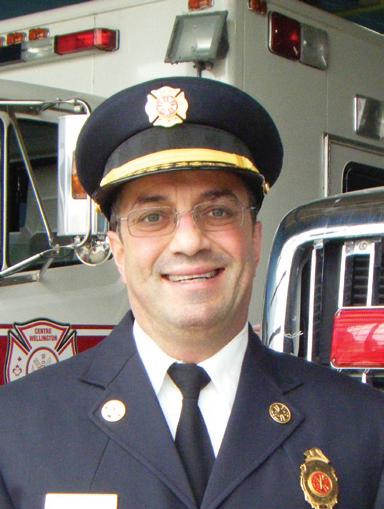
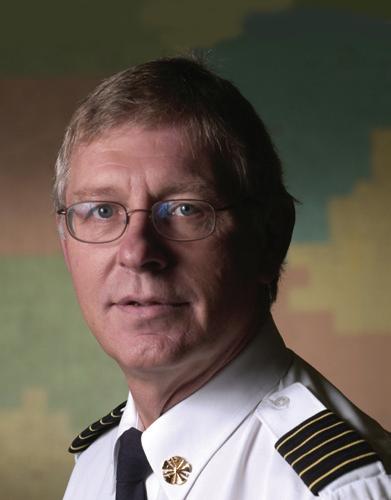
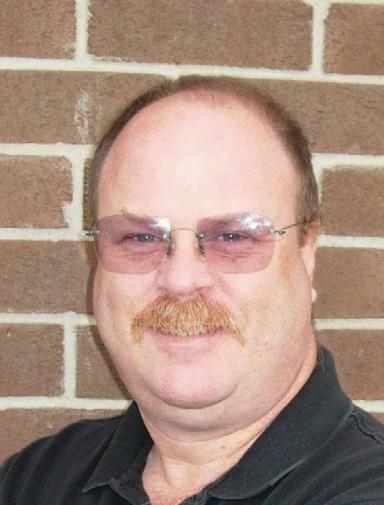
Every person in a position of responsibility needs to have tremendous communication skills and fire chiefs are no different. Chiefs need to communicate in a way that will motivate their firefighters, reassure and inform council members and promote fire prevention. Bill and Barb Johnston teach us how to do this.
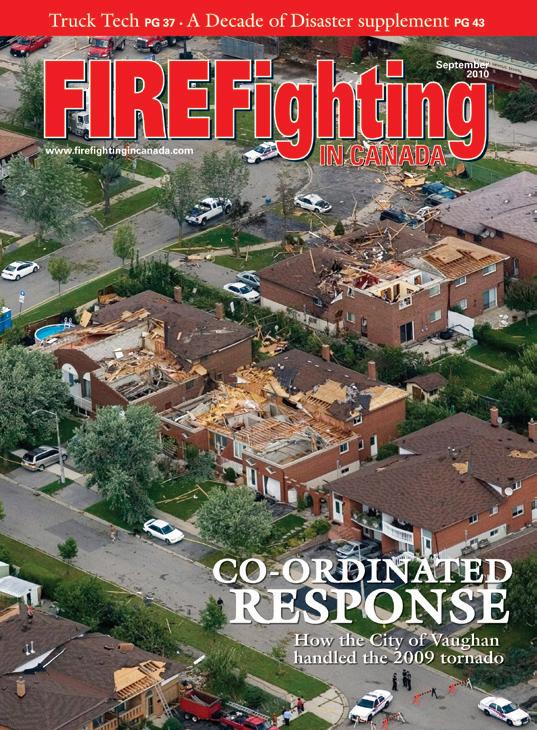
32 CO-ORDINATED RESPONSE
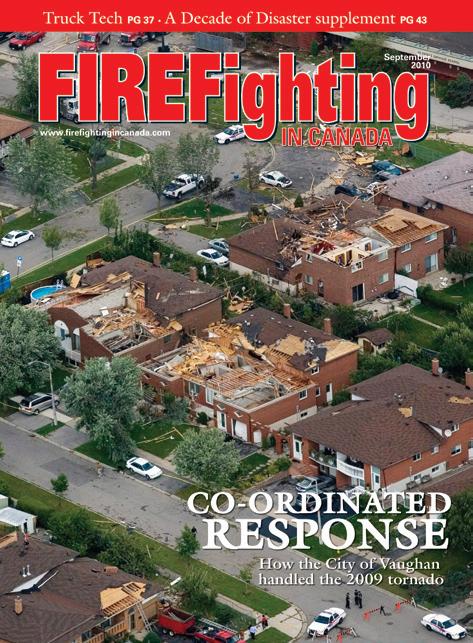
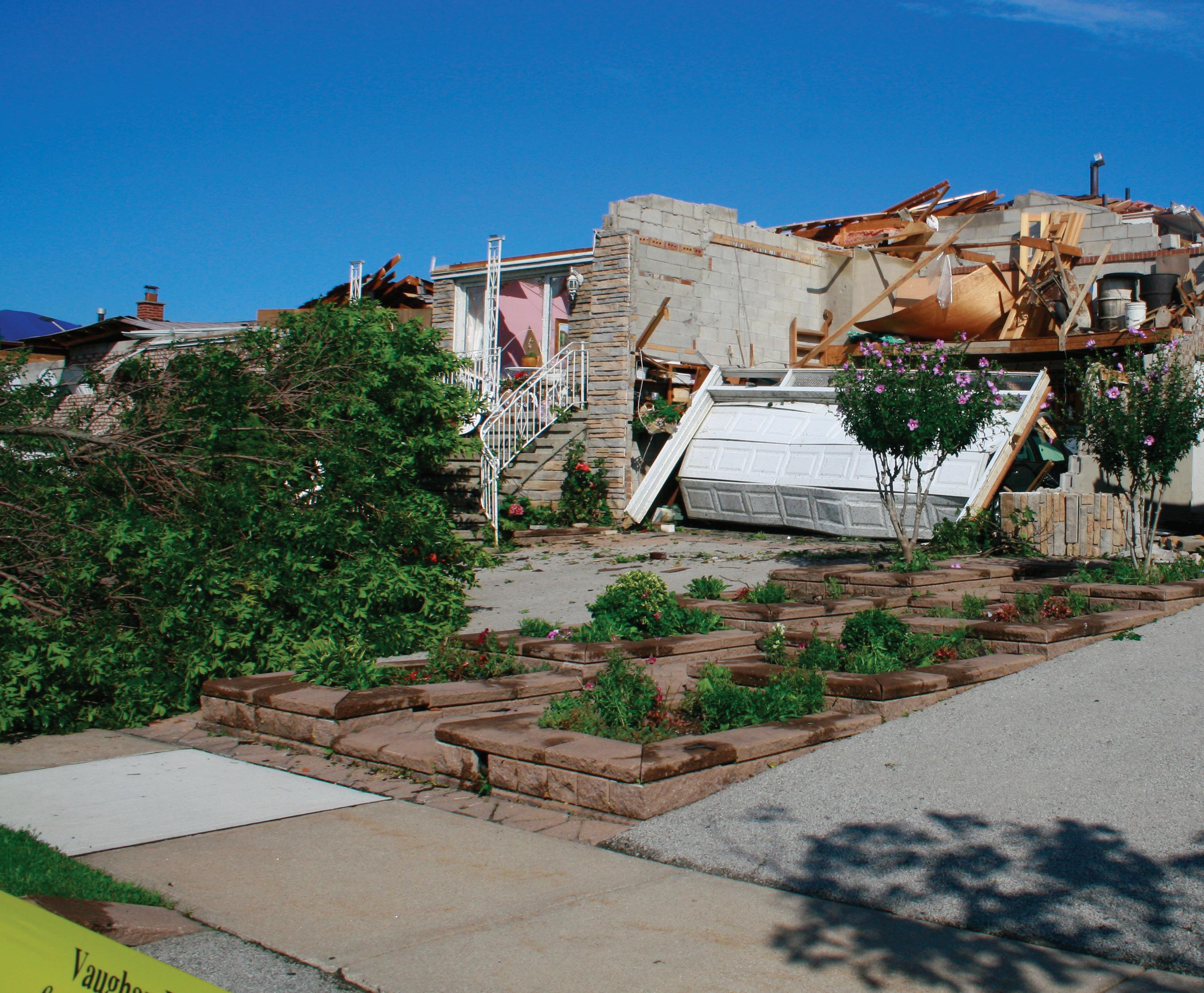
Emergency drills and a thick fire and emergency services presence proved effective and efficient in the wake of the 2009 Vaughan, Ont., tornado. Laura King reports.
40 RISK ANALYSIS
Why would insurers charge different amounts for insurance for two identical properties in different regions of Canada? This question is particularly vexing for operators of franchises that build and operate almost identical properties and acquire their insurance through a single carrier. Michael Currie, western Canada director of the Fire Underwriters Survey, explains.
43 A DECADE OF DISASTER SUPPLEMENT
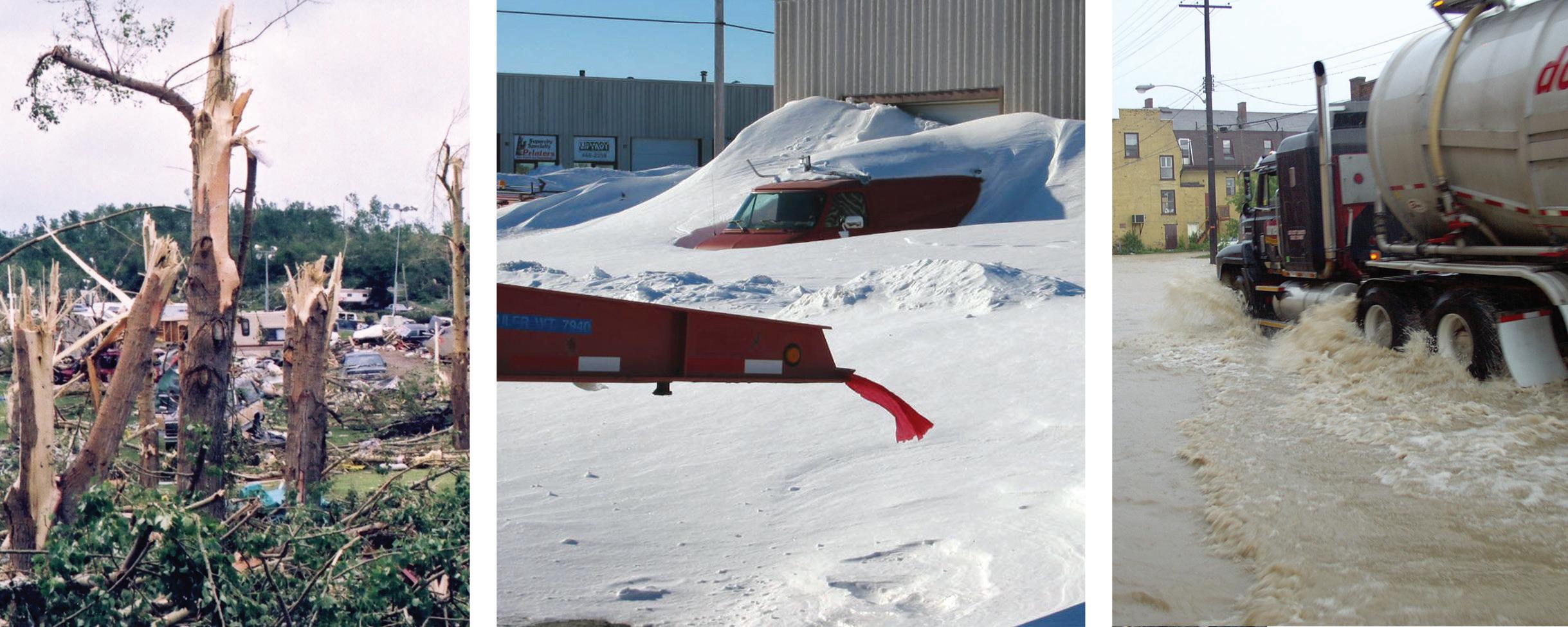
Our 40-page special section looks at 11 major Canadian disasters –hurricanes, snowstorms, fires and floods – the responses to each and the lessons learned by the responding agencies.
BY LAURA KING Editor lking@annexweb.com
C
COMMENT
Columnist takes the heat
olumnists, like fire chiefs, come and go. We’re disappointed to lose our outspoken Volunteer Vision scribe Brad Patton, who agreed after some arm twisting two years ago to fill a gap and become the voice of the Canadian volunteer fire service.
I got to know Brad while doing a story in 2008 on his department’s new $355,000 Timberwolf truck, a bear of a vehicle well suited to the often challenging weather and terrain in lovely CentreWellington, Ont.
Since then, Brad has tackled in his column the issues of recruitment and retention, the risks of proper training, budgeting, presumptive legislation, managing versus leadership, platooning, bunker gear, the challenges of running volunteer departments versus career departments, and other tough subjects for which he has been roundly praised and harshly ridiculed. (See Brad’s final Volunteer Vision column on page 10).
Unfortunately for readers, Brad’s job description has been expanded and he’s playing a broader role that will be extremely beneficial to fire services in his region but leaves no time for meeting deadlines imposed by overbearing editors! Best wishes, Brad, for continued success and ongoing outspokenness (which has served our readers so well).
ON THE COVER
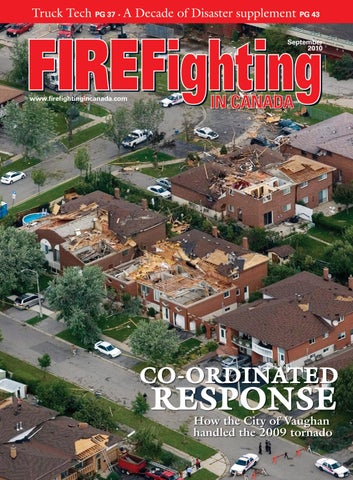
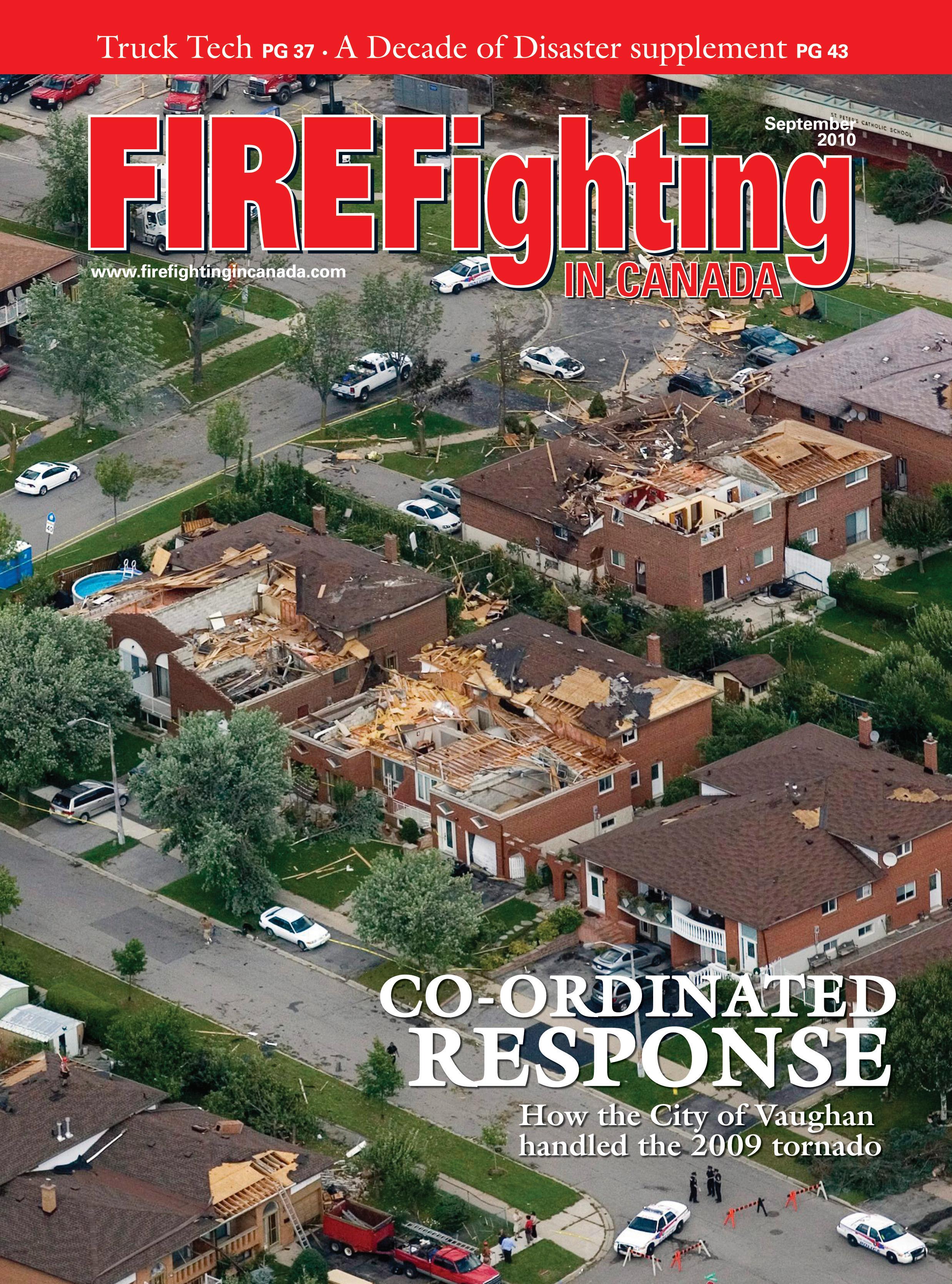
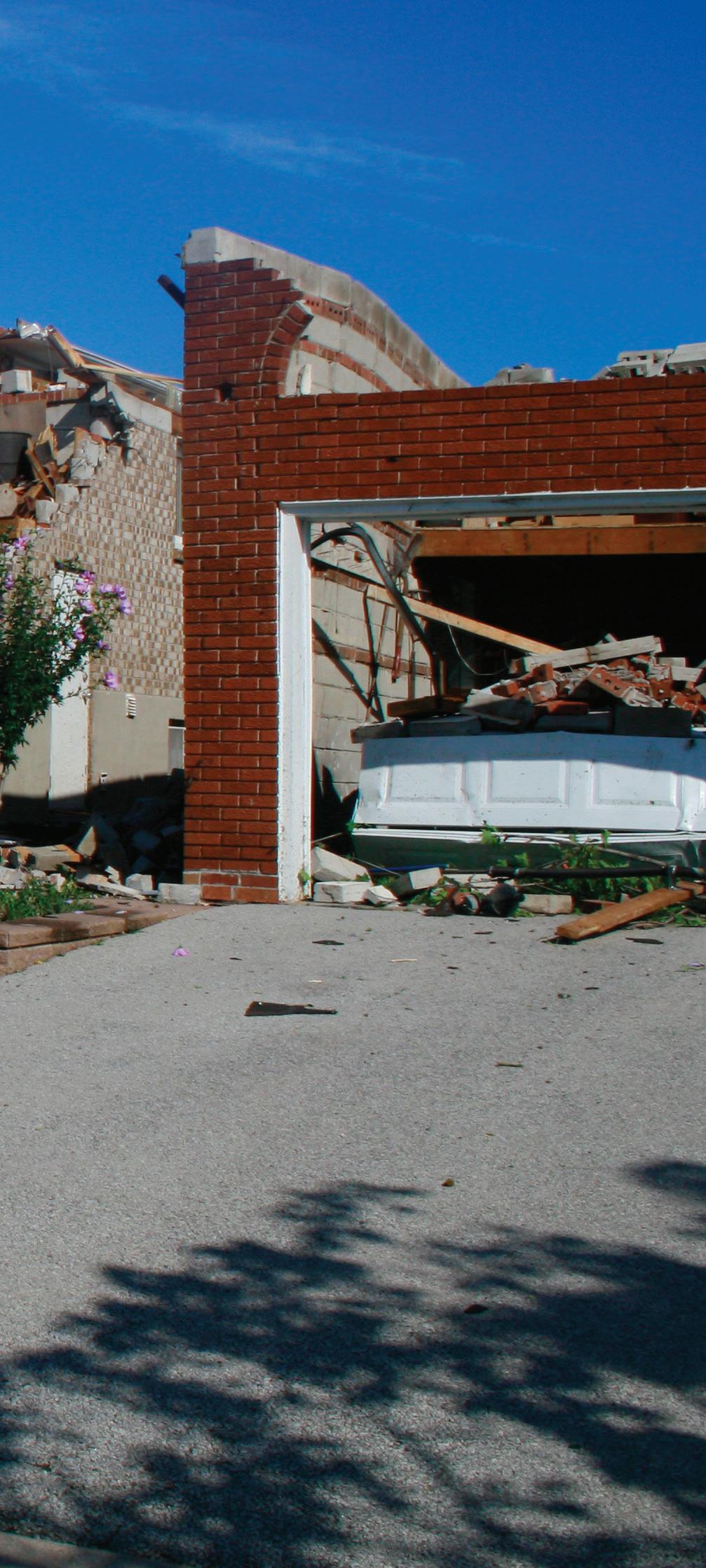
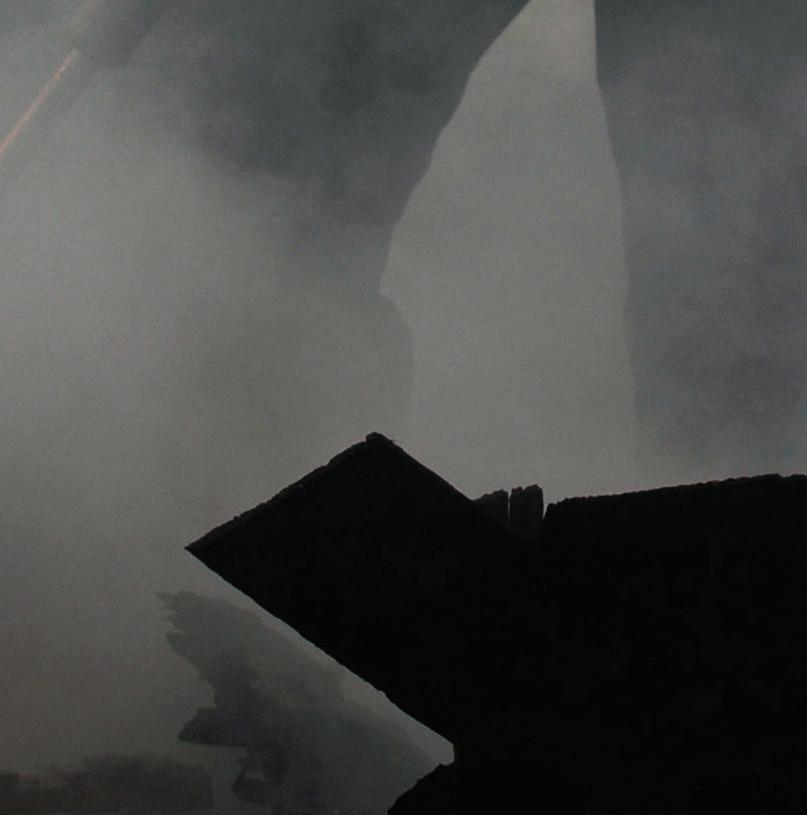
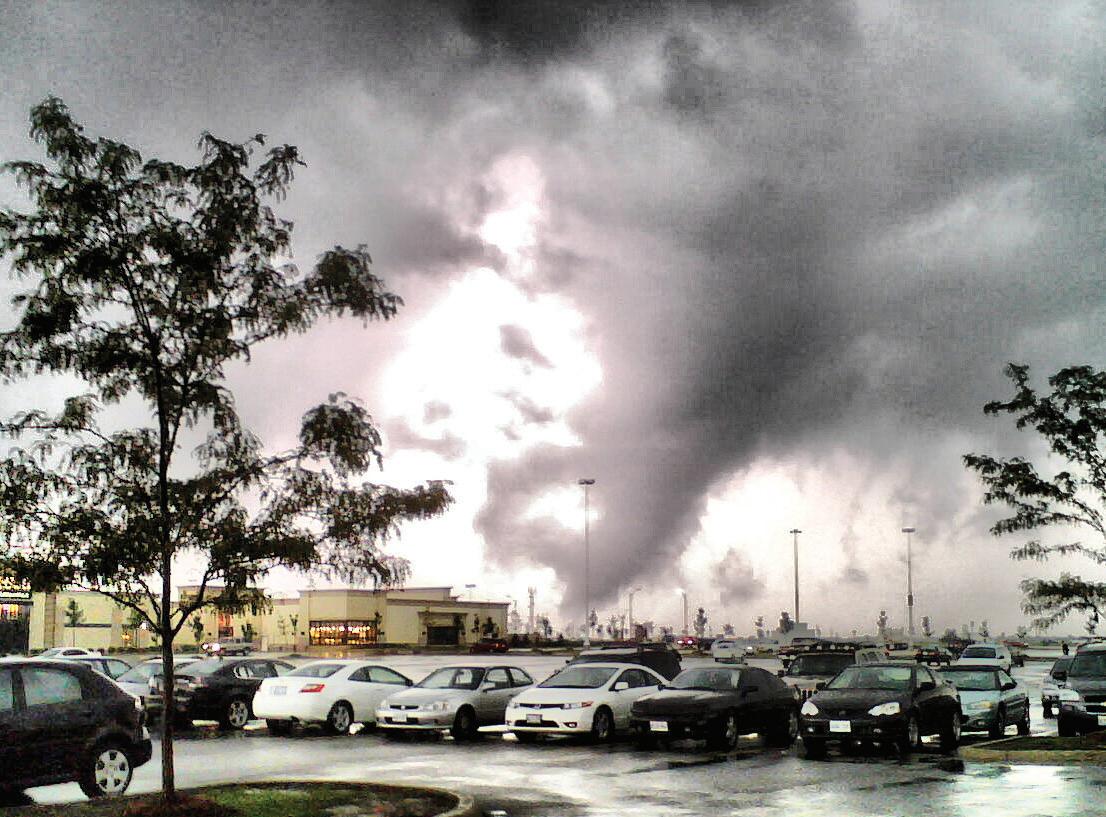
There was no warning of the tornado that tore through Vaughan, Ont., in August 2009. See cover story page 32.
Brad and I last chatted face to face at the Ontario Association of Fire Chiefs conference in May (I had hoped for more face time at our Fire Fighting in Canada golf tournament immediately before the conference but Brad admits he’s no Phil Mickelson – he didn’t believe that none of the other participants can hit the ball straight either and declined my invitation to play).
Anyway, Brad was keen at the time to sound off in his column on some issues related to the role of the Ontario Office of the Fire Marshal, and he’s been a fierce advocate of Huntsville Fire Chief Steve Hernan, whose ordeal surrounding an alleged breach of security in the days leading up to the G8 summit has raised the ire of many of his colleagues, Brad included.
As many of you know, Brad’s workload recently forced him to reduce his yearly column quota to four from eight, with Hope, B.C., Chief Tom DeSorcy handling the other half of the Volunteer Vision mandate. Tom will continue to offer up his perspective as a paid chief of a volunteer department and the challenges that go with that position. And he’ll share that task with Vince MacKenzie, the paid chief of the Grand Falls-Windsor Volunteer Fire Department in Newfoundland. Vince joins FFIC later this year (Brad’s column runs this month, Tom’s in November, then Vince’s in December) but you may have already seen Vince’s FFIC debut in May, when he wrote View from the East, part of our occasional series looking at regional issues. We’ll more properly introduce Vince in December.
We’re thrilled to introduce another new face to FFIC. Chris Dennis is the chief mechanical officer for the City of Vaughan Fire and Rescue Service in Ontario and a selfdescribed truck fanatic. Chris built Vaughan’s new command vehicle from scratch (look for it in our Station to Station section in November) and his passion for helping readers understand the newest technology and trends that affect fire apparatus will be apparent when you read his inaugural Truck Tech column on page 37. Welcome, Chris.
PRODUCTION ARTIST KRISTA MISENER kmisener@annexweb.com
GROUP PUBLISHER MARTIN MCANULTY fire@annexweb.com
PRESIDENT MIKE FREDERICKS mfredericks@annexweb.com
PUBLICATION MAIL AGREEMENT #40065710
RETURN UNDELIVERABLE CANADIAN ADDRESSES TO CIRCULATION DEPT.
P.O. Box 530, SIMCOE, ON N3Y 4N5 e-mail: lmorrison@annexweb.com
Printed in Canada ISSN 0015–2595
CIRCULATION e-mail: lmorrison@annexweb.com
Tel: 866-790-6070 ext. 206
Fax: 877-624-1940
Mail: P.O. Box 530 Simcoe, ON N3Y 4N5
SUBSCRIPTION RATES
Canada – 1 Year - $30.54
(with GST $32.07, with HST/QST $34.52) (GST - #867172652RT0001)
USA – 1 Year $40.00 USD
We acknowledge the financial support of the Government of Canada, through the Publications Assistance Program and the Canada Magazine Fund, toward our mailing and editorial cost. Nous reconnaissons l’aide financiere accordee par le gouvernement du Canada pour nos coults d’envoie postal et nos coutl redactionnels par l’entremise du Programme d’aide aux publications et du Fonds du Canda pour les magazines.
Occasionally, Fire Fighting in Canada will mail information on behalf of industry-related groups whose products and services we believe may be of interest to you. If you prefer not to receive this information, please contact our circulation department in any of the four ways listed above.
All advertising is subject to the publisher’s approval. Such approval does not imply any endorsement of the products or services advertised. Publisher reserves the right to refuse advertising that does not meet the standards of the publication.
www.firefightingincanada.com
PHOTO BY THE CANADIAN PRESS
l Best warranty in the industry
l Greatest number of safety options available on an SCBA
l Accountability System for complete fireground management
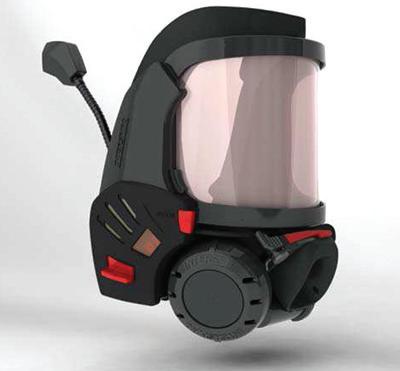
l New FireHawk M7 Responder Air Mask adds optional CBRN APR and PAPR convertibility
STATIONtoSTATION
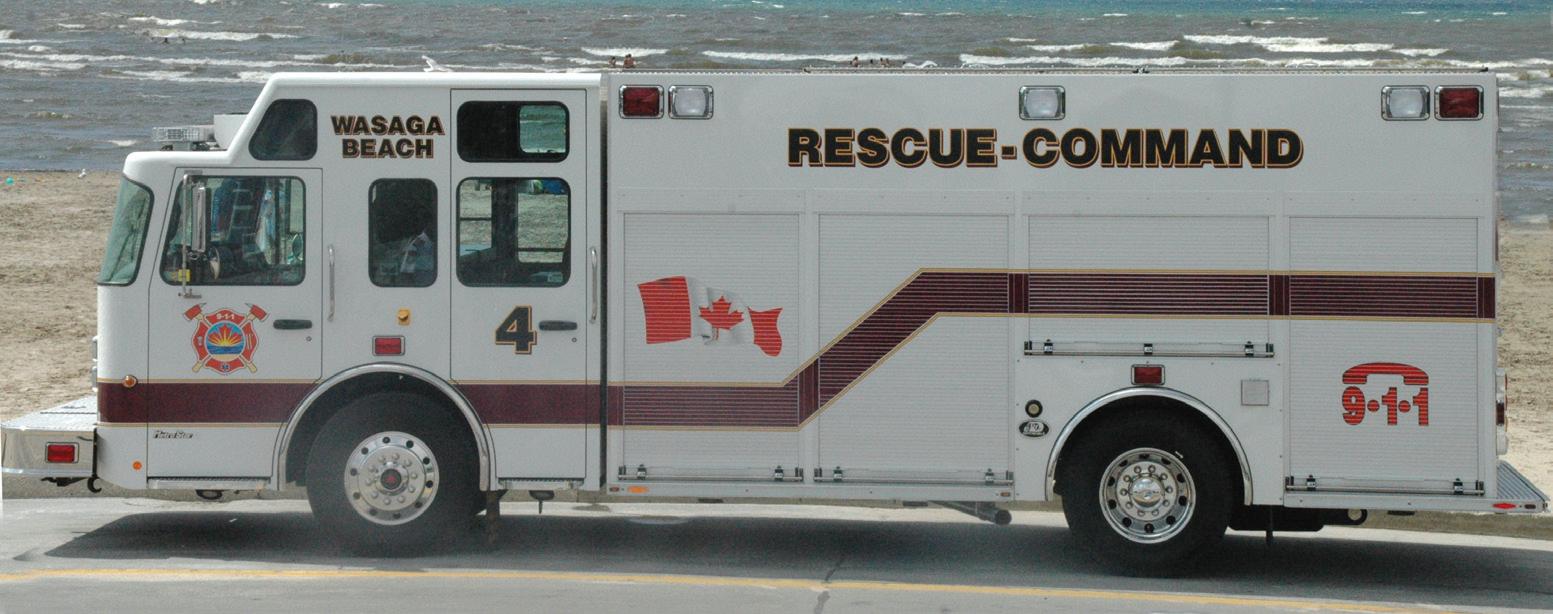
ACROSS CANADA: Regional news briefs Custom truck provides command and storage space
Wasaga Beach Fire Chief Mike McWilliam knew after a fire on a freezing November night in 2007 that he needed a better command post. Now he has bragging rights to a stateof-the-art rescue-command vehicle that was a big draw at the Ontario Association of Fire Chiefs conference and trade show in the spring.
Council in the Ontario tourist town approved the purchase of a new rescue-command vehicle, which replaces two aging rescue vehicles, in the 2009 budget. After considerable planning and some price haggling, the tender for a $335,650 apparatus was awarded to Dependable Emergency Vehicles in Brampton, Ont., for a Spartan custom cab and chassis with a non walk-in body.
“The command centre incorporated into this new vehicle was a component we were definitely lacking,” McWilliam said. “This became most evident to us during the Main Street fire when we were compelled to request a command unit from another municipality.” The
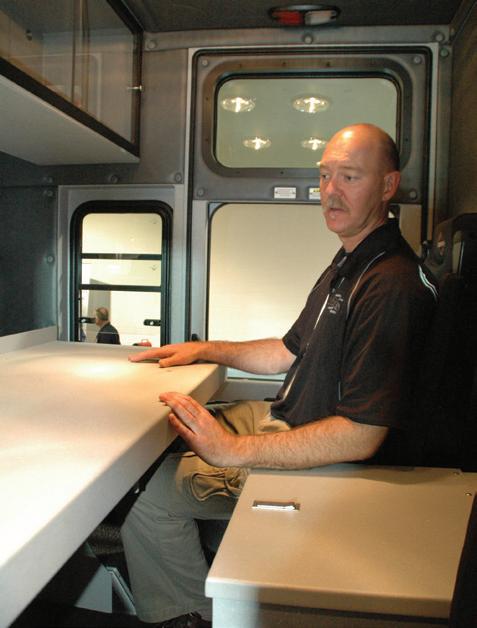
Wasaga Beach’s new Dependable-built command-rescue vehicle features a slide-out table for laptops, an accountability window and plenty of storage compartments. Inset: Chief Mike McWilliams in the cab work space.
fire destroyed a considerable portion of the town’s popular boardwalk and several stores and amenities.
McWilliam and Dependable’s Pino Natale showed off the vehicle at the OAFC in Toronto in May. The Wasaga Beach Fire Department took delivery shortly thereafter.
The rescue-command unit is designed to carry a lot of equipment and gear – SCBAs, medical bags, extrication and rescue tools – and provide scene light-
THE BRASS POLE
Promotions & Appointments
ing. Two coffin boxes on top of the rig provide additional storage and there is an on-board generator. An awning provides shade for rehab. The truck is equipped to tow the town’s rescue boat – a necessity in the resort town on Georgian Bay.
Two key elements of the vehicle that McWilliam designed in conjunction with Dependable are a sliding table in the back of the cab for laptops and an accountability window through which firefighters
can slide their tags.
“It was my first time ordering a truck as a chief,” McWilliam said. “I didn’t know what to expect and it was nice to see the reaction.”
-Laura King
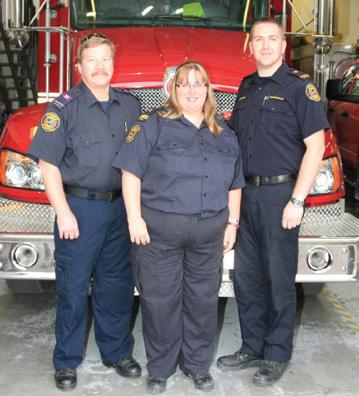
Meadows Emergency Services in Alberta. JENNIFER EVANS was promoted to captain after serving the last year as a lieutenant. She has been with RMES for 18 years. GARY ROBERTSON was promoted to lieutenant and has been on the department for six years. All three have been instrumental in successful recruitment drives for the past two years and lead the department’s probationary development team.
MIKE NORMAN was promoted to lieutenant after serving four years with Redwood
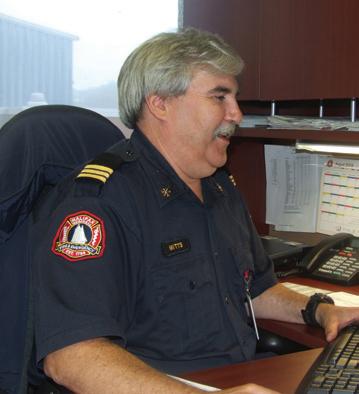
Training Officer CHRIS MITTS was promoted to divisional chief with Halifax Regional Fire & Emergency Service in May. He takes charge of fleet and facilities. He inherits perhaps the largest facilities challenge of any department in the country, with four new fire stations planned for Halifax over the next year. Mitts began his career as a volunteer with the old Sackville Fire Department in the early 1980s.
CHRIS POWERS retired as chief of the Whitchurch-Stouffville Fire Department in Ontario May 31 after a lengthy career in the
PHOTOS BY LAURA KING
Five bucks makes big difference for F.A.C.E.
Tim Catterall hopes a little pocket change will make a big difference.
Catterall is a career firefighter in Burlington, Ont. Six years ago he was diagnosed with chronic lymphocytic leukemia and now he wants to make a difference.
Catterall founded Firefighters Against Cancer’s Existence, or F.A.C.E., in September 2006. The organization raises money to help fund research into the types of cancer that afflict firefighters – leukemia, nonHodgkin’s lymphoma, esopha-
geal, colorectal, brain, bladder, kidney and ureter cancer.
Catterall is asking all Canadian firefighters to donate five bucks – just two toonies and a looney – on Tuesday, Sept. 21, to F.A.C.E. to help fund research into the eight cancers that are recognized under presumptive legislation in most provinces.
“Taking care of ourselves allows us to continue to take care of others,” Catterall says.
“When we donate to research, we help our firefighters but also millions of people who suffer
from these diseases will benefit from our actions.
“More often we treat the symptoms instead of working to eliminate the cause. We must change the course of our future health, hopefully one without cancer in it. A $5 donation once a year from every firefighter has the power to drastically improve our future and working together towards one common goal has endless possibilities.”
Indeed, 62 per cent of people diagnosed with cancer will survive the disease
Retiring chief leaves legacy in new station
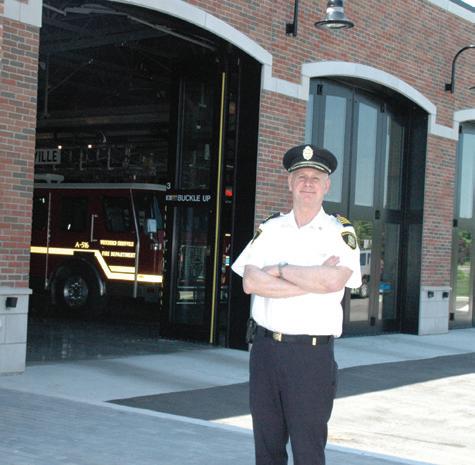
When Chris Powers retired as fire chief in WhitchurchStouffville, Ont., on May 31, he left a legacy of integrity and passion among his crews and a stellar career that spanned several municipalities in Quebec and Ontario. Still, what most people talk about are the doors.
The doors – the classic, arch-shaped doors – on the new Whitchurch-Stouffville Station 51, are impressive. They’ve been the talk of the town (well, at least among fire folks), since the 18,795 square-foot building (which includes 2,168 square feet for York Region Emergency
Canadian fire service. Powers began as a volunteer firefighter in Otterburn Park, Que., in 1966. In 1974 he became the chief and safety supervisor at Consolidated Bathurst Ltd., and in 1978
Medical Services) opened Nov. 22, 2009, and are the first of their kind in Ontario.
The $6.5-million station – which was built in conjunction with a nearby arena as a community building that can be used for meetings and events – boasts a gourmet kitchen with stainless steel appliances, an enormous community room that will double as the EOC, a goodsized workout room, dorms for men and women and the original fire bell from the old Main Street station. The building features fabulous photos of firefighters, apparatus and responses from yester-
year. But everyone talks about the doors.
The four-fold doors, made by Door Engineering & Manufacturing in Kasota, Minn., are hurricane quality, open in a four seconds – faster than roll-up doors – and allow natural light into the bays, sav-
compared with just one in three in the 1960s, thanks to ongoing research.
“We want to put our F.A.C.E. in front of everyone and let them know we, the firefighters, are here to help,” Catterall said.
Firefighters and/or their unions can donate to the F.A.C.E. Foundation through www.firefightersface.com (click on donations).
-Laura King
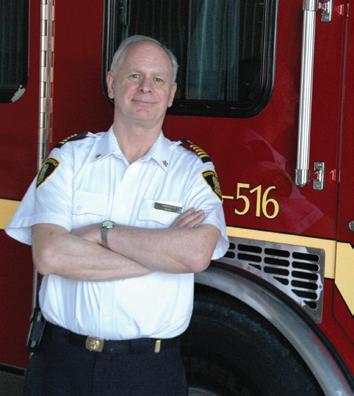
Chief Chris Powers oversaw construction of the new Station 51 in Whitchurch-Stouffville, Ont., before he retired May 31.
ing energy and money. The only maintenance required is an occasional squirt of grease on each of the doors’ four hinges.
Powers, who oversaw every detail of the new station, saw the doors in a fire station design magazine.
Powers was feted on May 26 by colleagues and dignitaries, a week before he officially retired – for the second time. He retired as chief in Oakville, Ont., in 2004.
-Laura King
became the chief for the City of Bathurst, N.B. Powers was chief in Cumberland, Nepean and Oakville, Ont., between 1994 and 2004 before moving to Whitchurch-Stouffville in 2005. Powers headed the OAFC’s Section 21 committee and played a significant role in the aftermath of the 1998 ice storm in eastern Ontario/ western Quebec.
Assistant Deputy Chief ROBERT KLEINMANN retired June
30 from the Bonnyville Fire Department in Alberta after 38 years of service. Kleinmann has been a teacher, school board member and mentor to several generations of students and firefighters in and around Bonnyville.
Last Alarm
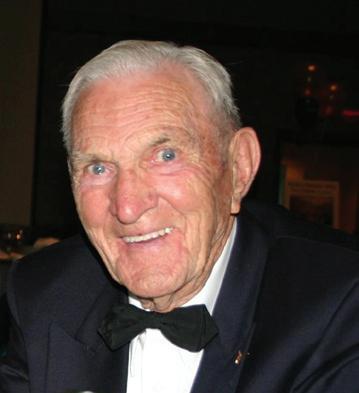
CHARLES GILBERT PITCHER, who founded the Newfoundland and Labrador Association of Fire Chiefs, died March 6 in Victoria. Pitcher was fire chief
in Grand Falls, N.L., before he moved to British Columbia in 1965, where he was fire chief for the town of Youbou and the Crofton Pulp and Paper Mill until he retired in 1982.
PHOTO BY LAURA KING
PHOTO BY LAURA KING
STATIONtoSTATION
BRIGADE NEWS: From stations across Canada
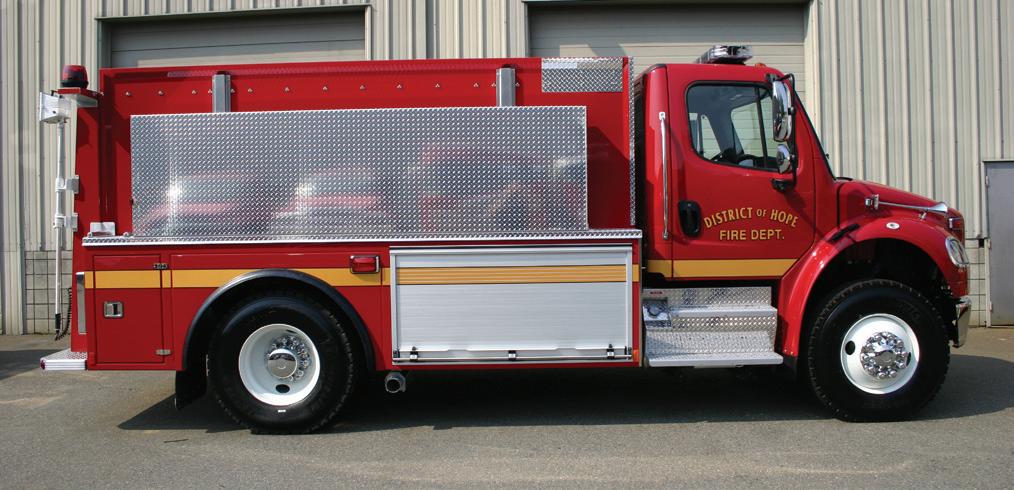
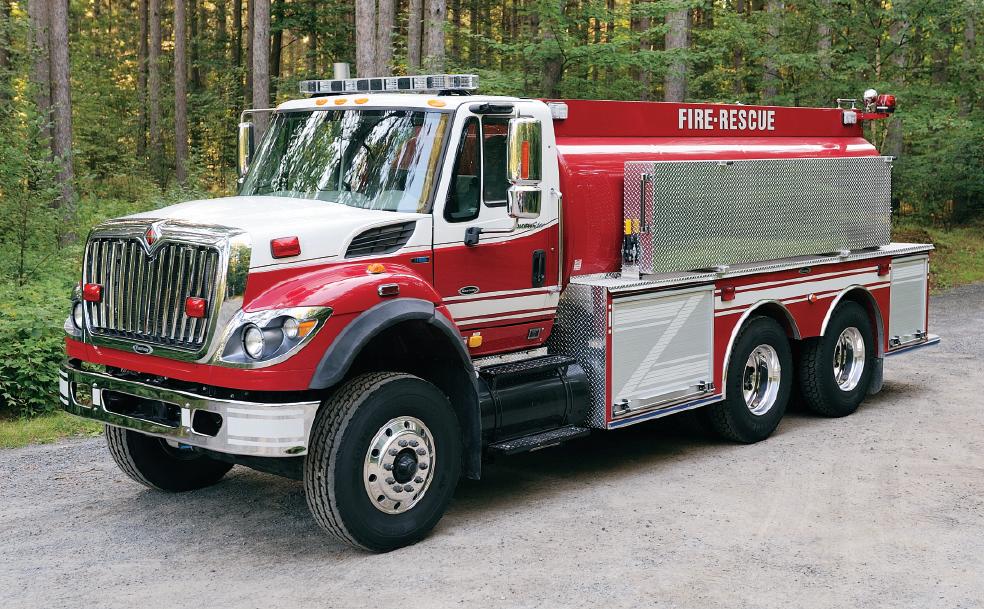
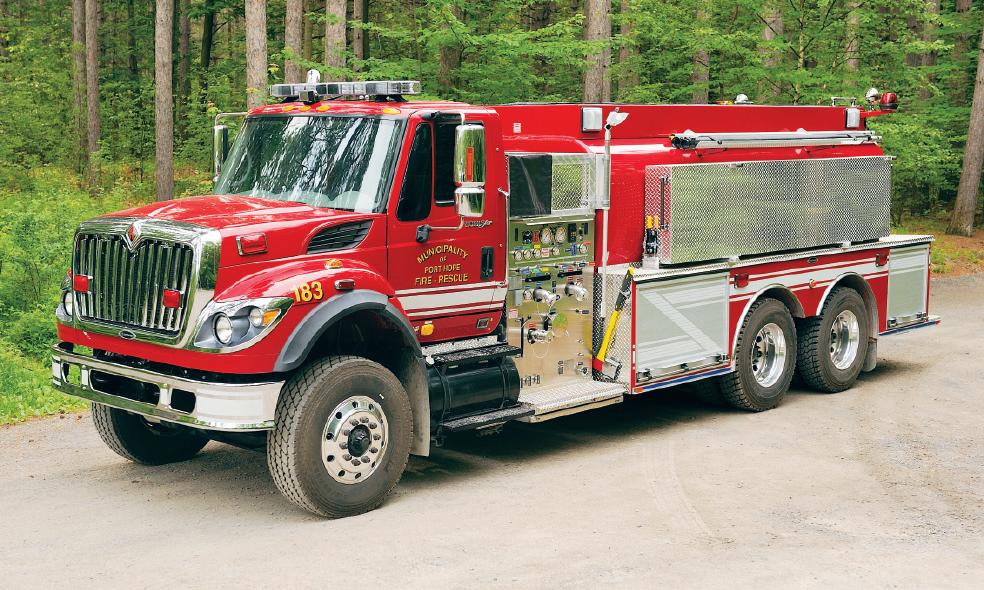
The DISTRICT OF PORT HOPE FIRE DEPARTMENT in B.C., under Chief Tom DeSorcy, took delivery in August of a Hub Fire Engines & Equipment-built tanker. Built on a Freightliner M2 chassis and powered by an Allison 3500 EVS transmission and a Cummins ISC 300-hp engine, the tanker is equipped with a Hale AP50 420 IGPM pump, a 1,500 IG co-poly water tank, Whelen light package, Extendalites, port tank storage and a Grinnell dump valve.
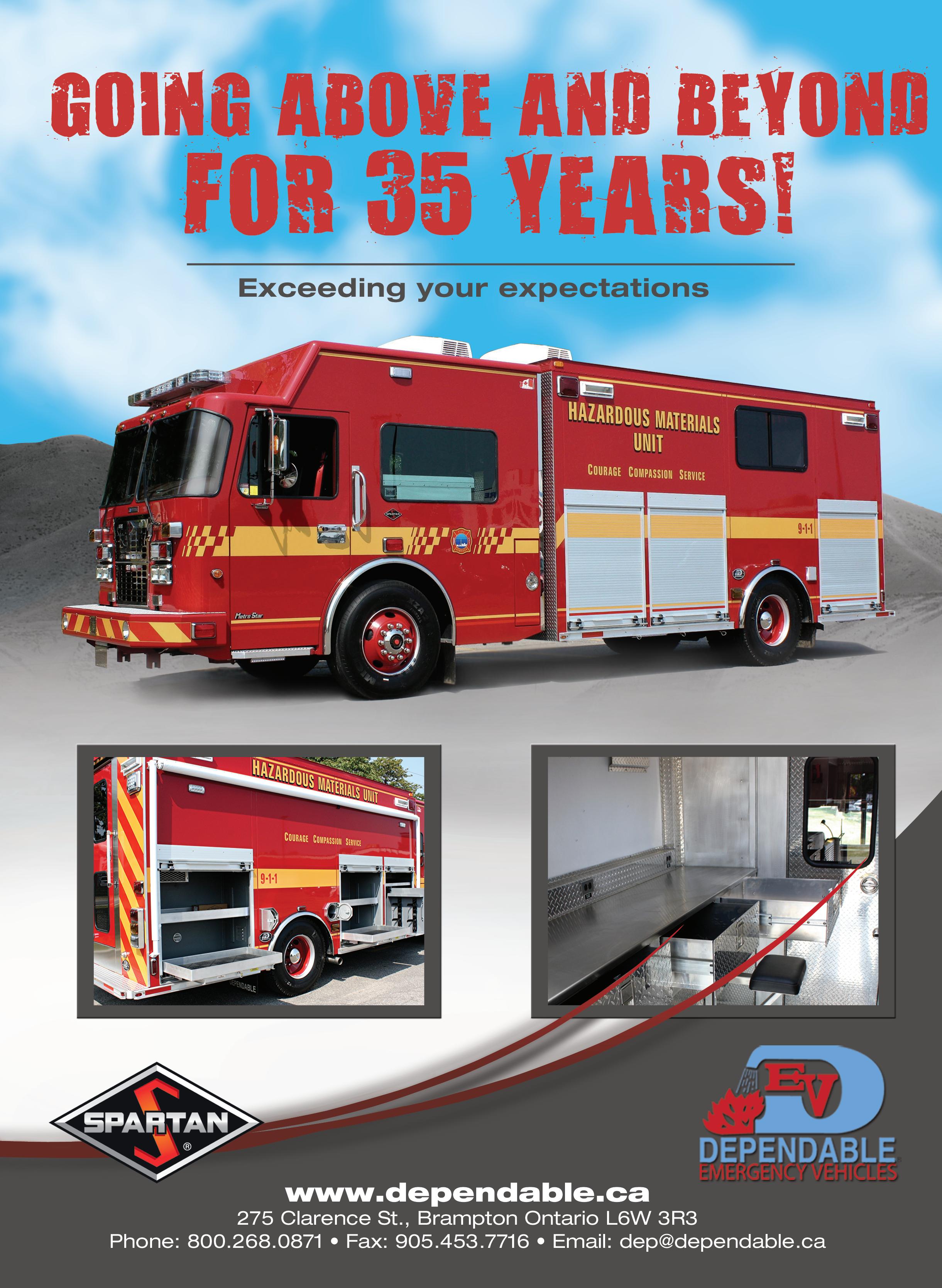
TORONTO FIRE SERVICES in Ontario, under Chief William Stewart, took delivery in August of a Dependable Emergency Vehicles-built Haz-Mat unit. Built on a Spartan Metro Star chassis and powered by an Allison transmission and a Cummins ISL 370-hp engine the truck is equipped with Amdor roll-up doors, Whelen light package, FRC telescopic light poles, Kussmaul 1901 load manager, VMUX system and an Onan generator.
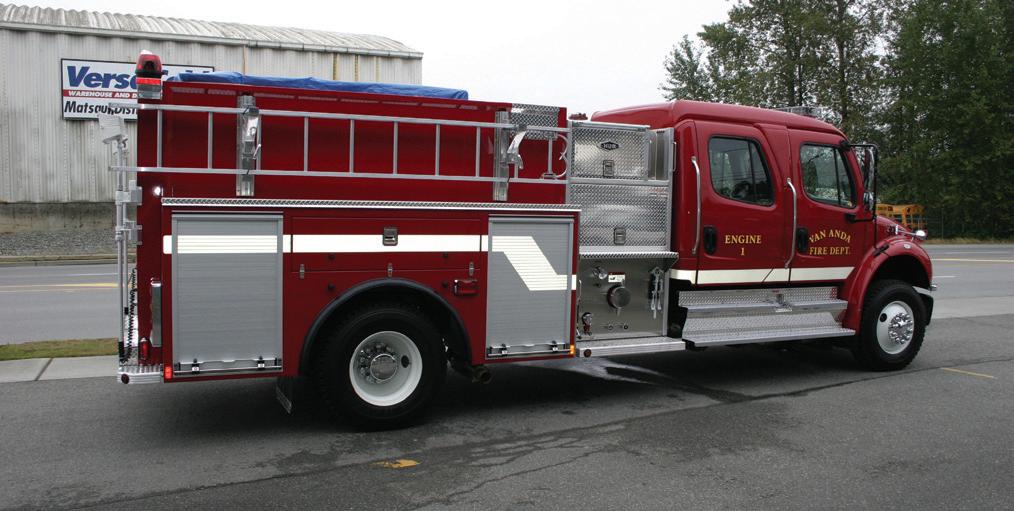
The VAN ANDA FIRE DEPARTMENT in B.C., under Chief Gord Roberts, took delivery in August of a Hub Fire Engines & Equipment-built pumper. Built on a Freightliner M2 chassis and powered by an Allison 3000 EVS transmission and a Cummins ISC 300-hp engine the pumper is equipped with a Hale QFLO 100 840 IGPM pump, Foam Pro 1600 foam system, 1,000 IG co-poly water tank, Whelen light package, hard suction hose storage and 500W Extendalites.
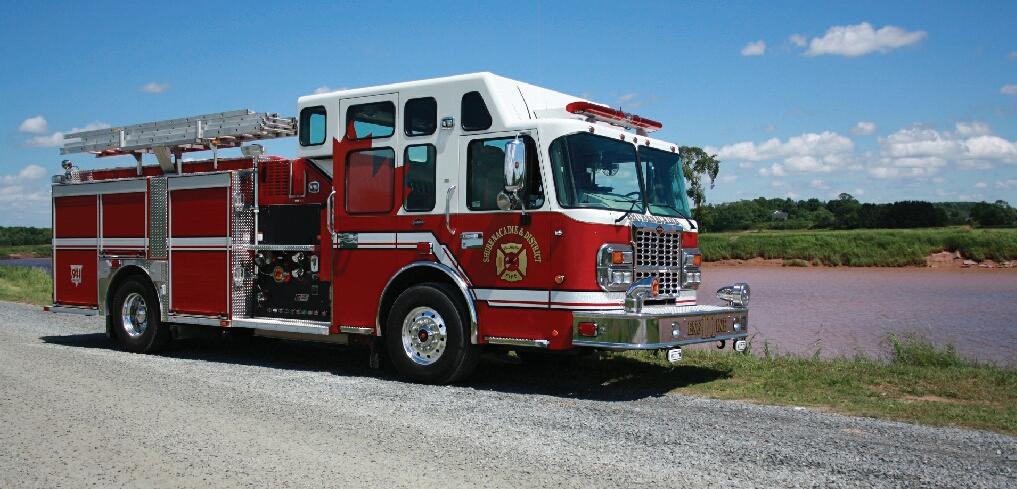
SHUBENACADIE & DISTRICT FIRE & EMERGENCY SERVICES in Nova Scotia, under Chief John Malloy, took delivery in July of a Fort Garry Fire Trucks-built pumper. Built on a Spartan Gladiator chassis and powered by an Allison 3000 EVS transmission and a Cummins ISL 400-hp engine, the pumper is equipped with a Waterous CSU 1,500 IGPM pump, a 750 IG pro-poly water tank, Foam Pro 2002 foam system and a Harrison 8 KW generator.
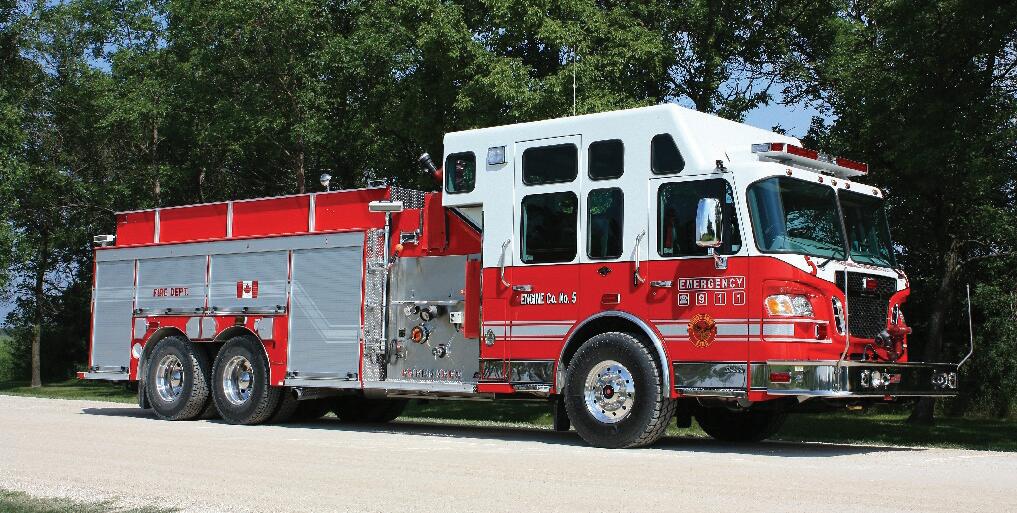
The MOOSE JAW FIRE DEPARTMENT in Saskatchewan, under Chief Garth Palmer, took delivery in June of a Fort Garry Fire Trucksbuilt pumper/tanker. Built on a Spartan Gladiator TME chassis and powered by an Allison 4000 EVS transmission and a Cummins ISM 500-hp engine, the truck is equipped with a Darley LDM 1,250 IGPM pump, a 2,000 IG pro-poly water tank, Foam Pro 2002 Class A foam system and a FireFox bumper turret.
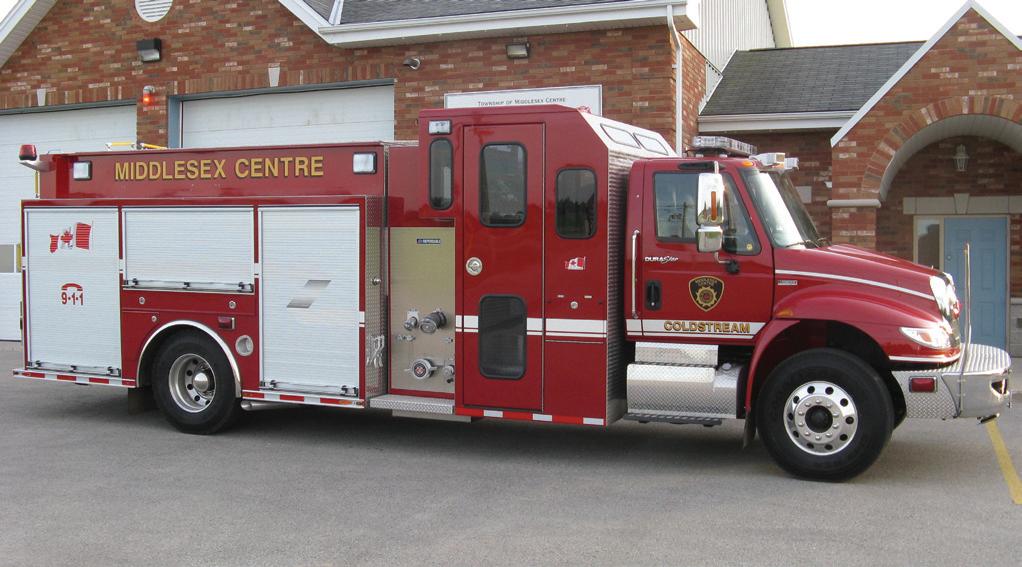
The MIDDLESEX CENTRE FIRE DEPARTMENT in Ontario took delivery in June of a Pumper built by Dependable Emergency Vehicles. The pumper was built on a International 4400 series chassis and is powered by a MaxxForce 9 330-hp engine. This truck features an enclosed three man crew/pump operator panel module.
DISTRICT OF PORT HOPE FIRE DEPARTMENT
THE VAN ANDA FIRE DEPARTMENT
TORONTO FIRE SERVICES
SHUBENACADIE & DISTRICT FIRE & EMERGENCY SERVICES
THE MOOSE JAW FIRE DEPARTMENT
MIDDLESEX CENTRE FIRE DEPARTMENT
BY BRAD PATTON Chief Centre-Wellington, Ont.
IVOLUNTEERVISION
Parting advice from an opinionated scribe
t’s been two years since I began writing this column and now it’s time for me to pass the pen or keyboard on to another writer. Writing for Fire Fighting in Canada has been a humbling and wonderful experience. I have received hundreds of supportive e-mails and a few negative ones (OK, five), from strong unionists who believe there is no place in the fire service for volunteers, period. I, of course, strongly believe that volunteer/part-time firefighters are the best way to provide good fire and emergency services to small and mid-size municipalities, which happen to represent more than 70 per cent of Canada. I do realize that there are some poorly run volunteer/part-time fire departments out there. There are also some full time departments I know of that shouldn’t be too proud either, but you can’t blame the firefighters for that; the fault falls directly onto the chief, fire boards and/or councils. As I have said before, just because you’re a volunteer fire department does not give you any special right to run a fire department that is not fully qualified, properly equipped and staffed to meet the threats facing your community.
I am convinced that in 2012 we will be hit by the perfect financial storm. The feds will reduce payments to the provinces, and the provinces will, in turn, reduce payments to municipal governments. All levels of government will be dealing with high levels of debt. The economy will be slow. There is an aging population and a decline in people who have the desire or time to be volunteer/part-time firefighters. Add to all that strict labour laws and heavy enforcement of health and safety standards, and you can see the storm brewing on the horizon.
These issues and more will mean tough times for the volunteer and full-time fire departments. So, what are we to do?
We do what we have always done: Adapt and overcome any obstacles that threaten to impede us in the protection of people, property and the environment.
encourage participation and leadership in these groups. It’s just as important to listen to the staff when they come back from these meetings and give them an opportunity to try out some new ideas. We also need to be more involved in our provincial associations; make the time to go to these meetings, take notes, share ideas, come back and make changes.
• We need to take some time and see how other provinces are delivering fire protection. Too often we seem to be more influenced by the United States than our own county. God bless our neighbours in the U.S. of A., but they don’t have the best track record in managing the fire service or fire losses. Perhaps, as well as reviewing how other provinces manage the fire service, we could also look at Europe, Asia and Australia. There are thousands of fire departments and associations you can contact and exchange ideas via the Internet, without leaving your office or home.
• One of the hardest jobs fire chiefs have communicating with elected officials and working closely with them. This is a very difficult thing to do because most of us spend the majority of our time learning the technical stuff regarding fires, rescues
We need to be constantly working with the public and elected officials — and I don’t mean just showing up when we want something. ‘‘ ’’
Here are a few suggestions that may help get us through the rough times and move our departments forward.
• Expand our resources through better networking (building relationships) or, as some may call it, lobbying. Networking opportunities are all around us. Be active in or create specialized associations. Ensure membership is active in associations that focus on training officers, fire prevention, public education, chiefs, and mutual aid, to name a few. Perhaps create a purchasing and administration working group with other departments to review budgets, joint purchasing opportunities and shared administrative activities. It’s important to
Thanks to Chief Patton for his contribution to Fire Fighting in Canada over the past two years. You can reach him at BPatton@centrewellington.ca. Chief Tom DeSorcy of Hope, B.C., writes Volunteer Vision in November and in December FFIC welcomes Chief Vince MacKenzie of Grand Falls-Windsor, N.L.
and how to manage a fire ground. Now our jobs require us to be politicians. We need to be constantly working with the public and elected officials — and I don’t mean just showing up when we want something. We need to develop relationships and have a greater understanding of all municipal operations. Whenever you get a chance to take a councillor out for lunch, a coffee or just have a short chat, go for it. This is a great way to get to know these community leaders and gain a better idea of what they are looking for in reports or justifications when at official meetings.
I hope these suggestions will help your department overcome the many obstacles we face trying to meet the needs of our communities.
It has been truly a pleasure and an honour to be able to discuss so many ideas and concerns of the volunteer department with you over the last couple of years. God bless the volunteer firefighters and keep them safe.
TRAINER’SCORNER
Explaining inattentional blindness
By ED BROUWER
As I write this on a much-appreciated break between wildfires, there are just under 400 wildfires burning in British Columbia. This has turned out to be one of the province’s busiest fire seasons since 2003.
Unfortunately, this fire season has something else in common with the year B.C. burned. There were three LODDs in 2003 – pilot Ian Mackay, 41; co-pilot Eric Ebert, 32; and helicopter pilot Ben Von Hadenberg, 33.
Now, we just lost two of our firefighters: pilot Tim Whiting, 58, of Langley, and co-pilot Brian Tilley, 36, of Edmonton, died when their Kamloops-based Convair CV 580 airtanker crashed while battling a fire near Lytton.
This column wasn’t meant to be centred on firefighter fatalities, however. I had planned to inform you about Thomas David Marovich, Jr., a firefighter with the Chester helitack crew attached to the Lassen National Forest. On July 21, 2009, Marovich, a rappeller, sustained fatal injuries from a descent during a proficiency rappel.
Rappelling is a fast and efficient way of getting to fires in remote areas. Firefighters rappel from helicopters hovering up to 76 metres (250 feet) above the ground. Fires are typically caused by lightning, are small in size and require between two and four people one to two days to suppress. Rappellers remain on the fire until it is declared out and routinely pack out with gear weighing 36 to 49 kilograms (80 to 110 pounds) to the nearest pickup point.
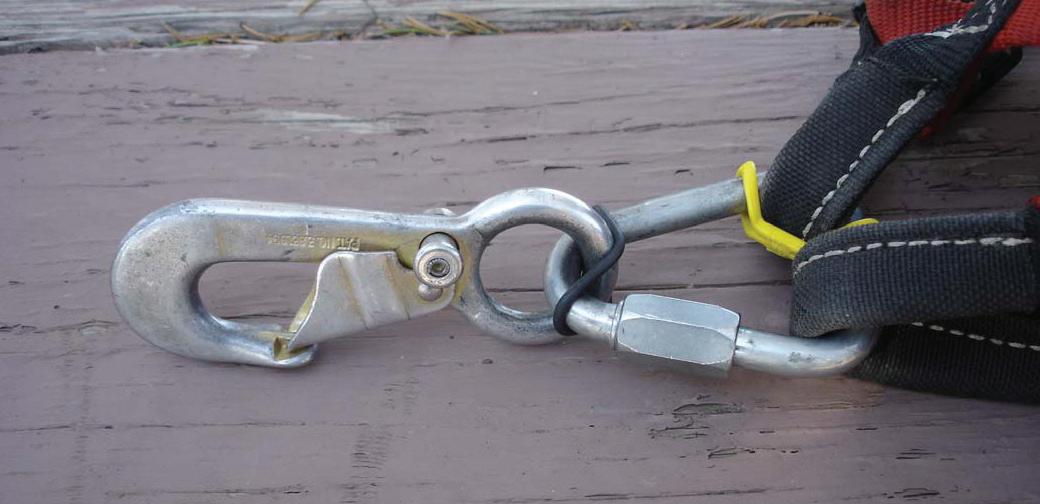
According to a July 2009 report by the United States Department of Agriculture Forest Service (available at http://www.wildfirelessons.net/documents/Willow_CA_Final_2009.pdf), at approximately 0955, in preparation for boarding the helicopter, a buddy check of equipment was performed by rappeller No. 4 (R-4). Marovich was informed of a broken Kong clip on his tri-link that was used to centre the Bourdon J-hook at the forward corner of the tri-link. Marovich went to a member of the crew, a spotter trainee, to correct the problem. The spotter trainee opened the tri-link with Leatherman pliers to replace the broken clip with a rubber O-ring that was an authorized substitution. After the replacement, Marovich closed the tri-link barrel by hand and the spotter trainee ensured that the closure nut was tight.
Witnesses said that Marovich then ran back to the helicopter that was in the process of starting. When he arrived at the helicopter, he received a buddy check again from R-4 and a spotter check prior to entering the helicopter.
The helicopter departed at 1004 with pilot, rappel spotter and four rappellers. The helicopter performed a high hover check prior to entering the rappel site and established a 67.5 metre to 75 metre hover over the rappel site. The helicopter was observed to be in a stable hover, with only a minor descent in altitude (estimated less than three metres).
At this time, the spotter initiated the rappel sequence and the ropes were thrown from the aircraft and configured with two Genies on each rope. The spotter gave R-1 a signal to hook up and lock off. R-1 performed the hookup and lock off to the lower of the two Genies. R-1 then presented his Genie to the spotter and the spotter
visually inspected the hookup and Genie. The spotter then signalled for R-1 to move to the skid. R-1 stepped out onto the right skid and prepared for his descent, waiting for the opposite rappeller to get into position. The spotter then gave Marovich the signal to hook up and lock off. Marovich performed his hookup, locked off to the lower of the two Genies, and presented his Genie to the spotter.
Marovich then moved out to the left skid, holding onto the figure 8 (a metal descent device used to deploy cargo) with his right hand as he exited the helicopter after letting go of the ring, Marovich disappeared from the skid and witnesses onboard felt a slight bump through the ship. Witnesses at the heli-base observed an uncharacteristic movement from Marovich as he began to position on the skid, and then almost immediately leaving the skid and entering an excessively fast descent with a few witnesses observing white smoke coming from the rope and his feet “pedaling”. The height of the fall is estimated to have been 67.5 metres.
Response by helitack crews on the ground and emergency medical personnel was immediate but attempts to stabilize Marovich were unsuccessful. Rappeller Marovich was declared deceased about 30 minutes after the event.
This was a horrible accident and one that was completely preventable. The investigation report revealed that the J-hook was not properly placed within the closed tri-link when an equipment replacement was made prior to boarding the helicopter. The initial equipment
Marovich’s improper J-hook connection.
Proper J-hook connection.
Photo: Pressurized ammable liquid re ev o lution using FSA’s Process Unit Prop.
TRAINER’SCORNER
checks by Marovich and a spotter trainee after modification of equipment, and redundant equipment checks outlined in the helicopter rappel guide that were performed by another rappeller and the spotter, failed to expose the improper rigging of the J-hook and tri-link.
The bottom line is that the J-hook was inspected five times by four different individuals, yet no one noticed the improperly placed O-ring.
The investigative report stated that a misconfigured harness is a very rare event. Research in visual attention has revealed several ways that people don’t see what is in their visual field.
Inattentional blindness is the looked-butfailed-to-see effect. It happens when attention is focused on one aspect of a scene and overlooks an object that is prominent in the visual field and is well above sensory threshold.
Inattentional blindness has been impli-
cated as a common cause of traffic accidents. I wonder how many times this has happened at a fire scene?
Continual size up is of the utmost importance for firefighter safety. What if the safety officer or IC suffers from inattentional blindness or change blindness?
Change blindness is a failure to notice that something is different from what it was. Large changes to a visual scene are very likely to go unnoticed if they occur during saccades (eye movements) because visual analysis is suppressed during that time. Changes may even go unnoticed if subjects are visually tracking the object at the moment of change (Triesch et al. 2003).
The best way to understand this is to watch the Test Your Awareness clip found on YouTube. This clip can be downloaded and shown at your next practice. Your members will be surprised.
This brings us to confirmation bias, the tendency to search for or interpret information in a way that confirms our preconceptions/expectations and to ignore, not look for, or undervalue, what contradicts our preconceptions.
A repeated review of an established condition (for example, a correctly configured harness) reinforces the expectation that the system is in that specific configuration. This is an example of reinforcement through experience, which leads one to miss potentially critical anomalies. The existence of inattention and change blindness, as well as the influence of expectations on vision (confirmation bias), helps us make sense of this tragic event.
How many times do we do a buddy check especially before entering IDLH environments? How often does the colour of smoke change without the IC taking note?
BullEx Smoke Generators were designed with one goal in mind: to create the most realistic fire training smoke possible. BullEx Smoke Generators continuously produce thick, heavy smoke without recharging or reheating. Whether you’re doing search & rescue, ventilation or initial fire attack drills, these Smoke Generators don’t stop until your training is done. To see the Smoke Generators in action, check out our videos at www.bullexsafety.com. fires don’t stop to take a break. neither do bullex smoke generators.
Recently we were fighting a wildfire roughly 270 metres away from the pump (Mark III) and about 70 metres in elevation above the bladder. After laying out the hose line we called for water and the pump operator started the pump. Seven firefighters on the line could hear the pump running, five expected water, but two of us knew by the sound that the pump had lost its prime and no water would be coming. We all hear and see but we do not all hear and see the same thing. Confirmation bias would have influenced us to believe the report of the five – that water was on the way.
Until next time stay safe, and train like their lives depend on it.
In memory of Tim Whiting, Brian Tilley and Thomas David Marovich, Jr. Rest in peace, brothers.
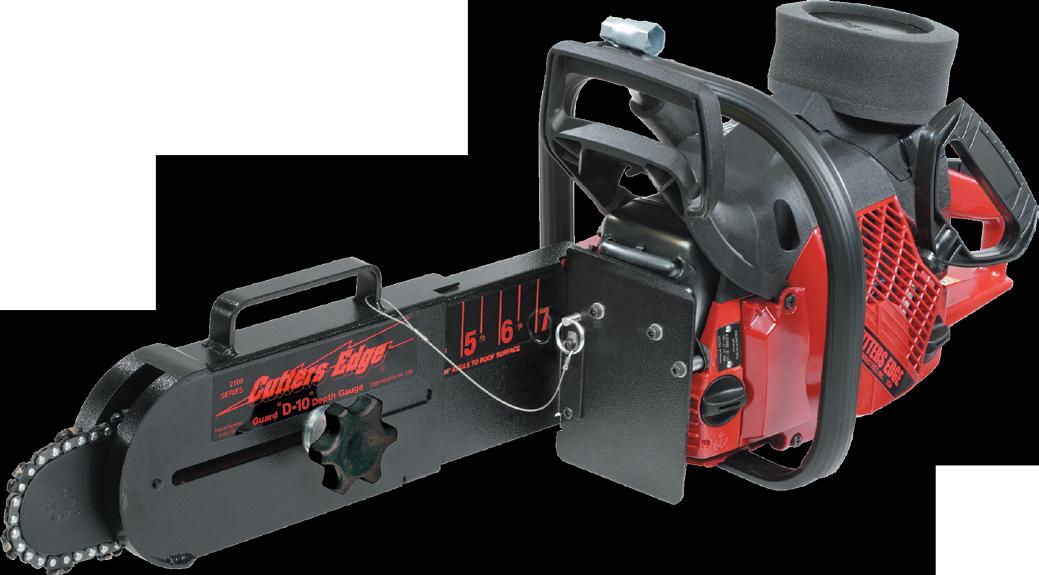
SIZE MATTERS ! New 2186 MULTI-CUTTM
With more power than any other Fire Rescue chainsaw available and up to a 24" bar and the D-10 Guard/Depth Gauge for safety, speed and ease of use. Equipped with the BULLET® Chain that cuts safer, faster and longer than any other carbide chain made.
Gas Powered Concrete Rescue Saw
Cuts reinforced concrete up to 16-inches thick in minutes with the GCP SealPro® Diamond Chain and powerful 101cc engine. It’s fully portable, operates in any position and just one water hose needed for dust-free cutting in rescue situations.
The New Generation Rotary Saw is Here !
Rotary Rescue Saw
The CE807R Rotary Rescue Saw has a new, more powerful 80.7cc engine and a non-slip rubber Full-Wrap Handle for all position cutting. A new 4-Stage Air Filtration System, incorporating a High Performance K&N Filter as its third stage assures outstanding performance in all cutting conditions. Fully-equipped Sawing Kit is available plus Black Lightning and Black Star Diamond Cutting Blades.
BY SEAN TRACEY Canadian Regional Manager, NFPA
TSustainable protection for First Nations
he department of Indian and Northern Affairs Canada (INAC) has released a new, multi-year strategy for fire protection of First Nations communities. Although this strategy is a good first attempt, INAC falls short in its effort to increase fire department capabilities because it fails to set the standards needed as a target. I believe the strategy will address INAC’s shortfalls or obligations, but it will not create sustainable fire protection capabilities in these at-risk communities.
According to the Canadian Mortgage and Housing Corporation (CMHC)’s report, Fire Prevention in Aboriginal Communities, First Nations communities experience a fire death rate 10.4 times greater than the Canadian average, and fire damage is 2.1 times greater than the Canadian average. First Nations are therefore among our highest risk communities. The aim of the INAC strategy is to provide “community services on-reserve comparable to the levels of service that would generally be available to other communities of similar size, location and circumstances.”
INAC provides an annual budget of about $15 million, or roughly $20 per person for First Nations fire protection. At first blush, this may make sense – First Nations communities should be protected to the same standards as comparable non-First Nations communities, and therefore INAC should support this. The problem is that in comparable non-First Nations communities, a risk-management decision is made by elected officials who balance the community risks against how much they are willing to pay for these services. This is lacking in the INAC model. INAC is obligated to provide capital and maintenance funds to First Nations departments, but it has no framework through which to develop a reasonable level of service. Any community can create a fire department and receive INAC funding but the issue is whether that department can be properly supported with training, apparatus and maintenance of gear. Therefore, a process is needed to determine the risk levels in individual communities, and to create a fire-protection strategy that can be supported by the community and by INAC.
and equipment as their counterparts in other communities would expose INAC and others to potential liabilities under federal health and safety regulations. If INAC is funding the purchase of a selfcontained breathing apparatus, who in INAC or the Assembly of First Nations is managing the breathing air program? This situation may therefore require a more substantial top-down review of INAC fire service funding and procedures by outside bodies and this is, perhaps, long overdue.
With the service standards now understood, a procedure similar to that of a municipality is needed to address the risk in each community. The Ontario model may be best applied. It creates local fire authorities with a minimum level requirement to inspect on demand and run public education programs in each community. If the community, based on an approved risk assessment, establishes a fire department, then it must meet NFPA 1201, NFPA 1710, NFPA 1720, NFPA 1001 and other standards. The risk assessment to set the level of service should be carried out by INAC, in conjunction with the local fire authority, band representation, a regional/provincial First Nations rep and an outside, independent party. Currently, band councils may set the service standard but
INAC is obligated to provide capital and maintenance funds to First Nations departments ... ‘‘ ’’
The new INAC strategy does call for a gap analysis. The problem with this is INAC has not identified the service standards. In other Canadian communities, NFPA standards are followed, adopted, or become the standard of practice. INAC has not appeared to make this the benchmark for the service to be provided. To not provide First Nations firefighters with the same quality of training
Sean Tracey, P.Eng., MIFireE, is the Canadian regional manager of the National Fire Protection Association International and formerly the Canadian Armed Forces fire marshal. Contact him at stracey@nfpa.org
INAC is on the hook for all potential funding. Bands may have fire departments that are not sustainable.
The new INAC strategy is a good first start, but without benefit of a further look to NFPA standards and a model similar to that employed in other non-reserve communities, it will create a false sense of protection. If bands are to run fire brigades, then those brigades must be funded and equipped to recognized international consensus standards. The new model will perpetuate a system under which bands continue to run understaffed and undertrained, and ill-equipped fire departments that are a liability to INAC, their communities and their members. A true risk-based model using NFPA standards and a municipal-like risk assessment process funded fully by INAC is the key to building sustainable capabilities in First Nations communities. To do otherwise is not serving those dedicated First Nations firefighters who are already serving their communities with great pride.
Communication CONUNDRUM
Understanding personality types is the key to getting others to listen to and hear what you have to say
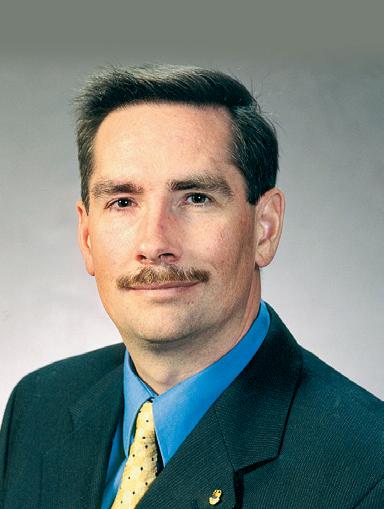
By BARB AND BILL JOHNSTON
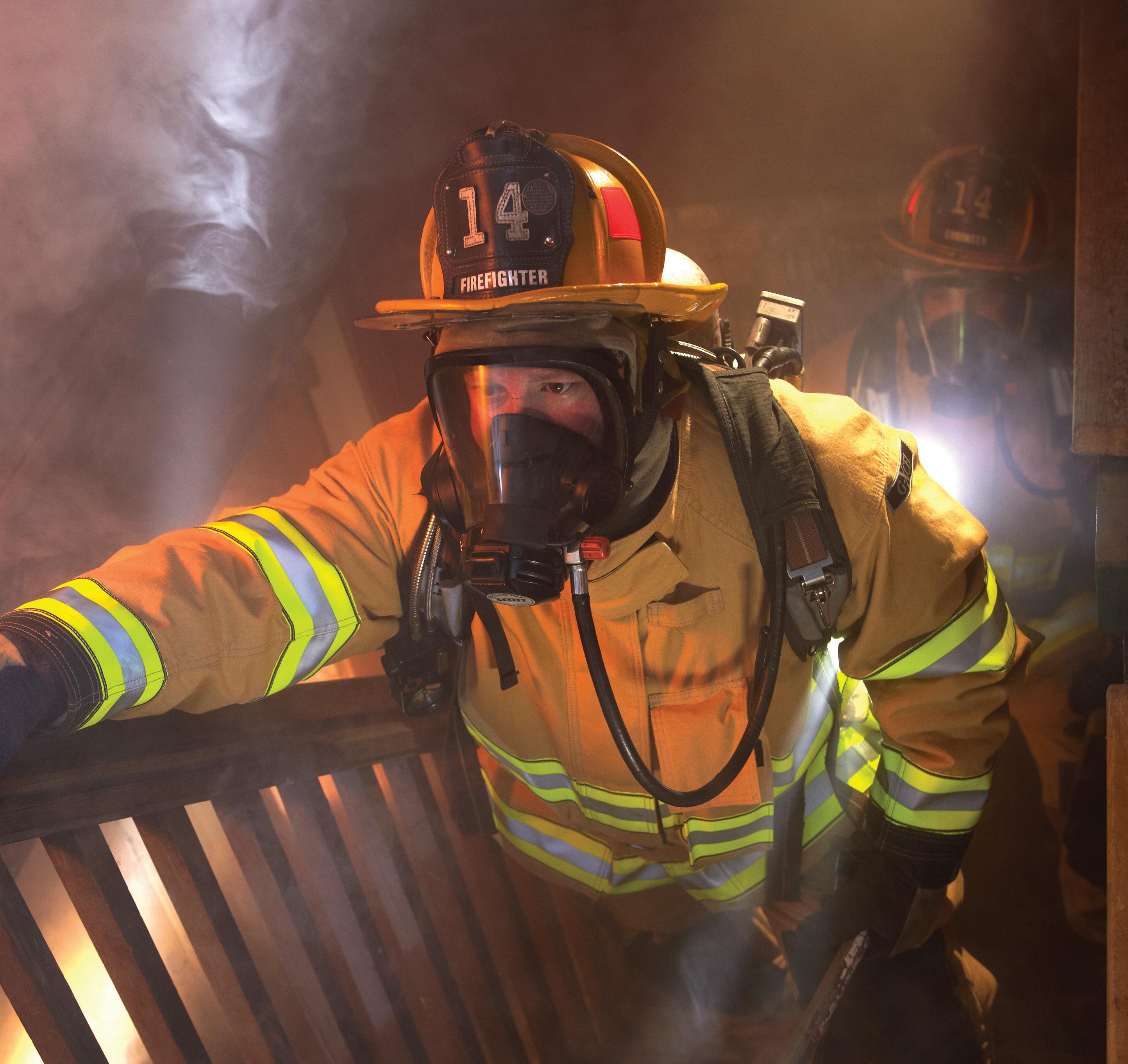
Every person in a position of responsibility needs to have tremendous communication skills and fire chiefs are no different. It is essential for chiefs to communicate in a way that will motivate their firefighters, reassure and inform council members and promote fire prevention to the community.
What if you always knew what to say and how to say it so that your message would be clear and well received by others? Maybe you are one of the lucky ones with this inate talent or perhaps you have developed it over time. Most of us, however, need a little help in this area. You say tomato but the listener hears potato. You say your firefighters need updated equipment but the councillor hears higher taxes and unhappy constituents.
Effective communication – through which the listener receives the exact message you intended to send – can be tricky. To consistently have your message heard clearly by your firefighters, the community or council members, you must commit to breaking down the barriers that can distort your message. Knowing when to cut to the chase, when your audience needs time to discuss the issues, or when to send an e-mail rather than meet face to face are examples of skills that differentiate the highly successful fire chief from the less than effective one.
Barriers to great communication are usually unseen and unrealized because most people naturally look at life from their own perspectives. Whenever they see behaviour they don’t understand – the captain who can’t stop talking, the firefighter who criticizes everything, the councillor who always needs to be in control – the natural instinct is to wonder what’s wrong with these people and why can’t they be normal, just like me?
This lack of understanding of how the natural communication skills of others are different from your own can lead to tension, disappointment, frustration and unmet expectations. Even so, many of these barriers are within your control (as the sender of messages) including the words you choose, your tone of voice, the level of detail you provide and the ability to anticipate the listener’s receptiveness.
You can topple these barriers by understanding how everyone’s personal communication style is affected by their behavioural style and their temperament, or what is more commonly referred to as personality style.
Think about your firefighters. You can likely already identify these four basic personality styles within your team:
D Dominance I Influence
S Steadiness C Cautiousness
• Some individuals enjoy being in charge and making things happen;
• Other firefighters are part of your team because they really enjoy being around people, talking, telling stories and having fun;
• Still others are satisfied by simply being part of the team and are willing to help out by taking on a supportive role;
• And other firefighters are more systematic and predictable in their approach and expect the fire hall to be run in the same manner.
With all these personality styles operating within an environment, whether in the fire hall or the council chamber, it is no surprise that communication is an ongoing challenge. The good news is that patterns of behaviour tend to be predictable – that is, very distinctive and consistent ways of thinking, feeling and acting. This is good news because once you become aware of these particular patterns of behaviour in others, your ability to communicate effectively increases significantly.
Recognizing temperament or personality styles is not a new concept. Twenty-four hundred years ago, the Greek physician Hippocrates began to recognize differences in human behaviour that seemed to follow a pattern. Over the centuries, many scientists explored this pattern of behaviour until Dr. William Marston defined it in 1928 in his book, The Emotions of Normal People. Marston theorized that people are motivated by four instinctive drives, and these drives determine behaviours in a pattern that he called D.I.S.C.
• D is for dominant individuals who are outgoing and task oriented. Their primary motivating factor is to get results and to
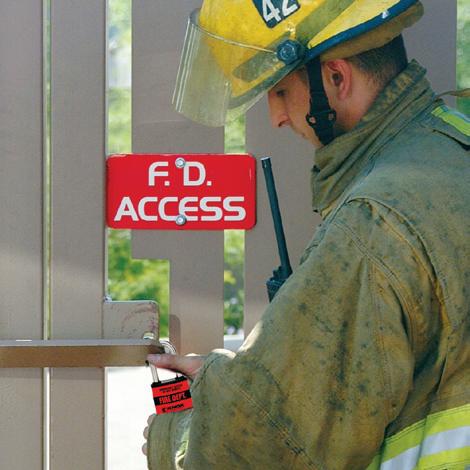
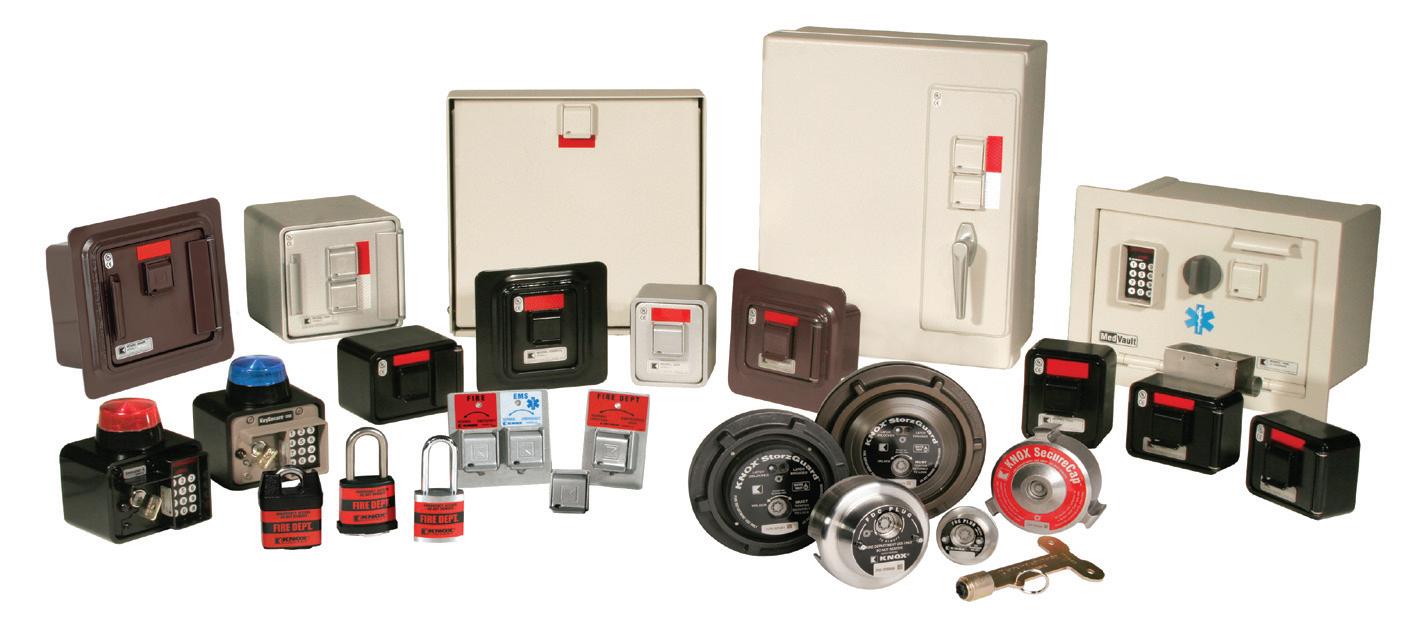
Knox-Box® Rapid Entry System
get them quickly (think of the firefighter who likes to tell others what to do and is always pushing for fast decisions). The key to communicating with this type of personality is to give respect and get to the bottom line as quickly as possible.
• I is for or influence, to describe individuals who are outgoing and people oriented. Their primary motivating factor in life is to have fun with people (think of the councillor who consistently needs to tell you his latest story or new joke before he can
get to the facts). The key to communicating with this personality style is to take time to genuinely interact and be friendly before beginning to deliver your message.
• S is for steadiness, describing people are reserved and people oriented. Their primary motivating factors are peace and harmony (think of the firefighter who prefers to stay quietly in the background as a supportive team member and avoids conflict at all costs). The key to communicating with this person-
the SmartDummy talkS Back [
ality type is to use a warm voice tone and show real appreciation for their quiet, consistent support of the team.
• C is for cautiousness, describing individuals are reserved and task oriented. Their primary motivating factors are perfection and correct information. (Think about the councilor who always has to be right and can’t move forward on a decision until every detail has been checked and rechecked.) The keys to communicating with this personality style are honesty and integrity. Be sure your facts are accurate.
It is important to realize that most people’s personalities cannot be classified under one of these categories. Most individuals are a blend of two, three or even all four of the personality styles that make up D.I.S.C. However, studies have shown that people will demonstrate predominance in one of the four areas. When you can speak directly to their predominant style (whether D., I., S. or C.), there will be significantly fewer hurdles to overcome for improved communication.
Your challenge as a leader is to do something with this knowledge. This takes time and a commitment from you. The first step is to think about your own natural personality style, then observe and identify the styles of those with whom you work and, most importantly, work towards adapting your style to each individual. It may sound difficult but, like any skill, it becomes easier with practice.
You may have gone through an exercise like this with less-than-stellar results. You embrace a new concept and implement it enthusiastically. For the first week it is refreshing because it’s novel. Soon, however, it becomes tedious. You may convince yourself it’s too time consuming to follow through. To make matters worse, you don’t see the immediate payoff, so you wonder, why continue? There is a payoff, whether it is immediately tangible or not. It comes in the form of increased productivity, reduced conflict at council meetings, improved staff morale at the fire hall and better relationships all around. The key is to make the process continual, and to keep trying.
In November, we will look further into how to communicate more effectively with council when there are so many different personality styles around the table.
Bill and Barb Johnston own and manage The Centre For Applied Human Dynamics (www.dynamics4u.com). They have written two books, Vacation Without Frustration and DISCover Your Communication Style. E-mail them at bjohnston@dynamics4u.com
Certificate in Fire Service Leadership
Name Position Department
Richard Arnel Assistant Fire Chief
Pierre-Yves Authier Firefighter
Wayne Benner, Sr. Captain
Blayne Buckler
Deputy Platoon Chief
Mike Carter Firefighter/Fire Inspector
Keith T. Cuthbertson Deputy Chief
Chatham-Kent Fire Department
Ottawa Fire Service
Port Colborne Fire Department
Canadian Forces Fire Service, Edmonton Garrison
Amherst Fire Department
Hammonds Plains Fire Department
Steven J. Debienne Fire Chief Weyburn Fire Department
Nicholas M. Dobson Fire Chief
Chris Fitzgerald
Peter A. Frank
Dale M. Heriot
Dale H. Hutchinson
Darcy W. Knott
Sergeant/Instructor/Director FPLS
Acting Captain
Assistant Fire Chief
Captain
Paradise Valley Fire Department
Canadian Forces Fire Academy/DND
Brock Township Fire Department
Grand Forks Fire Rescue
New Tecumseth Fire Rescue
Captain Kingston Fire and Rescue
Patrick J. Mahoney Fire Chief
Andrew N. G. McCuaig Firefighter
Stephen McDowell Firefighter
Stephen C. McNaughton
Ed Melanson
Captain
Captain
James R. Rychard Firefighter
Jacques A. Pilon
Bon Accord Volunteer Fire Department
Ottawa Fire Service
Vaughan Fire & Rescue Service
Richmond Hill Fire Department
Fort Erie Fire Department
Burlington Fire Department
Captain Waltham Volunteer Fire Department
Scott Sedore Company Officer
Brandon R. J. Stauffer Acting Captain
Jim Thompson Deputy Fire Chief
Shawn P. Vicars Firefighter
Nathaniel A. Watson Captain
Kerry Zado
Richmond Hill Fire Department
Sarnia Fire & Rescue Service
Hinton Fire Department
St. John’s Regional Fire Department
Halifax Regional Fire & Emergency Service
Assistant Fire Chief Langford Fire/Rescue Department
Certificate in Fire Service Administration Graduates
Certificate in Fire Service Administration, General
Randall White
Derek Wolfe
Lieutenant
District Fire Chief
Certificate in Fire Service Administration, Human Resource Management
Kenneth F. Hubbard
Assistant Chief-Training
Certificate in Fire Service Administration, Operational Planning
Jeffrey W. Smith Fire Chief
Charles B. Wigger Firefighter
Certificate in Fire Service Administration, Strategic Planning
Joseph R. L. Durand Fire Inspector/Investigator
Bob Galloway Fire Chief
Advanced Certificate in Fire Service Administration
David Candy Firefighter/Paramedic
Douglas W. Sirant Assistant Fire Chief
Ottawa Fire Service
Kootenay Boundary Regional Fire/Rescue
City of Airdrie Emergency Services
Township of Zorra/Township of South-West Oxford
Department of National Defence
Saskatoon Fire and Protective Services
Leduc County Fire Services
Riverview Fire & Rescue
Cold Lake Fire and Rescue
BACKtoBASICS Rescue for unconscious victims
By MARK VAN DER FEYST
The most difficult part of rescuing an unconscious victim from a building is to get him from the floor up to the window sill for extraction. Getting the victim to the window is a physically demanding job and causes considerable firefighter fatigue. Factors such as size and weight of the victim, the strength of the firefighter(s), floor surface conditions, type of clothing on the victim, heat conditions and distance from location of the victim to the window can complicate the rescue. We will explore these factors in more detail in the November issue. Here, we will focus on removing the victim from the structure.
There are two ways to get an unconscious victim out of a building – a single-firefighter method and a two-firefighter method. Both techniques require familiarity, and whichever one you choose should be practised on the training ground before it is employed it in a real situation.
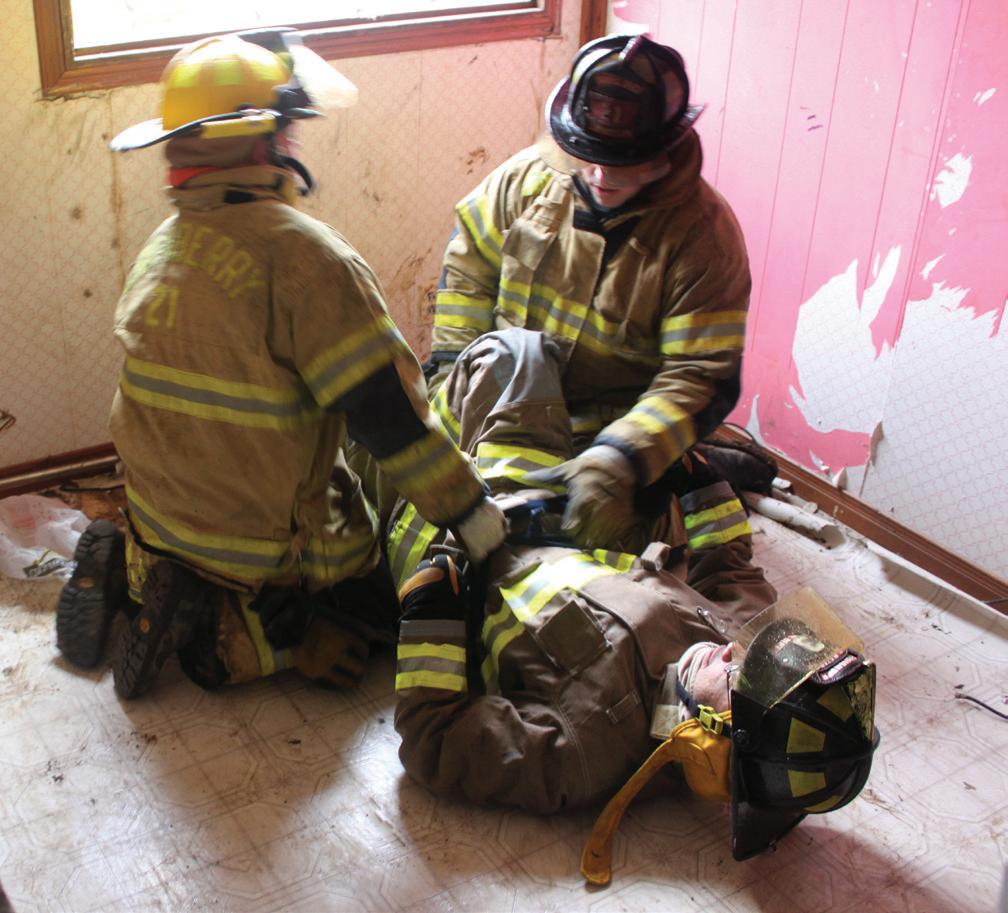
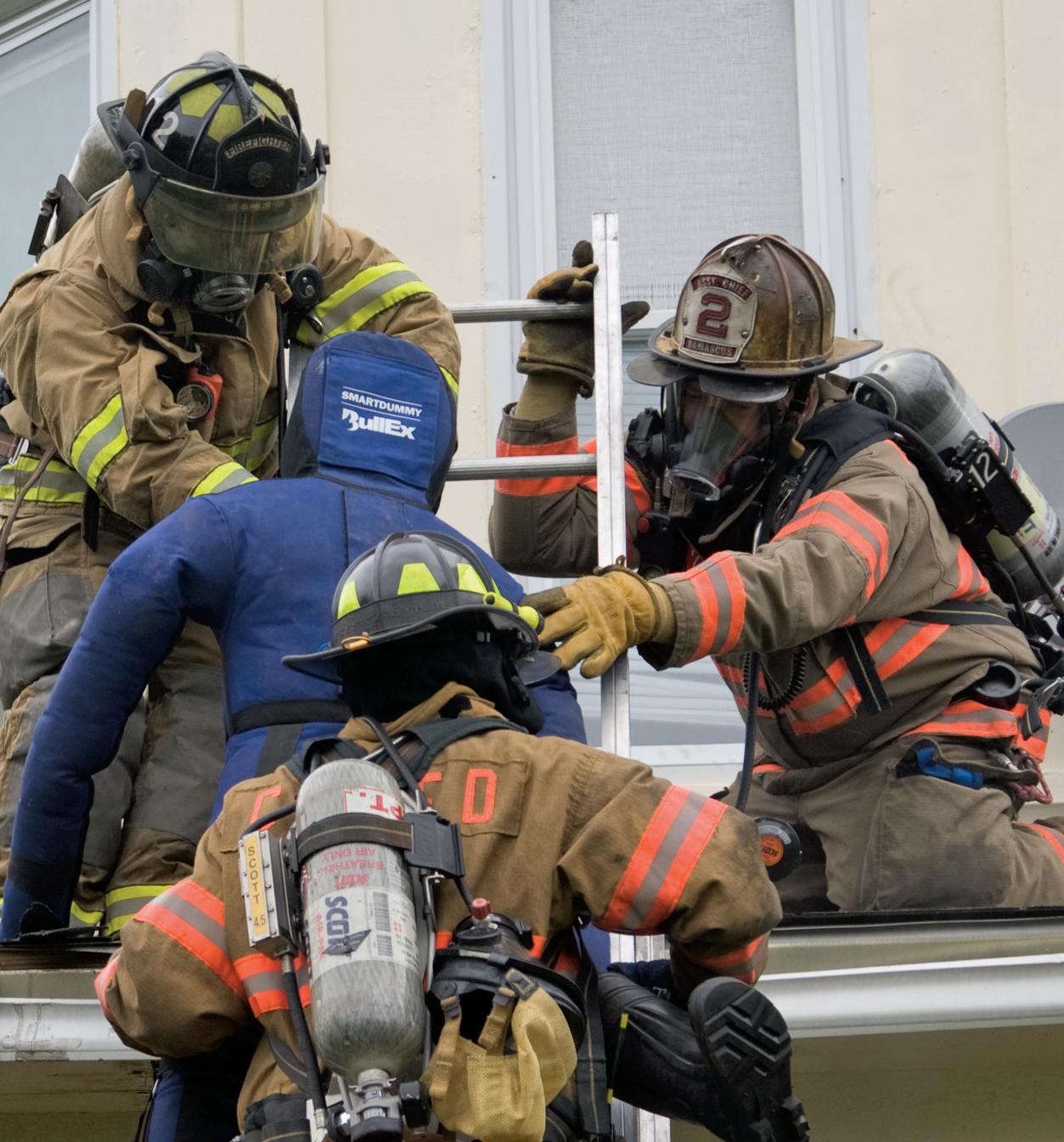
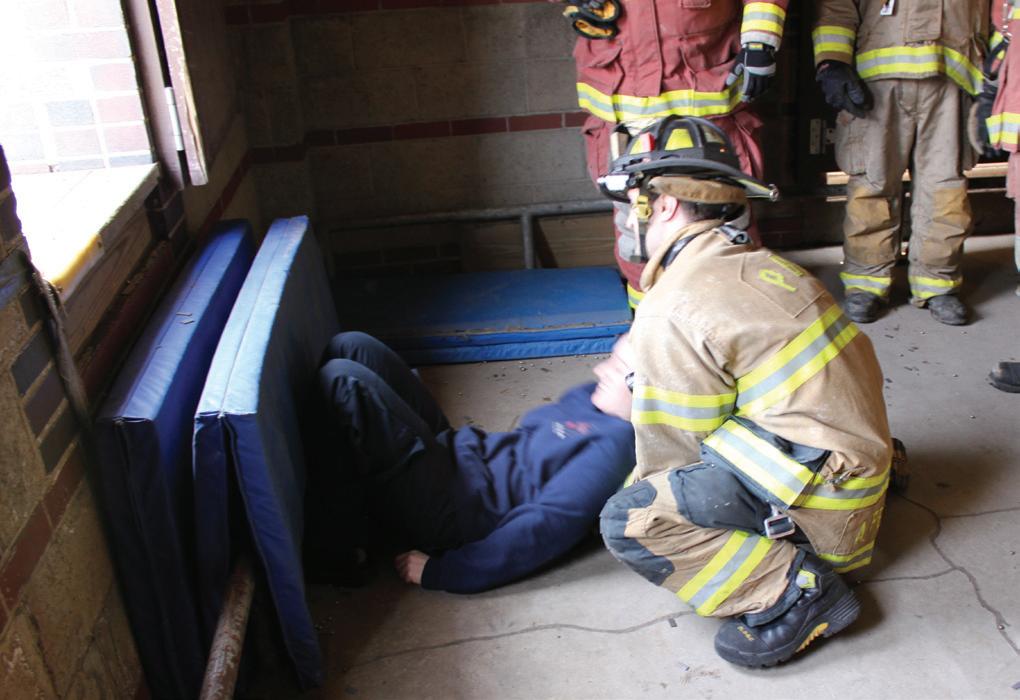
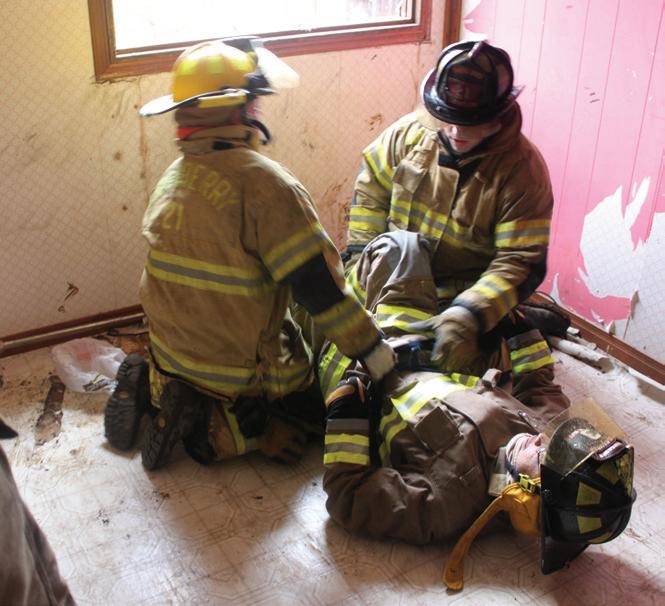
In the single-firefighter method, two firefighters search for the victim inside the building and bring him to the window. One firefighter remains in the building, lifting or positioning the victom at the windowsill. The other firefighter leaves the building, and gets on the ladder at the window, ready to receive the victim and bring him down to the ground. In photo 1, a firefighter positions a victim for extraction. This photo shows a fixed facility that has anchor bars just inside the window at the ground. For this training exercise, two blue gym mats were used to bring the wall out beyond the anchor bars. The wall is an important part of the single-firefighter method as it helps in the positioning and lifting of the victim. The interior firefighter has positioned the victim with his legs toward the window. The aim is to bring the victim as close to the window as possible to reduce the travel distance. This is accomplished by collapsing the victim’s legs, as shown in photo 1. This provides a pivot point for the victim’s body against the wall.
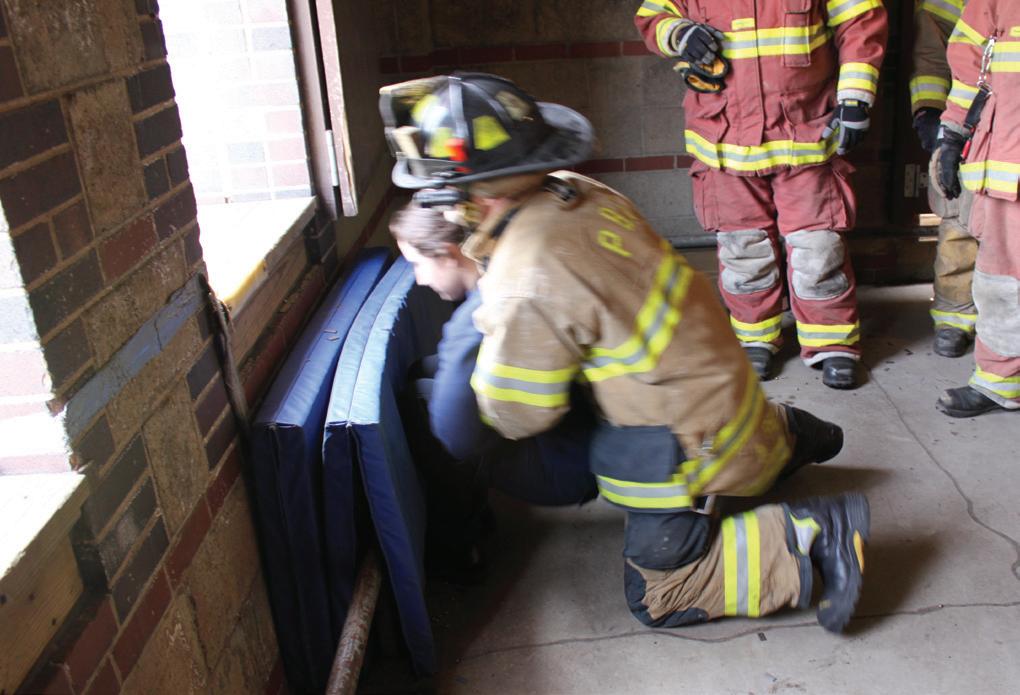
The interior firefighter then positions himself behind the victim and starts to raise the victim’s upper body by reaching underneath his armpits and grabbing the victim’s wrists. The firefighter then secures the victim’s wrists to ensure that he does not lose contact with the victim, as shown in photo 2. This also helps the interior firefighter with the lifting process.
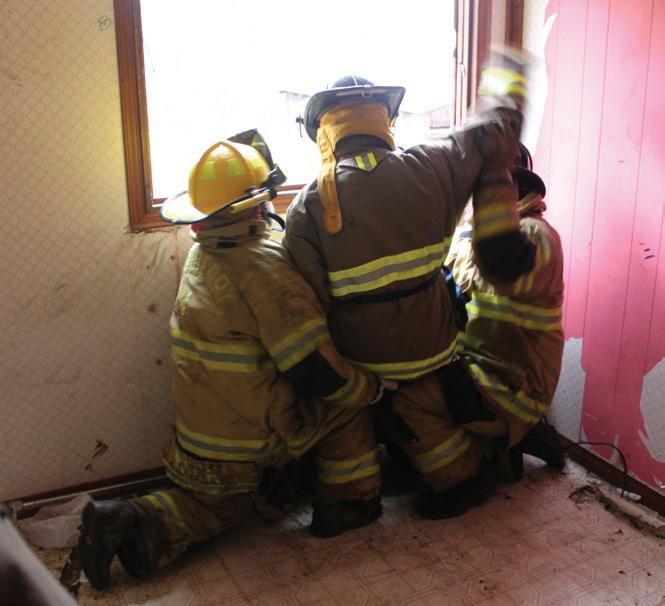
Notice in photo 2 how the victim’s upper body is resting on the legs of the interior firefighter. The travel distance from the window sill or wall is decreased. From this point, all the interior firefighter has to do is lift the victim up and toward the window sill. This action requires considerable strength, and as it is so physically demanding that the firefighter really has only one opportunity to do this. Failing the first time will cause exhaustion and set up failure for the second and third attempts. Just as athletes train to execute certain strength moves like the clean and jerk or power clean with great and quick execution, the interior firefighter needs to execute this move properly and efficiently.
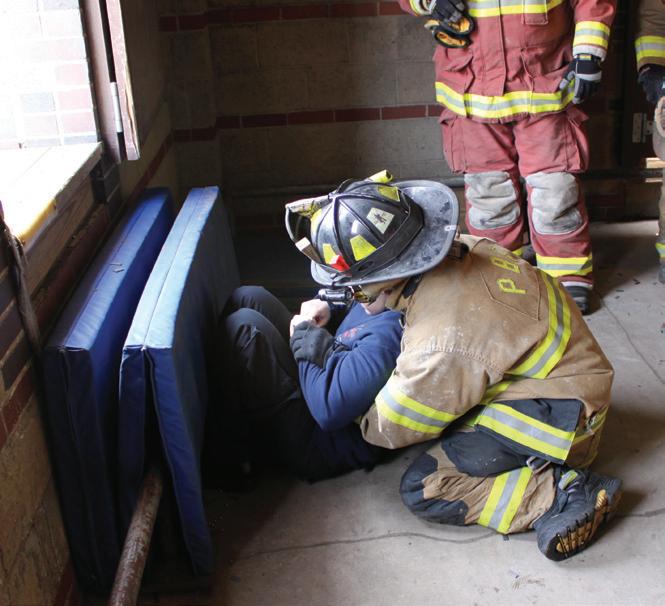
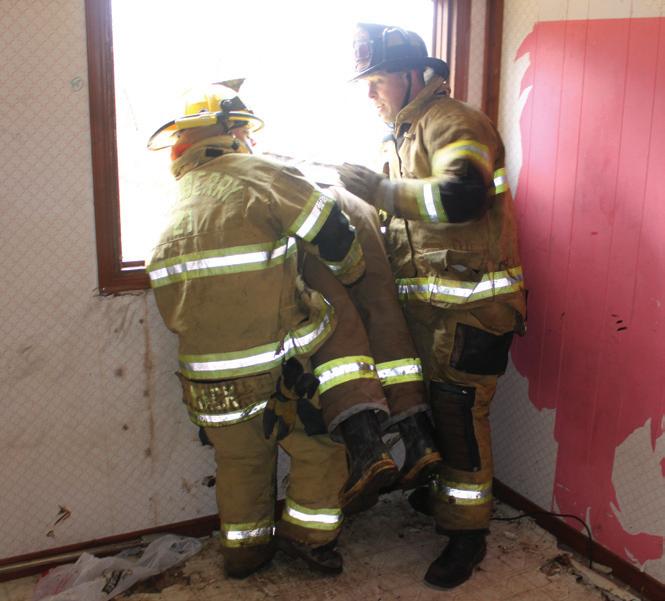
In photo 3, the interior firefighter begins to lift the victim to the window sill. This lifting position is awkward and requires the firefighter to lift with his legs, upper body and back. The receiving firefighter on the ladder can help by reaching in and grabbing a piece of the victim’s clothing or the arm of the interior firefighter’s bunker jacket. Either way, the victim will end up on the window sill with half of his body already out and ready for extraction.
For the two-firefighter method, both firefighters are inside the structure helping to lift the victim from the floor to the window. This may be necessary if the victim is too heavy to lift or if the firefighters are fatigued. Either way, having two firefighters makes the job easier. There is no firefighter waiting on the ladder to receive the victim unless you are operating with a three-person team, which is less common.
Similar to the single-firefighter method, the two firefighters position the victim with his feet facing the wall. The legs are collapsed
Photo 1: Instructor Anthony Petruzzi from the Pittsburgh Bureau of Fire demonstrates the correct positioning of the victim by collapsing the victim’s legs and moving him close to the wall.
Photo 2: The victim’s wrists are secured and his upper body is resting on the firefighter’s legs.
PHOTOS BY MARK VAN DER FEYST
Firefighting is not a trade for the weak. The tests are unforgiving and punishments unmentionable. At Waterous, we know. Like you, we’re firefighters too. Which is why we design and manufacture fire suppression equipment as though our lives depend on it. Because often times, they do. fire pumps, foam systems, ARFF pumps and more that you can rely on in the heat of battle, call on Waterous.
For more information, call your local Globe dealer or Safedesign
British Colum B ia and a l B erta Guillevin
Coquitlam, British Columbia 800-667-3362
Calgary, Alberta 800-661-9227
Campbell River, British Columbia 250-287-2186
Edmonton, Alberta 800-222-6473
Fort St. John, British Columbia 250-785-3375
Kamloops, British Columbia 250-374-0044
Nanaimo, British Columbia 250-758-3362
Prince George, British Columbia 250-960-4300
Trail, British Columbia 250-364-2526
Que B e C H.Q. Distribution LaSalle, Quebec 800-905-0821
atlanti C provin C es K & D Pratt Ltd. St. John's, Newfoundland 800-563-9595
Dartmouth, Nova Scotia 800-567-1955
Saint John, New Brunswick 800-567-1955
m anito B a and s askatC hewan Trak Ventures 204-724-2281
BACKtoBASICS
against the wall to reduce the travel distance and provide a pivot point (see photo 4). Notice how the firefighters have one knee between the victim’s upper thigh and lower leg; this helps the firefighters lift up the victim onto his knees. The two firefighters then reach underneath the victim’s upper body with their arms, and lift the victim up and onto his knees (see photo 5).
Another variation involves tying a piece of webbing around the victim’s chest and using it as handle. The firefighter would put one arm underneath the victim’s upper body and use his other hand to grab and pull on the webbing. This allows for an easier lift. Once the victim is on the firefighters’ knees, the firefighters are able to position the victim onto the window sill and half way out the window. With a three-person team, the receiving firefighter on the ladder then takes over and positions the victim onto the ladder. With a two-person team, a firefighter needs to get on the ladder to remove the victim. This can be a difficult task, but a practical
method is to have one interior firefighter climb over the victim to get on the ladder. Although this is unorthodox, it’s important to remember that getting the victim out of the building is the first priority.
Executing a victim removal with a ground ladder is a difficult and exhausting task that requires practise. Getting the victim from the floor to the window sill is an even more daunting task. Practice will help you build the confidence to execute the single- or twofirefighter removal method.
Mark van der Feyst is an 11-year veteran of the fire service. He works for the City of Woodstock Fire Department in Ontario. Mark is an instructor teaching in Canada, the United States and India. He is a local level suppression instructor for the Pennsylvania State Fire Academy, an instructor for the Justice Institute of British Columbia and a professor of fire science for Lambton College. E-mail him at Mark@ FireStarTraining.com
Photo 3: The interior firefighter starts to lift the victim to the window.
Photo 5: The interior firefighters lift the victim up to rest him on their knees.
Photo 4: Instructors Dave Mack and Tim Llewellyn position the victim against the wall.
Photo 6: The victim is ready for extraction.
BY LES KARPLUK Fire chief, Prince Albert, Sask. AND LYLE QUAN Chief, Waterloo, Ont.
WLEADERSHIPFORUM
Learning to manage departmental relationships
e have written about reframing your future and creating a positive culture in your department. In this first column of a three-part series, we will discuss how all members are responsible for the growth or decay of the department.
You may have noticed a recurring theme in our columns – that the responsibility of leading the changes, growth and culture of the department rests with the chief and the leaders. Without the chief leading, the department will struggle to make progressive steps into the future. This is not to say that the support of your front-line staff isn’t crucial. Therefore, we want to expand on the responsibility placed on every member of a department to work toward reframing attitudes.
We are advocates of the win-win philosophy and how it creates positive work cultures and growth. A win-win philosophy is based on productive and positive working relationships and cannot exist without positive working relationships. You can’t see, hear, smell or taste a relationship but you can feel it. You know if the relationship feels right or wrong and you can sense when the other party isn’t being honest in the development of the relationship. Whether we like it or not, (good and bad) relationships exist in our workplaces and the functionality of the department depends on the effectiveness of these relationships.
Everyone is different; the sooner we come to terms with this the better our departments will be. We interpret others based on our own prejudices, personalities, backgrounds, likes and dislikes. People interpret each other differently and the interpretation of the other person is the personality of that person. Good relationships do not always come naturally; they must be built, and this takes work.
Two kinds of relationships exist in a fire department; vertical relationships between firefighters and supervising officers and horizontal relationships among firefighters. A supervising officer has a unique vertical relationship with subordinates and a second vertical relationship with the superior officer. An influential vertical relationship exists where trust and communication flow bi-directionally, creating a culture in which members can exchange ideas, voice complaints and offer suggestions. A significant responsibility is placed on the company officer to foster and develop that vertical relationship with subordinates and superiors. A healthy vertical relationship requires work and must be exercised so it can weather the difficult times. Exchanging ideas and communicating bi-directionally strength-
Les Karpluk is the fire chief of the Prince Albert Fire Department in Saskatchewan. Lyle Quan is the chief of the Waterloo Fire Department in Ontario. Both are graduates of the Lakeland College Bachelor of Business in Emergency Services and Dalhousie University’s Fire Administration Program.
ens the vertical relationship and helps to build a positive culture. Each firefighter is responsible for developing horizontal relationships with other firefighters and cannot ignore the importance of these relationships. Unfortunately, some firefighters overcompensate on their horizontal relationships and become one of the gang, to be accepted. Becoming one of the gang has positives and negatives. The positive side is that the firefighter becomes more a part of the team or family, and that is a great team building relationship. However, there can be peer pressure to go with the flow. When firefighters feel that they cannot voice their opinions because they may damage the working relationships with their counterparts, then those individuals feel the effects of peer pressure, which can have a counterproductive influence.
Peer relationships are crucial to the department’s culture. Three types of peer relationships were identified by Kathy Kram and Lynn Isabella in a 1985 article called Mentoring alternatives: The role of peer relationships in career development, in the Academy of Management Journal. They are the information peer, the collegial peer and the special peer in organizational relationships.
The information peer provides a friendly exchange of information
Everyone is different; the sooner we come to terms with this the better our departments will be. ‘‘ ’’
about the department, shift, personnel and work. This relationship is superficial and has a low level of trust with few demands. The collegial peer relationship involves more trust and more self-disclosure. In this relationship, there is an opportunity for direct and honest feedback. The special peer relationship has the qualities of a best-friend relationship with a strong bond. Peer relationships in any department have a significant impact on the culture.
As mentioned, good relationships require significant effort. Understanding the intricacies of working relationships is one step toward improving vertical and horizontal relationships. The challenge is that all members must value and strive for positive relations rather than following the easy route of complaining.
Is your relationship vertical or horizontal? Is it open, honest and beneficial to you and your peers? Are you exerting peer pressure on your colleagues or are you trying to do the right thing for yourself and your department?
Co-ordinated response
Emergency drills and thick presence prove effective and efficient in wake of Vaughan tornado
By LAURA KING
Fire Chief Greg Senay’s best advice for departments responding to emergencies like the tornado that ripped through the City of Vaughan on Aug. 20, 2009, is simple. “Boots on the ground,” he says. “Keep the boots on the ground.”
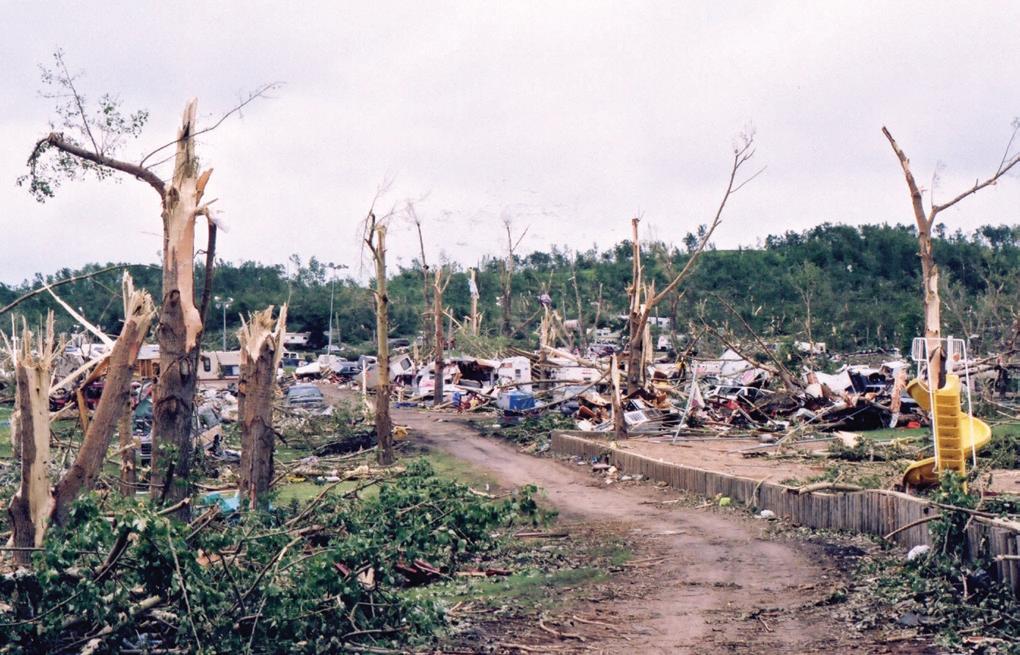
The tornado bounced through suburban Vaughan, Ont., north of Toronto, on a muggy summer evening, touching down four times. It left a swath of destruction, hundreds of terrified residents and a major response for Vaughan Fire and Rescue Service.
“We had people out there,” Senay says. “We worked with residents, talked to them. The fire trucks were there. Our perception was that that’s what the people wanted. There is great value to that, about being in control of a situation and doing that from the get go.”
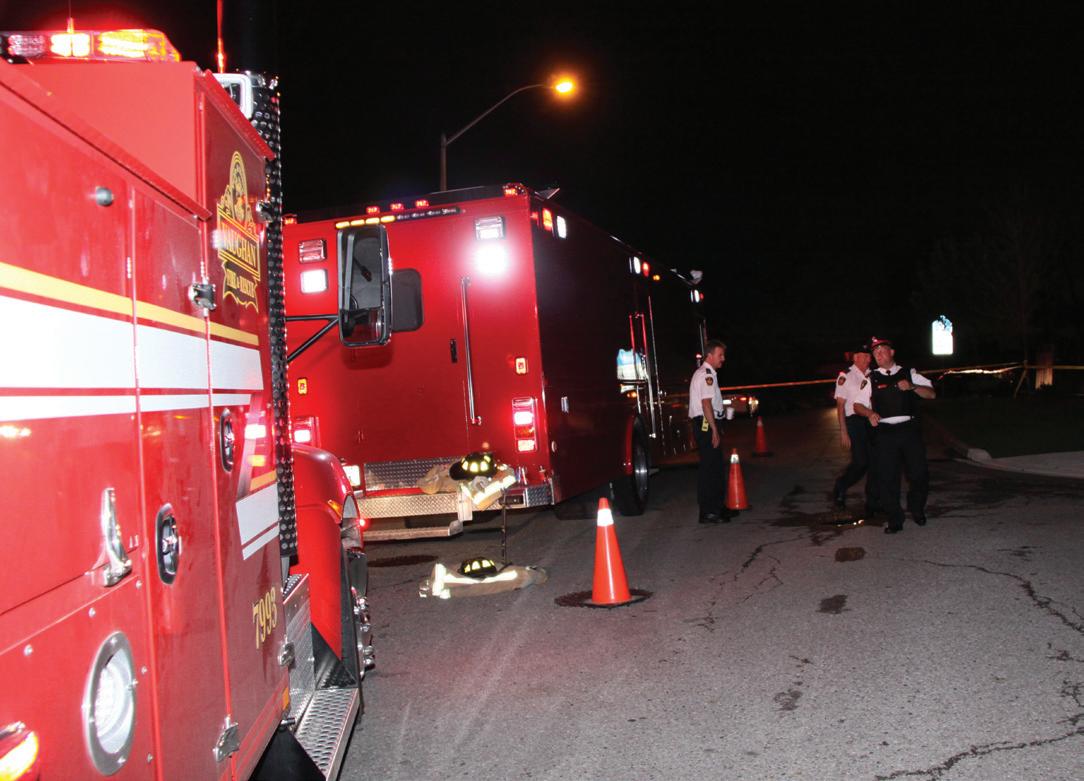
Besides opening the emergency operations centre within half an hour of the first 911 calls, Senay and Emergency Planning Manager Sharon Walker say training exercises and keeping firefighters in the streets were key to the co-ordinated response. Although there were no fires, Vaughan firefighters were the first responders to the tornado sites and maintained a presence in the streets, securing buildings and doing door-todoor searches for people and pets. They talked to residents and quickly evaluated needs.
For example, the city’s building inspectors, who determined the day after the tornado that 44 homes were not livable, were signing off at the end of their shifts, leaving residents angry and confused about next steps. Firefighters recognized the need for better communication and officers worked with the city to have building inspectors more readily accessible to residents.
daily average. Many were medical calls. The only serious injury was to a senior who had broken his hip. Unbeknownst to Vaughan Fire, York Region EMS had put out a so-called all-stop order and did not respond to calls for 60 minutes after the tornado struck. The injured senior waited 20 minutes for firefighters to respond after Vaughan Fire learned that no ambulance had shown up.
Walker says the decision to activate the EOC contributed to the seamless response despite some minor communications glitches (see page 66 of the Decade of Disaster supplement.)
Deputy Fire Chief Glenn Duncan called Walker immediately after the tornado first touched down. Some emergency personnel initially had difficulty making their way back to the EOC in traffic but by 1845 the centre was open and by 2000 it was fully staffed.
With mutual aid helping to cover three Vaughan stations, VFRS staffed the response from among its own ranks and responded to all four tornado sites.
• 1815 – Storm passes with confirmed F2 tornado touchdown in Andrew Park. Senior command officers/manager of emergency planning notified and requested to report for duty; command officers dispersed to four disaster sites, fire communications centre and EOC. Unified command established at site No. 1 – Andrew Park.
• 1819 – Crews arrive at Andrew Park and identify numerous damaged homes (roofs missing), gas leaks and hydro concerns; performed houseto-house searches for victims and hazards; evacuated residents from unsafe homes; four engine companies, Command chief 73 and VFRS mobile command on site.
• 1821 – Confirmation of tornado touchdown at Houston Road/ Moonstone Place.
INSET:
According to Environment Canada, 19 tornadoes occurred in Ontario on Aug. 20, 2009, a Canadian record. The Vaughan tornado, an F2, produced winds between 181 and 252 kilometres an hour. More than 600 homes were damaged and an elementary school needed $2.5 million in repairs. The city spent $730,000 on repairs – all at taxpayers’ expense because the province declined to provide for disaster relief.
In the hour after the tornado first touched down at 1815, Vaughan Fire received 74 calls — more than double the
• 1830 – Confirmation of tornado touchdown at Islington Avenue/ Gamble Street. Crews arrive at 1835 and identify homes with damaged roofs; damage not as significant as other sites. Crews searched the area and rendered assistance as needed. Area secured and stabilized by one engine company.
• 1840 – Arrival of tornado at Jane Street and Cunningham Drive. Crews arrive at 1845 and identify numerous damaged homes plus gas leaks and hydro concerns. Performed searches for victims and
LEFT: The tornado that touched down in four neighbourhoods destroyed 44 homes and damaged 600.
Vaughan Fire and Rescue Service kept its firefighters in the streets, helping residents, after a tornado blew through the city north of Toronto on Aug. 20, 2009.
hazards. Evacuated residents from unsafe homes. Five engine companies and one chief officer 73B on scene.
• 1843 - Crew arrive at Houston Road/Moonstone Place and identify numerous damaged homes, gas leaks and hydro concerns, performed searches for victims and hazards; evacuated victims from unsafe homes; two engine companies and command chief 75 on site.
As part of the co-ordinated response, York Regional Police maintained security at the tornado sites until Aug. 23, and provided investigation services and a mobile command post. City departments cleaned debris off streets, added daily garbage pickups in affected areas and removed damaged trees. The Insurance Bureau of Canada set up booths at a community centre.
Because the tornado struck when many daytime fire personnel were on their way home and at a shift change for others, Senay was the first fire officer to arrive at the EOC. The need to declare a state of emergency, he says, was clear to him but policies dictated that other EOC personnel needed confirmation of certain criteria. The state of emergency was called at 2138.
Meantime, other fire personnel – some who were off duty but had expertise in communications, for example – came in on their own and pitched in.
“You’ve got considerable damage,” Senay said. “People were out of their homes. There was total destruction. The whole thing for us was control and having the people on the ground. It was a comfort level for people whose dwellings had been damaged; they need to see that control.
“When things stabilized we didn’t send the trucks back to the station – we had firefighters go get meds for people or papers they needed. The citizens out there wanted a representative of the city to go and address all their needs. We did not move our people off the streets. They stayed out there all night and into the next day. They provided a level of calmness straight away and a level of control.”
As for the smooth running of the EOC, Senay said: “We’ve done so many exercises that it didn’t take long for the group to meld together and start working together and take control.”
Walker says there were few injuries because so many residents in the Italian community were in basement kitchens when the tornado hit and were therefore protected from debris. In addition, she says, neighbours provided food and shelter. Indeed, community shelters turned out to be unnecessary.
One major change as a result of the tornado is Environment Canada’s effort to implement a new weather warning system. In August 2009, Walker says, Environment Canada had no weather warning system for Vaughan; emergency planners had to watch the weather for nearby Brampton. Now, Vaughan is set up on a textmessage warning system but Walker’s persistence has helped to set in motion a review of Environment Canada’s weather warning system.
There were some other lessons learned.
• Have more than one cell phone carrier in case one fails.
• Ensure cell phone and laptop chargers are available.
• Include building inspectors in the emergency plan.
• Document all EOC meetings and briefings – Vaughan has since trained more personnel to be scribes.
• Ensure permanent computers in the EOC – Vaughan has received a JEPP grant to buy permanent computers.
• Manage offers of help – do not allow unsolicited offers of help (i.e., arborists, building materials).
As Chief Senay told Yorkregion.com in a one-year anniversary story, the municipality is well prepared is for a disaster.
“We certainly confirmed for us, as professionals, that we’re well equipped and quite capable of handling the larger scale events. One of the other things that was confirmed was just the value of practising emergency response activities. This city is pretty aggressive in emergency planning.”
CANADIAN BUILT CUSTOM TRUCKS
OTTAWA Fire Department HEAVY RESCUE
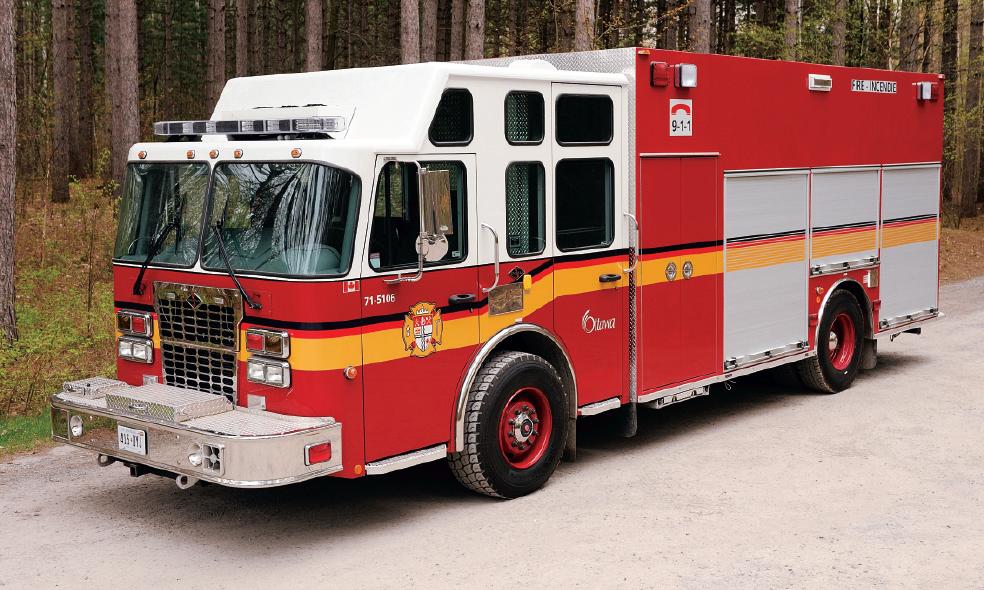
The OTTAWA FIRE DEPARTMENT in Ontario under Chief JOHN DEHOOGE and Deputy Chief GORD MILLS took delivery in April of the 4th of 7 custom built Eastway trucks. This Heavy Rescue, built on a Spartan Metro Star chassis is powered by a Cummins ISC 330 HP engine and Allison 3000 EVS transmission. The truck is equipped with a 19’ Walk-In rescue body, 25kW generator, Will-Burt light tower, Custom compartment outfitting with slide trays, vertical boards, bins, shelves and powered reels and Whelen emergency light package.
2010 International 7600 Tanker: AVAILABLE IMMEDIATELY
BRAND NEW, ULC Compliant, 430hp, Automatic, 18k Front, 46k Rear, Aluminum Wheels, Engine Brake, 3000 USgal Aluminum Tank, 10” Newton dump with 180 swivel and extending chute, LED Emergency lighting, Charger and Compressor with Autoeject, 3M Striping, Manual Porta-Tank rack. Various Pumps available.
PORT HOPE Fire Department TANKER-PUMPER
The PORT HOPE FIRE DEPARTMENT in Ontario under Chief ROB COLLINS took delivery in July of the 1st of 2 Eastway built Tanker Pumper. Built on an International 7600 chassis and powered by a Cummins ISM 410 HP engine and Allison 4500 EVS transmission. The truck is equipped with a Hale Qflo+ 5000LPM pump, Foam logix foam system, 2500 Imp gallon aluminum water tank, and Whelen emergency light package.
2010 International 4400 Tanker: AVAILABLE IMMEDIATELY
BRAND NEW, ULC Compliant, 330hp, Automatic, 14k Front, 24k Rear, Aluminum Wheels, Exhaust Brake, 2000 USgal Aluminum Tank, 10” Newton dump with 180 swivel and extending chute, LED Emergency Lighting, Charger and Compressor with Autoeject, 3M Striping, Manual Porta-Tank rack. Various Pumps available.
Bill Lowry:
35 Years of Trusted Industry Experience!
Why fire trucks cost more
By CHRIS DENNIS
There was a time when buying a new fire truck was exciting. Along with the purchase came the thrill of knowing that a new rig was going to be born; something that was created by a group of people who would talk about a big fire, remembering when they could have used more water, or if only they’d had enough space to carry that one piece of equipment they had saved so long to buy. The way we buy trucks has changed but one question remains constant: How much?
As the chief mechanical officer for the City of Vaughan Fire and Rescue Service in Ontario, one of my jobs is to spec and build fire trucks. I listen to the crews’ likes and dislikes and I take this information and pass it on through the chain of command. I hope to shed some light on a few items that have driven up the cost of these beautiful machines.
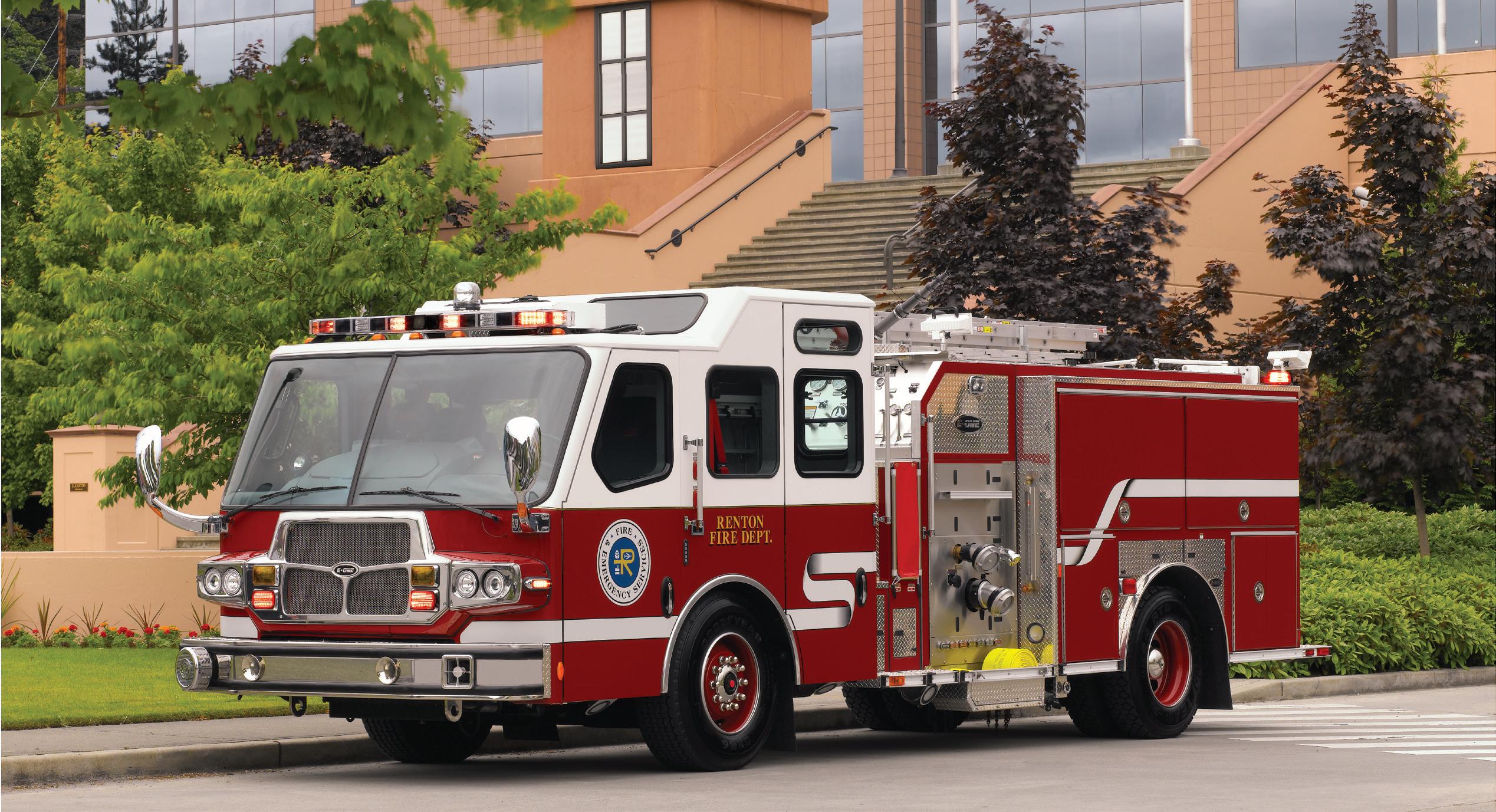
Let’s talk first about commercial firefighting trucks. These are the cabs and chassis made by manufacturers such as Freightliner, International, Kenworth, Peterbilt and Mack. I will refer to these chassis as commercial-cab fire trucks. For those fire departments that build their commercial apparatus around the latest NFPA standards, the commercial chassis manufacturer of choice has been narrowed to International. To build a body on this chassis and remain compliant, departments must look at apparatus manufacturers that are not only NFPA standard compliant, but are Underwriters Laboratories of Canada (ULC) certified when built.
Departments can determine the price of the chassis they want by calling the dealer of choice and asking how much. They’ll tell you somewhere between $60,000 and $80,000, depending on, well, many factors.
Let’s say that in 2001 you bought a single axle Freightliner pumper with 1,000 gallons of water and a big fire pump. Back then, you didn’t have to worry about emissions or air bags – items that had become issues for the automotive sector.
Fast forward to 2006. We had heard rumblings that there would be a clampdown on diesel-engine emissions but we were surprised to hear it would include fire truck chassis. This was a wake-up call for the fire service. We learned that the engines would be slower and would burn more fuel, and we understood that buyers would have to come up with a more money to help save the environment. I am an advocate for keeping our atmosphere in one piece, but in 2006 we had to tell our councils that trucks were going to be $25,000 more expensive because we were running greener businesses and, to do our part in the eyes of the public, we had to pay more for an emissions-friendly truck.
This changed the way departments approached councils about apparatus purchases and meant that our firefighters and mechanical divisions would have to be educated, because driving techniques and repair techniques were changing. This, of course, meant more training costs.
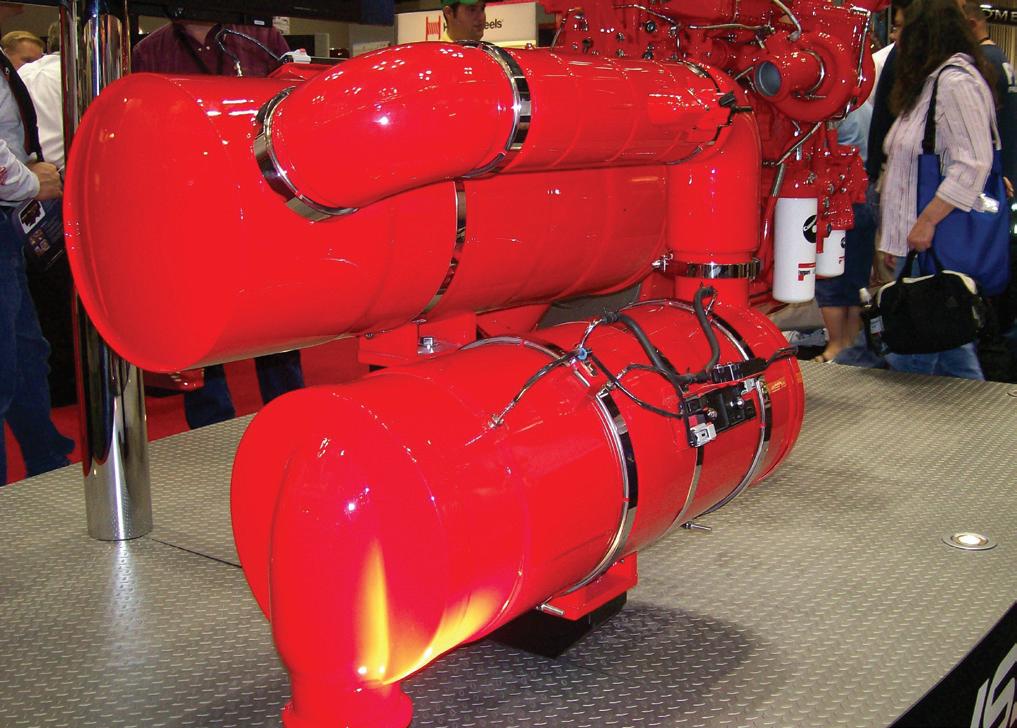
The commercial fire chassis builders had to put engines in their trucks that could meet these tough emissions standards, and along with that, change the way the engines burn exhaust gasses. The chassis makers were able to meet these emissions levels by collecting
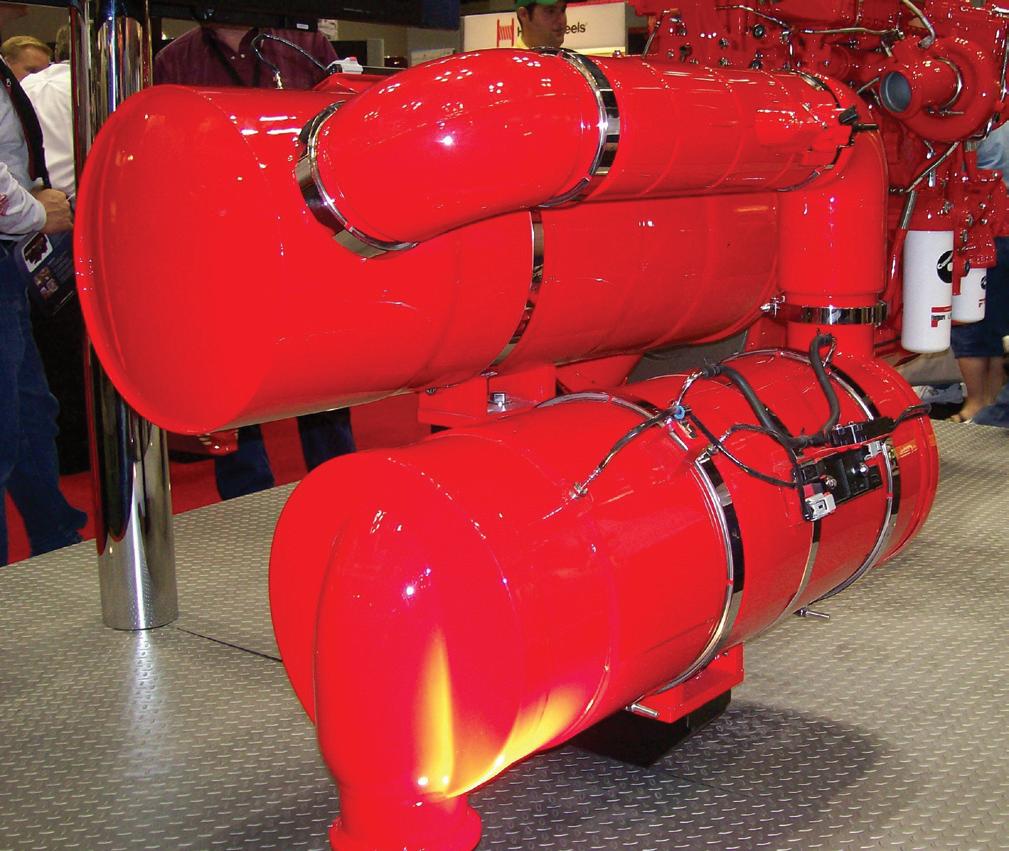
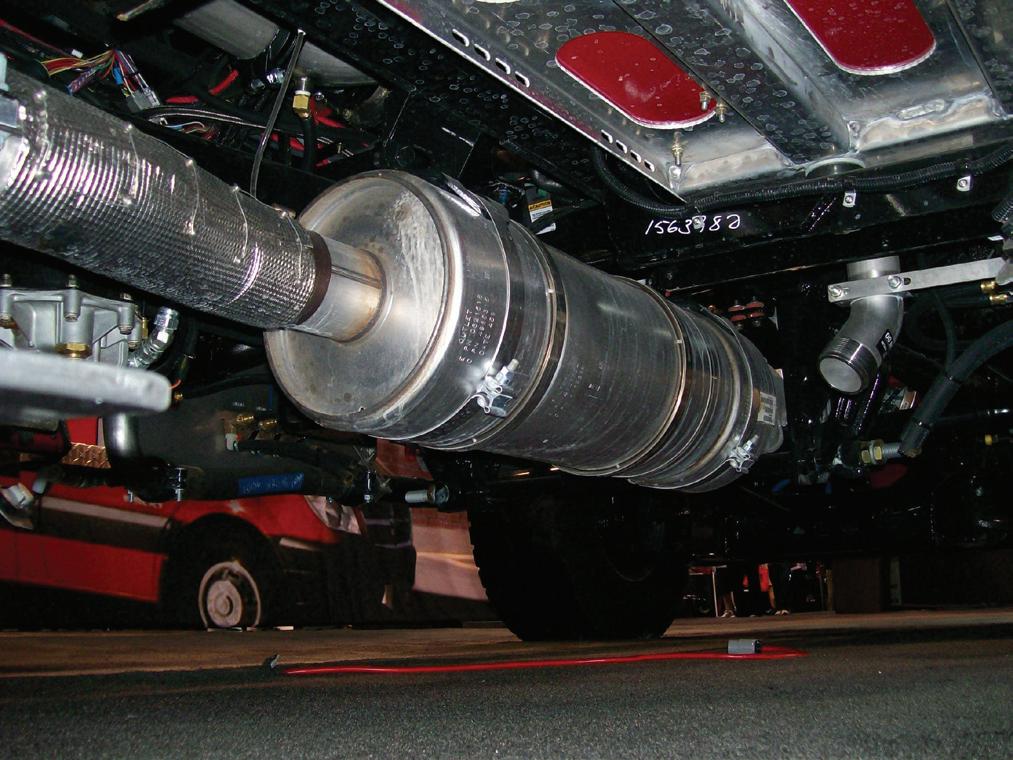
1: To clean the DPF unit it must be removed and taken to an authorized dealer to be vacuumed, or the truck must be taken to a dealer, where the unit can be removed and vacuumed – at your cost.
2: On a commercial chassis, the DPF unit is mounted close to the turbocharger side of the engine and takes up space under the cab, which means there is no room for an extra fuel tank.
Photo
Photo
PHOTOS BY CHRIS DENNIS
TRUCKTECH
unburned gas particles in a diesel particulate filter, or DPF. This is where the emissions would be stored to a point where, through a series of sensors, the engine would determine that the particulates were becoming backed up in the filter and had to be returned one more time.
Each engine manufacturer has its own way of doing this, but basically, the engine goes into a function called regeneration or regen. While we drive the truck, the engine’s
electronic control unit or module (ECU or ECM) monitors the DPF function. This computer senses that while the engine is running, it must begin the regen function to keep tailpipe gasses down. At road speeds of five kilometres or higher (and not in a fire apparatus engaged control; i.e. pump gear or PTO function), the engine goes into regen. In most cases, the driver is not aware that this is happening.
The emissions change and upgrade adds
Every second counts... Newton Kwik-Dump Valves
a whopping $16,000 to $20,000 per truck. But these filters need to be maintained, and drivers need to understand what the new warning lights on the dash and the extra switches are for. Training time is money out of the budget to educate drivers about how the truck will function and how drivers should react when these lights come on. If your department is blessed to have an in-house mechanical division, any questions the drivers may have can be asked and, hopefully, answered right away, without removing the truck from service. If your department depends on outside repair shops for these answers, you may be taking the trucks out of service more often to have these questions answered. Time costs money. Council must be made aware of these things so that budgets can be increased.
I mentioned that the DPF unit needs to be maintained. So, as per the manufacturer recommendations, just vacuum it out. Unfortunately, it’s not as easy as it sounds. You have to either remove the DPF unit (see photo 1) and take it to an authorized dealer to be vacuumed, or drive the truck to a dealer, where it can be removed and vacuumed – at your cost. Cleaning the filter requires a specialized piece of equipment that is not easily available for purchase. So, once again, we’re looking at more money to maintain the exhaust system.
On a commercial chassis, the DPF unit is mounted close to the turbo-charger side of the engine (see photo 2). The DPF now takes up space under the cab on the right side of the truck, which means there is no longer space for an extra fuel tank. On a highway truck, this is a simple fix: move the passenger-side fuel tank behind the cab on the frame rail. But this is a commercial chassis for a pumper with a body that comes all the way down around the frame rails, and a midship fire pump that is almost right behind the cab. Where does the right side fuel tank go now, you ask? Simple. It moves to the driver’s side. OK, then, where do the batteries go? Get the picture? The commercial chassis, when equipped with the DPF unit, needs some alterations.
Let’s now compare the above information with the custom fire chassis builder. For a custom chassis, the manufacturer starts with a set of frame rails and builds the truck from the ground up by hand. The spec builder decides on the type of front and rear suspensions and the engine (prior to 2009) transmission, cab, rear axles, brakes, seating and instrumentation – the options are almost endless. The chassis in the custom line up, for the most part, are all NFPA
compliant, but be sure to ask whether your department stands by the standards set out by NFPA. This may determine right away which custom chassis you choose. Now for the big advantage: custom chassis offer more room in which to position the DPF unit under the truck. This is great news, but now you have to go to council and convince the politicians that a commercial chassis is no longer the best way to spec a truck. Custom cabs offer many options not available commercially – for example, seating arrangement, safety interlocks, crash testing and rollover stability – all of which are included in NFPA standards. All we need, of course, to do this is an extra $16,000 to $20,000, in addition to the $80,000 we had put aside for the commercial chassis.
So, before 2006, a custom chassis cost about $125,000 for a single axle. The emissions alone after 2006 drove this cost to more than $150,000, without a body or additional NFPA standards.
Leading up to this year, the over-theroad trucking industry was told that if it was going to build commercial or custom chassis fire trucks, it had to emit .01 emissions from the tailpipe, the same as the other engine builders. Caterpillar pulled out of the overthe-road trucking industry altogether, and Detroit Diesel decided it would fade out the 60-series engine from the custom fire truck chassis. The 2010 emissions requirements have greatly decreased the number of original equipment manufacturers in the fire truck market.
Another tool being used for emissions control is a diesel fluid known as urea. Urea is an organic compound with the chemical formula (NH2)2CO. It is a solution made up of purified water and 32.5 per cent urea. Urea is also called Diesel Engine Fluid (DEF). Using this process to control emissions involves injecting a water-based DEF solution into the exhaust system. The ammonia produced by the hydrolysis of the urea reacts with the nitrogen oxide emissions and is converted into nitrogen and water within the selective catalytic converter (SCR). These enhanced emission control processes involve more sensors and more warning lights for the driver. Once again, training means money.
Something else to think about: urea contains more water than product, and, for most Canadian fire departments, this means it can freeze in the winter. That means the urea needs to be housed in a controlled environment, and the tank on the truck has to be heated, increasing the price again.
And there’s still the problem of where to
put a fire pump. This is a huge challenge for commercial and custom fire truck builders. Oh, and don’t forget that the engineers and designers trying to figure out how to incorporate all these changes into truck designs have to be paid, and that, of course, adds to the cost of the truck.
The purpose of this column is to help you budget for a new truck and understand the associated costs of maintaining and running the apparatus. When we are sitting
TRUCKTECH
around talking about the big one, or what we could have done if we had had this piece or that piece of equipment, let’s think about how we are going to sell council on the custom or commercial truck purchase – how much indeed.
The Intelligent Training System uses clean-burning propane fed flames and a quick-recharge air/water training extinguisher to provide a realistic simulation for trainees while eliminating the hazards of conventional fire
extinguisher training. Trainees learn how to effectively use a fire extinguisher without the cost and clean-up associated with using dry-chemical or CO2 extinguishers.
Chris Dennis is the chief mechanical officer for Vaughan Fire & Rescue Service in Ontario.
Risk analysis
Canadian communities given insurance grades based on their ability to protect buildings, residents
By MICHAEL R. CURRIE
Editor’s note: Part 1 in our occasional series on insurance grading in Canada ran in the February issue of Fire Fighting in Canada and can be found on our website – www.firefightingincanada.com. Click on past issues, then February 2010.
Why would insurers charge different amounts for insurance for two identical properties in different regions of Canada? This question is particularly vexing for operators of franchises that build and operate almost identical properties and acquire their insurance through a single carrier, but startlingly find that the cost of insurance can be dramatically different in one location compared to another. The reason for this might just be the Public Fire Protection Classification (PFPC) of the communities in question.
The Public Fire Protection Classification is the fire insurance grading system that is published in the fire insurance grading index for commercial lines property and casualty insurers in Canada. On behalf of the Canadian insurers, Fire Underwriters Survey uses the PFPC calculation to quantitatively determine the level of fire protection capacity that a community has relative to the level of fire risk in the community. Once the PFPC of a community is calculated, this information is conveyed to the insurance community through the fire insurance grading index. Insurers colloquially refer to the classifications as town grades.
The entire fire insurance grading process has been going on for more than 100 years and almost all Canadian insurers use the fire insurance grades in one way or another.
■ HOW IS A PFPC CALCULATED?
The first step in determining the PFPC is to determine the fire risk level. This accomplished by reviewing the geographical distribution of risk and calculating the required fire flows for the structures that the community protects. There are numerous ways to calculate required fire flows. Some of these methods are geared toward life safety and others are aimed at property protection. The method used to calculate required fire flows for the PFPC is described in layman’s terms in the document Water Supply for Public Fire Protection (a Google search for the title will produce a PDF and printable version of the document) and is specifically aimed at providing adequate resources for property protection.
Once the level of risk has been established for the community, this risk level then becomes the benchmark against which fire protection capacities are measured.
The fire protection capacities are measured in four areas: fire department; water supplies; fire safety control (including prevention and education); and emergency communications. Each of these areas is further broken down into multiple subcategories for further analysis.
Each sub-category of the grading is analyzed with a credit/deficiency system. The maximum amount of credit that can be granted
in each sub-area is determined by the relative risk in the community or sub-district. Each of the four major categories is measured against the benchmark and assigned a relative classification on a one-to-10 scale, where one represents the maximum credit received and 10 represents no credit received.
Once the four major categories have been assigned relative classifications, they are adjusted for weight within the final PFPC calculation and a final PFPC of one to 10 is determined and assigned to the community in the fire insurance grading index.
Using this method, communities are given credit for fire protection programs and systems in a standardized way that is directly related to the level of fire risk (and distribution of risk) within the community.
For example, a community that protects very limited risks (for example, small stores) would be measured against its capacity to protect those risks specifically, whereas a community that protects significant risks (multi-family residential, industrial) would be measured against its ability to protect those specific risks.
The system is a bit complex but the benefit is that each community is measured fairly against the level of risk. In this way, communities of varying make ups are not all held against a single benchmark or standard that may be completely inappropriate for the level of risk.
■ STANDARDS OF RESPONSE
Throughout the calculation of the PFPC, numerous measurements are made of the community’s capacity to provide an effective response with respect to preventing property losses. For the fire department, one of the main tools used is the table of effective response, which includes risk benchmarks and a series of benchmark standards of response. Each of the standards in the table stipulates the maximum credit that can be received in one or more areas of the grading calculation. Typical standards indicate a number of pumper and/or ladder apparatus for first and second alarms as well as total concentration of companies. Correlating response times are also indicated for each response category.
It is important to remember that the standards of response are benchmarks against which the community is measured. They can also be thought of as the maximum creditable response characteristics for the community or sub-district.
For example, consider a community or sub-district with a benchmark risk level of 19,000 litres per minute. The associated maximum creditable response within the PFPC calculation would be two pumper companies and one ladder company within 3.5 minutes with a total concentration of five pumper companies and one ladder company within seven minutes.
Note that this is not a prescriptive requirement for service delivery. This standard of response represents the benchmark against which the community is measured for the PFPC calculation and can be thought of as the maximum amount of credit that can be
Software that Suits
received. Communities are measured against the benchmark in multiple areas with a number of methods including single-point analysis as well as area average analysis.
Although it may be an oversimplification, one could say that the degree to which the community can meet the benchmark standard of response would be a strong indicator of the relative classification of the fire department.
■
HOW
COMMUNITIES CAN IMPROVE THEIR FIRE INSURANCE GRADES
Communities generally can improve the PFPC in one of two ways:
1. Reduce risk;
2. Increase capacity of fire protection services.
The system encourages communities to be proactive in managing fire risk to keep calculated required fire flows down, and thereby keeping the benchmark against which the community is measured to the lowest possible value. Common methods of controlling fire risk through legislation include development of bylaws to control the size and type of buildings, exposures and requirements for sprinkler systems, which all reduce required fire flows and the associated benchmarks.
Many communities do not realize that the responsibility for limiting the types of buildings that the community allows to be built lies with the municipality and its appointed authority having jurisdiction.
The more obvious method for improving the PFPC is to invest in fire protection facilities. However, these decisions should be made strategically as arbitrary investments in fire protection facilities may not have any effect on the PFPC calculation. That said, the most common area in which investment has the largest impact is in the available fire force sub-category.
■ HOW DO COMMUNITIES BENEFIT?
Part-Time Paid
Strategic investment in fire protection in conjunction with careful community planning and implementation of building controls typically results in optimized PFPC, which is to say that the best possible PFPC calculation is received for the degree of investment the community is making. As the PFPC in a community improves, so does the access to the insurance market. This has a significant impact for business owners and can be an attractive feature of a community with respect to business development.
For businesses in communities with poor PFPCs, it can be difficult to acquire insurance. In some cases, business owners may have to acquire their insurance through multiple providers as insurer capacities for the area prevent them from insuring the entire risk value. In these situations, the cost of insurance is typically very high as with any market when there is a disparity between demand and supply, the prices are impacted.
Michael R. Currie is the director of Fire Underwriters Survey for western Canada and can be reached at michael.currie@scm.ca or 1-800-665-5661.
A Decade OF DISASTER
Lessons from a decade of disaster
When we set out months ago to plan this editorial supplement, we consulted our advisory board of 13 fire chiefs and fireservice manufacturers to discuss topics and approaches.
Seemingly, weather-related incidents and emergencies are becoming more common and being prepared to react to wildfires, floods, hurricanes, monster snowstorms (in October, no less) and tornados is critical for most Canadian departments.
Already this year we’ve run pieces from Surrey, B.C., about a matrix system of response to windstorms ( Fire Fighting in Canada, August 2010) and lessons learned from the 2003 and 2009 wildfires in B.C. (FFIC, June 2010).
This Decade of Disaster section looks at the preparations for and co-ordinated responses to some of the most significant weather events of the last 10 years, from the 2000
We’ve tried, in each of our 11 stories, to describe the co-ordinated responses and the lessons learned to help Canadian fire and emergency services plan for future incidents and events.
A Decade OF DISASTER
“Also, how the emergency services have learned to work together as a result, such as combined events, communications, etc.”
We’ve tried, in each of our 11 stories, to describe the co-ordinated responses and the lessons learned to help Canadian fire and emergency services plan for future incidents and events. And we found some interesting trends. Cell phones, for example, are often an issue. In Vaughan and Midland, for example, which were struck by tornados within a year of each other, cell phone reception was iffy. In Vaughan, the city used only one carrier and when that provider went offline briefly, communications shut down. Vaughan now has backup phones linked to a second carrier. In Midland, cell reception was sporadic in the aftermath of the tornado that hit on June 23, 2010, and some network providers failed intermittently. A new cell tower has since been installed. These are the kinds of details that departments need to know about in advance of major incidents.
tornado that shredded the Pine Lake trailer park in Alberta, to Hurricane Juan that devastated parts of Nova Scotia and floods in Manitoba and Peterborough, Ont.
“I think stories could include not only those of actual incidents but those of climate issues and the effect this has on the natural disasters we see now,” said Tom DeSorcy, the chief in Hope, B.C., a member of our editorial advisory board and our Volunteer Vision columnist.
Another common issue is access to emergency operations centres. In some cases, critical players had no way to reach the EOC to find out if they were supposed to report for duty. In another, no one had the entry codes for the EOC. And several communities learned that having permanent computers in the EOC, rather than laptops that may or may not arrive with personnel, along with the correct chargers for laptops and cell phones, is critical.
Bernie Turpin, the administrative deputy chief for Halifax Regional Fire & Emergency Services and a member of our editorial advisory board, knows the drill, having endured Hurricane Juan in 2003 and its winter counterpart, White Juan, in 2004.
“Too often we read stories about disaster but don’t focus on what was learned,” he said. “And even more important, show how those tidbits helped somebody deal with the next event. It might take a bit of research, but would show how important it is to put our successes (and failures) out there for others to learn from.”
Several departments have bared their souls and outlined their successes, challenges and lessons learned in the following pages. We hope you find their testimonies helpful.
Early evacuations aid firefighters
BY JAMES CARELESS
n June 2008, the Halifax Regional Fire & Emergency (HRF&E) fought two major wildfires at the same time. Both fires started on June 13.
The first wildfire occurred in the heavily wooded communities of Lake Echo and Porters Lake. It destroyed two homes, damaged more than 20 and forced the evacuation of 5,000 residents from 800 homes. This fire covered 6,000 acres and was 15 kilometres long. It burned out of control for two days, fed by 60 kilometre-per-hour winds and forest floor debris left by Hurricane Juan in 2003.
The second fire, which occurred in Tantallon, started later, and forced 32 home evacuations, with no lives lost. It covered 130 acres and was 1.5 kilometres in length.
According to the Nova Scotia government, the Lake Echo/ Porters Lake fire “was the largest wildland fire in an urban area fought in Nova Scotia and the largest fire in more than 30 years. It resulted in the most significant fire-caused evacuation in the province’s history.”
“It was a little stressful knowing where all of our resources were at any one time,” said Roy Hollett, an HRF&E deputy chief and the designated site commander for the Lake Echo/Porters Lake fire.
“Yet, thanks to our member departments, we weren’t actually all that stretched. As a result, although the conditions were tough – with our crews having to retreat a number of times due to fastmoving flames – we had what we needed to fight the fires.”
■ RESPONSE
• Halifax Regional Fire & Emergency – 158 firefighters.
• Fixed wing/helicopter water bomber support from the Nova Scotia Department of Natural Resources (DNR) and the province of New Brunswick.
• Water tankers were loaned to the regional municipality by Newfoundland and Quebec.
• RCMP.
• Red Cross.
■ TIMELINE
• The Lake Echo/Porters Lake fire started during the morning of Friday, June 13, 2008, apparently as the result of an out-of-control campfire during dry weather conditions. “It didn’t take long to see the magnitude of the fire as you drove east on Highway 107 out of the city,” said Deputy Chief Hollett. “When you see that much smoke, you know it’s a big one.”
• The fire soon crossed Highway 107. HRF&E and RCMP diverted traffic.
• The Lake Echo/Porters Lake fire was upgraded to
HRF&E firefighters rest between shifts during the Lake Echo/Porters Lake wildfires in the spring of 2008.
EMO-level [Halifax Emergency Measures Office]. “Under that multi-agency plan, I assumed site command; we set up shop right where we were,” said Hollet.
• DNR water-bomber helicopters were on site within a few hours. The fire still grew due to high winds and forestfloor debris.
More than 5,000 residents were evacuated from homes during the 2008 wildfire near Halifax.
Some come back with you
Your gear is exposed to a lot of nasty stuff – contaminants and hydrocarbons that can hide damage, deteriorate protective fibers, and are associated with long-term health risks. It also can reduce the ability of your gear to do its job. Much of this damage is not visible. That’s why you need trained technicians inspecting, repairing, and cleaning your PPE.
Our experience as a manufacturer of turnouts gives us additional insight. We understand how they’re designed to work. This is especially important with the complexity of today’s PPE.
Starfield- Lion TotalCare® – keeping you safer, longer We know how to spot trouble and fix it.
Timing likely prevented tragedy
BY JAMES CARELESS
In the early morning of July 15, 2004, the City of Peterborough, Ont., was inundated by a recordbreaking 175 millimetres (6.9 inches) of rainfall in two hours. The rainfall overwhelmed the city’s storm water and sanitary sewers, resulting in the declaration of a state of emergency that lasted 15 days.
A roof collapse at the Extendicare Nursing Home required the evacuation of 171 residents through flood waters. Another 25 residents had to be rescued from flooded cars. Hundreds of basements and street level buildings were flooded; roads and embankments were destroyed, leading to considerable property damage; drywall, flooring and furniture were ruined due to mould.
The numbers tell the tale.
• 1,868 basement pump-outs (including garages, backyards) were completed by firefighters.
• 1,000 gas disconnections were conducted.
• One structure fire occurred at a commercial building on July 15.
• 498 electrical disconnect calls were made.
• Six building evacuations were carried out.
• There were 28 medical calls.
• 28 motor vehicle accidents occurred.
• One person was trapped in an elevator;
• There were six calls for downed power lines.
■ RESPONSE
• Peterborough Fire Department
• Peterborough Police Department
• City of Peterborough (all departments)
• 28 fire departments from across Ontario, including Toronto Fire Services
• Emergency Management Ontario
• Otonabee Region Conservation Authority
• Ministry of Natural Resources
• Ministry of the Environment
• Mennonite Disaster Services
• Buddhist Monk Organization
• Two community colleges, which provided shelter space for evacuees.
• Salvation Army
• Red Cross
• Amateur Radio Emergency Service
• Auxiliary Coast Guard Ontario Volunteer Emergency Response Team
• Incident commander: Fire Chief Lee Grant, Peterborough Fire Department (now deputy chief, Oakville Fire Department)
Damages to public and private property from the 2004 flood exceeded $100 million.
On July 15, the Emergency Operations Centre was activated and became fully operational by 5:30 a.m. The Emergency Control group and city staff worked around the clock for the duration of the flood. In many cases staff worked 18 to 20 hour days until the centre closed on July 29 after the state of emergency was lifted. Professional first responders and 503 volunteers worked together to rescue people, shut off power and gas and control the incident scene until the flood waters receded. Shelters were set up at local schools and colleges. The Salvation Army served more than 10,000 meals.
■ WHAT WENT WELL
“We were very lucky that this only happened in Peterborough, since we were able to get aid from all over central Ontario,” says Grant. “Had the storm also flooded Oshawa or Toronto, we would have been on our own.”
The incident happened when most roads were clear. Had it happened during rush hour, entire streets would have been clogged with flooded cars and the rescue situation would have been much worse. There were no casualties.
■ CHALLENGES
• “This happened in a town whose infrastructure is over 100 years old in the downtown core,” says Grant. “Worse yet, no one in North America has ever designed a storm water management system to deal with this amount of rainfall in just two hours. The rapid speed of the flood overwhelmed drivers, roads, sewers and thus limited mobility by emergency services.”
firefighters pumped out almost 2,000 basements in the aftermath of the 2004 flood.
• There was a tremendous influx of groundwater into sanitary sewers through pipe leaks and illegal connections.
• Many natural drainage channels had filled in without providing alternative overflow routes.
• Utility crews had to push their way through the water to pull meters (disconnect power) from flooded homes.
• Peterborough simply did not have the facilities or people to manage such a downpour.
■ DAMAGE
• Estimated damages to public and private property exceeded $100 million.
• Staff overtime and expenses were $1.4 million.
• There was considerable damage to homes, furnishings, roadways, retaining walls, landscapes, cars and city infrastructure.
• Peterborough’s main library suffered millions of dollars in damage including damage to the Balsillie Collection of Roy Studio Images.
■ LESSONS LEARNED AND ACTIONS TAKEN
• Peterborough now has a permanent Emergency Operations Centre and Public Inquiry Centre,” says Jodi DeNoble, certified municipal manager II.
• It has also expanded its Emergency Control Group complement to 50-plus staff, and the Public Inquiry Centre has about 80 trained staff. The city has since entered into mutual assistance agreements with the County of Peterborough and its eight lower-tier municipalities, and with Durham Region.
• Backup generators have been installed at most city-owned reception centres and there is a program in place to continue with the installation of generators at key service locations in the city.
• A comprehensive emergency social services plan and team (60-plus members) has been developed and trained for the delivery of emergency food, clothing, lodging, registration and inquiry, and other personal services such as counselling, financial aid, first aid, child care, and pet services.
• Following the flood, the City completed a flood reduction master plan. Based on the plan, there have been significant upgrades and improvements made to municipal infrastructure under the City’s adopted flood reduction. This is a multi-year, multi-million dollar program that is ongoing to date. Details can be found at: http://www.peterborough.ca/City_Hall/Chief_Administrative_Officer/ Flood_Reduction_Program.htm
Peterborough
EOC activation proves prudent
BY JAMES CARELESS
Category 2 Hurricane Juan marched through Halifax, N.S., just after midnight on Monday, Sept. 29, 2003. Its impact was extensive: five people dead; more than $100 million in direct damage; one million trees destroyed; and power disrupted to hundreds of thousands of home for days afterwards.
“Hurricane Juan was a 100-year storm, something none of us had ever dealt with before,” says Barry Manuel, emergency management co-ordinator for the Halifax Regional Municipality (HRM). “It was one of the biggest catastrophe to hit Halifax since the 1917 explosion.”
Just six months later, on Feb. 18, 2004, a blizzard that came to be dubbed White Juan, dumped 60 to 90 centimetres (24 to 36 inches) of snow on Nova Scotia and Prince Edward Island. Halifax declared a traffic curfew to keep the roads clear for snow ploughs, but even with this effort, public transit was offline for four days after the storm.
Still, things could have been much worse. The reason they weren’t? In both cases, HRM officials activated the city’s emergency plan before the events, opened up their Emergency Operations Centre in Woodside – in the same building and floor as the provincial and federal emergency ops centres – and made sure everything that could be done was done beforehand.
“We’ve had our emergency plan in place since 1996,” says Manuel. “It saw us through after the Swissair Flight 111 crash of 1998, in which all onboard that MD-11 died. The same plan helped us during 9-11, when we had to house 8,000 stranded airline passengers. It did the job during Hurricane Juan and White Juan, and we are still using it today.”
■ RESPONDING AGENCIES TO HURRICANE JUAN AND WHITE JUAN
• Halifax Regional Fire & Emergency Service
• Halifax Regional Police
• Halifax Regional Municipality government
• Nova Scotia government
• Federal government
• Incident commander: HRM EMC Barry Manuel
■ WHAT WENT WELL
• In both instances, emergency officials activated HRM’s EOC before the event.
• All municipal fuel tanks (backup power and vehicles) were topped off beforehand.
• In the case of Hurricane Juan, extra oil tankers were purchased and parked.
• Vehicles and buses were staged across the 5,000 square kilometers of HRM to ensure that road blockages would
not hamper response.
• Emergency staff were in position before each events, reducing reaction time.
• The public was briefed by various media sources before events began.
• The closeness of the EOCs and adherence to emergency plan allowed for fast face-to-face meetings, easy interagency liaison and clear lines of authority/responsibility.
• Hurricane Juan made HRM residents more likely to stock up when warned about White Juan.
■ CHALLENGES
• Fallen trees and power lines blocked many roads during Hurricane Juan; snow blocked them during White Juan. This slowed down many emergency responders.
• Power was lost in many areas due to storm damage.
• Hurricane Juan struck from midnight through the morning of Sept. 29; White Juan raged for 24 hours straight.
■ LESSONS LEARNED AND ACTIONS TAKEN
• Beyond making some minor tweaks to the emergency plan, the system worked and is still in use today.
The category 2 Hurricane Juan prepared Halifax-area residents for White Juan six months later.
Departments purchase Genesis Cutter to deal with new Boron TeChnoloGy
In late December of 2008, the Clarenceville/ Noyan fire department responded to a headon collision between an older model Ford van and a 2008 Toyota car. The older van provided little challenge for the departments rescue tools. The newer Toyota, however, proved more than these older tools could handle. And so, the search began for the extrication tools
that could handle the “Boron” technology in today’s newer vehicles.
The Riverview, N.B. fire department had experienced similar challenges, and also began to research the available technology.
Boron is the new super strong steel used in automobiles to prevent the passenger compartment from being crushed in the
event of an accident. The older technology in cutters cannot handle this steel with any efficiency, and presents great challenges in extrication – especially since time is almost always a matter of life and death in these instances.
Both departments conducted extensive research and evaluation of all of the systems currently available on the market. The Clarenceville department and Riverview department purchased and put into service a full set of Genesis Auto Extrication tools, purchased from CSE Incendie et Sécurité, which is affiliated with Canadian Safety Equipment based in Ontario. The set of tools included the All Nine Cutter. The first of it’s kind in Canada, this cutter exceeds all the maximum cutting standards set out by the National Fire Protection Association (NFPA). It is the fastest cutter available and handles the new high strength steels with ease.
Incendie
Service Sécurité
St.-Georges-de-Clarenceville & Noyan
The Clarenceville & Noyan Fire service recently received and put into service a new set of GENESIS Auto Extrication tools from CSE Incendie et Sécurité. This new set of tools included the ALL9 Cutter which exceeds all the maximum cutting standards set by the NFPA.
The ALL9 is the most powerful and fastest cutter available and handles the new High Strength steels with ease.
Pictured with the new GENESIS tools are: BACK ROW: Real Ryan – Mayor of Noyan, Louis Hak – Mayor of St. Georges de Clarenceville, Michael Ramsay, Ryan Smith, Steven Fraser, Owen MacCallum, Clyde Mileto, James Boucher-Herron. MIDDLE ROW: Henry Paintin (red shirt) CSE Sales Rep, Allen Willett, Mark Debois, Peter Clark – Chief, Karl Loyer – Asst. Chief, Randy Smith – Captain, Etienne Leduc. FRONT ROW – kneeling: Rick Loyer – Captain with Spreader, Benoit Pellerin – Mach III Pump, Brad Burris – Captain – with ALL9 cutter, Brian Beerworth – with Telescoping ram.
Riverview Fire Department
The Riverview, New Brunswick Fire Department recently received their new GENESIS Auto Extrication Tools from CSE Incendie et Sécurité.
After an extensive evaluation by the Department the GENESIS tools were chosen for their speed, power and ability to handle the new high strength steels used in the newer cars.
FRONT ROW – kneeling: F/F Greg Trites, F/F Sheila Colbourne, F/F Brian Steeves, F/F Remi Hebert, CSE Sales Rep – Henry Paintin. BACK ROW – standing: Dep. Chief Milt Cawley, Lieut. Dave Crase, F/F Craig Fitzgerald, F/F Trevor Thurrott, F/F Robert Gallant, F/F Scott Harrison, Capt. Trevor Copp, F/F Bruce Lane, Capt. Gille Allard, F/F Bob Underhill.
The high speed ability of the All Nine was the deciding factor for the Clarenceville department. Peter Clark, DSSI with Clarenceville, said, “With the large agricultural implements and trucks traveling the roads in our community, it became clear that the All Nine Cutter was a necessity.” In use since December of 2009, the department has been very satisfied with their new Genesis tools.
The Riverview department put together a committee consisting of six firefighters who evaluated several other tools from various manufacturers. The decision to purchase the Genesis tools was based on several factors. From a technical standpoint, they were very impressed by the ease of operation and strength of the tools. Available options, manufacturer warranties and service were also deciding factors. The committee was unanimous in their decision of choosing Genesis, and after 15 months in service, the department has not experienced any problems or issues.
As this Boron technology becomes more prominent in the production of automobiles, an increasing number of departments will face the same challenges as Clarenceville and Riverview. They did their research and can attest to the abilities of these Genesis Extrication tools to help them save lives. You can learn more about the All Nine, and other products available, at www. cdnsafety.com
Communication key to better response
BY JAMES CARELESS
October is usually a relatively mild month in Fort Erie, Ont. But on Thursday, Oct. 12, 2006, the town was buried by a freak blizzard that also inundated nearby Buffalo. The winds hit 90 km/h and the snow just kept coming and coming – and coming.
When the blizzard ended the next day, between 30 and 50 cemtimetres of wet, heavy snow had fallen. The weight brought down utility wires and trees, blacking out Fort Erie and area, and littering roads with obstacles.
The storm and its aftermath was a major challenge for local first responders and government. However, to their credit, these agencies worked together not just to survive the storm, but also to analyze the event and find ways to improve their responses the next time.
The following information was compiled by the people who played key roles in Fort Erie’s so-called White October storm including former Fort Erie Fire Chief James Douglas (on duty at the time), present Fire Chief Harry Coplen, Fort Erie Chief Administrative Officer Harry Schlange and Fort Erie Director of Infrastructure Services Ron Tripp.
■ RESPONSE
• Fire responded to approximately 650 calls in 72 hours (normal annual call volume 1,300)
■ RESPONDING AGENCIES
• Fort Erie Fire Department
• Niagara Emergency Medical Services (EMS)
• Canadian Niagara Power (CNP)
• Hydro One
• Niagara Regional Police
• St. John’s Ambulance and Red Cross (emergency shelters)
• Regional Municipality of Niagara Community Services –emergency financial assistance
• Local governments, hydro authorities
• YMCA – Daycare for school-age children
• Community Services line crews, tree crews
• Salvation Army, Jaycees
■ INCIDENT COMMANDERS
• Fort Erie’s Emergency Control Group consisted of:
• Fort Erie Mayor Wayne Redekop
• Harry Schlange, Chief Administrative Officer
• James Douglas, Fire Chief and CEMC?
• Ron Tripp, Director of Infrastructure Services
• In addition, Margaret Neubauer, Fore Erie’s director of corporate services, was instrumental in obtaining disaster relief funding from the province.
Clean-up costs after the early October snowstorm exceeded $2.5
■ TIMELINE
Thursday, Oct. 12, 2006
• 1530 - Heavy wet snow begins to fall; rapid accumulation.
• 1500 – Canadian Niagara Power reports widespread outages: 15,000 in Fort Erie and 3,500 in Port Colborne.
• 1700 - Volunteer firefighters are directed to man all stations due to snow accumulation and numerous calls.
• 1700 – Four to six inches of heavy wet snow on the east side of town.
• 1700-2300 - Fire Department continues to receive heavy volume of calls.
• 2100-2200 - Power off throughout entire community.
• 2200 - CNP attempts to re-energize areas resulting in more calls – again heavy volume
• 2359 - Snow continues to fall. Public works crews clear main travel routes and primaries where accessible; downed trees and wires blocked streets throughout the town.
Friday, Oct. 13, 2006 - Morning
• Overnight, heavy wet snow continues. resulting in accumulation of 12-plus inches.
• Extensive damage to tree and wires; no hydro throughout community.
• Town snow ploughing efforts are hampered by tree and wire damage.
• 0900 - Informed by CNP that there is a total black-out; 70-plus line techs are working.
• The snow ended overnight; weather changes and gets warmer with sunny breaks.
• The main power lines to town are down; there are 70-plus broken poles.
PHOTO COURTESY TOWN OF FORT ERIE
• 1015 - Updated by CNP – The entire town is out of power and it is anticipated that it will take three to five days to restore. There is extreme damage to entire grid.
• Emergency is declared at 1230.
Saturday, Oct. 14, 2006
• 0700 - All town staff and contractors are deployed to assist in the cleanup.
• 0800 - EOC is open and manned; switchboard is open.
• Flooding with quick melt off becomes a concern.
• 1030 - Port Colborne terminates its state of emergency.
• Evening: There are three house fires, two with significant damage.
• 2220 - Update from CNP – about 7,000 of 15,500 hydro customers are connected; aiming for 1,000 more overnight.
Sunday, Oct. 15, 2006
• 0700 - Town crews and contractors are deployed for cleanup.
• 2155 – The EOC is alerted by the school board that schools will be closed Monday.
Monday, Oct. 16, 2006
• 0700 - All crews assigned to cleanup are deployed.
• Assistance received from other municipalities including the Town of Niagara-on-the-Lake, the City of Niagara Falls and the City of St. Catharines.
• 0900 - Update from CNP: good overnight progress; up to 11,500 hydro customers reconnected. Schools are closed
• 1620 - All primary lines are energized.
• Mayor terminates state of emergency.
■ WHAT WENT WELL
• No solos, no egos: everyone worked together.
• Mayor took charge, Emergency Control Group did its job.
• EMO teleconference – a great way to exchange info with the province; found out about neighbouring towns experiencing similar emergency situations.
• Volunteers manned fire stations 24 hours until notified not to, even though there were personal emergencies at home as well.
• Infrastructure staff made themselves available for the emergency, again, even though there were personal emergencies at home.
• Emergency Control Group analyzed the situation well before declaring a state of emergency. Once the emergency plan was enacted, it worked well.
• Director of Infrastructure Services kept EOC well informed of status of roads.
• Regional Social Services quickly set up emergency shelters and worked independently with no assistance or additional resources required. Also reached out to list of seniors living on their own to see if assistance was required.
• Town staff came in to man emergency phones.
■ CHALLENGES
• Operations Department was not prepared; ploughs were not ready for early snow storm.
• Contractors not set up until Nov. 1 to be in operation.
• Once the storm ended, a massive cleanup of downed trees was required to get roads open.
• The quick thaw of the metre of heavy, wet snow caused
flooding in flood-prone areas and in many areas that had not previously had problems.
• Communication was poor during storm between EOC/ town staff and EOC/fire stations.
• Radio station contact was poor; stations were not manned overnight and on weekends.
• Access to town hall was a problem; keypad not on back up power so would not work.
• Minute taker not used during emergency so everyone took their own notes; this did not work well, especially when it got busy
■ DAMAGE
• Expenses incurred during and after the event totalled $3,282,764.34.
• Emergency relief - $127,285.75
• Clean-up costs - $2,554,228.59
• Repair/restoration of municipal infrastructure to pre-disaster condition - $601,250.00 Ontario Disaster Relief Municipal Funding (ODRAP) of $1,800,000 was received.
■ LESSONS LEARNED
• Better co-ordination with utilities, police and Niagara EMS (connect and maintain two-way communications throughout event).
• GIS mapping – be able to show what’s up and what’s down.
• Connect with Enbridge Gas to co-ordinate efforts and keep informed.
• Bell telephone – local contacts needed to be available.
• Ham radio operators – identify and use (AREIS).
• ECO staff communications “Mike” or “10/4” cell phones or possibly BlackBerrys.
• Remember cell networks can jam up during emergencies.
• Educating the public on how to be self sufficient for 72 hours.
• Ensure cell phone reception at town hall is effective.
• Access to town hall – keypad needs to be on back-up power.
• Key senior staff need to be provided with master keys for entire town hall complex and Leisureplex.
• Enhancements to EOC needed: TV access, radio access, two-way radios, fax access, off-network printer/copier, two or three work stations complete with telephone and computer network access; enhance teleconference capability; set up 1-800 number for town hall; whiteboards. (Note: since the storm, two flat screen TVs and improved communications have been installed.)
• Network with public volunteer groups for help contacting seniors and cleaning up seniors’ properties. Know who can help and how to contact them before the emergency.
• Make sure a scribe is available for the duration of the emergency so that the EOC is open to record all actions, meeting notes and telephone conversations.
• Better clarify the role of Emergency Control Group – who should be on primary list, who are secondary resources, check lists/duties for each role; cross-training for those readily available to get things up and running.
• More EOC preparation – dedicated source of funds, have resources available for staff working – cots and blankets, non-perishable food sources; dedicate an area for rest, away from the main action area.
• Followup and build on relationships with Red Cross (shelter) and region’s social services personnel.
Pre-planning prevented injuries
BY ANDREW SANOJCA
The unincorporated rural areas covered by the Oromocto Fire Department are at risk of flooding each spring as snow melts, but a combination of heavy snow, heavy spring rains and warm temperatures caused the worst flooding in the area in 35 years during April and May 2008.
Serious flooding along the St. John River, which runs from northern New Brunswick near Edmunston to the Bay of Fundy at Saint John, resulted in many agencies working together to keep residents safe.
Andy Morton, the deputy director of the New Brunswick Emergency Measures Organization, summed up the situation at the time. “Early on it was obvious that we had a lot of suspended water in the northern snow pack following a record-setting winter. The only question that we had left was how fast it would melt out and would we get any heavy rain during the melt-out period when the river was already full. Without the rain, water levels would have exceeded flood stage in most areas but not to the same level of severity. Basically, we only realized how bad it would be when we were able to see how much rain fell, especially in the northwestern part of the basin.”
■ RESPONSE
• Oromocto Fire Department
• Fredericton Fire Department
• New Maryland Fire Department
• New Brunswick Emergency Measures Organization
• Royal Canadian Mounted Police (regular members and auxiliary members)
• New Brunswick Department of Natural Resources
• Canadian Forces Base Gagetown Fire Department (on standby to assist Oromocto duty crew with any fire calls during flooding)
• York Sunbury Ground Search & Rescue
• Tri-County Ground Search & Rescue
• Red Cross
• Department of National Defence (CFB Gagetown)
• Department of Fisheries and Oceans Canada (provided boats and personnel for rescue)
• Approximately 25 surrounding fire departments from as far away as Moncton (175 kilometres east of Oromocto) and Woodstock (100 kilometres northwest)
■ TIMELINE
• In January 2008 it was recognized that there was a potential for serious springtime flooding. The Oromocto Fire Department hired a student who went door to door in the areas that would be affected to issue passes to residents that
Officials realized in January 2008 that there was a potential for serious springtime flooding along the St. John River.
would allow them access to a cordoned off area to check their properties if an evacuation were ordered.
• The owner of an unused vegetable market was approached in January about the possibility of using his building for the command post if needed.
• In March, EMO met with fire departments in the area that was likely to be affected.
• In early April, firefighters and GSAR surveyed residents and collected information about residents, livestock and hazards.
• In April, the Oromocto Fire Department set up the command post in the Burton vegetable market, a building that had power, could have phone lines installed, and was larger than the mobile command post used in previous years during flooding emergencies.
• Flooding began to affect the area on April 23, the same day phone lines were being hooked up at the command post.
• Two satellite command posts were established, one at each end of the flooded area.
• Fire apparatus and firefighters were staged in areas cut off by flood waters to allow for quicker initial response.
• On April 26, three days into the operation, DNR took over planning and logistics, allowing the overall Incident and sector cto focus on operations.
• ■ WHAT WENT WELL
• Pre-planning and using lessons learned from previous years’ flooding emergencies helped with the overall management of this incident.
BY
PHOTO
TONY WHELAN
• The larger command post allowed all agencies to have room to work under one roof.
• Passes issued to residents helped keep non-residents out of the affected area.
• DNR planners provided daily action plans outlining priorities for the day. These were distributed to the divisional supervisors in the field at daily briefing/safety meetings.
■ CHALLENGES
• Flood waters were unpredictable and covered a large area, which needed to be assessed daily for changing hazards.
• Residents who did not heed requests to evacuate early, put rescuers at risk when they finally needed to leave their homes.
• Consumables, such as hand sanitizer and medical gloves, needed to be purchased in large quantities to ensure that they were readily available when needed.
■ LESSONS LEARNED
• The use of the Incident Command System allowed more than 50 departments and agencies to work together. “Provincial DNR staff proved to be invaluable with their knowledge of ICS and large and long-term incidents,” said Oromocto Fire Chief Jody Price.
• Issuing passes to residents, while a valuable resource, was time consuming. A system will be developed that allows multiple agencies to issue the passes, with the information stored in a data base that can be accessed by all agencies.
• Boats from different agencies and fire departments had only adult-sized personal flotation devices on board. Dozens of PFDs were purchased in various sizes to ensure the safety of residents being evacuated.
• Satellite command posts allowed sector commanders to assess their respective areas for changing conditions.
• Meals were ordered a week in advance from area restaurants so staff had time to prepare them.
• Daily briefings included safety talks – this action is credited with preventing injuries, as just two people involved in the 21-day incident suffered minor injuries.
The use of the Incident Command System allowed more than 50 departments and agencies to work together, says Oromocto Fire Chief Jody Price.
Perfect storm stretches resources
BY JAMES SHAW
On Easter morning, April 13, 2009, at about 6 a.m., an ice jam in the Interlake region of Manitoba broke apart, releasing a wall of water that was estimated at six to eight feet high.
The 2009 flood in the Interlake region of Manitoba (the Red River, north of Winnipeg) was not as severe as the so-called flood of the century in 1997 that caused $500 million in damages, but a perfect storm of weather phenomena and unforeseen events made it among the most dangerous incidents on record.
While the 1997 flood primarily affected areas south of Winnipeg, the 2009 calamity stretched resources to the breaking point and caused $40 million in damage.
■ MARCH 23
After a colder than normal winter, combined with record ground saturations, the spring thaw started and the water had nowhere to go. Frigid night temperatures combined with daytime melting backed up water in frozen ditches as volunteer firefighters from the Regional Municipality of West St. Paul and St. Andrew’s worked tirelessly to protect homes from flooding.
Municipal Emergency Co-ordinator Paul Guyader explains why the water collected and started the first of three critical events: “A heavy rainfall in February had covered the ground with an ice blanket that was like a vapor barrier keeping the frost in the ground and not allowing moisture to penetrate.” Water backed up and homeowners reported basement flooding, as emergency operations centres opened proactively and prepared for overland flooding. Unforeseen events that would put the community and responders in danger were days away.
■ MARCH 25
The cold winter had made the river ice very thick, as much as 48 inches in some areas. As the ice started to break up, a jam of thick ice formed and river levels rose quickly as water backed up behind a slow-moving wall of ice. (The Red River runs from south to north and drains into Lake Winnipeg. The major incidents are from a westerly perspective along the Red River, with mirror-like incidents happening on the east side.)
Water rescue teams evacuated occupants from three homes in dangerous ice conditions. The water was coming from both directions, as dikes protecting homes from the river also held the spring run off from reaching the river. For the next two weeks, there was a pattern of ice jams backing up and creating extremely fast-rising flood waters, creating the need for pumping, sandbagging and diking 24/7, which exhausted crews and depleted resources. Fire departments from both sides of the river worked above and beyond for weeks to protect property and lives. Jim Stinson the emergency co-ordinator for the Regional Municipality of St. Clements, was
just as busy on the other side of the river. “All agencies worked together and collaboratively responded,” he said. “The flood was not surprising, it was the ice jamming that caused such a risky environment for responders, volunteers and residents.”
■ APRIL 13
On Easter morning at about 6 a.m., a large ice jam broke apart, releasing a wall of water that was estimated at six to eight feet high. Guyader explains: “The water and ice was like a tsunami travelling down the river until it hit the pack ice at the south end of the Breezy Point development ( a housing development on the west side of the Red River). It then was blown sideways, destroying houses and travelling miles inland.” This launched a six-fire-department water rescue mission that was extremely dangerous, in freezing temperatures and high winds. Multiple occupants were rescued from homes in the affected areas. Forty to 50 houses sustained damage in this one area alone, with many so severe they were later torn down. Provincial buy-out programs assisted residents with relocation.
■
RESPONDING AGENCIES
• West St. Paul Fire Department and public works
• St. Andrew Fire Department and public works
• Winnipeg Beach Fire Department
• Narol Fire Department
On Easter morning a large ice jam broke apart, releasing a six-to-eight-foot wall of water.
The West Kelowna Complex occurred in July 2009 and comprised the Glenrosa fire, the Rose Valley fire (both suburbs of West Kelowna, British Columbia) and the Terrace Mountain Fire.
The Terrace fire had been burning in a remote area 25 kilometres northwest of the community, when at 2:40 p.m. on July 18, a wild fire was reported on the south flank of West Kelowna. Due to the extreme dry and windy conditions, homes were threatened within 15 minutes of the first report.
Mutual aid from local fire departments and the BC Forest Service was called for immediately as conditions were compounding by the minute.
Tactical evacuations were preformed by the RCMP and West Kelowna Fire and Rescue. With one main road into the Glenrosa subdivision, many residents were evacuating with fire literally on their heels. Fire crews had a difficult time responding with bumper-to-bumper traffic fleeing the neighbourhood.
A formal unified command with WKFR, BC Forest Service and the RCMP had been established within the first two hours of the event along with a level 3 activation of the Regional Emergency Operations Centre for support.
Hours after the Glenrosa fire started, a second wildland event was reported in the Rose Valley area of West Kelowna. This fire was in very steep terrain, was deluged by helicopters and was controlled in a few hours.
The Glenrosa interface fire taxed resources and was the greatest threat to residences.
As Fire Chief Wayne Schnitzler stated, the most significant challenges were:
• The importance of having a full view of the incident. “We, as incident commanders, are used to having a 360-degree size up of the situation to create our action plans and strategy. In an incident of this magnitude, you have to be set up far enough to get a complete understanding of what is in front of you, otherwise you miss things or get tunnel vision on portions of the event. If at all possible, there is nothing like an overview from the air. When the incident can not be viewed completely, communications from division supervisors are essential. Continuous updates on progress or the changing conditions must be relayed to the command post when the commander can’t see for themselves.”
• The establishment of a unified command with all involved agencies facilitated the co-ordination of limited resources. “Having command level members with contact to their people in the field expedited communications and ensured all requests for resources to command were prioritized and fulfilled. In long duration events that will span multiple operational periods, you will need relief. It is important to
recognize this early in the event so that your relief has time to prepare by resting or sleeping prior to their shift starting rather than using them on the fire line.”
• As an incident commander, your incident action plan and strategy must be able to flex with variables thrown at you. “In the case of the Glenrosa fire, wind conditions constantly changed forcing the command staff and members in the field to adapt to the changing conditions. The incident commander should always try to scale back operations during night time hours if possible. The dynamic of working in the dark with no power makes the incident more dangerous. If you can, leave minimal numbers of responders to monitor the situation and allow crews to rest for full action at first light.
• Accountability of all responders is a must in any event and we’d like to believe that all fire departments practise a method of personnel accountability. “When you have significant numbers of responders from a variety of agencies, you need someone dedicated to maintain a status board of individuals, teams, divisions, groups and branches. You will also need a method that works for all agencies to document who is where and the tasks assigned.”
• Utilize the Emergency Operations Centre for your locale. “In incidents of this size, the dispatch centre will soon be overwhelmed with the incident commander’s requests for resources. The command at the incident will require the services from a planning section to process paperwork to declare a local state of emergency. Command will definitely require the services of a finance and administration section to document procurement and payroll (do not underestimate this need!).
“In large-scale events, it is worth while to have an EOC liaison right at the command post to relay messages (to and from) on behalf of the unified command team at the incident. The EOC should also have more than one method of contacting the EOC (cell phone is likely the primary means but a VHF radio as back up is great too).
The Glenrosa fire, the Rose Valley fire and the Terrace Mountain Fire made up the West Kelowna Complex in the long, hot summer of 2009.
Weather warning system overhauled
BY LAURA KING
Aug. 20, 2009, was a day like most others for the City of Vaughan, Ont., north of Toronto – until 6:15 p.m. The sky was ominous with thunderstorms predicted as workers at the city’s operations centre left after their day shifts.
About an hour later, a tornado bounced through the city, touching down four times and wreaking havoc. A tornado that afternoon in Durham, Ont., killed a young boy but there had been no weather warnings about tornados for the City of Vaughan.
Within half an hour, Vaughan’s Emergency Operations Centre had been activated, most fire officers were either on the scene of one of the four affected areas or in the EOC, and staff in the communications centre had been beefed up.
Lots of things went well, says Emergency Planning Manager Sharon Walker. The tornado hit at supper time in a predominantly Italian community where many homes have basement kitchens, so there were few injuries. Neighbours rallied to provide food and shelter to those whose homes were no longer livable. And although there were some glitches– cell phones died, radio signals were lost – responding agencies worked well together.
Perhaps the most significant change as a result of the tornado is Environment Canada’s plan to revamp its weather warning system, says Walker. In the interim, Environment Canada has set up Vaughan on an effective and efficient text-message warning system.
■ TIMELINE, AUG. 20, 2009
• 0330 – Environment Canada issues a general weather statement that the incoming weather system has thunderstorm potential in Ontario.
• 1015 – Warm, humid conditions in southwestern Ontario.
• 1615 – Confirmed F2 tornado touchdown in Durham, Ont
• 1715 – Thunderstorm in Vaughan.
• 1815 – Confirmed F2 tornado touchdown. Senior command officers / manager of emergency planning notified and requested to report for duty; command officers dispersed to four disaster sites, fire communications centre and EOC. Unified command established at site No. 1 – Andrew Park; one chief officer at Houston Road site; one chief officer at Maple site.
• 1845 p.m. – Vaughan Fire and Rescue Service senior command activates EOC; the destruction from the tornado and storm system is assessed while the storm continues to move eastward.
• 1903 - hydro incidents on Teston Road.
• 1853 - Emergency management team notification started.
• 2000 – EOC populated.
• 2030 – First business cycle meeting at EOC.
• 2138 – City of Vaughan declares state of emergency. More
than 7,000 homes are without power.
• VFRS received 74 requests for assistance in the first hour of this emergency.
■ RESPONSE
• Vaughan Fire and Rescue.
• Mutual aid – King Fire and Emergency Services, Richmond Hill Fire Department, Markham Fire and Emergency Services (one engine each).
• York Regional Police – Maintained security until Aug. 23 when homes were secured and streets were safe; provided investigation services as required and mobile command post; officers were a big influence at the EOC.
• York EMS.
• PowerStream (hydro) - Brought in outside contractors and had power restored by Aug. 21.
• Enbridge (gas) – Locked and tagged affected metres.
• Public Works – Cleaned debris off streets; special daily garbage pick up in affected areas; cleared sewer drains.
• Parks and Forestry Operations– Supported two community evacuation centres and removed about 1,200 damaged trees with assistance from MNR, Markham, Richmond Hill, York Region and Toronto Region conservation authority.
• Building and Facilities and Building Standards – Inspected hundreds of buildings.
• Red Cross and Salvation Army.
Vaughan Fire and Rescue Service received 74 requests for assistance in the first hour after the tornado.
A.J. Stone Co. Ltd., founded in 1972, is an ISO certified company run by second and third generations of fire professionals. Our vision is to provide unsurpassed service, product selection and customer satisfaction to the ‘First Responder’ market in Canada.
The head office of A.J. Stone Co. is a 10,000 sq. ft. office/warehouse facility located centrally in Toronto that employs nine office staff, two warehouse staff, and eight outside sales representatives in the Ontario market. A.J. Stone Co. sells a diverse selection of fire and safety equipment that meets all current industry approvals. These products cover the entire range of equipment: hydraulic and hand rescue tools, trench rescue and confined space rescue, ice/ water rescue equipment, hazmat, personal protective equipment, lighting, fire suppression hose, nozzles and foams, dry chemical powders, extinguishers, safety lights, and an assortment of other quality safety products. These safety products are now marketed across the fire service, law enforcement, EMS and industrial safety sectors.
In 2008 A.J. Stone Co. Ltd. was awarded the MSA President’s Award for top sales in Canada. To support those sales A.J. Stone Co. has extensively trained sales representatives and two MSA certified repair and service technicians on staff, one in our head office to flow test and repair MSA SCBA, fill breathing air cylinders, service MSA portable gas detectors, and provide quality MSA service parts from our large parts inventory. Since 2002, an MSA Mobile Service Unit has been available to service MSA SCBAs across Ontario. As an authorized Akron Manufacturing dealer, A.J. Stone Co. also provides a repair and parts service for Akron nozzles and accessories
In keeping with our support of Canadian manufacturers, A.J. Stone Co. became the Ontario distributor for Innotex, an innovative company whose roots in athletic outerwear has evolved into the production of quality bunker gear that provides the comfort and features demanded by today’s firefighters.
New for 2010, A.J. Stone Co. has added Angus municipal and industrial hose products and Angus foam products to its list of top vendors.
A.J. Stone Co. is the exclusive Ontario distributor for TNT Rescue Systems, a manufacturer of both high and low pressure (mineral base oil, phosphate ester, and diethylene glycol) systems. TNT has improved upon design, performance and operator safety while maintaining compatibility with other manufacturers of rescue tools. A.J. Stone Co. now has a team of five extrication specialists to provide demonstration, instruction on extrication techniques and safety, and service or repair to our customers throughout Ontario.
A.J. Stone Co. Ltd. is proud of its role in promoting fire safety and quality products with long service life as we continue to strive for exemplary customer service and satisfaction.
Managing staff a major challenge
BY LOU WILDE
At about 2 a.m. on Aug. 16, 2003, Kelowna Fire Dispatch received a 911 call reporting a lighting strike in Okanagan Mountain Provincial Park on the southern border of the city.
Over the next 25 days, more than 350 structural firefighters from throughout B.C. and Alberta would battle the largest wildland/urban interface fire in Canadian history, alongside 1,400 armed forces members and 1,000 forestry personnel.
A total of 63 municipal fire departments brought more than 75 pieces of apparatus to supplement KFD resources – this doesn’t include the countless number of private contractors hired by the B.C. Fire Commissioner’s Office. Kelowna Fire Department paid and volunteer staff logged more than 10,000 hours above their regular working hours, with some individuals recording more than 275 hours of extra time.
Almost 240 private residences were lost within the City of Kelowna over a 48-hour period – about one house every 12 minutes during the peak of this disaster.
Throughout this ordeal, the Kelowna Fire Department and its members experienced a number of personal and collective triumphs and disappointments. Our department and community had been put through the ultimate test and we learned a great deal about what we’re made of.
In the Emergency Operations Center, hundreds of municipal regional and private-sector employees staffed the ICS sections for more than 50 operational periods, supporting the incident with planning, operations, logistics and finance.
In the end, the wildfire burned 250 square kilometres of provincial and regional forest.
■ CHALLENGES
• Managing an additional 350 staff (KFD had 88 career and 60 paid on-call members).
• Our (two) staging managers at the base camp used a forestry T-card system to account for members and units.
• Briefing huge volumes of people was difficult so we had to have printed incident action plans for company officers to brief their people for each operational period.
• With people working long, hard hours, we started to run members through rehab for vitals prior to shift changes to ensure they were ready for work.
• Day and night shifts were created for the fire just to cut the numbers in half and to support operations around the clock. Apparatus ran 24 hours a day, so buses were used to take people from the base camp out to the field to a staging area.
• Four mechanics worked long hours to keep units on the road.
• Fuel depots had to be established close to the fire for quicker turnaround times.
• Food, snacks and water delivery to the field was a gigantic task and took a team of people to organize and deliver three to four times daily.
• Out-of-town crews were unfamiliar with the rural neighbourhoods they were protecting.
• One paid on-call member was assigned to each out-oftown apparatus as an escort who was familiar with the area. In this type of event, you must have local knowledge on each unit.
• Many structural firefighters are not prepared for this type of fire.
• Some firefighters came expecting to fight house fires, which wasn’t the case. Our members wore coveralls and hard hats and addressed small fires that threatened houses. They had to assess situations and cut their losses. At times, they would come upon a fully involved house that was threatening a second home and they would set up to protect the third, knowing that the second one could not be saved. That was difficult for structural people to accept.
Almost 240 homes were lost within the City of Kelowna over 48 hours.
Just hours after a minor earthquake shook some homes and businesses in parts of Ontario and Quebec on June 23, a tornado blew through the picturesque town of Midland, Ont., with no warning.
Environment Canada issued a severe thunderstorm warning for Midland, which is on the southern shore of Georgian Bay about 150 kilometres north of Toronto, but not until after the tornado struck at about 6:20 p.m. The hardest hit area was Smith’s Trailer Park and Camp, where the twister flipped mobile homes and seasonal trailers.
Environment Canada confirmed that the tornado was an F2, 25 kilometres in length, 300 metres wide and touched down in Midland at more than 60 identified points.
Mayor James Downer declared a state of emergency in the town of about 16,300 but said consistent emergency drills helped residents and emergency responders handle the emergency efficiently.
Fire Chief Kevin Foster said the co-ordinated response was a direct result of two things: the initial first responders who managed the incident; and regular emergency management exercises, training and meetings.
“That made us a fairly cohesive group,” Foster said. “We have been working together on a regular basis and nothing was foreign to us.”
■ RESPONDING AGENCIES
• Midland Fire Department with mutual aid from Penetanguishene, Tay, Tiny and County Fire co-ordinators.
• Midland Police Service with assistance from Barrie, South Simcoe and the Ontario Provincial Police.
• Simcoe County Paramedic Services with assistance from others deployed as part of the G8.
• Midland Public Works.
• Midland Power Utility Corporation with assistance from Tay, Wasaga Beach, Clearview, Newmarket and others.
• Hydro One, Enbridge Gas
• Salvation Army, Canadian Red Cross, Catholic Family Life Services
• County of Simcoe
• Georgian Bay Volunteer Search and Rescue
■ DAMAGE
• Estimated at $15 million.
• Three mobile homes destroyed at Smith’s Trailer Park and Camp; 10 determined unsafe; another 42 required structural review; 30 seasonal trailers destroyed and 40 damaged.
• One residence condemned; five seriously damaged.
• Three industrial/commercial buildings destroyed and 18 damaged
■
• Power lost to 9,000 homes/businesses.
• Gas supply cut to 12 properties plus 57 units at trailer park.
• Significant number of matures trees damaged.
• Power distribution lines and poles severely damaged.
WHAT WENT WELL
• Initial arriving emergency responders made swift, effective assessments, were able to direct the immediately available resources and requested the mobilization of additional resources.
• Few injuries and most were minor.
• An initial evacuation centre established.
• Several Community Control Group (CCG) members recognized the severity of the situation and assembled at the EOC before receiving notification to do so.
• Power was restored to most areas within 24 hours.
• Roads were kept closed to provide for maximum safety and freedom of movement for work crews.
• Regular media communications from EOC to public.
• Access to engineering and building inspection resources.
■ CHALLENGES
• Cell phone network was sporadic.
• Communications centre was quickly overwhelmed with calls.
• Blocked roadways – two of the three primary north/ south transportation routes into town were blocked with downed power lines and/or trees.
• Communications centre had difficulty contacting CCG.
• Fuel provider for municipal vehicles (including fire apparatus) lacked power for 24 hours and pumps suffered damage. A pre-determined contingency plan was enacted to maintain fleet refueling for all municipal vehicles.
• Public not observing “park closed” signage.
• Expectations of seasonal property/trailer owners for lodging when attending to investigate the damage.
■ LESSONS LEARNED
• Personal preparedness is extremely important.
• Improved method of contacting CCG members and other stakeholders is needed. The Town is investigating a software-based mass emergency notification system.
• Additional telephone required lines in EOC.
• Cellular telephone systems are not a reliable option.
• Additional support staff required for EOC members.
• Roles in EOC require additional depth, to a minimum of three persons, to provide relief for prolonged operations.
• Be clear about reporting locations with staff and volunteers.
• Maintain security for EOC building.
Continued from page 66
• Two emergency shelters are opened but left largely empty due to community welcoming in evacuees.
• Insurance Bureau of Canada set up info booths at community centre to help residents with insurance issues.
■ DAMAGE
• 600 homes damaged – 38 severely – and one school.
• One fatality Durham, none in Vaughan and only minor injuries.
• 1,200 trees destroyed.
• Two parks heavily damaged.
• 7,000 homes without power (initially 43,000 but bulk was quickly restored)
• About 120 homes initially evacuated due to structural damage, gas leaks and downed power lines.
• Four major areas of damage:
• Andrew Park
• Houston Road
• Gamble Street
• Burnhaven Avenue
■ COMMUNICATIONS
• Always minimum two operators on duty.
• Night shift arrived at 1900 hrs along with a training officer and firefighter trained as communications operators, an off-duty communications operator and an off-duty platoon chief/deputy fire chief.
• UPS failure.
• Communications centre becomes default interim EOC and requires a chief officer quickly.
• Radio issues:
• 800 Mhz system shared with York Regional Police –around 1715 radio system maxed out for a short period;
• At 1801 lightning strike at Egypt tower put system in “failsoft” for 32 seconds but it took five minutes to reset the consoles;
• Radio back at 1807; tornado at 1811.
■ LESSONS LEARNED
• Distribute phone number of EOC to those who need them.
• Do not equip mobile command unit with a toilet/bathroom.
• Heavily staff the EOC for each position – minimum of two persons.
• Telecommunications failure – need more than one carrier.
• Weather warning systems needs to be improved.
• Building inspectors need to remain on site to answer questions.
• Limit sight seers in the impact zones.
• Don’t assume people will go to shelters.
• Use scribes in all EOC meetings.
• Need permanent computers in EOC.
• Establish card swipe access to storage room in EOC.
• Need universal chargers for cells and computer cords laptops
• York EMS (Ambulance service issued a so-called ALL STOP, during which there was no response to calls. Vaughan Fire and Rescue was not notified. This lasted for 60 minutes.)
PROFILE
In 1985 Systems Inc. opened its doors to fire departments across the country with the vision of becoming the leading distributor of firefighting solutions. In our continued commitment to provide innovative products, we have aimed to align ourselves with leaders in the industry who have shared commitment to innovation. Over the years we have been able to develop strong partnerships with manufacturers who share the same passion in serving this industry.
In the year 2000 partnered with Rosenbauer, the leader in the apparatus manufacturing industry. As the world’s largest producer of fire apparatus worldwide, Rosenbauer is on the cutting edge of fire fighting technology, offering a complete line of fire fighting apparatus coupled with the latest in a complete line of equipment, Rosenbauer has allowed to design the ideal fire apparatus for any department.
In January, 2008 moved to its newly constructed 8,000 square-foot facility designed to better serve the needs of fire departments throughout the fire service. Utilizing the strong team we have established at in addition to our larger facility, we were better equipped to provide industry-leading service to complement our quality products.
In 2010 we celebrated our 25th year as Systems Inc. Over the course of the past twenty-five years we have grown a great deal as an organization and have been able to enjoy great success due to our loyal customers. We are always striving to improve our ability to better serve your departments and Thank You for your continued support.
INNOVATION IN FIREFIGHT ING
HEROS-XT Helmet
• Adjust Helmet Size from Outside
• Integrated Faceshield & Goggles
• 3 Point Chin Strap
• Side Impact Protection
Sidewinder EXM
•
•
•
• Gloves •
• Boots • Bunker Gear
• Helmets • Handlights
• HAZMAT • SCBA
• Turnout Gear Cleaner
Sidewinder Jack System
• Provides Quick & Sturdy Stabilization
• Tested to hold 15,000lbs
• Rated 7,500lb Working Load
• Manual Operation
Interspiro “Team Talk”
100 Meter
Communication Capability
Up to 4 Users can Speak
Simultaneously
Built in Voice Protection Unit
Operate on Multiple Channels
• Nozzles • Monitors
• Hose • Adapters
• Foam • PPV Fans
• Ladders • Pike Poles
• Valves • Gauges
• Handheld Rescue Tools
• Portable Lighting
• Thermal Imaging Cameras
• Forcible Entry Tools
• Gas Detection
Military assistance made a difference
BY JAMES CARELESS
Twelve people were killed and 140 injured when an F3 tornado carved its way through the Green Acres Campground at Pine Lake, Alta., on July 14, 2000. The tornado hit about 7 p.m., having touched down 10 kilometres west of Pine Lake and destroyed farmland. The Green Acres Campground was on the west side of Pine Lake, in a hollow. There were about 430 trailers and 900 people on site at the time.
After levelling the trailer park, the tornado crossed the lake, then continued for 10 kilometres before lifting. Winds hit 300 kilometres per hour at the tornado’s centre, with most of the destruction happening within a 500-metre radius of the eye. The total tornado footprint was estimated at 2.4 kilometres.
“The site looked like a landfill, not a campground,” says Capt. David Harvey of the Red Deer County Fire Department. He was the emergency site manager. “Not a single tree was left standing.” Thirty trailers were blown off their sites and into the lake, raising fears that victims had drowned while trapped inside.
■ RESPONSE
• Red Deer County Fire Department
• Delburne Fire Services
• Lacombe Fire Department
• RCMP
• Canadian Red Cross
• Central Alberta Amateur Radio Emergency Services radio network
• Calgary EMS along with Calgary Fire dive team and Heavy Urban Search & Rescue team
• Mutual-aid resources were requested and provided by the City of Red Deer, the Town of Sylvan Lake, Elnora, Spruce View, the Town of Innisfail, the Town of Bowden and the nearby Nova Chemical plant.
• Six Canadian navy divers.
• Nova Chemicals provided a decontamination team for the divers.
• Premier Ralph Klein and Canadian Alliance party leader Stockwell Day arrived that night, which helped with declarations required.
• “Many agencies came without being required to, out of the goodness of their hearts,” says Capt. Harvey.
■ TIMELINE (AFTER THE TORNADO HIT)
• After 7 p.m., numerous calls were received at the 911 communications centre in Red Deer, reporting that a tornado had struck the Green Acres Campground at Pine Lake.
• Calls were then forwarded to Delburne Fire Services.
• Delburne immediately contacted Red Deer for mutual aid.
• Red Deer County Fire Station 1 served as the EOC.
• Large tents were erected to create an onsite command post at Green Acres.
• The overall scene commander was Cliff Fuller, acting fire chief of the Red Deer County Fire Department.
• Twenty search-and-rescue teams checked trailers and mobile homes on site for injured victims and recovered fatalities.
• One hundred soldiers helped.
• A second command post was set up on the east side of Pine Lake on July 17. This was for volunteers helping farmers clean up their damaged land.
■ MEDICAL AID
• The County Emergency Operations Centre alerted the Red Deer Regional Hospital and a mass casualty response plan was activated.
• A triage area was set up by the first paramedics on scene. They began to assess and tag patients for treatment and transport to hospital.
• Red Deer Emergency Services provided ambulances and a heavy rescue unit.
• Alberta Shock Trauma Air Rescue units (STARS) in Edmonton and Calgary flew to the scene to provide air ambulance service.
• About 30 patients sent to Edmonton and Calgary for treatment.
■
WHAT WENT WELL
• According to Capt. Harvey, local agencies responded
Property damage exceeded $15 million after a tornado blew through Pine Lake, Alta., in 2000.
quickly to the scene and worked well together.
• Air ambulance support provided quick transportation to the most seriously injured victims.
• The mass casualty response plan dealt effectively with the influx of patients.
• “The military was a great help,” said Capt. Harvey. “They came in with their own resources and knew what to do.”
■ CHALLENGES
• The tornado made roads inside the trailer park almost impassable. Emergency crews had to be staged outside the park and then head in on foot. Victims initially had to be carried out by hand. Eventually, golf carts were brought in from a local course and used on the site.
• Radio communications were seriously compromised by the area’s low terrain, which kept signals from getting in and out. The line of sight for VHF and UHF radio signals to Red Deer and the campsite is blocked by a tall hill previously used by NORAD as a radar station, due to its height.
• “There was no mutual aid radio system in place,” Capt. Harvey notes.
• Telephone communications were lost due to the tornado. Cell towers were overloaded due to too much traffic. The local telephone company laid new lines to the onsite command centre on July 15.
• So many tires were flattened due to falling debris that a local tire shop was brought in to do repairs and replacements on site.
• News helicopters and private pilots had to be banned
from the airspace because their presence was interfering with the STARS and RCMP helicopters.
■ DAMAGE
According to a Red Deer County Fire Department, property damaged was estimated as exceeding $15 million. (http://www. reddeercountyfirefighters.com/pdf/tornado.pdf)
“There were hundreds of damaged RVs and boats as a result of the tornado,” says Capt. Harvey.
■ CLEANUP
The site and EOC remained in emergency until July 22. The cleanup of the lake – which required bringing in a 100-ton barge for loading debris – concluded on July 29. No bodies were found in the lake.
■
LESSONS LEARNED
According to Capt. Harvey:
• Do tabletop exercises beforehand so everyone knows what to do when disaster actually hits.
• Make sure that whoever looks after billing, accounts and finances is present at the disaster to receive all bills of services rendered by agencies that have performed work and left.
• Arrange with local SPCAs to come out and pick up pets.
• Make sure properly checked food is available. When food is donated by the public, you don’t know what’s in it, whether it was properly prepared or if it is allergen free.
• Have funding in place to let outside help (for example, cranes) come in, do the work and then drop off a bill later.
•
•
•
•
• CUSTOM TRAINING TO MEET SPECIFIC NEEDS
• PRE-SERVICE FIREFIGHTER EDUCATION and TRAINING CERTIFICATE PROGRAM
• FIRE SCIENCE TECHNOLOGY DIPLOMA PROGRAM
• Gimli Fire Department
• Selkirk Fire Department
• East Selkirk Fire Department
• East Beaches Fire Department
• Manitoba Emergency Medical Services (ambulance)
• Emergency Measures Organizations
• One thousand volunteers from many communities social groups and clubs
■ LESSONS LEARNED
• One operation manager for each EOC (Paul Guyader ran both EOCs during the flood and found this to be difficult for communications).
• More work is needed to understand ice conditions and strategies for mitigation are needed to reduce damages and risks associated with ice jams.
• Group likewise resources into task forces and teams for better structure.
• Proactively search out technical resources before you need them (i.e., engineers).
• Ensure the availability of plenty of laptop computers with mapping software and municipal plans and data.
• Install extra phone lines and implement plans for emergency communications, such as cell phones.
Surreyfiresafety jul09CFF.pdf 1 25/01/10 1:34 PM
• Balancing resources is key as lengthy operations burn out staff and leave departments/agencies vulnerable. If another major event had occurred at the same time, there would not have been enough available resources.
Following a colder than normal winter in Manitoba, combined with record ground saturations, the spring thaw started and the water had nowhere to go.
Paul Guyader is now the operations manager for the Manitoba Emergency Measures Organization. He knows that previous table-top scenarios and proactive collaborative actions, such as early recognition that the EOC should be made operational, was crucial in staying a half step ahead of the 2009 situation. No major injuries were reported as hundreds were saved and evacuated in treacherous conditions.
“Probably our biggest area of concern in the post-incident analysis was safety. In our entire operation, including managing up to 1,000 volunteers a day doing manual labor and performing multiple water rescues at night in ice conditions, we did not have a single serious injury. This is probably more due to luck than good management. Continued from page 60
**High Season Add On Apply (June,July,Aug,Sep)
Tiananmen Square
Continued from page 47
• The area was evacuated. Evacuation centres were set up in Cole Harbour and at the Seaforth Community Hall, where residents were regularly briefed on the progress in fighting the fire. “We were pushed back down Highway 107 several kilometres at a time; the fire was so fast and intense,” recalls Capt. Cory Dominix of the HRF&E’s Station 21. “Wild rabbits, foxes and raccoons were gathered all around us, just trying to get away from the heat and smoke. It was surreal.”
• The same afternoon, the Tantallon fire started “in brush near three houses on Fir Lane,” says Platoon Chief Paul Hopkins, who ran the Tantallon operation. “We had sustained winds of 30-40 kph with gusts up to 70-90 kph, so the flames just took off from there.” Eventually, 111 firefighters and two DNR helicopters fought this fire.
• On Saturday, both fires raged out of control until the winds died at night. Fire crews finally stopped their progress on Sunday, helped by lighter winds. Residents were allowed to return home on Monday.
■ WHAT WENT WELL
• Despite size of fire, no lives were lost.
• Early evacuations made a difference.
• Fire crews worked well together; co-ordinated effort brought the situation under control.
■ CHALLENGES
• High winds, extensive dry forest debris.
• Minimal road access, made worse by fires cutting across roads.
• Coincidence of two major wildfires at one.
■ DAMAGE
• Damages were in the millions of dollars due to loss of and damage to homes, land and trees, plus the costs of the evacuations.
■ LESSONS LEARNED AND ACTIONS TAKEN
• Following the fire, which occurred in dry conditions, the HRF&E imposed a complete ban on outdoor burns.
Continued from page 70
• Units had to perform tactical retreats when the fire front came through, then return to mop up hot spots. Large supply lines could not be deployed for master streams. Crews had to back in, do what they could with small manoeuvrable attack lines so they could “bug out” in an instance. It was ideal for engine companies to have a “big line” of 200 feet of one-to-1.5-inch line and about 400 feet of one-inch forestry hose for quick hit-and-run tactics.
■
RADIO COMMUNICATION
• Out-of-town apparatus had to have local radio frequencies installed when they arrived. The wildland interface area that our members attended covered about 47 to 52 square kilometres with three branches that included between five and seven task forces each. There were far too many people who had ability to talk on common channels, so we had to limit radio communication to task force leaders and branch directors only. FRS radios were used extensively for crew communications.
■
THE AFTERMATH
• Almost 30,000 people were evacuated from their homes. Some had animals that had to be left behind or be sent elsewhere while the evacuation order was in effect.
• At least 238 families lost their homes. Some never returned, rather sold the properties. There was much work to be completed before any residents were able to return. Property assessments had to be done for risk and taped off so people wouldn’t enter. Police allowed only neighbourhood residents in with photo ID since there were thousands who wanted to see things first hand. It was very emotional for many people to come home and that privacy was respected in most cases.
• Police worked very hard to keep people out of evacuated areas. Fire crews were quick to inform police of looters.
• Our municipal and regional parks and utility divisions were swamped after the incident, making danger tree assessments and doing flood prevention, since much or all of the vegetation was gone from many drainages. There was great concern that when the fall rains came our next disaster would be landslides and flooding. We were fortunate that there were no significant events.
• When you request help from outside your local authority or mutual aid departments, through your fire commissioners office or other means, be sure that you are clear on what you need, who is coming and what you get. Don’t tell them to send everything they’ve got, because they will. Ask specifically for type 1 engines or type 4-5 engines, type 1 or 2 tenders. We had a guy with a 200-gallon septic truck that wanted to haul water for us (ahhh . . . No!).
• These types of events involve a variety of agencies (municipal, regional, provincial and maybe federal resources) and cost lots of money. When requests come in to your emergency operations centre logistic section, be sure to get a name and agency that is making the request and time stamp the request.
• If you have large numbers of responders and supplies, you will need a base camp that will not be threatened by the incident and you will need a quartermaster(s) 24 hours a day. Supplies will arrive around the clock and need to be controlled. You can’t allow a first-come, firstserved mentality.
• Send your local responders home for rest and make them stay there to see their families. I learned this after 25 19-hour days in a row.
■
LESSONS LEARNED
• Staging for large numbers of responders from multiple agencies: most fire departments operate under a common incident command system but when you don’t know people or their accountability systems, you need to be prepared with the proper tools. At the very least, you need a T- card system; ideally, a portable staging kit that you can use in your station or in the field.
• Unified command is imperative when incidents involve multiple agencies in order to make the best use of limited resources.
• Use the standard ICS forms. From incident action plans to resource request forms, it is important to complete paperwork rather than going by memory so that things are documented. Days drift into one another during prolonged events. People in the field may not have the forms but when the calls come in to your dispatch or emergency operations centre, have someone complete the forms on their behalf. Company officers/ team leaders should keep a notepad in their pocket to document their activities.
Like most fire departments, we had our share of big commercial fires lasting hours (days including mop-up) and our Emergency Operations Centre had been tested with yearly tabletop scenarios and some flooding incidents, but neither had been tested to this extent. In the past seven or eight years we have had five significant interface events and it is very encouraging to see how we are able to operate with the many staff throughout our department and our municipalities that have gained a lot of disaster management experience.
Lou Wilde is the assistant chief in Kelowna, B.C.
The Okanagan Park wildfire of 2003 burned 250 square kilometres of provincial and regional forest.
BY LEN GARIS Fire Chief, Surrey, B.C.
IVIEW FROM THE WEST
The fire service’s tale of two cities
n many ways, the fire service in the west is aptly described by A Tale of Two Cities. Not Dickens’ fictional piece, but the academic paper by the Institute for Local Self Government (League of Nations, 1977) that uses the premise of two cities, Sampleton and Exville, to compare master planning with incremental decision making in the delivery of public safety services. The paper describes how Sampleton conducts proactive long-range planning of its fire services, while Exville looks no further ahead than the next budget cycle.
A Tale of Two Cities exemplifies that change in the “monolithic and tradition-bound” public safety system is difficult. But it also shows how a long-range vision can reduce costs, improve efficiency and enhance services and safety.
This notion is supported by international studies. Rising to the Challenge, a 2008 report by the United Kingdom’s audit commission on improving fire service efficiency, noted that fire services that adapted to change achieved significant savings. Global Concepts in Residential Fire Safety, a 2009 report by System Planning Corporation’s TriData division, notes that a focus on prevention yields savings and reductions in deaths, injuries and property loss.
When applying A Tale of Two Cities to the fire service, there is evidence of both Sampleton-like actions and Exvillelike actions as B.C. and Alberta tackle many of the same challenges.
In B.C., the Fire Services Liaison Group (FSLG) worked for three years to produce a report with 14 recommendations intended to modernize the fire service. The report was presented to the province in September 2009. The FSLG awaits a response.
A similar process took place in Alberta, where the Fire Services Advisory Committee (FSAC) submitted recommendations to the government. While the minister responsible has not yet indicated future steps, the committee has received direction to establish four working groups to address the following issues: risk assessment and community capacity; skills, competencies and leadership training; technical standards and public education; and injury prevention.
barriers to regional co-operation.
This May, the B.C. government took the proactive step of amending the B.C. Fire Code to require working smoke alarms in all dwellings but stopped short of requiring an alarm function test as a condition of insurance renewal or purchase.
Funding of community based fire services, such as training, is an issue in both provinces. The AEMA provides funding for municipal wildfire assistance programs, training for municipal emergency management officials and search and rescue teams, and training for municipal fire departments. In B.C., communities have been lobbying for a share of the provincial Insurance Premium Tax, specifically for training.
The fire, safety and health risks associated with marijuana grow operations is a significant concern. B.C.’s approach has been largely community led, using a municipal inspection process to eliminate the risks to emergency responders and neighbourhoods. These efforts were boosted in 2006 by legislation that enabled cities to directly access electricity consumption data to more easily identify grow ops. Other provincial action that has been requested by B.C.’s fire service includes regulation of hydroponics shops, hydroponics equipment and medical marijuana grow ops.
Funding of community-based fire services, such as training, is an issue in both provinces. ‘‘ ’’
B.C.’s FSLG had flagged all these issues in its report, as well as some other matters that the Alberta Emergency Management Agency (AEMA) has addressed, such as improving consistency in firefighter training accreditation, certification and standards (at a cost of $500,000), improving the provincial fire code and building code related to high-intensity residential fires, working with the Alberta Fire Chiefs Association on volunteer recruitment and retention, and changes to the Emergency Management Amendment Act that provide liability protection to partners (for example, search and rescue teams) and remove
Len Garis is the fire chief for the City of Surrey, B. C.,,and an adjunct professor at the School of Criminology and Criminal Justice at the University of the Fraser Valley.
Alberta faces similar concerns and has an active civic STOP Grow Ops Coalition in Edmonton. The province has co-ordinated multiagency response teams in Calgary and Edmonton. It is heartening to hear that inter-ministerial government preparations are underway in Alberta for a province-wide approach to handling unsafe conditions created by grow operations.
A Tale of Two Cities presents a stark comparison of Sampleton and Exville – black versus white, good versus bad. Clearly this template cannot be directly applied to real-life scenarios, which abound in shades of grey.
However, the story shows us that the people we serve have been calling for thoughtful planning and leadership for several decades. Over the last 10 years, we’ve seen pockets of remarkable, evidence-led change with stellar results, as noted in the U.K. and TriData reports.
Given the uncertain economy combined with rising public safety services costs, there are some trying times ahead for some communities, while others will see their careful planning pay off.
4
4
4 Strong Reputation Designer & manufacturer of fire trucks. Modern facility with expansion capabilities is poised for continued growth!
LIVE FIRE FIGHTING EXPERIENCE: Short and long term courses available, Municipal and Industrial fire fighting. Incident Command System, Emergency Response/HazMat, three year Fire Science Technology Diploma program. Lambton College, Sarnia, Ontario, call 1-800-791-7887 or www.lambton.on. ca/p_c/technology/fire_emerg_resp.htm. Enrol today!
BY PETER SELLS Retired District Chief
FLASHPOINT
Waste not, want not –an interesting perspective
In a previous Flashpoint column, I wrote the following:
Aside from the tasks we perform, which are inherently unique, there are many support functions that are common to fire and EMS: both train and equip staff; purchase and maintain vehicles; and operate communications and dispatch centres in order to provide emergency and non-emergency service to the public. But the same can be said about the solid waste, water/waste-water, roads or public health departments. How come I don’t remember anyone talking about firebased waste management?
Well, it looks like someone was paying close attention. Maybe too close, since I was just trying to make a rhetorical point. Regardless, the northern town of Spectre, Ont., has come up with an innovative way to solve staffing and budget problems in two different but critical municipal departments. Faced with all of the same pressures as any community, the Spectre town council was considering various cost-cutting measures such as: reduced staffing on fire apparatus (from four to three, always a bad idea); contracting out waste collection; severe water use restrictions and other equally unsavory choices. There had been a hiring freeze in place for five years, which had resulted in some staff reductions in all departments except fire. The strategic plan included attrition until the impact of contracting out waste collection could be minimized. But a fresh perspective on the overall deployment of town staff may make outsourcing unnecessary.
Beginning in October, pending the agreement of the CUPE and IAFF locals, Spectre’s waste collection trucks will go on their daily routes staffed only by a driver/operator. Equivalent positions have been identified within the town for the remaining surplus waste management staff. Each collection truck will be followed by an on-duty fire apparatus. The lieutenant and driver will remain in the fire truck as the other two firefighters, dressed in coveralls, will act as the waste collectors, walking behind the collection truck. In the event of an emergency response, the firefighters will quickly strip off their coveralls, don their bunker gear and mount the fire apparatus. Since they will be assisting only with waste collection within their normal response areas, there will be no significant impact on response times.
parked vehicles or other access problems. The impact on the nonemergency routine of the fire service will be limited to several hours per day for the day or days of scheduled waste collection within each station’s first response areas. With the existing shift schedules and apparatus duty rotation within each station, each firefighter will work collection duty no more than twice a month.
The benefits? Apparatus staffing reductions will not be an issue going forward, likewise for contracting out waste collection. Everyone keeps a paycheque. The public has regular and predictable contact with the firefighters in their neighbourhoods. All that remains is for letters of agreement to be finalized with the locals. With the alternative being membership reductions for both CUPE and IAFF, the measures are expected to pass at special meetings before the October pilot project implementation.
So by this point I am sure that you have formed an opinion about this so-called process innovation. Will this experiment fill Spectre’s needs, or will the municipality face a wall of vocal opposition when the matter comes to a vote? There is no argument that this is a cost-cutting measure, but as taxpayers should we not be holding our governments accountable for efficiency? The arguments will focus on whether the benefits of efficiency and sustainability of existing
There is no argument that this is a cost-cutting measure, but as taxpayers should we not be holding our governments accountable for efficiency? ‘‘ ’’
services outweigh the ambitions of over-eager town councilors or auditors who take this model to extremes of union-busting.
Once the idea was hatched, some unanticipated benefits were identified. The lieutenant and driver can conduct valuable onstreet work – smoke alarm surveys, distribution of public education information, hydrant familiarization, identification of derelict
Retired District Chief Peter Sells writes, speaks and consults on fire service management and professional development across North America and internationally. He holds a B.Sc. from the University of Toronto and an MBA from the University of Windsor.
OK, now relax. Remember what I said above about a rhetorical point from my previous column? Well, this was a rhetorical exercise. There is no town of Spectre and no plan for fire-based waste management. What I would like you to do right now is analyze your emotional reaction to my ruse.
If you were angry, was it because firefighters were doing work that you consider less important than their traditional duties? Neither service is more or less important than the other. You could no more operate a city without waste management, or water/wastewater, or public health than without fire protection or law enforcement.
If your reaction was one of fear or anxiety, then perhaps you saw the situation as plausible. Would such a plan work in your town? What other services could be jointly delivered in this way?